Bill Payment Tracker Spreadsheet
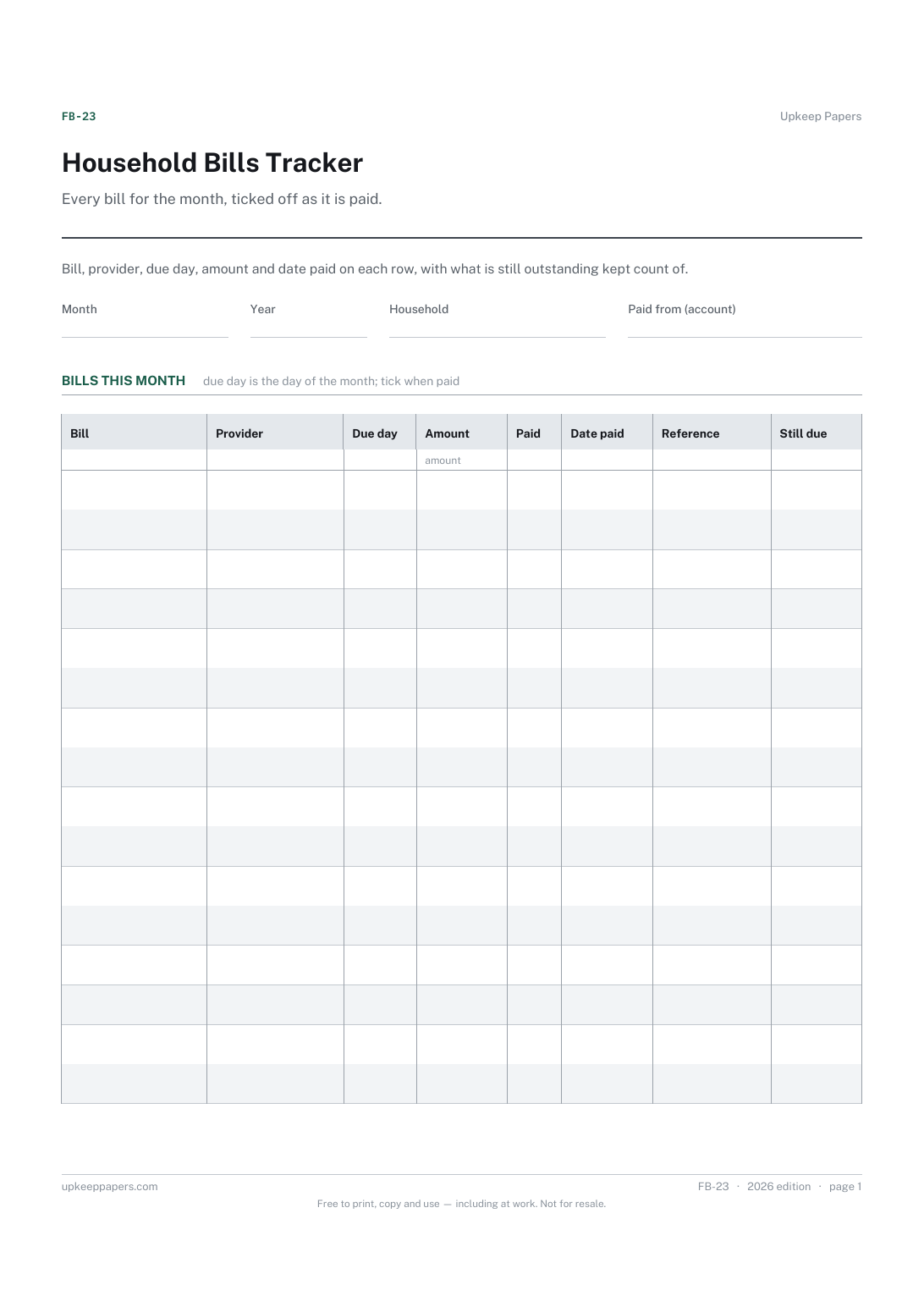
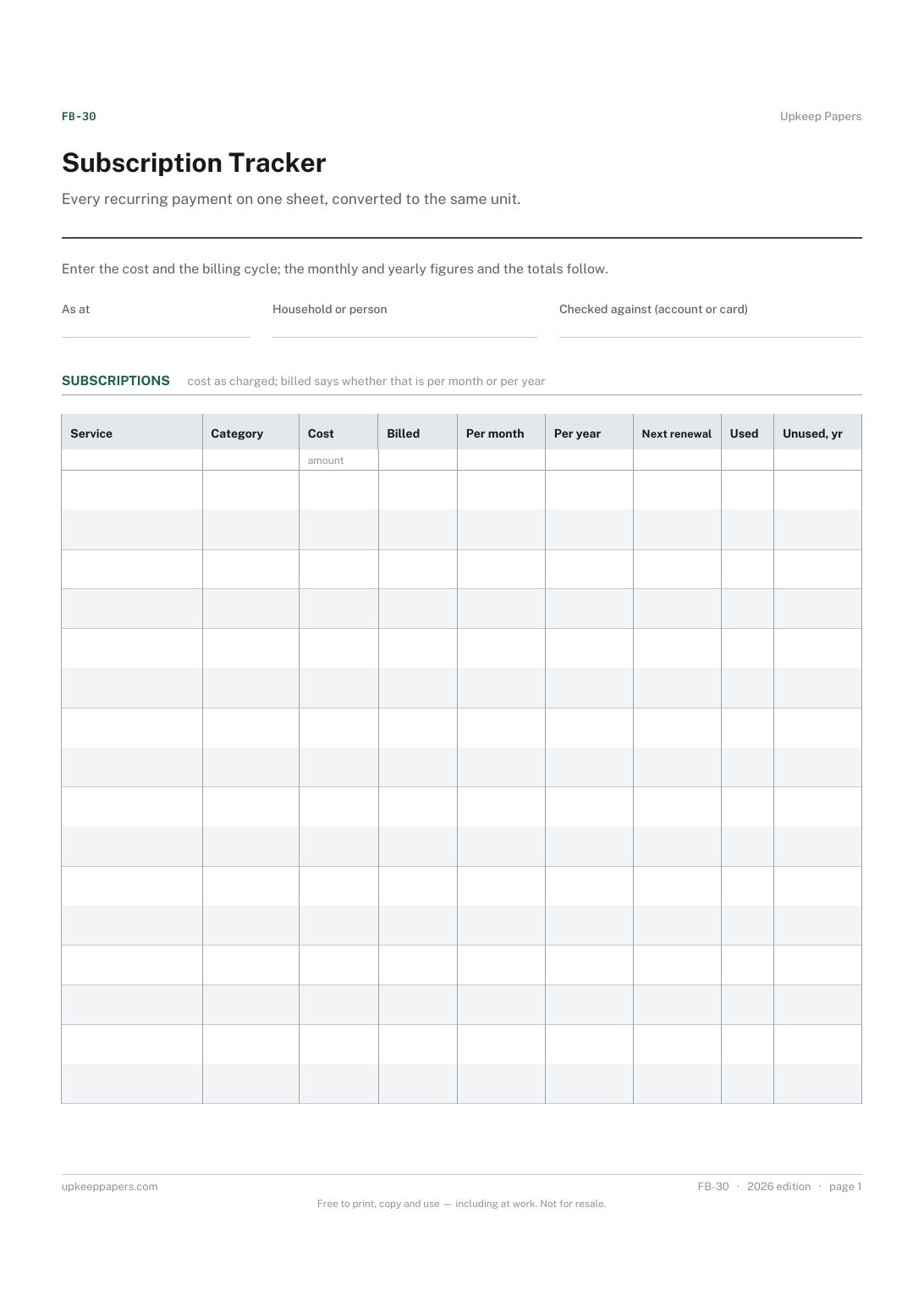
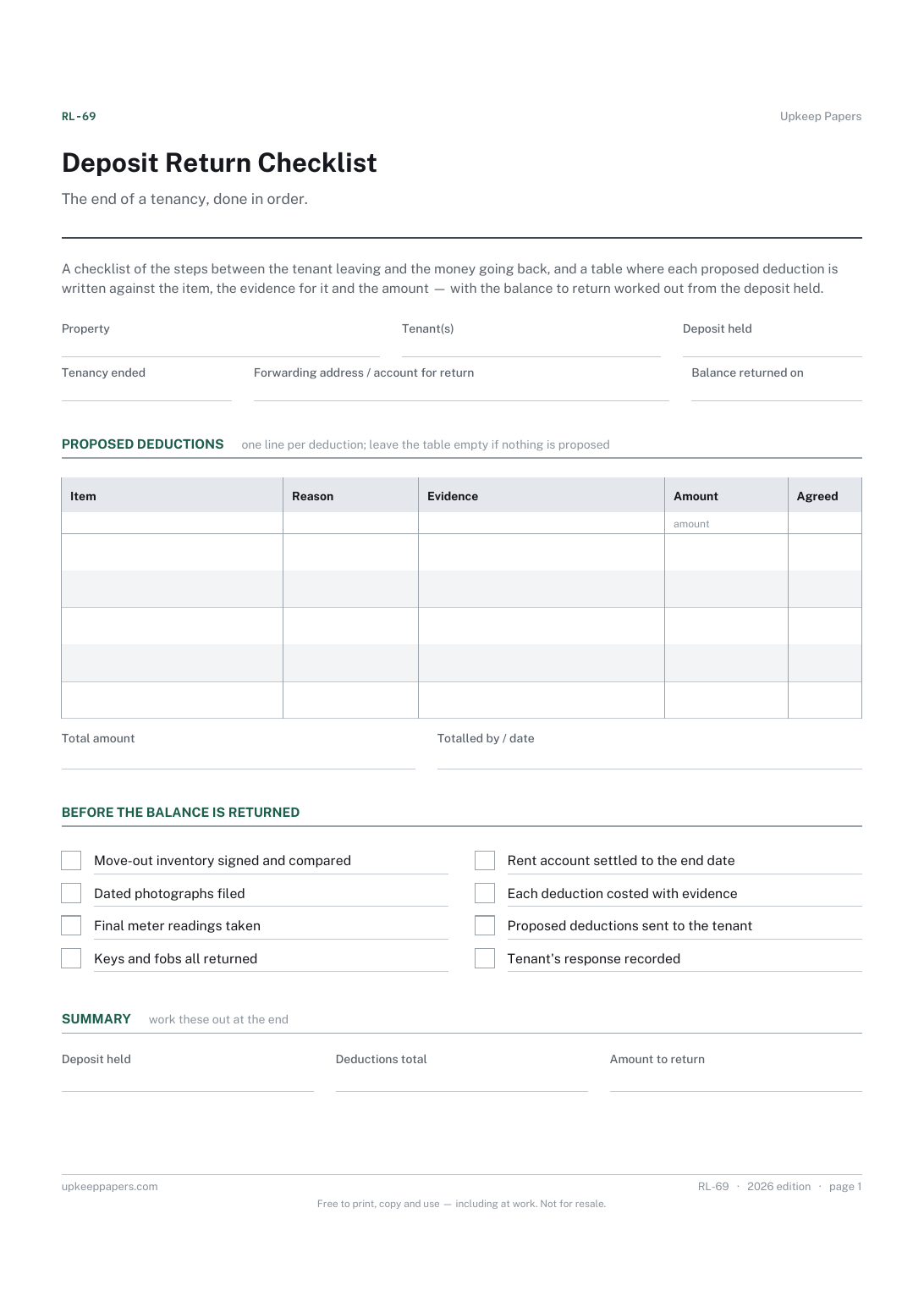
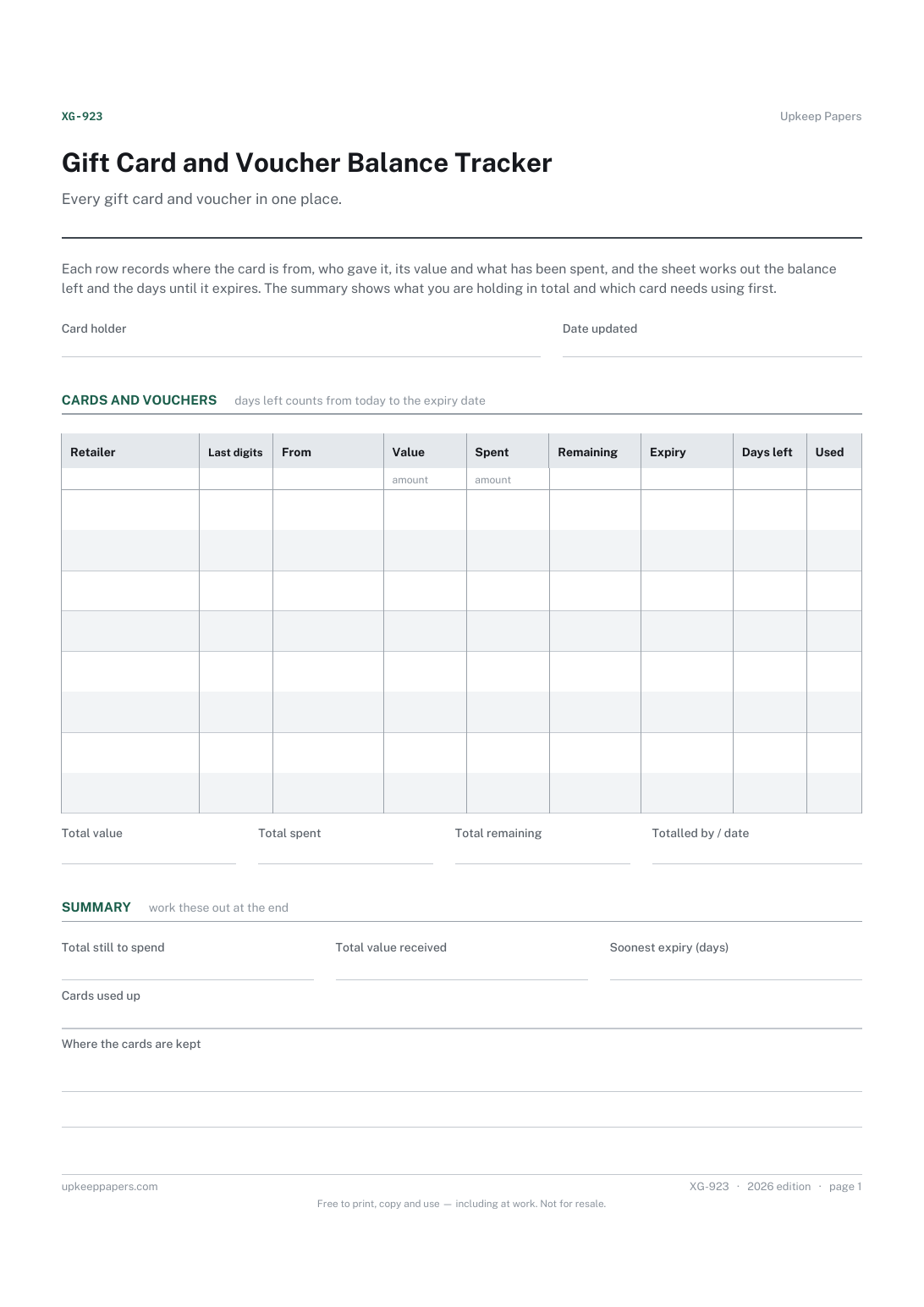
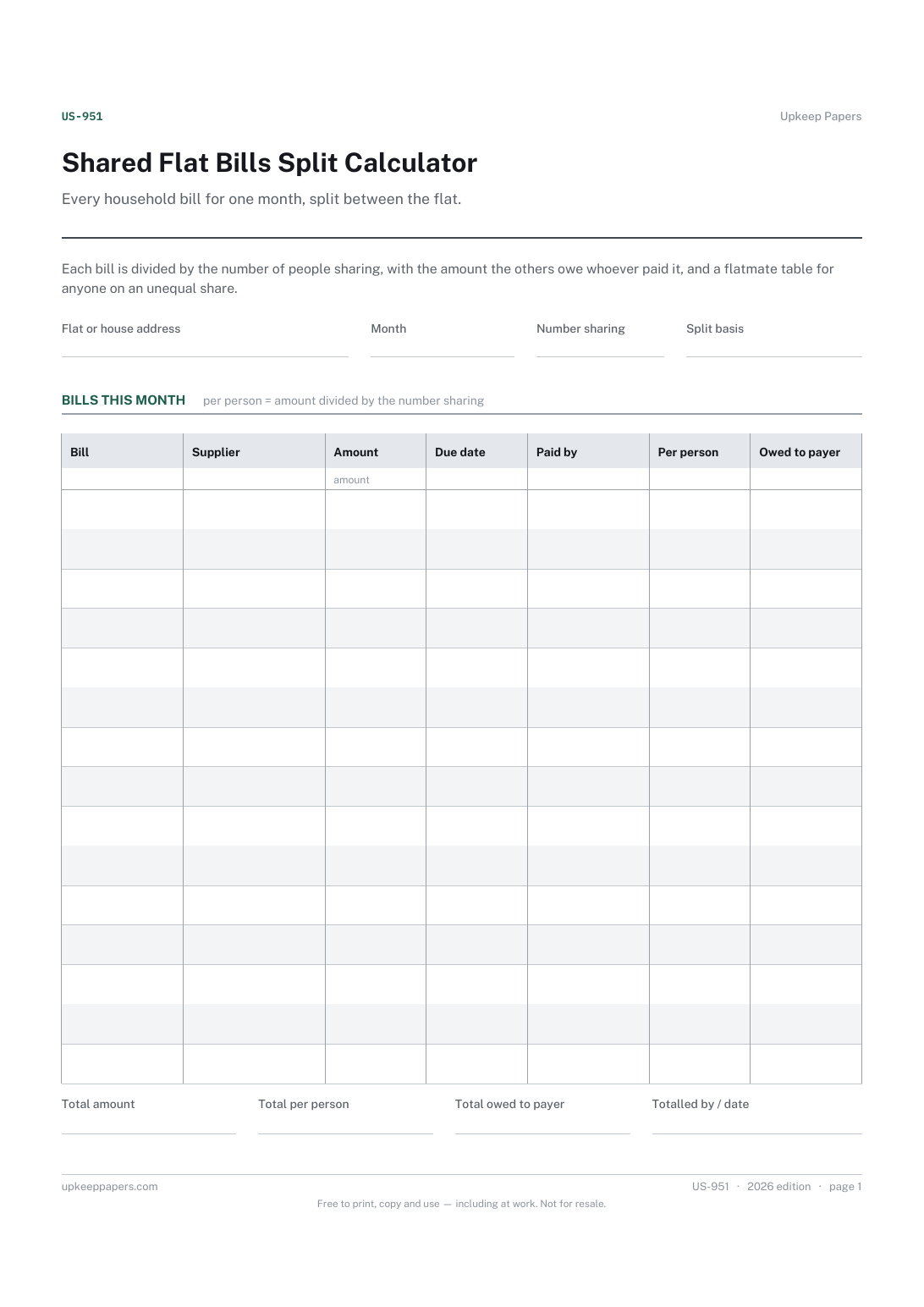
Every bill in one list, showing what each really costs over a year once its billing cycle is taken into account, plus a twelve-month grid to tick off.
3 tabs · 12 kB Open it
Everything here is free. Making it takes time and money. Everything here is free.
 Buy us a coffee
 Spreadsheets
29 workbooks for the jobs where the answer has to be worked out rather than written down — what the bills really cost in a year, how long a debt takes to clear, what a vehicle costs per mile, what your contents are worth to an insurer.
No sign-up, no email, no macros. Every file is an ordinary
.xlsx that opens in Excel, LibreOffice, Numbers and Google Sheets. Download it
and it is yours — nothing phones home, and there is nothing inside it but formulas
you can read and change.
Budgets, bills, debts and savings — the arithmetic a printed grid cannot do.
Every bill in one list, showing what each really costs over a year once its billing cycle is taken into account, plus a twelve-month grid to tick off.
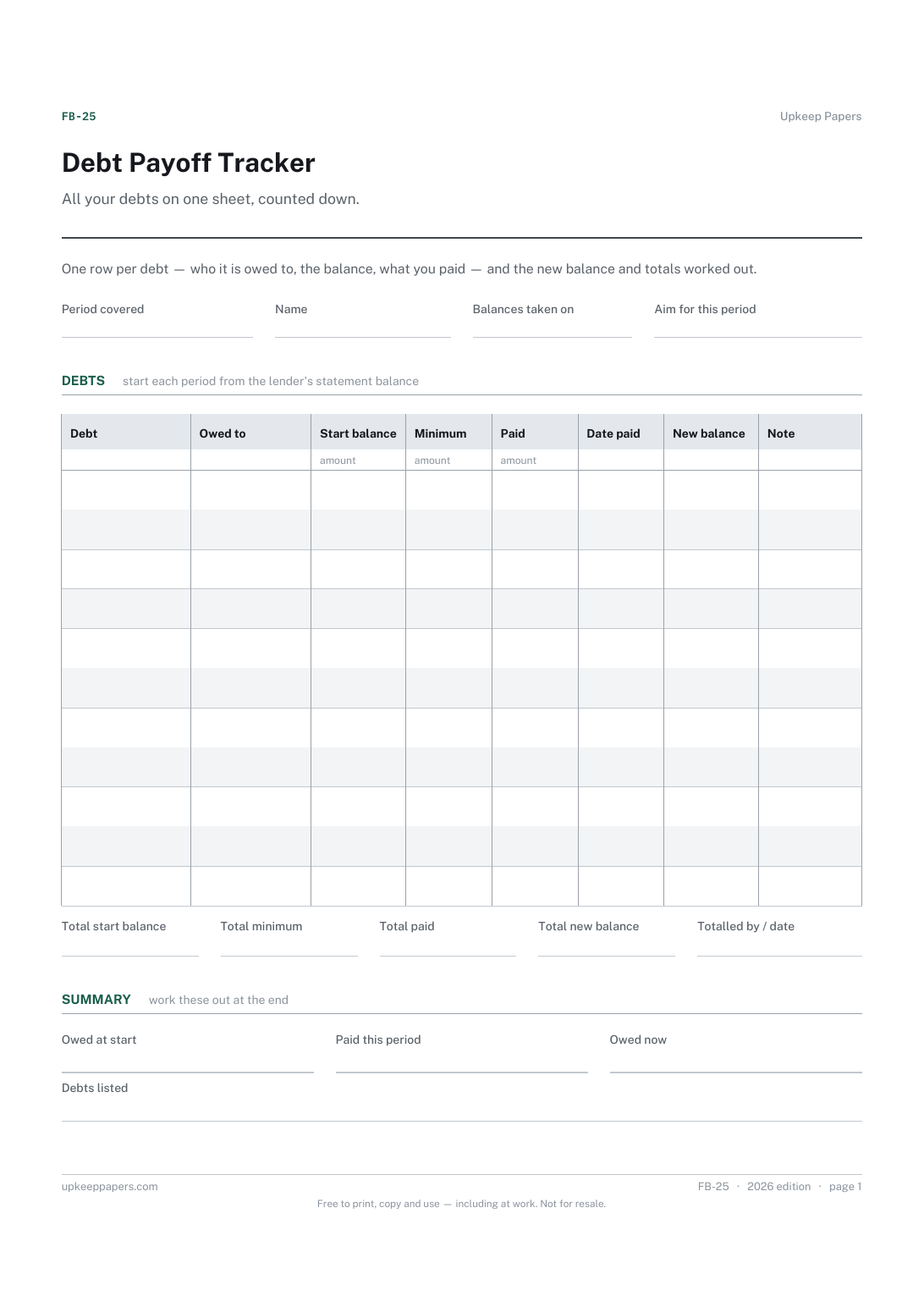
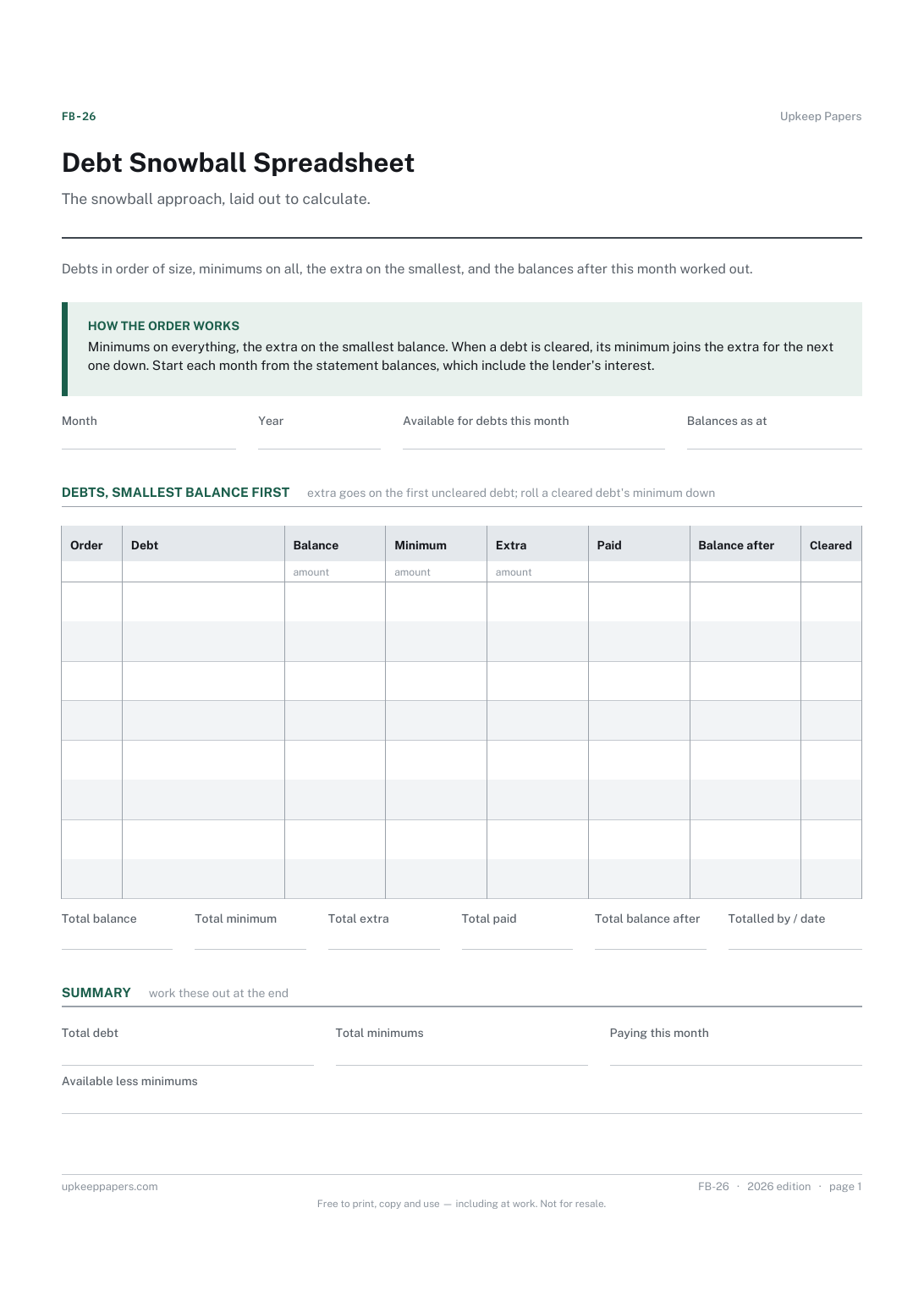
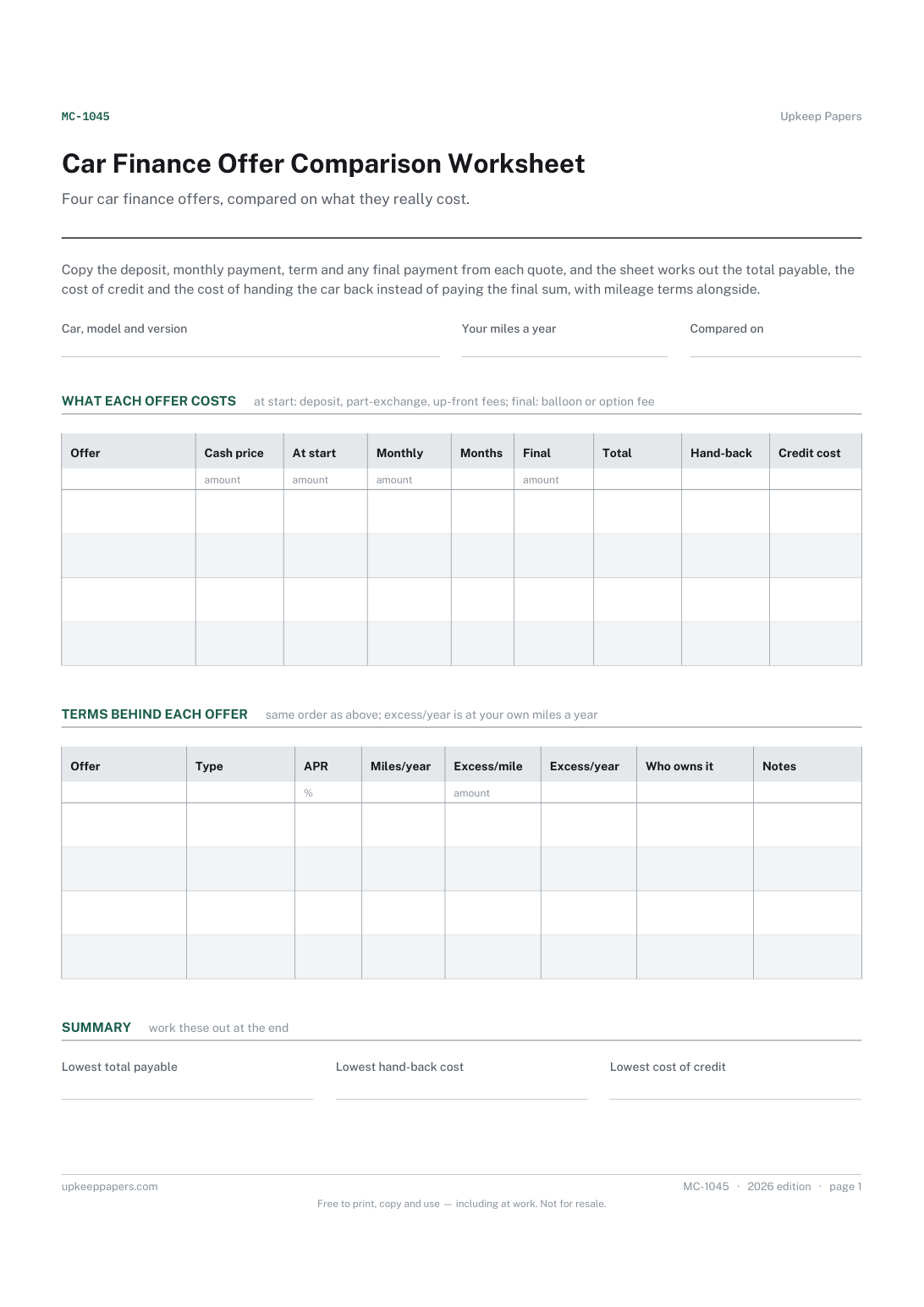
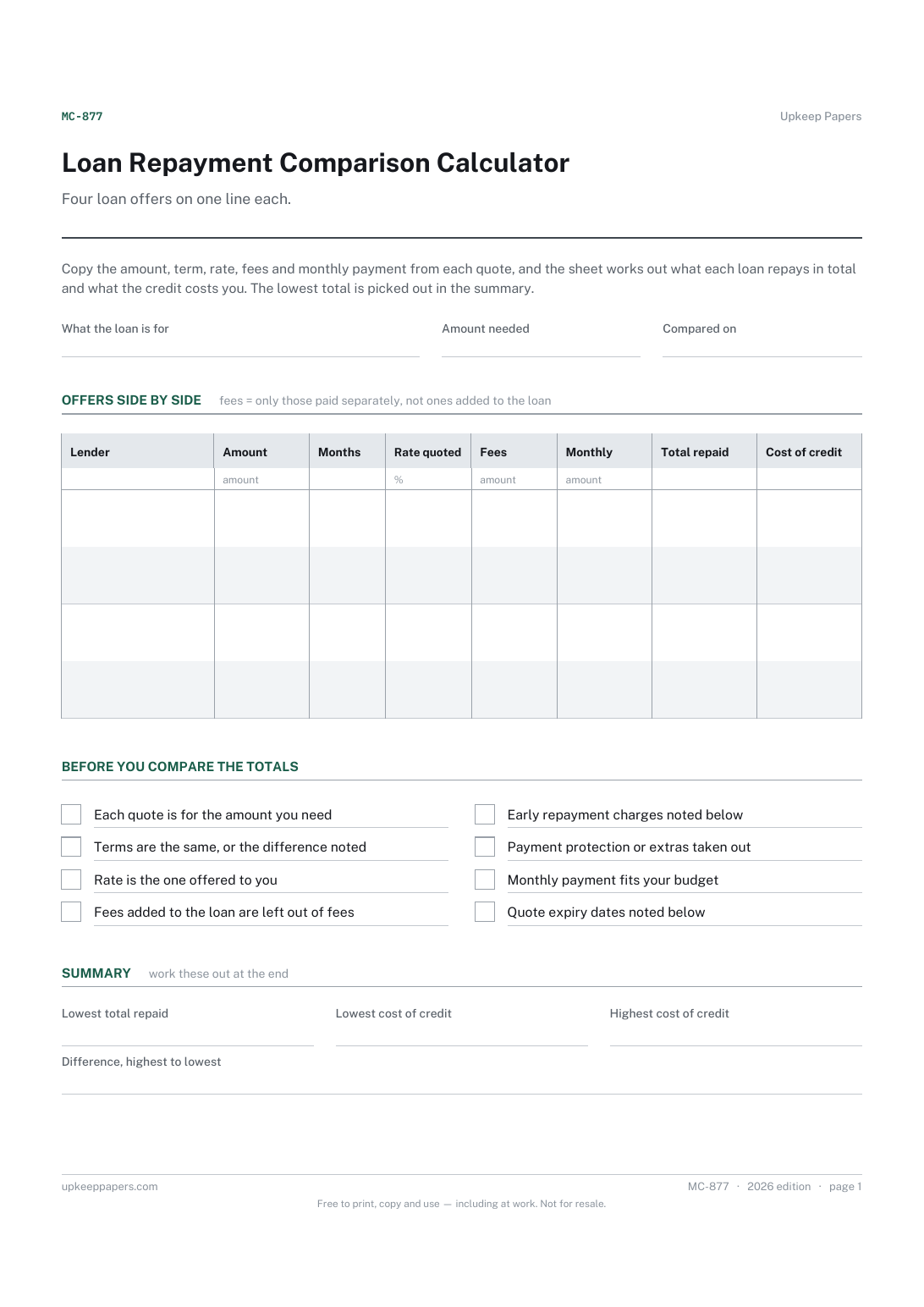
Every debt with its balance, rate and payment, working out how many months each takes to clear and roughly what that costs in interest — plus both payoff orders.
A dated list of what you spent, which totals itself by category and by month without you building a single pivot table.
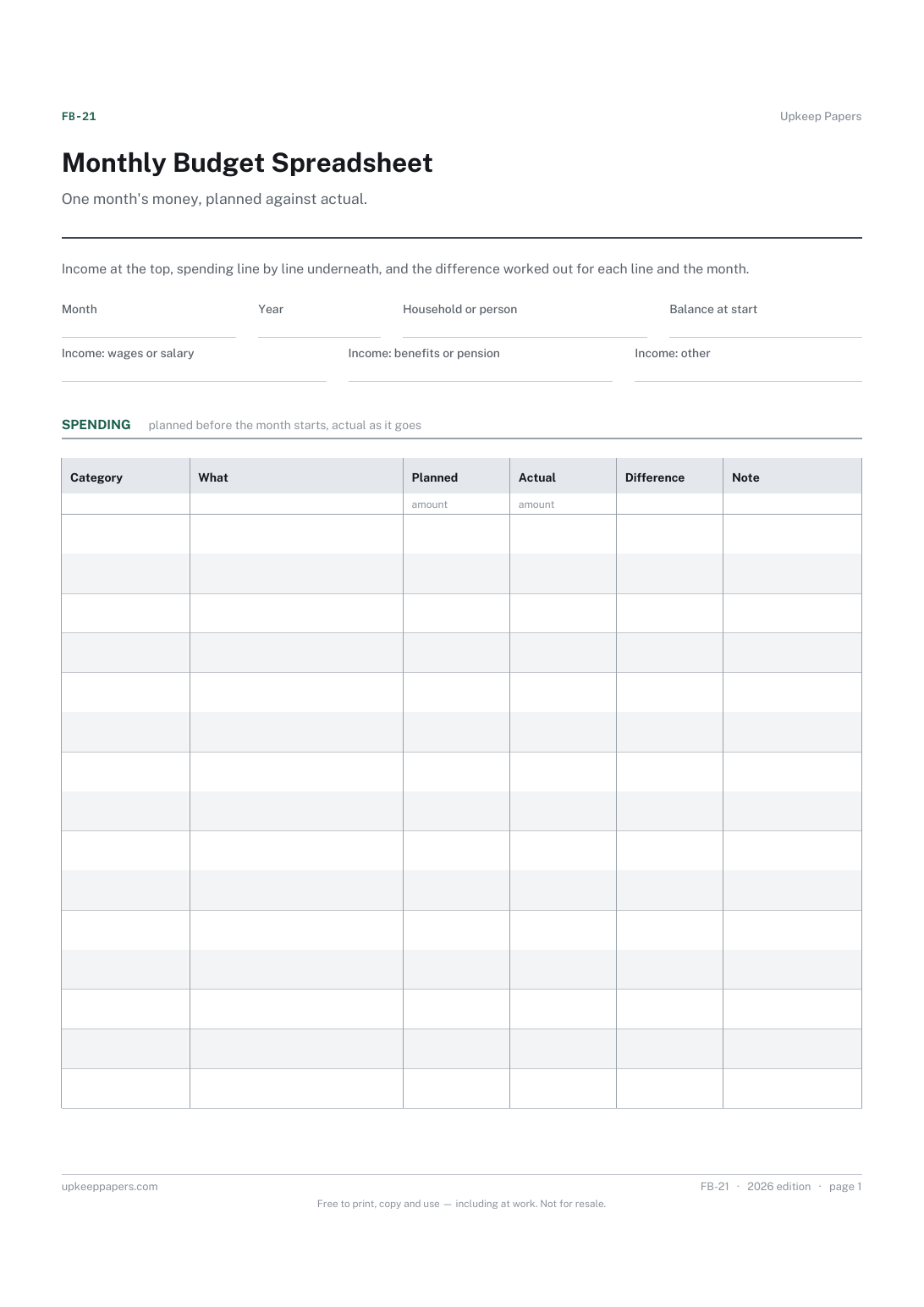
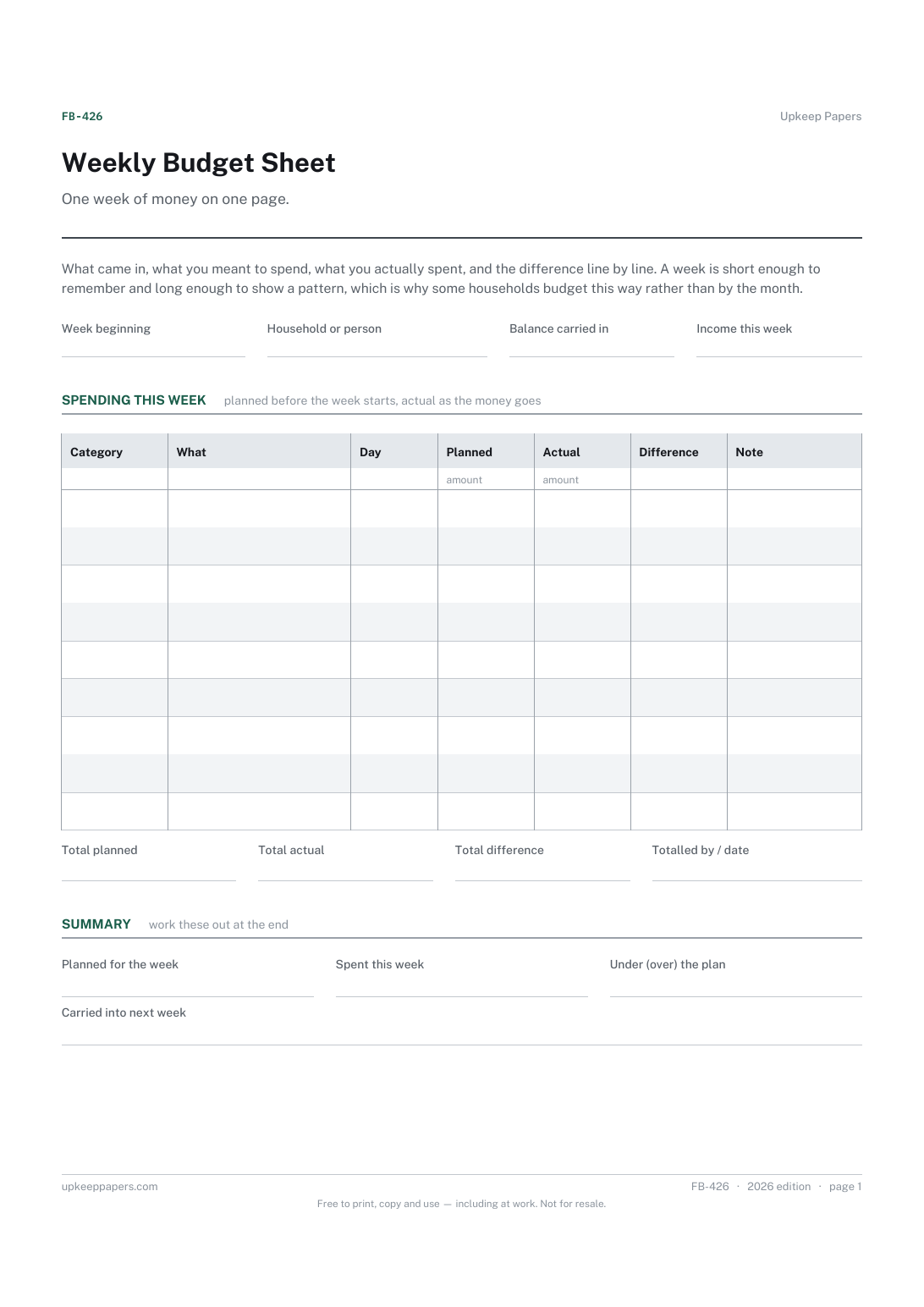
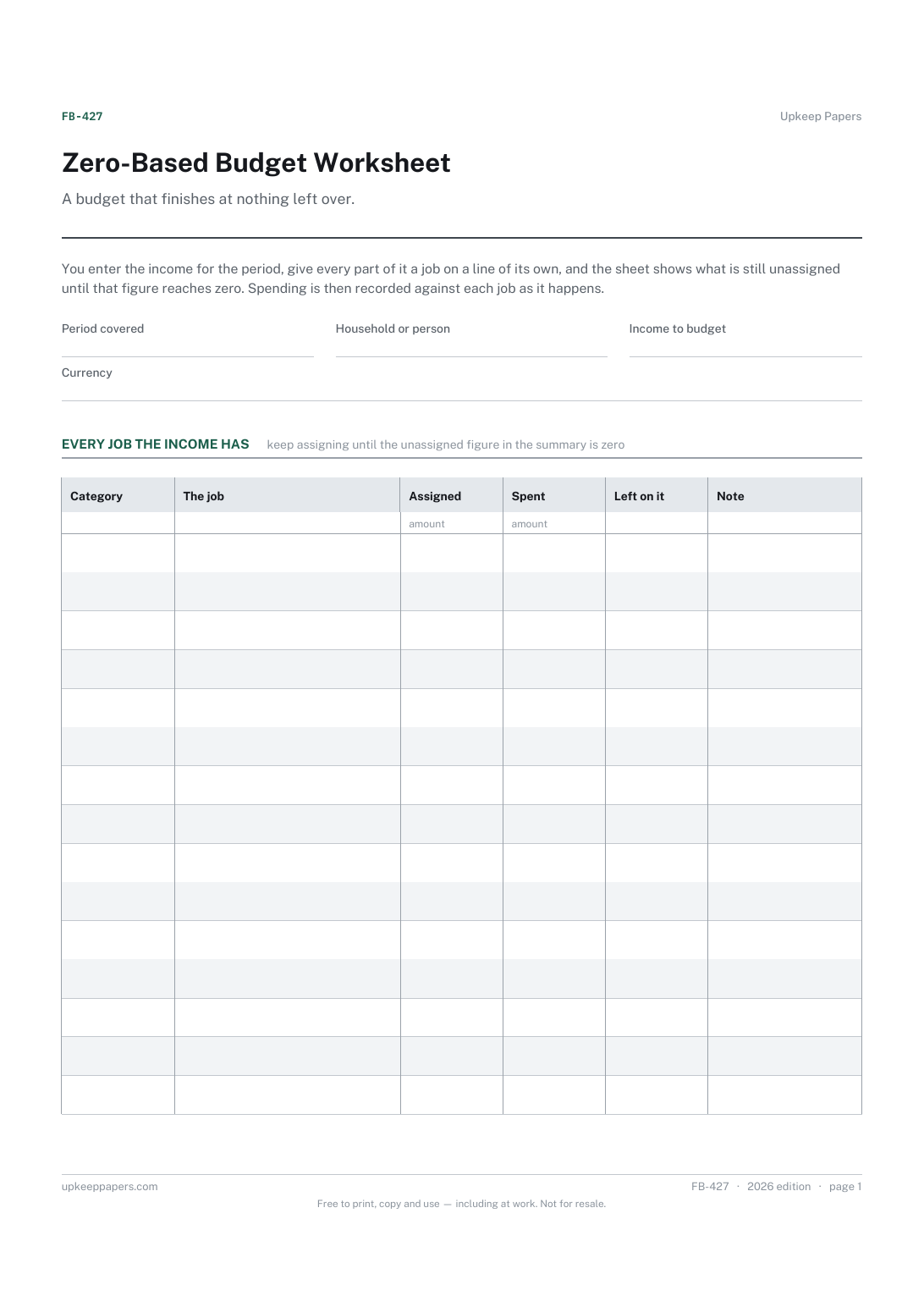
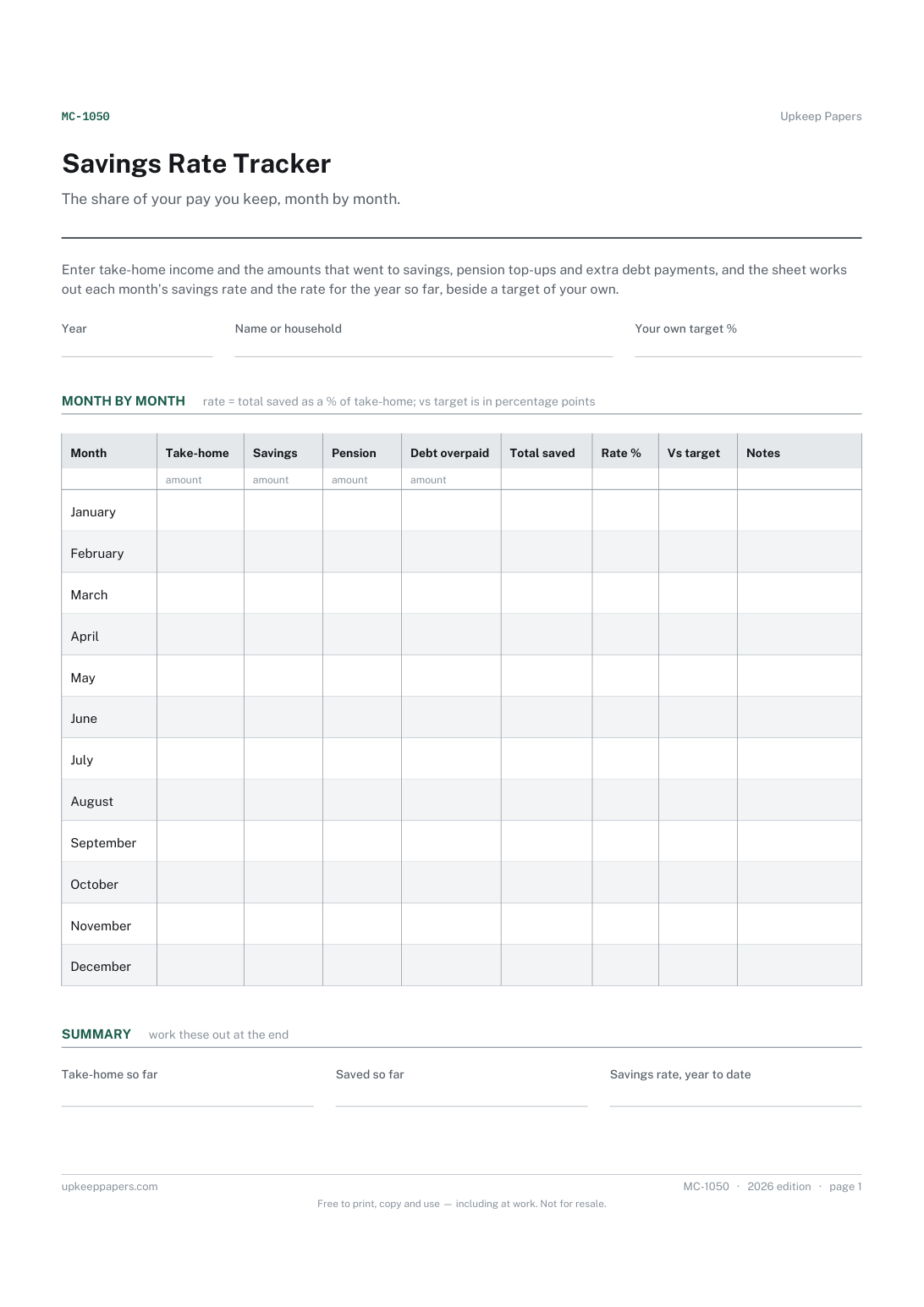
A monthly budget that adds up planned against actual, keeps income, outgoings and saving apart, and rolls twelve months into a year view.
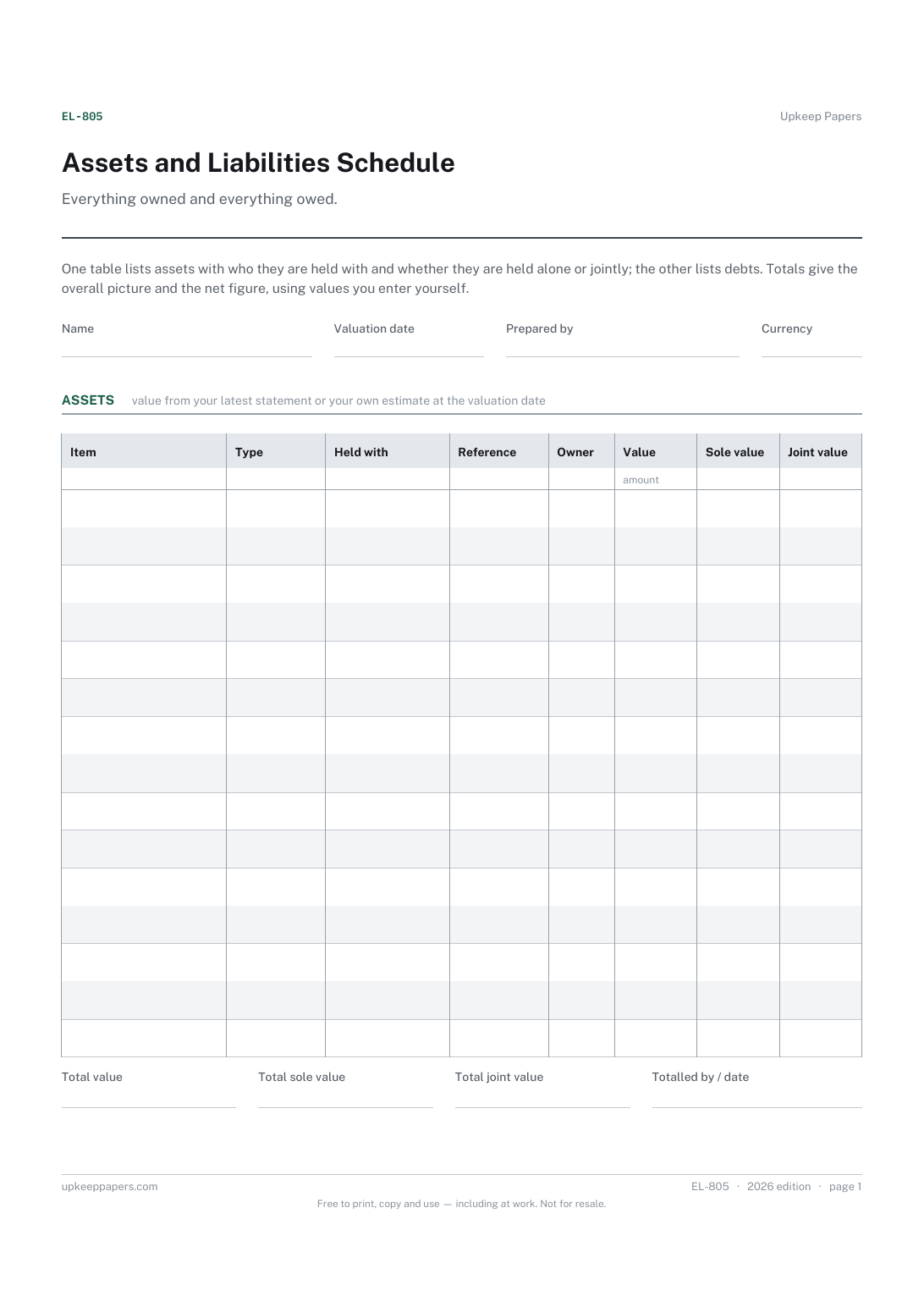
Everything you own on one side, everything you owe on the other, and the difference tracked month by month so the direction of travel is visible.
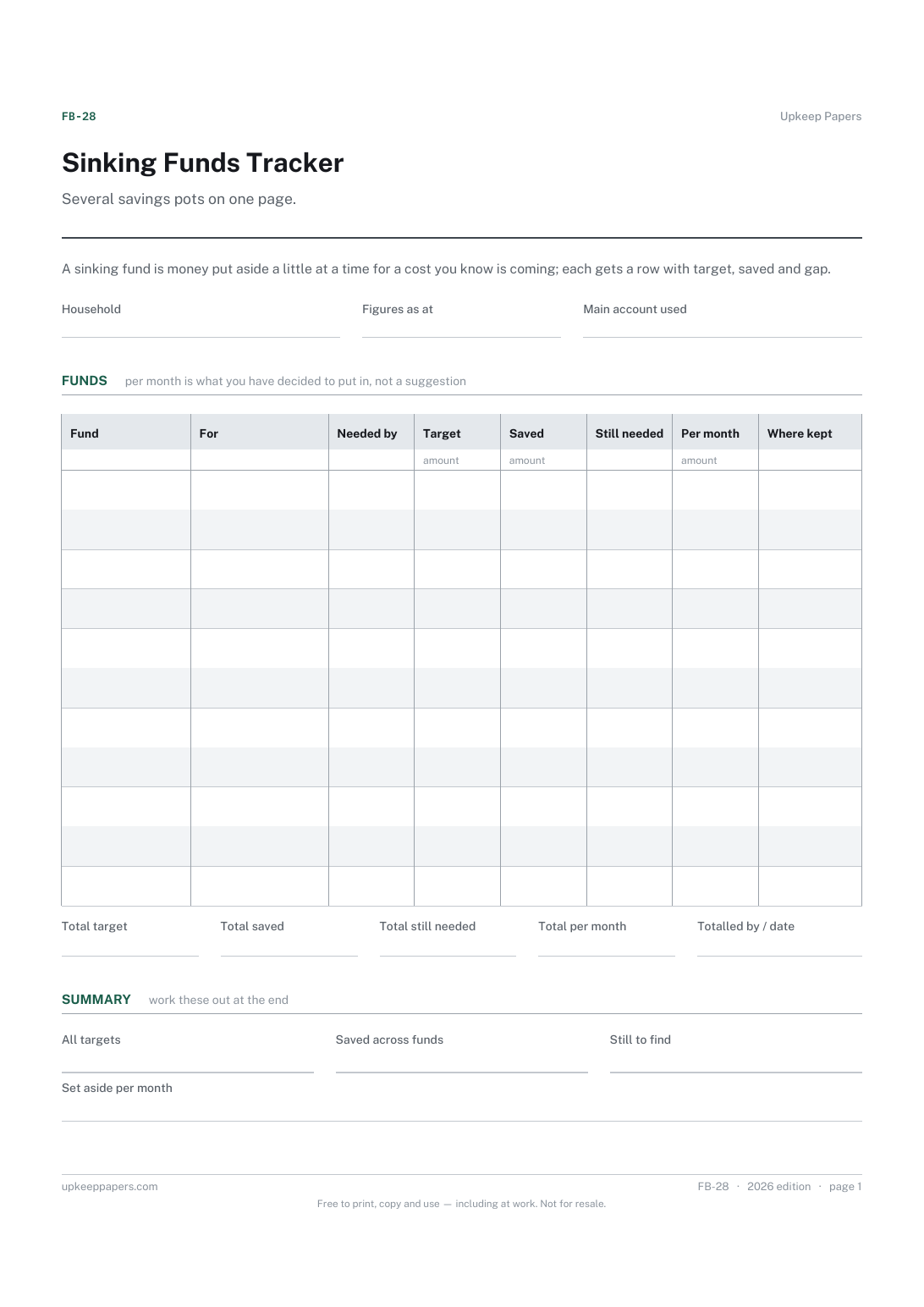
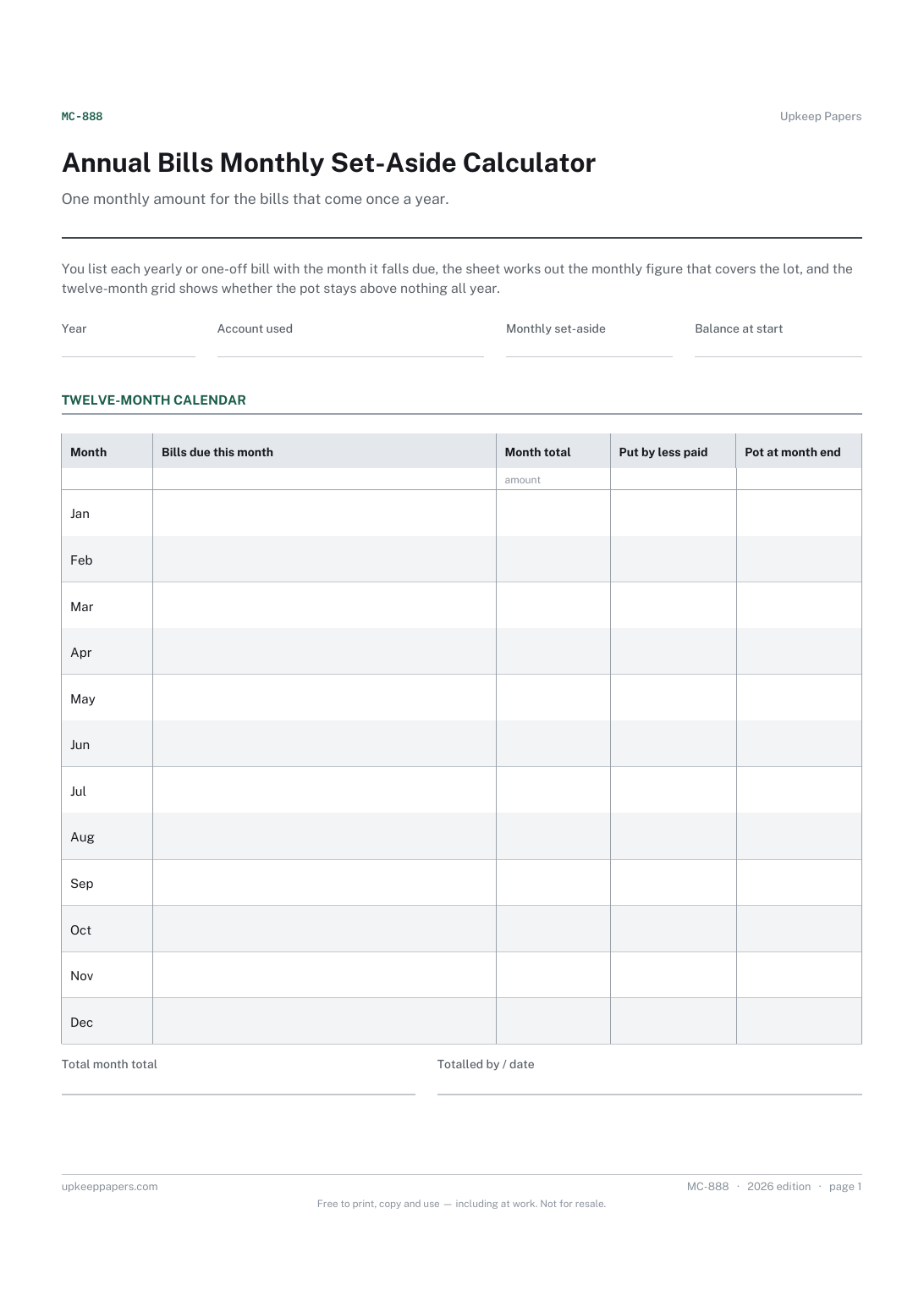
The big irregular costs — the car service, the insurance renewal, Christmas — broken down into what you need to set aside each month to be ready for them.
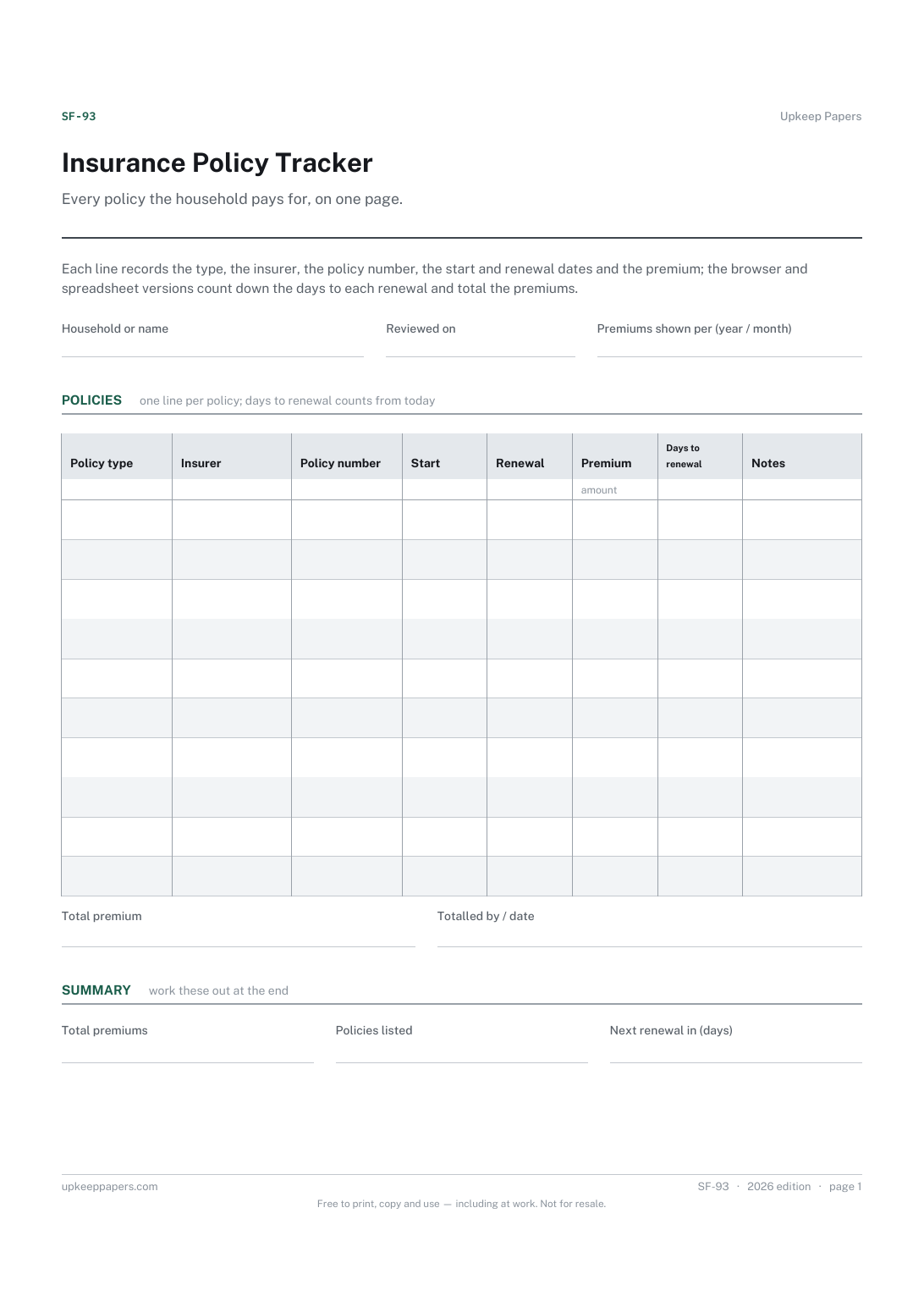
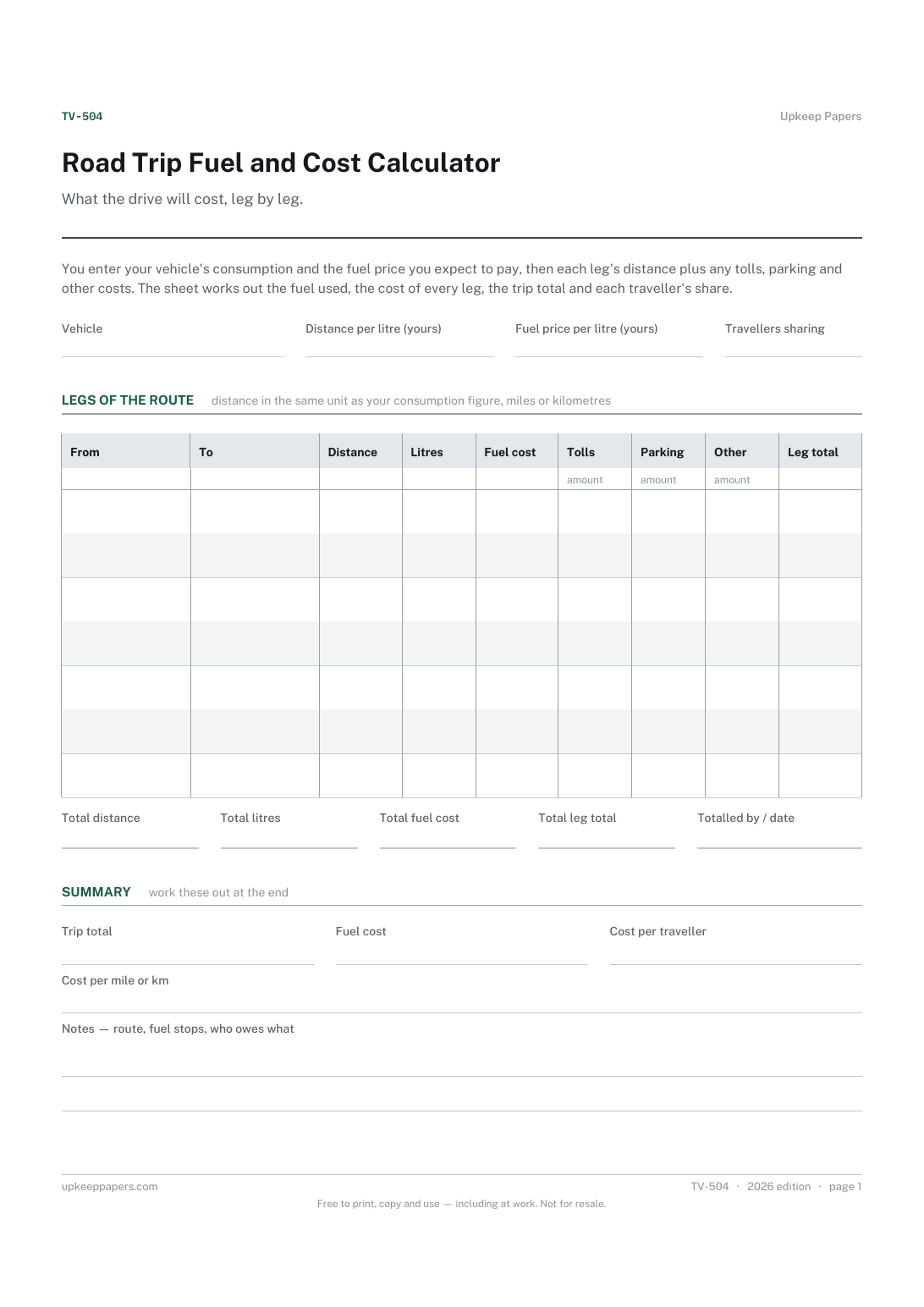
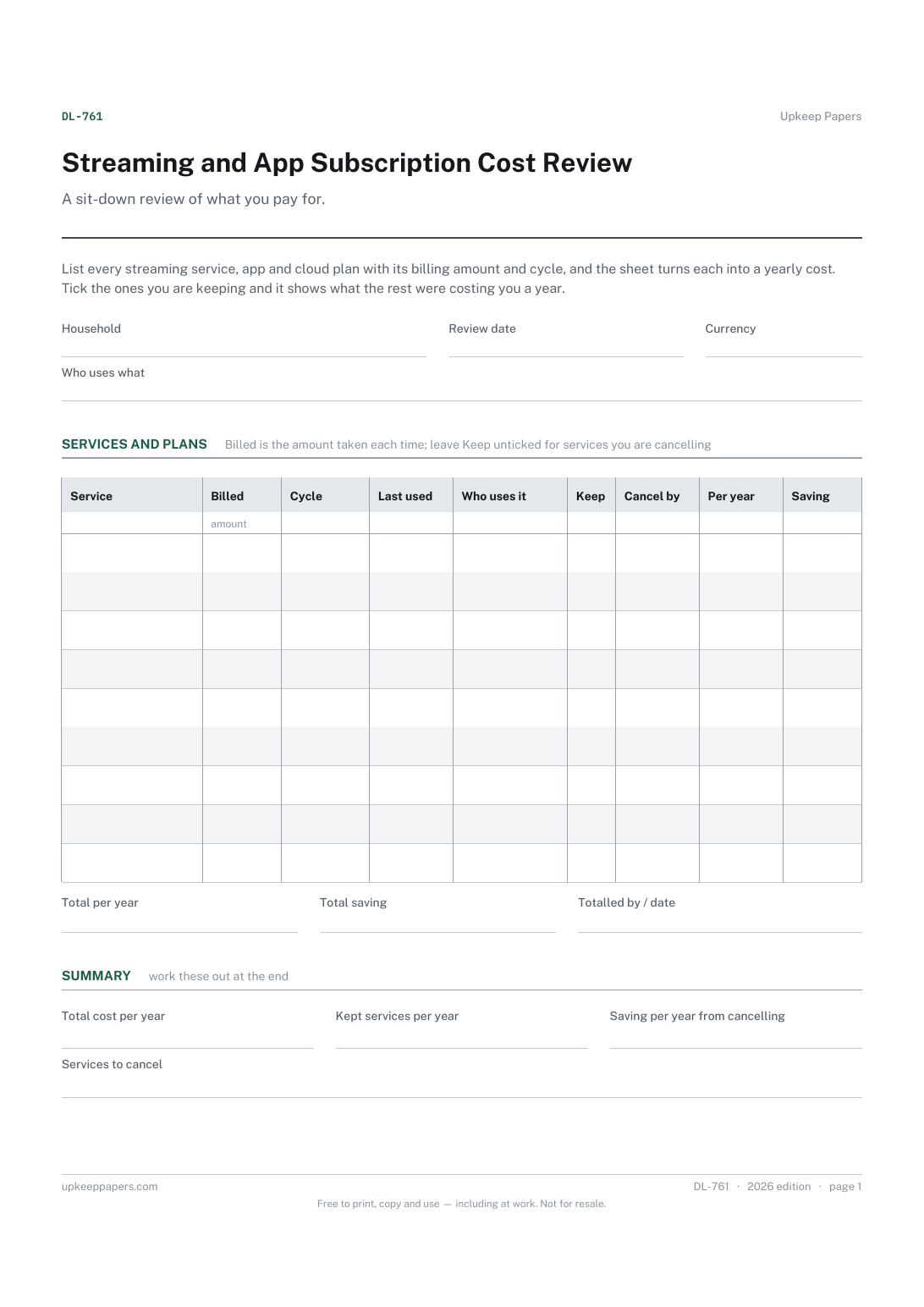
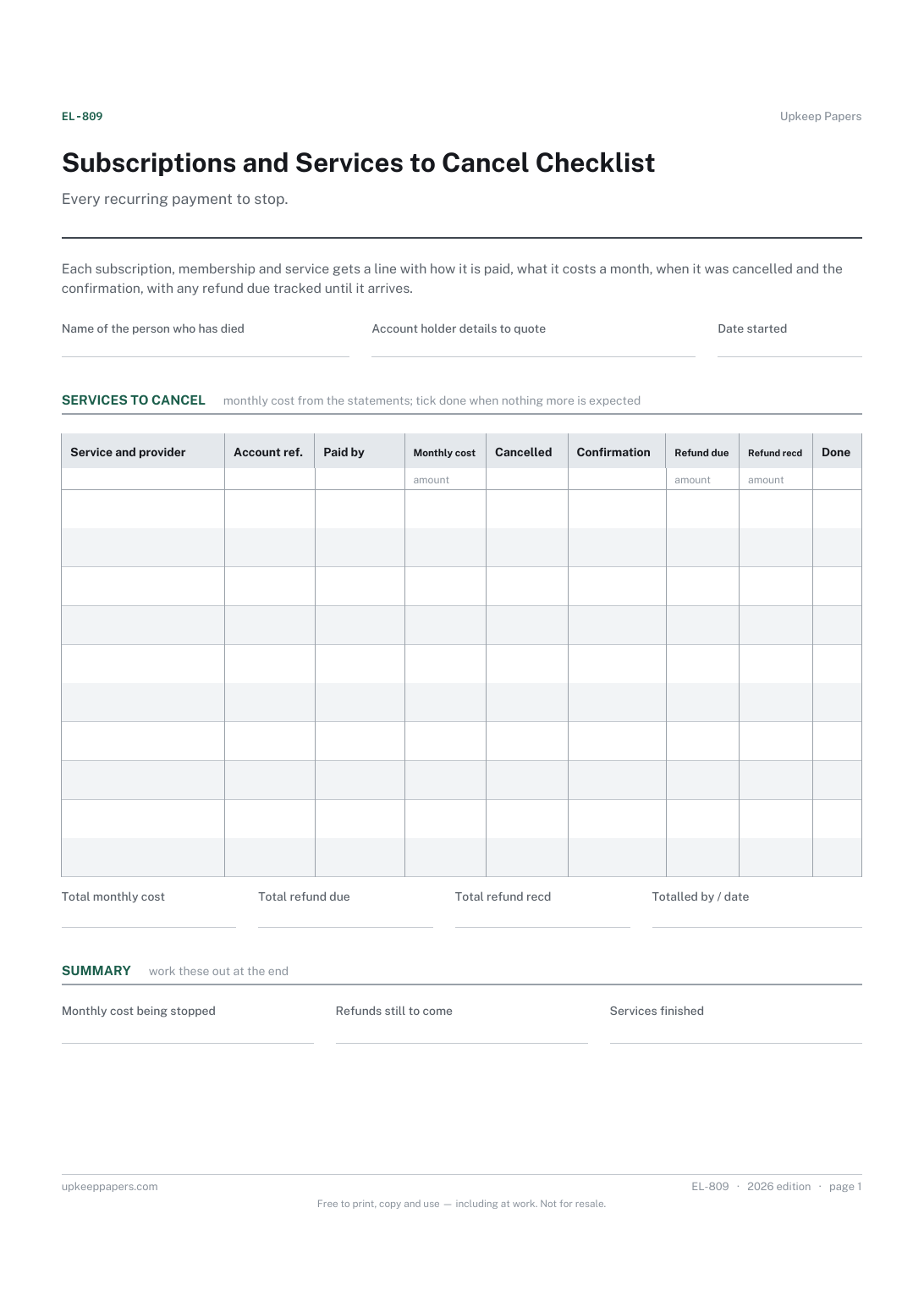
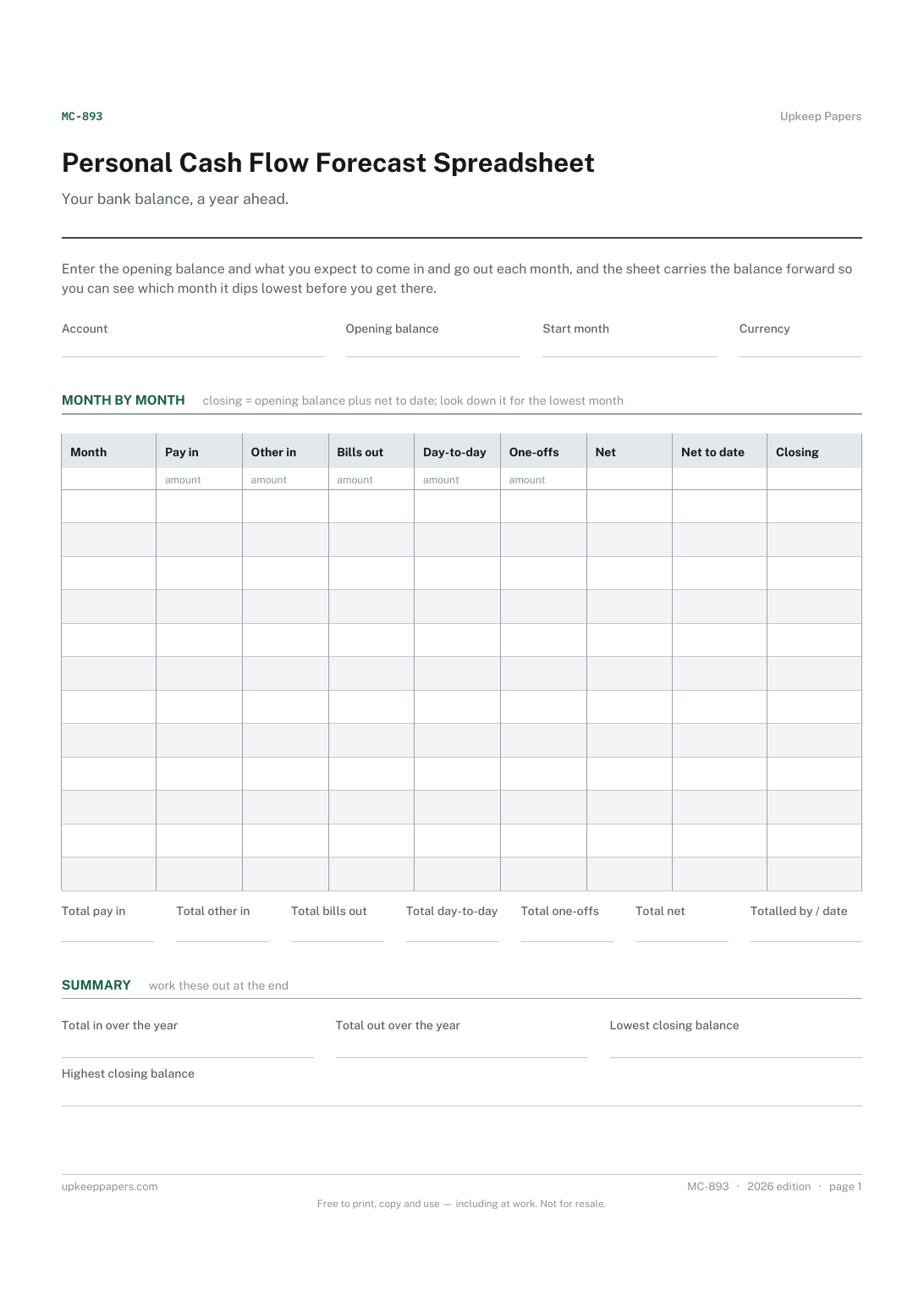
Every recurring payment on one page, converted to what it costs per year, with renewal dates counting down and a total for everything you have marked to cancel.
Contents valued for insurance, warranties counted down, maintenance kept on its clock.
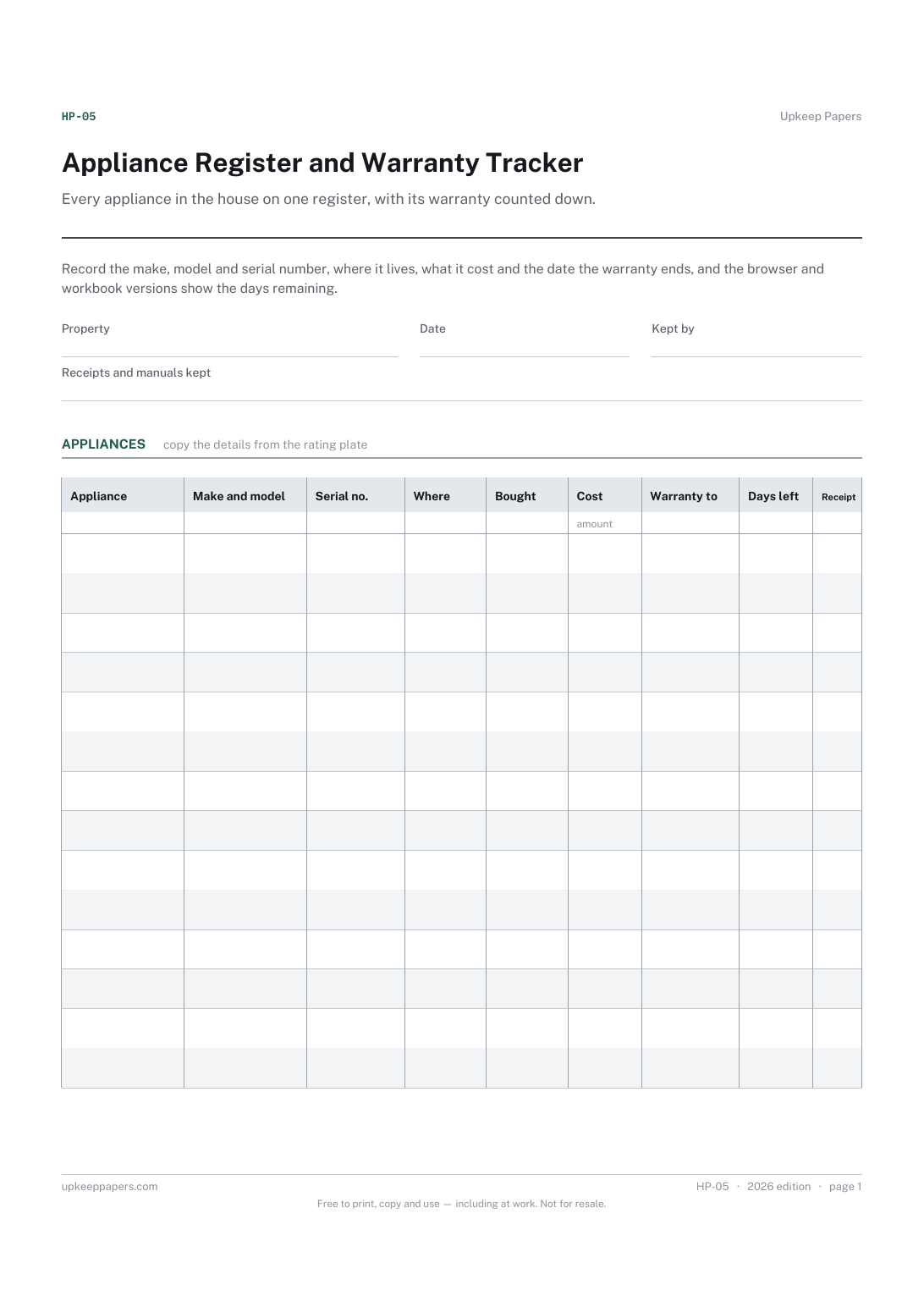
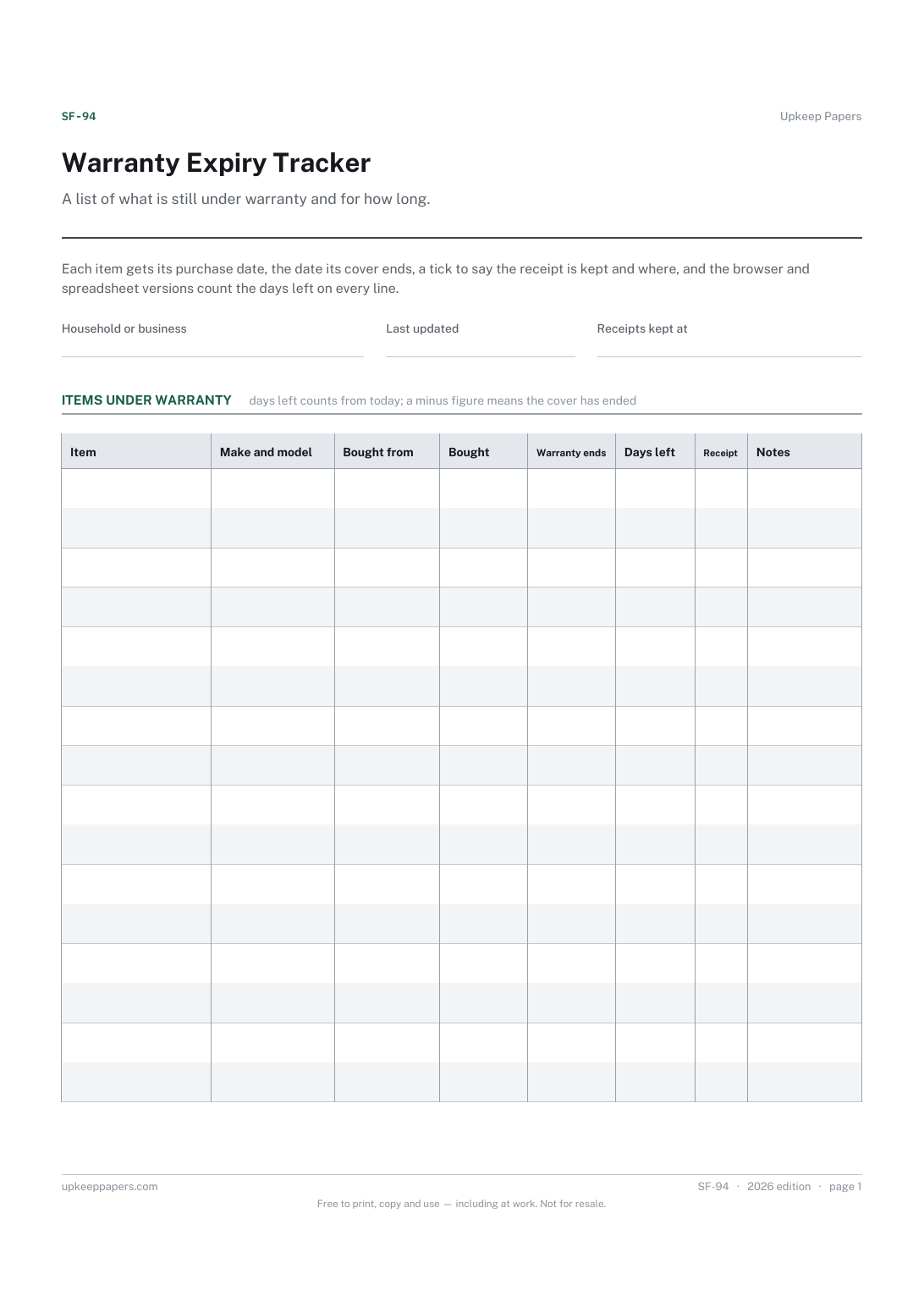
Every appliance with its purchase date and warranty length, working out the expiry date and how many days are left before cover runs out.
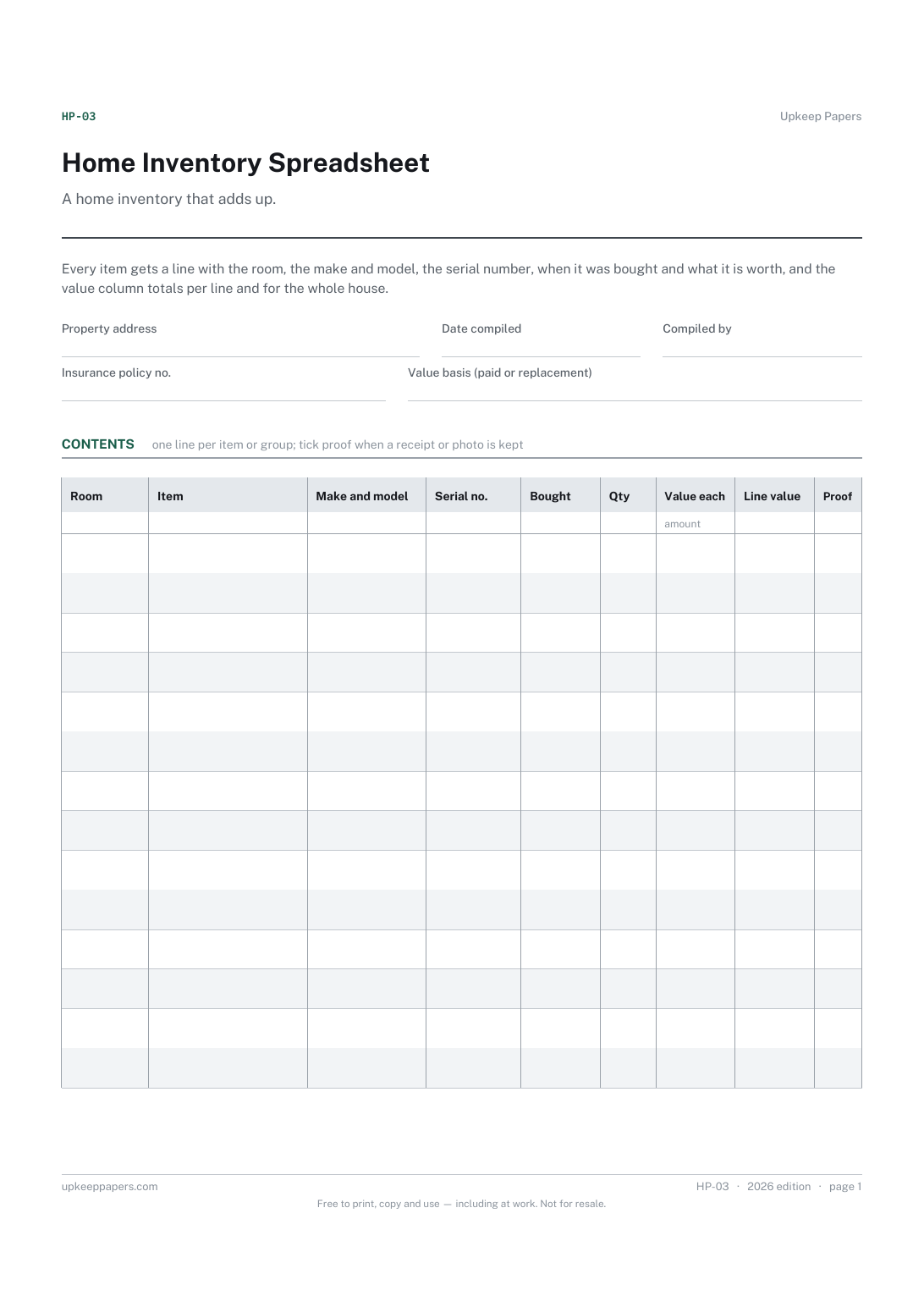
Room-by-room contents with what each thing cost and what it would cost to replace, totalled per room and overall — the list an insurer asks for.
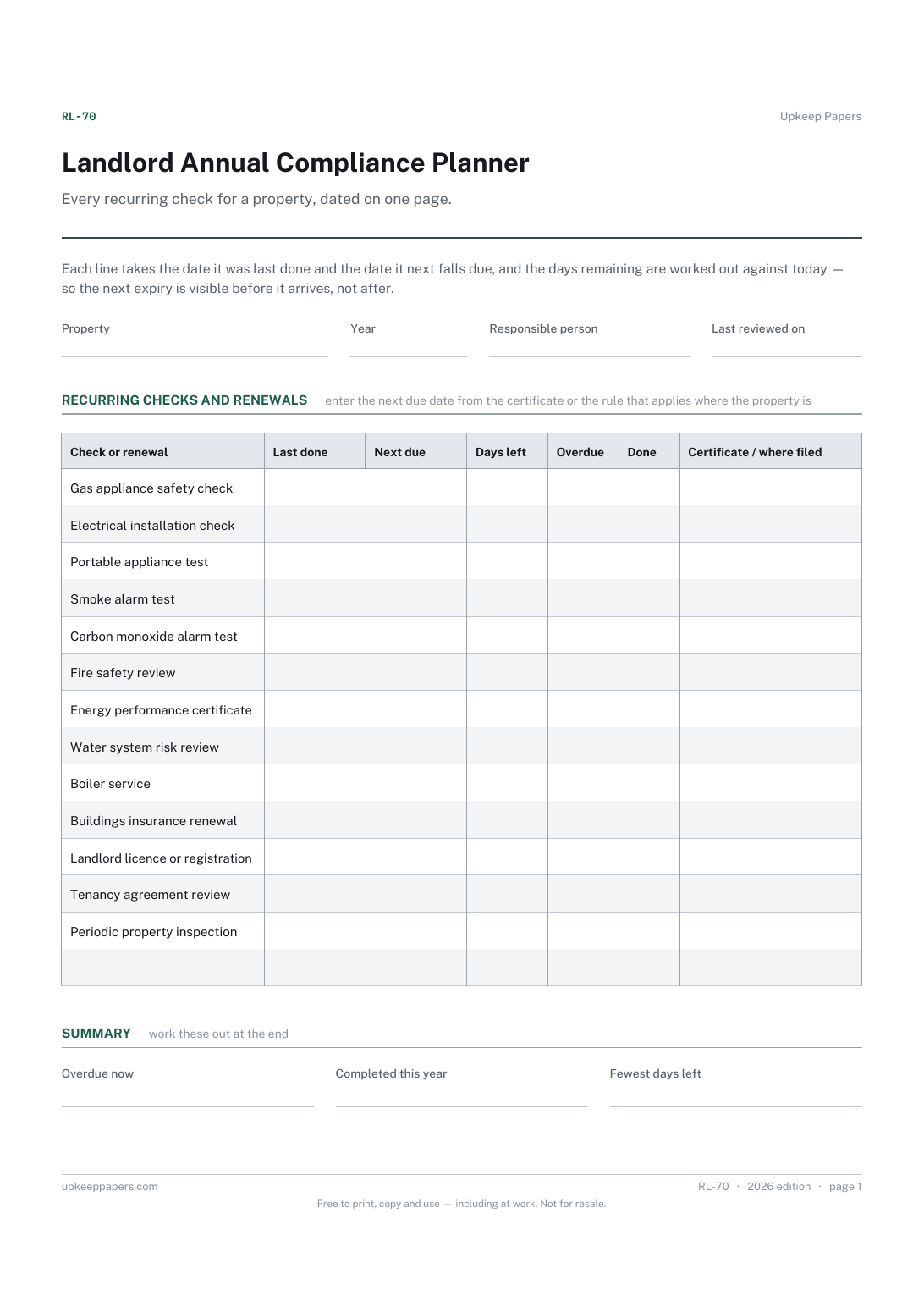
Recurring jobs around the house with the interval you choose, working out when each is next due and flagging the ones already overdue.
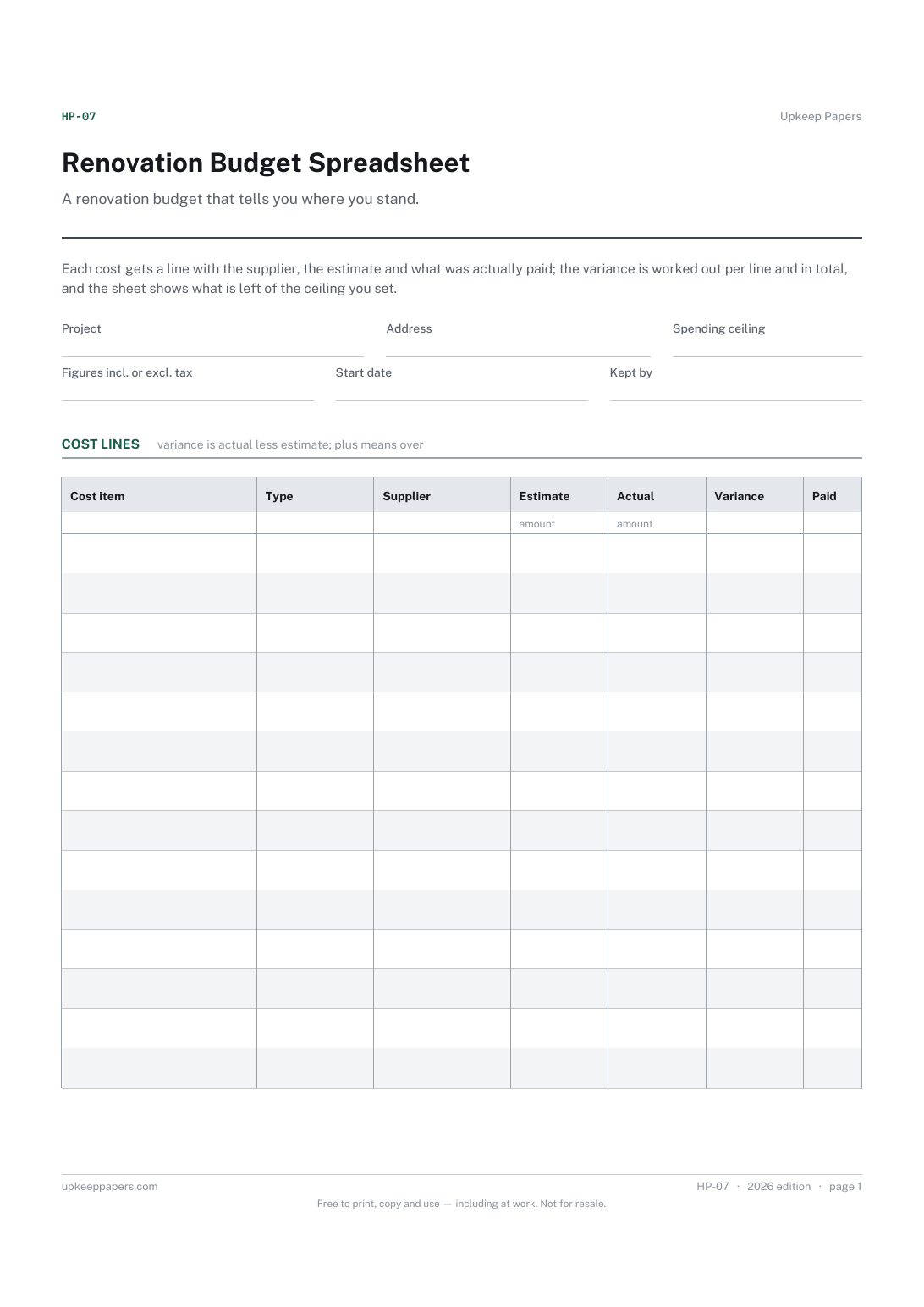
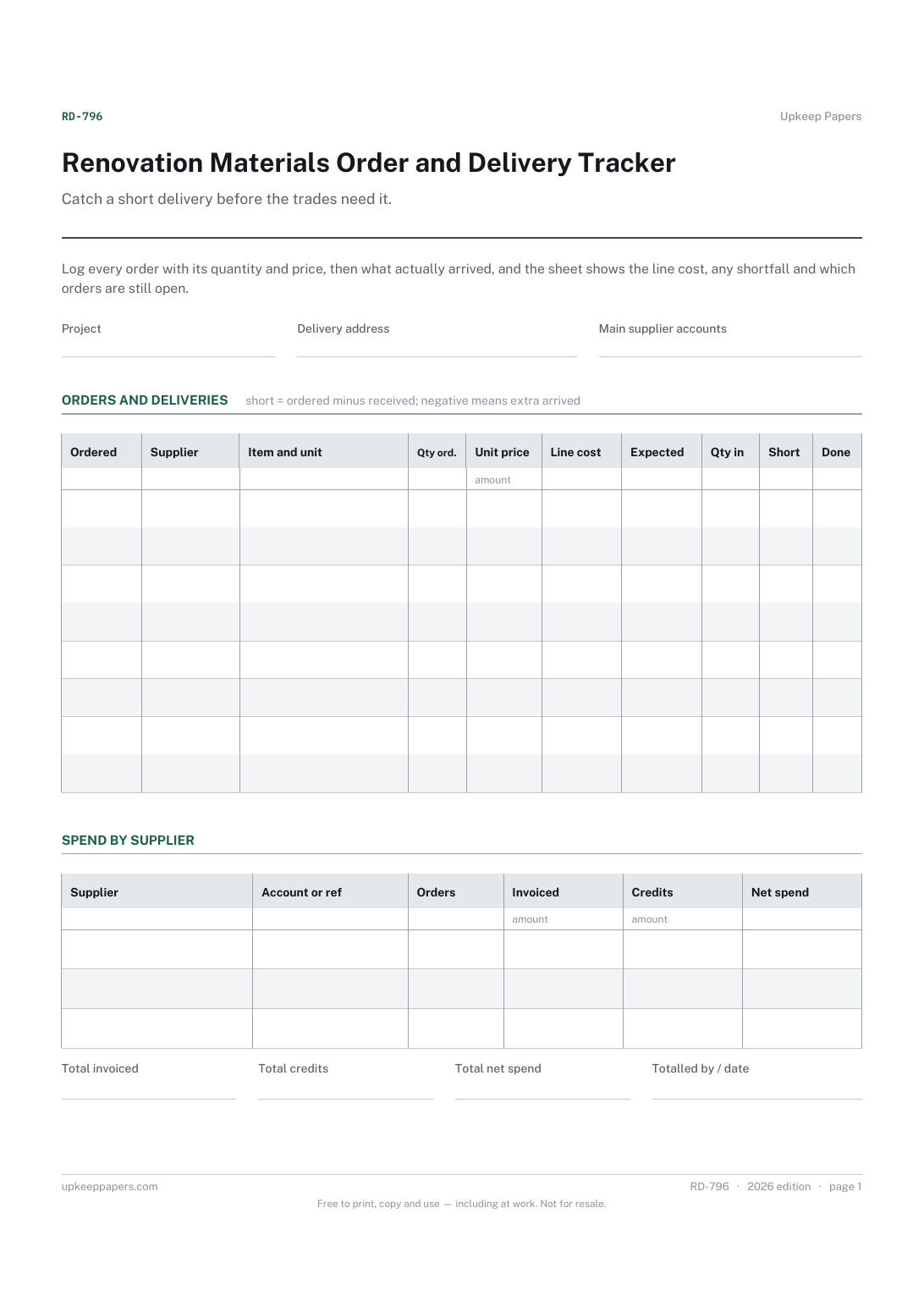
A room-by-room build budget holding quoted against actual, with the variance on every line and a contingency you set yourself.
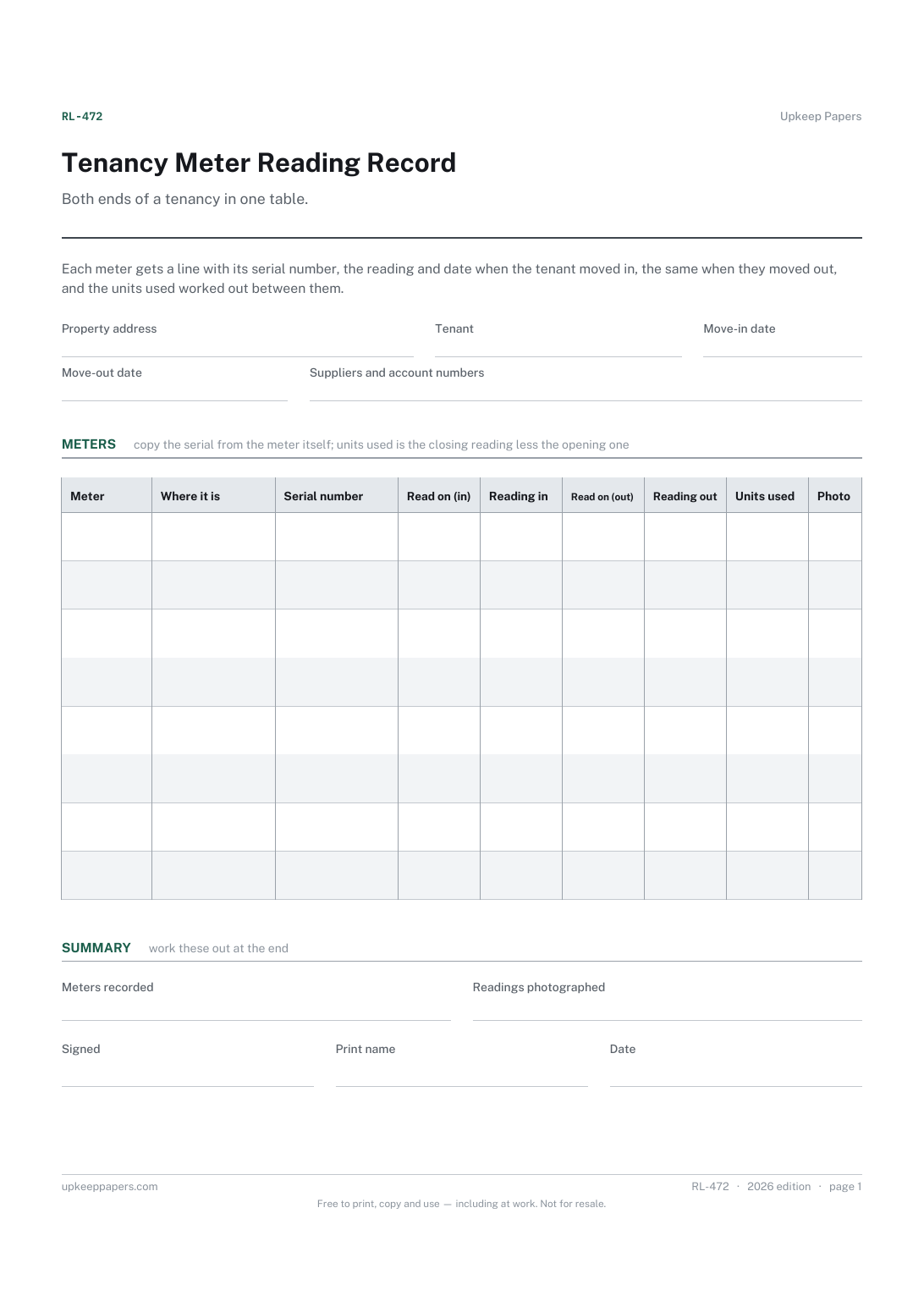
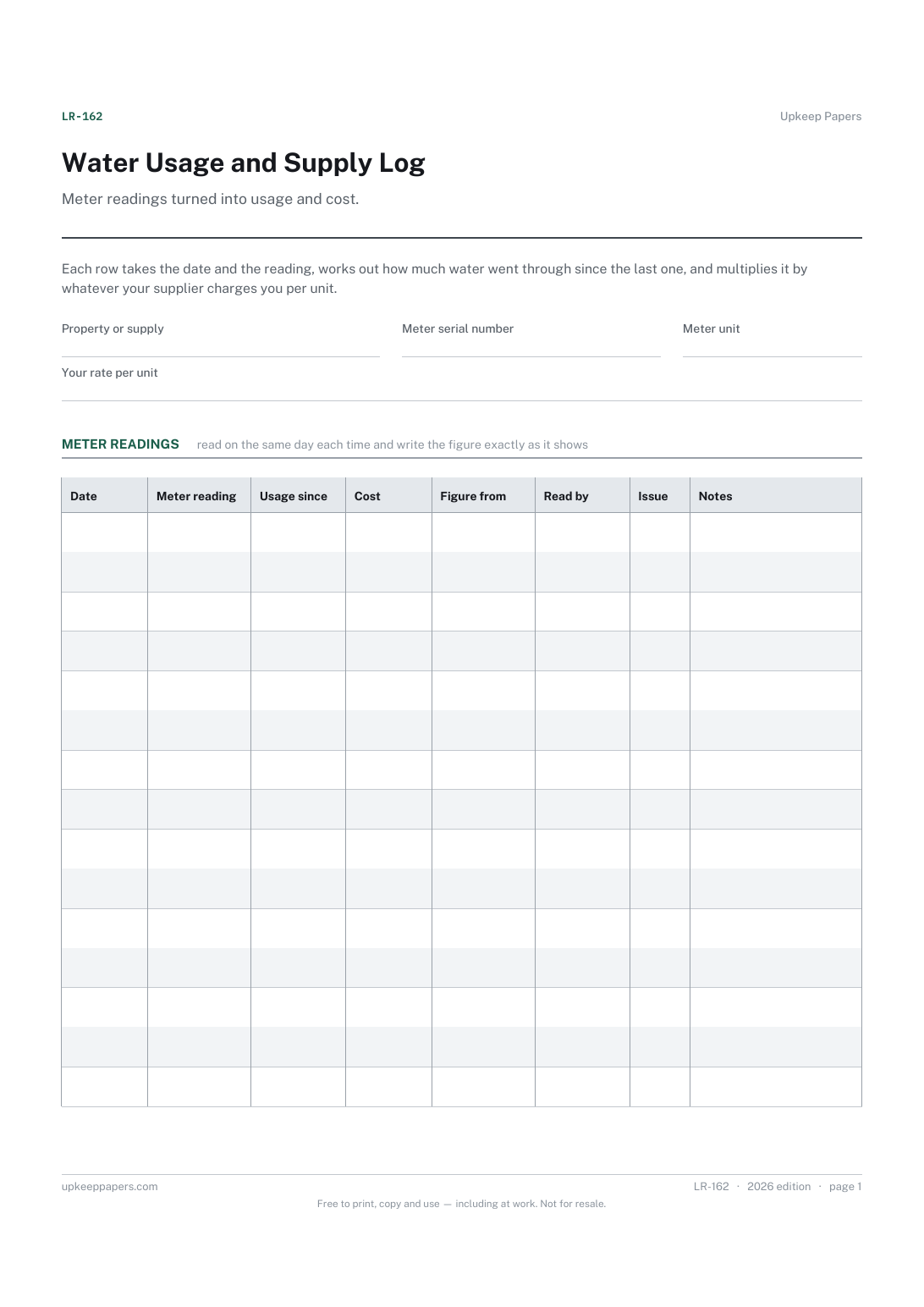
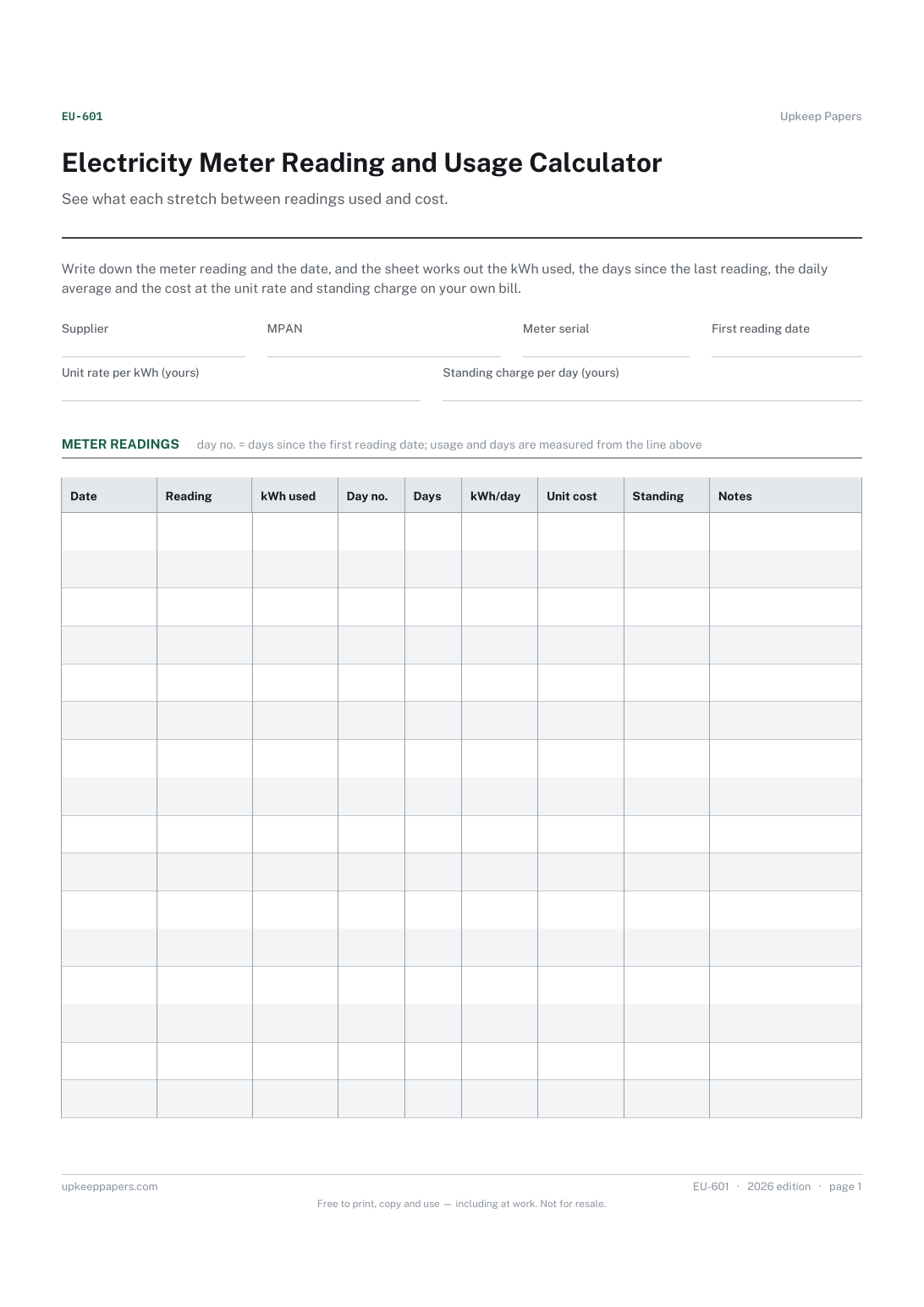
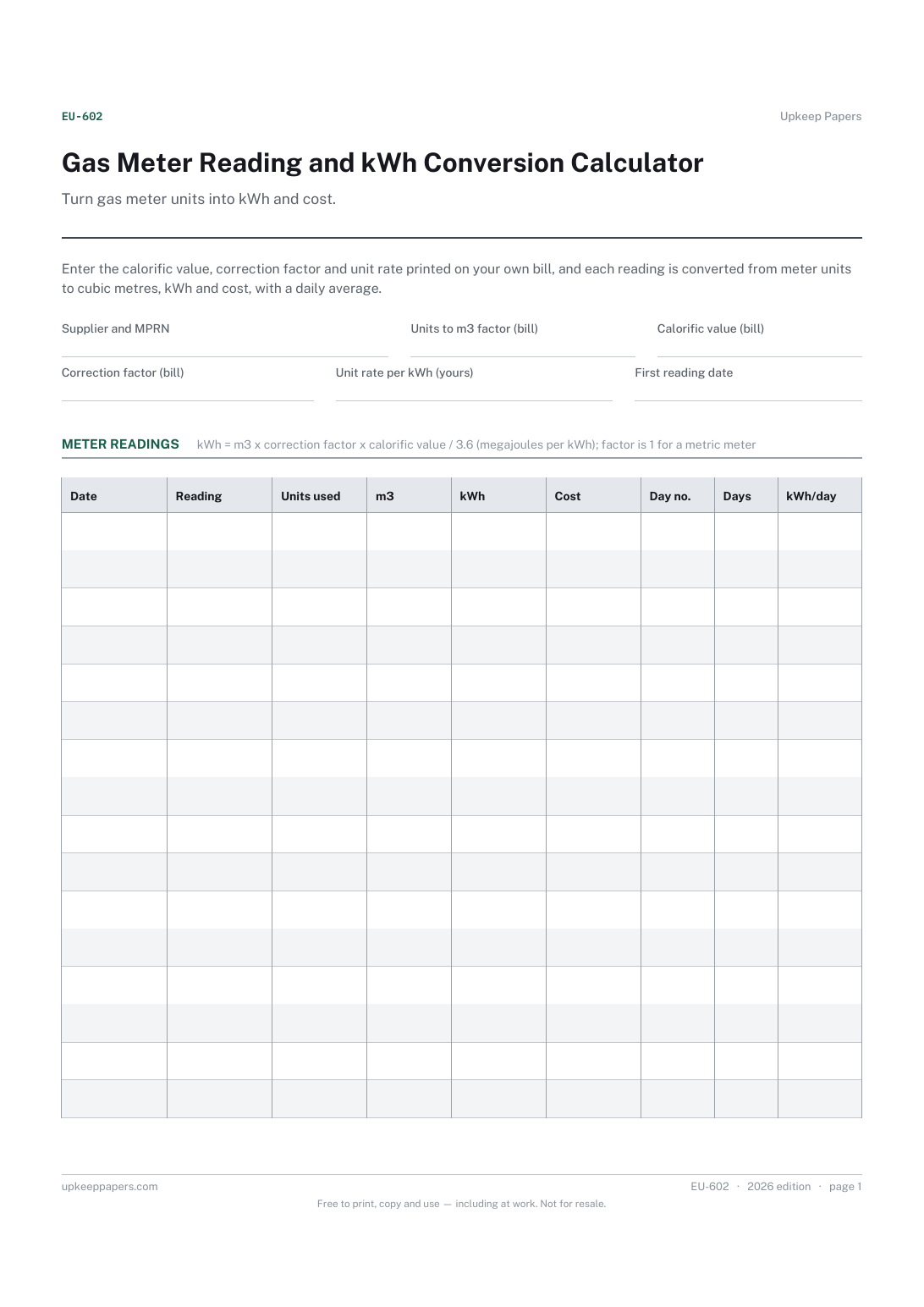
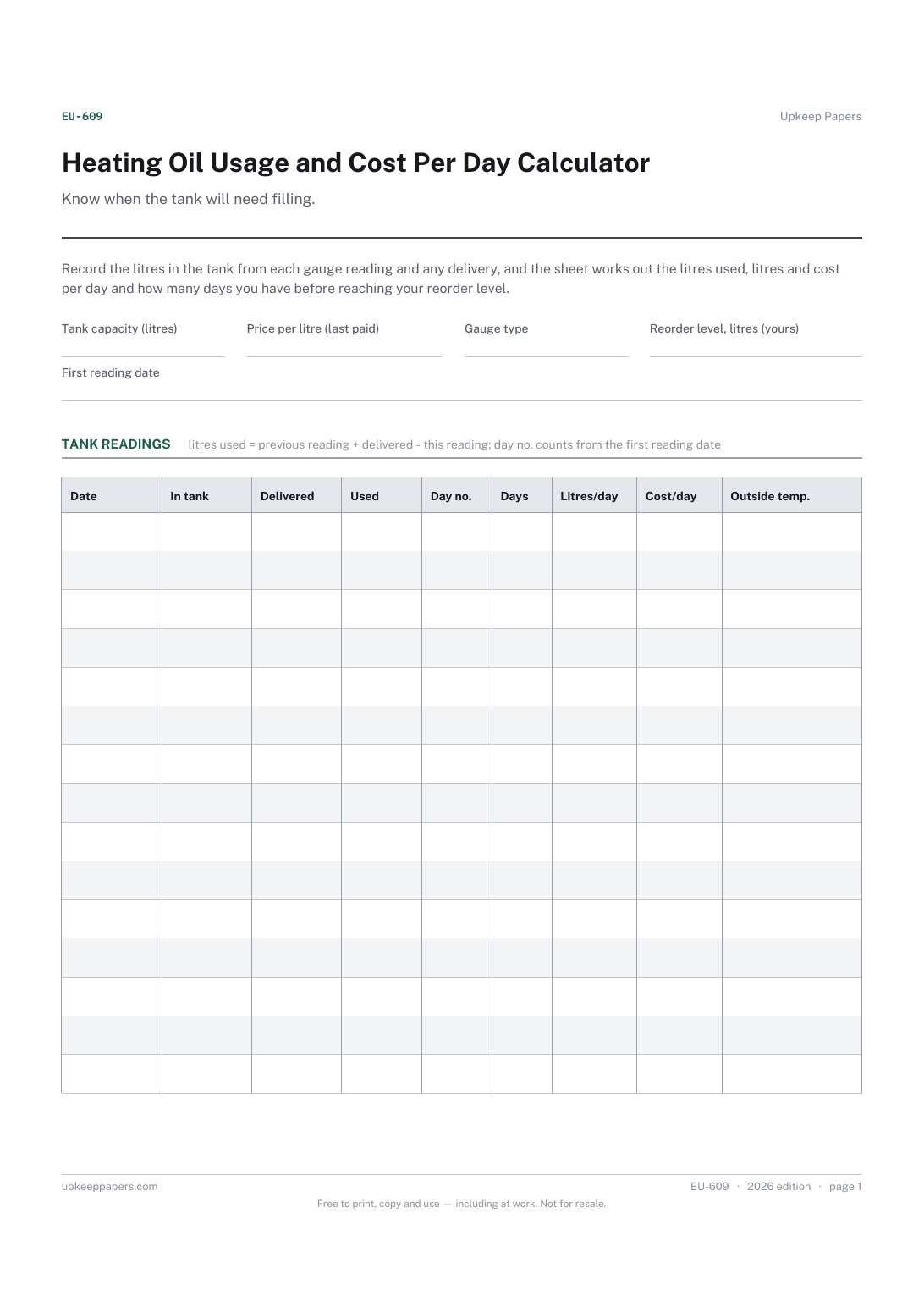
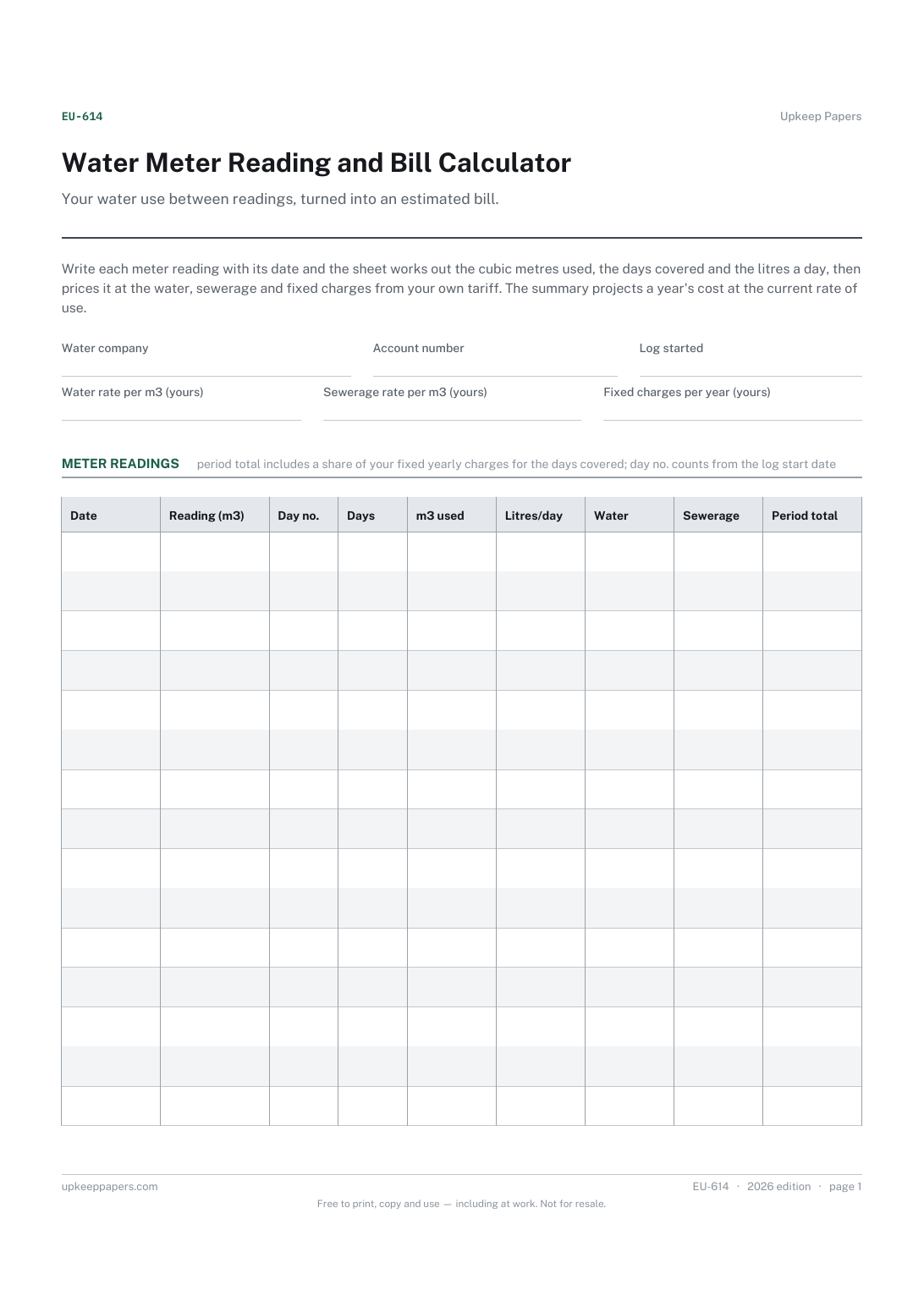
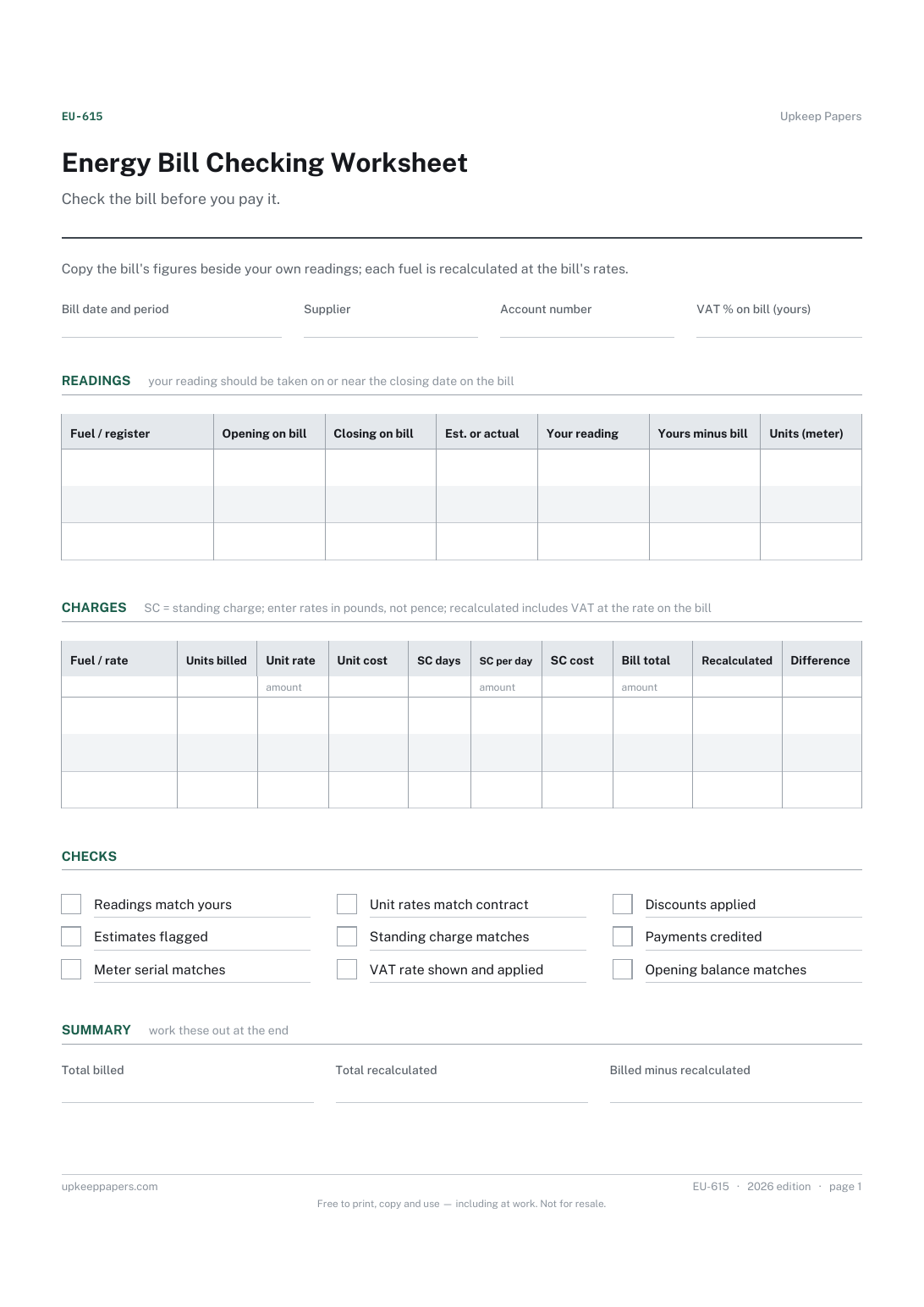
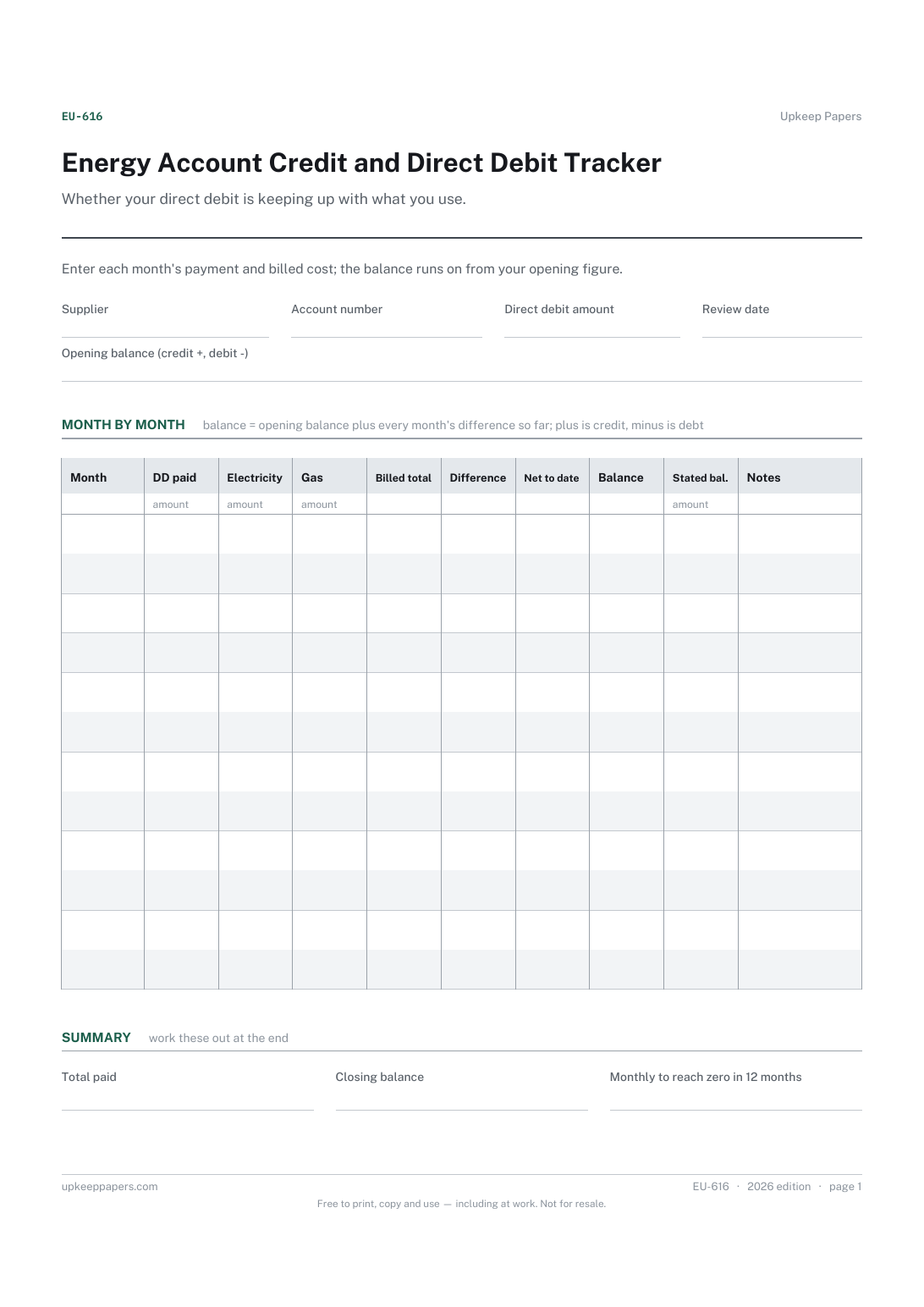
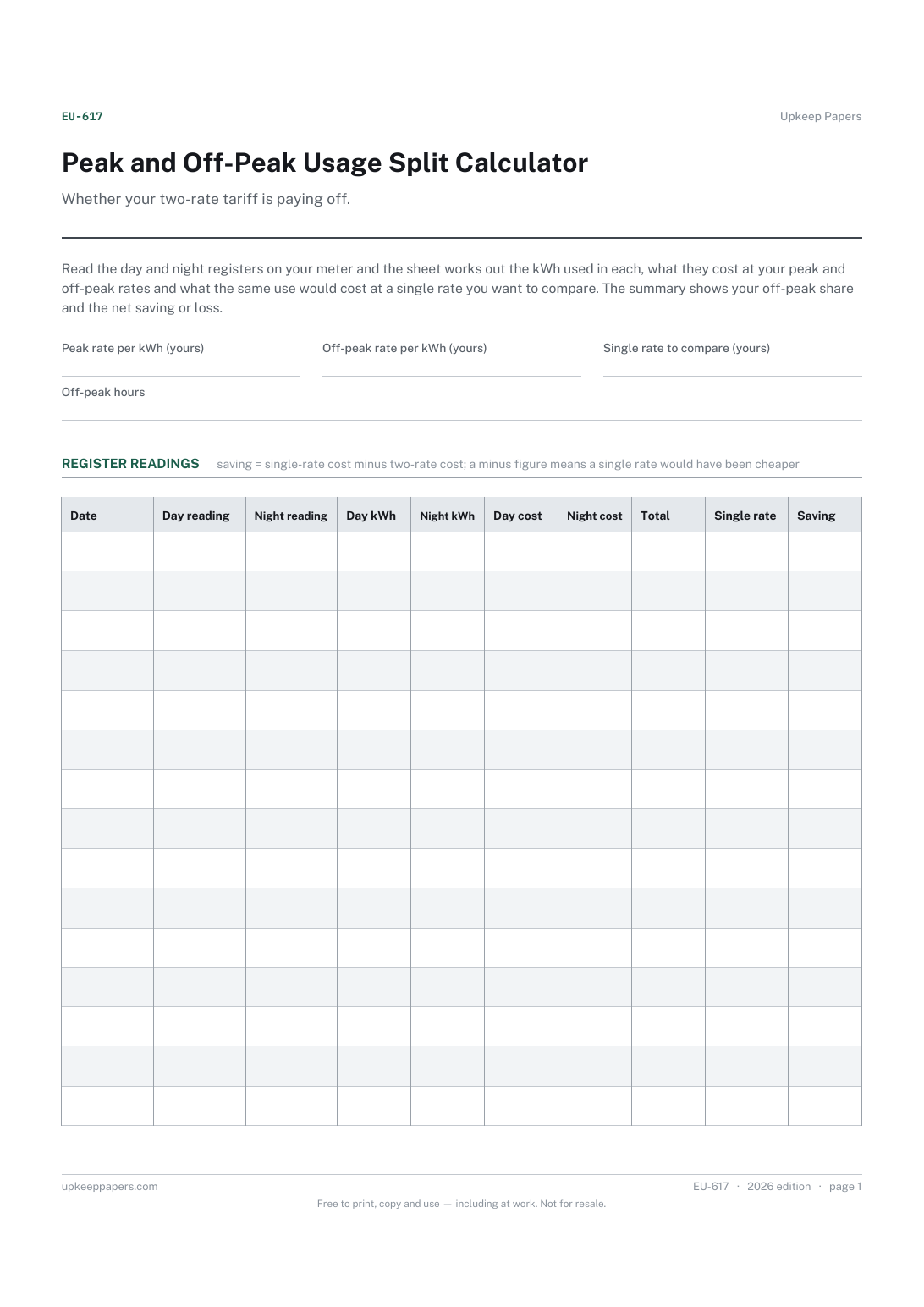
Meter readings turned into usage and cost per period, so a bill can be checked against what the meter actually did rather than taken on trust.
What a vehicle really costs per mile, what it drinks, and what falls due first.
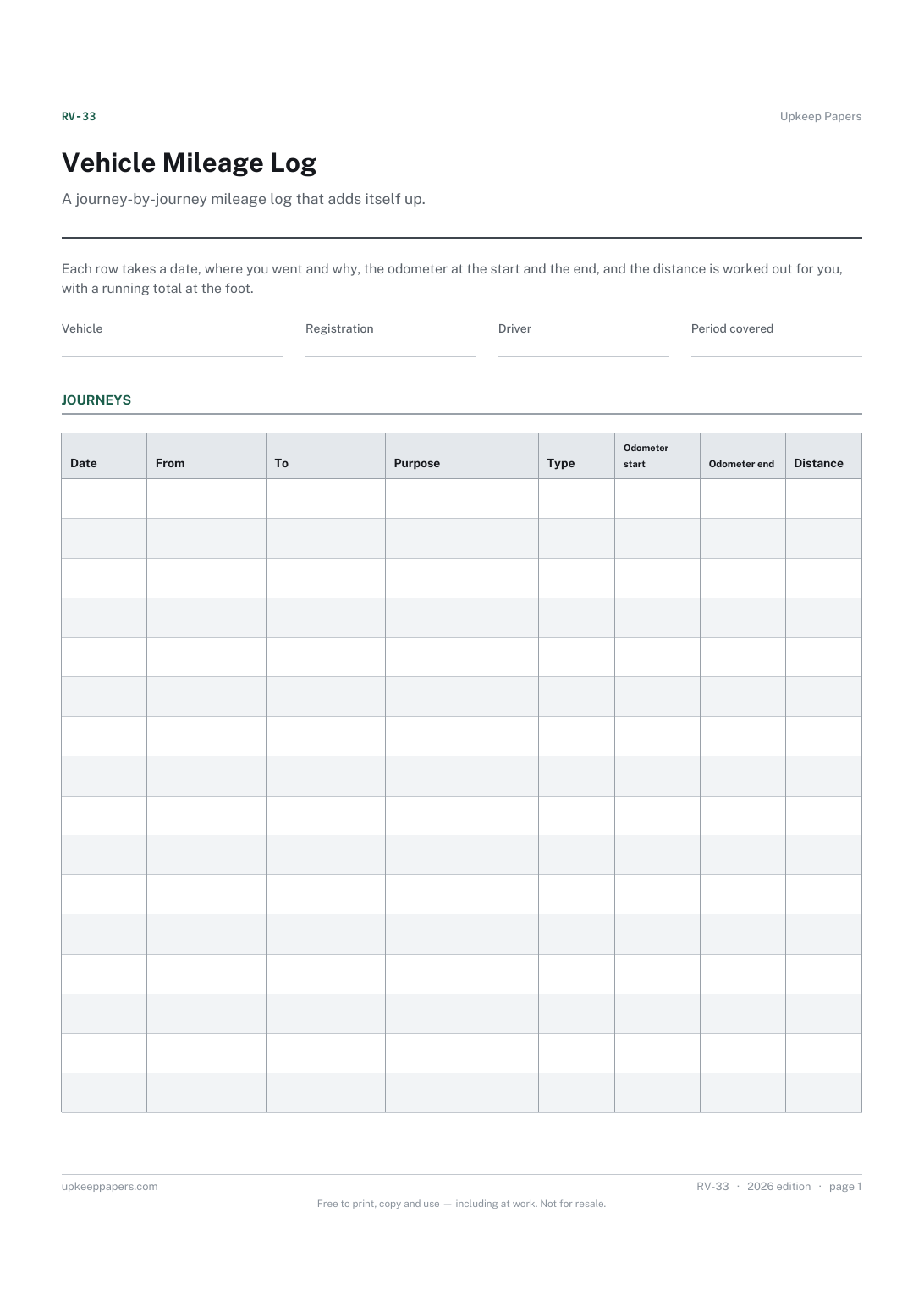
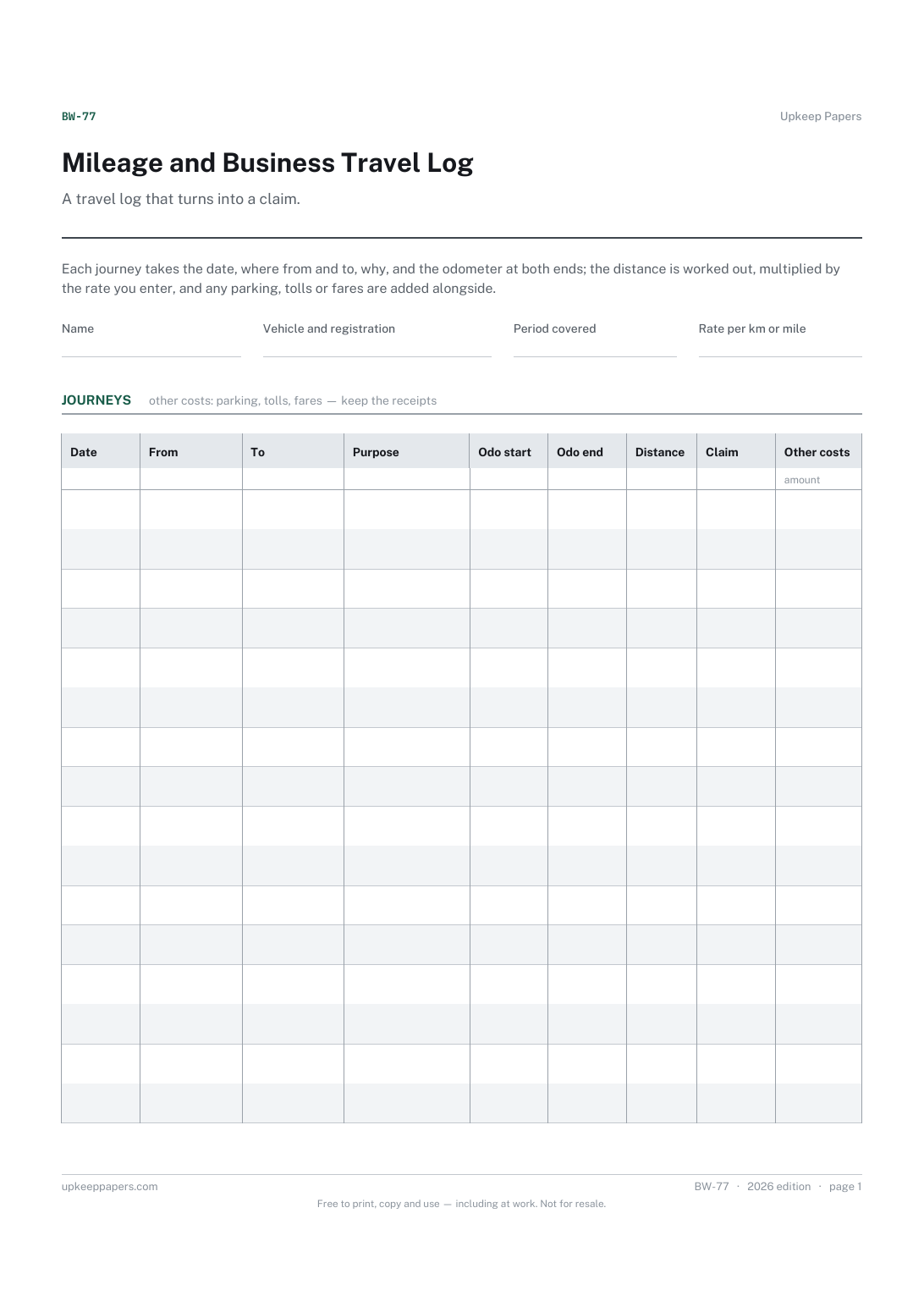
Business journeys logged with start and end readings, valued at the rate you enter, totalled per month and for the year.
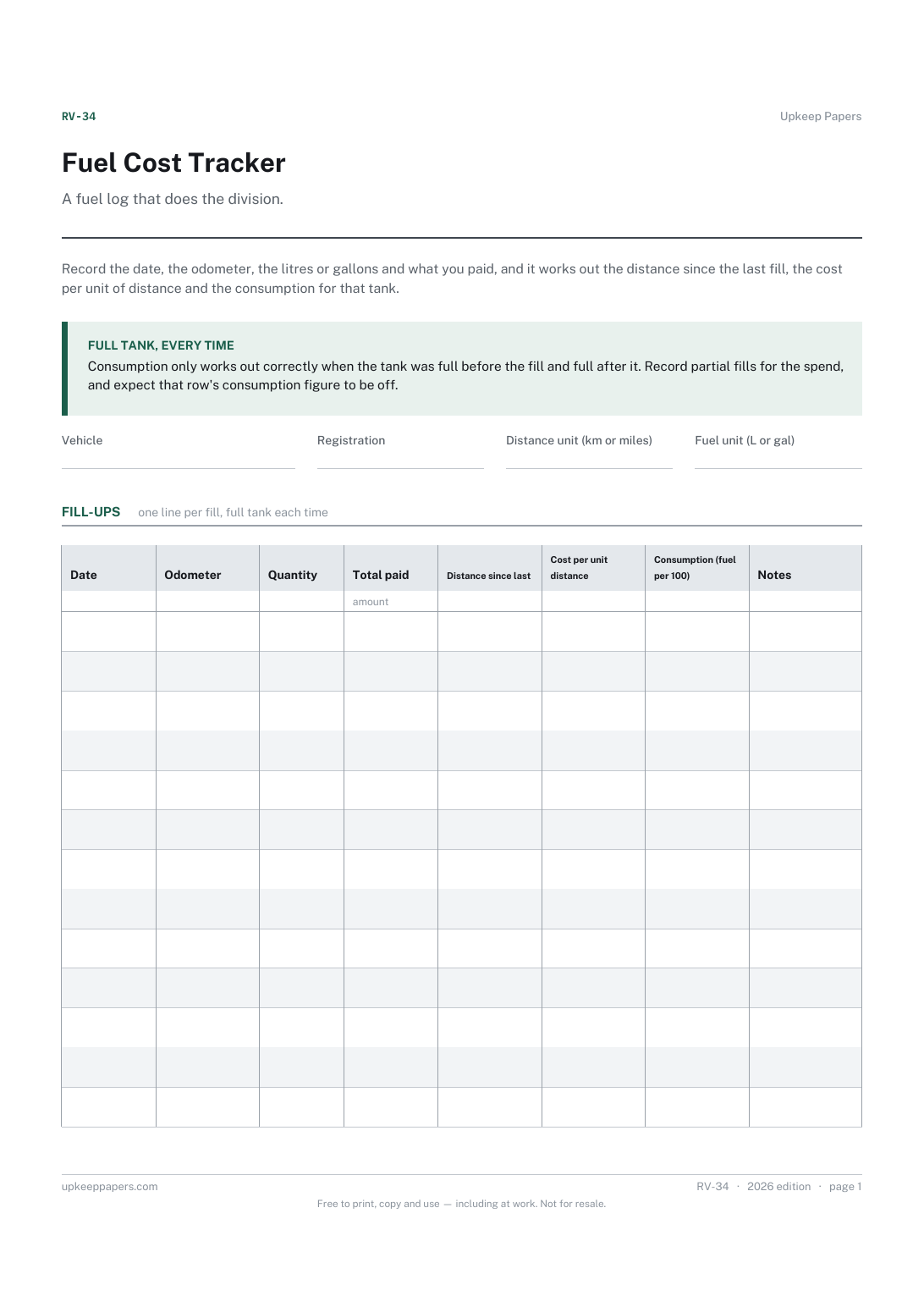
Fill-ups logged against the odometer, working out distance per fill, consumption, and what each unit of distance cost in fuel alone.
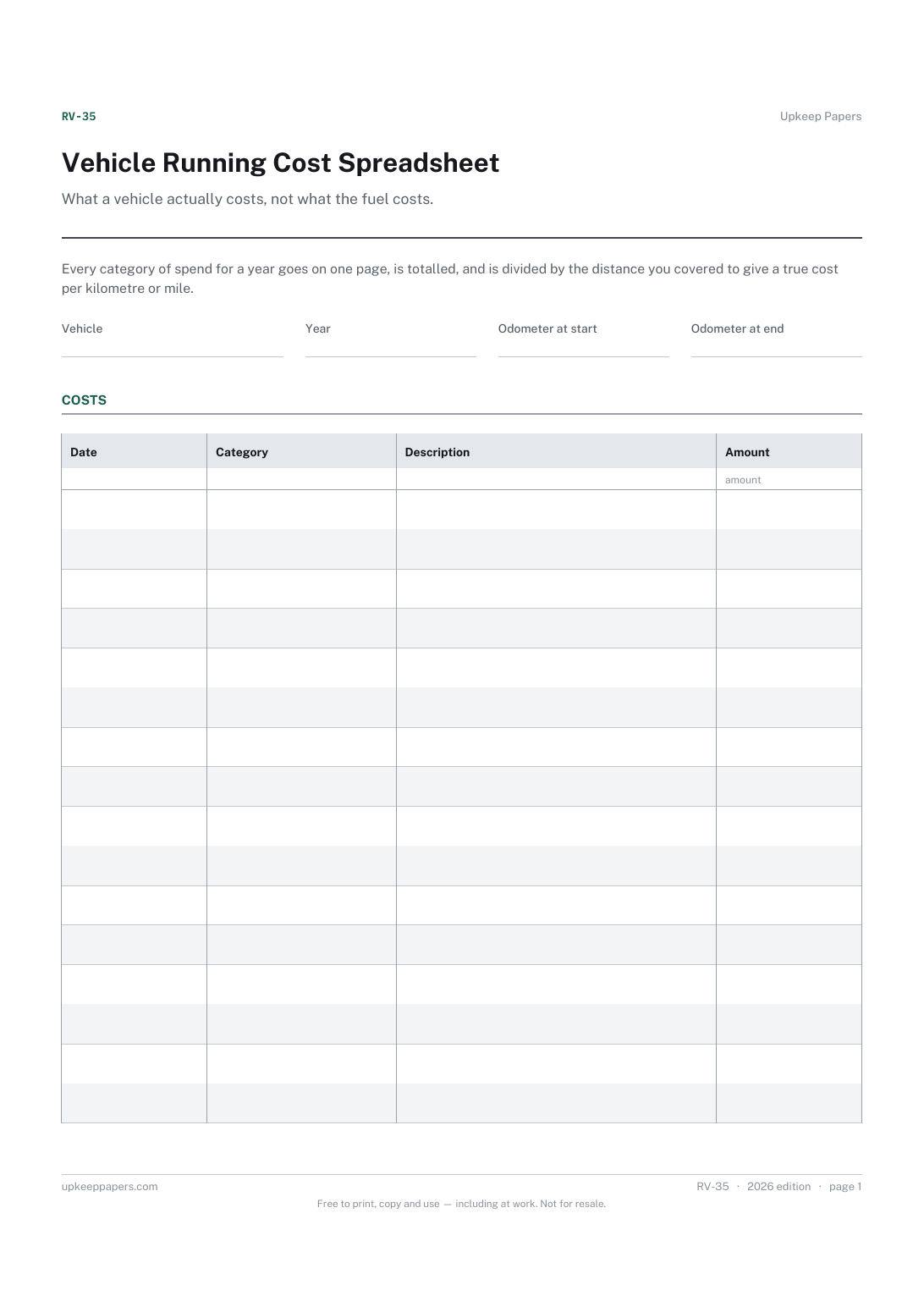
Everything a vehicle costs in a year — fuel, servicing, tyres, insurance, tax, finance — turned into a cost per unit of distance and a cost per month.
Service items tracked on both clocks at once — distance and time — showing which one falls due first and how far away it is.
Rent in, costs out, tenancy dates counted down, and what a let actually returns.
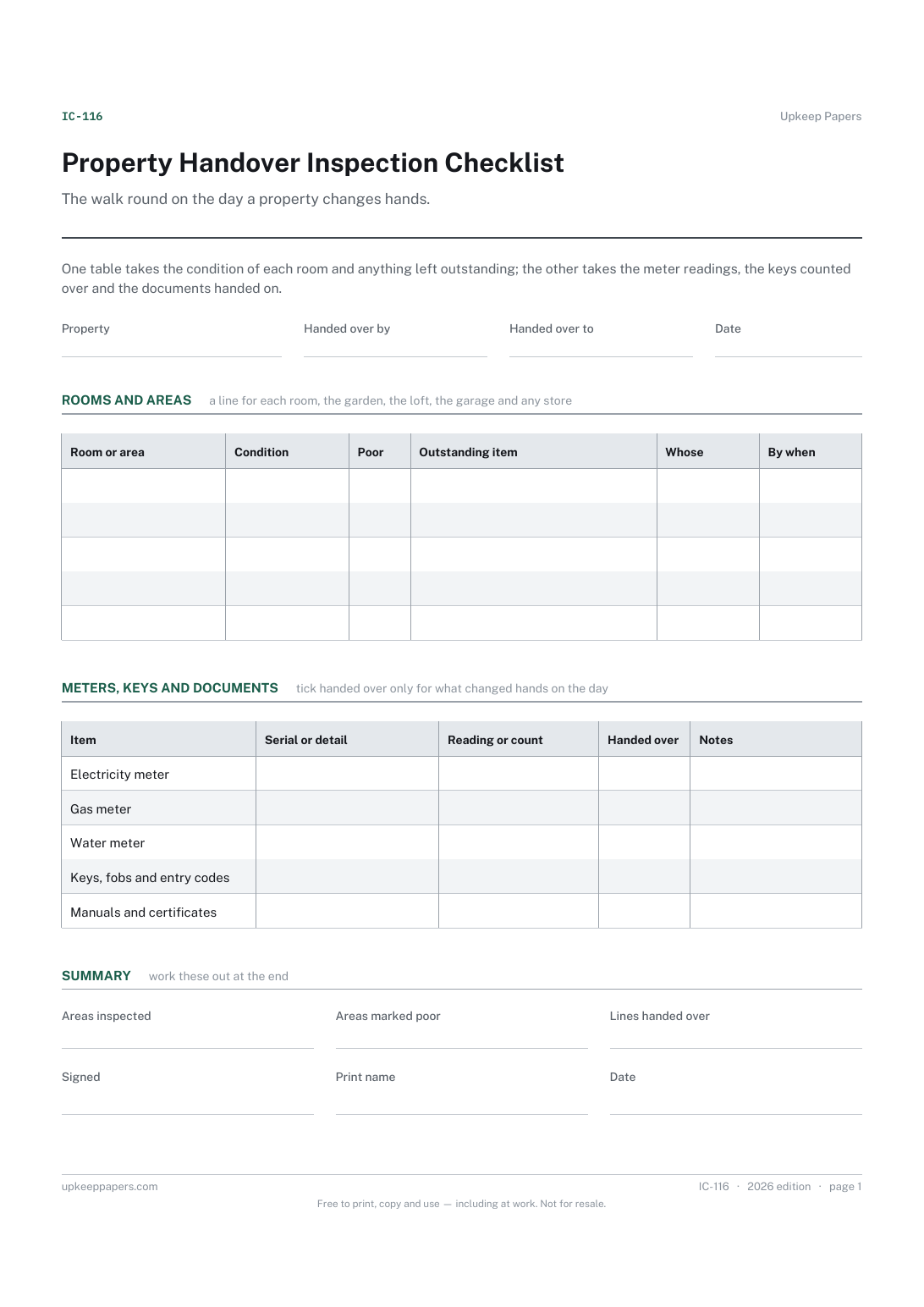
Inspection findings and maintenance requests tracked from report to resolution, with days open and cost per property.
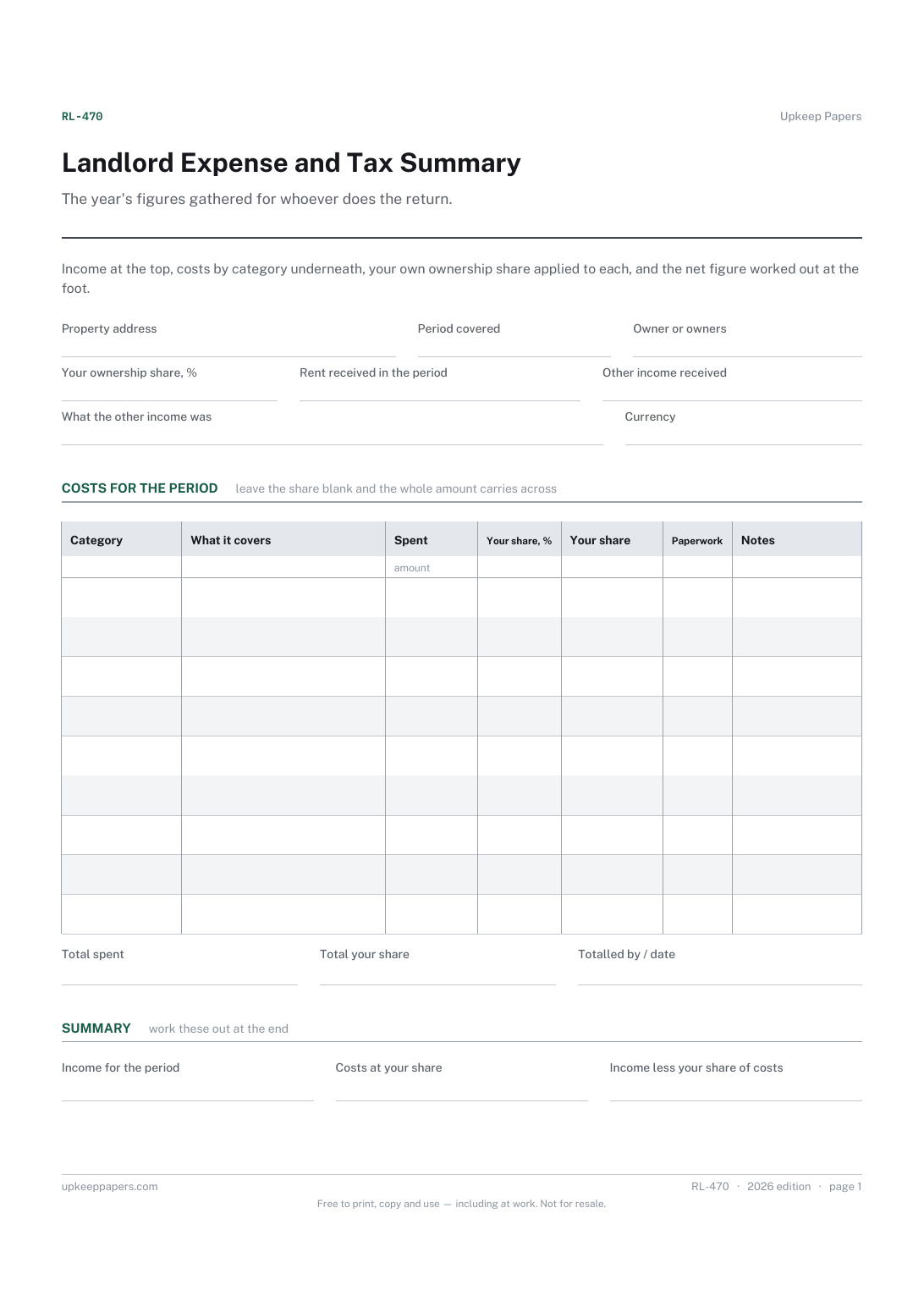
Rent received and money spent, per property and per month, with the net for each property and a category breakdown for the year end.
Purchase costs, rent and running costs turned into gross yield, net yield, monthly cashflow and return on the cash actually invested.
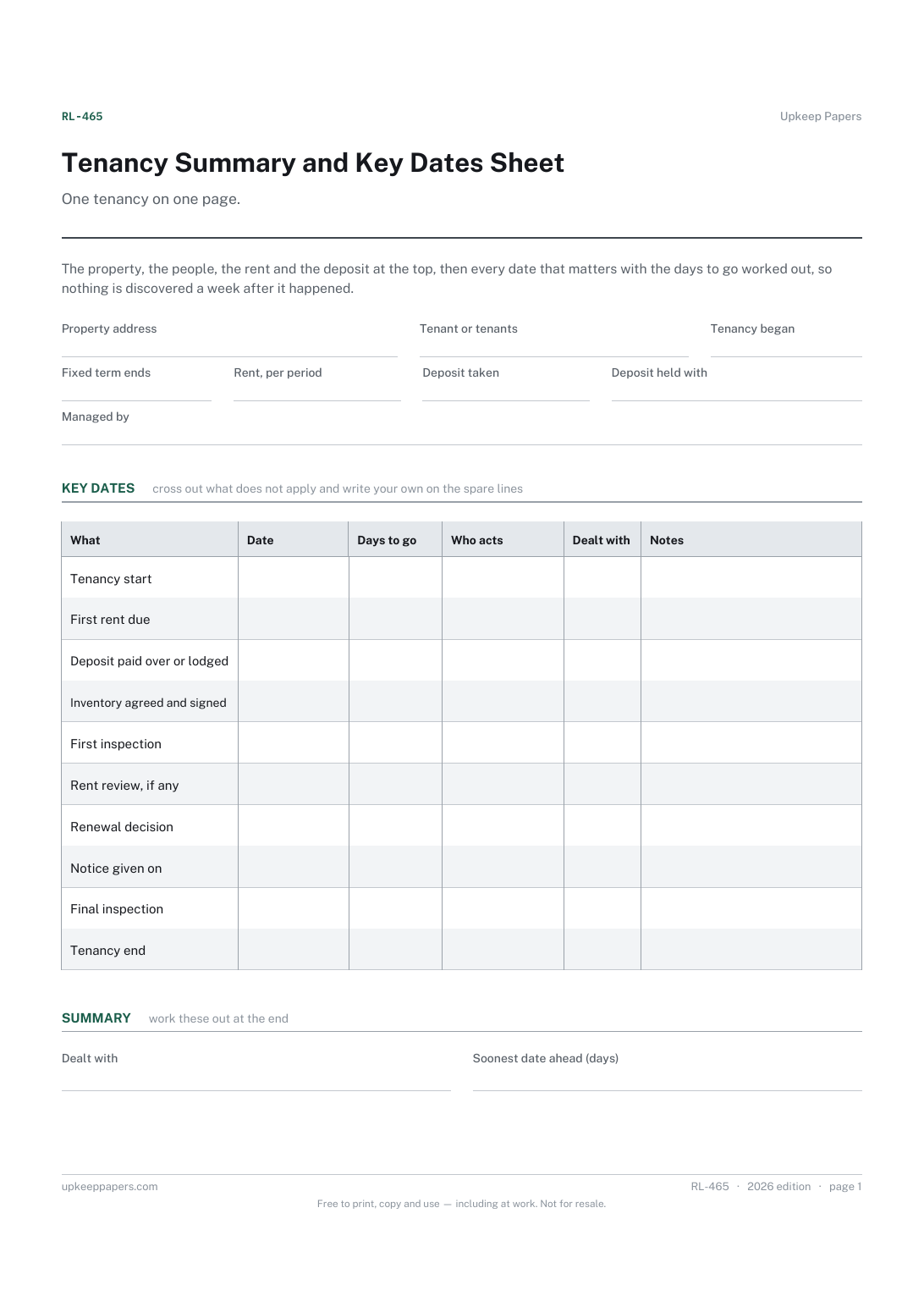
Every tenancy with its dates, rent, deposit and where the deposit is held — counting down to the end of each term so renewals never arrive as a surprise.
Books, unpaid invoices, customers, stock and the quotes that turned into jobs.
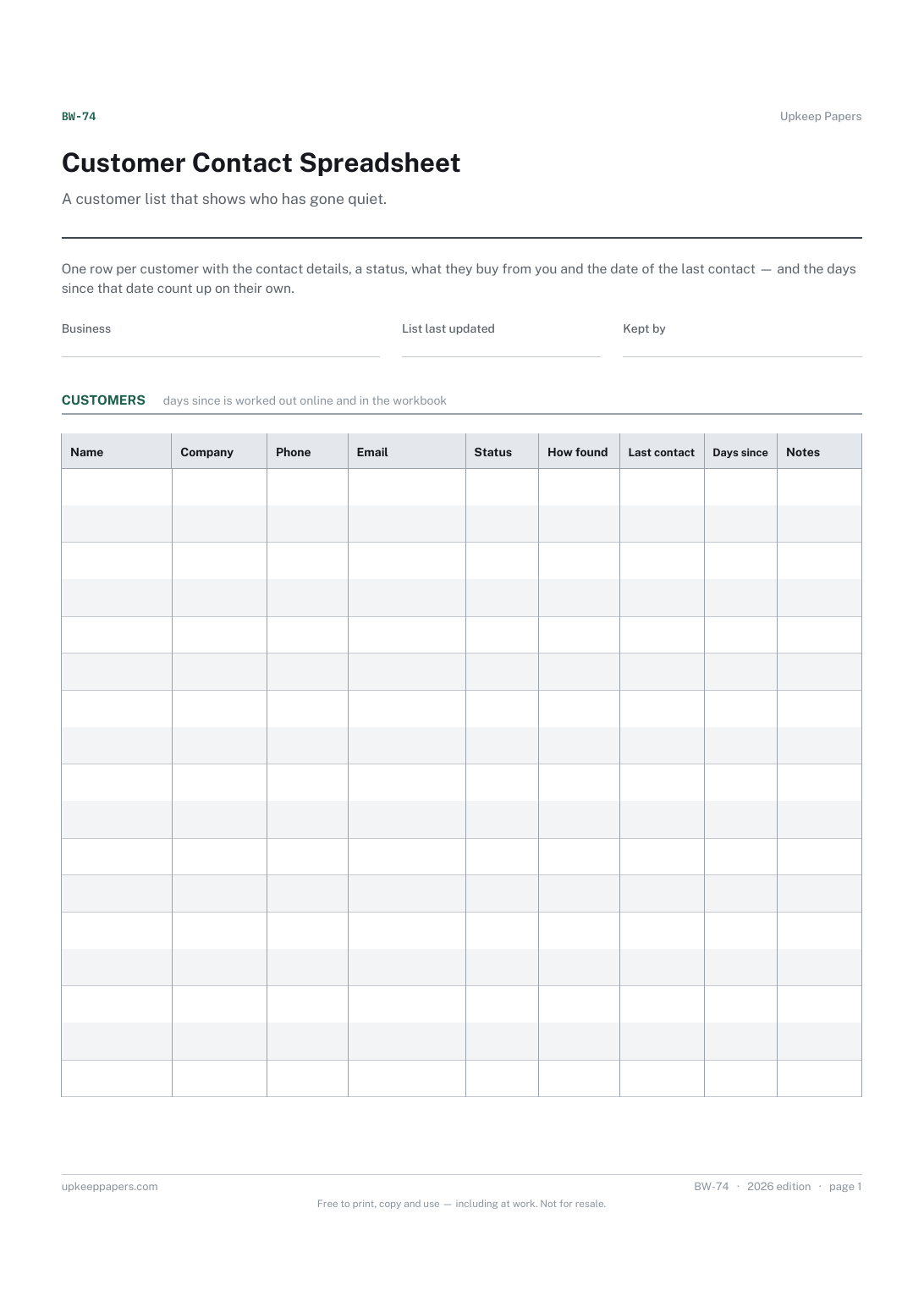
A customer list that is also a value list — contact details, how they found you, what they have spent, and when you last spoke.
Every invoice raised, what has been paid against it, and how many days overdue the rest is — with the aged debt split that tells you who to chase first.
Quotes followed through to finished jobs, with your win rate, the gap between quoted and actual, and the margin you really made.
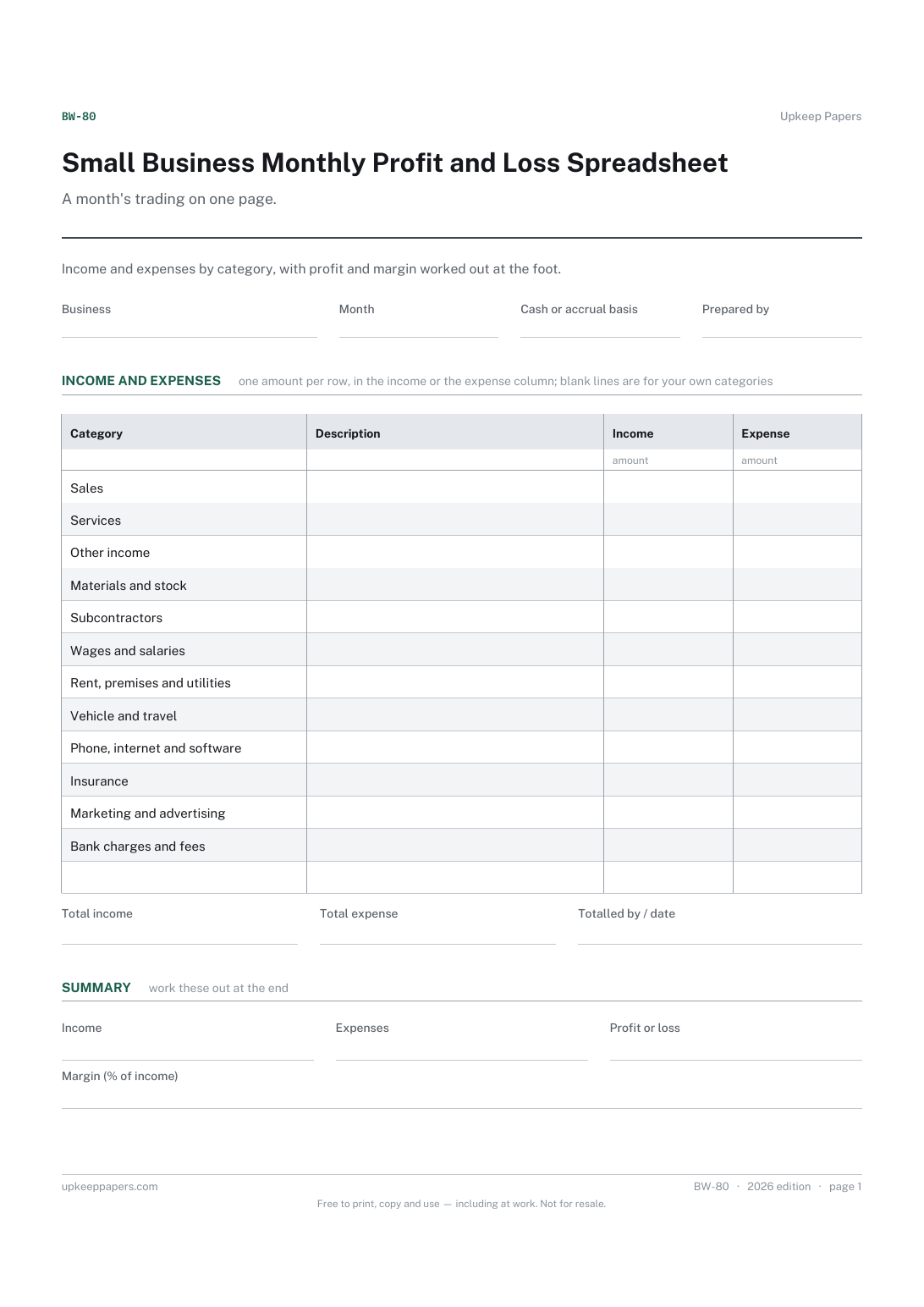
Simple books for a small business — money in, money out, categorised, with a monthly profit line and a year-end category breakdown.
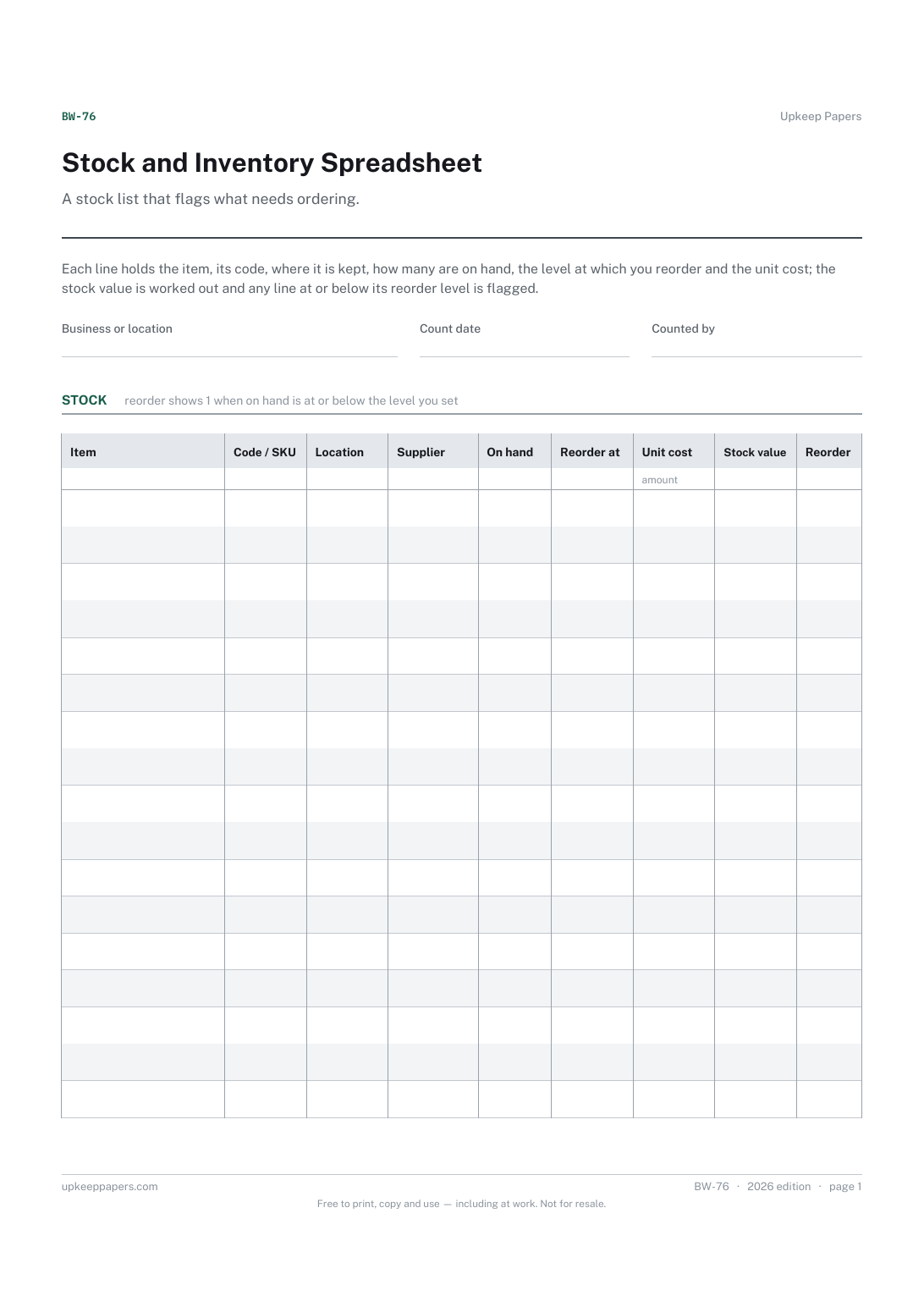
Stock on hand valued at cost and at retail, with margin per line and a reorder flag against the minimum level you set for each item.
Renewals that creep up, where the documents are, what the animals cost, and the move.
An index of where the important papers actually are — the file somebody else would need if they had to find everything without you.
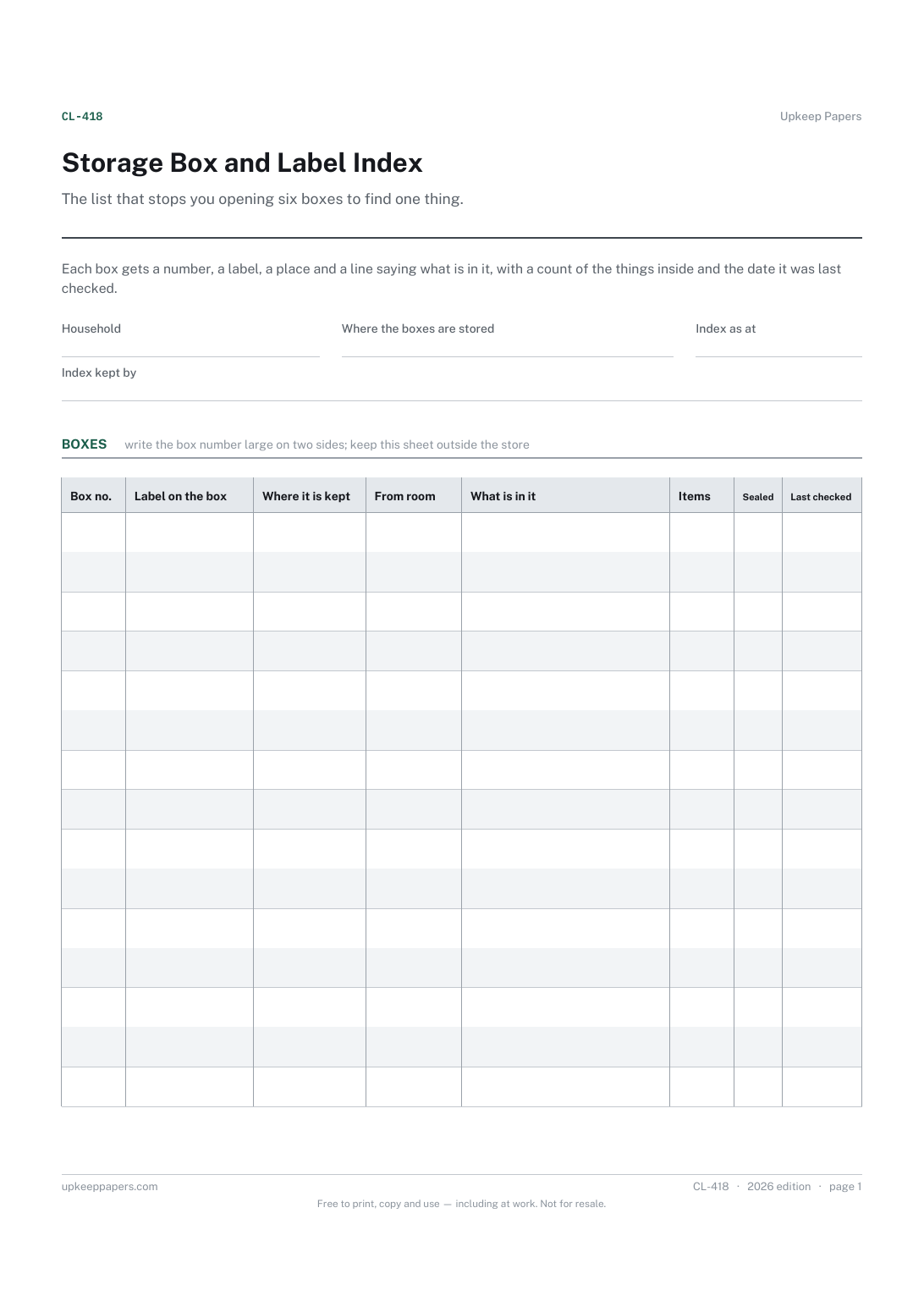
Every box numbered, with what is in it, which room it came from and which room it is going to — plus a count of what has arrived and what has been unpacked.
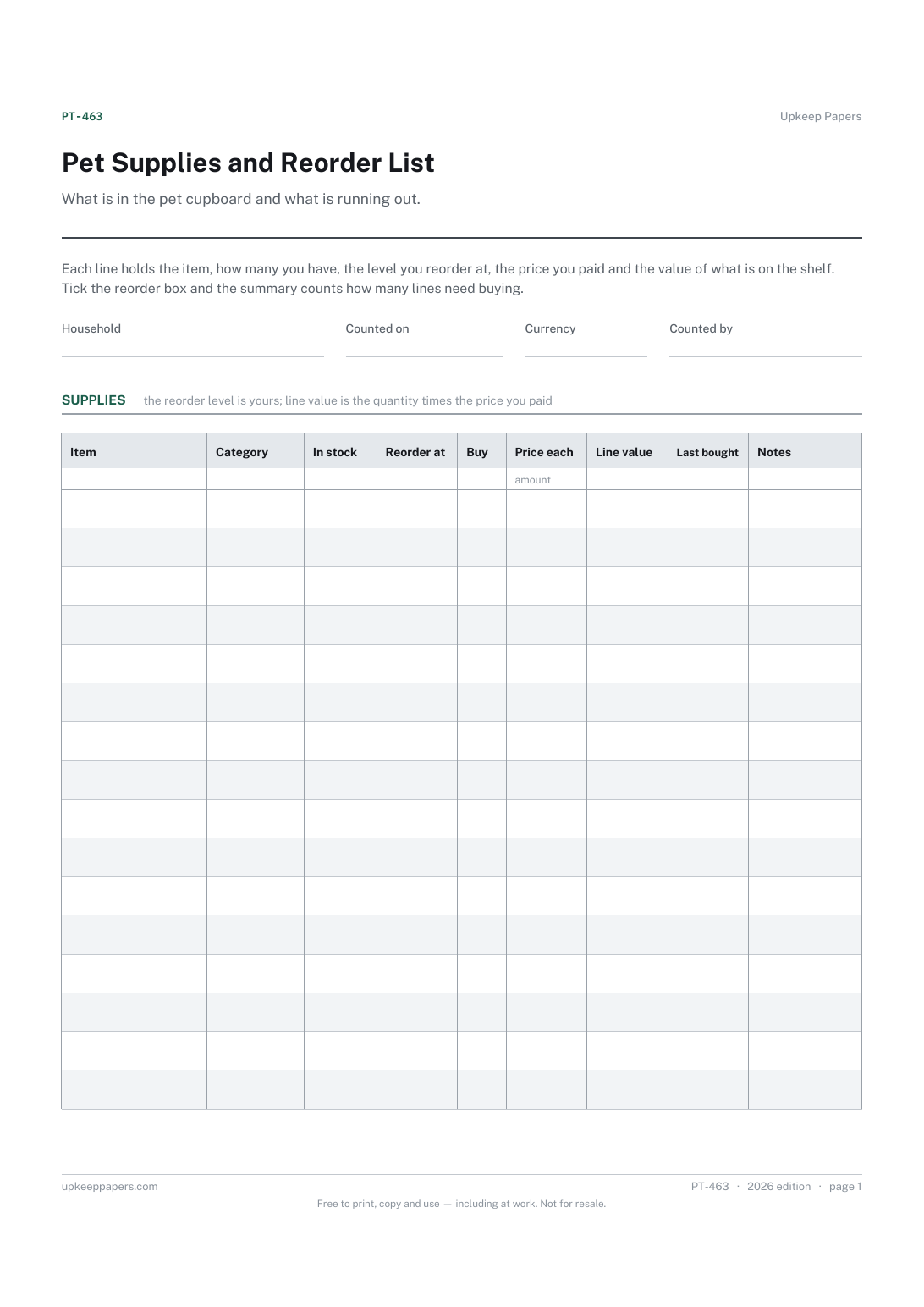
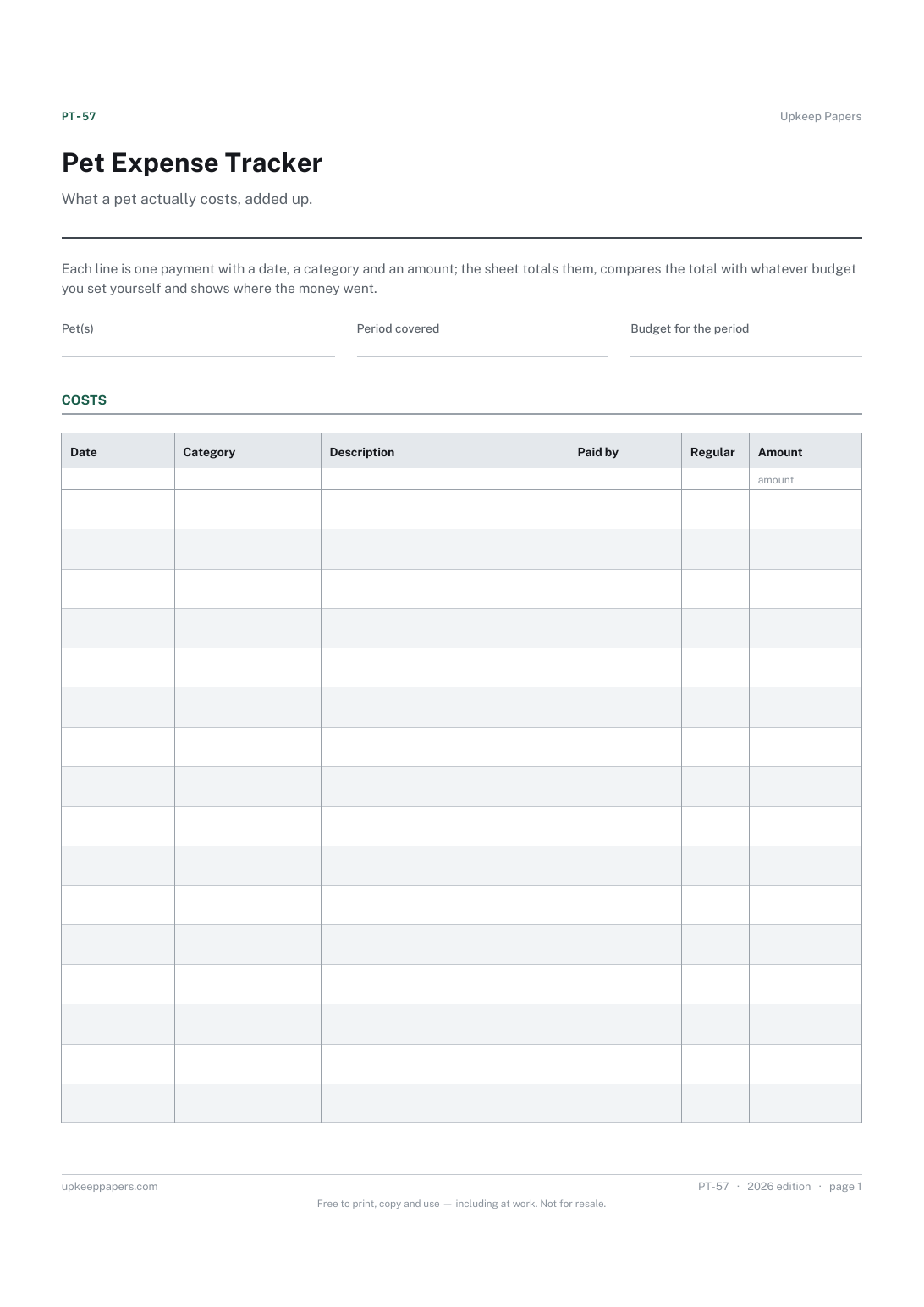
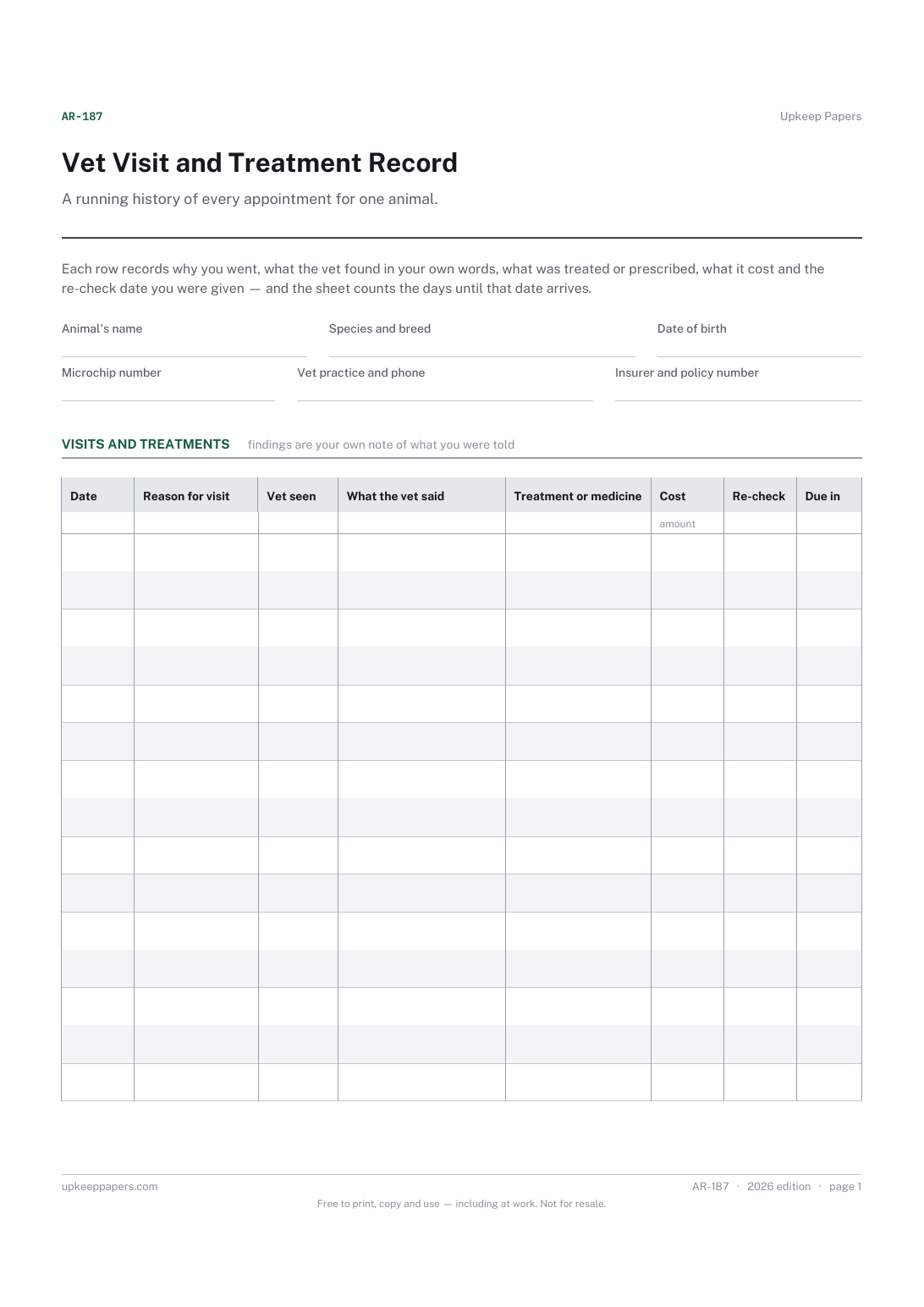
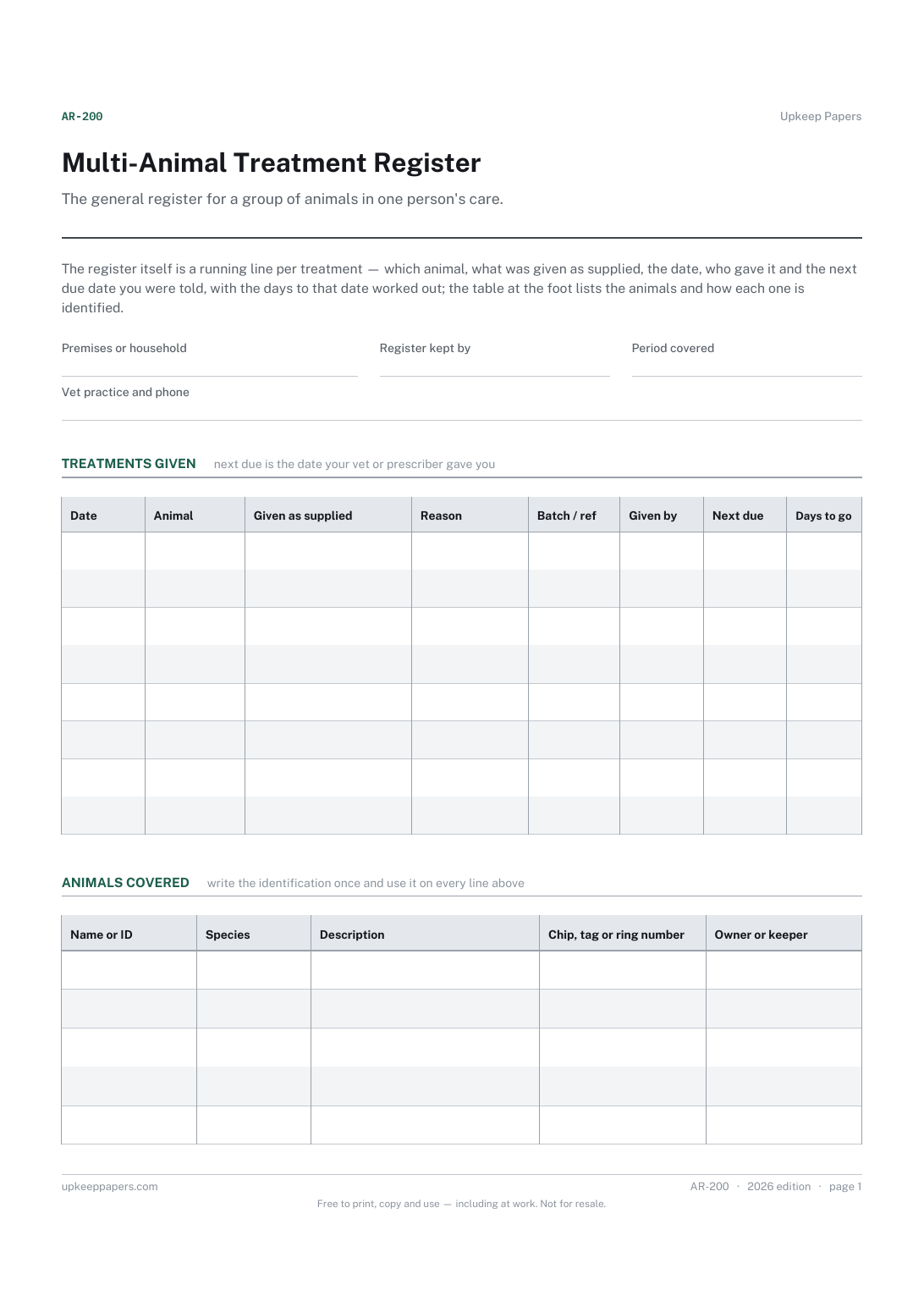
What a pet costs across a year, alongside the dates that matter — vaccinations, treatments, insurance renewal — counted down.
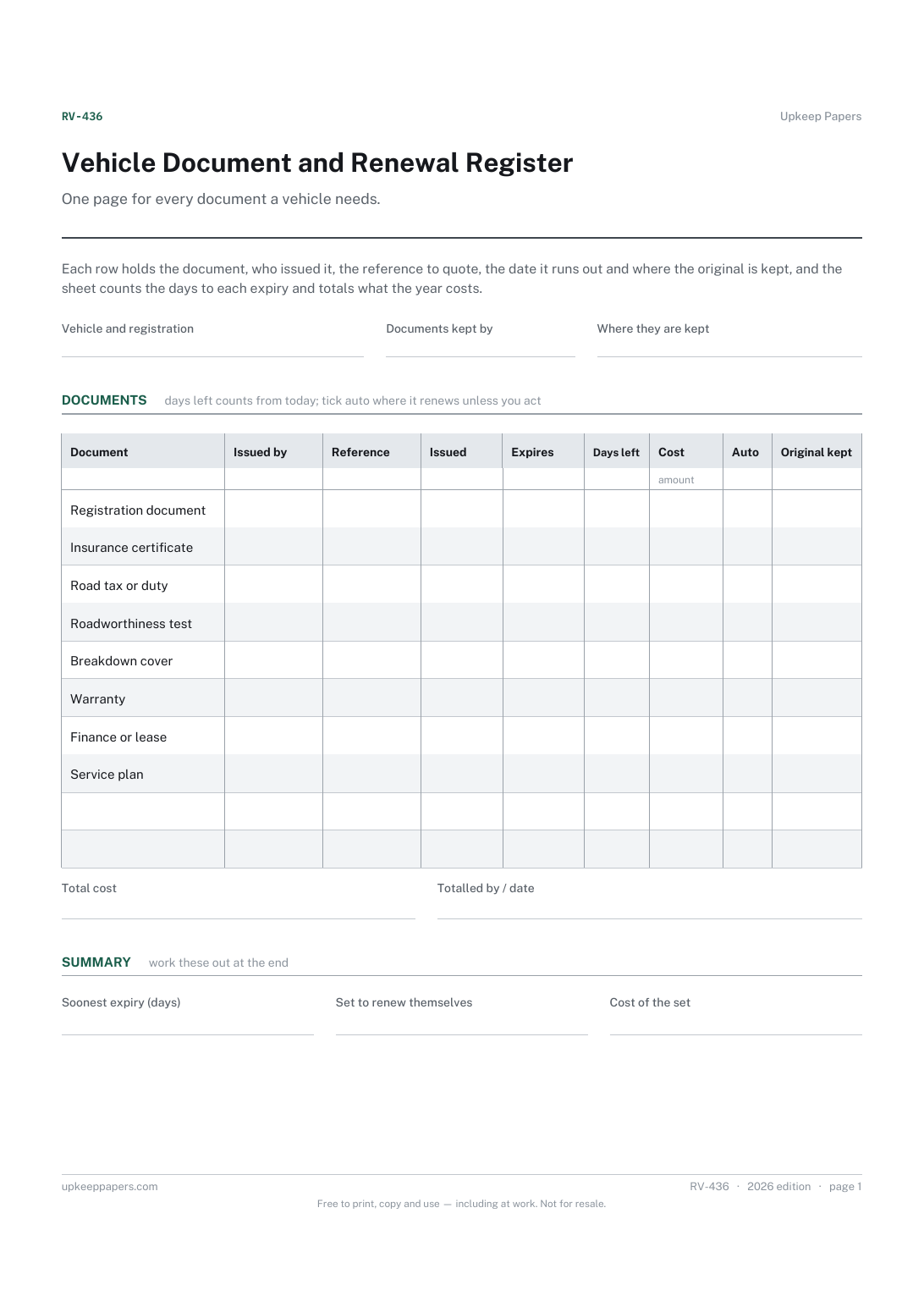
Insurance, licences, tests, memberships, passports and everything else that quietly expires — counted down from today and sorted by what lapses first.
A further 683 spreadsheets, each paired with a printable PDF and a version you can fill in online. Same plain formulas, same cream-and-grey cells.
The total value of the contents, worked out from the lines rather than guessed.
Make, model and serial number for every appliance, ready for a repair call.
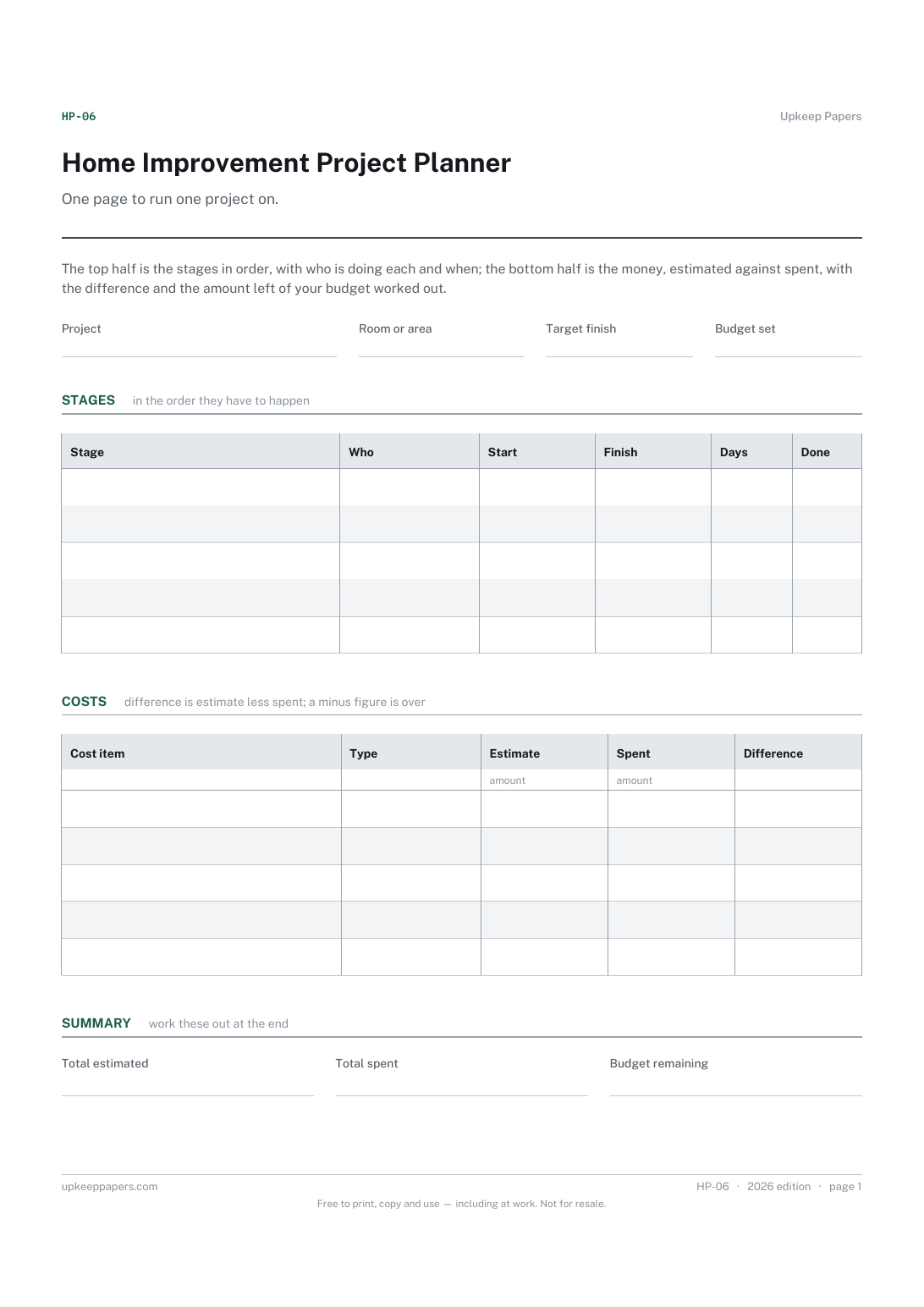
The stages of the job in order, with start and finish dates and how long each took.
Estimate against actual for every line, with the variance worked out.
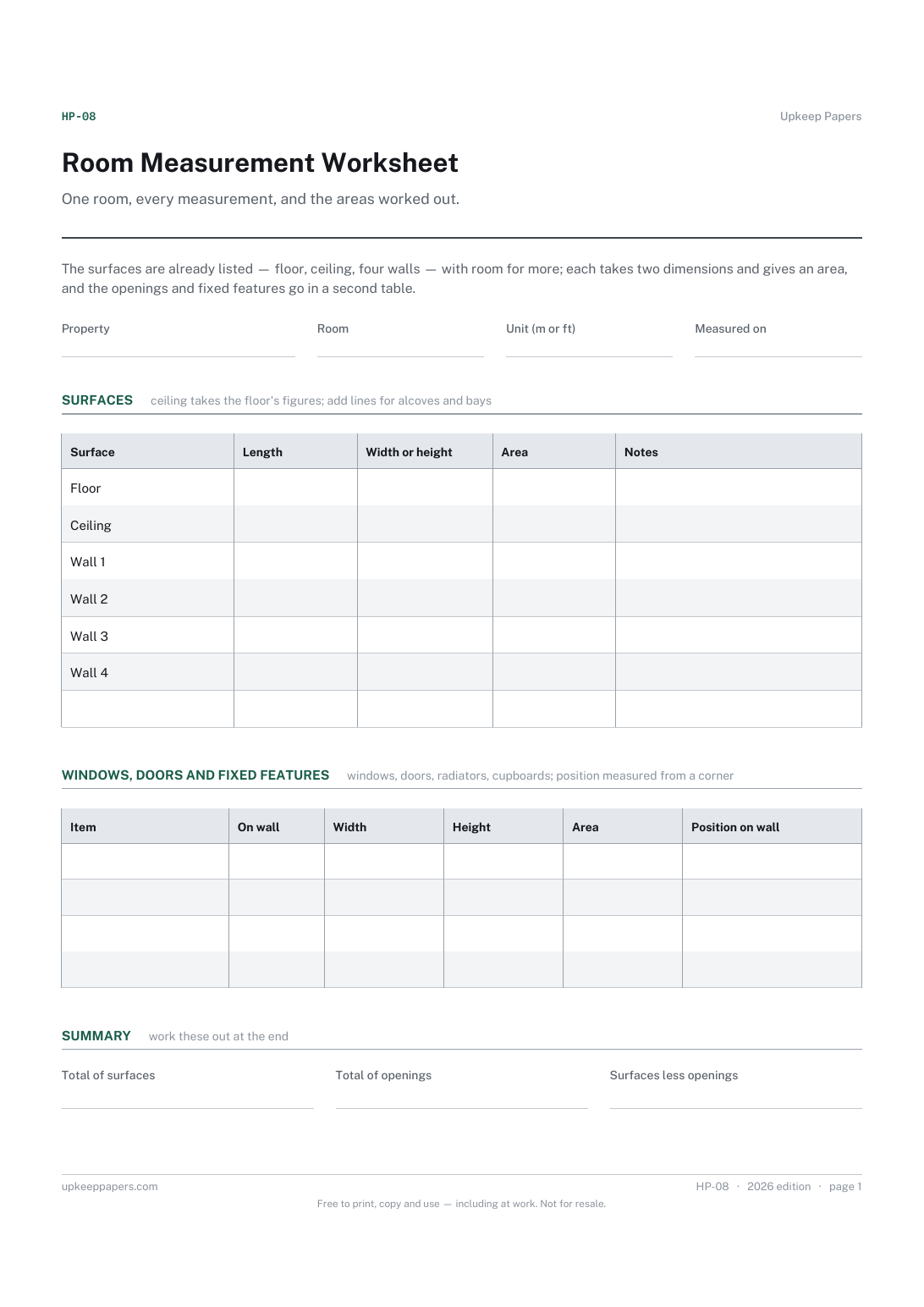
Length and width of each surface, and the area each comes to.
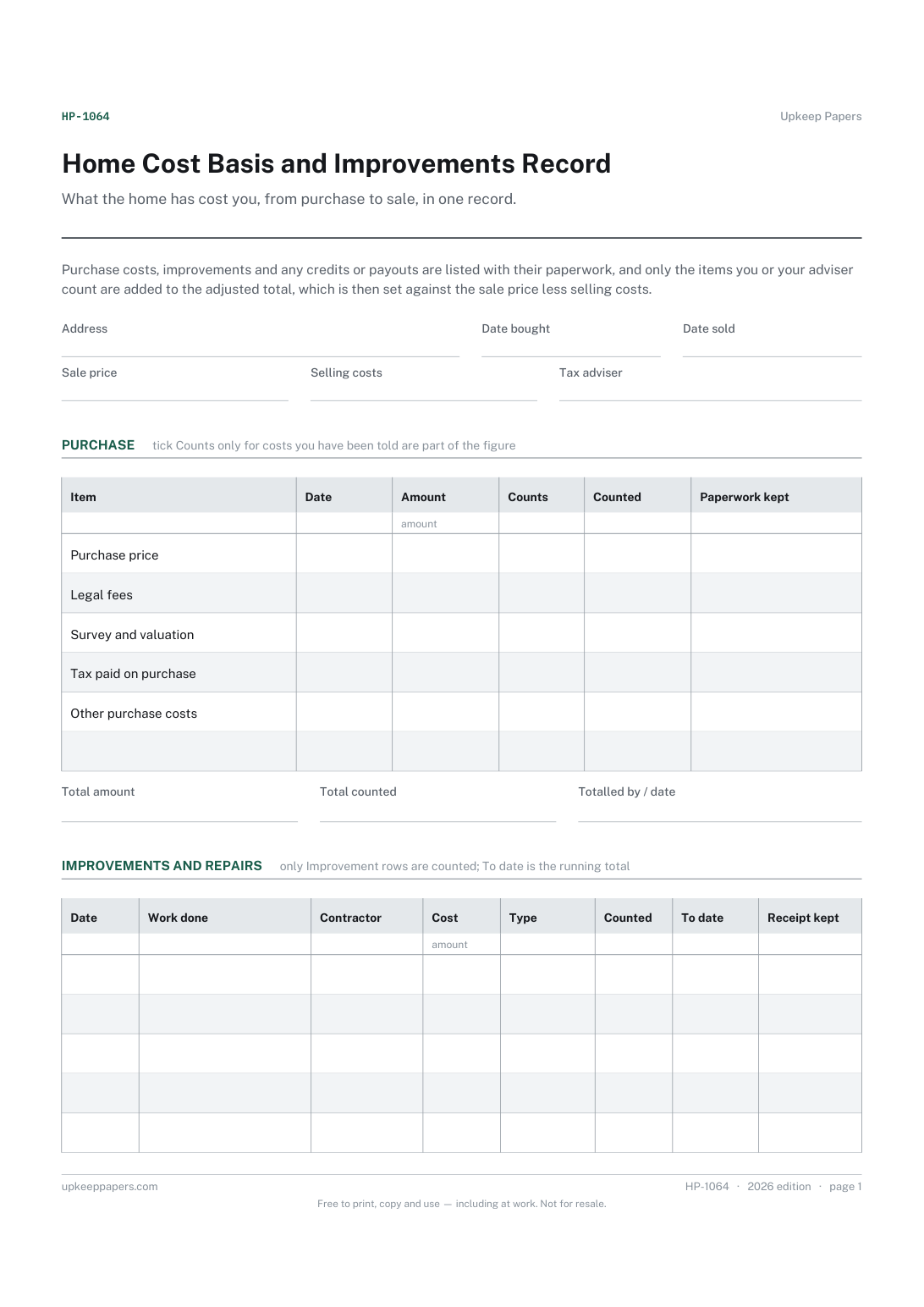
Purchase price and the purchase costs that count towards the total.
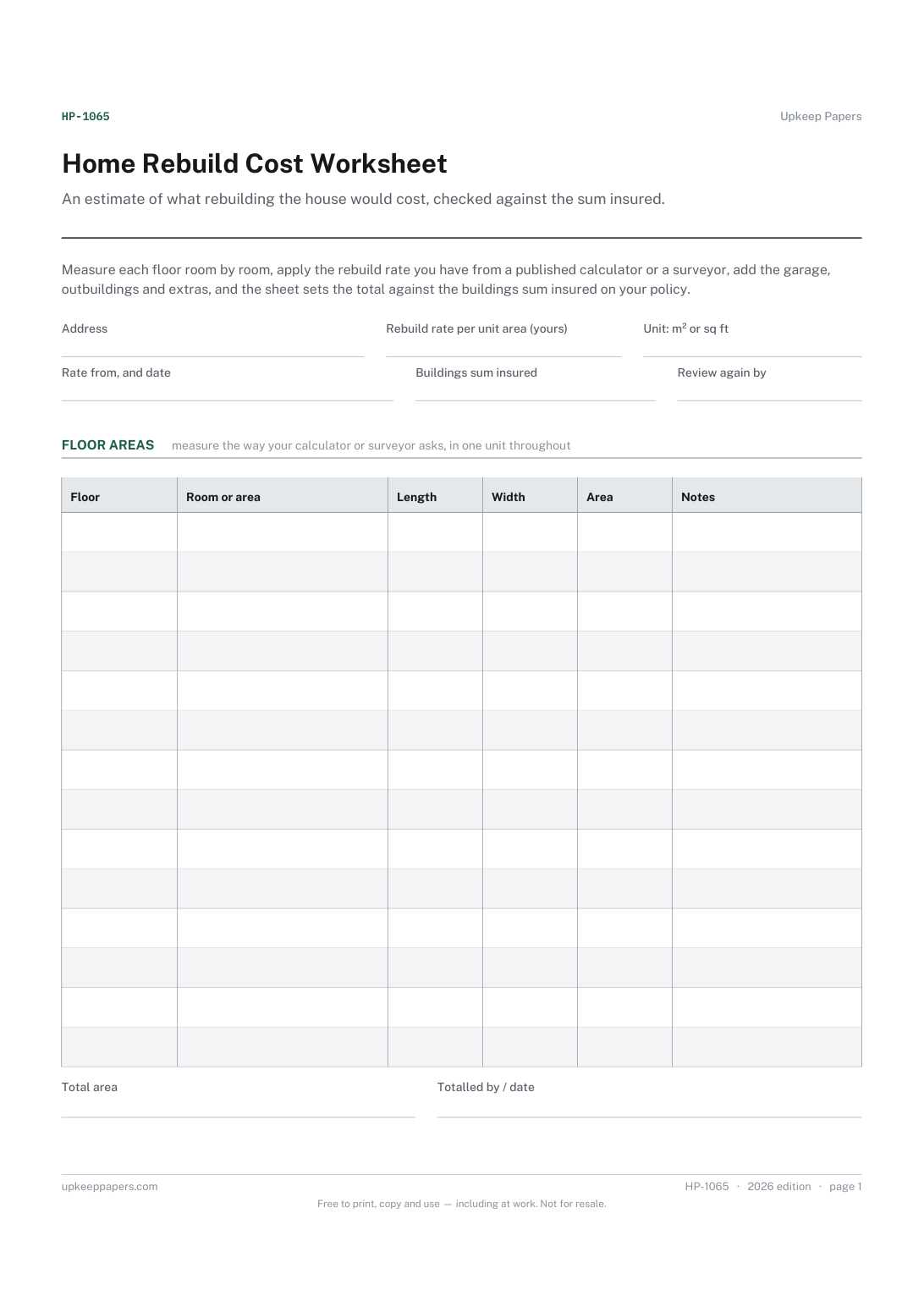
The floor area of every room and space, floor by floor.
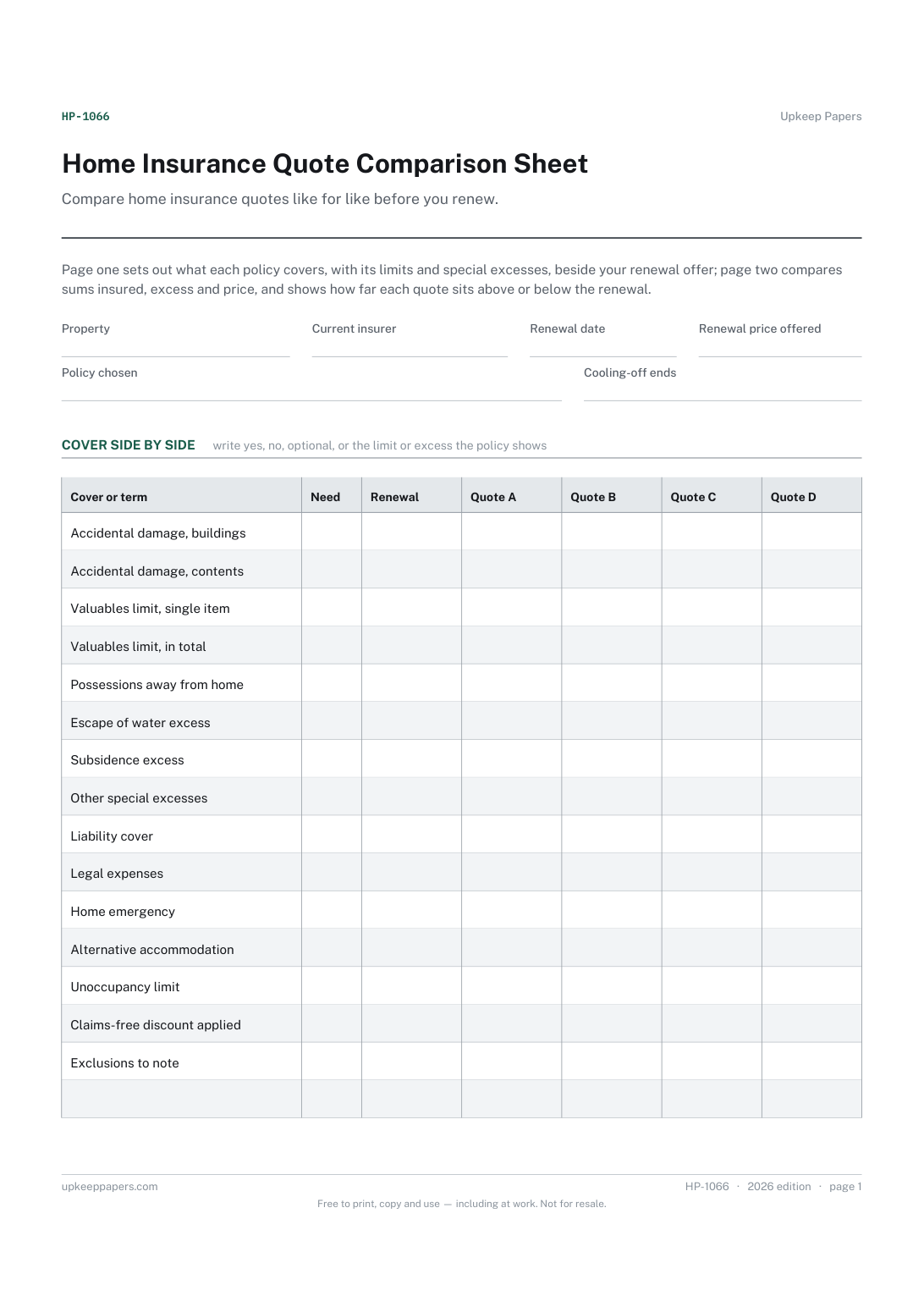
What each quote covers, and the limits and special excesses that differ.
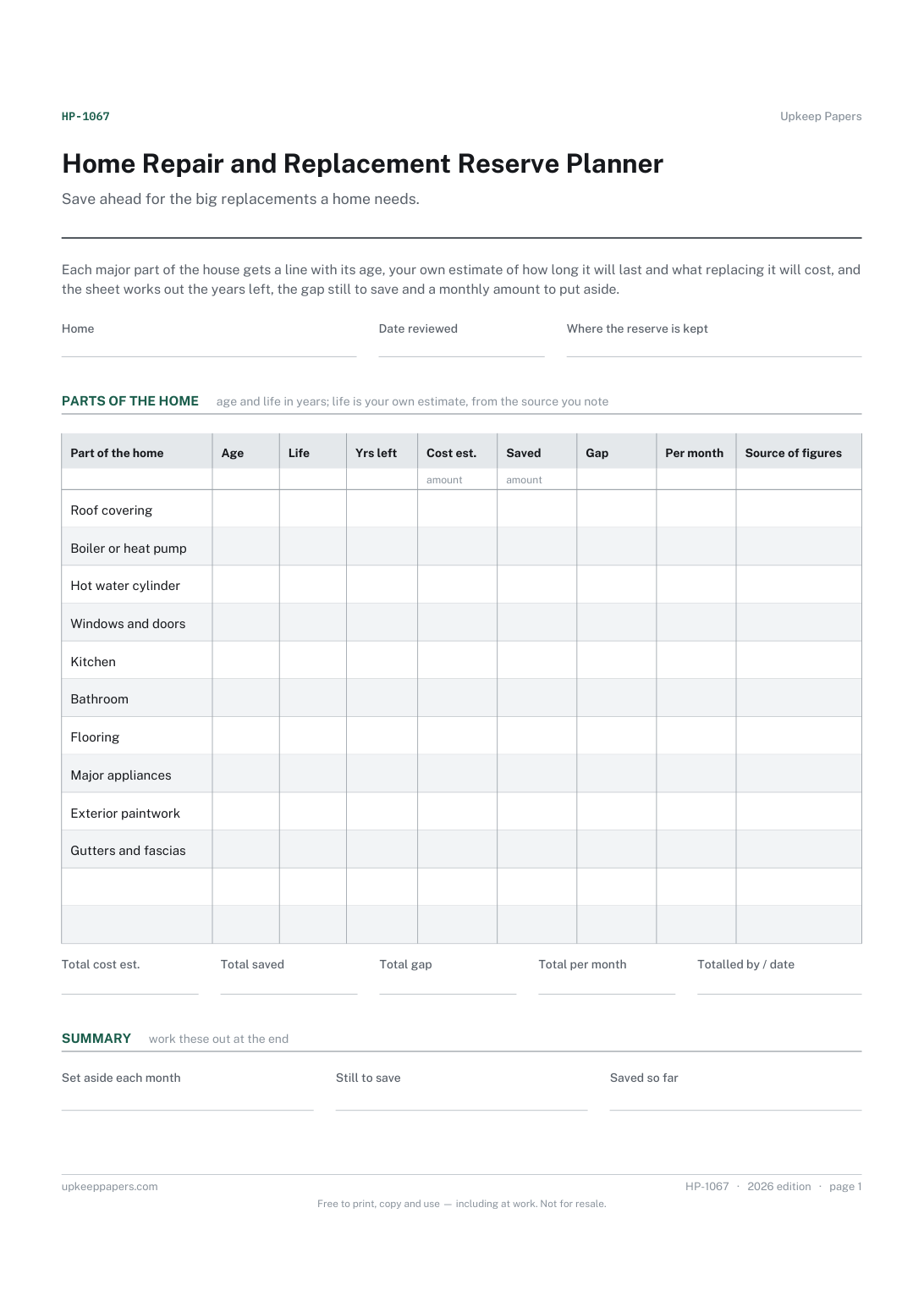
The age of each major part of the home and your estimate of its life.
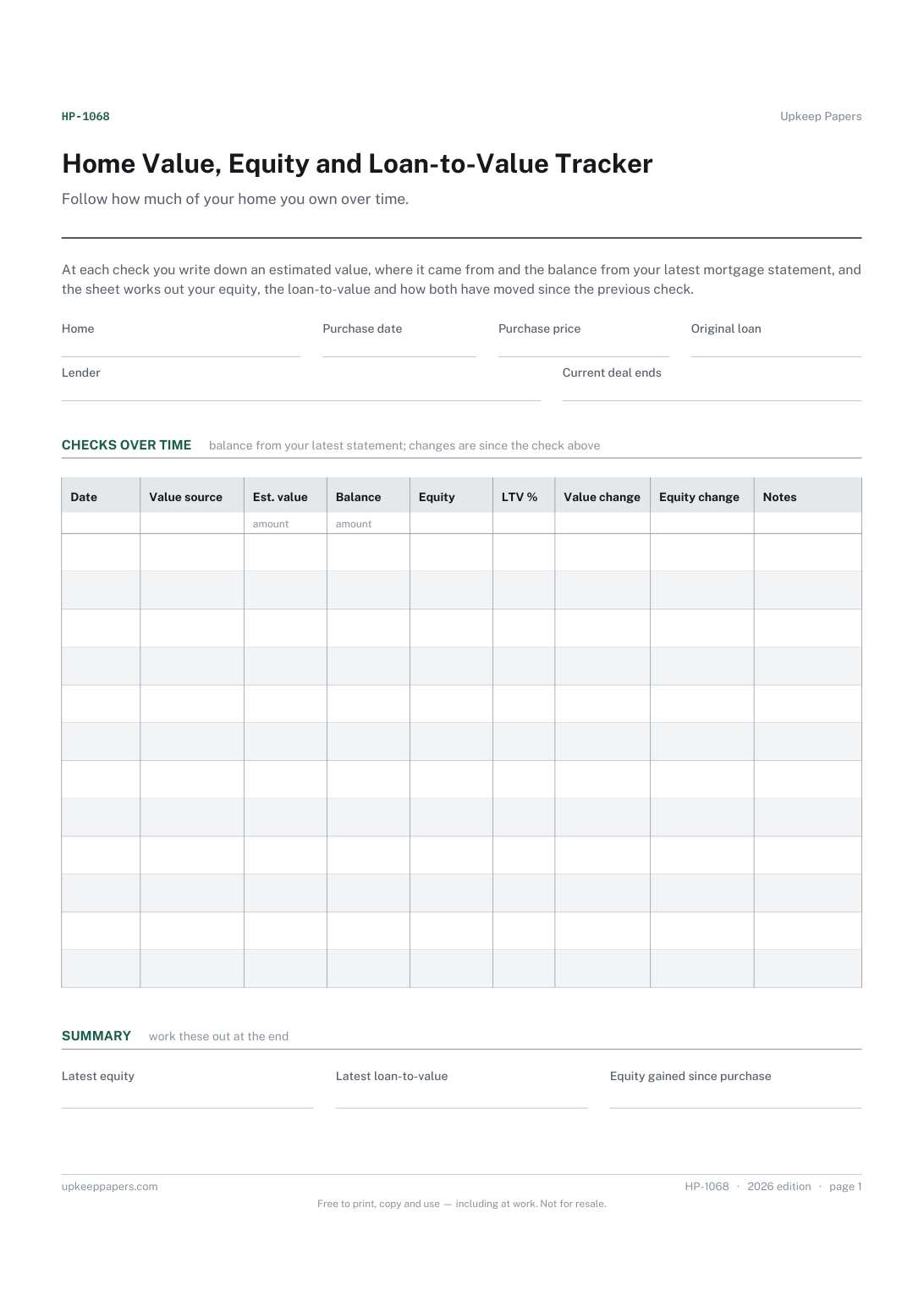
Each estimate of the home's value, dated, with where it came from.
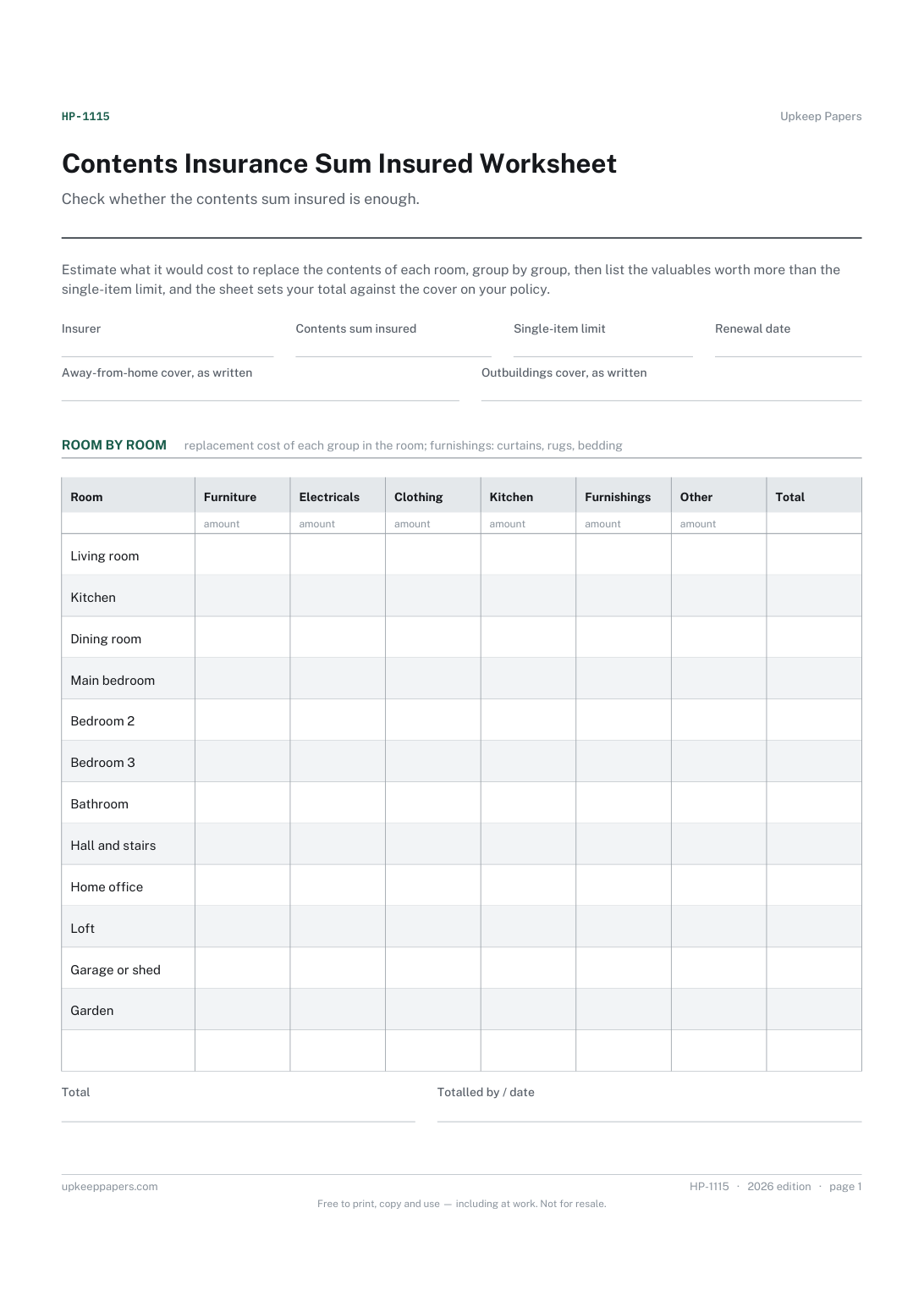
What replacing the contents of each room might cost, by group.
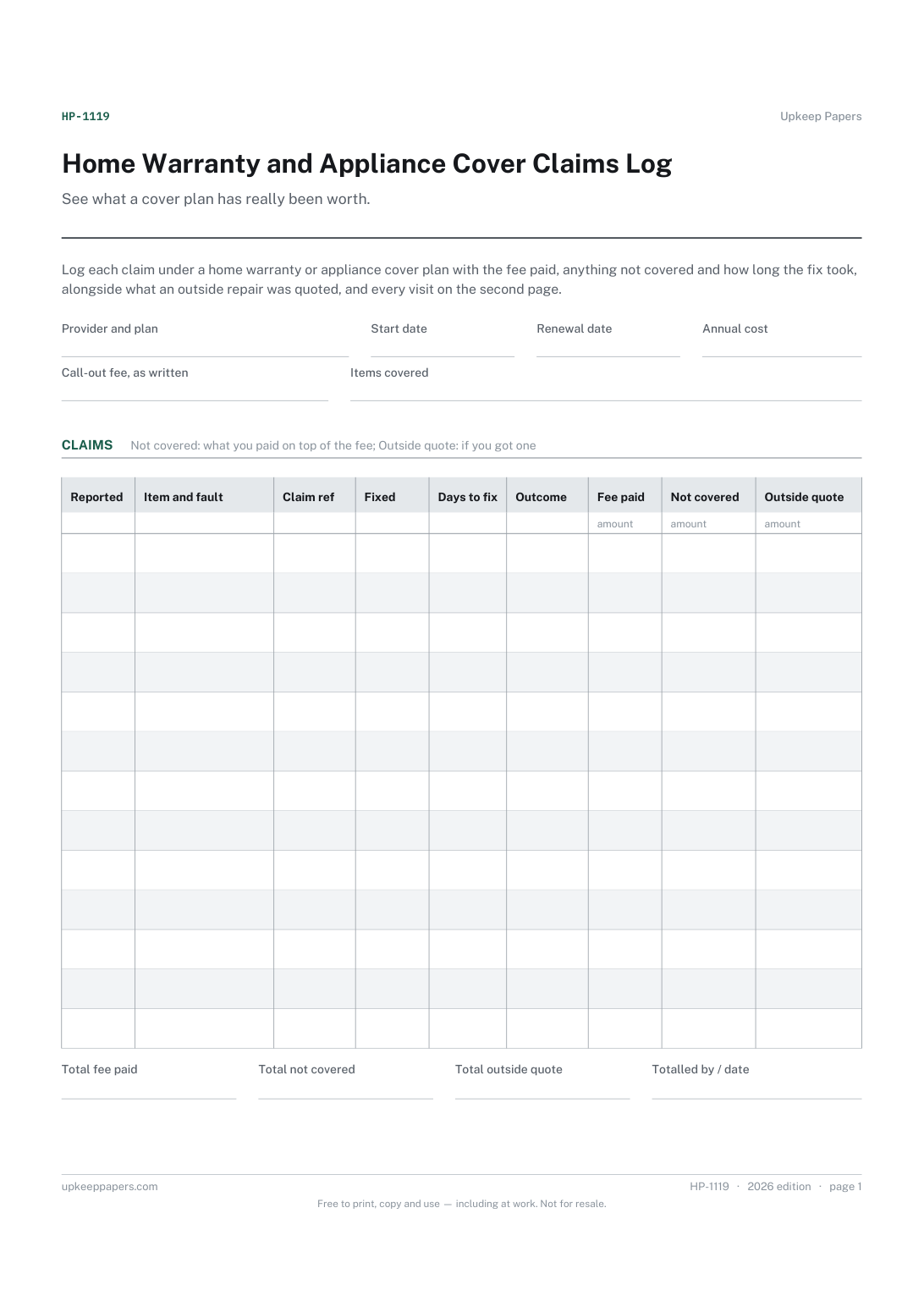
Every claim, its reference and what failed.
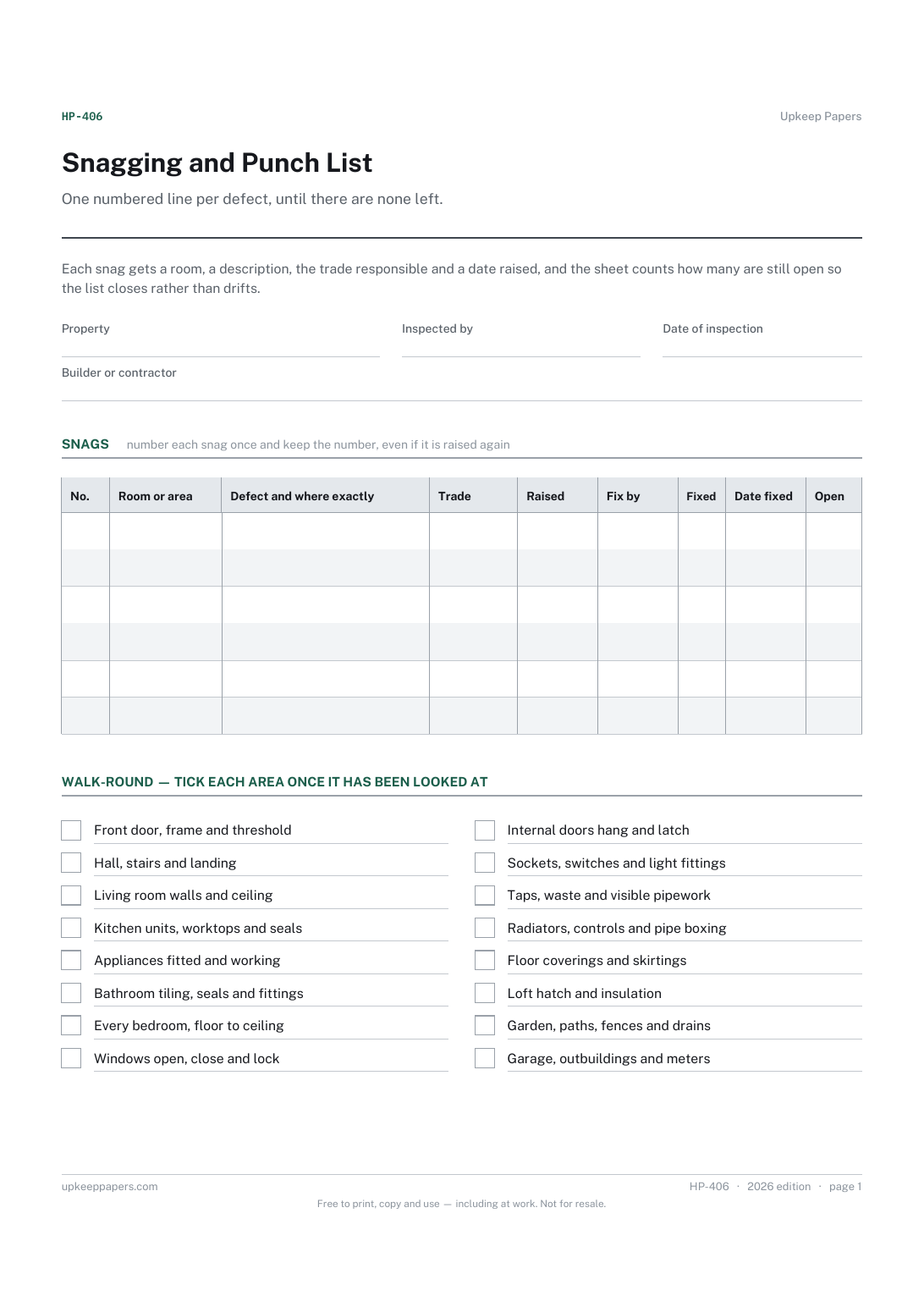
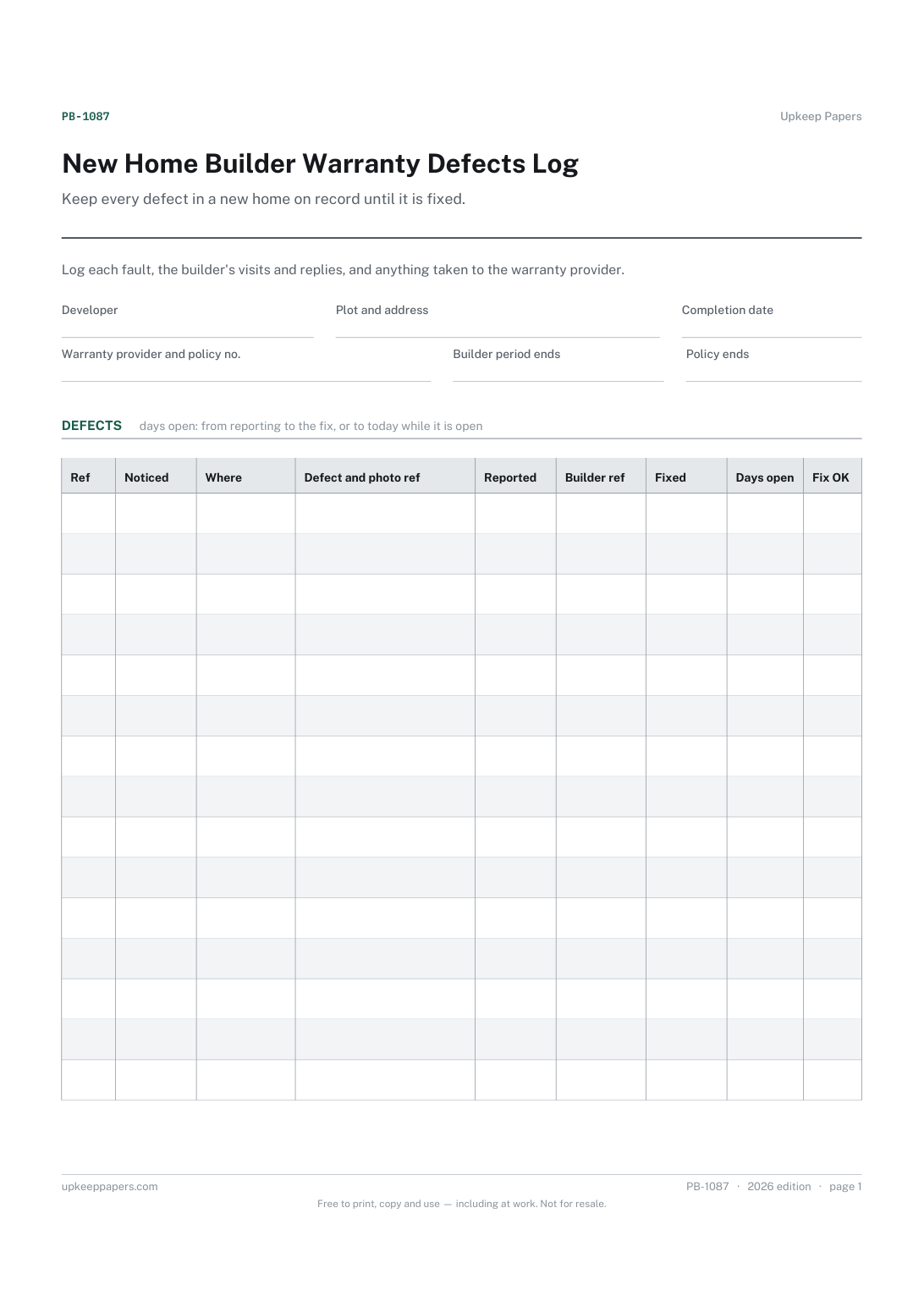
Every defect written down once, numbered, so nothing is argued about twice.
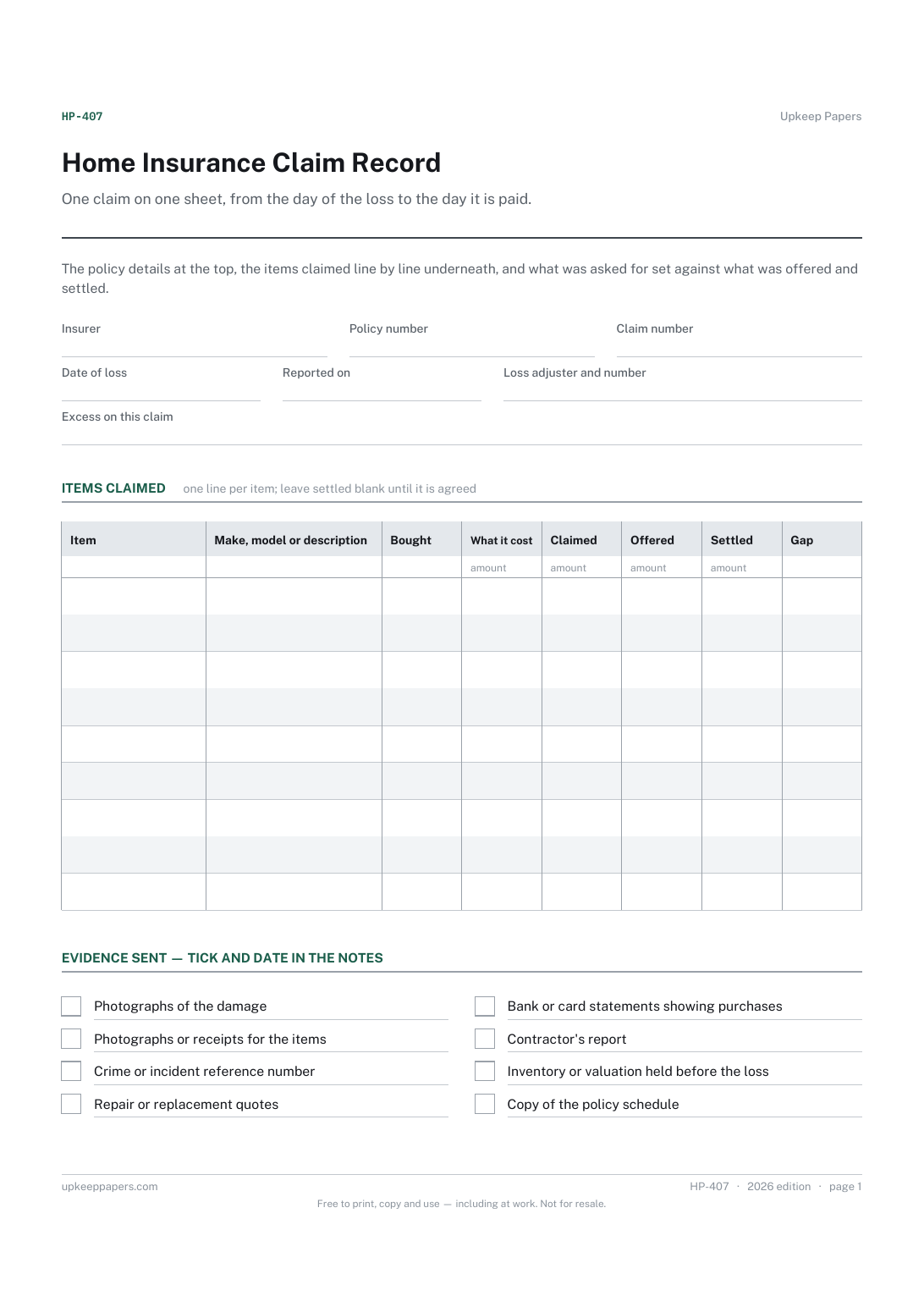
The policy, claim and loss adjuster details in one place, ready to quote.
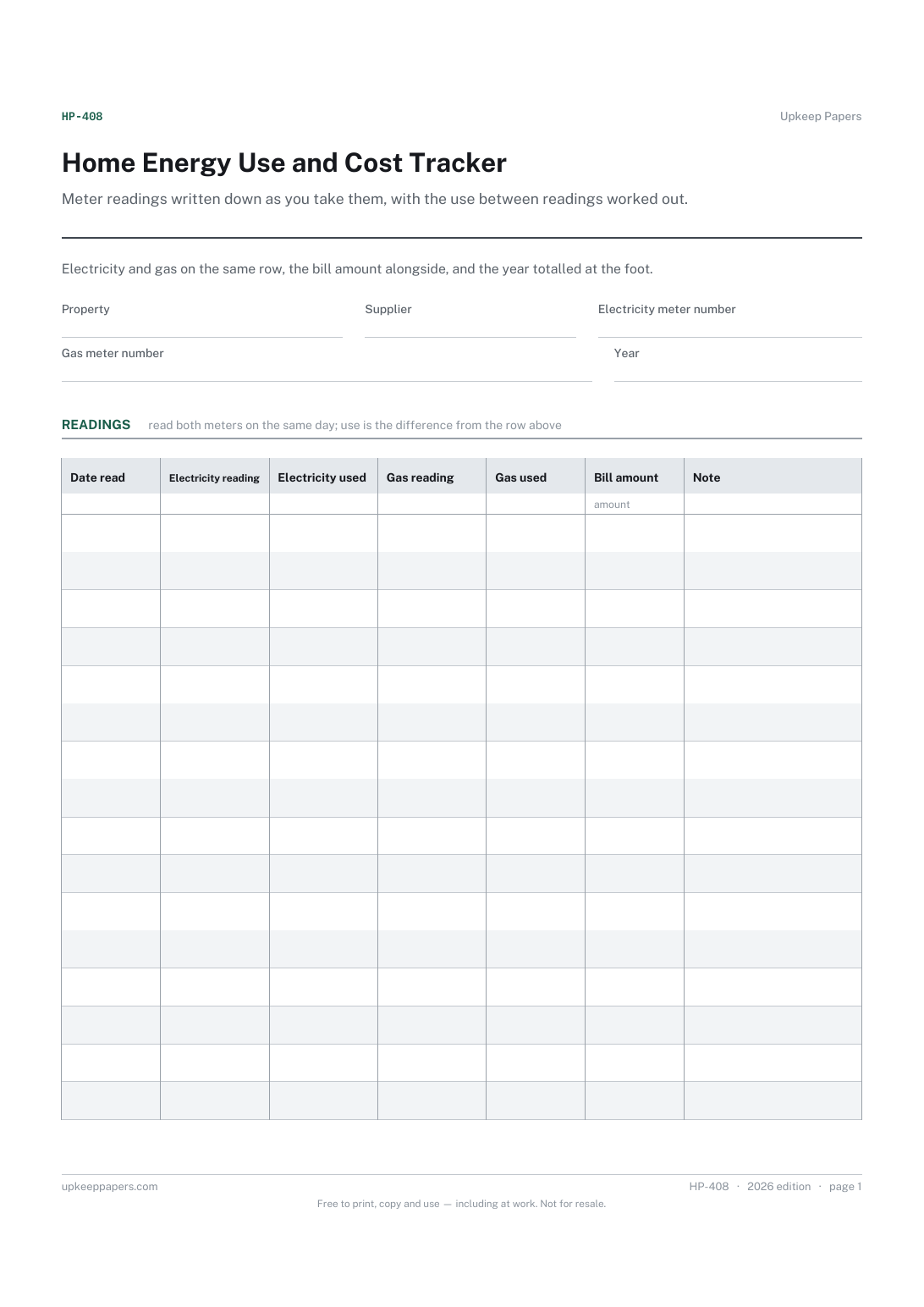
Every meter reading, dated, in your own handwriting.
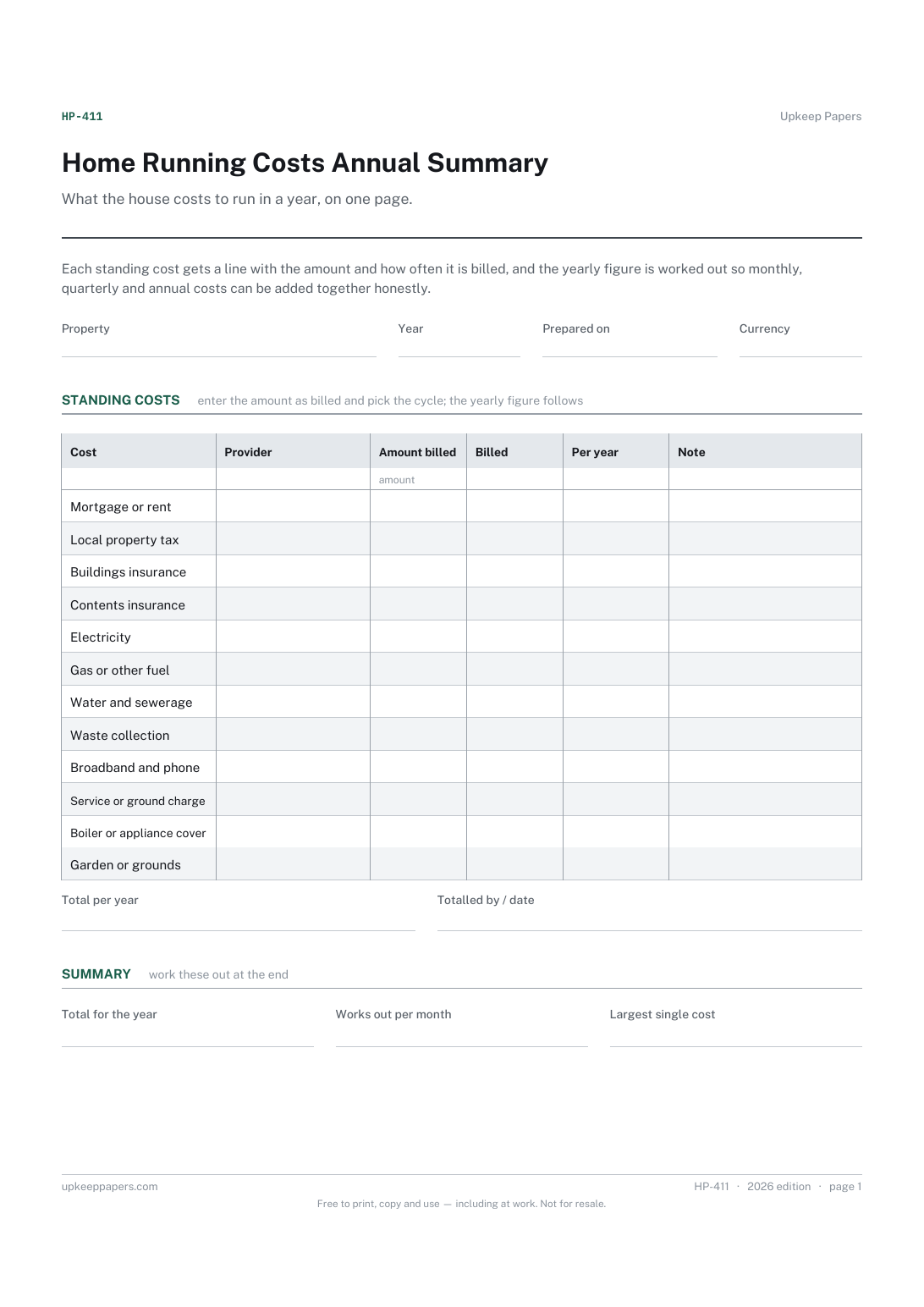
Every standing cost of the property in one list, with who it is paid to.
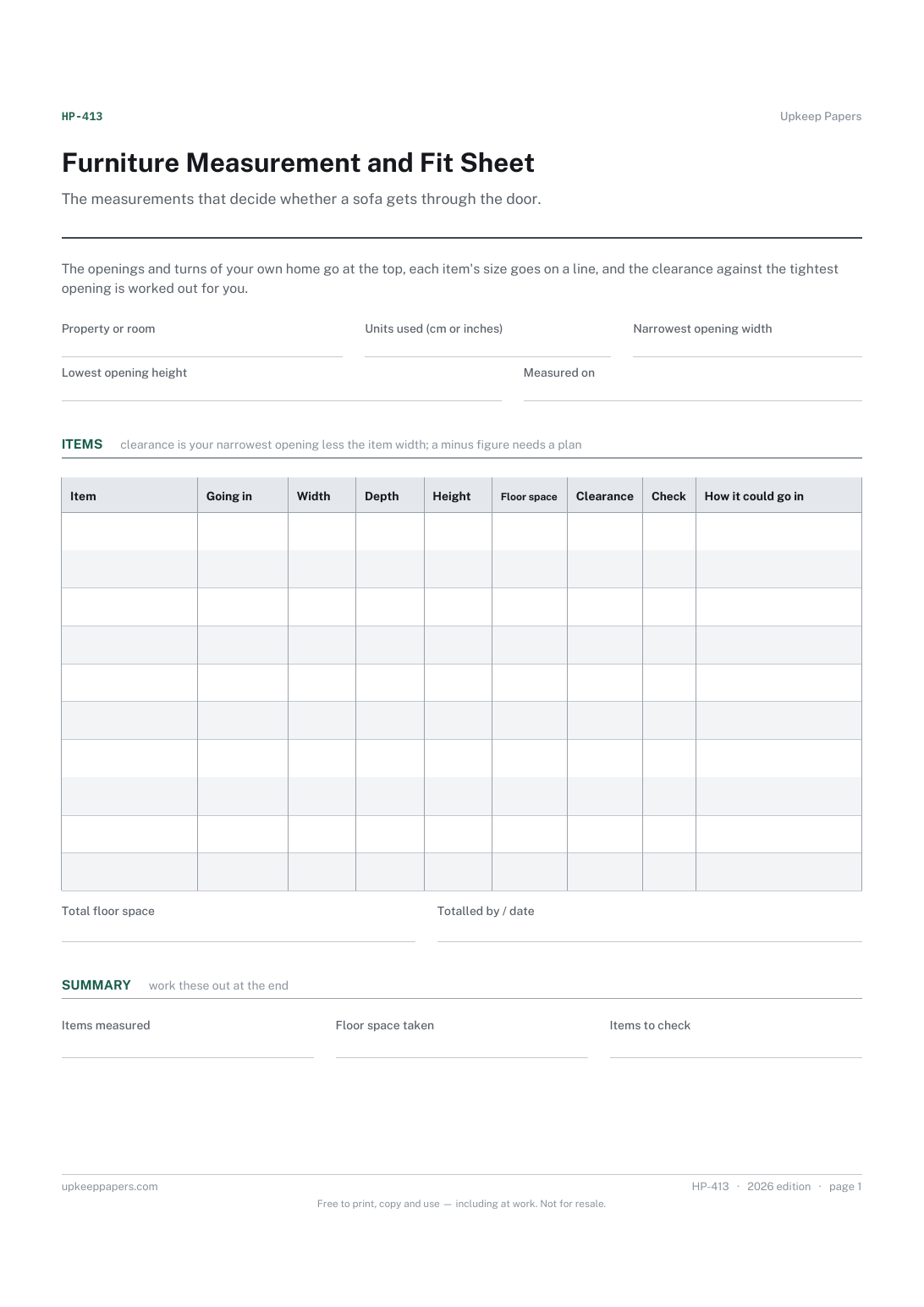
The width and height of every opening and turn between the street and the room.
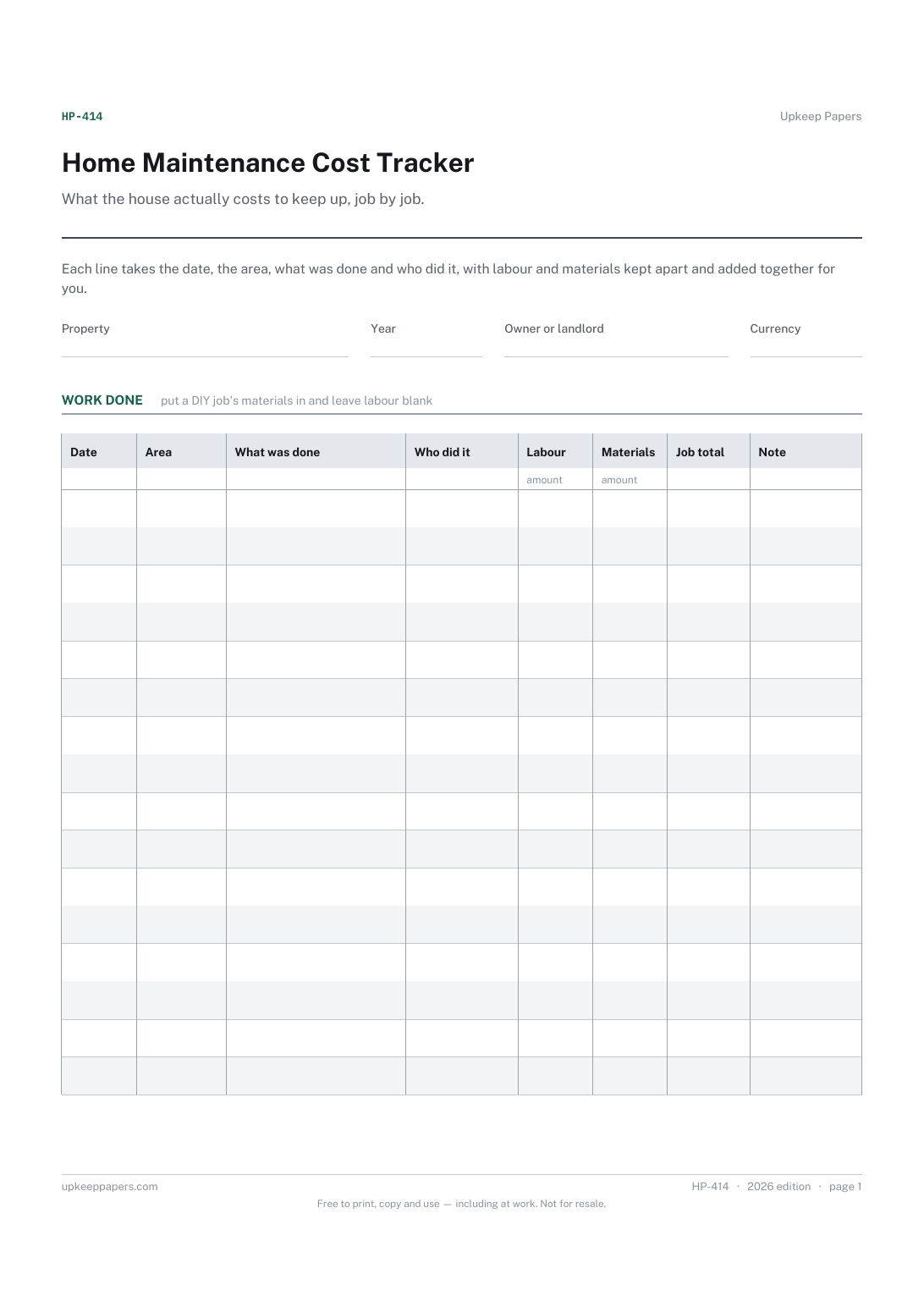
Every job done to the house, dated, with who did it.
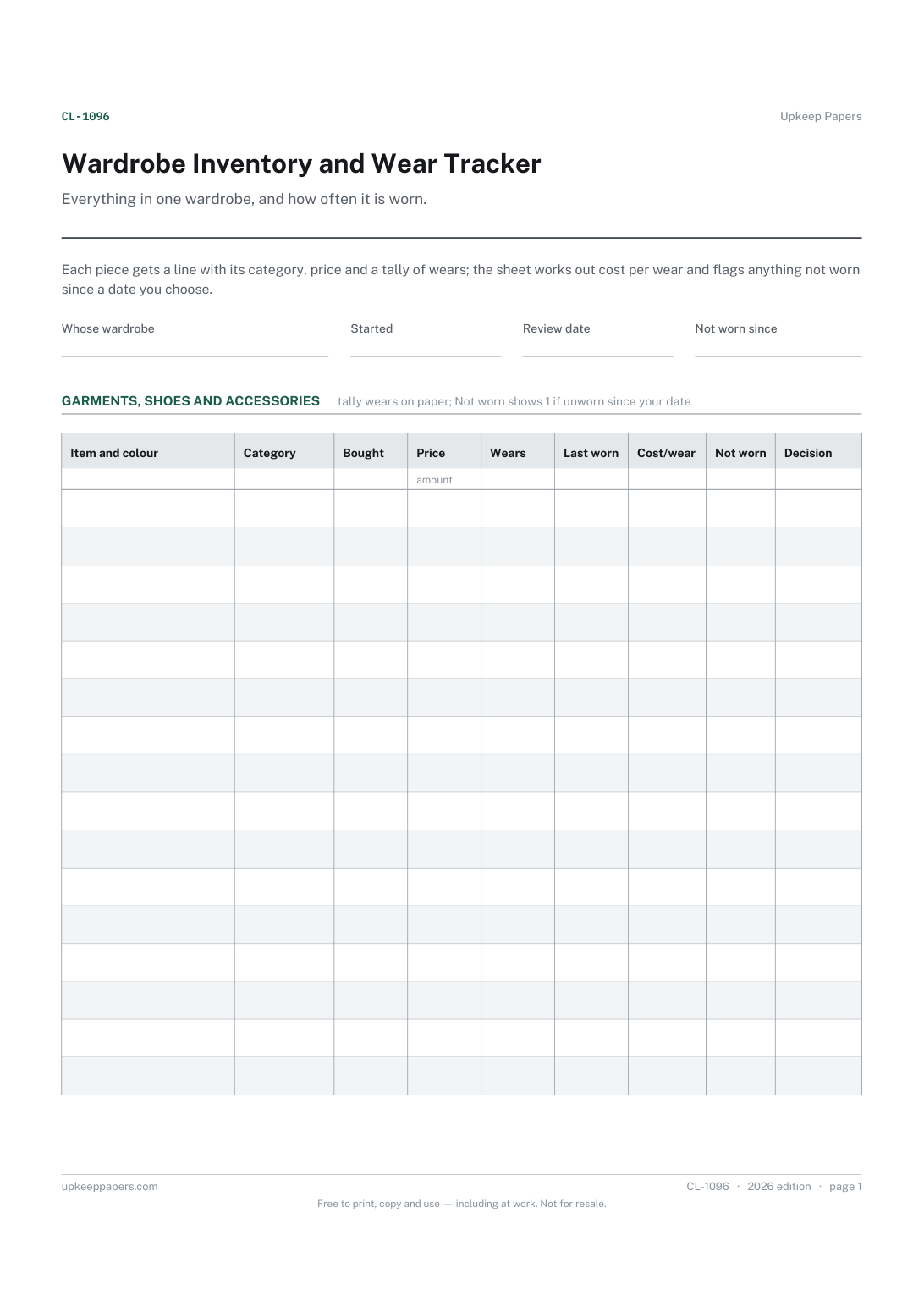
Every garment, pair of shoes and accessory one person owns, by category.
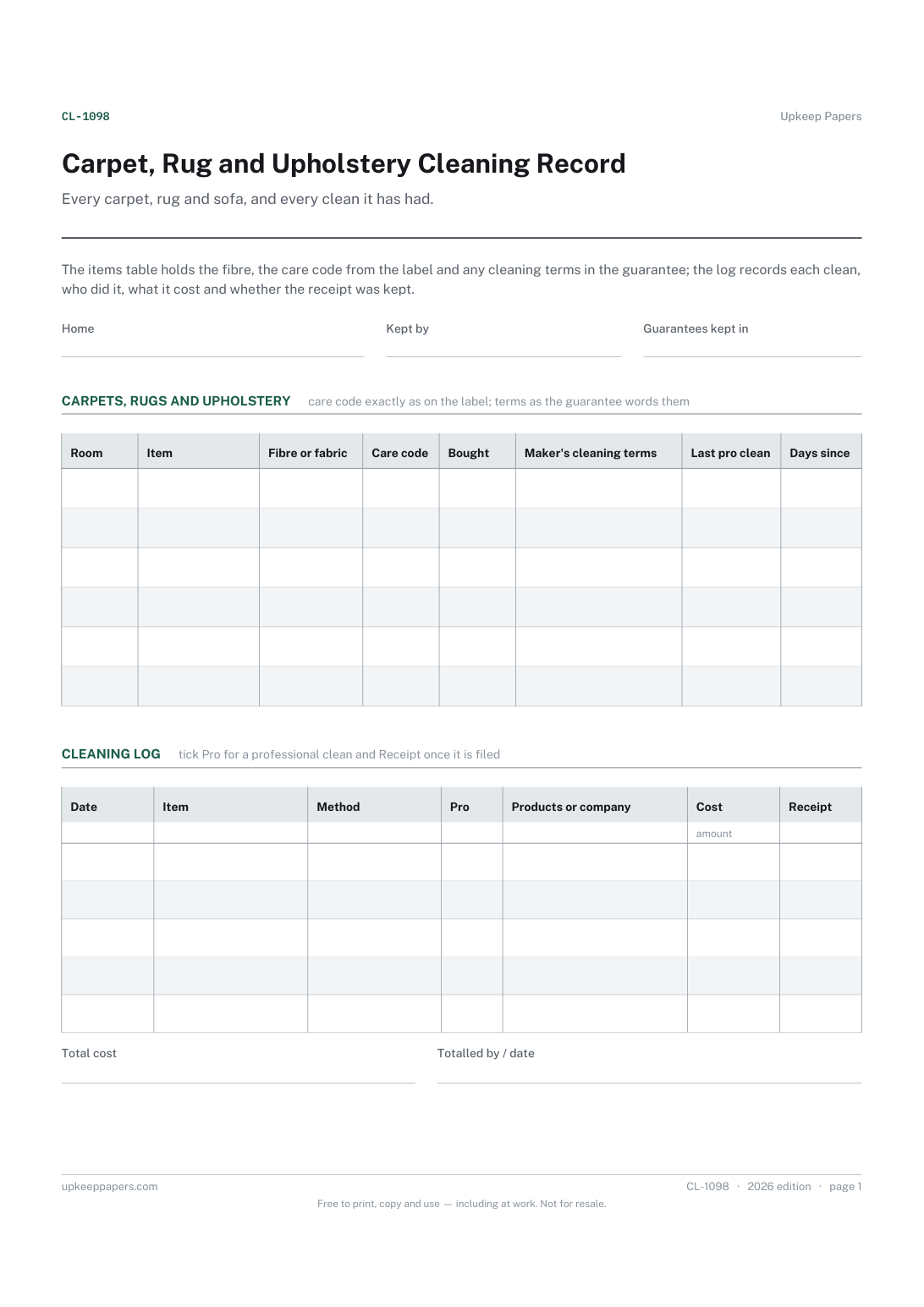
Each carpet, rug and upholstered piece with its fibre or fabric.
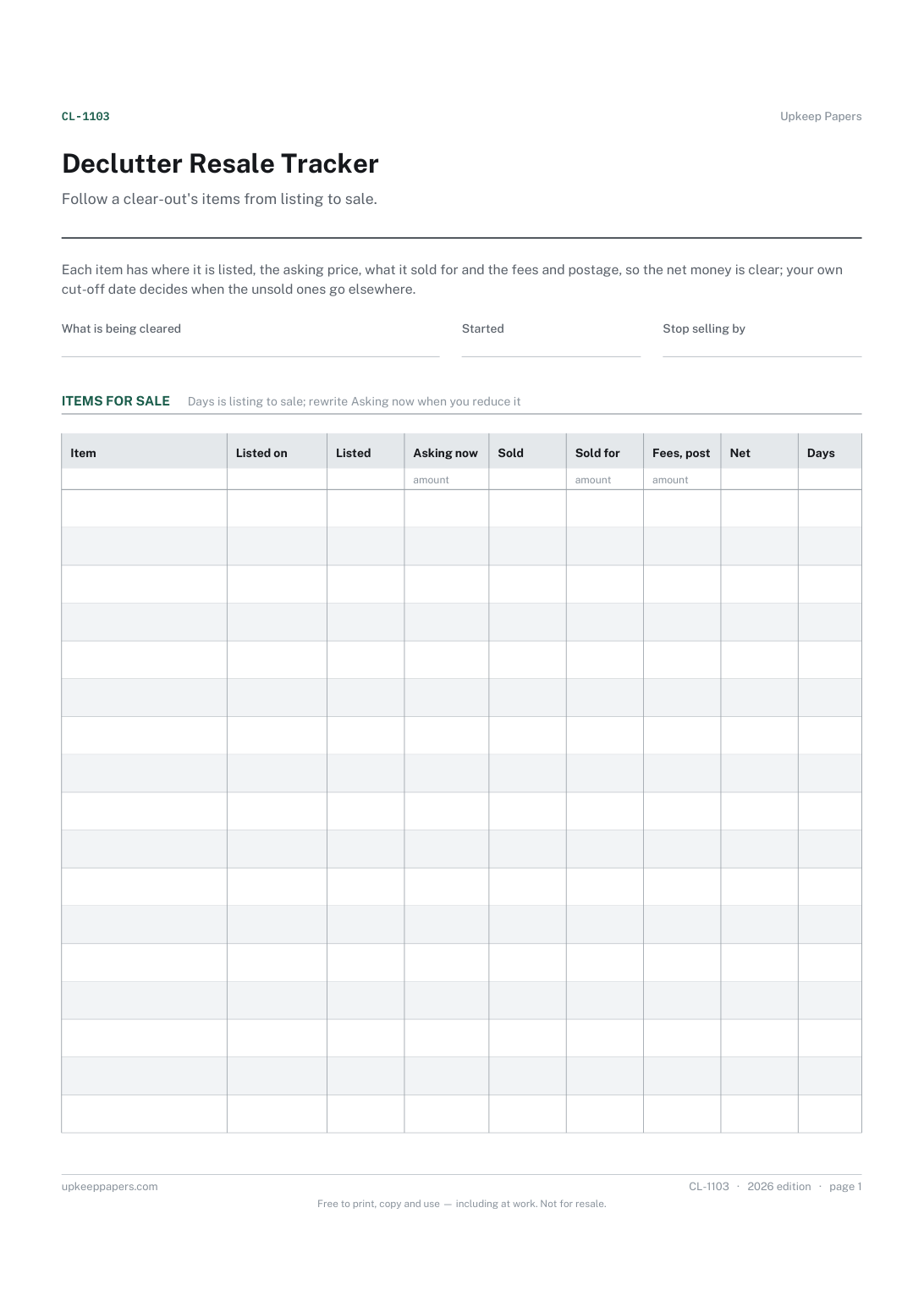
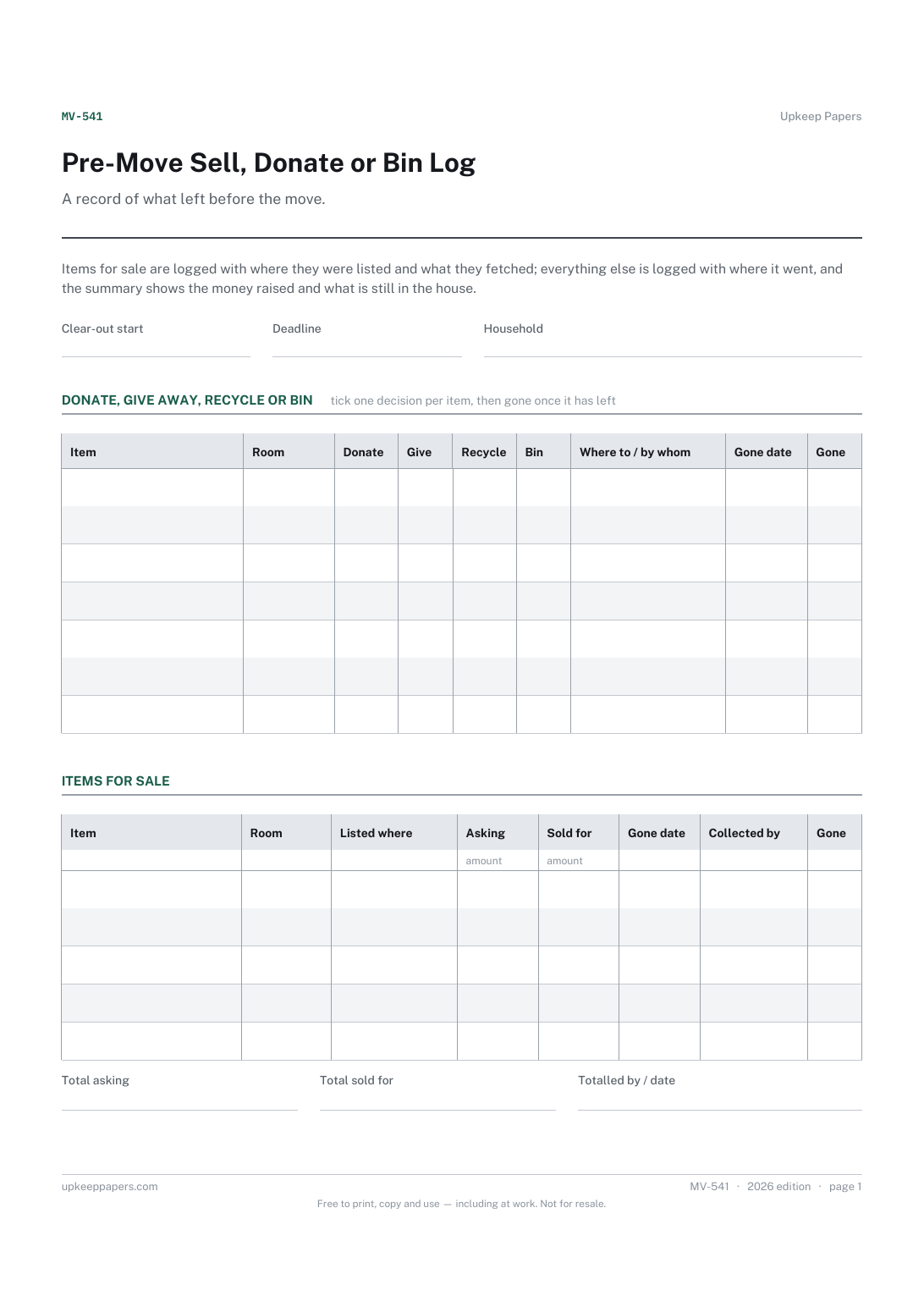
Every item put up for sale, and where and when it was listed.
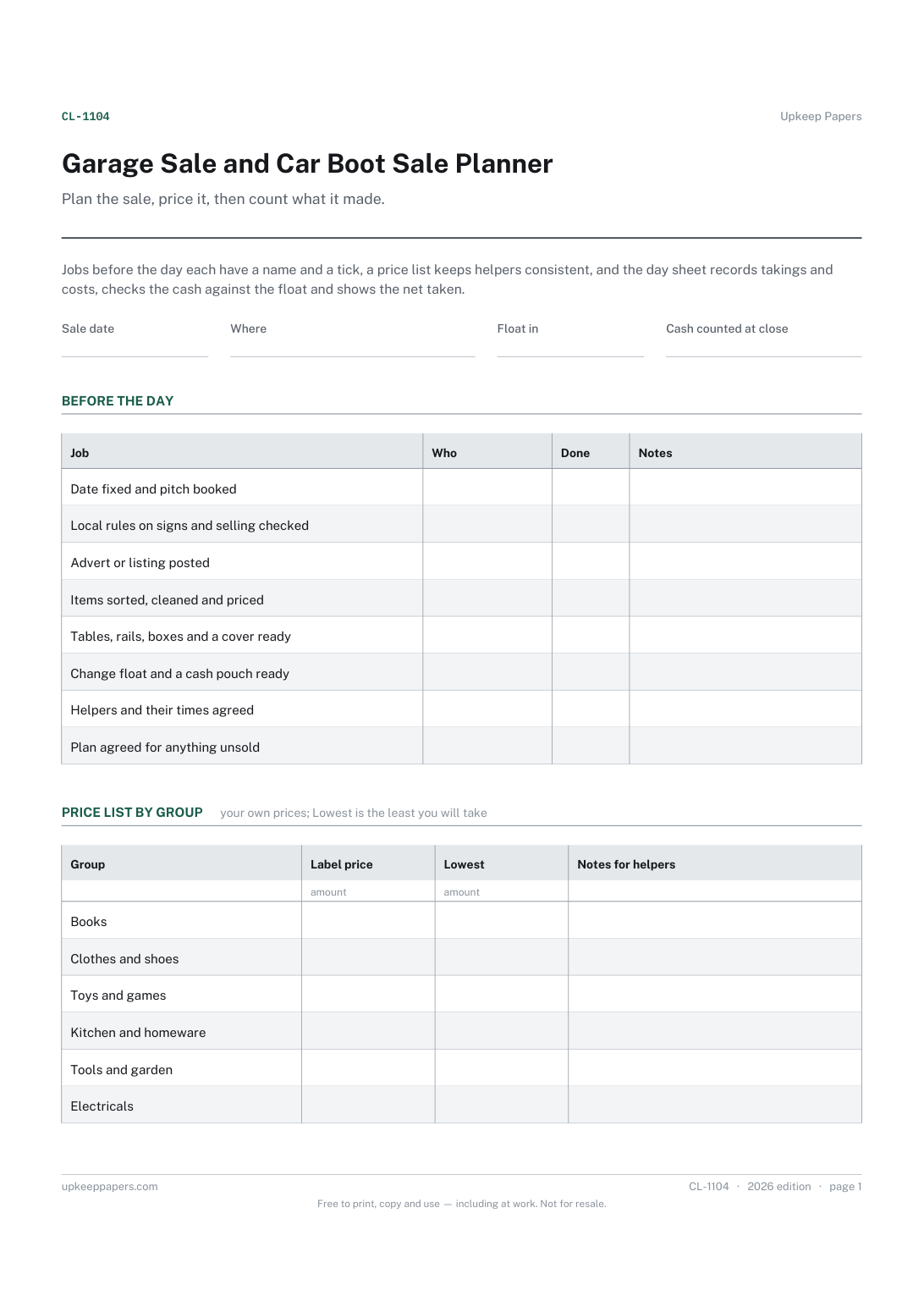
The jobs before the day, from booking a pitch to the plan for leftovers.
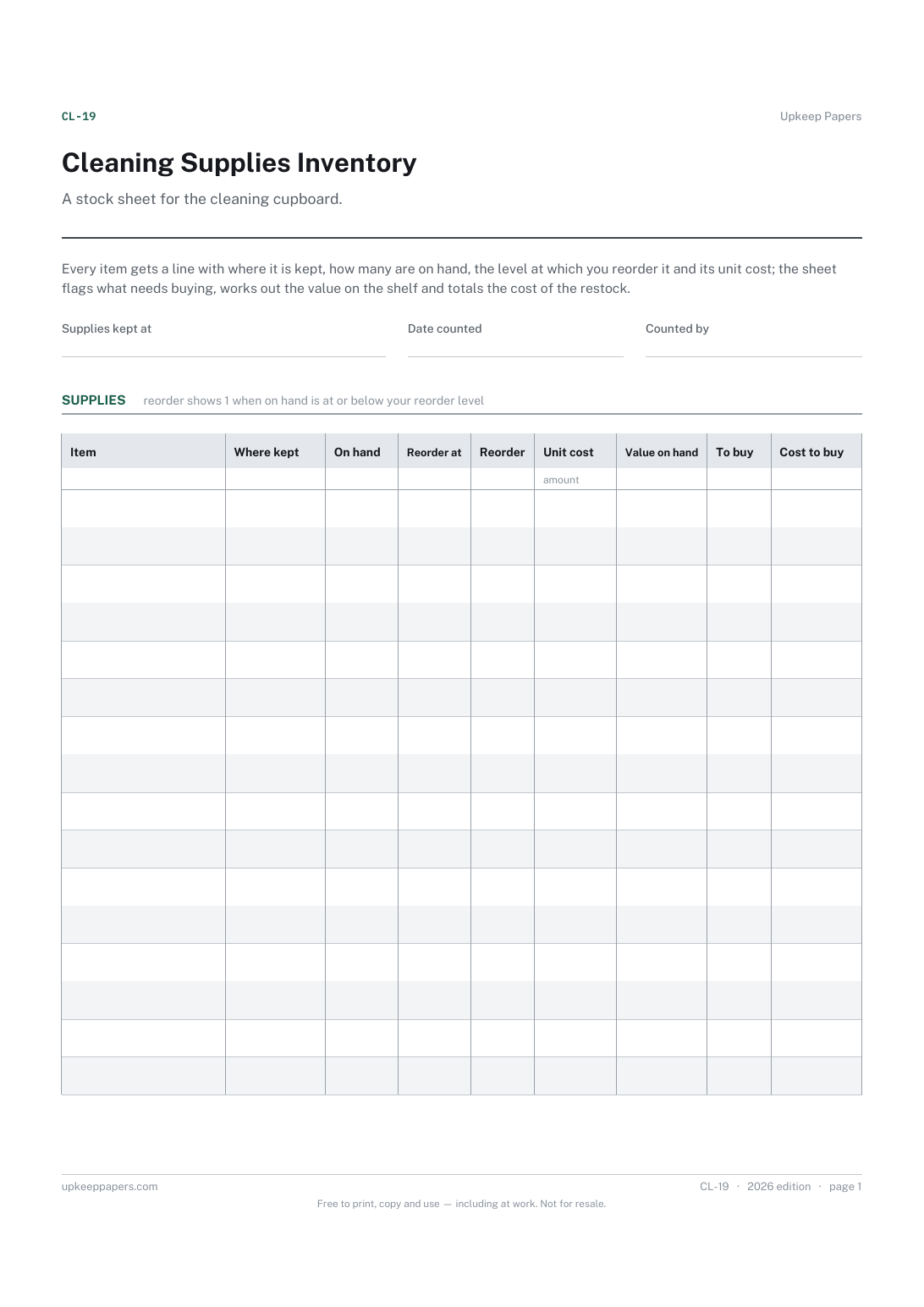
What is in stock and where, so nothing is bought twice.
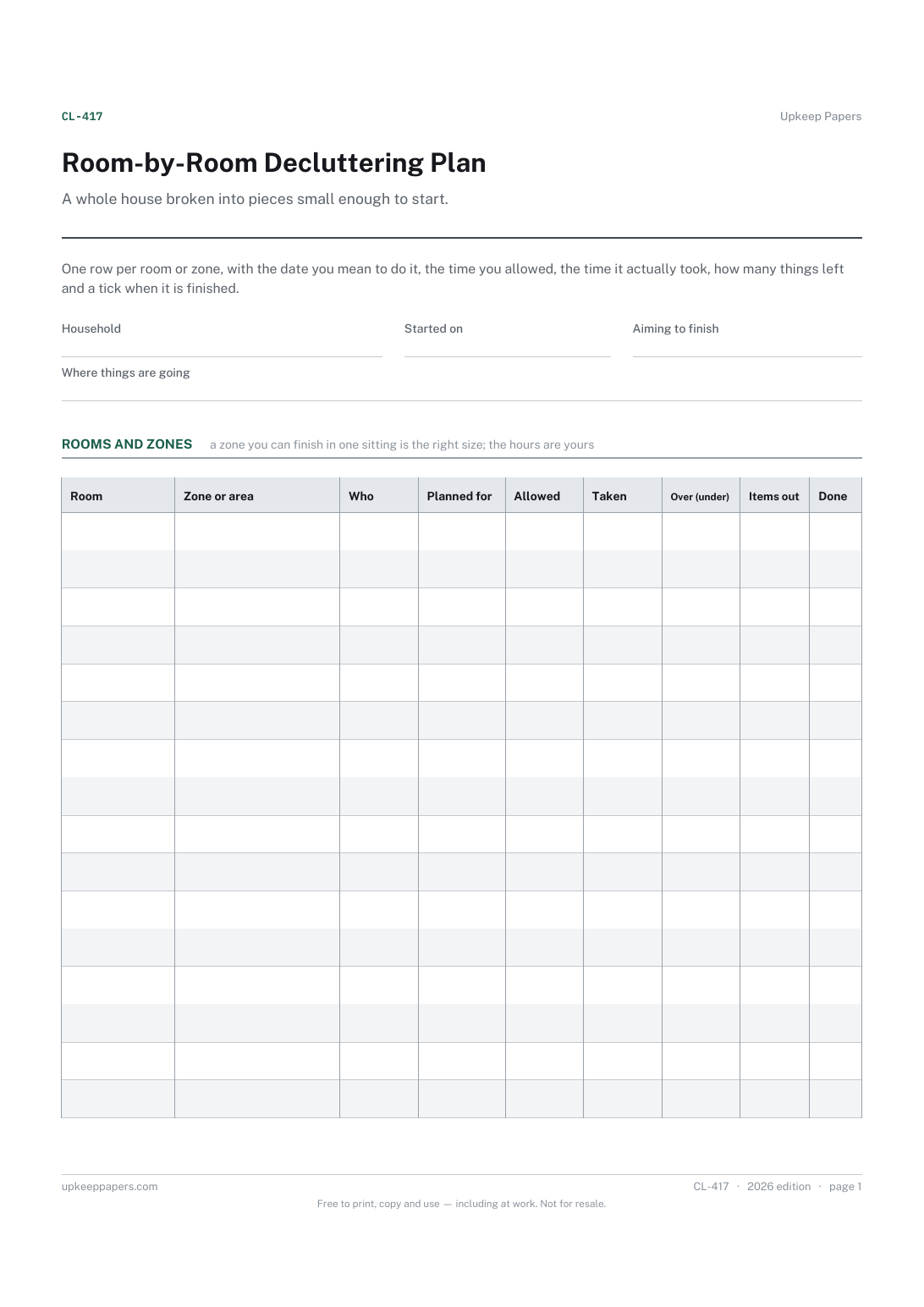
Every room and zone written out, so the job has an end.
Which numbered box is which, and what the label on it says.
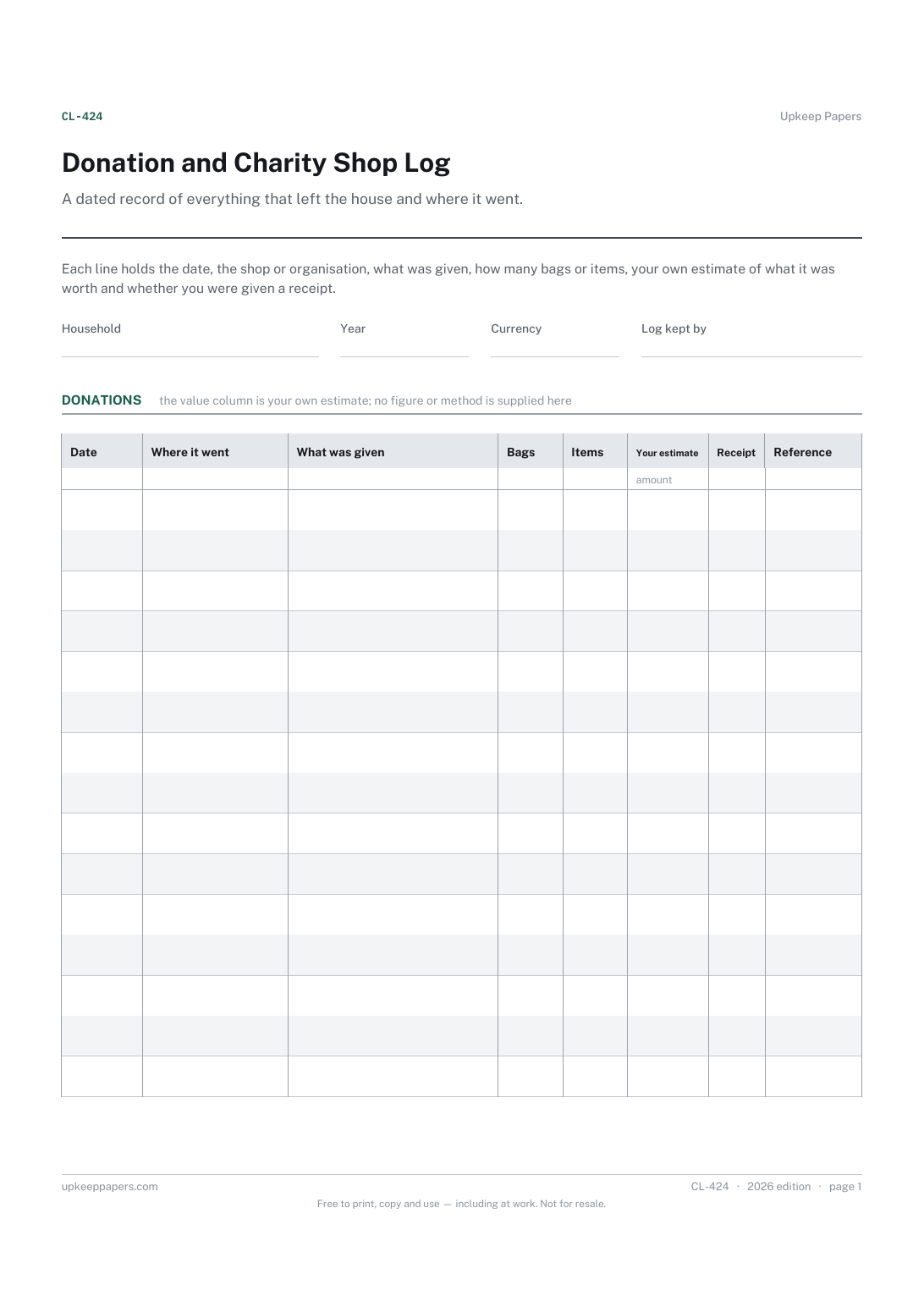
Where each load actually went, with a date against it.
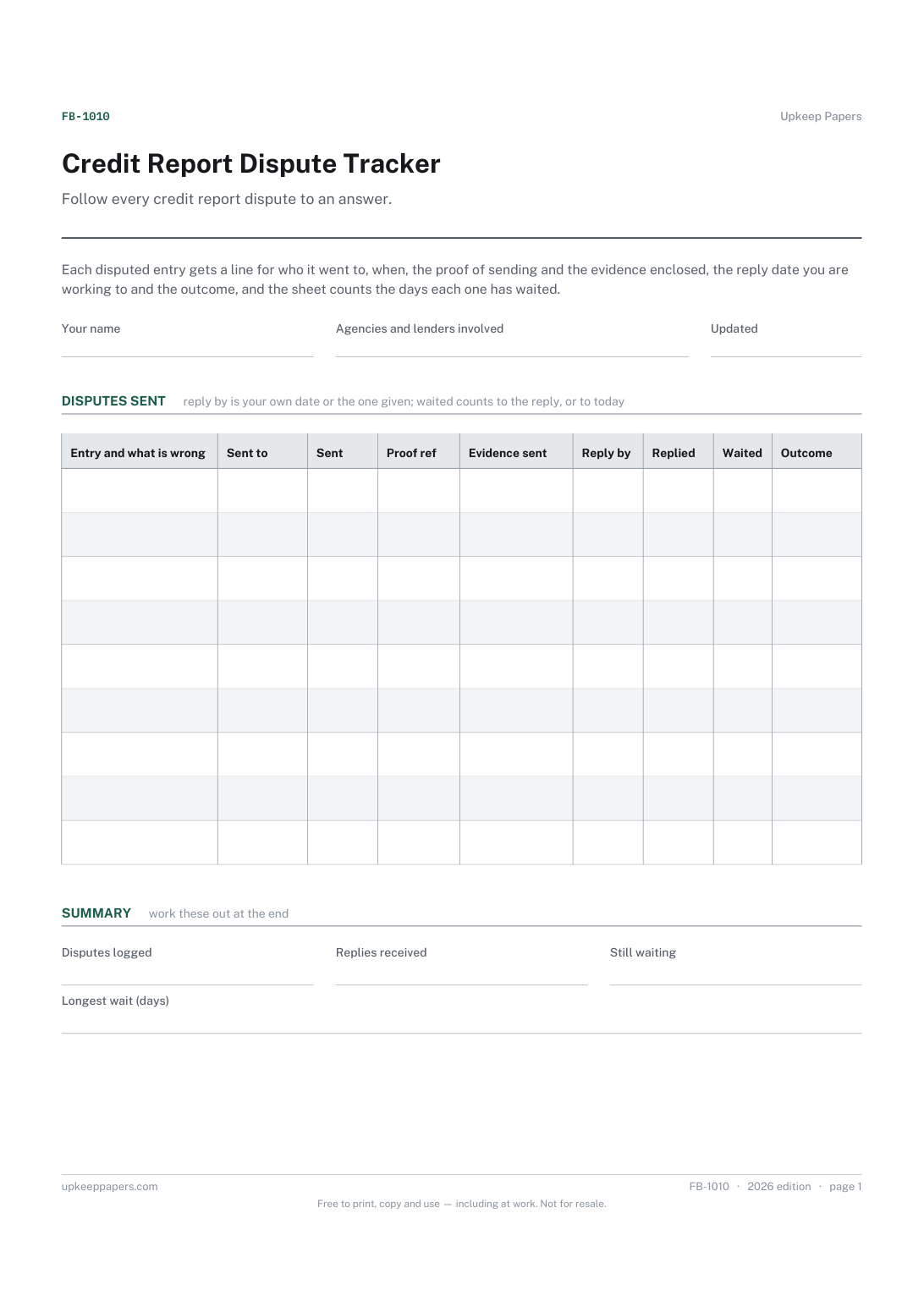
Every disputed entry and who the dispute was sent to.
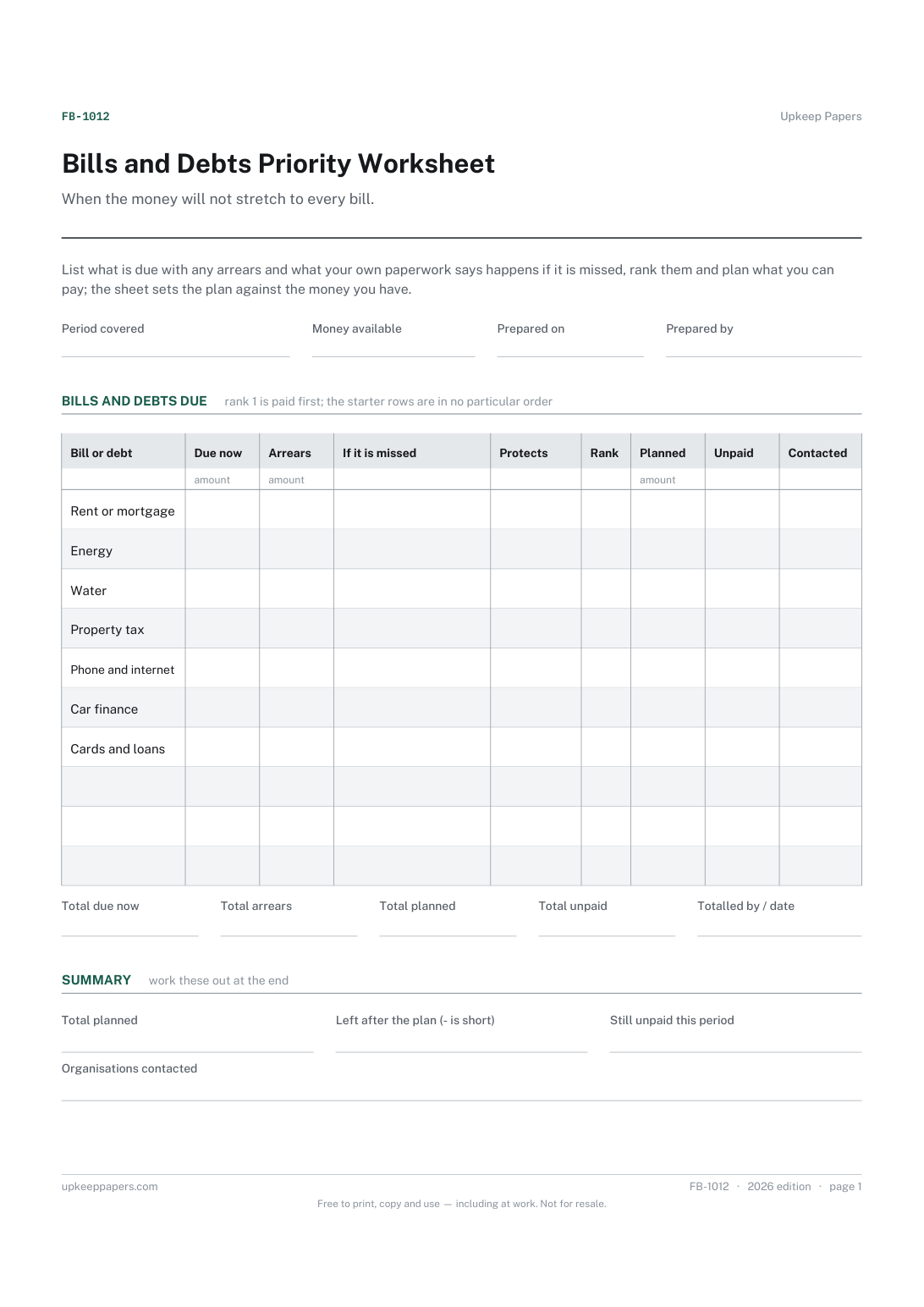
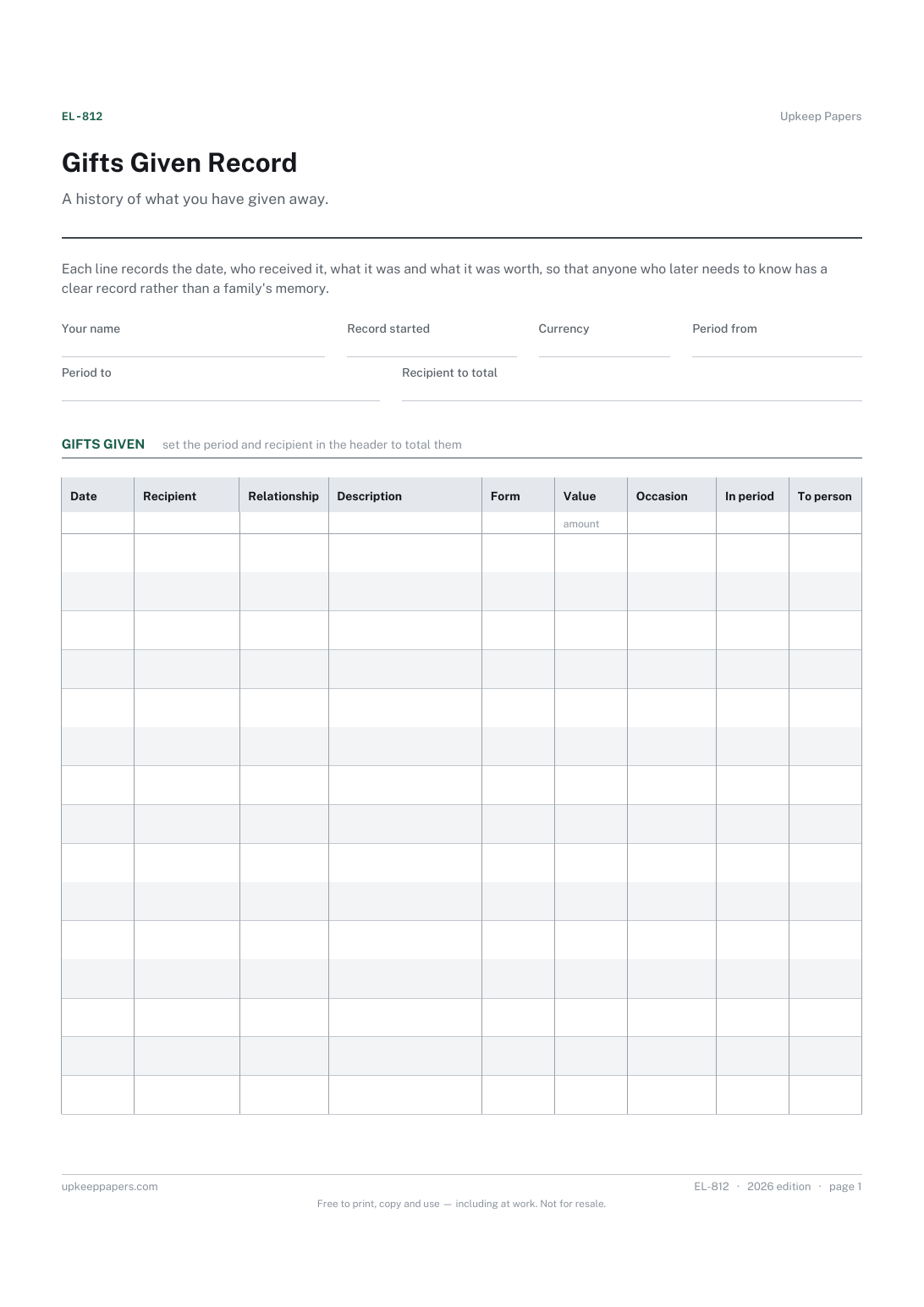
Every bill and debt payment due this period, with any arrears.
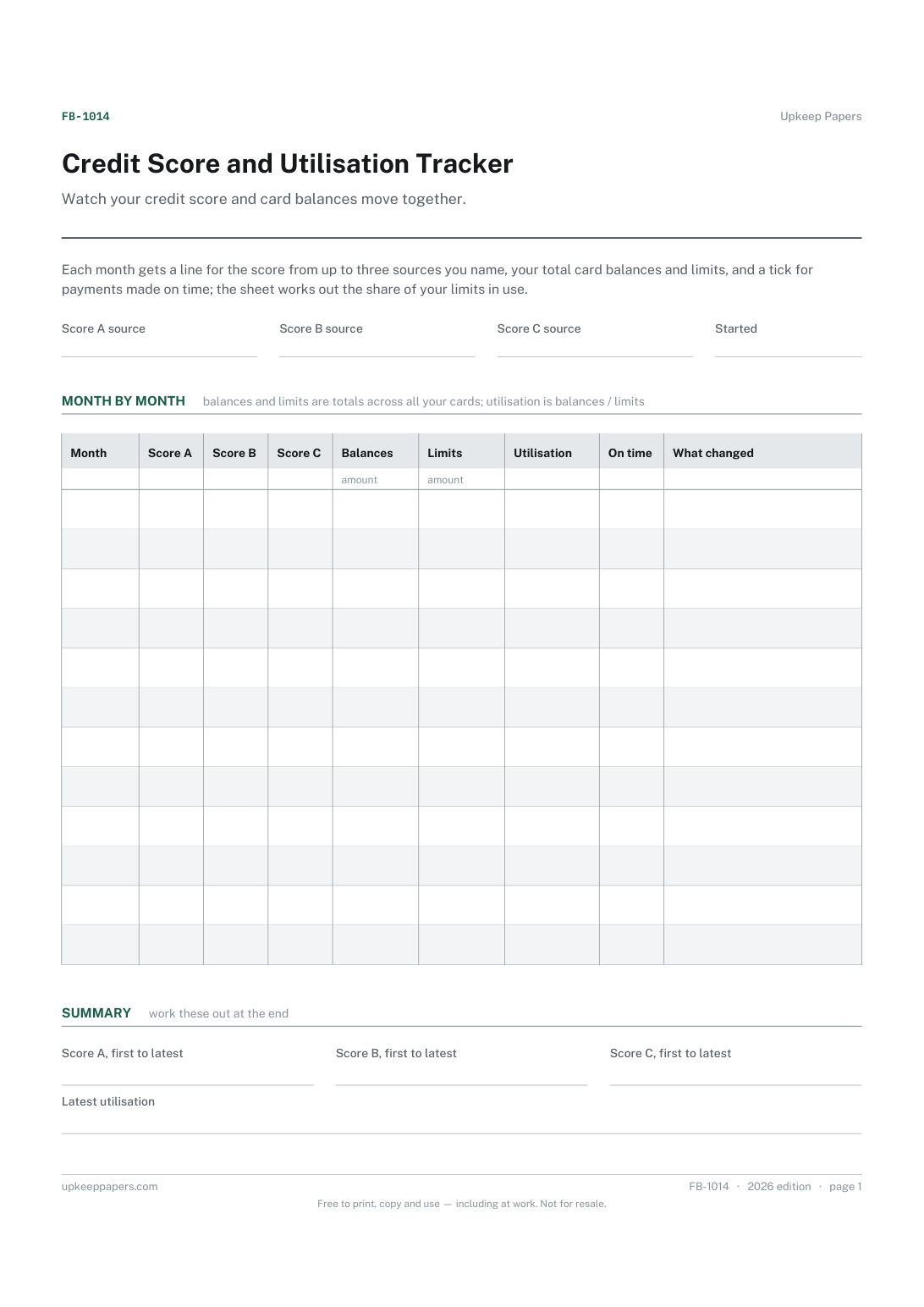
Your score from each source you use, month by month.
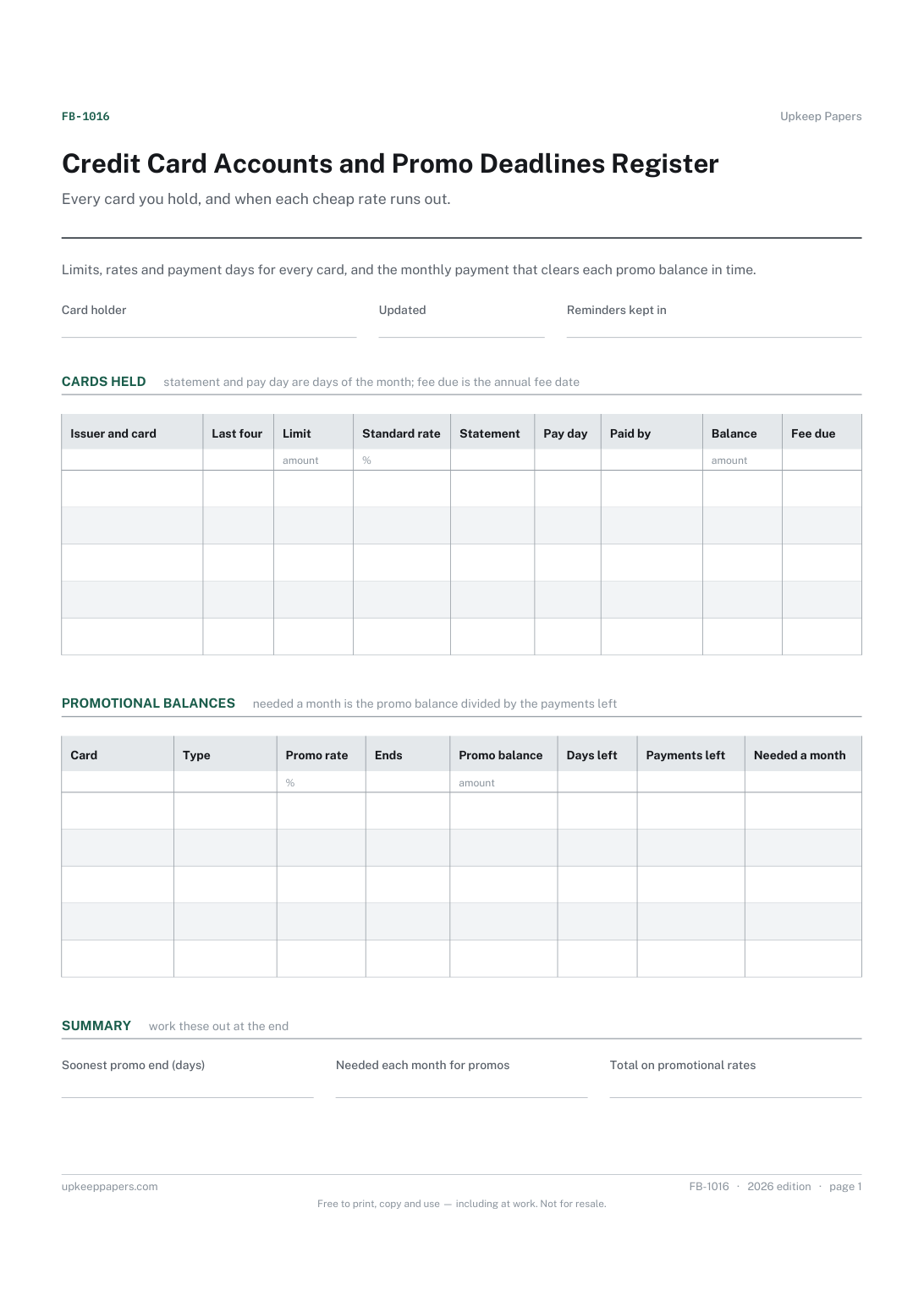
Each card, its limit and the standard rate it reverts to.
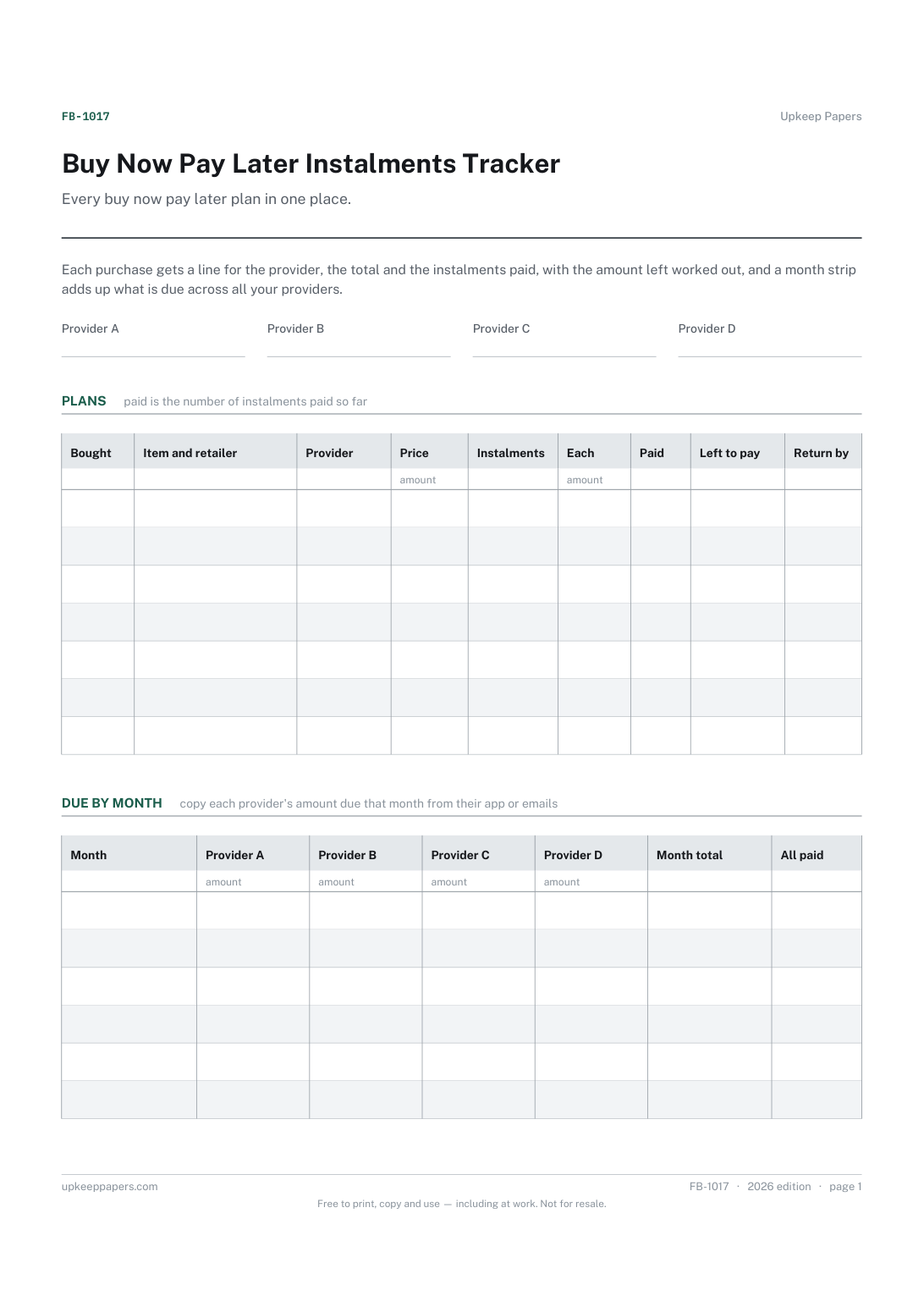
Each purchase, the retailer and the provider holding the plan.
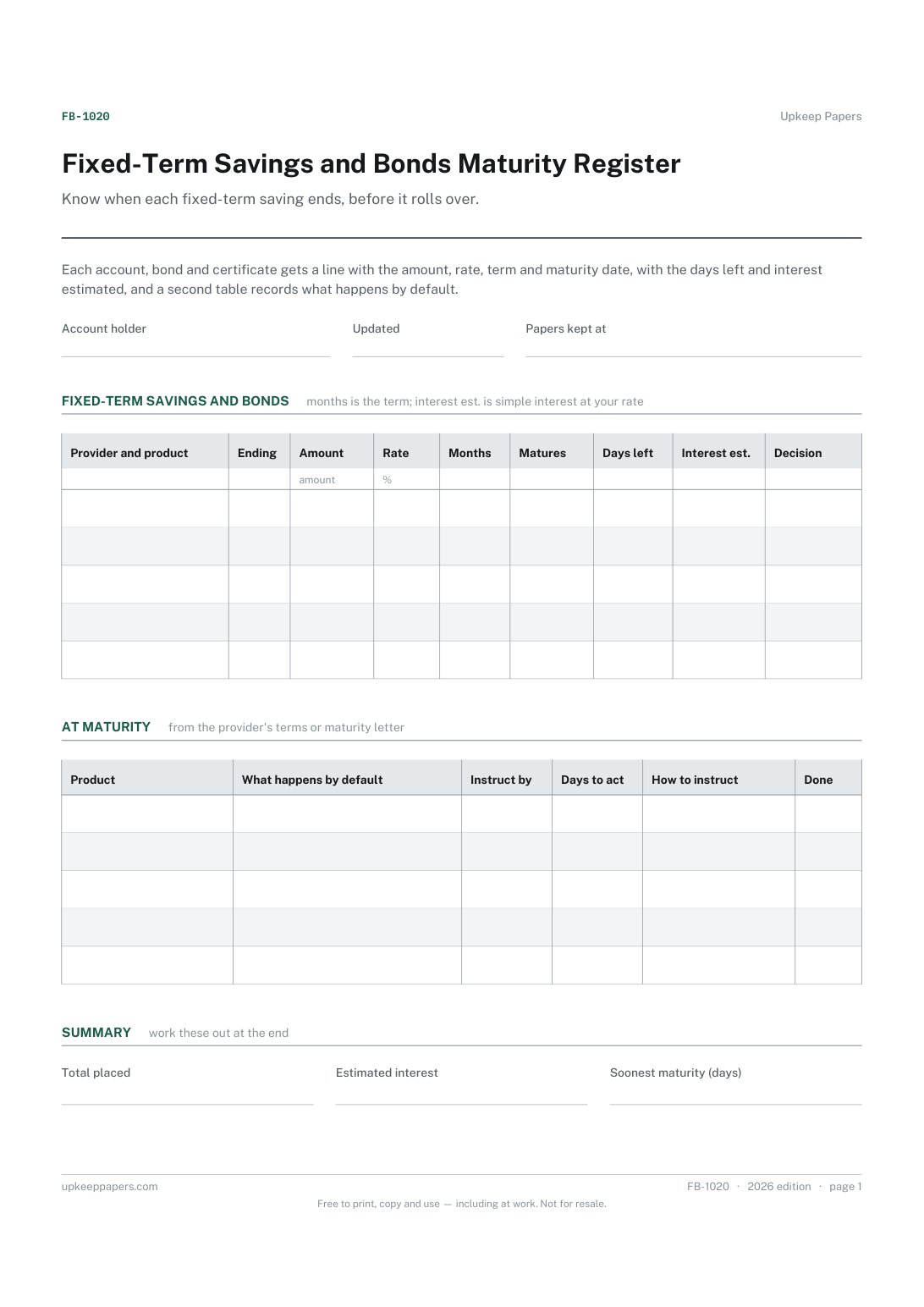
Every fixed-term product, the amount placed and the rate agreed.
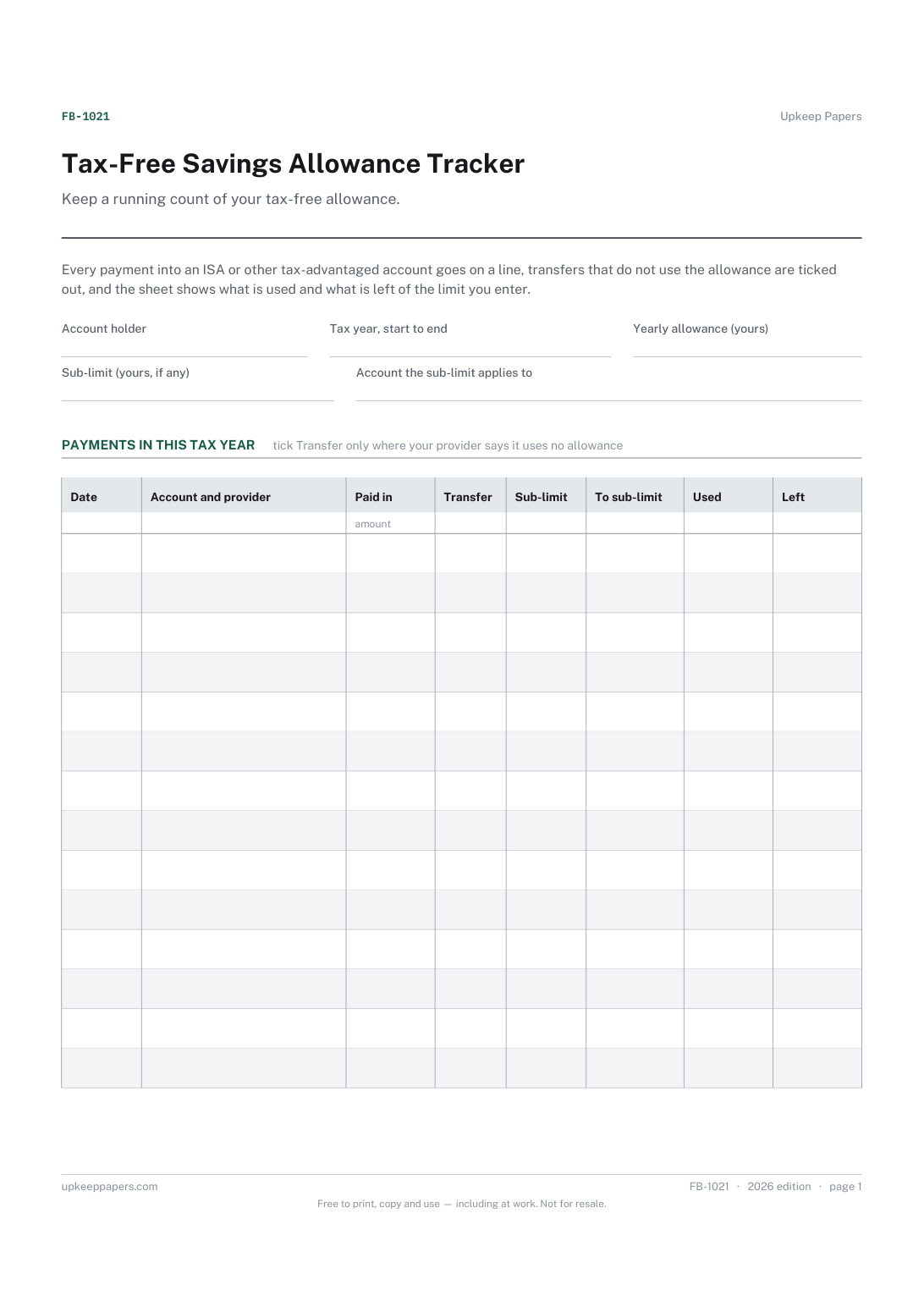
Every payment into a tax-free account, with its date and provider.
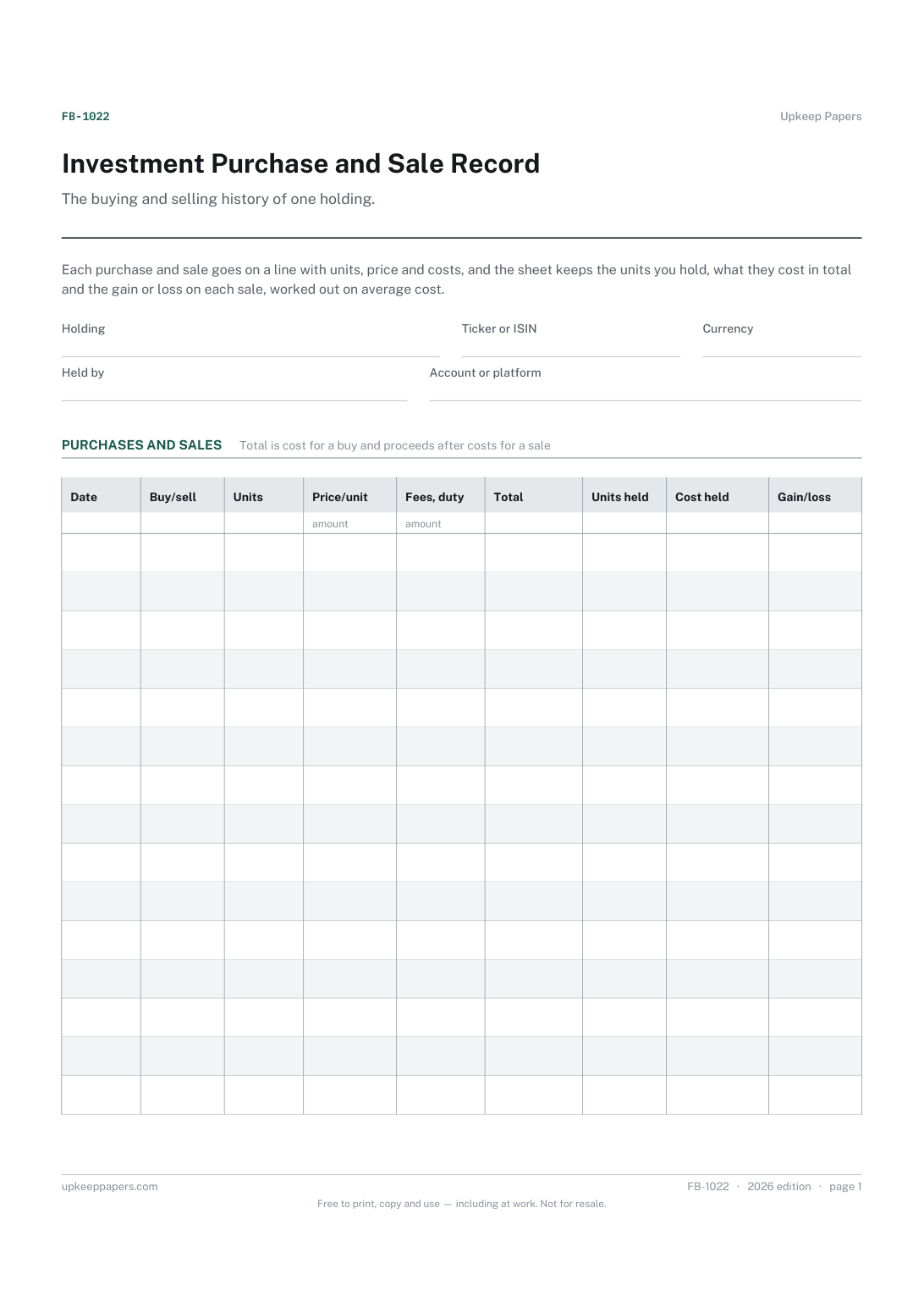
Every purchase and sale of one holding, with the date and price.
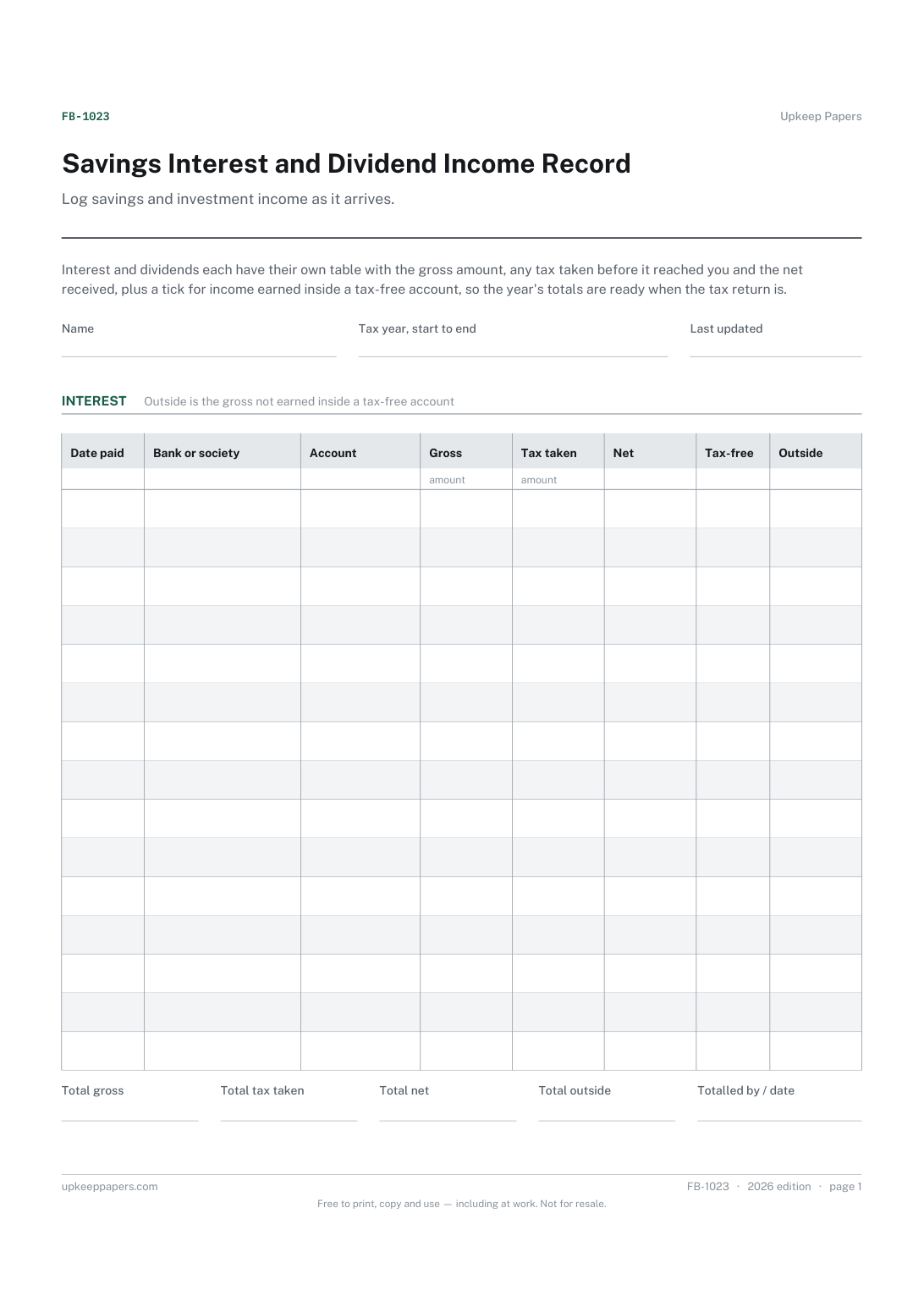
Each interest payment by bank, account and date.
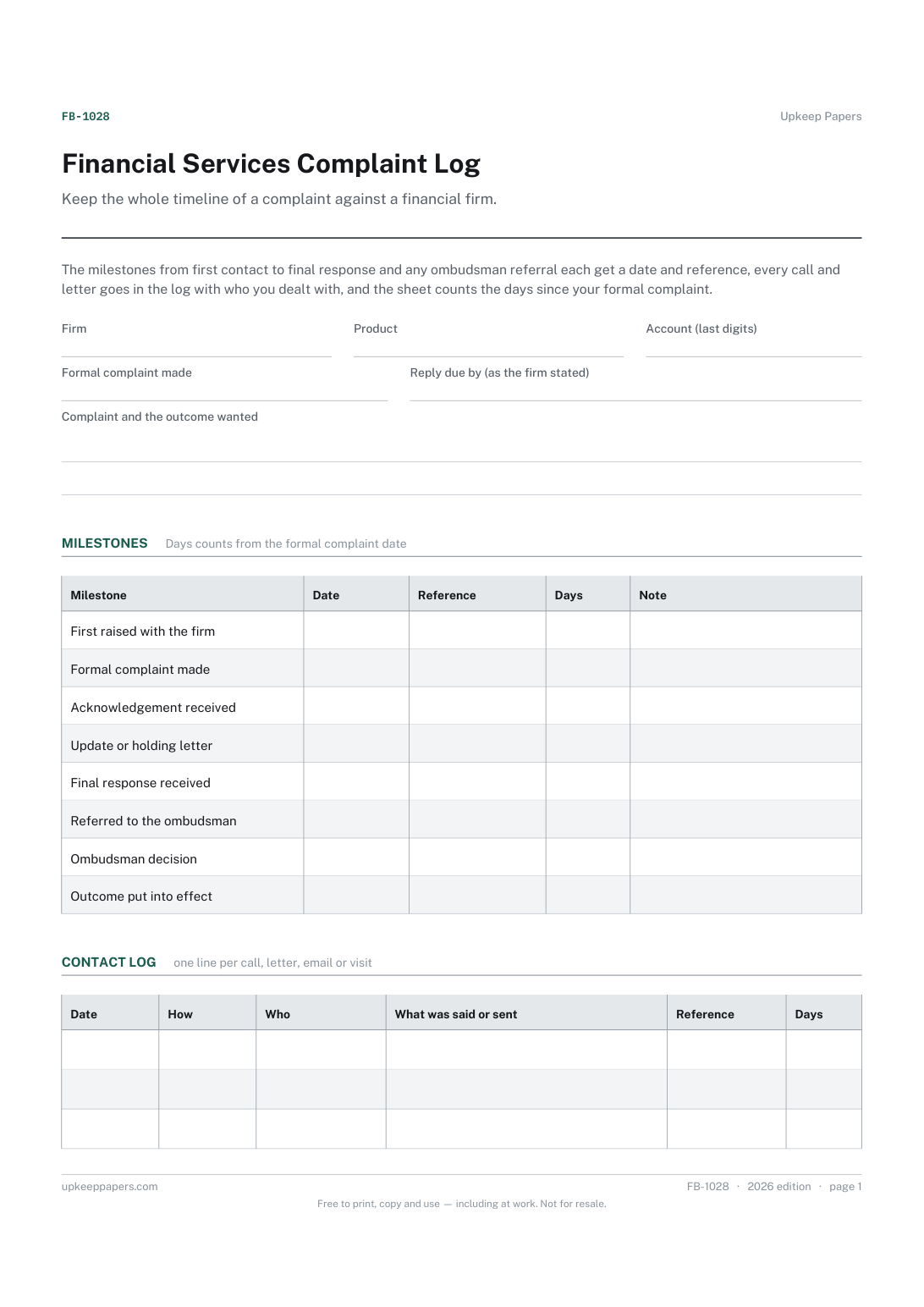
What the complaint is about and the outcome you want.
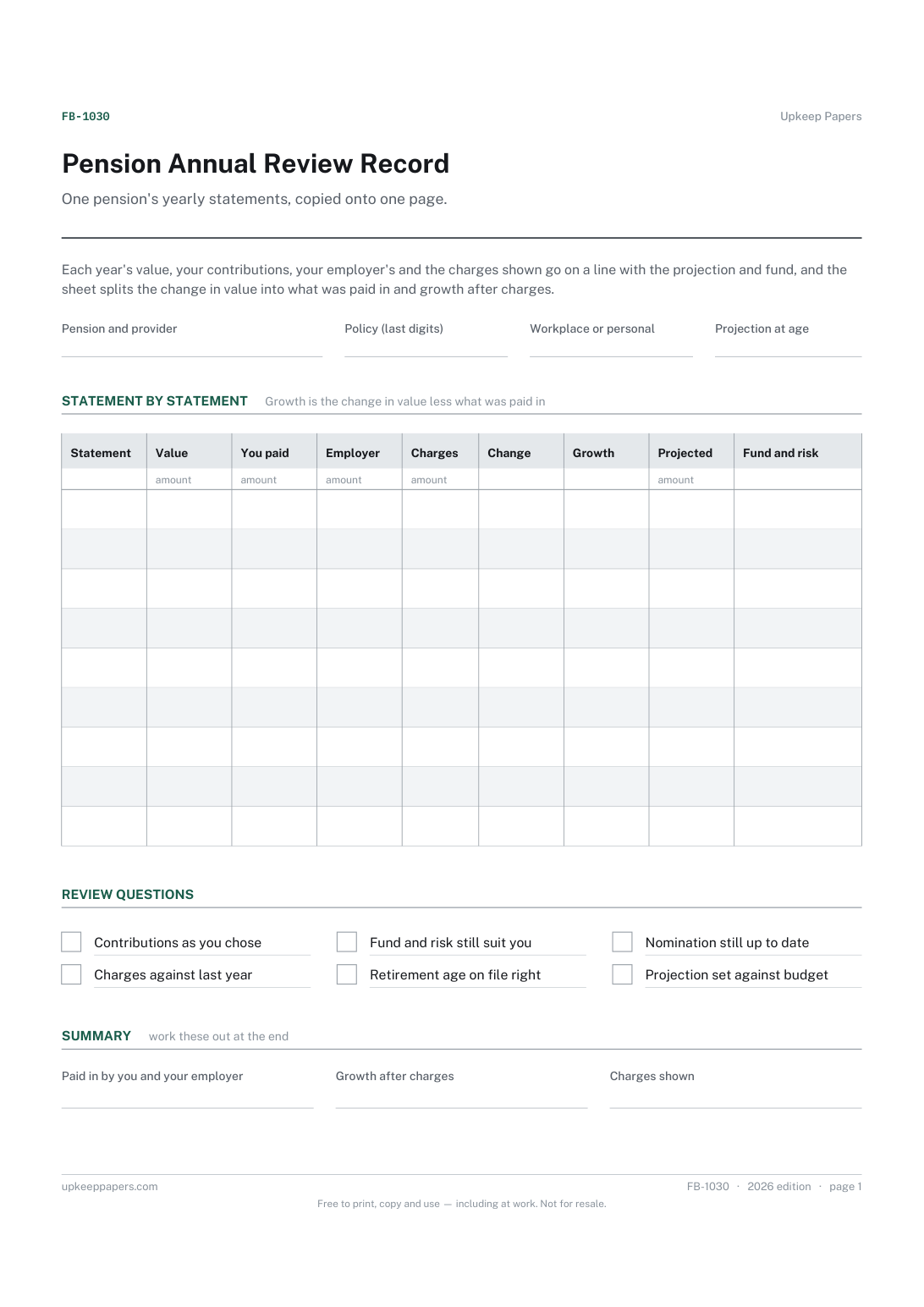
The value on each yearly statement, year after year.
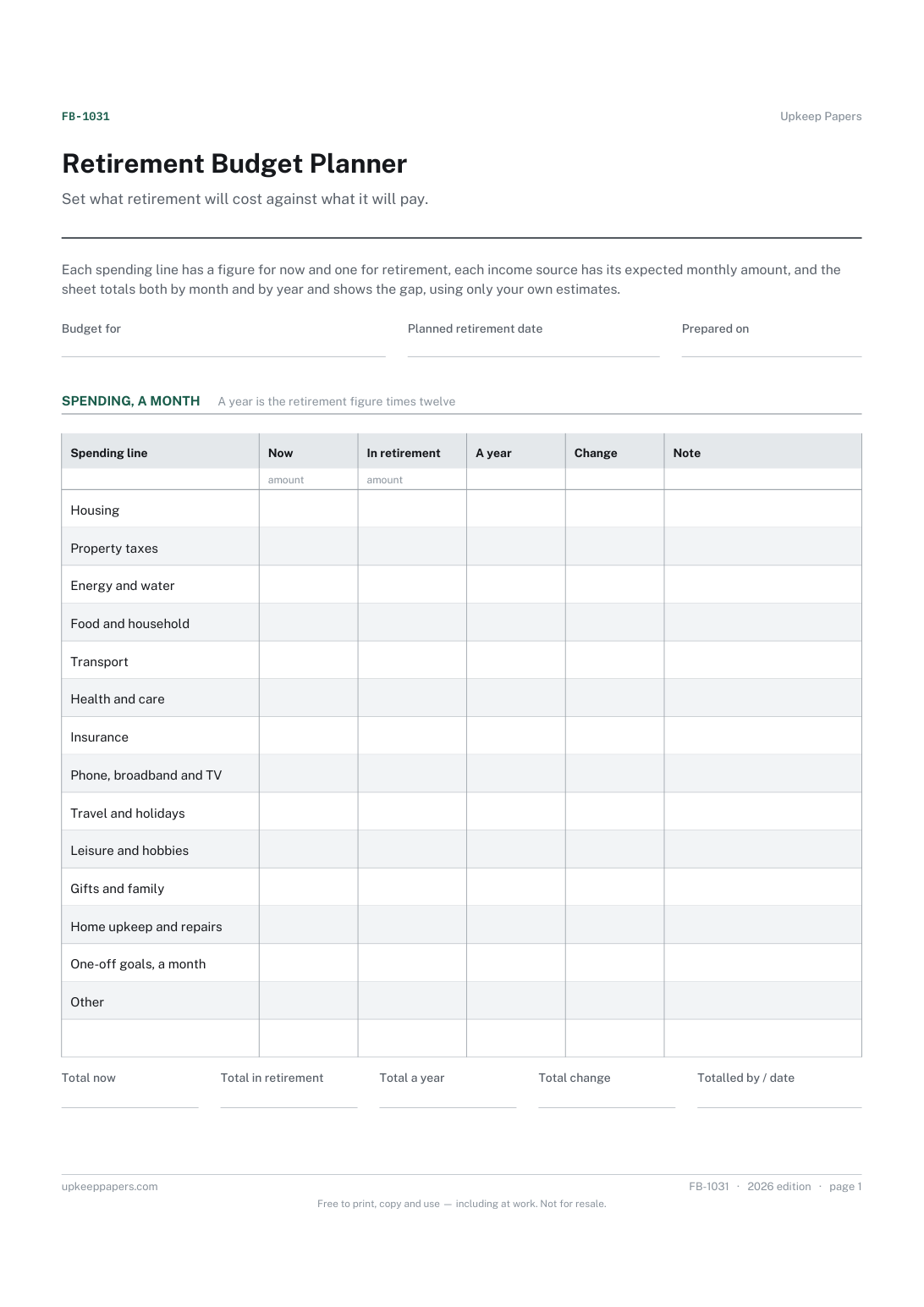
What you spend now on each part of the household budget.
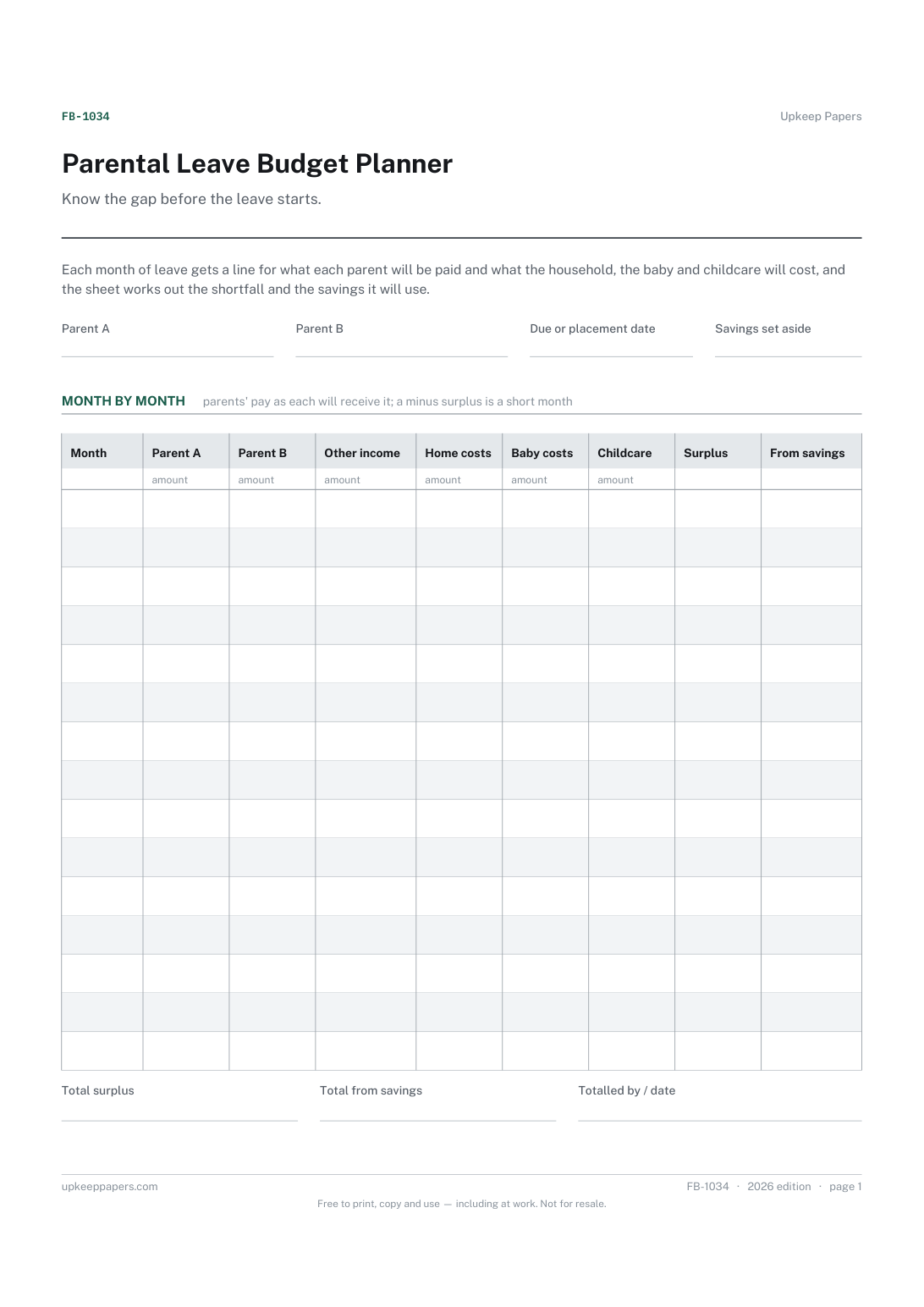
Each parent's leave in stages, from full pay to unpaid, with dates.
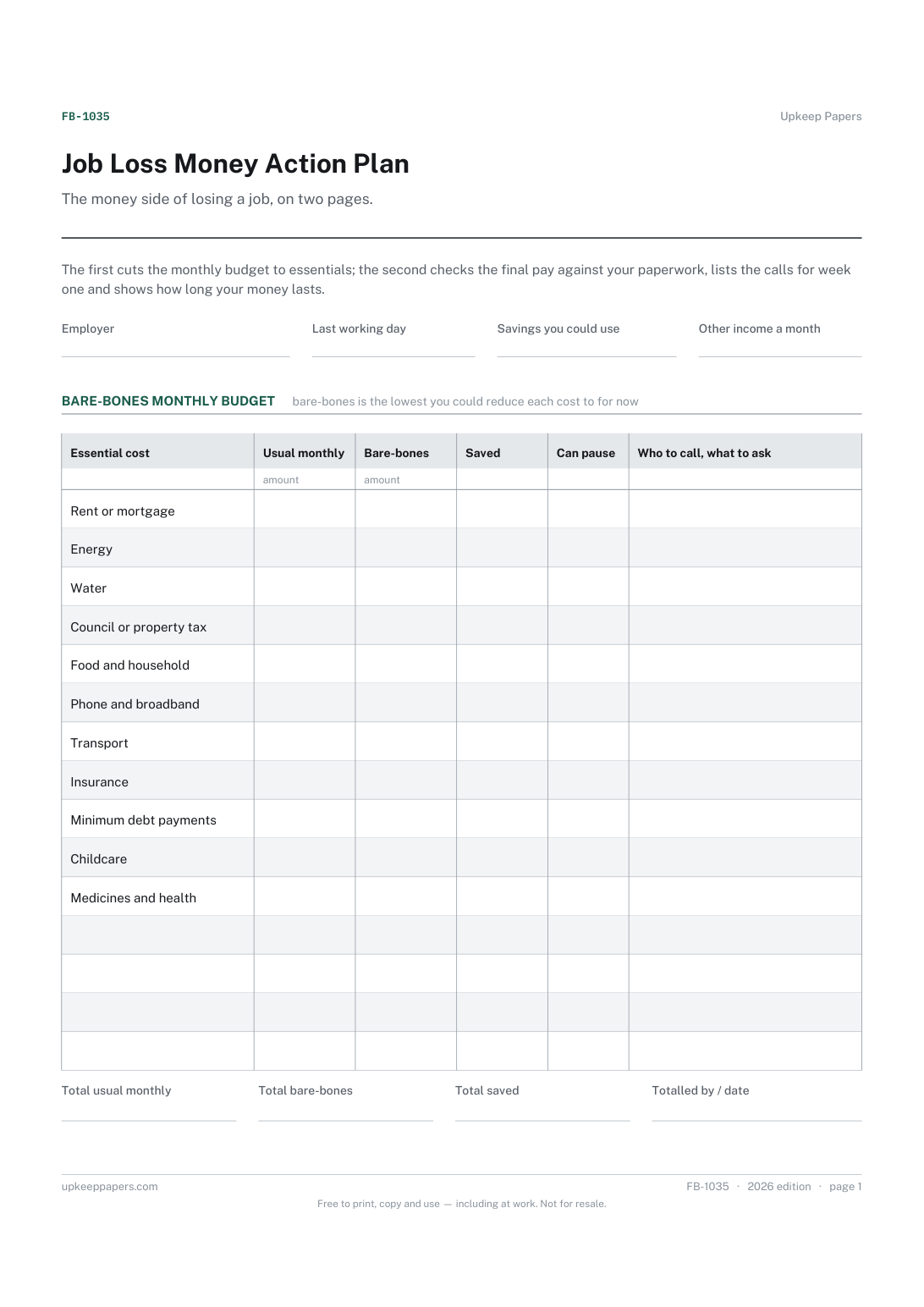
Essential monthly costs cut back, against what you usually pay.
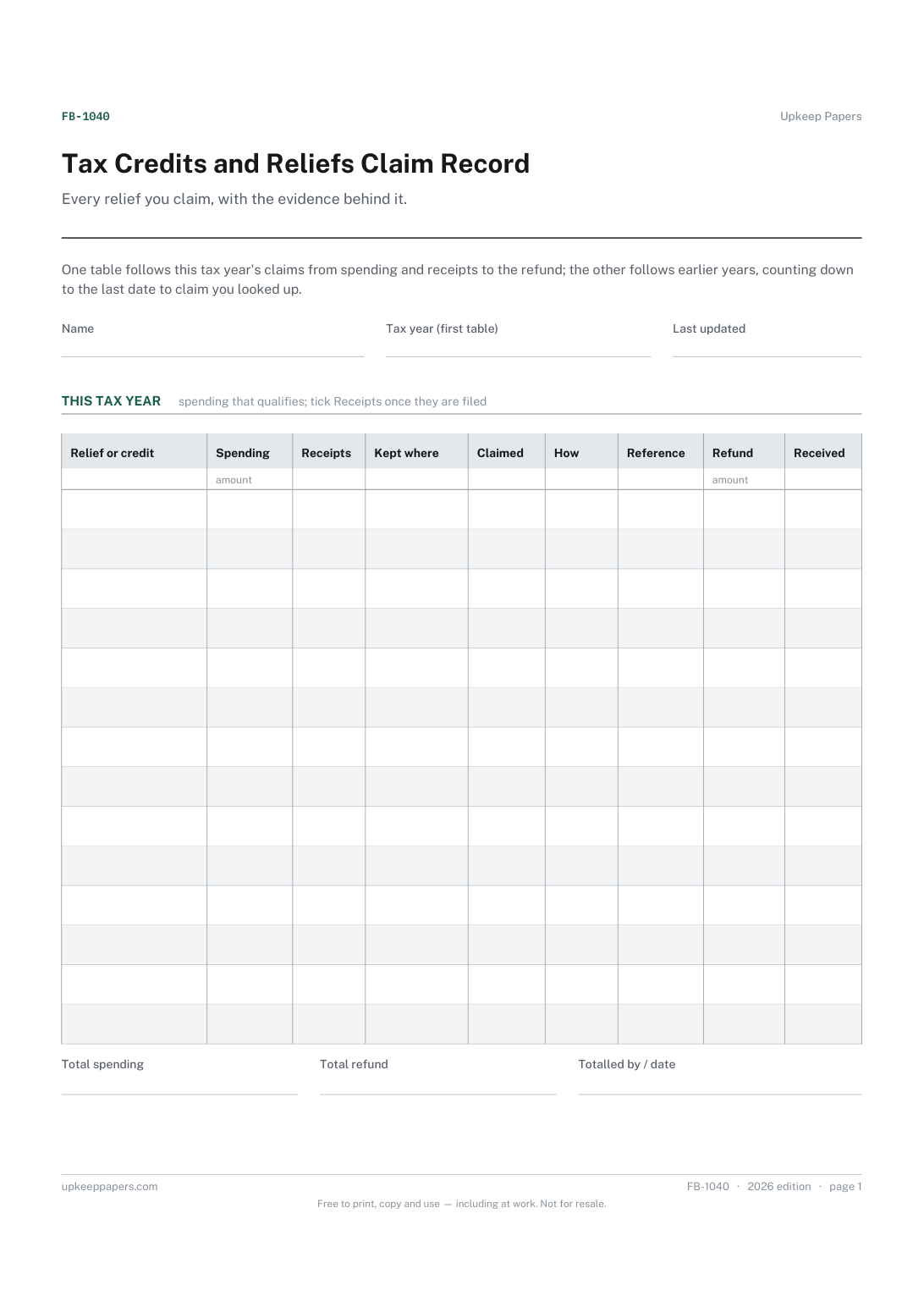
Each credit or relief claimed, in the name your tax office uses.
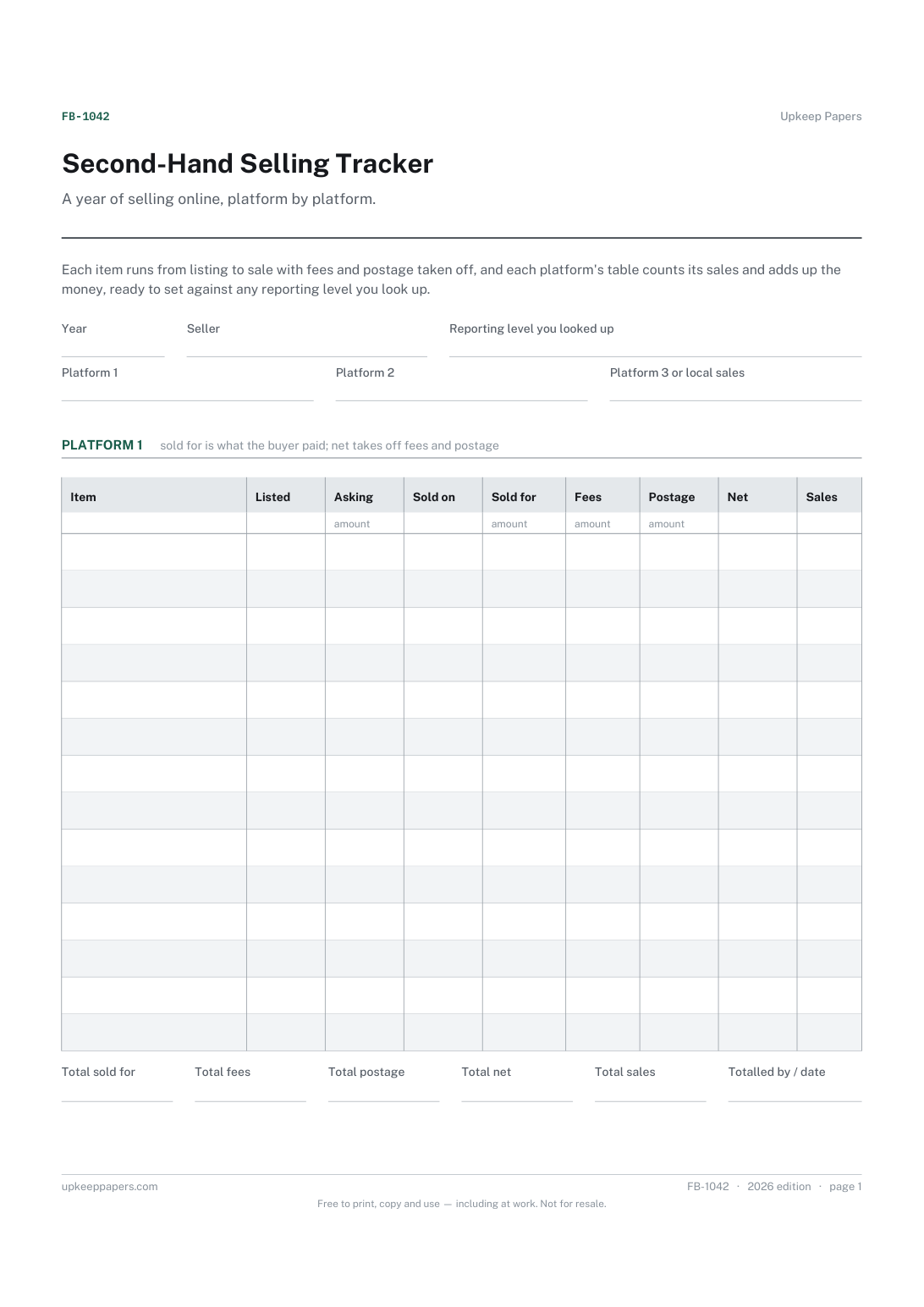
Each item from the day it was listed to the day it sold.
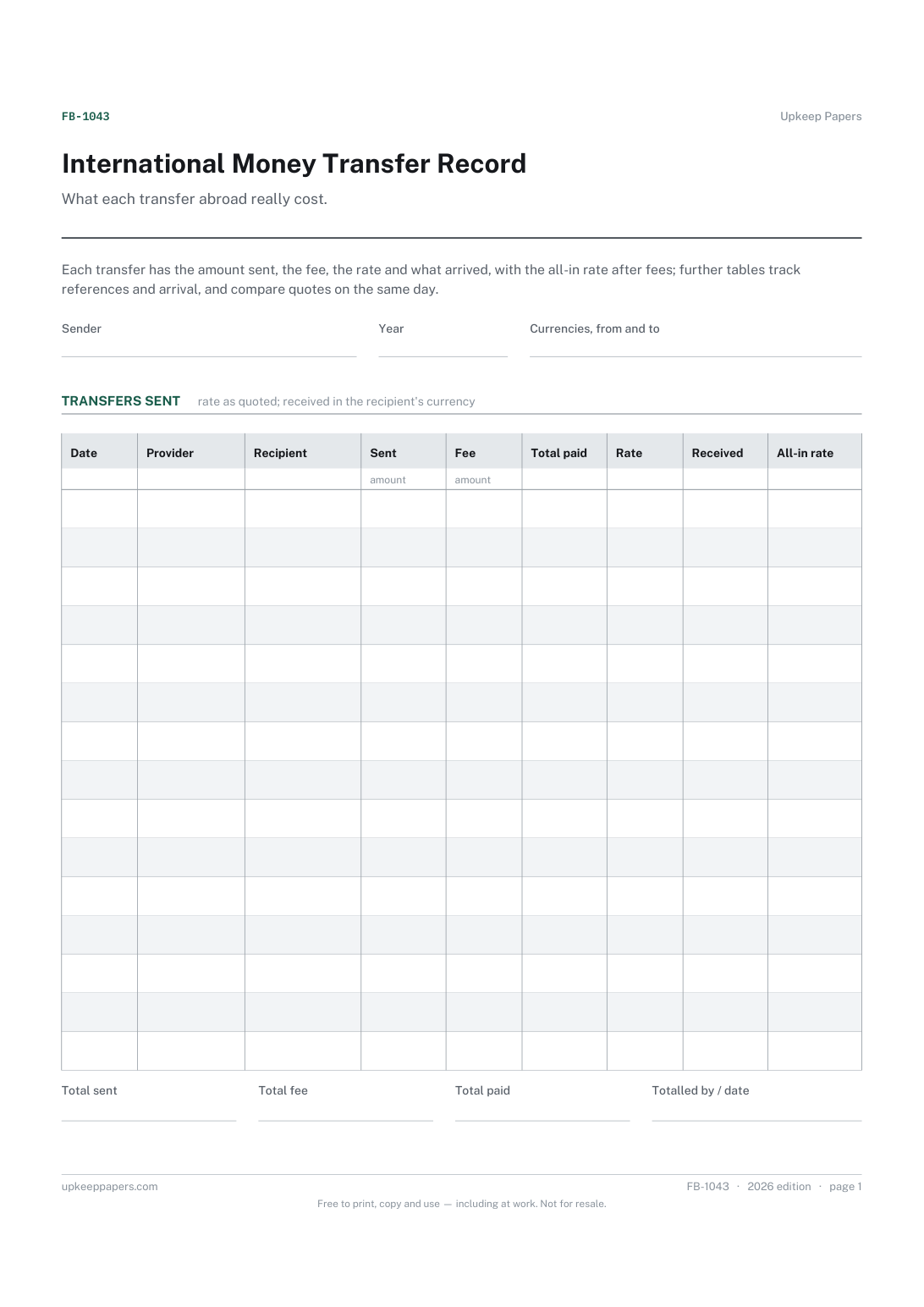
Each transfer with the provider, recipient, fee and rate quoted.
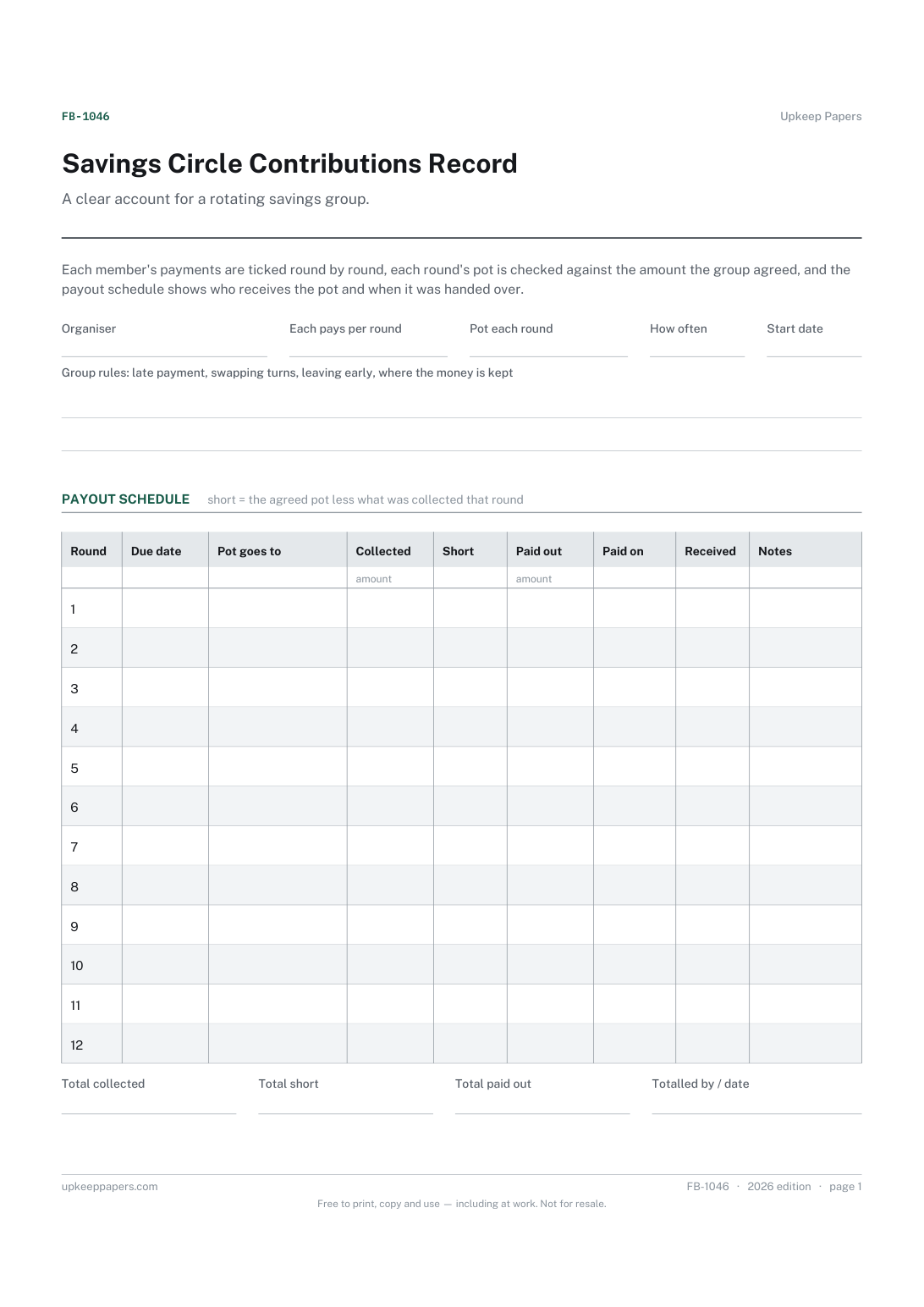
Each member's payment ticked off round by round.
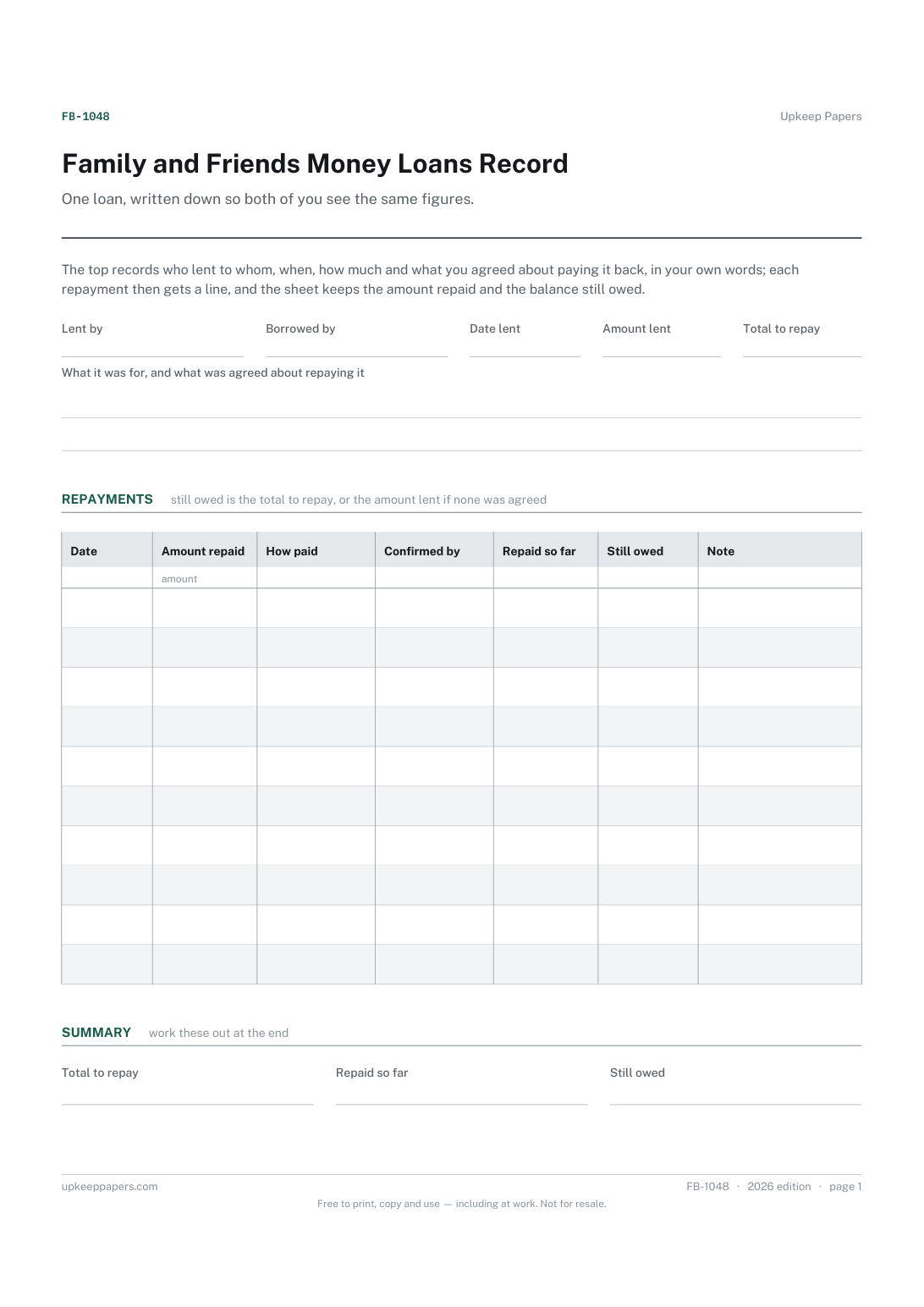
Who lent the money, who borrowed it and on what date.
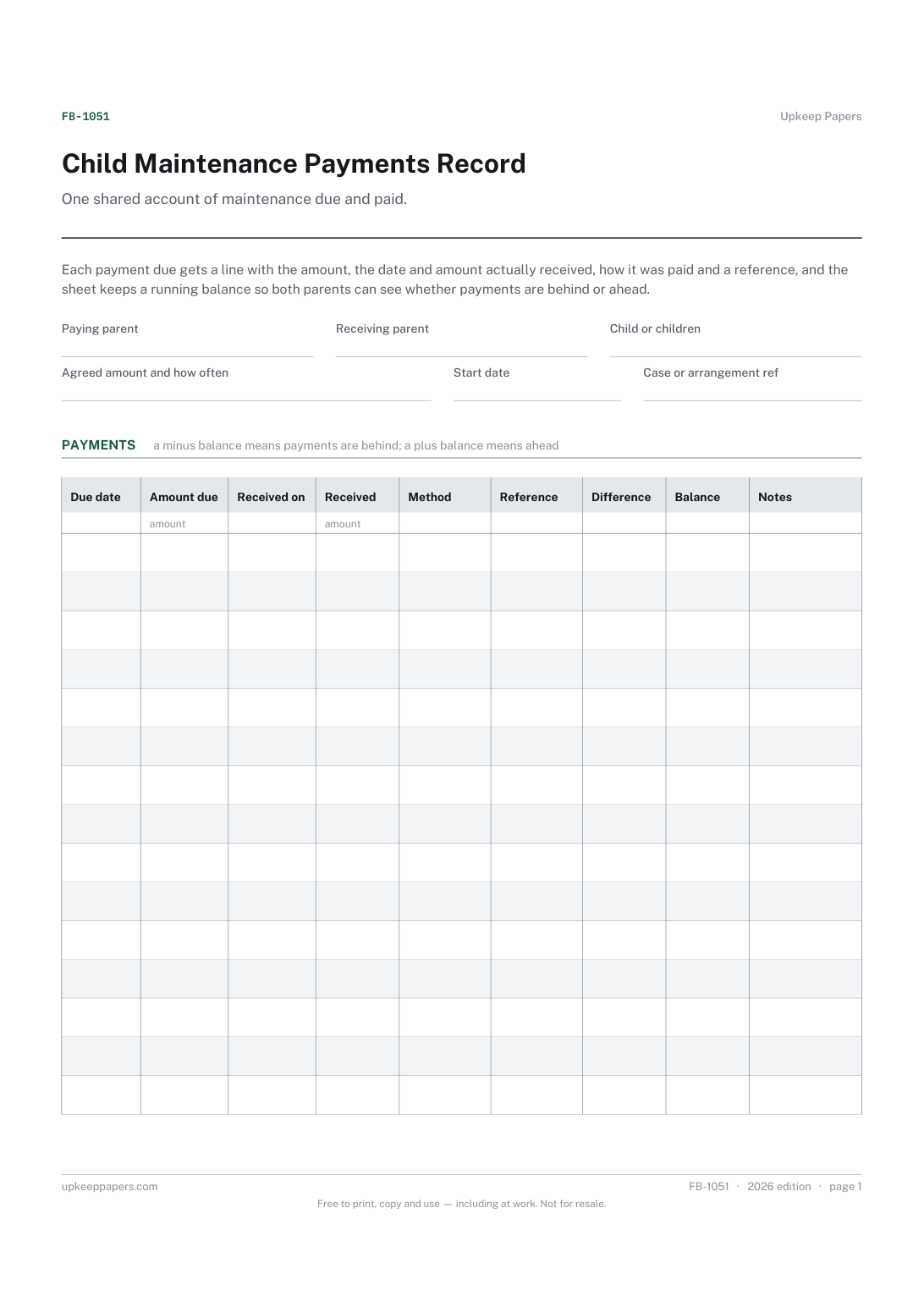
The arrangement: who pays, for which children, how much and how often.
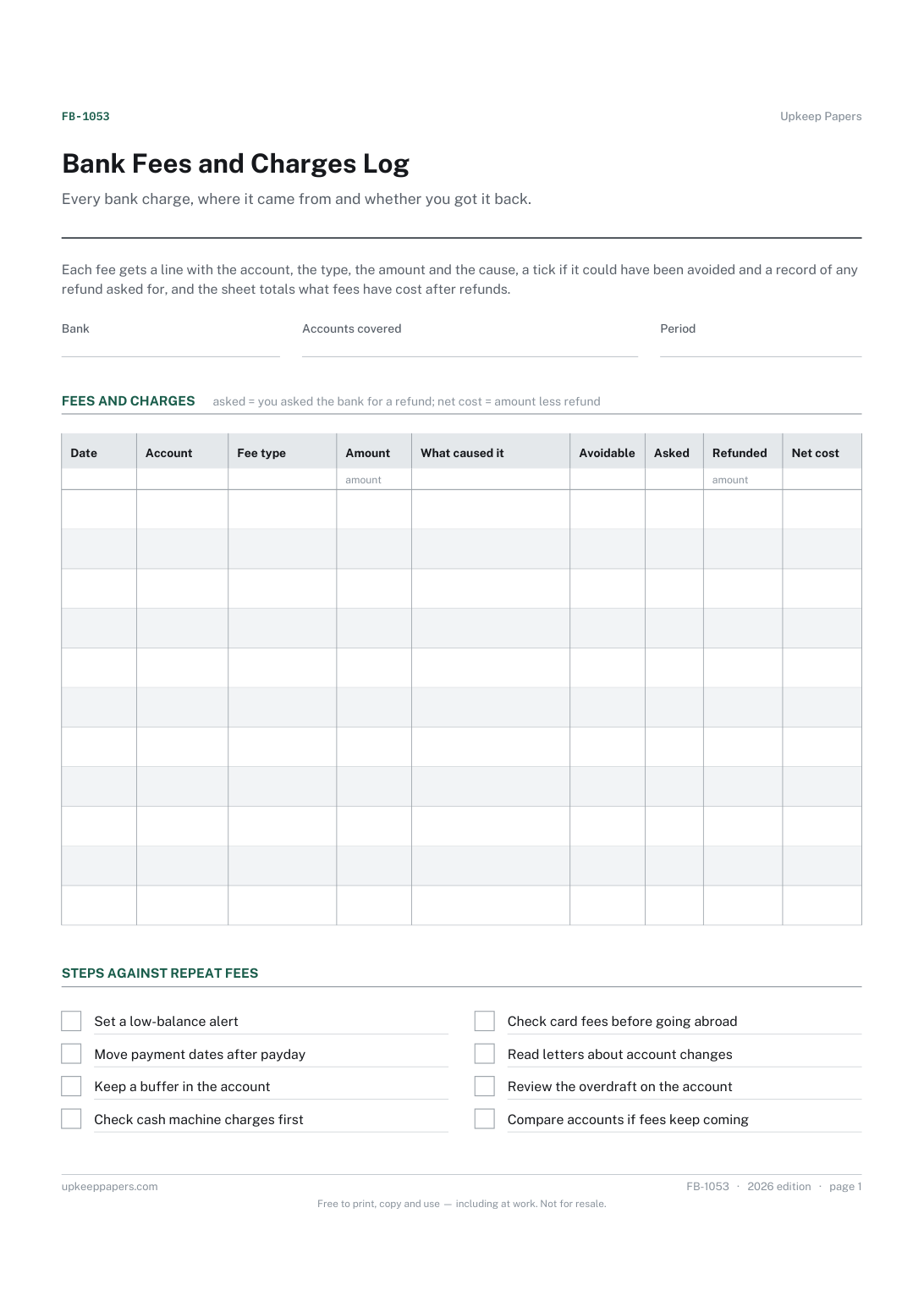
Each fee with the date, account and type of charge.
What came in this month, from wages, benefits and anything else.
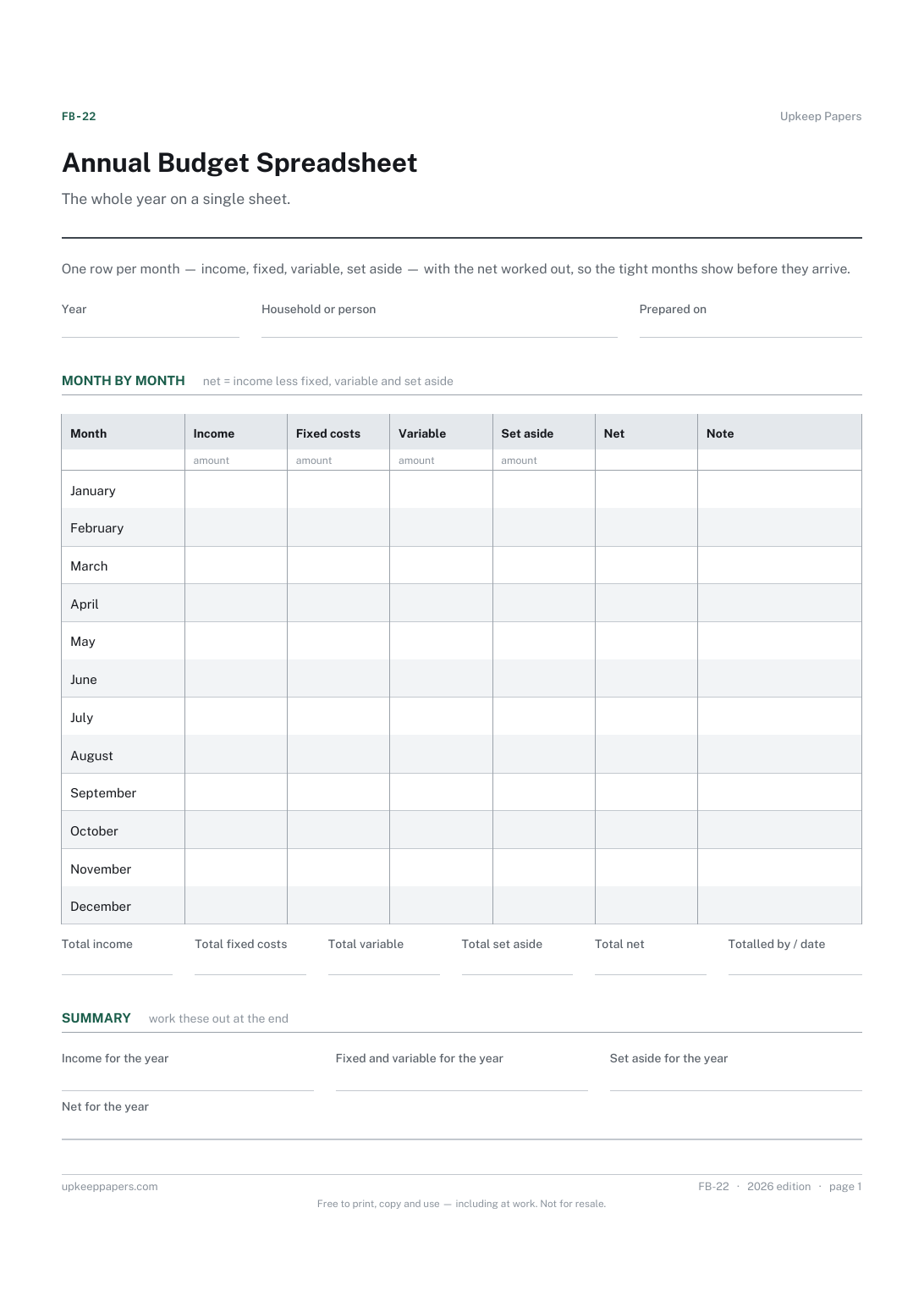
Income and outgoings for every month of the year in one view.
Which bills are due this month and on what day.
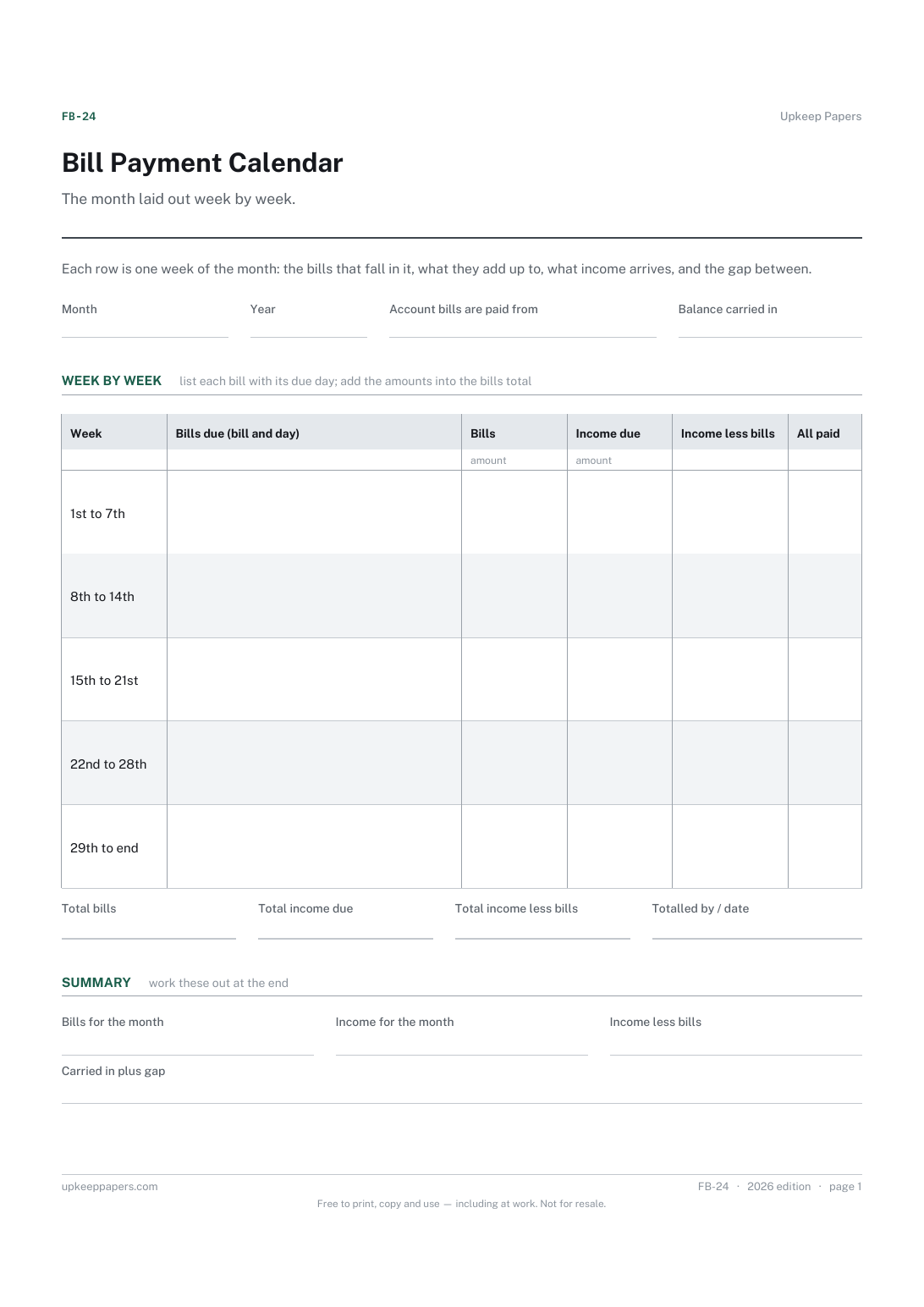
Which bills fall in each week of the month, by their due day.
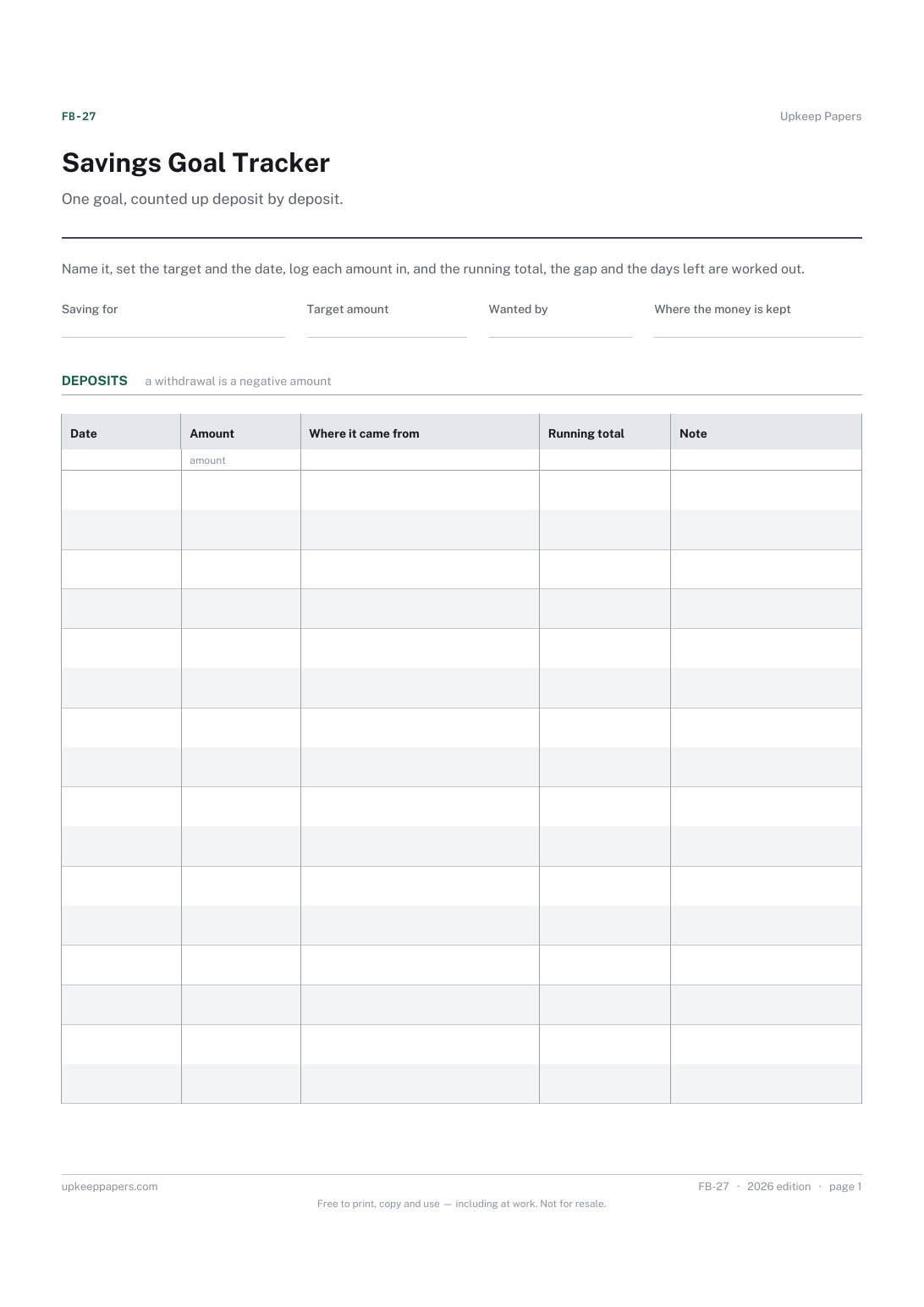
Every deposit, dated, with the total after each one.
What each fund is for, when it is needed and how much it needs.
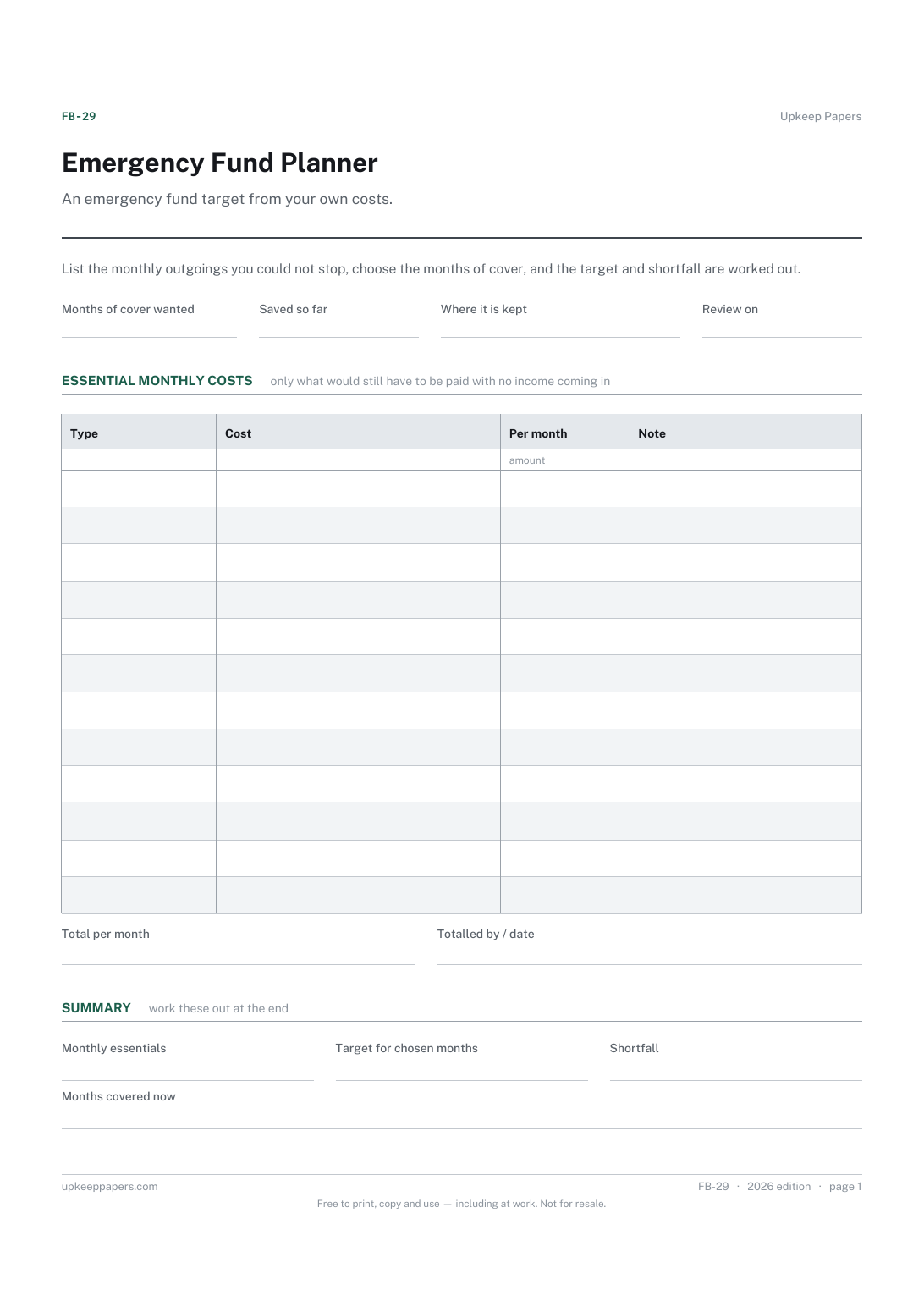
Which costs are essential — the ones that continue whatever happens.
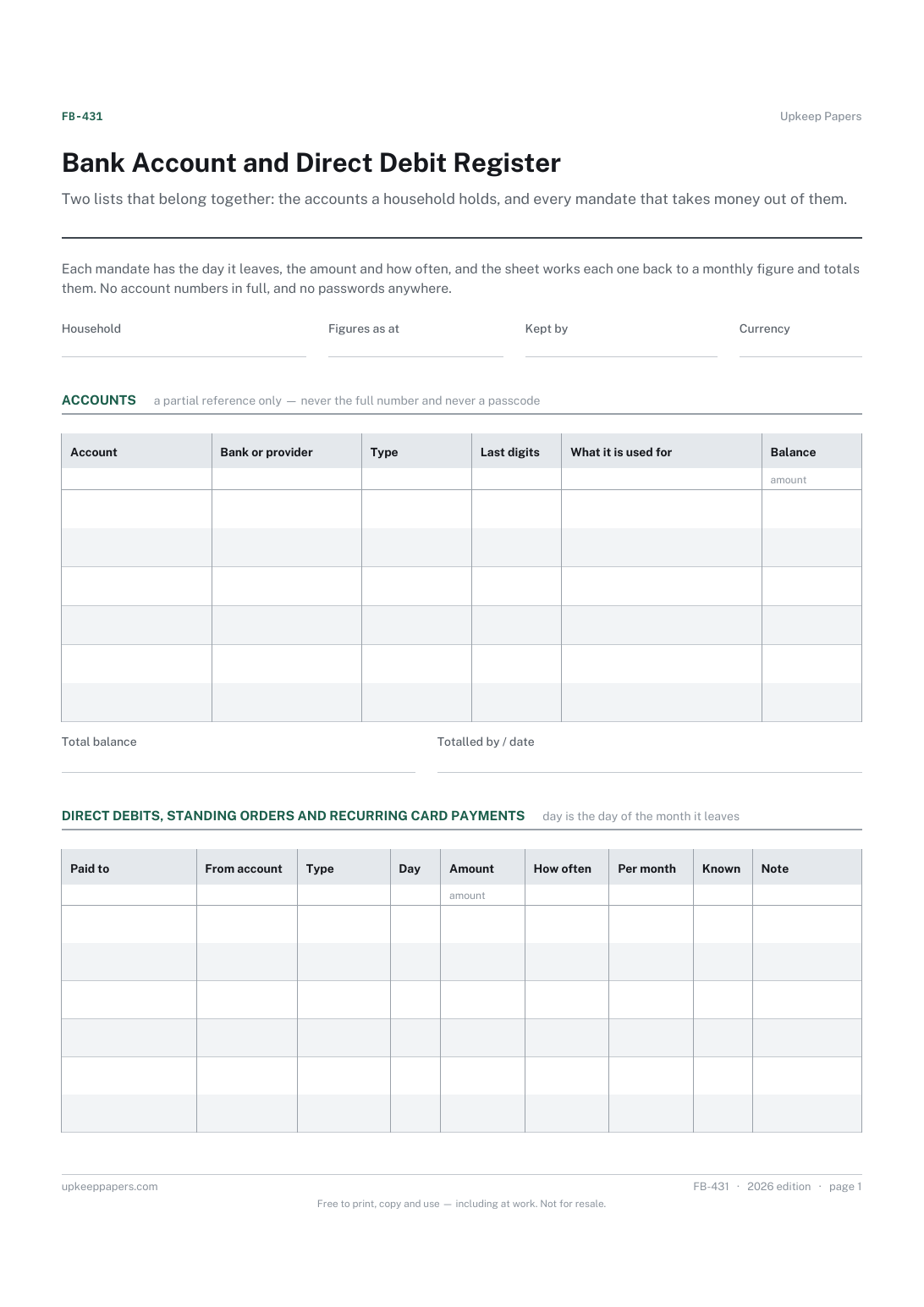
Everything that charges you on a schedule, in one list.
What came in this week and what was carried over from last.
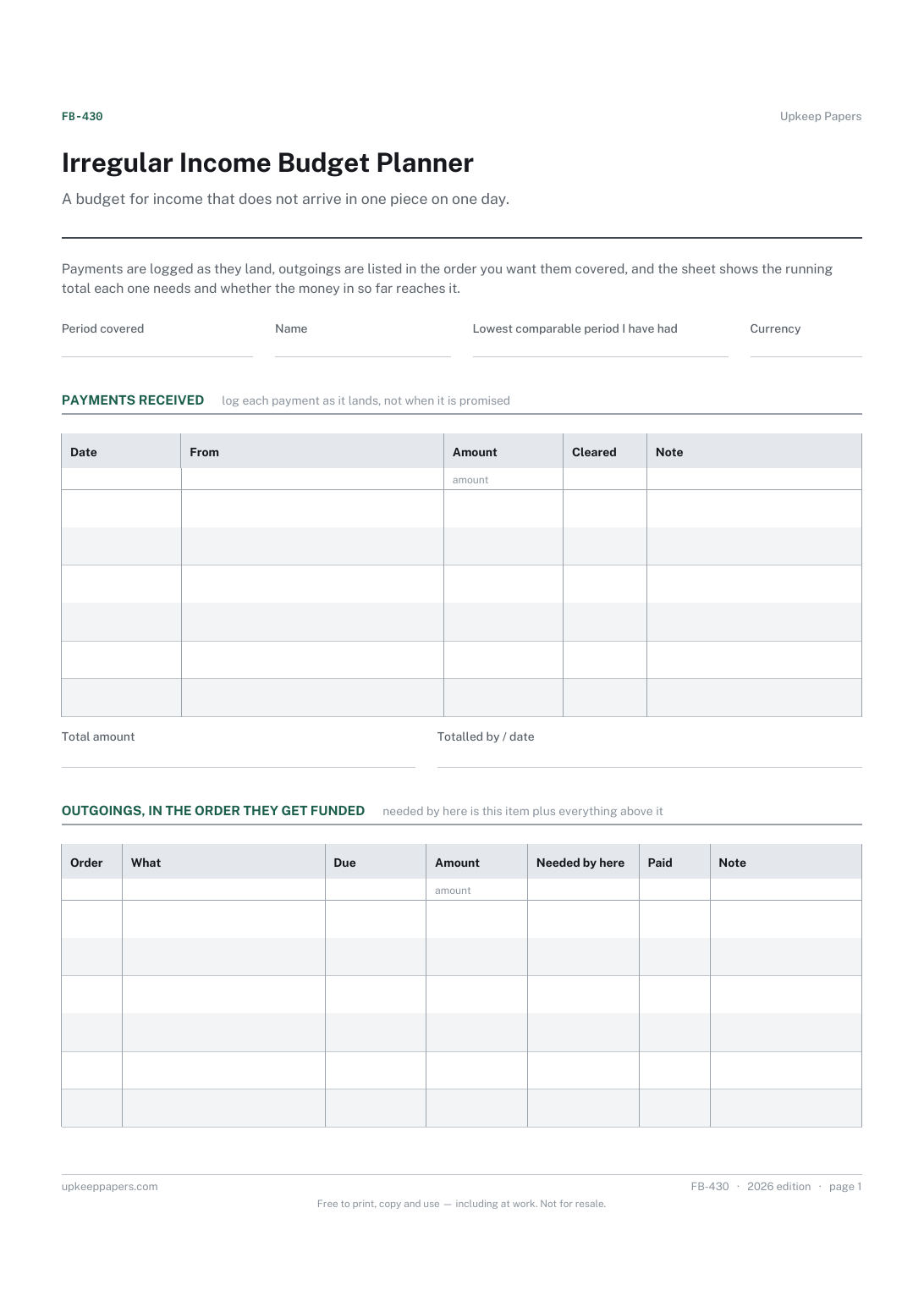
The income for the period, entered once at the top.
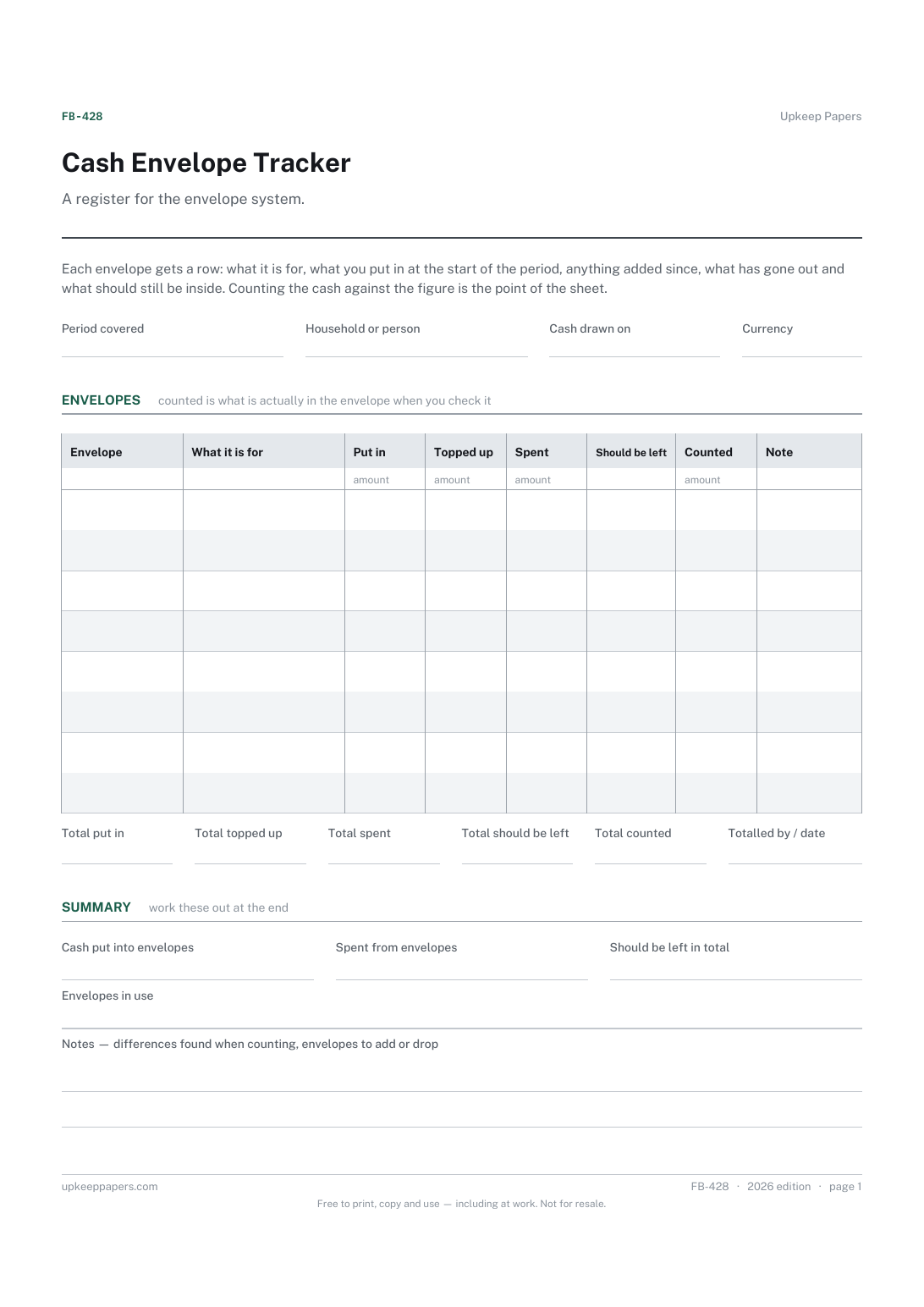
What each envelope is for and what period it covers.
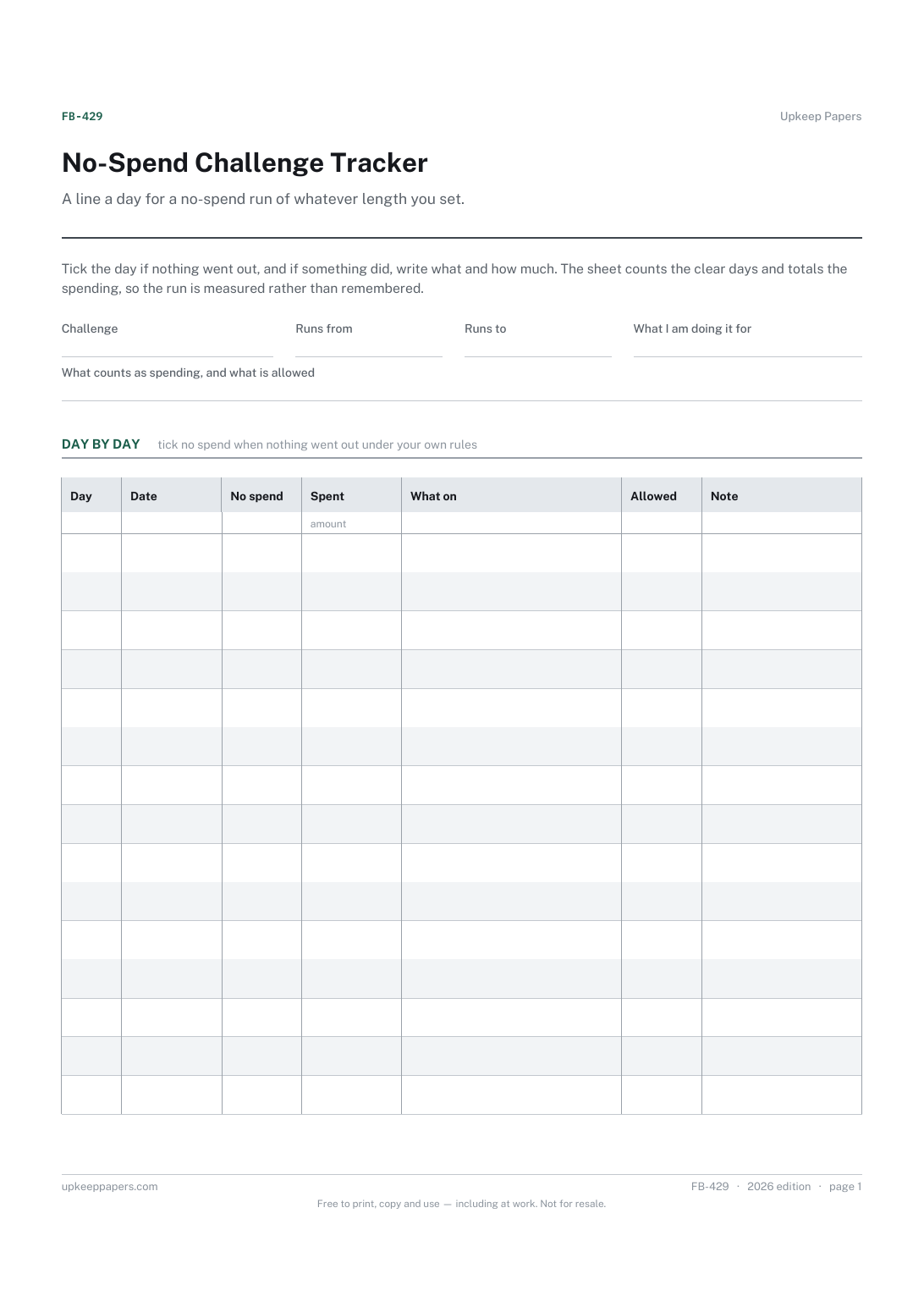
Which days passed with nothing spent at all.
Every payment received in the period, with its date and source.
Which accounts exist, with which bank, and what each is used for.
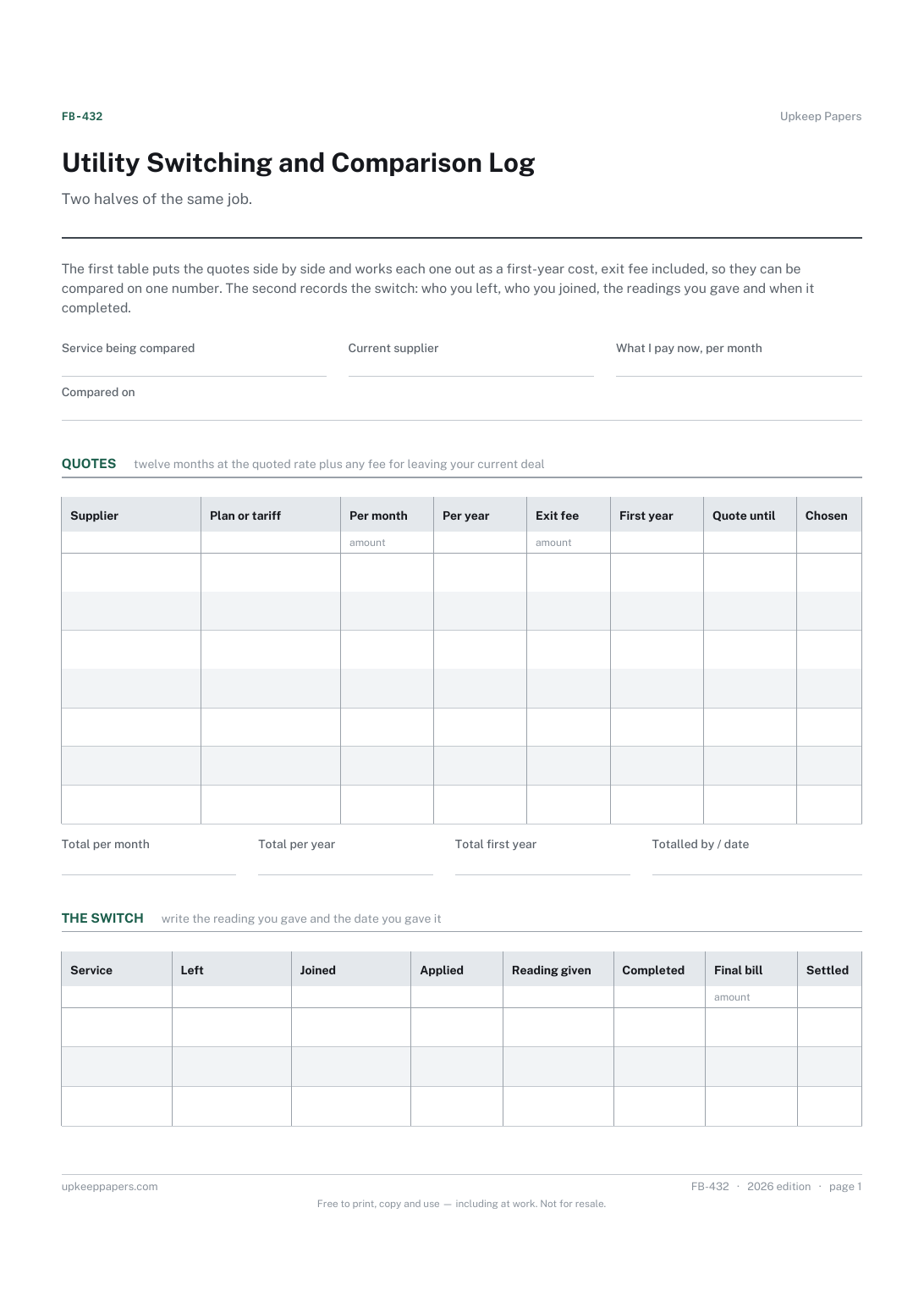
Every quote you have been given, with the supplier and the plan name.
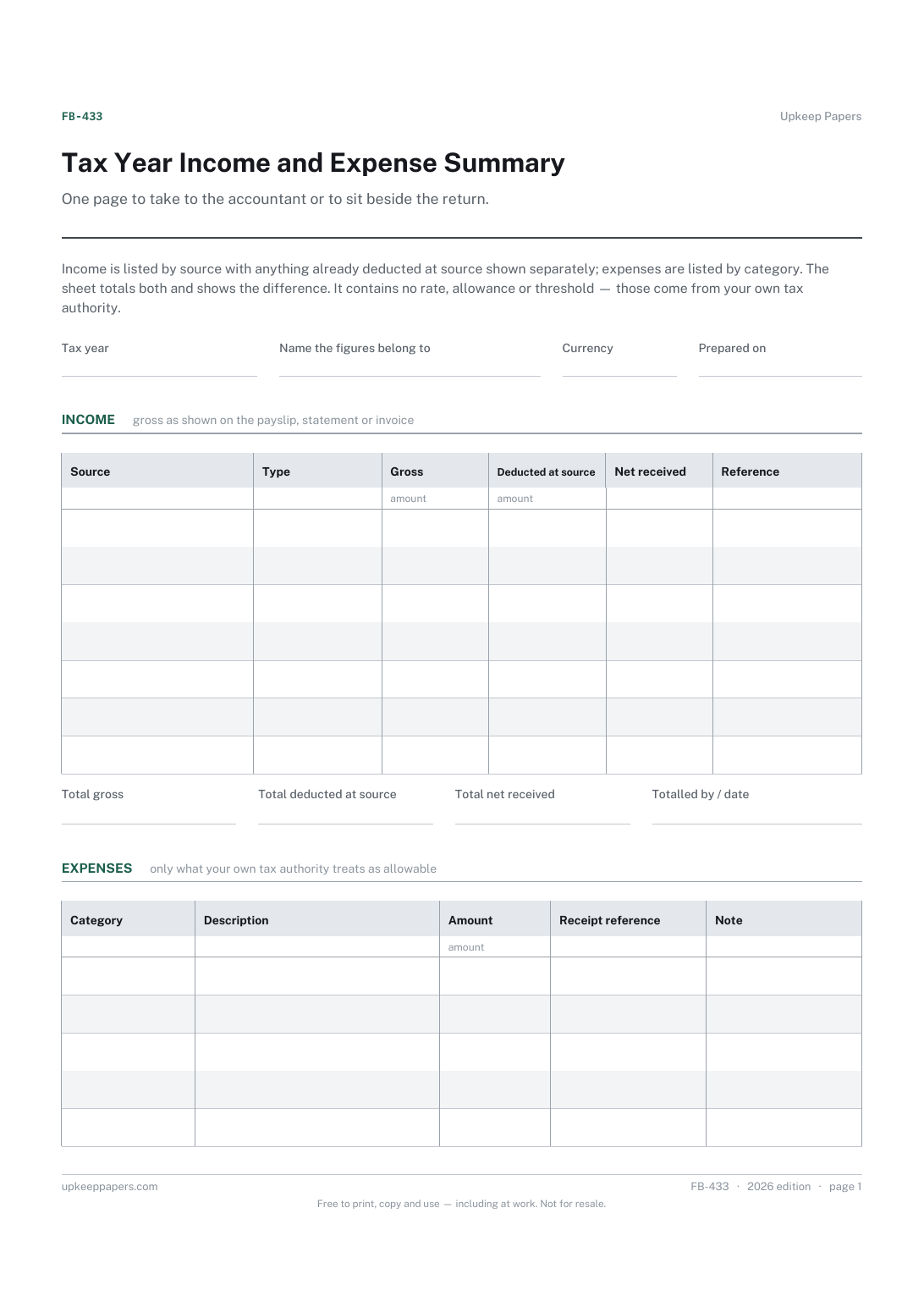
Every source of income for the tax year, with the gross figure.
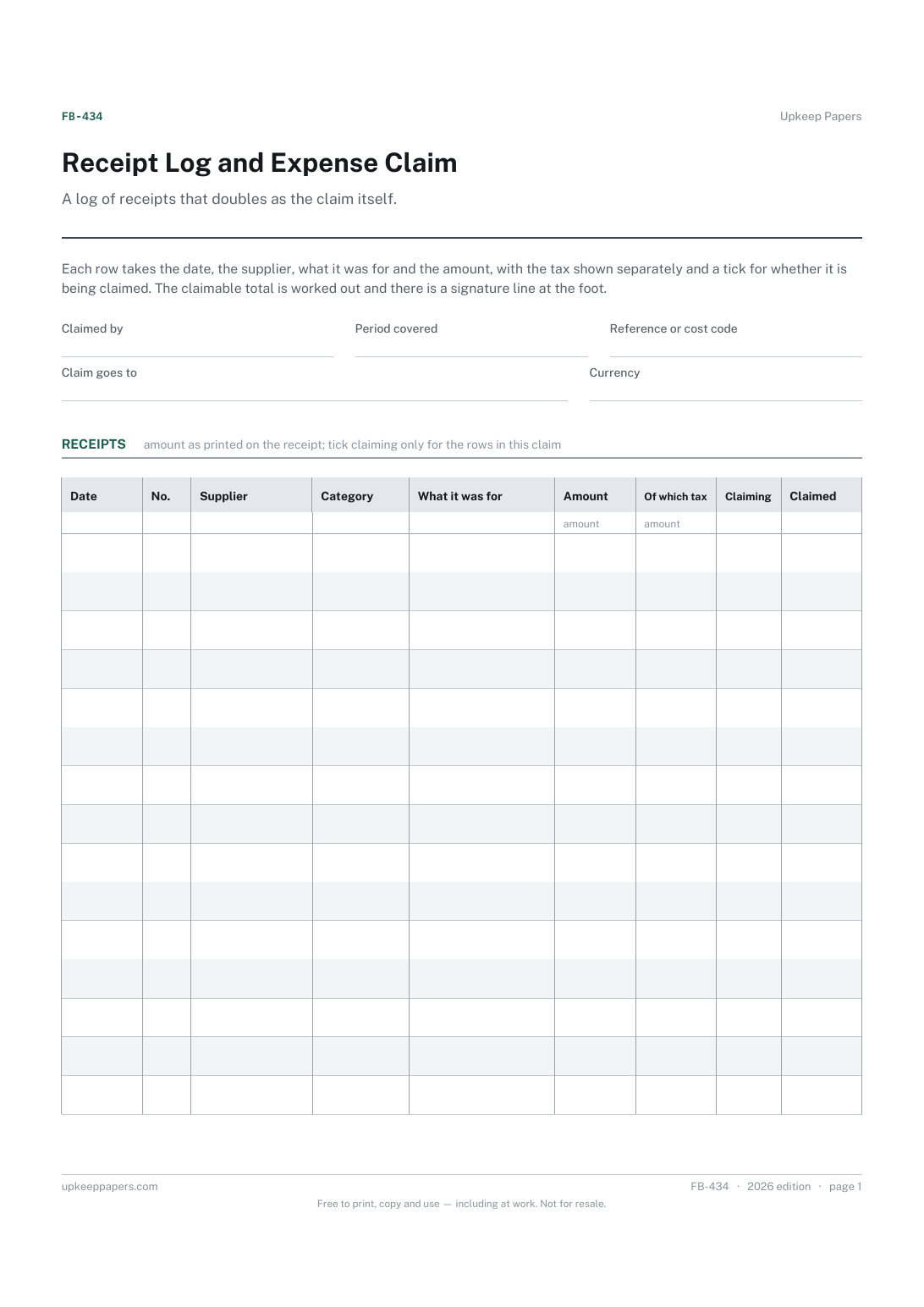
Every receipt in date order, with its number and supplier.
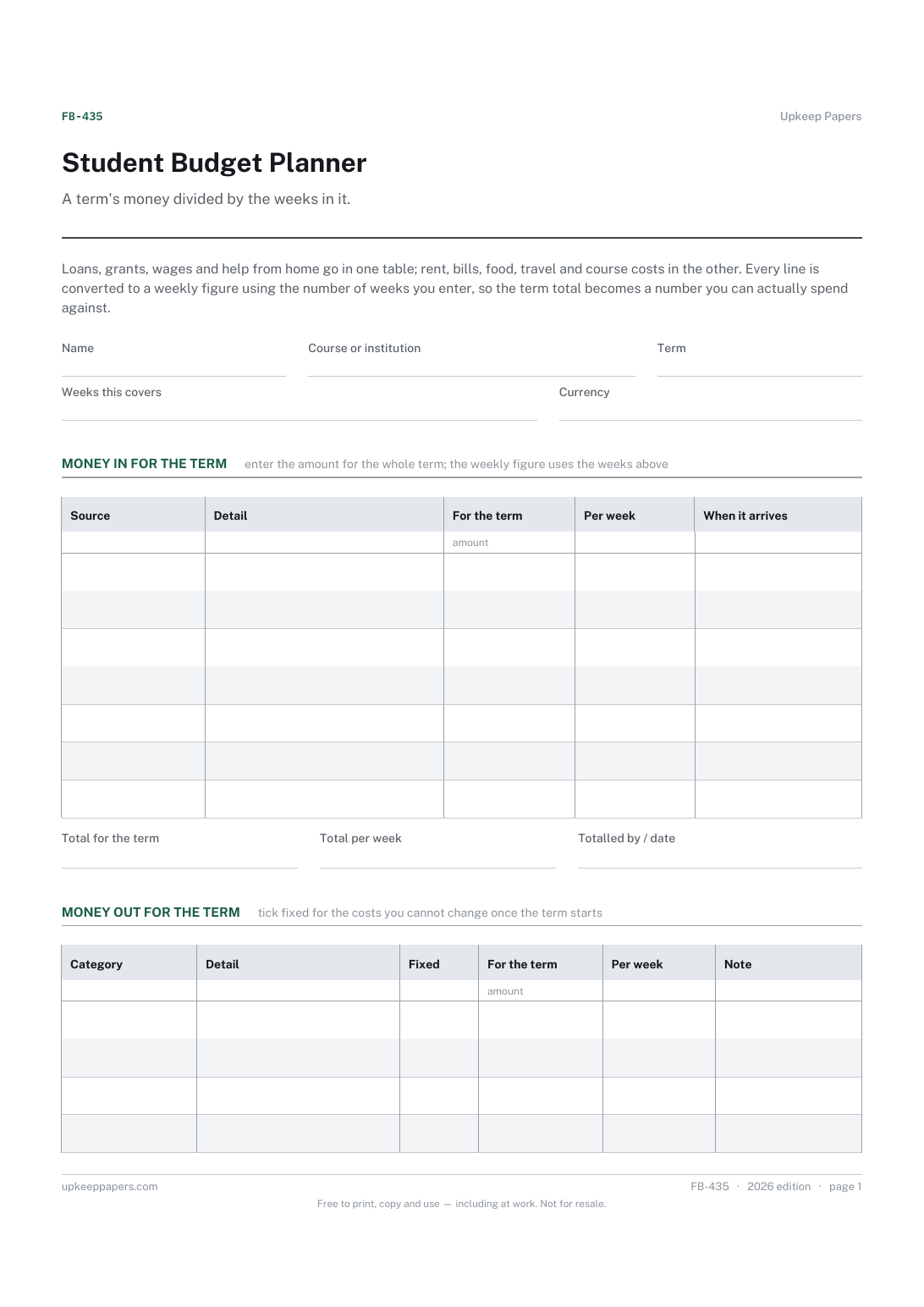
Every source of money for the term, and what each comes to per week.
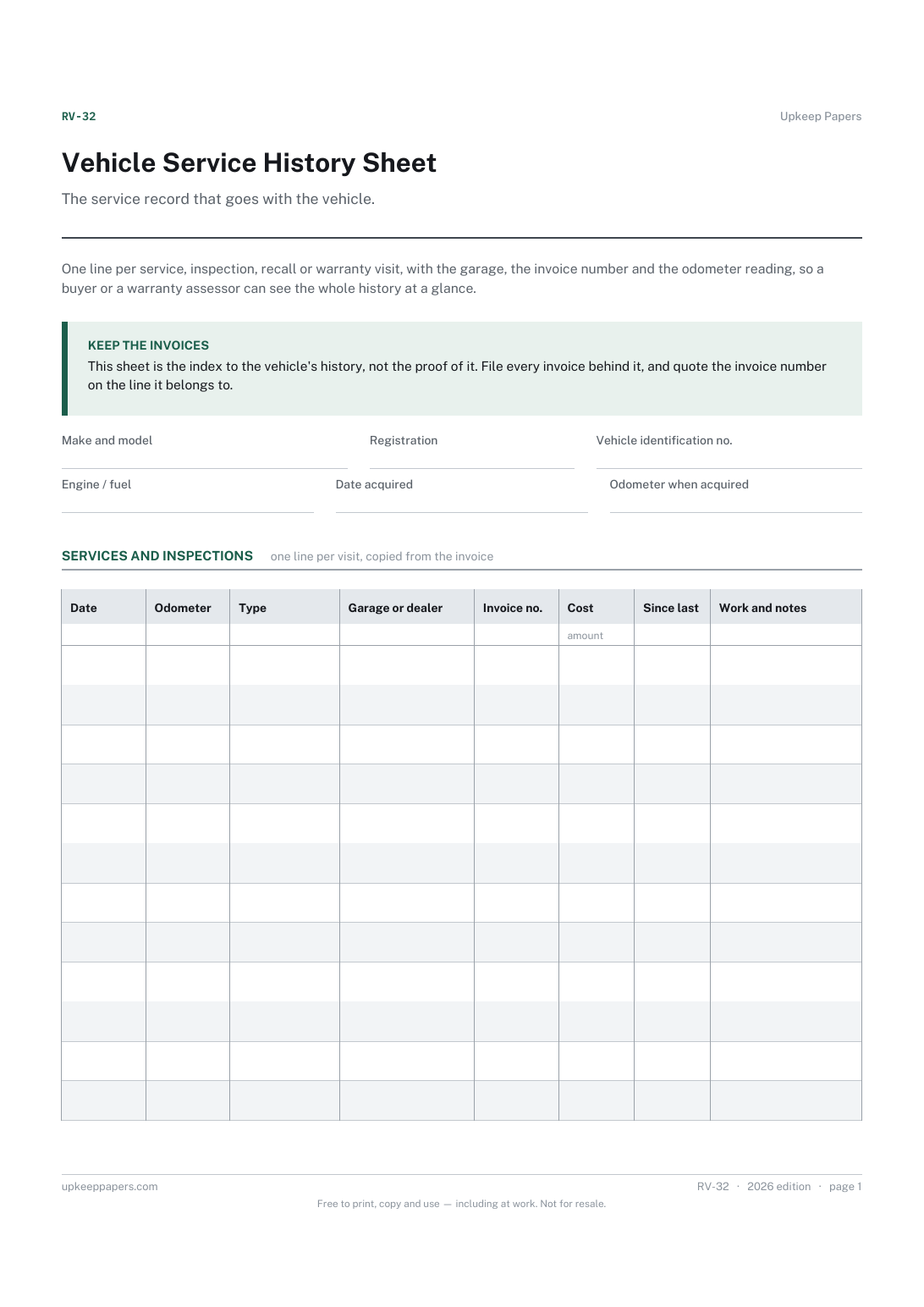
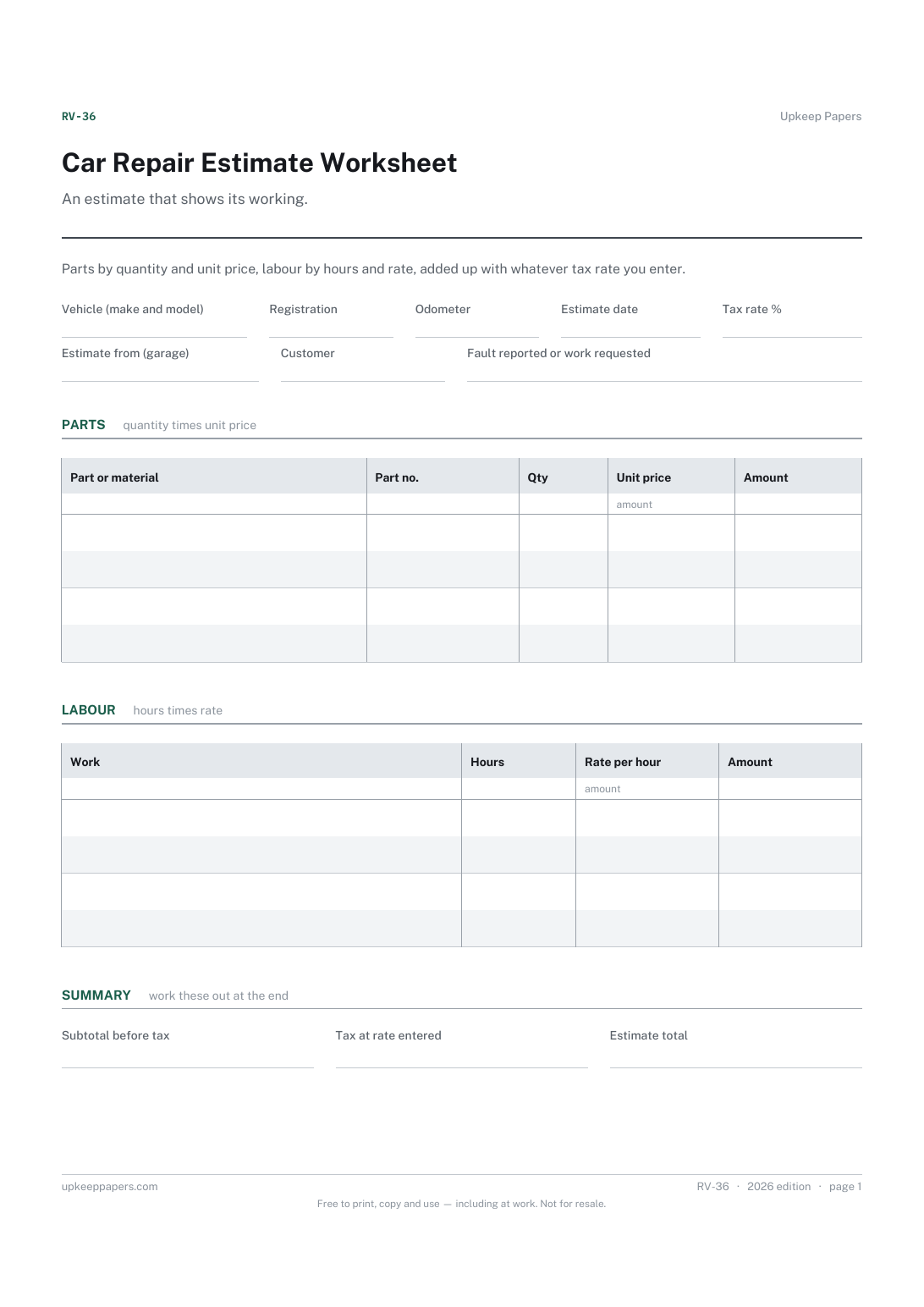
Every scheduled service and inspection, in date order with the mileage.
Distance per journey, from the two odometer readings.
Cost per kilometre or mile, from the fill-ups you actually made.
Total annual running cost across every category, not only fuel.
Parts and labour priced separately, so you can see which is driving the total.
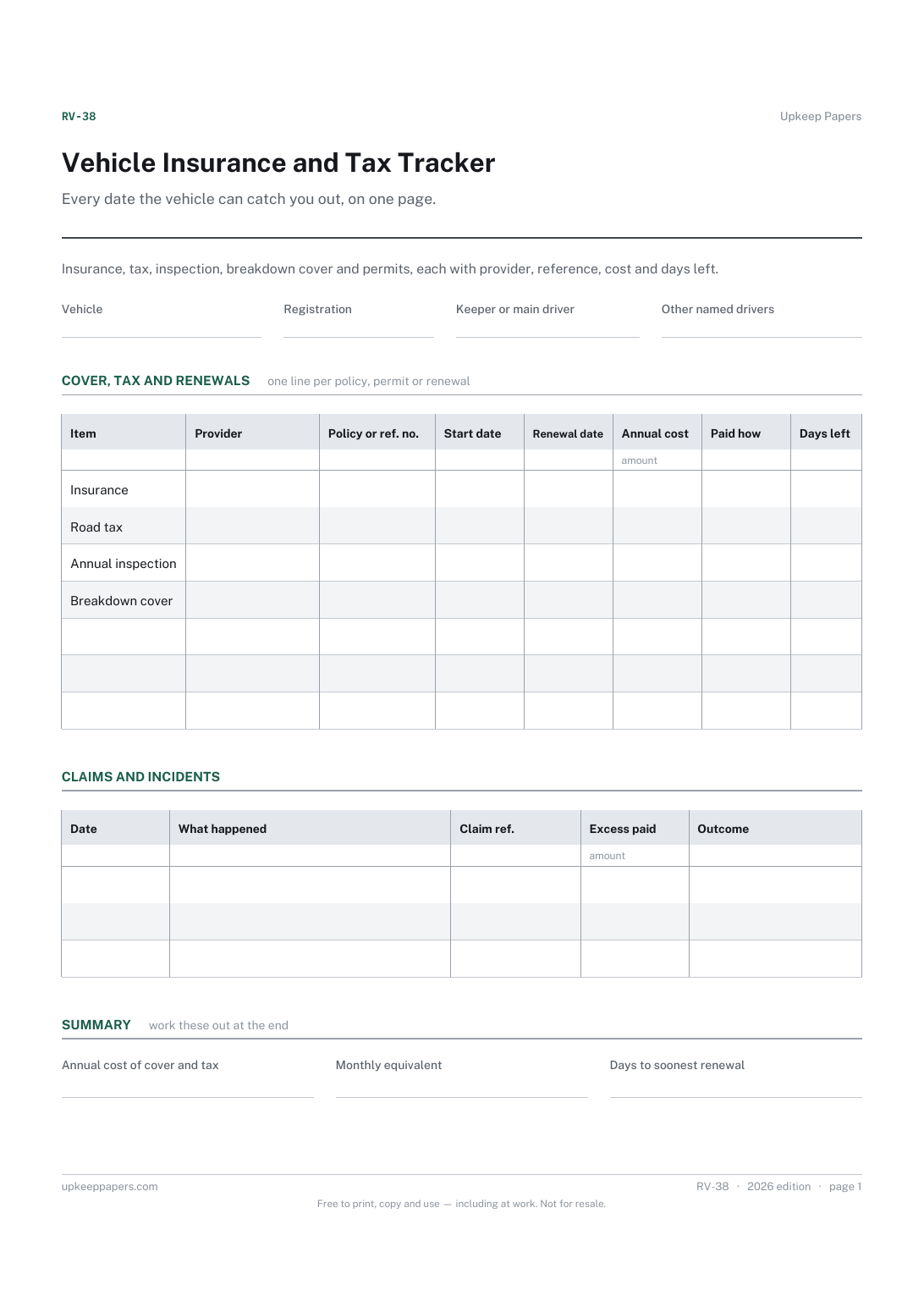
Every renewal date for the vehicle in one place, with the provider and the reference.
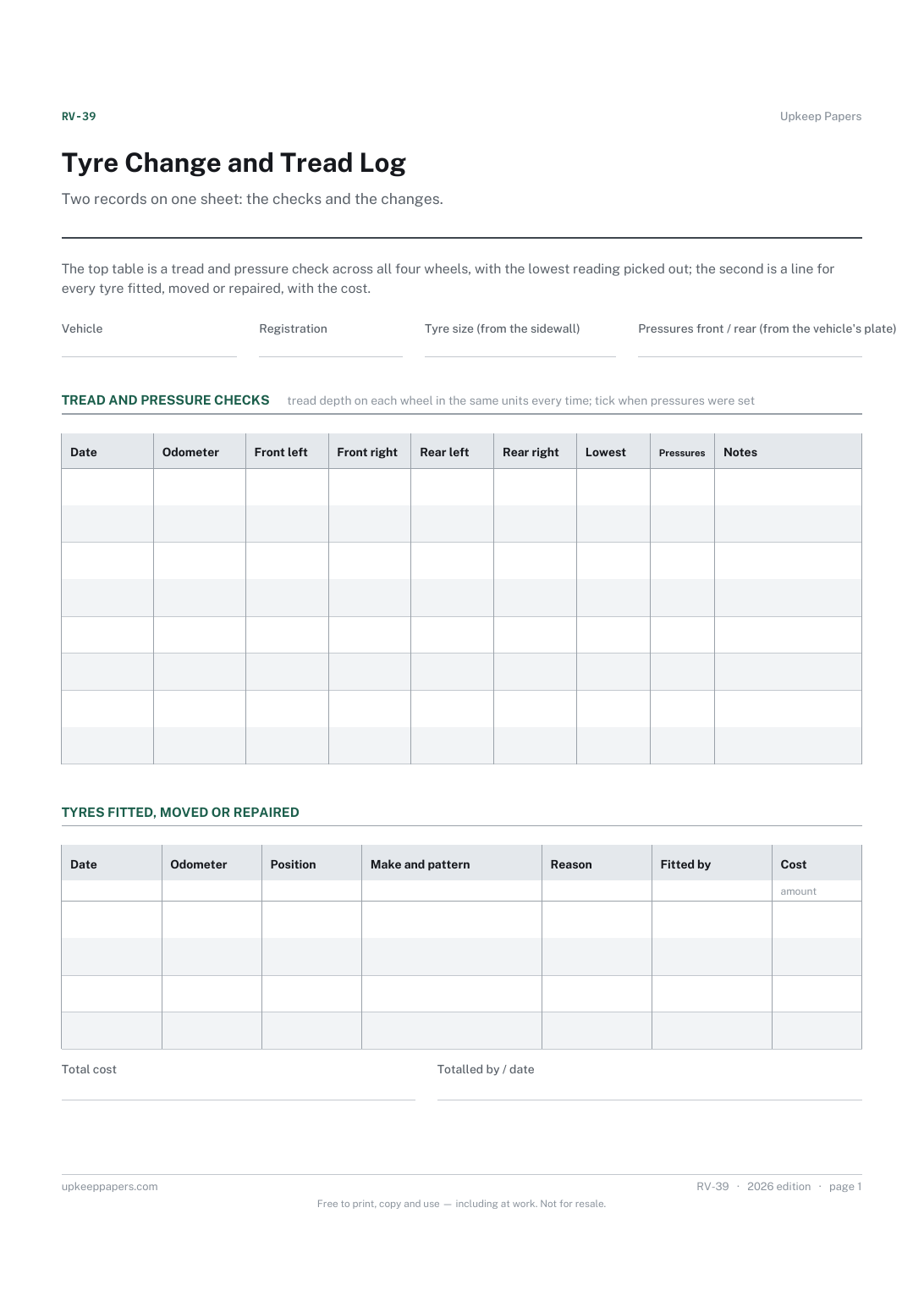
Tread depth on each wheel over time, and which one is wearing fastest.
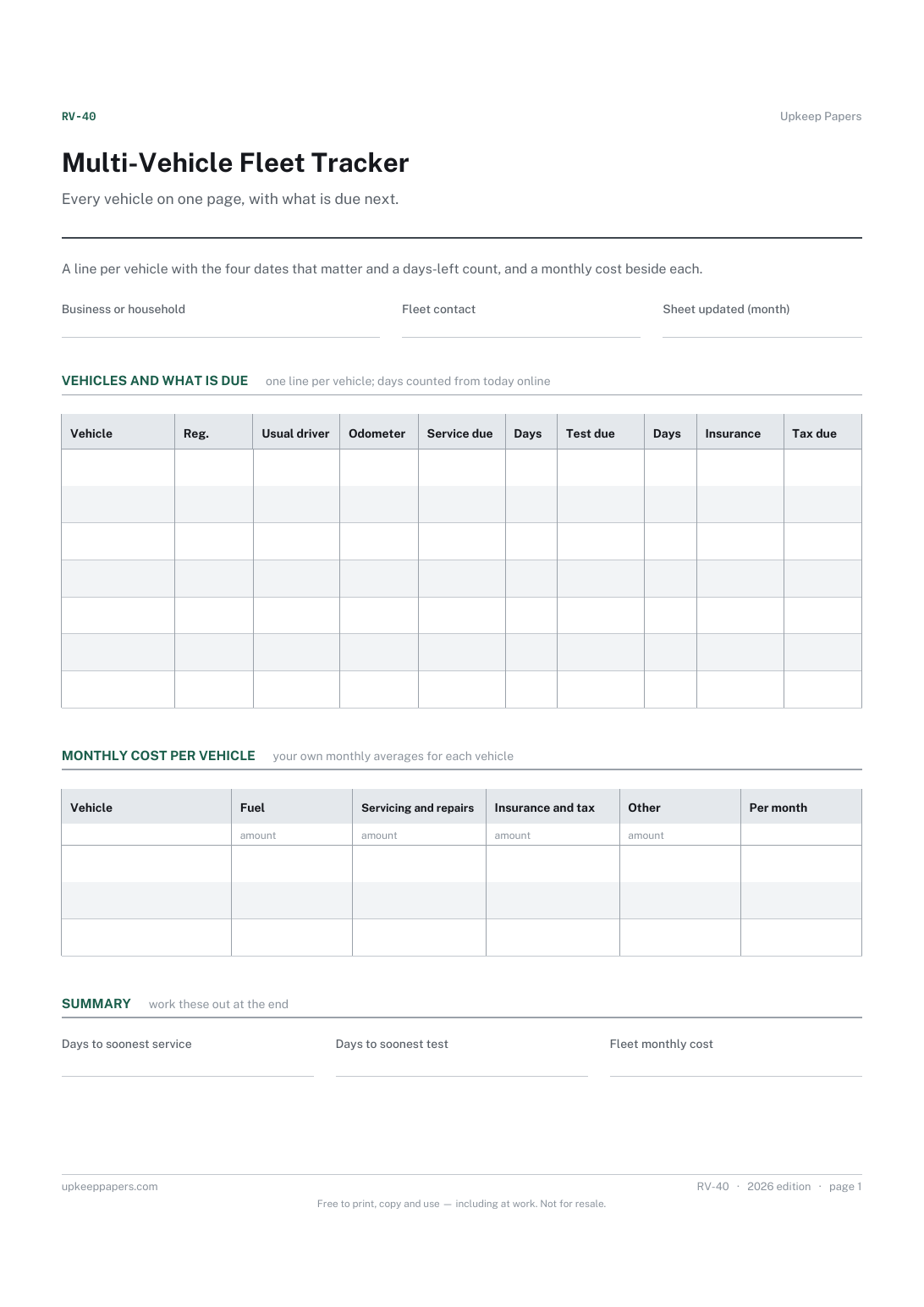
Which vehicle needs something next, and how many days away it is.
Which documents the vehicle has, who issued them and the reference to quote.
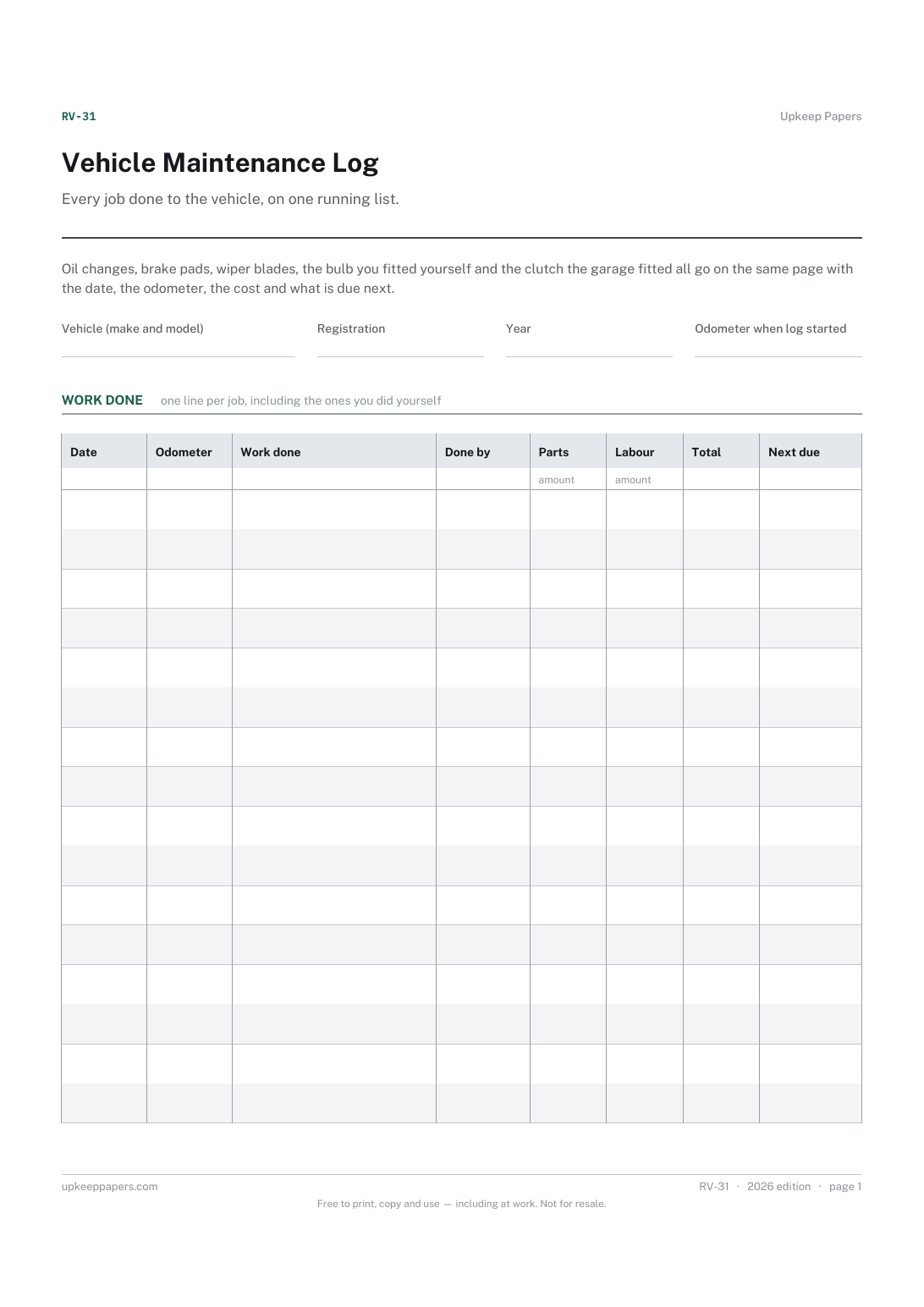
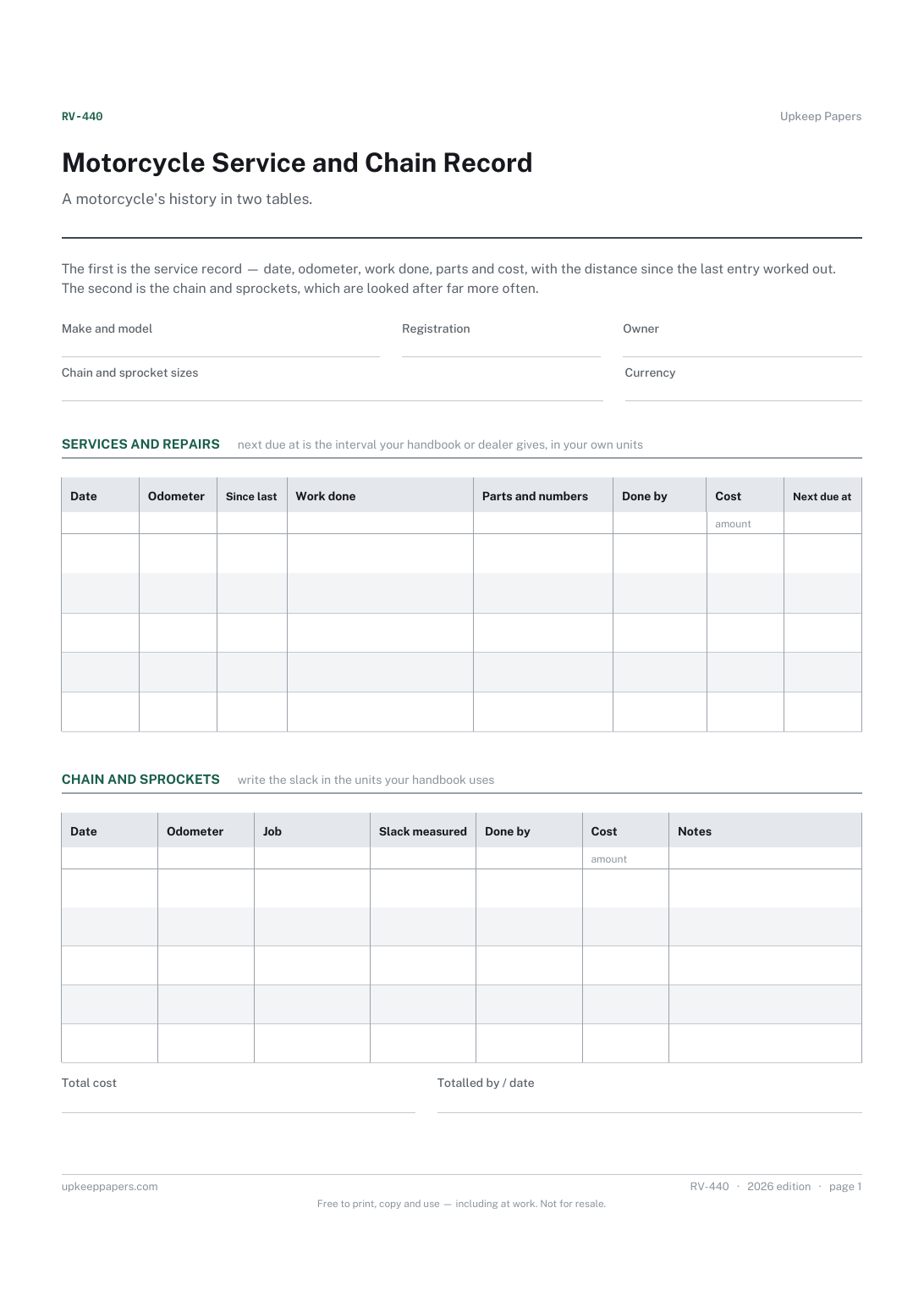
Every service and repair, with the odometer reading and who did it.
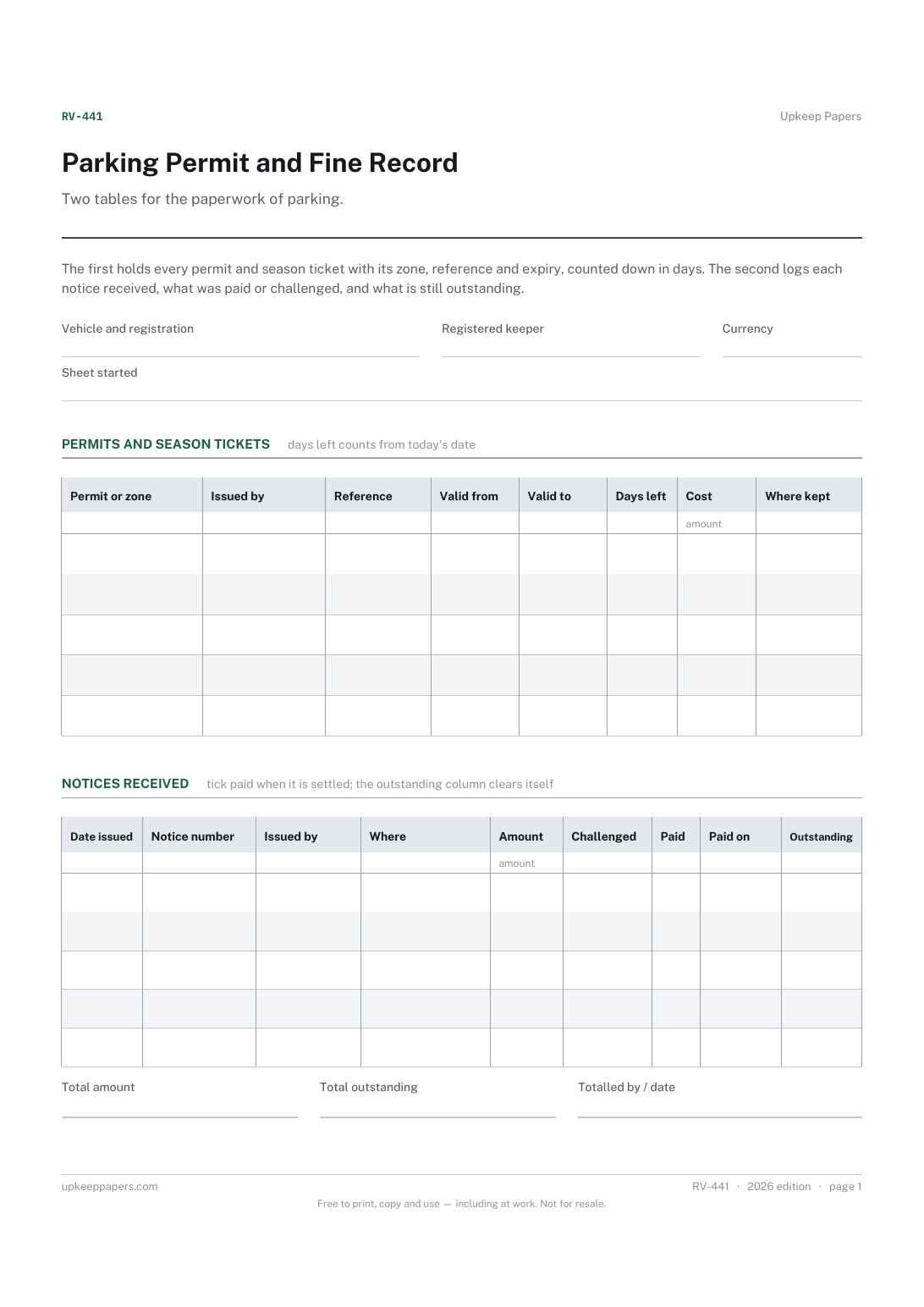
Which permits the vehicle holds, for which zone, and when each runs out.
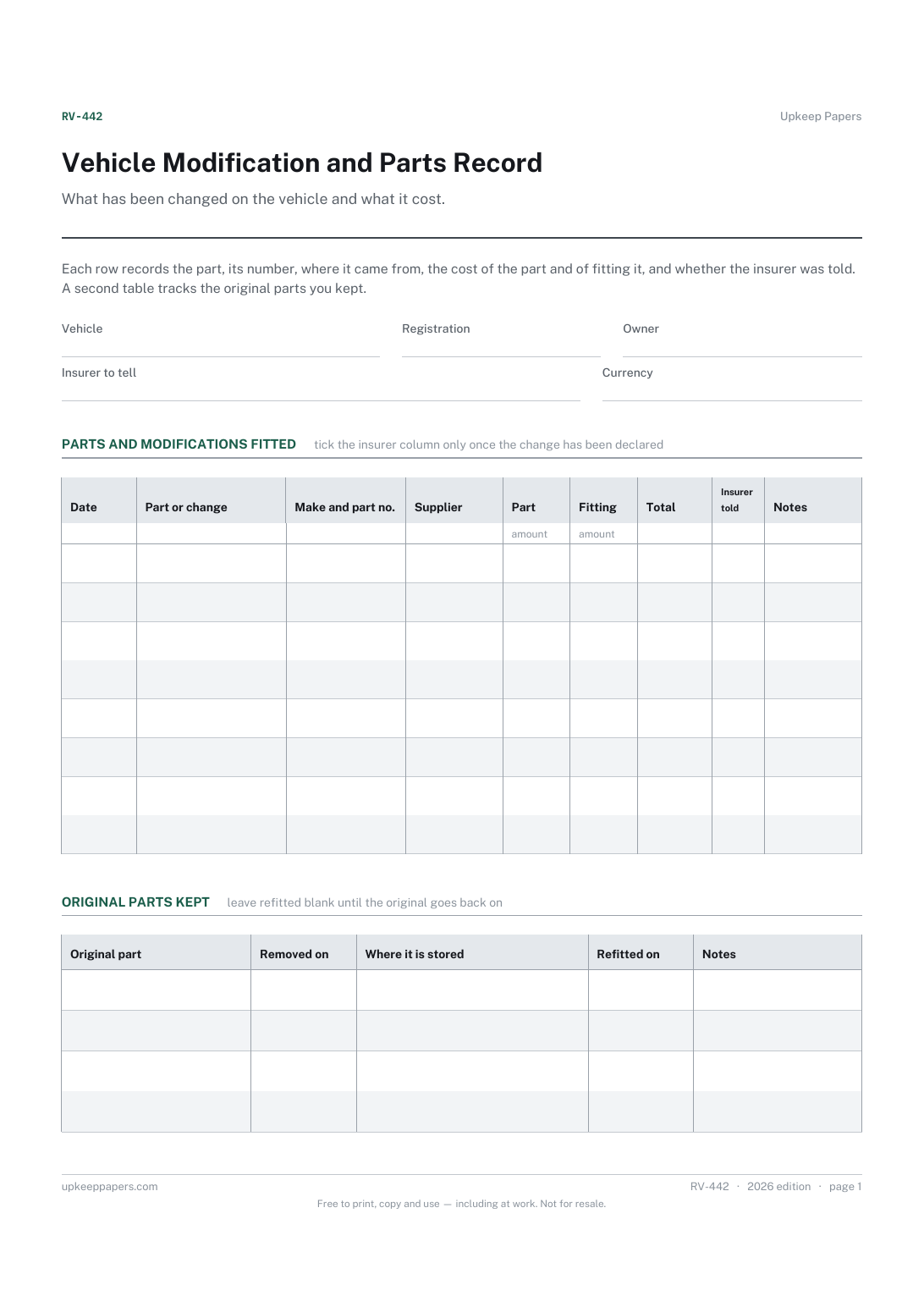
Every part fitted, with the make and the part number that identifies it.
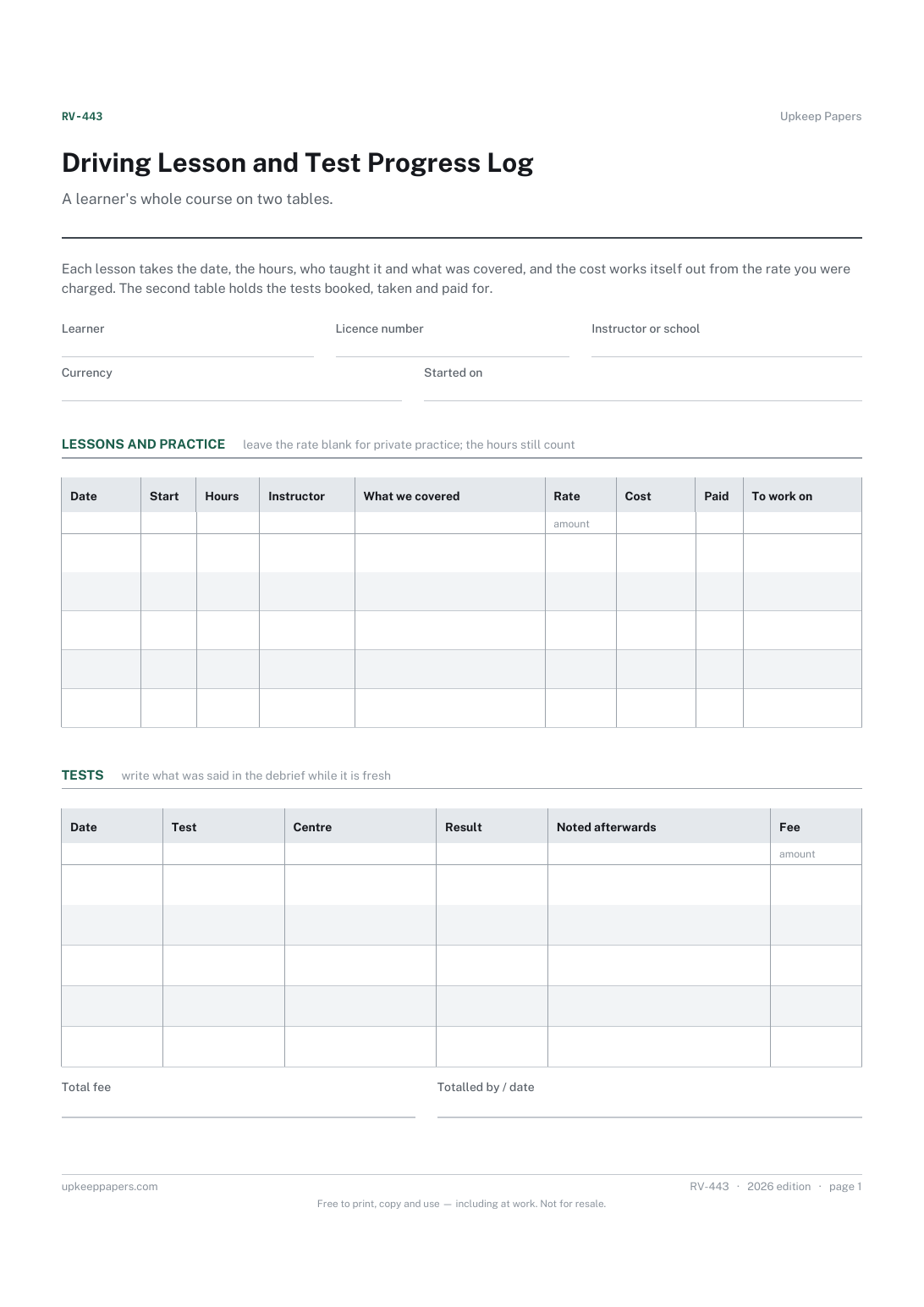
Every lesson, with the date, the hours and who gave it.
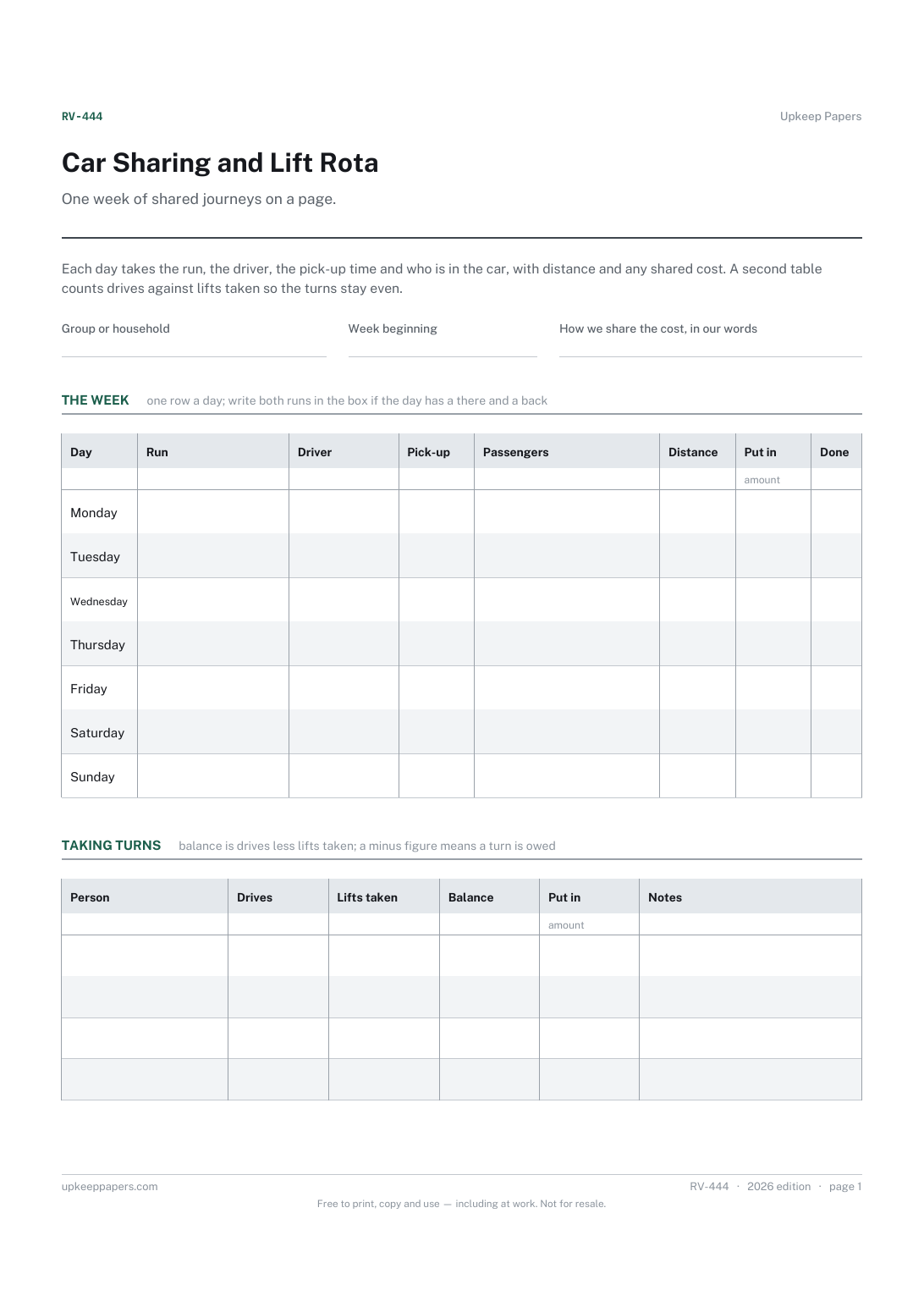
Who is driving on each day of the week, and which run it is.
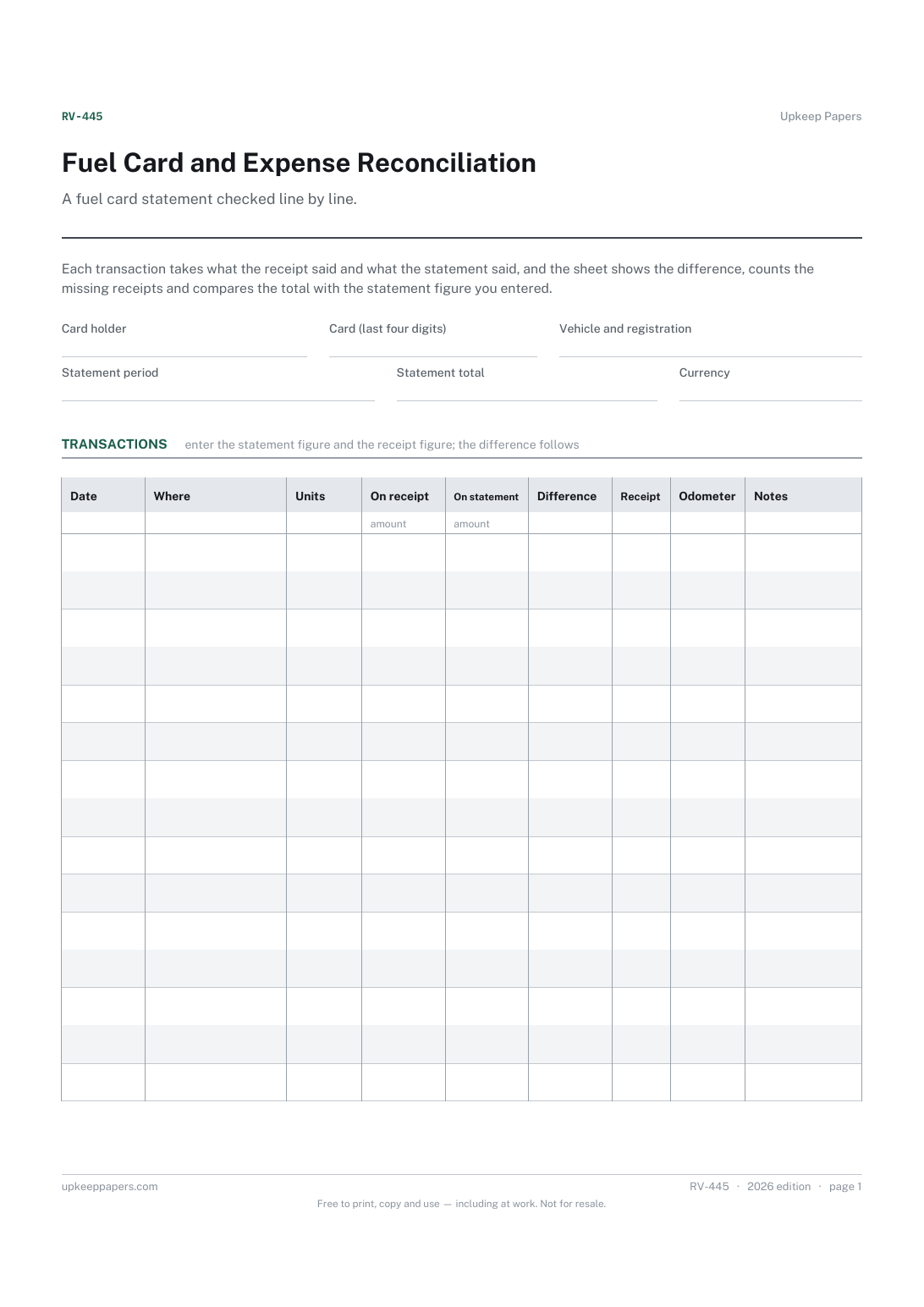
Every transaction on the card, with the date and where it was taken.
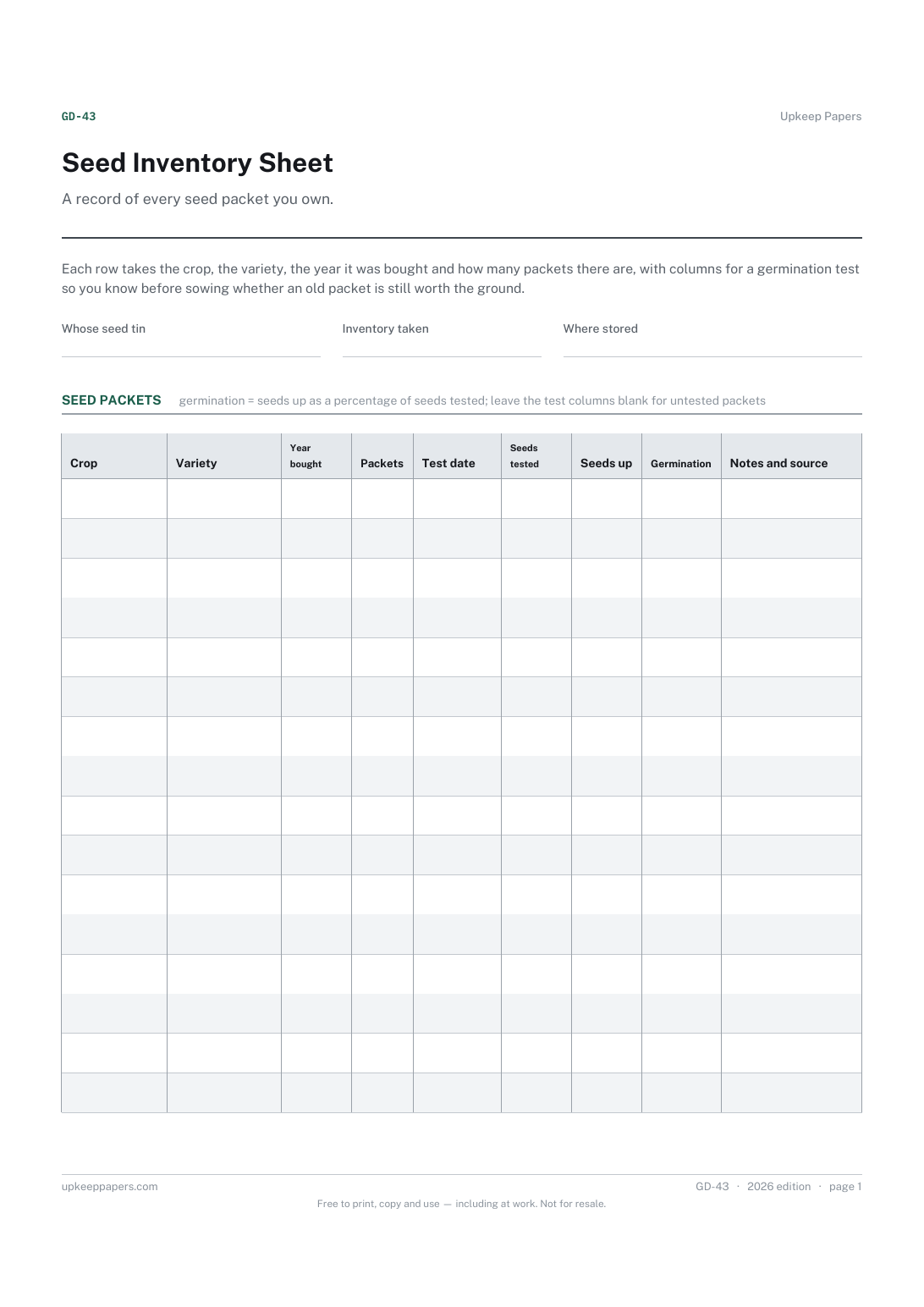
What seed you actually have, by crop and variety, before you order more.
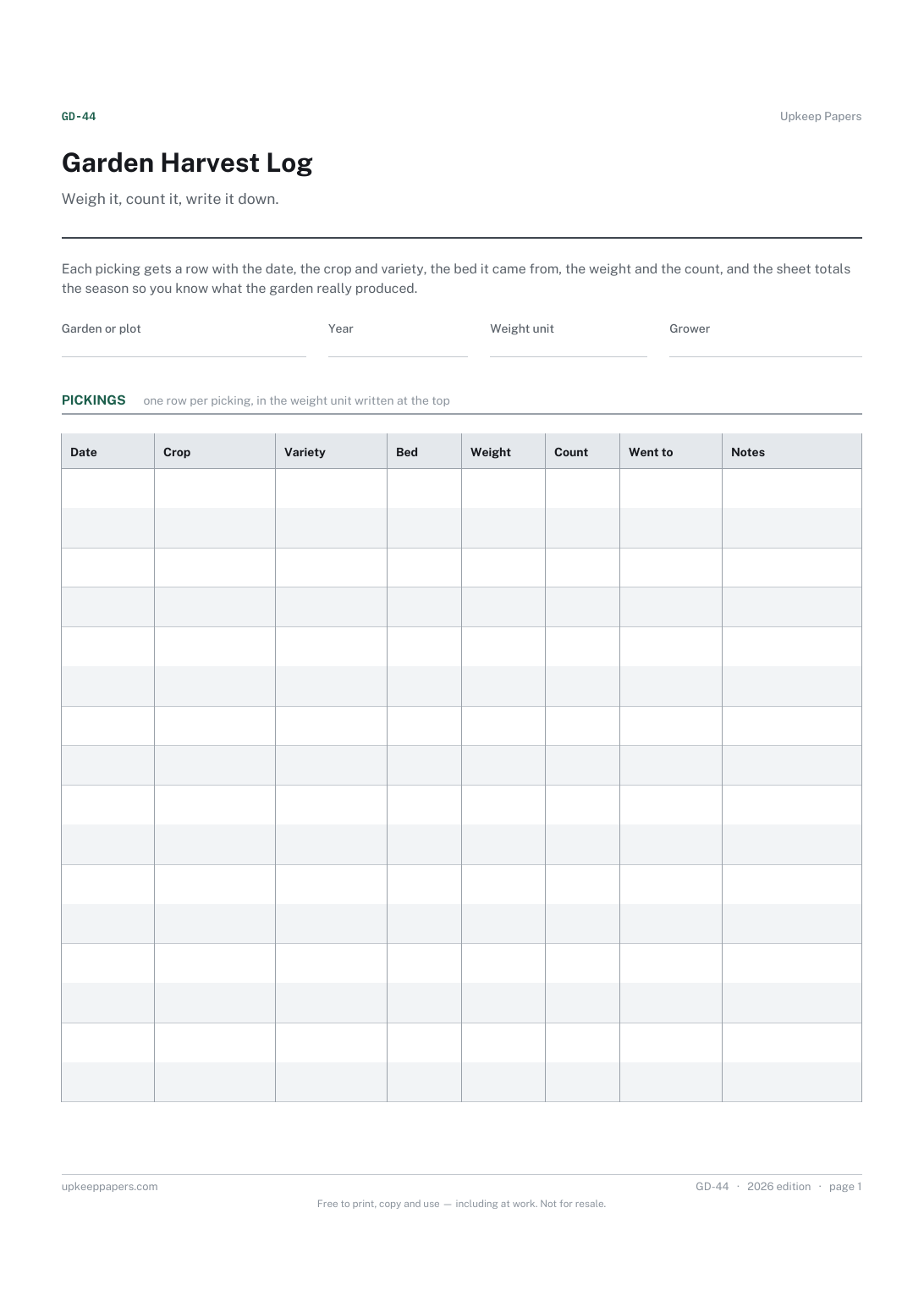
Total weight and count harvested over the season, added up for you.
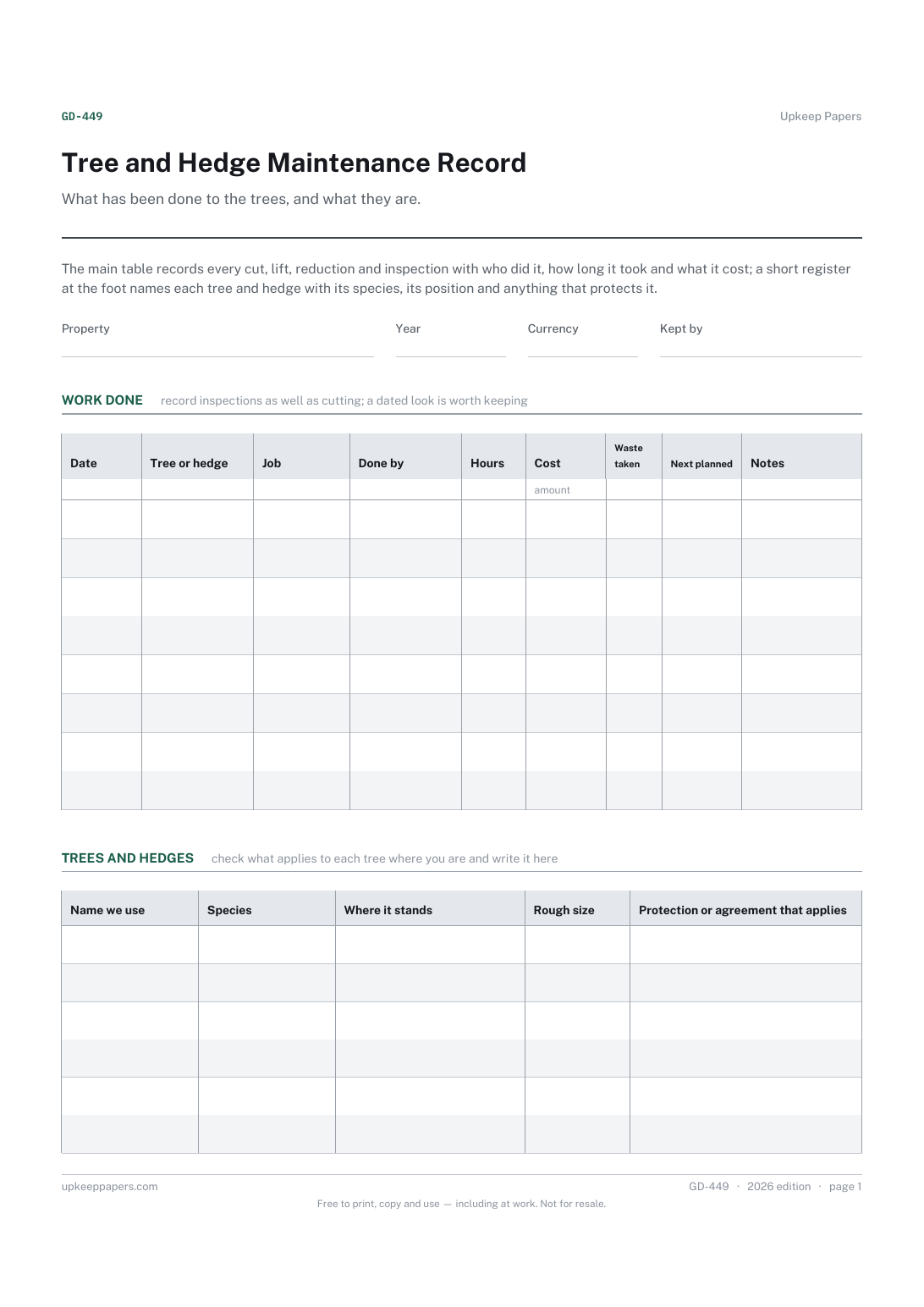
Which trees and hedges there are, where they stand and what they are.
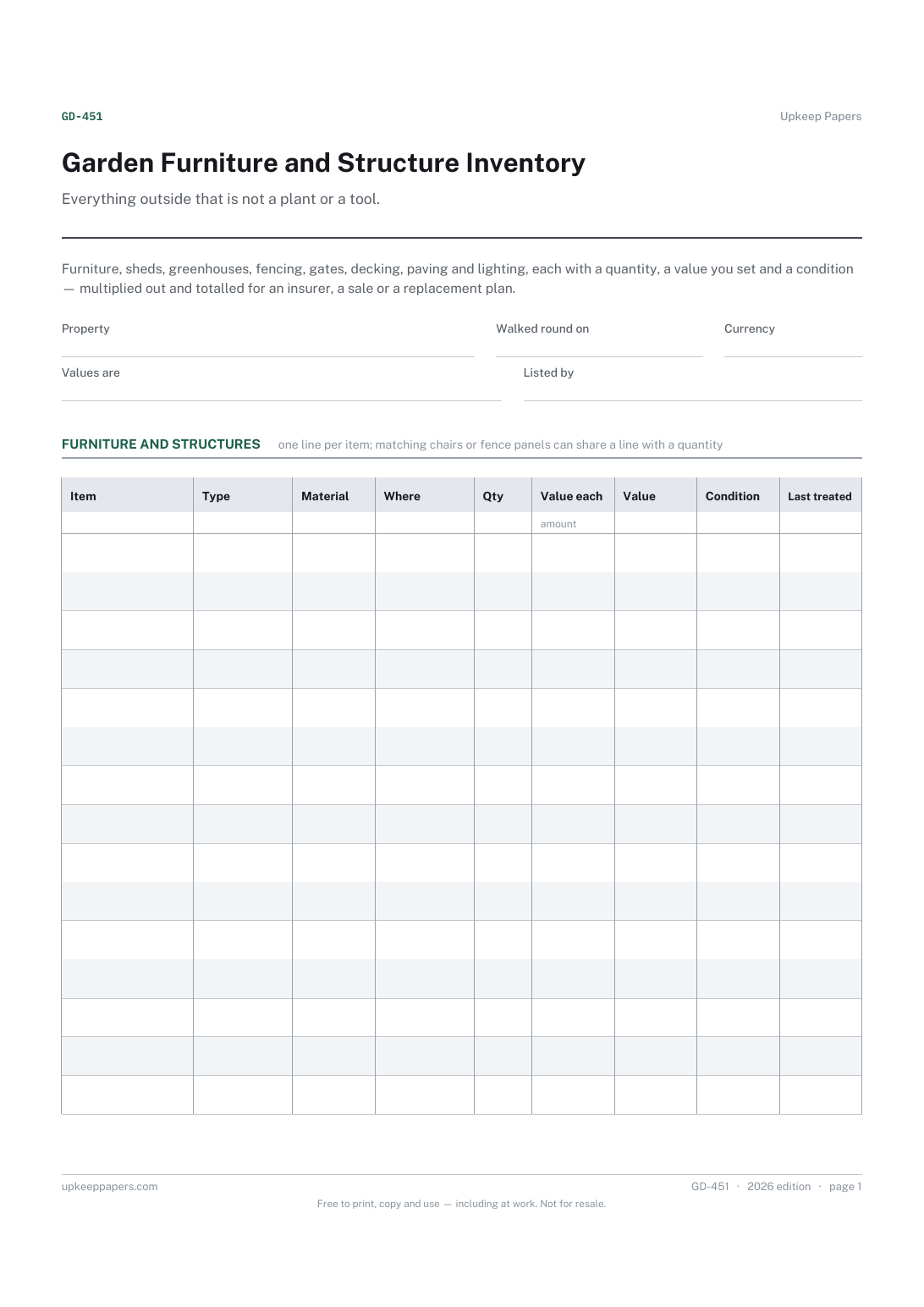
Every structure and piece of furniture outside, with where it stands.
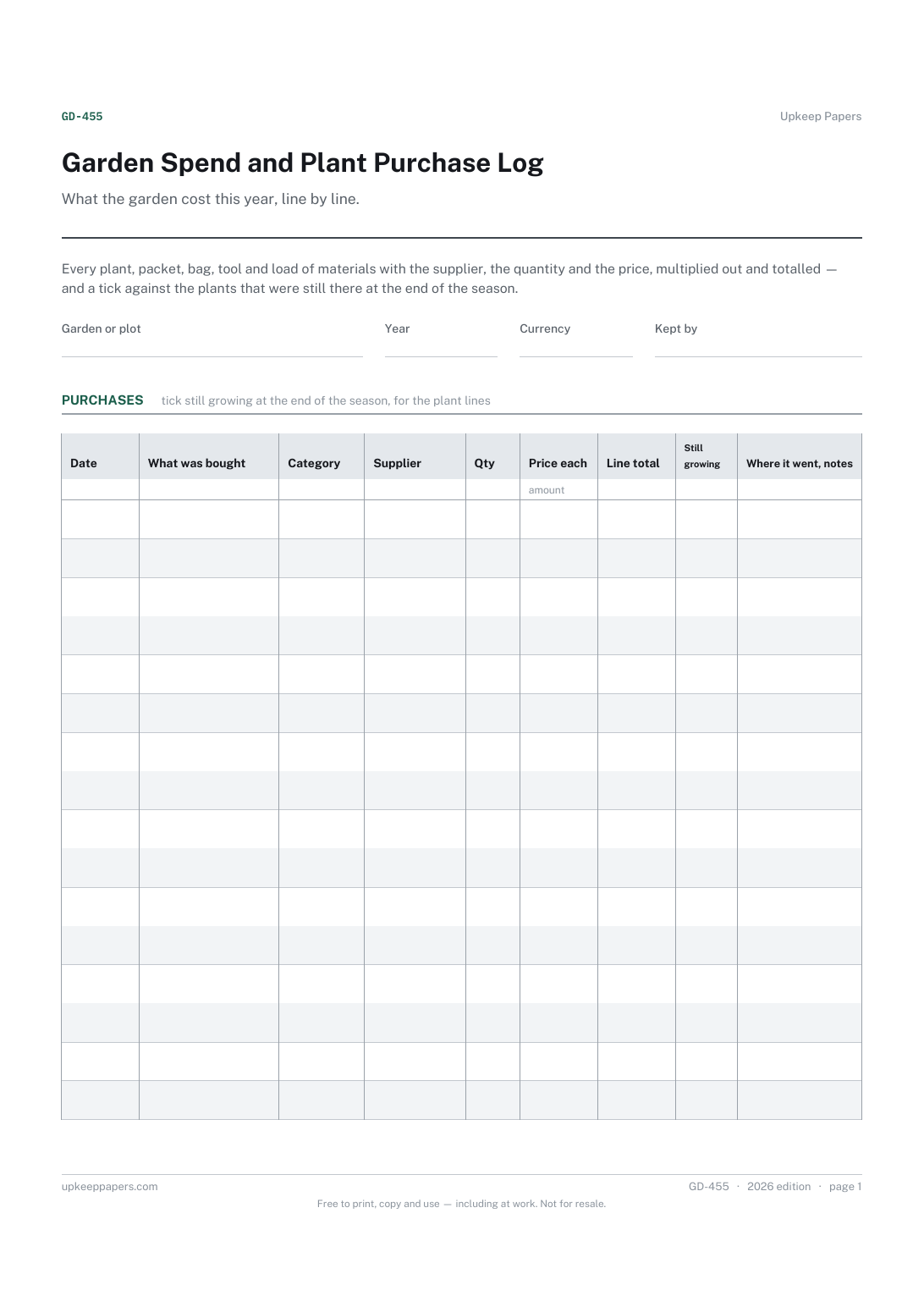
Everything bought for the garden, dated, with the supplier.
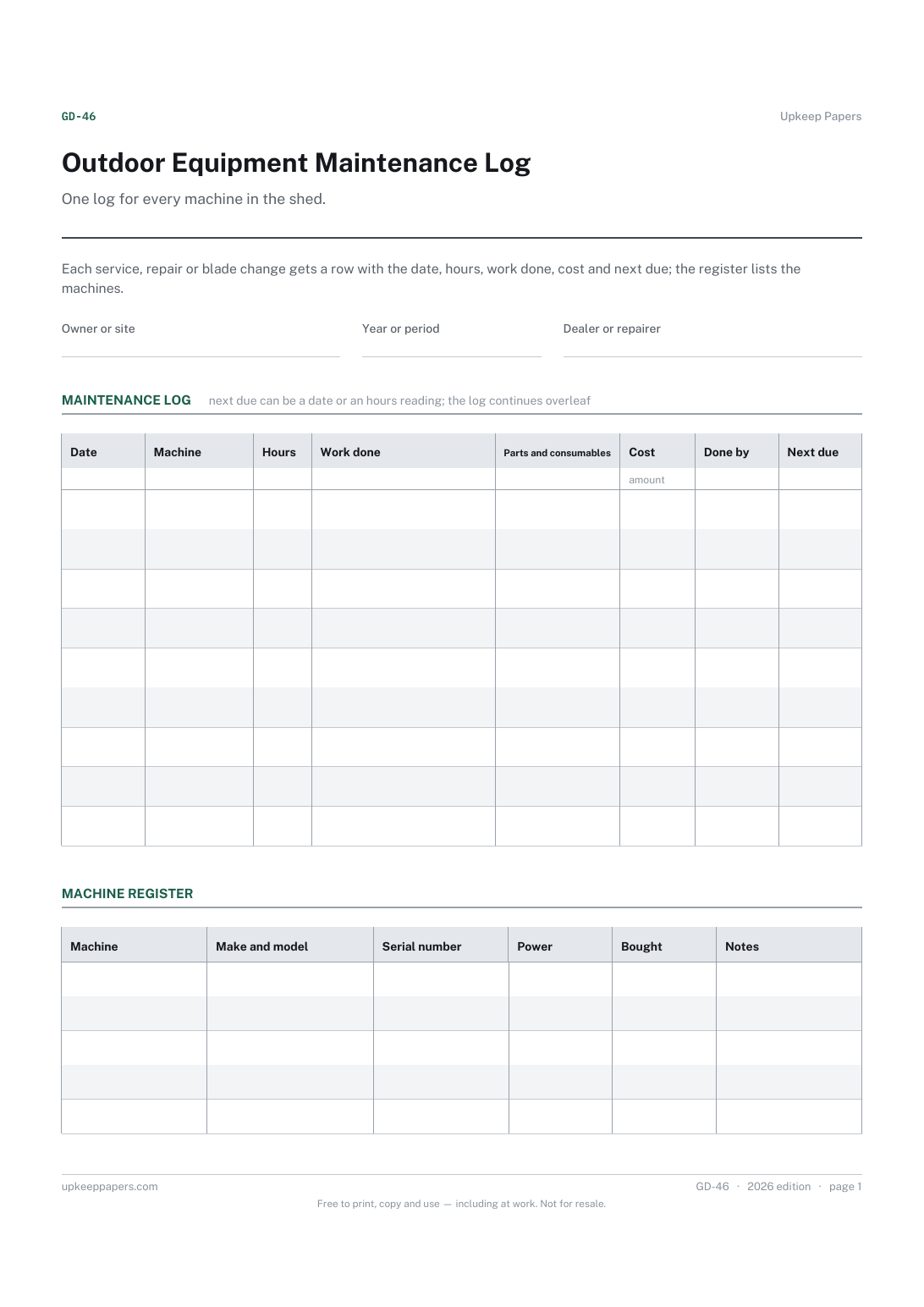
What was done to each machine and when, in one place instead of a drawer of receipts.
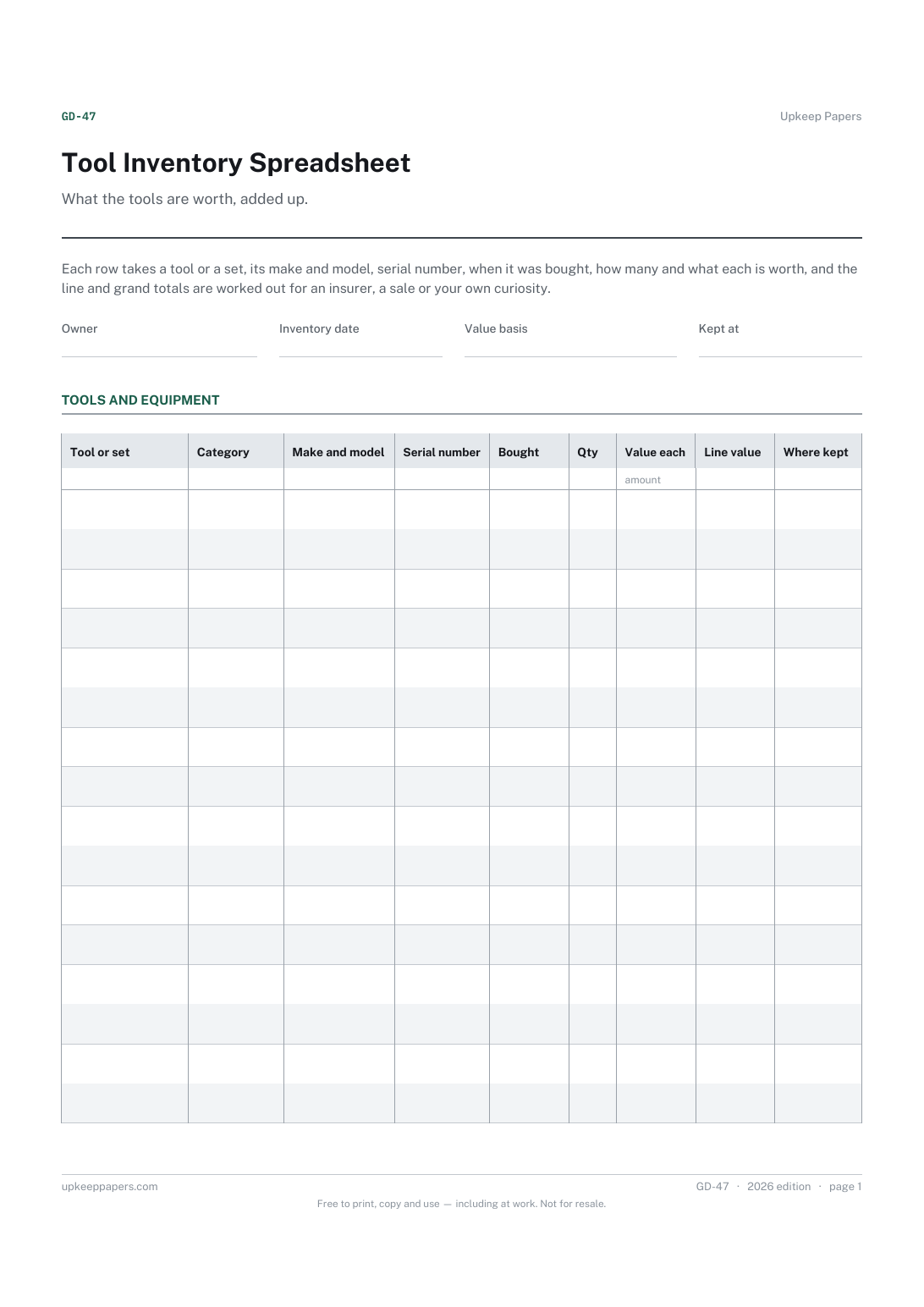
A valued list of tools and machines that an insurance claim can be built on.
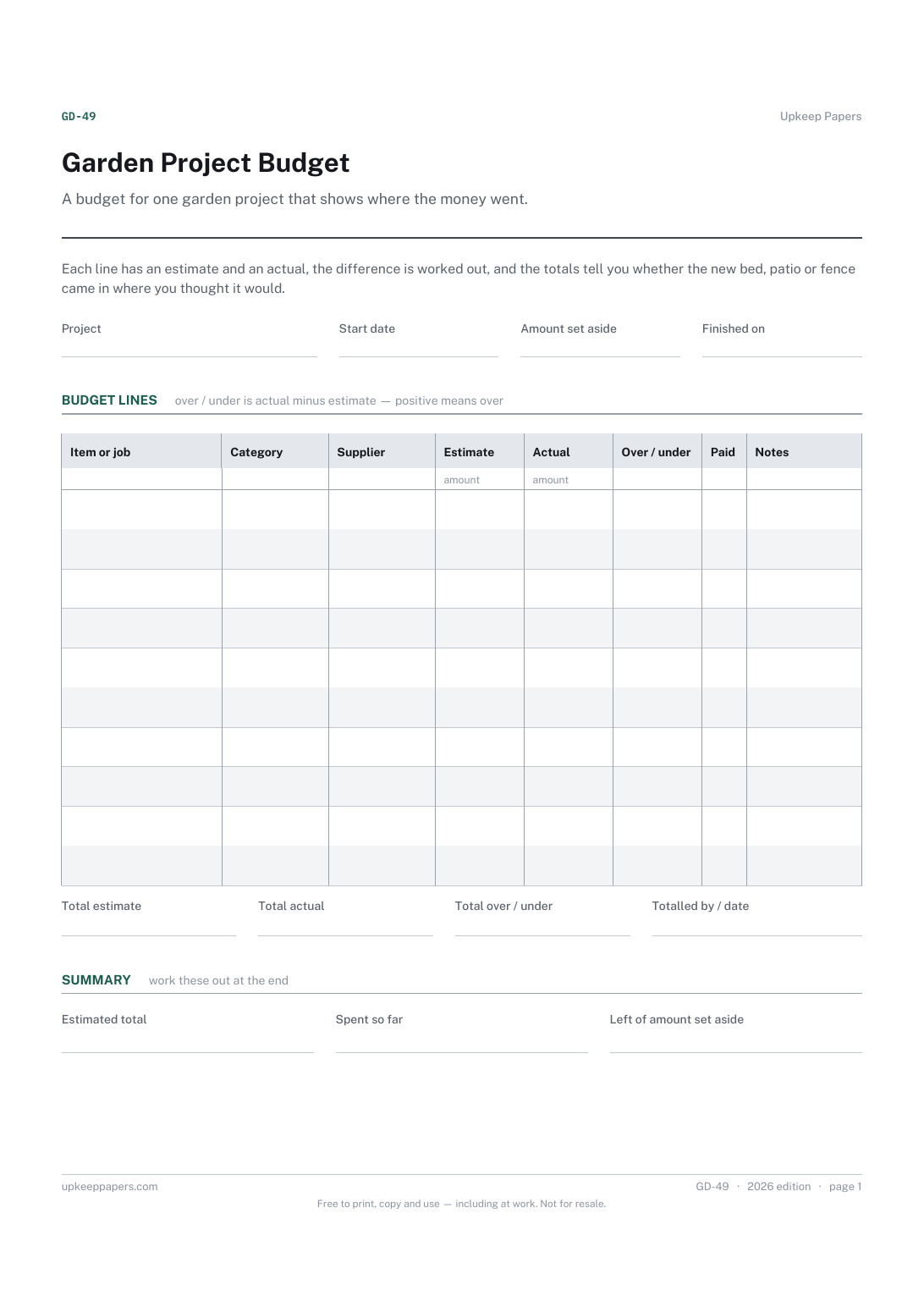
An estimate for every item before you start, in categories that suit garden work.
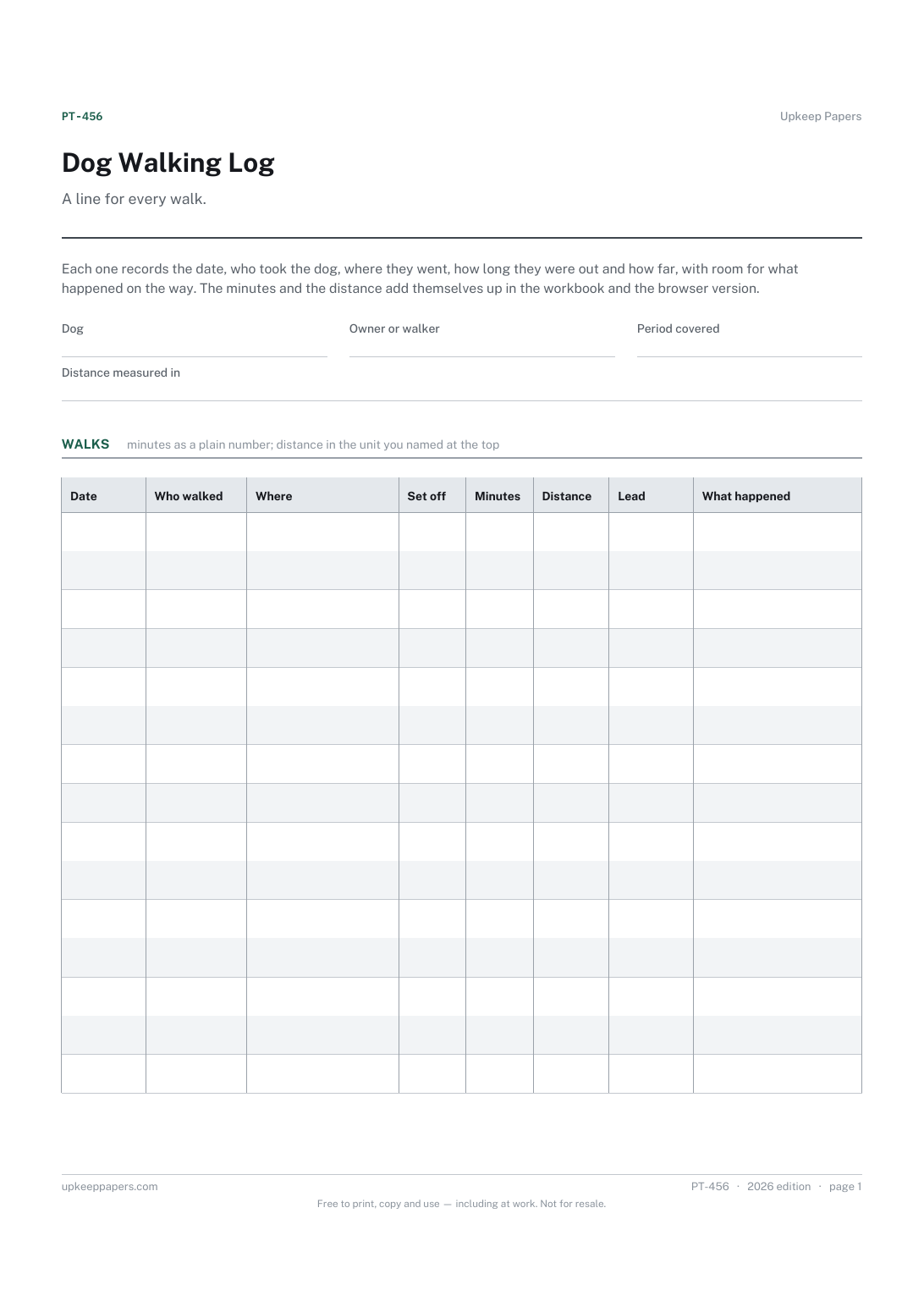
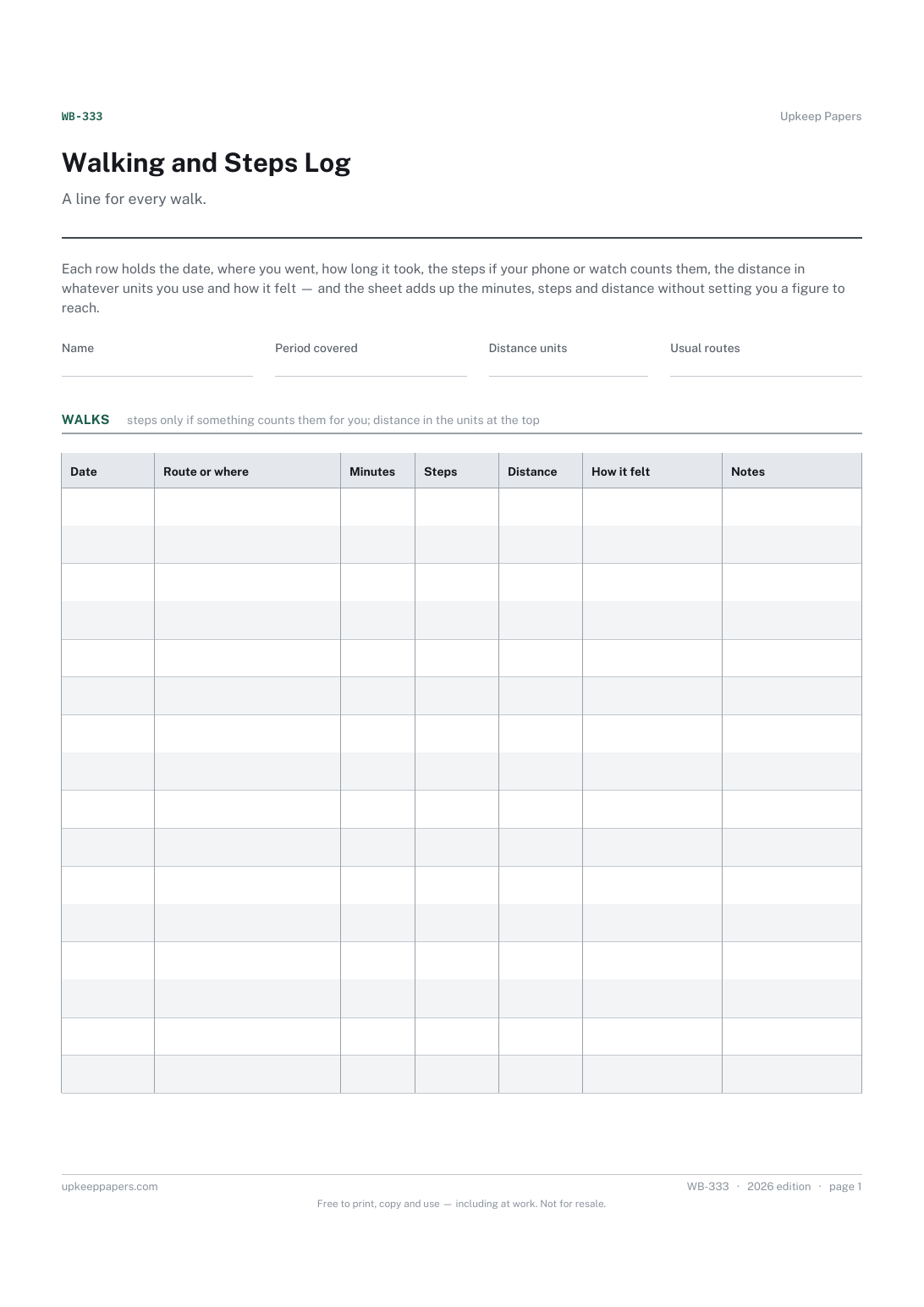
Which walks happened, on what date and at what time of day.
Everything the animals need, by category, in one list.
Total spend for the period, and how it compares with the figure you budgeted.
The property, the tenants and who manages the tenancy, in one place.
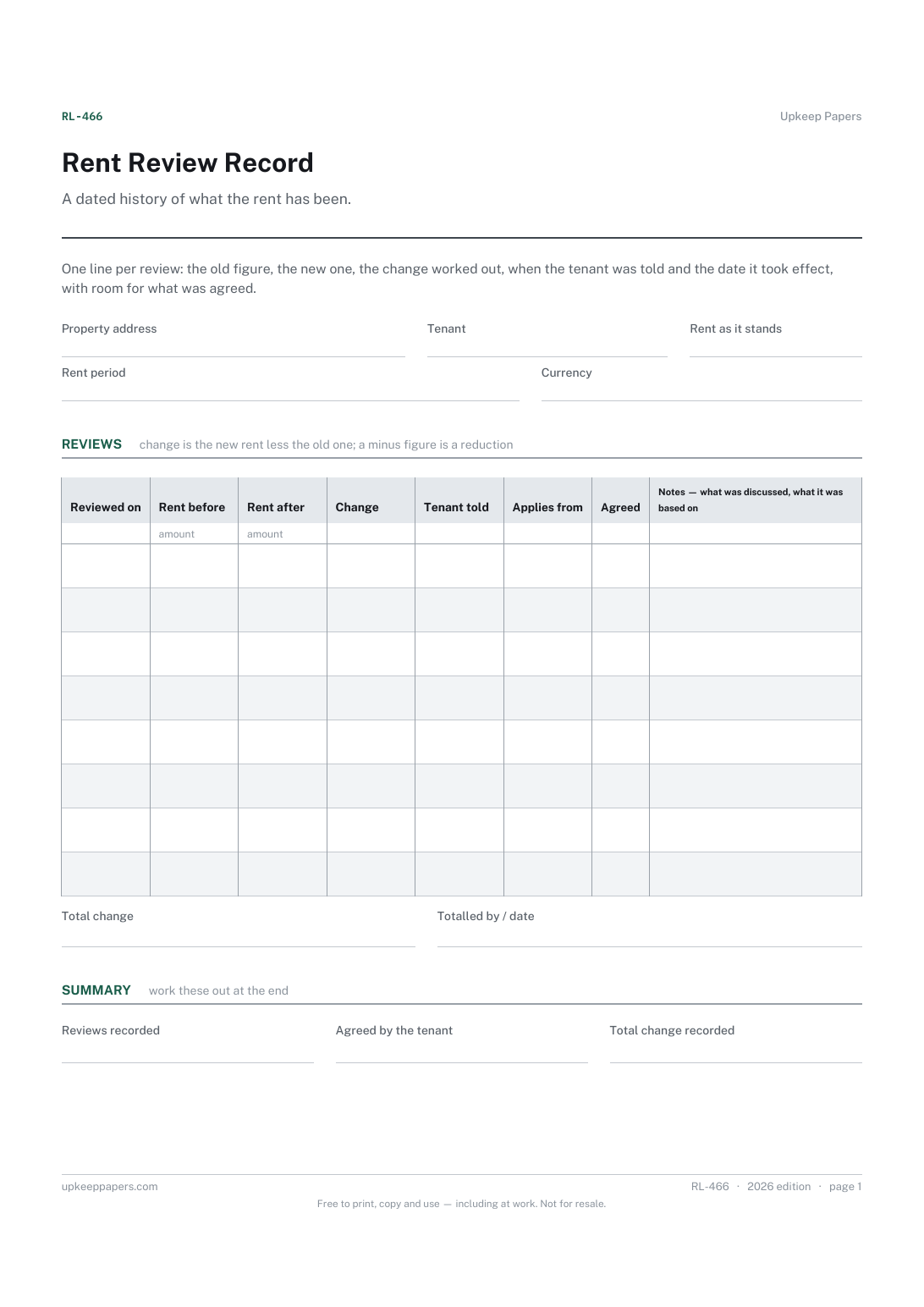
What the rent was before each review and what it became.
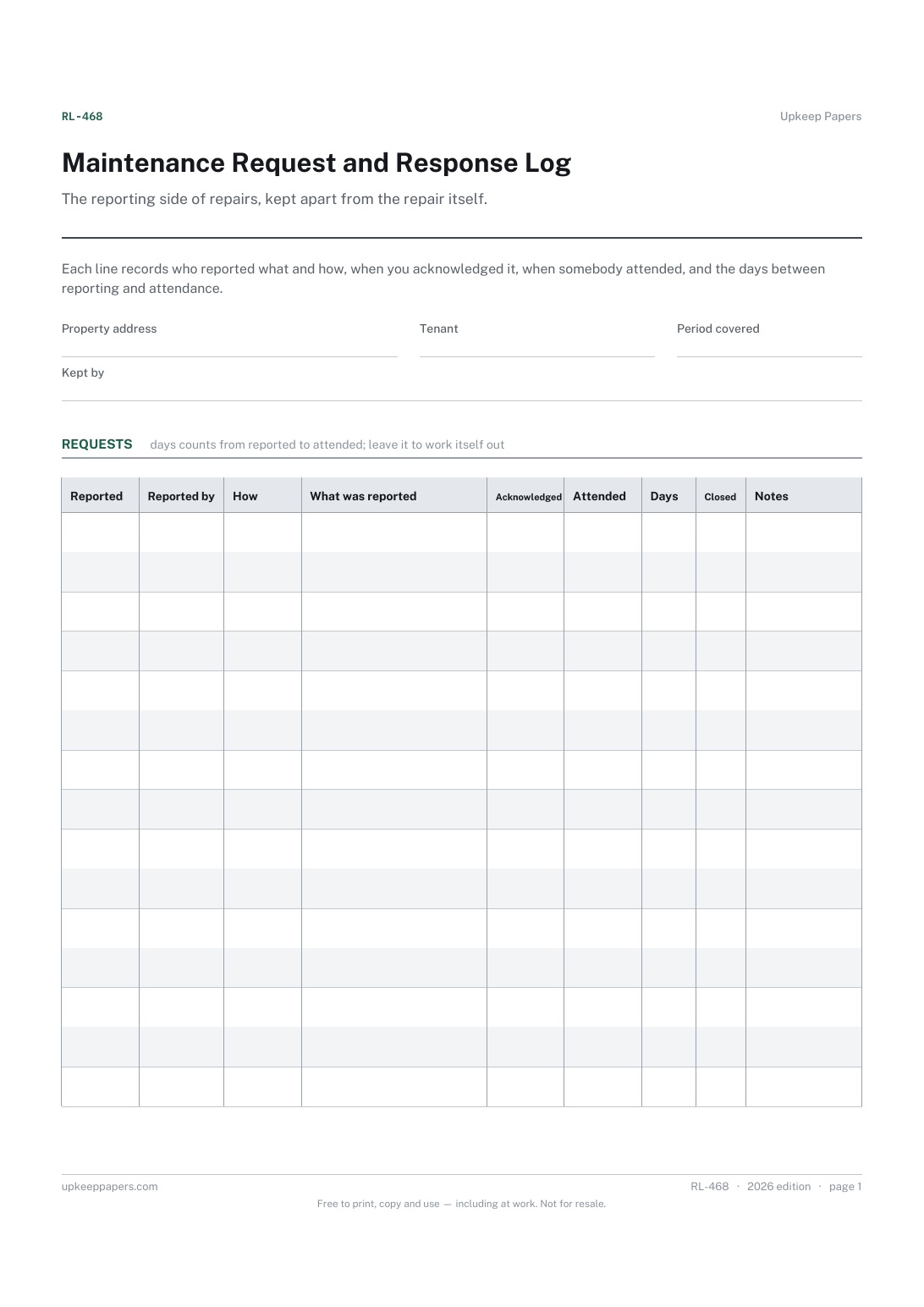
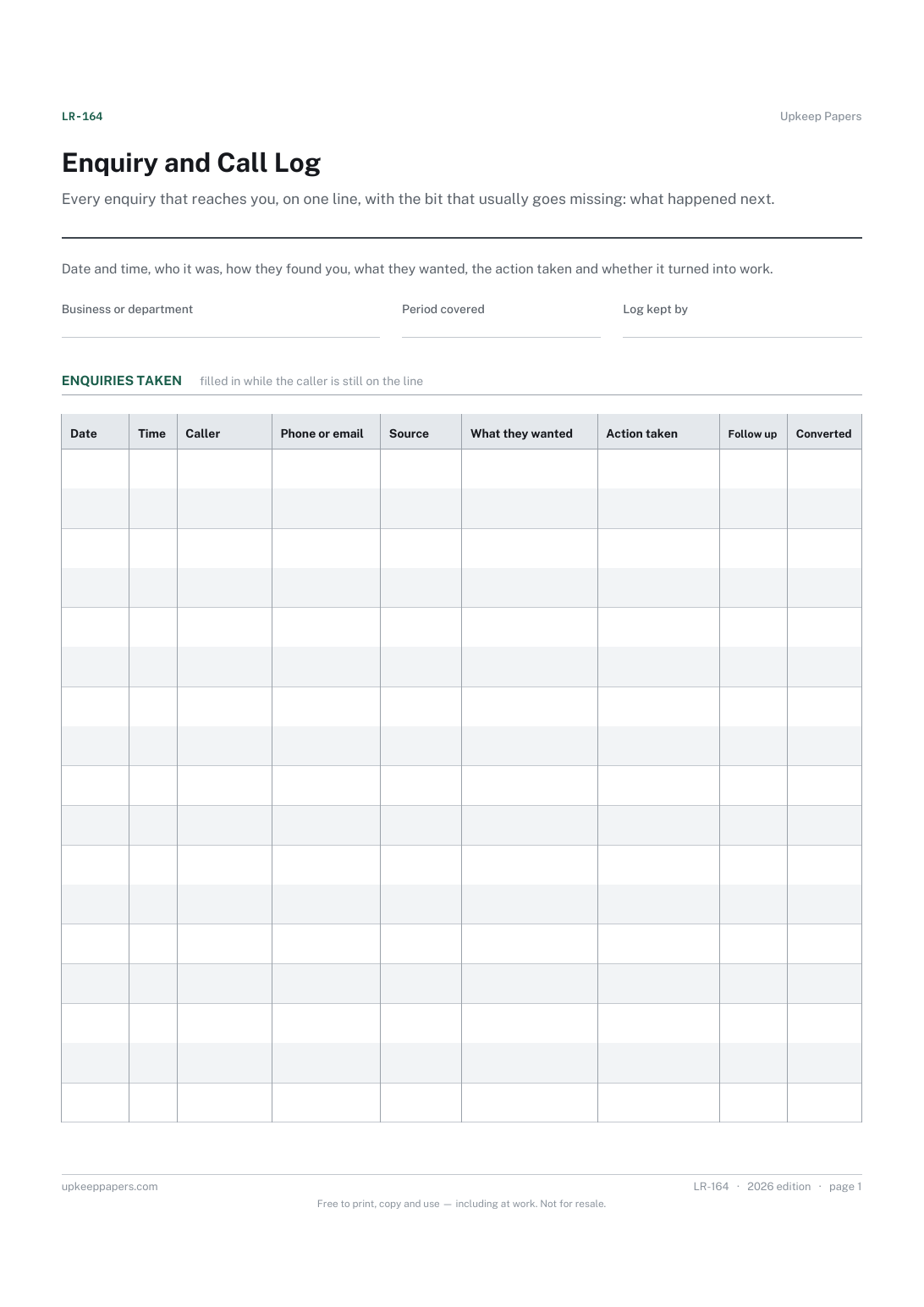
Every request as it came in — by phone, message, email or in person.
What the property brought in over the period — rent and anything else.
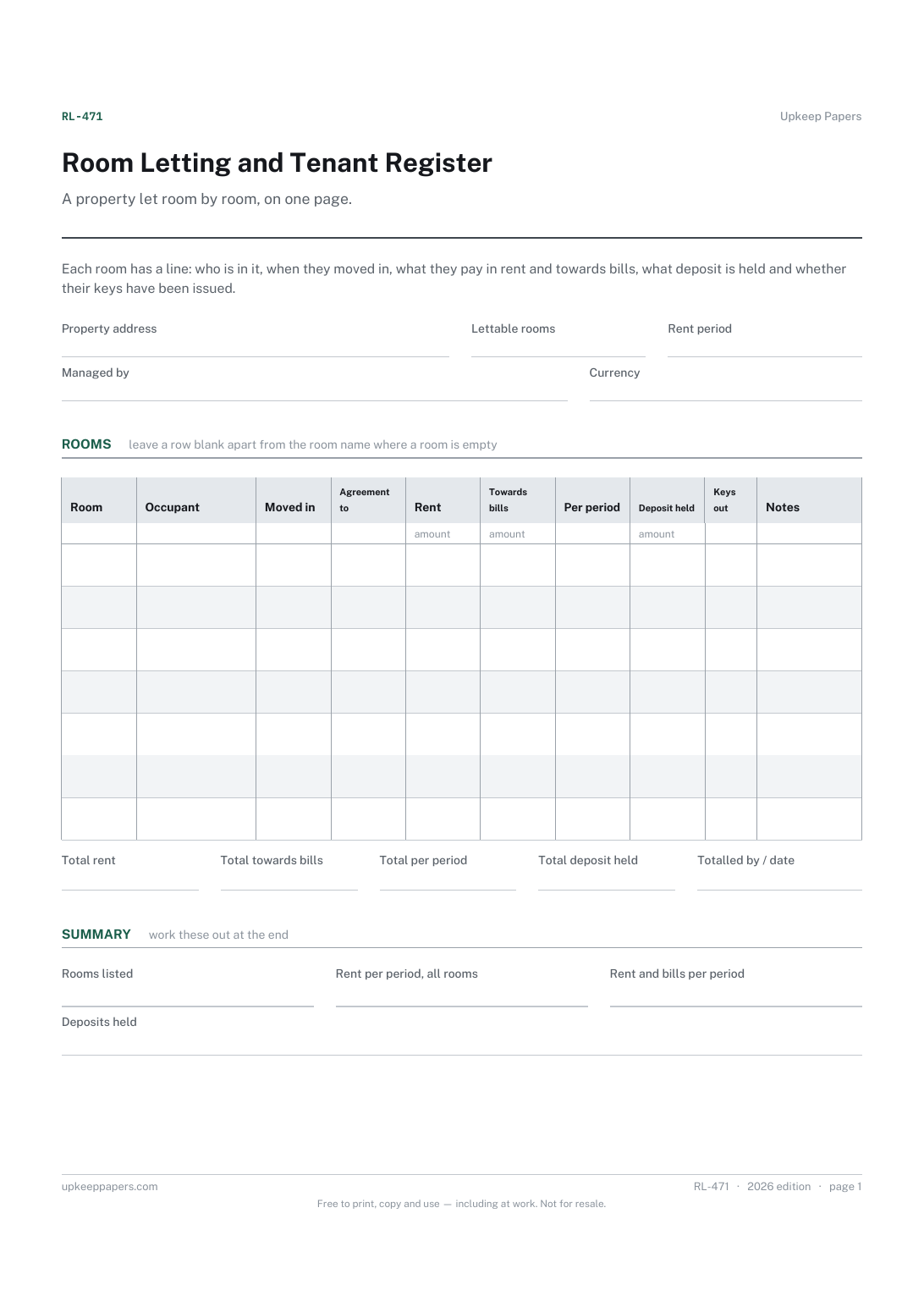
Which rooms are let, to whom, and which are standing empty.
Which meters serve the property and where each one is.
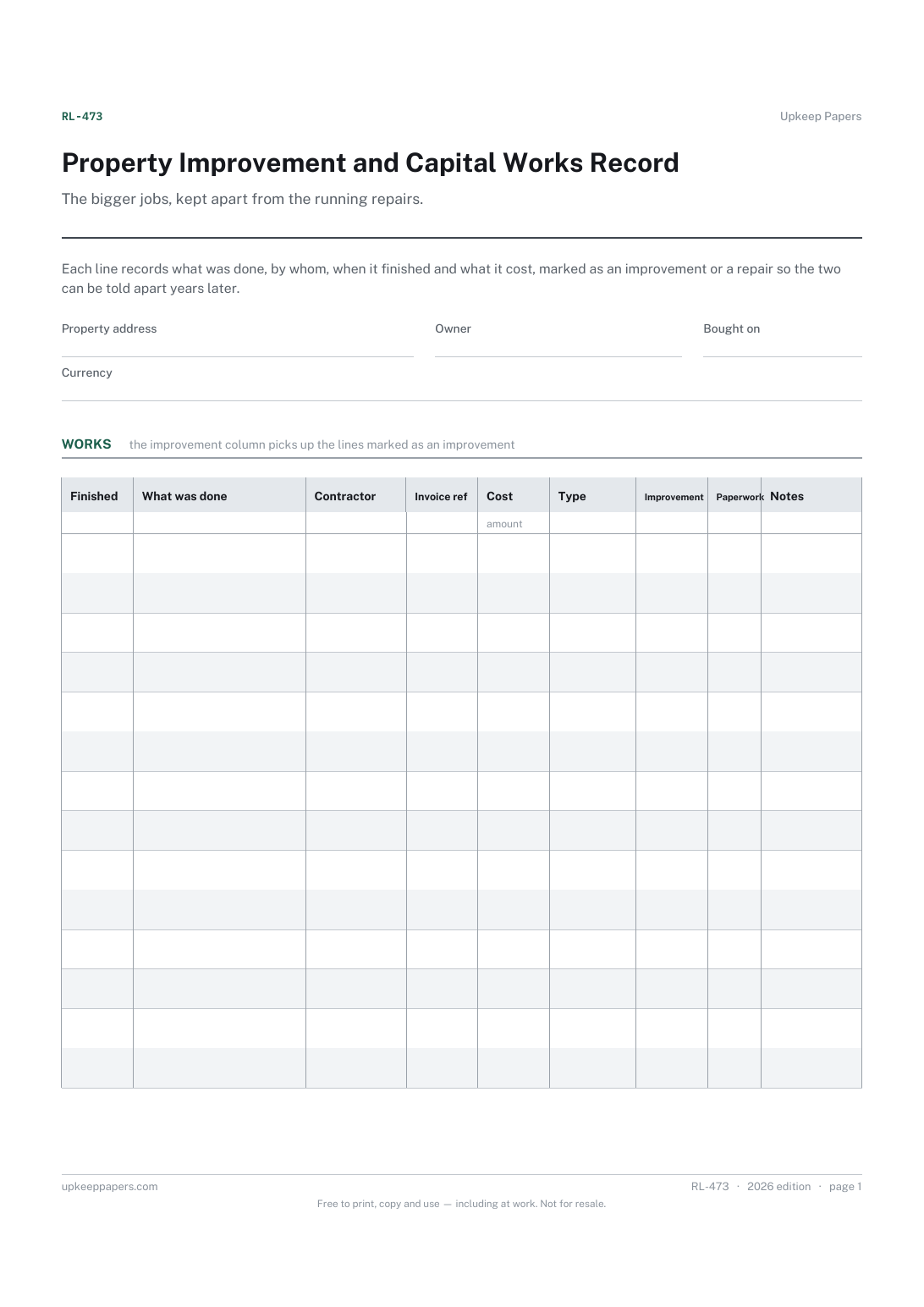
Every substantial job done to the property, with the date it finished.
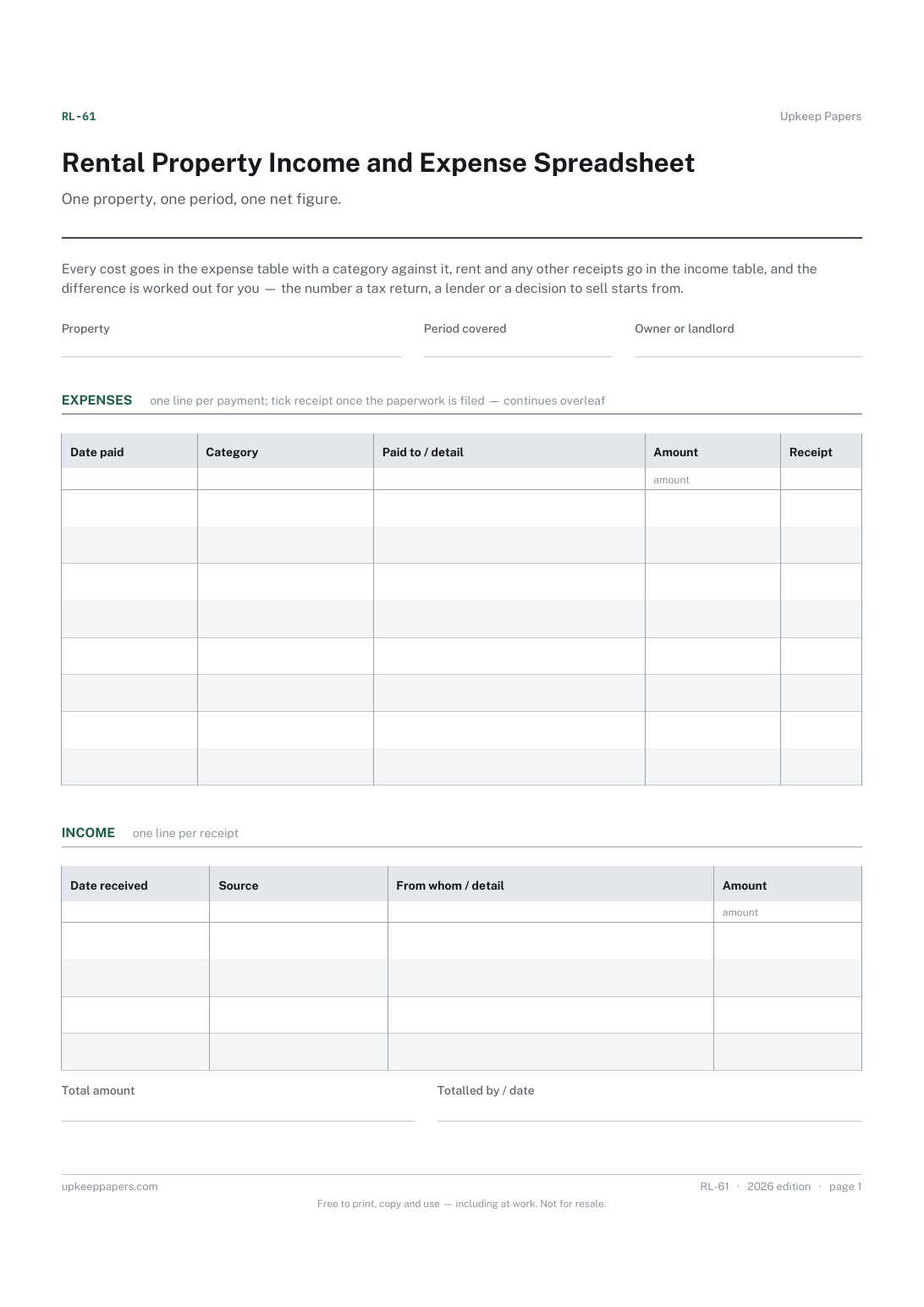
Every rent payment and other receipt for the period, dated and totalled.
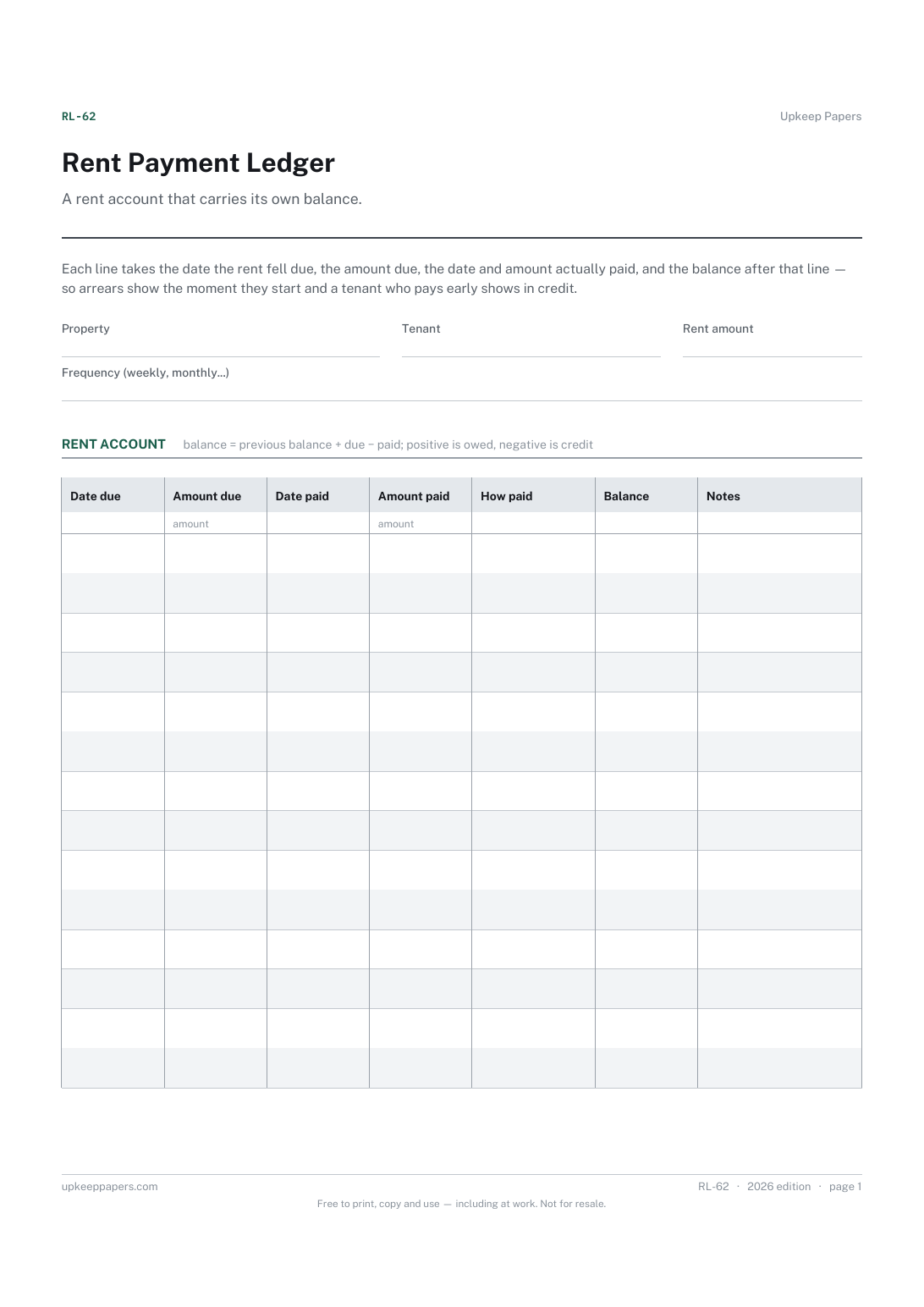
A dated line for every rent due and every payment made.
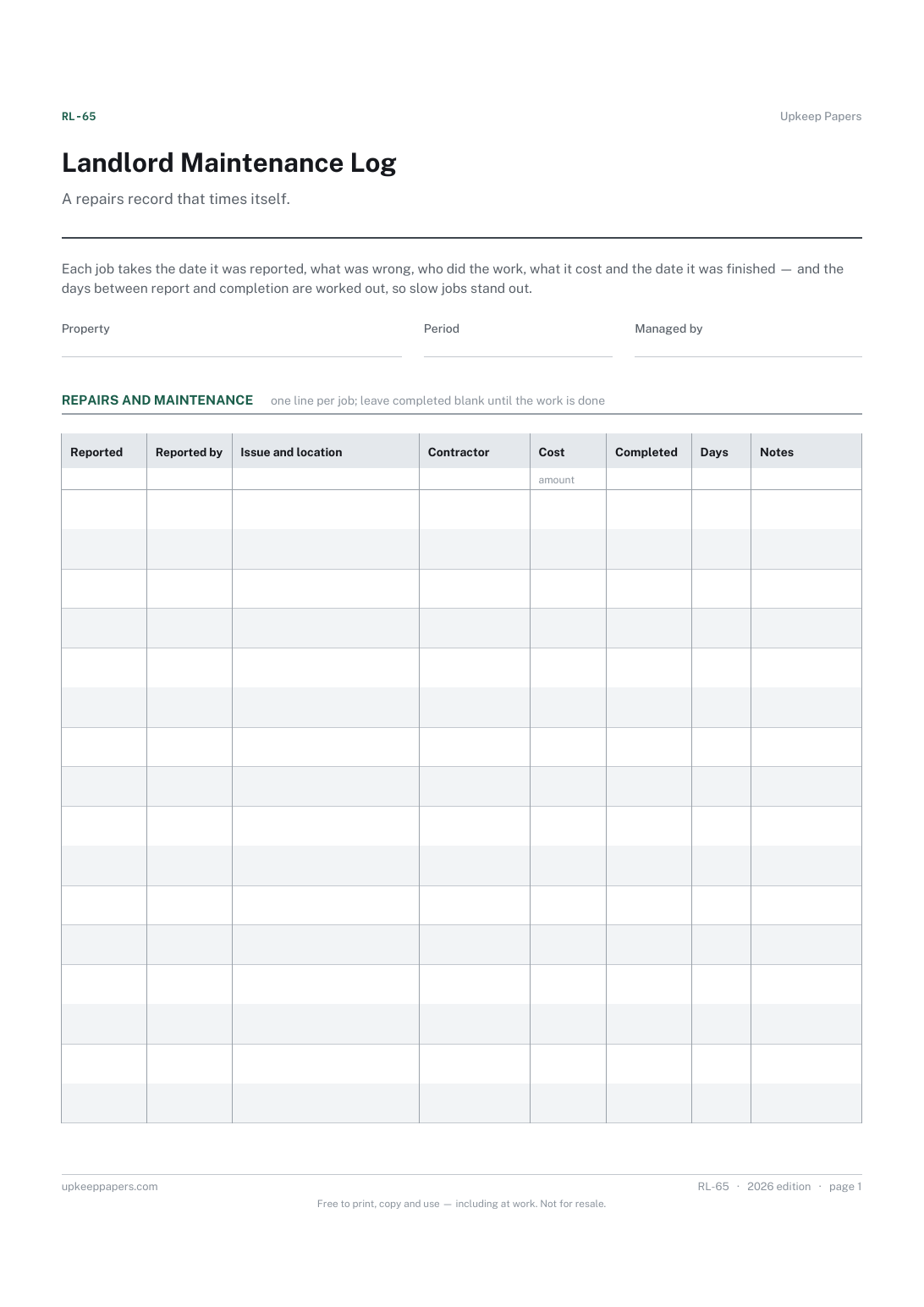
Every repair reported, dated, with who reported it.
The steps to complete before any money moves, ticked in order.
What was last done, and when, for every recurring check.
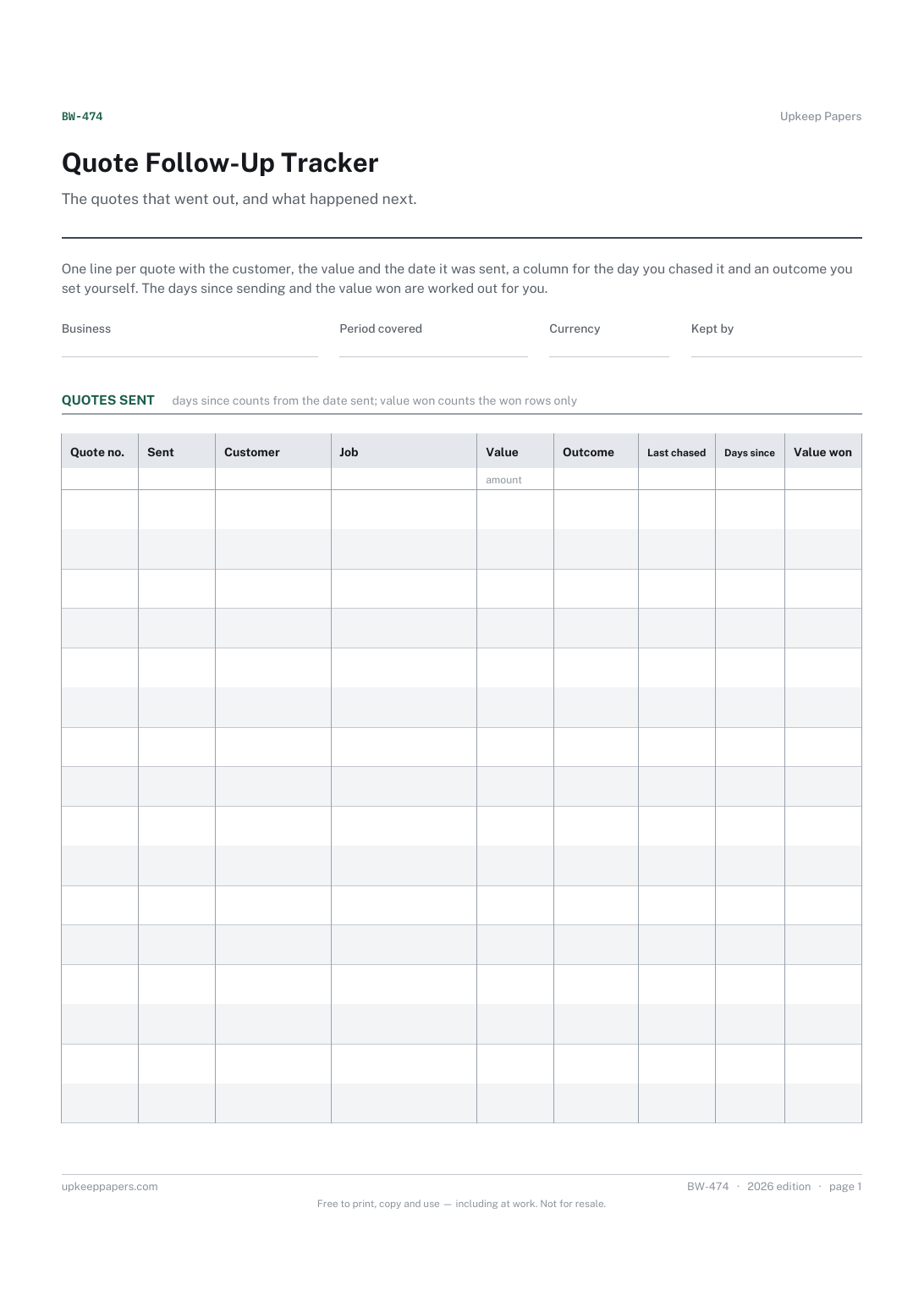
Every quote you have sent, with its reference and value.
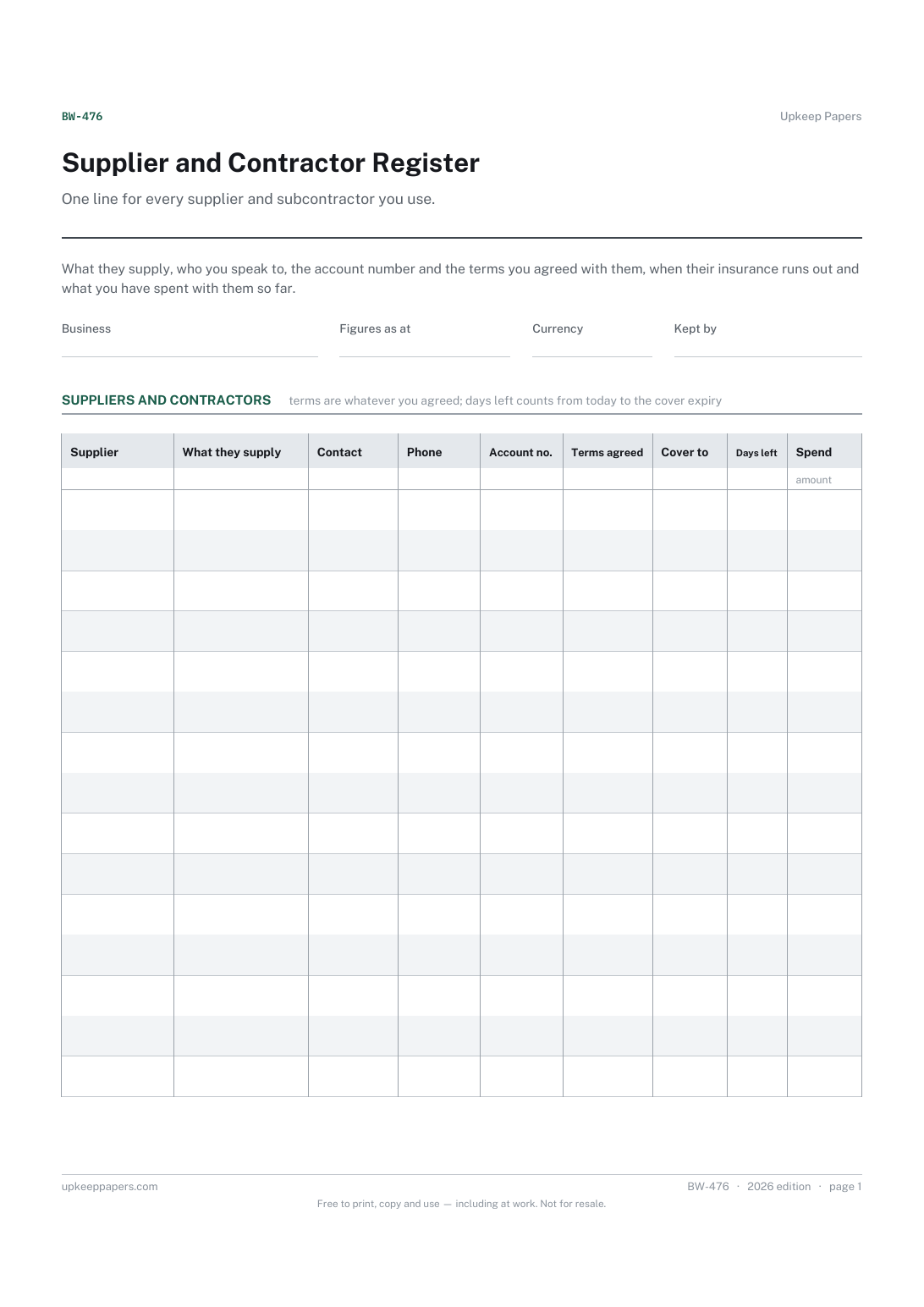
Who supplies what, and the account number to quote.
Every sale and purchase in the period, with its reference.
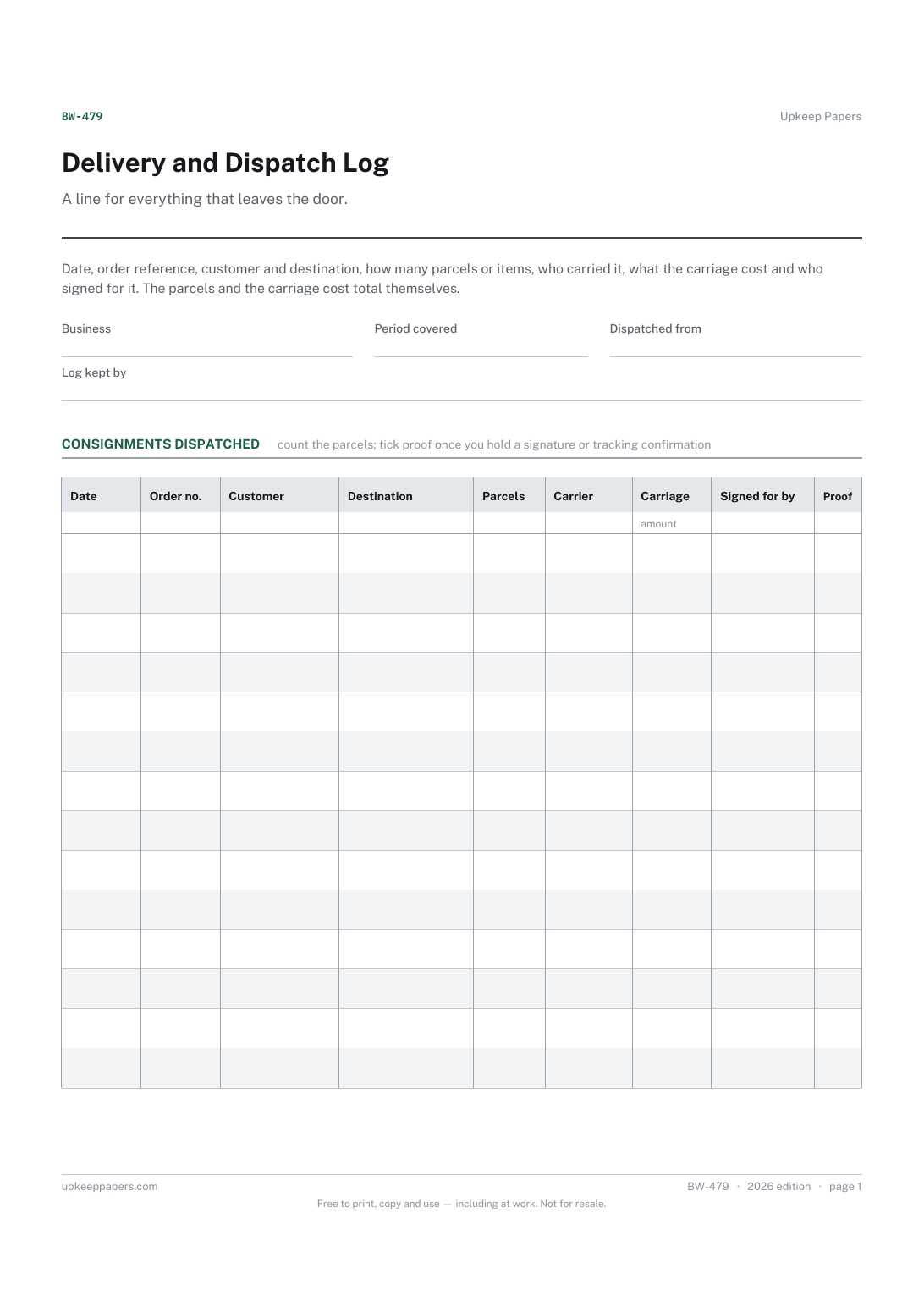
What was dispatched, on which day and against which order.
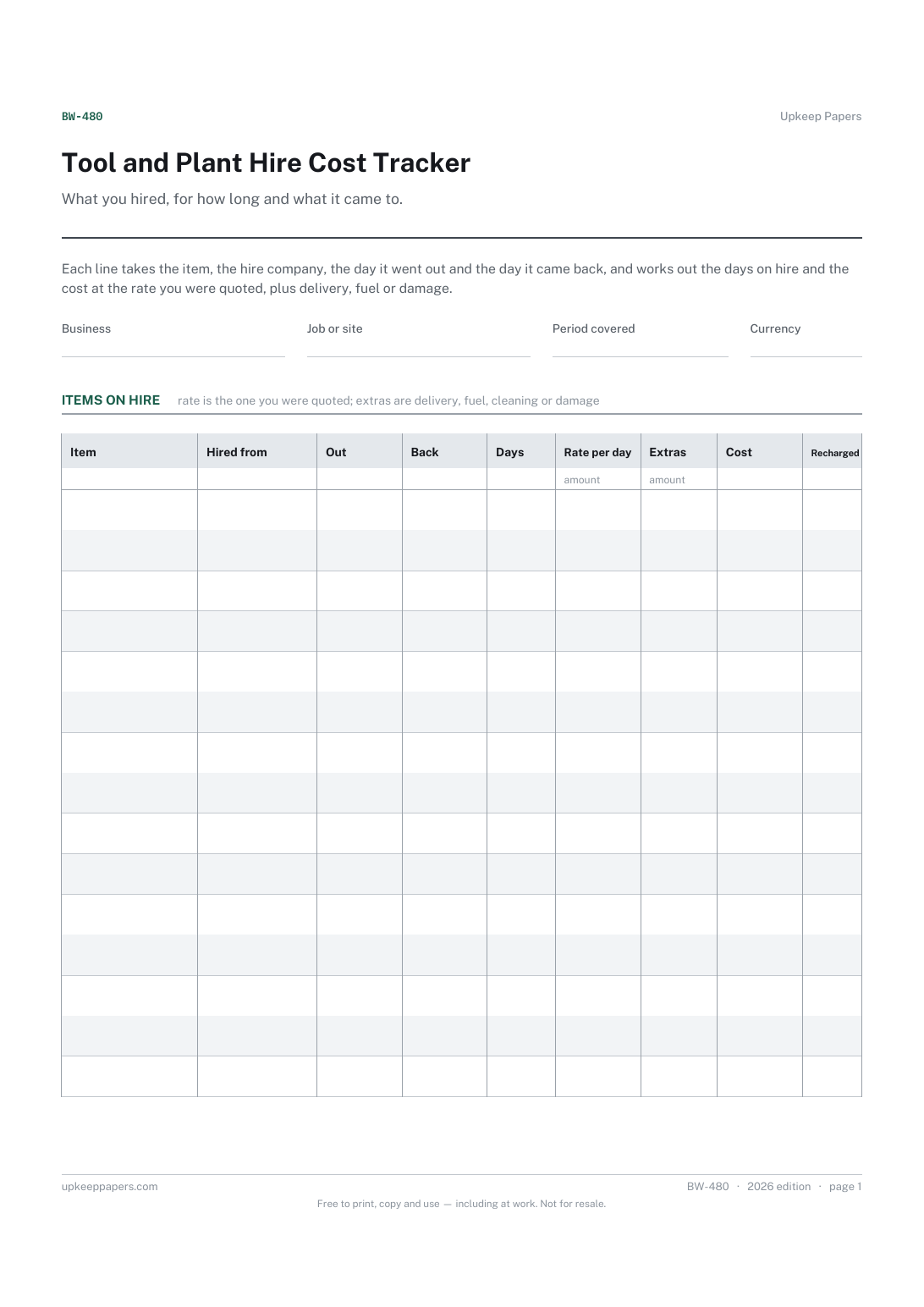
Every item on hire, and who it is hired from.
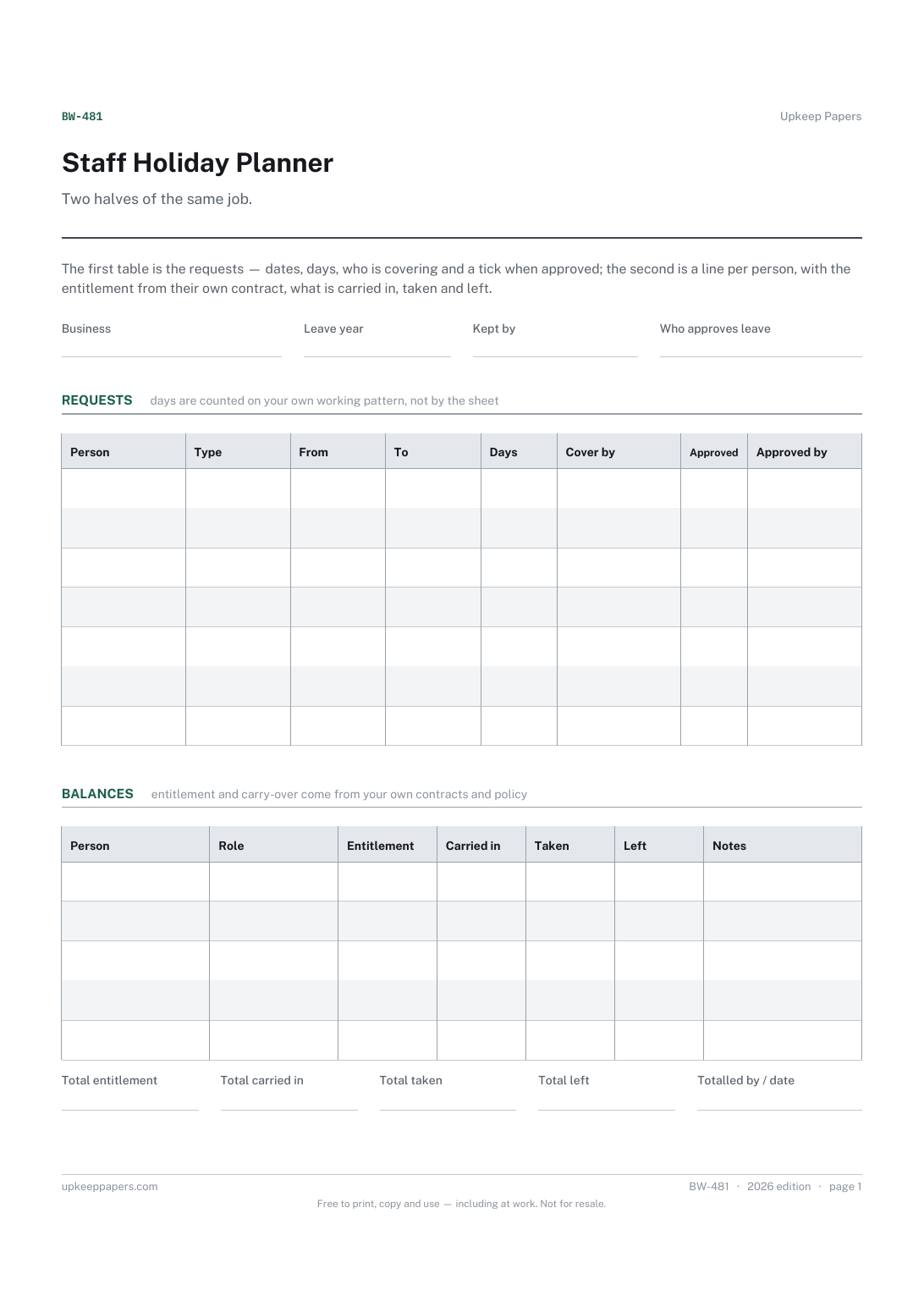
What each person is entitled to, taken from their own contract.
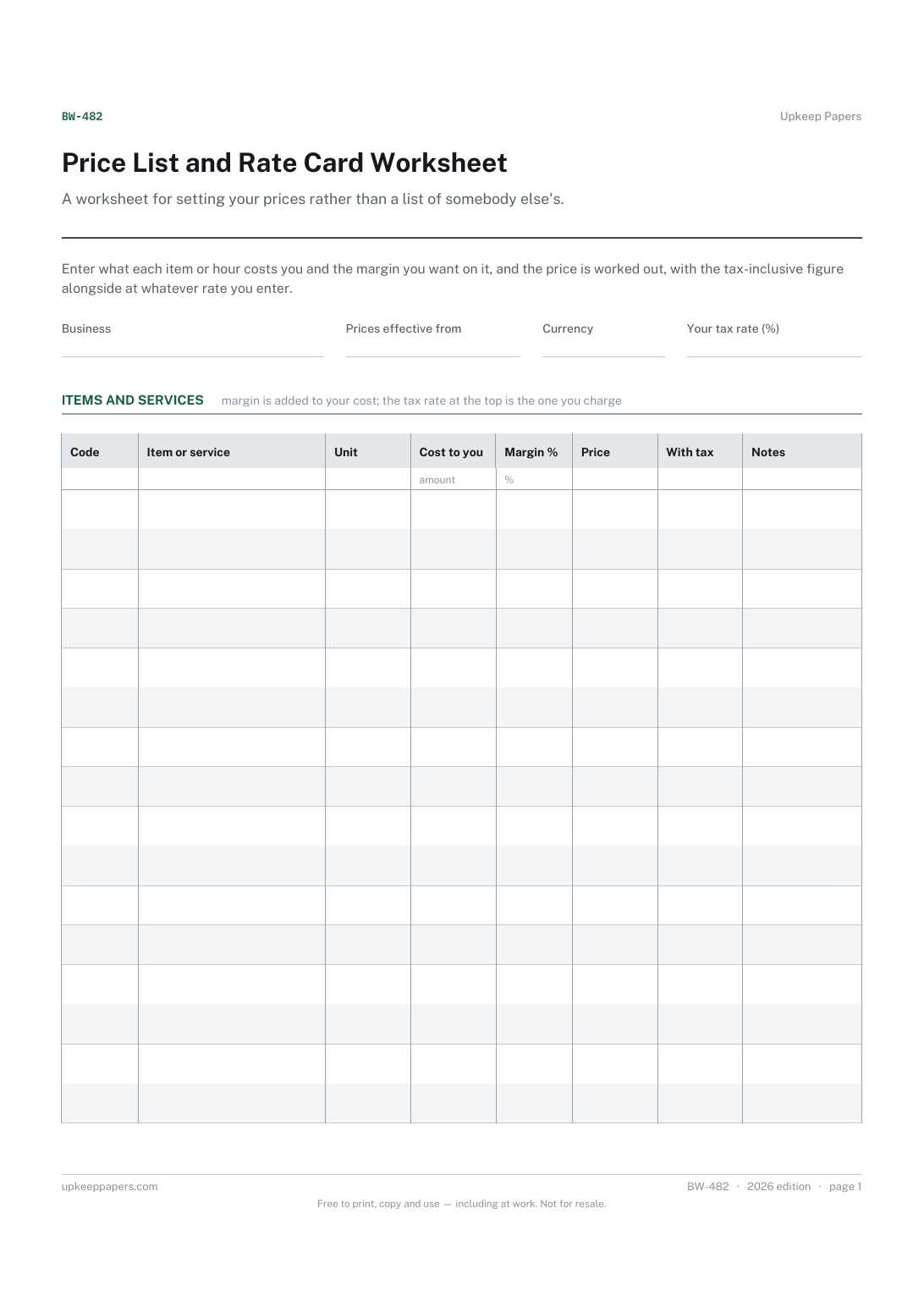
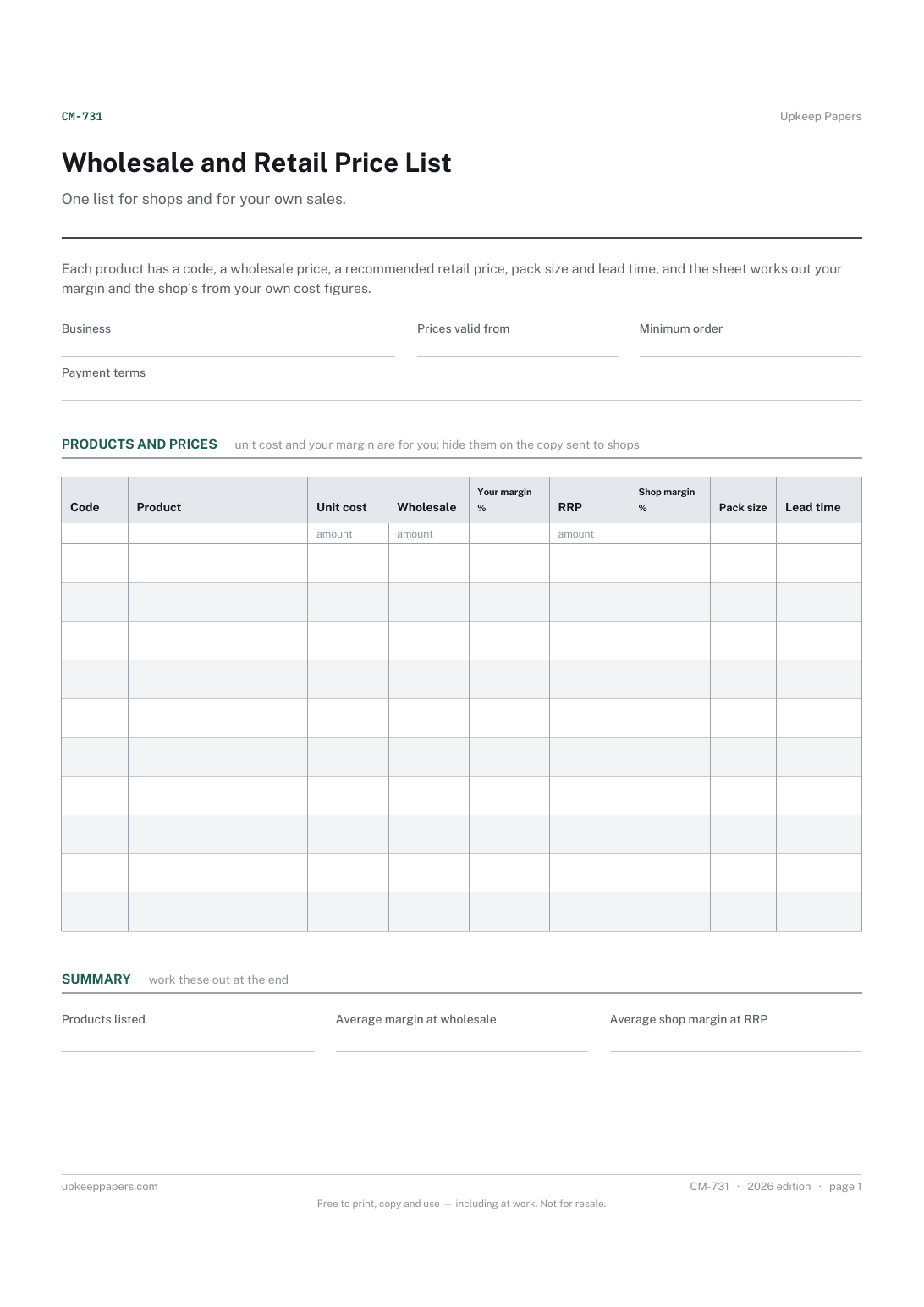
Every item or service you sell, with your own code for it.
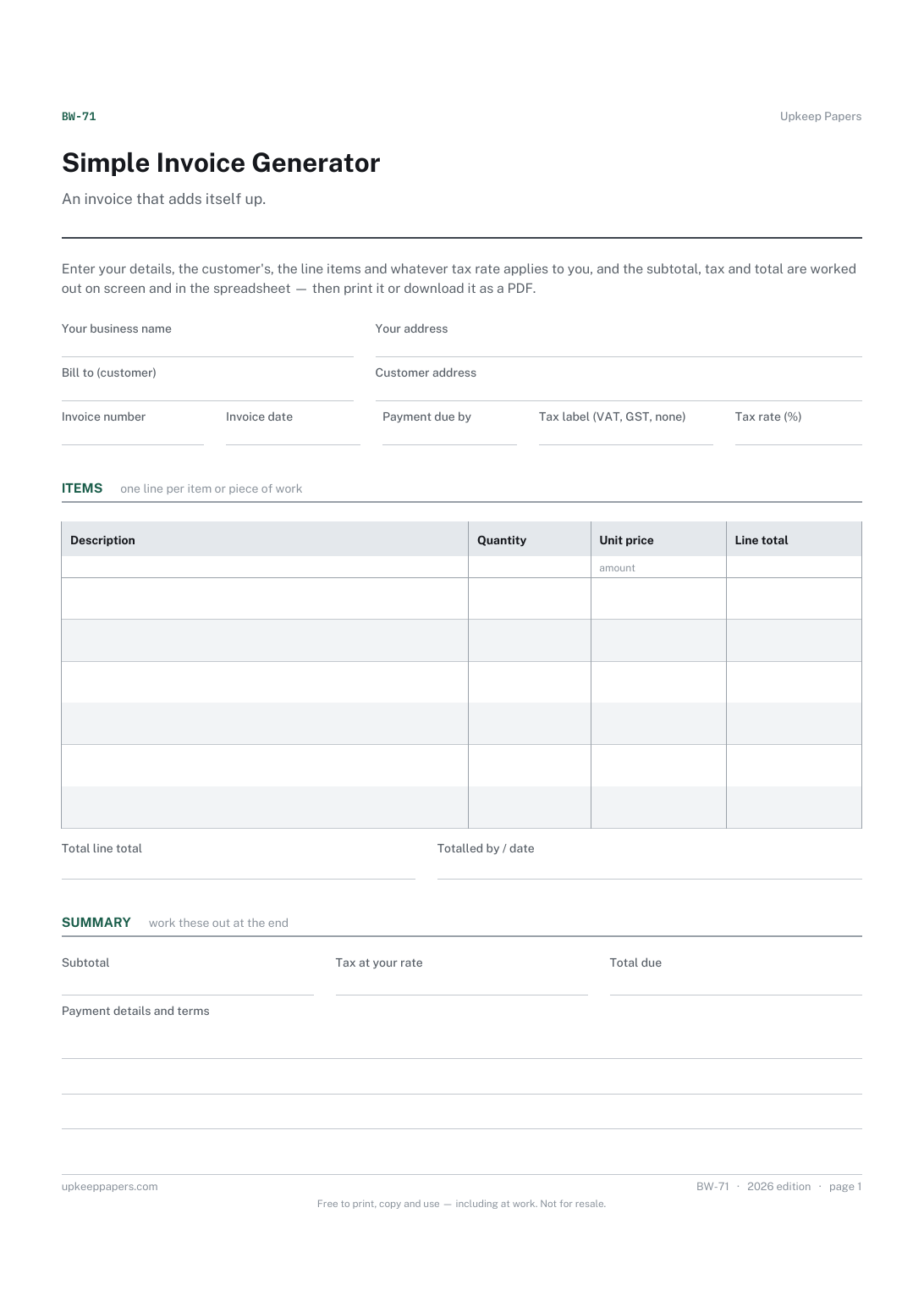
Line totals from quantity and unit price, with no arithmetic by hand.
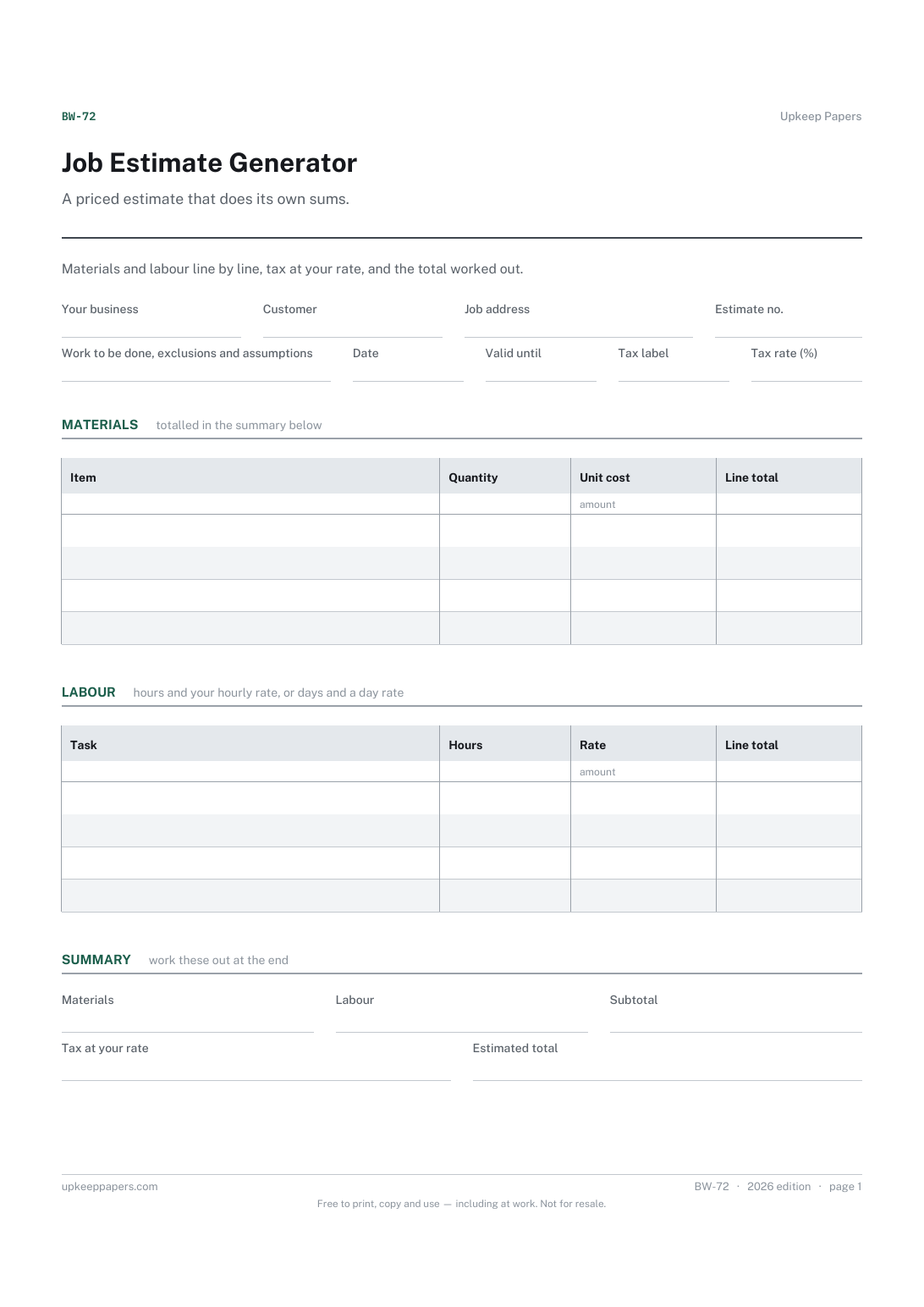
Materials and labour kept apart, so the customer can see what is what.
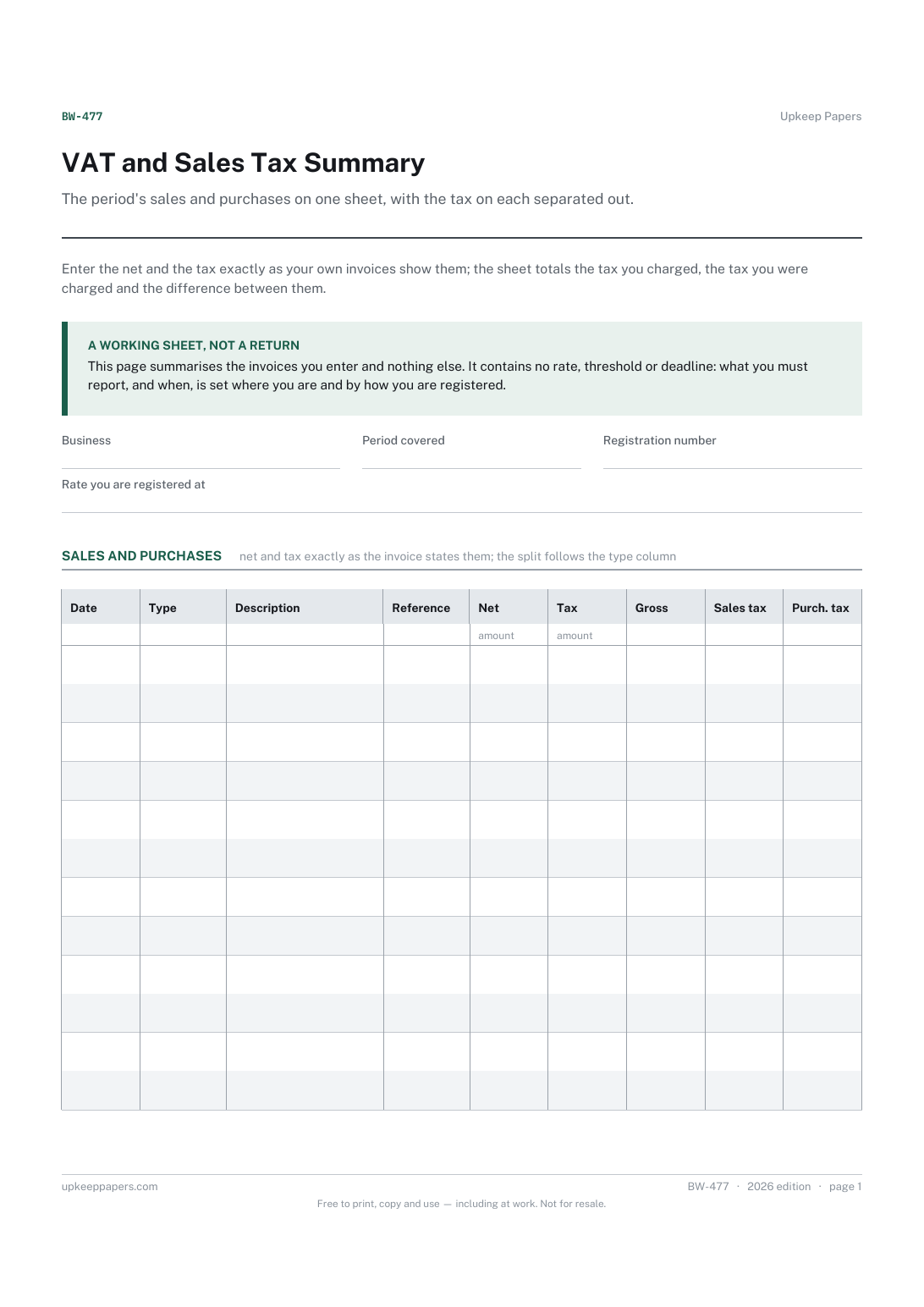
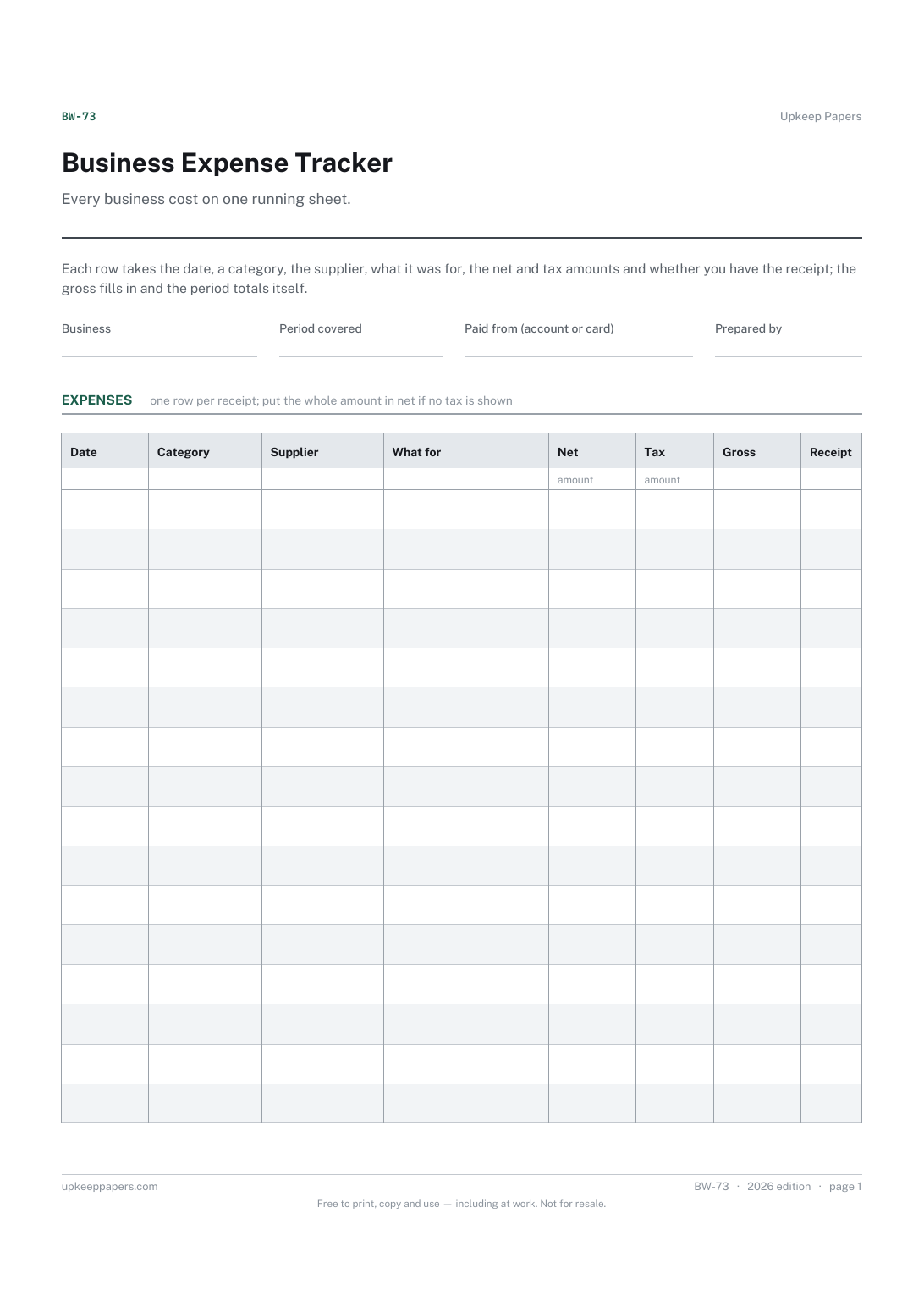
What the business spent in the period, net, tax and gross.
Every customer's phone, email and address on one sheet.
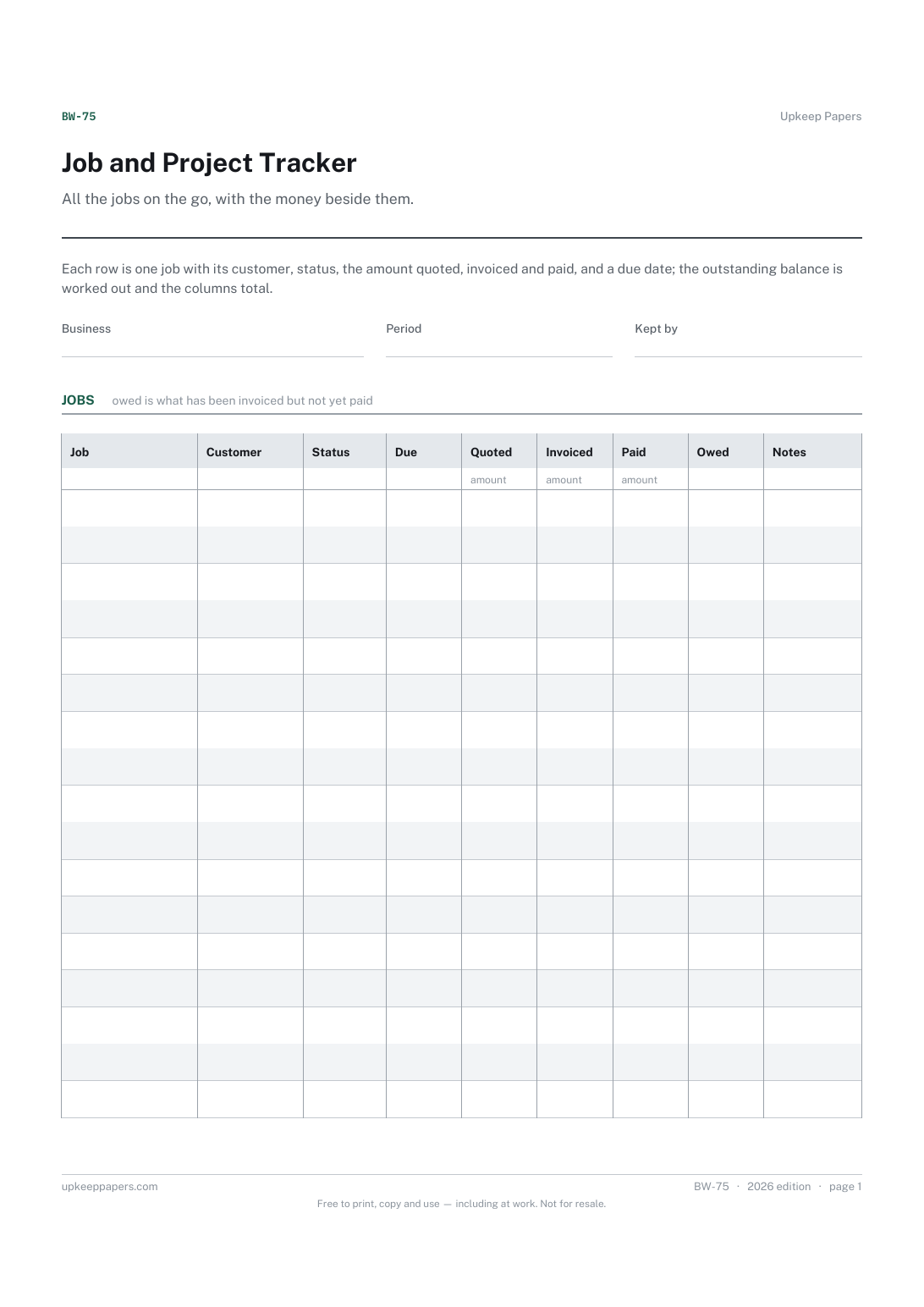
Where every job is — quoted, booked, in progress, done, invoiced or paid.
How many of each item are on hand, and where.
Distance per journey and in total, from two odometer readings.
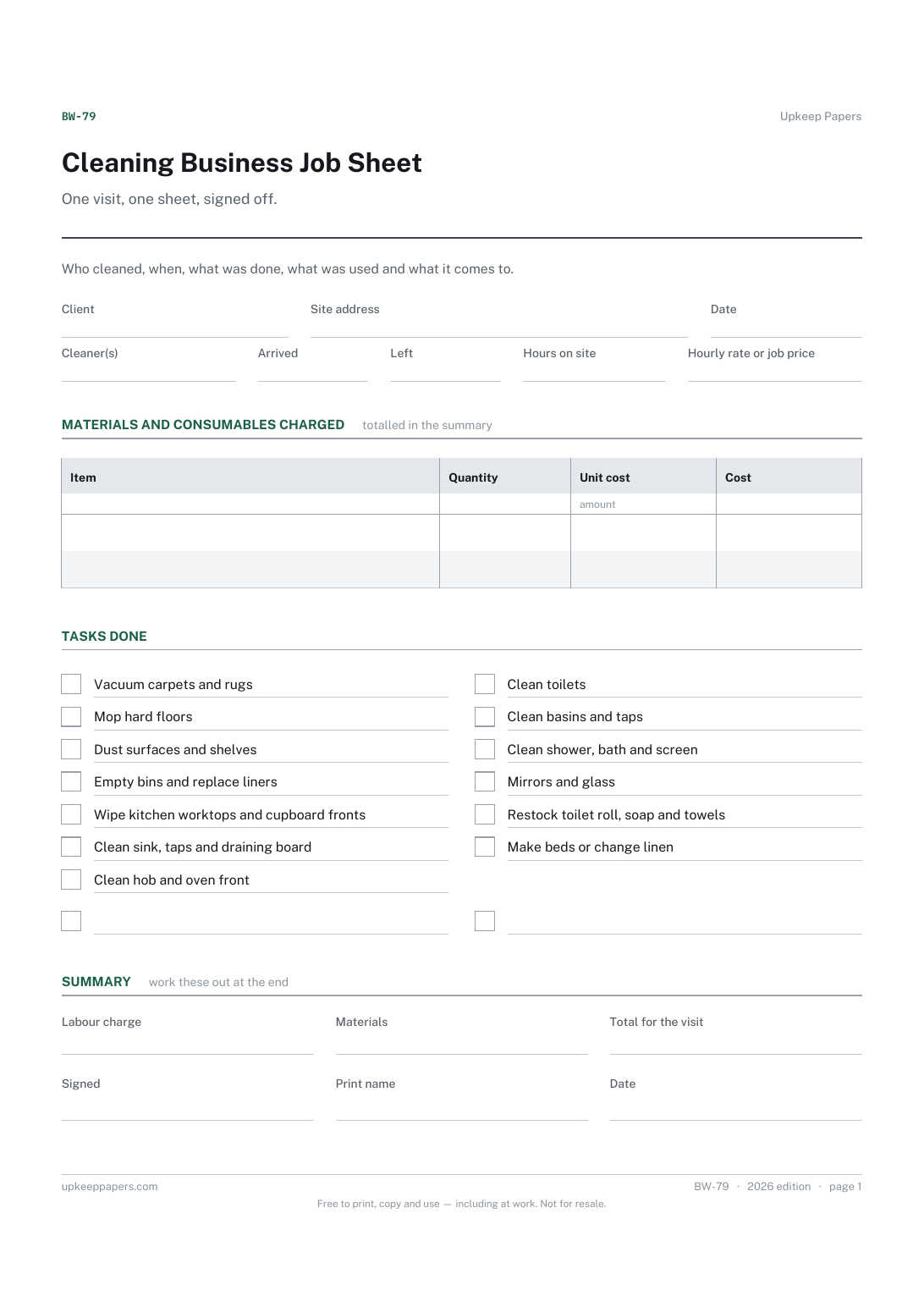
What was done on the visit, ticked task by task.
Total income for the month, by source.
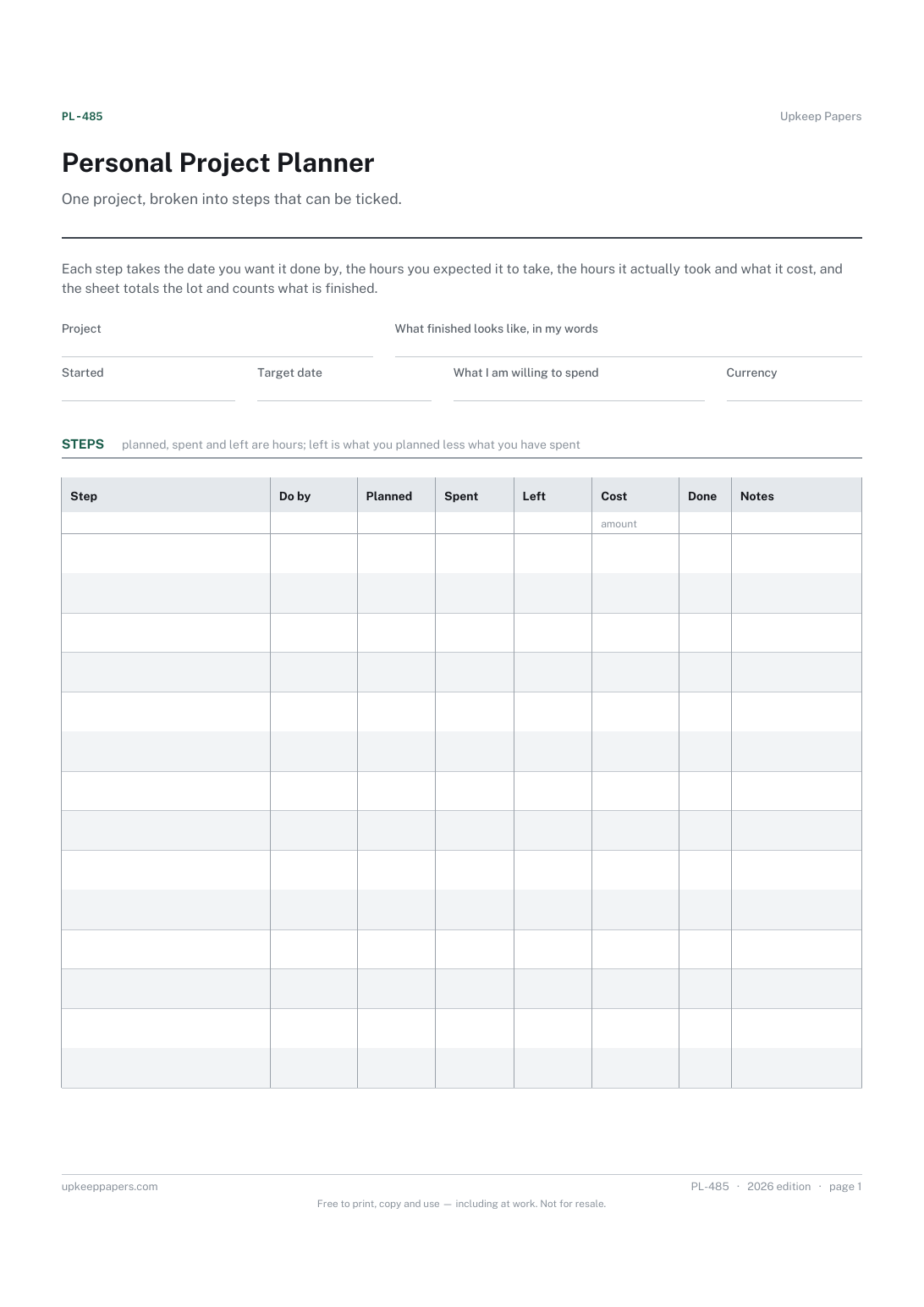
The project broken into steps small enough to finish.
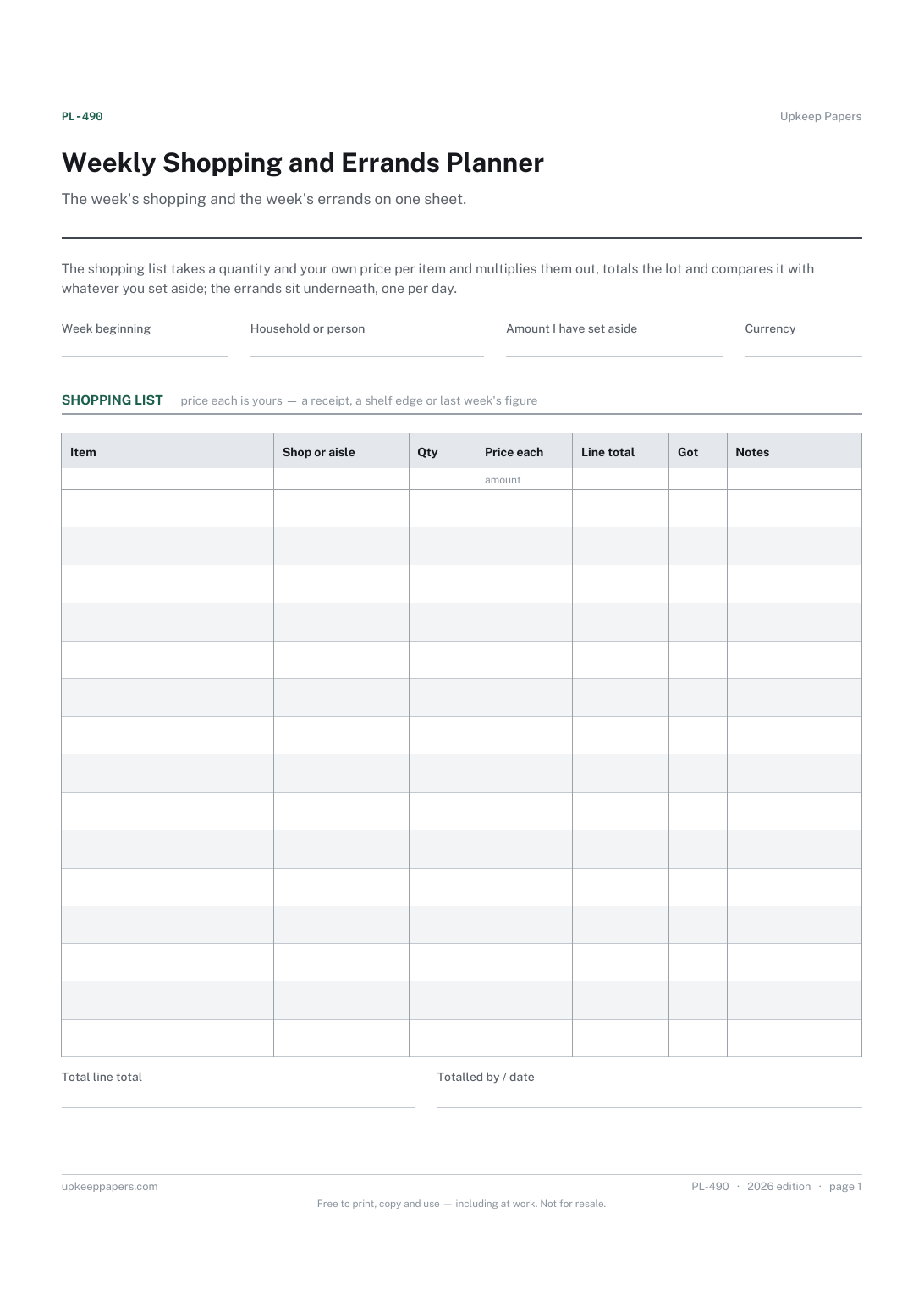
Everything to buy, with where it is coming from.
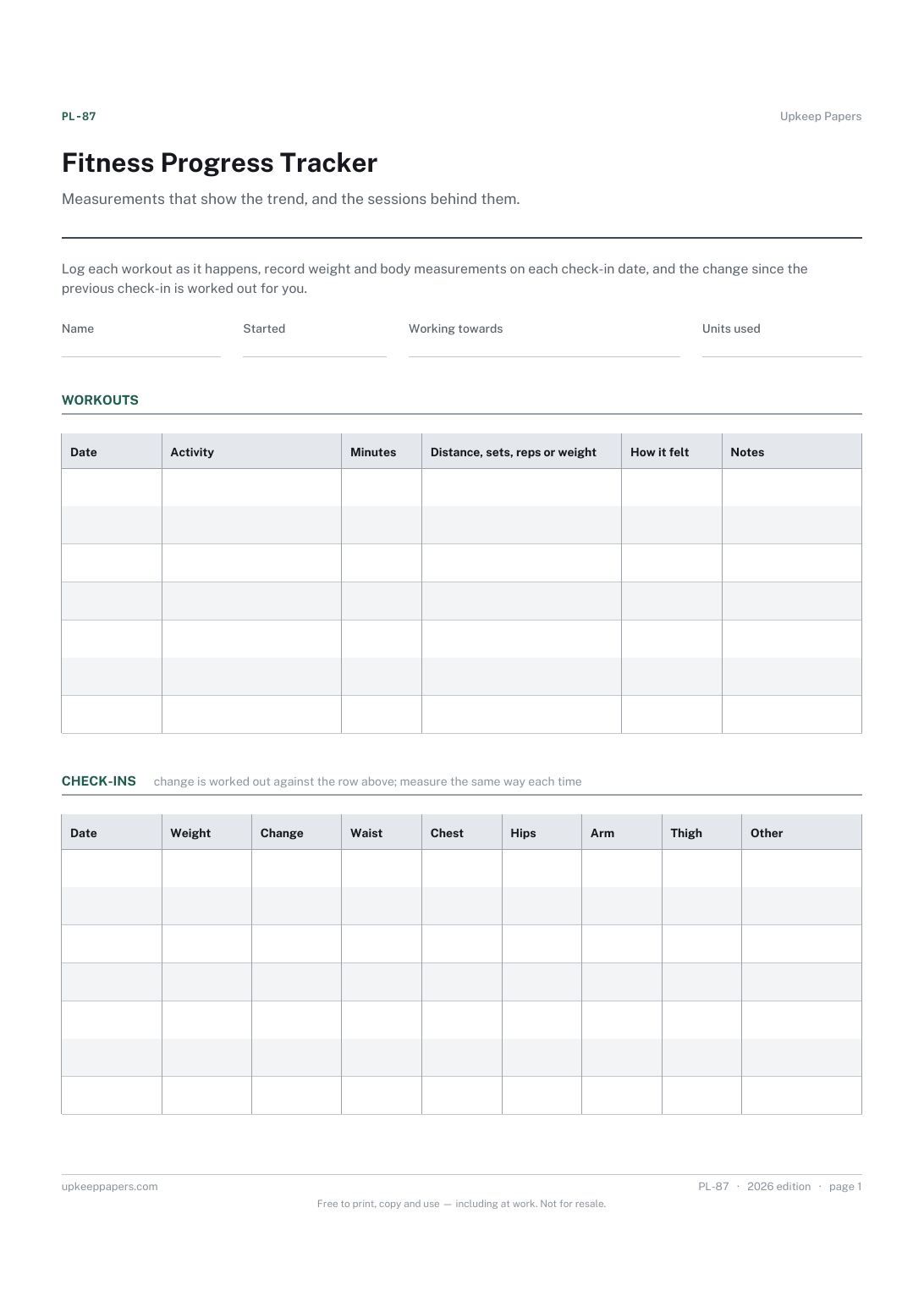
Weight and measurements on each check-in, in whatever units you use.
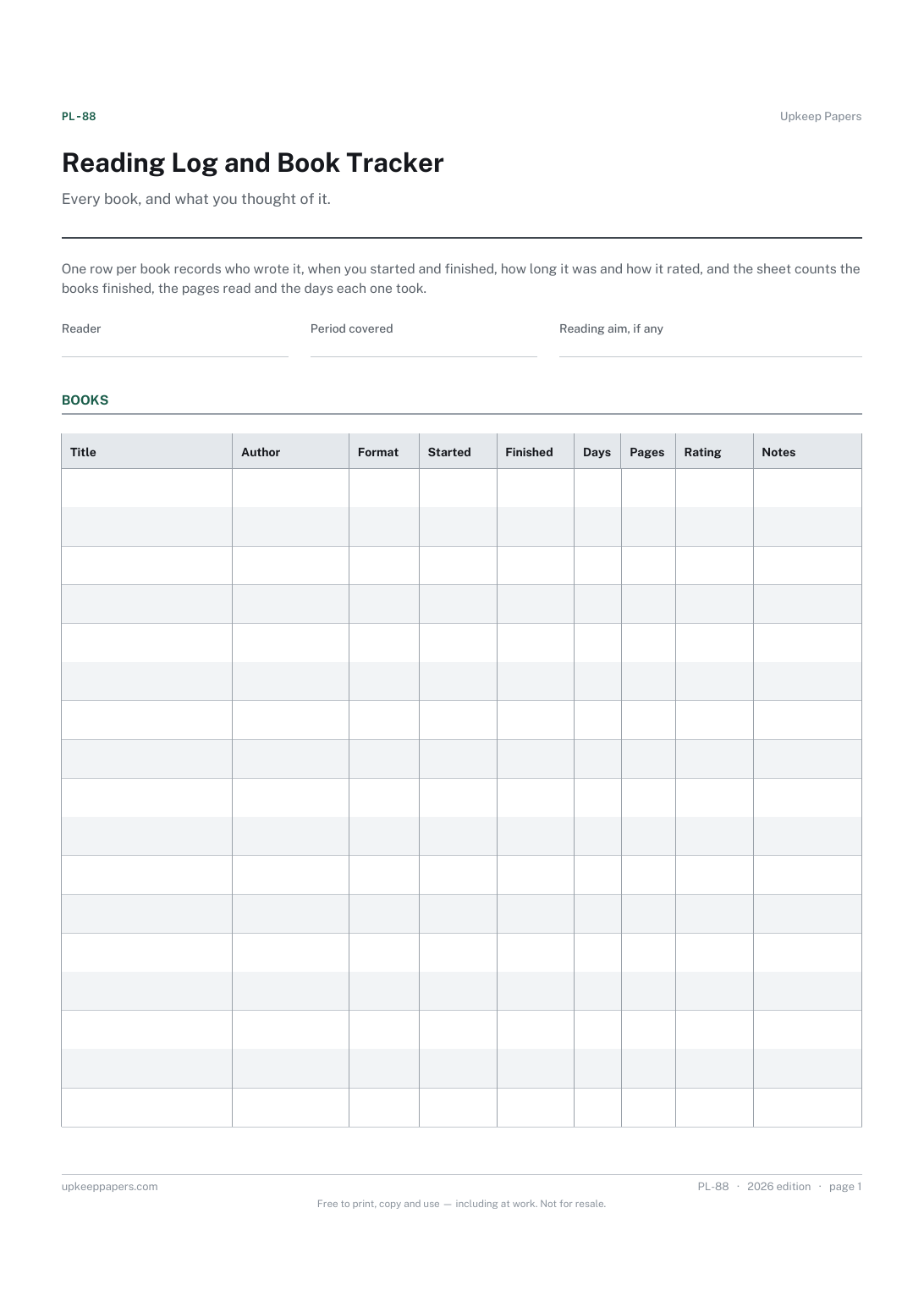
What was read, in order, with author and format.
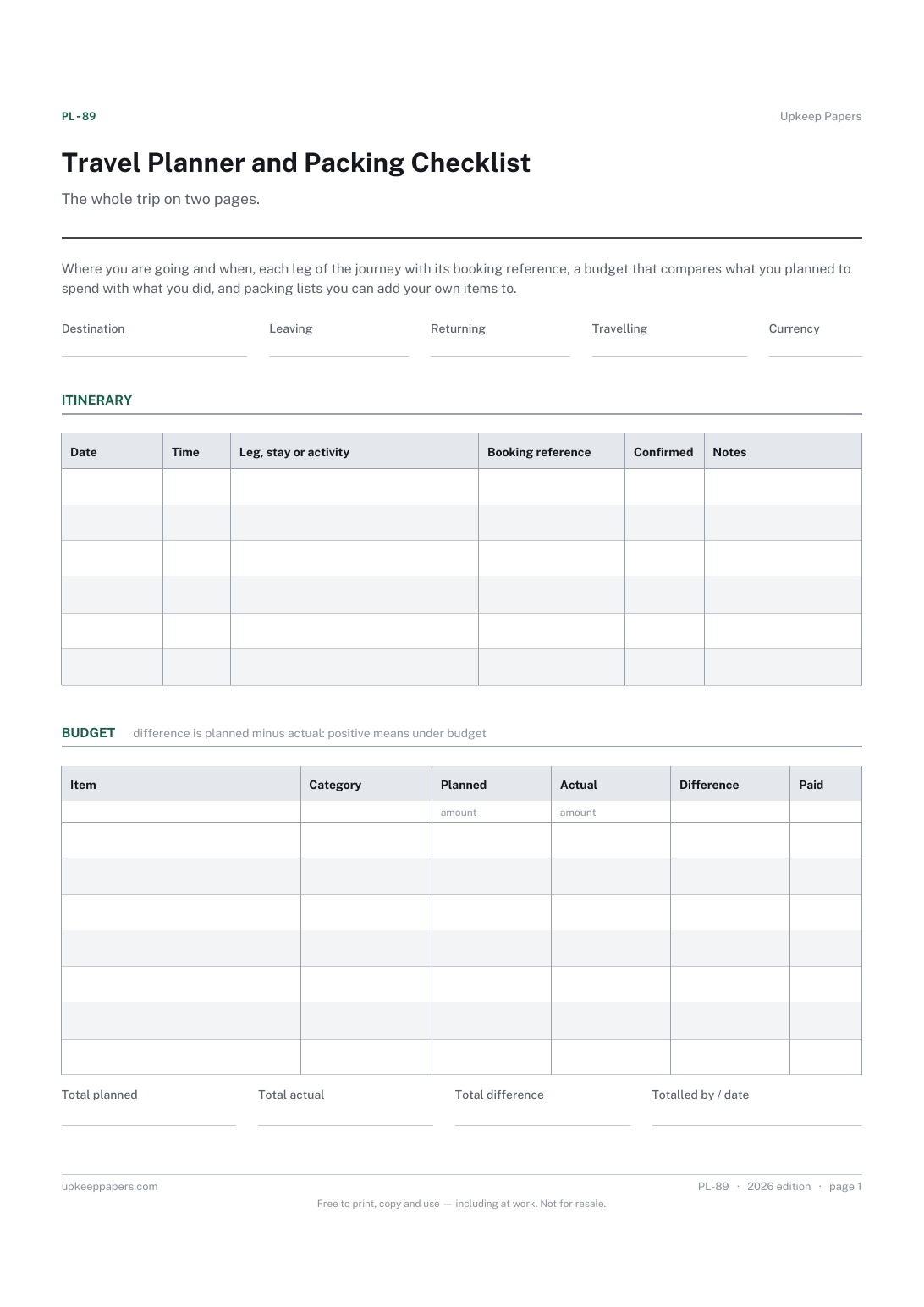
Every leg of the trip with its date, time, booking reference and whether it is confirmed.
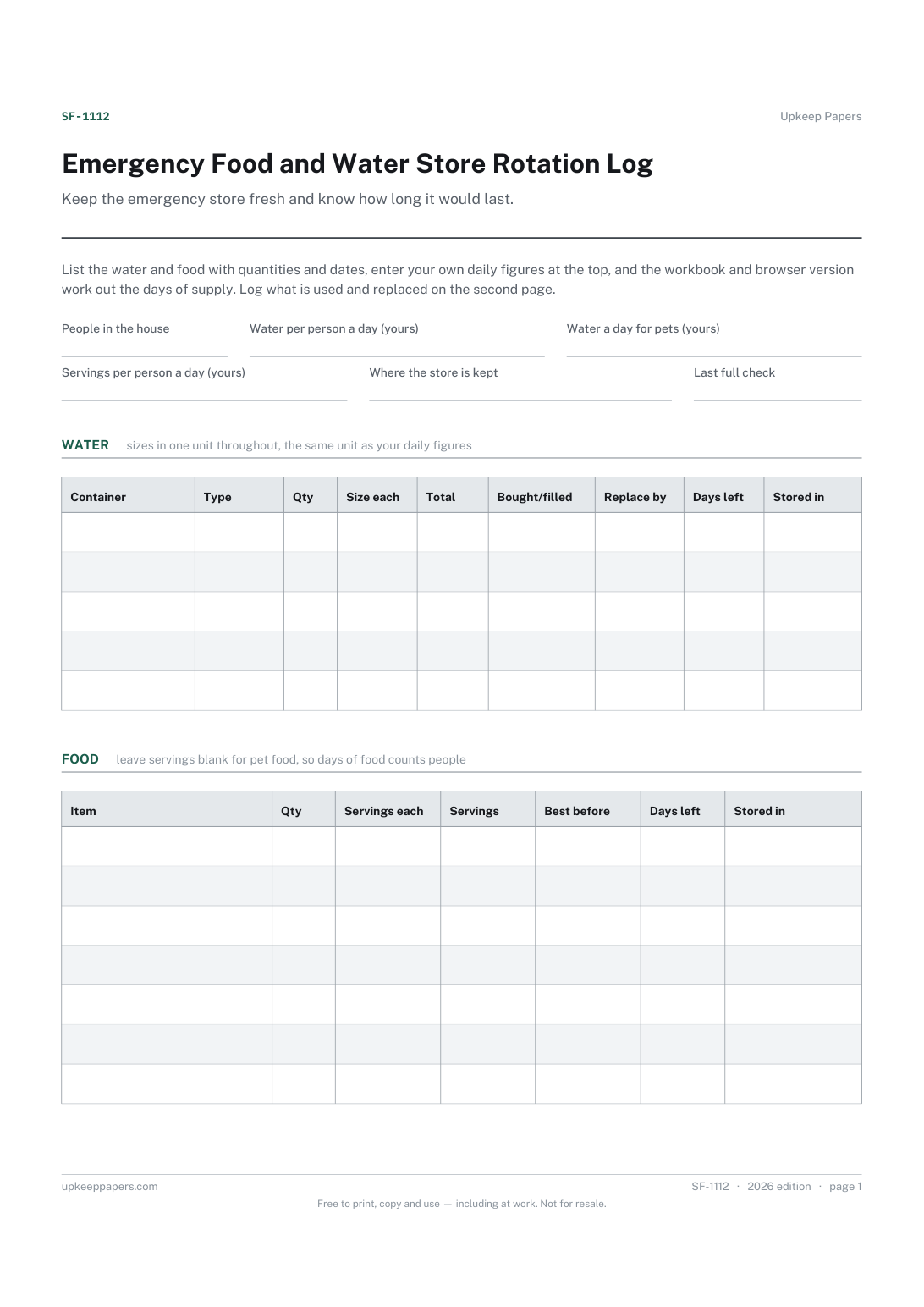
Every container of water with its date and replace-by date.
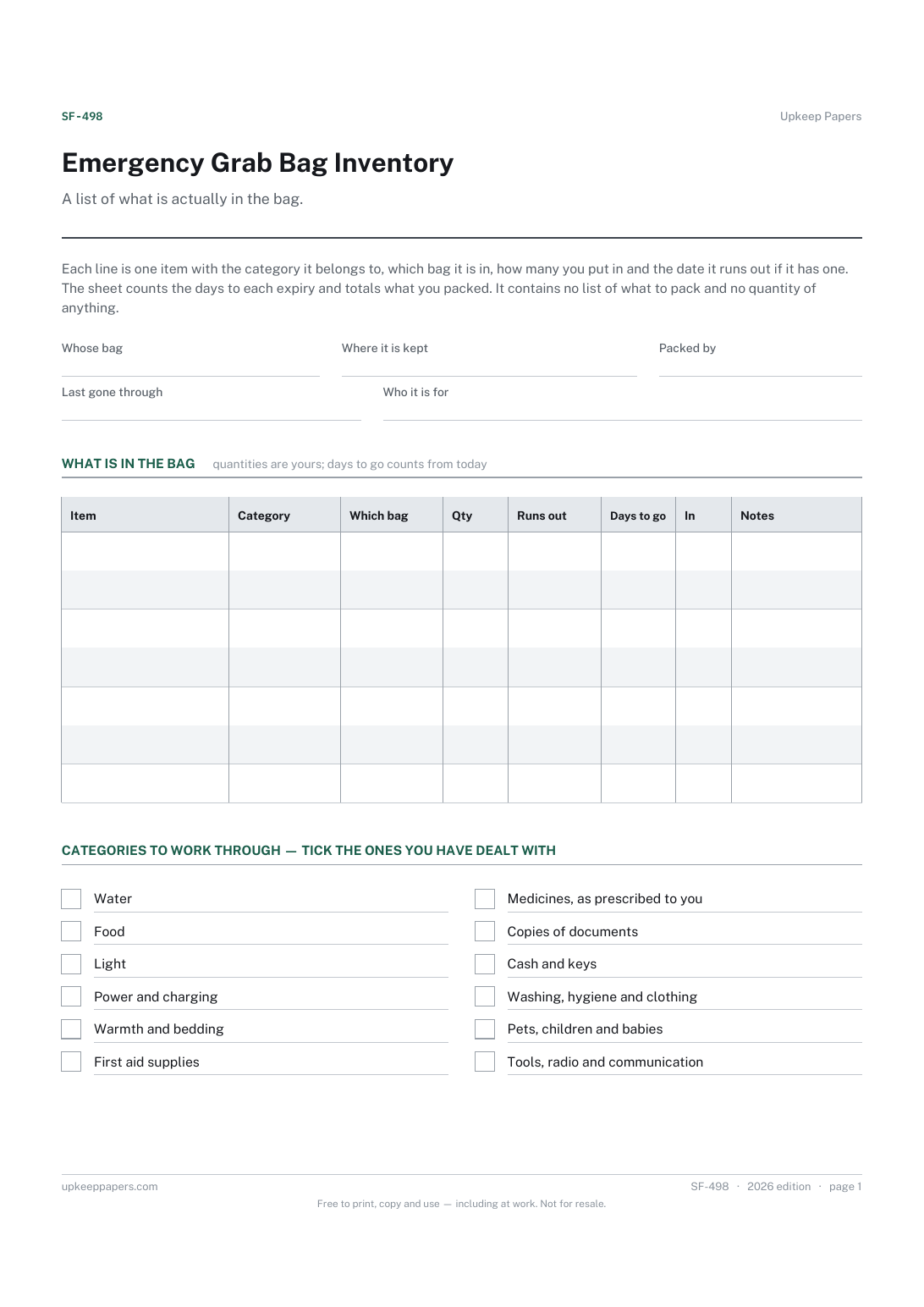
Every item in the bag, with the category it belongs to.
Which policy renews next, and how many days away that is.
Which items are still covered today, and which ran out last month.
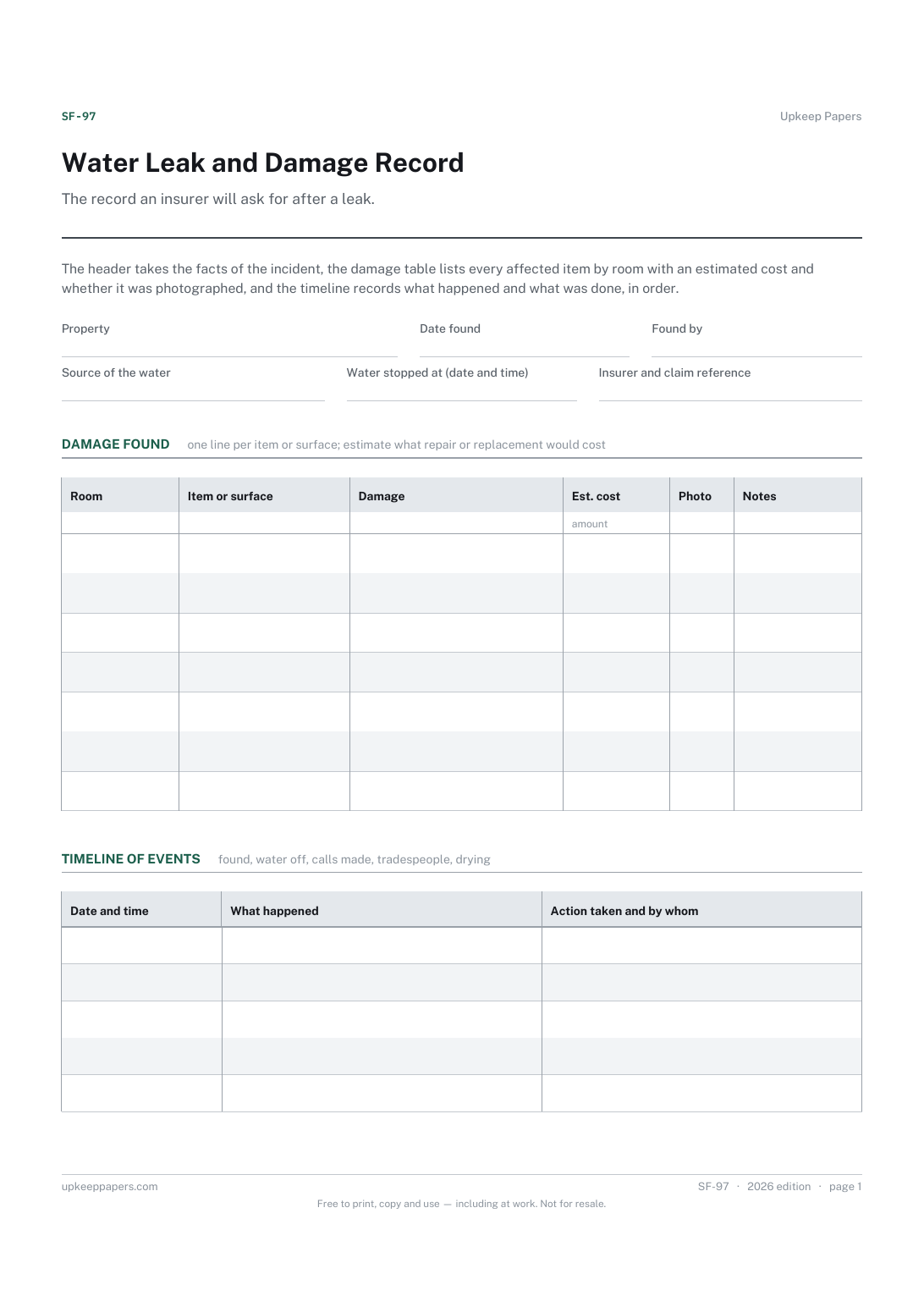
Every damaged item, room by room, with an estimate against each.
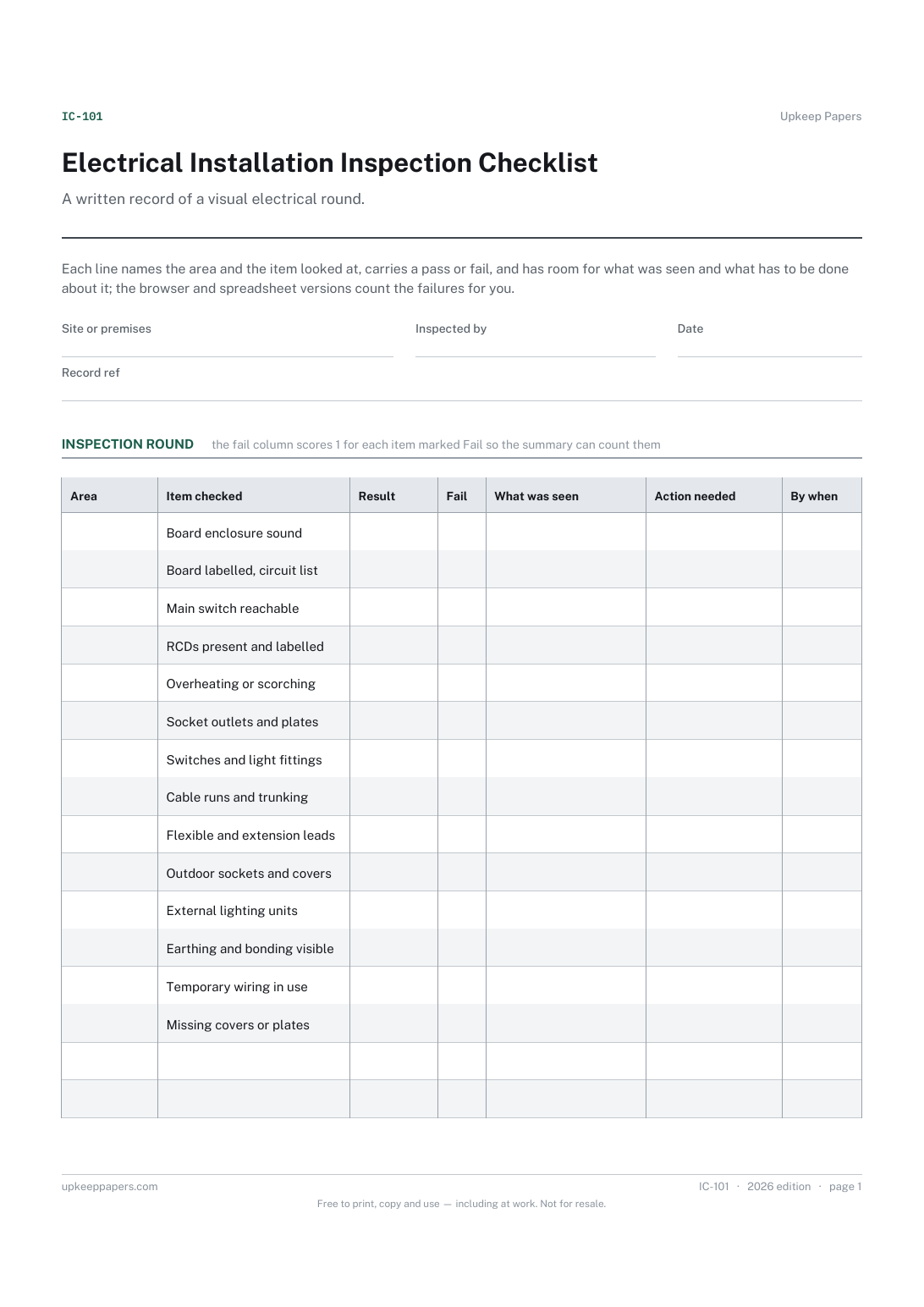
Which boards, circuits, accessories and leads were actually looked at.
Which doors exist, where they are and which ones have been looked at.
What was looked at on this round, including the points that were satisfactory.
What was inspected on the day, and by whom.
Every item of equipment on the site, with its own reference.
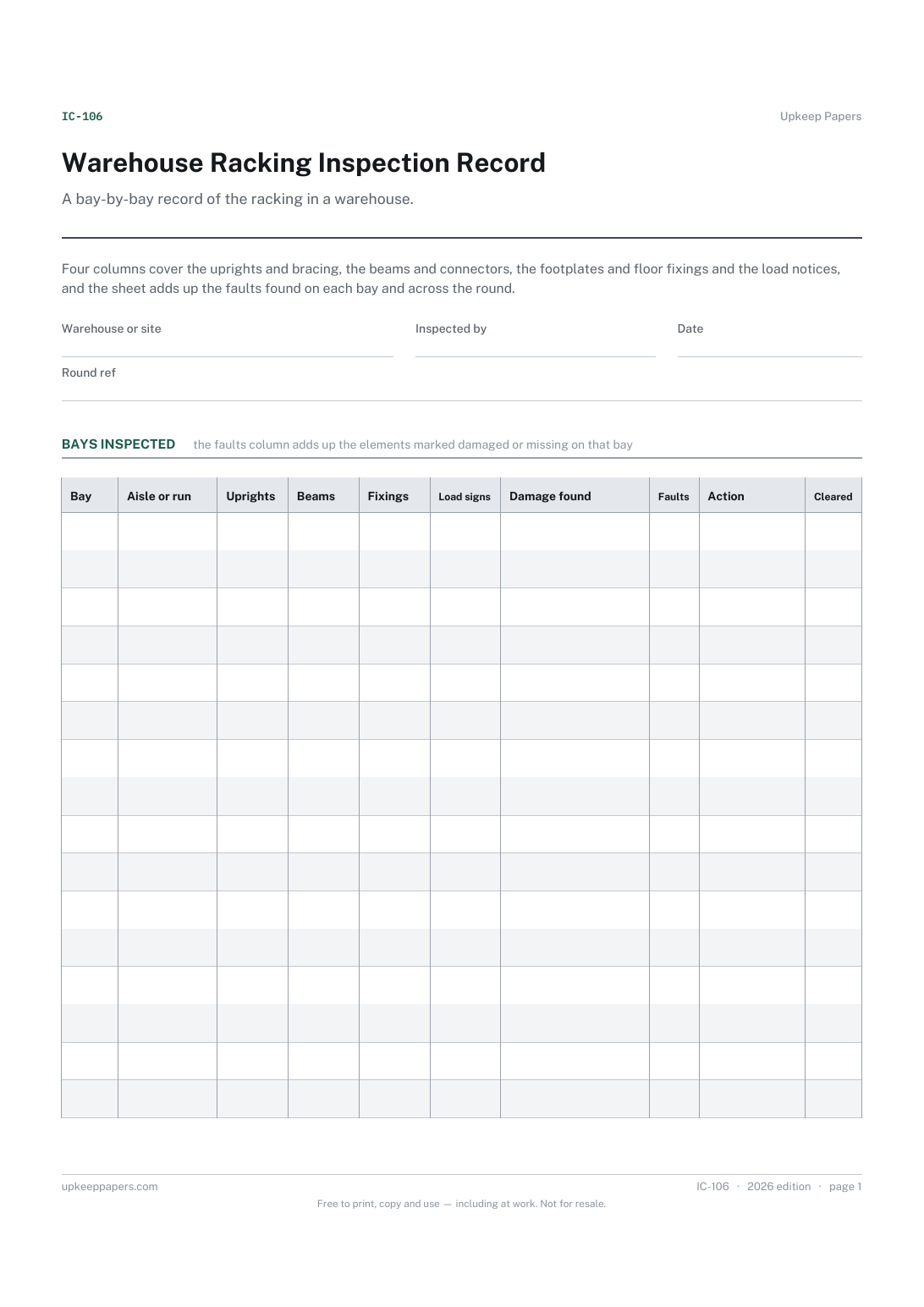
Which aisles and bays were inspected, and which part of each bay is damaged.
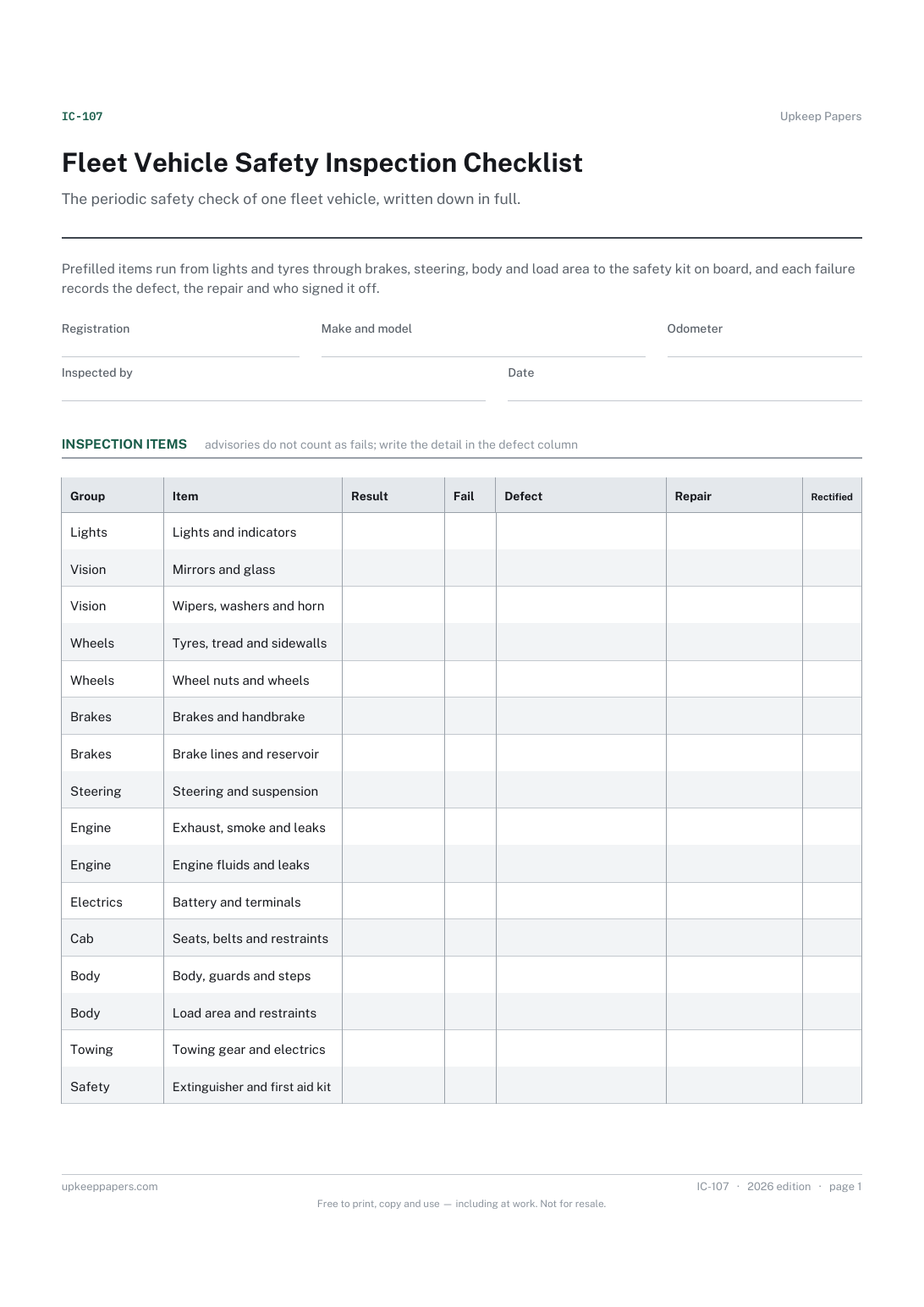
Every item checked on this vehicle, on a dated sheet with the odometer reading.
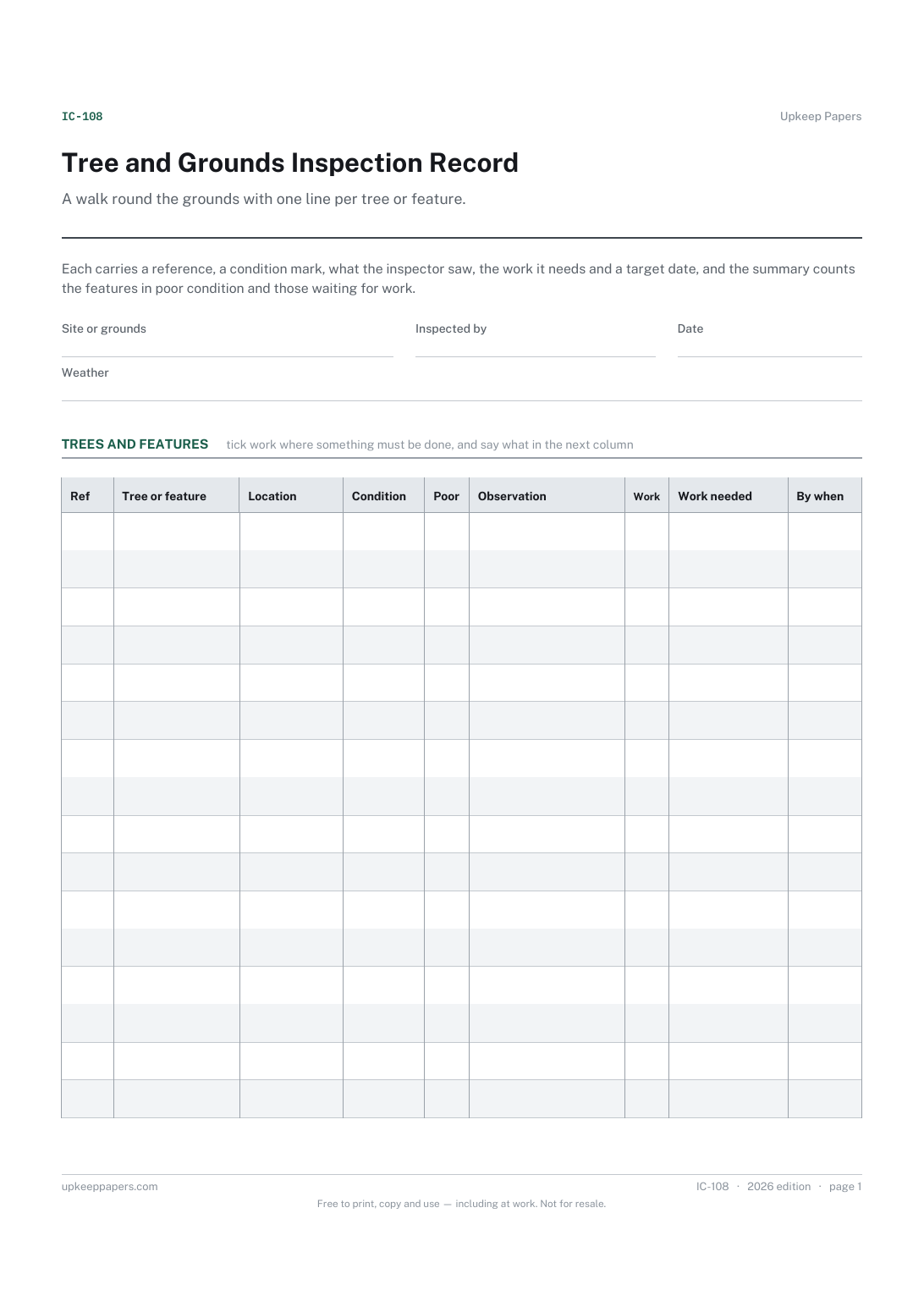
Every tree, hedge, path, wall or bench on the round, each with its own reference.
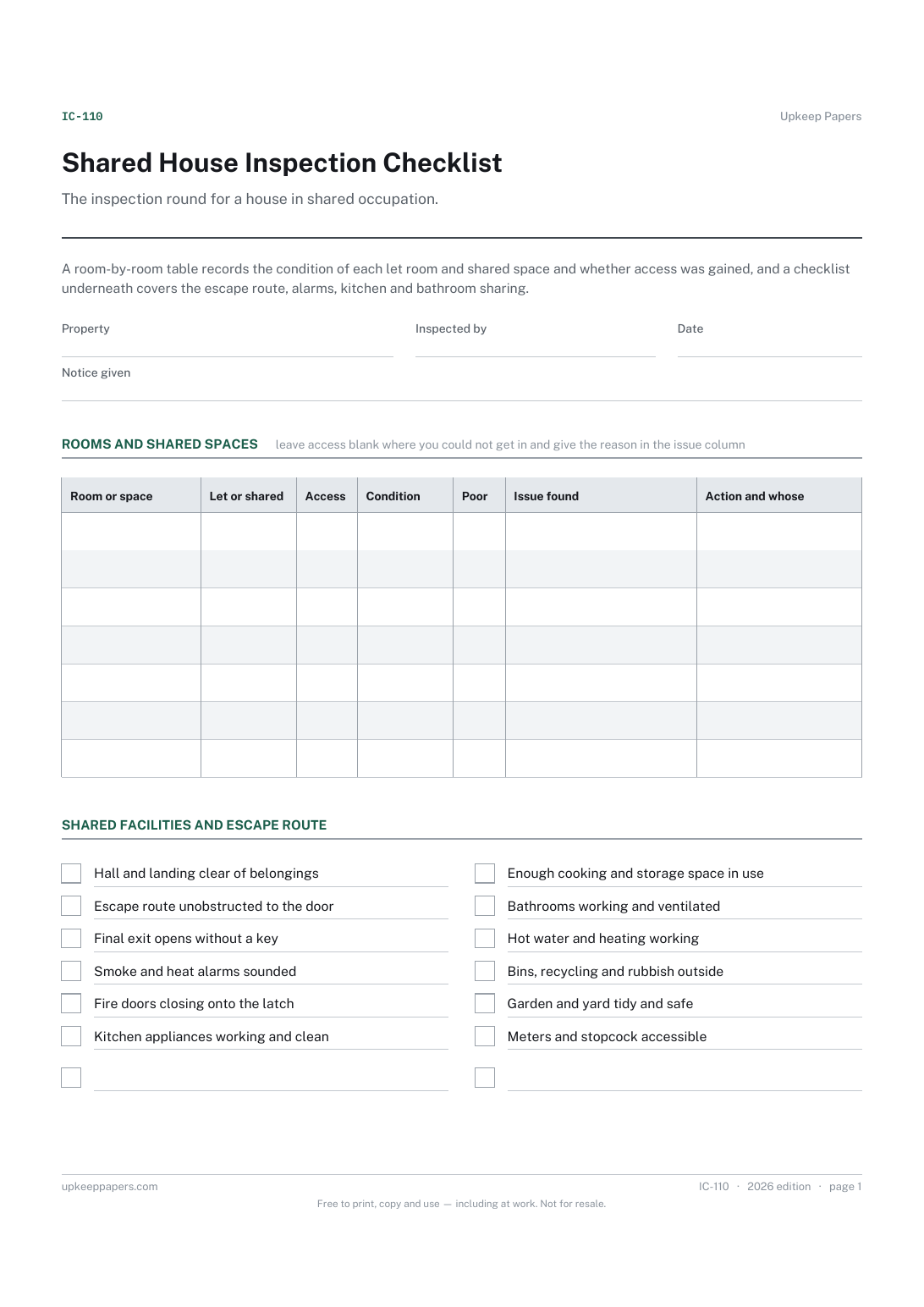
Which rooms were entered, which were not, and why access was not gained.
Which parts of the site were walked on this round and which were not reached.
What the weekly walk covered and what it found, week by week.
Which machines exist, where they are and which have been checked this round.
The condition of every part of the machine when it left the yard.
The condition of each room on the day, agreed by both sides.
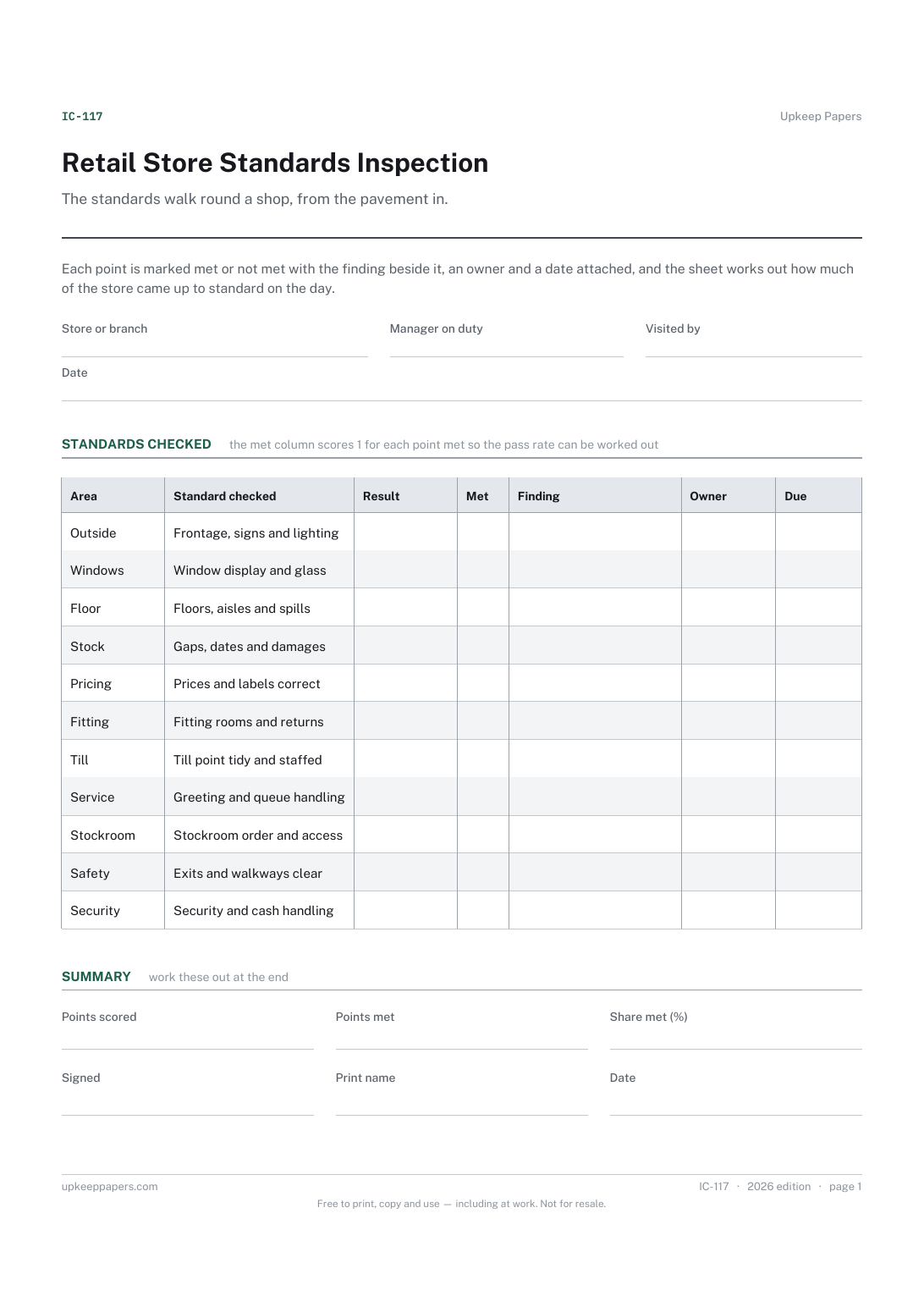
Whether the shop met your own standards, point by point, on the day it was visited.
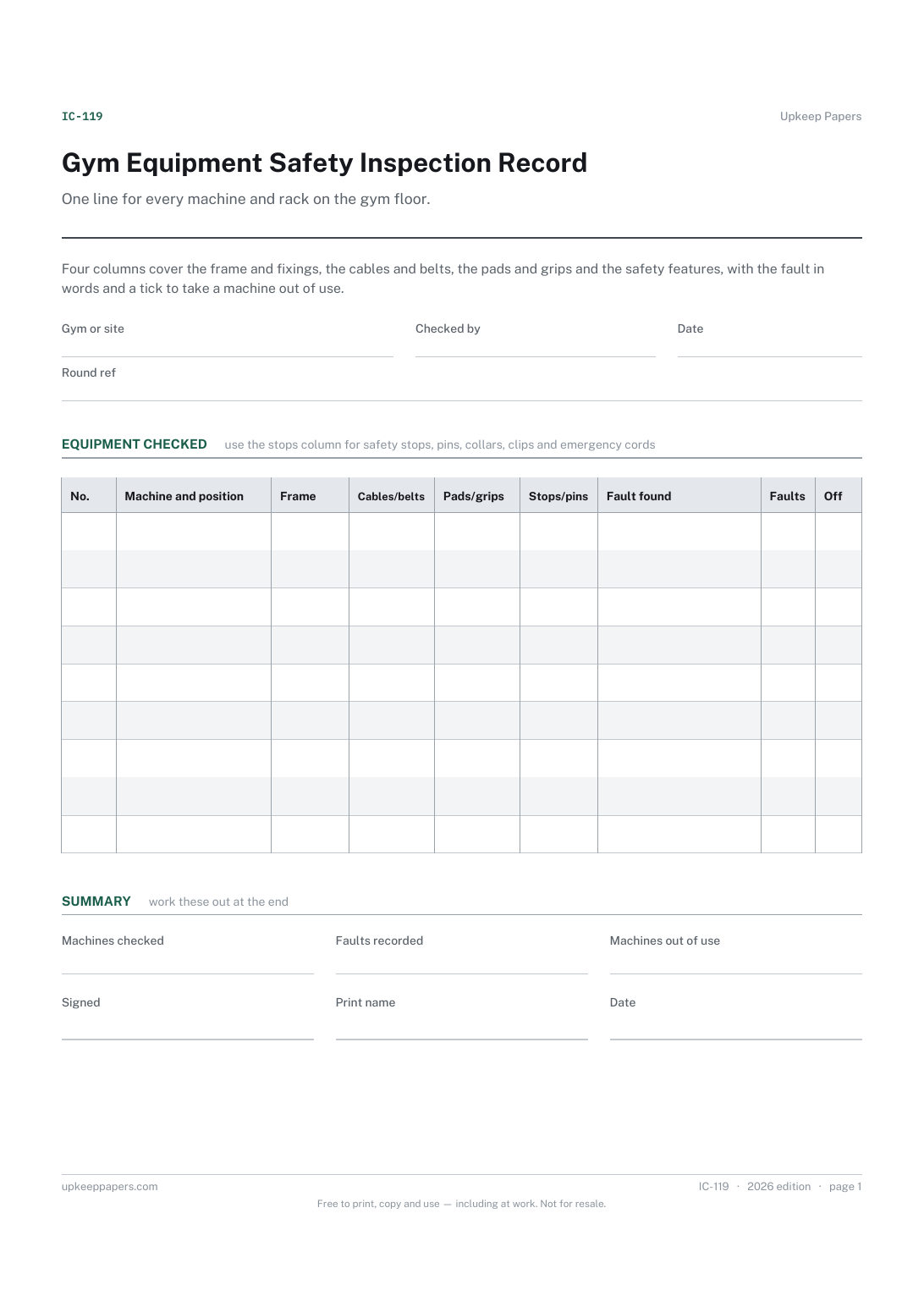
Which machines are on the floor and which were checked this round.
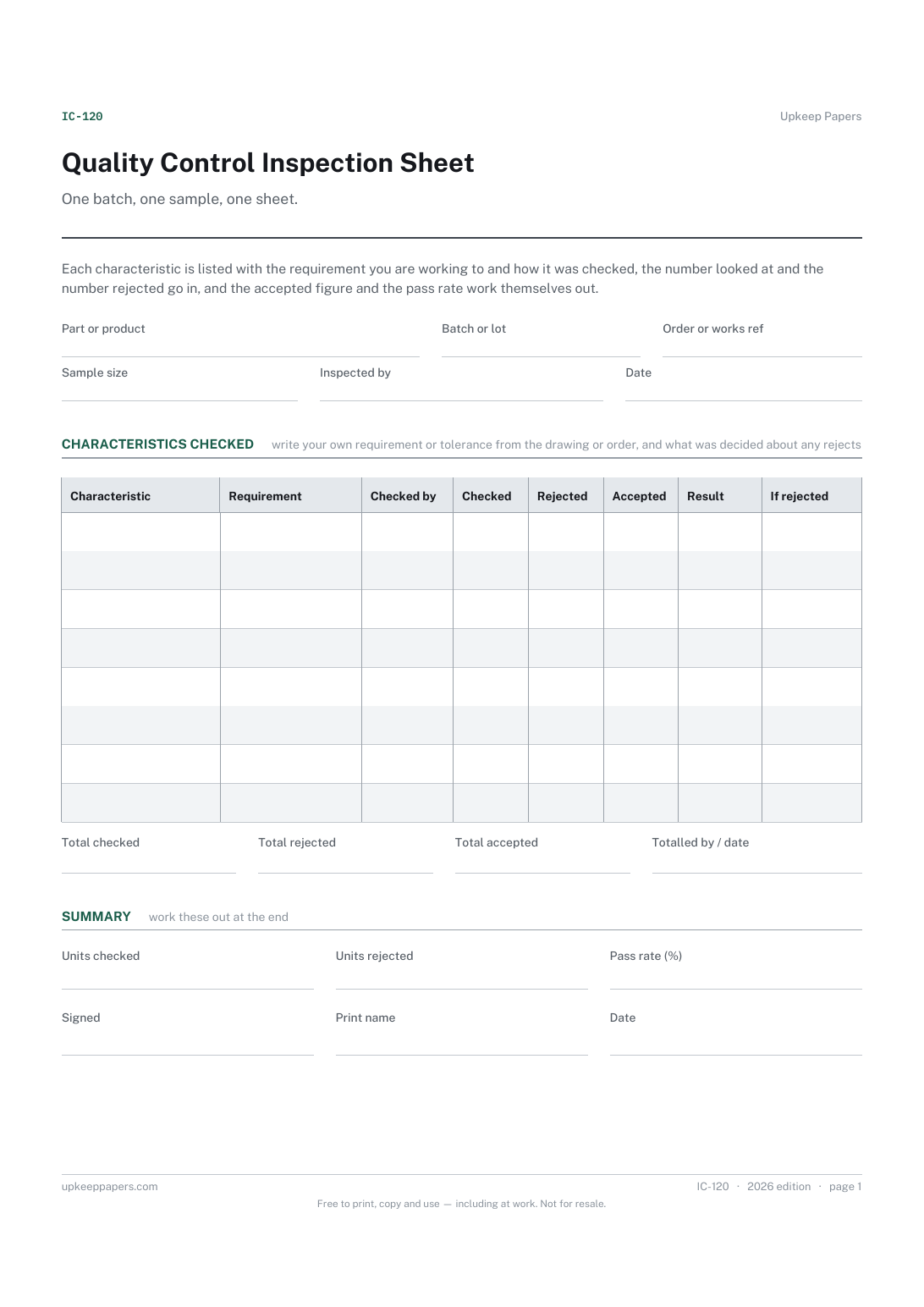
Which batch or lot was inspected, against which drawing or specification.
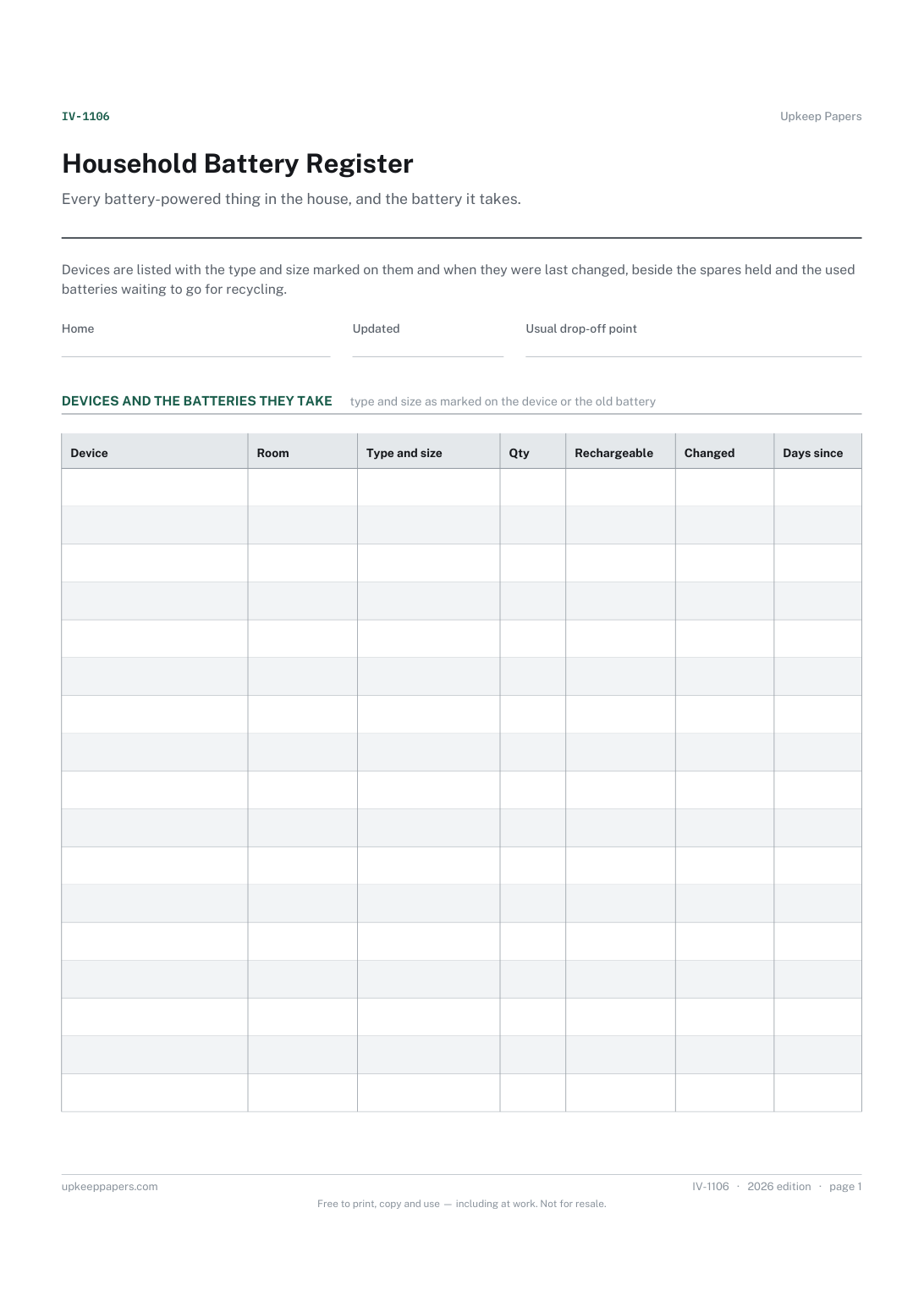
Each device, where it is and the battery type and size it takes.
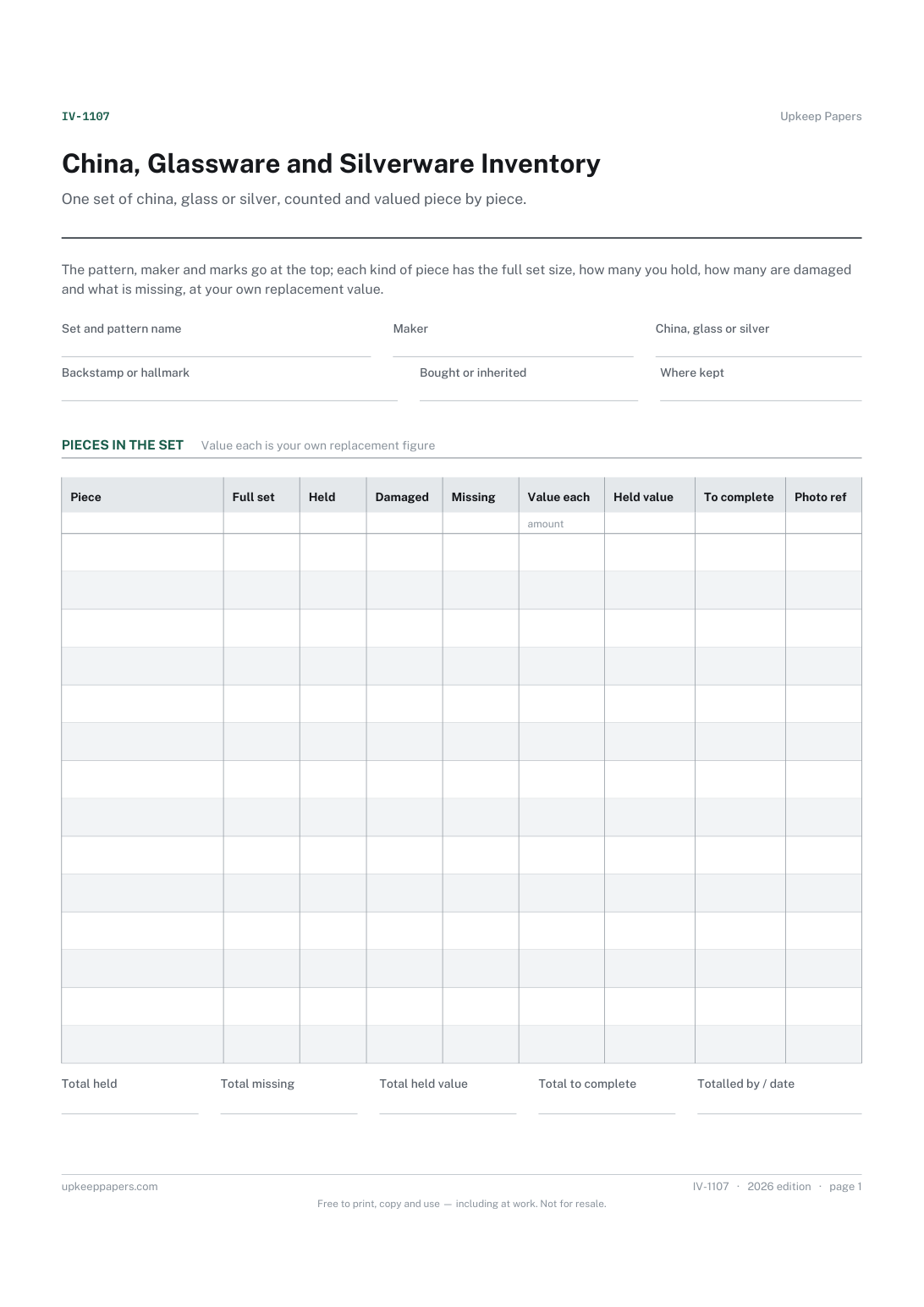
The pattern name, maker and backstamp or hallmark for each set.
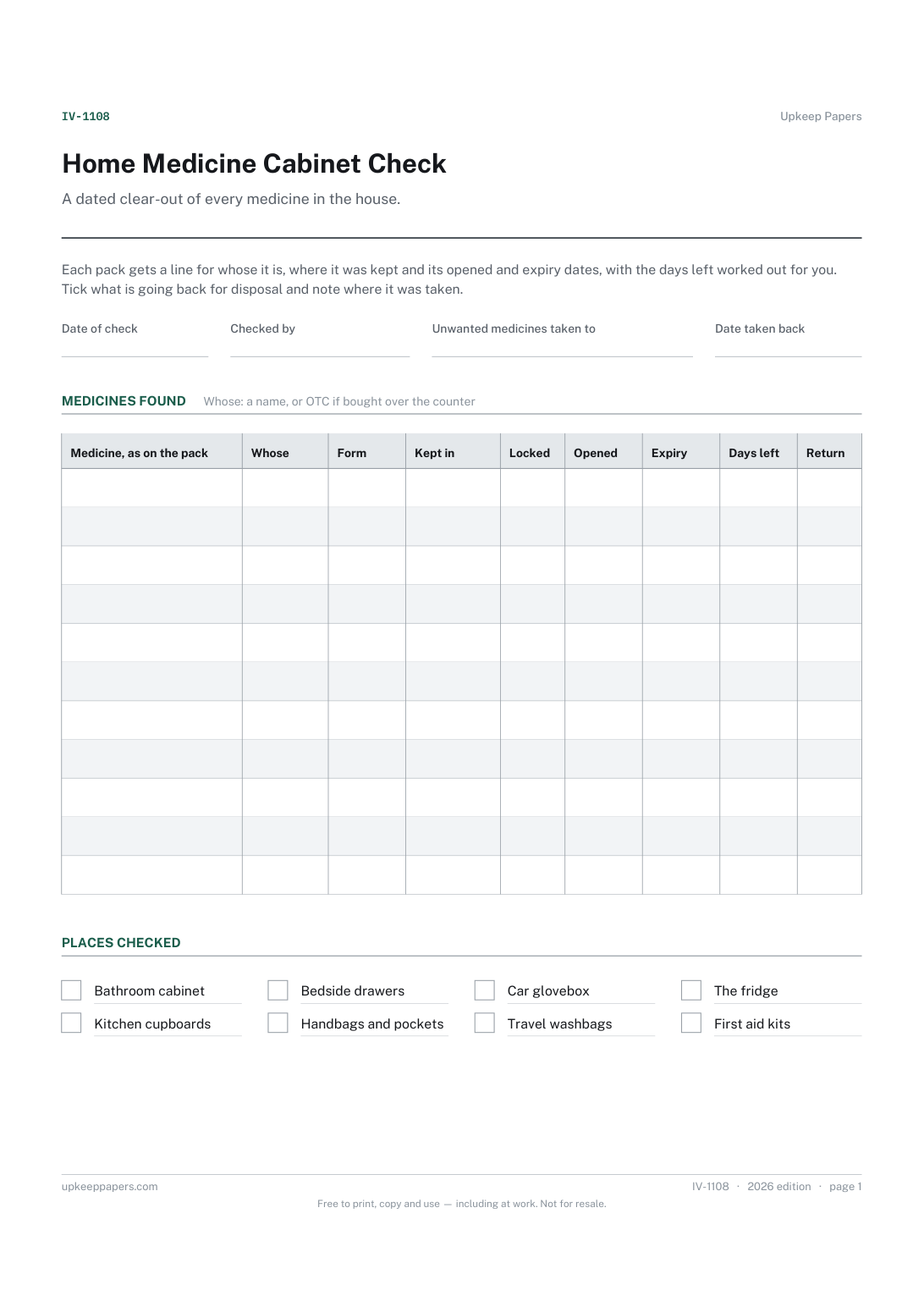
Every medicine in the house, wherever it has ended up.
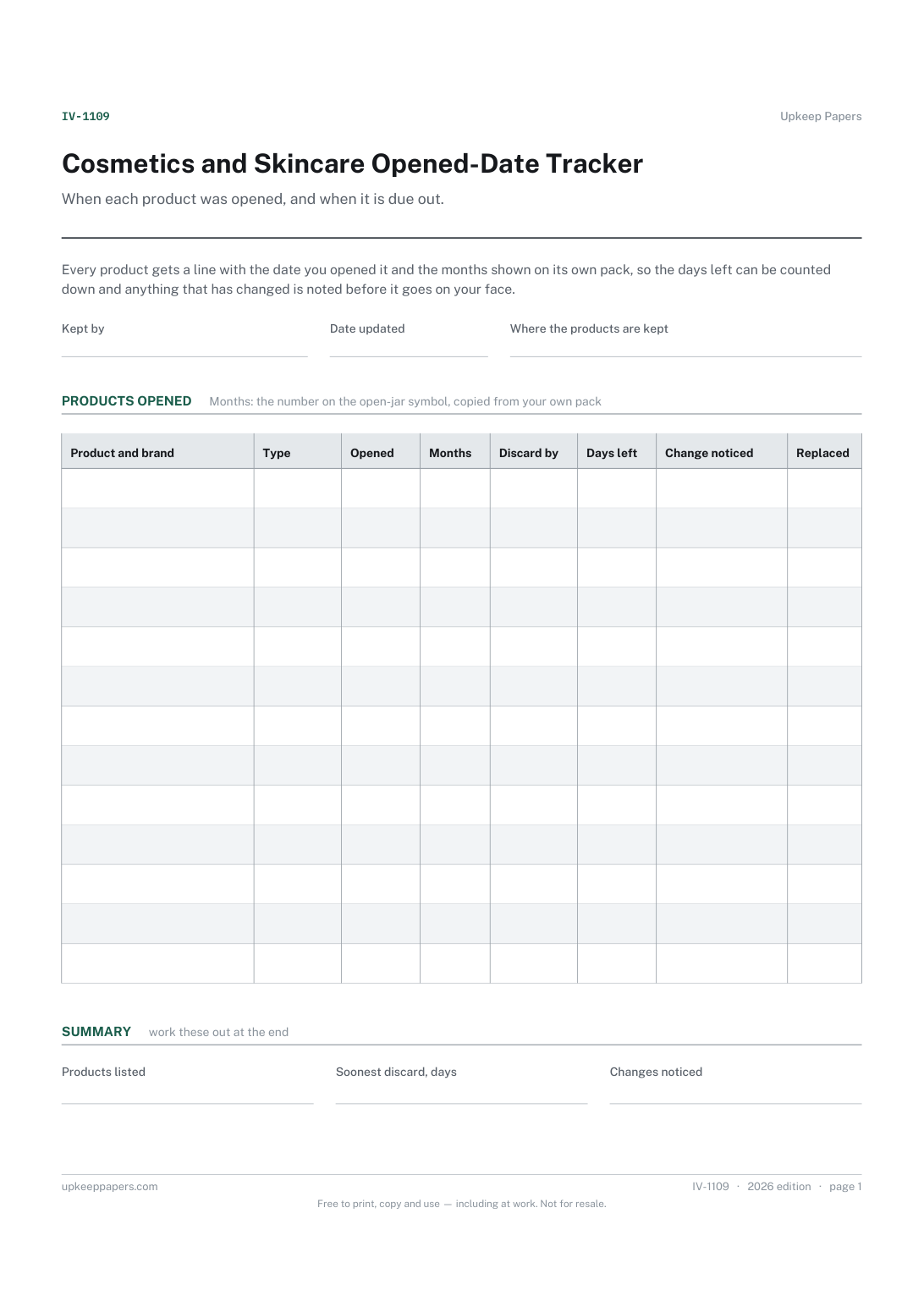
Every product, its brand and what kind it is.
What furniture and equipment the office holds, and which room each item is in.
Which machines exist, what they are and where their serial numbers are written down.
What was on the shelf at the start of the period and what is there at the end.
What is held in the dry store, the fridges, the walk-in and the freezer.
What consumables are held, in which cupboard or room.
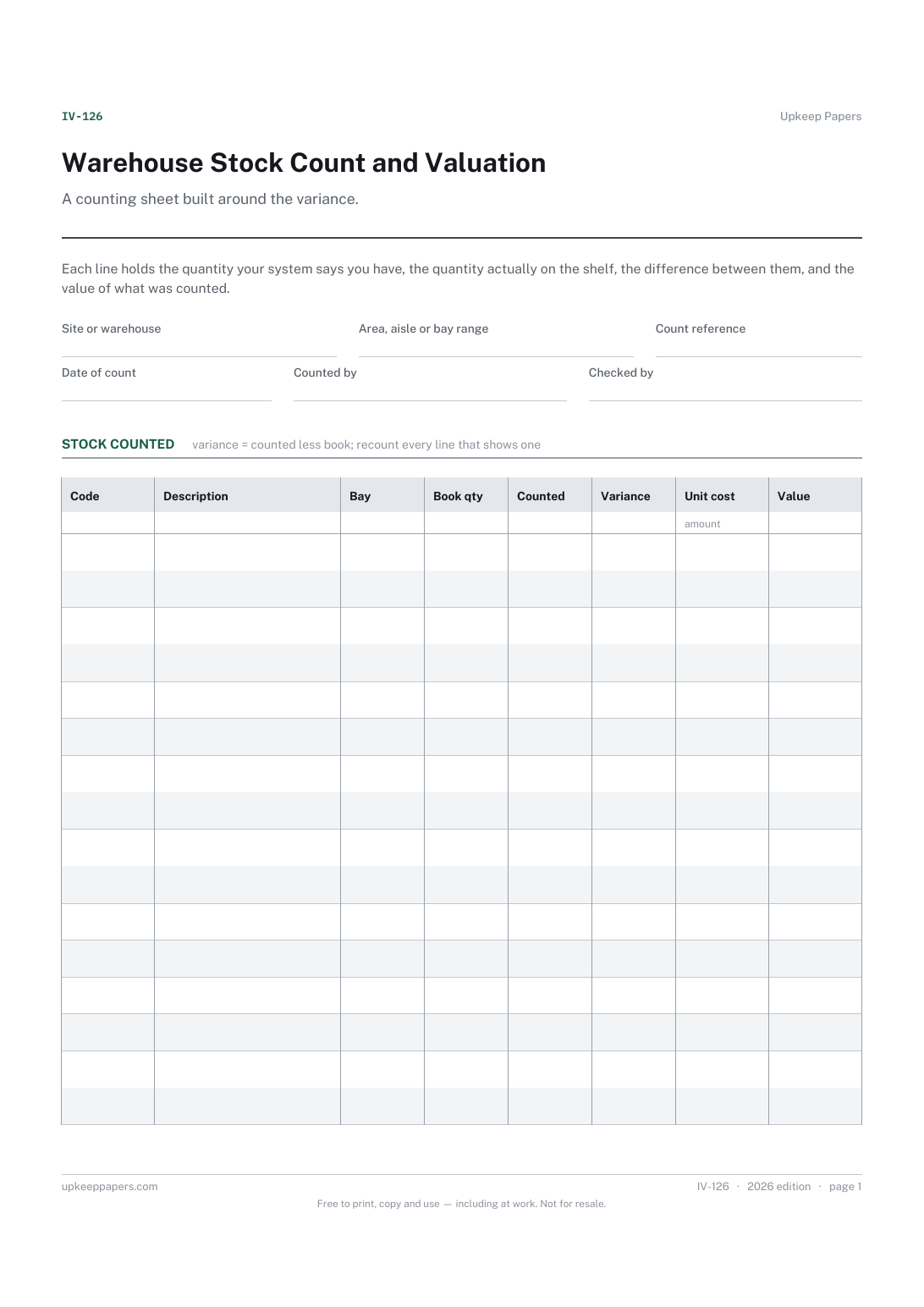
What is in each bay or location, by stock code and description.
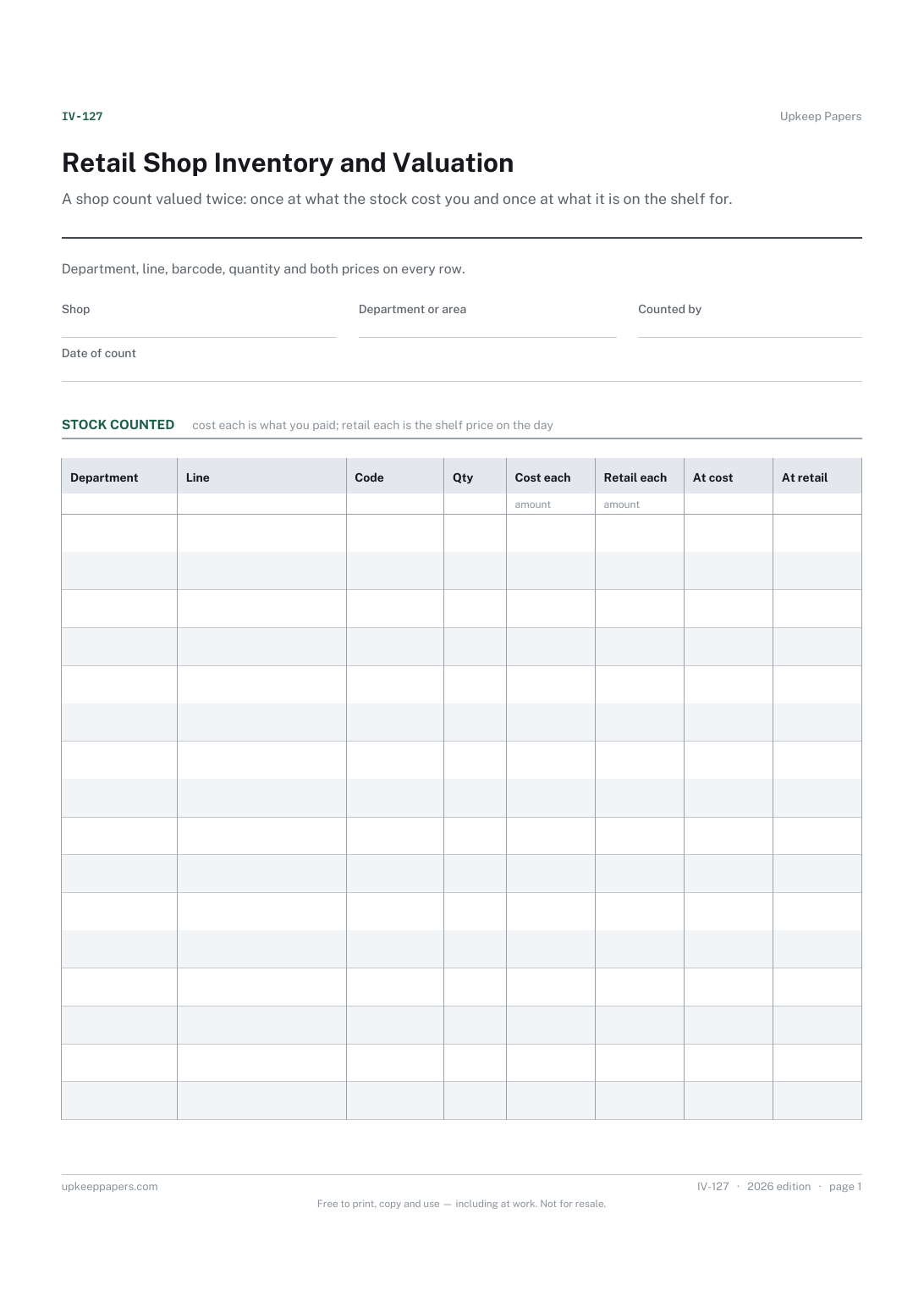
What is on the shop floor and in the stockroom, grouped by department.
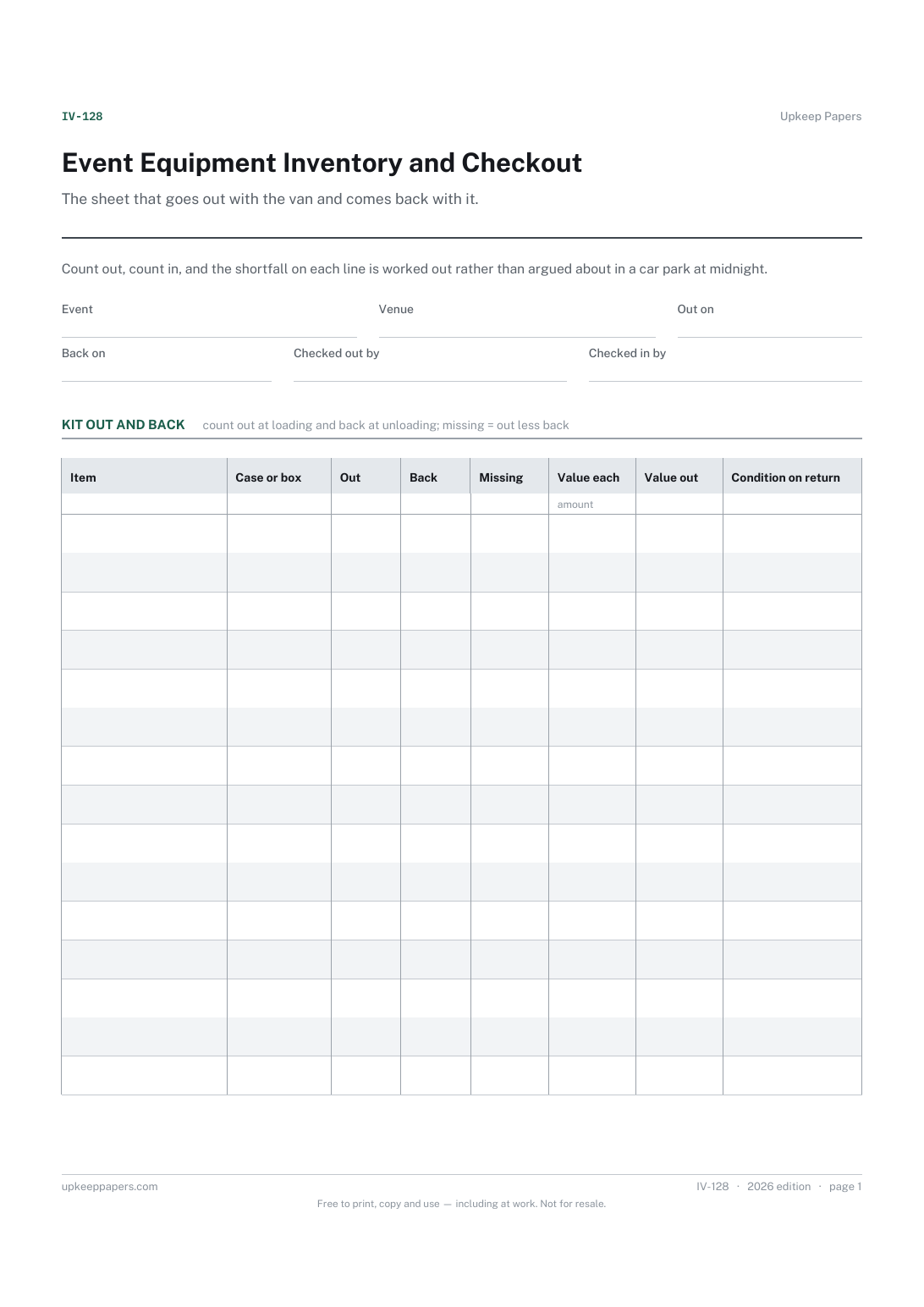
What was loaded for the event, and which case or box each item travelled in.
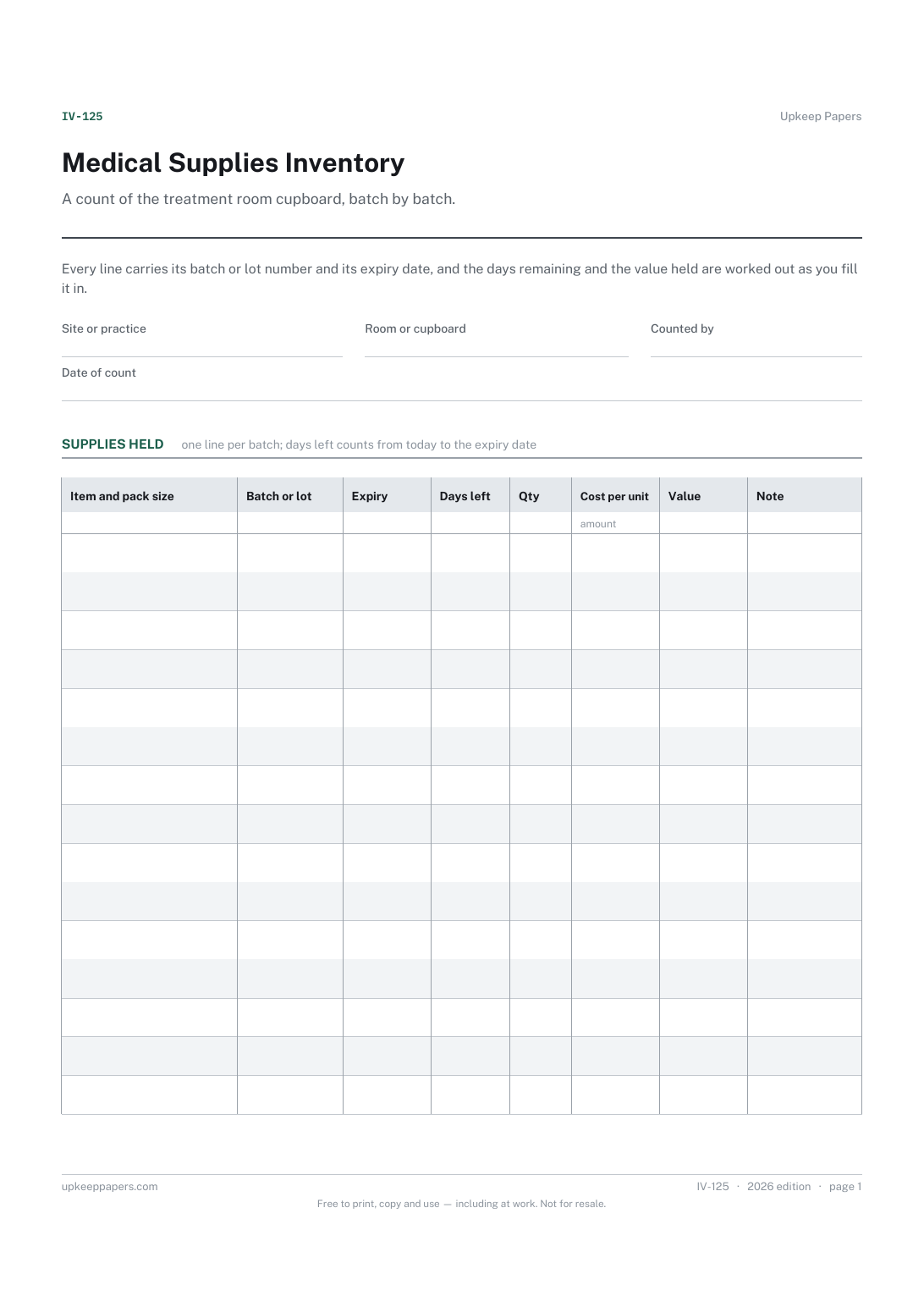
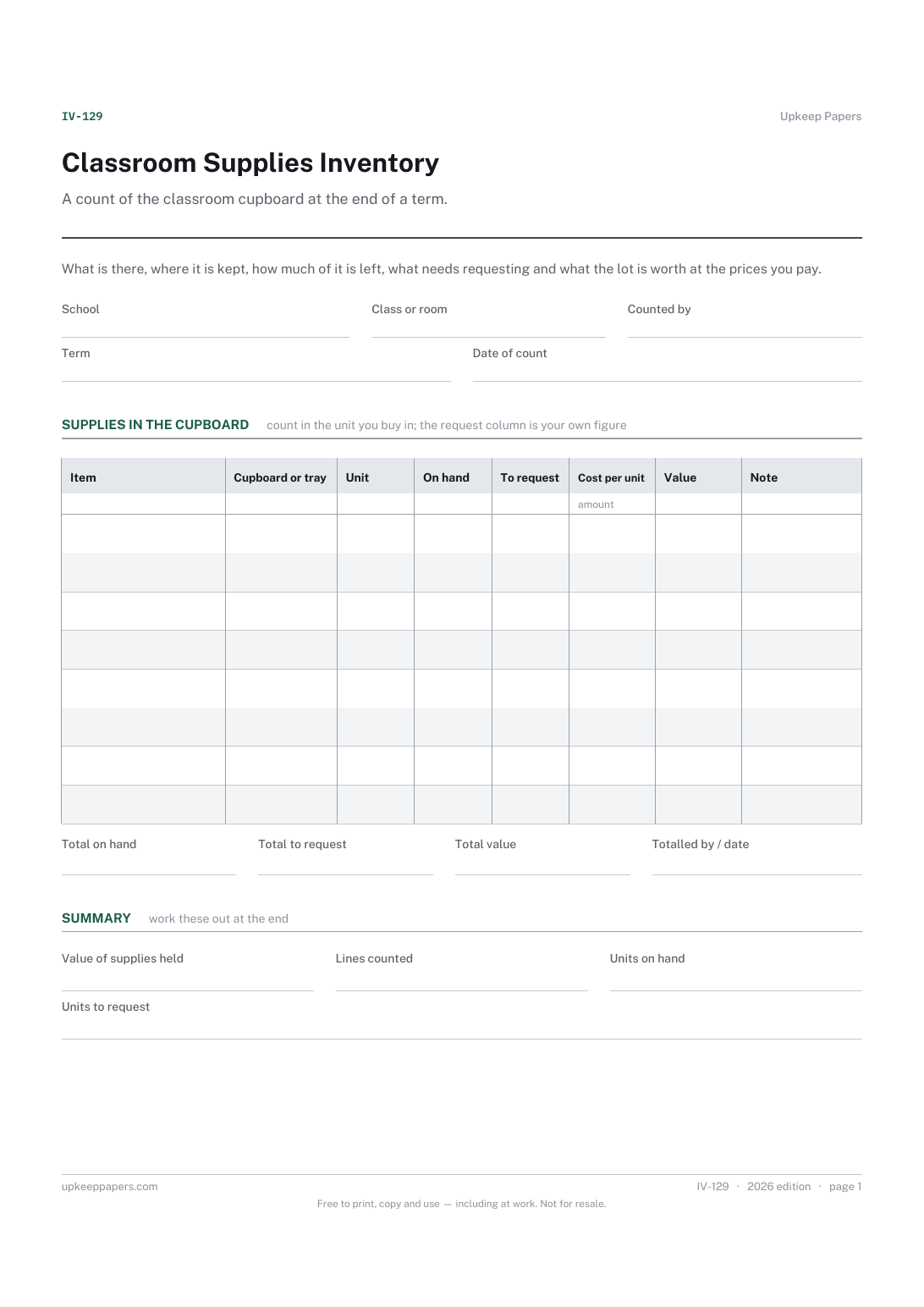
What is held in each cupboard, tray or store, and in what pack size.
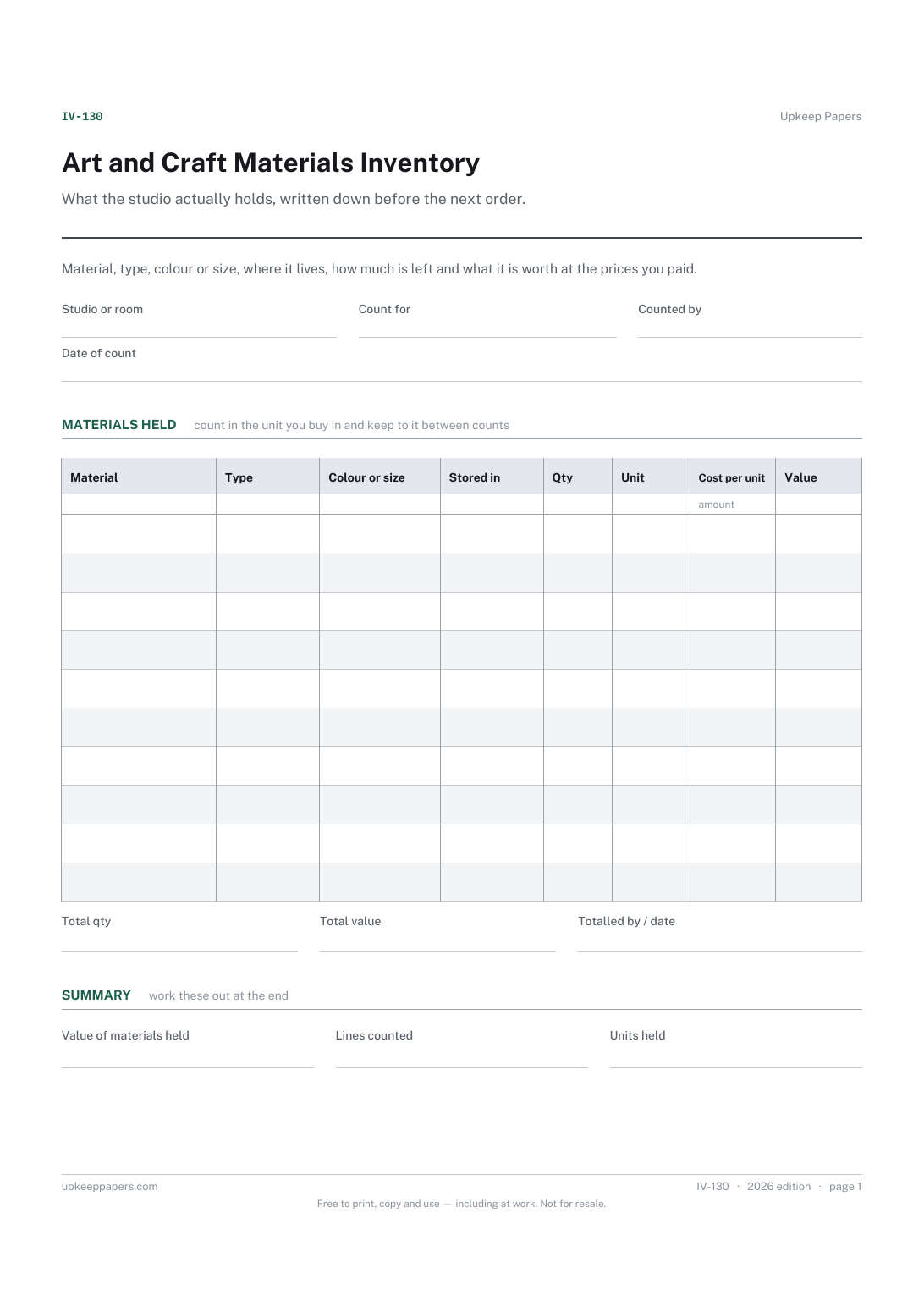
What materials are held, by type, colour or size and where they are stored.
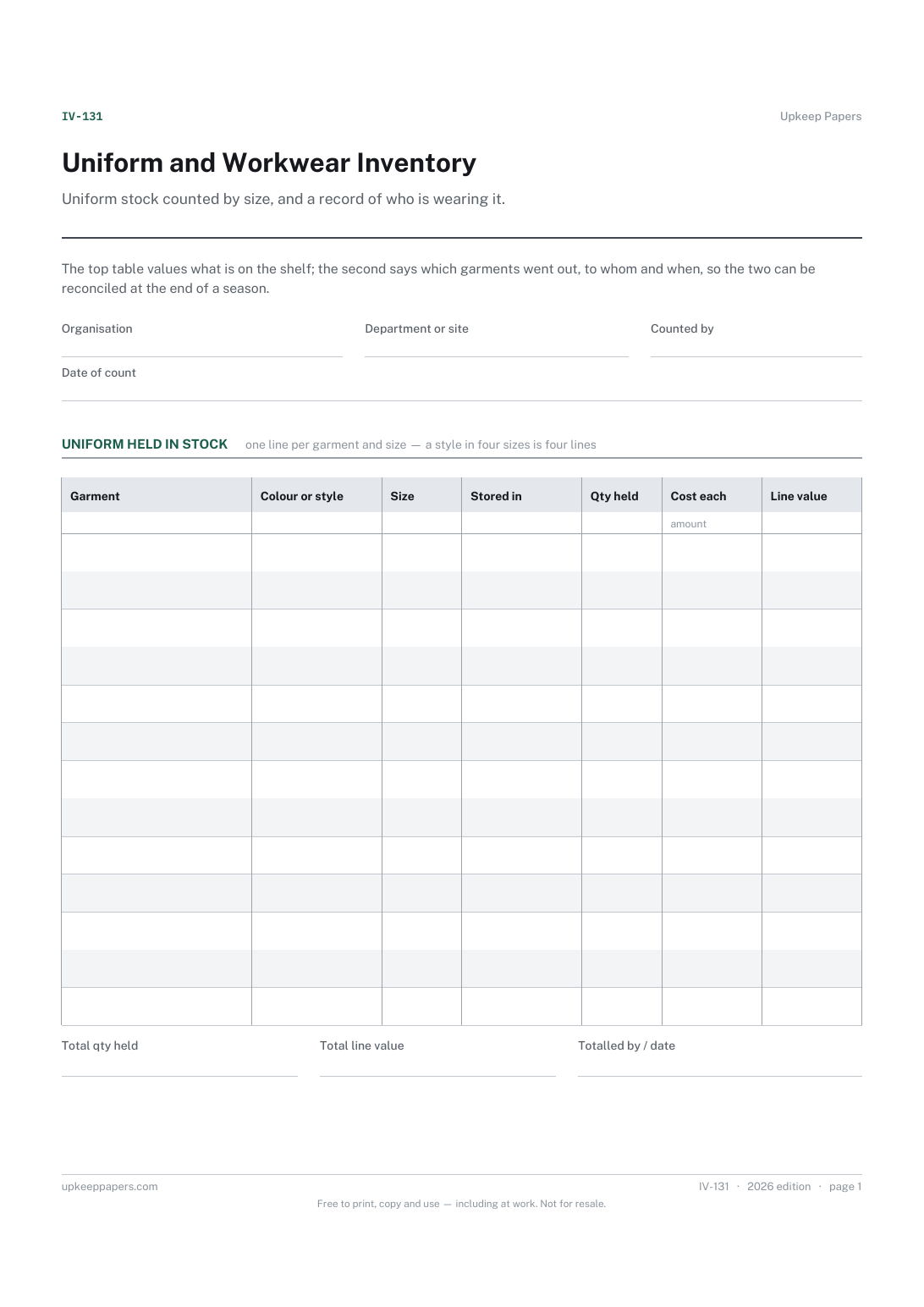
What uniform is held, in which sizes, and where it is stored.
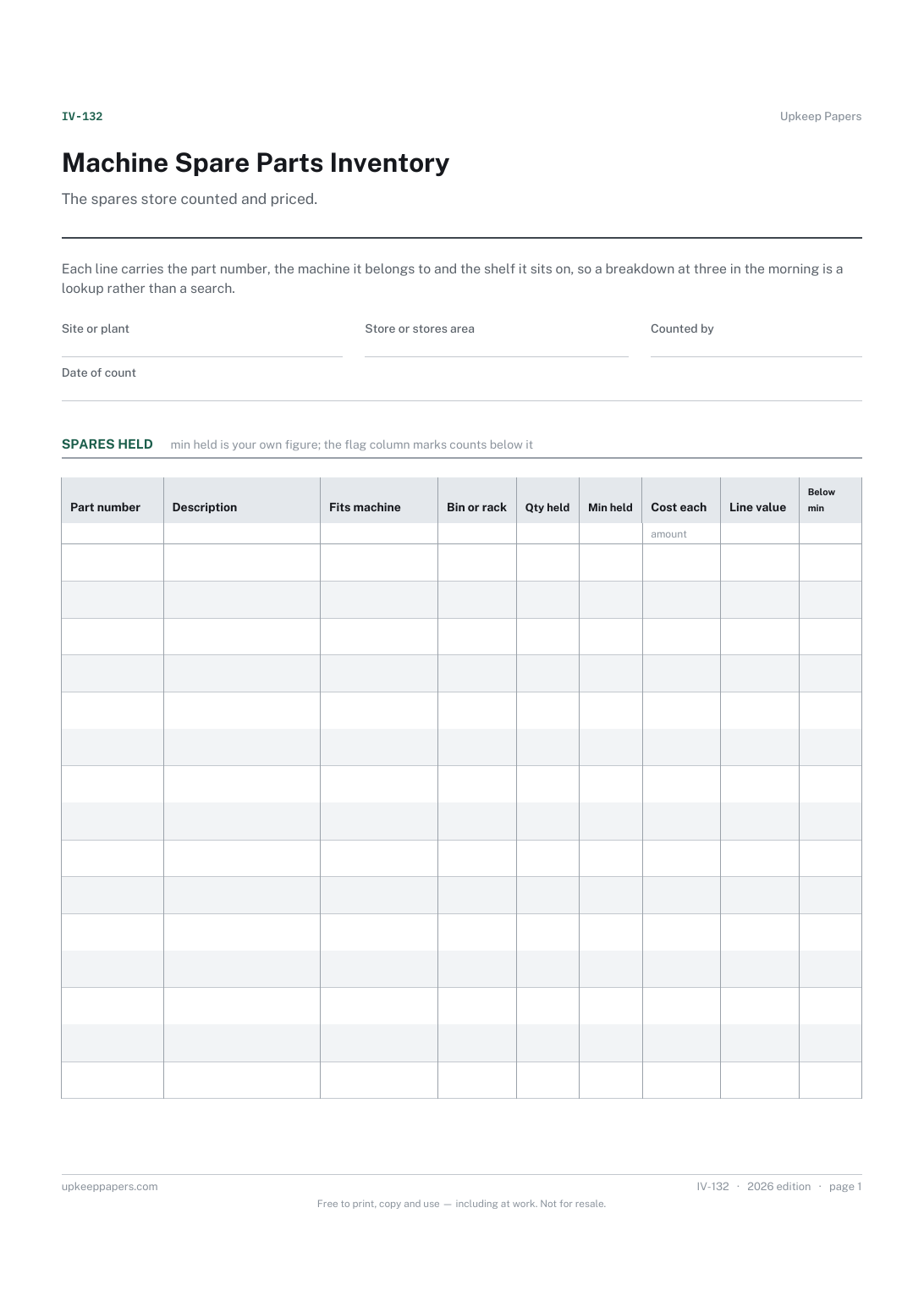
The part number, description and supplier reference for every spare held.
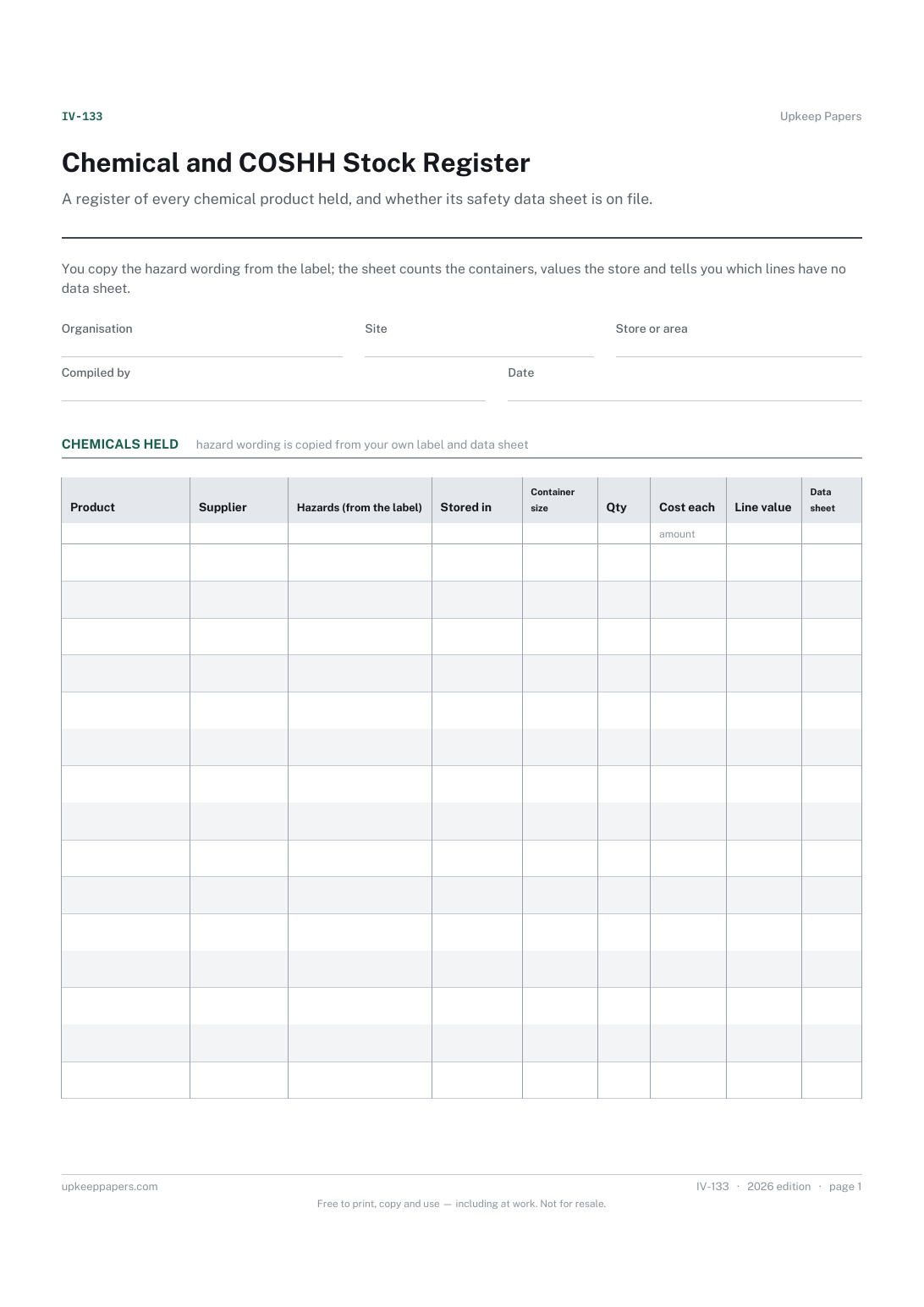
Every chemical product held, with the supplier and the container size.
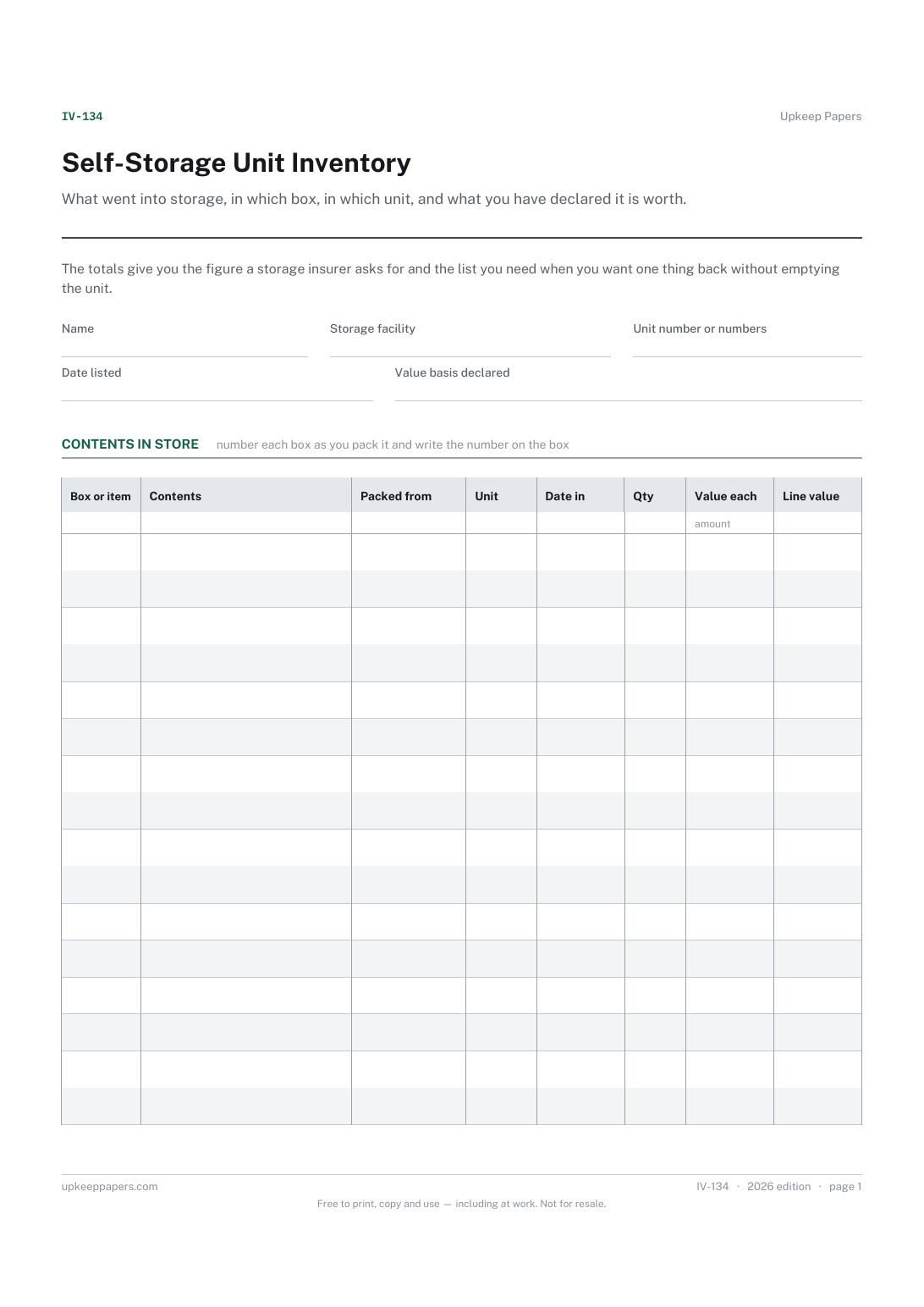
What is in each numbered box or on each pallet, in enough detail to find it again.
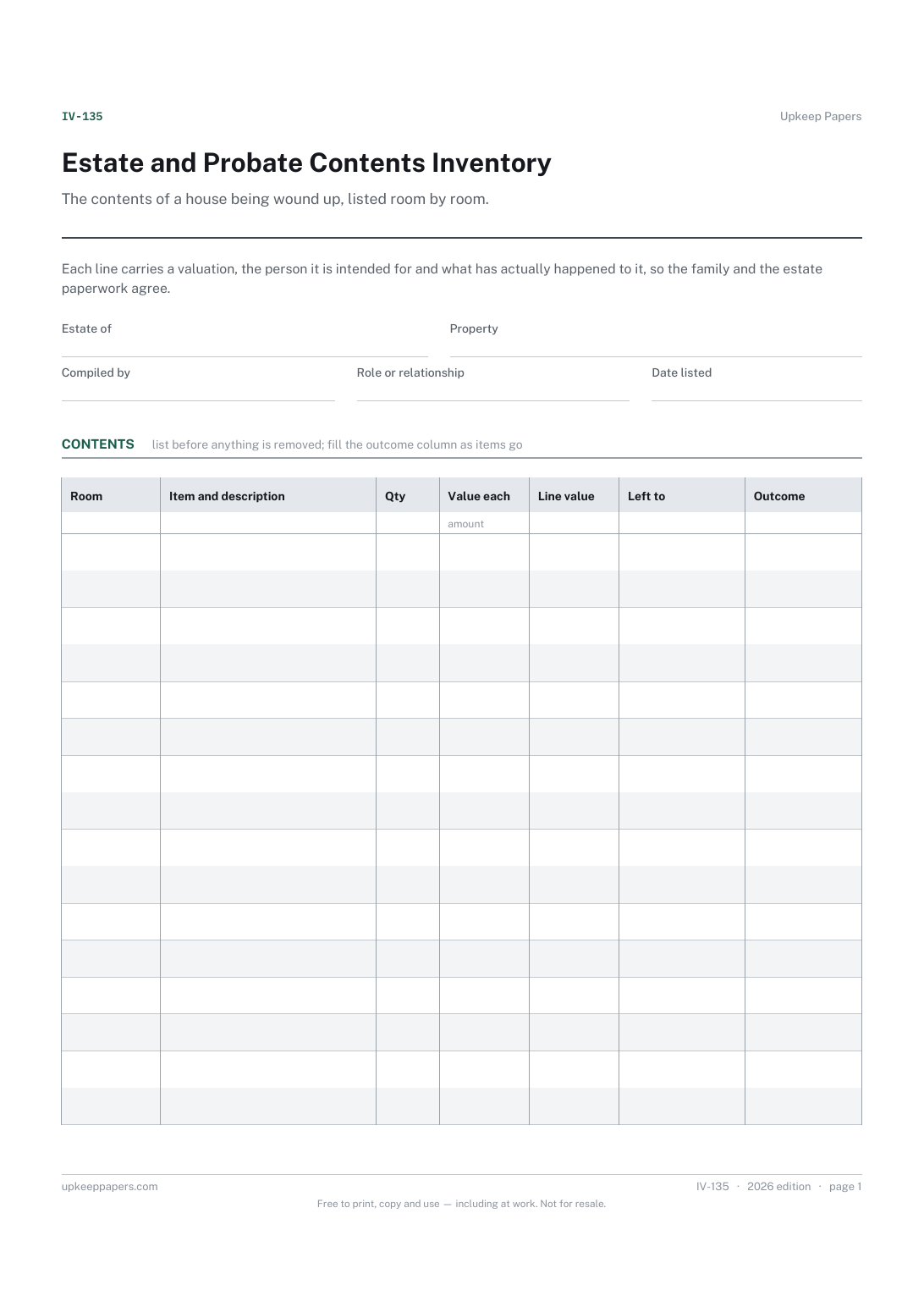
Everything in the property, listed by room, so nothing is discovered late.
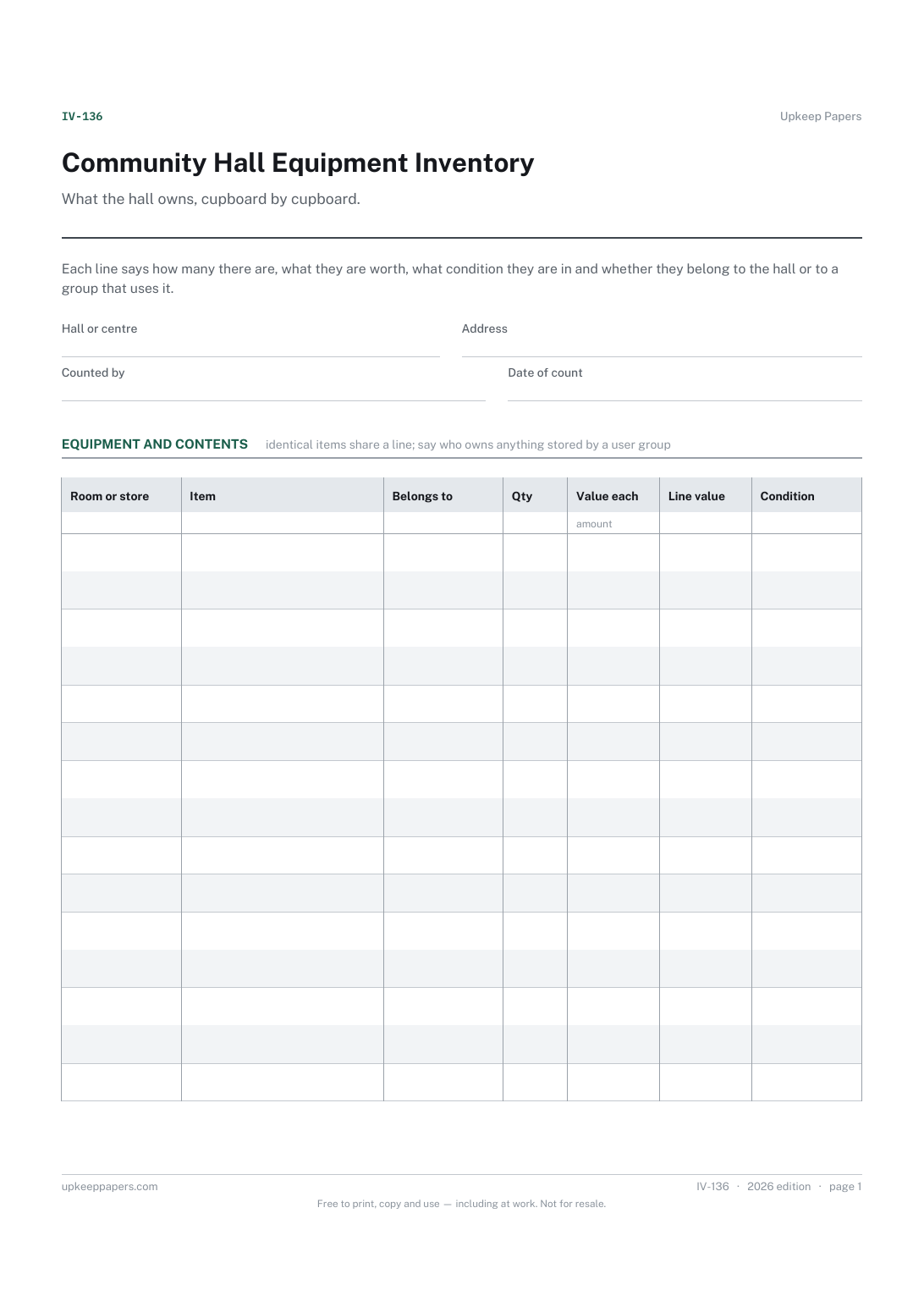
What the hall holds, from stacking chairs to urns, and which store it lives in.
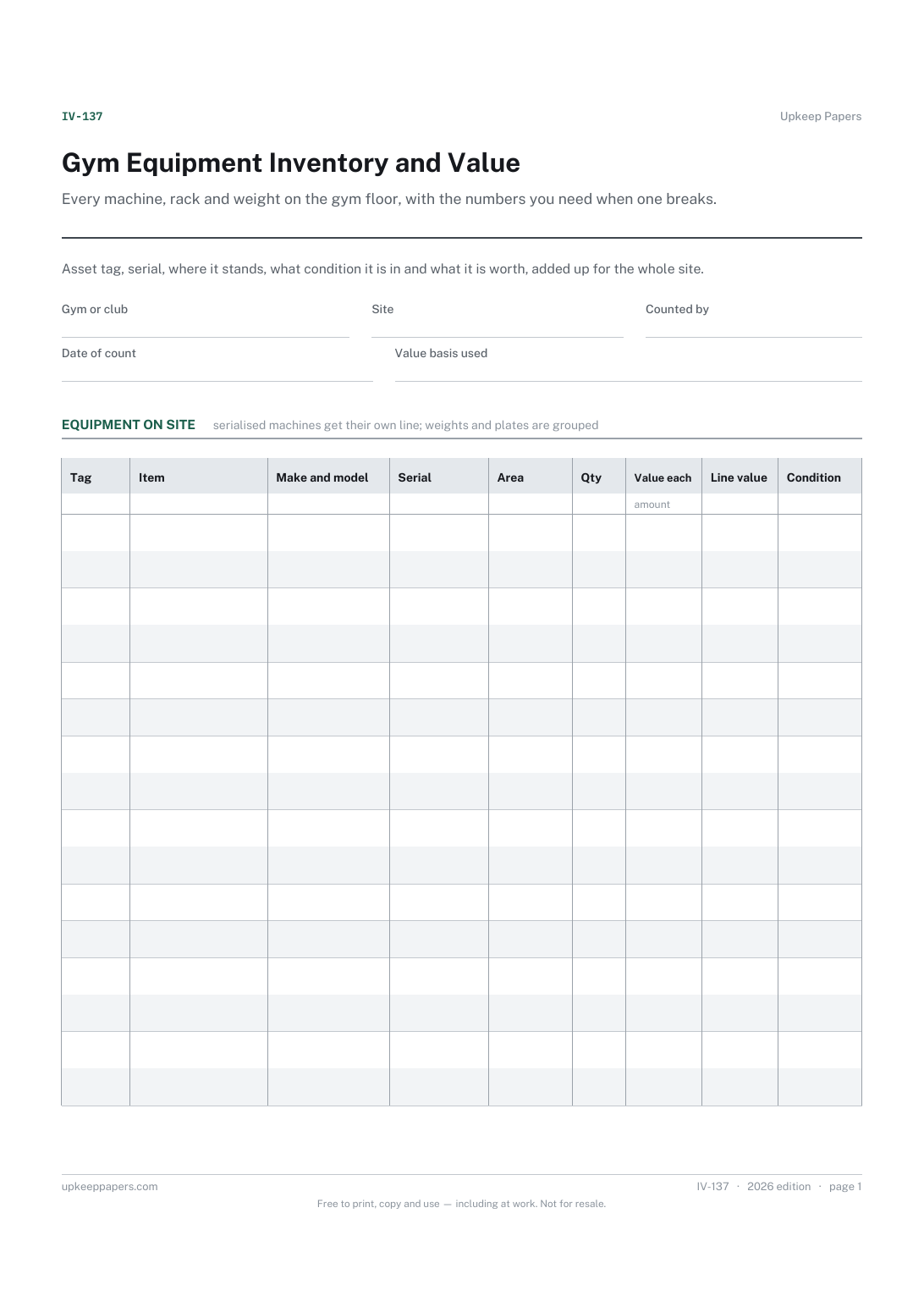
Every item of equipment with its asset tag and serial number.
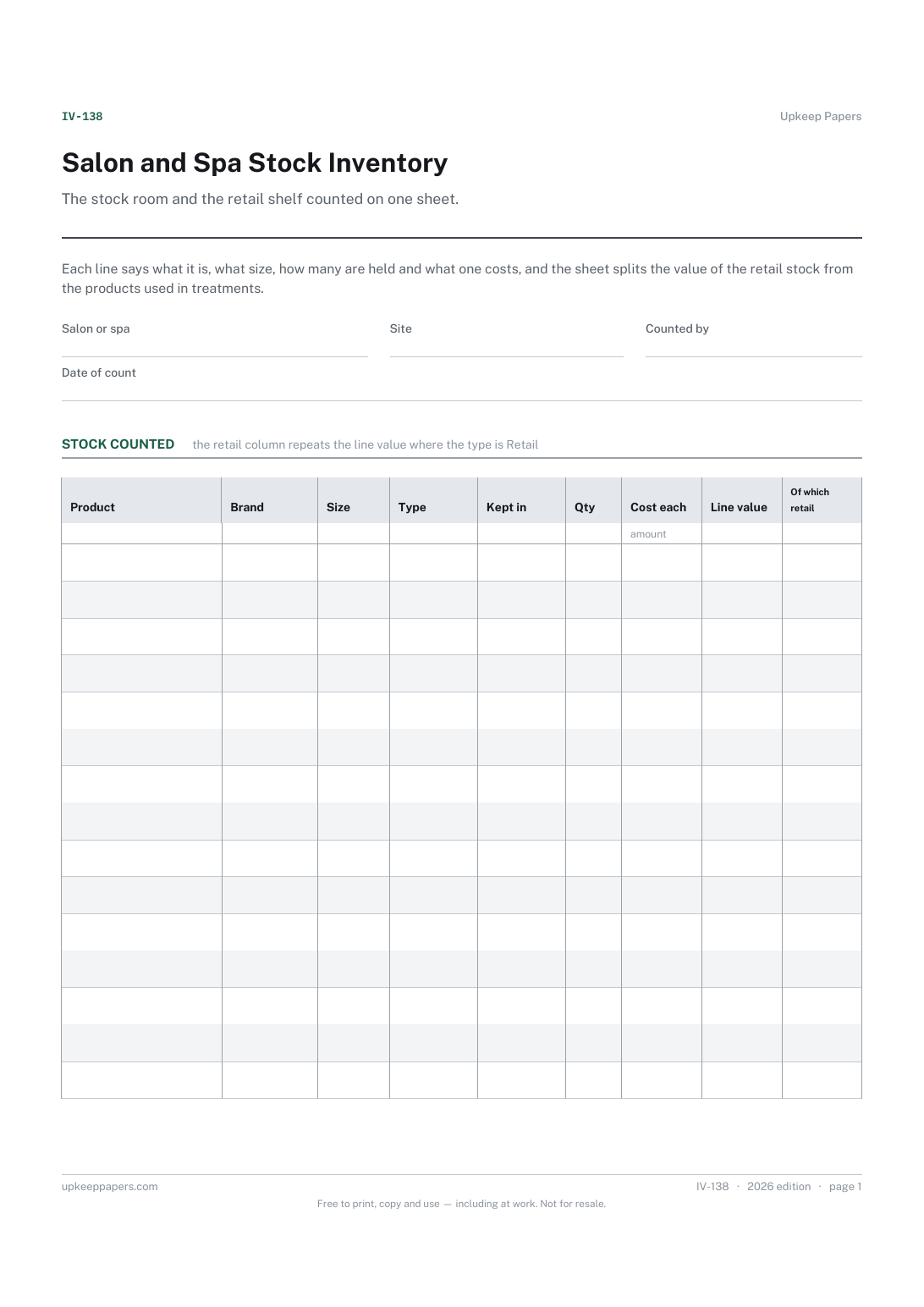
Every product held, by brand and size, and where it is kept.
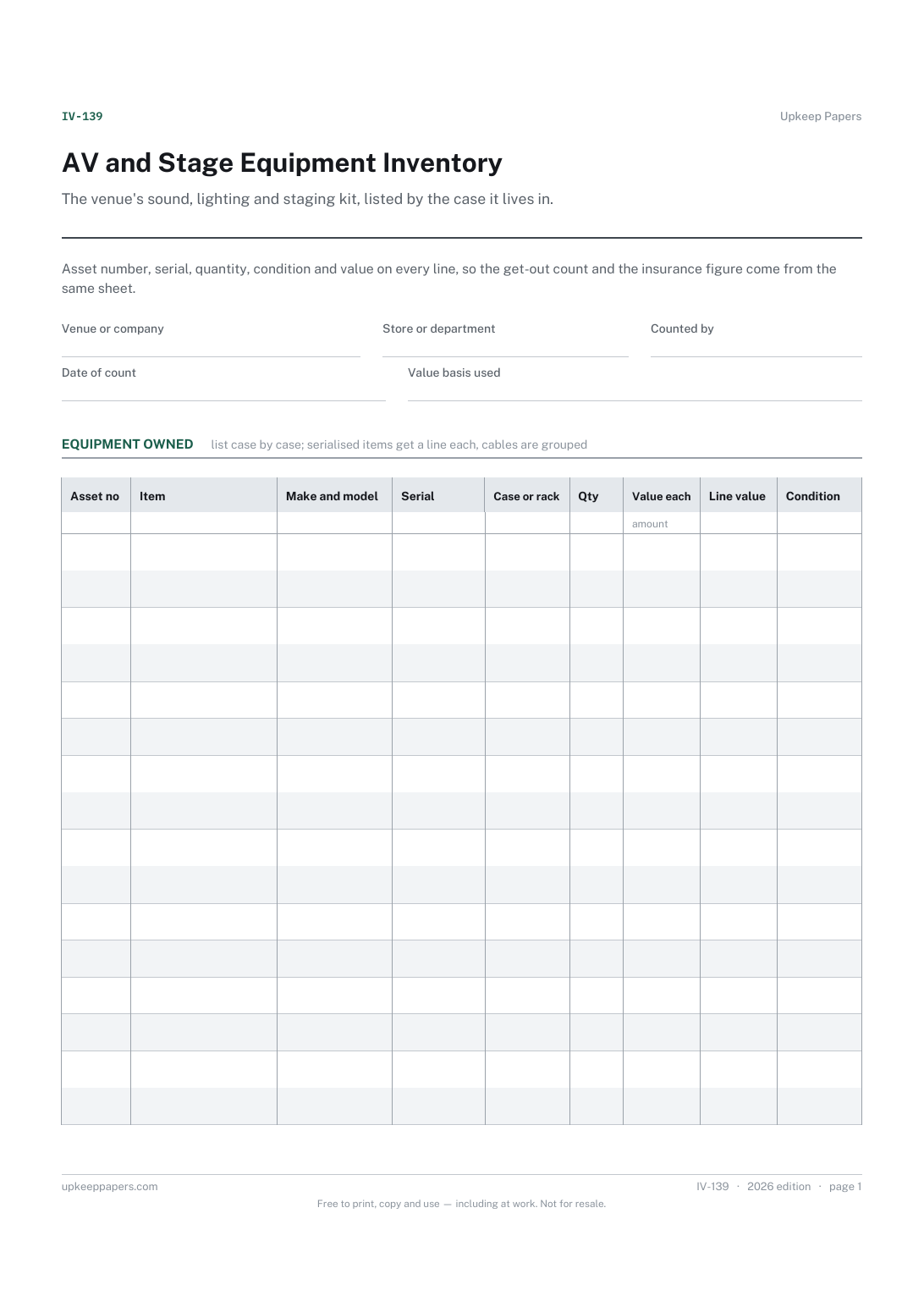
Every microphone, lantern, desk, speaker and stage part the venue owns.
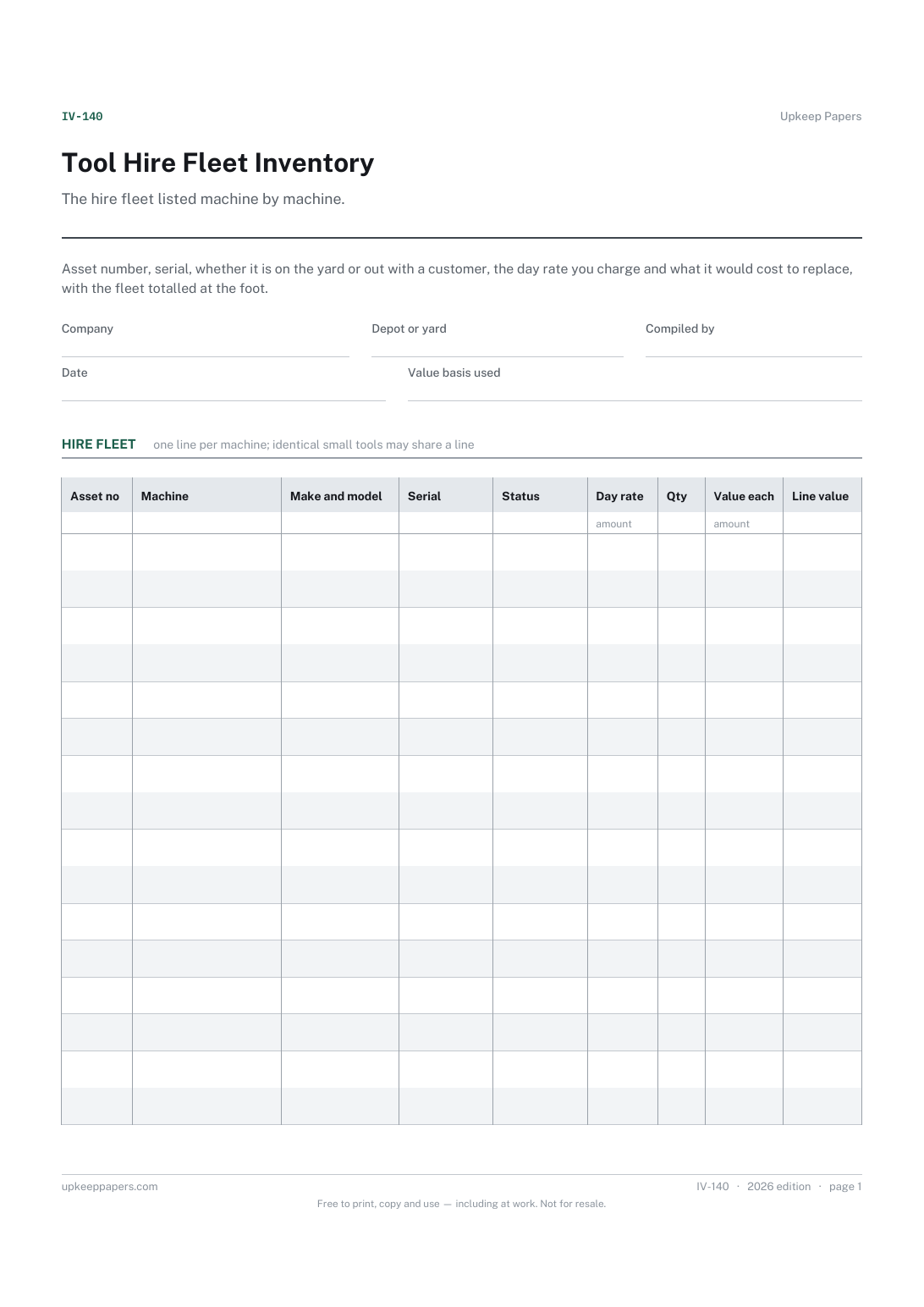
Every machine in the fleet with its asset number and serial number.
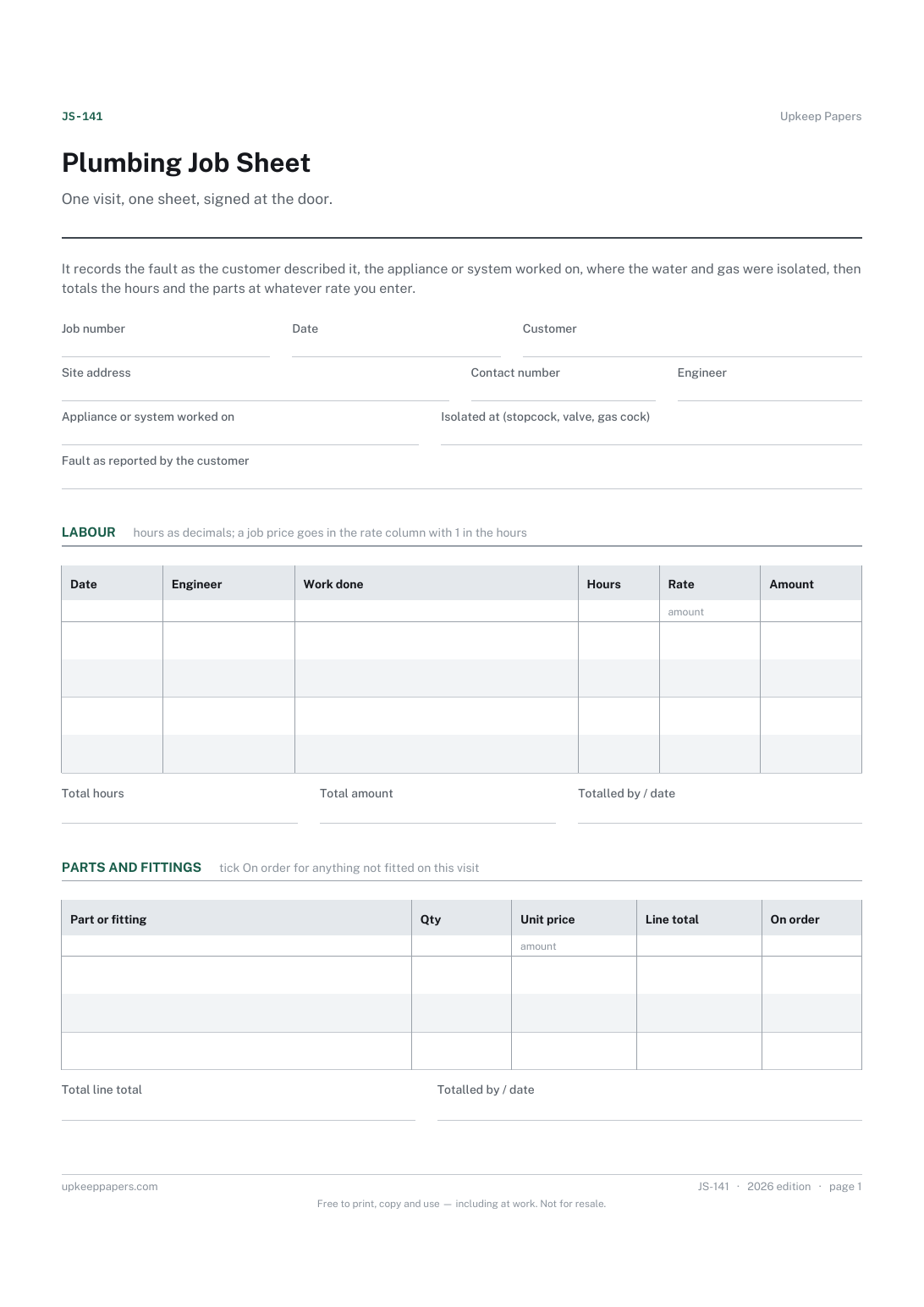
The fault as reported and the fault actually found, kept apart.
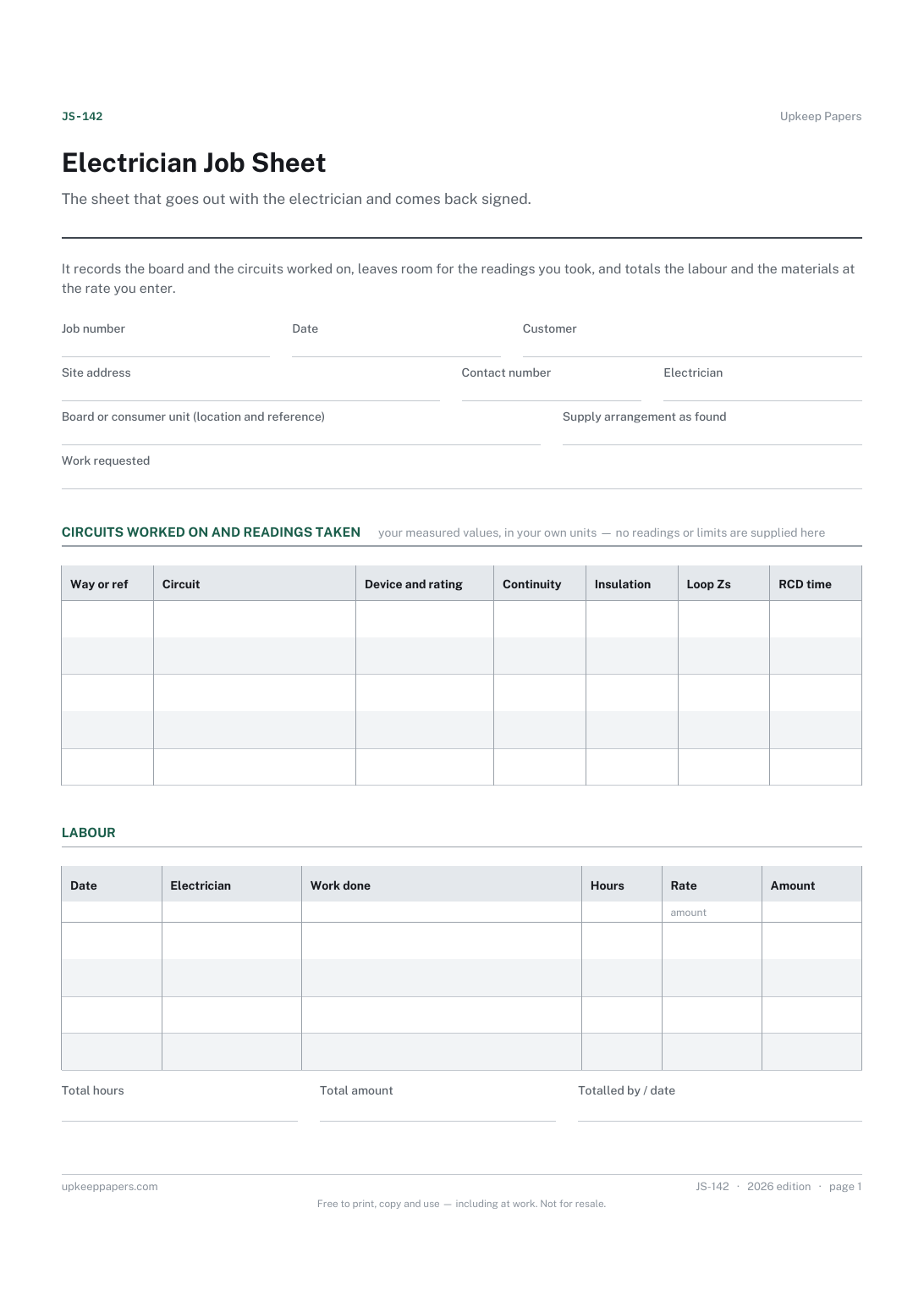
Which board, which way and which circuits were touched.
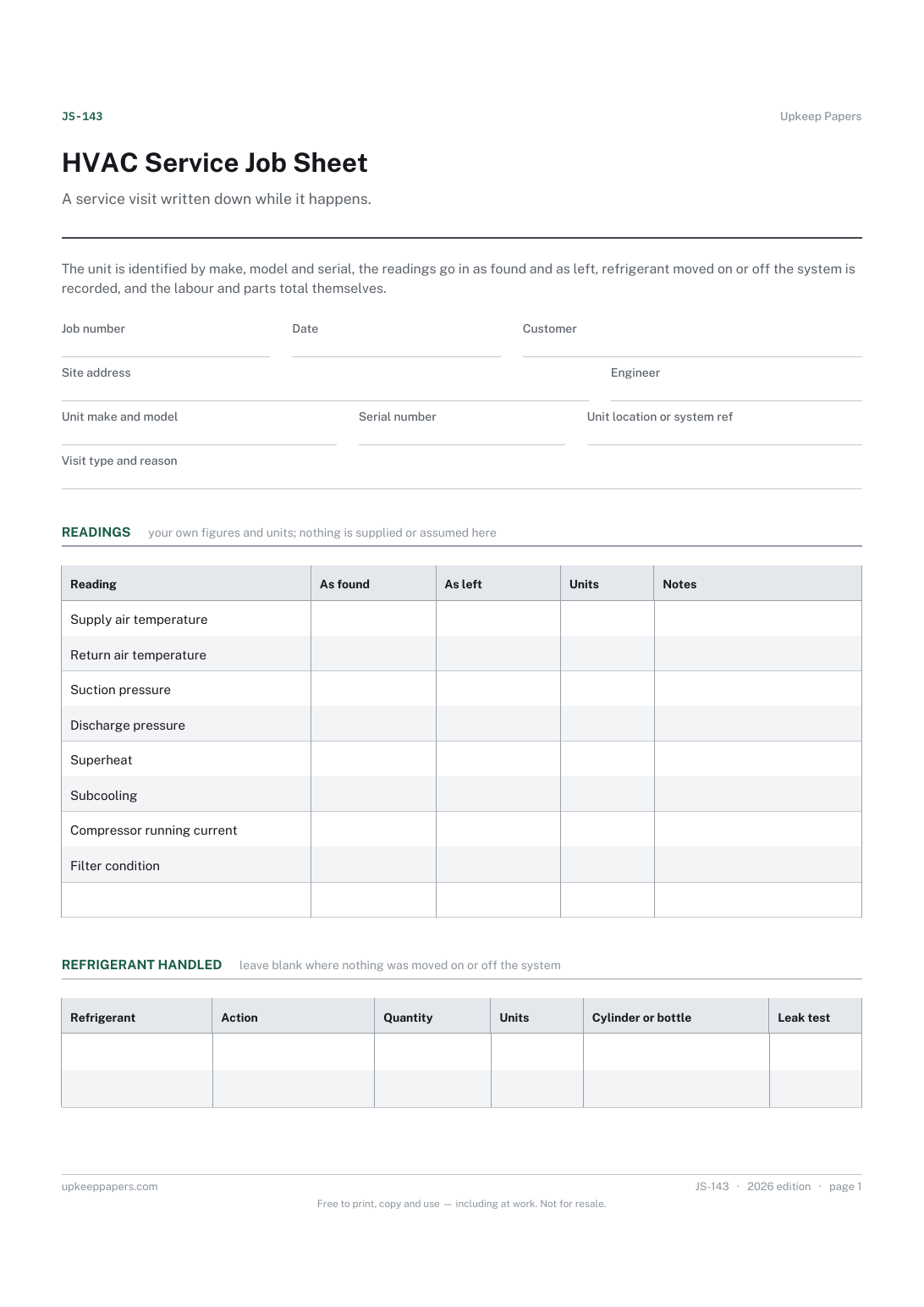
Which unit was serviced, by make, model, serial and location.
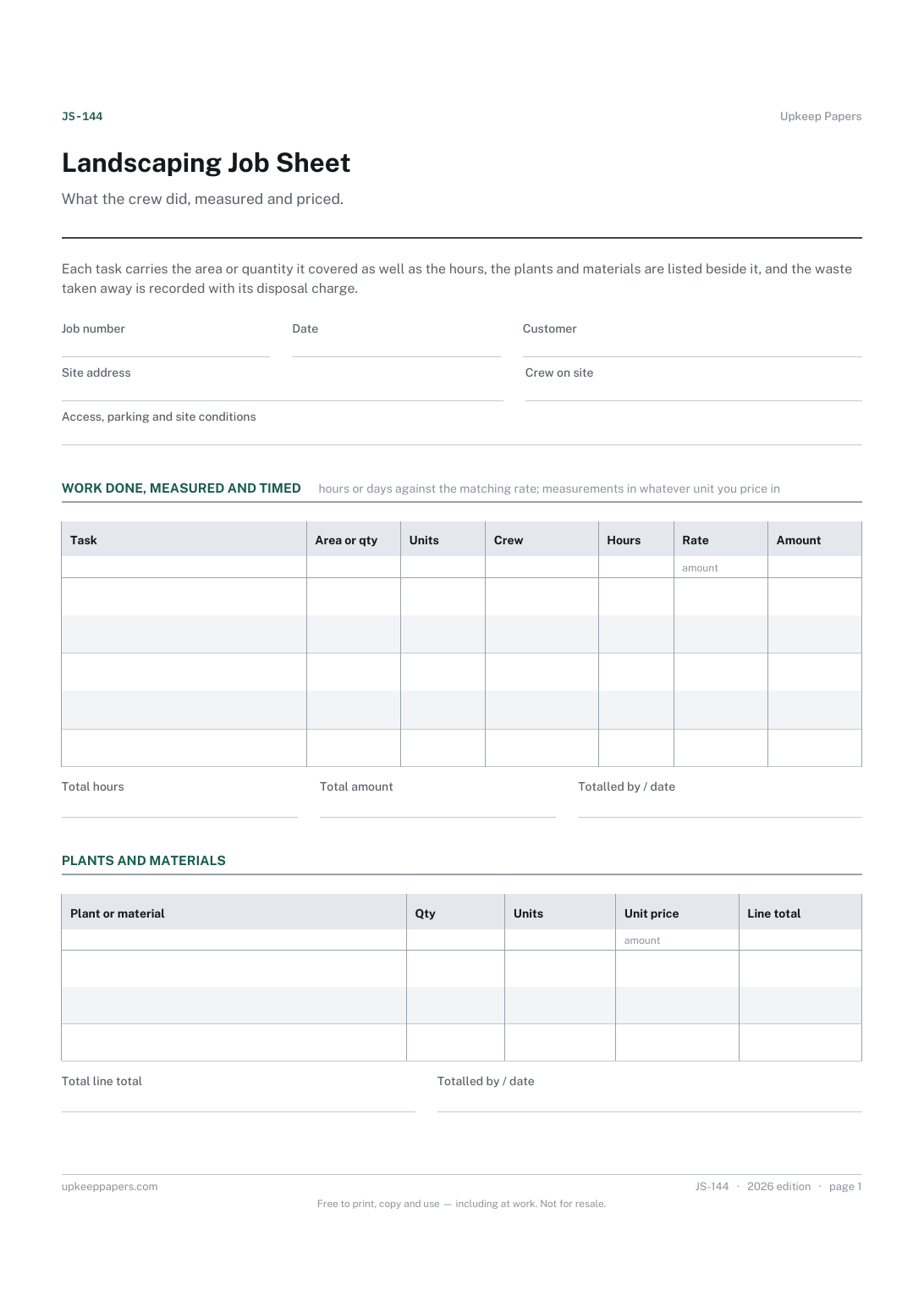
Areas and quantities actually done, not just what was quoted.
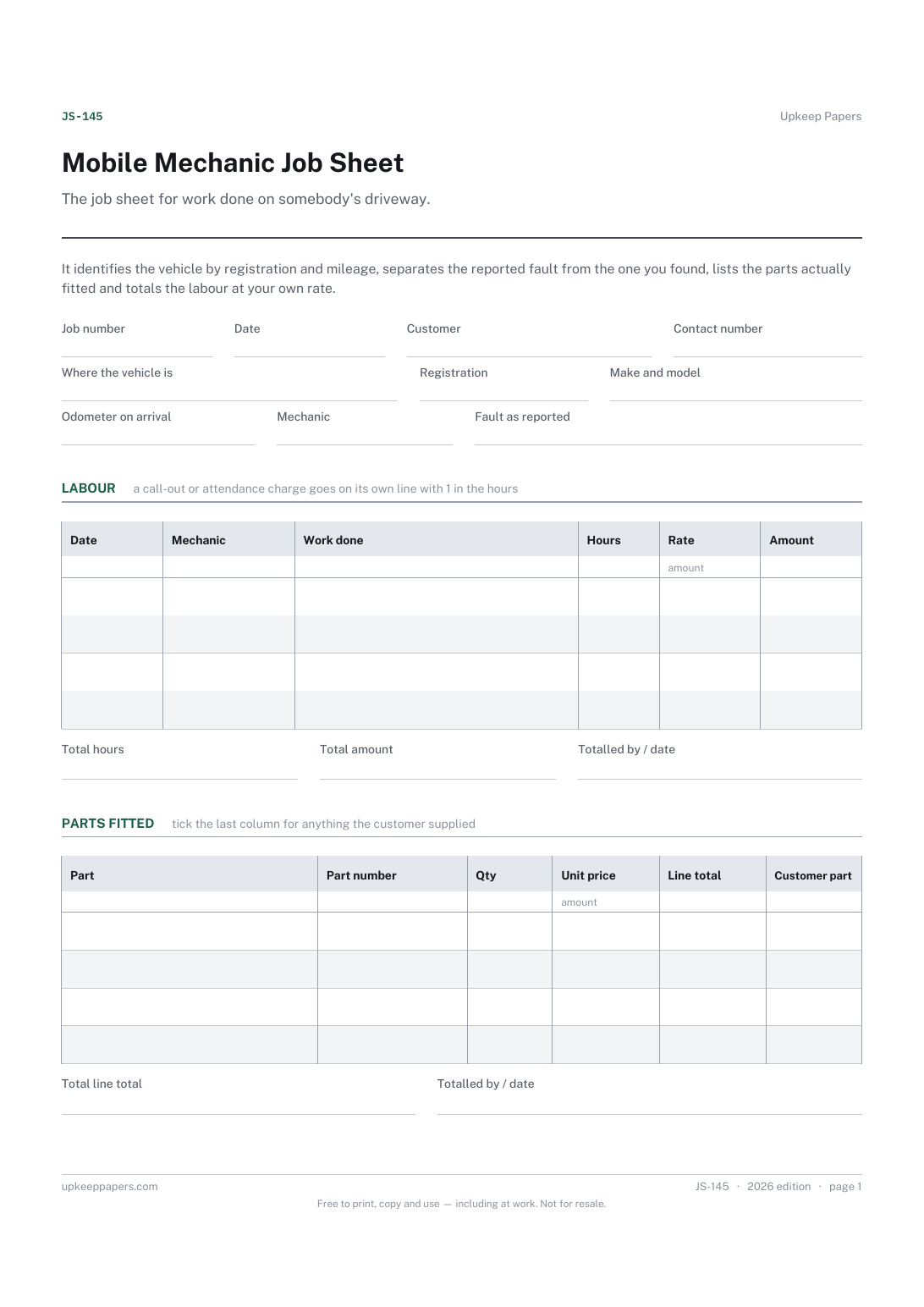
The vehicle by registration, make, model and the mileage on arrival.
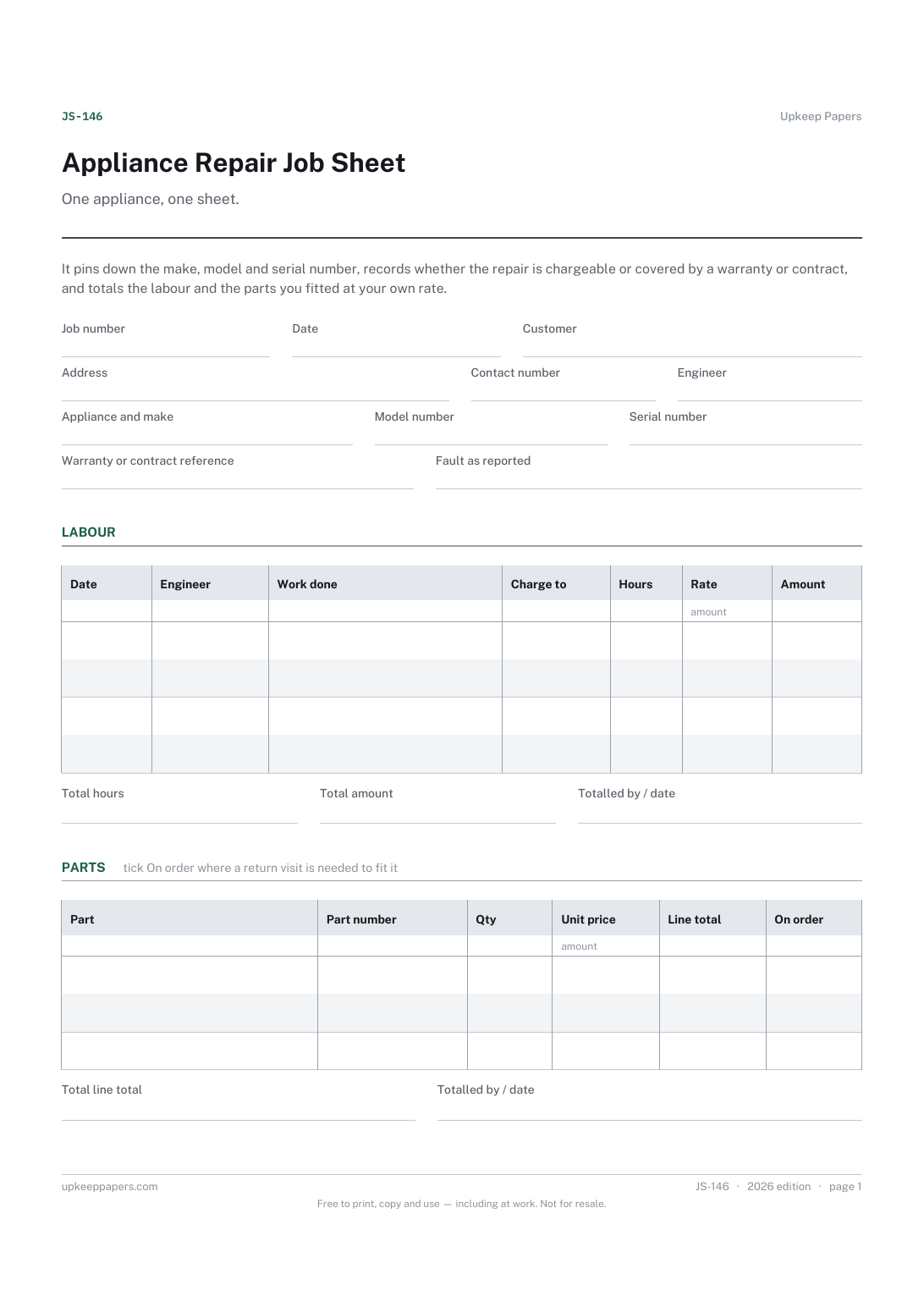
The appliance identified by make, model and serial number.
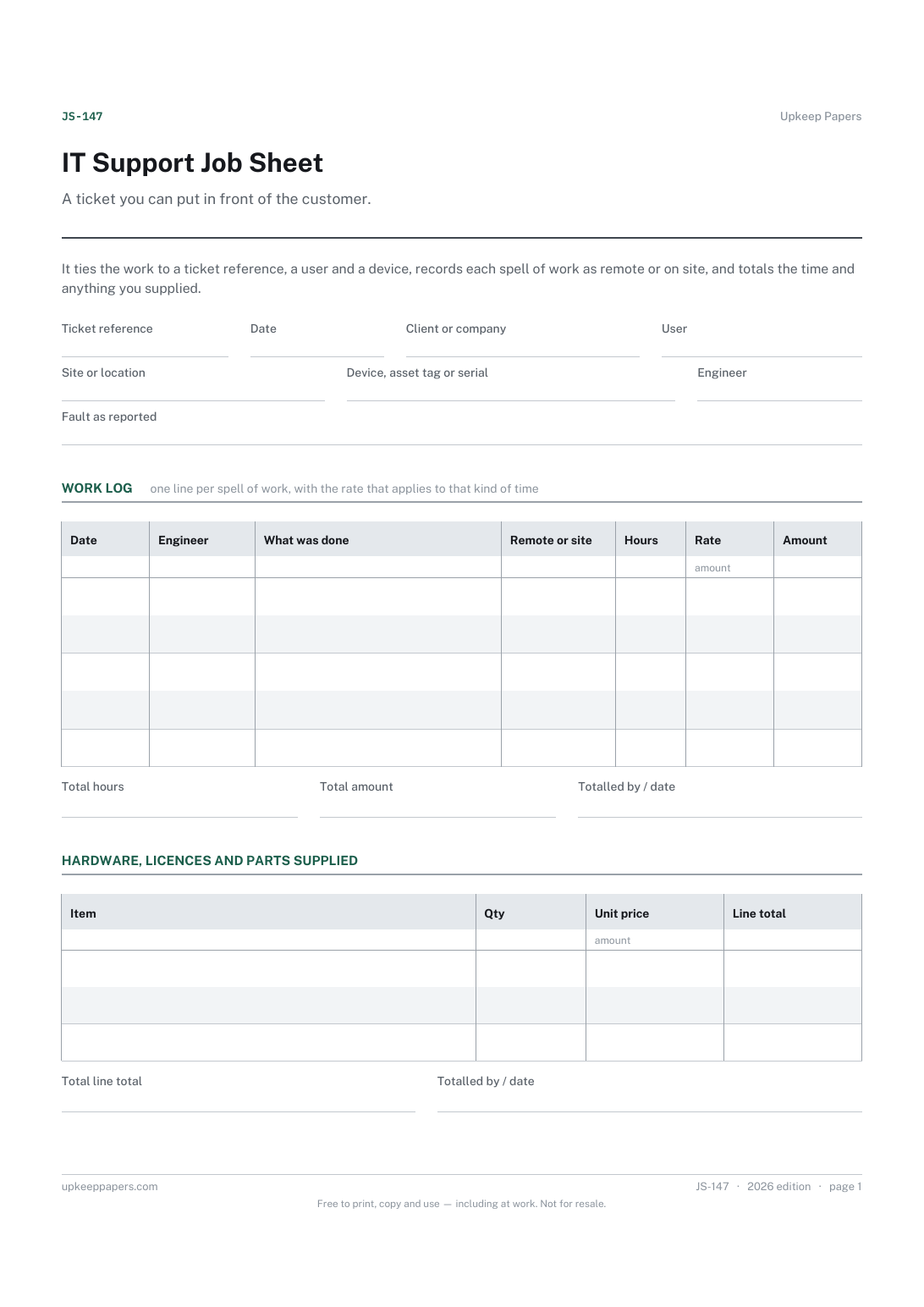
The ticket, the user and the device the work was done on.
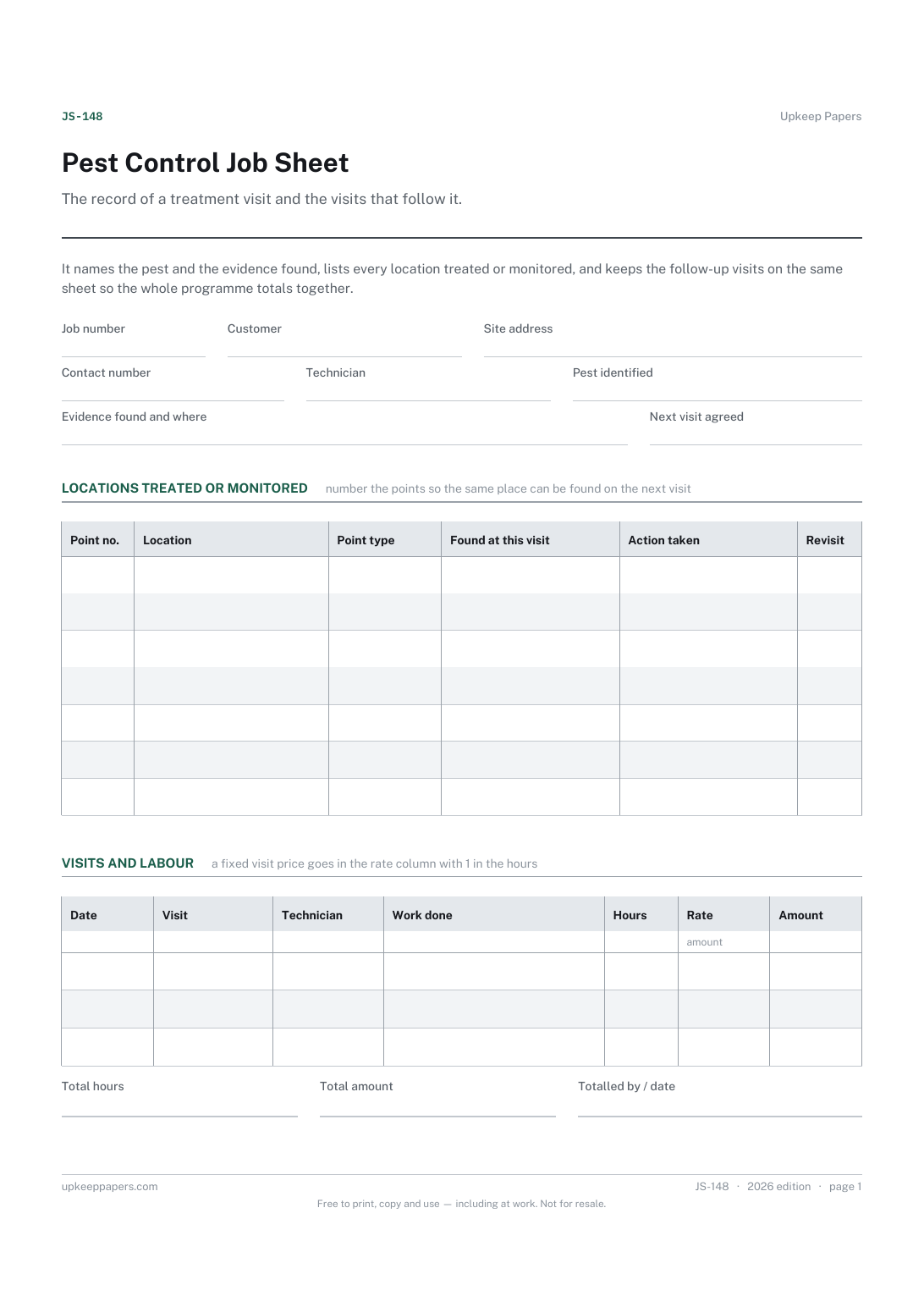
The pest identified and the evidence that identified it.
Every call on the round in the order you drive it.
Every room and surface in the job, with the preparation each one needed.
Each elevation or area worked on, with what was found and what was done.
Every task on the customer's list, ticked off as it is done.
Every item installed, with make, model, serial number and where it went.
Who raised the order, when, and against which asset or location.
When the call came in, from whom, and by what route.
The product, its serial number and the date it was bought or installed.
What you found at each item or area, in your own words.
Each item of work, where it was done and how it was measured.
The vehicle by make, model, colour and registration, with the mileage on arrival.
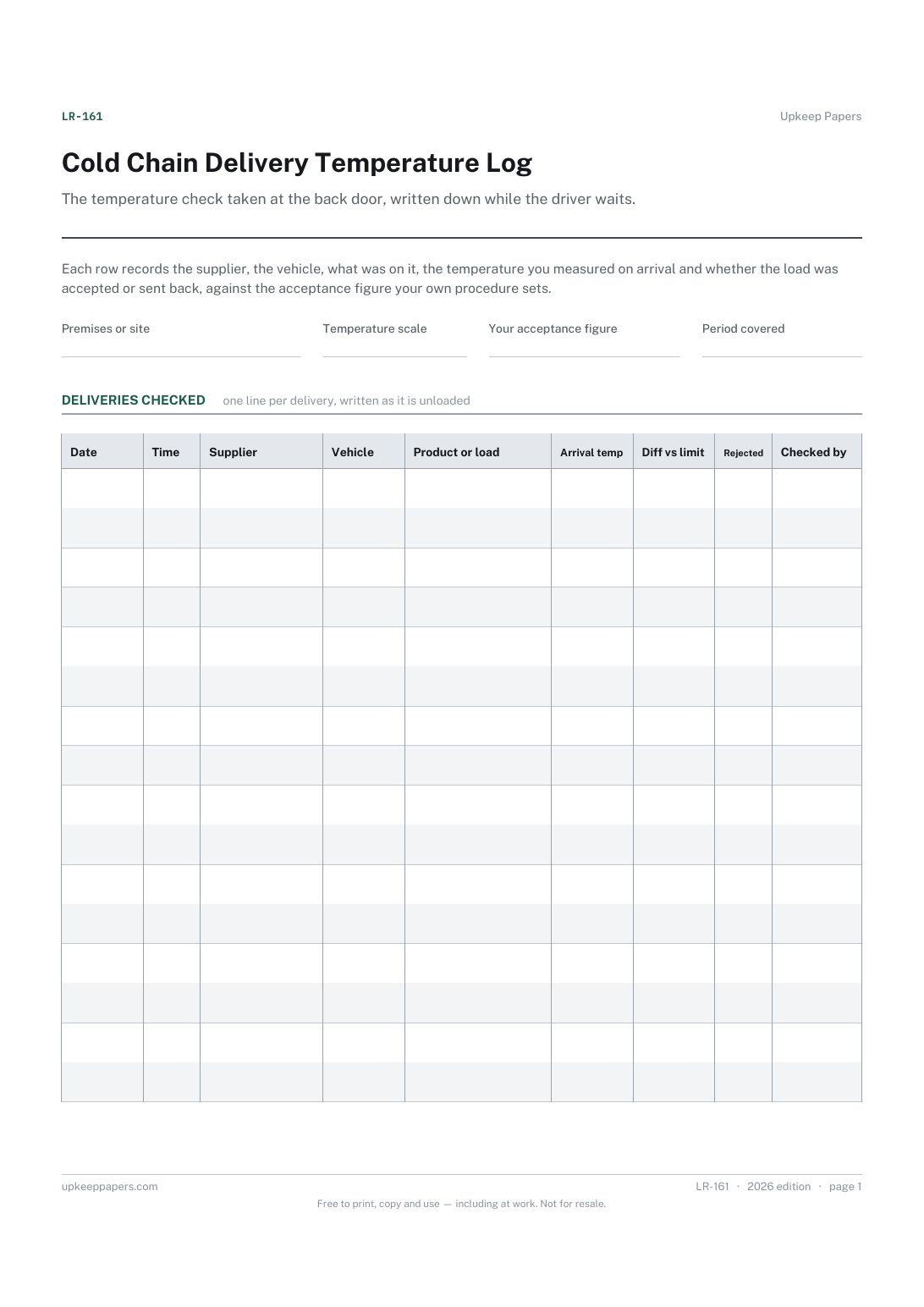
The temperature measured at the moment the load arrived, not later.
Usage between one reading and the next, worked out from the readings themselves.
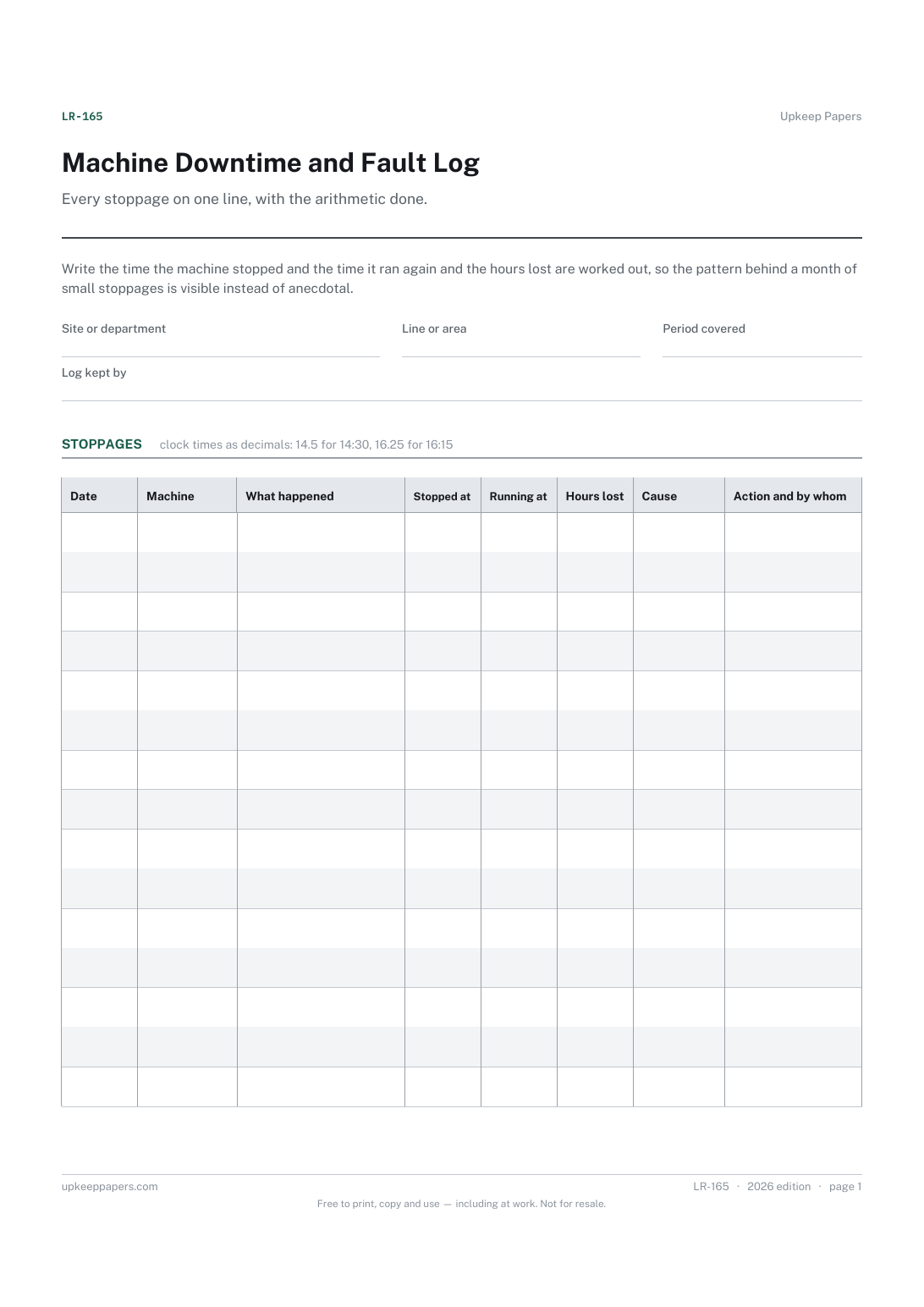
Each stoppage dated, timed and attached to a named machine.
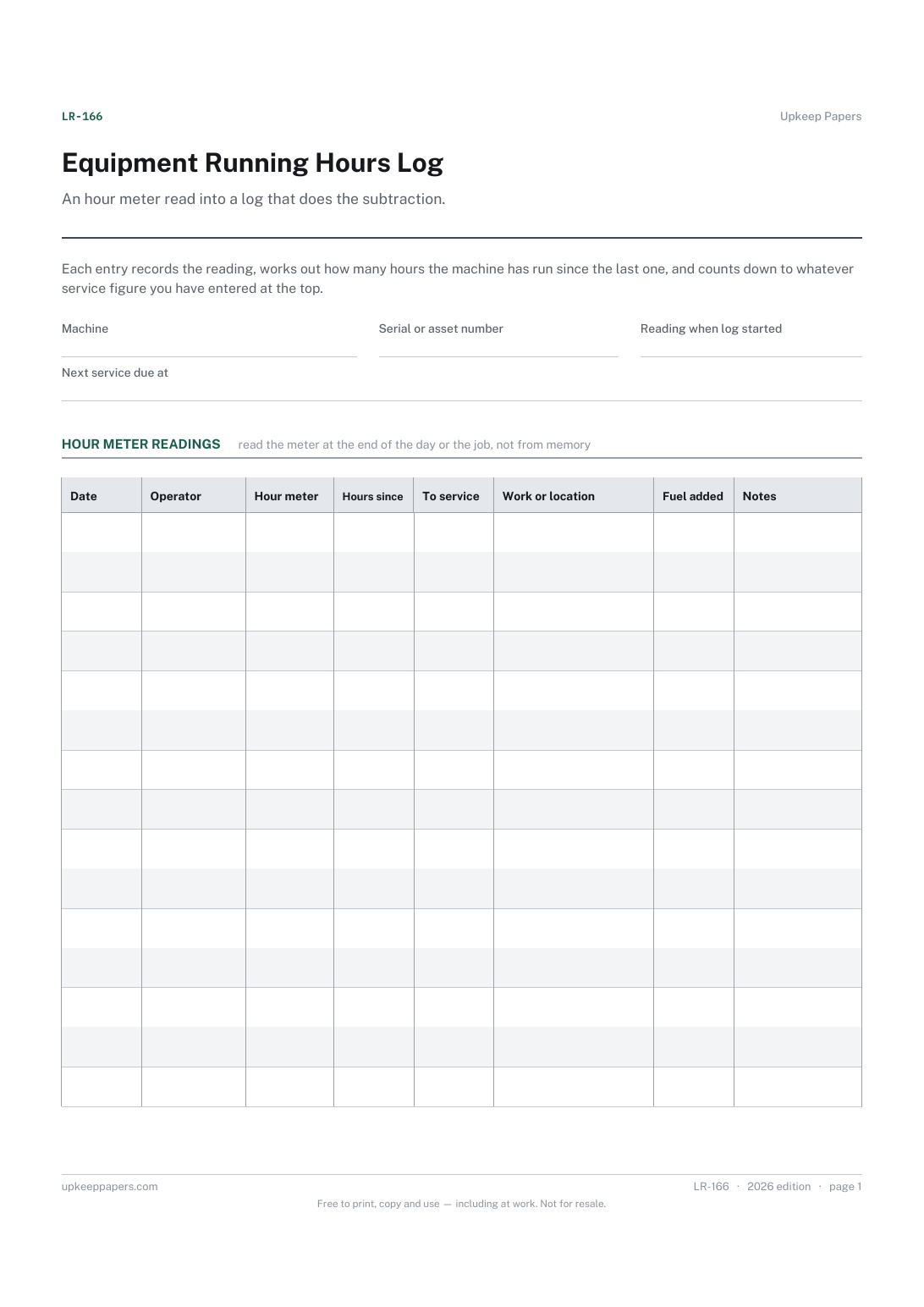
Hours run between one entry and the next, from the readings themselves.
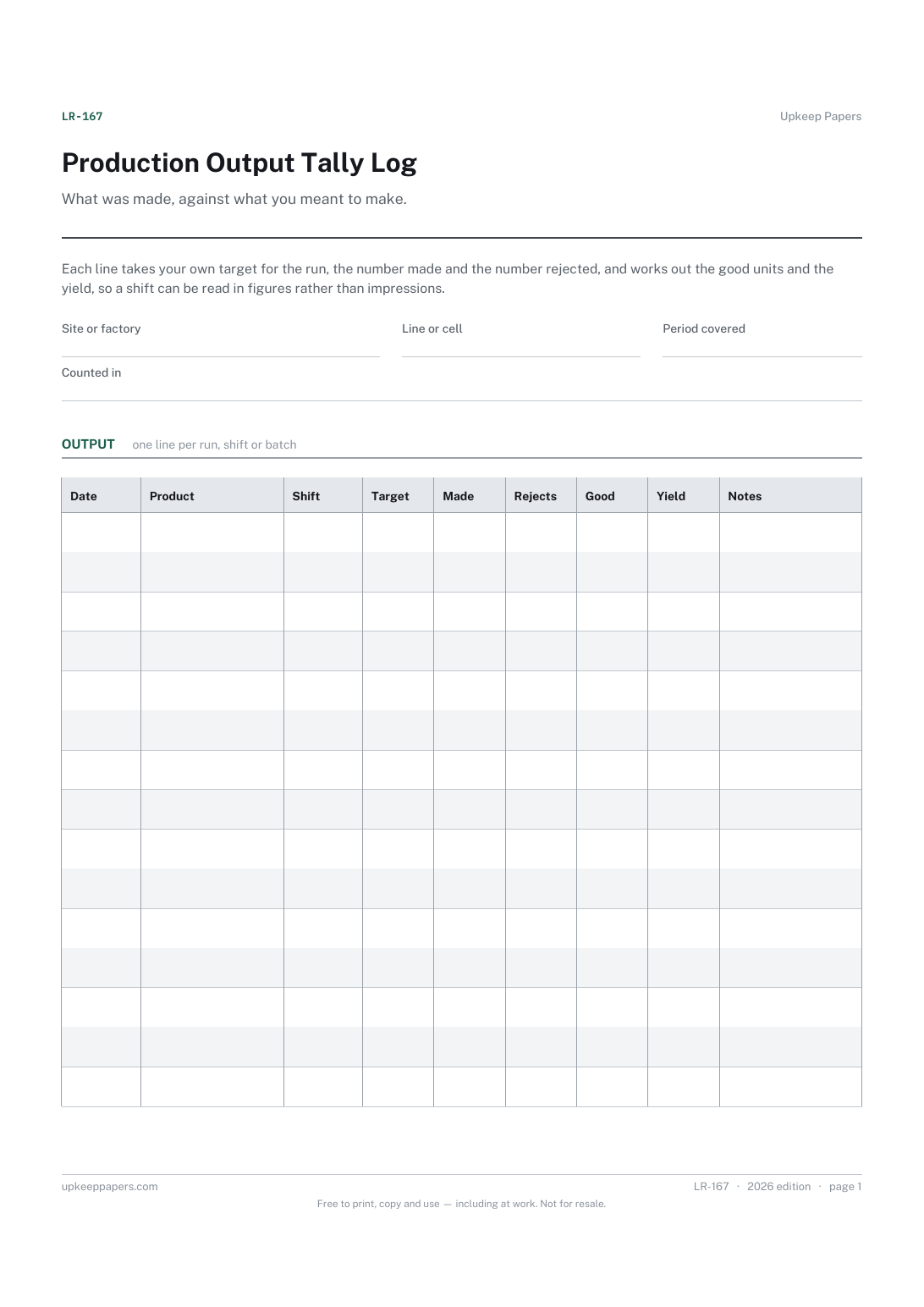
Output per run, shift or day, with the product named.
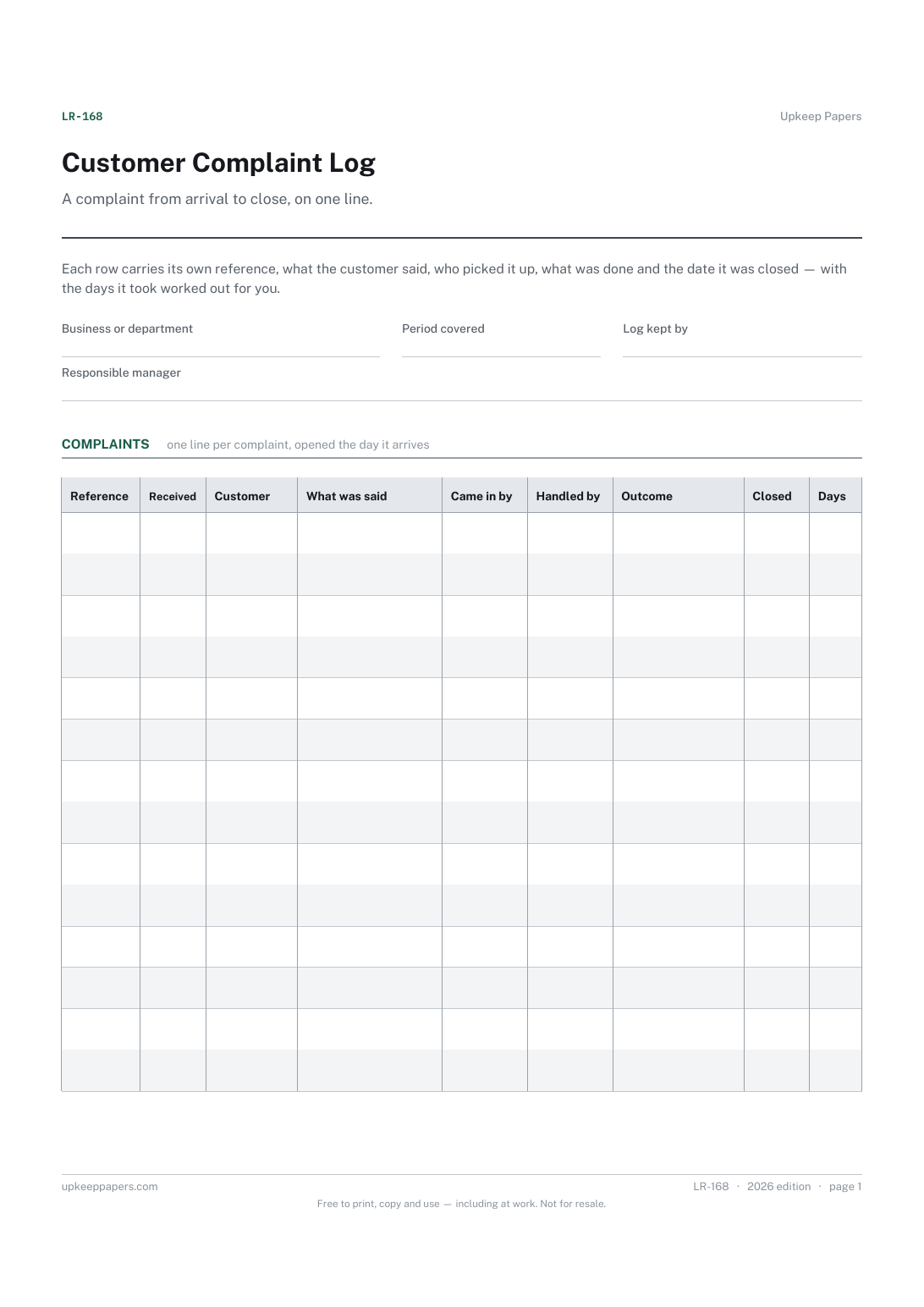
Every complaint given a reference, so it can be found again.
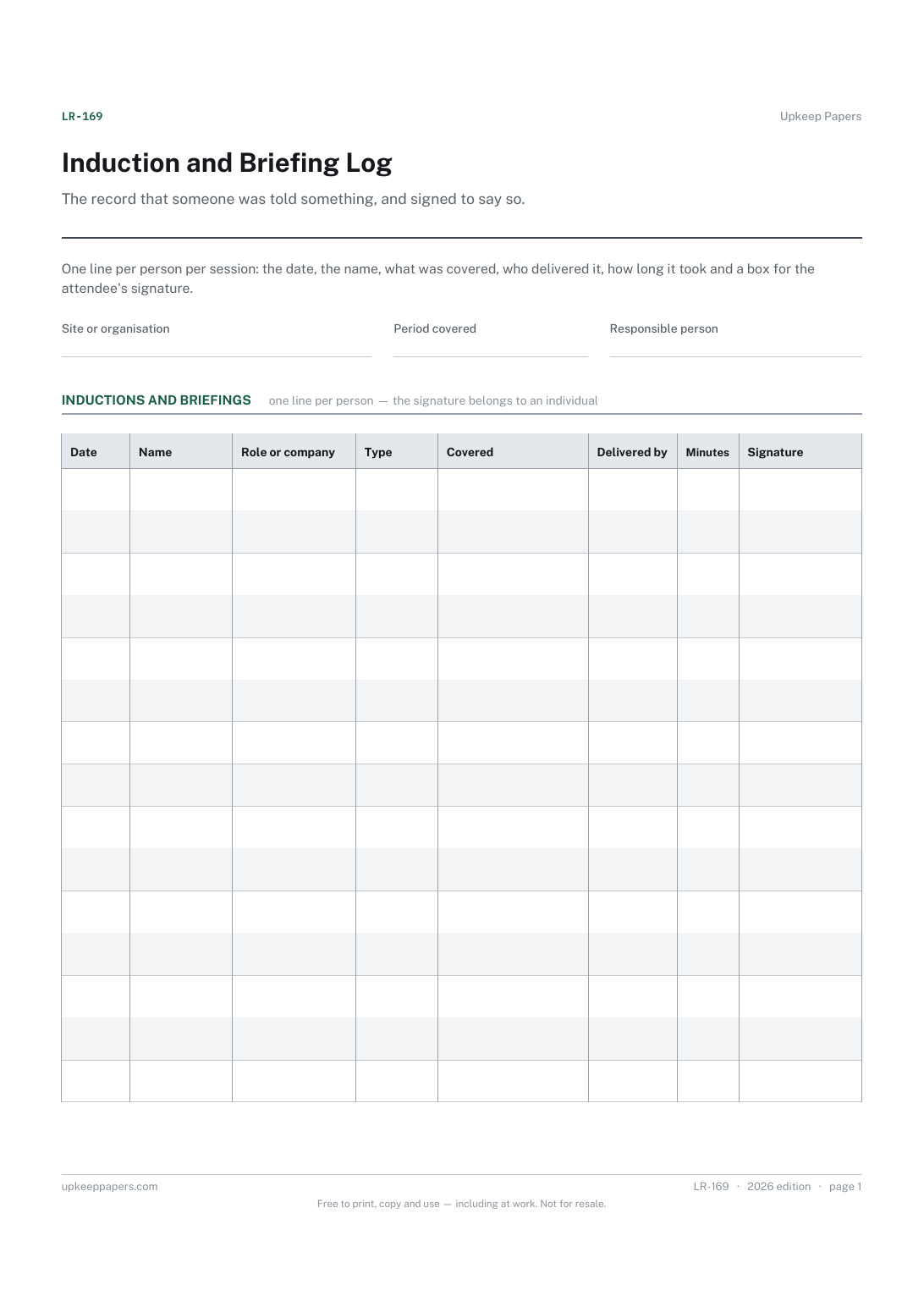
Who was inducted or briefed, and on what date.
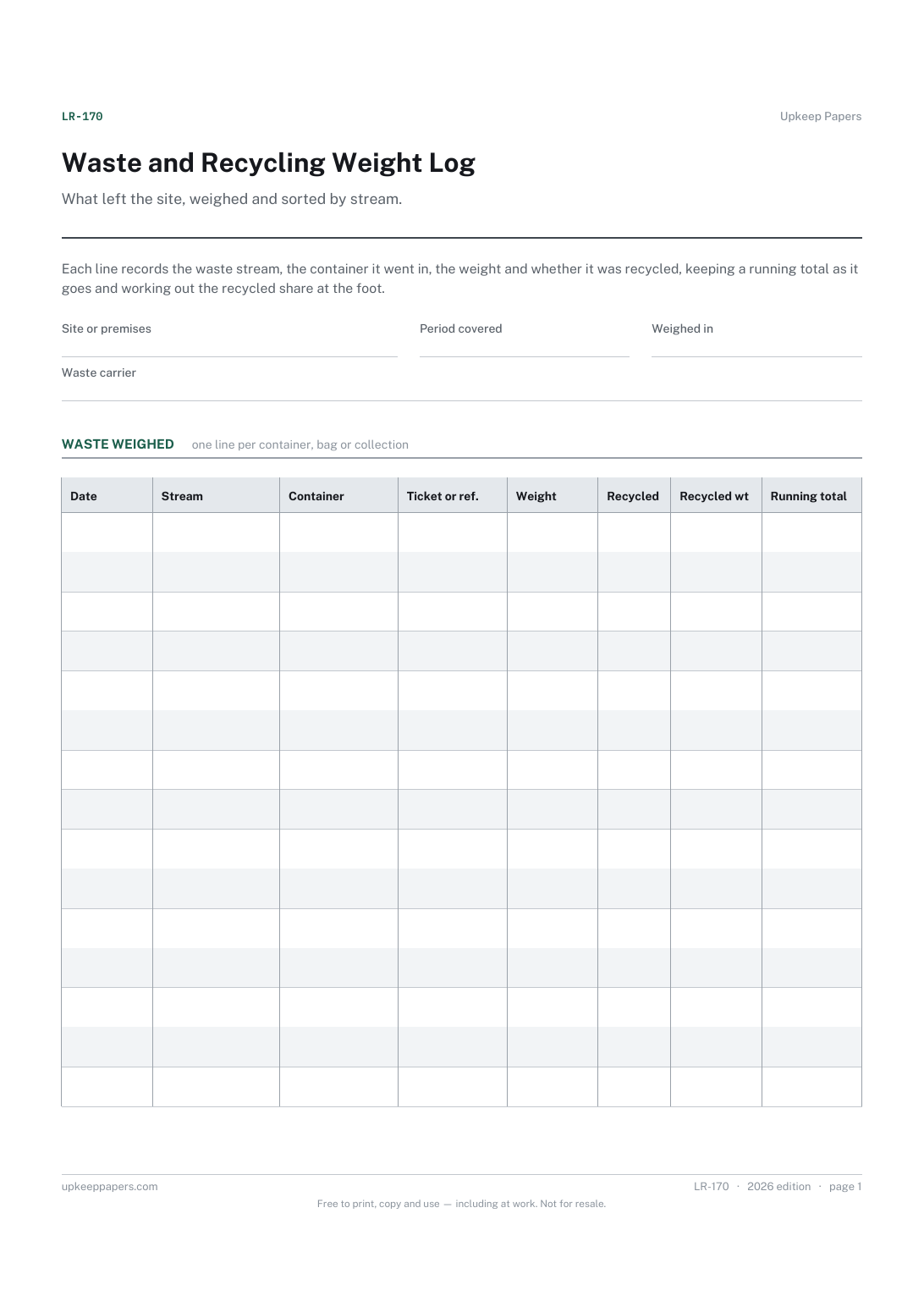
Weight by stream, so the heavy streams are obvious.
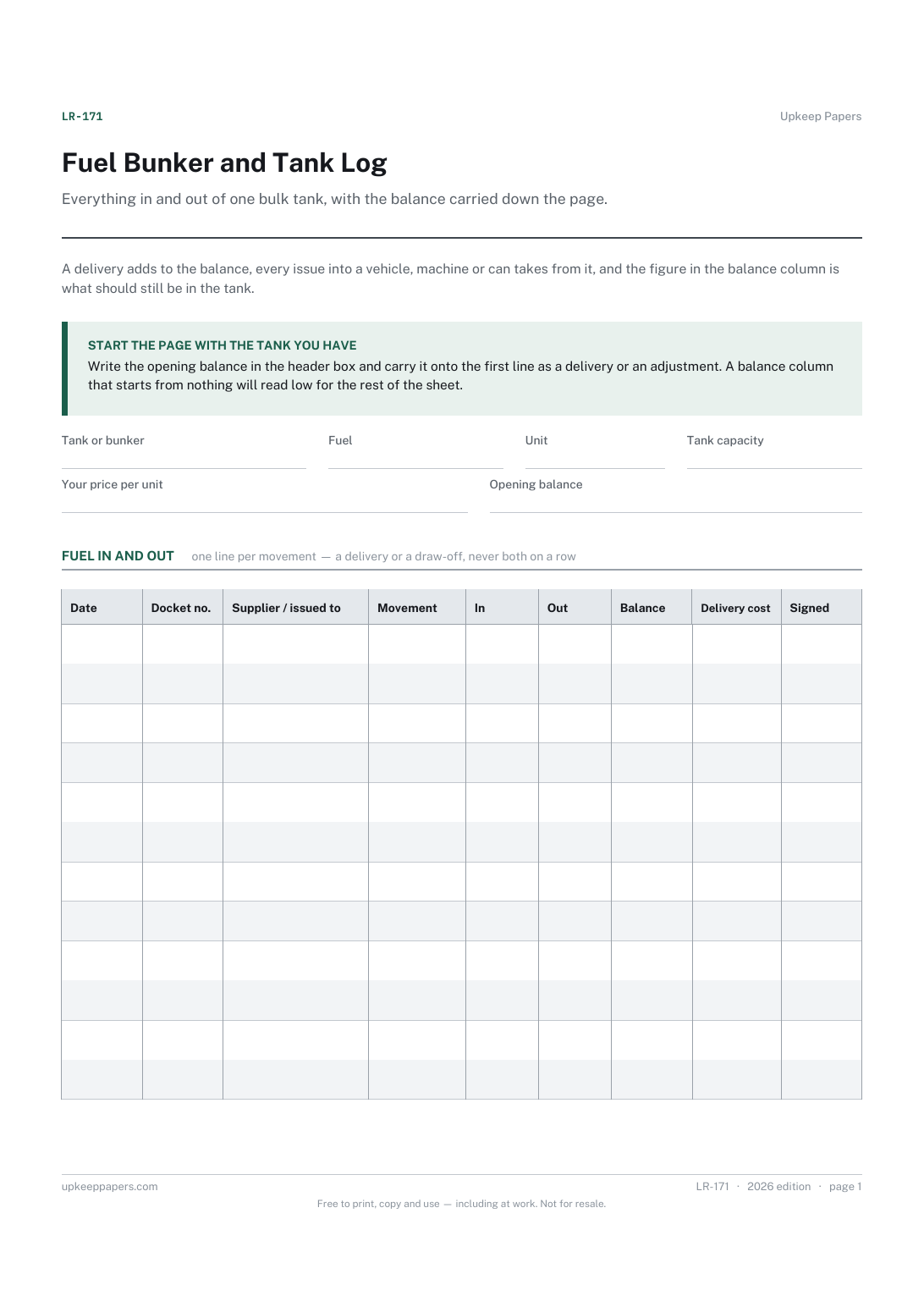
Deliveries in and issues out on one page, in the order they happened.
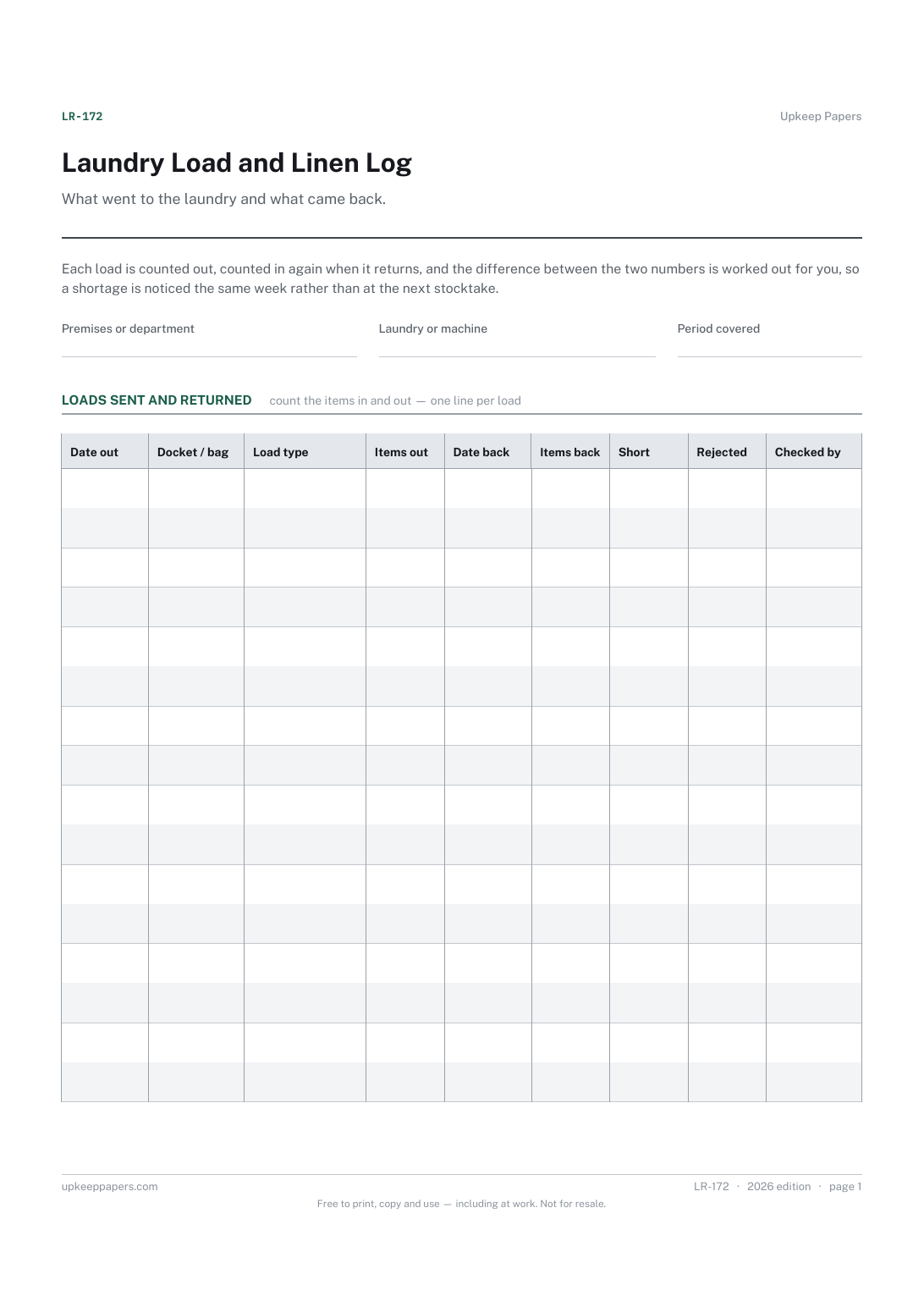
Items out and items back, counted per load rather than per week.
Who has which room, on what date, between what times.
A reference number that can be quoted on the phone and written on the bag.
The till or reading figure and the counted figure side by side.
Every journey in the order it was driven, with both odometer readings.
Which area was cleaned, when, and what was done to it.
Every key, fob or code issued, against a reference you can quote.
A sample reference that ties the bottle, the form and this line together.
Every appointment in date order with the reason you went.
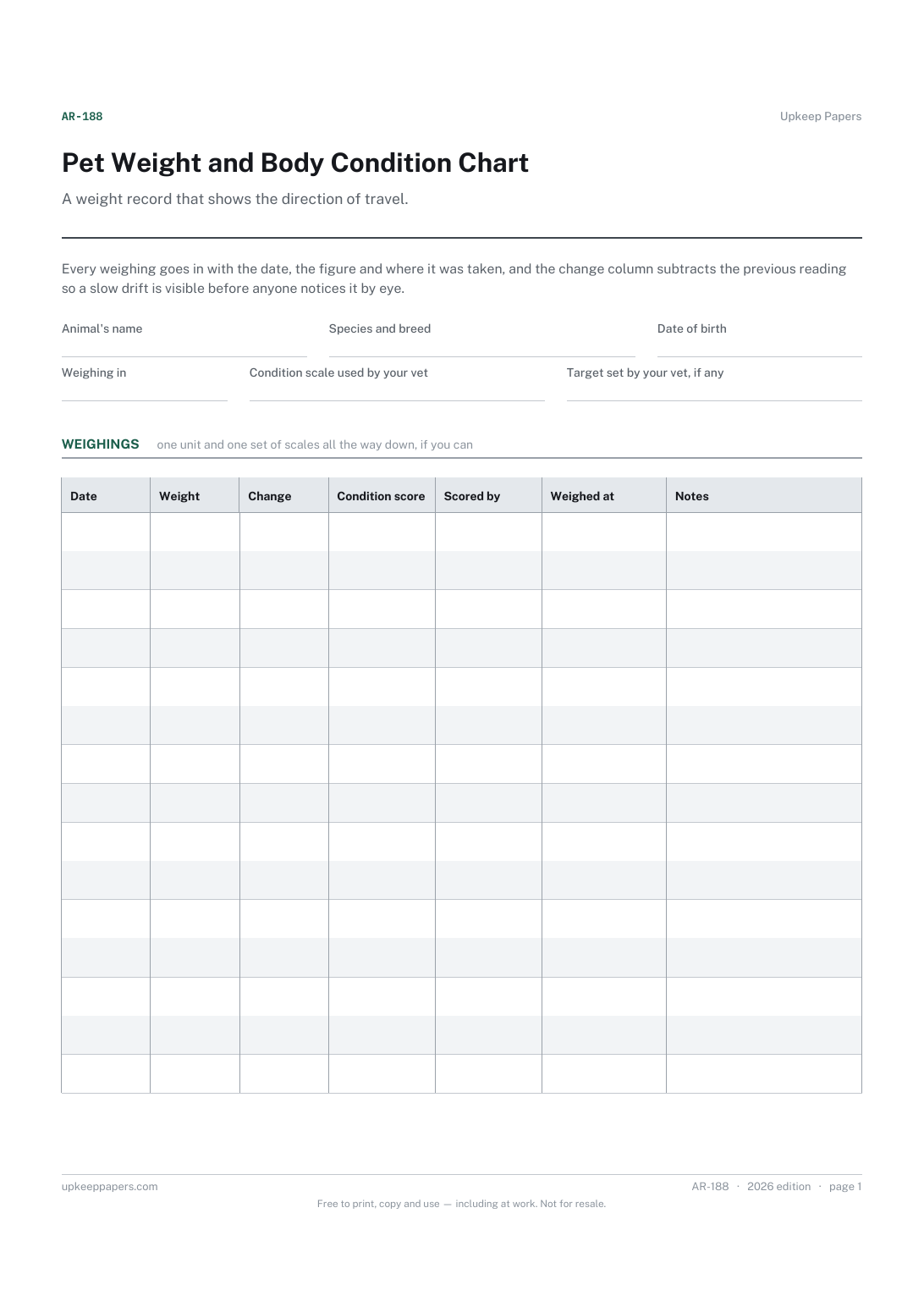
Weight at each weighing, with the date and the scales used.
Who to ring, and who to ring if they cannot be reached.
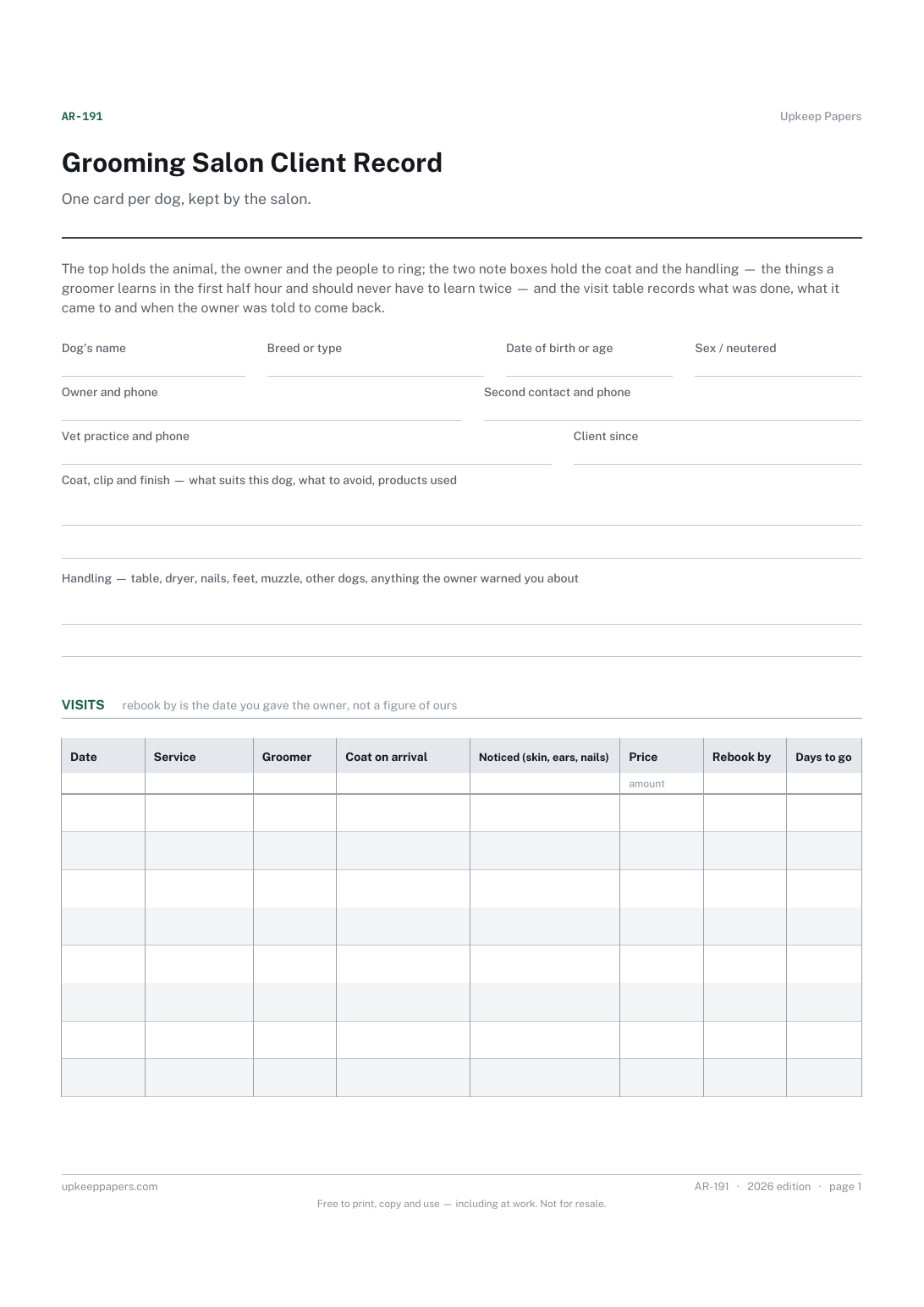
The dog, the owner and a second number, on the card rather than in a phone.
Which dogs are on the round, whose they are and how to get in.
The dam, the sire and their registration or identification numbers in one place.
Where the animal came from and who handed it over, with a contact.
Every horse on the yard on one list, with its owner and passport number.
Every animal in your care identified the same way, by name, chip or tag.
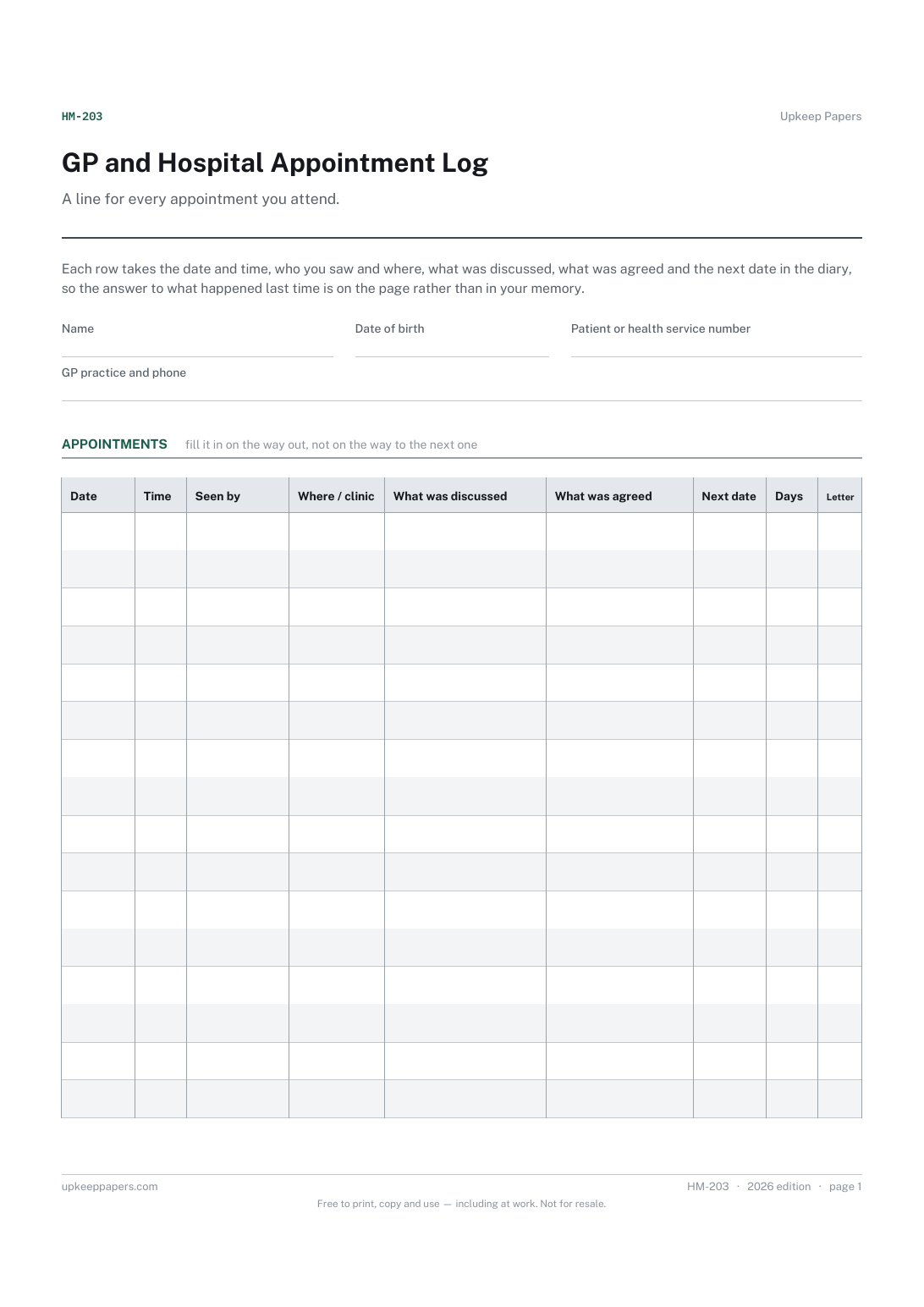
Every appointment in date order, with who was seen and where.
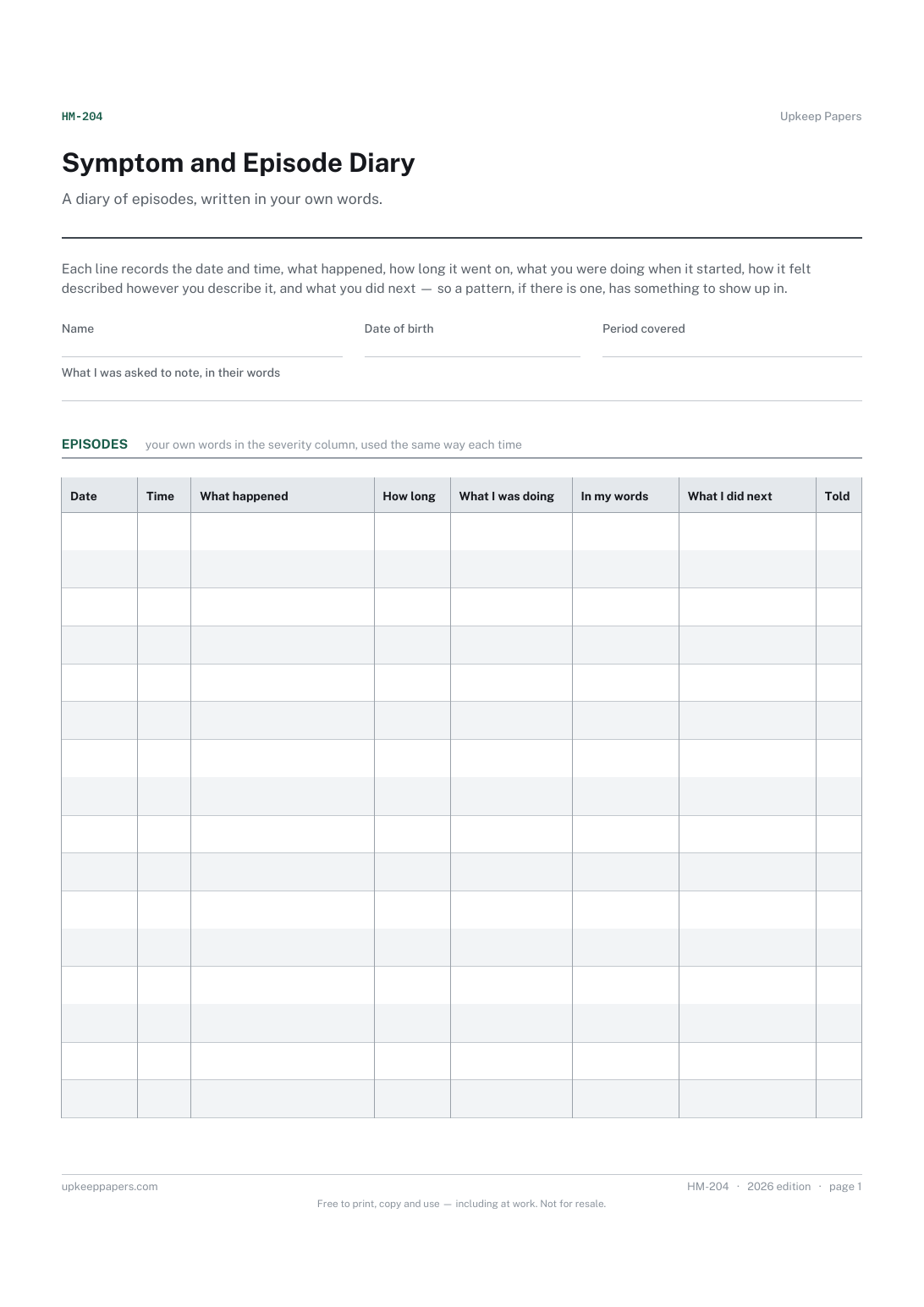
What happened and when, written close to the time rather than remembered later.
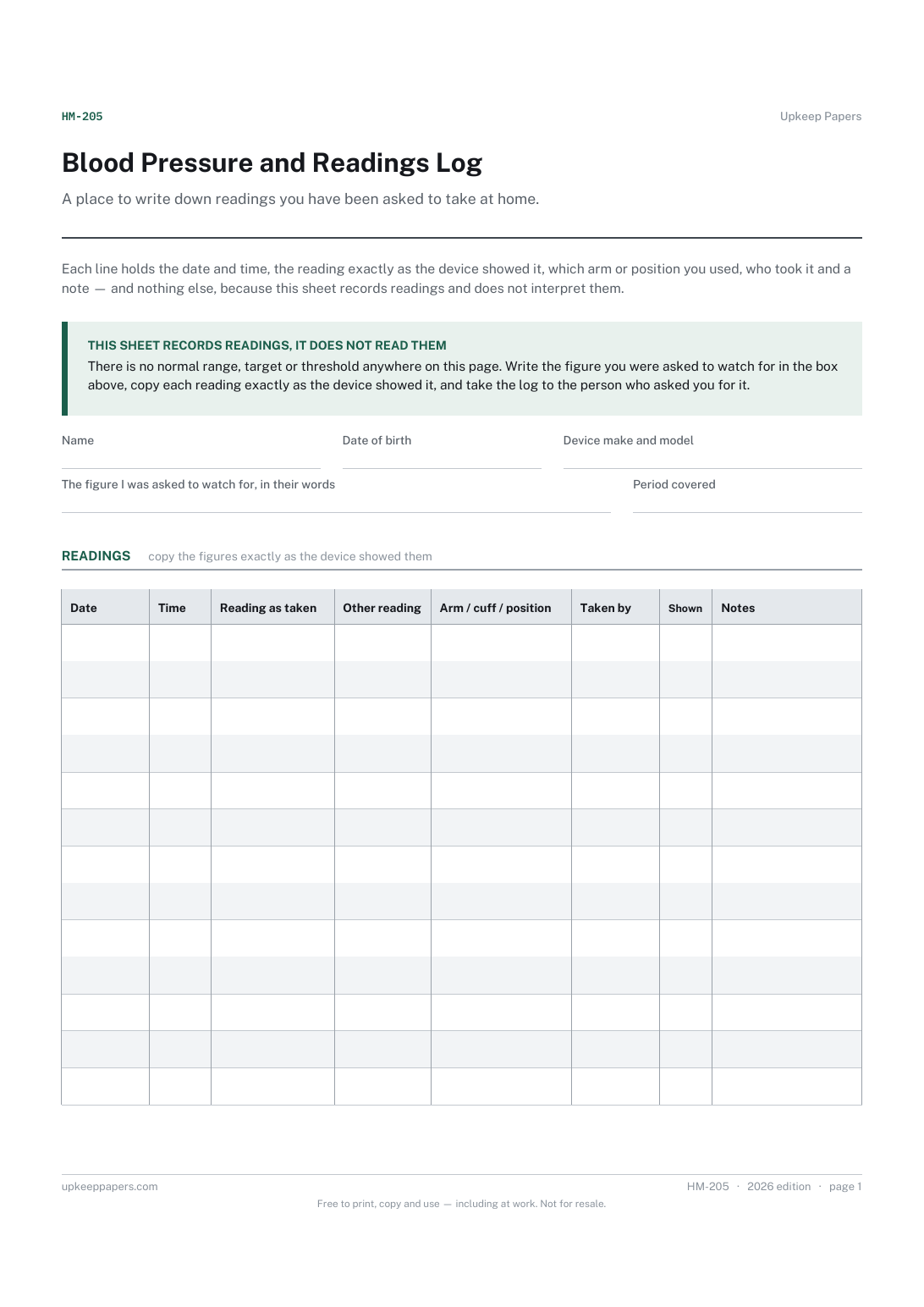
Every reading as the device showed it, with the date and time it was taken.
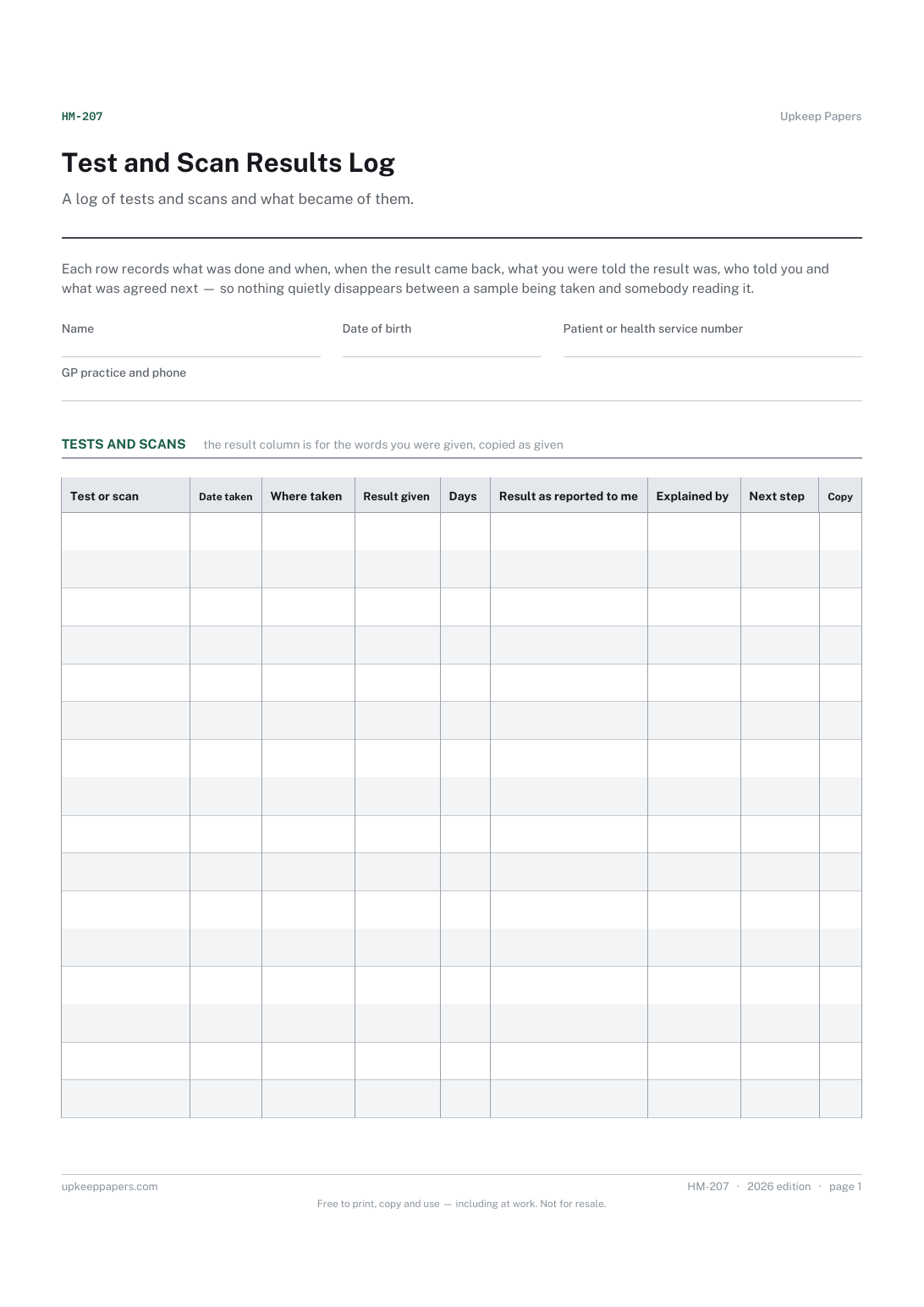
Every test and scan in one dated list, with where it was done.
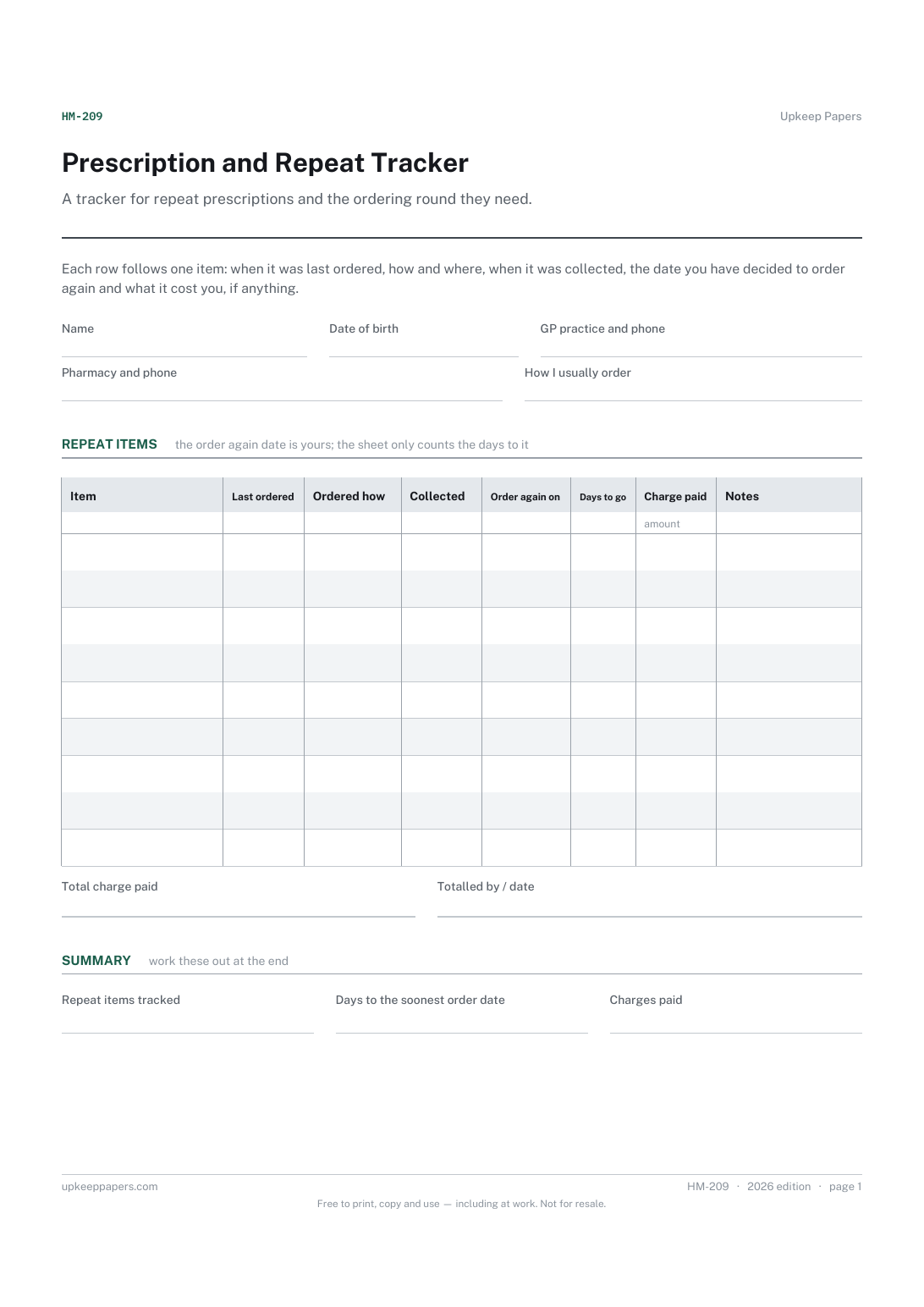
Each repeat item with the date it was last ordered and collected.
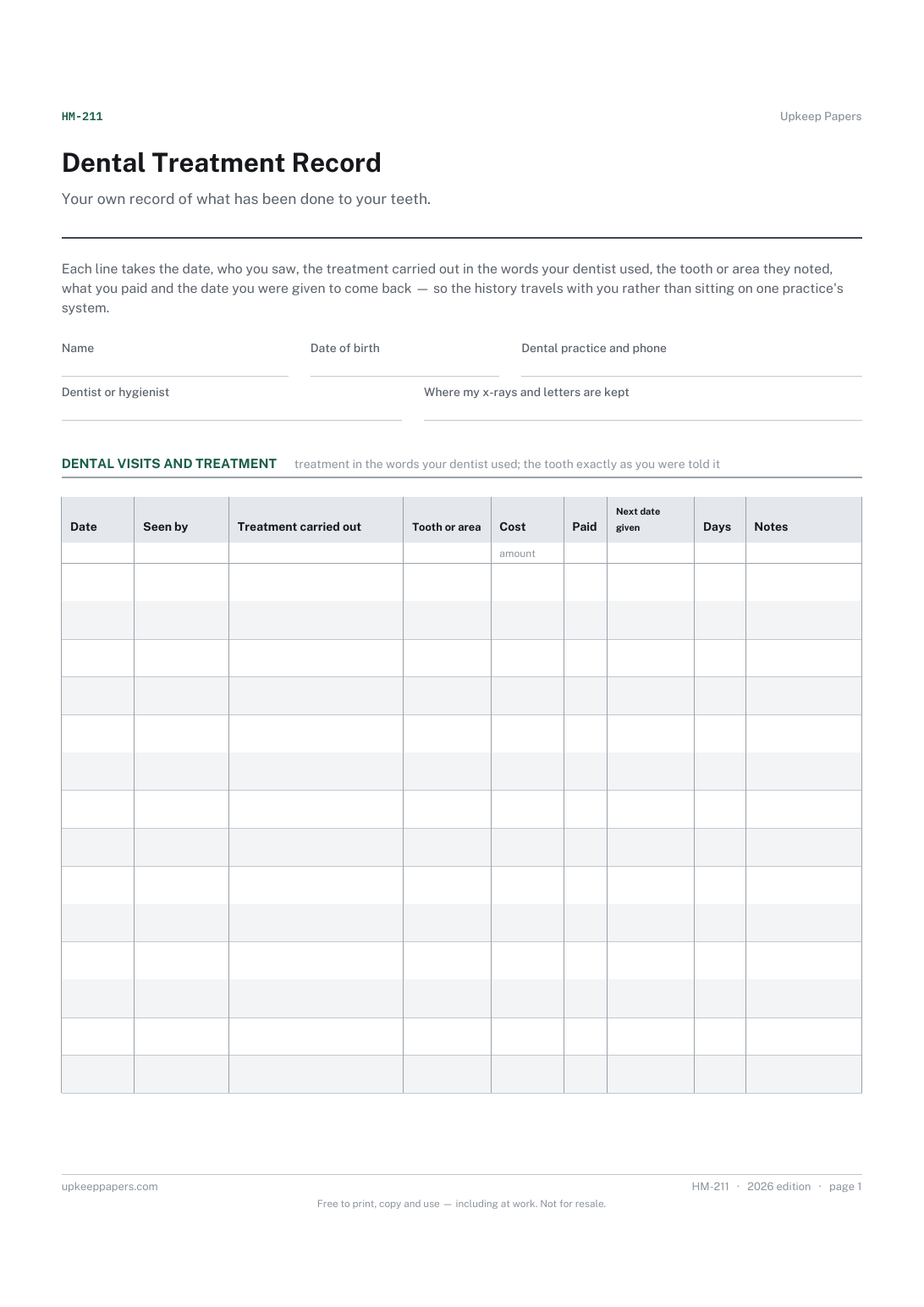
Every visit in date order, with the practice and the dentist or hygienist you saw.
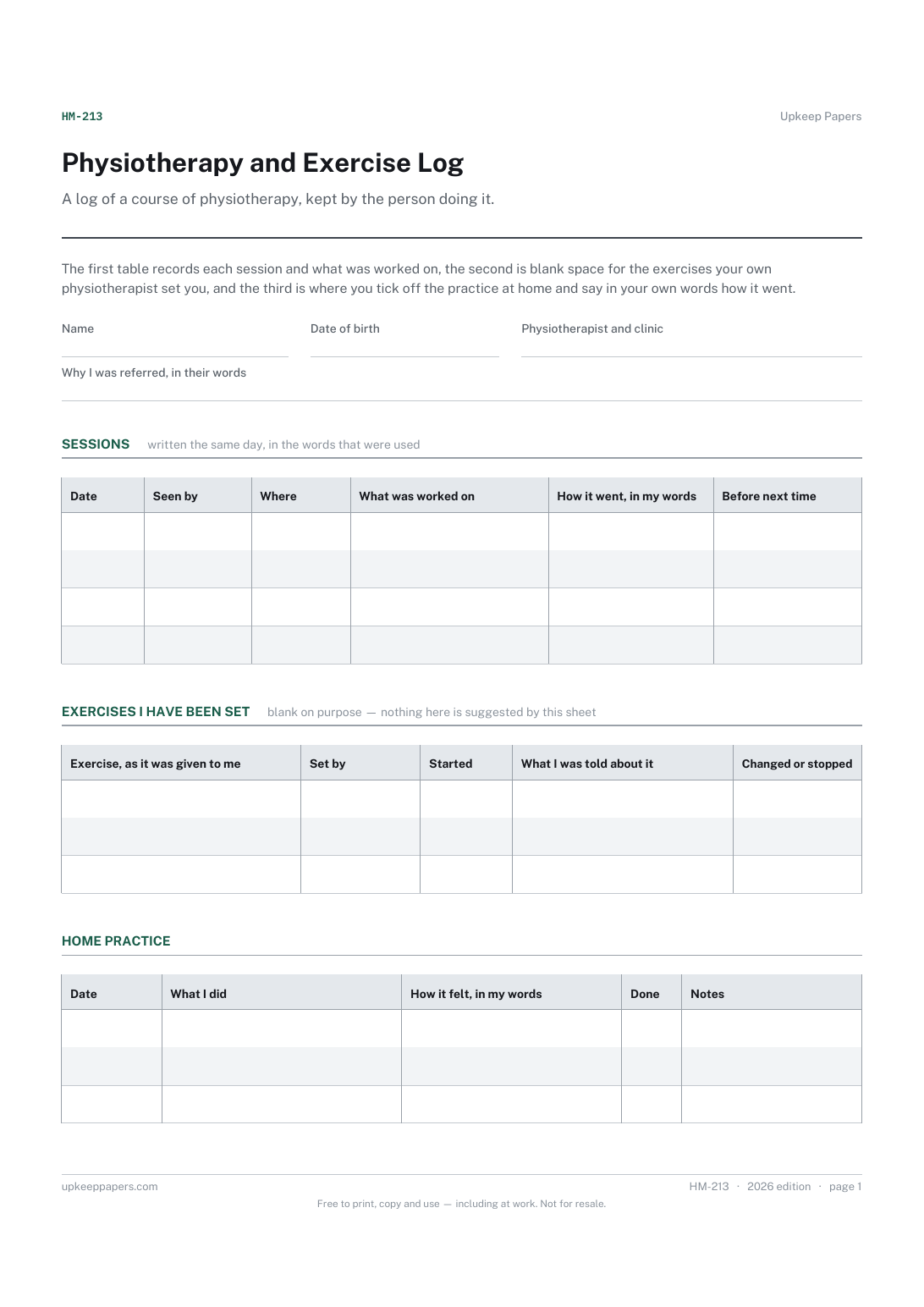
Each session with the date, the physiotherapist and where it took place.
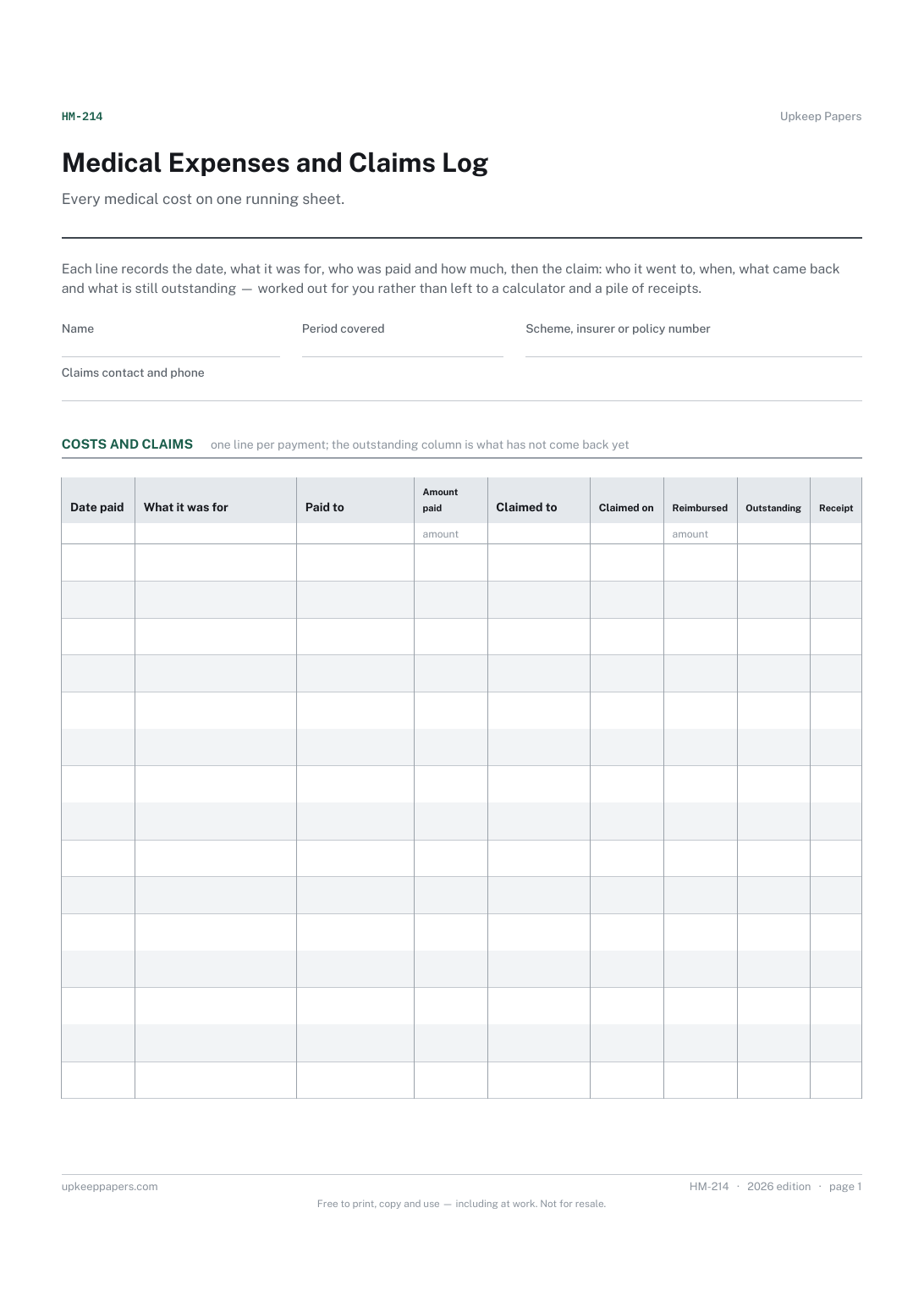
What was paid, when and to whom, with the receipt ticked off.
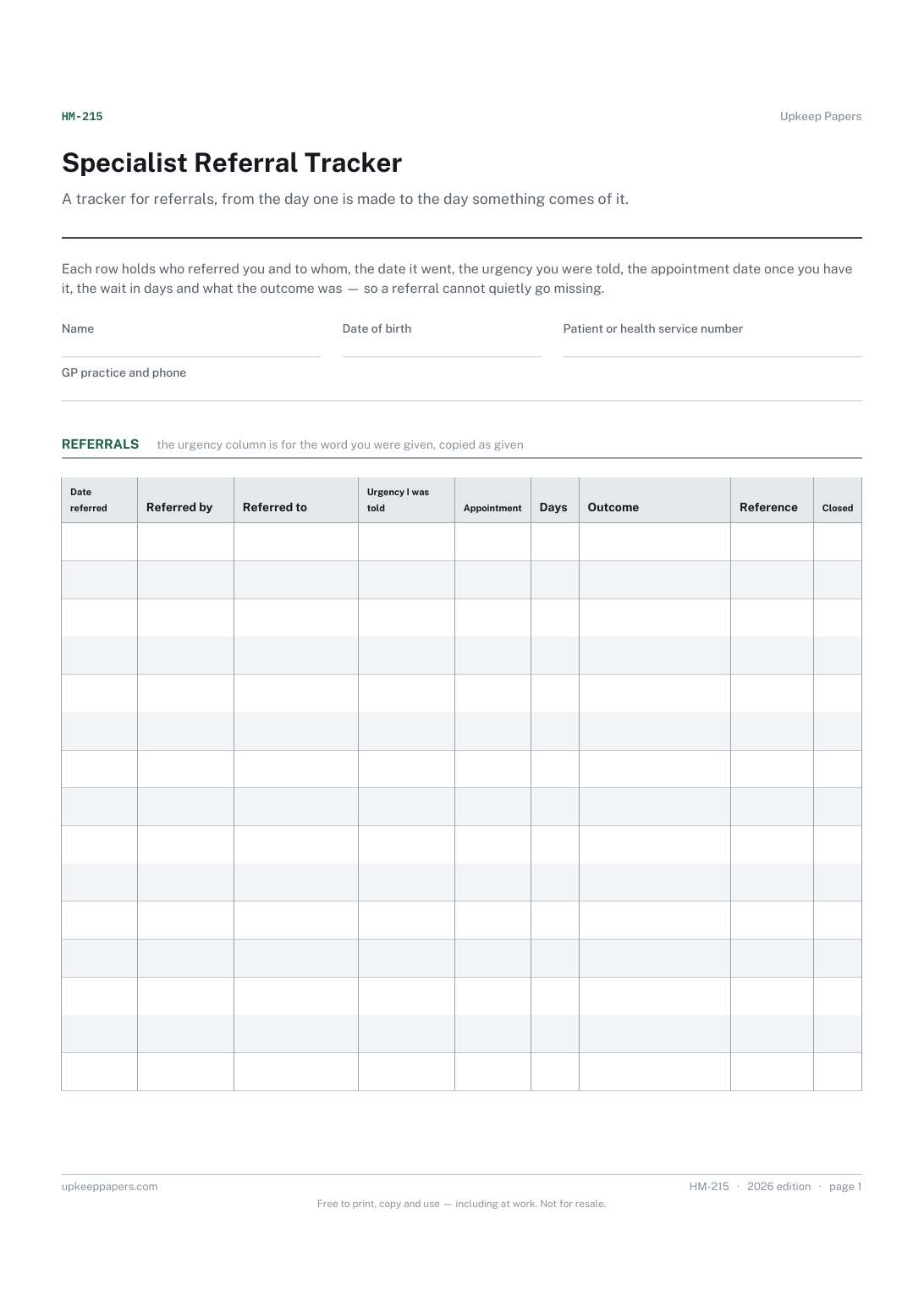
Every referral with the date it was made and who made it.
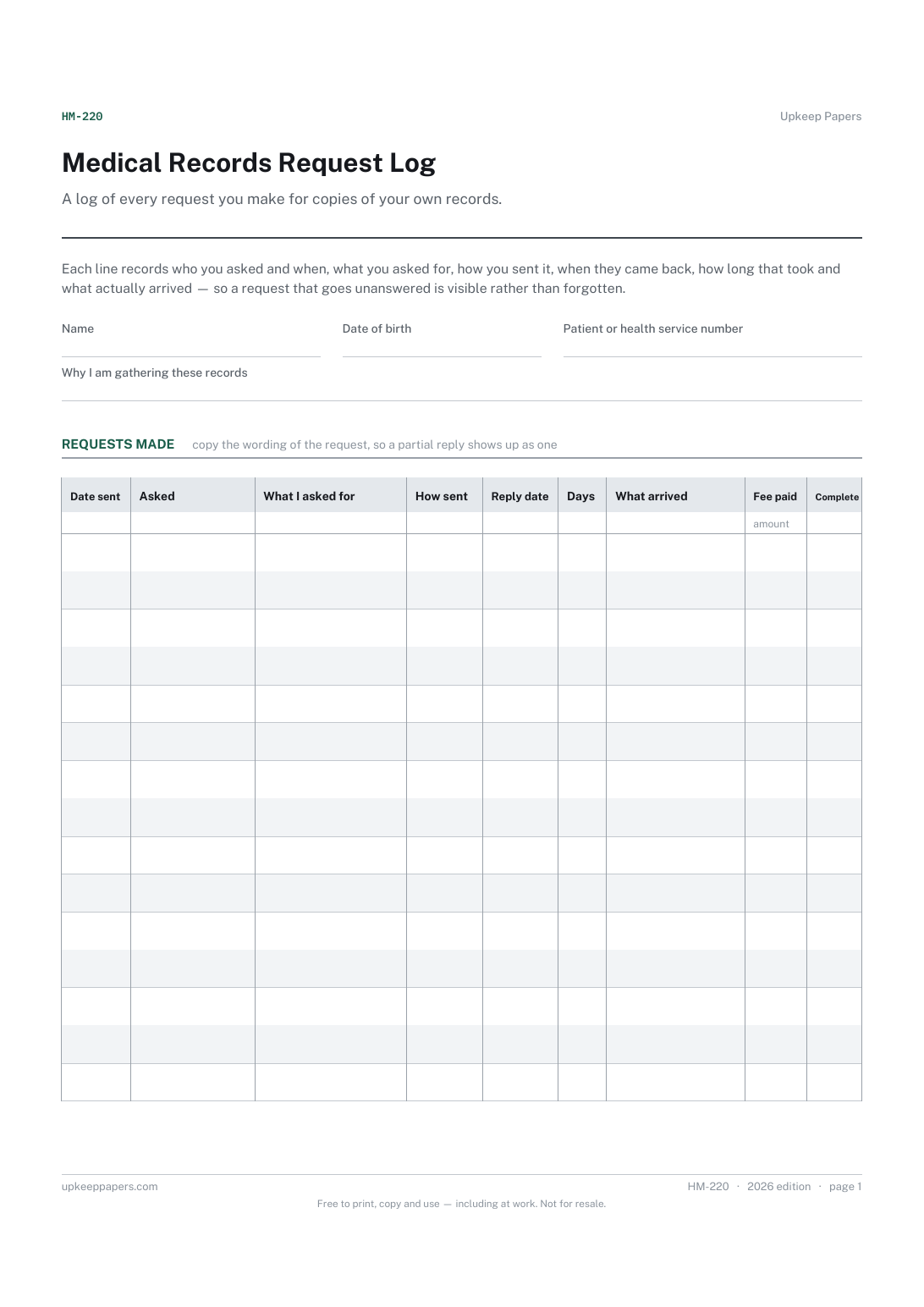
Every request with the date it went and who it went to.
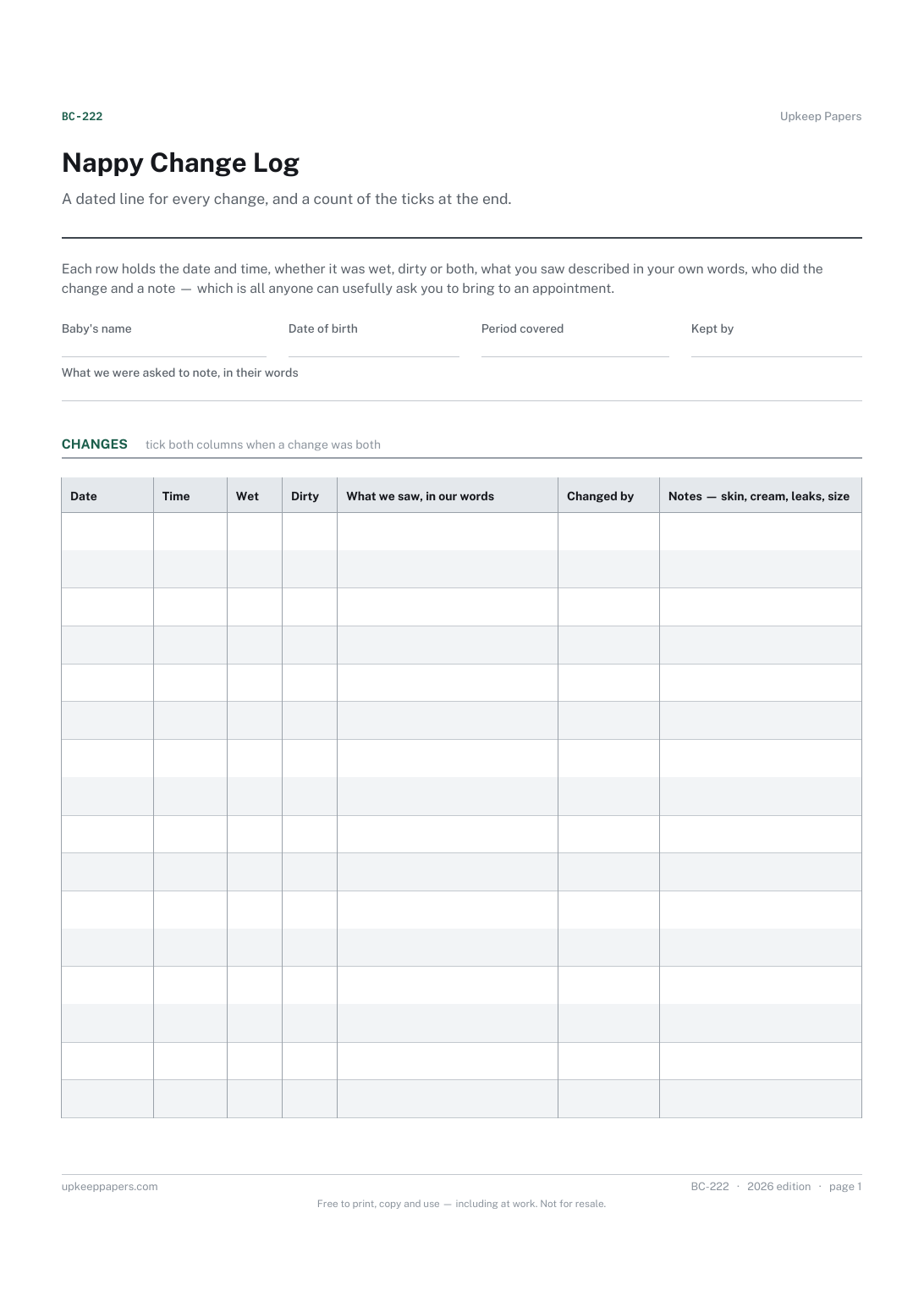
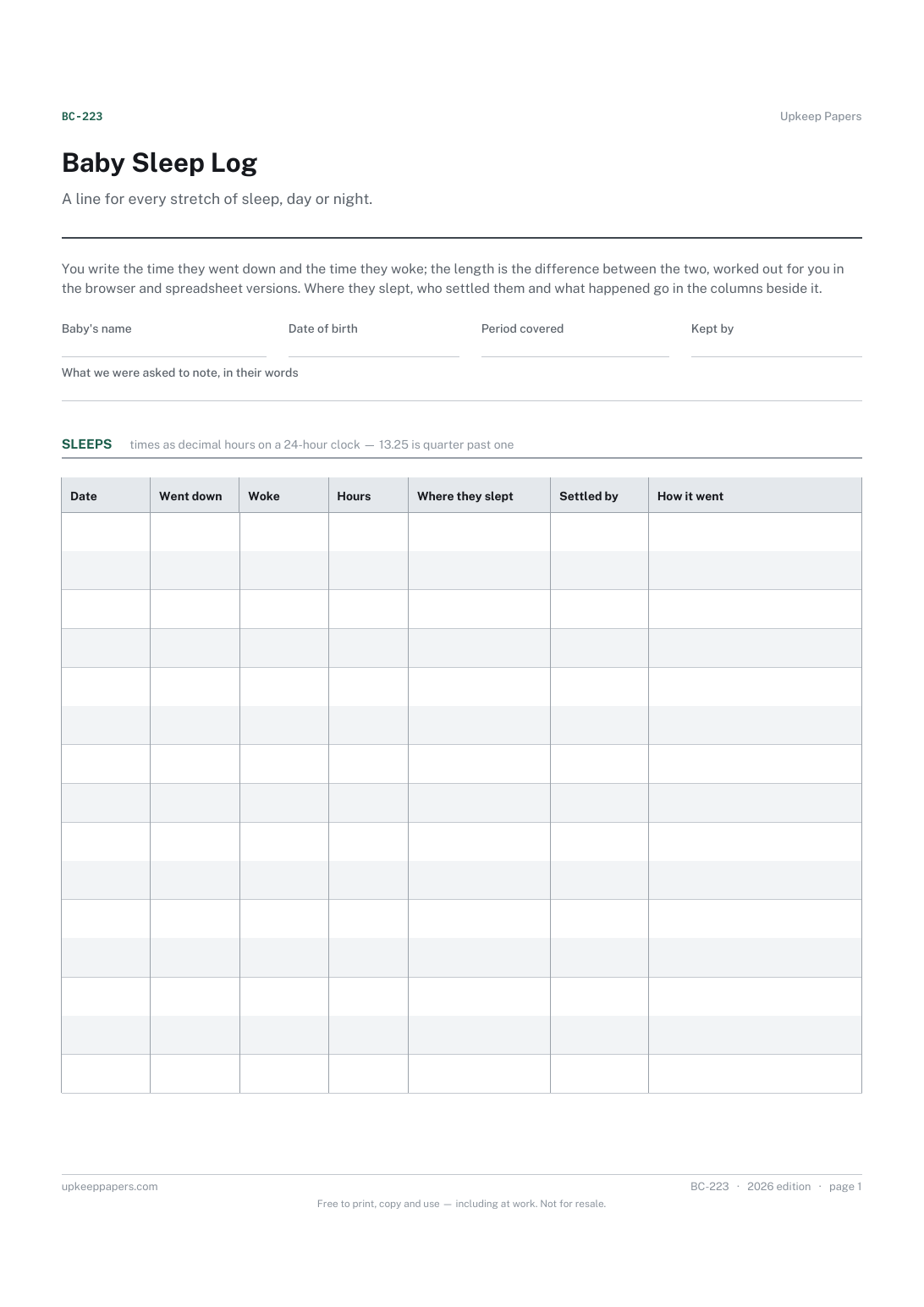
Every stretch of sleep with the time down and the time awake.
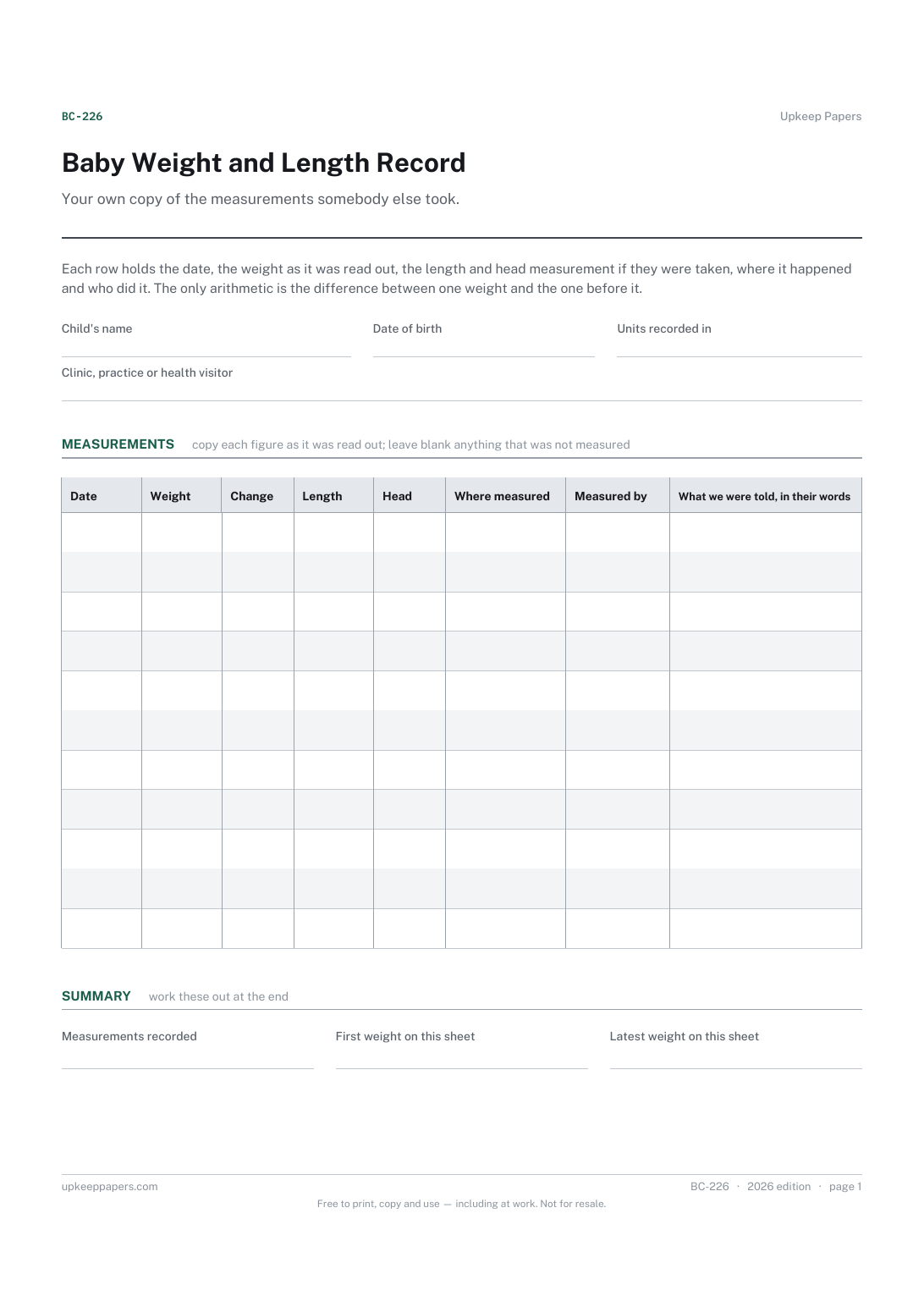
Every measurement with its date, copied as it was read out.
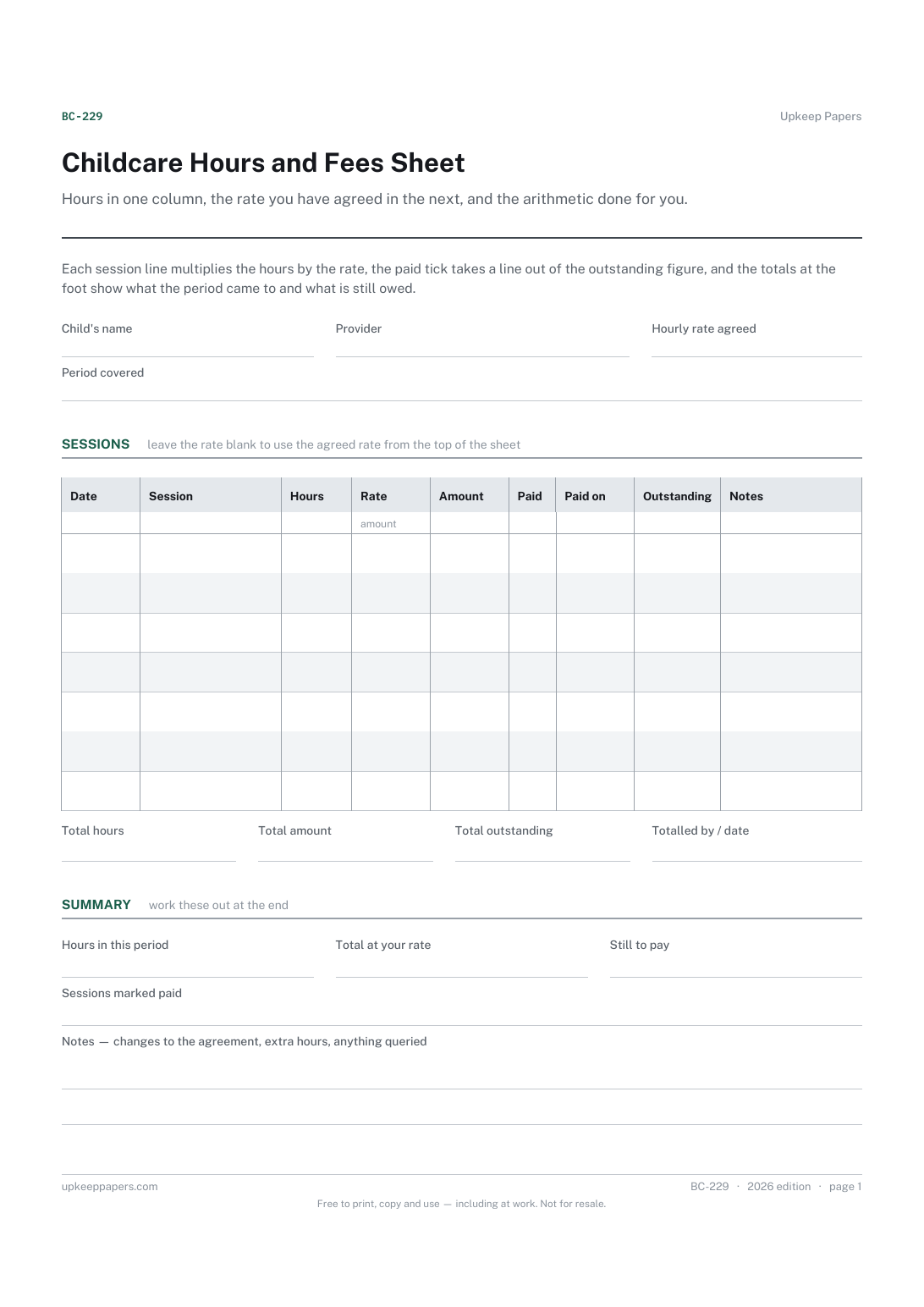
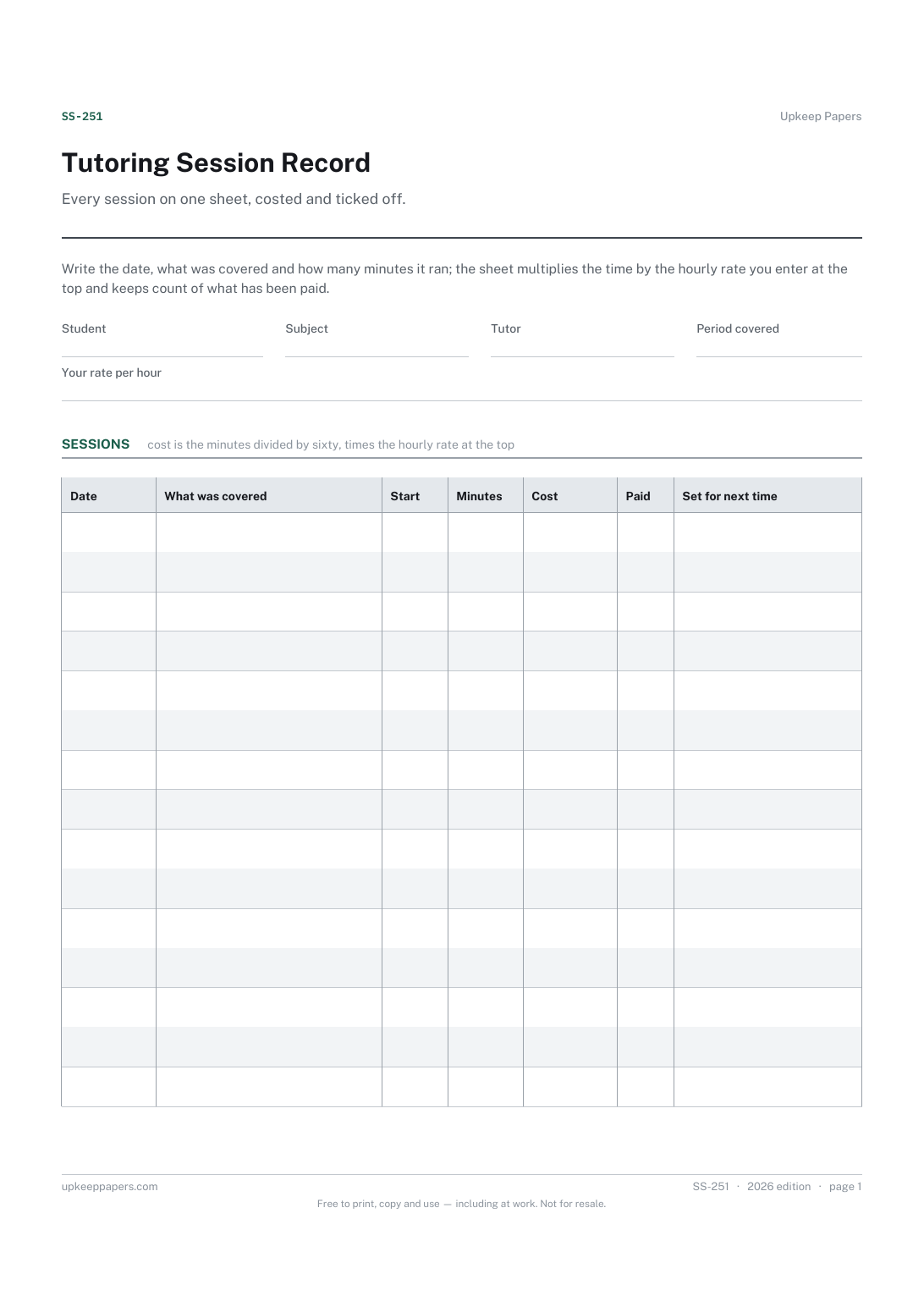
Every session with its date, its hours and what it came to.
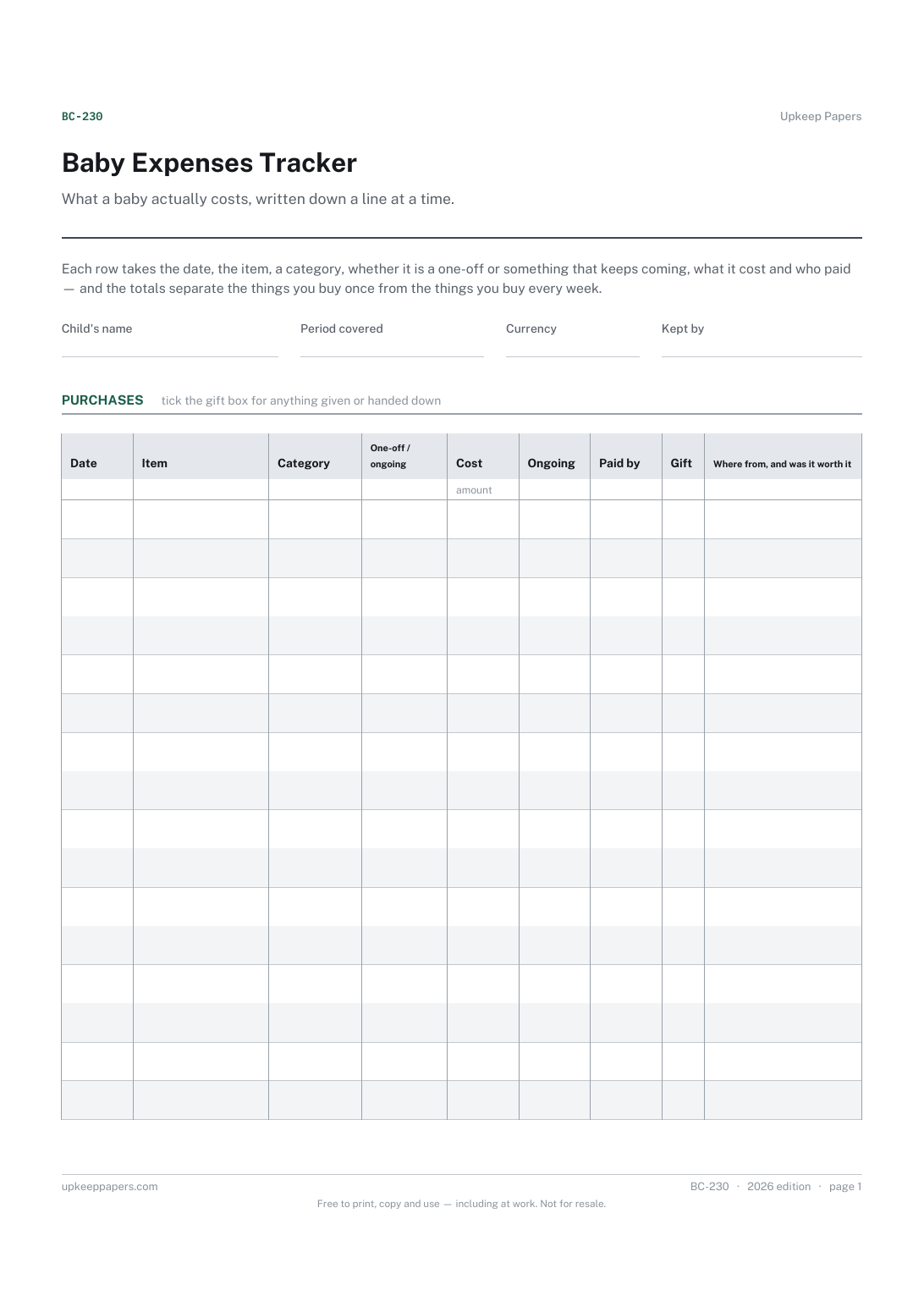
Every purchase with its date, what it was and what it cost.
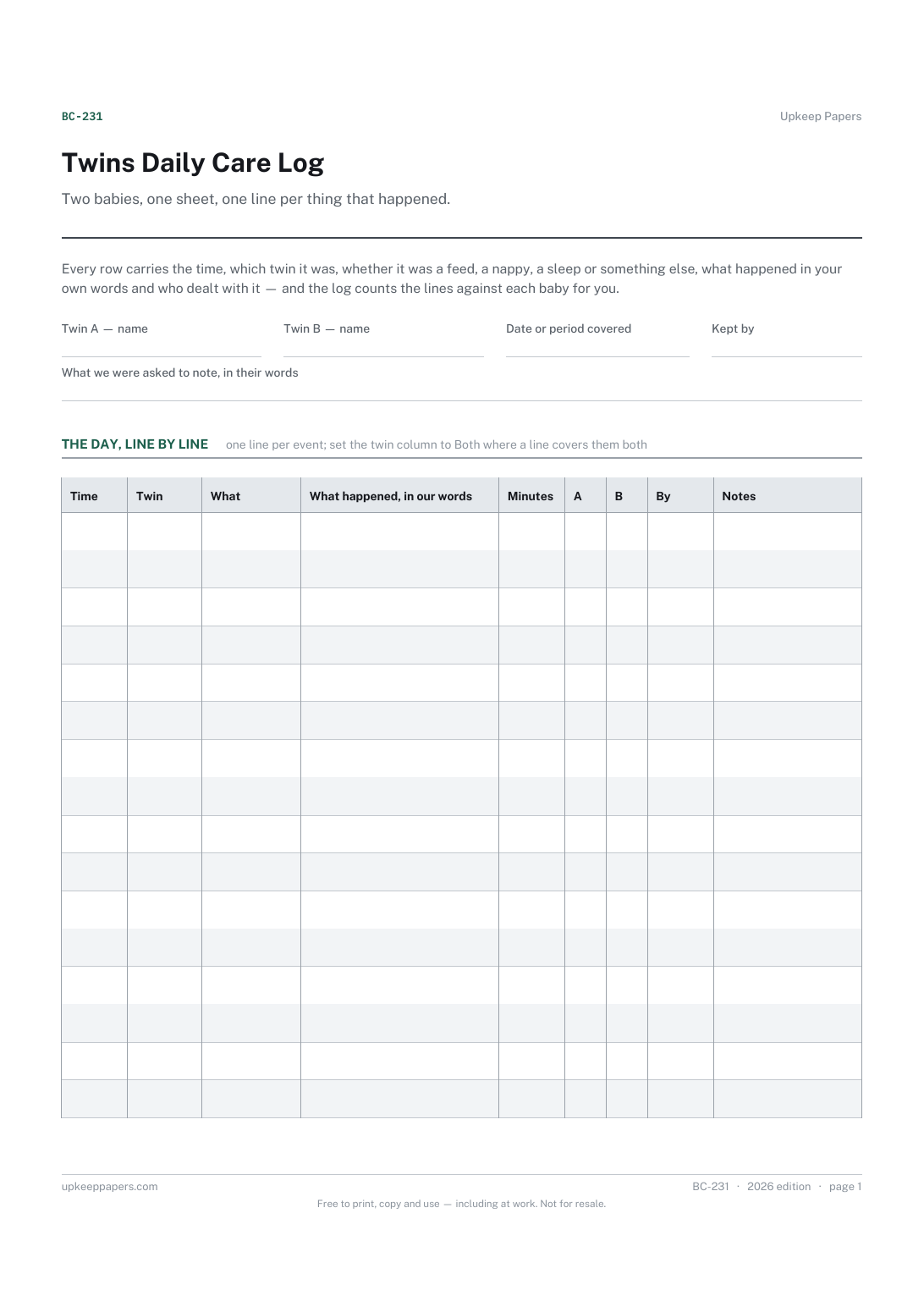
Everything that happened to either baby, in the order it happened.
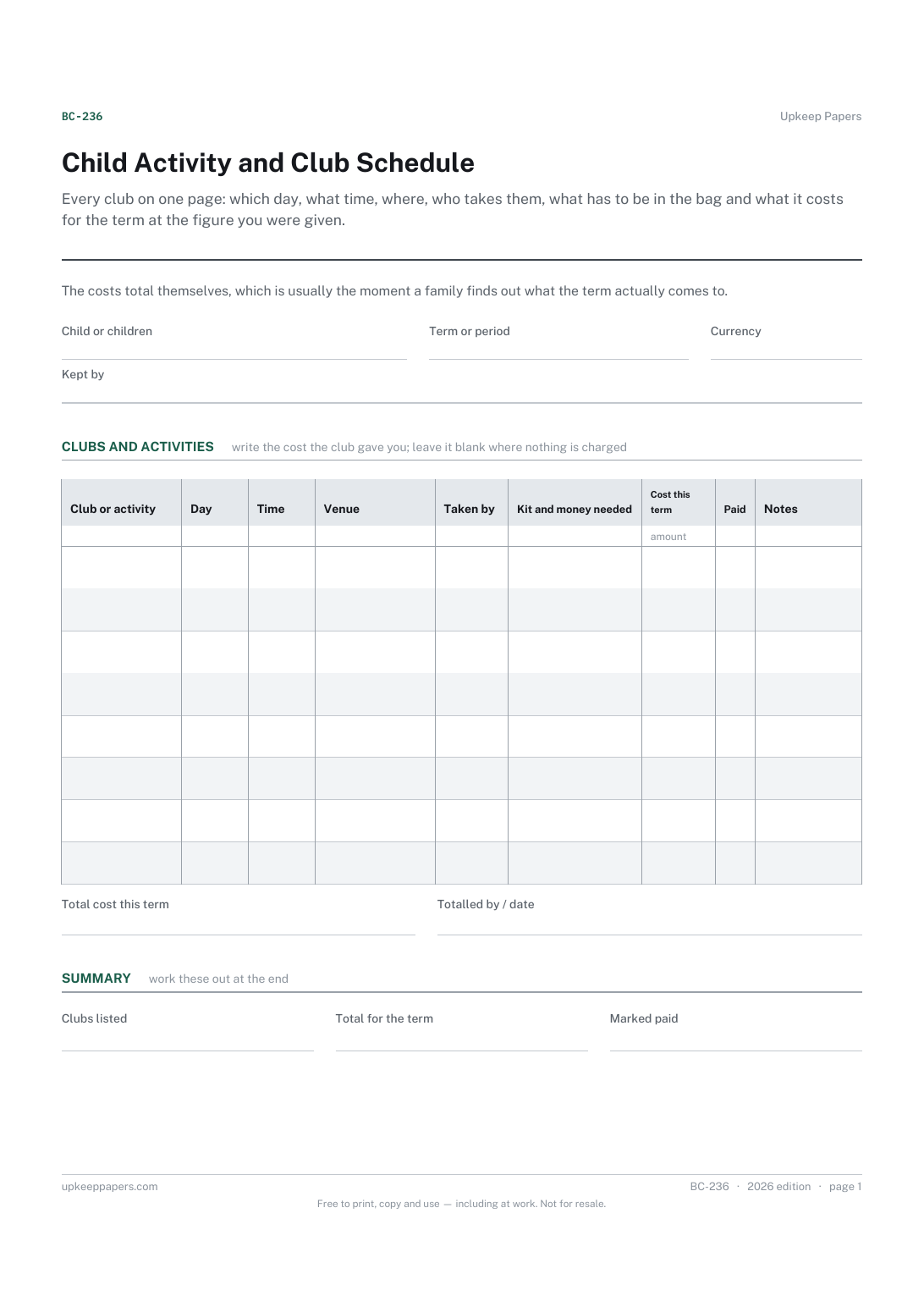
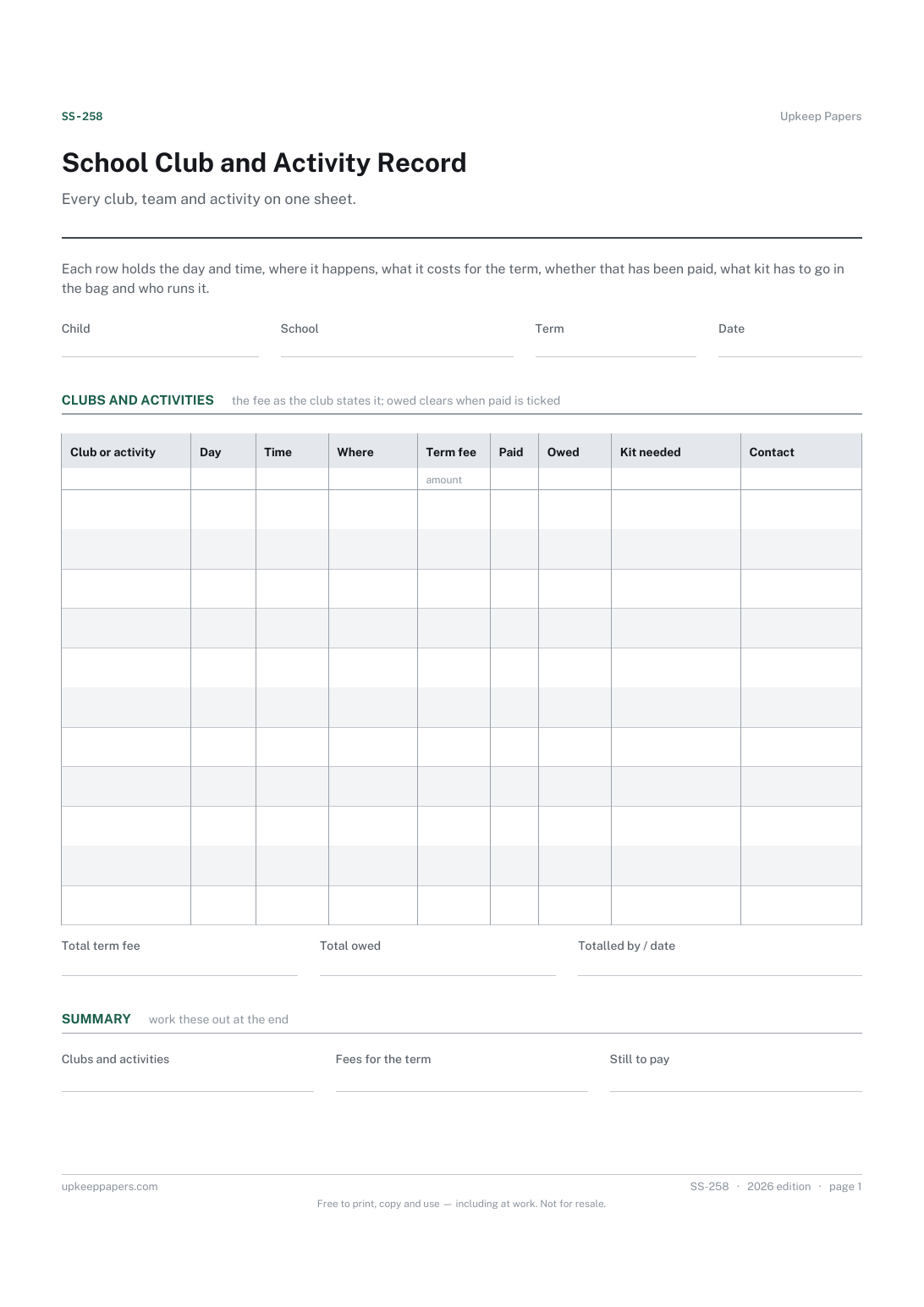
Every club with its day, time and venue in one place.
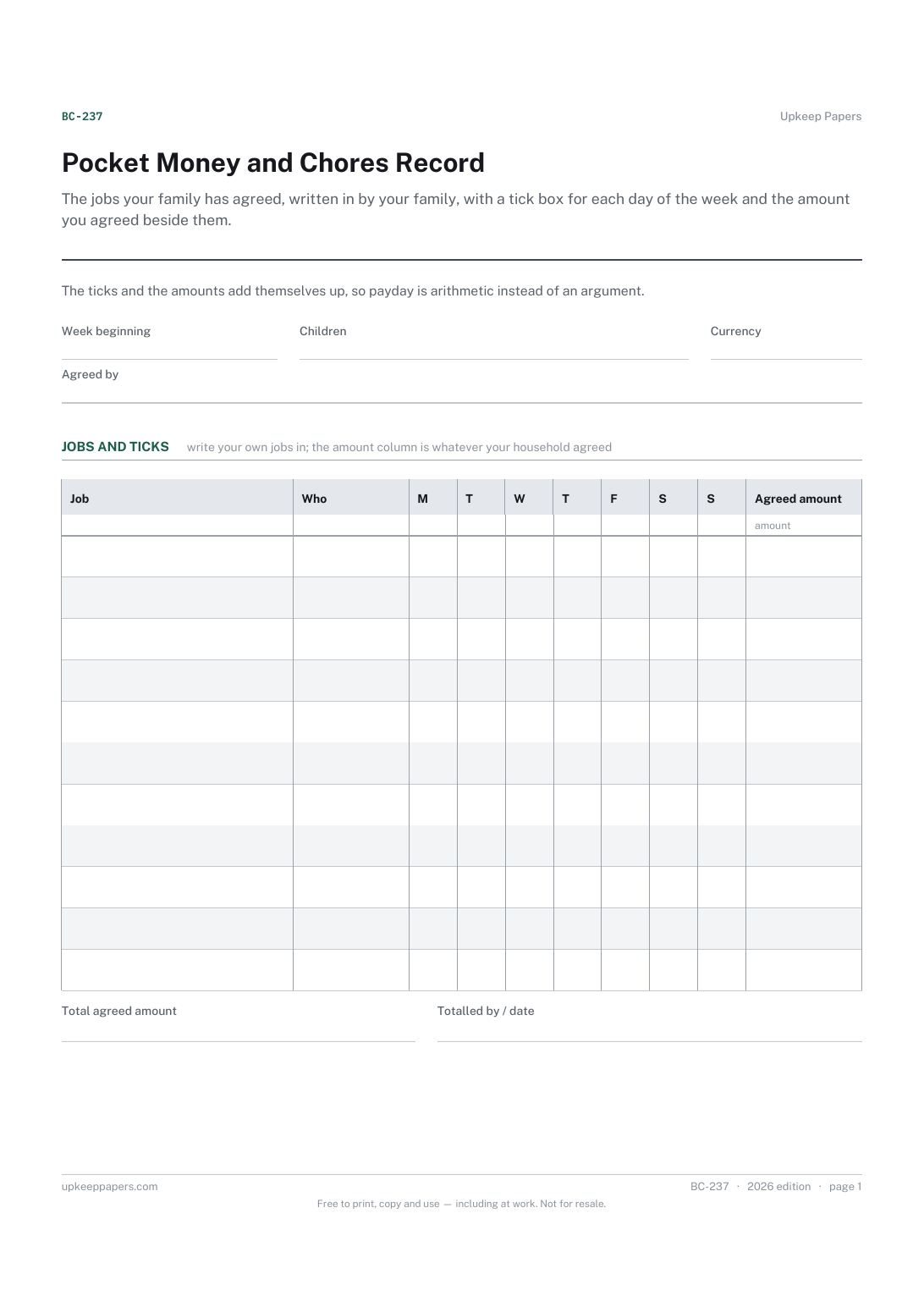
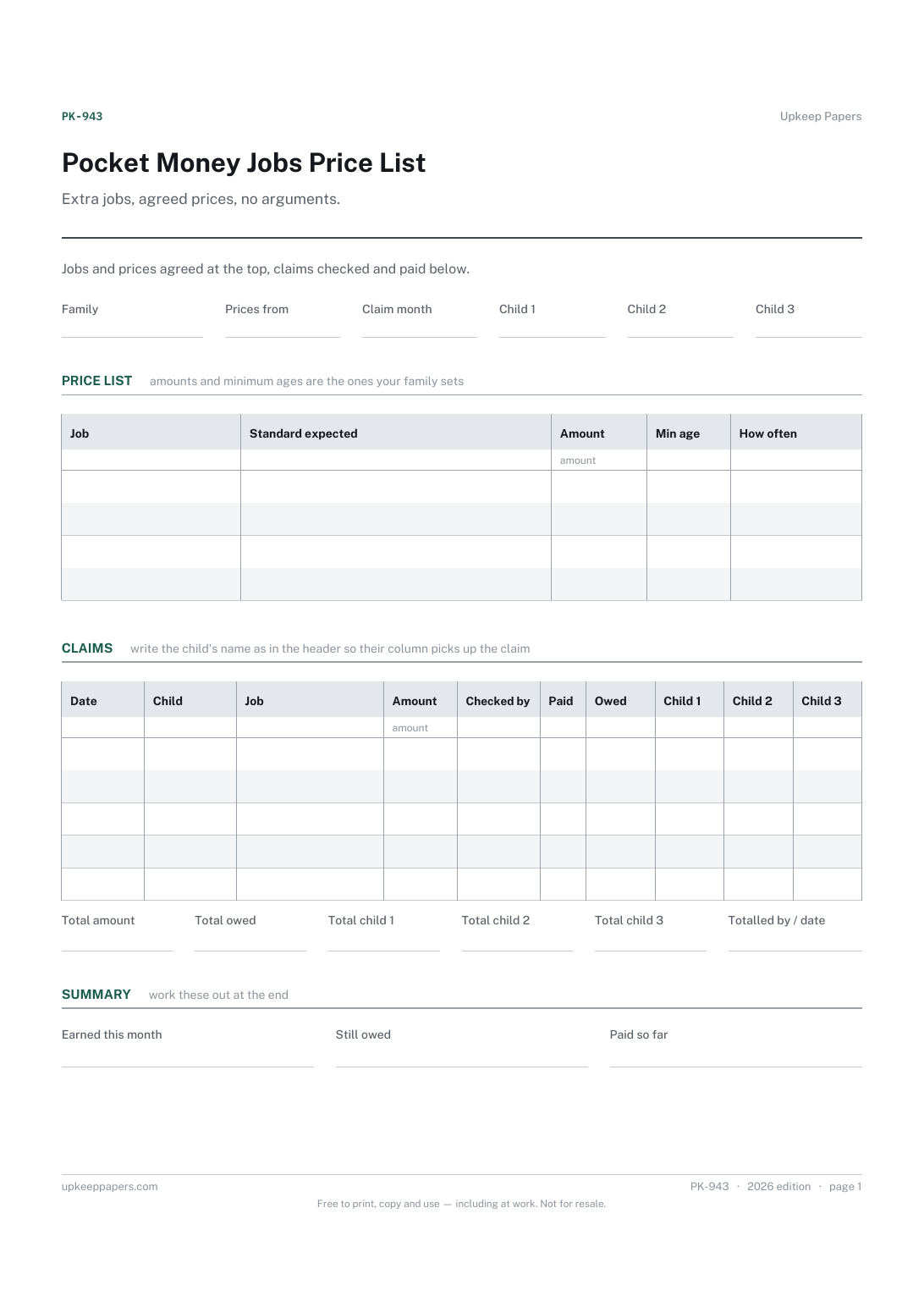
The jobs your household has agreed, in your own words.
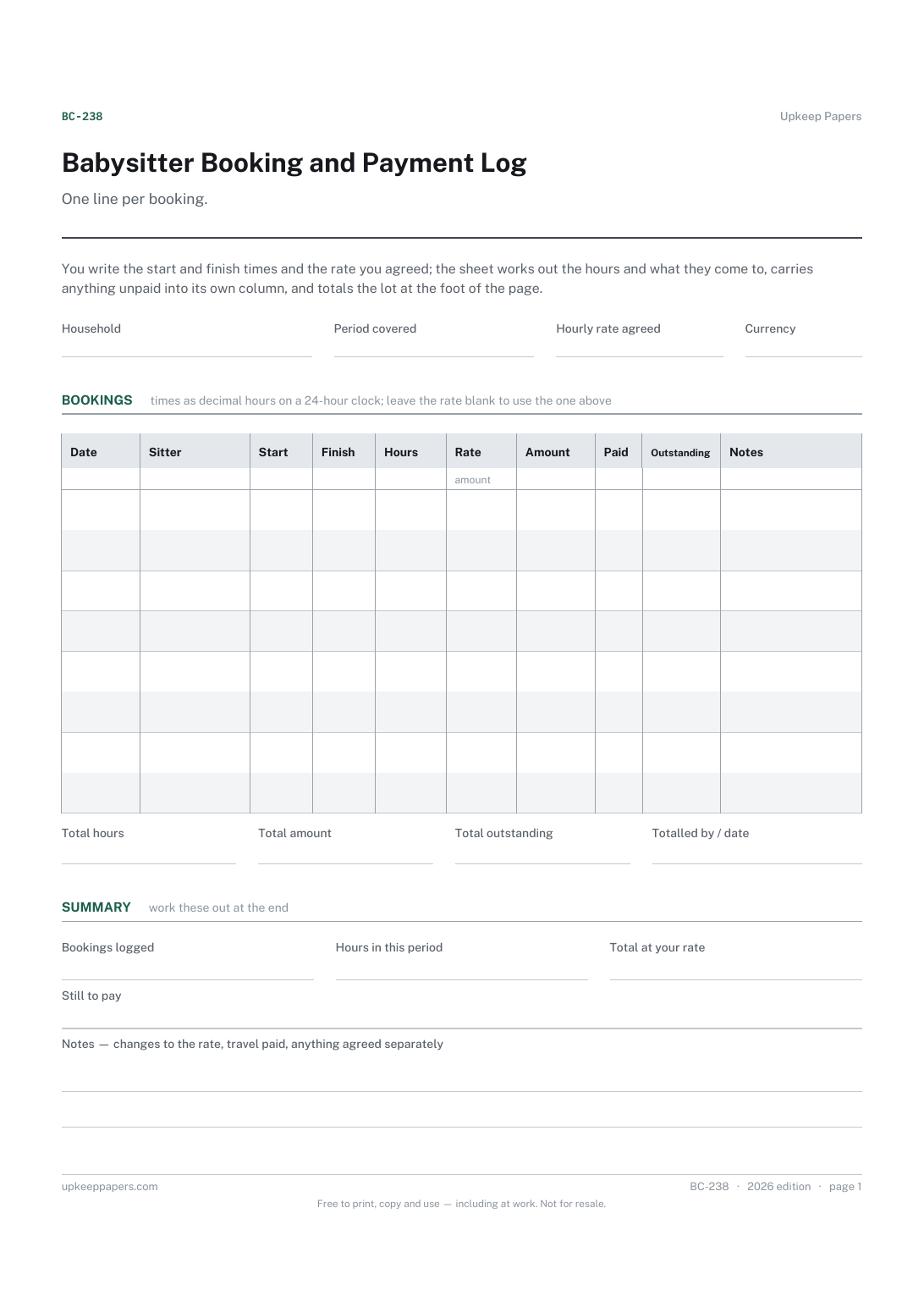
Every booking with its date, the sitter and the hours worked.
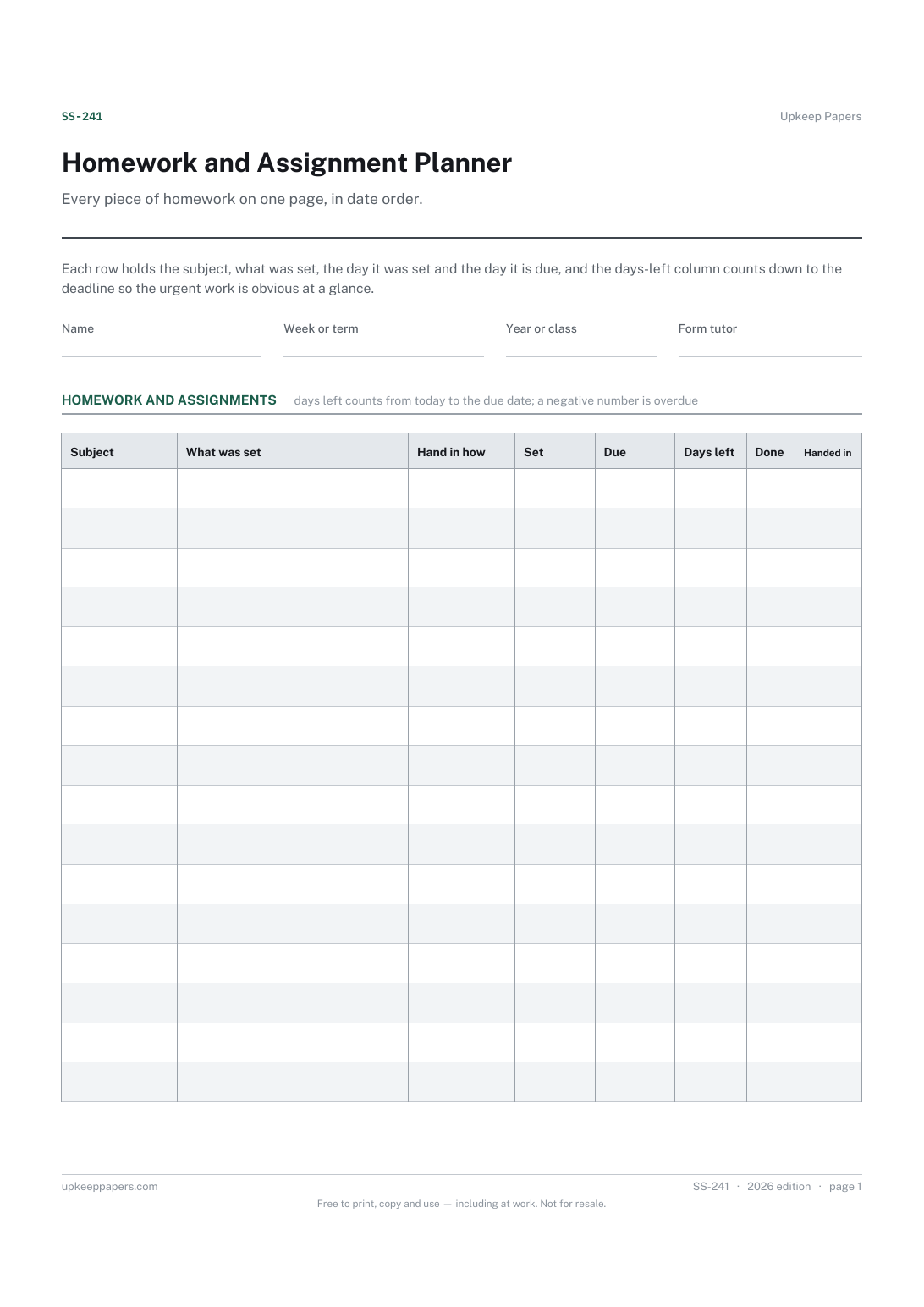
What has been set, by which subject or teacher.
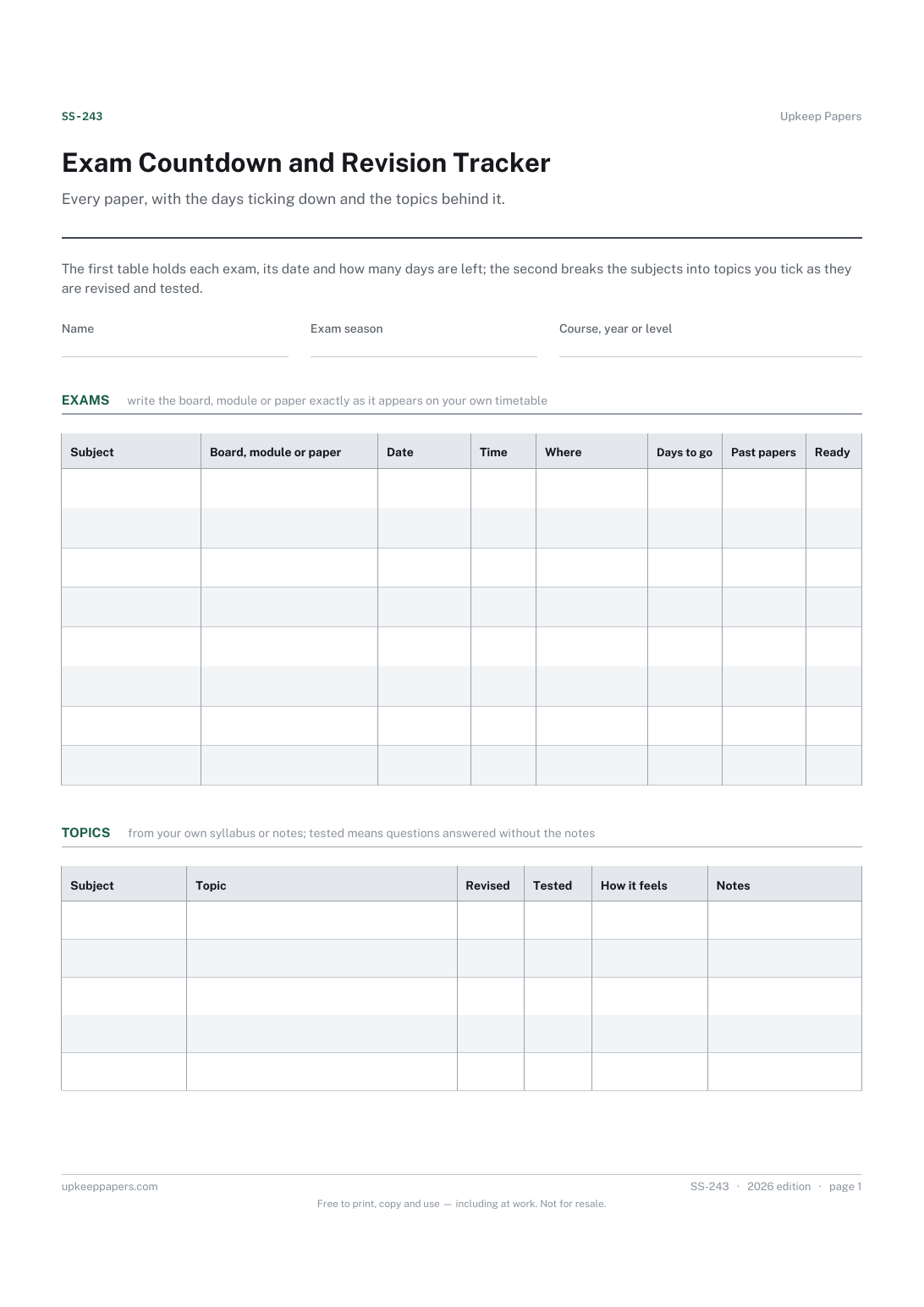
Each paper, module or unit with the date and time you were given.
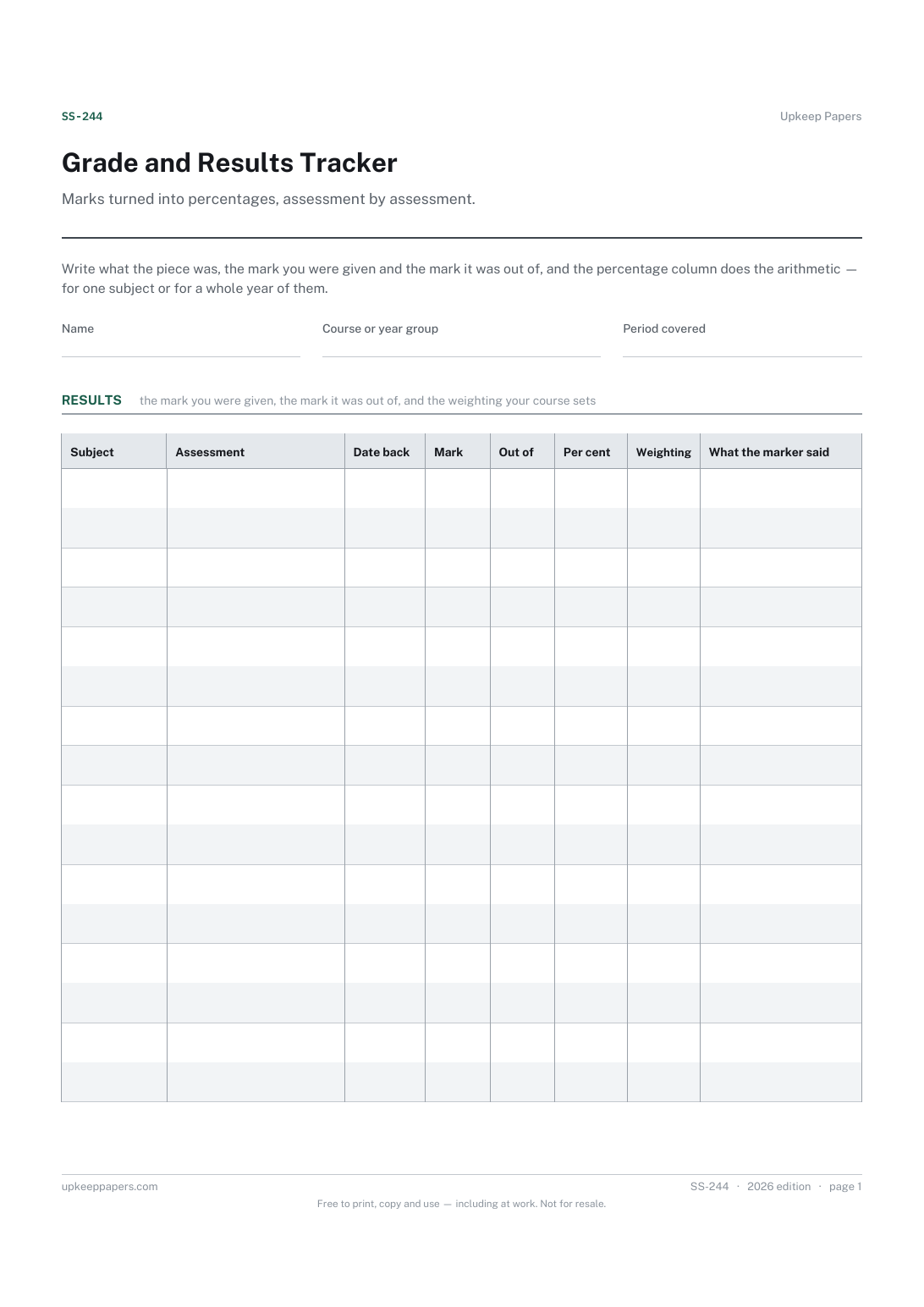
Every assessment, test, essay and exam with the date it was returned.
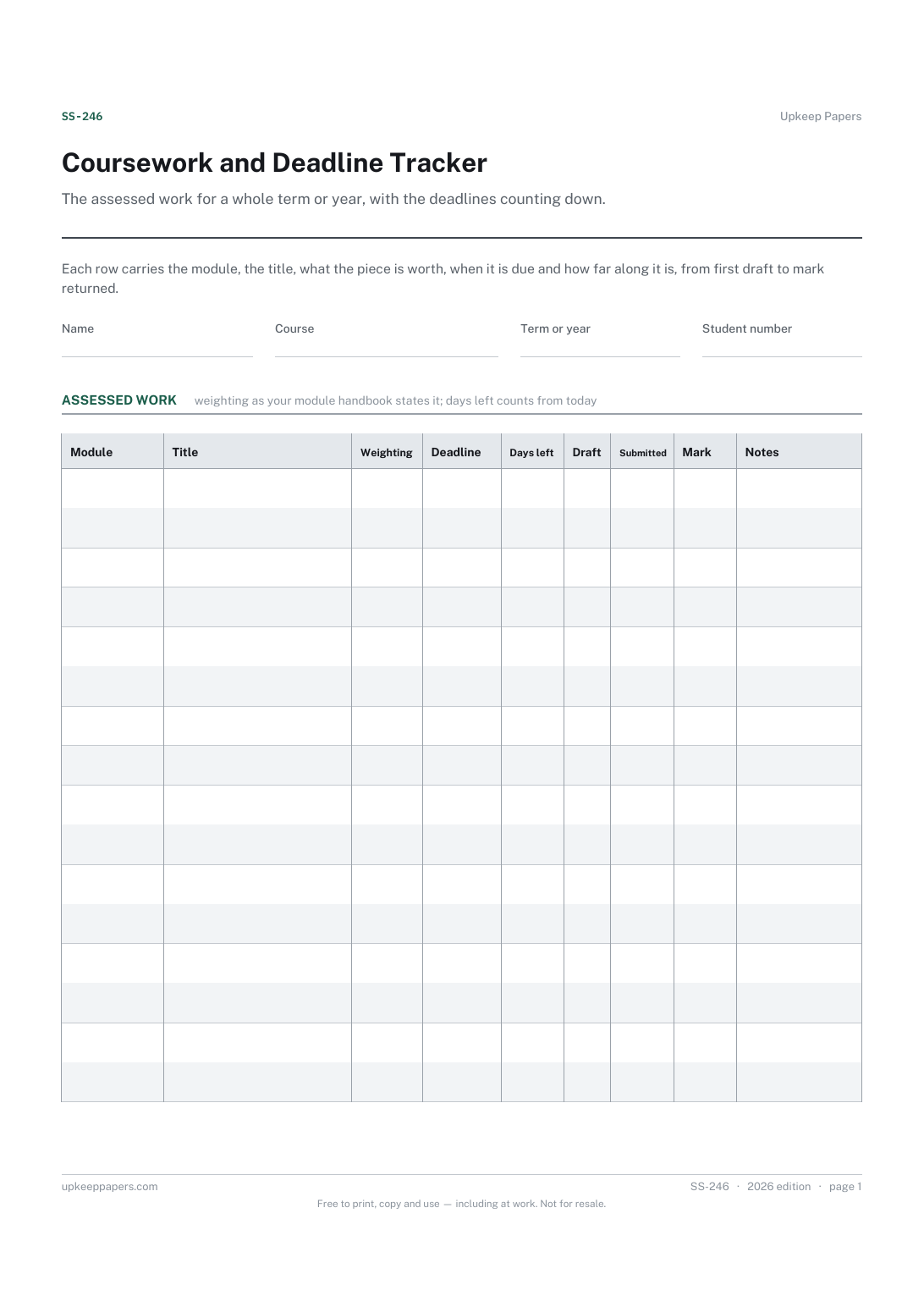
Every assessed piece with the module it belongs to.
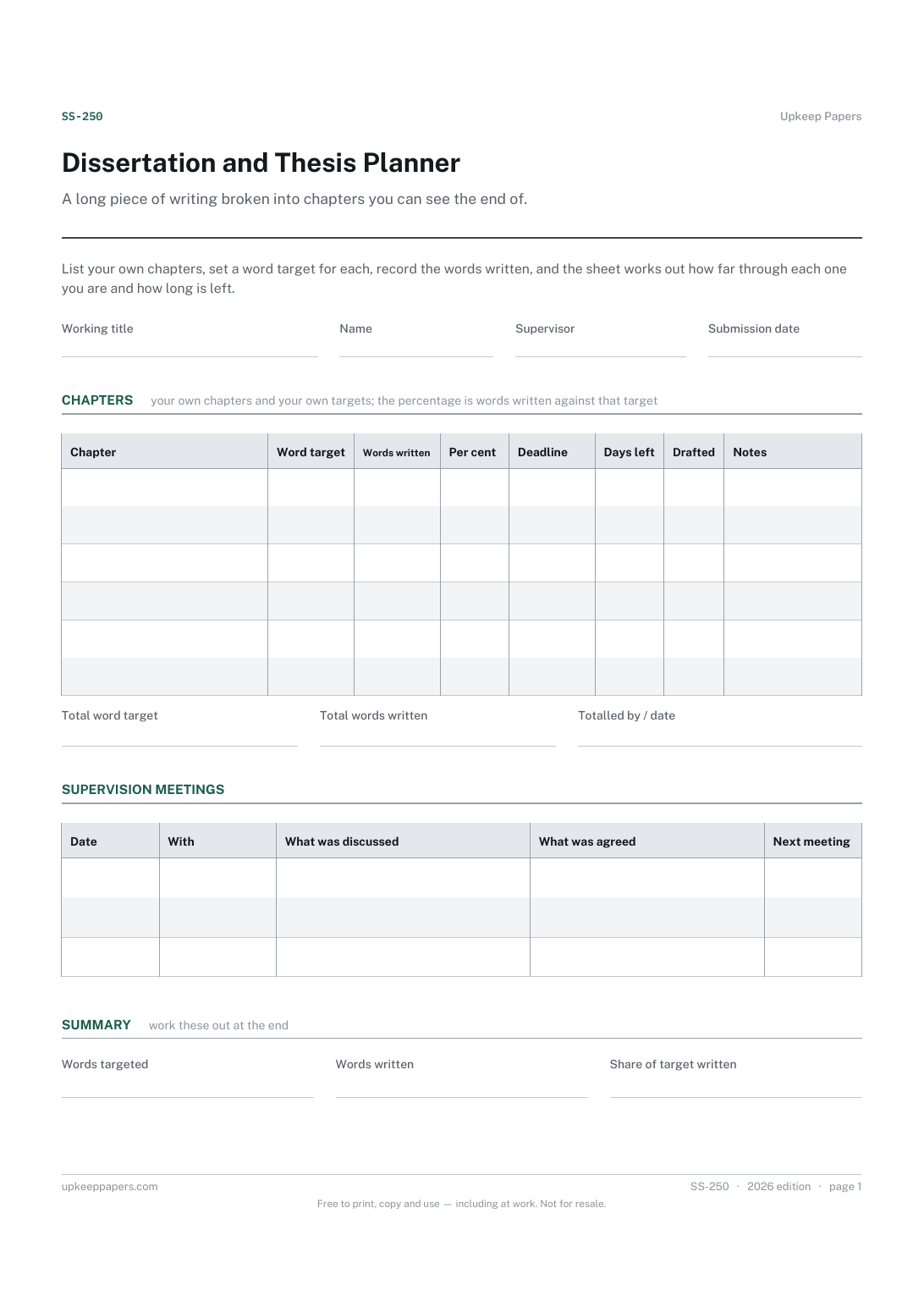
The chapters as your own structure has them, not a template's.
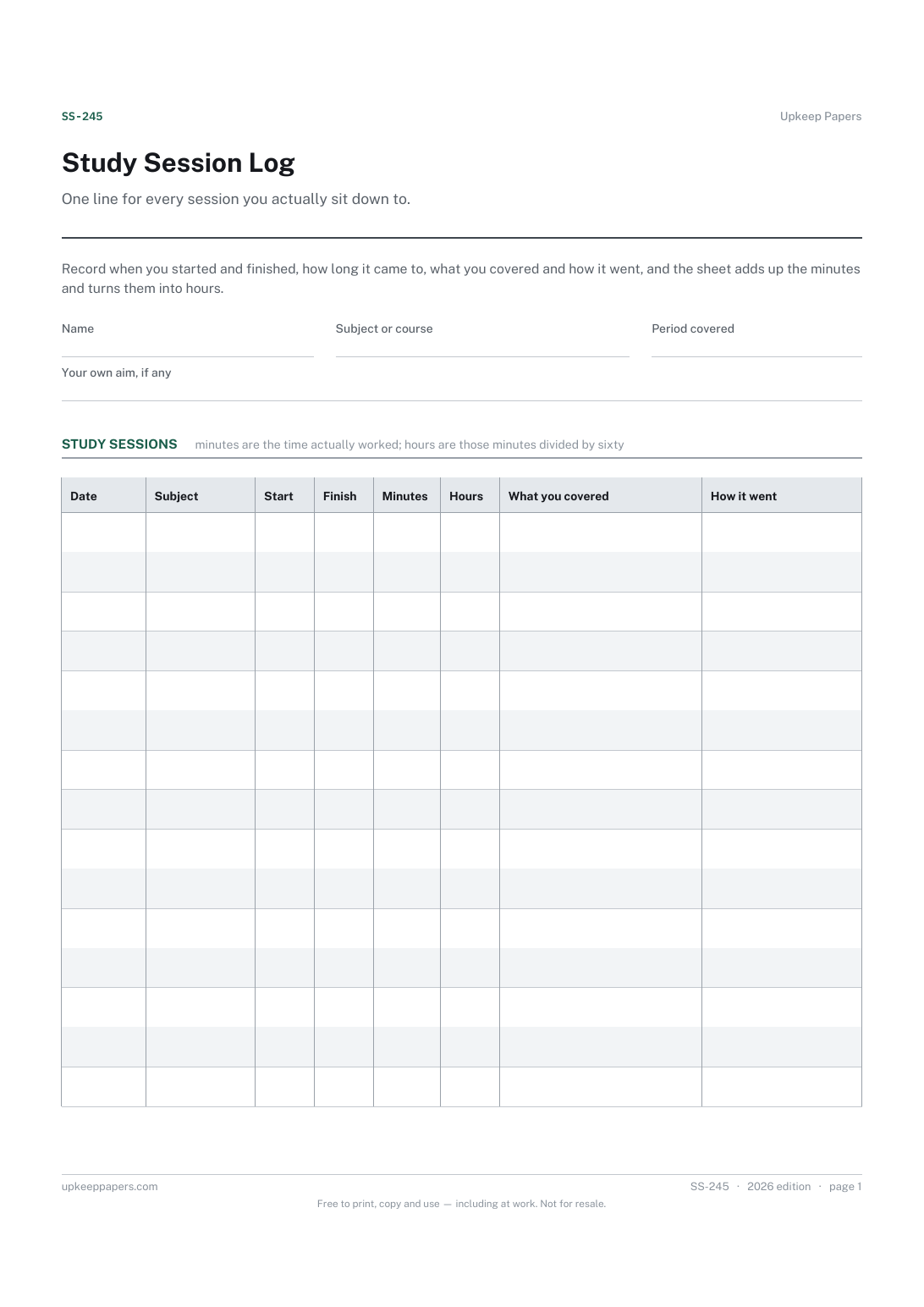
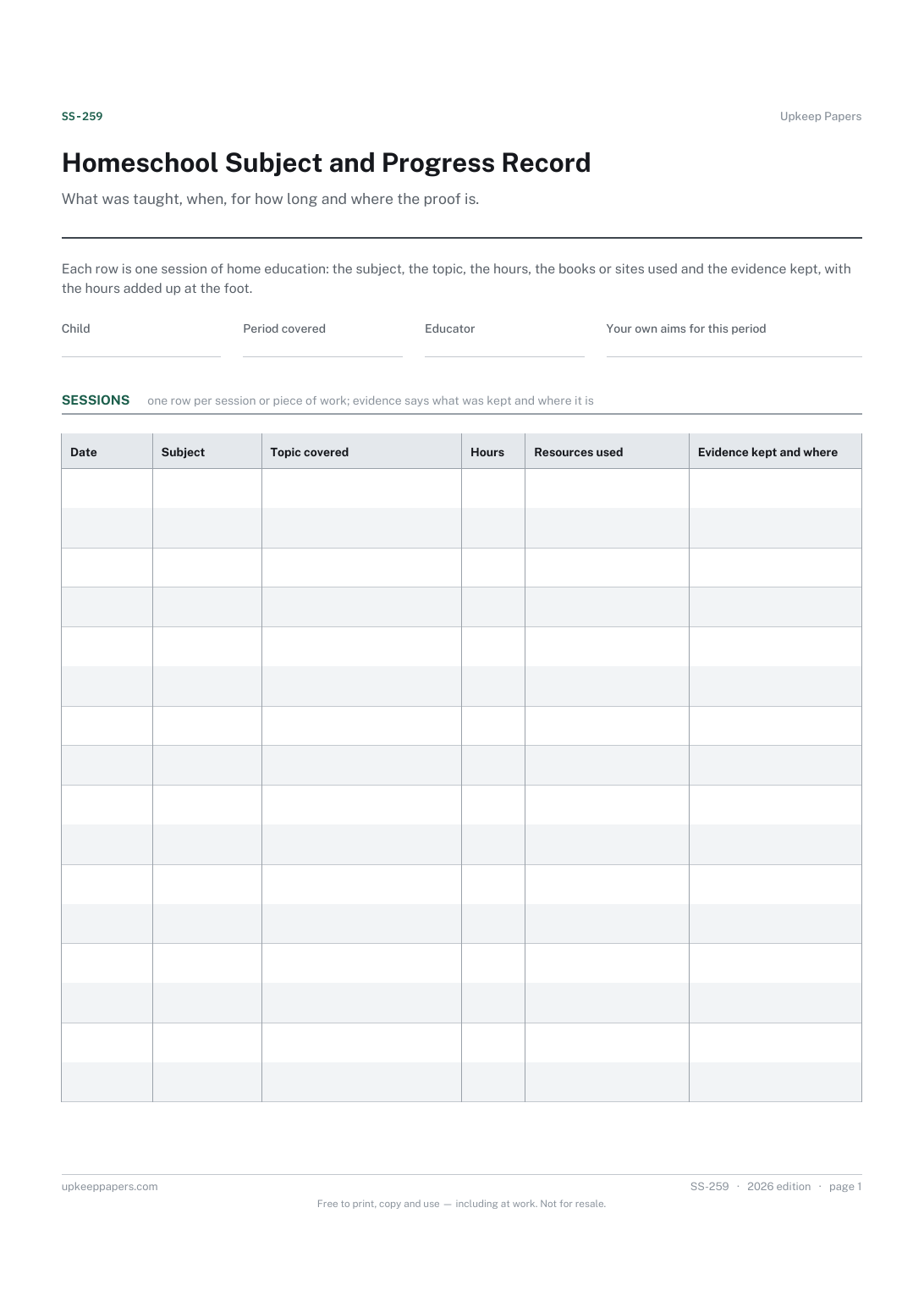
When each session happened, on what subject and for how long.
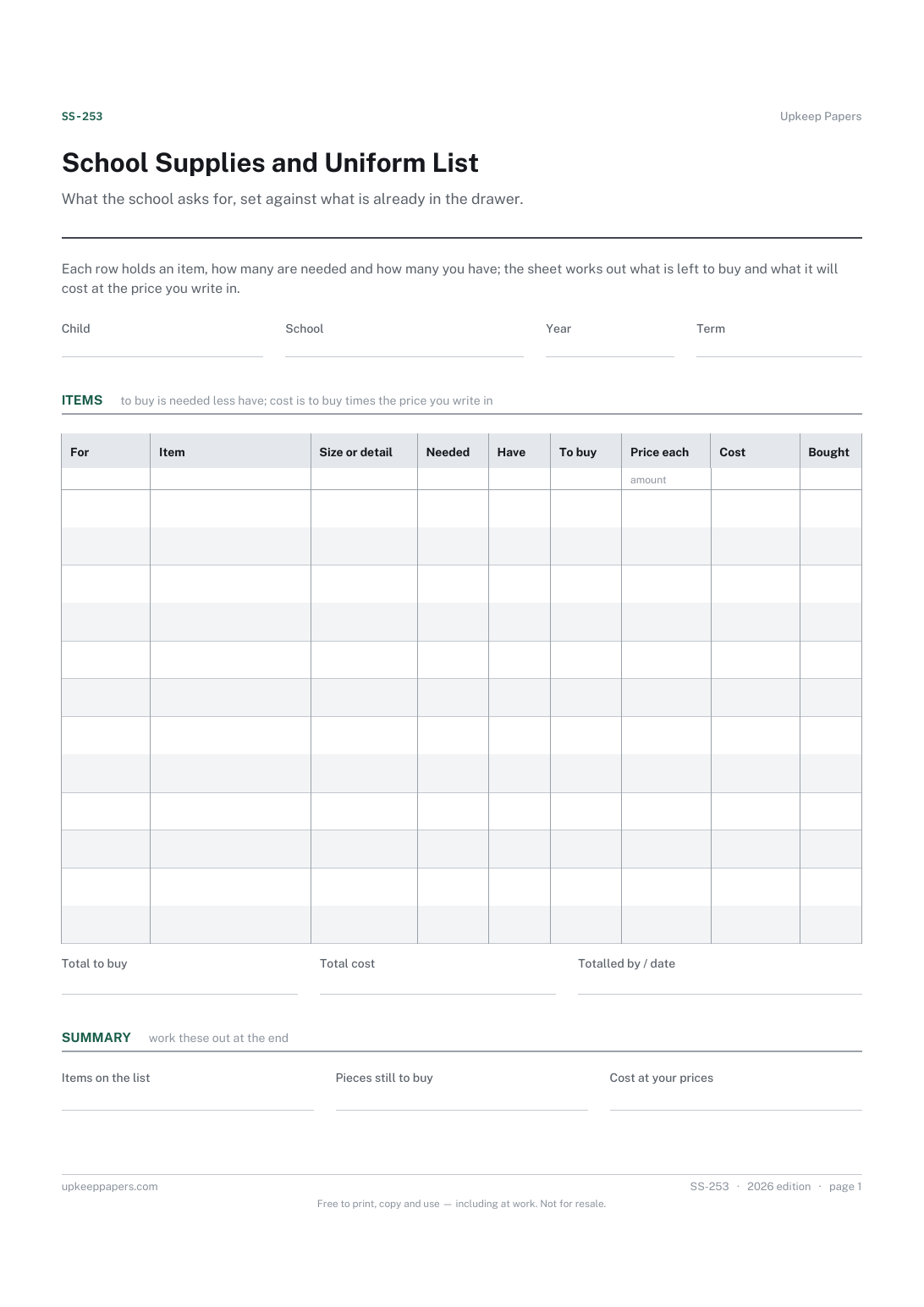
Every item on the school's list, grouped as uniform, PE kit, stationery, books or other.
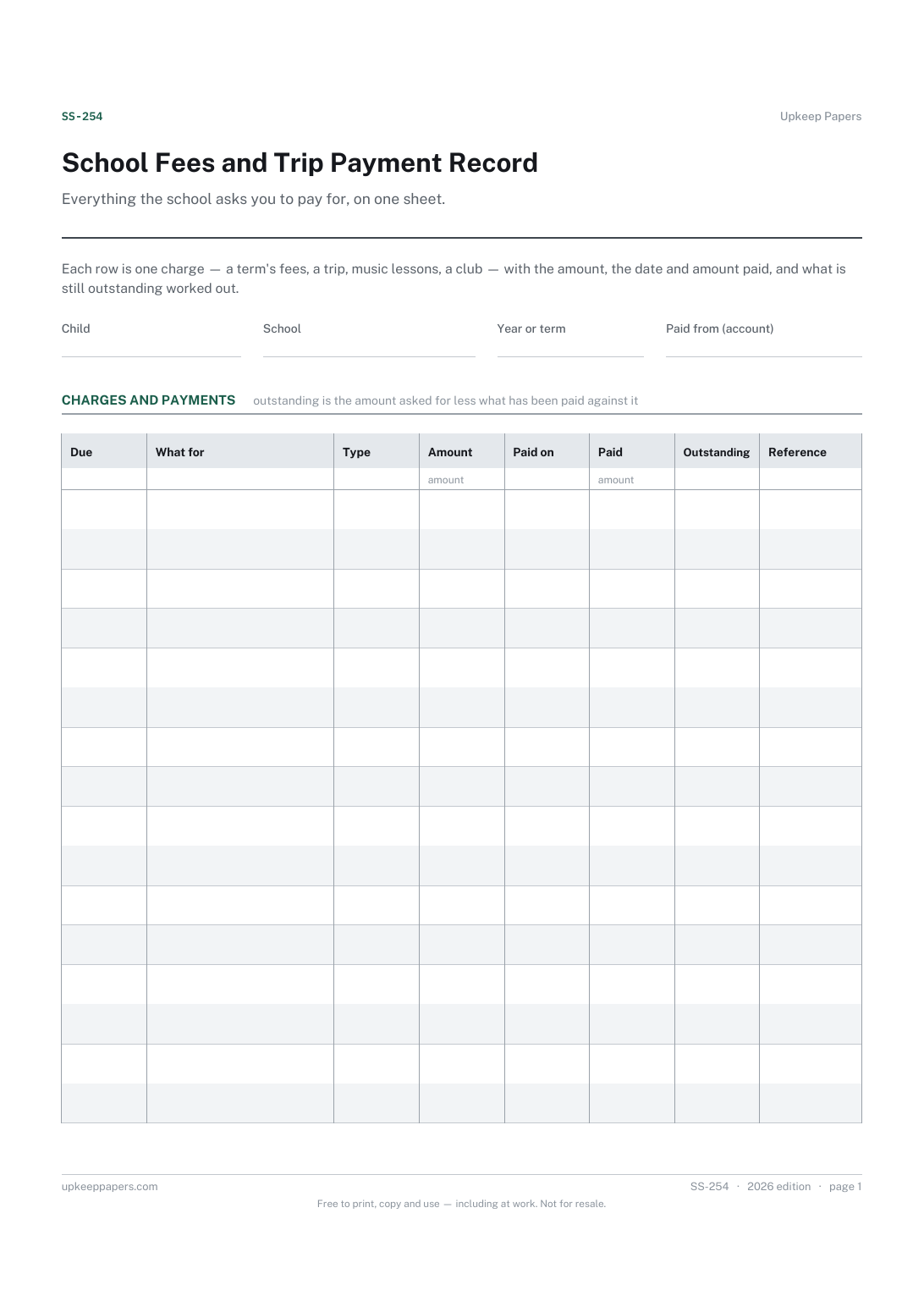
Every charge from the school with the date it is due.
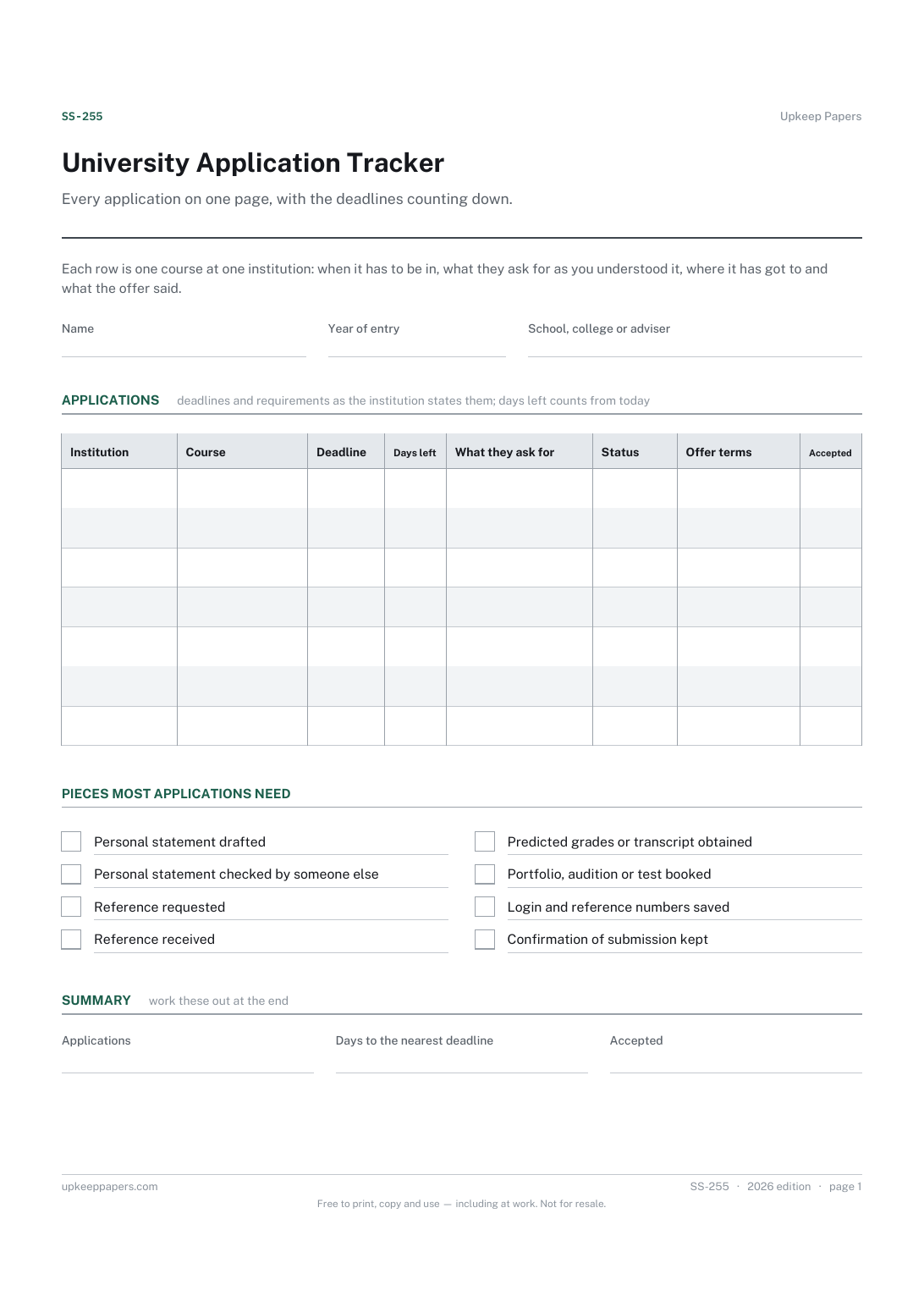
Each course and institution you are applying to, with the deadline you were given.
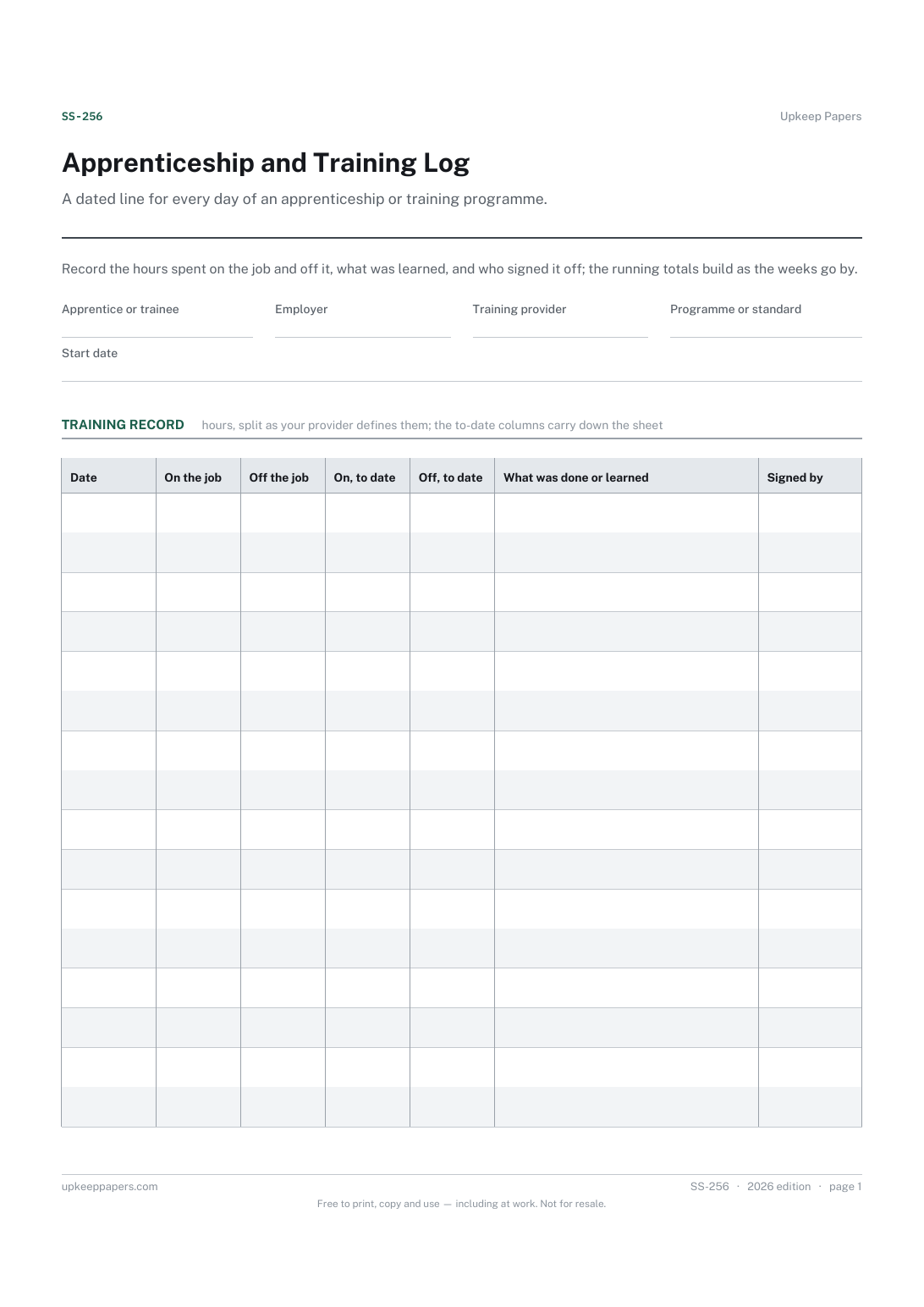
The hours worked on the job and the hours spent on training away from it, day by day.
Which clubs and activities are on, on which day and at what time.
Every subject and topic covered, with the date.
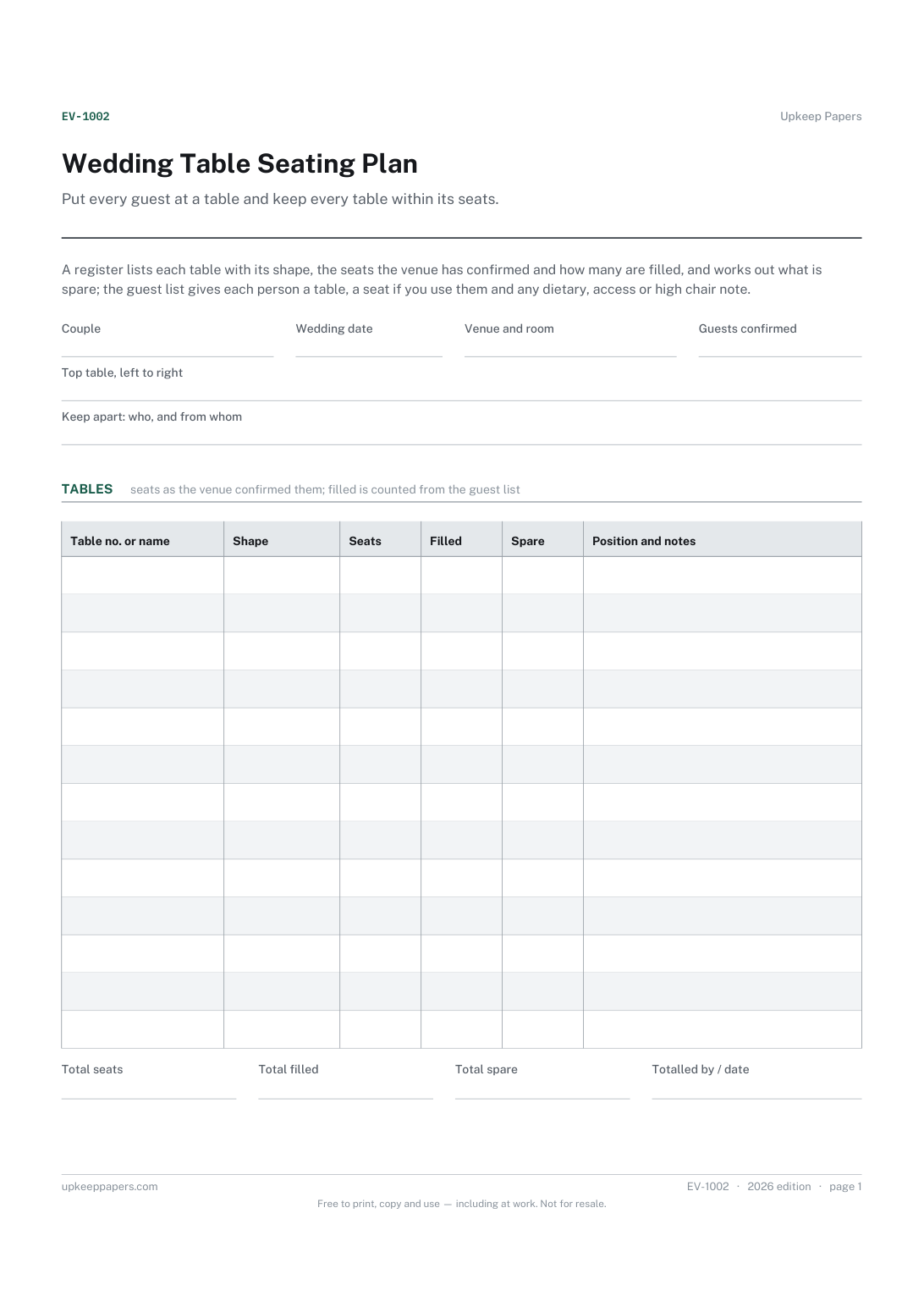
Each table's shape, seats and how many places are still free.
Each outfit, who wears it and whether it is bought, hired, made or altered.
Each artist's number and arrival time, and who is keeping time.
Every piece for the wedding party, the ceremony, the reception and the cars.
What each part of the wedding was budgeted at and what it actually came to.
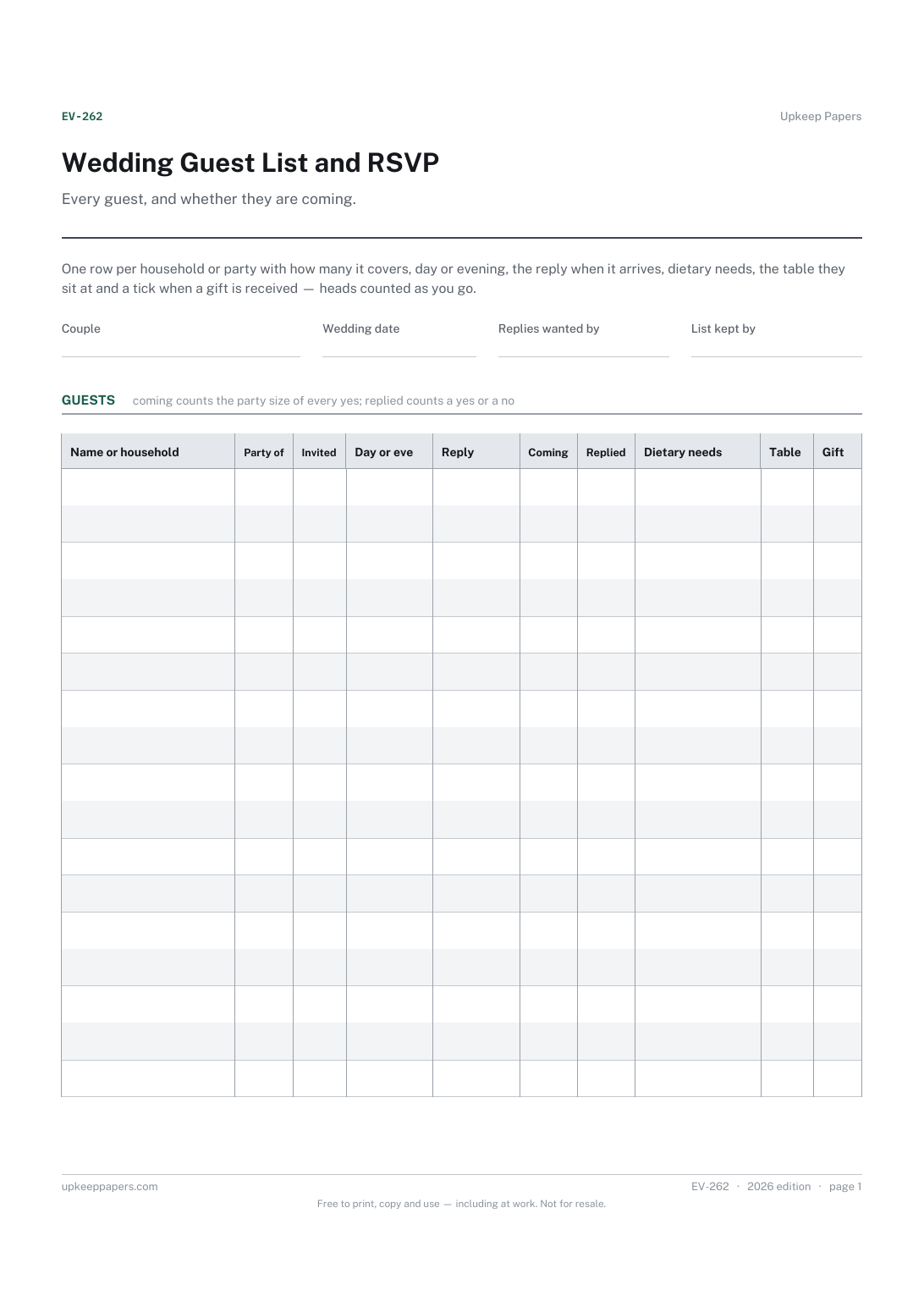
Who has been invited, for the day or the evening, and how many each invitation covers.
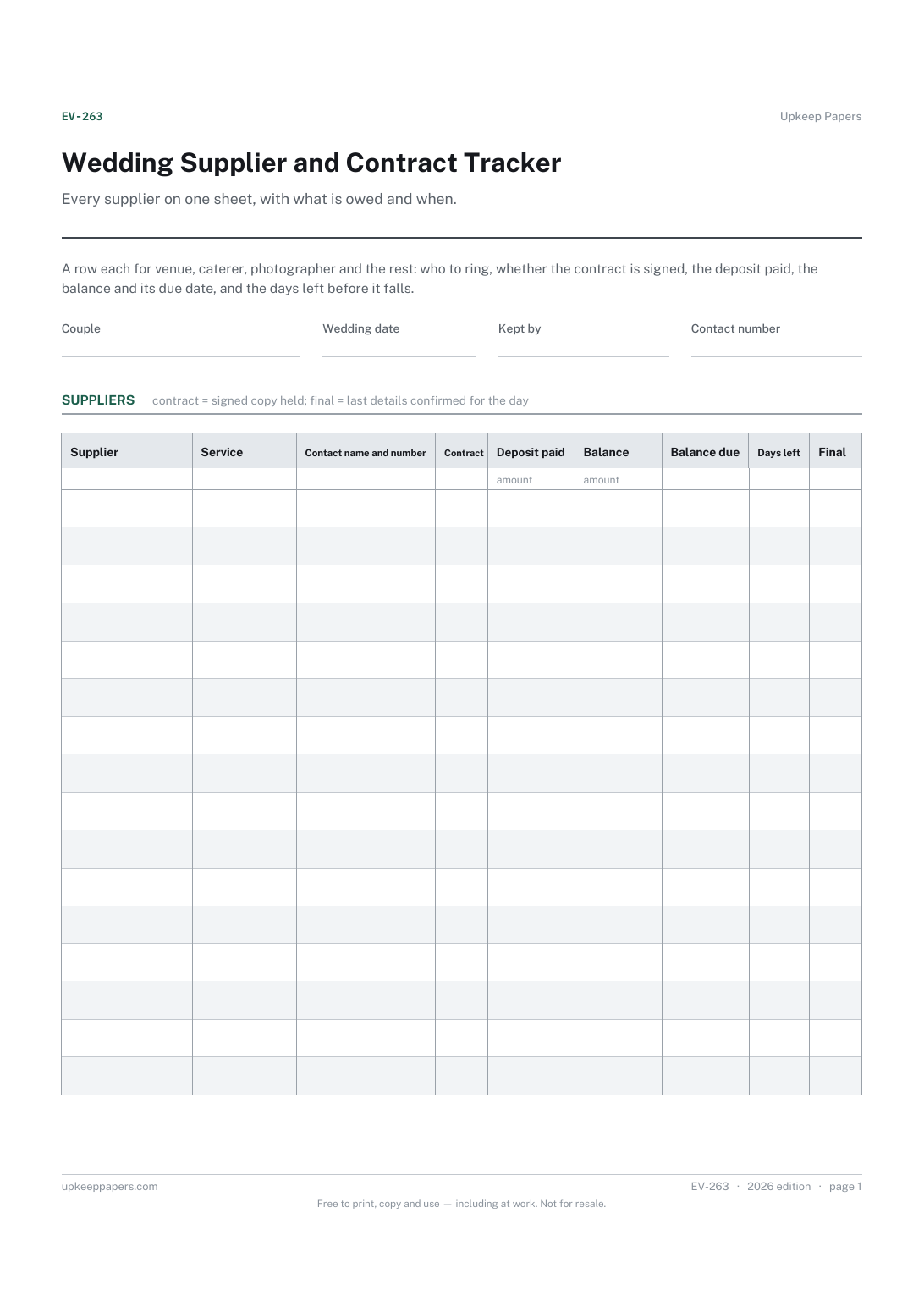
Who each supplier is, what they are providing and how to reach them.
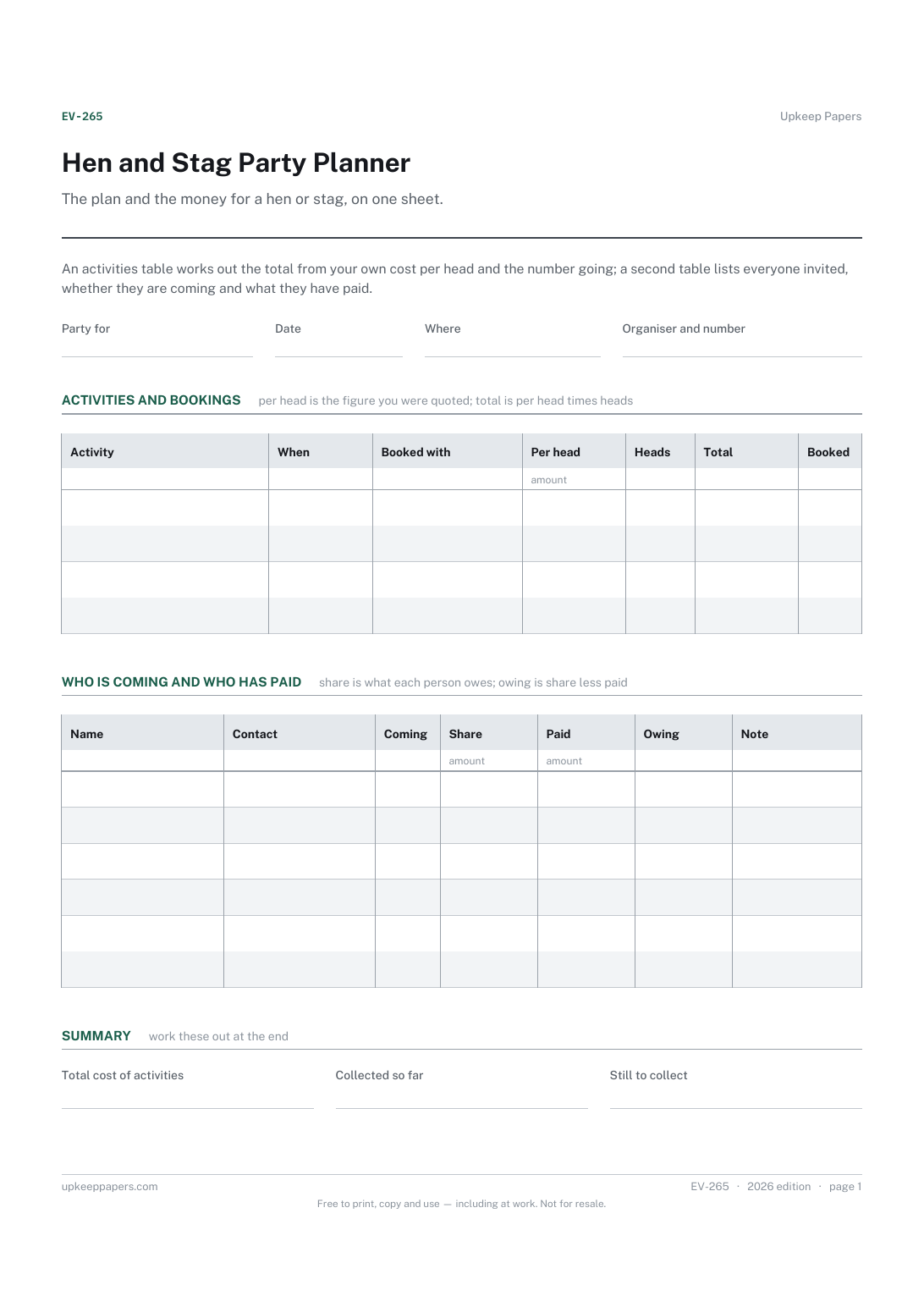
What is planned, when, who it is booked with and whether it is booked.
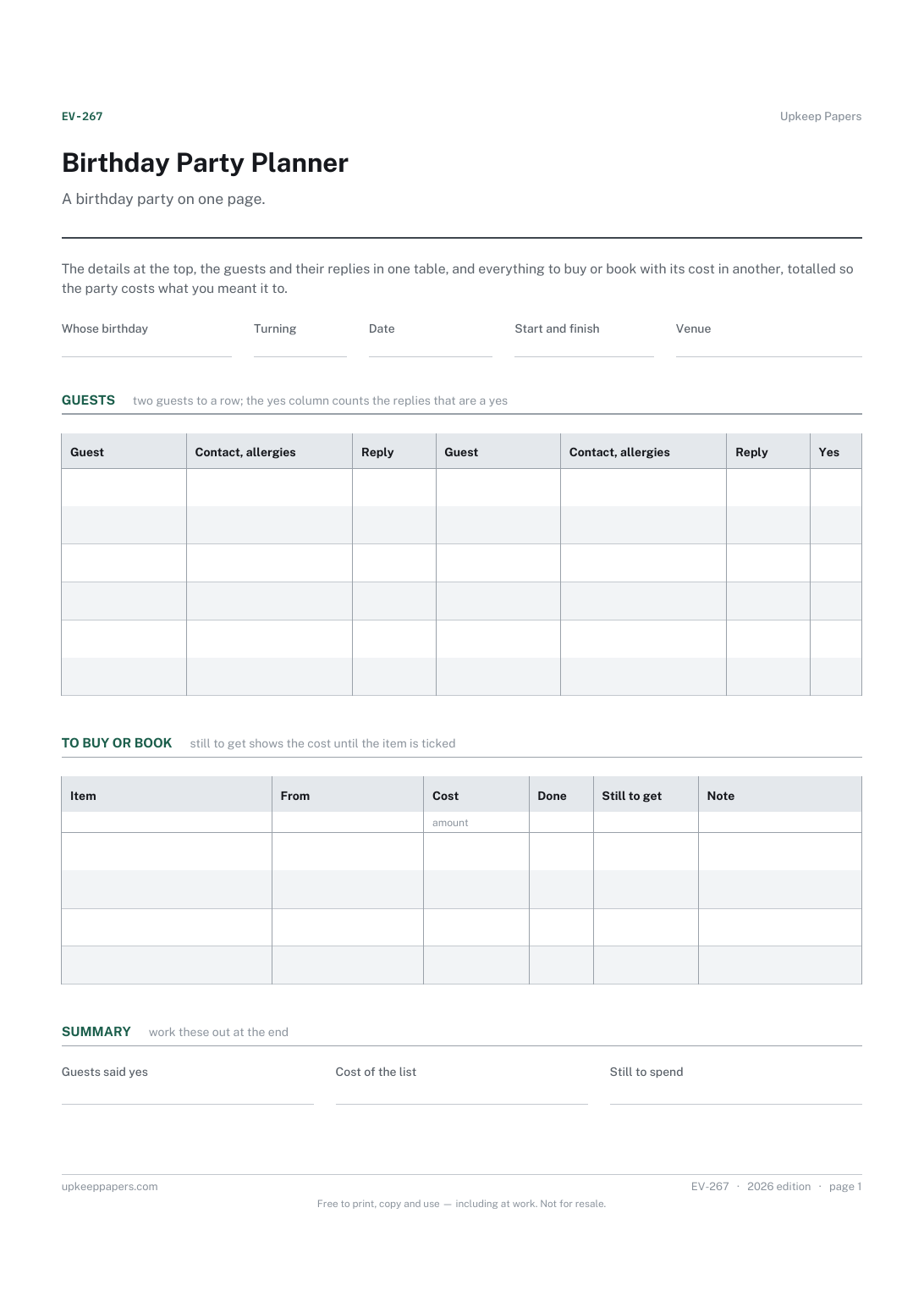
Whose birthday it is, what age, when and where.
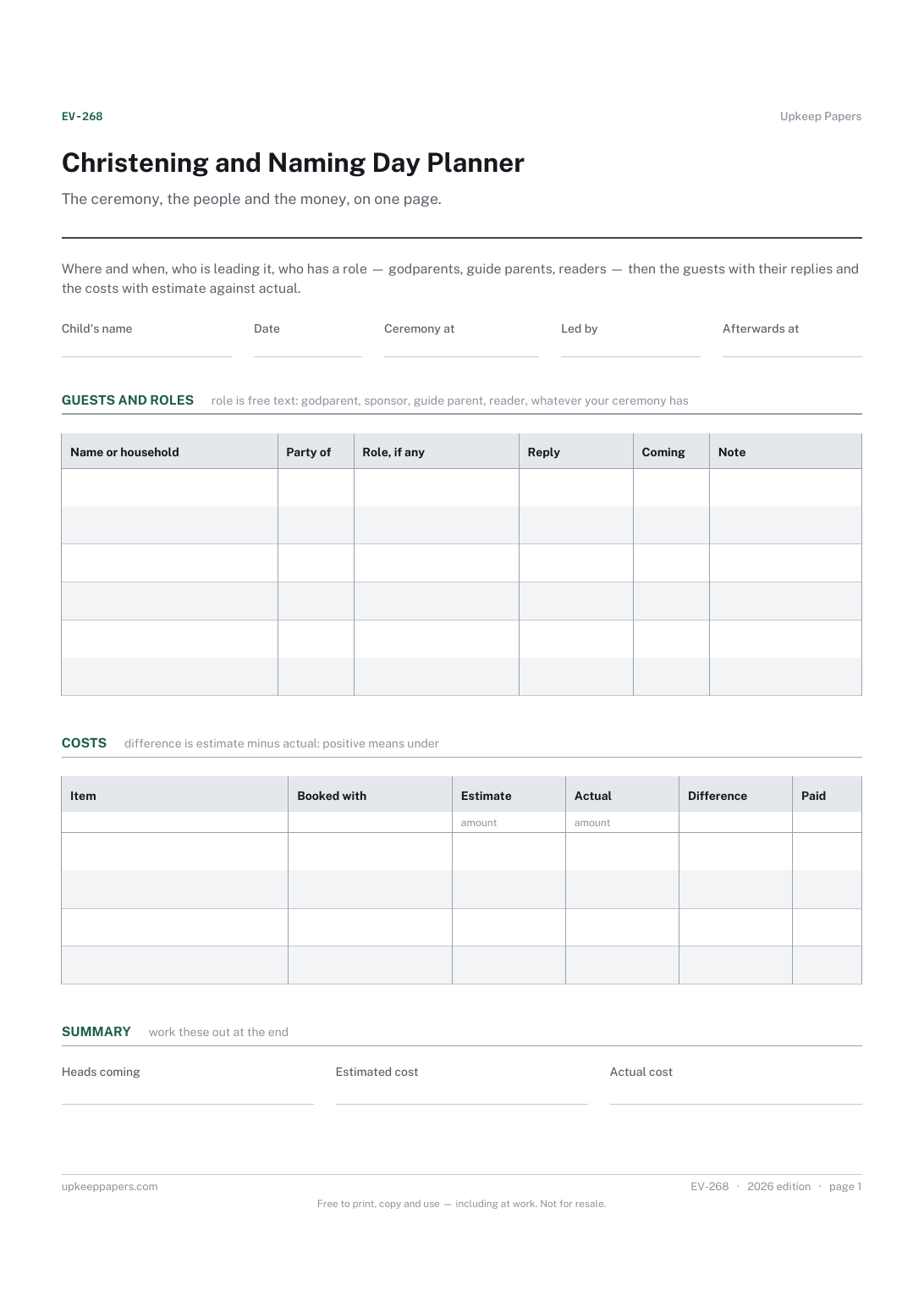
The ceremony details in one place: where, when, who is leading it.
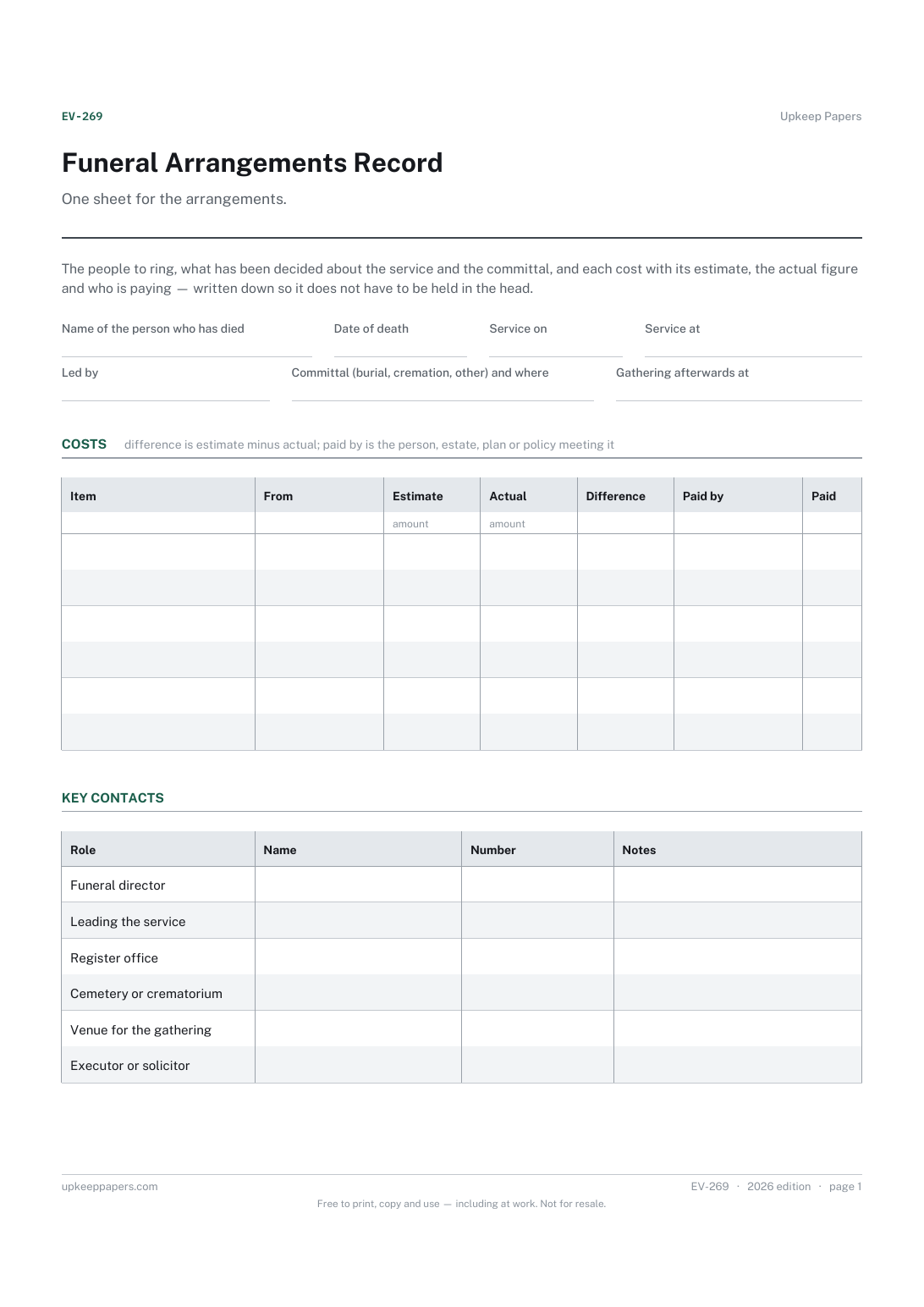
Who the funeral director, the person leading the service and the other contacts are, with their numbers.
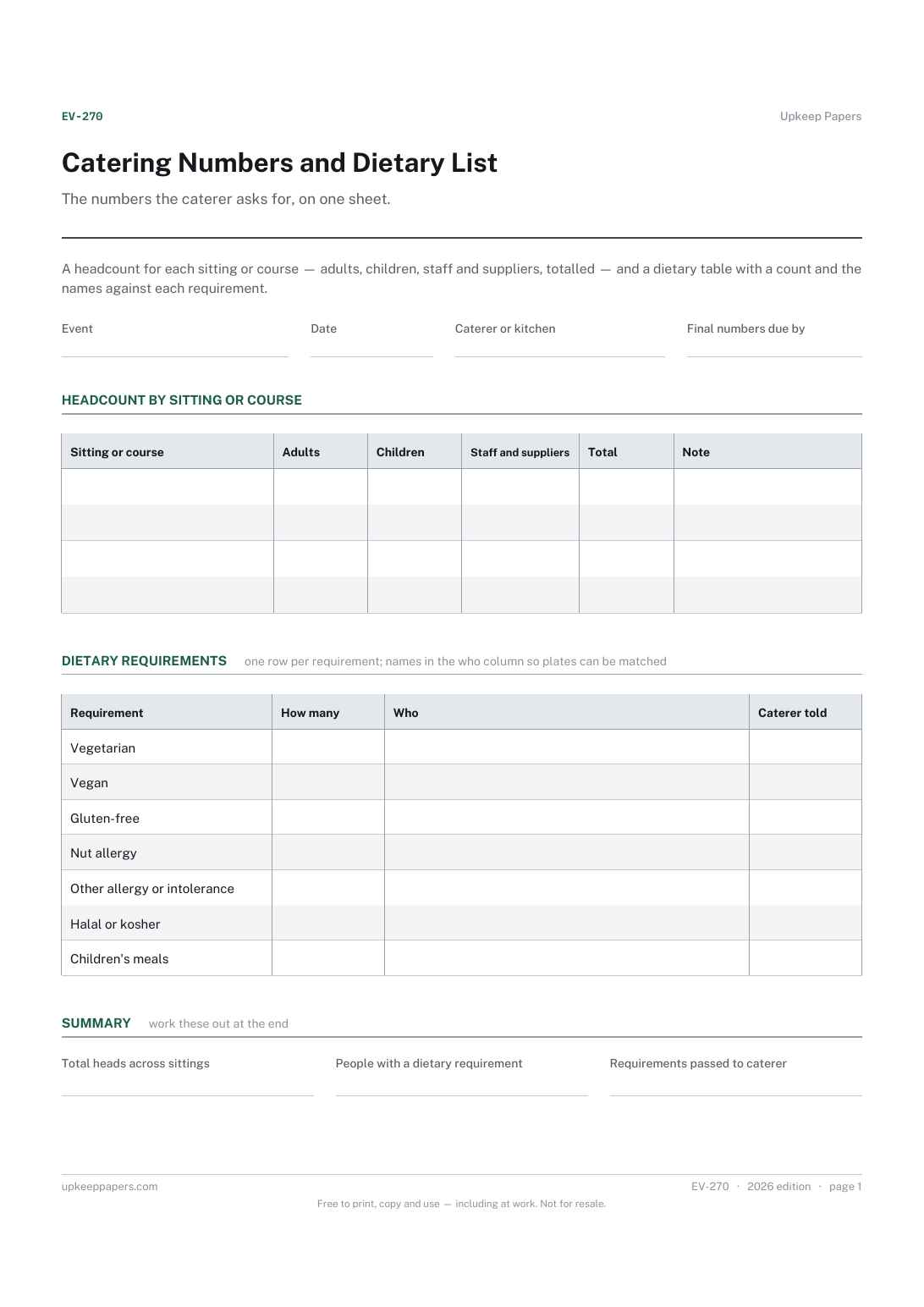
How many people are eating at each sitting, split into adults, children and staff.
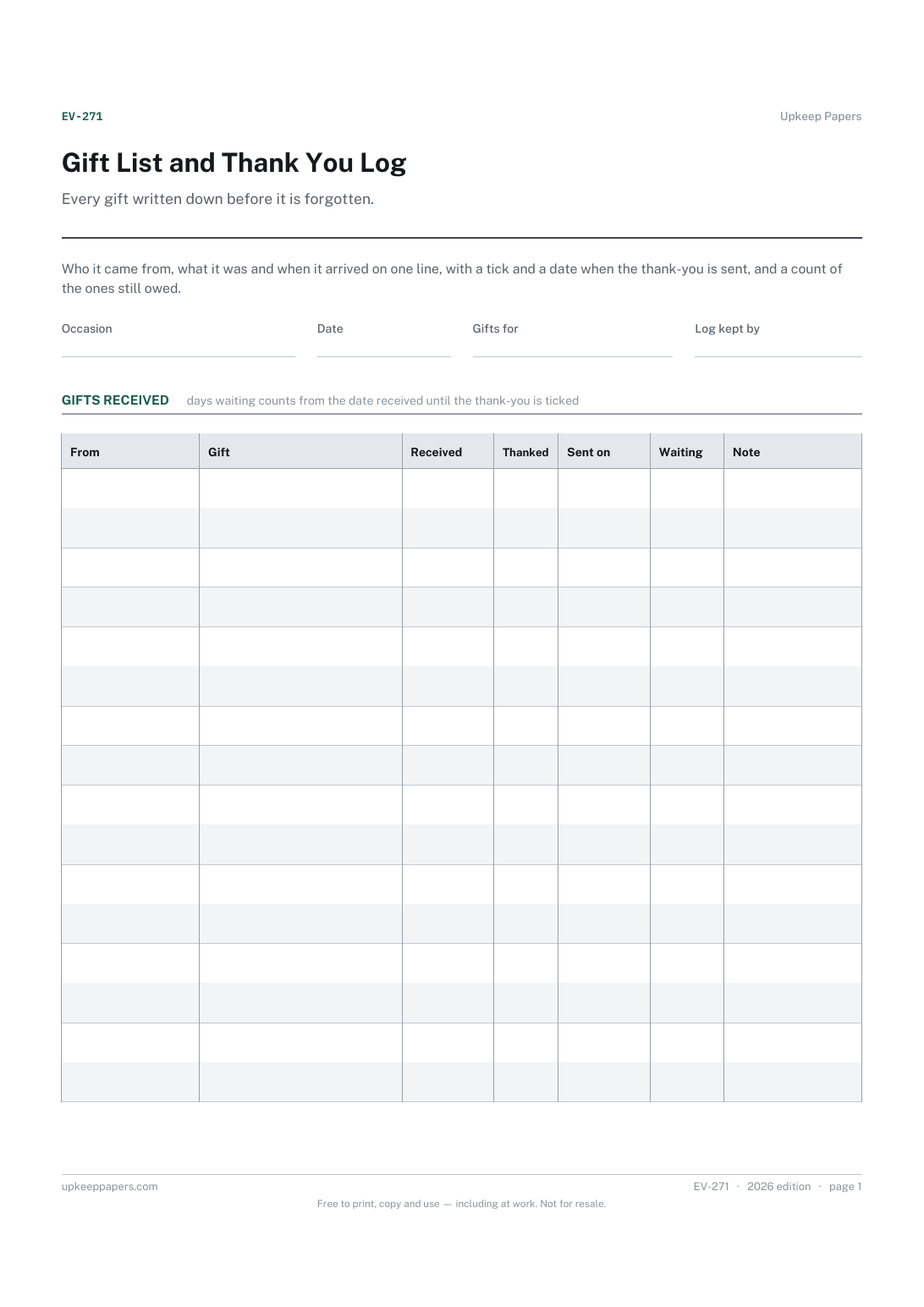
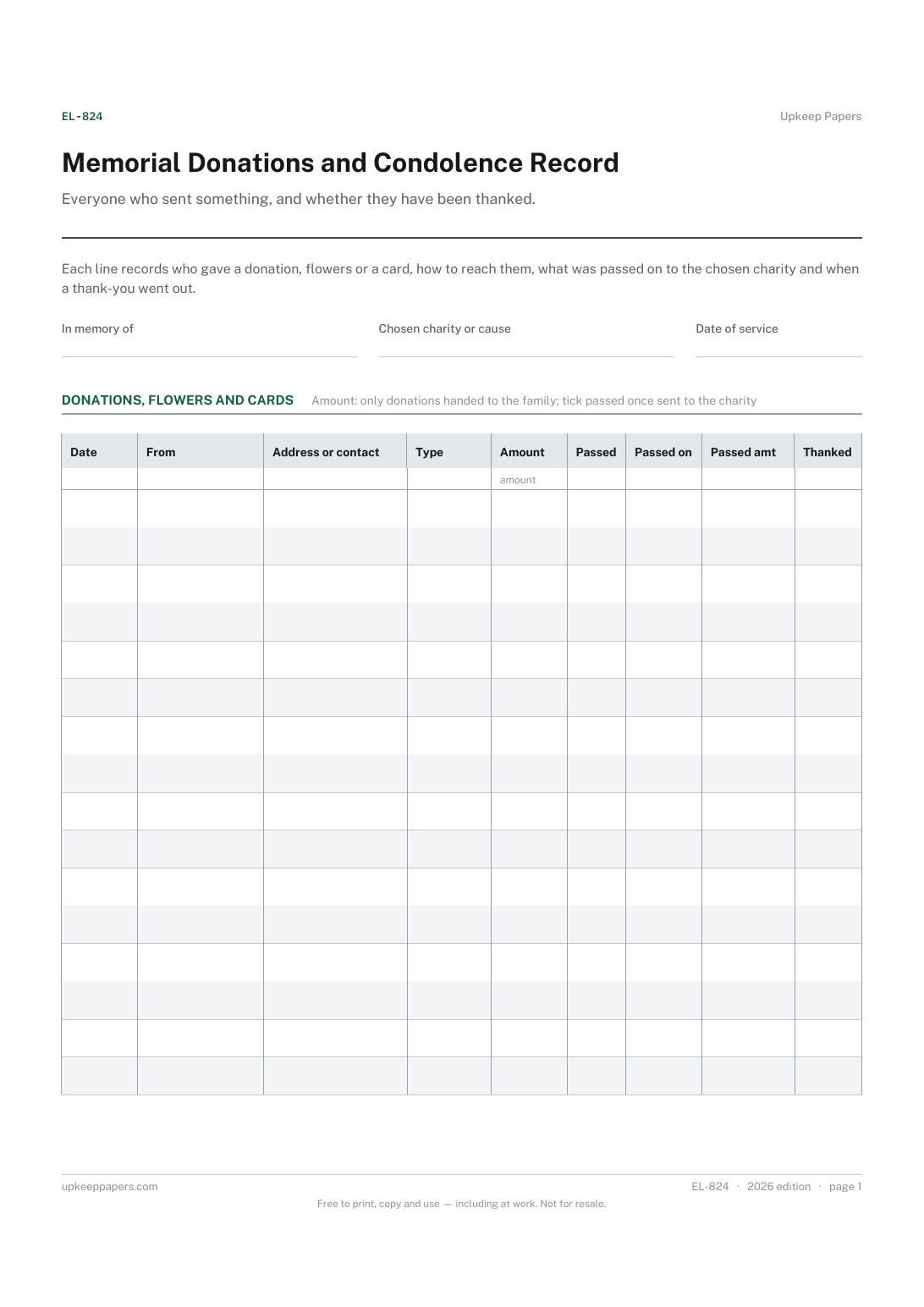
Who gave what, so the thank-you names the right gift.
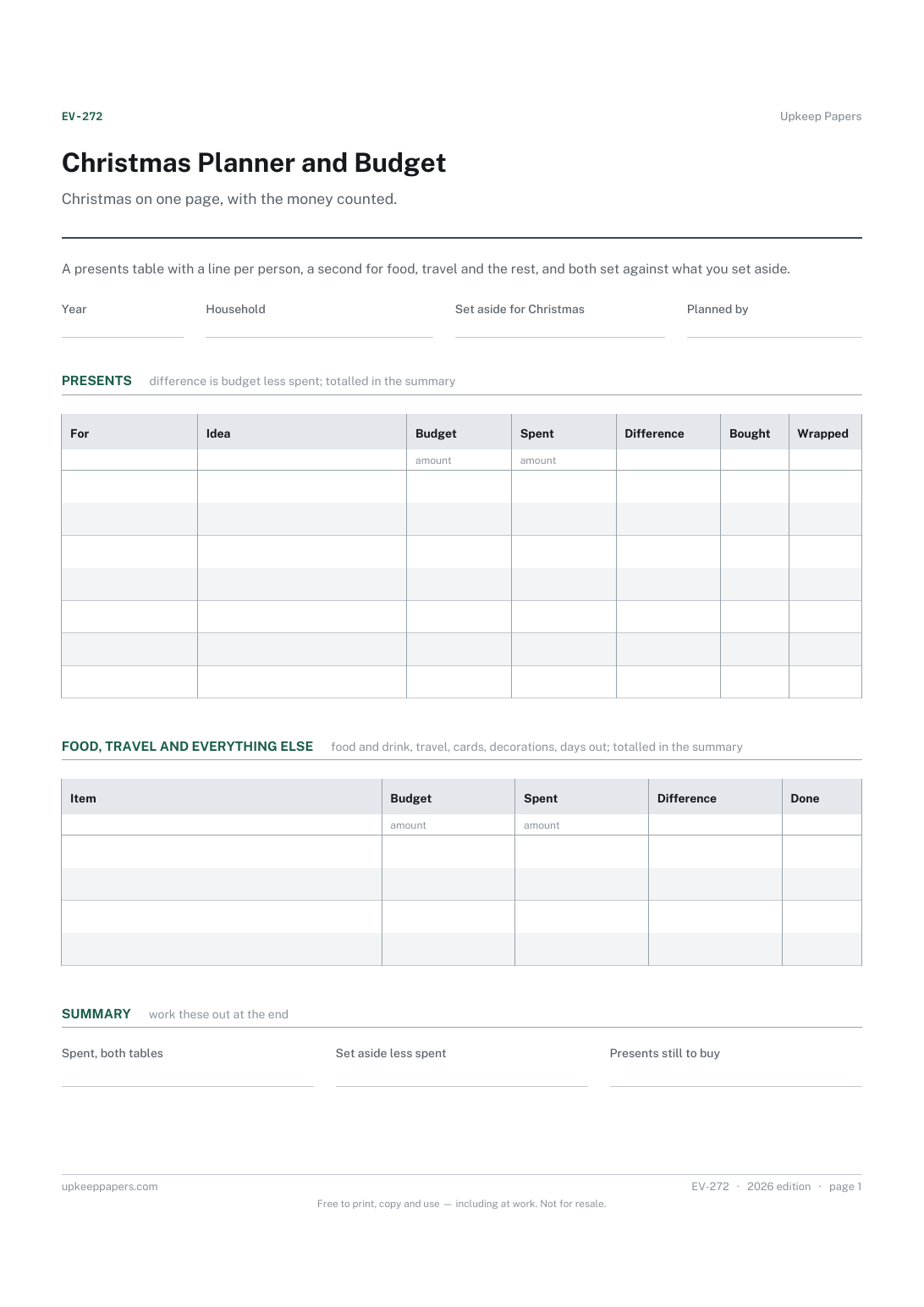
Who you are buying for, the idea, and what you meant to spend on each.
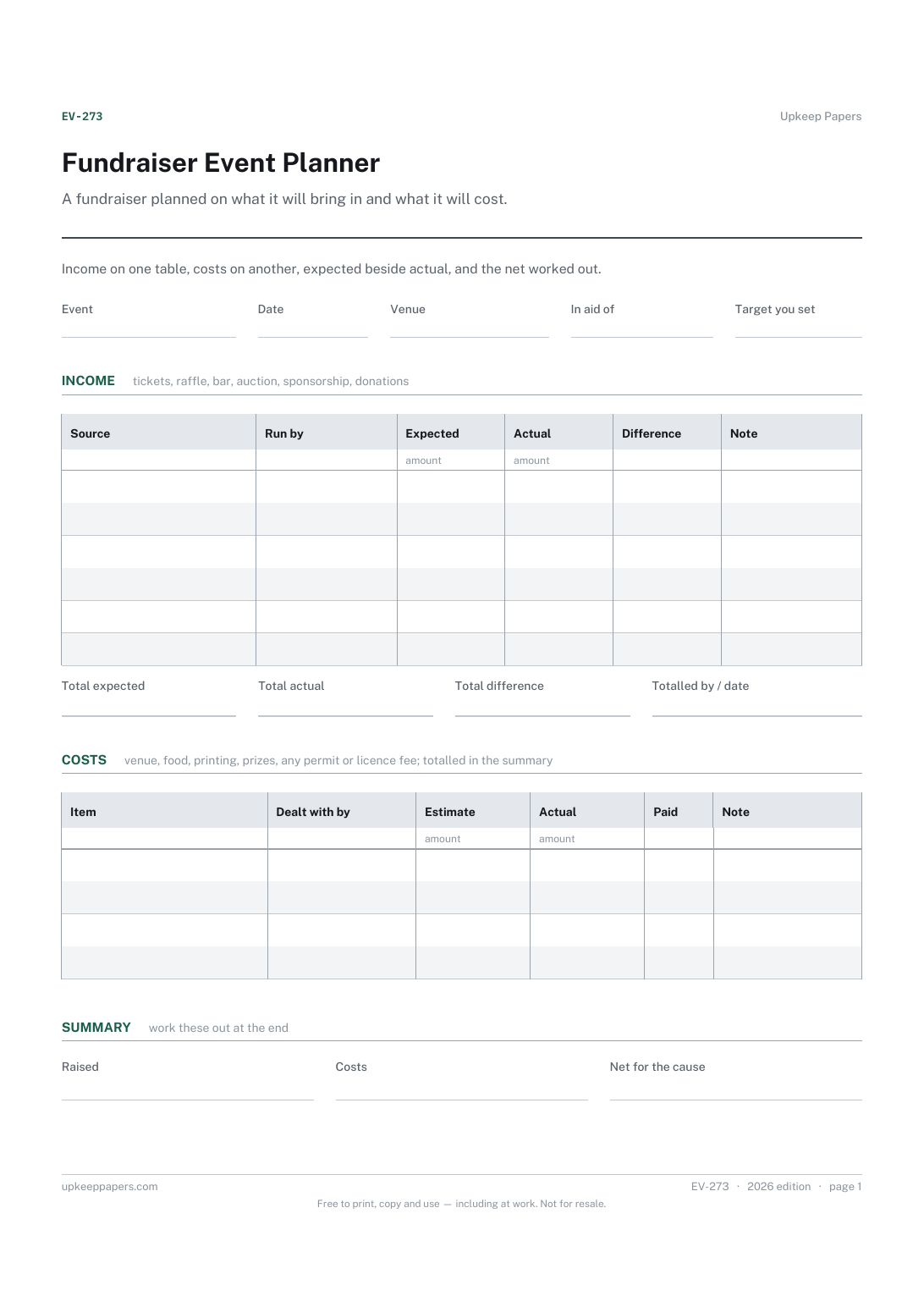
Where the money is expected to come from, and who is looking after each source.
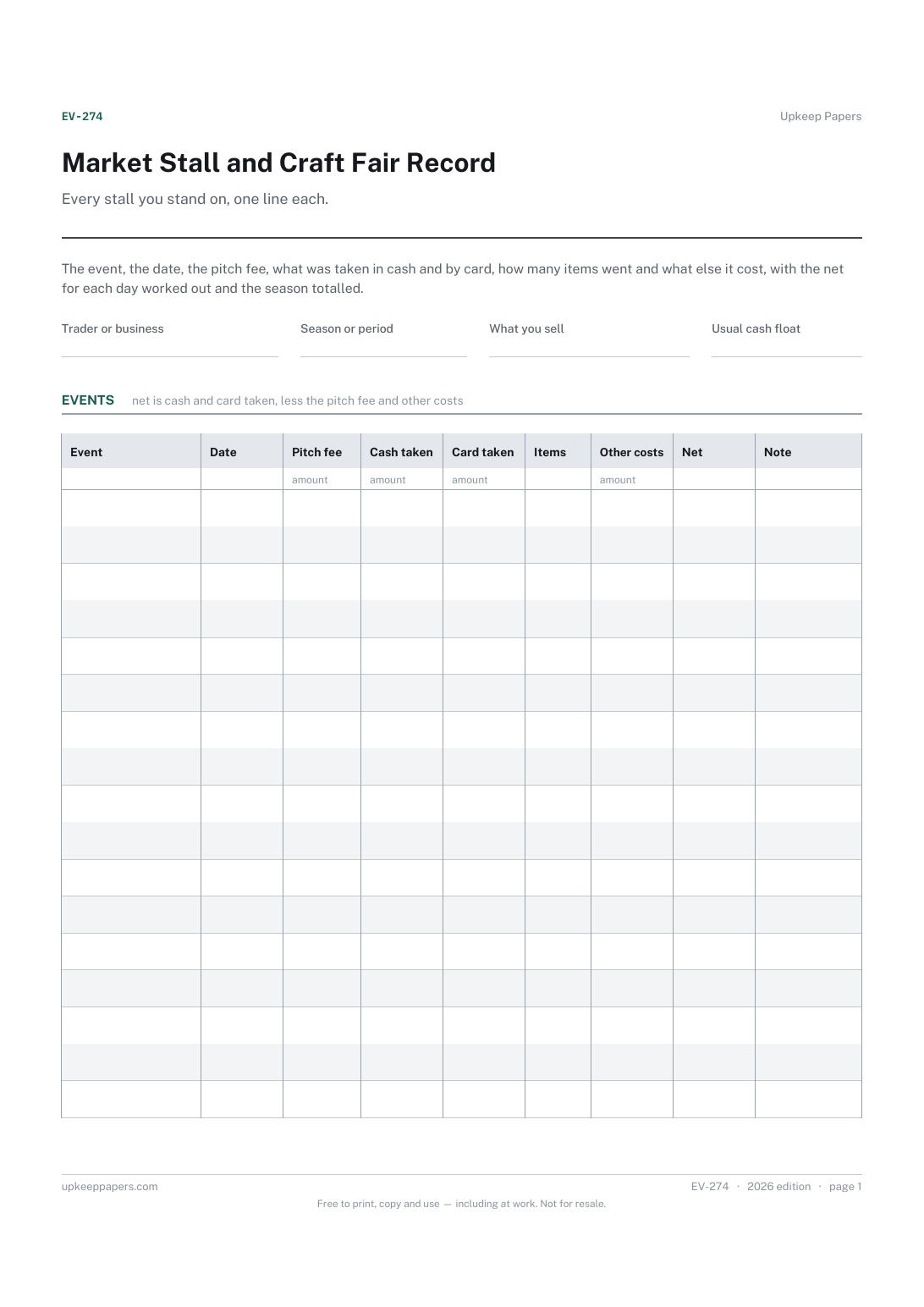
What each event took, in cash and by card.
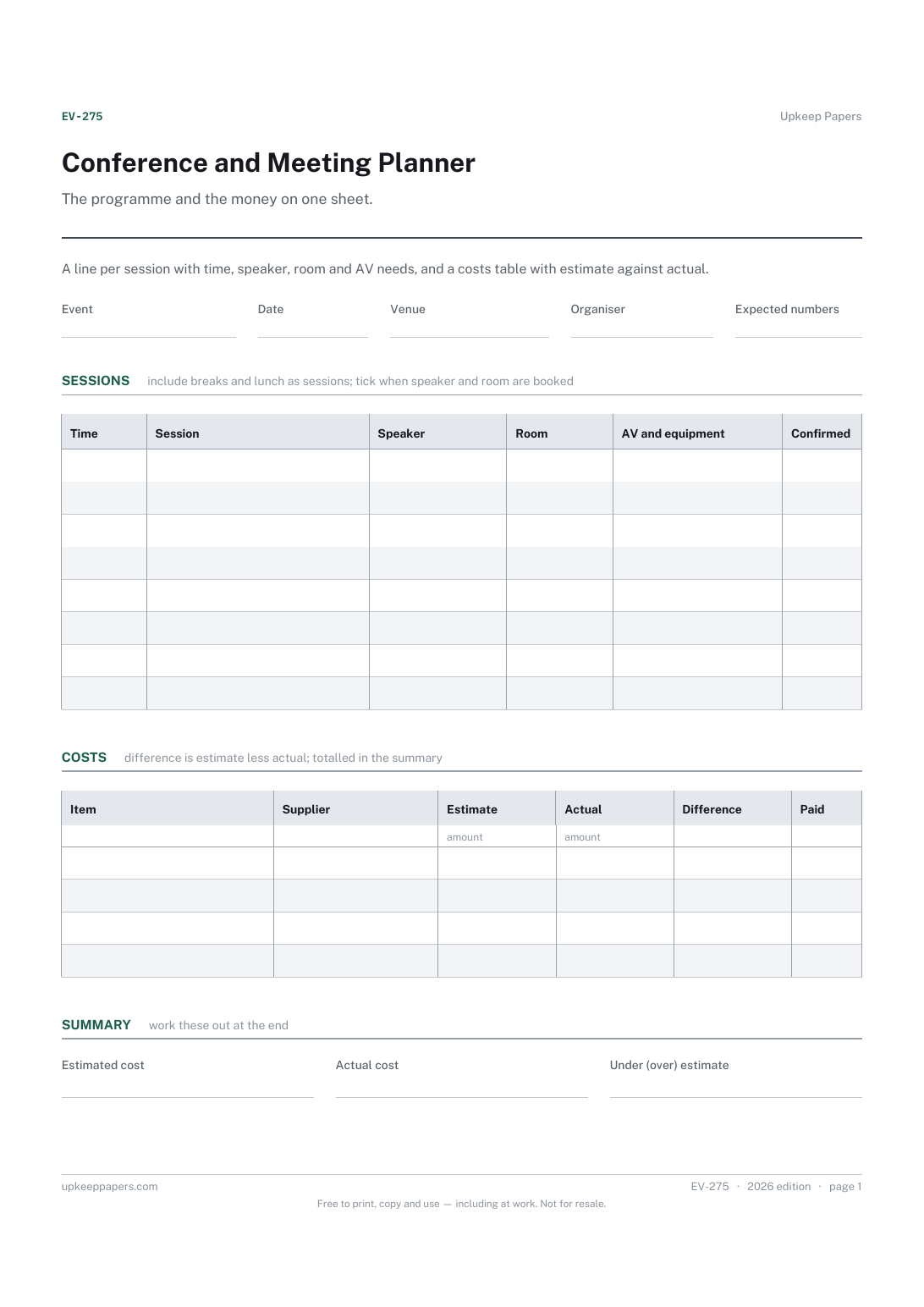
What happens when, where and with whom, in one running order.
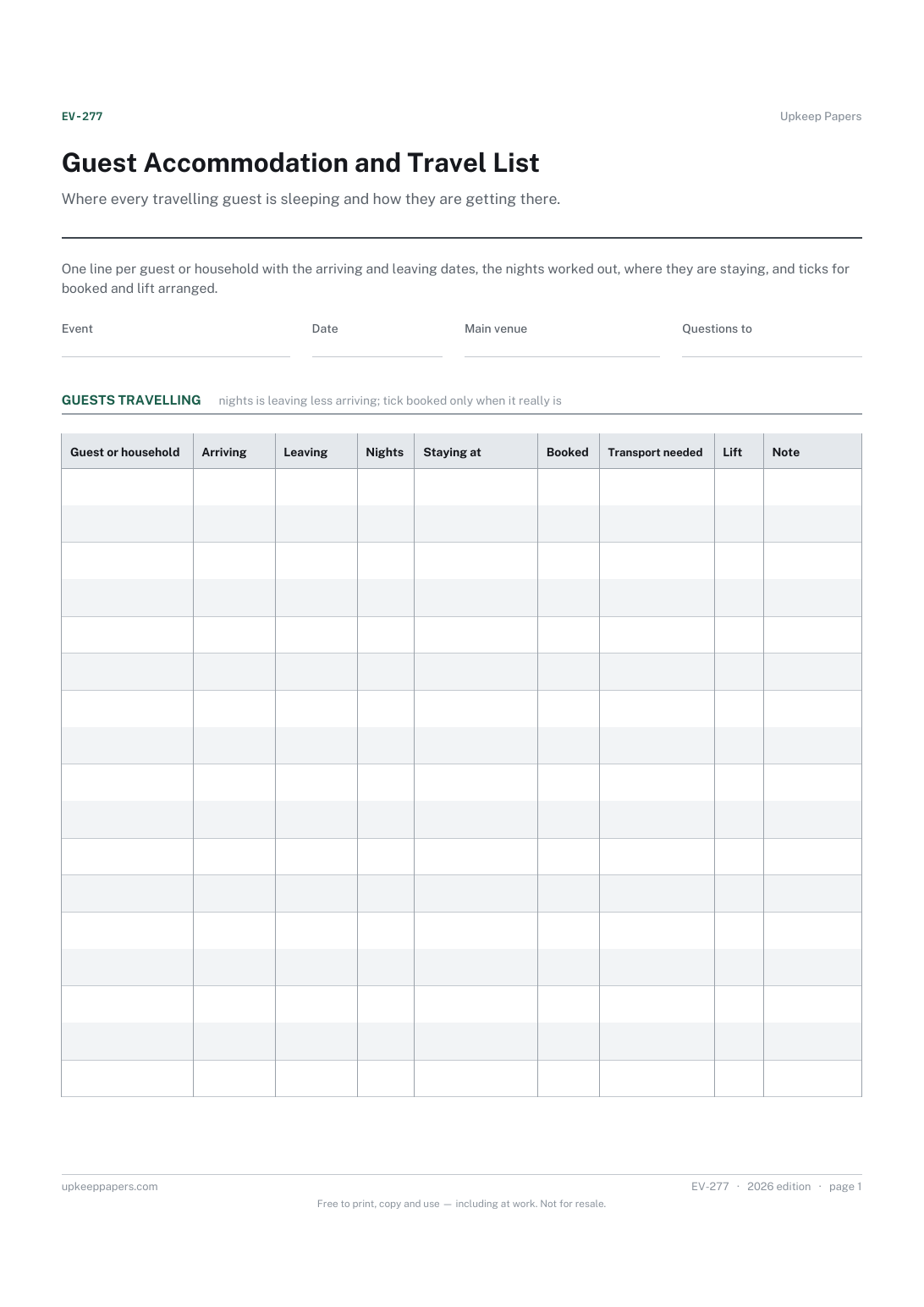
Who is coming from away and on which dates.
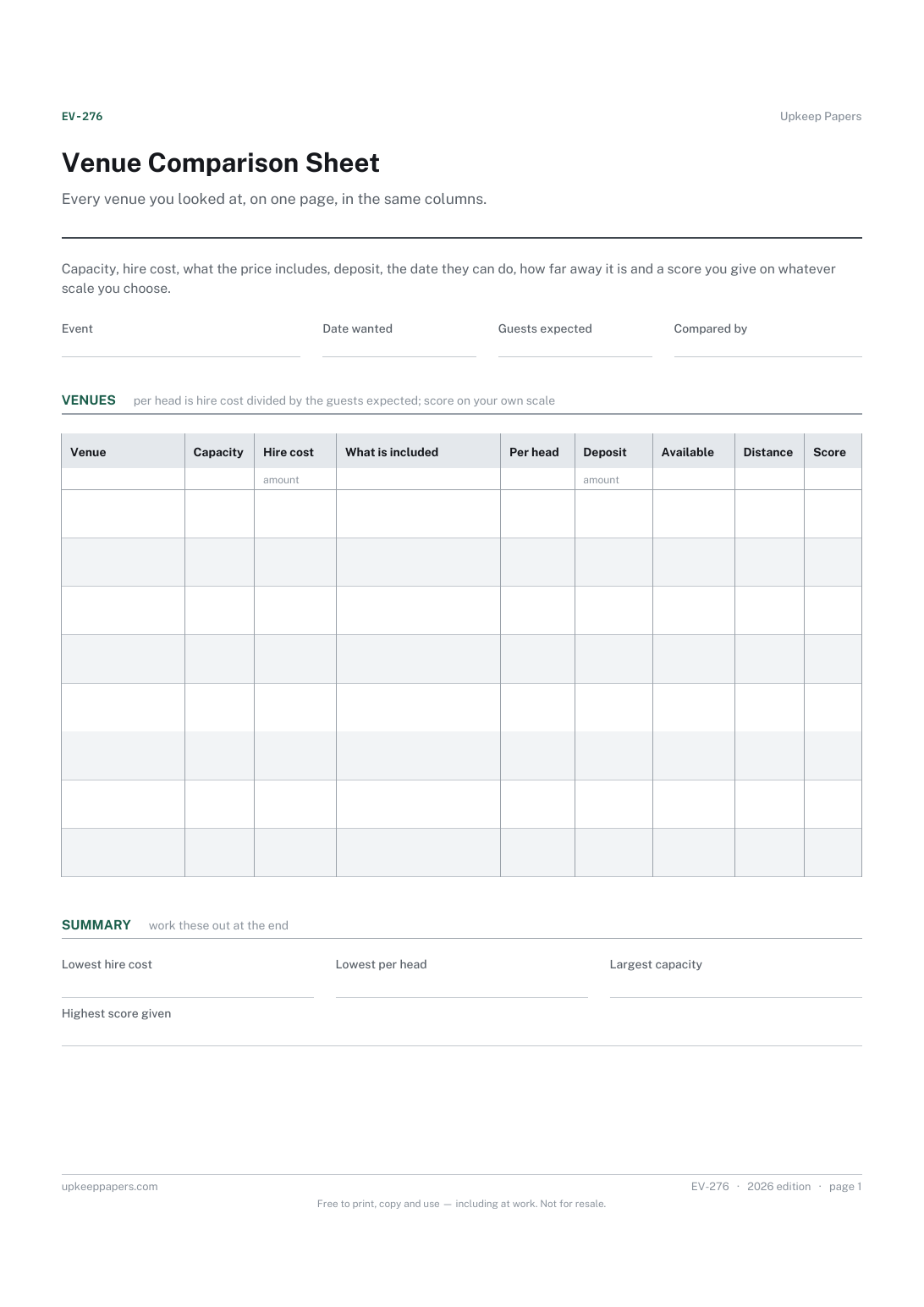
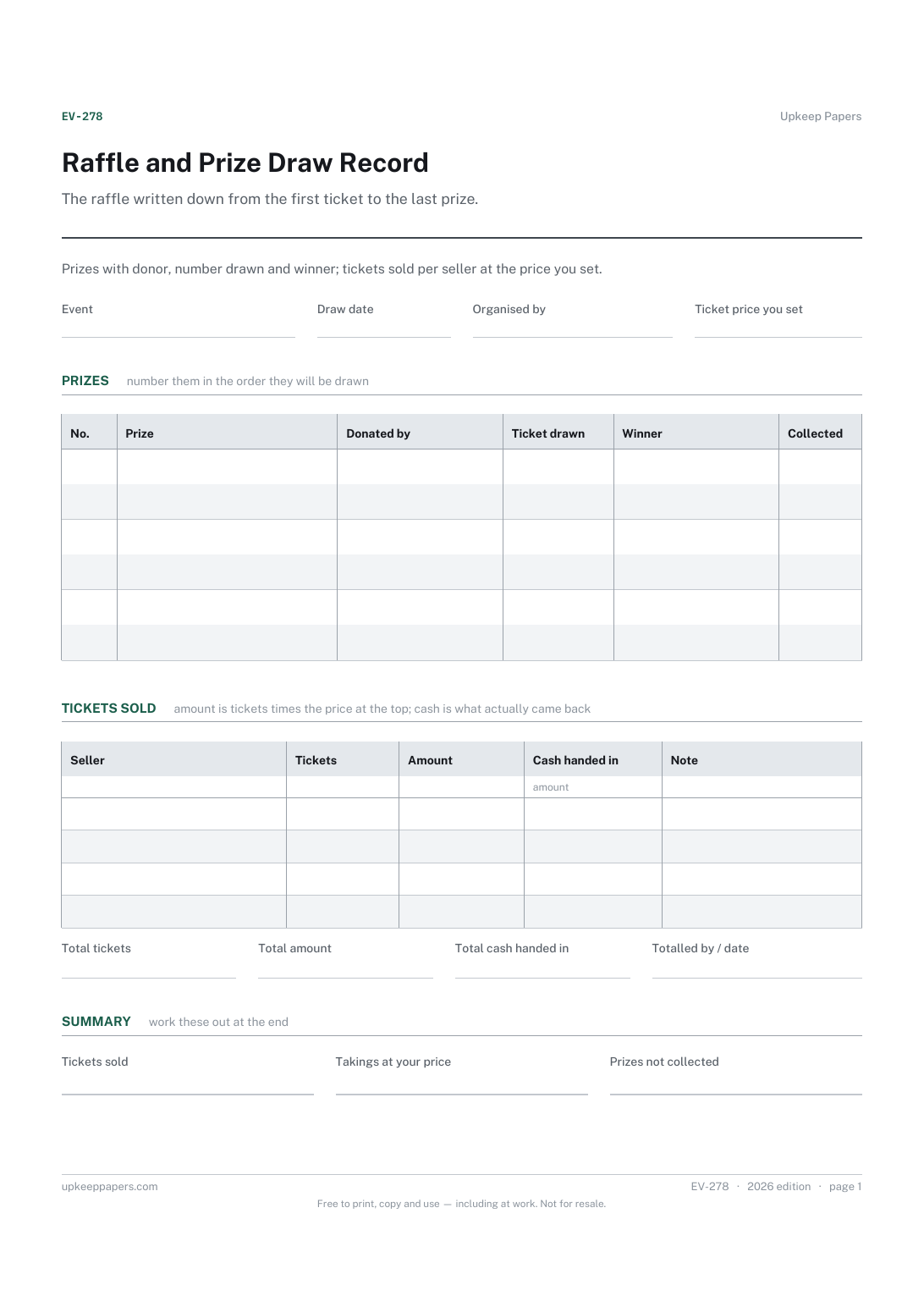
Every prize, who donated it and who won it.
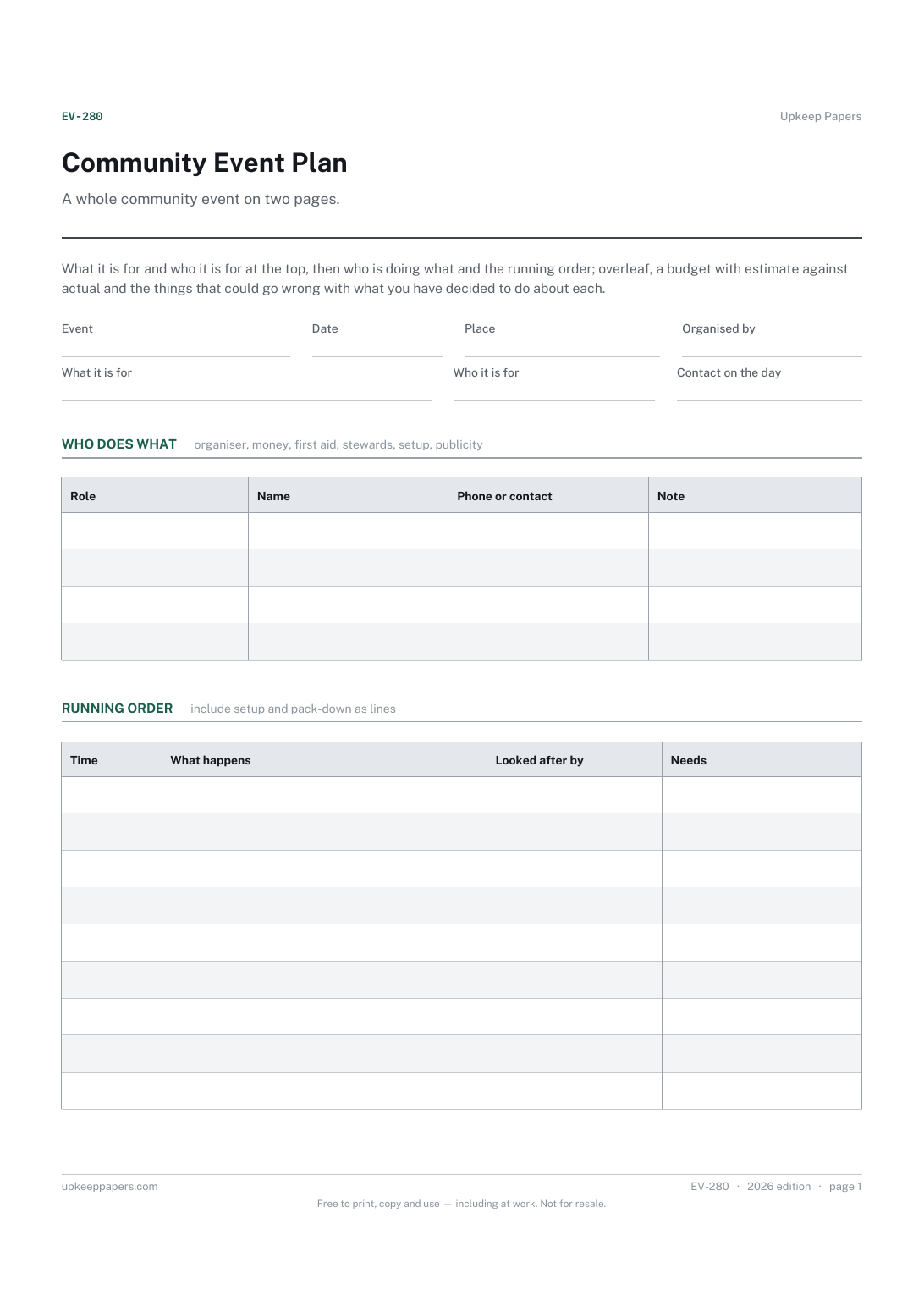
What the event is for and who it is for, written where everyone can read it.
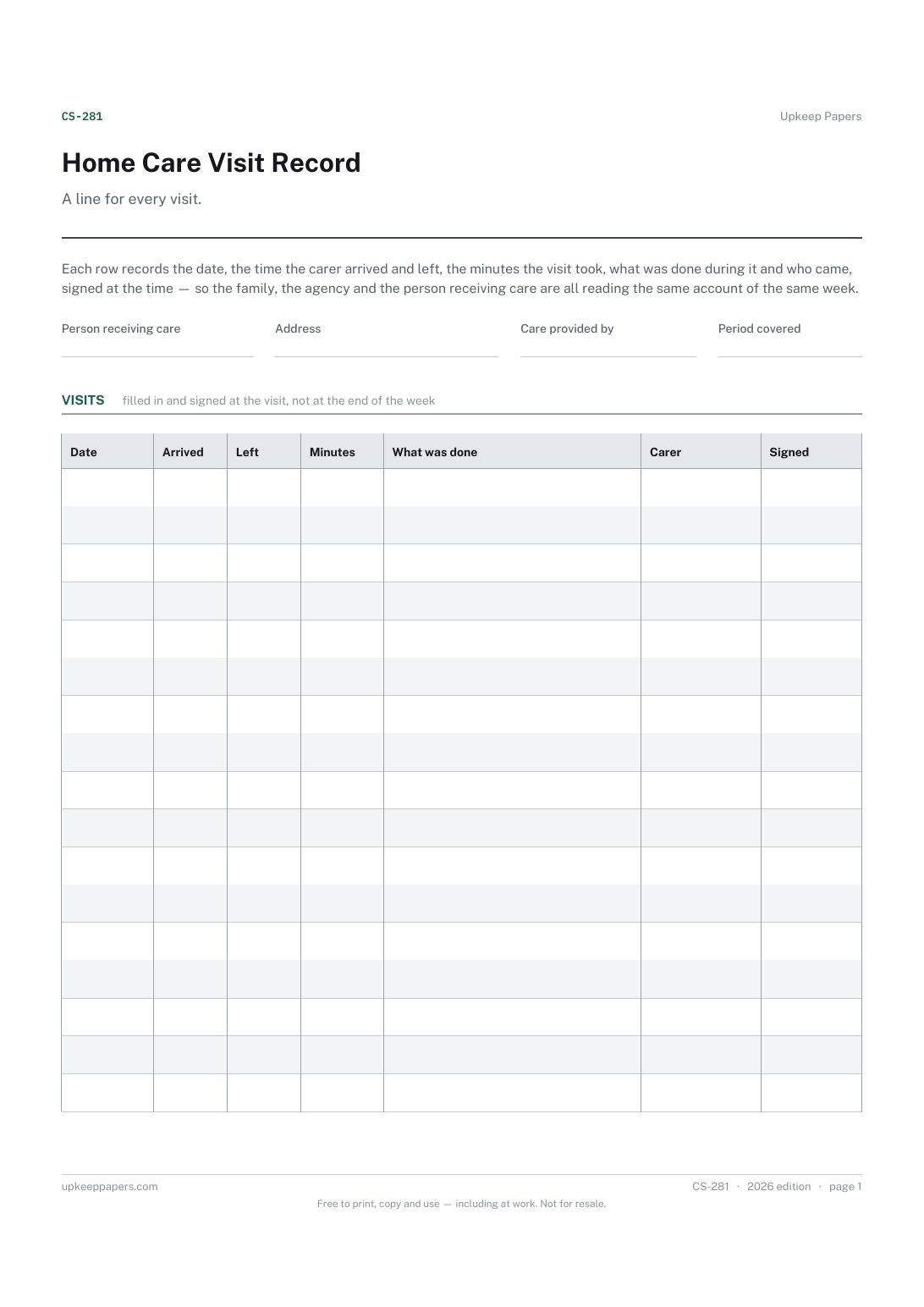
Every visit in date order with the arrival and leaving times.
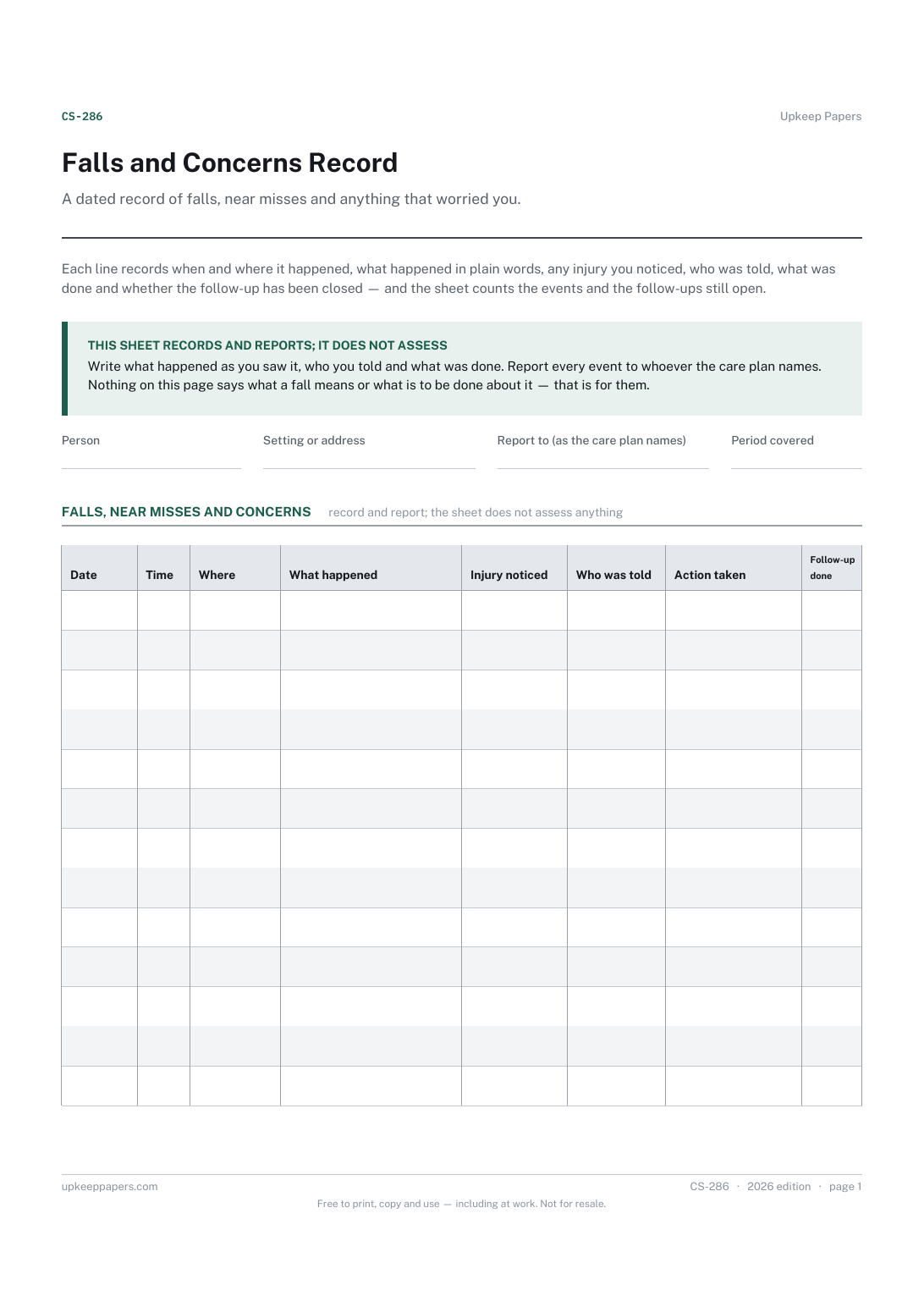
Every fall, near miss or concern with the date, time and place.
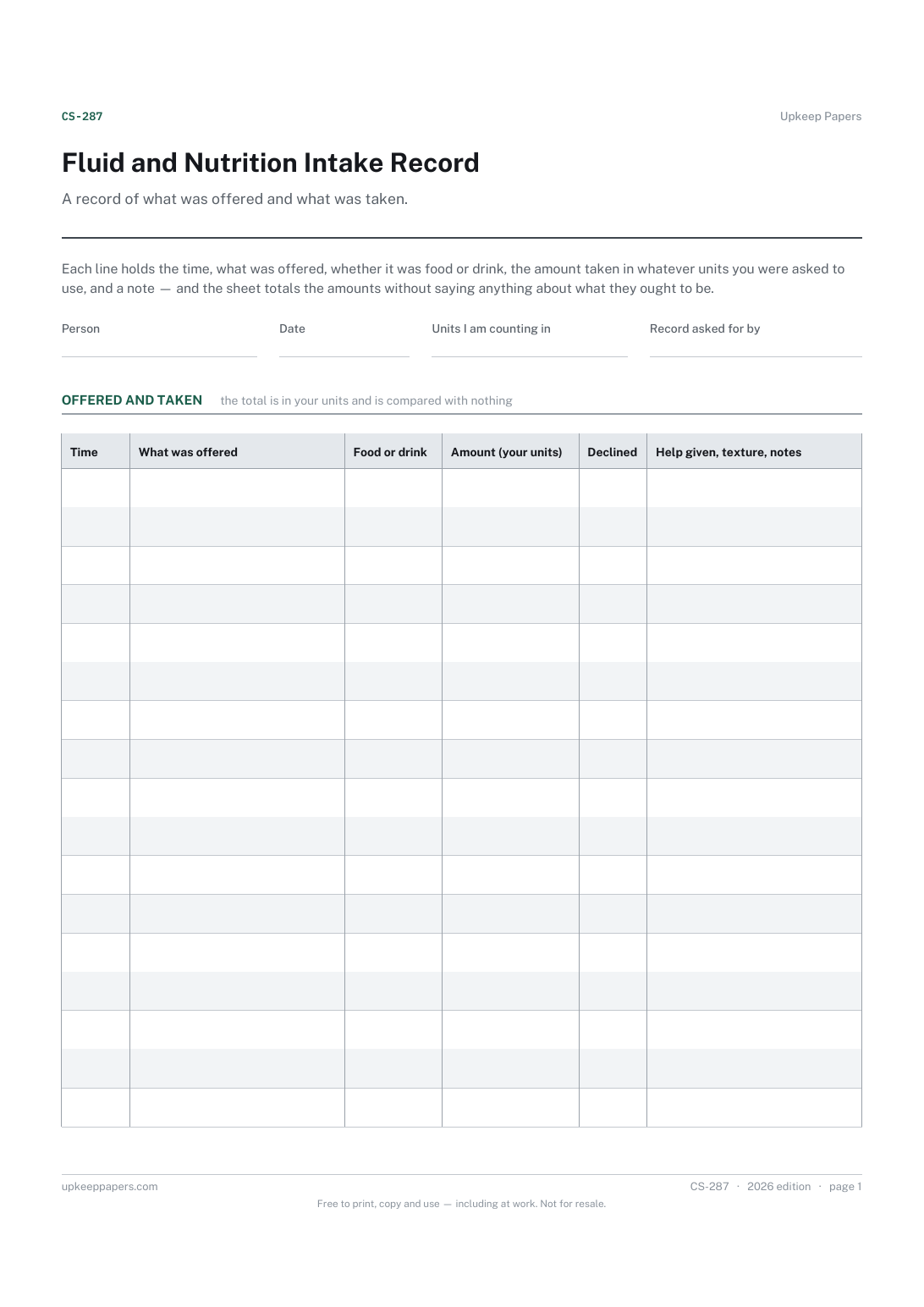
Everything offered through the day, with the time.
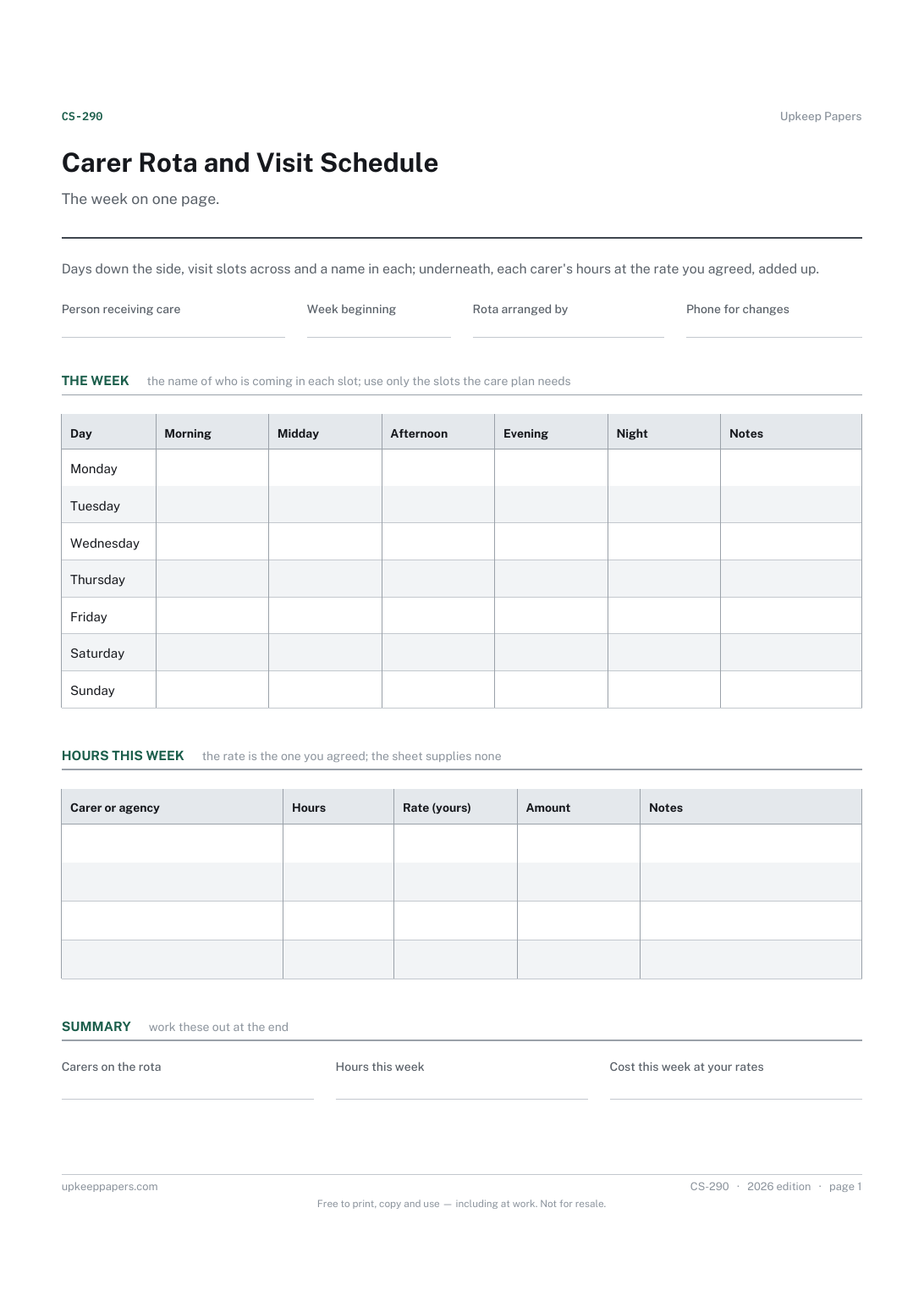
Who is coming on each day and in each slot.
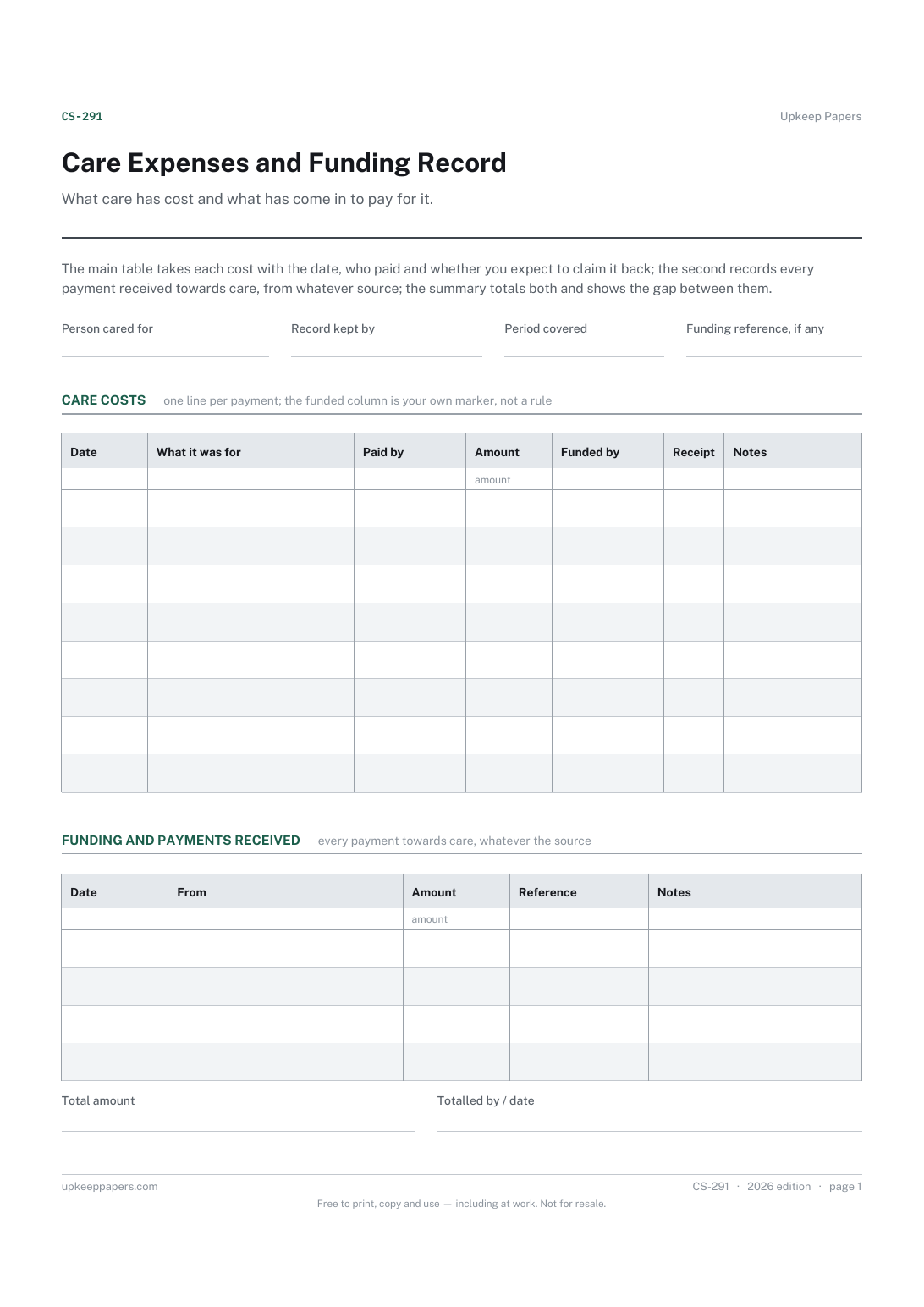
Every care cost dated, described and marked with who paid it.
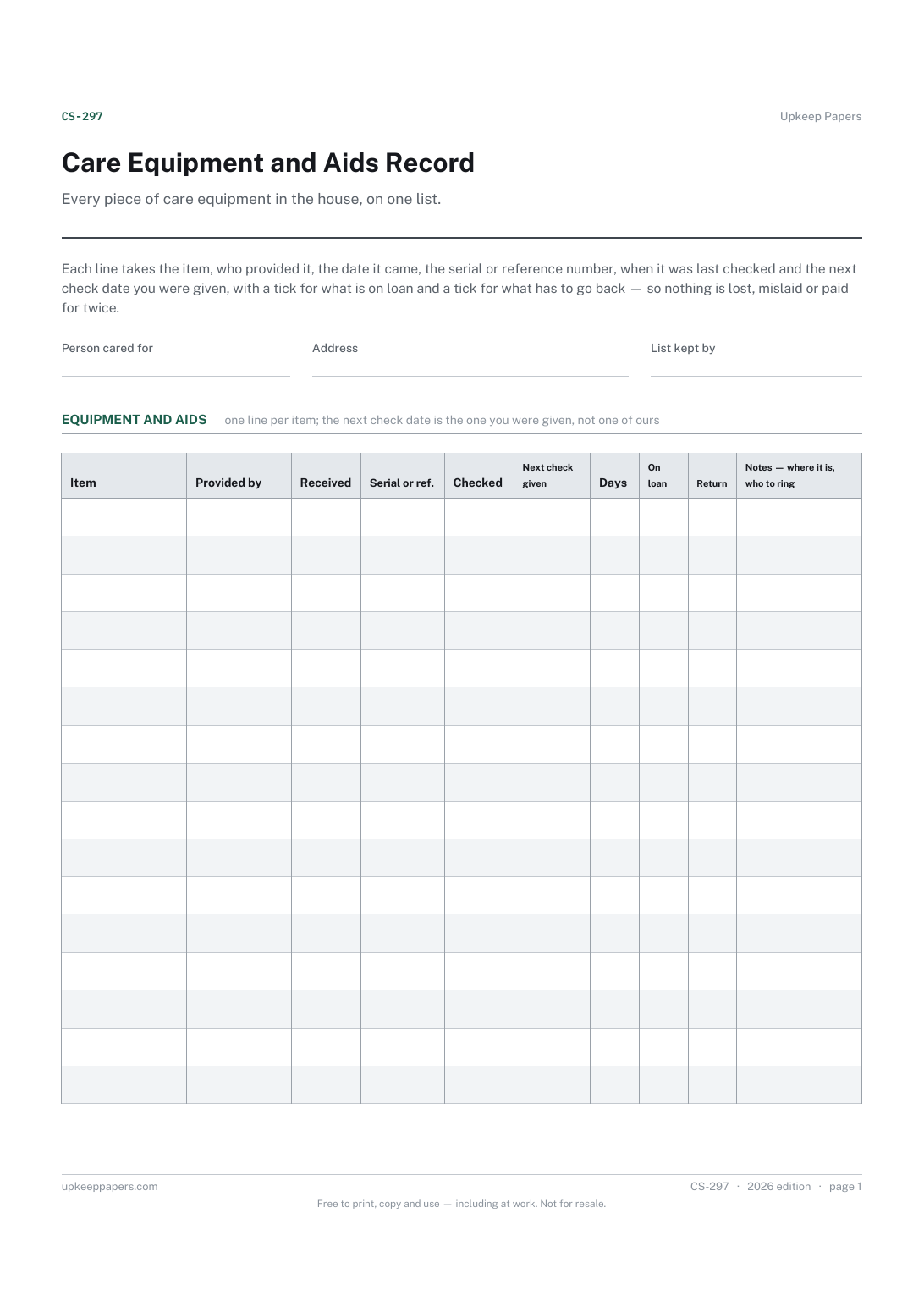
What equipment is in the house and where each item came from.
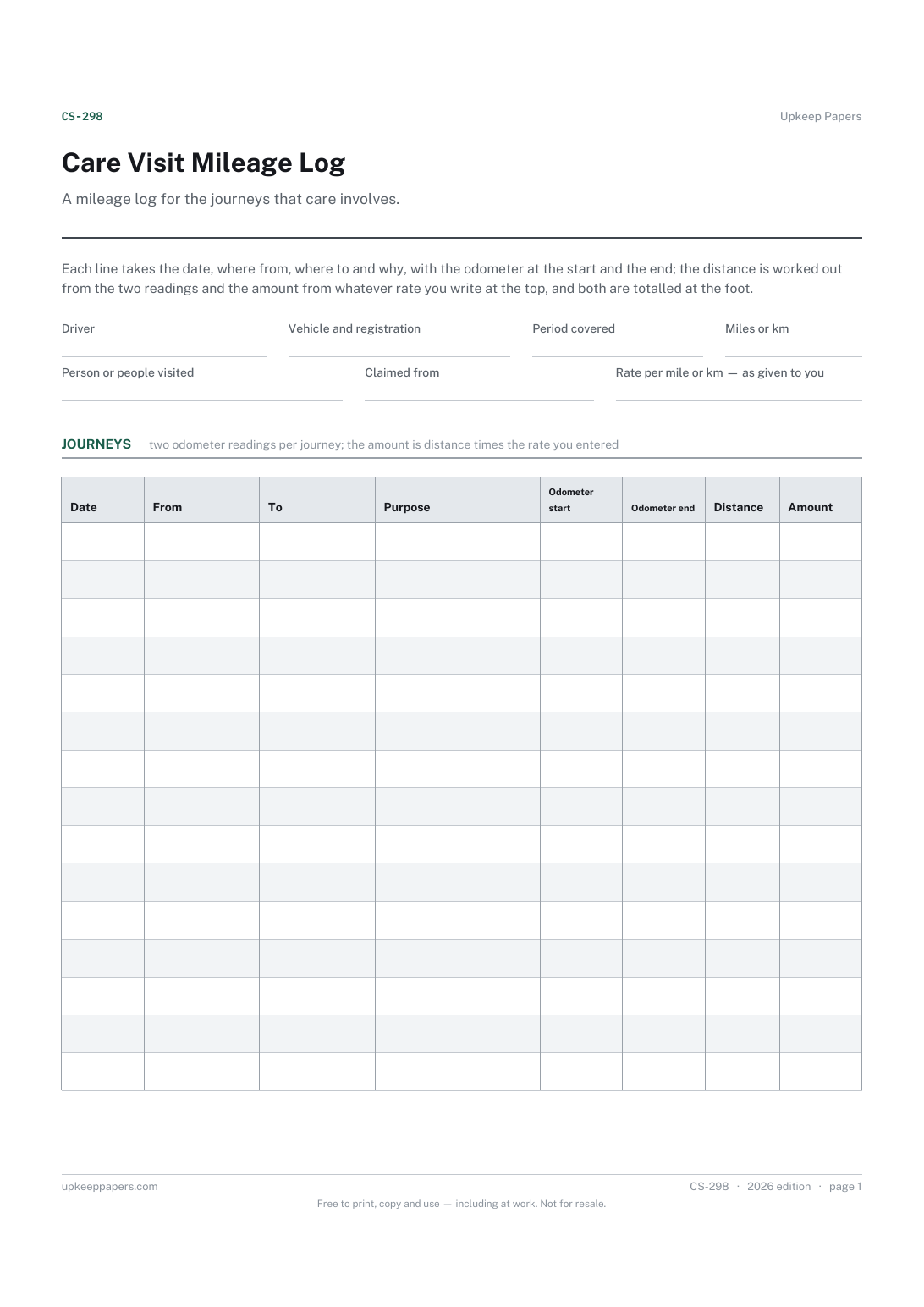
Every journey with the date, the two places and the reason.
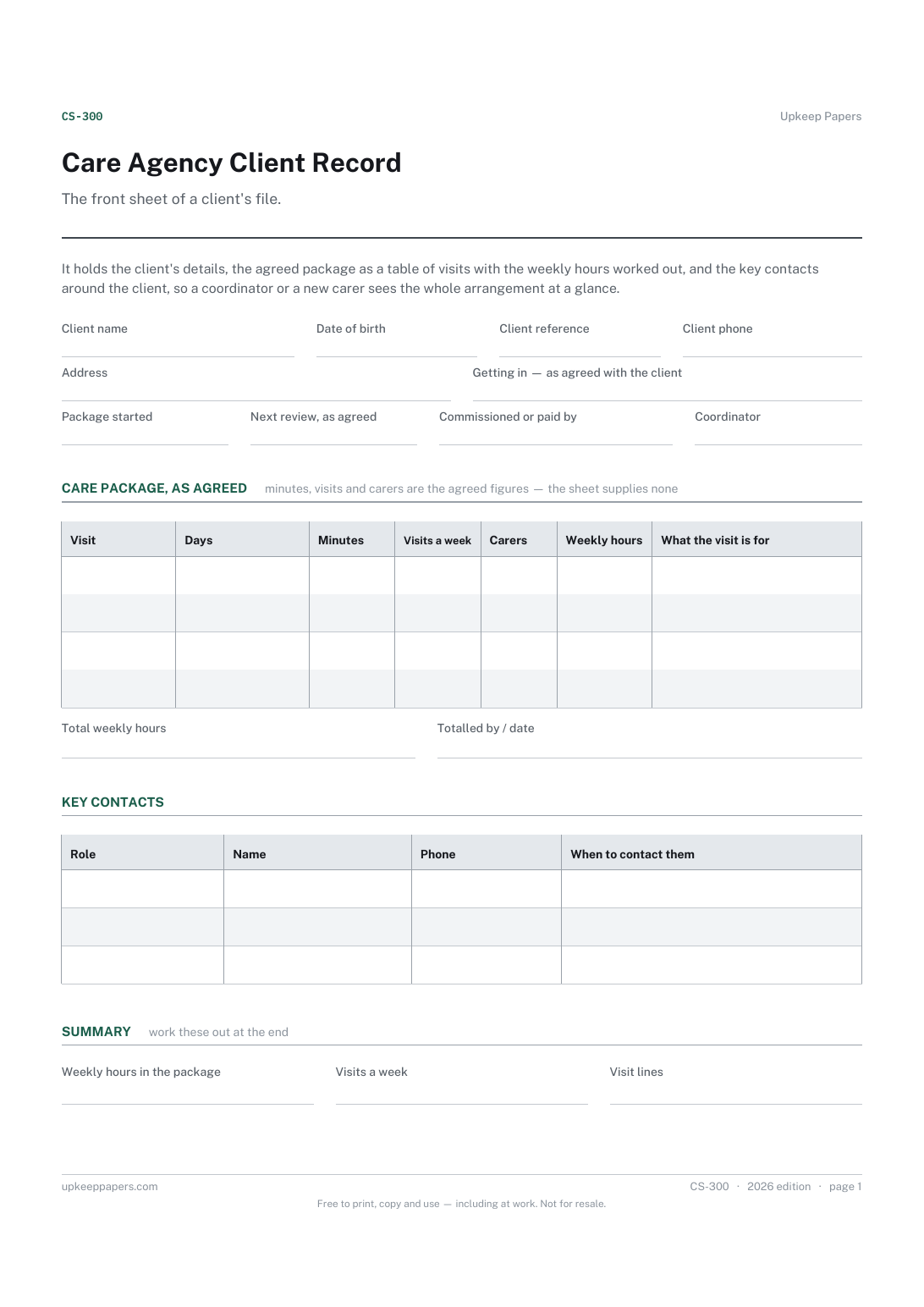
The client's details and the arrangements for getting in, in one place.
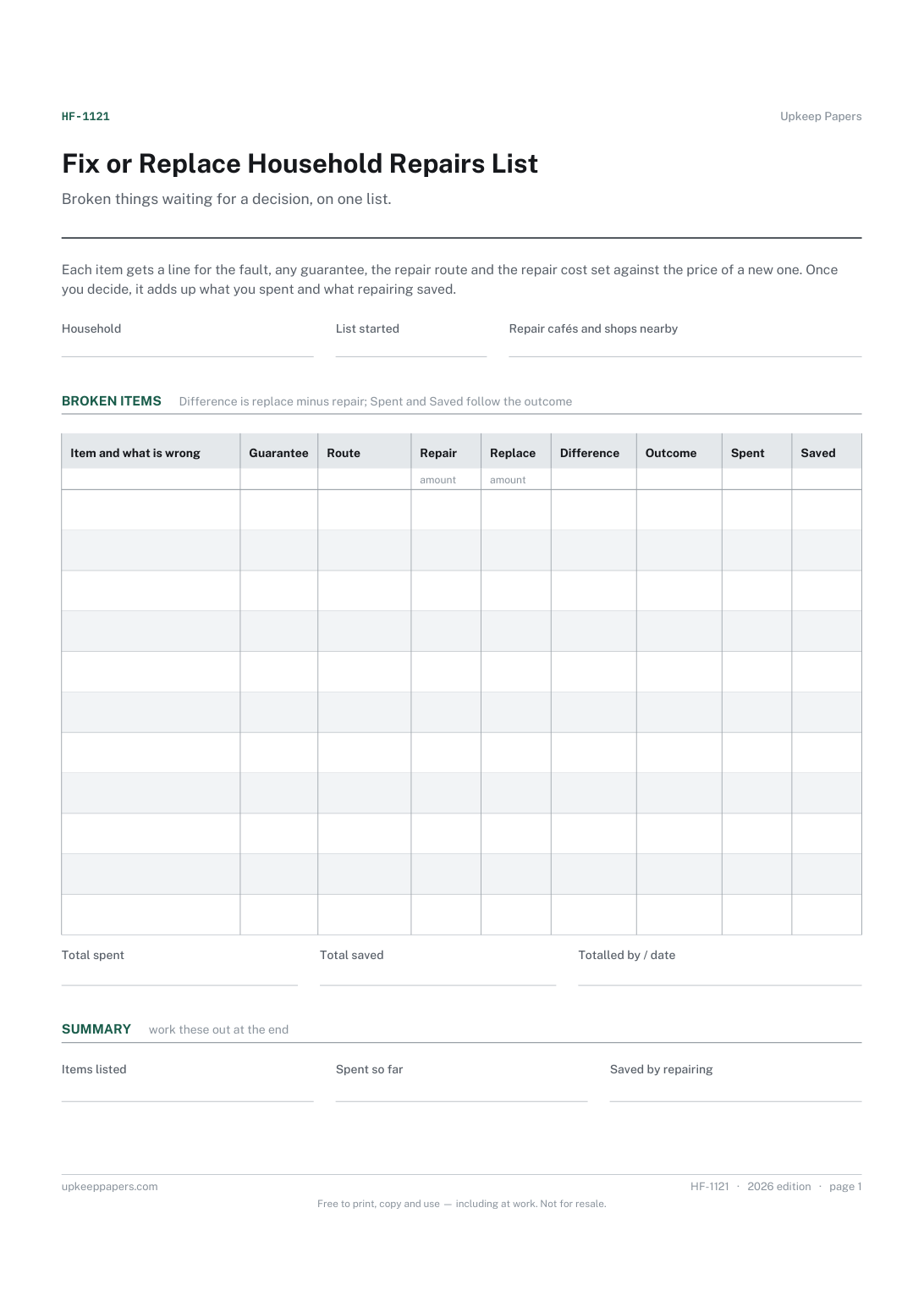
Every broken item waiting for a decision, and what is wrong with it.
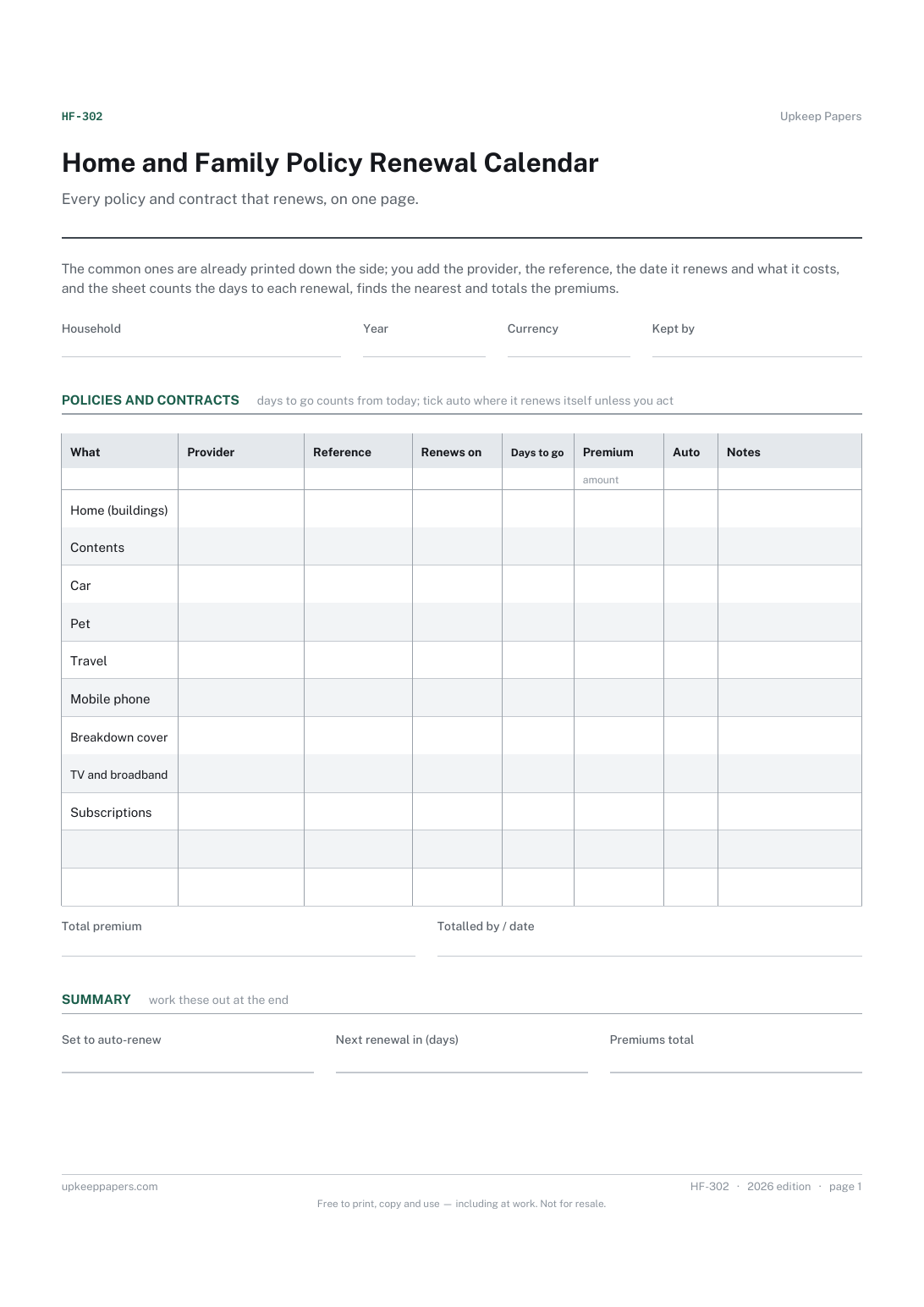
Which policies and contracts the household holds, and with whom.
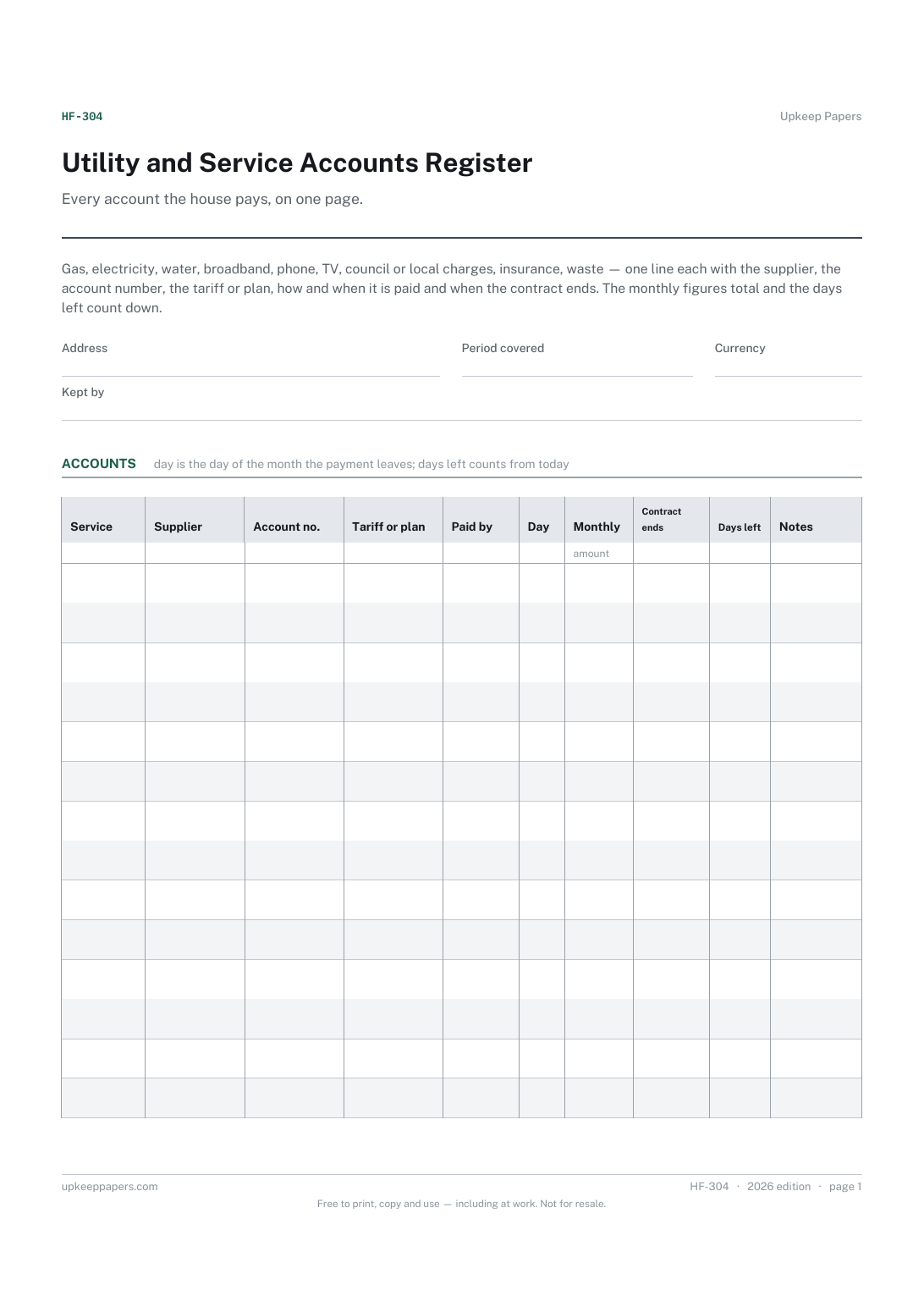
Which supplier provides what, with the account number to quote.
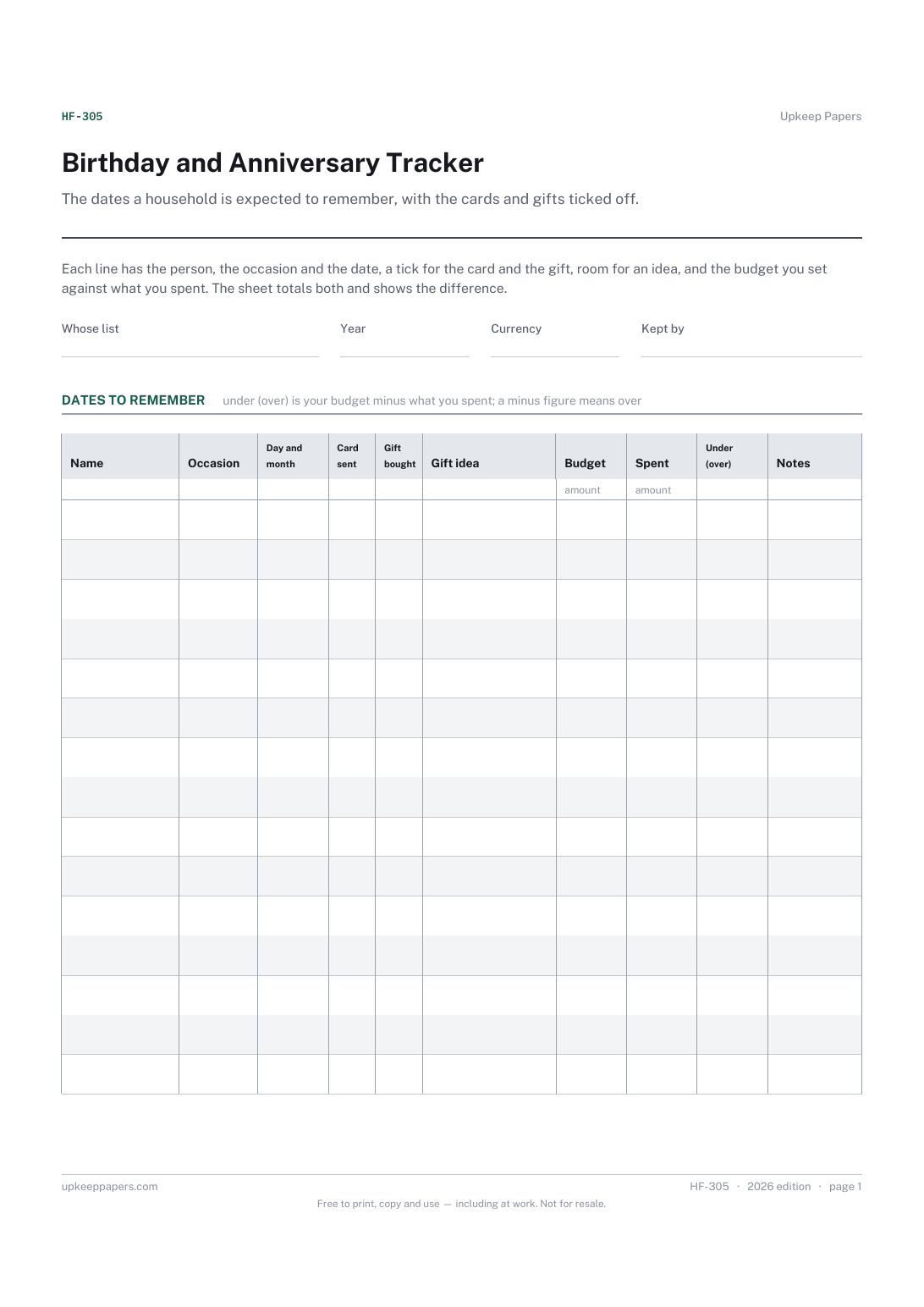
Who has a birthday or anniversary and when, in date order.
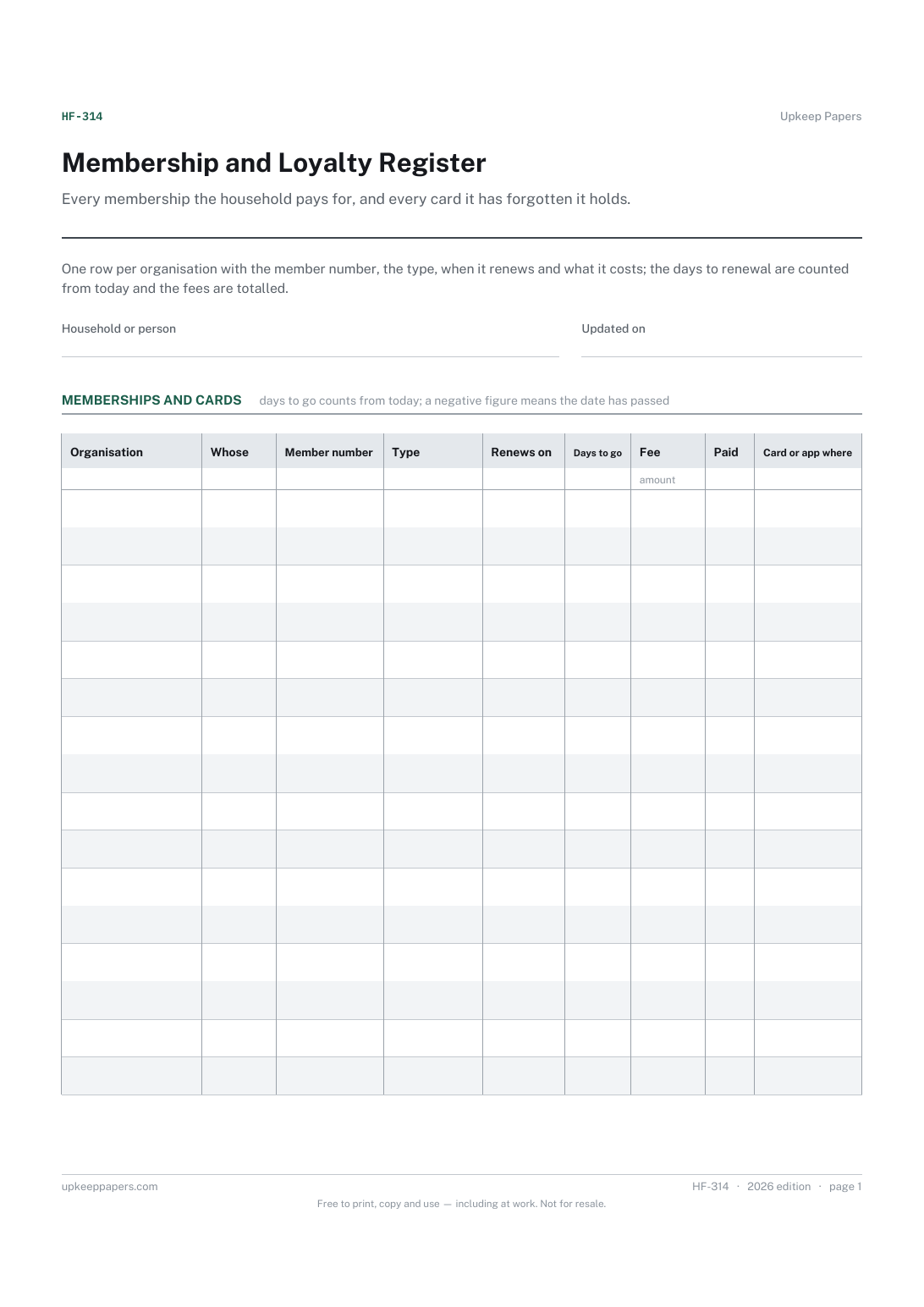
What memberships and cards exist, and whose they are.
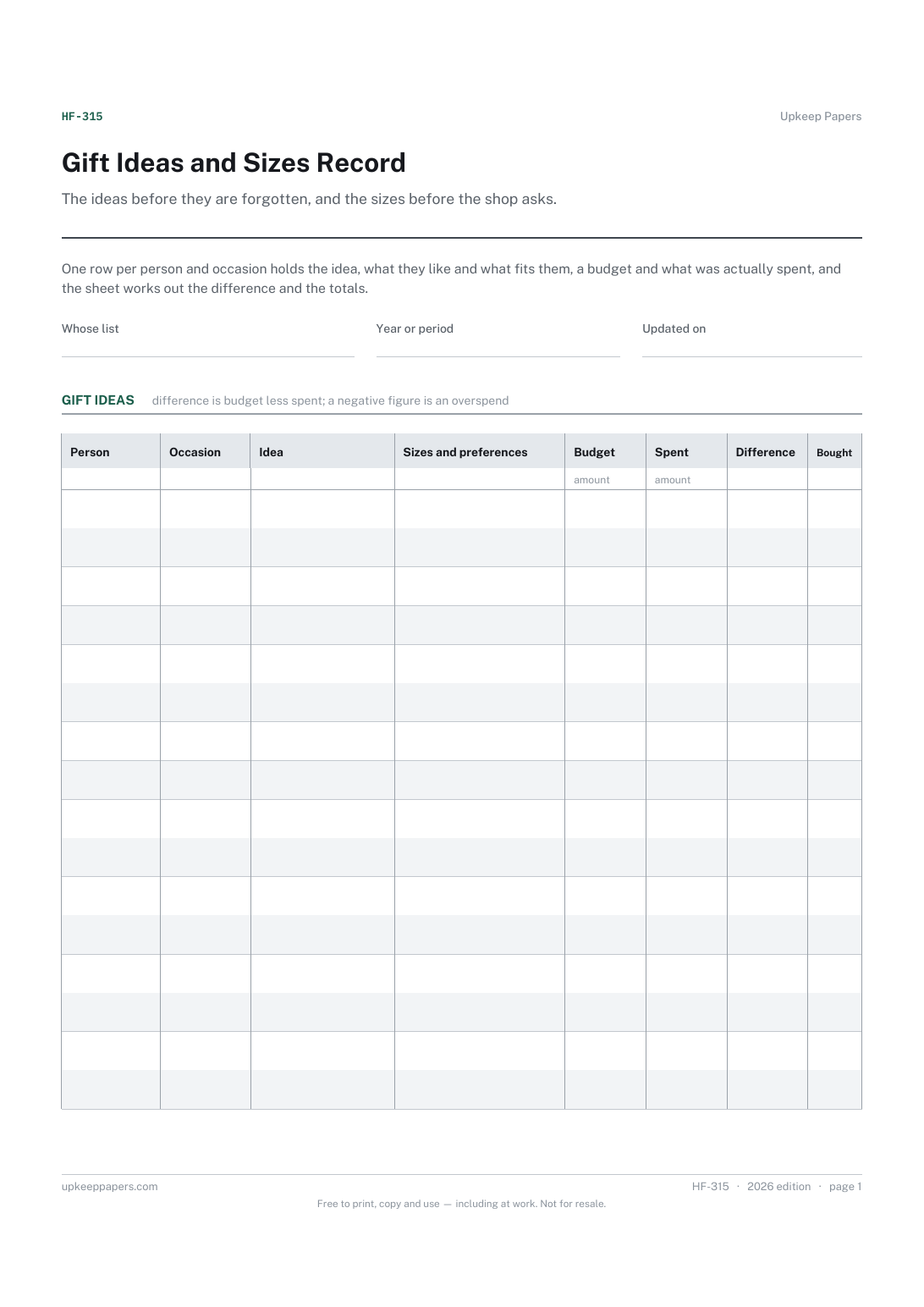
Ideas as they come up, months before the date, against the person and the occasion.
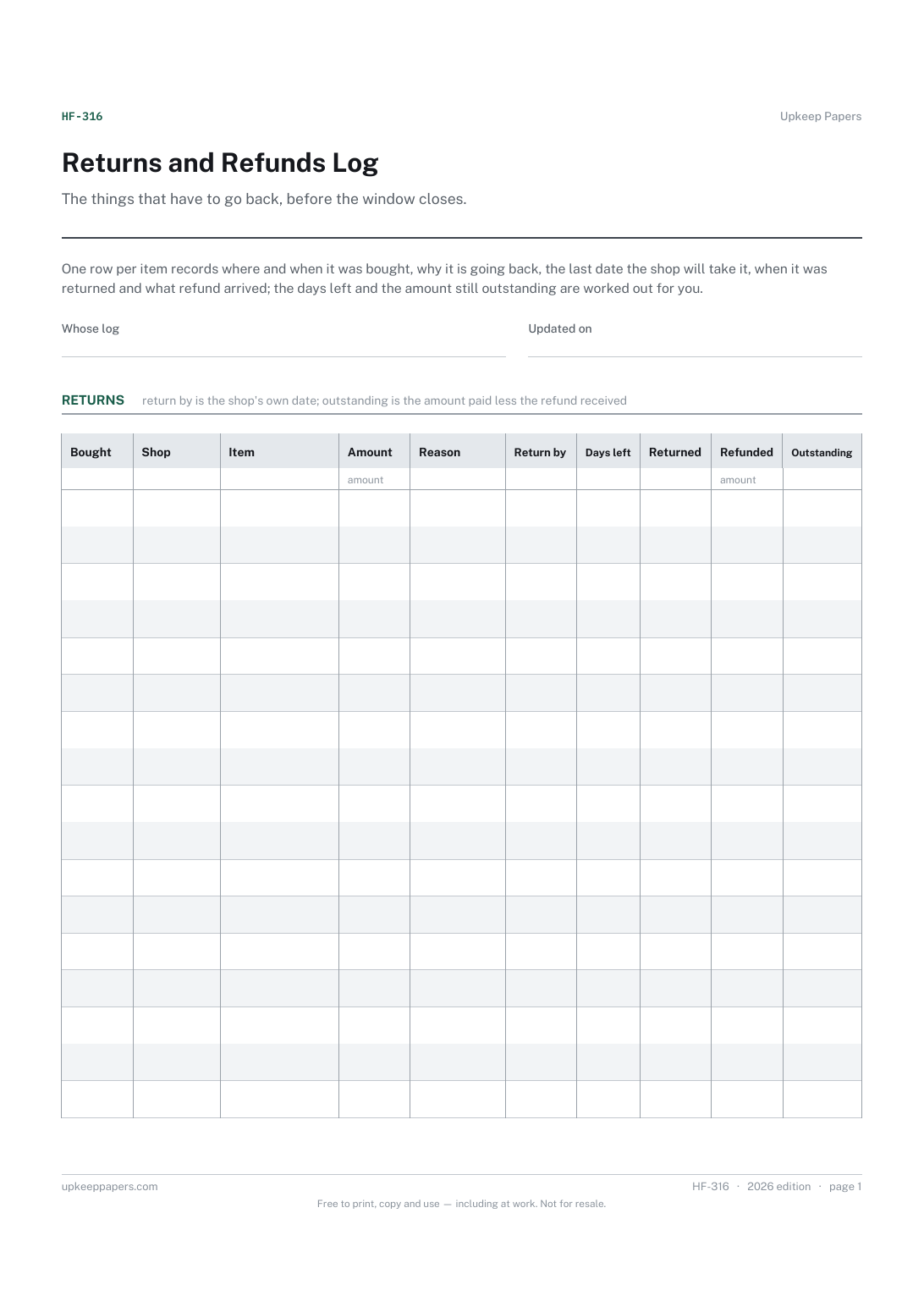
What is waiting to go back, from which shop, and the receipt amount.
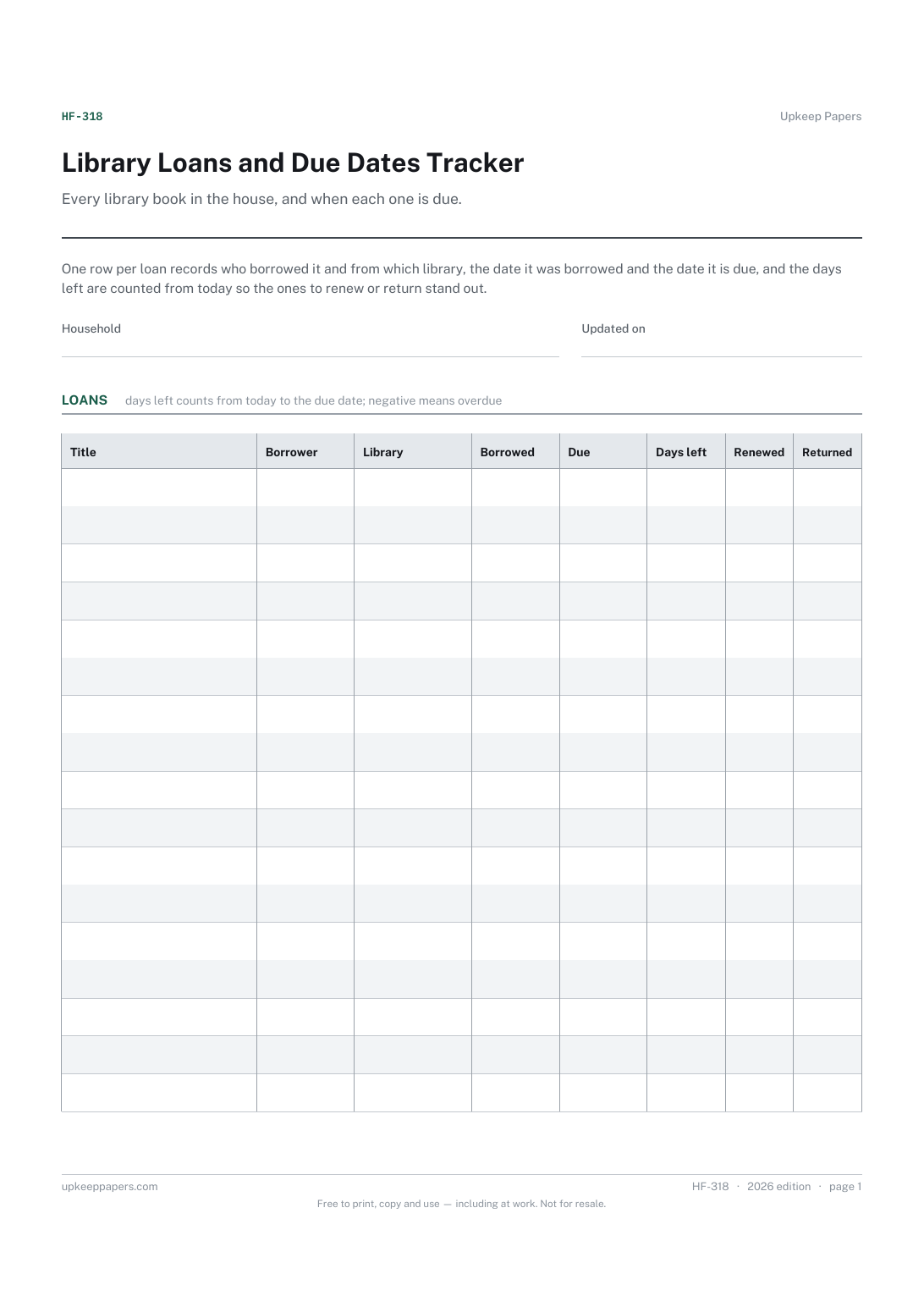
Which books are out, who borrowed them and from where.
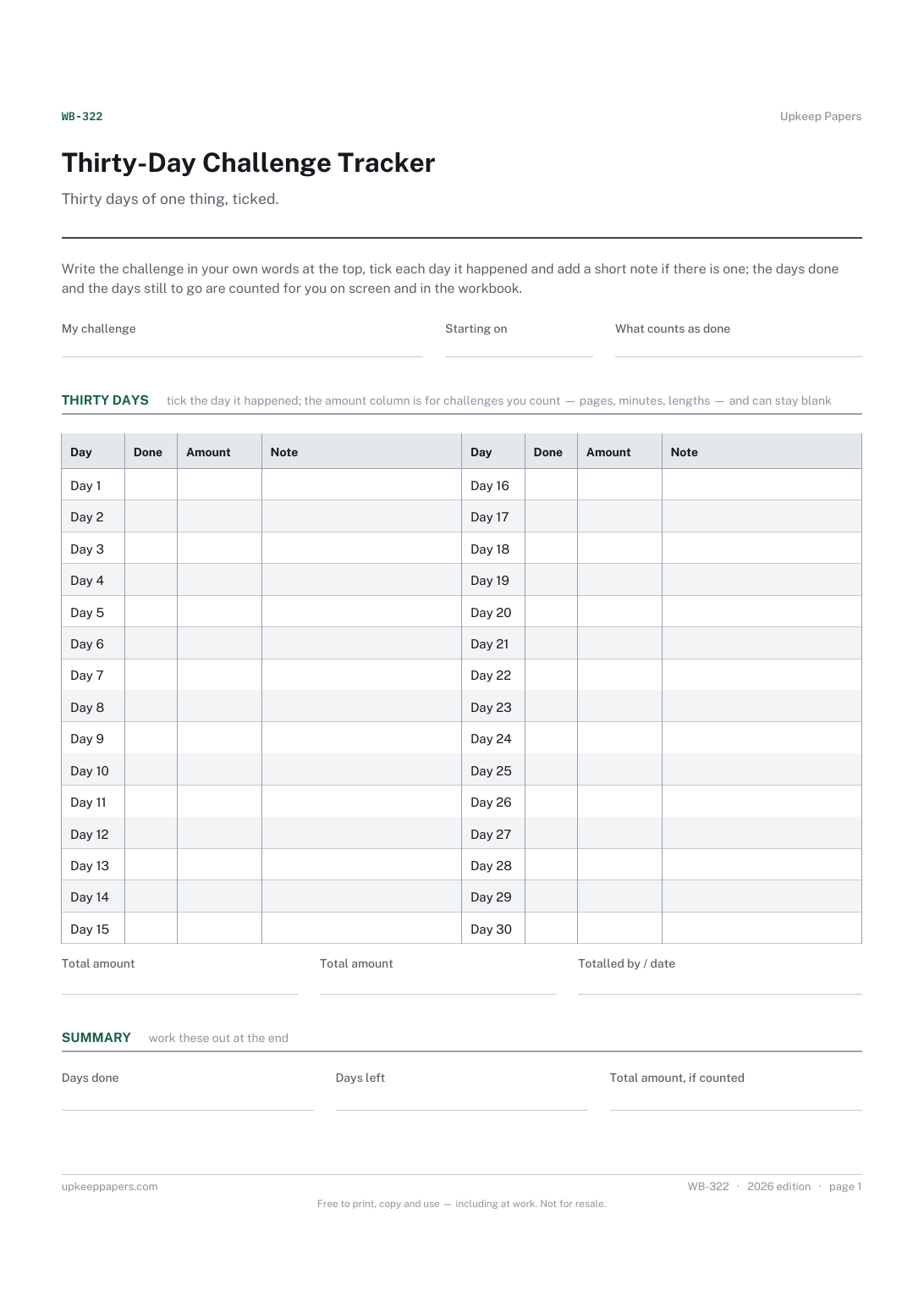
Which of the thirty days the challenge happened on.
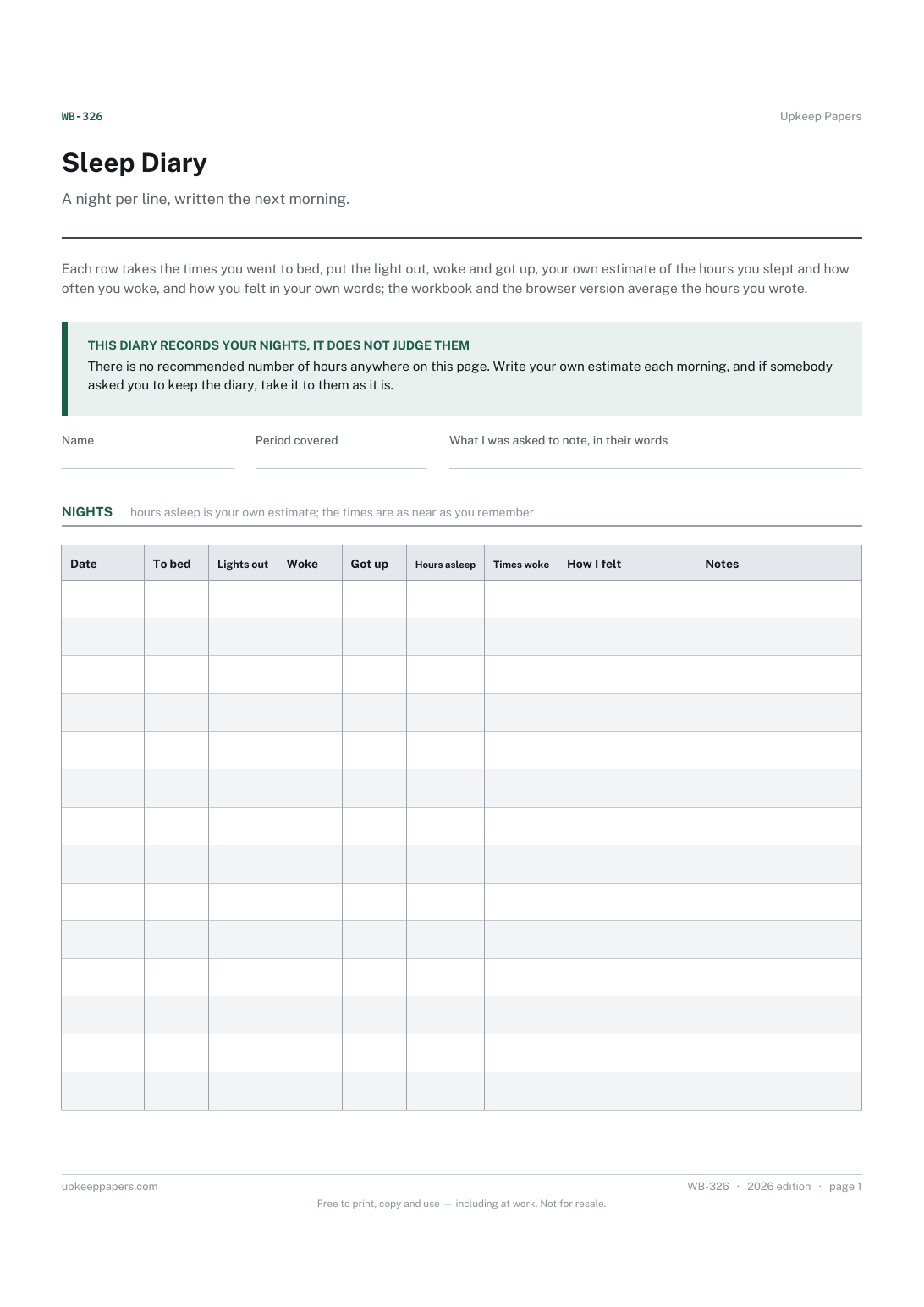
When you went to bed, put the light out, woke and got up, night by night.
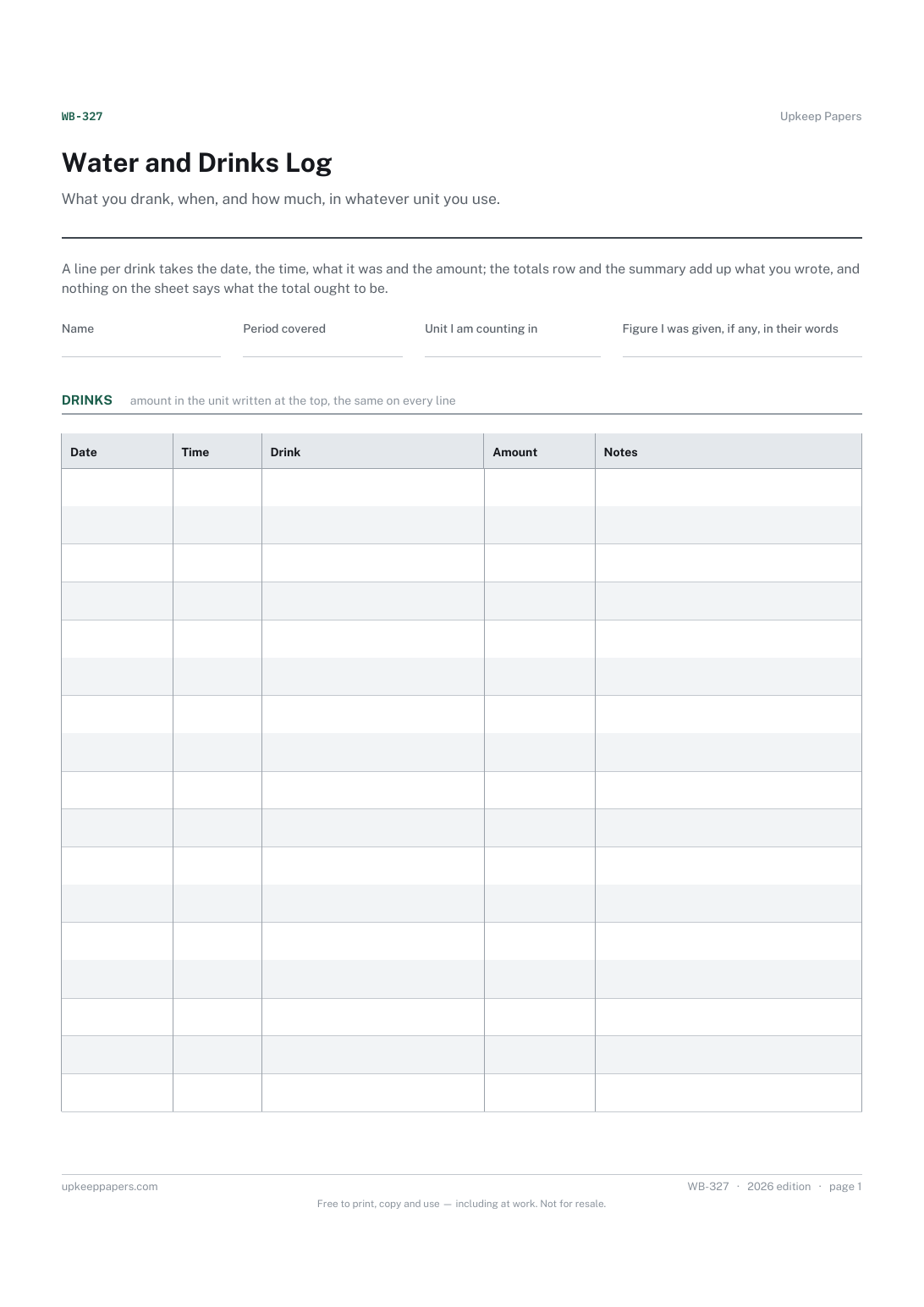
Every drink with its time, so the shape of a day shows up.
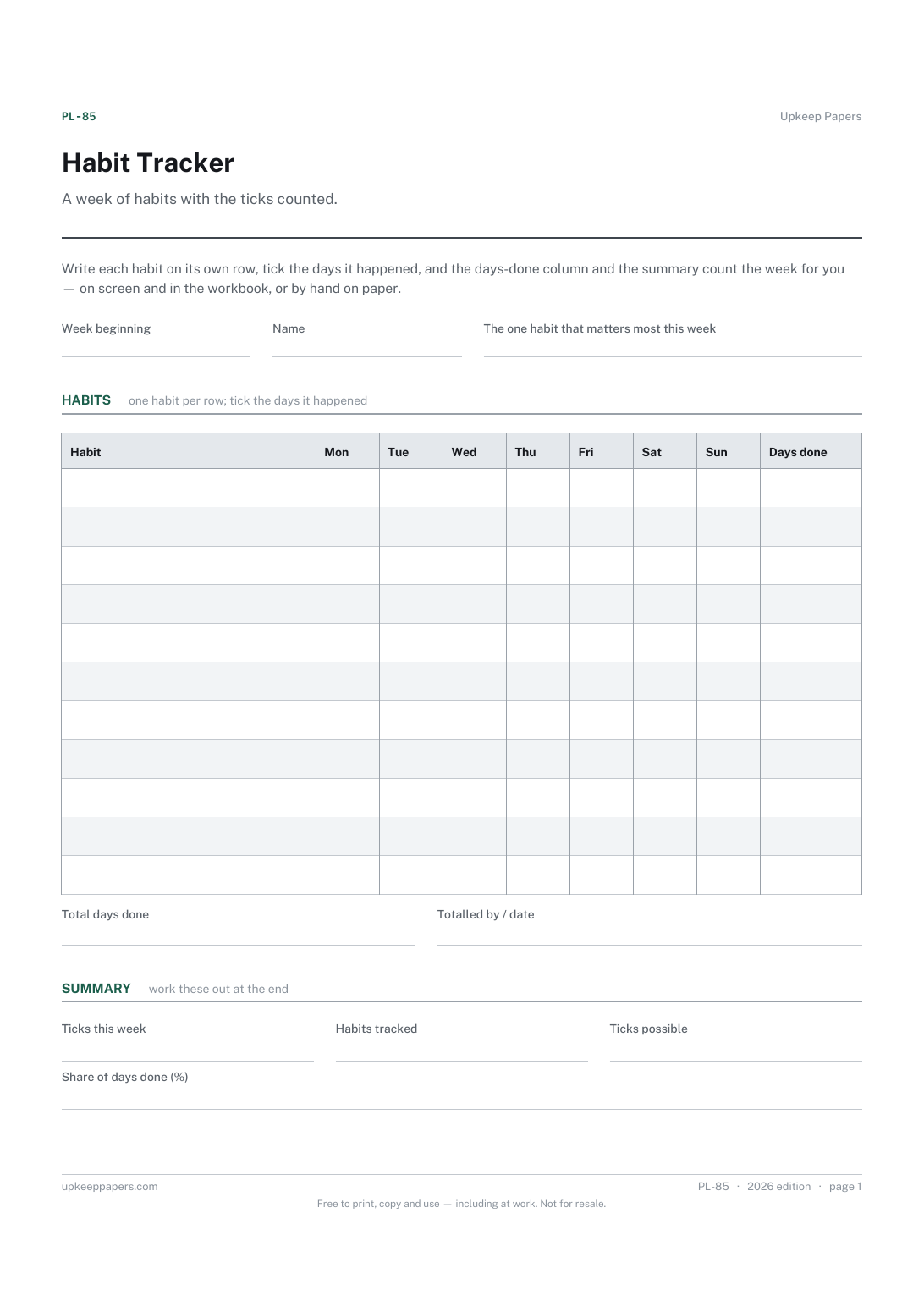
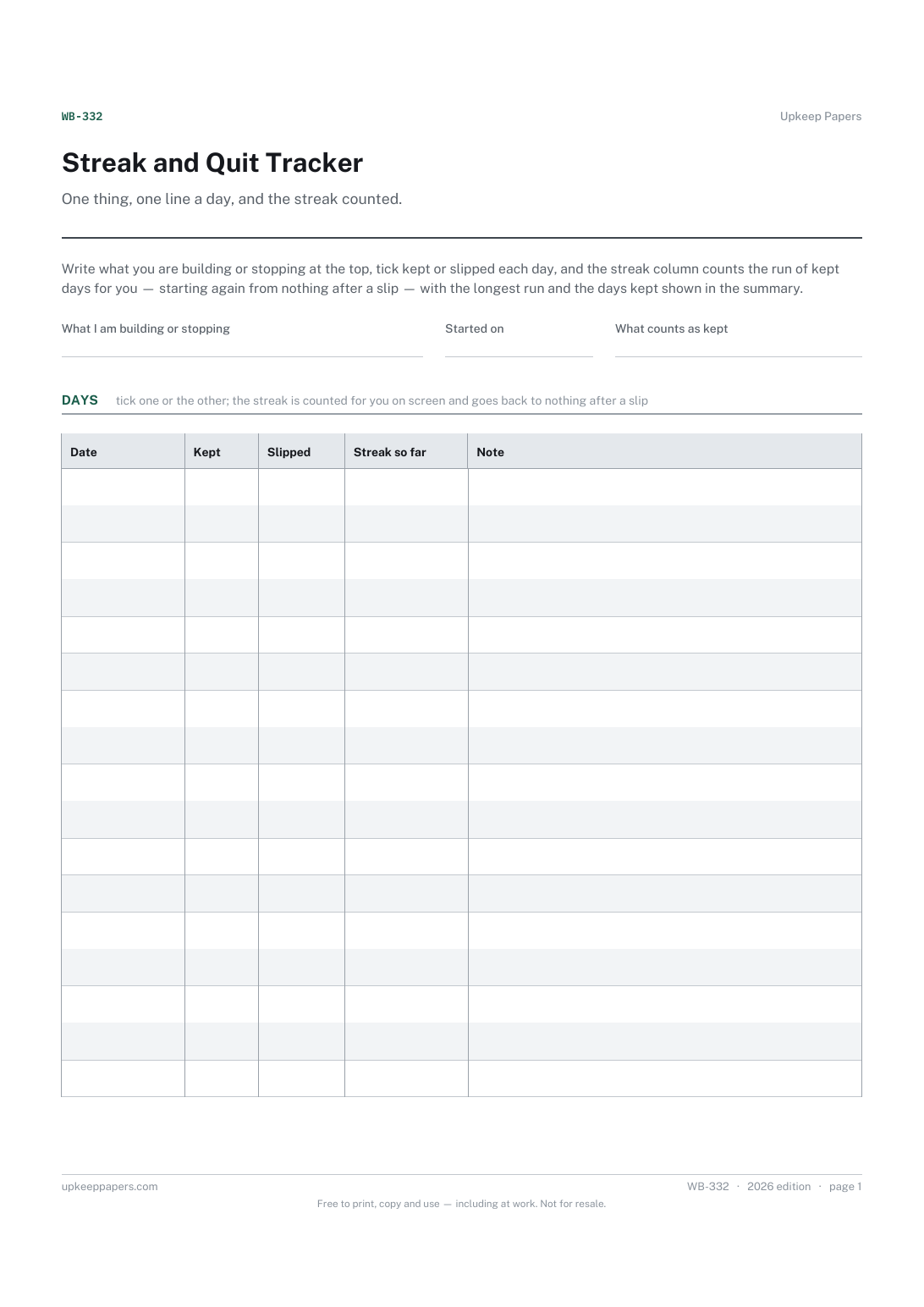
Whether each day was kept or slipped, in a tick.
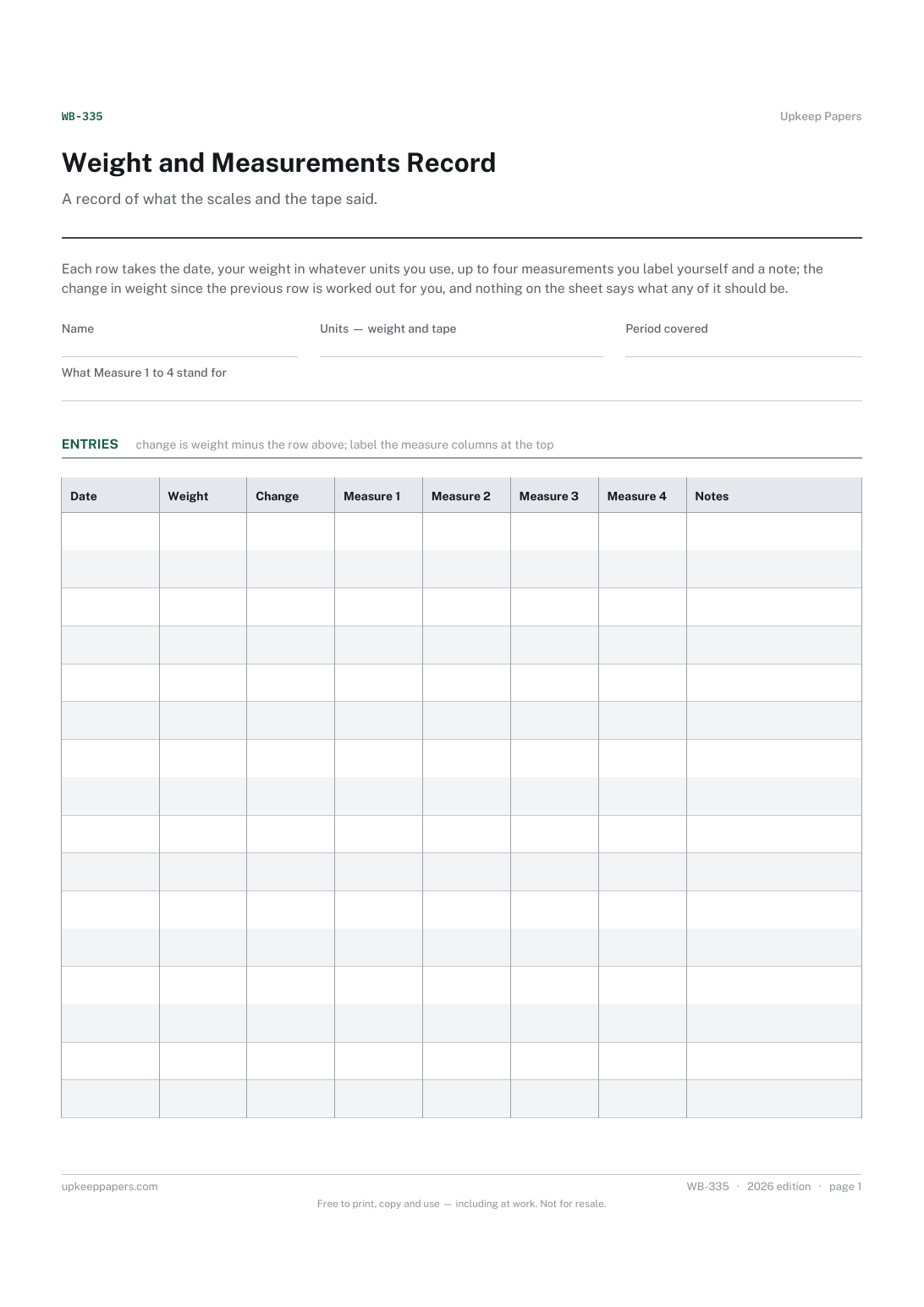
Weight on each date, in your own units.
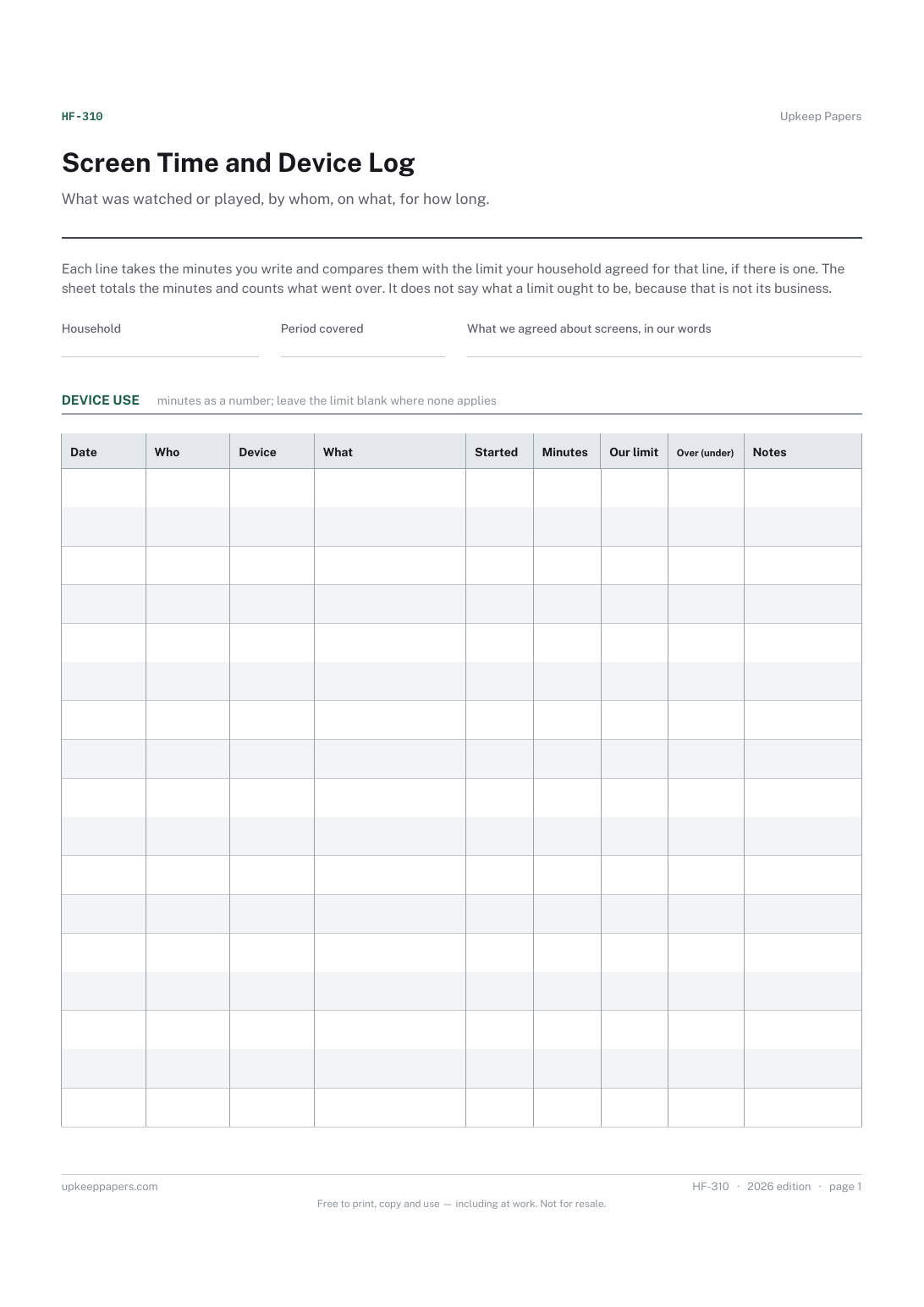
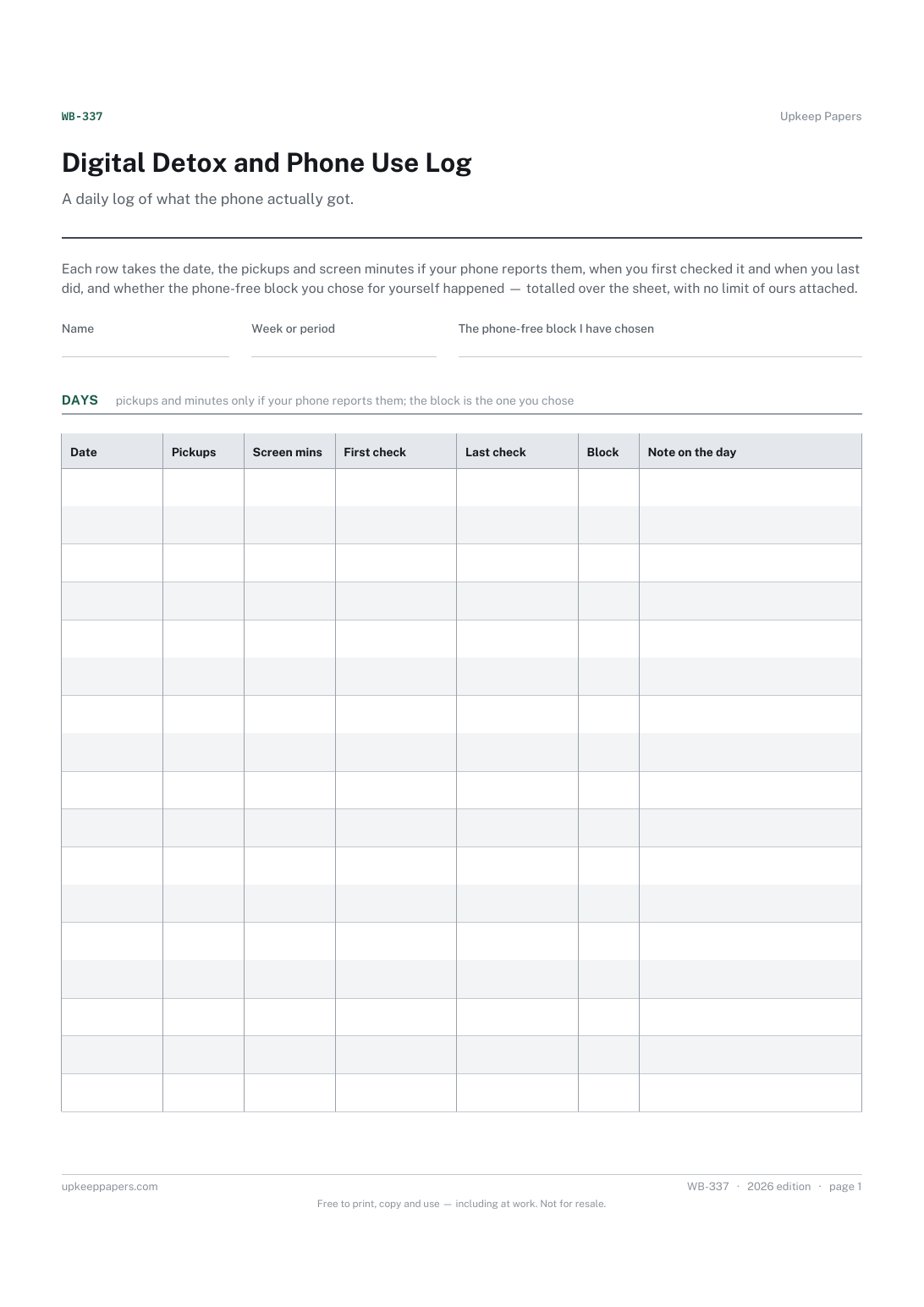
Pickups and screen minutes each day, copied from what the phone reports.
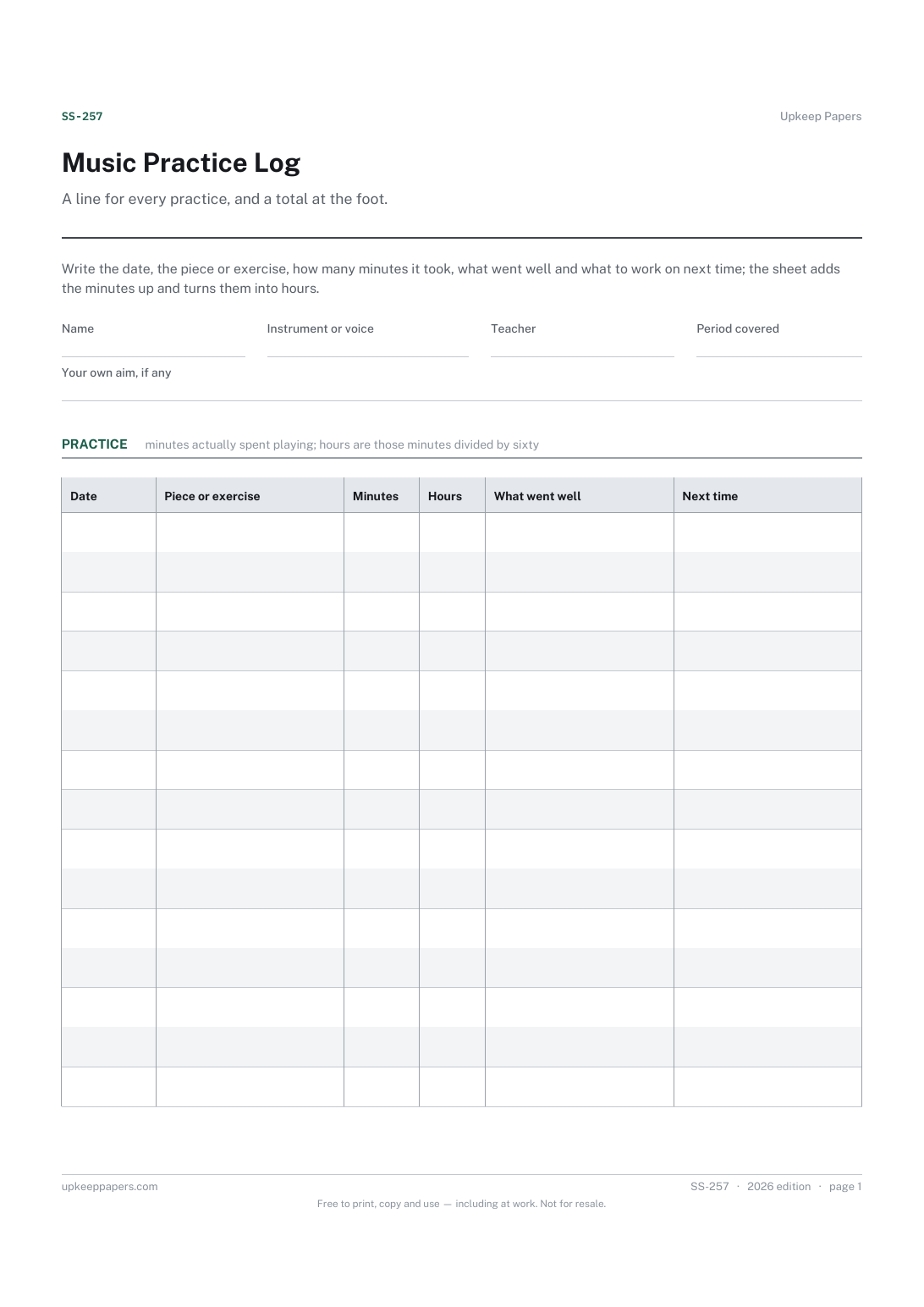
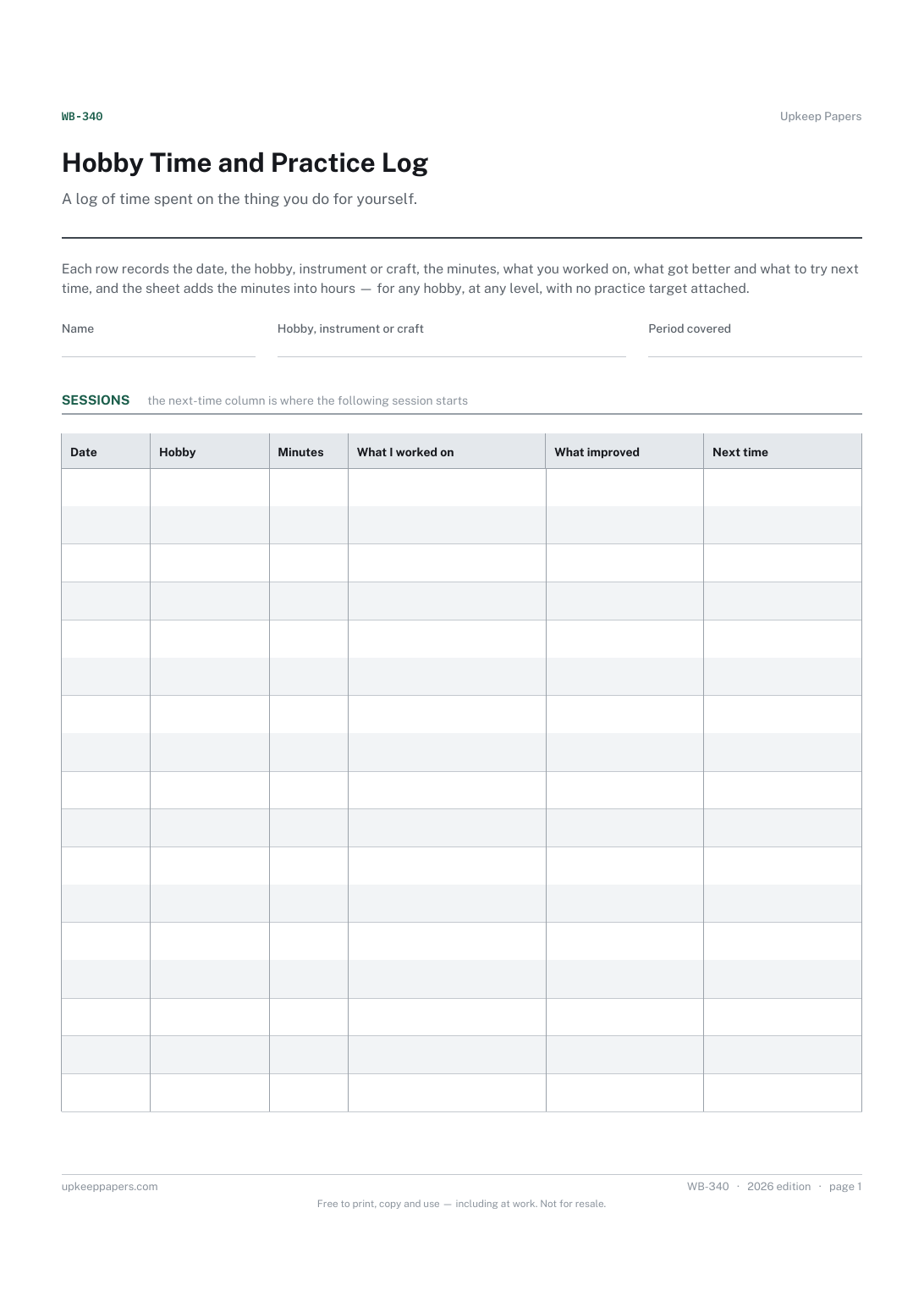
When you practised, what you practised and for how long.
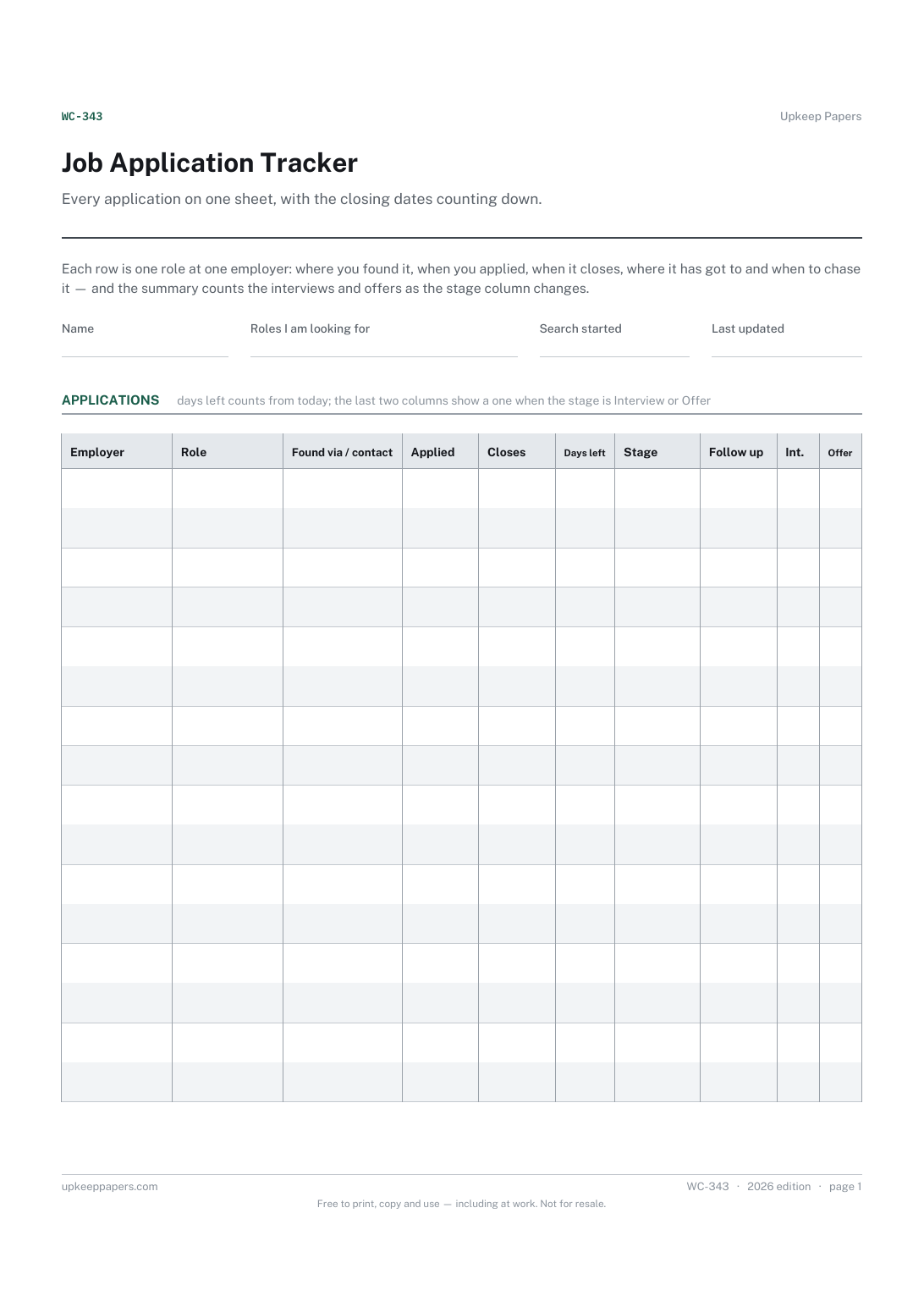
Every role applied for, with the employer and where the advert was found.
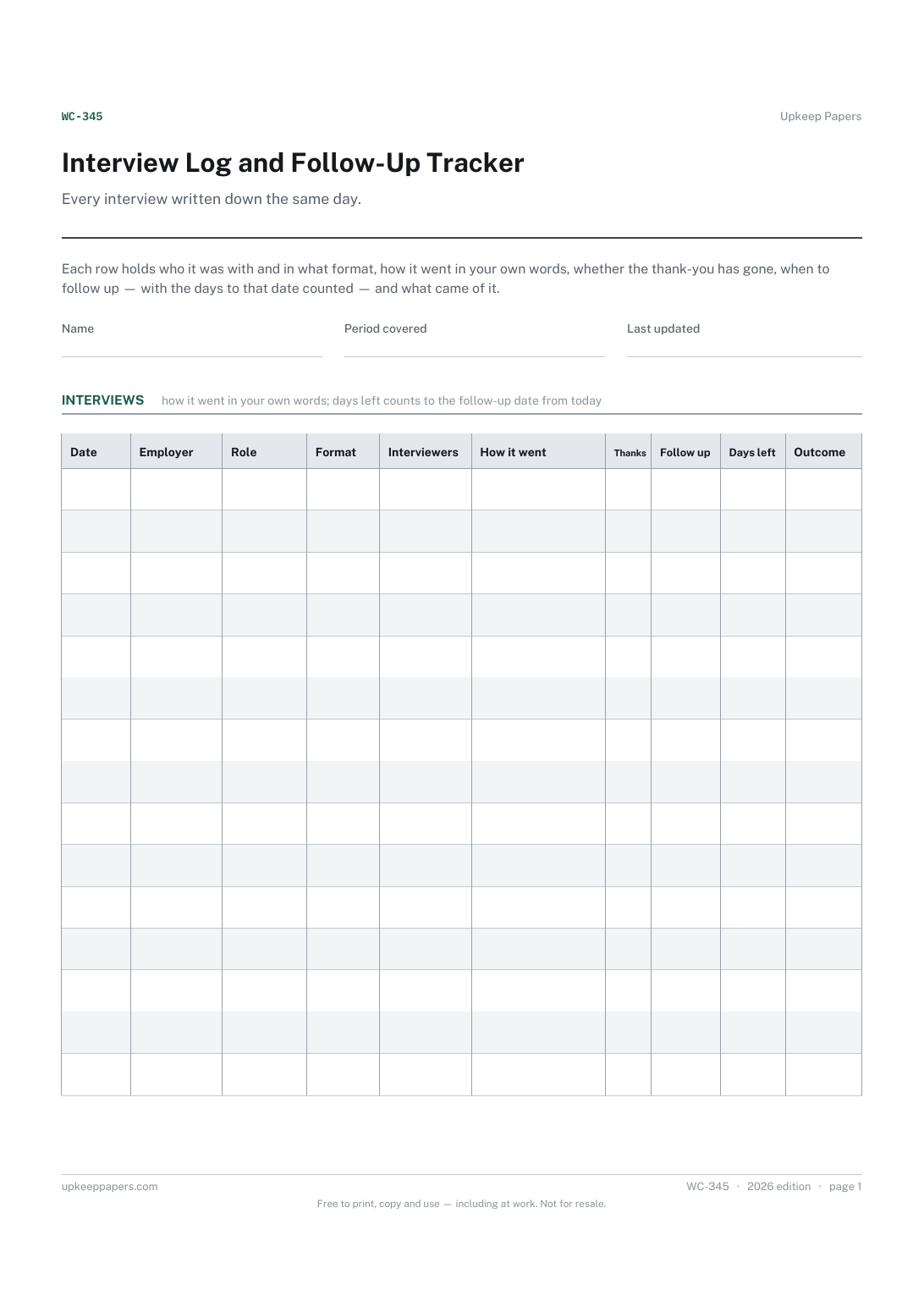
When each interview happened, with whom and in what format.
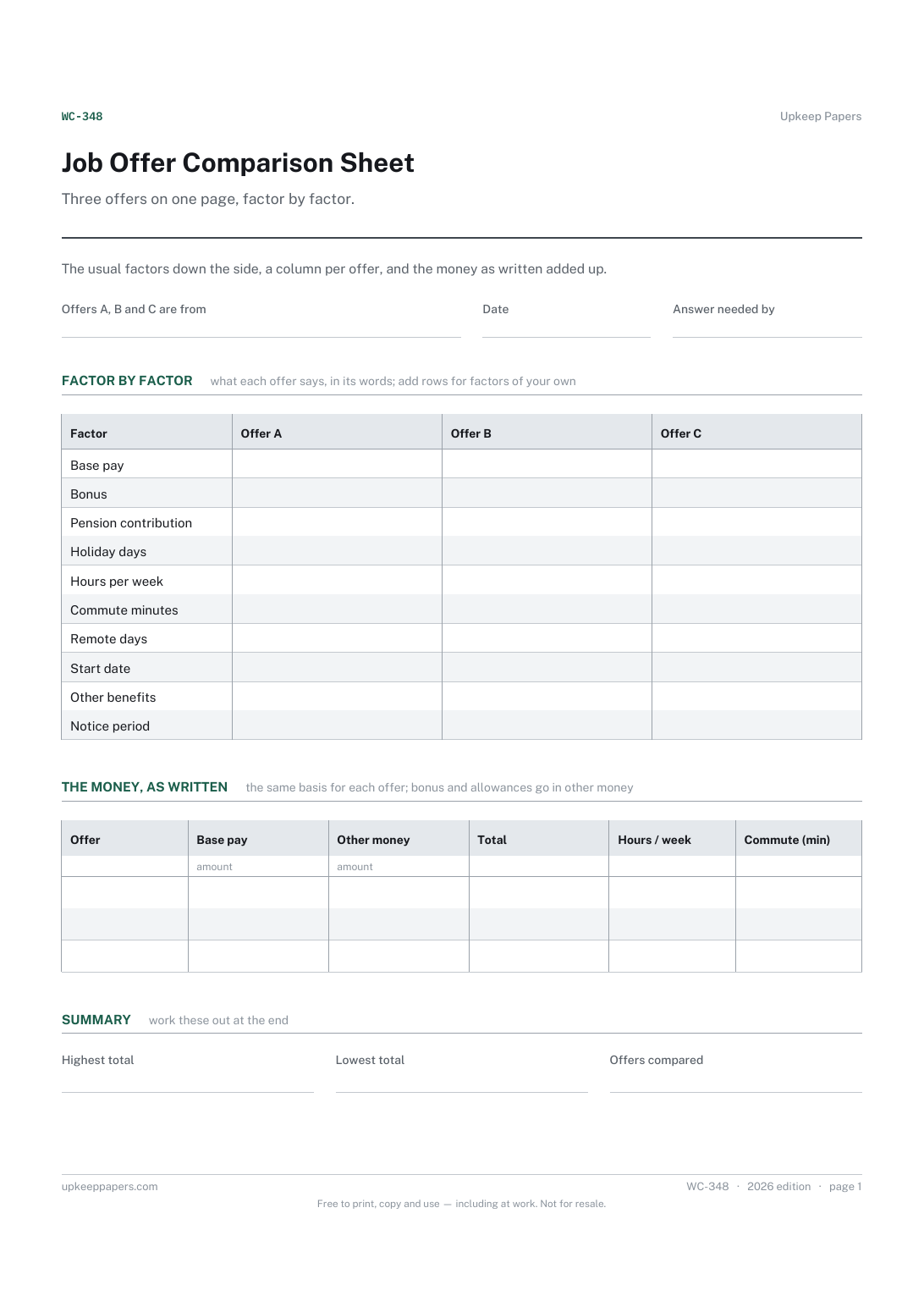
Each offer's answer to the same list of factors, in one row each.
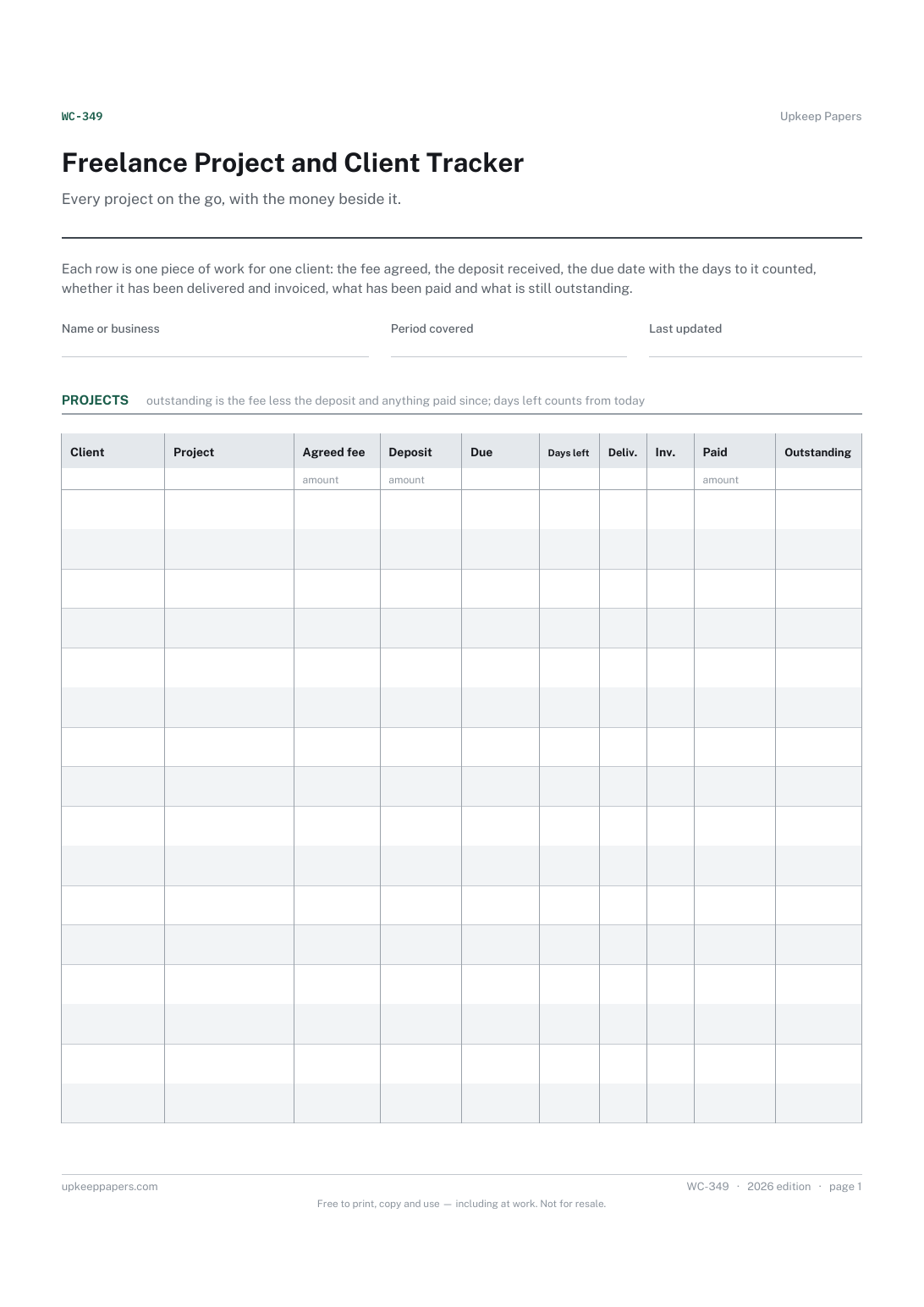
Every live project, the client it is for and the fee agreed.
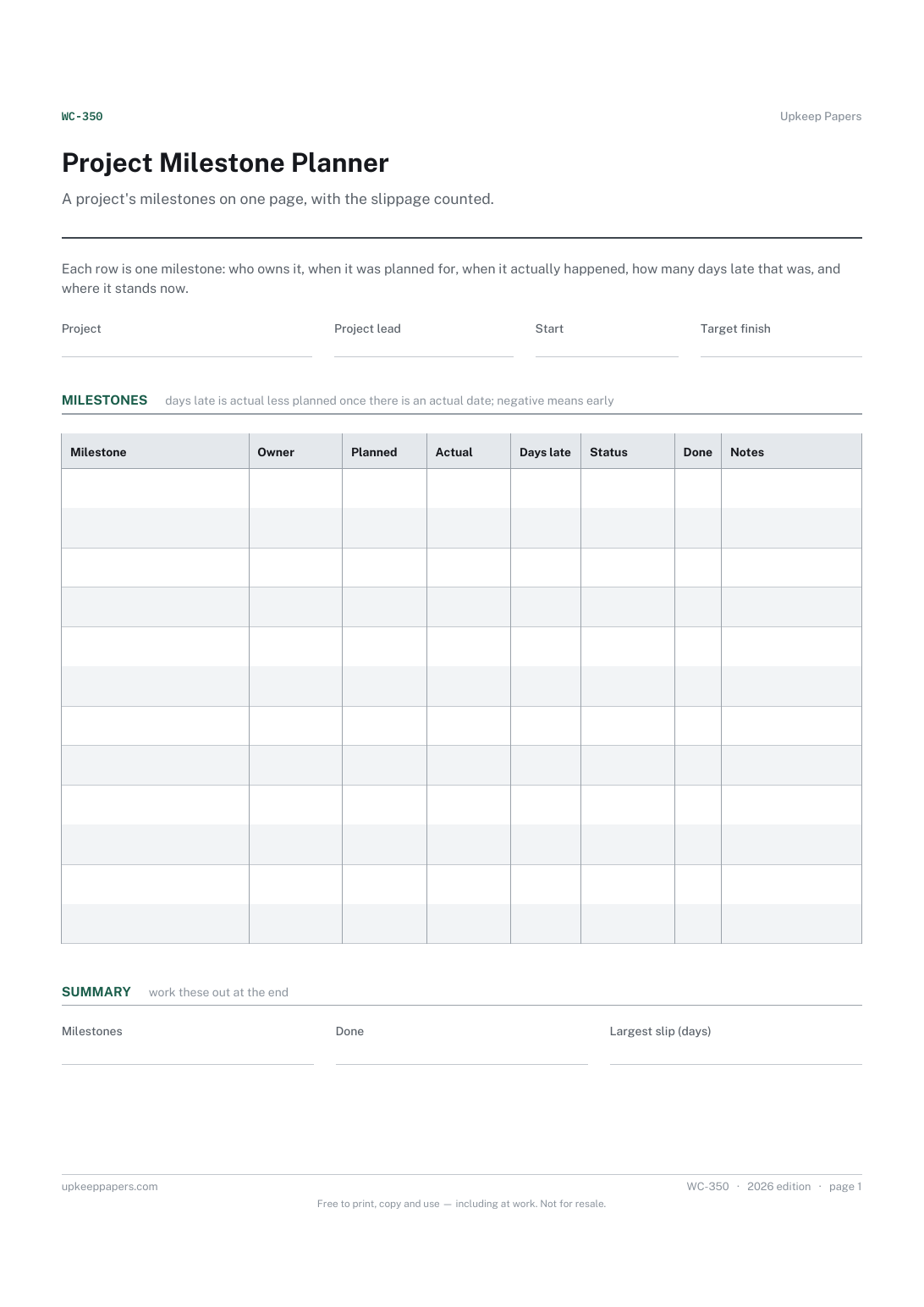
Every milestone in order, with a named owner.
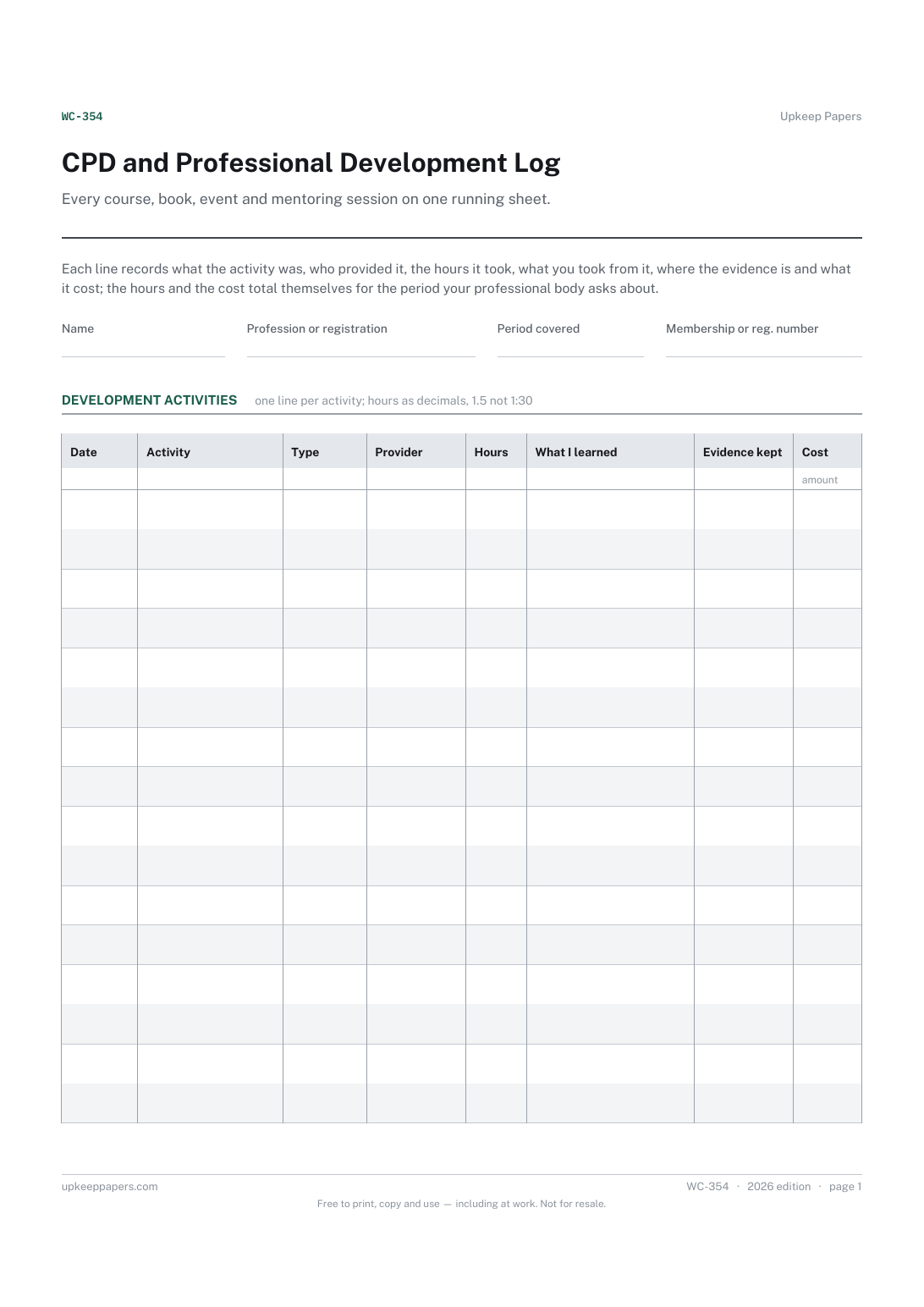
Hours of development logged in the period, added up for you.
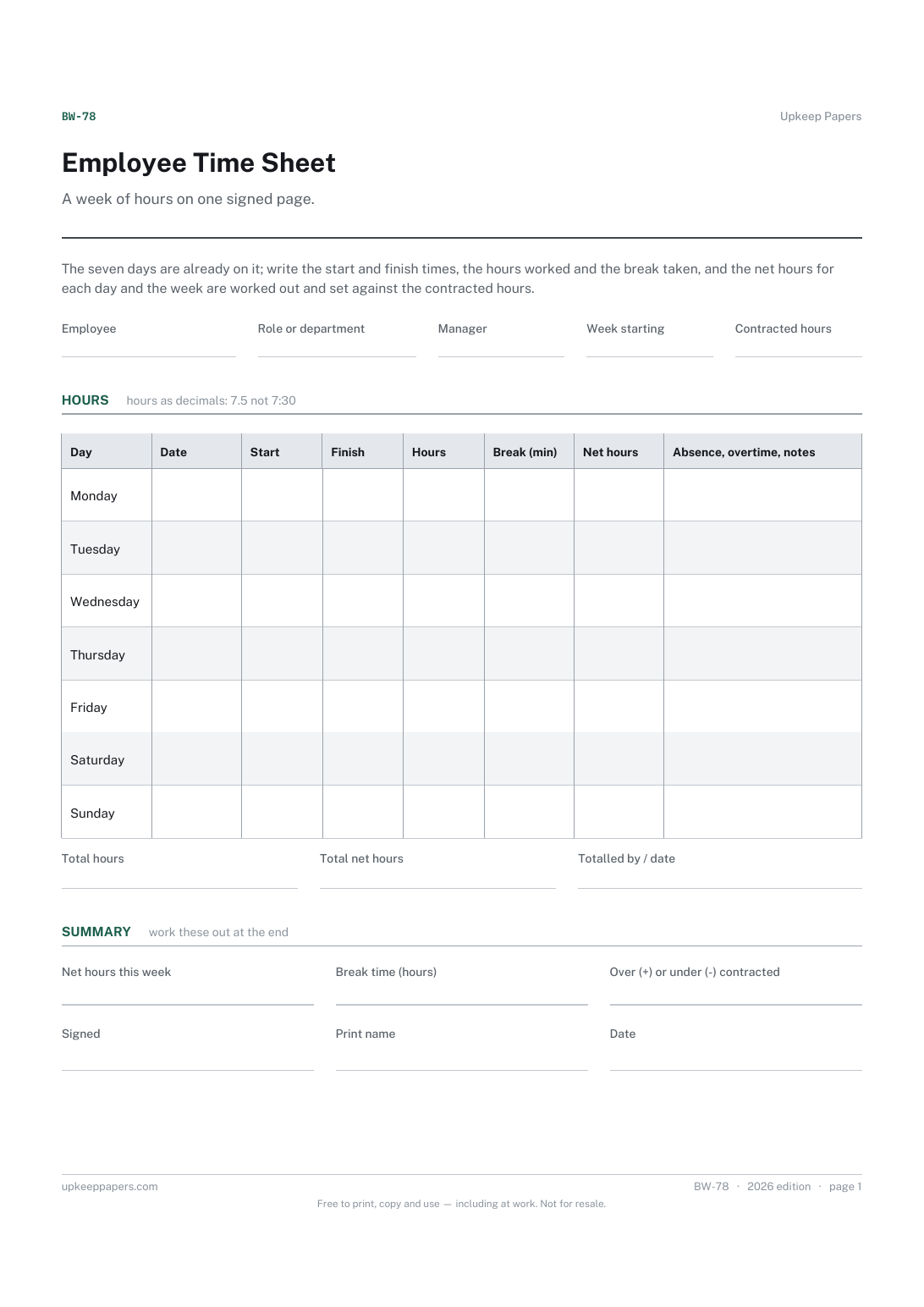
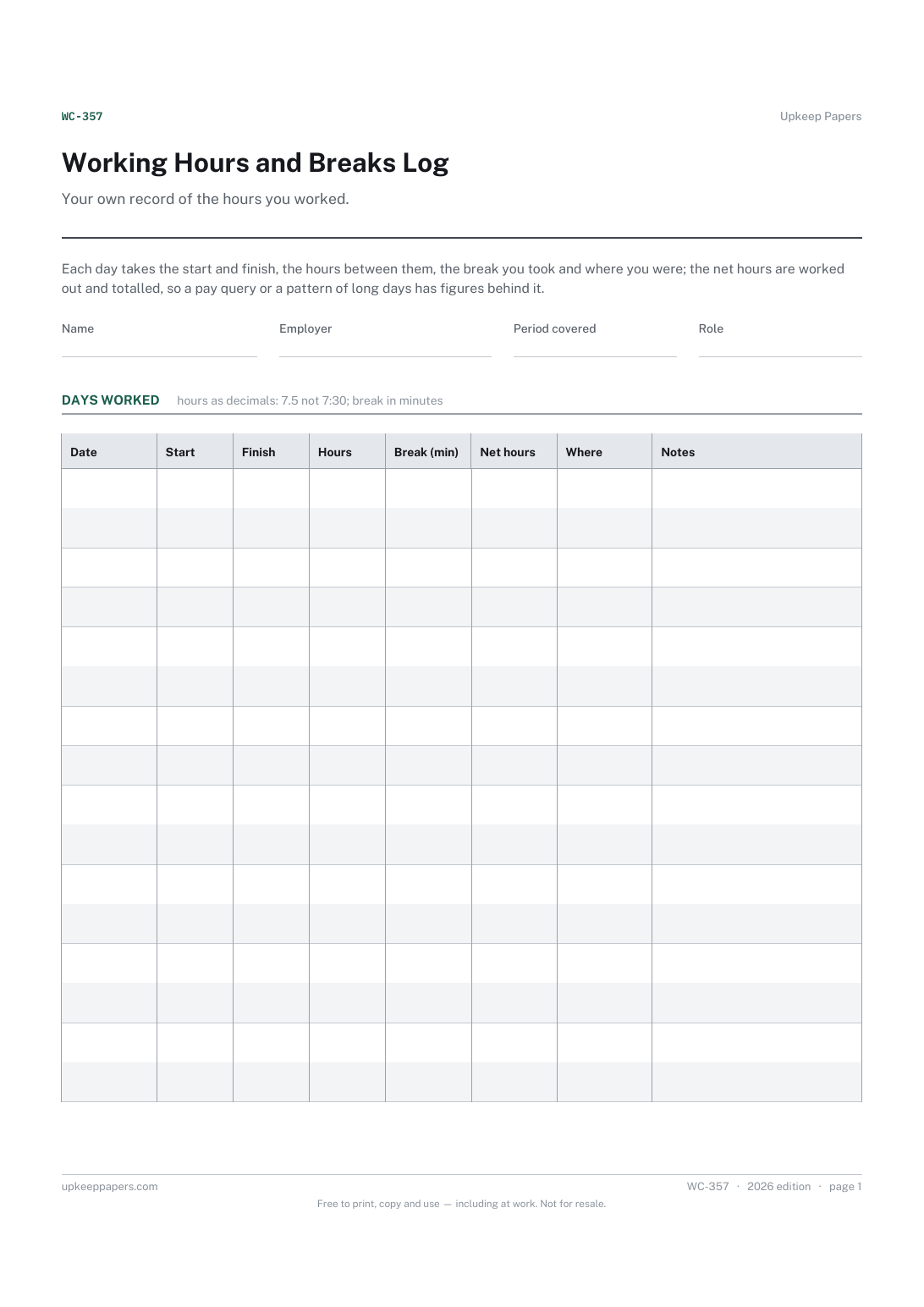
Hours worked each day, net of the break you took.
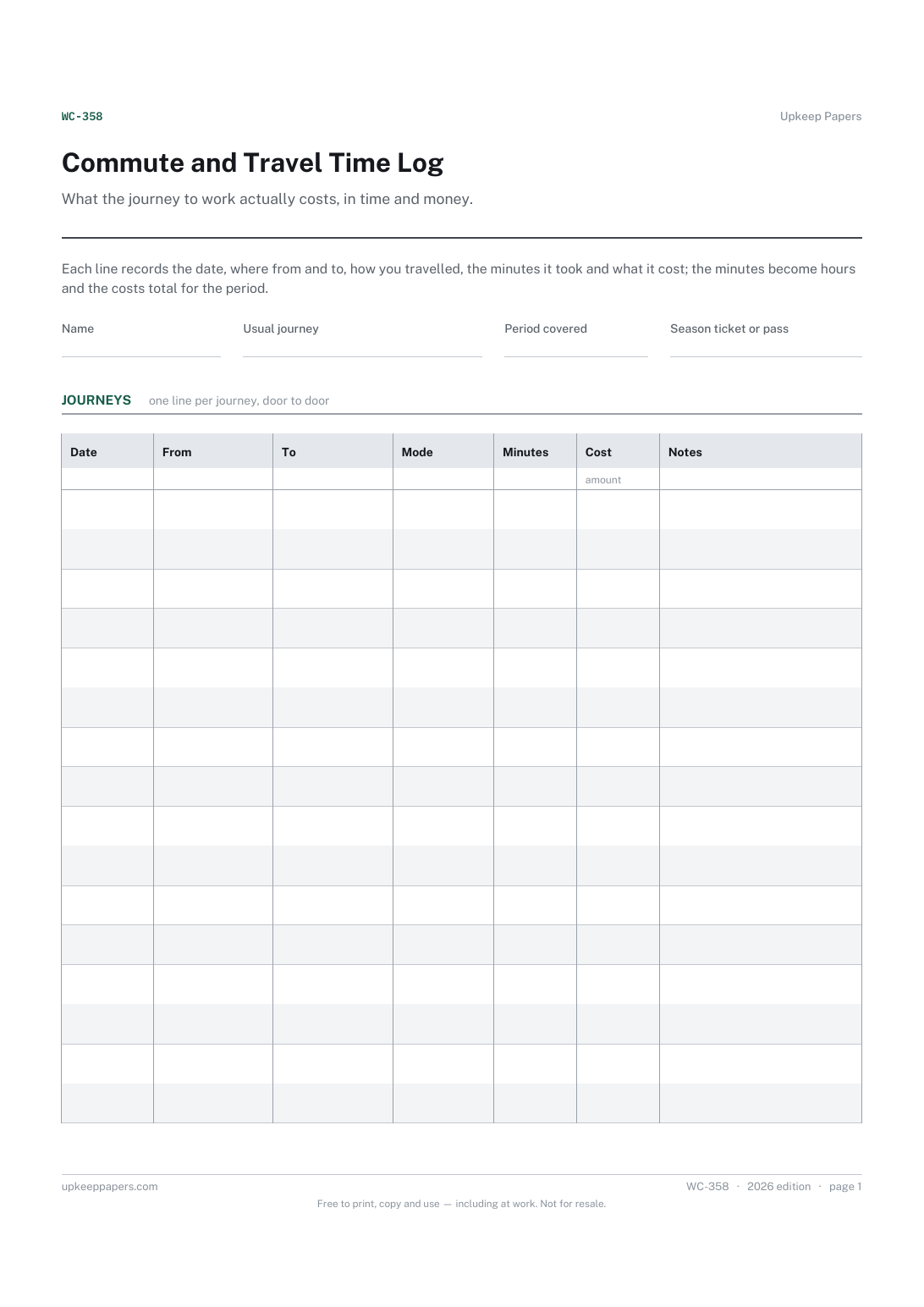
Minutes door to door for every journey, not the one you remember.
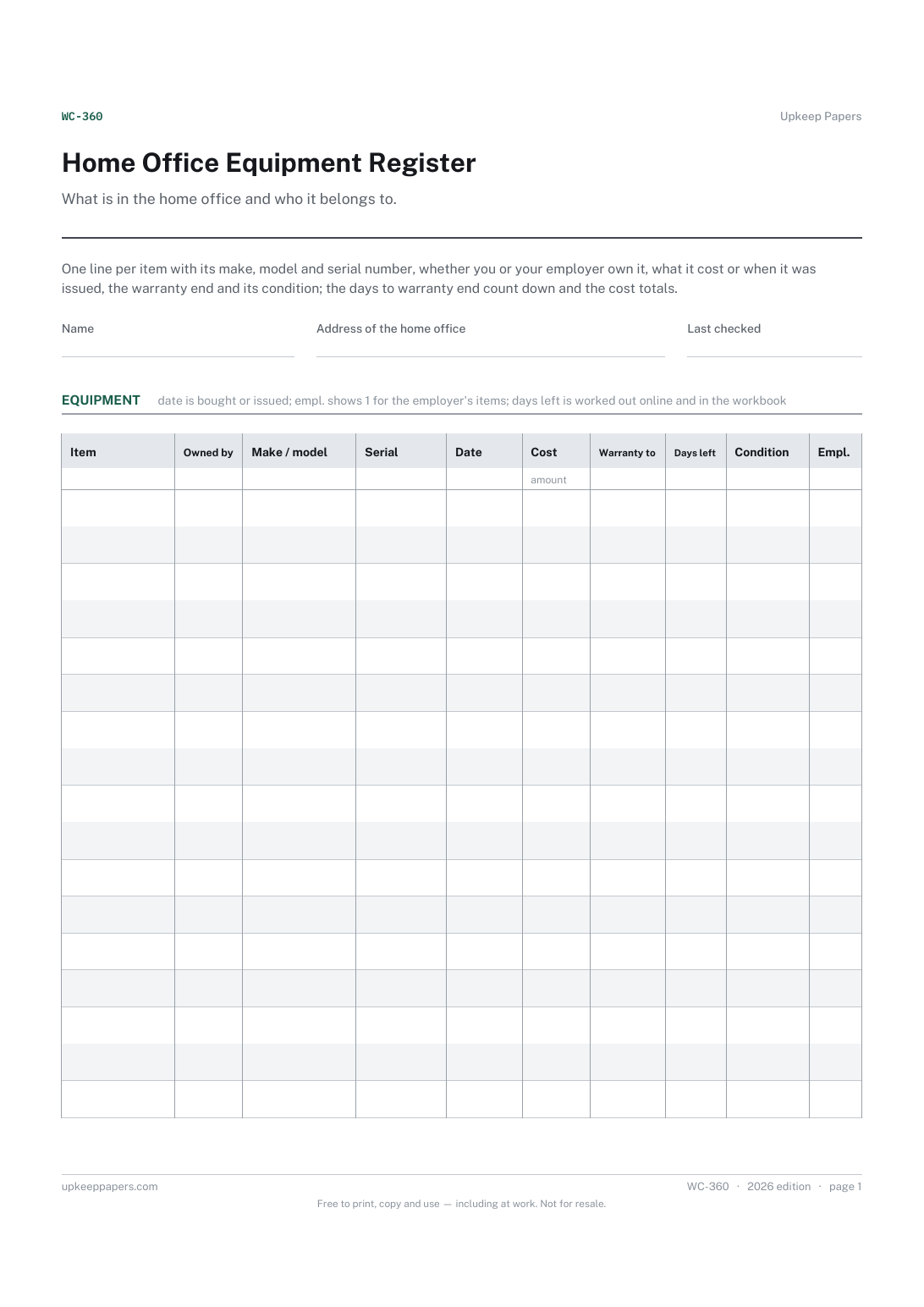
Every item in the home office, with make, model and serial.
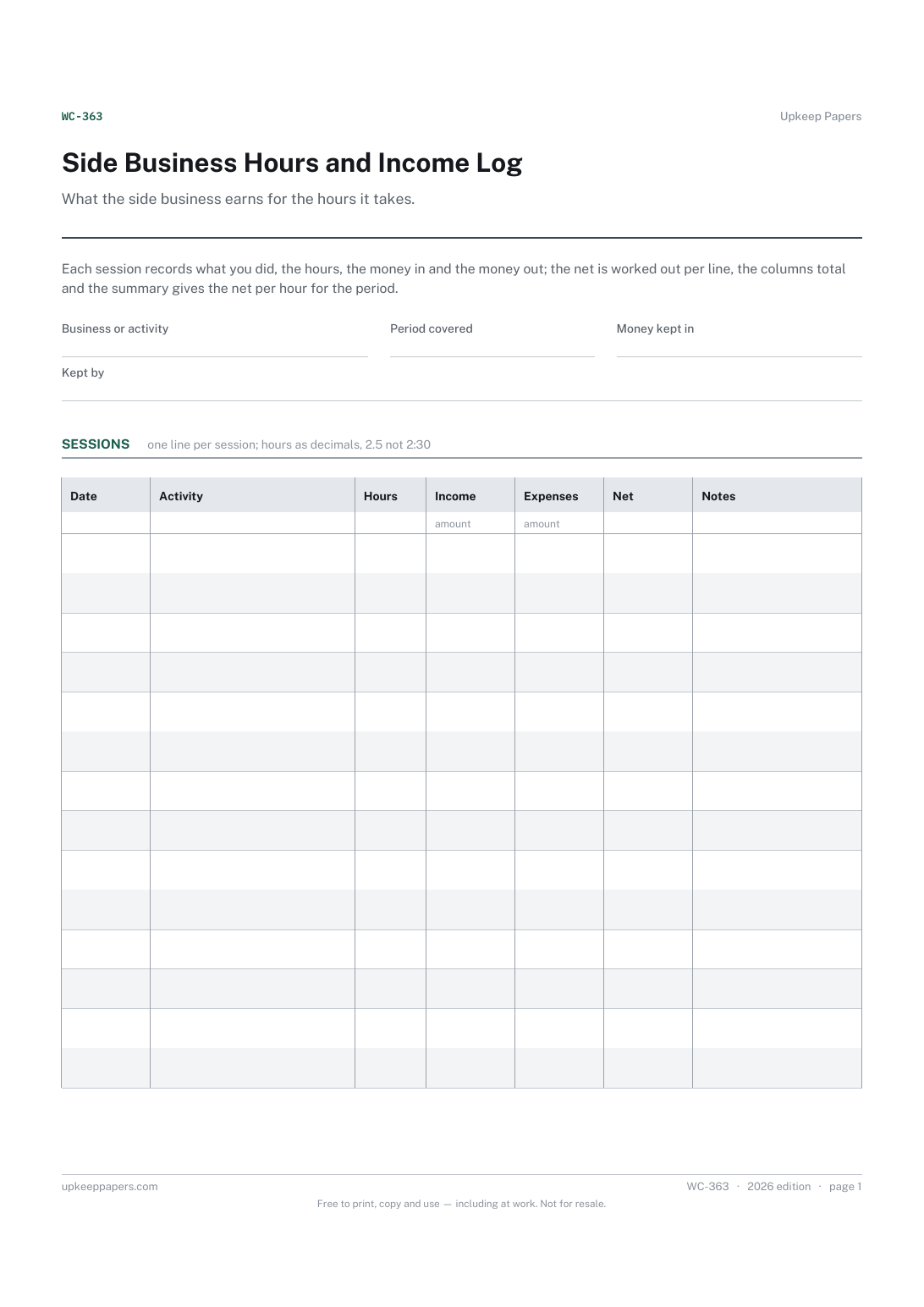
Hours put in, session by session and in total.
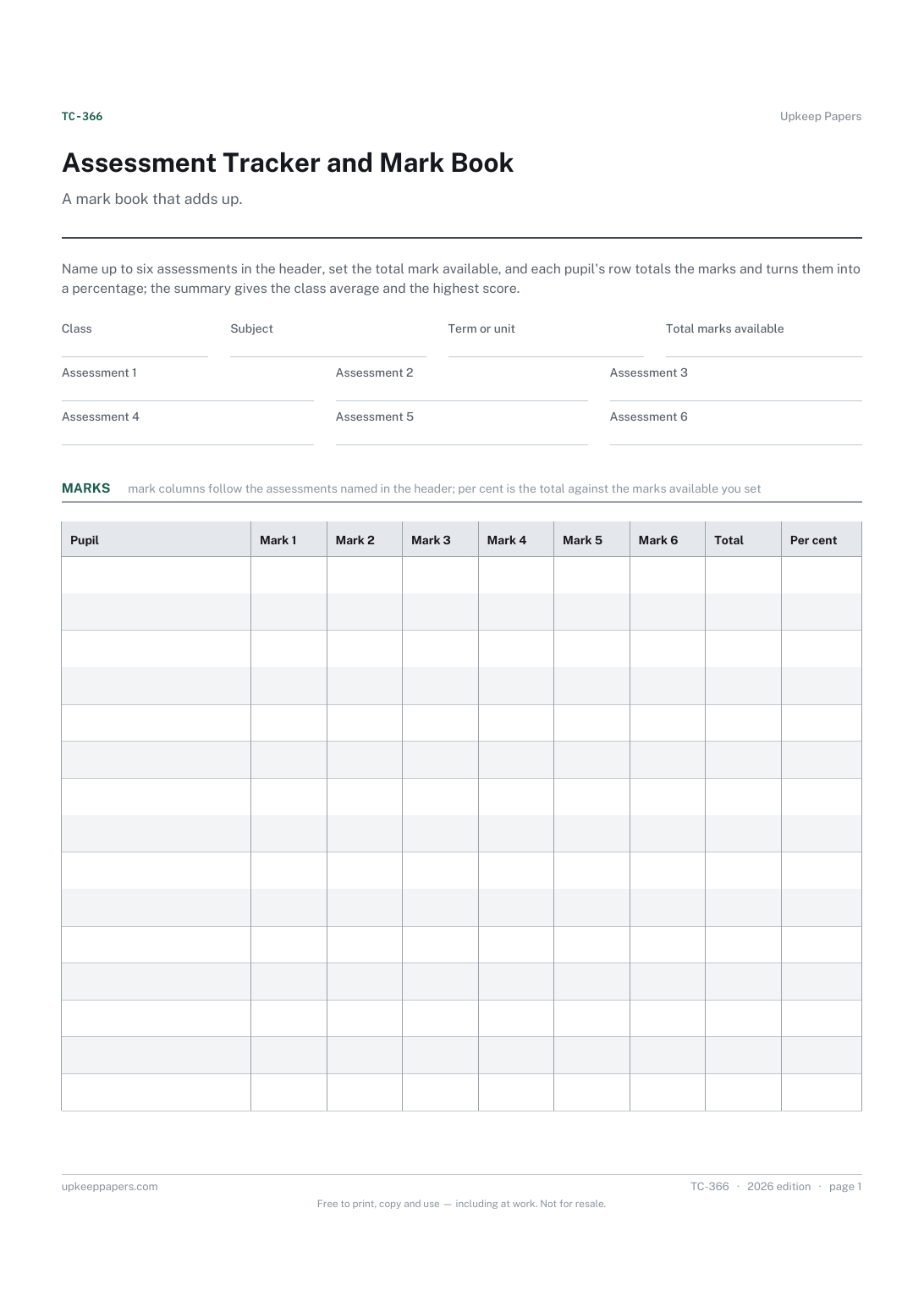
Each pupil's mark for every assessment, in the marks you set.
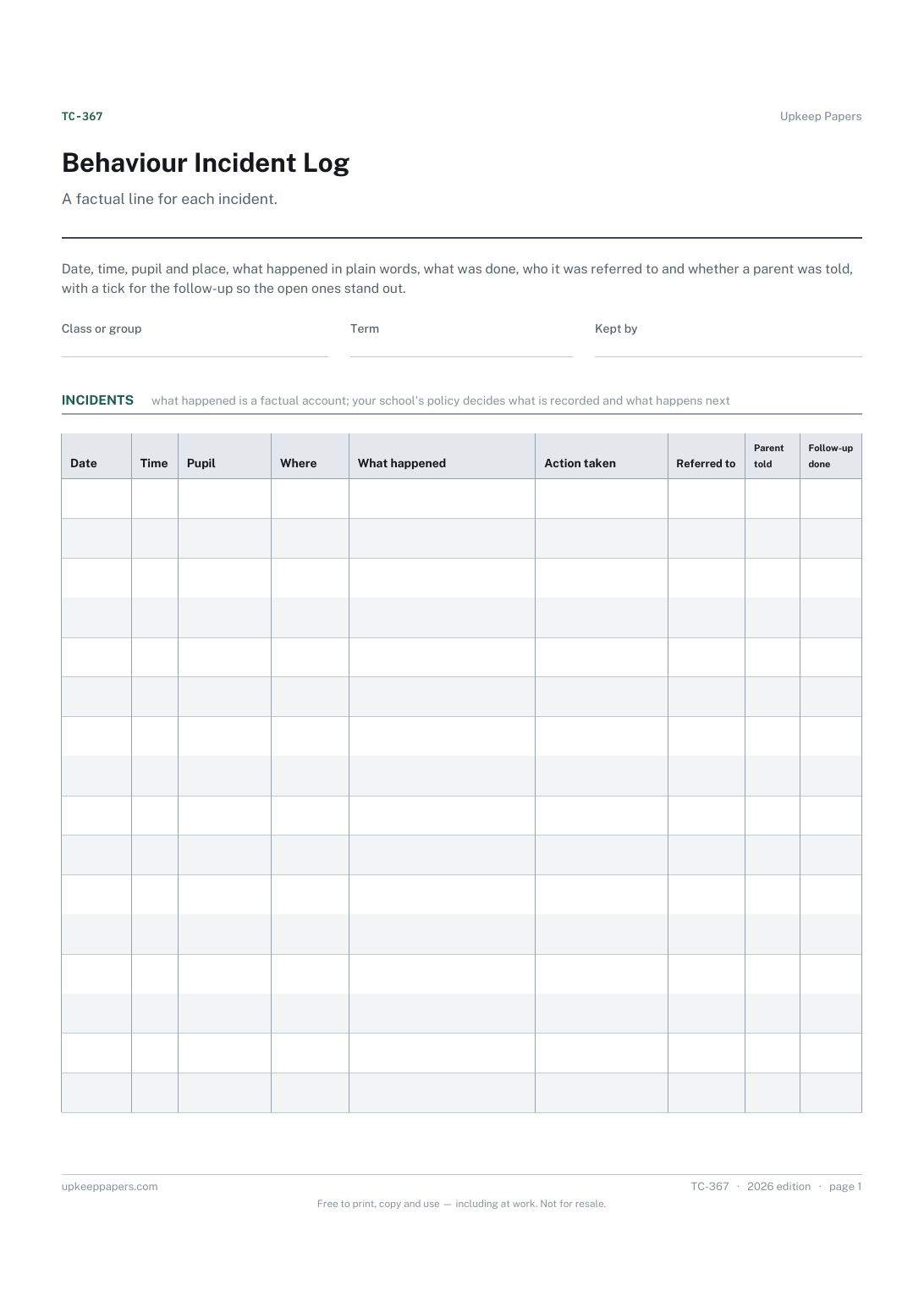
When and where each incident happened, and who was involved.
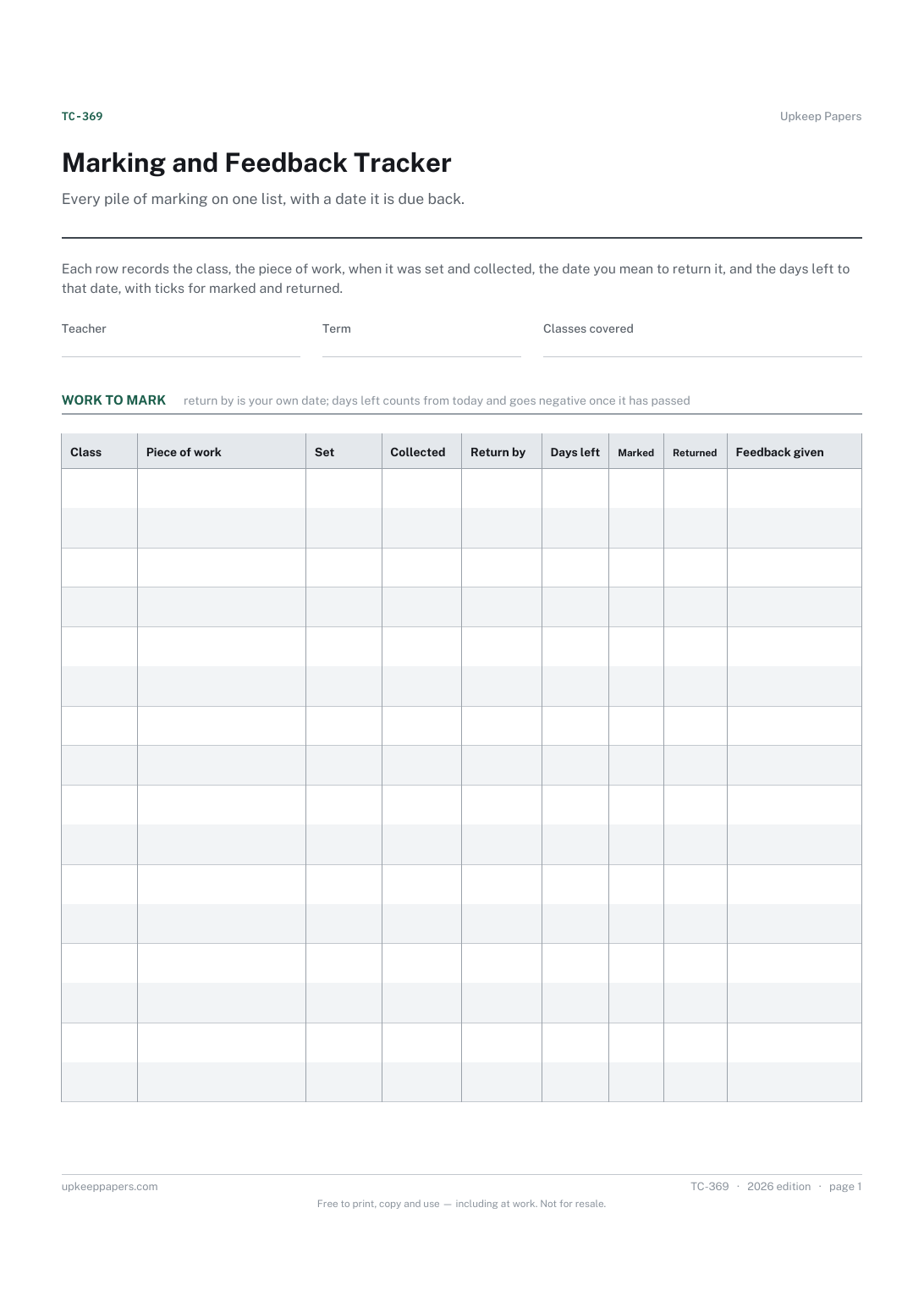
What has been collected from which class, and when.
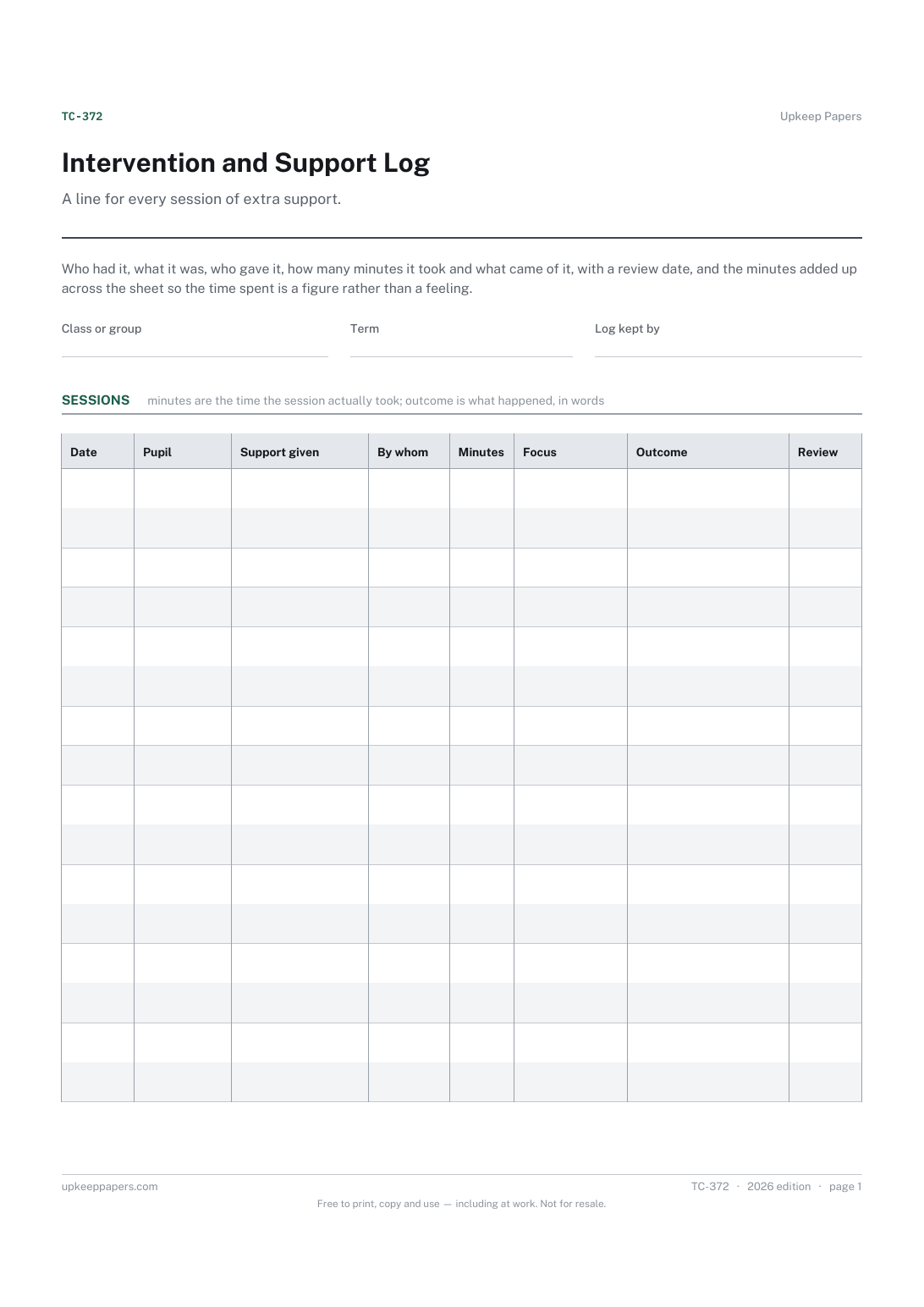
Each session with the date, the pupil and what the support was.
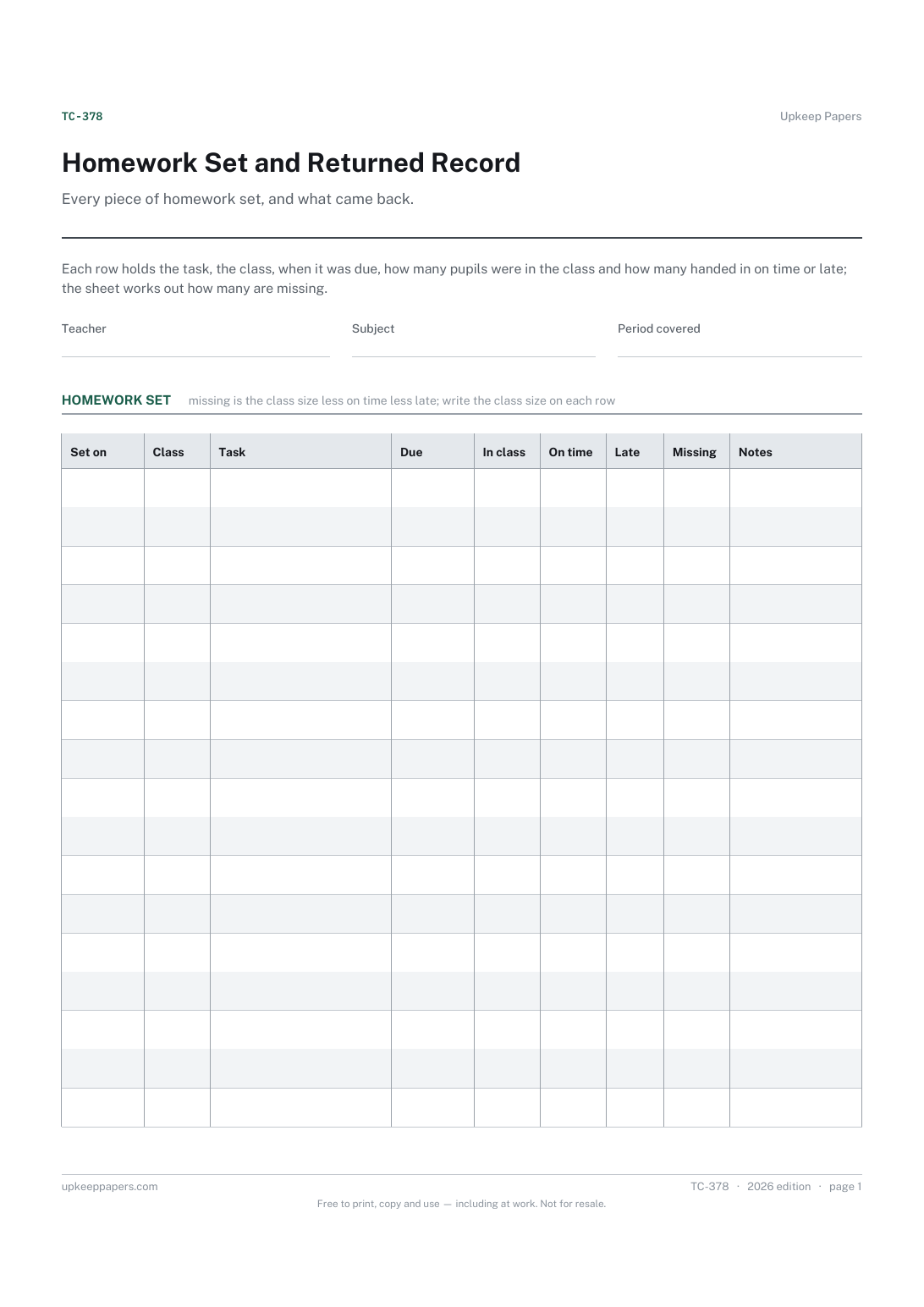
What was set to each class, when, and when it was due.
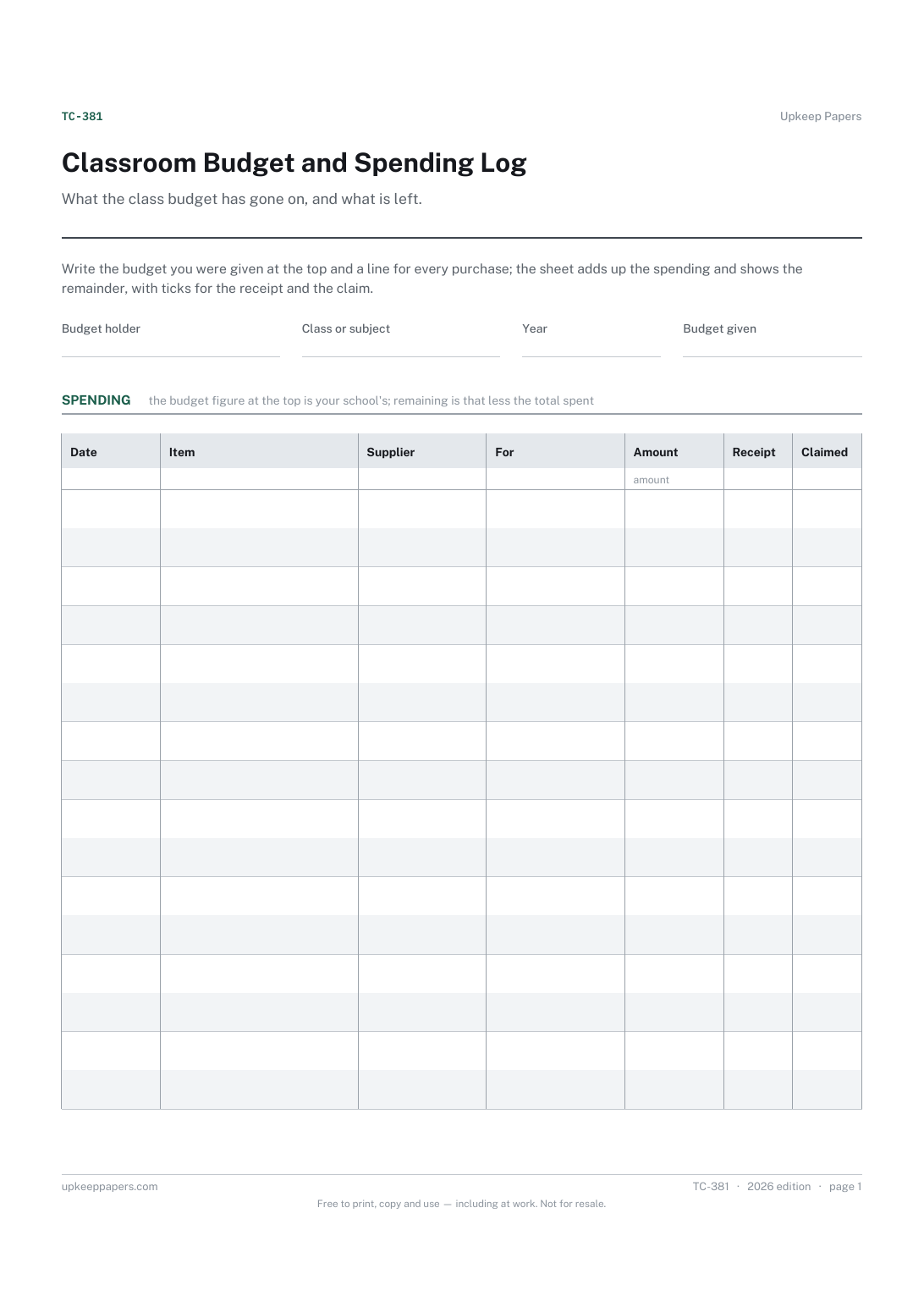
Every purchase against the budget, with the date, the supplier and what it was for.
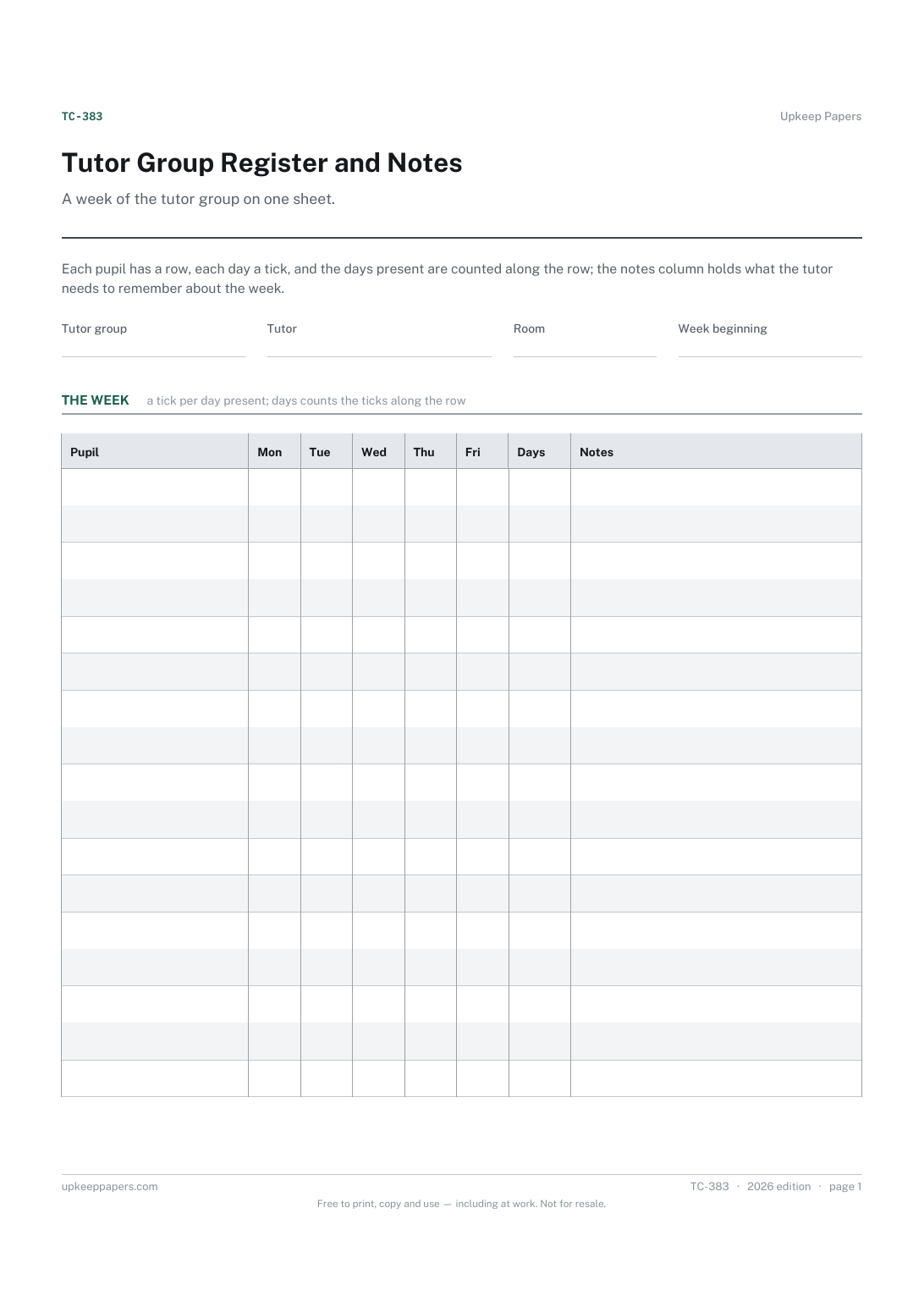
Who was in on each day of the week, at a glance.
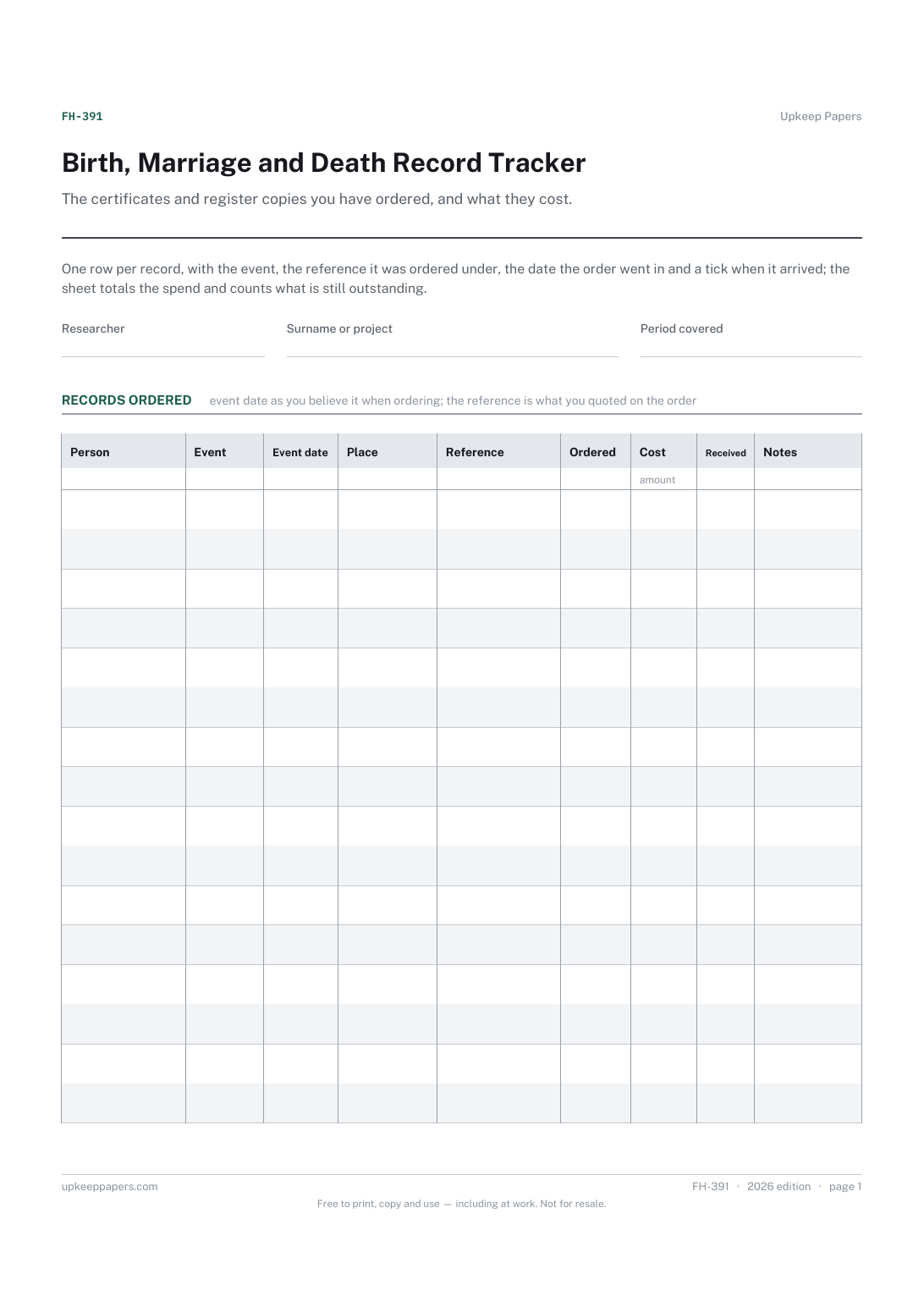
Every birth, marriage or death record you have applied for, and for whom.
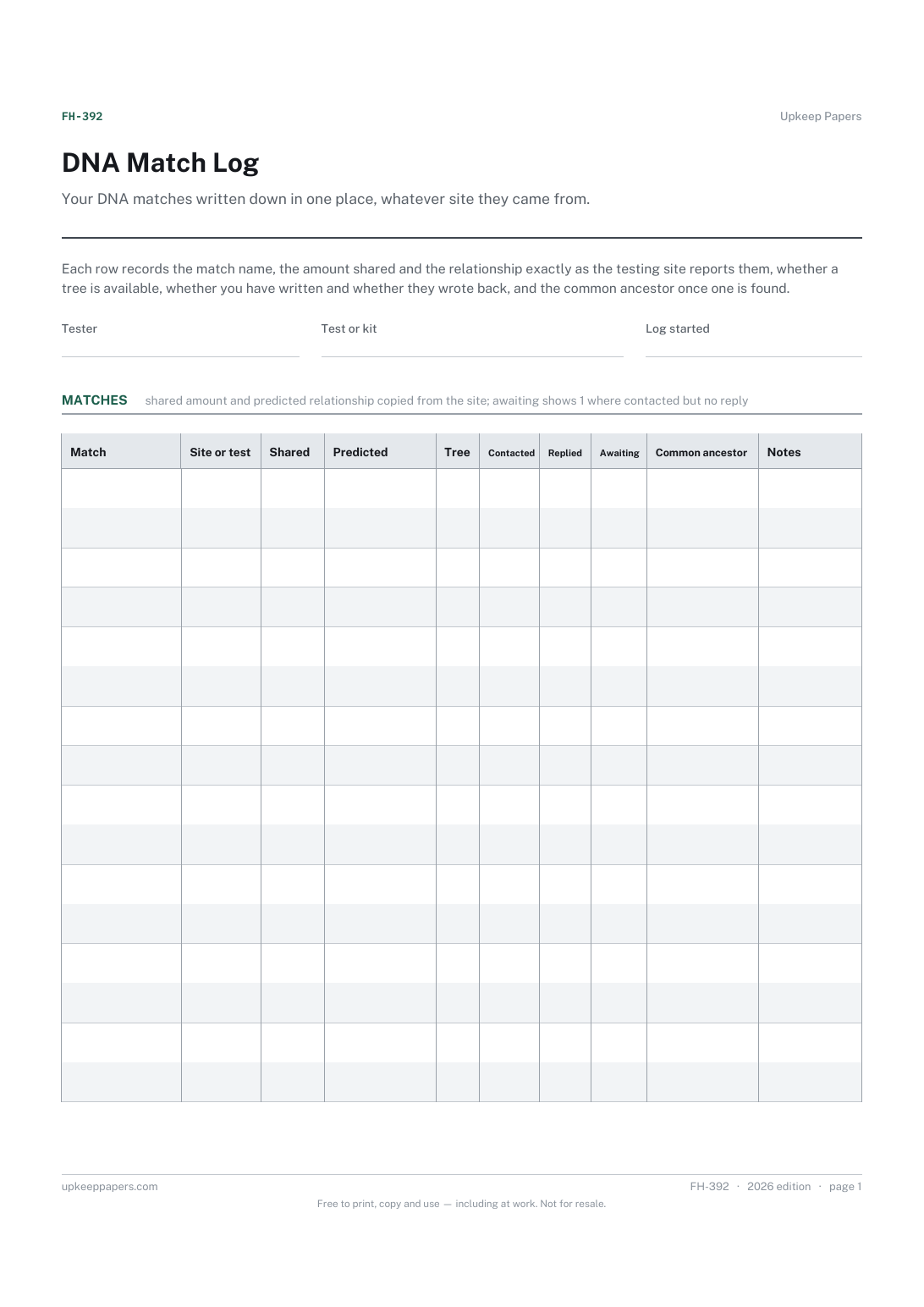
Each match by name or username, and which site or test it is on.
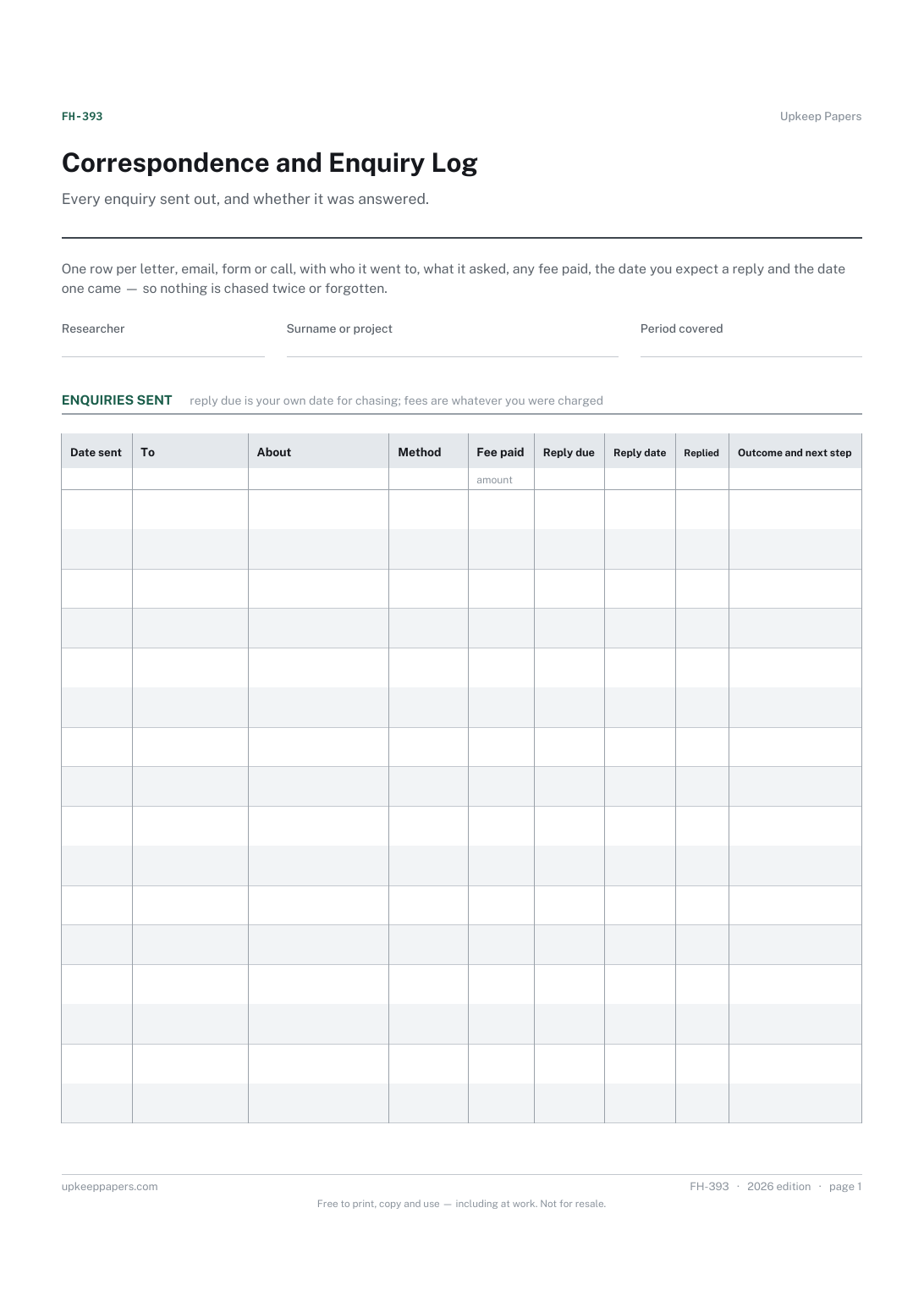
What was sent, when, to whom and by what method.
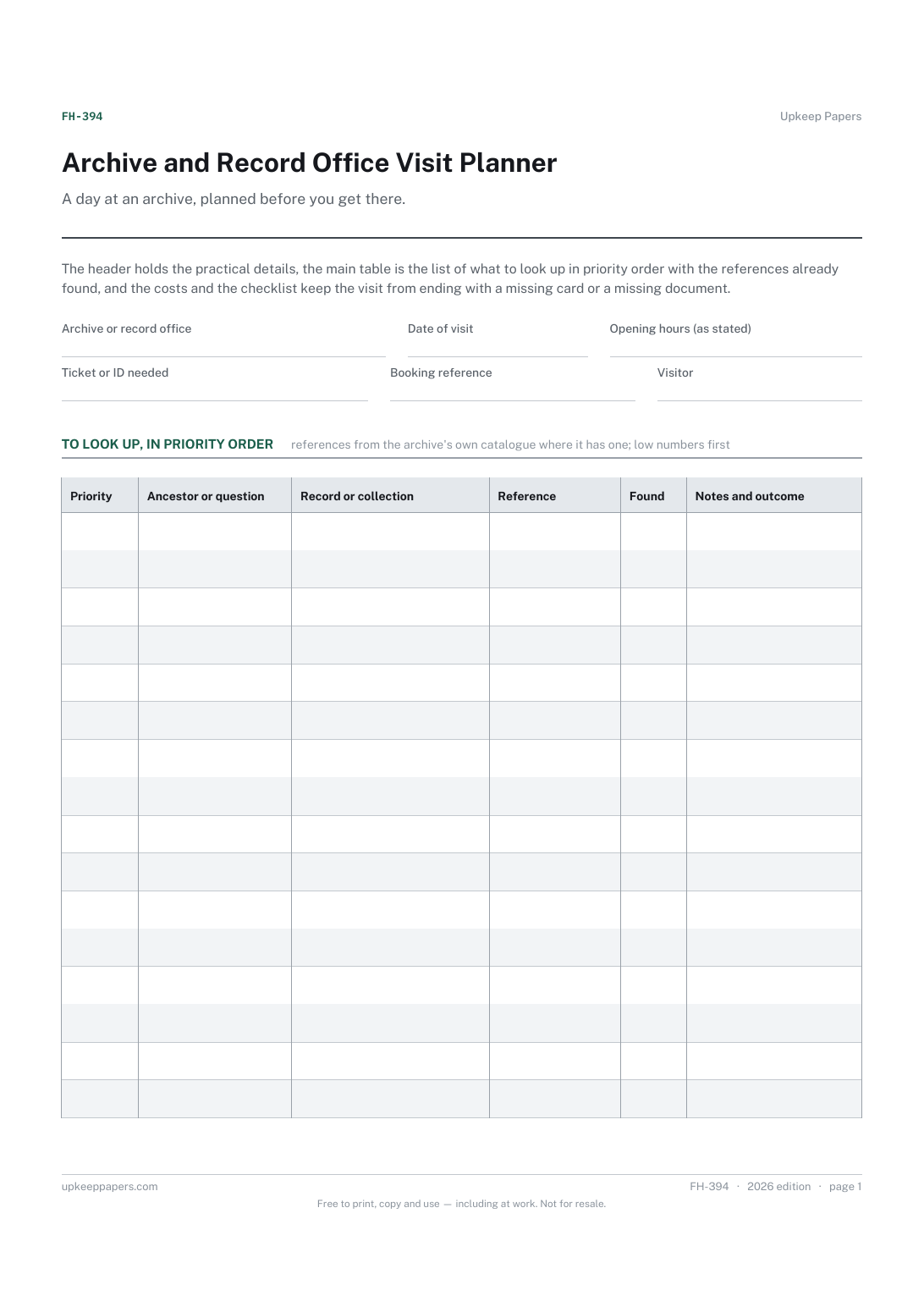
The archive, the date, its opening hours and what you need to get in.
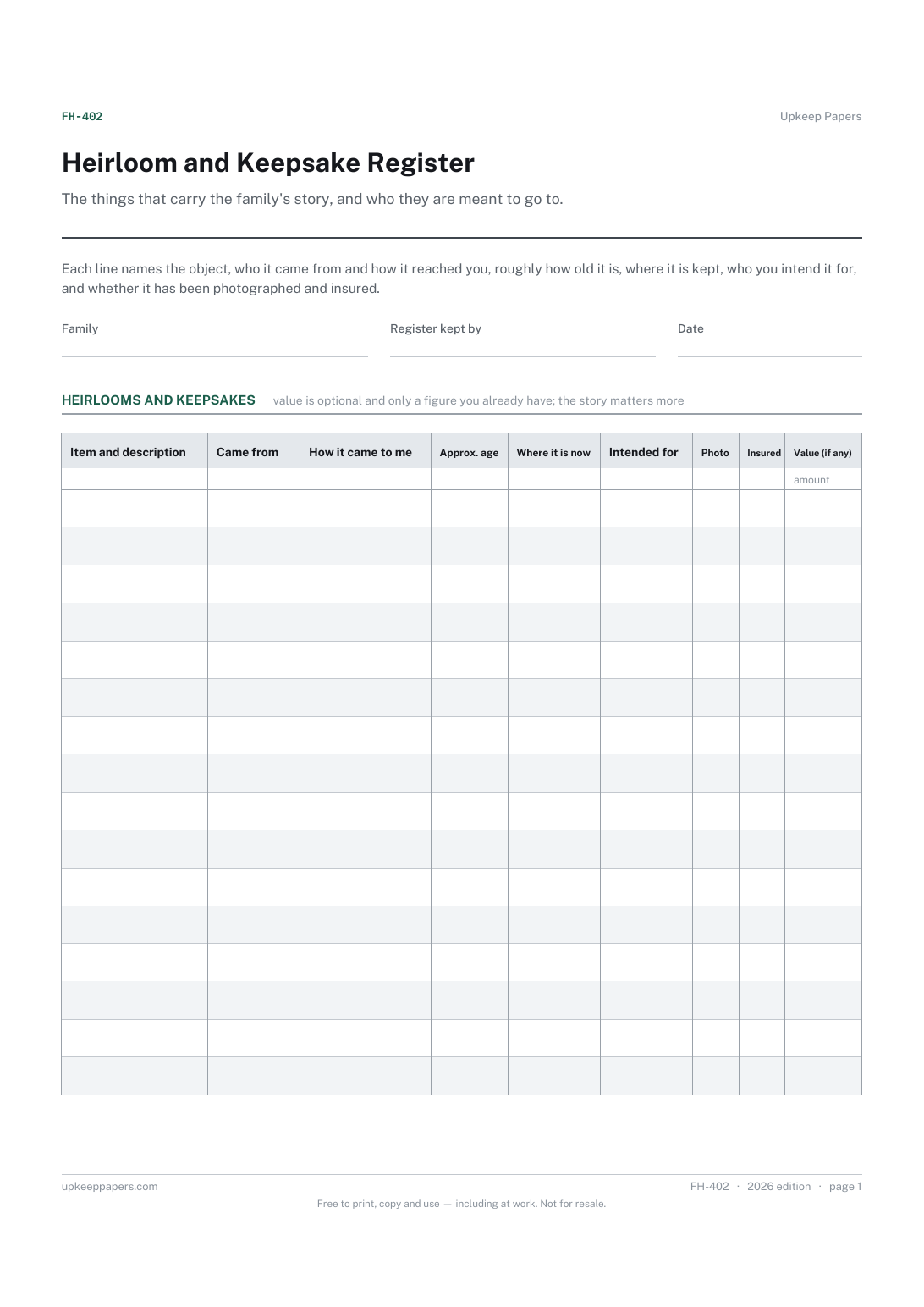
Every heirloom and keepsake, with the person it came from and the story of how it reached you.
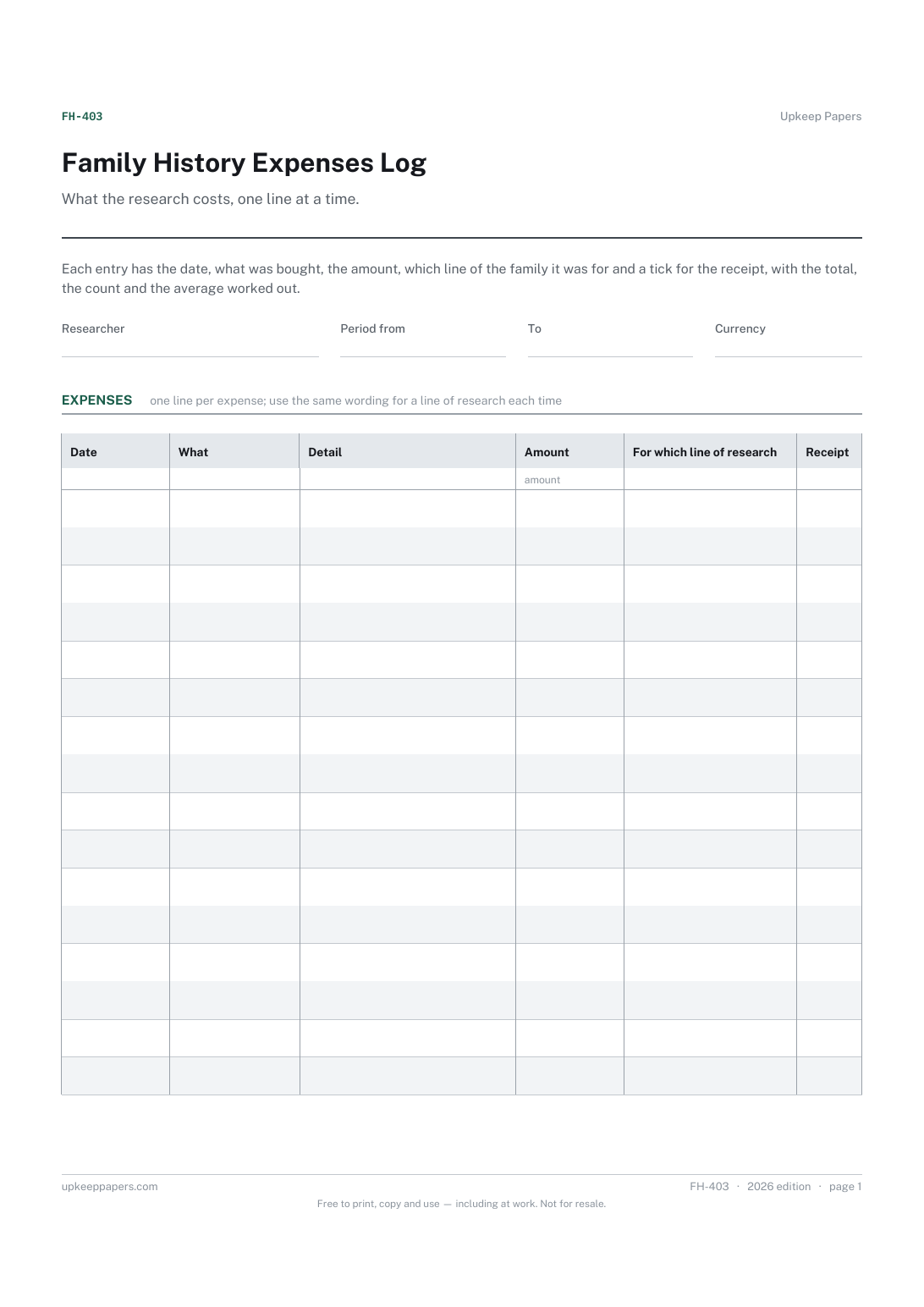
Every certificate, subscription, journey, archive fee and book, dated.
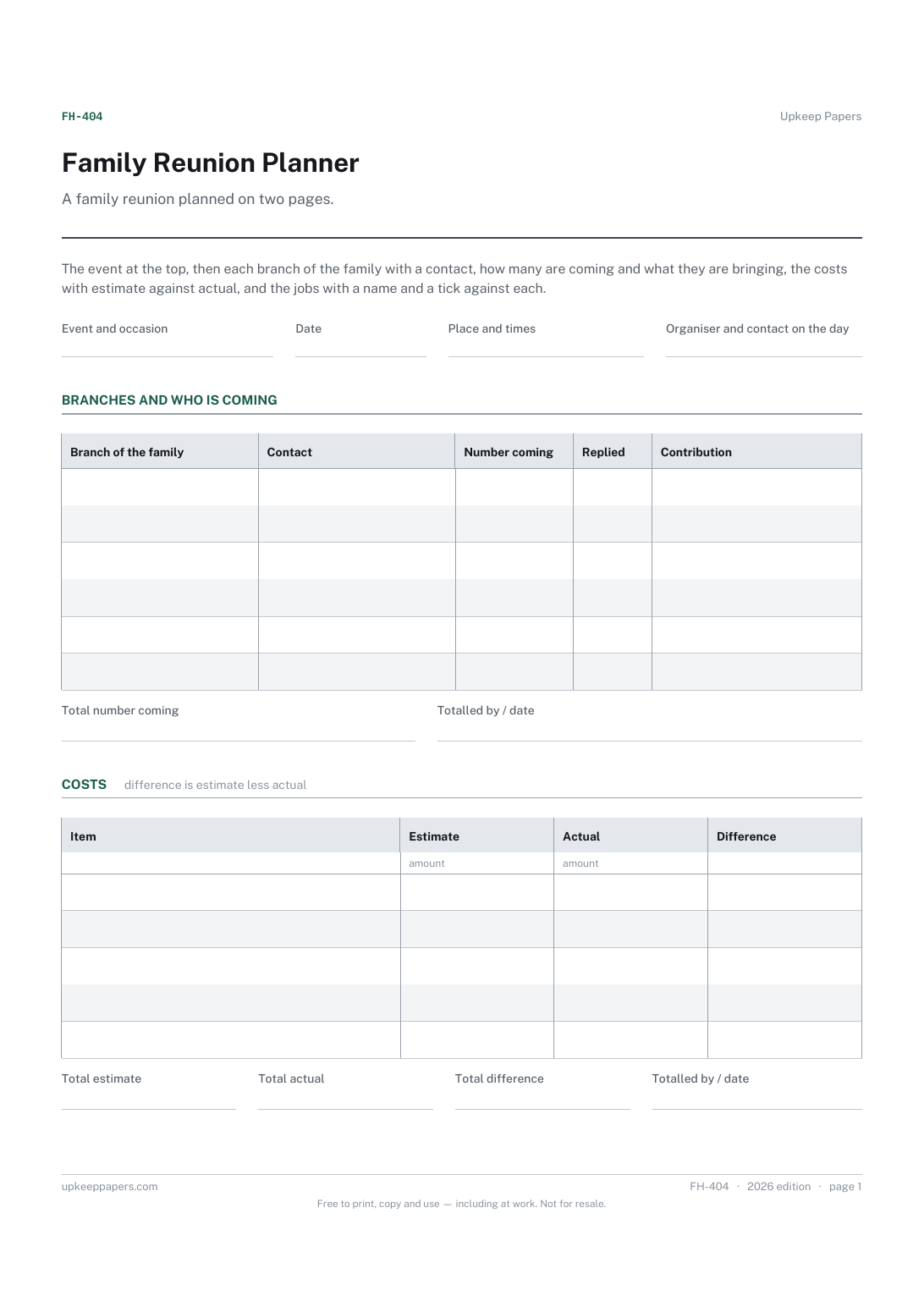
Each branch of the family, who speaks for it and whether they have replied.
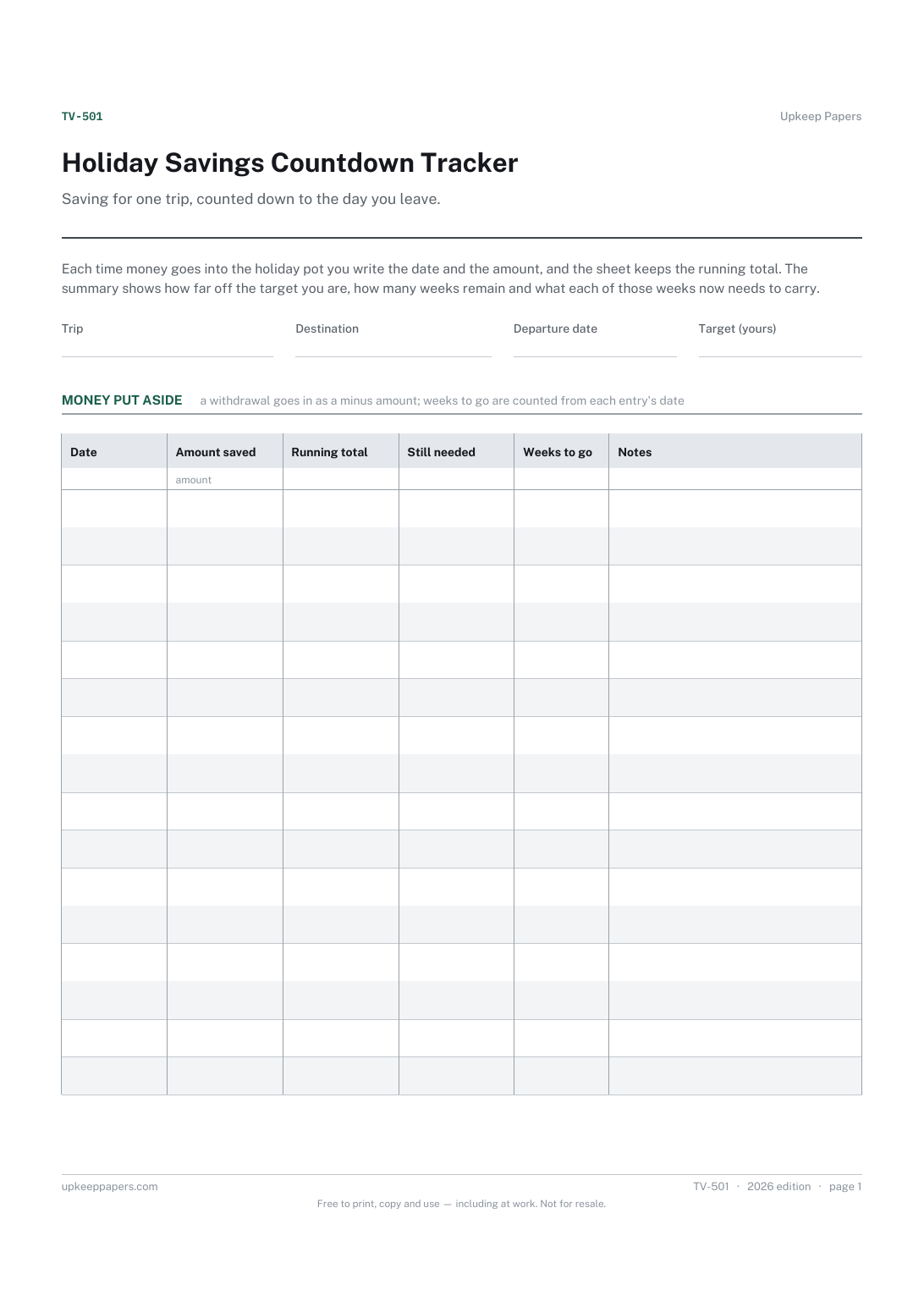
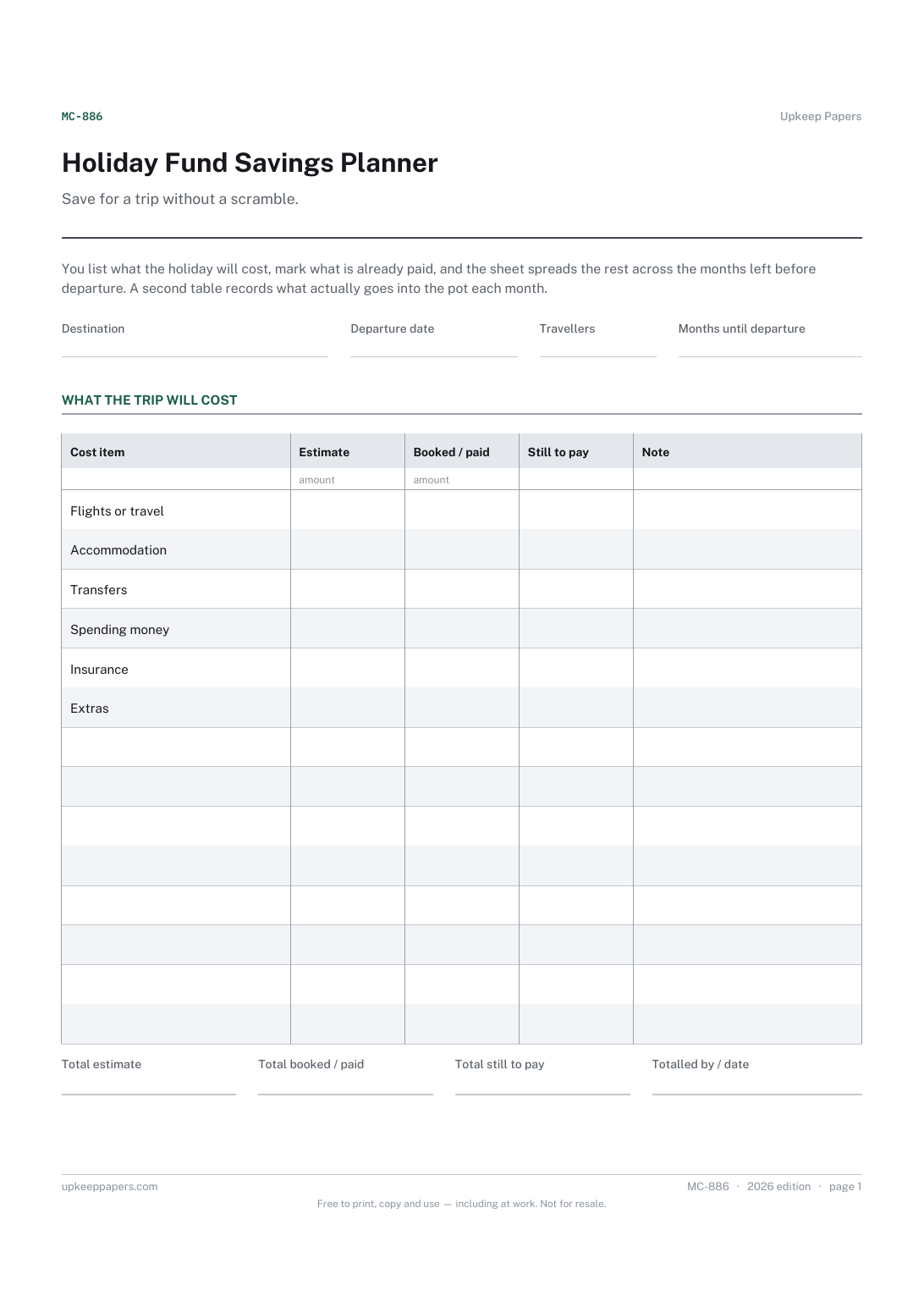
The trip, the departure date and the amount you are aiming for.
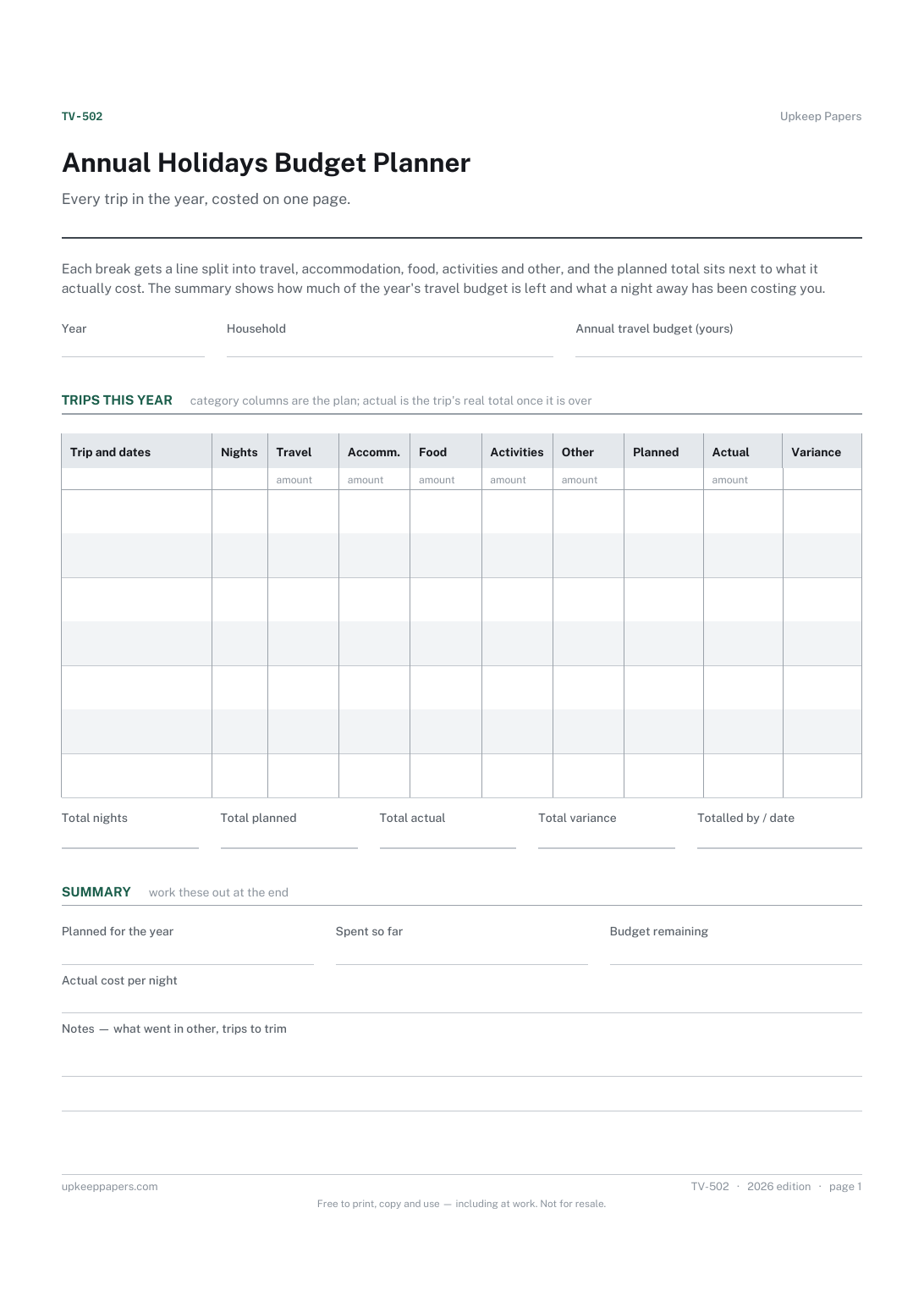
Every trip planned for the year, with its dates and nights.
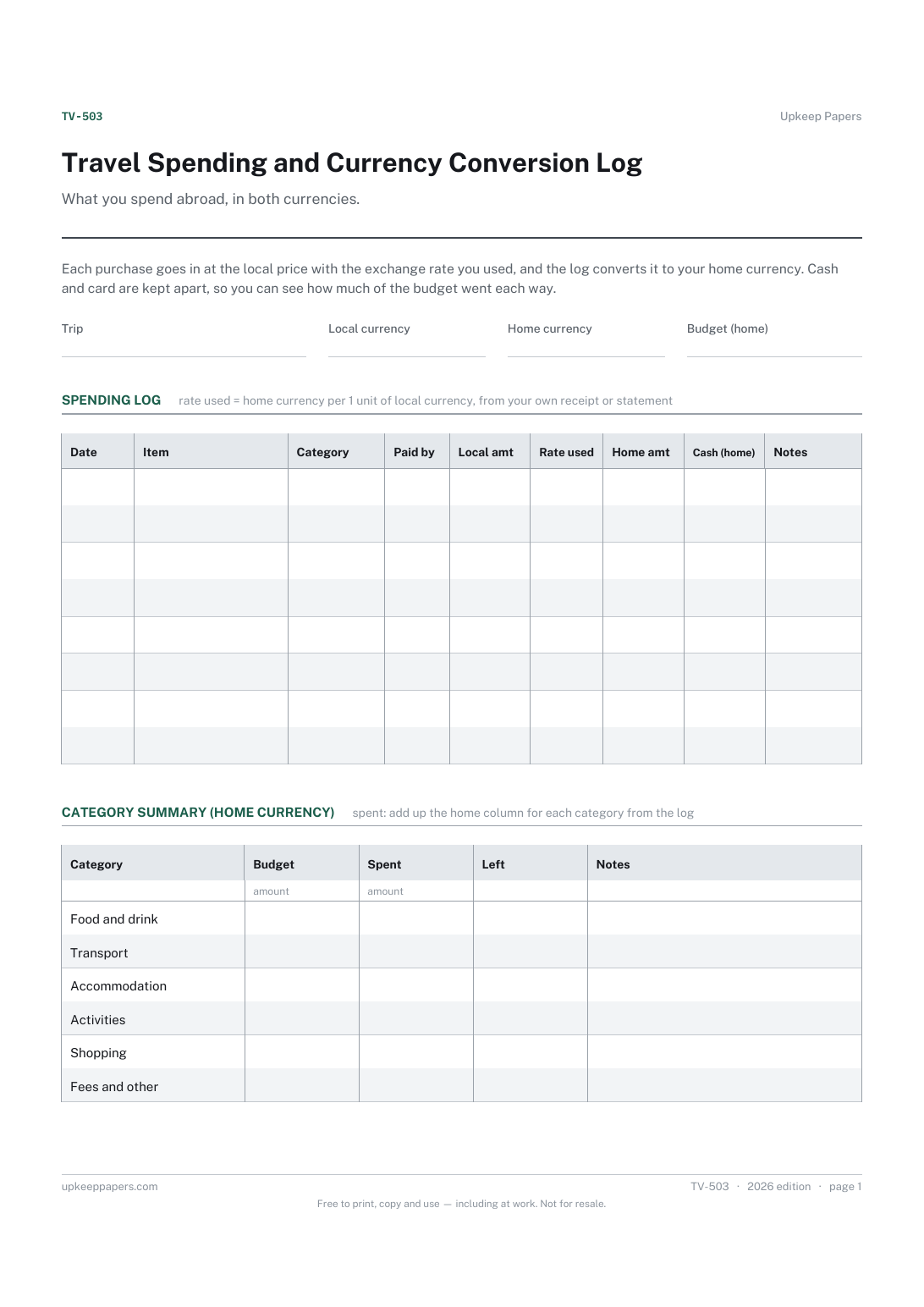
Every purchase in the local currency, with the date and a category.
Each leg of the route with its distance.
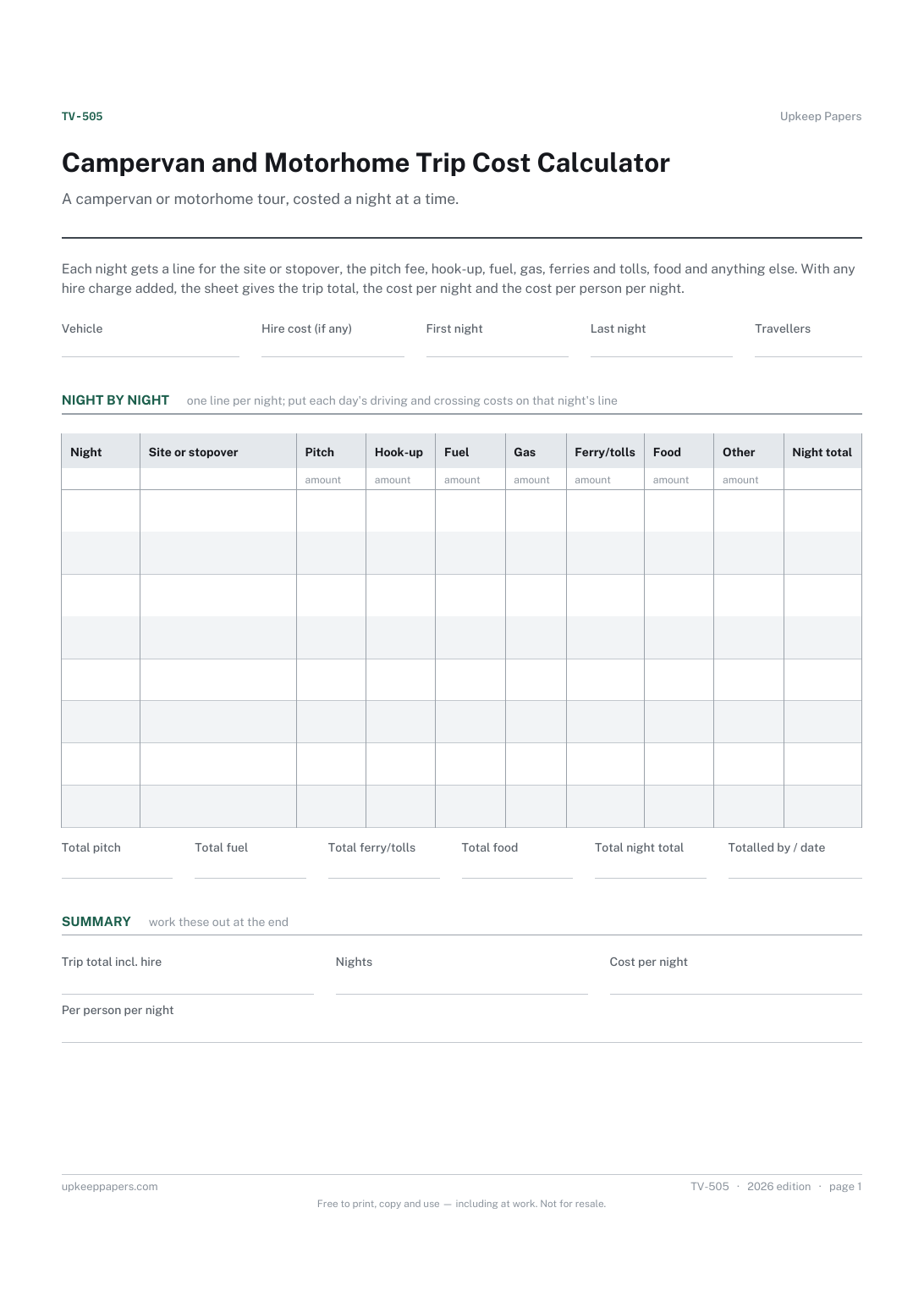
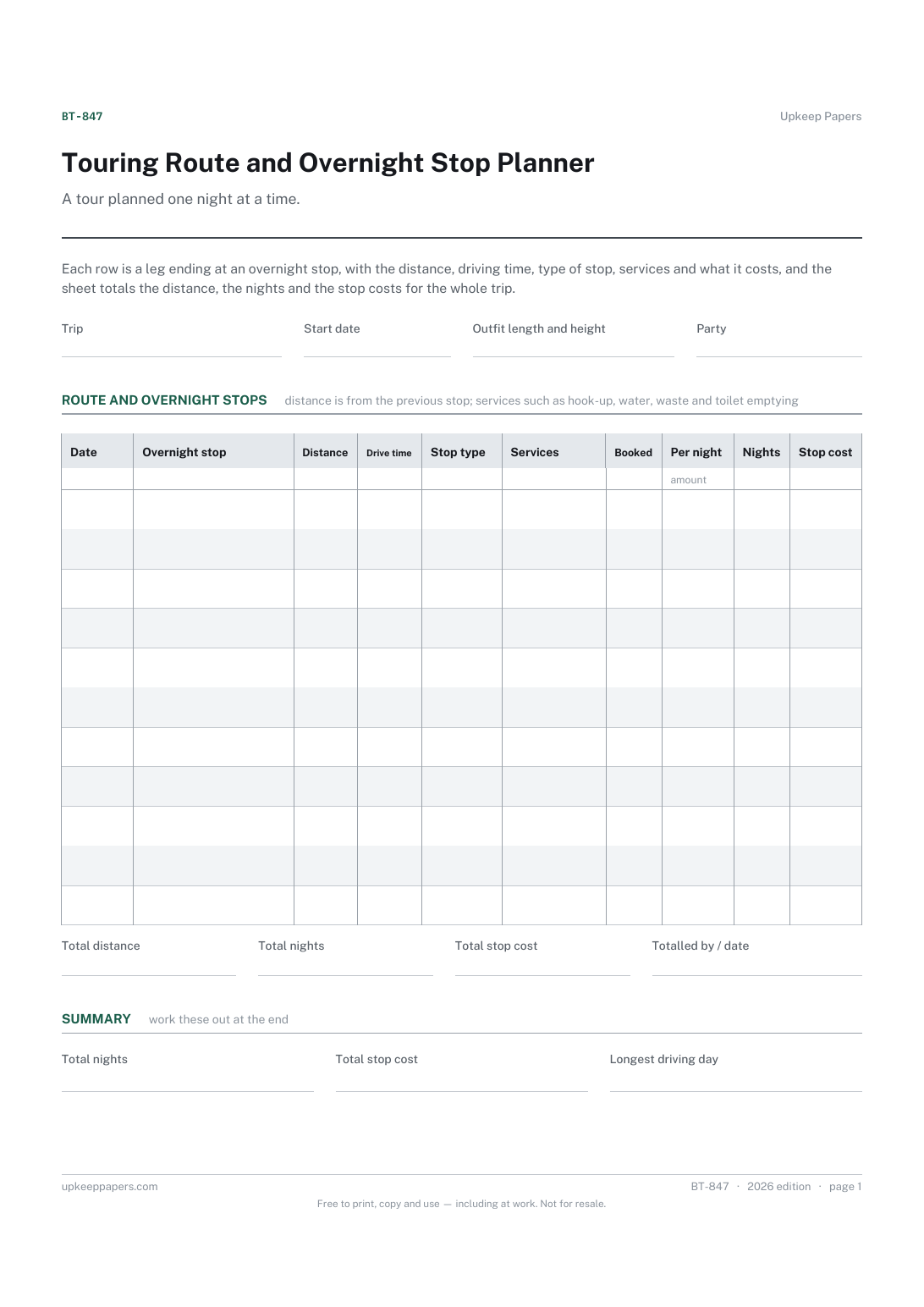
Where you are stopping each night.
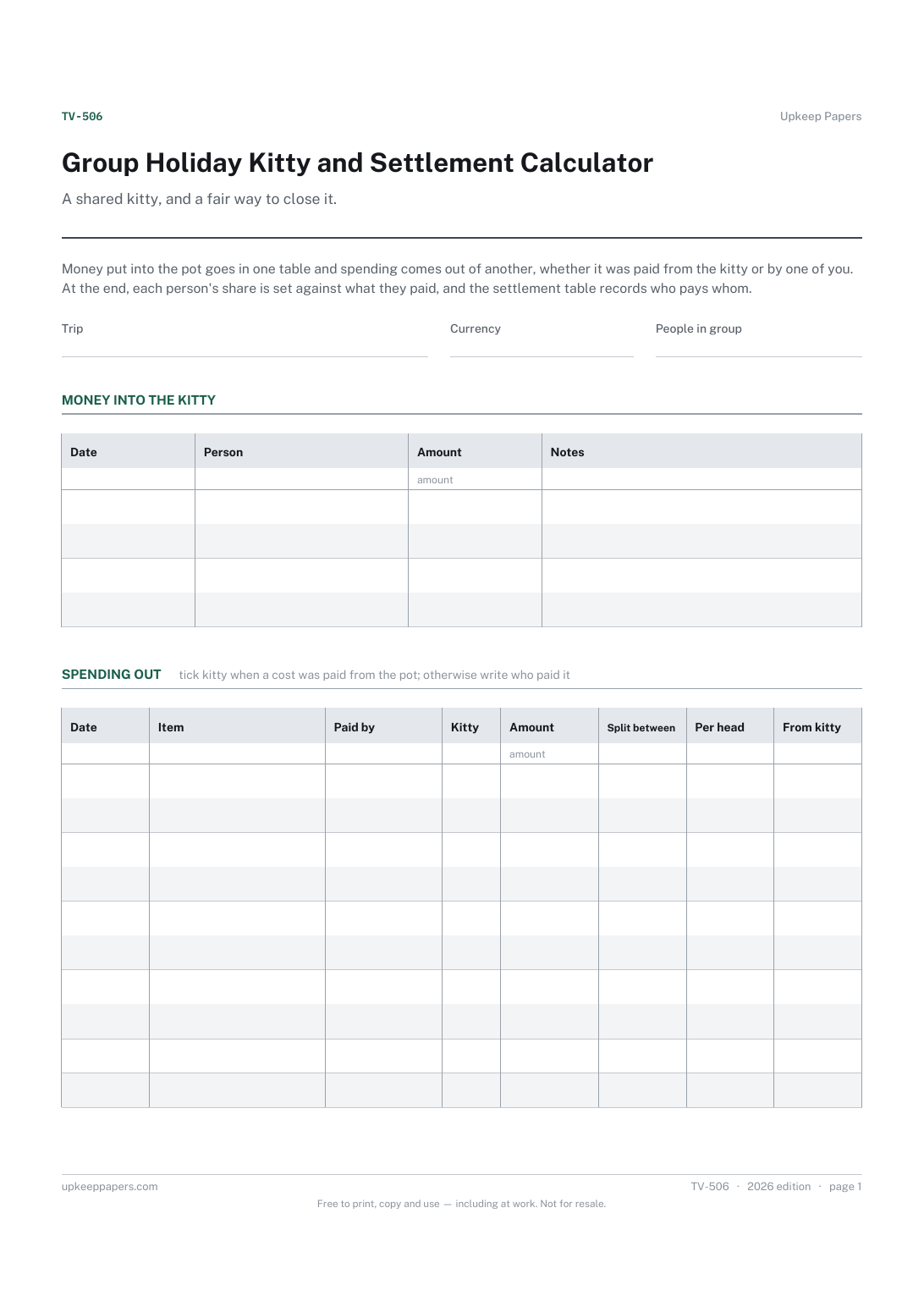
Every contribution to the kitty, by person and date.
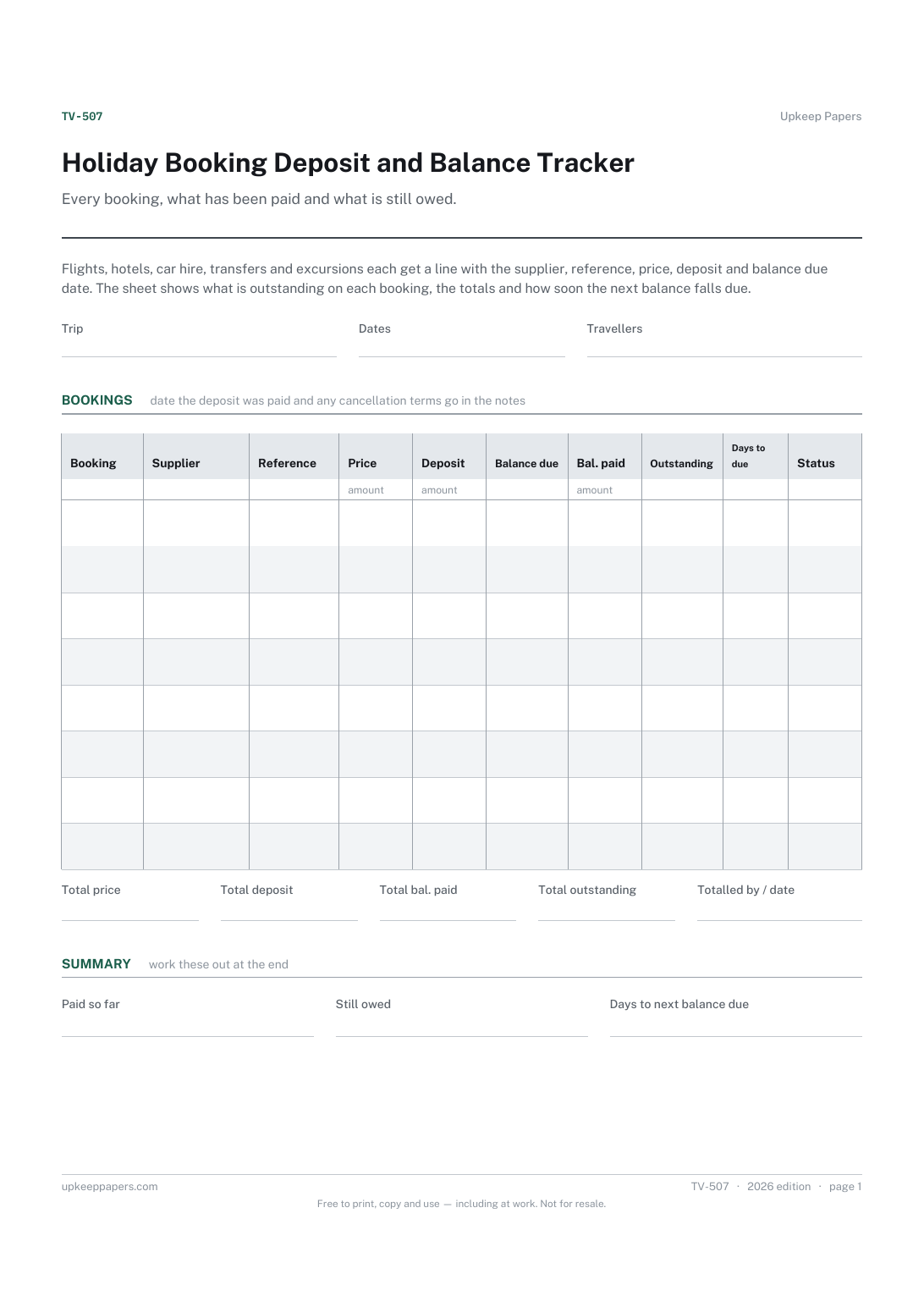
Each booking with its supplier and reference.
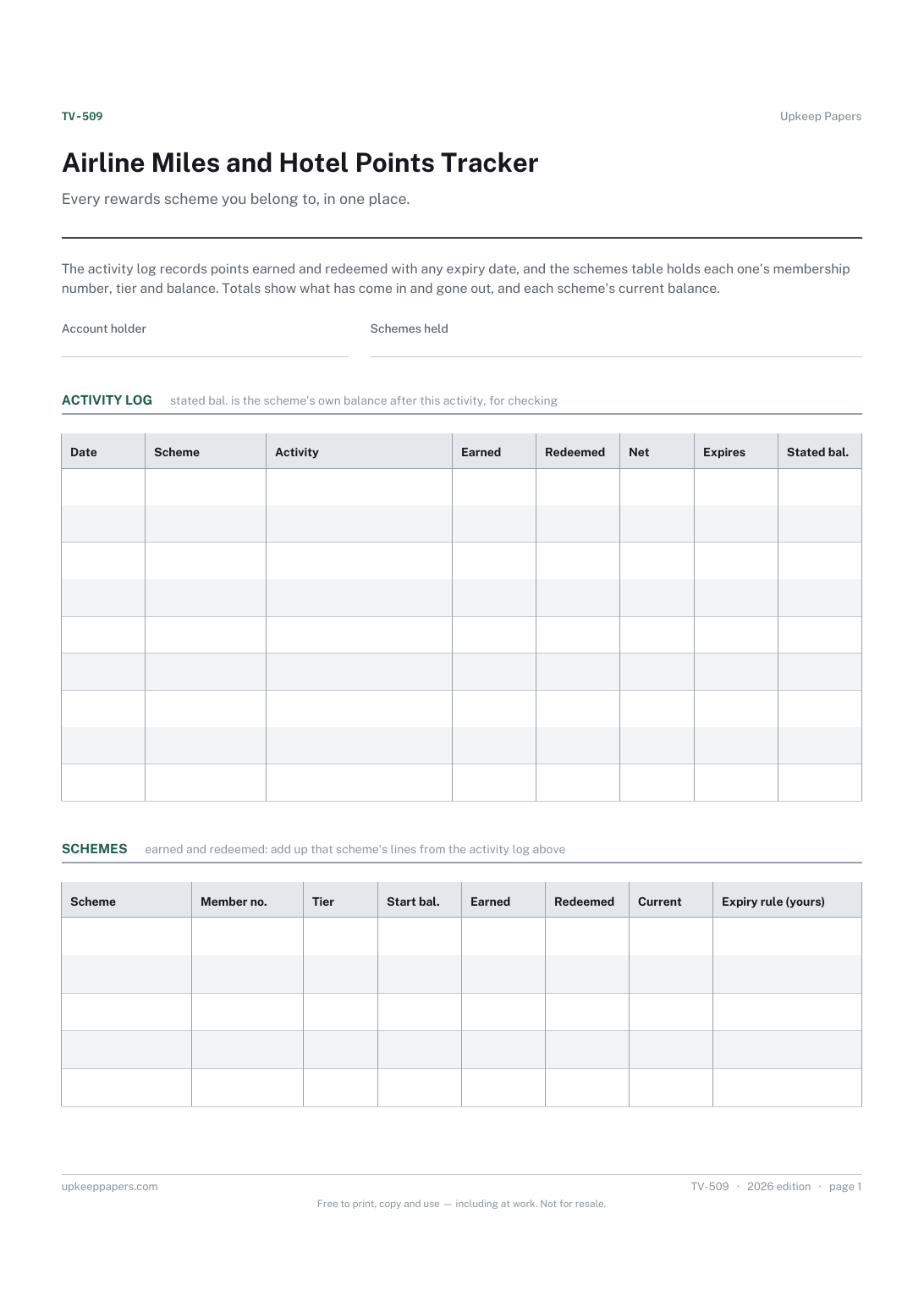
Each scheme with its membership number and tier.
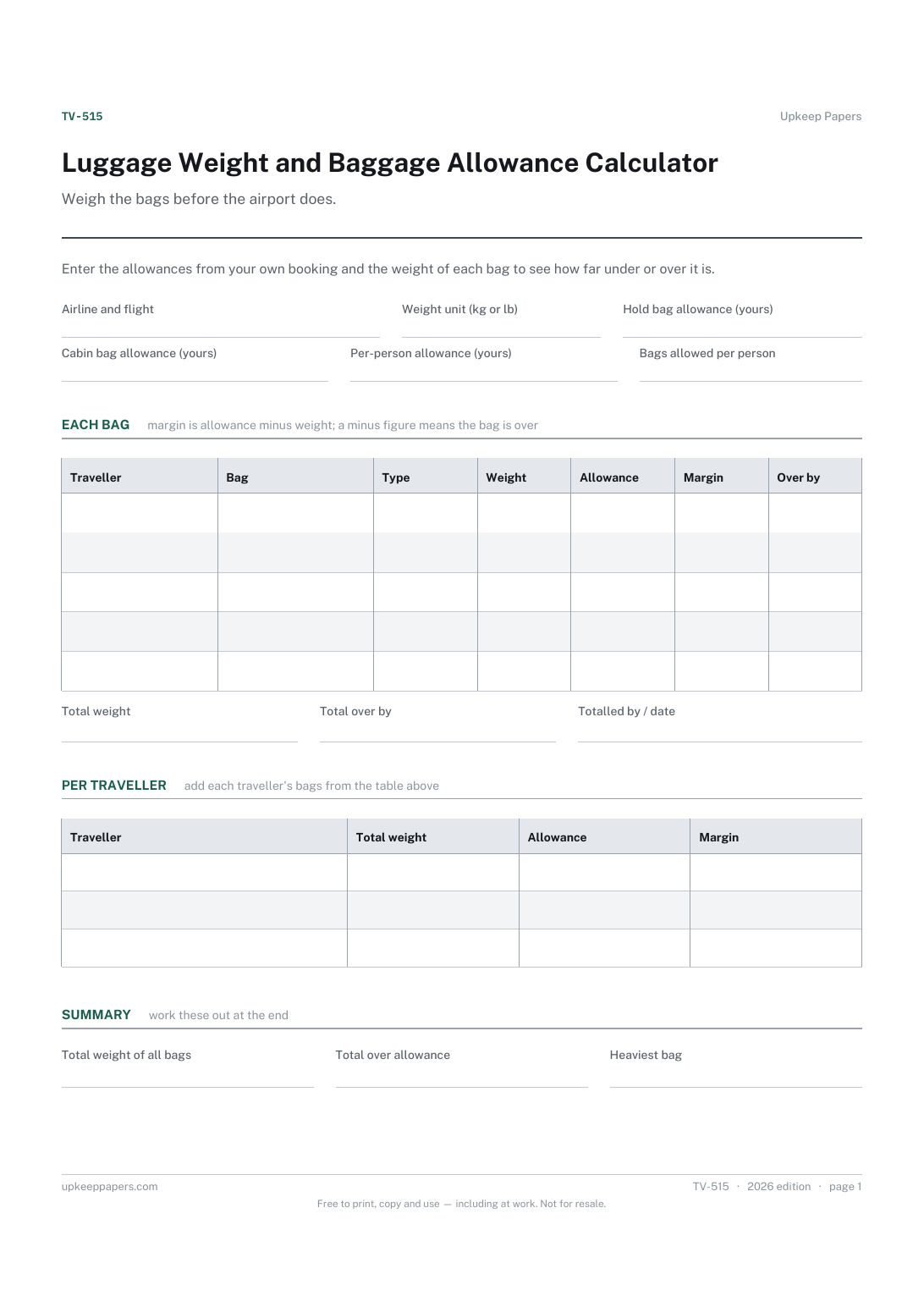
Each bag's weight against the allowance for its type.
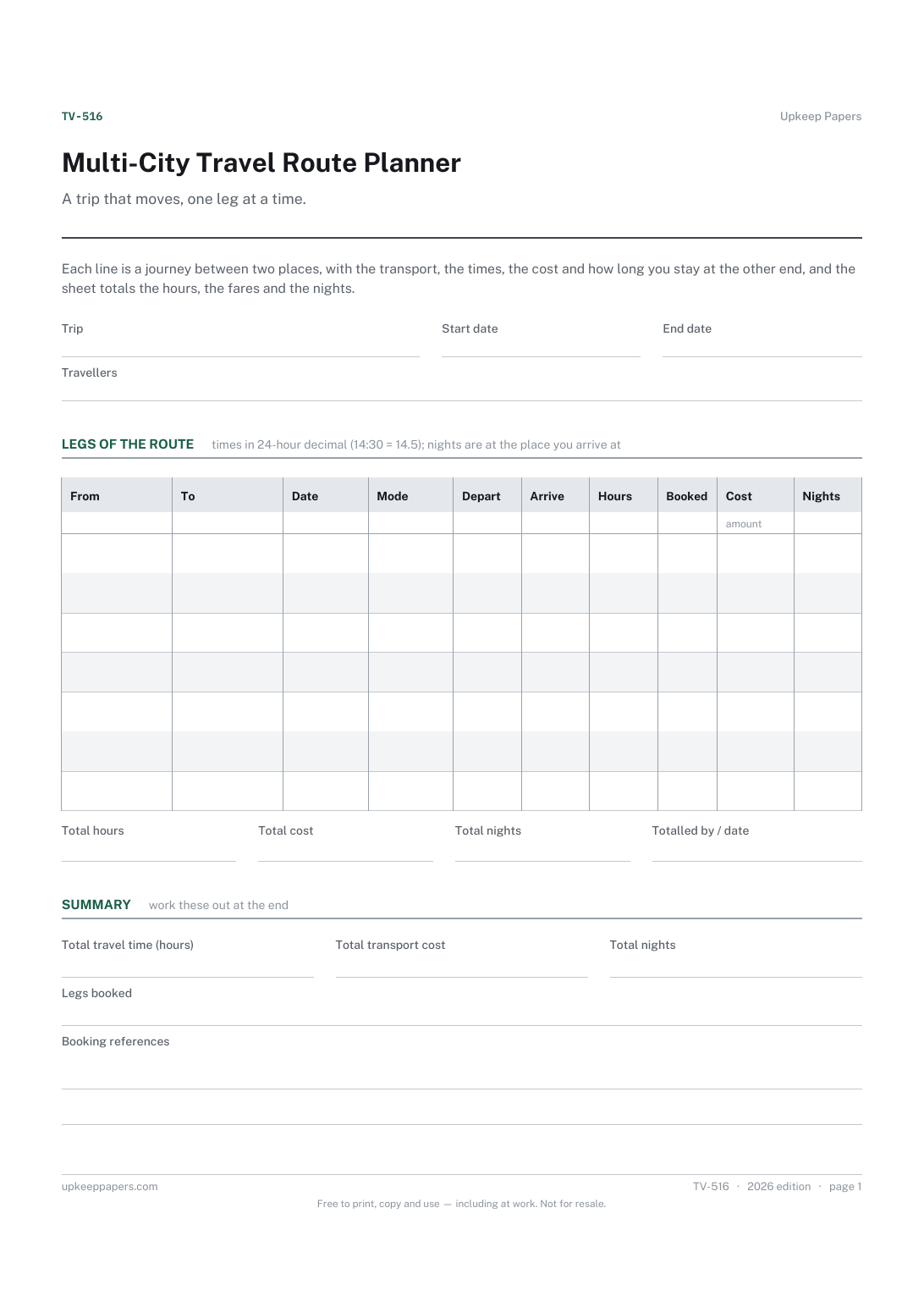
Every leg of the route in order, from and to.
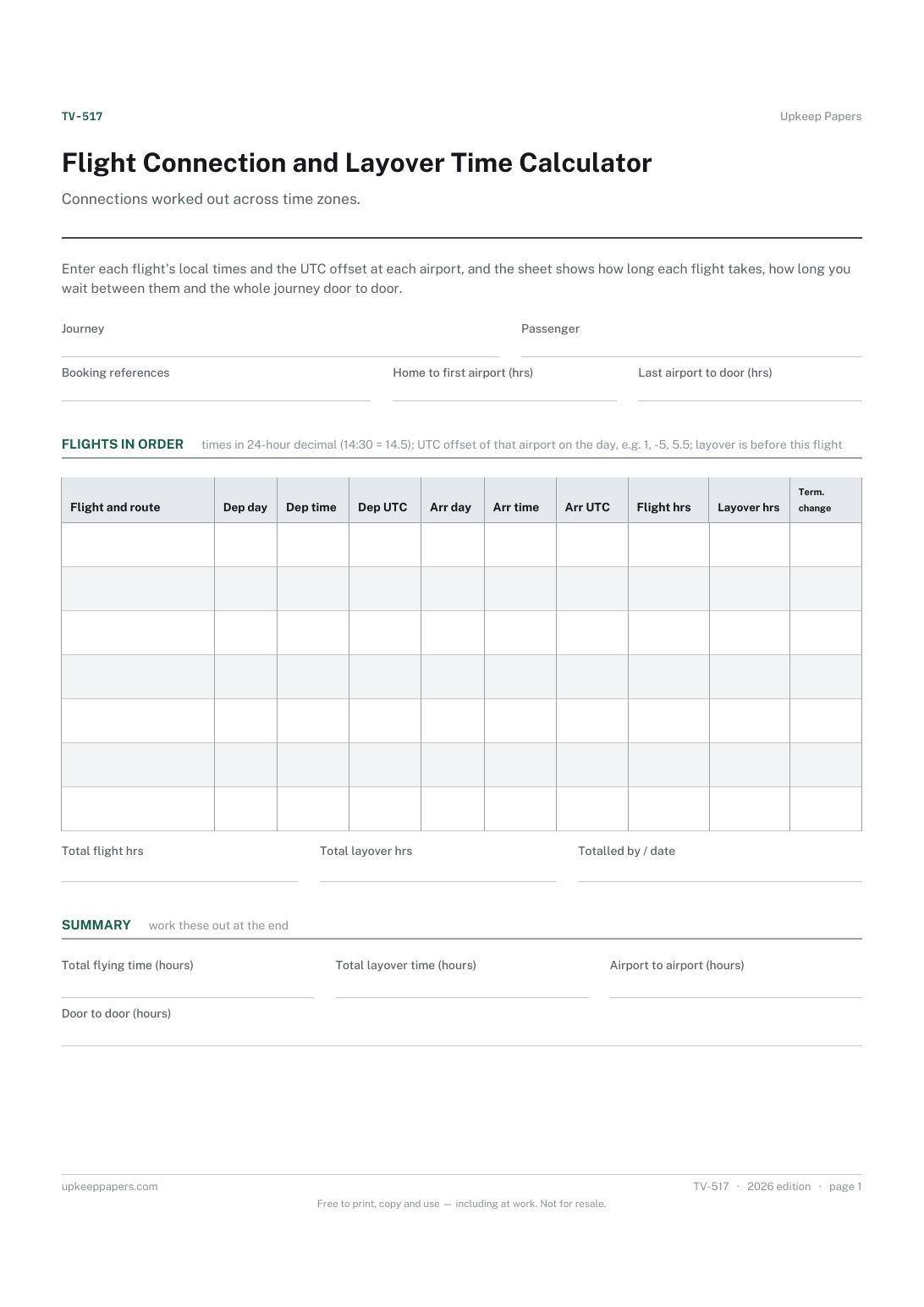
Each flight's real length, allowing for the time zones.
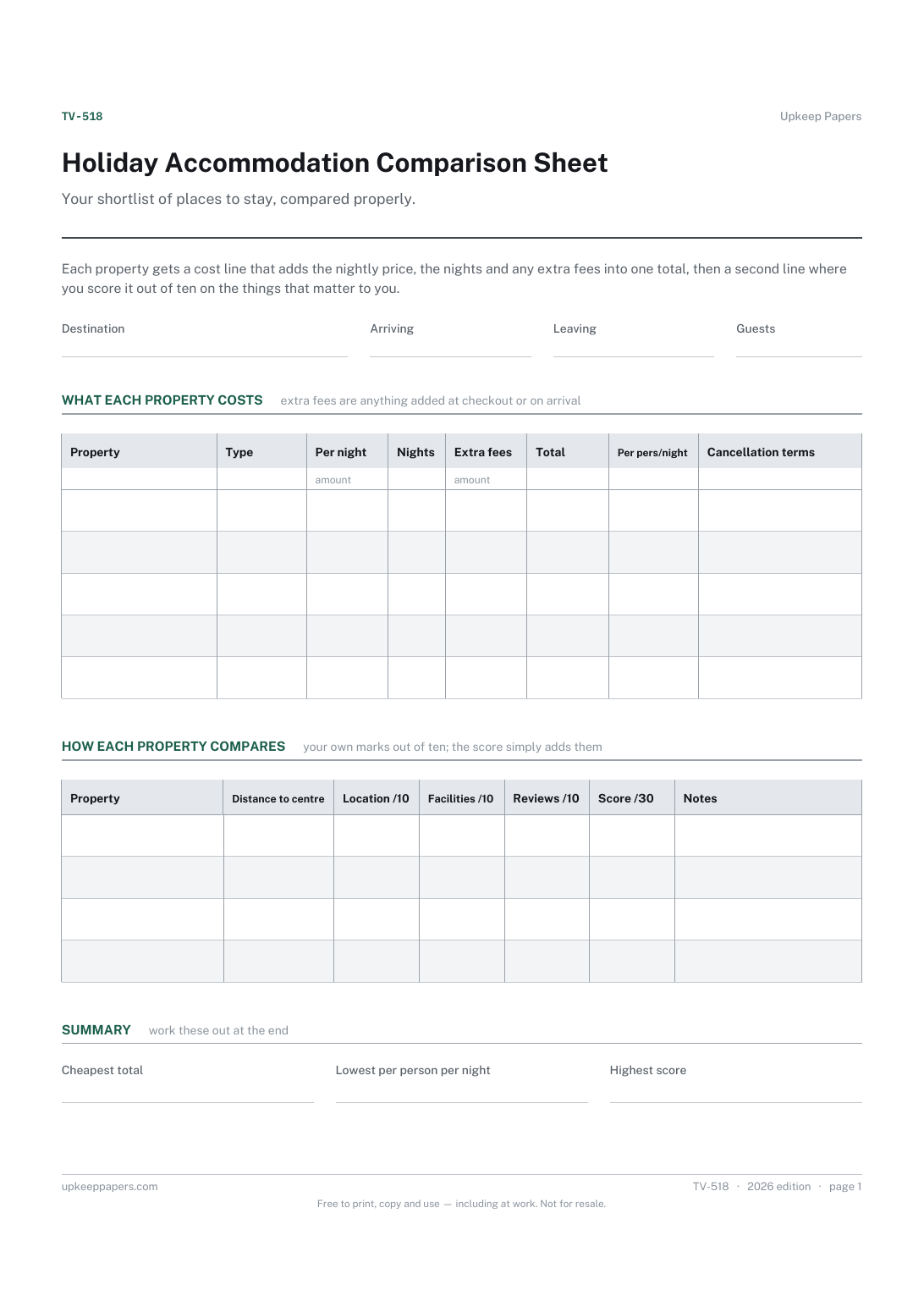
The full cost of each property once cleaning, resort and other fees are added.
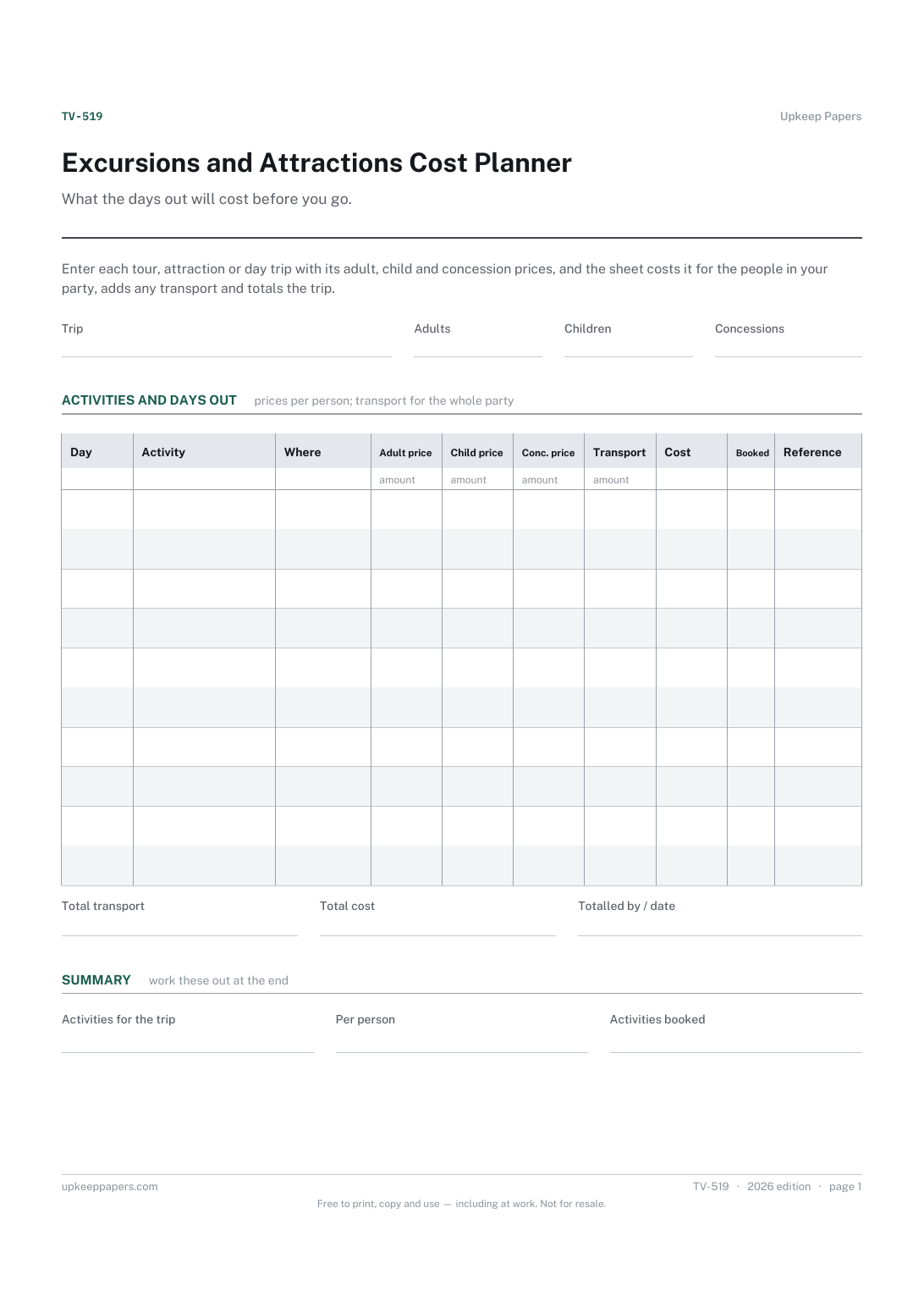
Each activity costed for your own mix of adults, children and concessions.
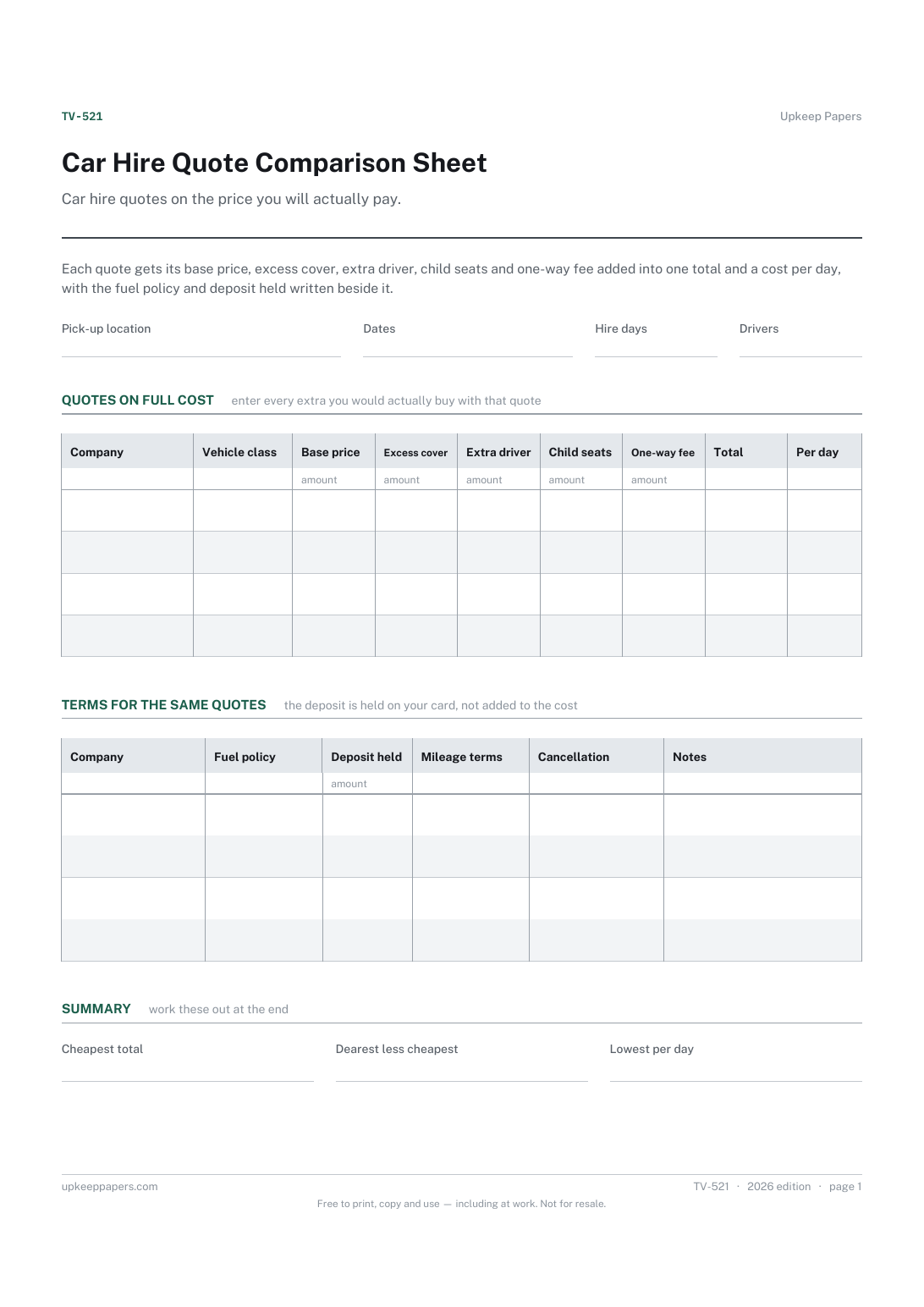
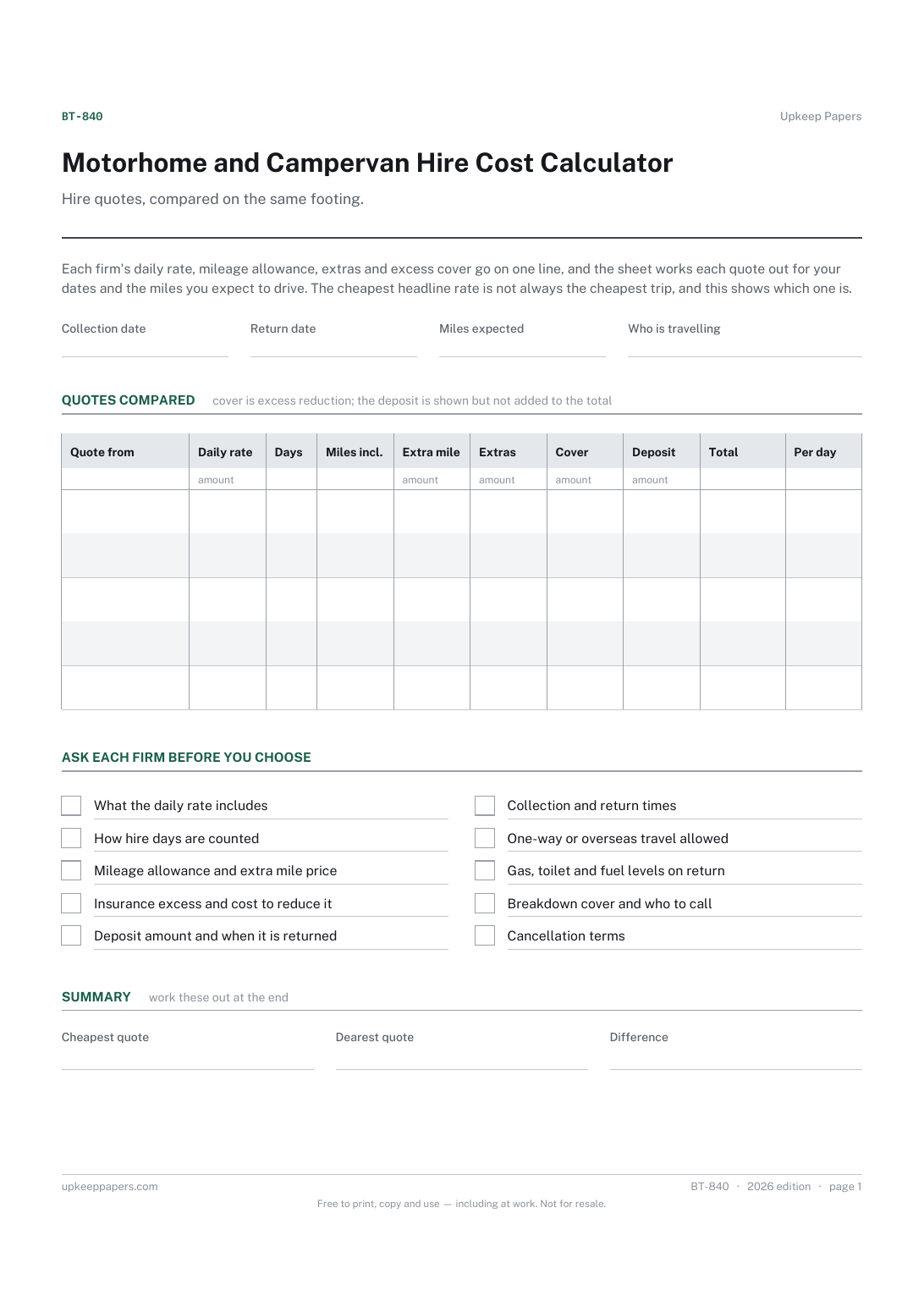
Every quote's total once the extras are added.
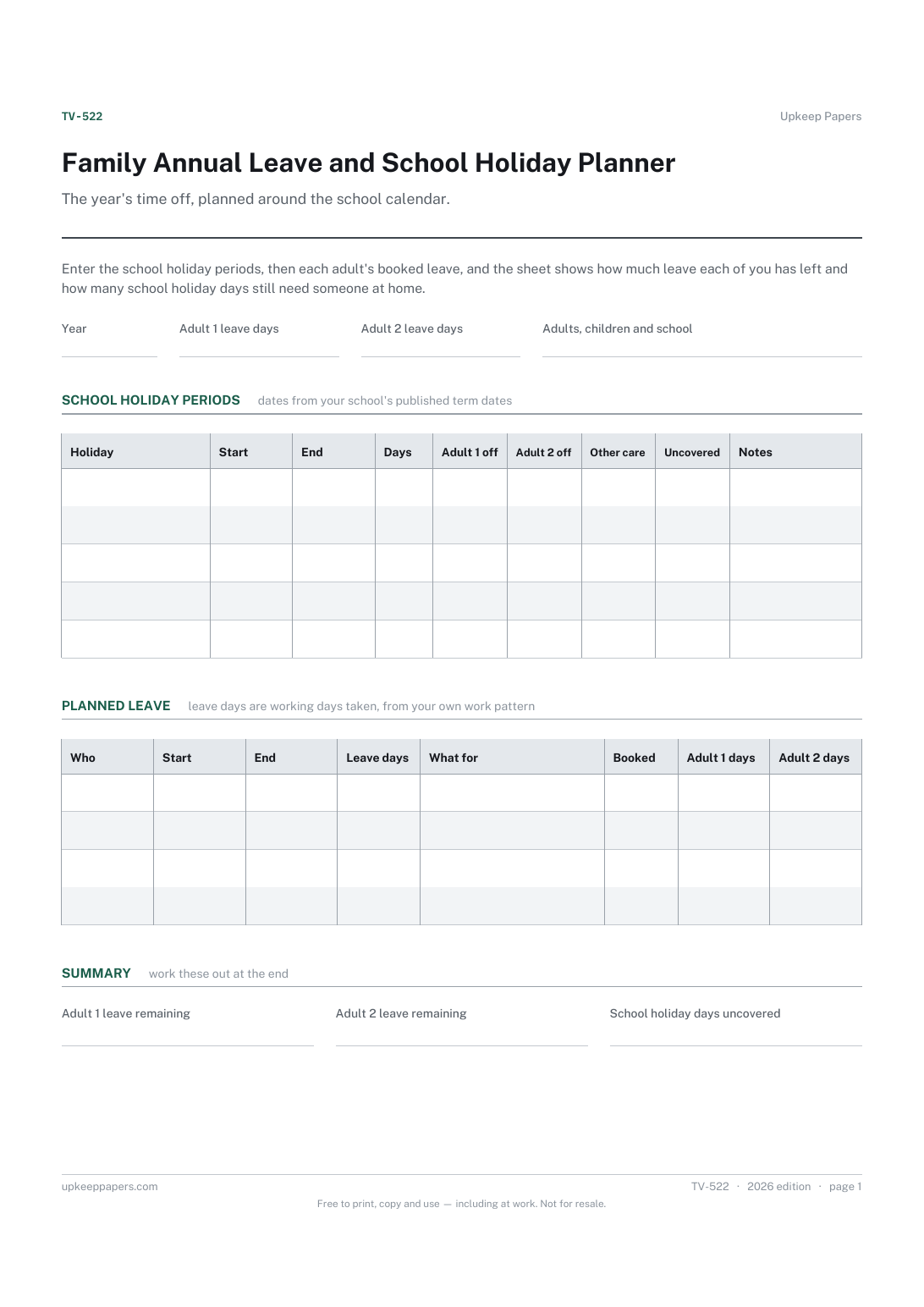
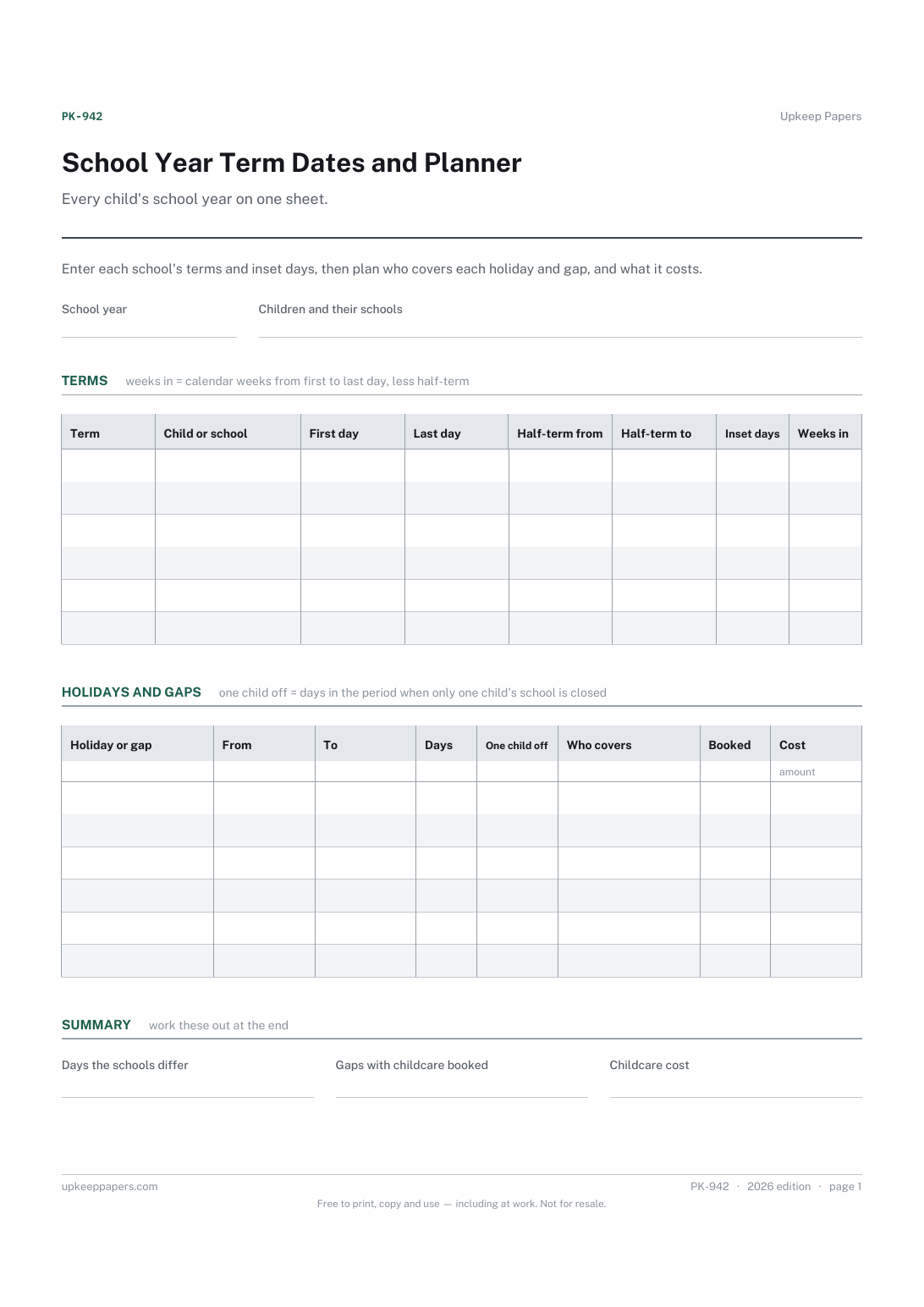
Every school holiday period with its length in days.
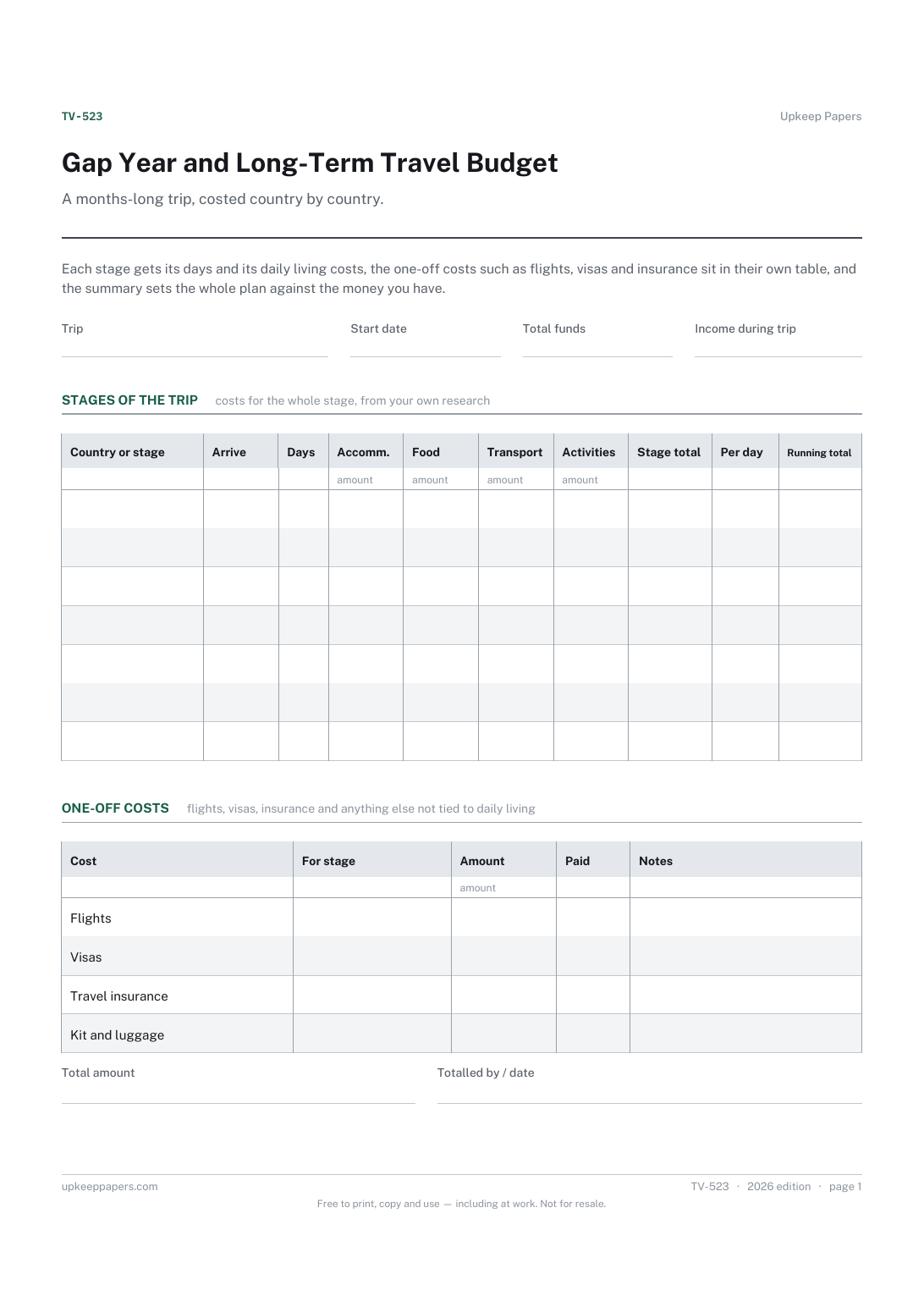
What each country or stage costs and what that works out at per day.
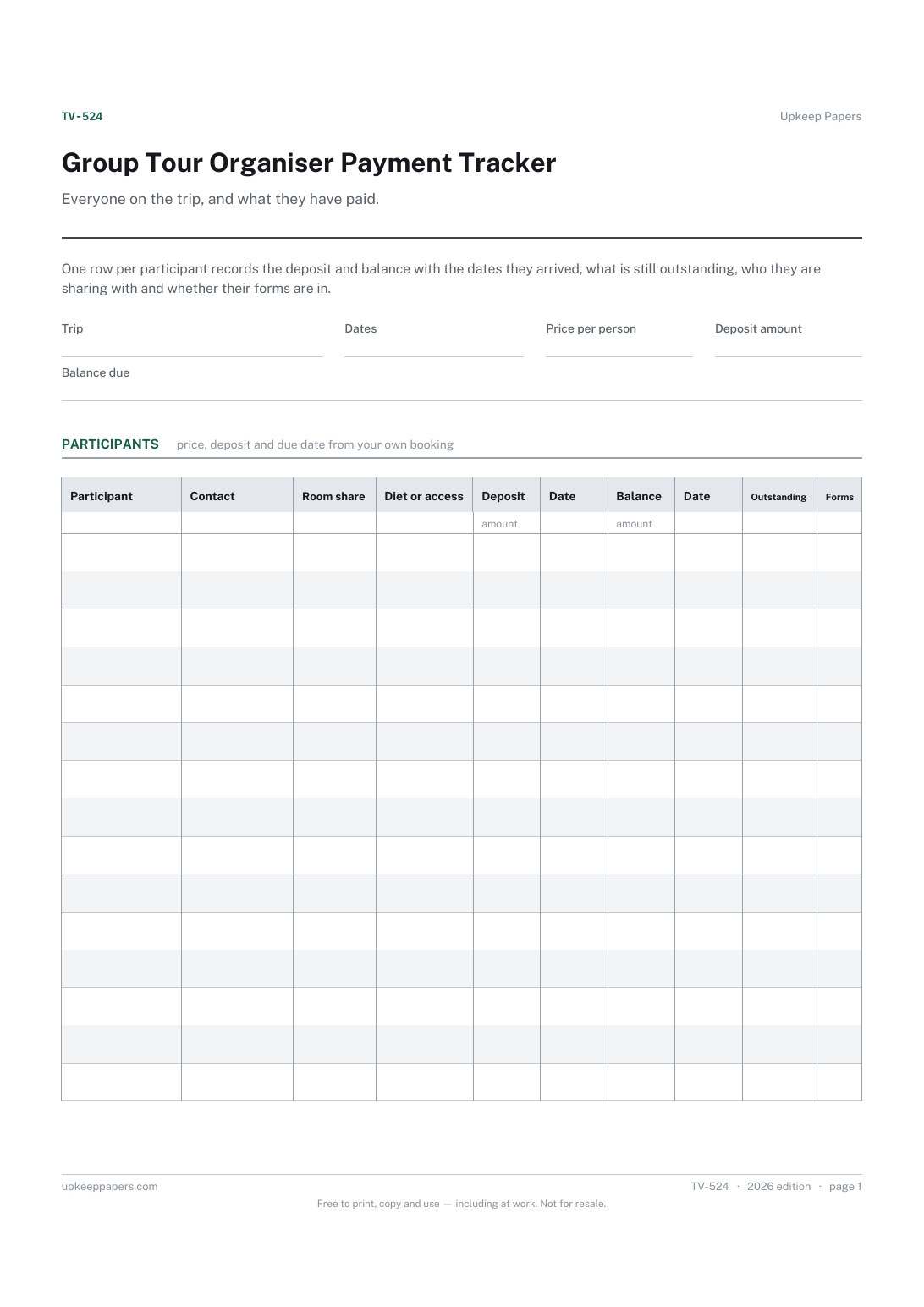
Each participant's deposit and balance, and the date each was paid.
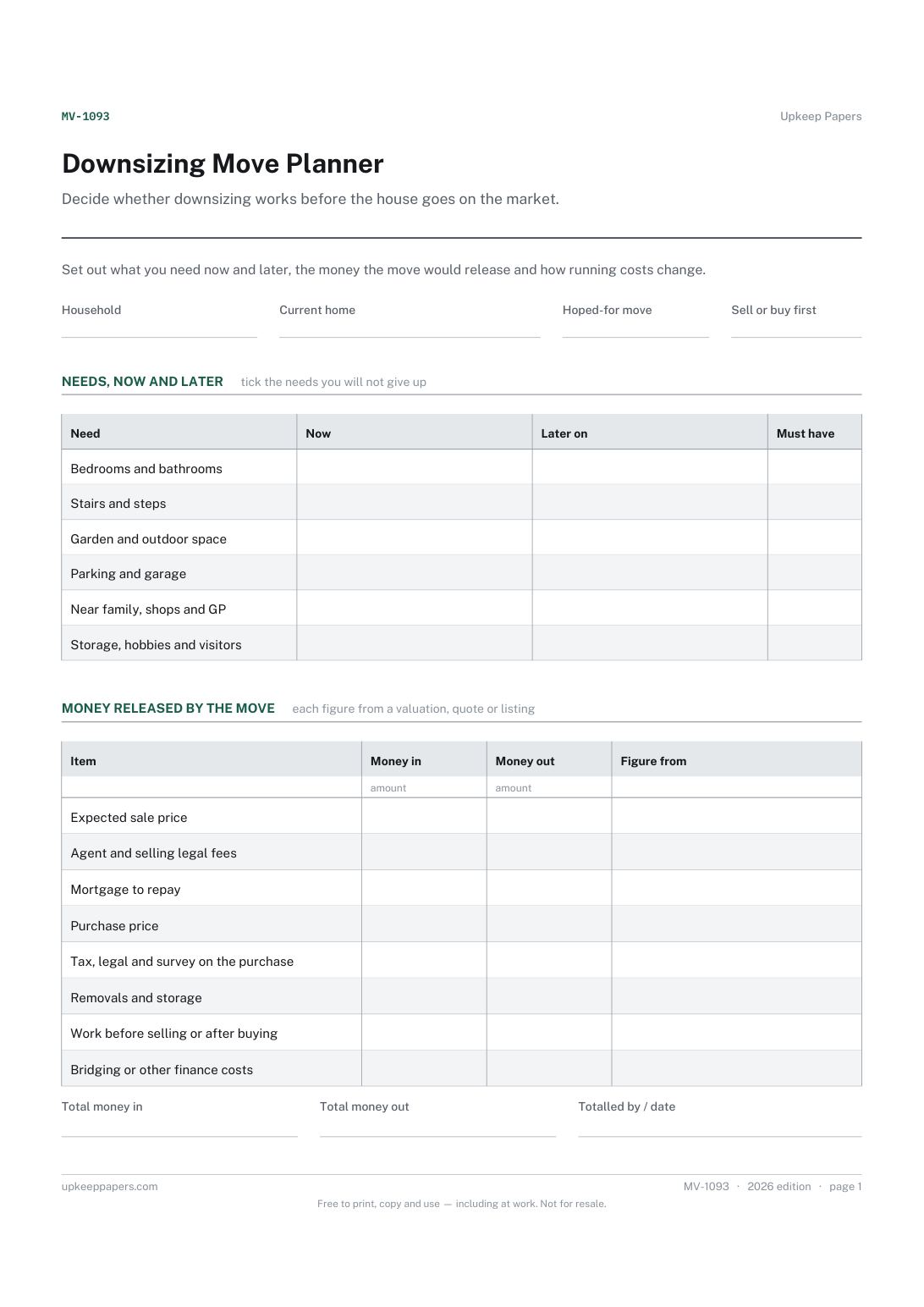
What you need from a home now and what you may need later.
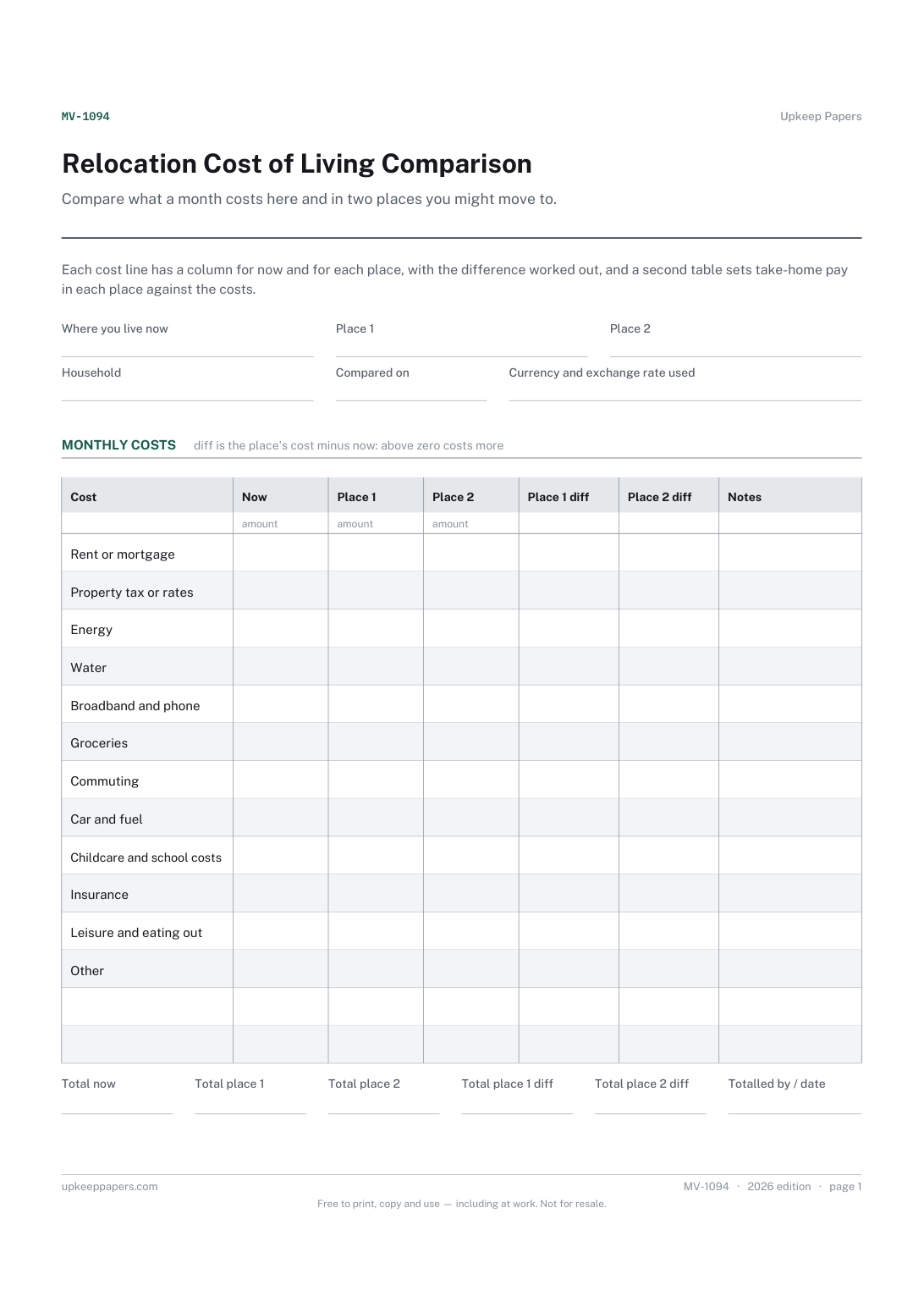
Housing, bills, food, travel, childcare and leisure line by line.
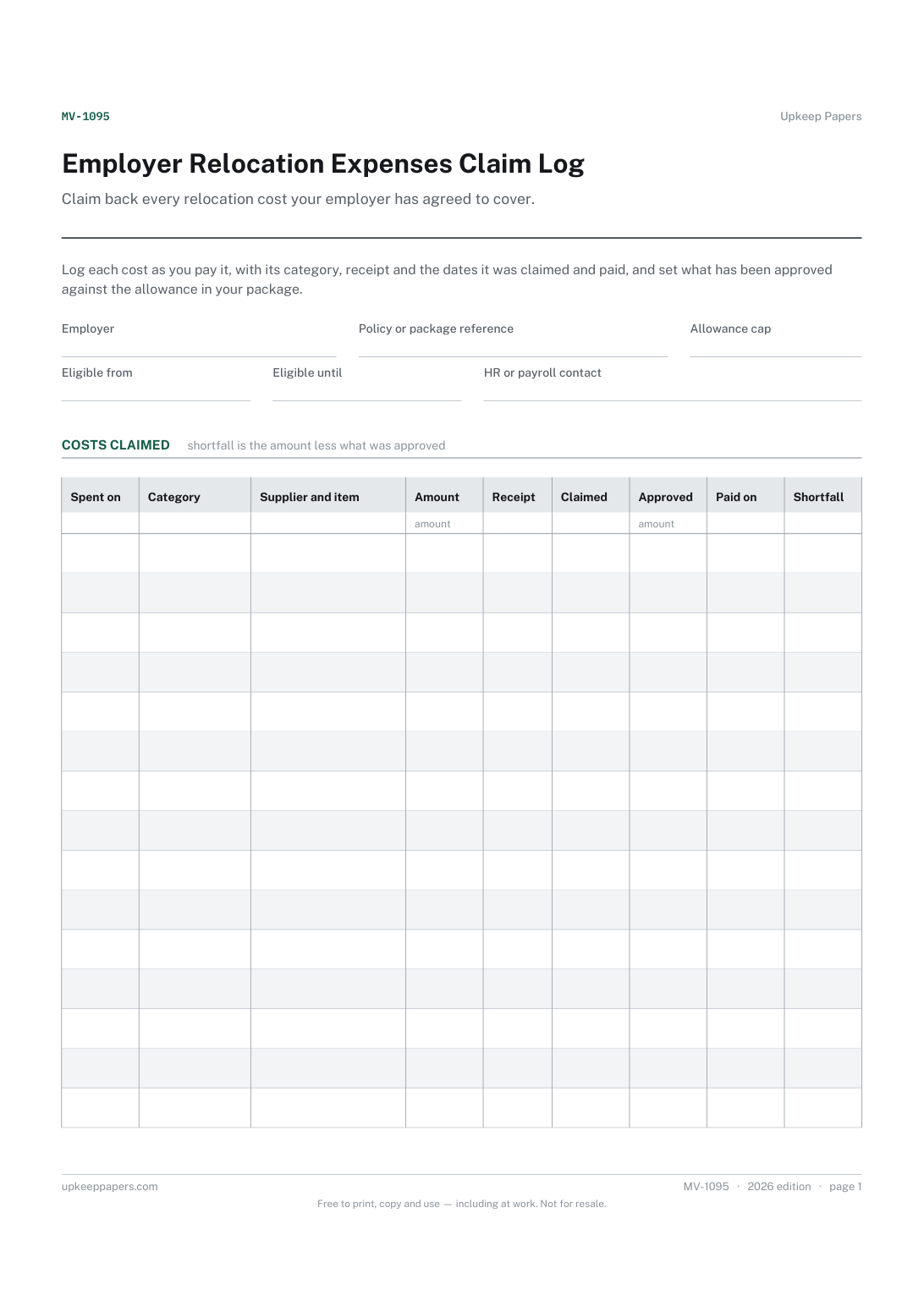
Each cost paid, by category, with the supplier and receipt reference.
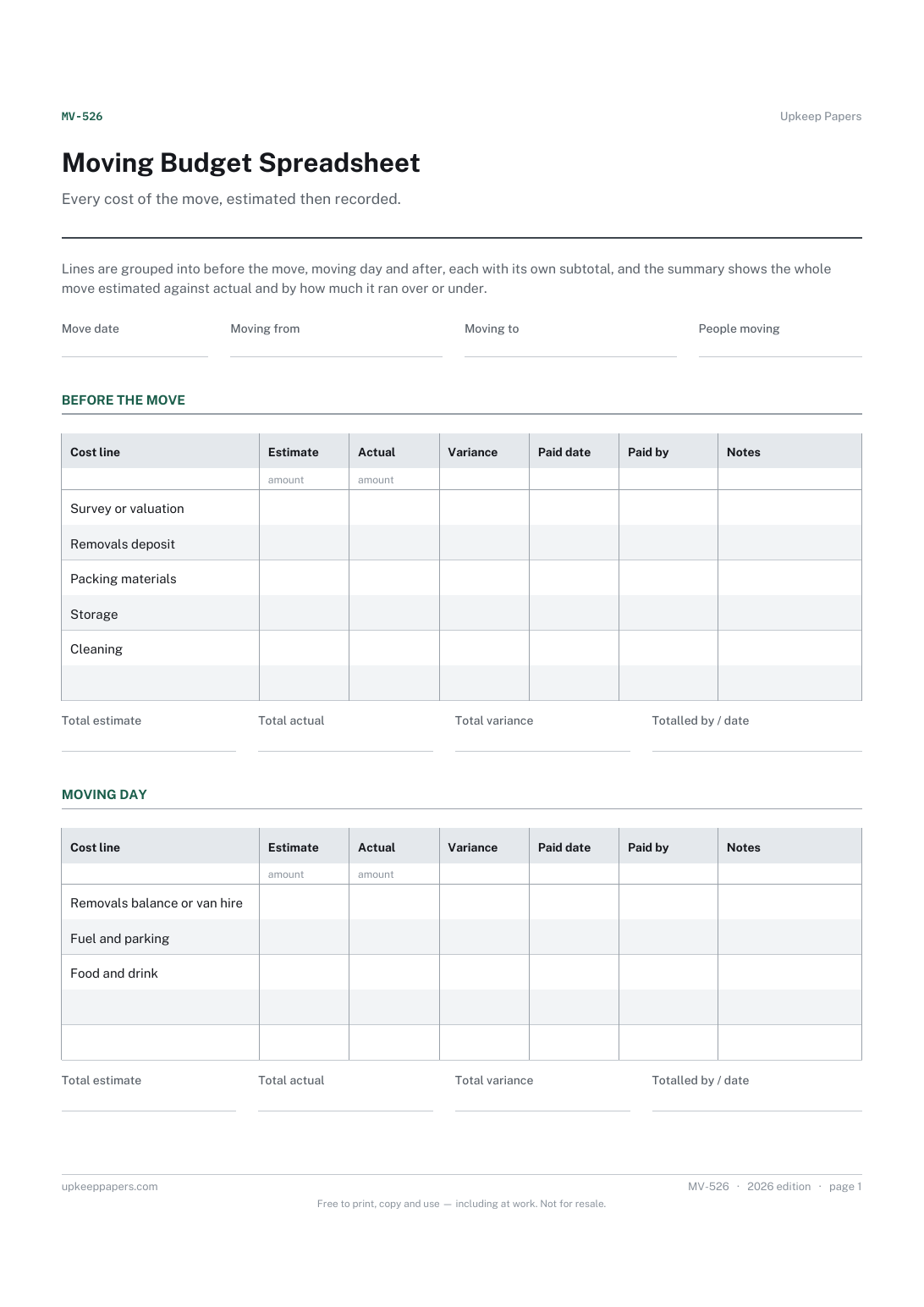
What each part of the move was expected to cost before it started.
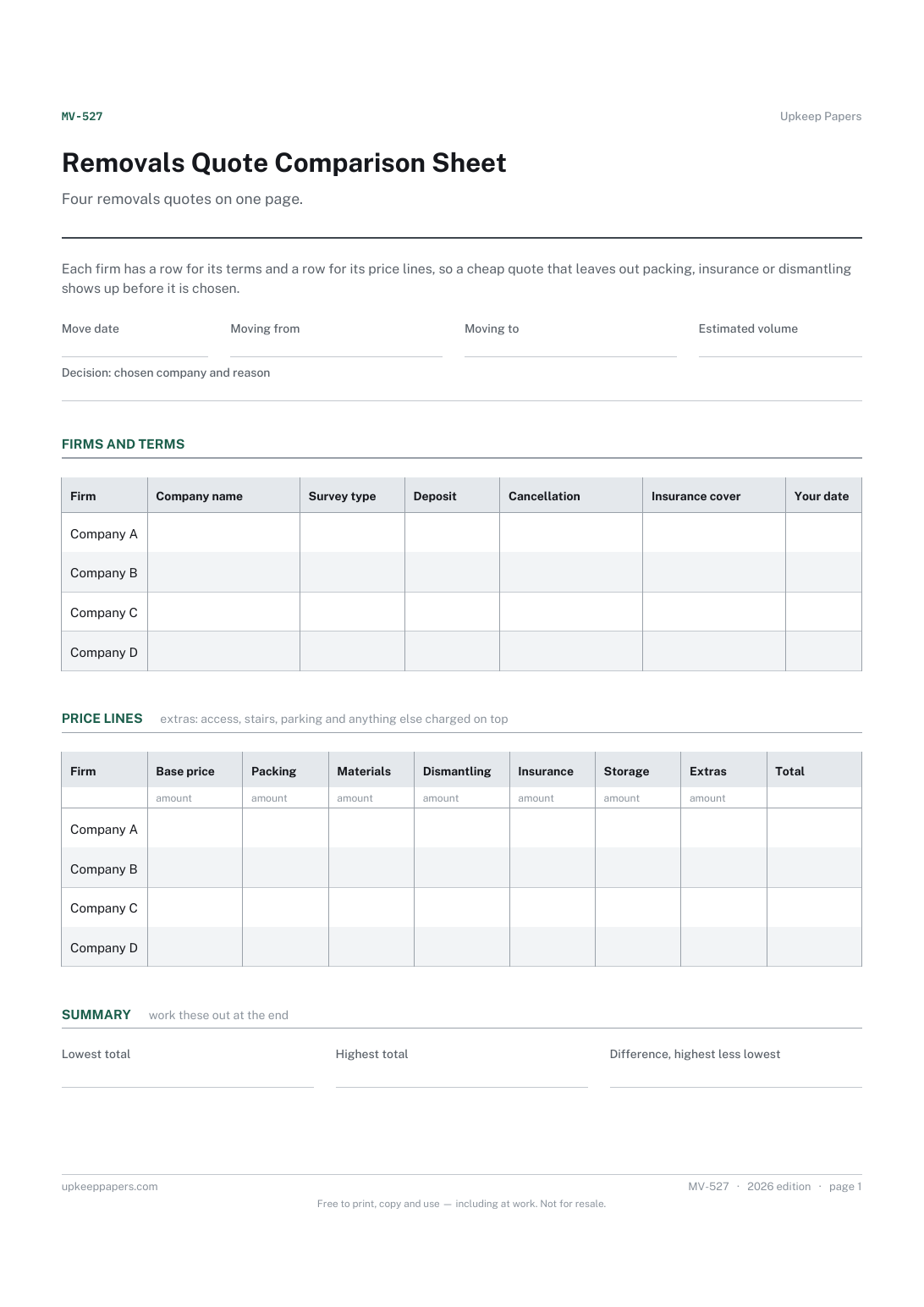
Which firm quoted what, and on what kind of survey.
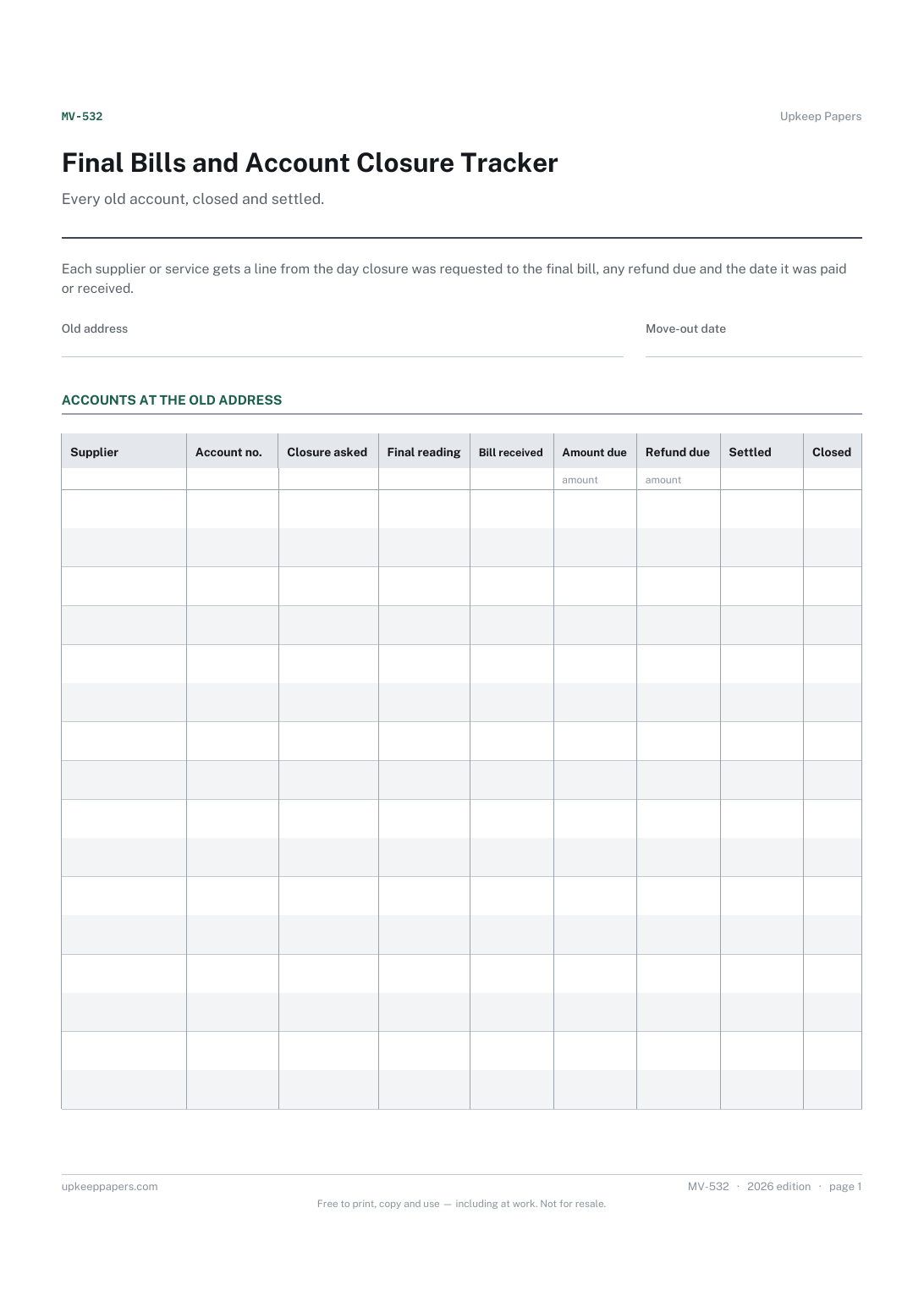
Each account at the old address and its number.
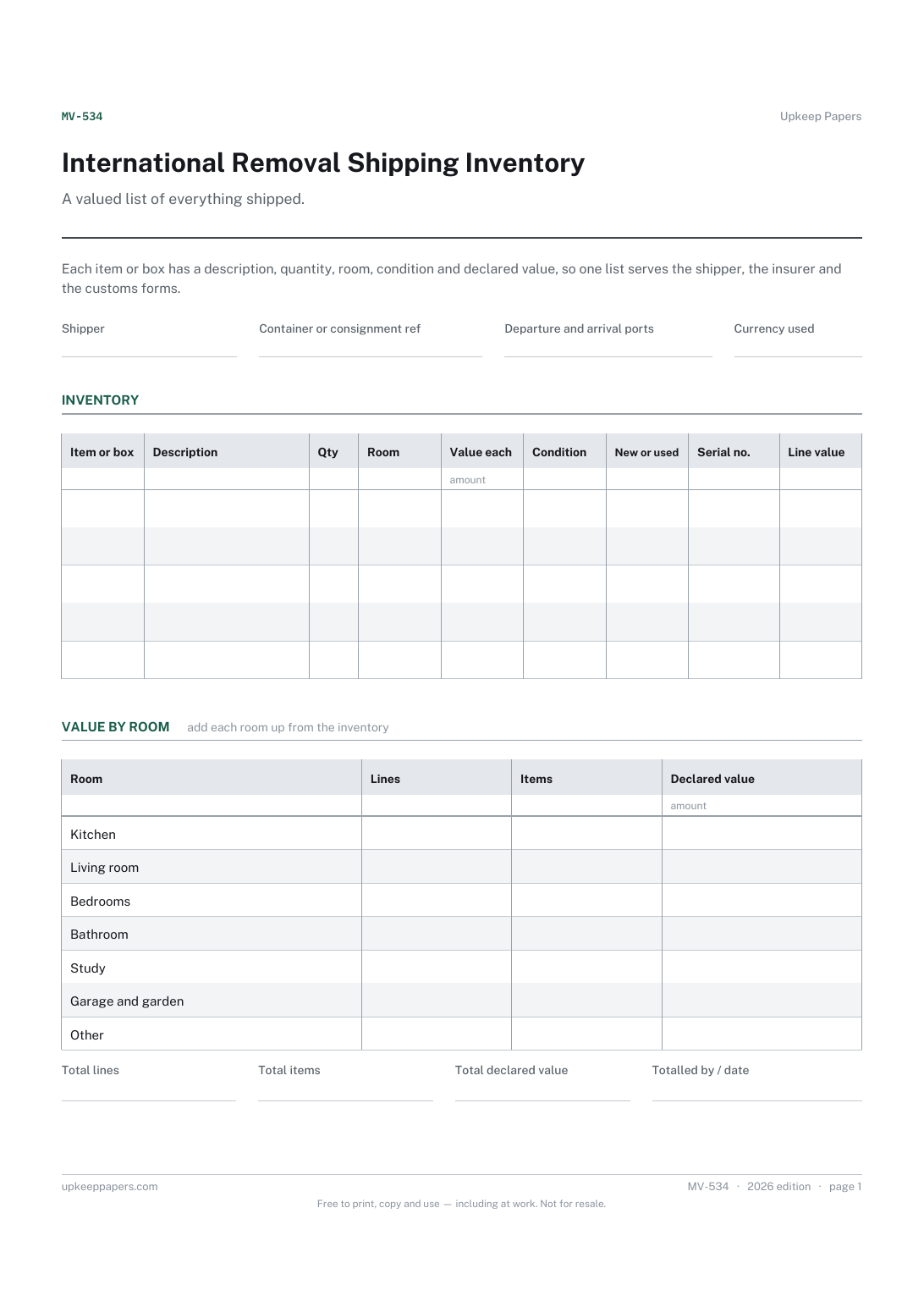
Every item and box in the consignment, numbered.
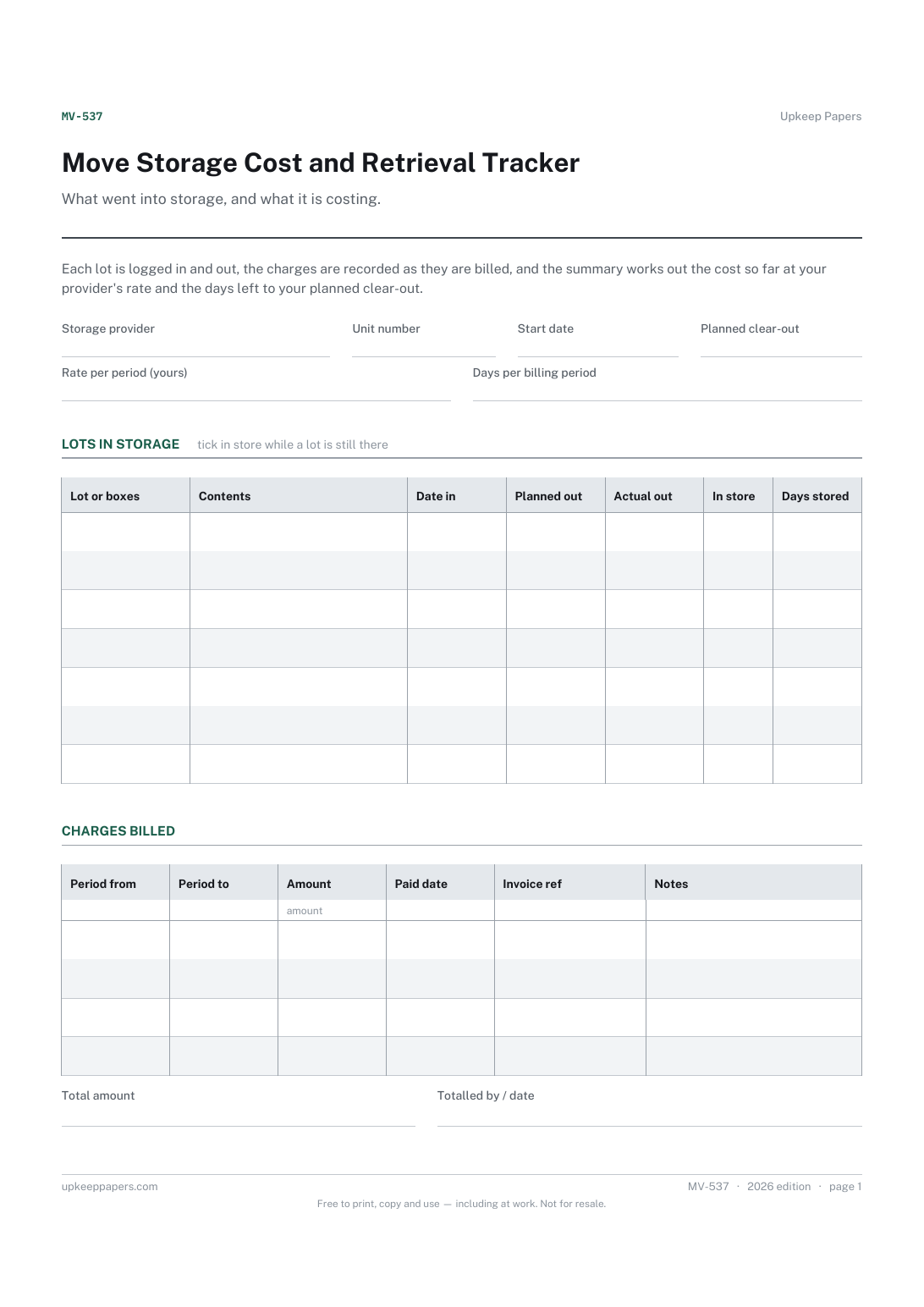
Which lots or box groups are in storage and which have come out.
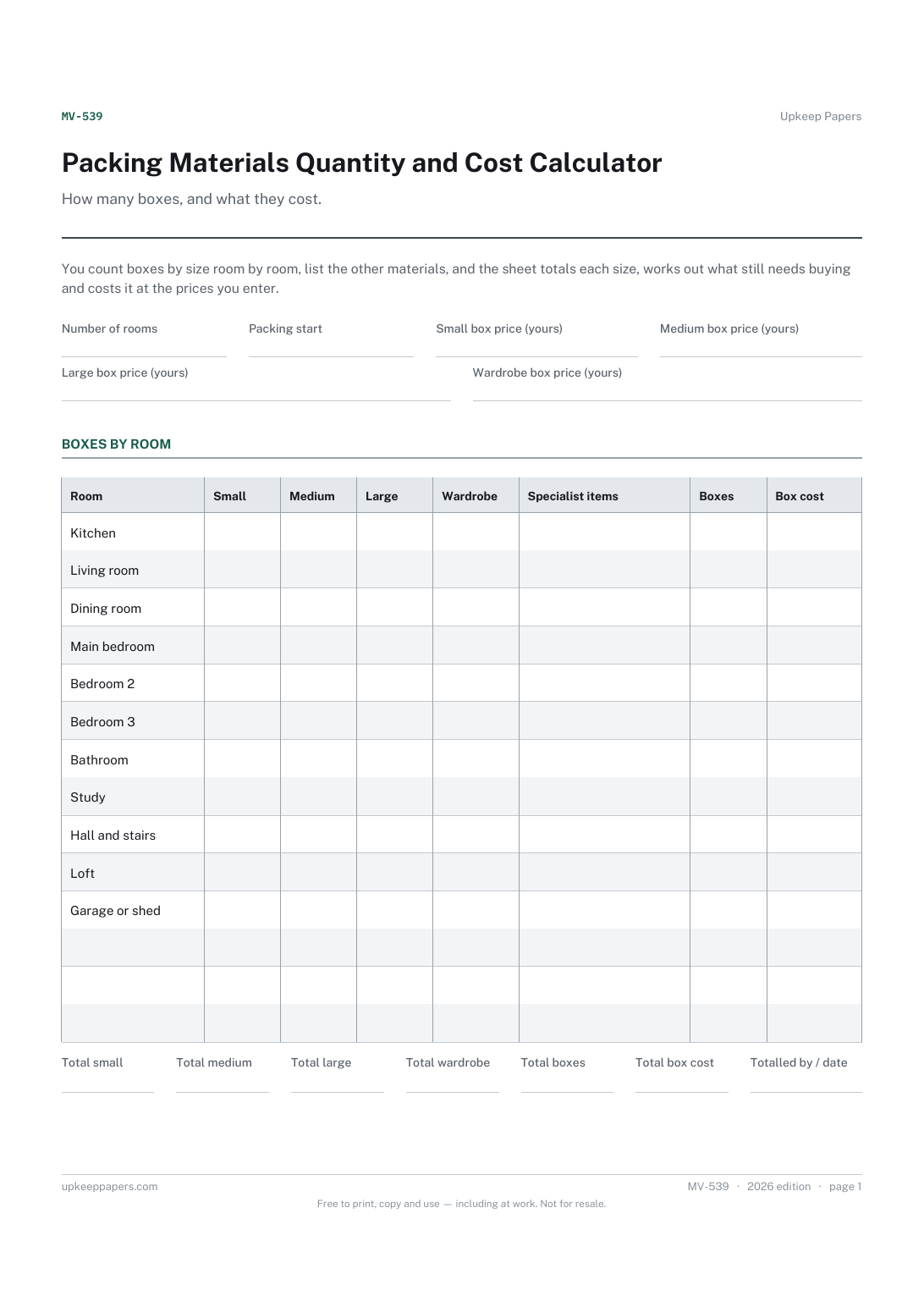
Small, medium, large and wardrobe boxes needed for each room.
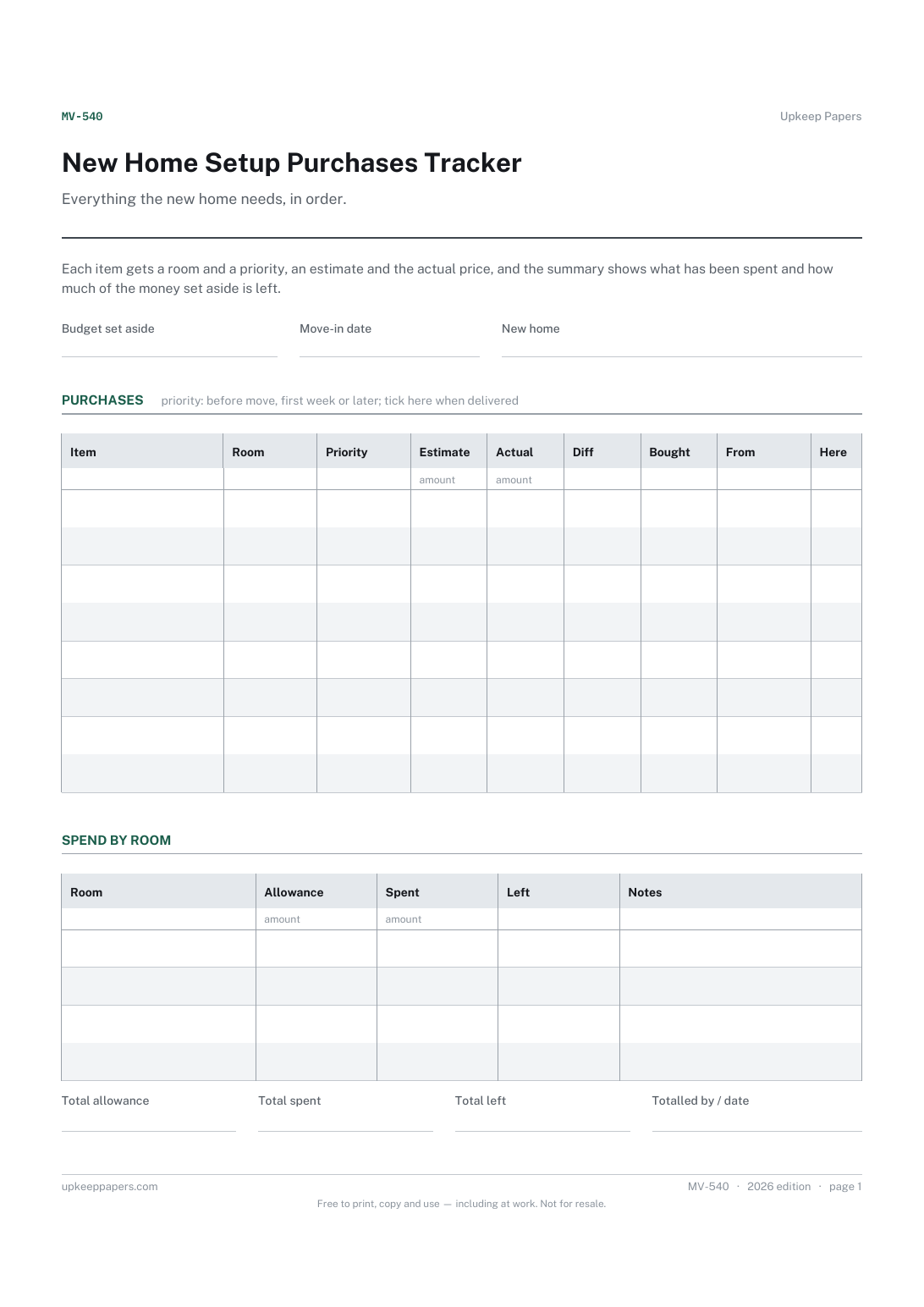
Every item to buy, by room and by when it is needed.
Each item for sale, where it was listed, the asking and sold price.
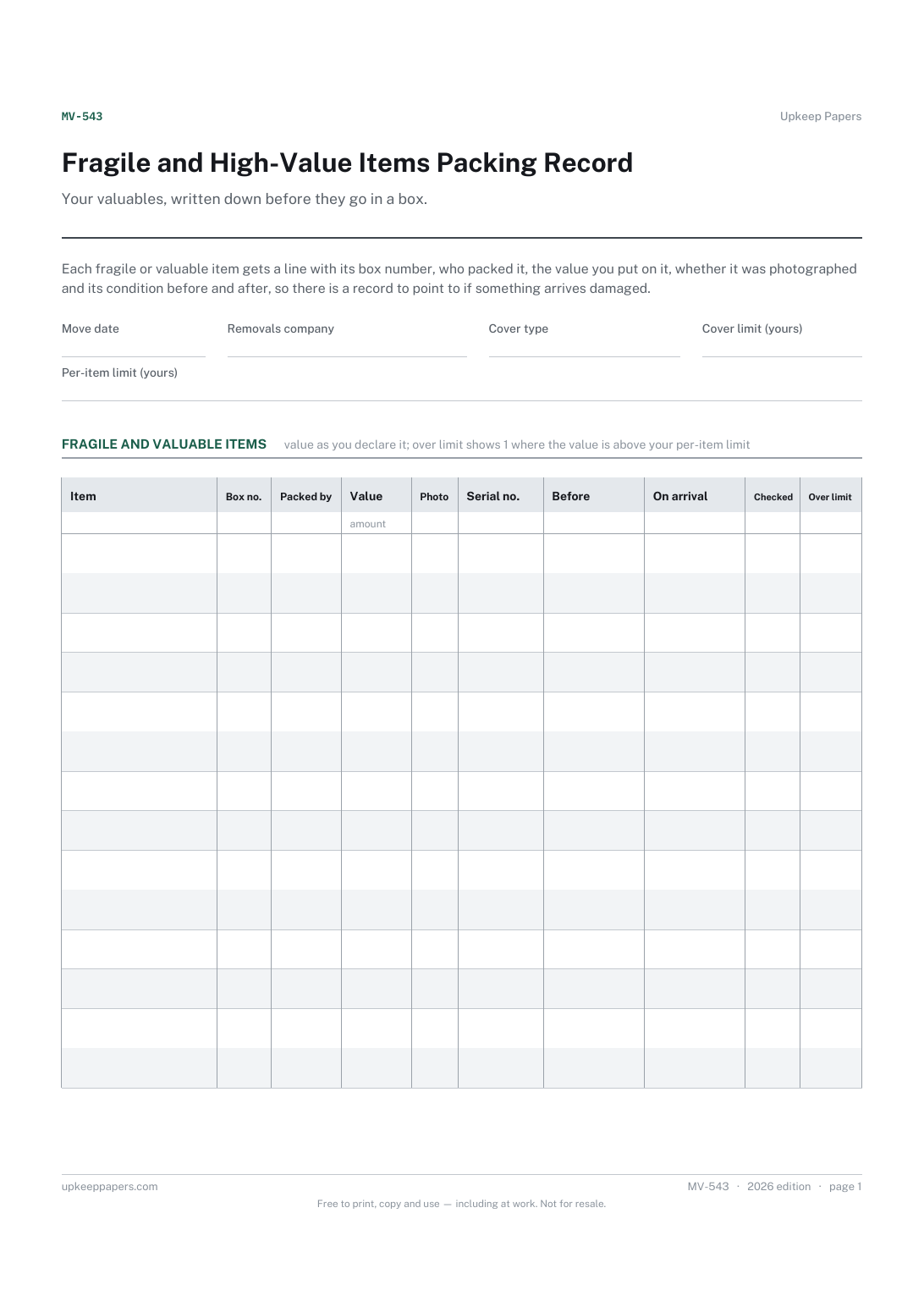
Which box each fragile or valuable item went into, and who packed it.
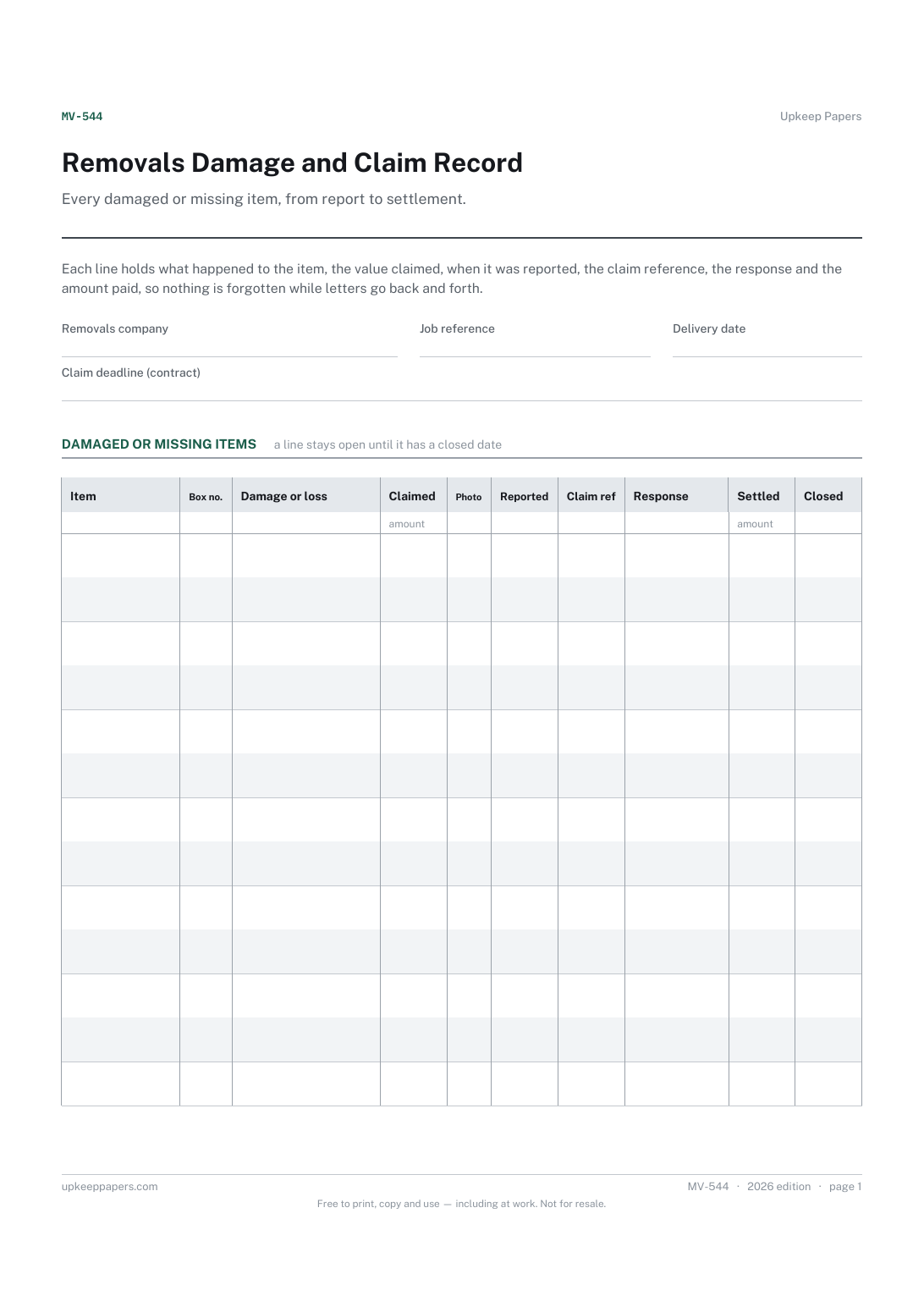
Each damaged or missing item with its box number and a description.
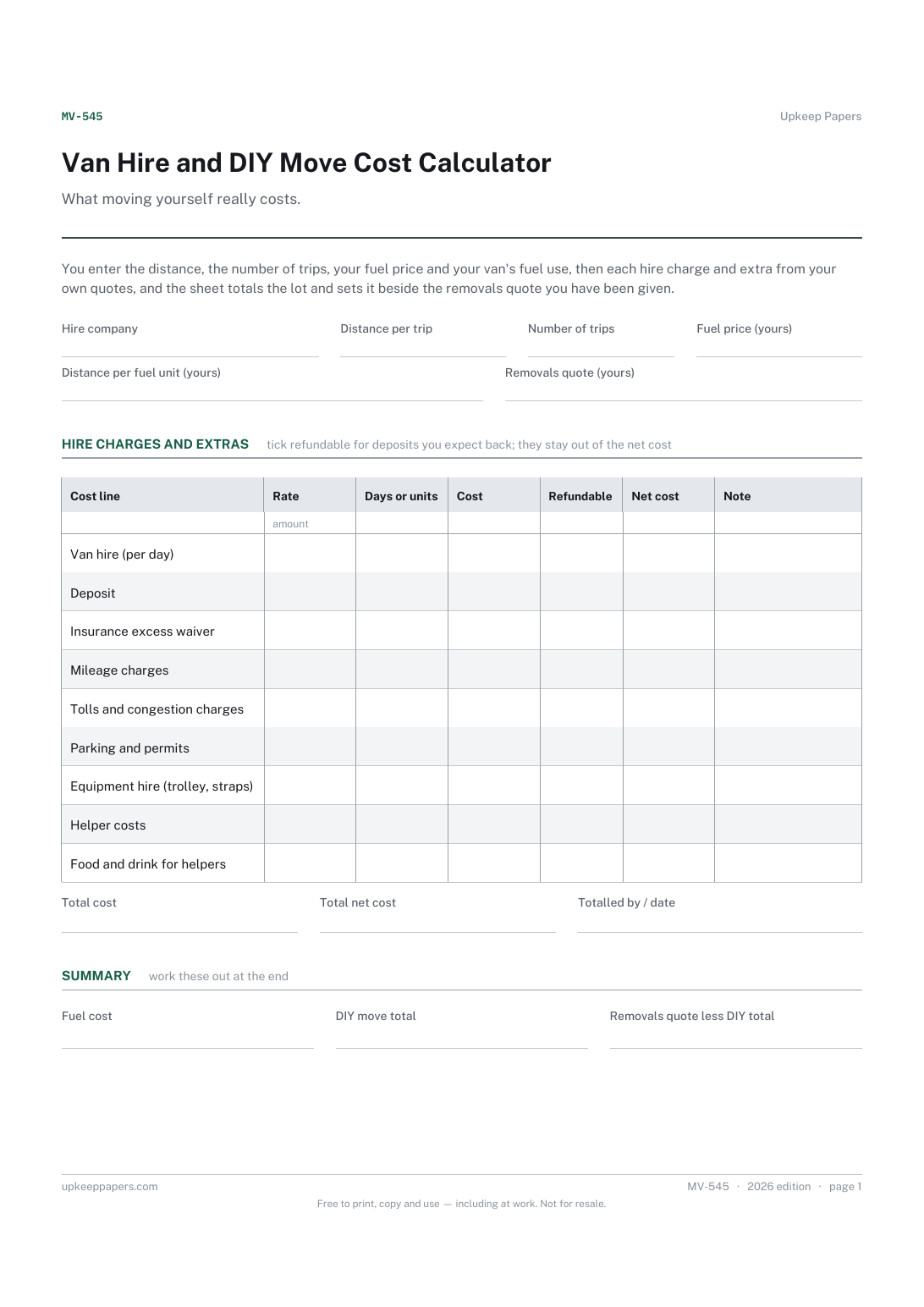
Fuel cost for every trip, from your own price and consumption figures.
How many days the two homes overlap, or how many days fall between them.
Each place stayed, with check-in and check-out dates and nights.
Every deposit and fee paid out for the move, with the date.
Recent sales of similar homes nearby, with dates and prices.
Every defect found after moving in, with where it is and a photo reference.
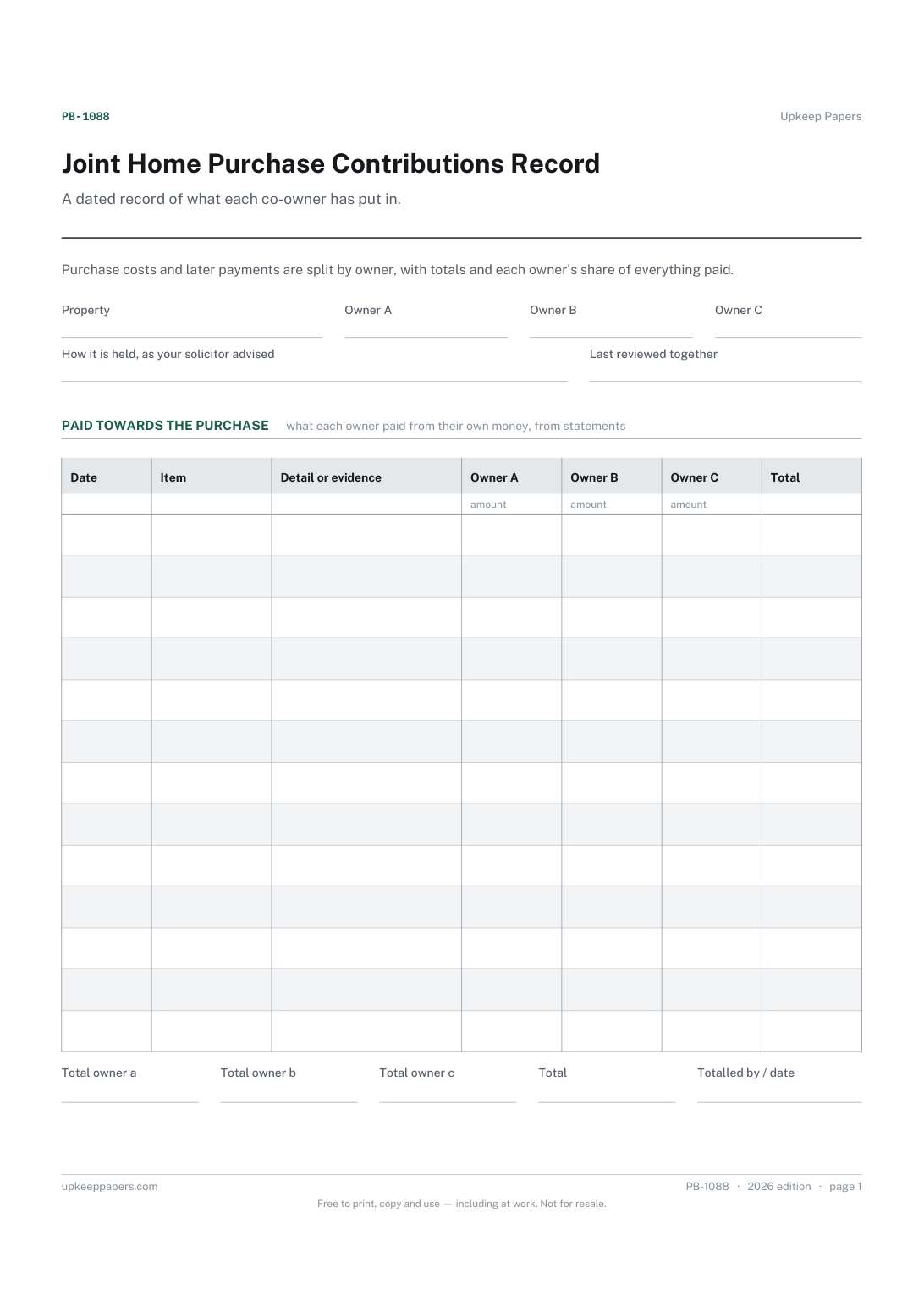
What each owner paid towards the deposit, fees, taxes and survey.
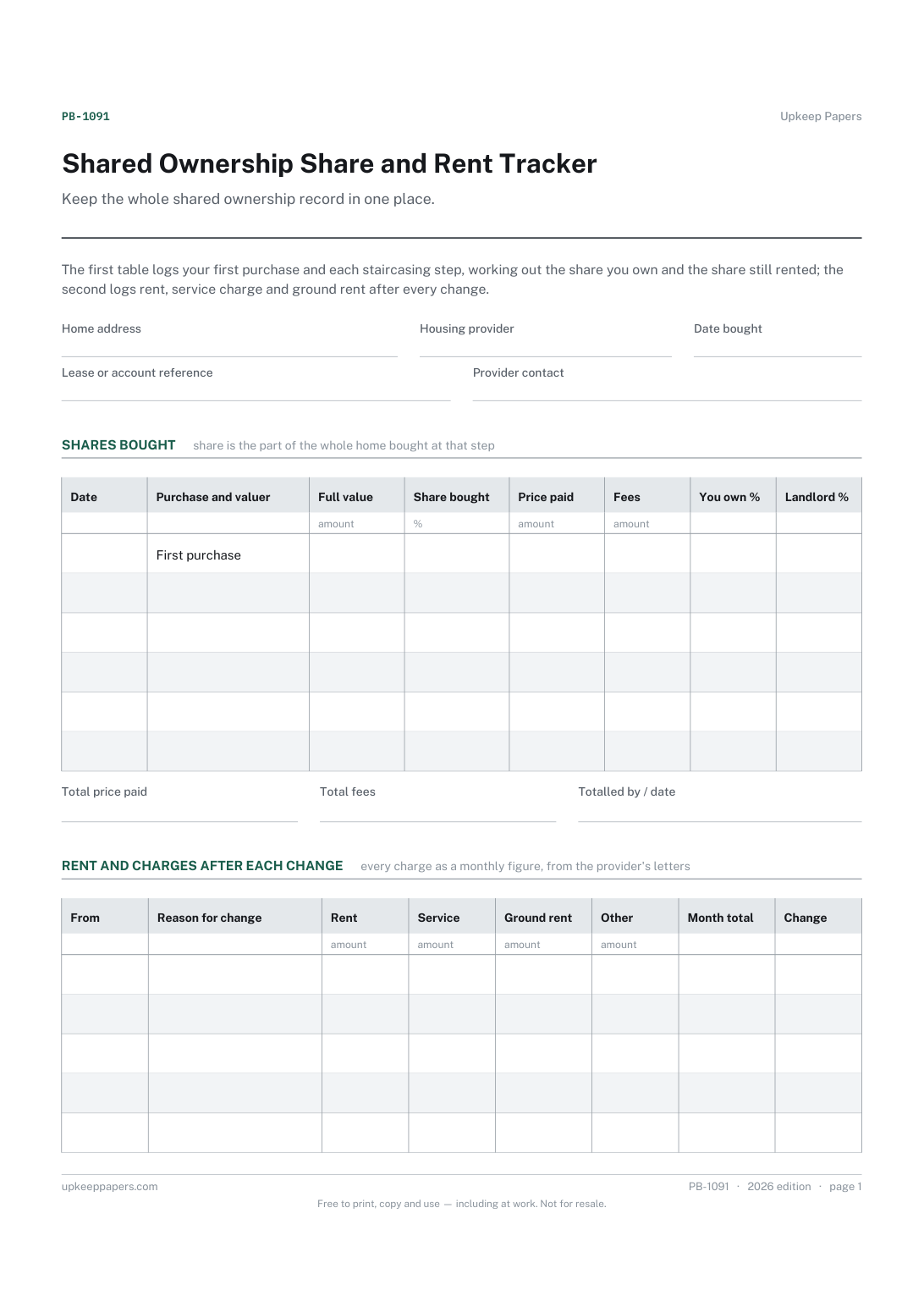
Your first purchase and each later share bought, with the valuation and fees.
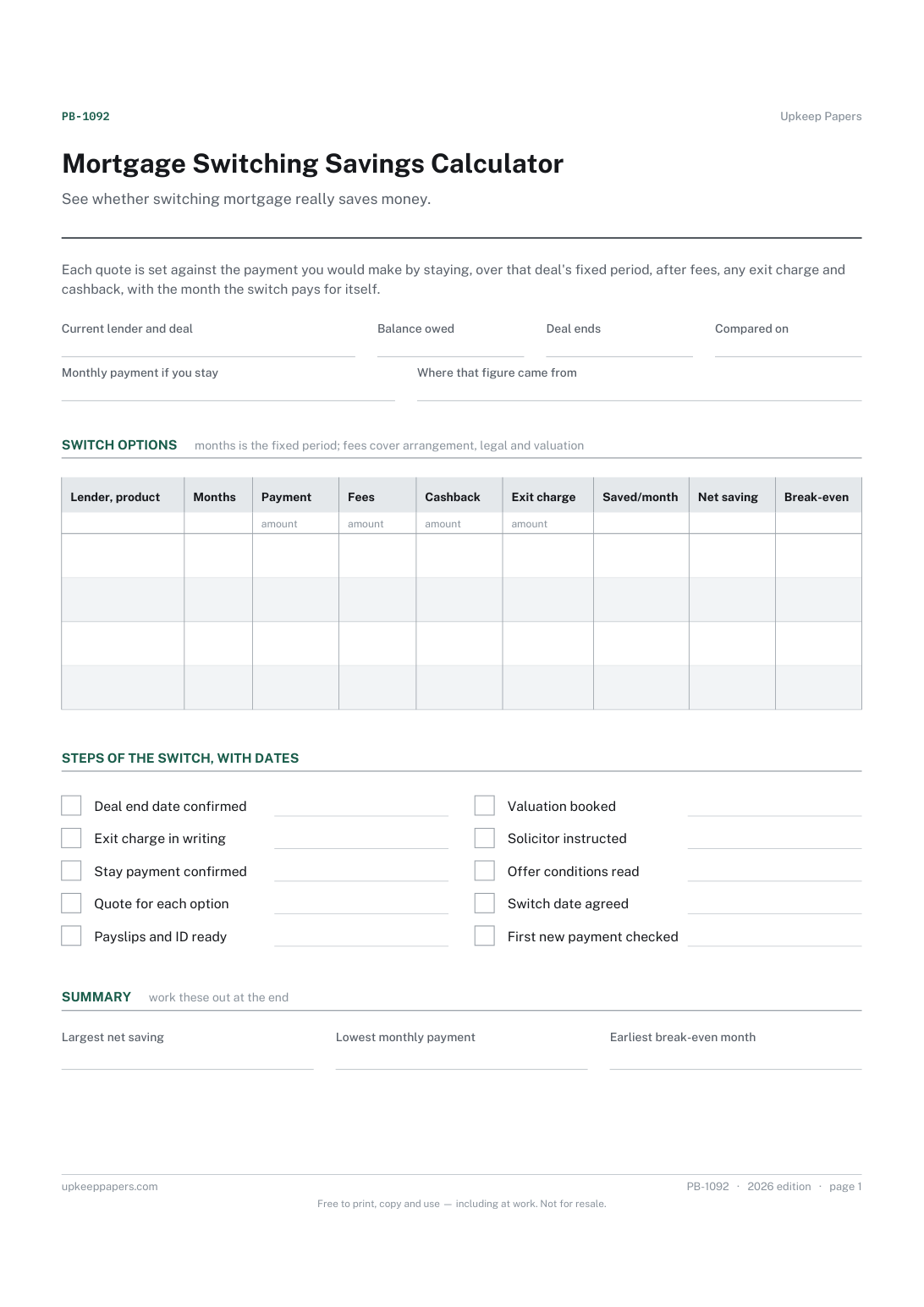
The payment you would make if you stayed, as your lender states it.
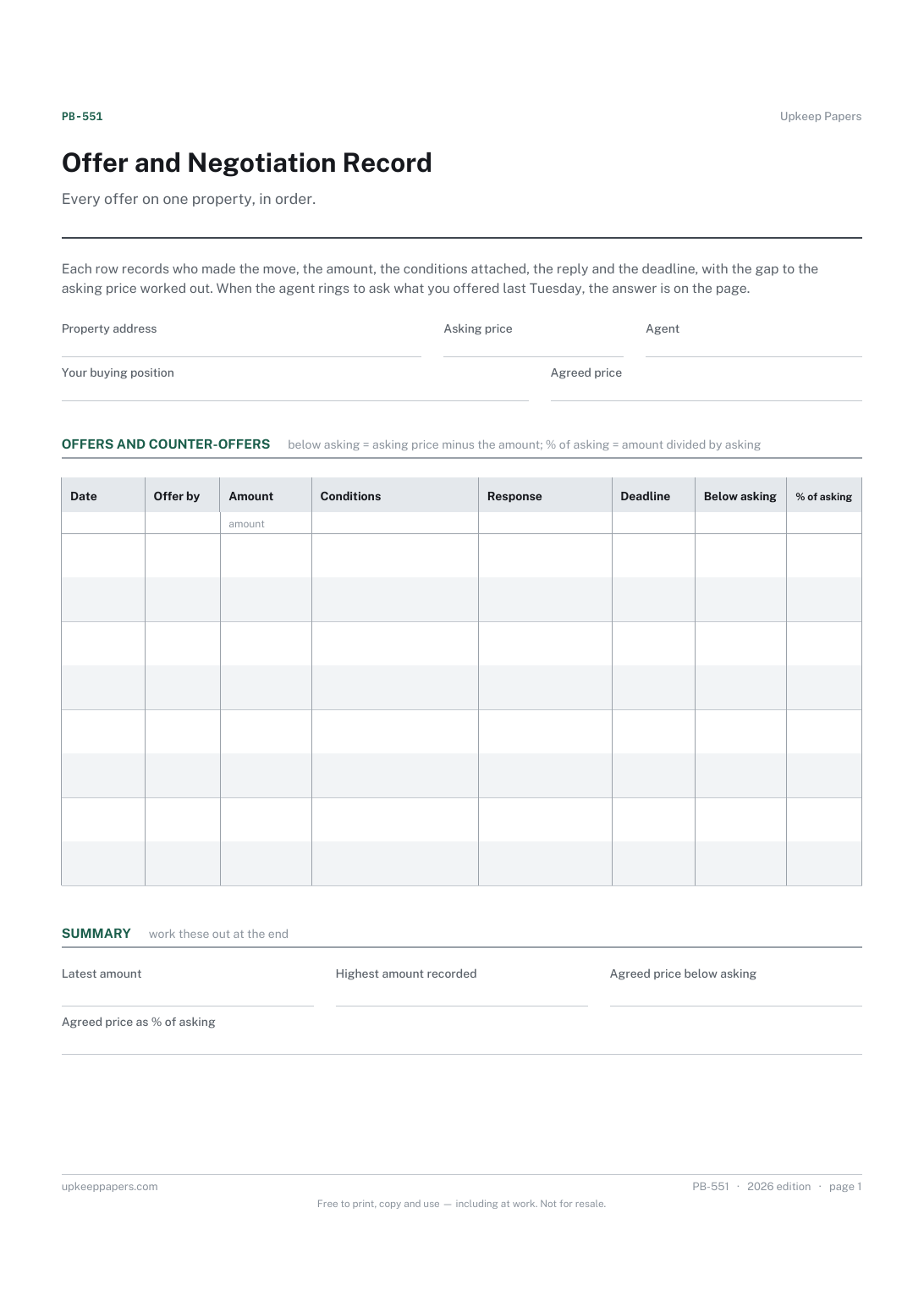
The asking price, the agent and your position as a buyer, kept at the top.
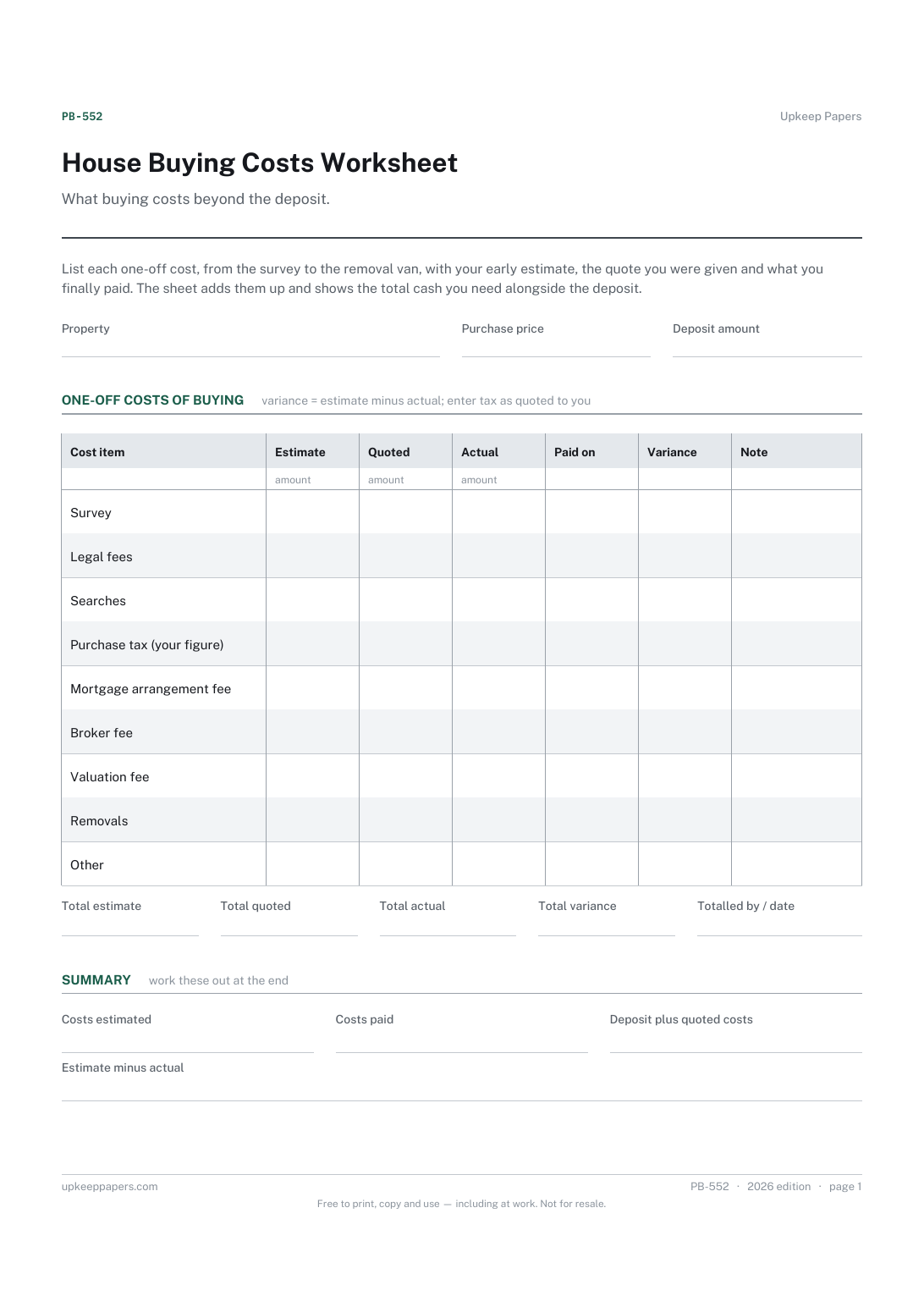
Every one-off cost of the purchase on its own line.
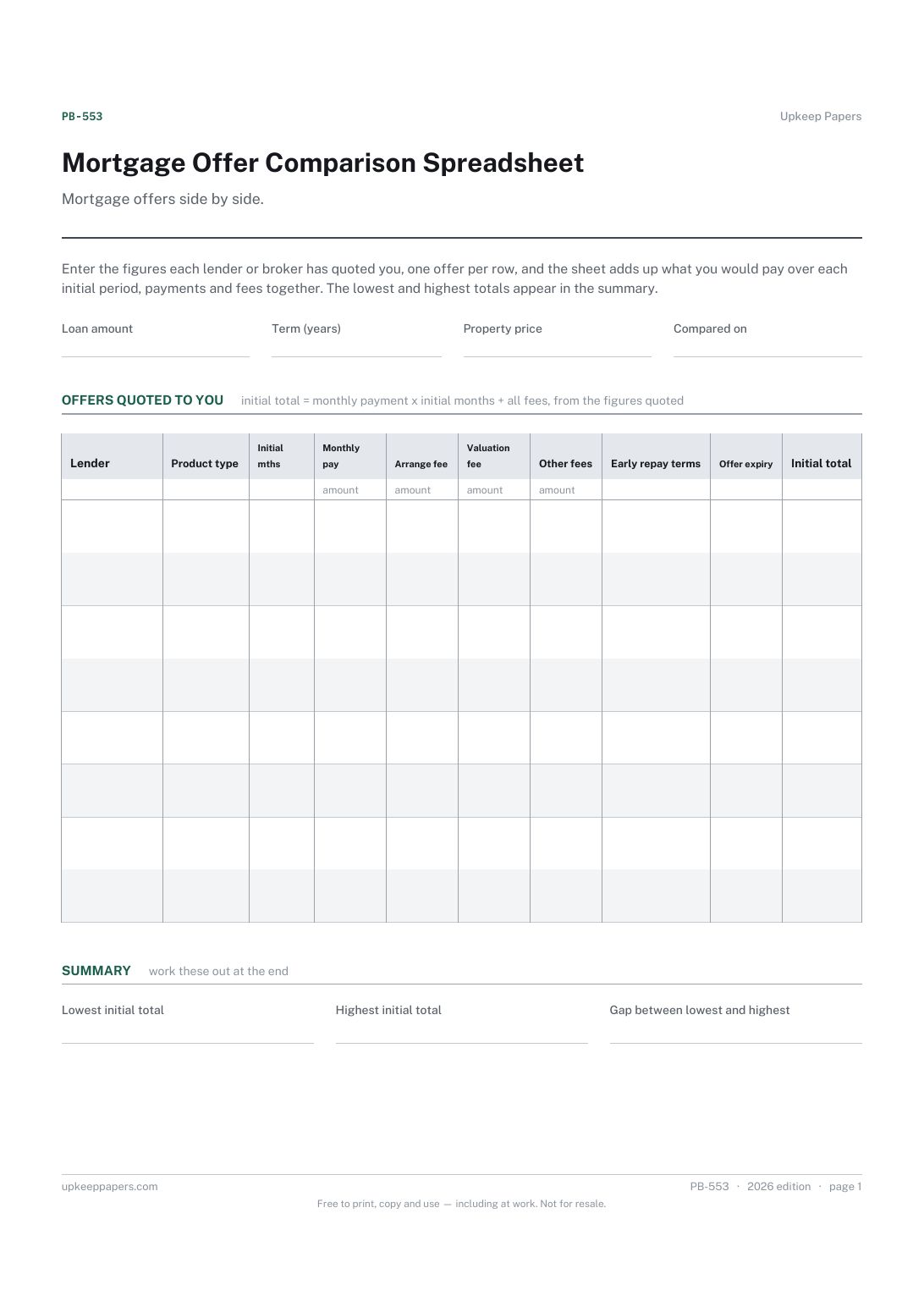
The loan amount, term and property price the quotes are based on.
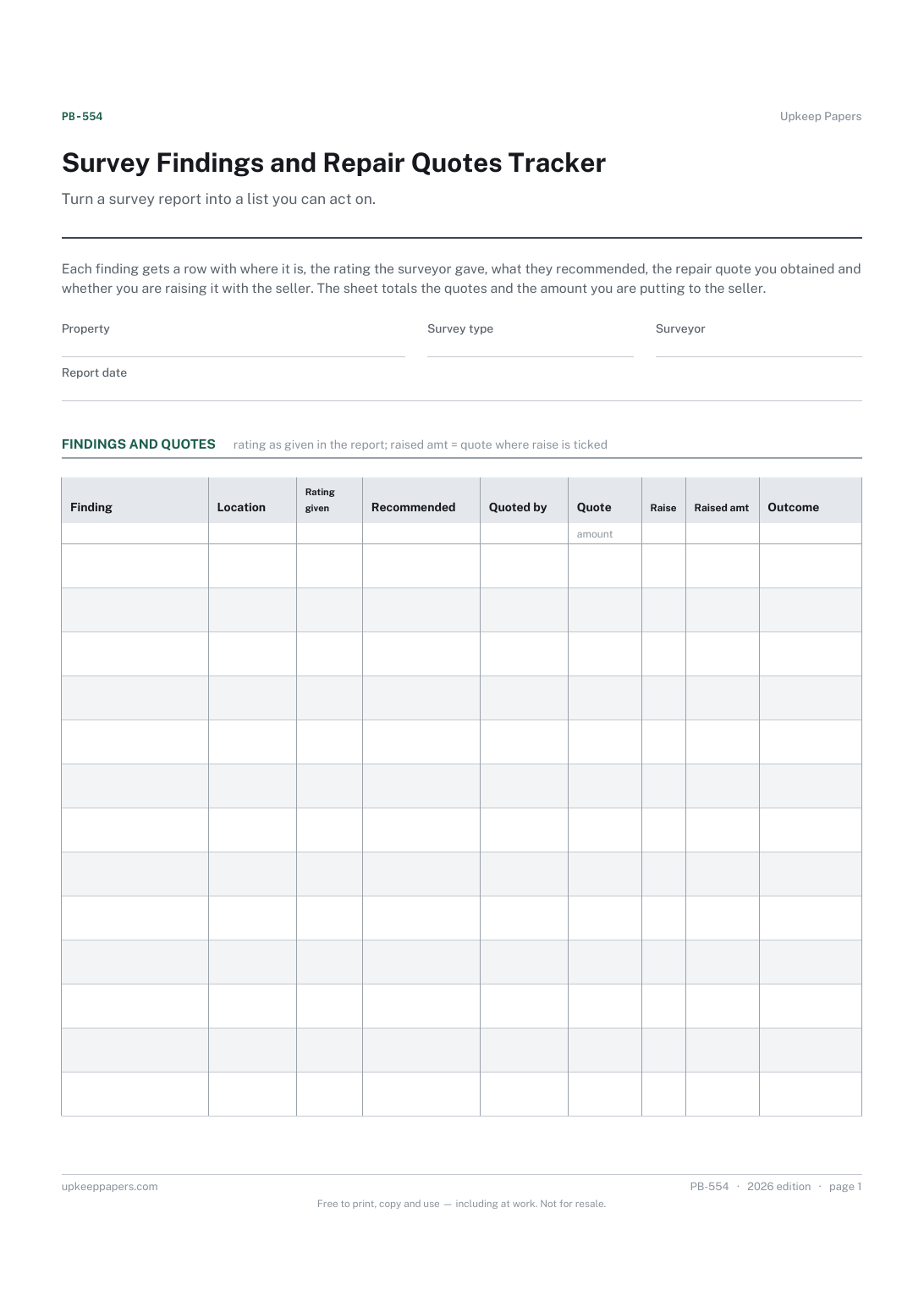
Each issue in the report, where it is and the rating it was given.
The agreed sale price and the mortgage to be repaid.
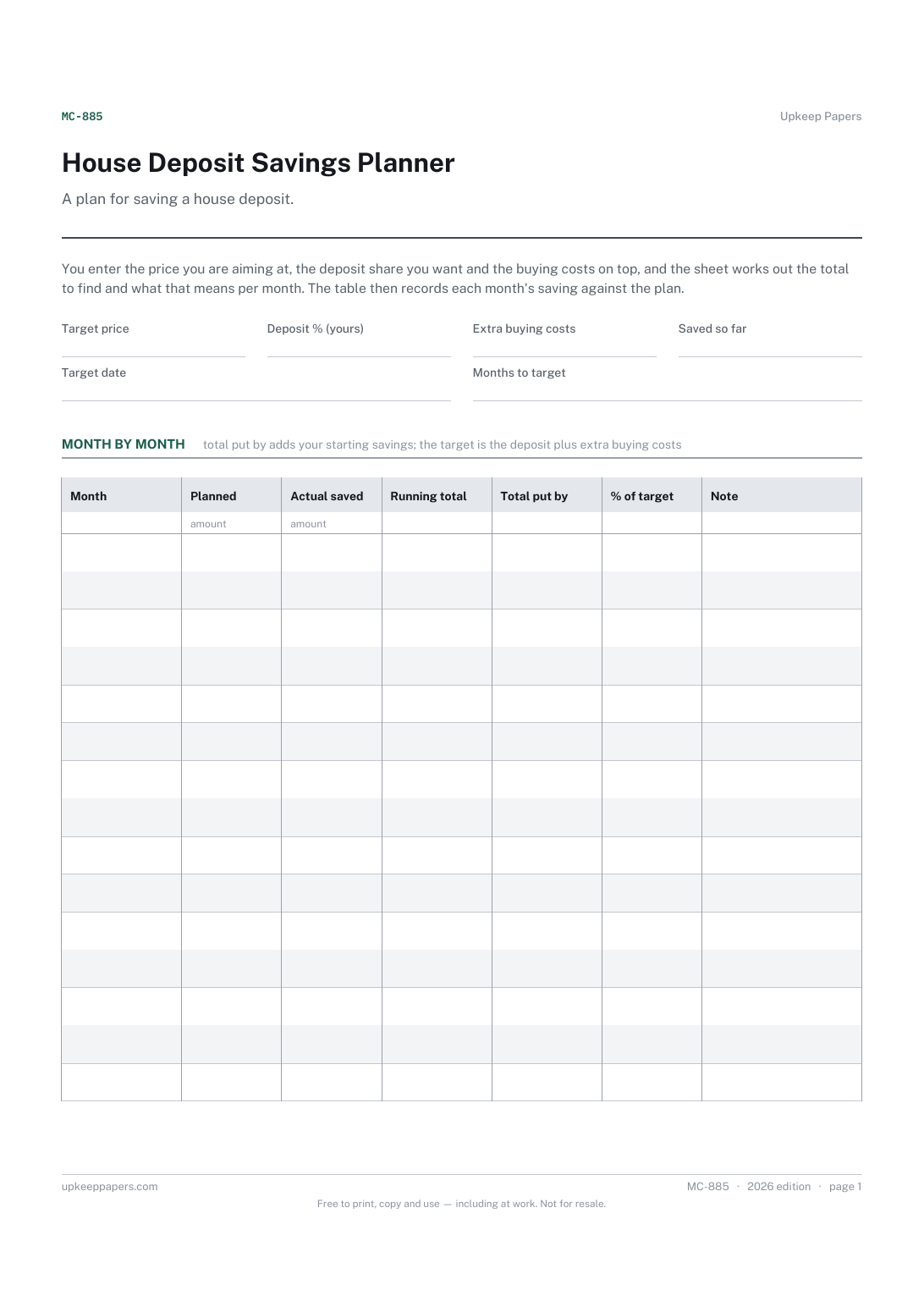
The deposit target, target date and starting balance you have set.
The applicants and the household's monthly income after tax.
The asking price, set at the top for every comparison.
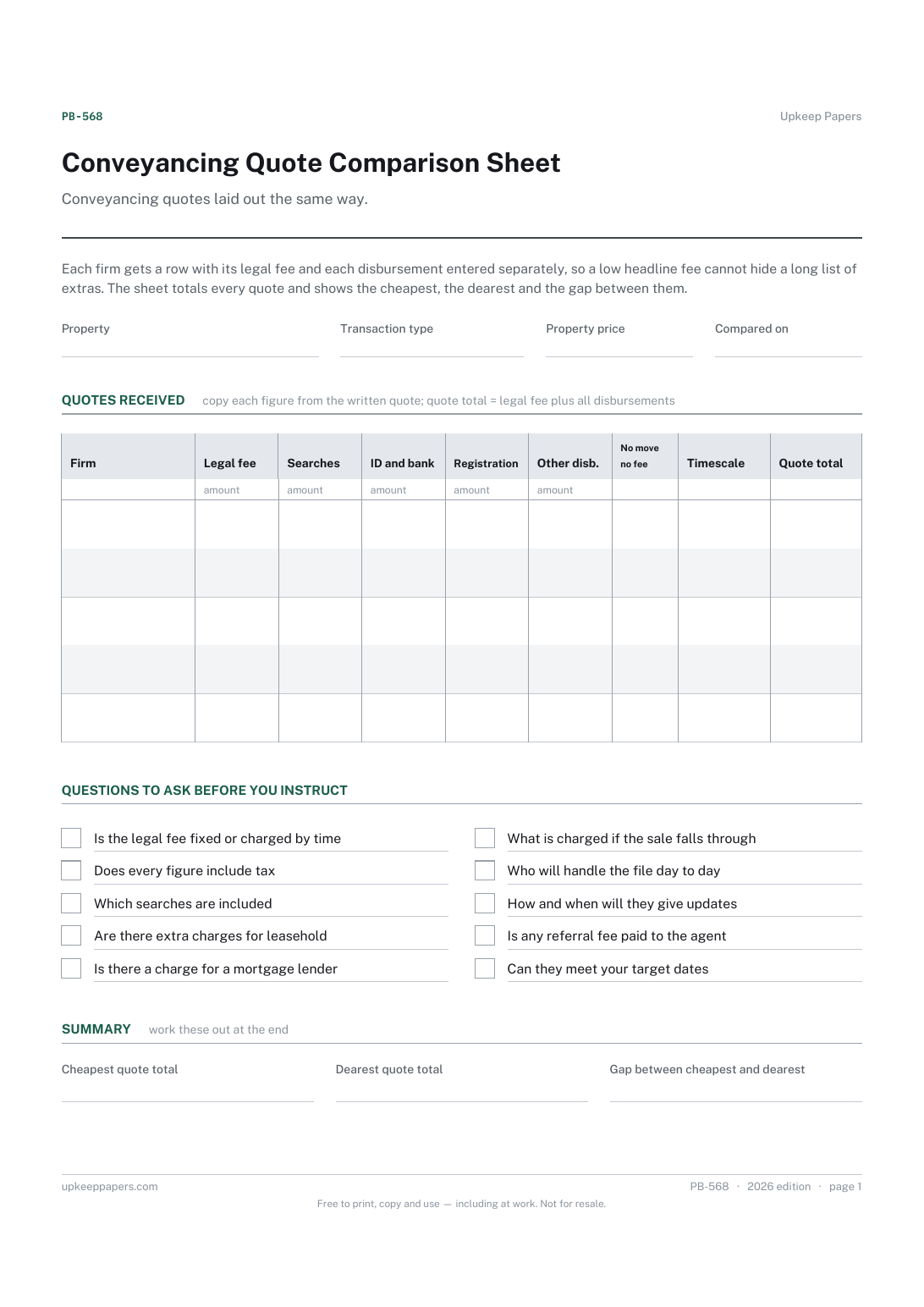
The transaction and property price every firm quoted on.
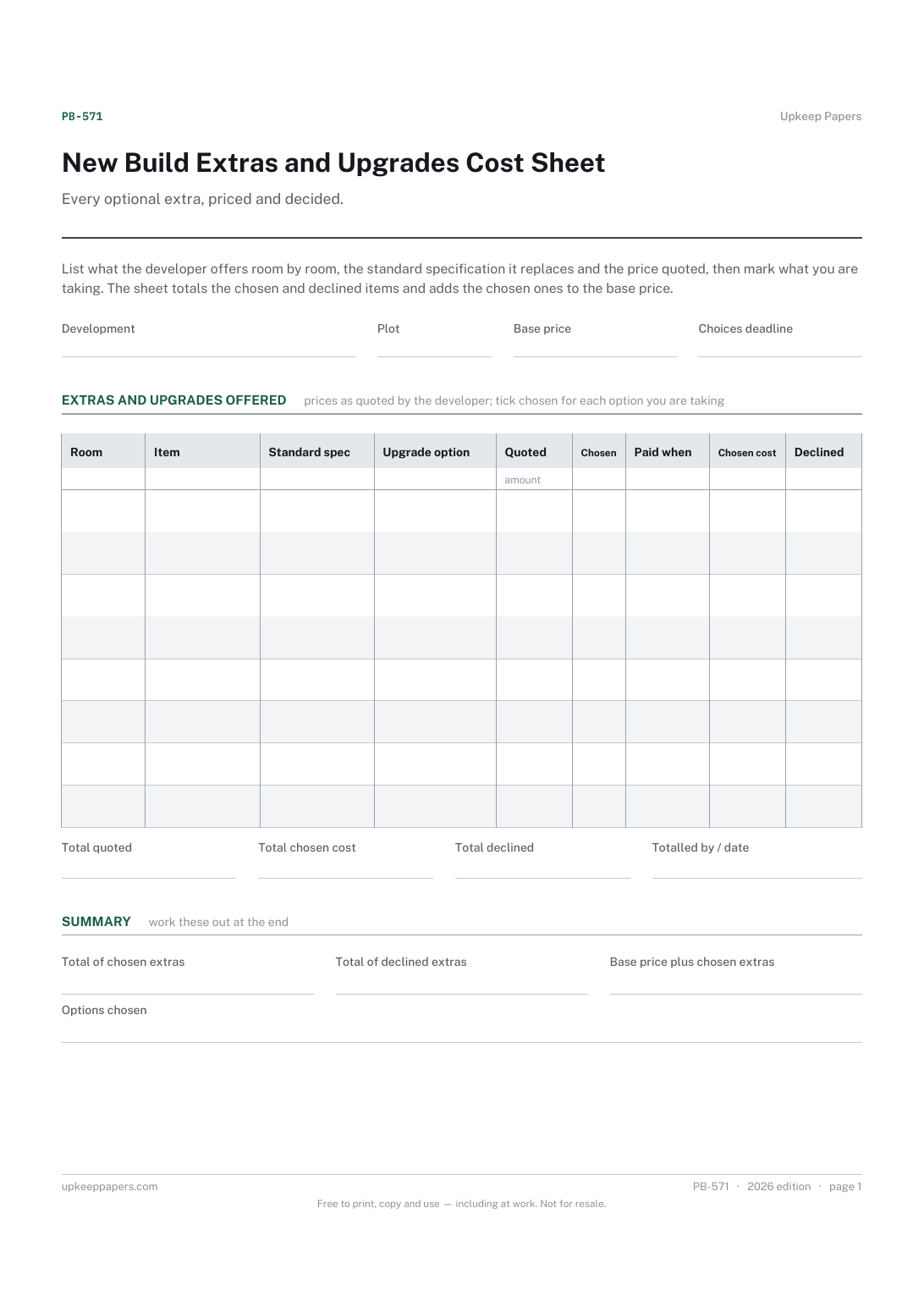
The plot, base price and the date choices must be in.
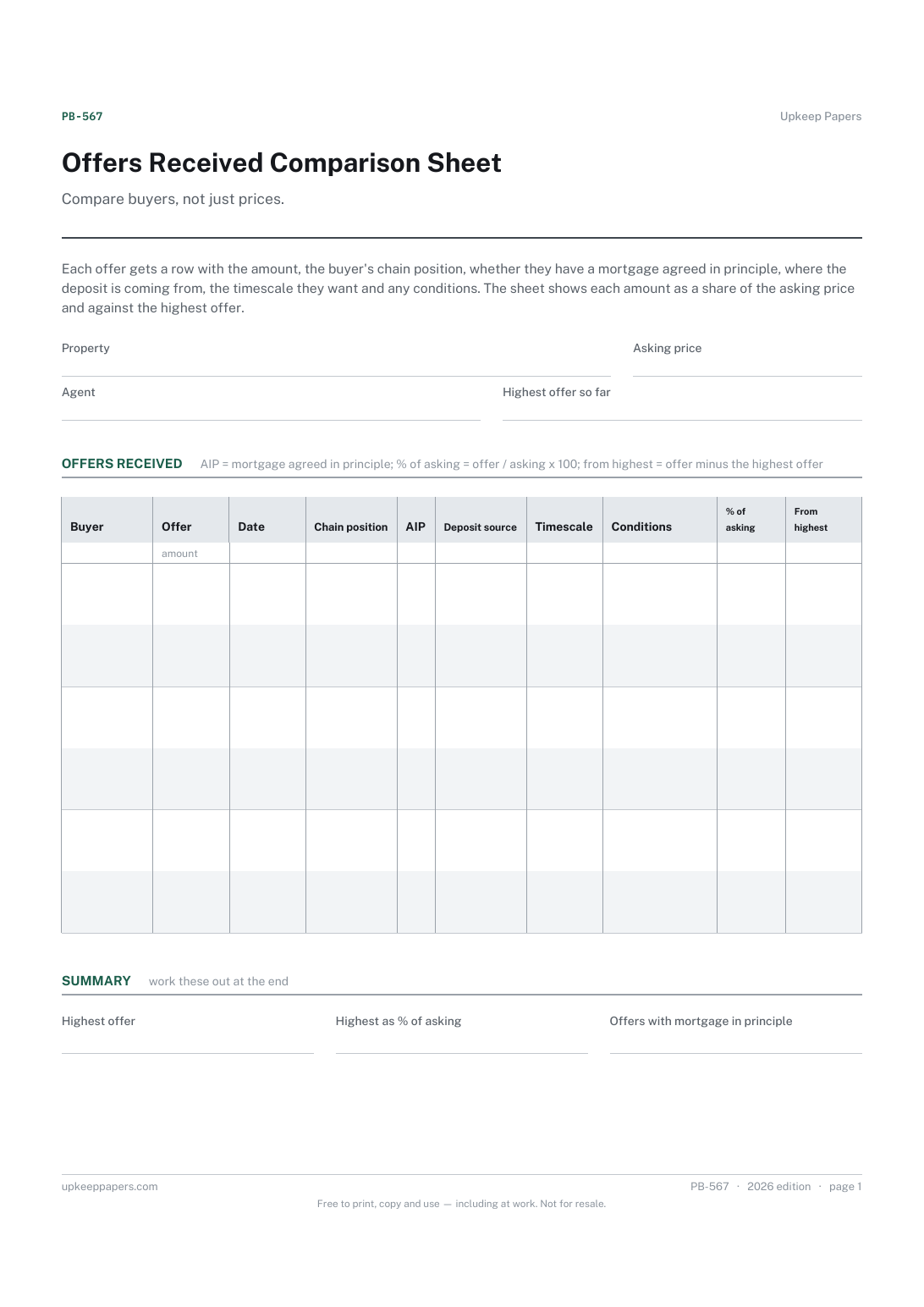
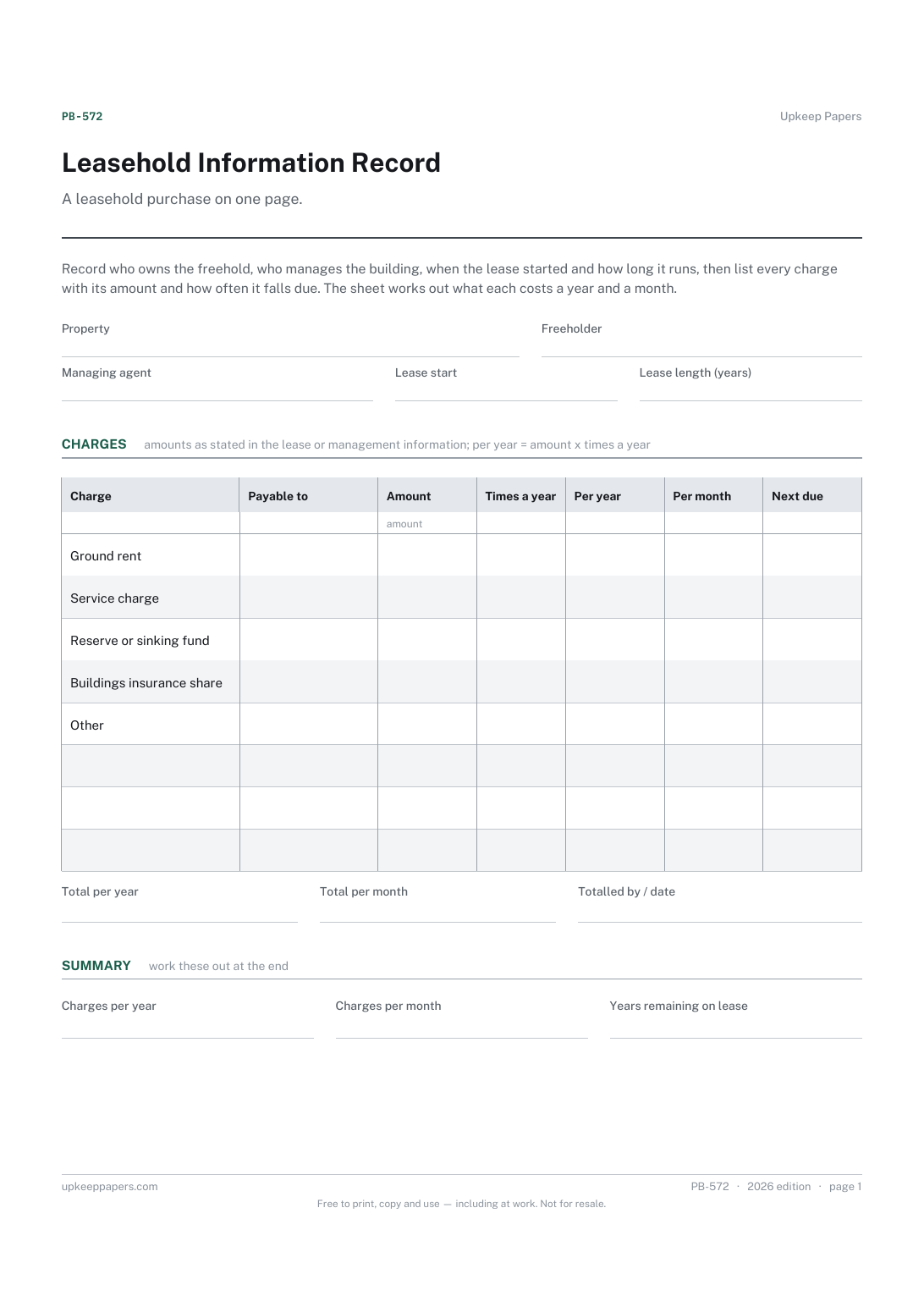
The freeholder, managing agent and their contact details.
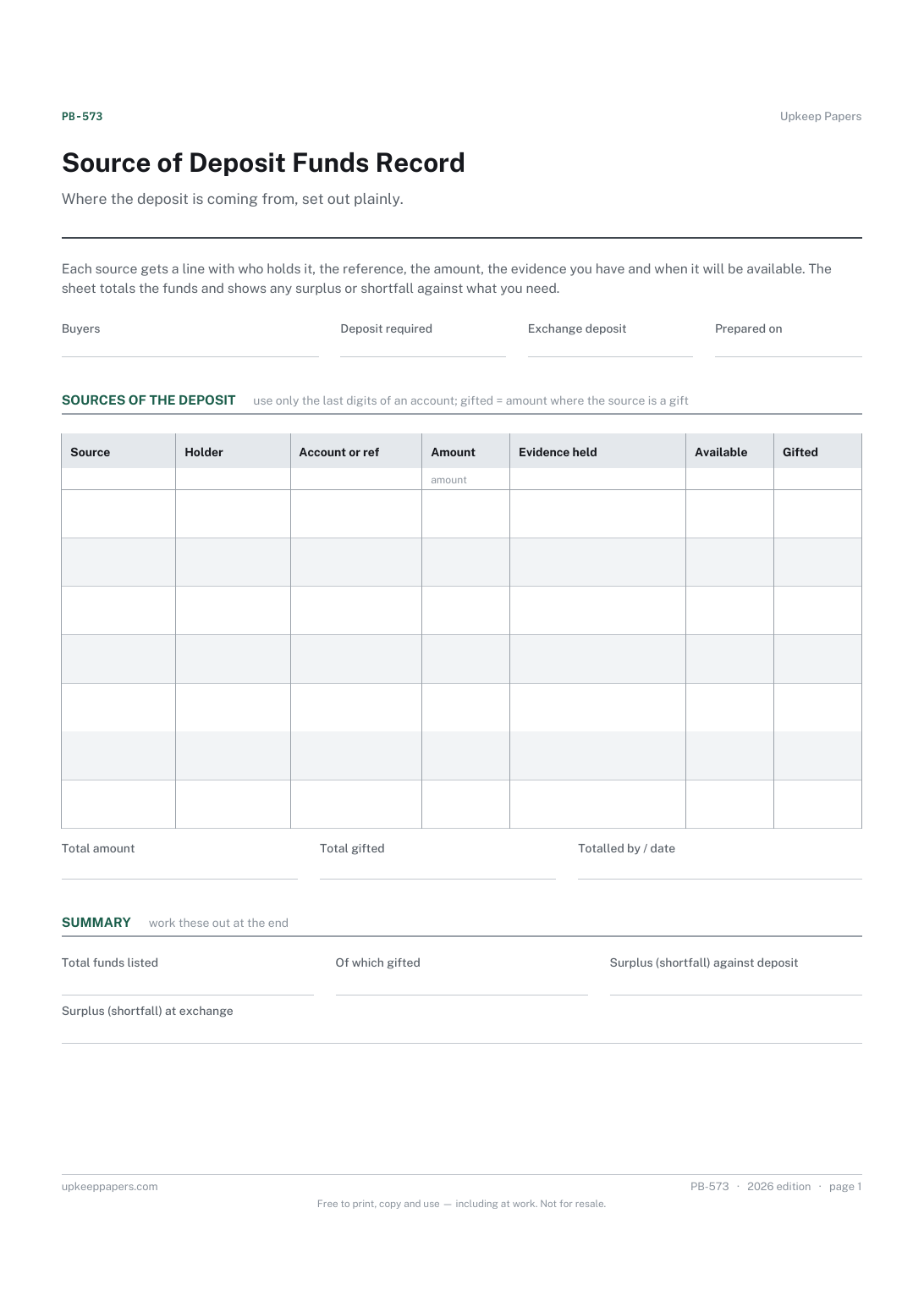
The deposit required and the amount due at exchange.
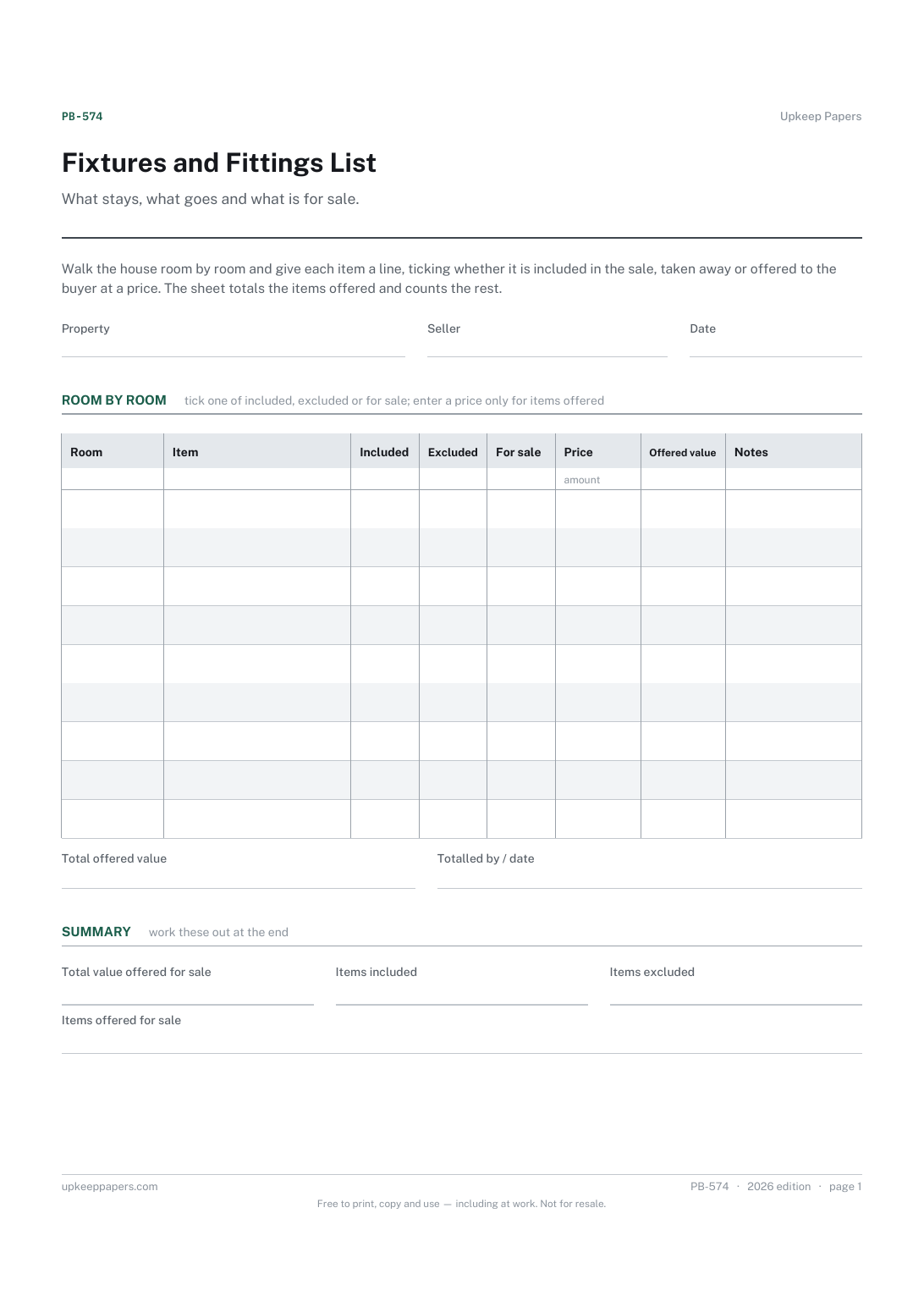
Each room's items listed on their own lines.
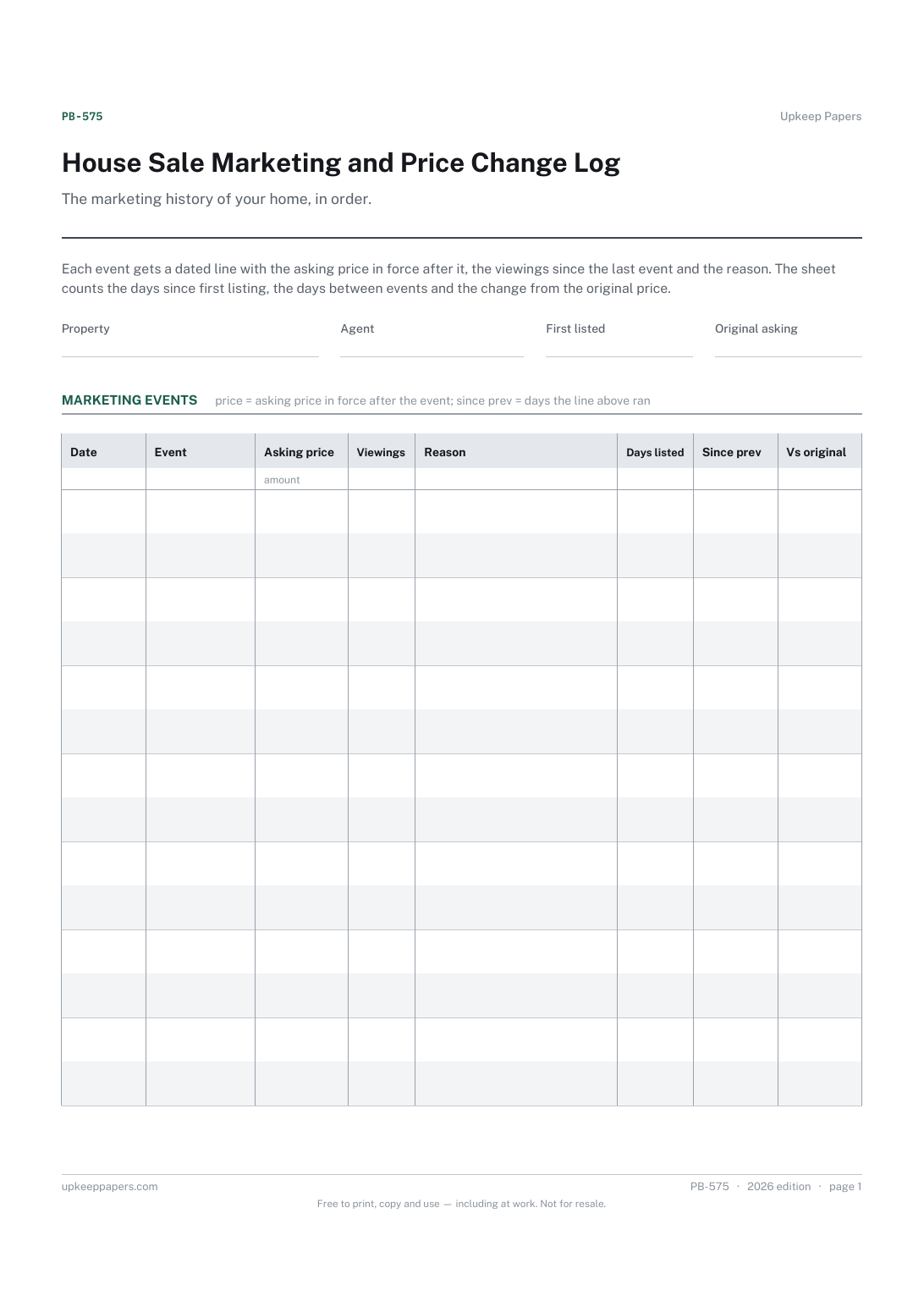
The agent, first listing date and original asking price.
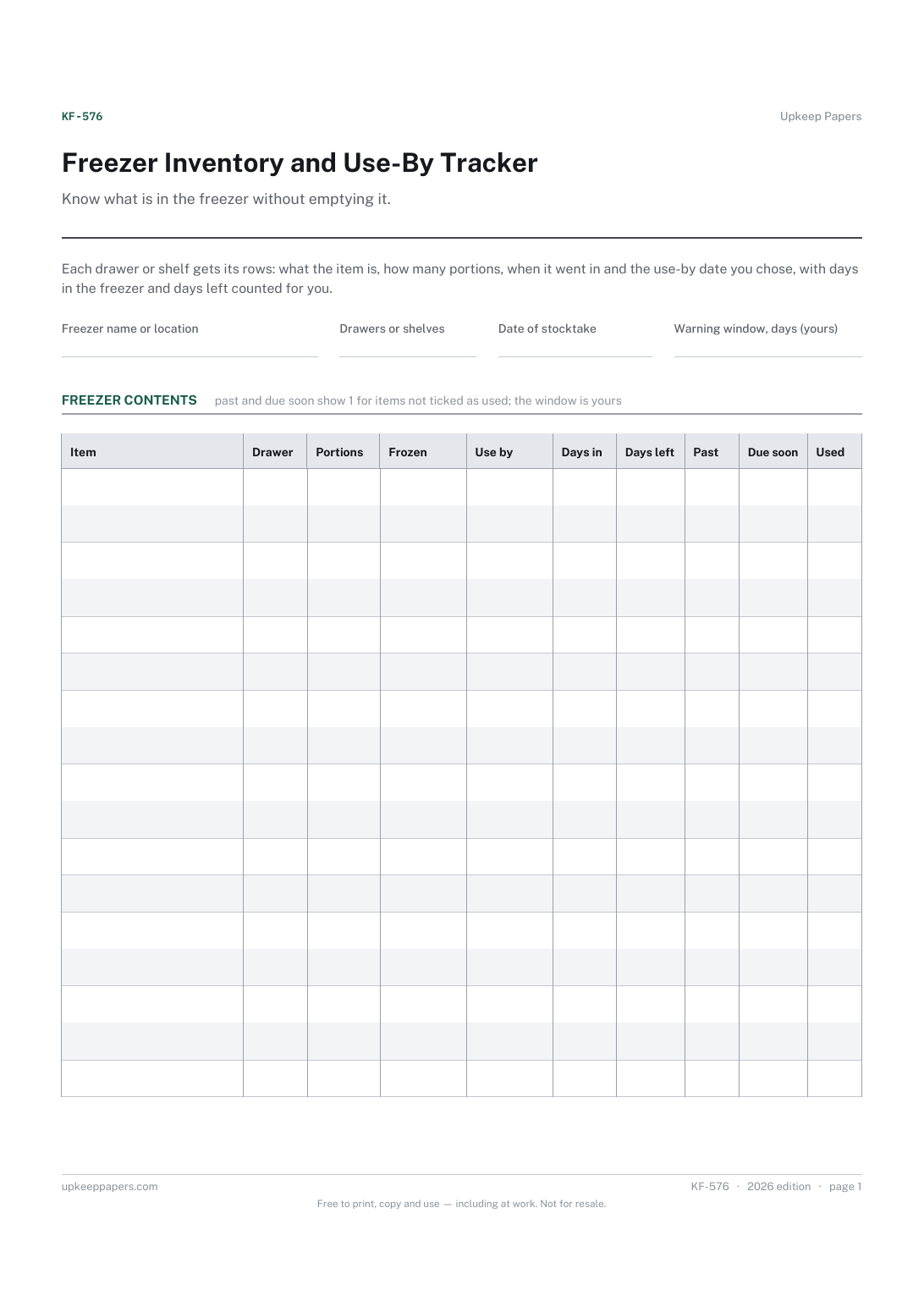
What is in each drawer or shelf, and how many portions of it.
Every tin, jar and packet with its pack size, quantity and shelf.
The cost of the amount of each ingredient the recipe actually uses.
Which recipes you are making, how many batches and in what order.
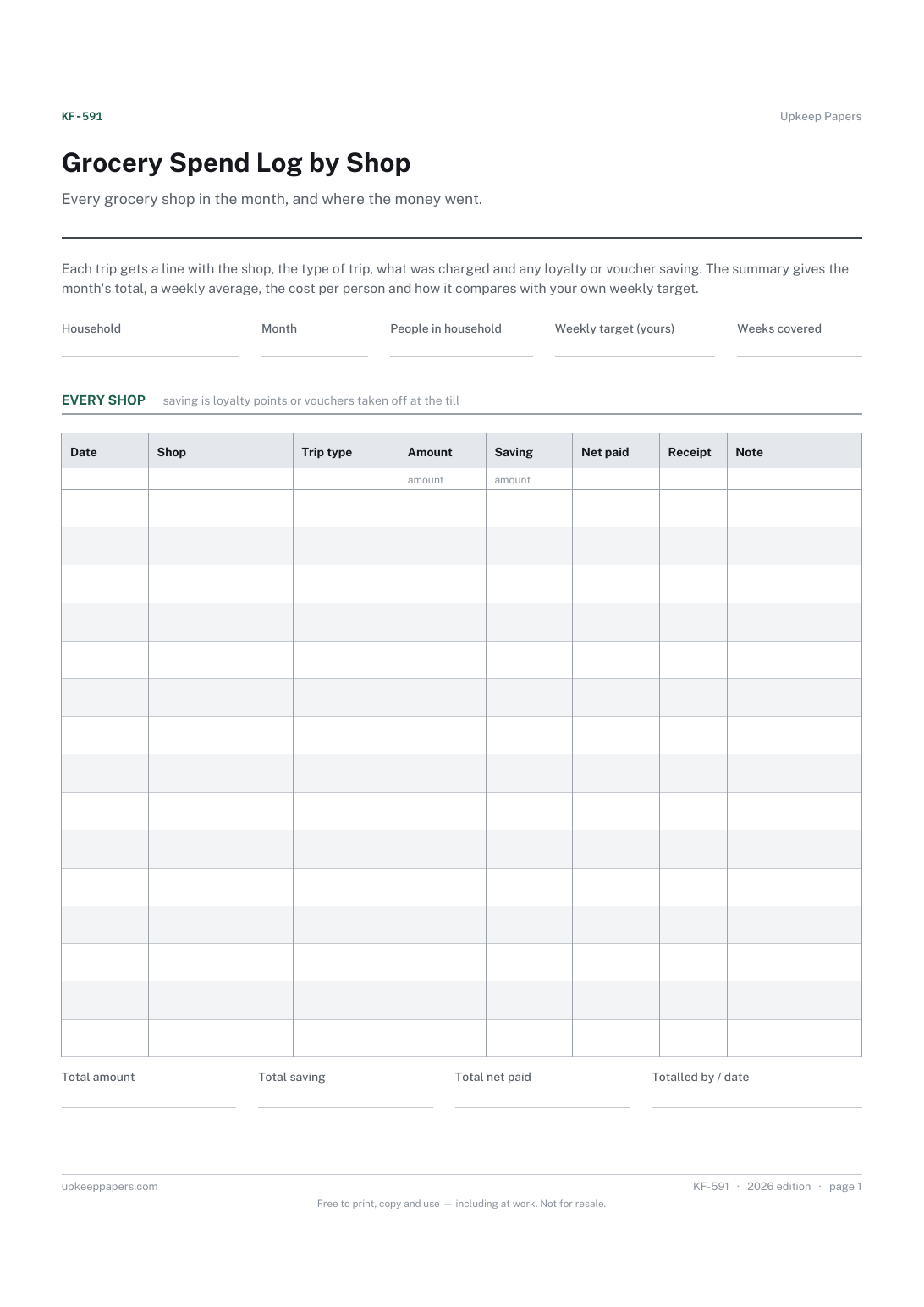
What you paid for each regular item, where and when.
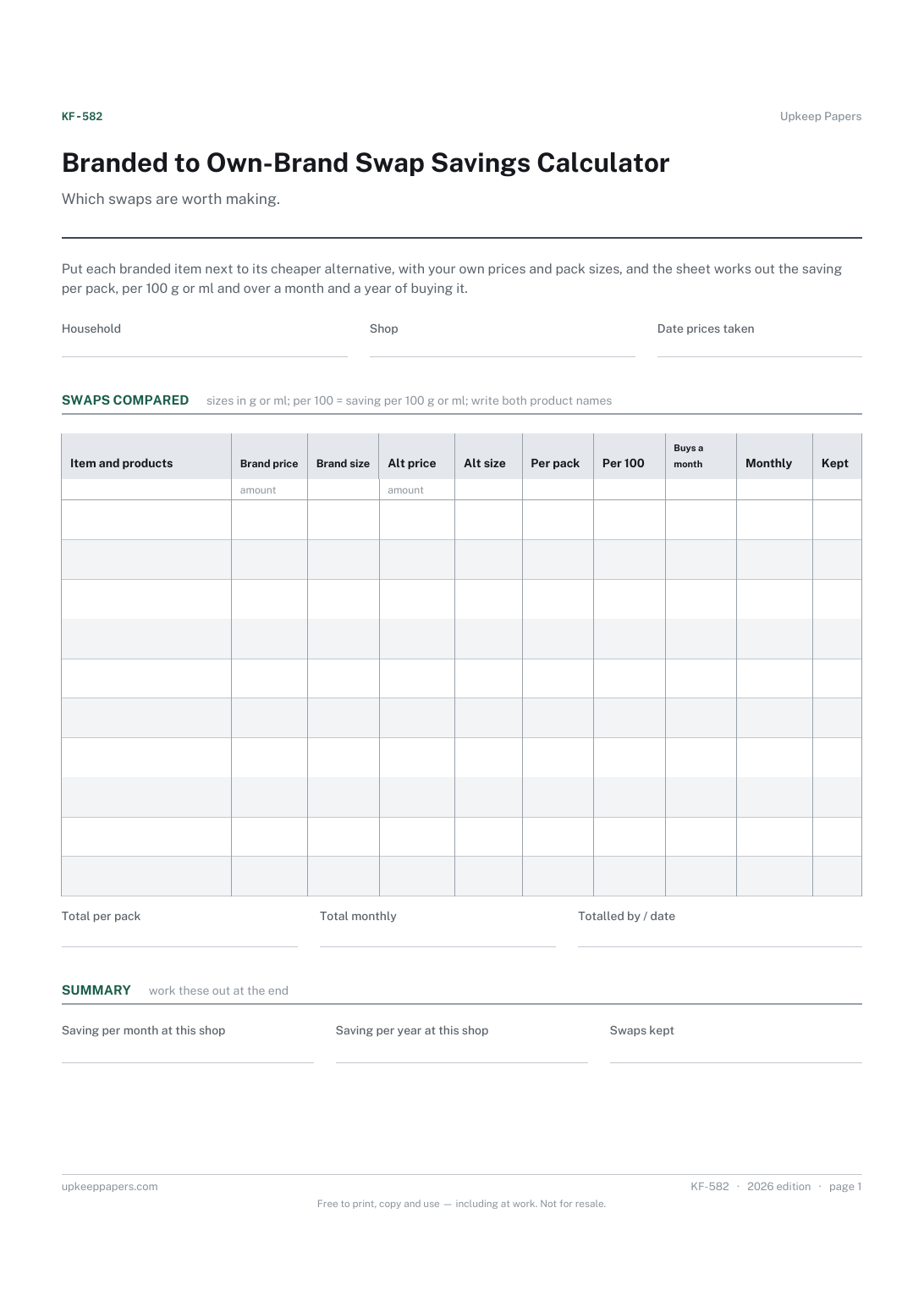
The branded and alternative price of each item at one shop.
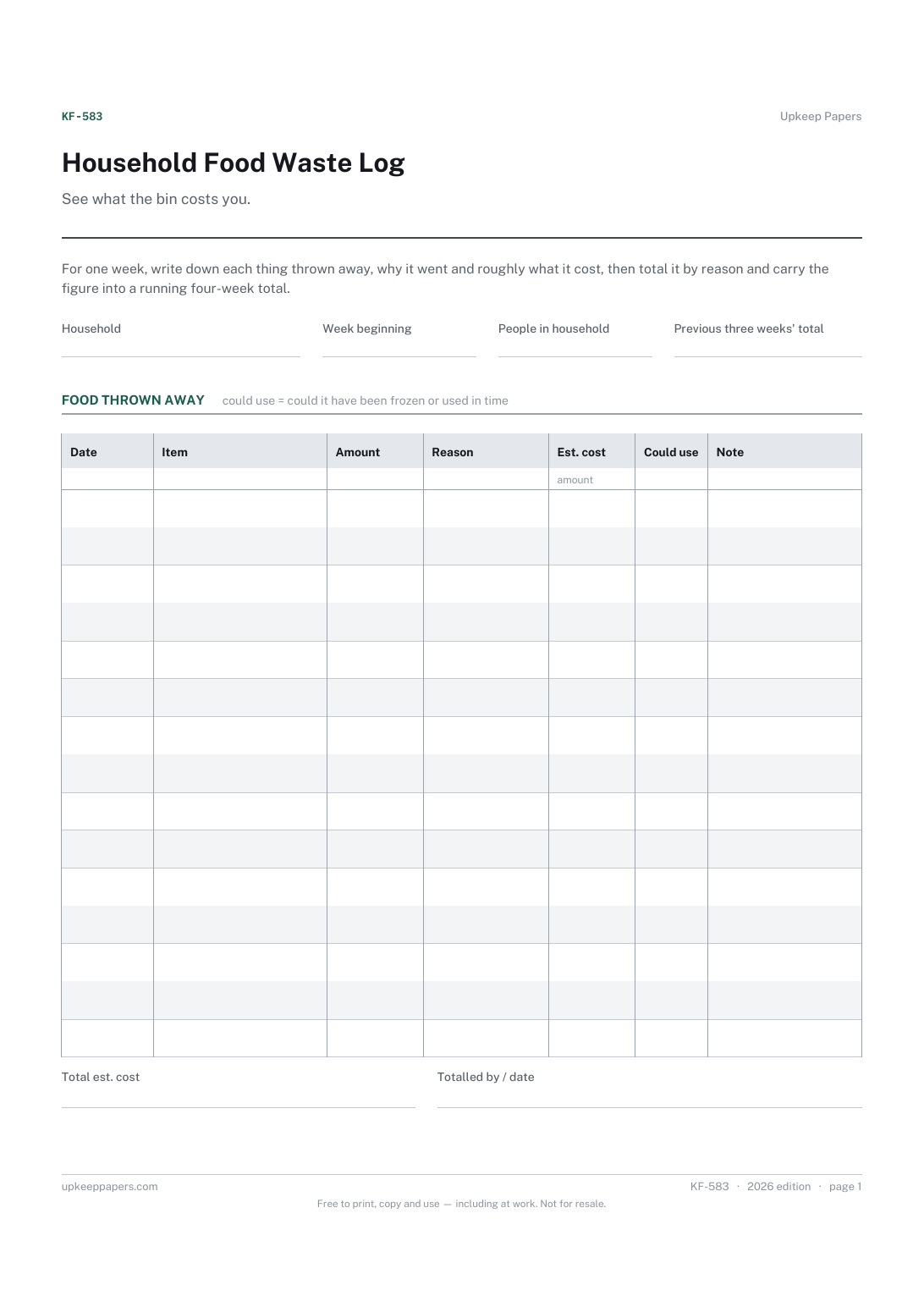
What was thrown away each day and how much of it.
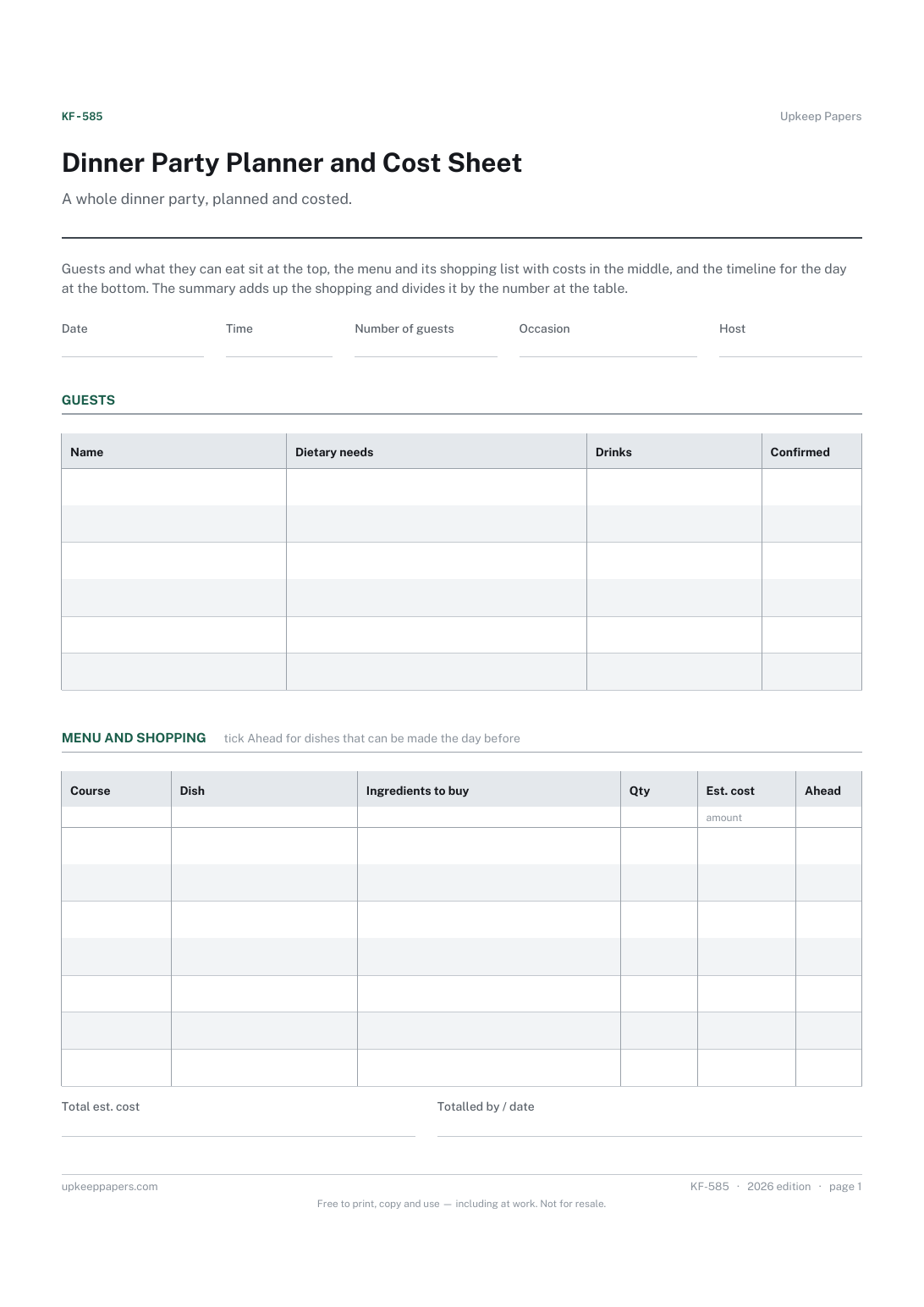
Who is coming, what they cannot eat and whether they have confirmed.
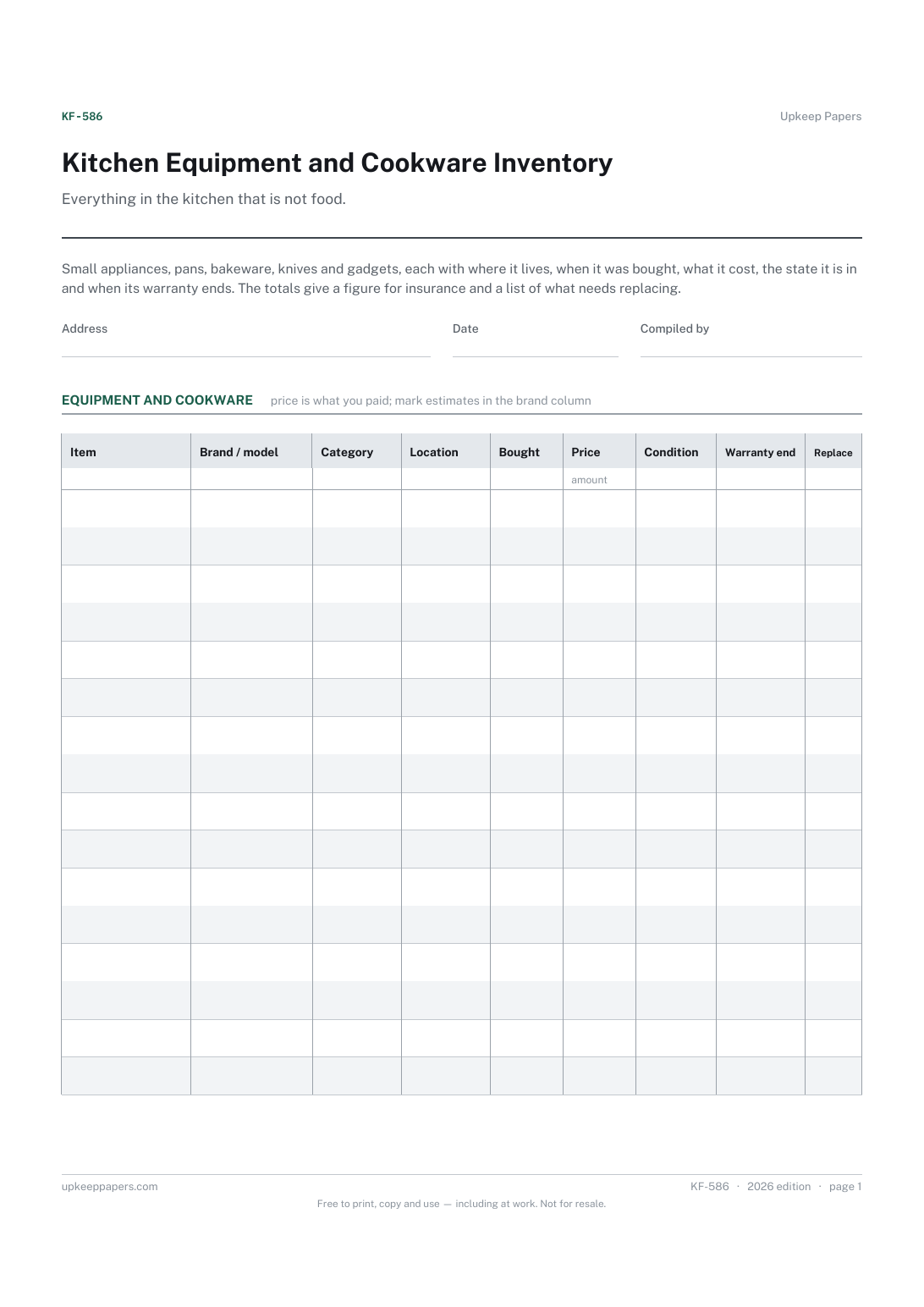
Every appliance, pan, knife and gadget, with brand and model.
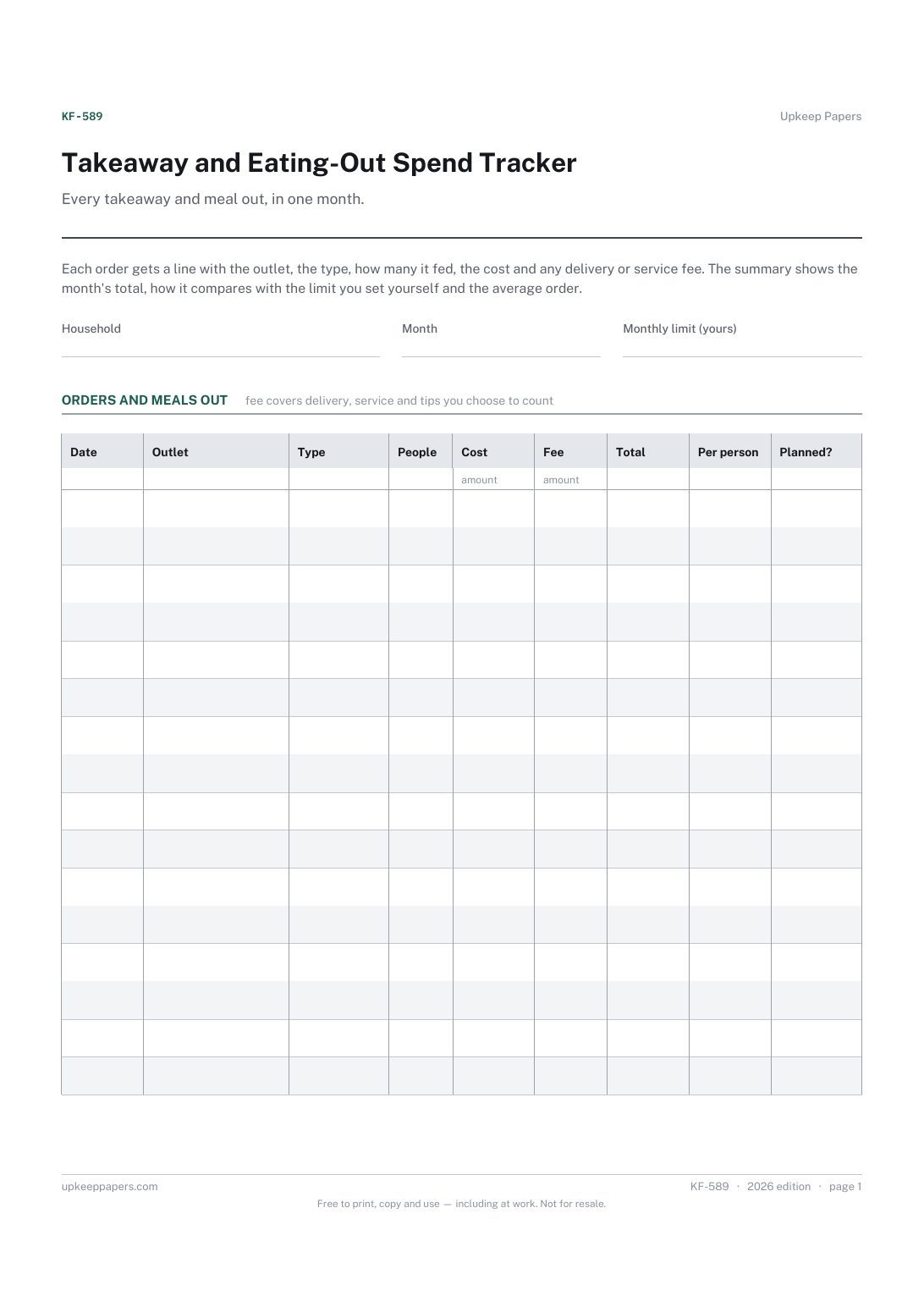
Every takeaway, delivery, cafe and restaurant spend in the month.
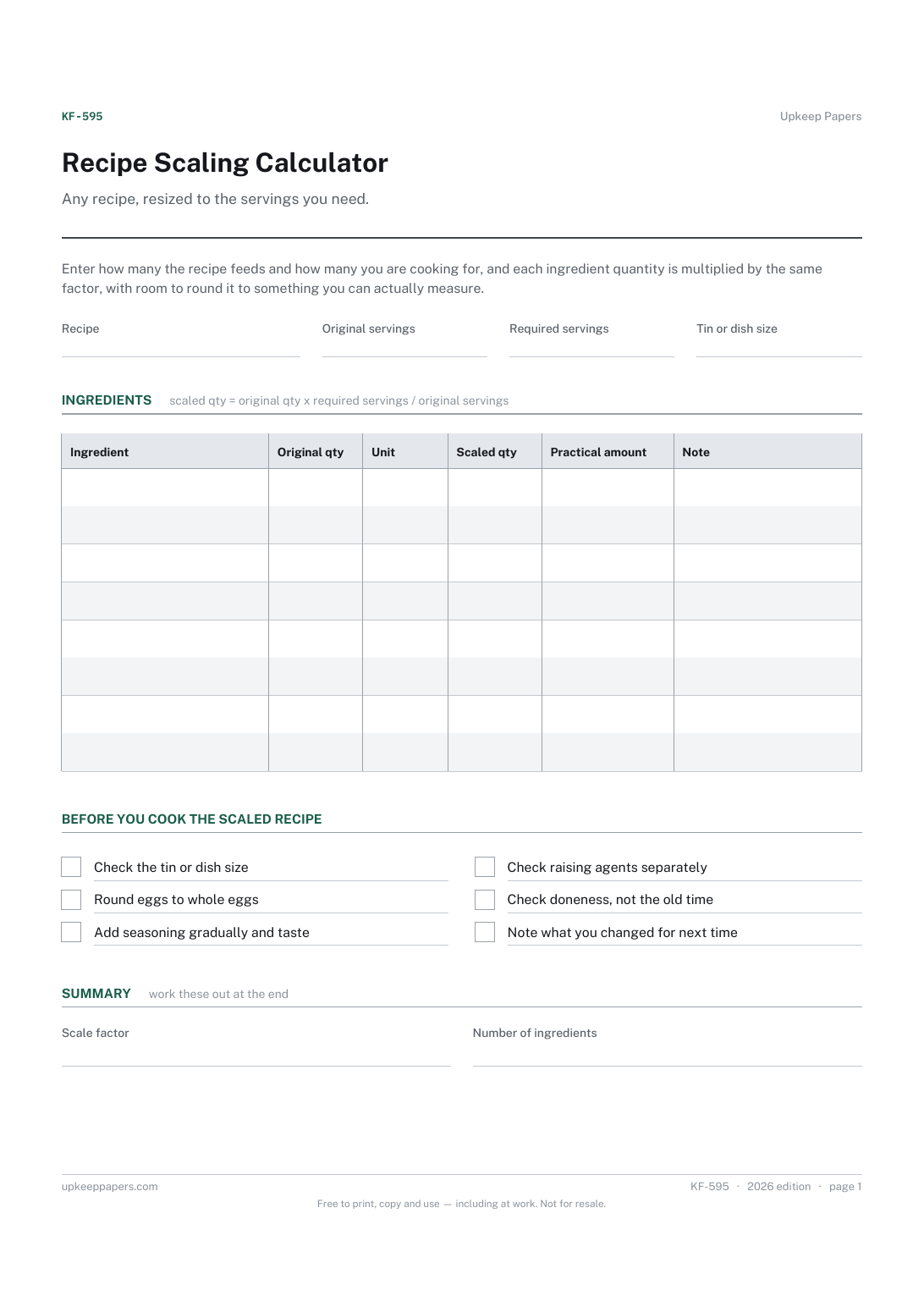
The scale factor between the original and required servings.
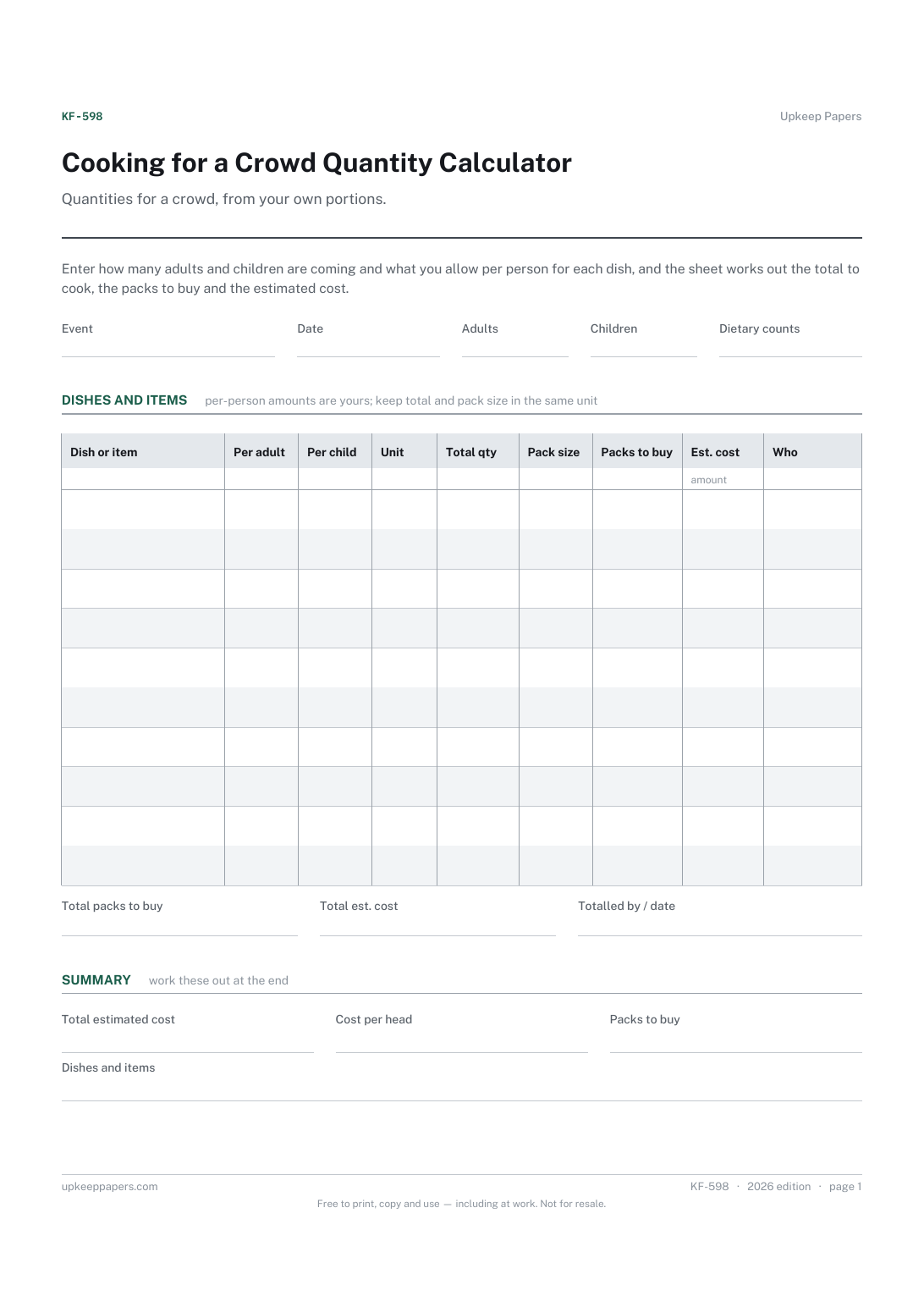
Total quantity of each dish or item for the number of guests.
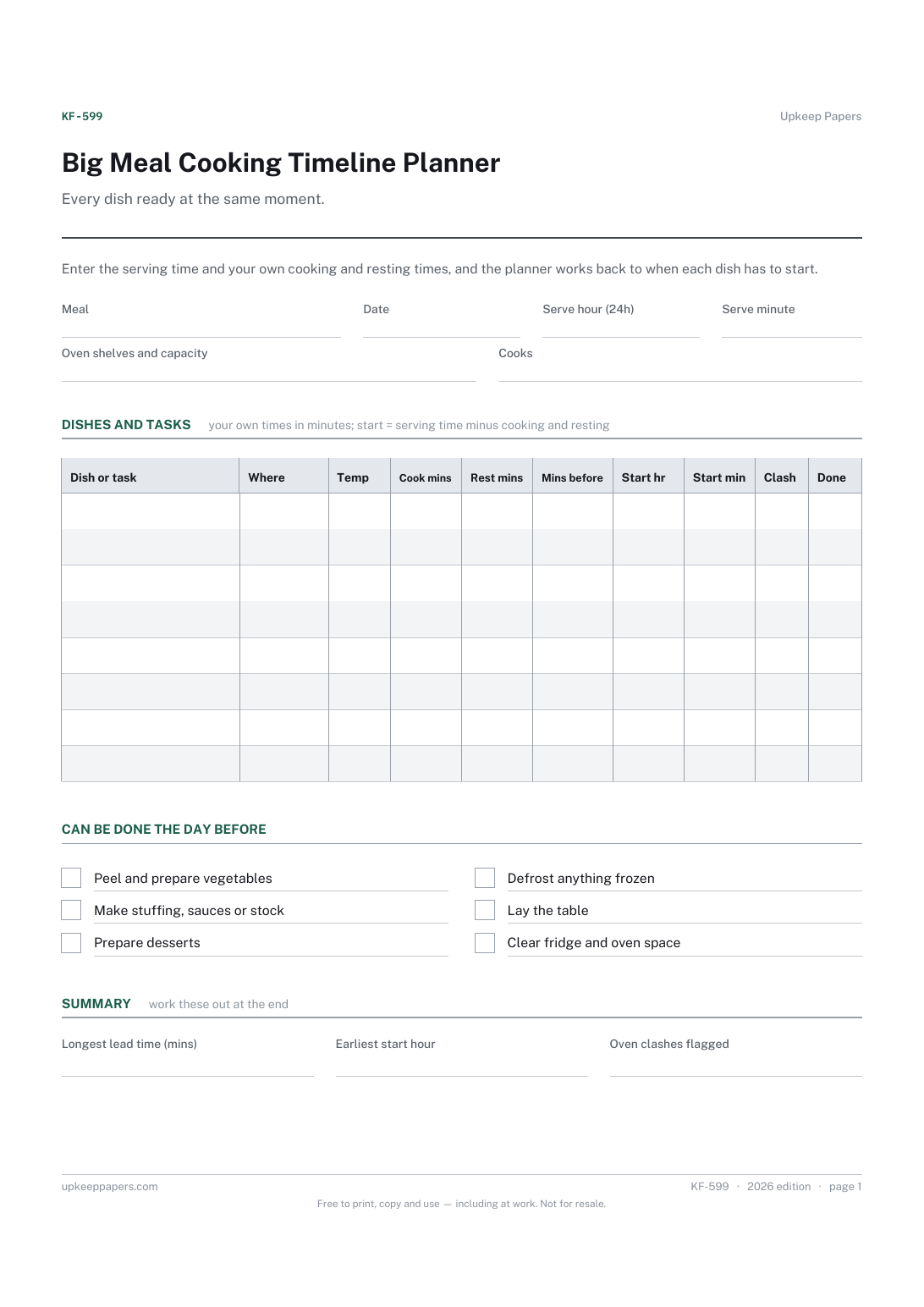
The start time for every dish and task, counted back from serving.
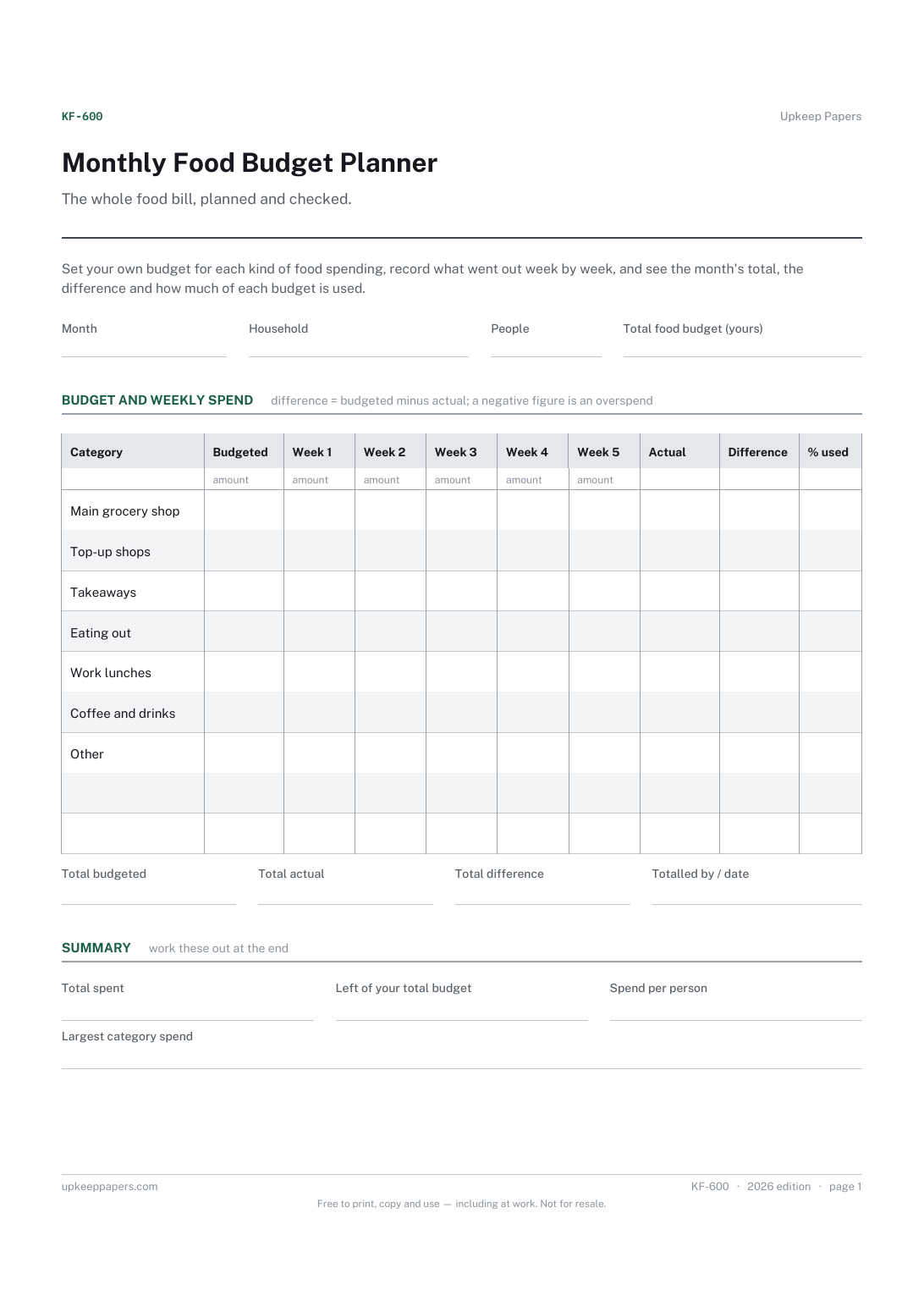
A budget for groceries, top-ups, takeaways, eating out, lunches and drinks.
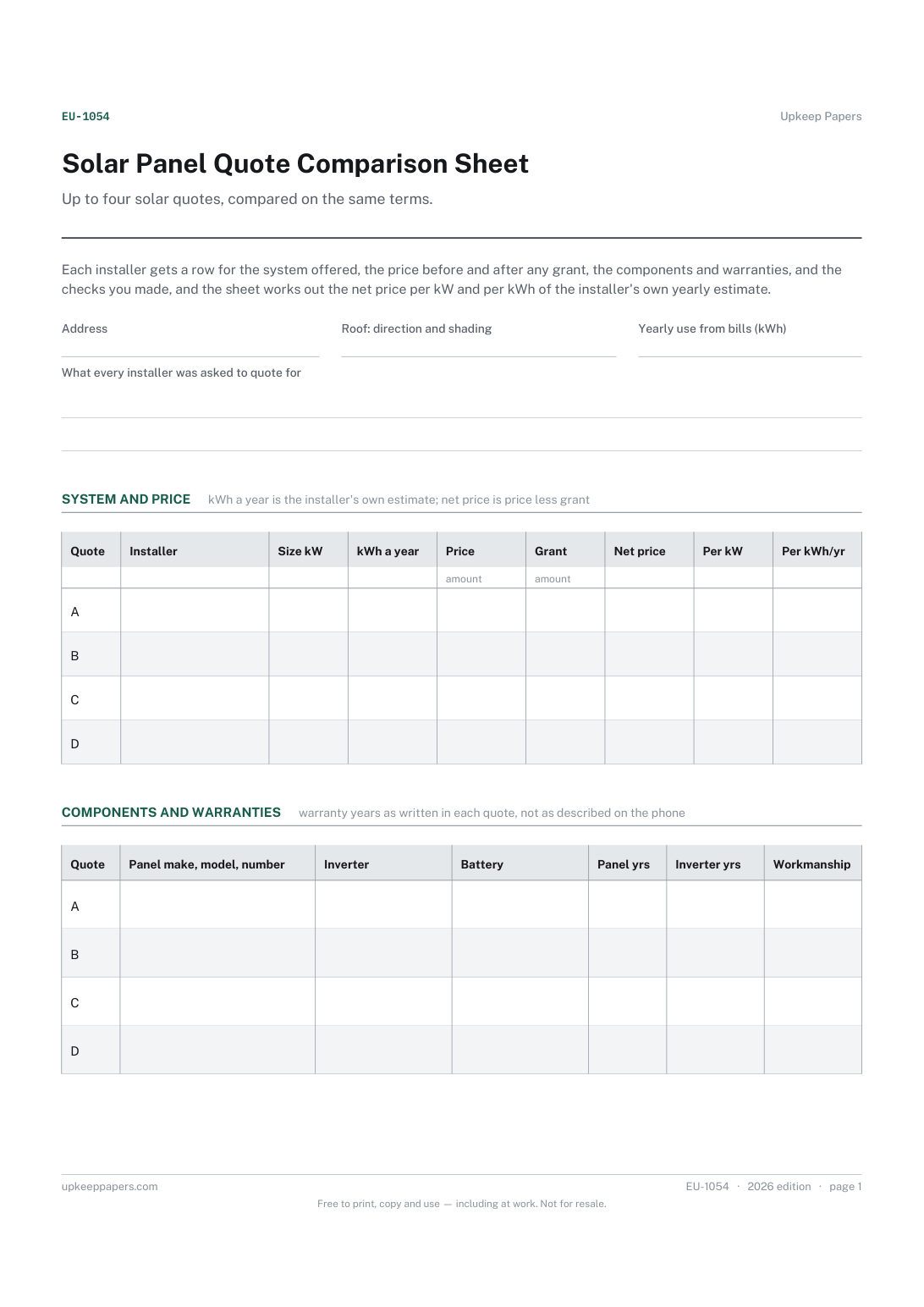
The system size, panels, inverter and battery each installer offers.
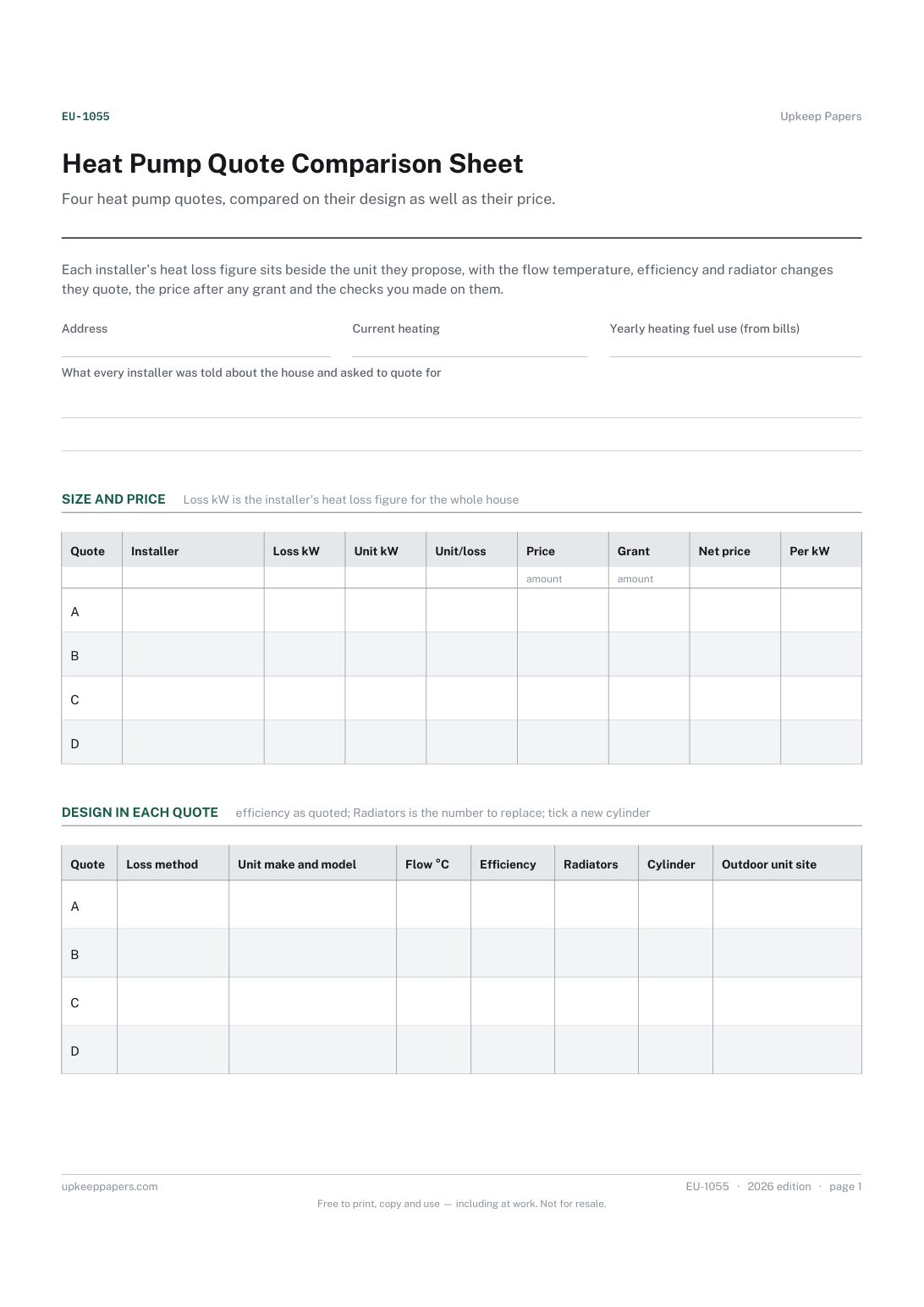
Each installer's heat loss figure and how it was worked out.
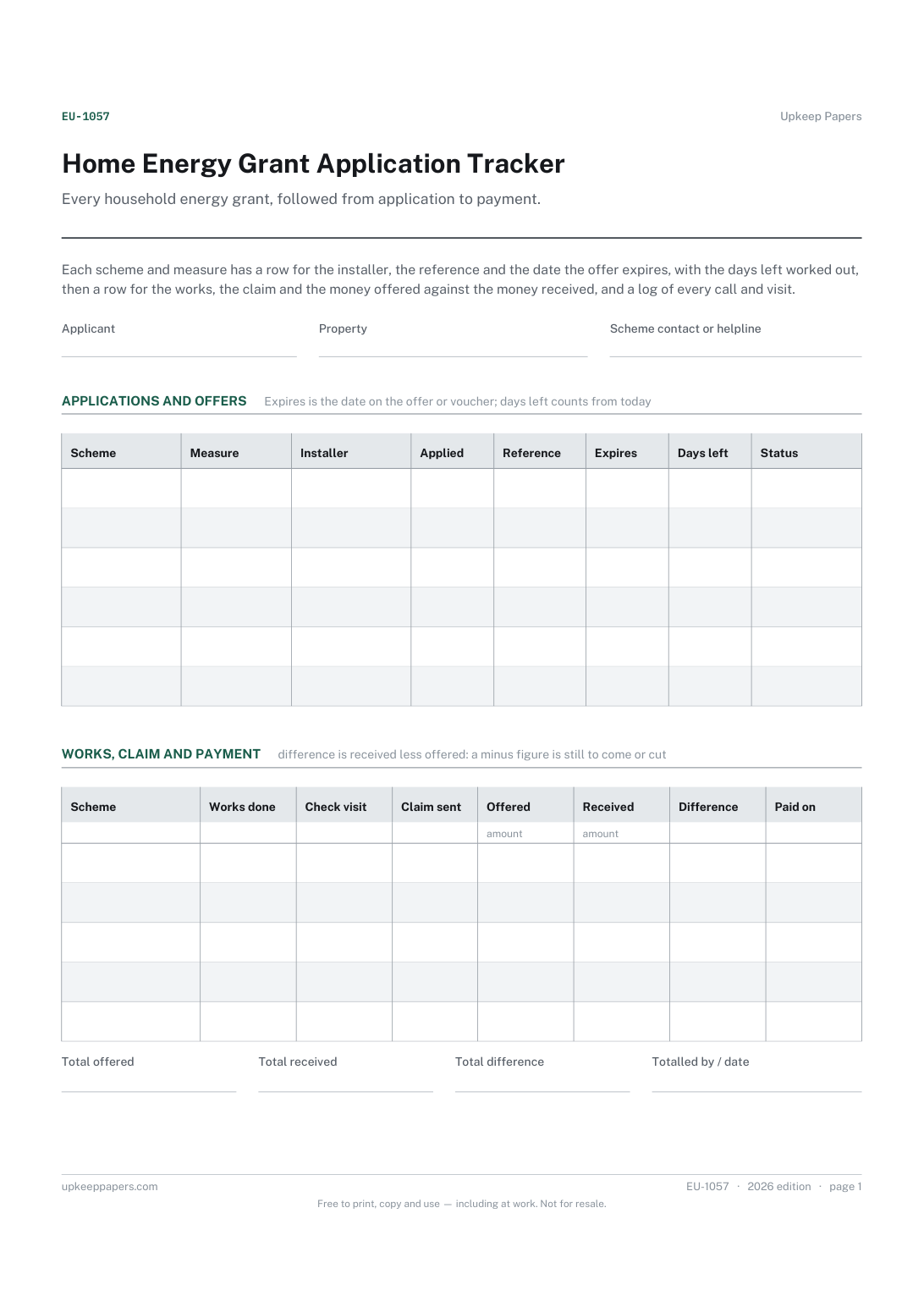
Each scheme, the measure it covers and the installer doing the work.
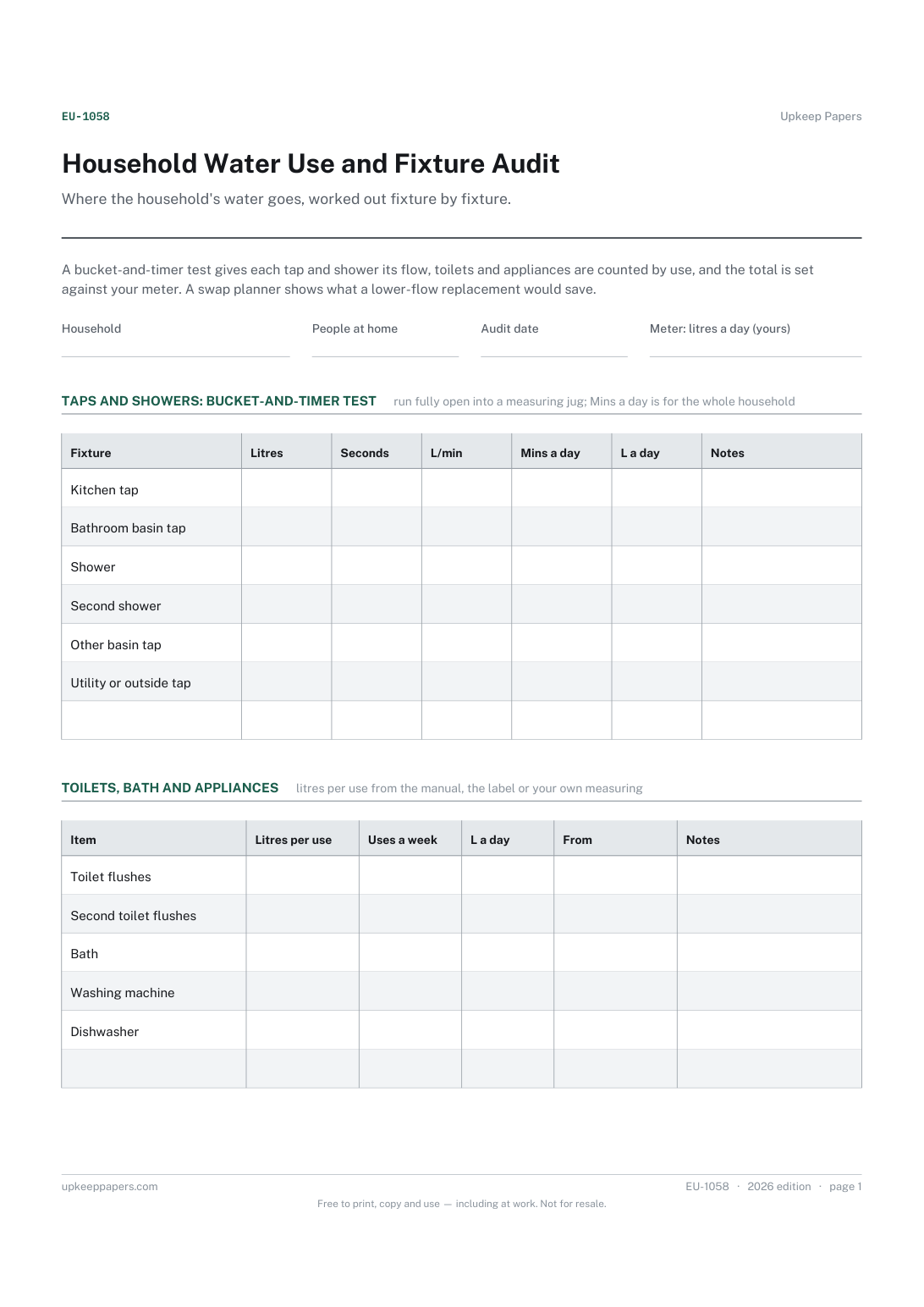
The measured flow of every tap and shower in litres a minute.
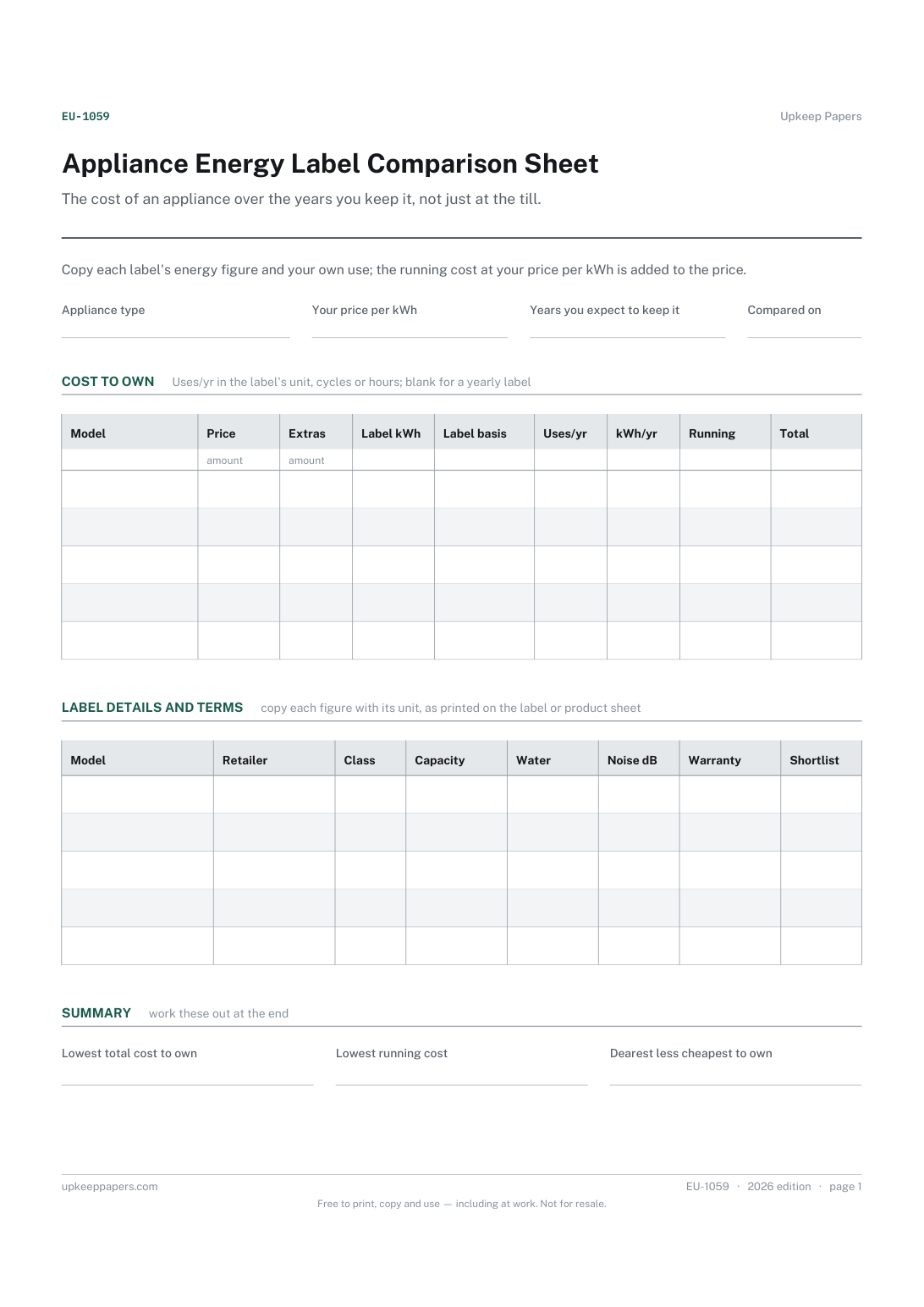
Price, delivery, installation and removal for each model.
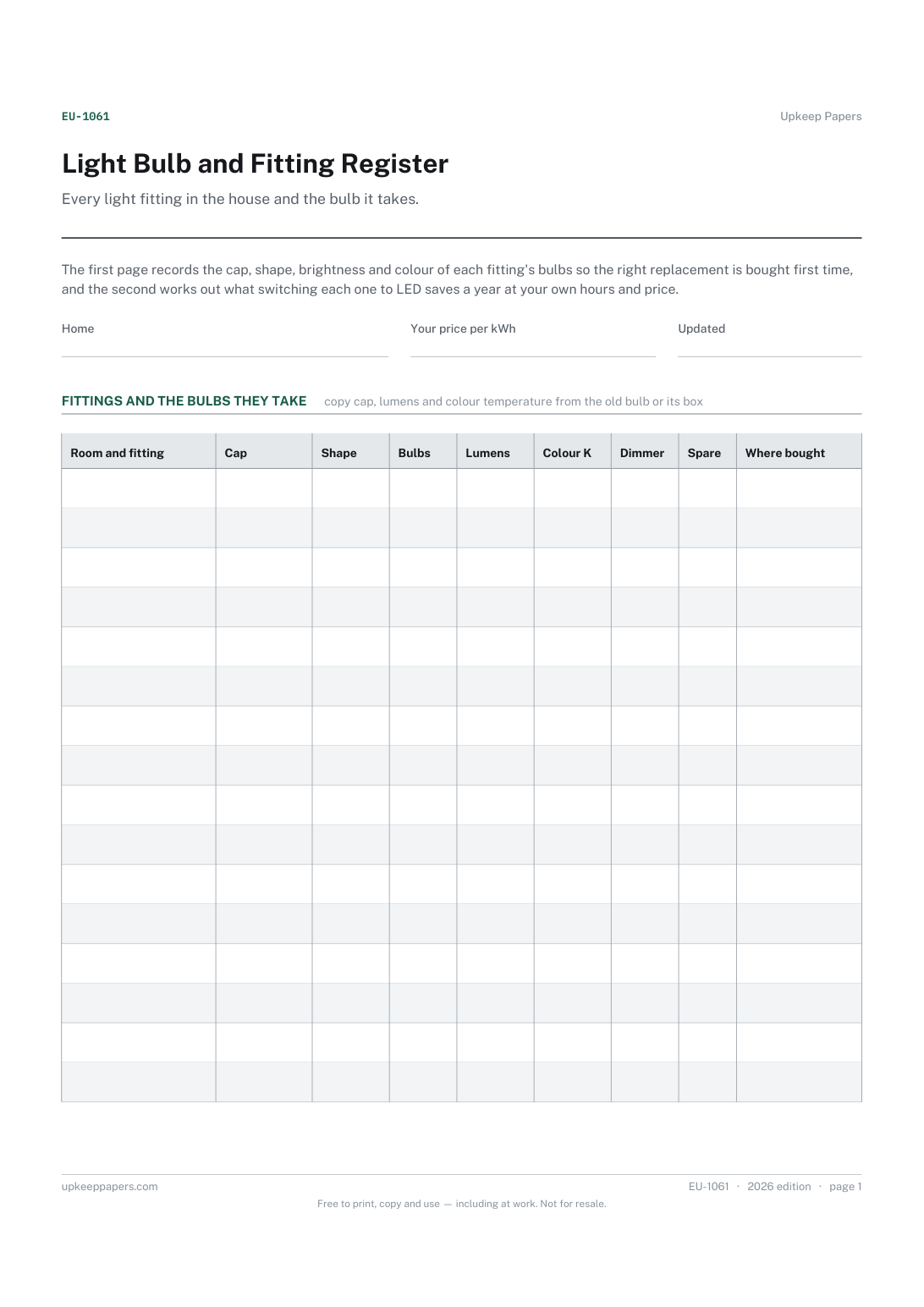
Each fitting by room, with its cap type and bulb shape.
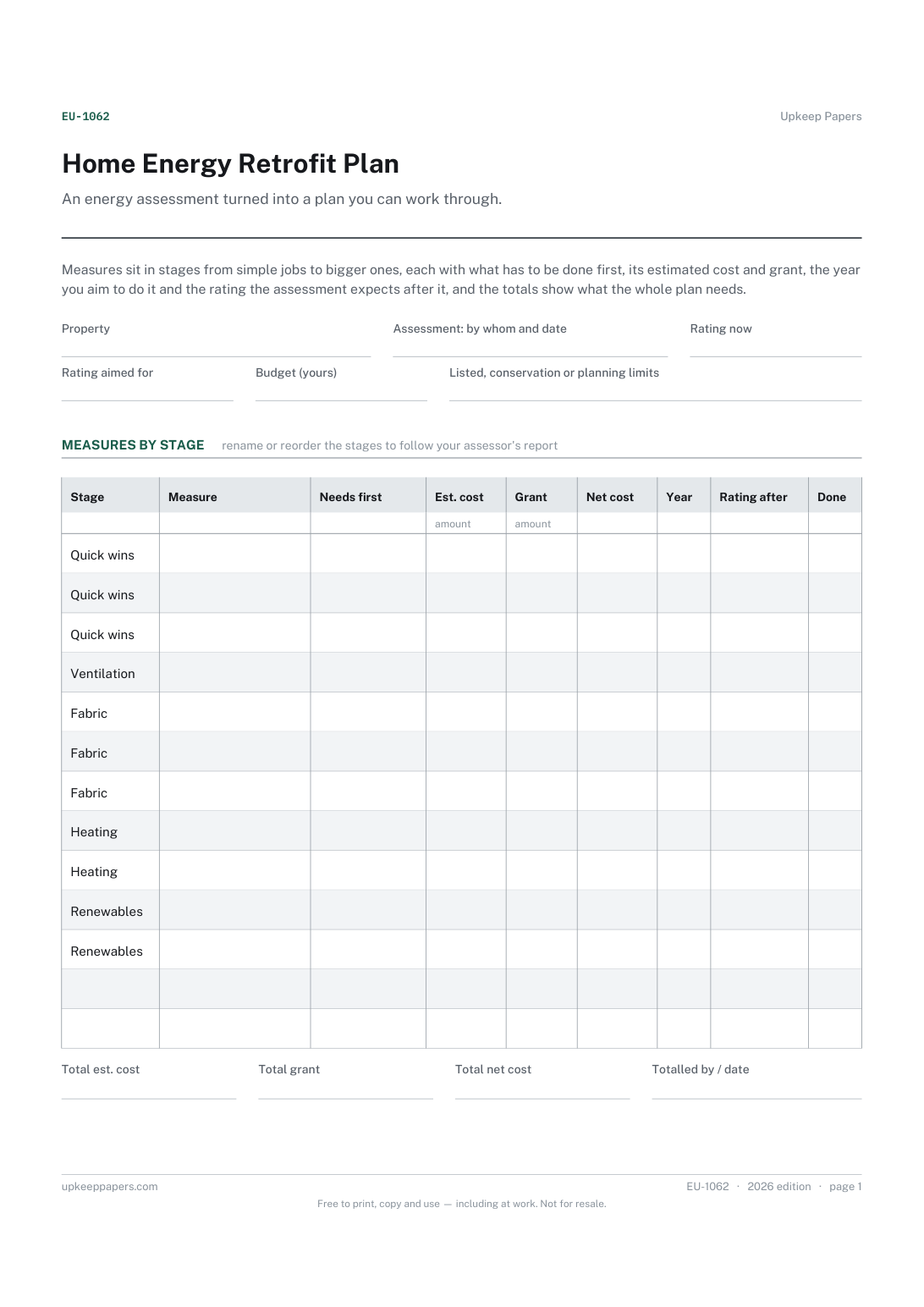
Every measure from the assessment, grouped in stages.
The kWh used between one reading and the next.
Meter units used between readings, for metric or imperial meters.
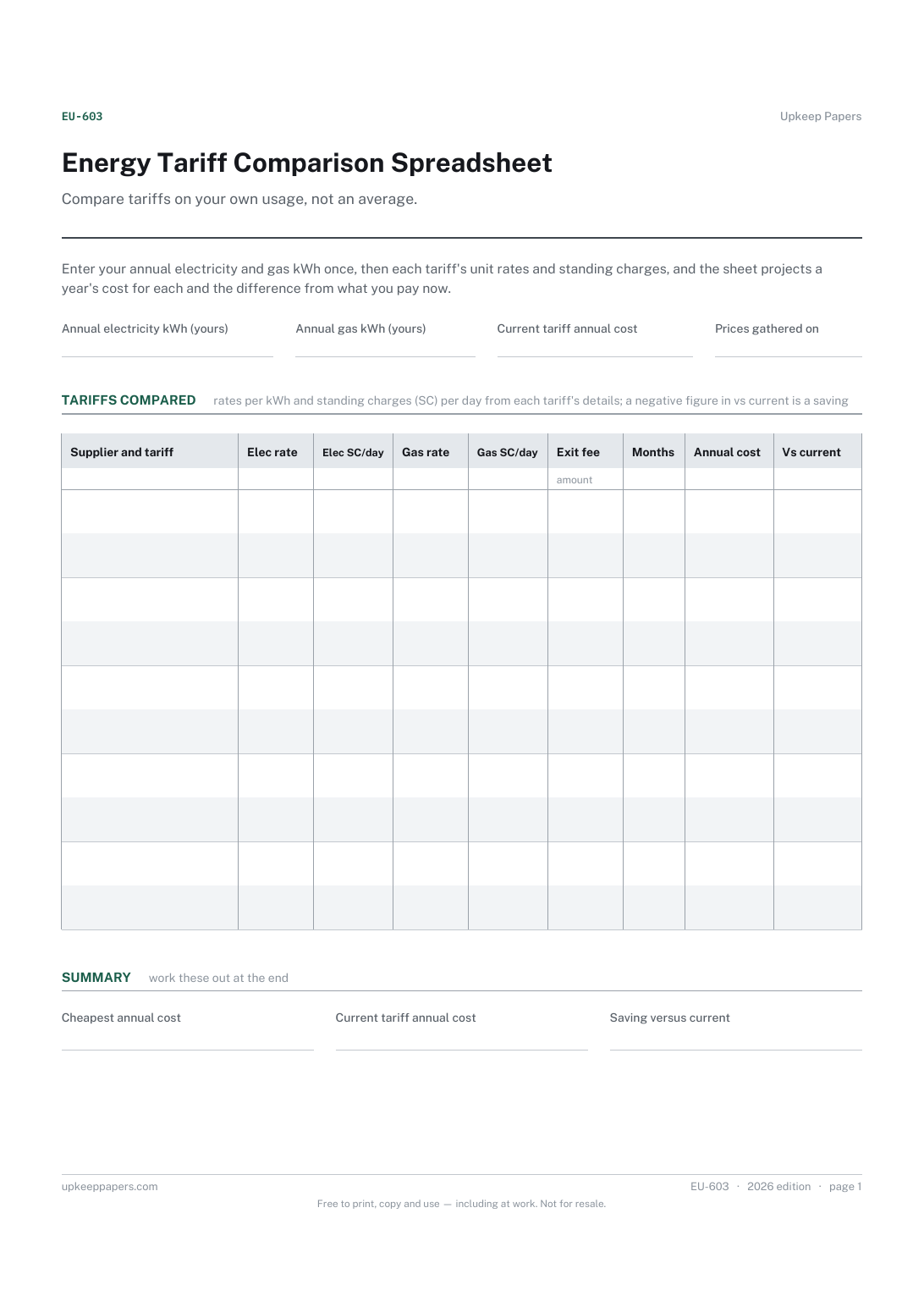
Every tariff you are considering, with its rates, exit fee and contract length.
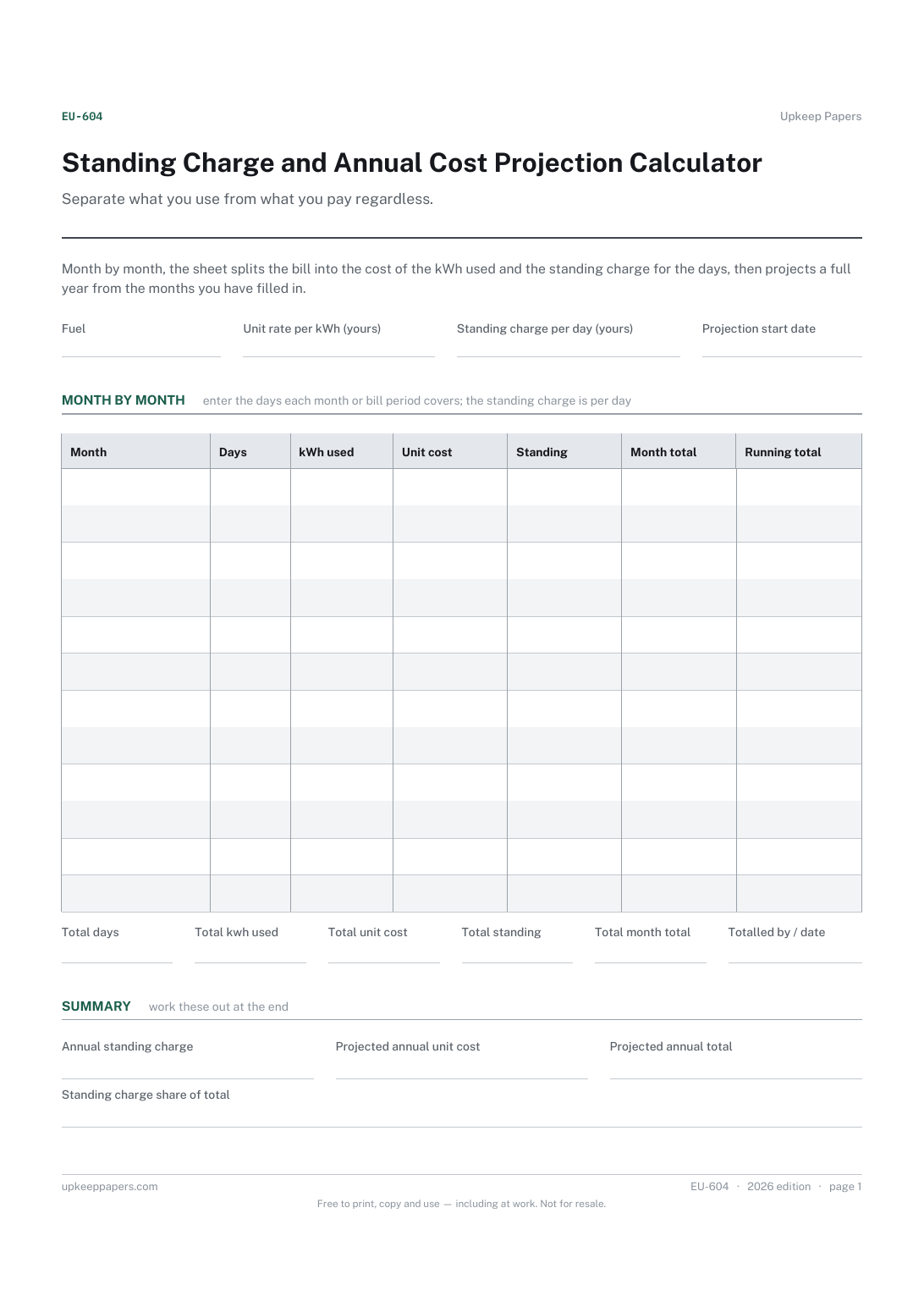
The usage cost and standing charge for each month, side by side.
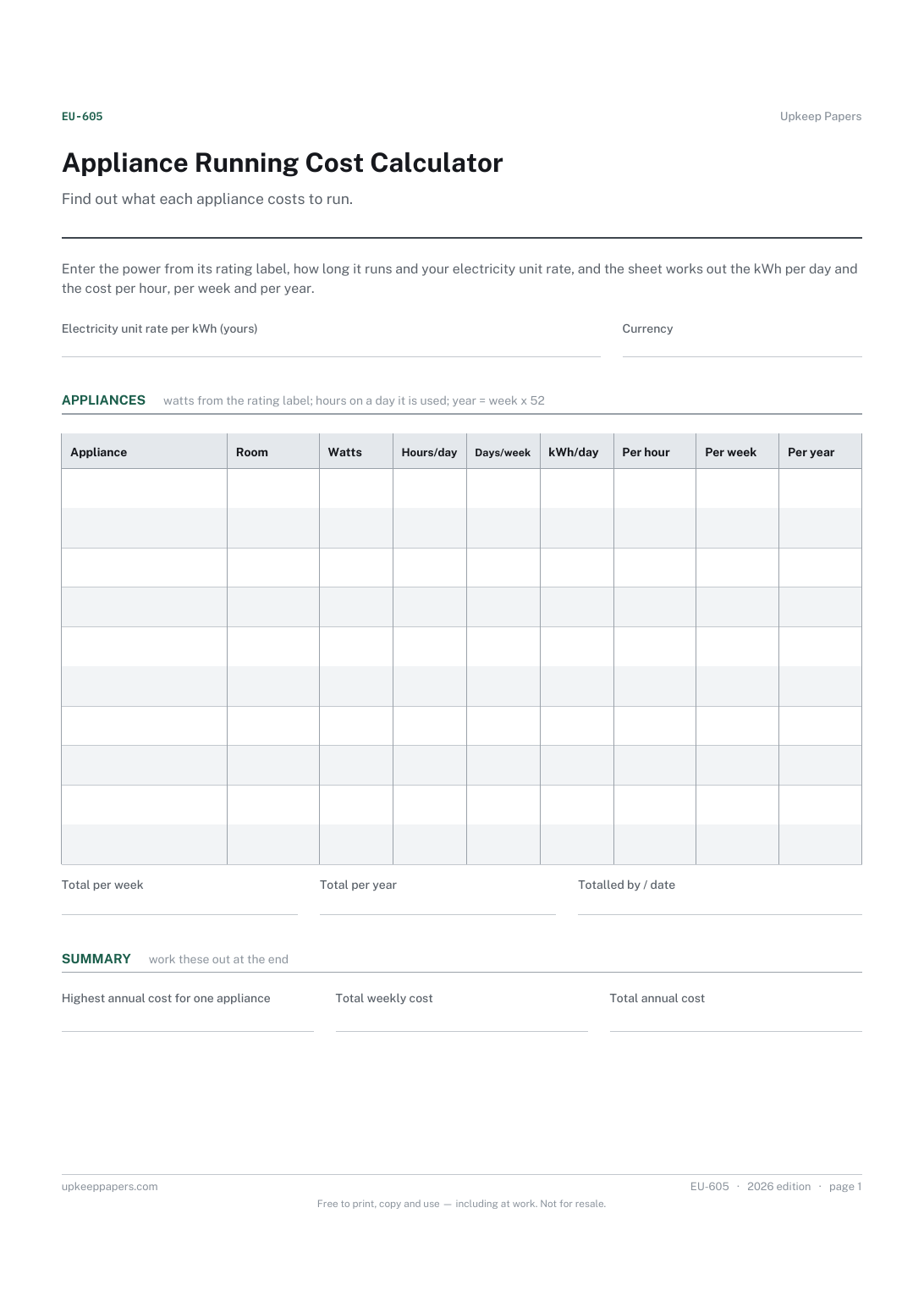
Each appliance by room with its rated power in watts.
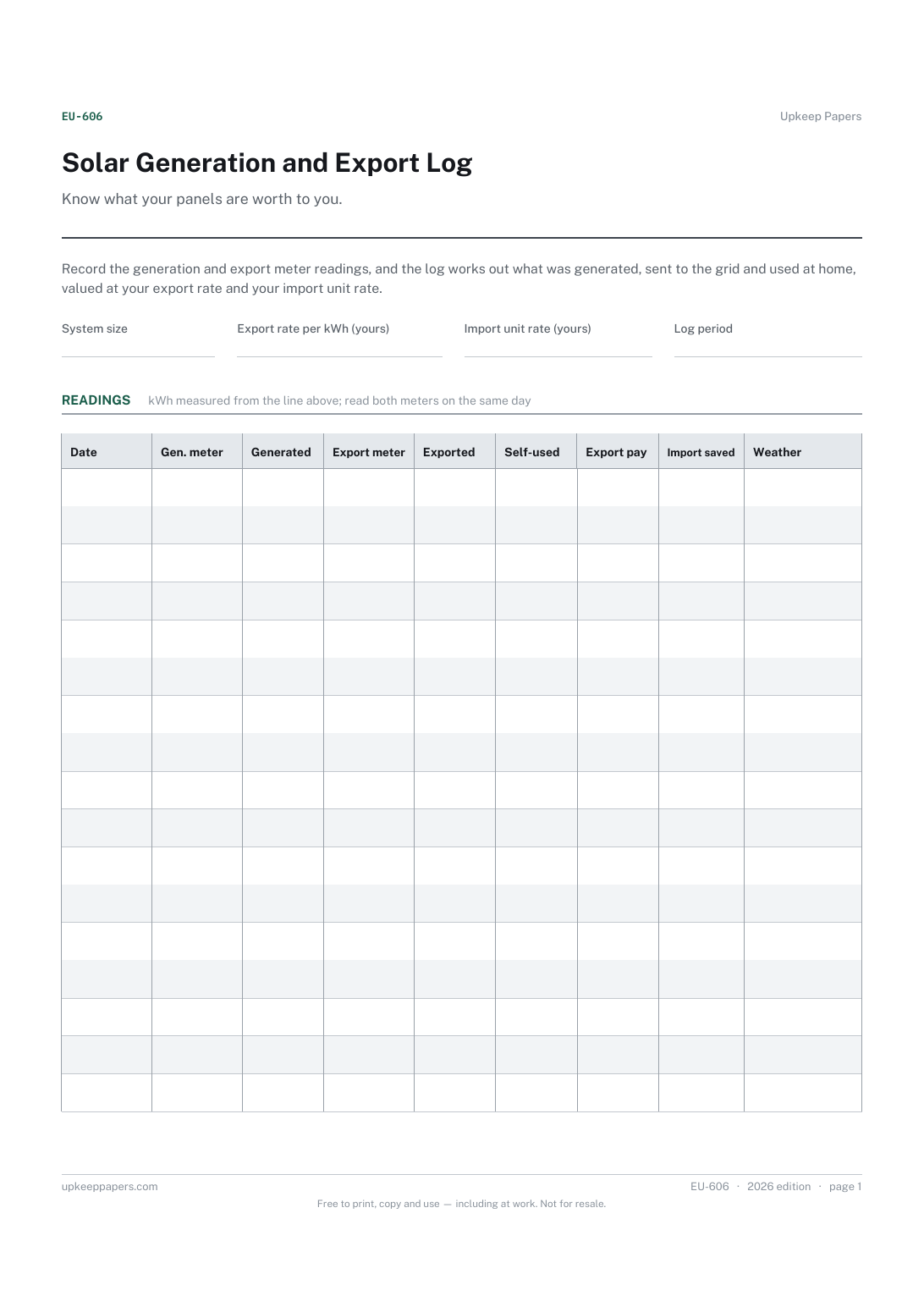
Generated and exported kWh between readings.
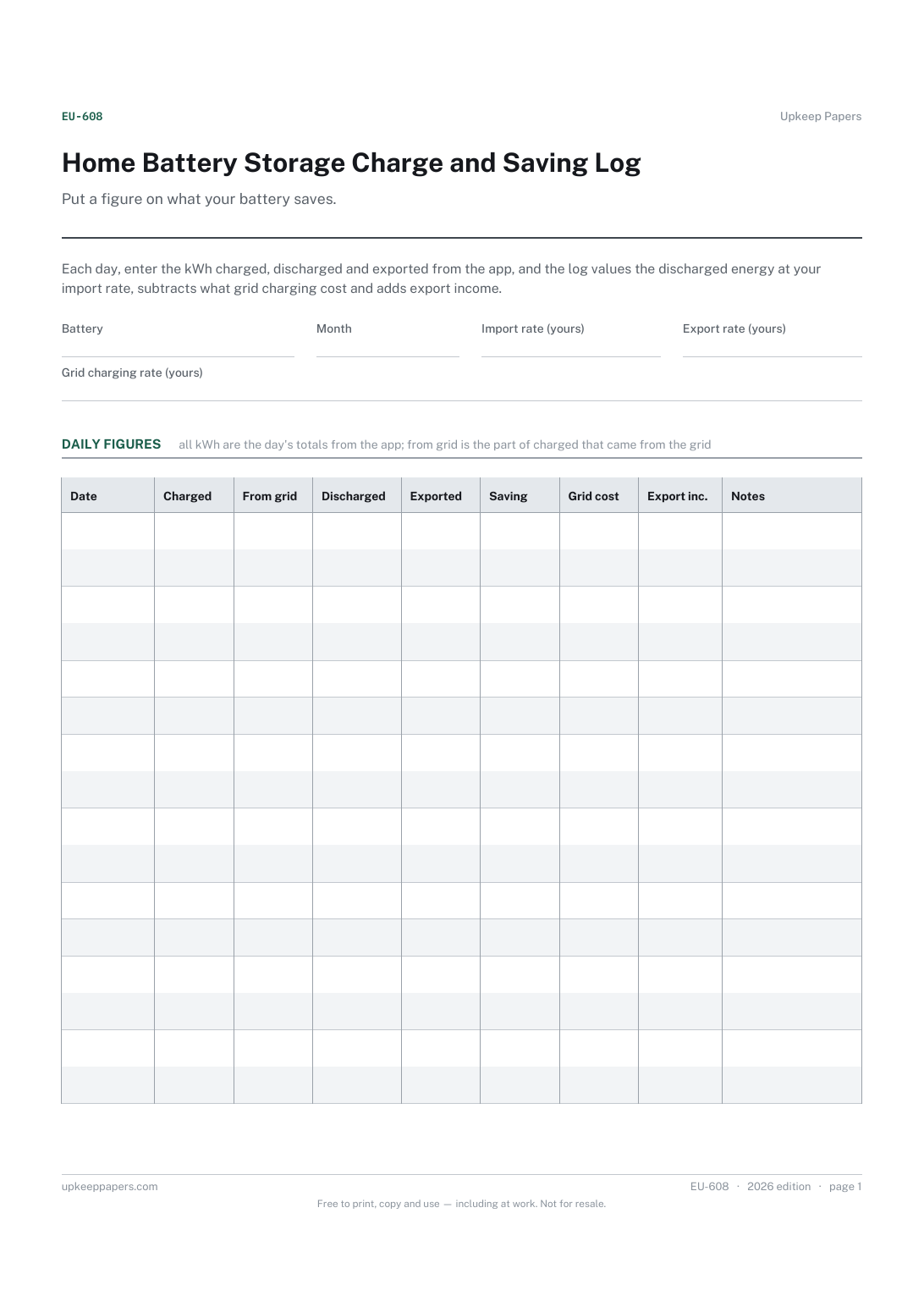
Daily charged, discharged and exported kWh.
Litres used between gauge readings, allowing for deliveries.
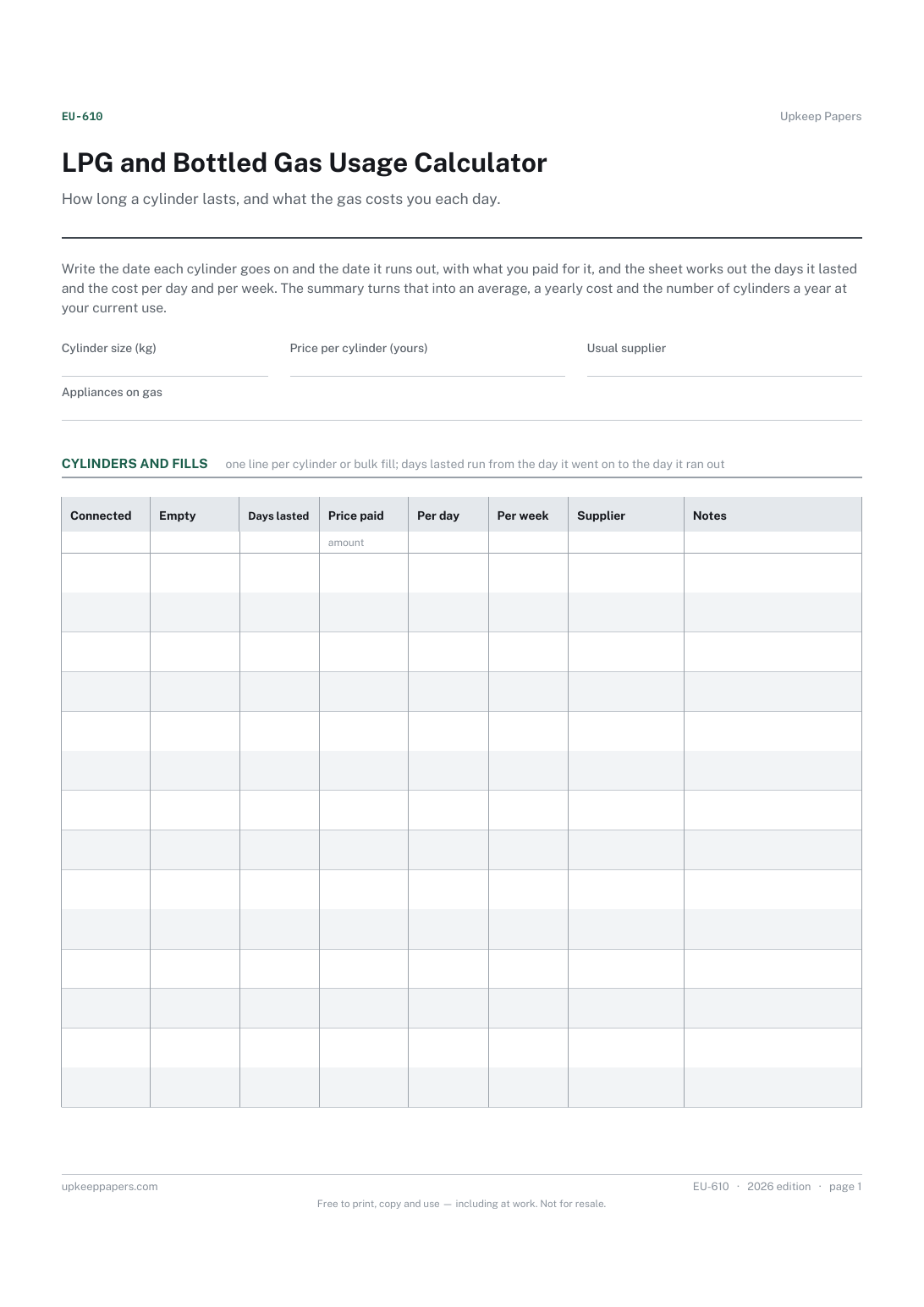
How many days each cylinder or tank fill lasted.
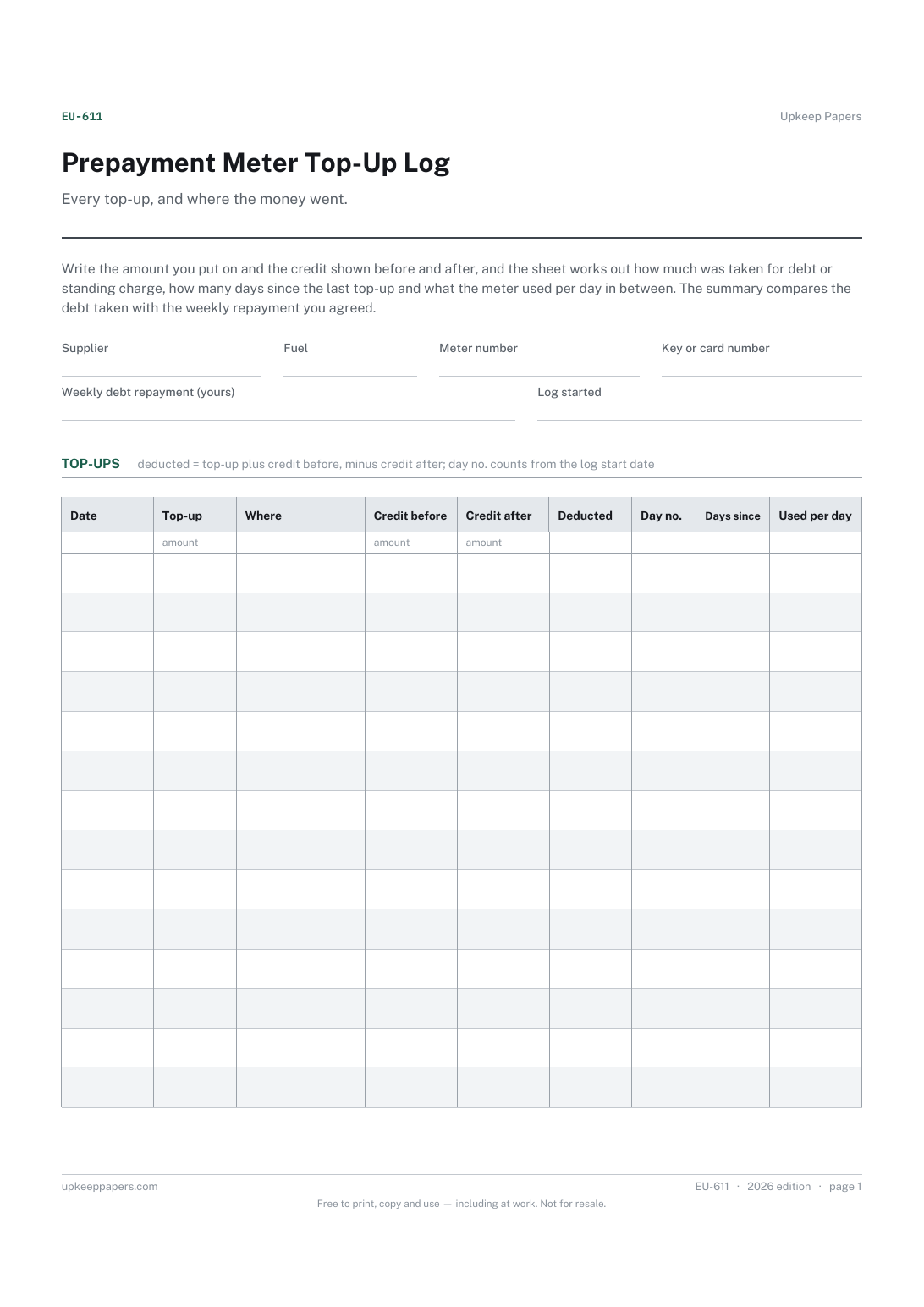
Every top-up with its date, amount and where it was made.
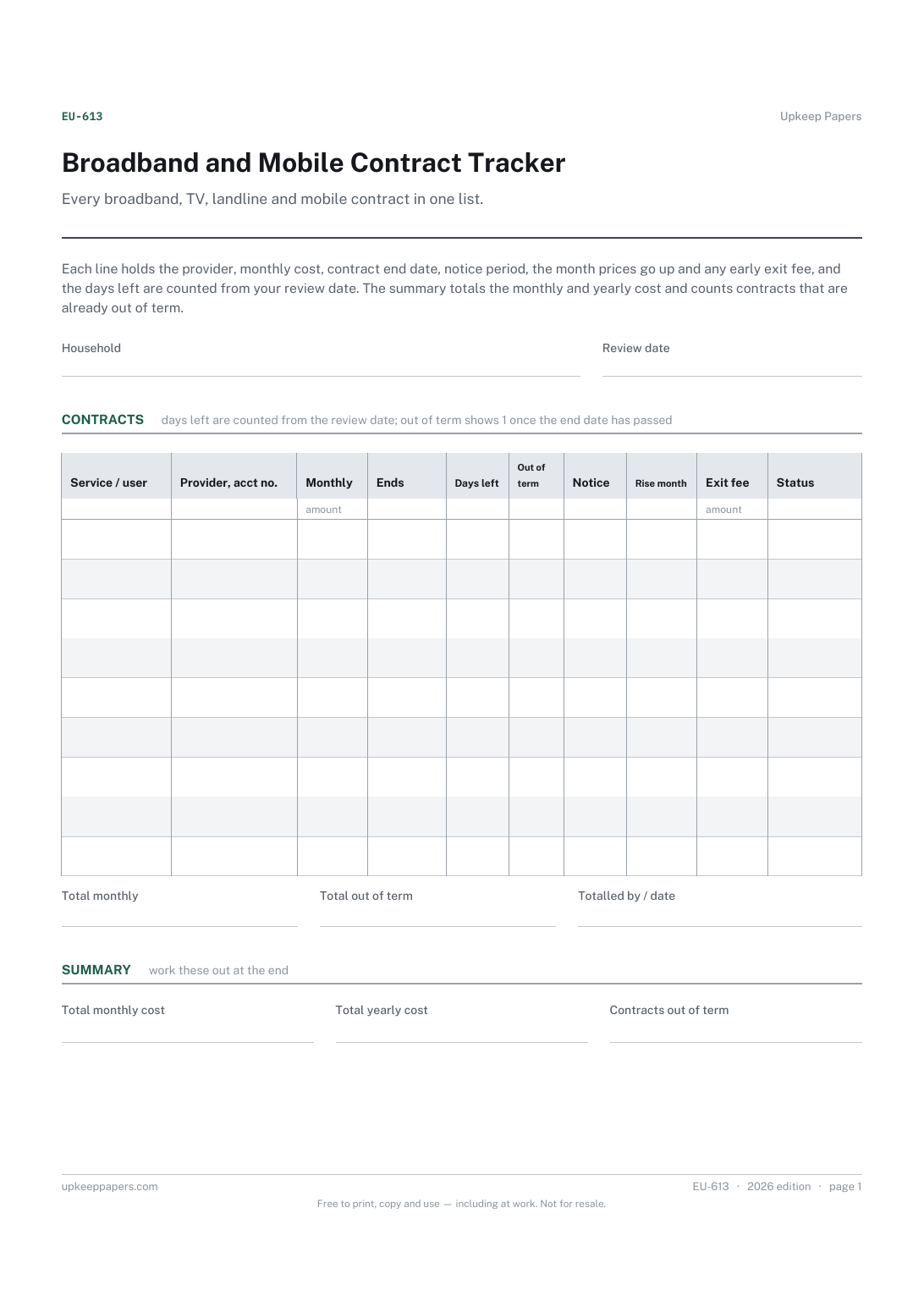
Every broadband, TV, landline and mobile contract in the house.
Every water meter reading with its date.
The readings on the bill against your own on the same dates.
Every monthly direct debit paid.
Day and night register readings with their dates.
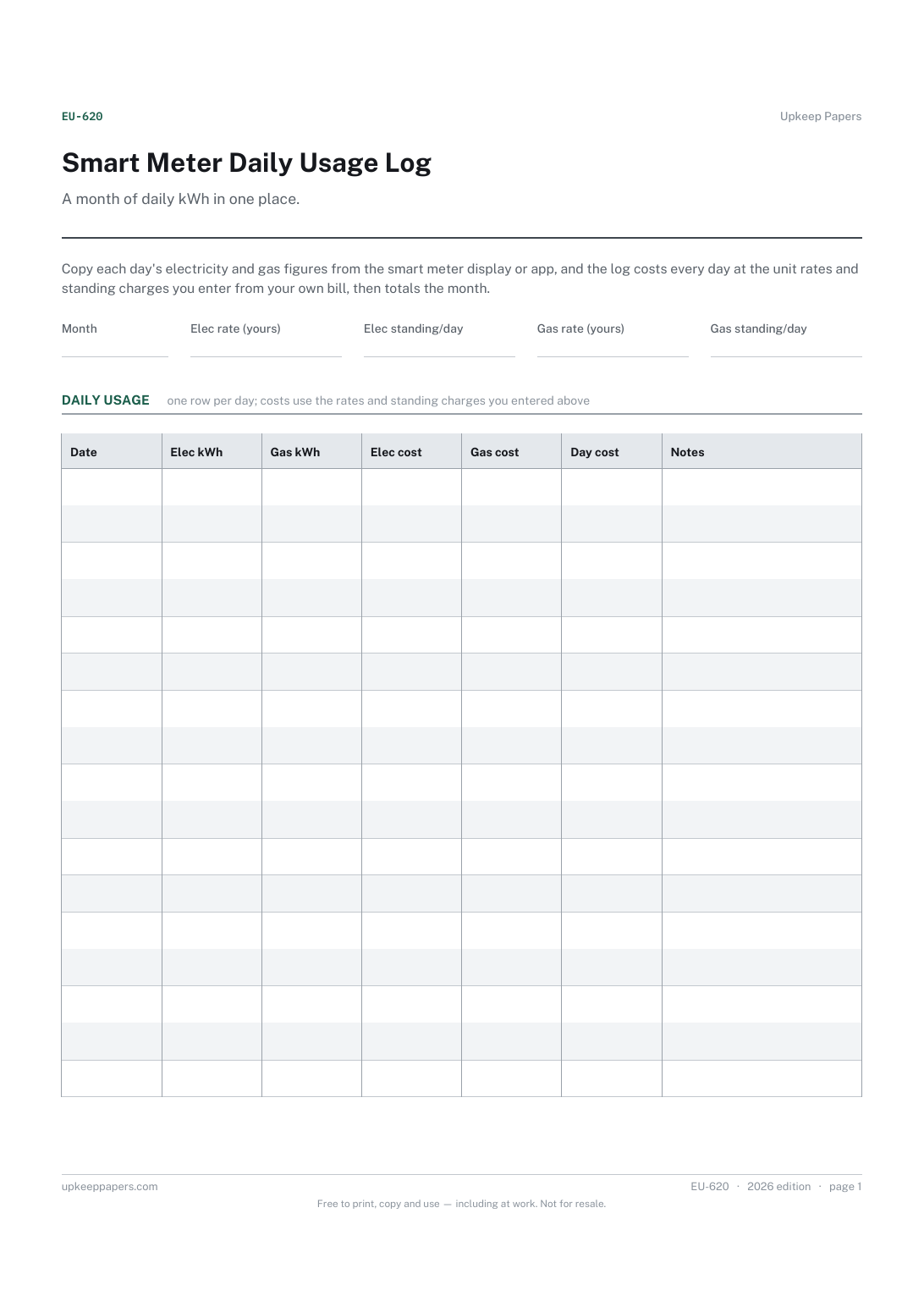
Electricity and gas kWh for every day of the month.
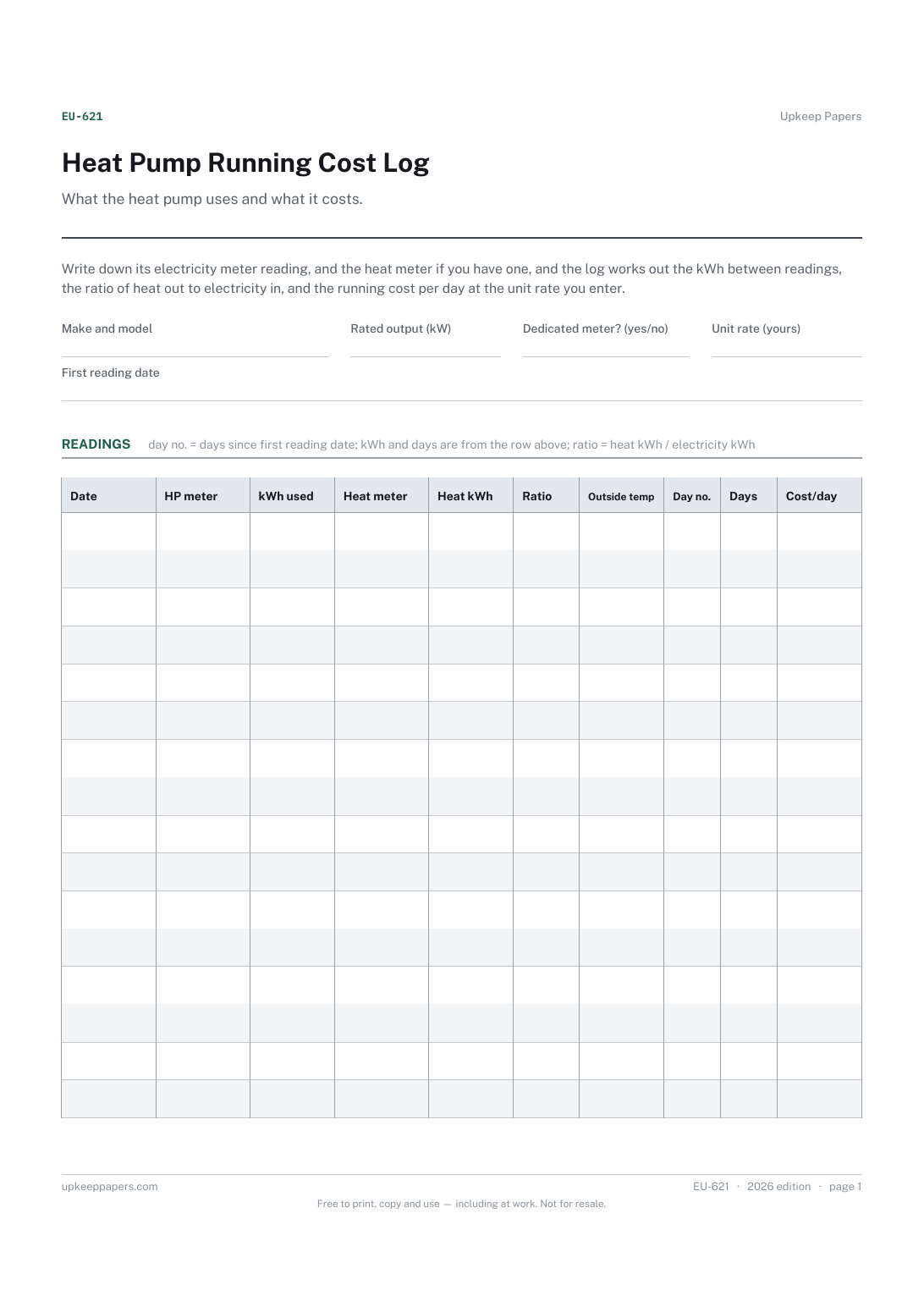
Electricity used by the heat pump between readings.
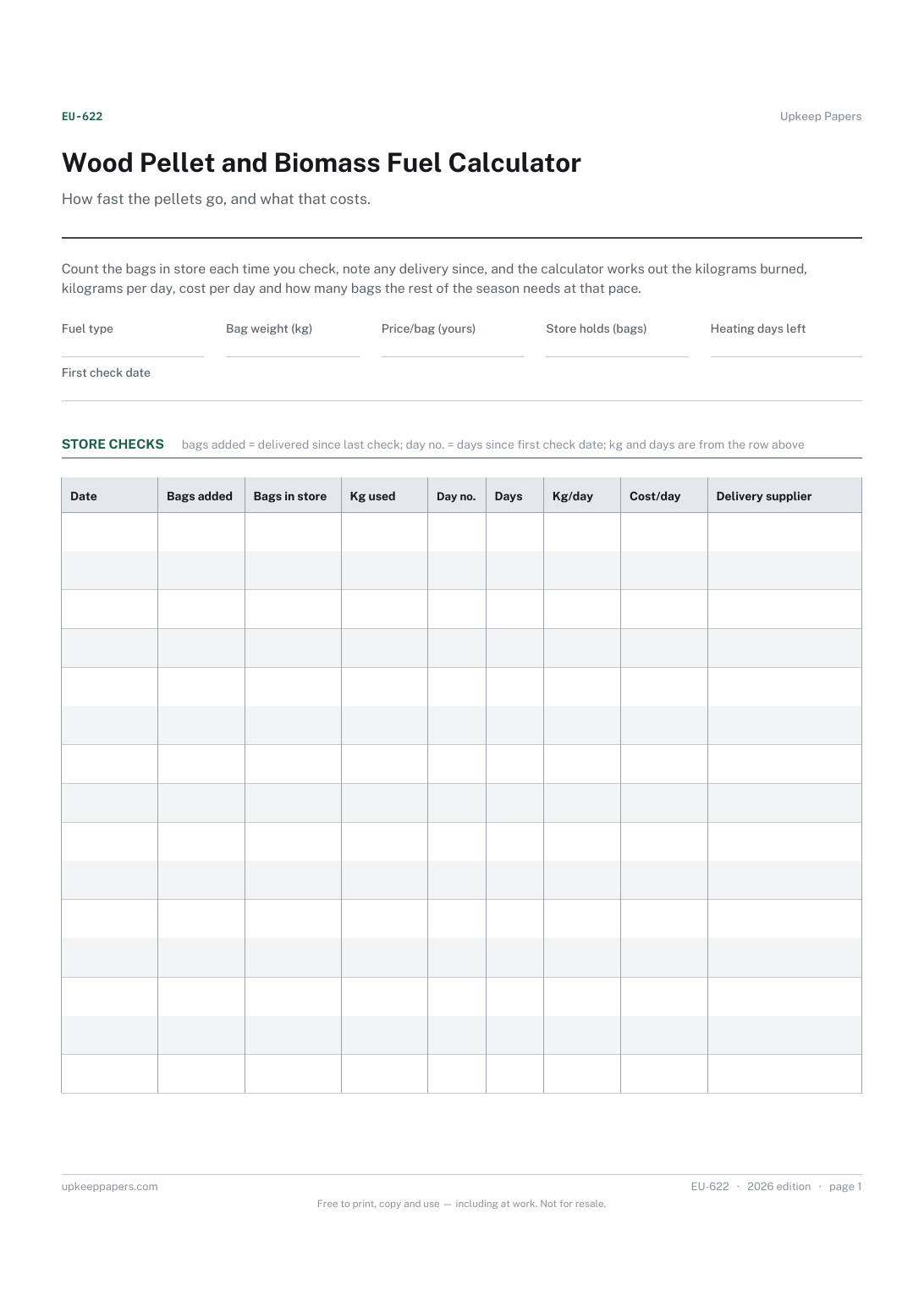
Bags delivered and bags left in store at each check.
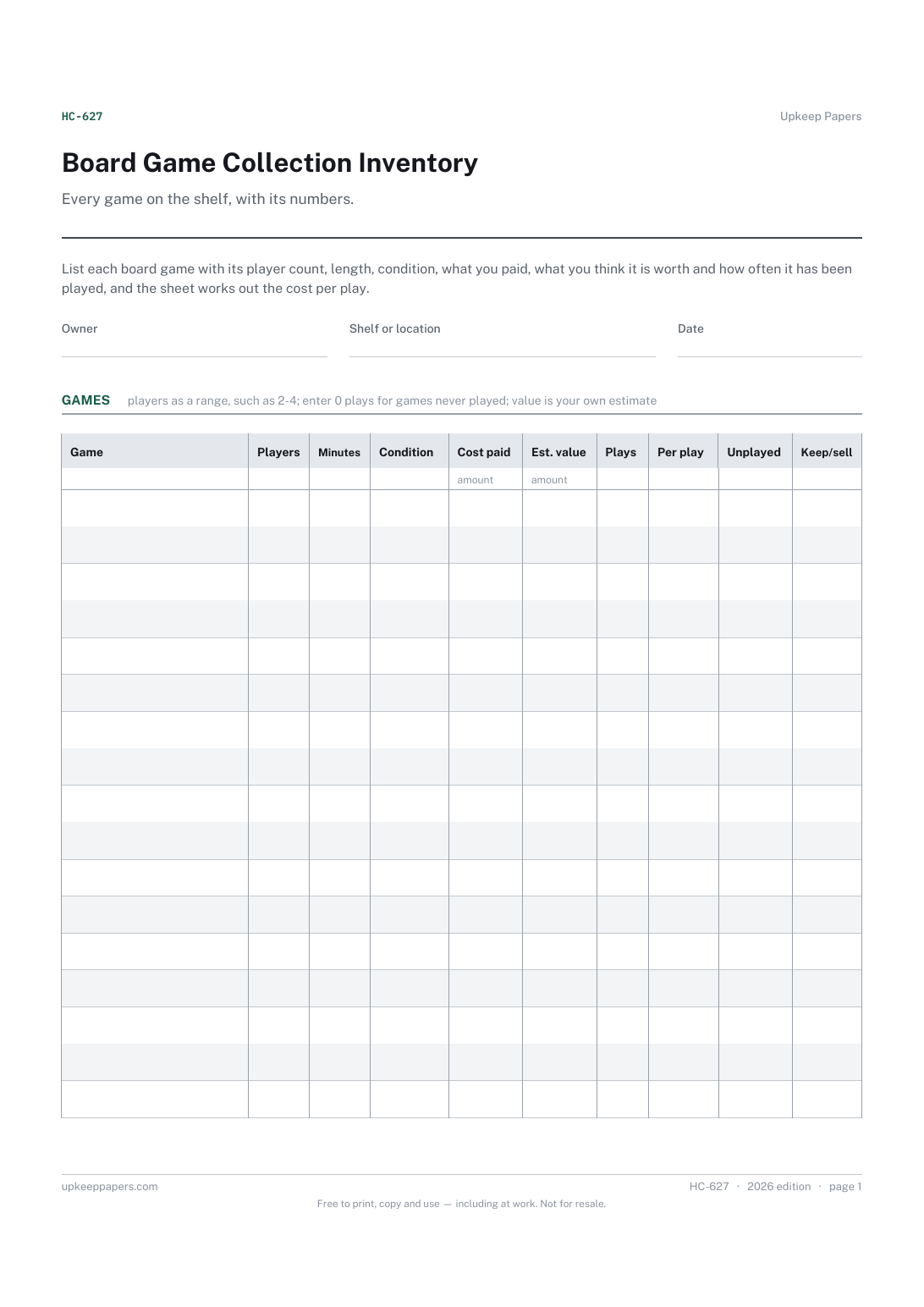
Which games you own and where the collection is kept.
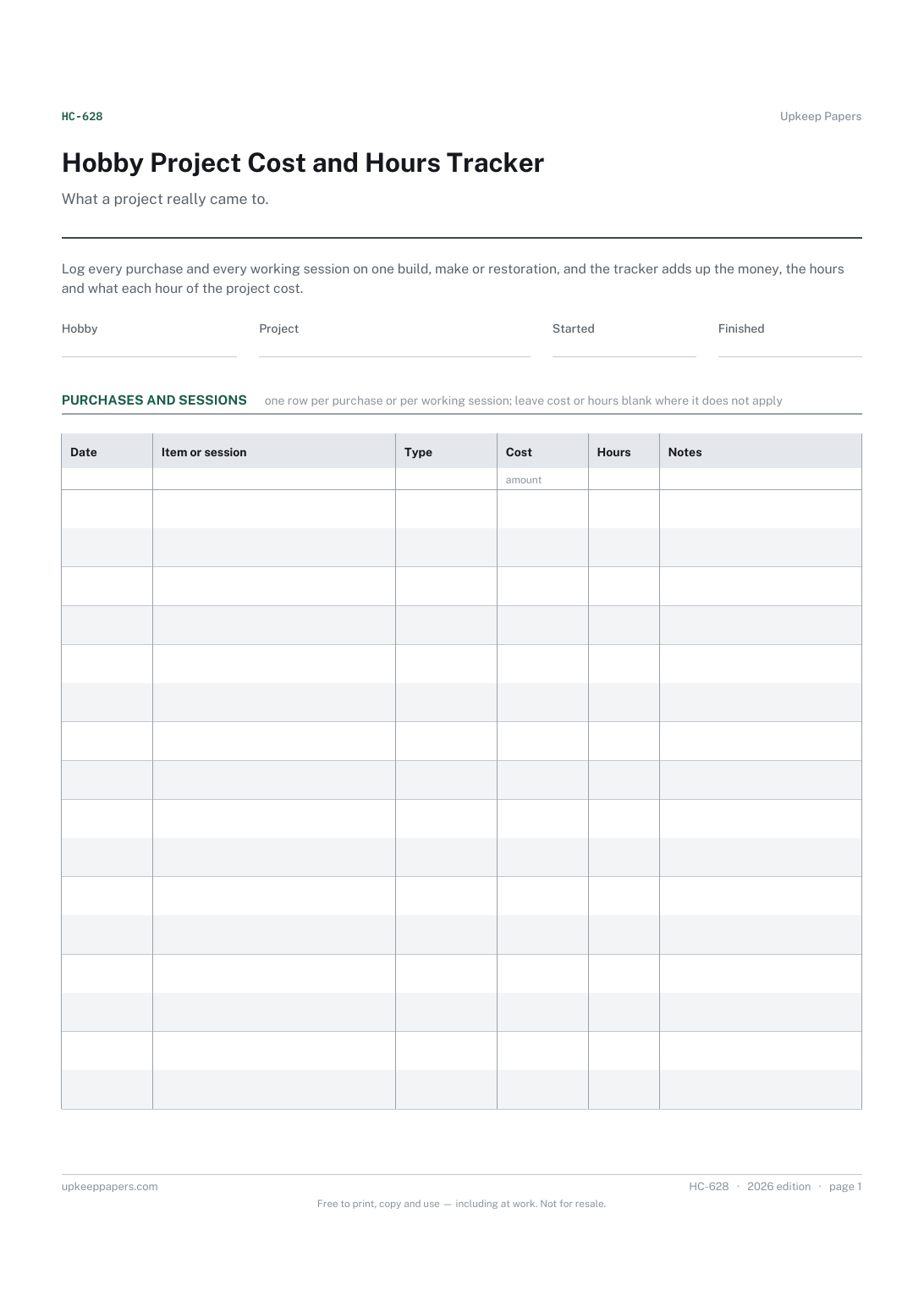
Every material, tool and part bought for the project.
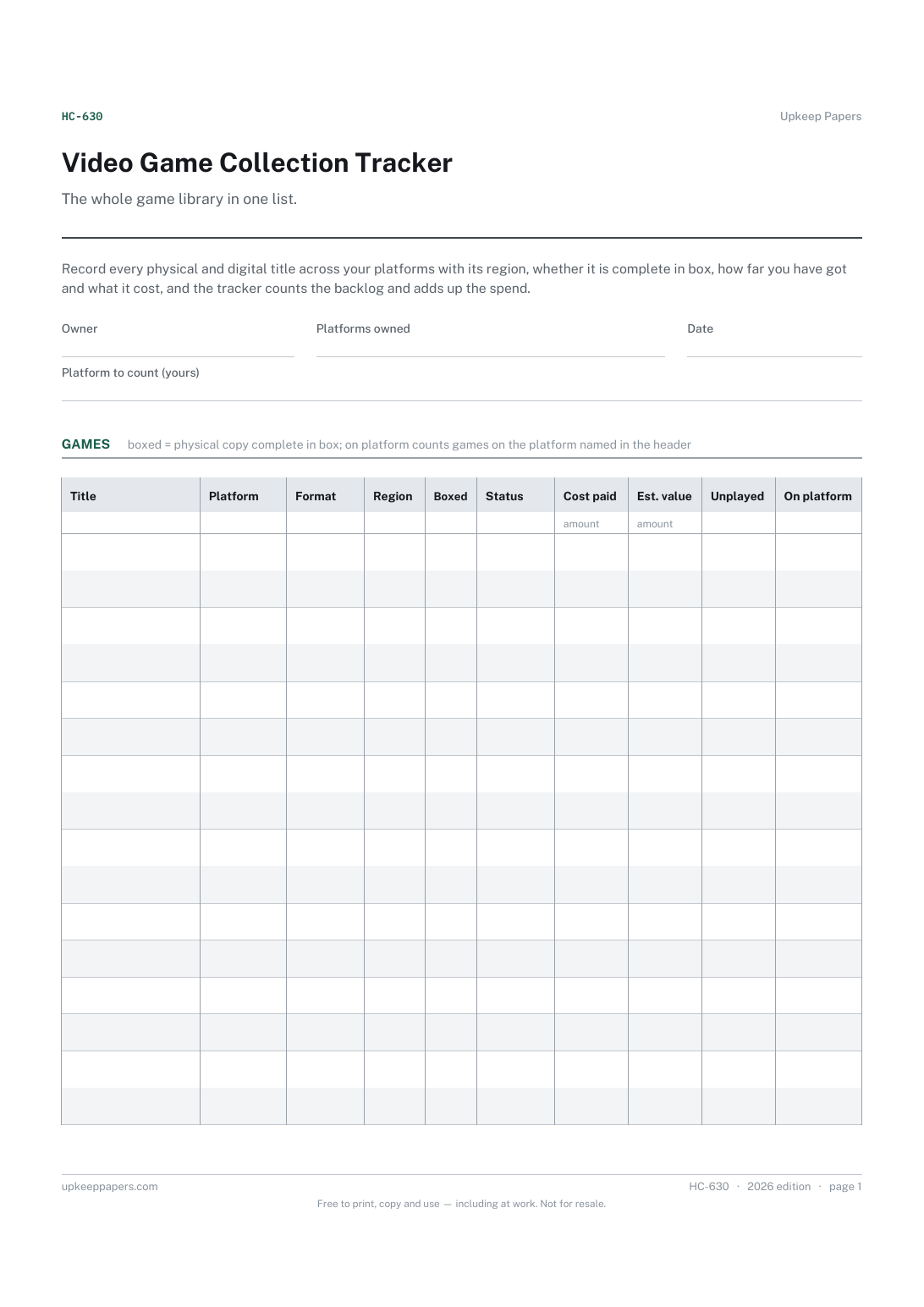
Every title you own, on which platform and in which format.
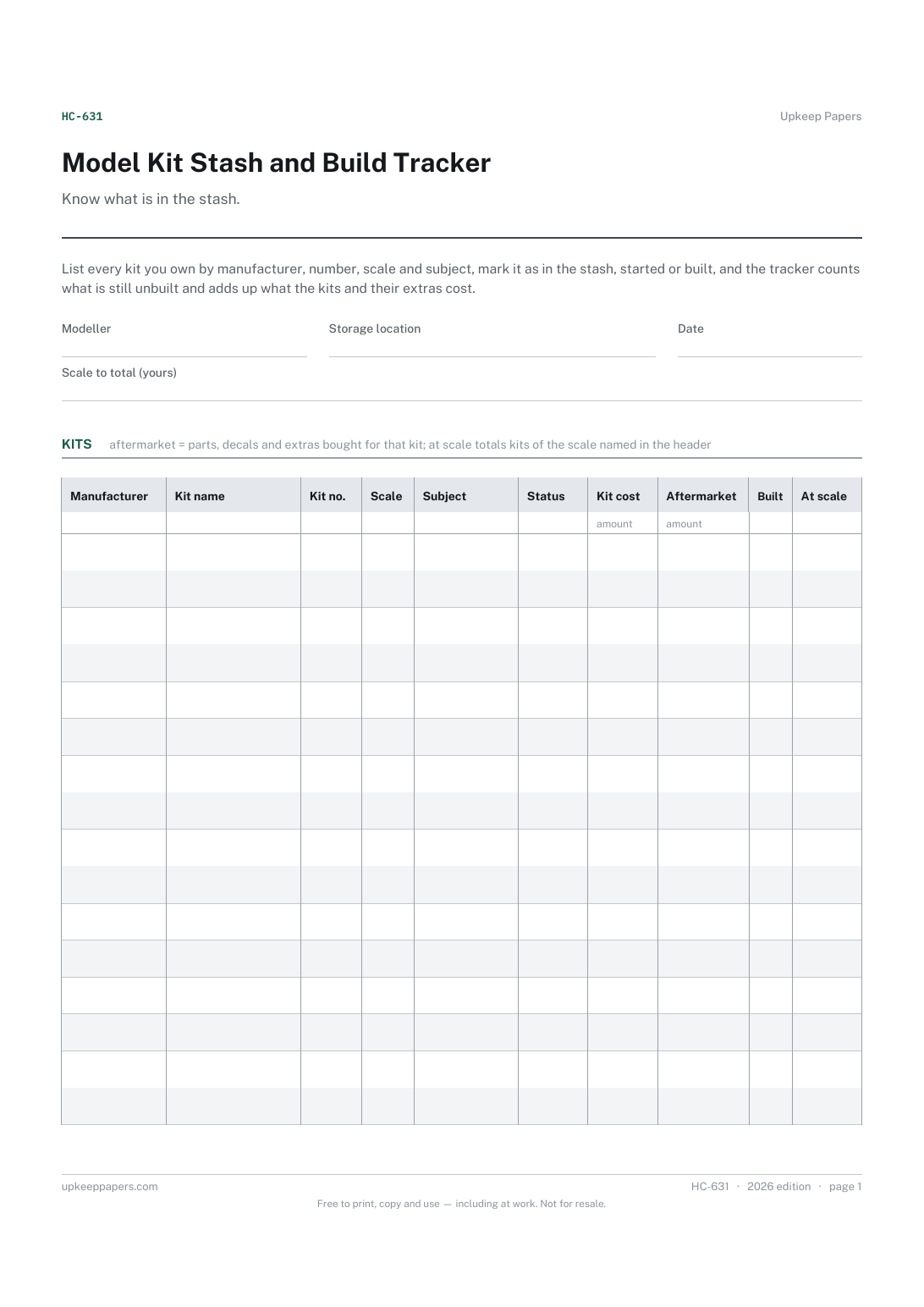
Every kit by manufacturer, kit number, scale and subject.
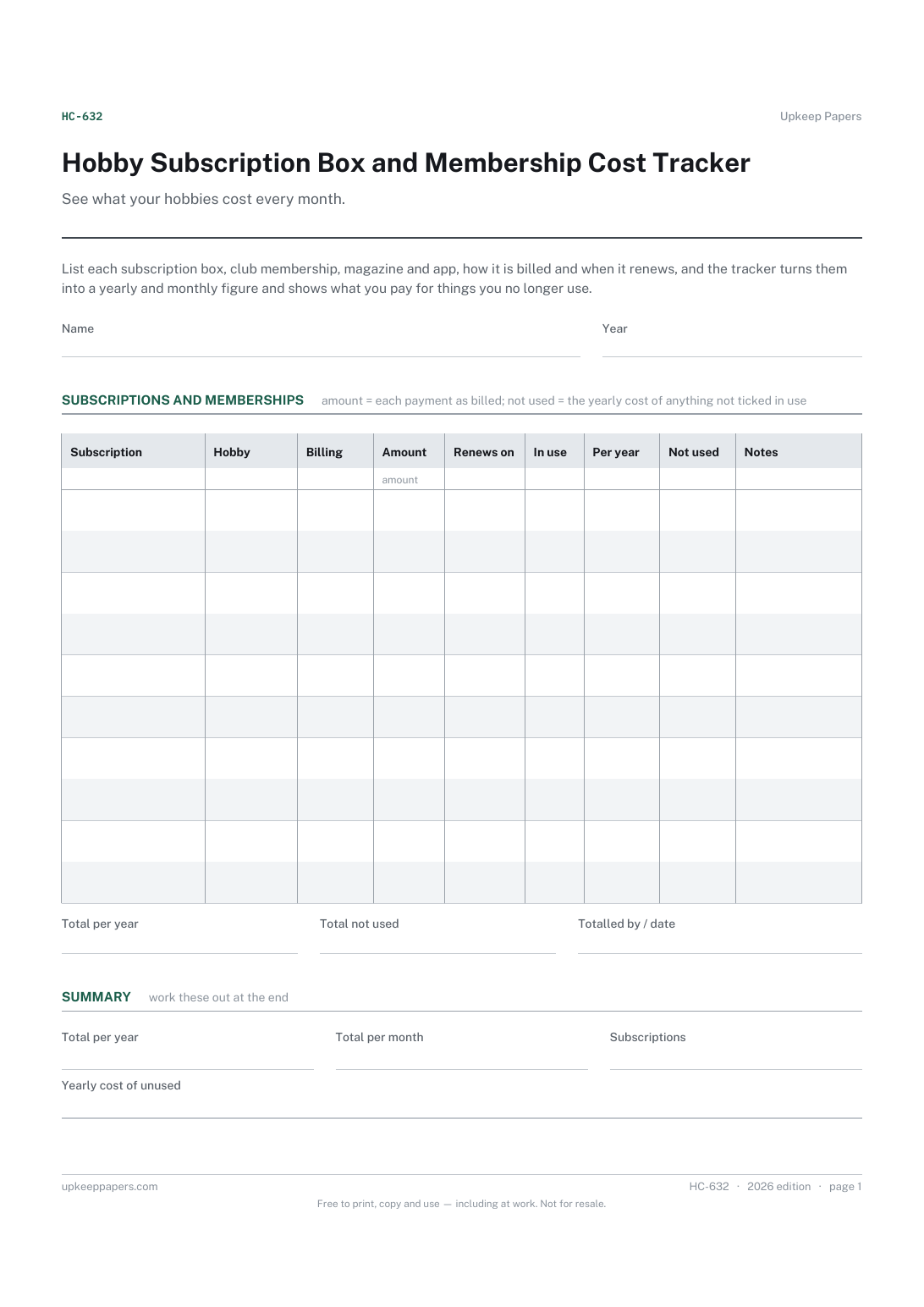
Every hobby subscription, membership, magazine and app in one list.
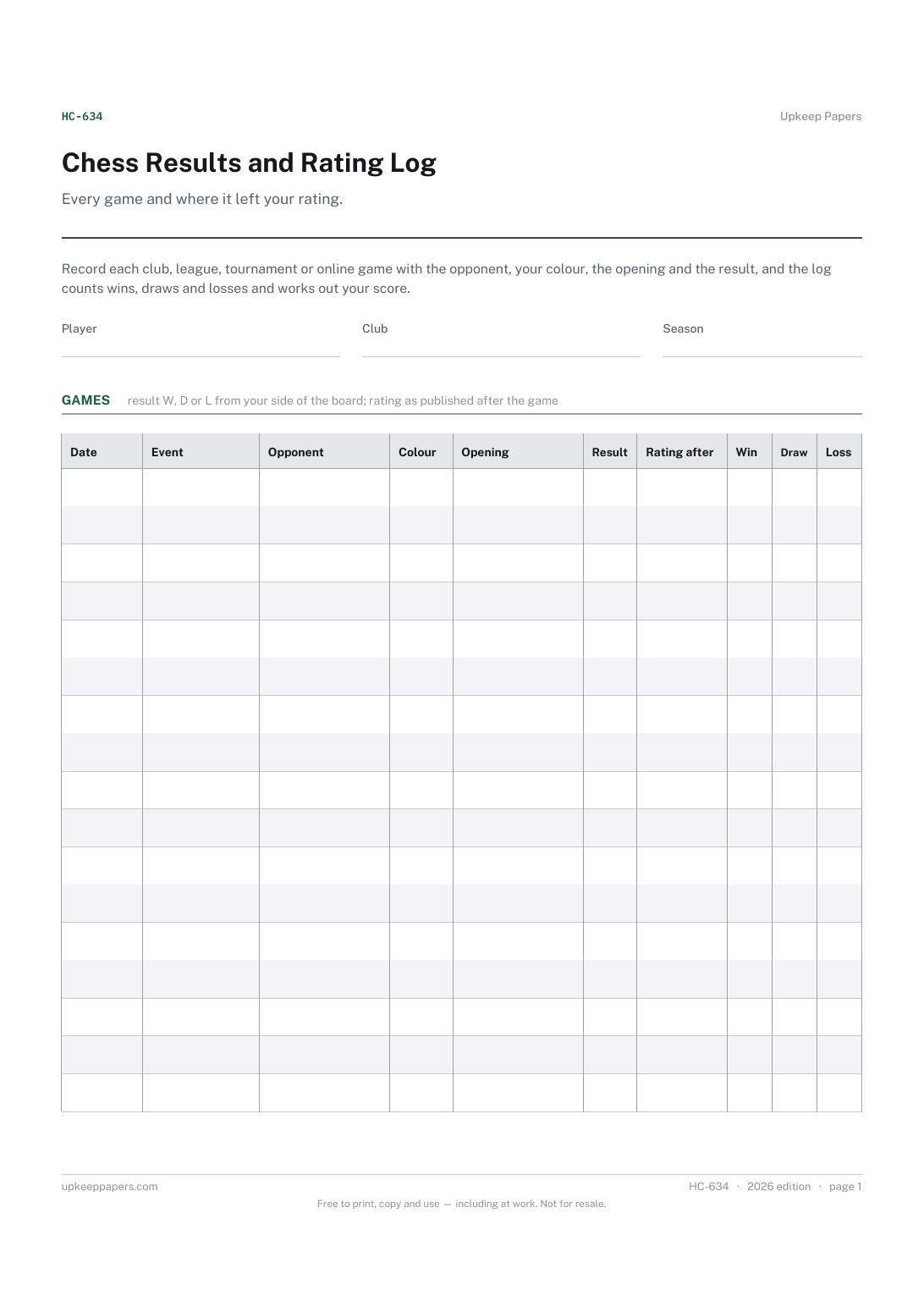
Every game with the date, the event and the opponent.
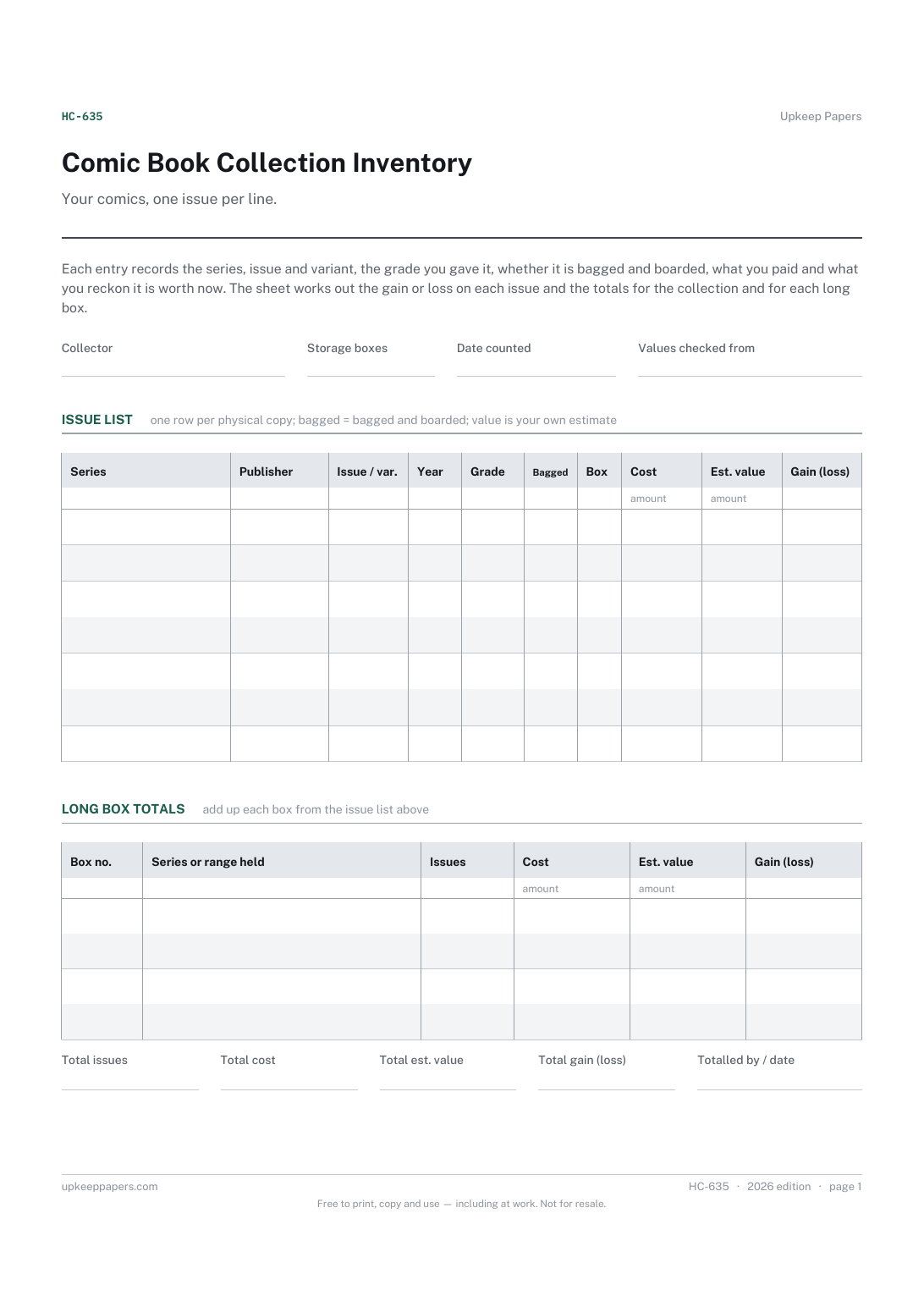
Which issues of each series you own, and which variant.
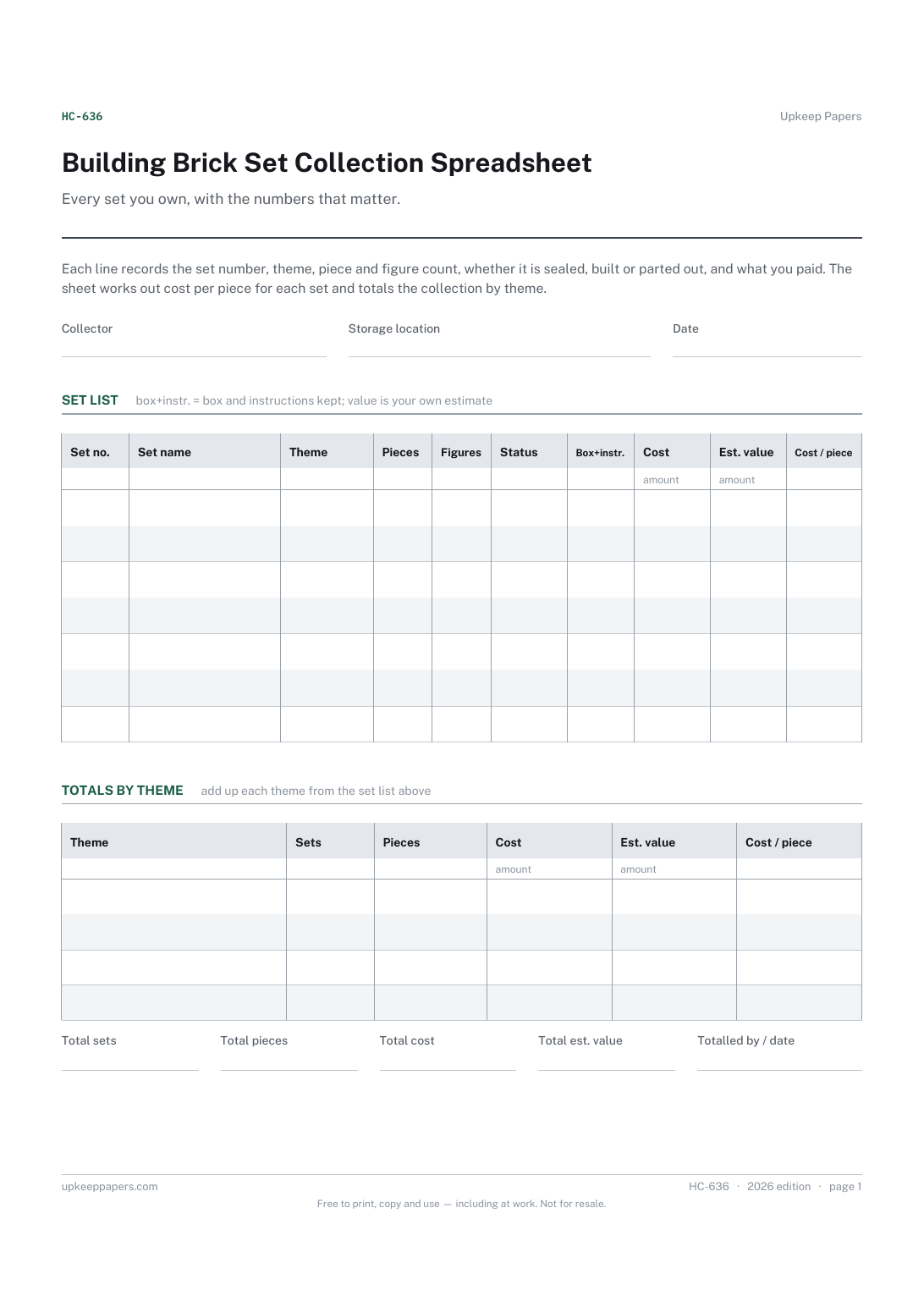
Every set by number, name and theme.
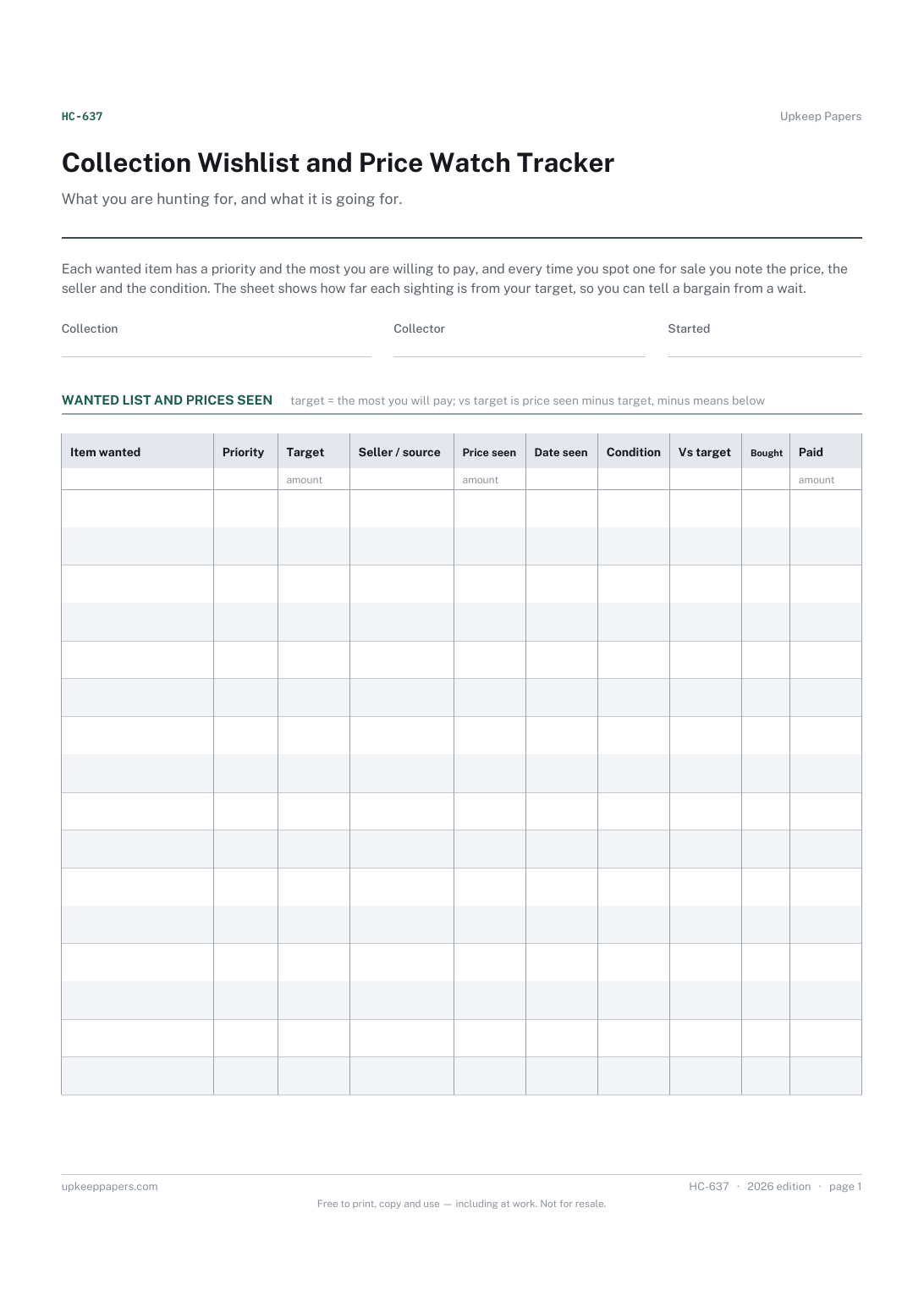
Every item still wanted, with its priority.
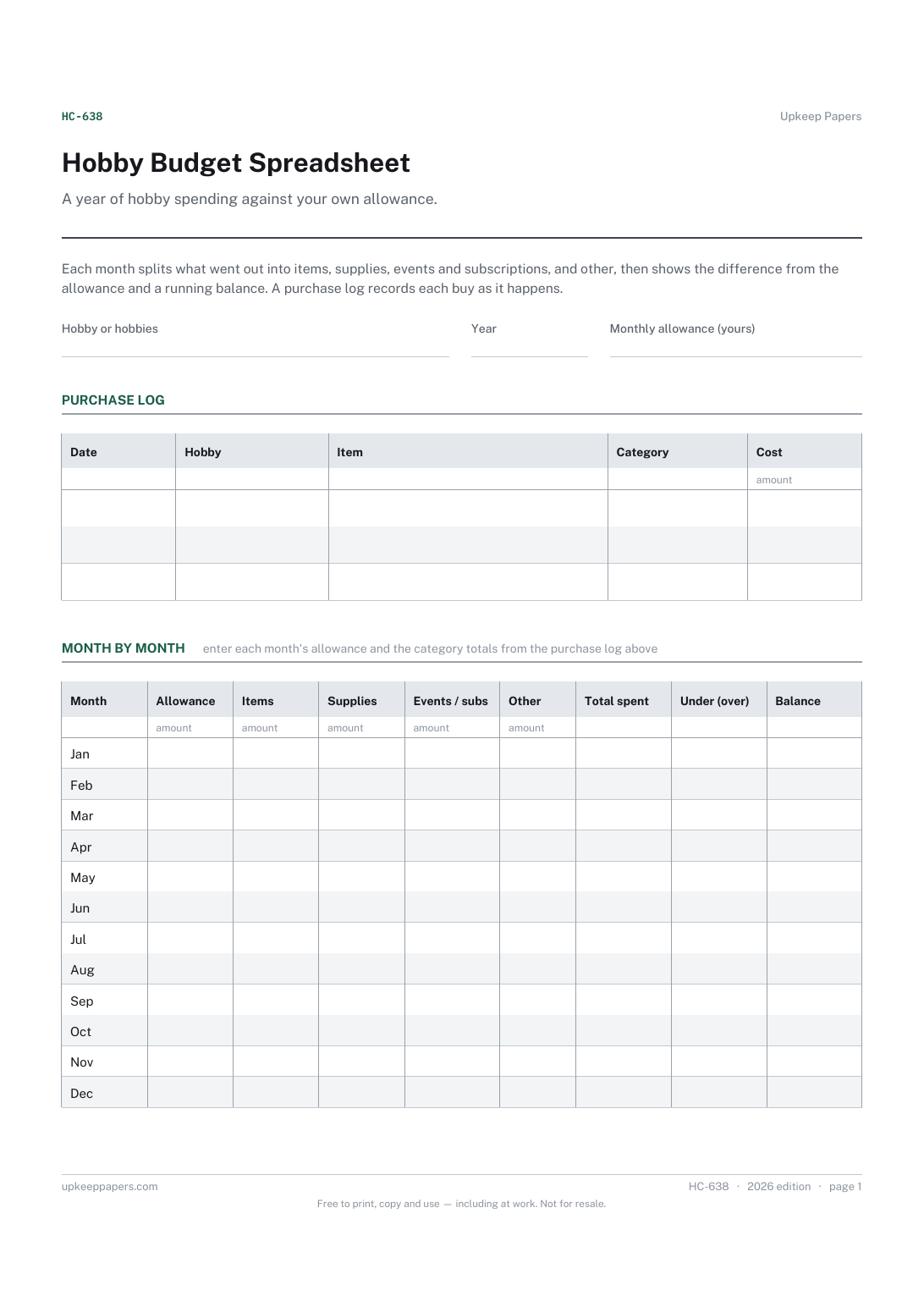
The monthly allowance you set for your hobbies.
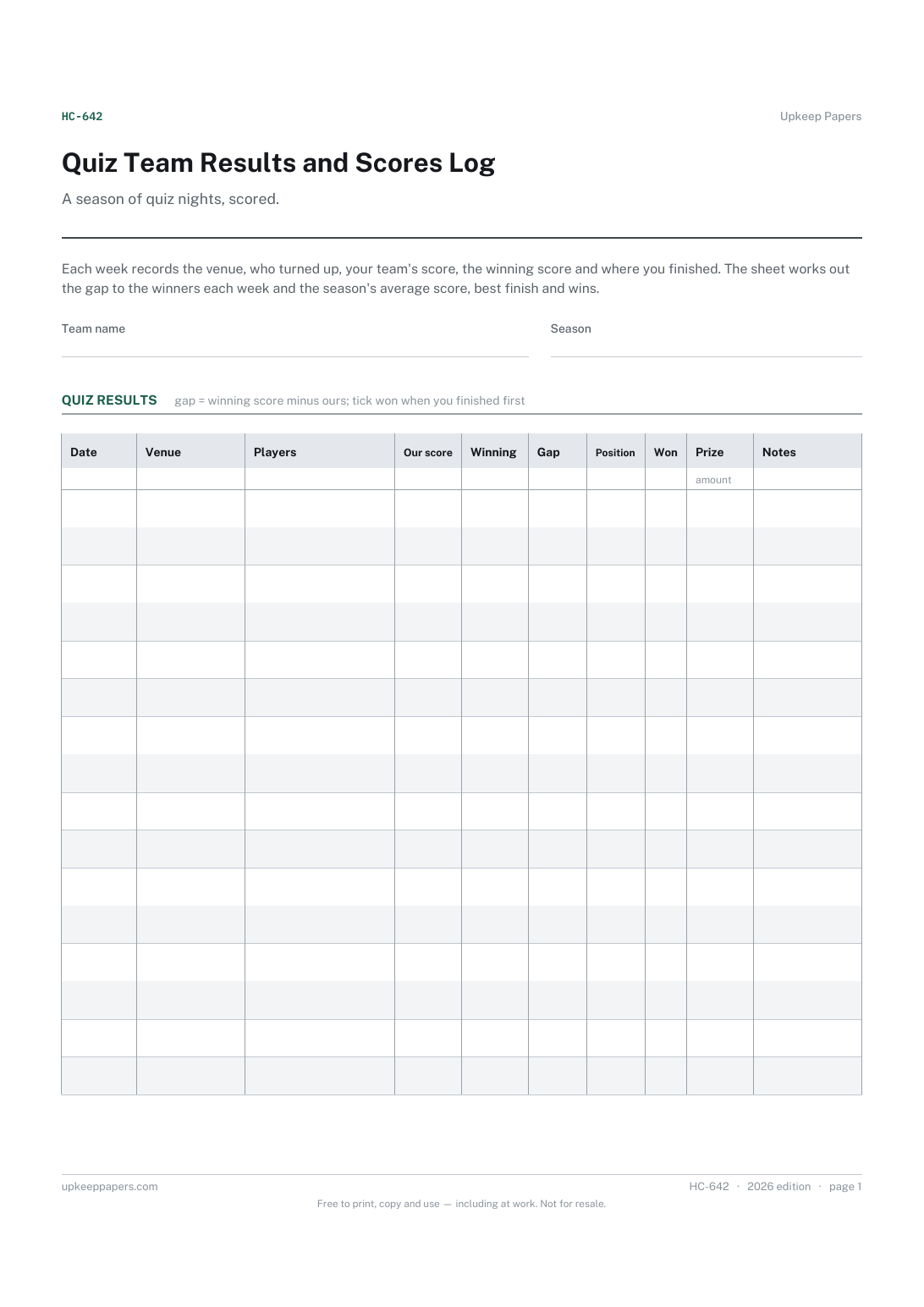
Every quiz night with the date and venue.
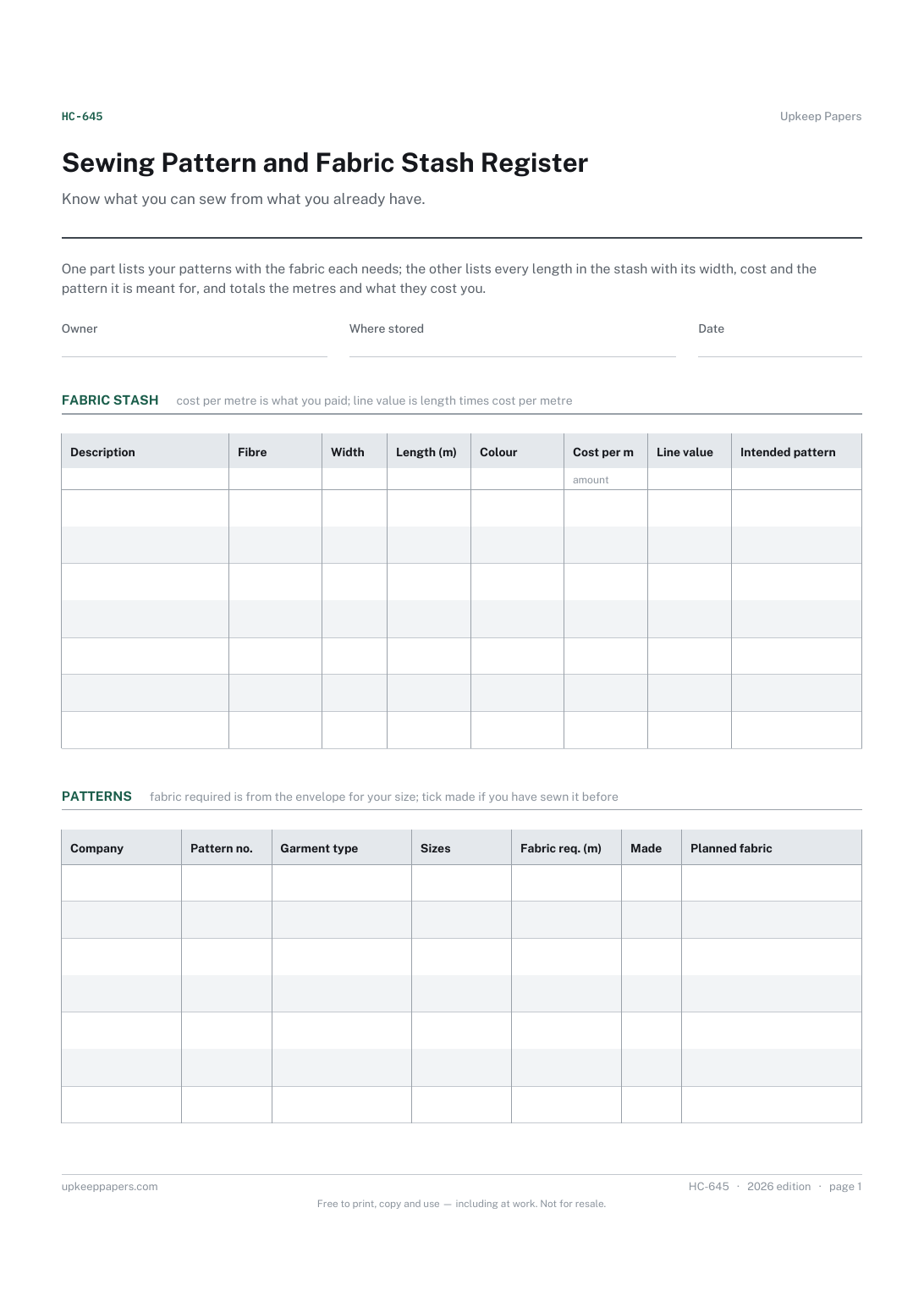
Every pattern you own, its sizes and the fabric it needs.
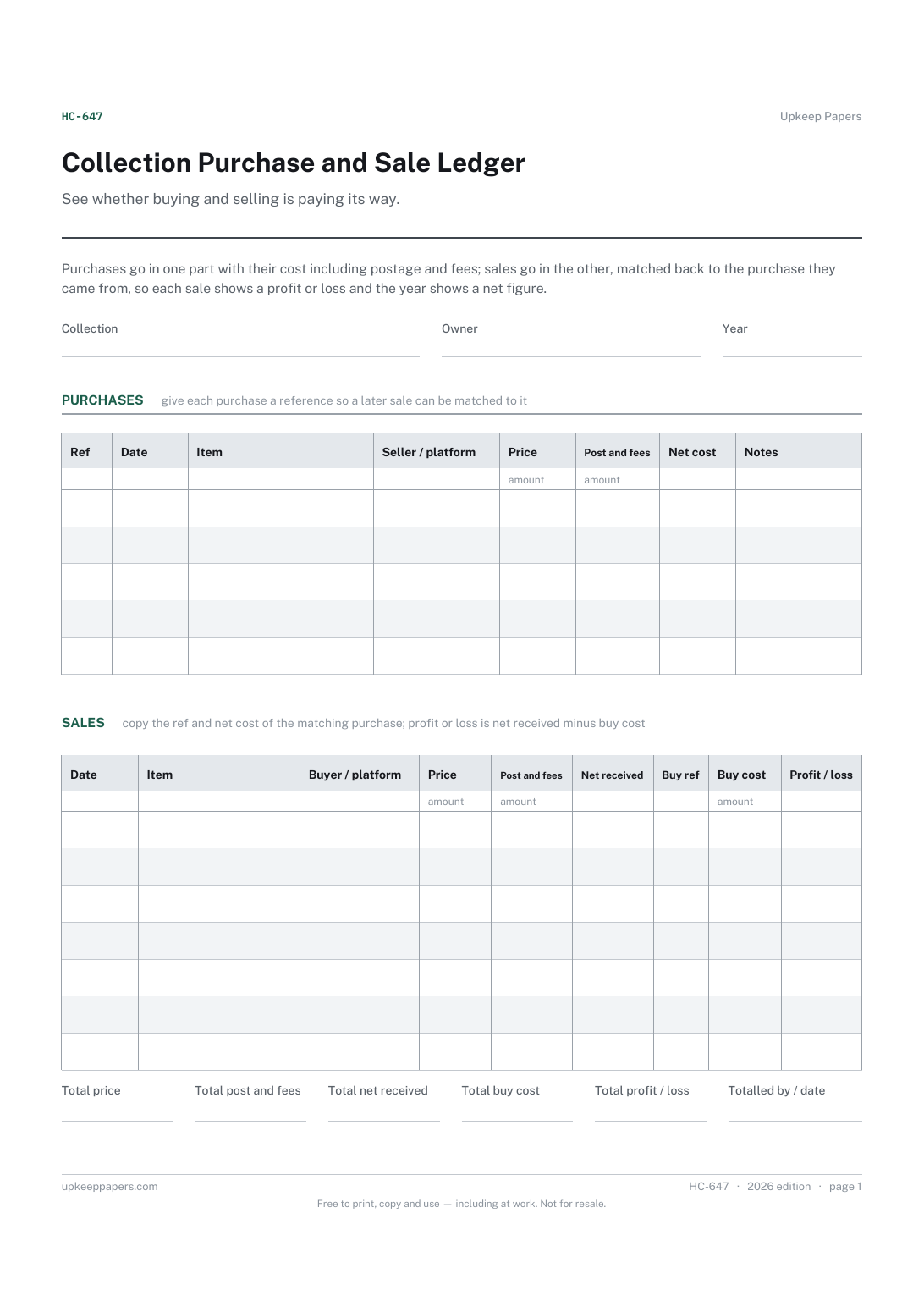
Every purchase with its seller or platform and full cost.
The event, venue, travel and entry costs.
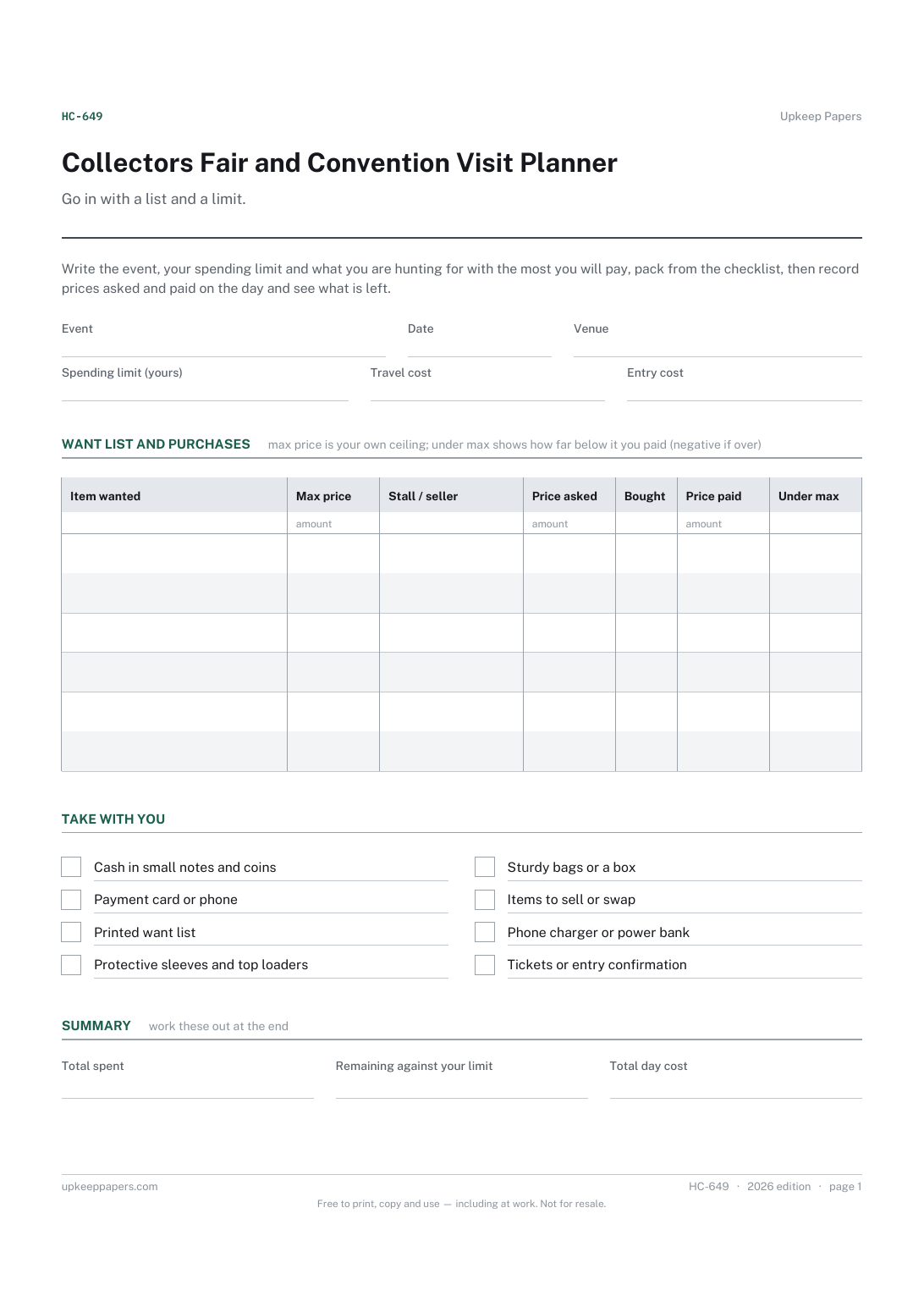
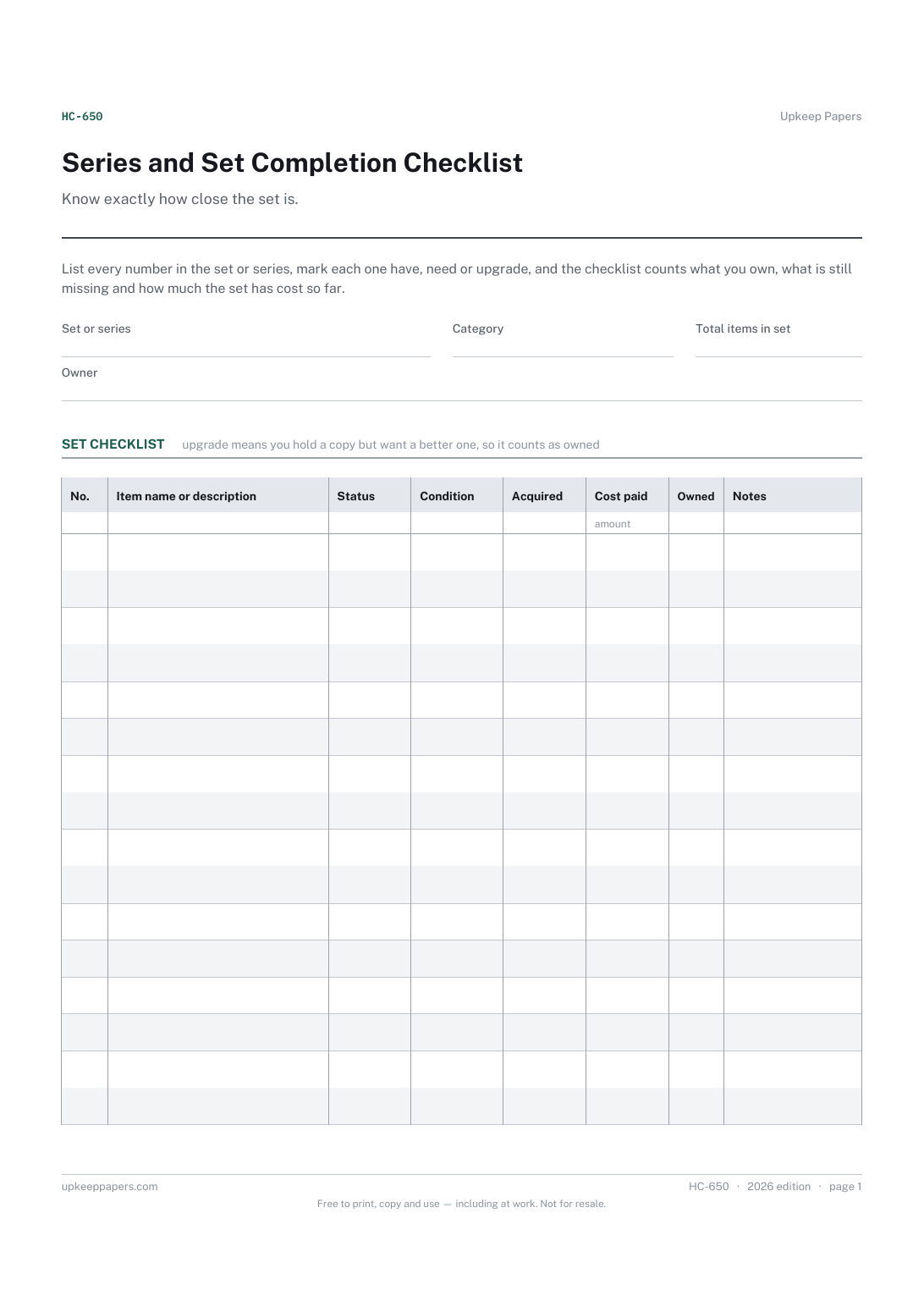
Every item in the set by number and name.
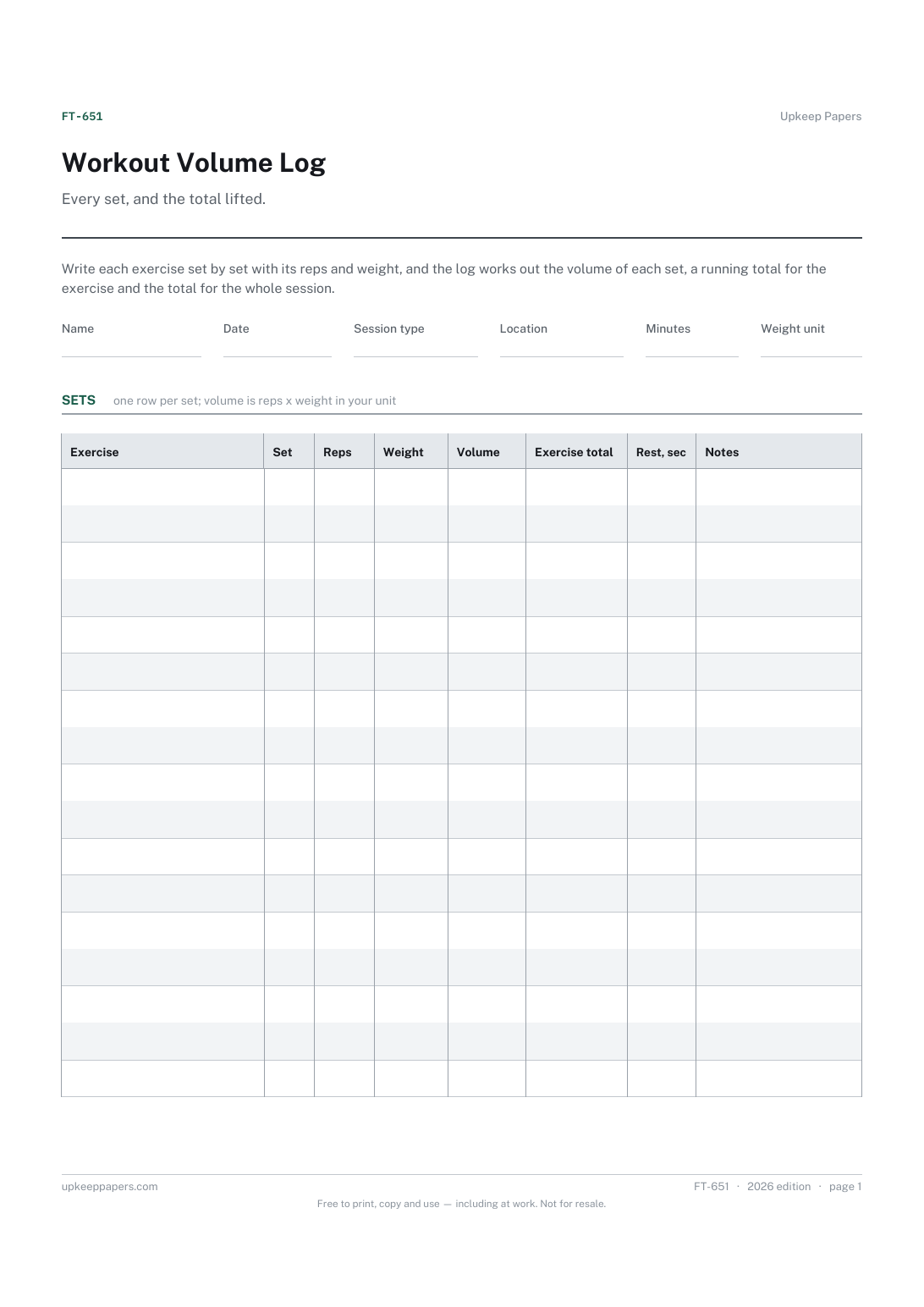
Each exercise broken down set by set, with reps, weight and rest.
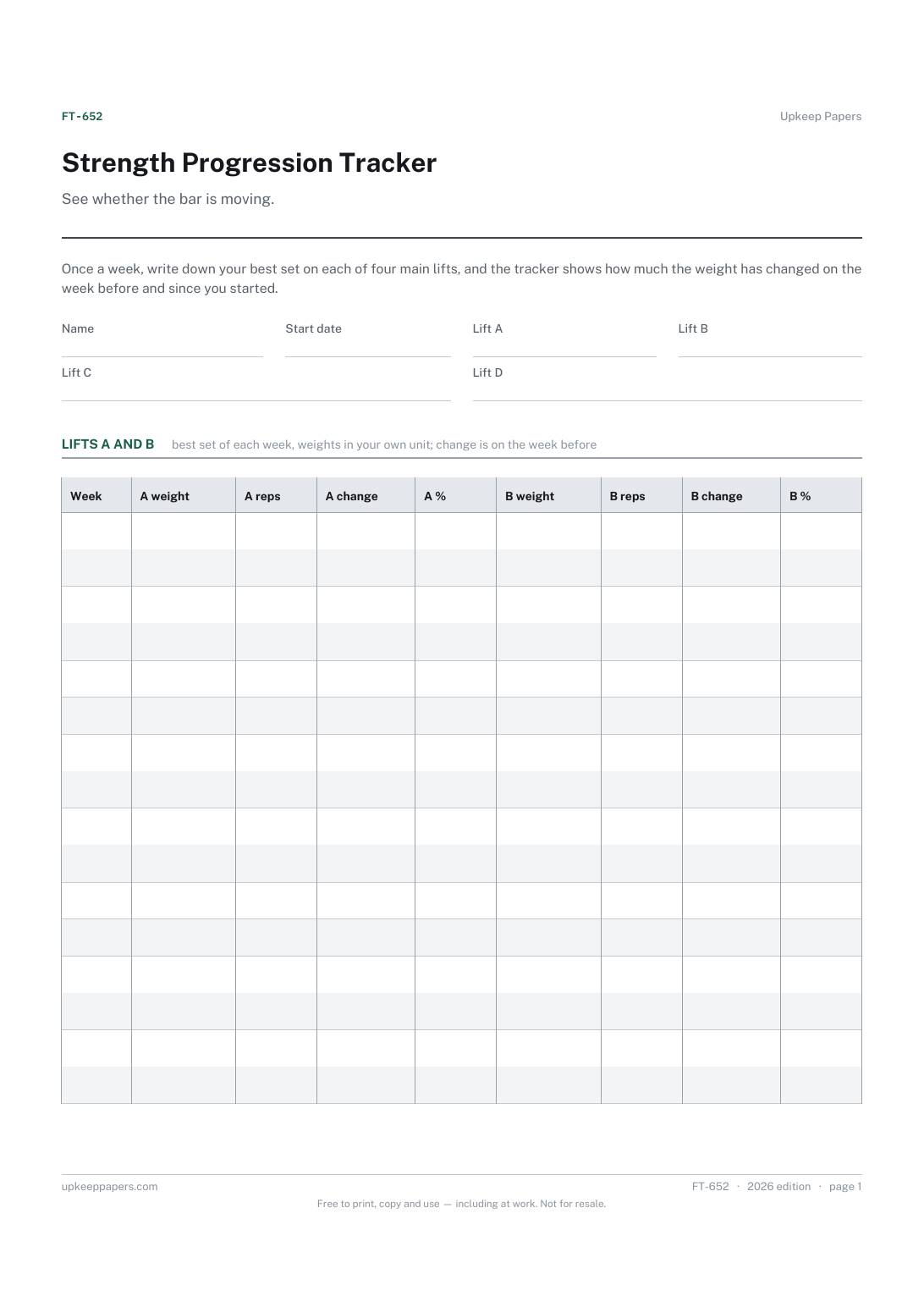
The best set on each of four lifts, week by week.
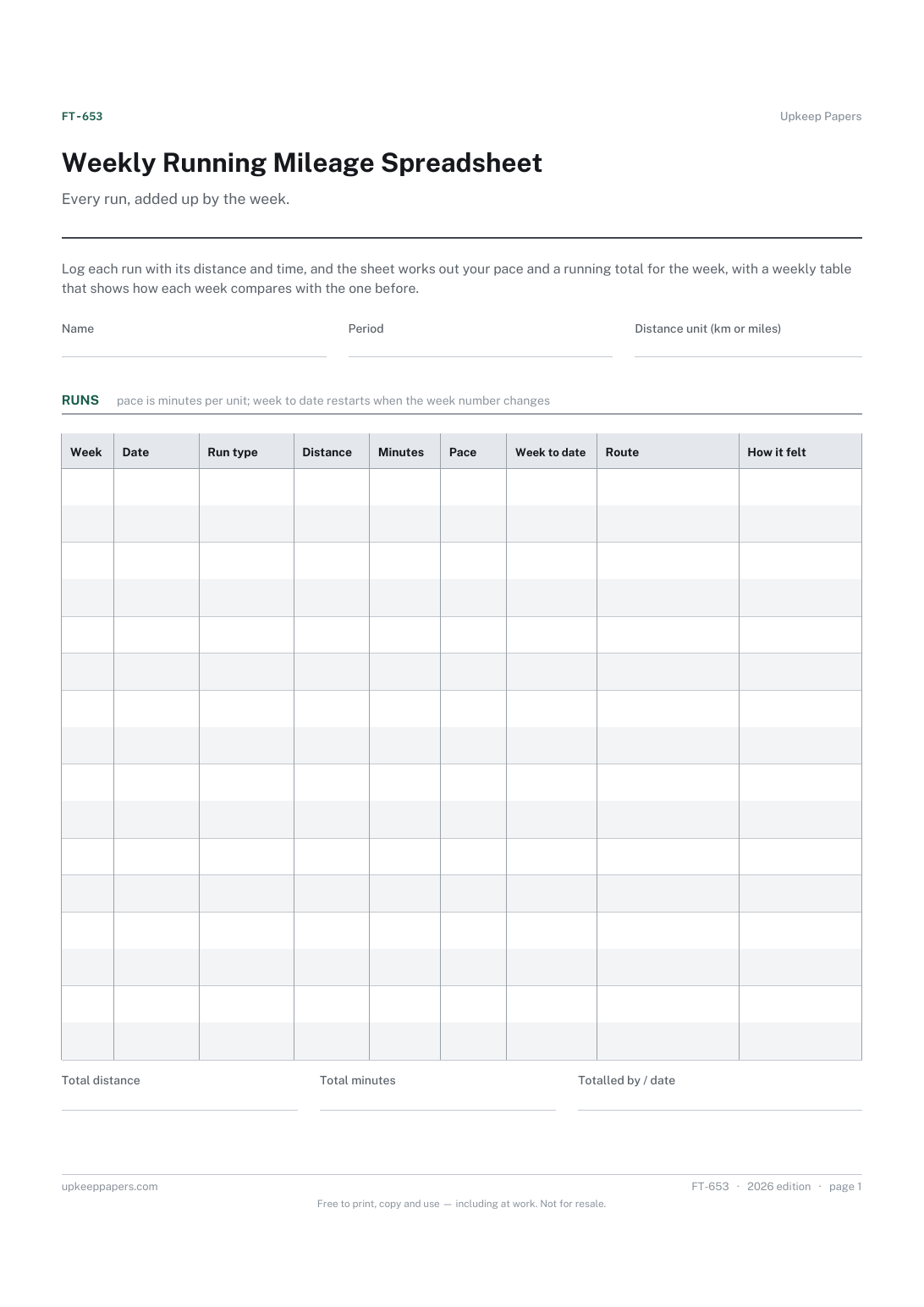
Each run with its type, distance, time, route and how it felt.
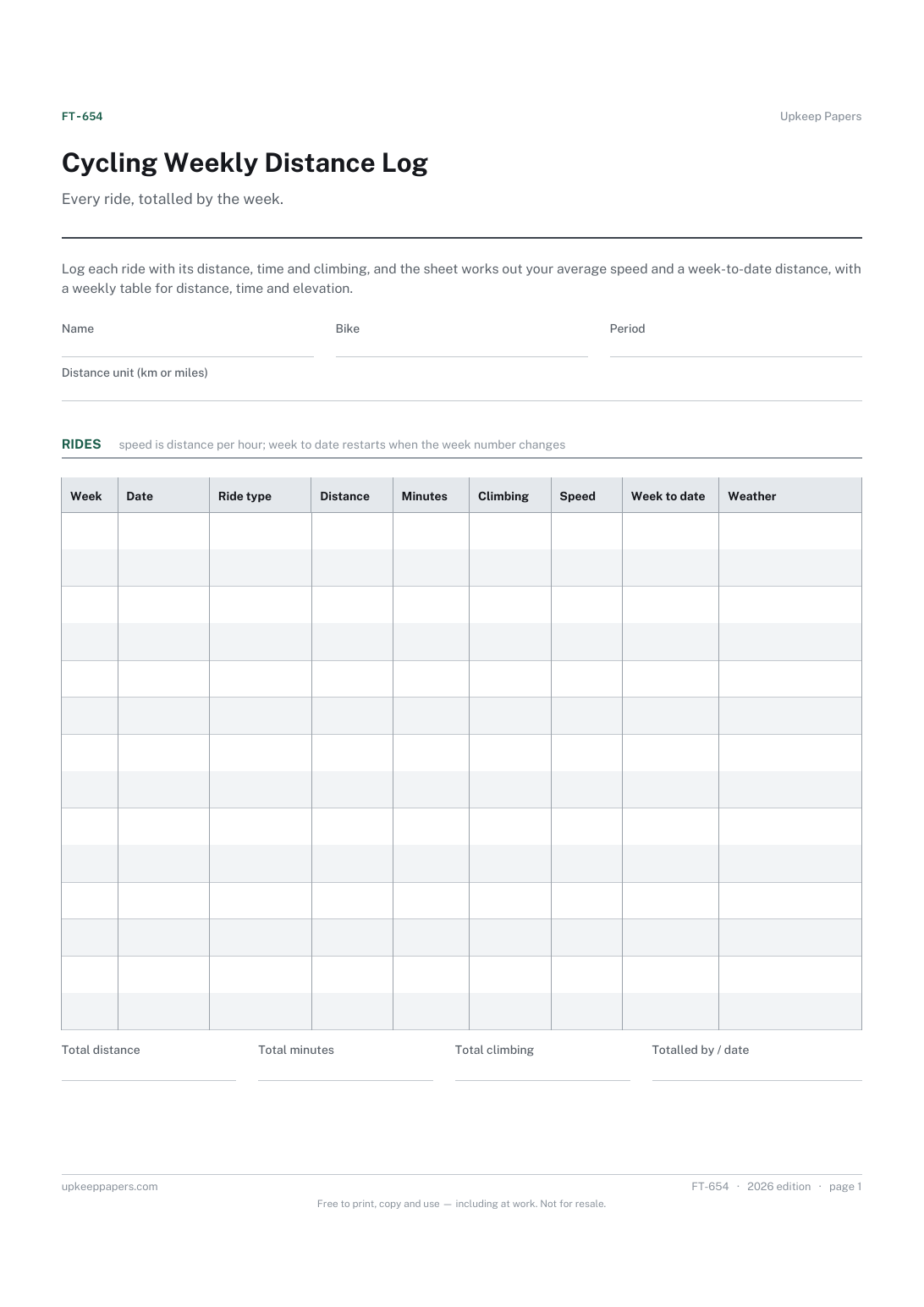
Each ride with its type, distance, time, climbing and weather.
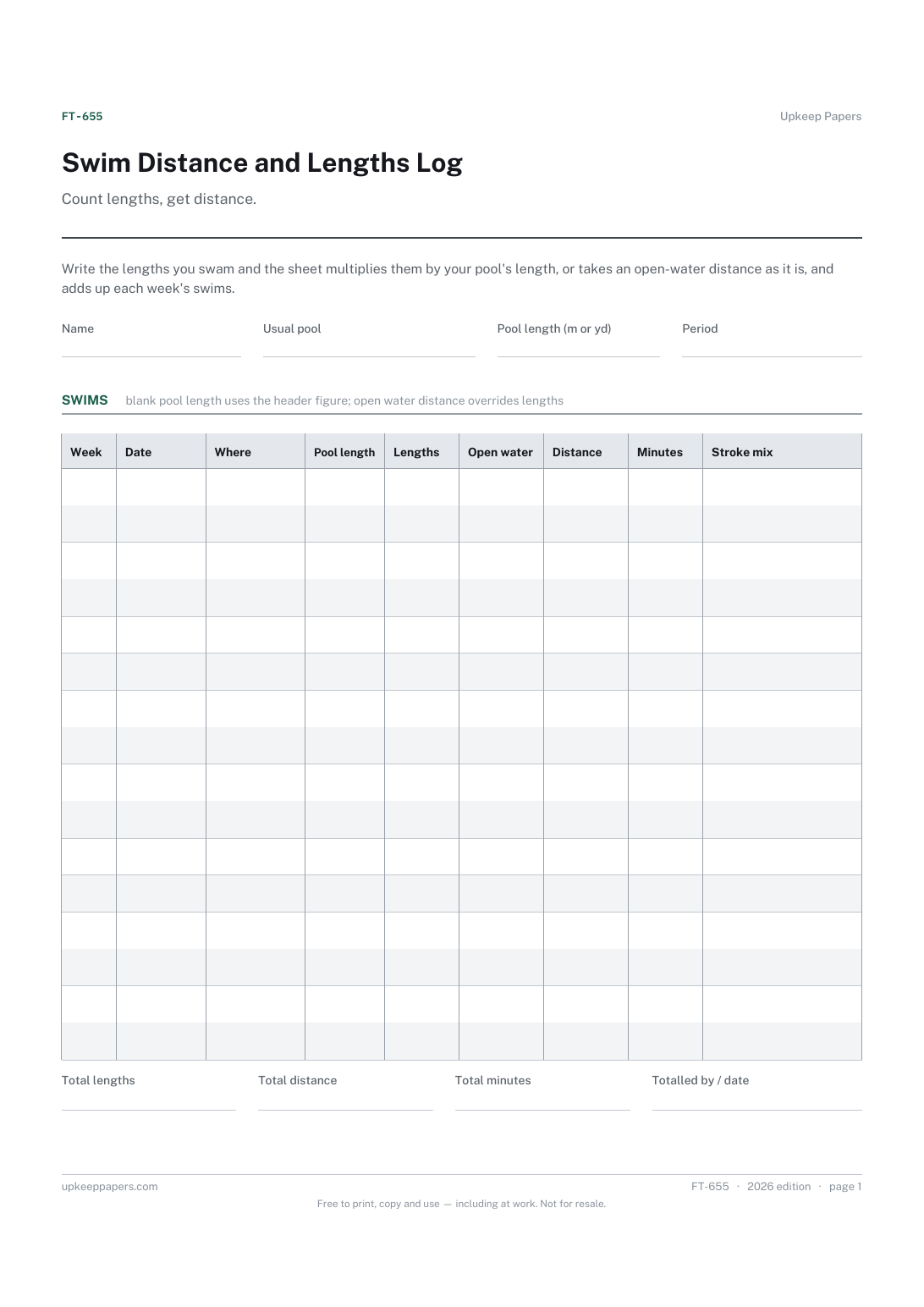
Each swim with where it was, the pool length and the lengths swum.
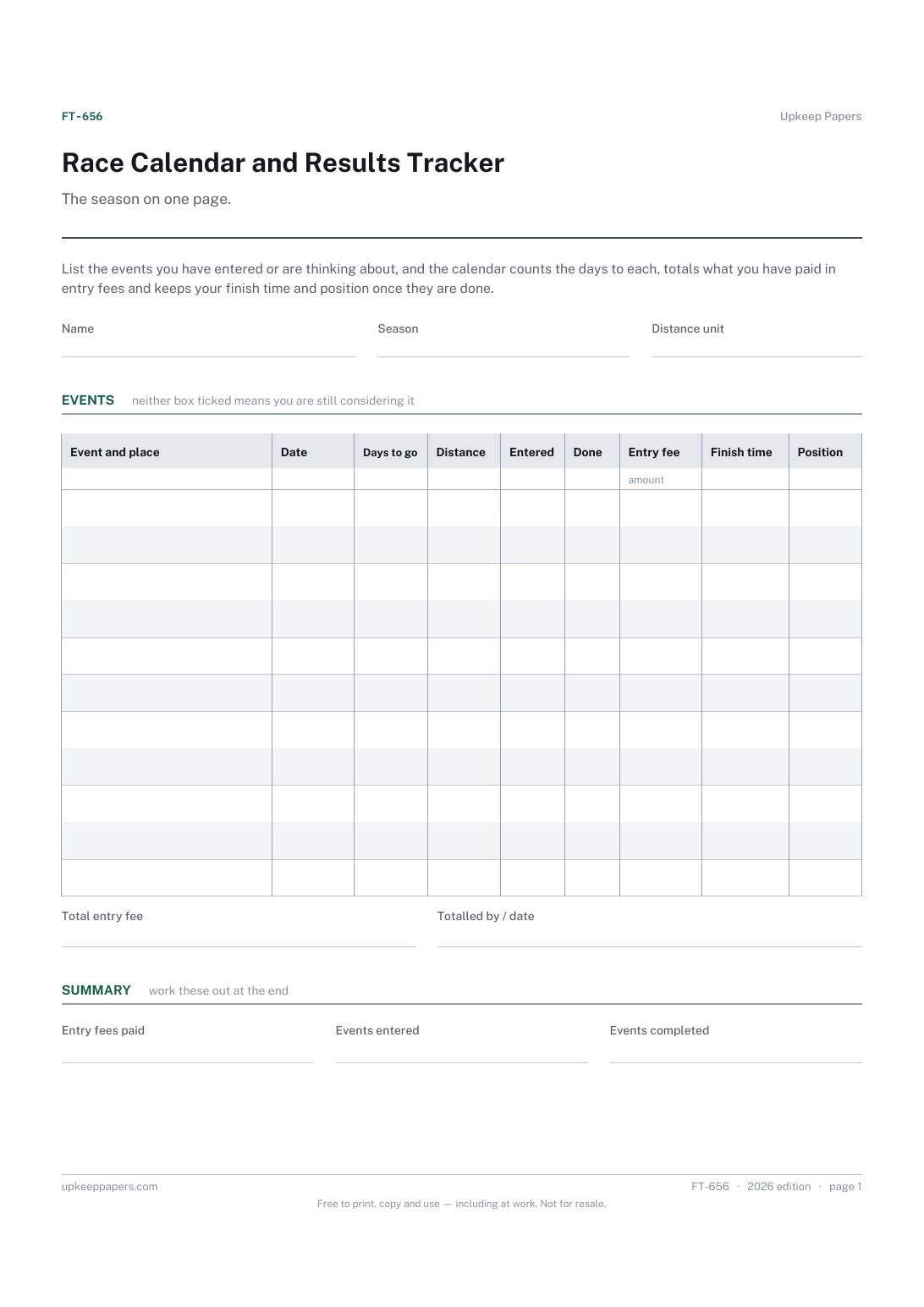
Every event you are considering, entered or have finished, in date order.
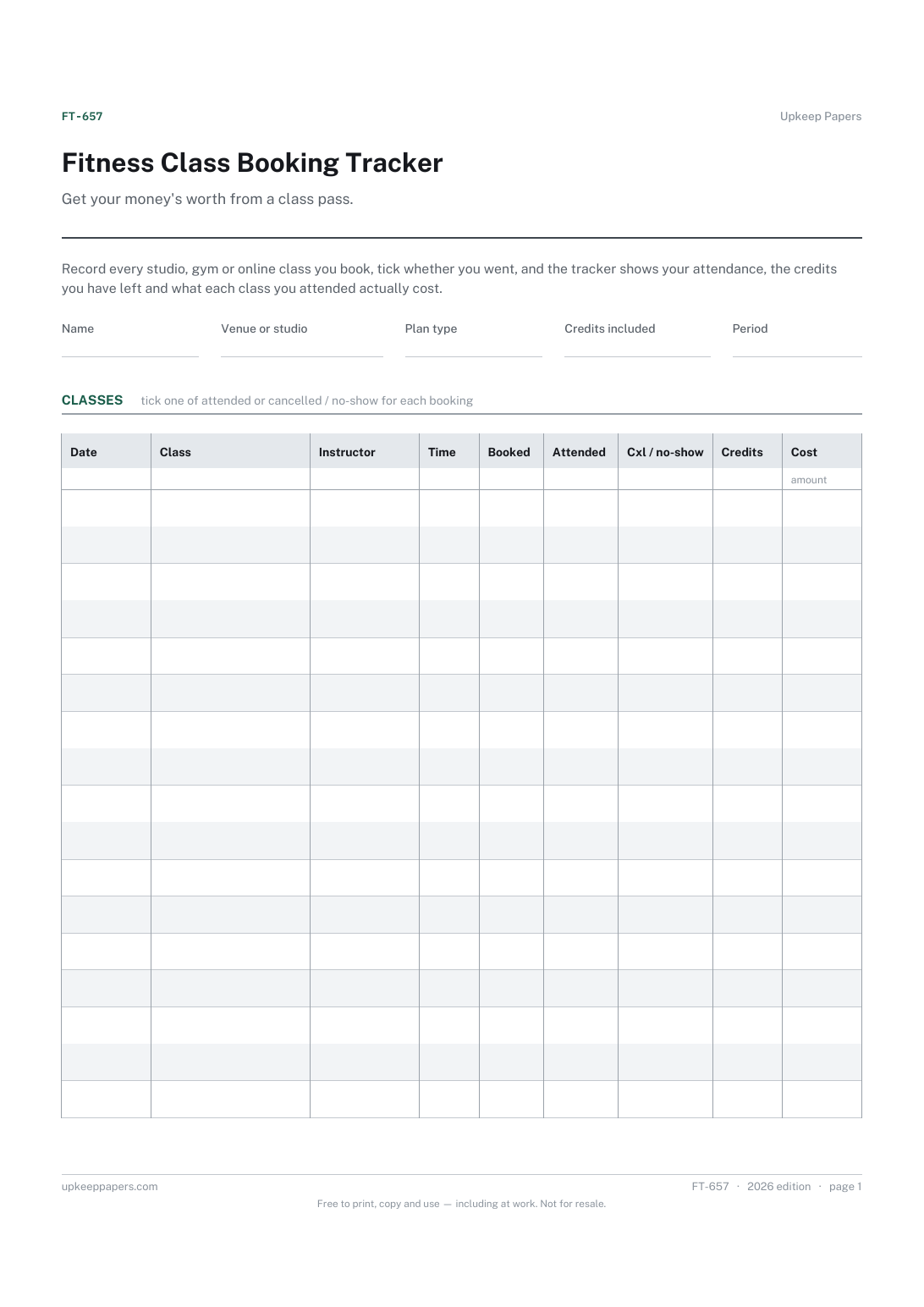
Every class booked, with the date, time and instructor.
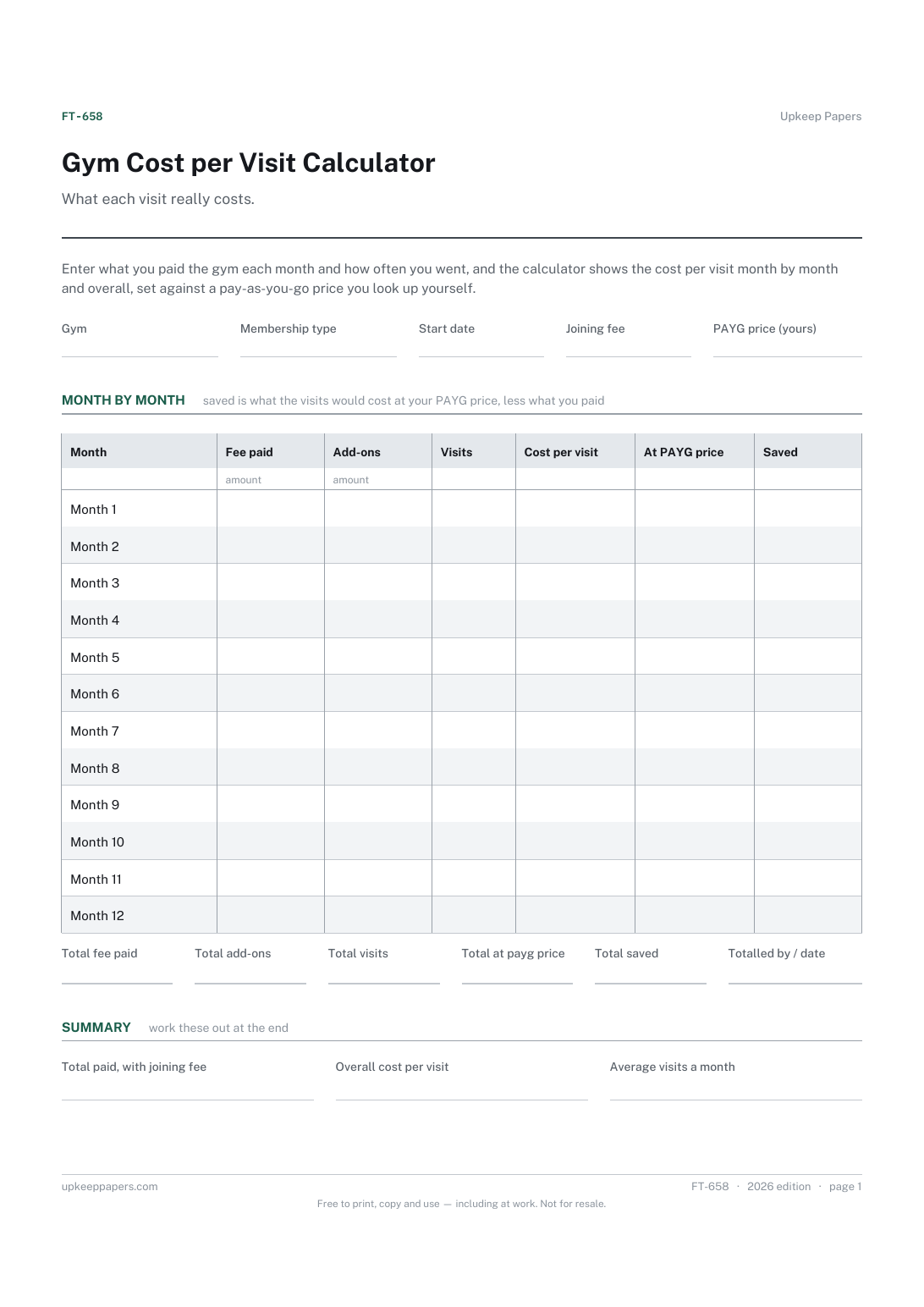
What you paid each month, including any add-ons.
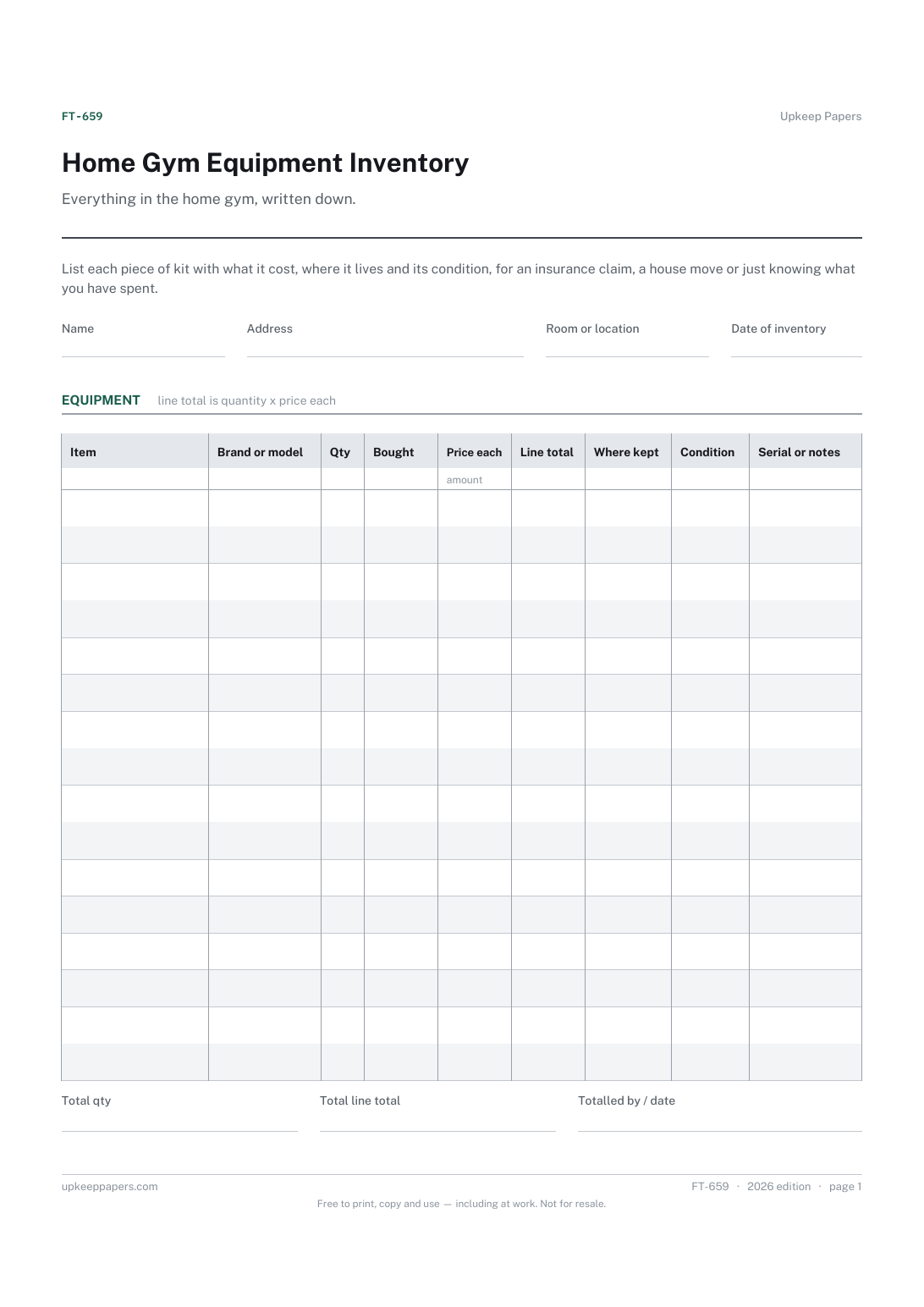
Every item with its brand or model, quantity and serial number.
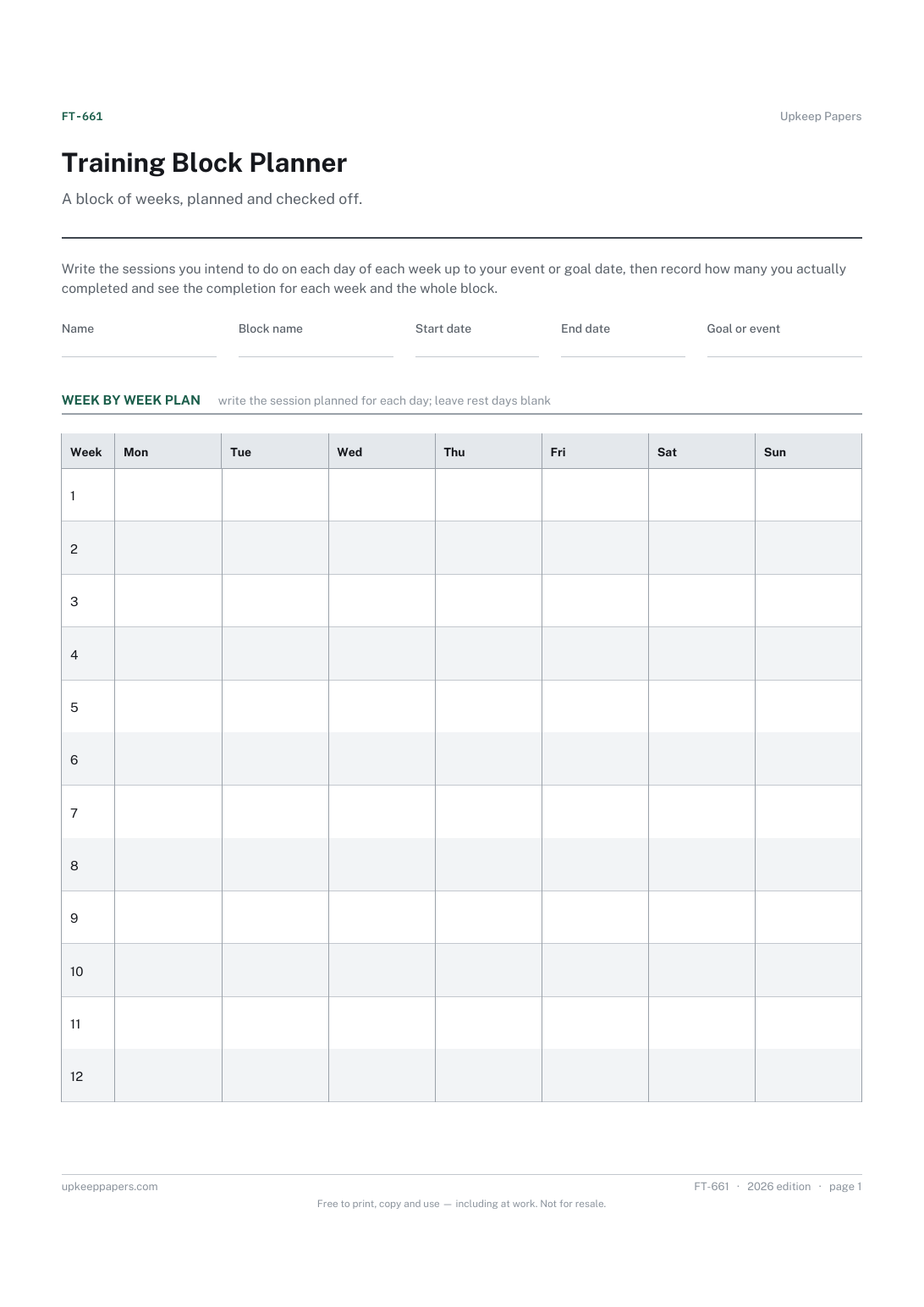
Your sessions laid out day by day for each week of the block.
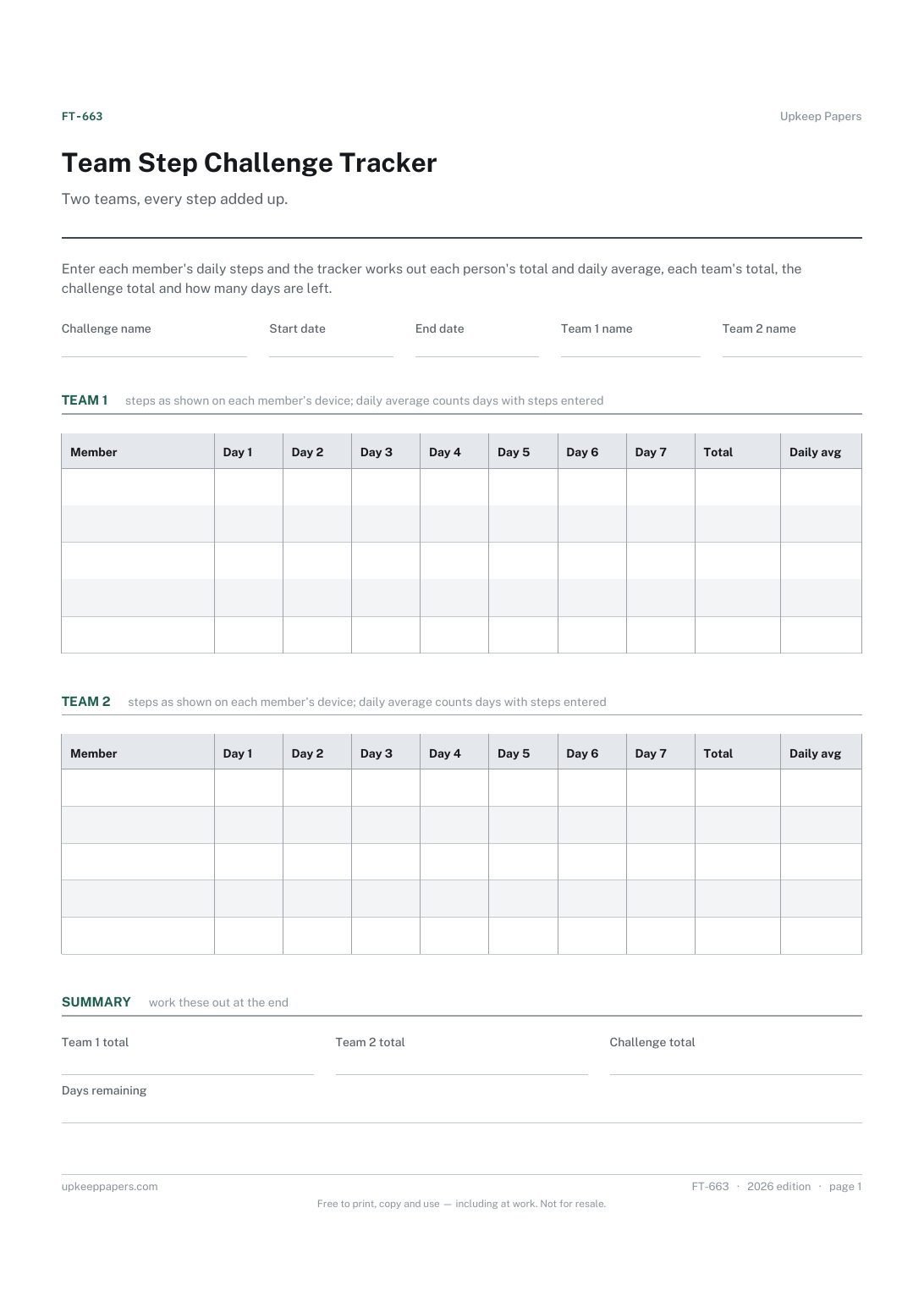
Each member's steps for every day of the challenge week.
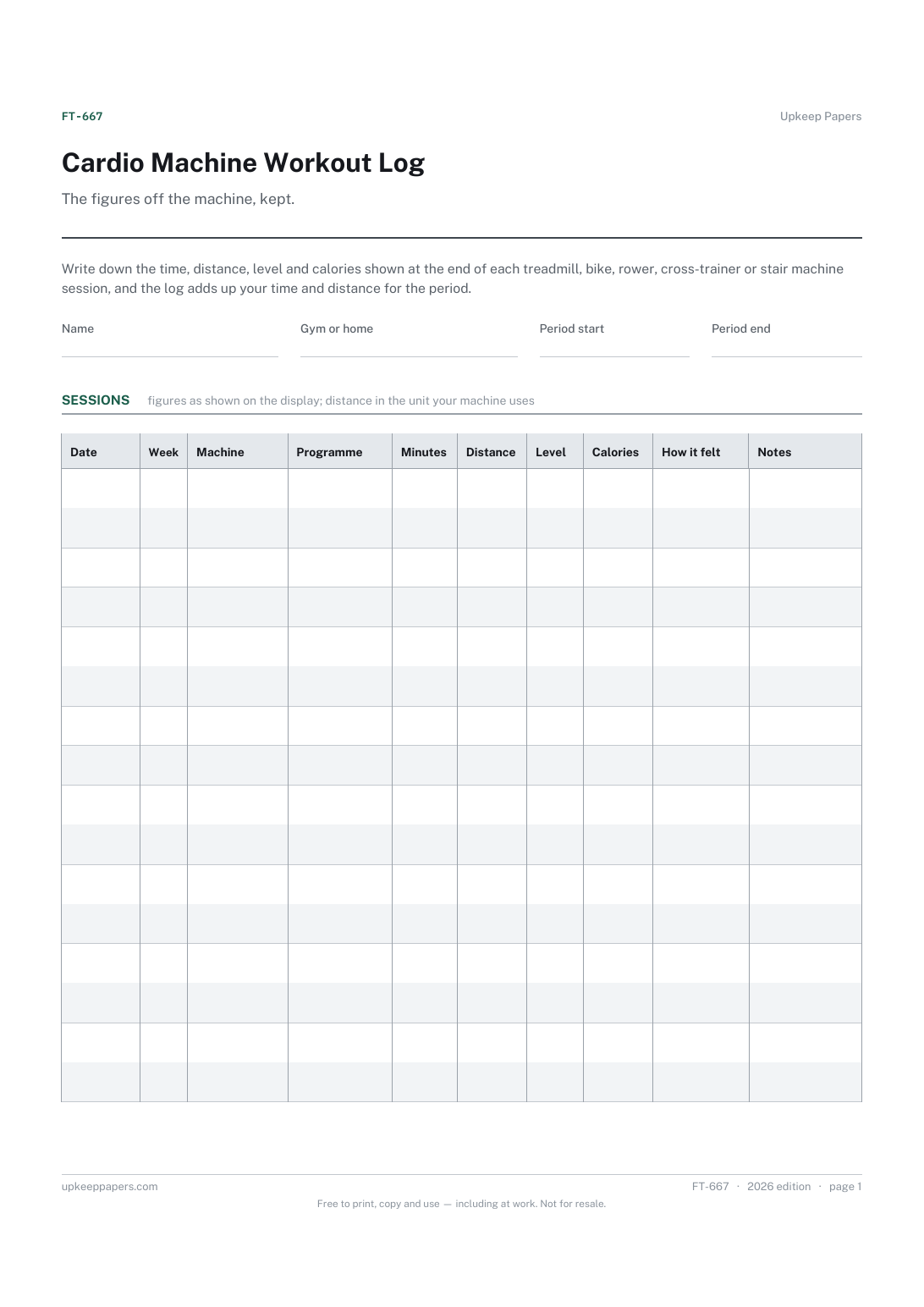
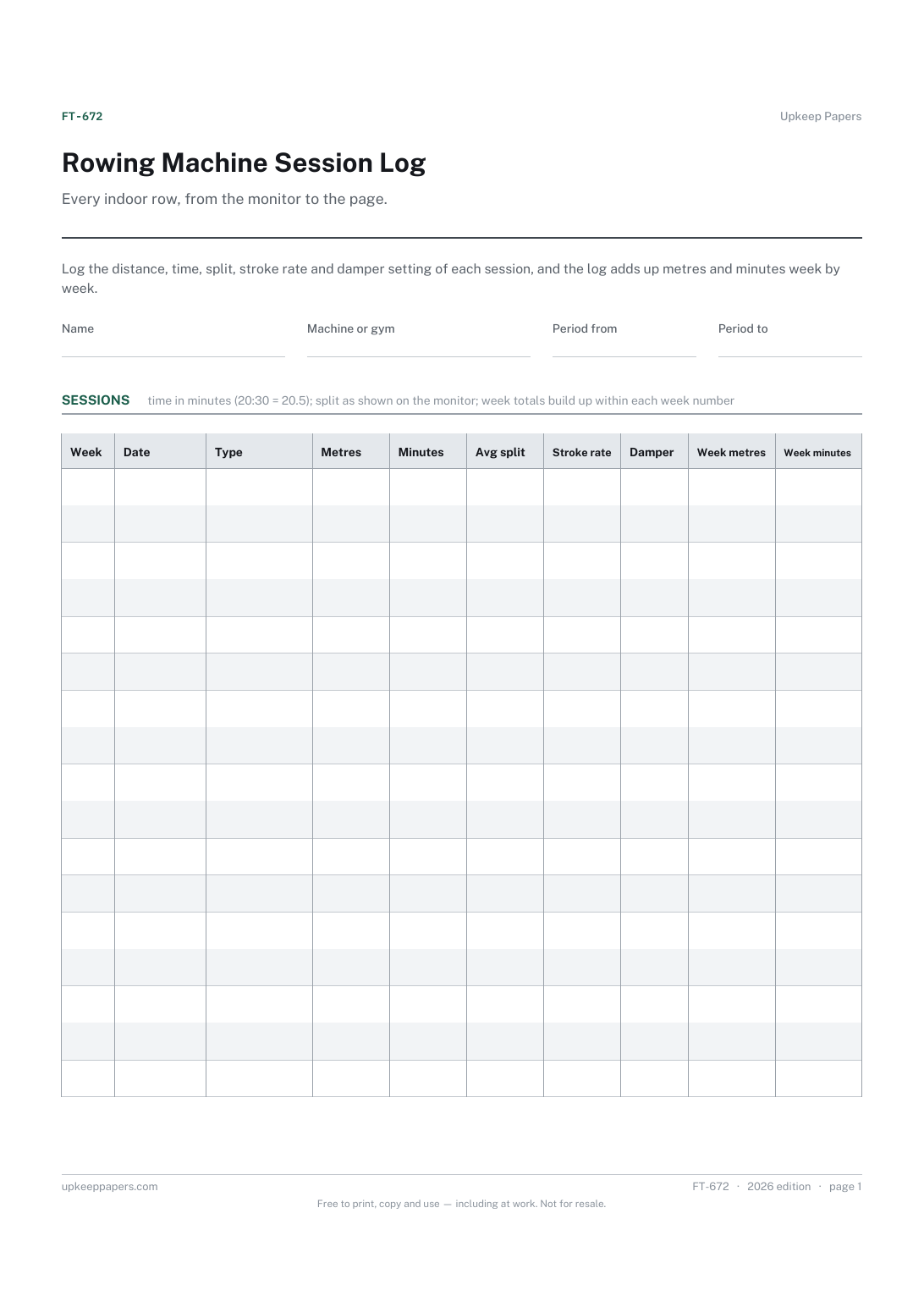
Every session with the machine, programme and level used.
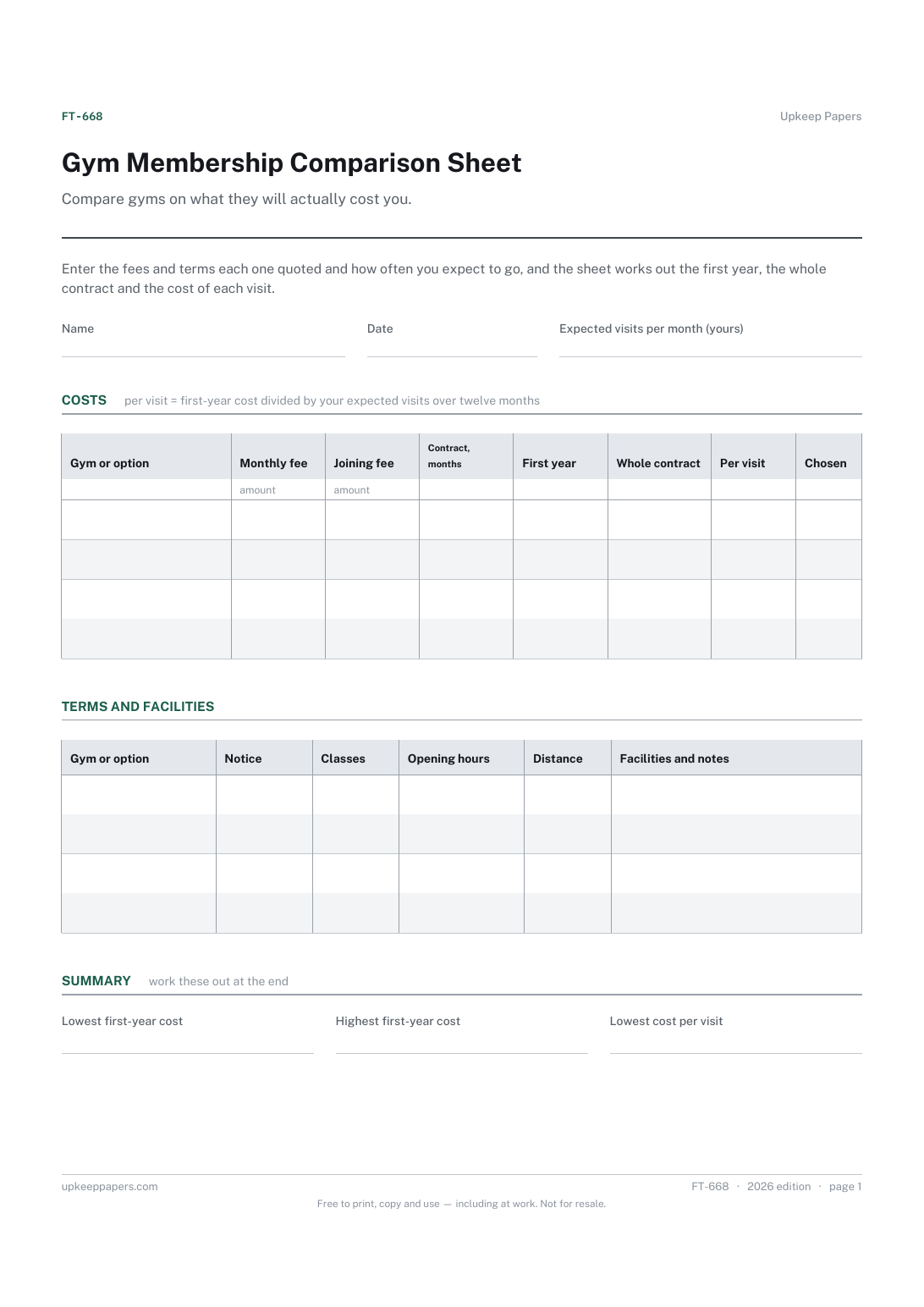
Monthly and joining fees for each gym or option, as quoted to you.
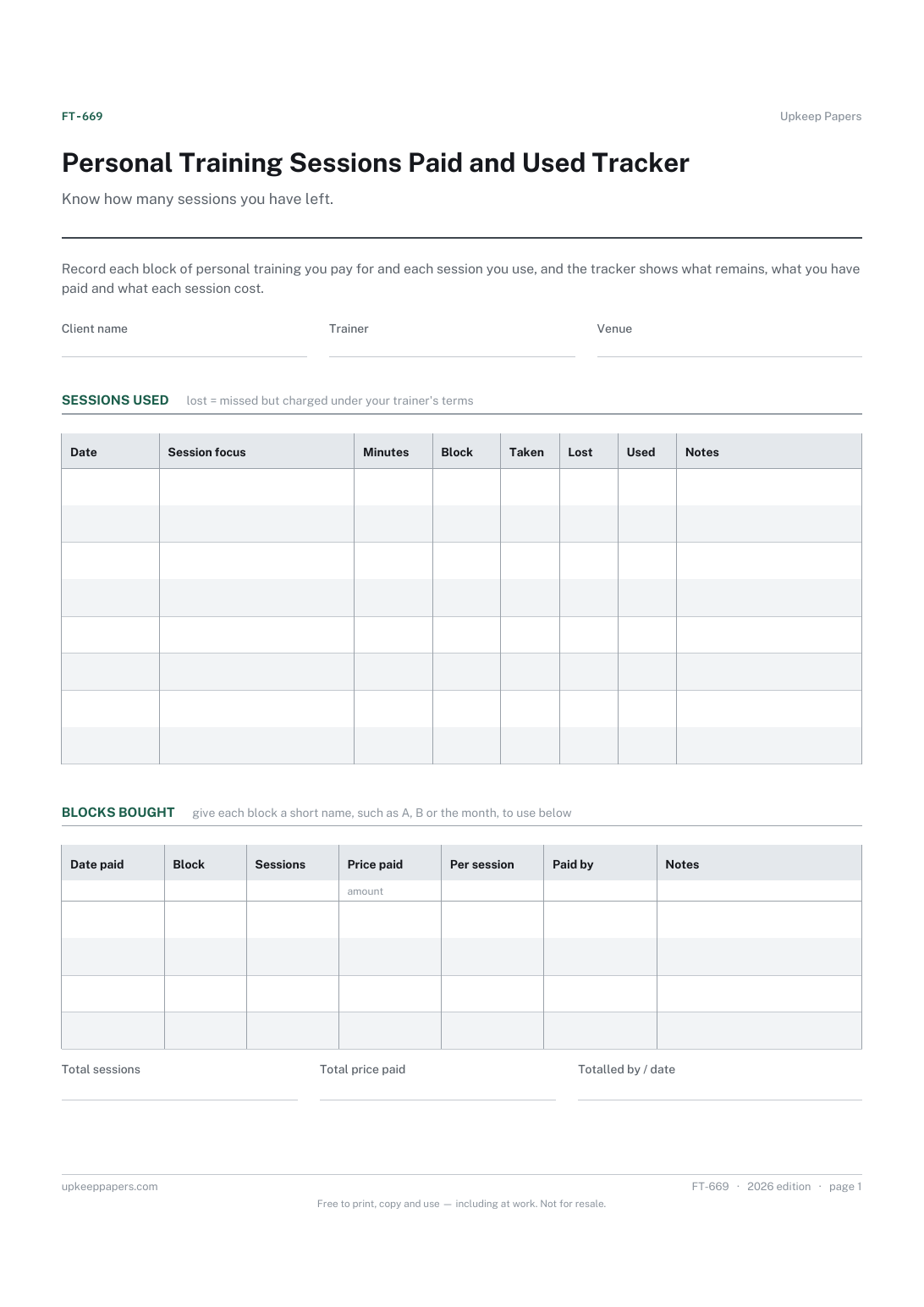
Each block bought: when, how many sessions and what it cost.
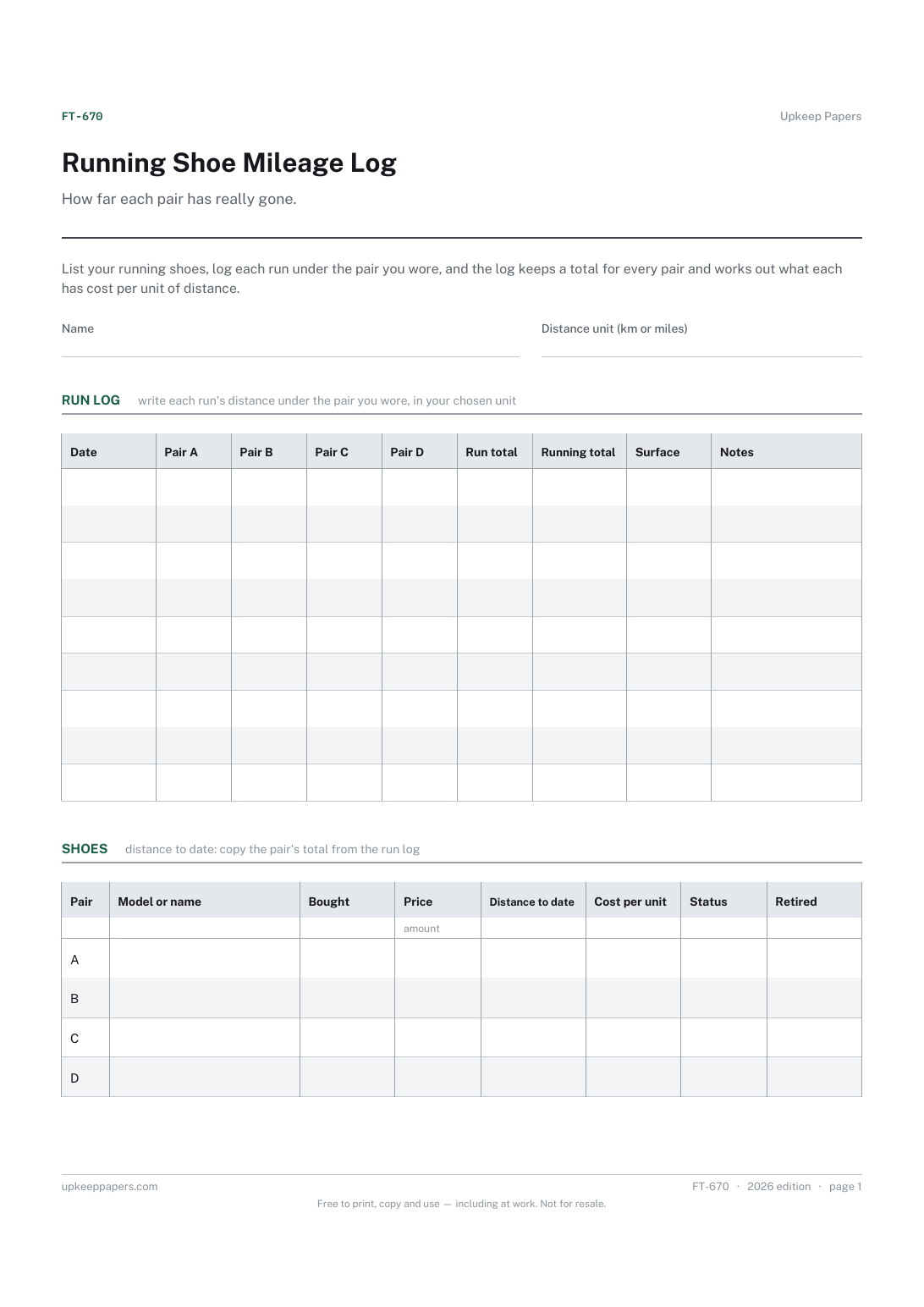
Each pair: model, date bought, price and whether it is in use or retired.
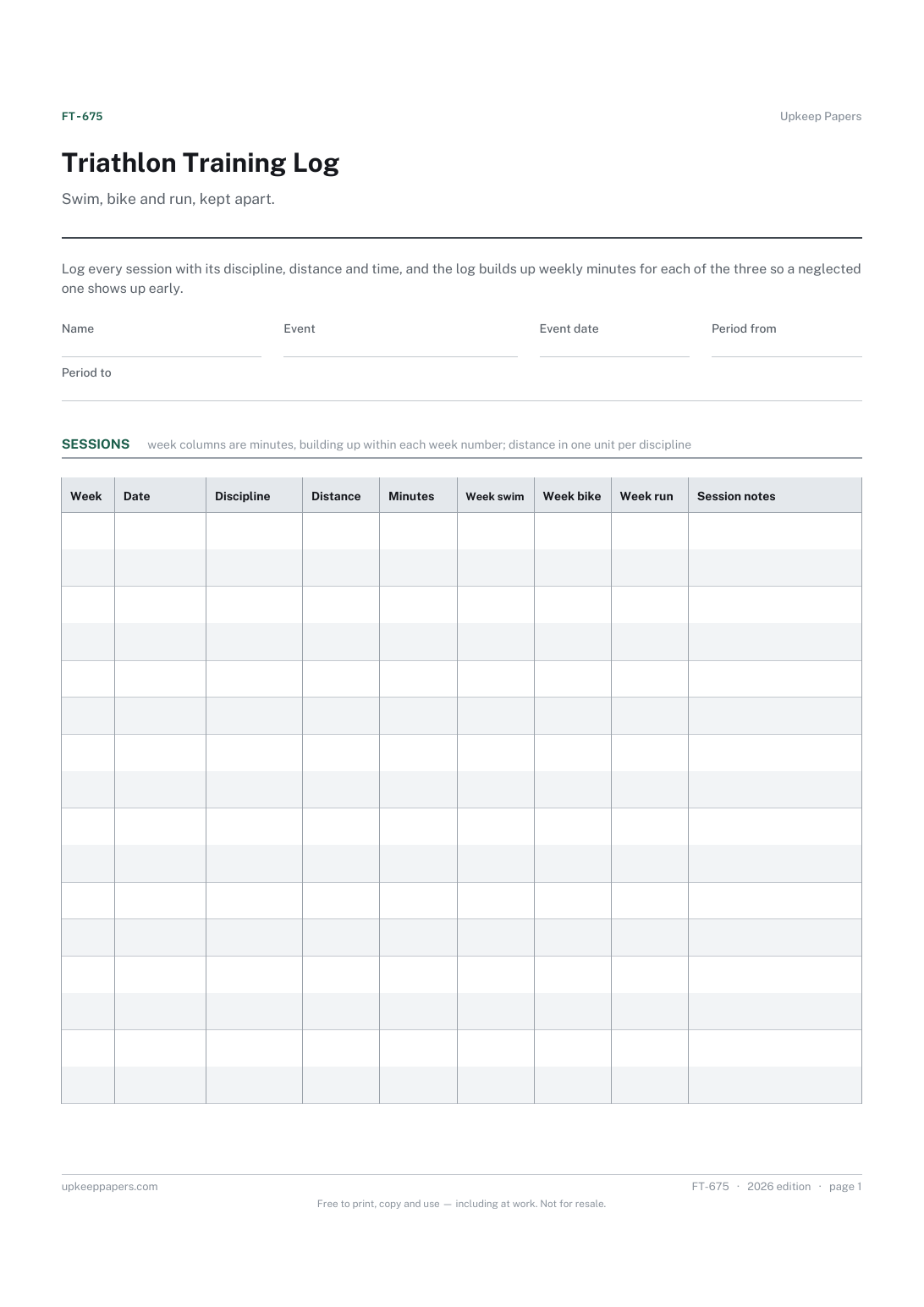
Every session with its discipline, distance and time.
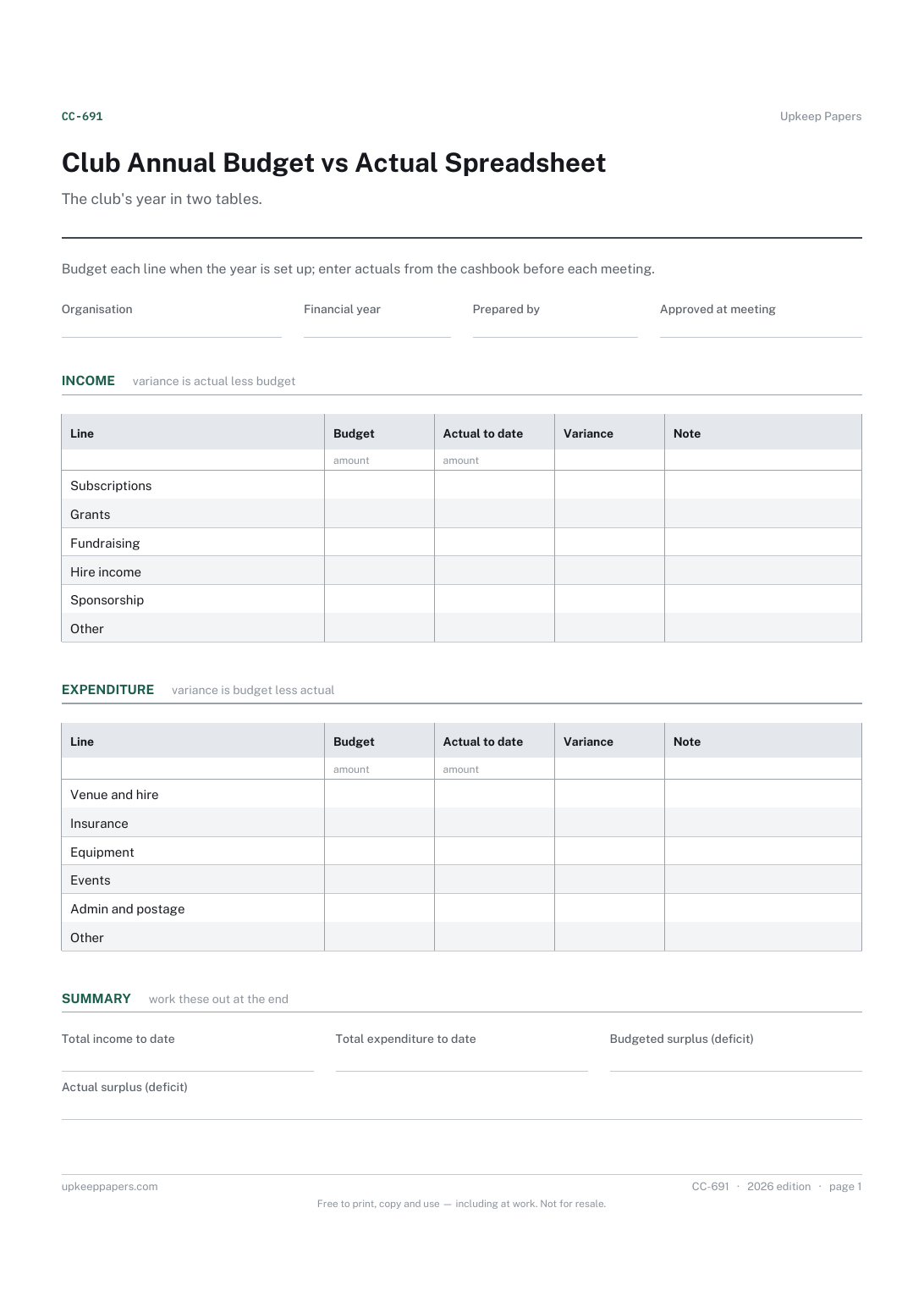
Every receipt and payment, with the date, reference and who it came from or went to.
Every member whose subs are unpaid or part paid.
Every grant awarded, with the funder, amount and date received.
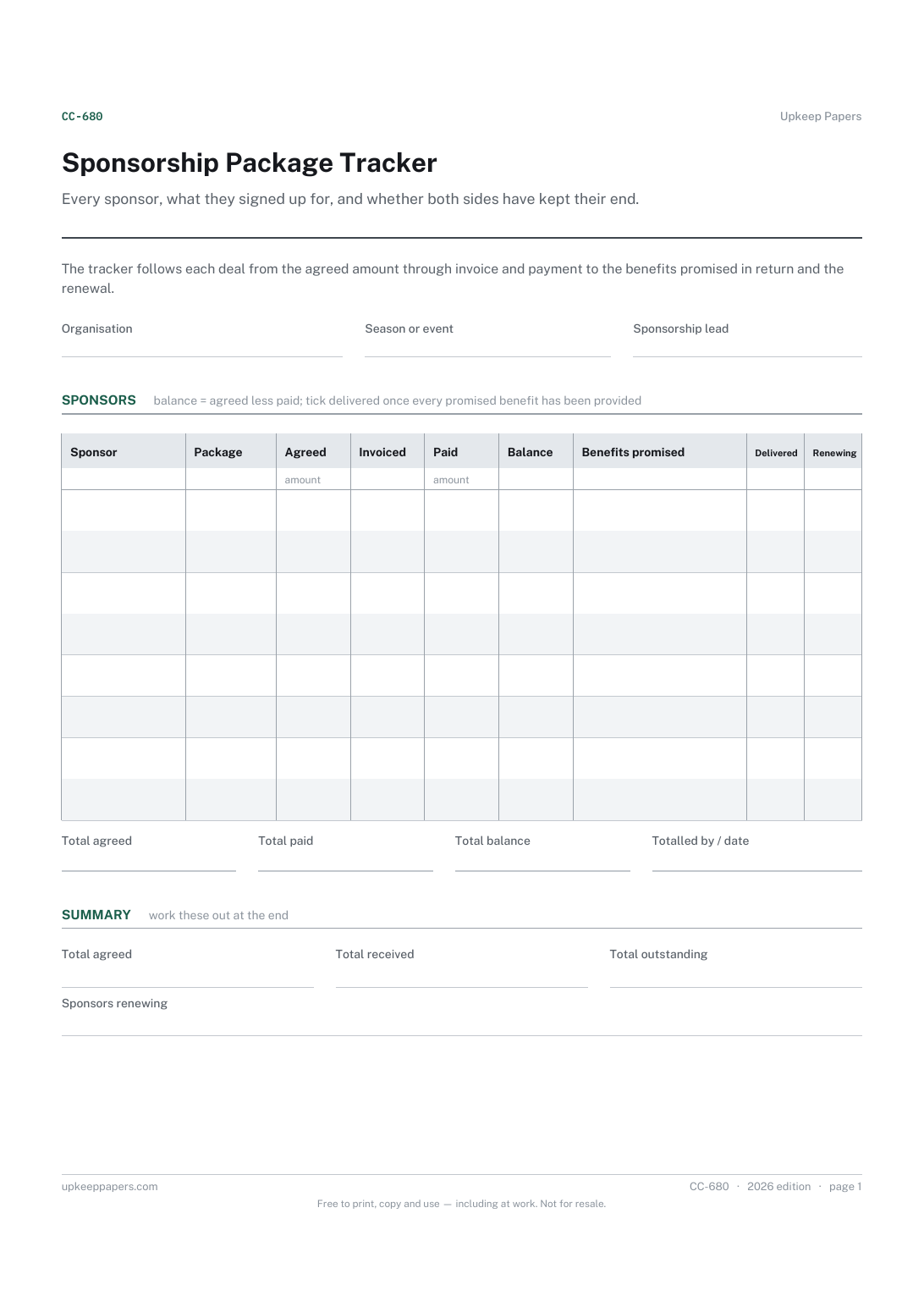
Each sponsor and the package or tier they agreed.
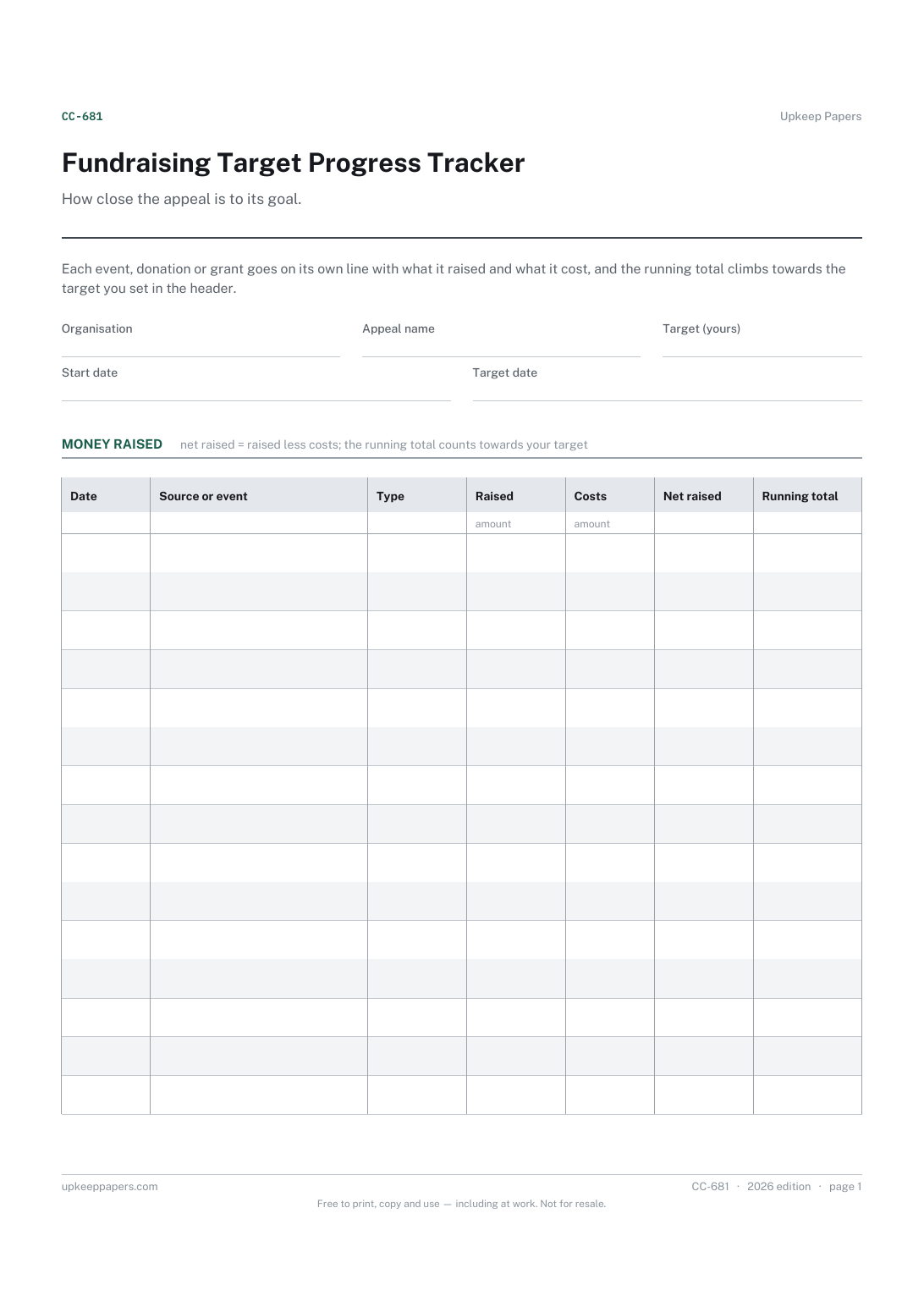
Every source of money towards the appeal, with the date.
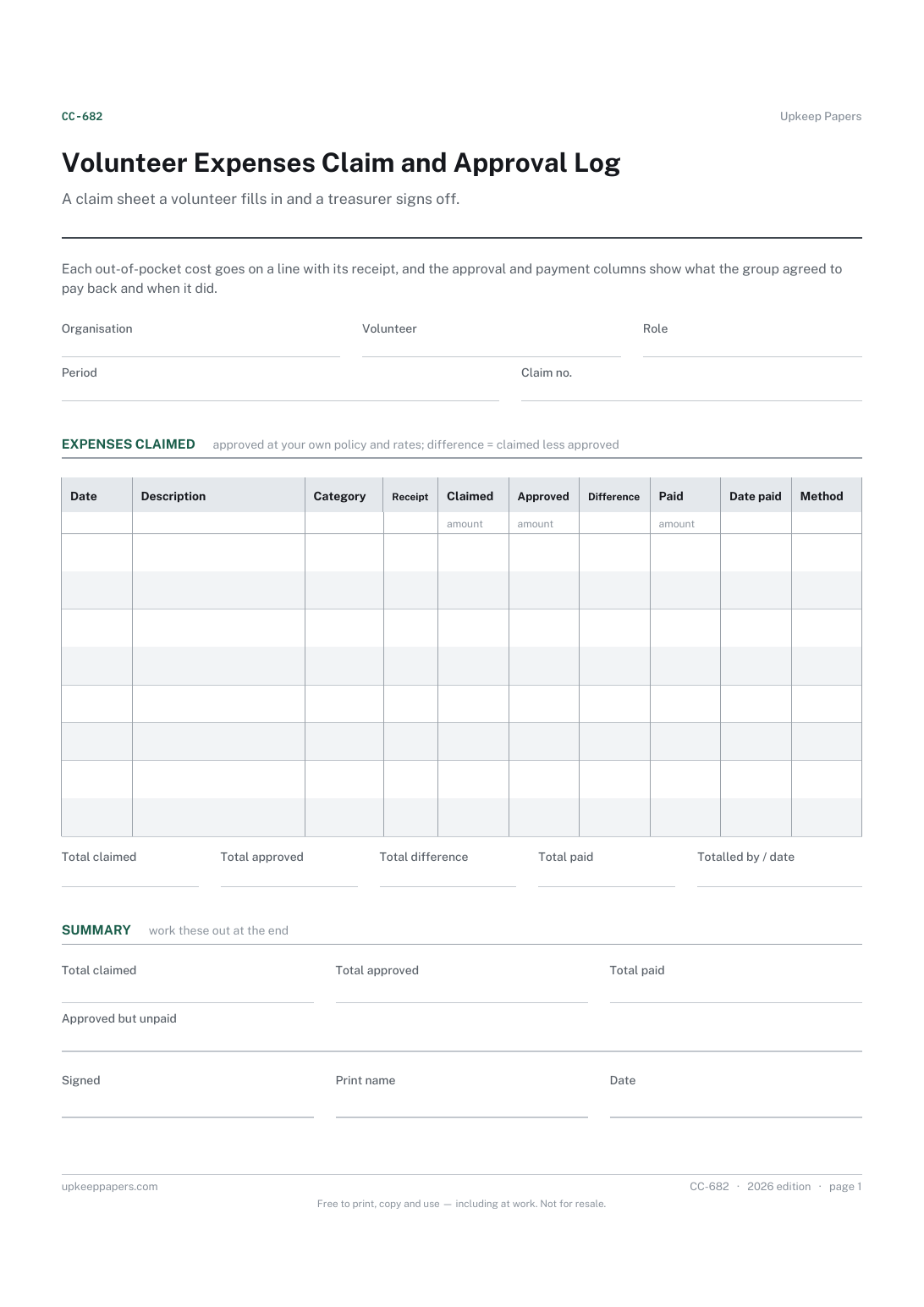
Each cost the volunteer paid, with the date and what it was for.
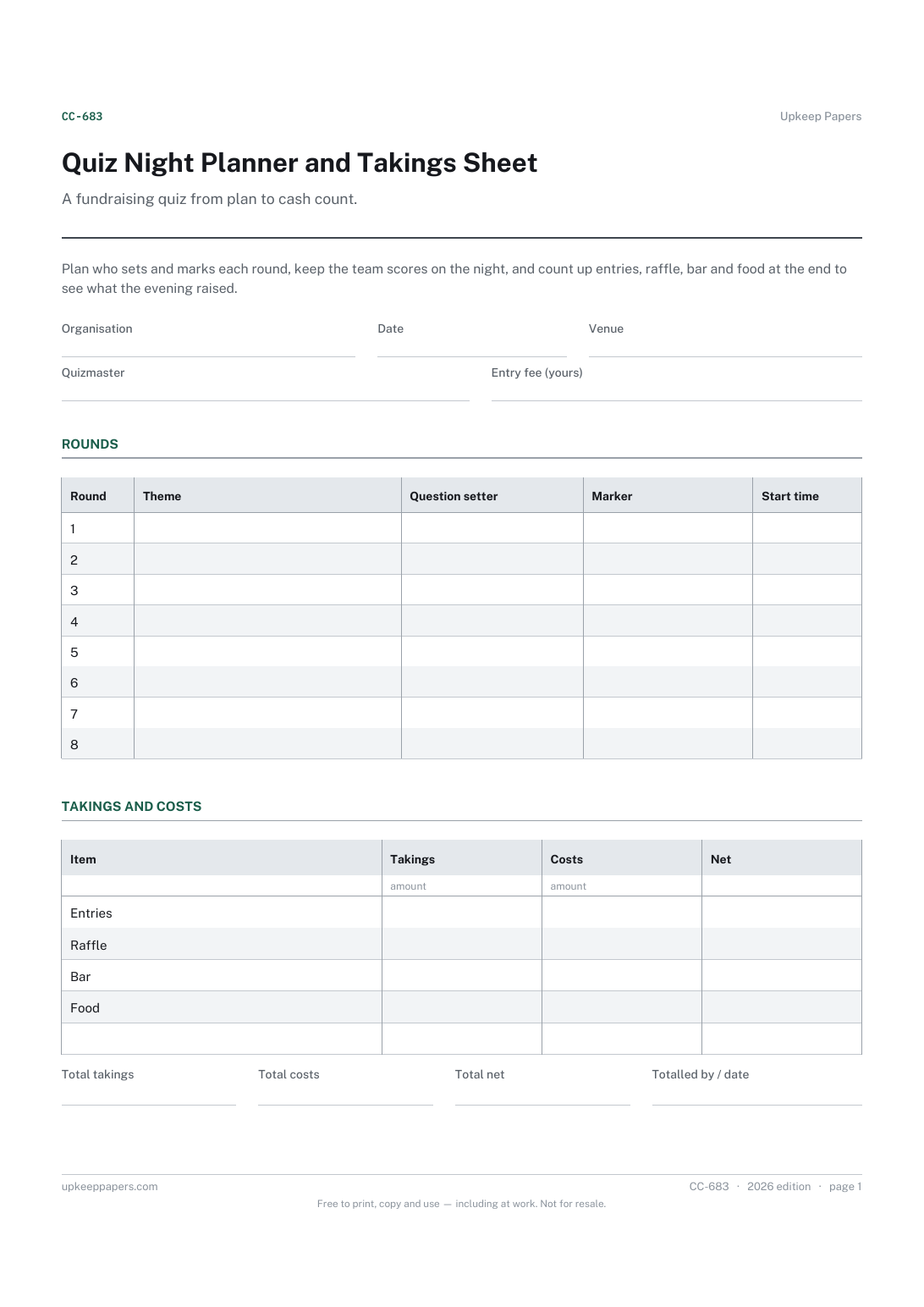
Each round's theme, who is setting it and who is marking.
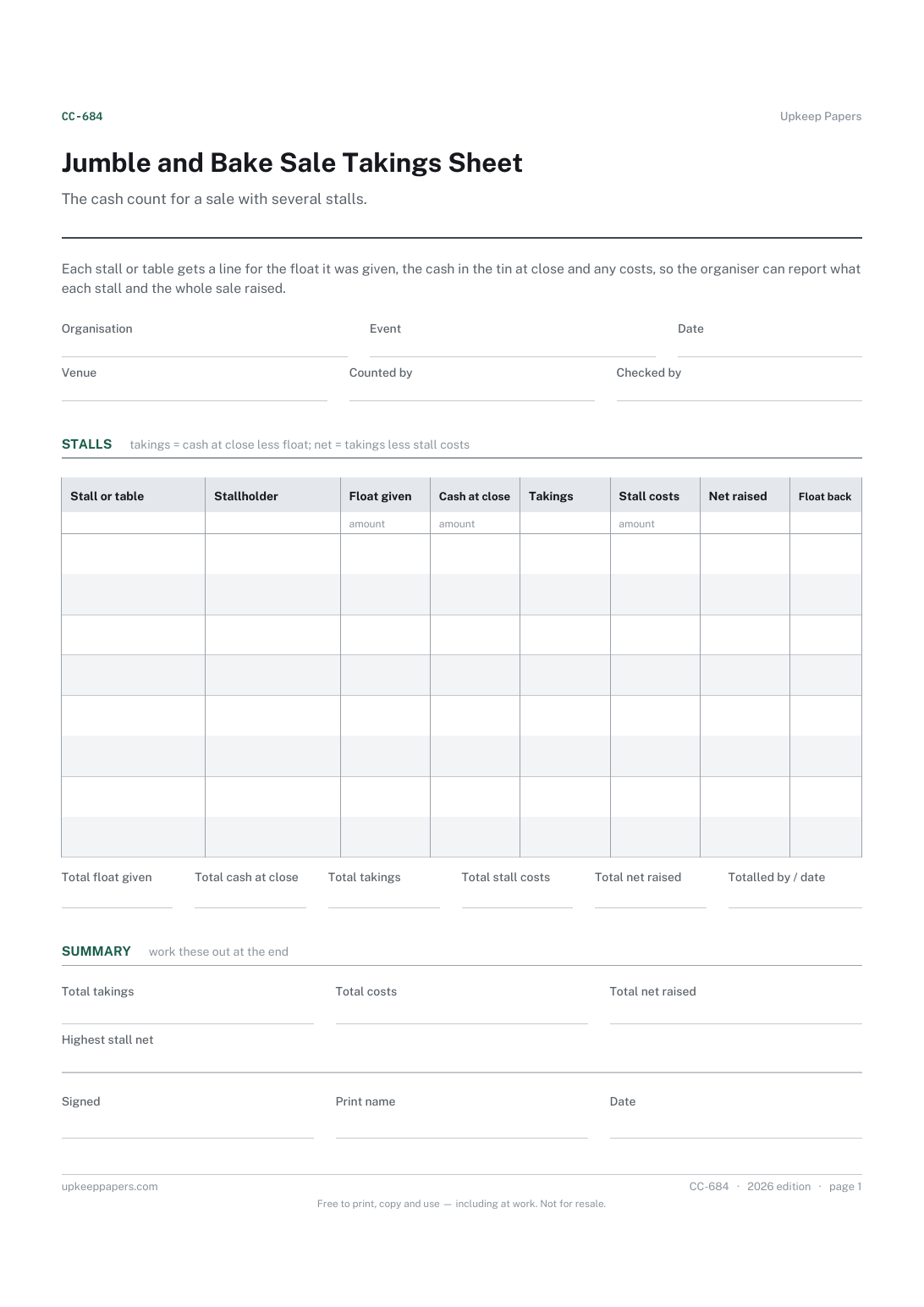
The float handed to each stall at the start.
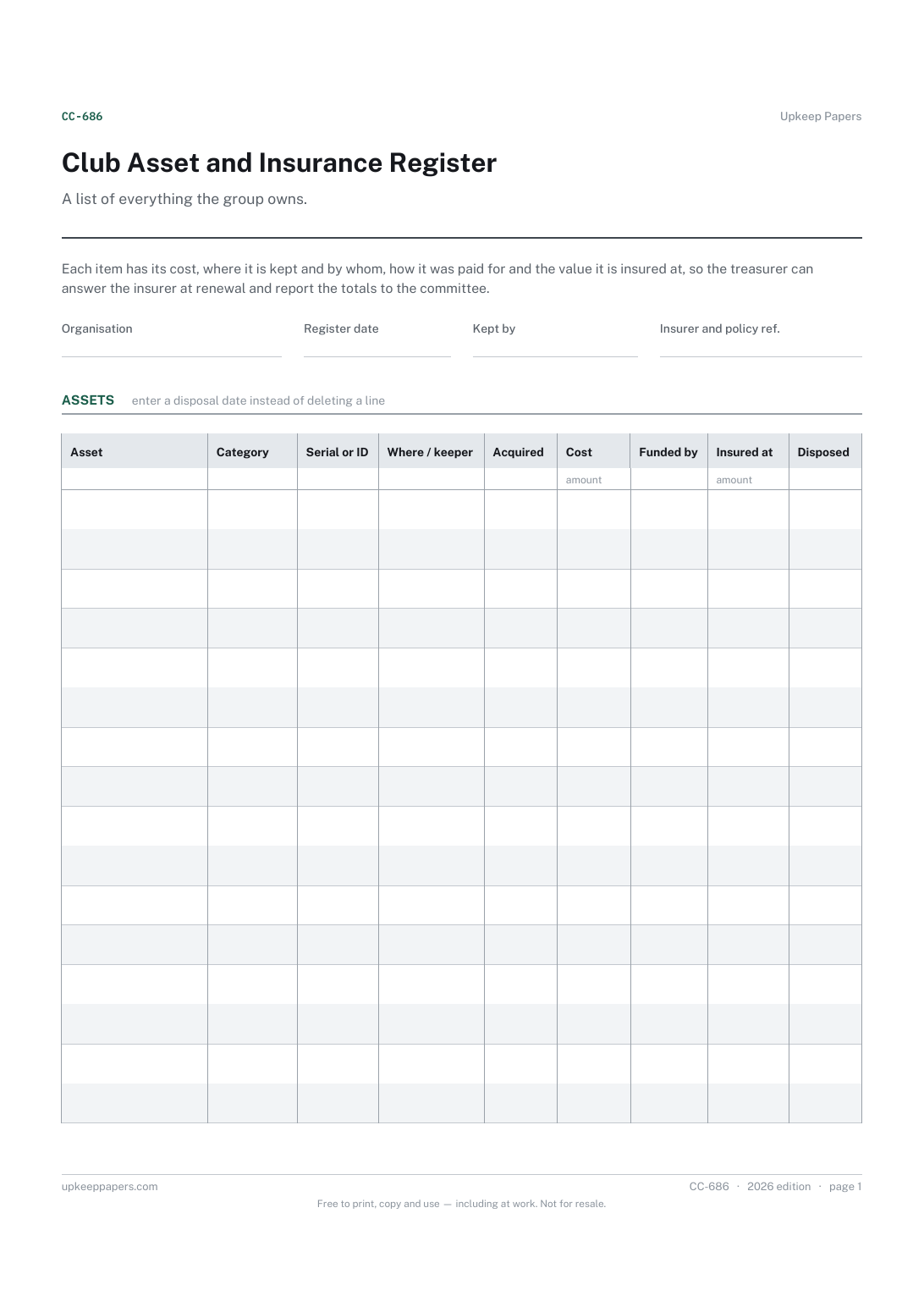
Every item the group owns, with a serial number or ID mark.
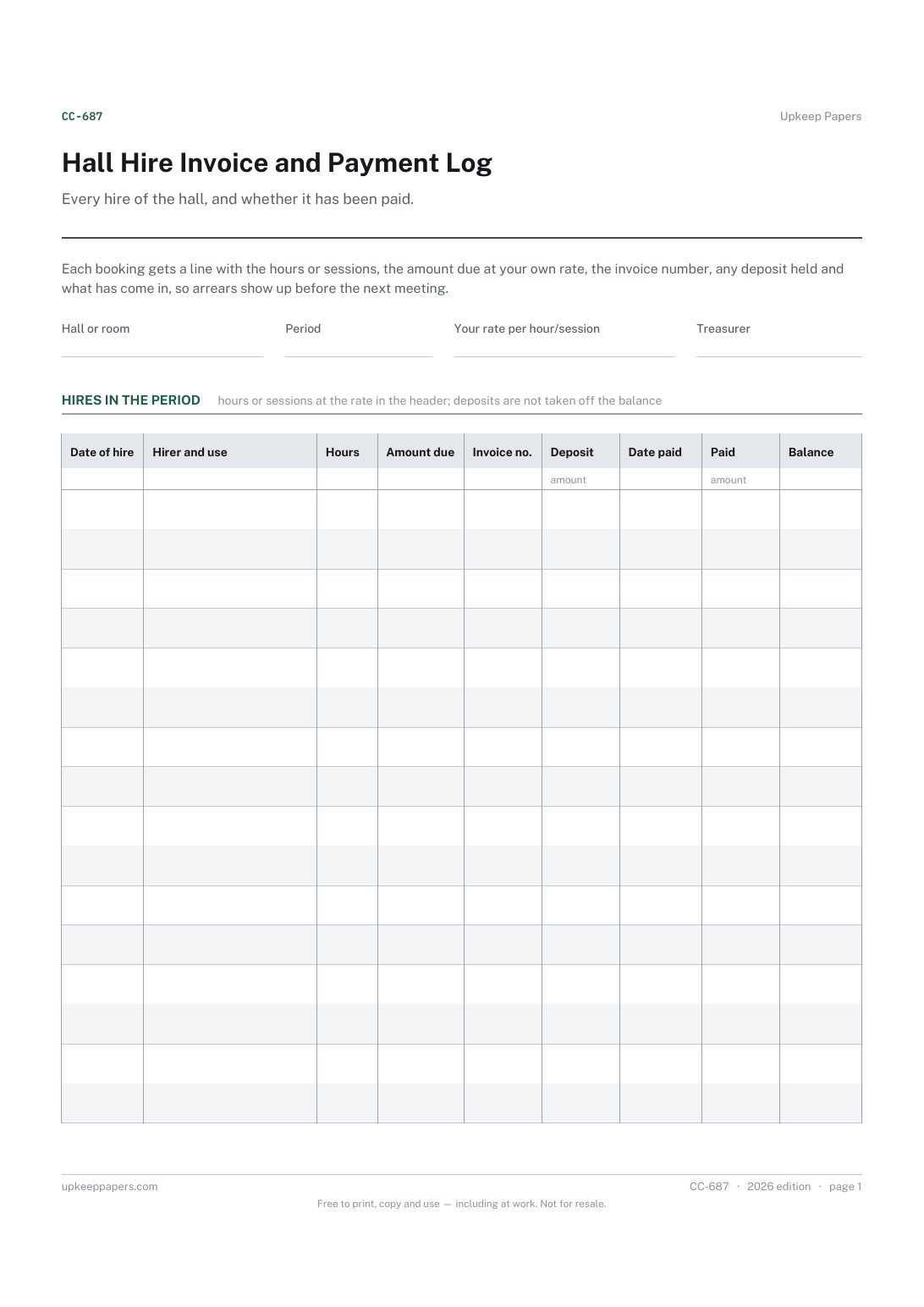
Every hire in the period, with the hirer and what the hall was used for.
The income the committee expects, by source.
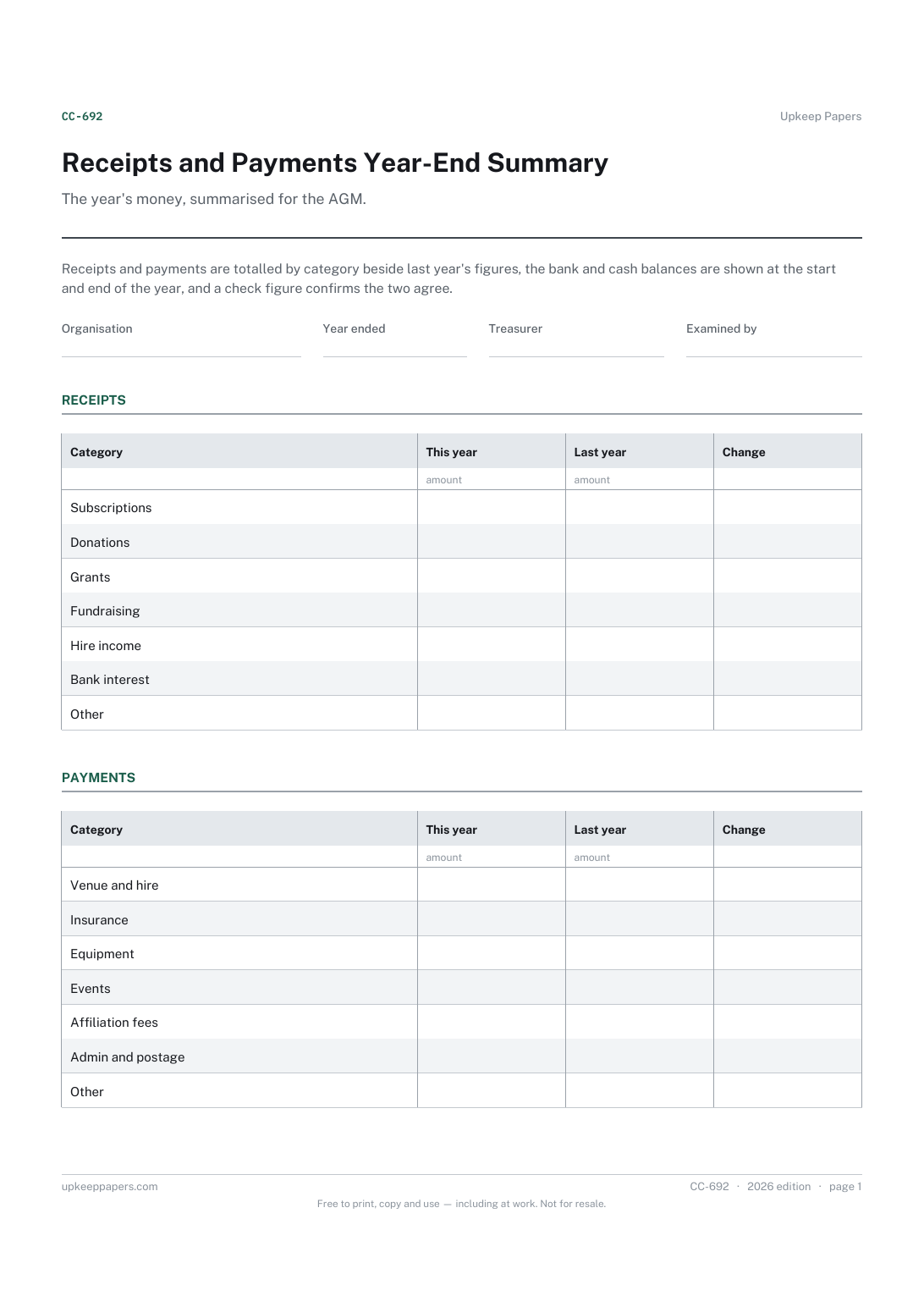
Money received in the year, by category, beside last year.
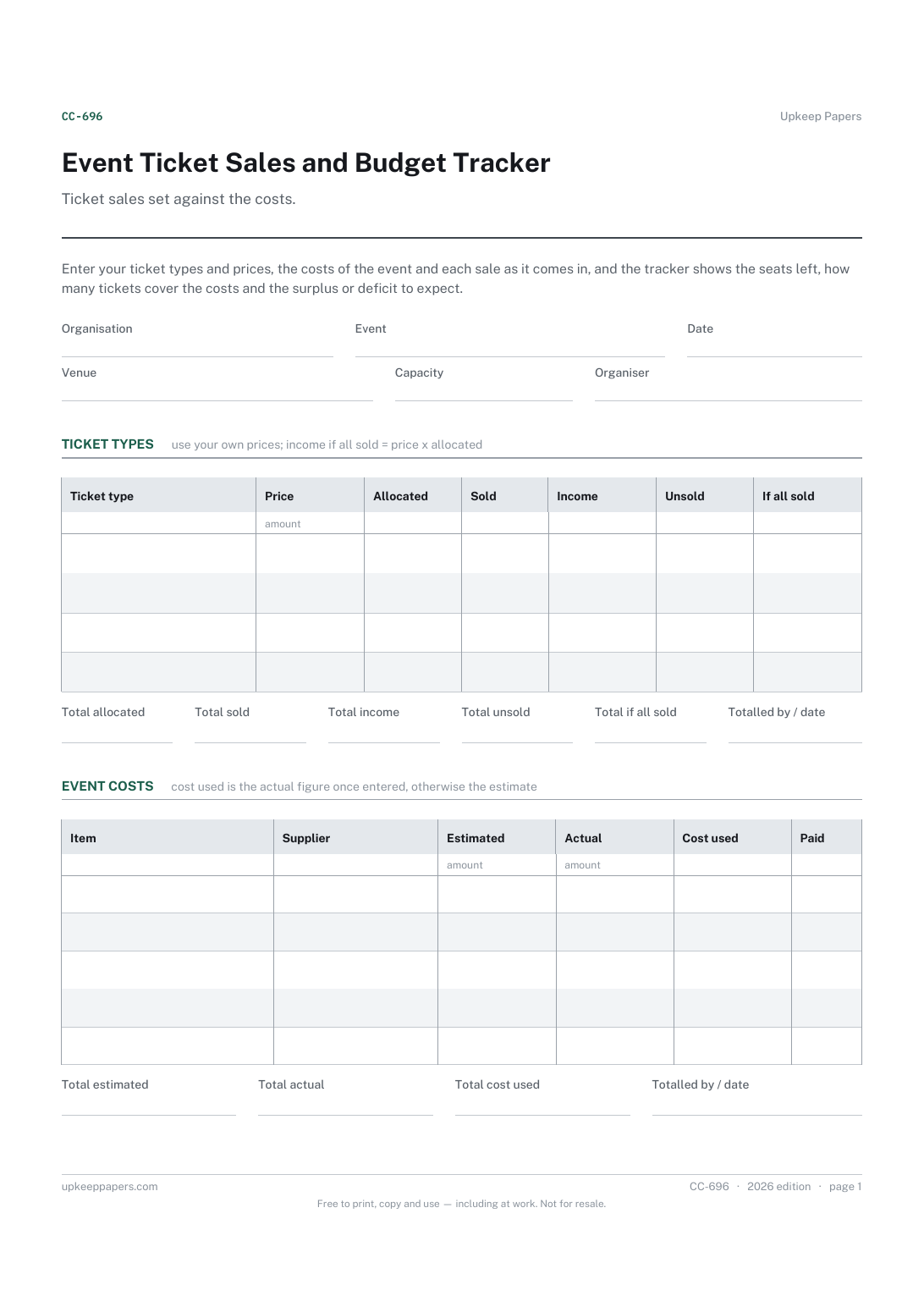
Each ticket type with its price, allocation and number sold.
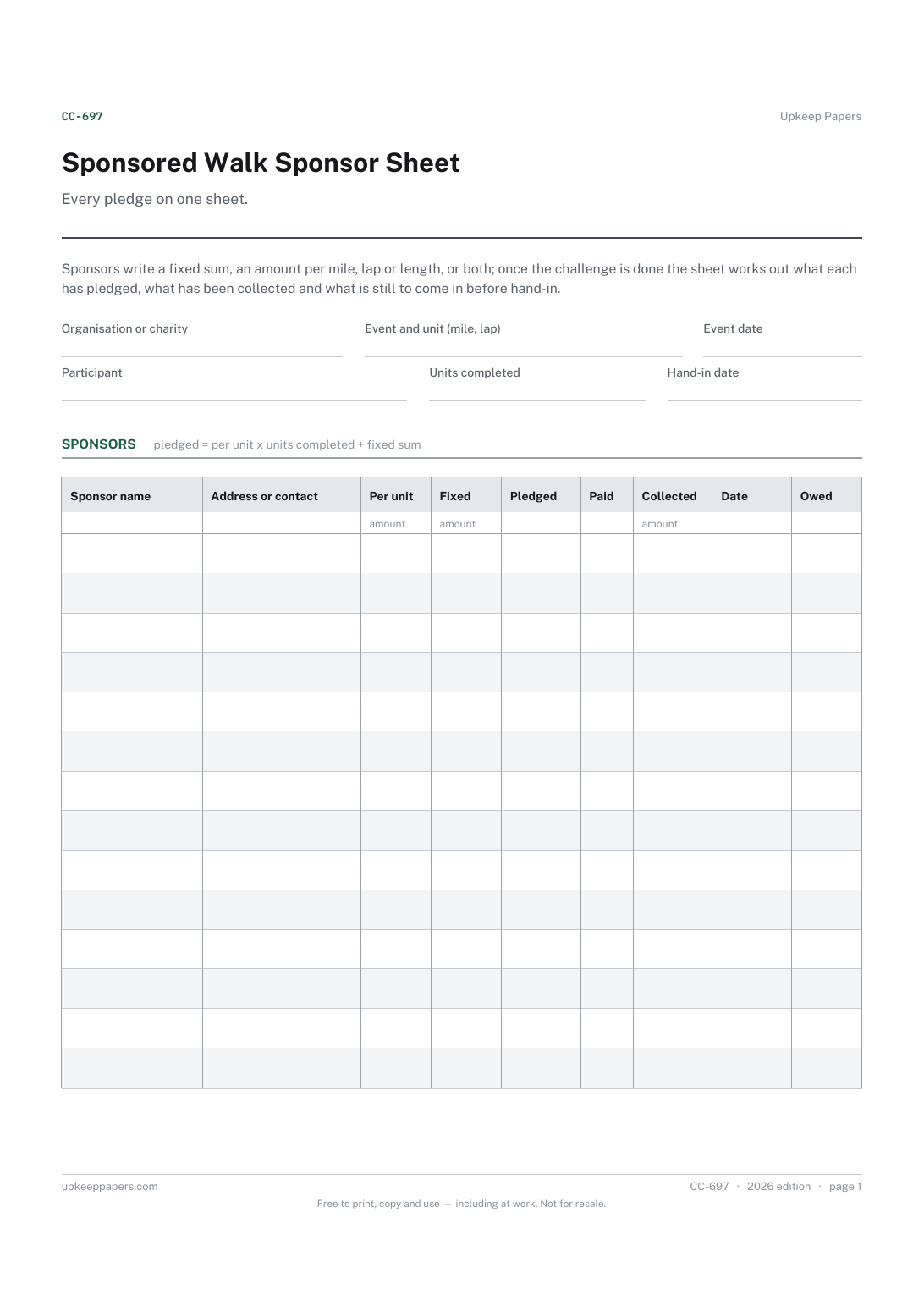
The event, the participant and the hand-in date.
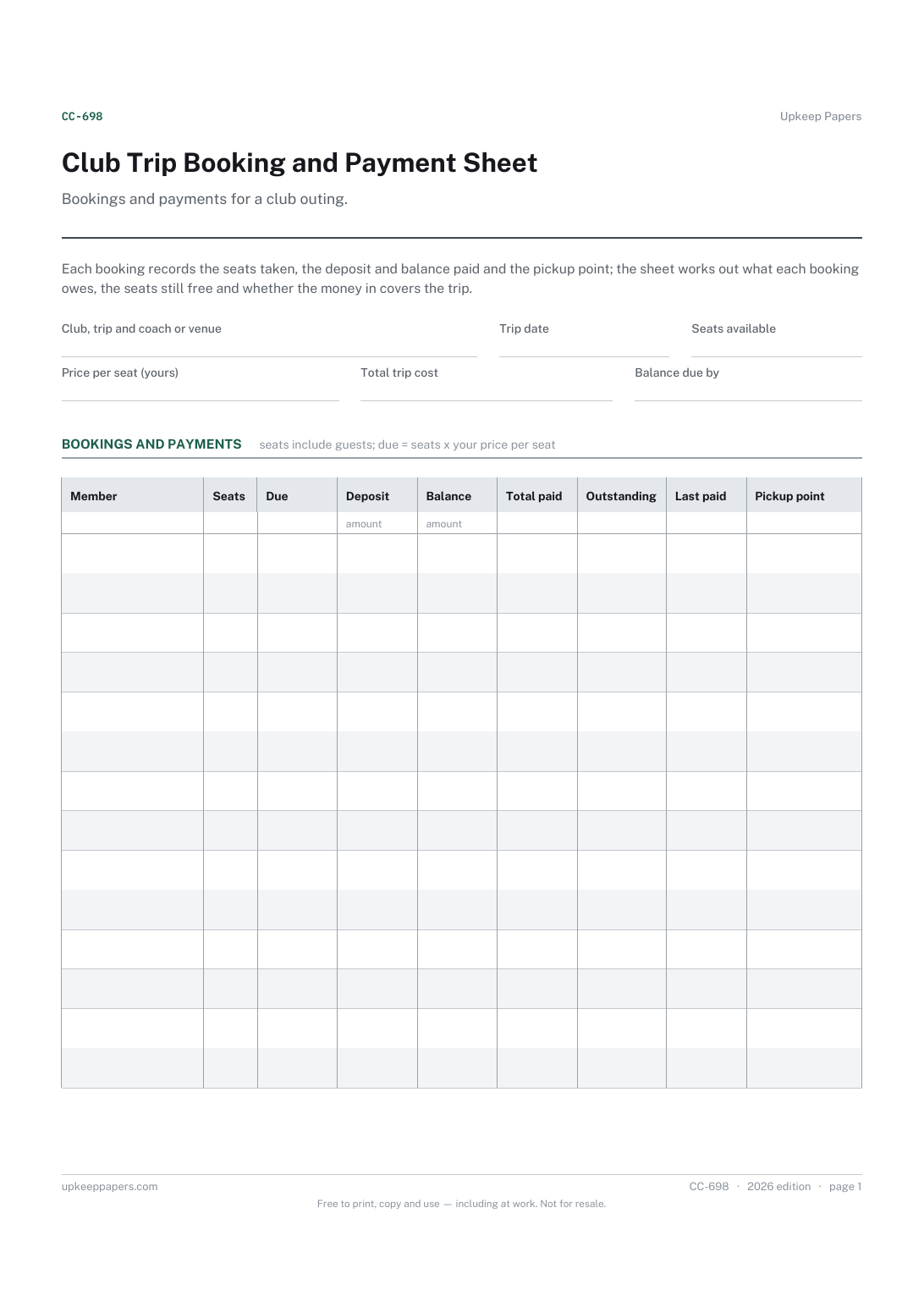
The trip, date, seats available and your own price per seat.
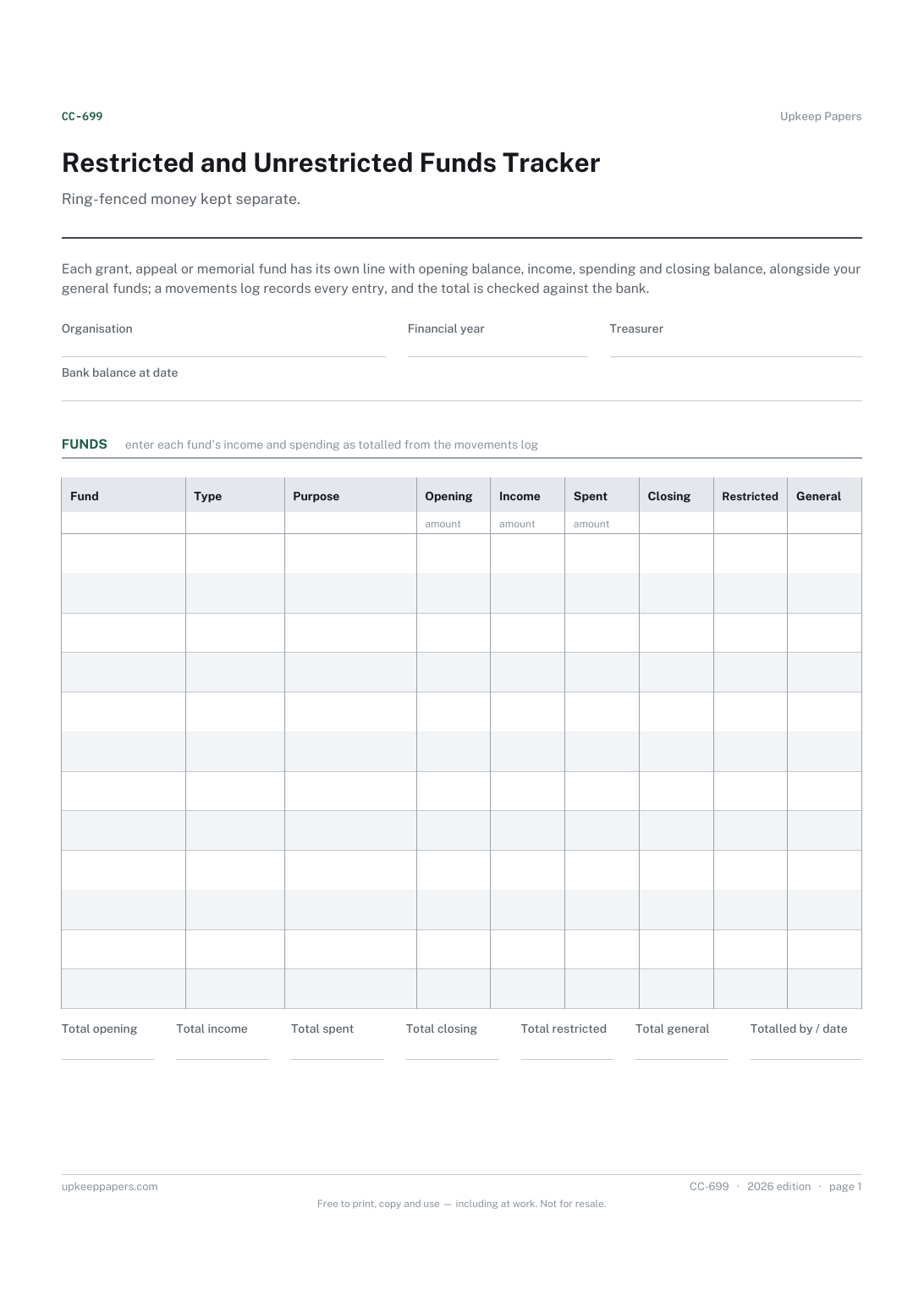
Every fund, marked restricted or unrestricted, with its purpose.
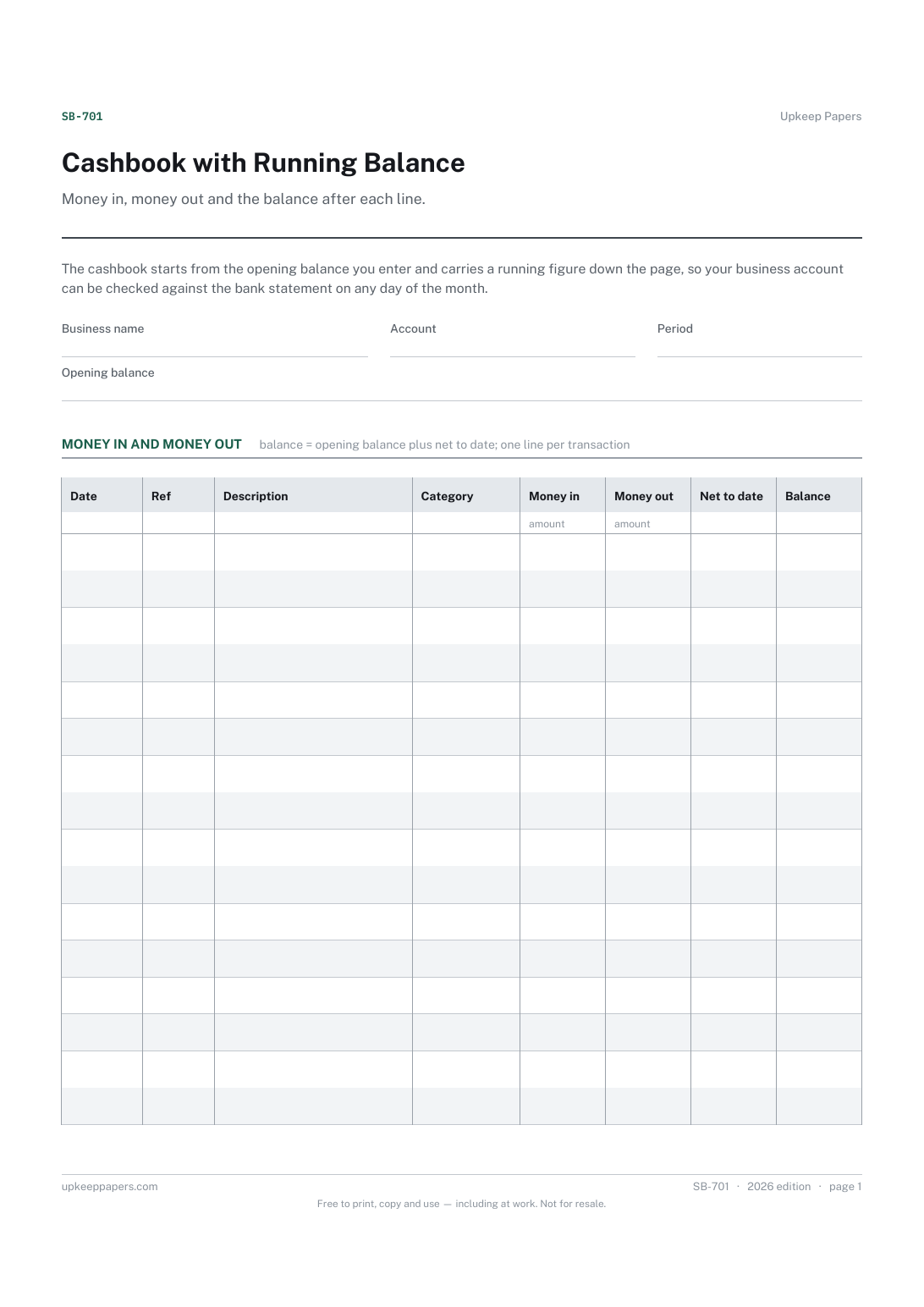
Every receipt and payment for the period, in date order.
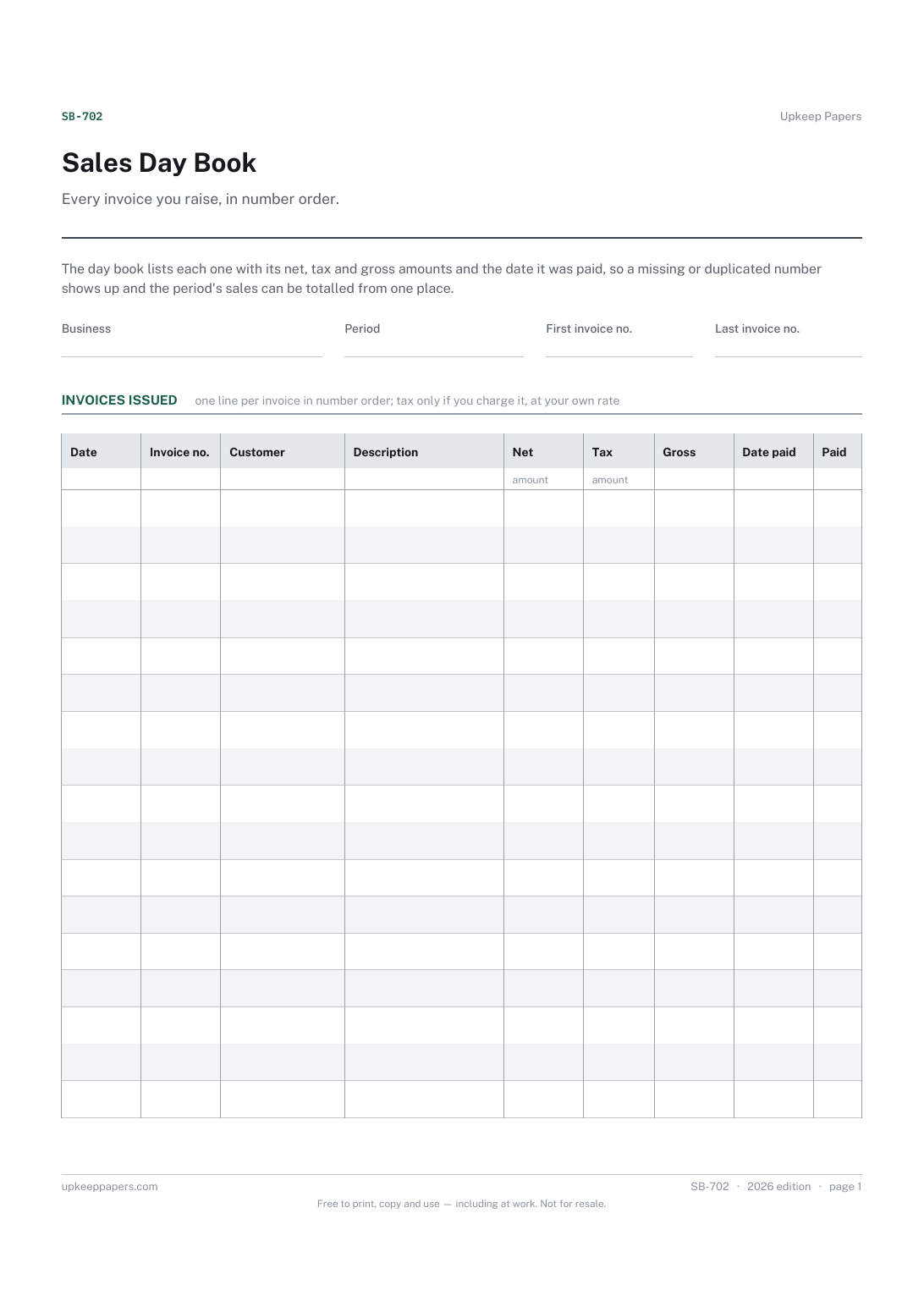
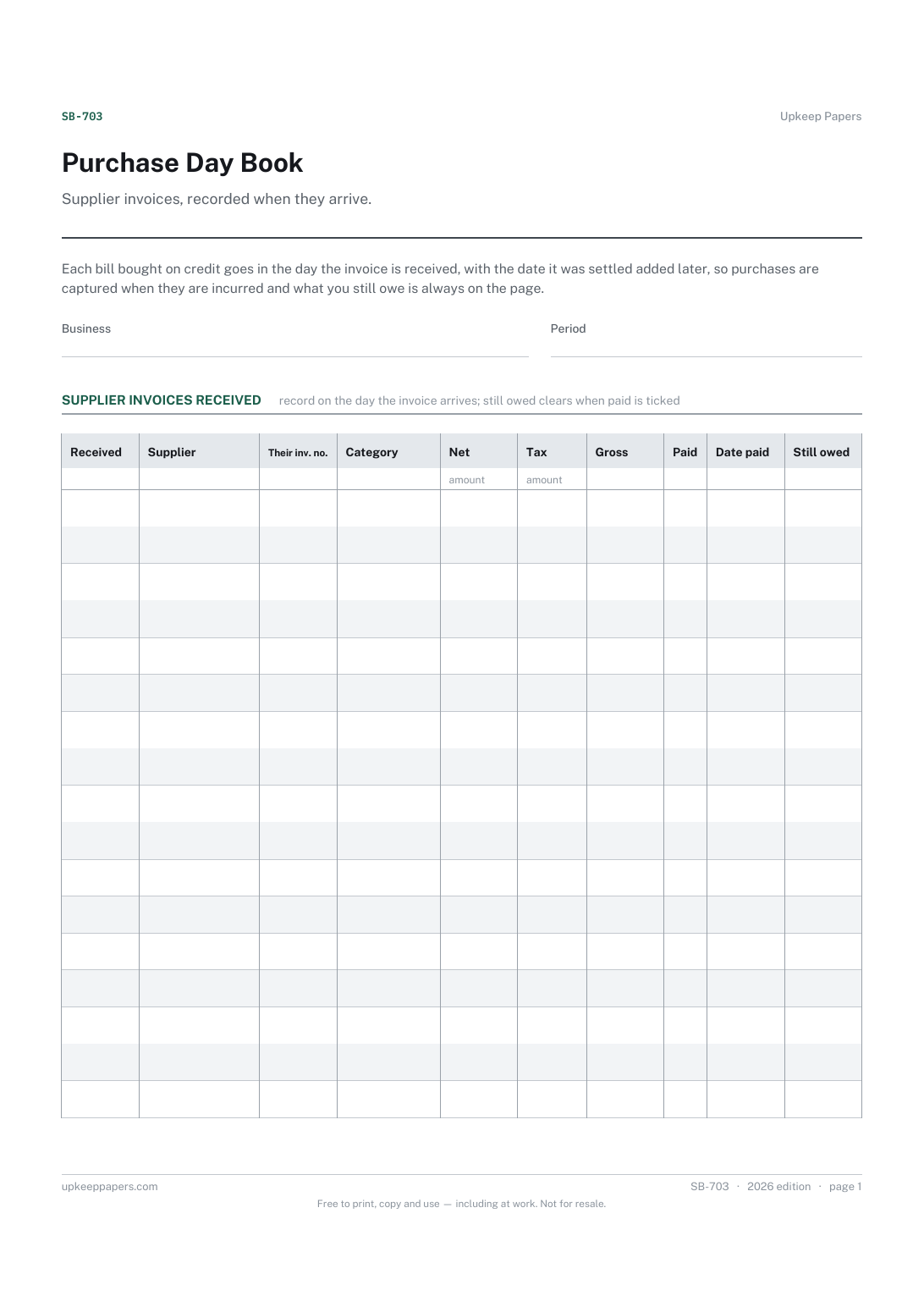
Every supplier invoice received, with its date and number.
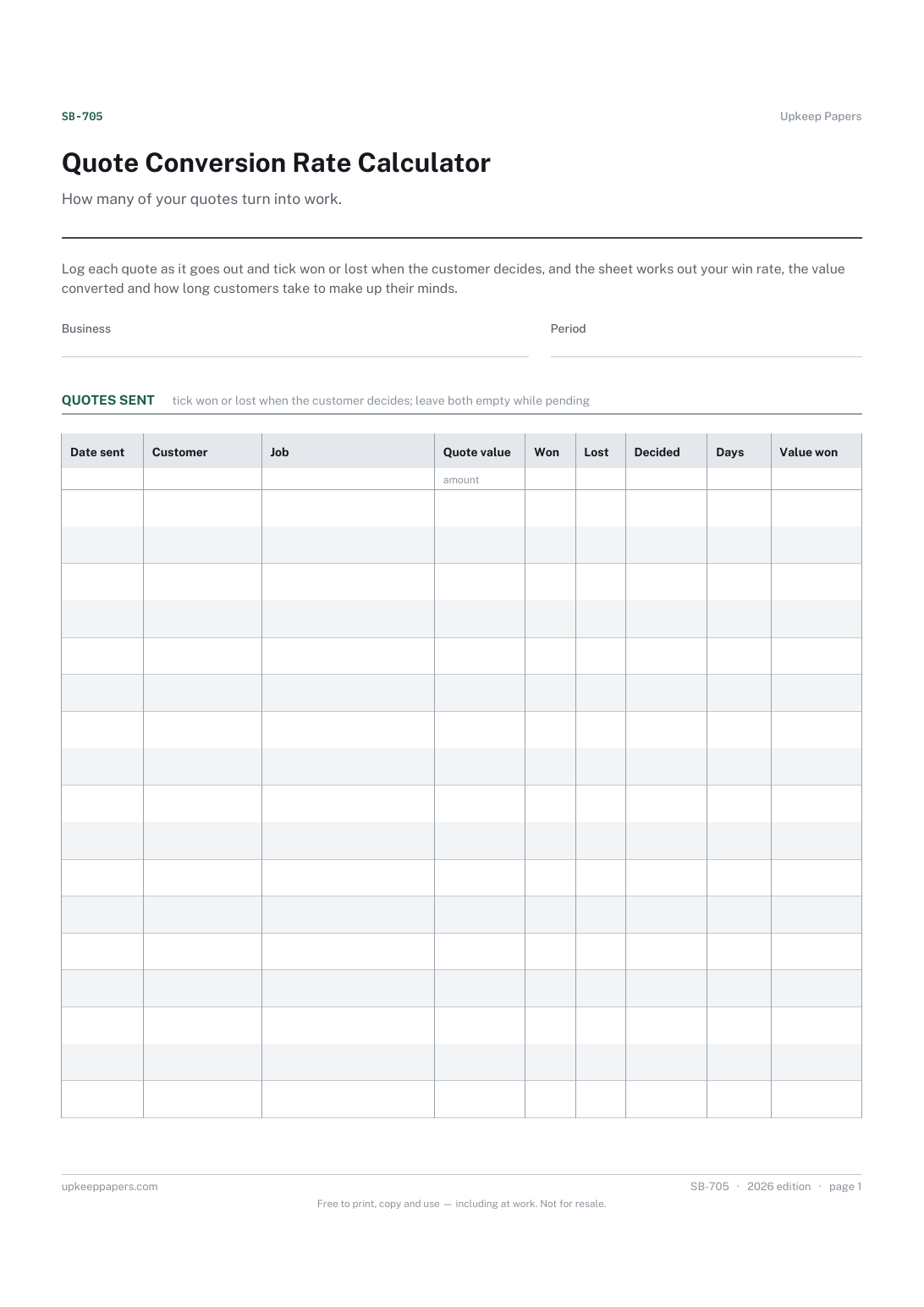
Every quote sent, to whom and for how much.
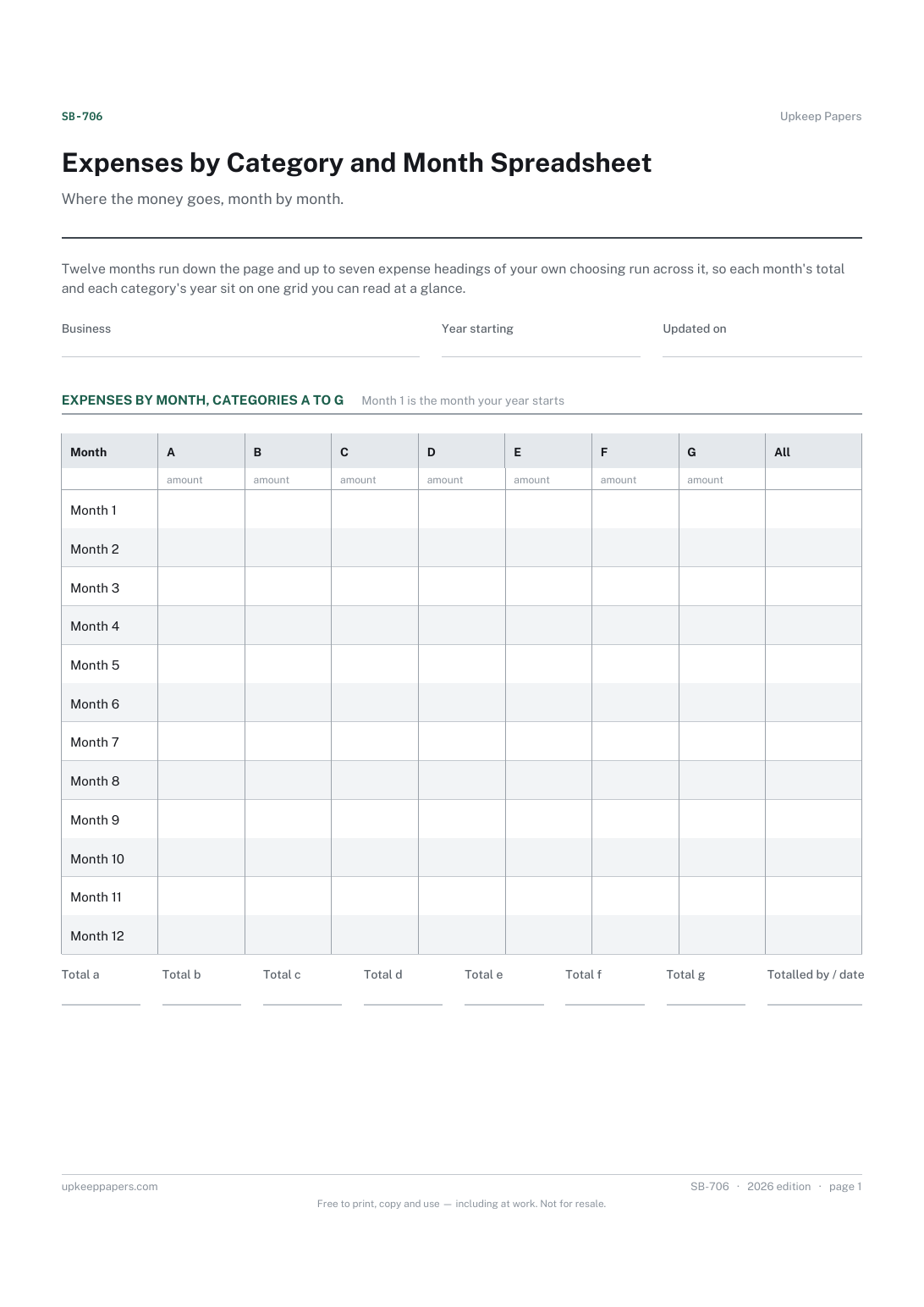
What each expense category cost in each month.
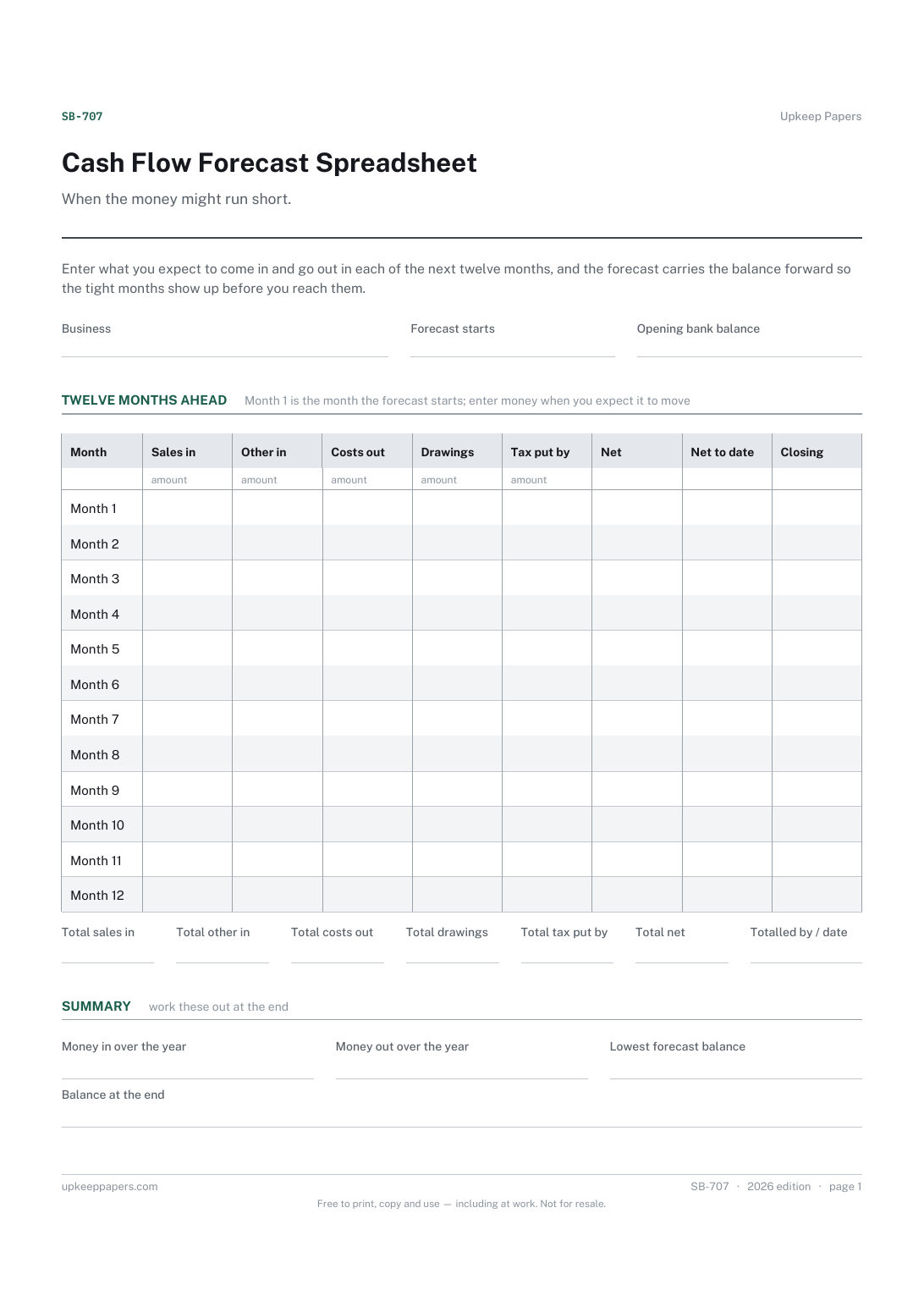
Expected receipts from sales and from other sources each month.
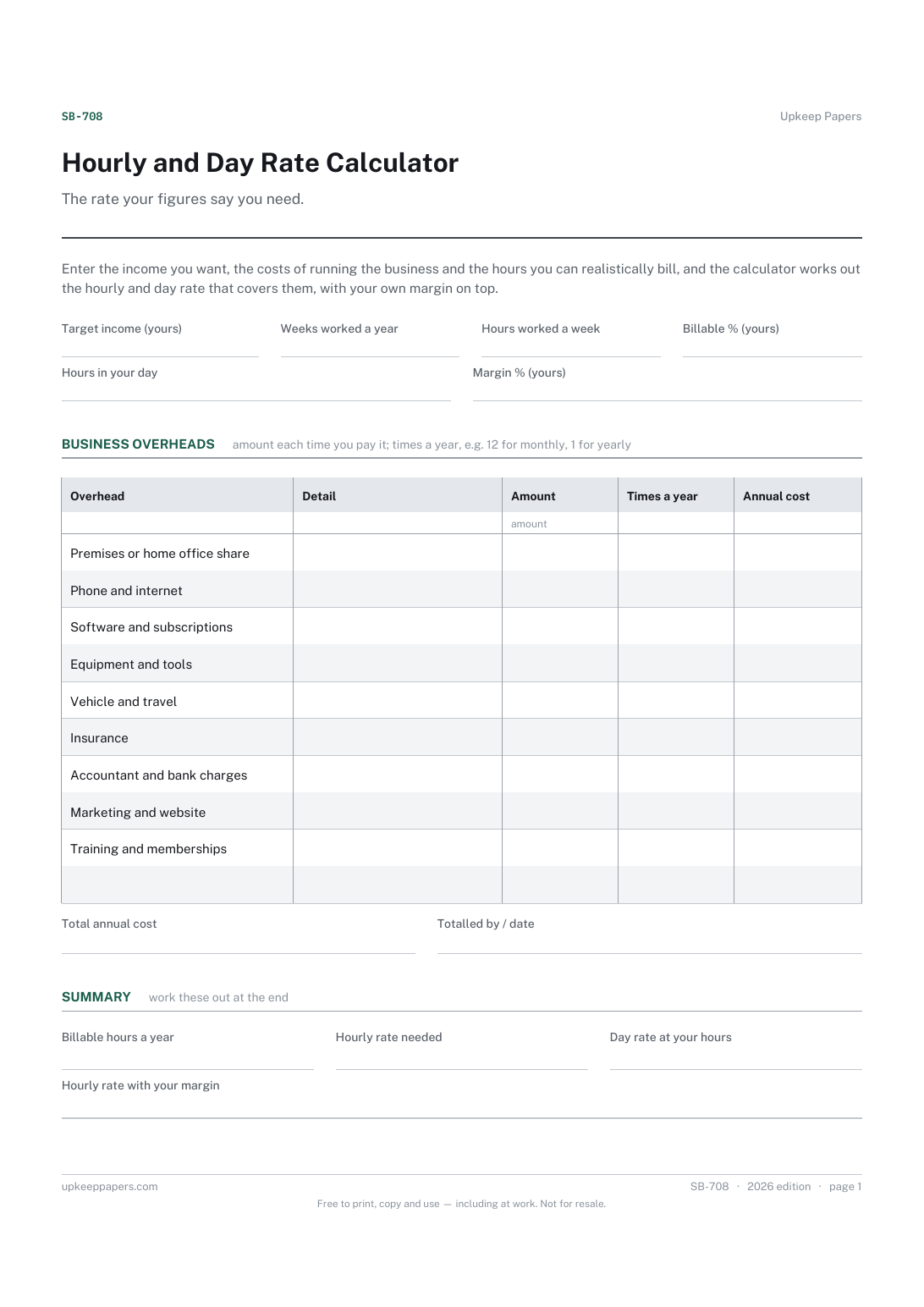
The income you want to take from the business in a year.
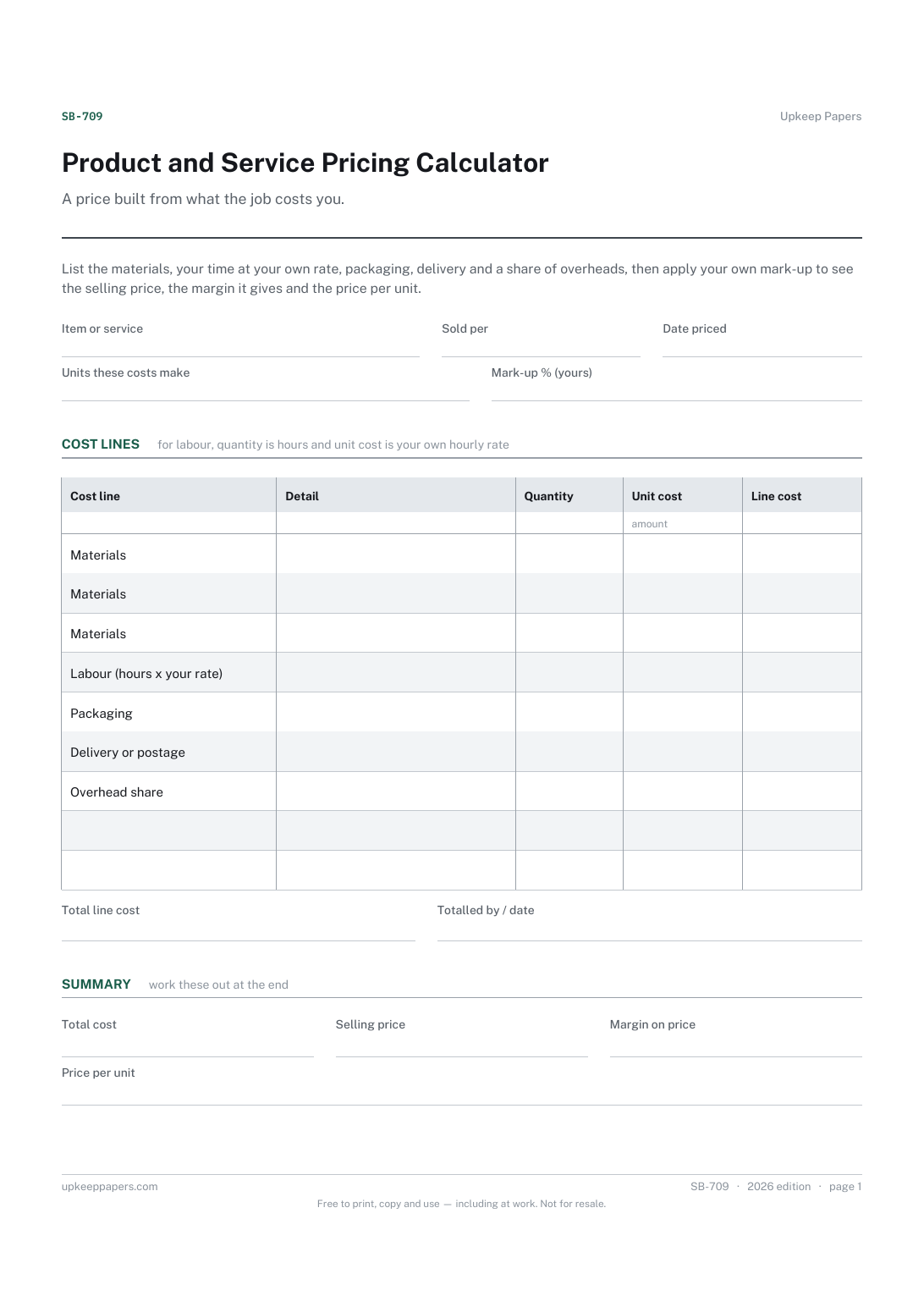
Every cost that goes into one item or one job.
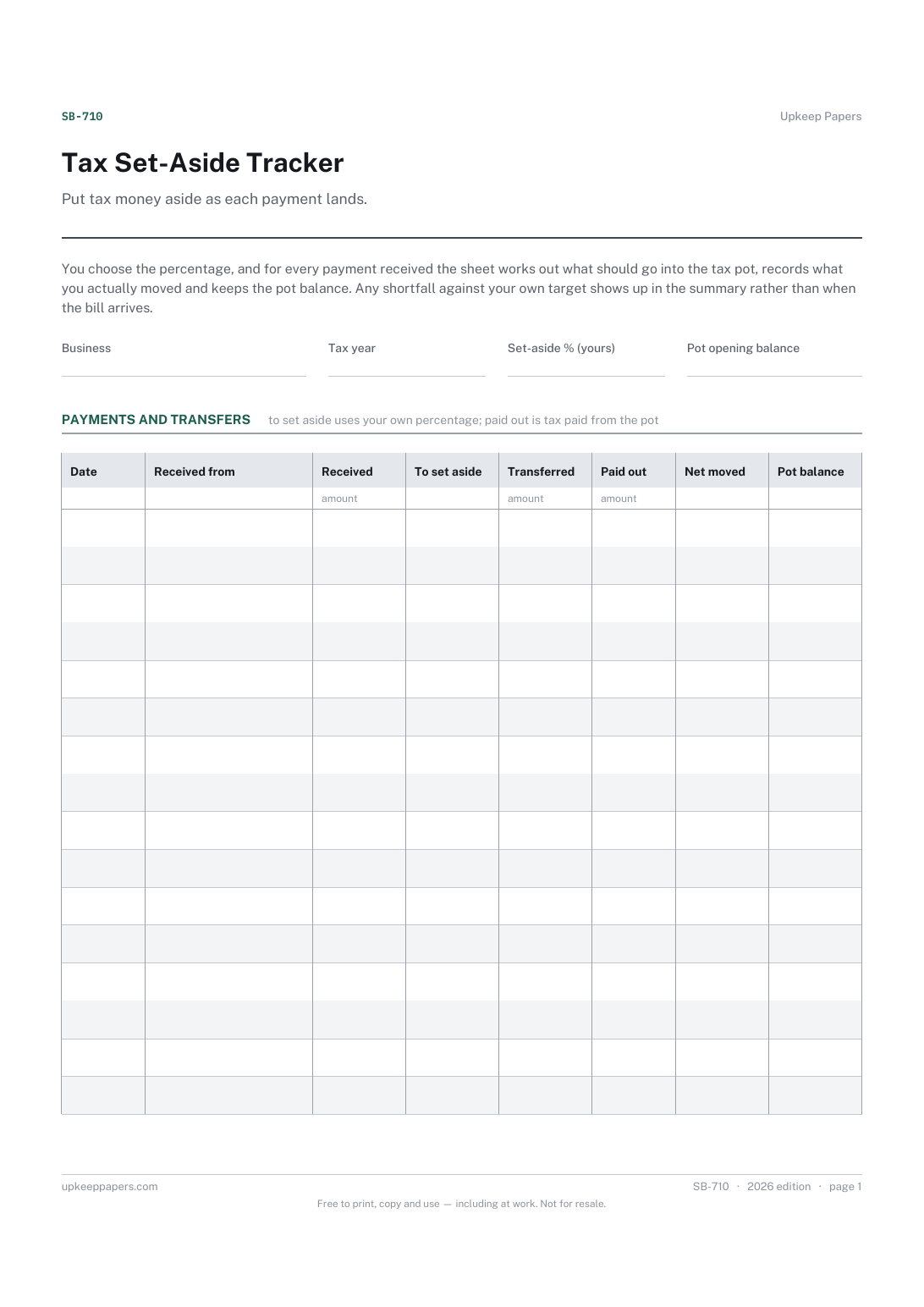
Each payment received, who it came from and when.
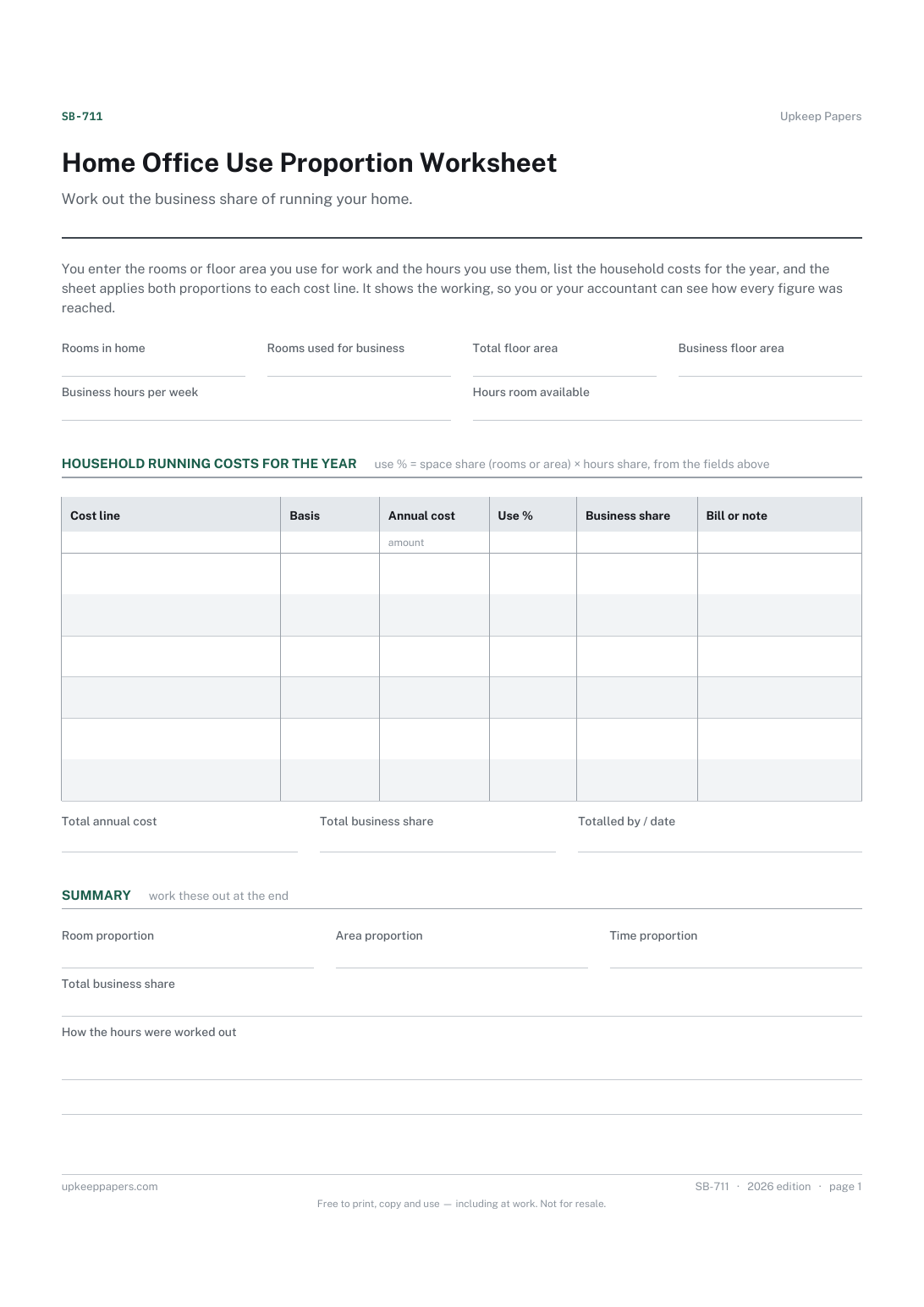
The room count and floor area of the home and of the space used for work.
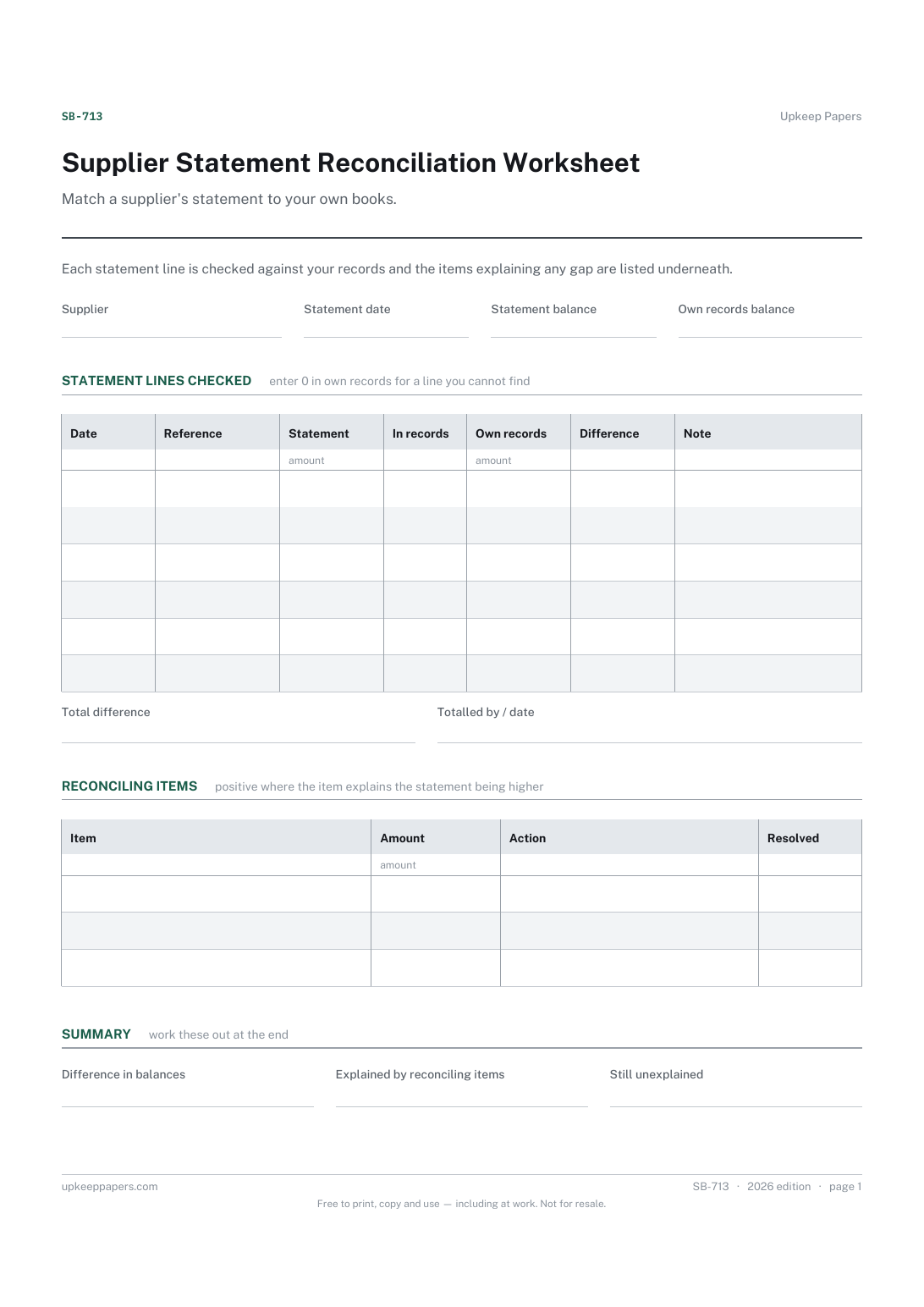
The statement balance and the balance your own records show.
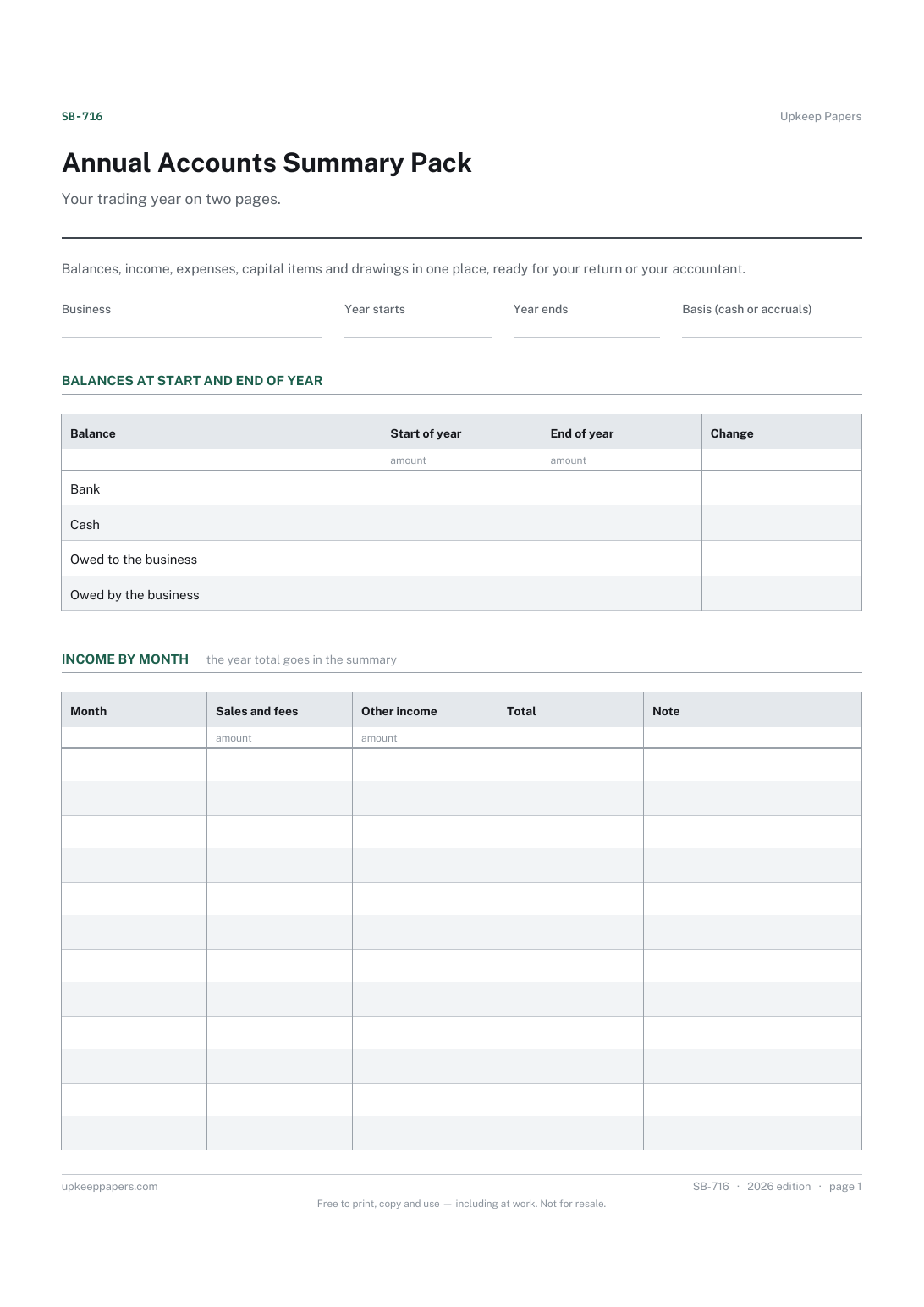
Income for each month of the trading year.
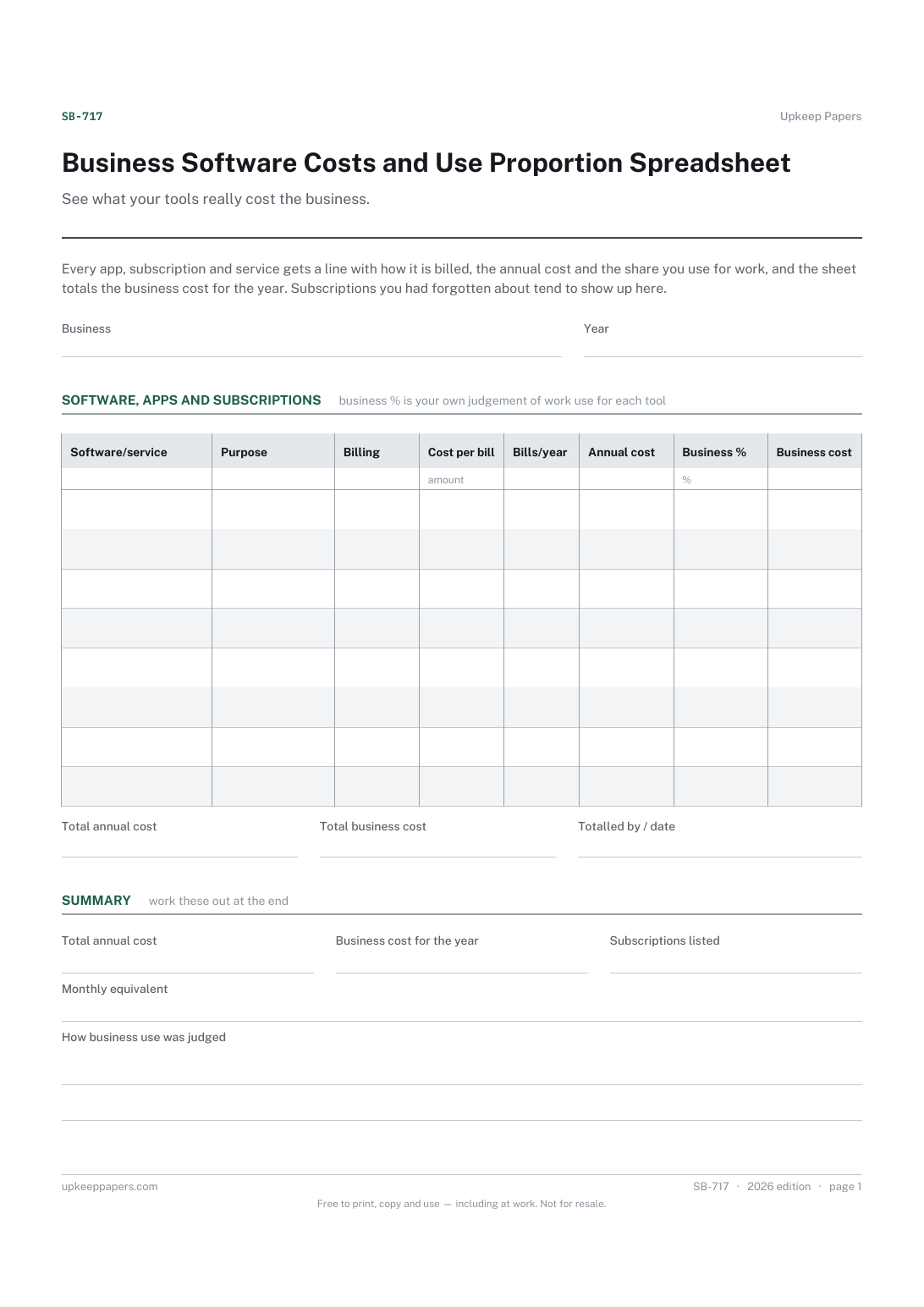
Every app, tool and subscription you pay for, and what it is for.
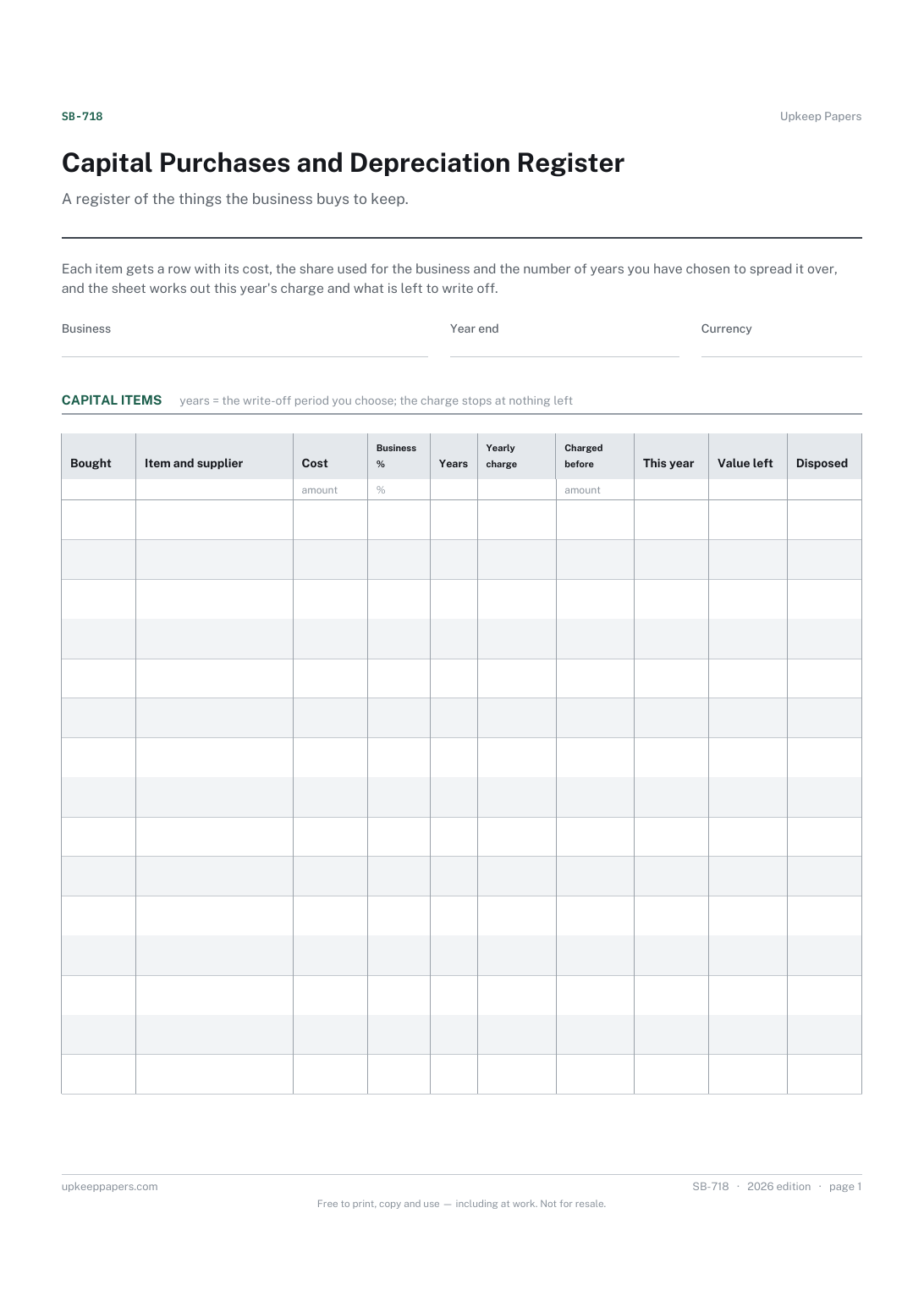
Every capital item bought, when and from whom.
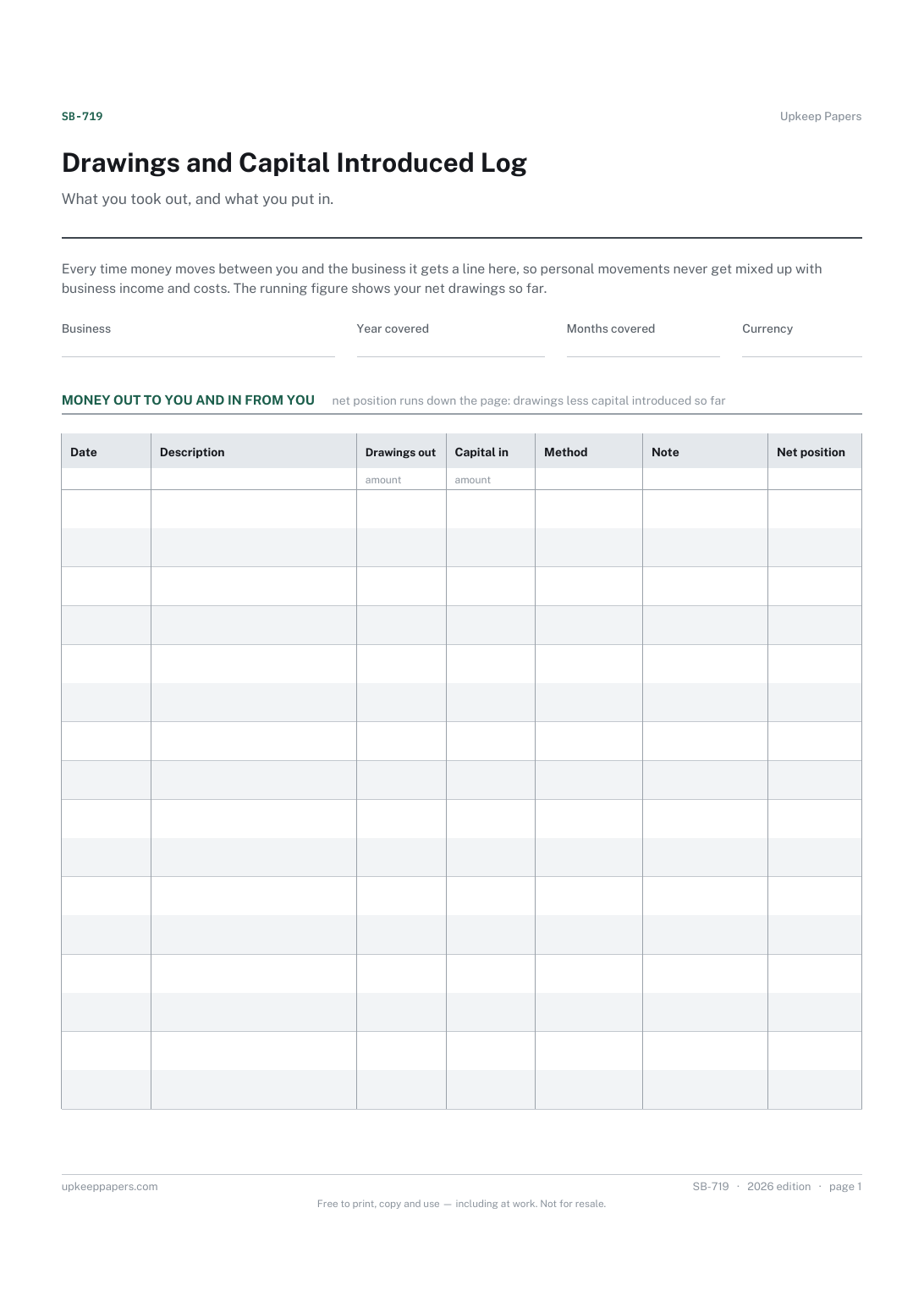
Each withdrawal for personal use, with the date and how it was taken.
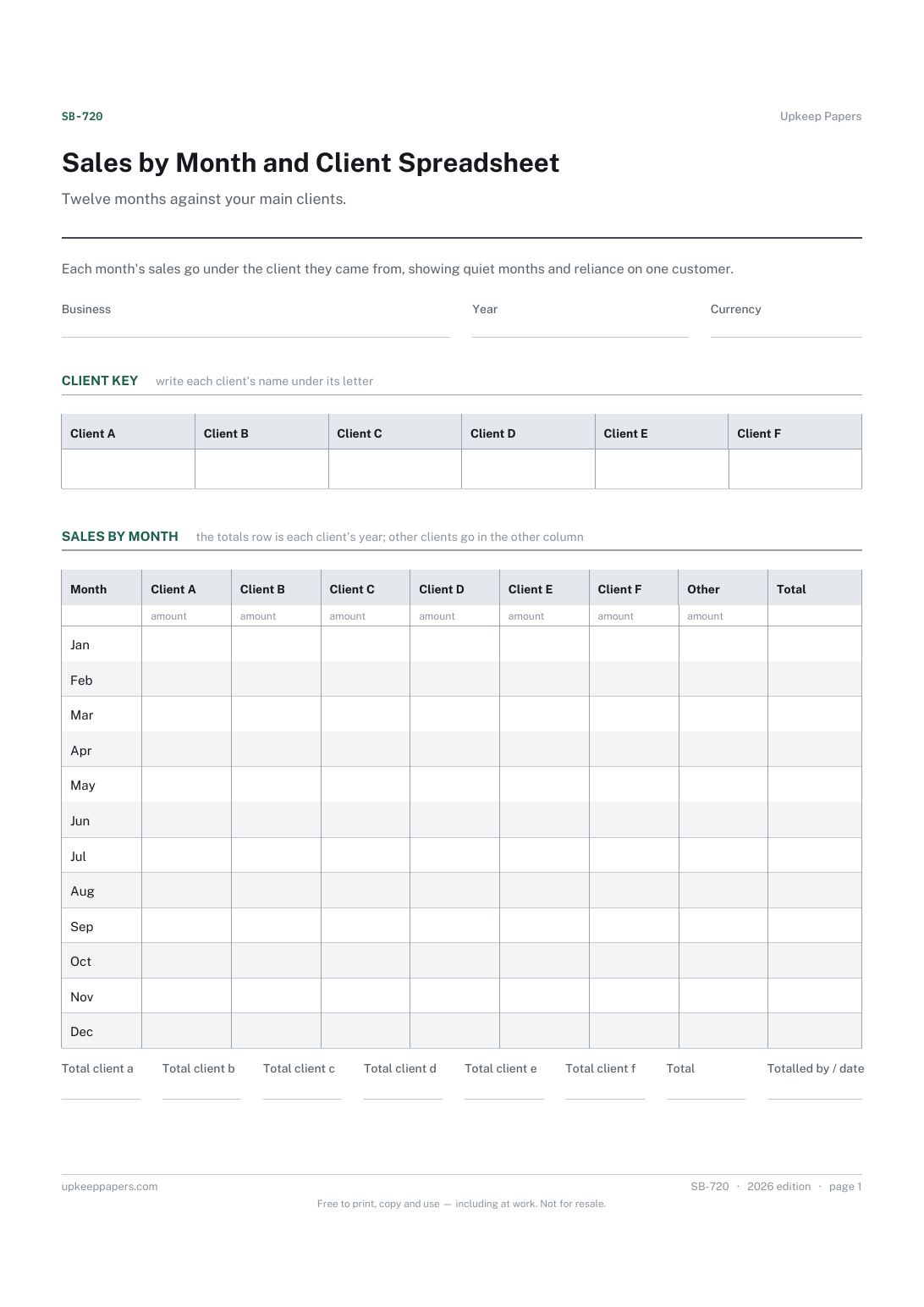
What each of your main clients brought in, month by month.
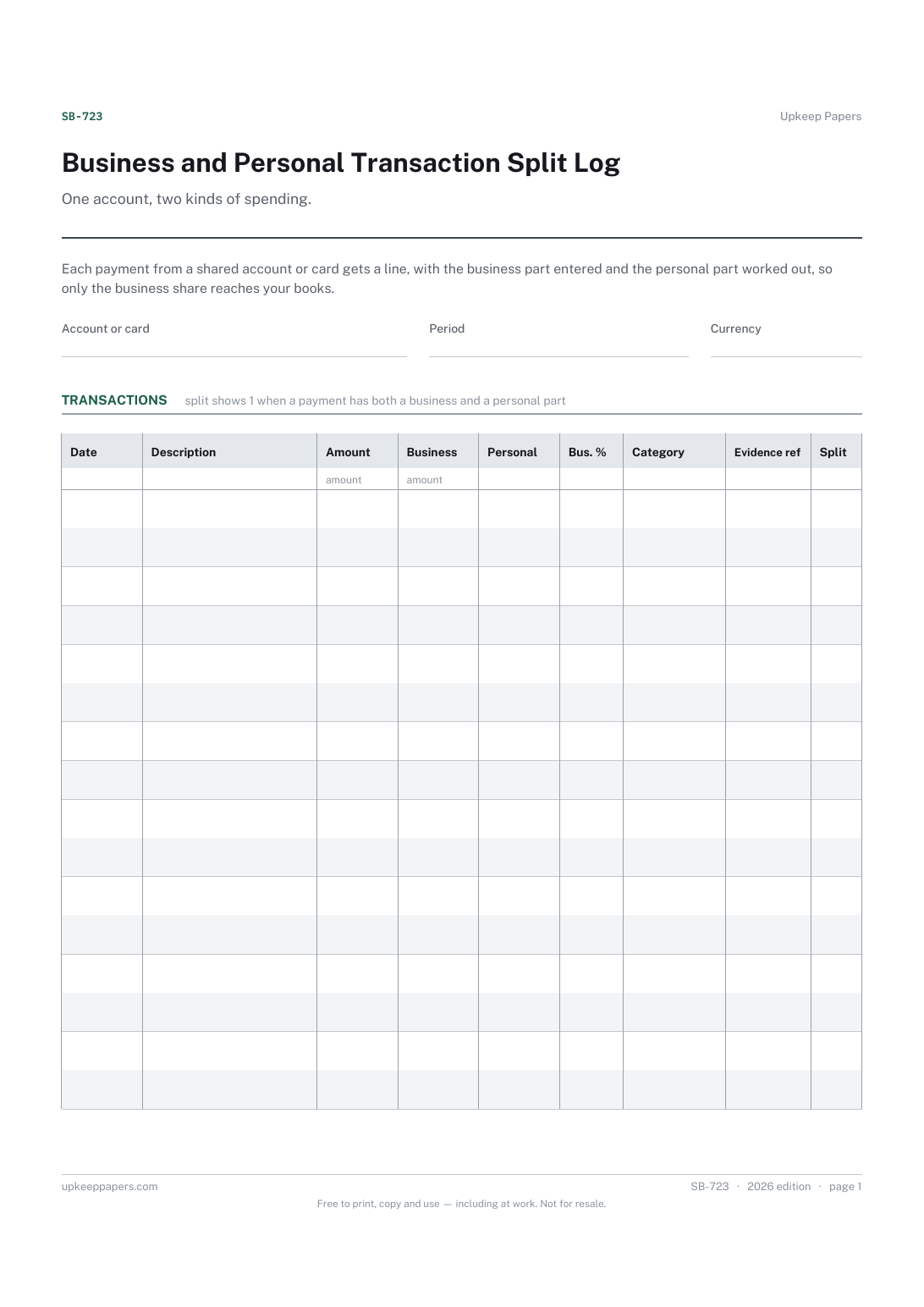
Every payment from the shared account or card in the period.
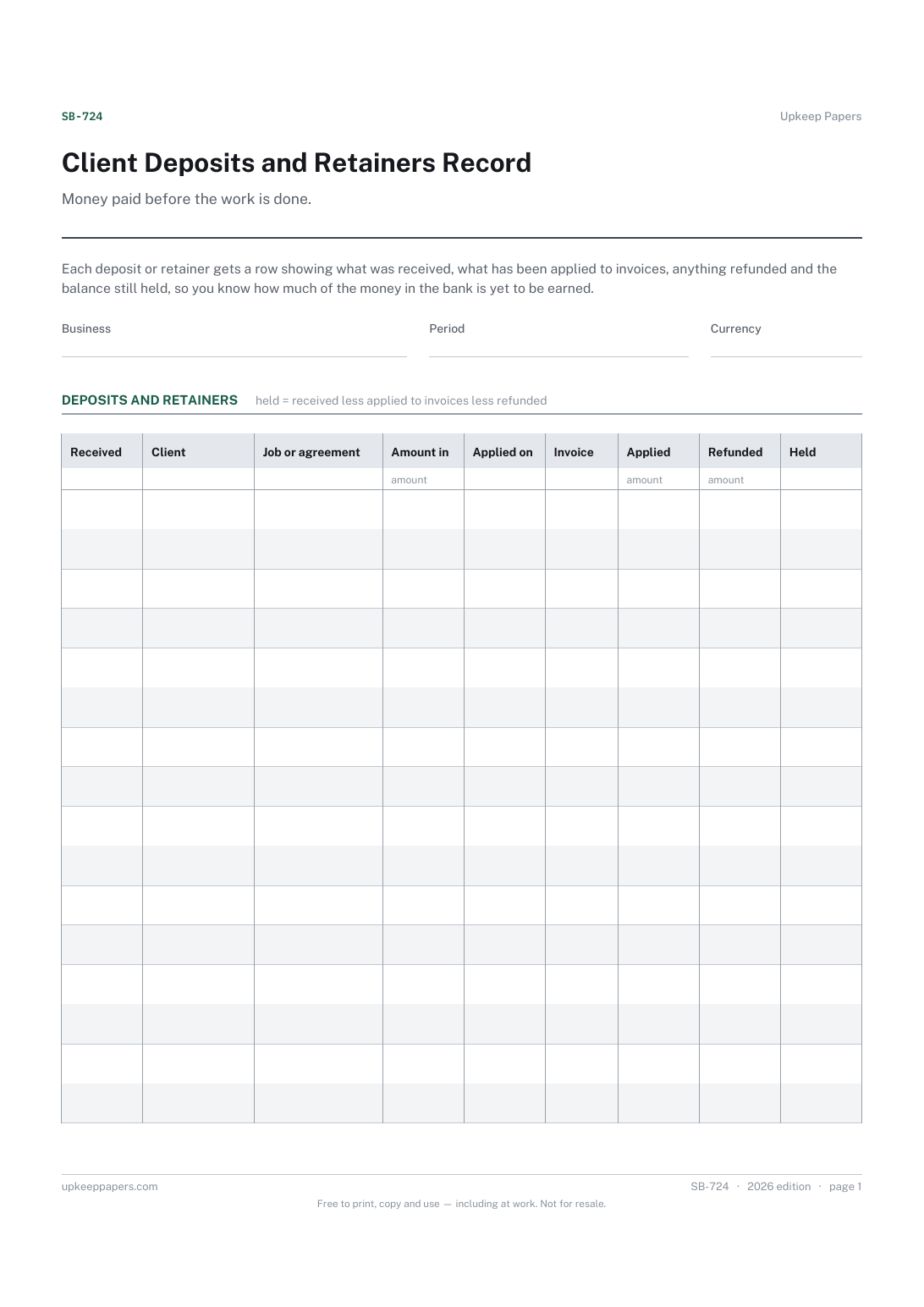
Every deposit or retainer received, by client and job.
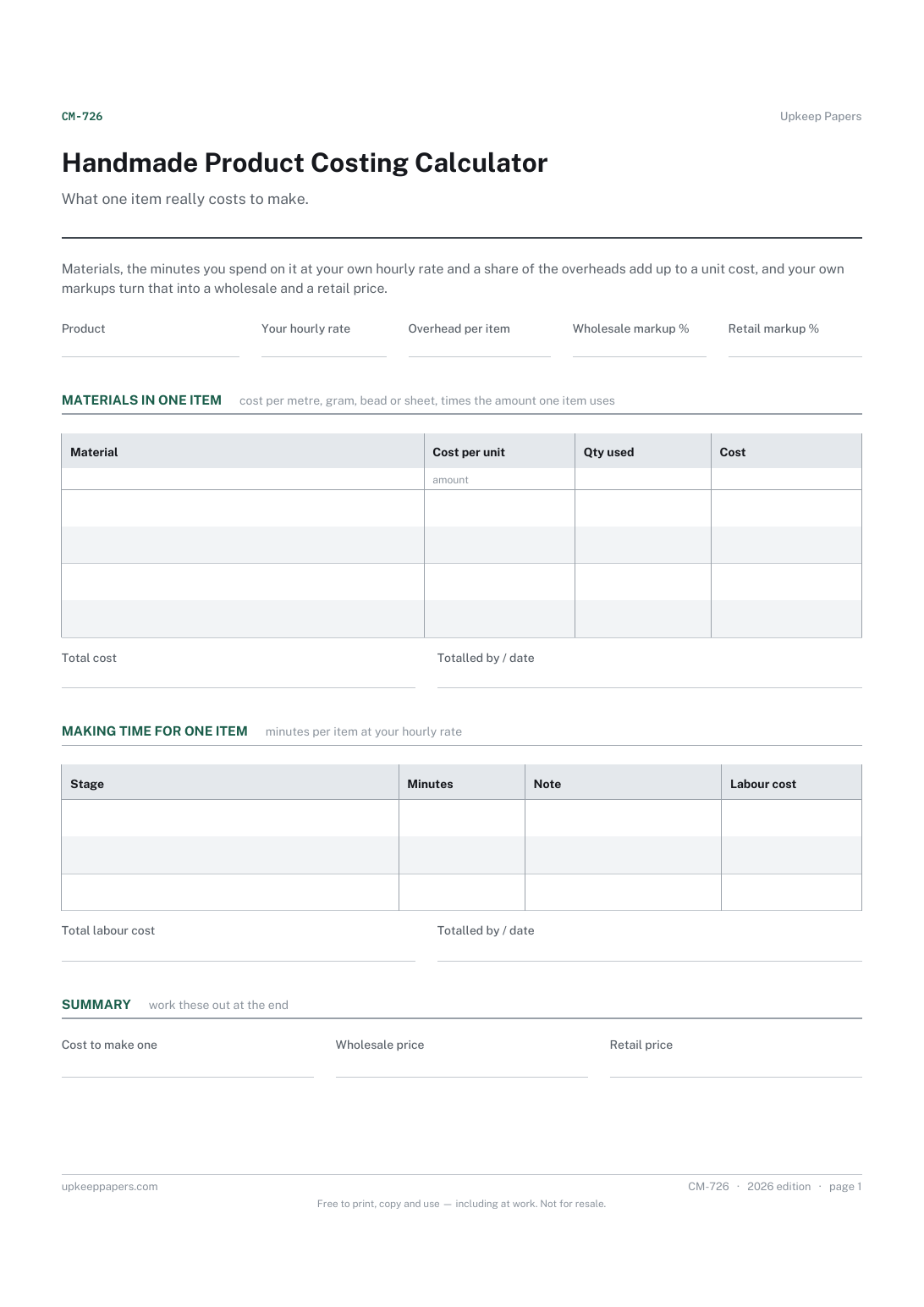
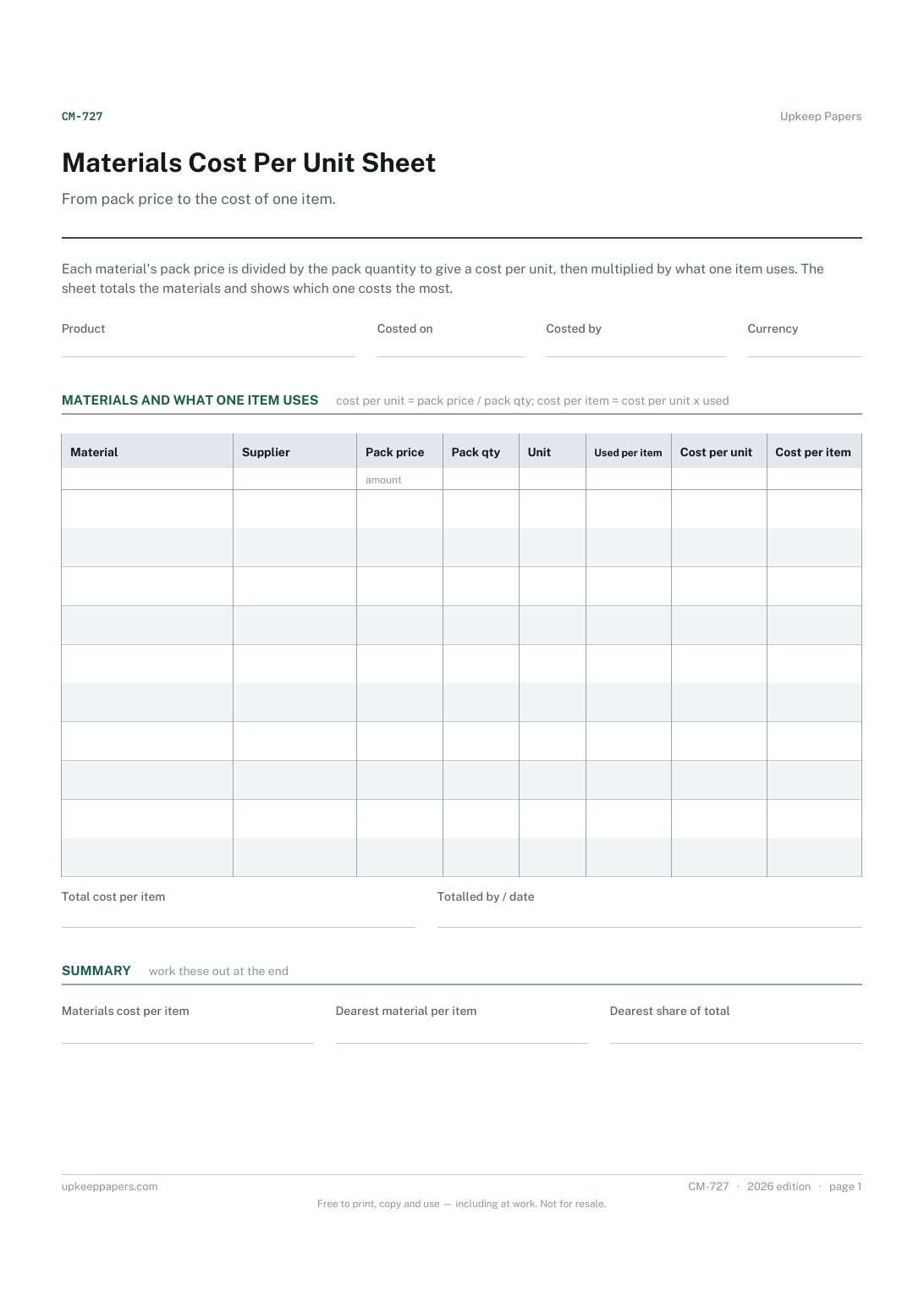
Every material in the item and what the amount used actually costs.
What each material costs per metre, gram, bead or sheet.
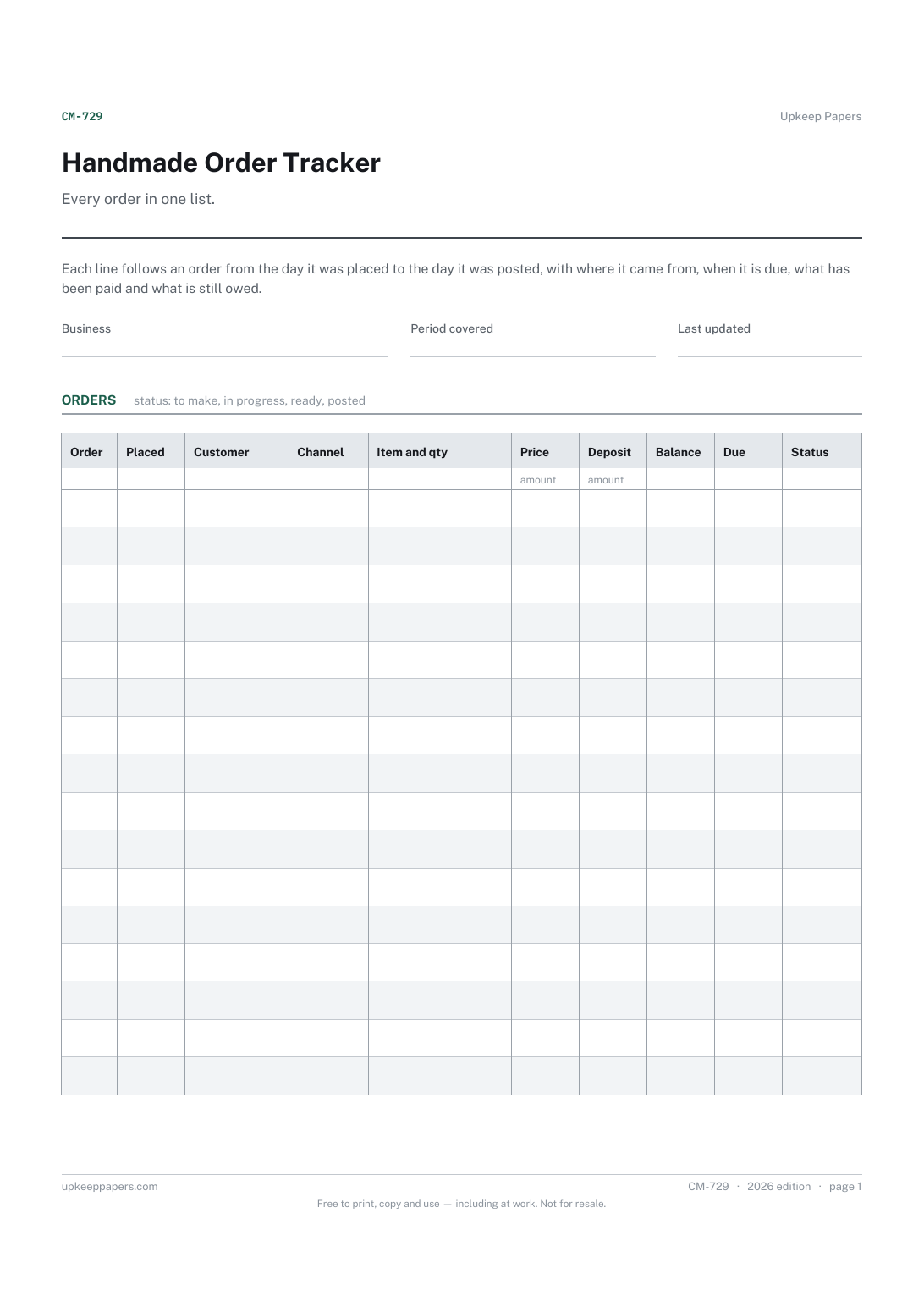
Every order, whichever channel it arrived through.
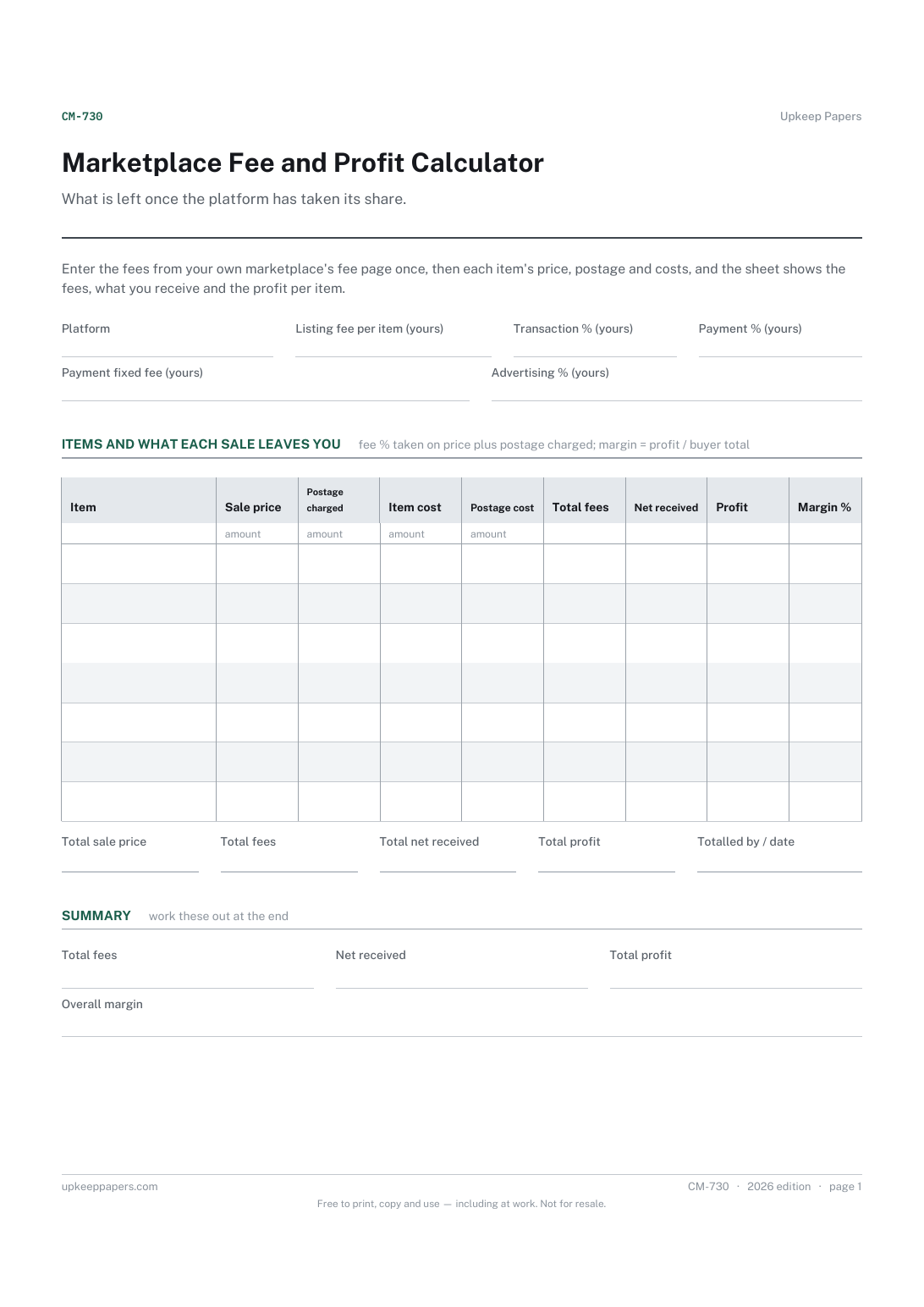
Your platform's fees, entered once from its own fee page.
Your terms: minimum order, payment terms and the date prices apply from.
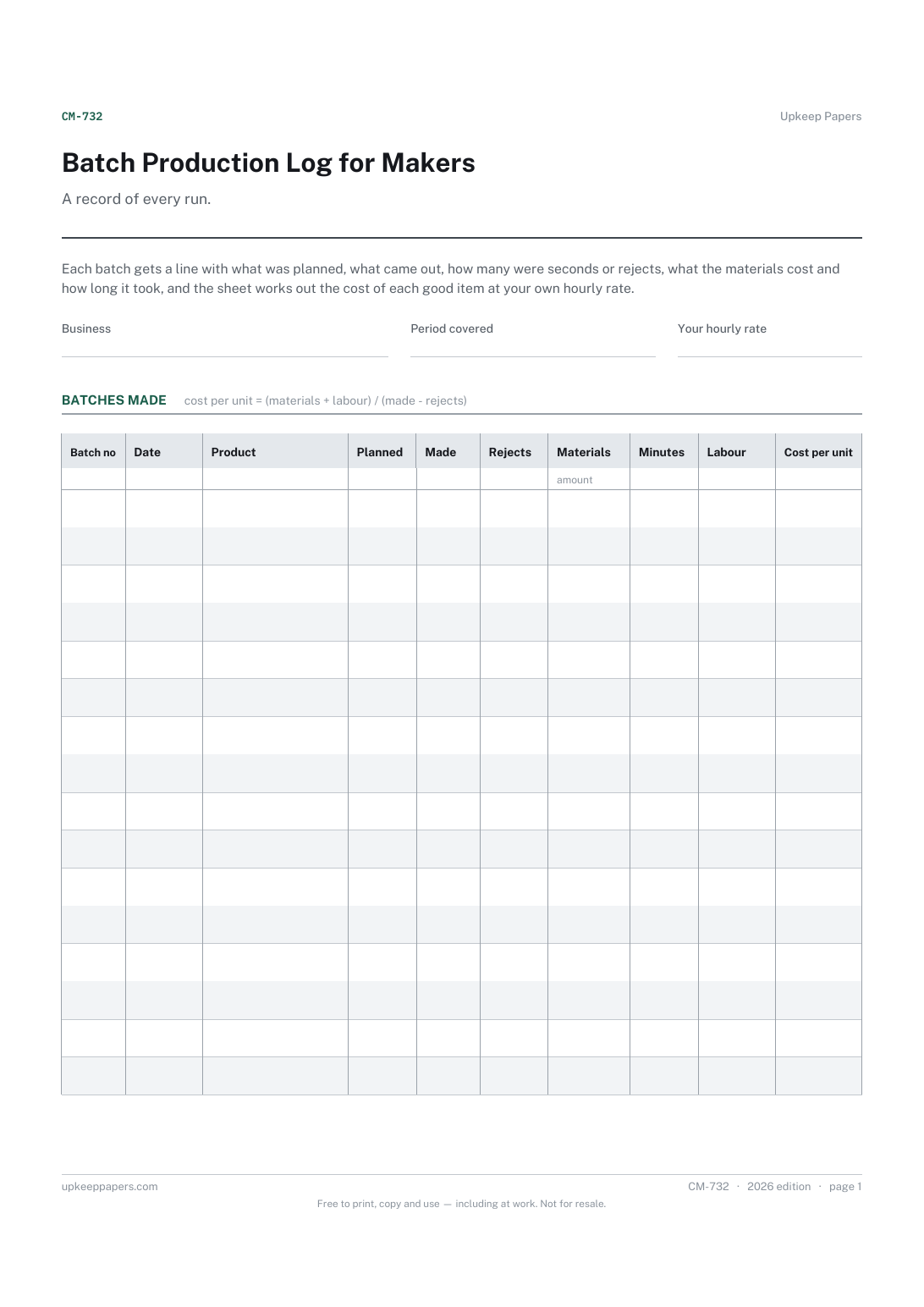
Every batch by number, date and product.
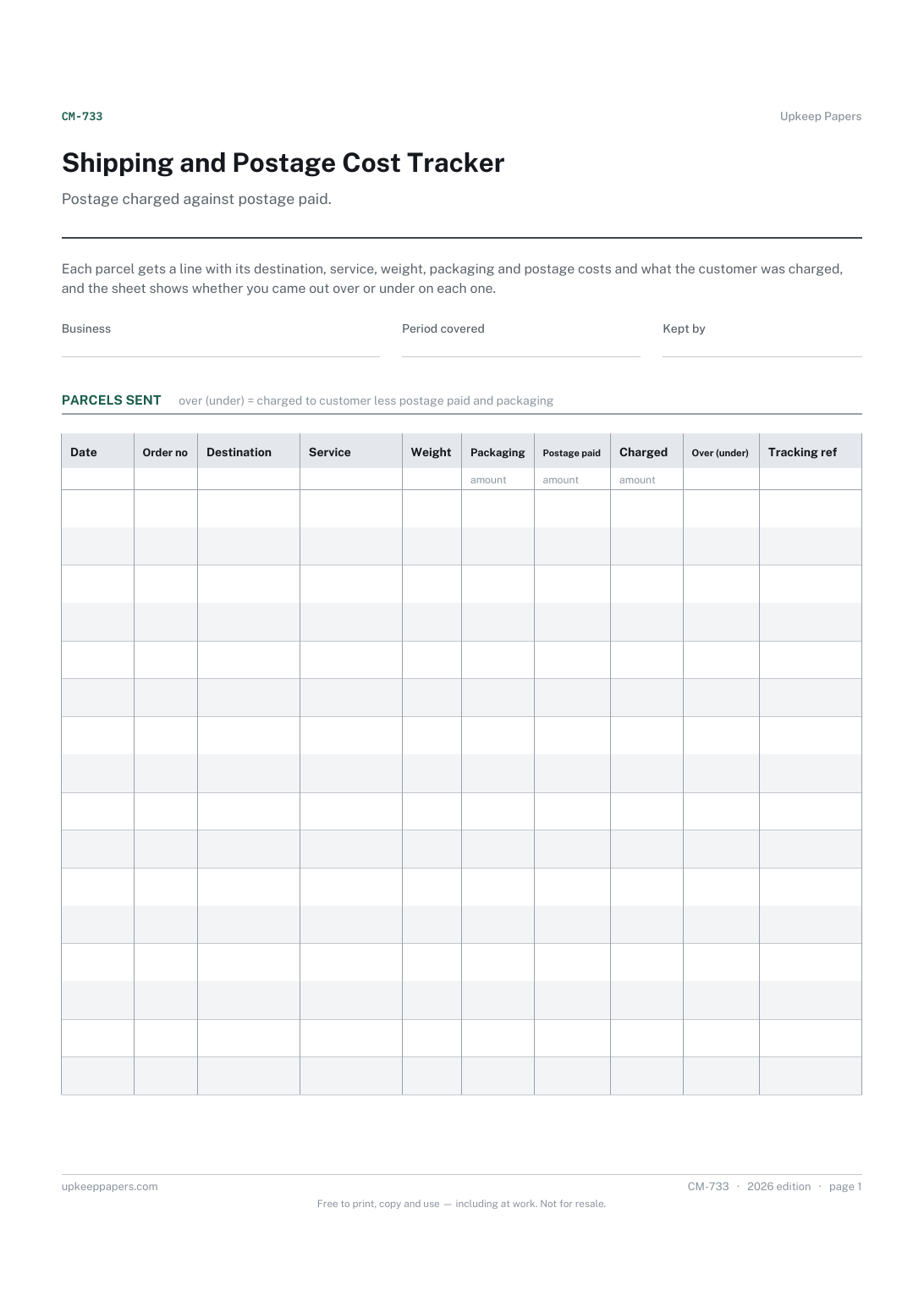
Every parcel sent, with the order it belongs to.
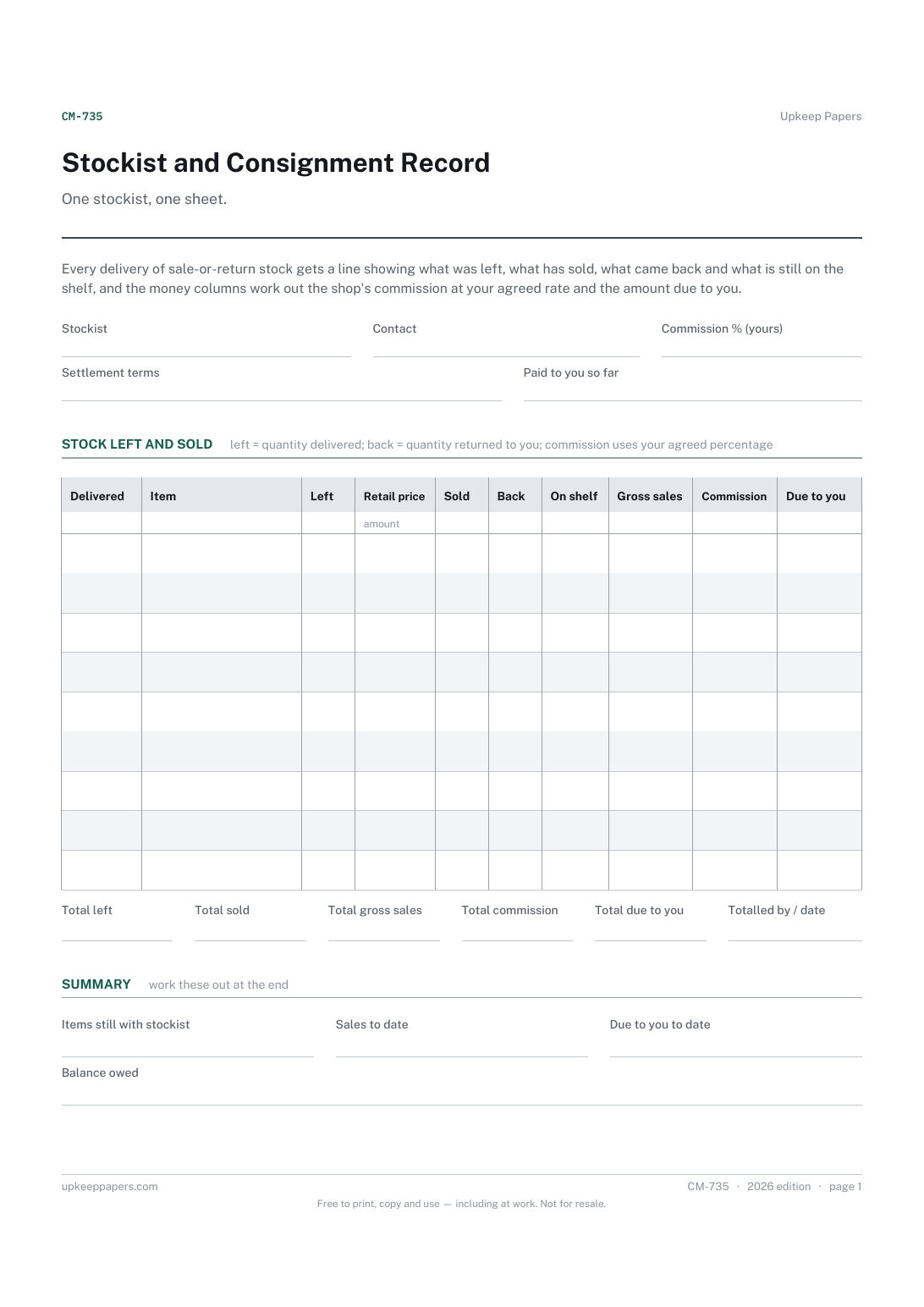
What was delivered to each stockist, and when.
Every cost of attending, estimated and then actual.
The total amount of each material a planned run needs.
Orders and gross sales for each selling channel in the month.
The retailer, delivery address and the date the stock is needed.
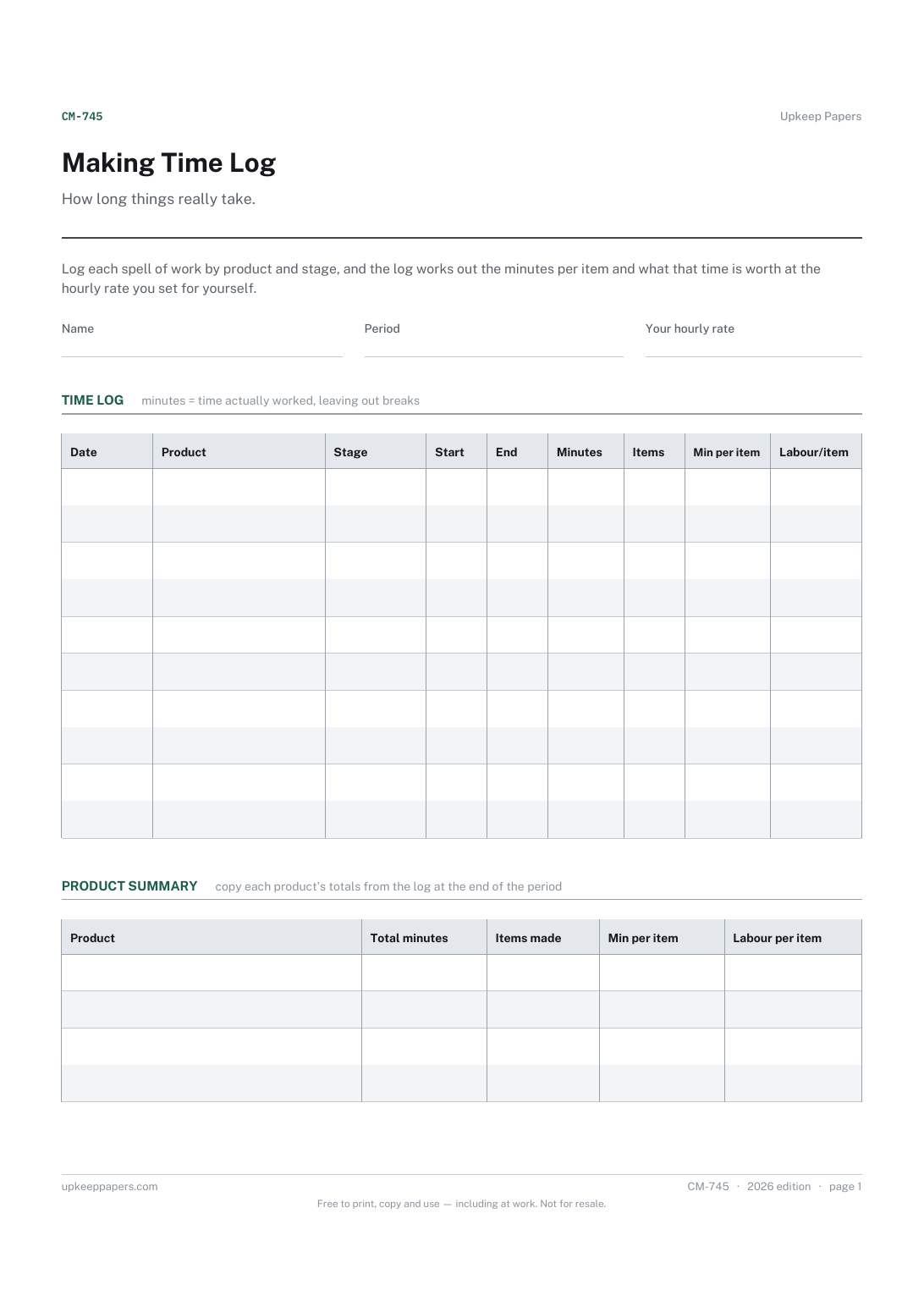
Each spell of work with its date, product, stage, start and finish.
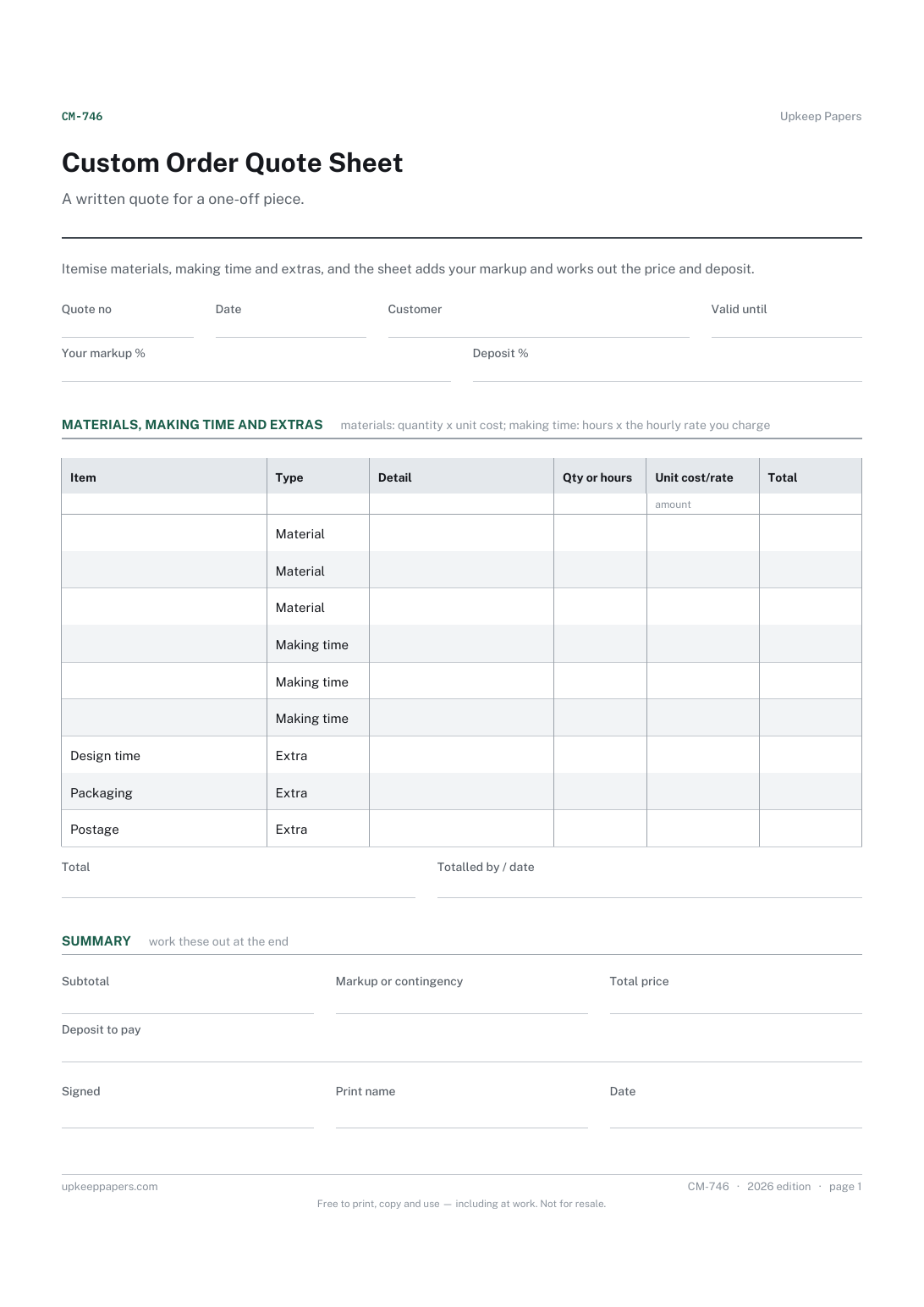
Materials itemised with quantity and unit cost.
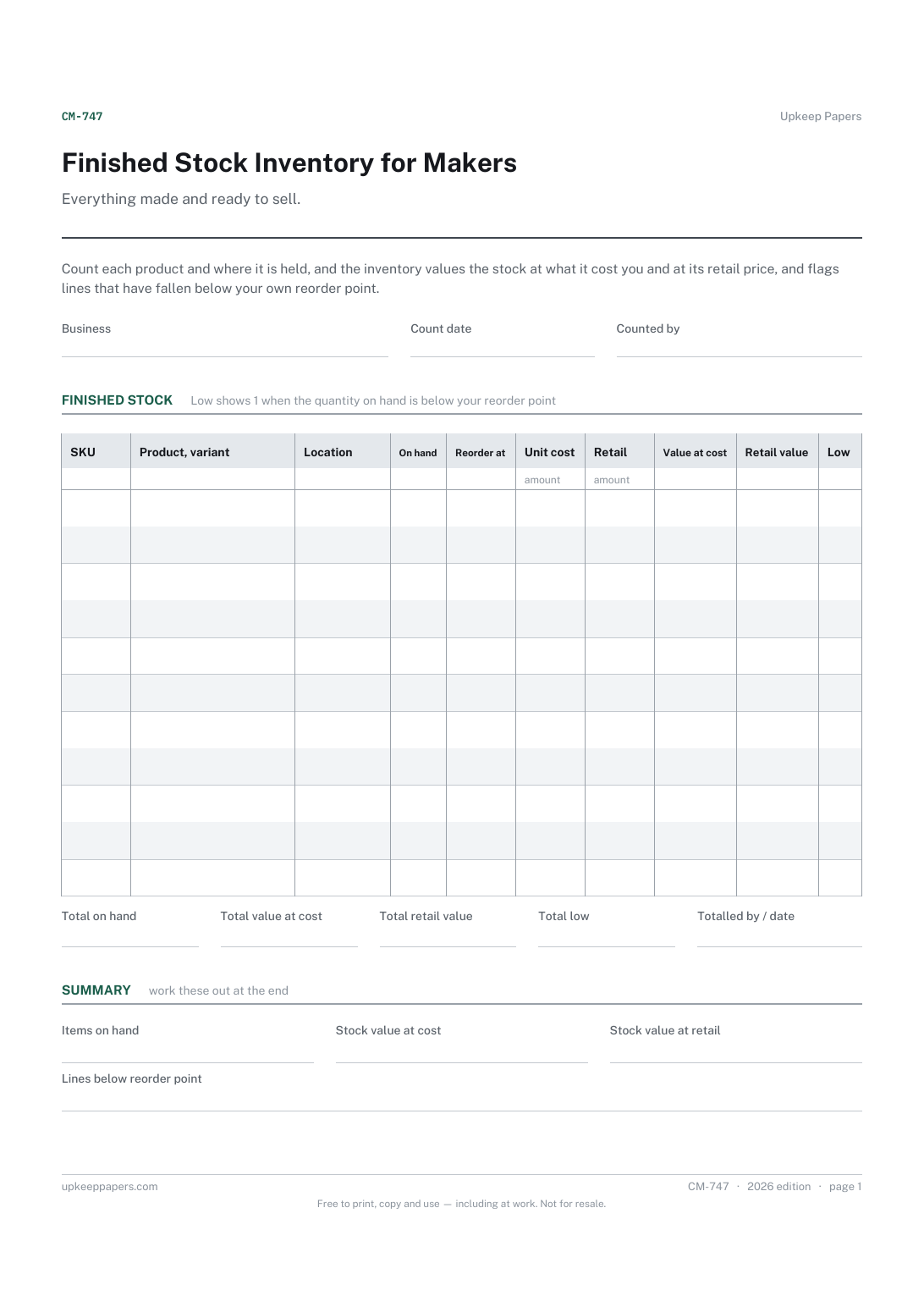
Each product and variant by SKU and where it is held.
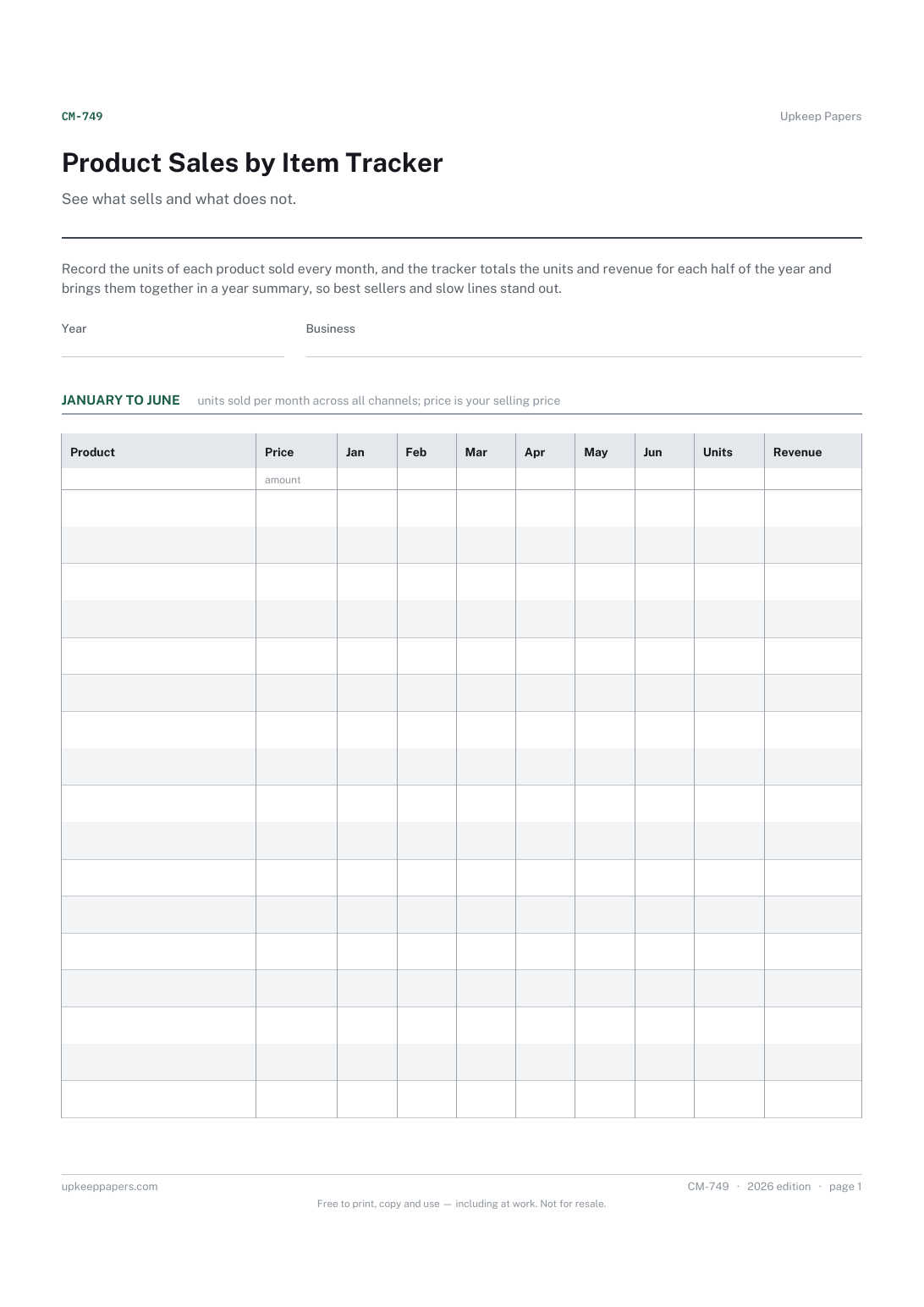
Units sold of each product in every month of the year.
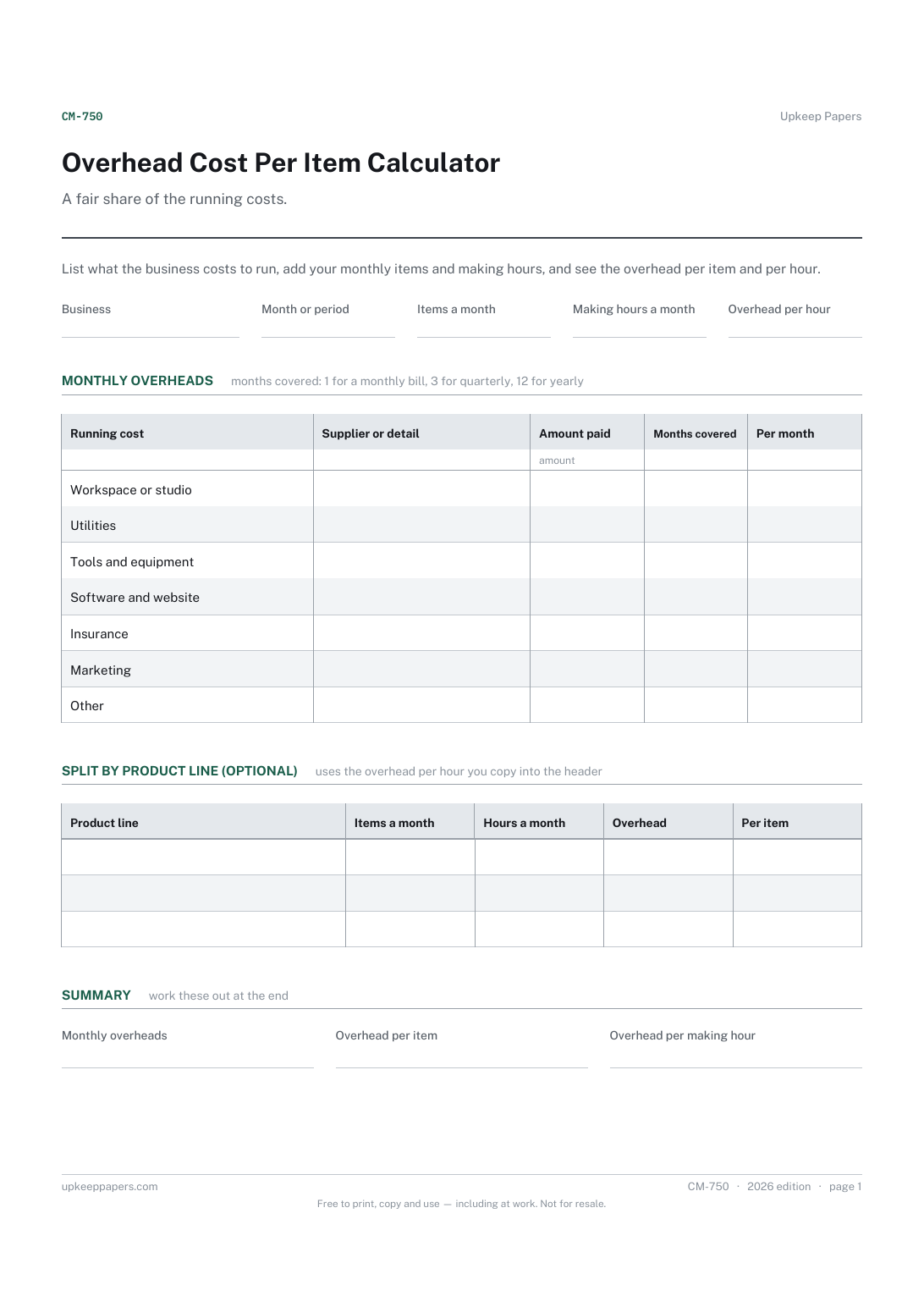
Monthly running costs by type, including bills paid yearly or quarterly.
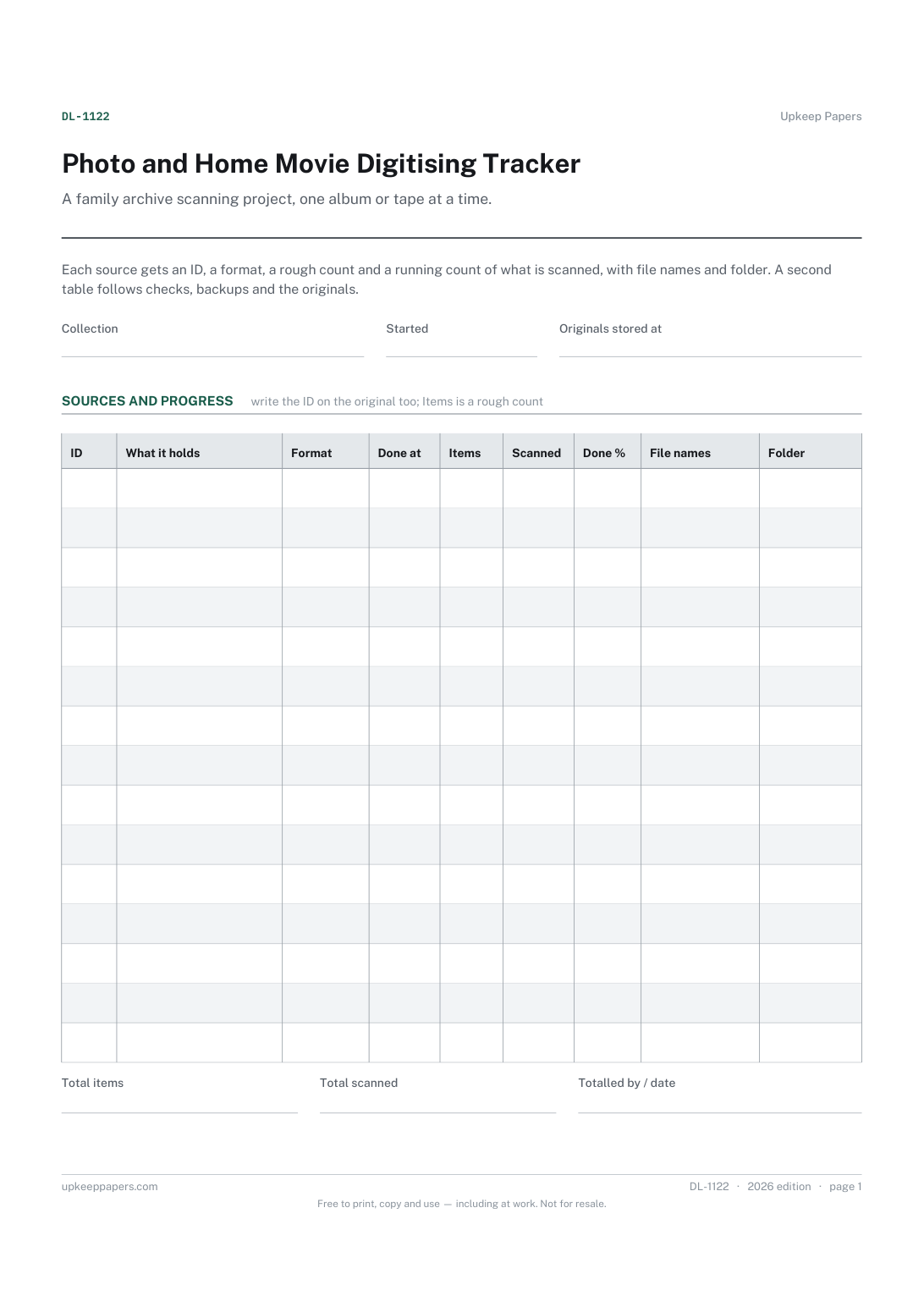
Every album, box, reel and tape in the project, with an ID for each.
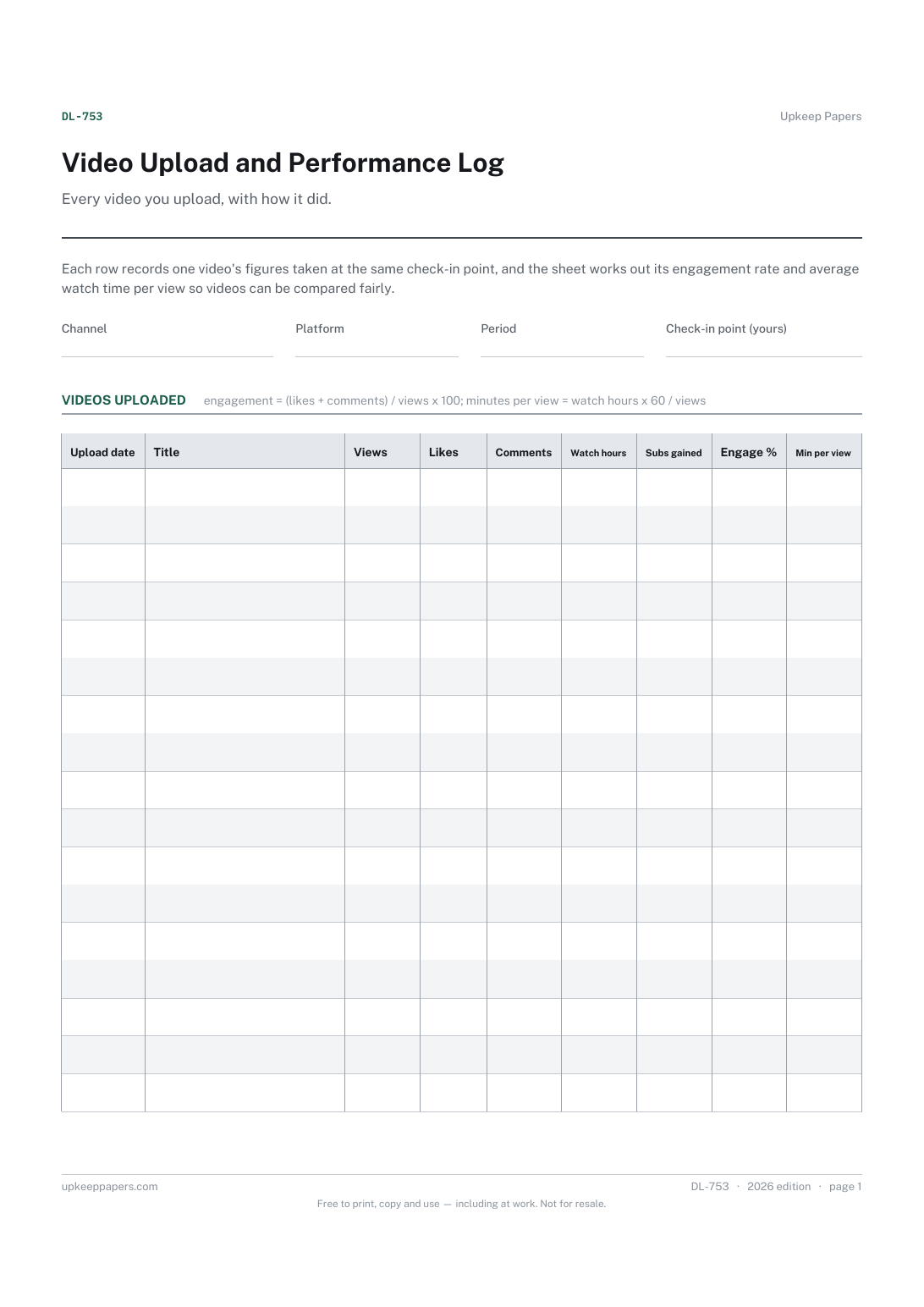
When each video went up and what it was called.
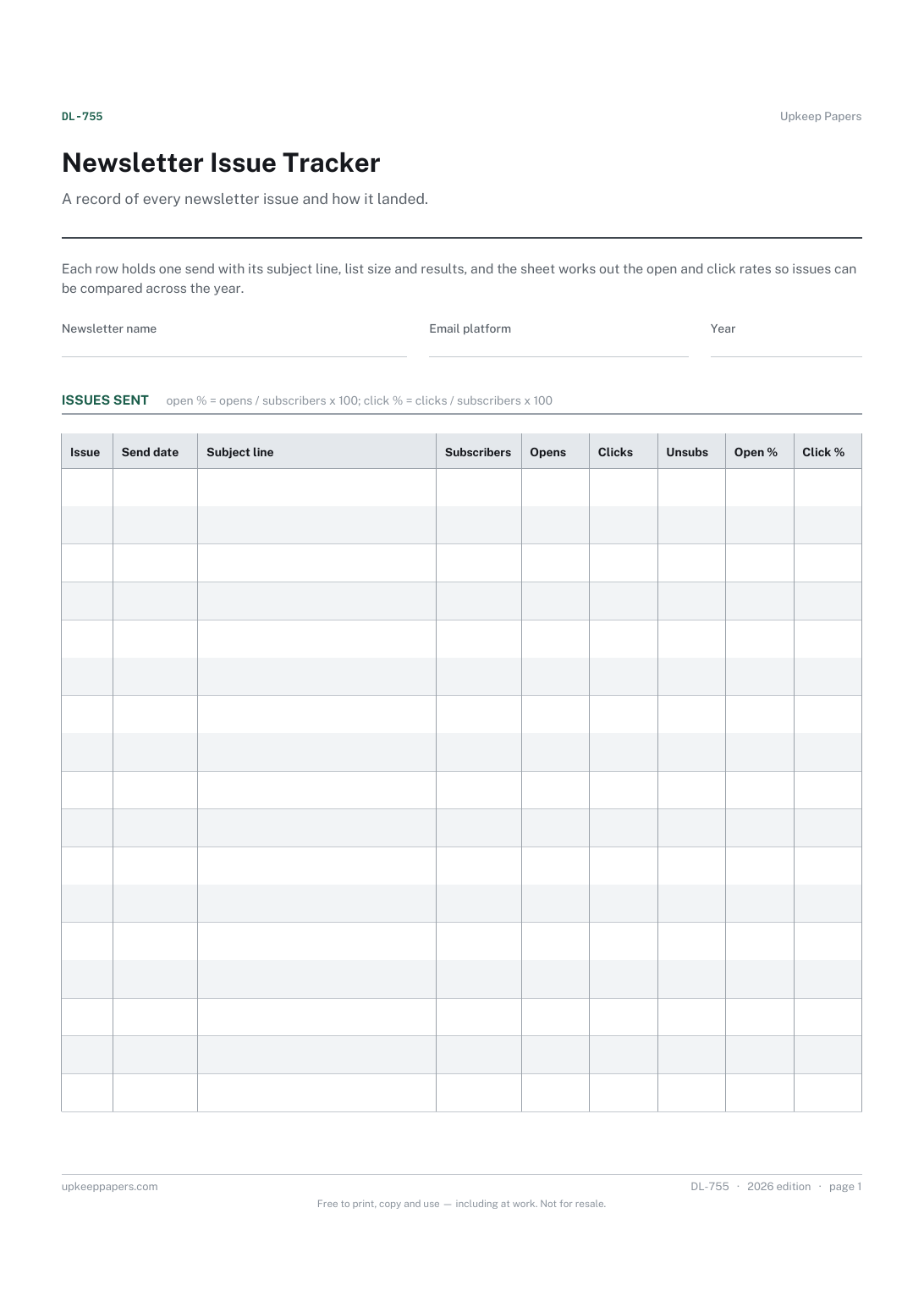
When each issue went out and what its subject line was.
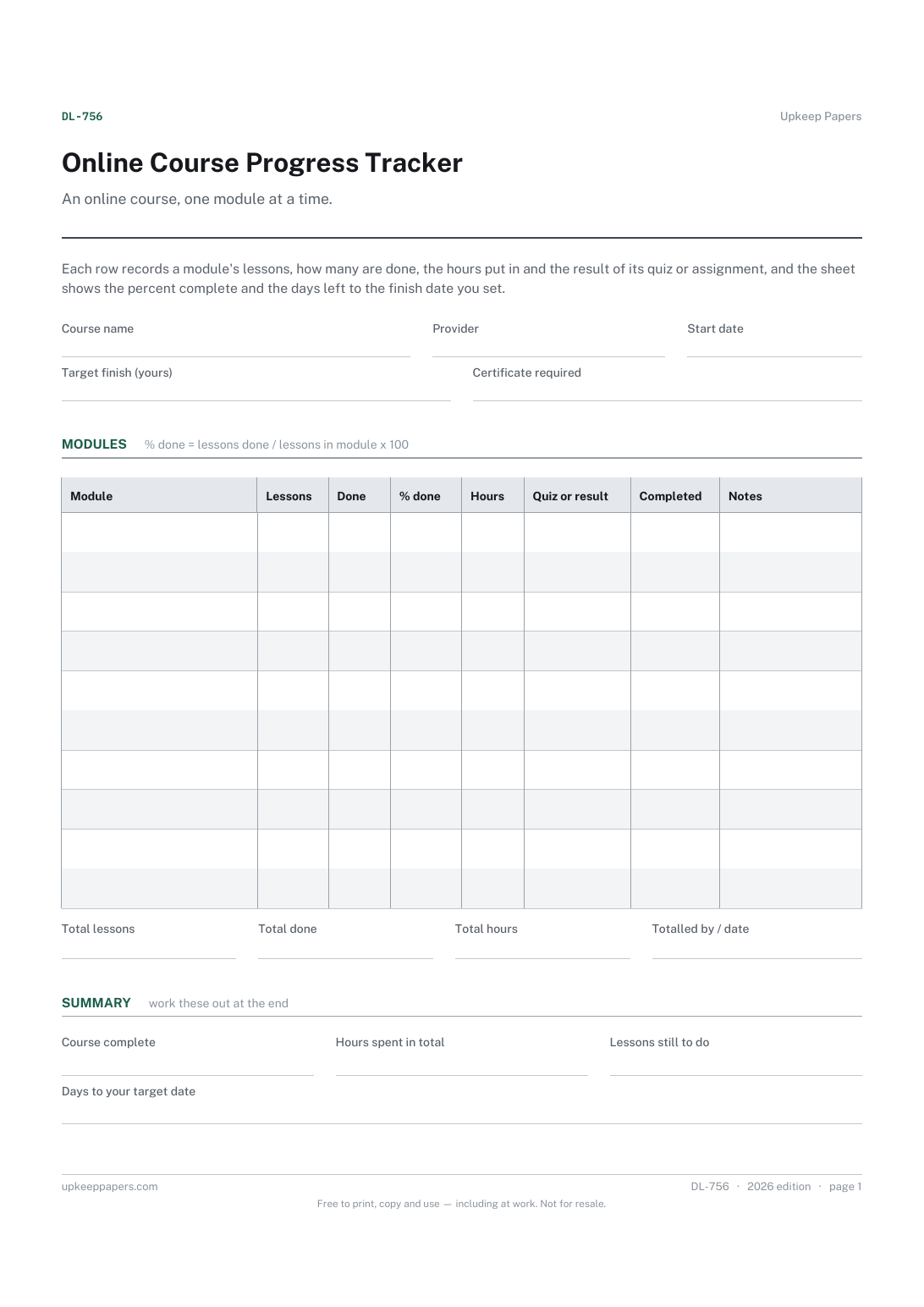
How far through each module you are, as lessons and a percentage.
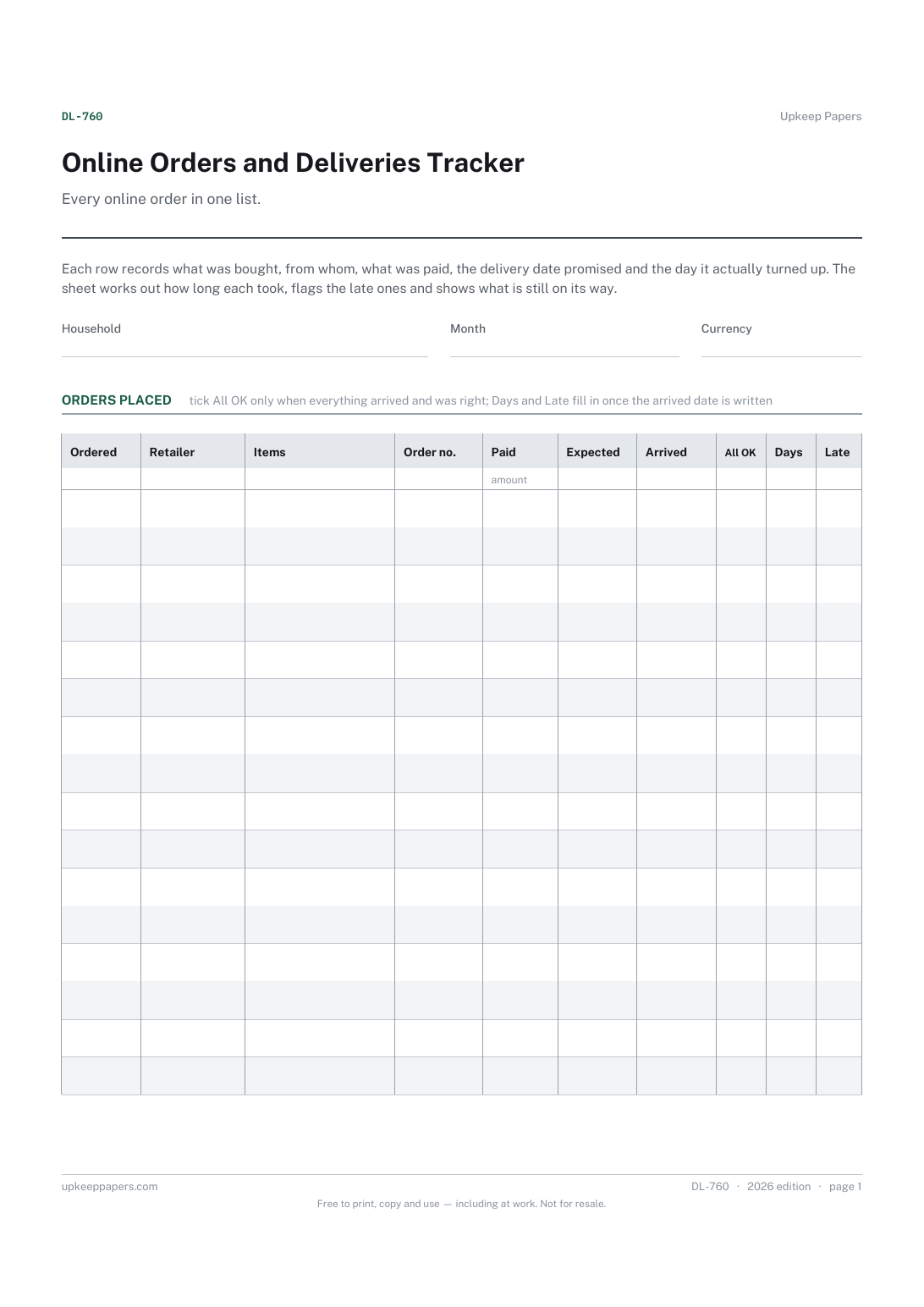
What was ordered, from which retailer and under which order number.
Every streaming, app and cloud subscription in one list.
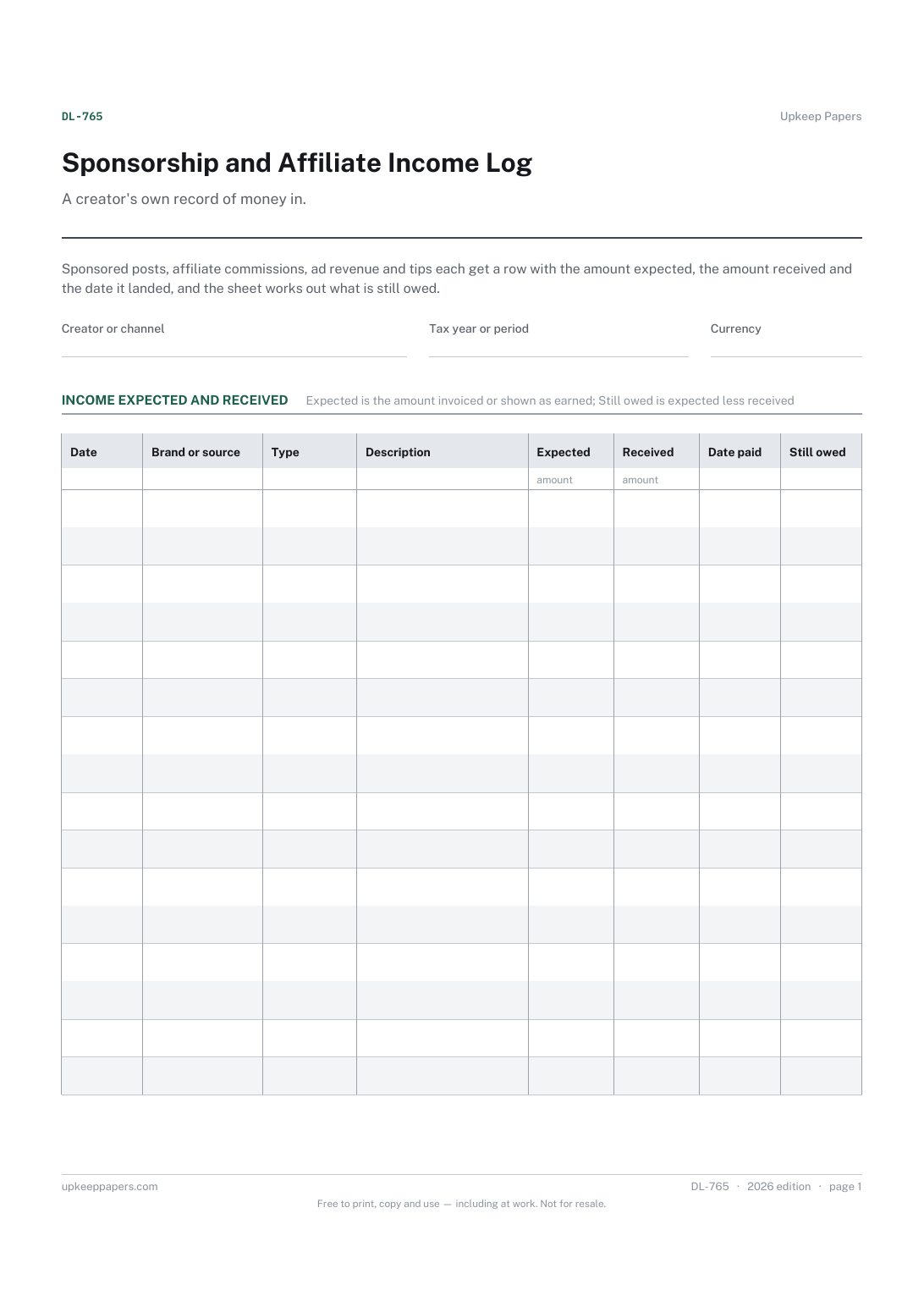
Every sponsorship, commission, payout and tip in date order.
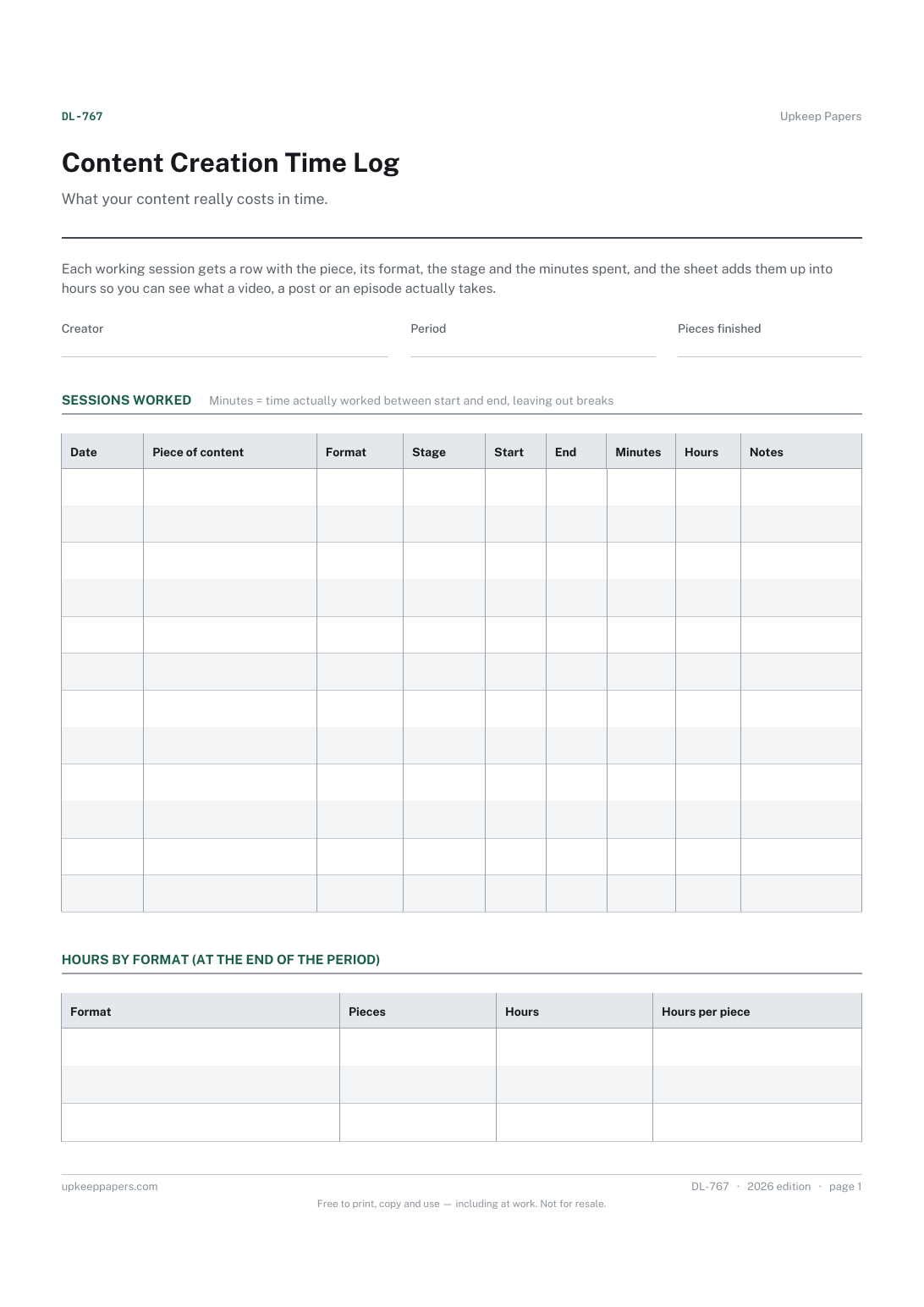
Every session spent planning, writing, filming, editing and publishing.
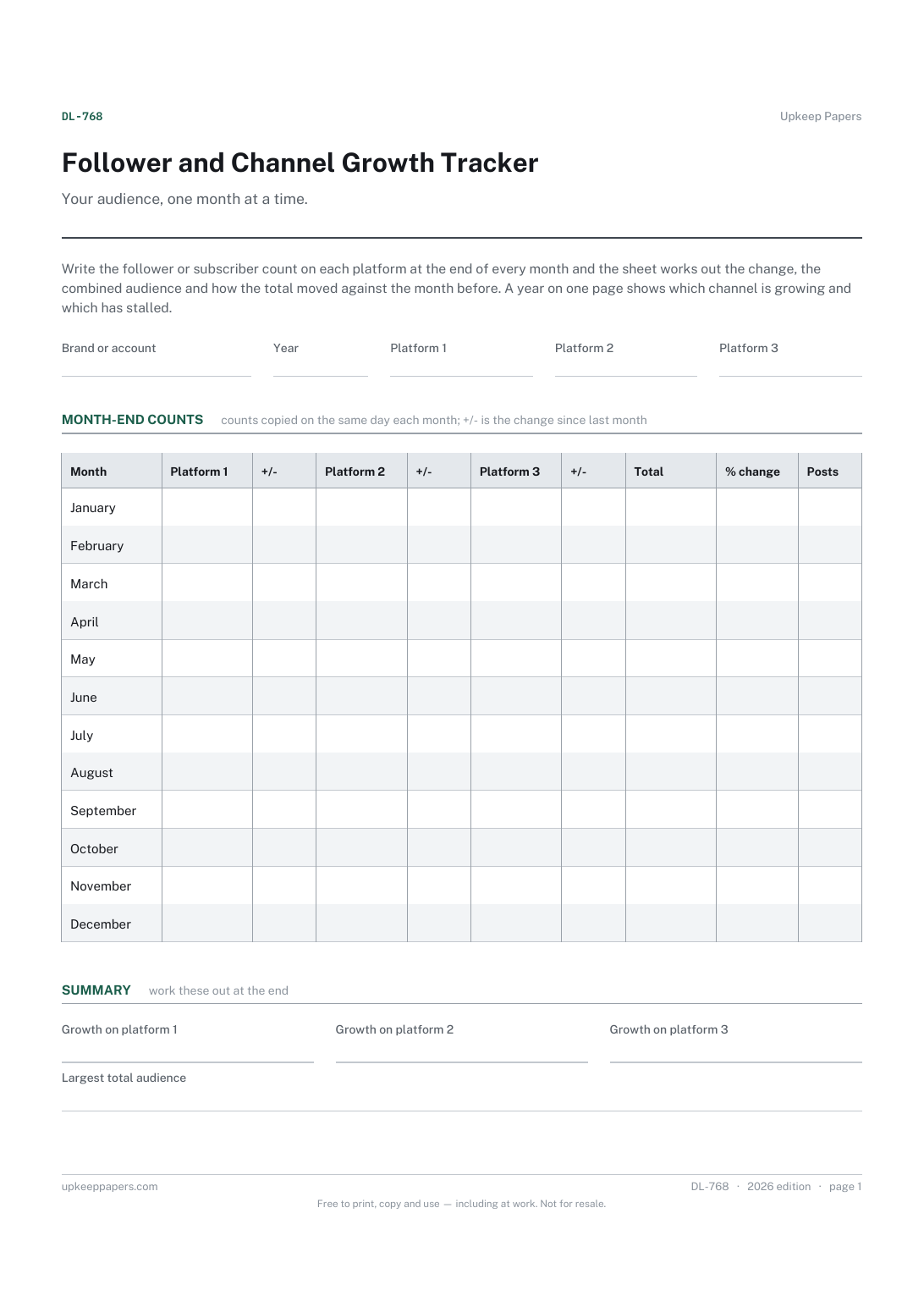
Follower or subscriber counts on up to three platforms at each month end.
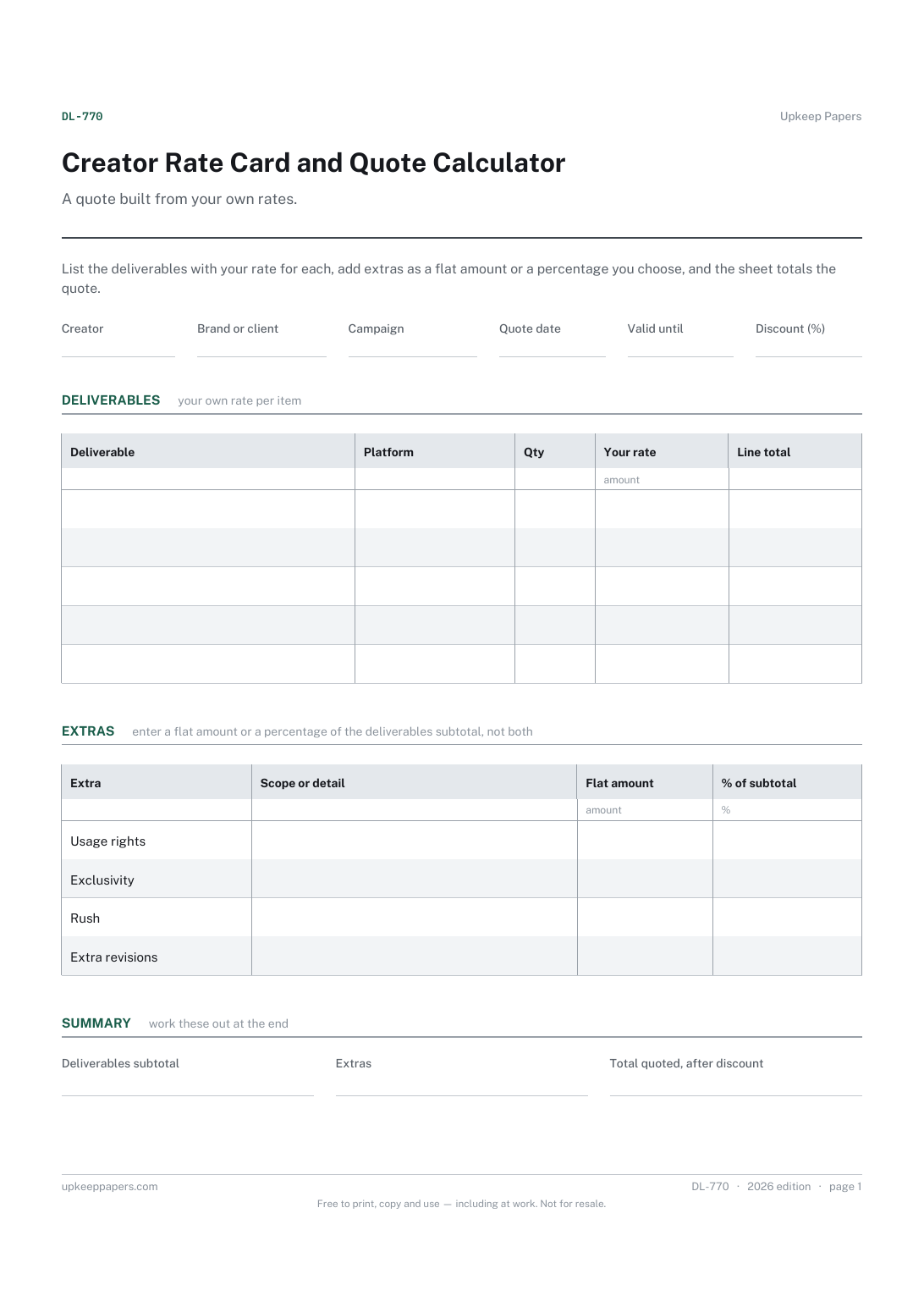
Each deliverable, how many and your rate for it.
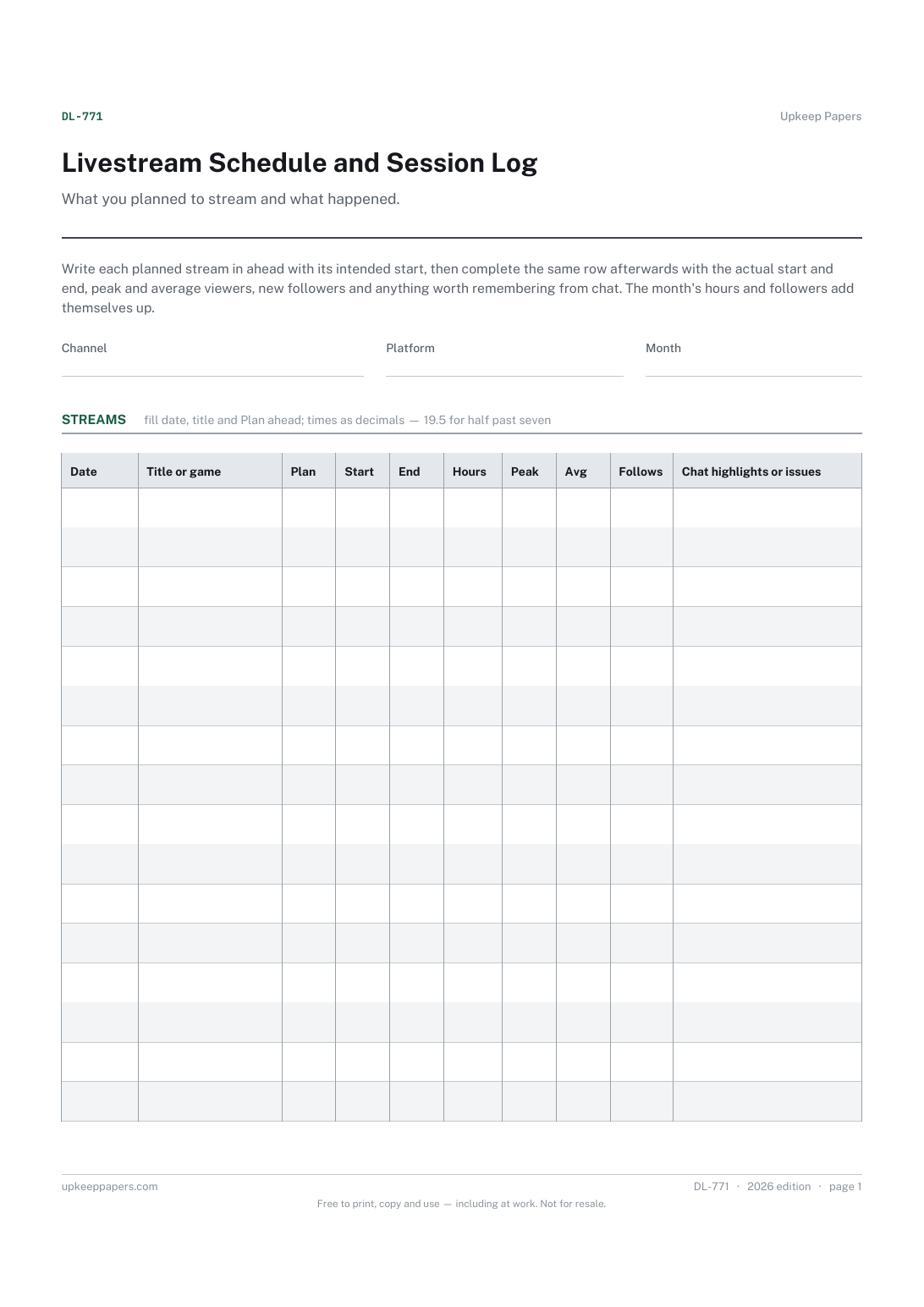
The streams you planned for the month, with start times.
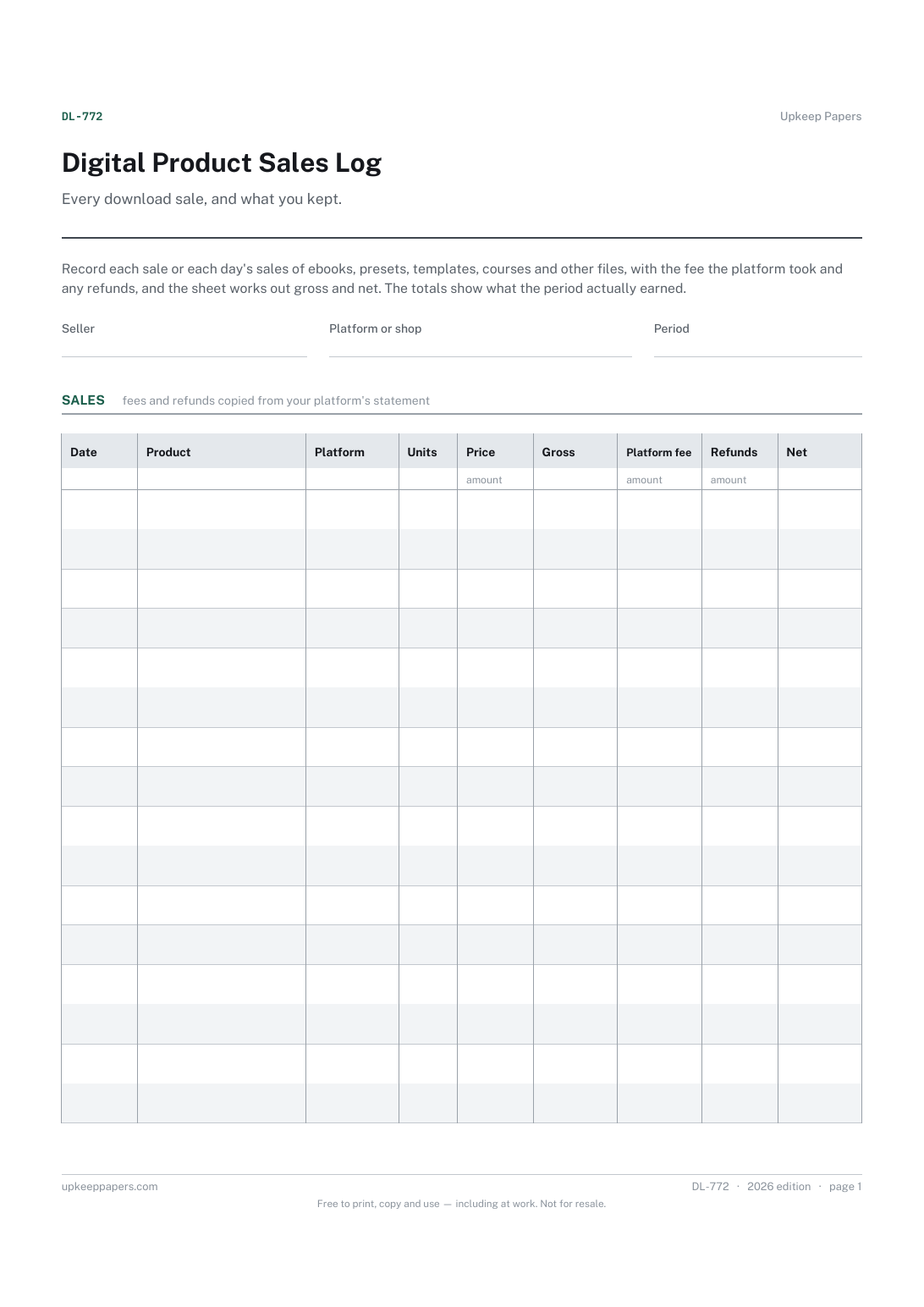
Each sale or batch of sales, with the product and platform.
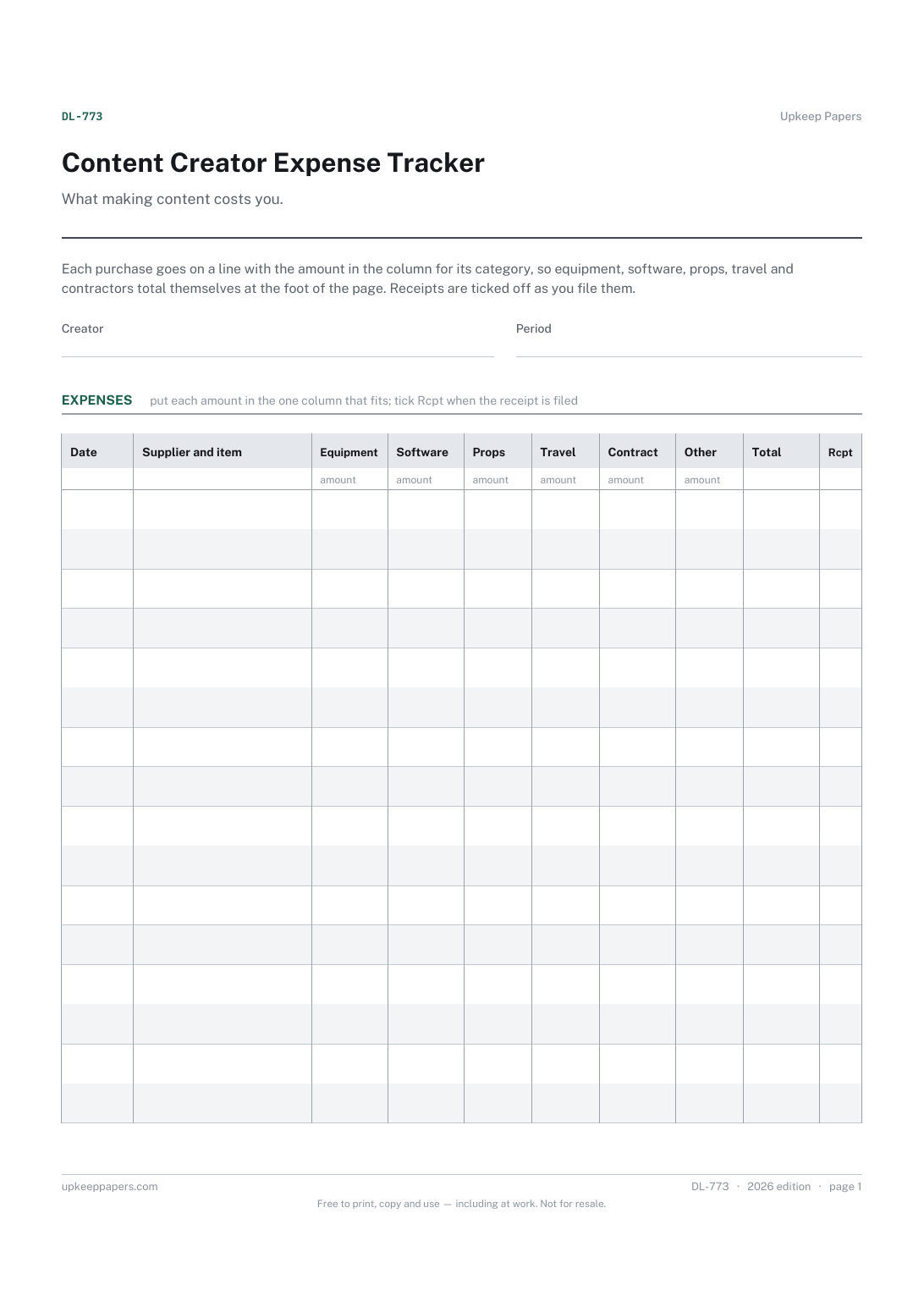
Every purchase with its date, supplier and what it was.
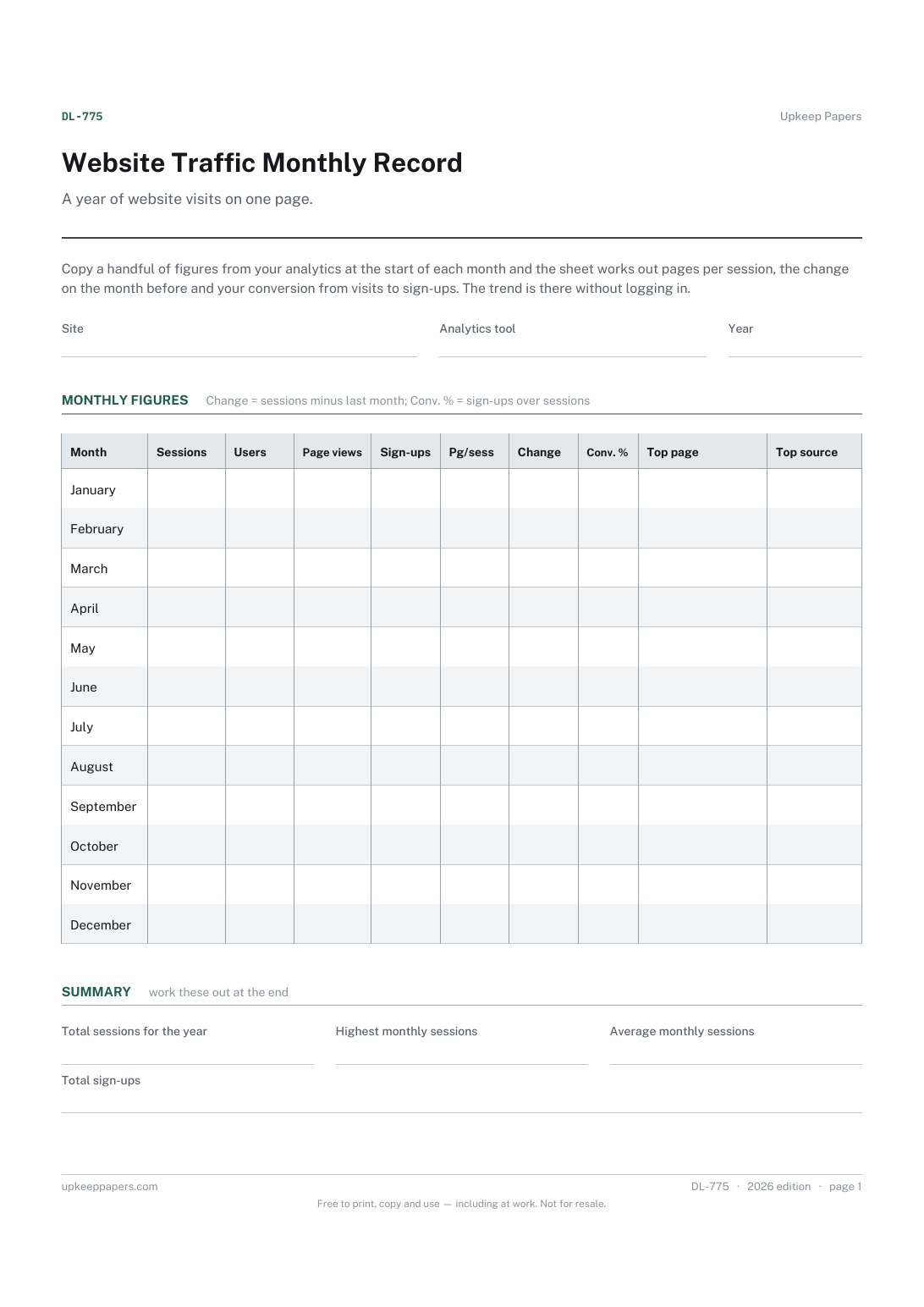
Sessions, users and page views for each month.
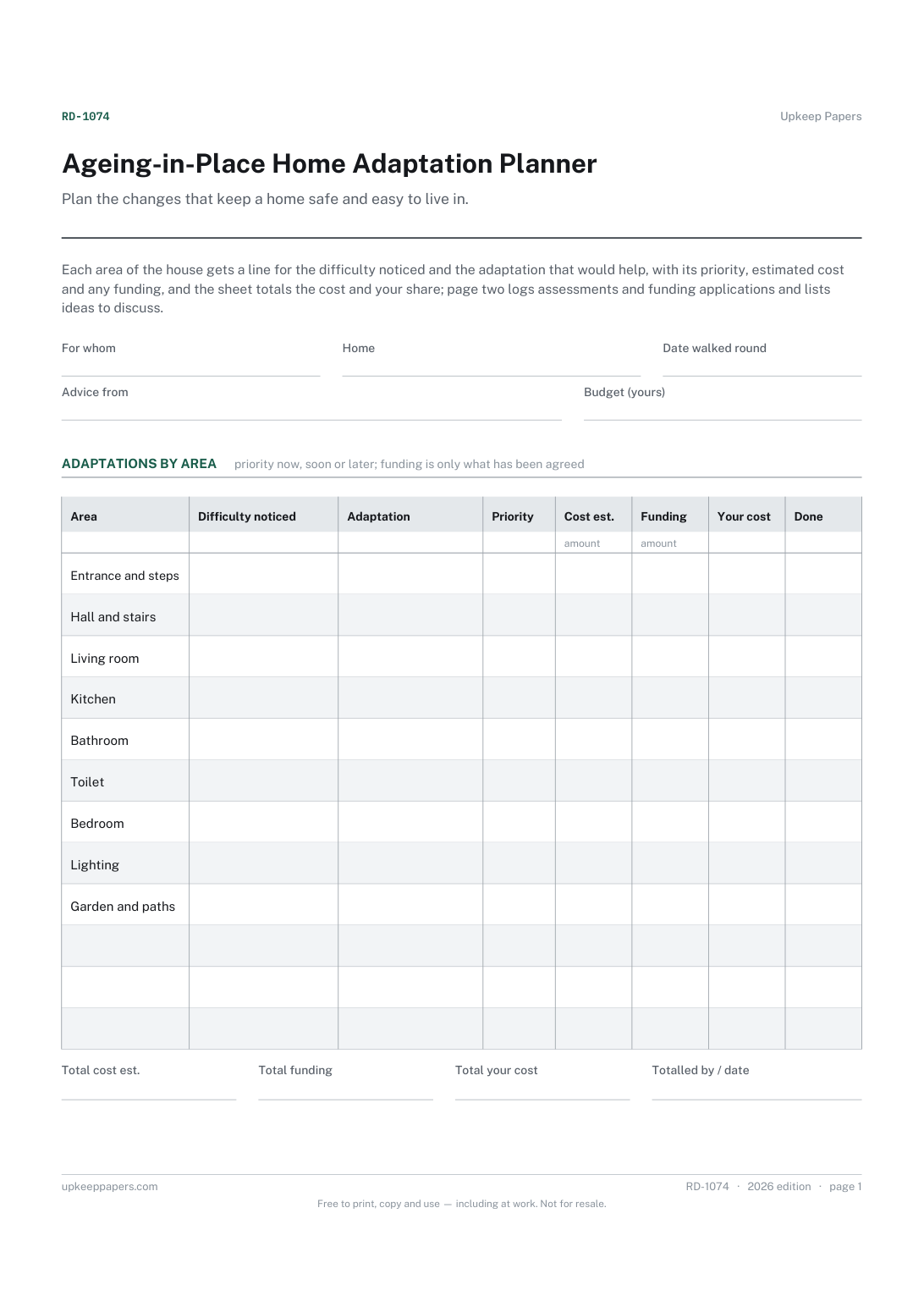
Difficulties noticed in each area of the home, in plain words.
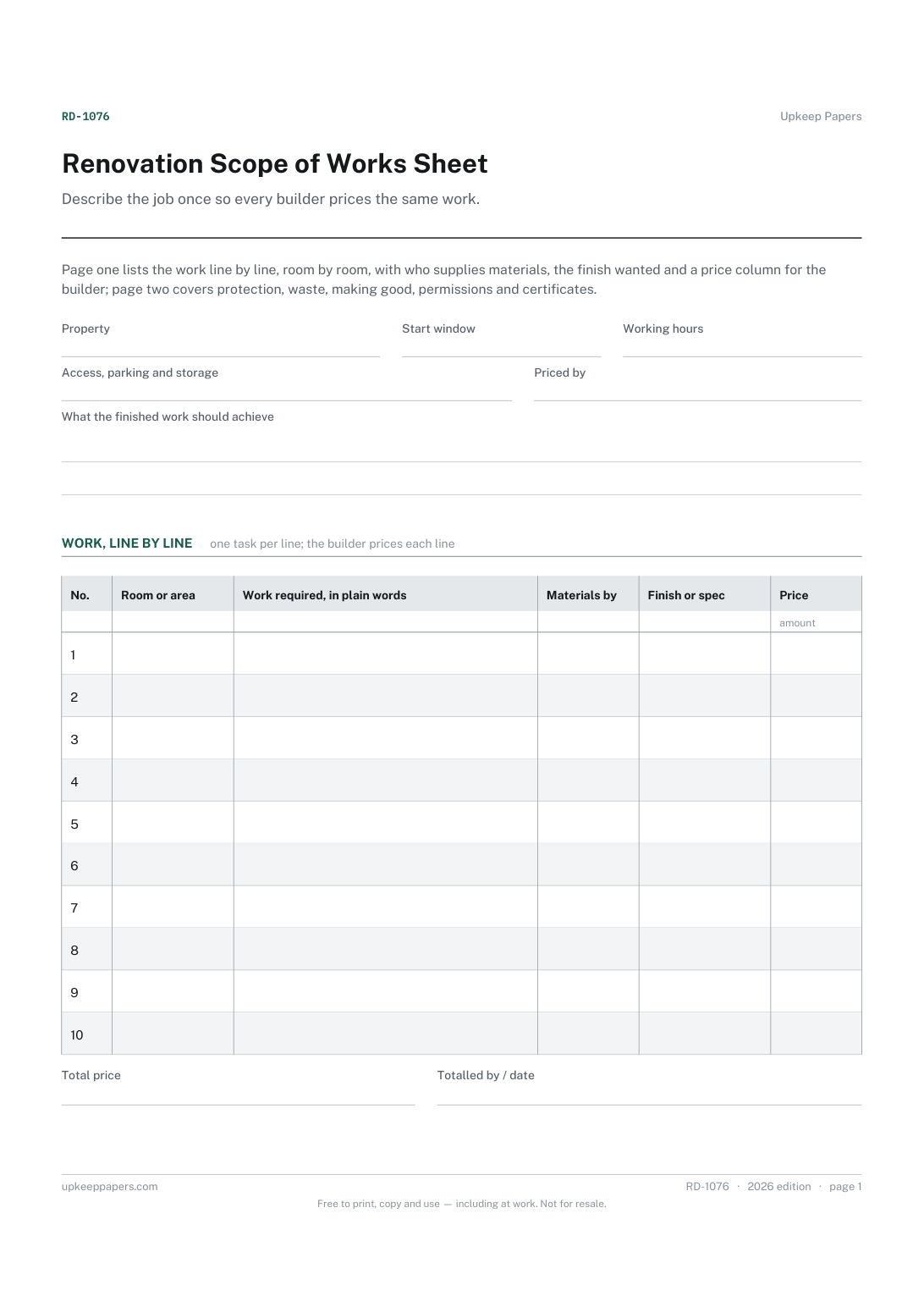
Every piece of work, numbered, so quotes and questions can refer to it.
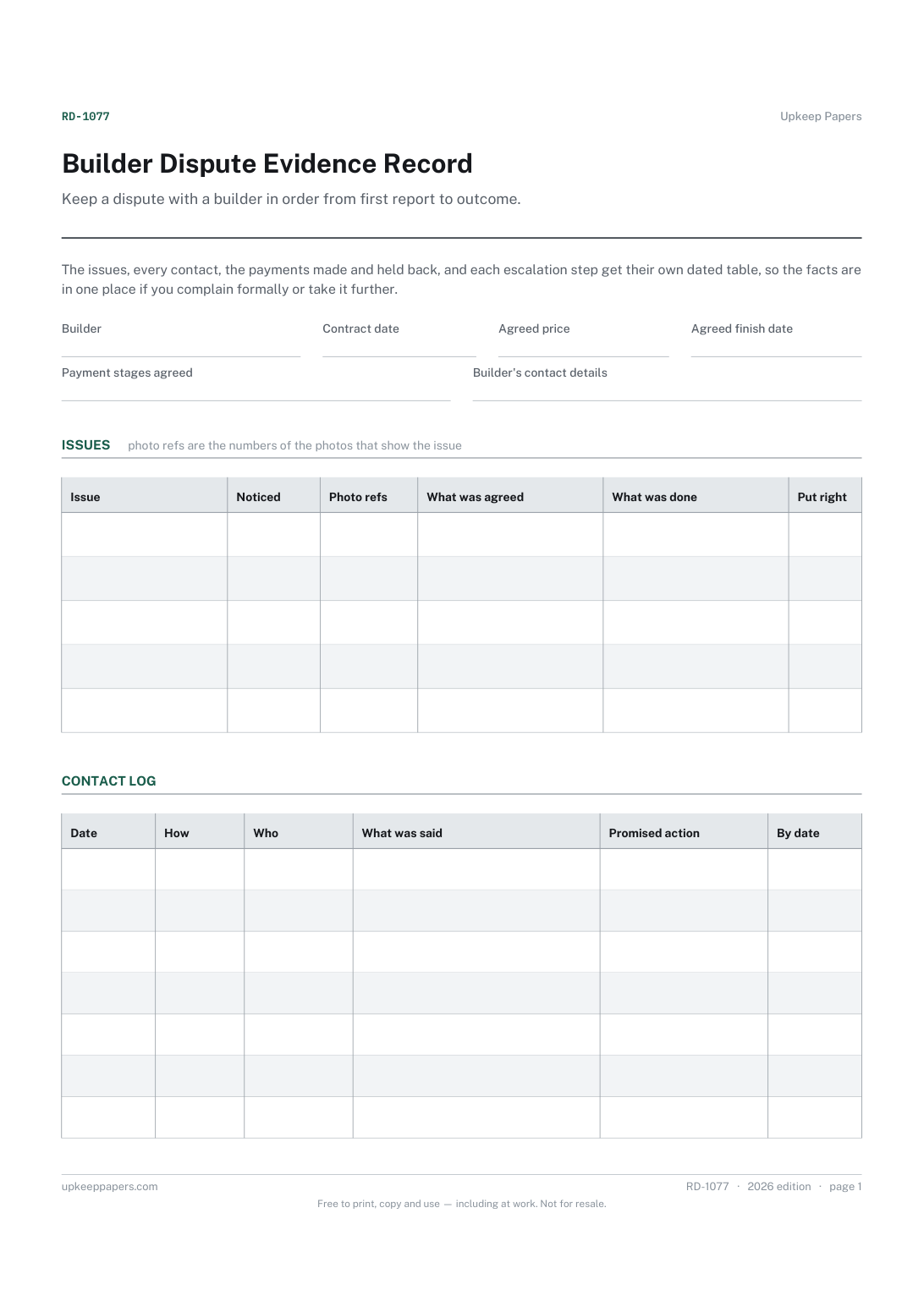
Each problem, when you noticed it and the photos that show it.
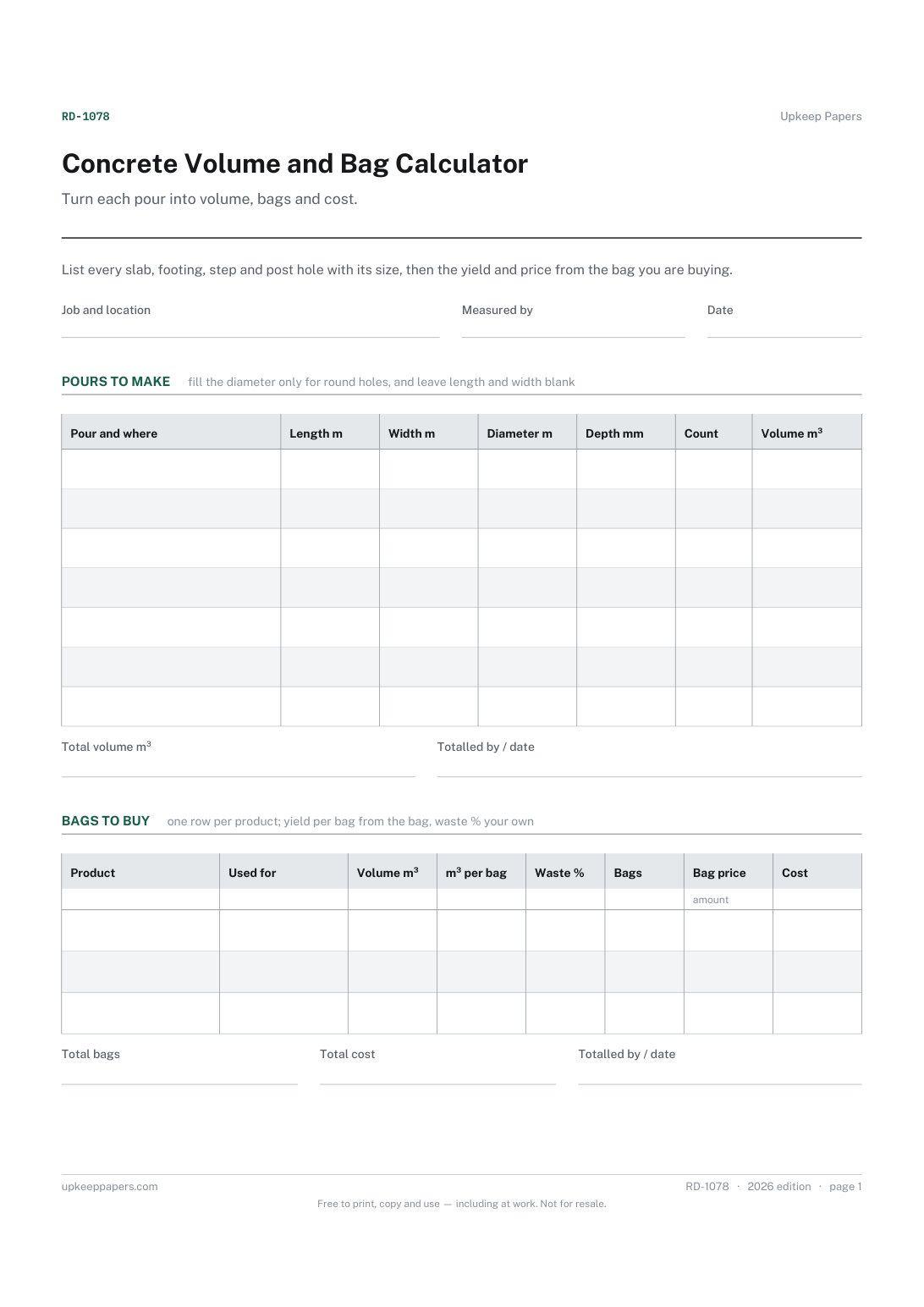
The volume of every slab, footing, step and post hole you plan to pour.
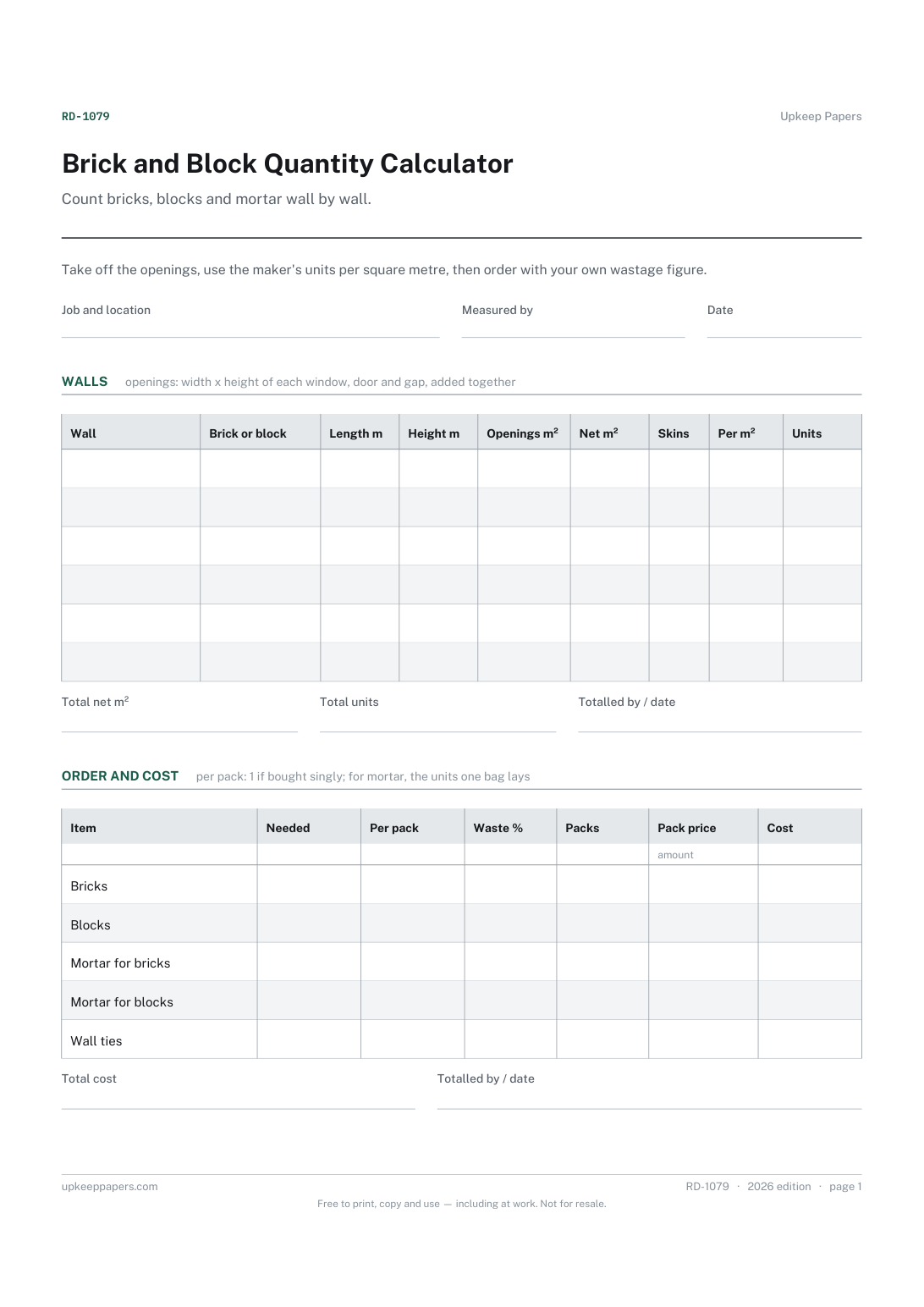
The net area of each wall once windows, doors and gaps are taken off.
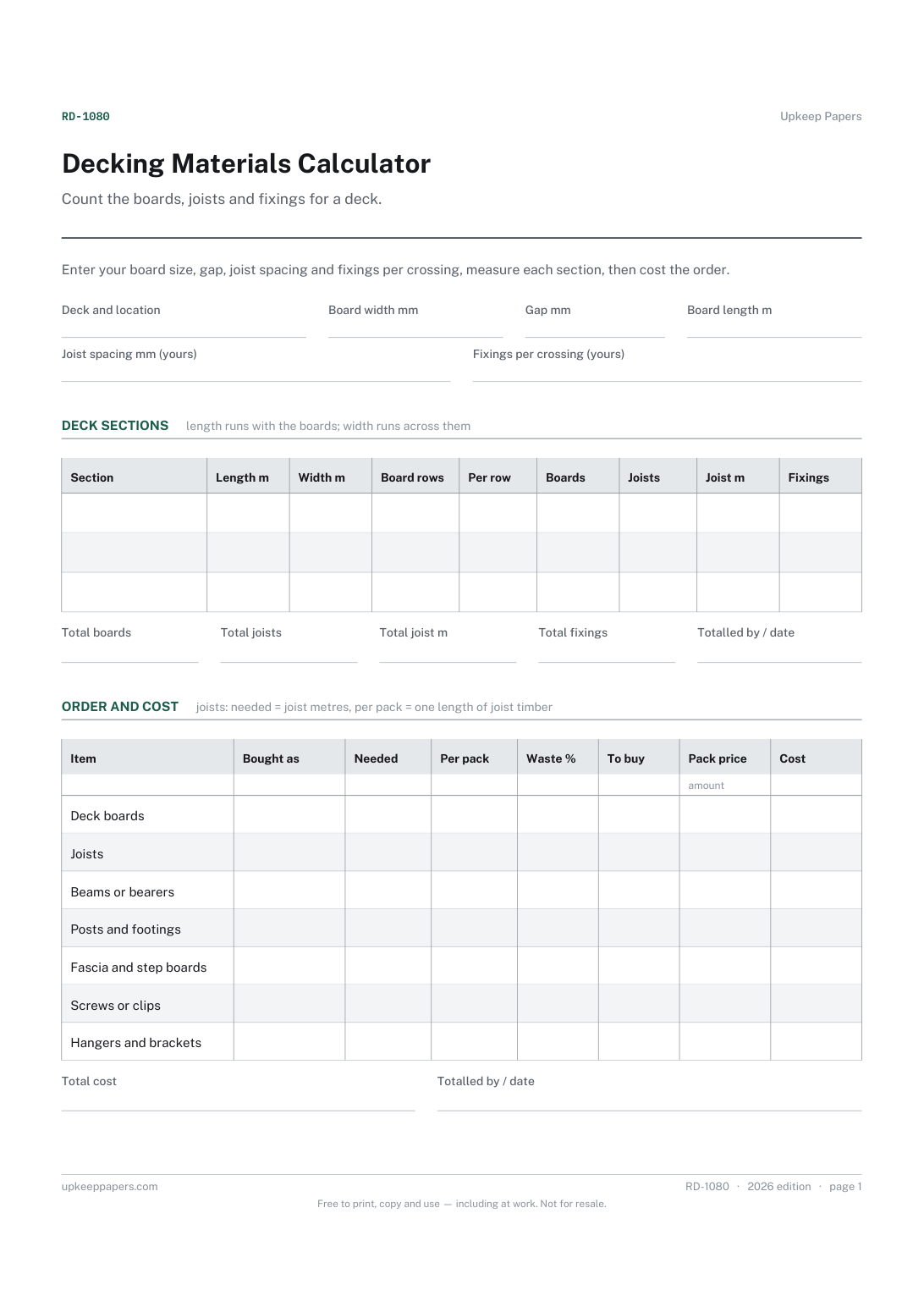
Rows of boards across each section from the board width and gap.
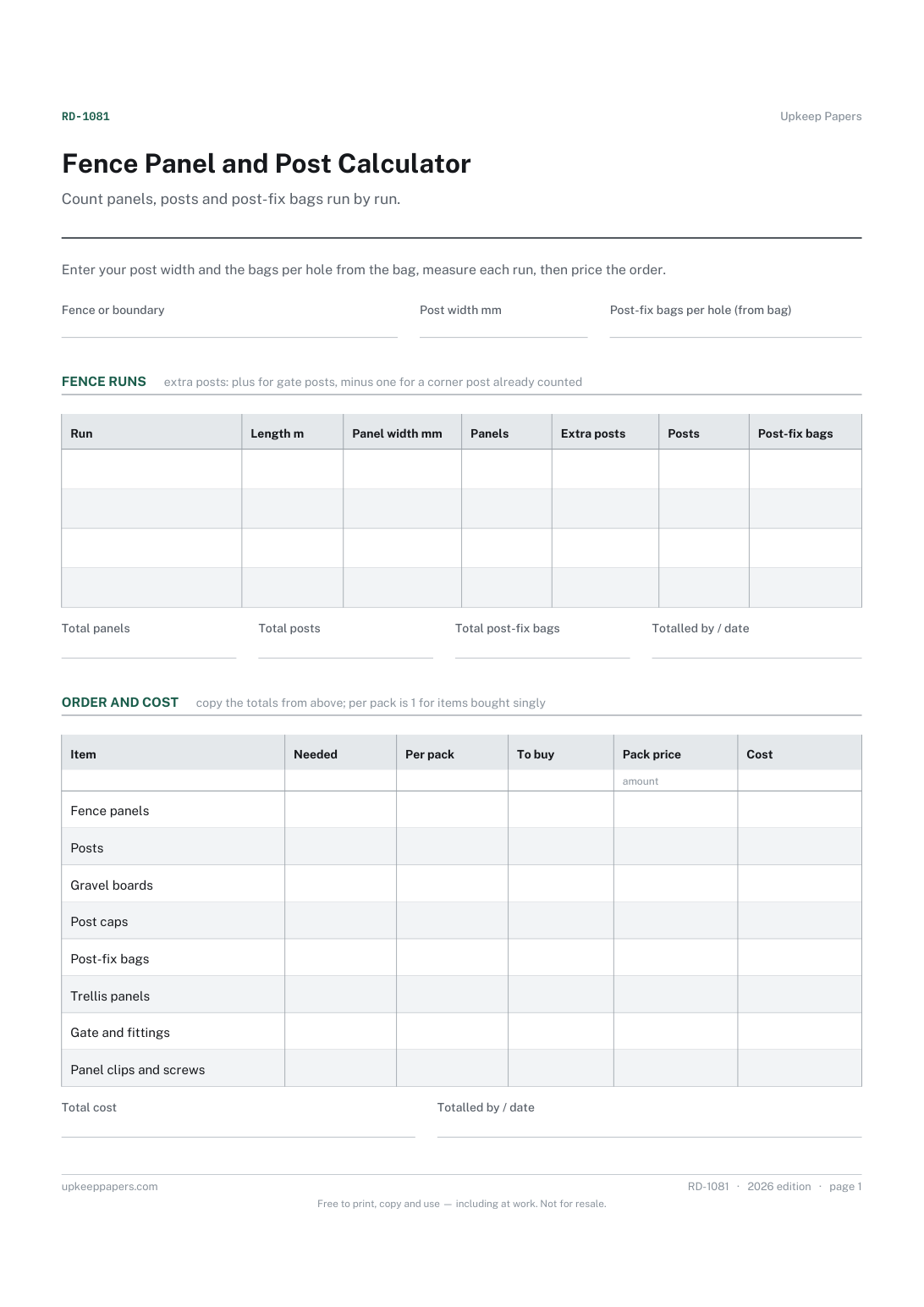
Panels needed for each run, rounded up to whole panels.
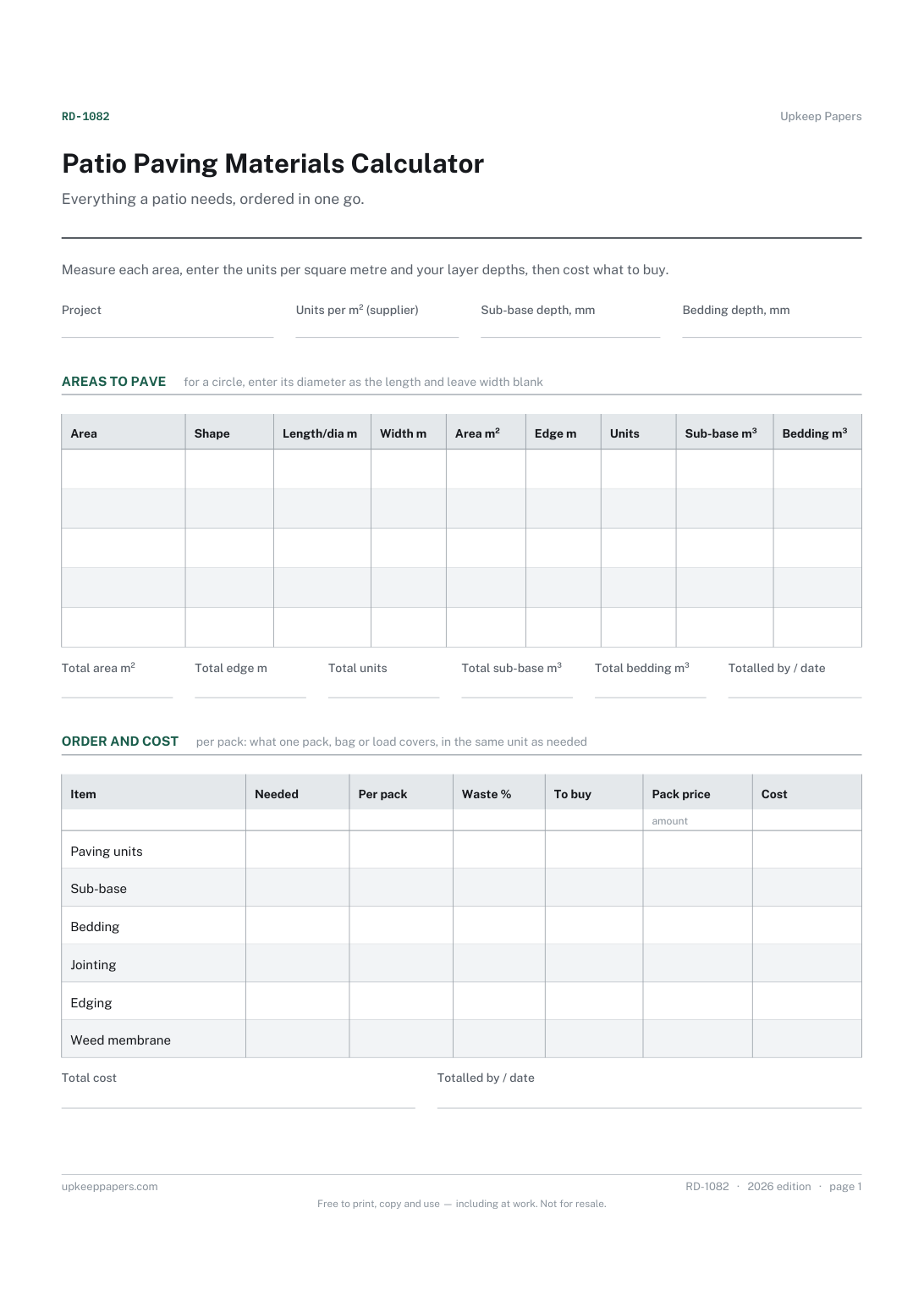
The area and edge length of each rectangle or circle of paving.
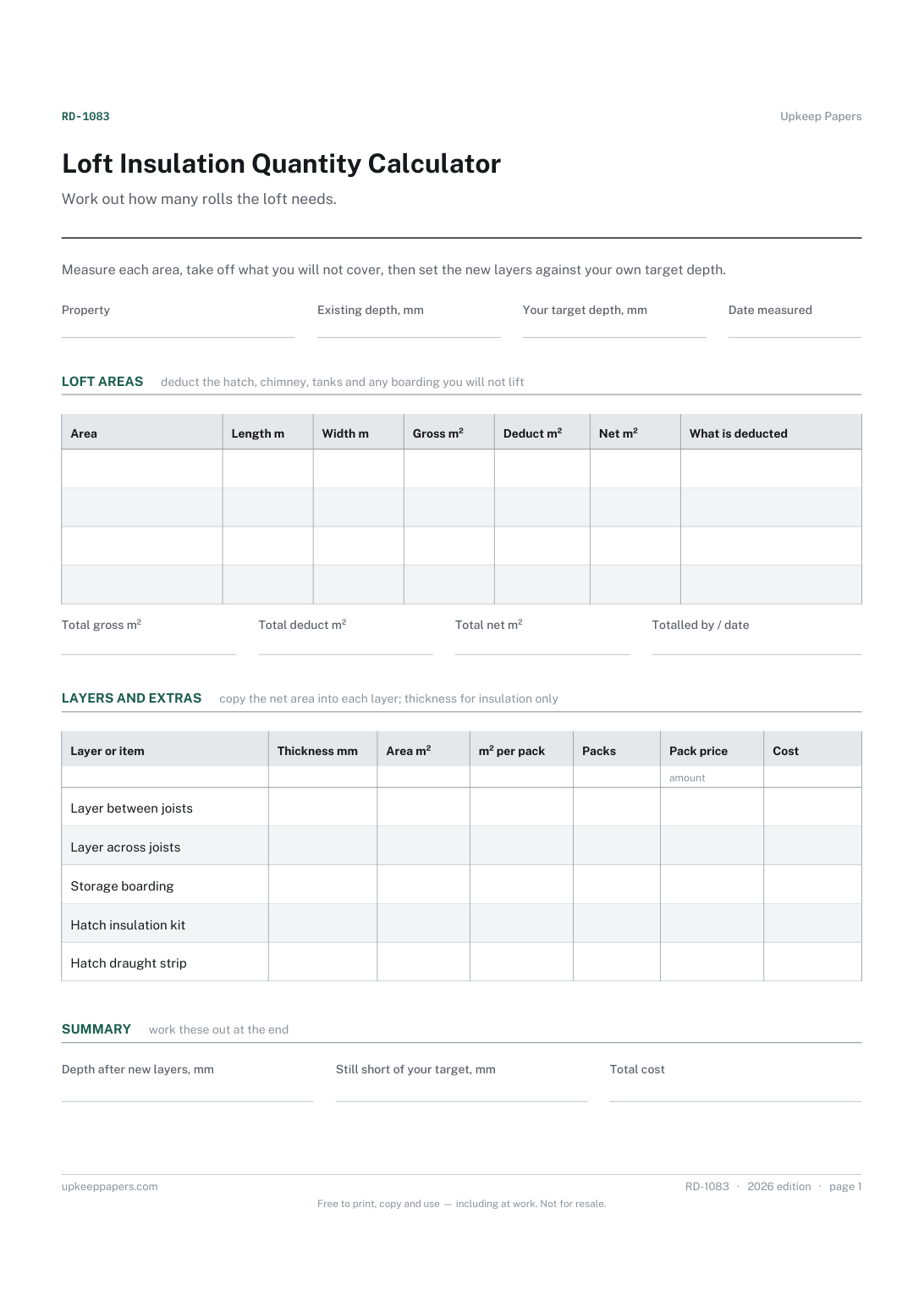
The gross and net area of each part of the loft.
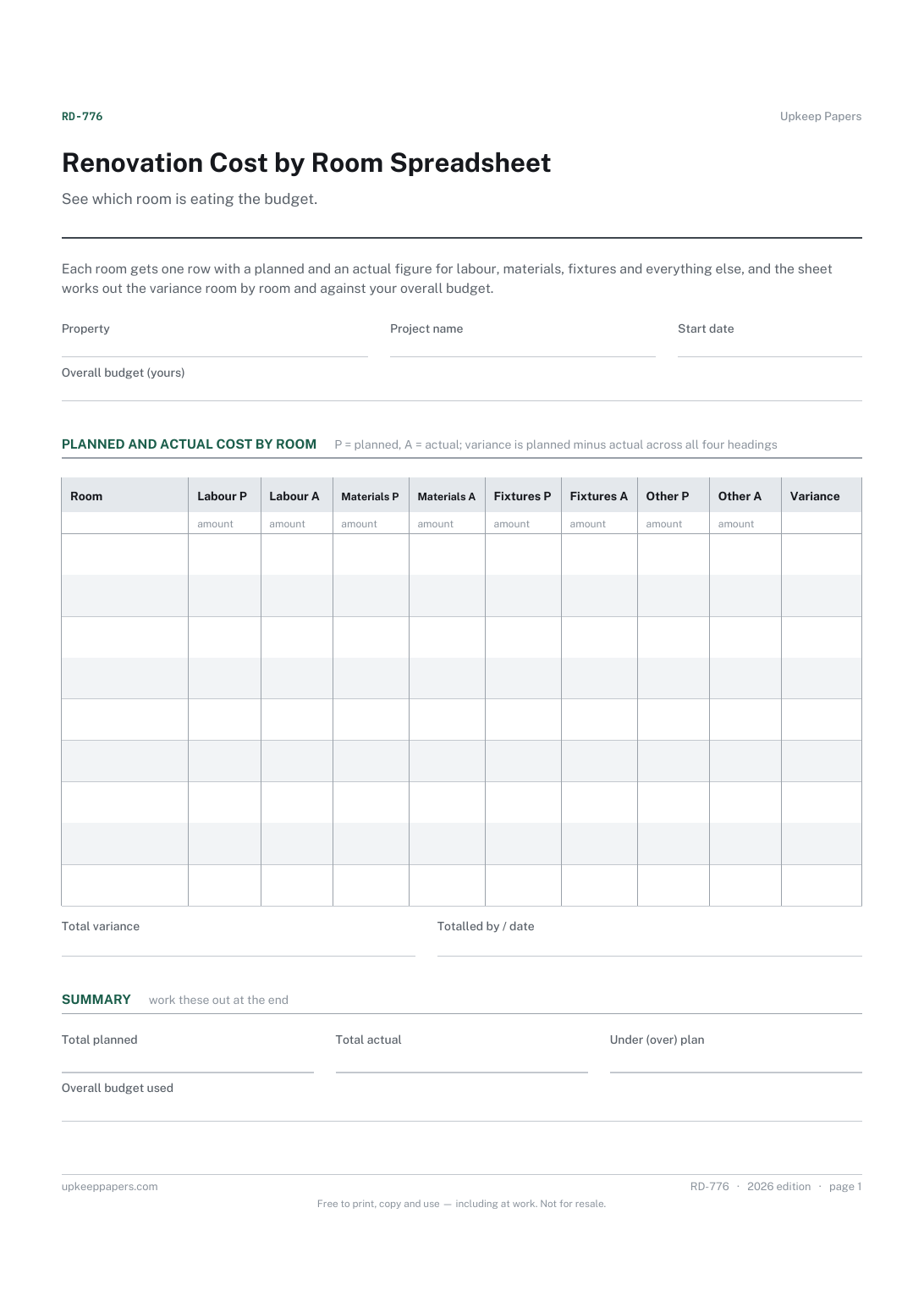
A planned figure for every room, split into labour, materials, fixtures and other.
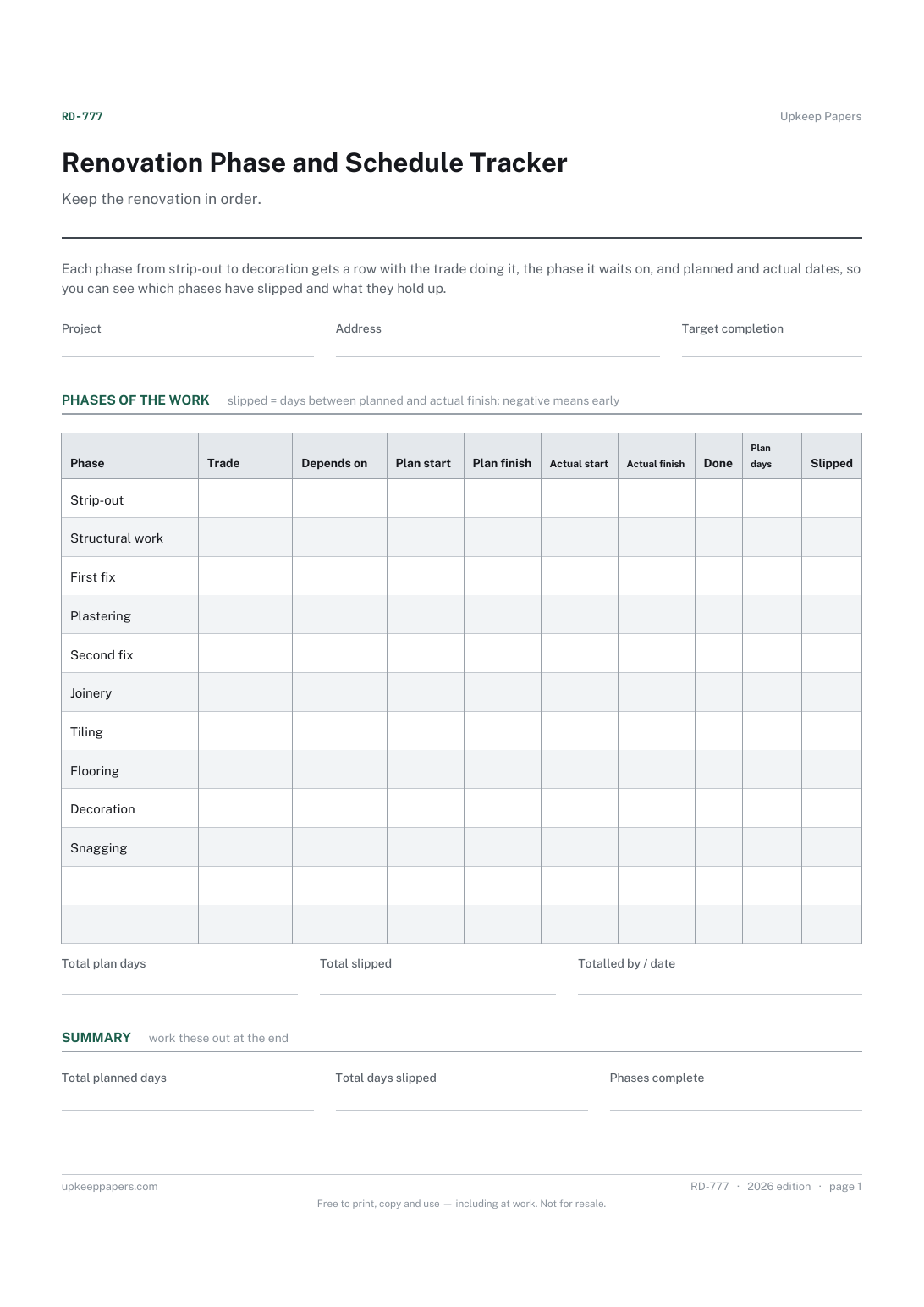
The order of the phases and which one each is waiting on.
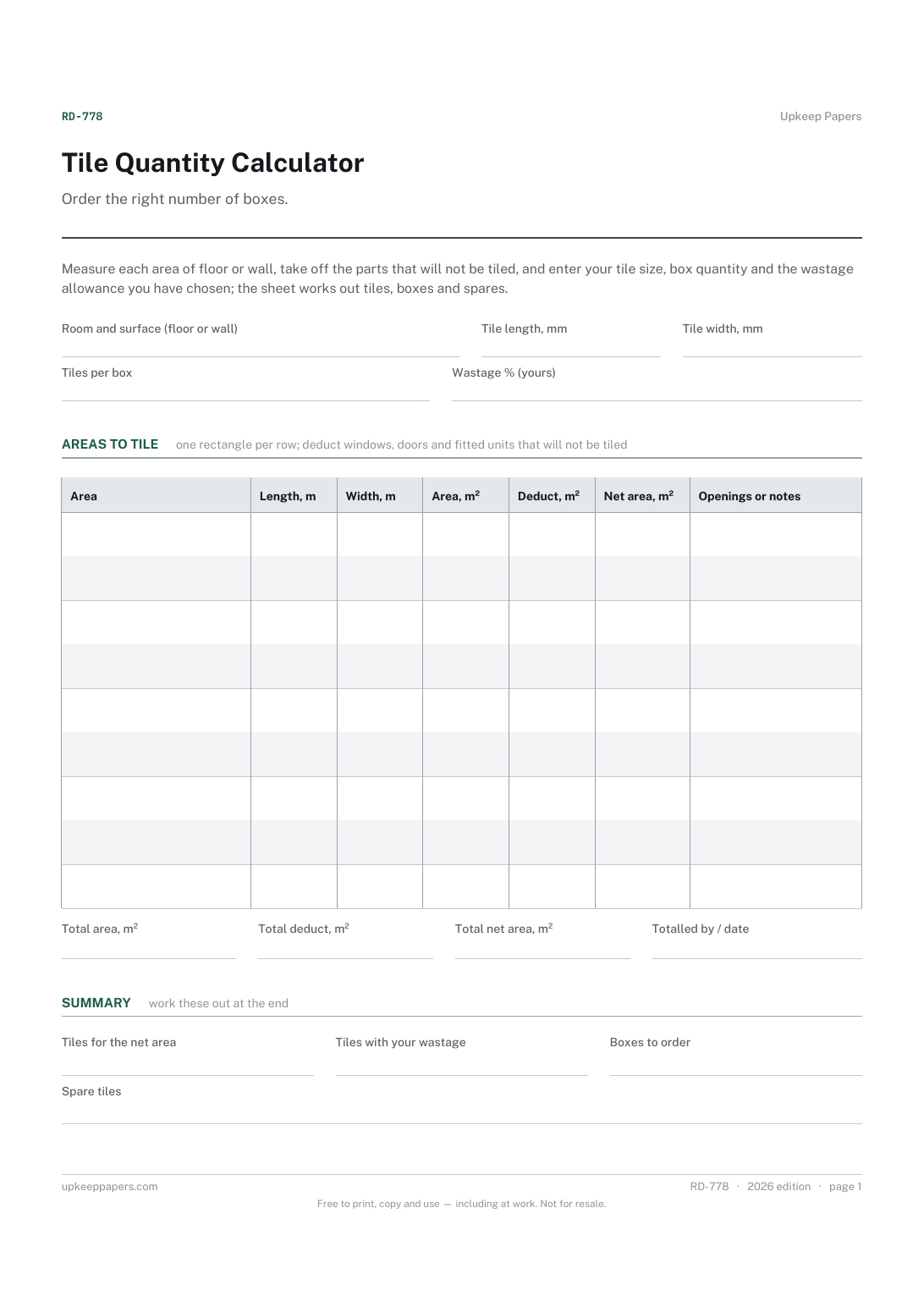
The net area of each part of the floor or wall after openings and units.
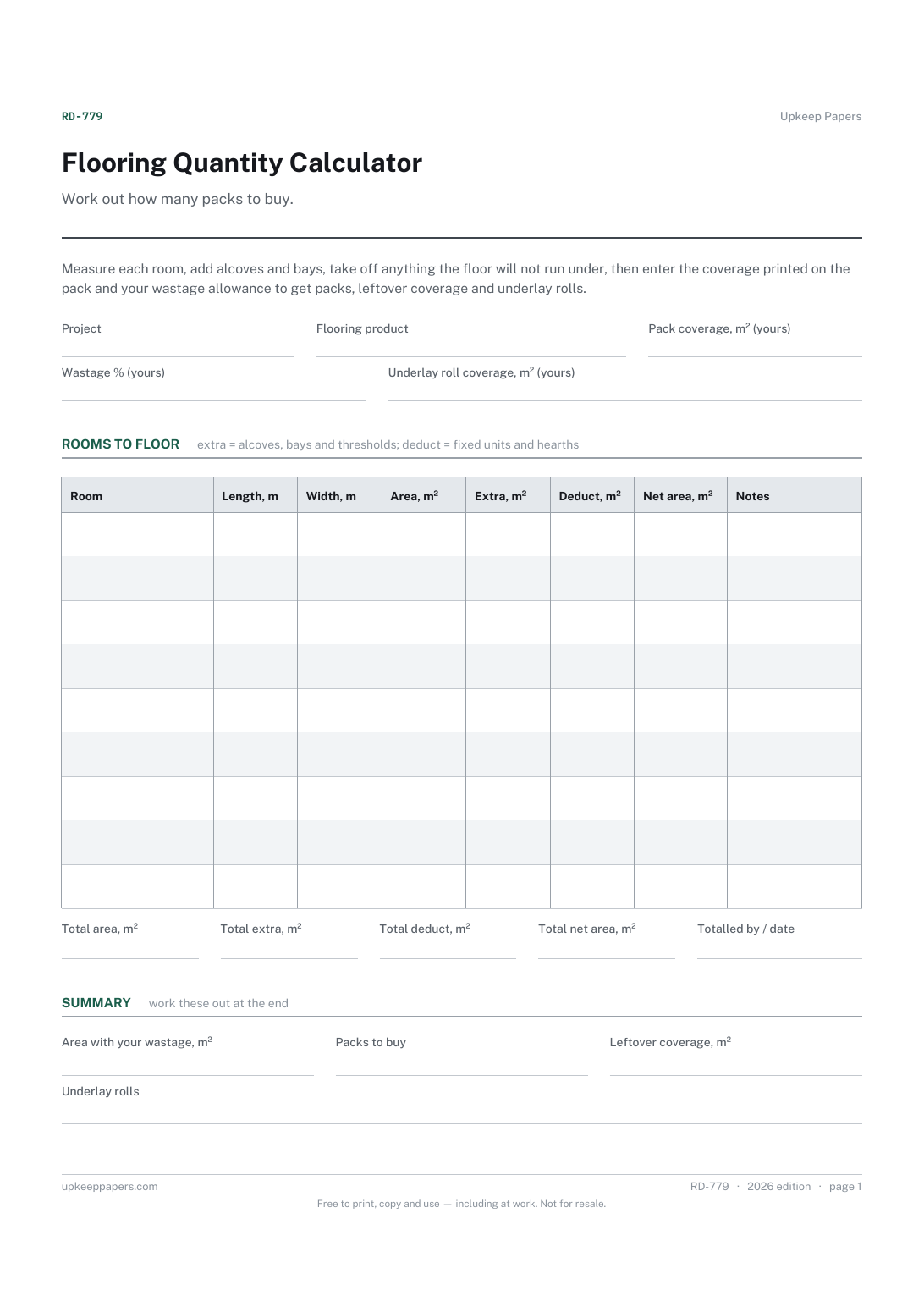
The net floor area of each room, including alcoves and bays.
The gross and net area of every wall, ceiling and area of woodwork.
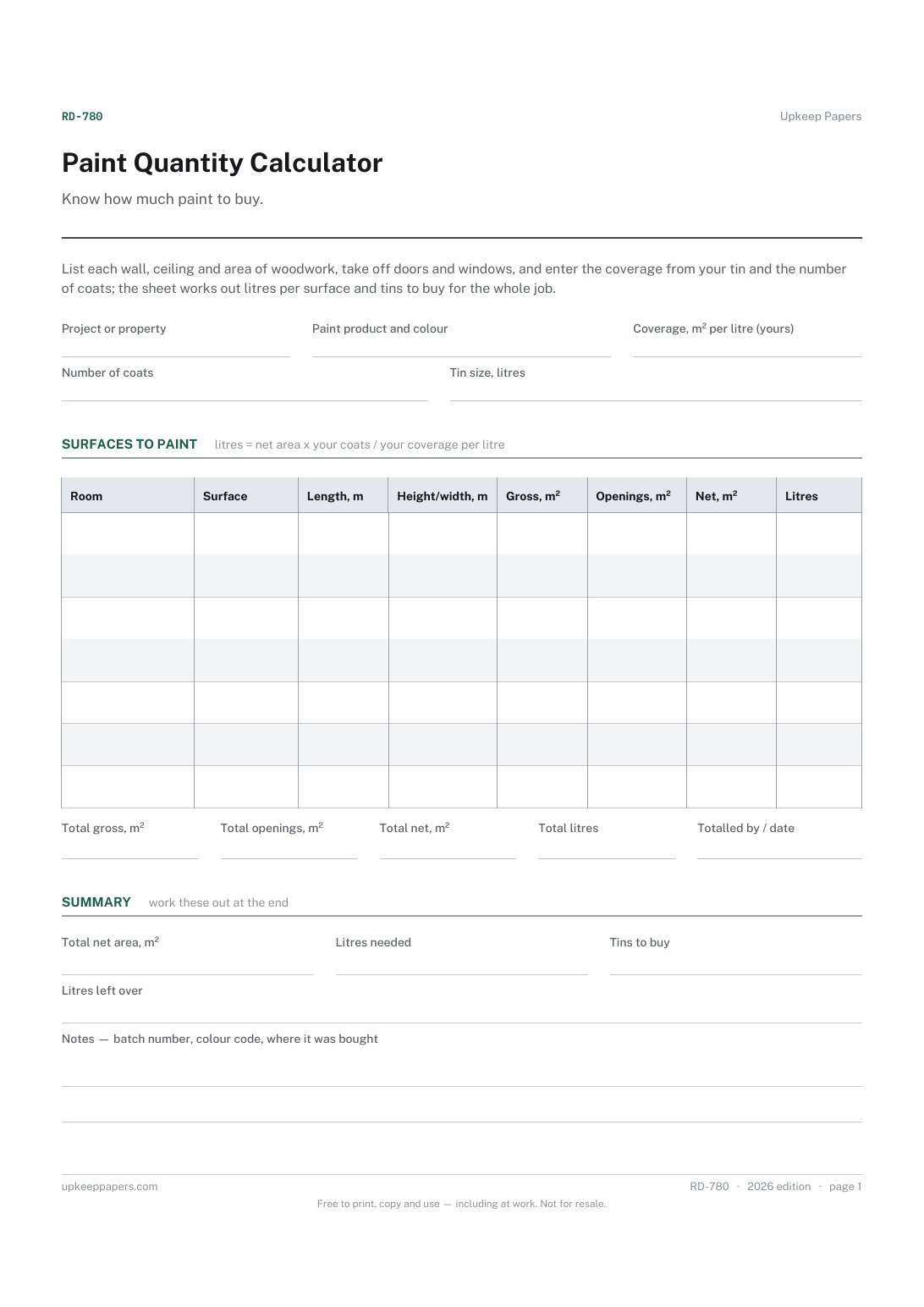
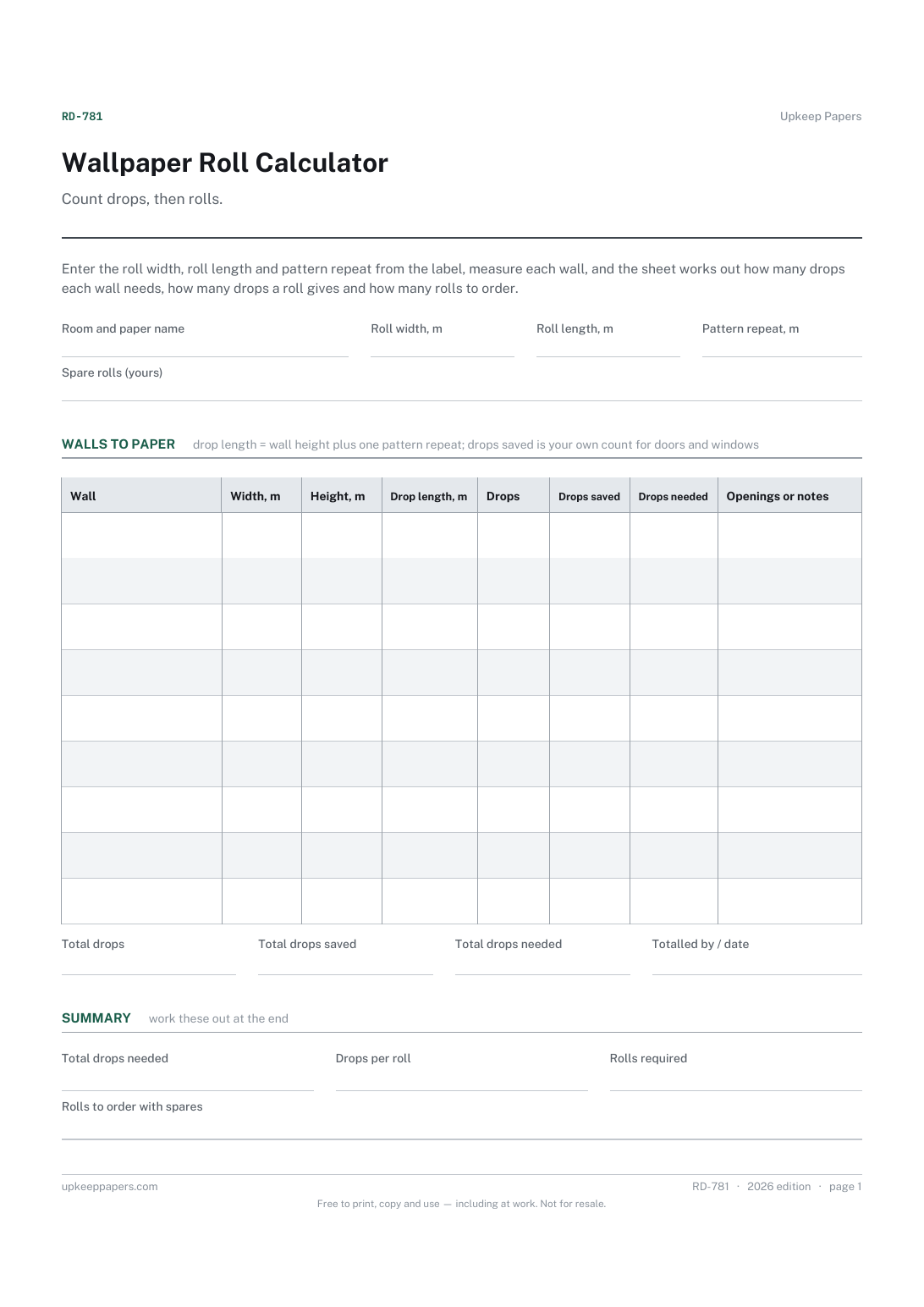
How many drops each wall needs at your roll width.
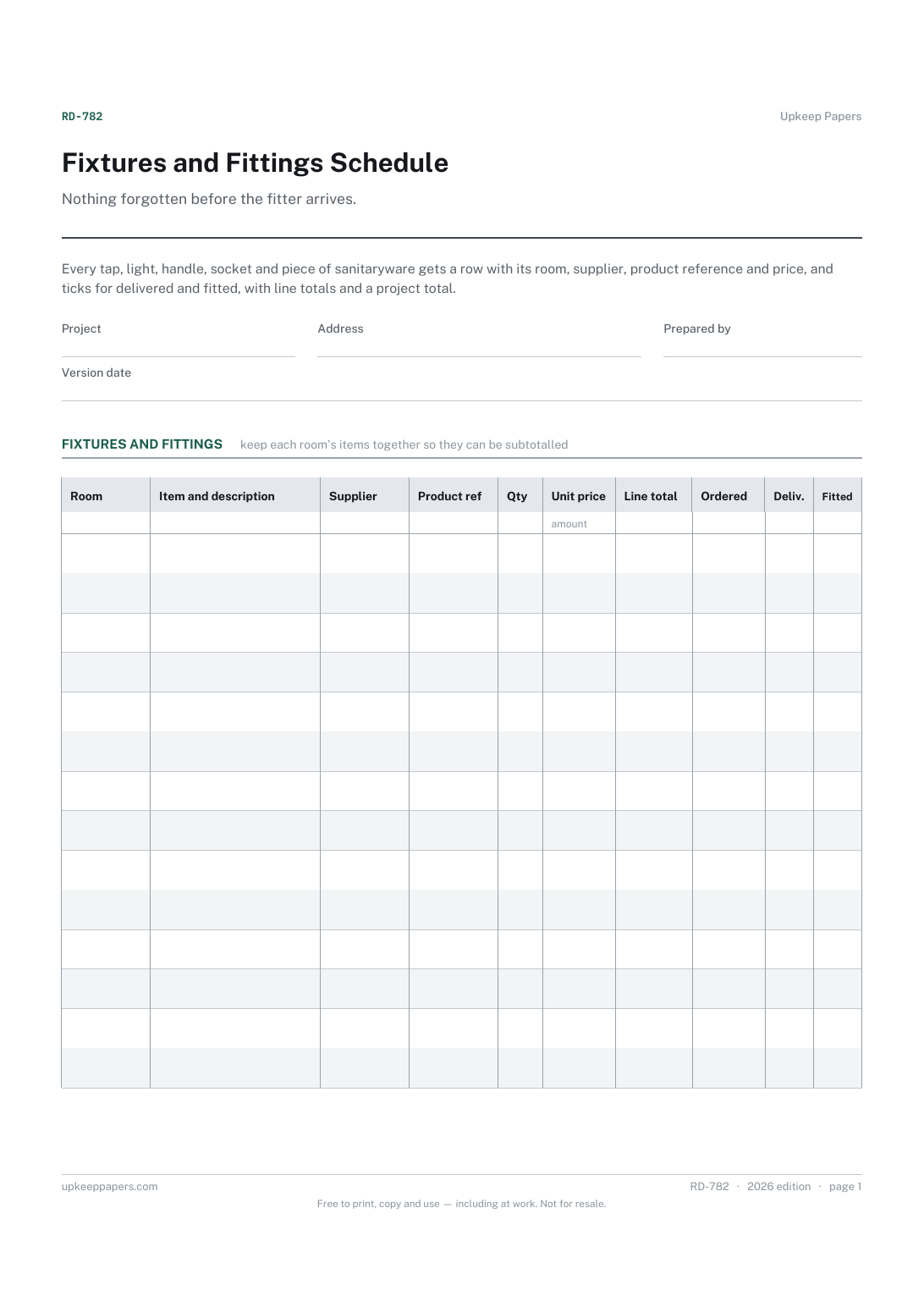
Every fitting in the project, room by room.
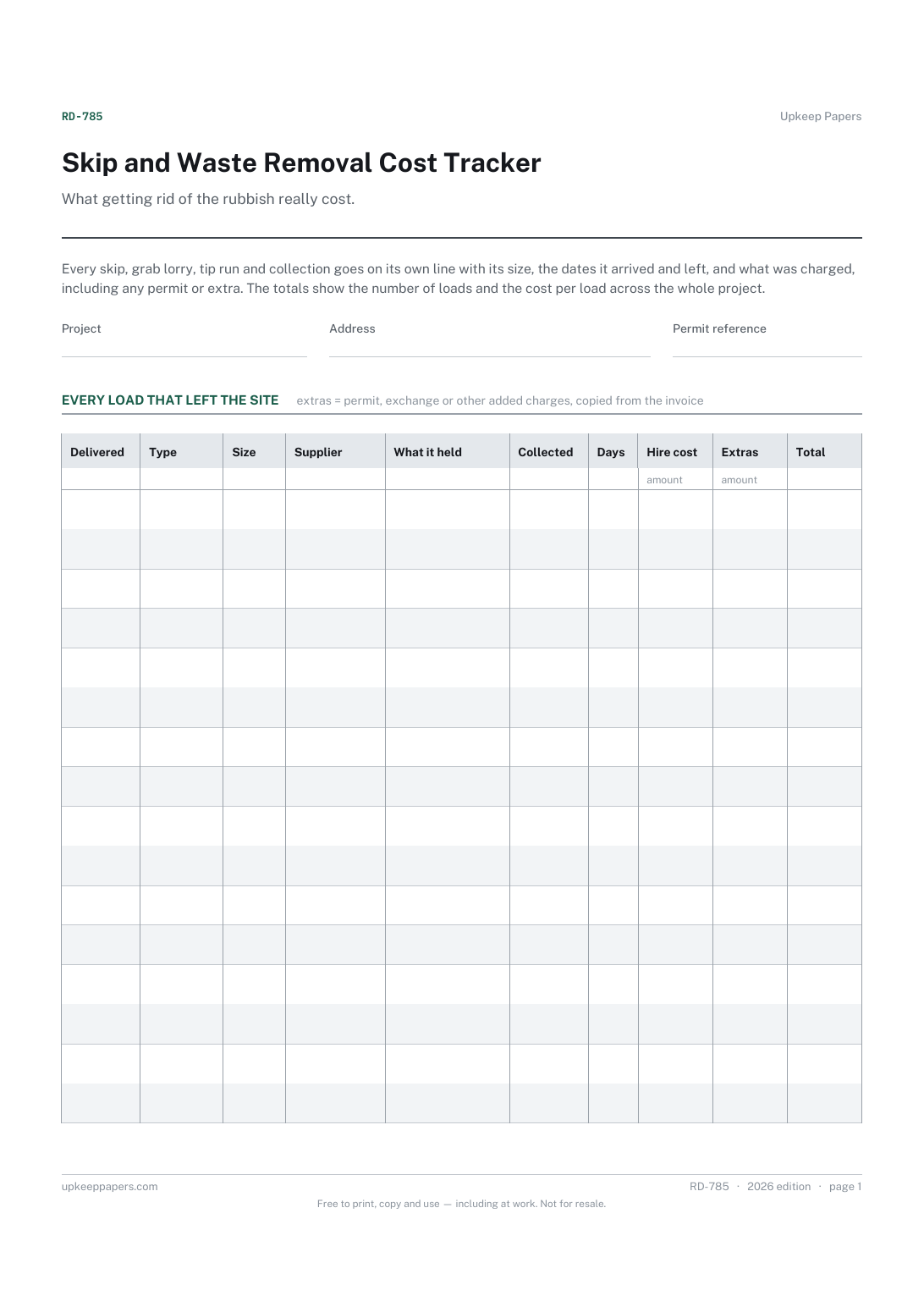
Each skip, grab load, tip run or collection and who supplied it.
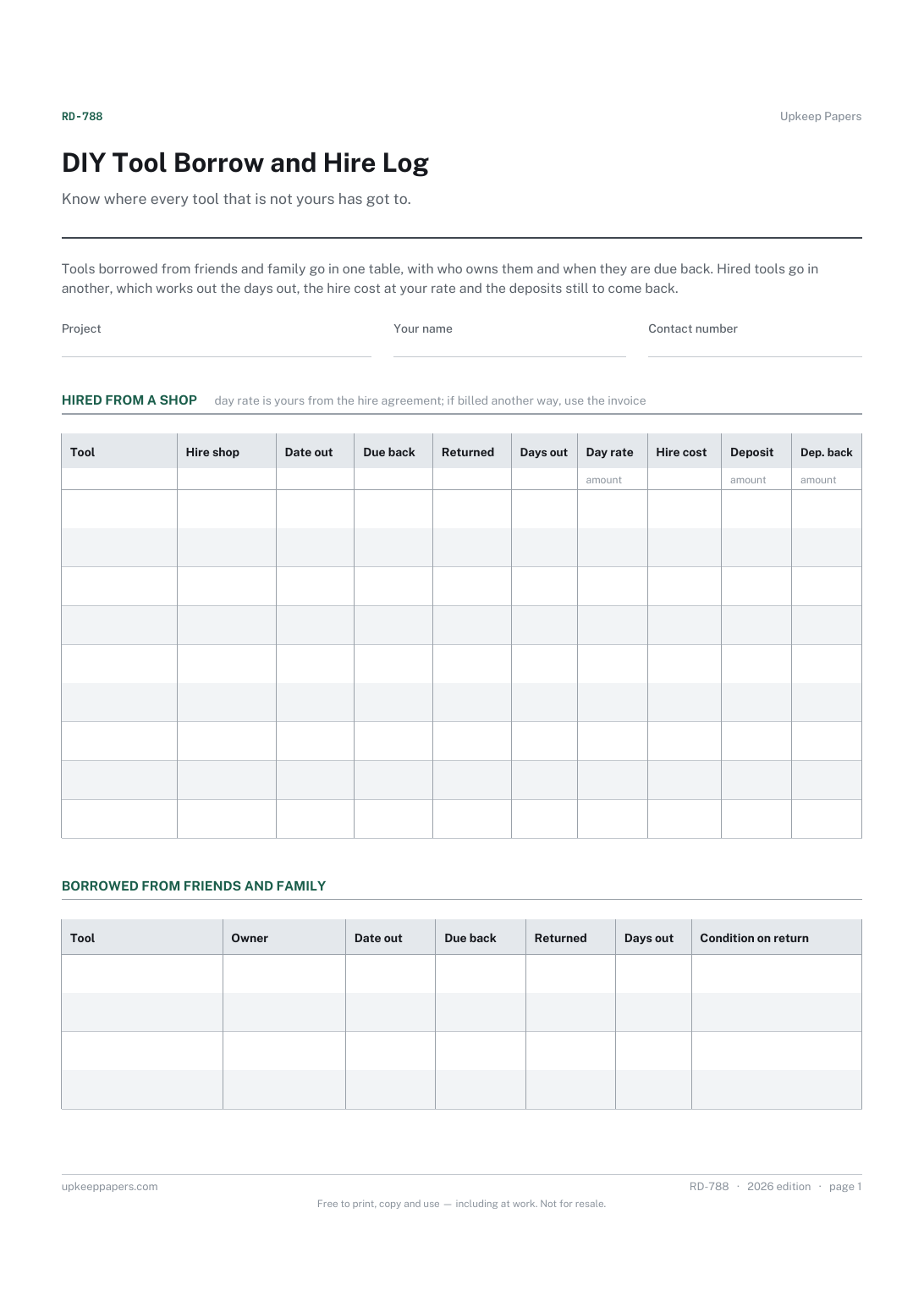
Every borrowed tool, who it belongs to and when it should go back.
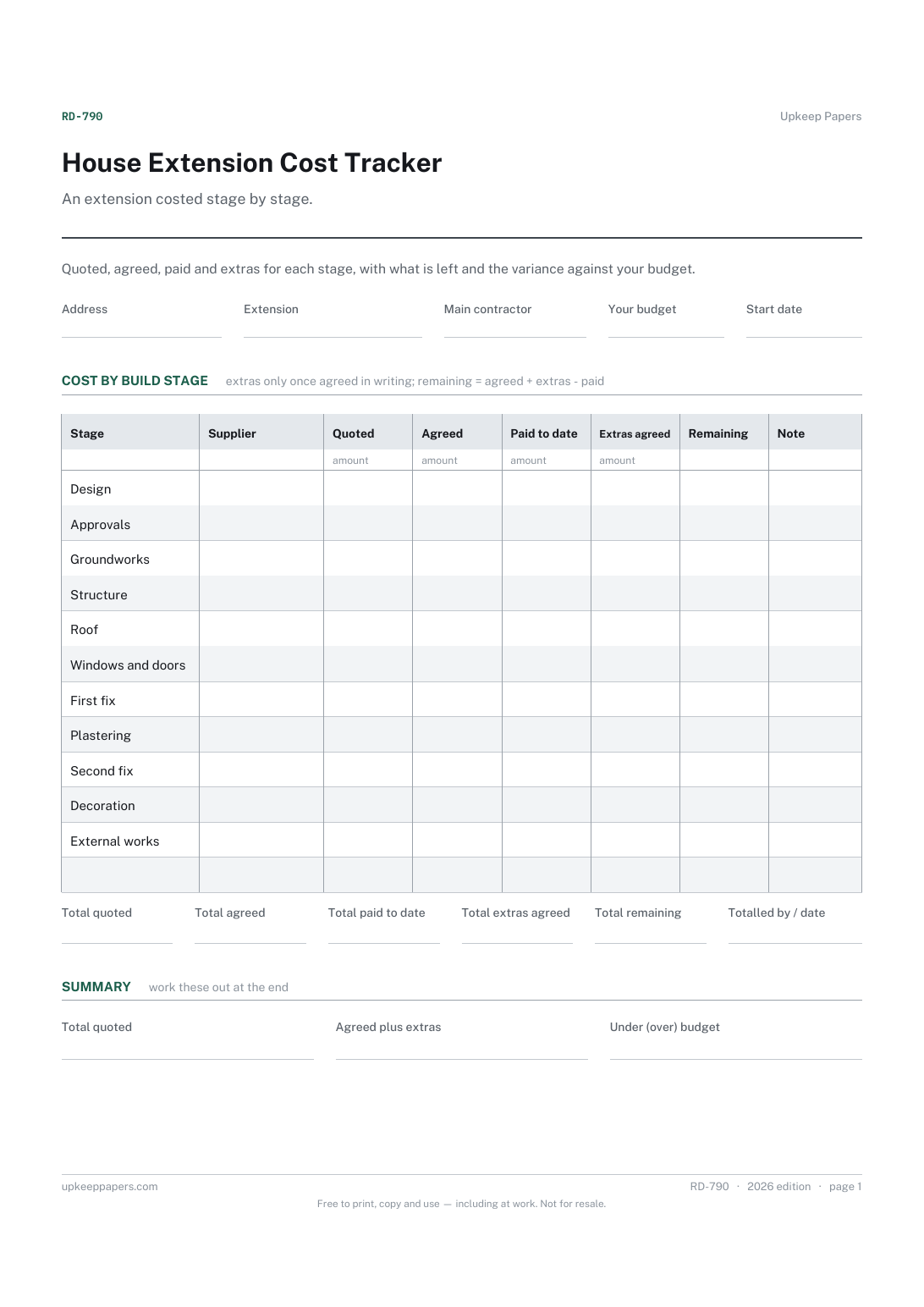
The quoted and agreed figure for every stage of the build.
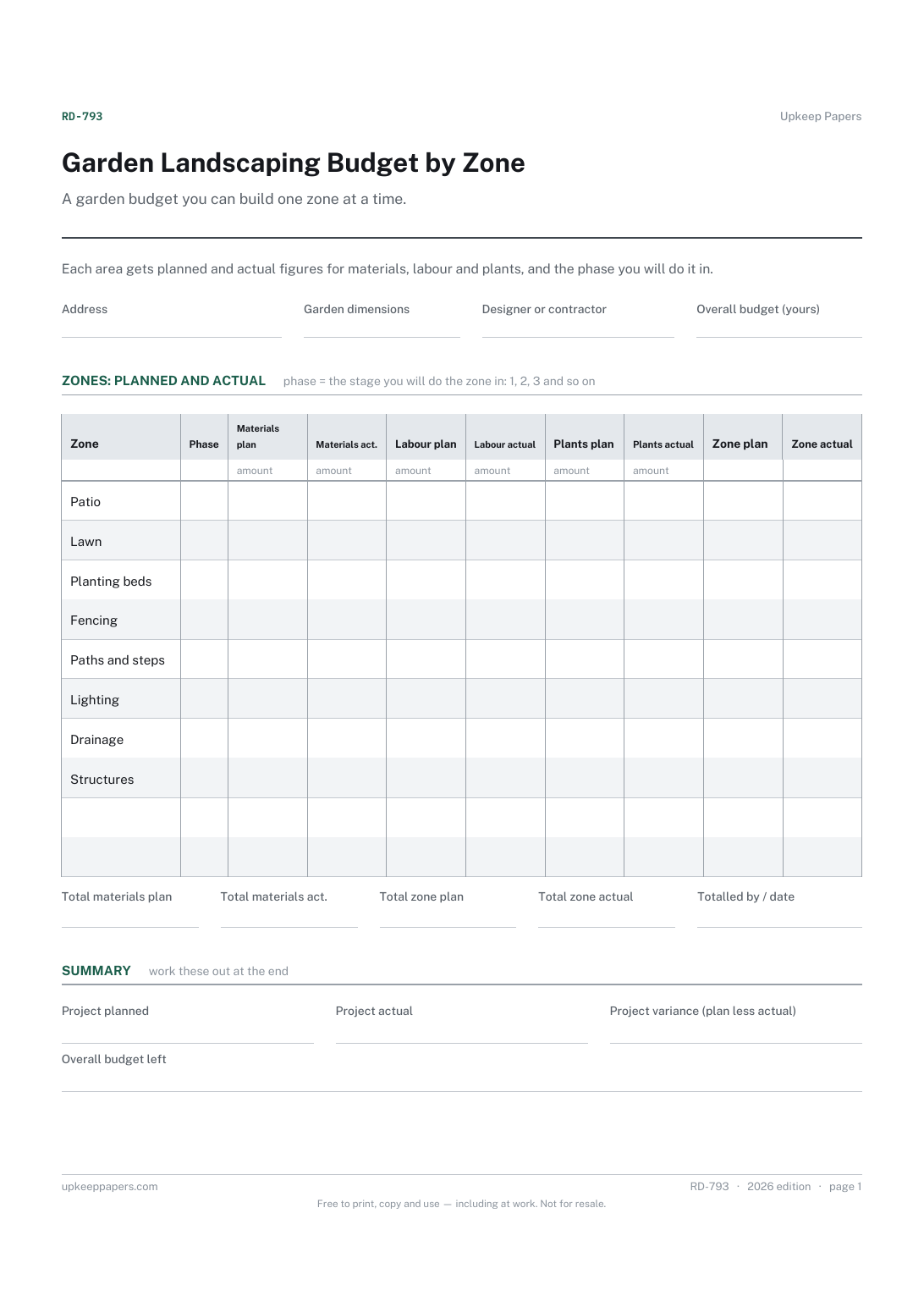
What each zone of the garden is expected to cost in materials, labour and plants.
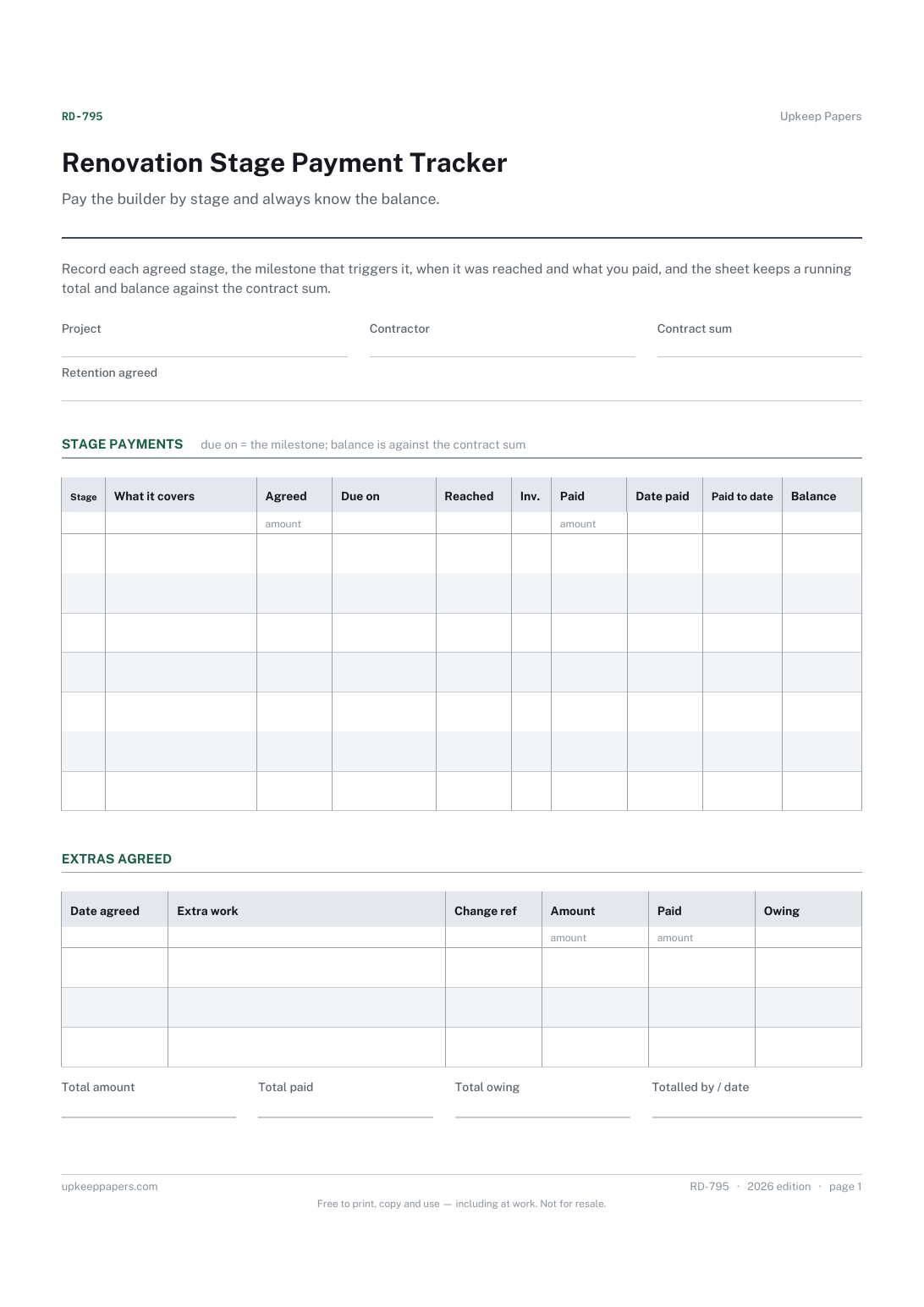
The deposit and each stage payment agreed in the contract.
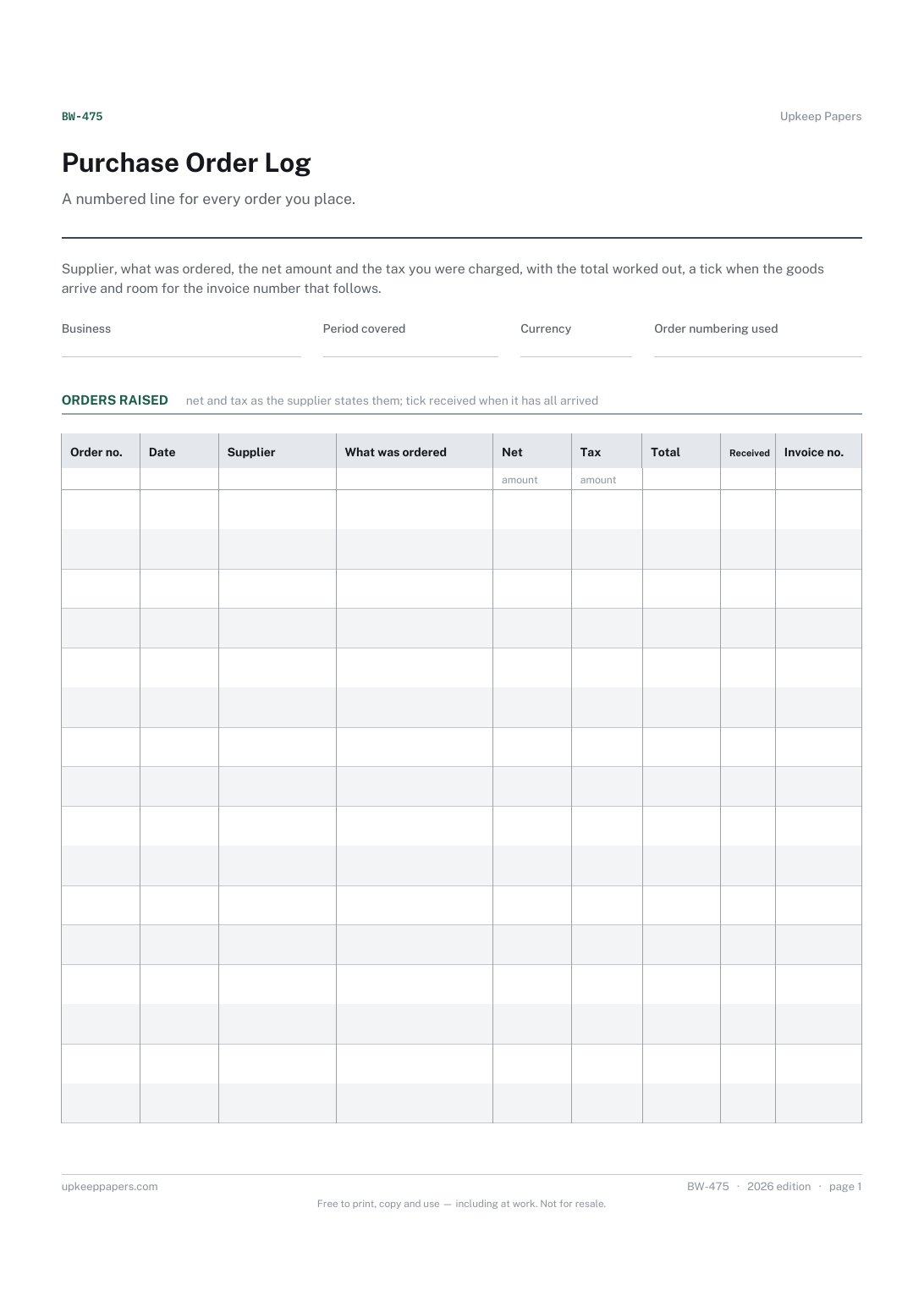
Every order placed, with the supplier, item, quantity and unit price.
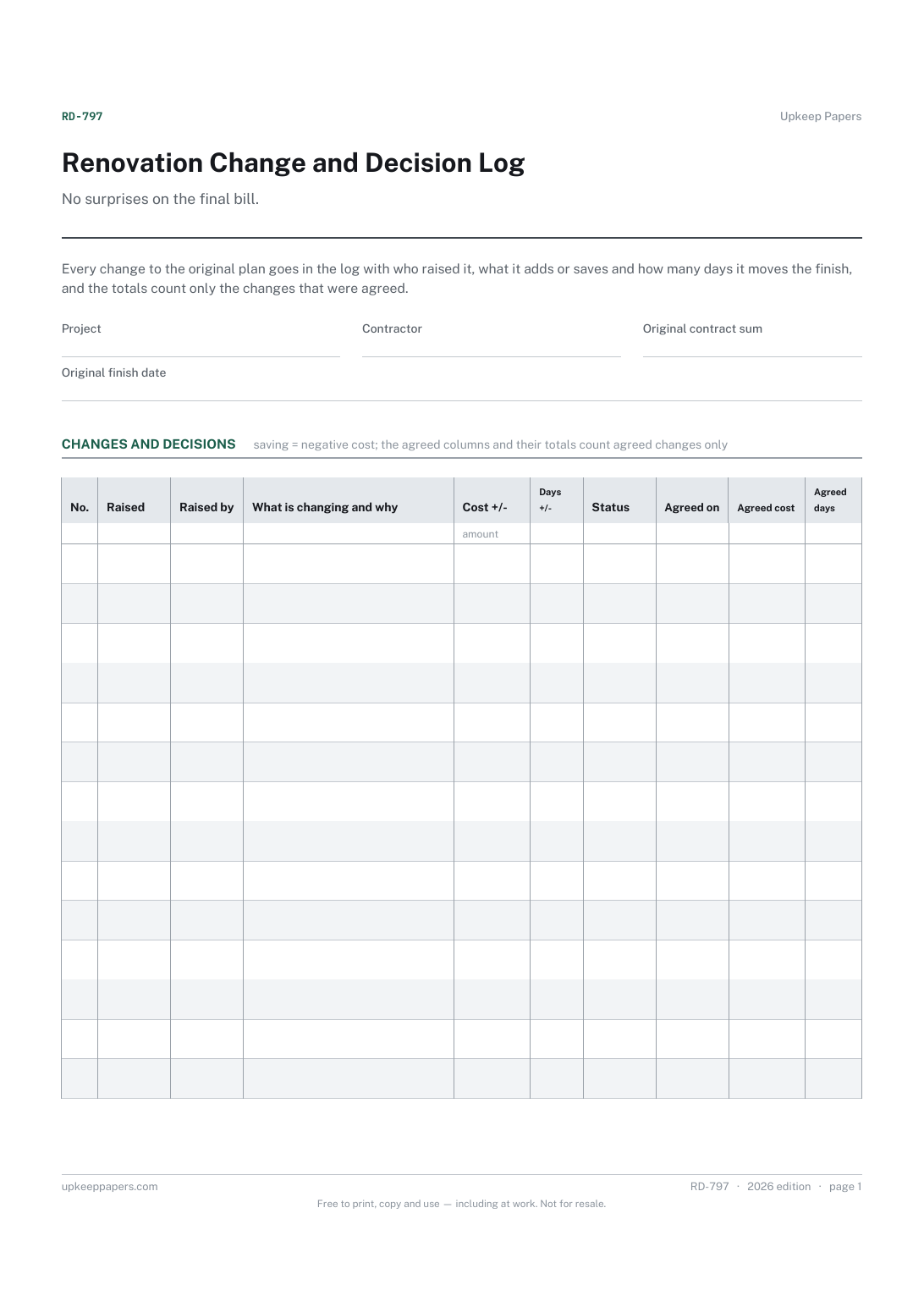
Every change raised, when and by whom.
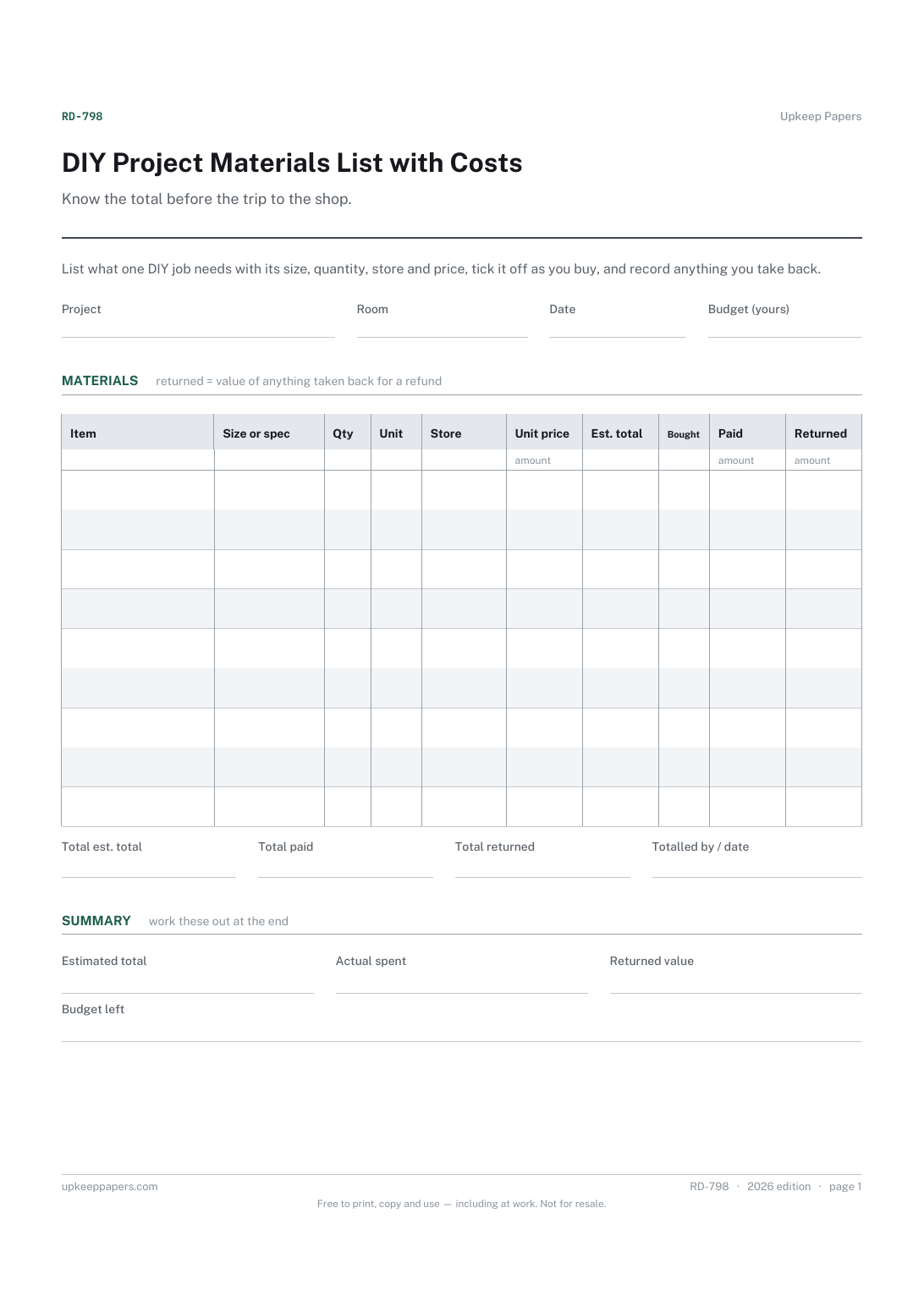
Every item the job needs, with its size or specification.
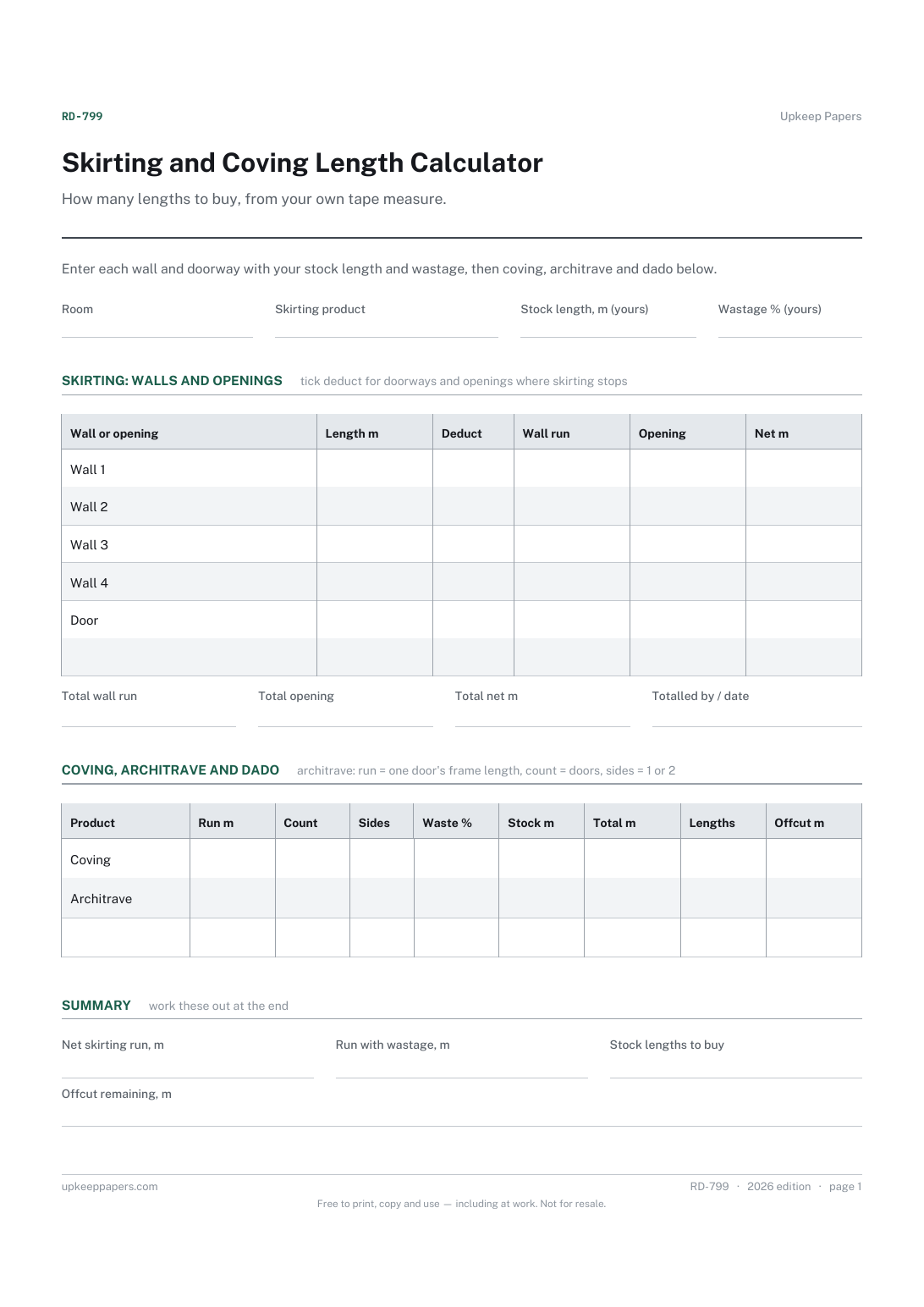
The room perimeter from each wall you measure.
Each account, investment, property and item of value, and who it is held with.
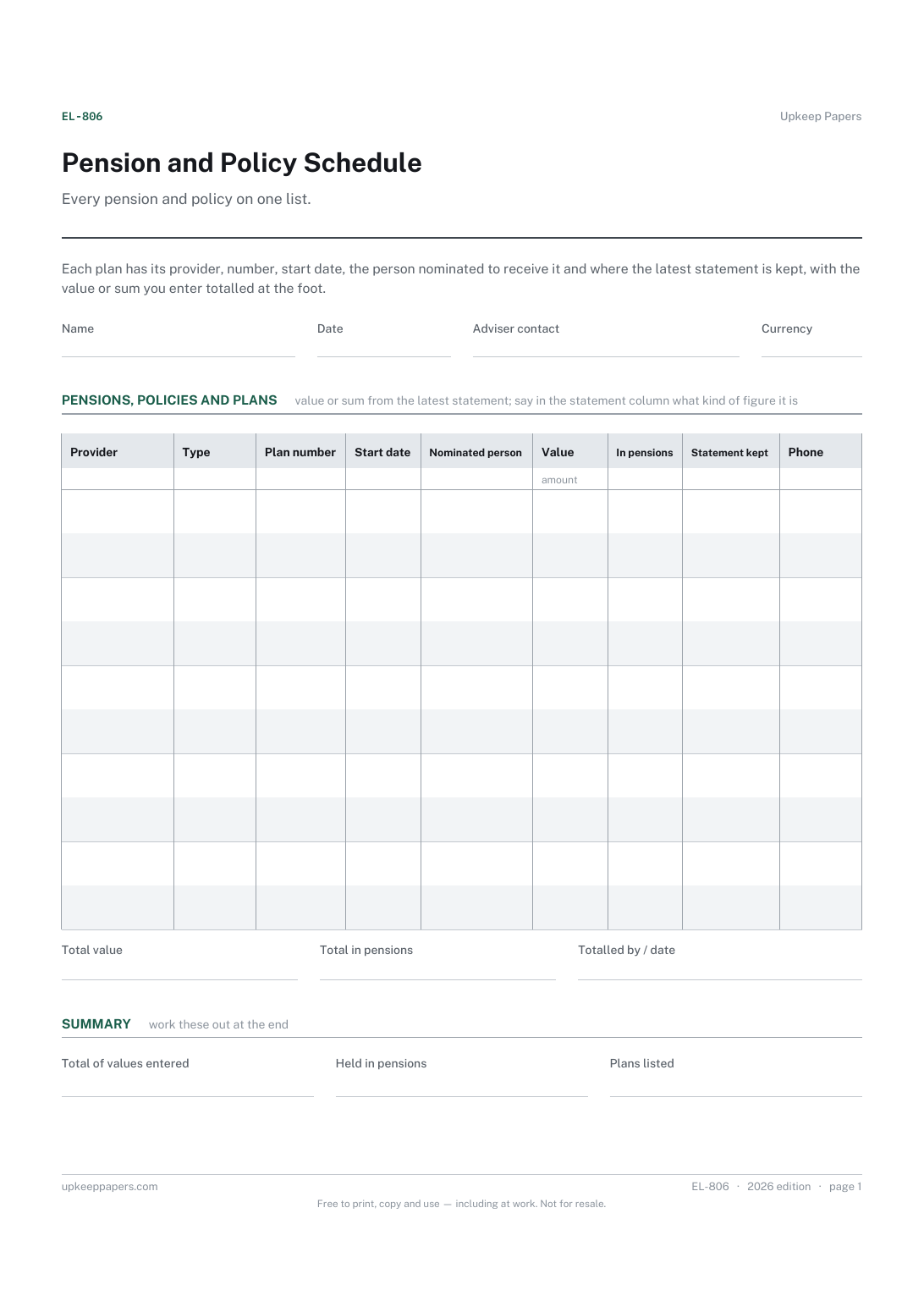
Every pension, life policy, endowment and similar plan in one place.
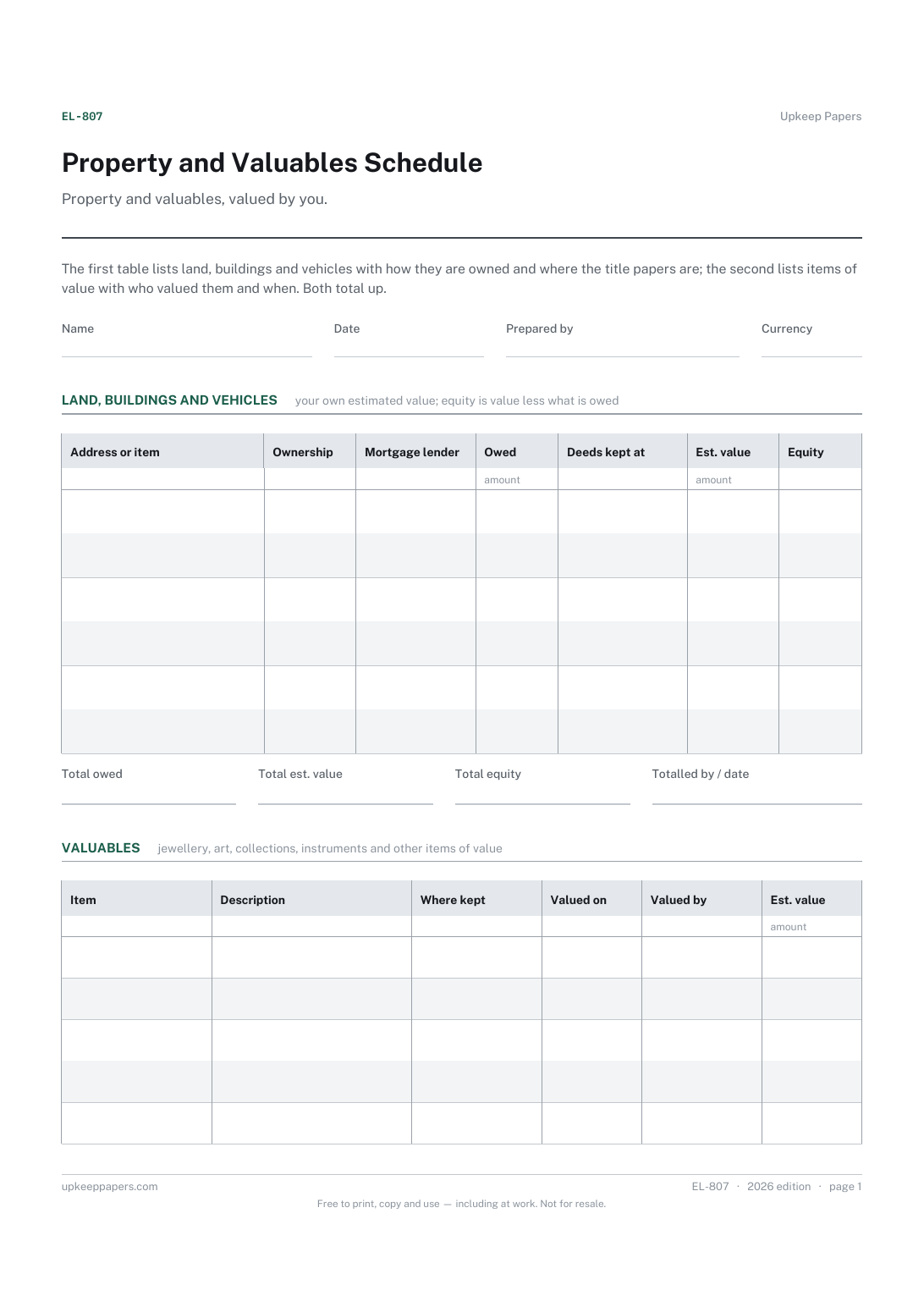
Each property or vehicle, how it is owned and where its papers are kept.
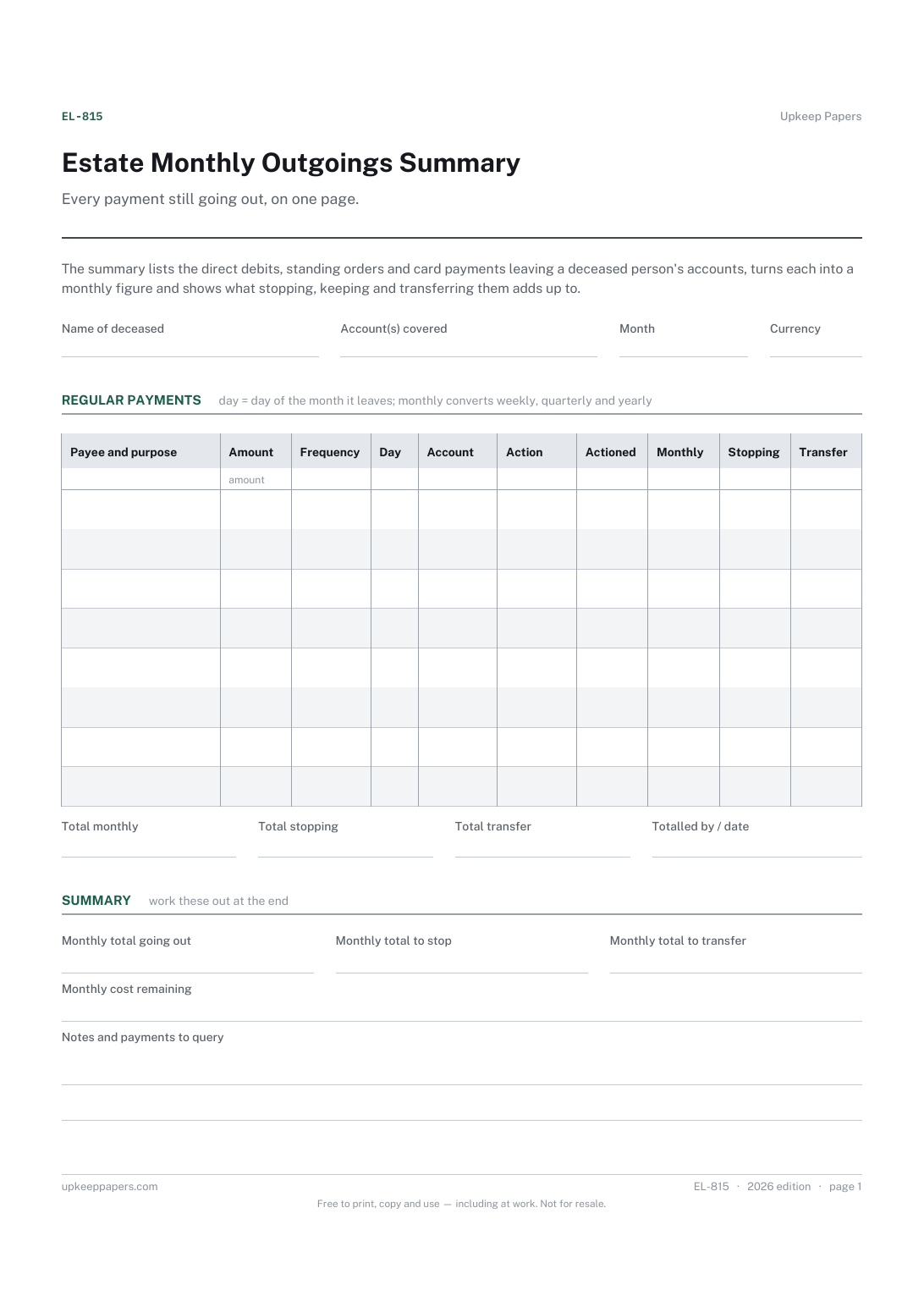
Every subscription, membership and service still being paid.
Each payee and what the payment was for.
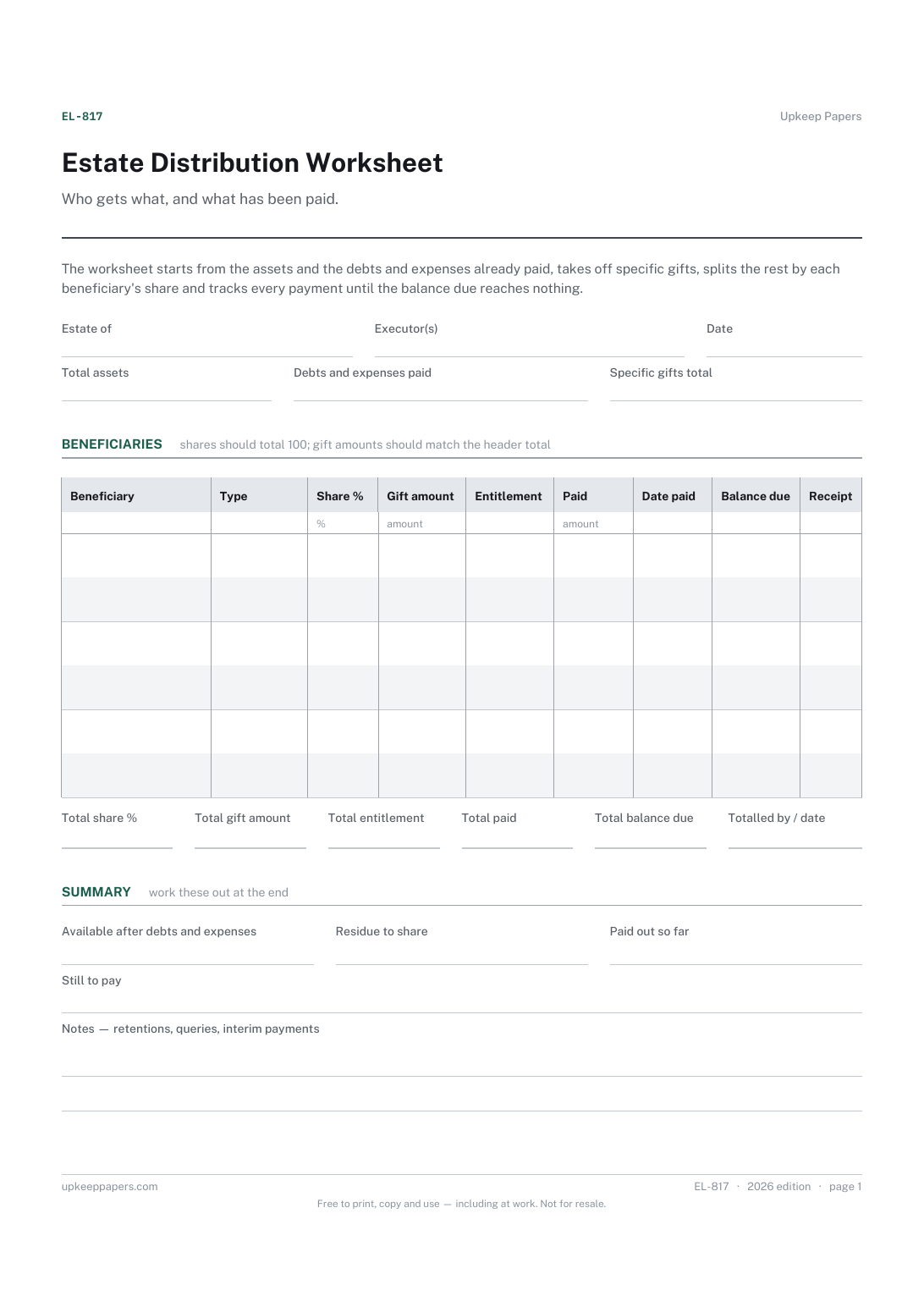
The total assets, debts and expenses, and what is left to distribute.
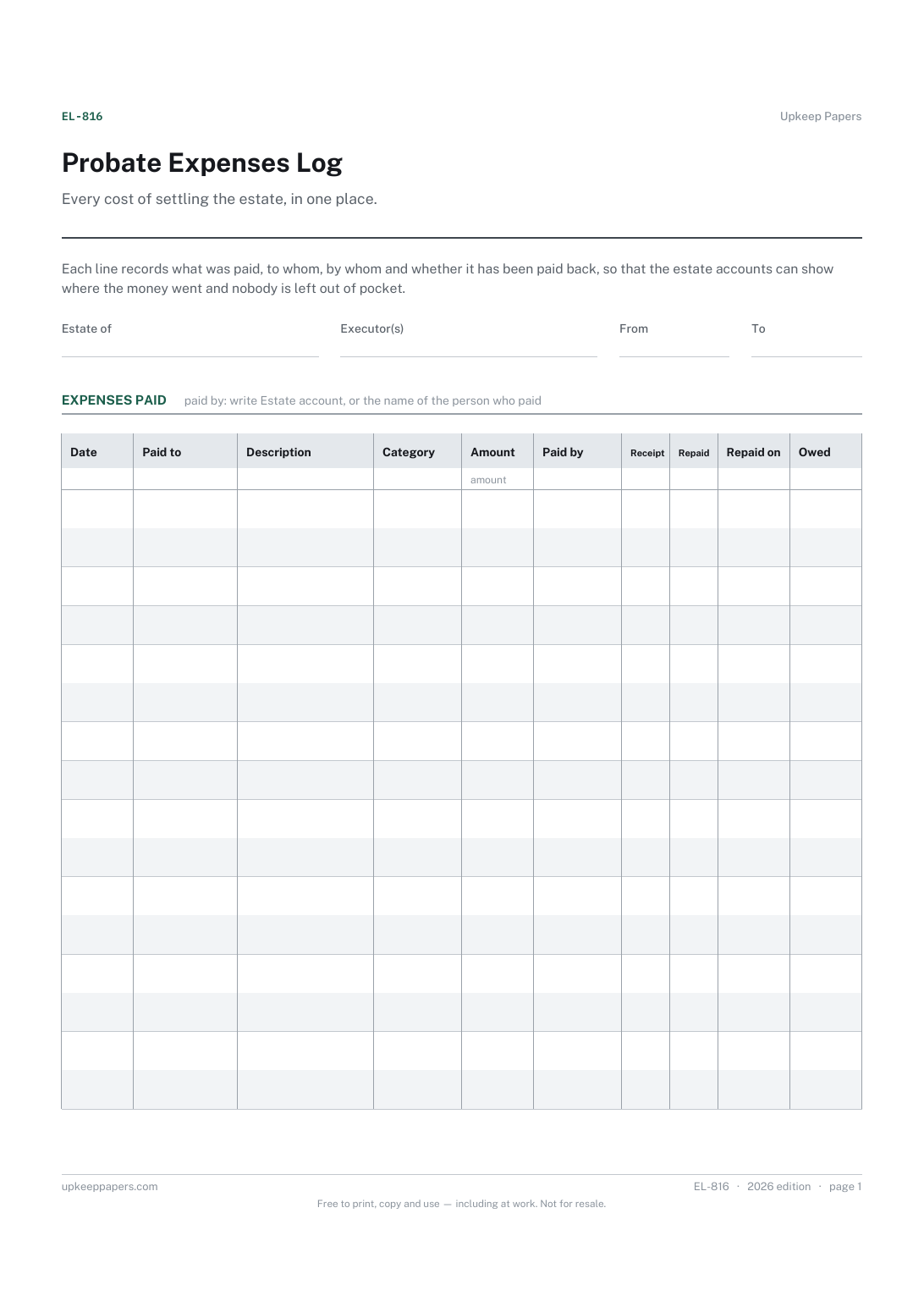
Each receipt and payment, with date and reference.
Each amount received, who it came from and when.
Which charities and causes you want to support.
Which rooms and areas have been cleared, by whom and when.
Who sent donations, flowers and cards.
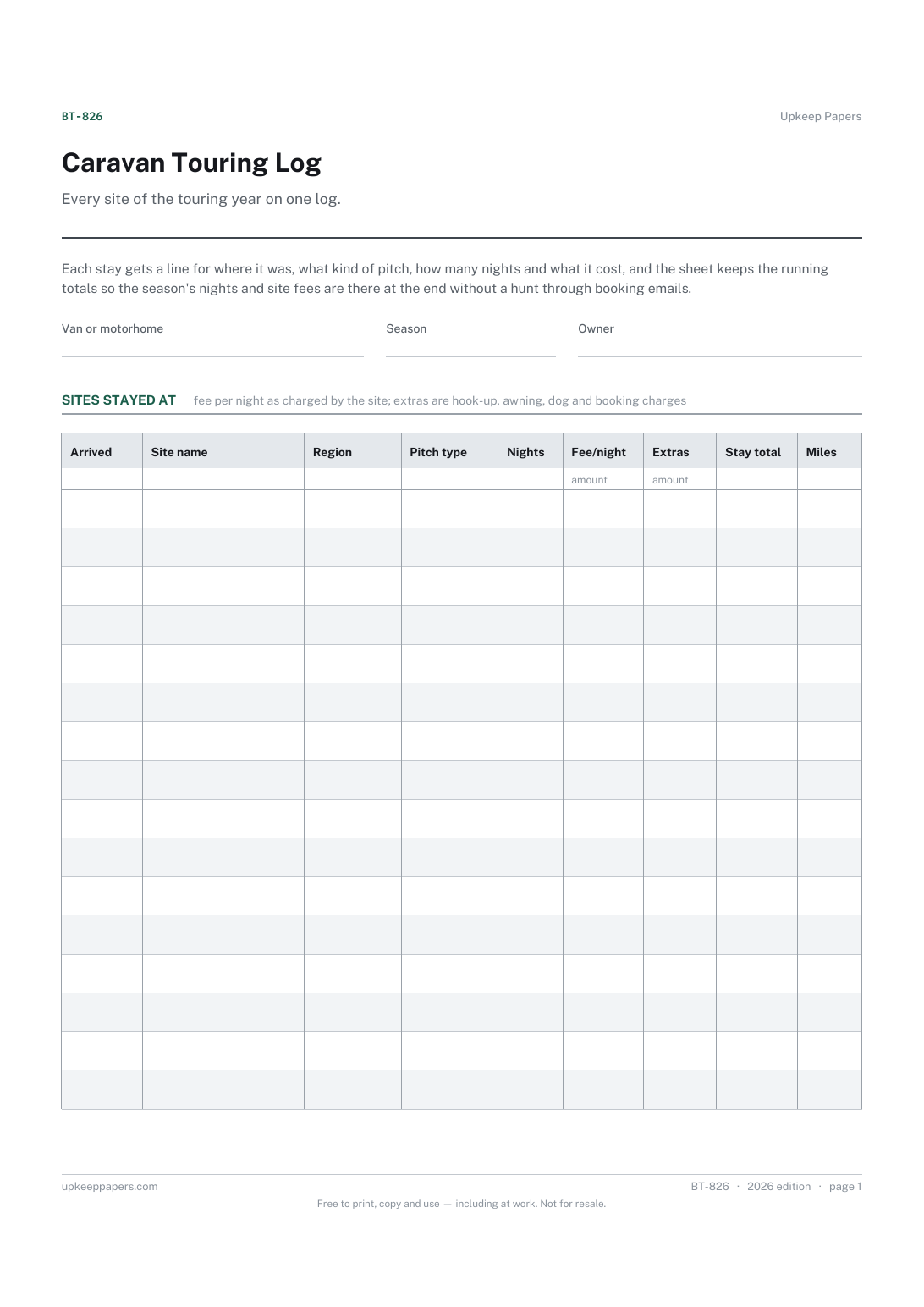
Every site stayed at, with the region and the date you arrived.
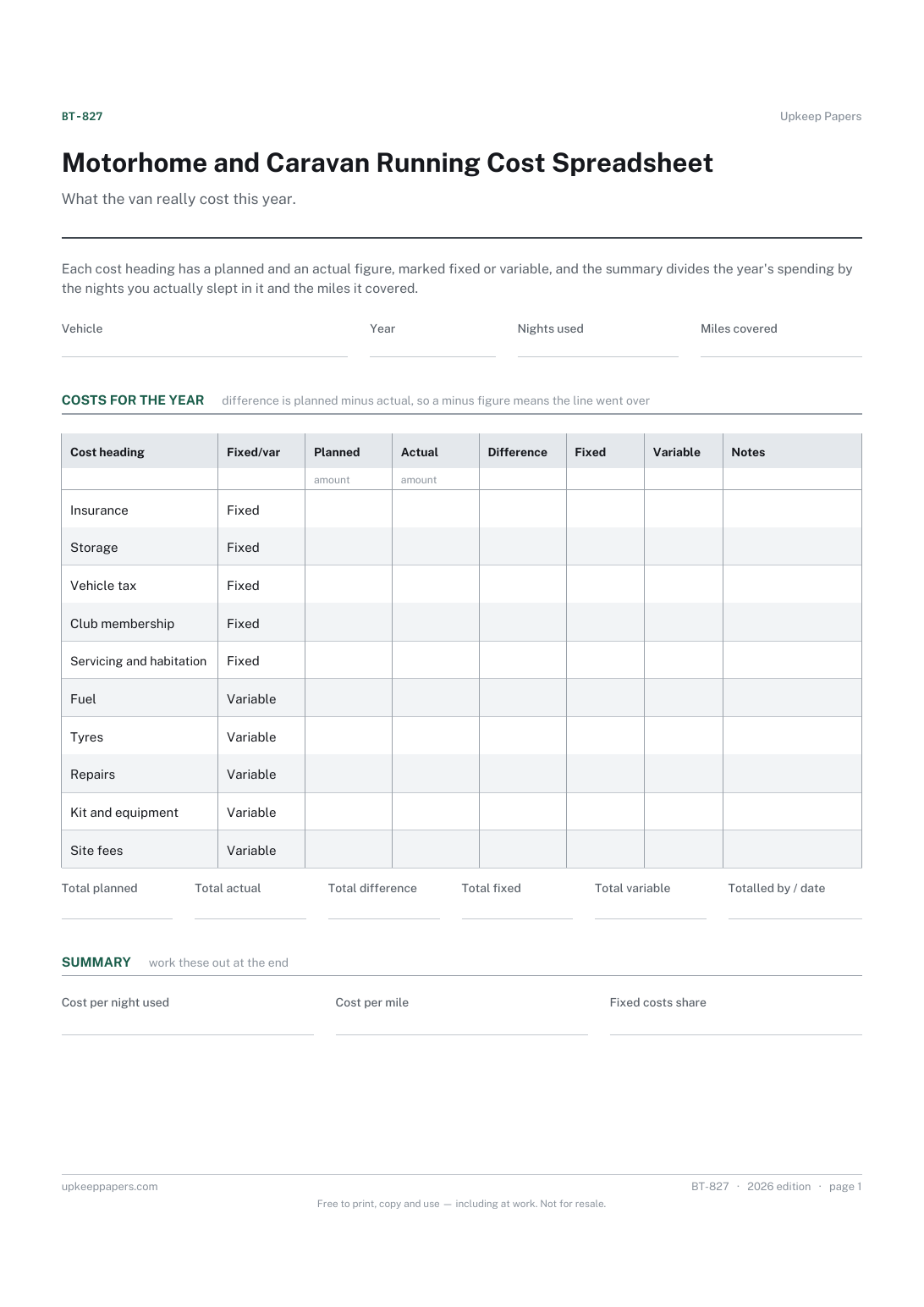
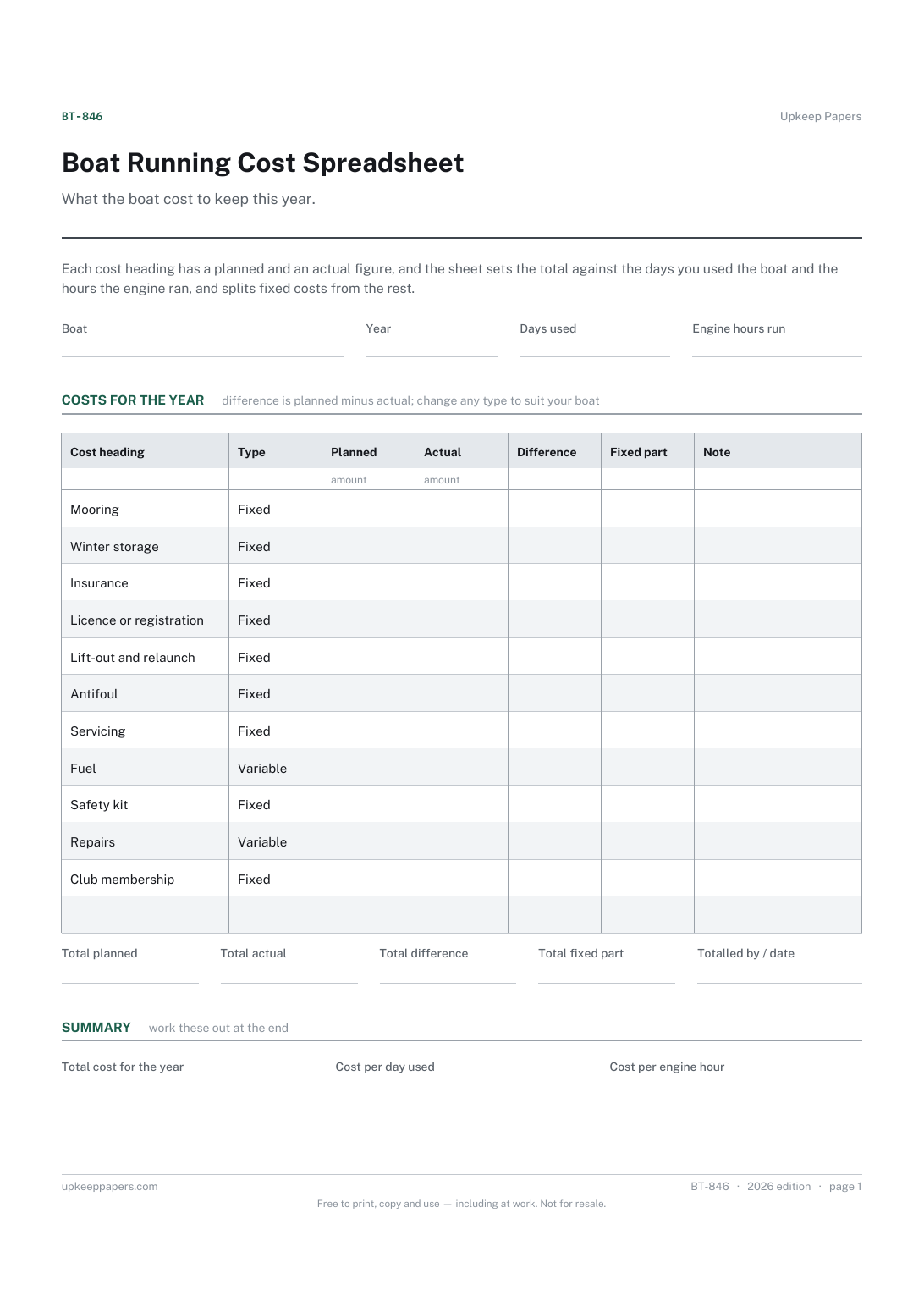
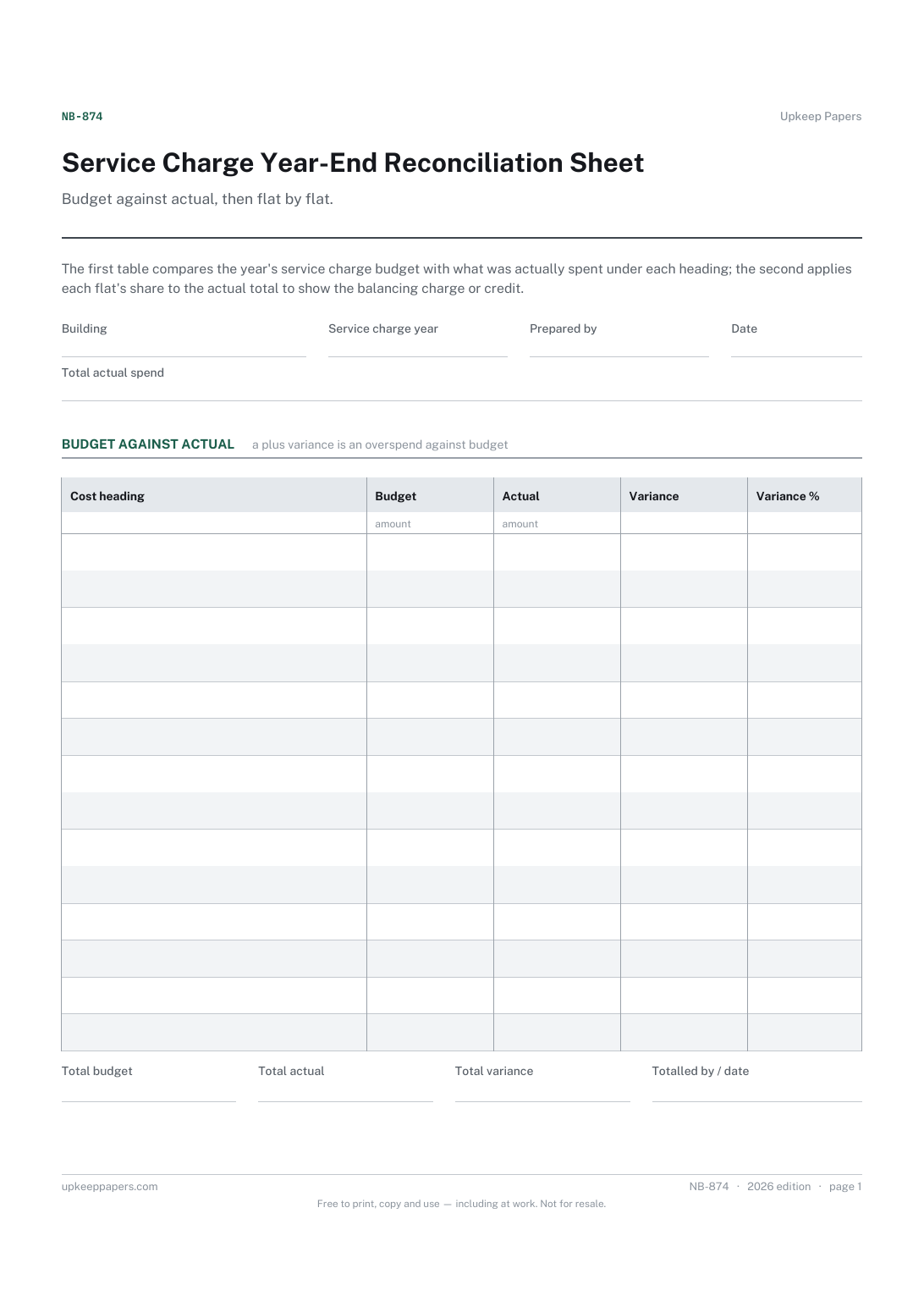
Planned and actual spending on each cost heading for the year.
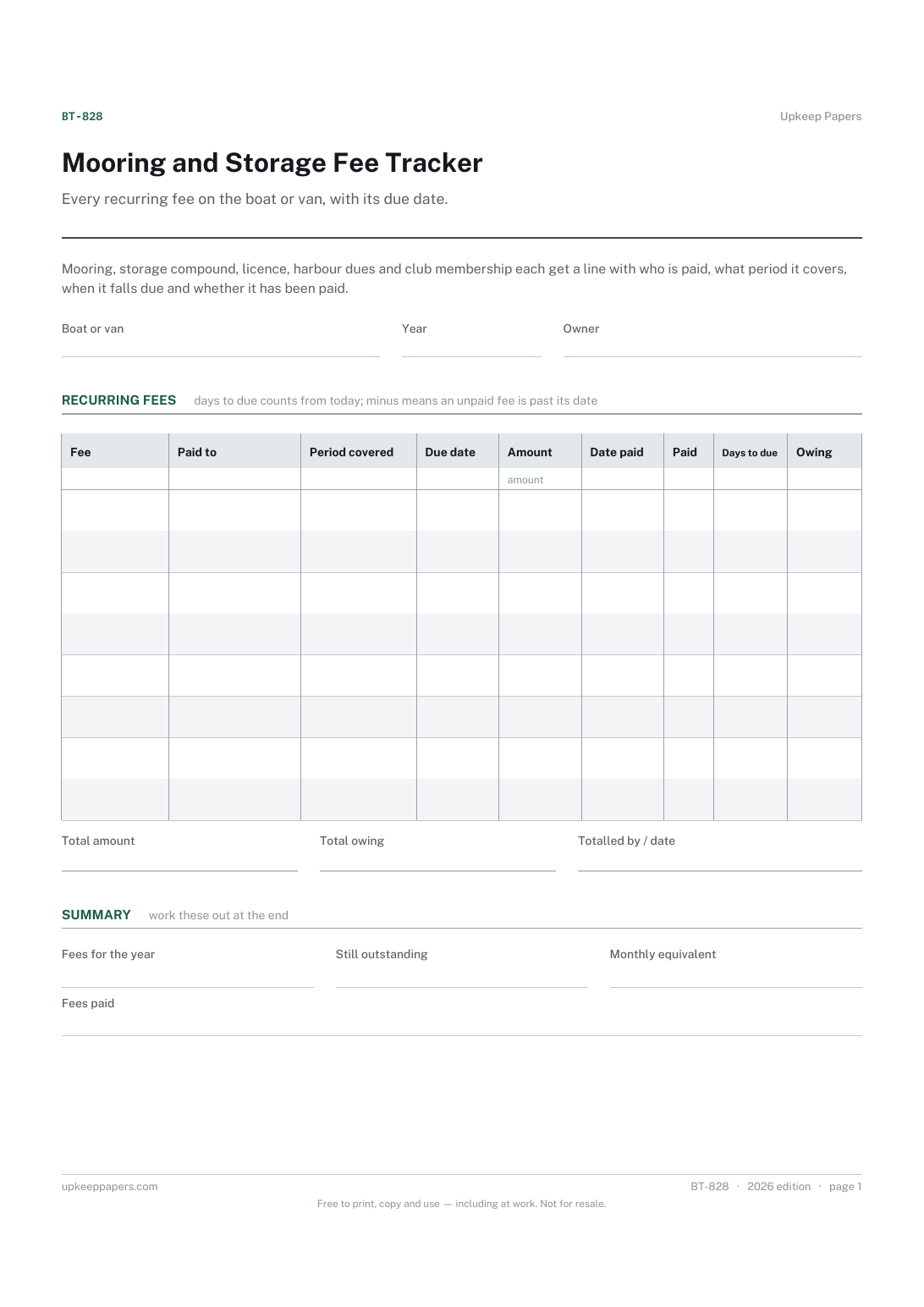
Each fee, who it is paid to and the period it covers.
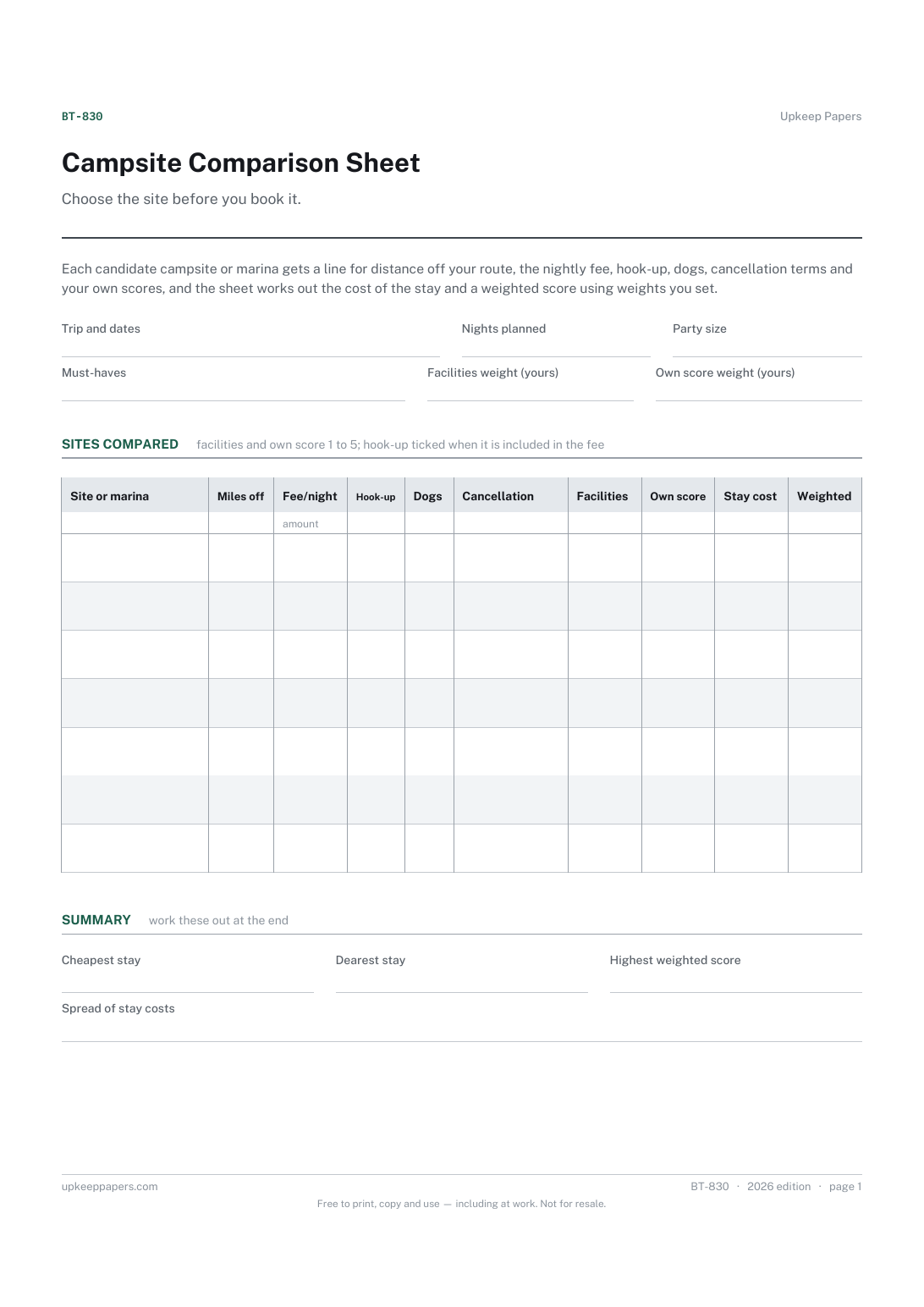
The candidate sites side by side on one page.
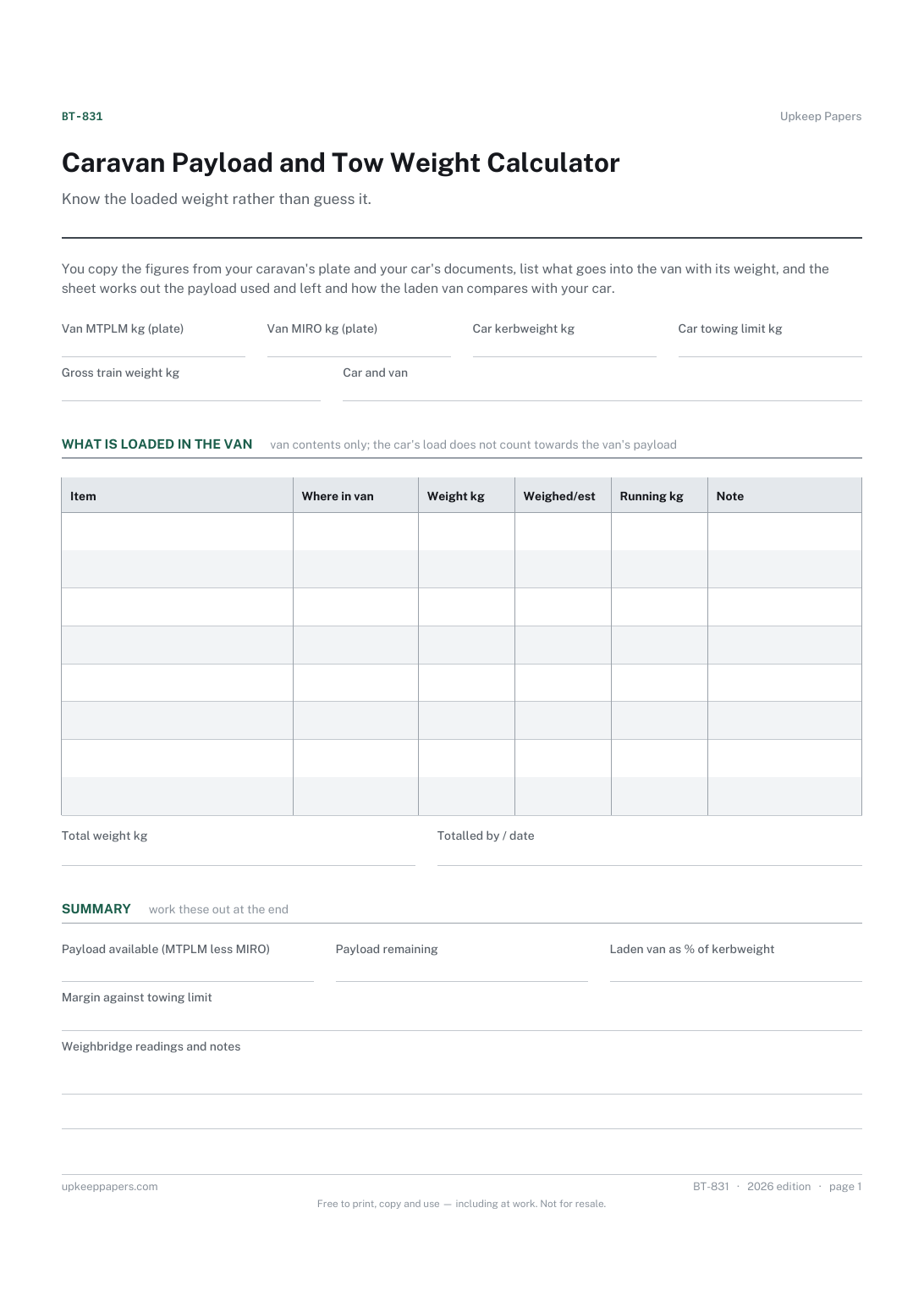
Your van's plate weights and your car's figures in one place.
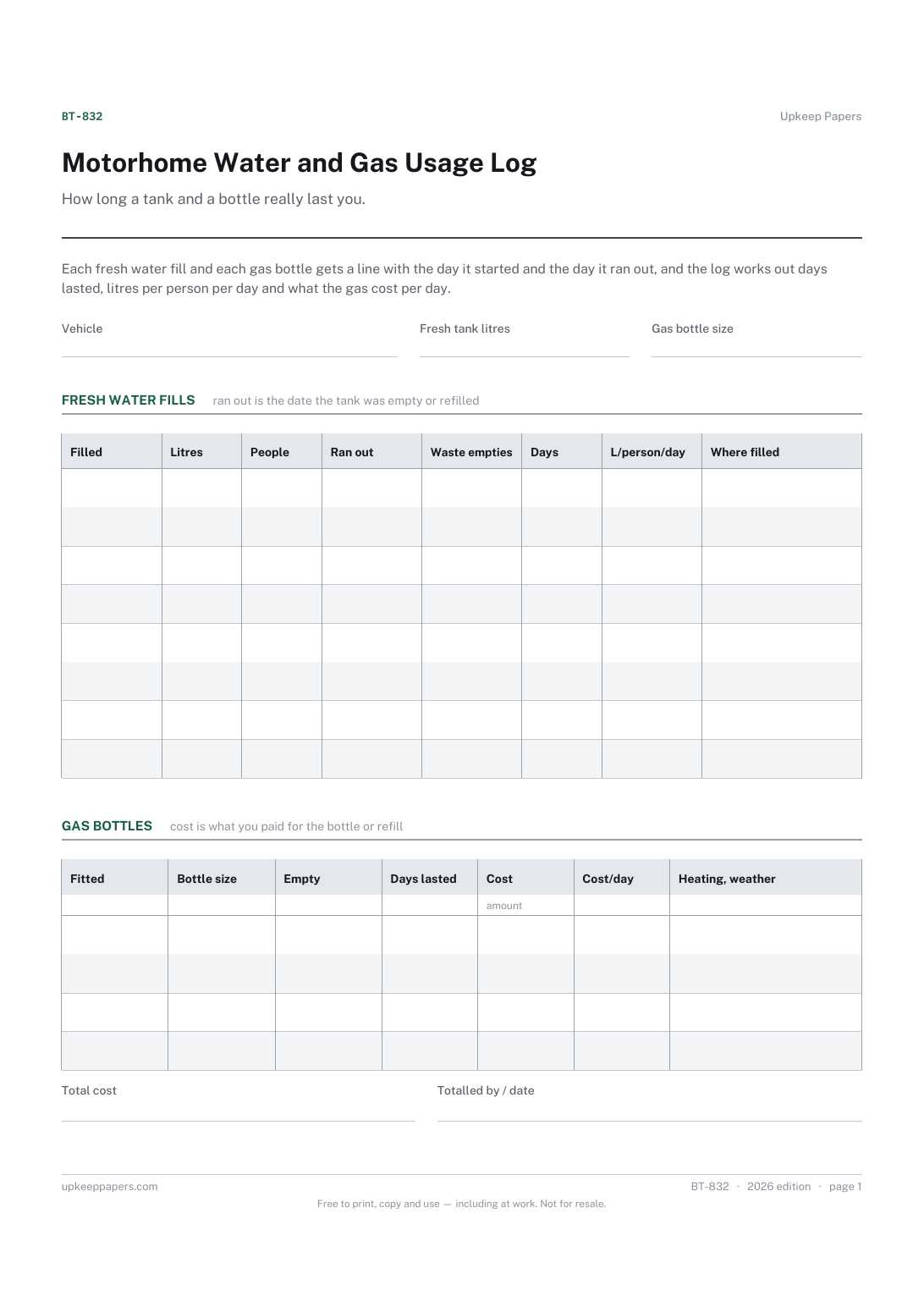
When each fresh water fill started and when it ran out.
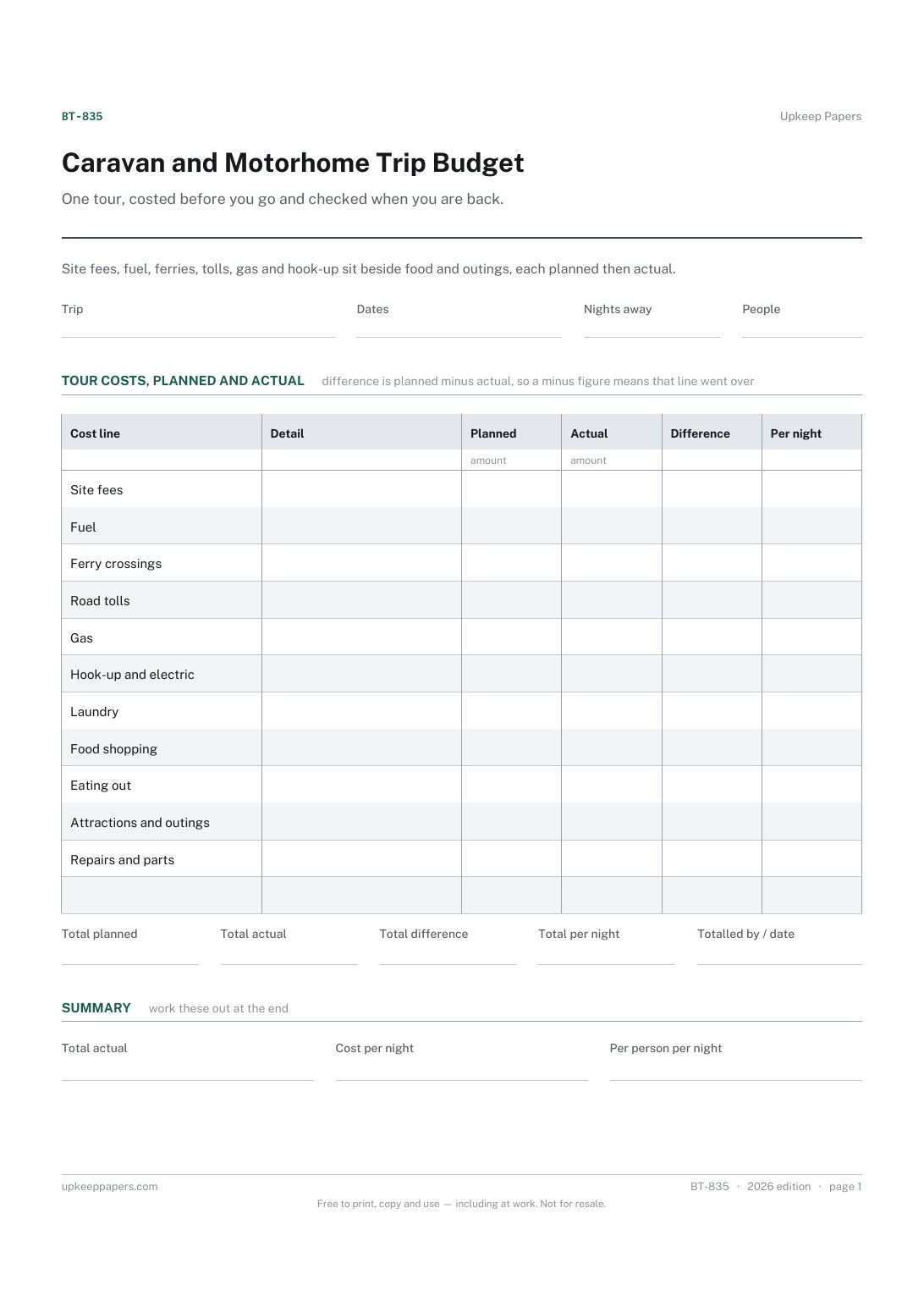
What you expected each part of the tour to cost before you set off.
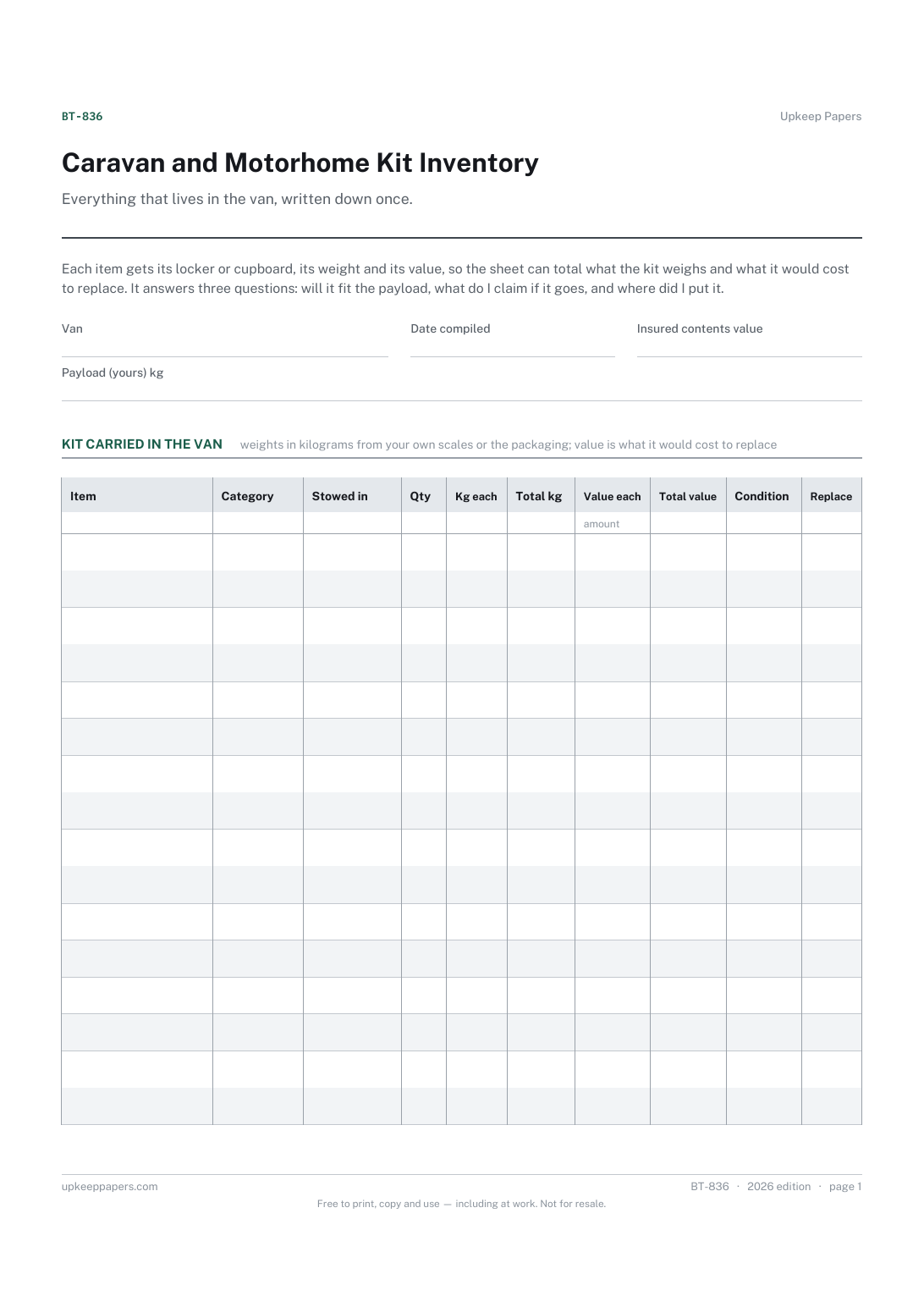
Every item carried, grouped by category and by where it is stowed.
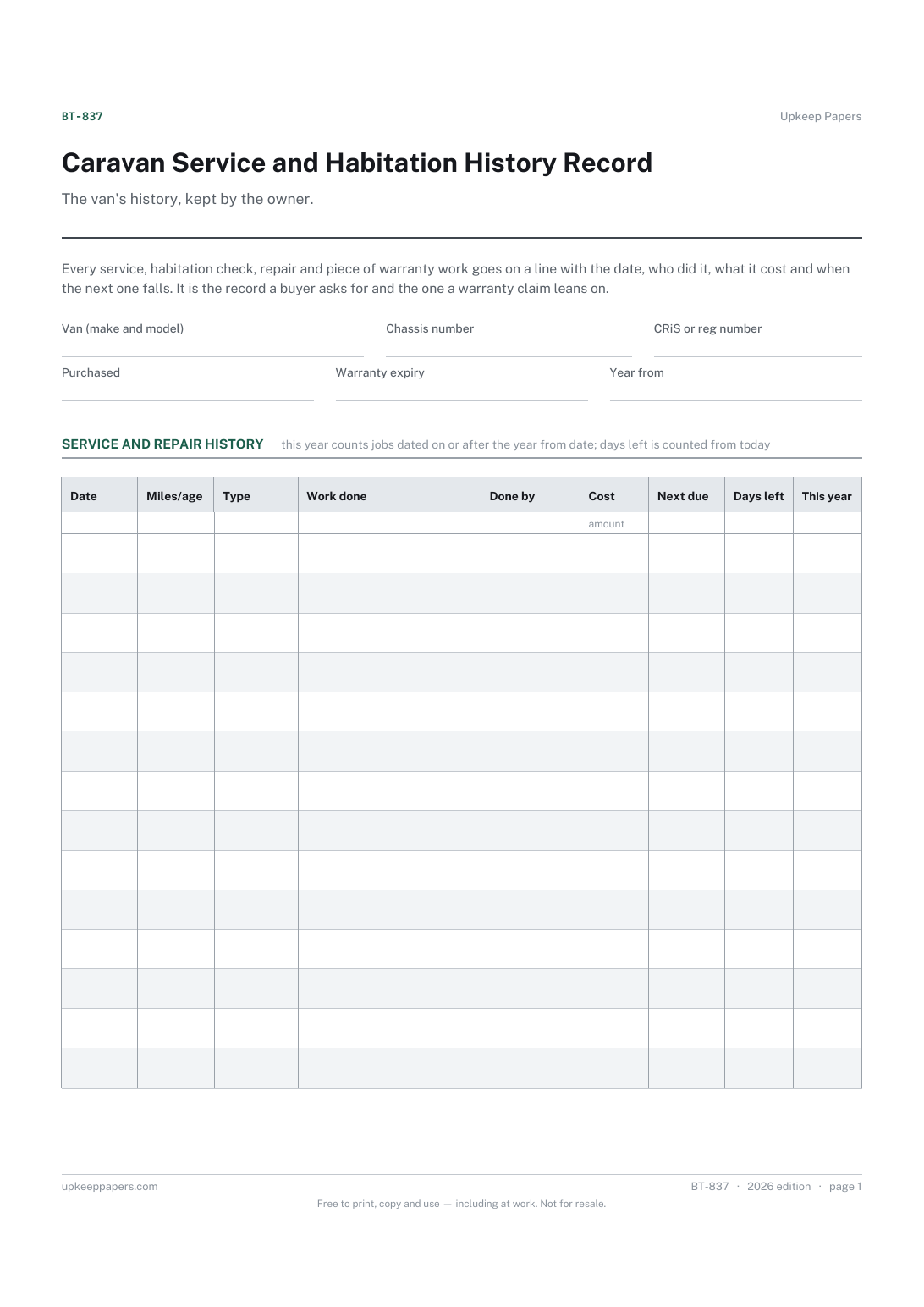
Every service, habitation check, repair and warranty job in date order.
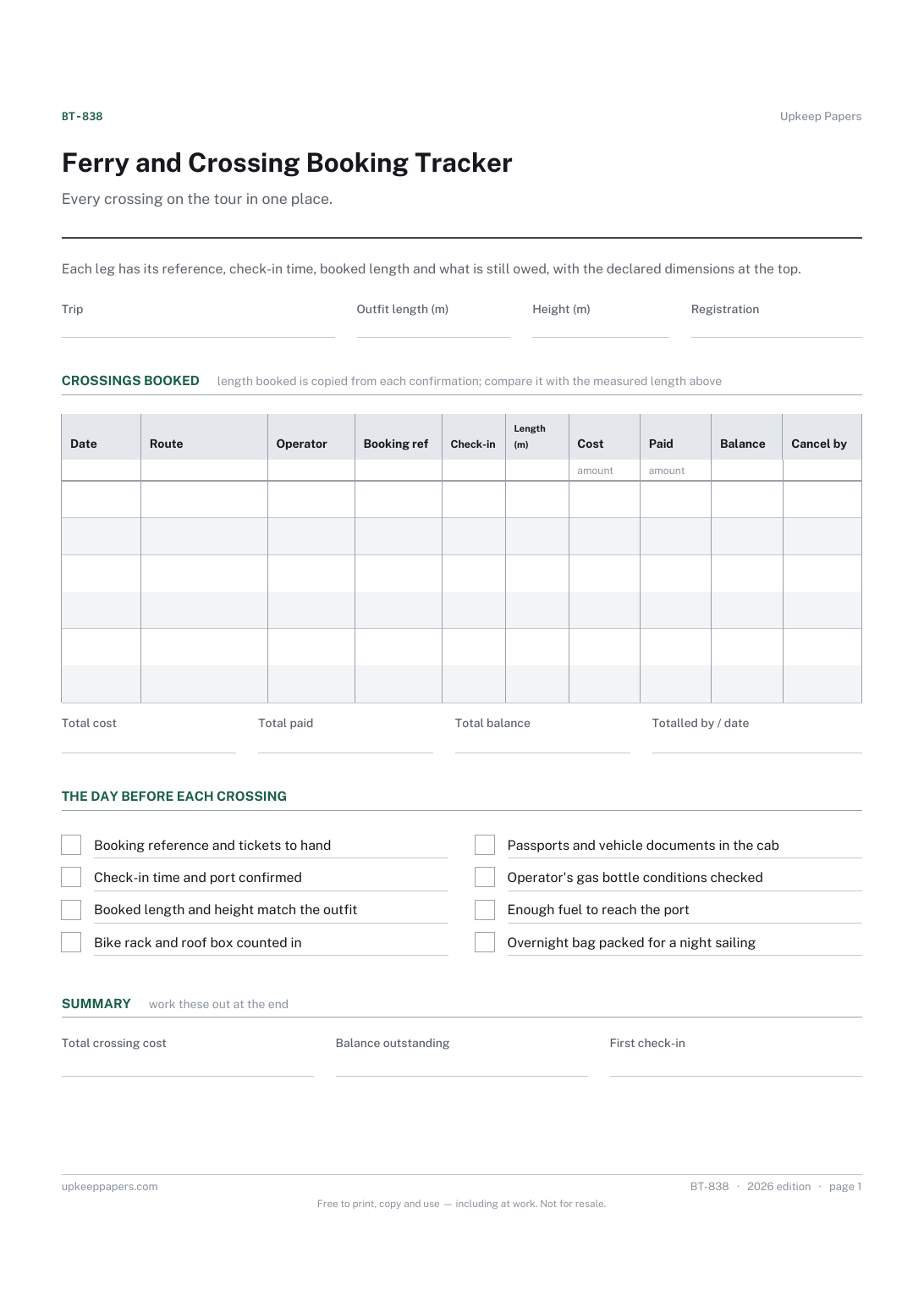
The route, operator and booking reference for each crossing.
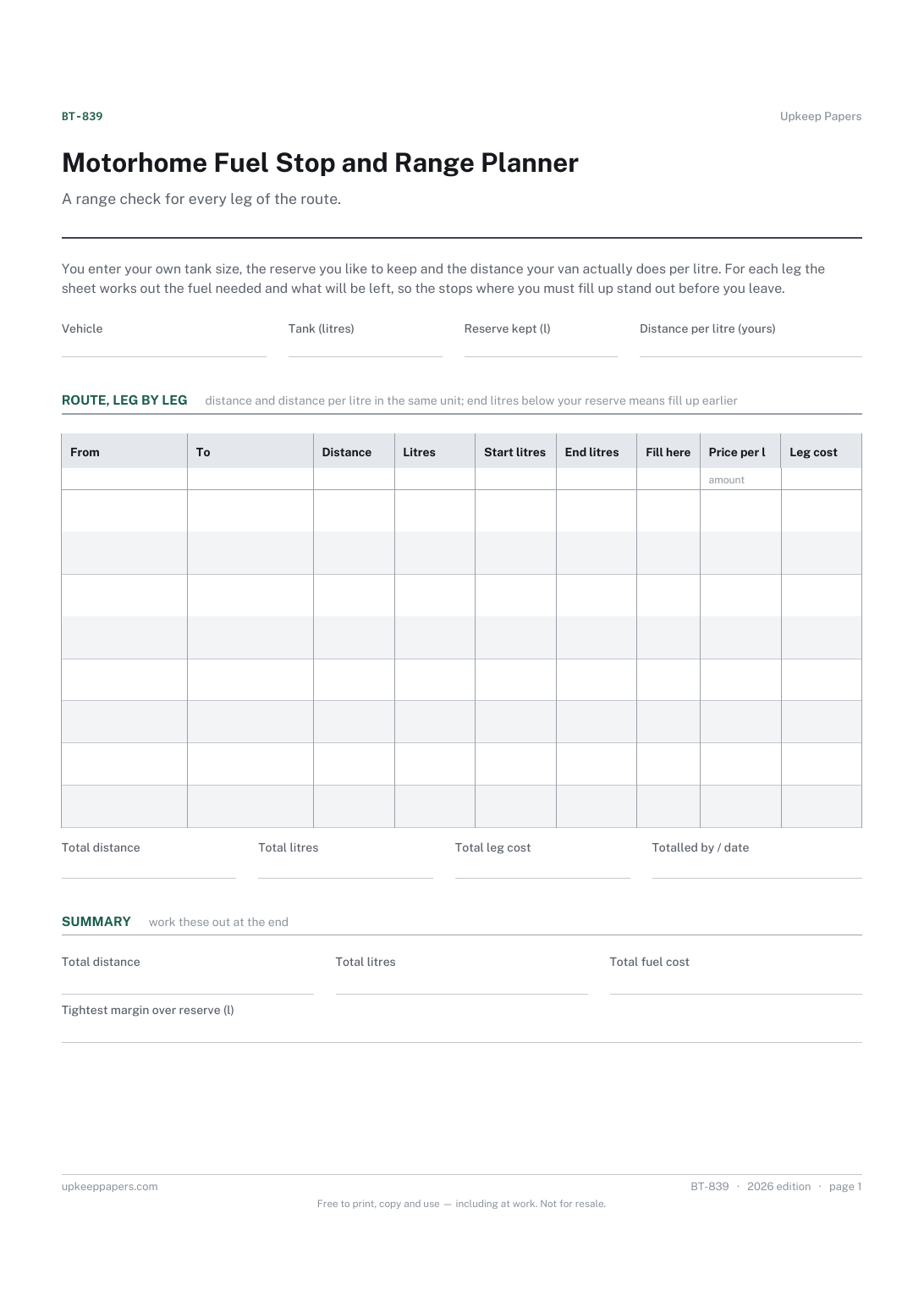
The fuel each leg will use at your van's own consumption.
Every quote on one page, worked out for the same dates and miles.
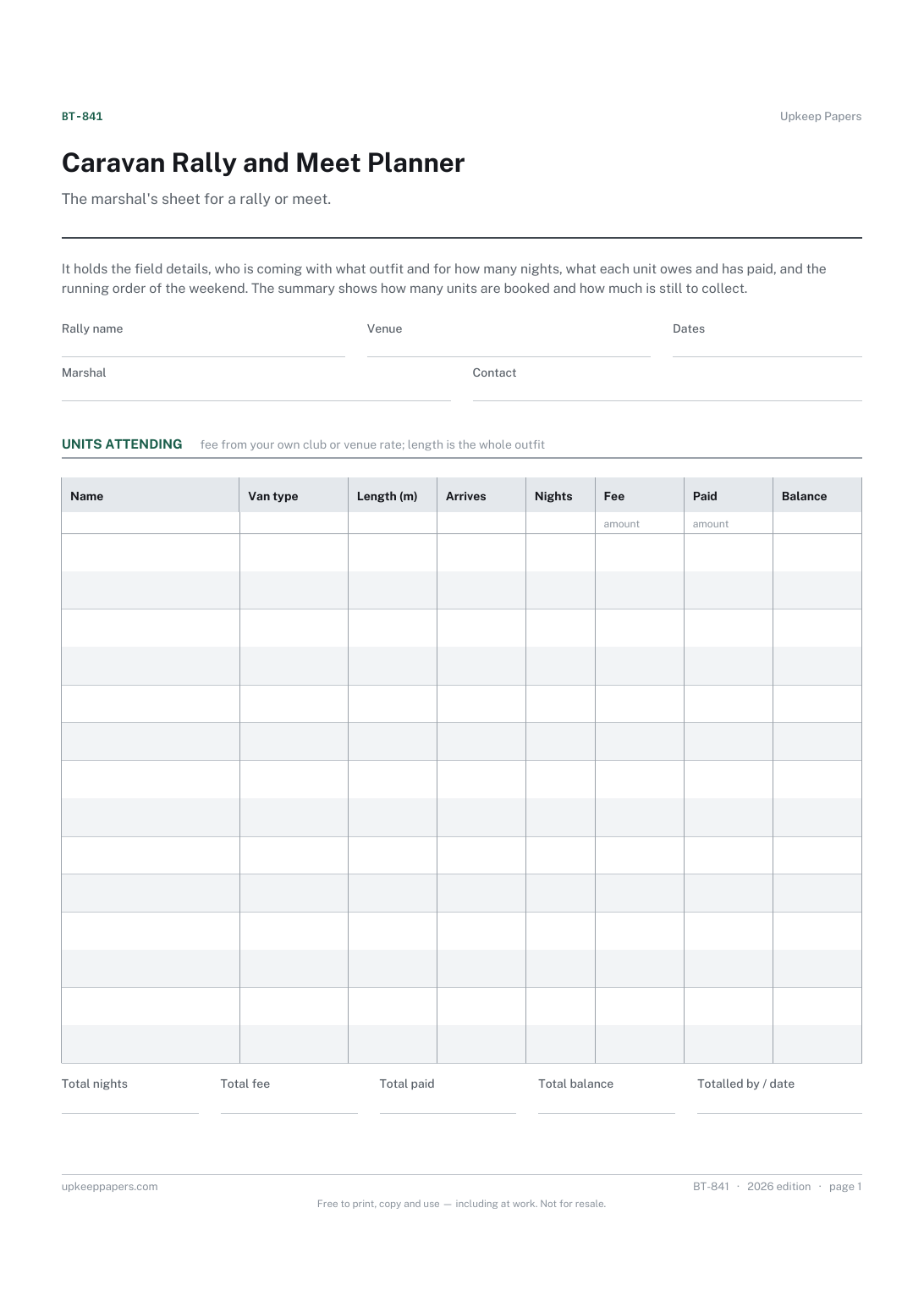
The venue, dates and who to contact on the field.
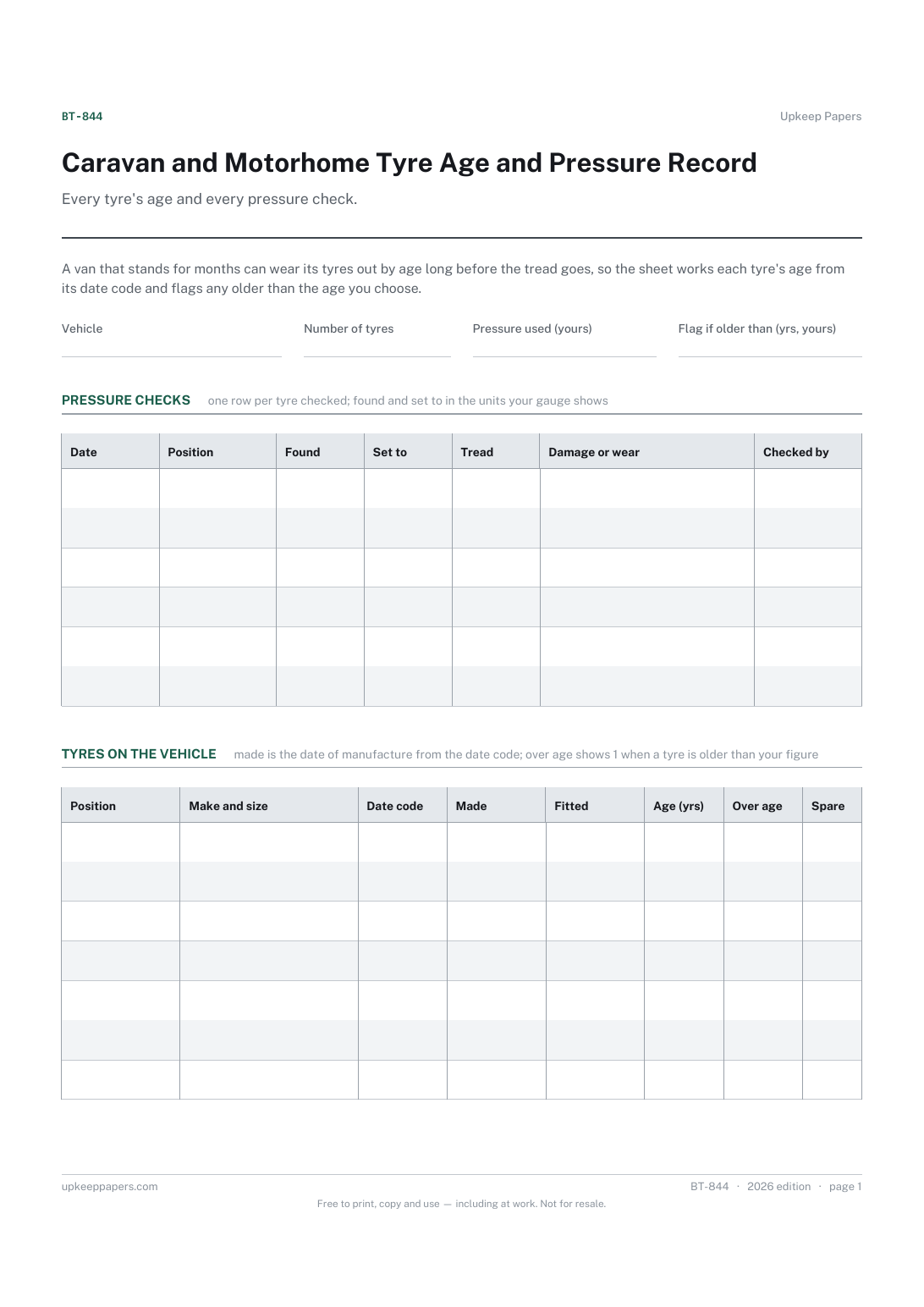
Each tyre's position, make, size and date code.
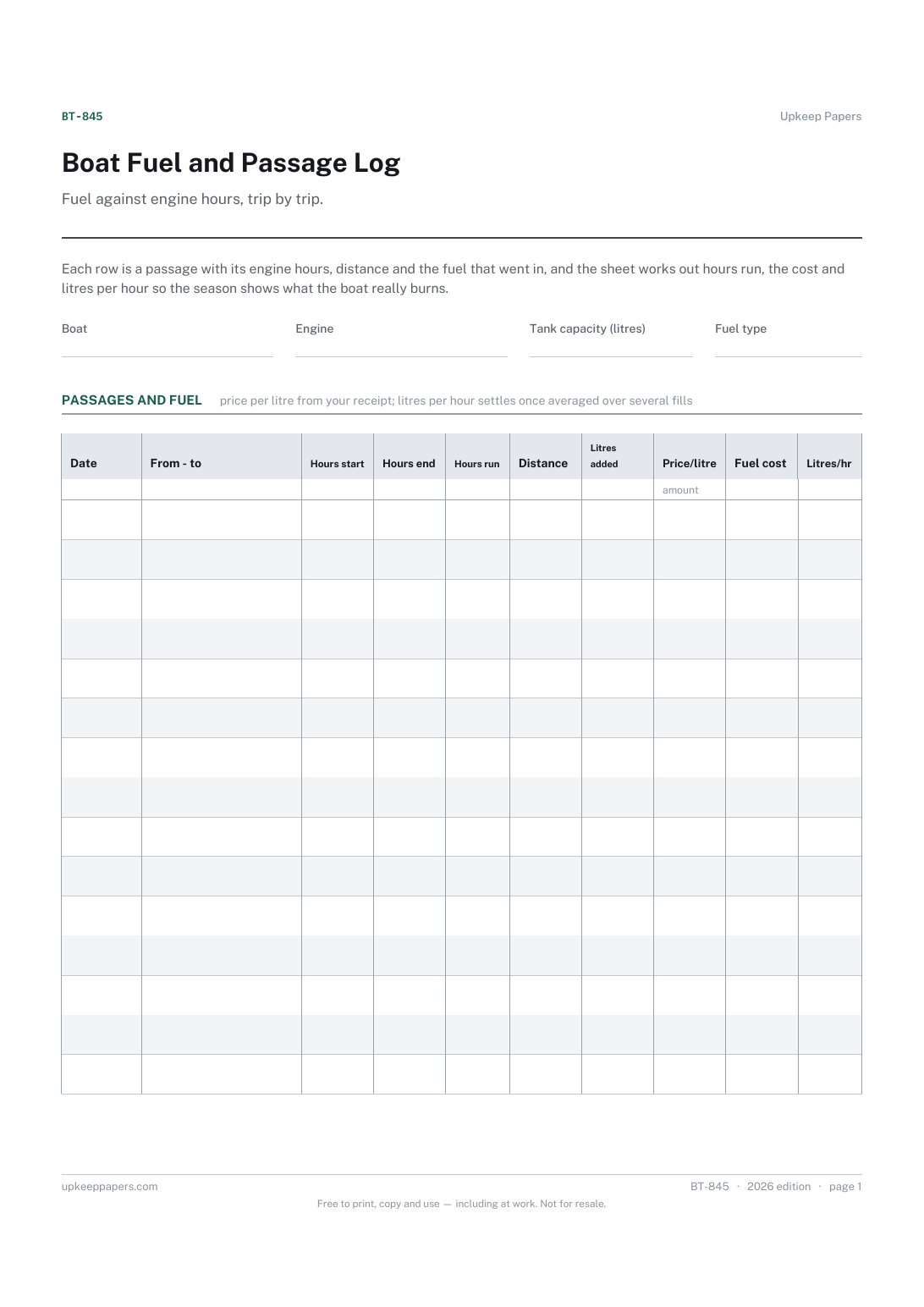
Engine hours at the start and end of every passage.
Planned and actual spend under each cost heading.
Where you will be each night and how far it is from the last stop.
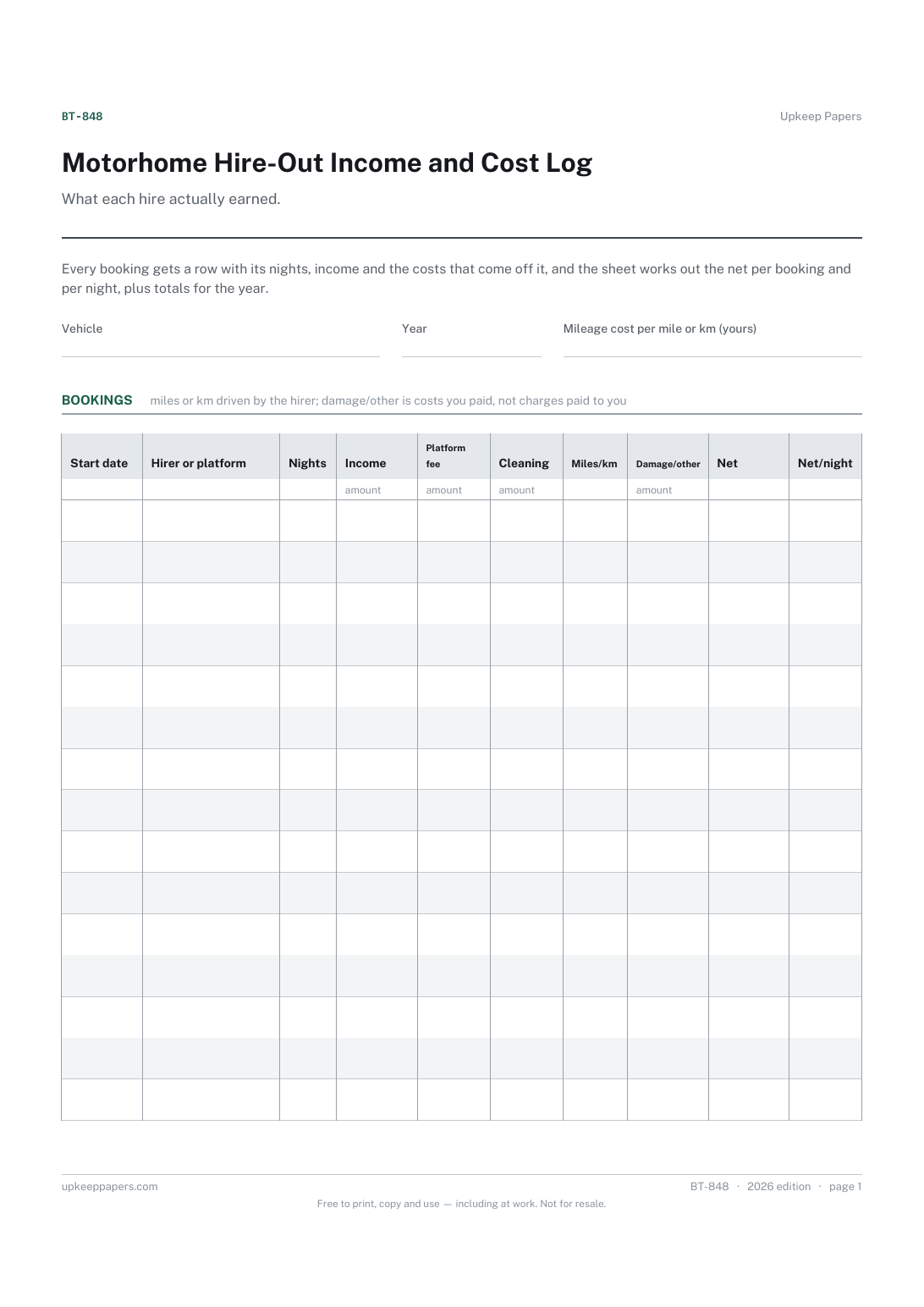
Each booking's dates, hirer or platform and nights.
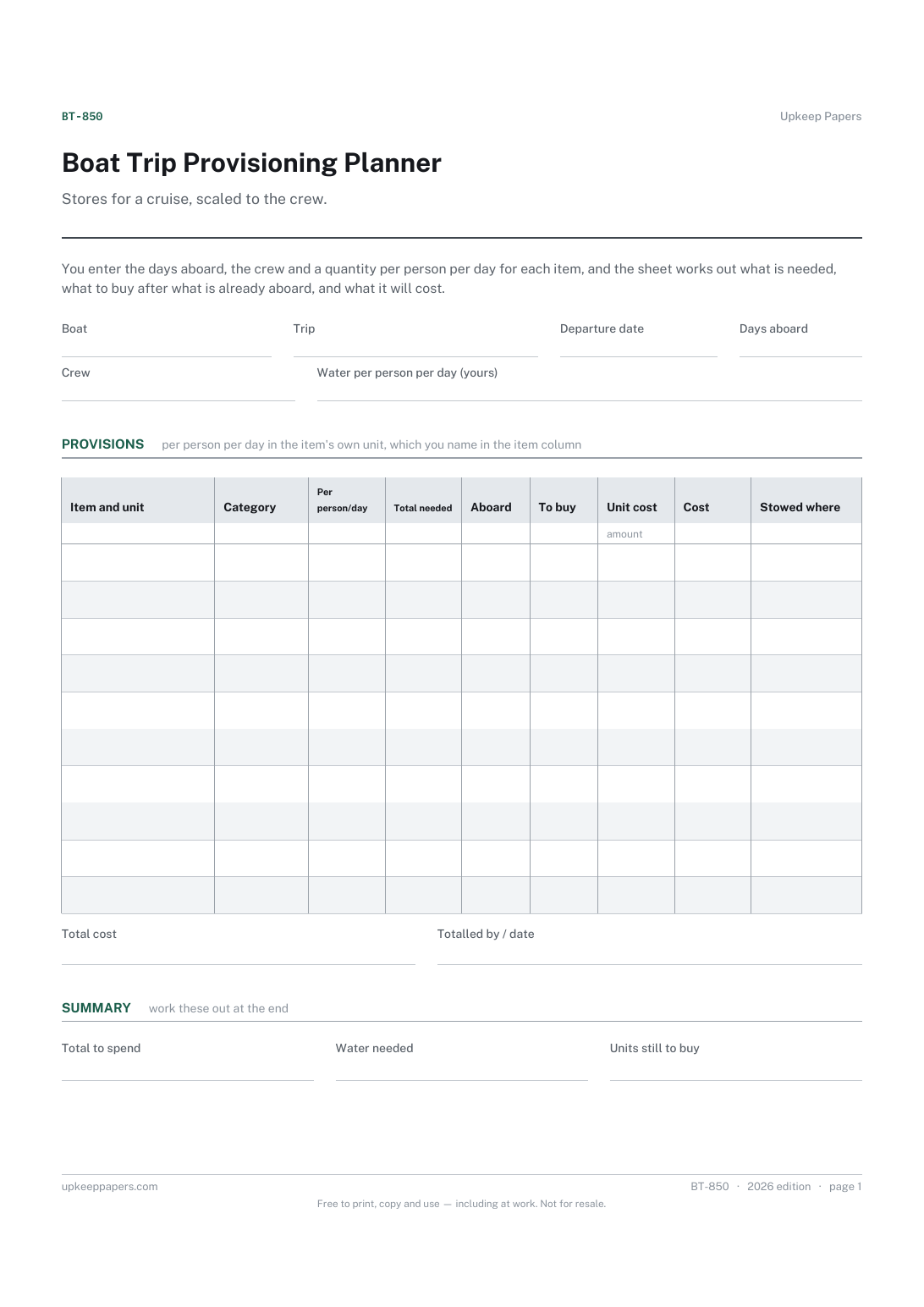
How much of each item the whole crew needs for the trip.
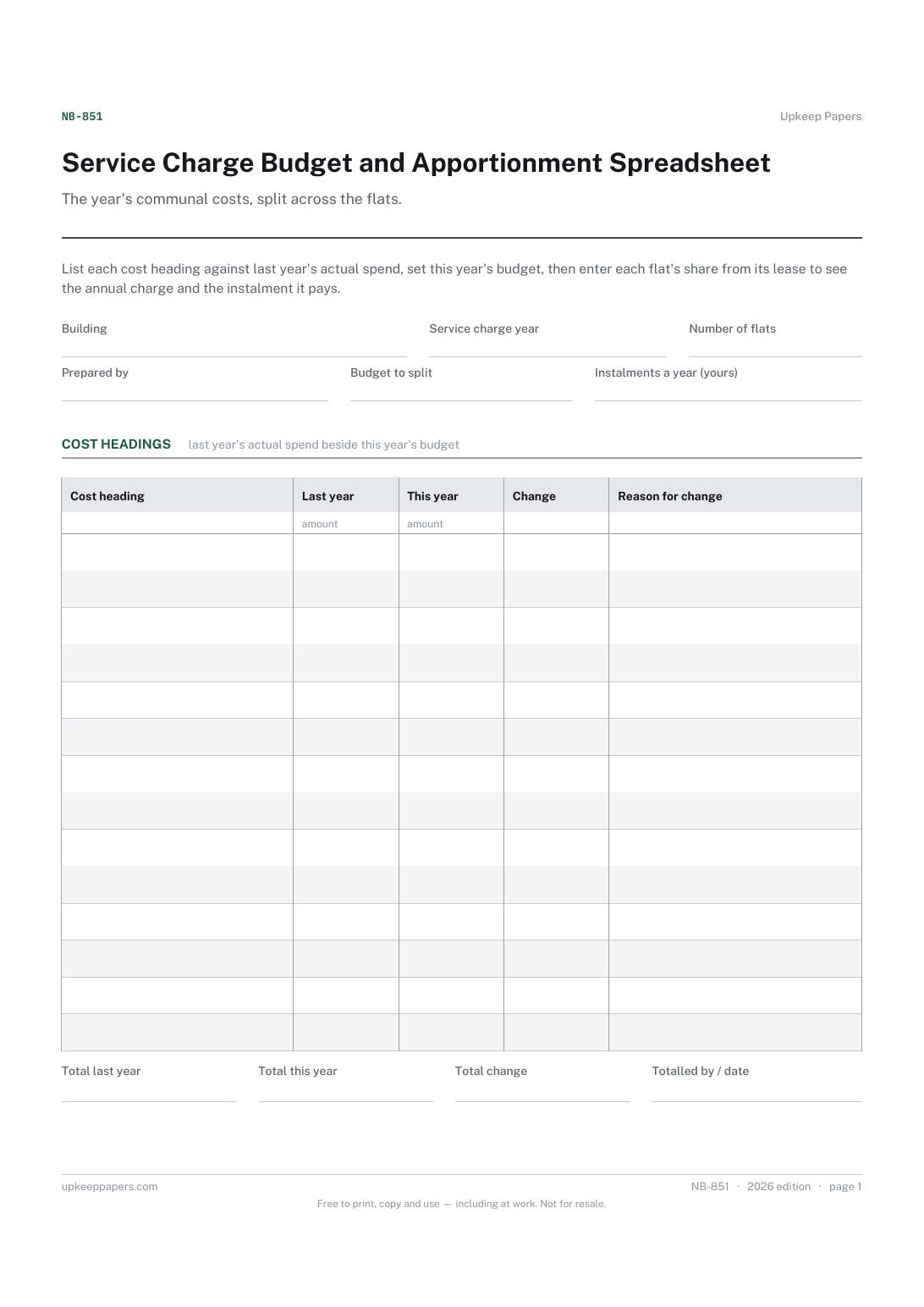
Each cost heading with last year's actual and this year's budget.
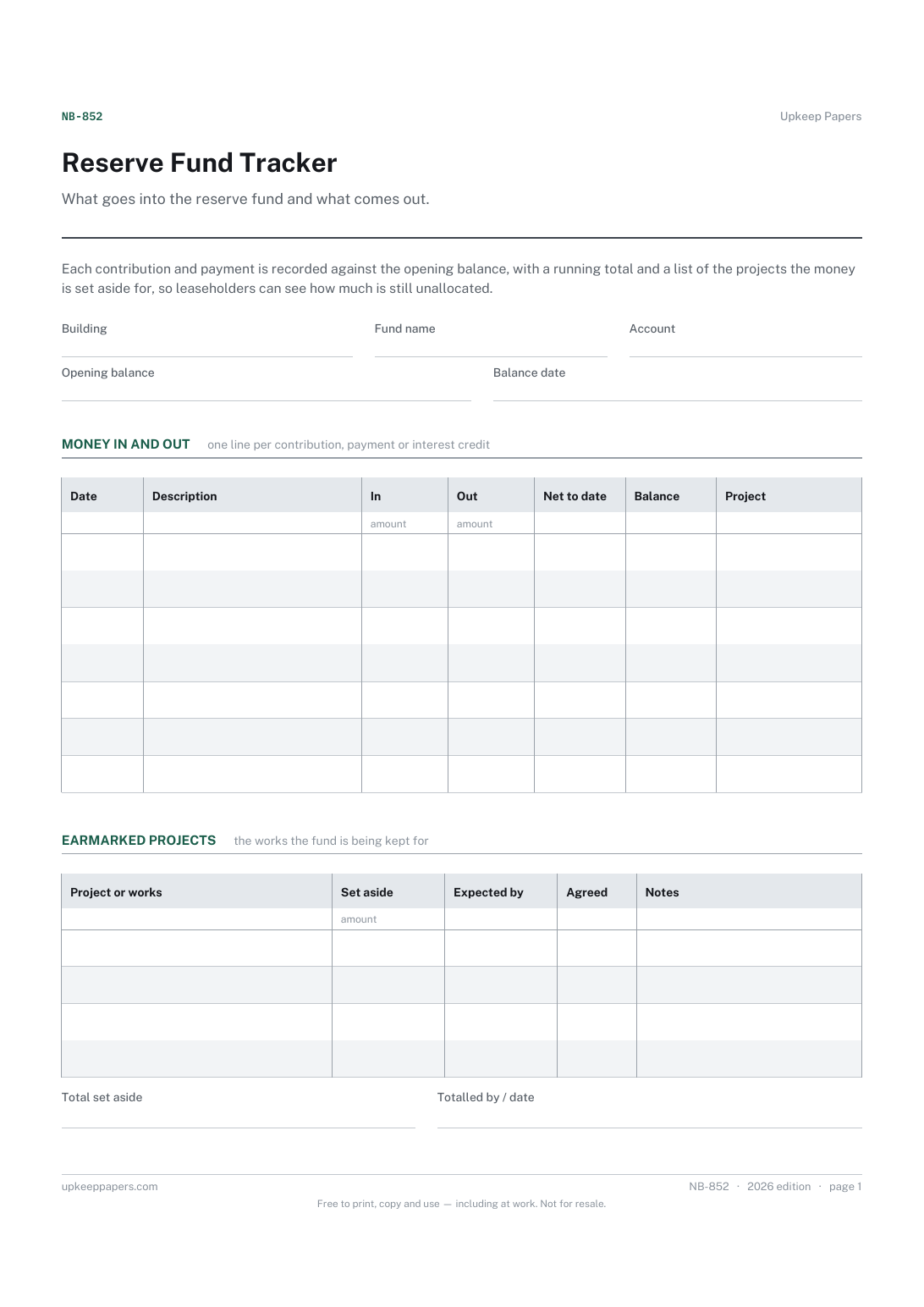
Every contribution into the fund and every payment out of it.
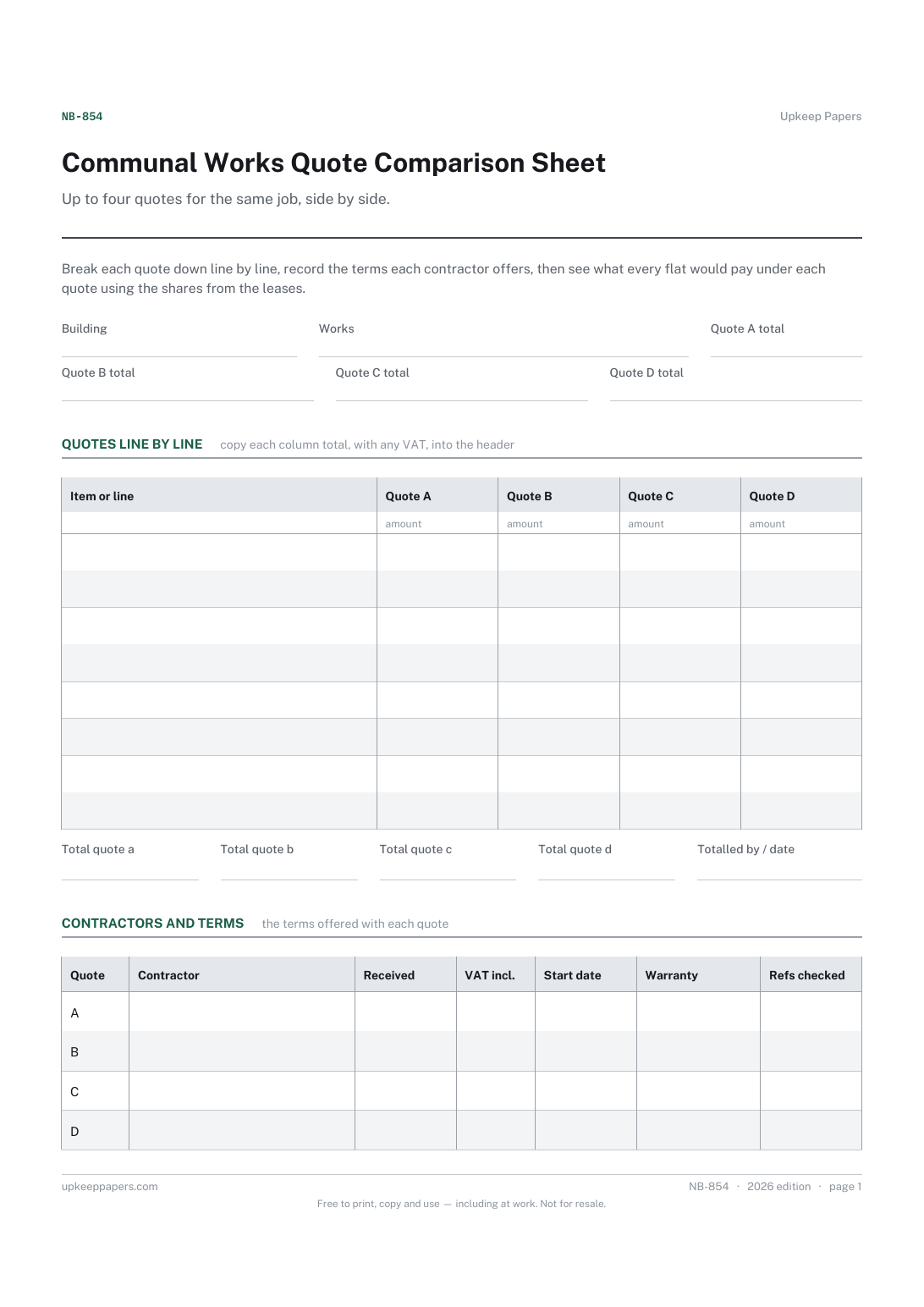
Each quote broken down by line, so like is compared with like.
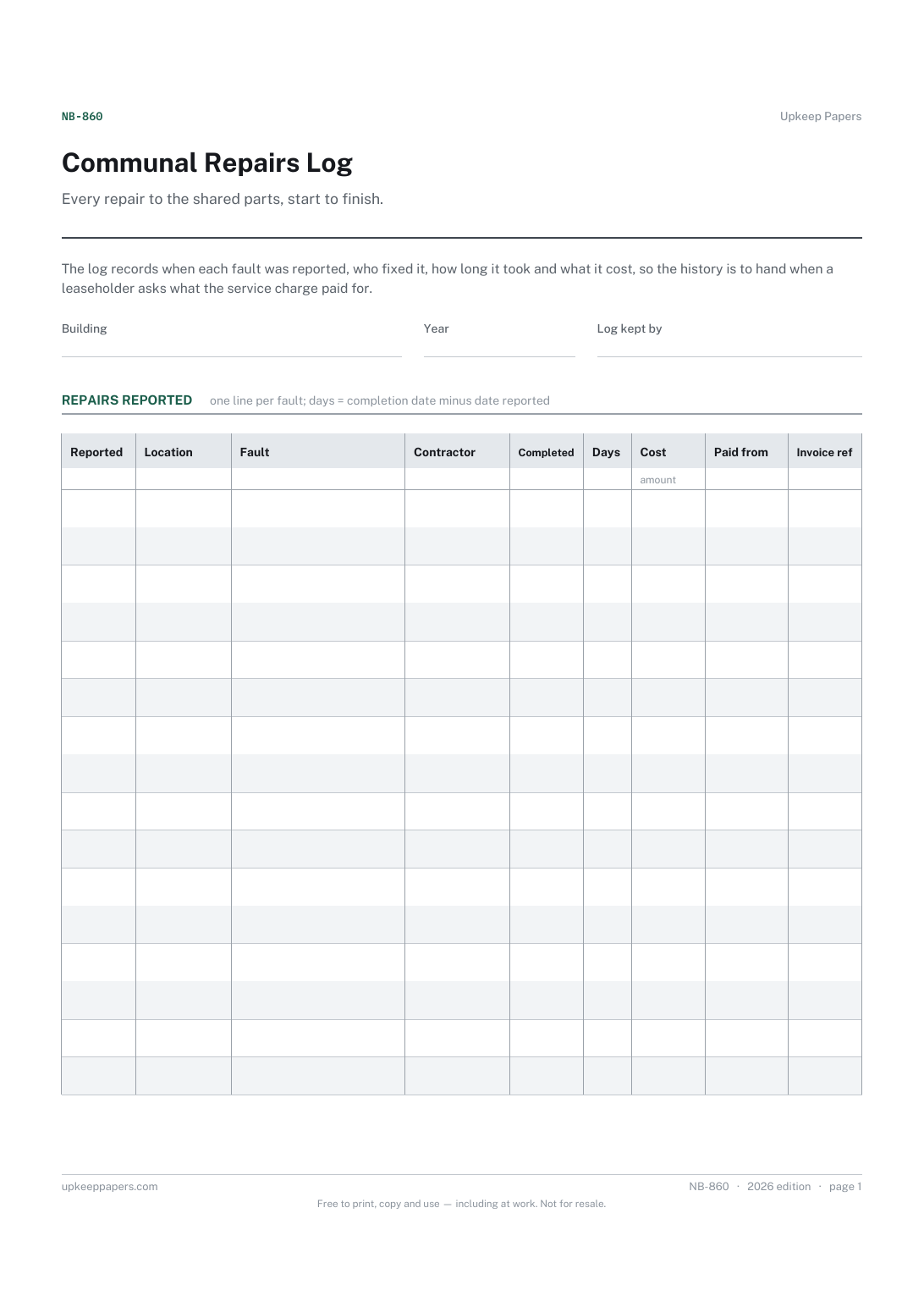
Every communal fault reported, with where it was and who fixed it.
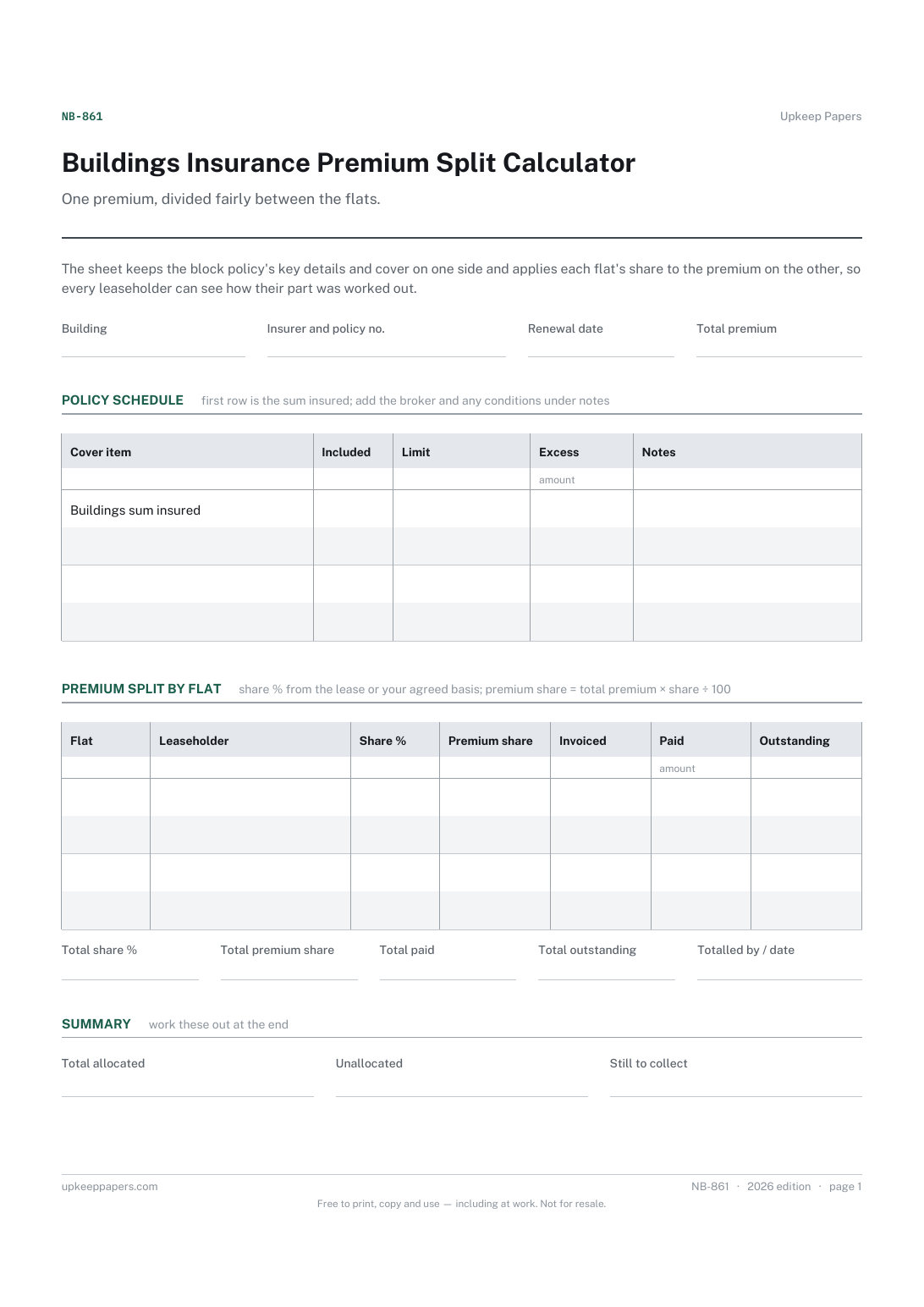
The insurer, policy number, renewal date and sum insured.
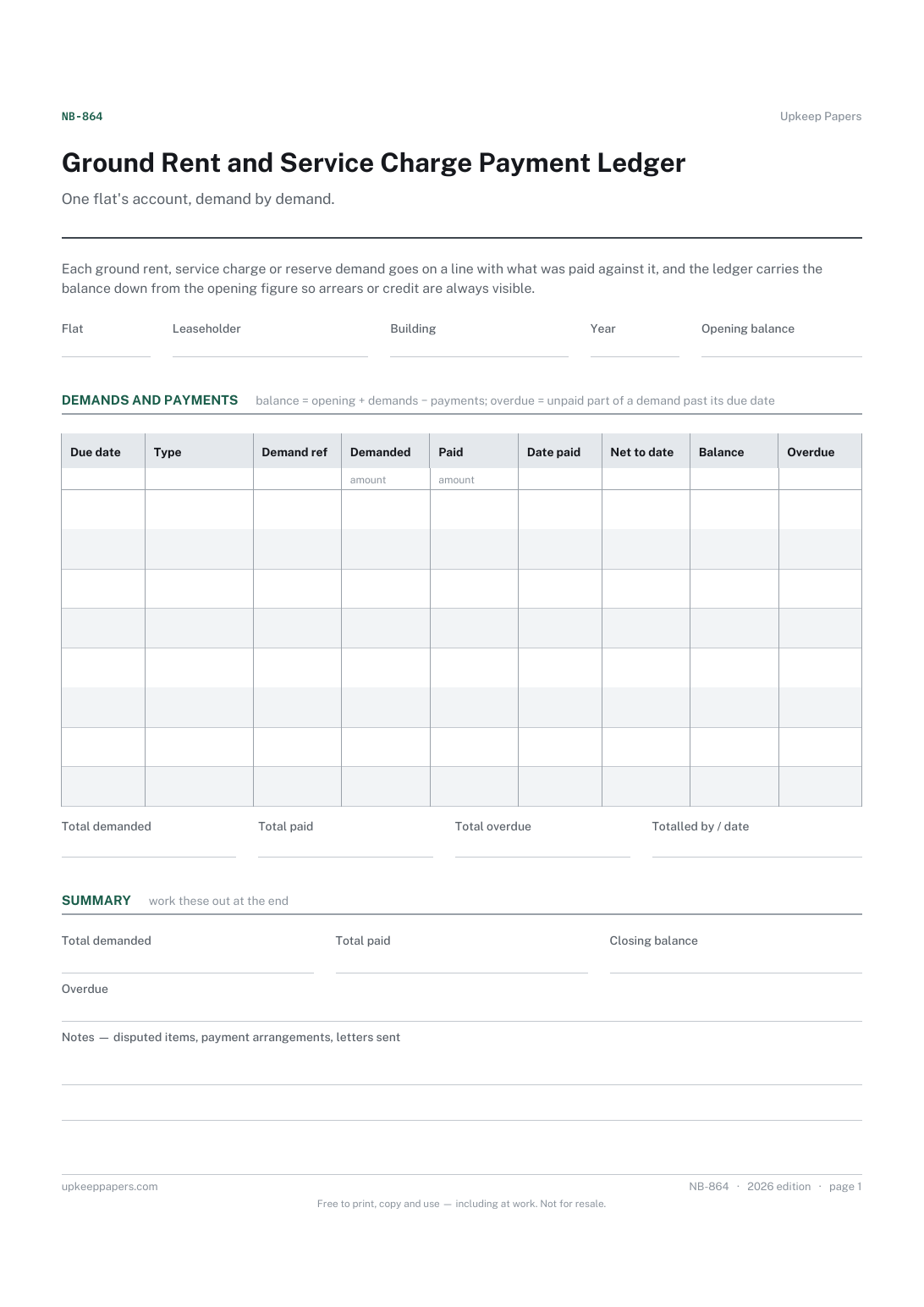
Every demand for ground rent, service charge, reserve and other charges.
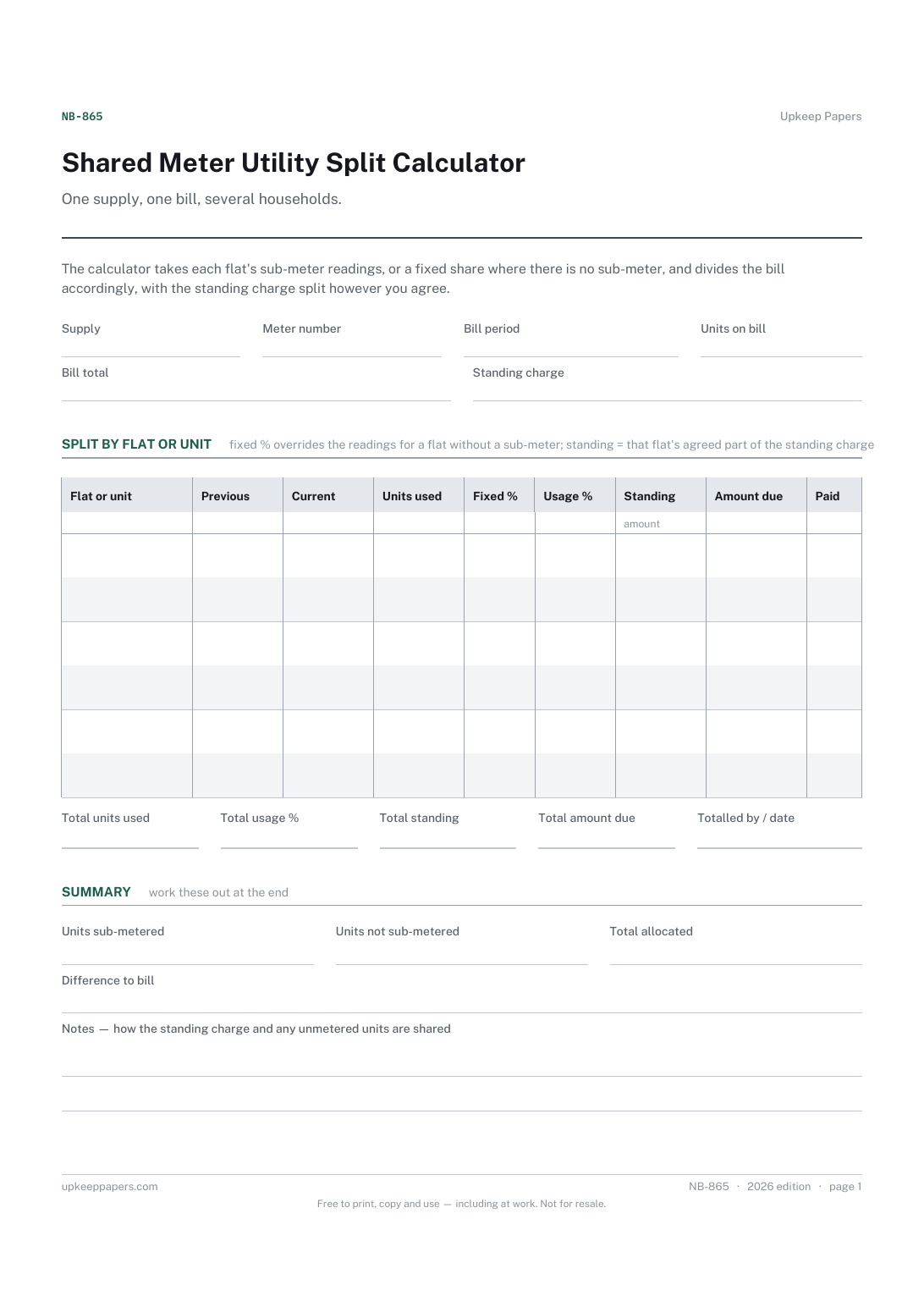
The supply, meter number, bill period and bill total.
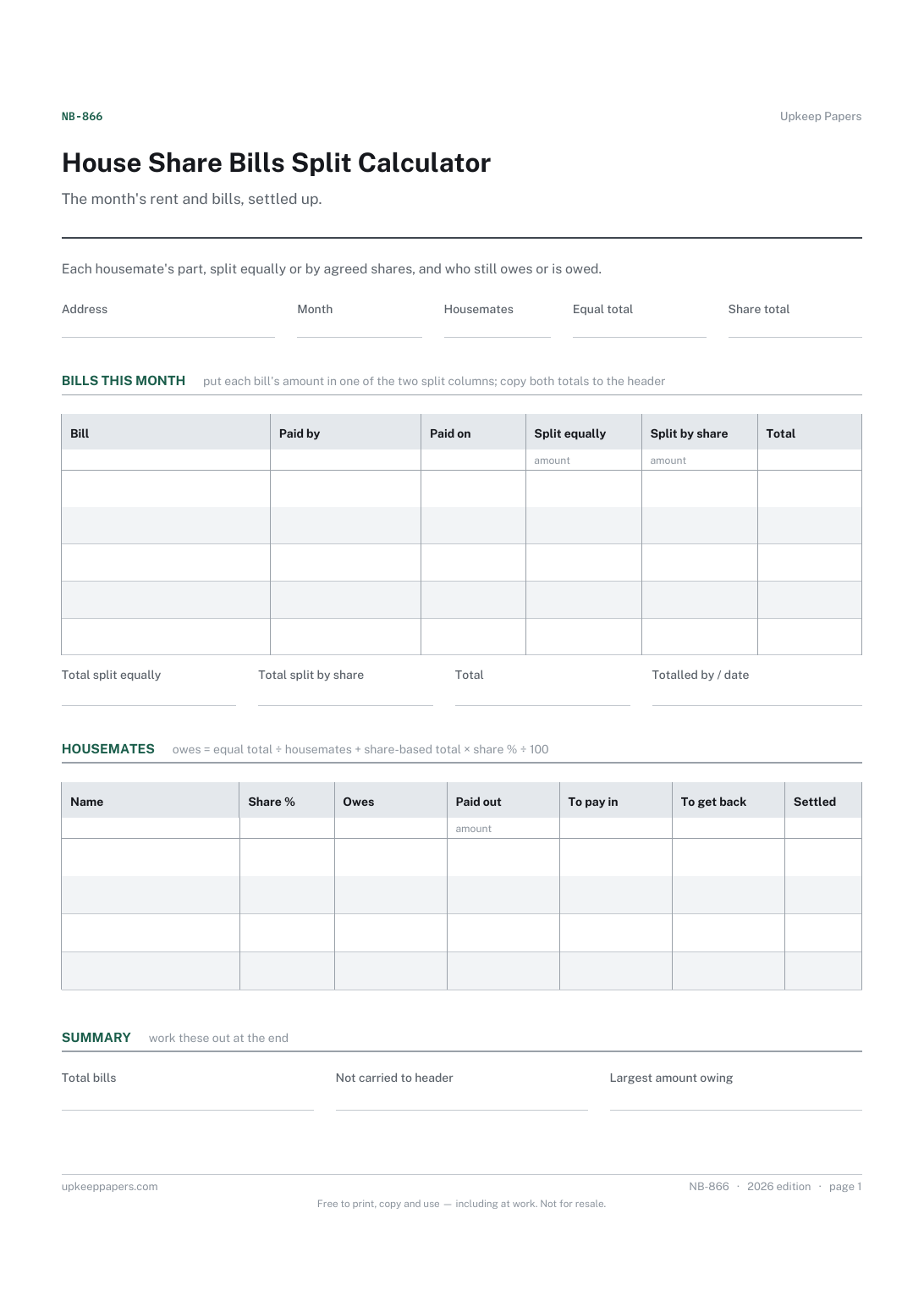
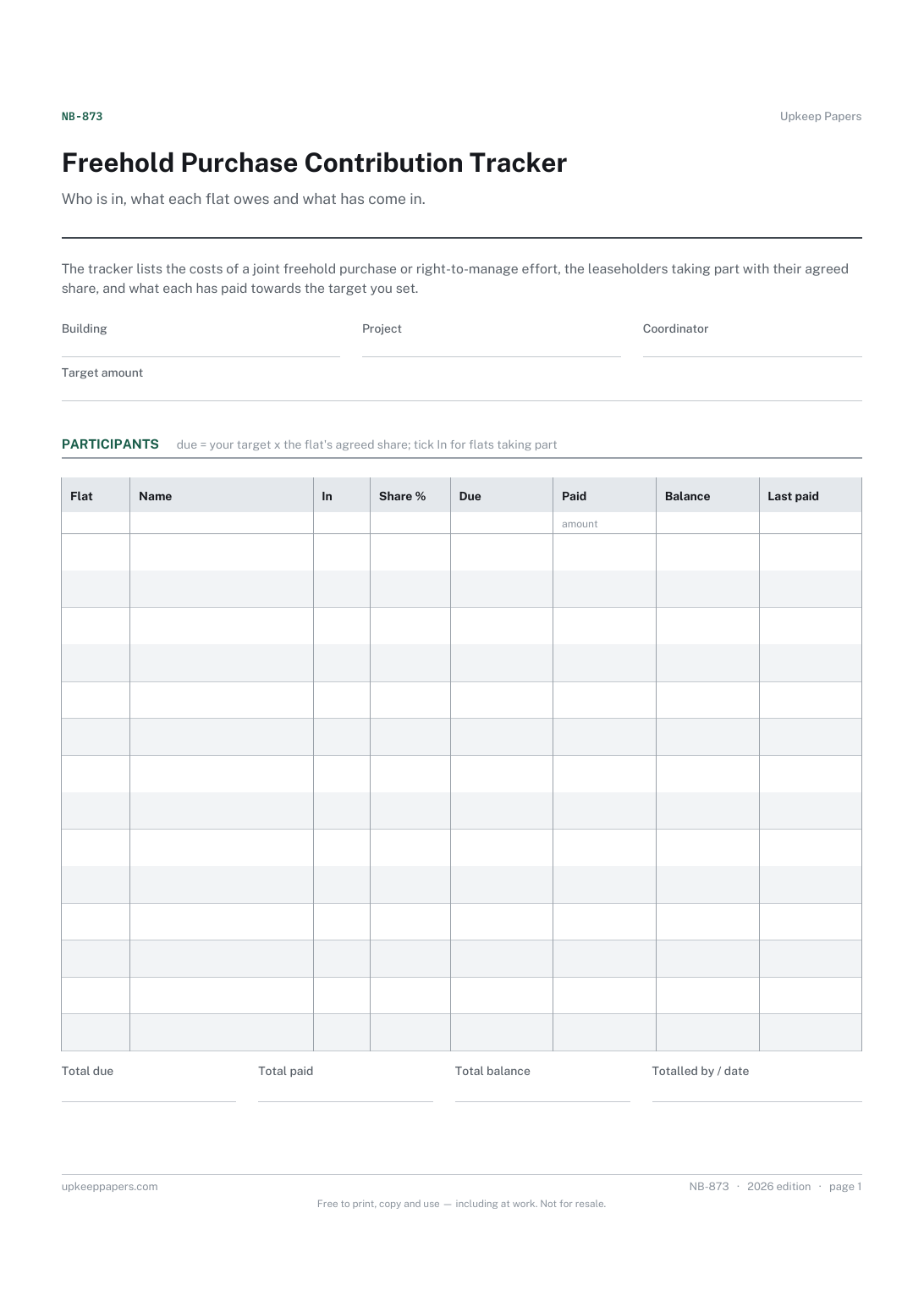
Every bill for the month, its total and who paid it.
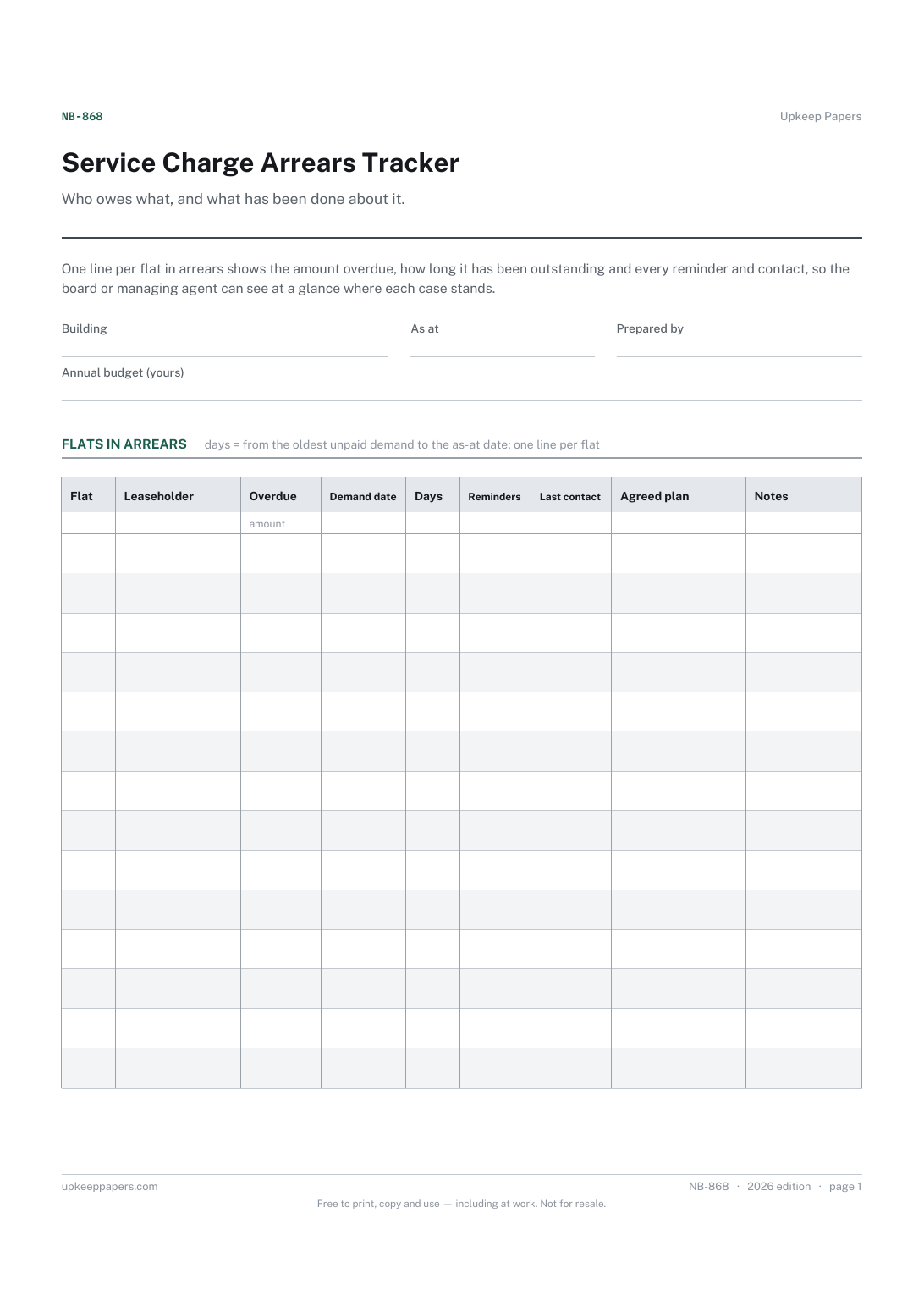
Each flat behind on service charge or ground rent, with the leaseholder's name.
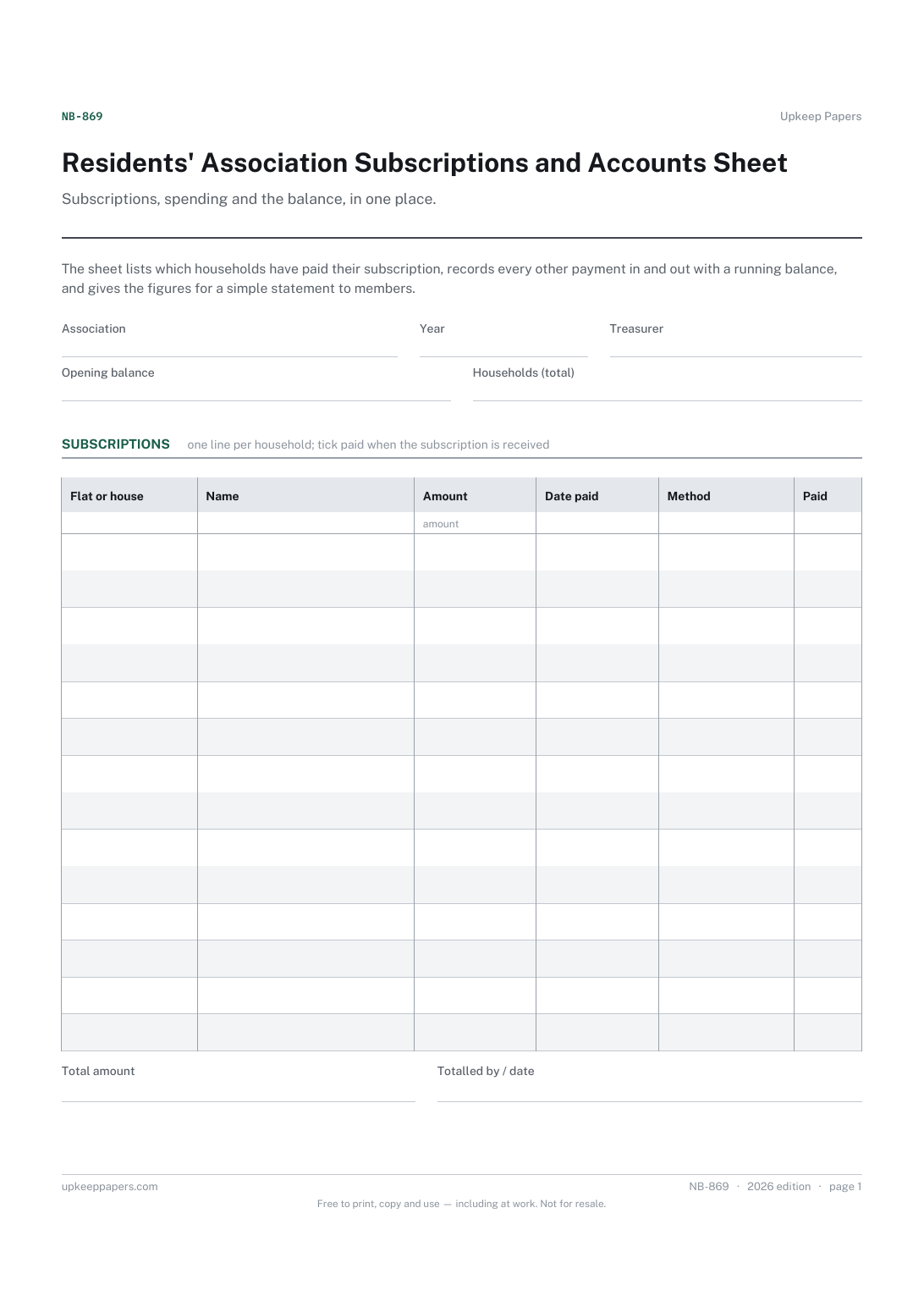
Which households have paid this year's subscription, how and when.
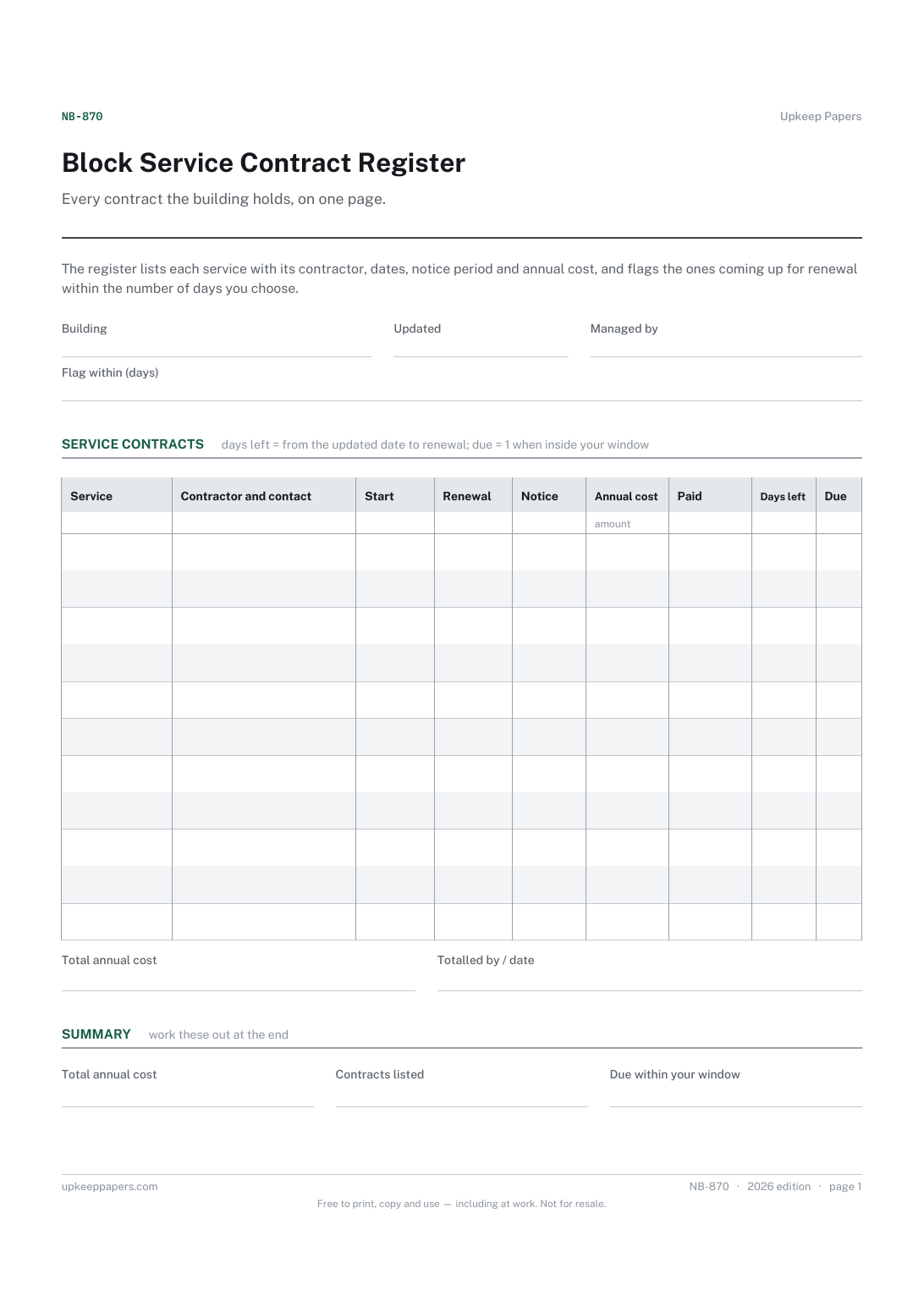
Each service contract with the contractor and a contact.
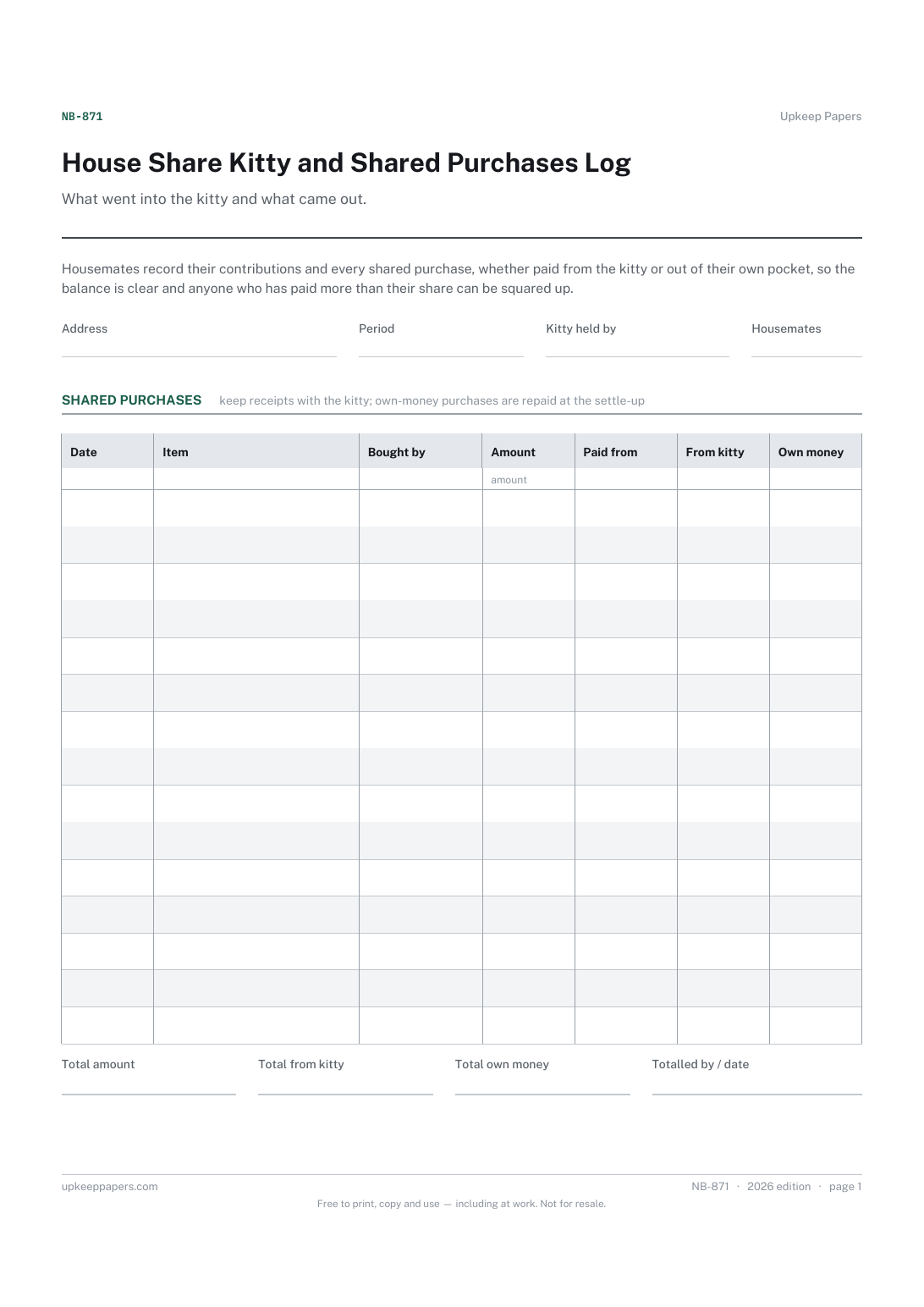
Every payment into the kitty, by whom and when.
Estimated and actual costs, from valuation and legal fees to the purchase itself.
Budget and actual spending under each cost heading.
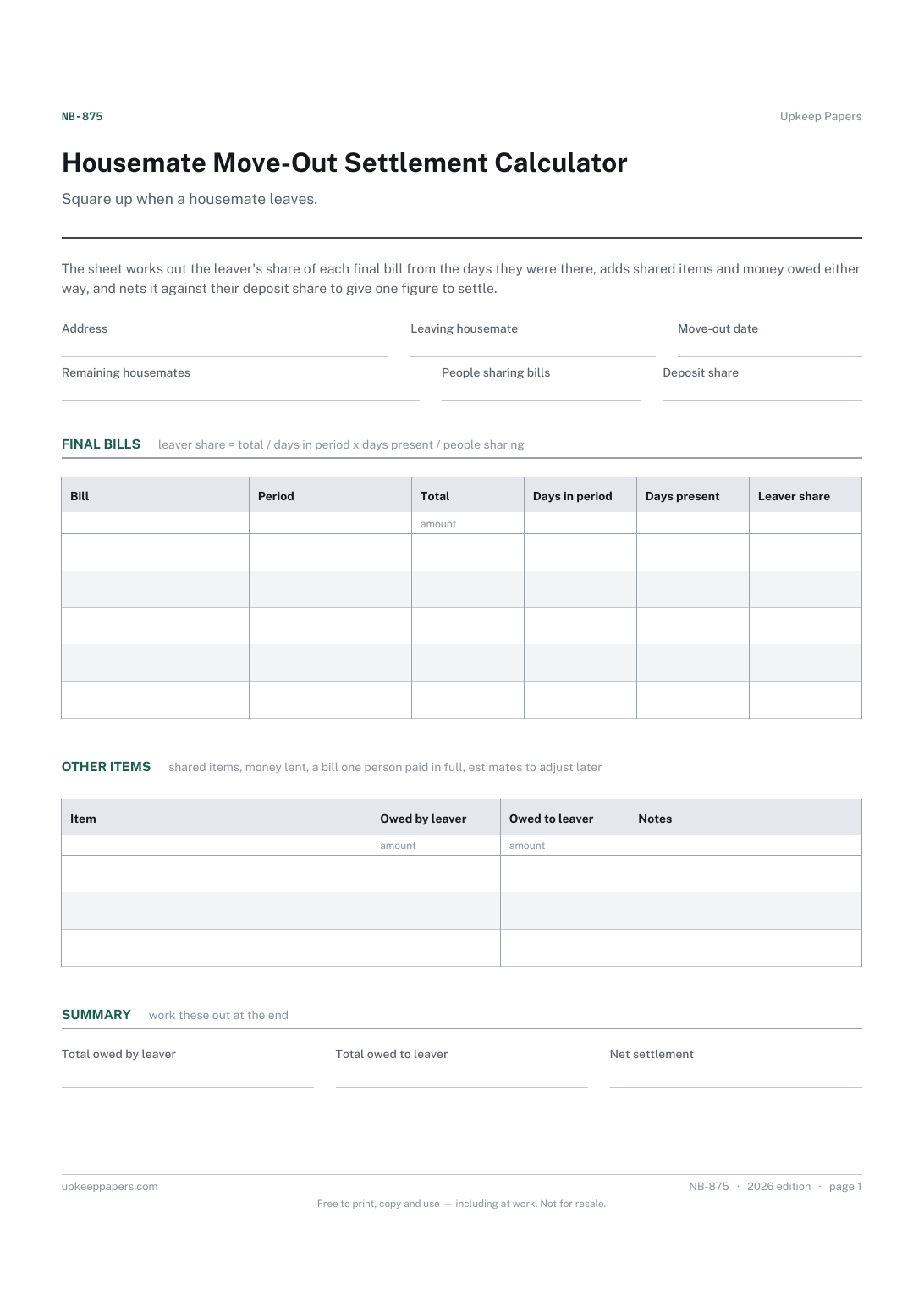
The leaver's share of each final bill, based on days present.
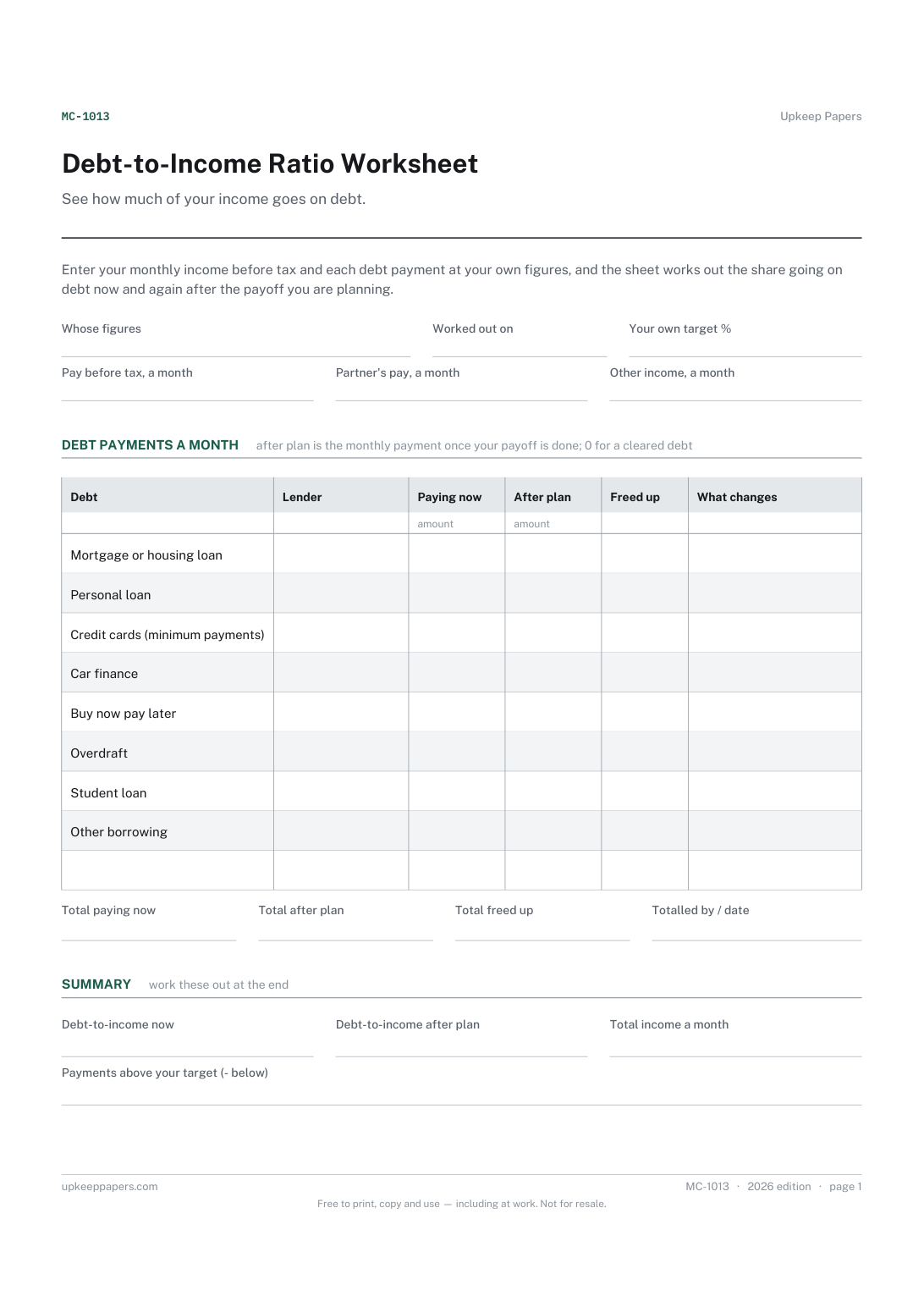
Your monthly income before tax, from every regular source.
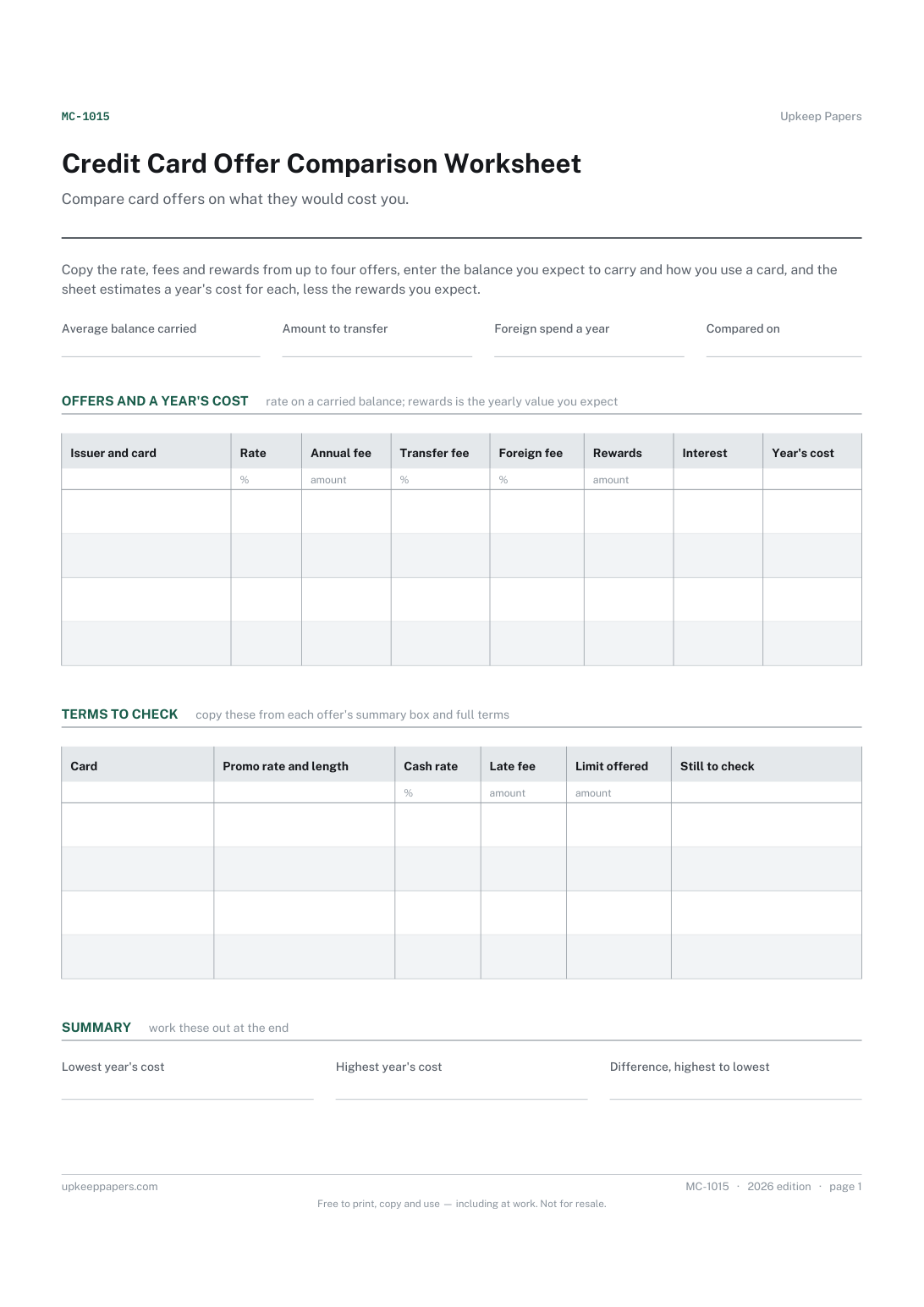
Each offer's rate and fees copied into the same columns.
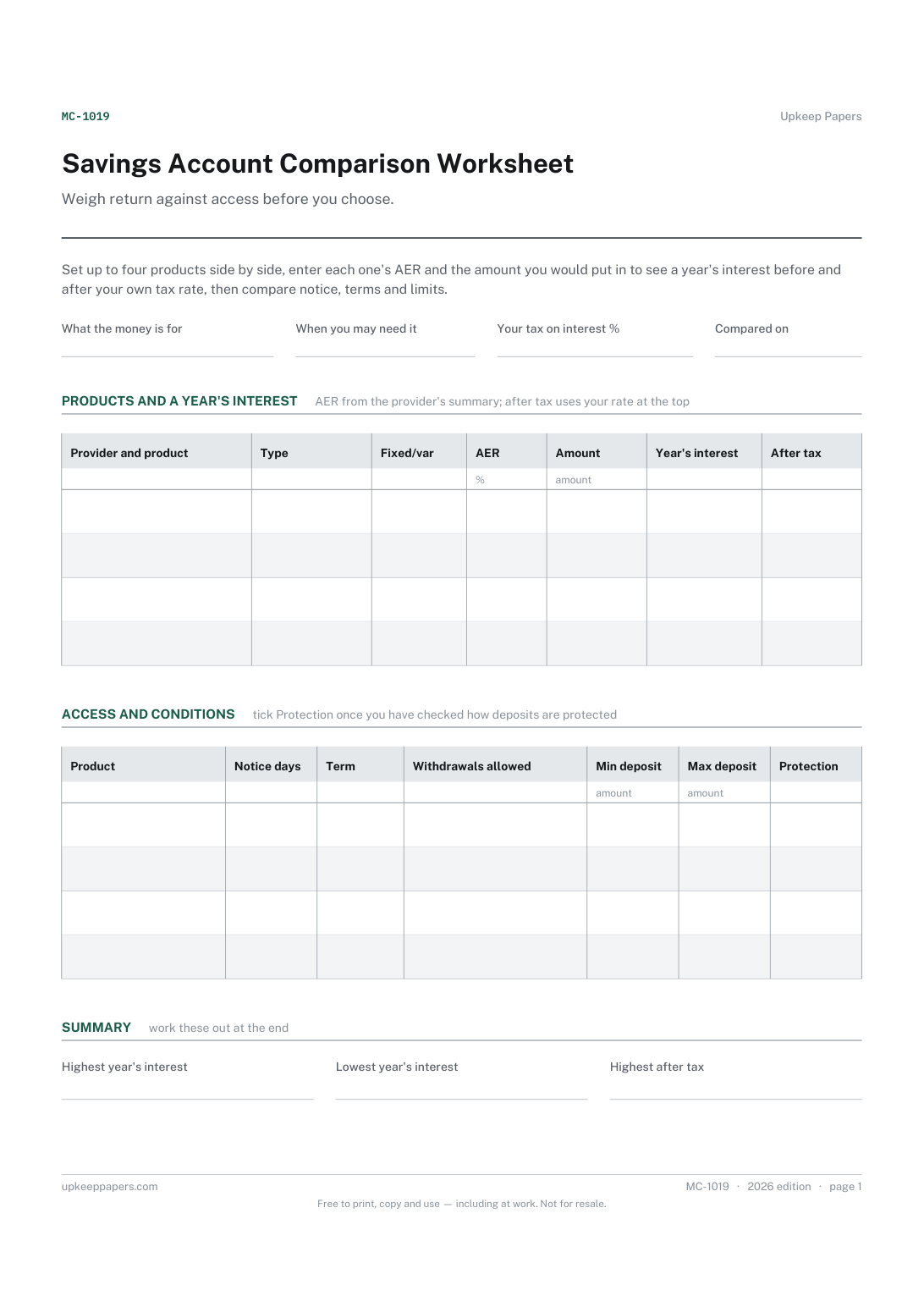
Each product's type, whether its rate is fixed or variable, and its AER.
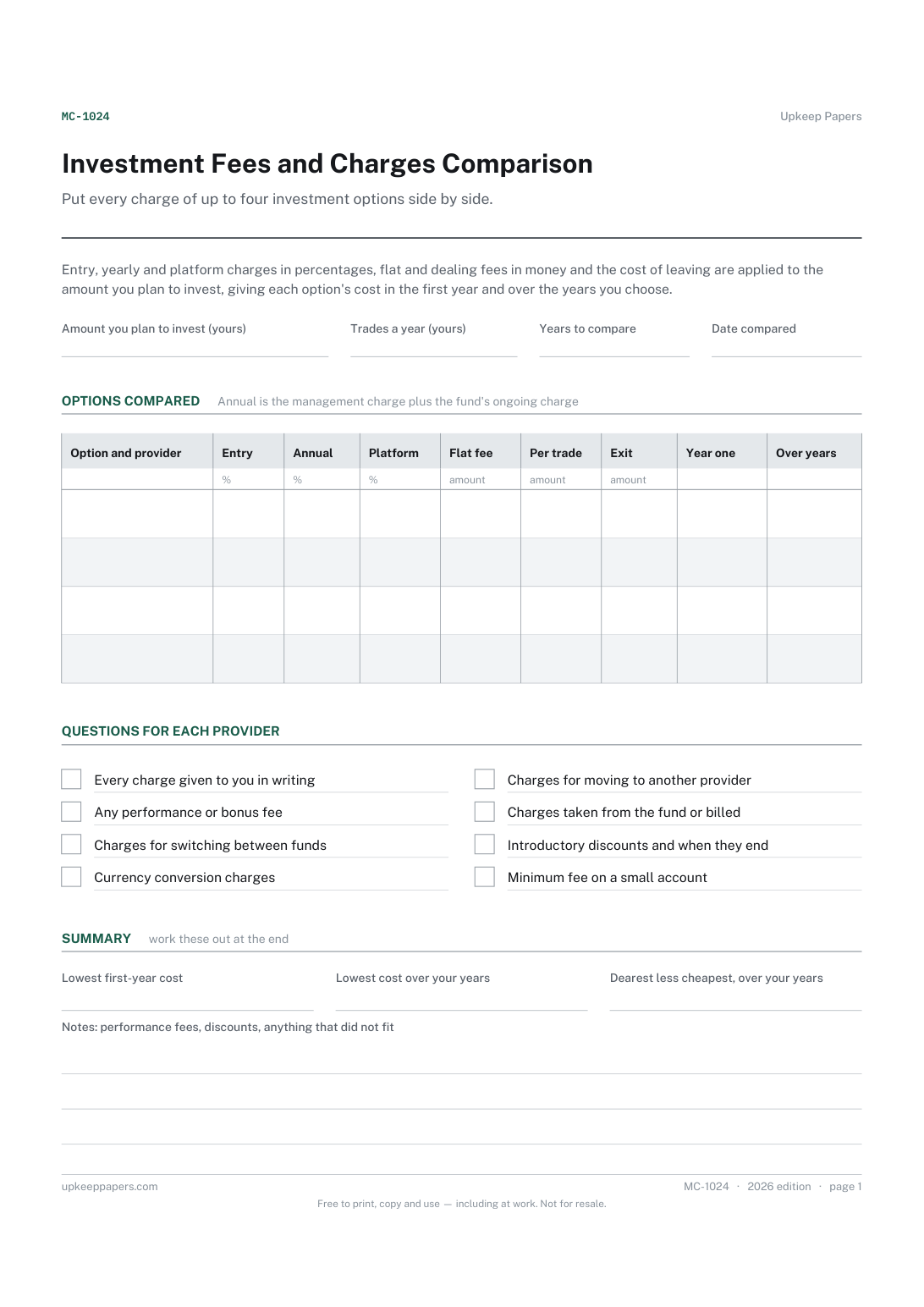
Every charge for each option on one line, as the provider states it.
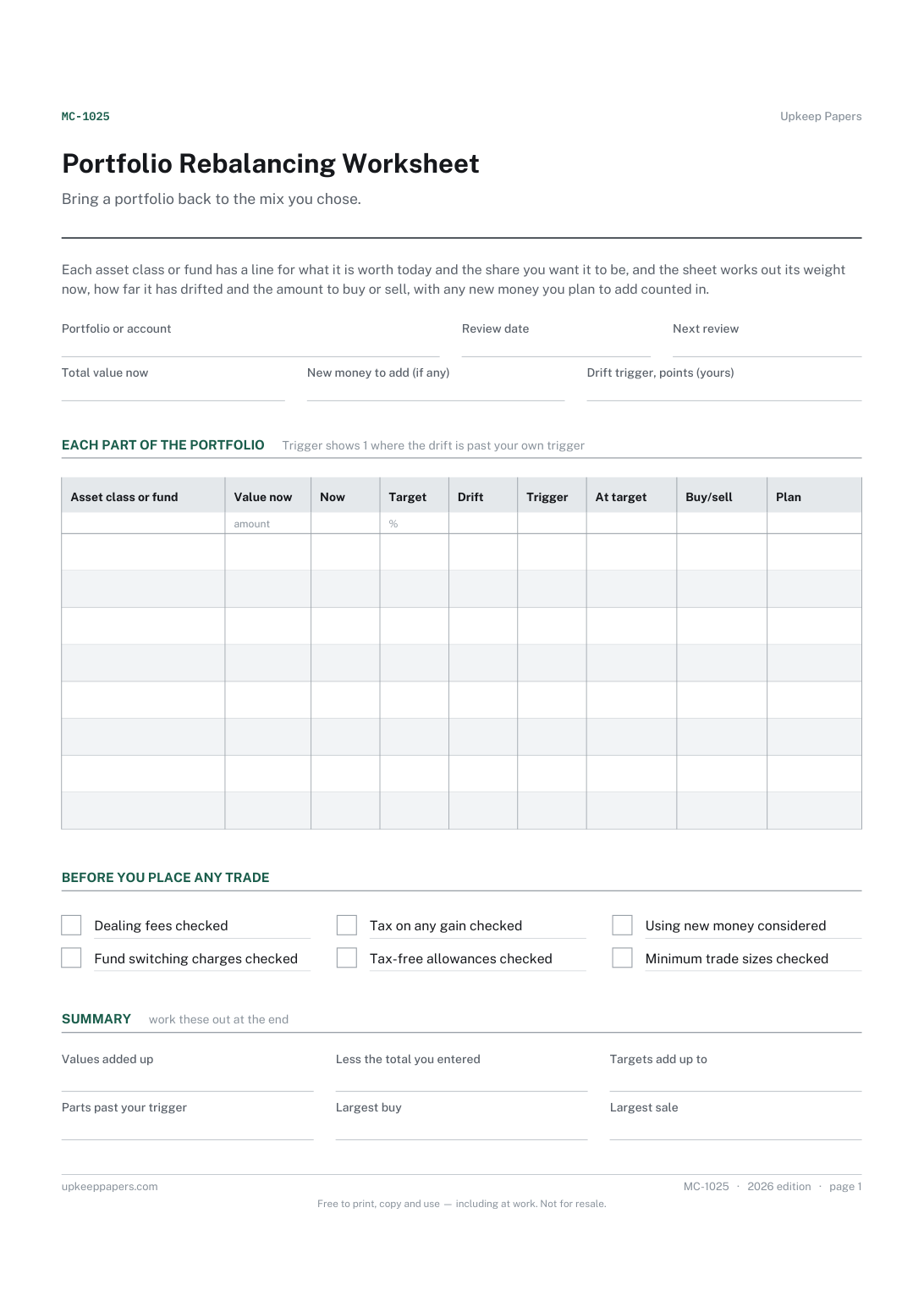
The value and current weight of each part of the portfolio.
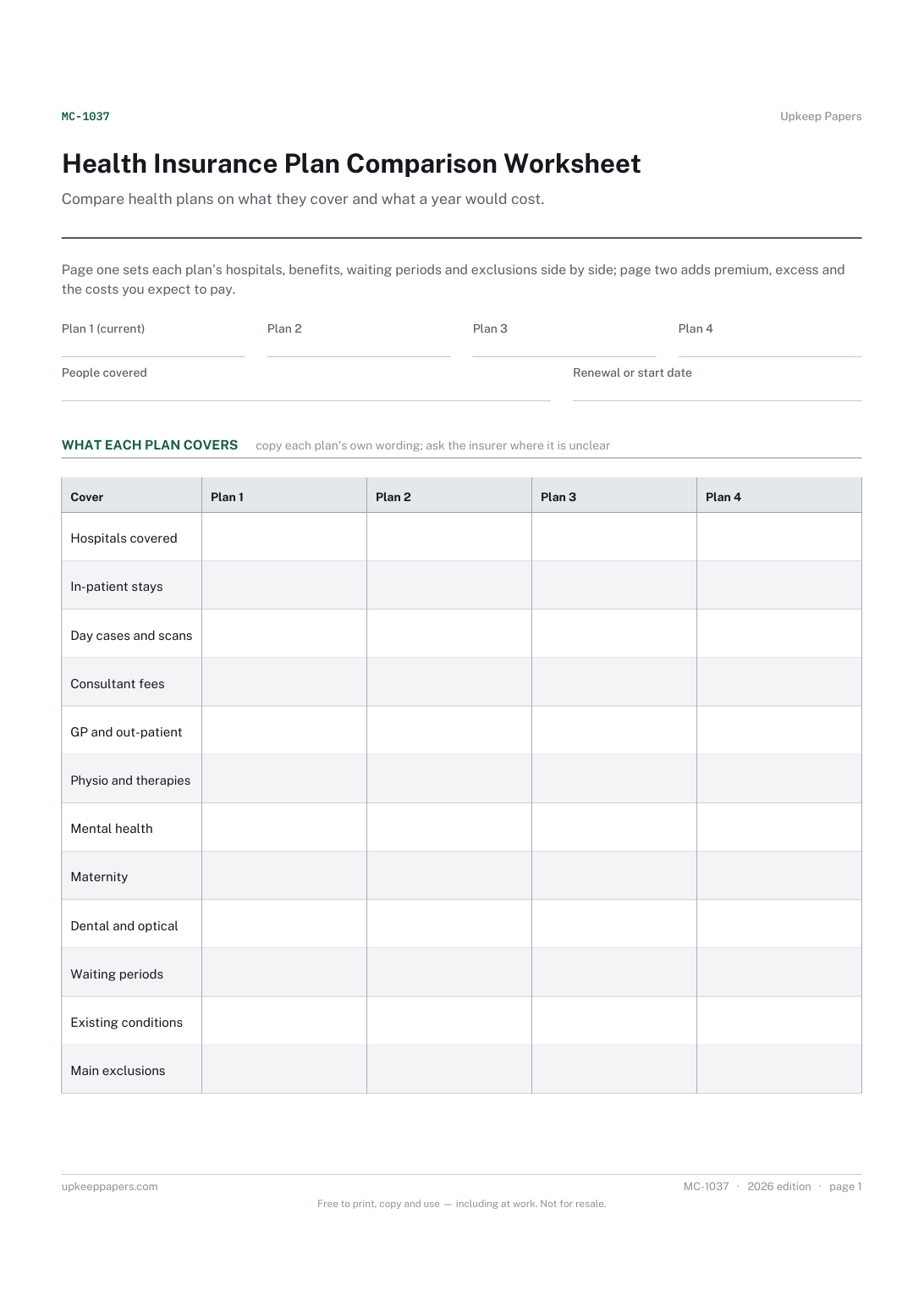
Hospitals, out-patient benefits and extras for each plan, side by side.
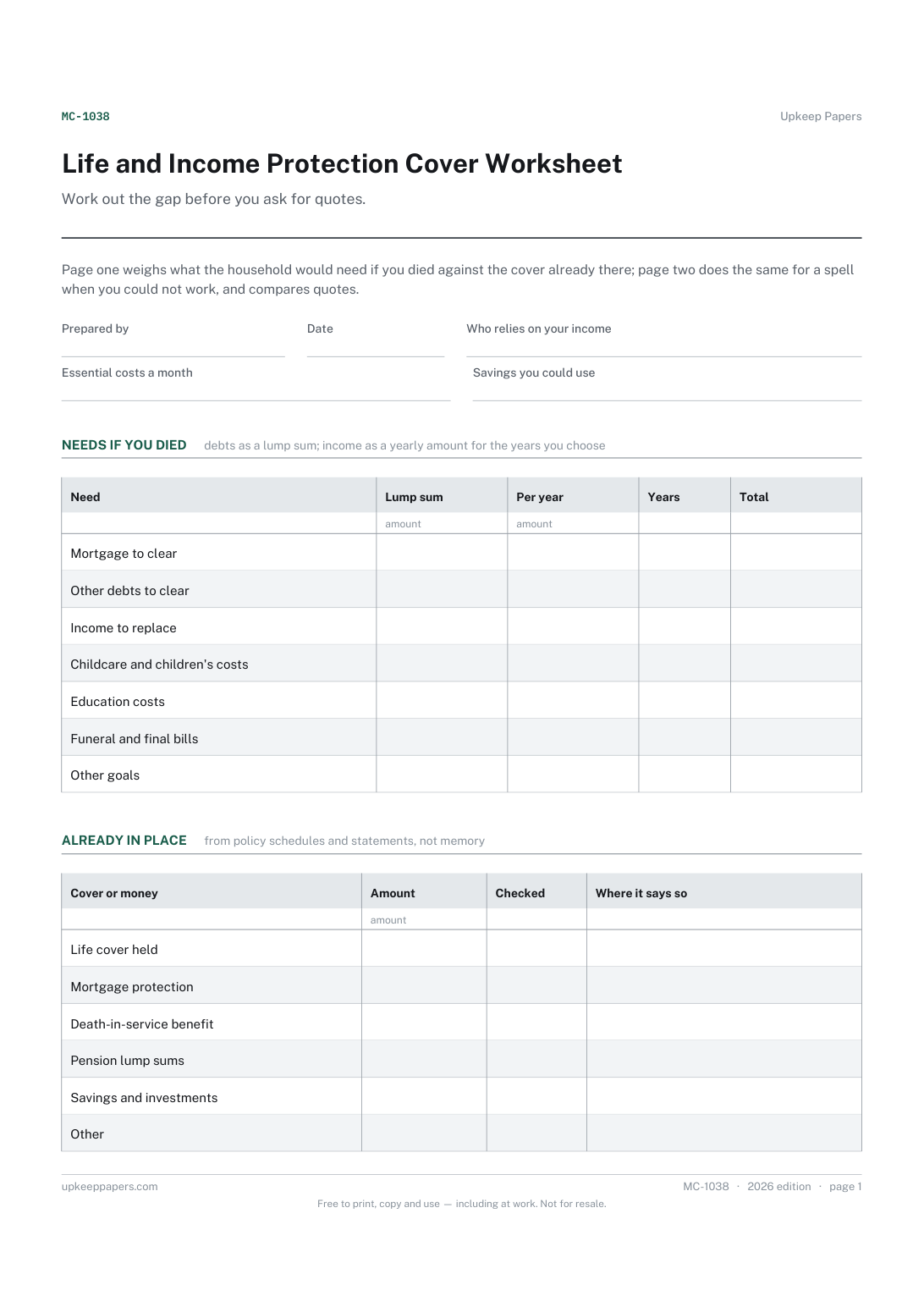
Debts to clear, income to replace and future costs, in your own figures.
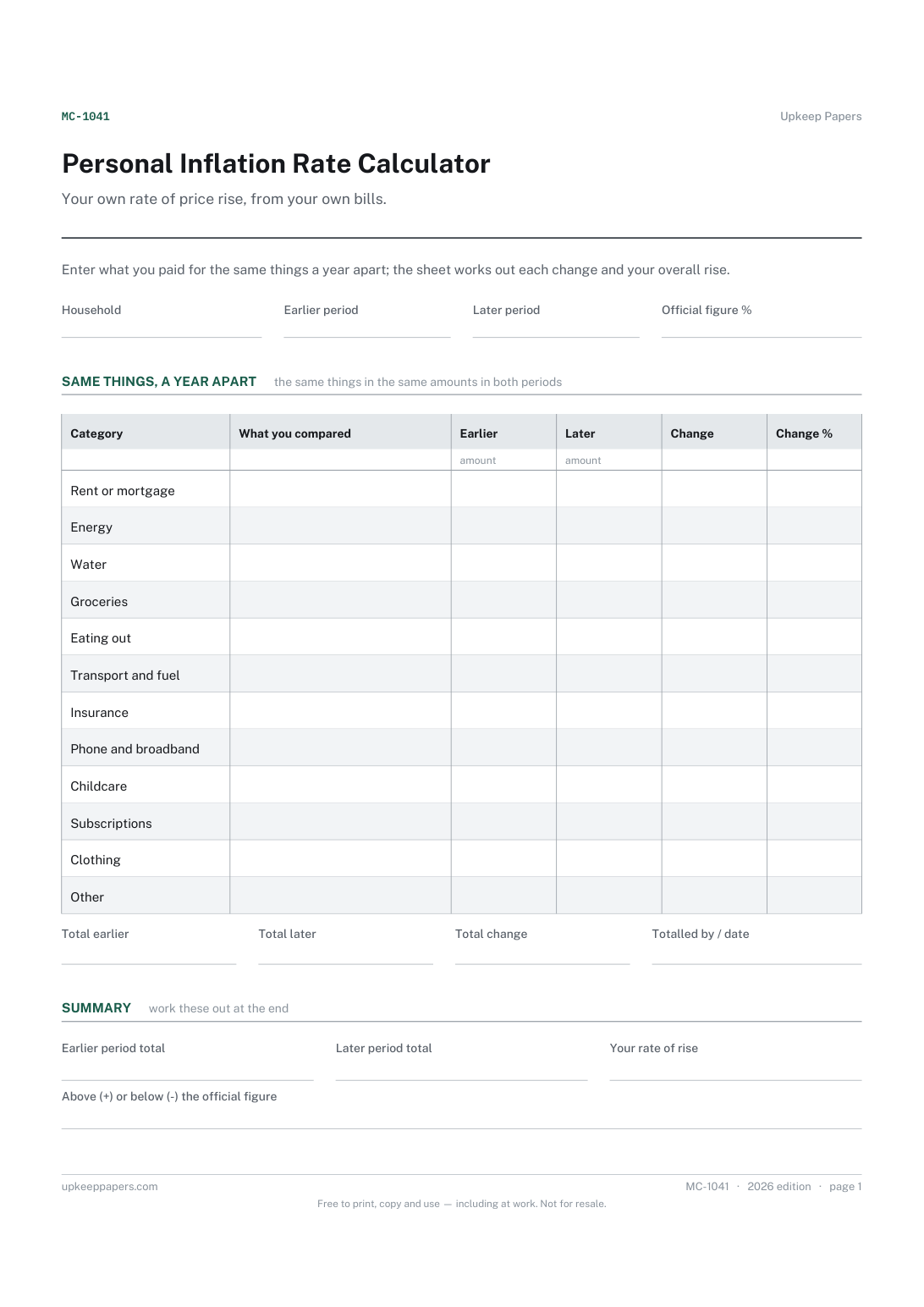
What you paid in each category in two periods a year apart.
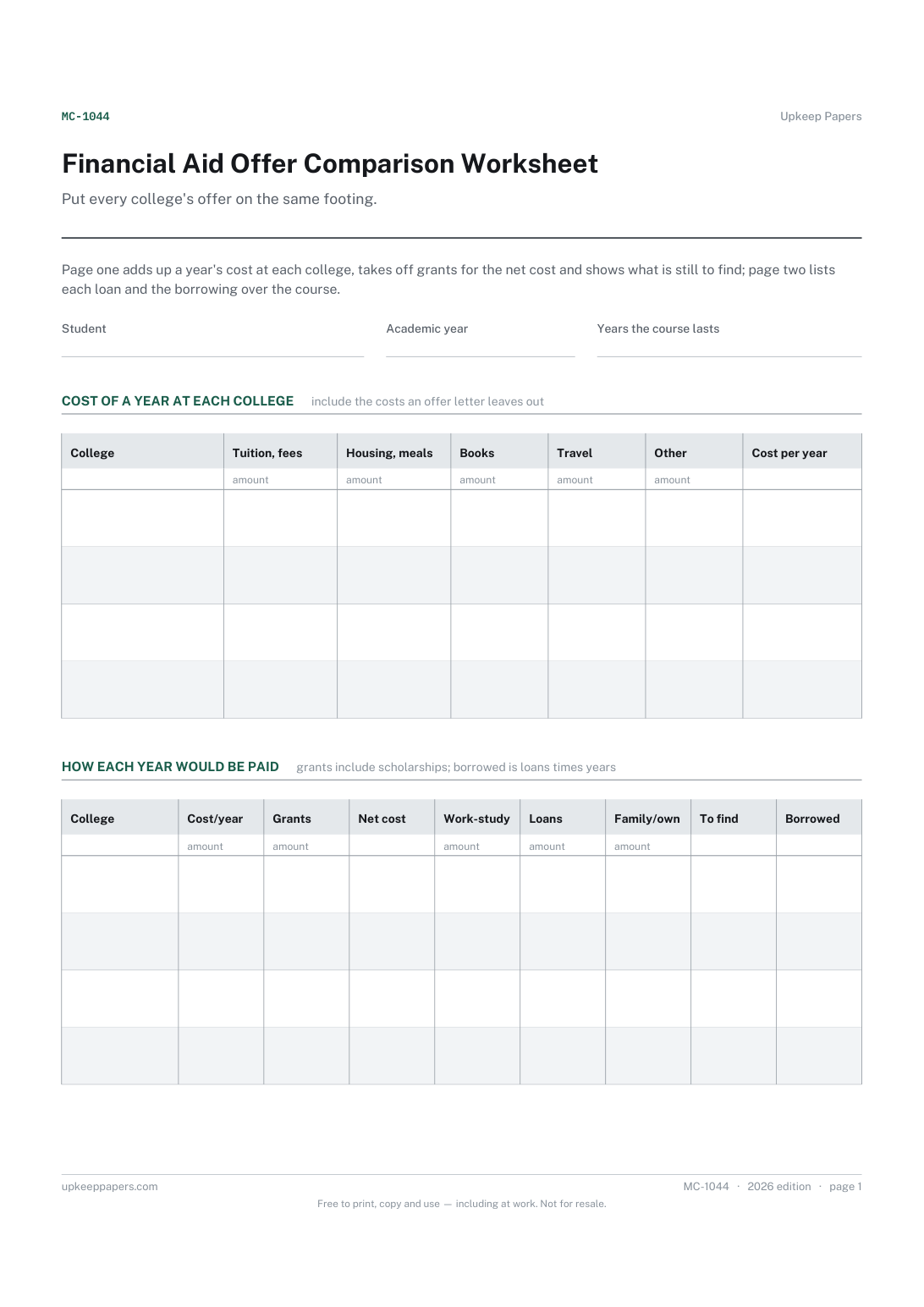
The full cost of a year at each college, not only tuition.
What each offer asks for at the start, each month and at the end.
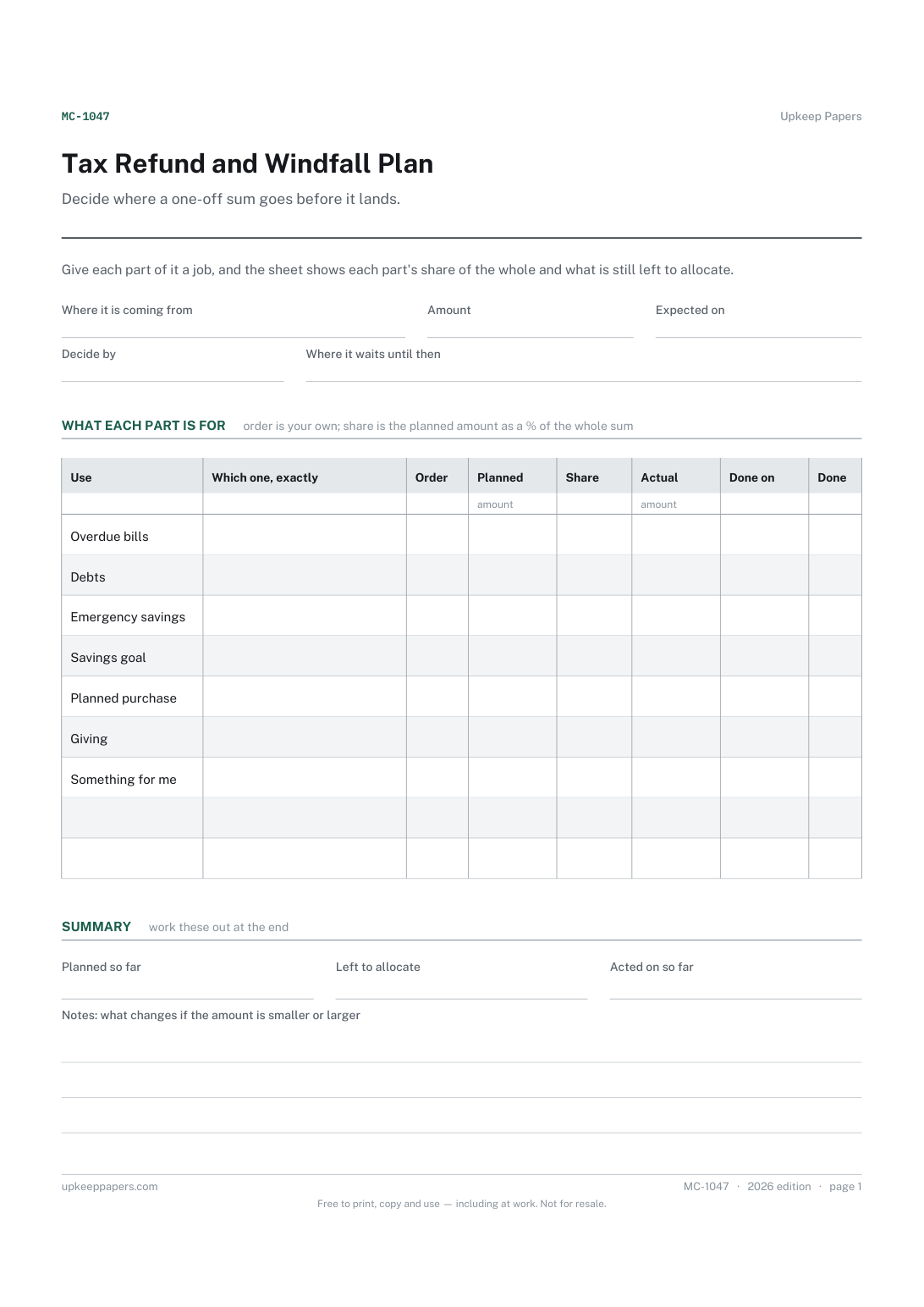
The amount, where it is coming from and when you expect it.
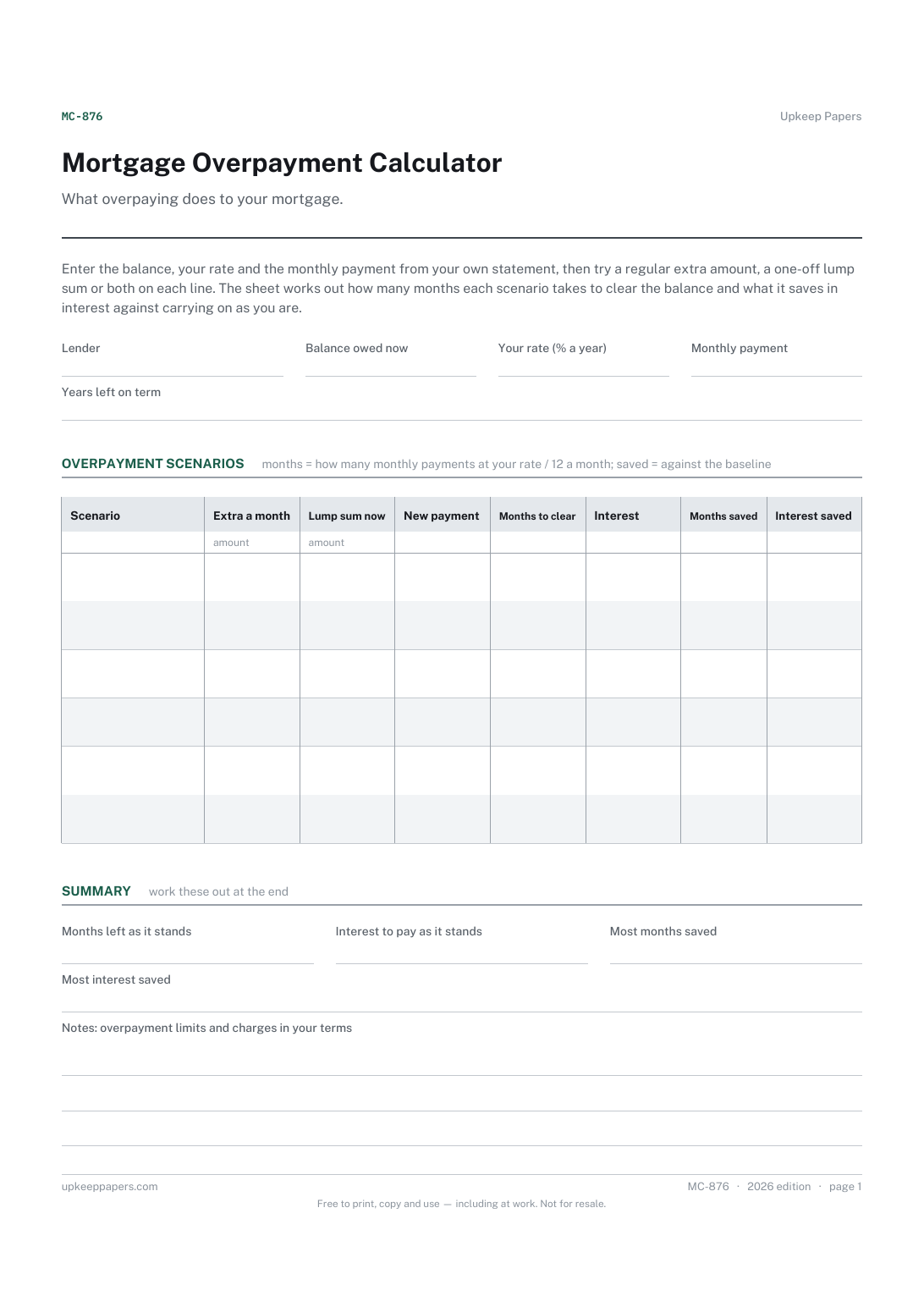
How many months the mortgage has left if nothing changes.
What each lender has actually quoted, in the same columns.
The balance at the start and end of each year.
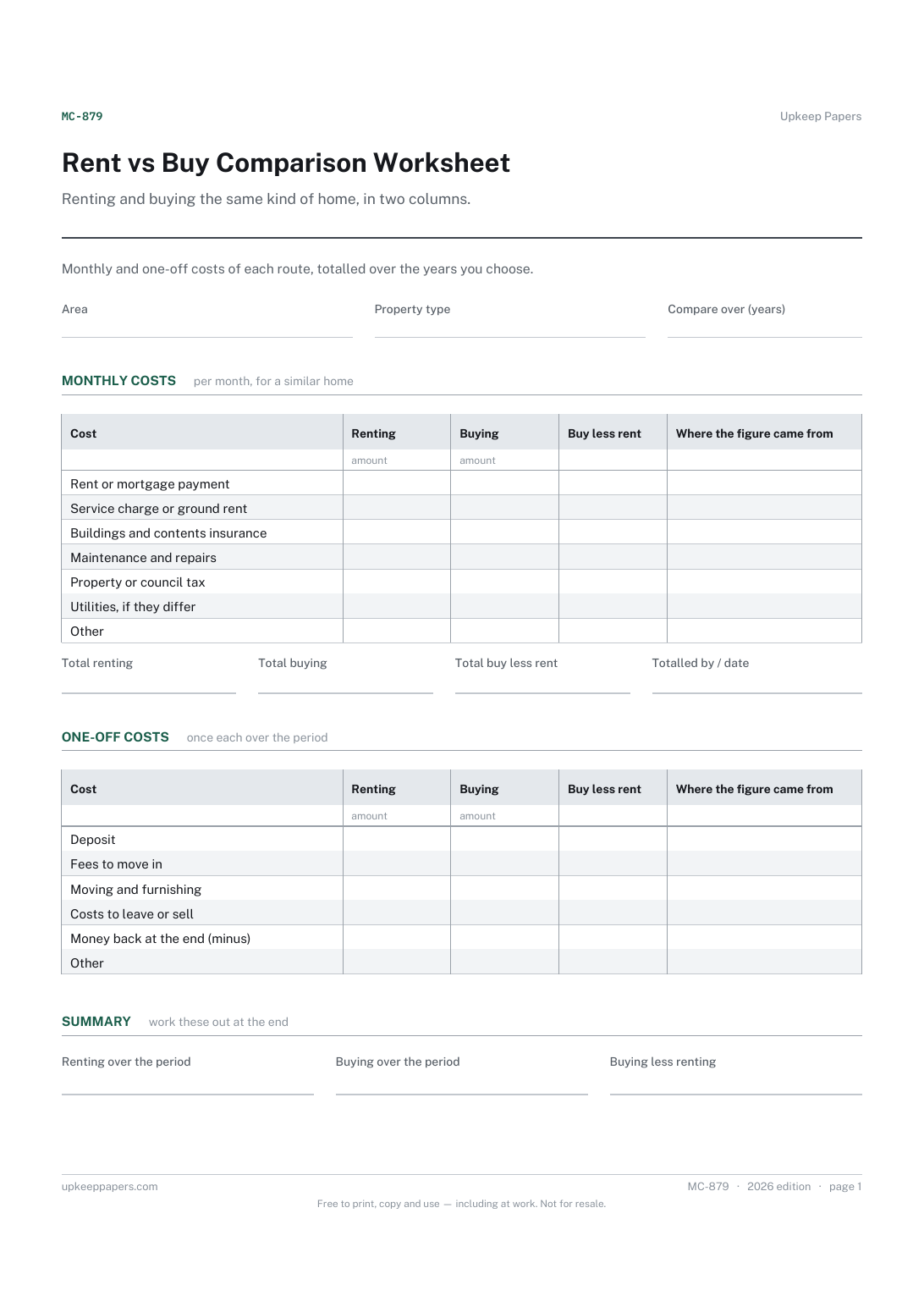
The monthly cost of each route, line by line.
Each person's net income and share of the two together.
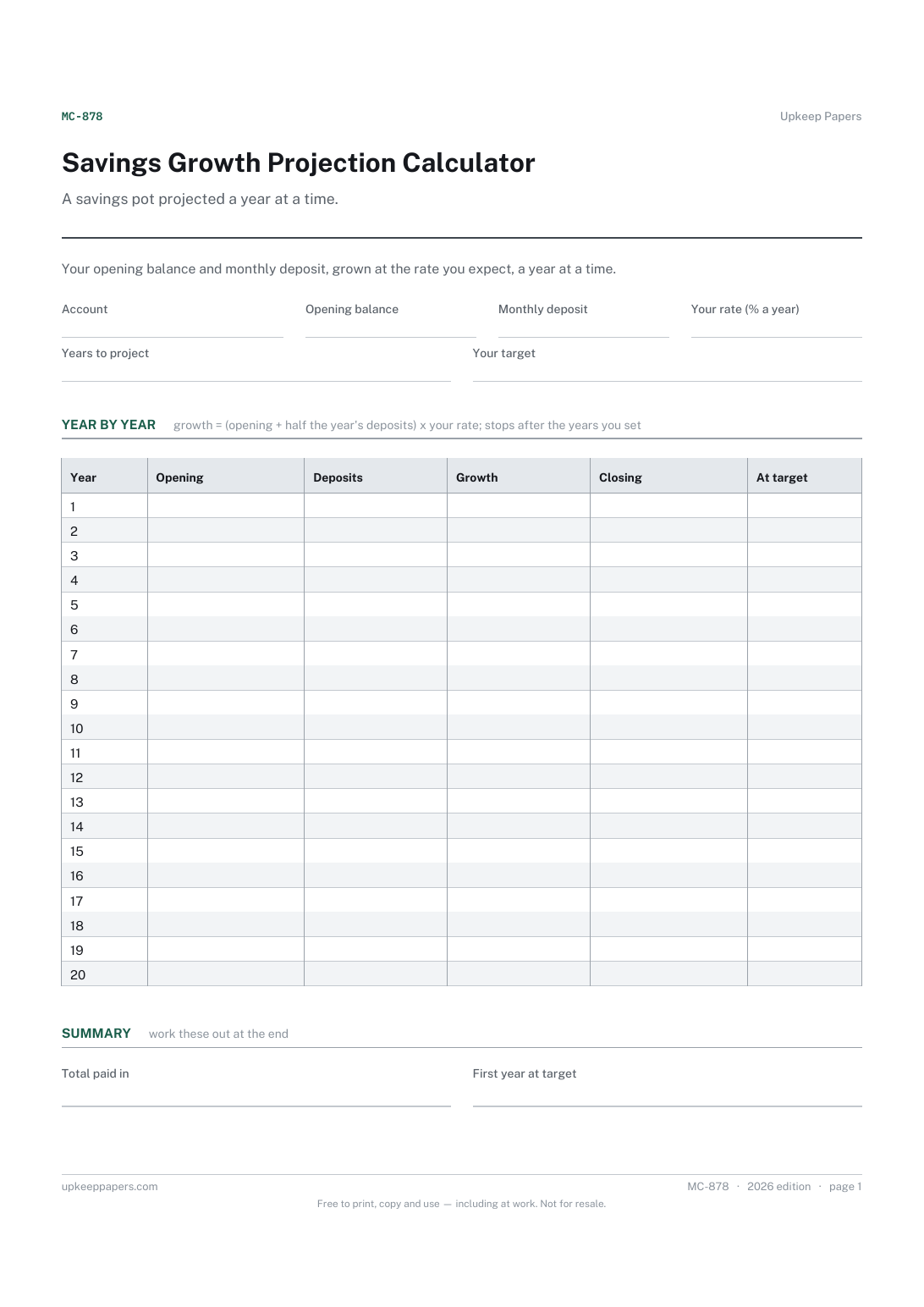
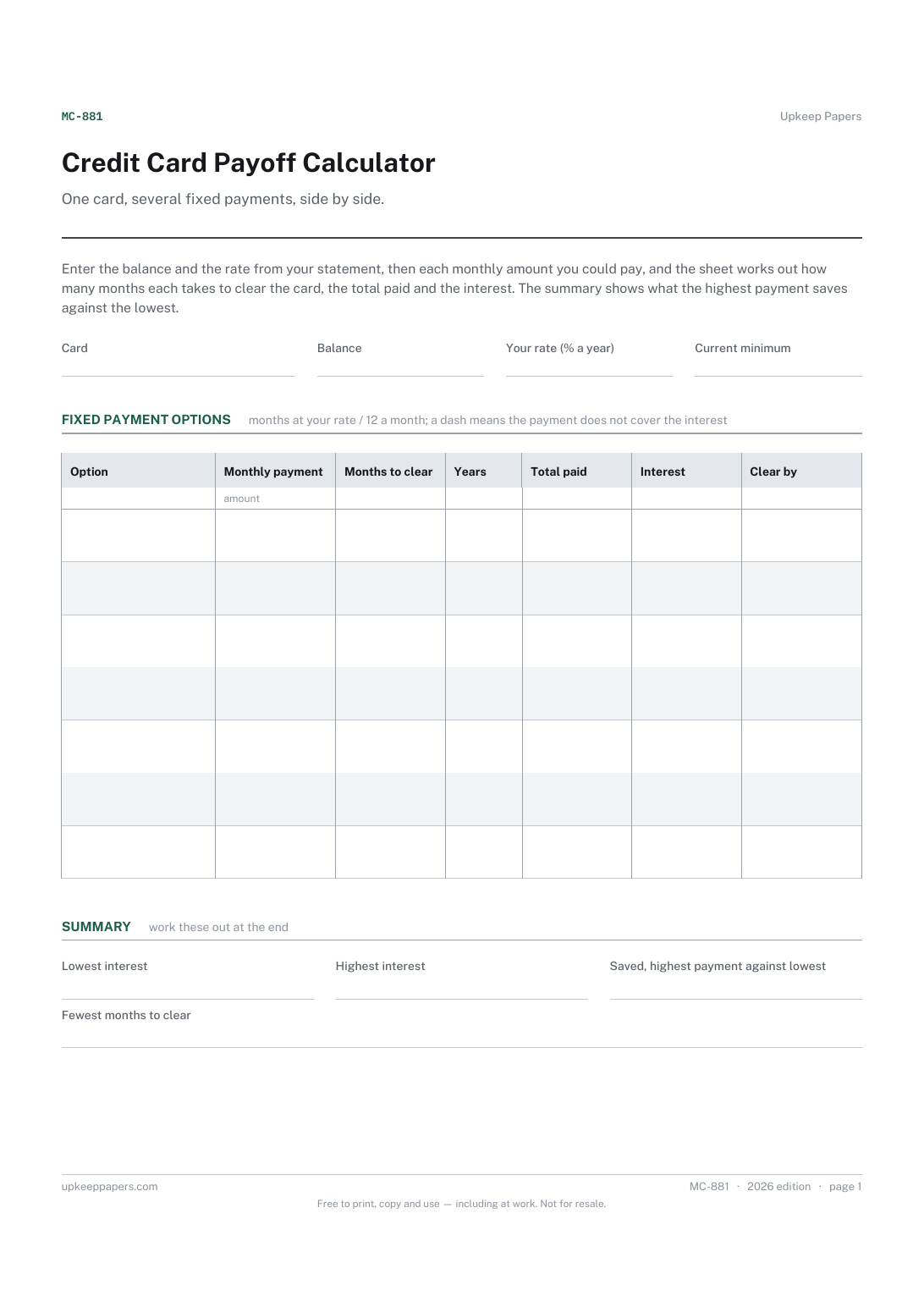
How many months each fixed payment takes to clear the card.
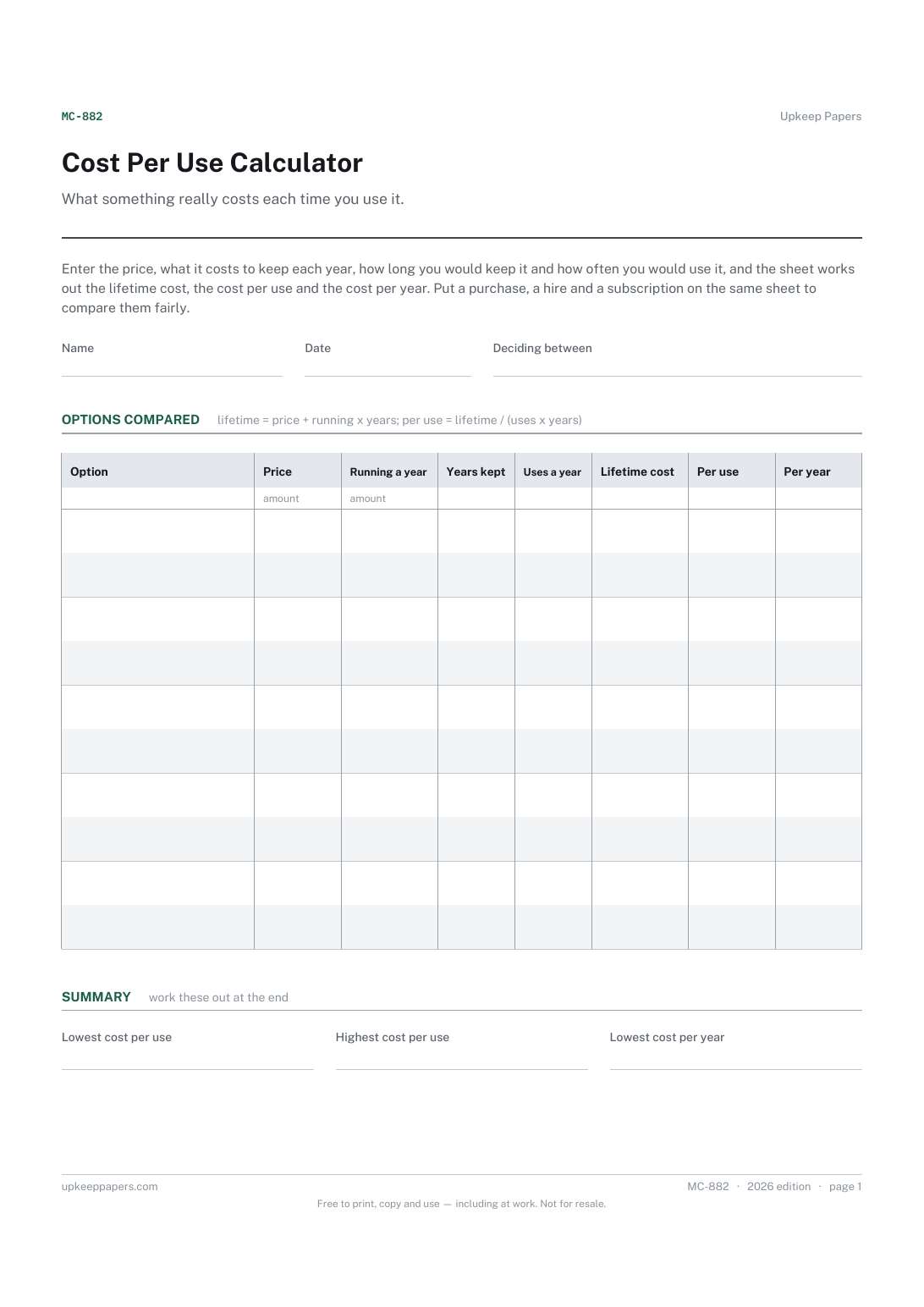
The full cost of each option over the time you would keep it.
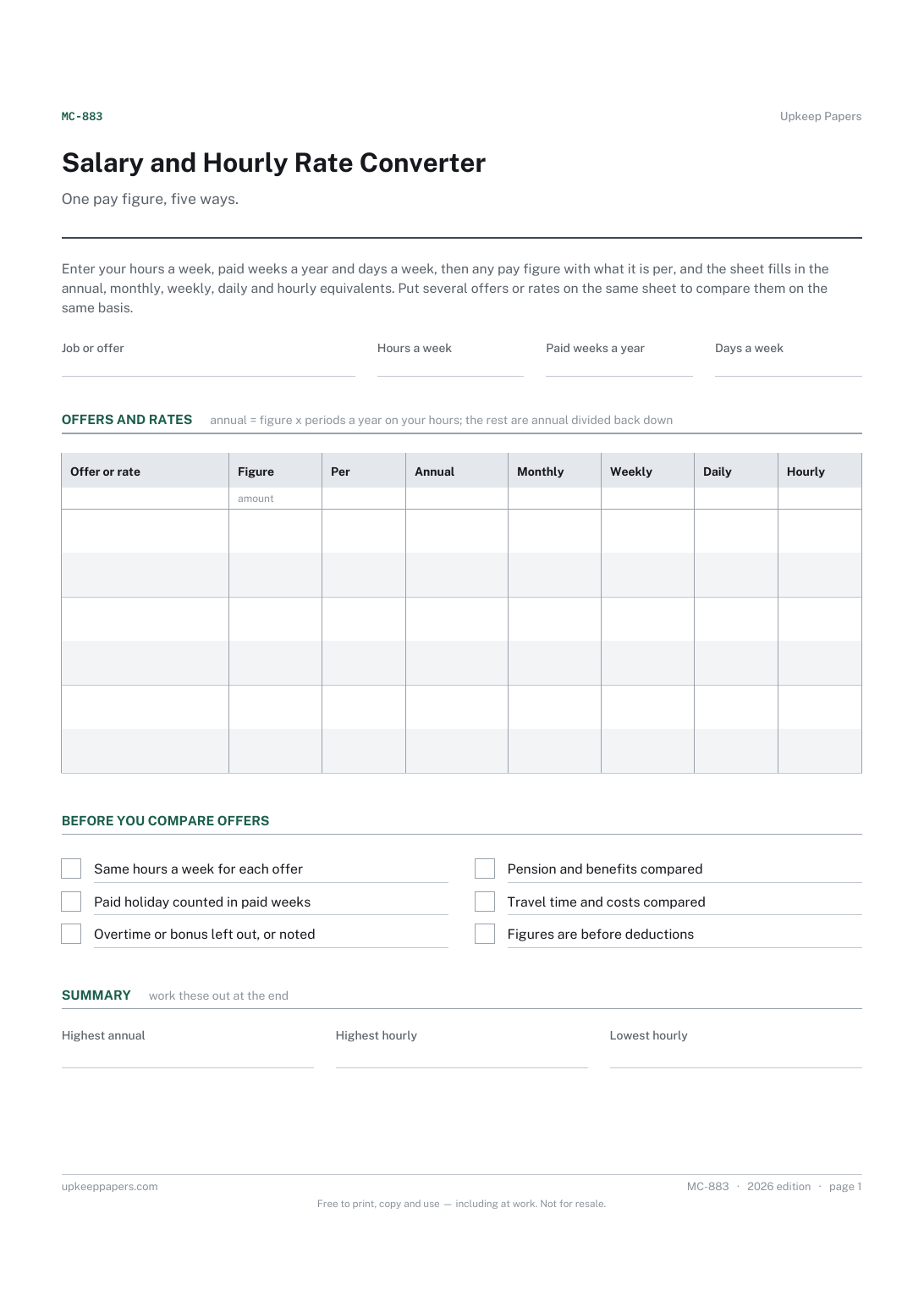
What a salary works out at per hour, day, week and month.
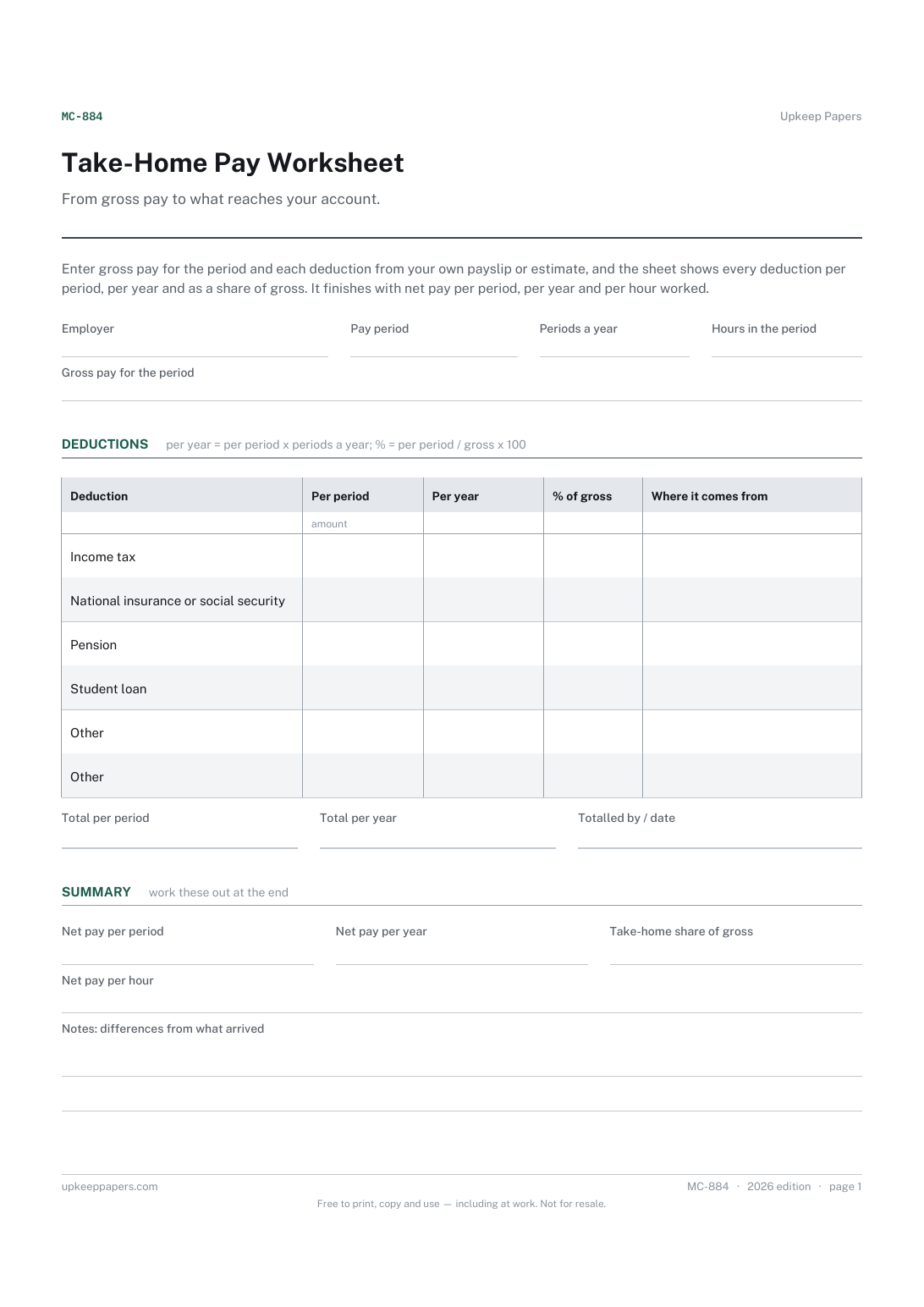
Gross pay for the period and the number of periods a year.
The deposit a target price needs at the share you have chosen.
Every cost of the trip, from flights to spending money.
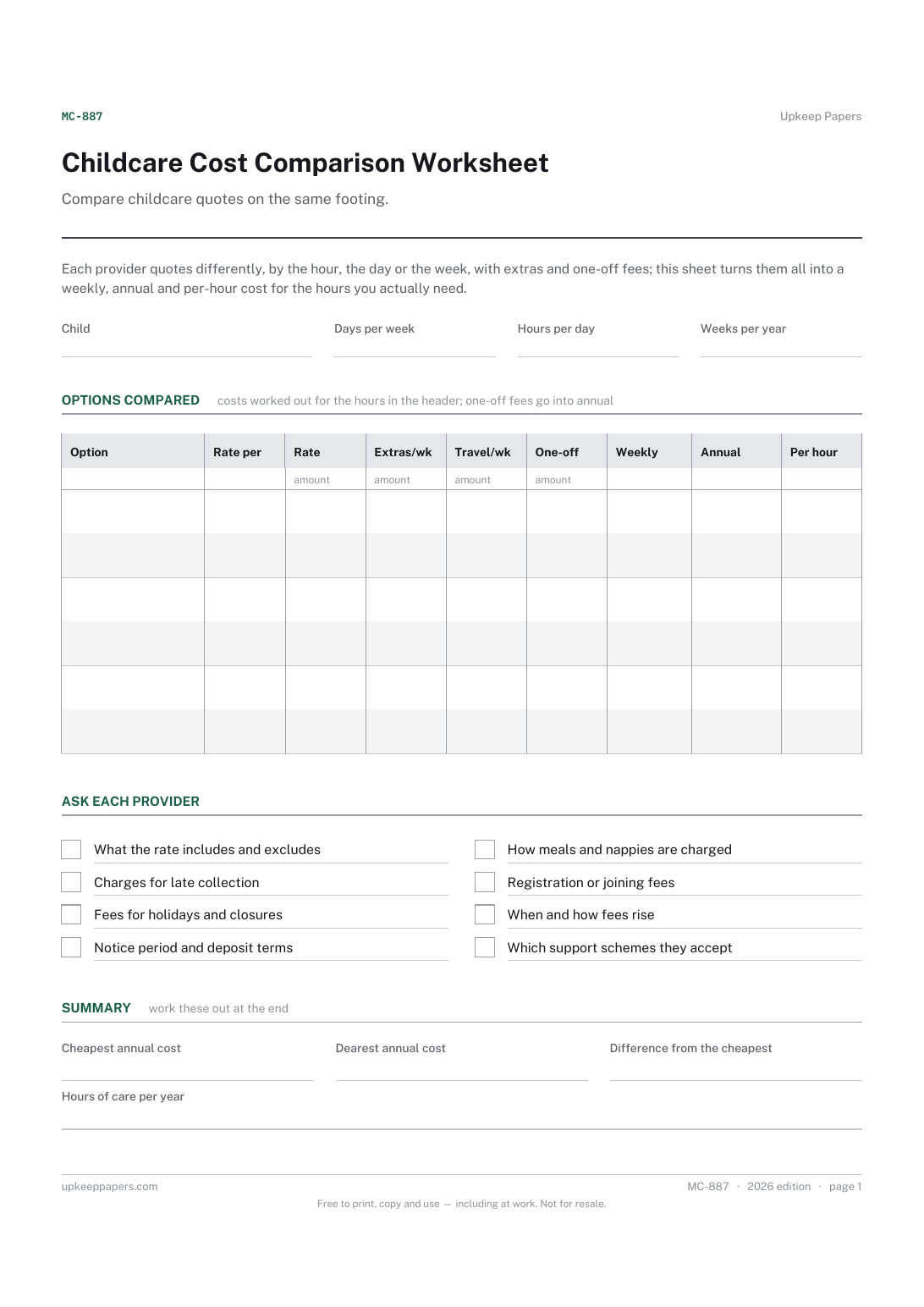
The hours of care you need, set once for every option.
Every yearly or one-off bill with its amount and month due.
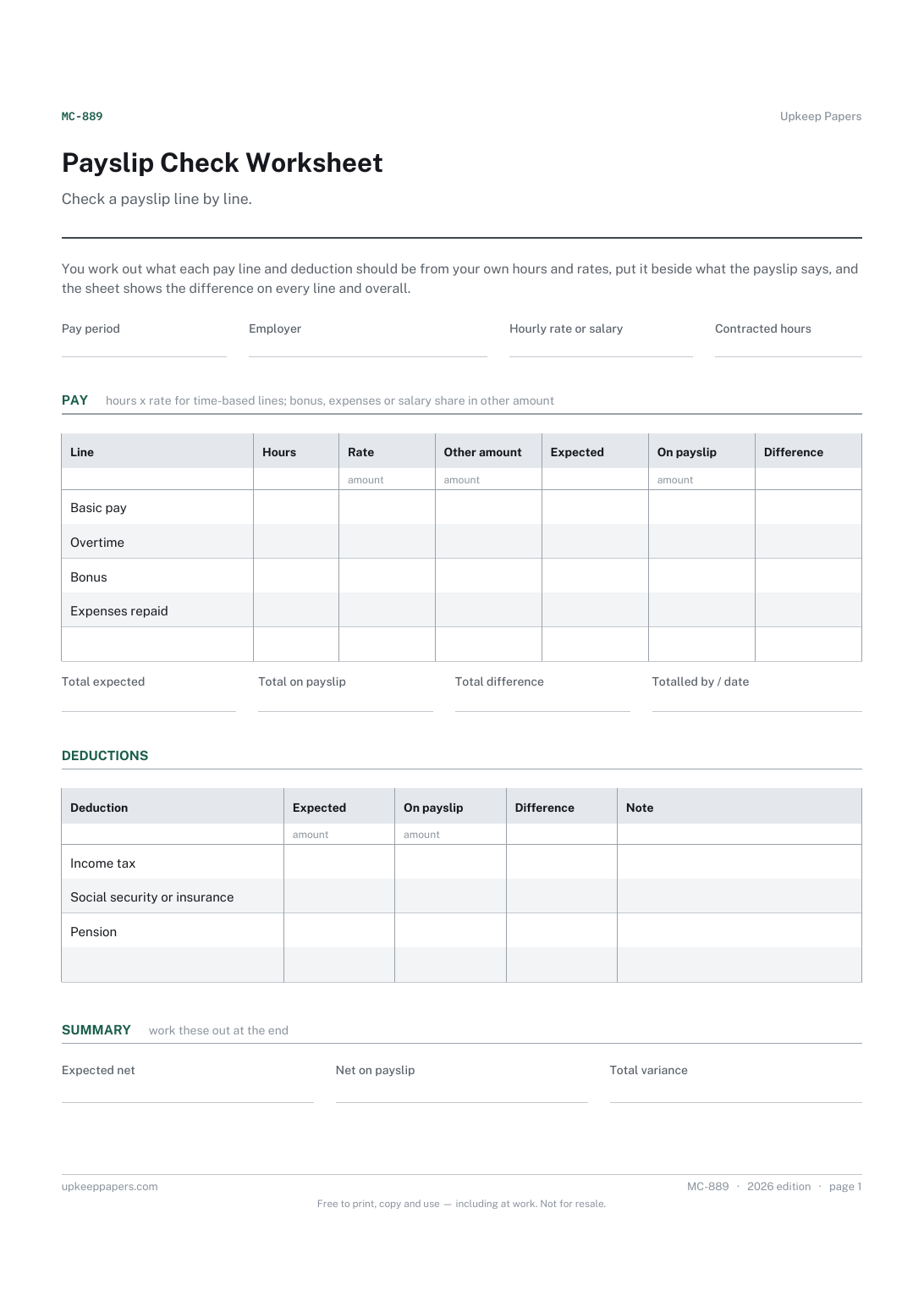
Expected pay for basic hours, overtime, bonus and expenses.
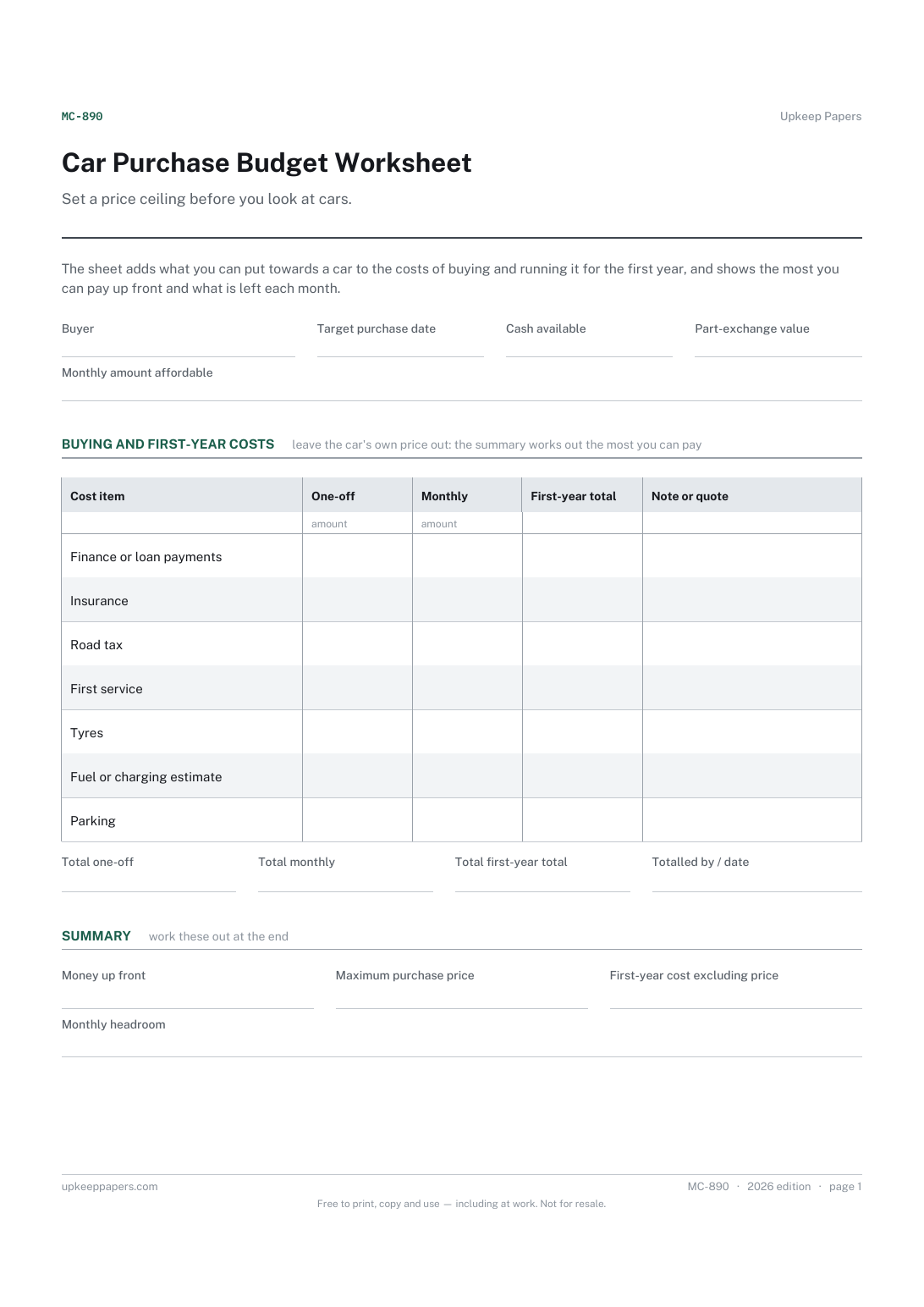
Cash and part-exchange money available up front.
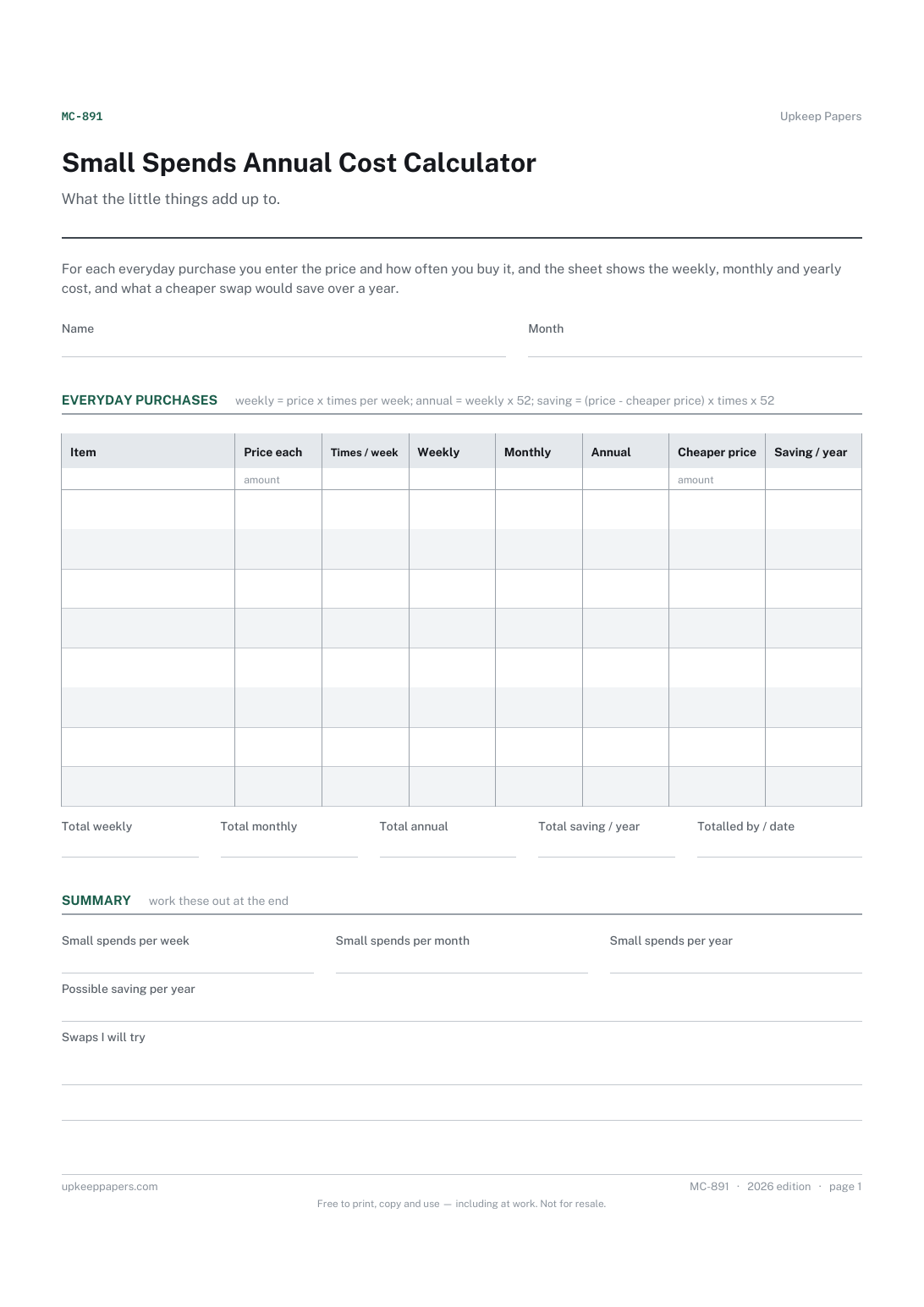
Each regular small purchase and how often you make it.
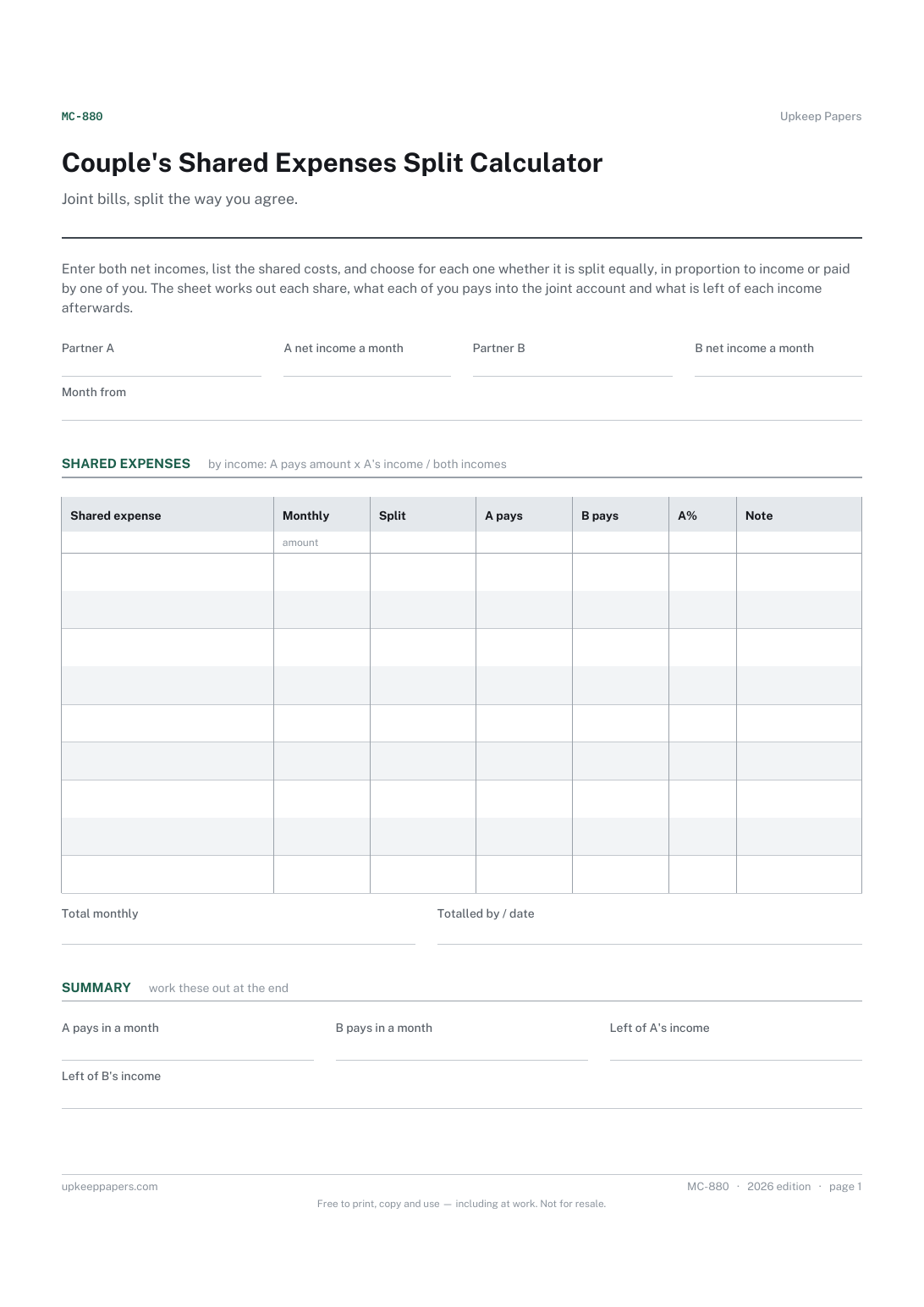
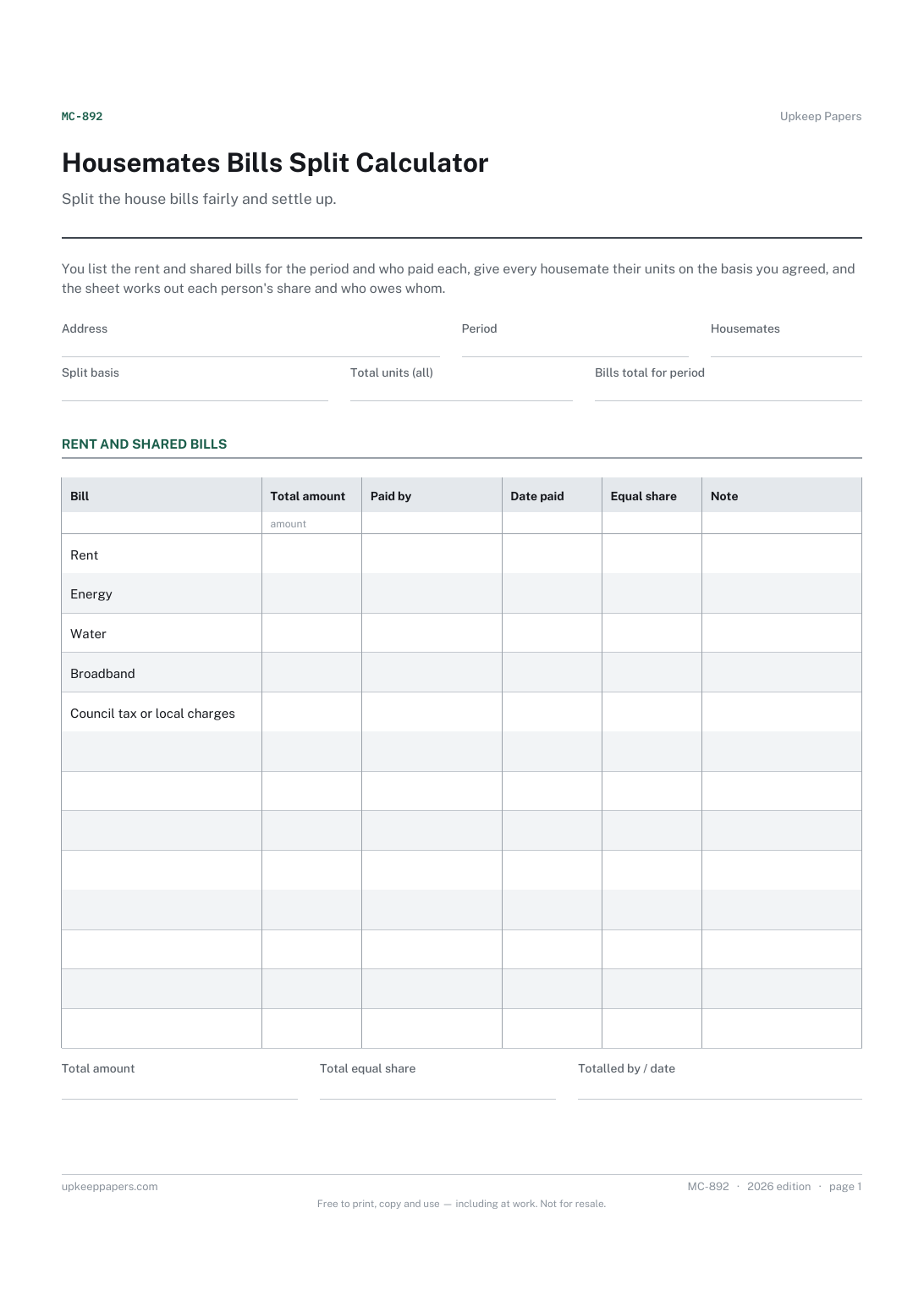
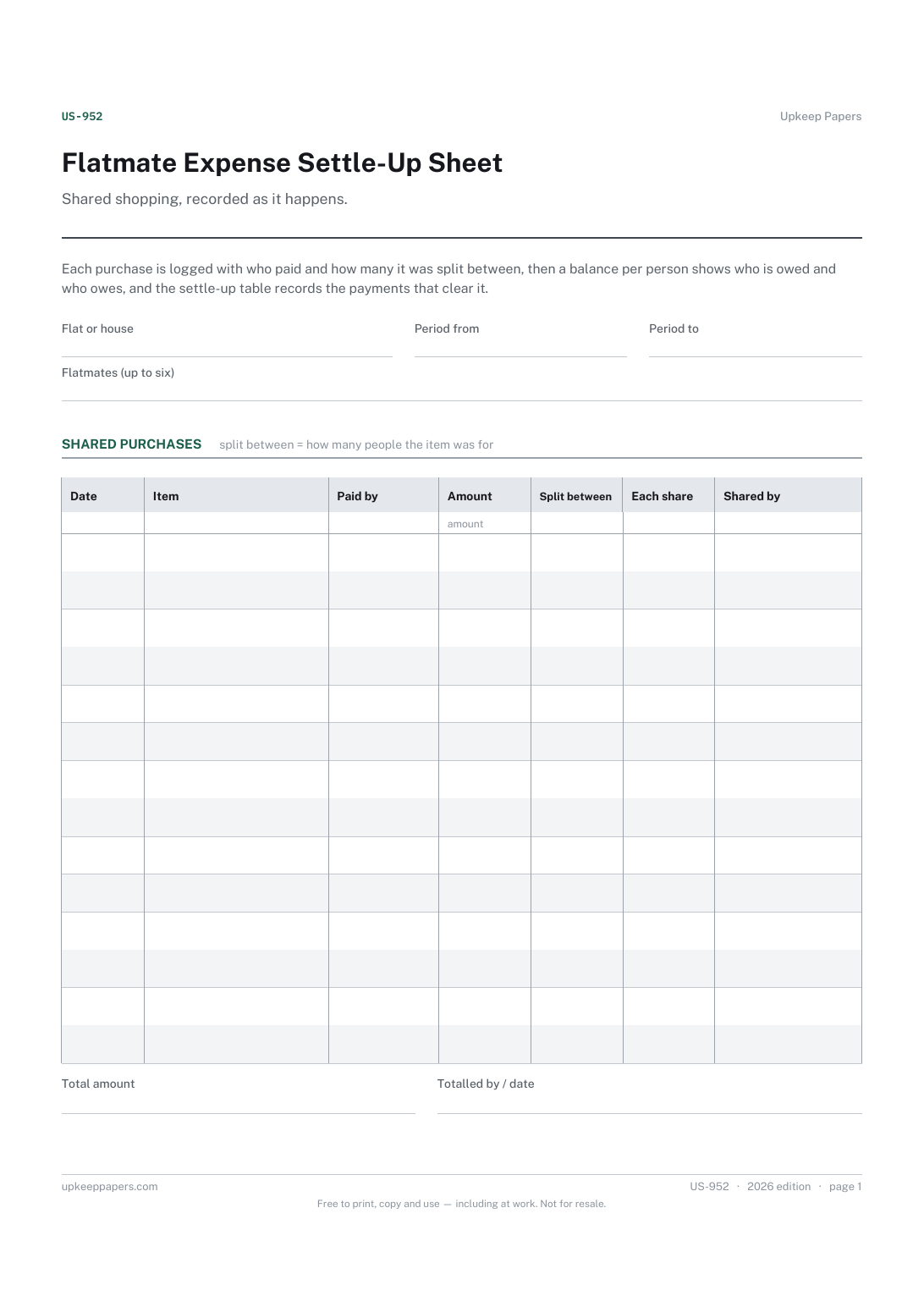
Every shared bill for the period and who paid it.
What you expect to come in each month, from pay and from anything else.
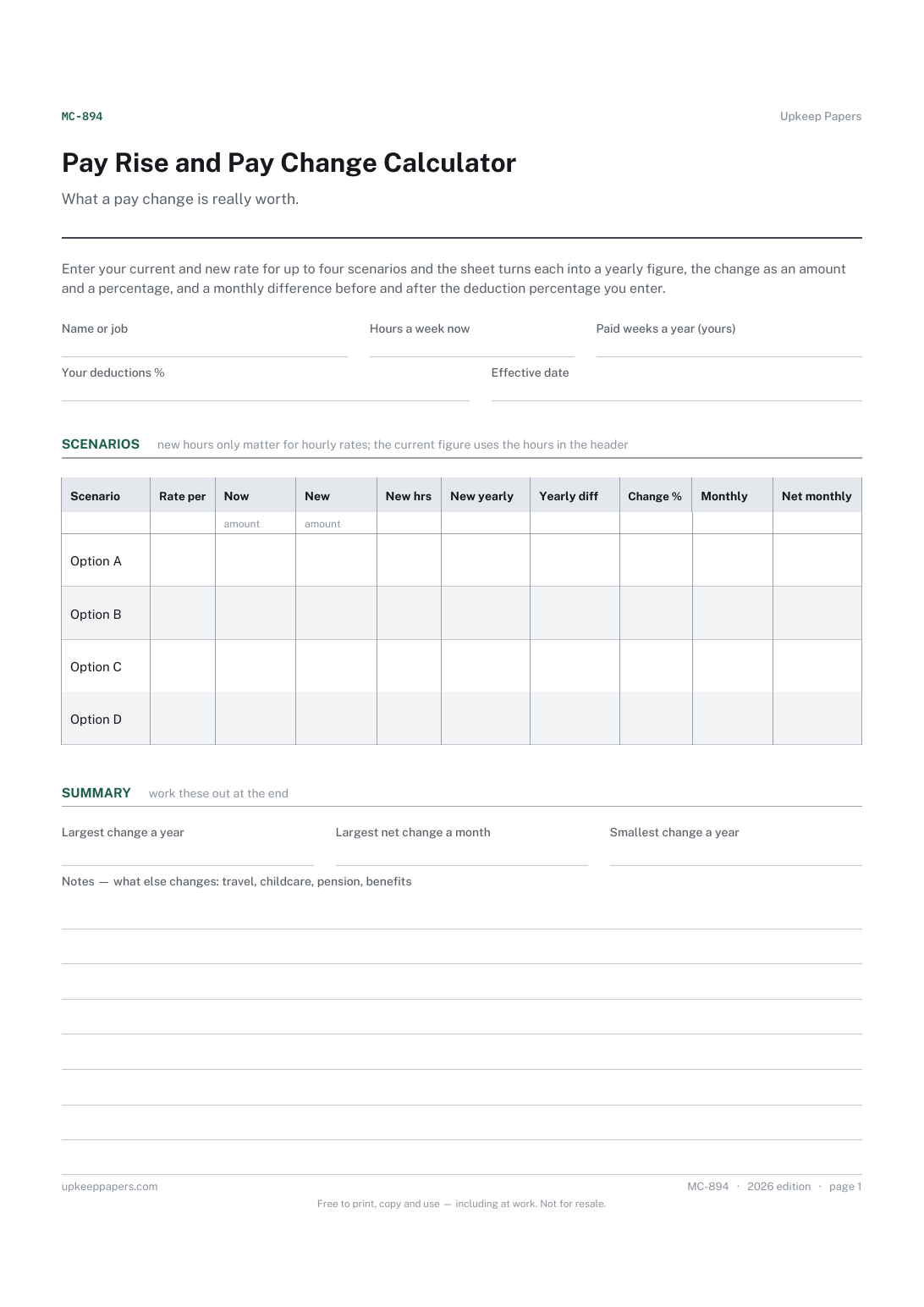
Your current and new pay on the same yearly basis.
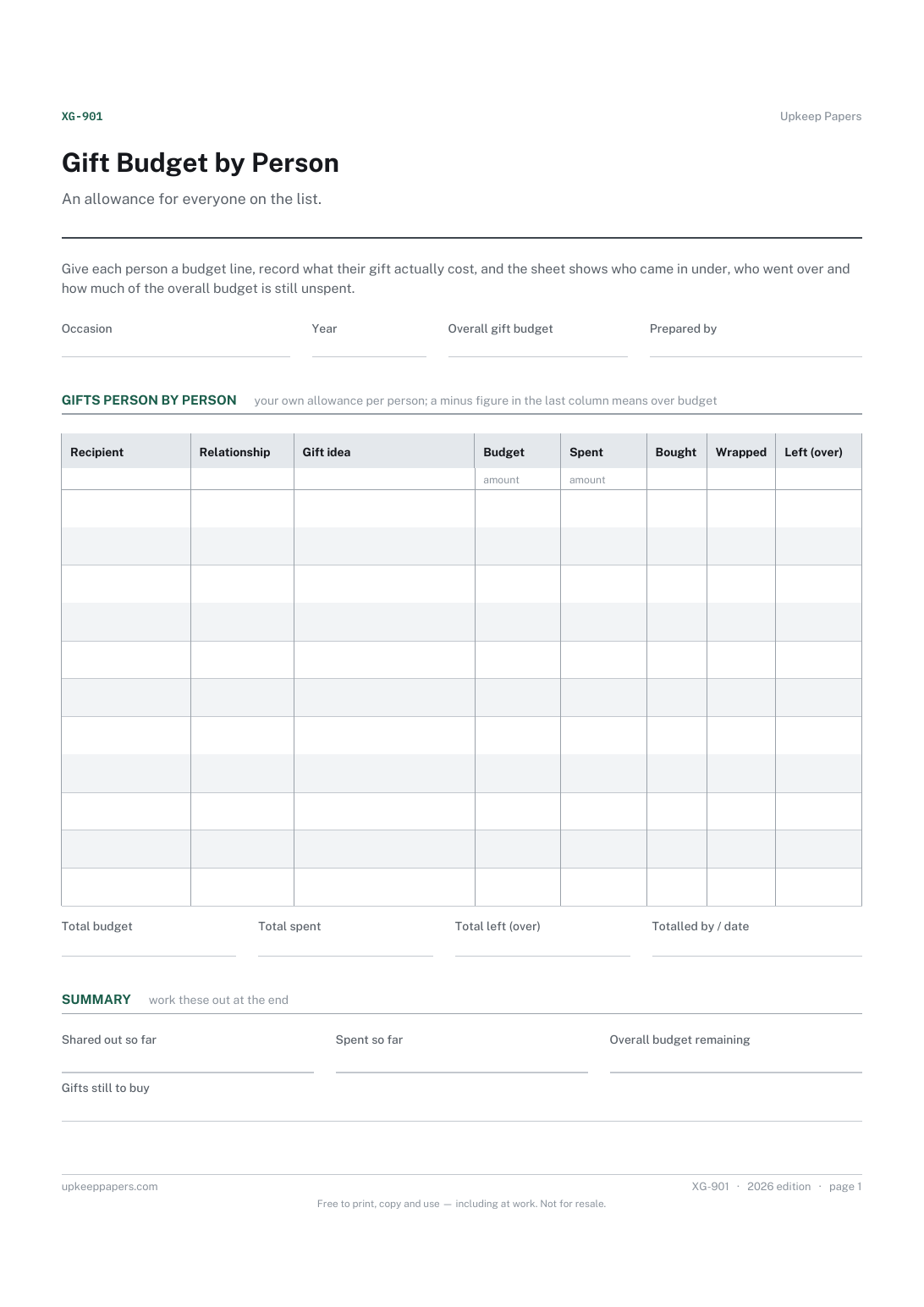
The overall gift budget and how it is shared out person by person.
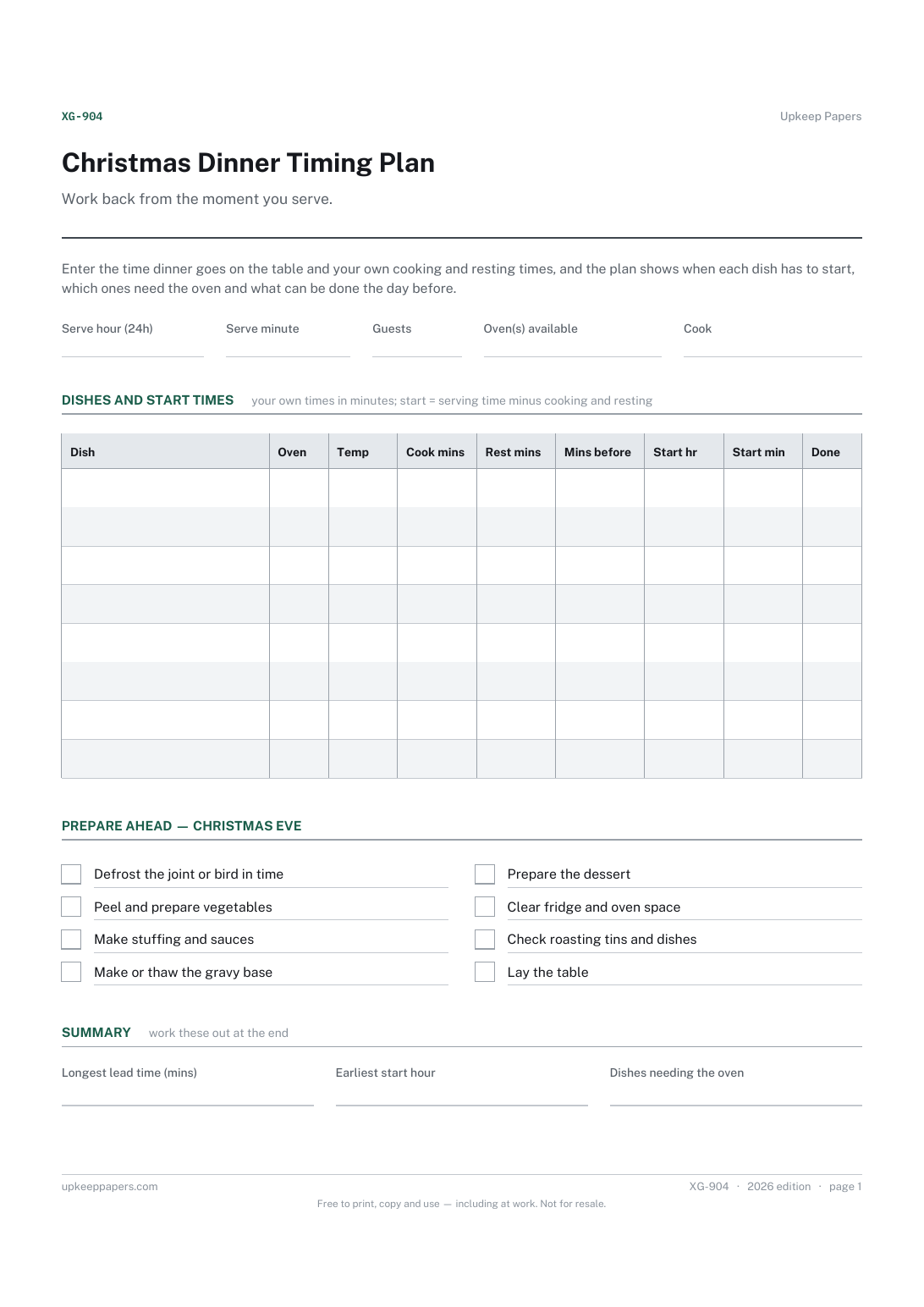
A start time for every dish, counted back from serving.
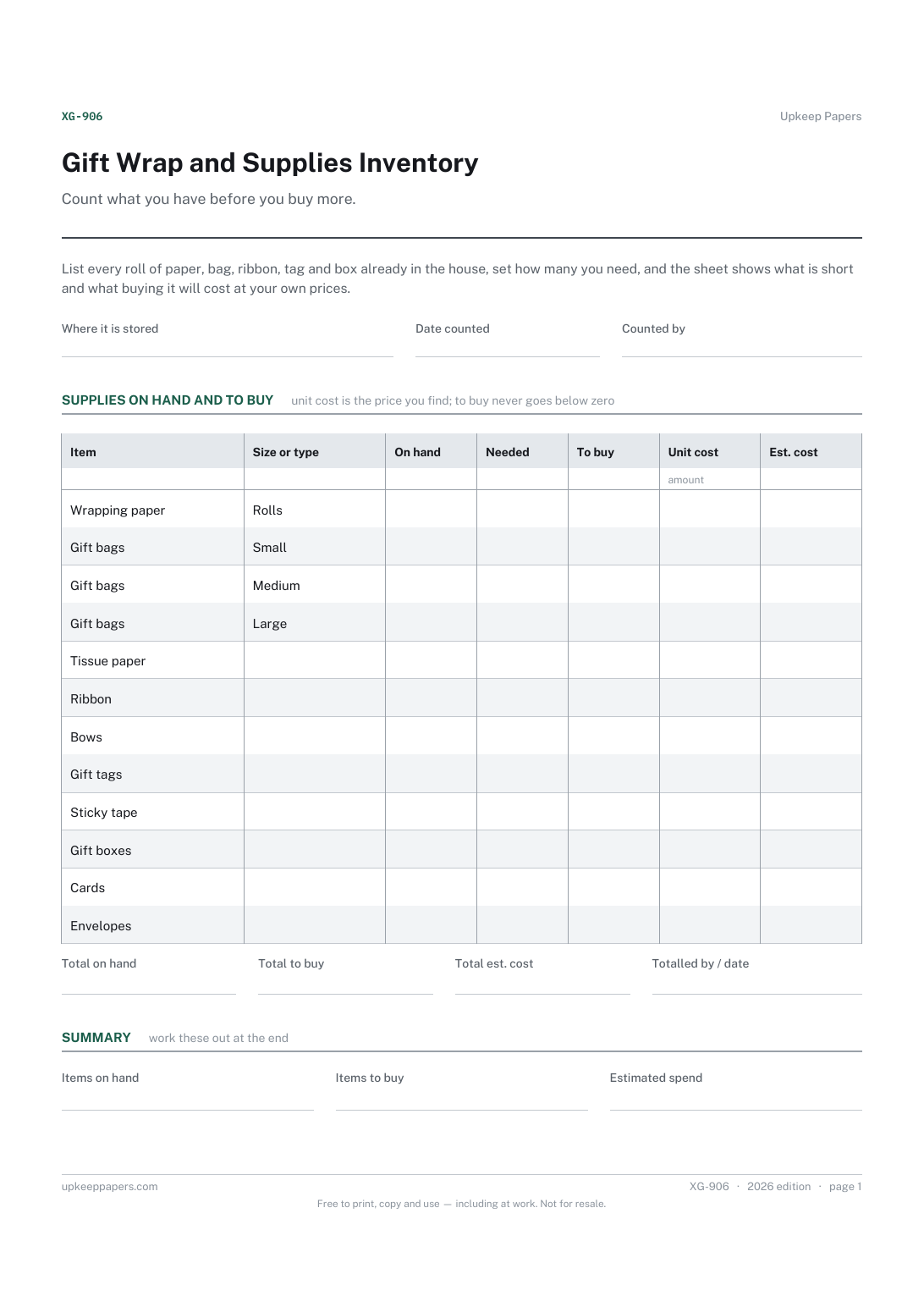
What wrapping supplies are already in the house and where they are kept.
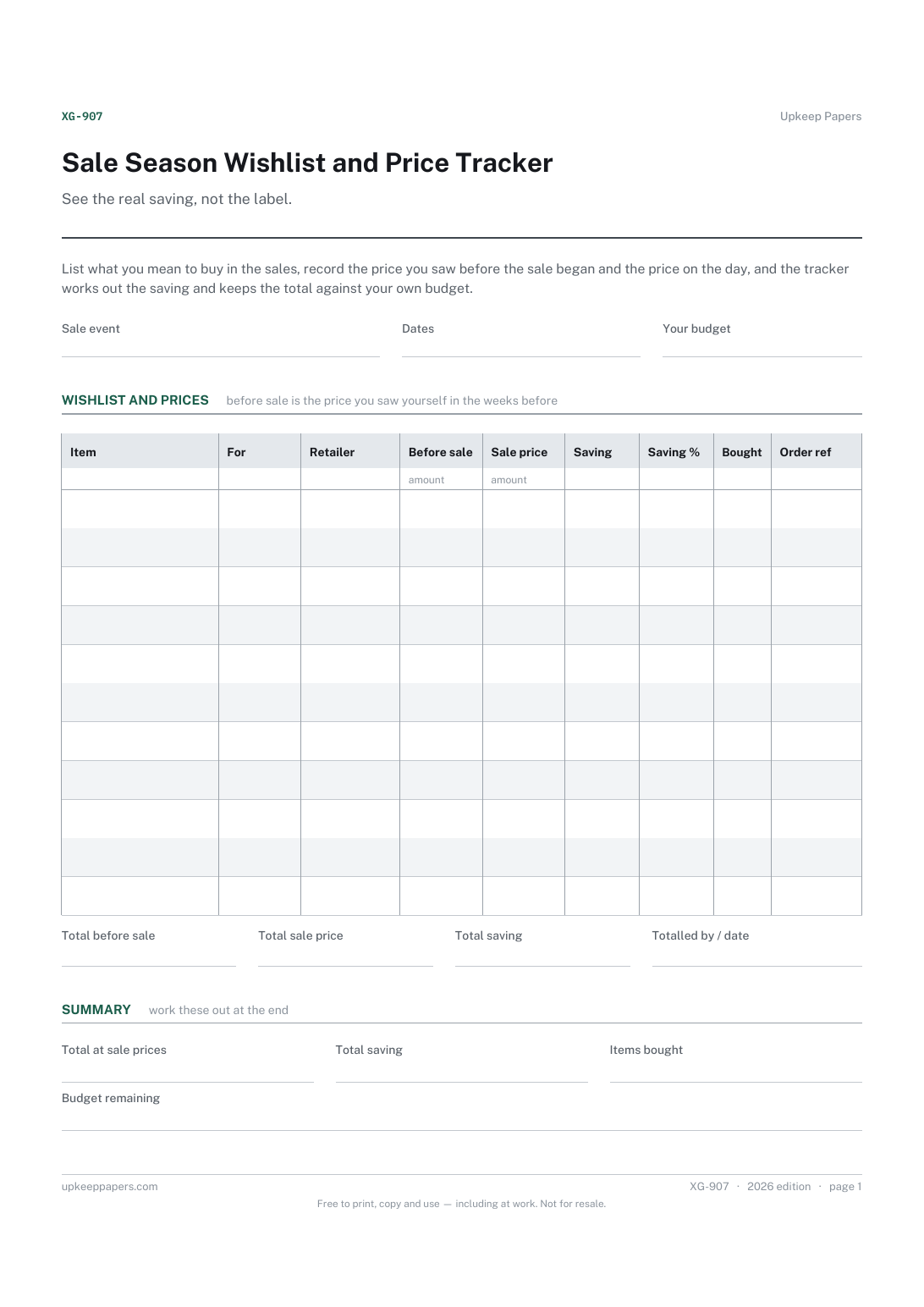
What you plan to buy and who each item is for.
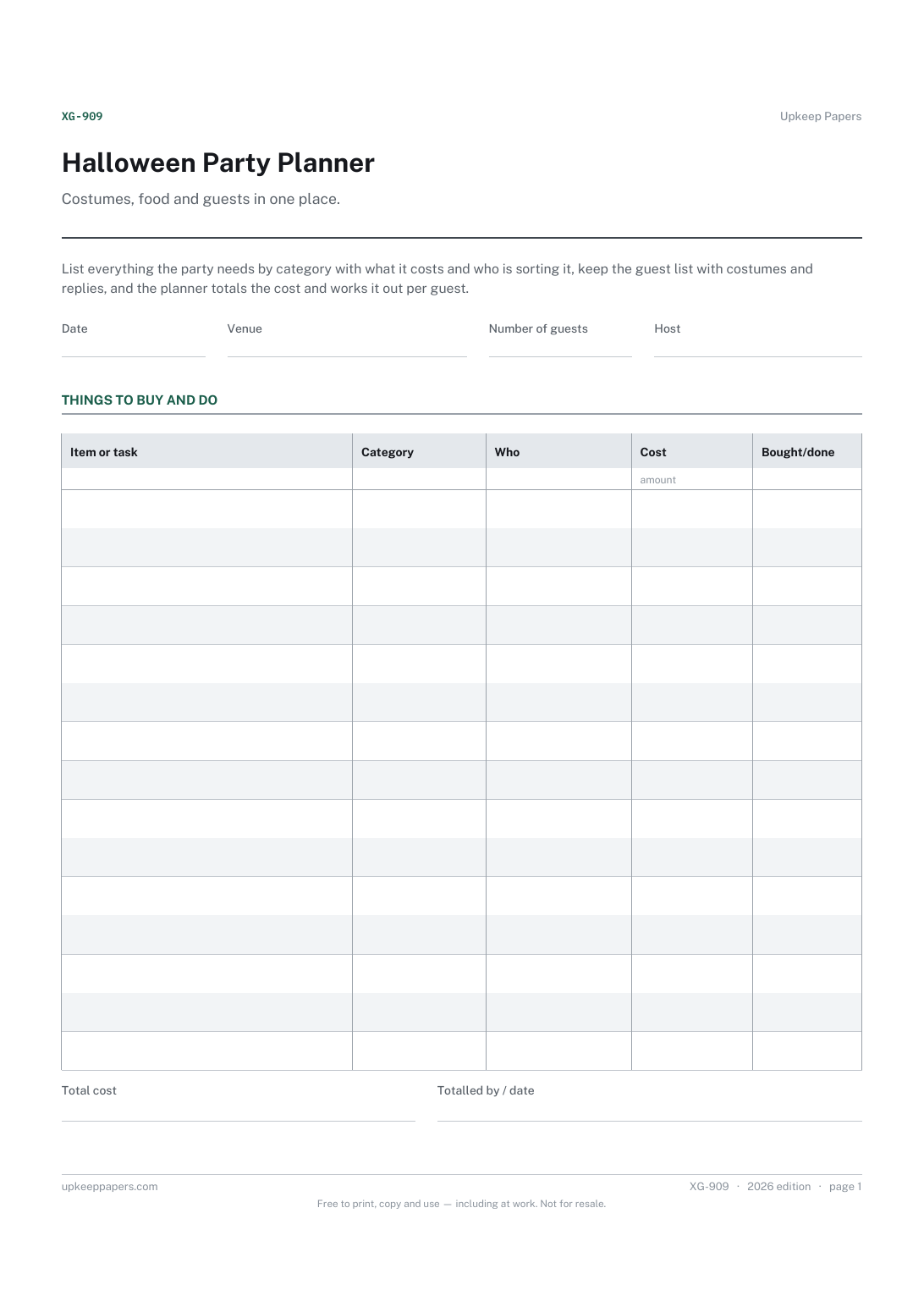
Every costume, decoration, food, game and sweet item, with its cost.
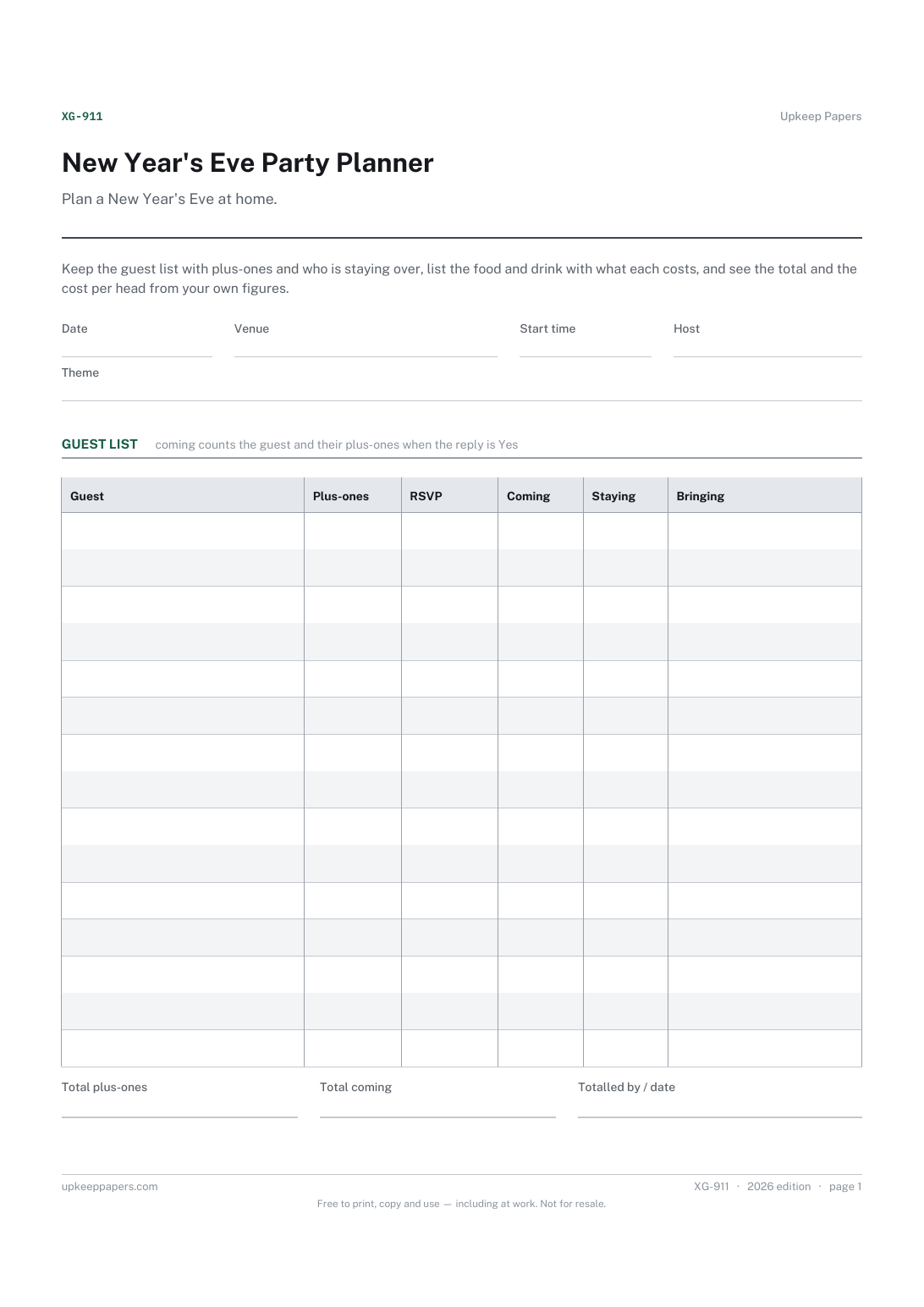
Who is invited, who has replied and how many are coming.
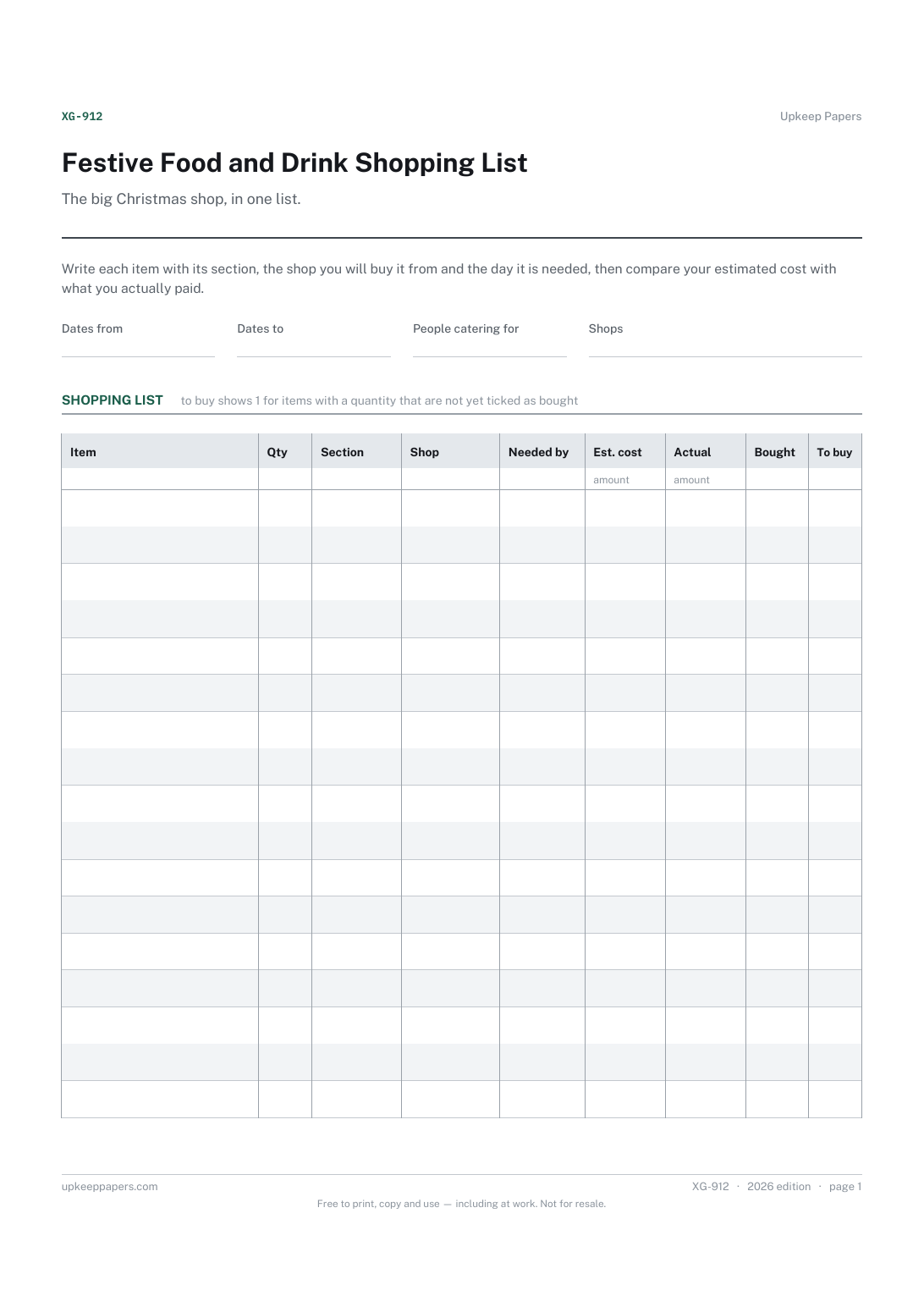
Everything to buy for the festive days, by section of the shop.
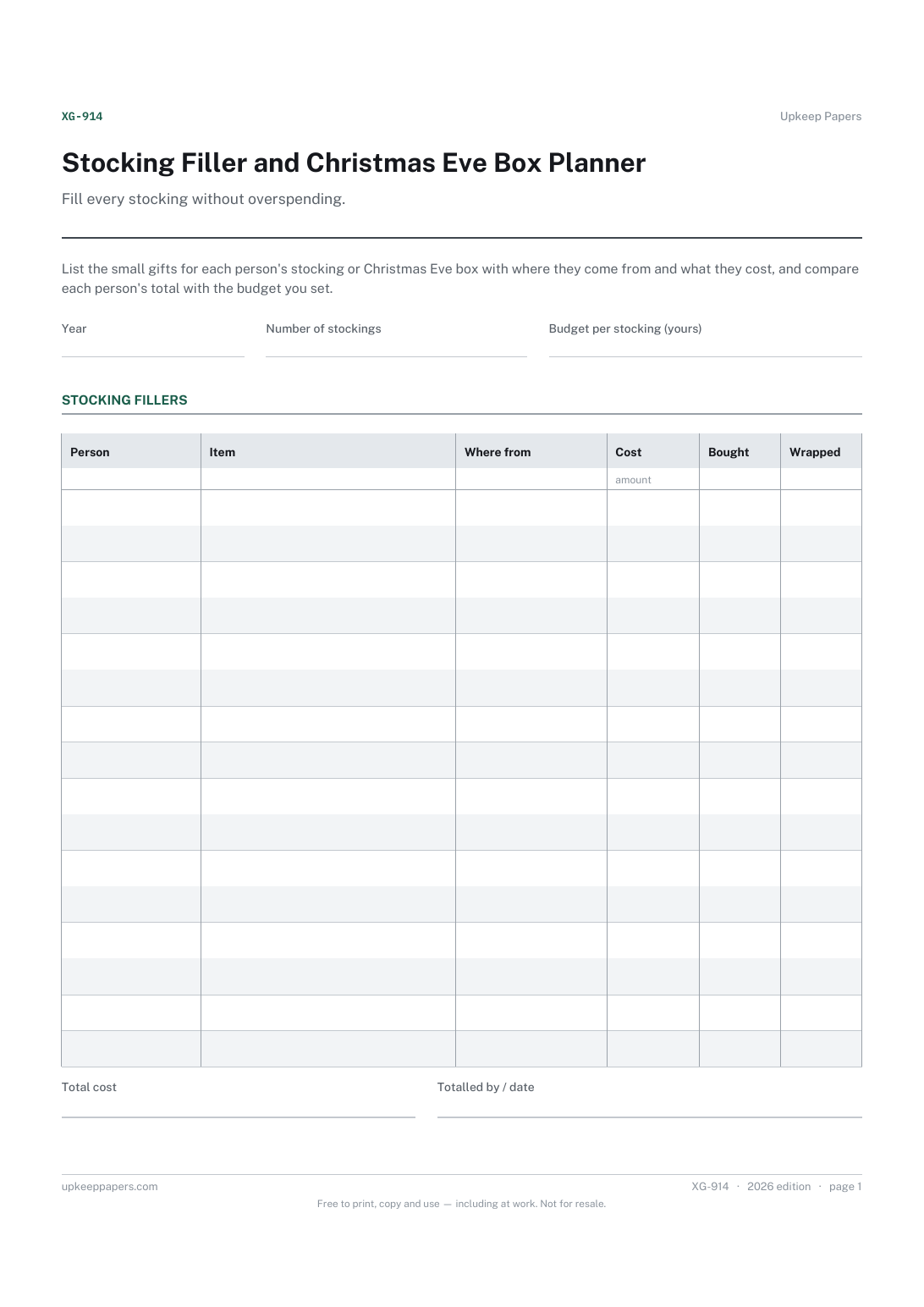
Each small gift, who it is for and where it is coming from.
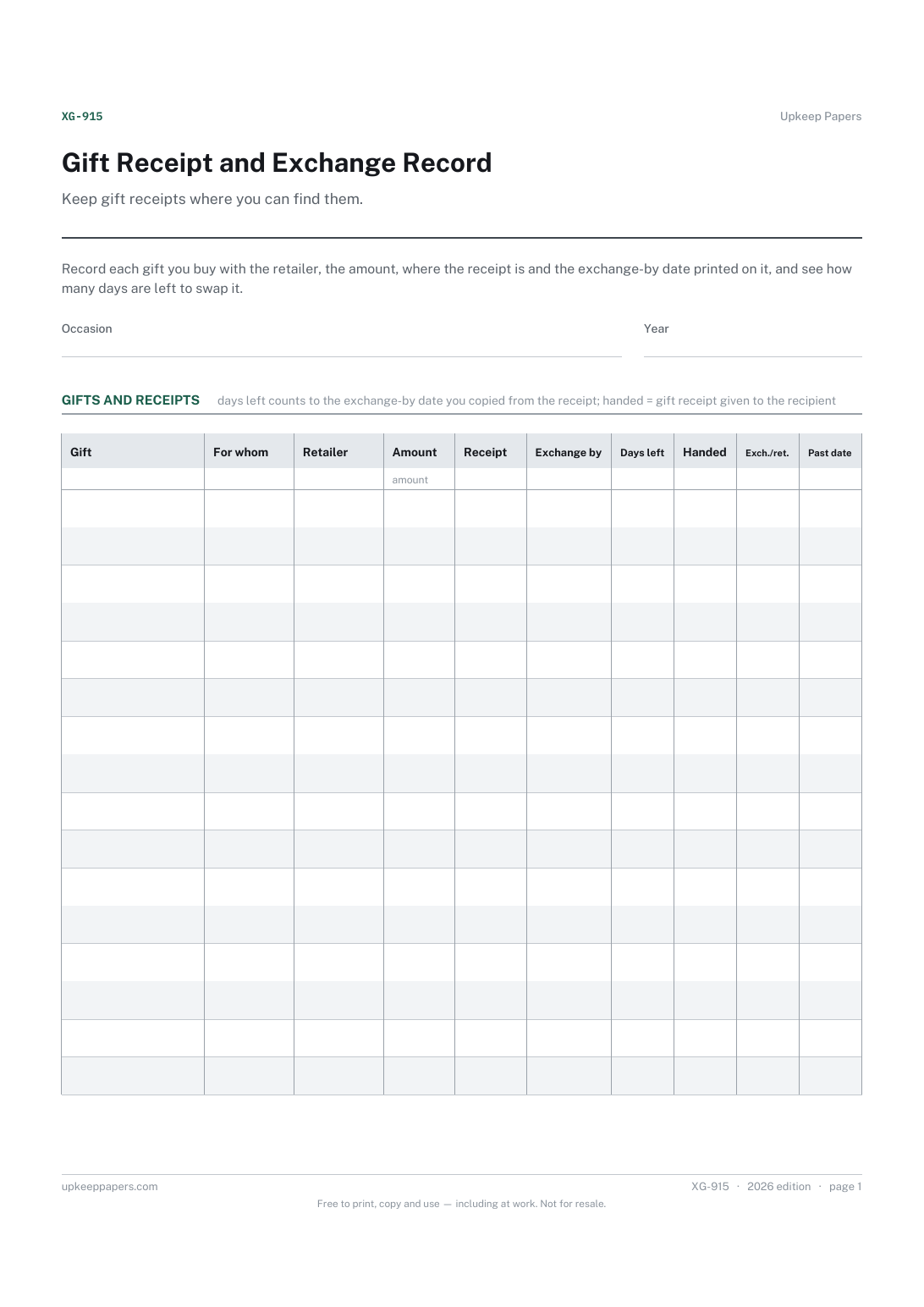
Every gift bought, who it is for and where it came from.
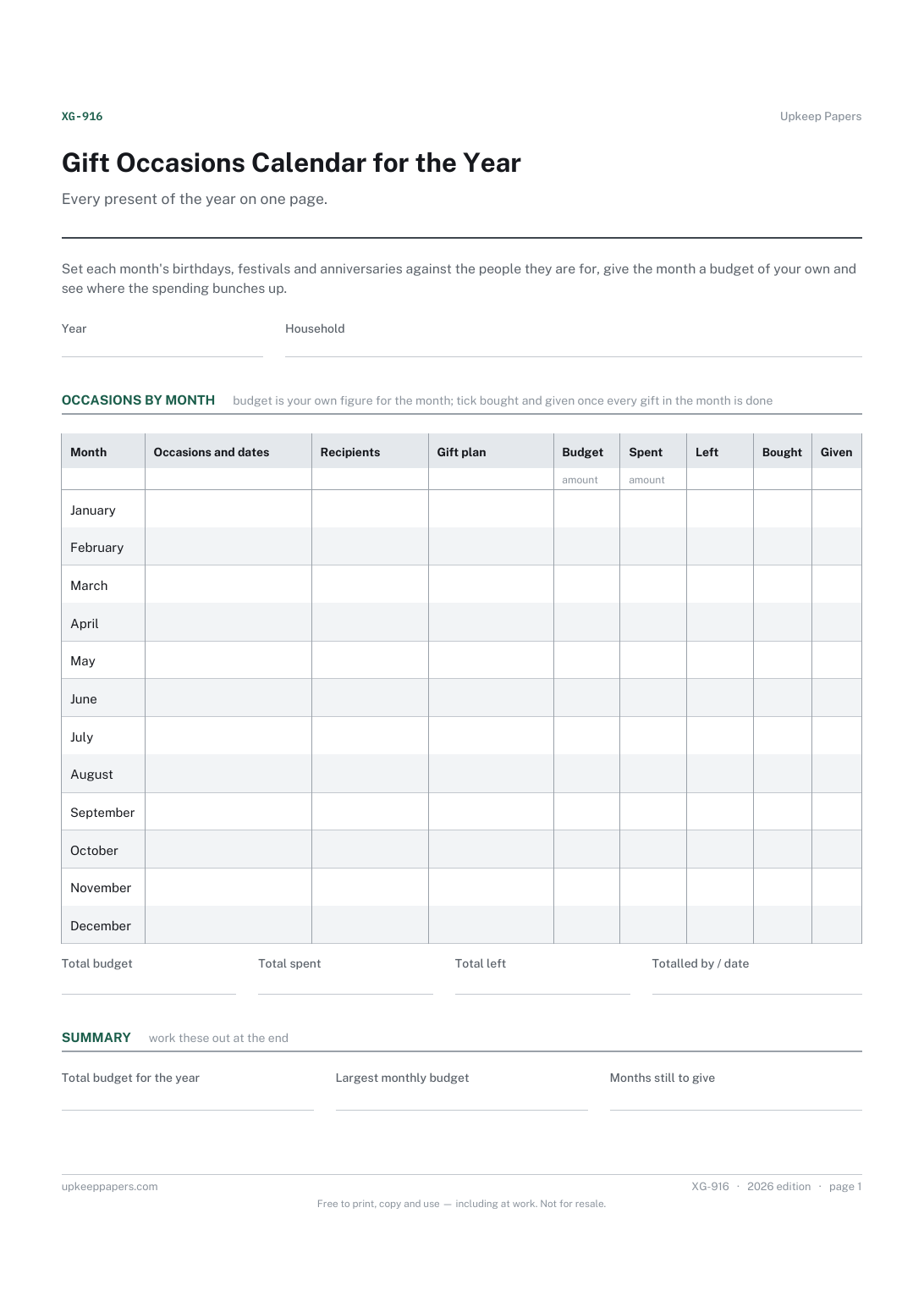
Every gift-giving occasion, month by month, with its date.
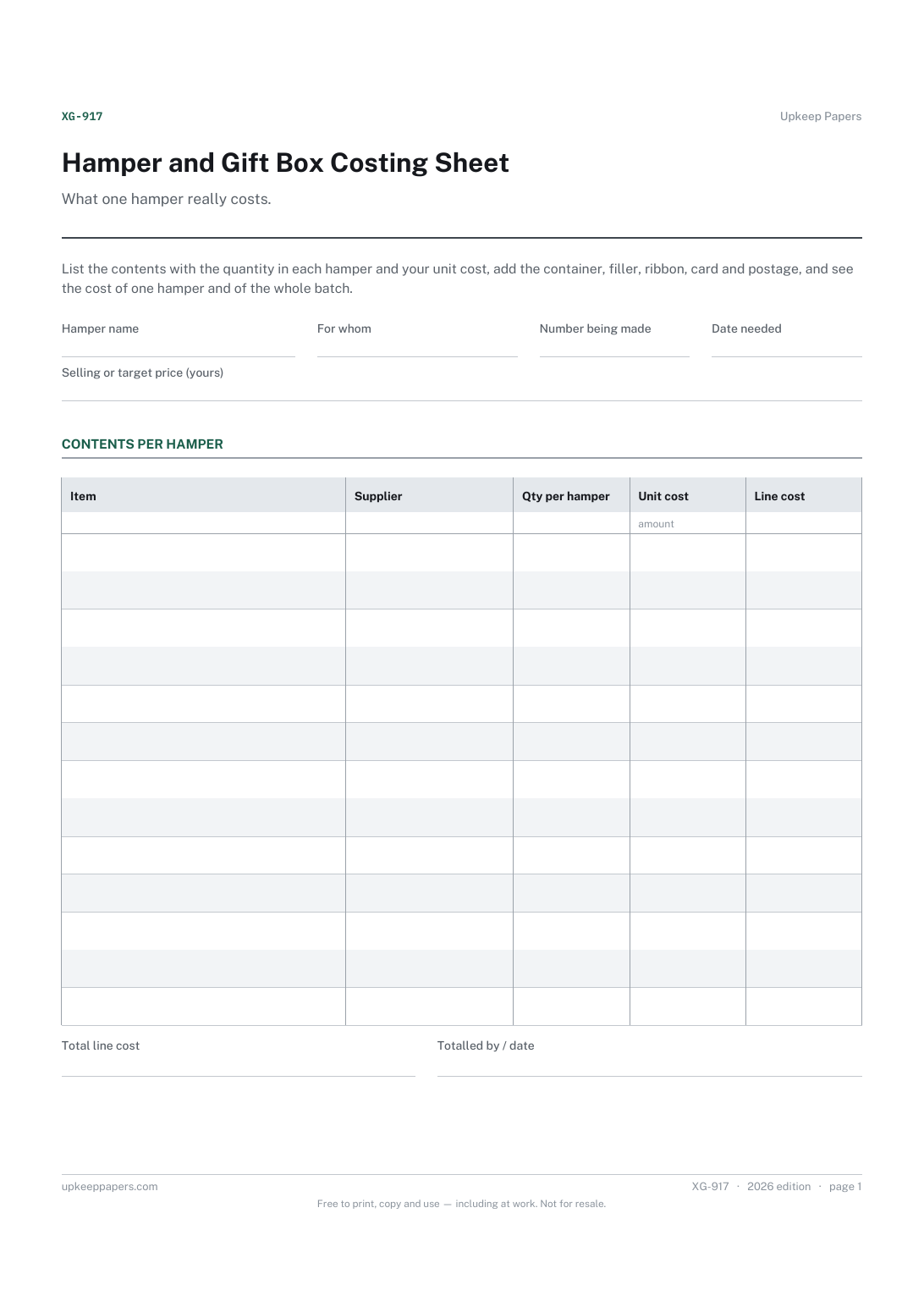
The cost of the contents going into each hamper.
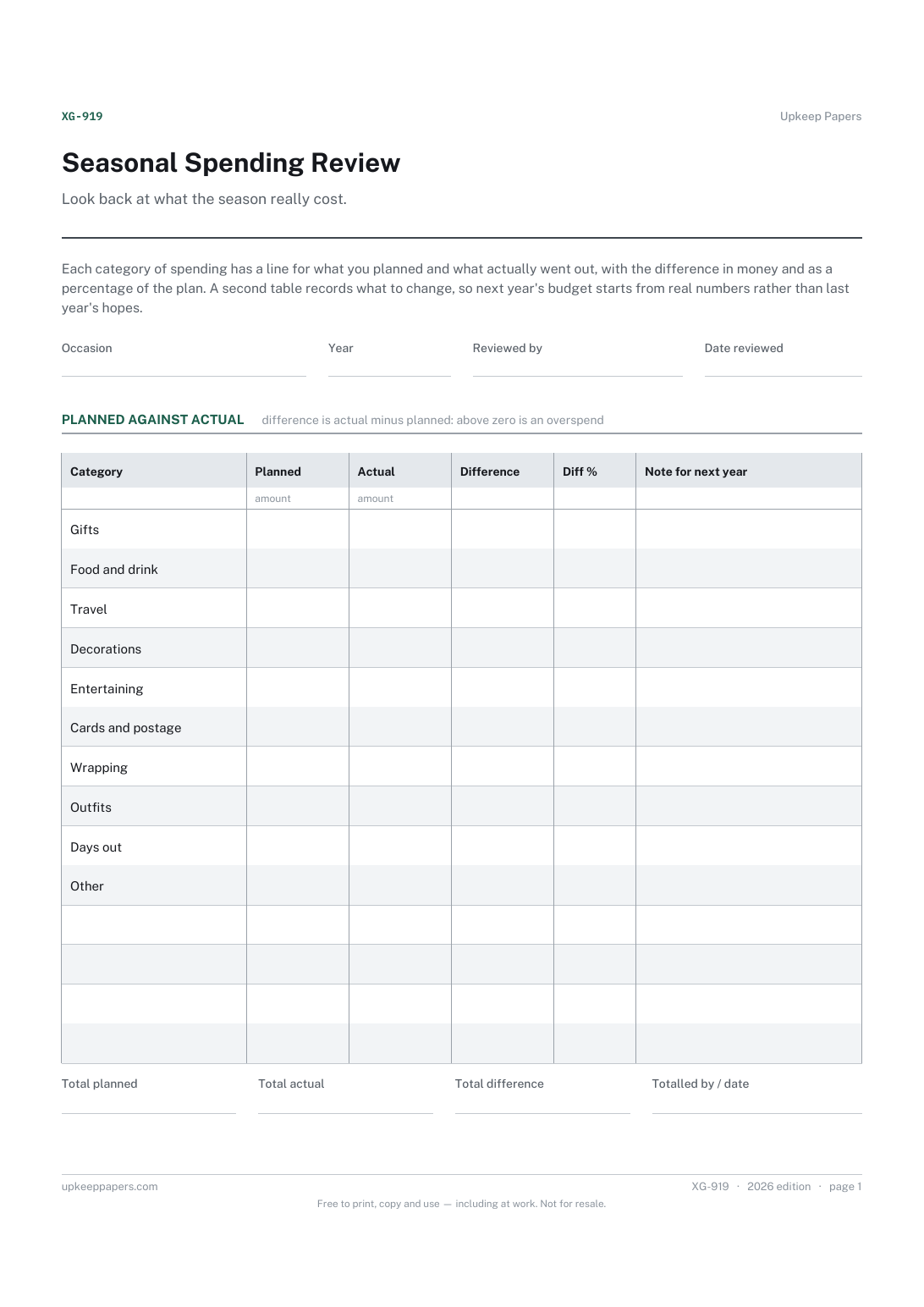
What was planned for each area of festive spending.
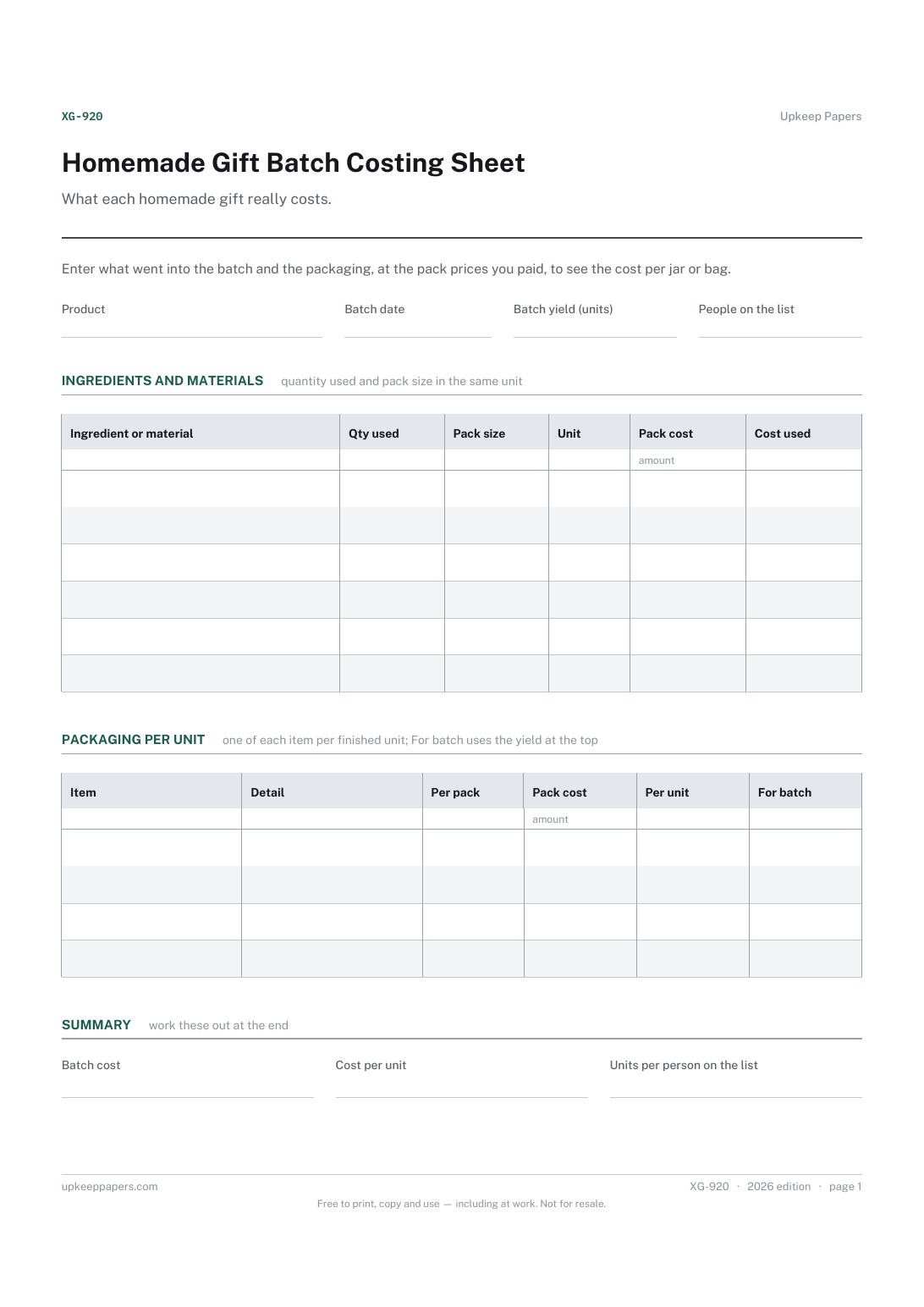
The cost of the ingredients or materials used in one batch.
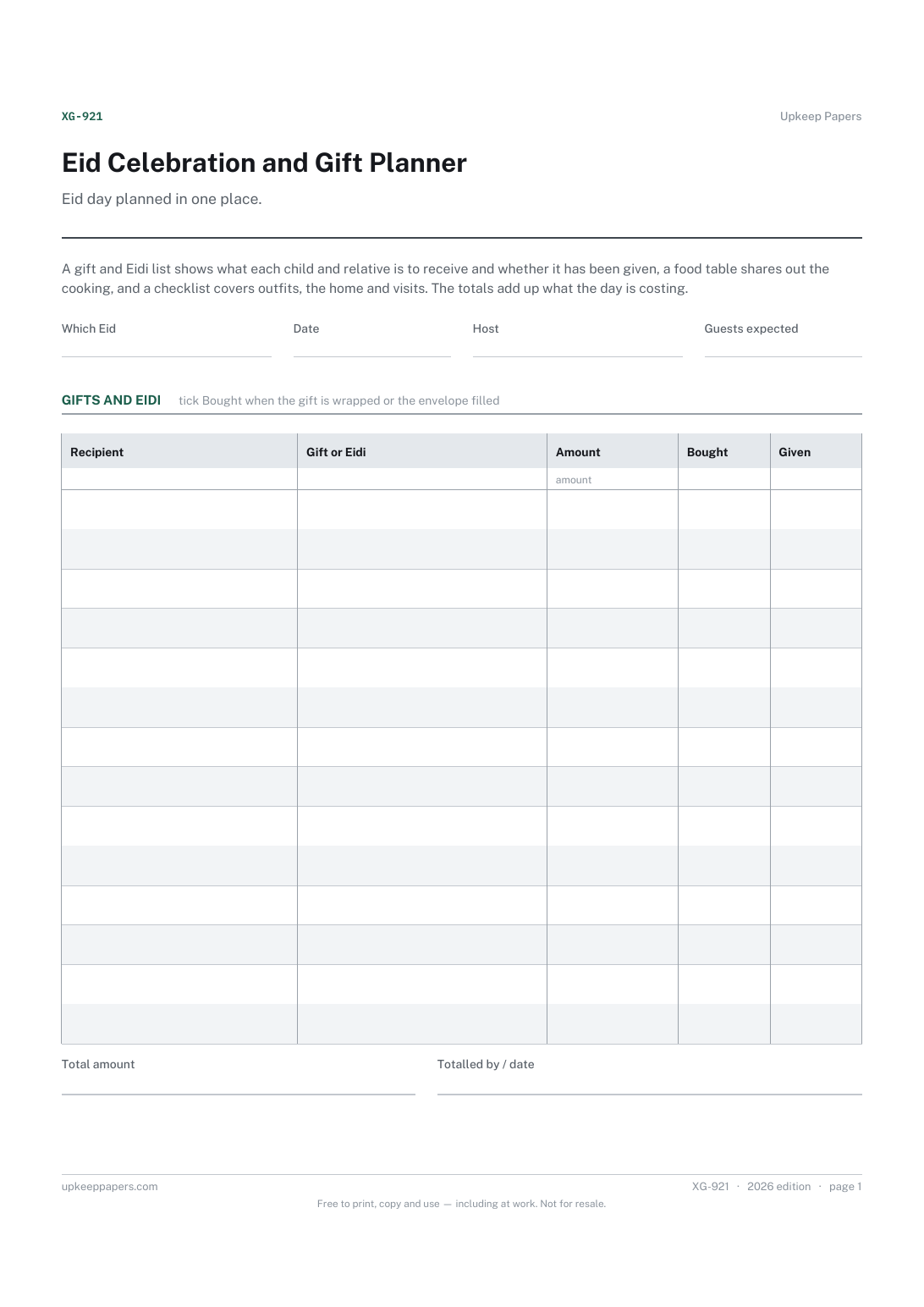
Every child and relative with the gift or Eidi planned for them.
Each card or voucher, the retailer and who it came from.
Everyone asked to chip in and what they offered.
Everyone you thank at Christmas, by name or by role.
What the child is saving for and how much it costs.
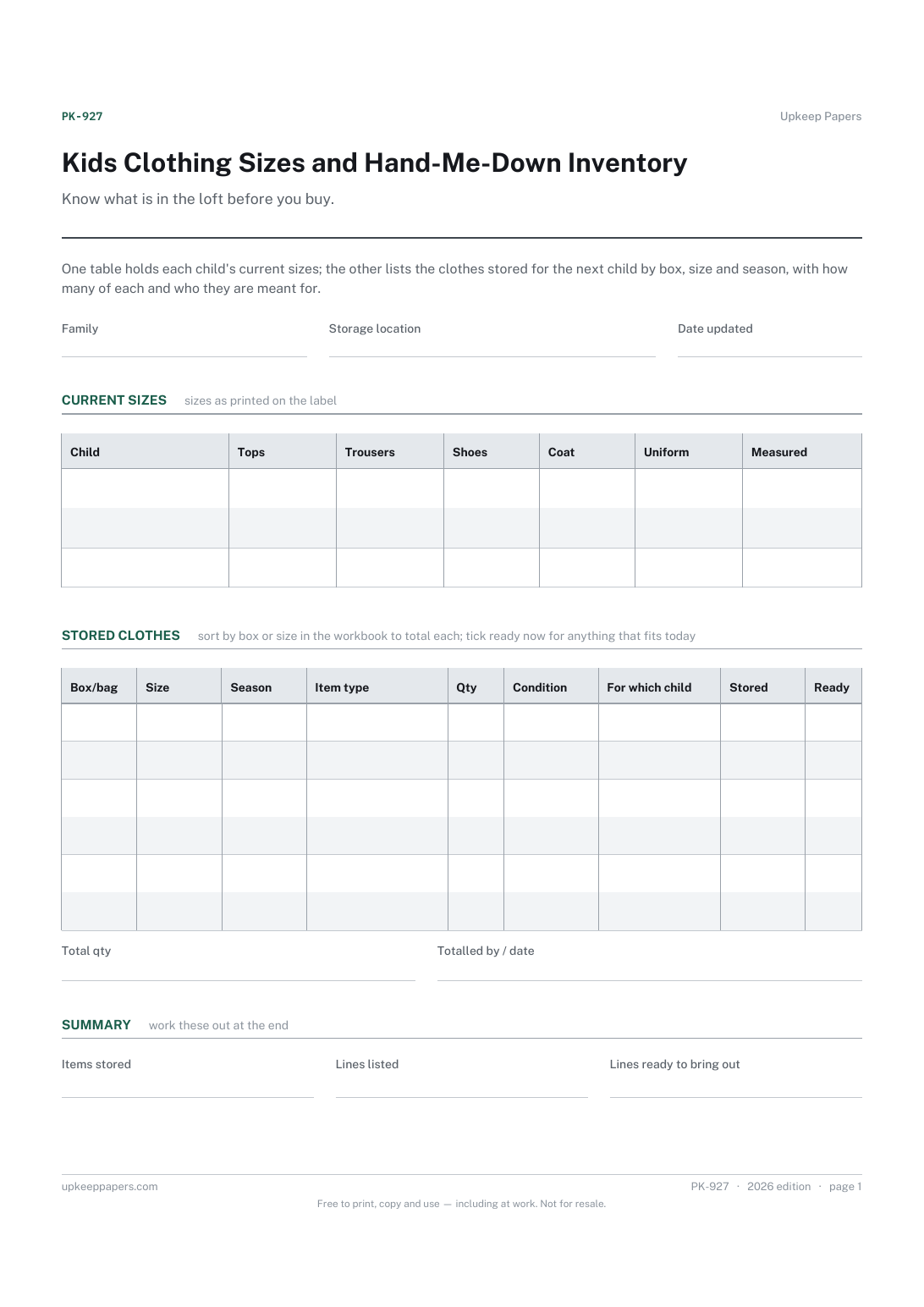
Each child's current size in tops, trousers, shoes, coat and uniform.
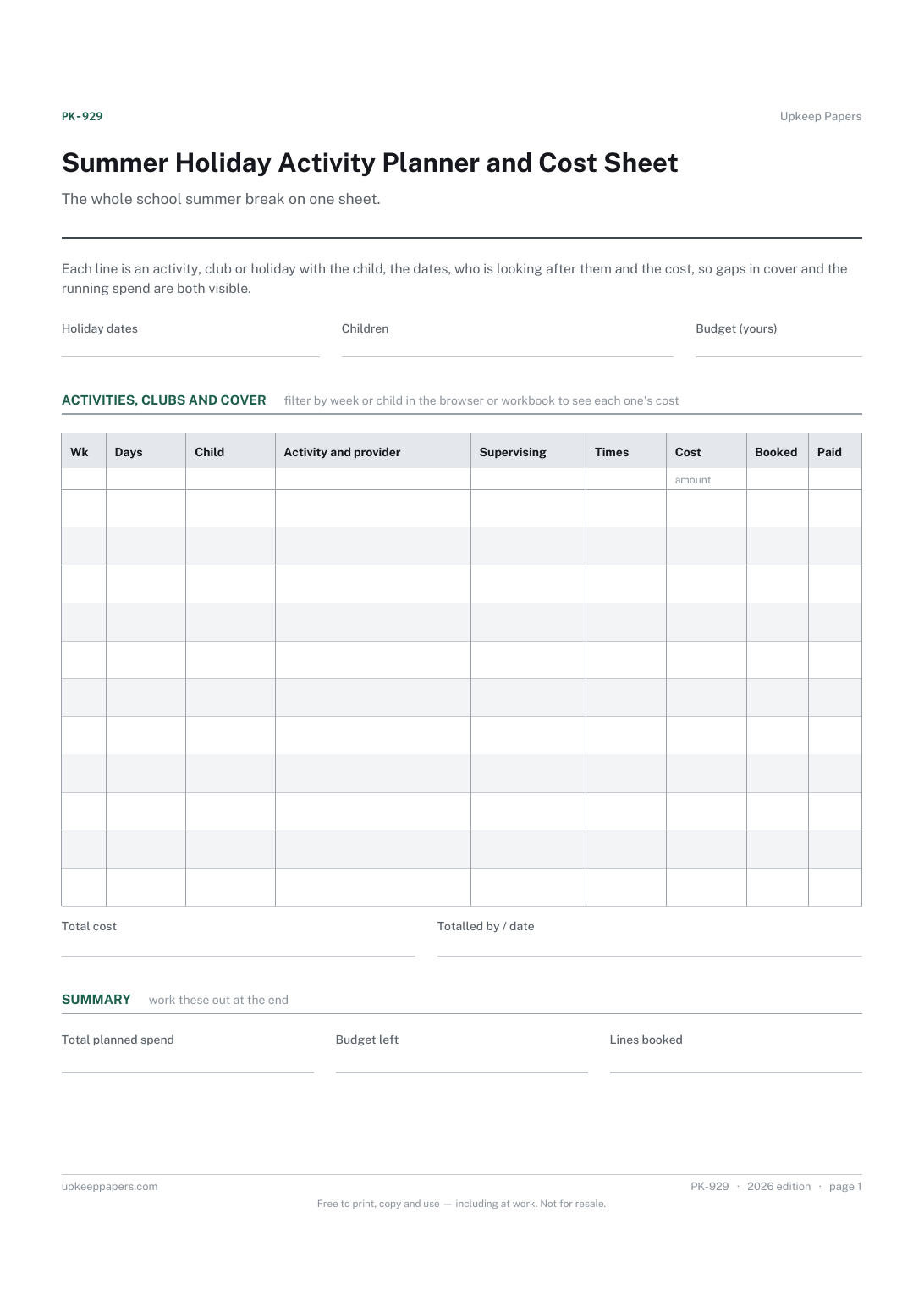
What each child is doing in each week of the holiday.
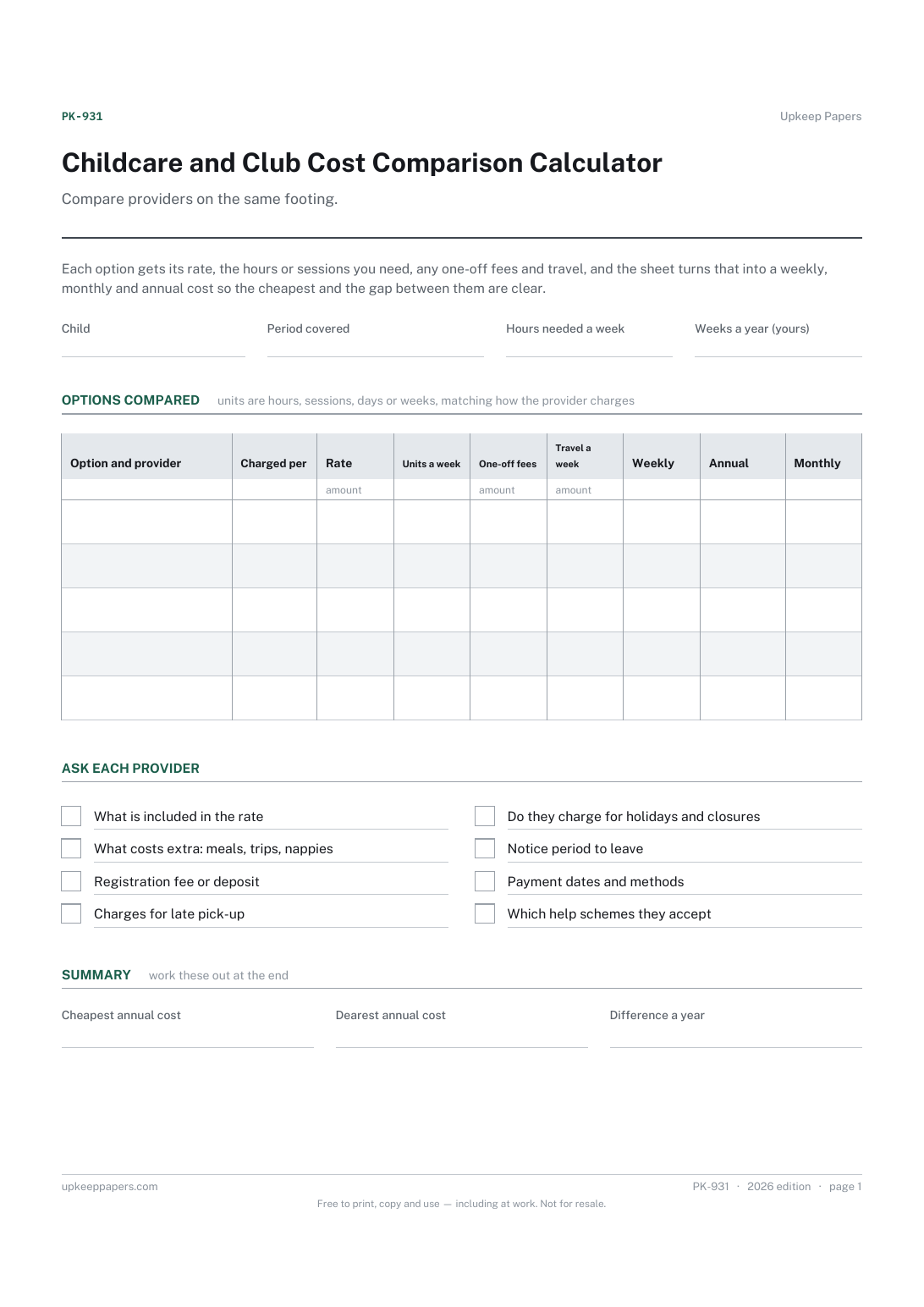
Each option's rate and how it is charged.
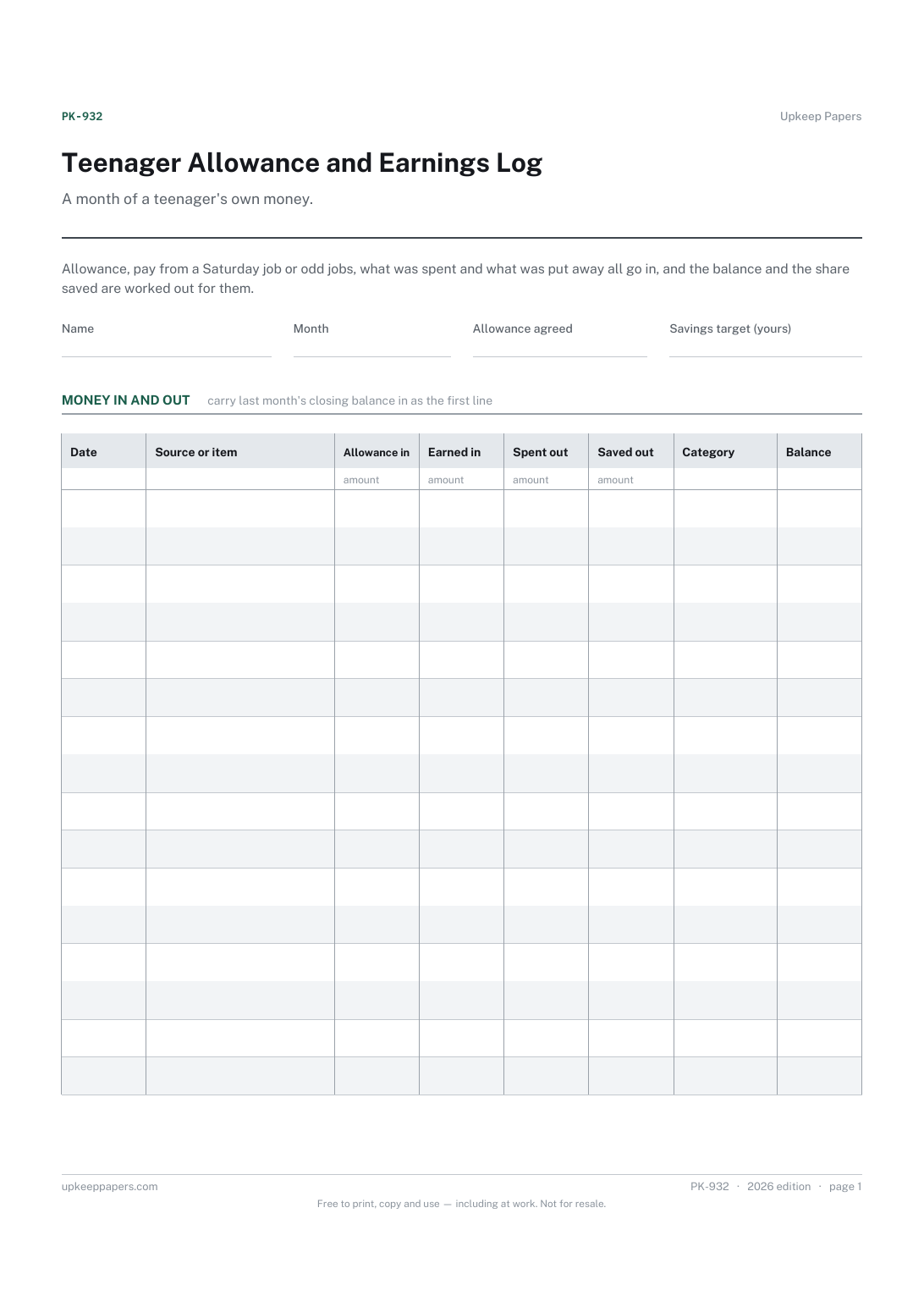
The allowance agreed and what actually came in.
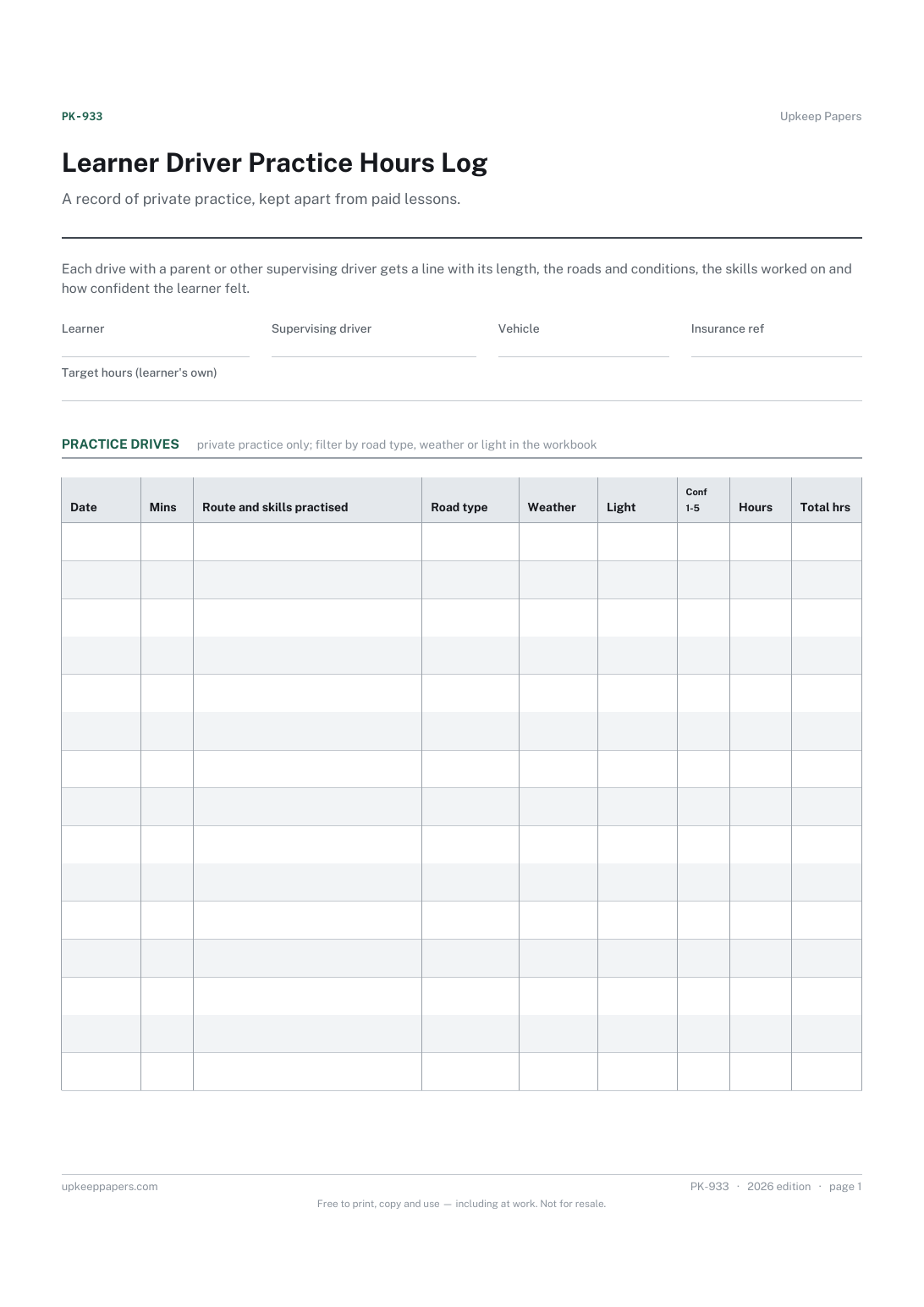
How long each practice drive lasted and the running total of hours.
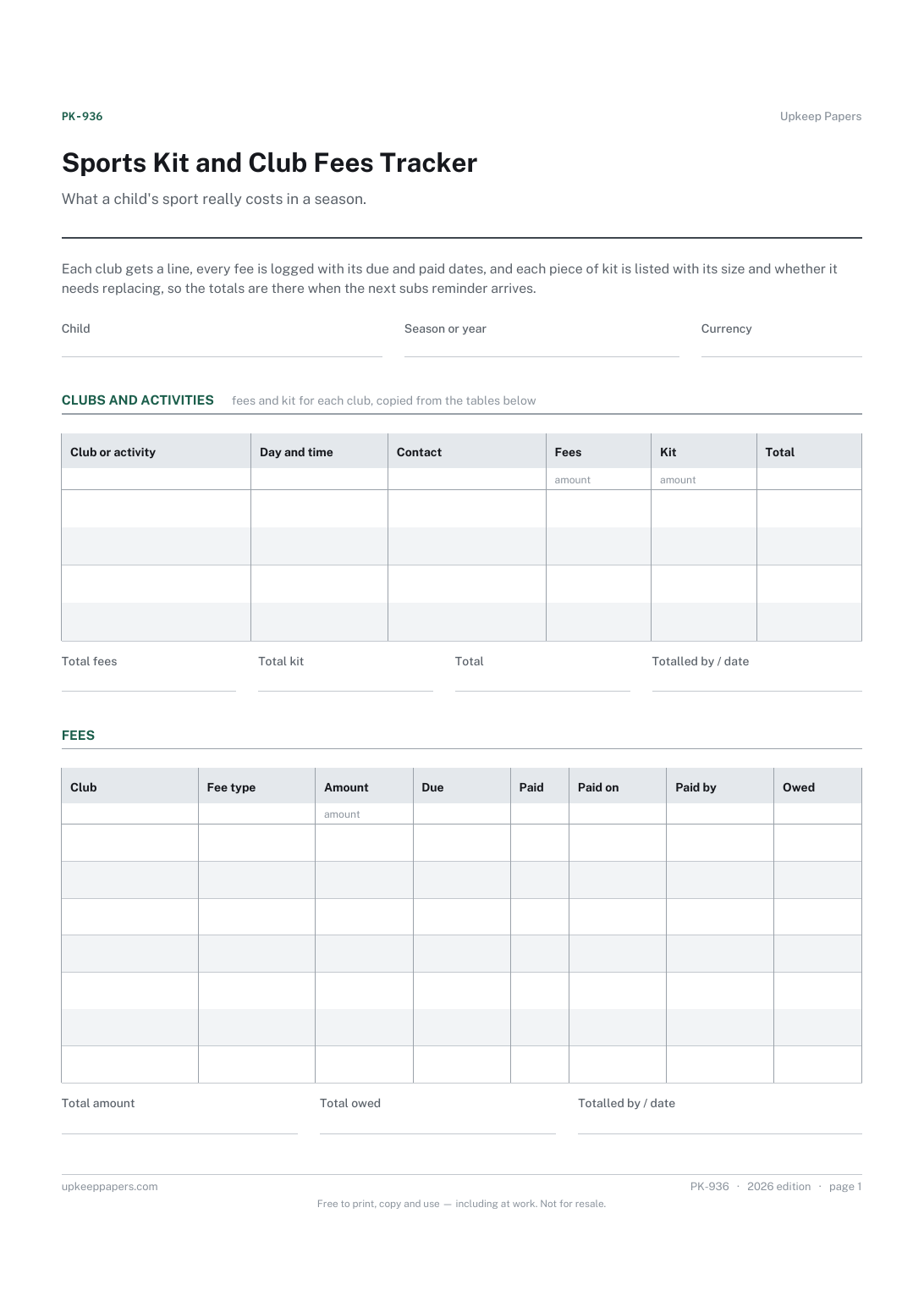
Every club or activity the child does this season.
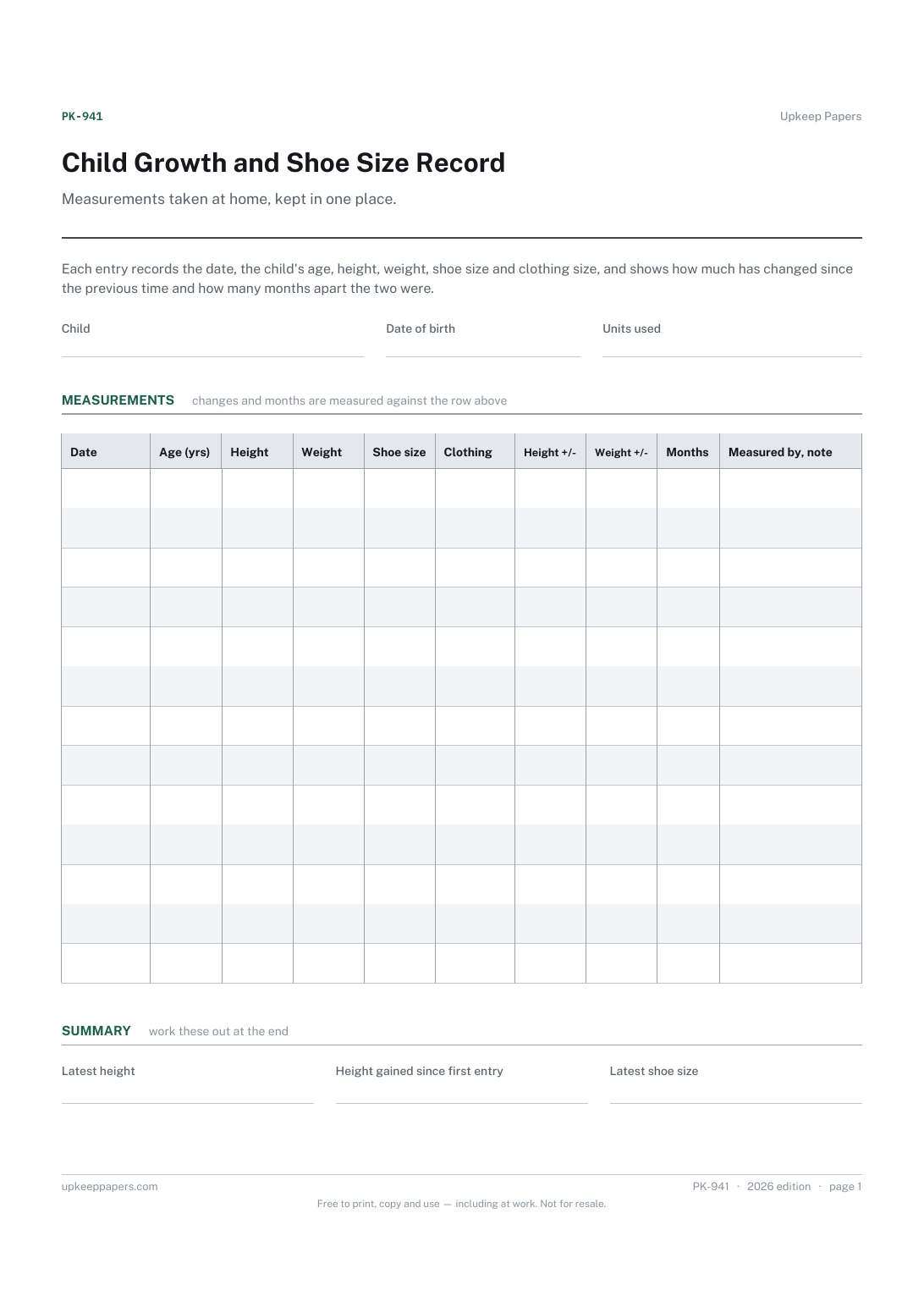
Height and weight on each date you measure.
Each child's first and last days of term.
Which optional jobs can earn money and what each one pays in your family.
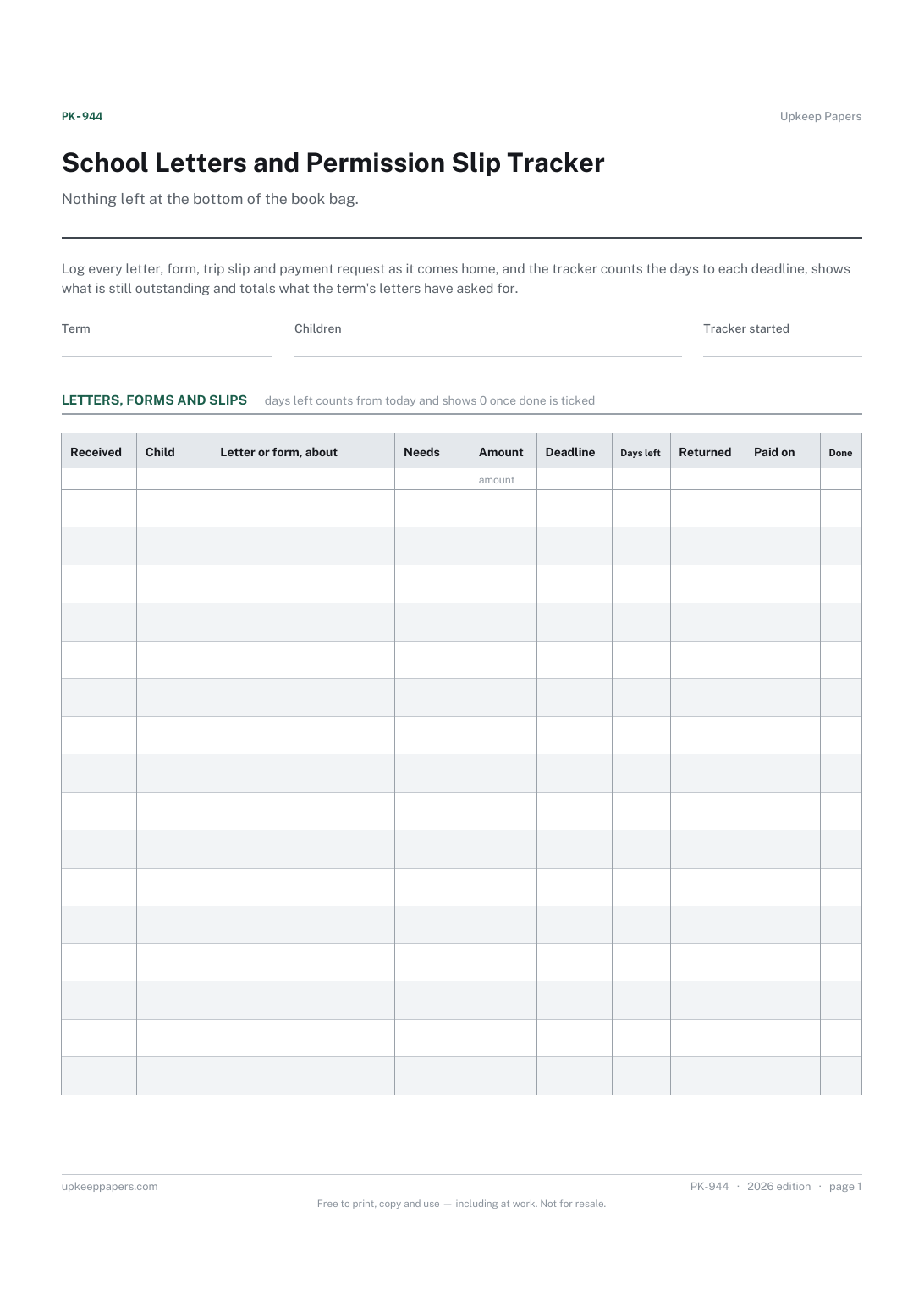
Every letter, form and trip slip that came home, by child and date.
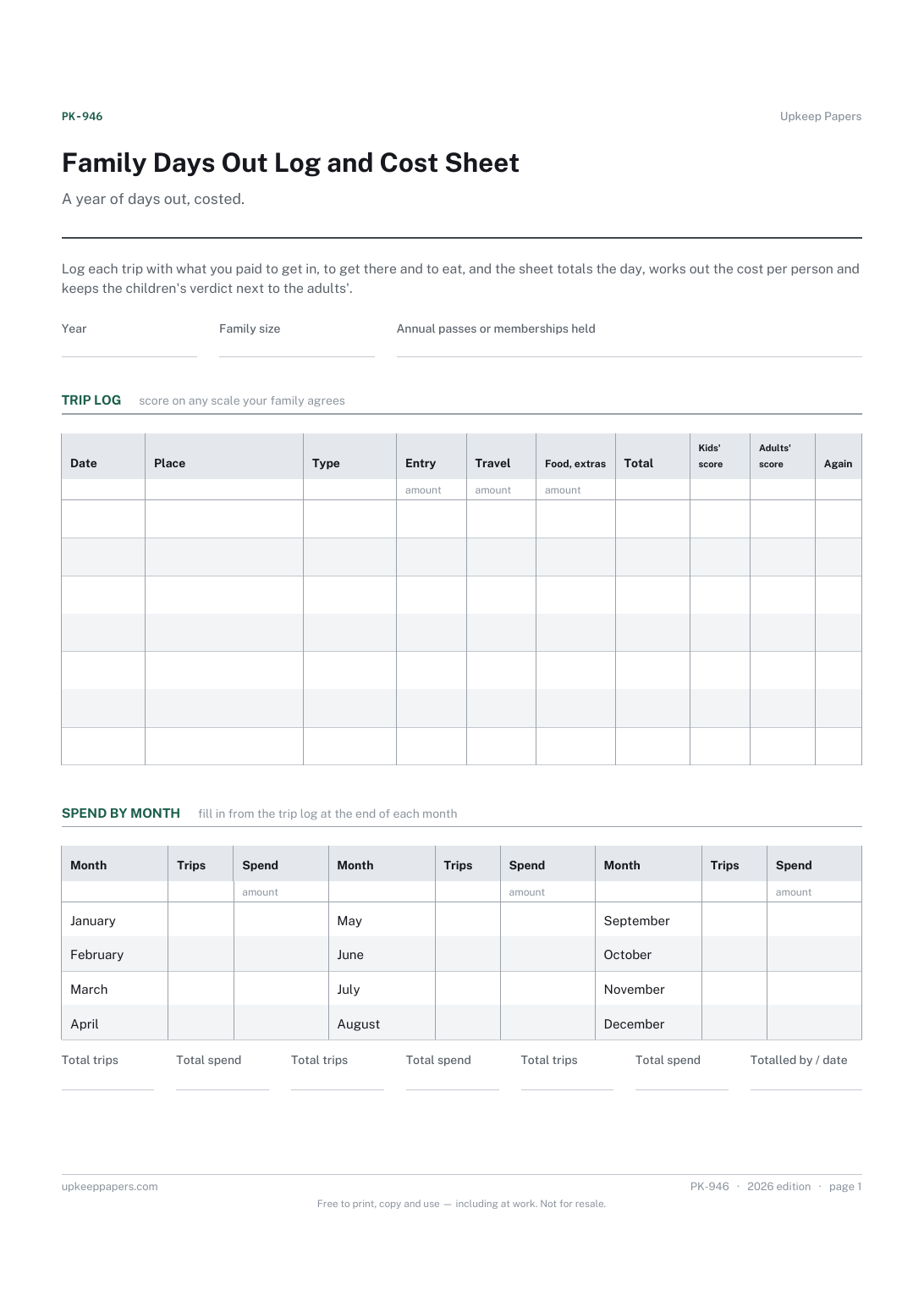
Where the family went, when and what kind of day out it was.
Every bill due this month, who supplies it and when it is due.
Every shared purchase, who paid and how many it was split between.
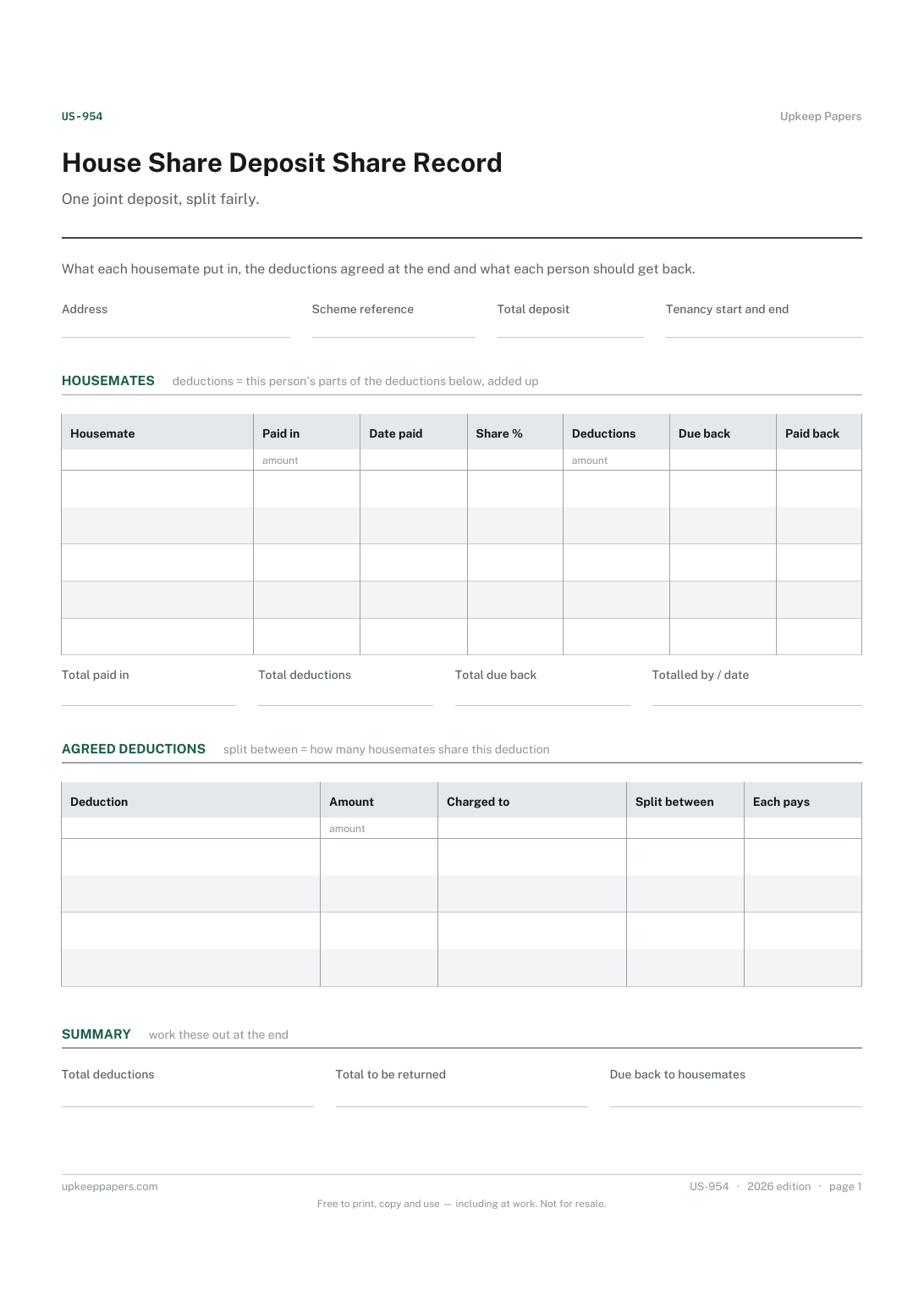
What each housemate paid towards the deposit, and when.
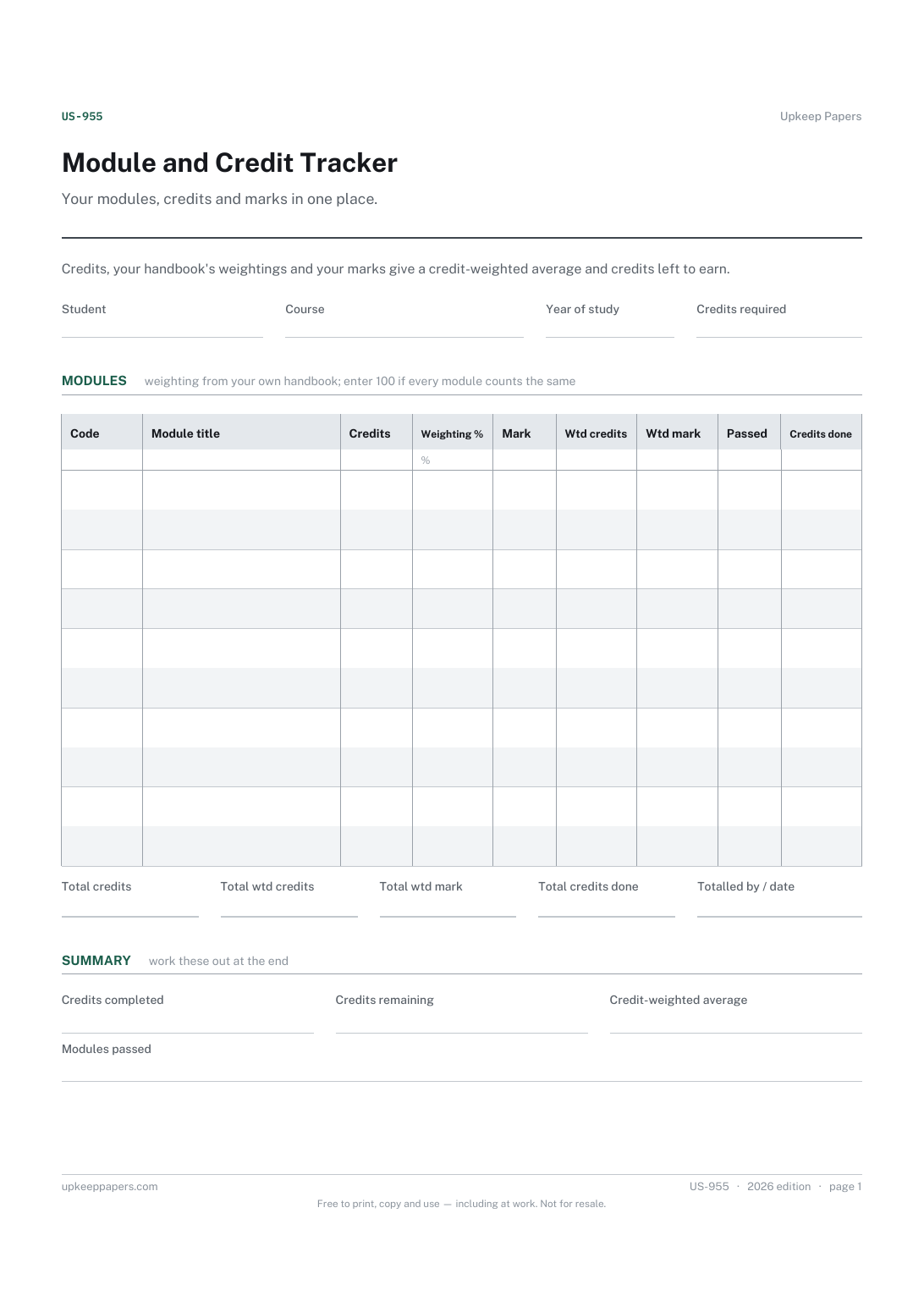
Every module by code and title, with its credits.
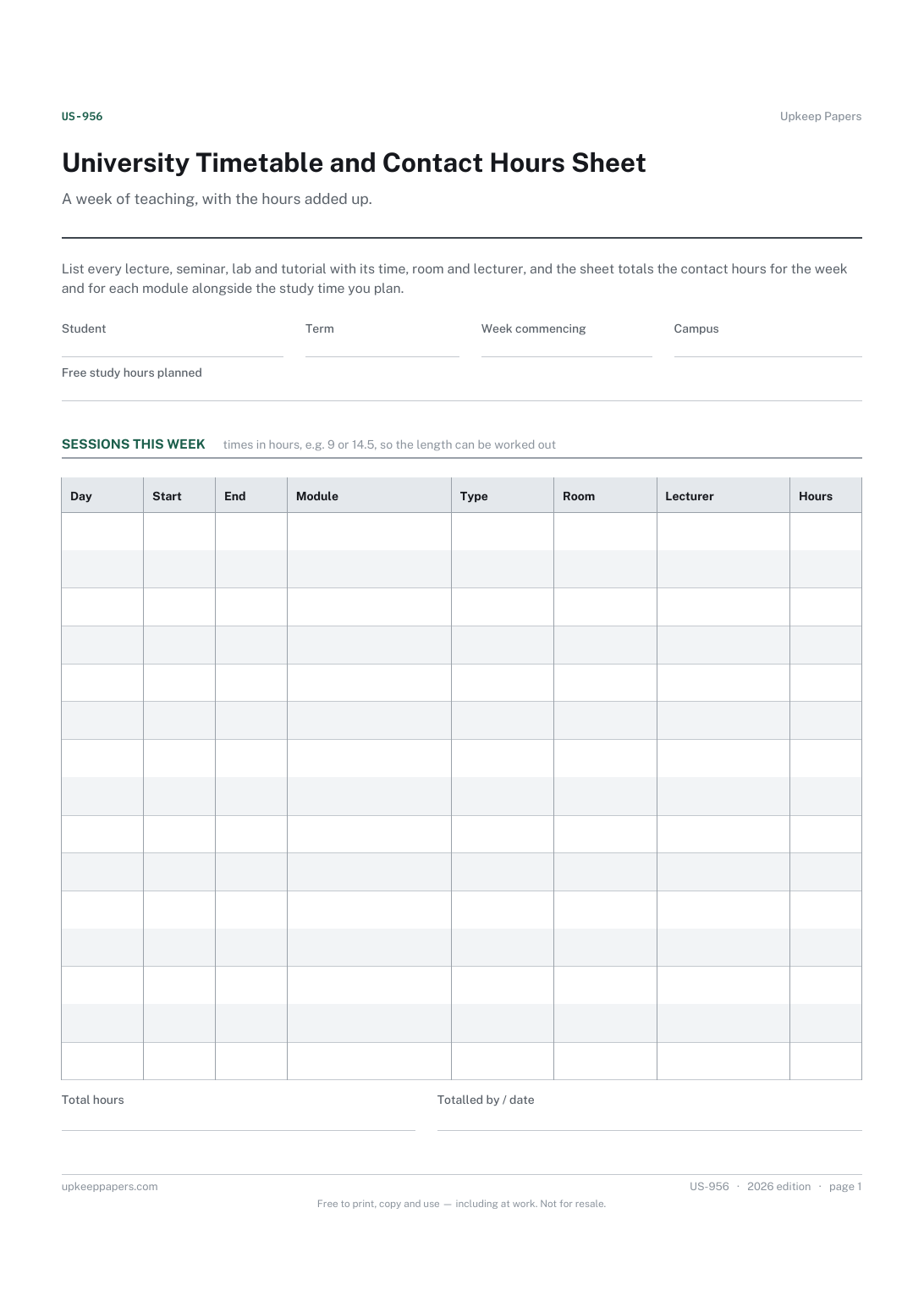
Every timetabled session, with its day, time, room and lecturer.
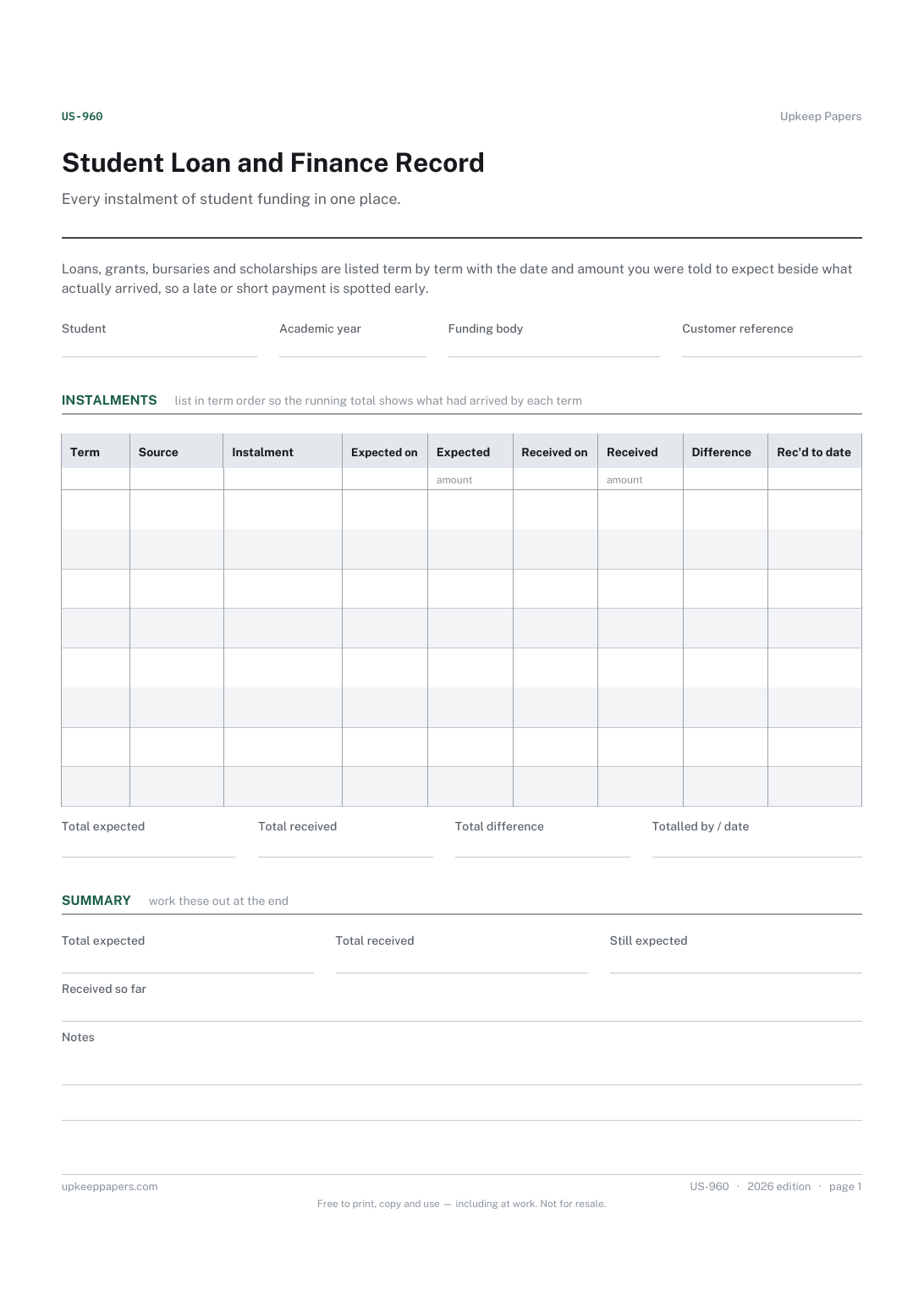
Each instalment expected from each funding source, by term.
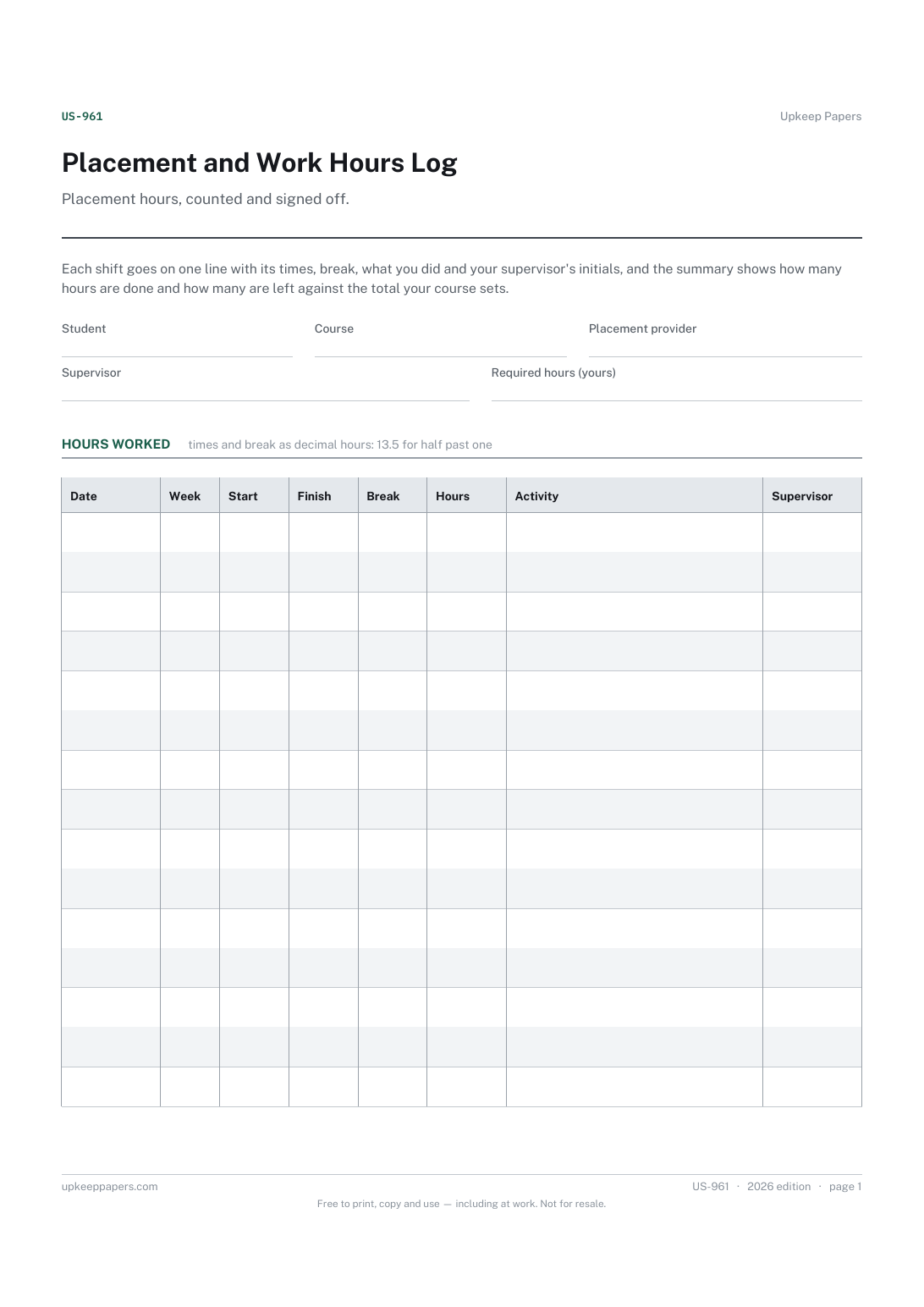
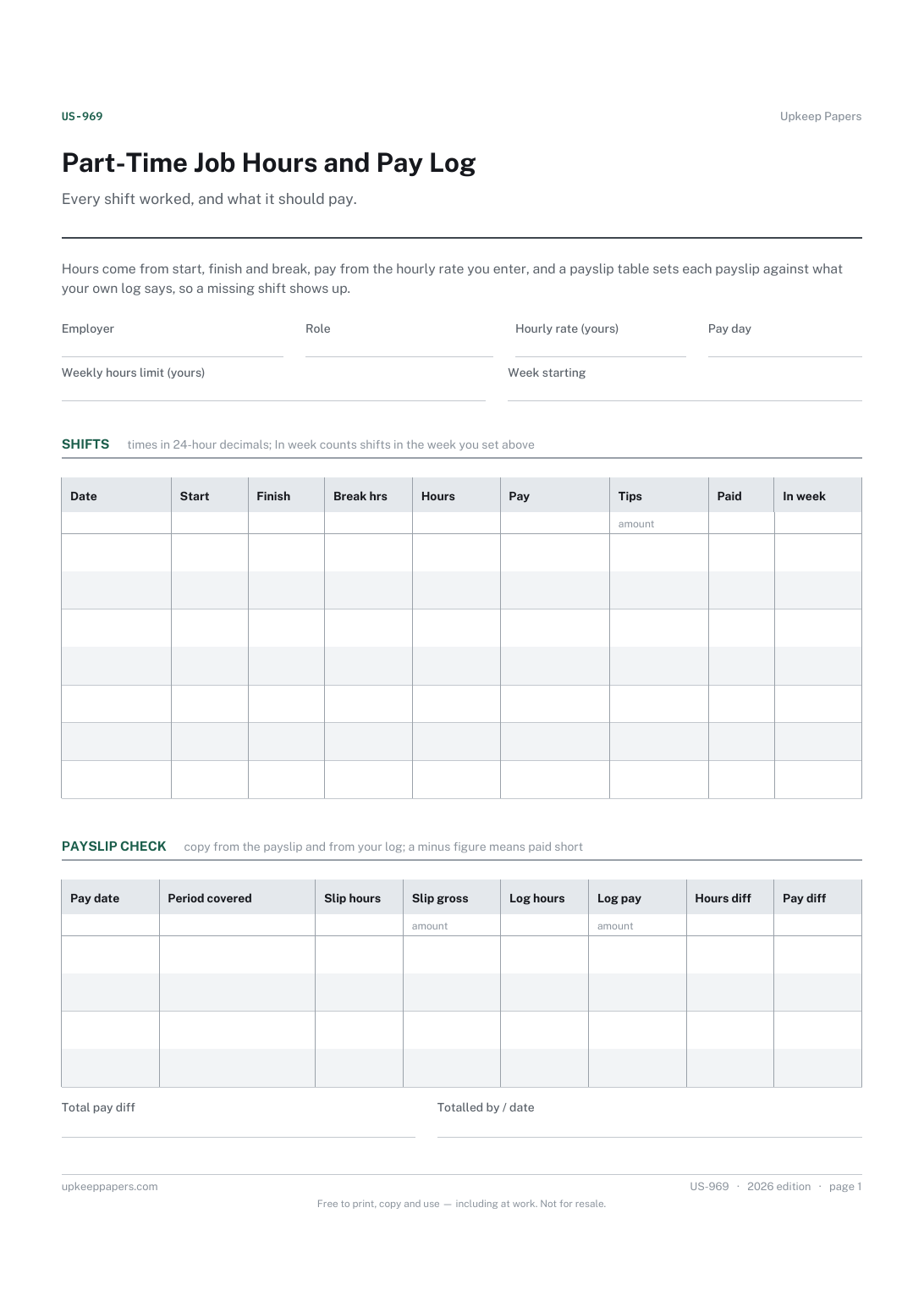
Every shift worked, with times, break and hours.
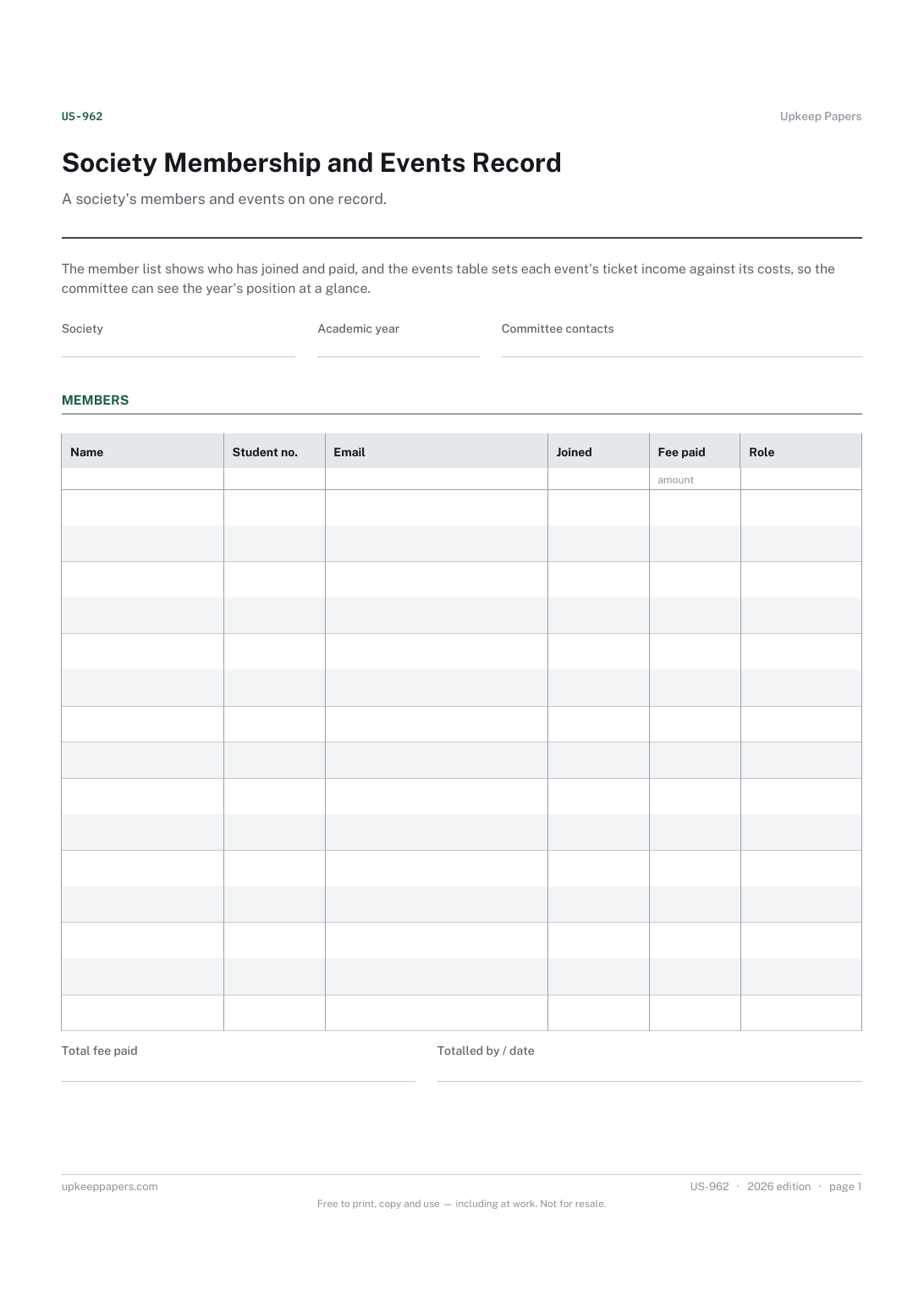
Who the members are, how to reach them and what role they hold.
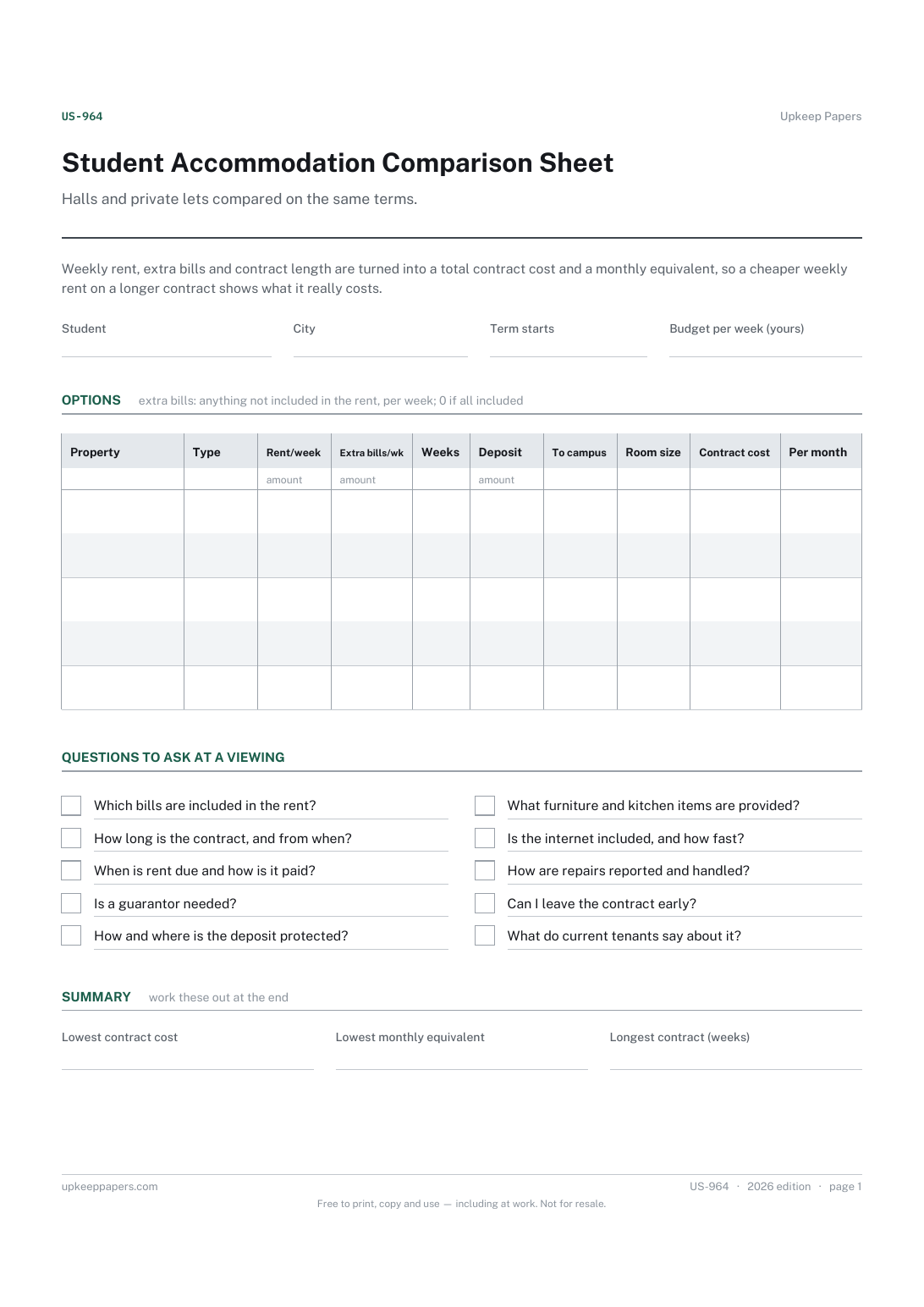
Rent, extra bills and contract length for each option.
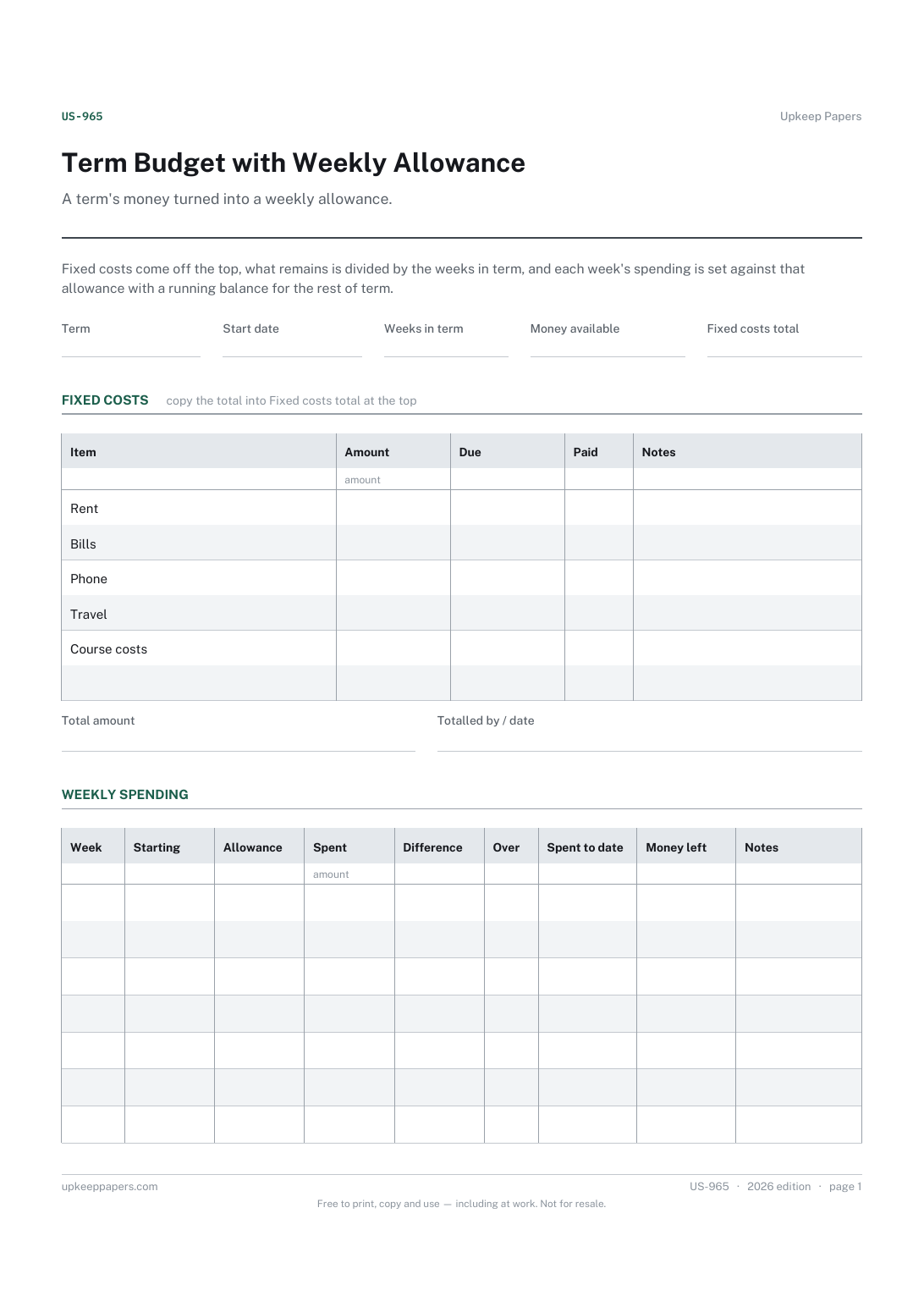
The money you have for the term and what is committed to fixed costs.
Hours worked on each shift, less unpaid breaks.
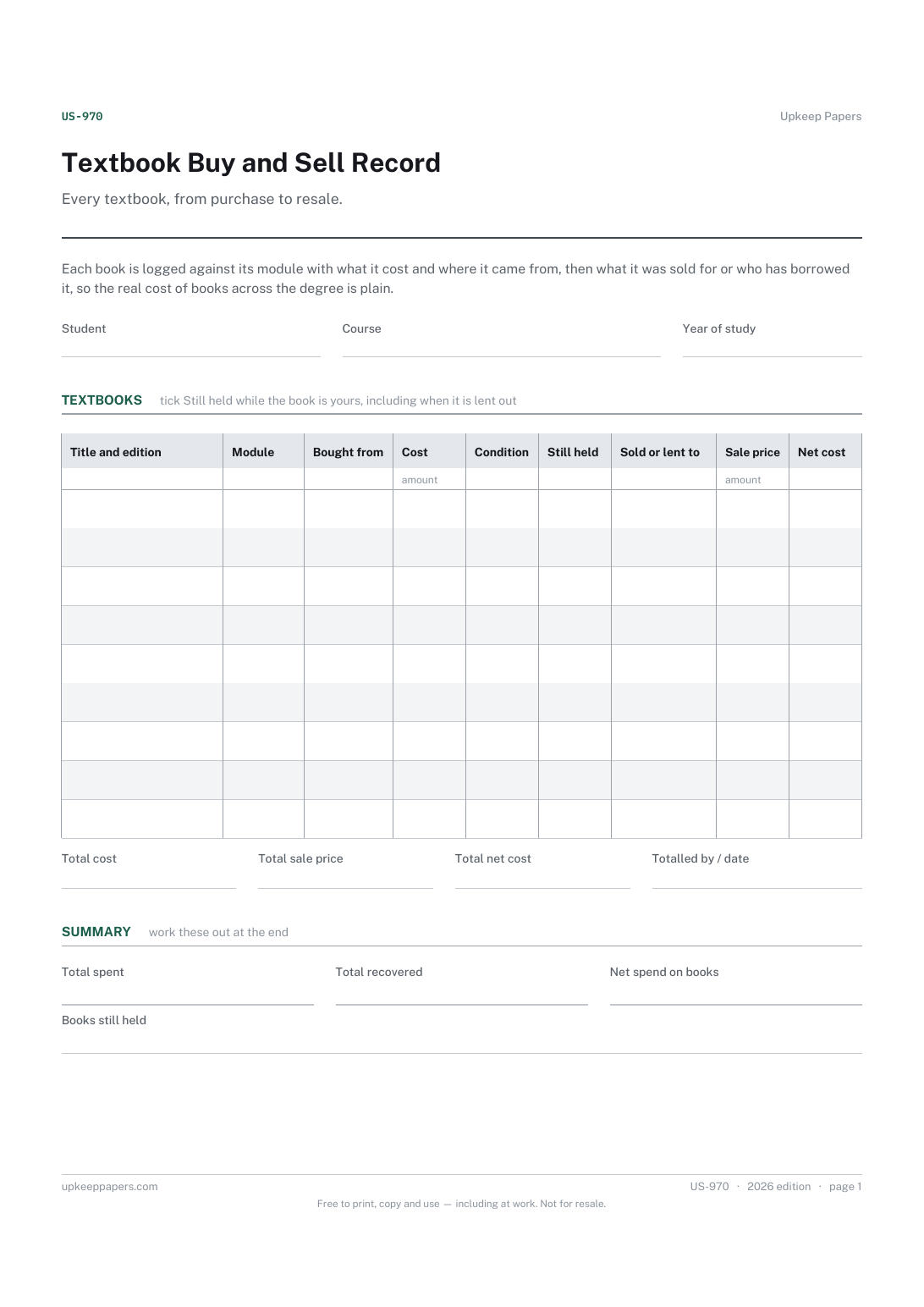
What each book cost and where it was bought.
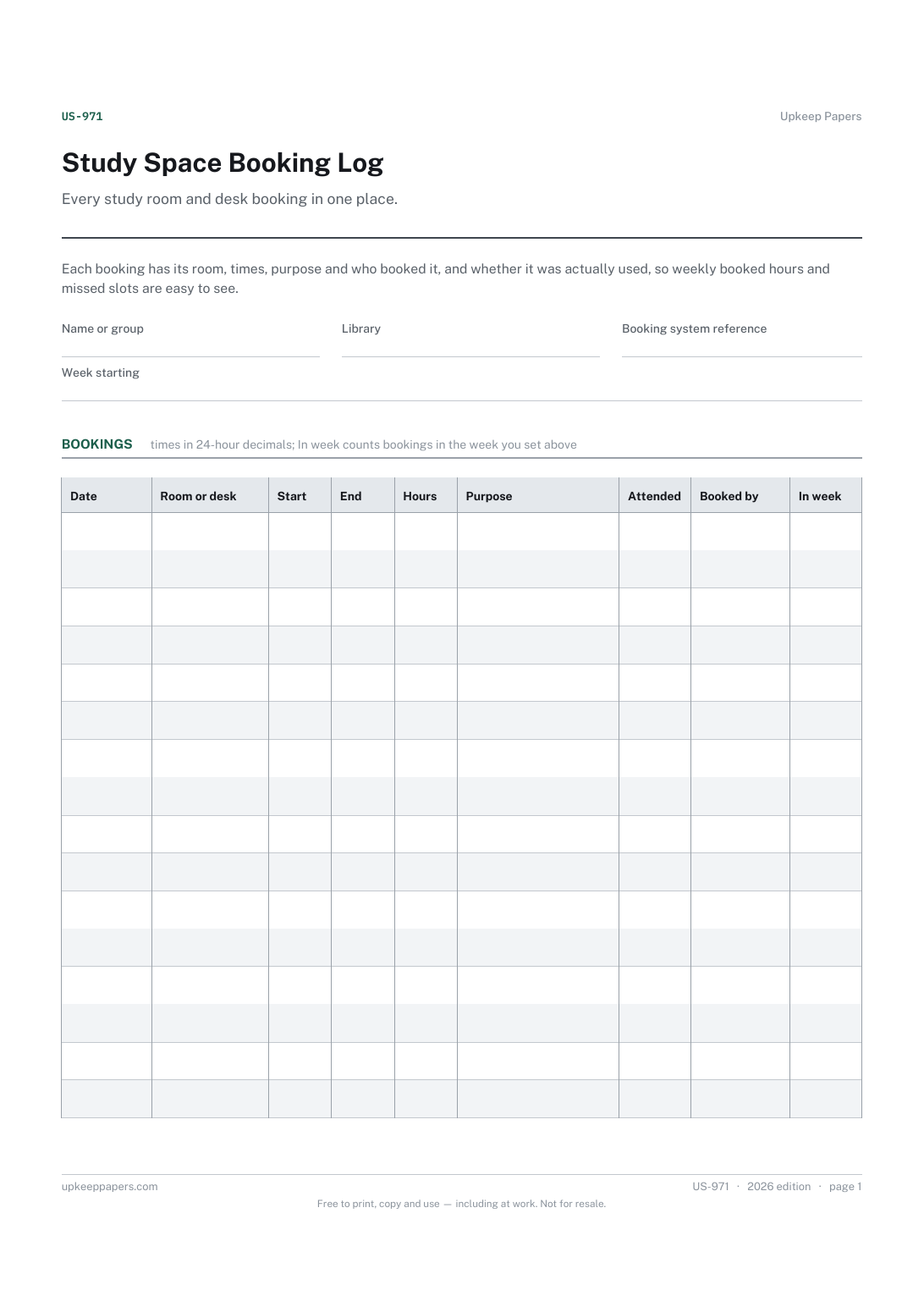
Which room or desk was booked, when and by whom.
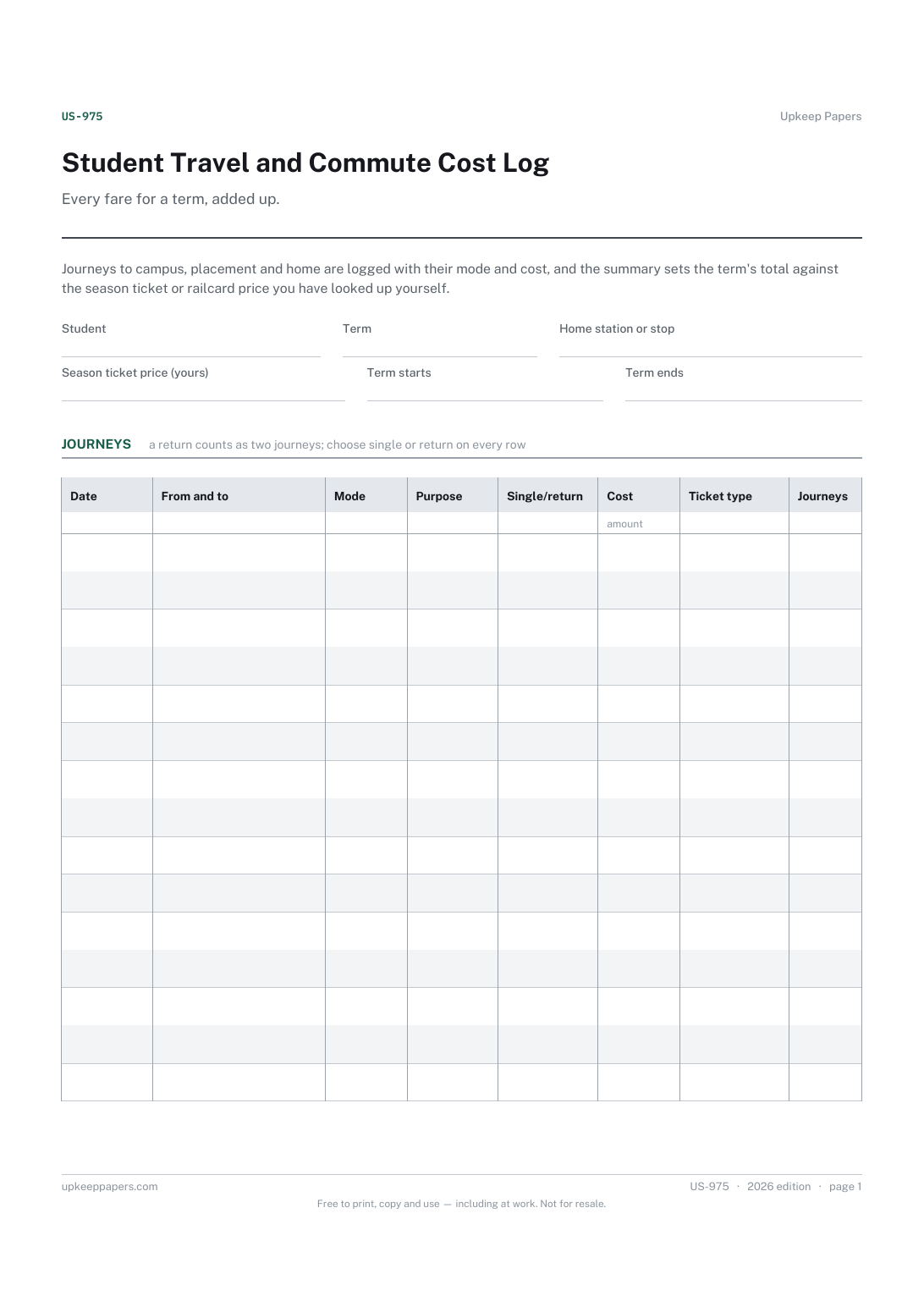
What was spent on each journey and by which mode.
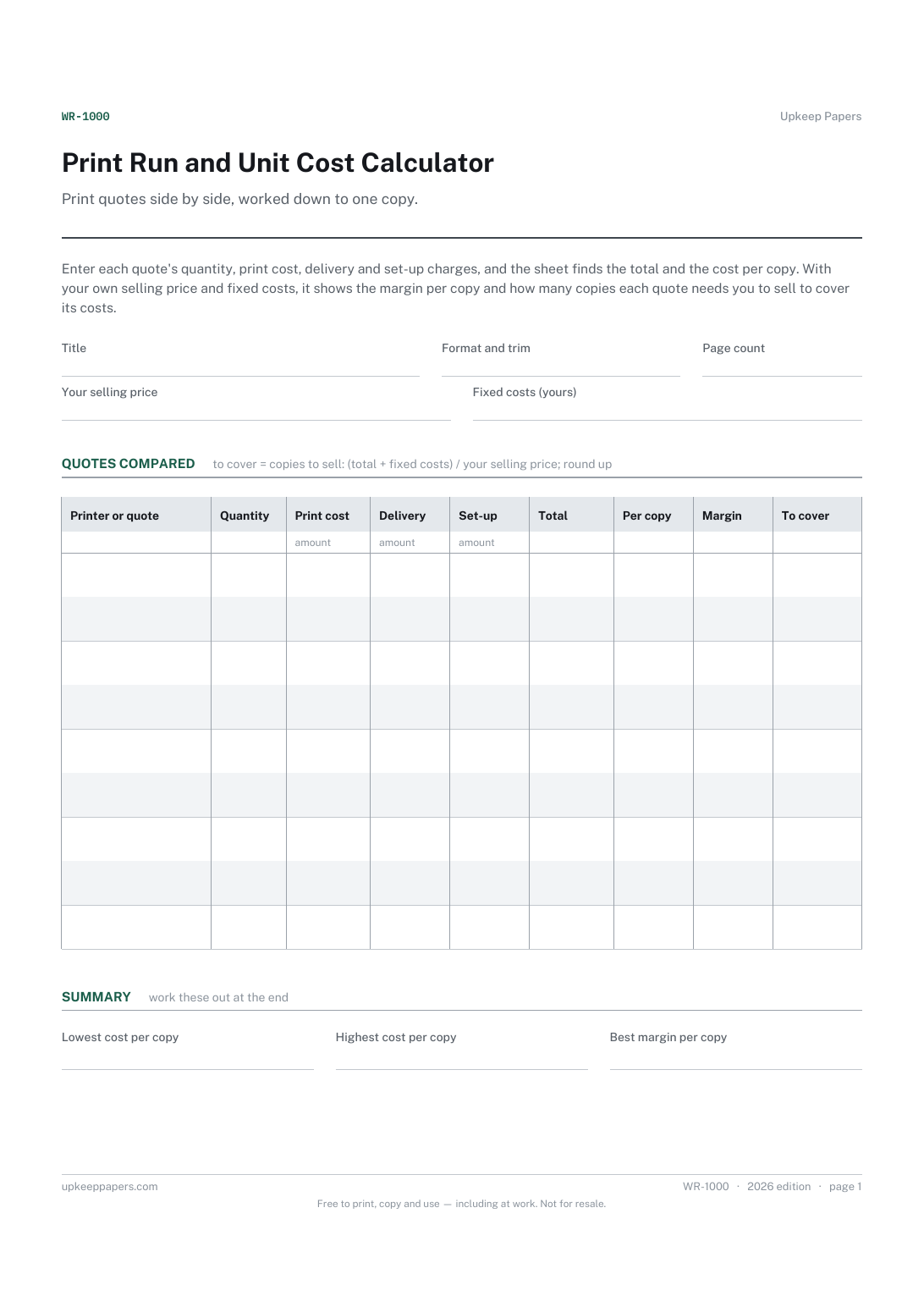
The full cost of each quote, delivery and set-up included.
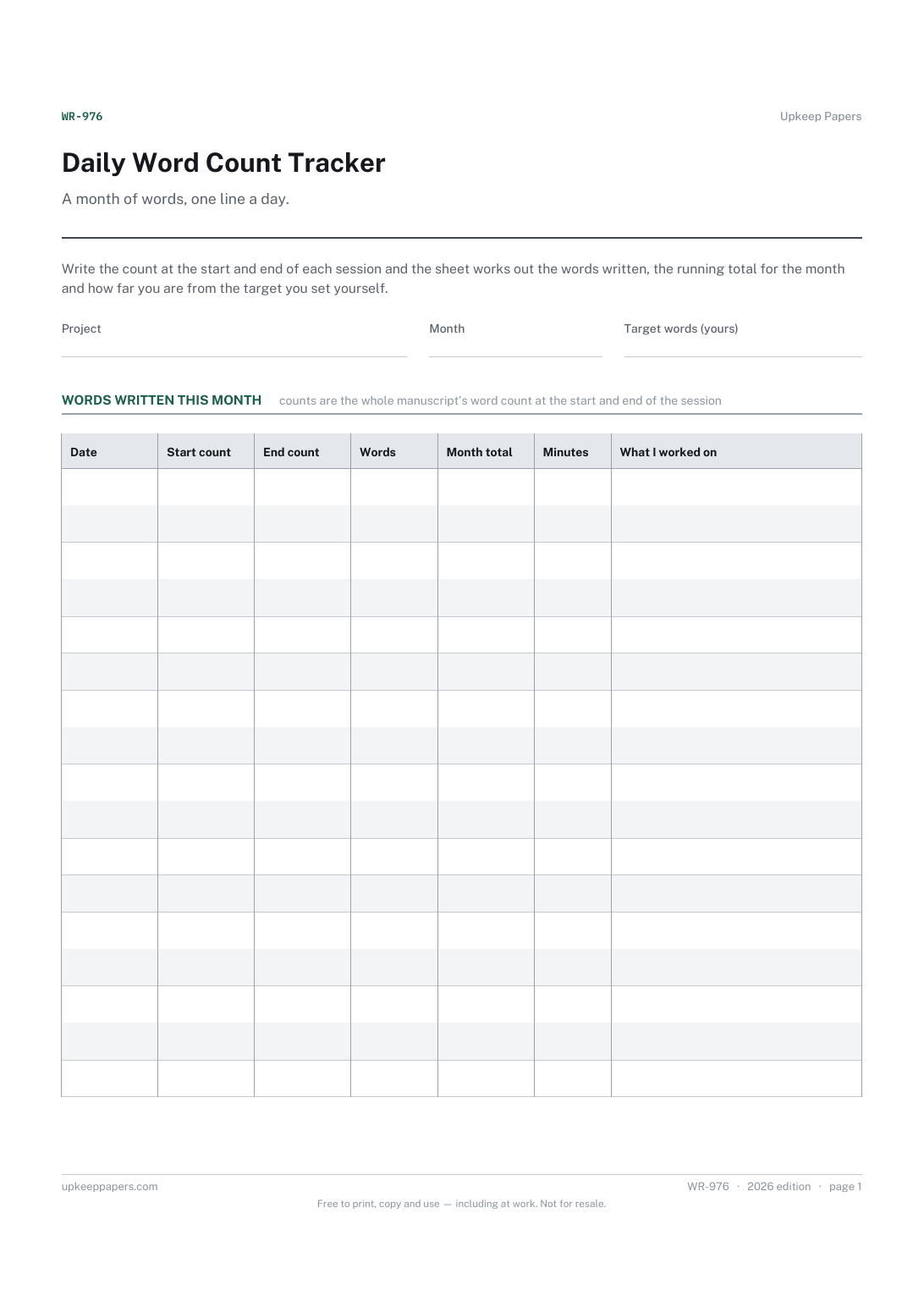
The words written in each session, worked out from start and end counts.
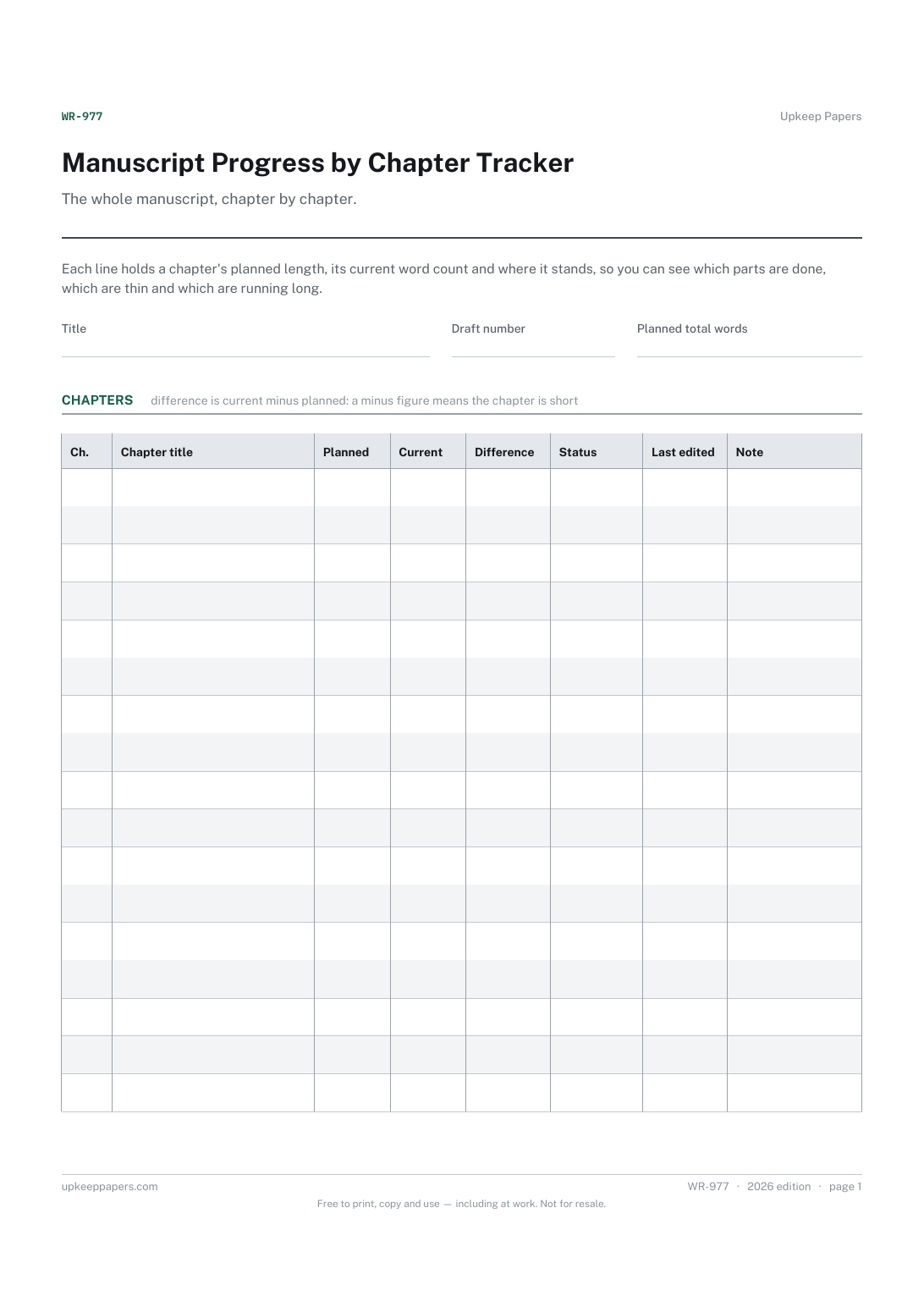
The length you planned for each chapter against what it holds now.
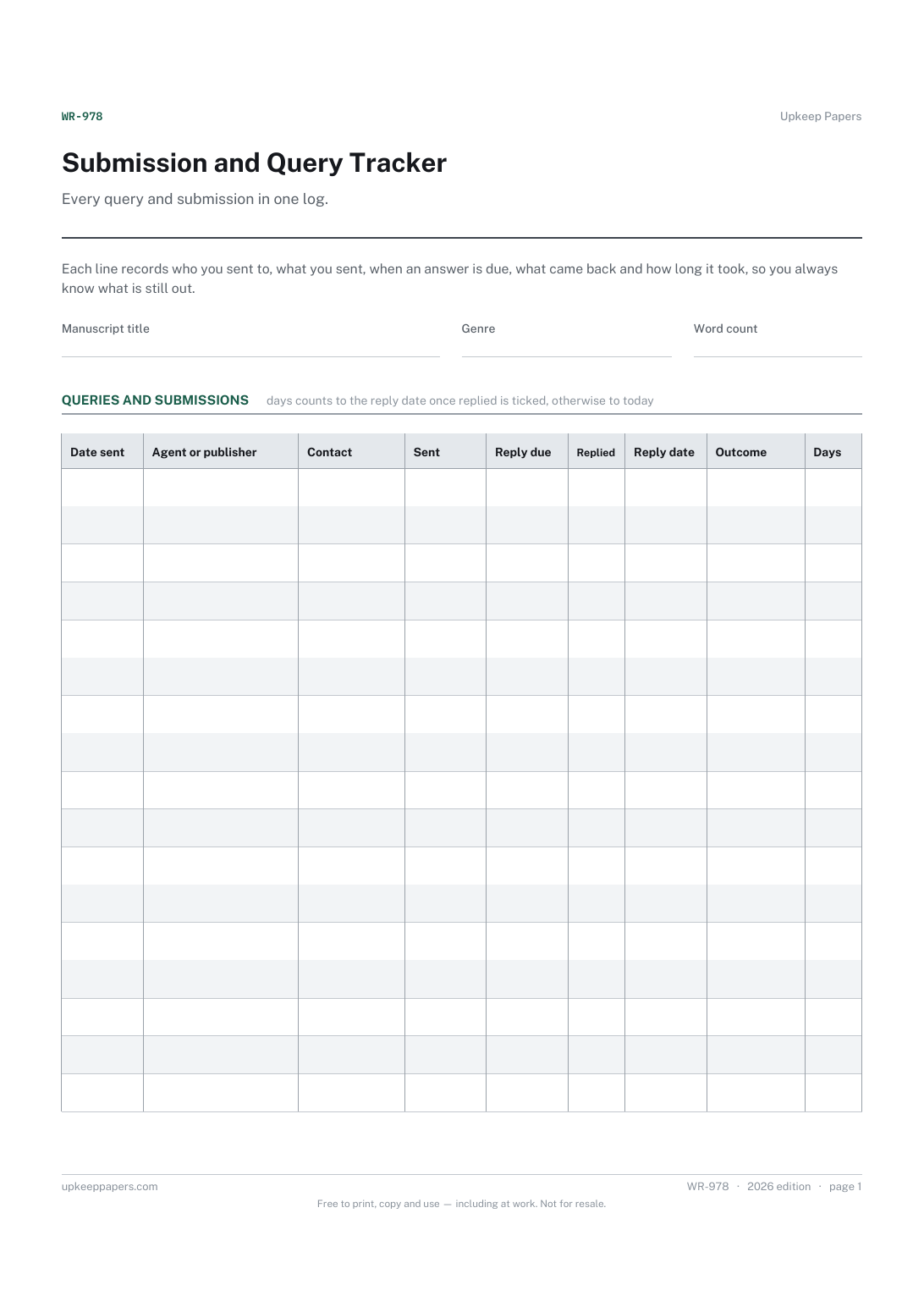
Who each query or submission went to, and the contact name.
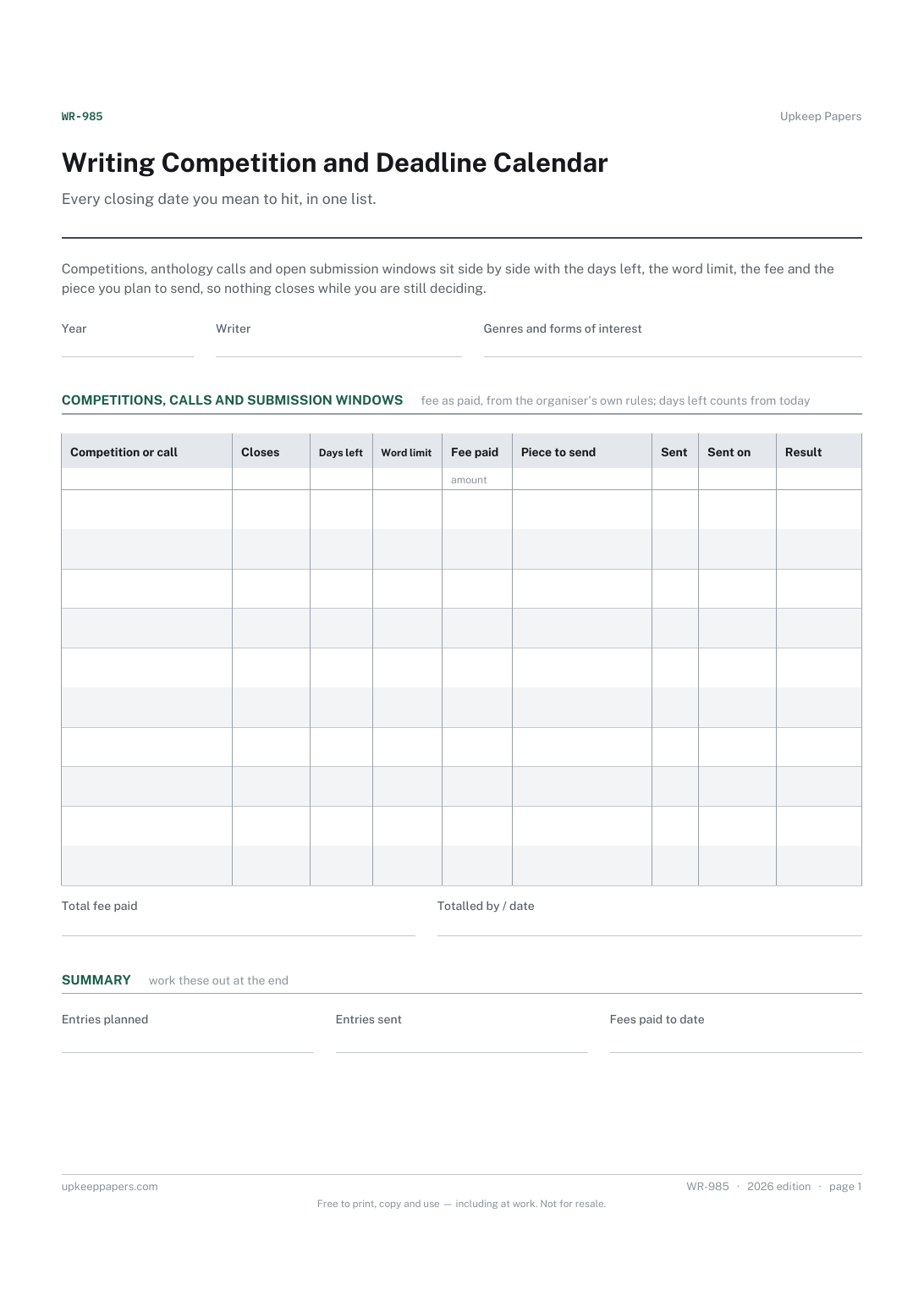
Which competitions and calls you plan to enter, and when each closes.
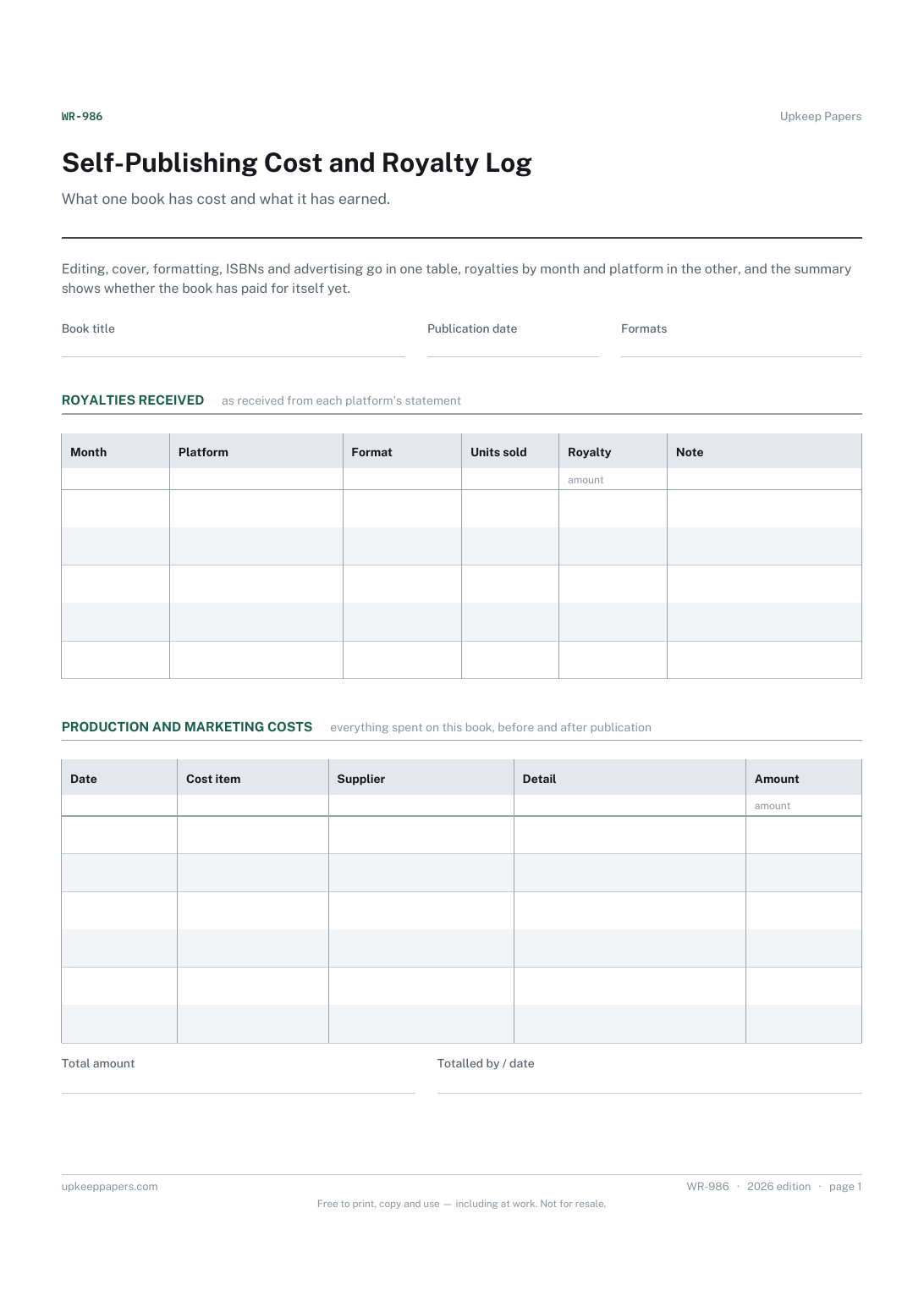
Every production and marketing cost for the book, with the supplier.
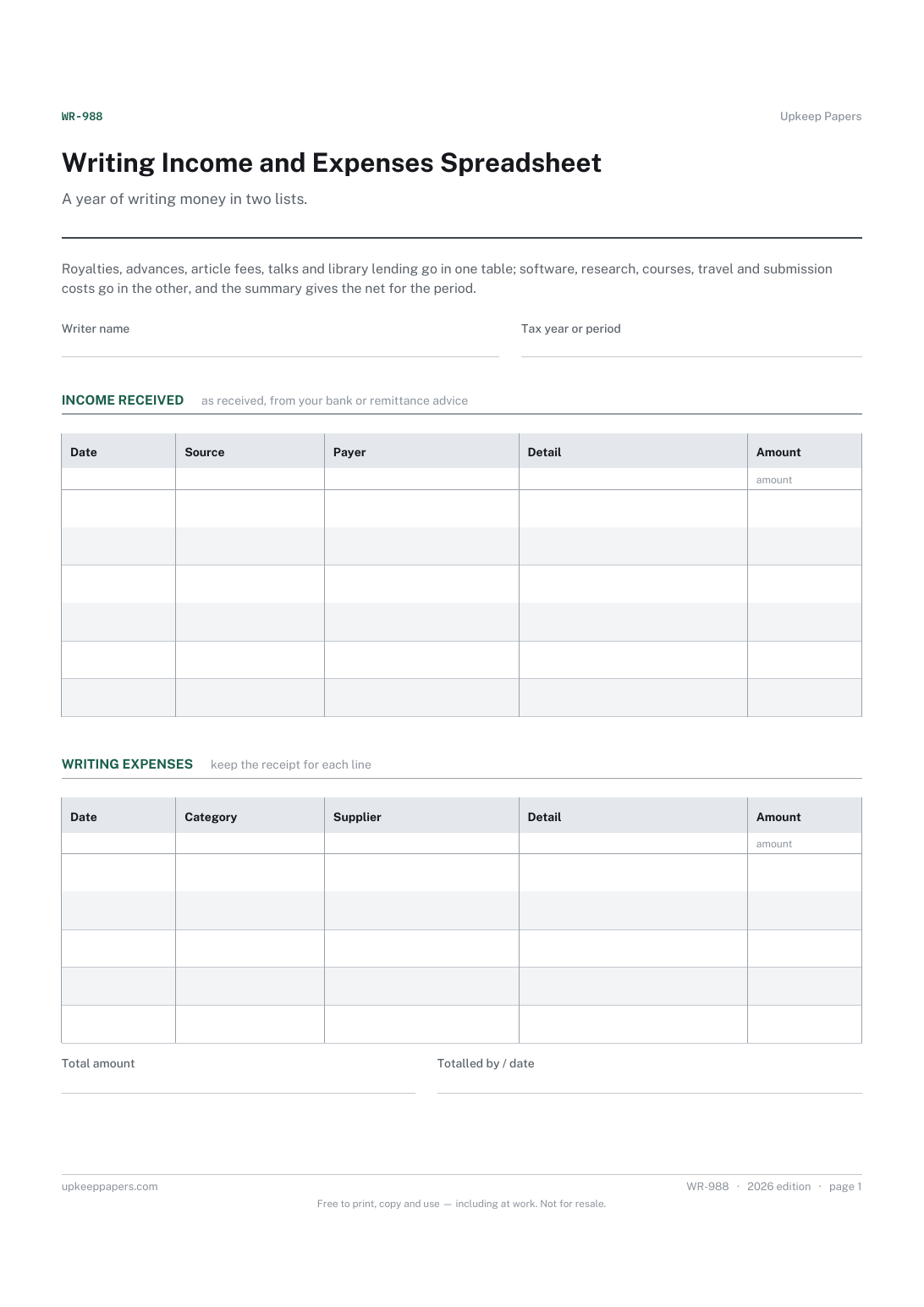
Every payment received for writing, by source and payer.
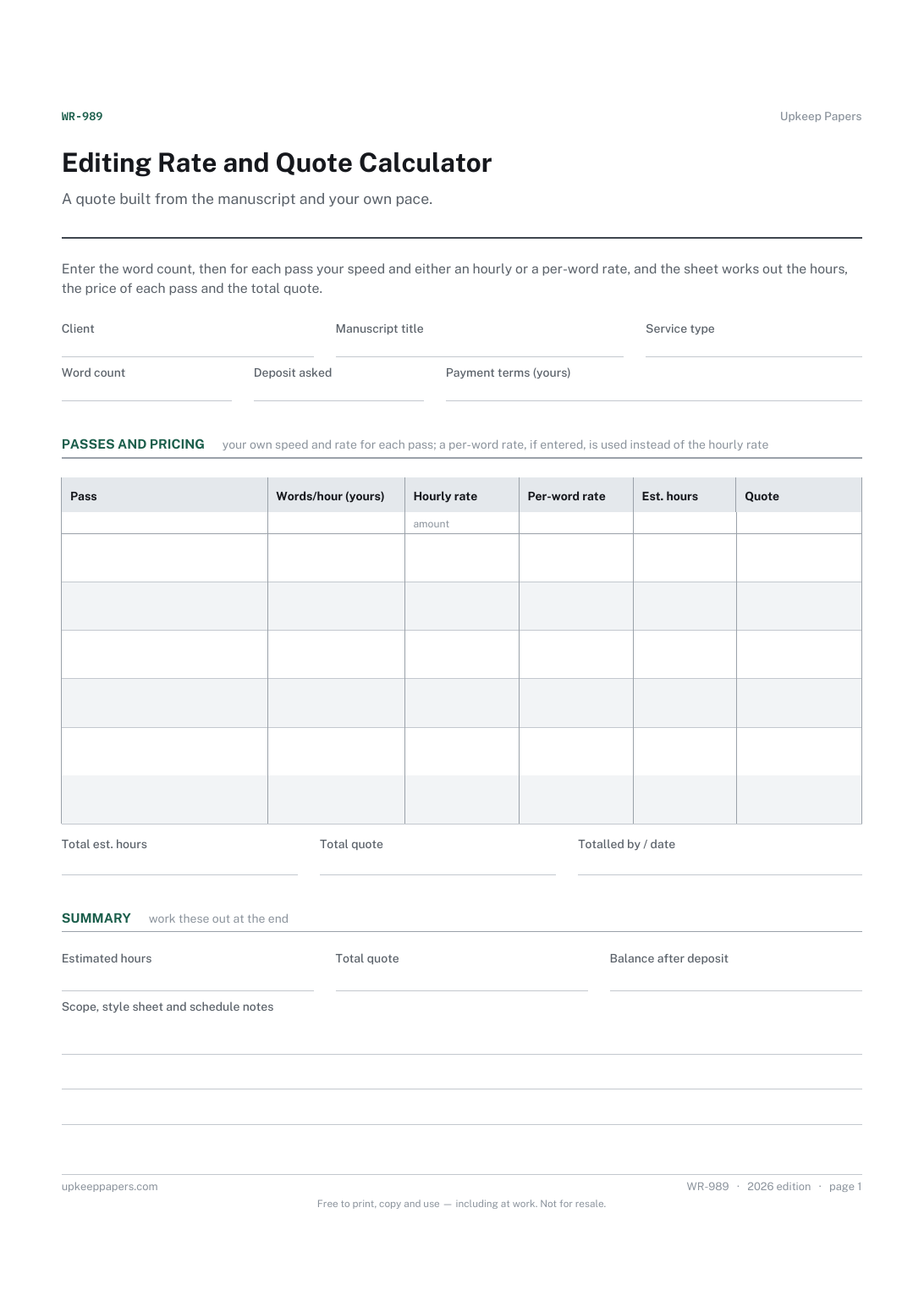
The manuscript, client and service in one place.
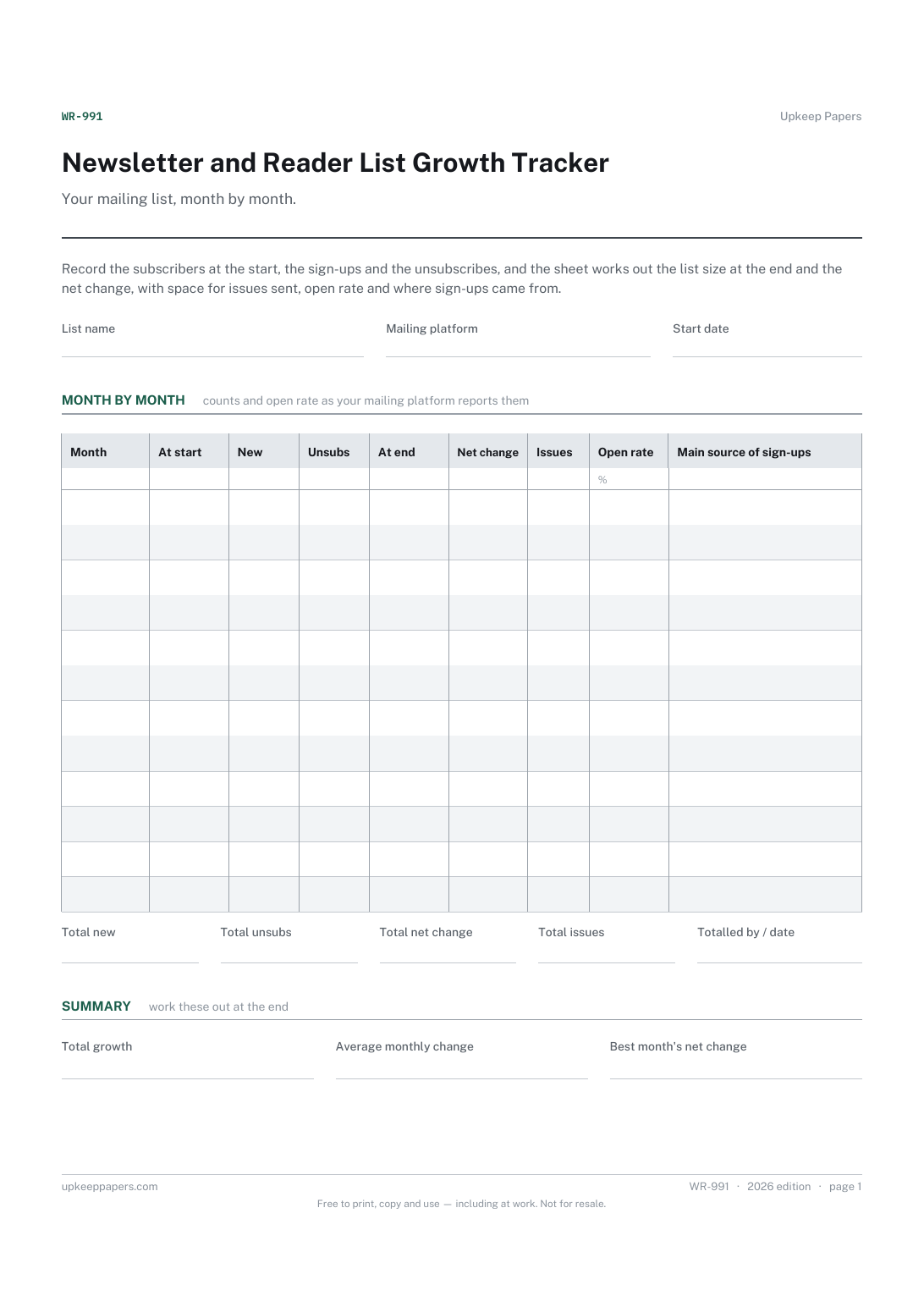
Subscribers at the start and end of each month.
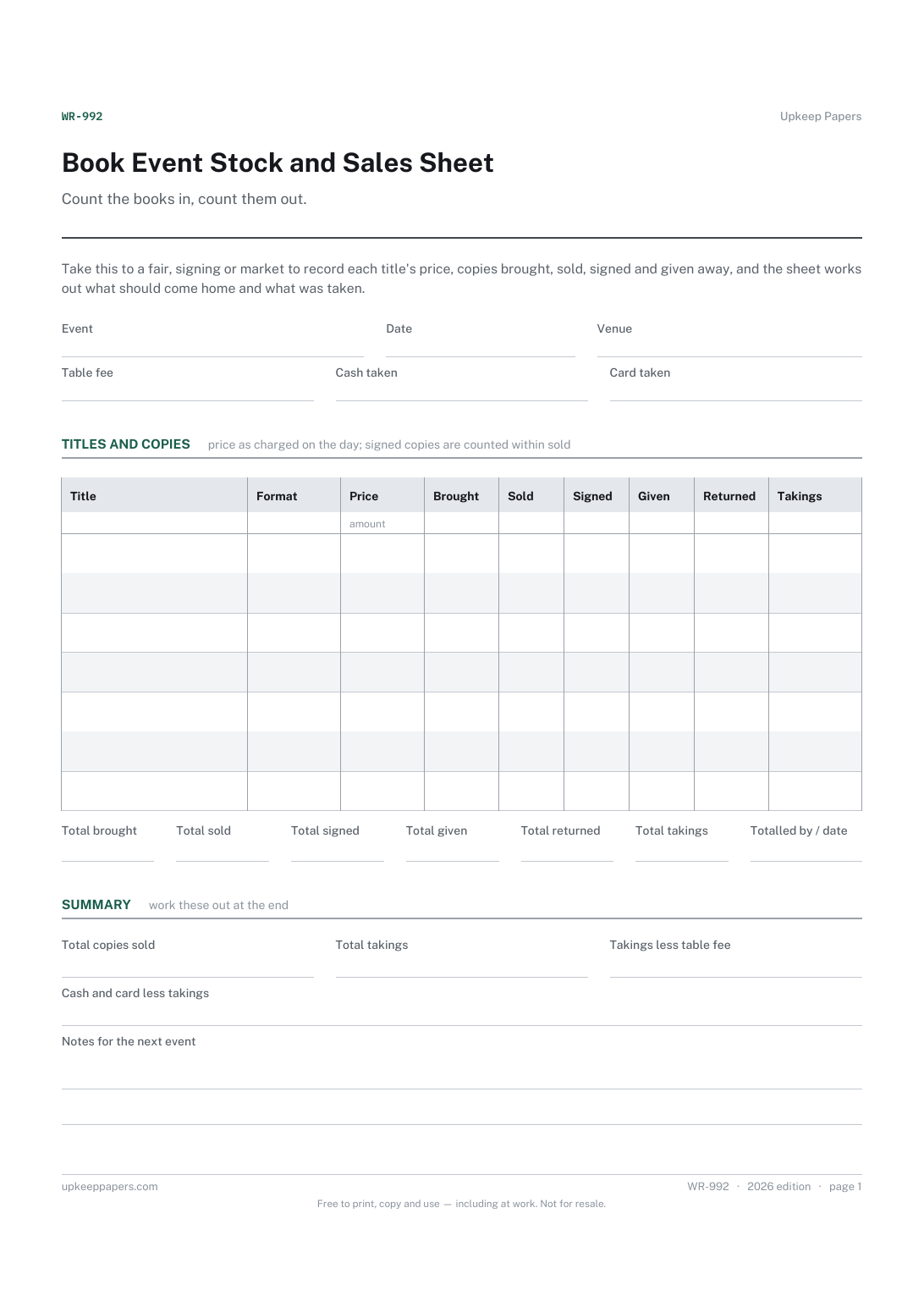
Copies of each title and format brought to the event.
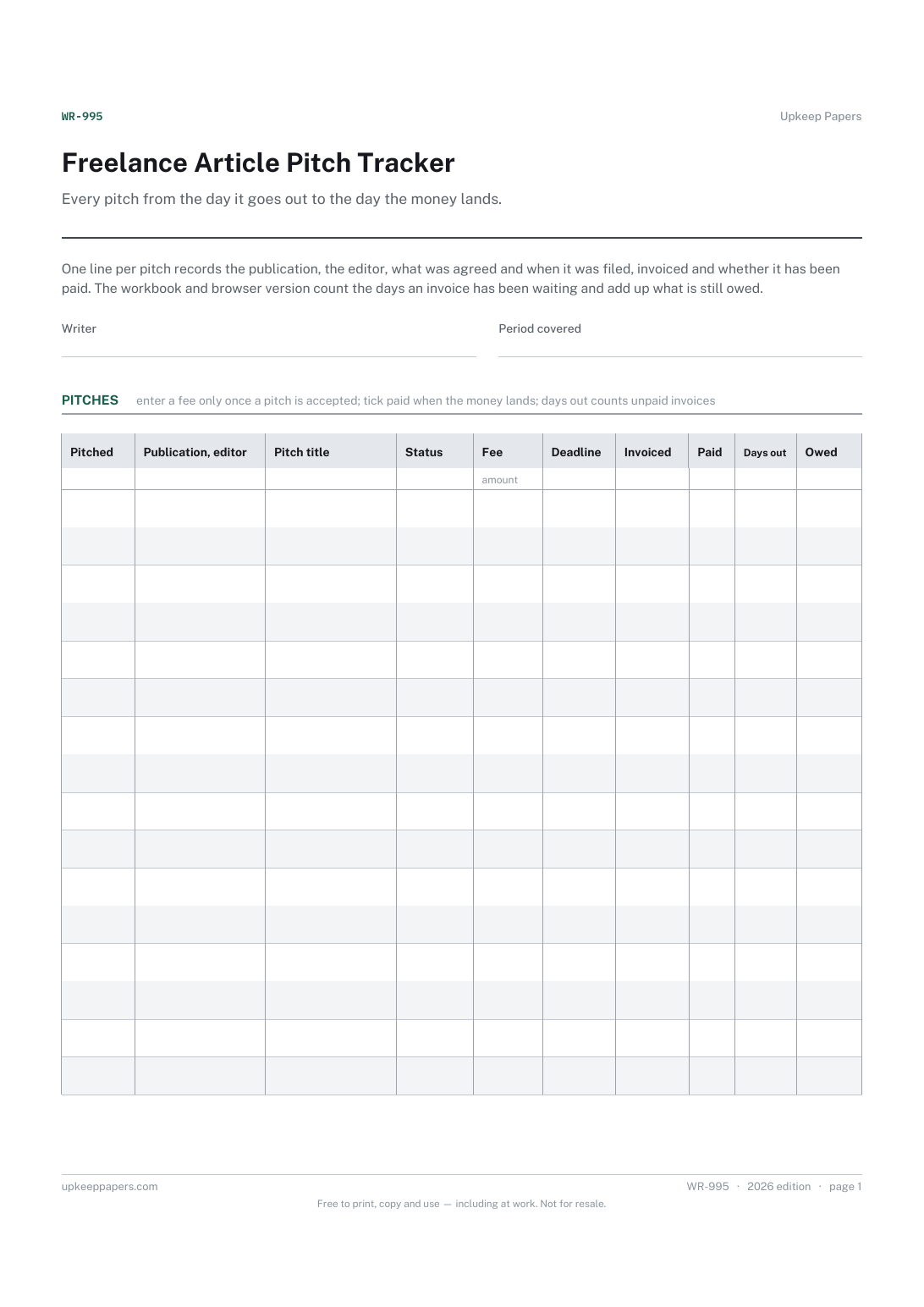
Which pitches went where and to which editor.
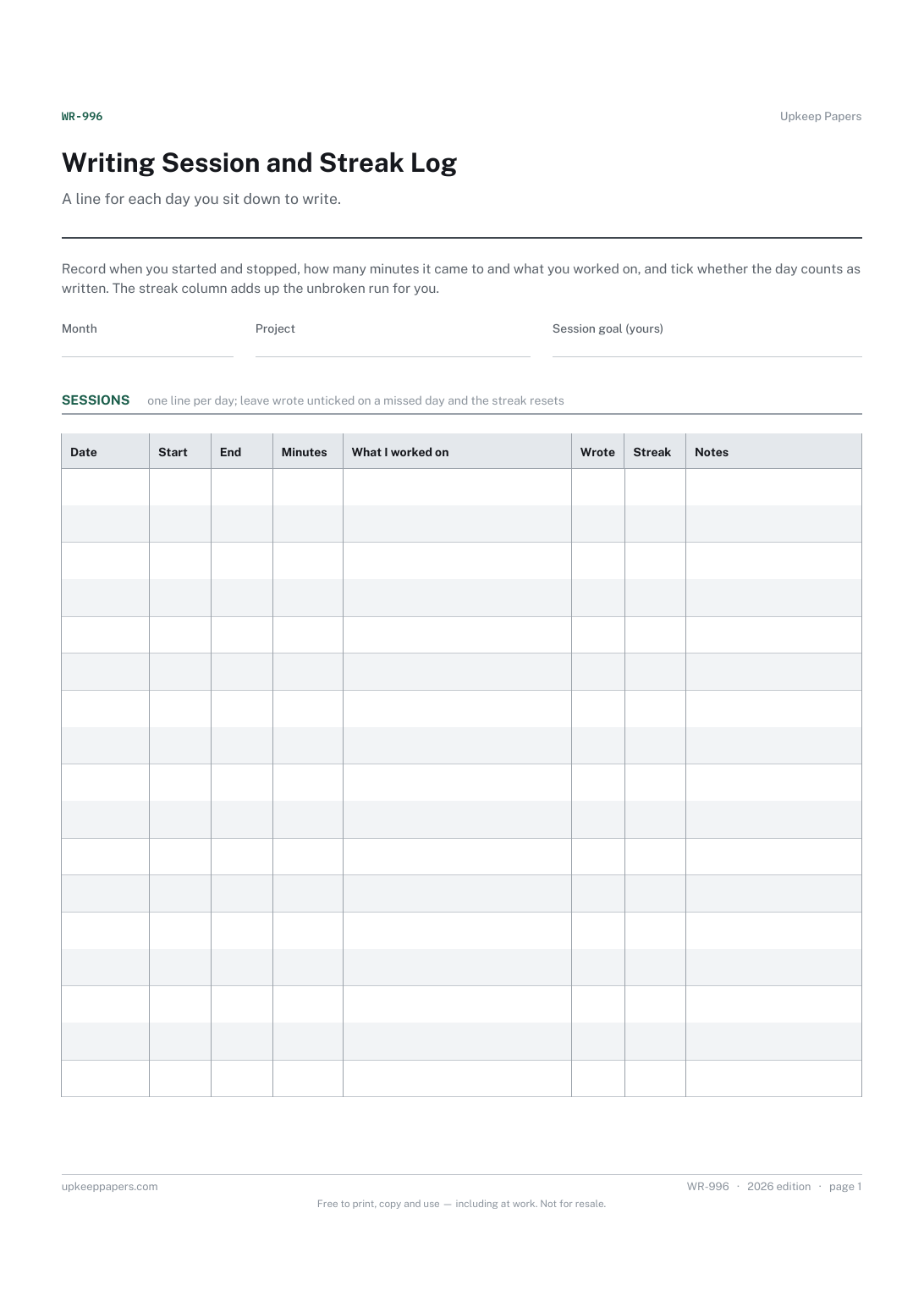
When each session started and ended and how long it lasted.
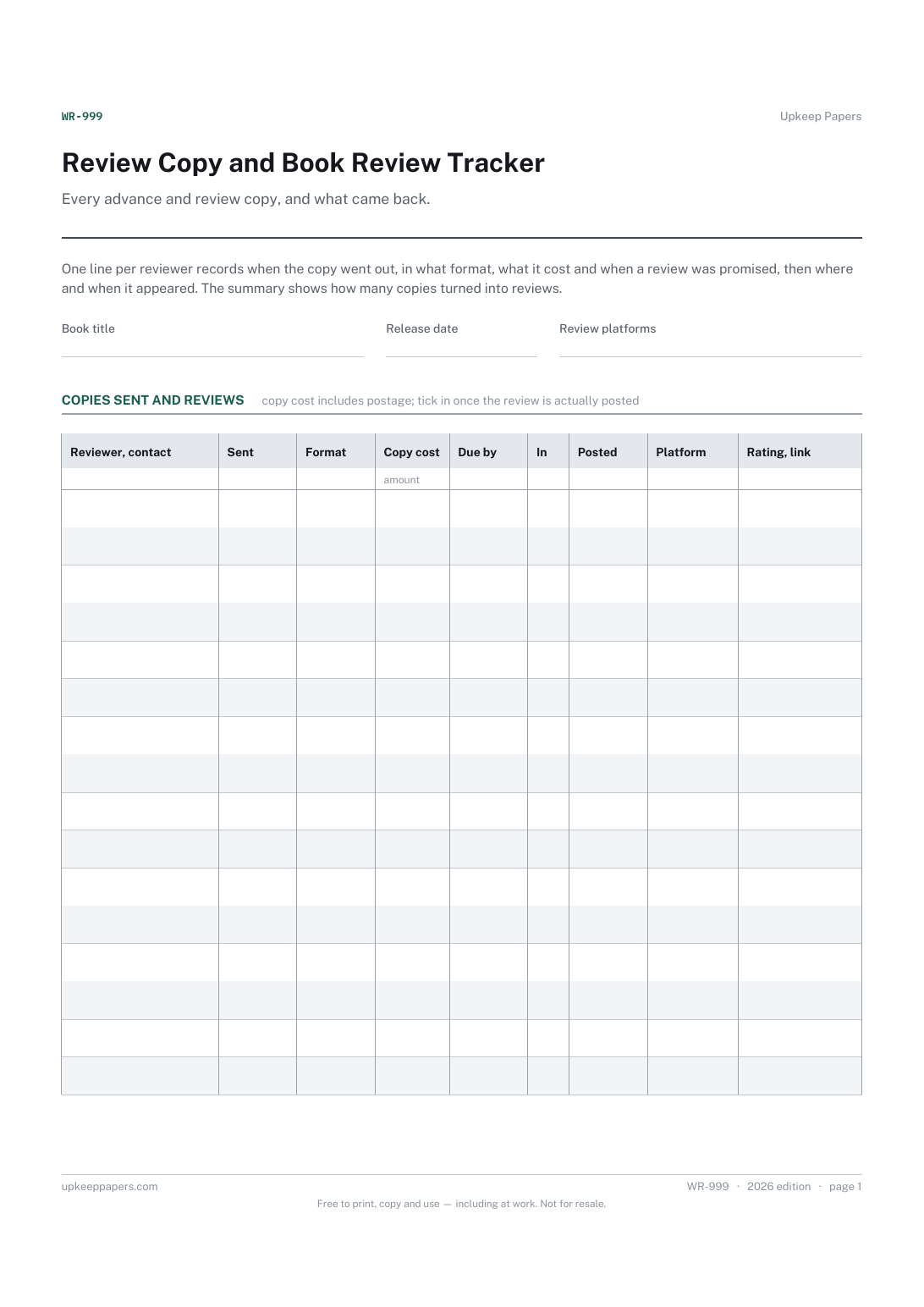
Who has a copy, in which format, and when it was sent.
Google Drive → New → File upload → pick the file, then open it with Google Sheets. Every formula in these workbooks is deliberately an ordinary one, so nothing breaks in the move. The dropdown lists and the cell colours come across too.
Browse the 1278 printable sheets Or try the interactive tools

Every sheet, binder, game and puzzle on Upkeep Papers is free to download, with no email and no account. Making them is not free: each one takes days of research, design and checking, and the site costs money to run. If something here saved you time, you can buy us a coffee. It is entirely optional: nothing is locked, and nothing changes if you don’t.
Buy us a coffee Opens PayPal in a new tab. Any amount, and nothing changes if you would rather not.