Production Output Tally Log
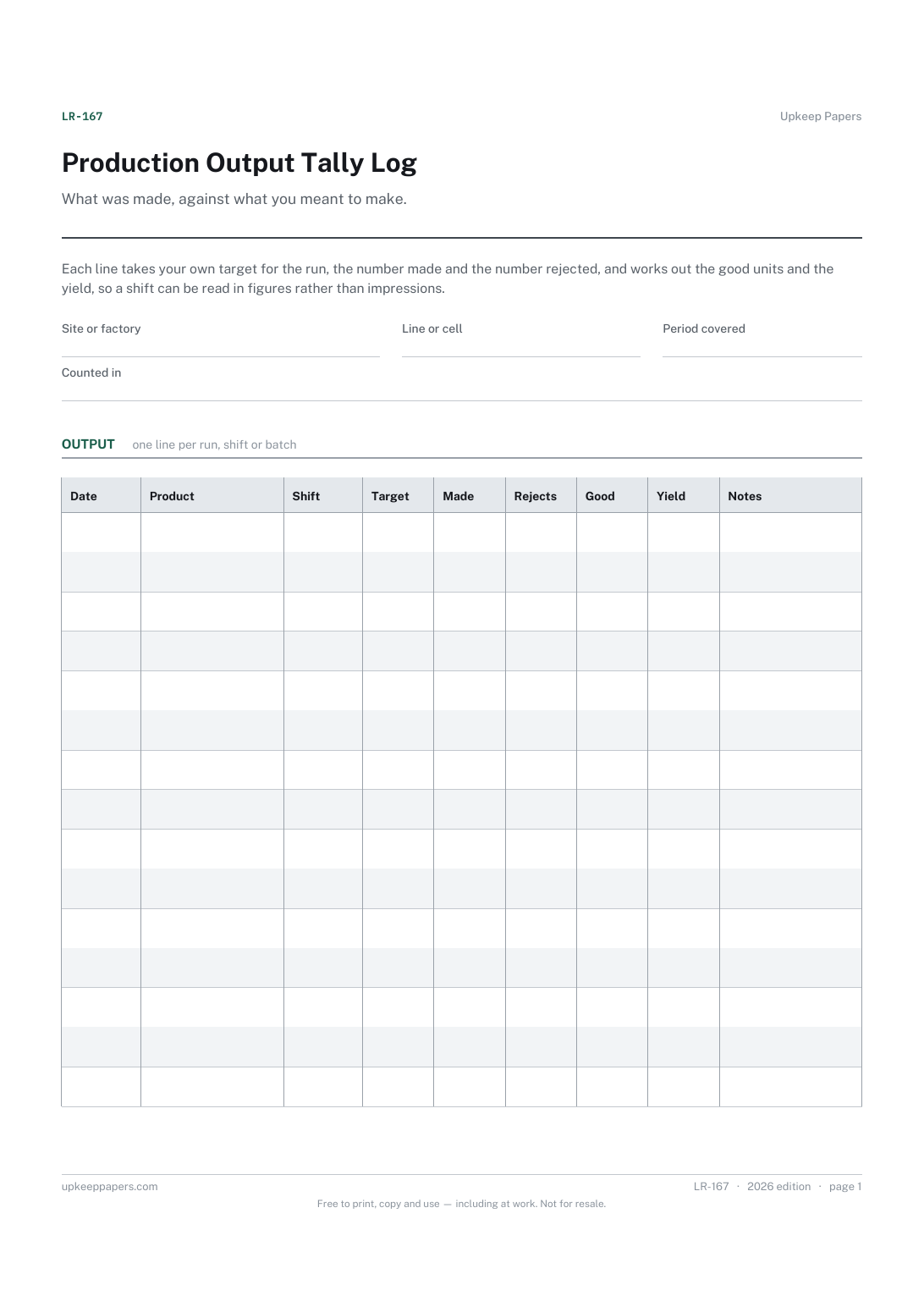
Output per run, shift or day, with the product named.
LR-167 Log PDF Excel Online
Everything here is free. Making it takes time and money. Everything here is free.
 Buy us a coffee
Logs and record sheets · LR-170 · Log
Free waste and recycling log — weight by stream and container, a running total and the recycled share worked out. PDF, Excel and browser versions.
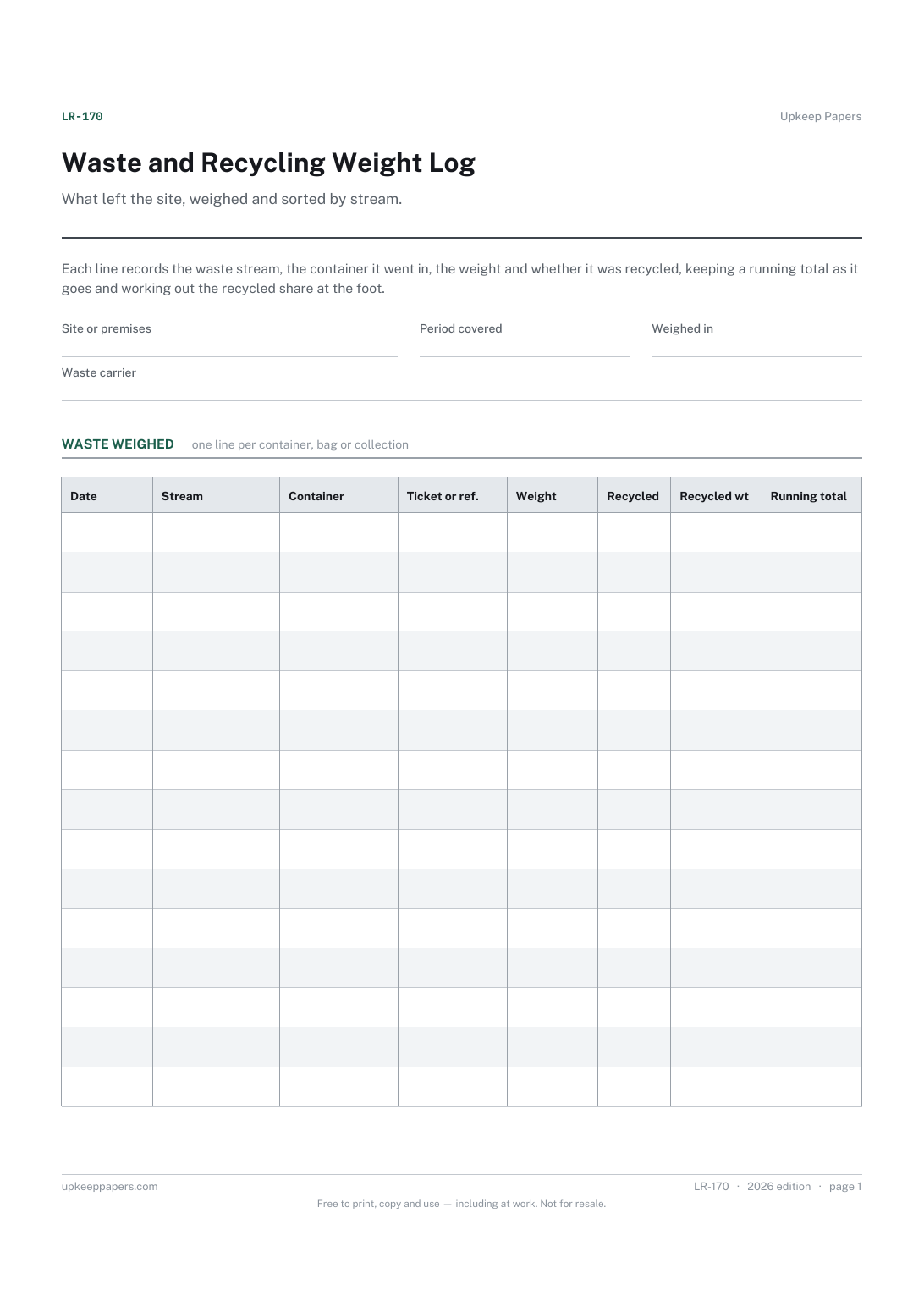
2 pages. The A4 and US Letter files are laid out identically, so neither is shrunk to fit.
Print it and write on it
Fillable PDF type and save
Spreadsheet formulas included
The fillable versions have real form fields — open them in any PDF reader, type into them and save. Printing help.
The same sheet, on screen. Totals and figures are worked out as you type, rows can be added or removed, and you can print it or download the completed version as a PDF. Everything stays in your browser — your entries are kept in this browser's own storage on this device, nothing is uploaded, and there is no account.
What left the site, weighed and sorted by stream. Each line records the waste stream, the container it went in, the weight and whether it was recycled, keeping a running total as it goes and working out the recycled share at the foot.
Kitchens, workshops, shops, sites, schools and community buildings weighing their own waste, and anyone reporting recycling figures to a head office or a landlord.
The printable is laid out inside a box that fits both A4 and US Letter, so the two files are identical and neither one is scaled. The fillable PDF has real form fields. The workbook uses plain formulas only — SUM, IF, COUNTIF and the like — so it opens in Excel, LibreOffice and Google Sheets without anything breaking, and every calculated cell is grey so you can see which figures it worked out.
Download the A4 or US Letter file to match the paper in your printer, open it in a PDF reader and print at 100% — not "fit to page", which shrinks the writing space. Both files leave a 14 mm margin, which clears the unprintable edge on home printers. To print the online version with your entries in it, use the Print this sheet button, which prints only the sheet and none of the page around it. More on printing.
That depends on your waste contractor and on the arrangements where you are — the same material is recycled in one place and not in another. Tick the column according to what actually happens to it, and note your contractor's terms at the foot.
Some sort of weight is what makes the log useful. Platform scales, a hanging scale or the weights on the carrier's tickets all work, as long as you use the same source consistently and say which in the notes.
A transfer log records collections and the paperwork that goes with them. This one records weights as waste is produced, by stream, which is what you need to reduce it rather than just to document it.
Yes, and many kitchens do. Use the stream column for preparation waste, spoilage and plate waste separately — the pattern is usually more useful than the total.
Output per run, shift or day, with the product named.
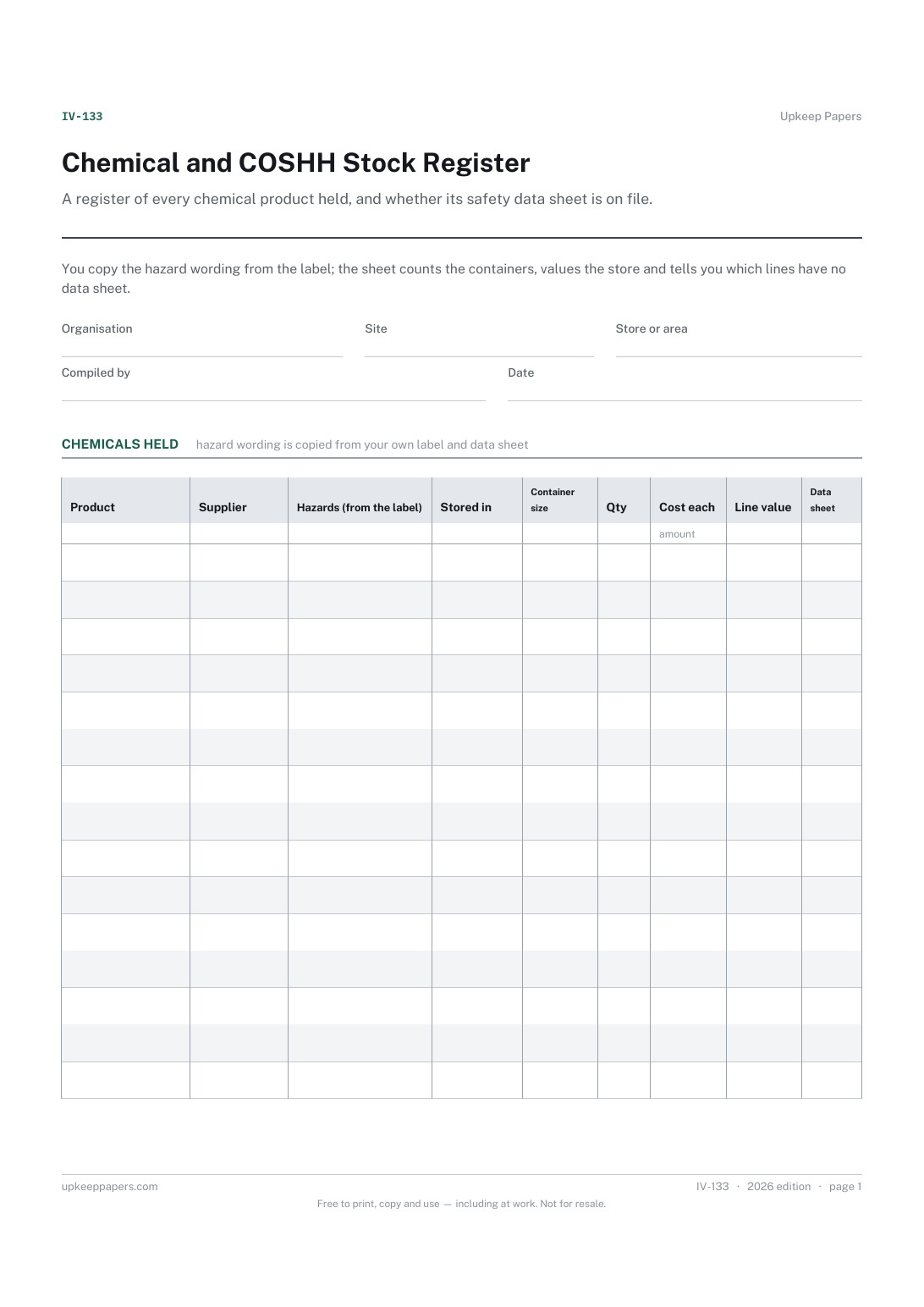
Every chemical product held, with the supplier and the container size.
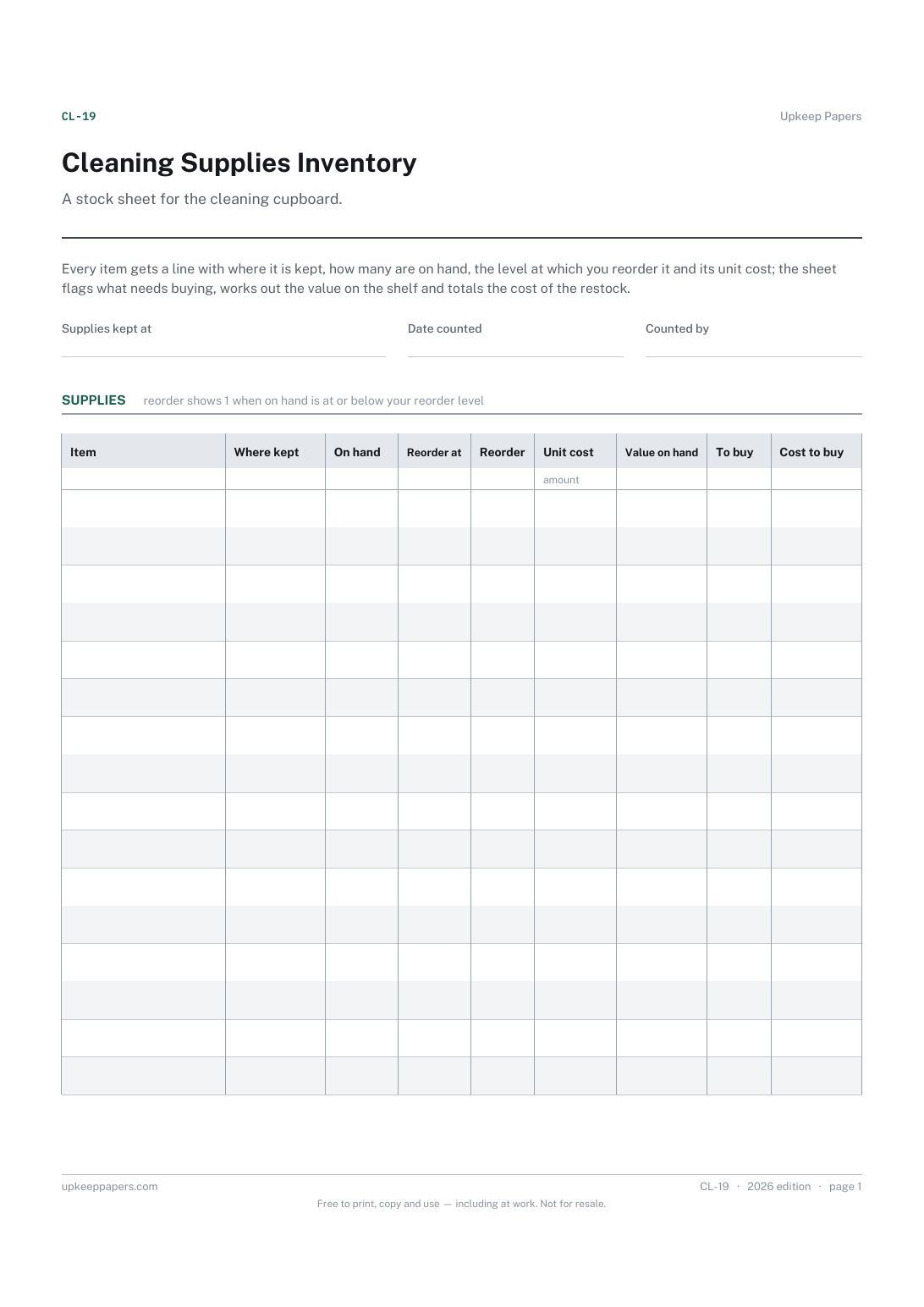
What is in stock and where, so nothing is bought twice.
Printable sheets, workbooks and tools on the same subject.
Keep a running index of waste leaving the premises and of the documents that came back with it, so a request for records is a filing question.
Record what gets thrown away and why, which is usually the fastest way to find where a kitchen's margin is going.
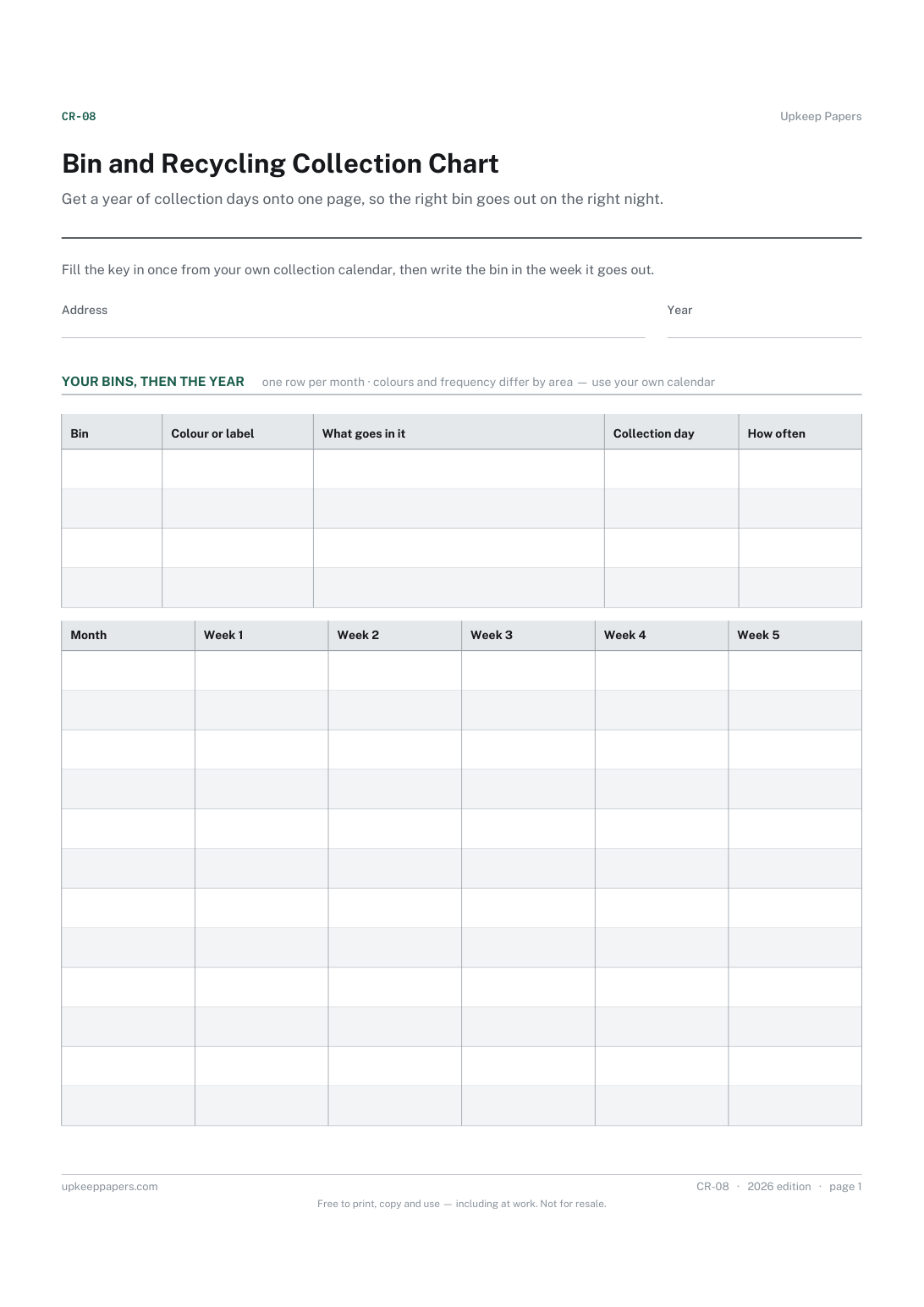
Get a year of collection days onto one page, so the right bin goes out on the right night. Nobody should have to check a website in the dark in a dressing gown.

Every sheet, binder, game and puzzle on Upkeep Papers is free to download, with no email and no account. Making them is not free: each one takes days of research, design and checking, and the site costs money to run. If something here saved you time, you can buy us a coffee. It is entirely optional: nothing is locked, and nothing changes if you don’t.
Buy us a coffee Opens PayPal in a new tab. Any amount, and nothing changes if you would rather not.