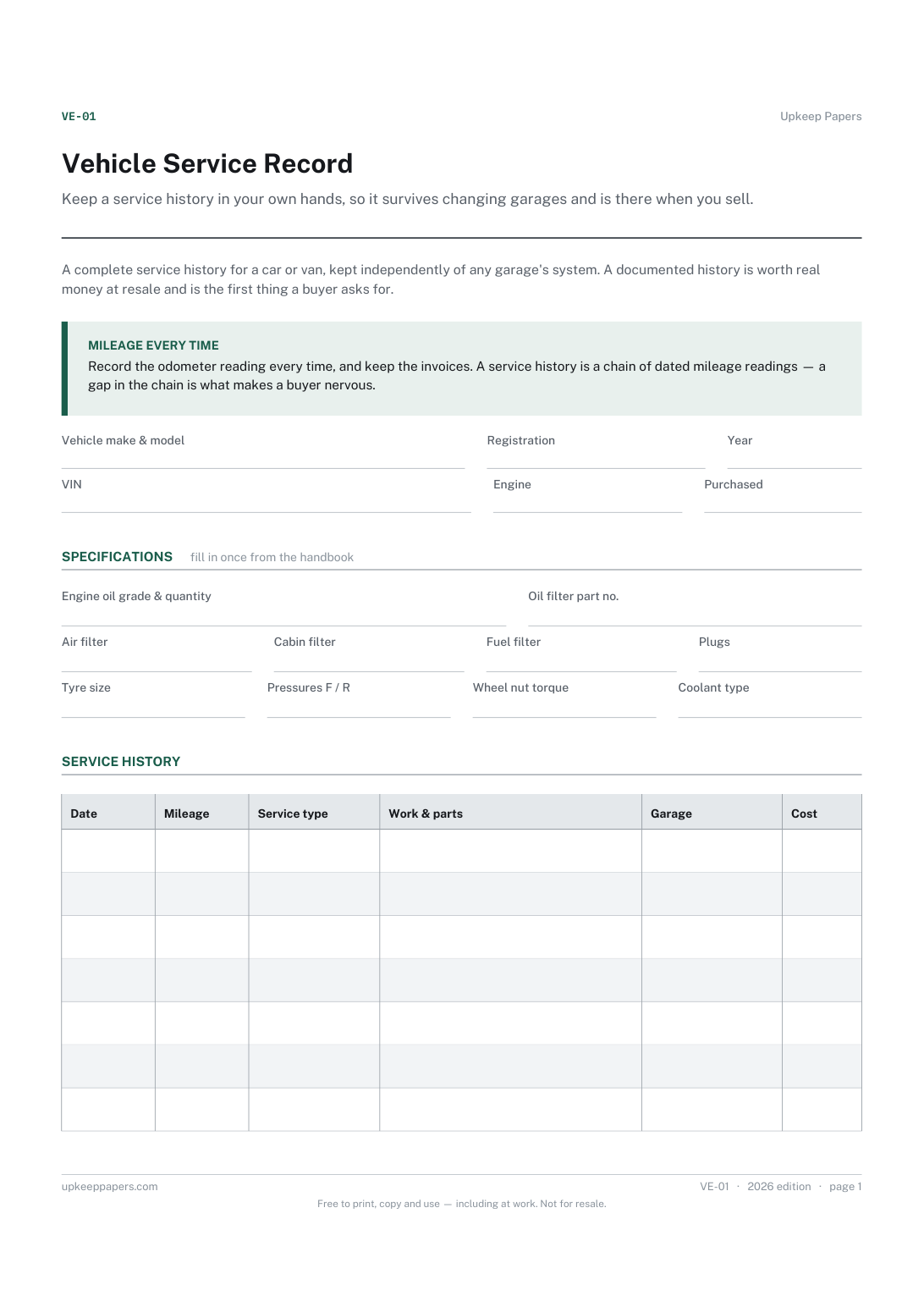
Vehicle Service Record
Keep a service history in your own hands, so it survives changing garages and is there when you sell.
VE-01 1 page
Everything here is free. Making it takes time and money. Everything here is free.
 Buy us a coffee
Category
Cars, motorcycles, motorhomes, trailers and boats — service history, schedules and pre-use inspections.
A documented service history is worth real money when you sell, and it is the first thing a buyer asks for. These sheets keep that history in your hands rather than in a garage's database.
Keep a service history in your own hands, so it survives changing garages and is there when you sell.
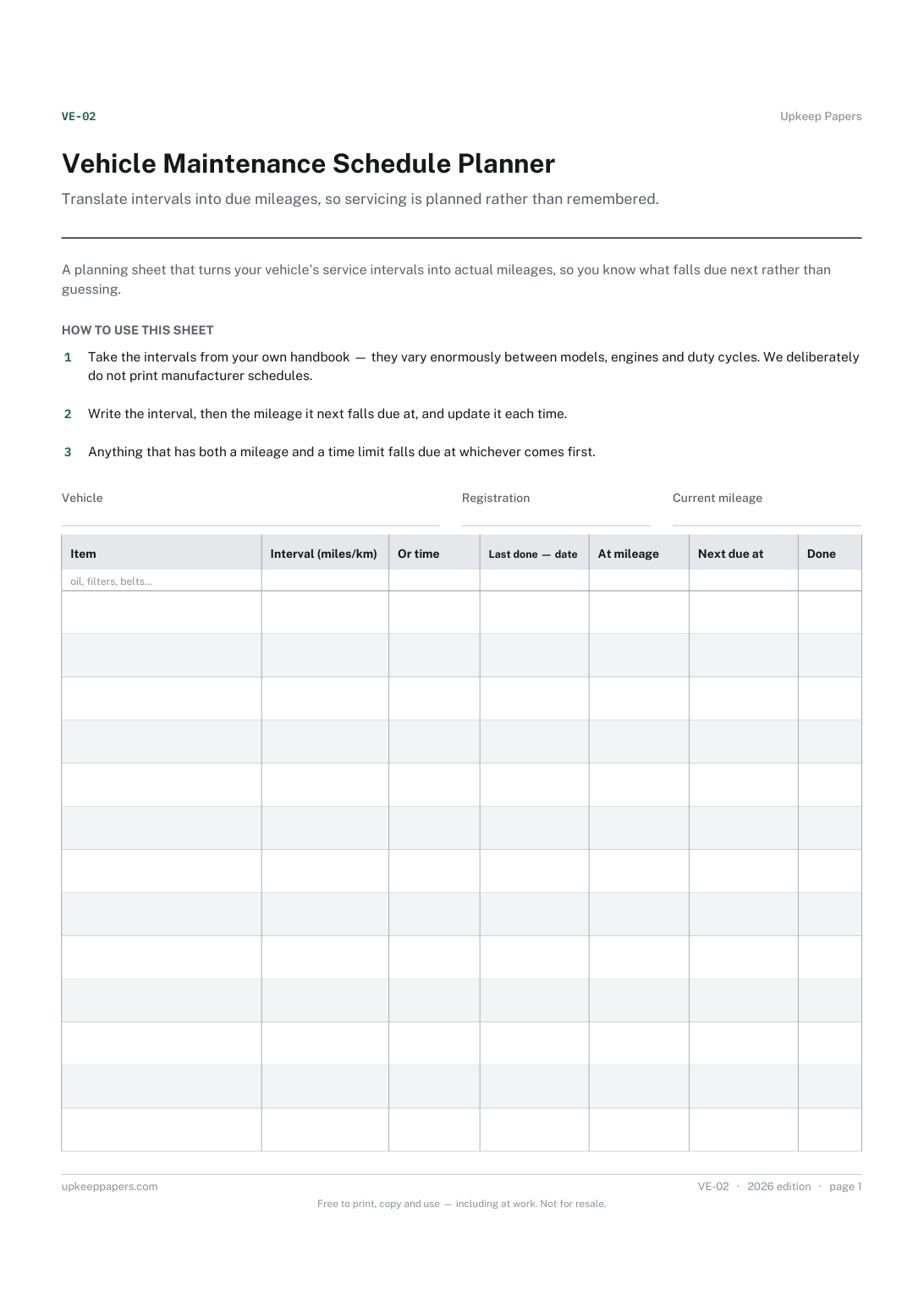
Translate intervals into due mileages, so servicing is planned rather than remembered.
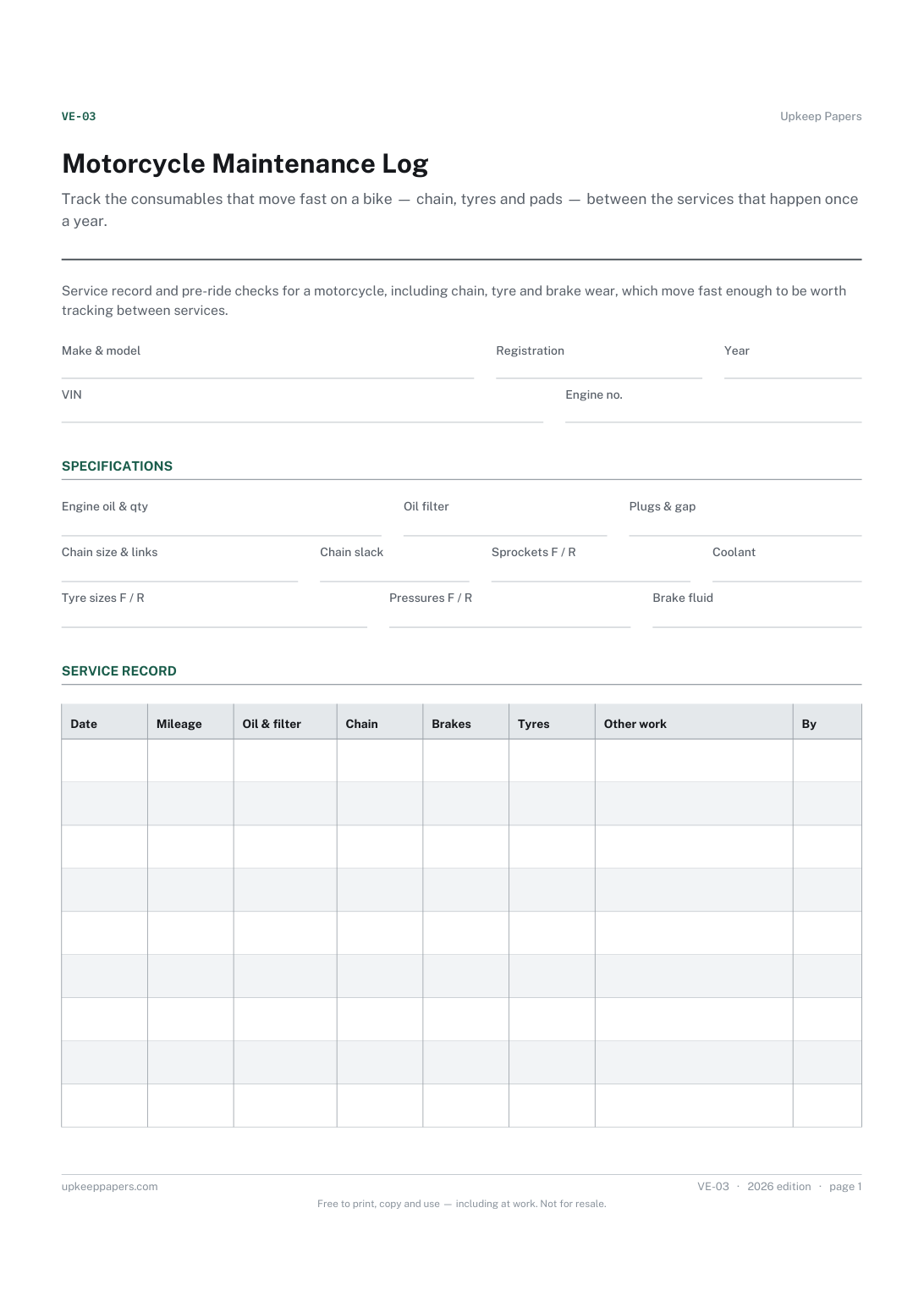
Track the consumables that move fast on a bike — chain, tyres and pads — between the services that happen once a year.
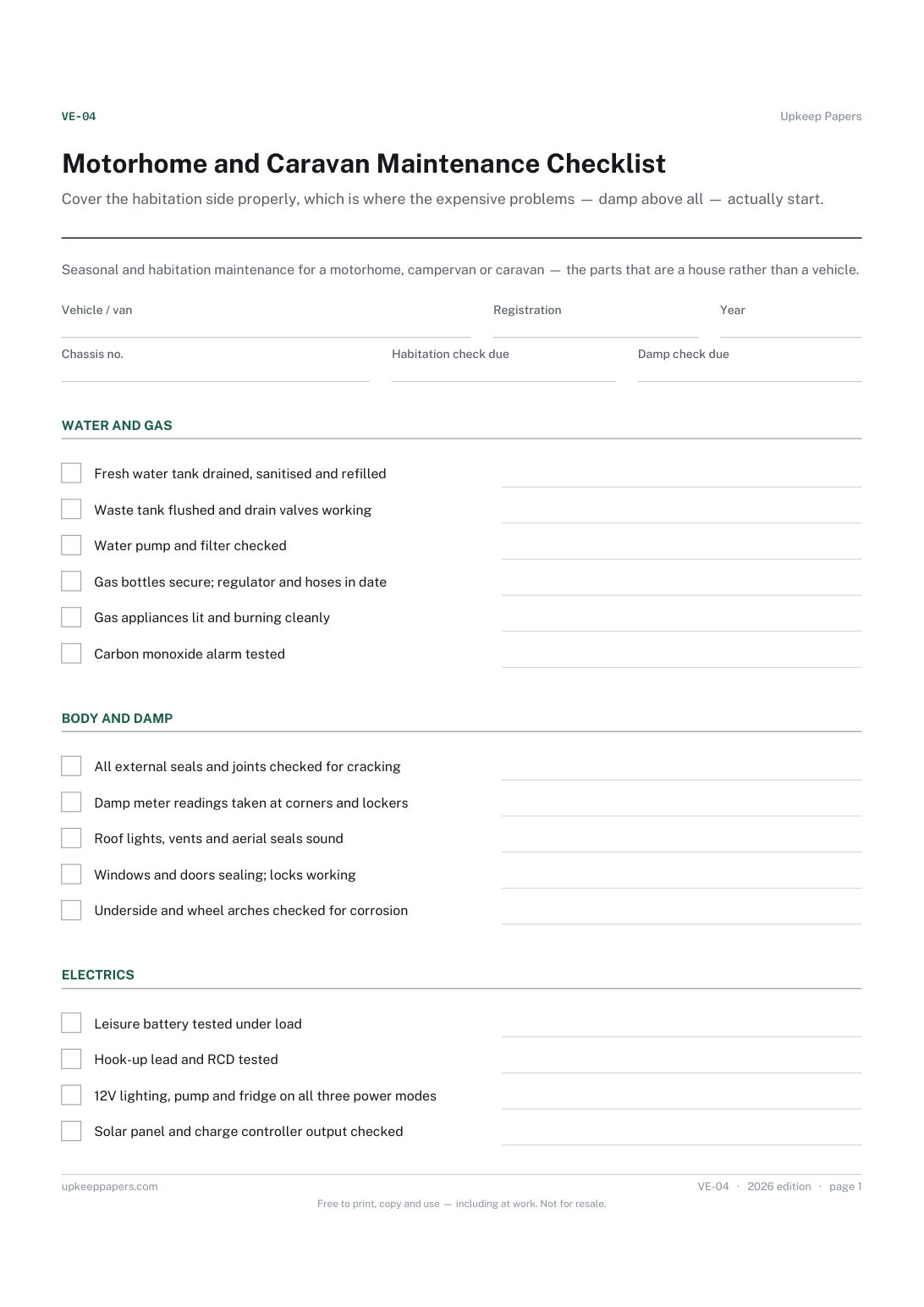
Cover the habitation side properly, which is where the expensive problems — damp above all — actually start.
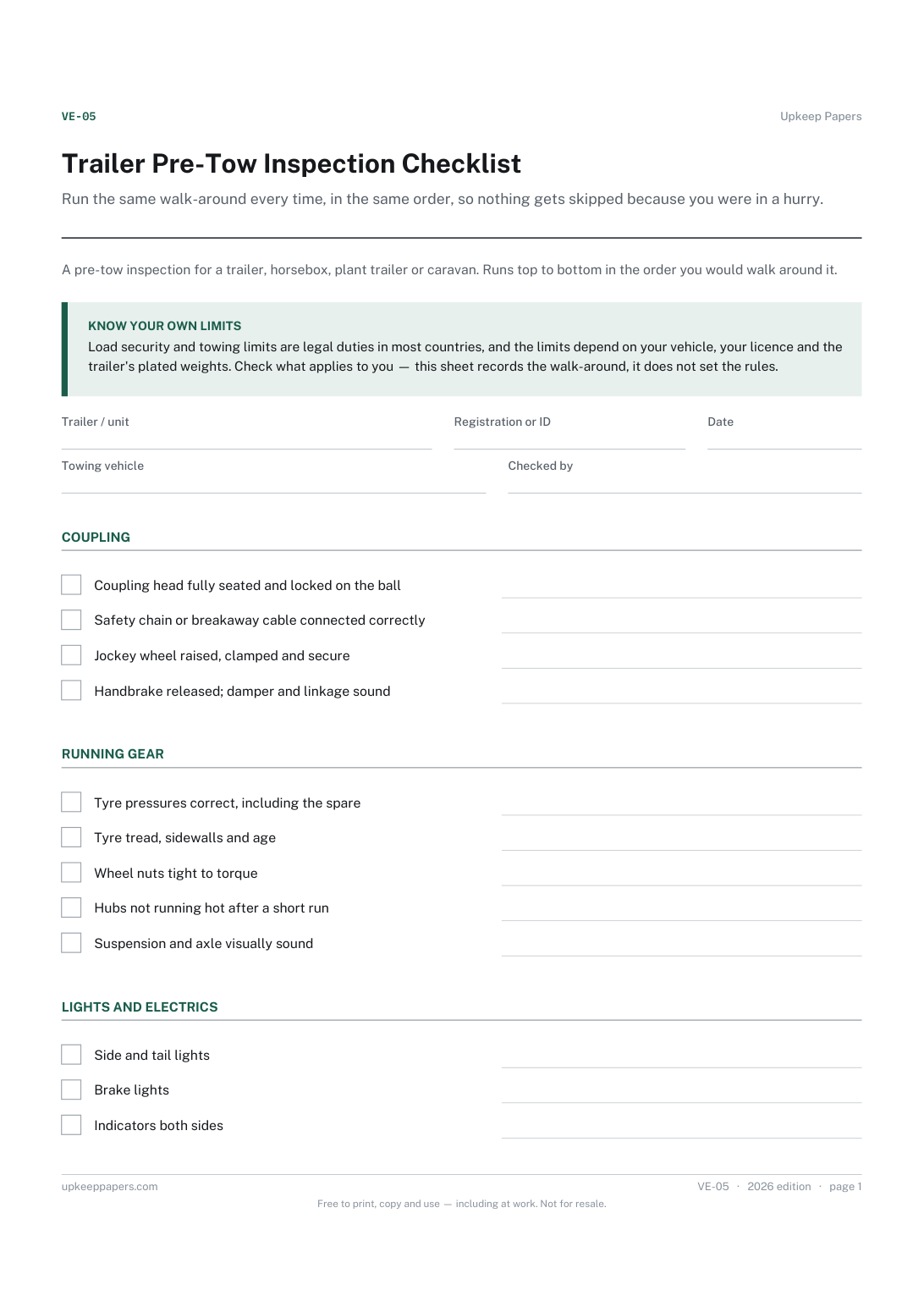
Run the same walk-around every time, in the same order, so nothing gets skipped because you were in a hurry.
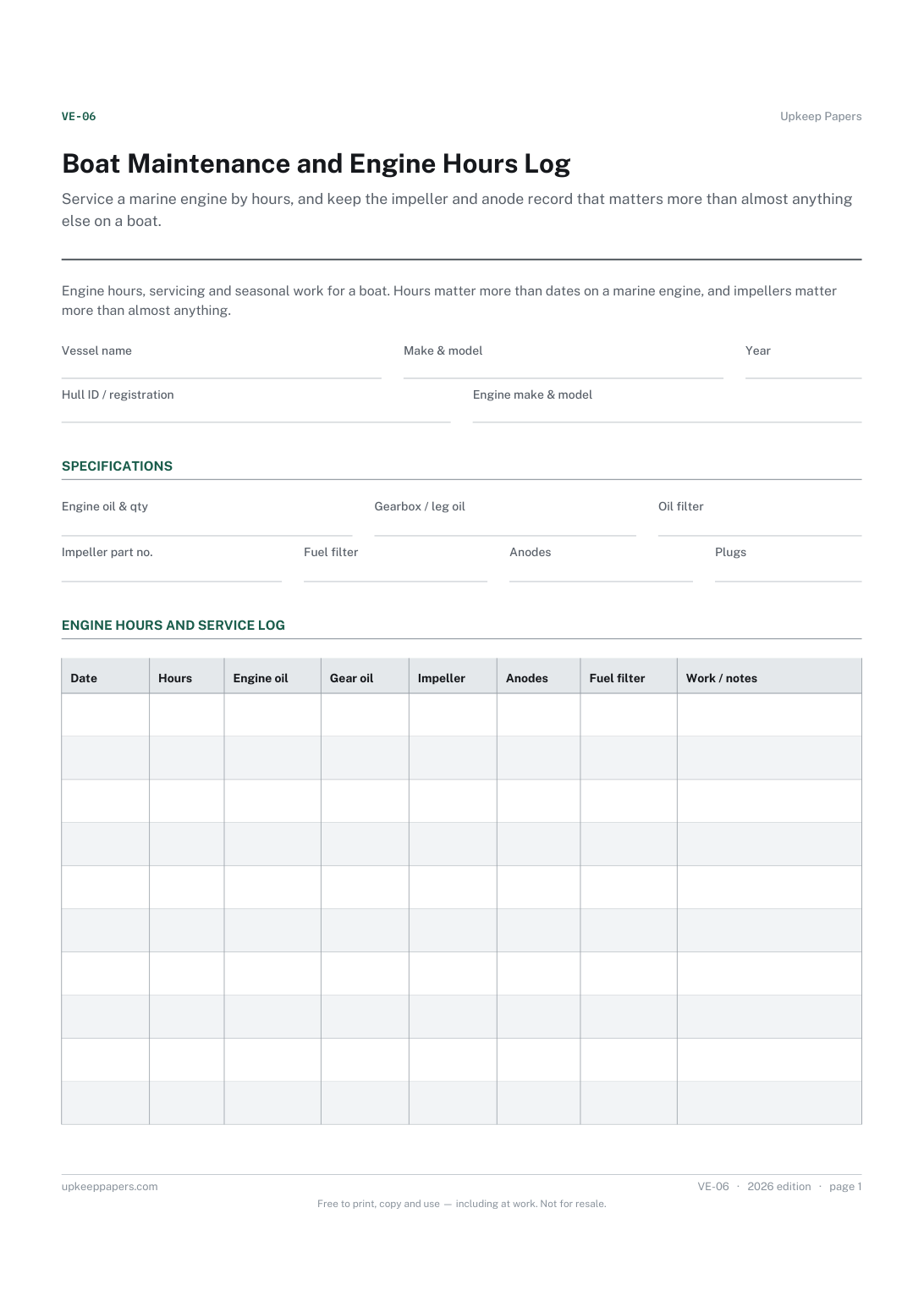
Service a marine engine by hours, and keep the impeller and anode record that matters more than almost anything else on a boat.
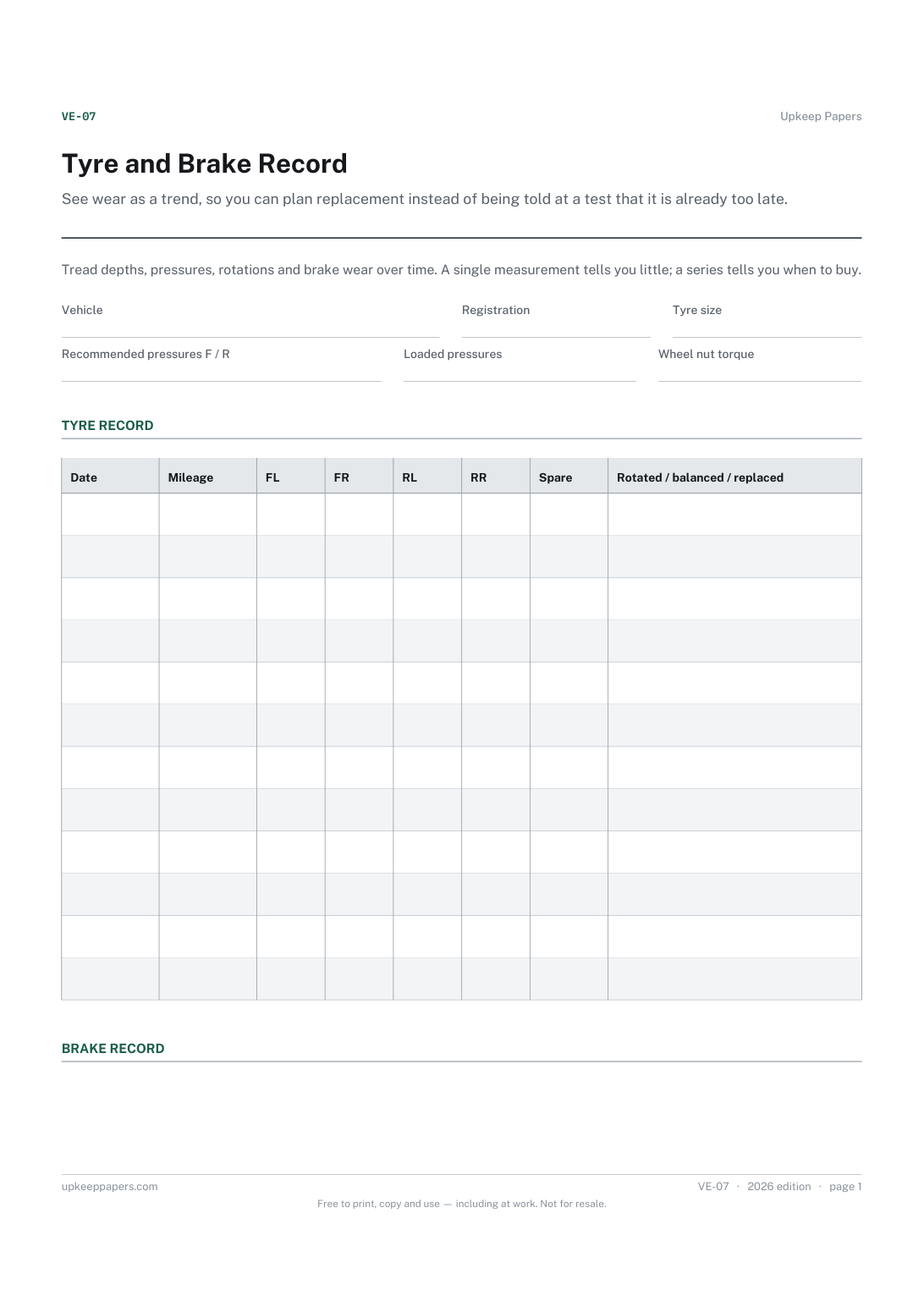
See wear as a trend, so you can plan replacement instead of being told at a test that it is already too late.
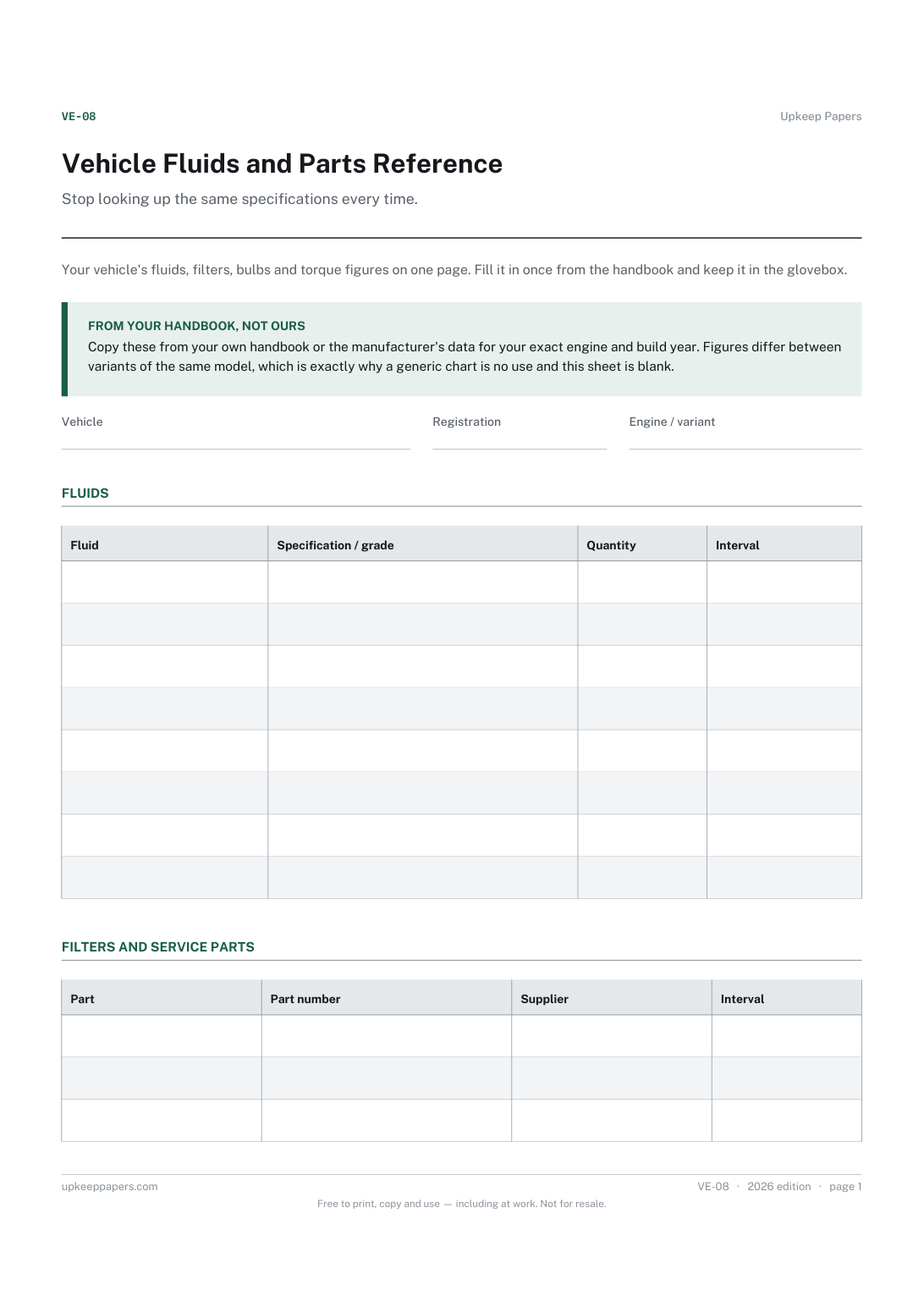
Stop looking up the same specifications every time. Fill it in once from the handbook and keep it with the vehicle.
Track servicing against distance and record chain wear, which is what decides whether a cheap chain change becomes an expensive cassette.
Fill in once the details you are asked for by a garage, an insurer, a parts counter or a hire firm and can never find.
Keep the single most asked-about piece of a vehicle's service history in a form a buyer can actually read.
Put the price in writing before the work starts, which is what prevents most garage disputes.
Record the check before driving and the journeys after it on one sheet per day.
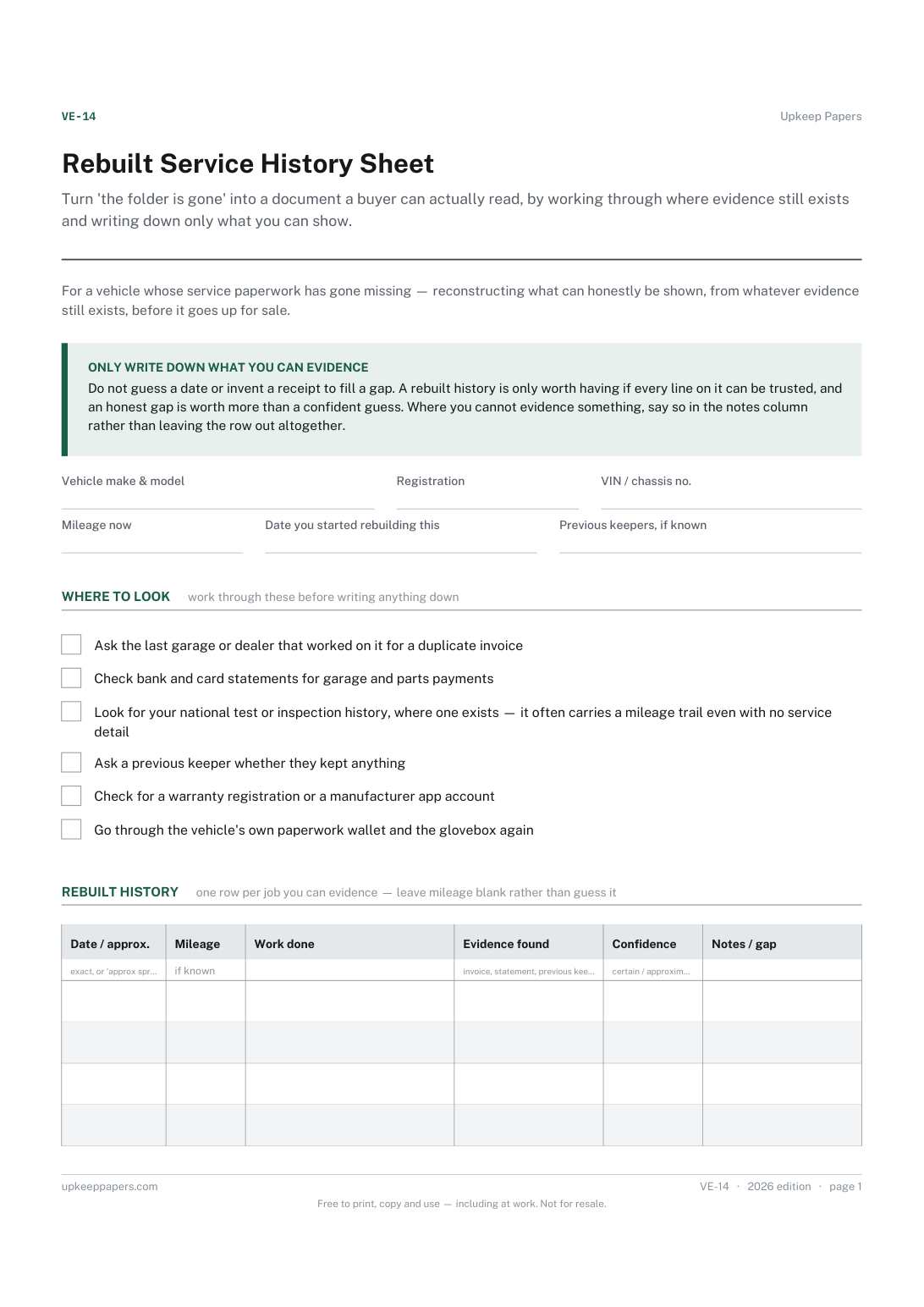
Turn 'the folder is gone' into a document a buyer can actually read, by working through where evidence still exists and writing down only what you can show.
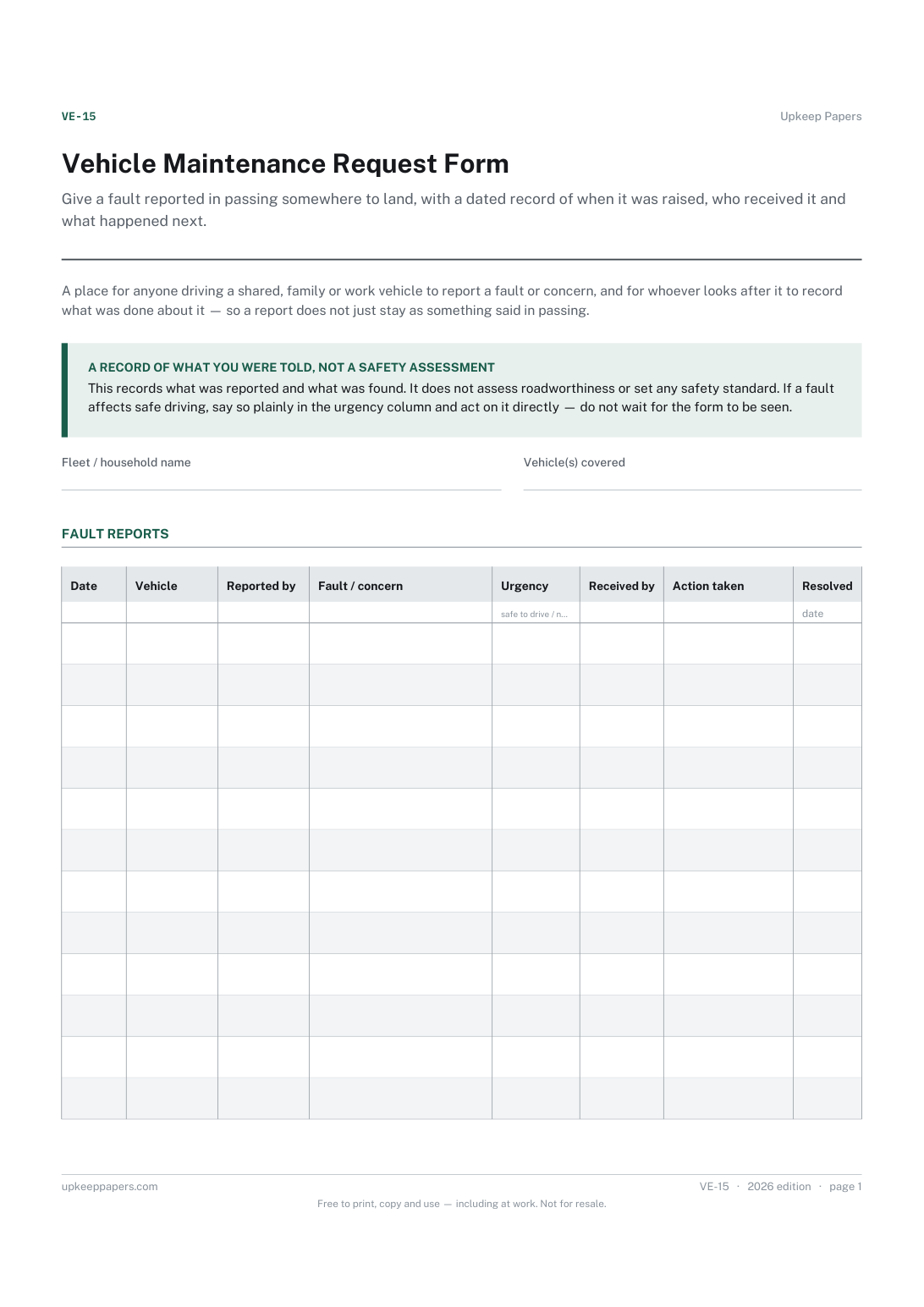
Give a fault reported in passing somewhere to land, with a dated record of when it was raised, who received it and what happened next.
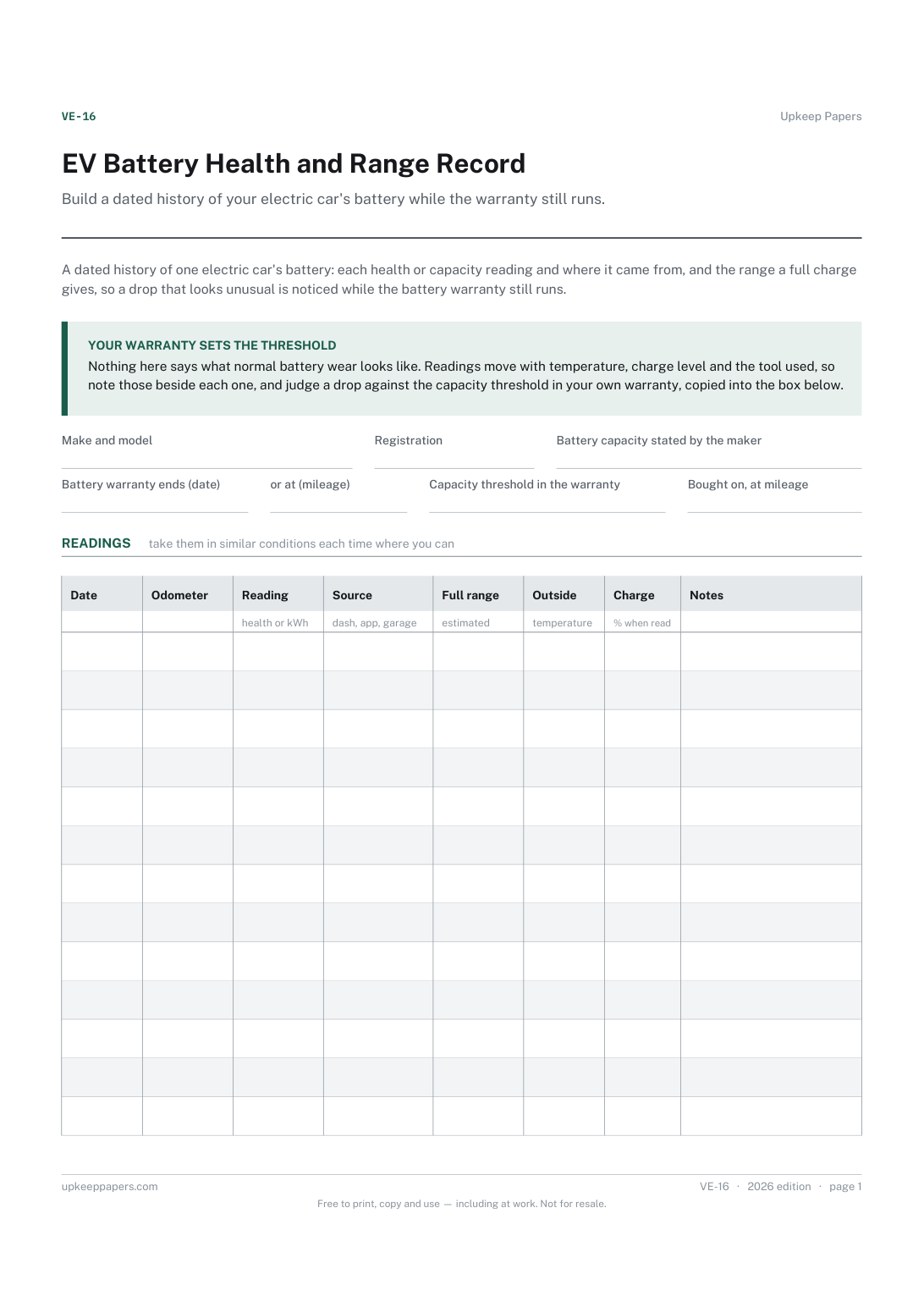
Build a dated history of your electric car's battery while the warranty still runs. An unusual drop then stands out against your own earlier readings.
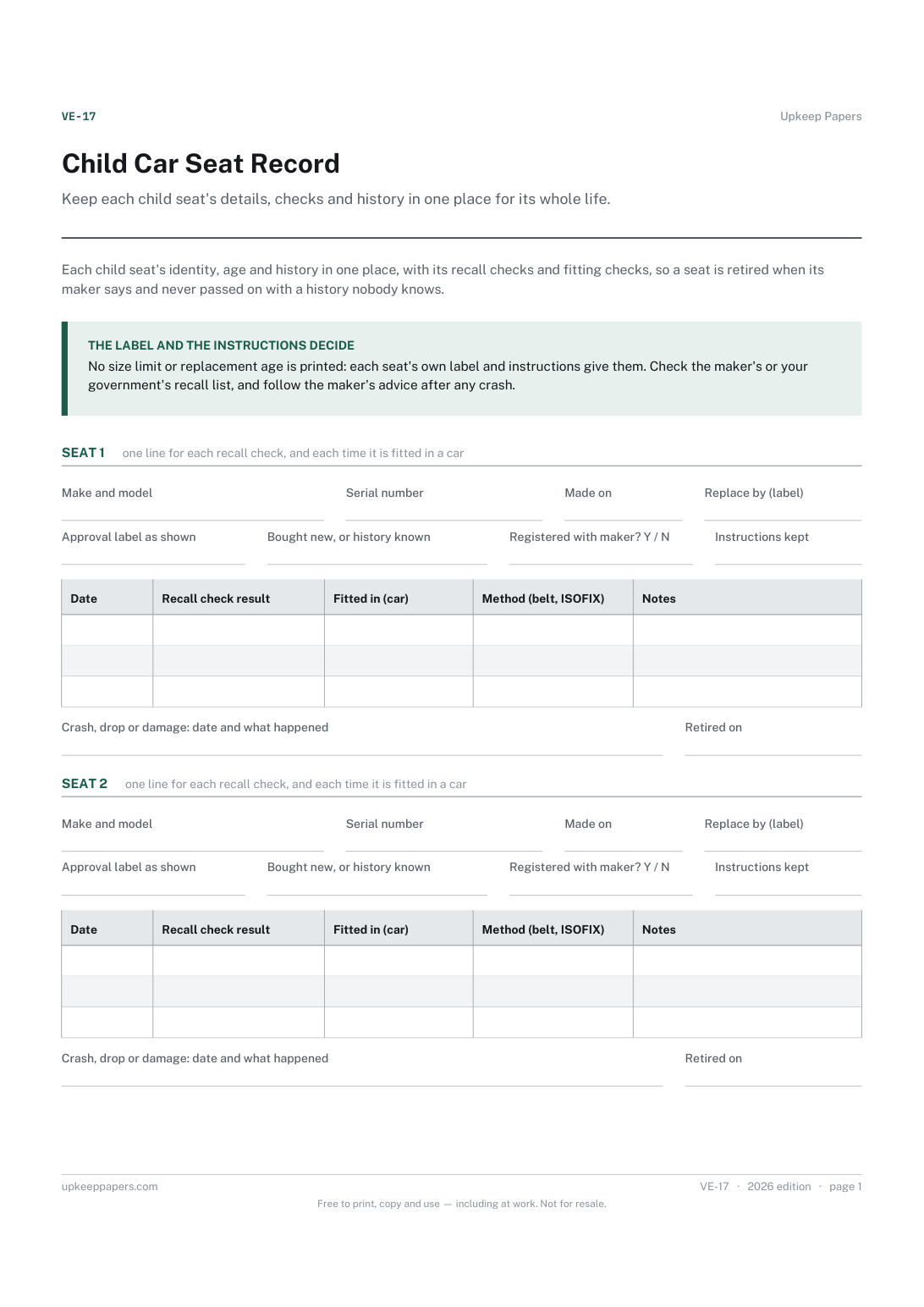
Keep each child seat's details, checks and history in one place for its whole life. A seat is retired on time and never passed on without its story.
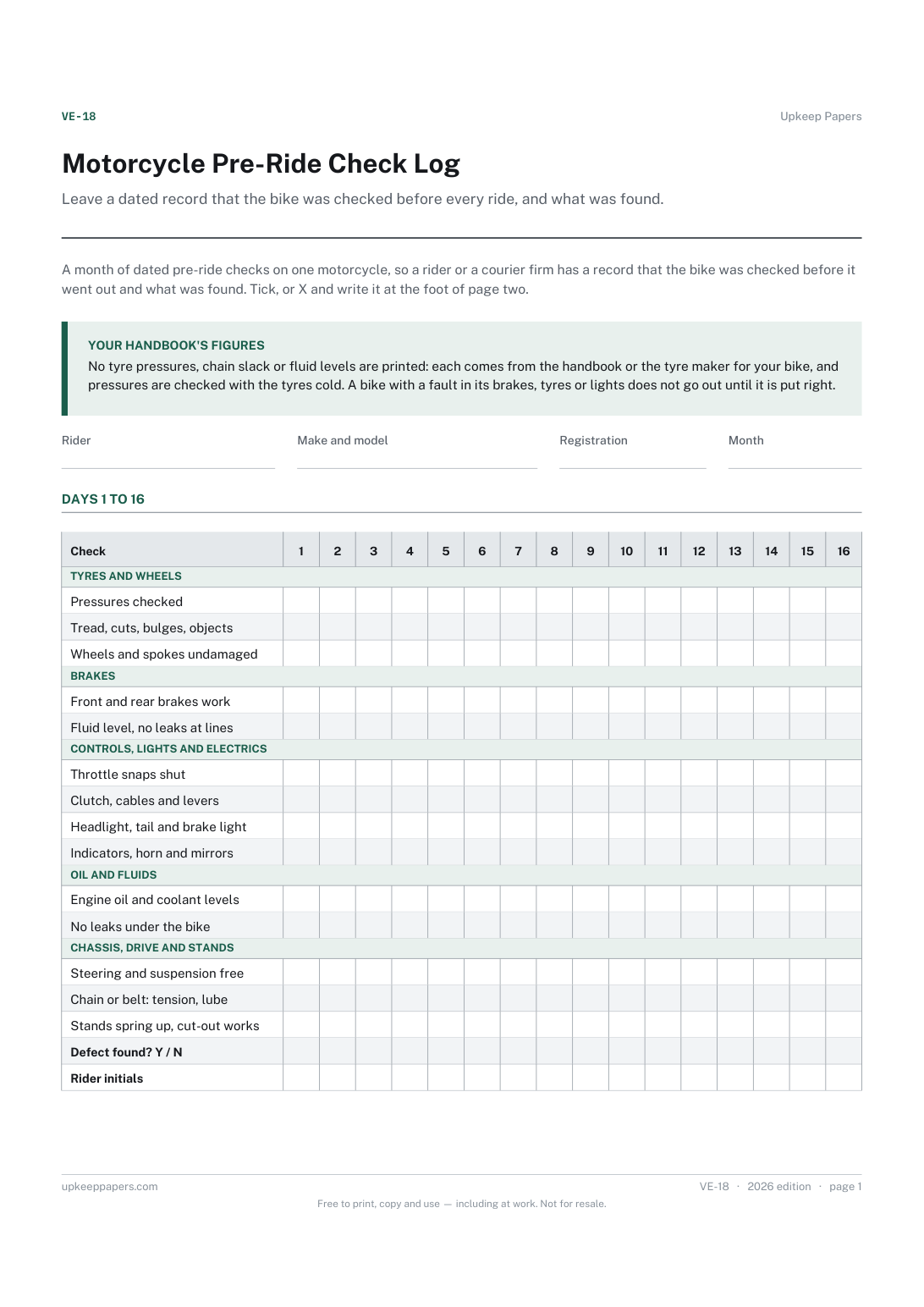
Leave a dated record that the bike was checked before every ride, and what was found. Useful to a courier firm with several bikes and riders.
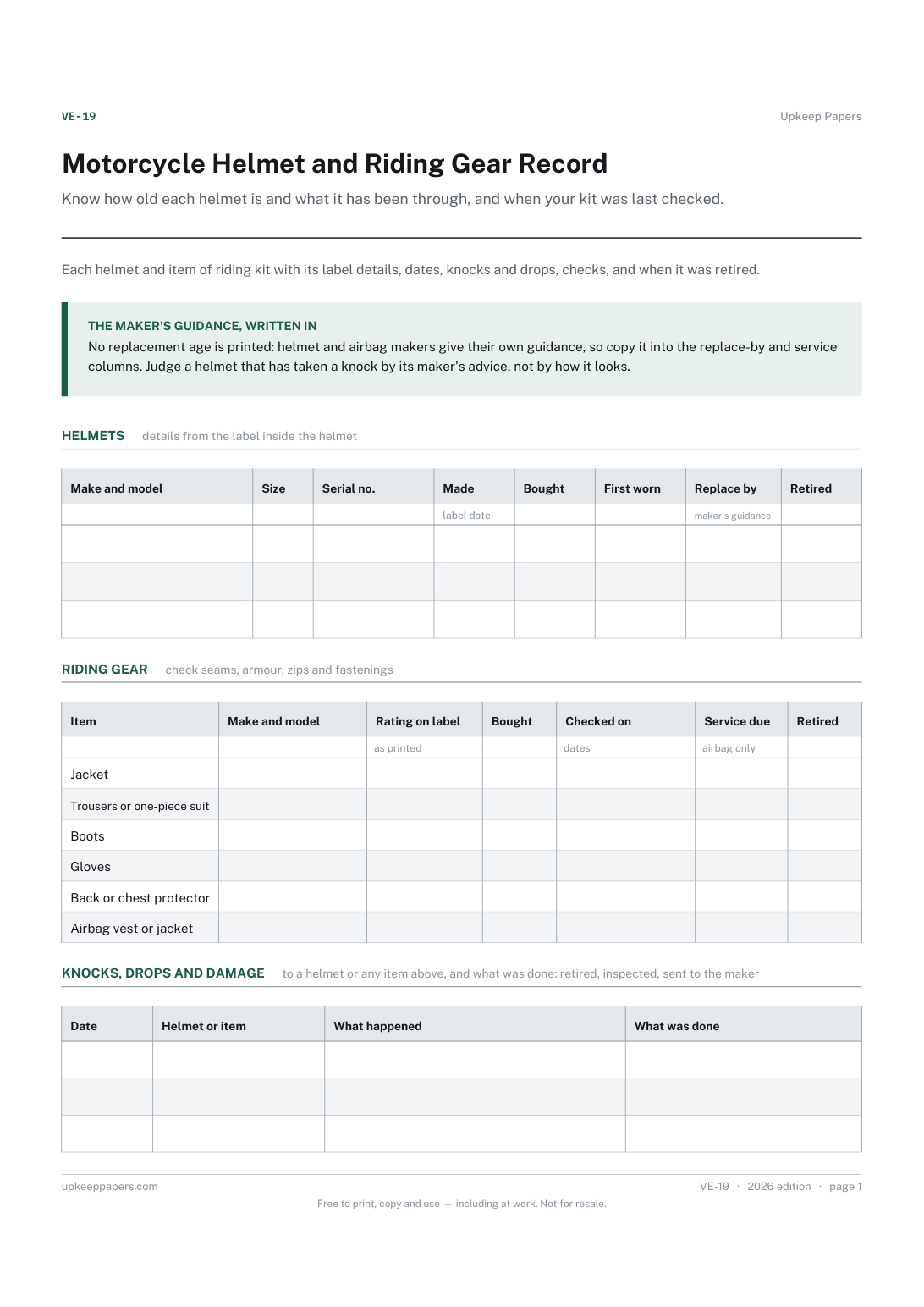
Know how old each helmet is and what it has been through, and when your kit was last checked. A knocked or aged helmet is then replaced, not kept out of habit.
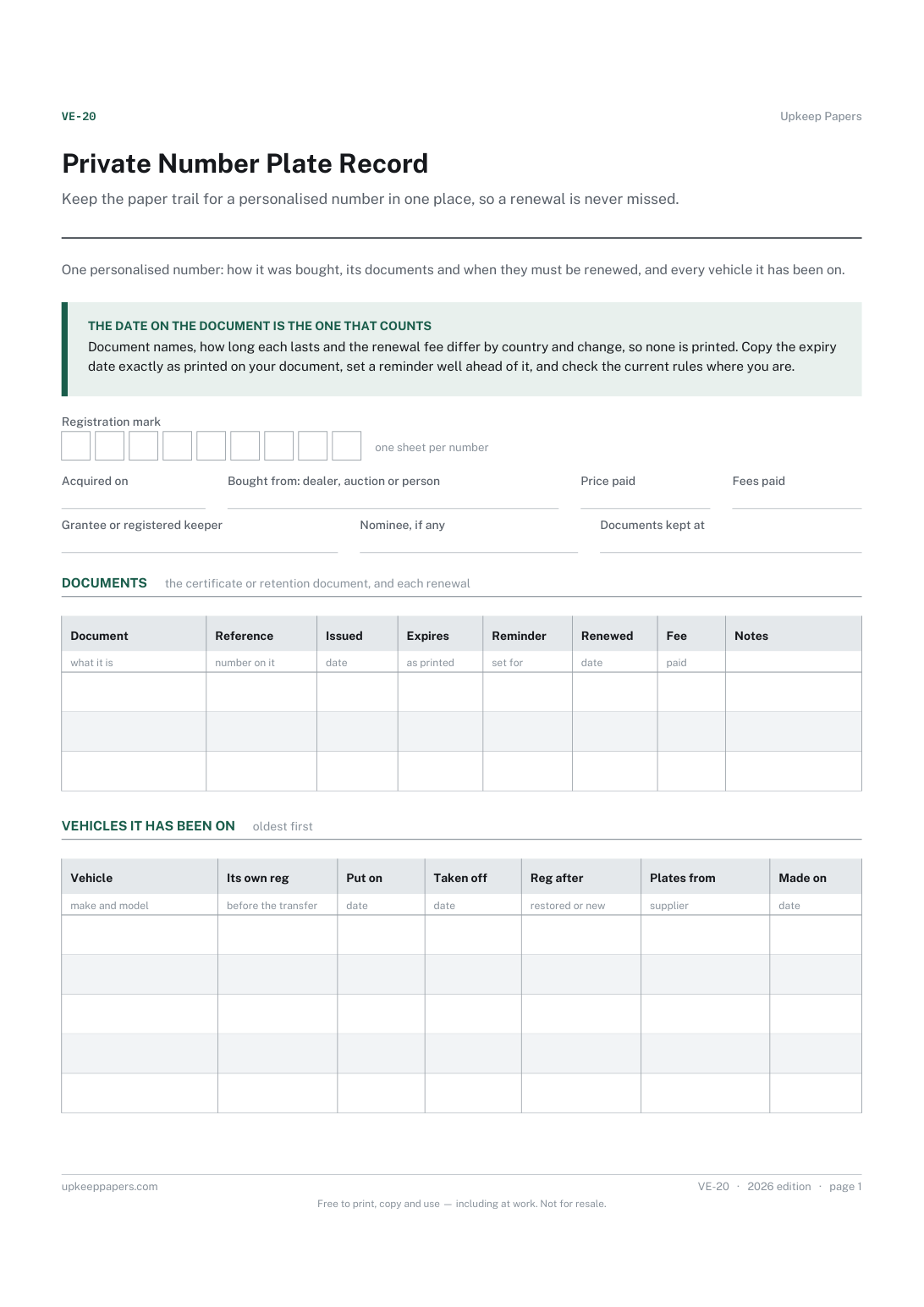
Keep the paper trail for a personalised number in one place, so a renewal is never missed. Every vehicle it has been on is listed, with the registration each was given back.
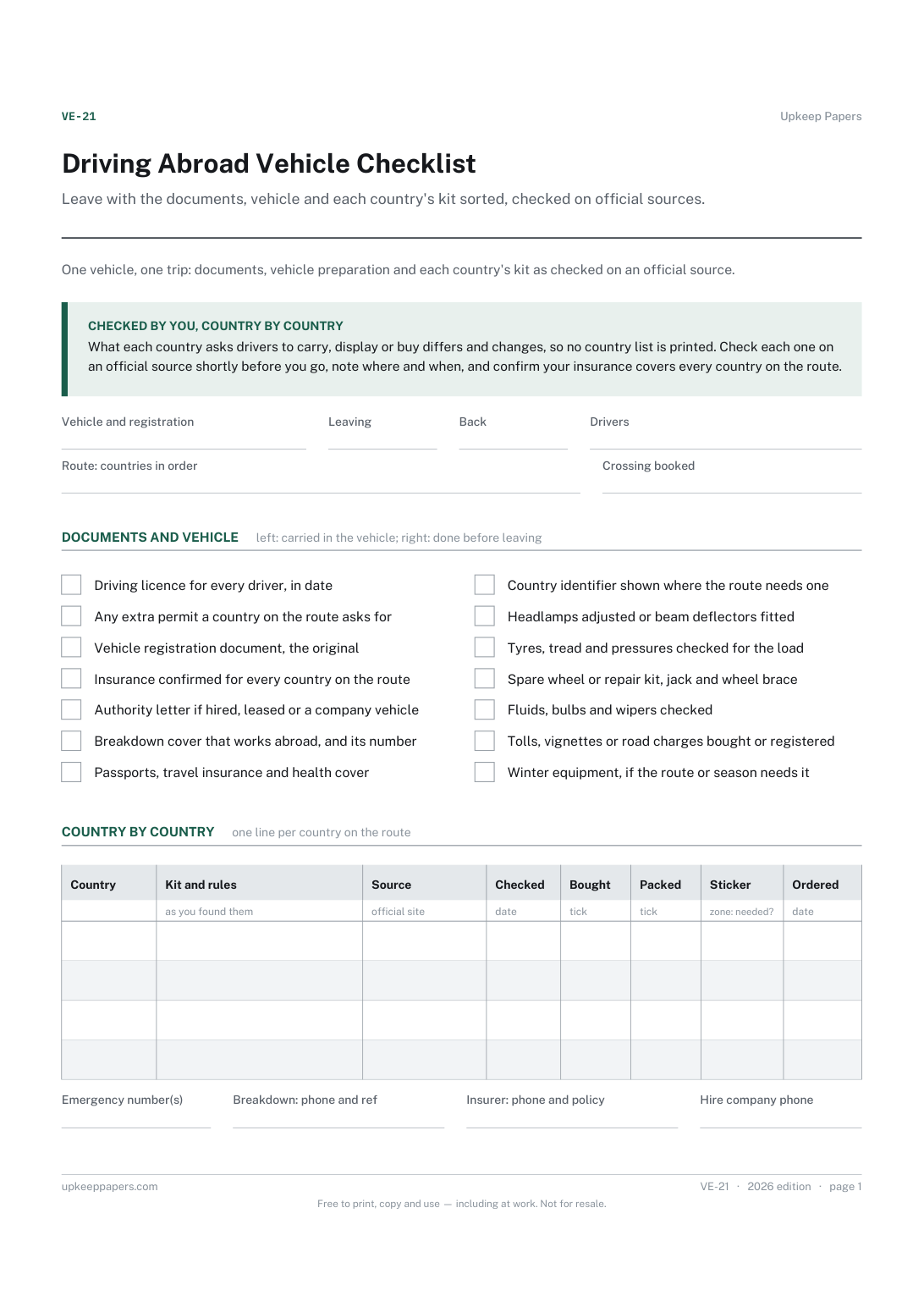
Leave with the documents, vehicle and each country's kit sorted, checked on official sources. Each country gets its own line, with where and when you checked it.
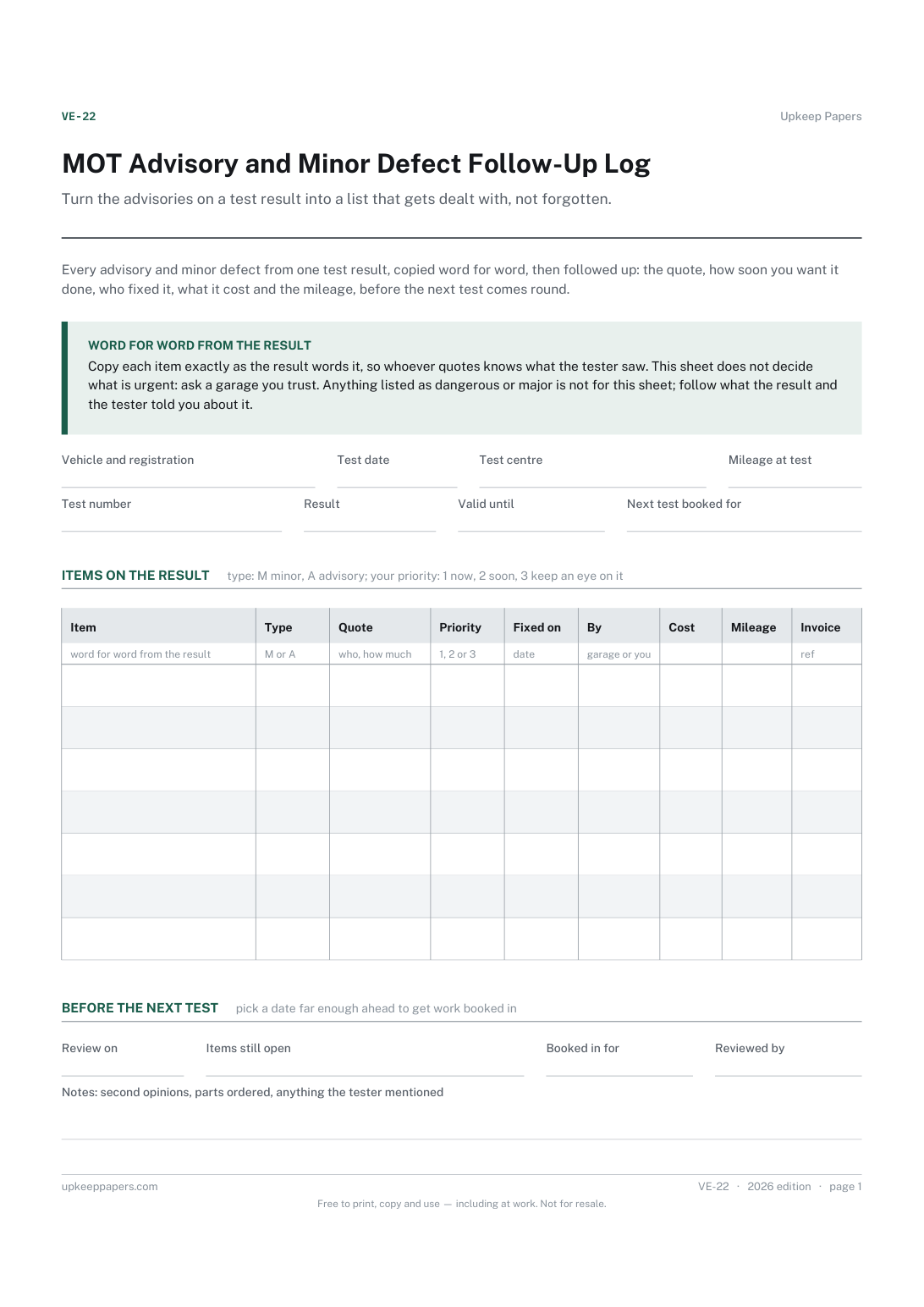
Turn the advisories on a test result into a list that gets dealt with, not forgotten. The review before the next test shows what is still open while there is time to book it in.
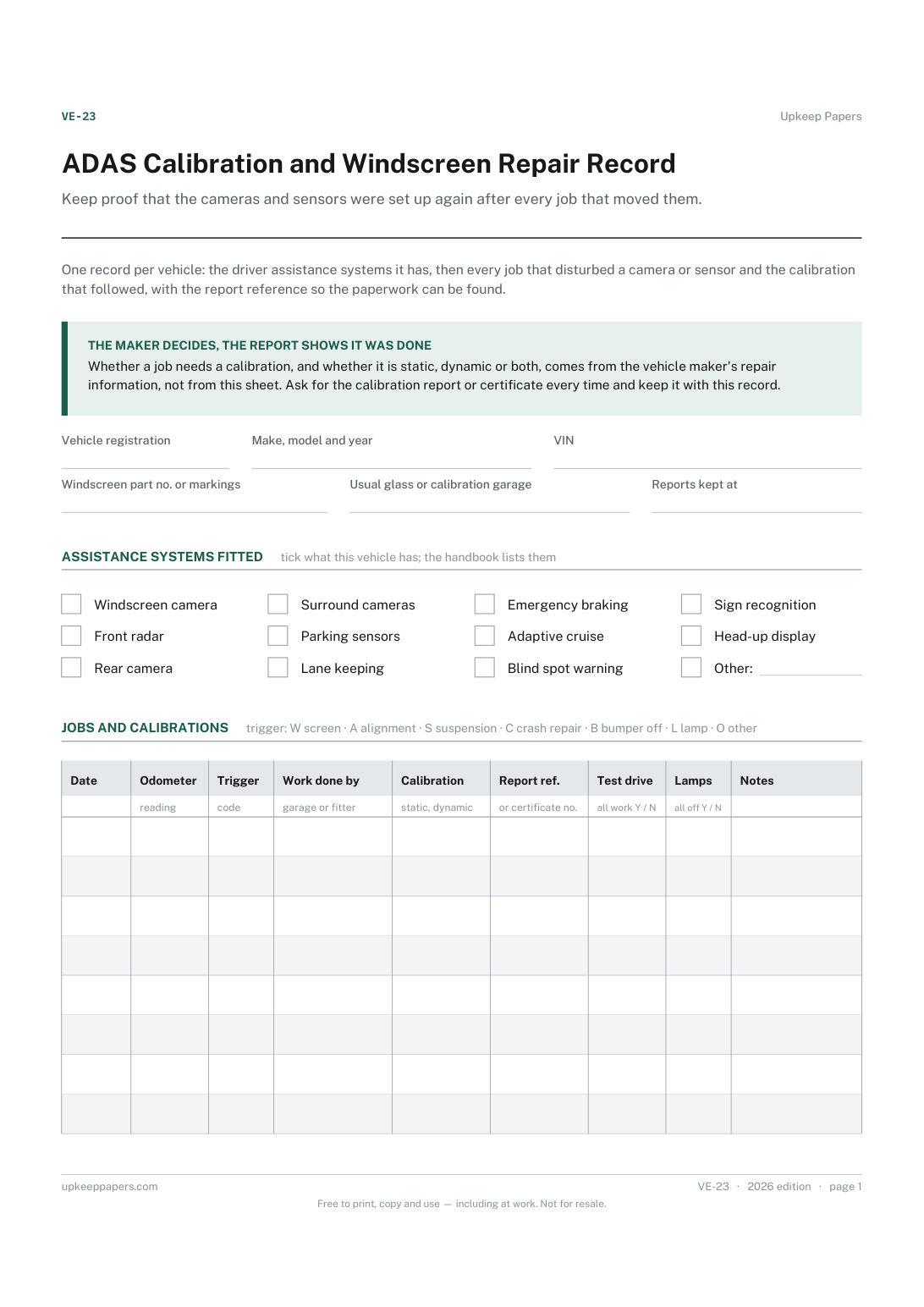
Keep proof that the cameras and sensors were set up again after every job that moved them. The report reference on each line finds the certificate again when someone asks for it.
Reading
What a service history actually consists of, how stamped books and digital records differ, what a private buyer looks for, and how to handle gaps honestly.
Elsewhere in the library
The paperwork that covers the whole building — service history, registers, warranties and the seasonal rounds.
Heating, hot water, ventilation, drainage and water supply — the fixed systems that need servicing on a schedule.
Alarm tests, extinguisher checks and the records that prove they happened.
Mowers, saws, generators, washers, compressors and tractors — hour-based servicing and the part numbers you can never find.
Pools, hot tubs and private water supplies — chemistry logs and test records.
Maintenance logs, periodic inspections and changeover checklists for let property.
Vaccination and health records, sitter instructions and the emergency details somebody else would need if you were not there.
Trailers, horseboxes, caravans and boats — annual service records, pre-use inspections and the towing figures you should never be guessing at.
Inventories, service logs and the working paperwork a small workshop, a trade or a van actually runs on.
Cleaning schedules, rotas, deep-clean checklists and the dated records a cleaning routine is supposed to leave behind.
The paperwork of changing address — moving, viewing, snagging, renovating and switching the supplies over.
Sowing plans, plot layouts, greenhouse logs, compost records and fruit tree histories — blank wherever the answer depends on where you garden.
Husbandry records for reptiles, amphibians, fish, small mammals and birds — the readings, feeds and weights that keep an animal well.
The sheet that goes out in the van: what was quoted, what was fitted, what it took and what the customer signed.
Job cards, parts, road tests and the paperwork that follows a car through a workshop from booking in to handing back.
Shifts, runs, checks and hours — for the people whose office is a vehicle.
Goods in, picked, packed, counted and despatched — the paper trail down the aisle.
Rooms turned round, guests arrived, faults reported and the shift handed over.
Prep done, tables planned, lines cleaned, waste counted and the till cashed up.
The till, the stockroom, the shelf edge and the routines that open and close the door.
Batches made, yields counted and where every ingredient came from.
Pitches let, hook-ups metered, blocks cleaned and the site walked.
What was done to whom, with what, and what they said about it last time.
The gig booked, the stage plotted, the set played and the show reported.
Firings, cuts, pours and settings — written down so the good one can be repeated.
Setup, times, tyres and fuel — the numbers that make the next session faster.
Team sheets, scorebooks, training plans and the club admin behind a fixture.
Rotas filled, halls booked, collections counted and volunteers looked after.
What kit exists, who has it, whether the backup ran and when the licence expires.
Units let, keys issued, payments tracked and loads moved.
Flock and herd records, medicine and movement books, and the application records that have to be produced when somebody asks.
Project planners, stash inventories and machine logs — for quilting, sewing, printing, modelling and selling what you make.
Shot lists, kit inventories and job records — for getting the shot, insuring the kit and finding out what the work actually pays.
Logbooks and trip plans for time spent outdoors — dives made, water paddled, rounds played.
Sheets for the hour you spend standing in front of a car you are thinking of buying, and for comparing it afterwards with the others you saw.
Inspection records for hives and colonies, built so this week's visit can be read against the last three.
Due-date charts and care records for horses and ponies, with the intervals left blank for the ones your own farrier, vet and dentist give you.
Visitor sign-in pages and key registers — who is in the building, who let them in, and what has not come back.
Per-fill fuel and cost records, kept unit-neutral so the same sheet works wherever you buy fuel and whatever your odometer reads in.
Kit checks, expiry dates and restocking — dated on paper and signed by whoever actually did them.
Logbooks for the things people do for the love of it, built to hold hours, conditions and the incident nobody wants to reconstruct from memory.
What is on the shelf, how much of it you want there, and what needs reordering before the recipe stops.
What seed you actually have, whether it still germinates, and what the plot really produced.
The dated, initialled rounds that show a space was actually attended to rather than merely meant to be.
Session logs and equipment records for training — what you did, and what your kit has done.
Itemised records for collections and valuables — what you own, what it cost, and what can be evidenced about it.
The paperwork a committee, a small office or a one-person project runs on — minutes, agendas, actions, decisions, risks and issues.
The money paperwork a one-person business runs on — invoices, estimates, receipts, orders, price lists and the sheets that show what a job really cost.
The records a small employer actually needs: hours, leave, rotas, reviews, training and the two checklists that make starting and leaving orderly.
Permits, method statements, diaries and inspection registers for building sites, yards and anywhere work is done under control.
Blank sheets for a classroom, a tutor, a club or an evening's babysitting — registers, marks, seating, reading and trips.
The paperwork a sports club, a society or a village hall committee runs on — members, subs, kit, duties, scores and fixtures.
Sheets with no subject at all — blank logs, blank checklists, tally sheets and report forms you head yourself.
Records for a working kitchen — what a dish costs, what was made from which batch, what was checked, cleaned and thrown away.
Two sheets for going somewhere: a packing list you write once and reuse, and a road trip planned day by day.

Every sheet, binder, game and puzzle on Upkeep Papers is free to download, with no email and no account. Making them is not free: each one takes days of research, design and checking, and the site costs money to run. If something here saved you time, you can buy us a coffee. It is entirely optional: nothing is locked, and nothing changes if you don’t.
Buy us a coffee Opens PayPal in a new tab. Any amount, and nothing changes if you would rather not.