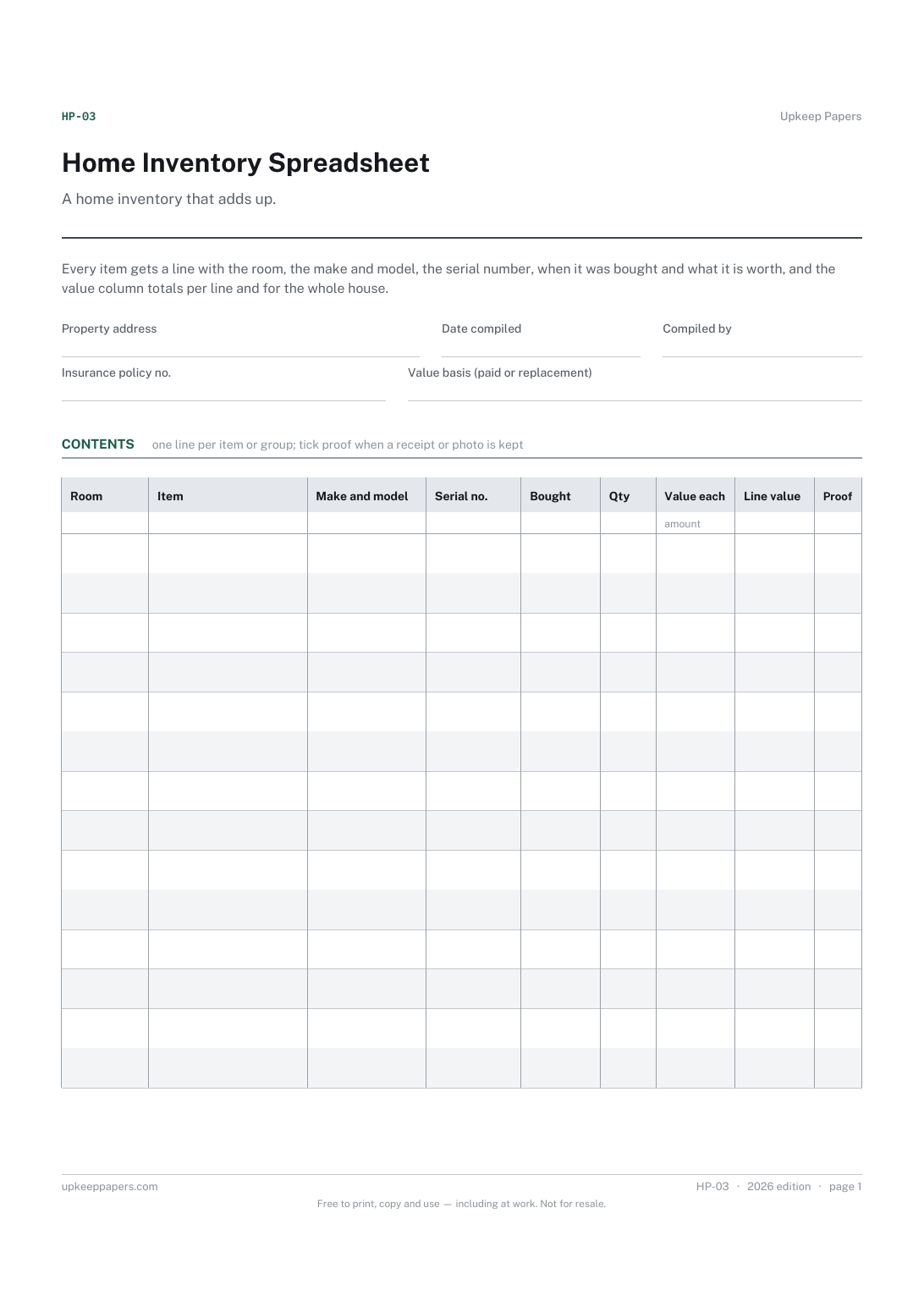
Home Inventory Spreadsheet
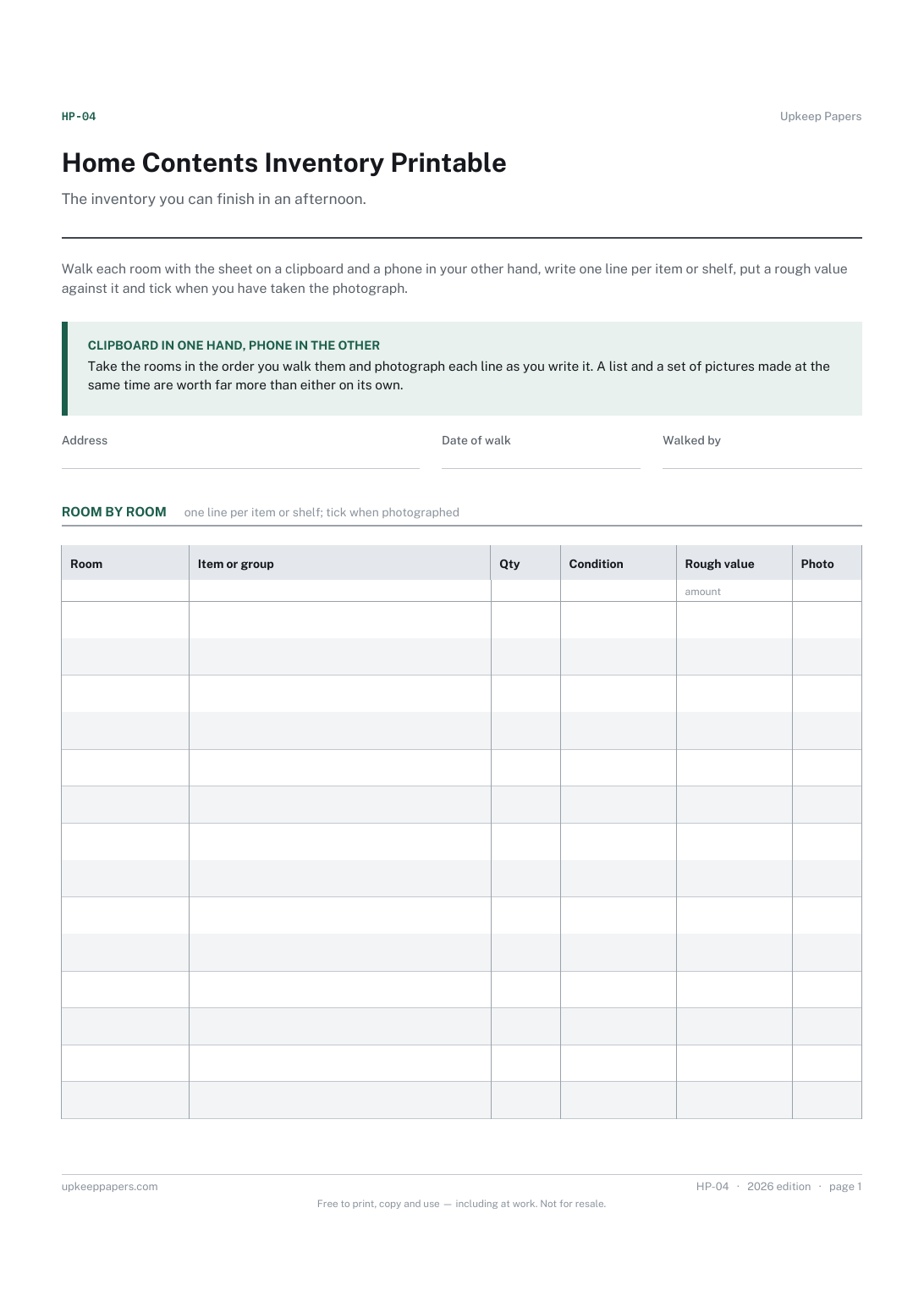
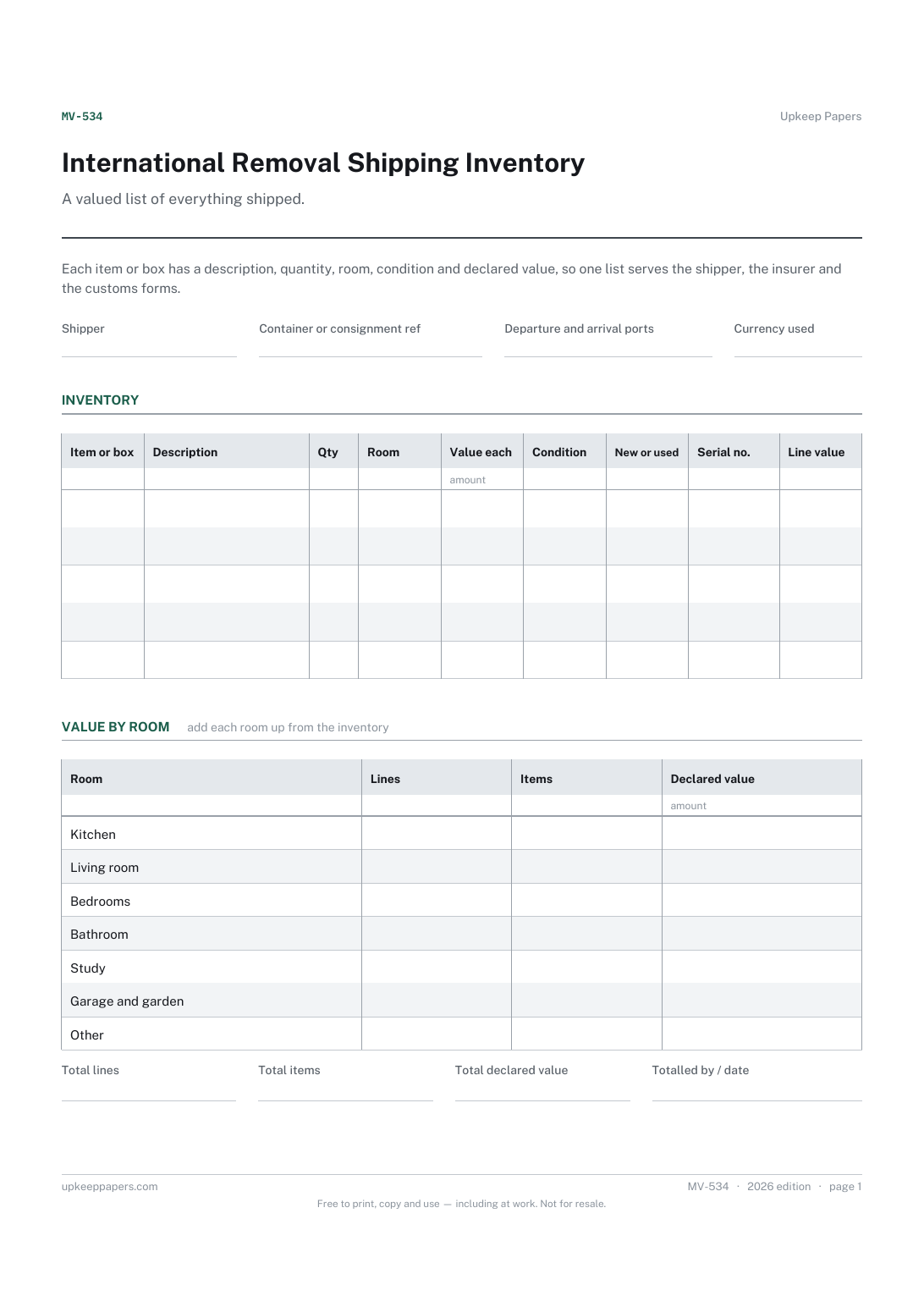
The total value of the contents, worked out from the lines rather than guessed.
HP-03 Inventory Home & property PDF Excel Online
Everything here is free. Making it takes time and money. Everything here is free.
 Buy us a coffee
Fillable PDF forms
Every PDF on this site comes in two versions: one to print and write on, and one with real form fields — text boxes and tick boxes — that you fill in on screen and save. Open it in any PDF reader; nothing needs installing and nothing is sent anywhere.
Fillable fields use Helvetica, because the PDF standard limits form text to a fixed set of fonts; the printed labels keep the site's own typeface. Save the file after filling it in — a browser's built-in PDF viewer sometimes prints the fields but forgets them, so use a proper reader if you want to keep the result.
The resources most often wanted as a form: something with labelled boxes that is filled in once and kept. Each also works online, on the page.
The total value of the contents, worked out from the lines rather than guessed.
What is in each room, in the order you walked it.
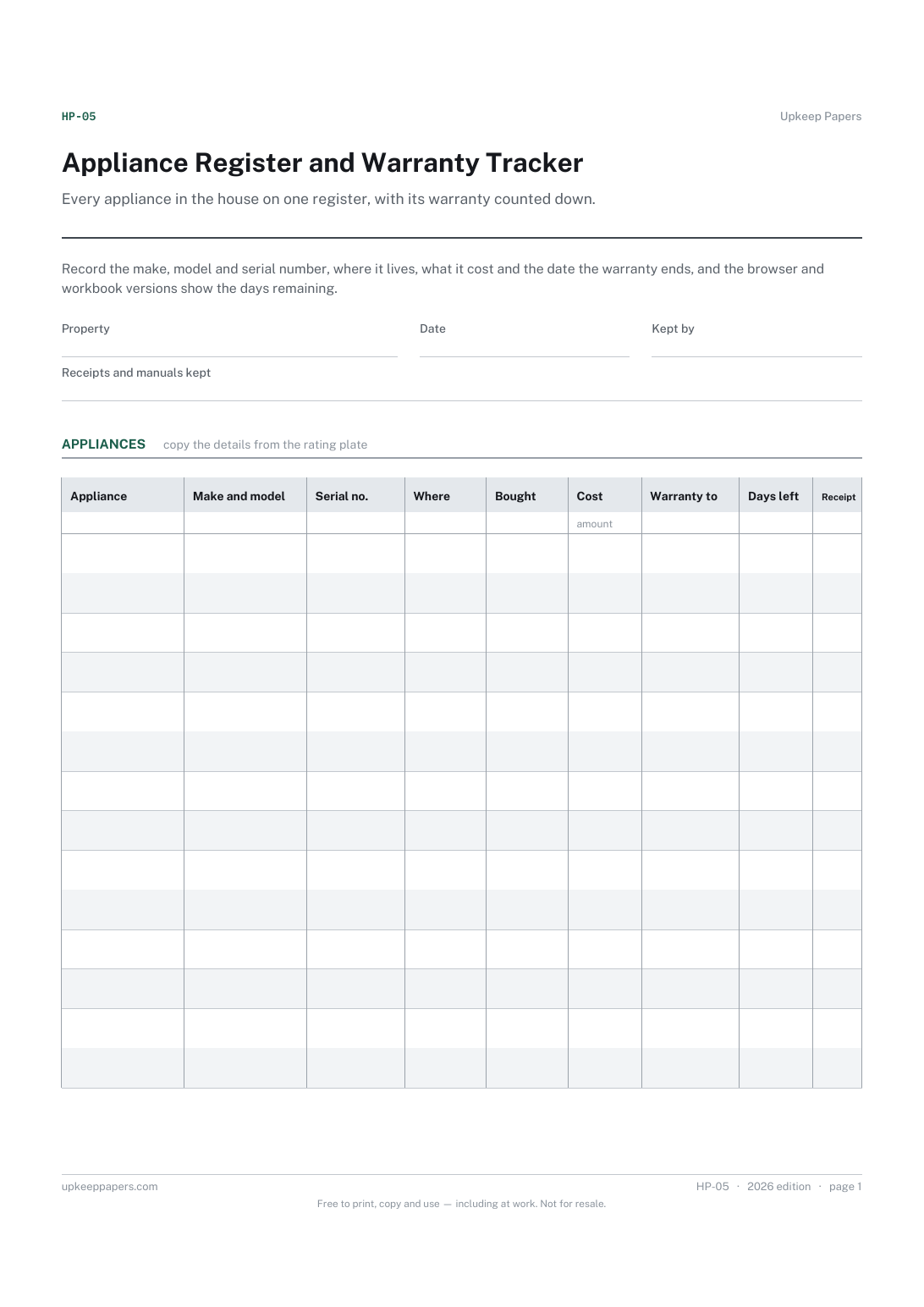
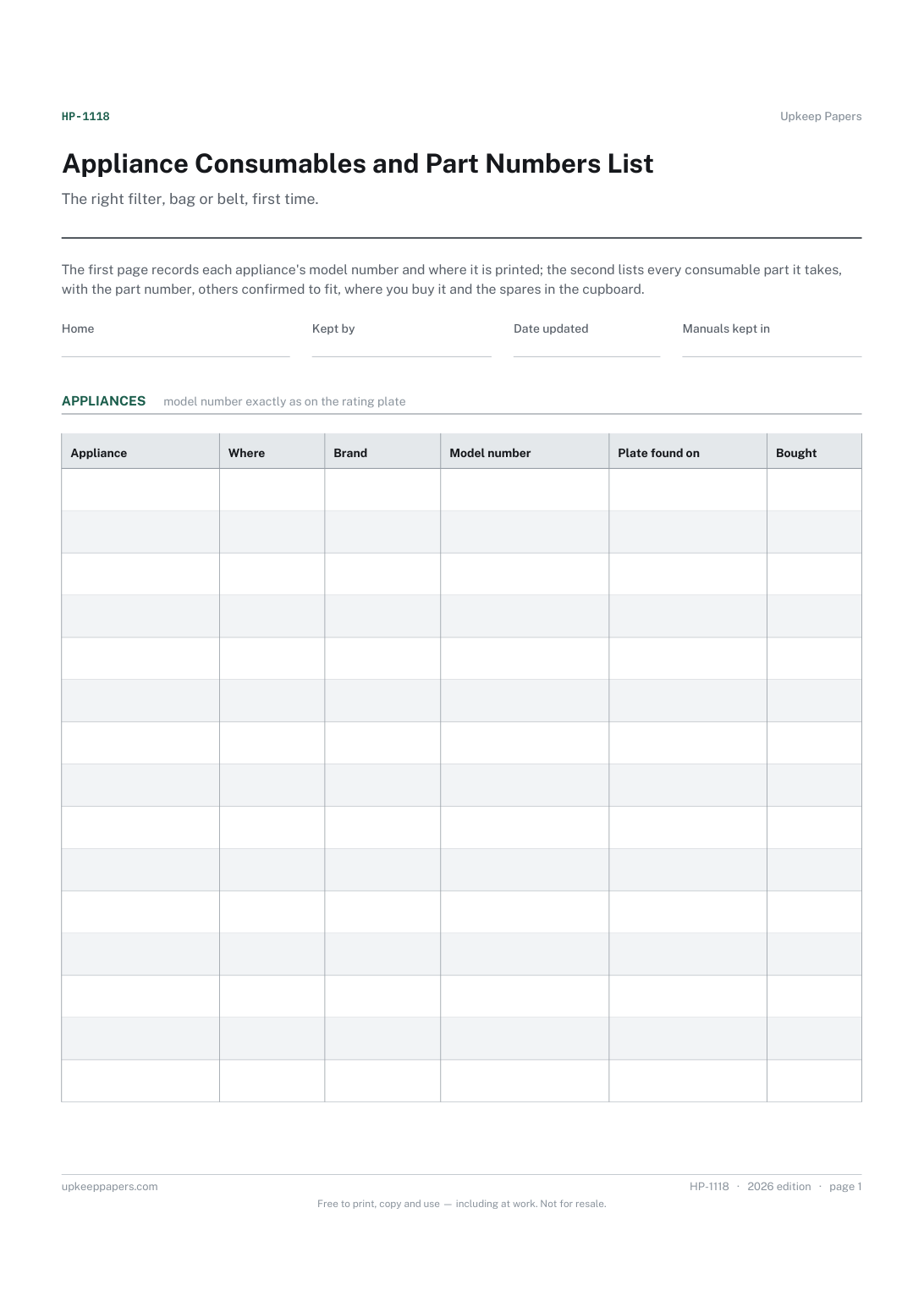
Make, model and serial number for every appliance, ready for a repair call.
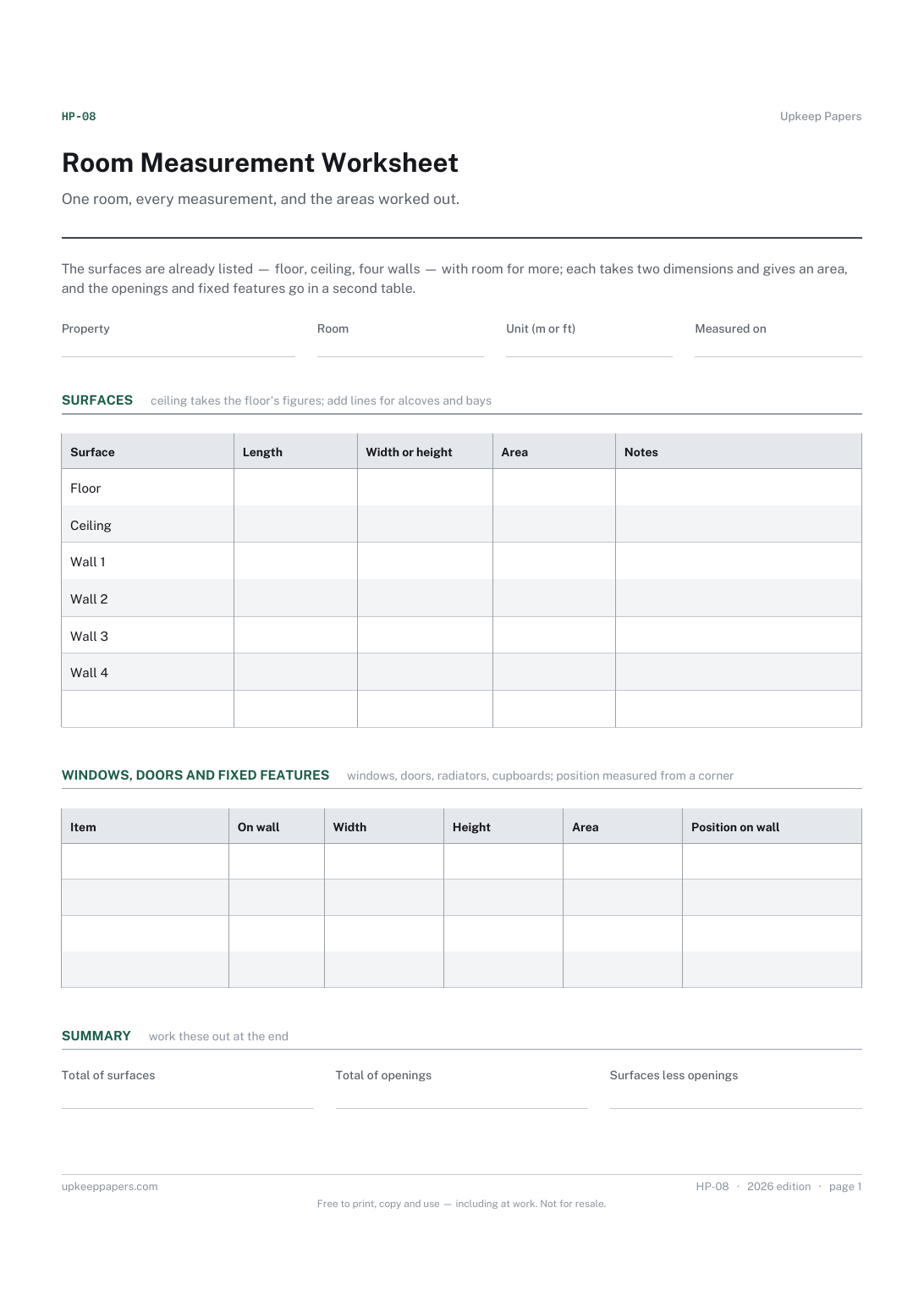
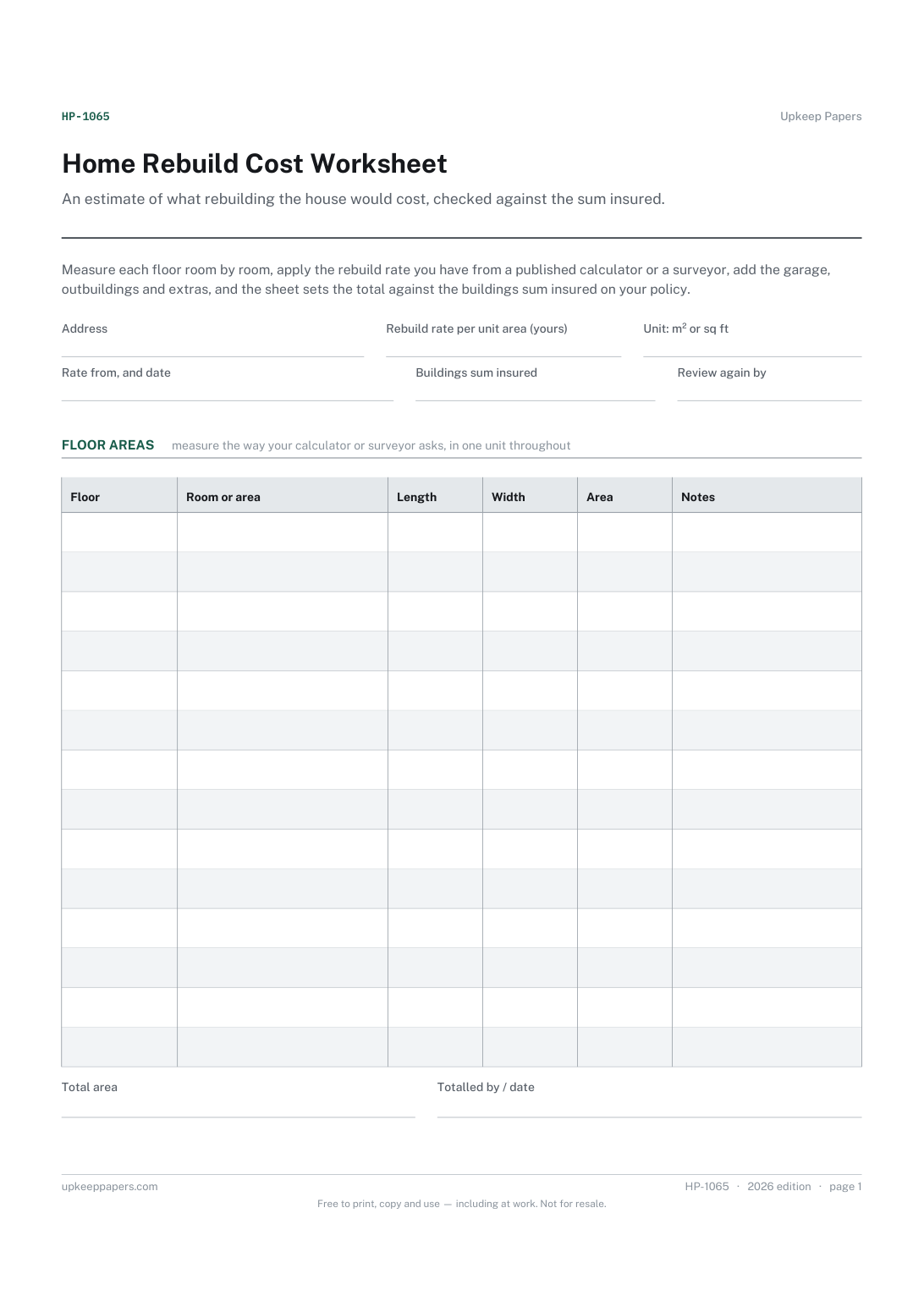
Length and width of each surface, and the area each comes to.
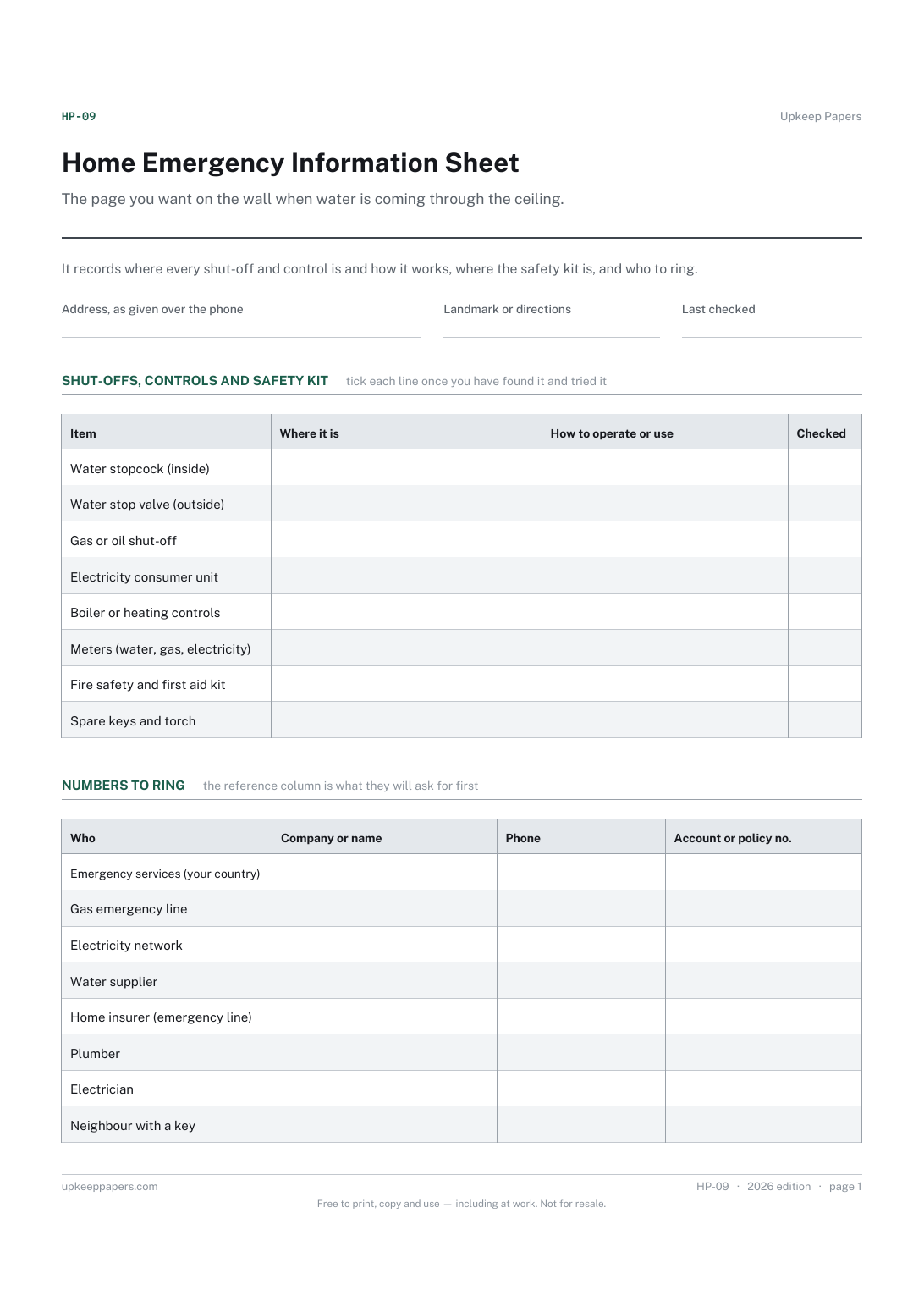
Where the stopcock, the gas or oil shut-off and the consumer unit are, and how to use them.
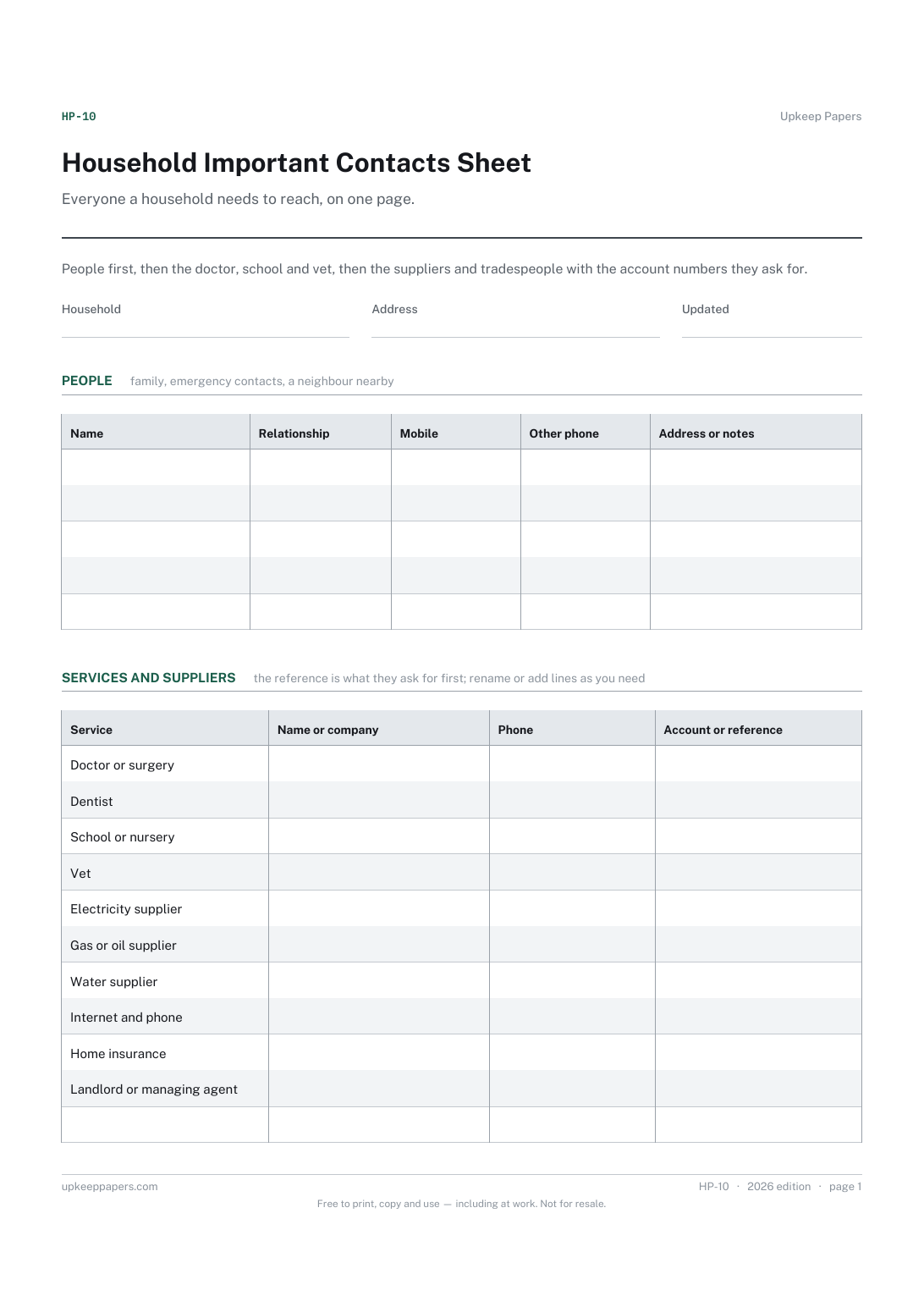
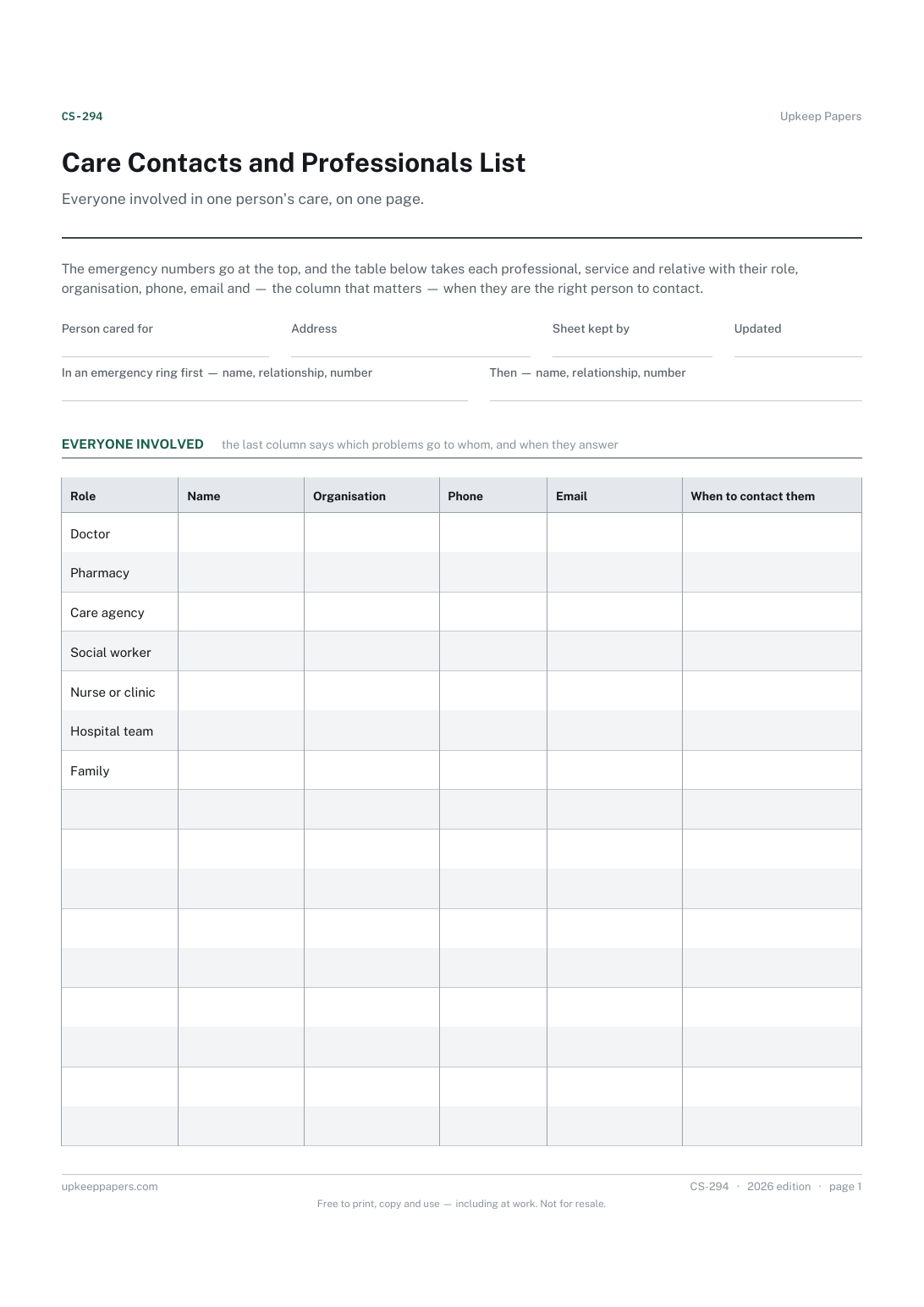
Who to ring about a person, with the relationship and two numbers each.
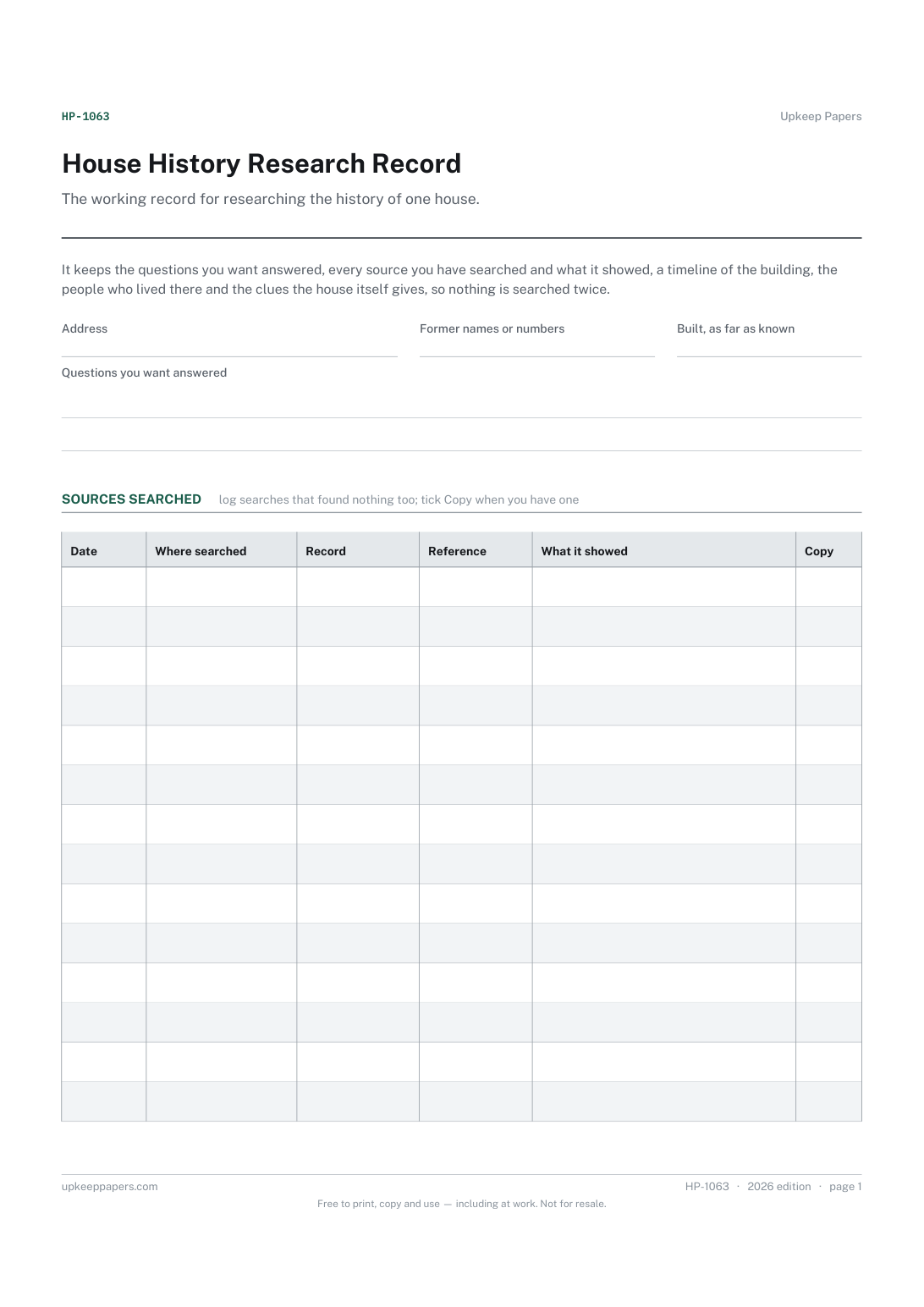
The questions you are trying to answer about the house.
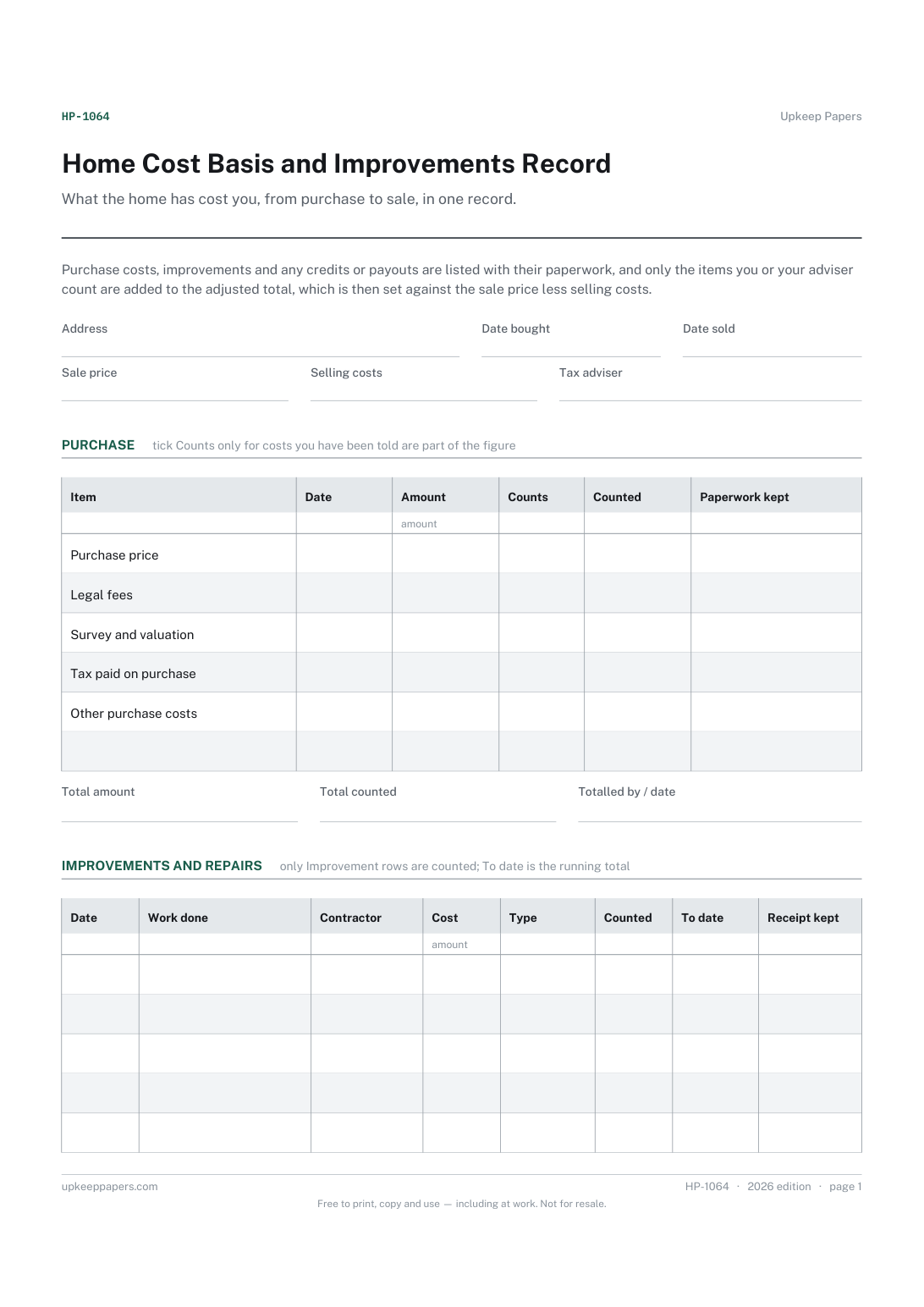
Purchase price and the purchase costs that count towards the total.
The floor area of every room and space, floor by floor.
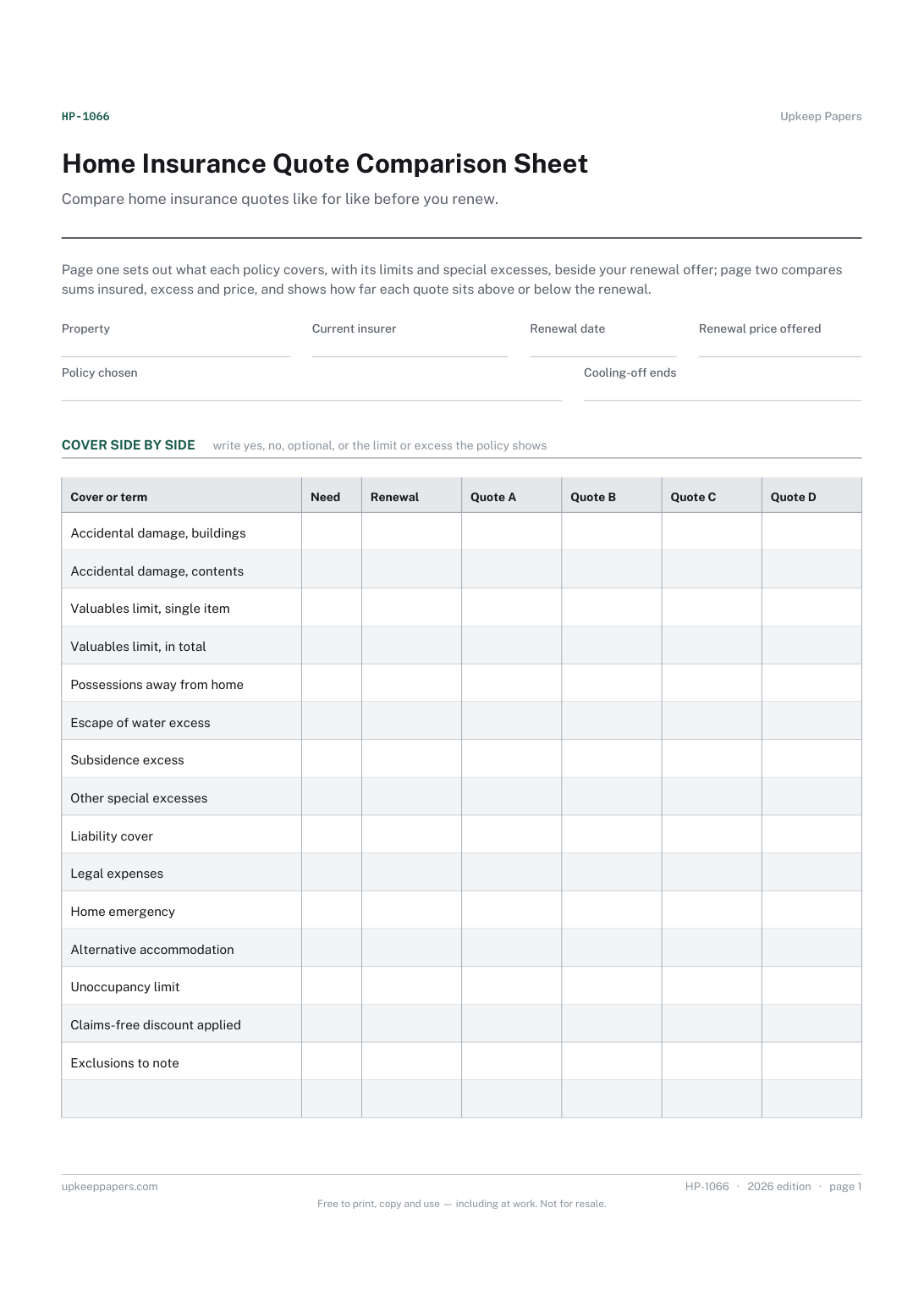
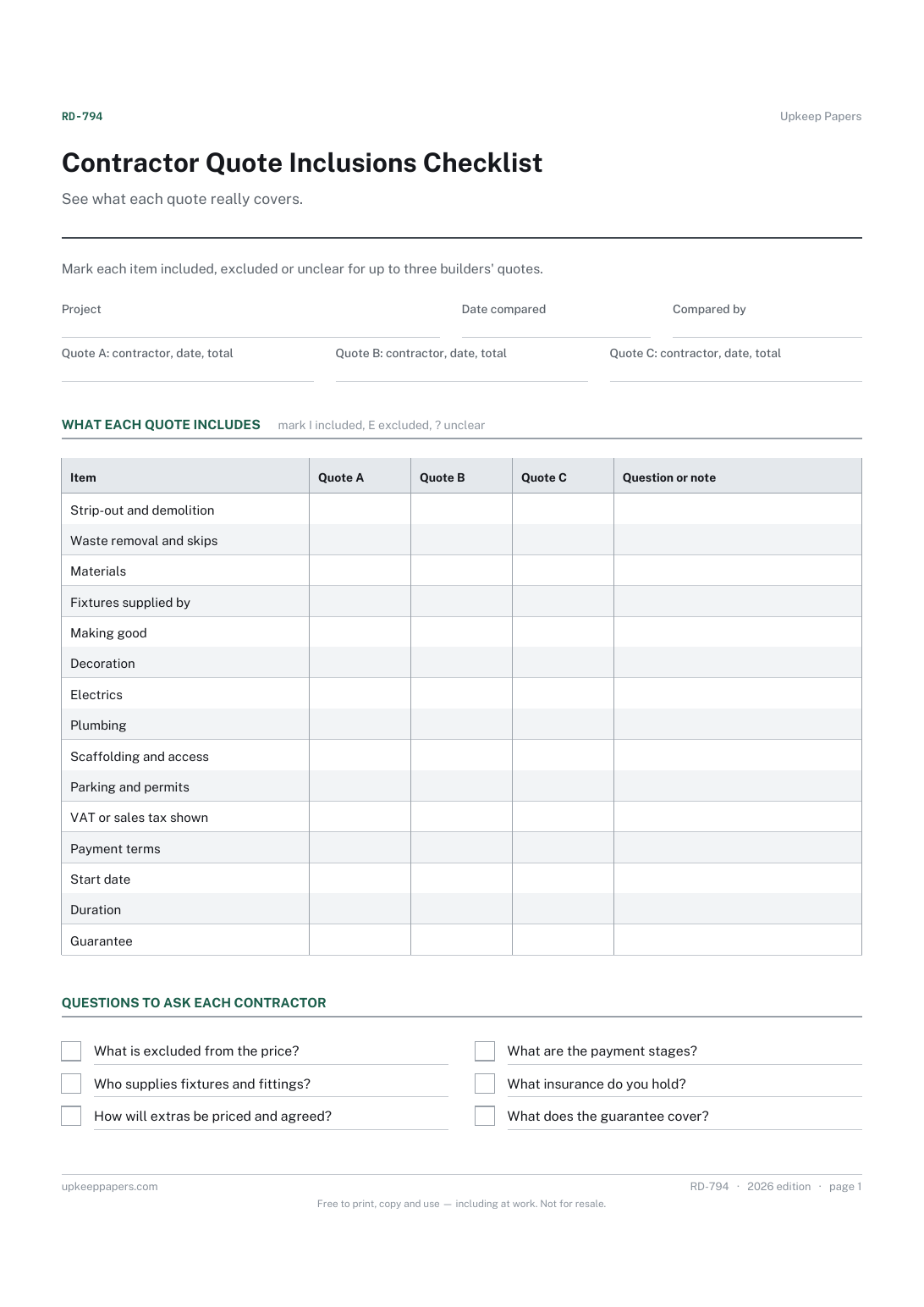
What each quote covers, and the limits and special excesses that differ.
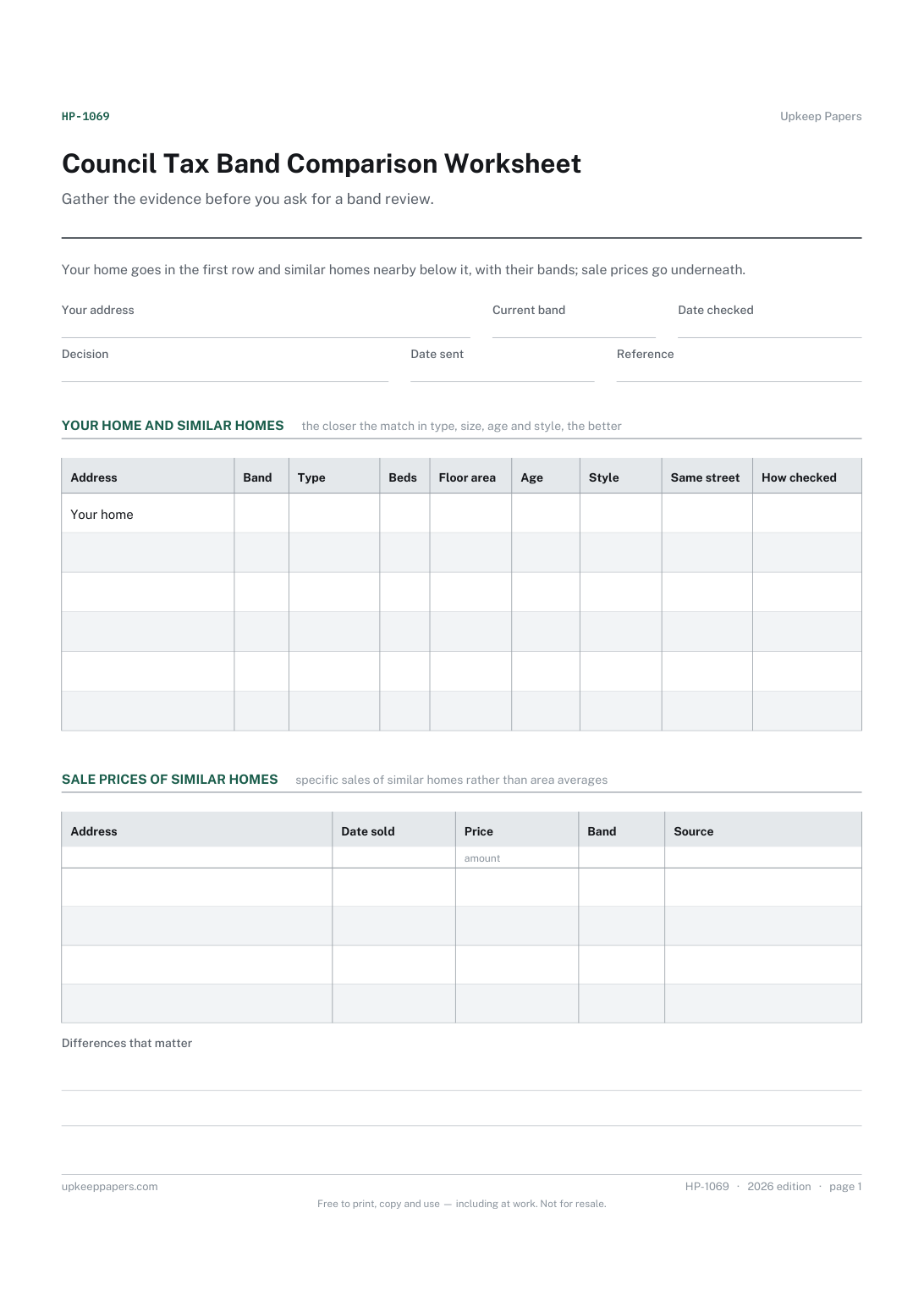
Your home's type, size, age and style beside each comparison.
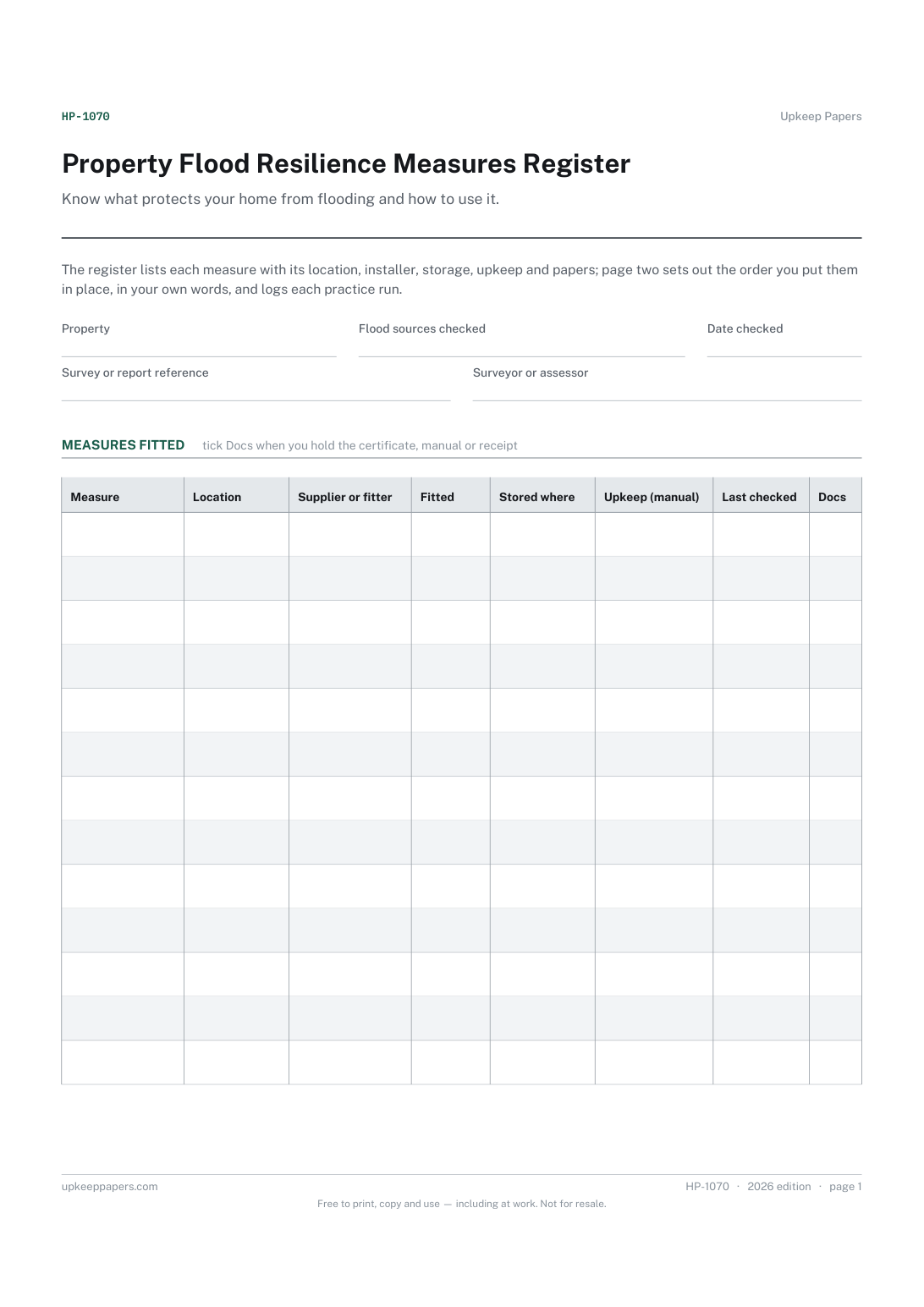
Every flood resistance and resilience measure fitted, and where it is.
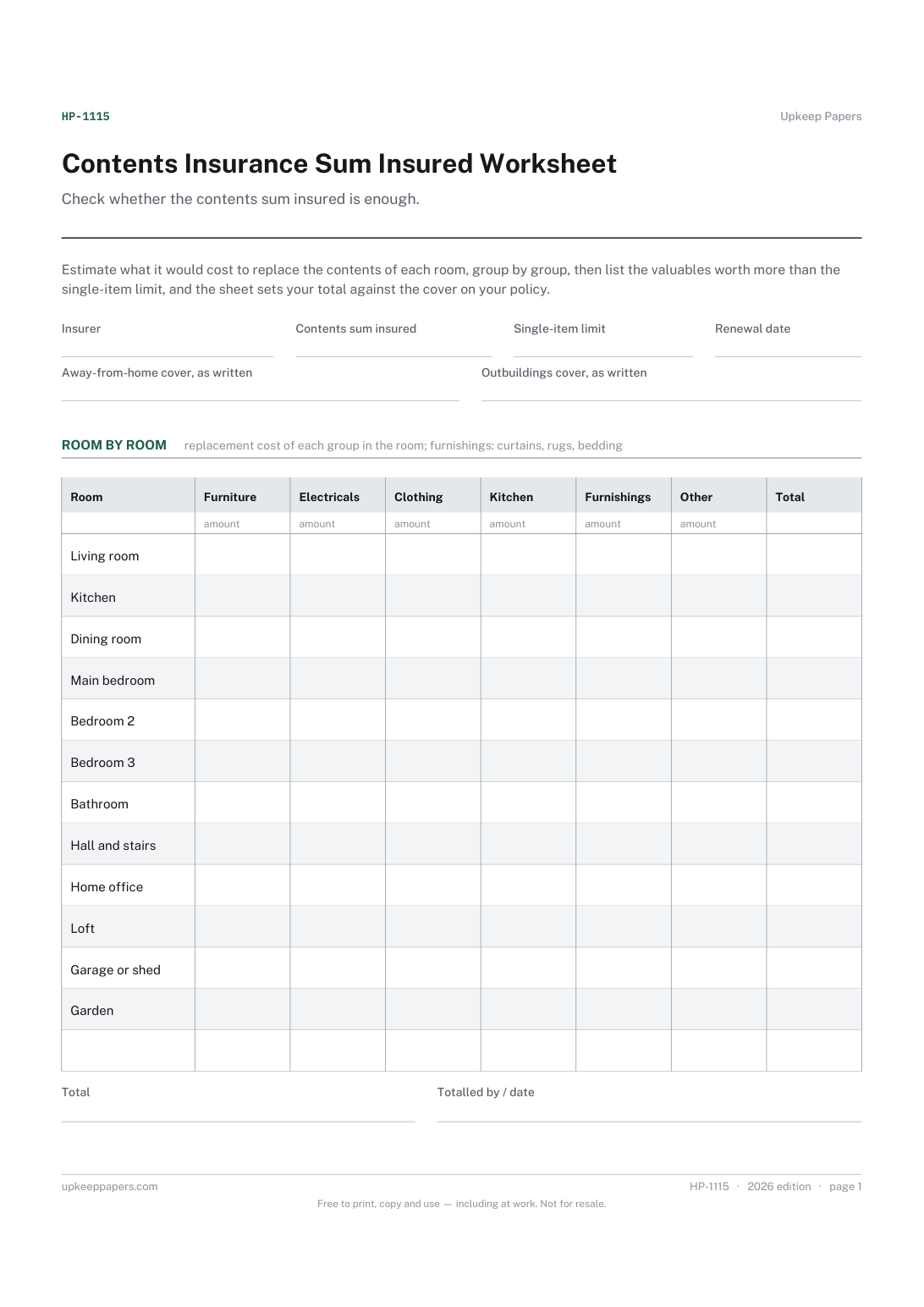
What replacing the contents of each room might cost, by group.
Each appliance's brand and exact model number.
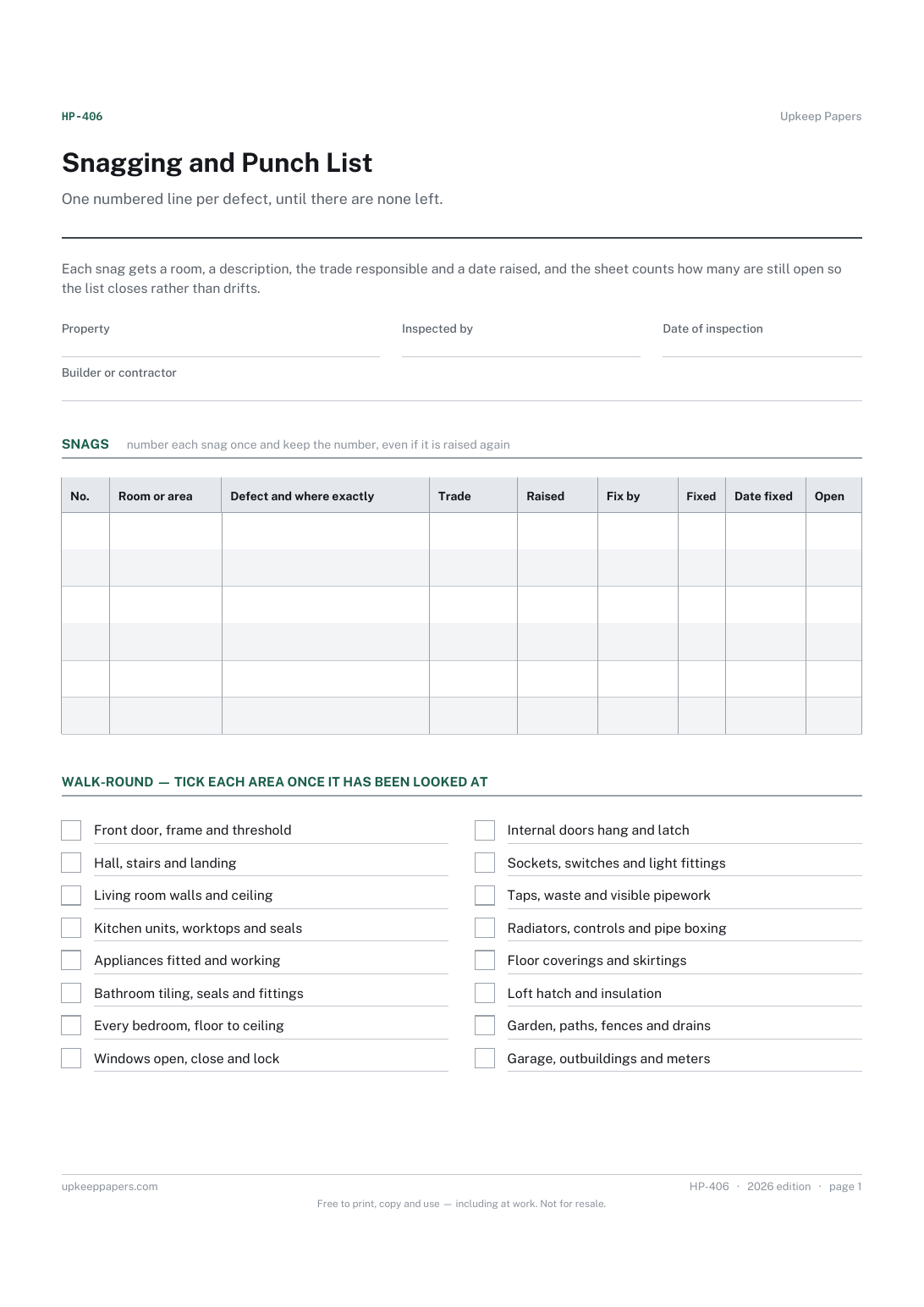
Every defect written down once, numbered, so nothing is argued about twice.
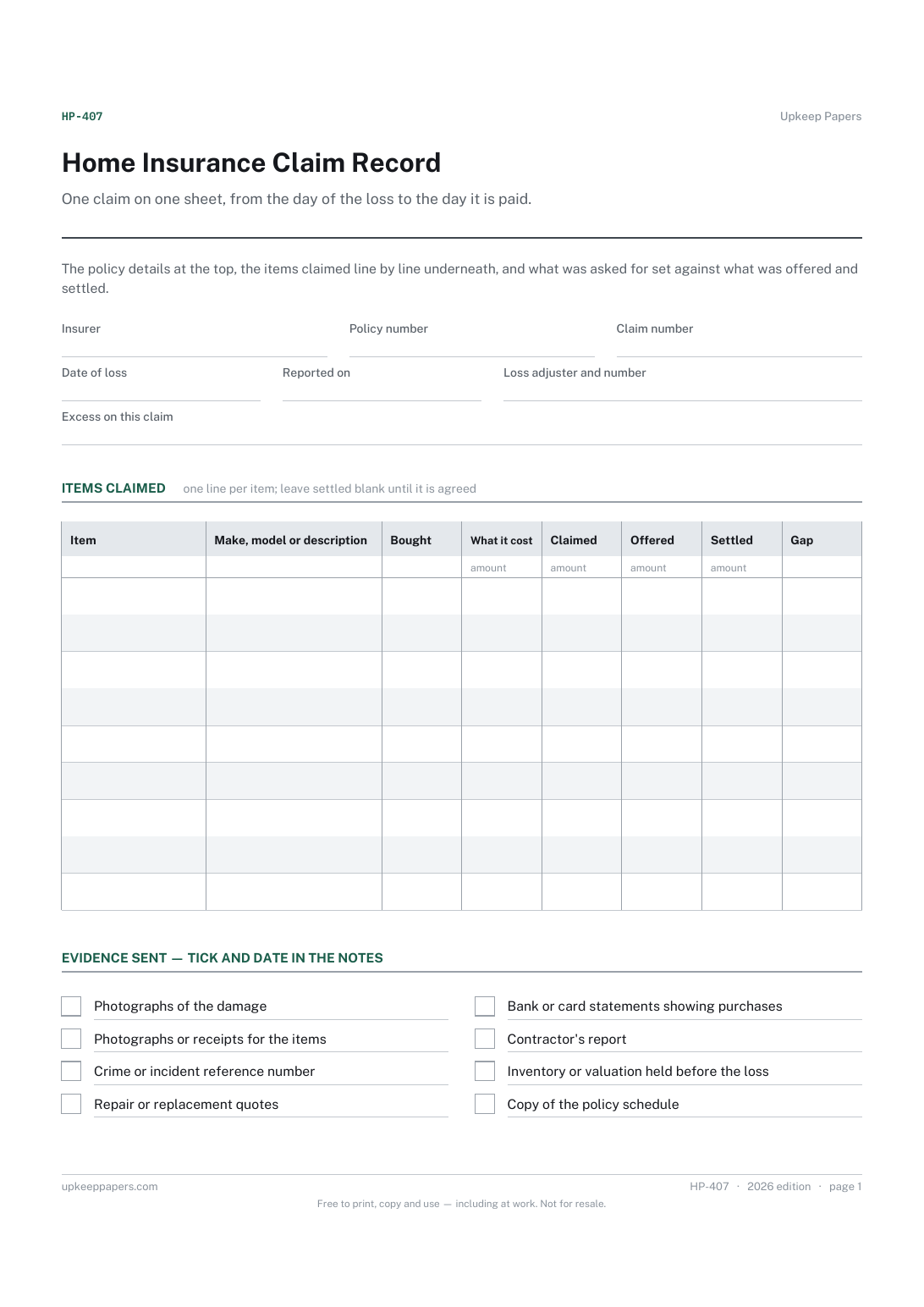
The policy, claim and loss adjuster details in one place, ready to quote.
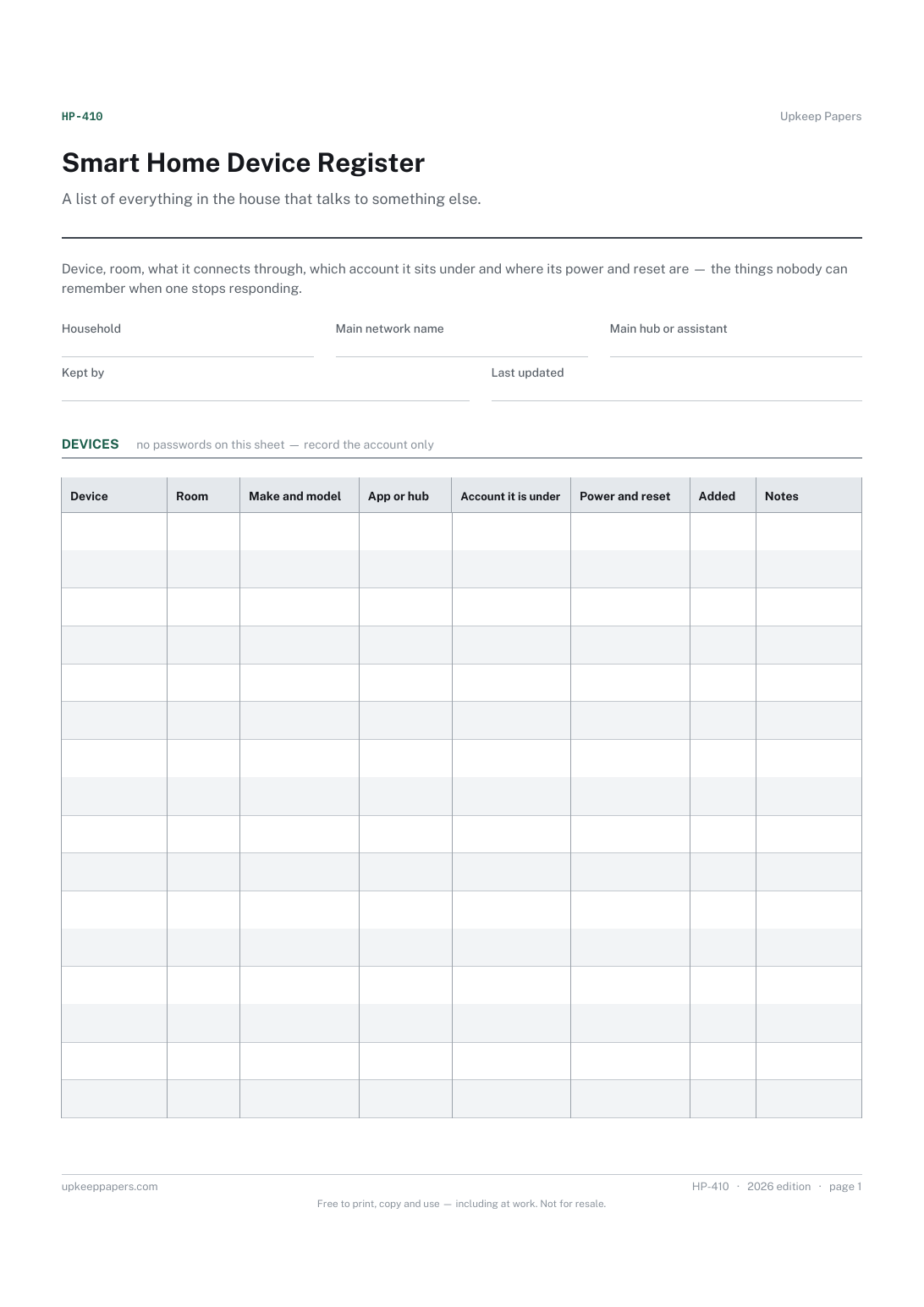
Every connected device, what it is and which room it is in.
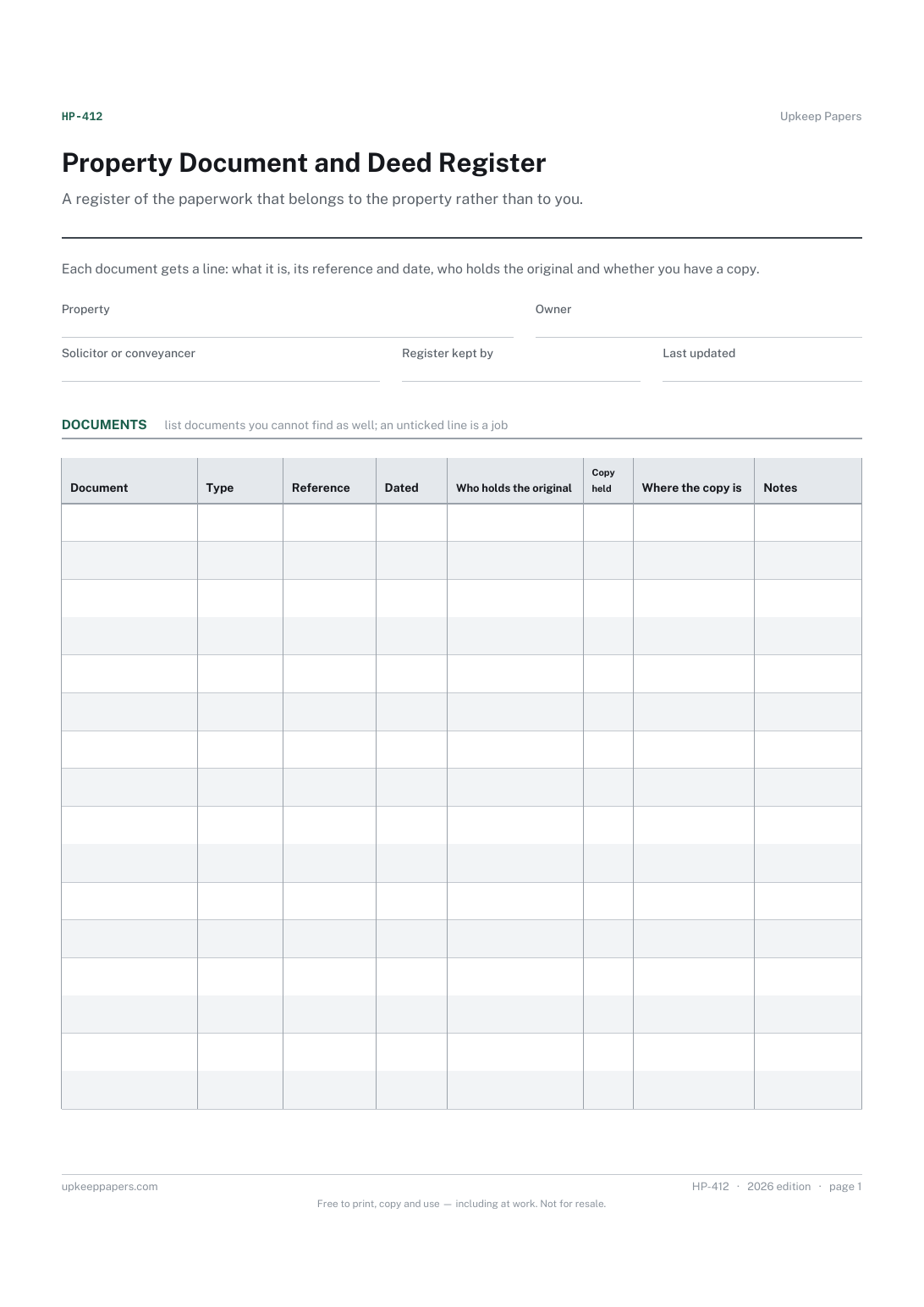
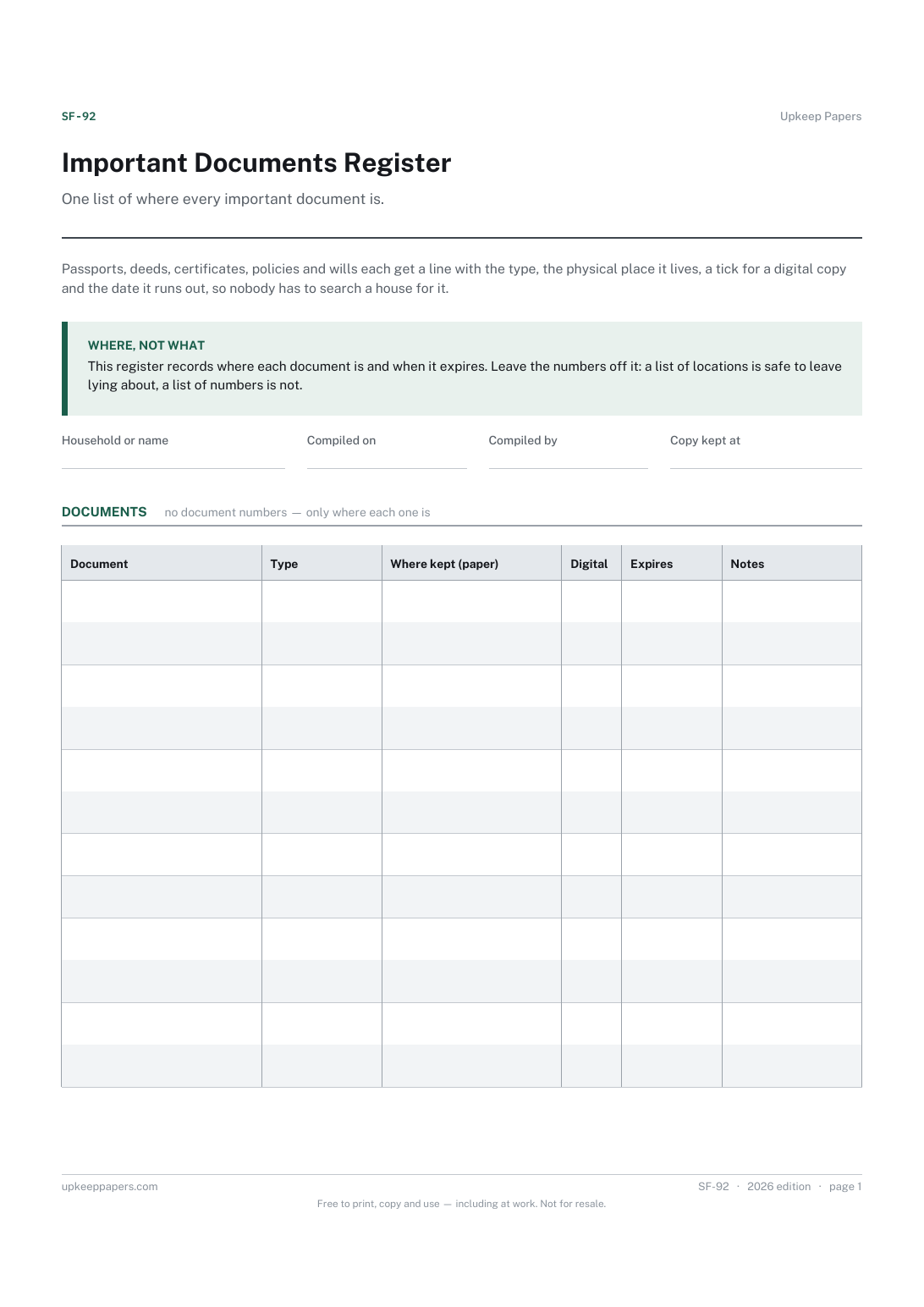
Which documents exist for the property and what each one is.
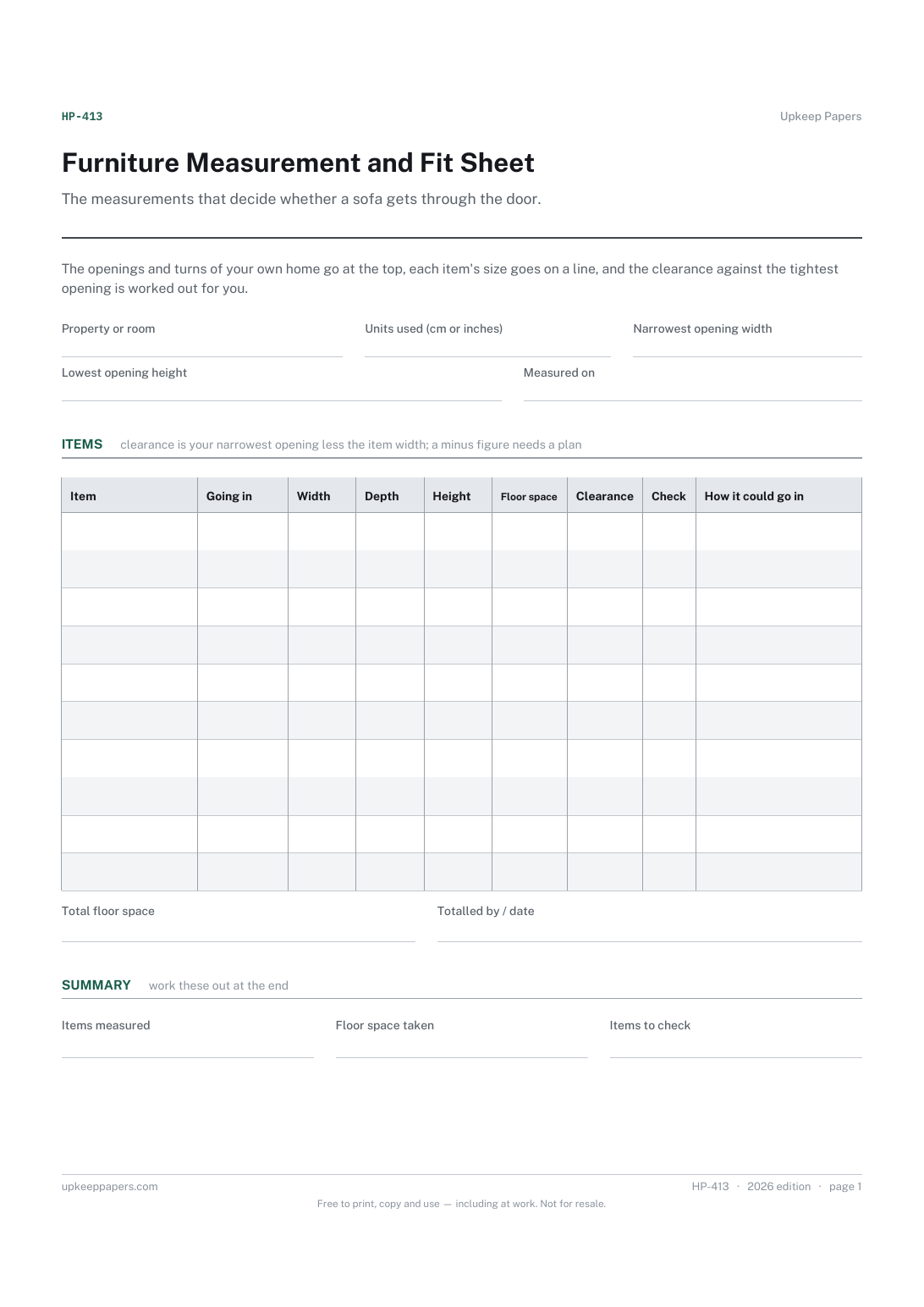
The width and height of every opening and turn between the street and the room.
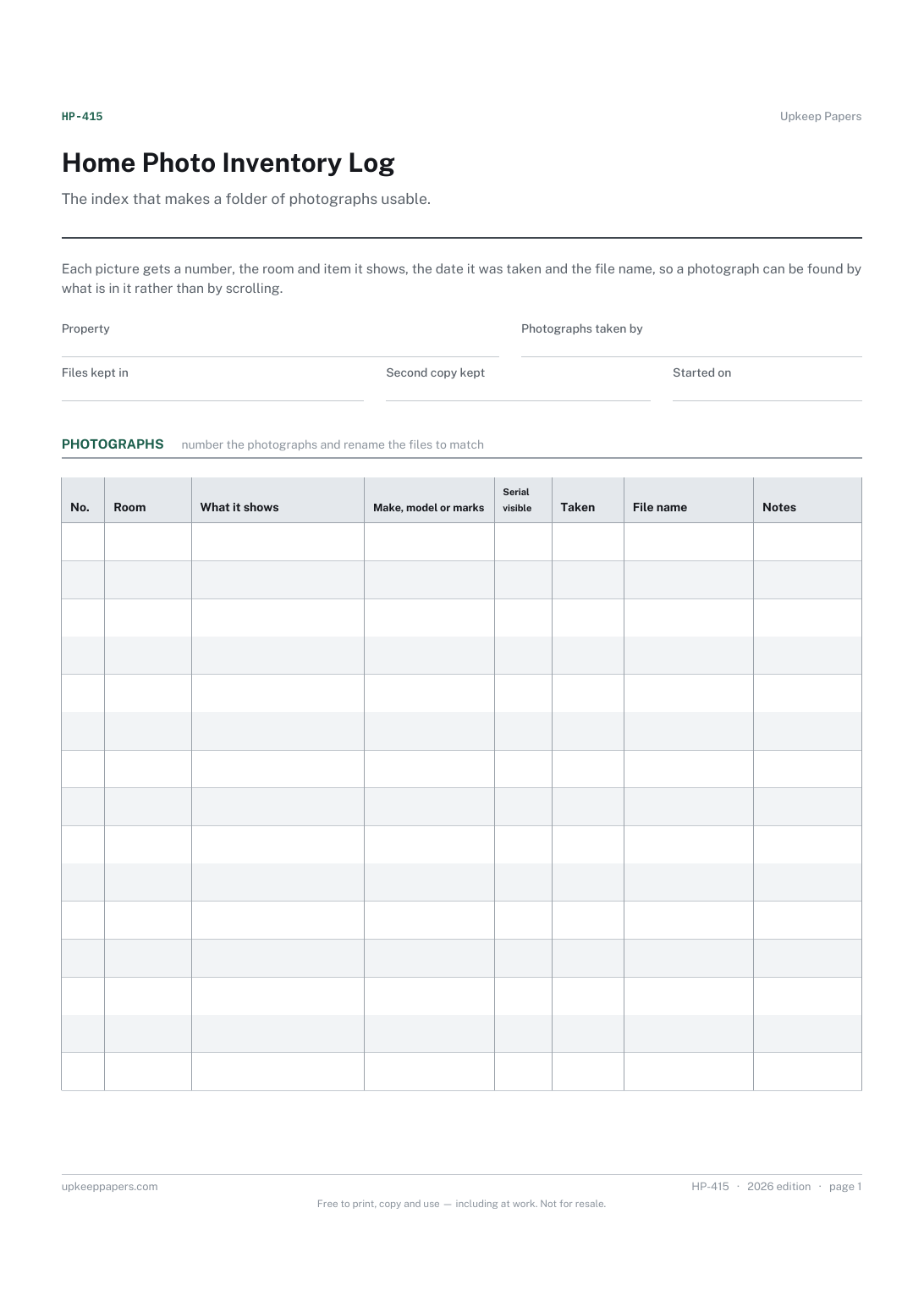
Which photographs exist and what each one shows.
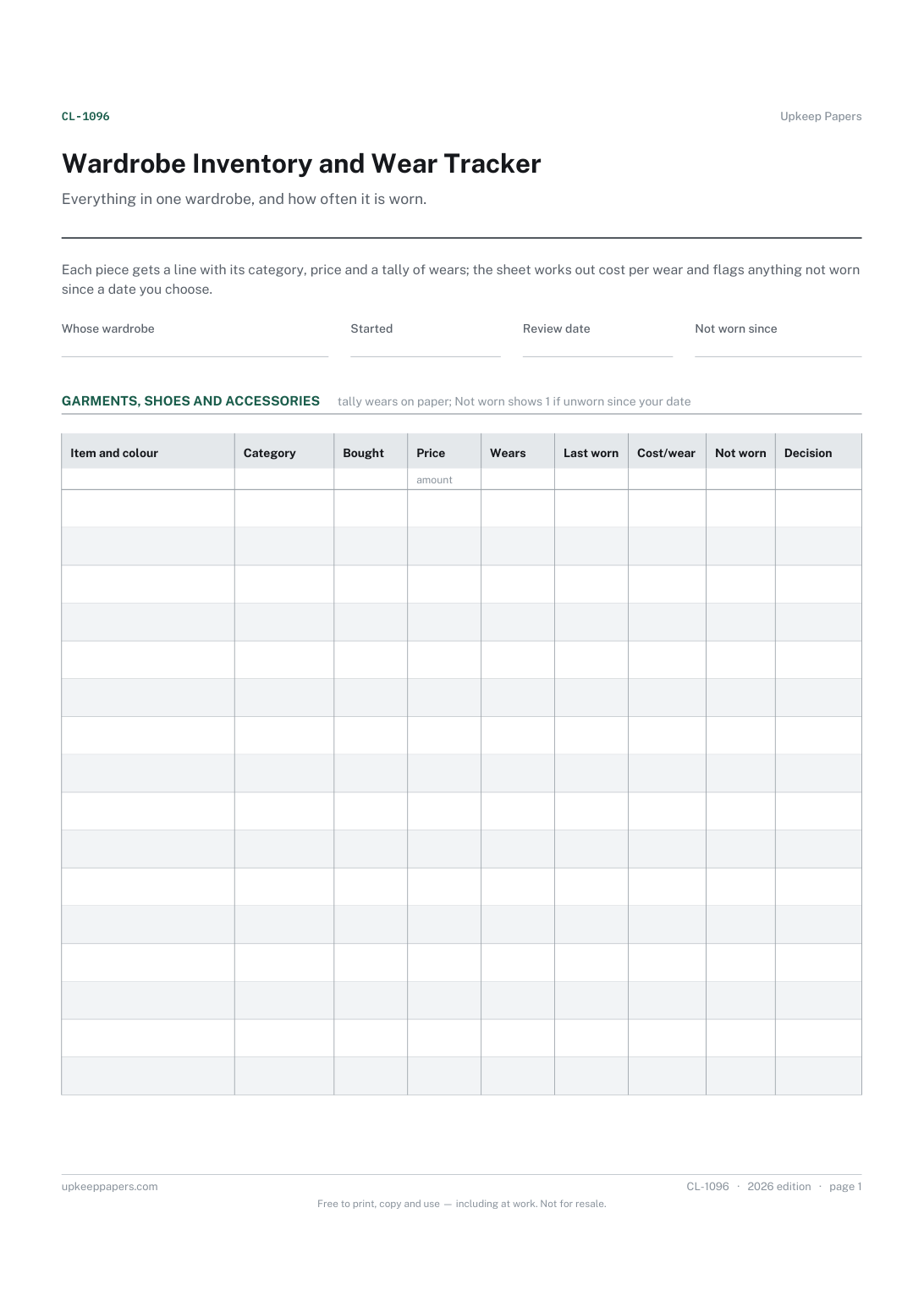
Every garment, pair of shoes and accessory one person owns, by category.
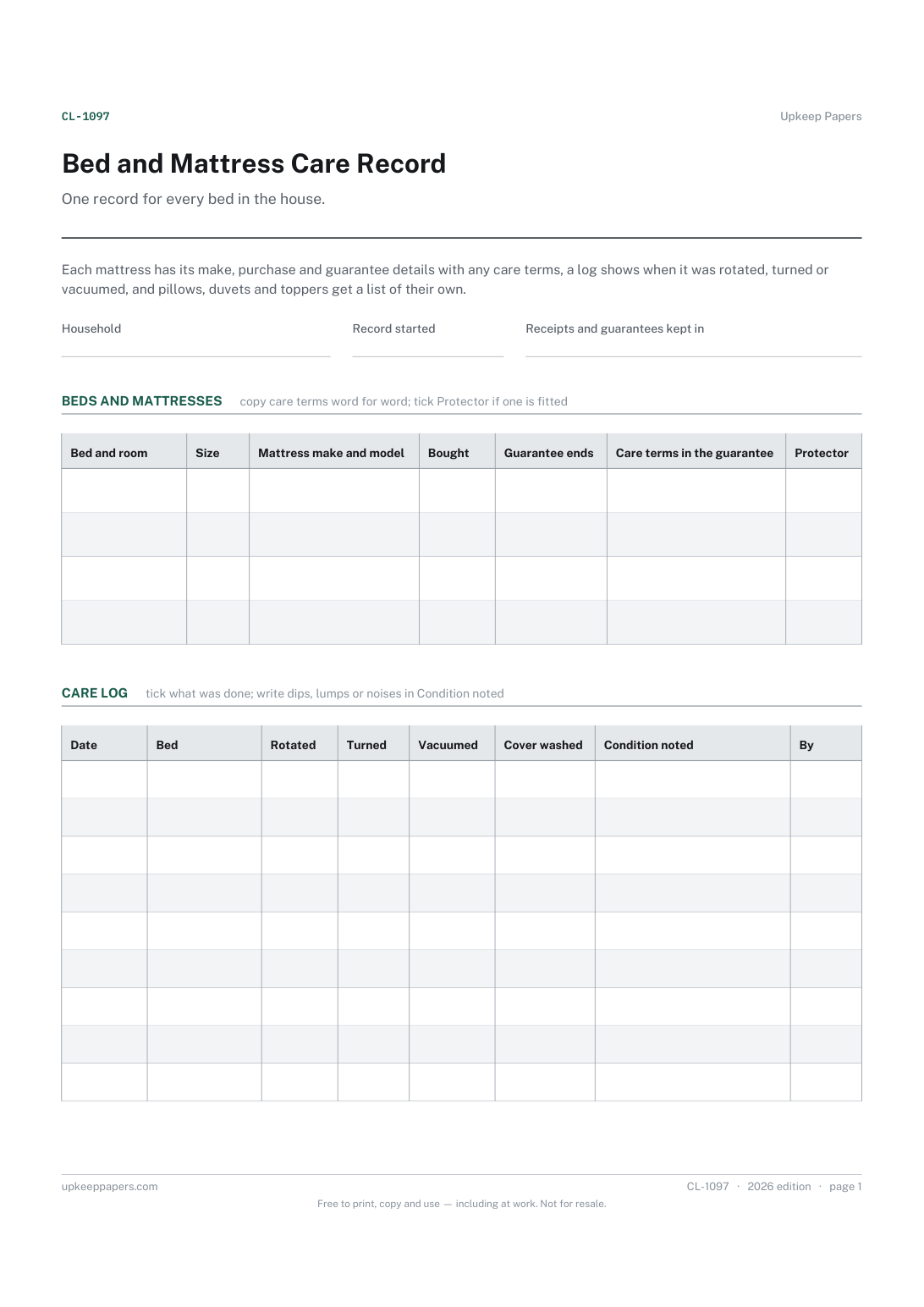
Each bed's mattress make, model, purchase date and guarantee end.
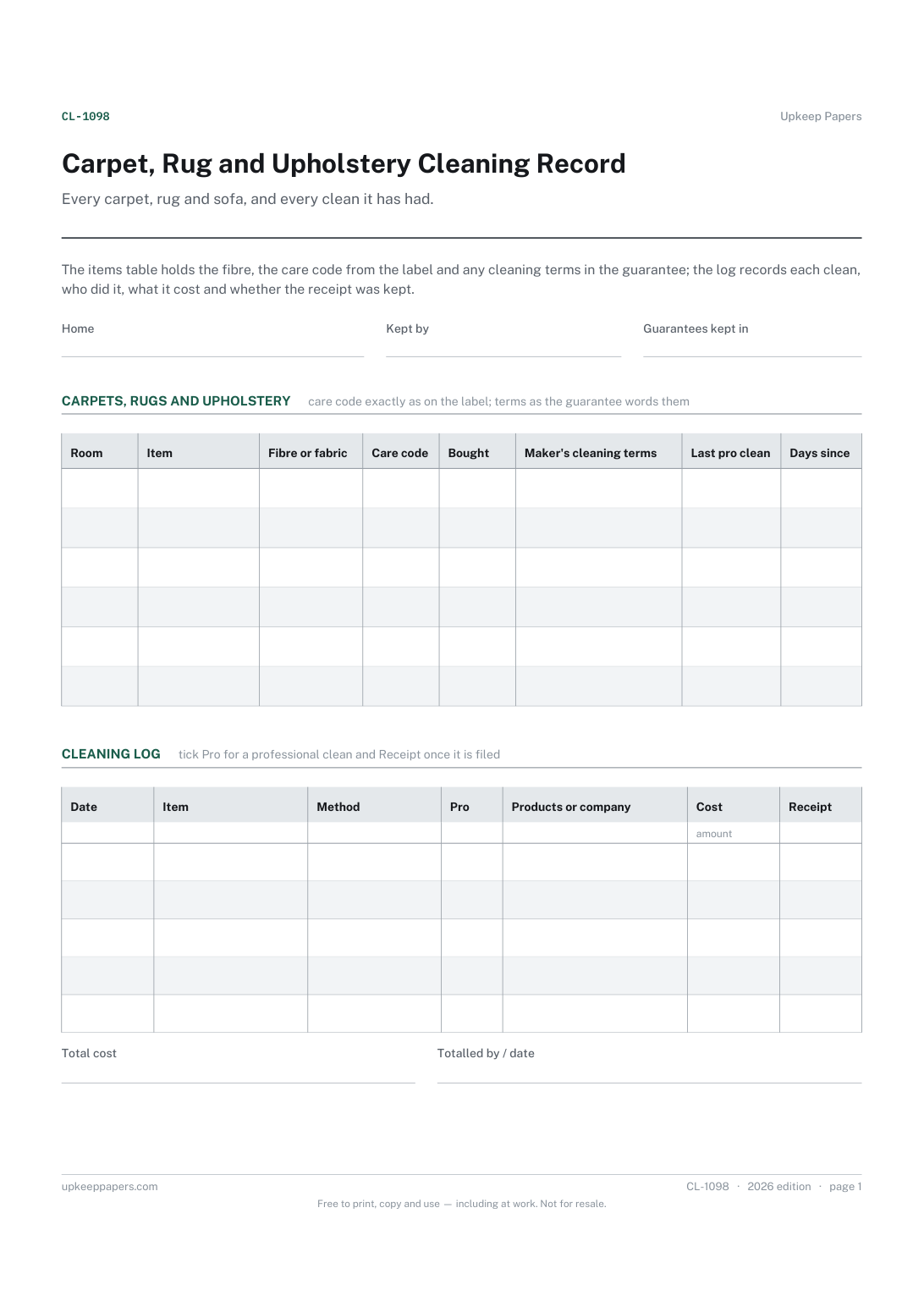
Each carpet, rug and upholstered piece with its fibre or fabric.
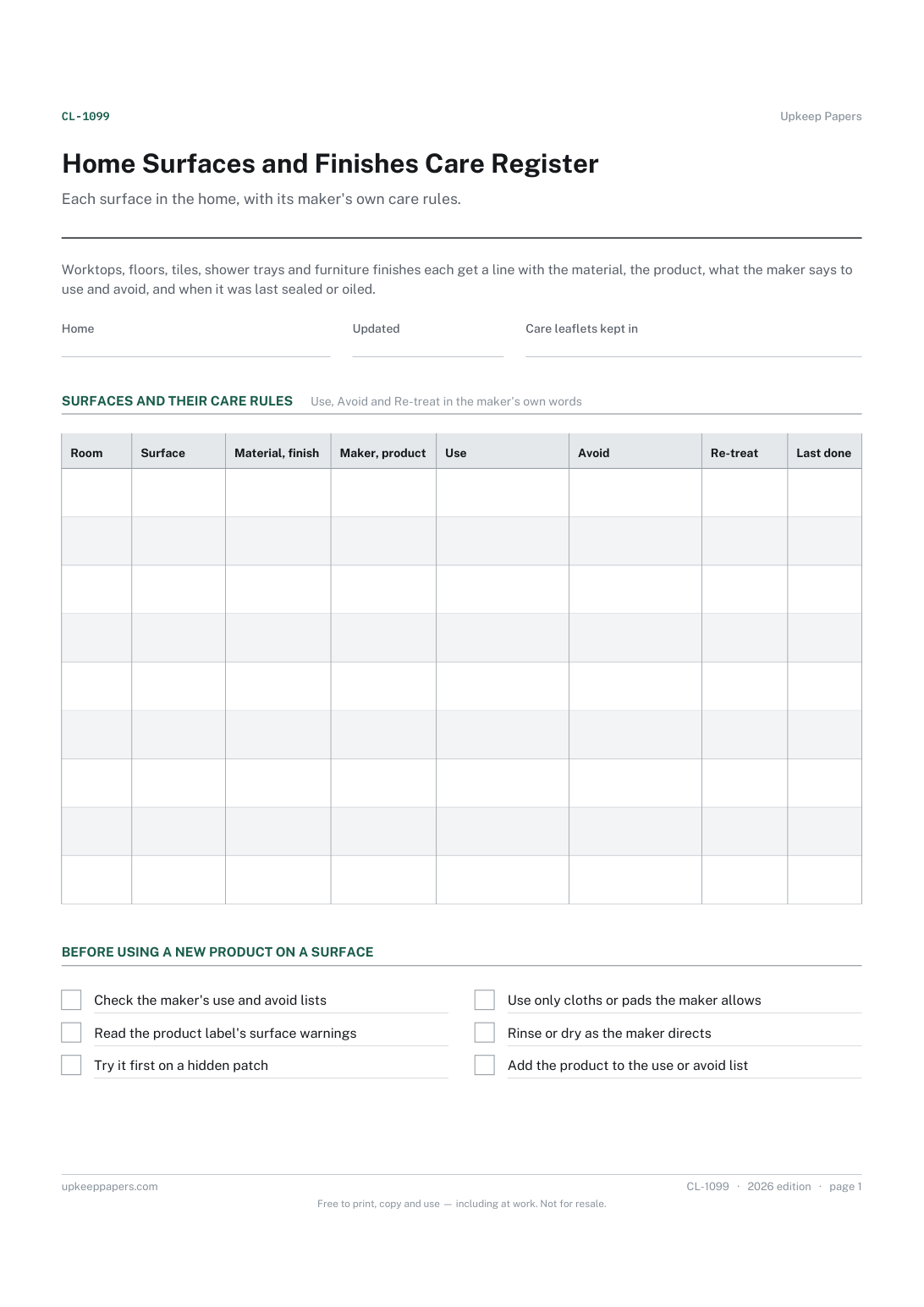
Every worktop, floor, splashback, shower tray and furniture finish by room.
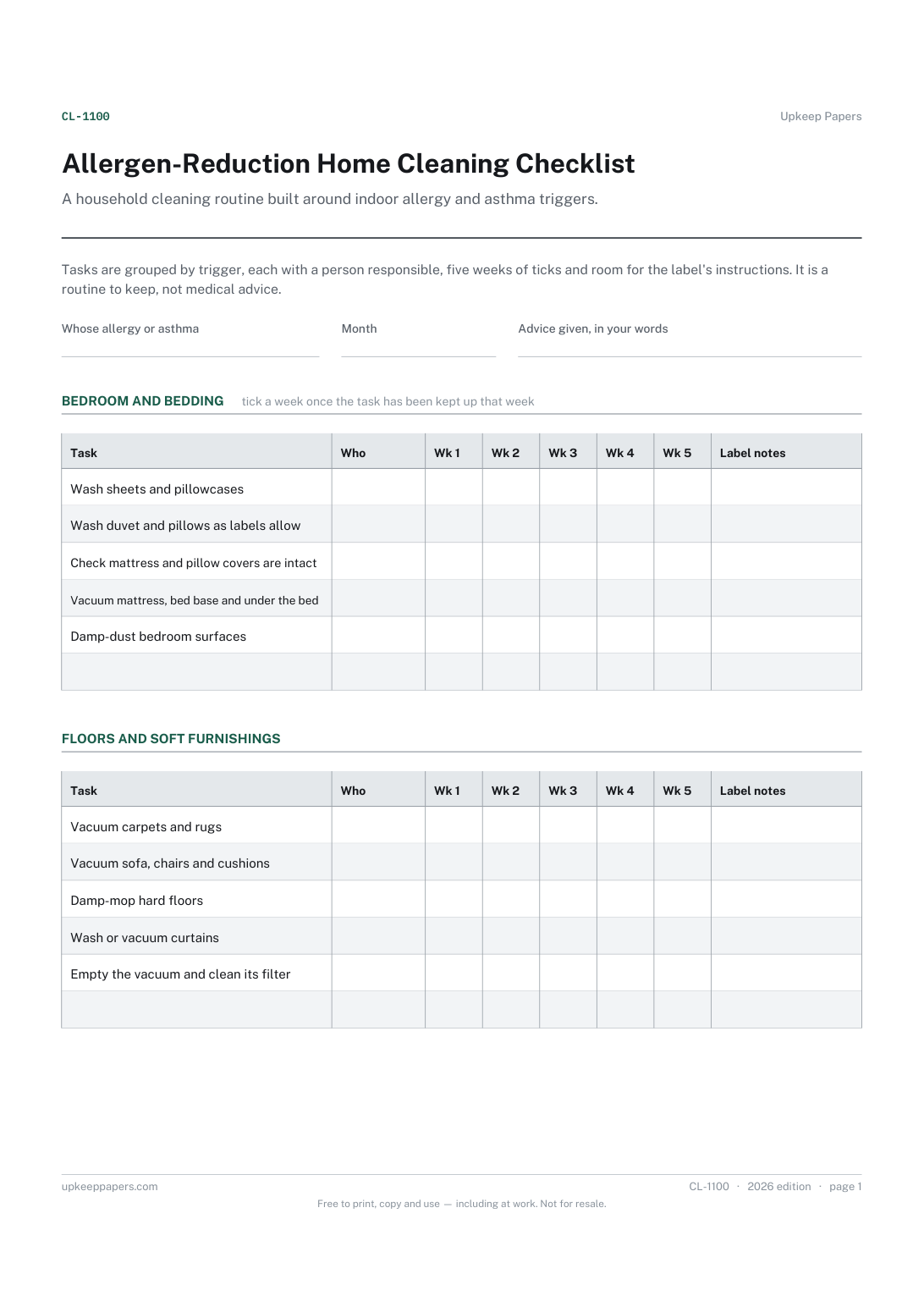
Bedding, mattress and pillow tasks aimed at dust mites.
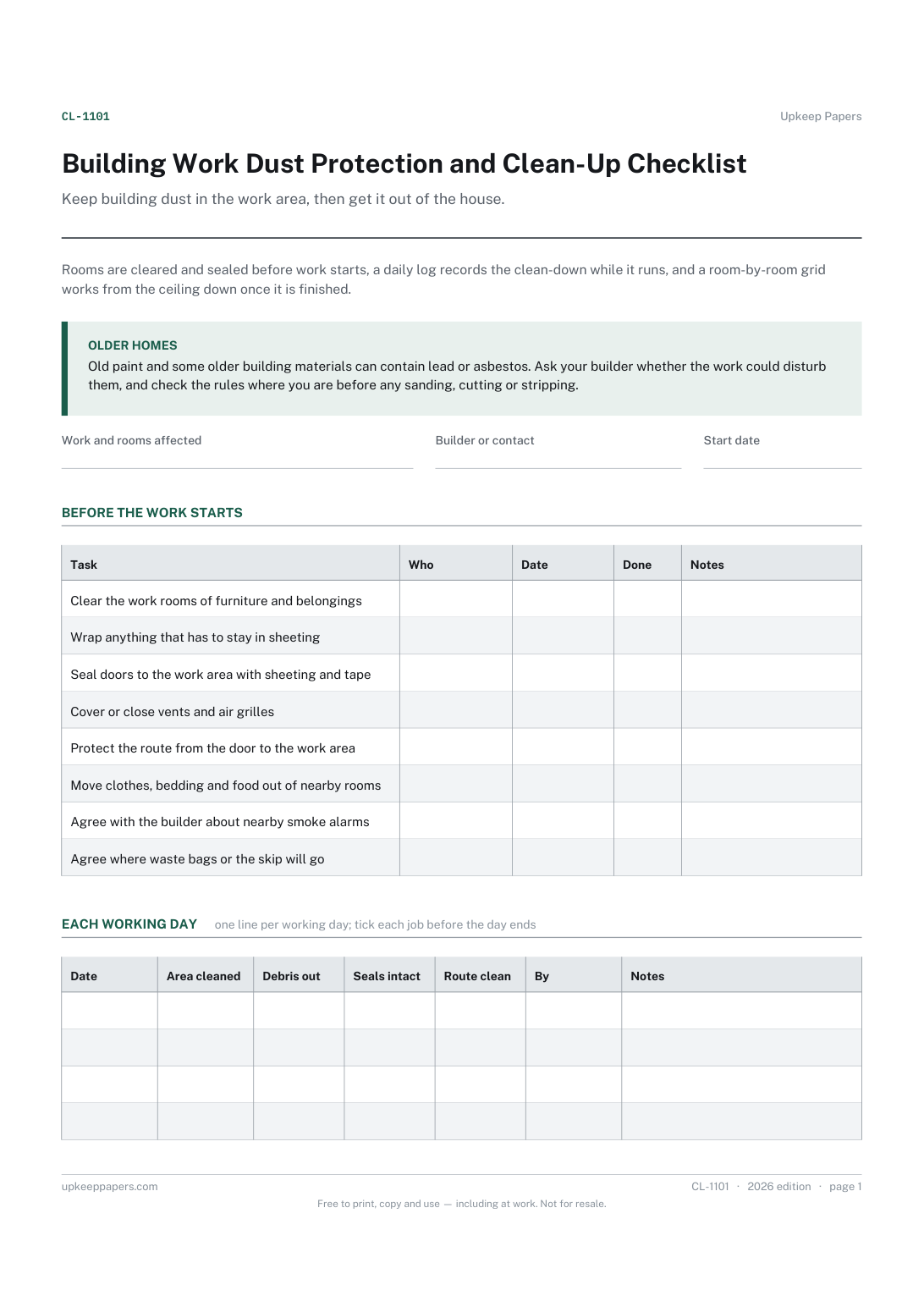
Rooms cleared, belongings wrapped and doors and vents sealed before work starts.
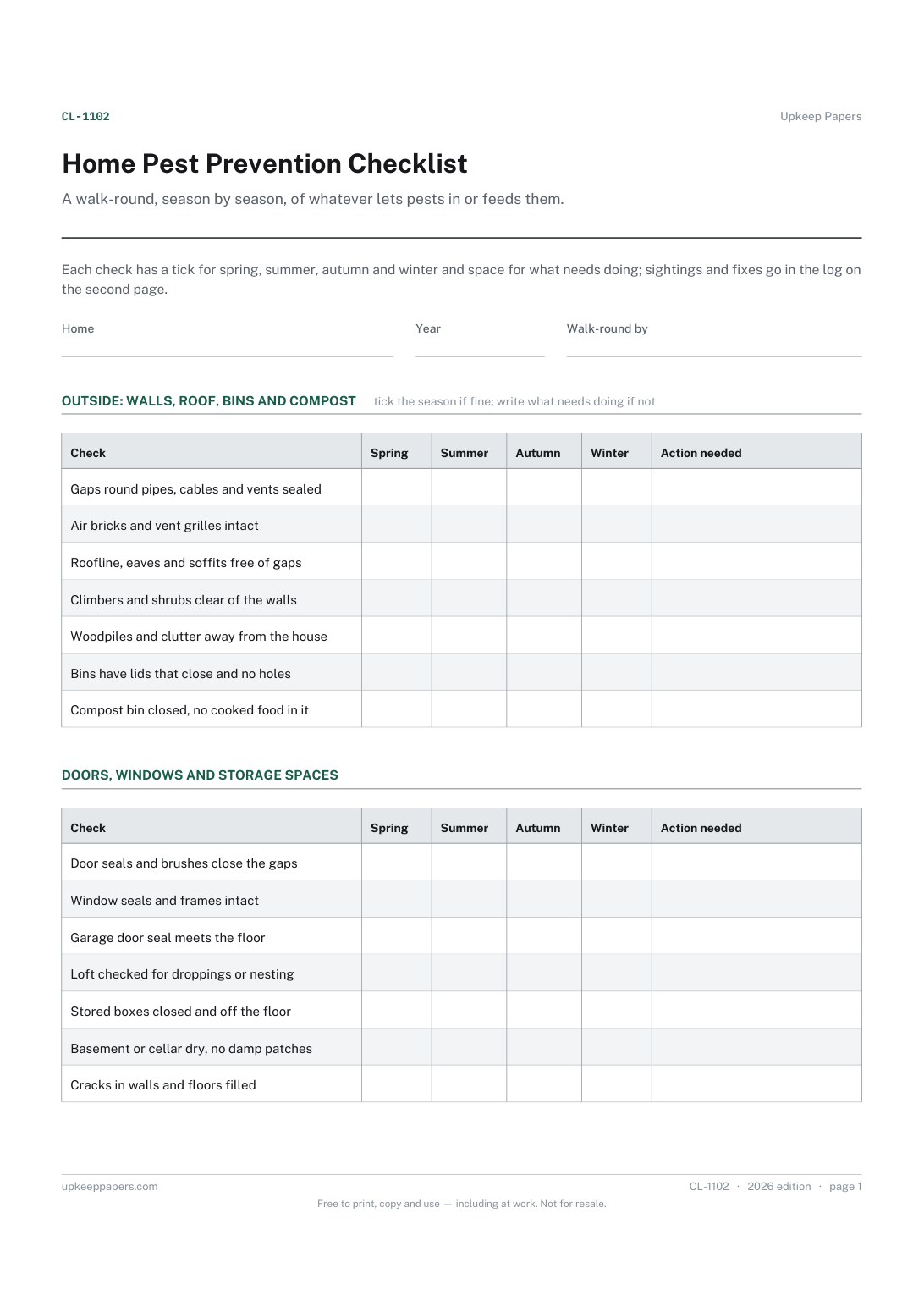
Gaps in walls, the roofline, doors and windows where pests get in.
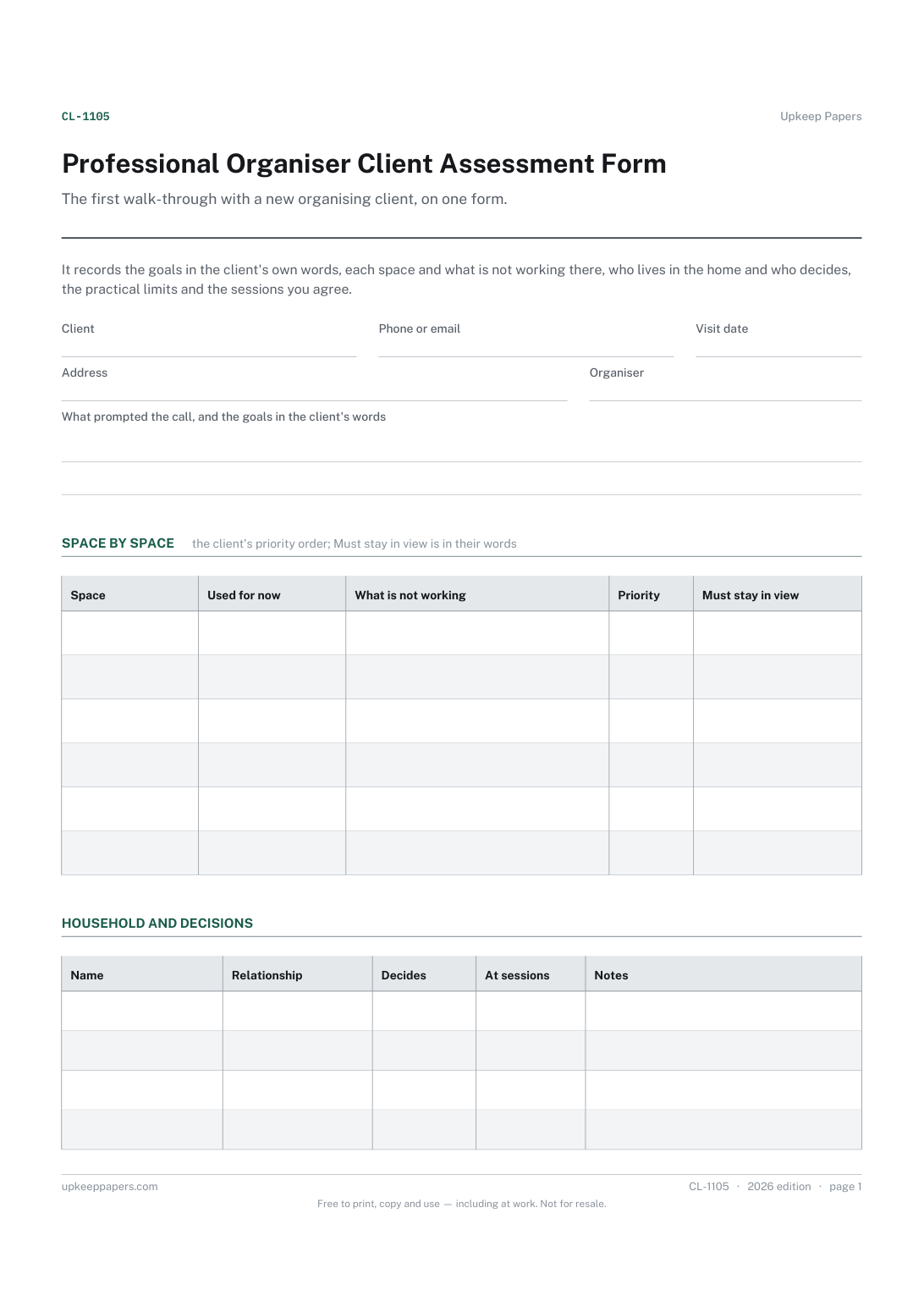
What prompted the call and the client's goals, in their words.
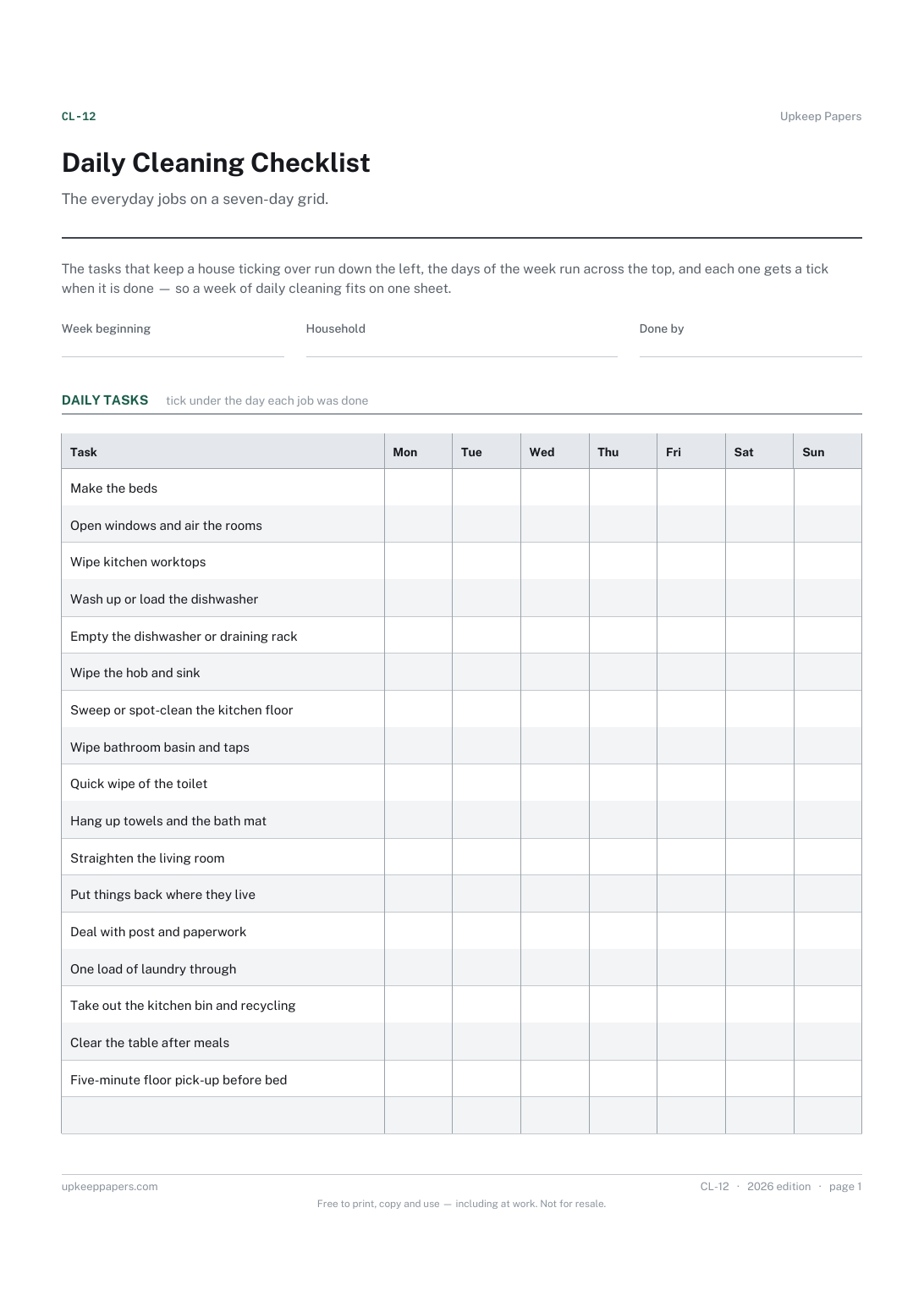
The handful of jobs that make the biggest difference if done every day.
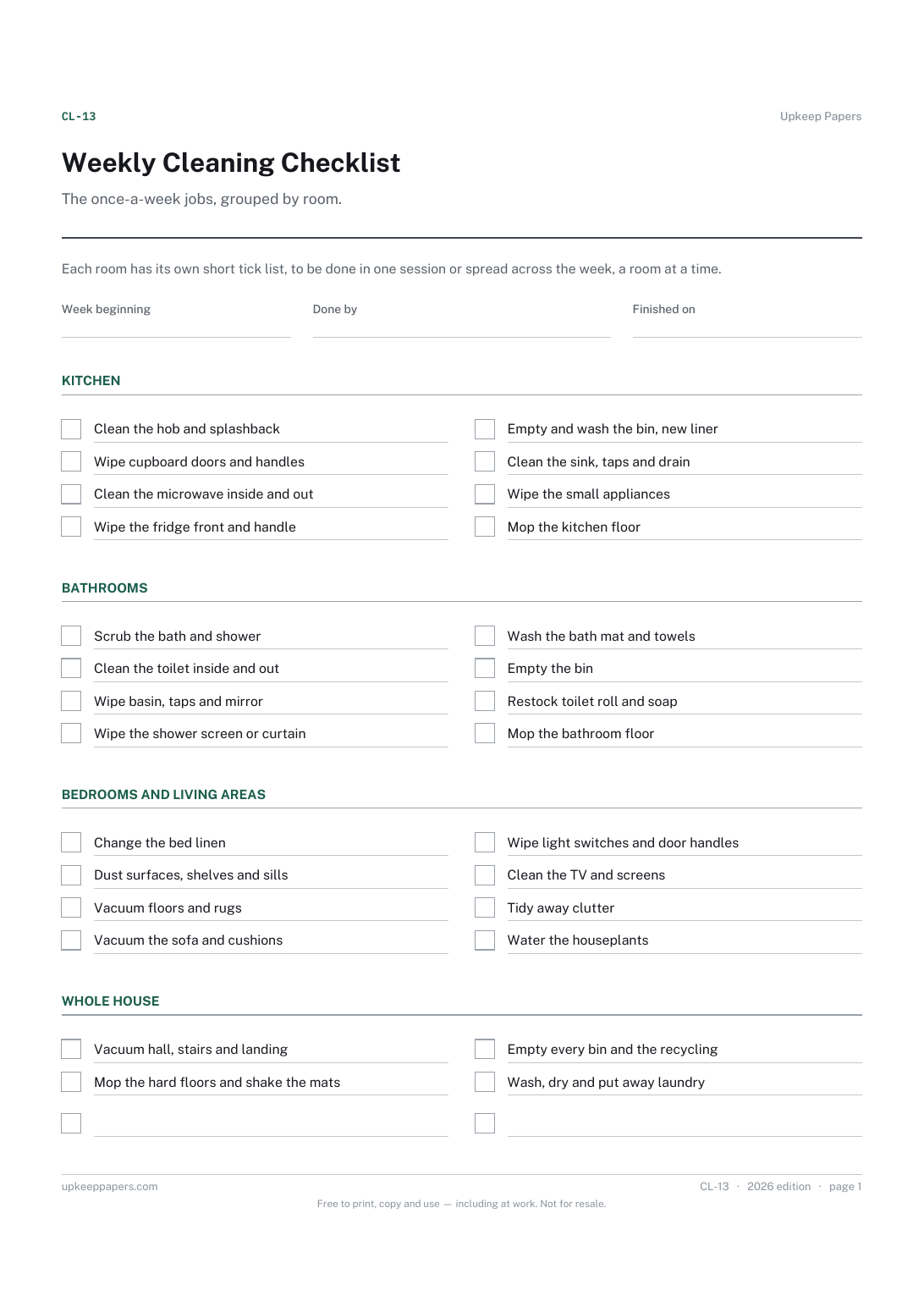
Every room's weekly jobs on one page, so nothing is done twice or not at all.
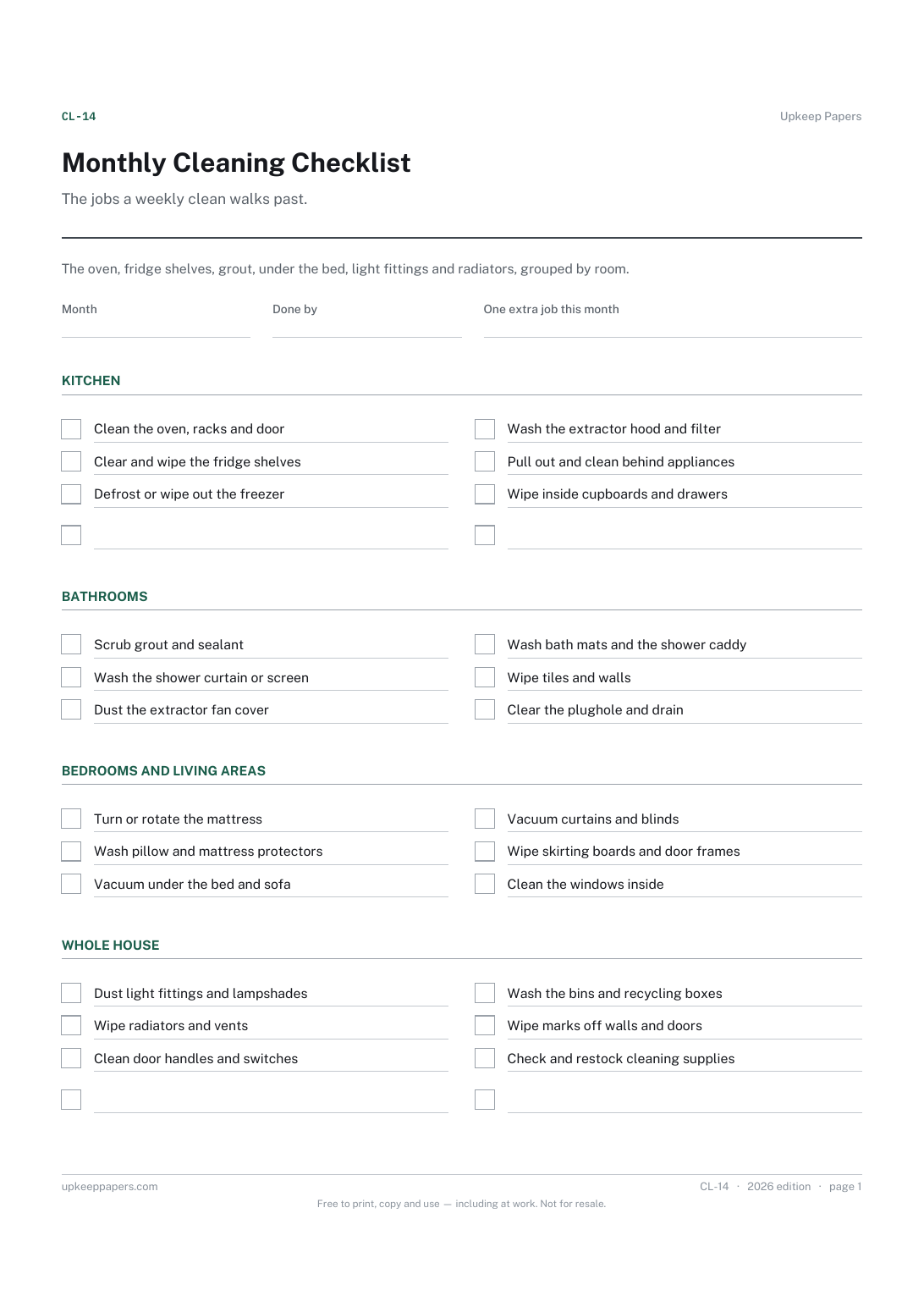
The less frequent jobs, listed so they are not forgotten between cleans.
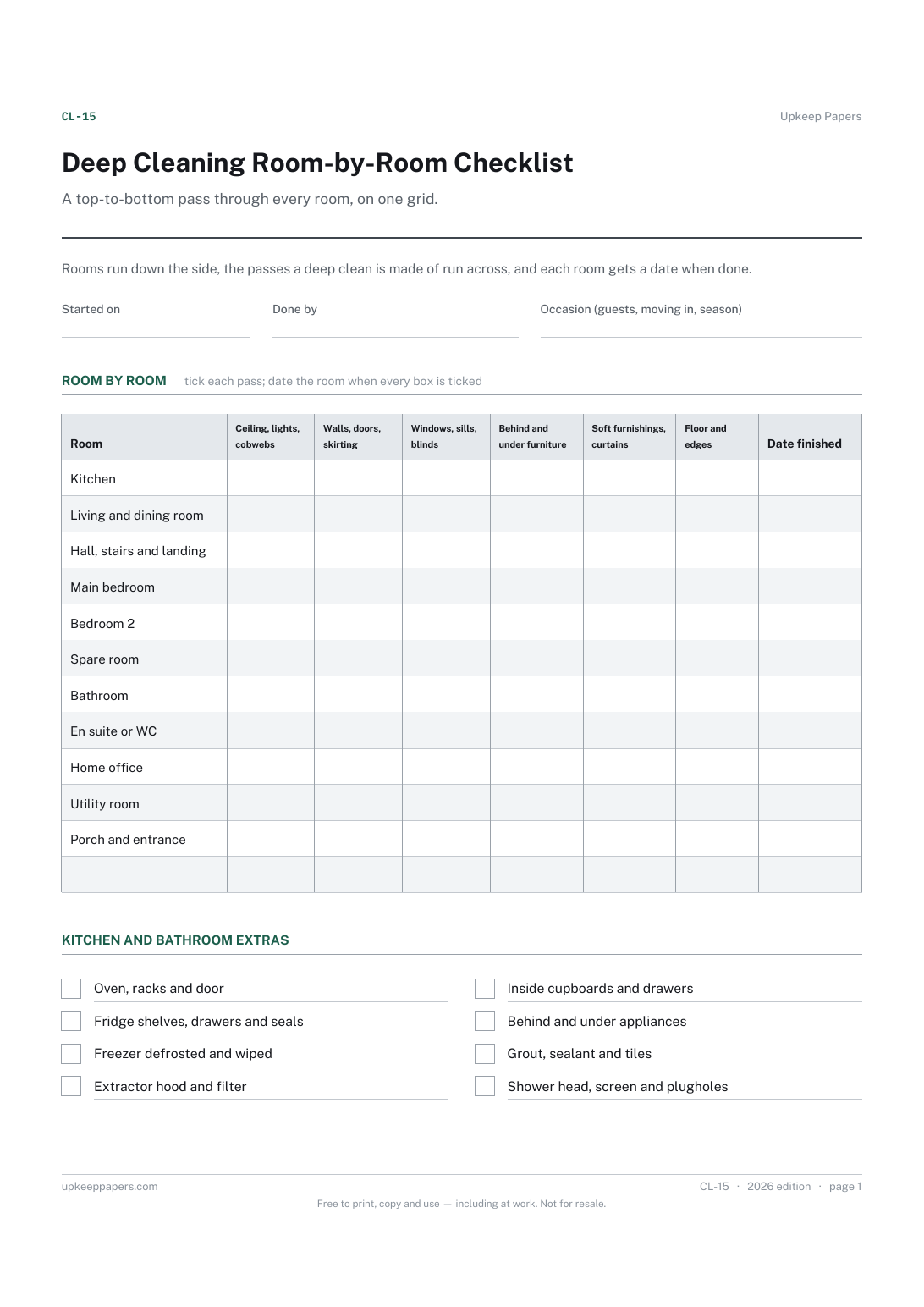
Which rooms have had every pass and which are half done.
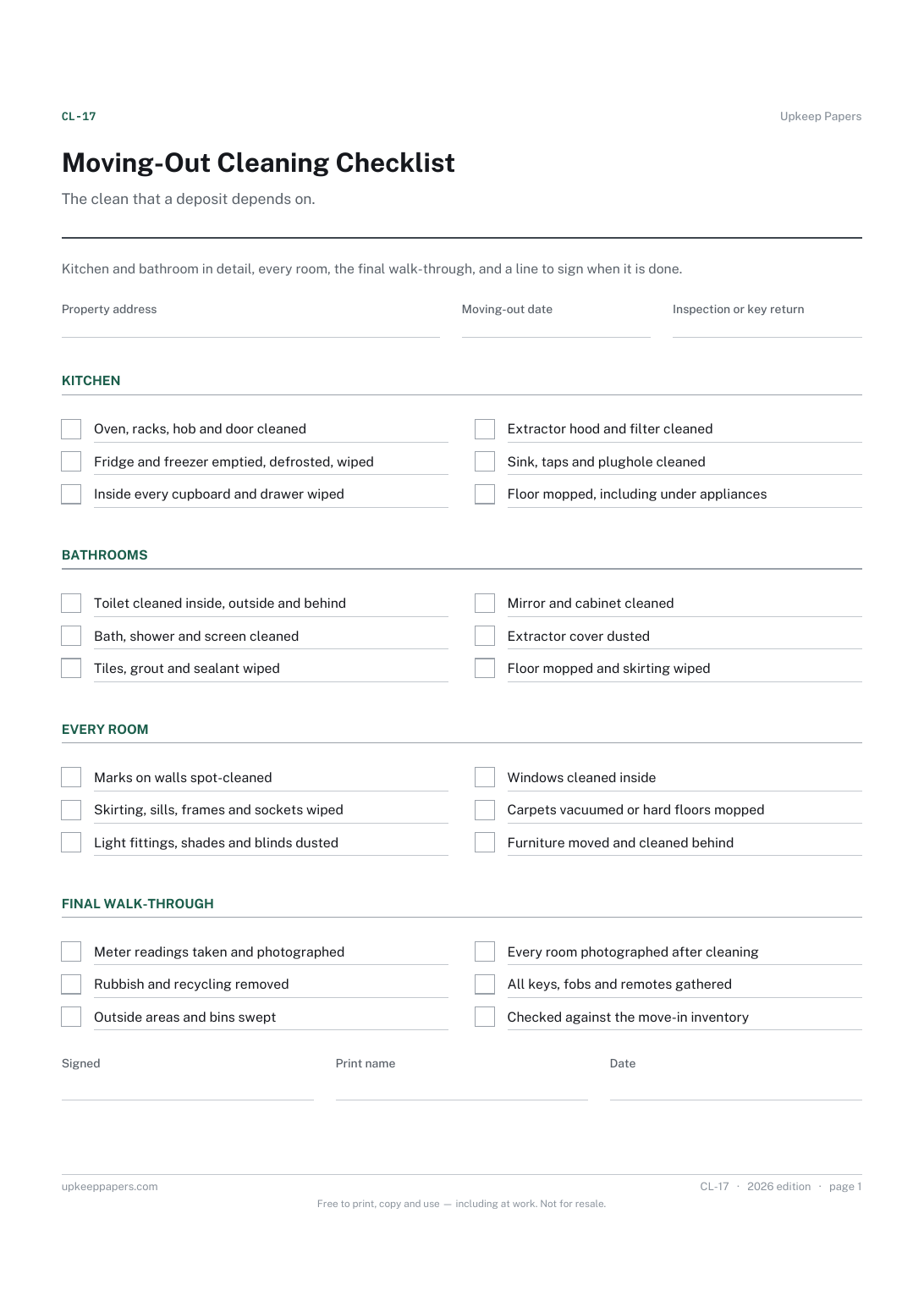
Every area an inventory check is likely to look at, so none is missed on the day.
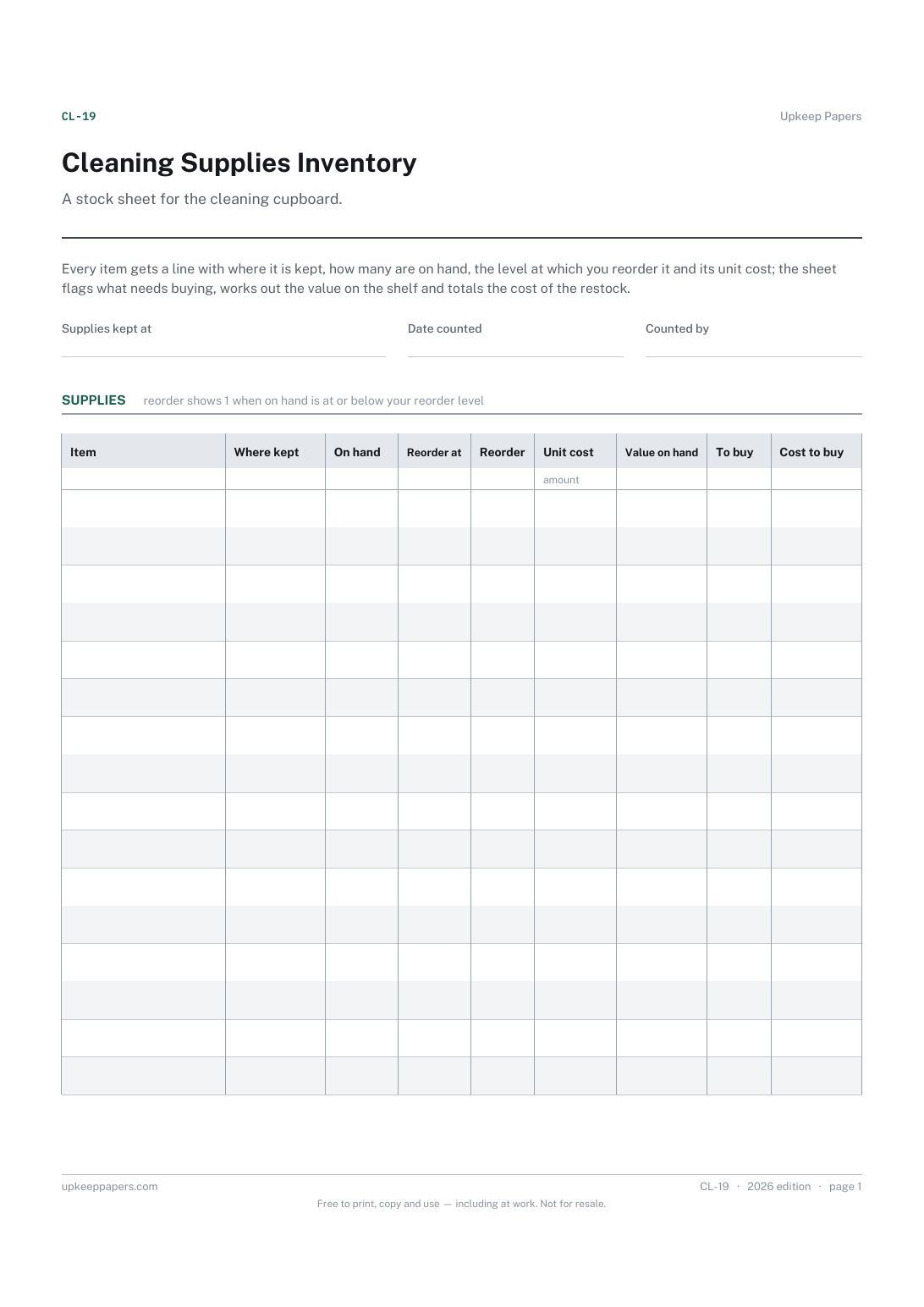
What is in stock and where, so nothing is bought twice.
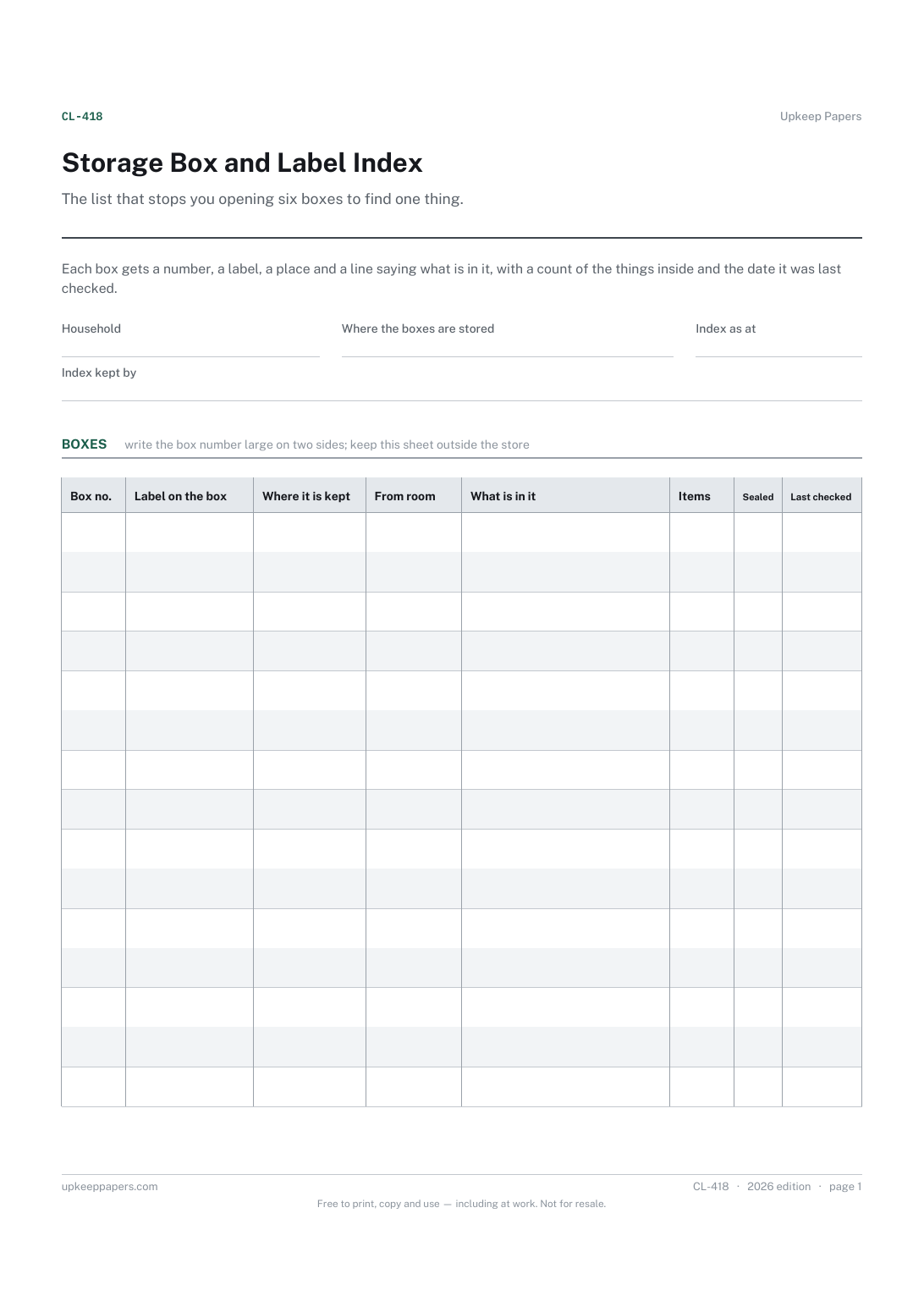
Which numbered box is which, and what the label on it says.
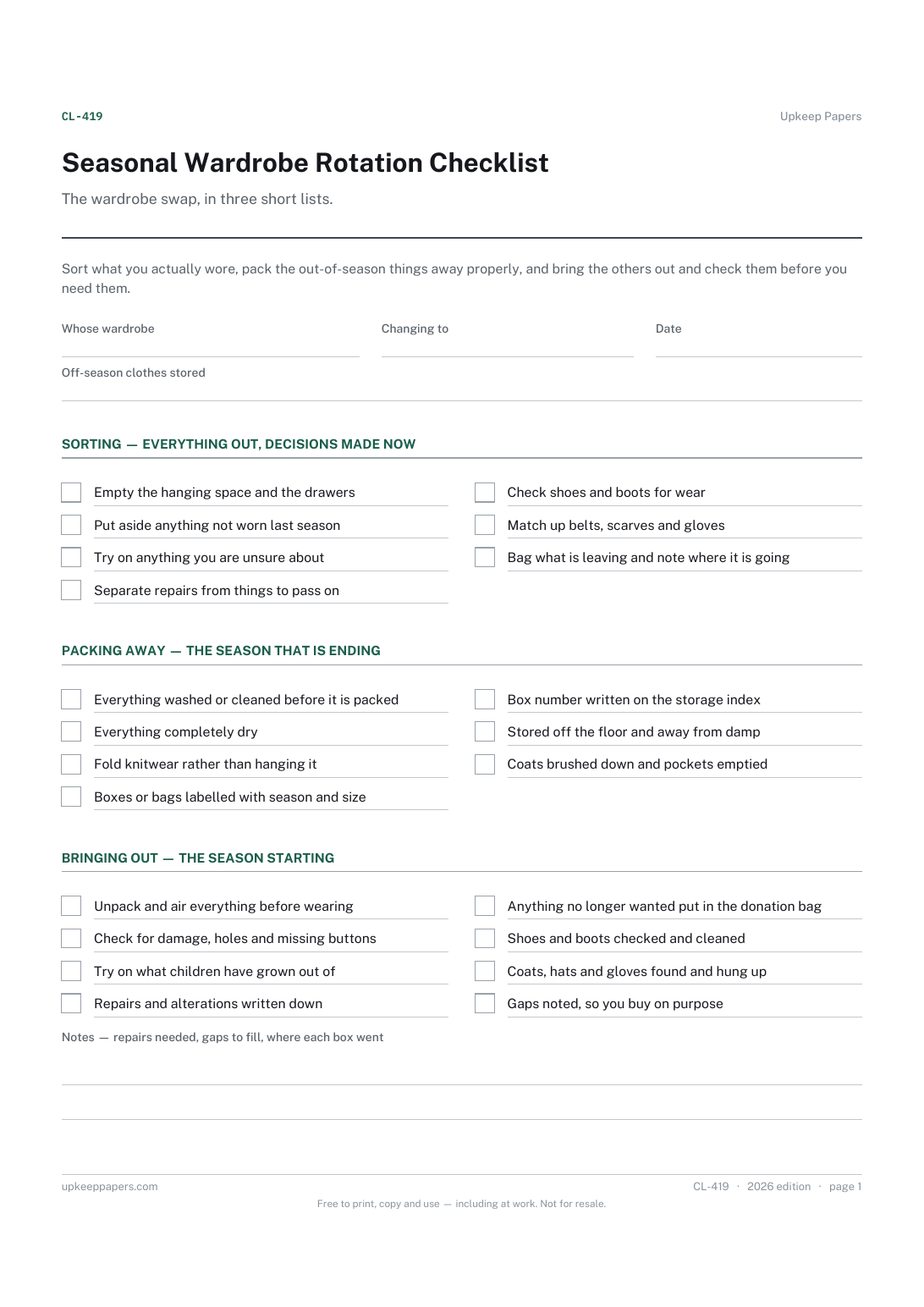
What to decide about each thing before it goes back in the wardrobe.
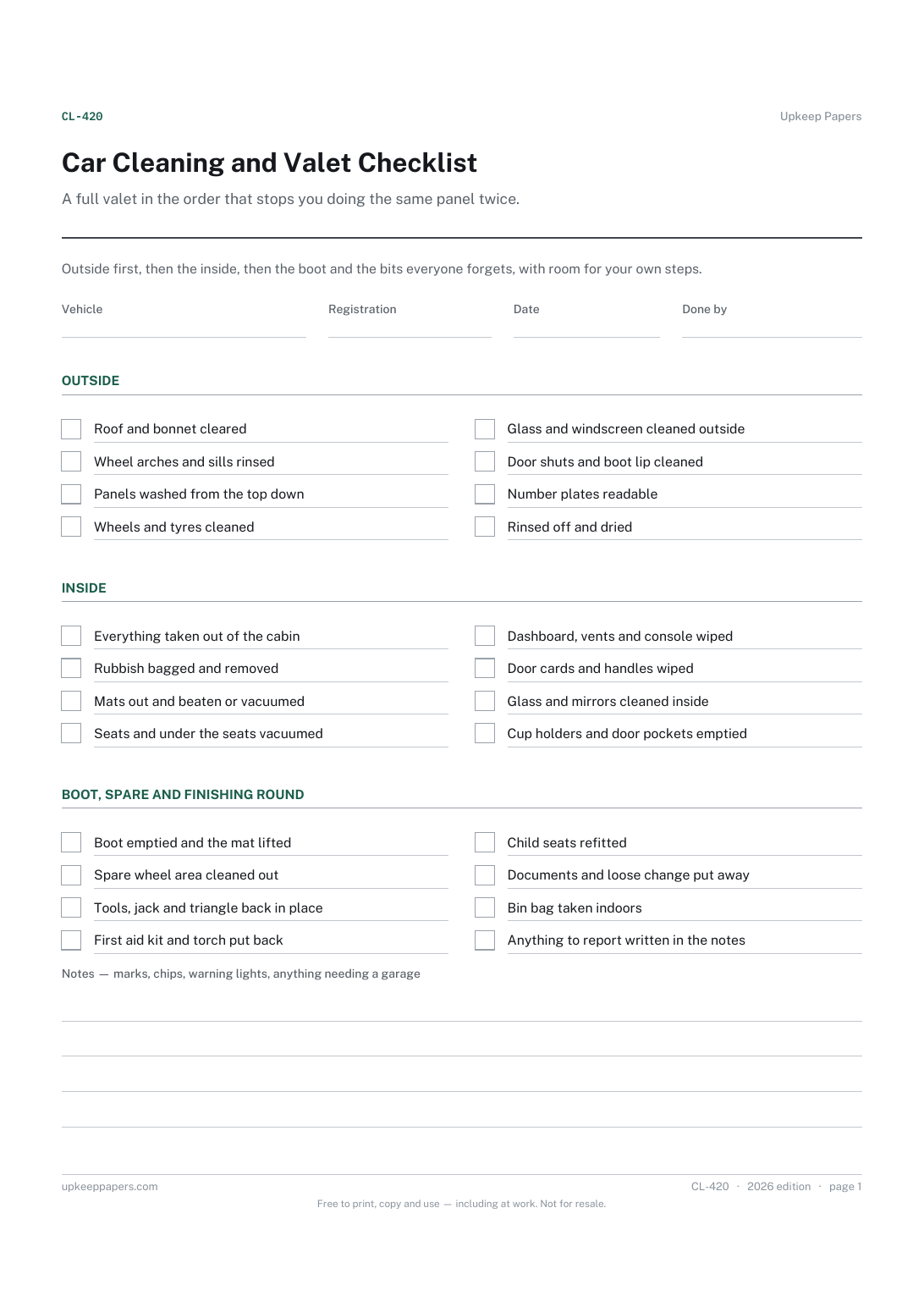
A running order that works from the top down and the outside in.
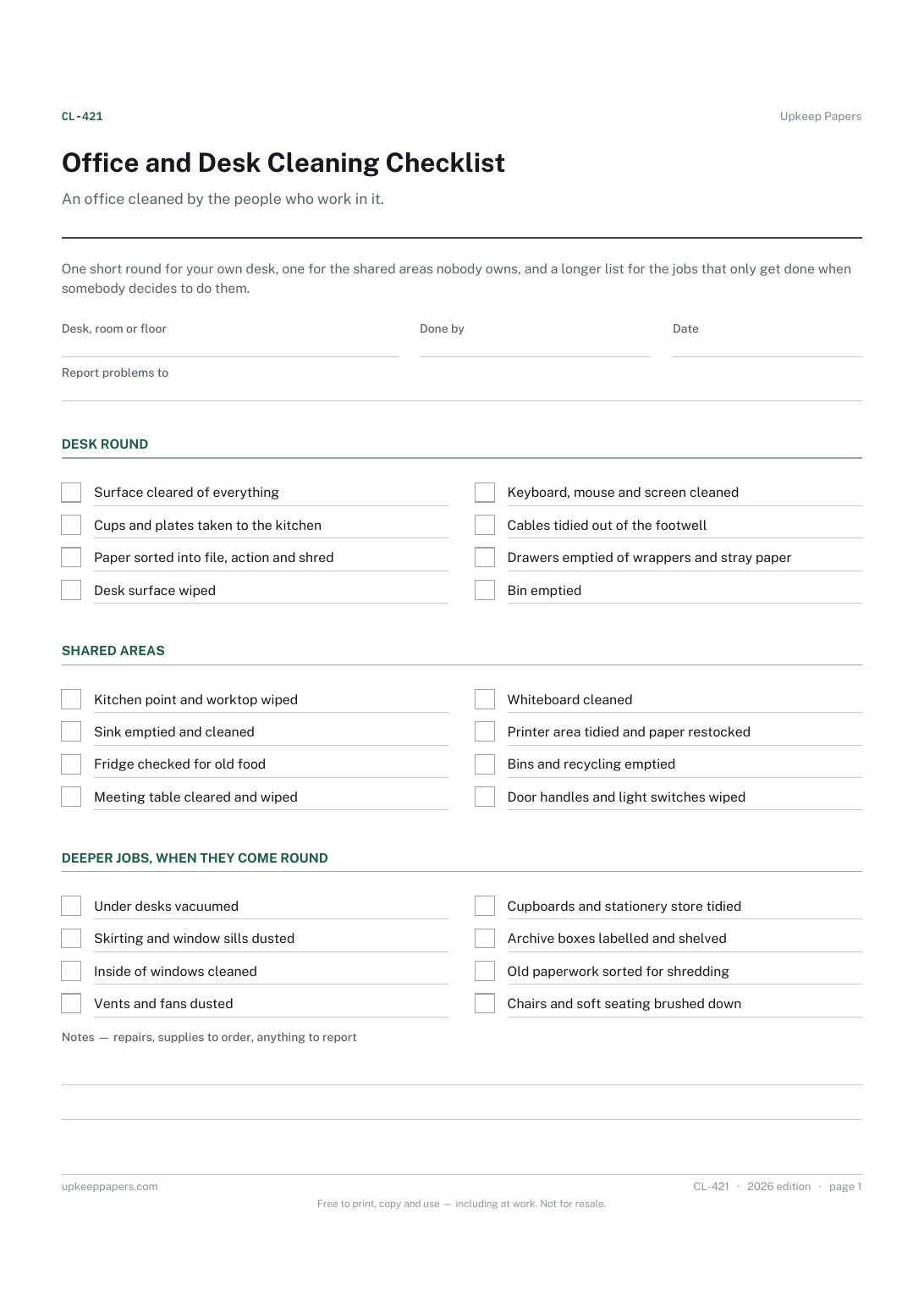
The short round that keeps a desk usable.
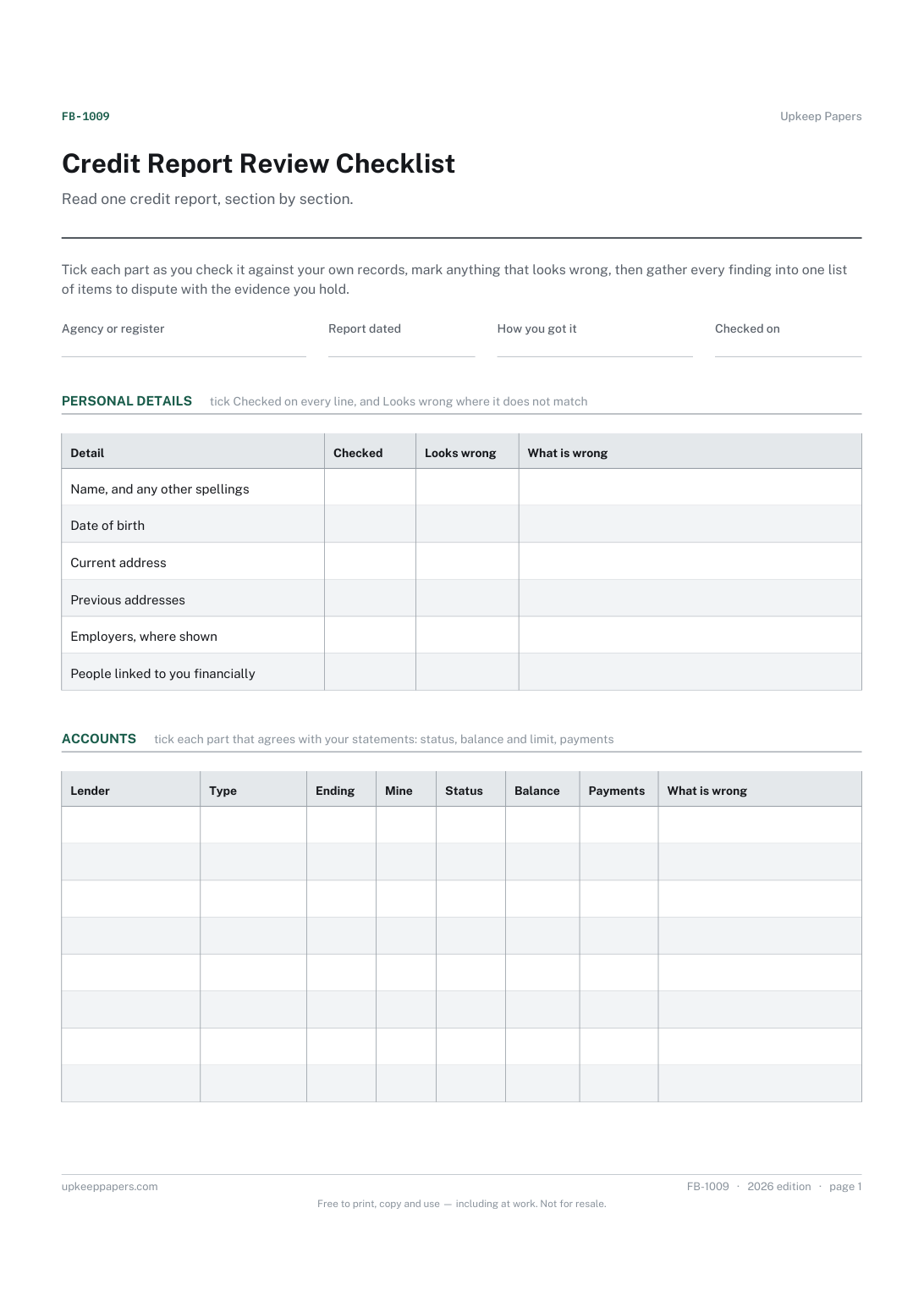
Your personal details exactly as the report shows them.
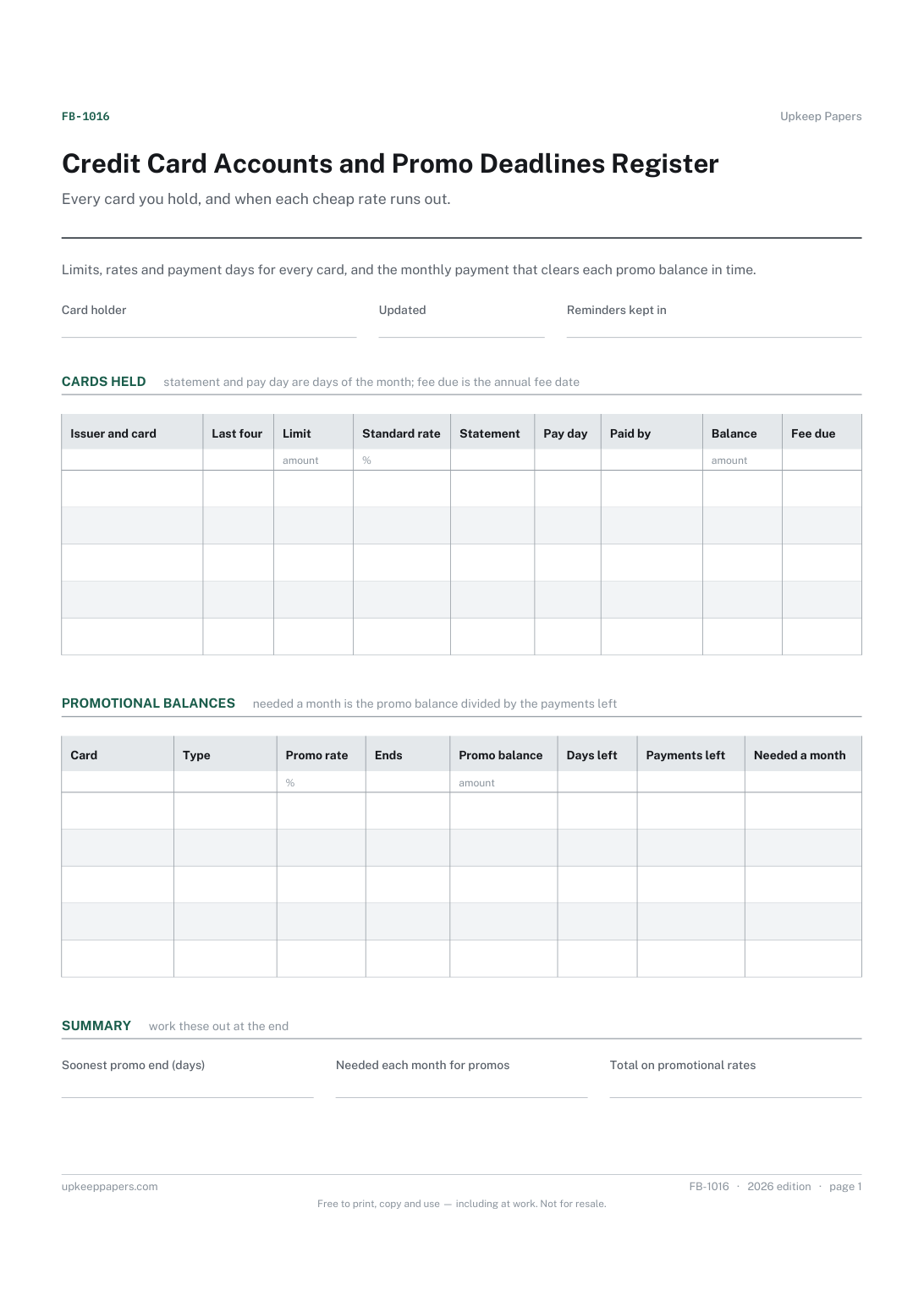
Each card, its limit and the standard rate it reverts to.
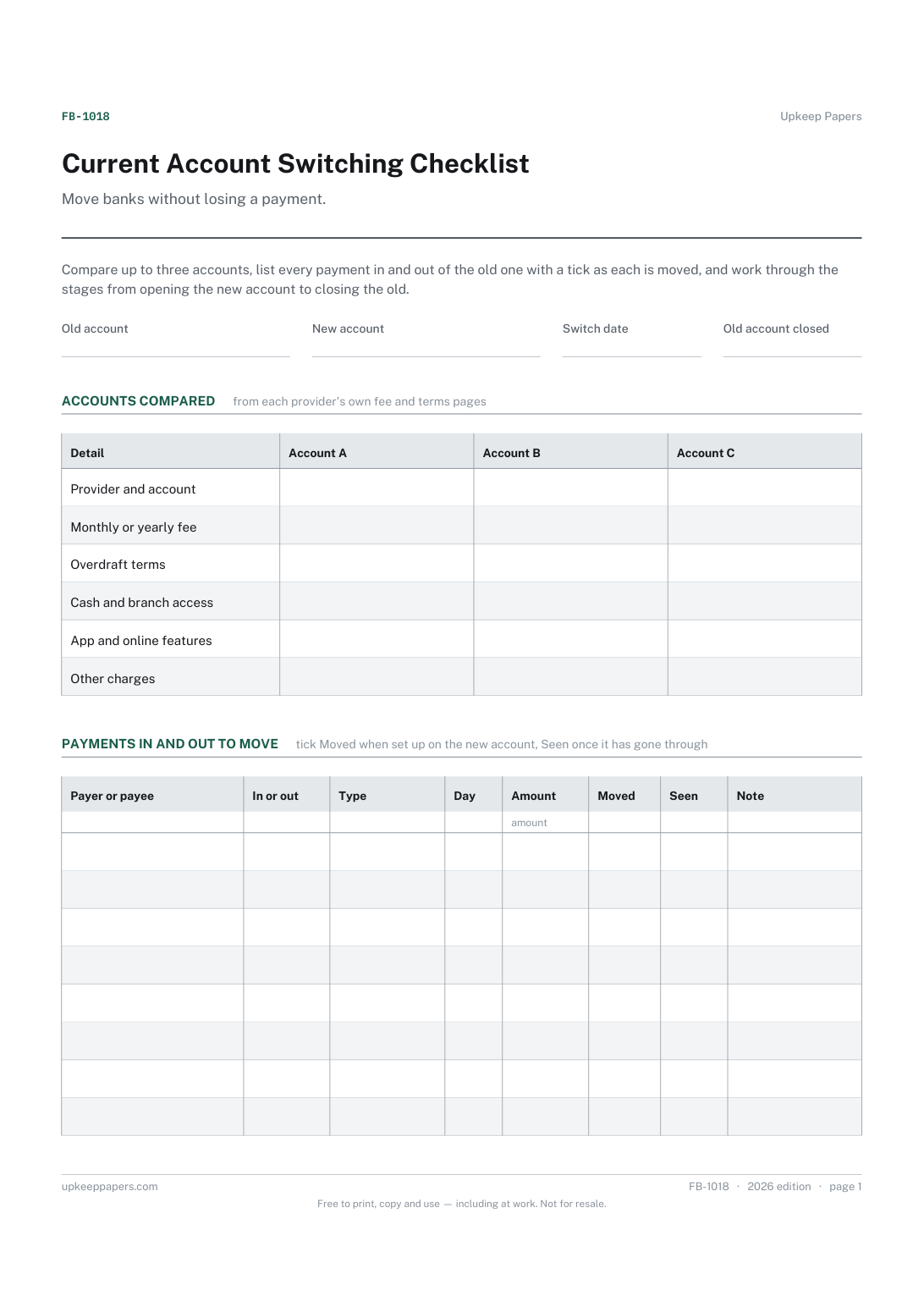
Fees, overdraft terms, cash access and app features side by side.
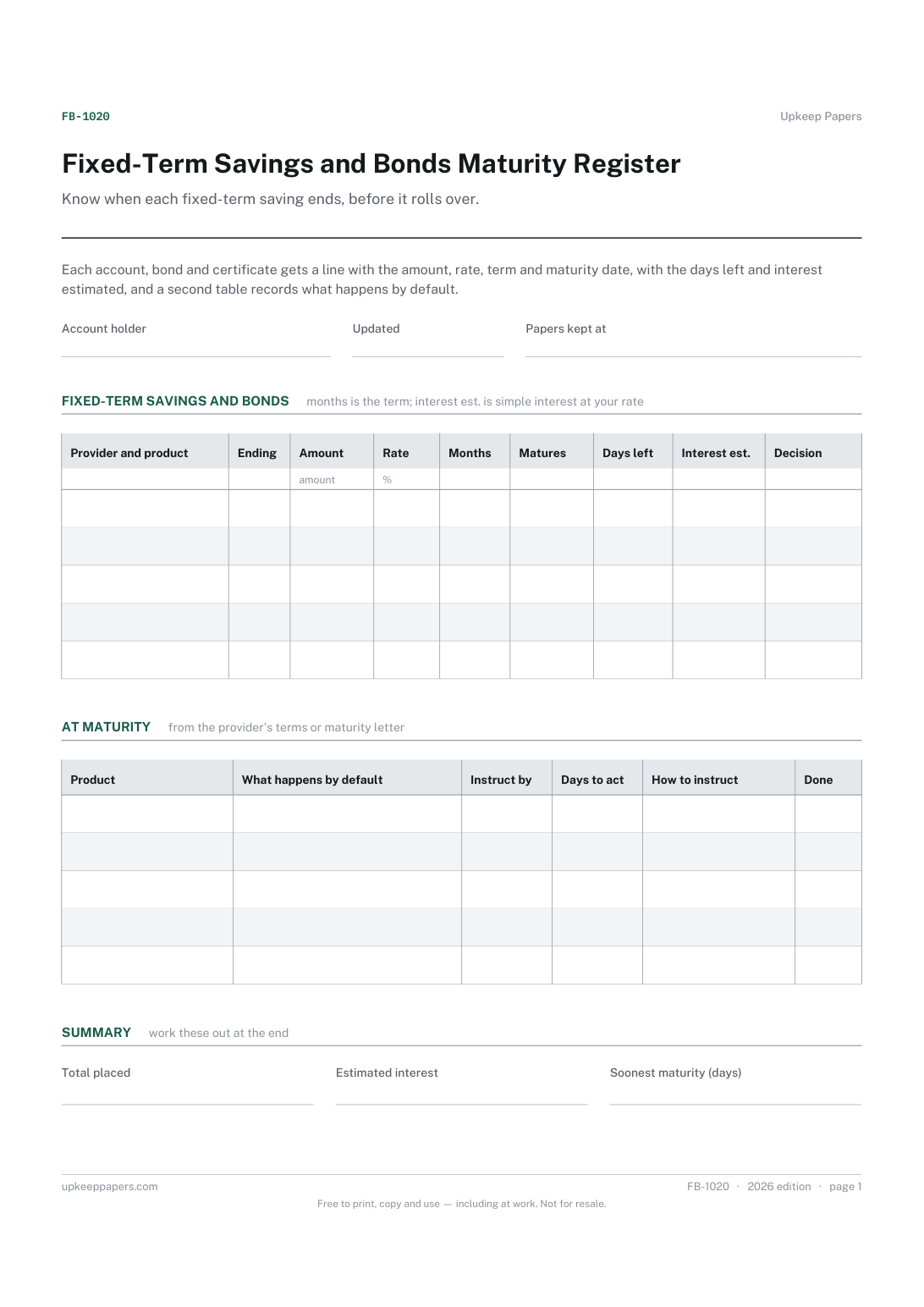
Every fixed-term product, the amount placed and the rate agreed.
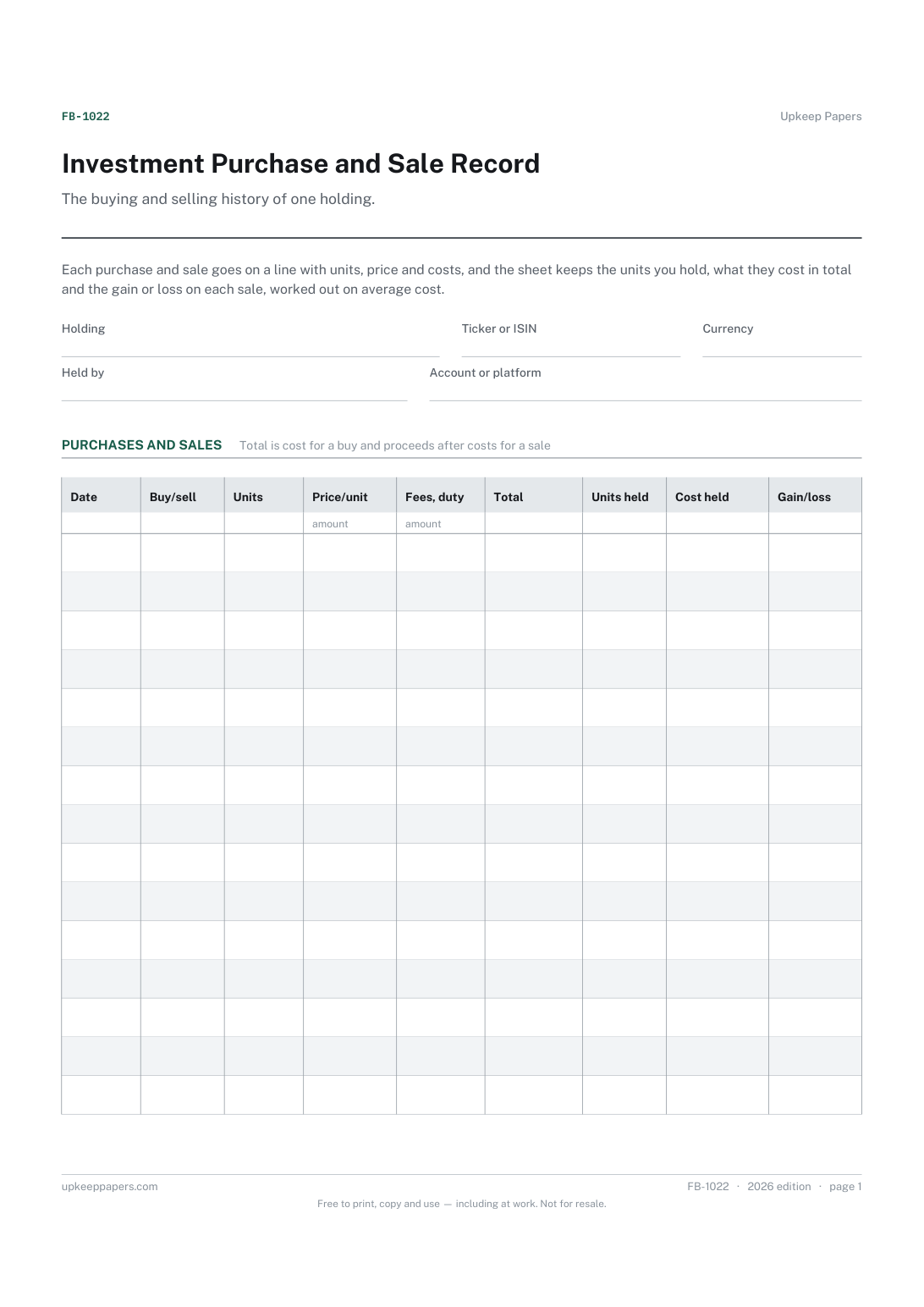
Every purchase and sale of one holding, with the date and price.
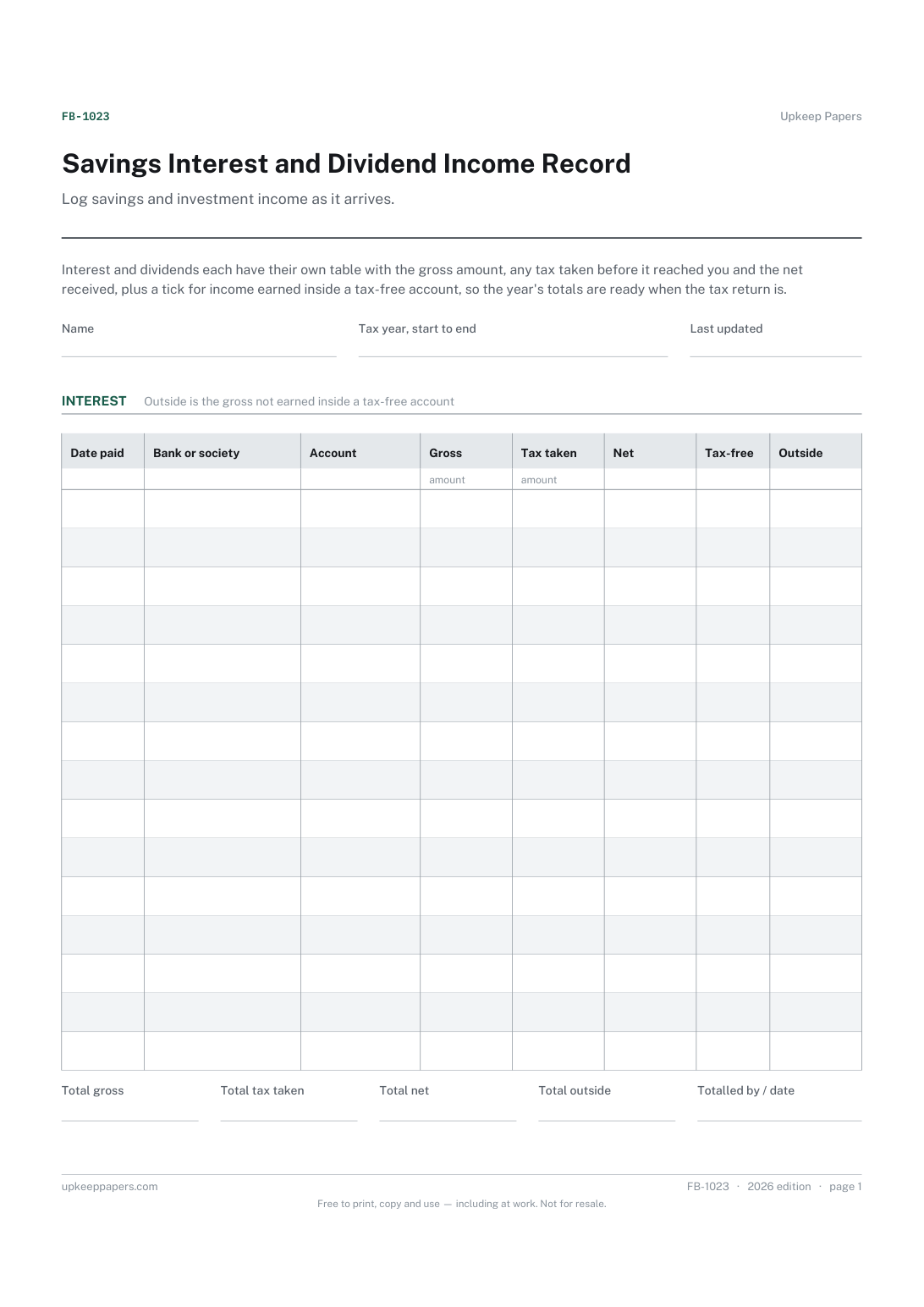
Each interest payment by bank, account and date.
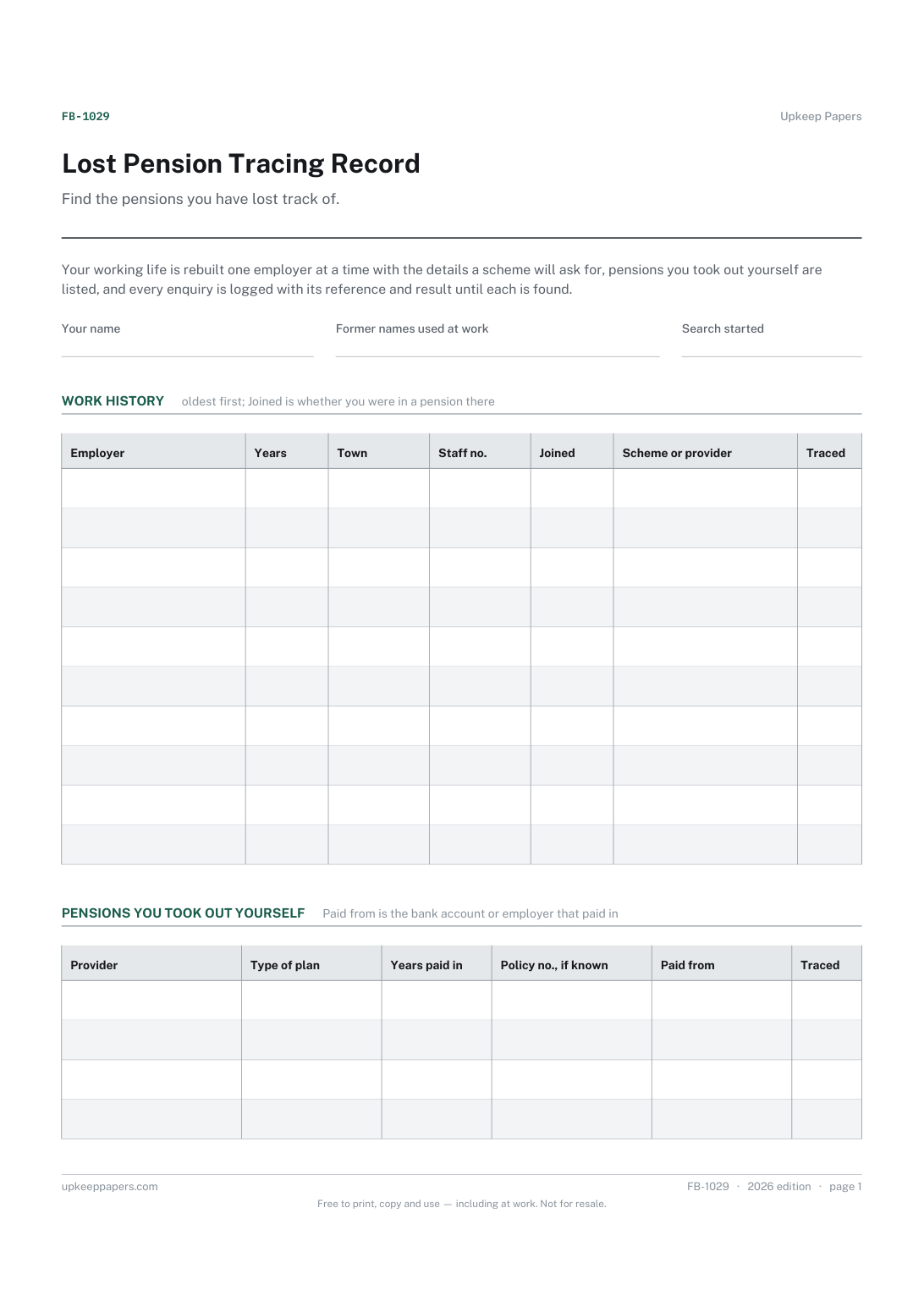
Every employer you worked for, with years, town and staff number.
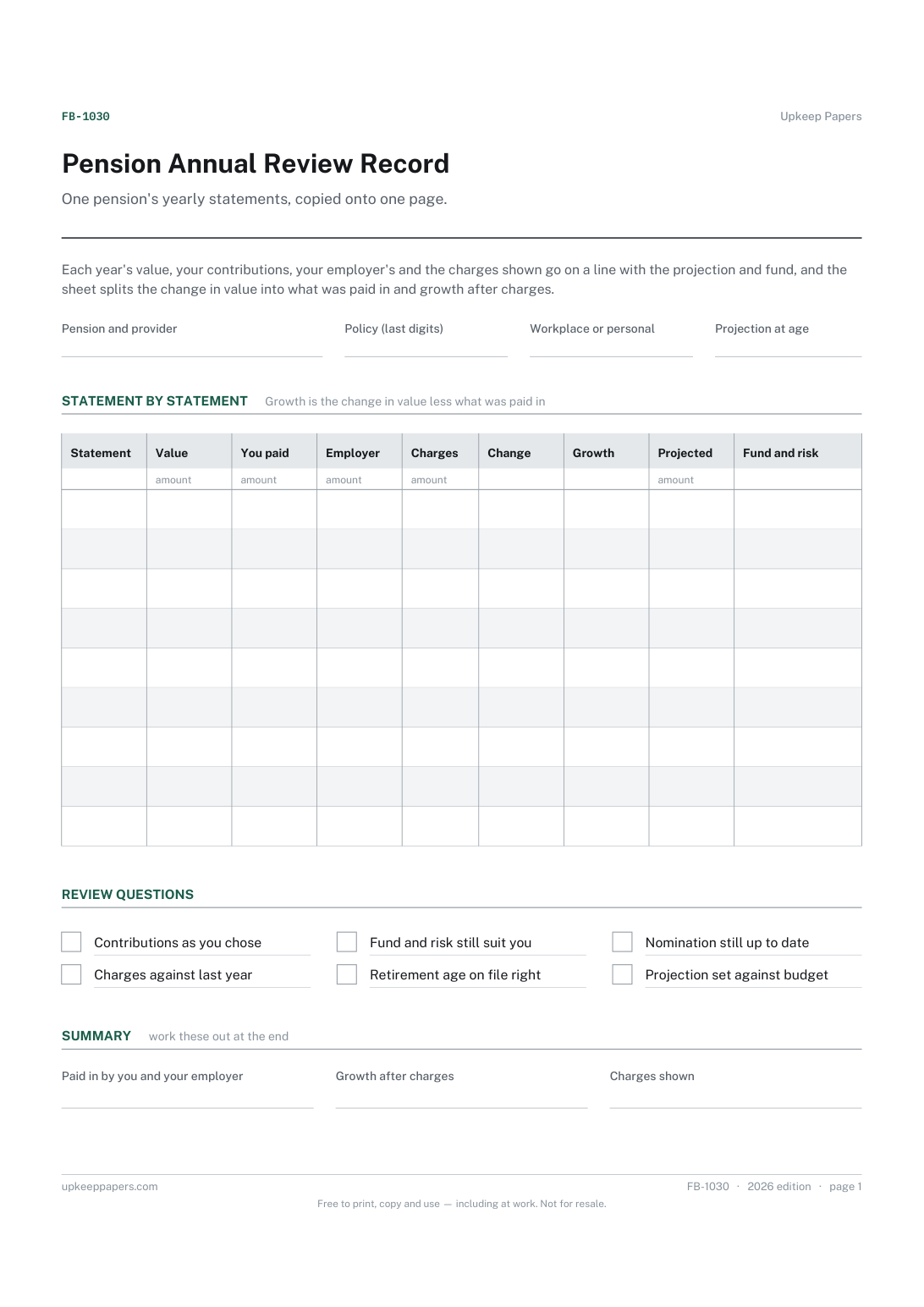
The value on each yearly statement, year after year.
Forecasts asked for and every pension found and listed.
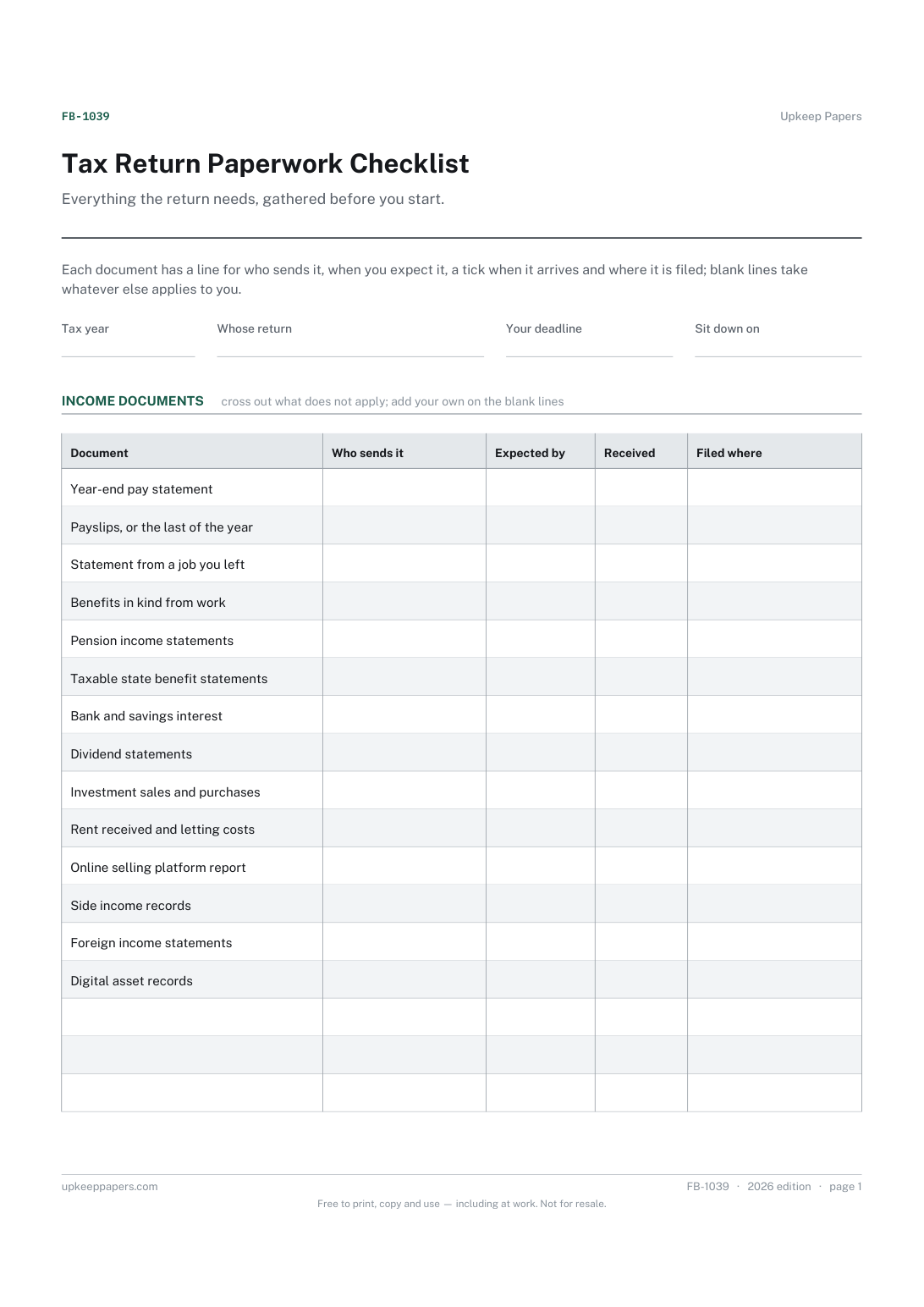
Pay, pension and benefit statements for the tax year.
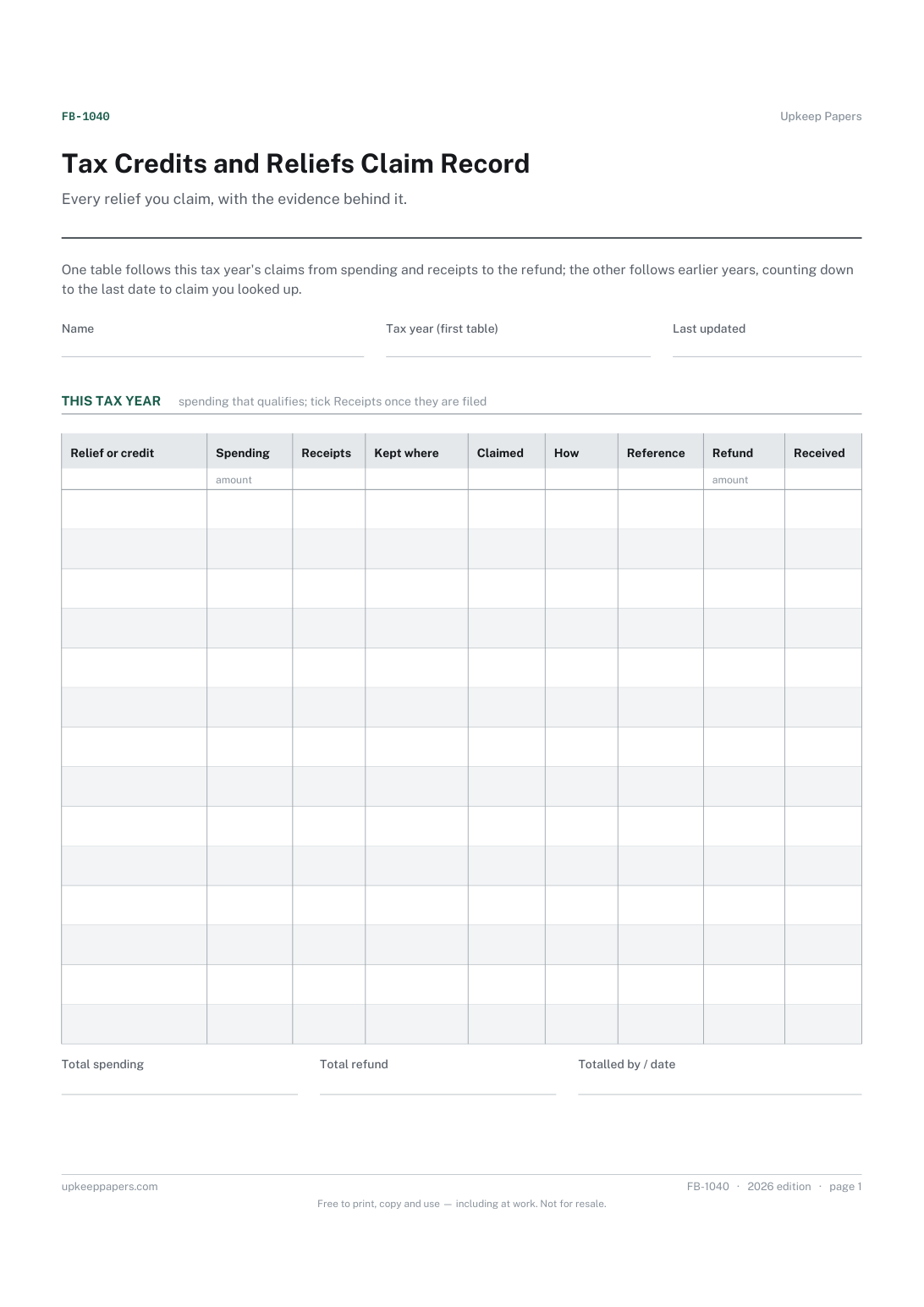
Each credit or relief claimed, in the name your tax office uses.
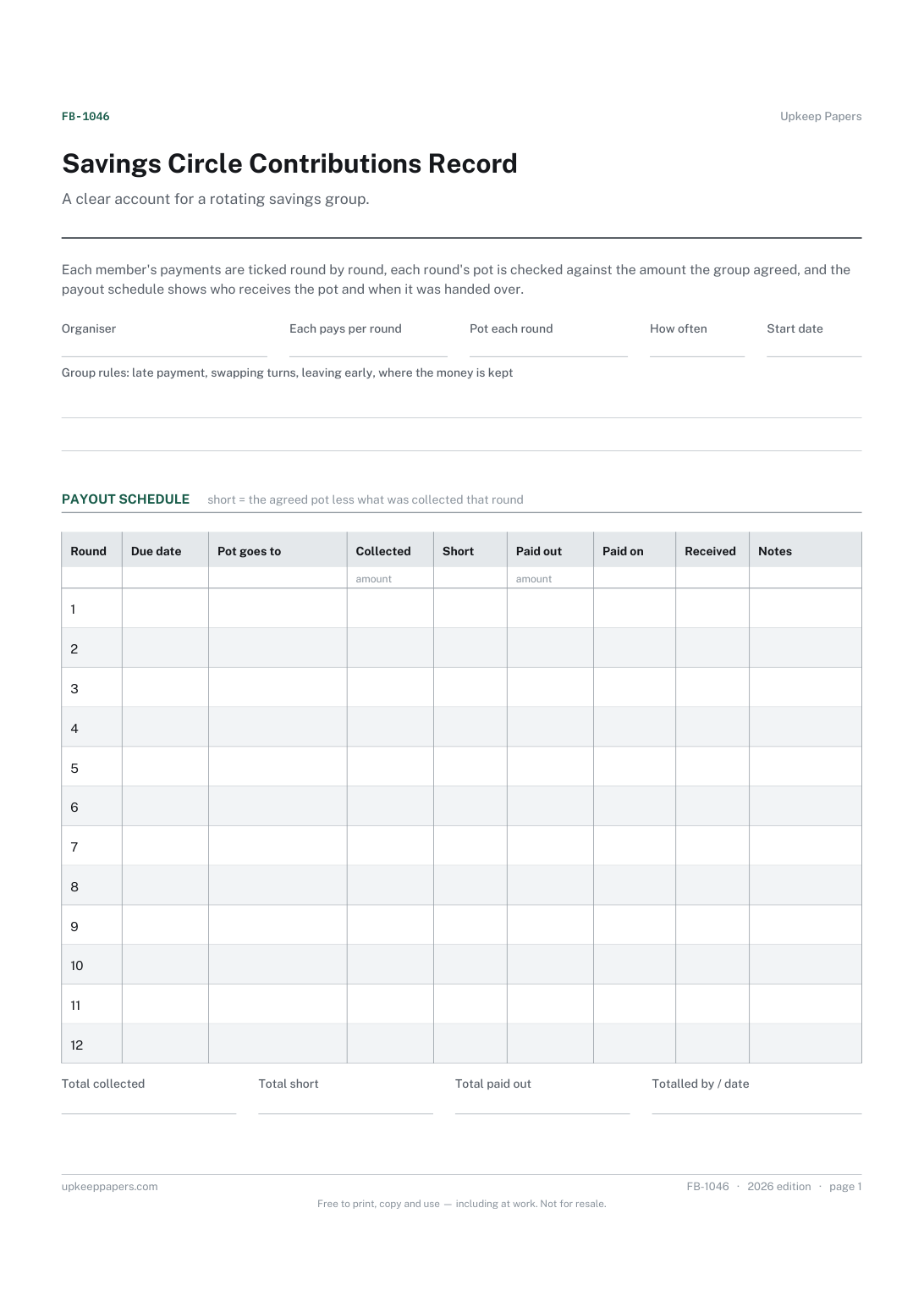
Each member's payment ticked off round by round.
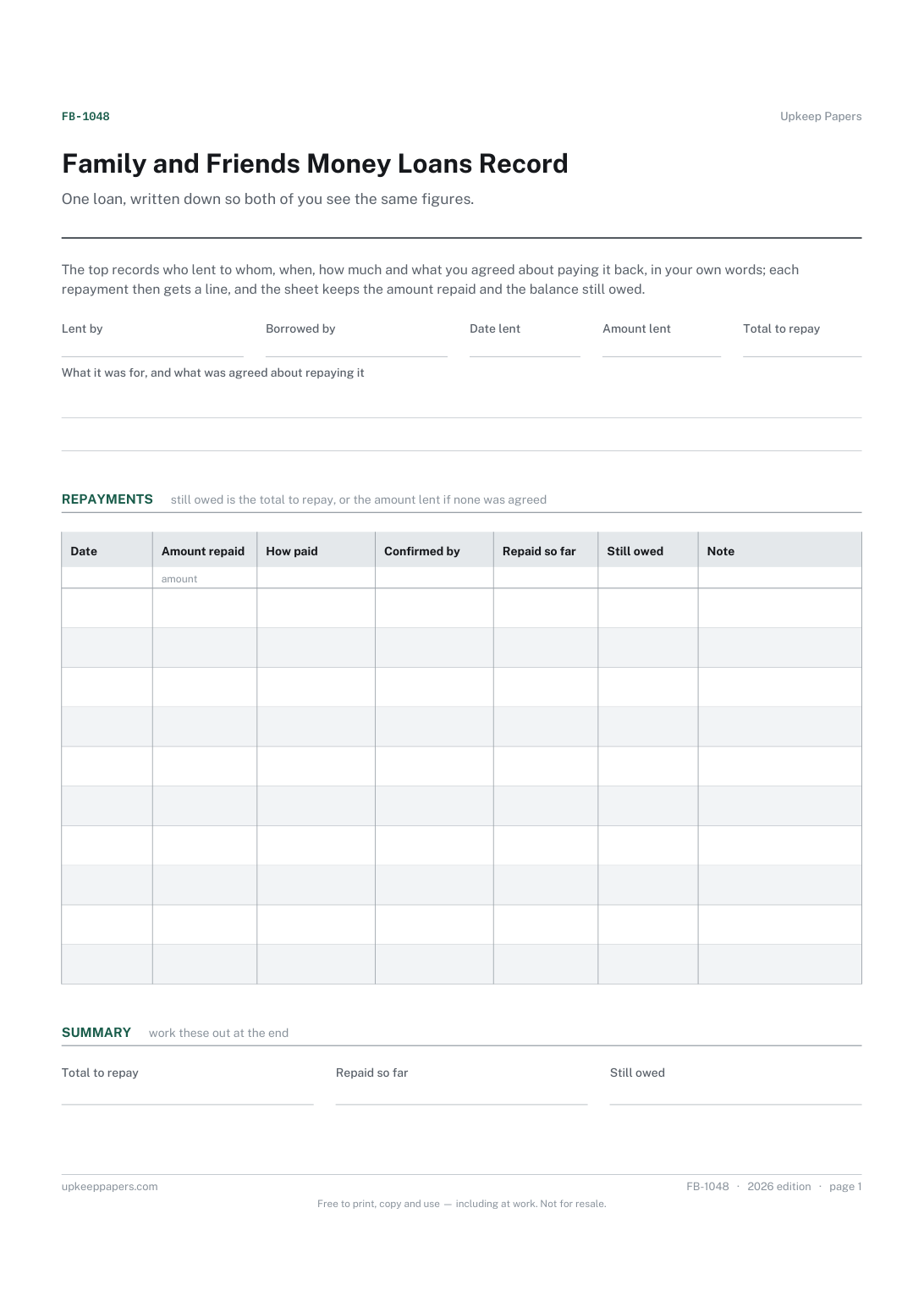
Who lent the money, who borrowed it and on what date.
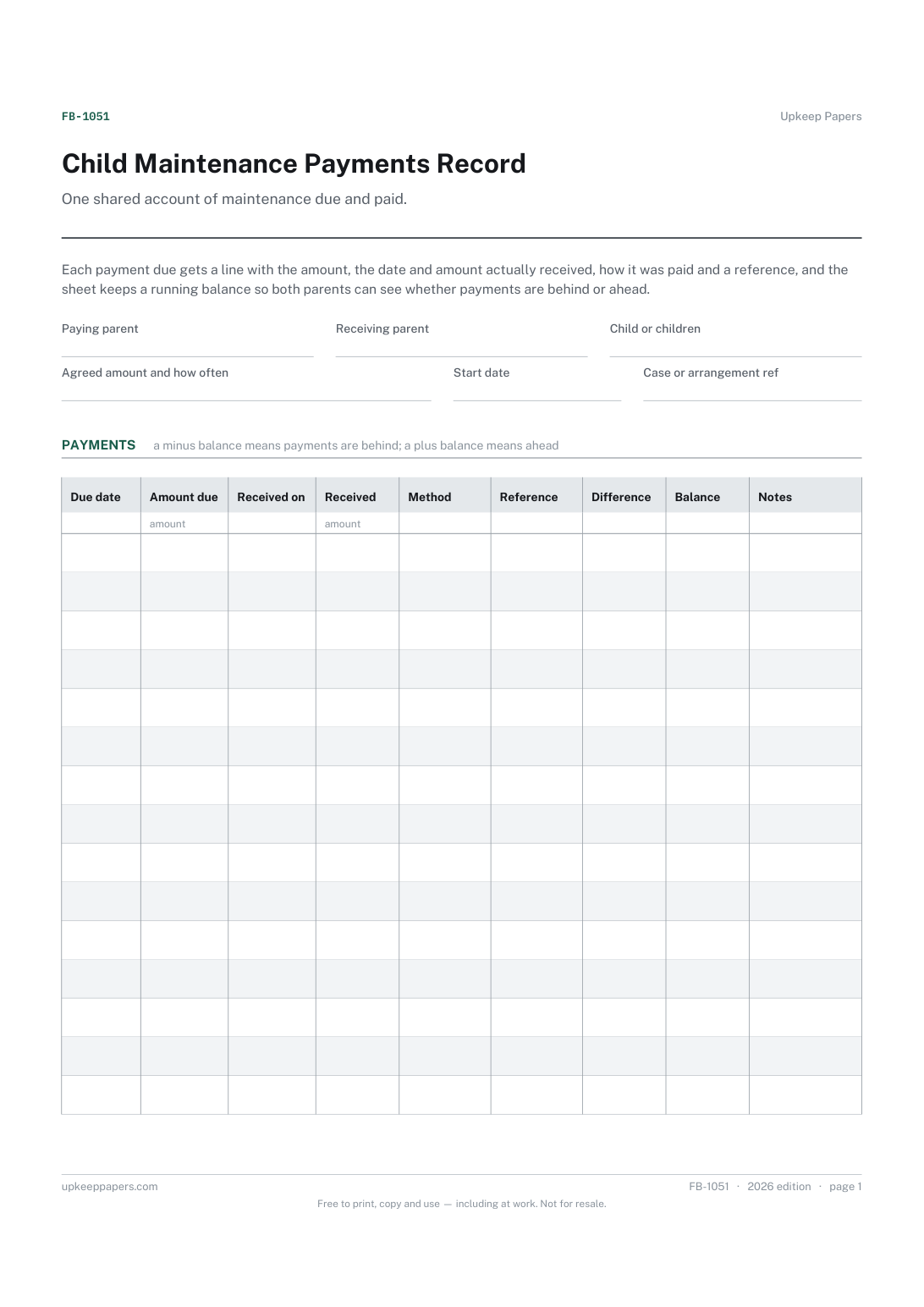
The arrangement: who pays, for which children, how much and how often.
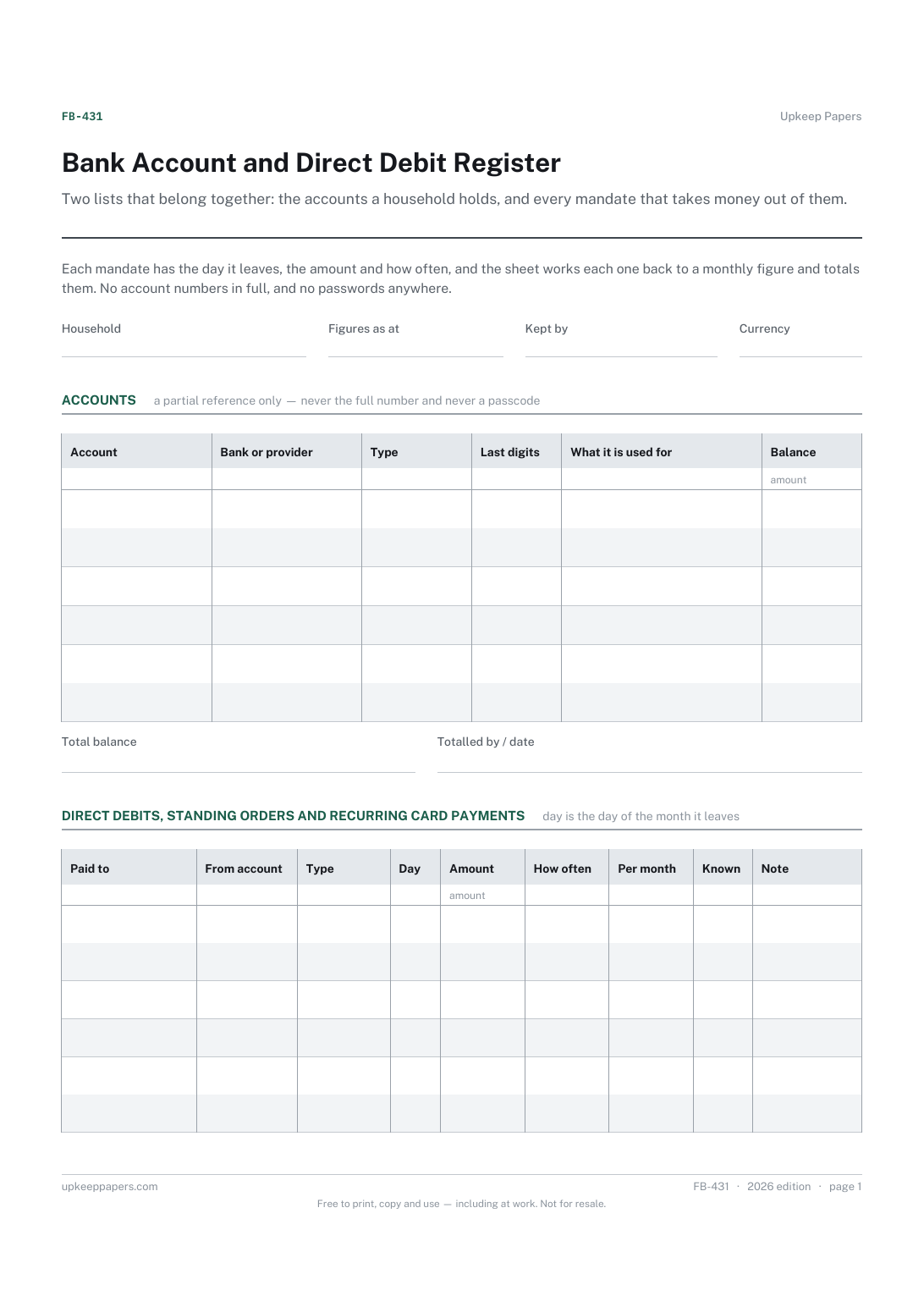
Which accounts exist, with which bank, and what each is used for.
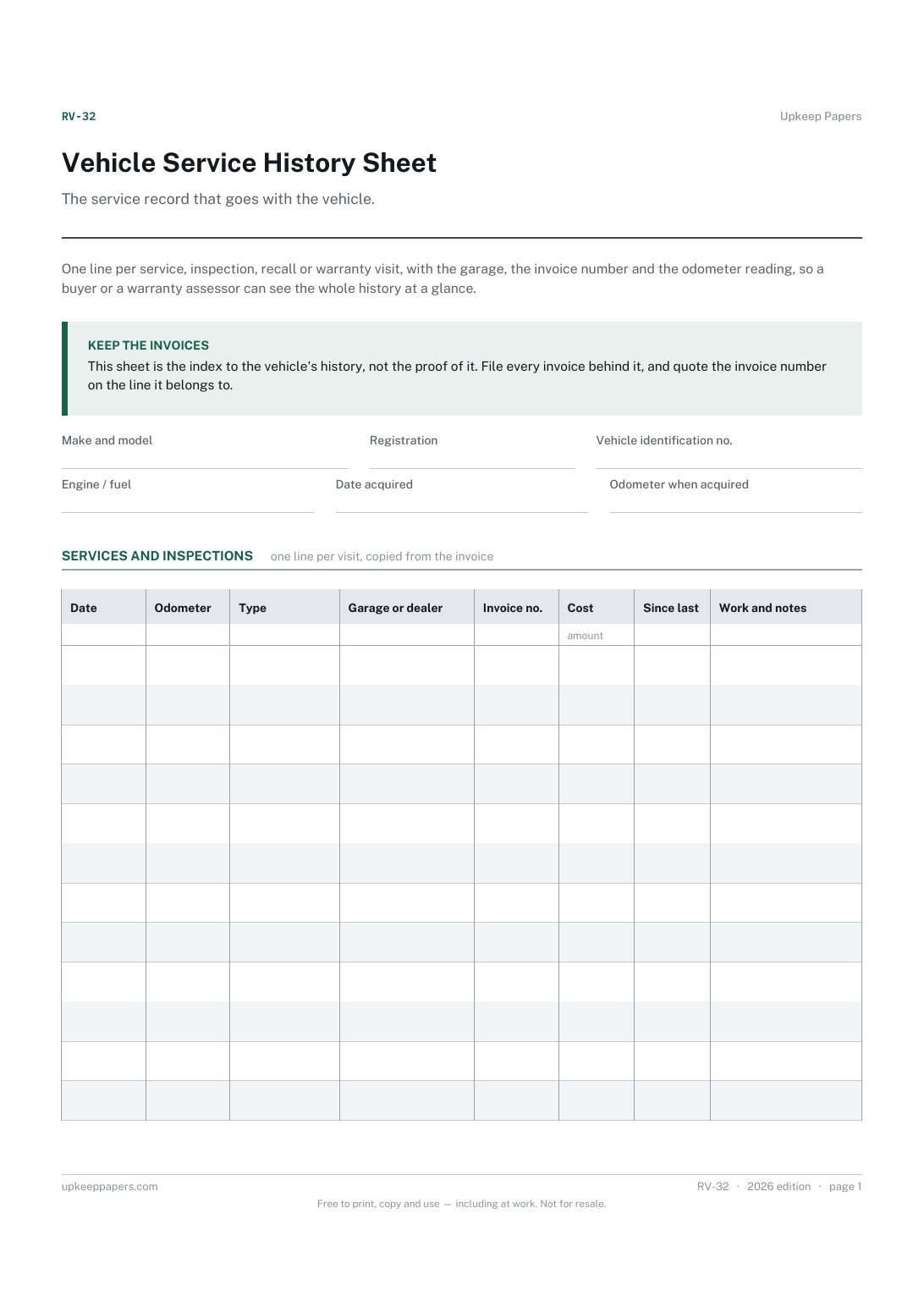
Every scheduled service and inspection, in date order with the mileage.
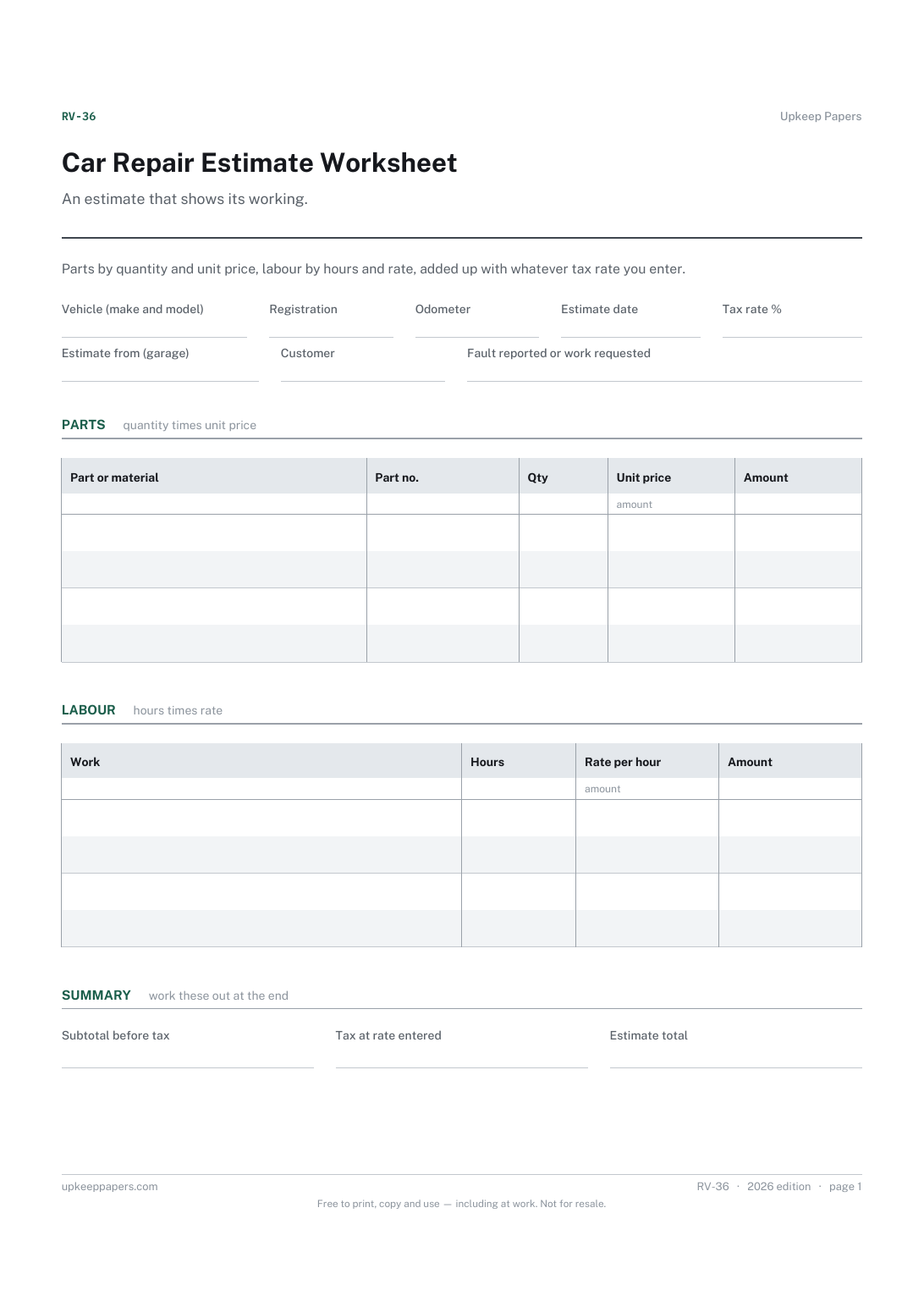
Parts and labour priced separately, so you can see which is driving the total.
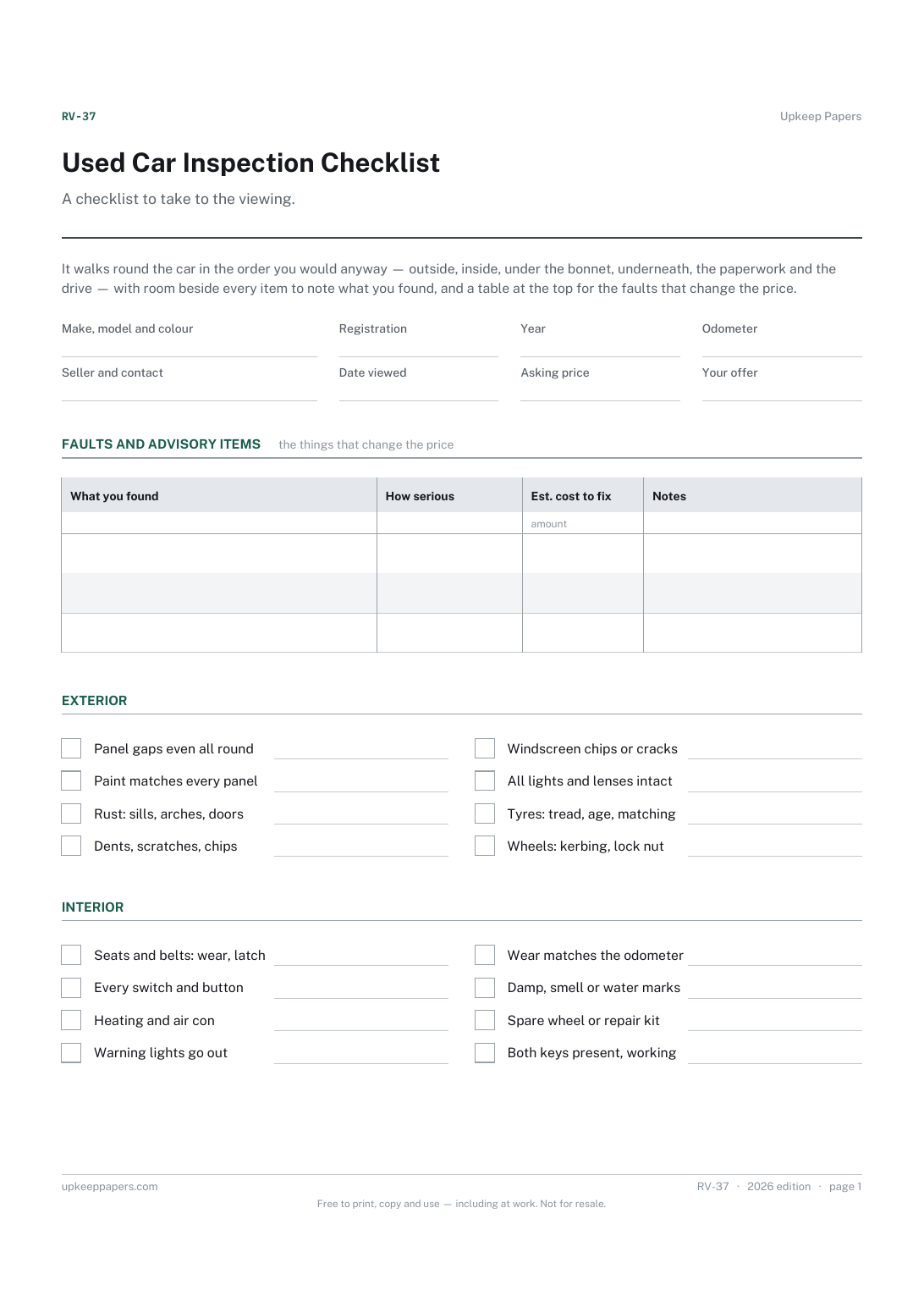
Nothing forgotten in the moment because the seller is talking.
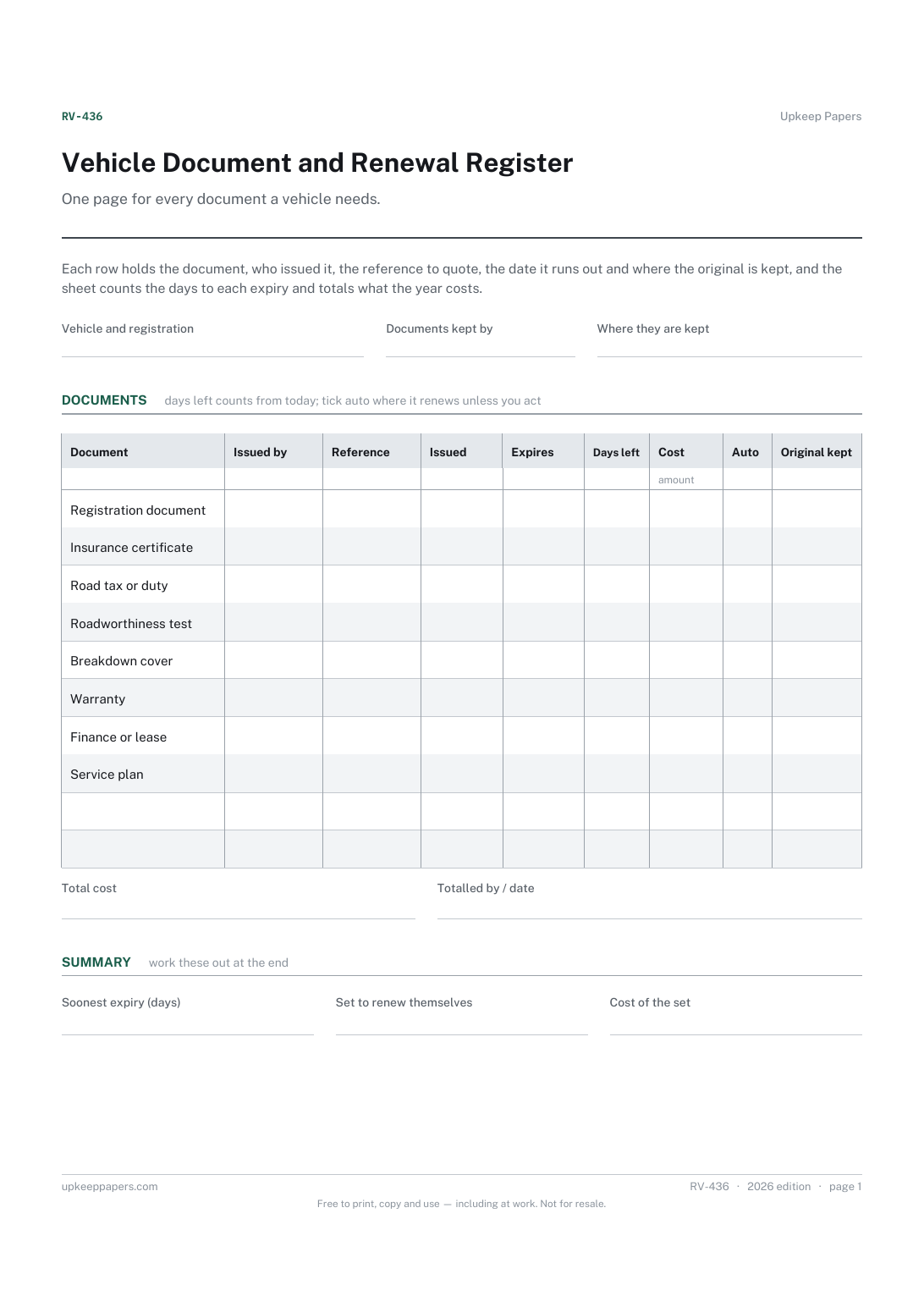
Which documents the vehicle has, who issued them and the reference to quote.
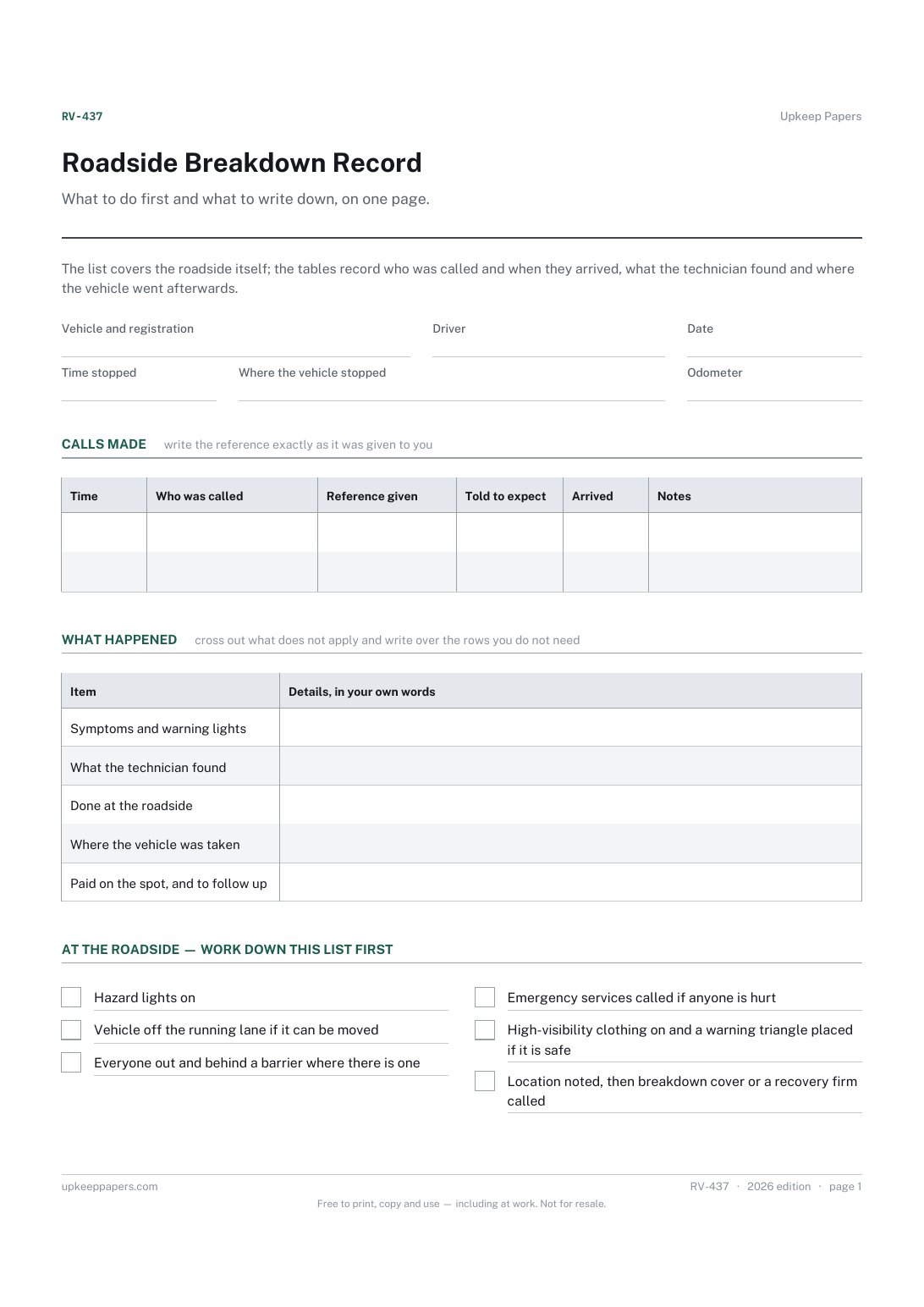
Where the vehicle stopped, and how that was described to the recovery operator.
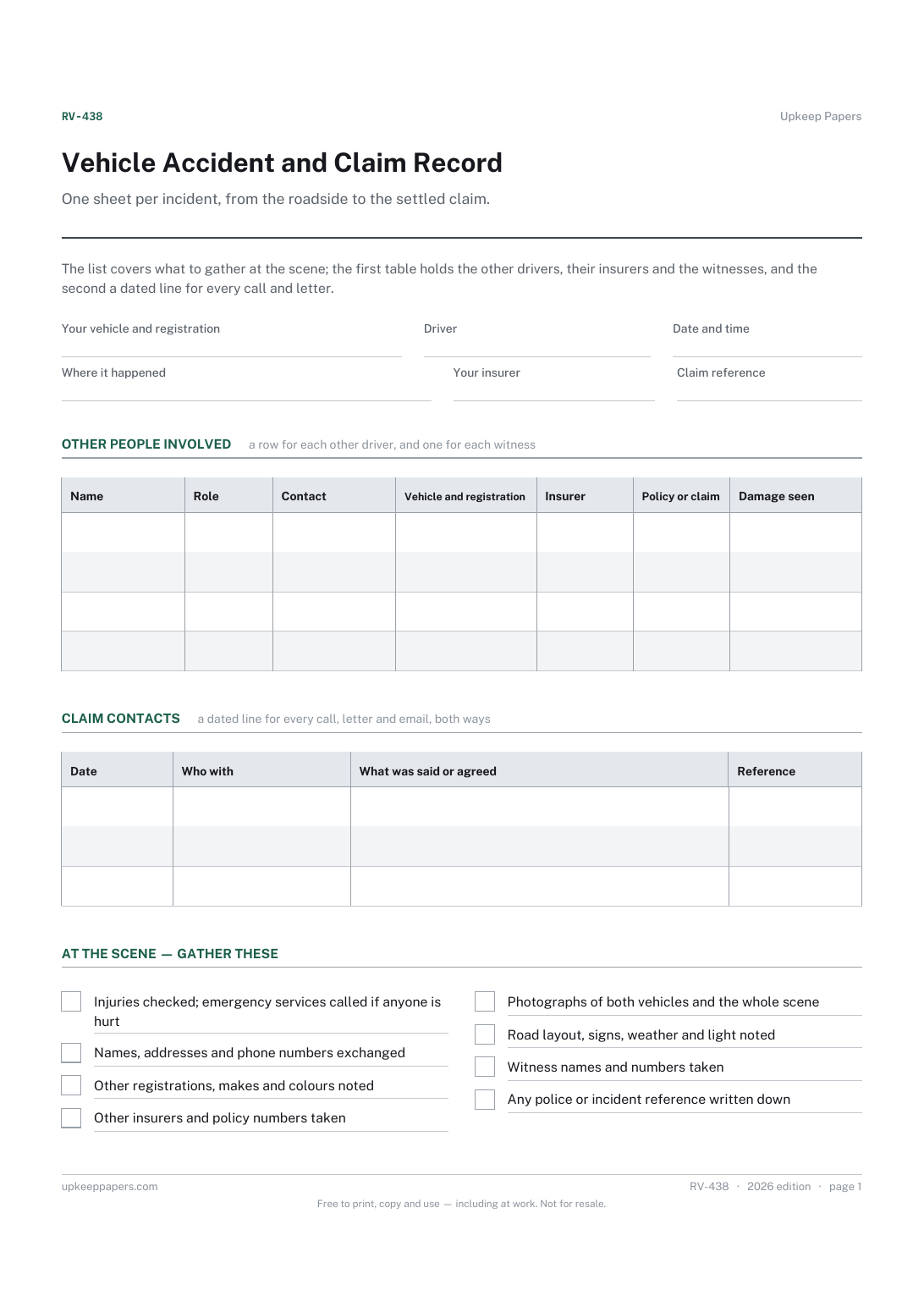
What was gathered at the scene, and what was not.
What is actually in the boot, rather than what you assume is in there.
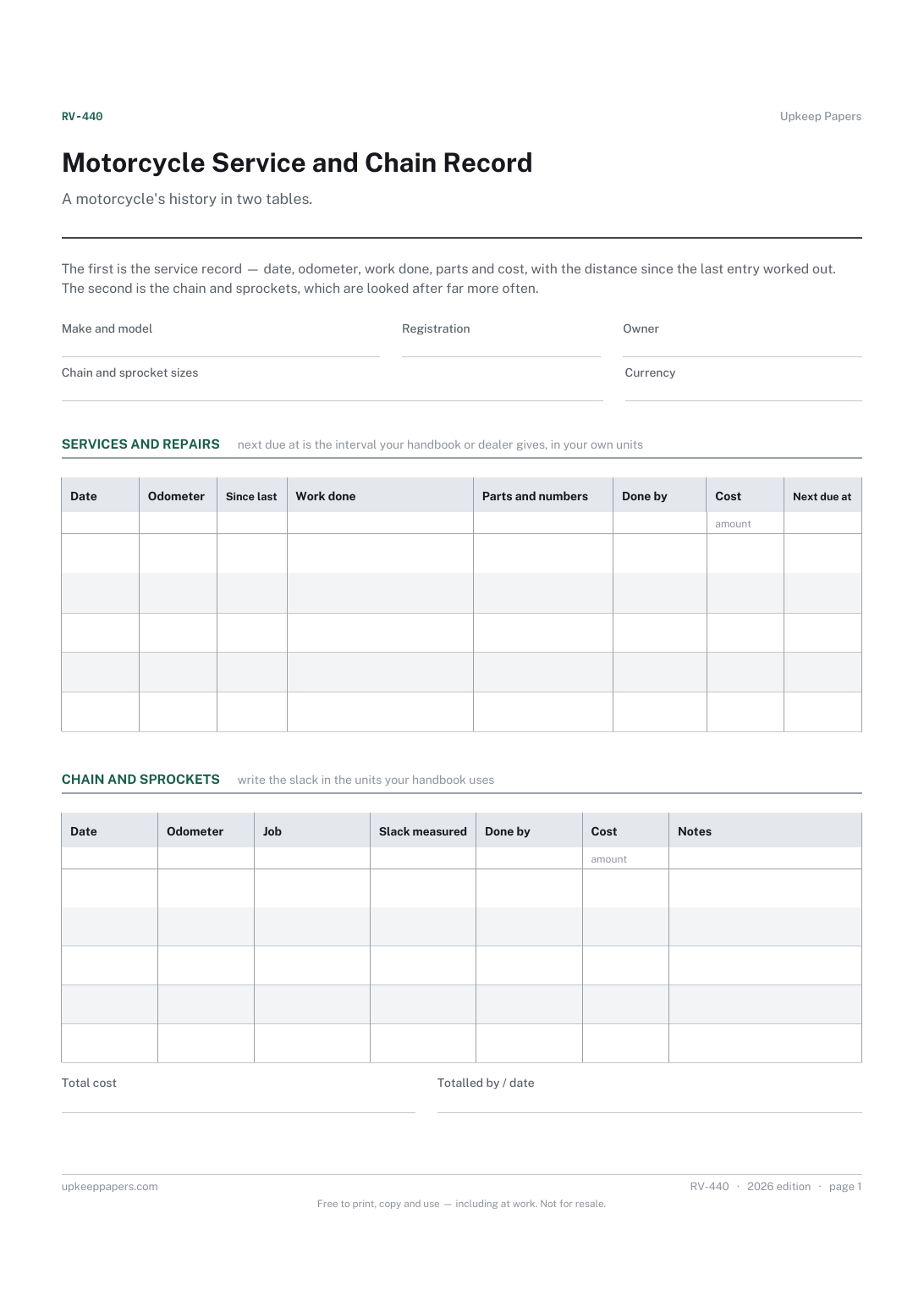
Every service and repair, with the odometer reading and who did it.
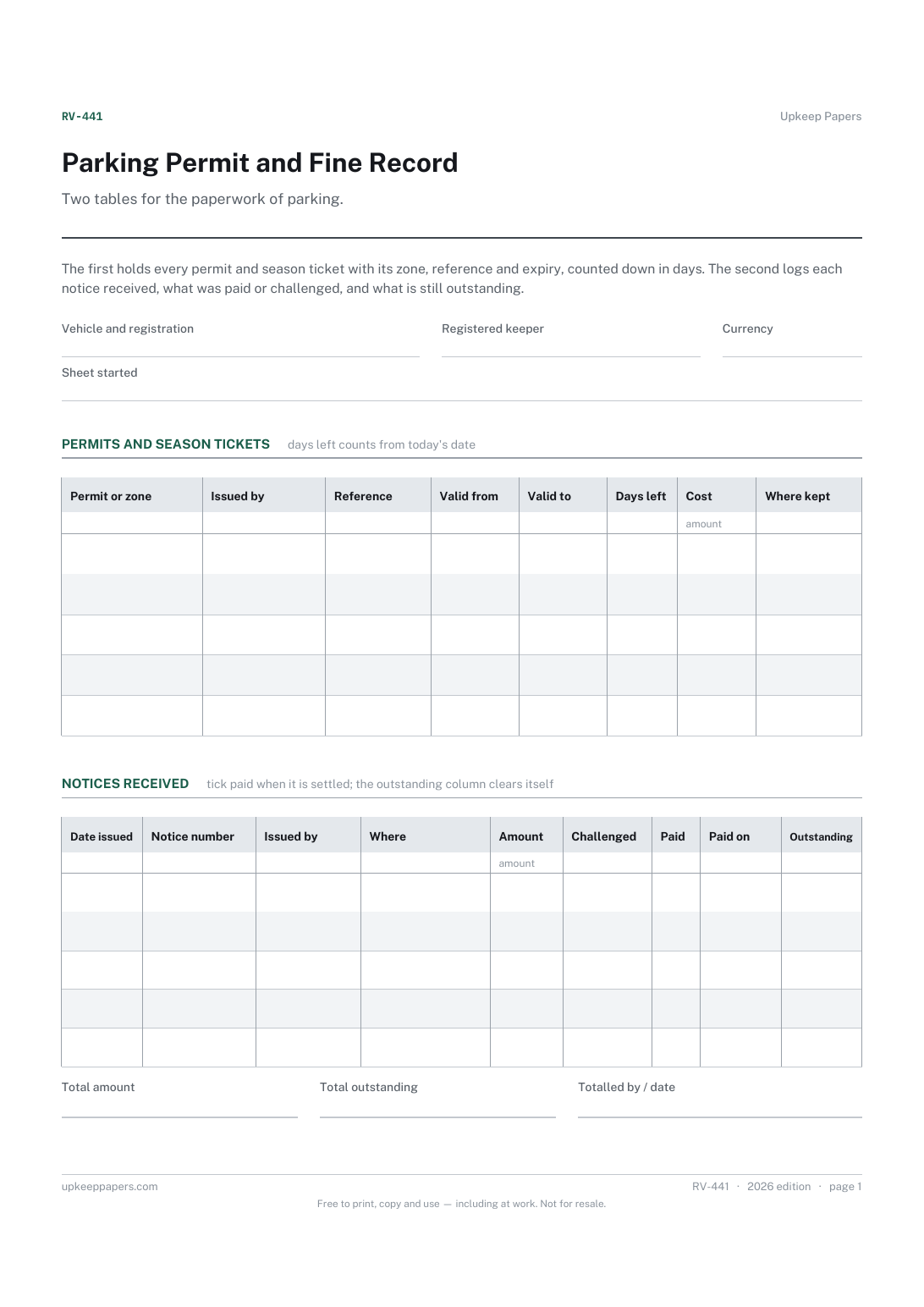
Which permits the vehicle holds, for which zone, and when each runs out.
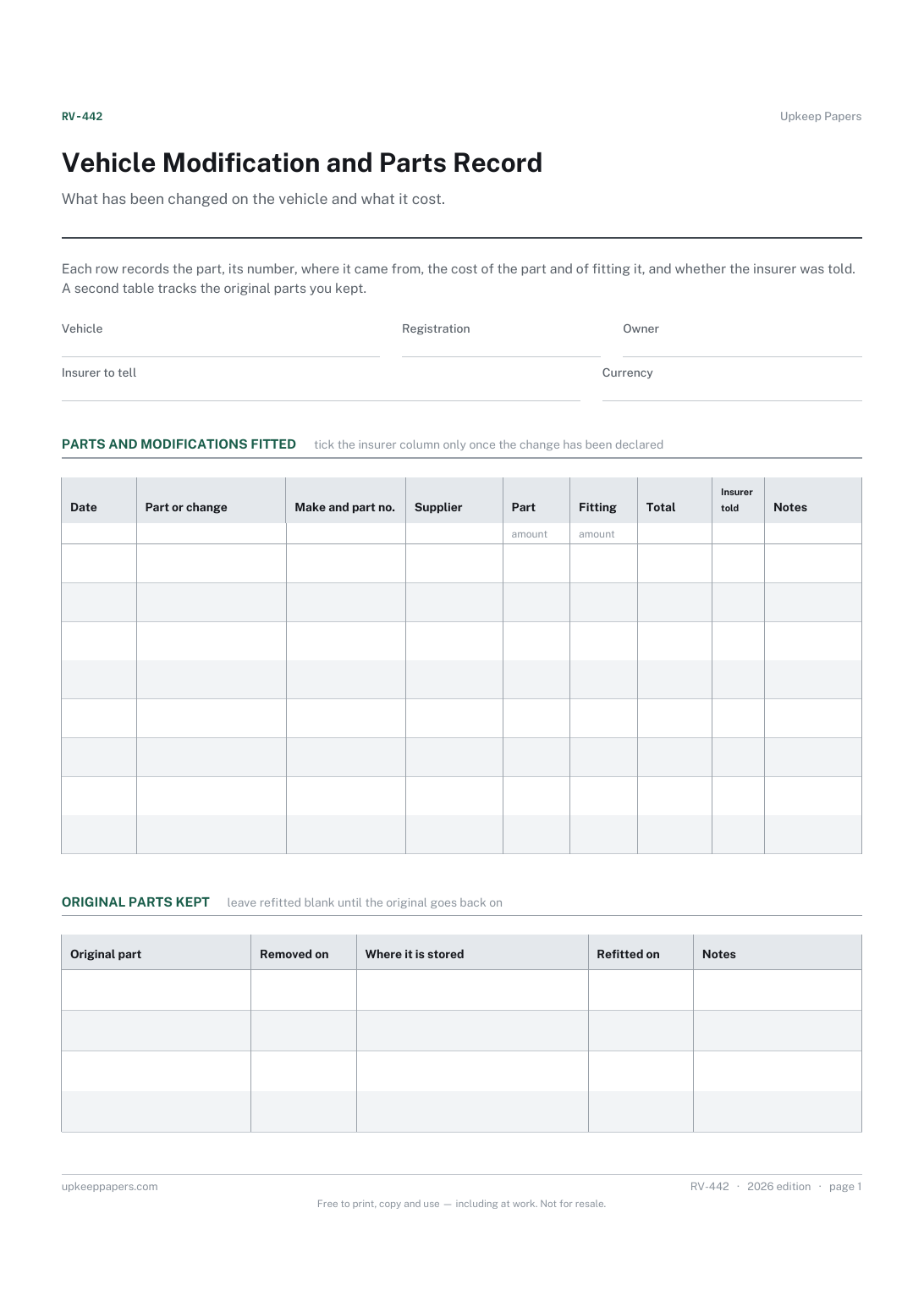
Every part fitted, with the make and the part number that identifies it.
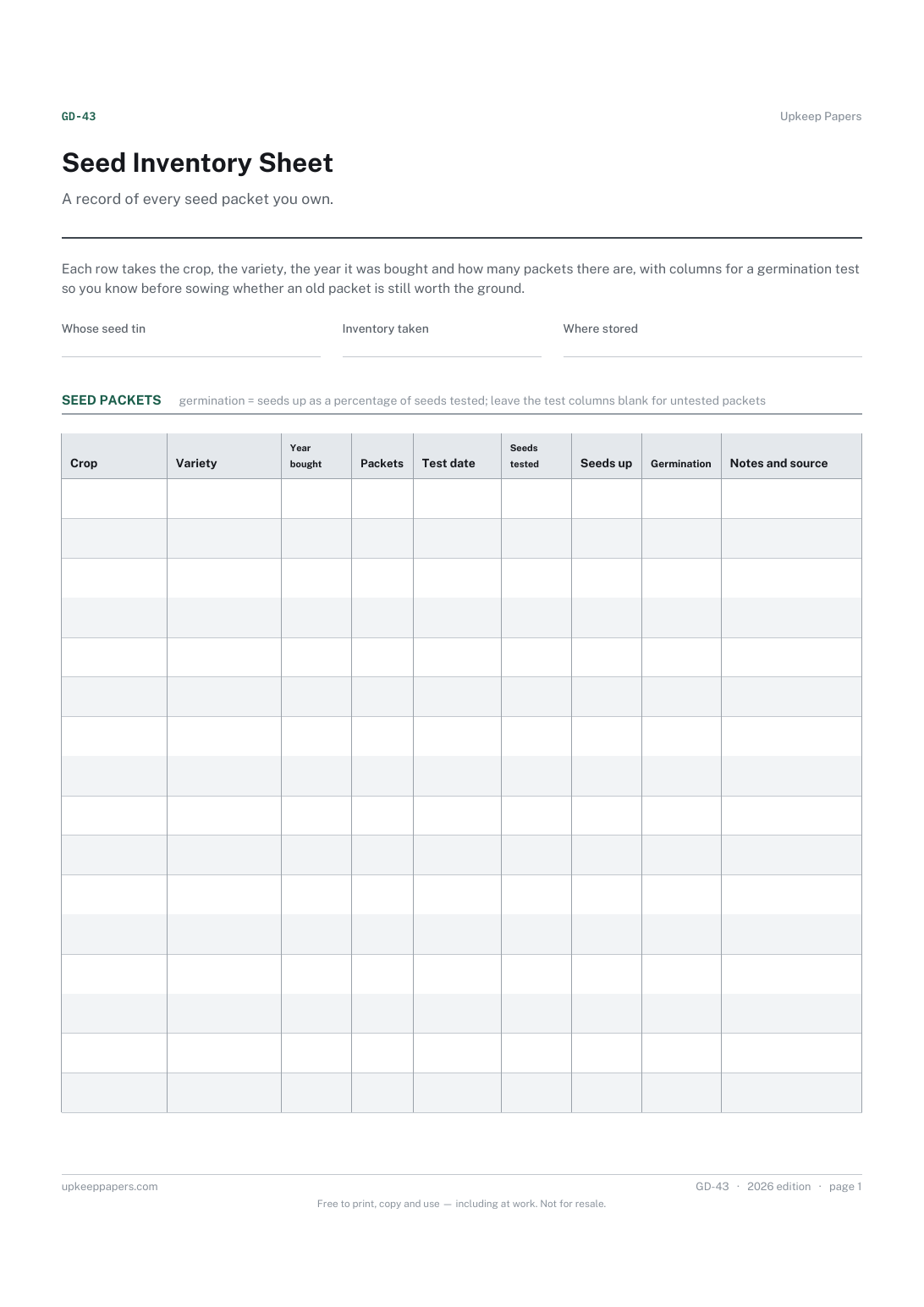
What seed you actually have, by crop and variety, before you order more.
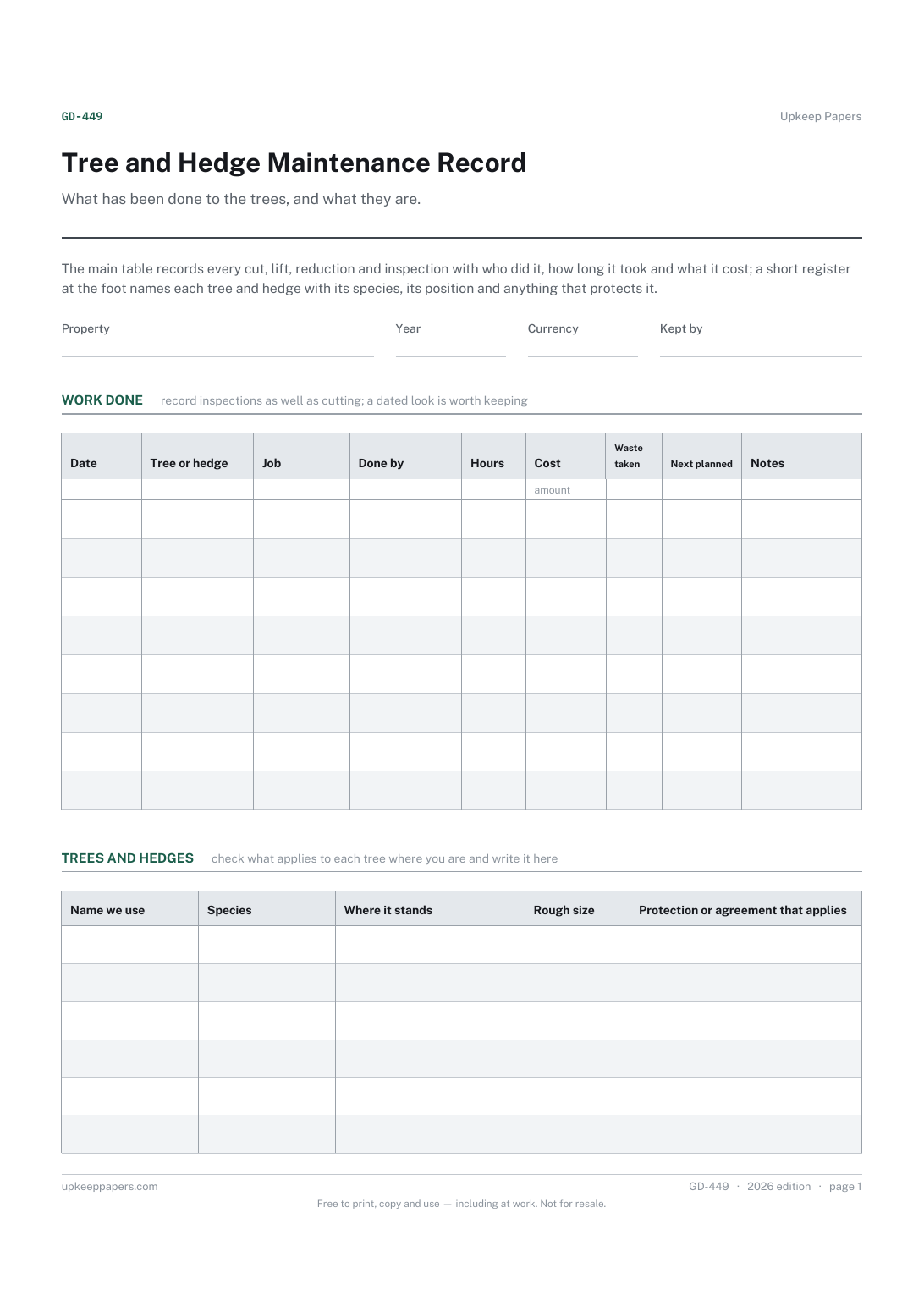
Which trees and hedges there are, where they stand and what they are.
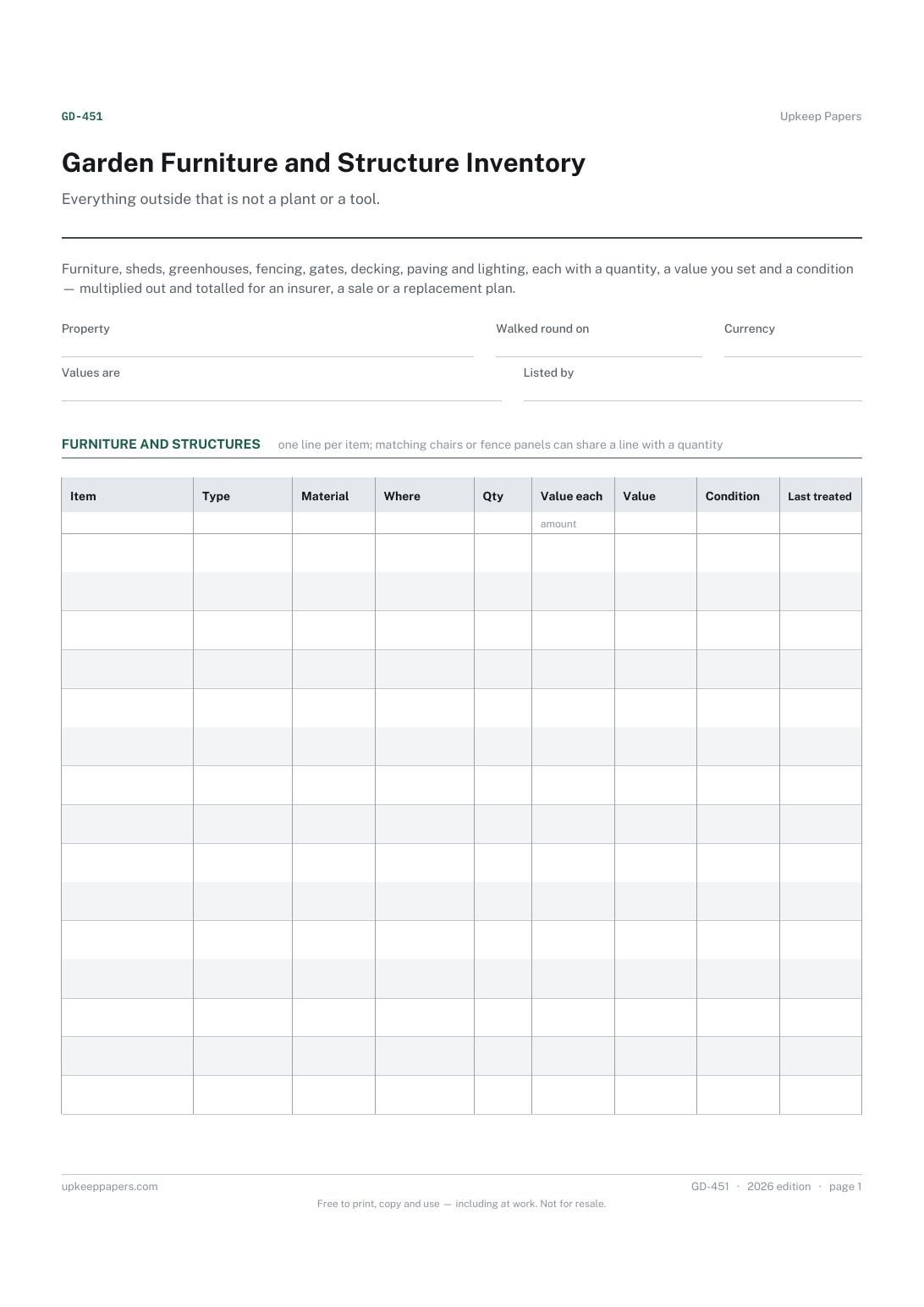
Every structure and piece of furniture outside, with where it stands.
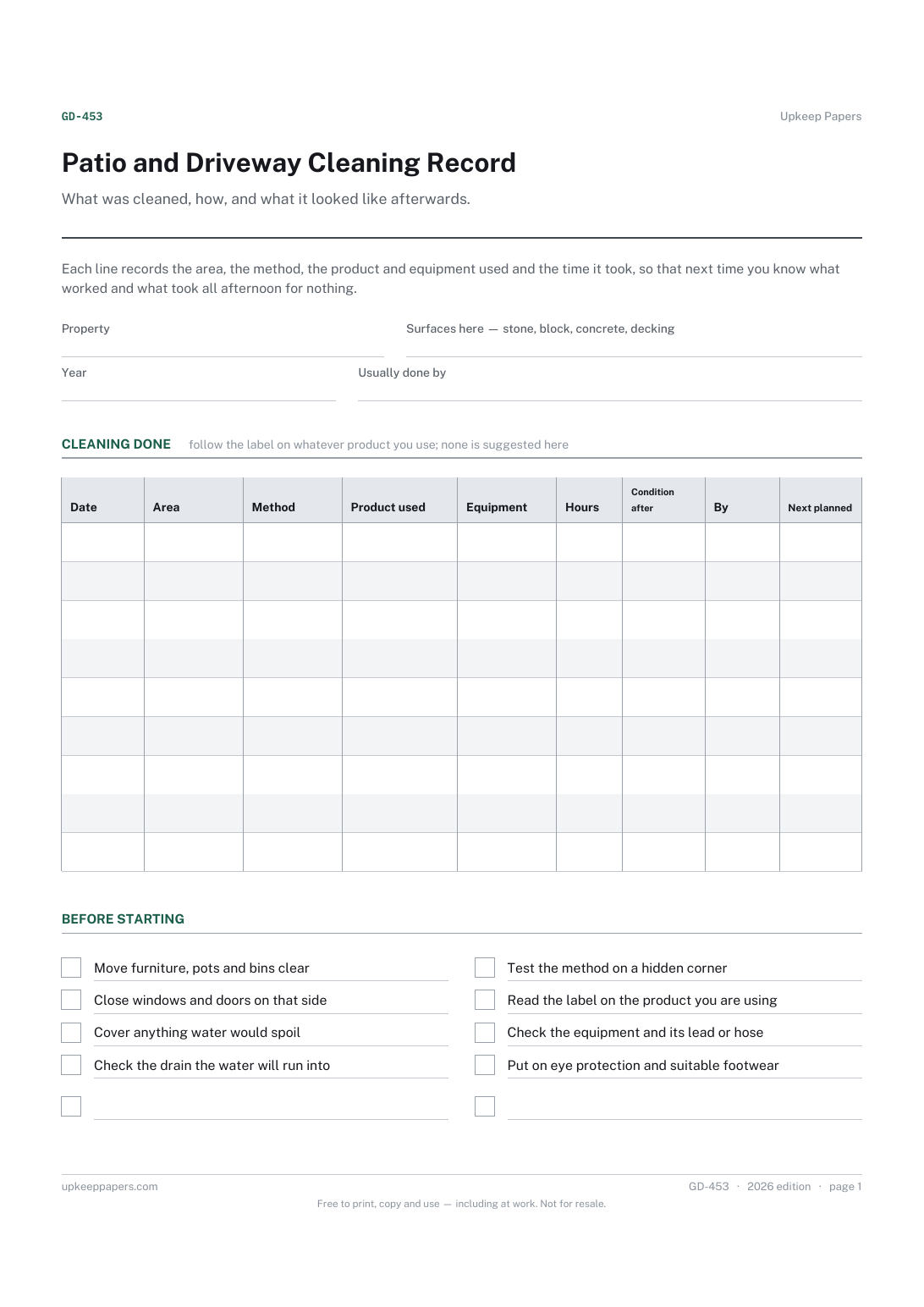
Which outside area was cleaned and on what date.
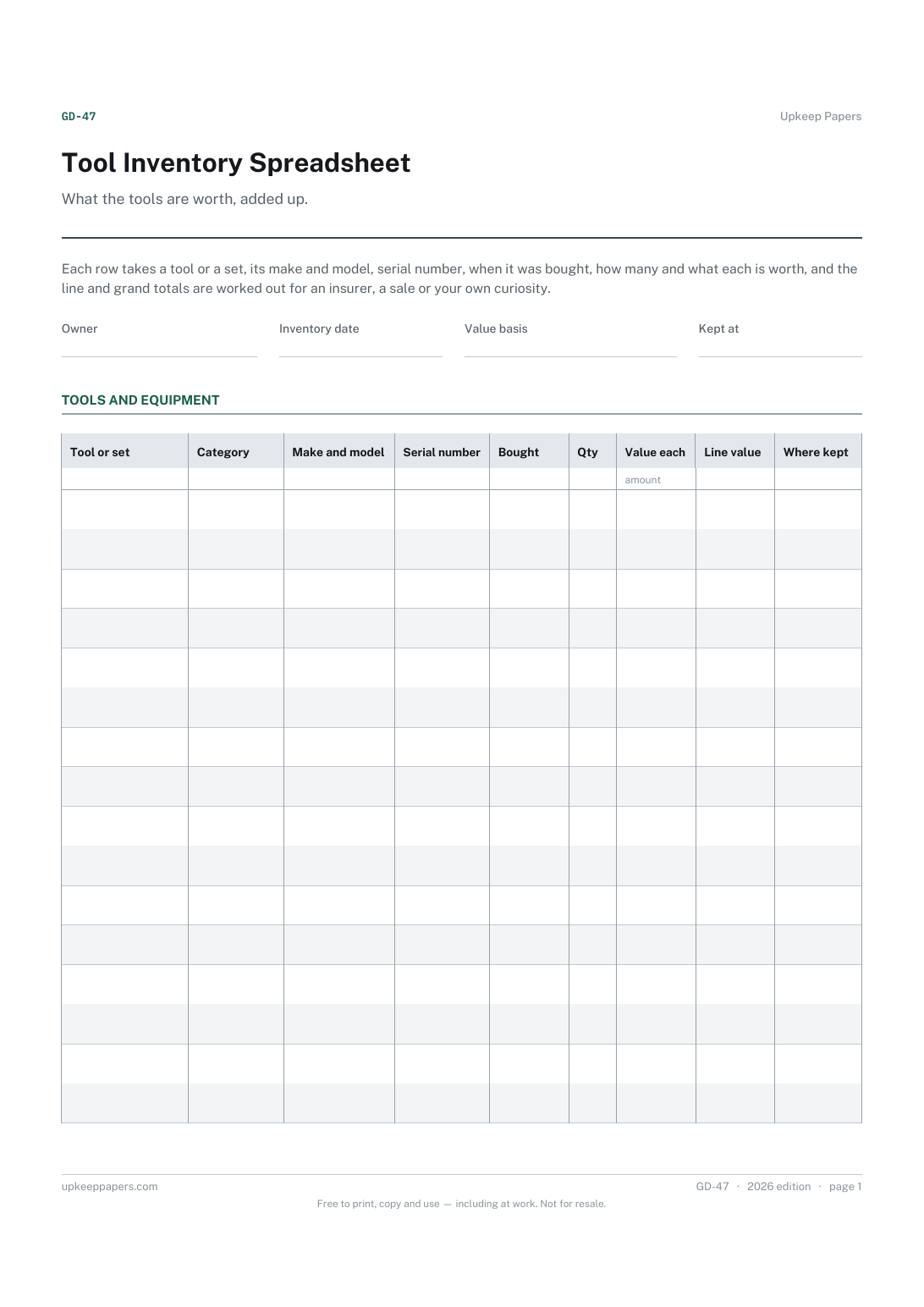
A valued list of tools and machines that an insurance claim can be built on.
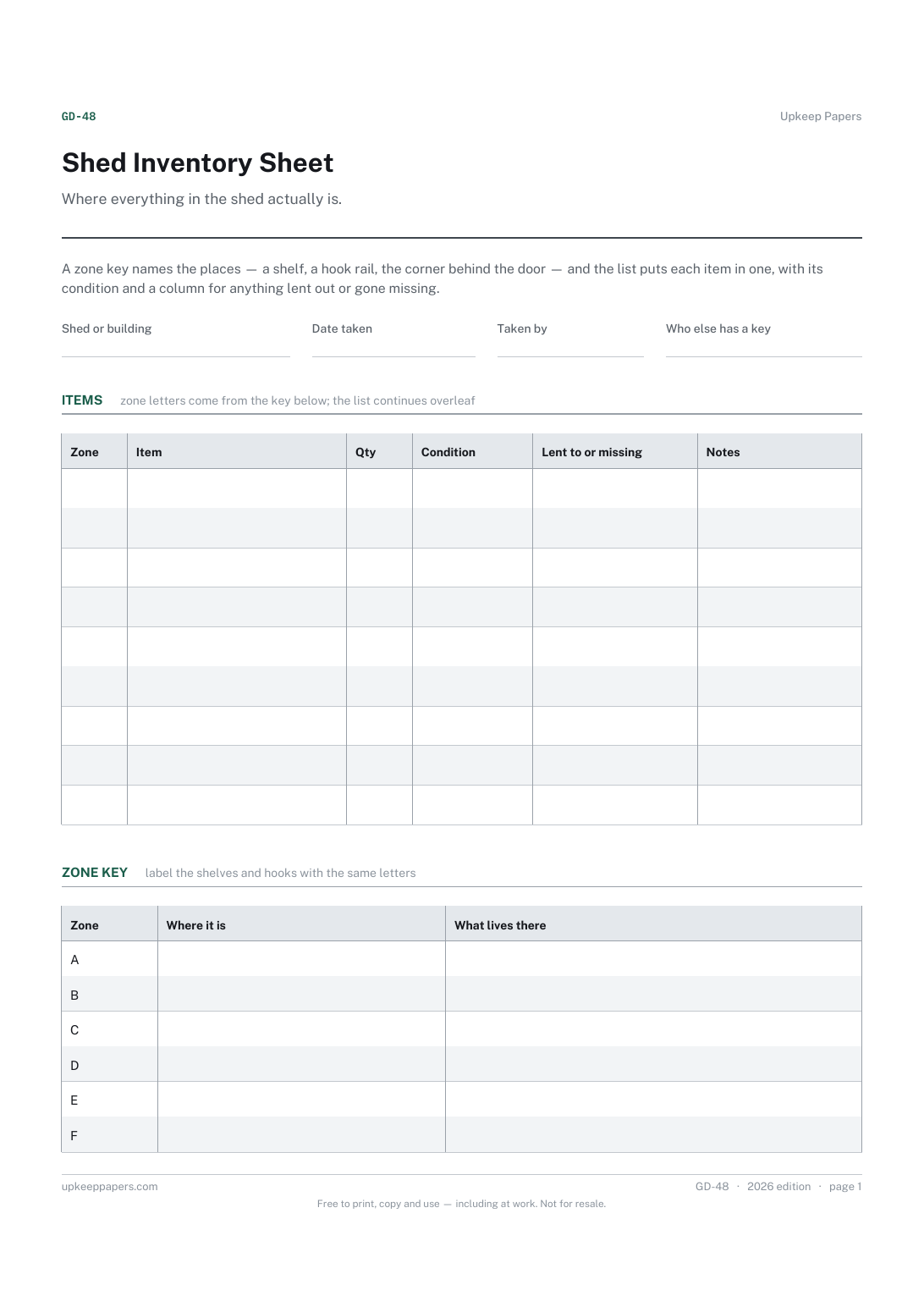
Which zone or shelf each item belongs in, so it can be found and put back.
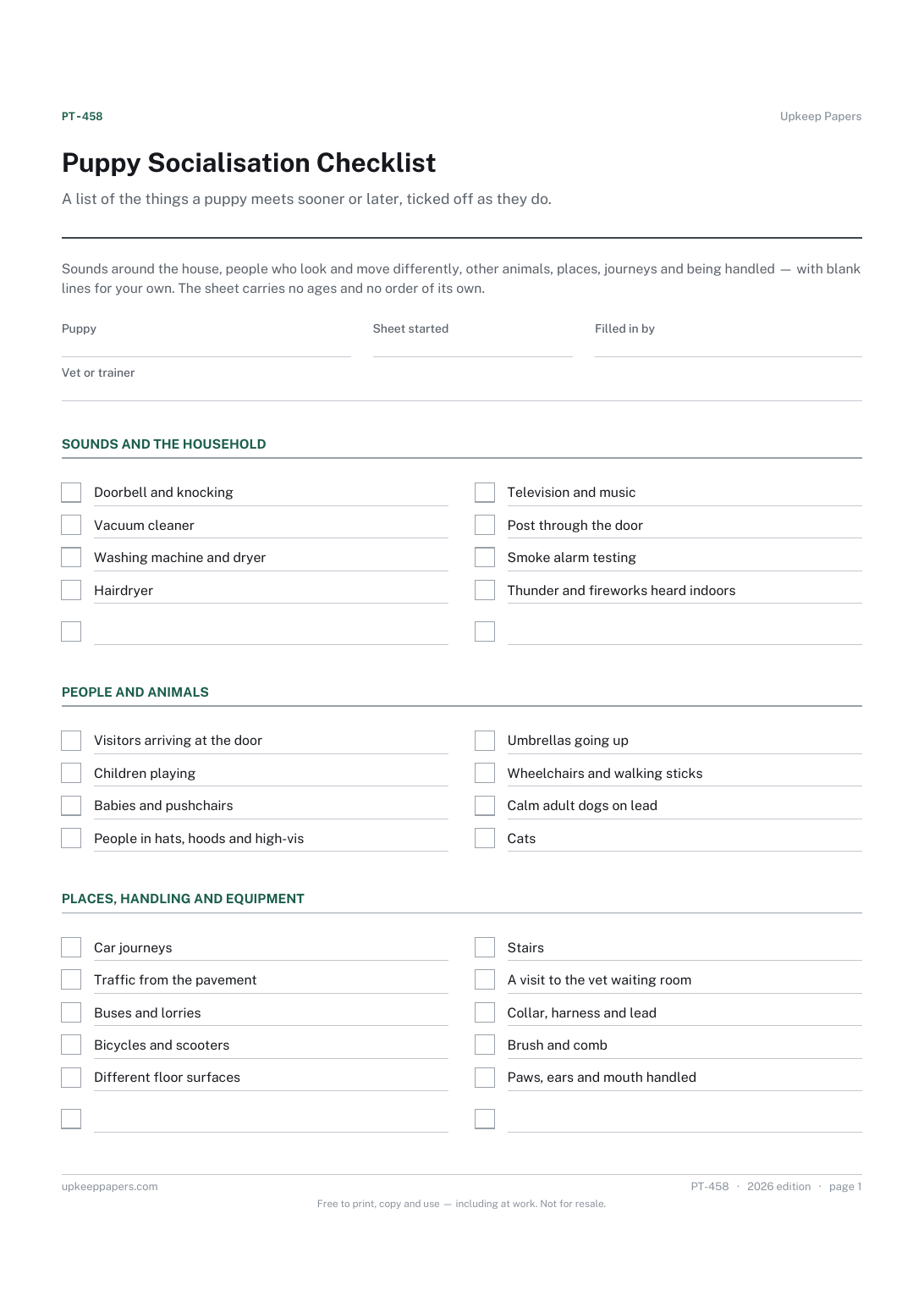
What your puppy has already met, calmly and on purpose.
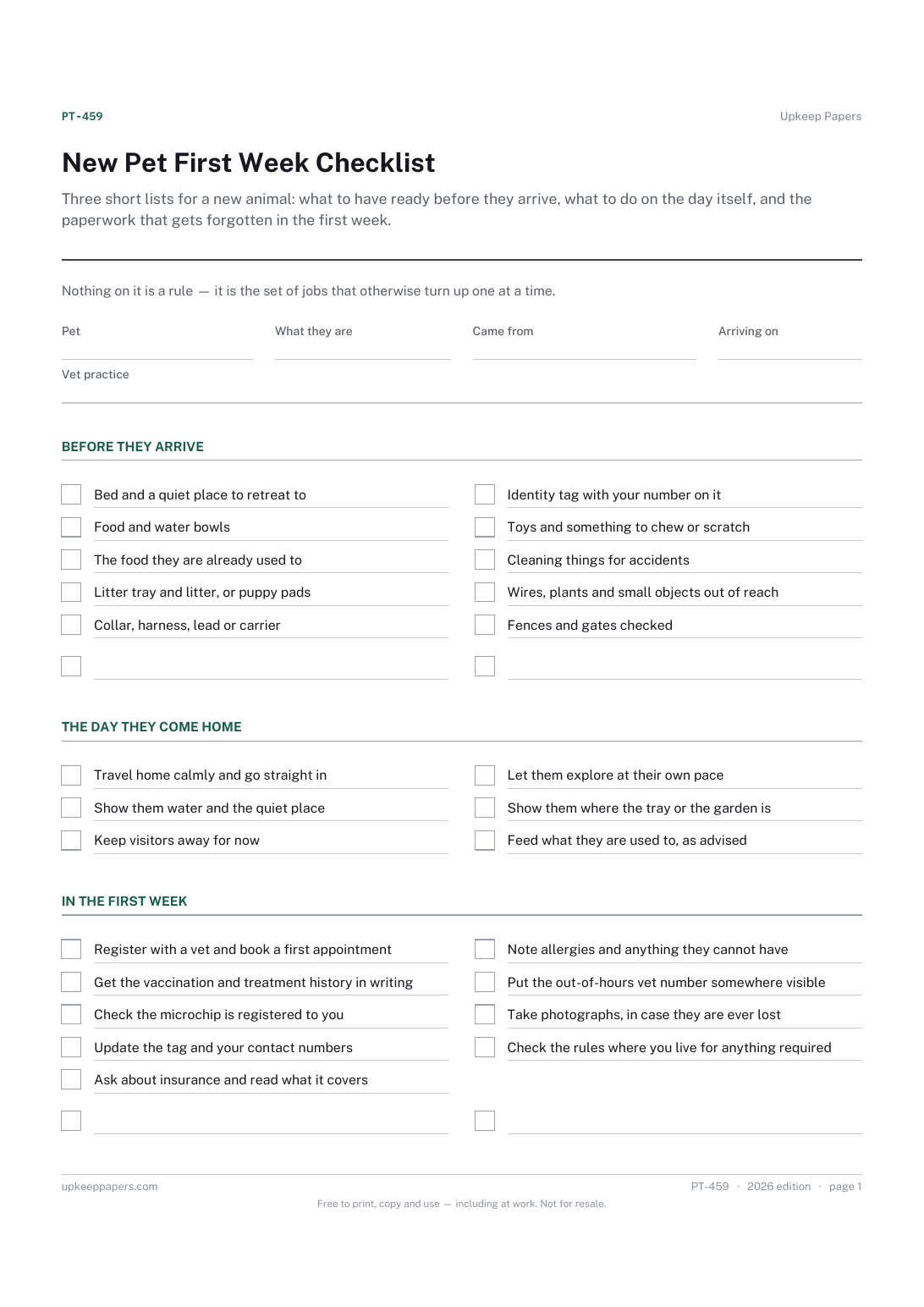
What to have in the house before the animal arrives.
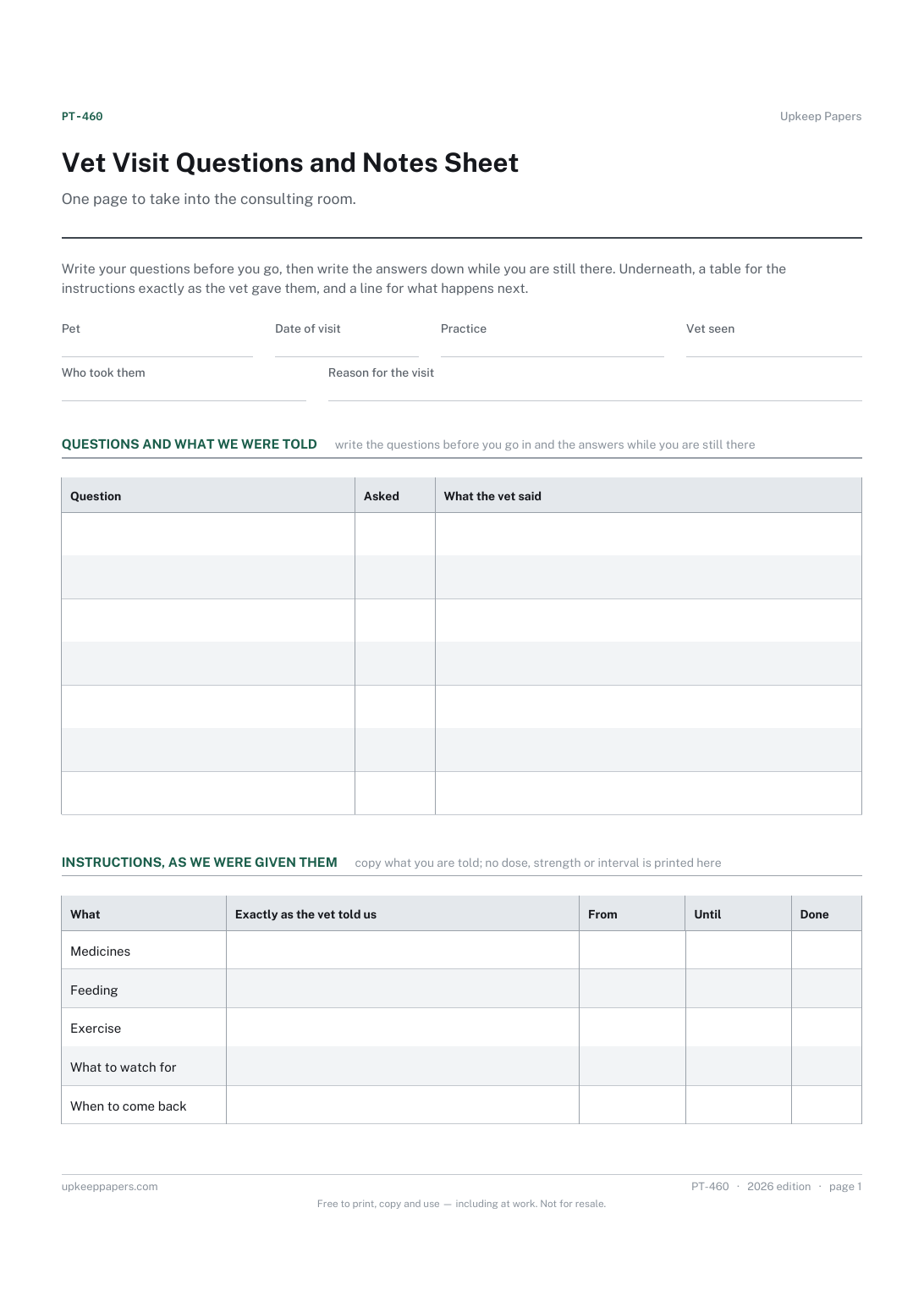
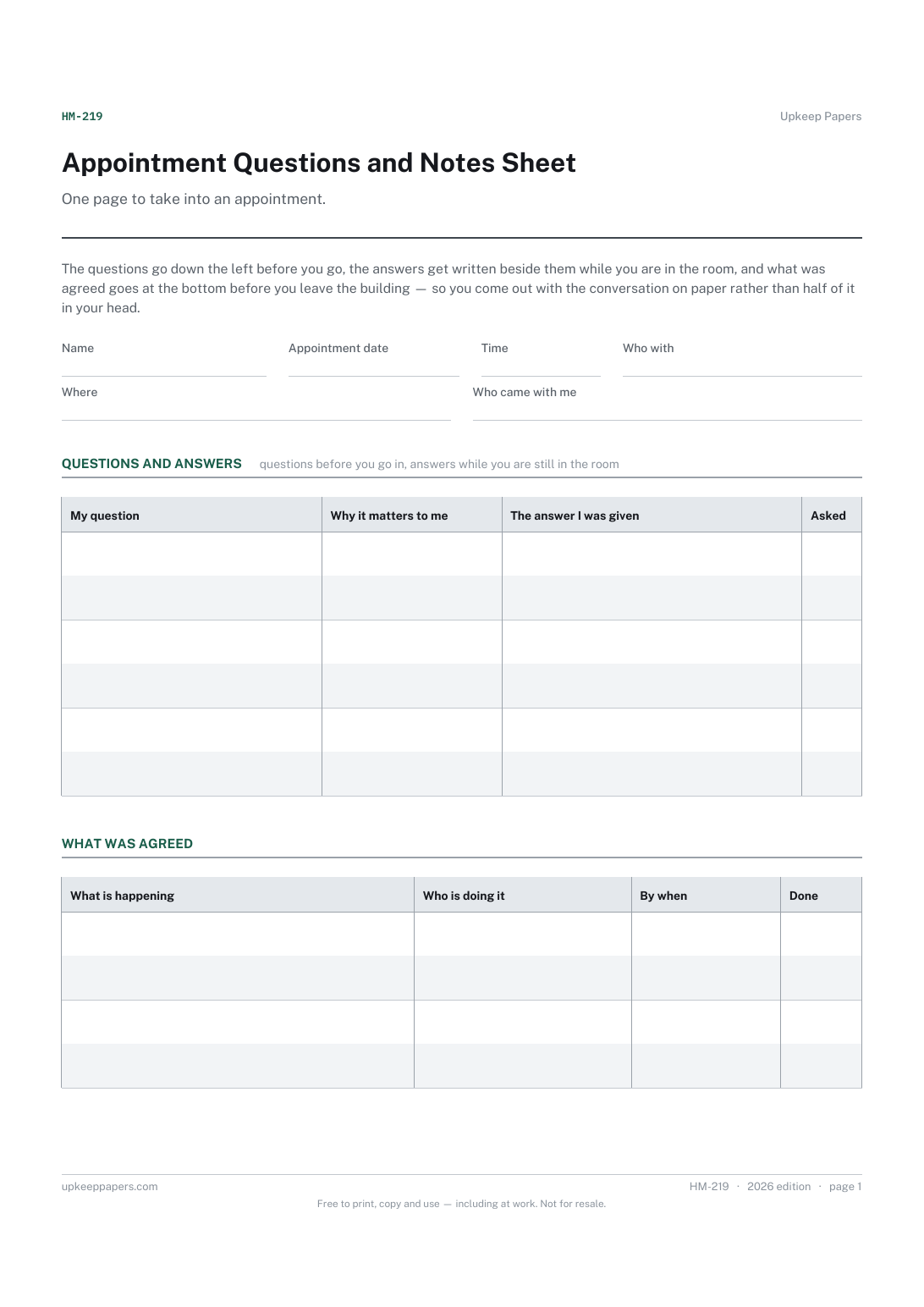
The questions you meant to ask, written down before you go in.
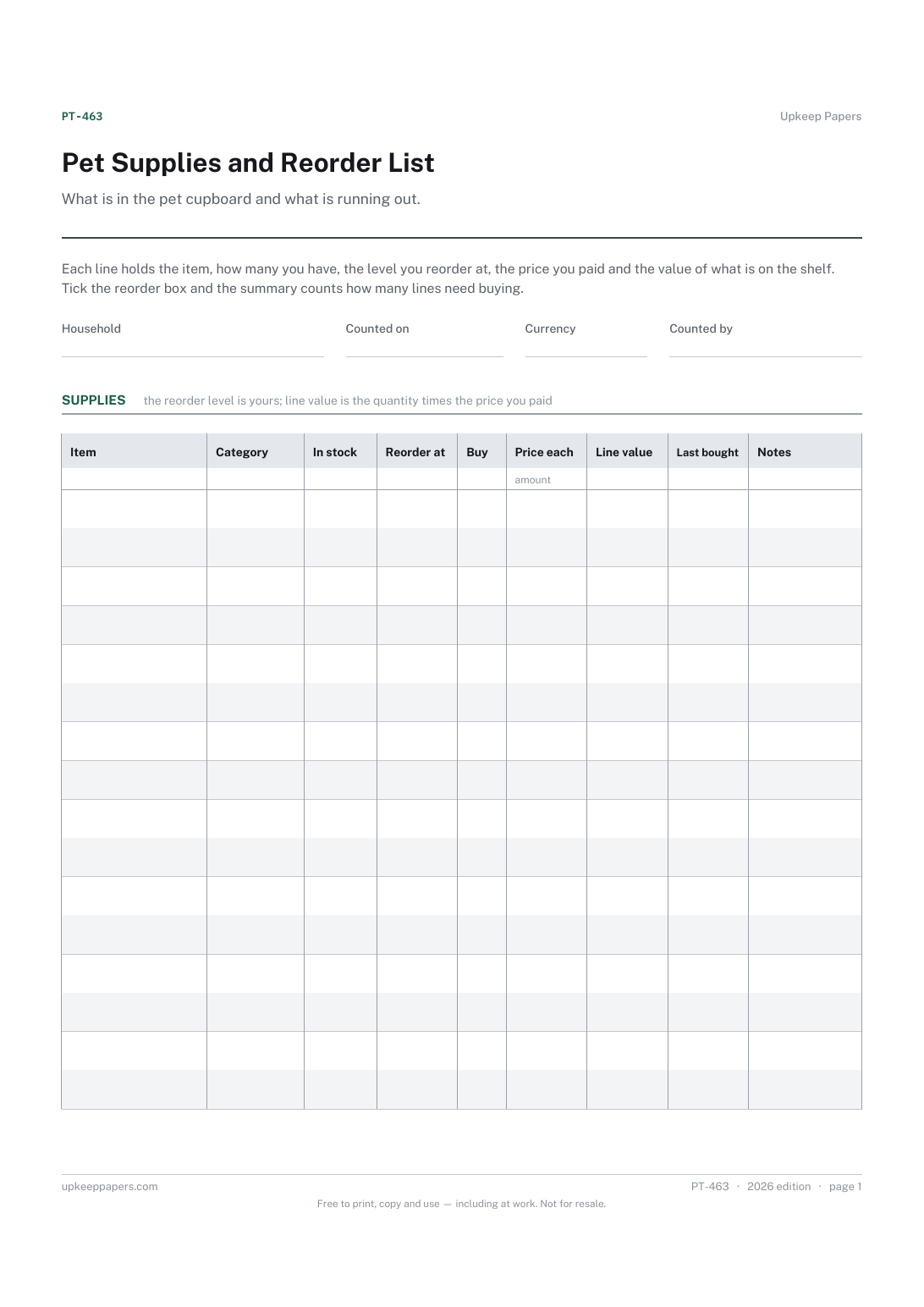
Everything the animals need, by category, in one list.
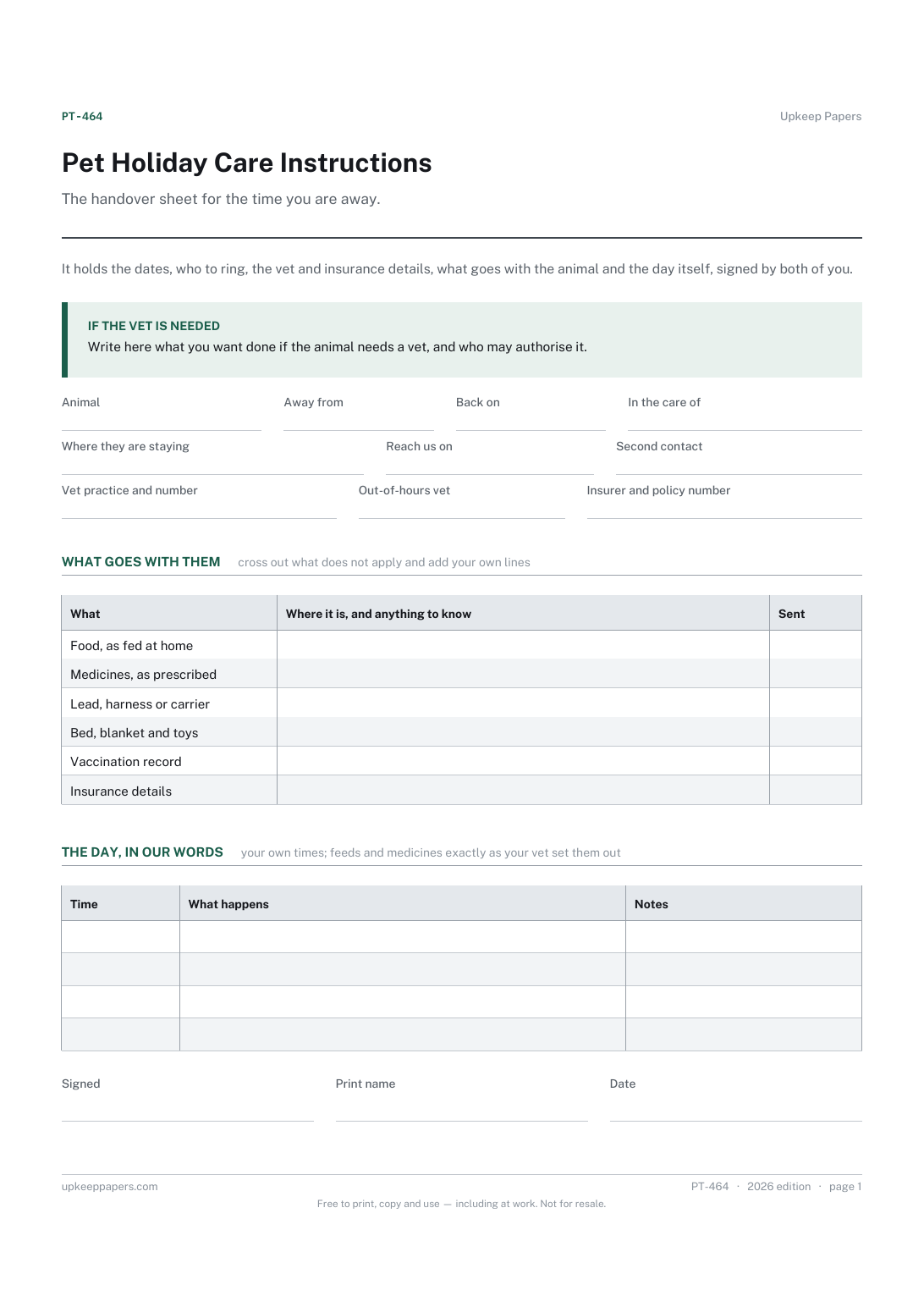
The dates you are away and when the animal goes and comes back.
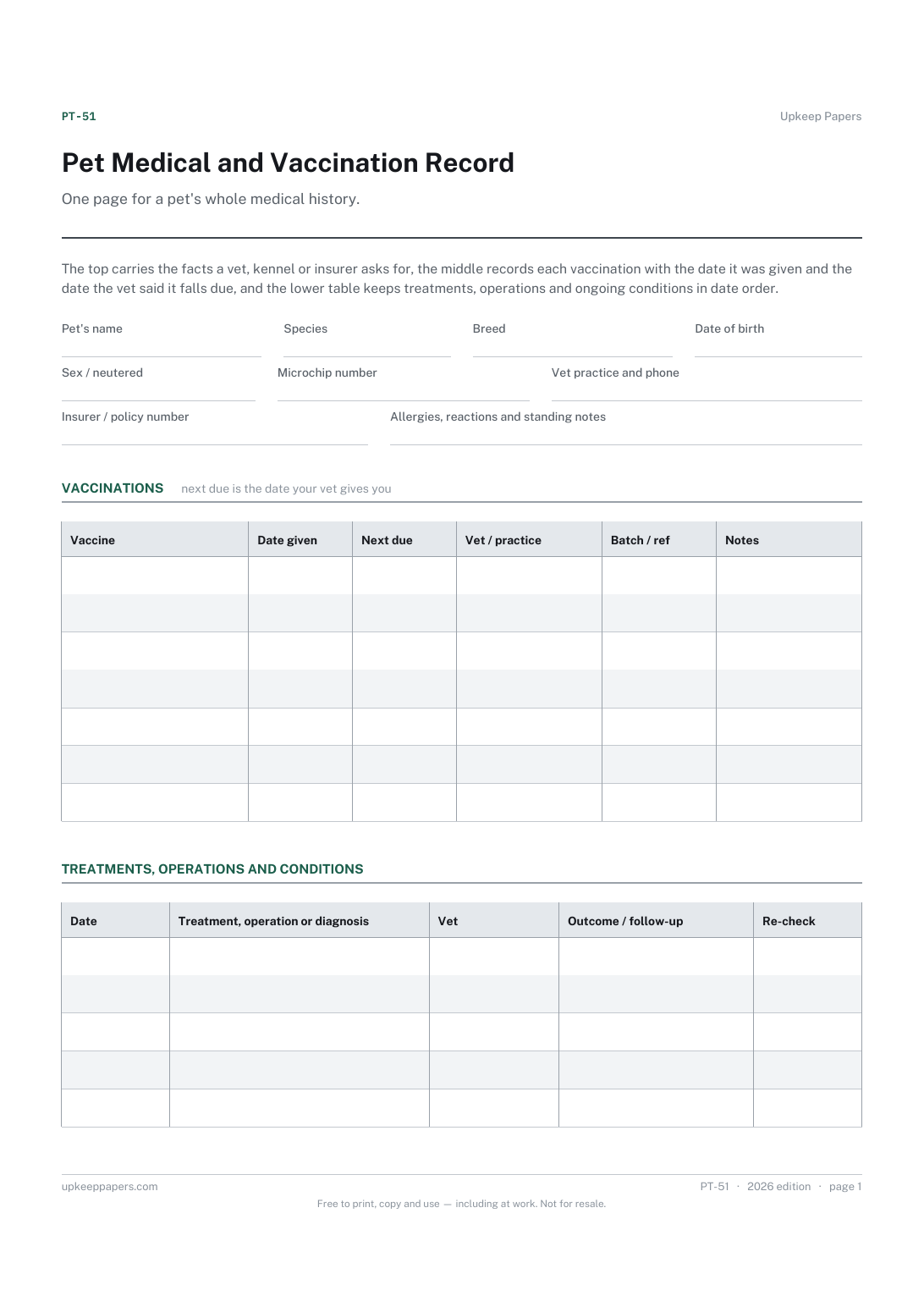
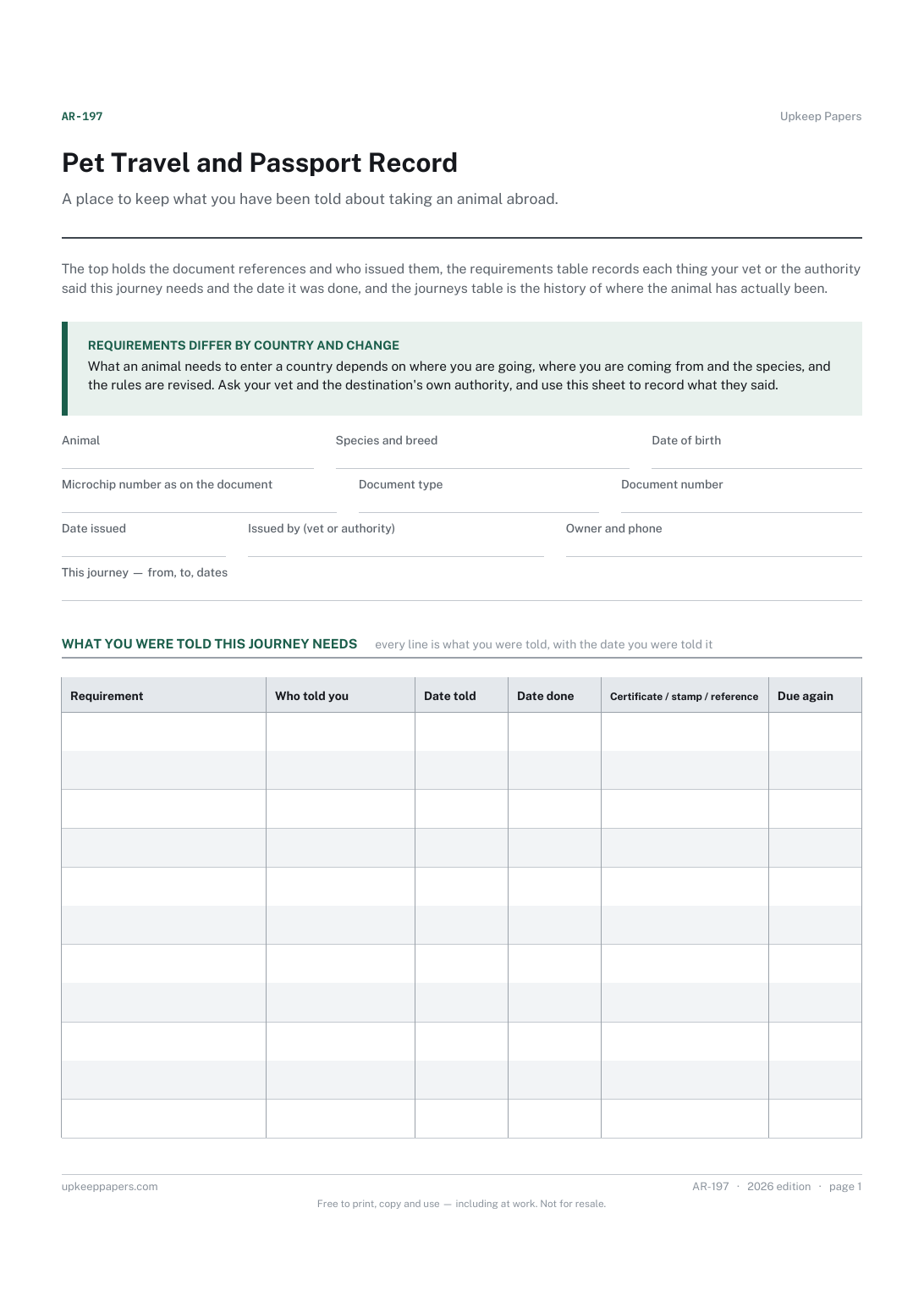
Which vaccinations the pet has had, when, and when the vet said the next is due.
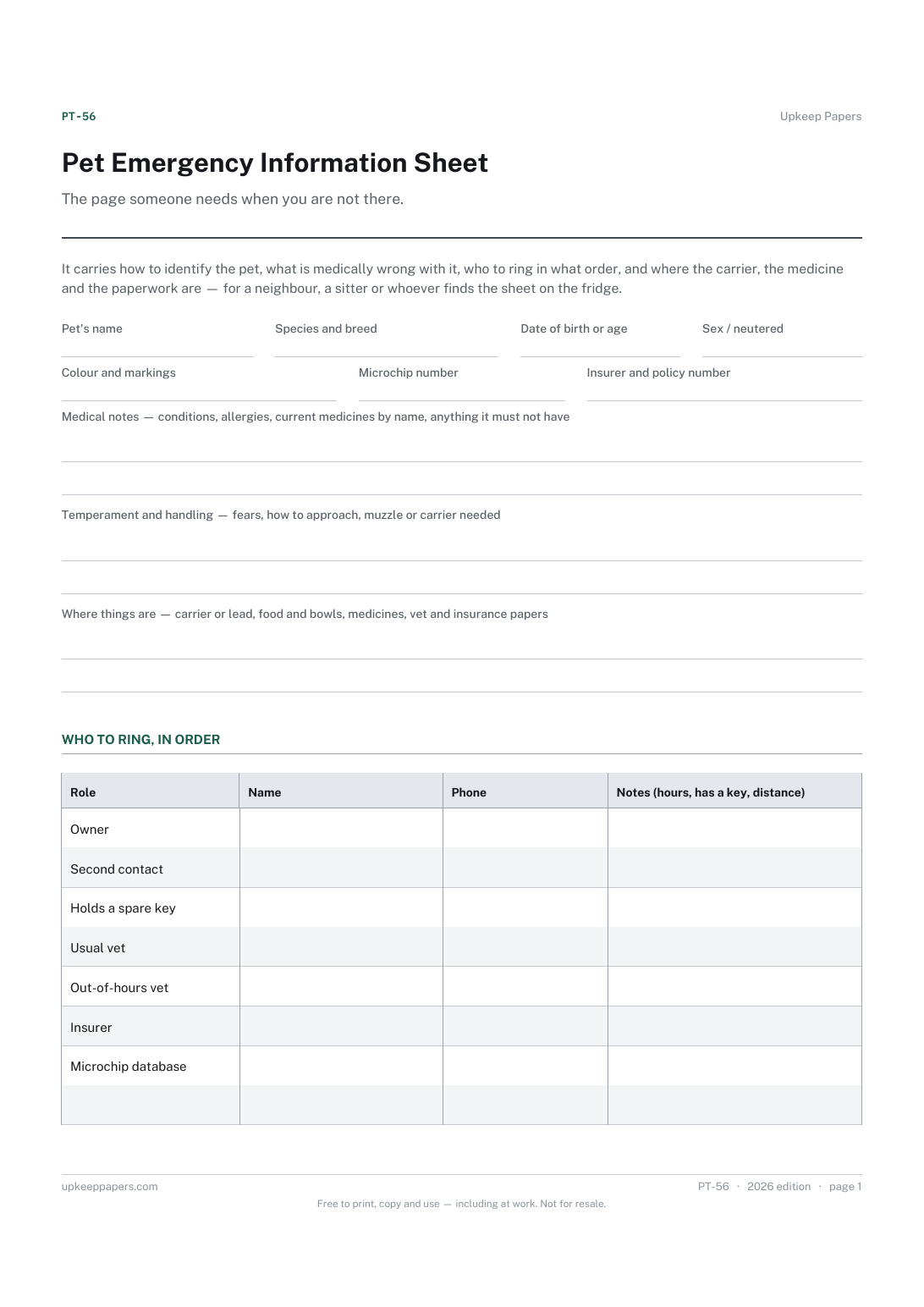
Identification: species, breed, colour, markings and microchip number.
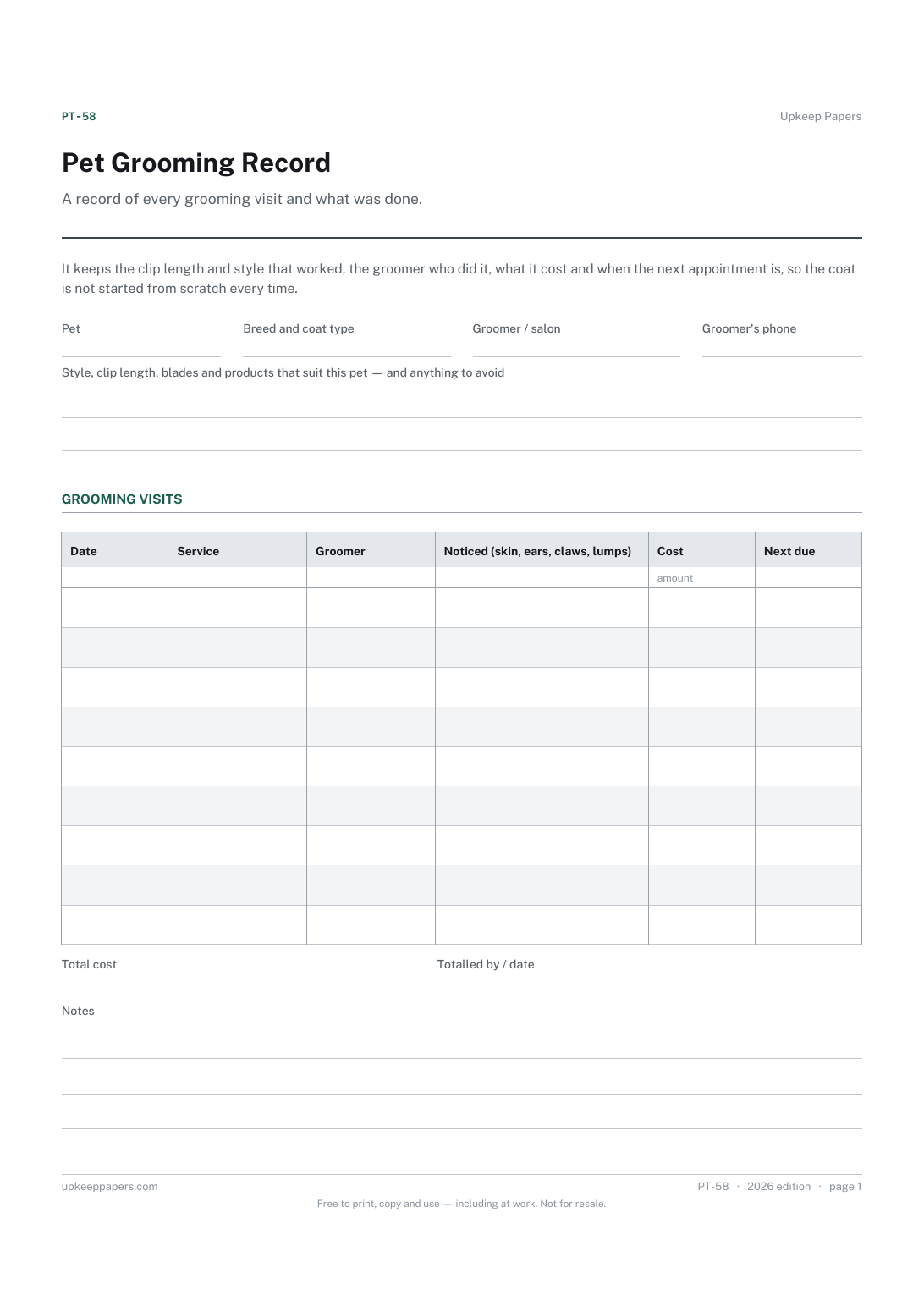
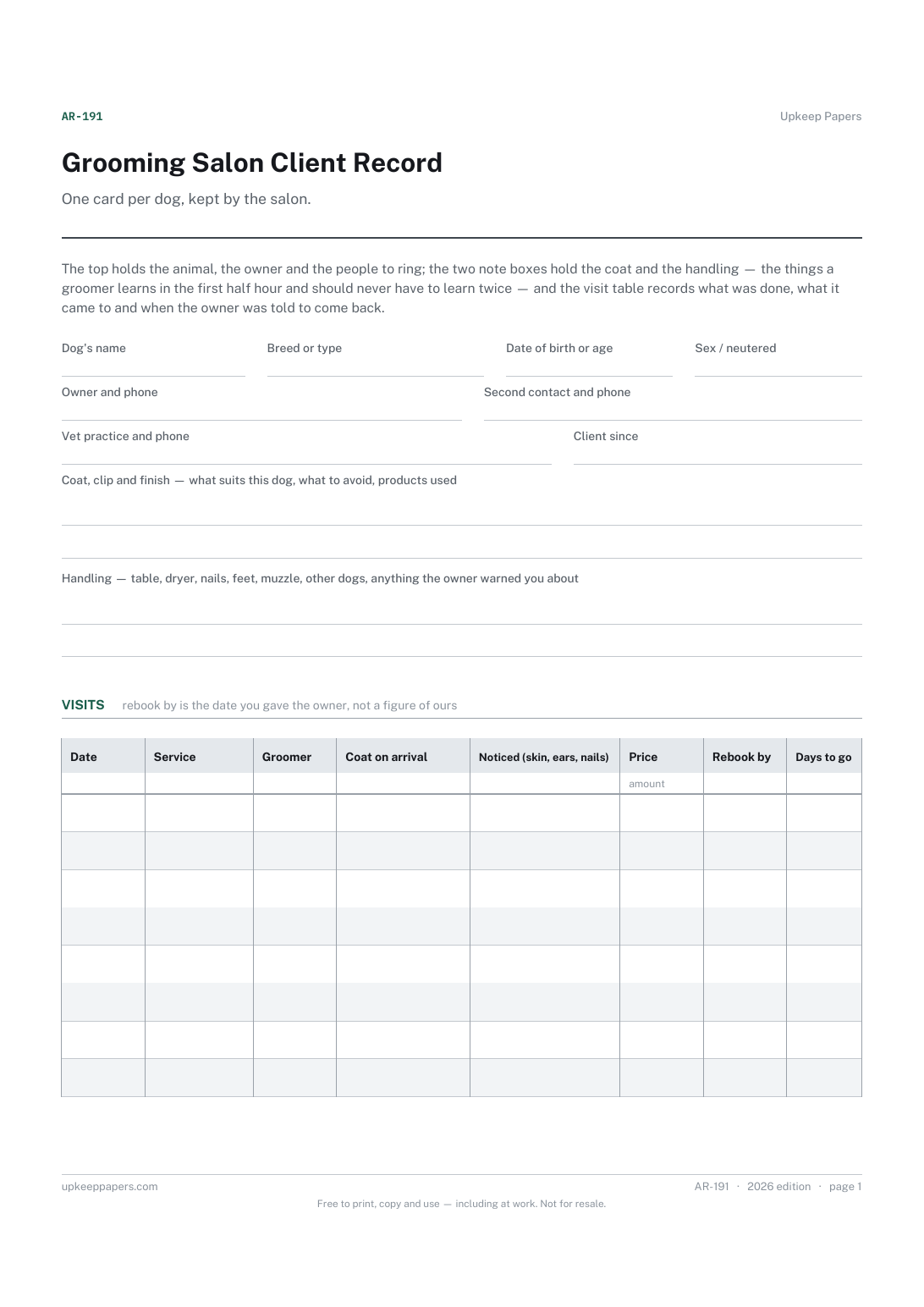
When the pet was last groomed and what was done — full groom, bath, clip, nails, ears.
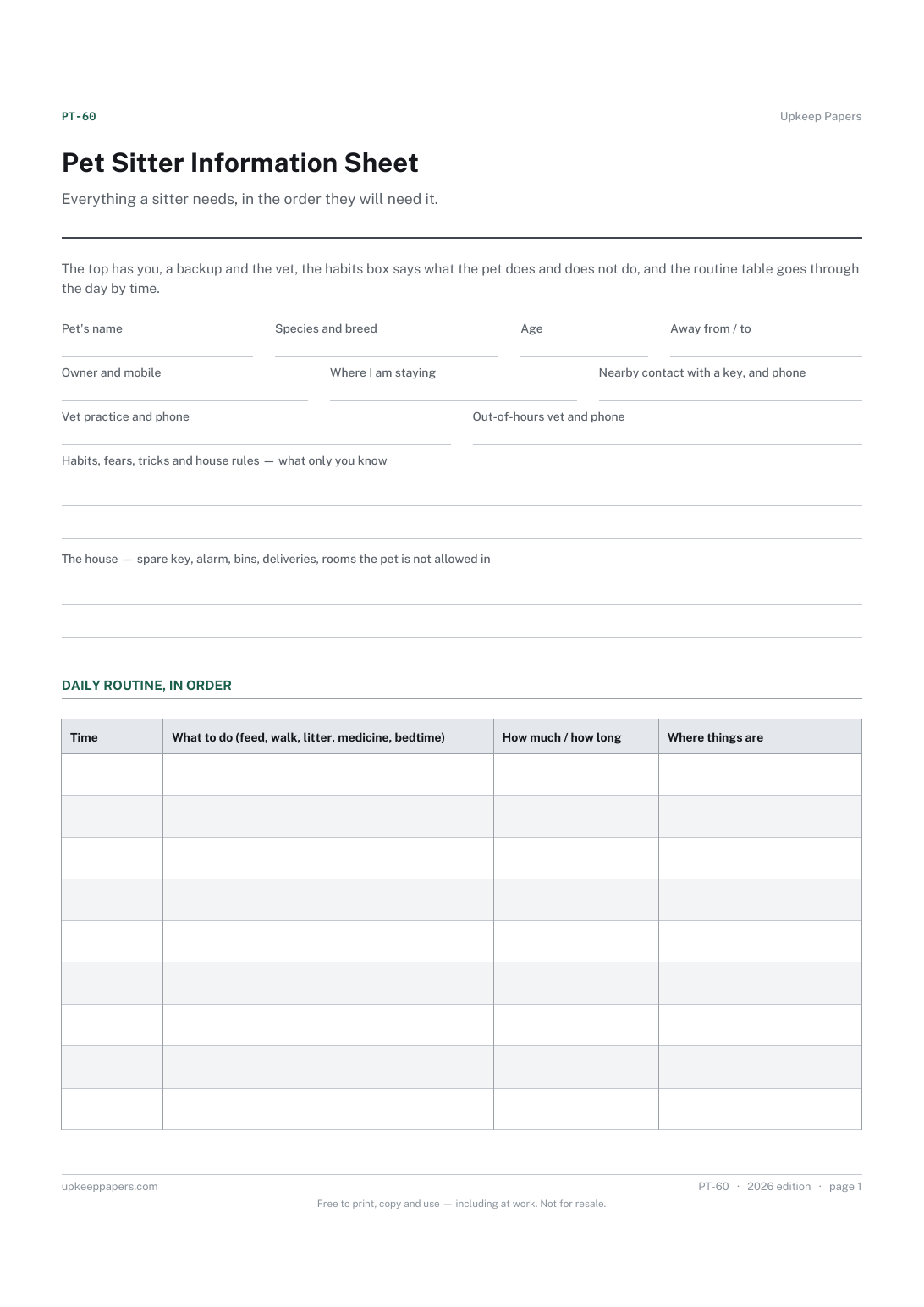
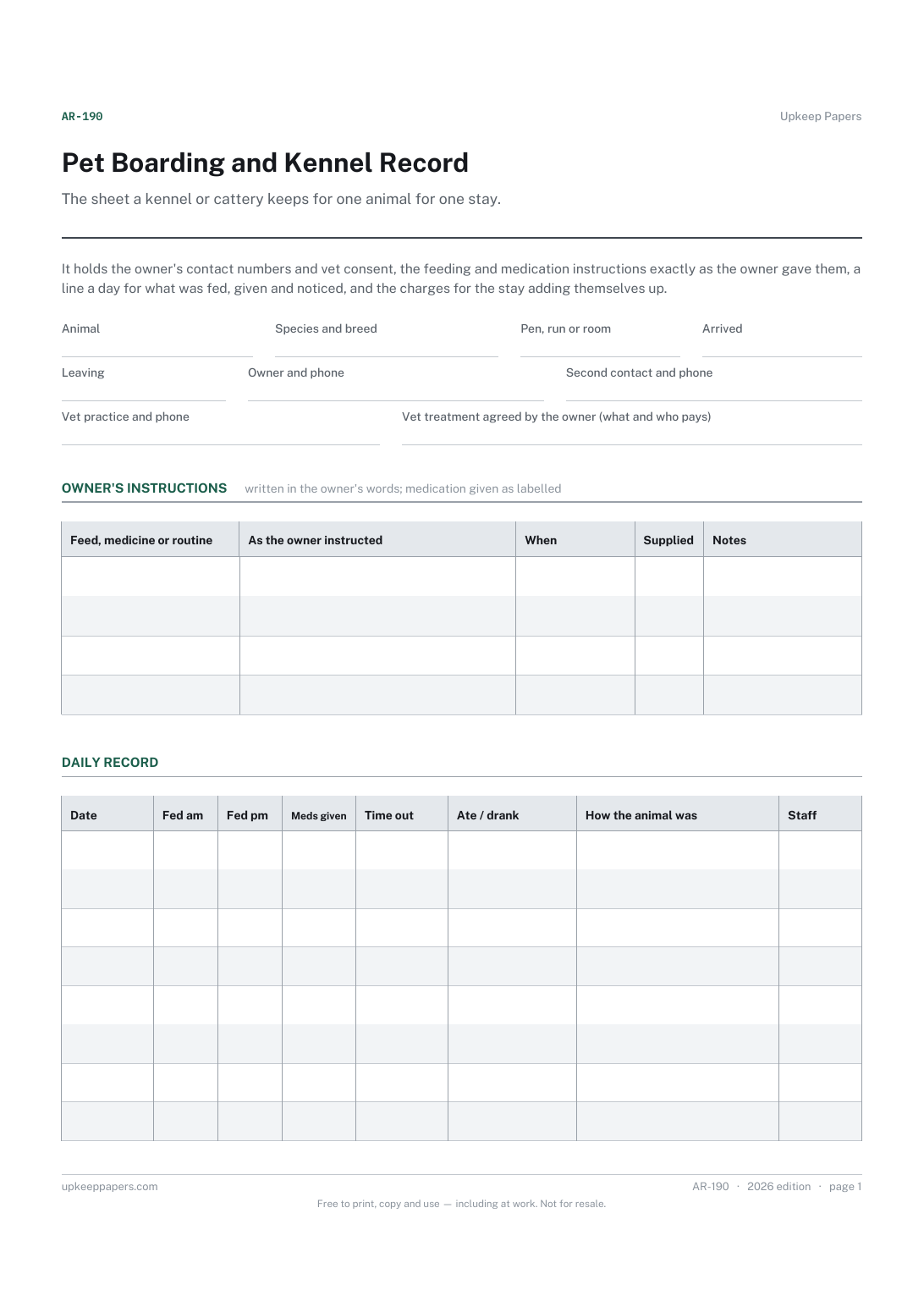
The daily routine, in order and with times, so nothing is forgotten by day three.
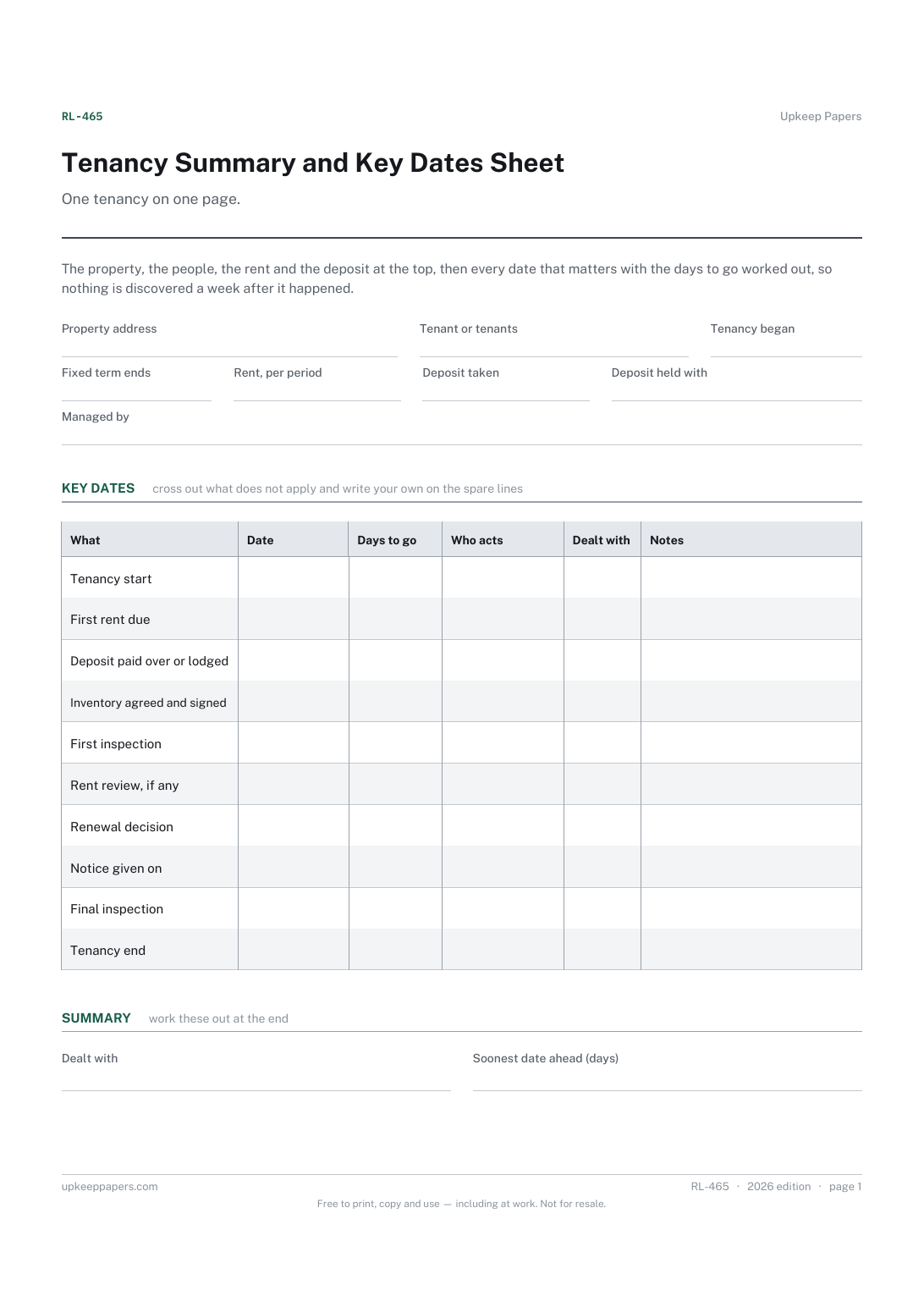
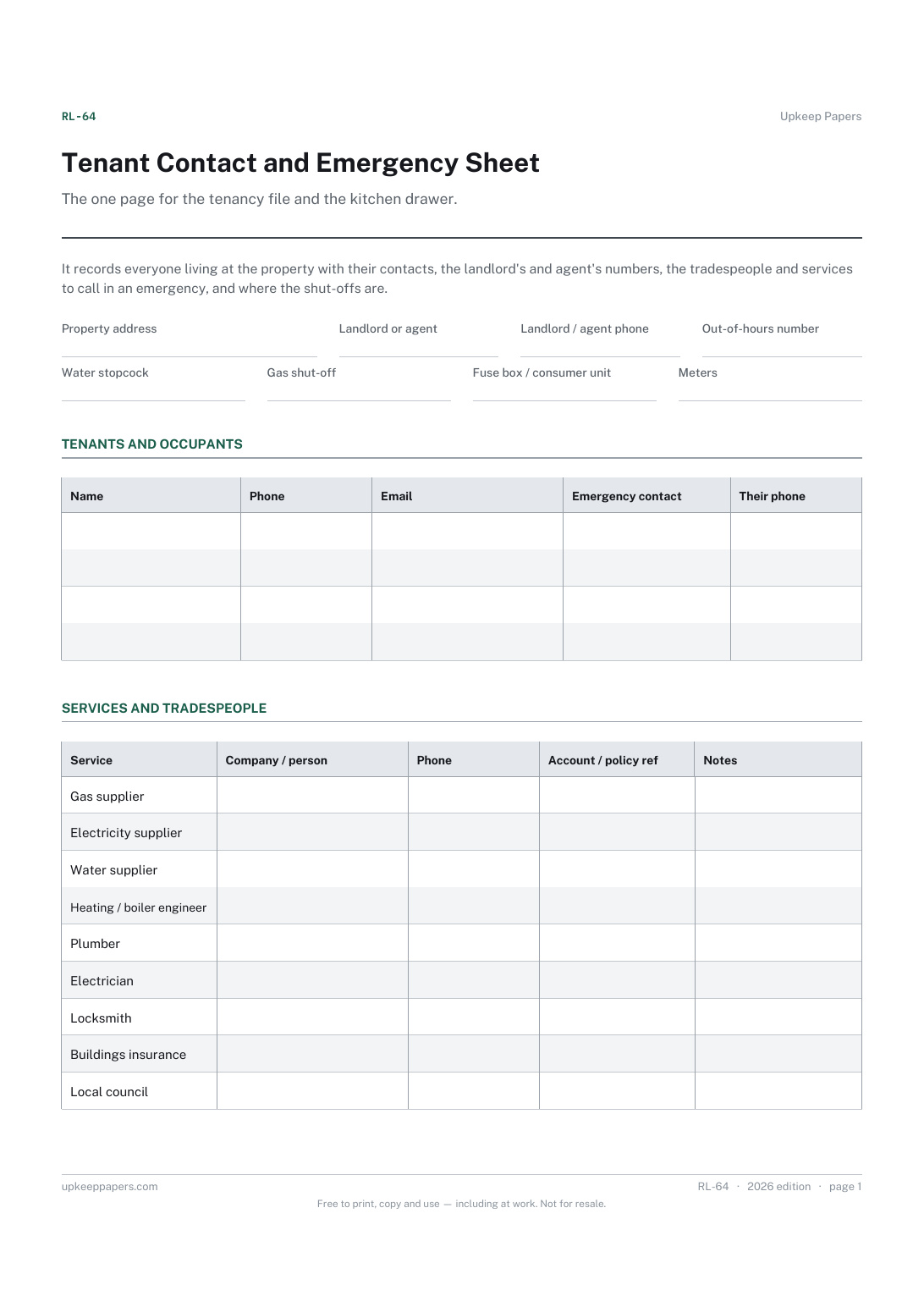
The property, the tenants and who manages the tenancy, in one place.
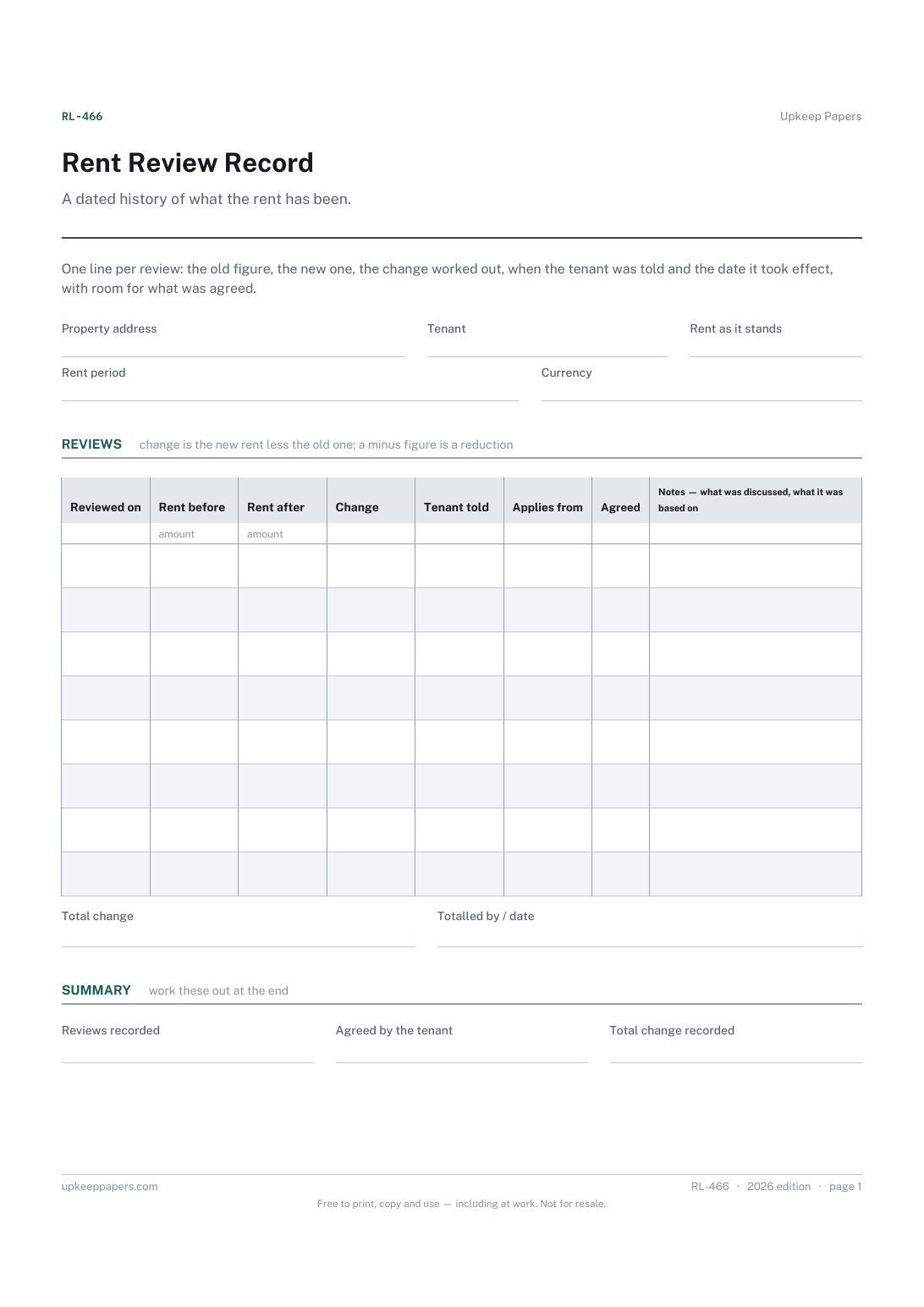
What the rent was before each review and what it became.
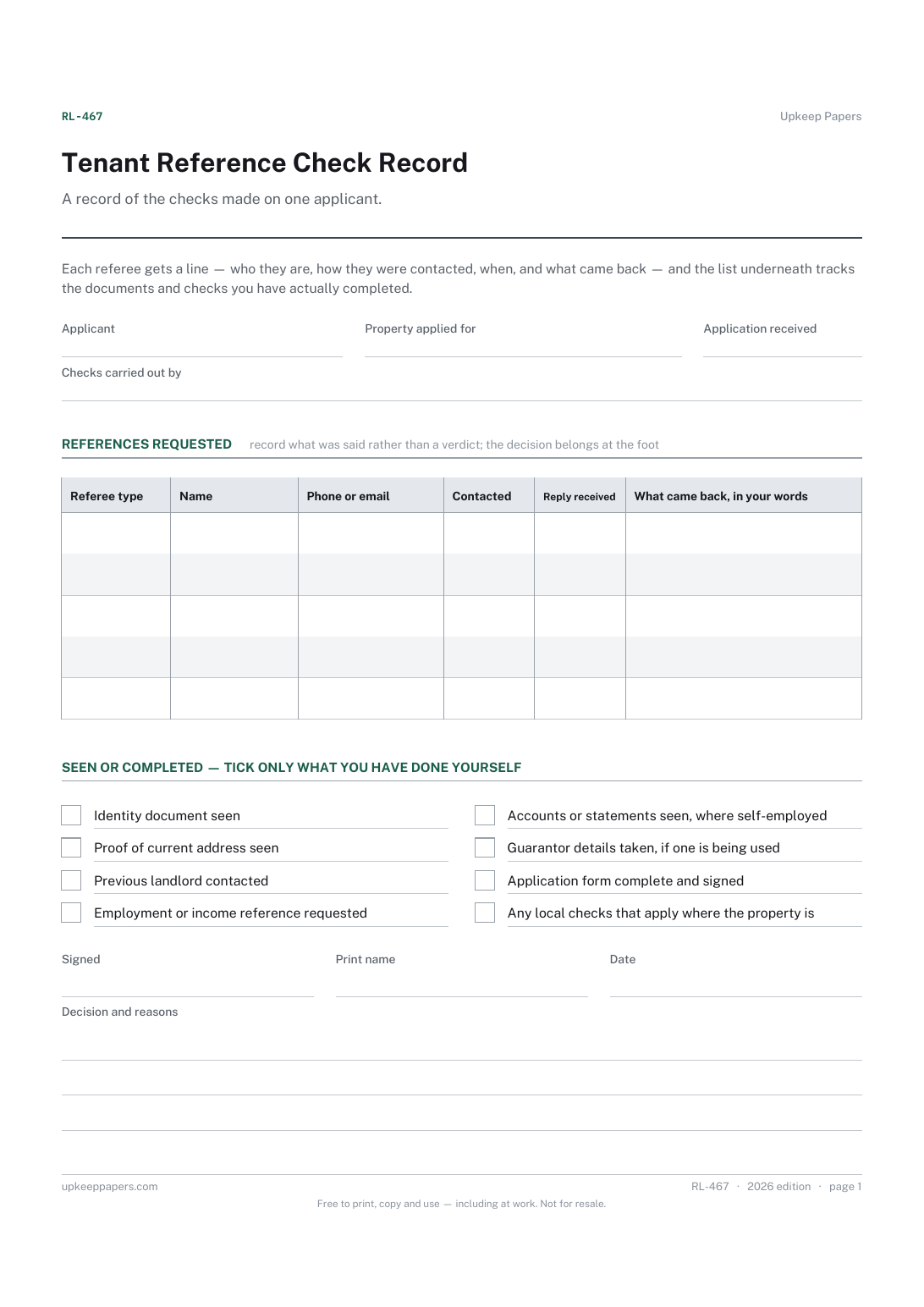
Who was approached for a reference and in what capacity.
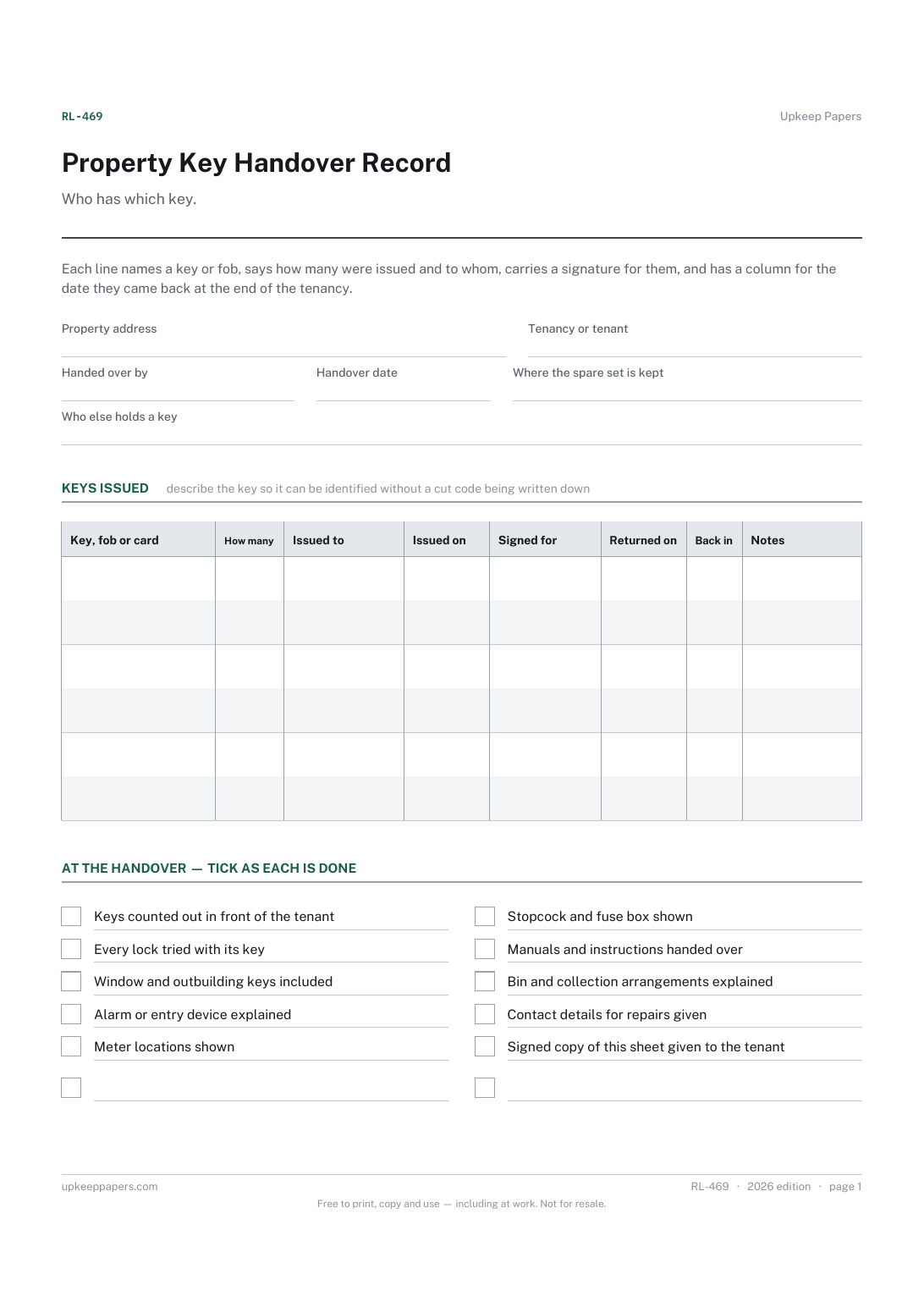
Every key, fob and card that exists for the property.
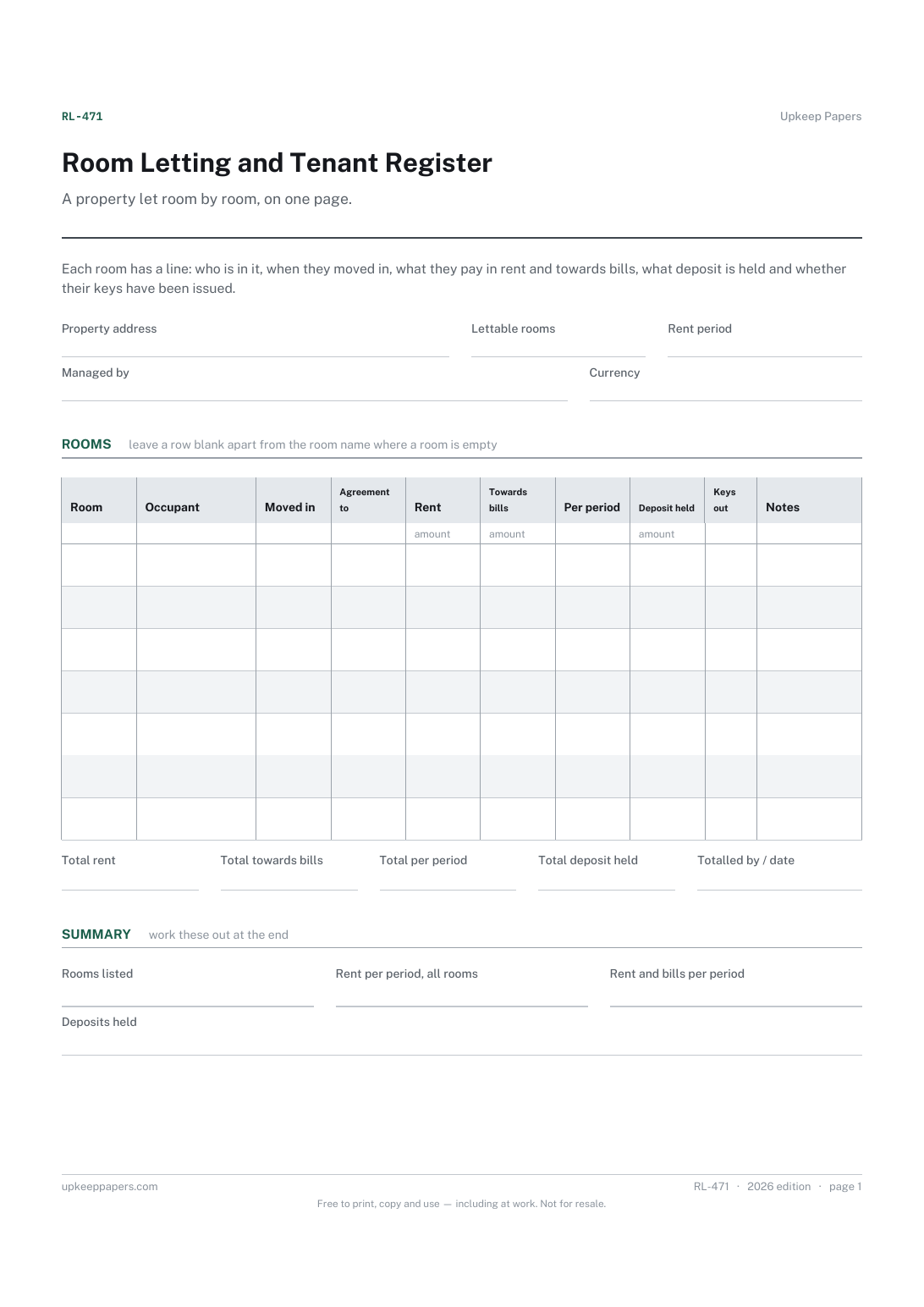
Which rooms are let, to whom, and which are standing empty.
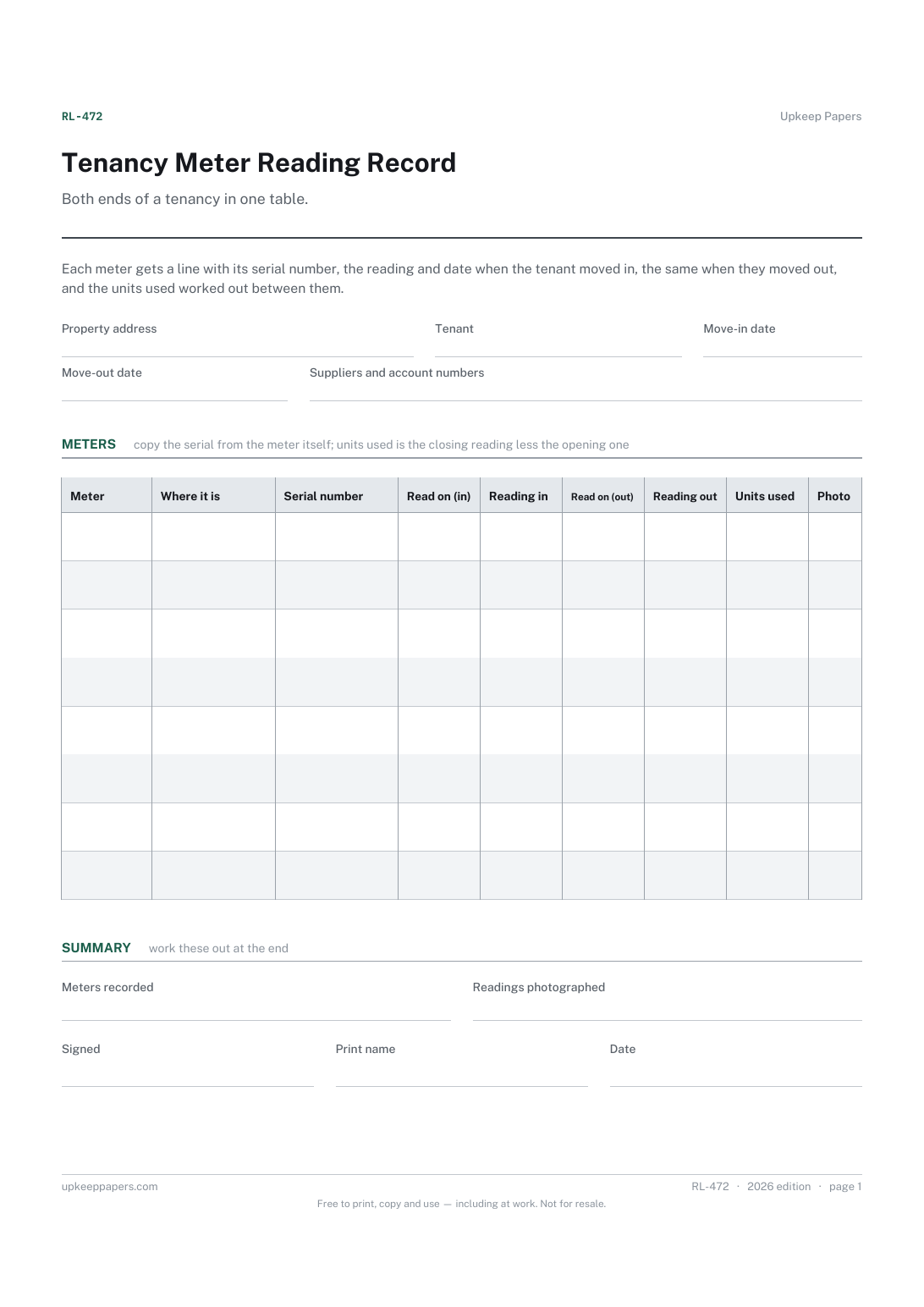
Which meters serve the property and where each one is.
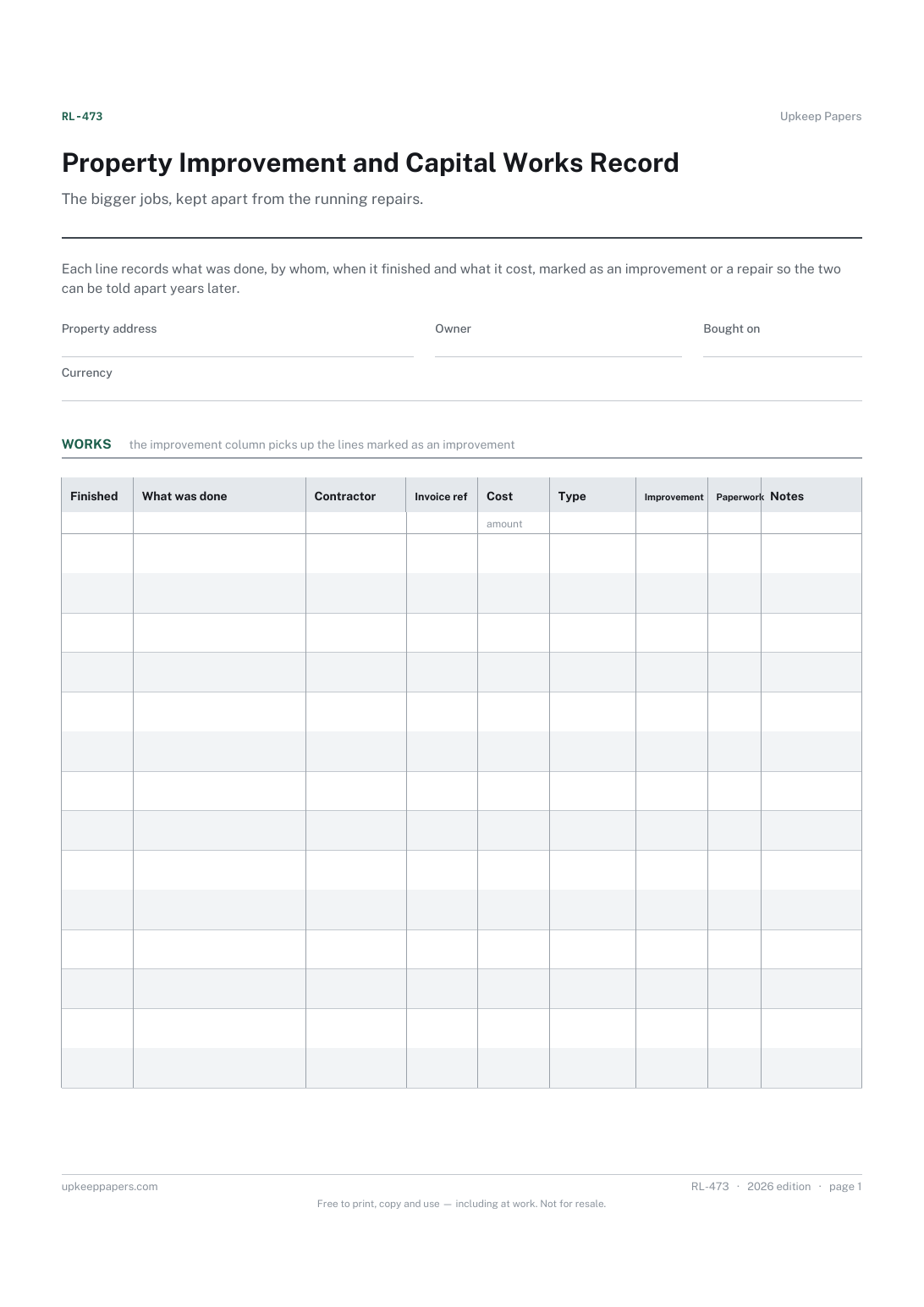
Every substantial job done to the property, with the date it finished.
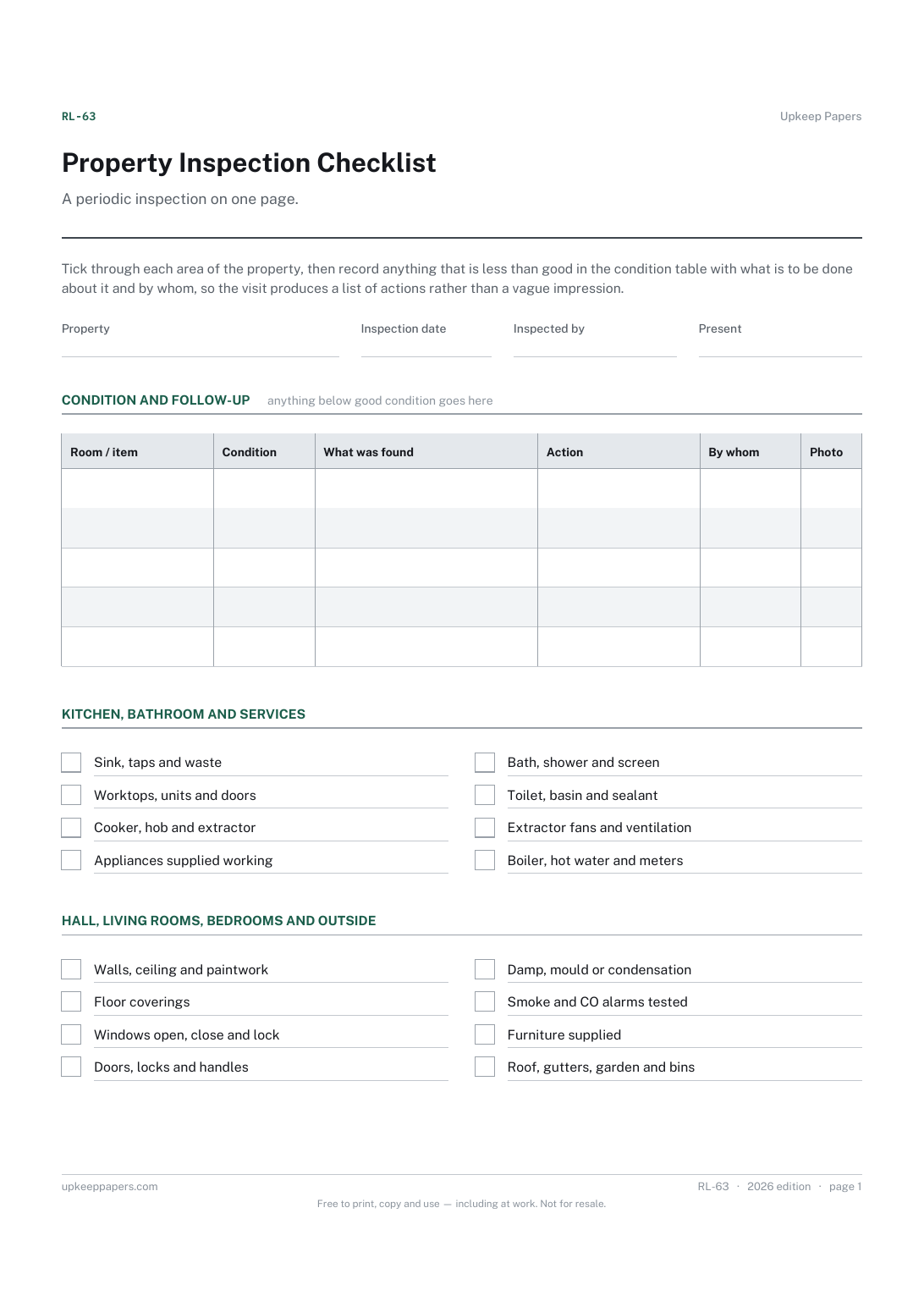
Every area checked on the same day, in the same order, every visit.
Every occupant, their phone and email, and their own emergency contact.
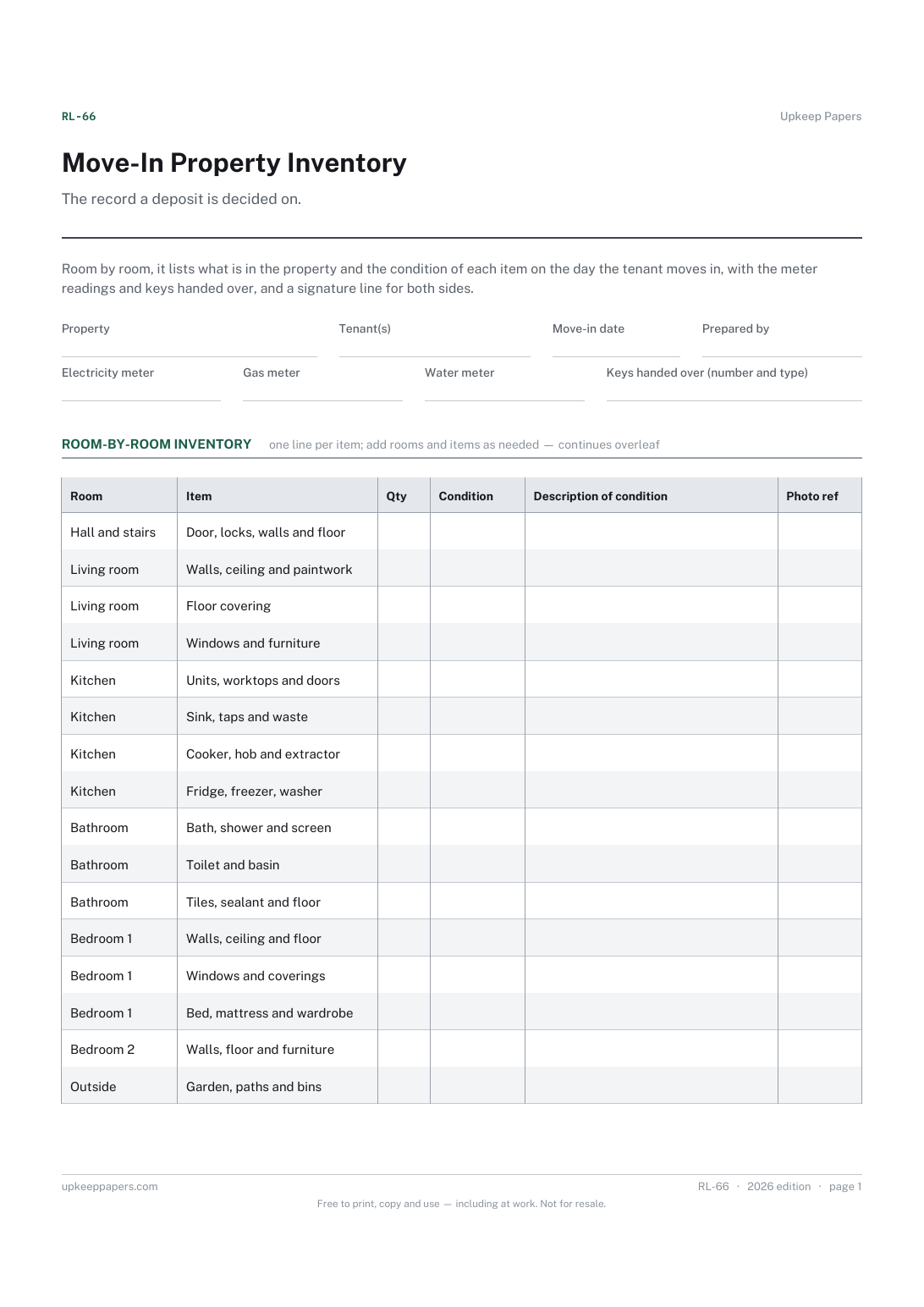
What was in each room and what state it was in on day one.
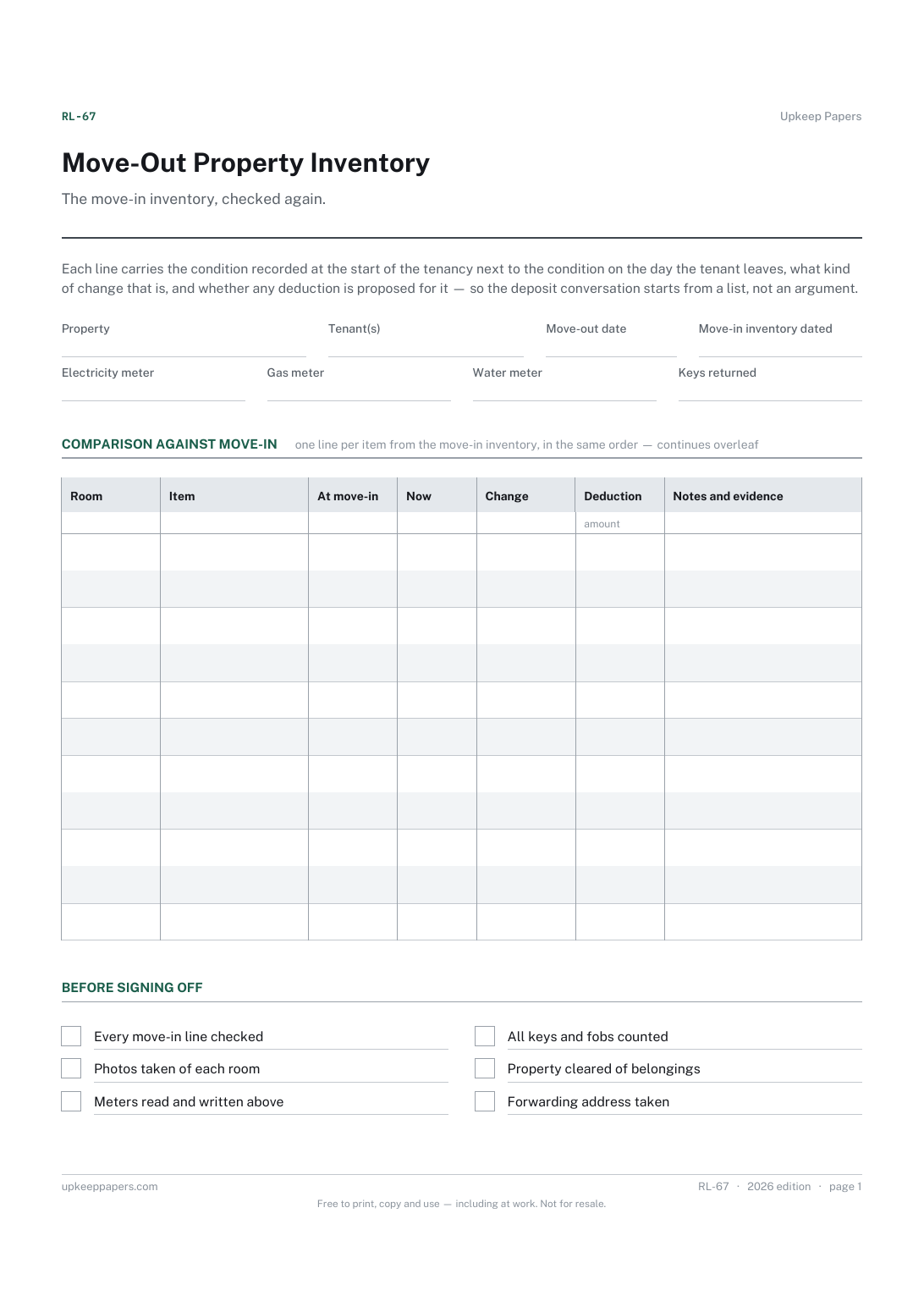
Condition at the start and at the end, side by side, for every item.
What you actually saw, ticked while you were standing there.
The steps to complete before any money moves, ticked in order.
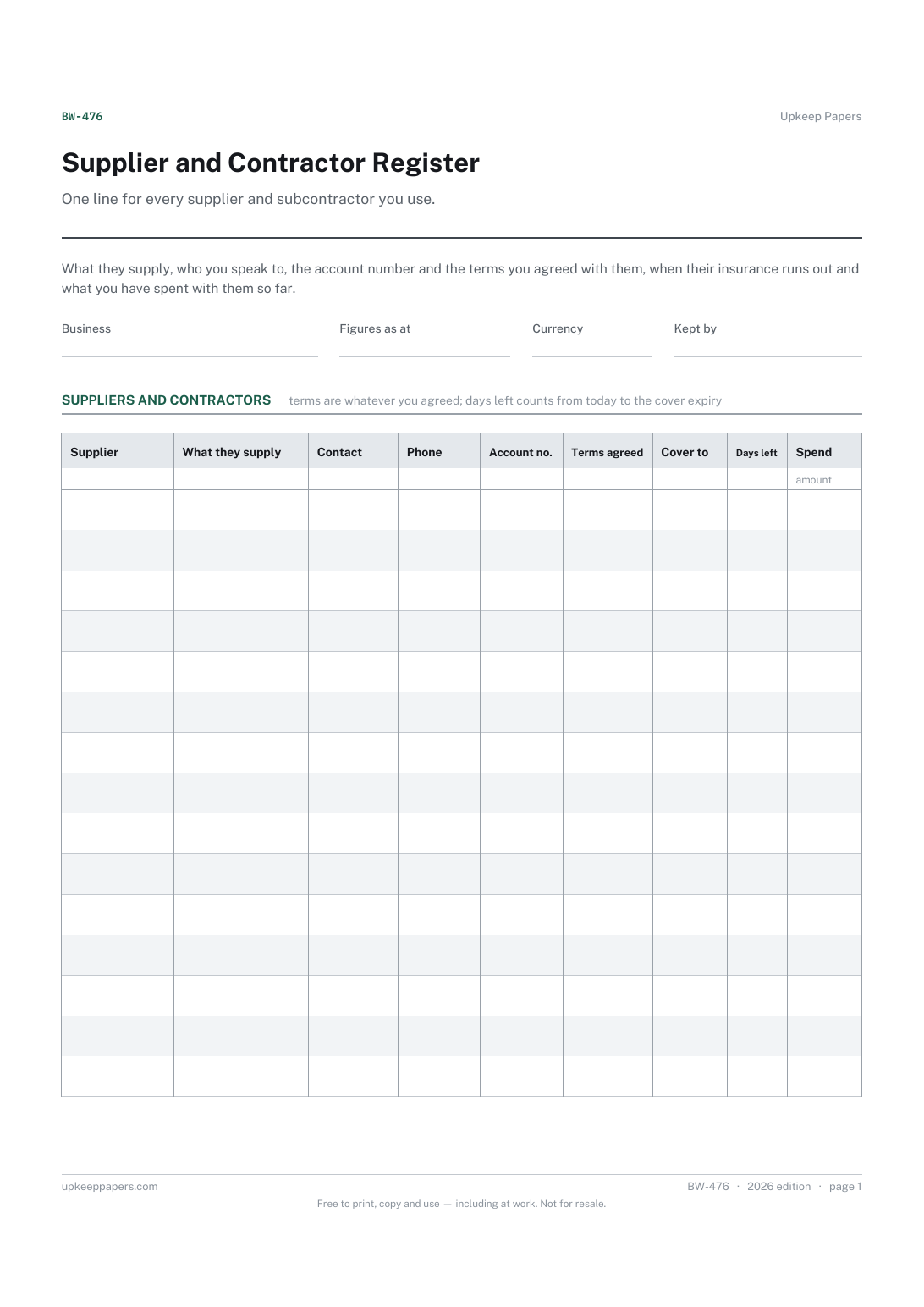
Who supplies what, and the account number to quote.
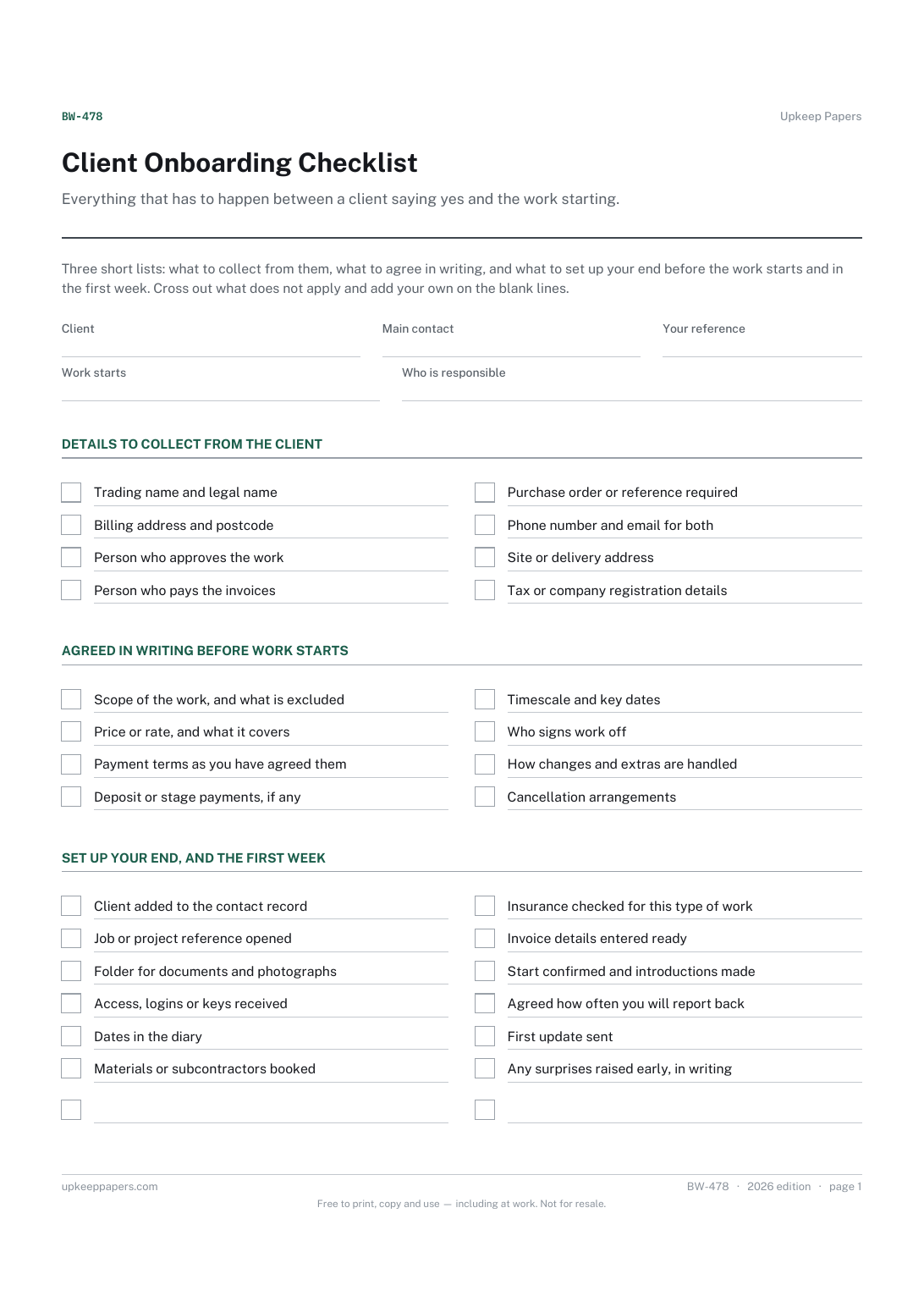
The contact and billing details you need before an invoice can go out.
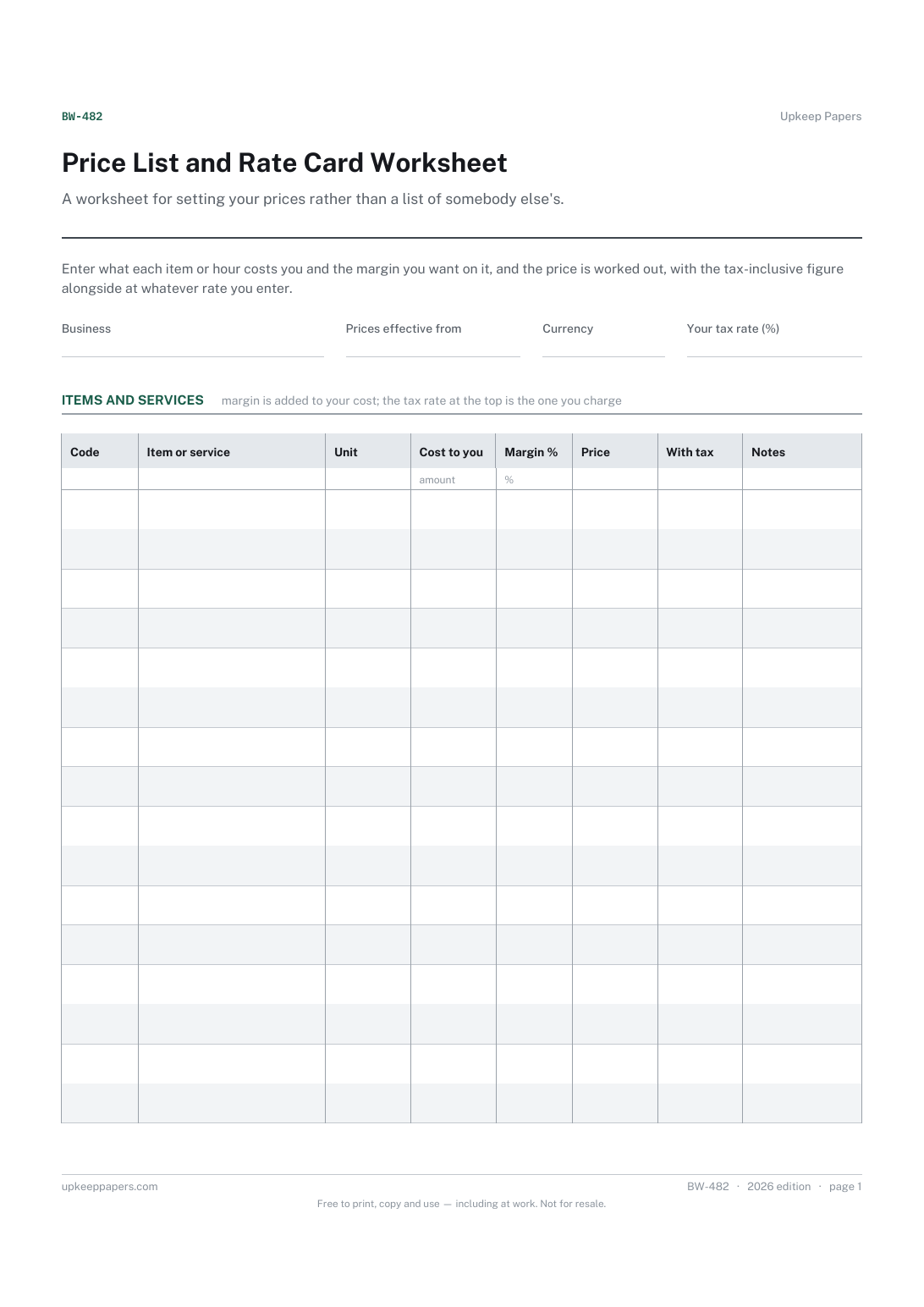
Every item or service you sell, with your own code for it.
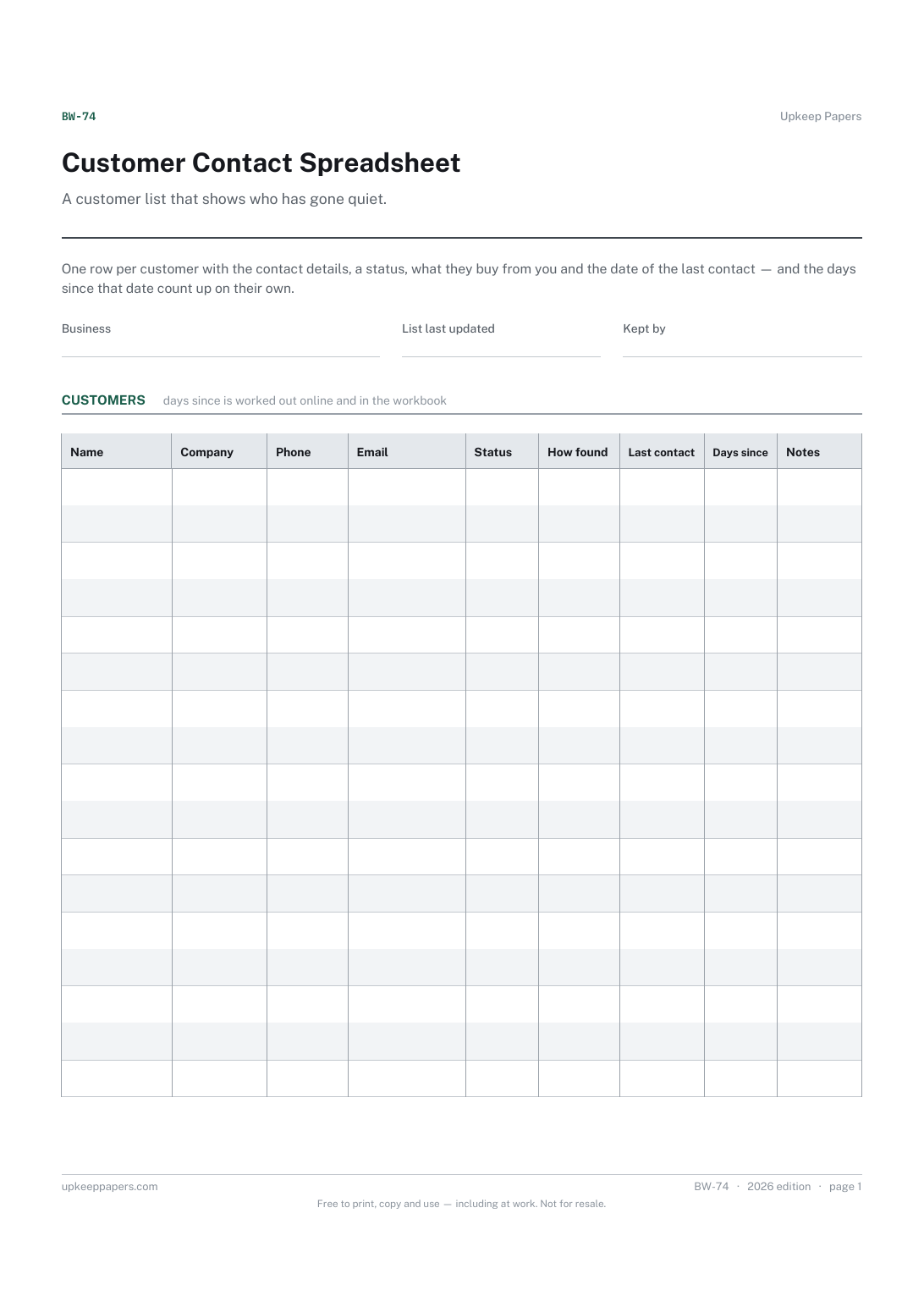
Every customer's phone, email and address on one sheet.
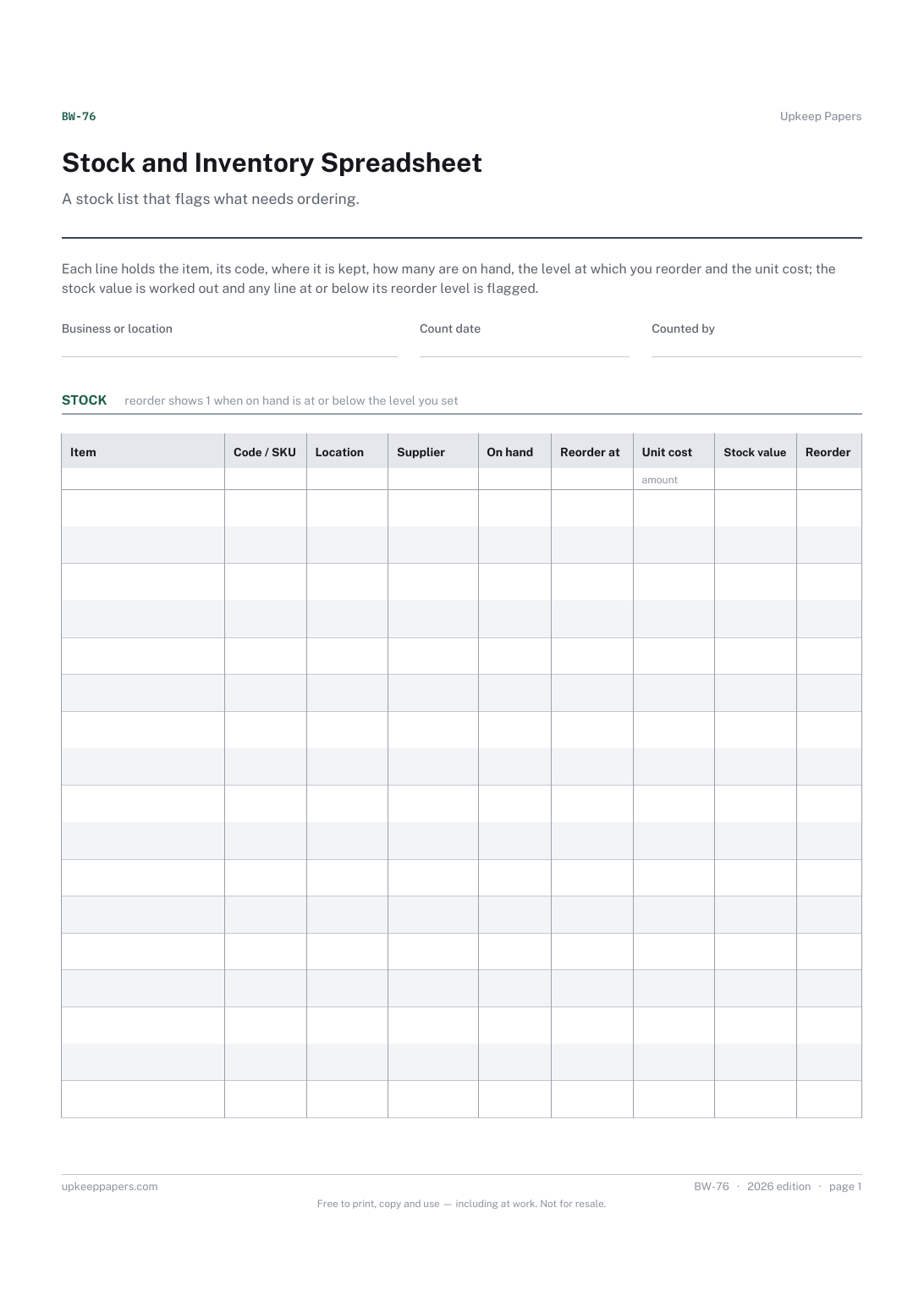
How many of each item are on hand, and where.
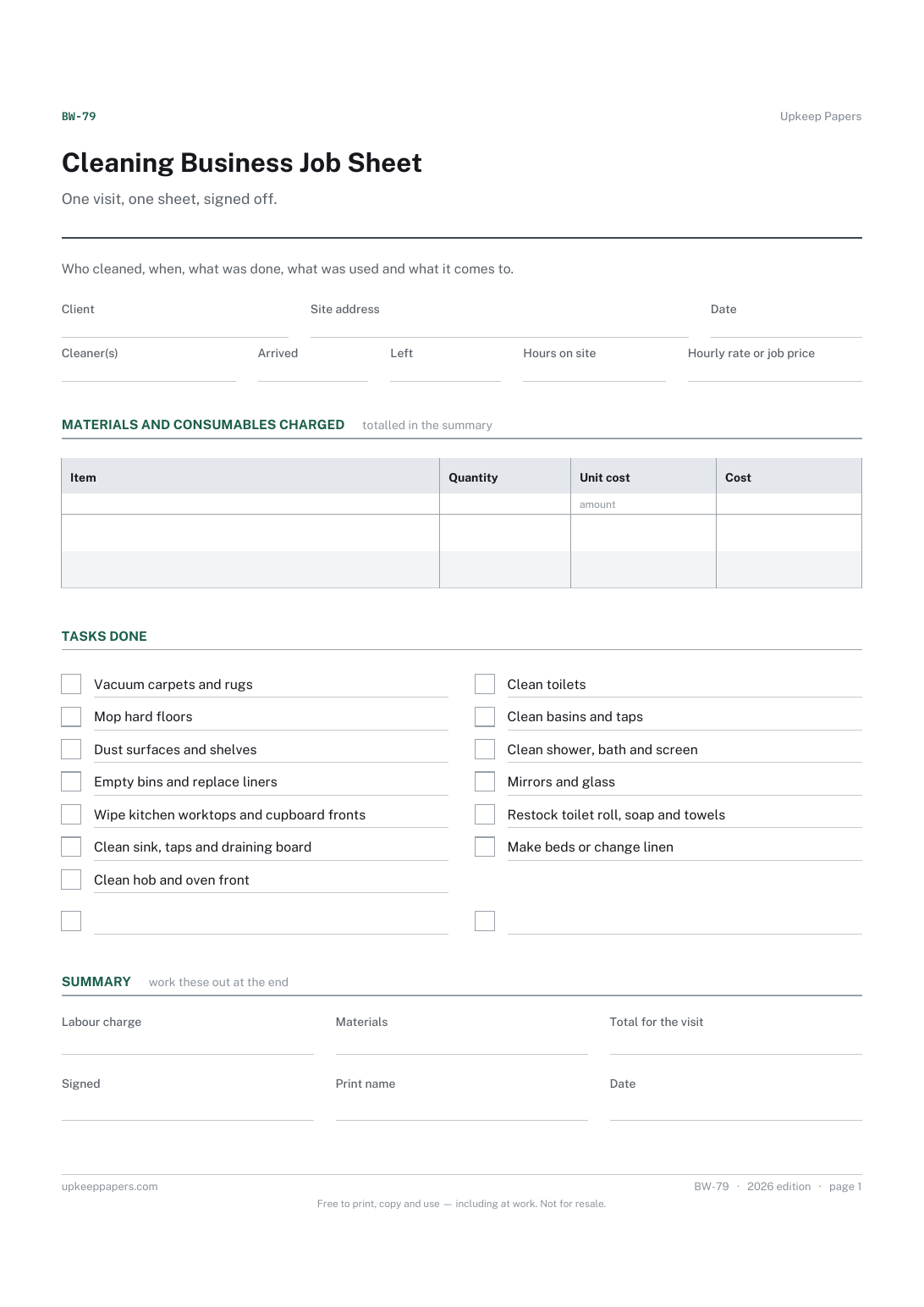
What was done on the visit, ticked task by task.
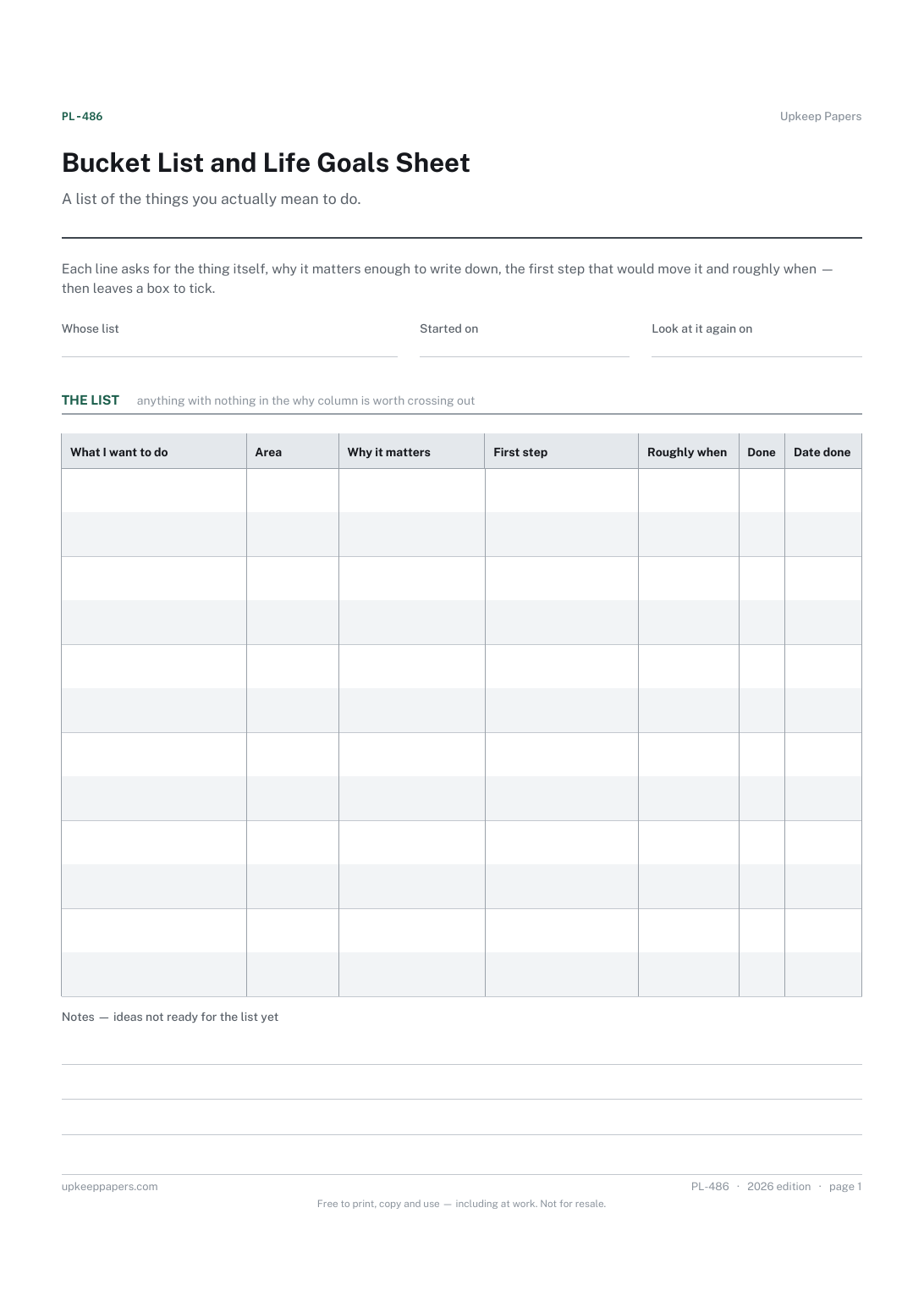
What you want to do, written down in your own words.
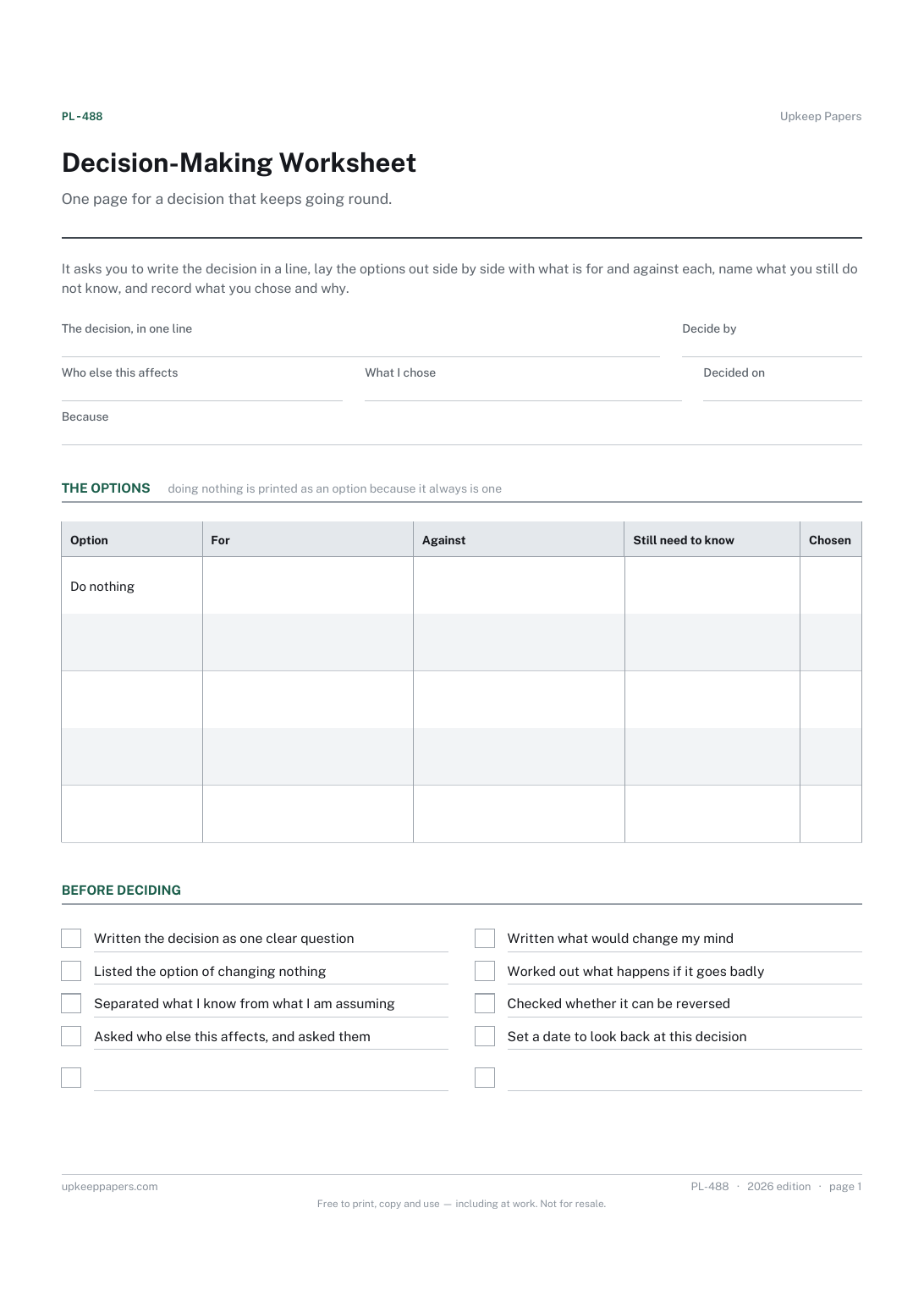
The decision itself, written in one line rather than assumed.
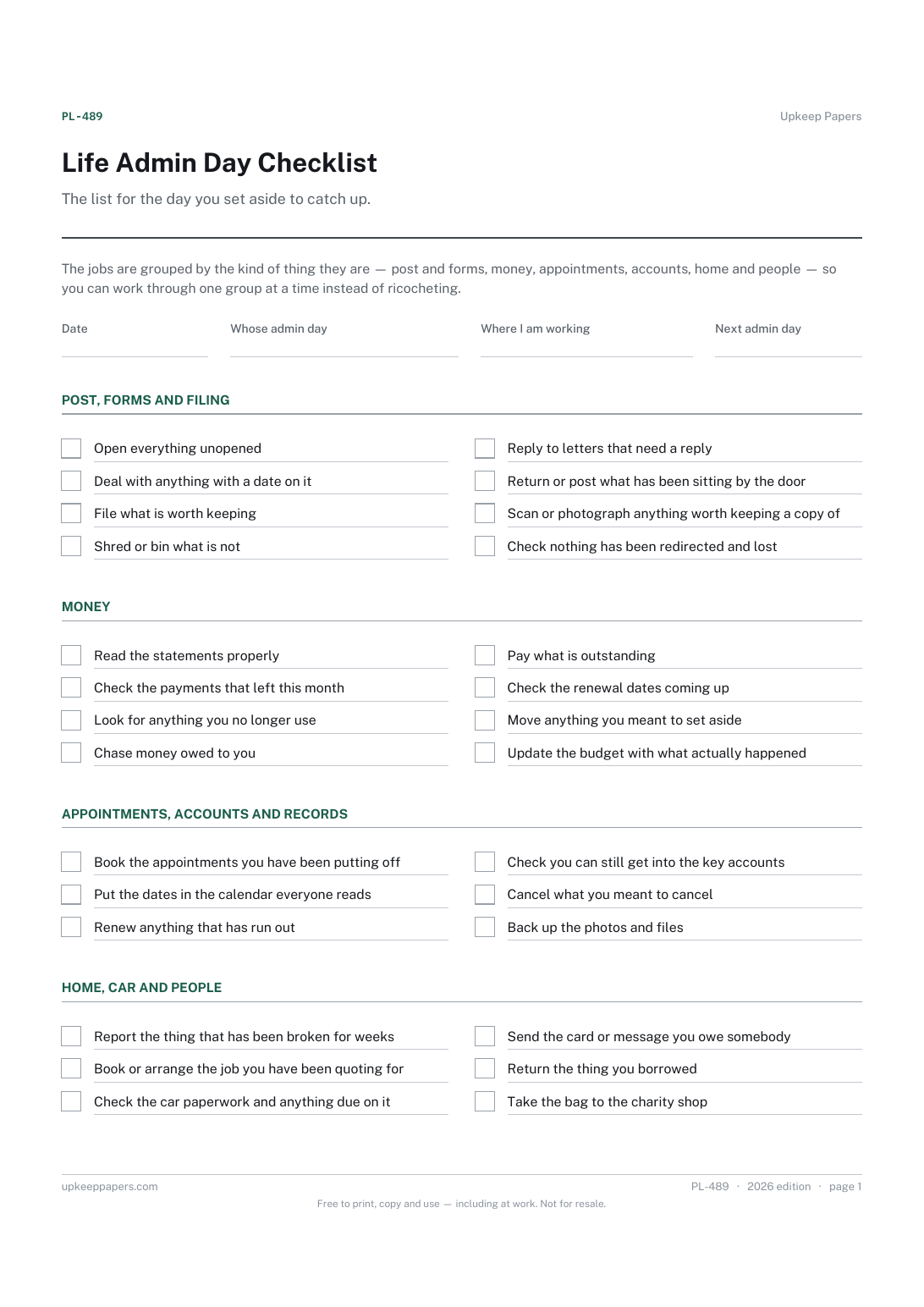
The jobs that have been quietly accumulating, in one list.
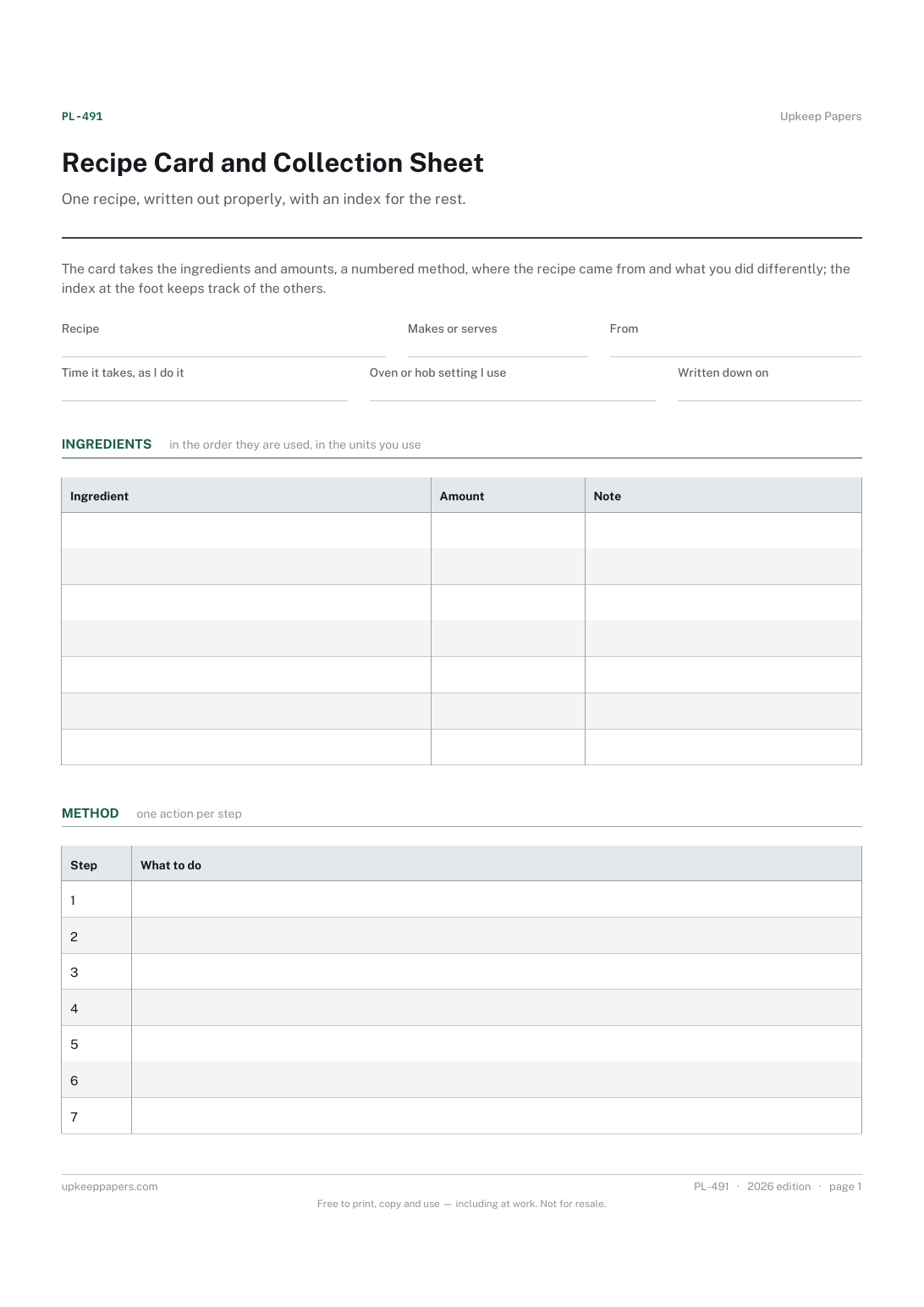
The ingredients and the amounts, in the units you use.
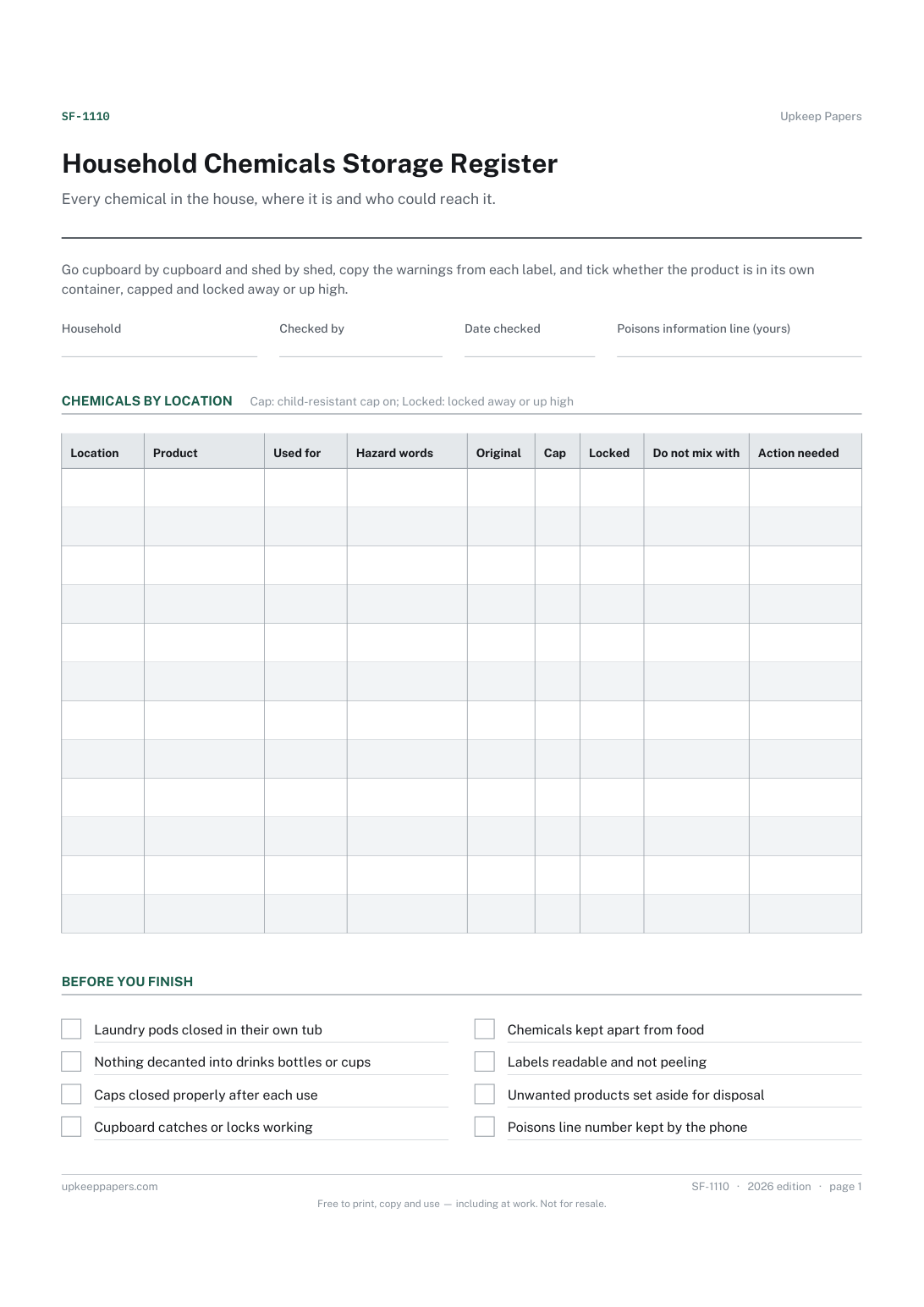
Every cleaning, laundry, garden, DIY and car product in the home.
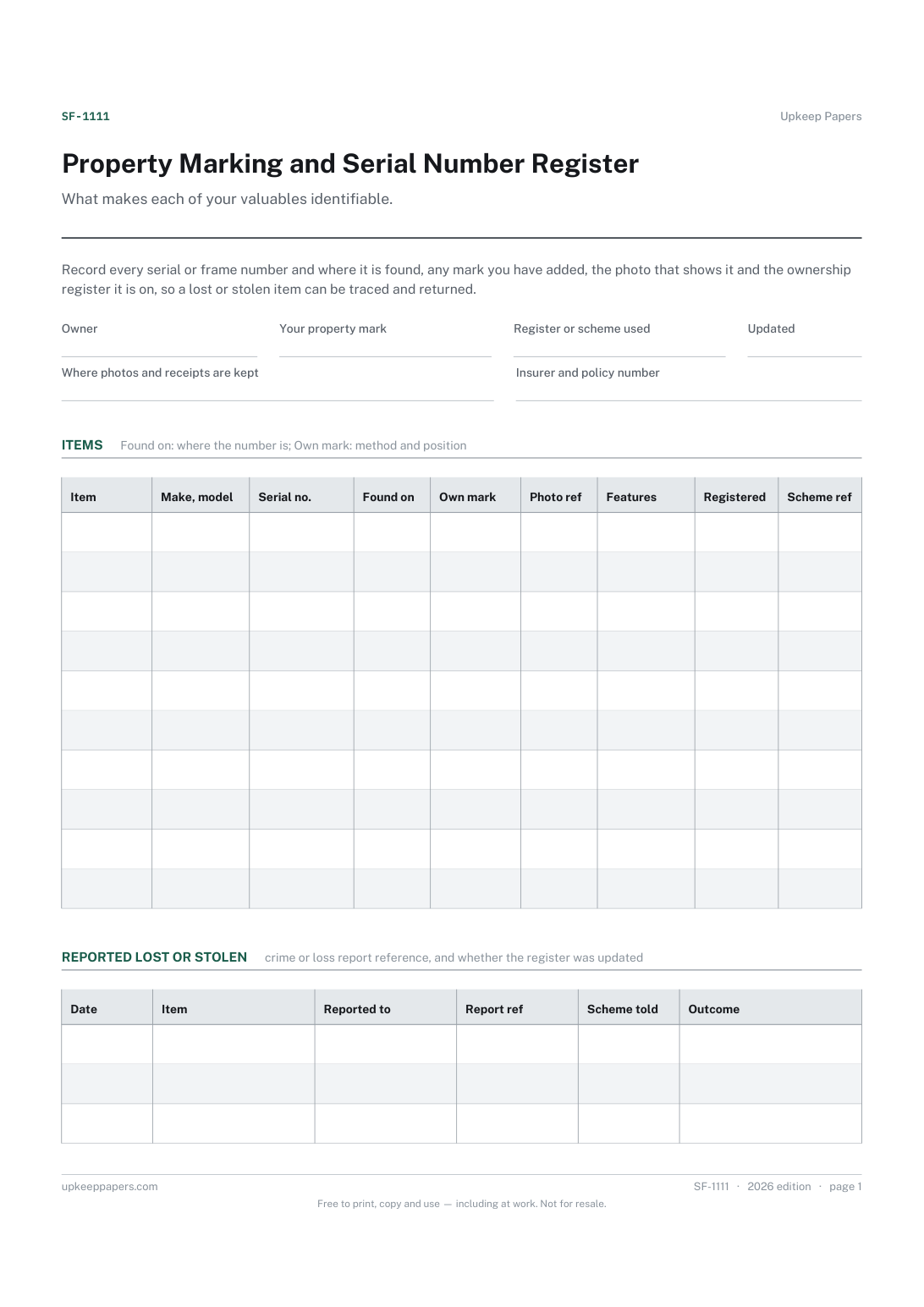
The serial or frame number of every portable valuable.
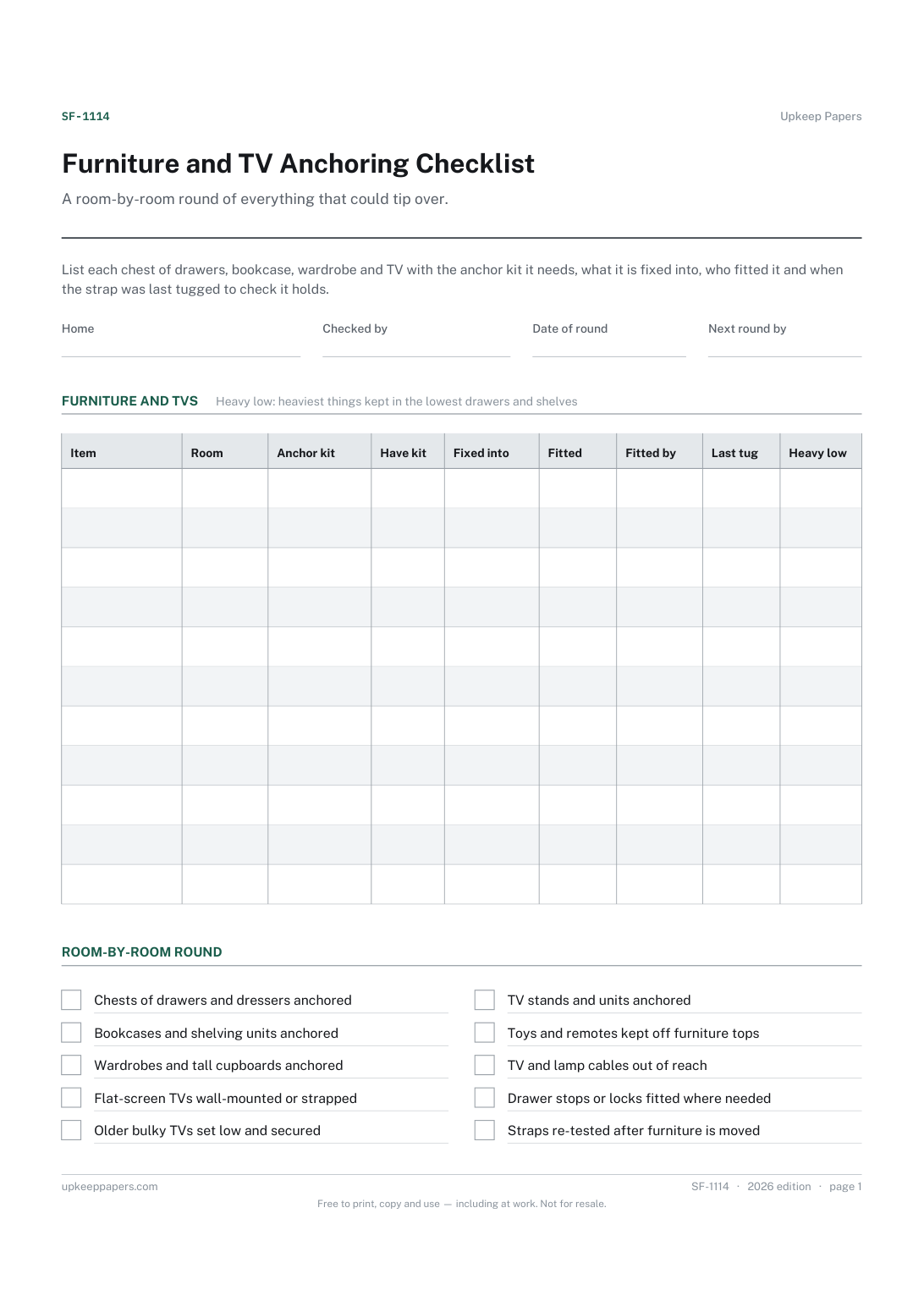
Every tall or heavy item and TV, room by room.
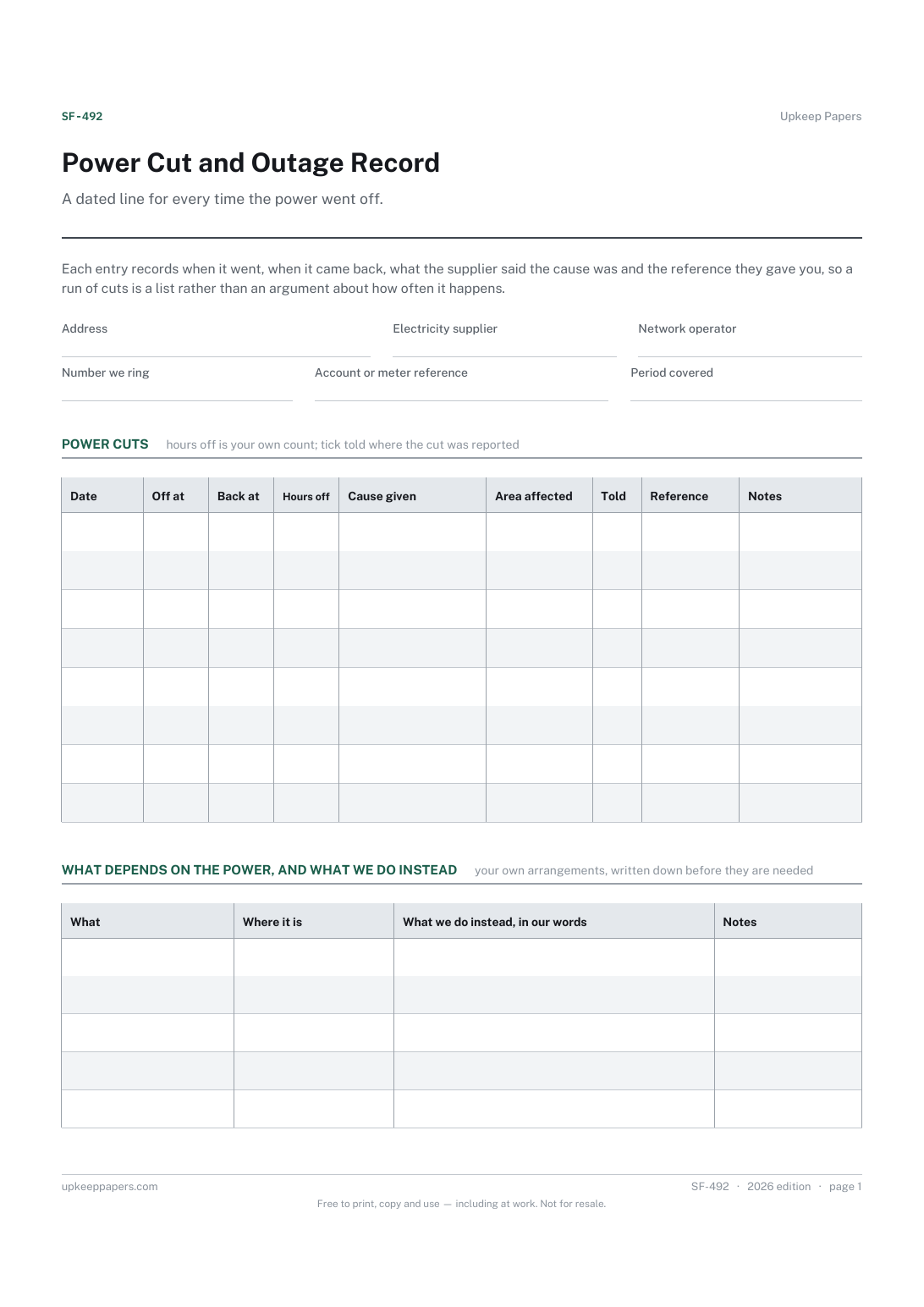
When the power went off and when it came back, in your own words.
Which documents, references and numbers are written down and where.
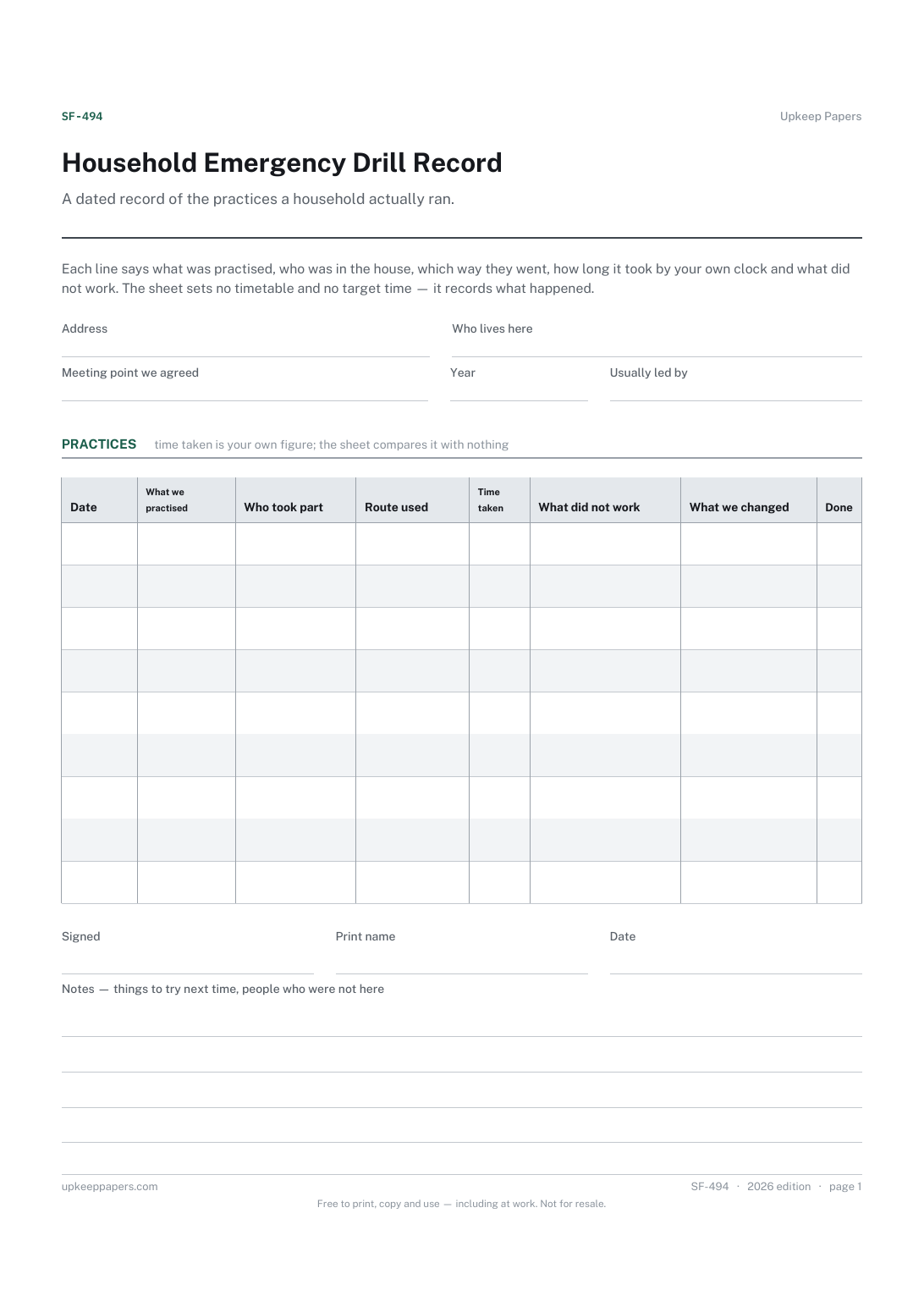
What was practised, and on what date.
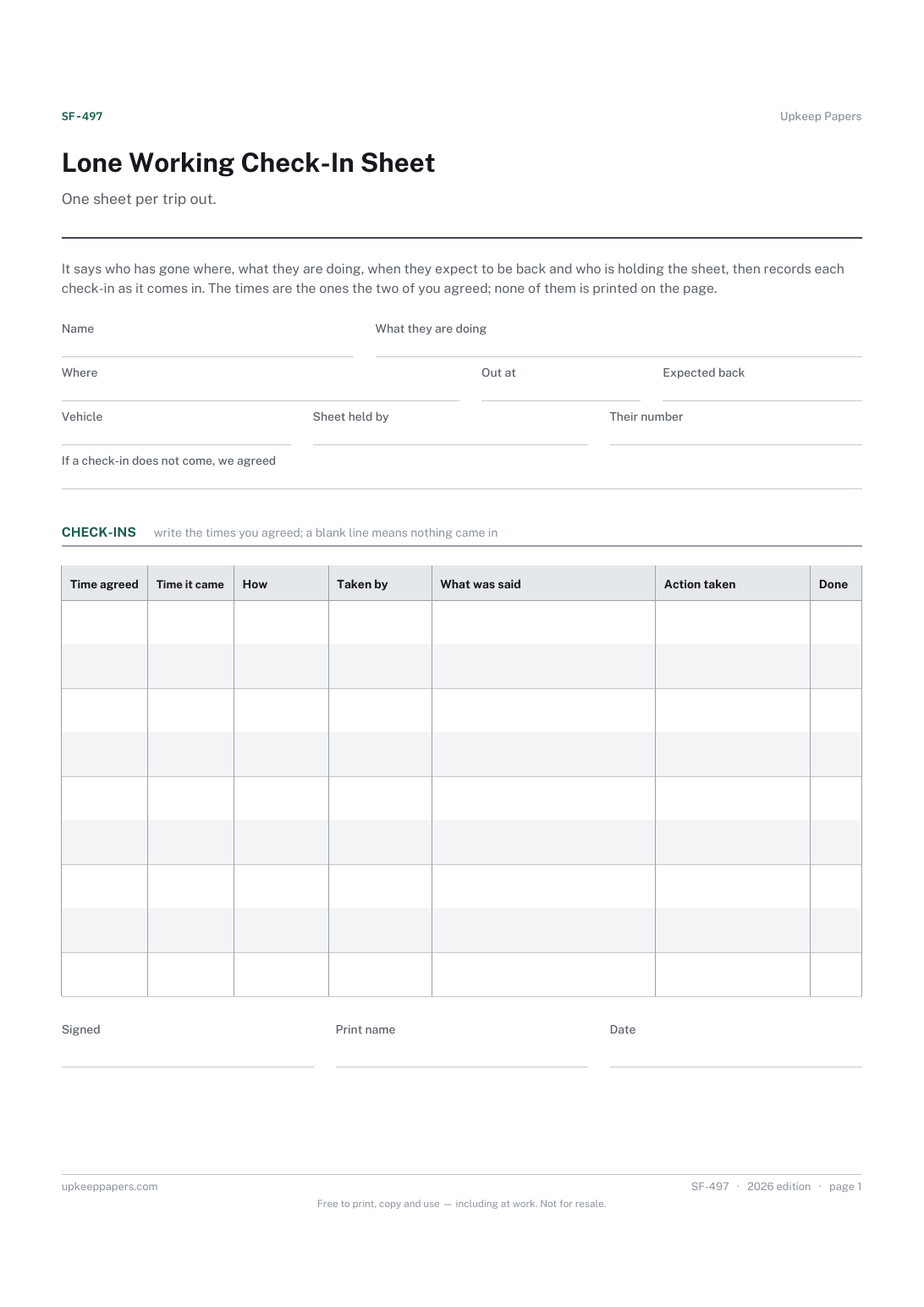
Where the person has gone, and what they are there to do.
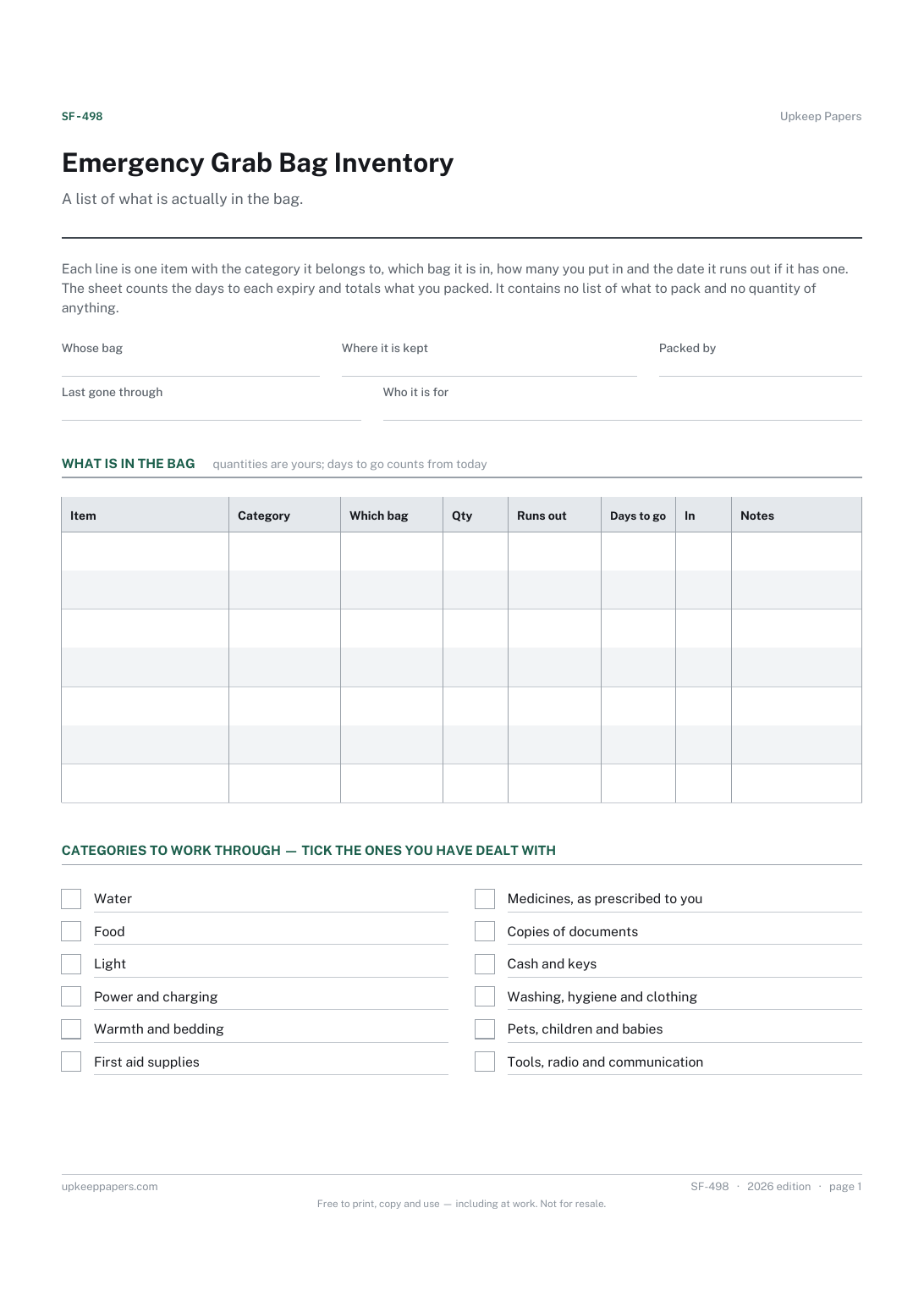
Every item in the bag, with the category it belongs to.
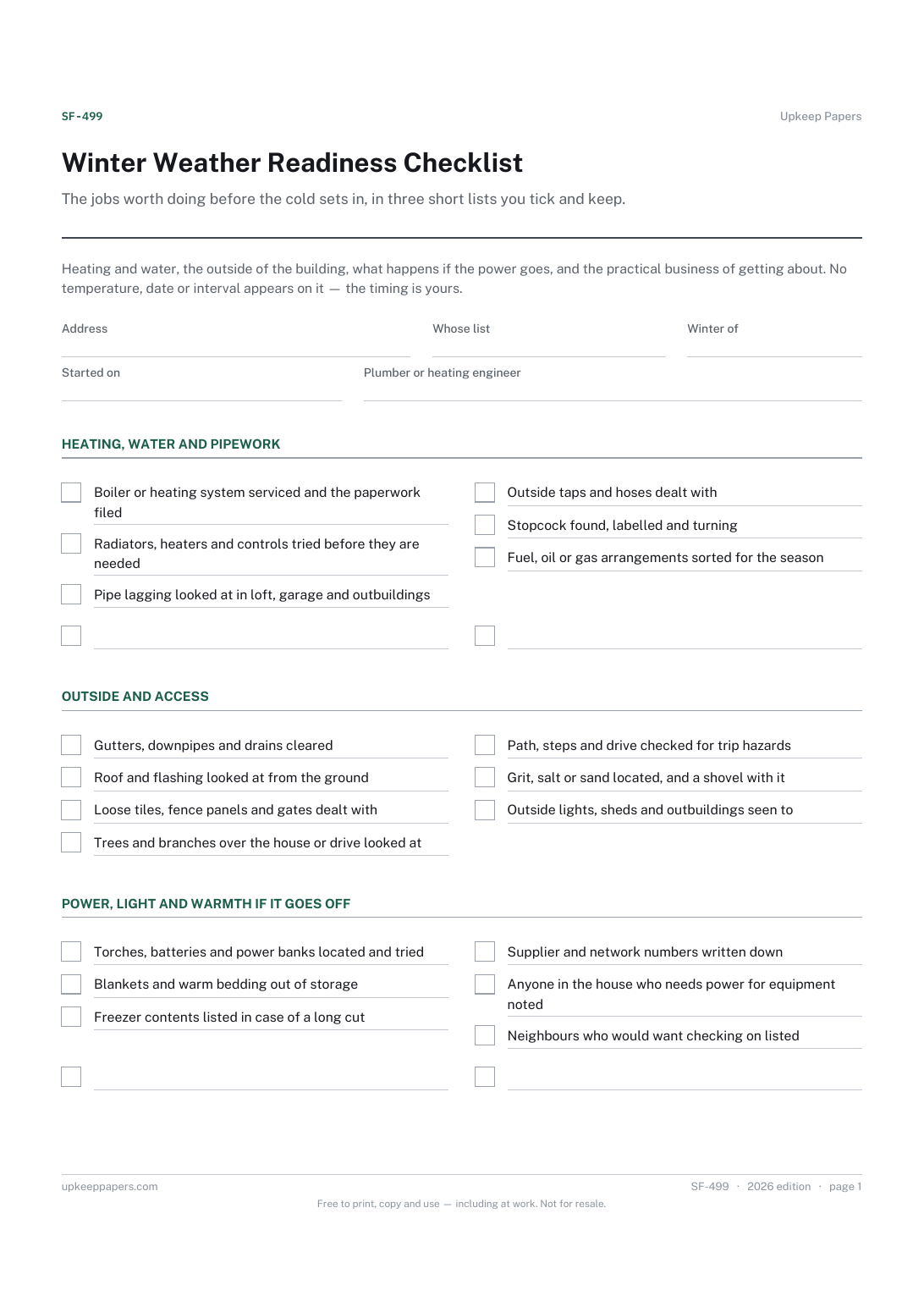
What has been checked on the heating, hot water and pipework.
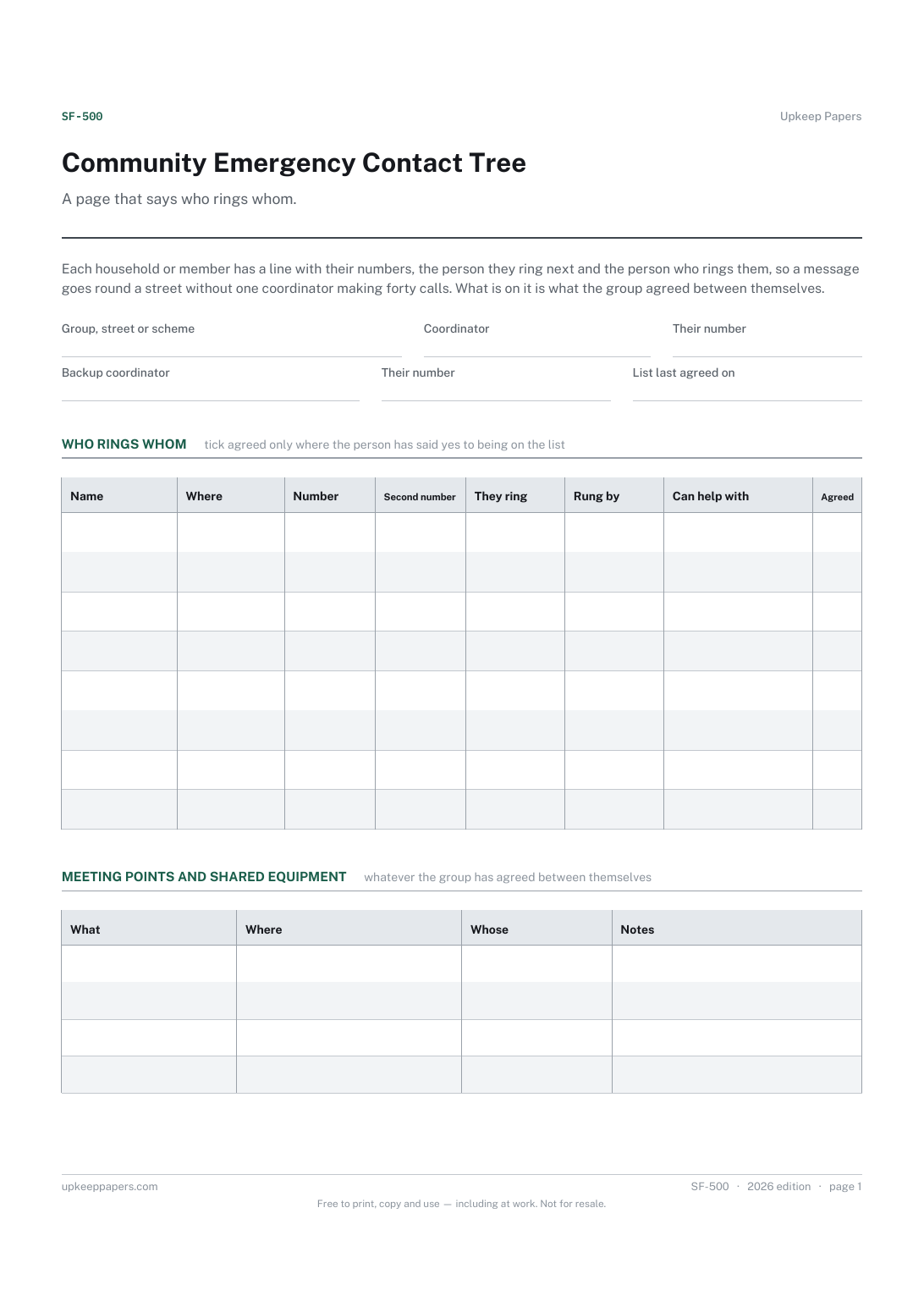
Every household or member, with the numbers that actually get answered.
What is already in the house, and what still has to be bought or found.
Where the original of each document physically is.
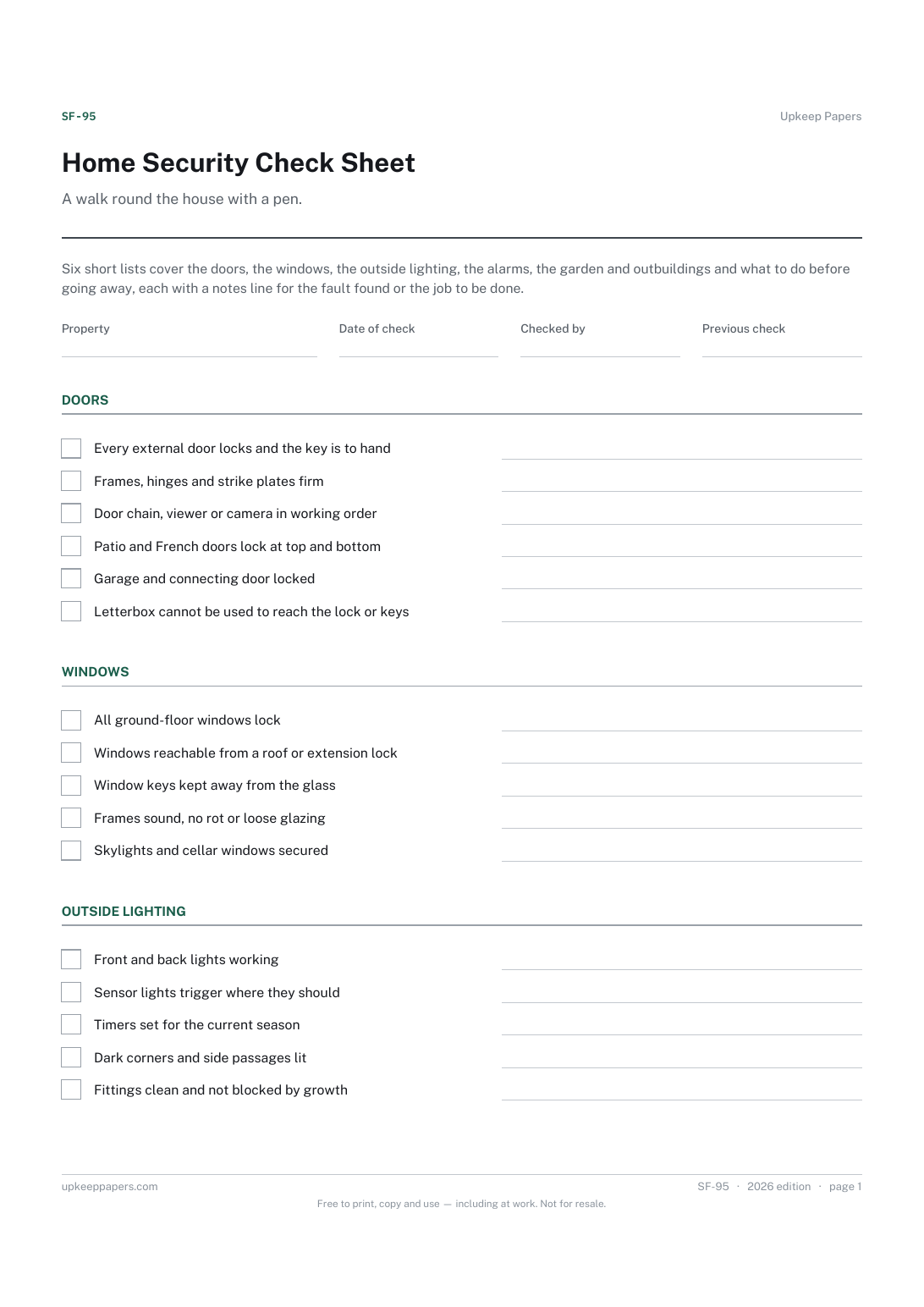
Which doors and windows actually lock, and which only look as if they do.
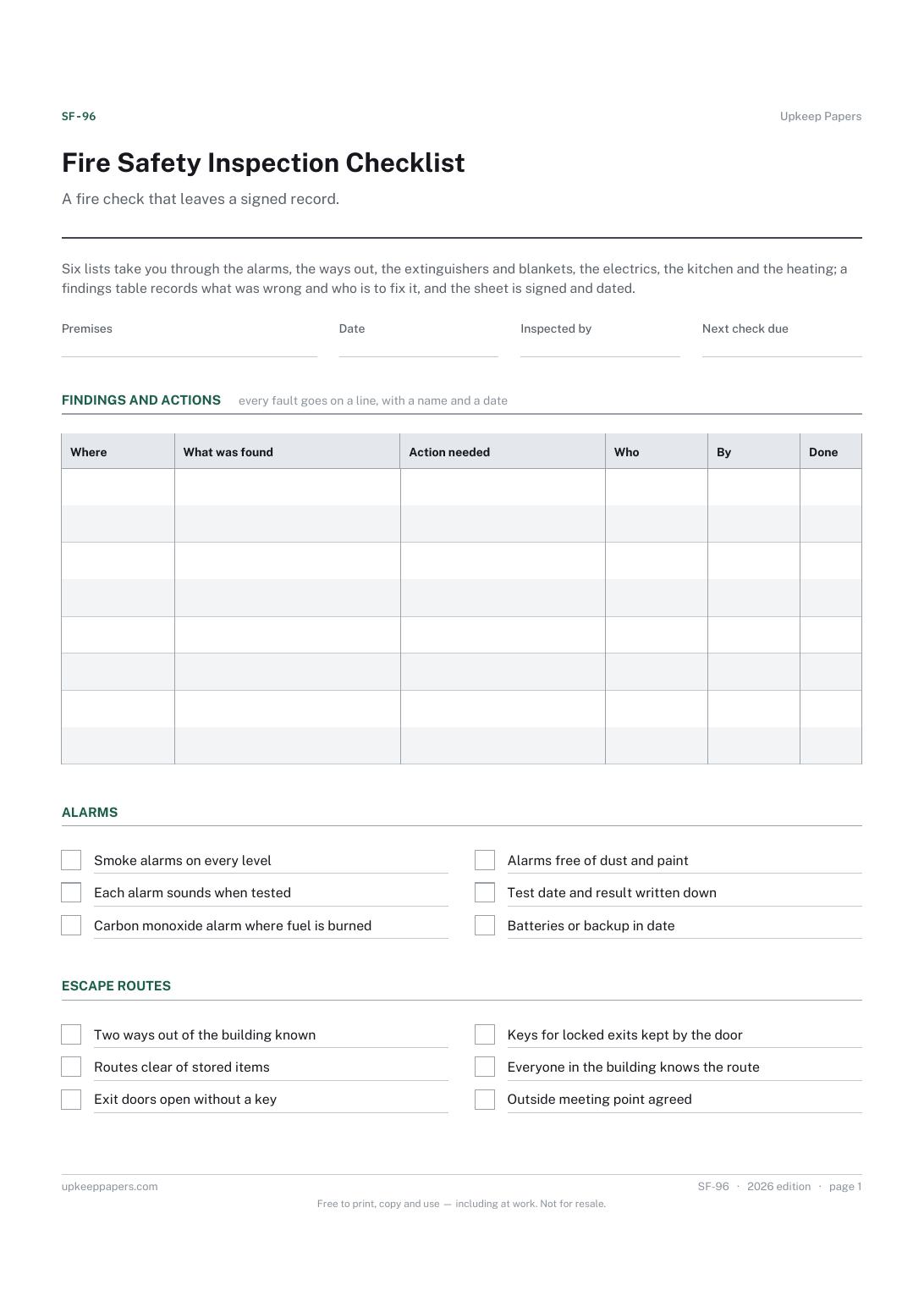
Whether the alarms actually sound, and when they were last tested.
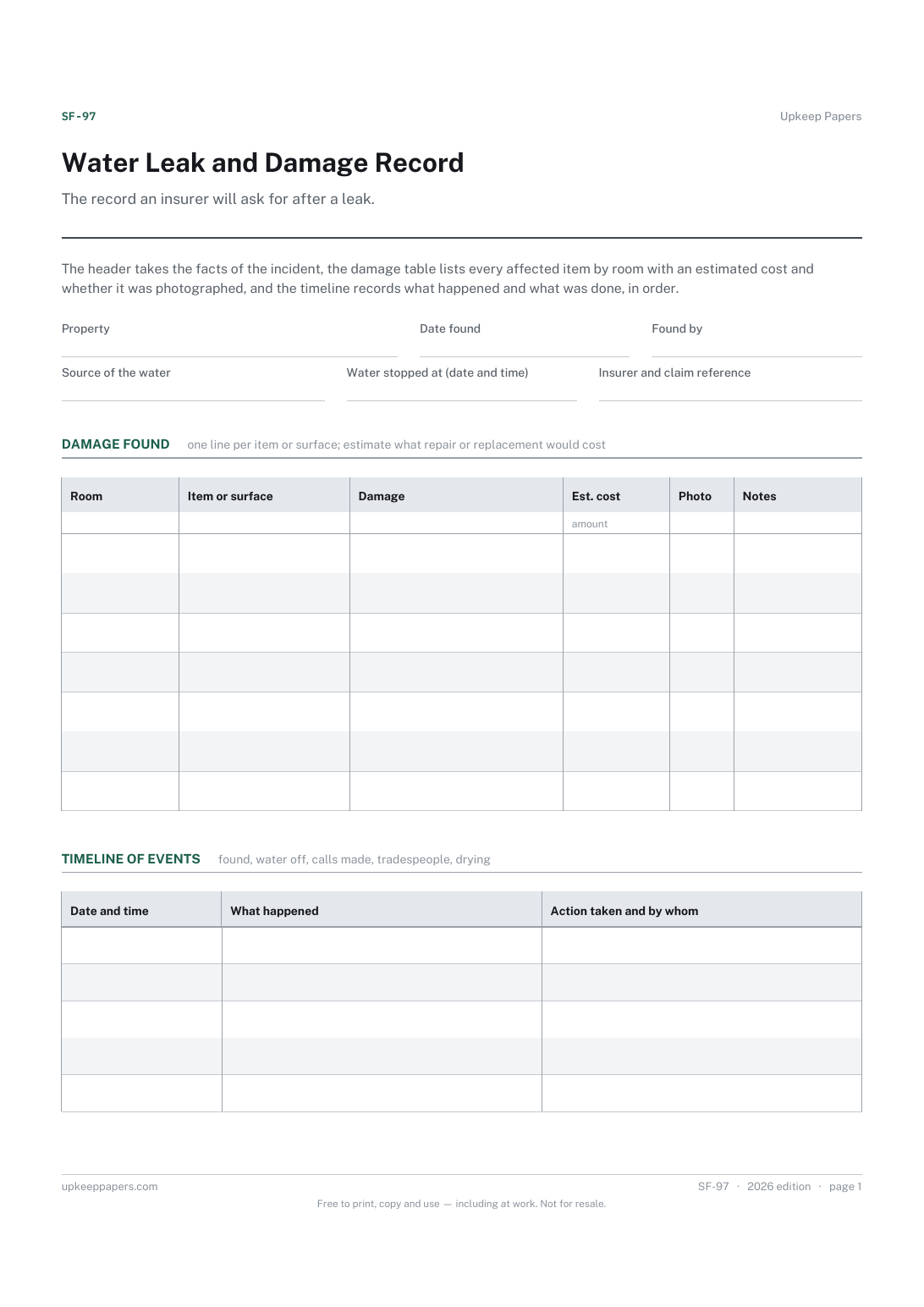
Every damaged item, room by room, with an estimate against each.
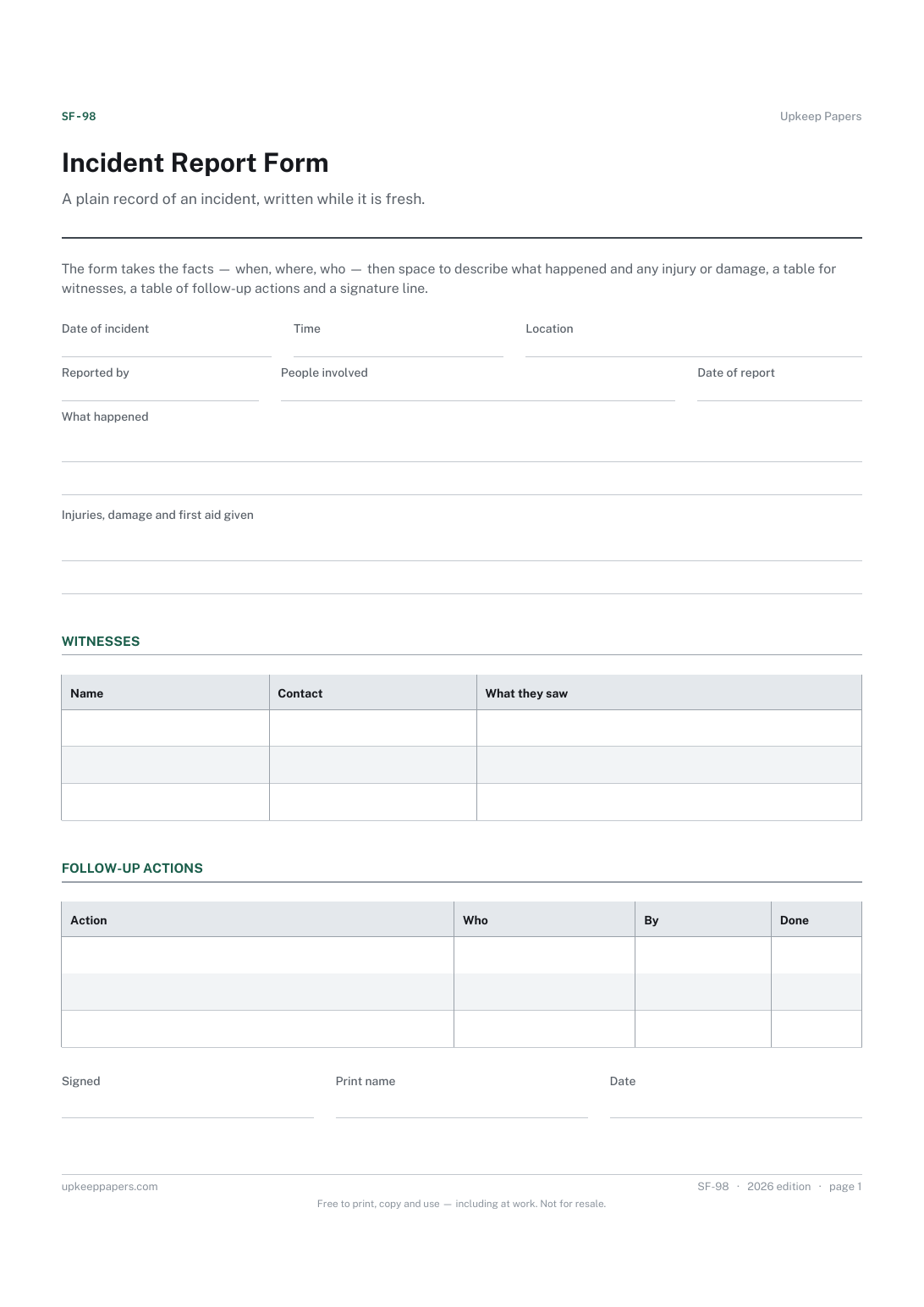
The facts of an incident recorded once, on the day, by the person who saw it.
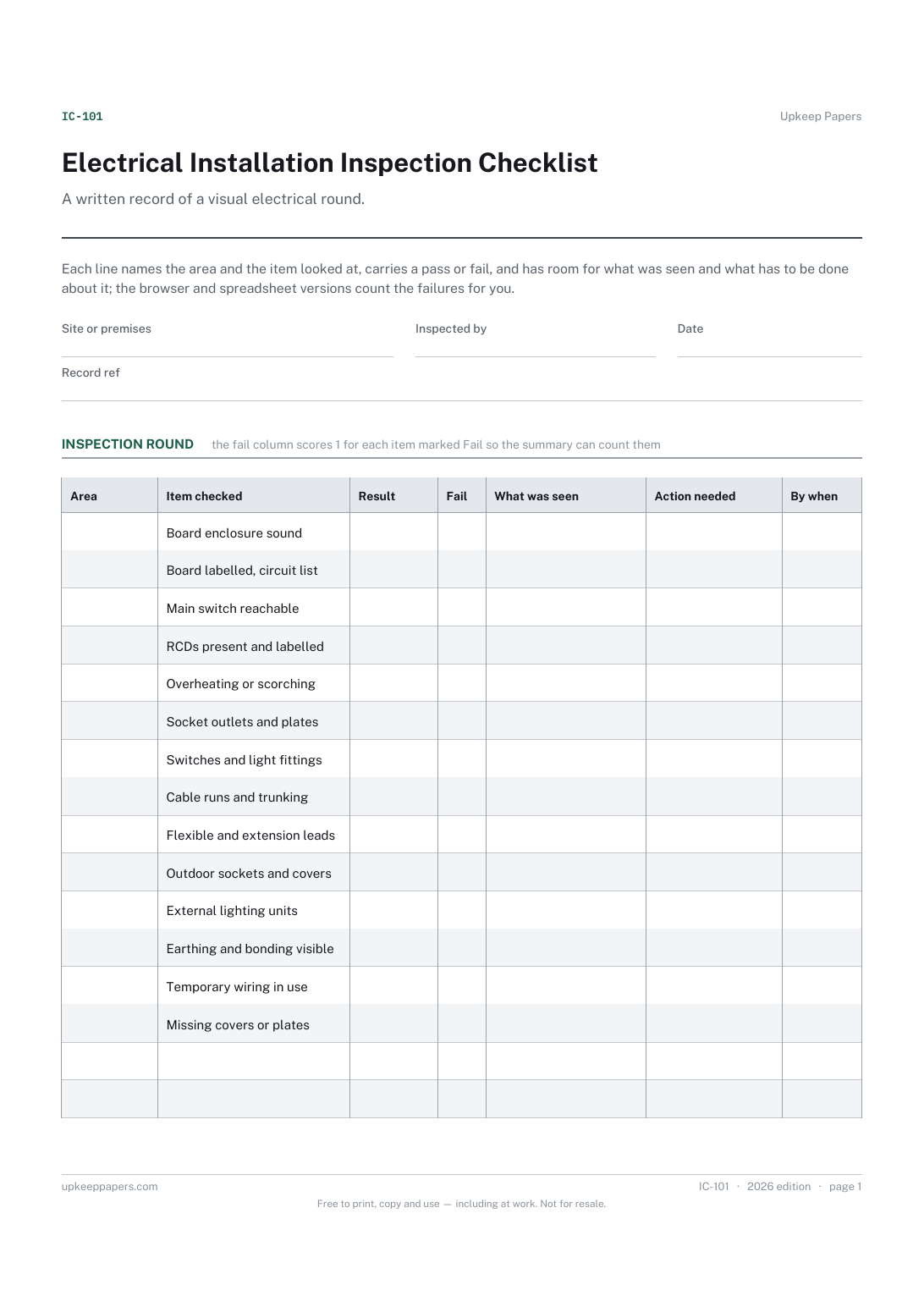
Which boards, circuits, accessories and leads were actually looked at.
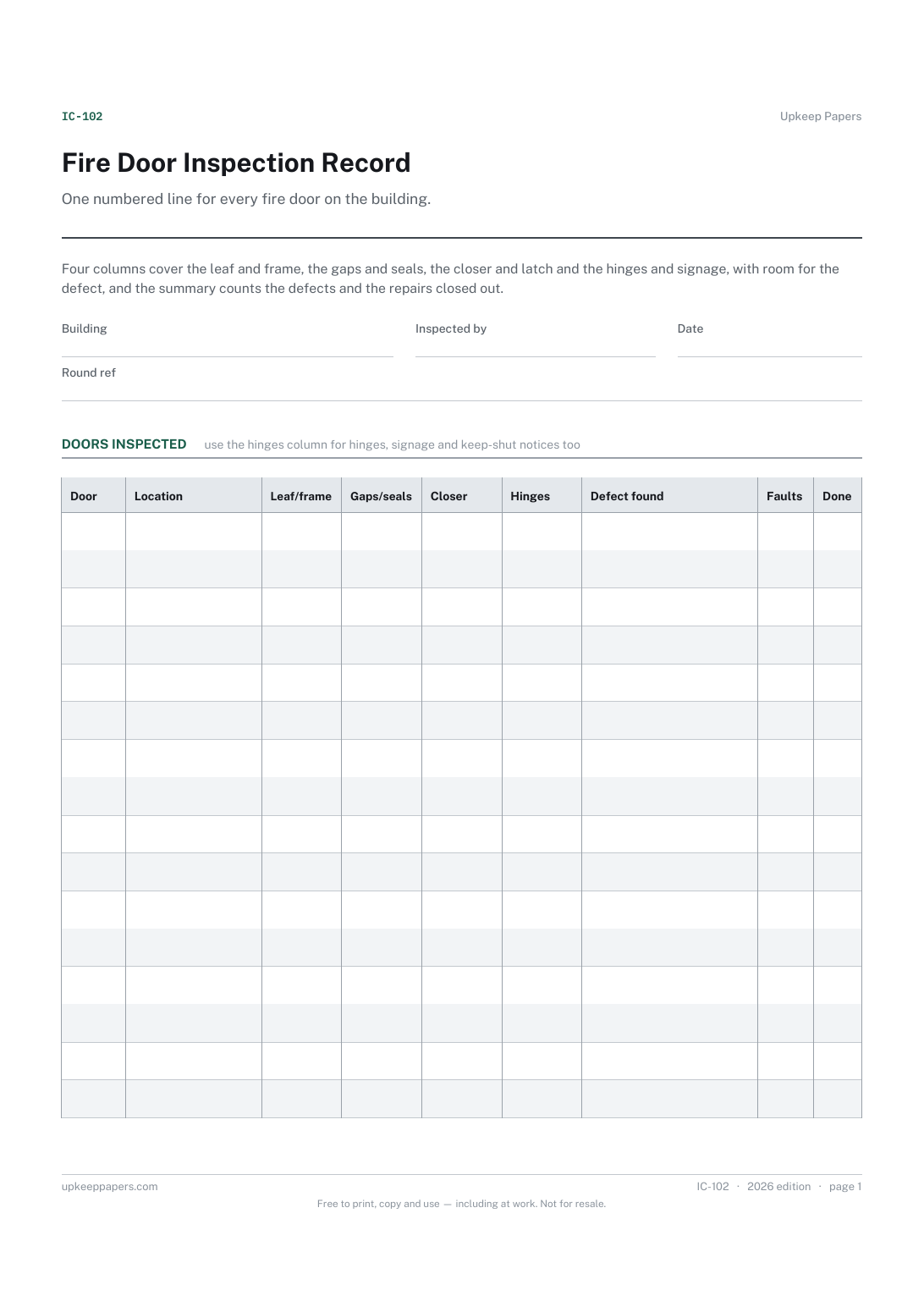
Which doors exist, where they are and which ones have been looked at.
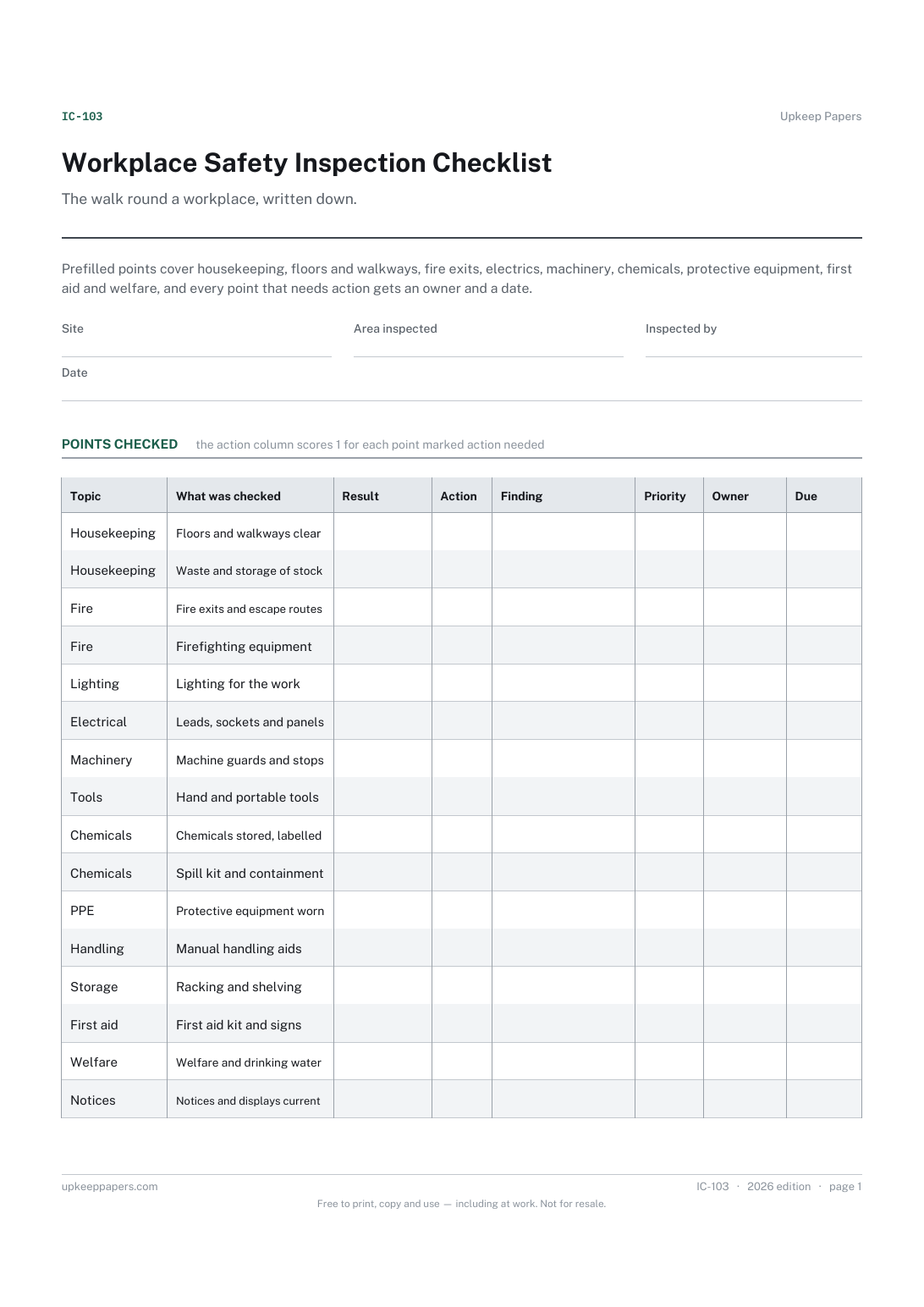
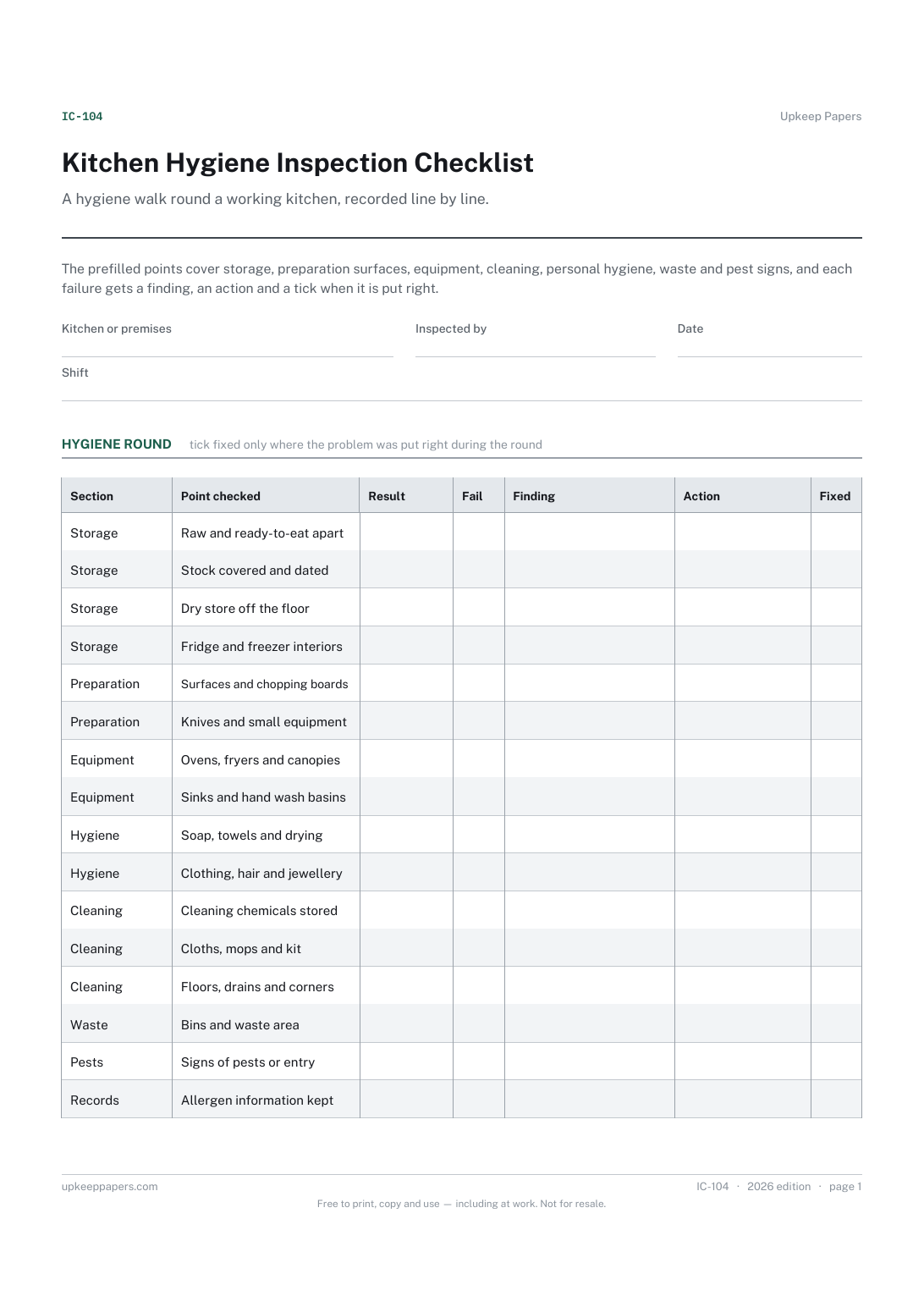
What was looked at on this round, including the points that were satisfactory.
What was inspected on the day, and by whom.
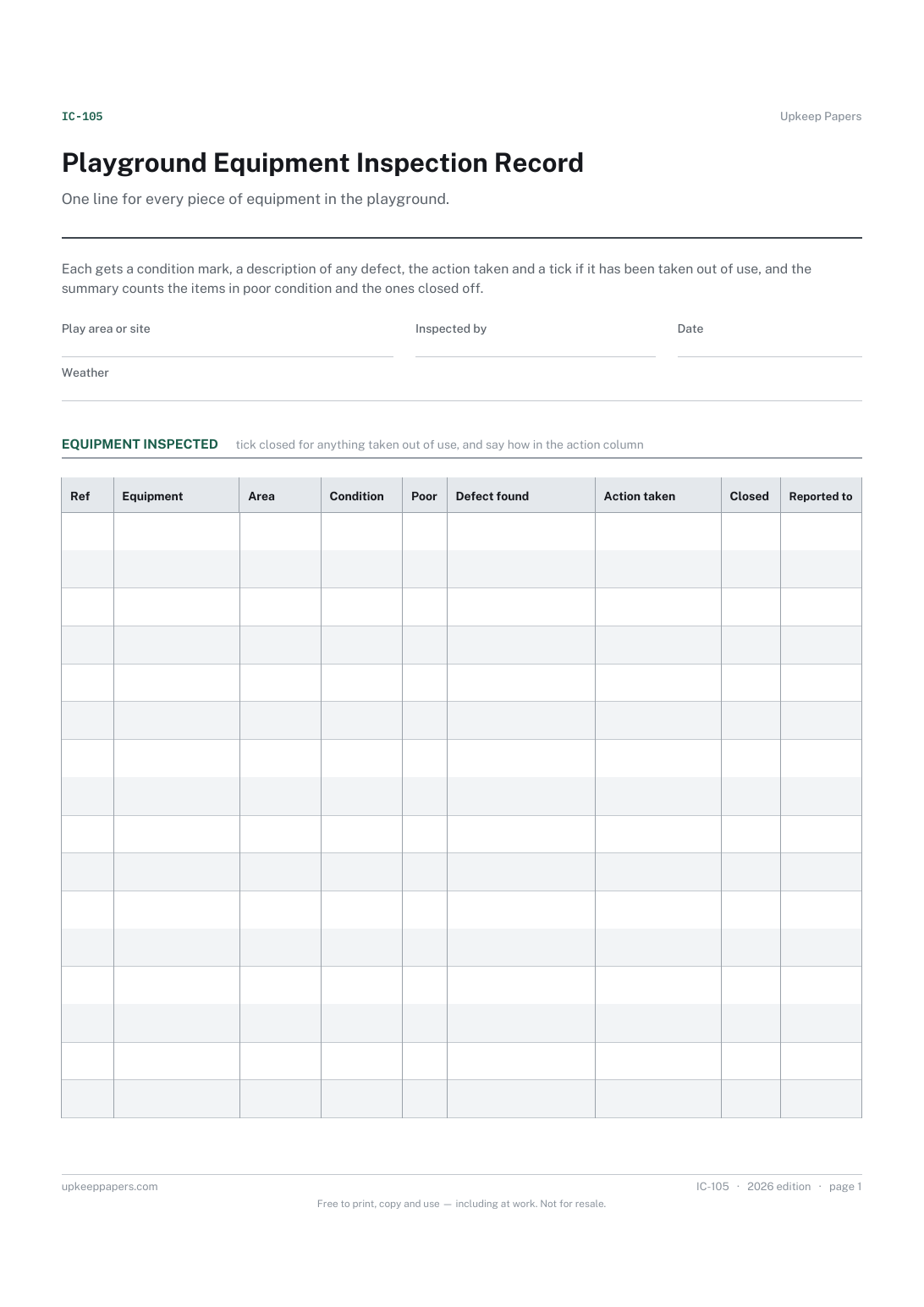
Every item of equipment on the site, with its own reference.
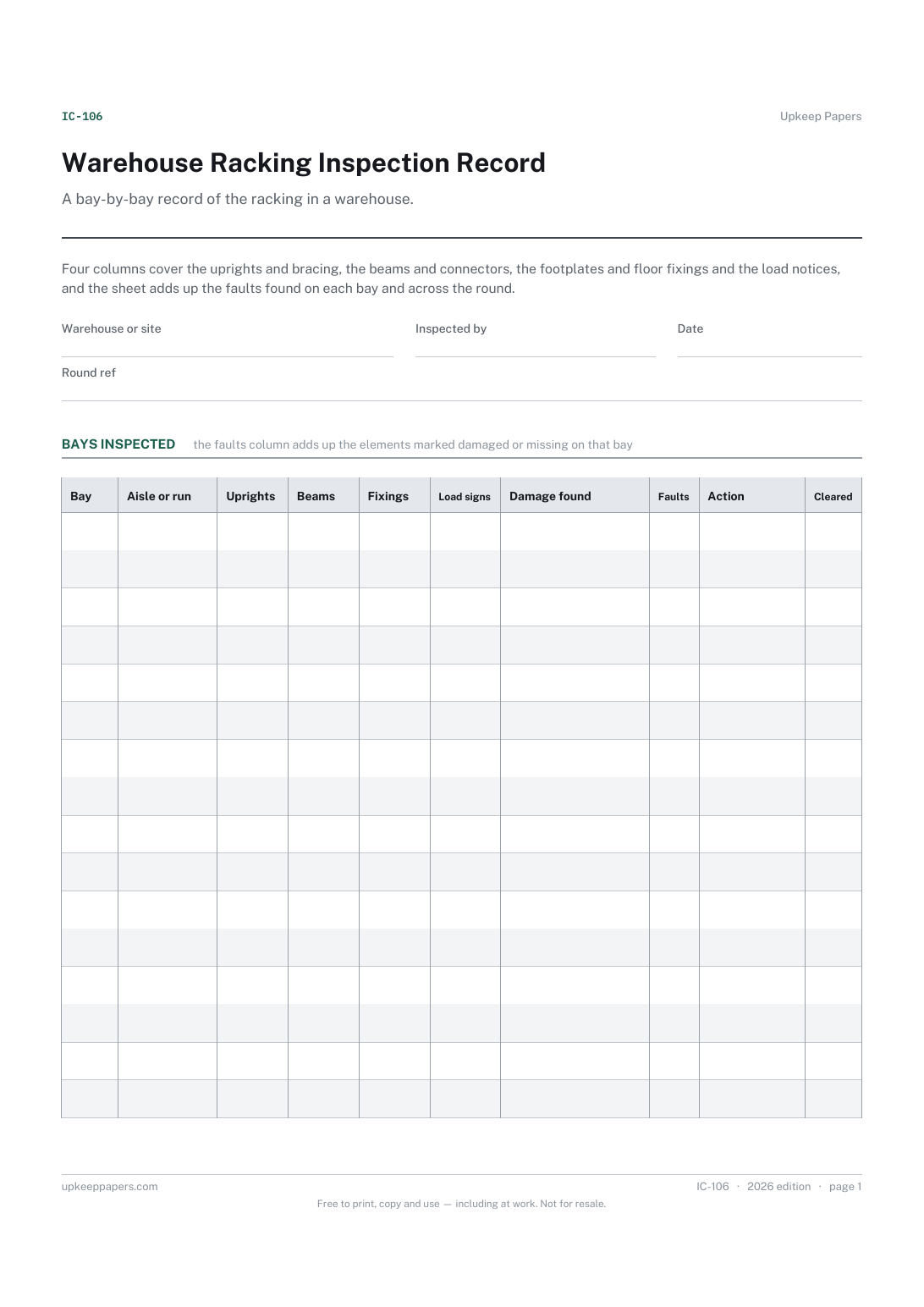
Which aisles and bays were inspected, and which part of each bay is damaged.
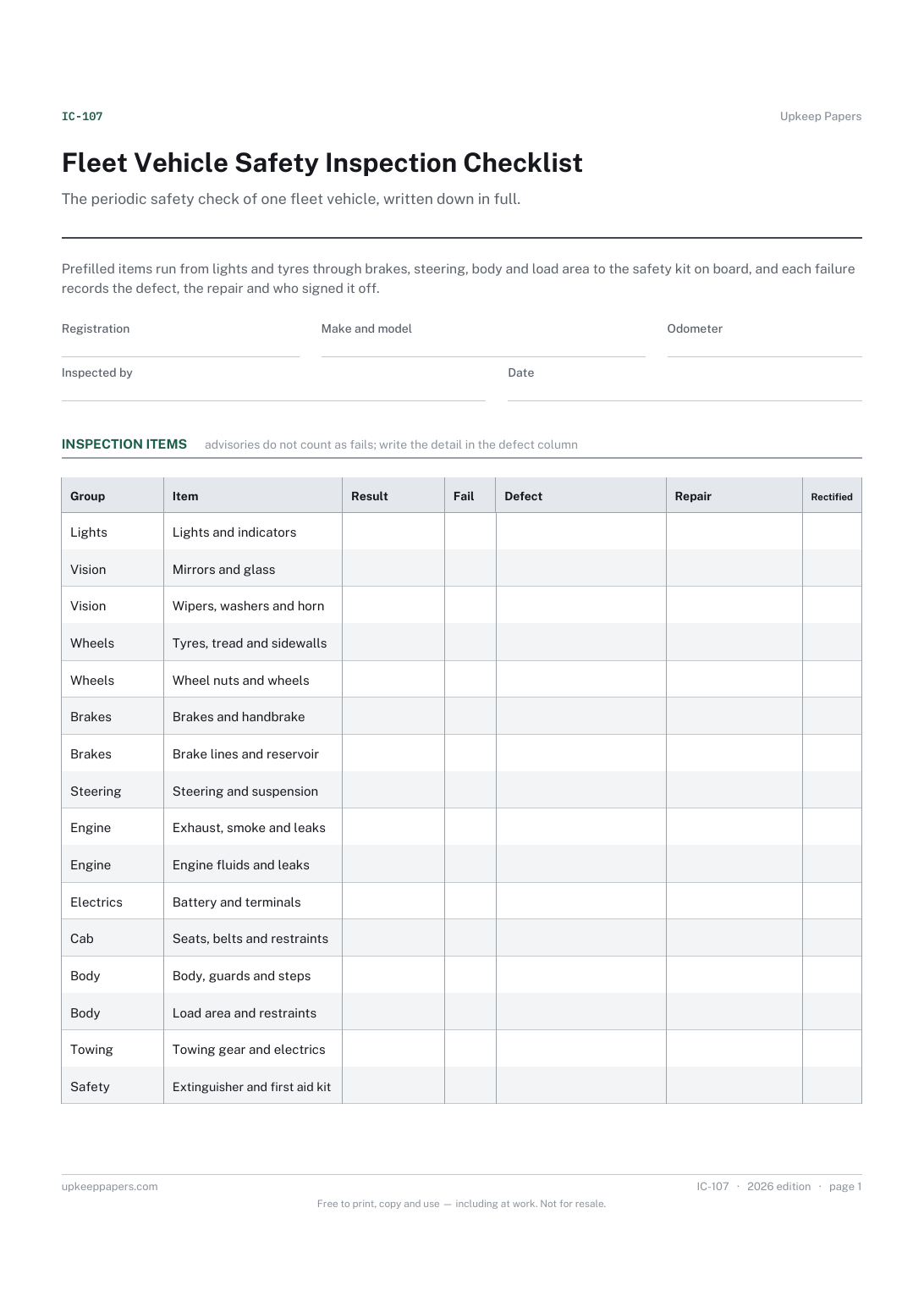
Every item checked on this vehicle, on a dated sheet with the odometer reading.
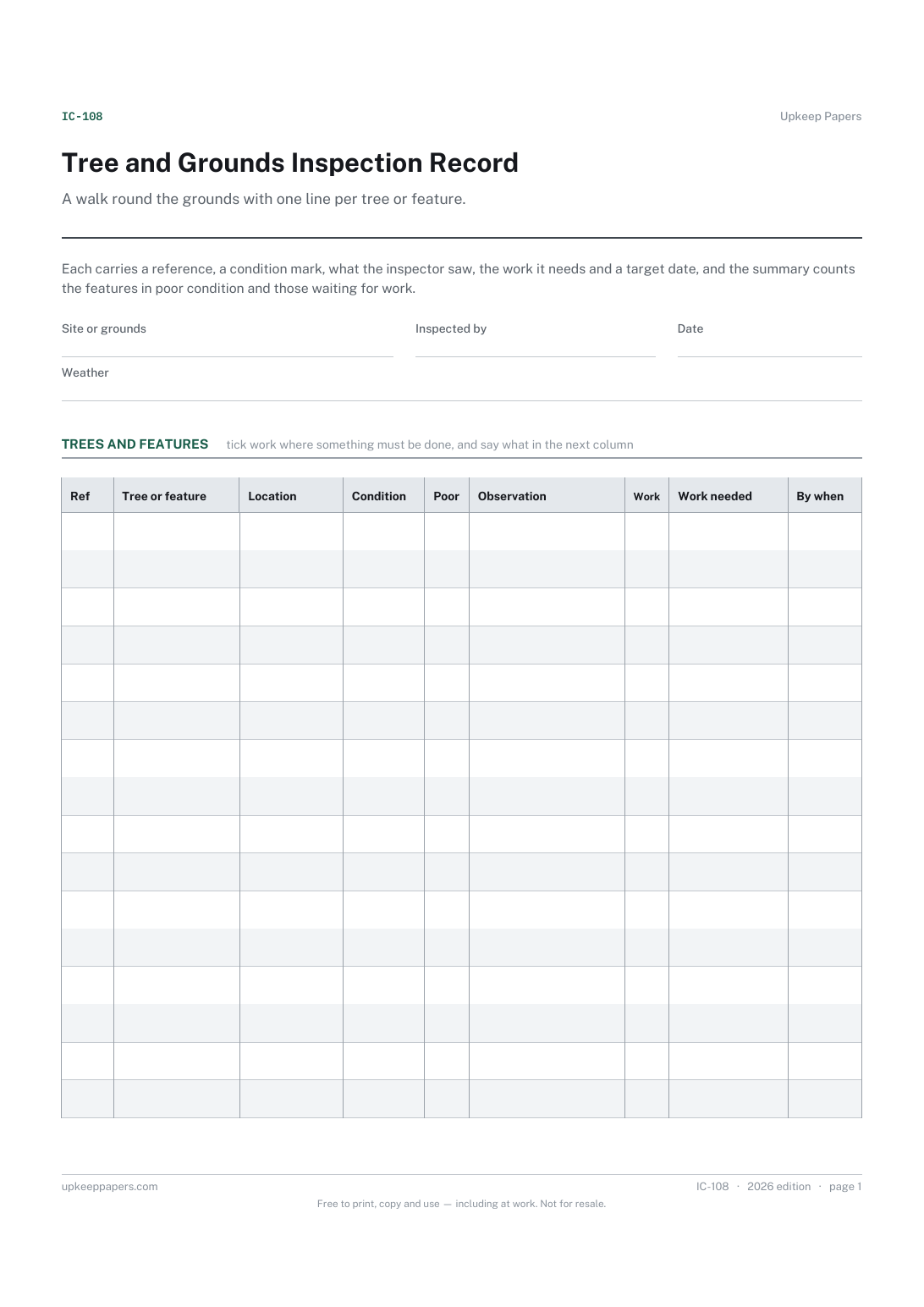
Every tree, hedge, path, wall or bench on the round, each with its own reference.
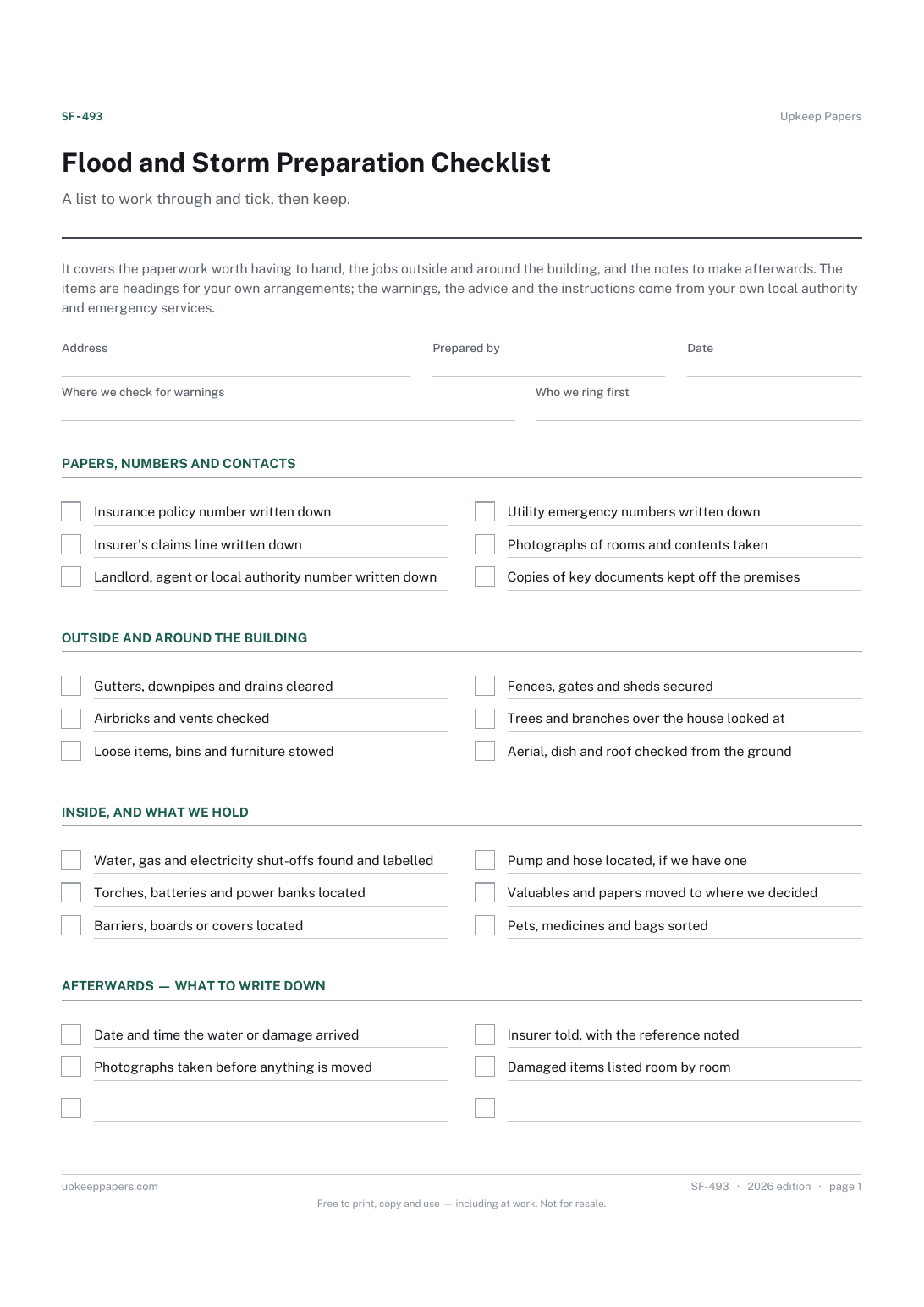
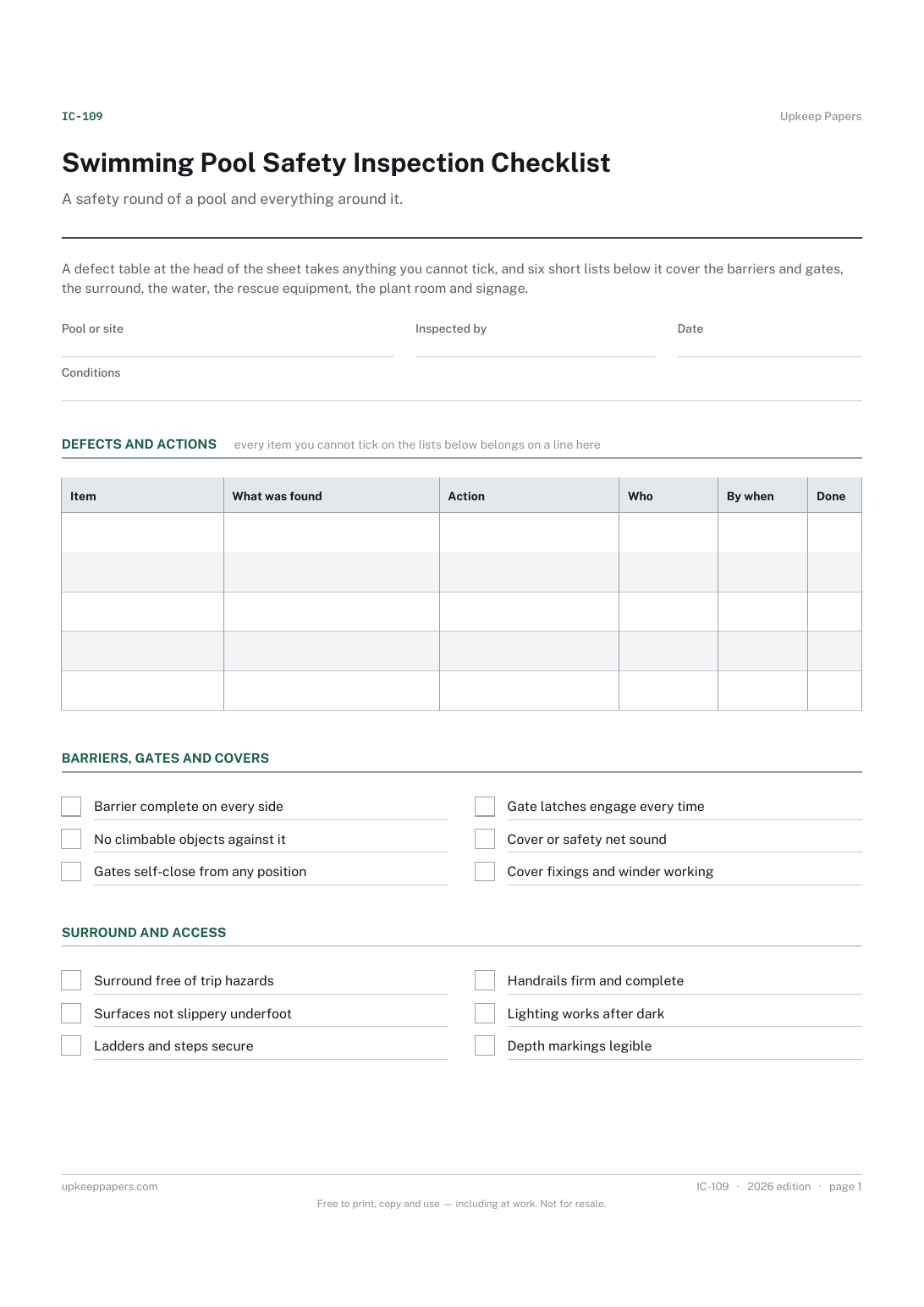
Whether the barriers, gates and covers are doing what they are there for.
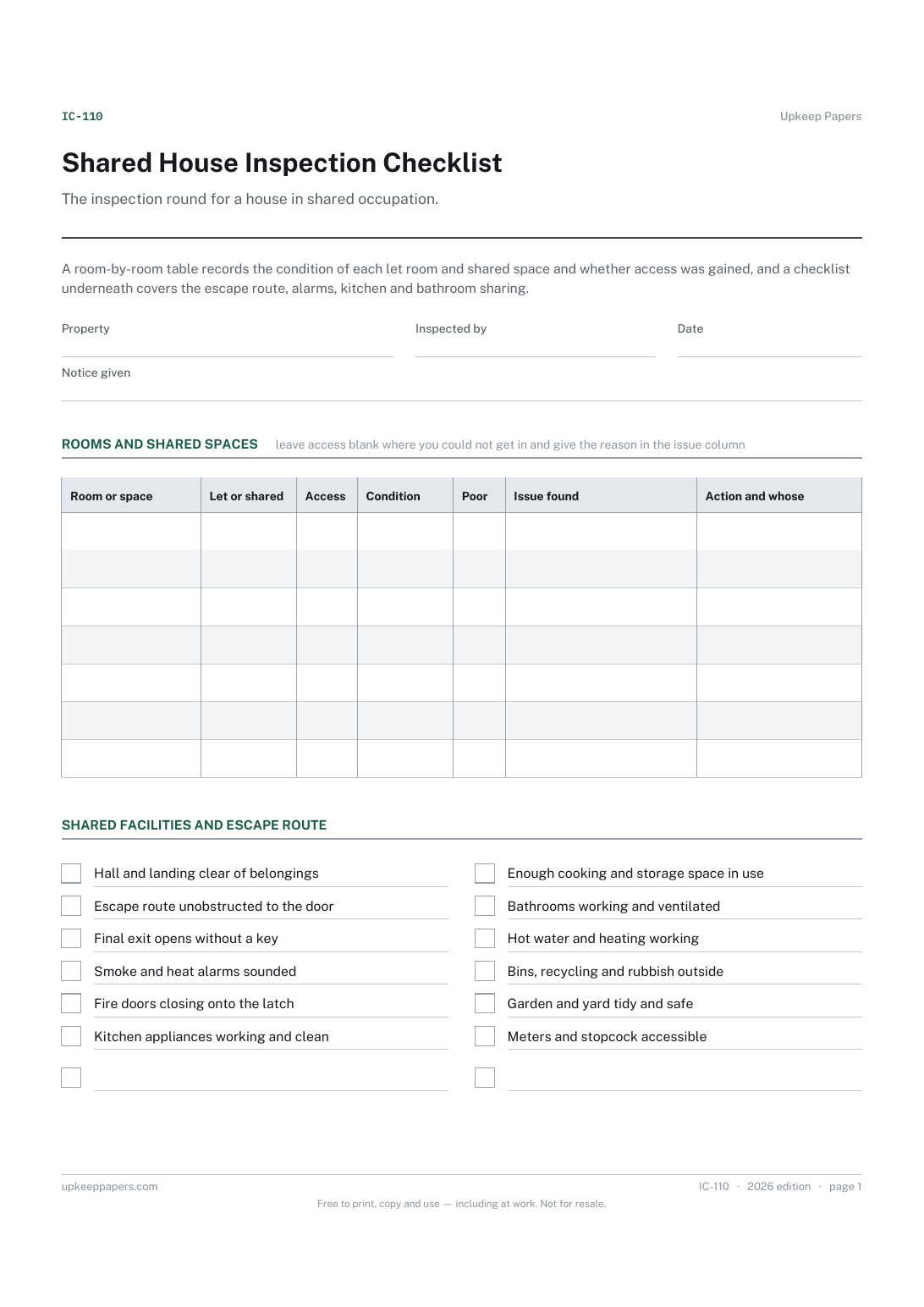
Which rooms were entered, which were not, and why access was not gained.
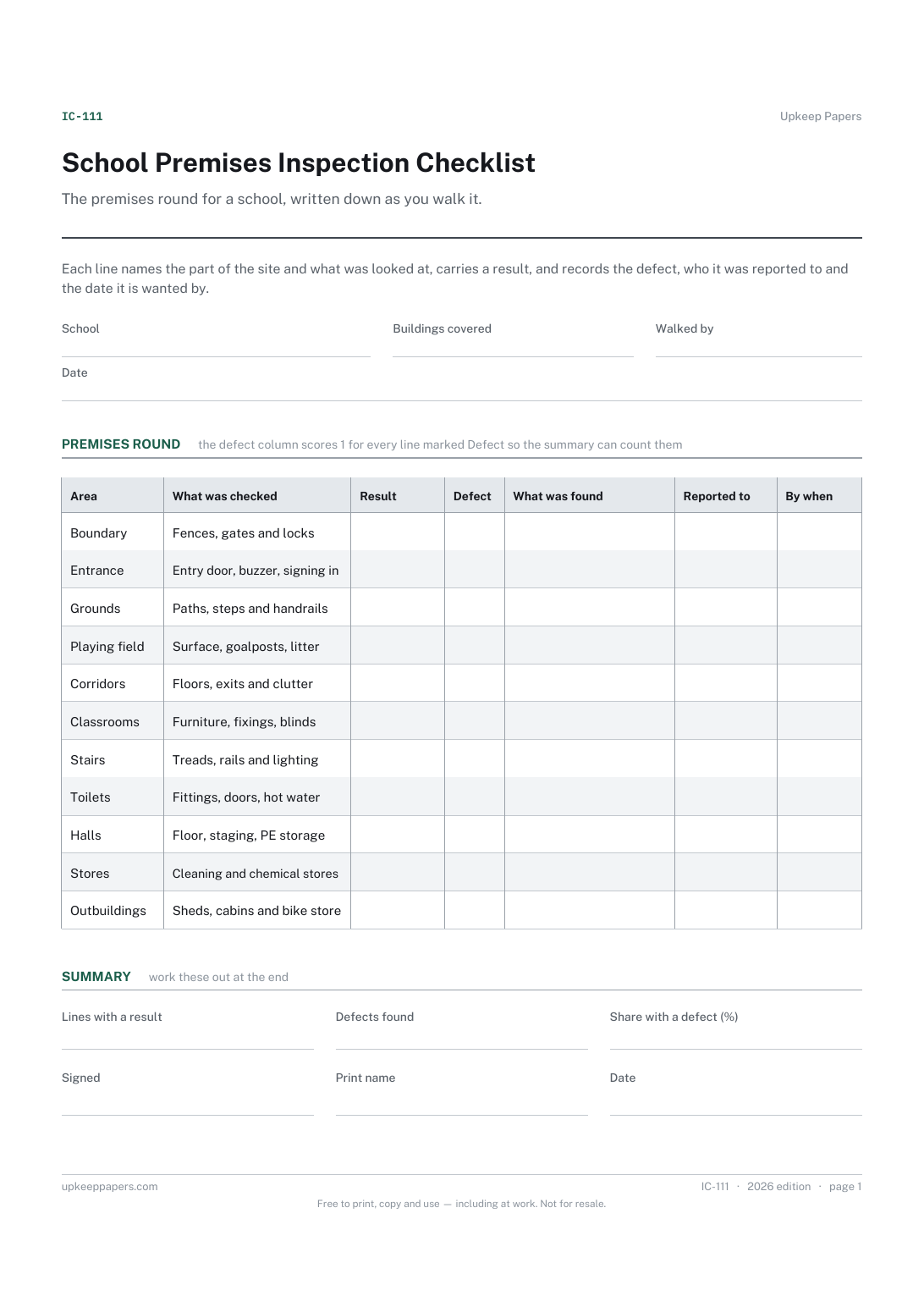
Which parts of the site were walked on this round and which were not reached.
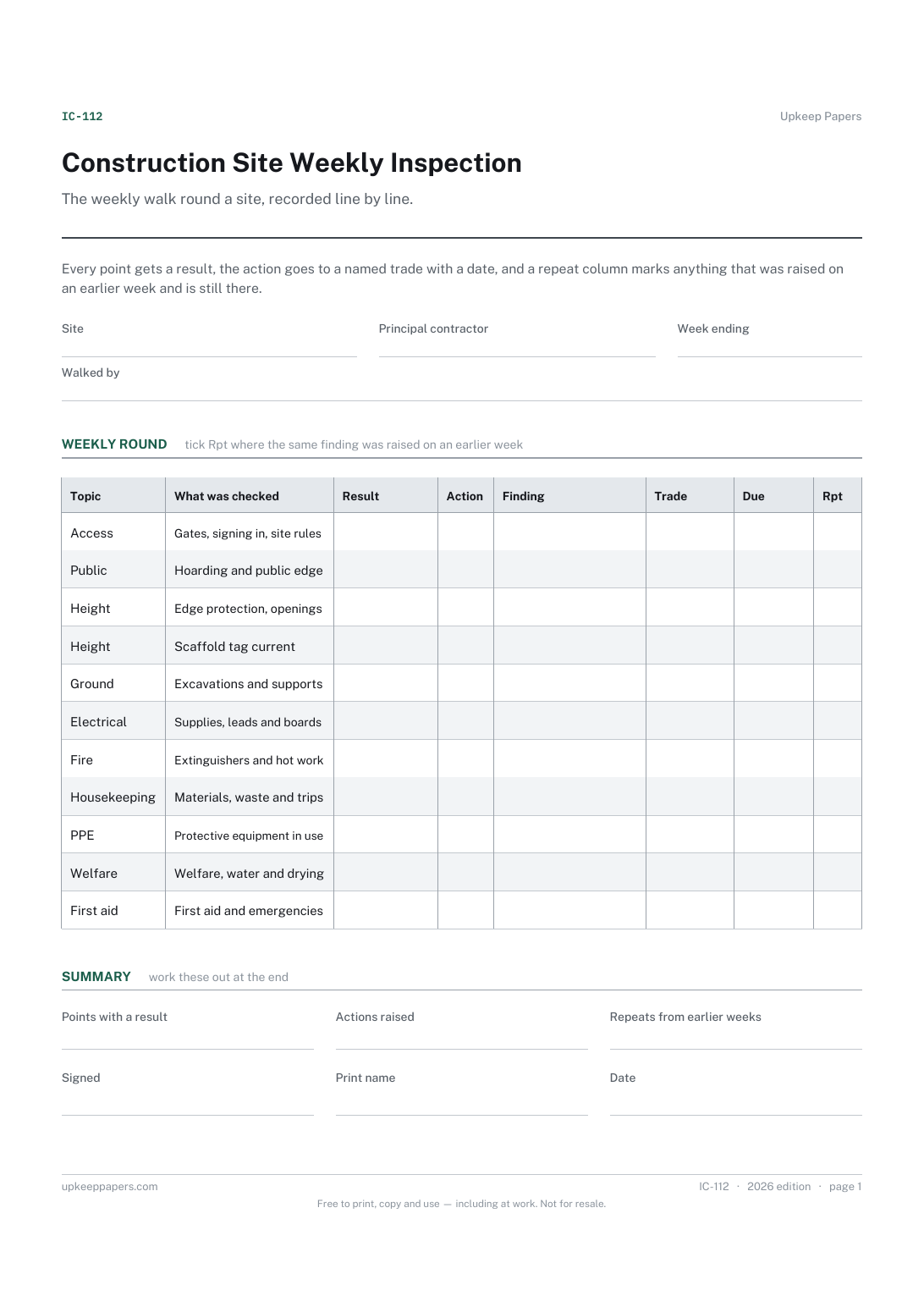
What the weekly walk covered and what it found, week by week.
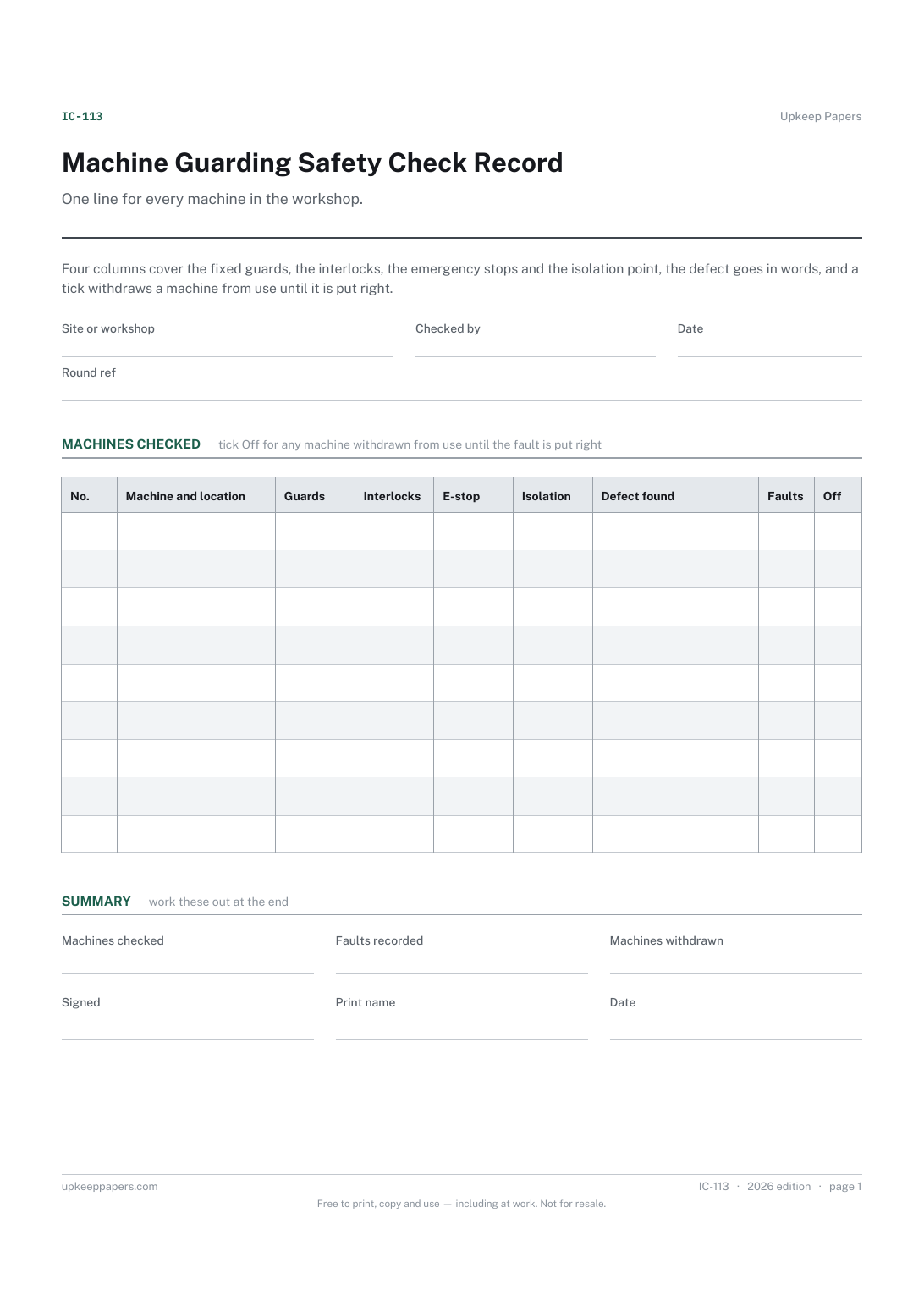
Which machines exist, where they are and which have been checked this round.
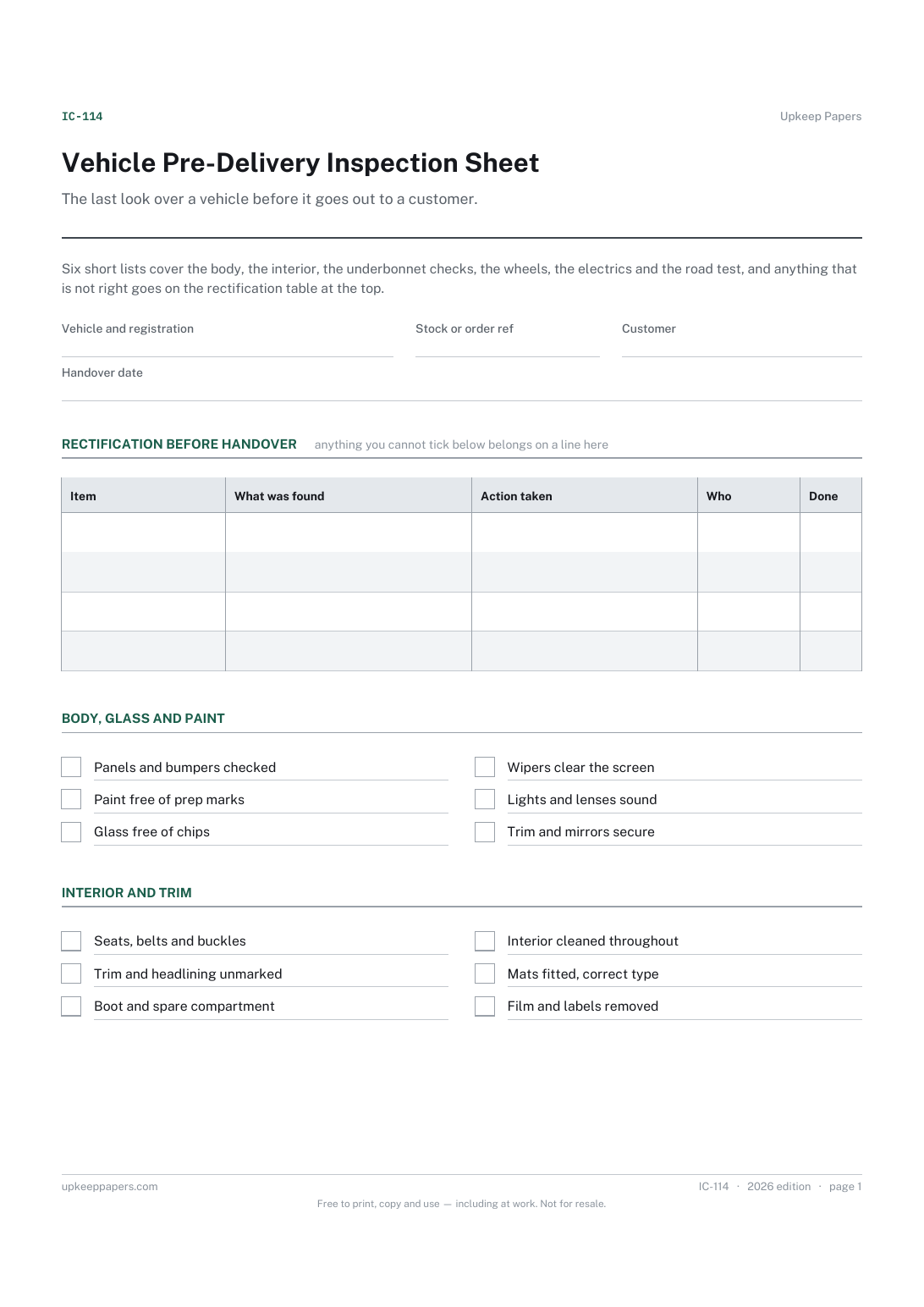
Exactly what was checked before the vehicle left, and by whom.
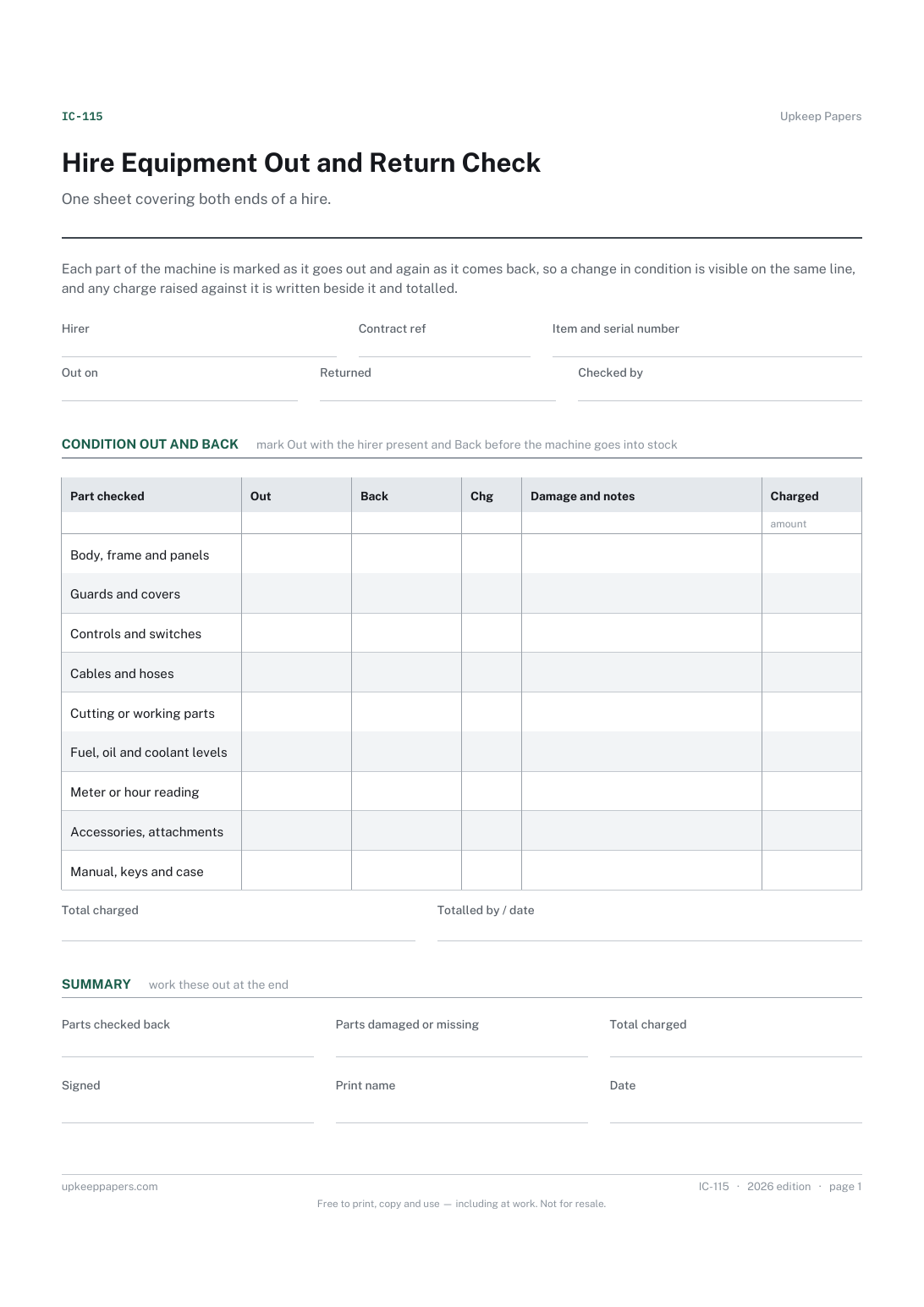
The condition of every part of the machine when it left the yard.
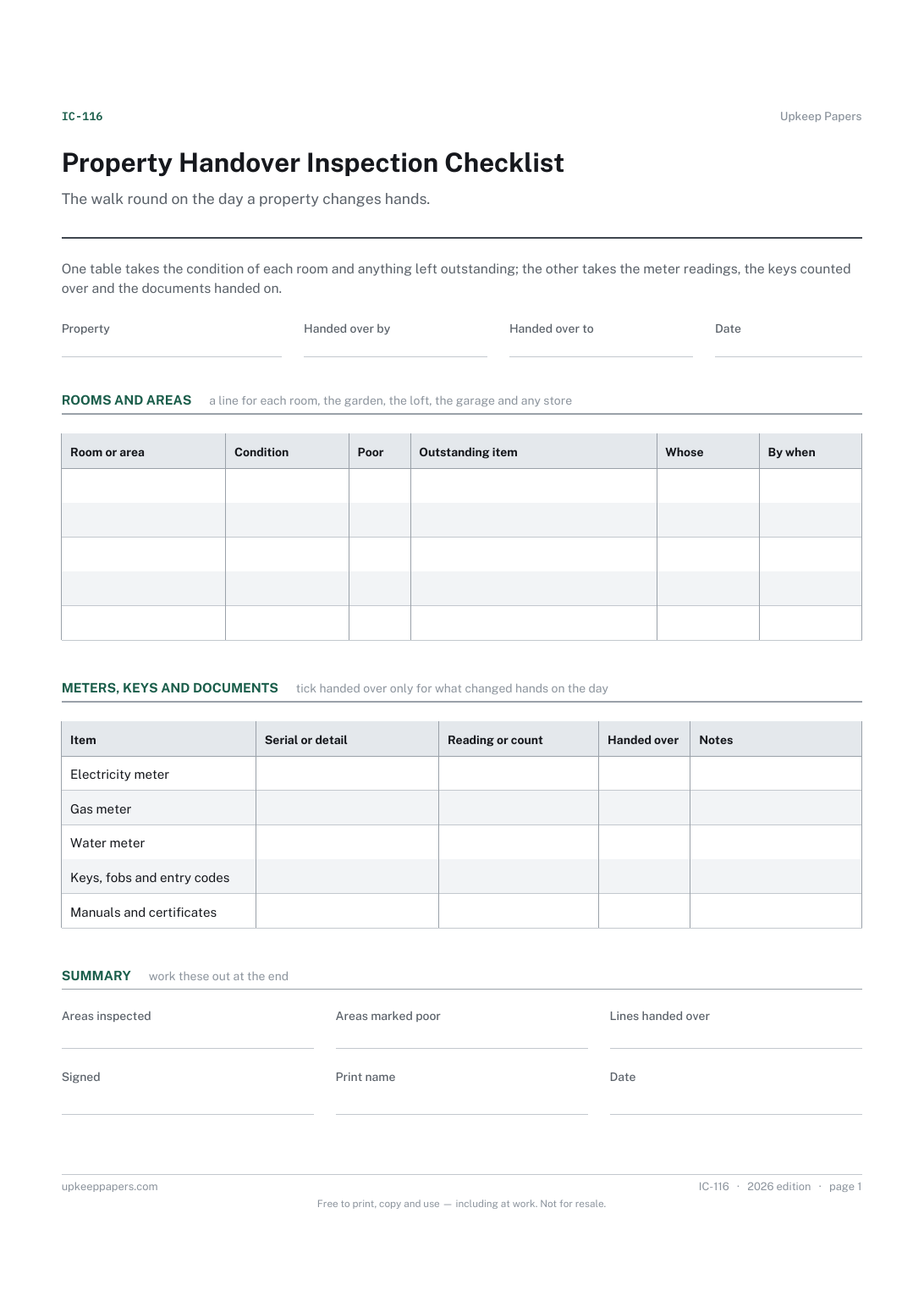
The condition of each room on the day, agreed by both sides.
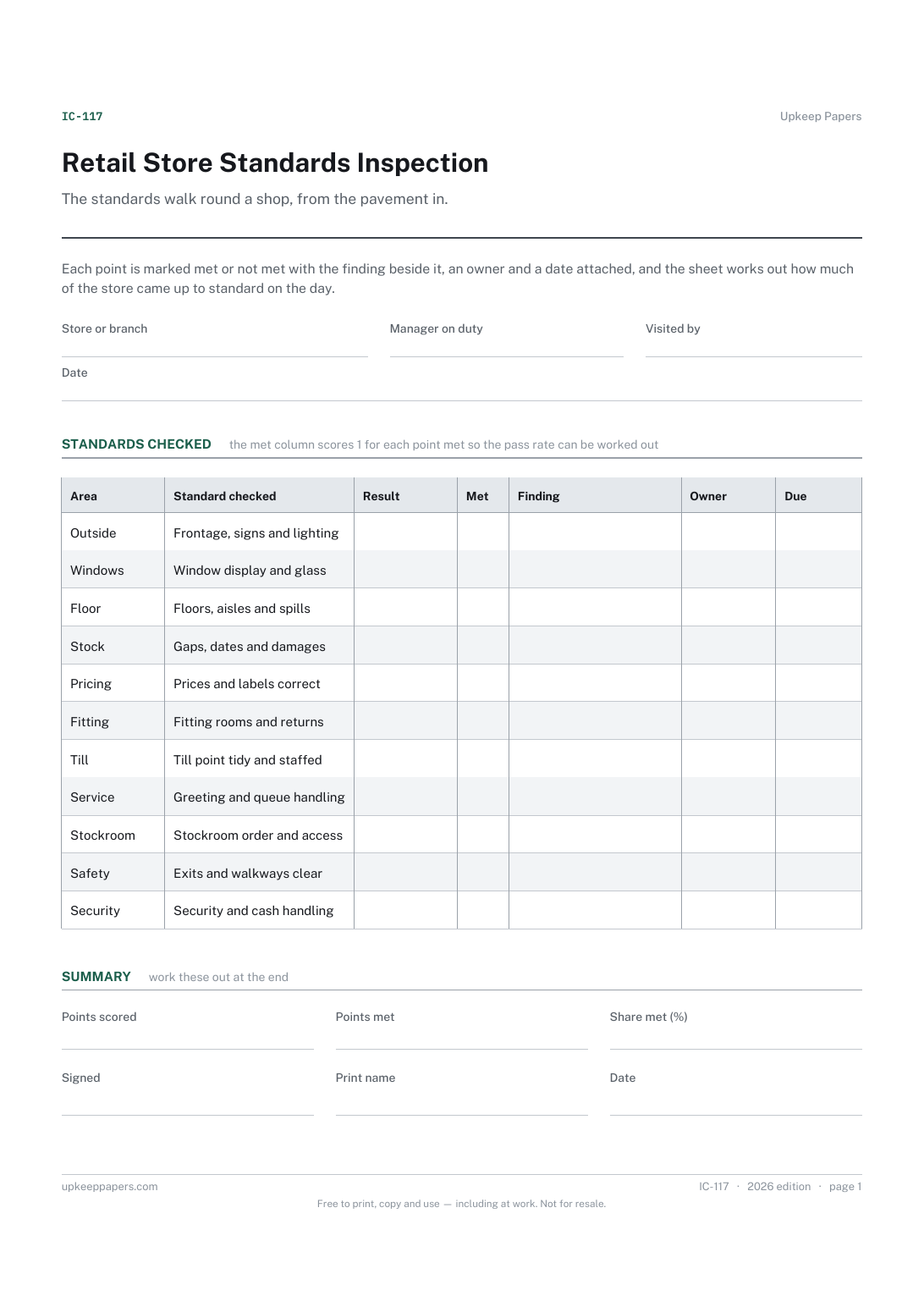
Whether the shop met your own standards, point by point, on the day it was visited.
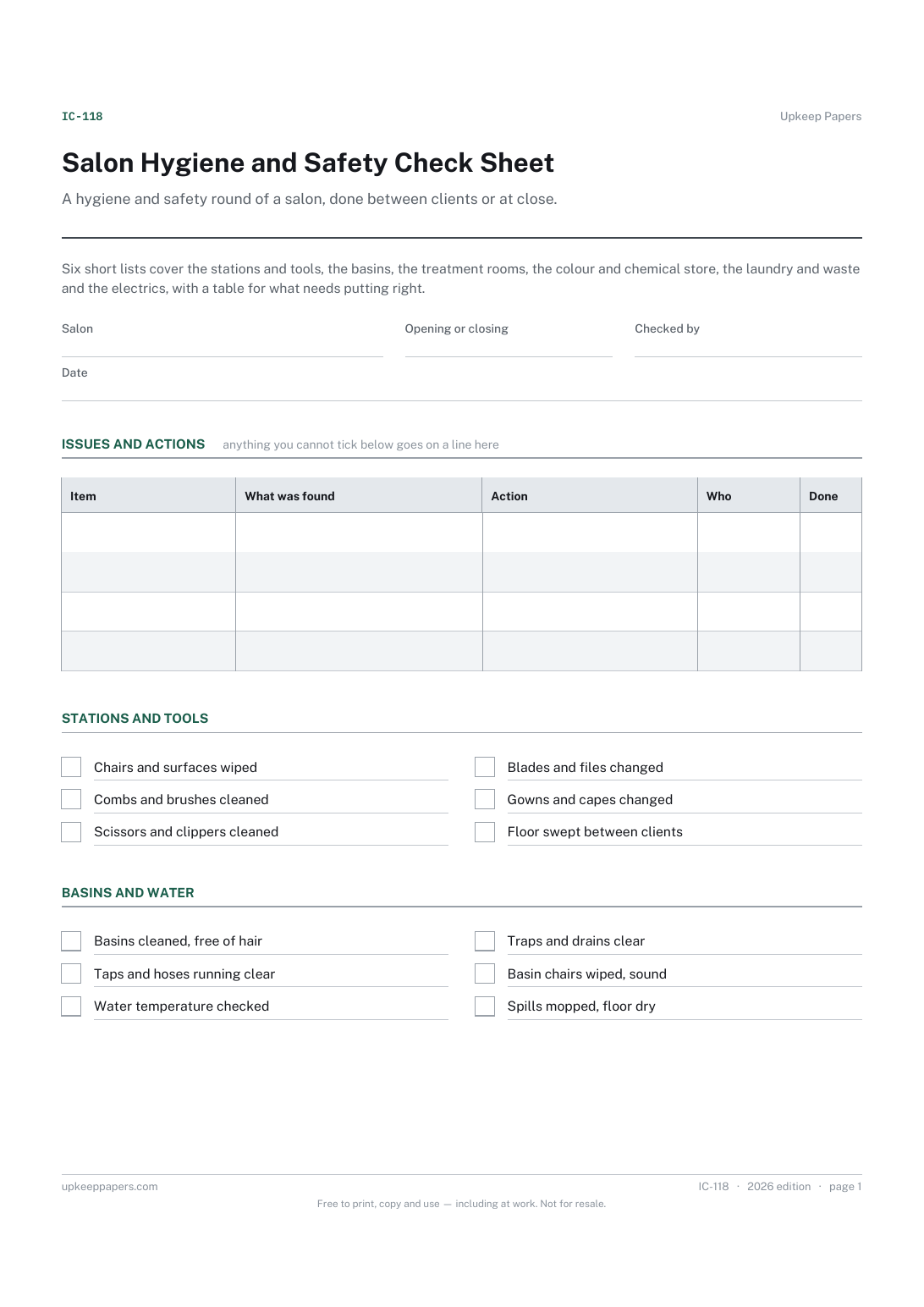
That tools and surfaces were dealt with between clients, not just at the end of the day.
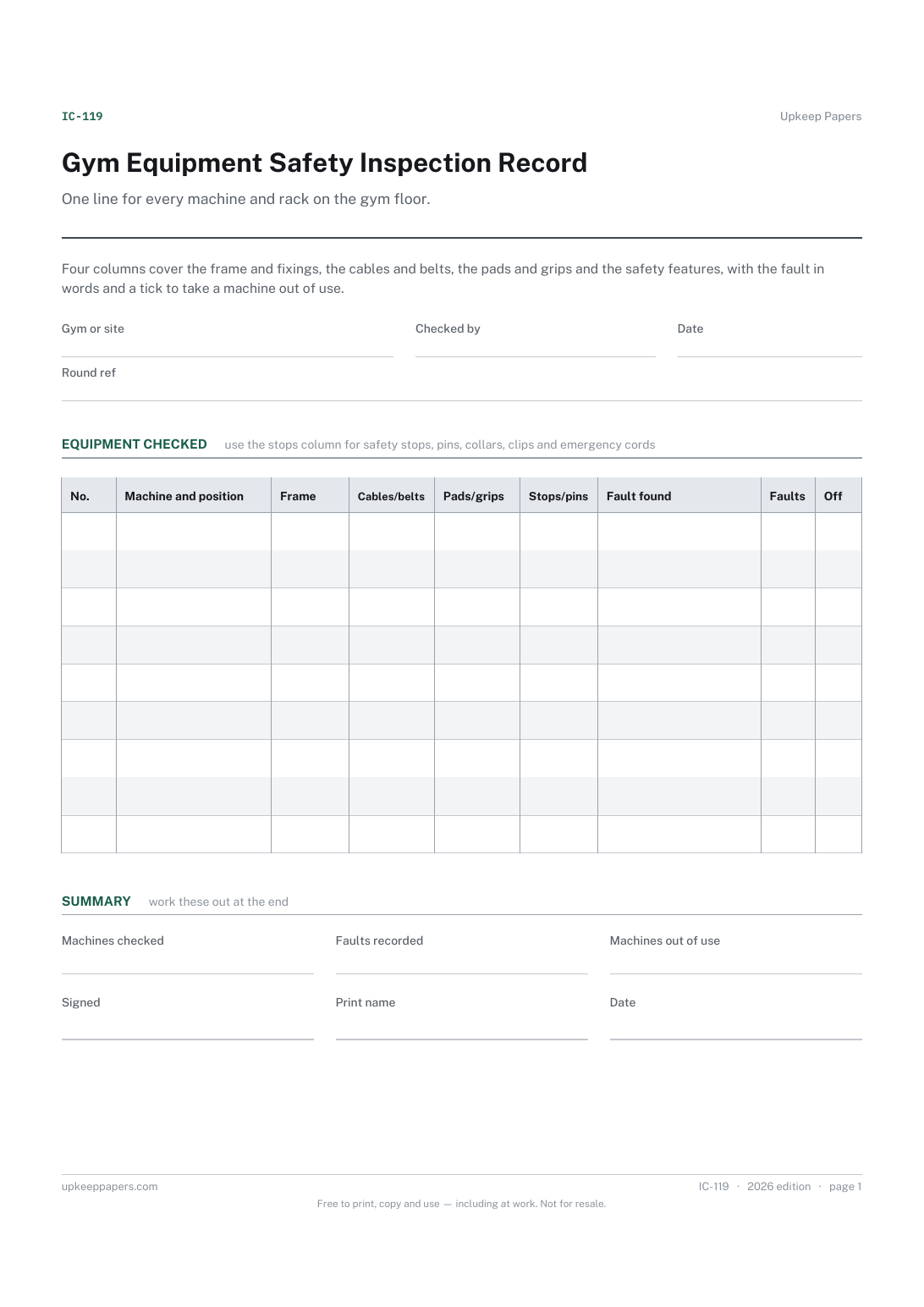
Which machines are on the floor and which were checked this round.
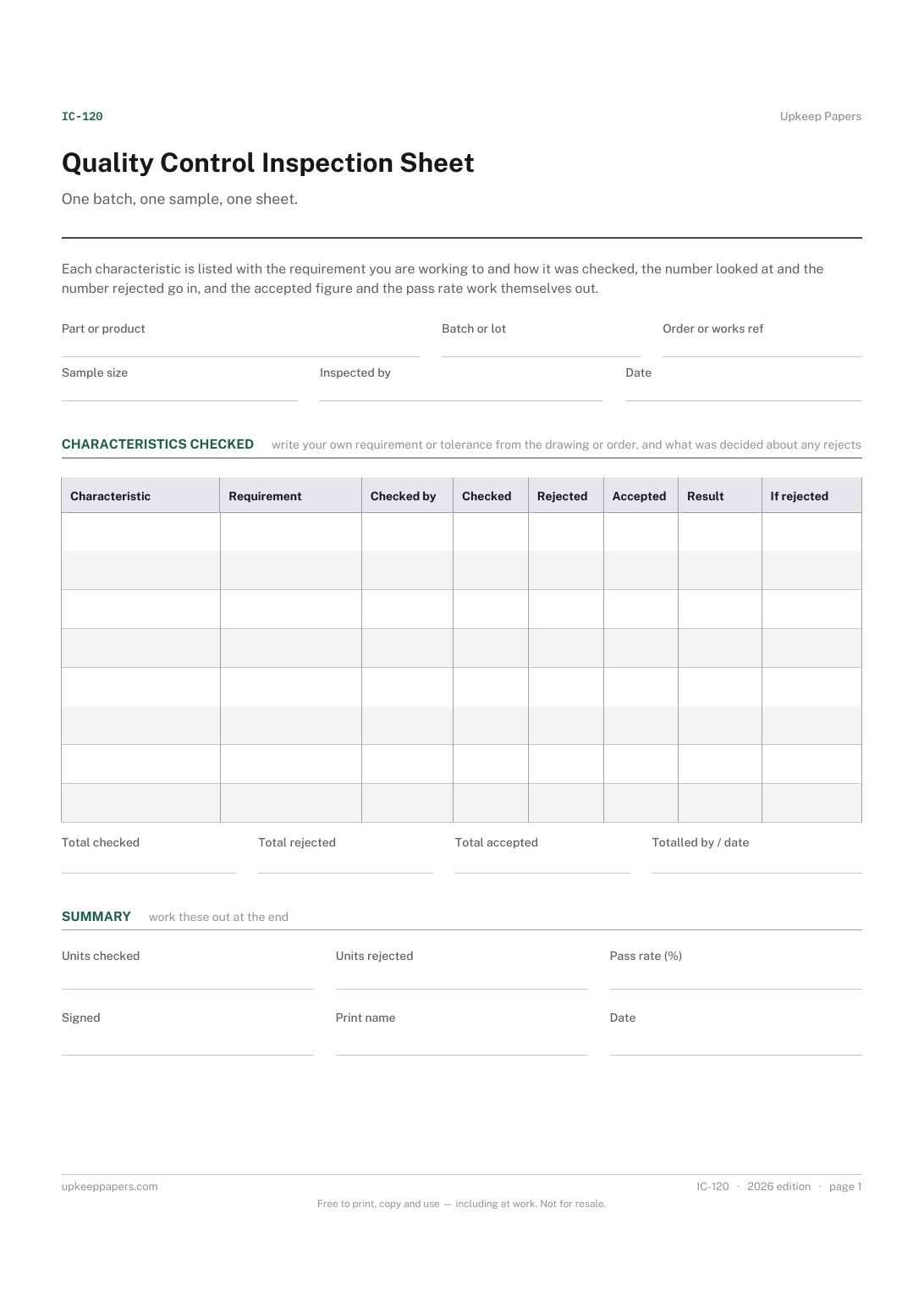
Which batch or lot was inspected, against which drawing or specification.
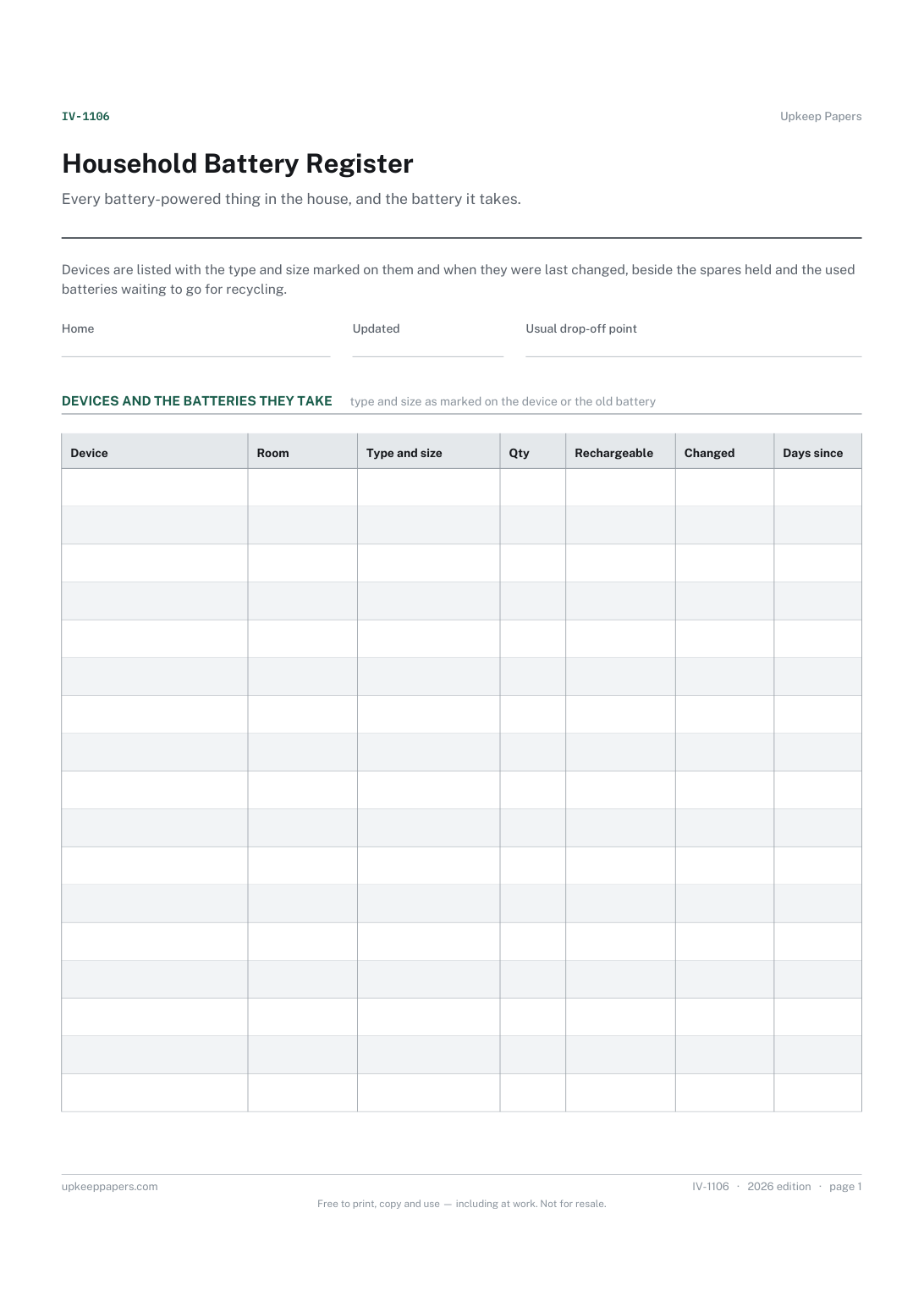
Each device, where it is and the battery type and size it takes.
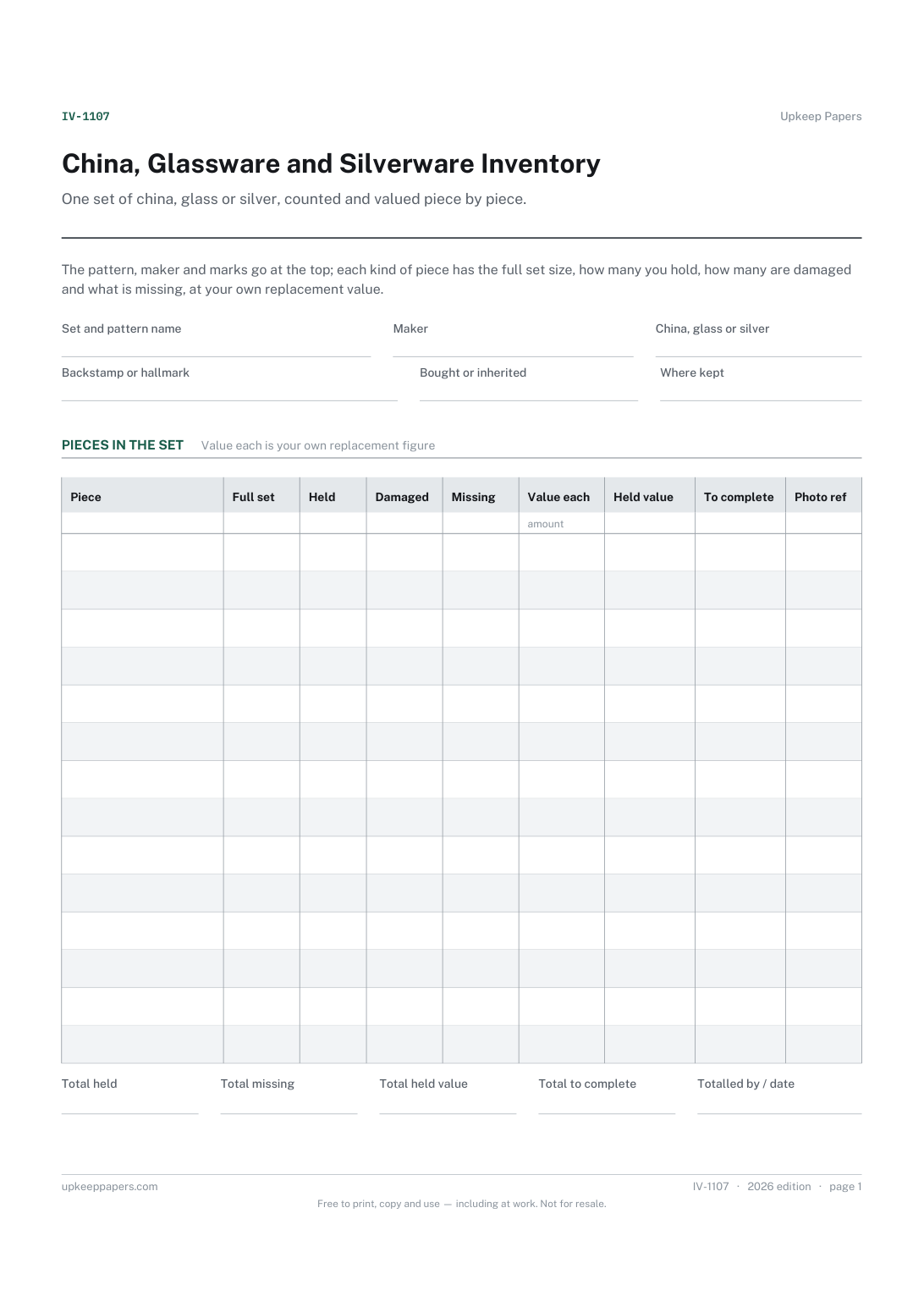
The pattern name, maker and backstamp or hallmark for each set.
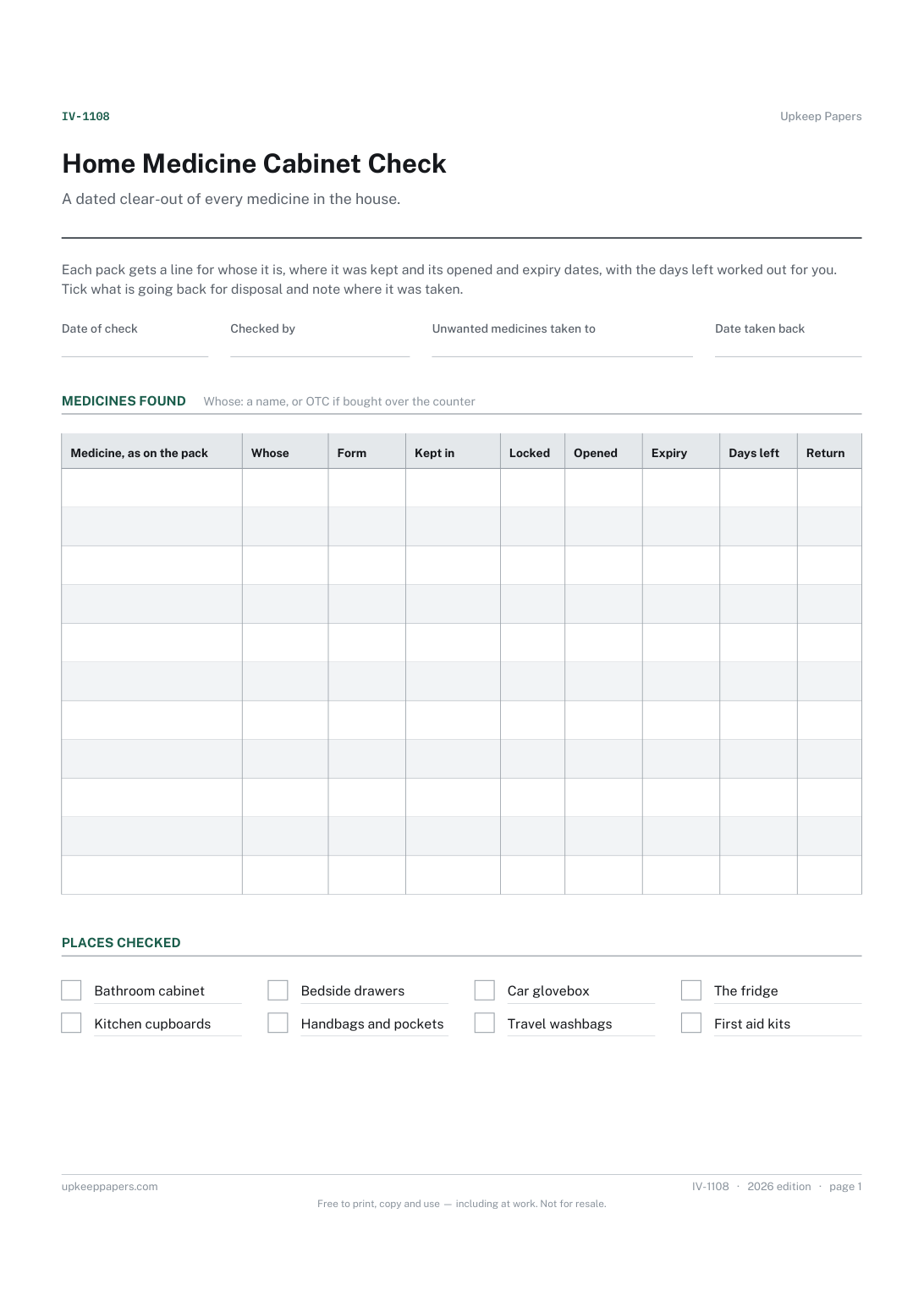
Every medicine in the house, wherever it has ended up.
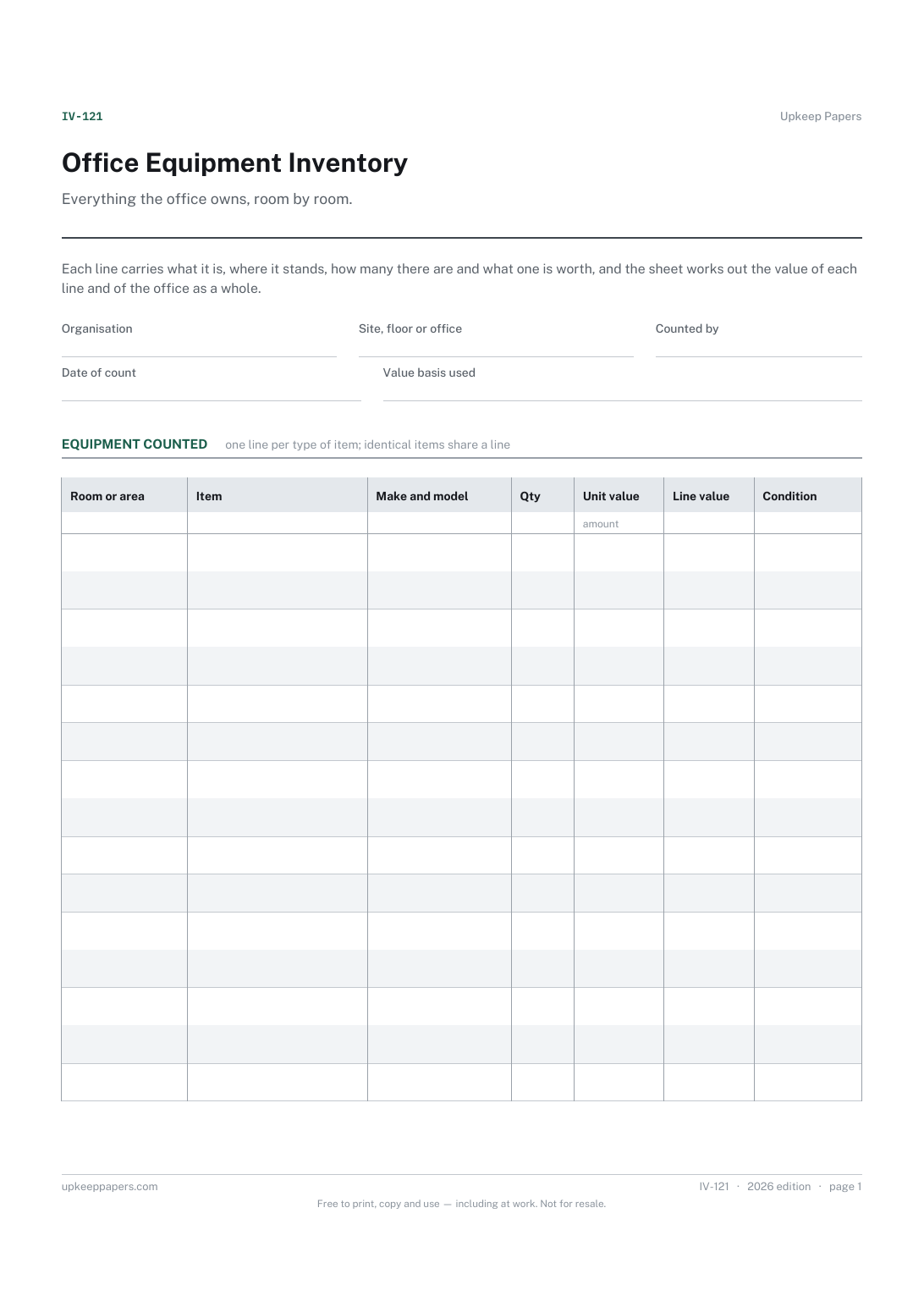
What furniture and equipment the office holds, and which room each item is in.
Which machines exist, what they are and where their serial numbers are written down.
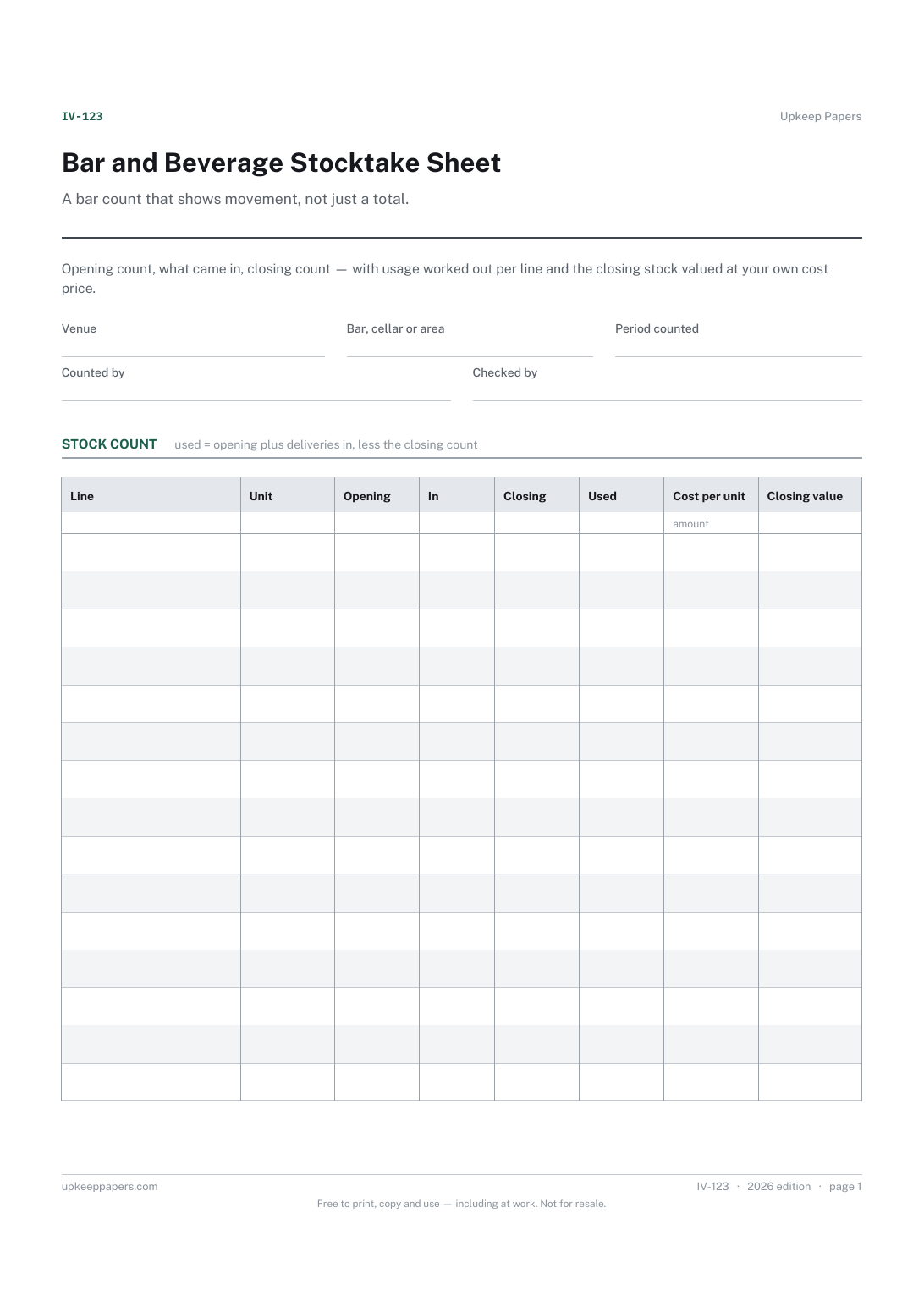
What was on the shelf at the start of the period and what is there at the end.
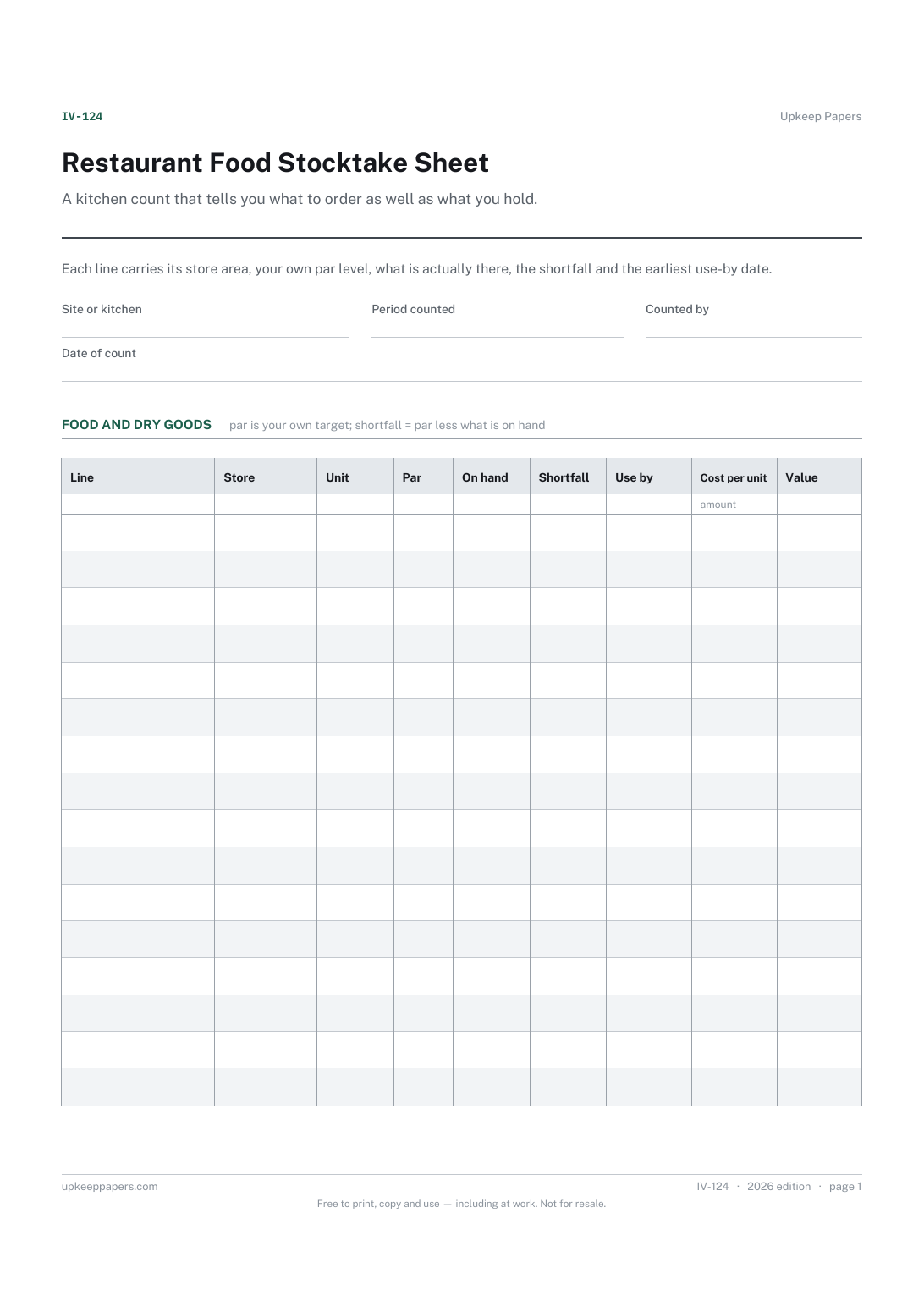
What is held in the dry store, the fridges, the walk-in and the freezer.
What consumables are held, in which cupboard or room.
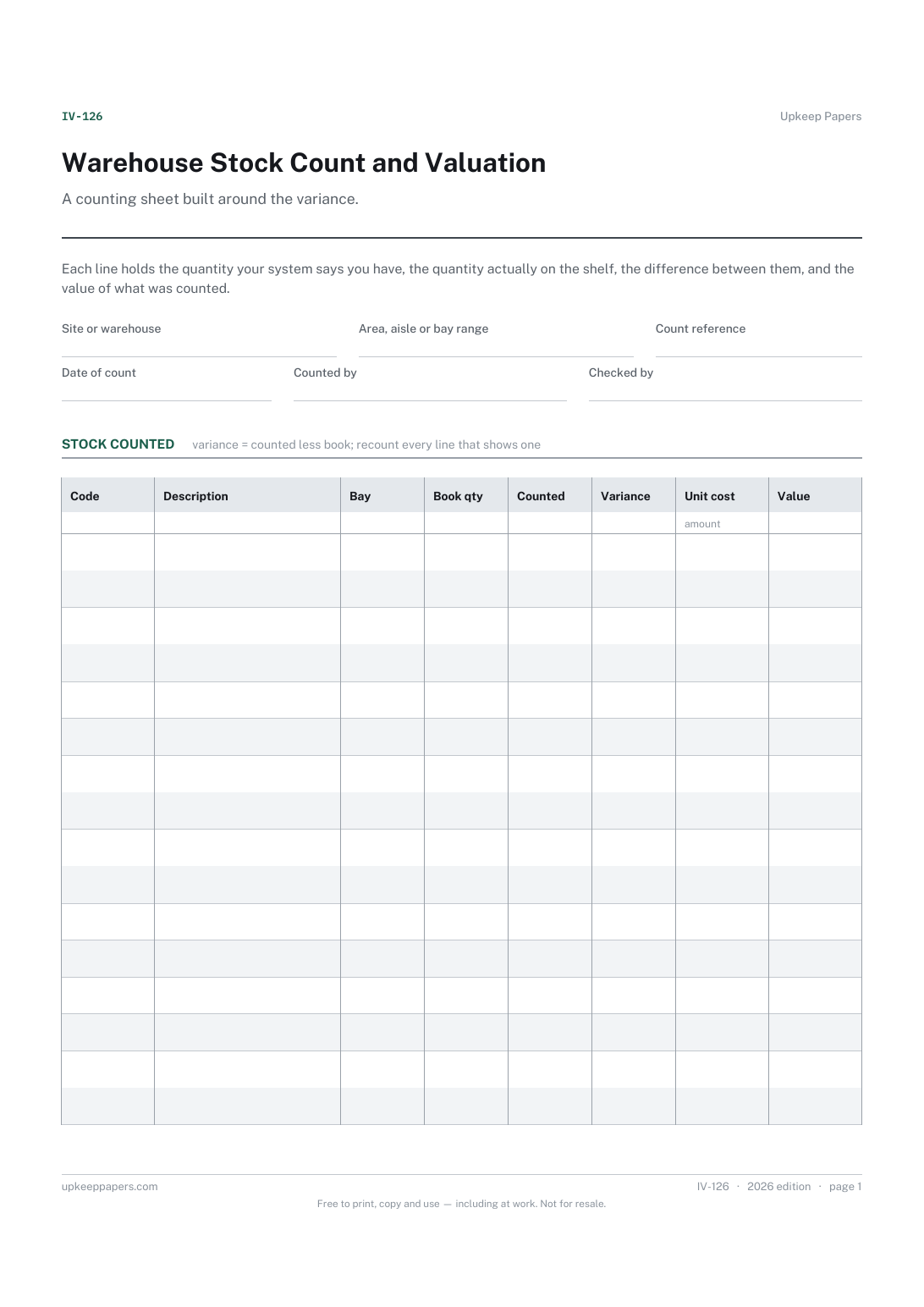
What is in each bay or location, by stock code and description.
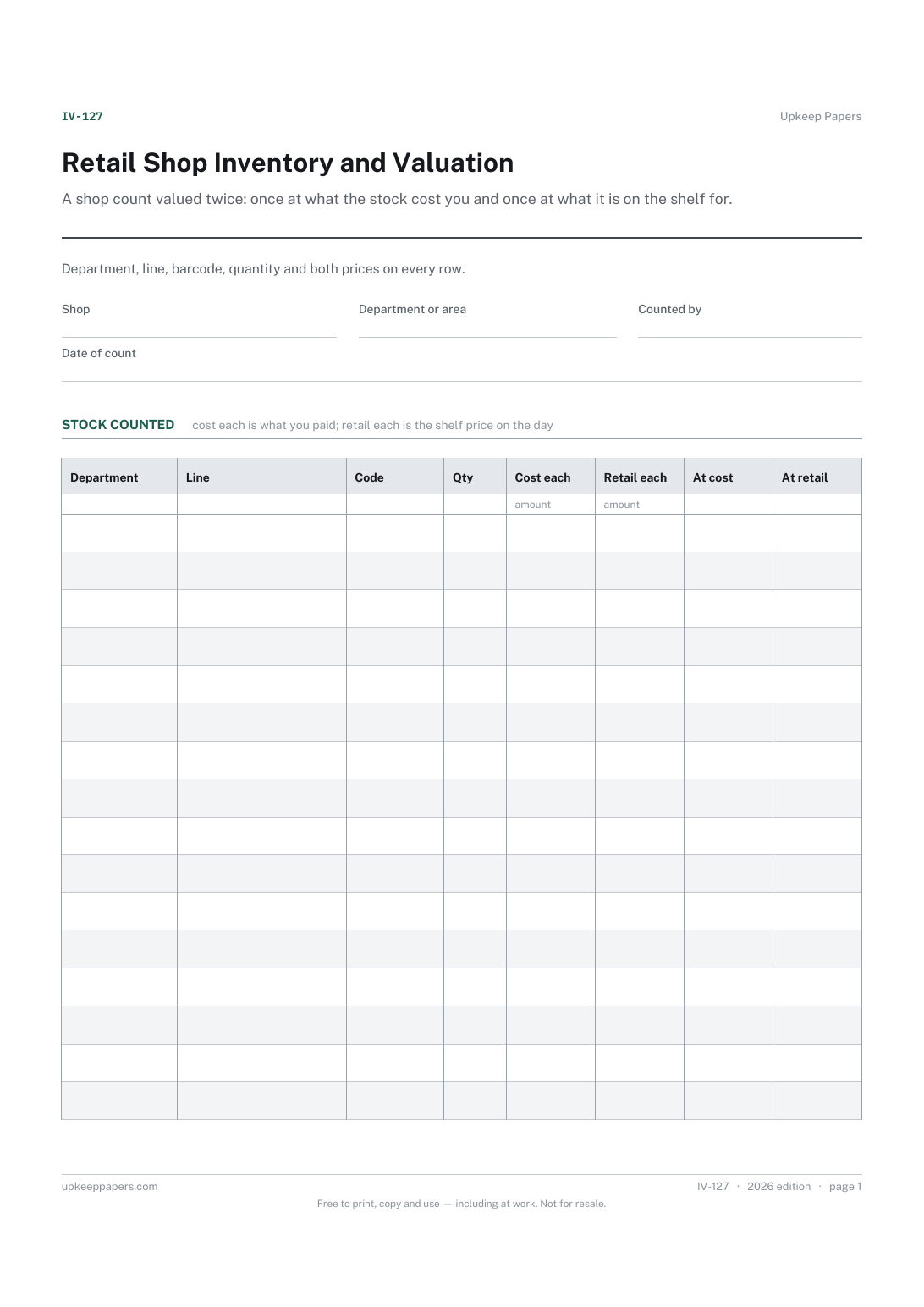
What is on the shop floor and in the stockroom, grouped by department.
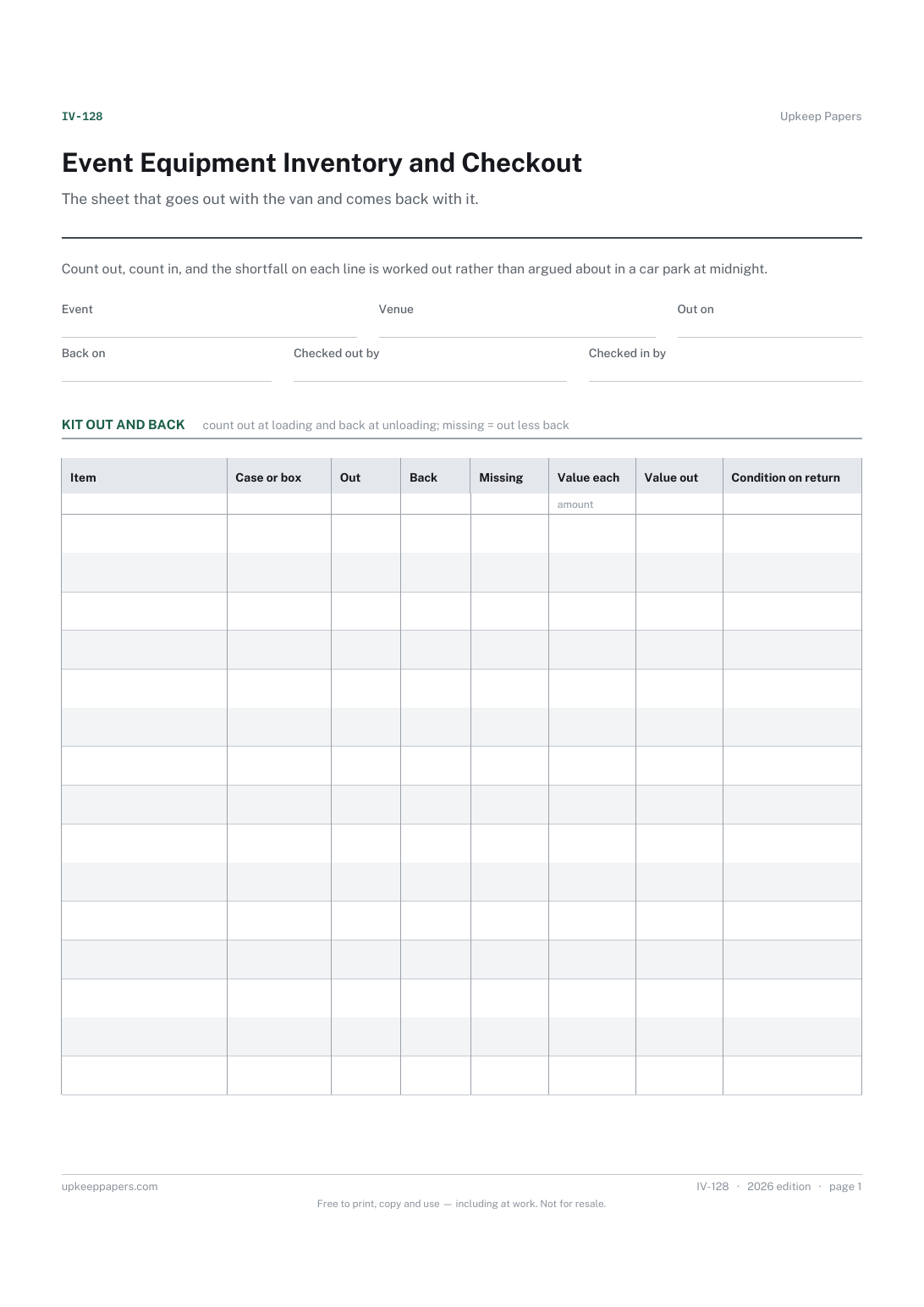
What was loaded for the event, and which case or box each item travelled in.
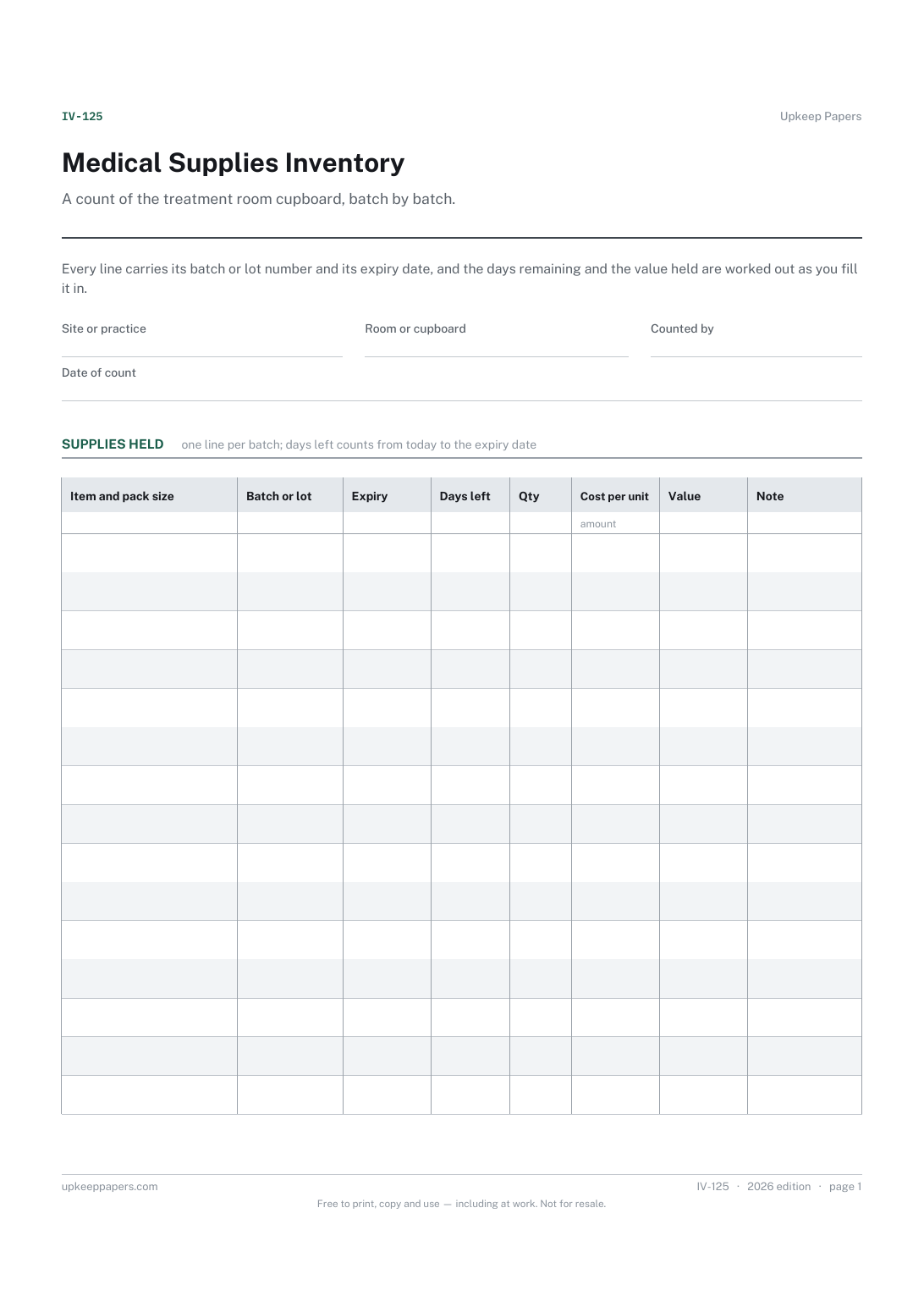
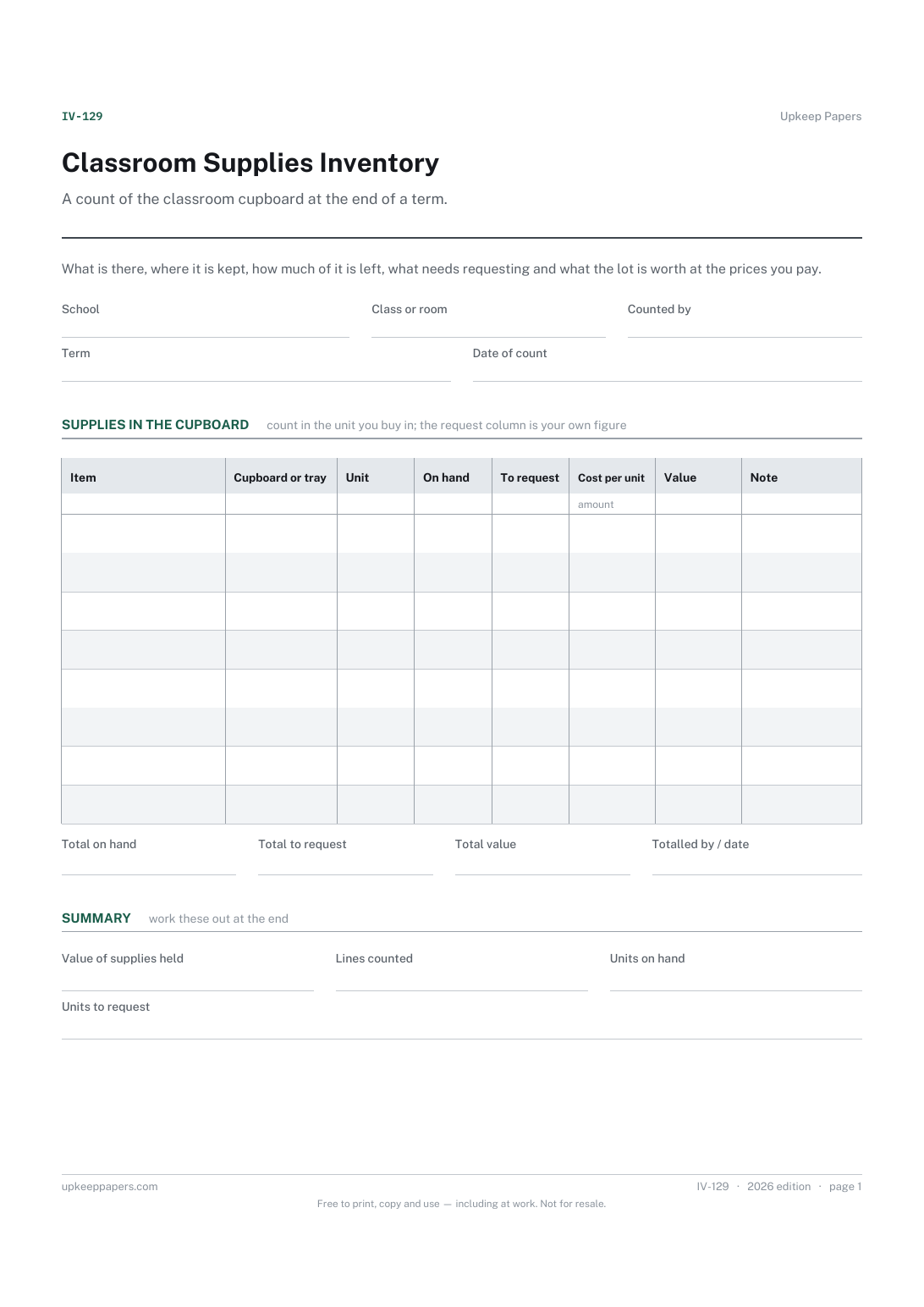
What is held in each cupboard, tray or store, and in what pack size.
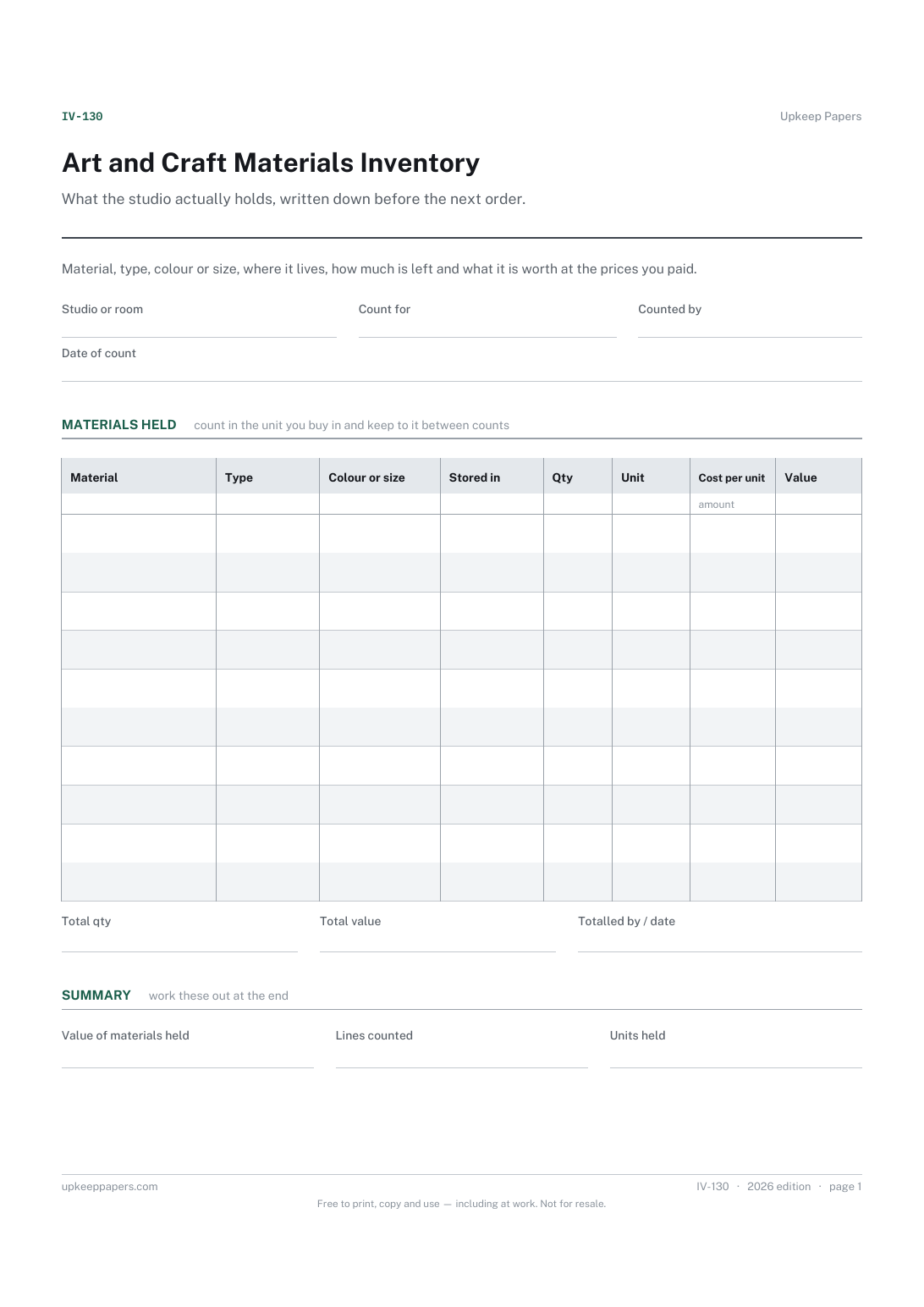
What materials are held, by type, colour or size and where they are stored.
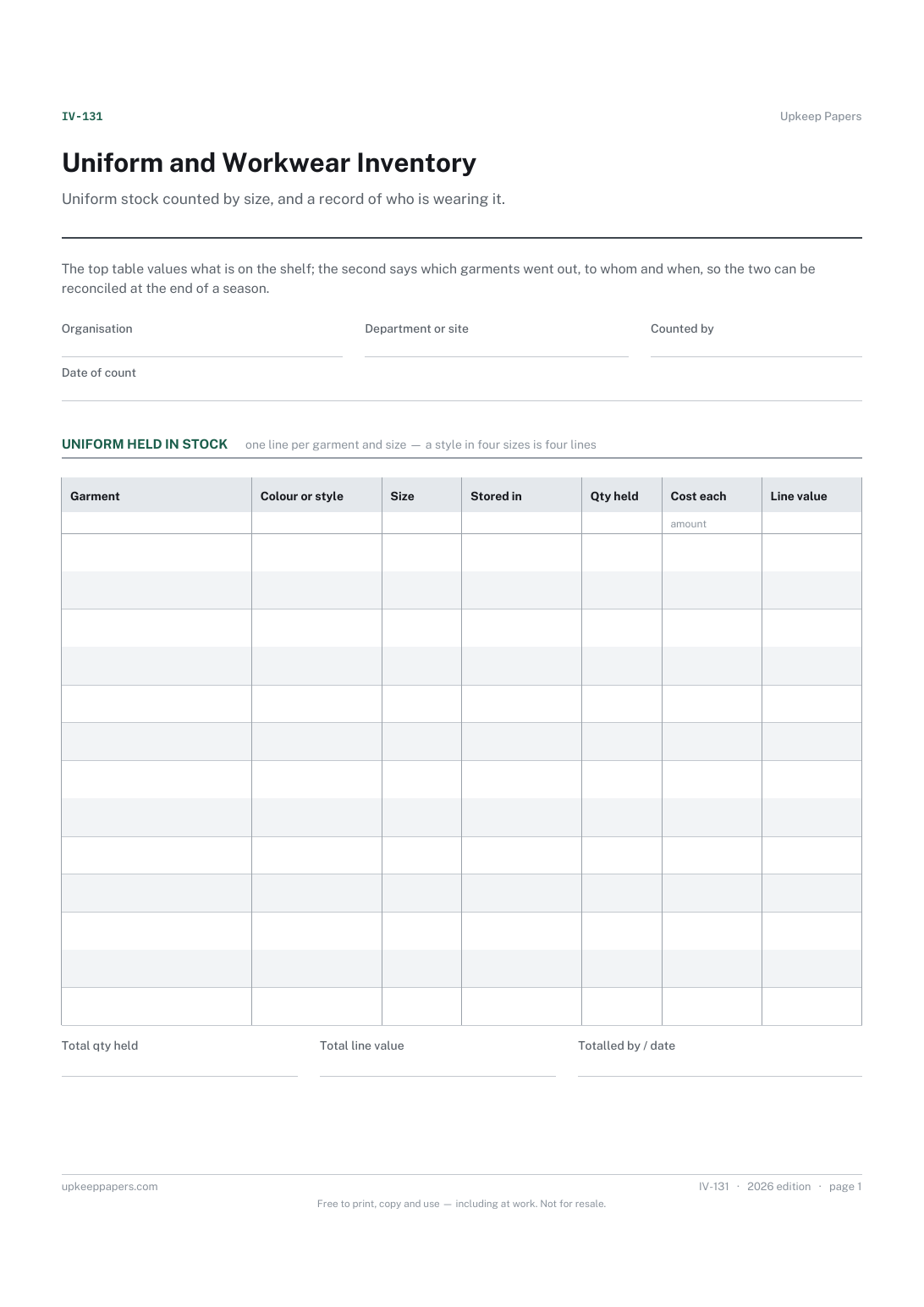
What uniform is held, in which sizes, and where it is stored.
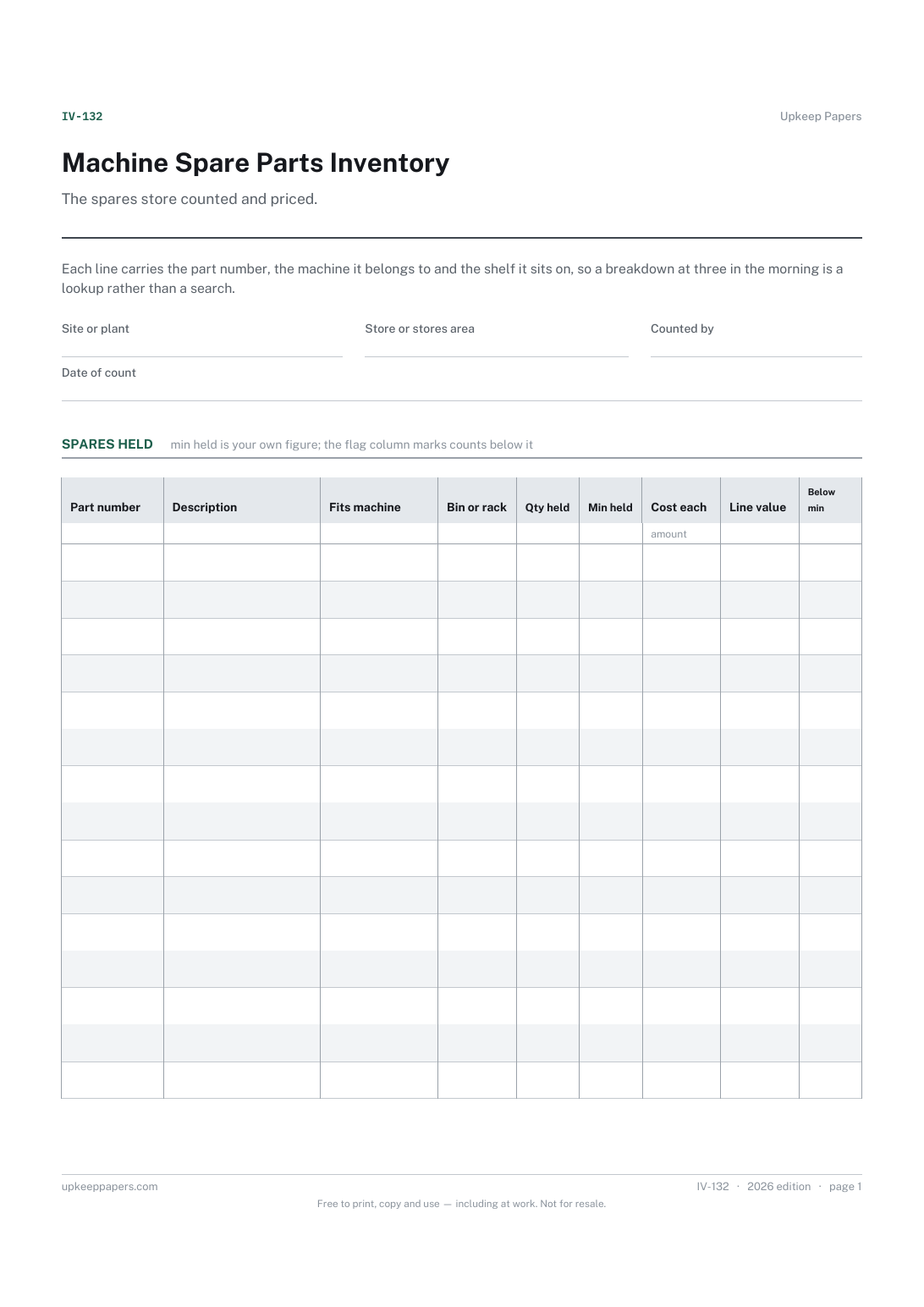
The part number, description and supplier reference for every spare held.
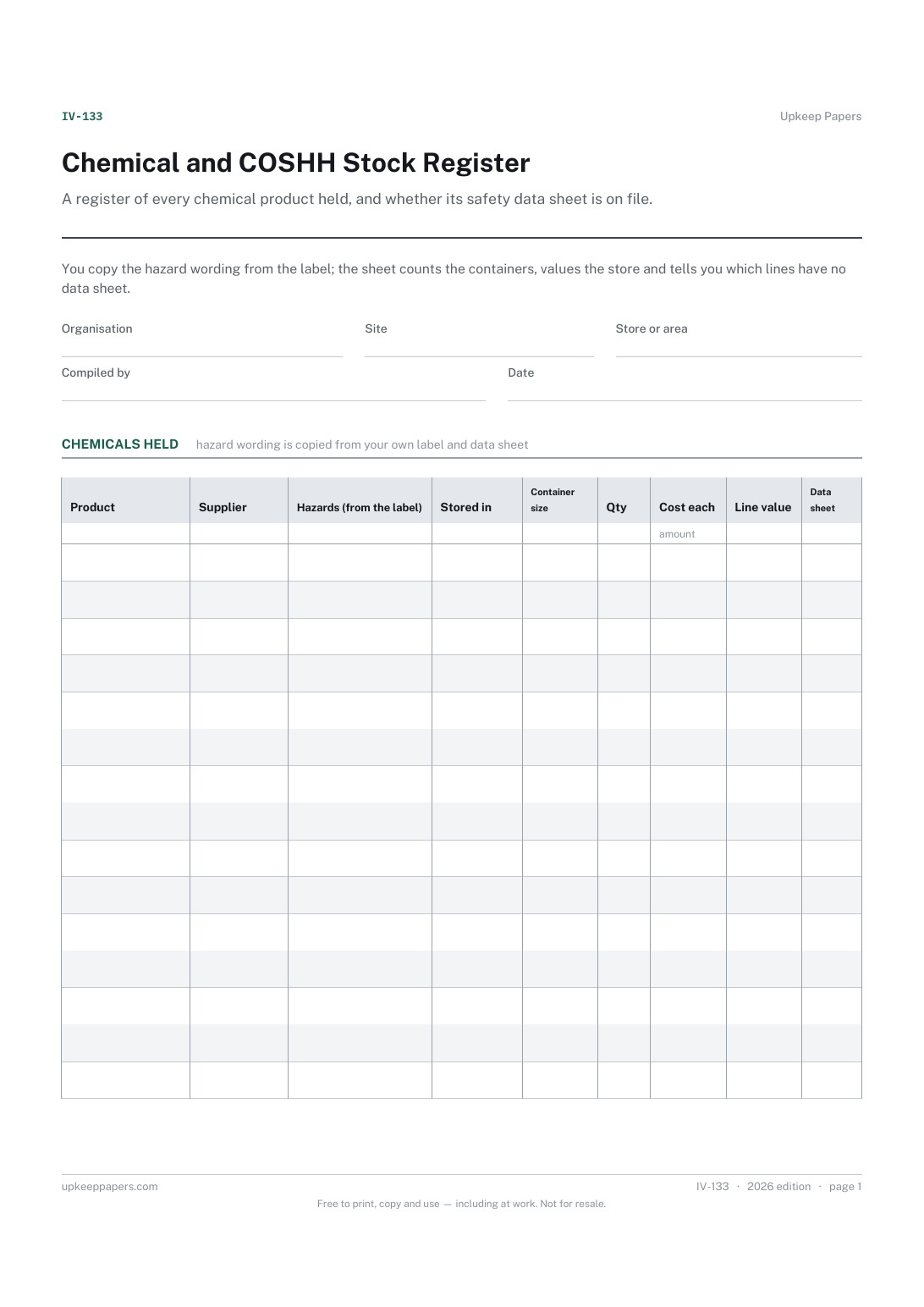
Every chemical product held, with the supplier and the container size.
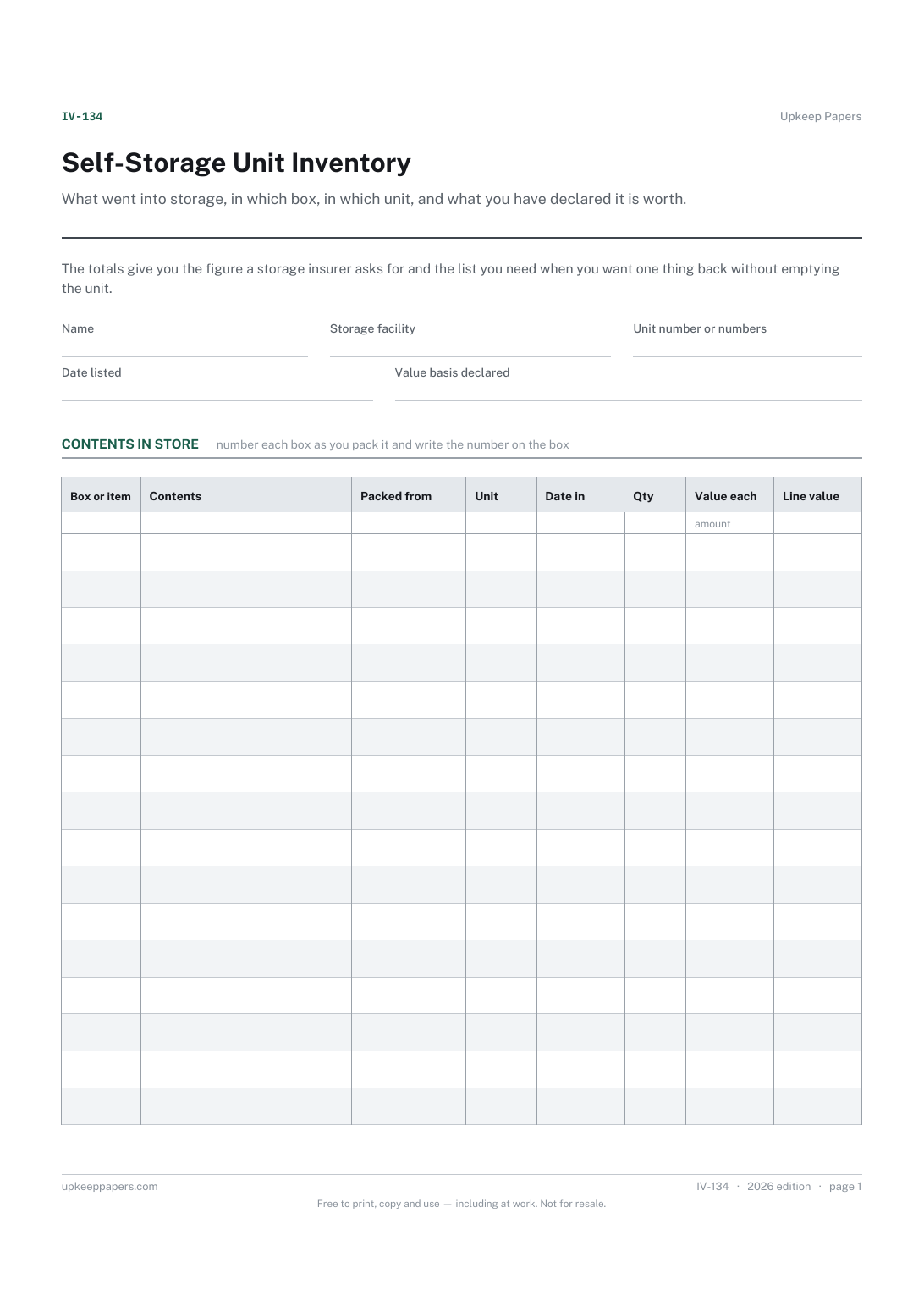
What is in each numbered box or on each pallet, in enough detail to find it again.
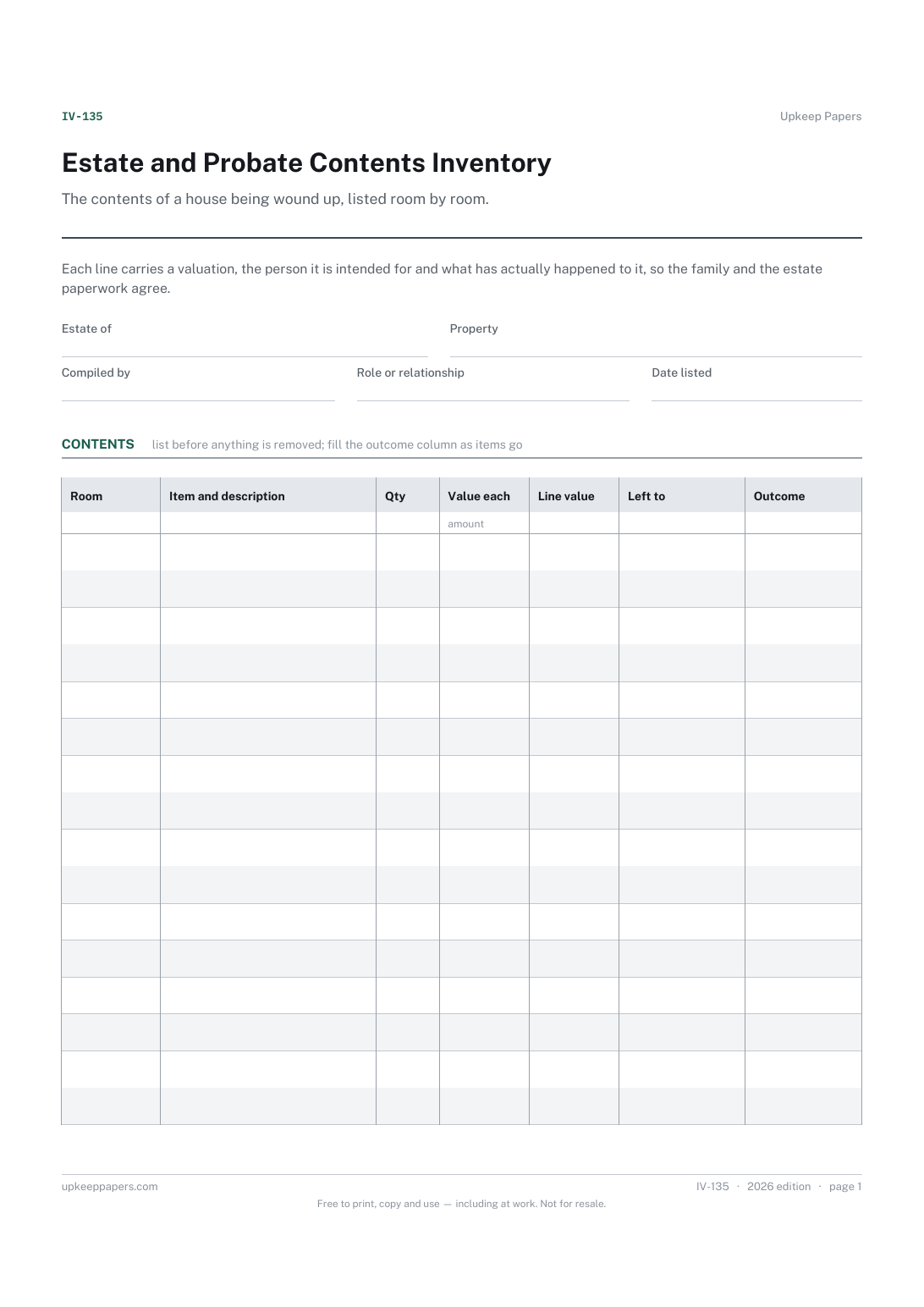
Everything in the property, listed by room, so nothing is discovered late.
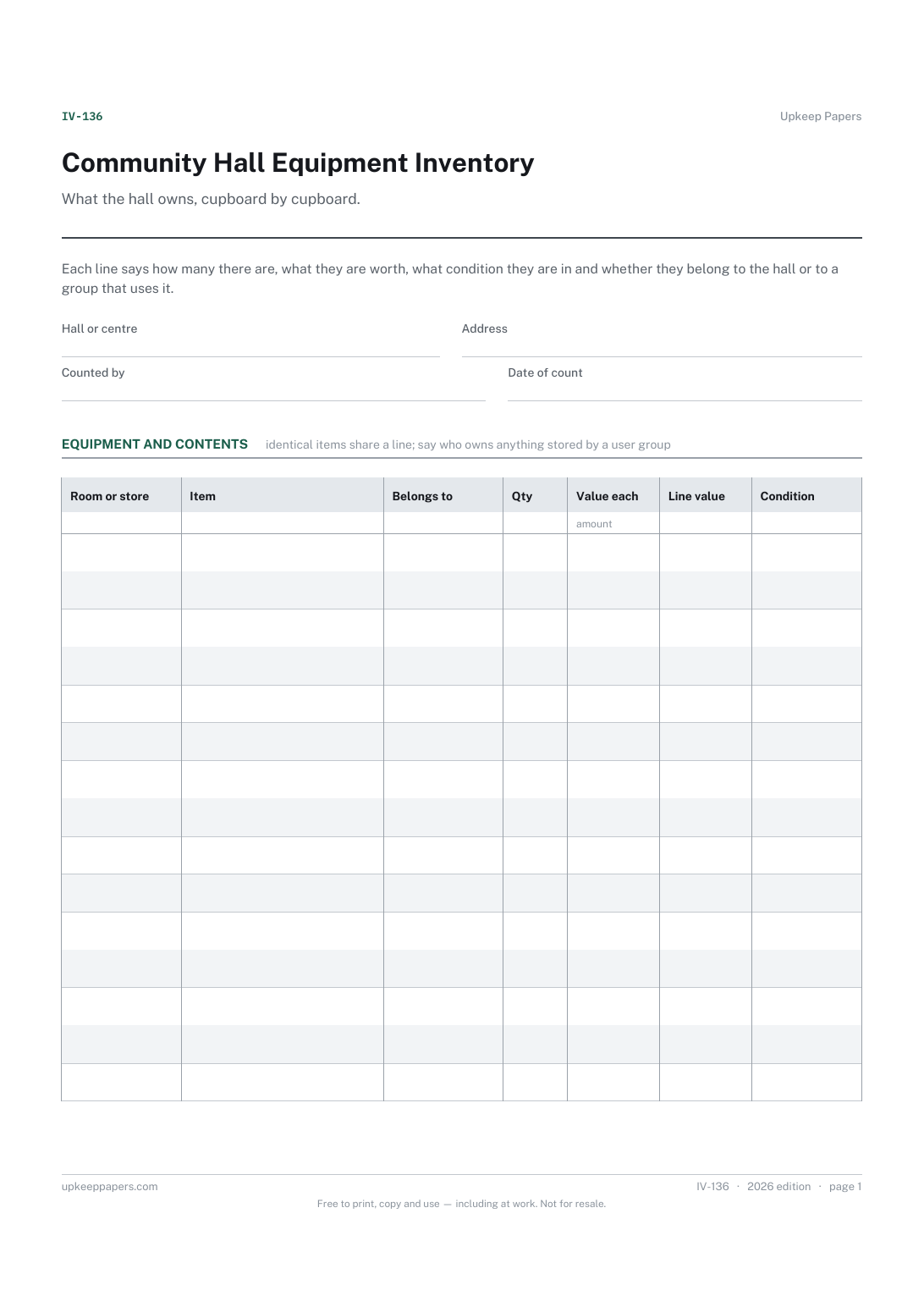
What the hall holds, from stacking chairs to urns, and which store it lives in.
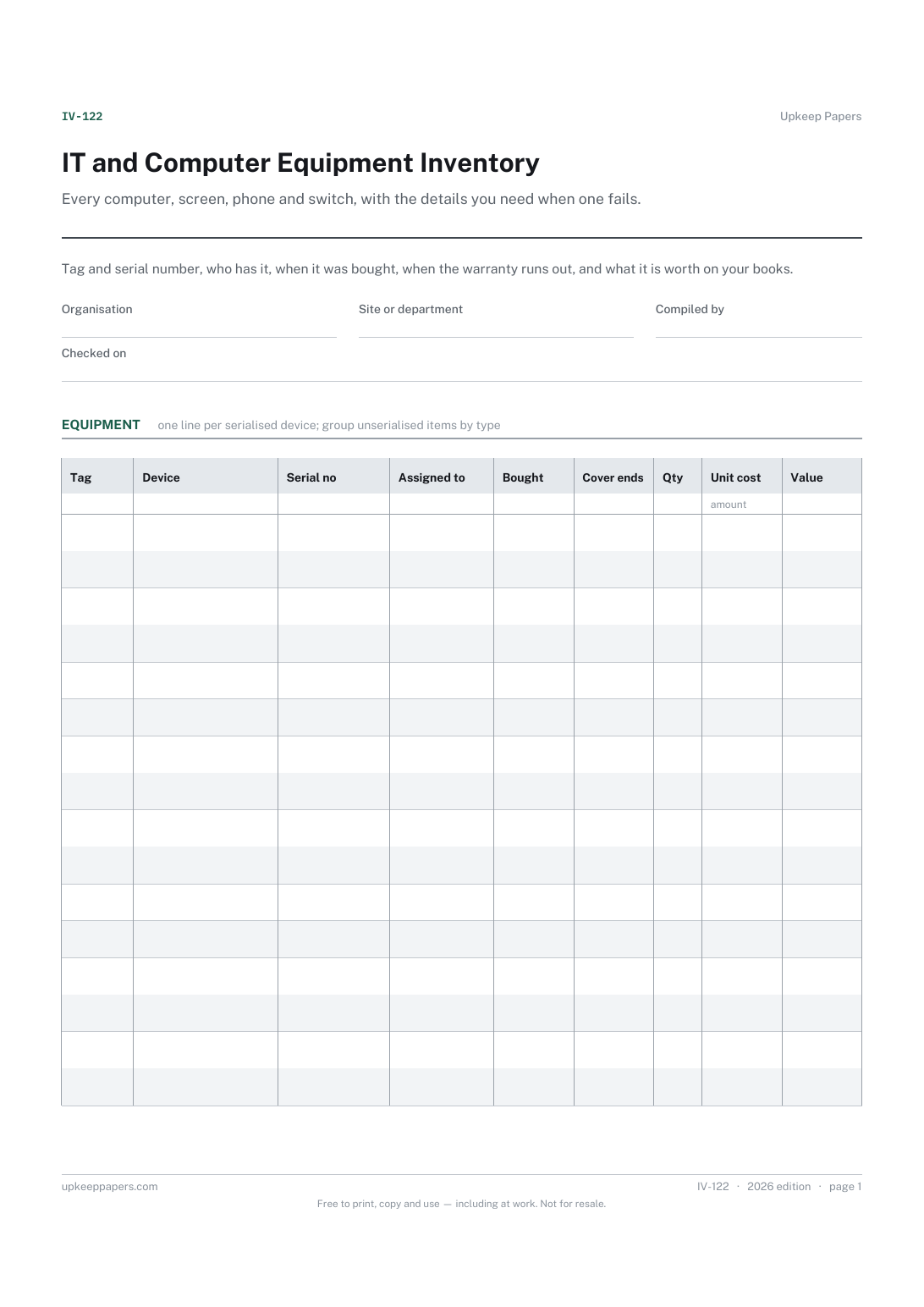
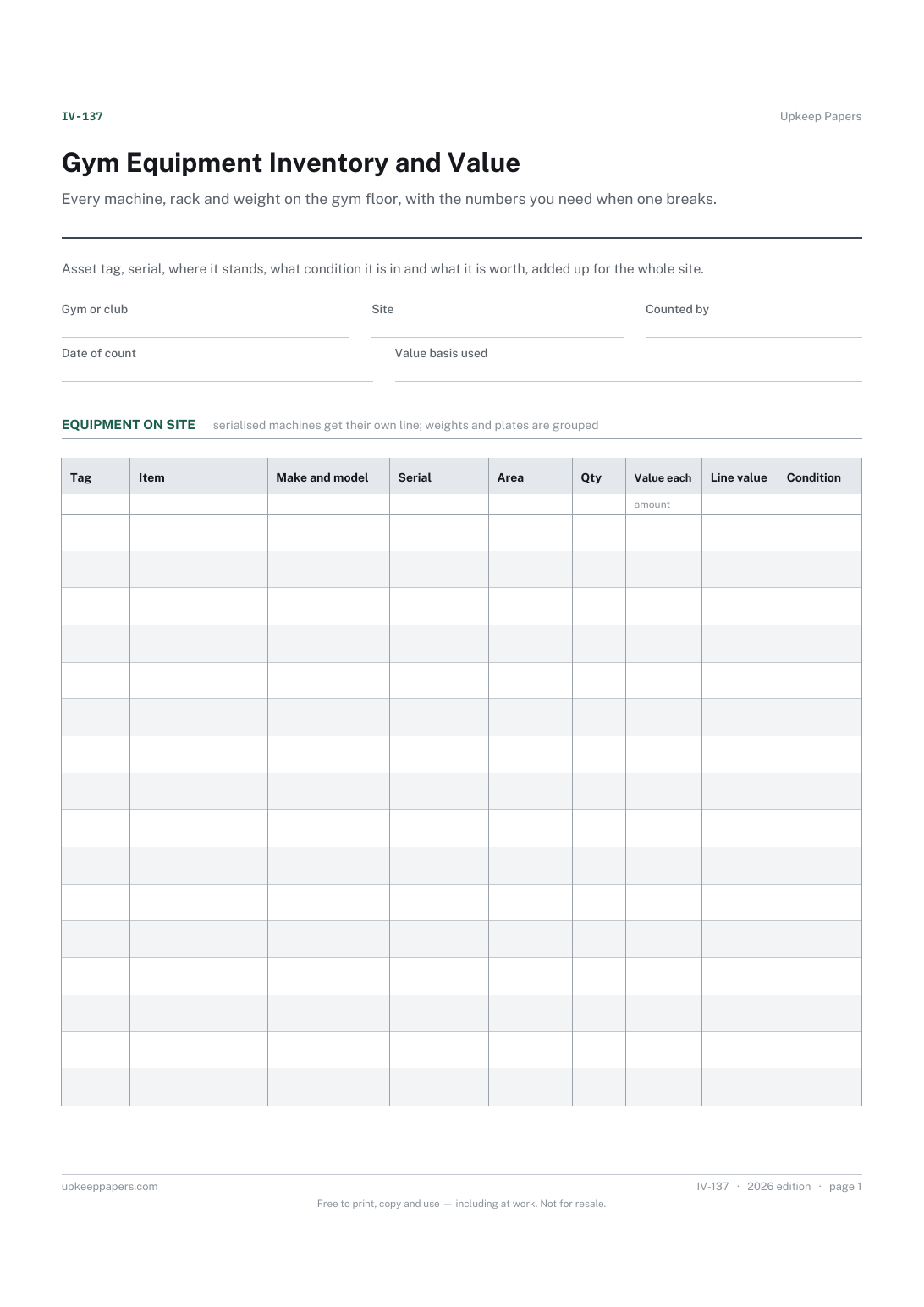
Every item of equipment with its asset tag and serial number.
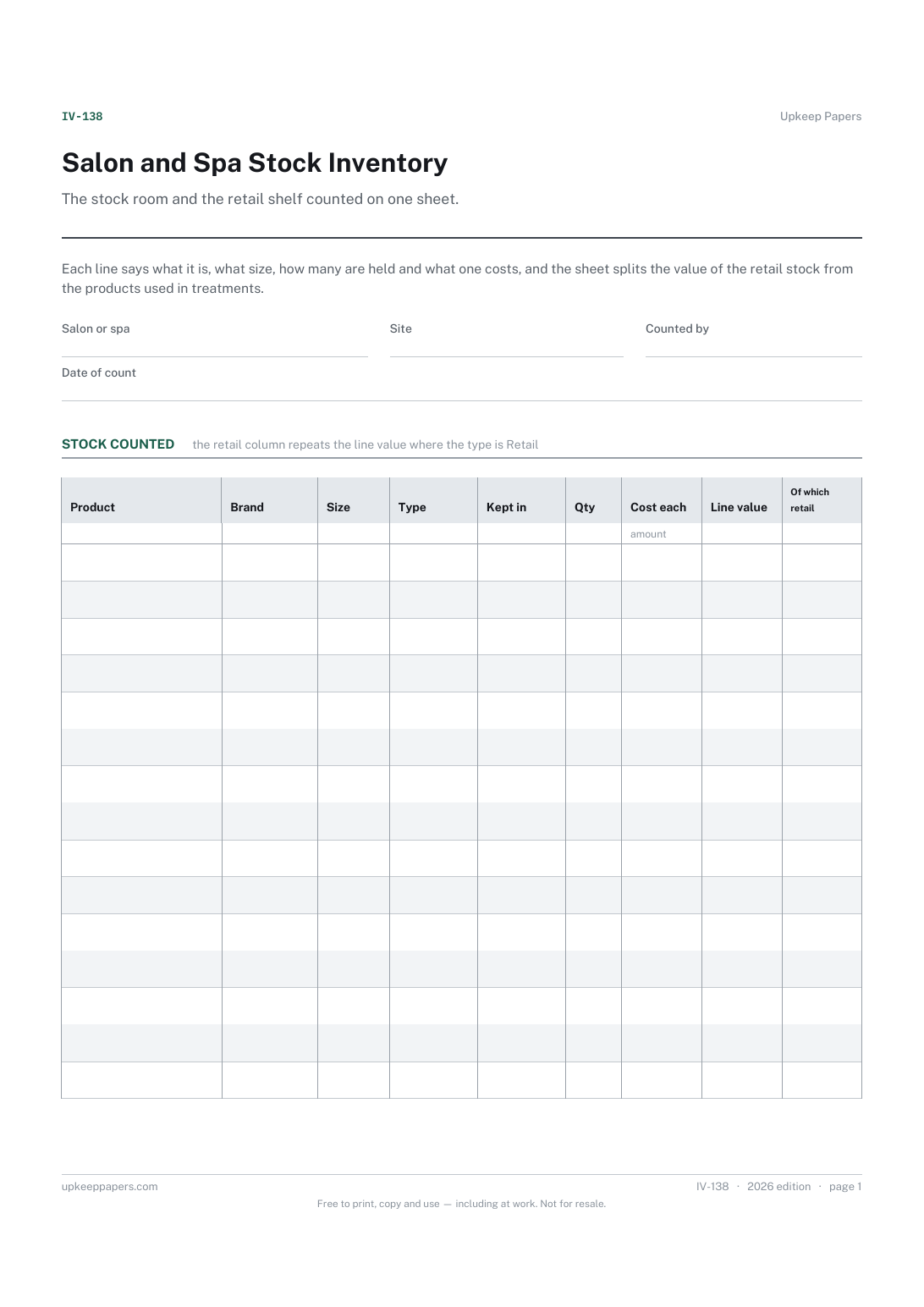
Every product held, by brand and size, and where it is kept.
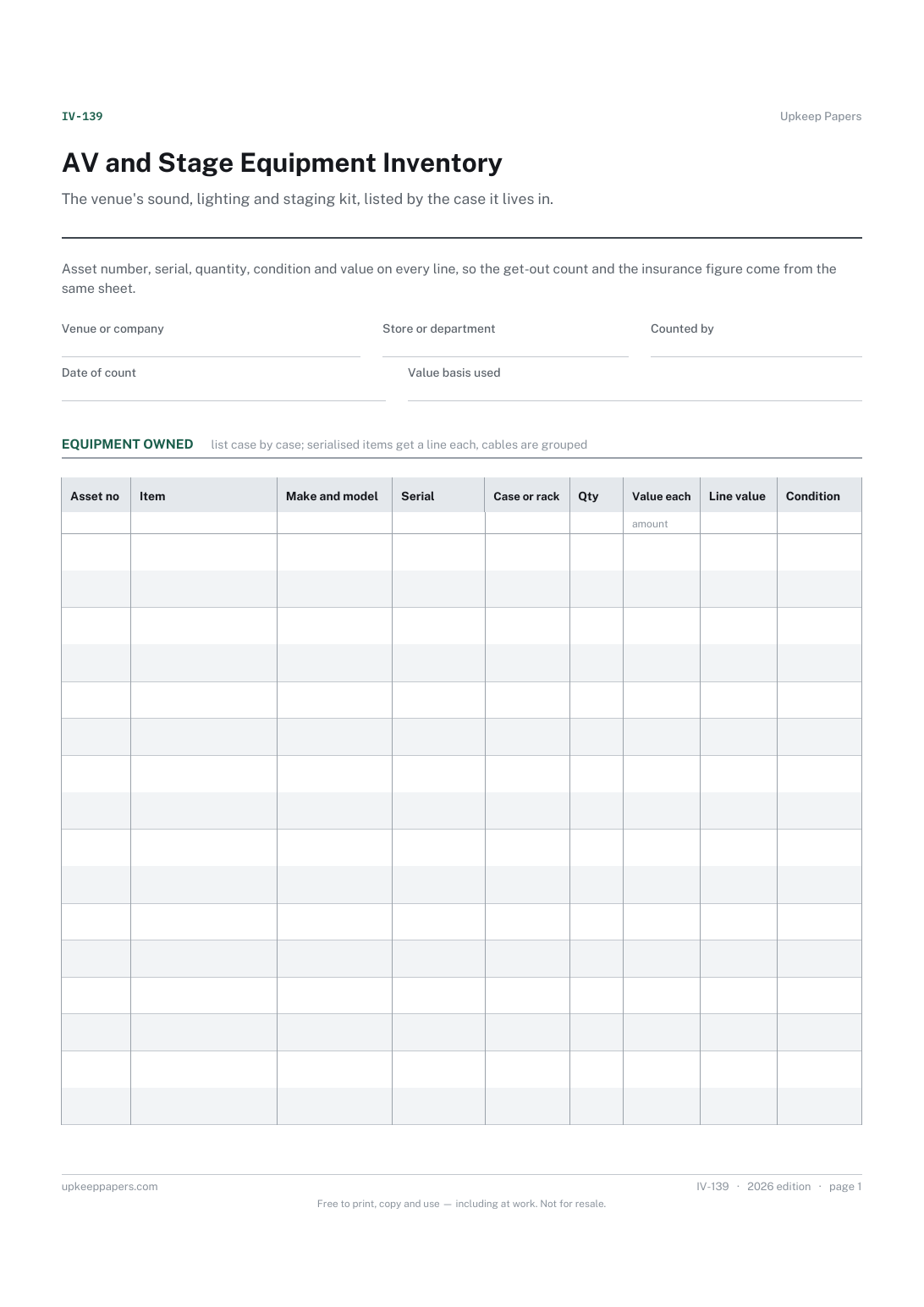
Every microphone, lantern, desk, speaker and stage part the venue owns.
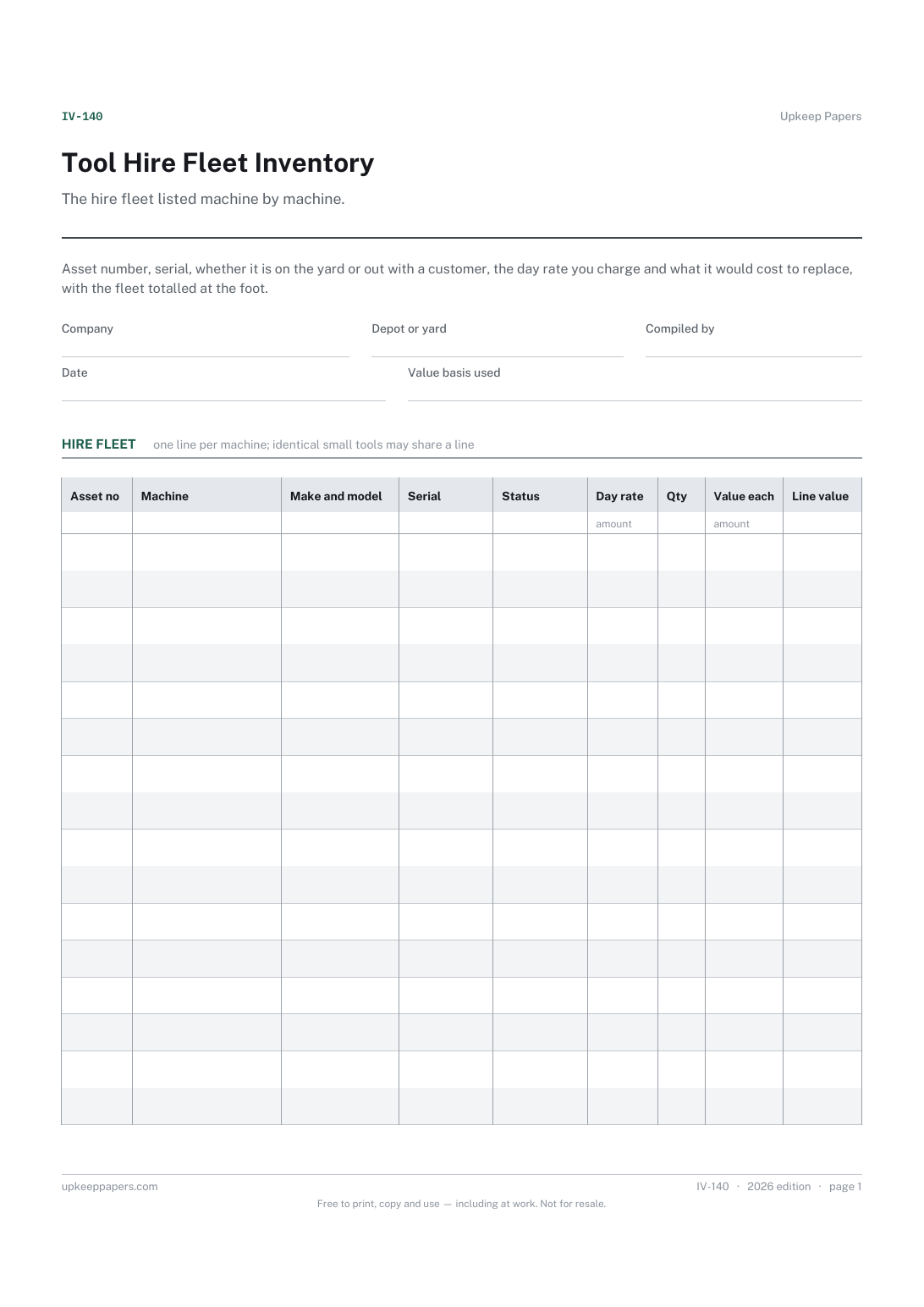
Every machine in the fleet with its asset number and serial number.
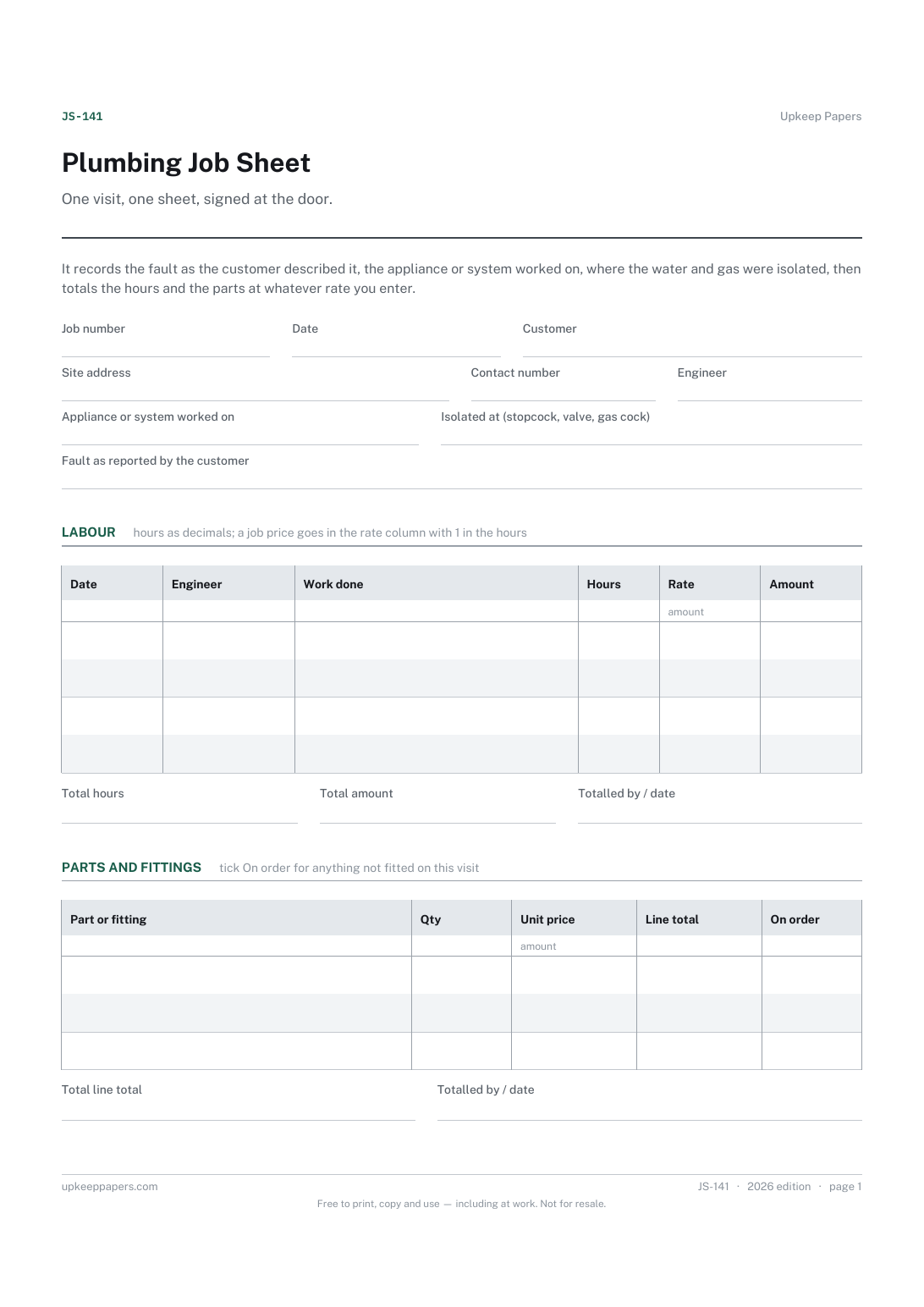
The fault as reported and the fault actually found, kept apart.
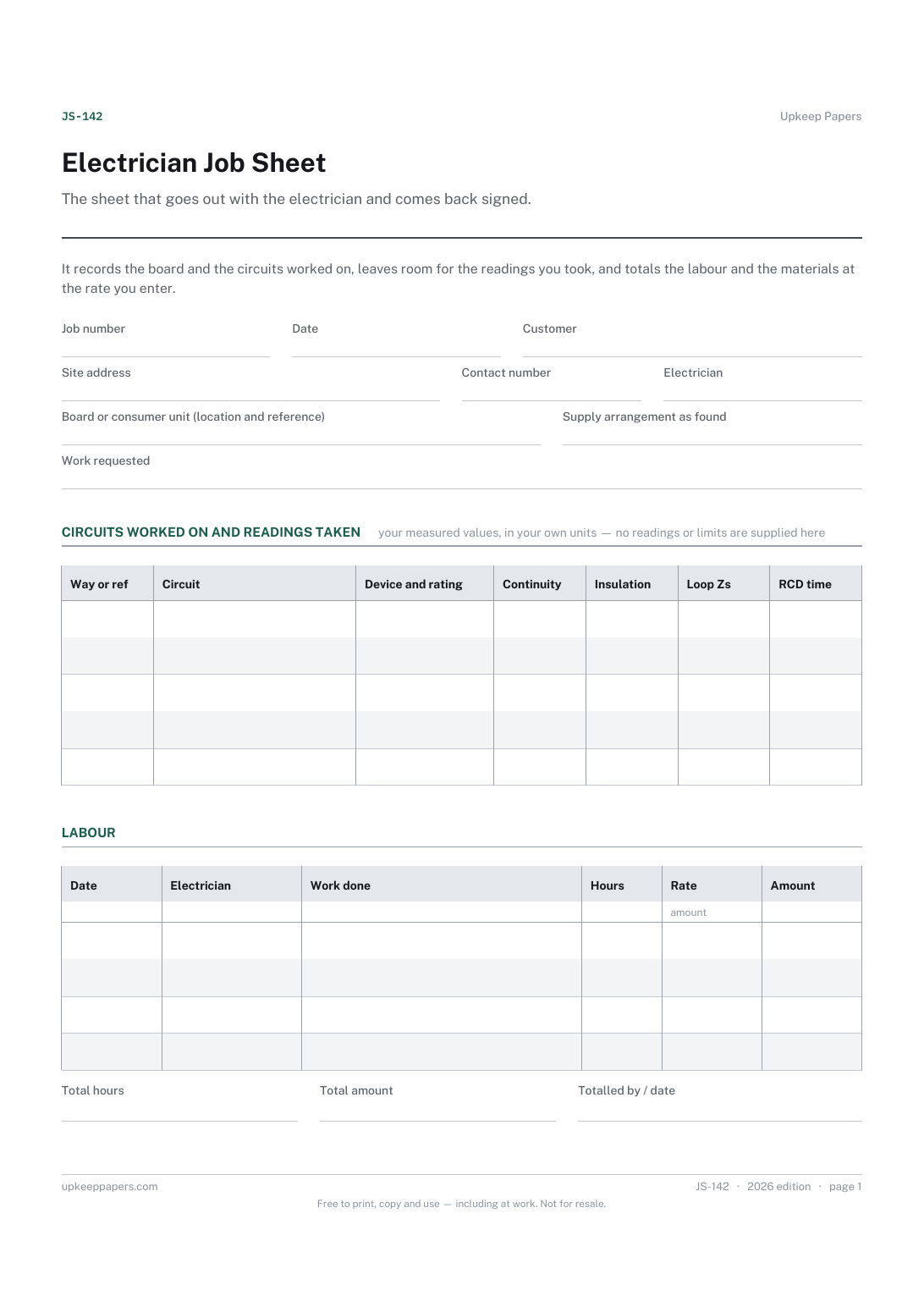
Which board, which way and which circuits were touched.
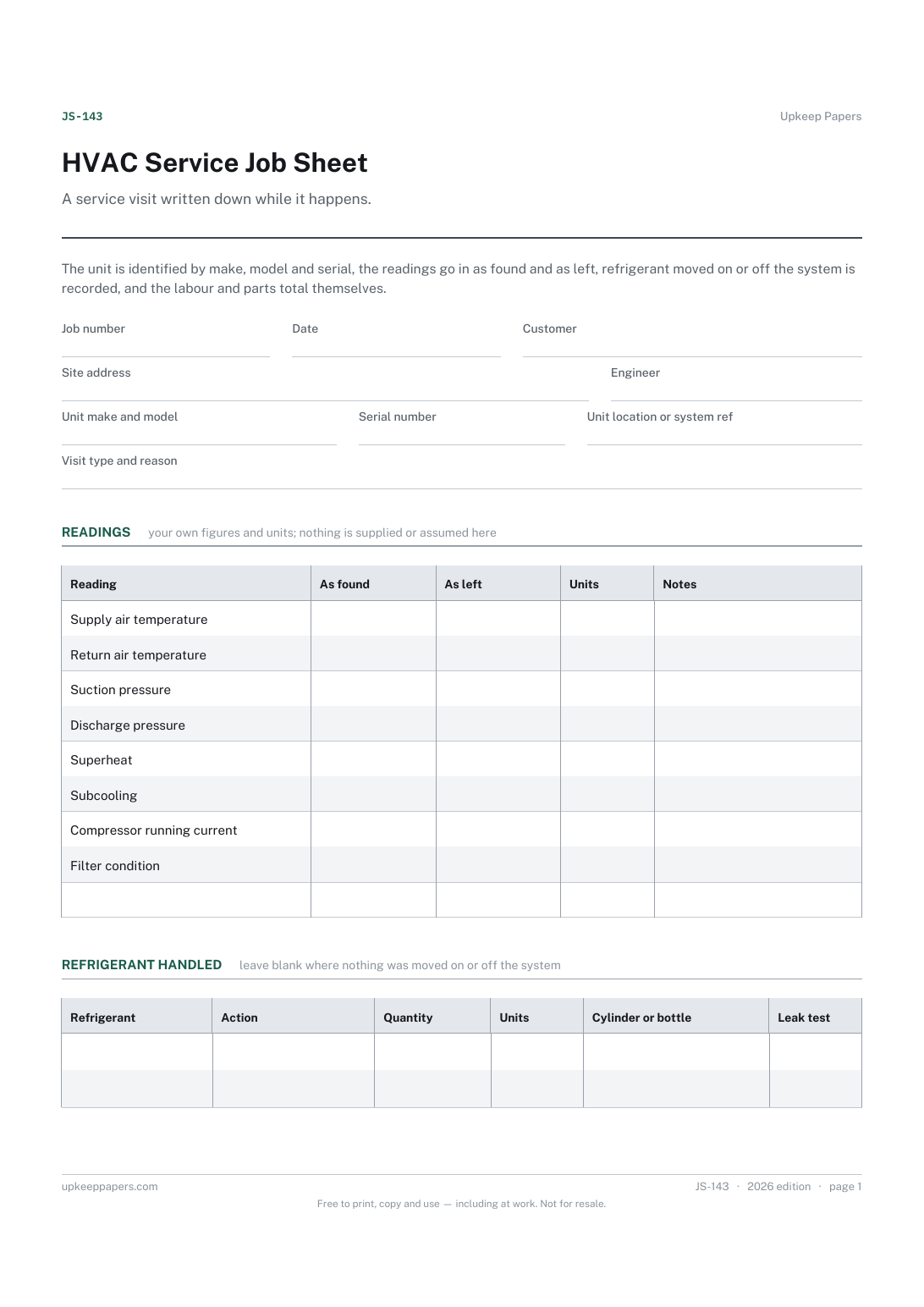
Which unit was serviced, by make, model, serial and location.
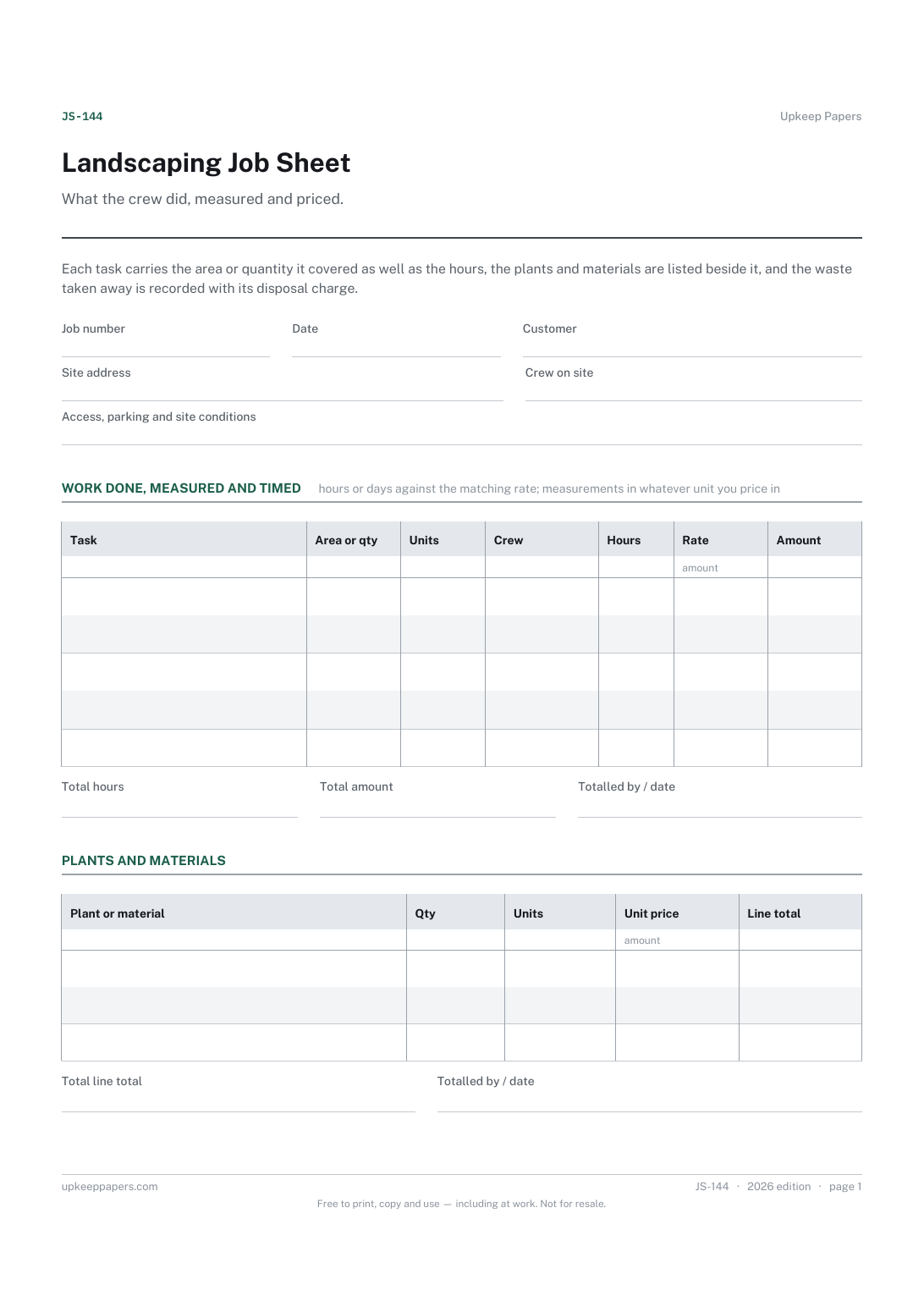
Areas and quantities actually done, not just what was quoted.
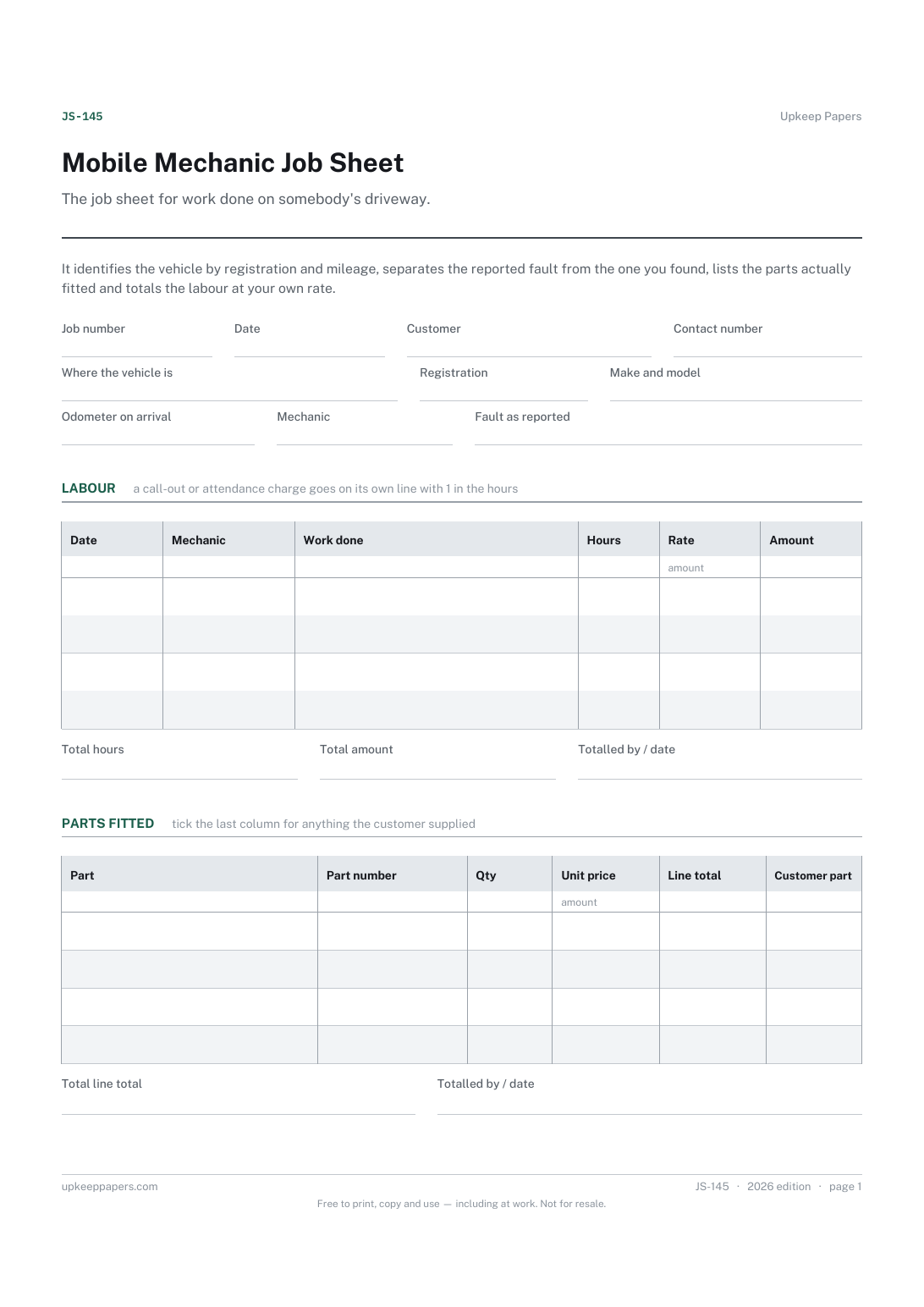
The vehicle by registration, make, model and the mileage on arrival.
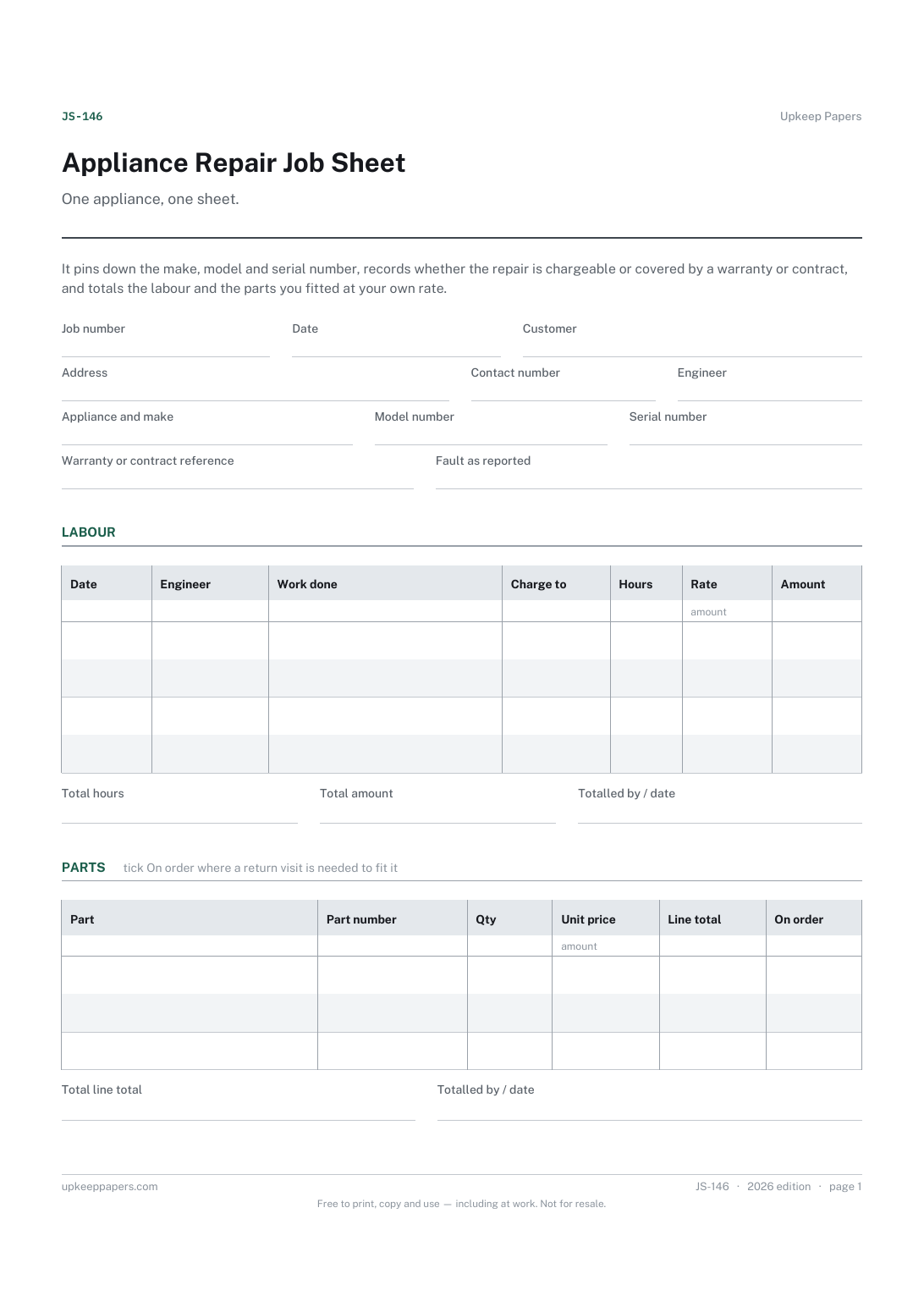
The appliance identified by make, model and serial number.
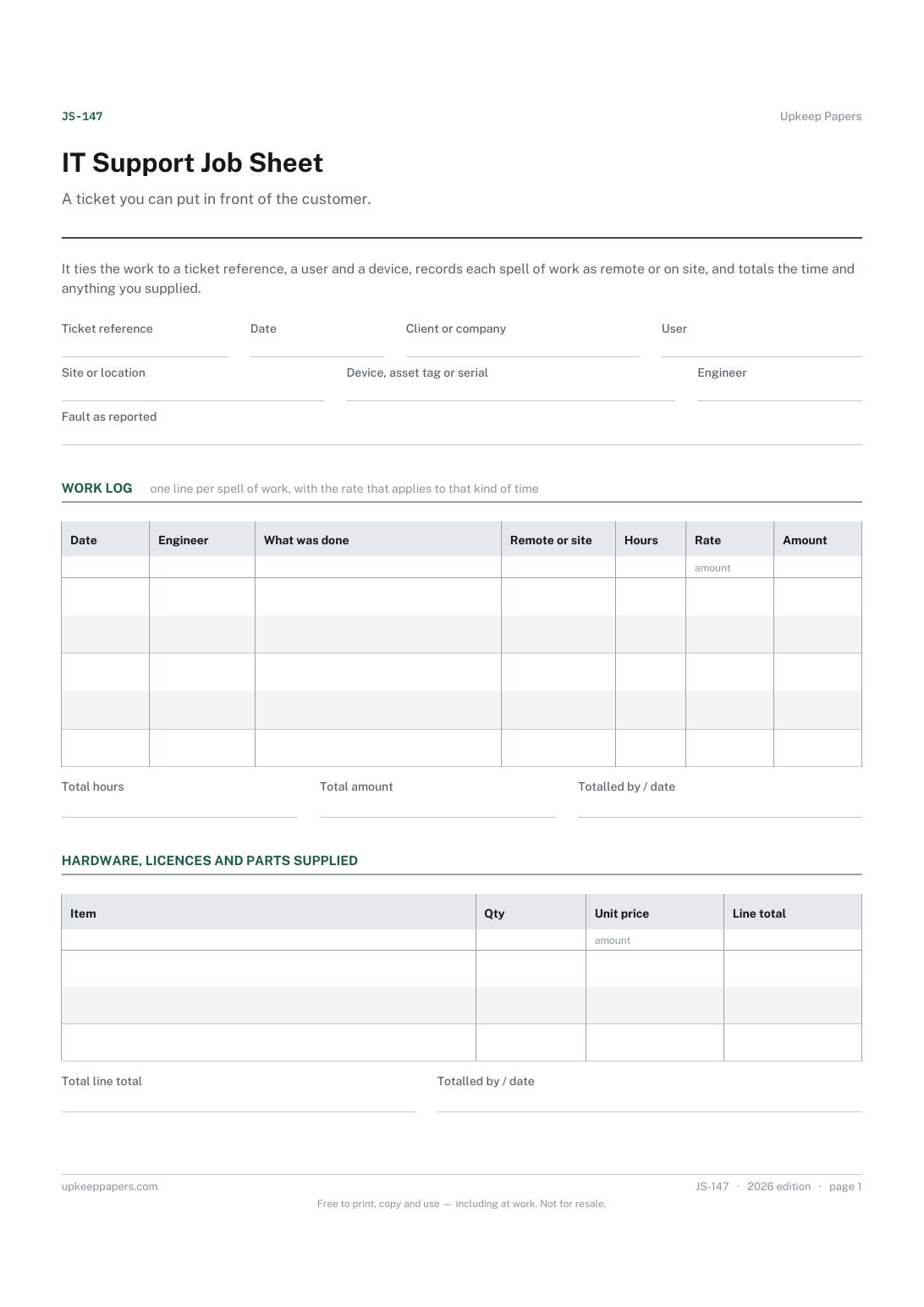
The ticket, the user and the device the work was done on.
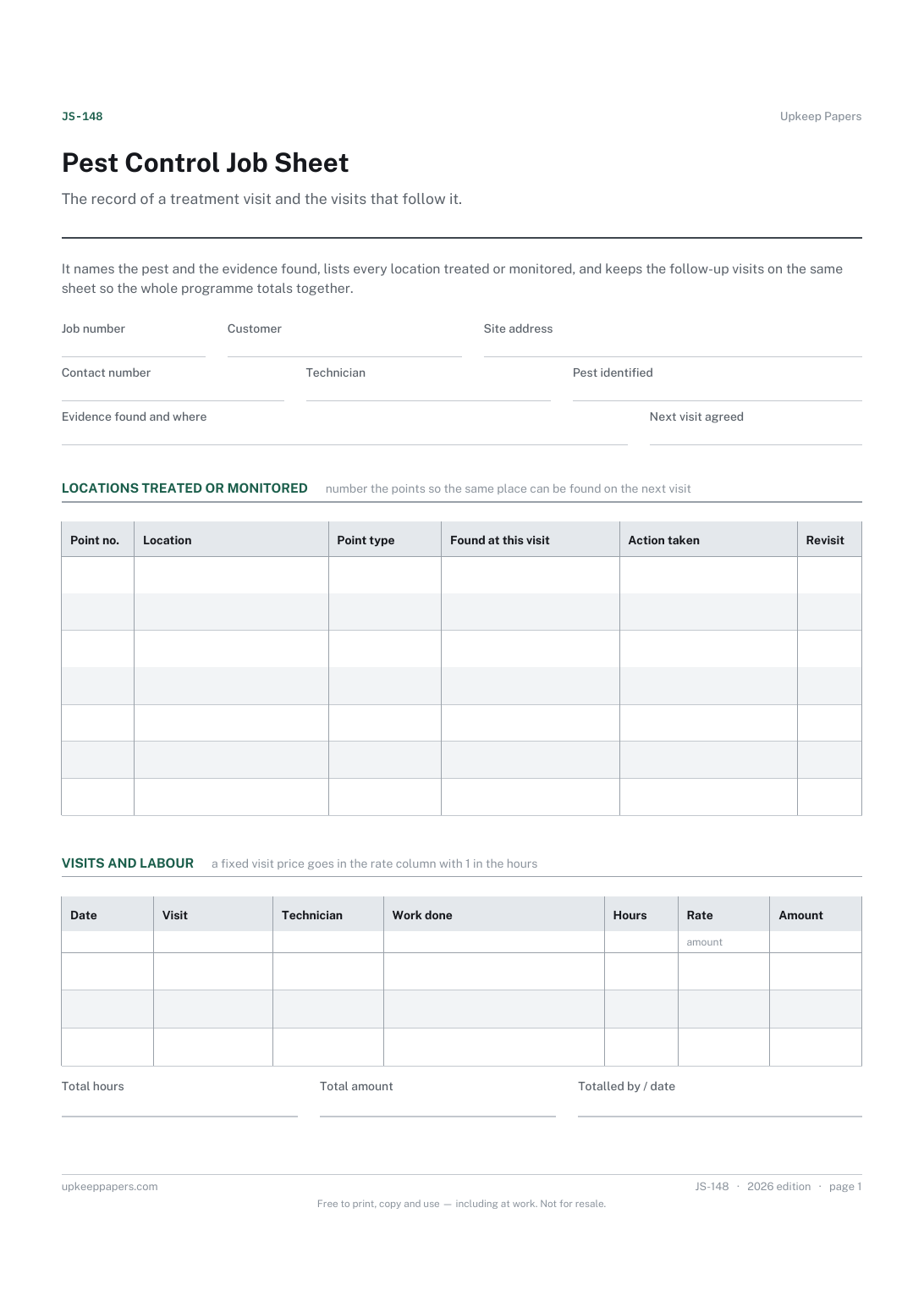
The pest identified and the evidence that identified it.
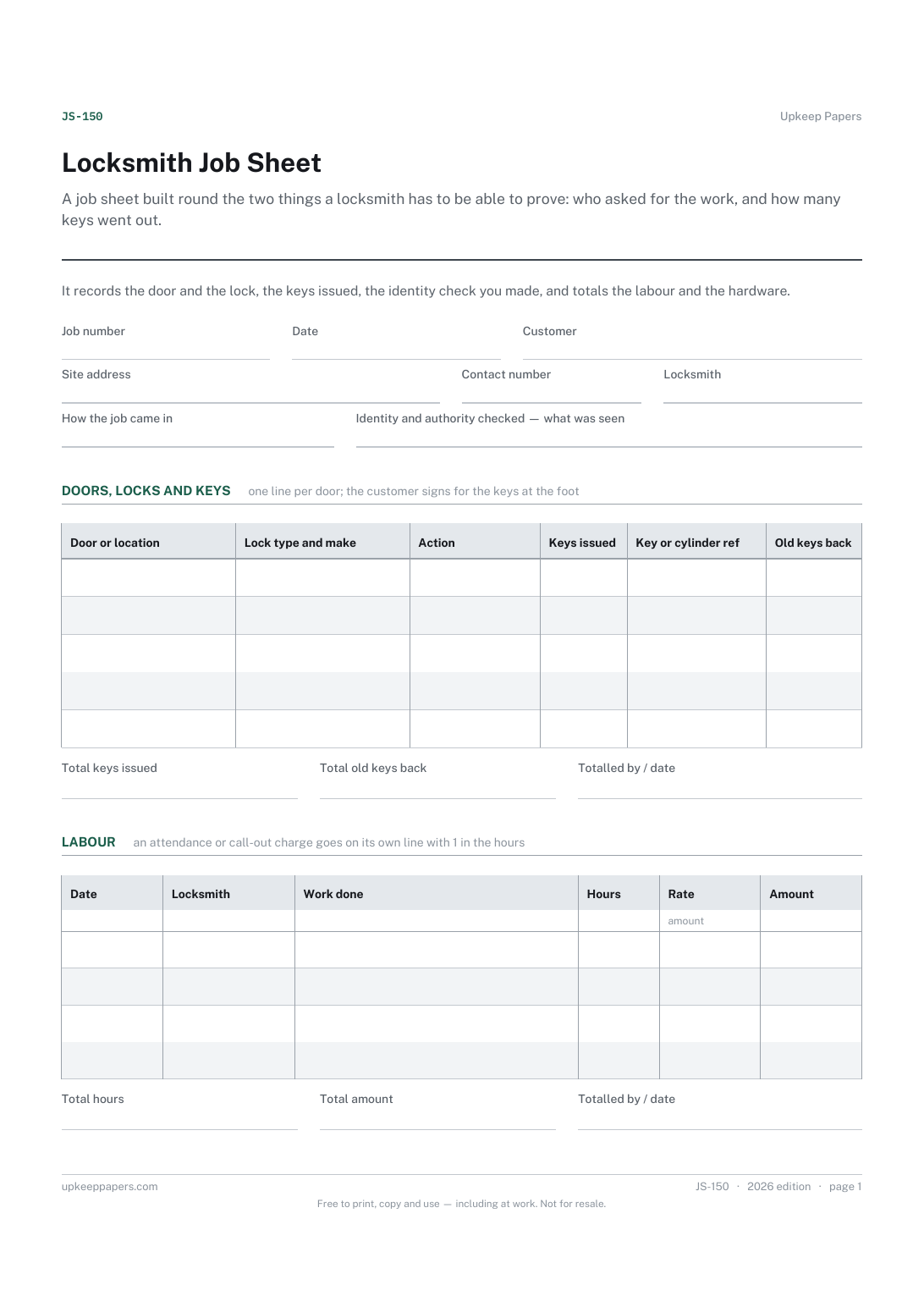
Which door and which lock, by location and type.
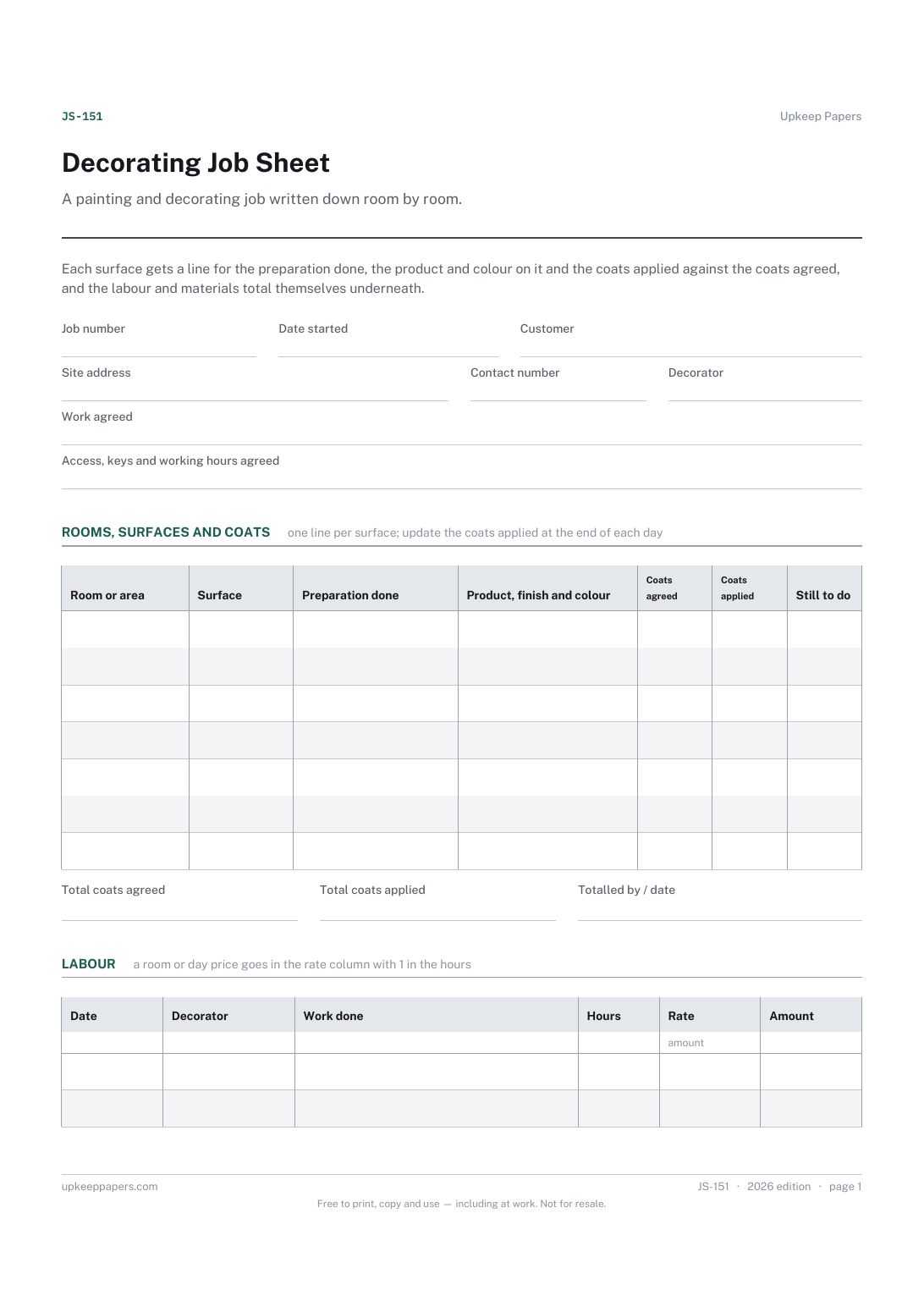
Every room and surface in the job, with the preparation each one needed.
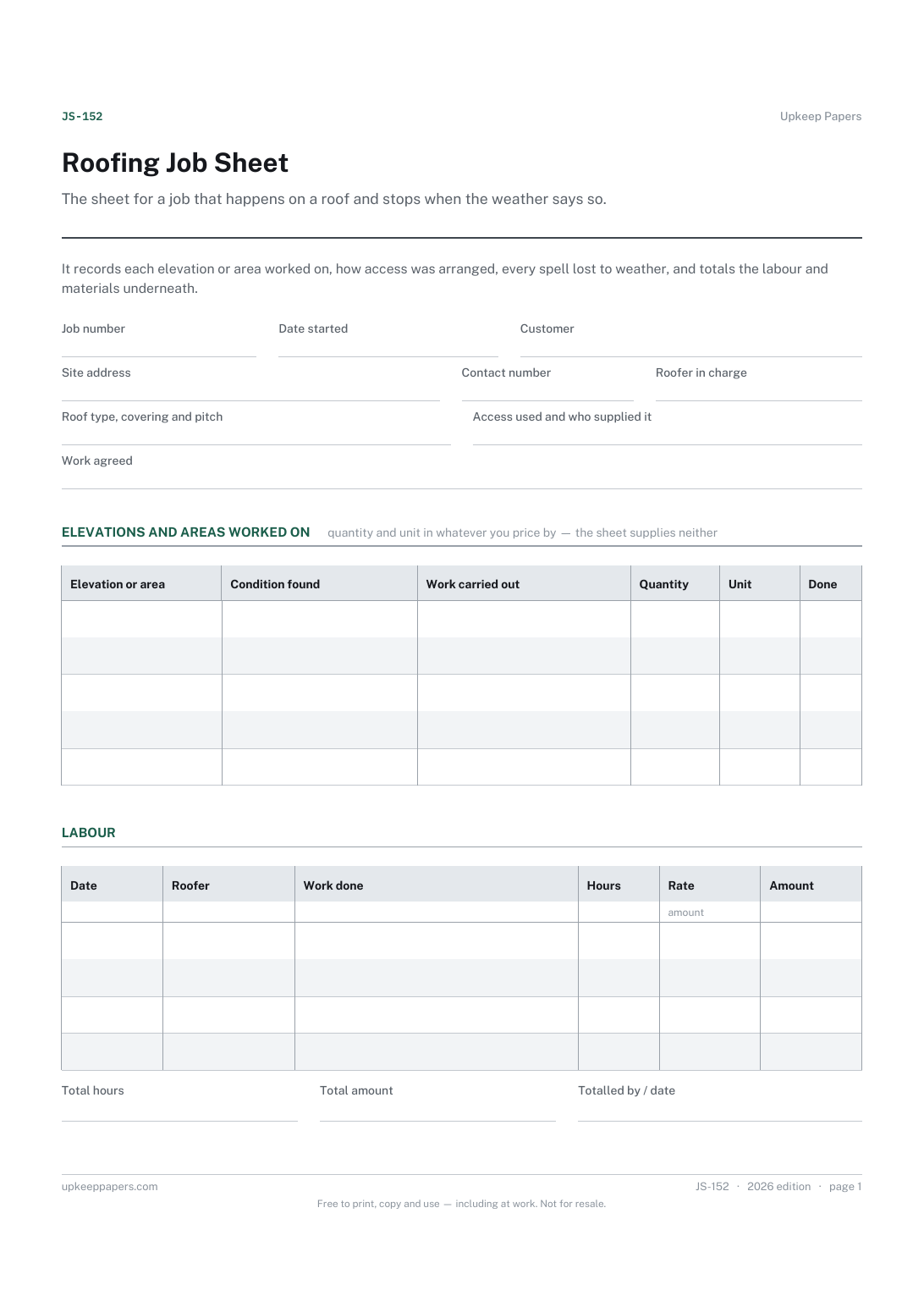
Each elevation or area worked on, with what was found and what was done.
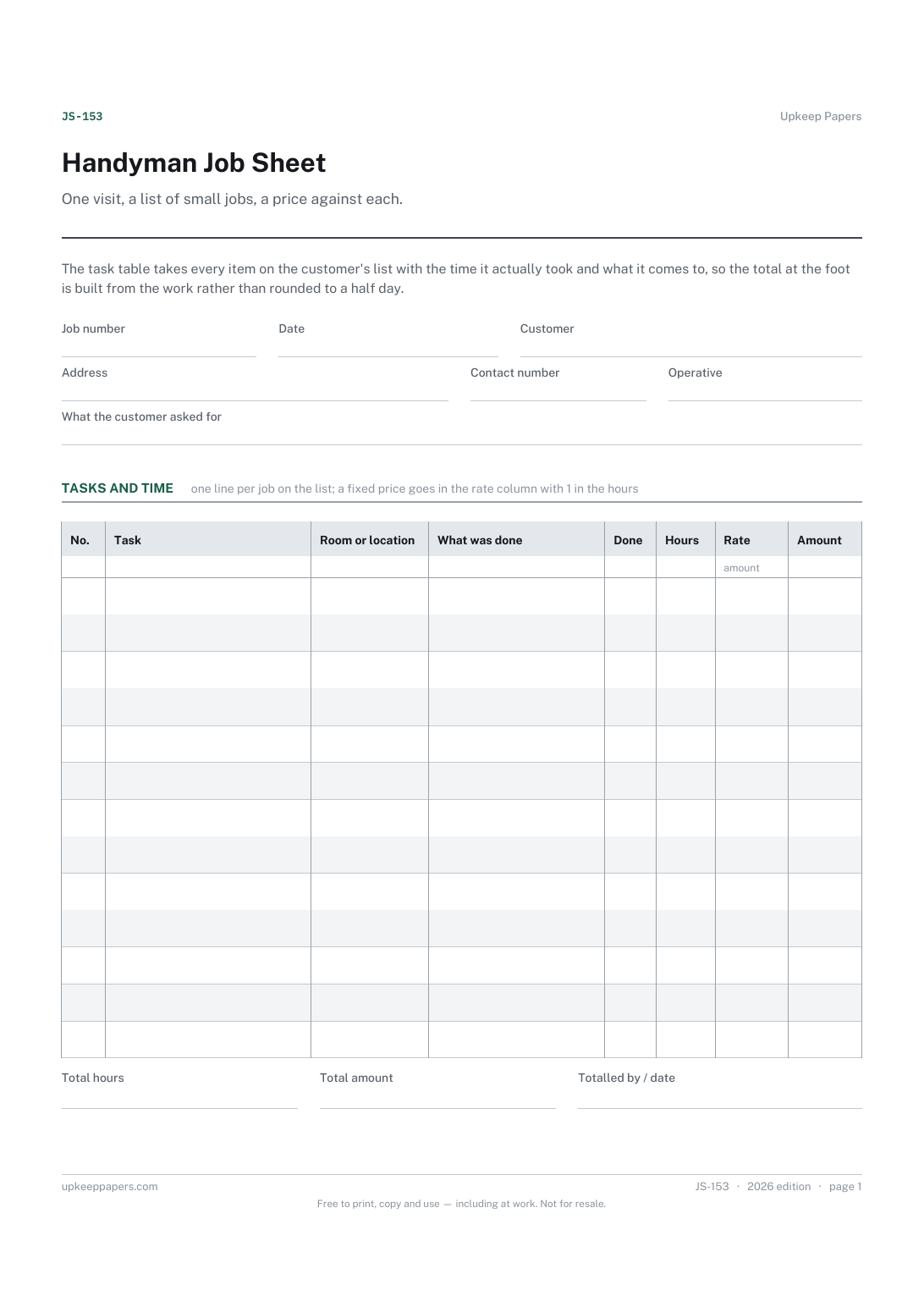
Every task on the customer's list, ticked off as it is done.
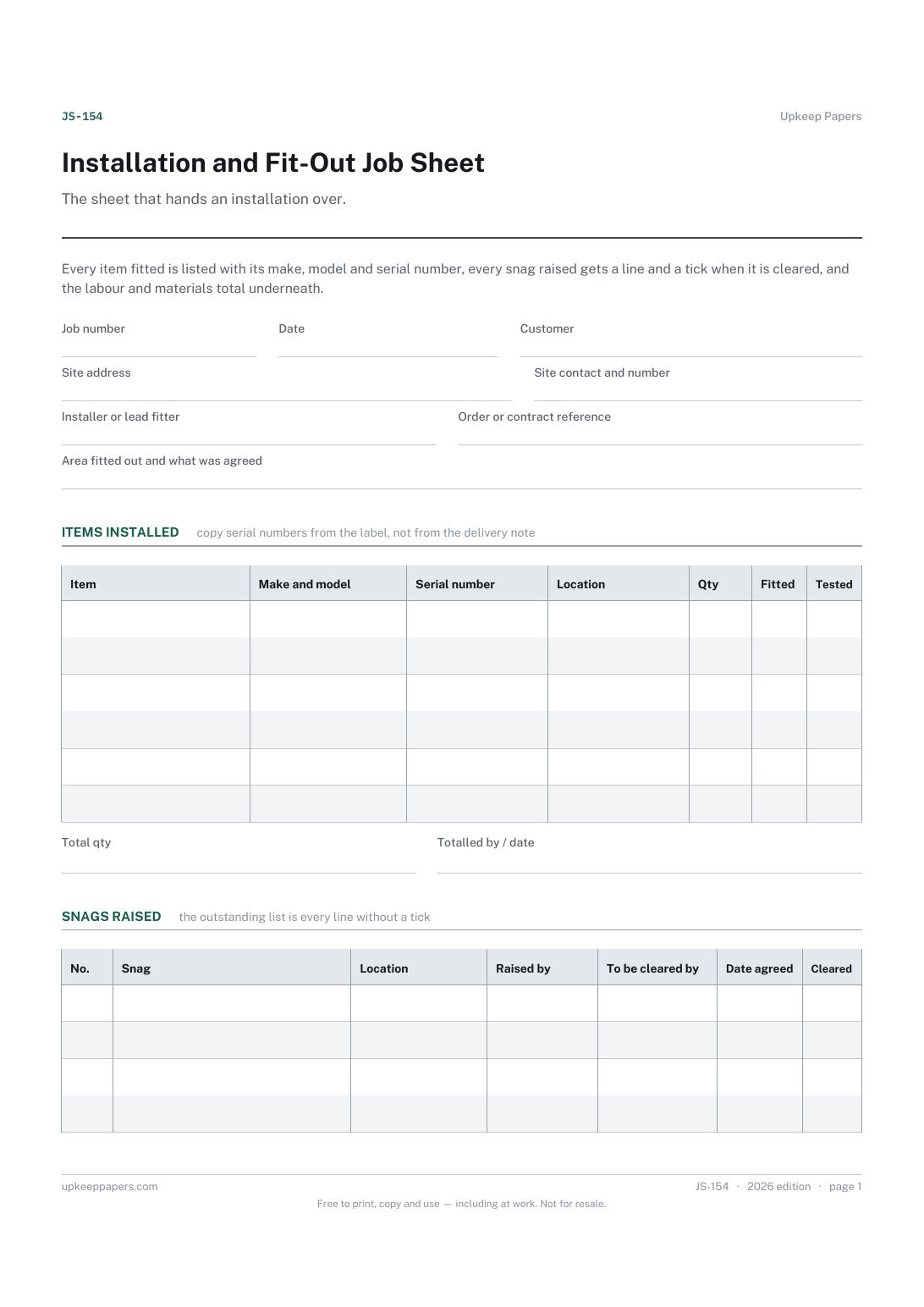
Every item installed, with make, model, serial number and where it went.
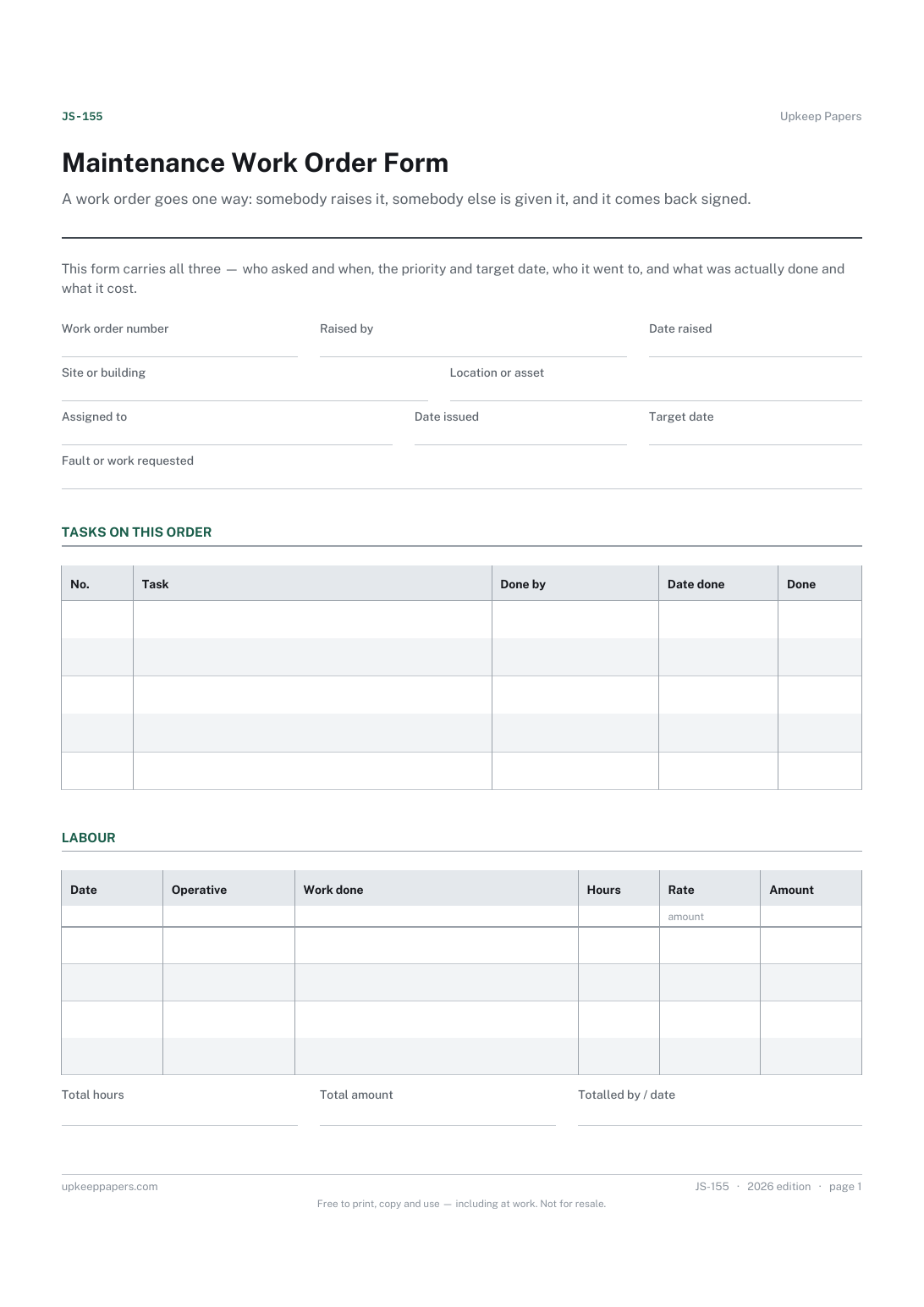
Who raised the order, when, and against which asset or location.
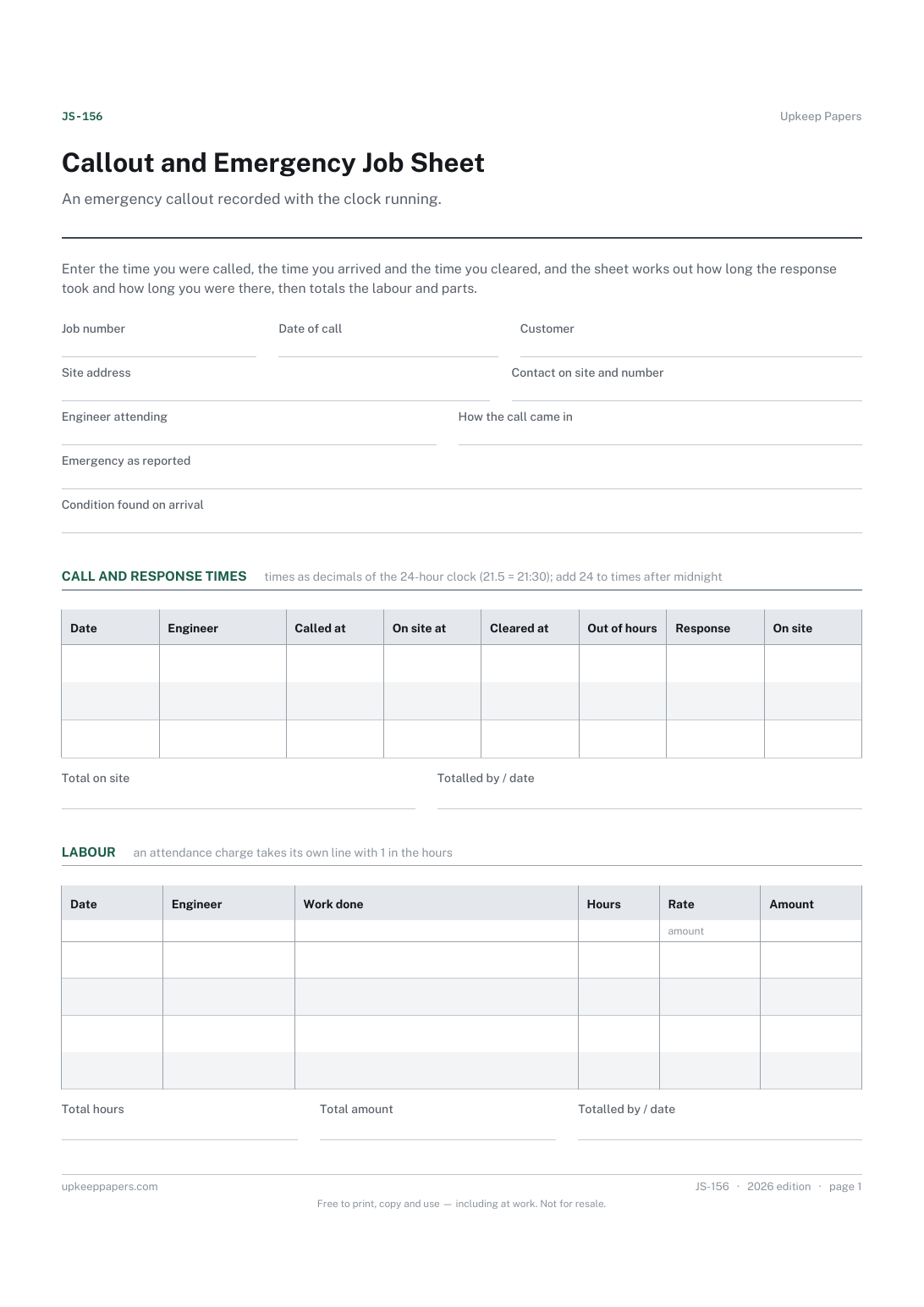
When the call came in, from whom, and by what route.
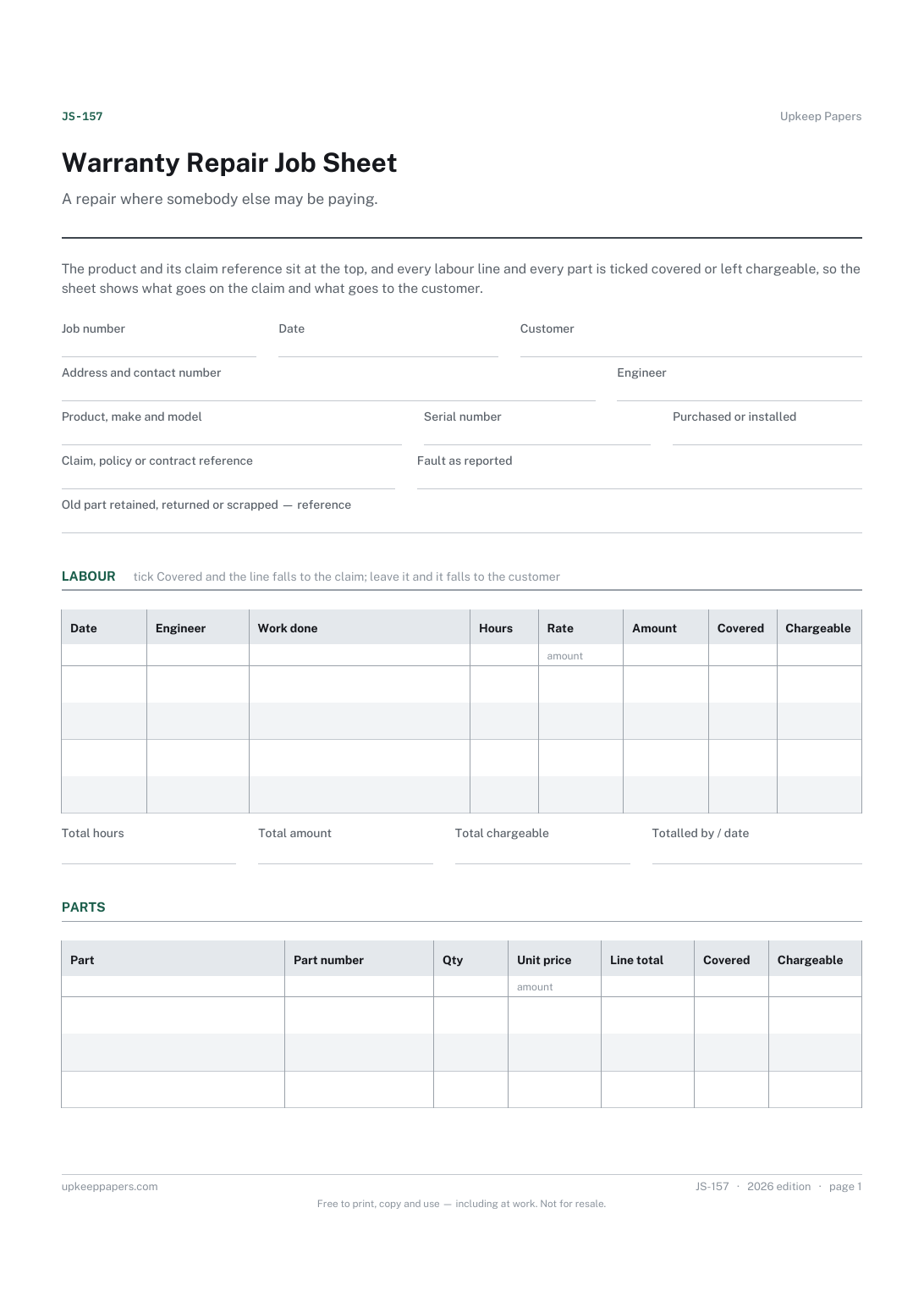
The product, its serial number and the date it was bought or installed.
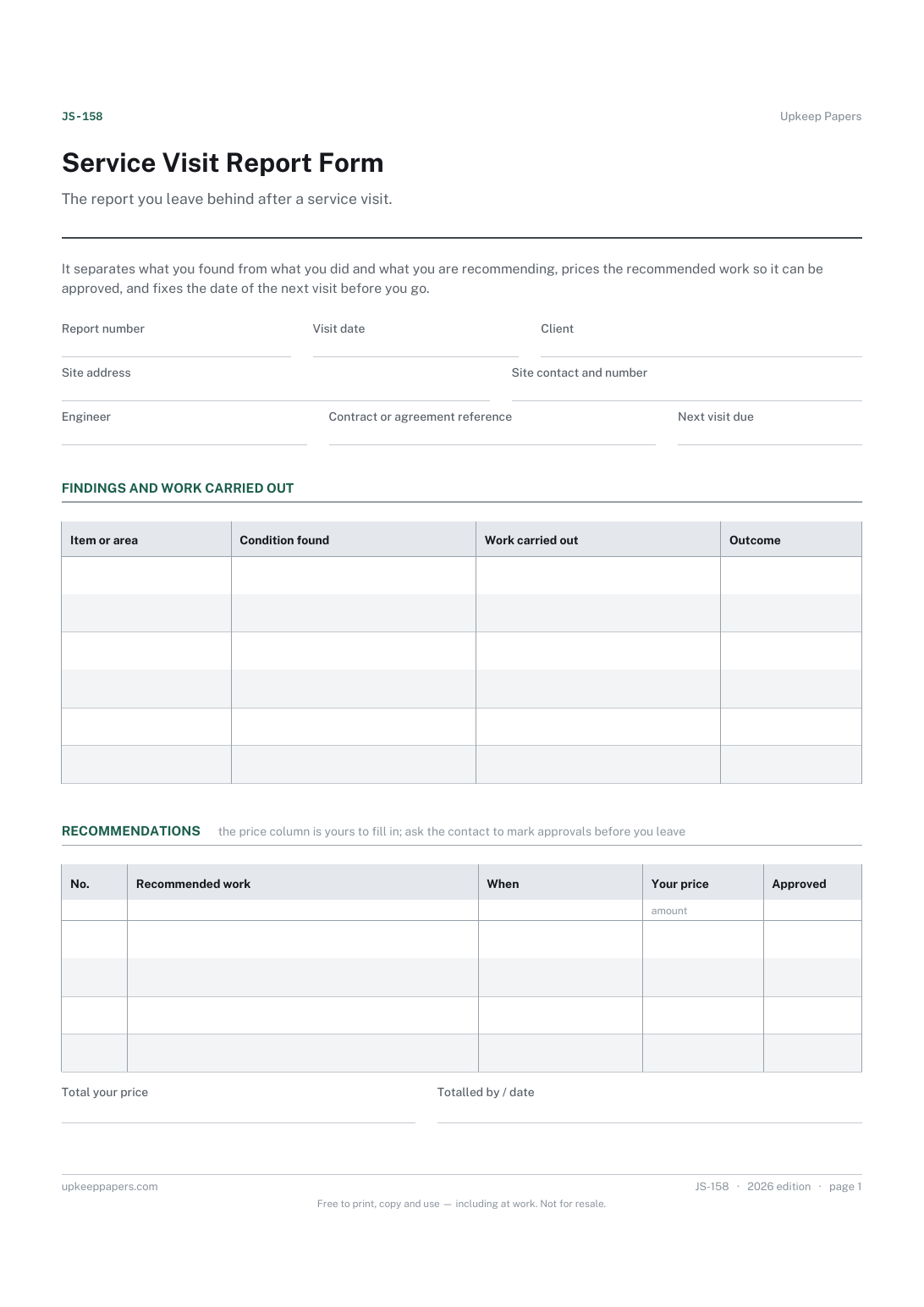
What you found at each item or area, in your own words.
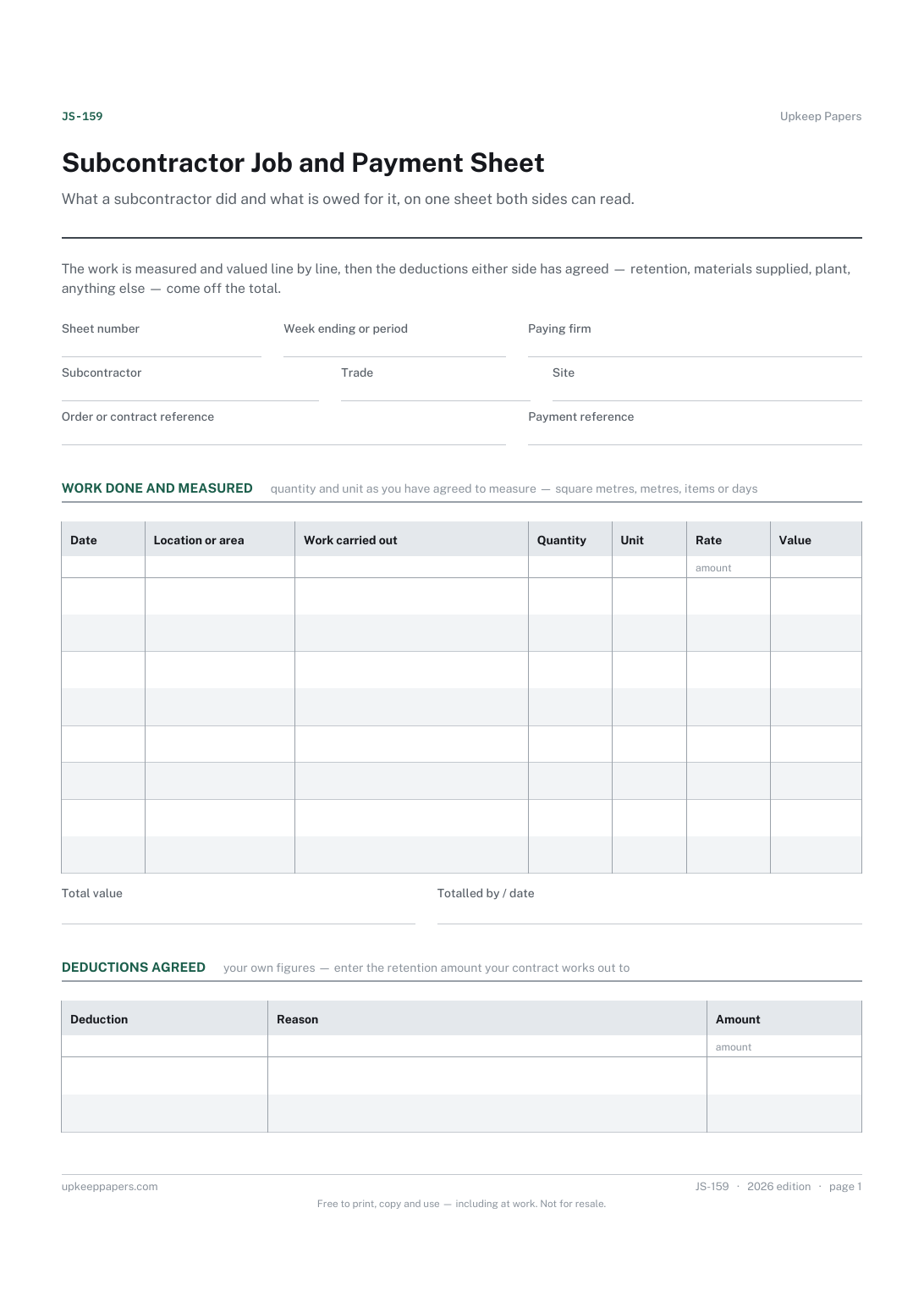
Each item of work, where it was done and how it was measured.
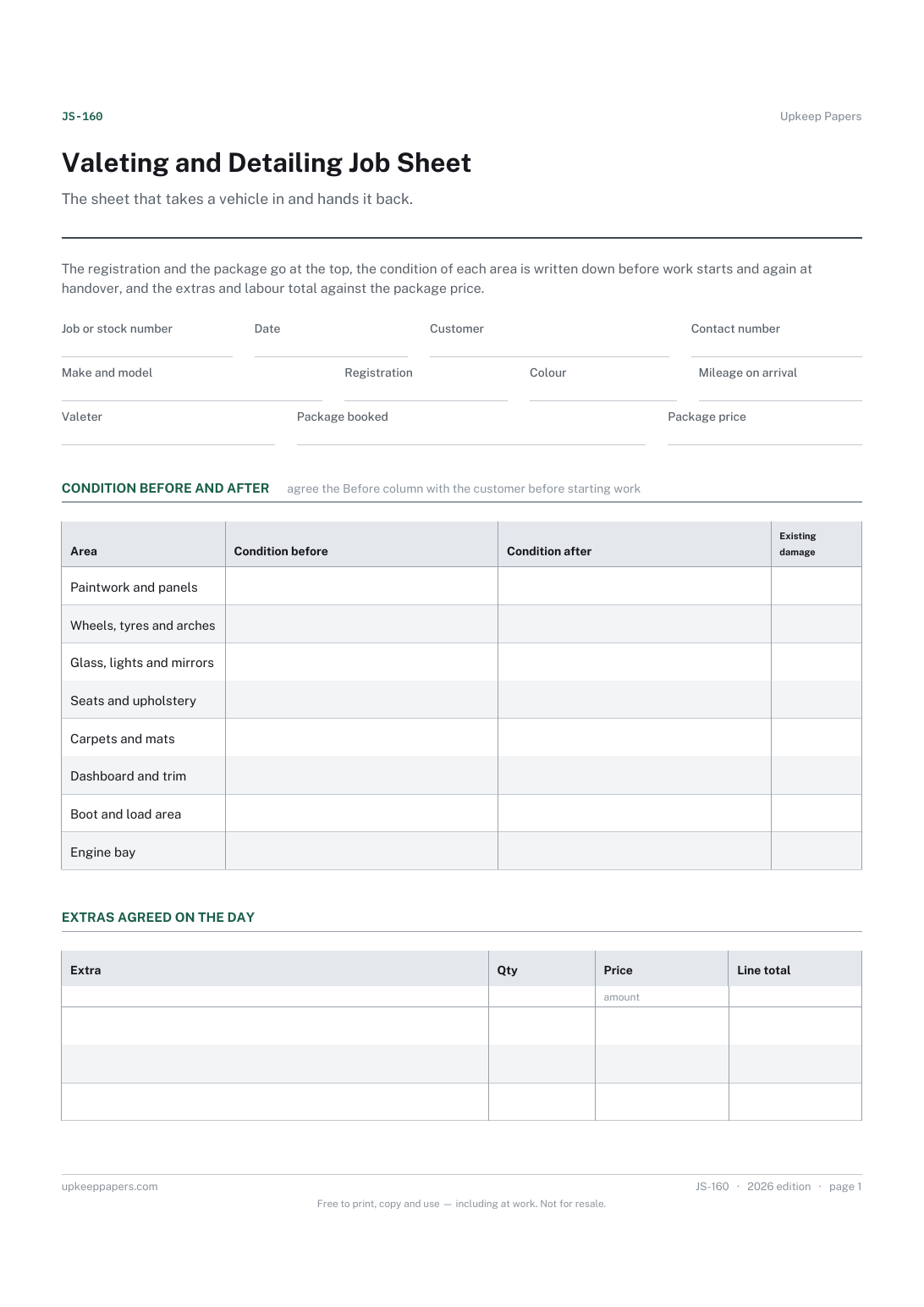
The vehicle by make, model, colour and registration, with the mileage on arrival.
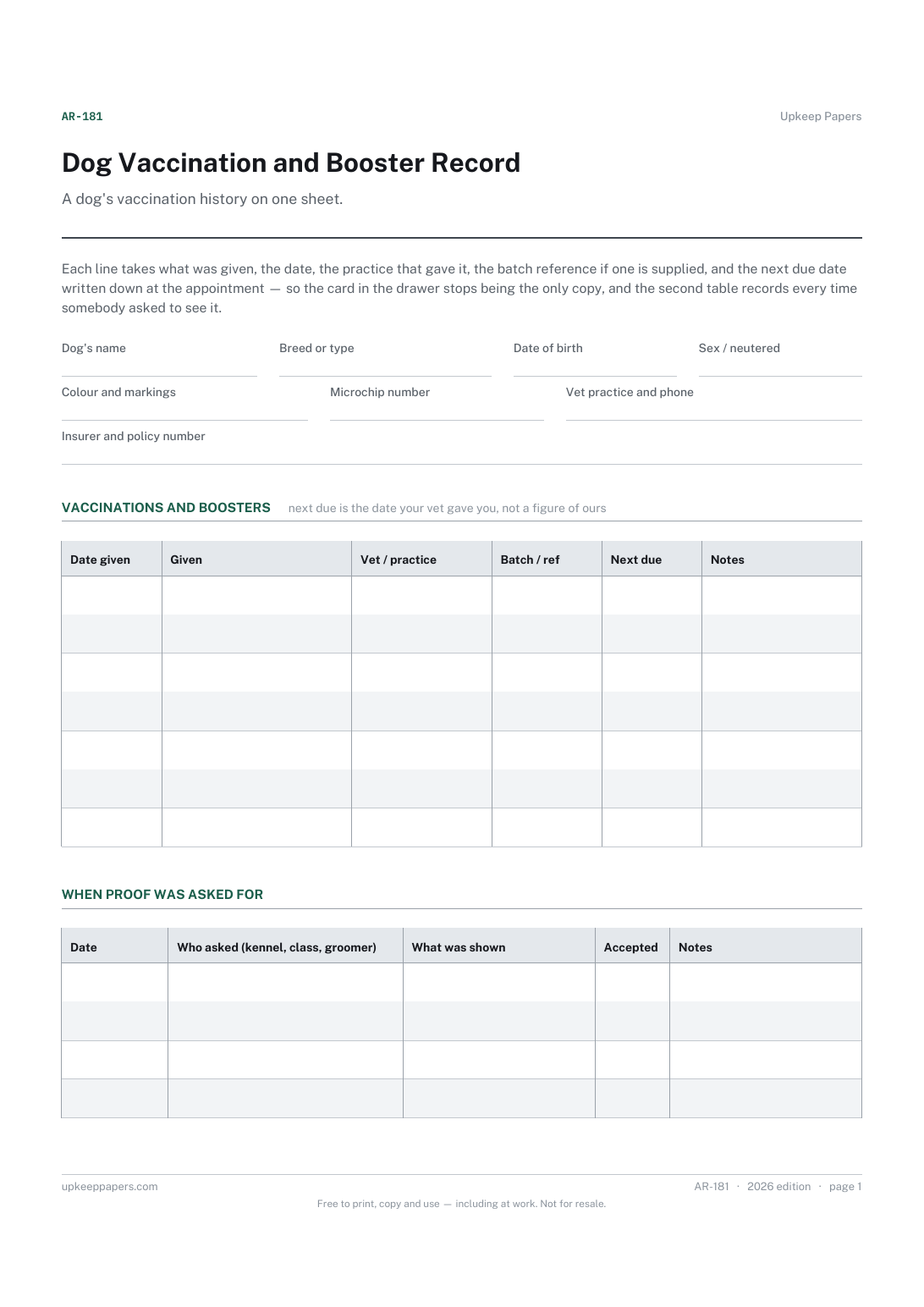
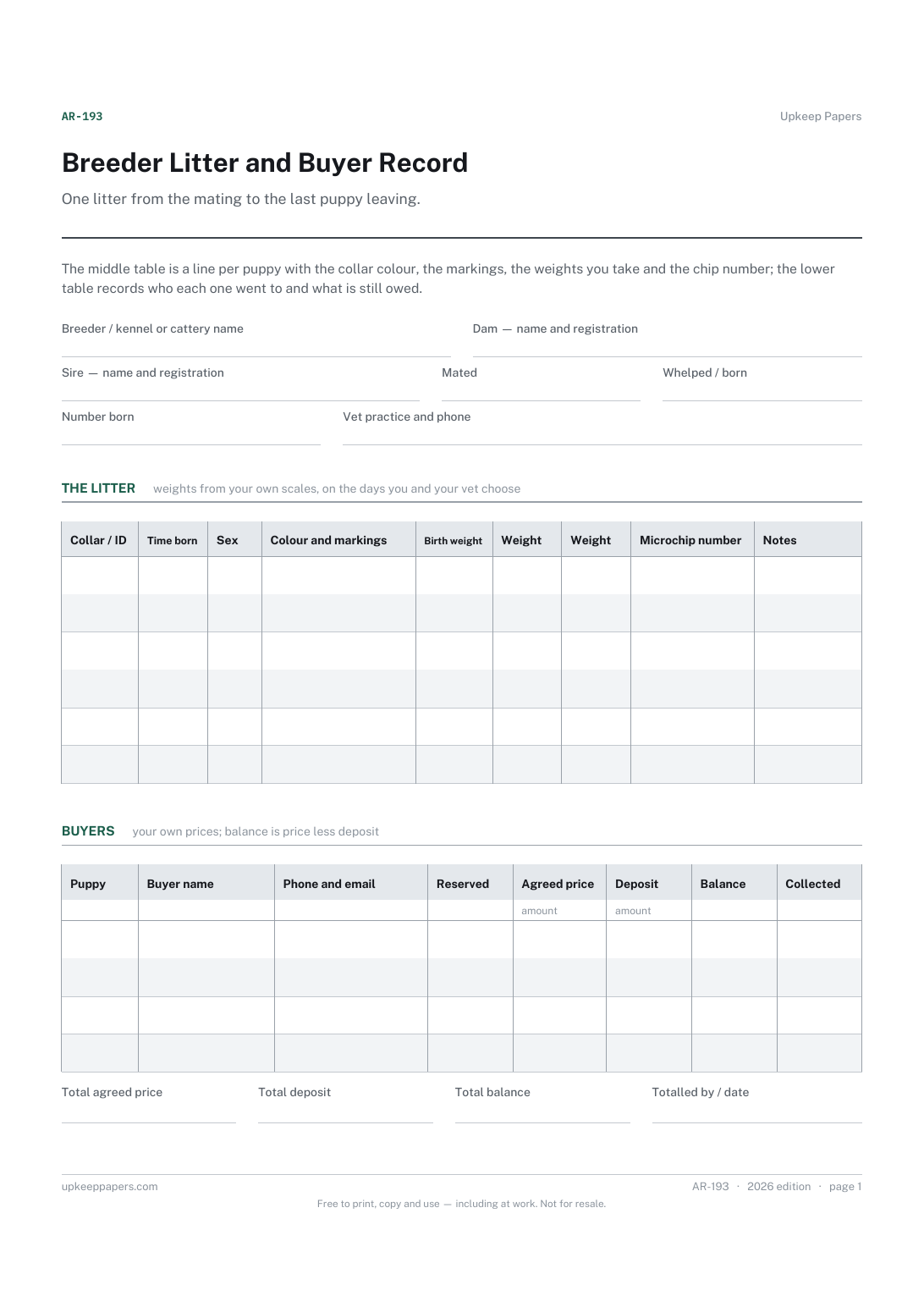
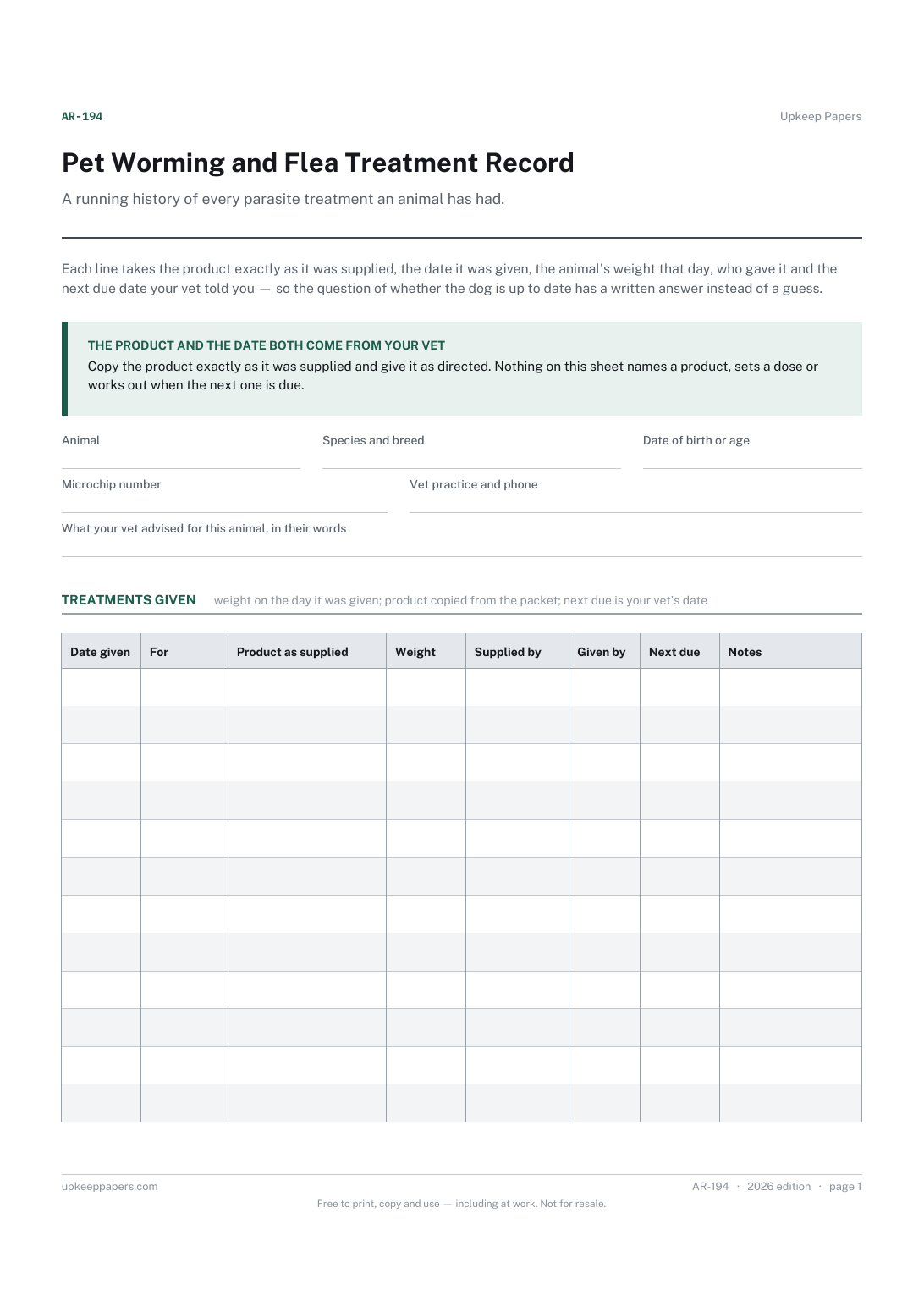
What your dog has been given and on what date, in one list.
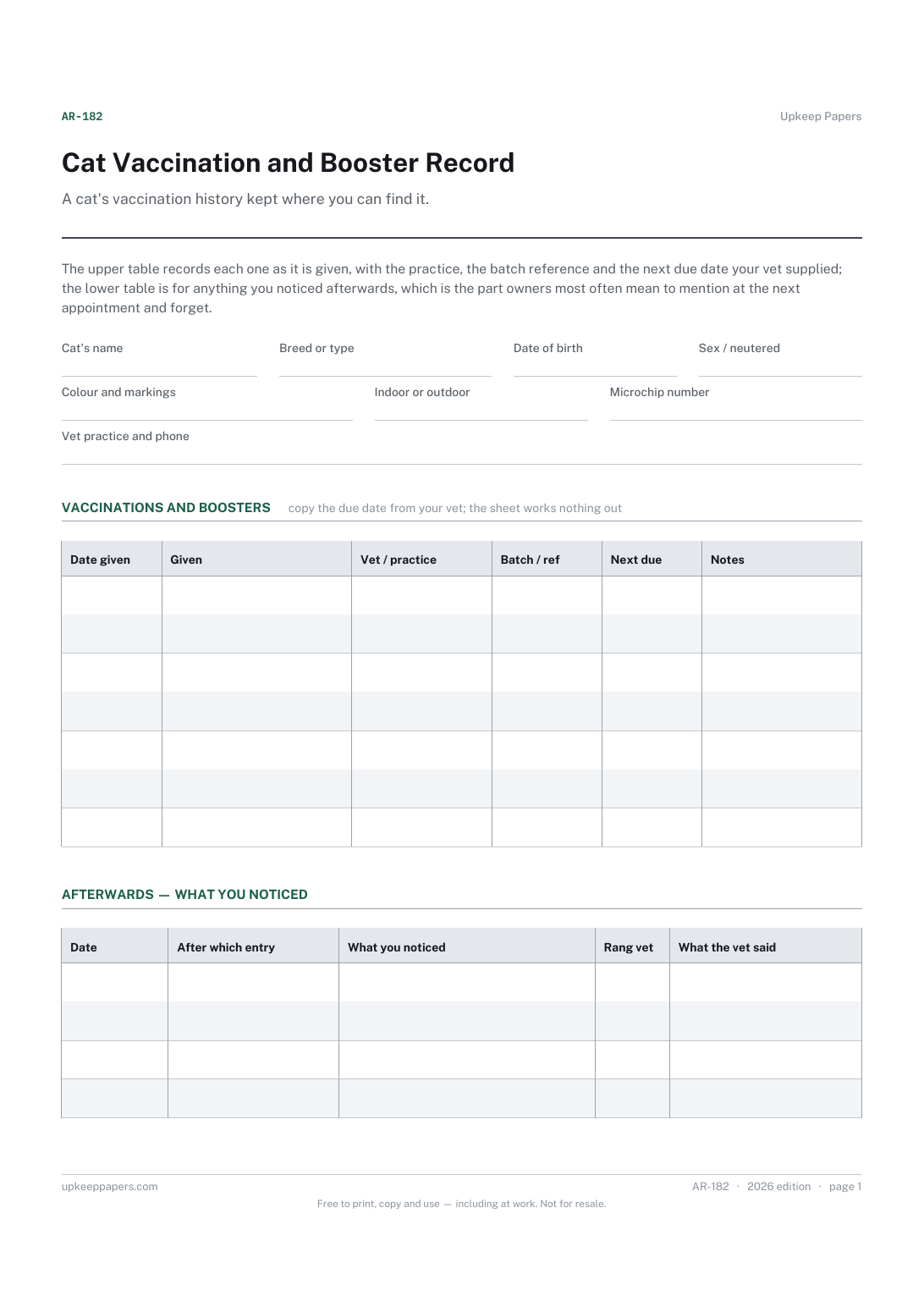
What your cat has been given, on what date and by which practice.
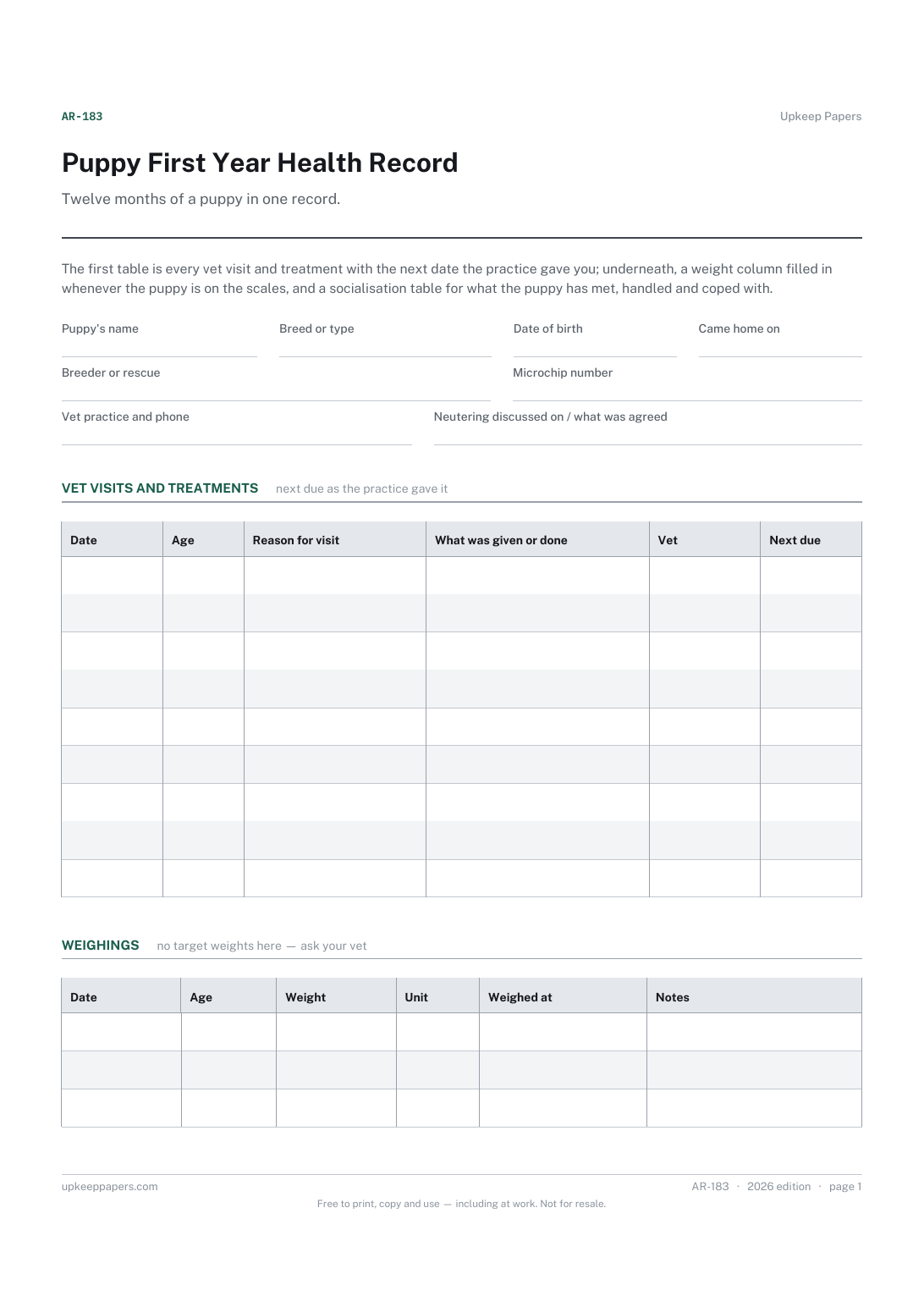
Every vet visit in the first year, with what was done and what comes next.
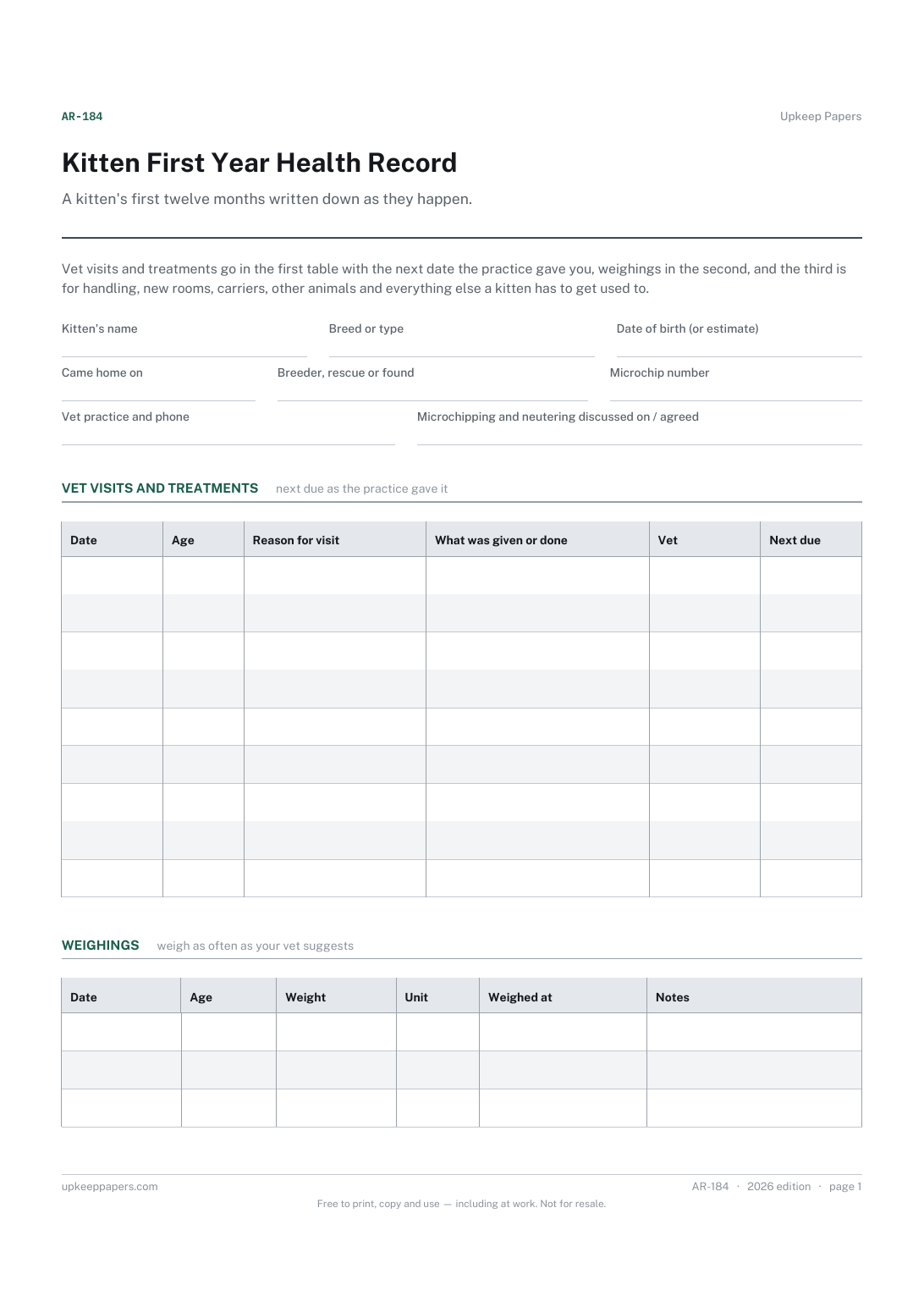
Each vet visit in the first year with what was done and the next date given.
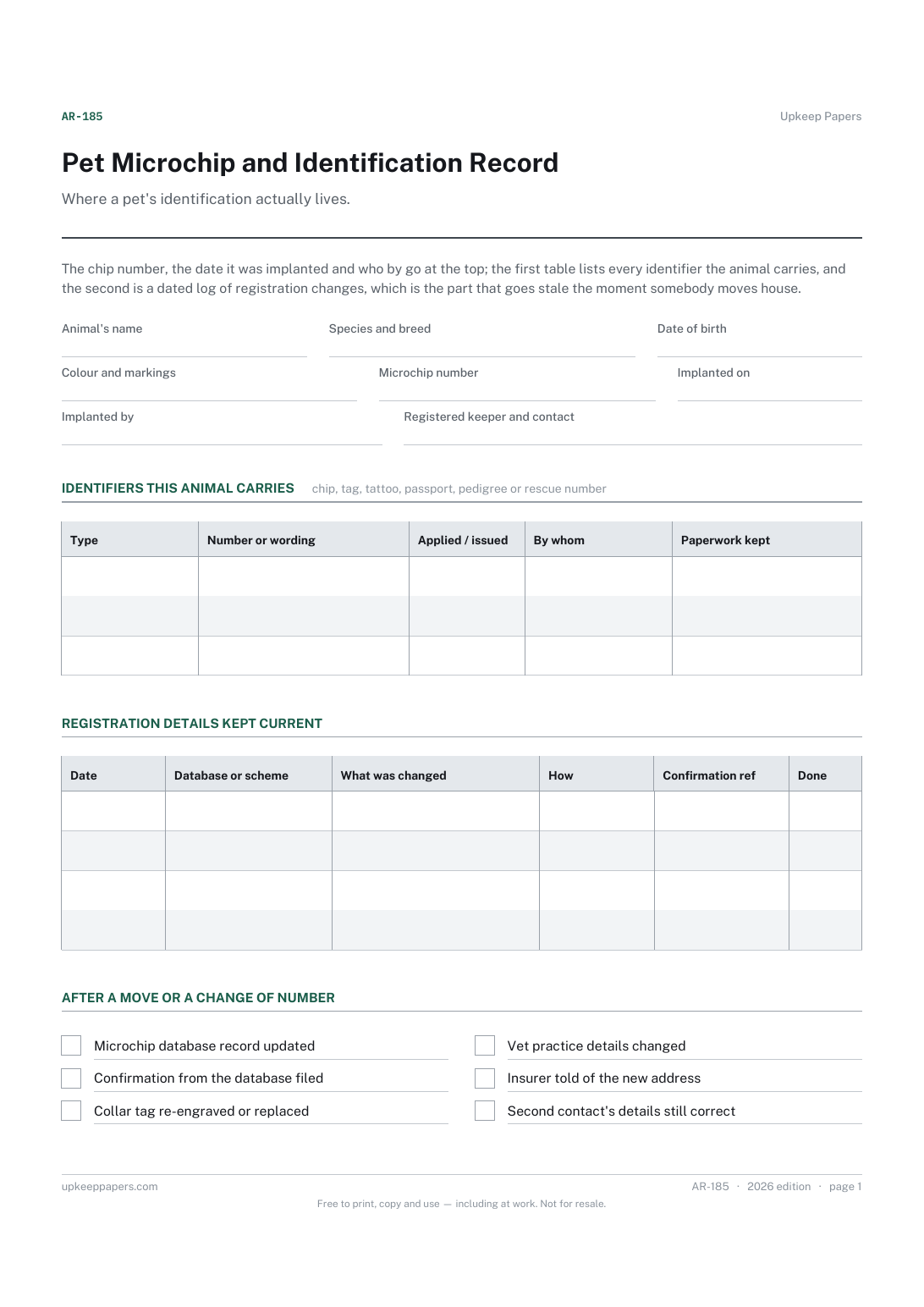
The chip number written somewhere other than a database you cannot log into.
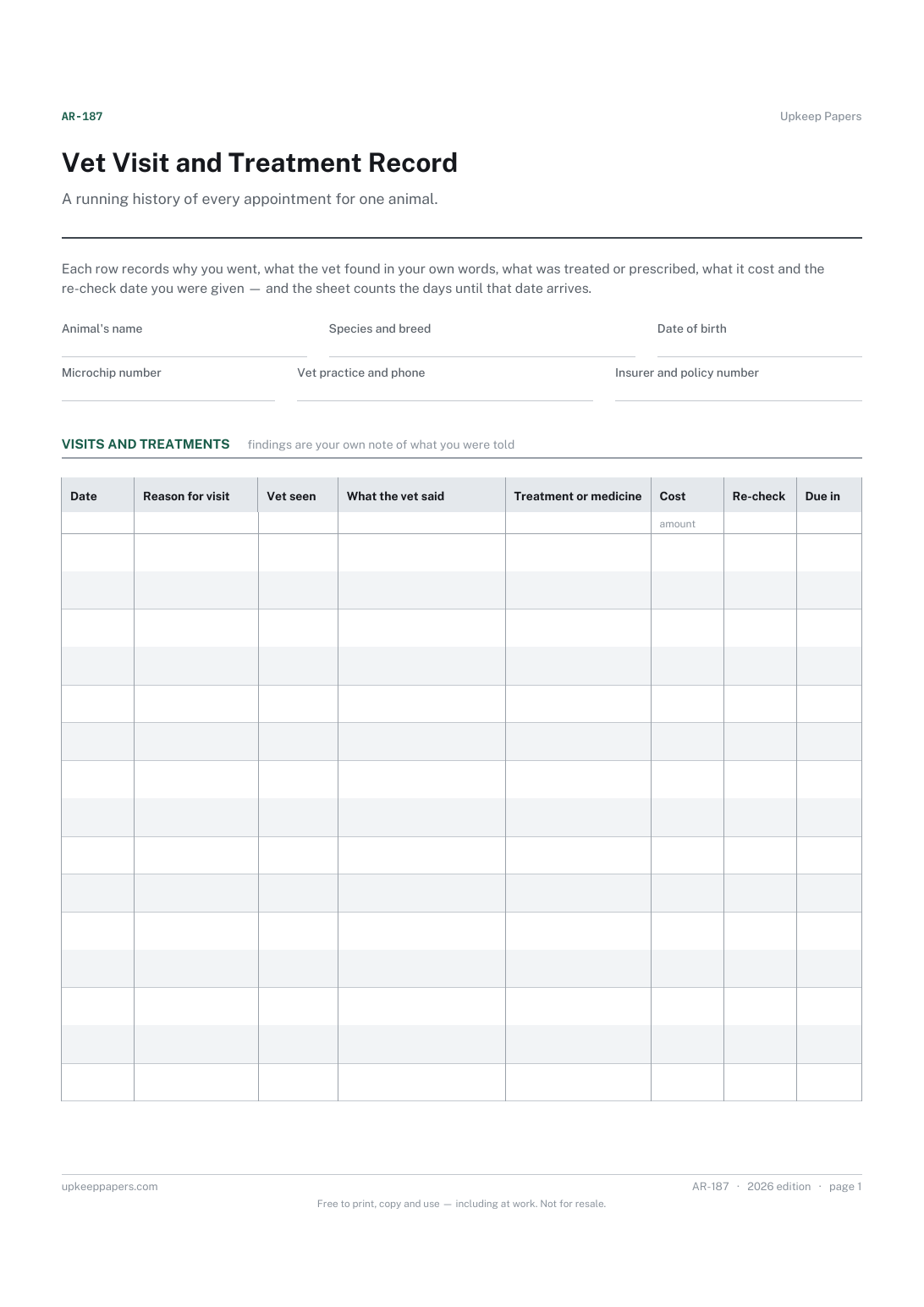
Every appointment in date order with the reason you went.
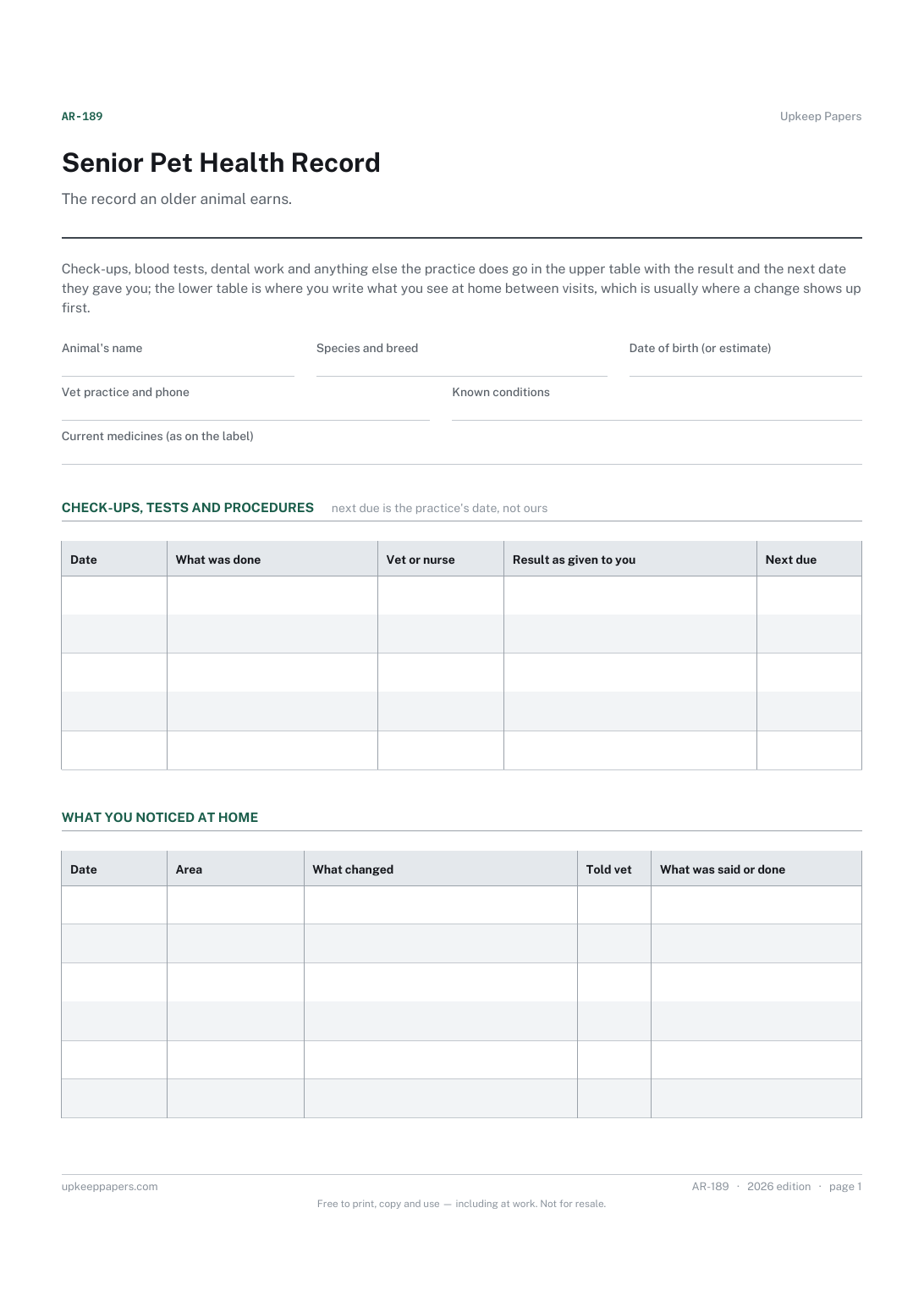
Check-ups and tests with the result you were given and the next date.
Who to ring, and who to ring if they cannot be reached.
The dog, the owner and a second number, on the card rather than in a phone.
The dam, the sire and their registration or identification numbers in one place.
What was given, on what date, and by whom.
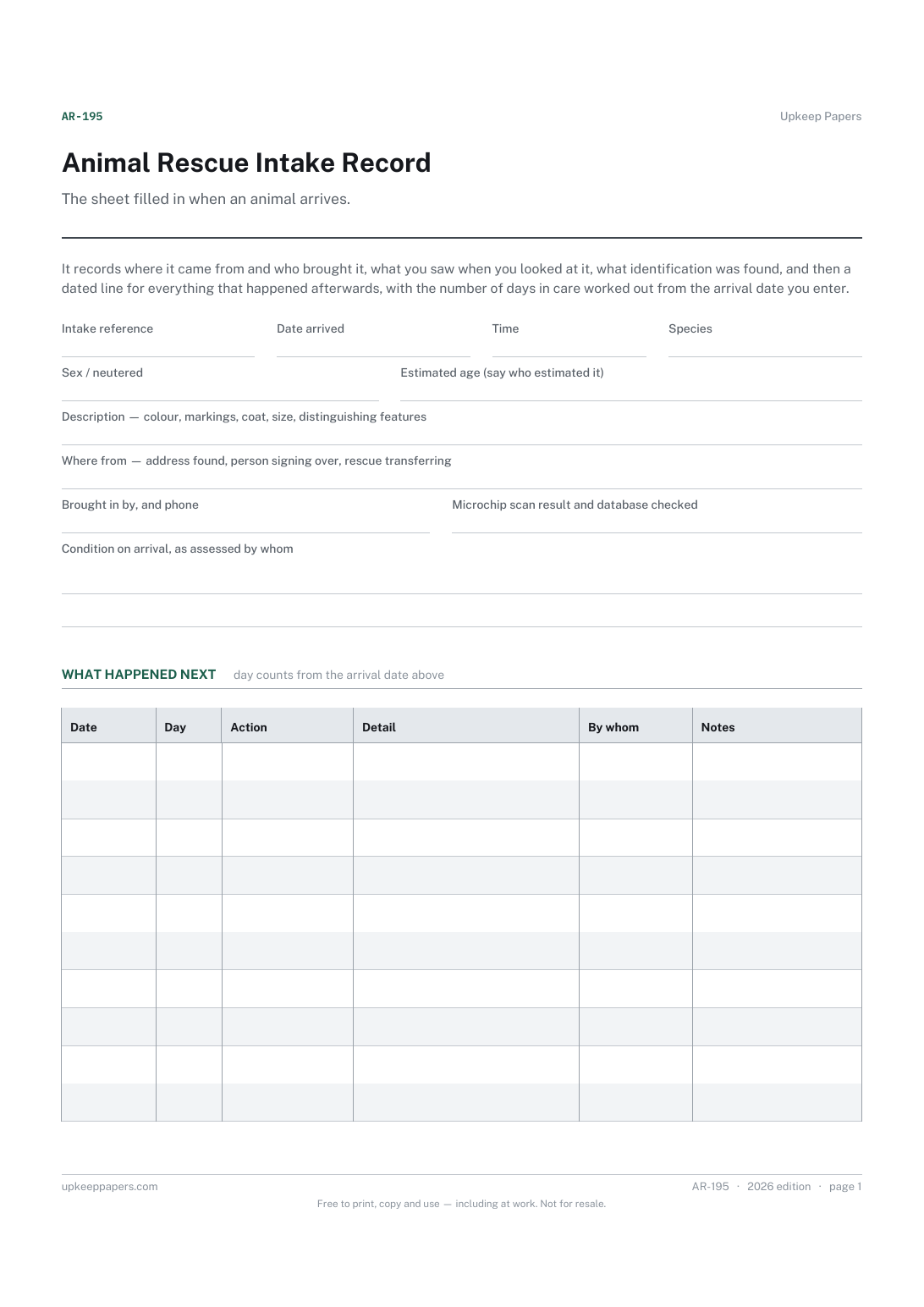
Where the animal came from and who handed it over, with a contact.
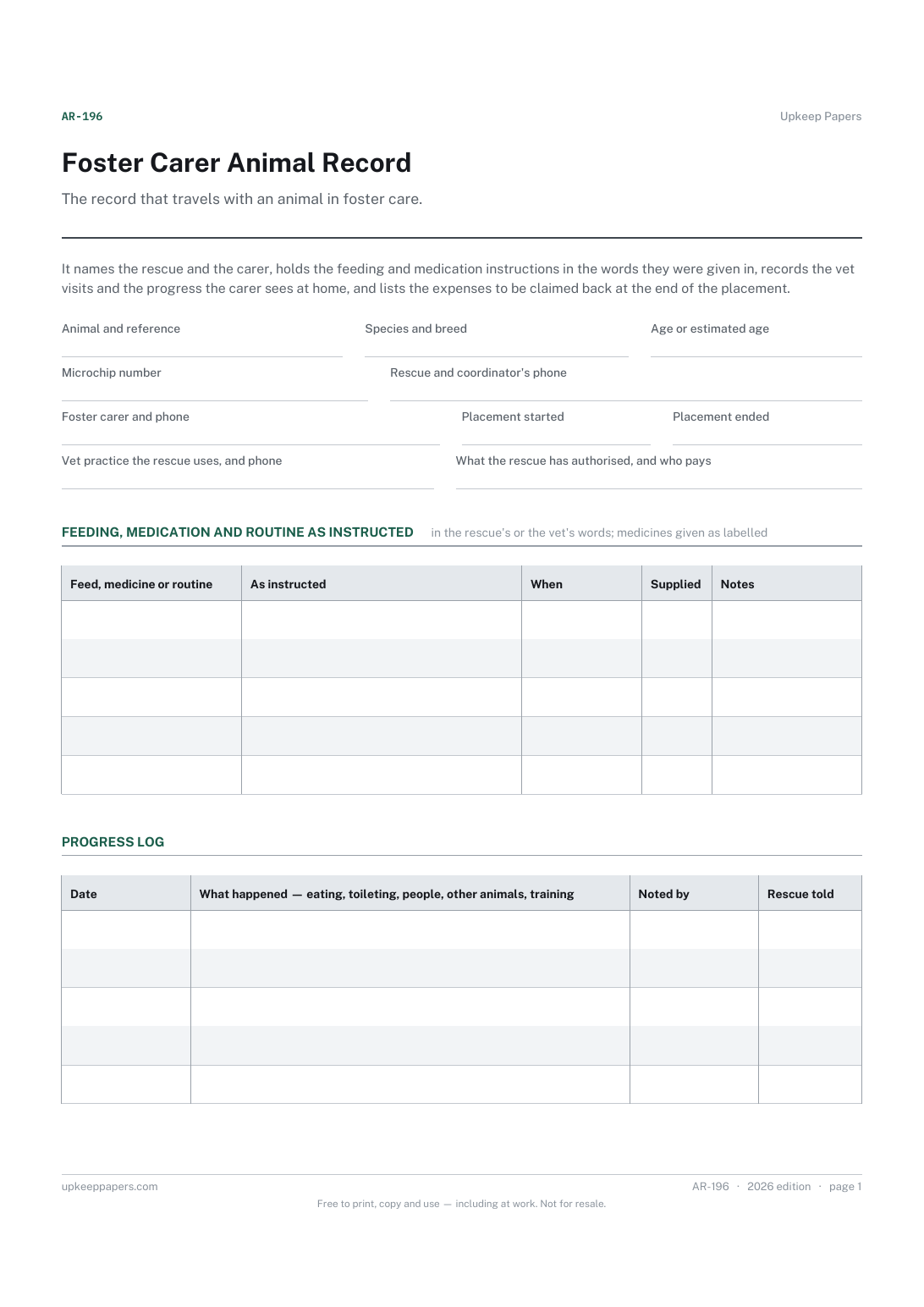
Who the animal belongs to while it is with you, and who to ring about it.
Document type, number, issue date and who issued it, copied from the document itself.
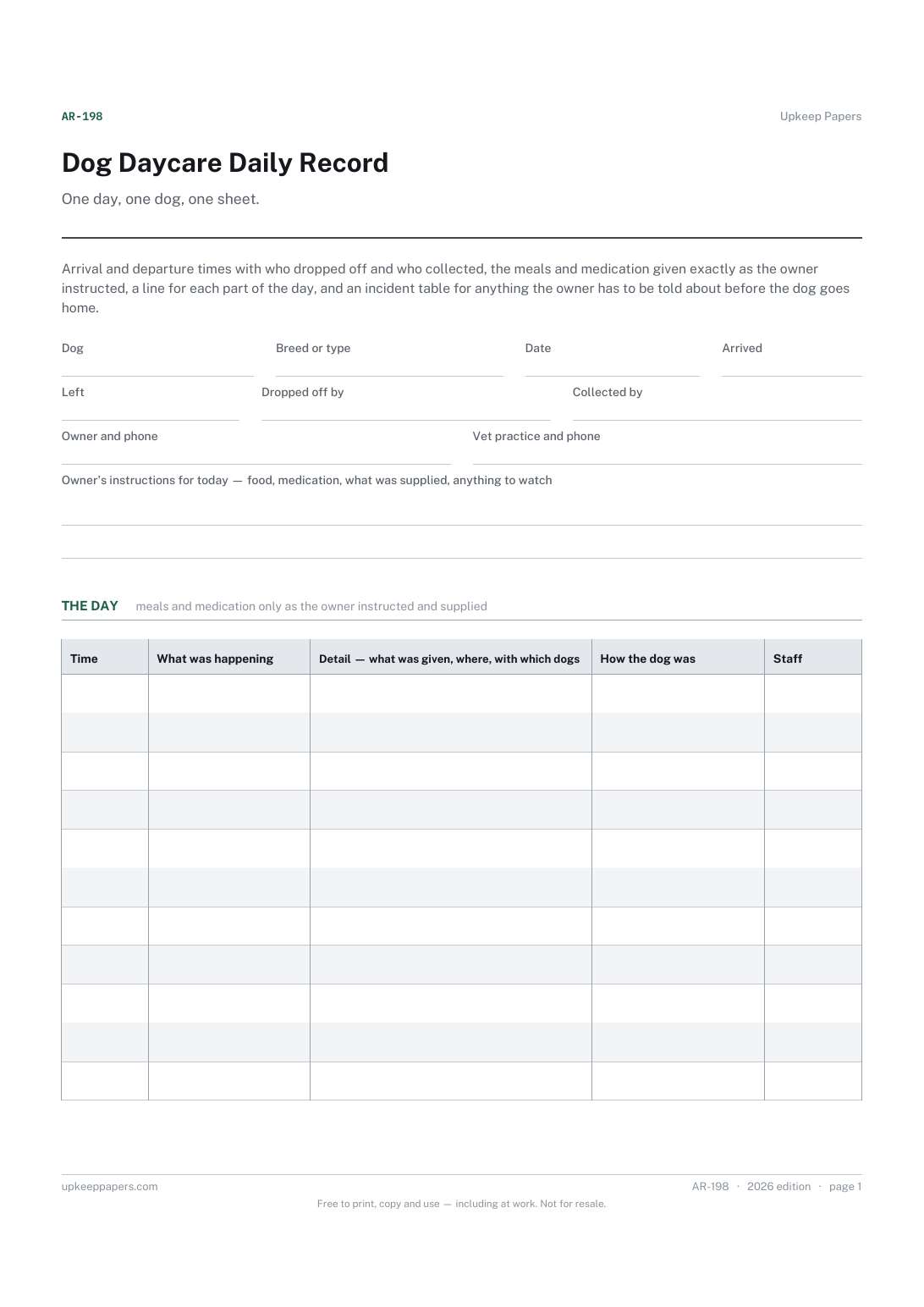
Arrival and departure times, and who handed the dog over at each end.
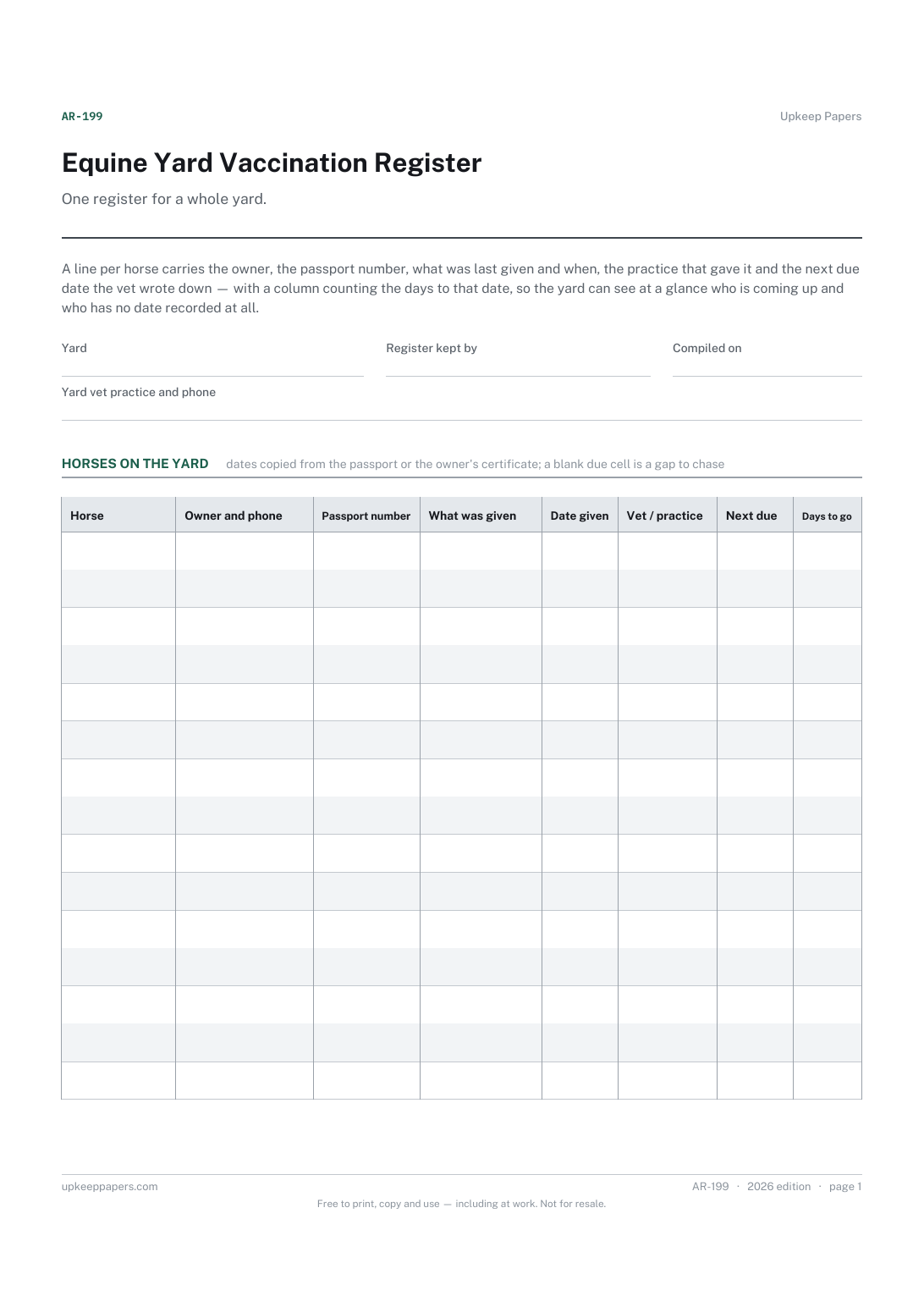
Every horse on the yard on one list, with its owner and passport number.
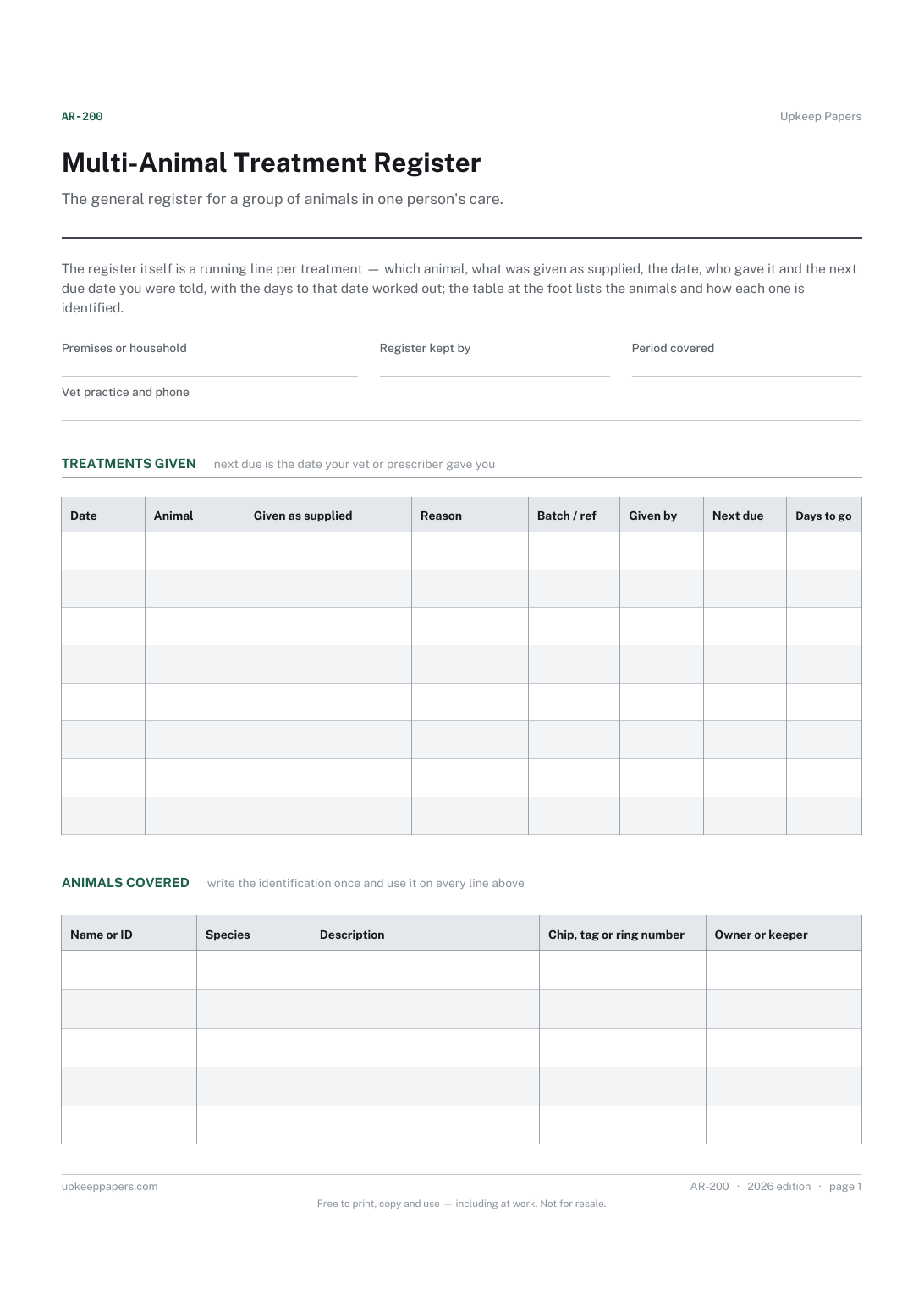
Every animal in your care identified the same way, by name, chip or tag.
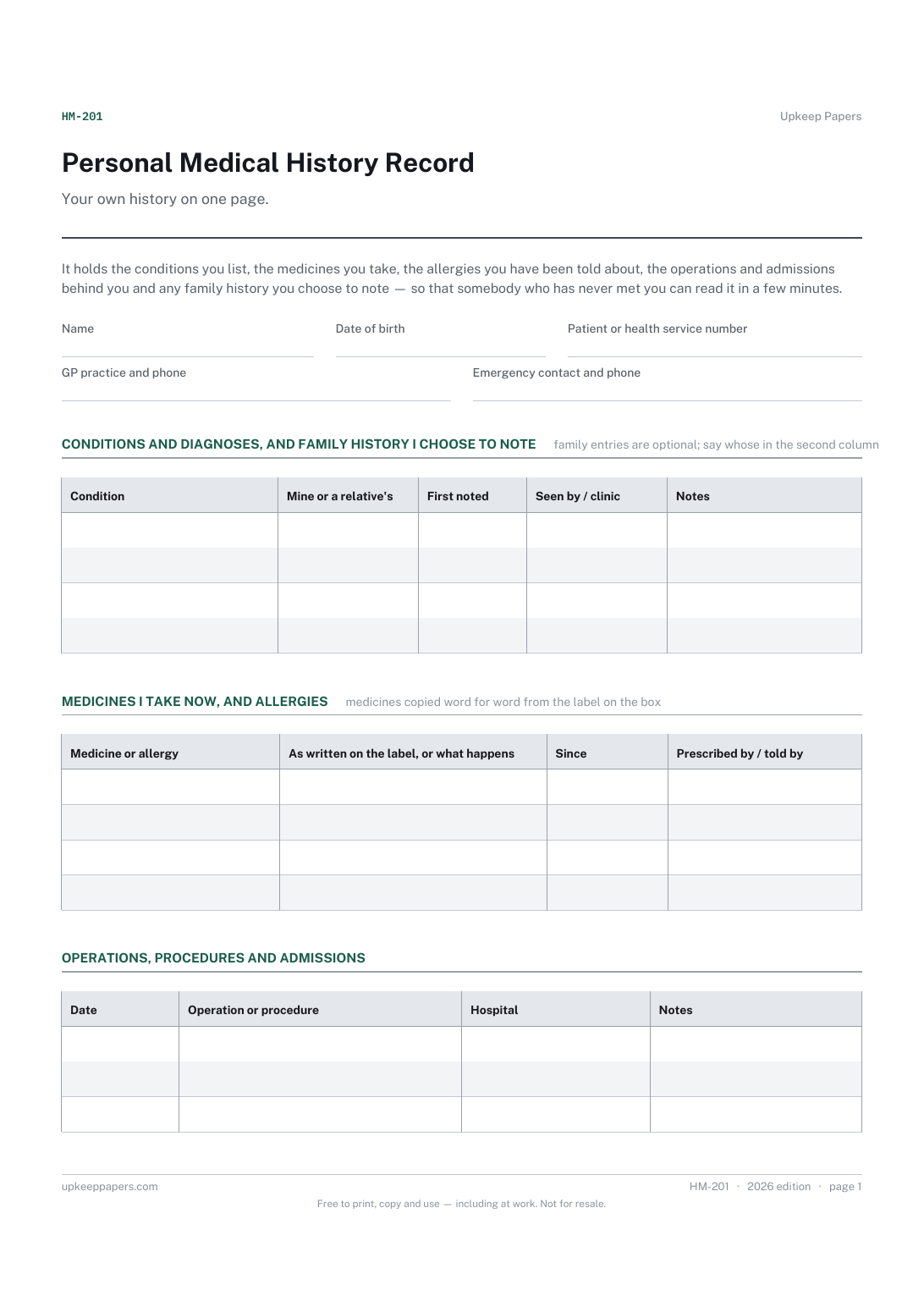
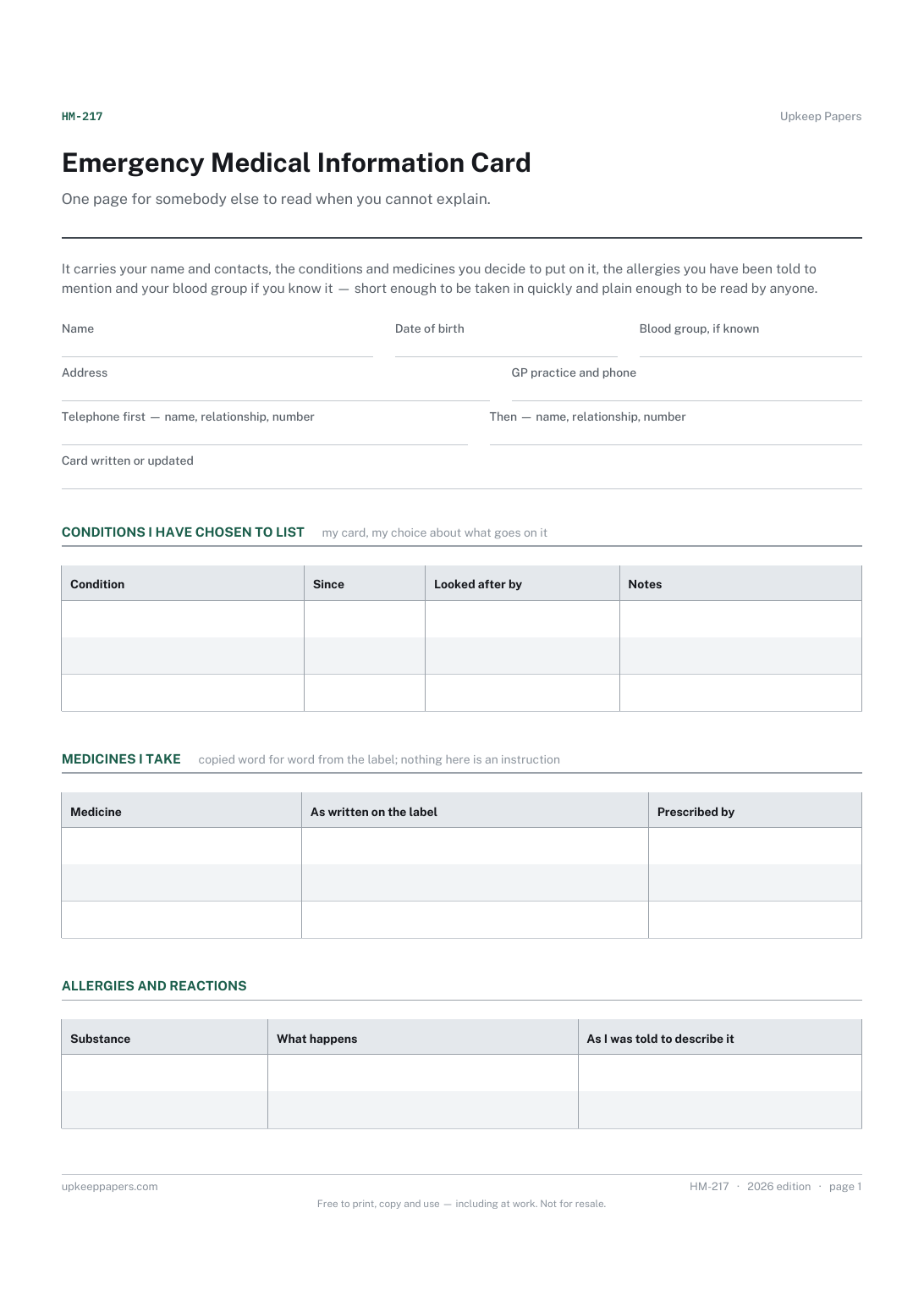
Conditions and diagnoses in your own words, with the date each was first noted.
What you are taking now, in the words printed on the label.
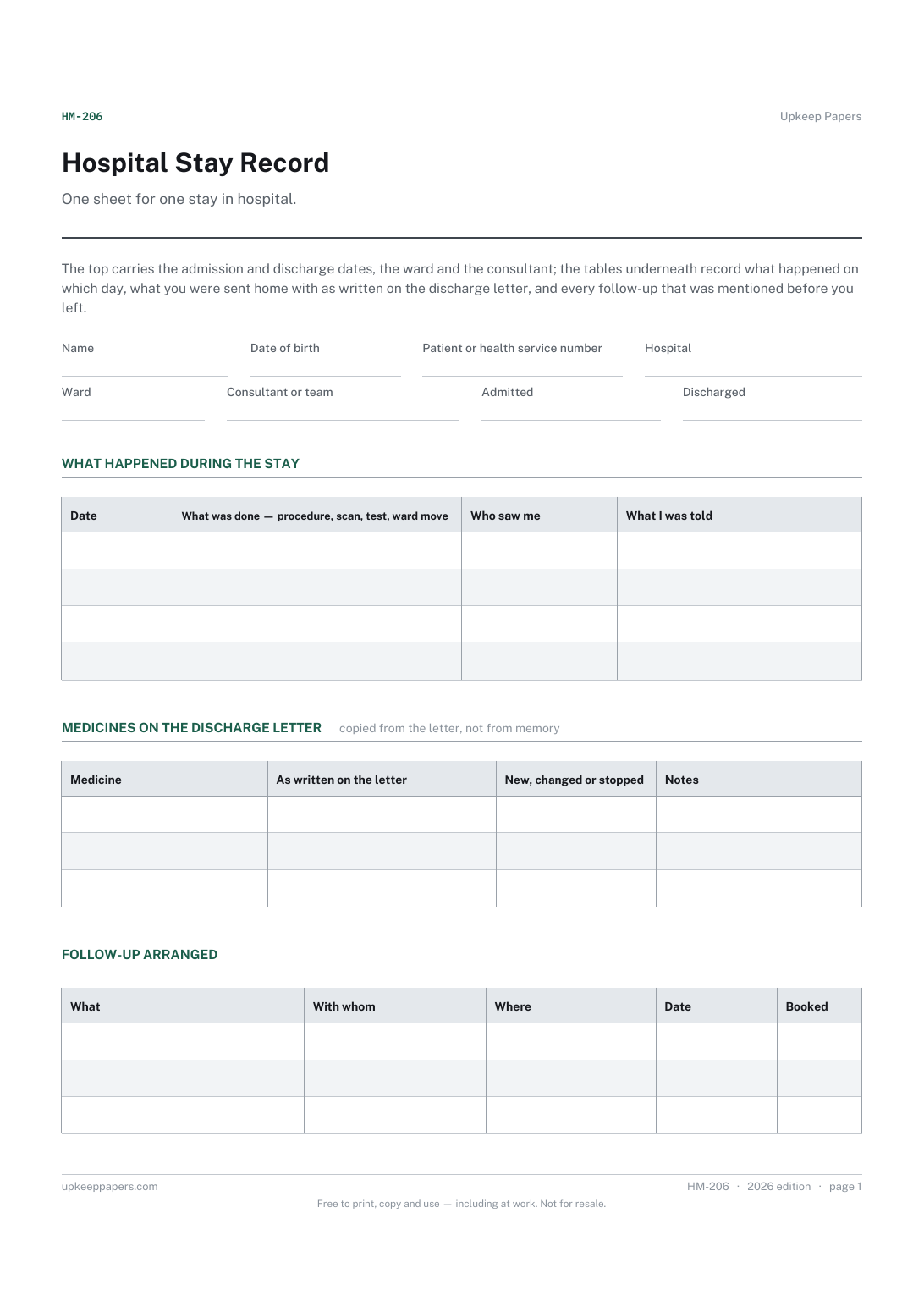
Admission and discharge dates, ward and consultant in one place.
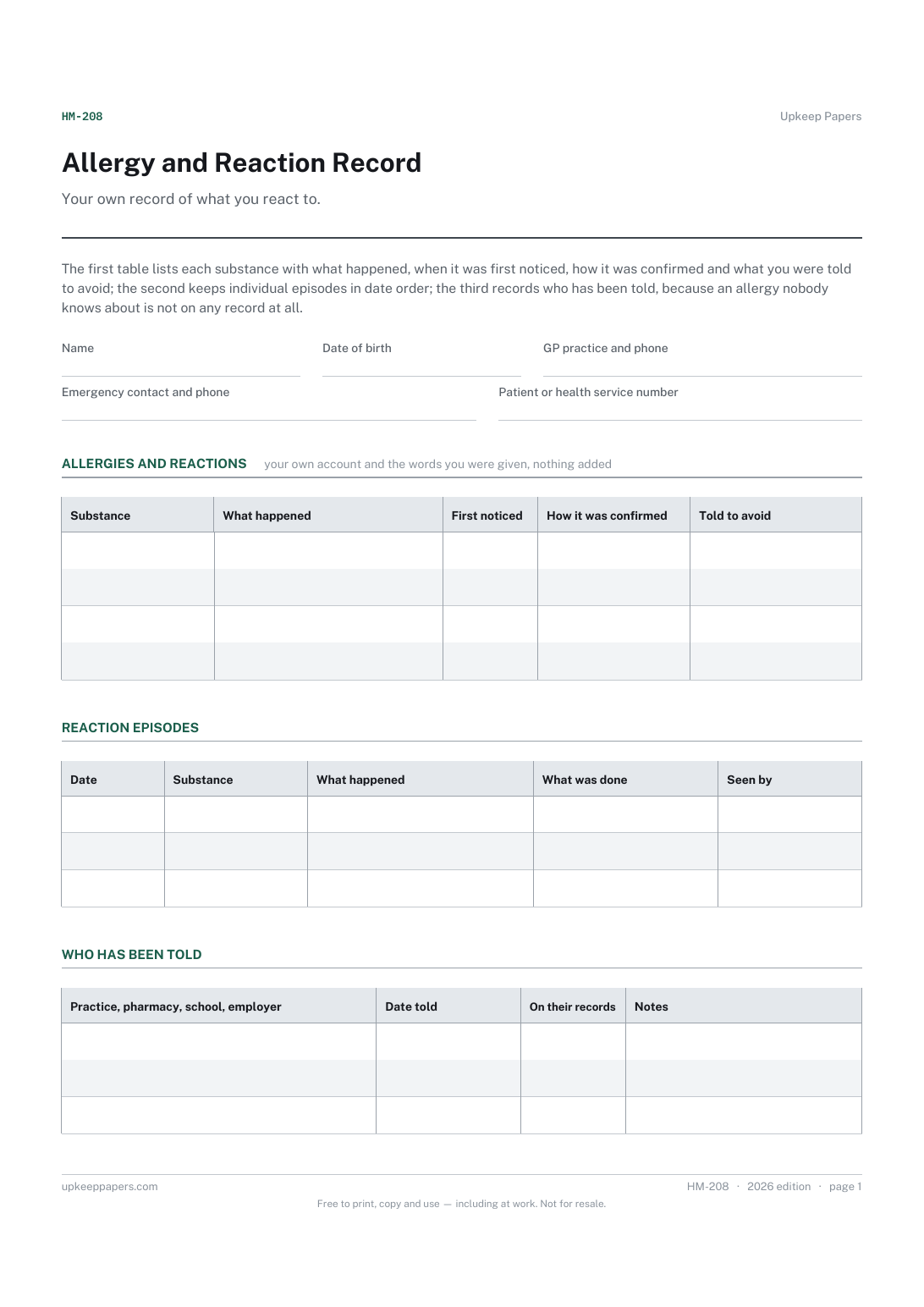
Each substance with what actually happened, in your own account.
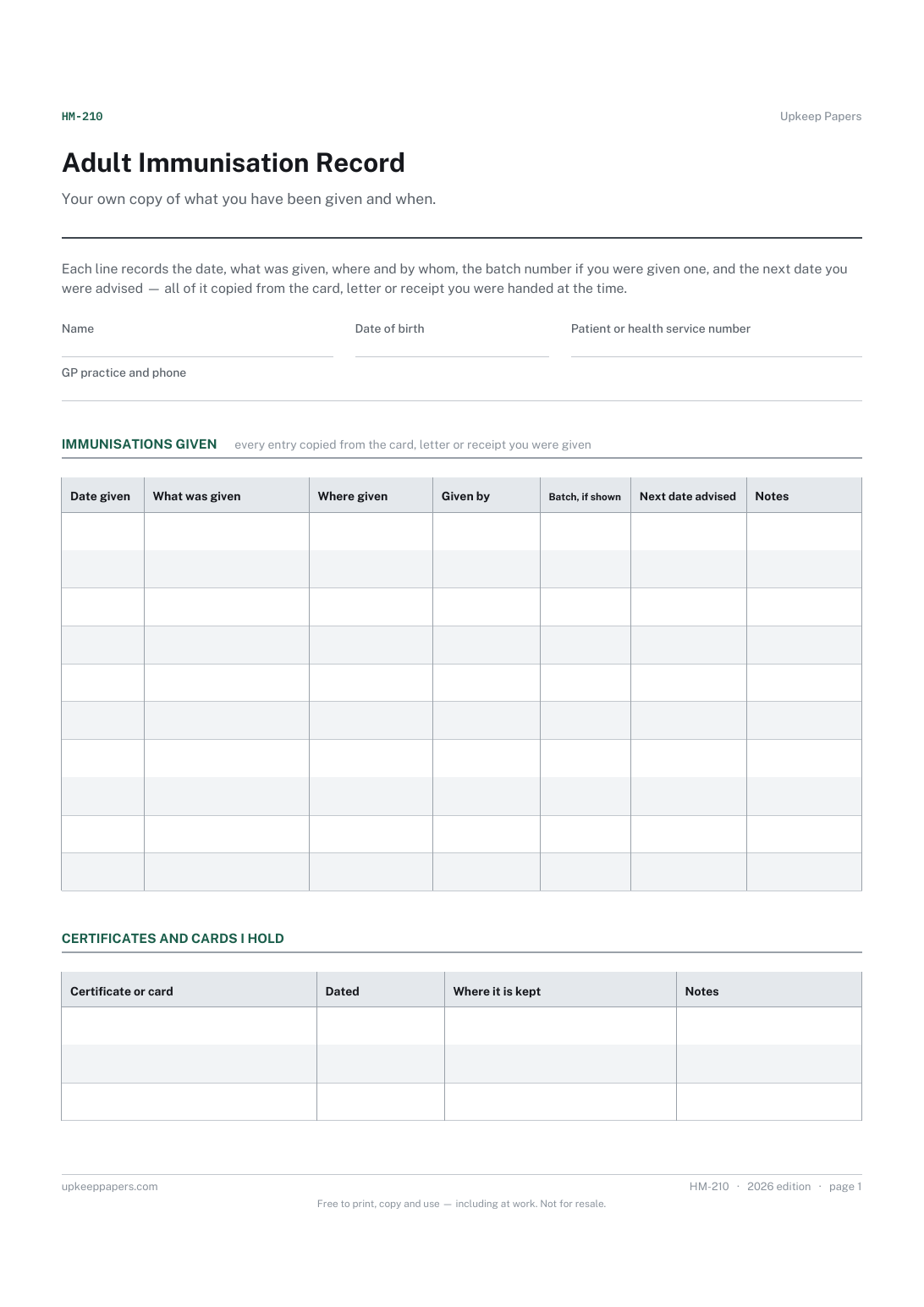
What was given and when, in one list instead of four.
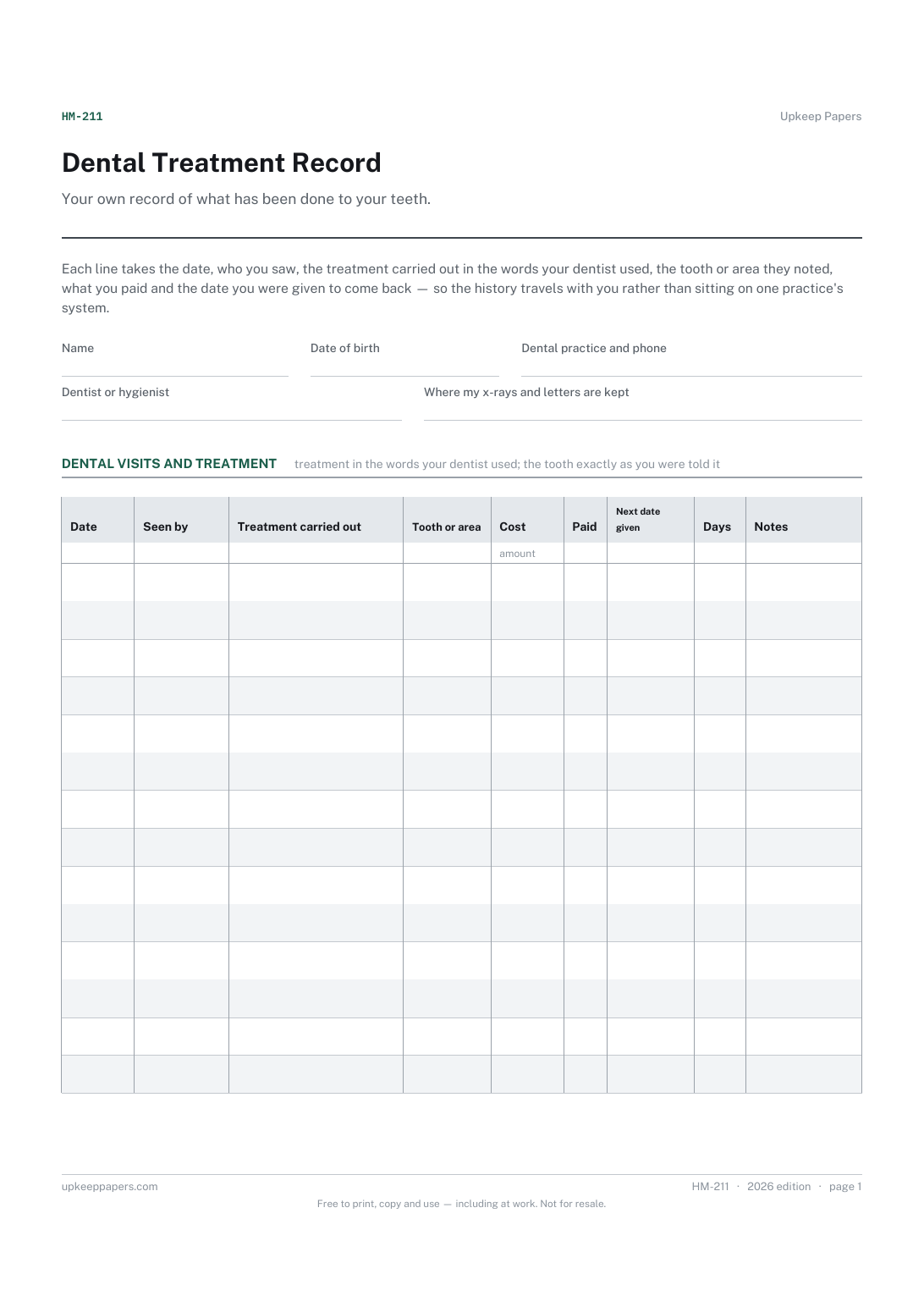
Every visit in date order, with the practice and the dentist or hygienist you saw.
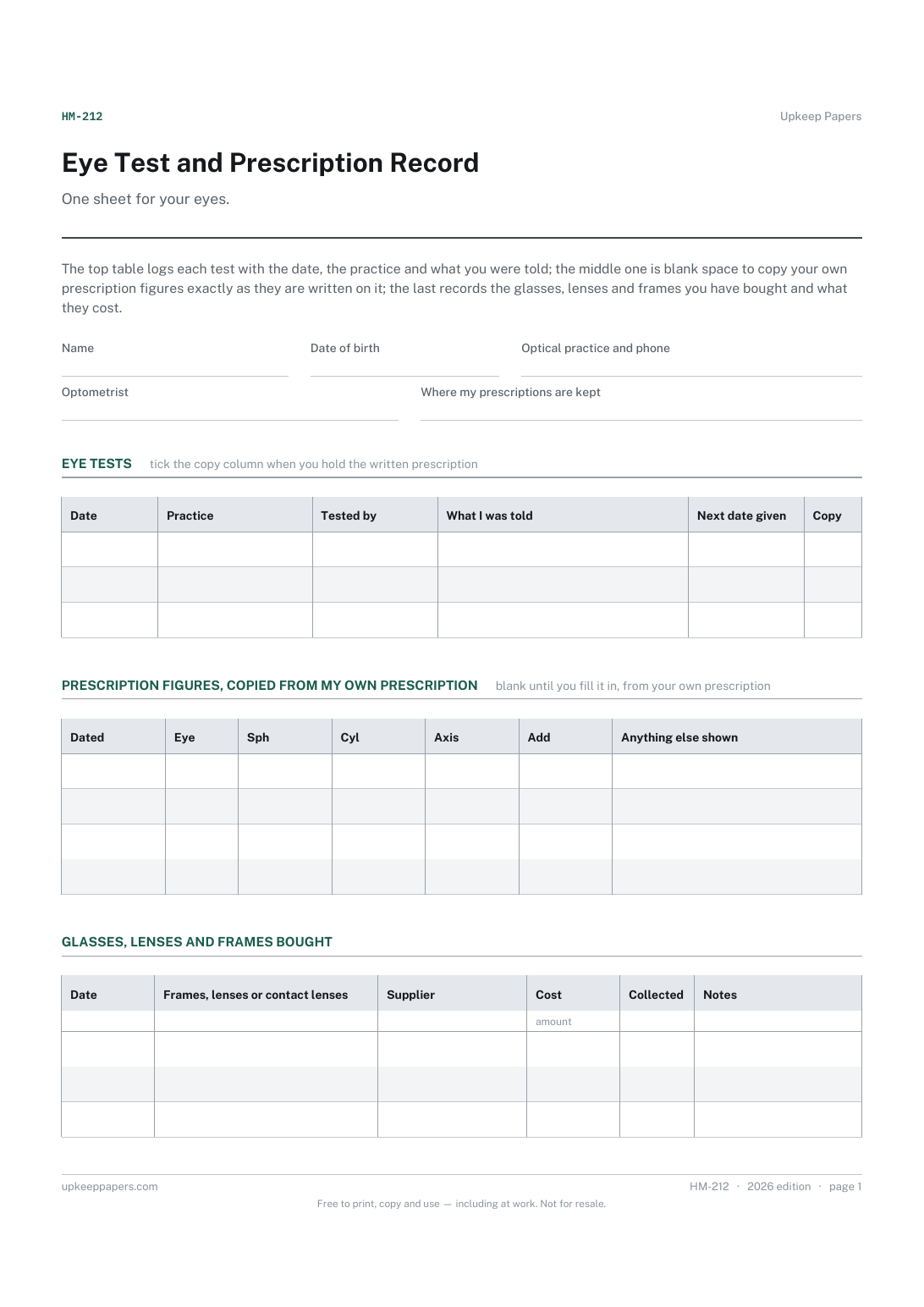
Every test in date order with the practice and the optometrist.
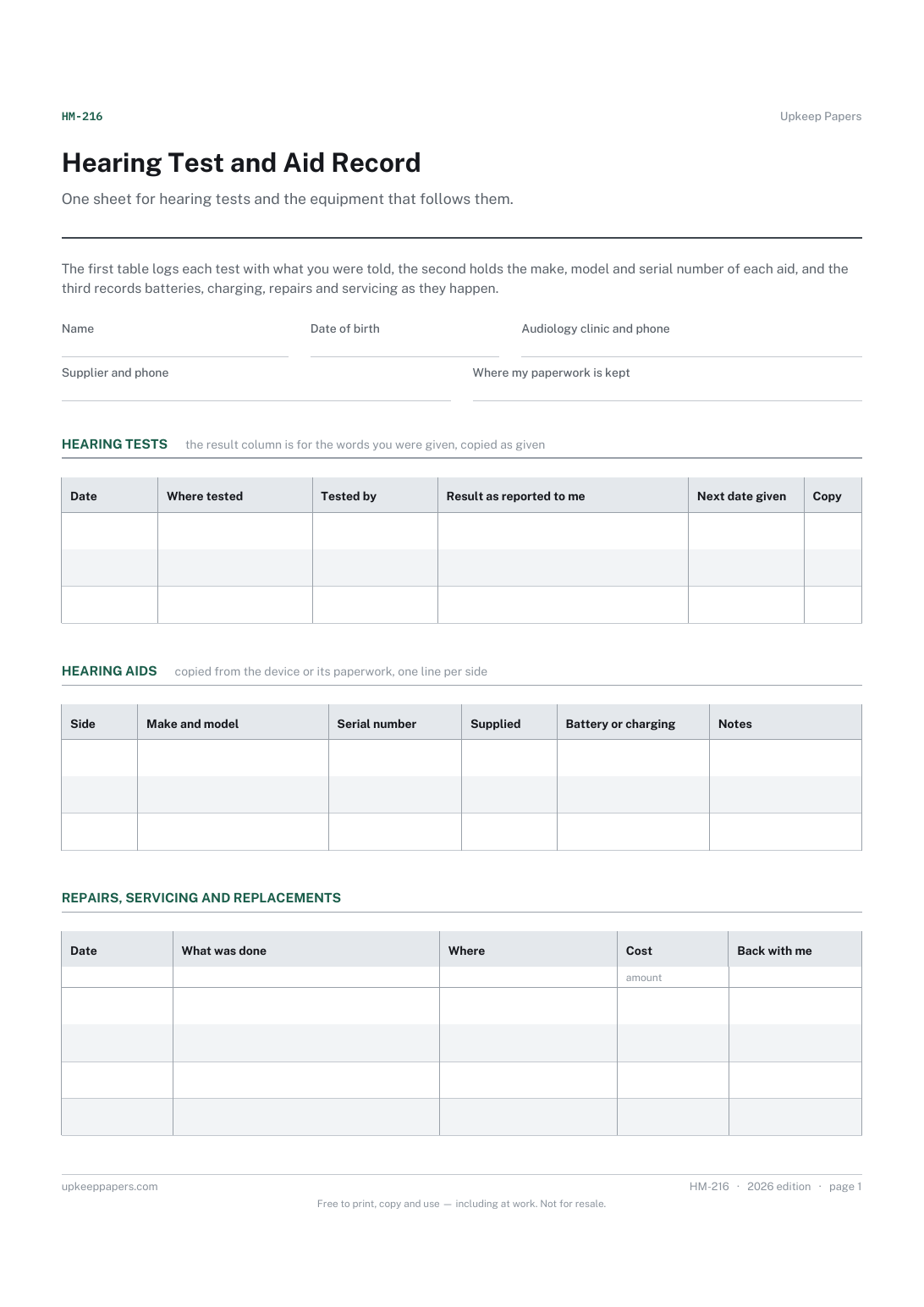
Each test with the date, where it was done and who did it.
Who you are and who should be telephoned, in order.
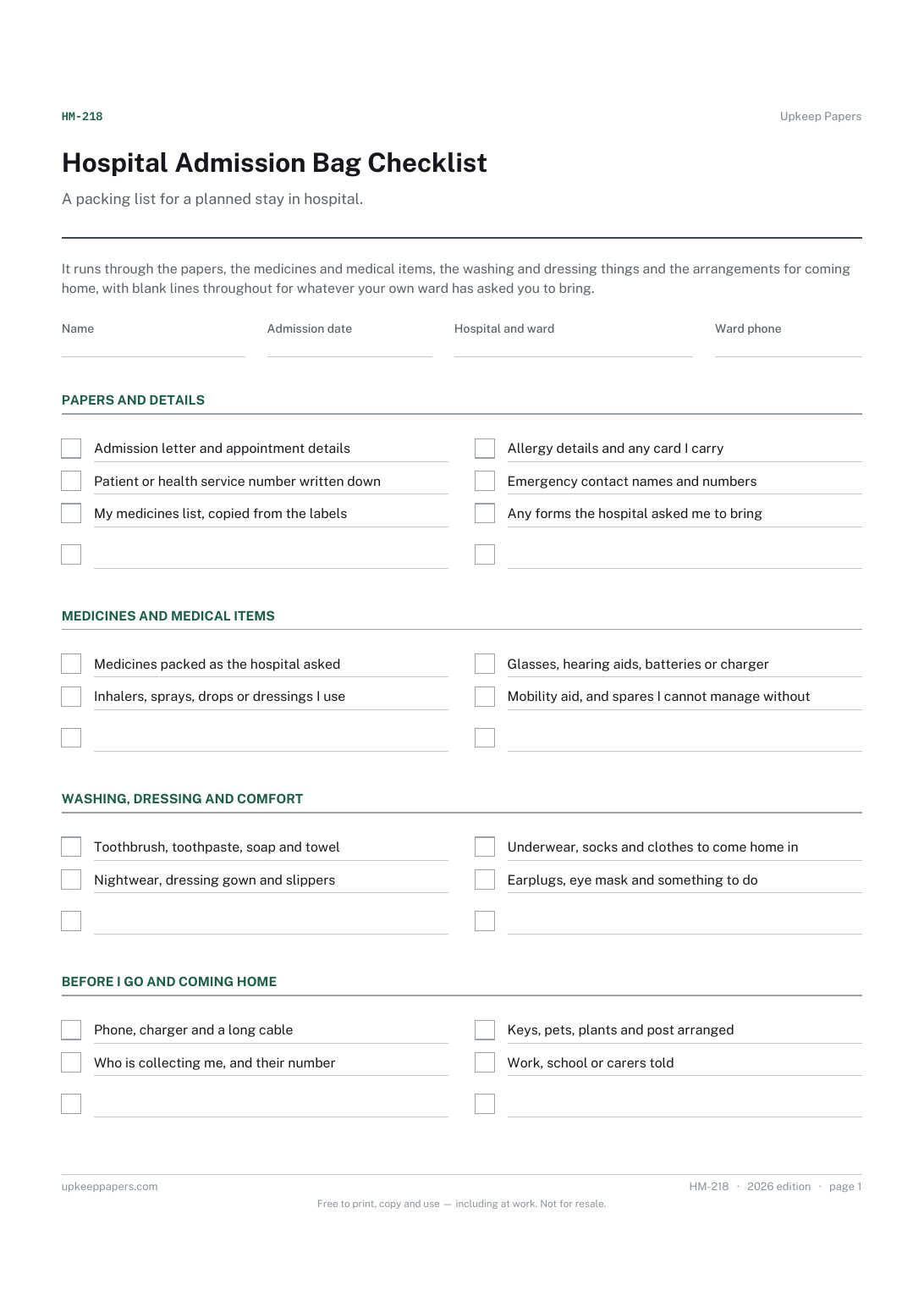
The papers and details worth taking, gathered before the morning of admission.
The questions you actually meant to ask, written down before you go.
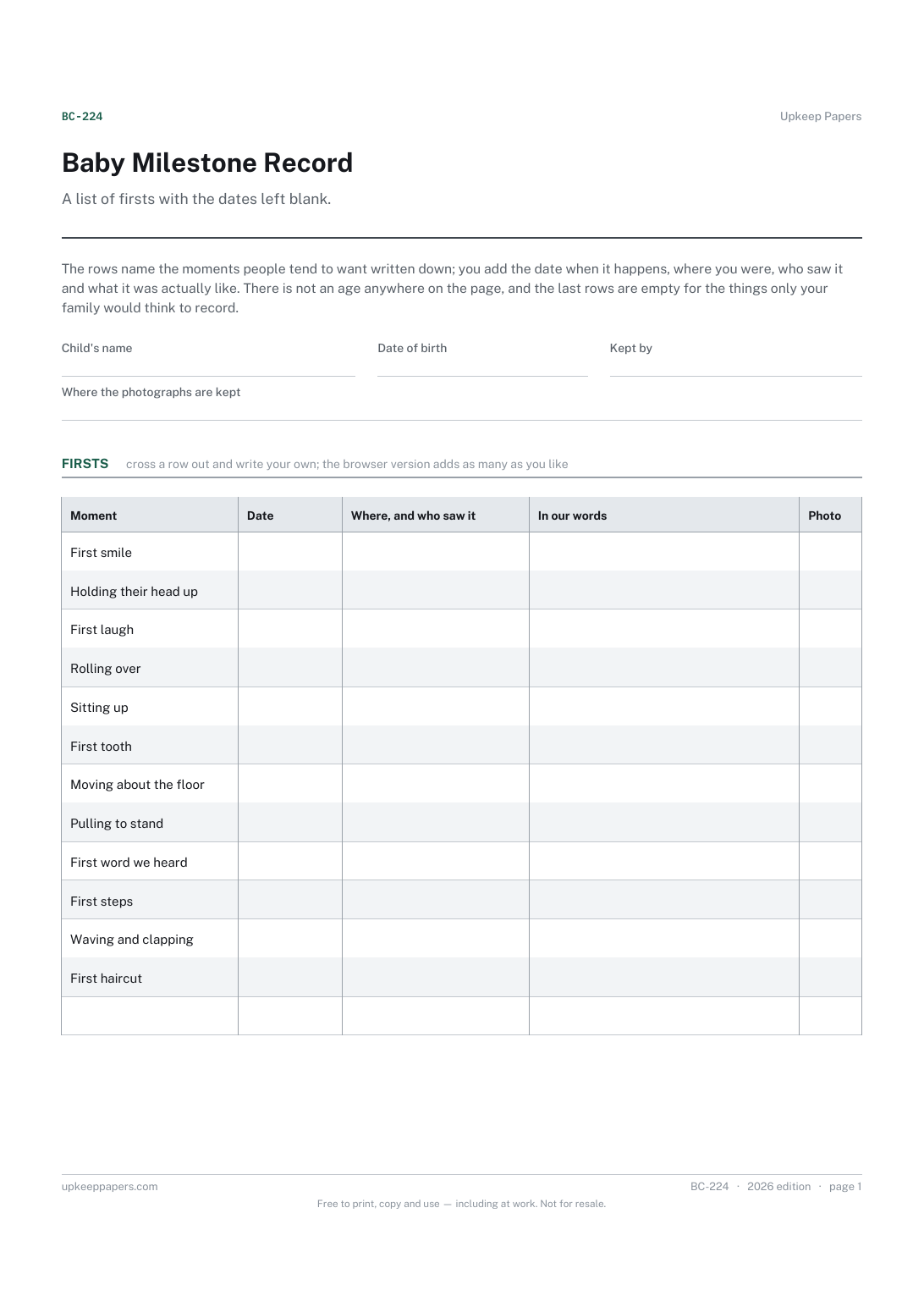
The date each first happened, written down while you still know it.
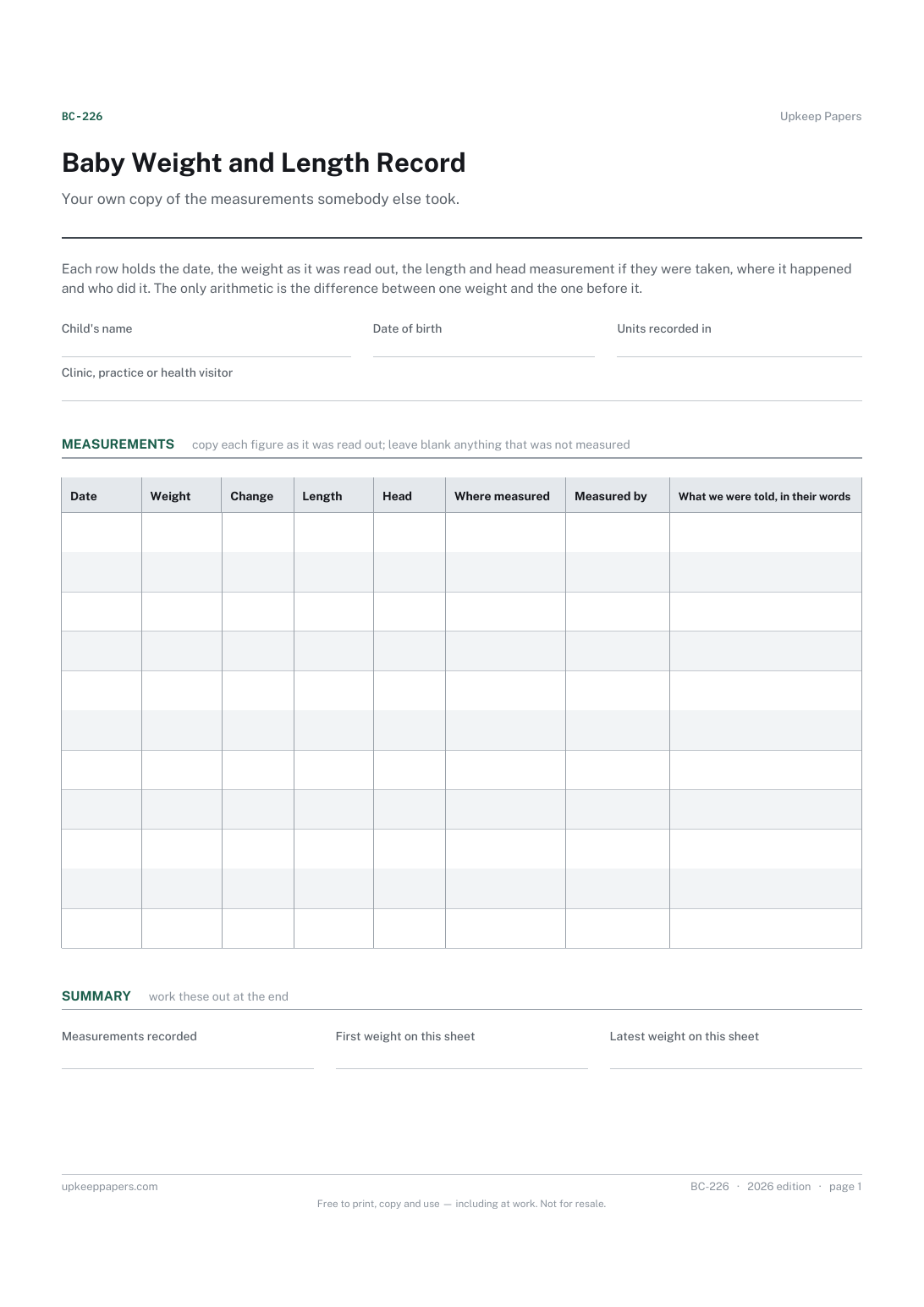
Every measurement with its date, copied as it was read out.
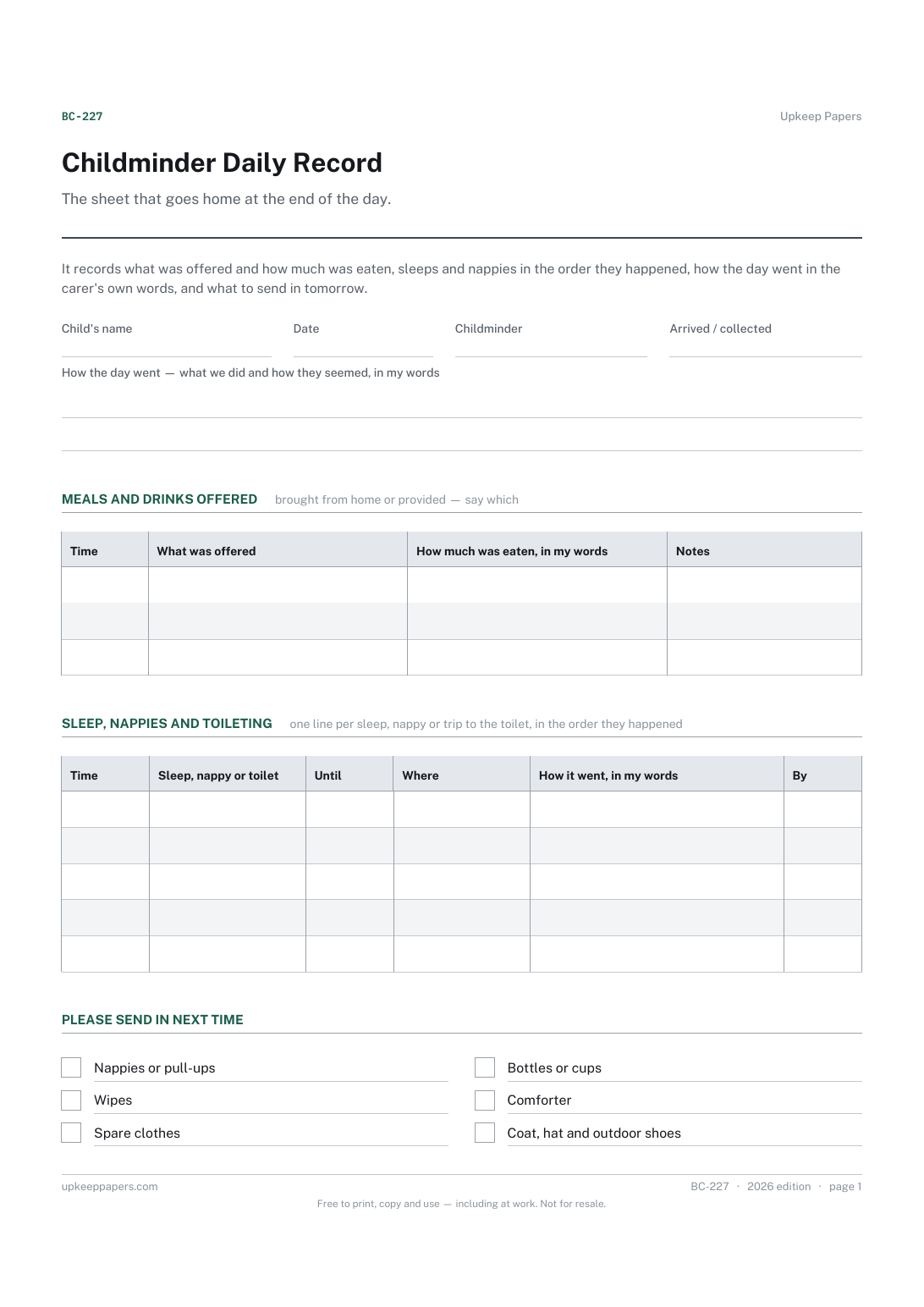
Meals and drinks as provided, and how much was eaten in the carer's words.
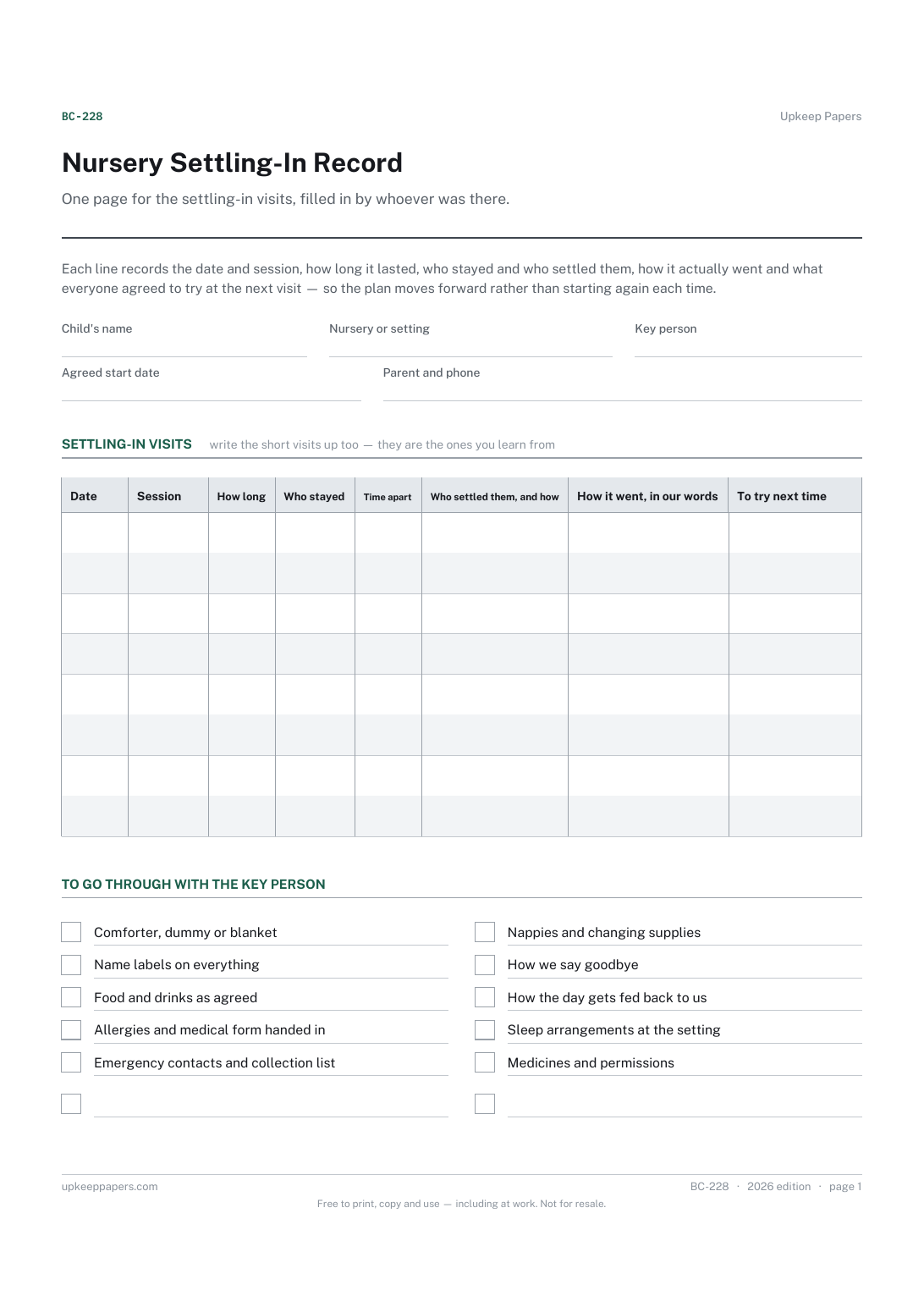
Every visit with its date, session and how long it lasted.
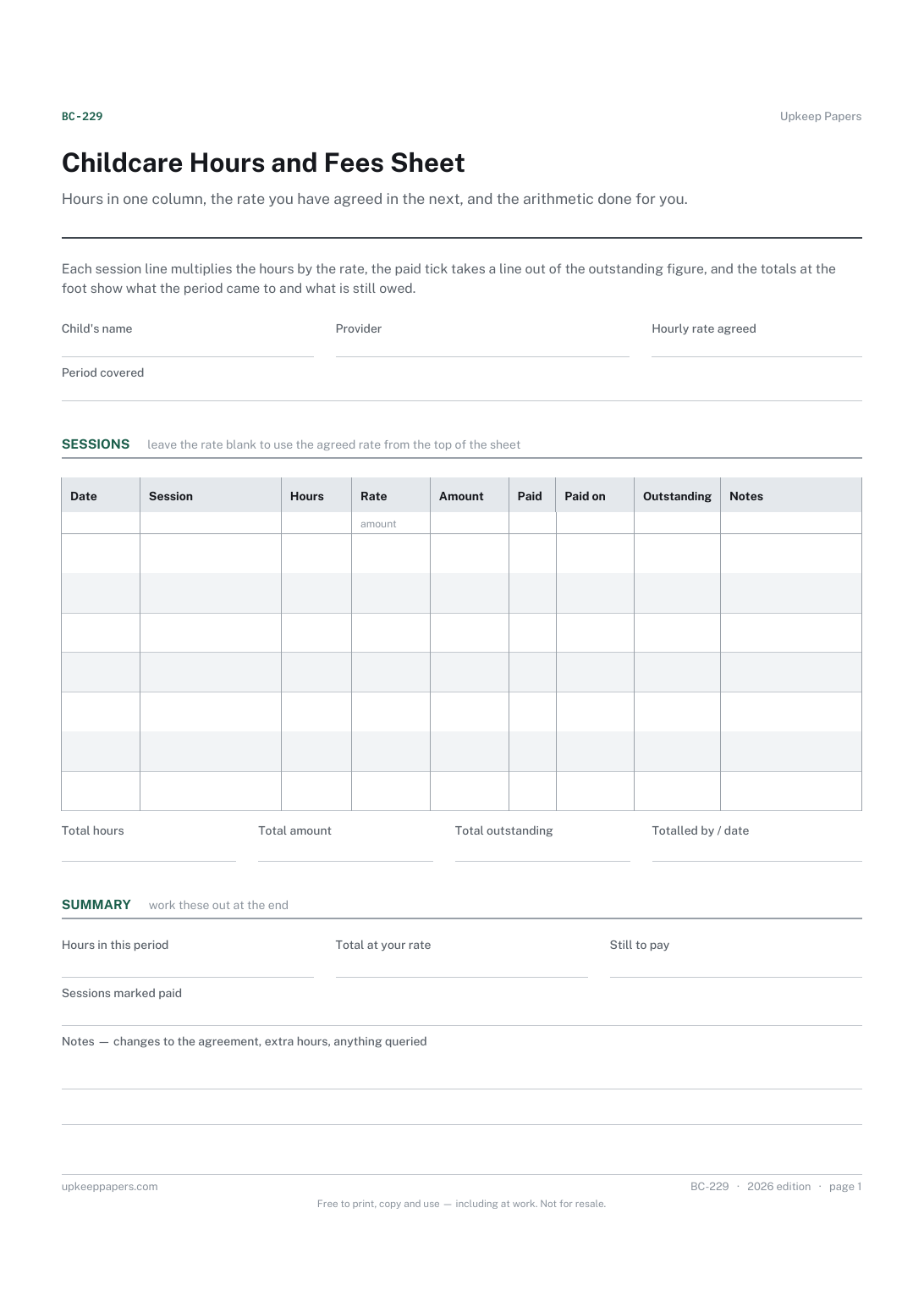
Every session with its date, its hours and what it came to.
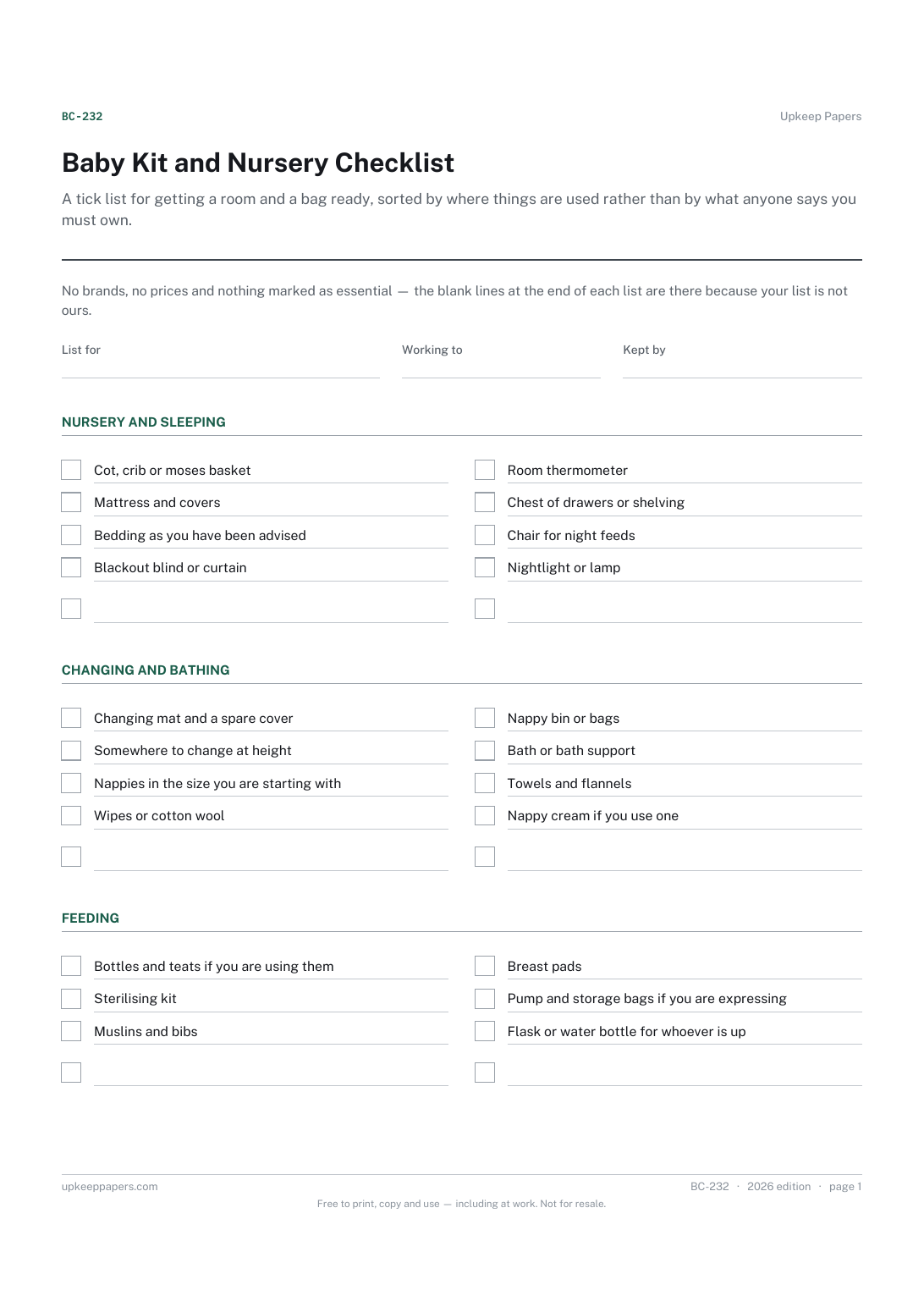
What is already in the nursery, ticked off room by room.
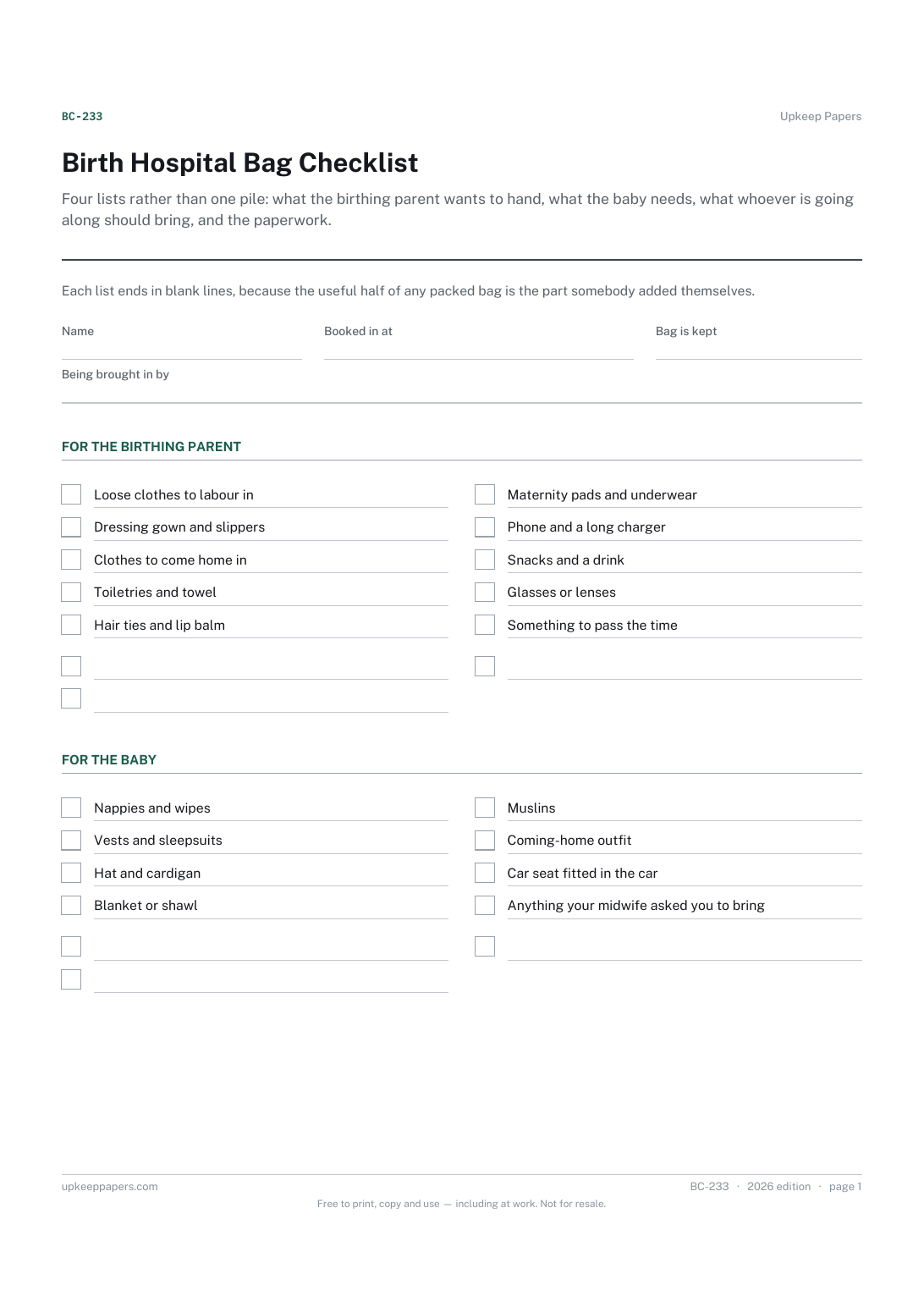
What goes in the bag for the birthing parent, ticked as it goes in.
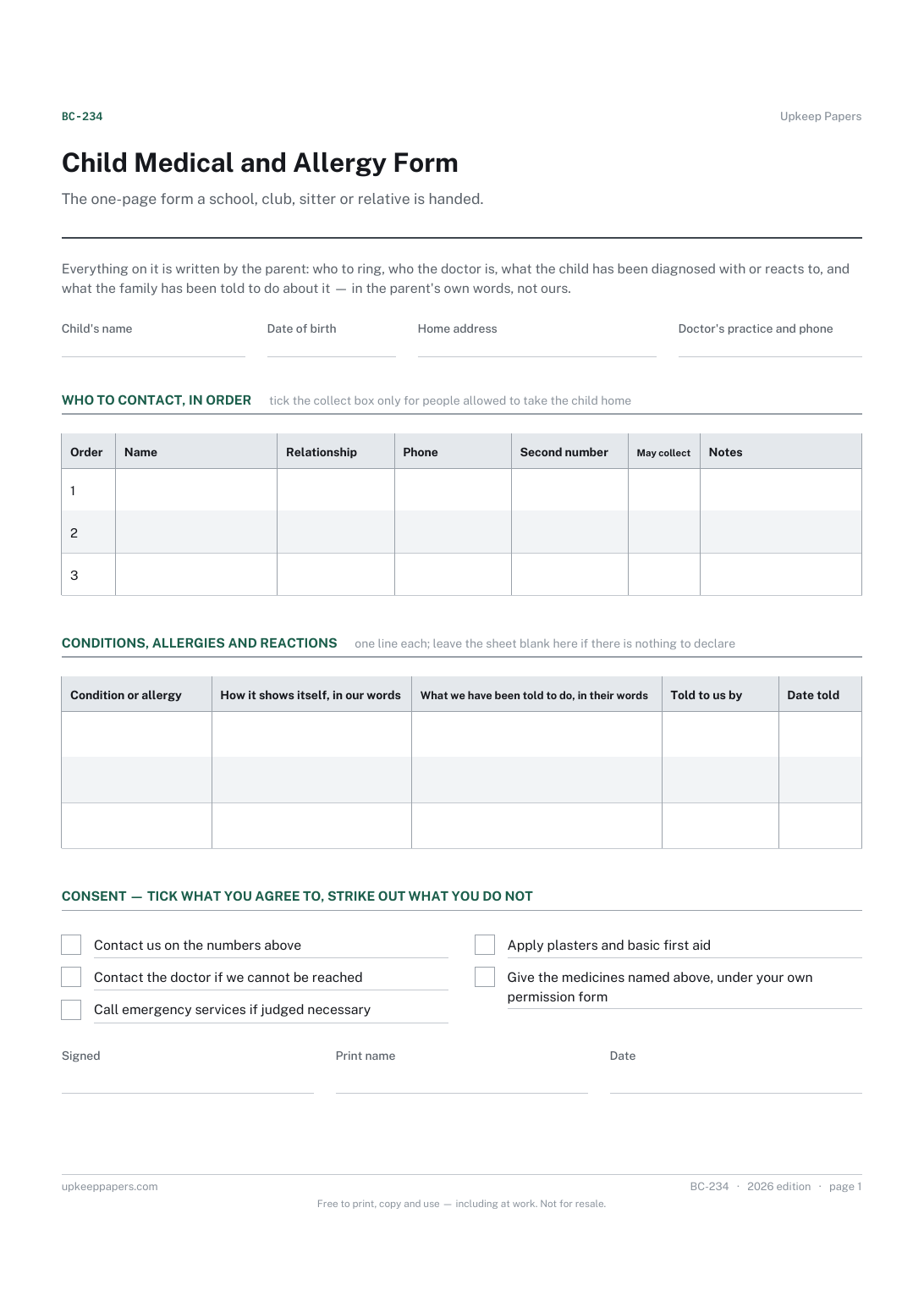
Who to ring first, second and after that, with numbers.
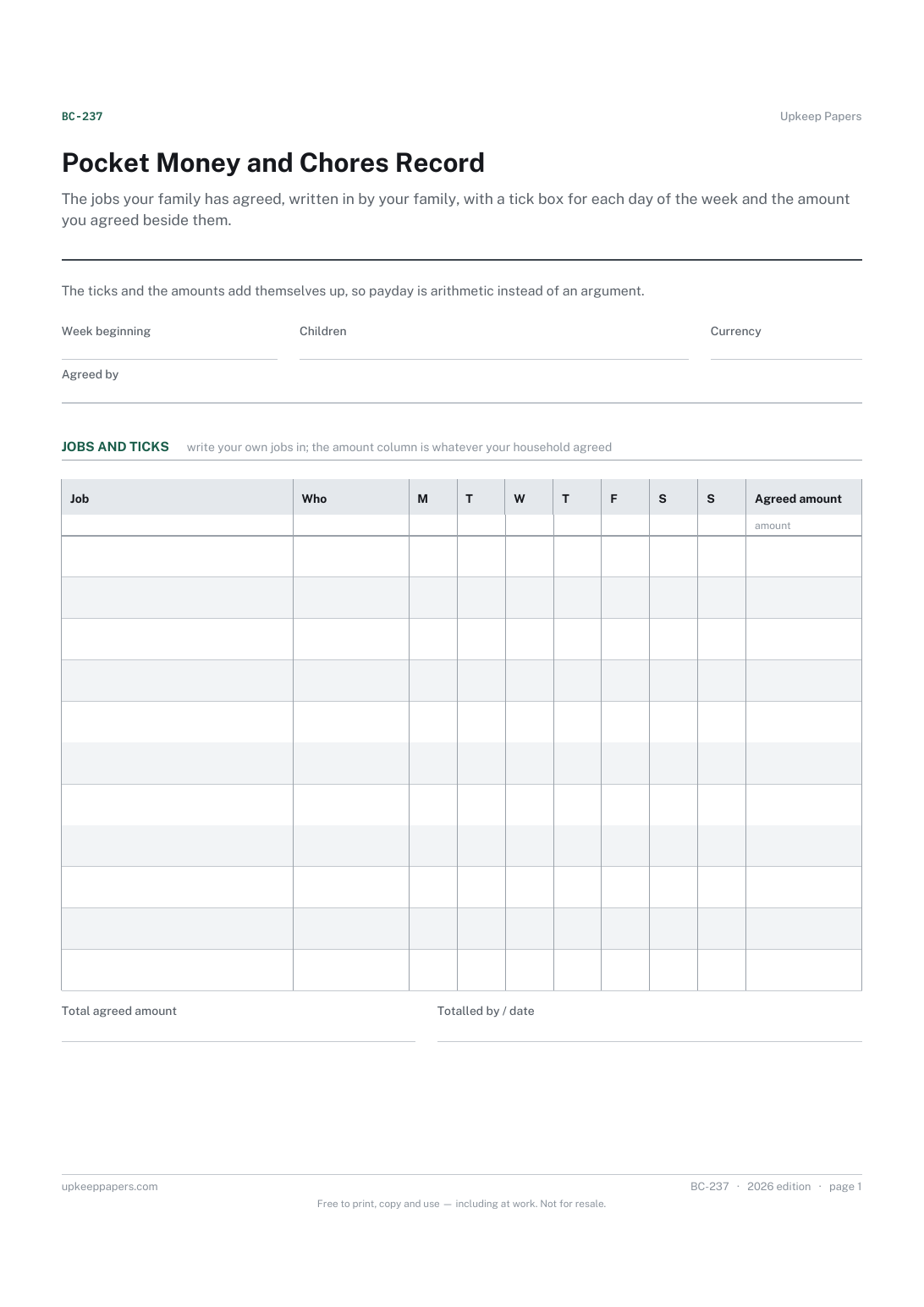
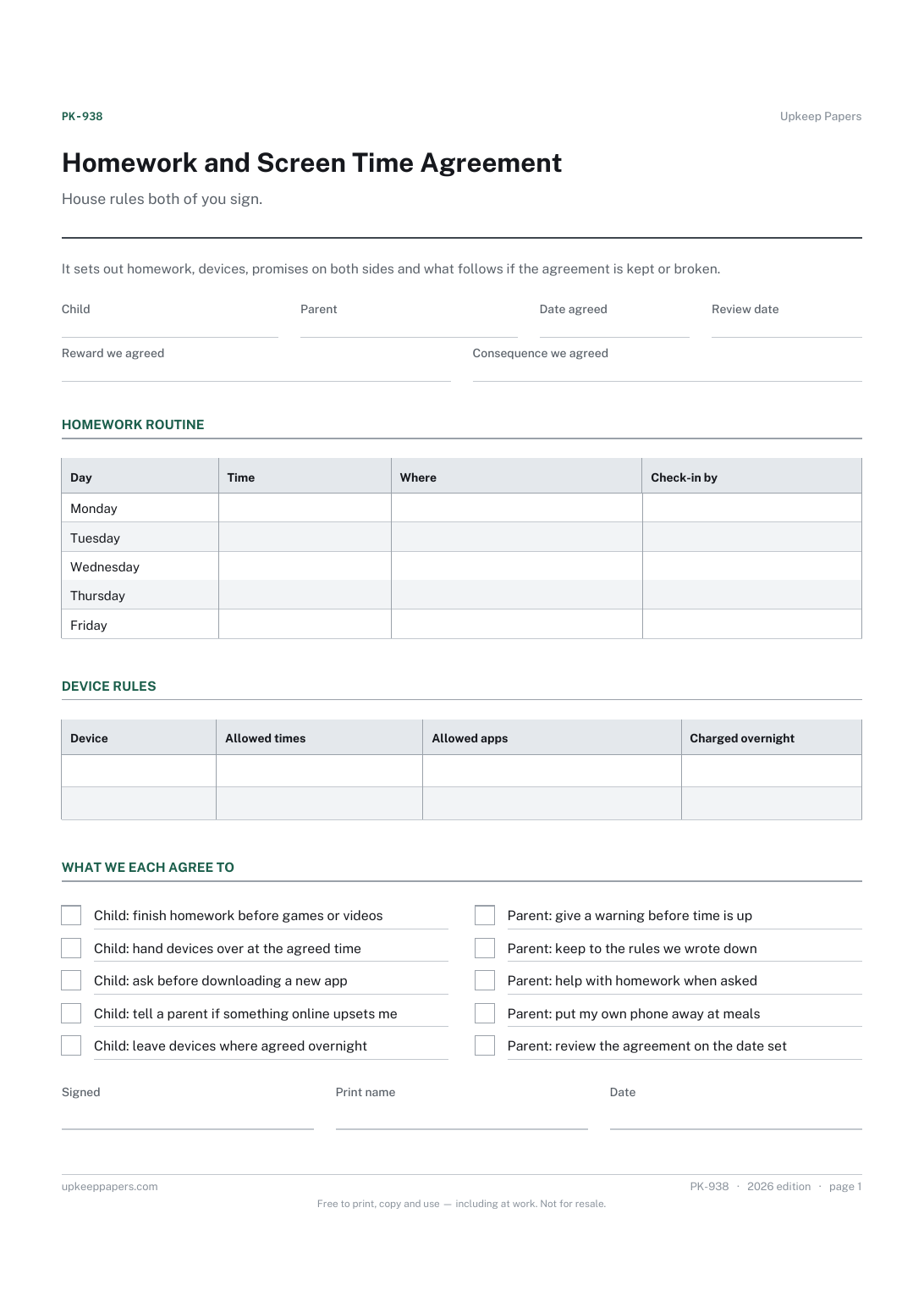
The jobs your household has agreed, in your own words.
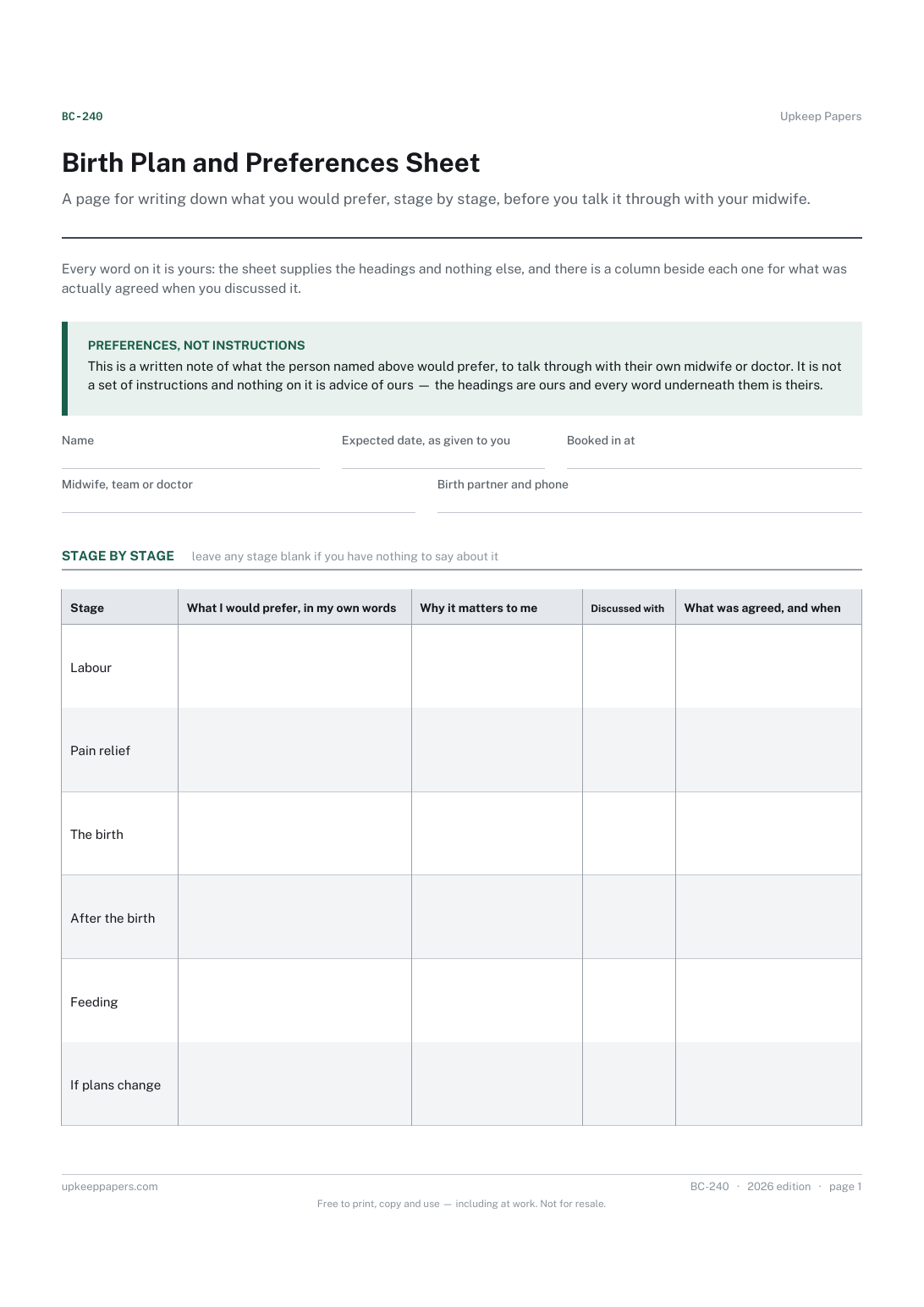
What you would prefer at each stage, written in your own words.
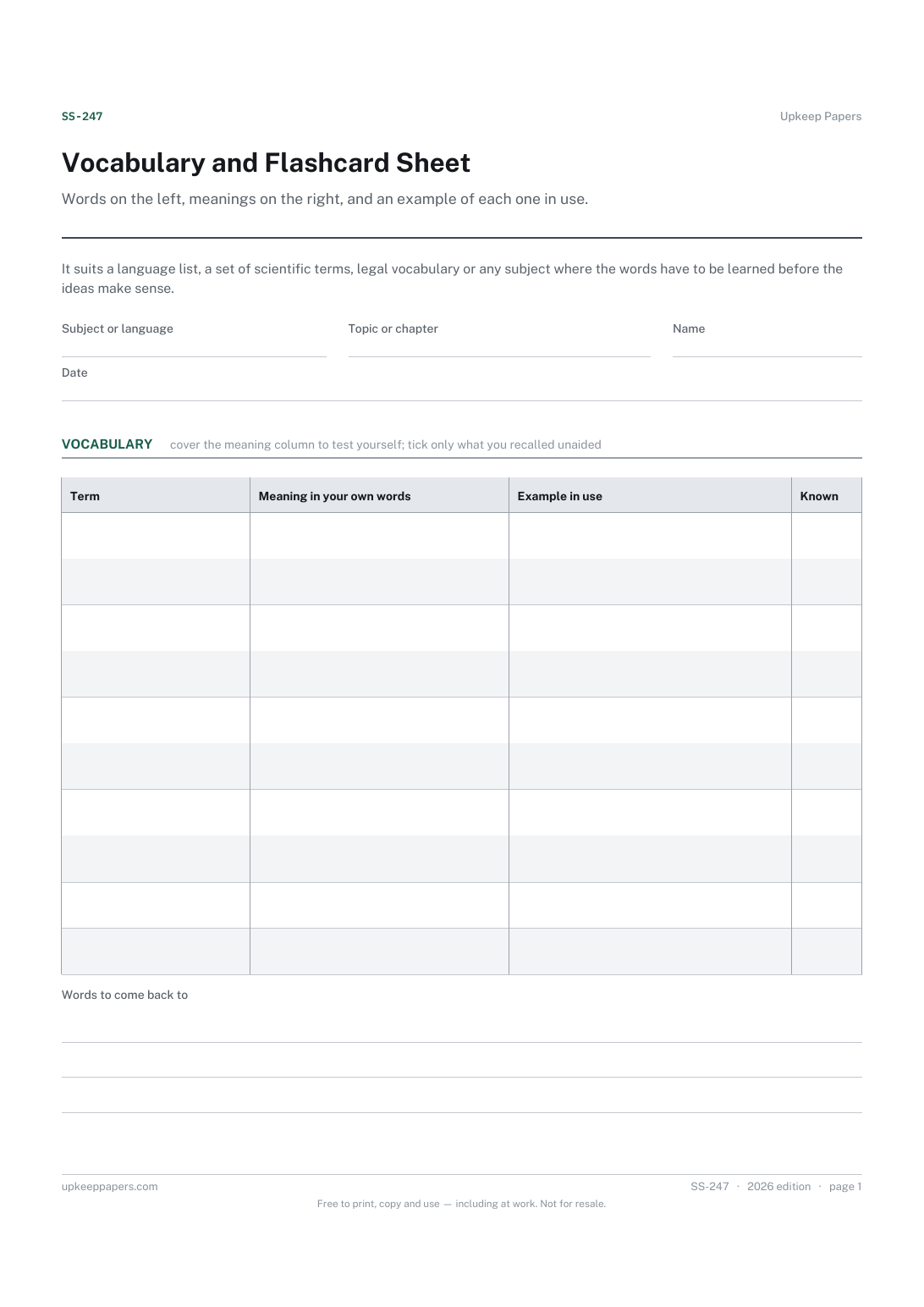
The terms themselves, written out by hand, which is half the learning.
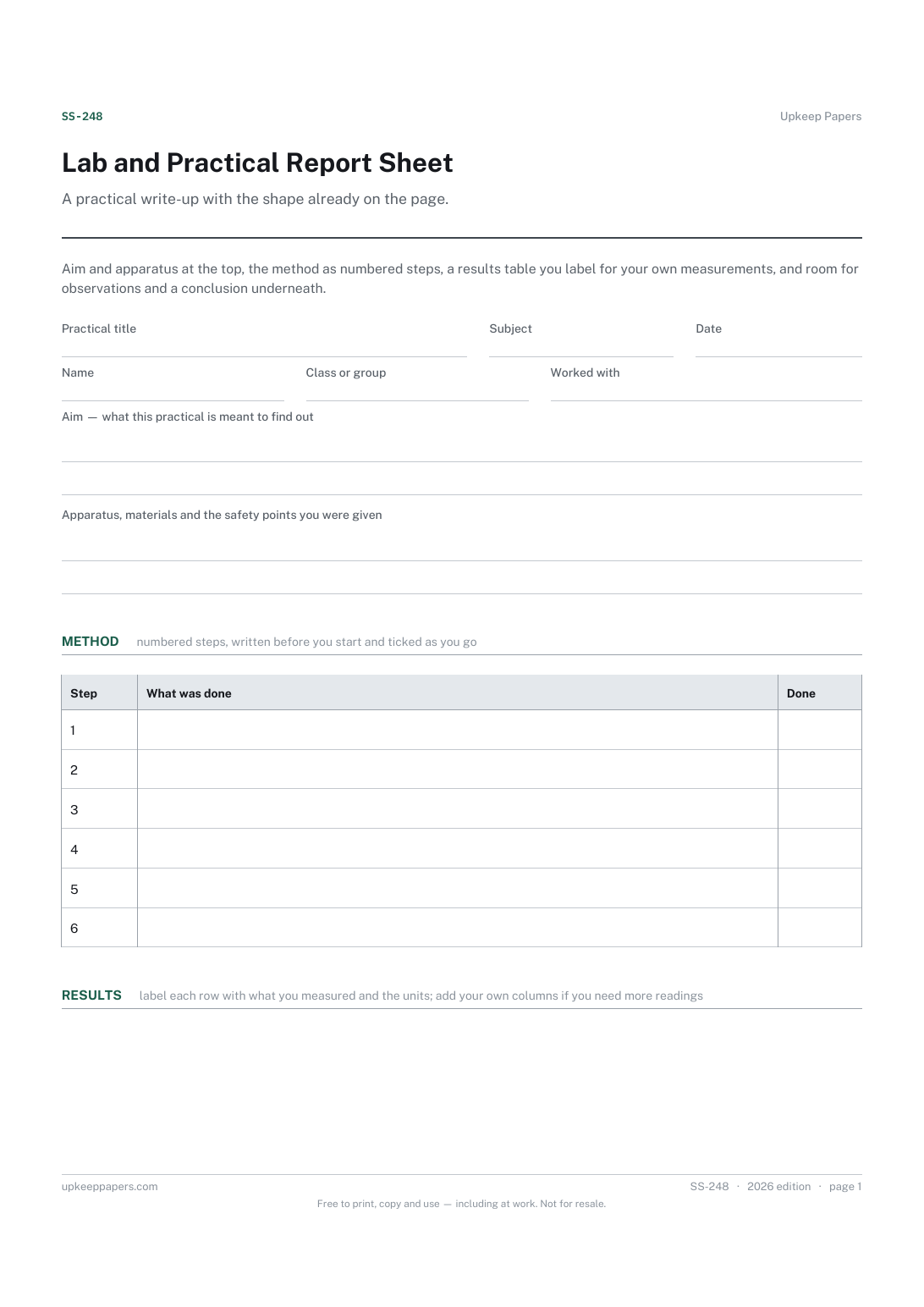
What the practical was for, in one or two lines.
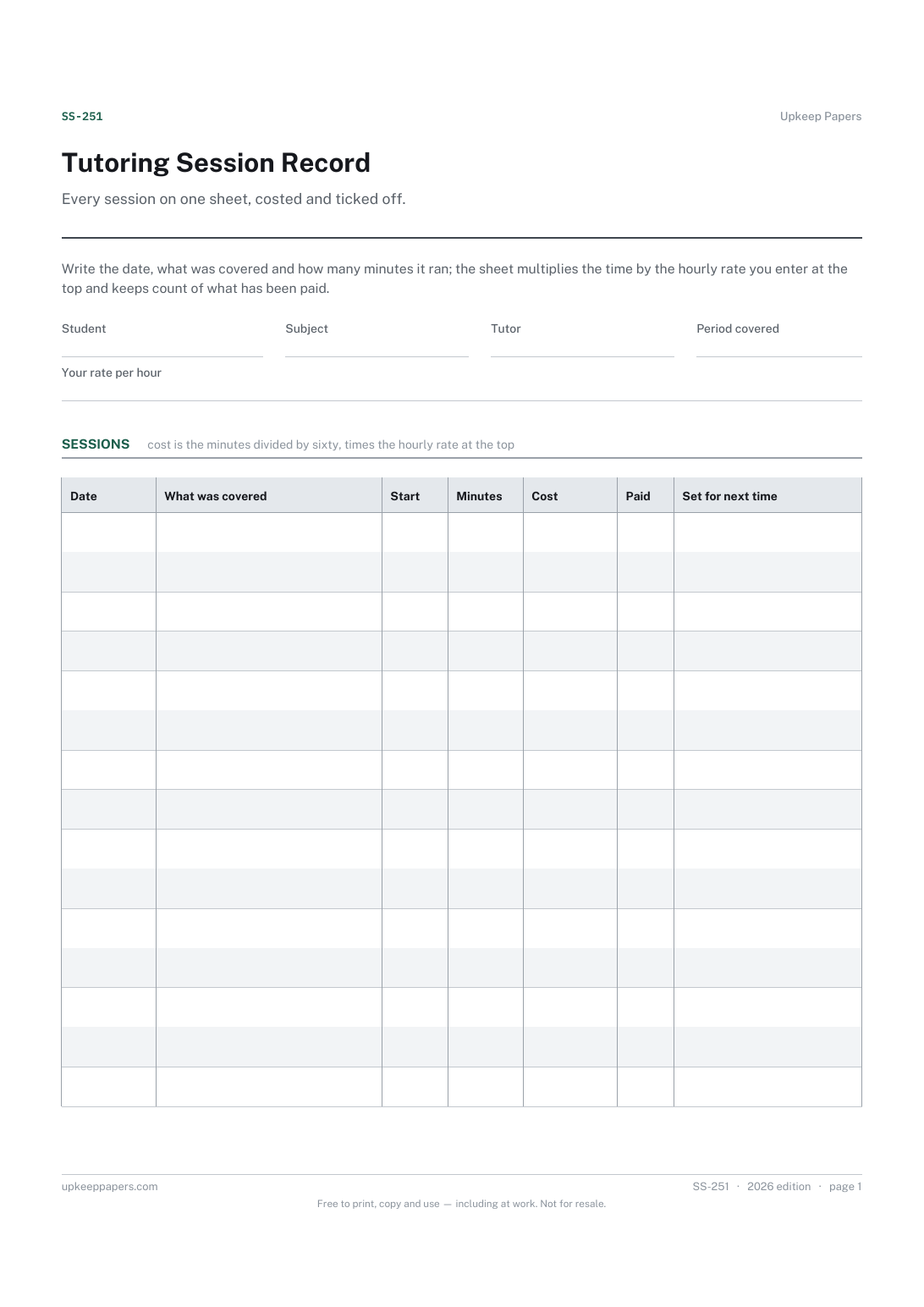
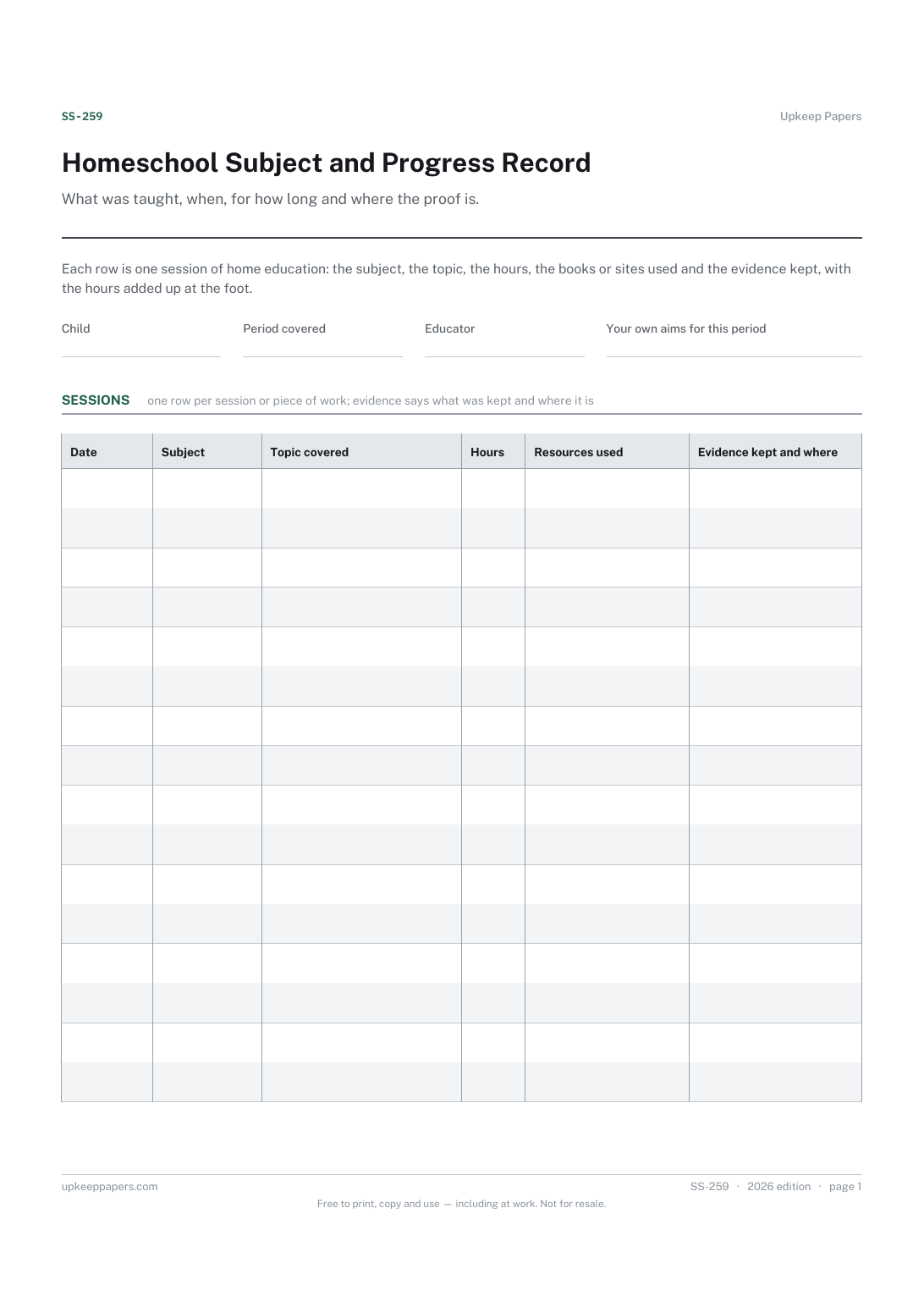
When each session happened, on what subject and for how long.
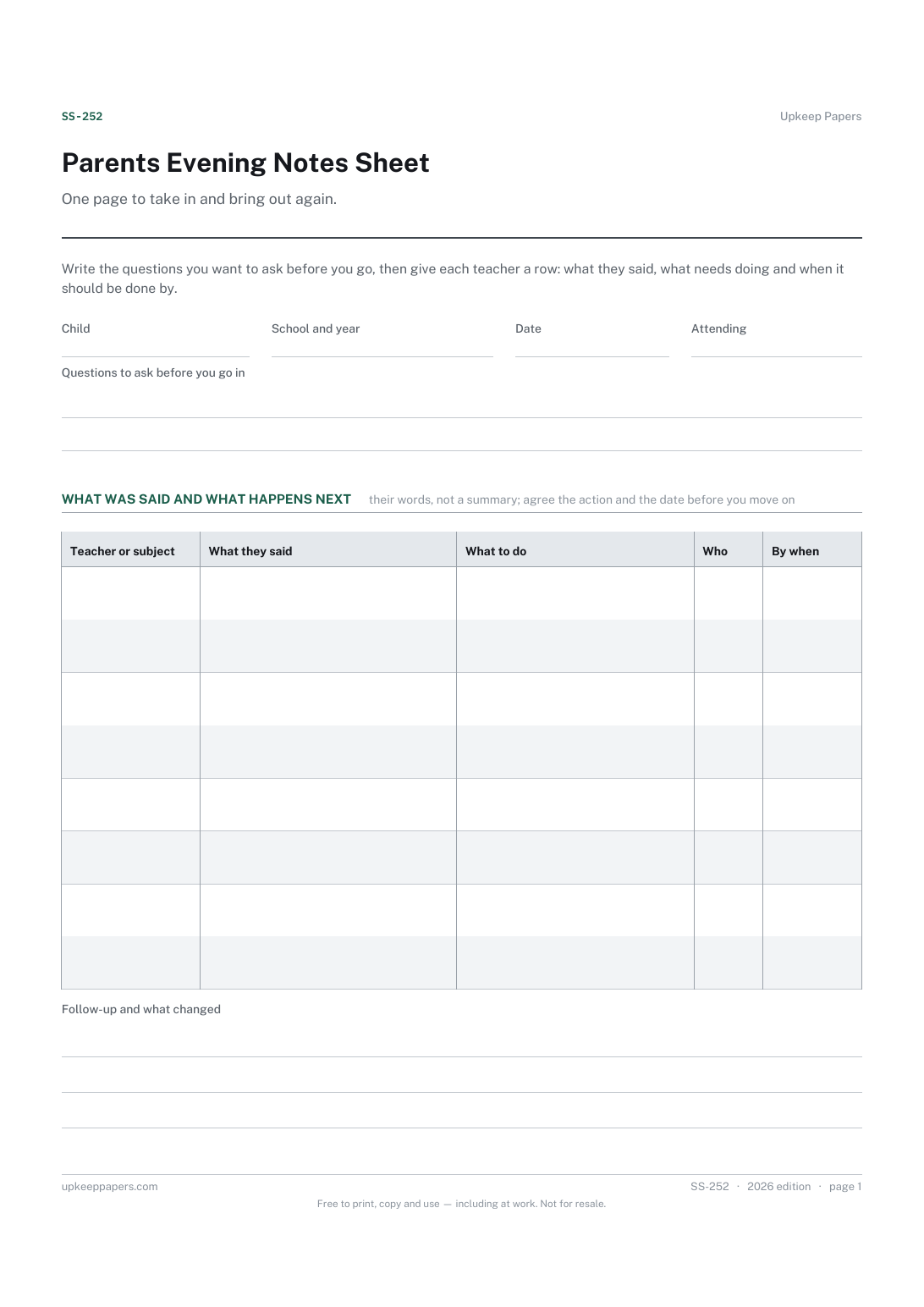
The questions you meant to ask, written down before the evening starts.
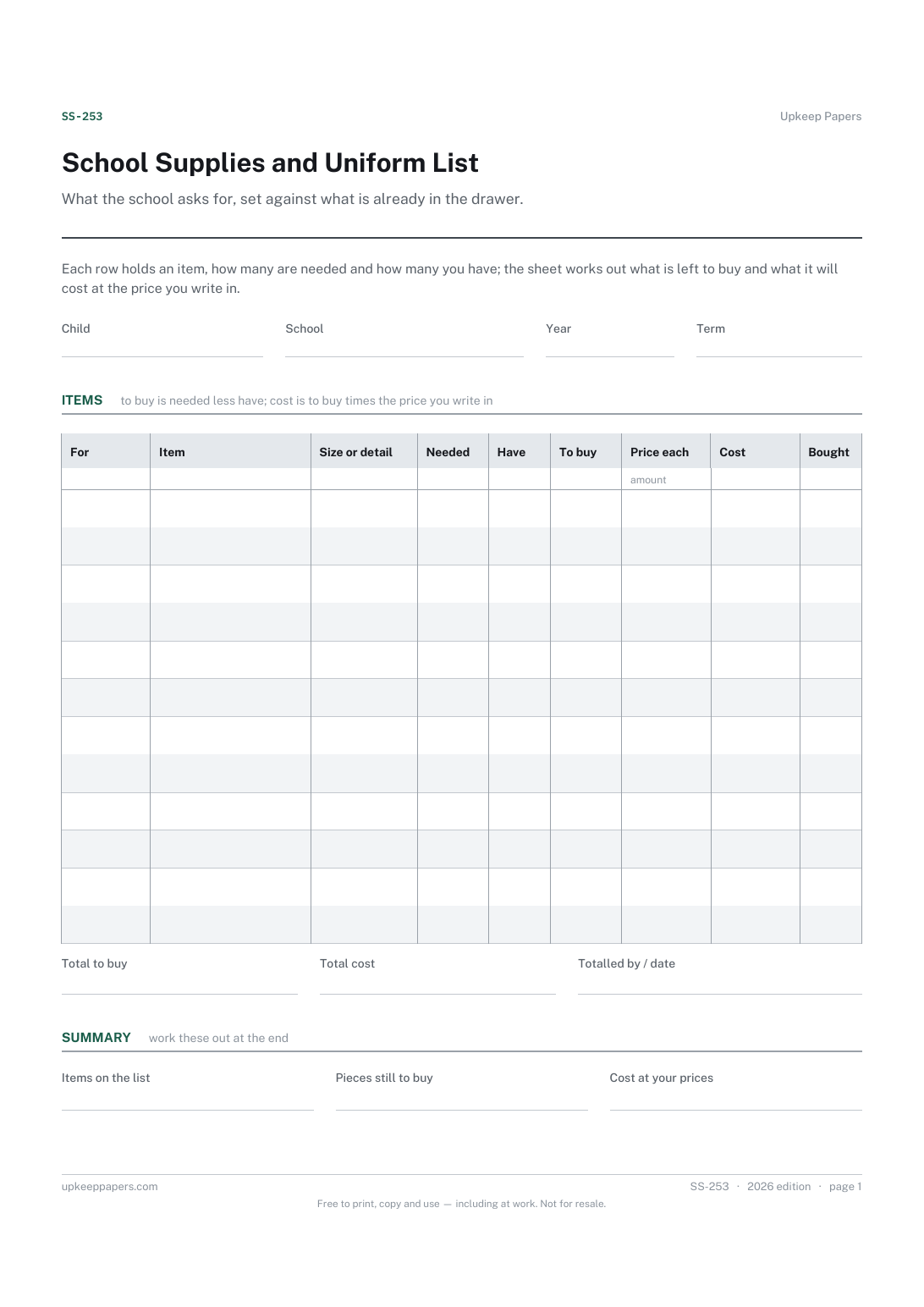
Every item on the school's list, grouped as uniform, PE kit, stationery, books or other.
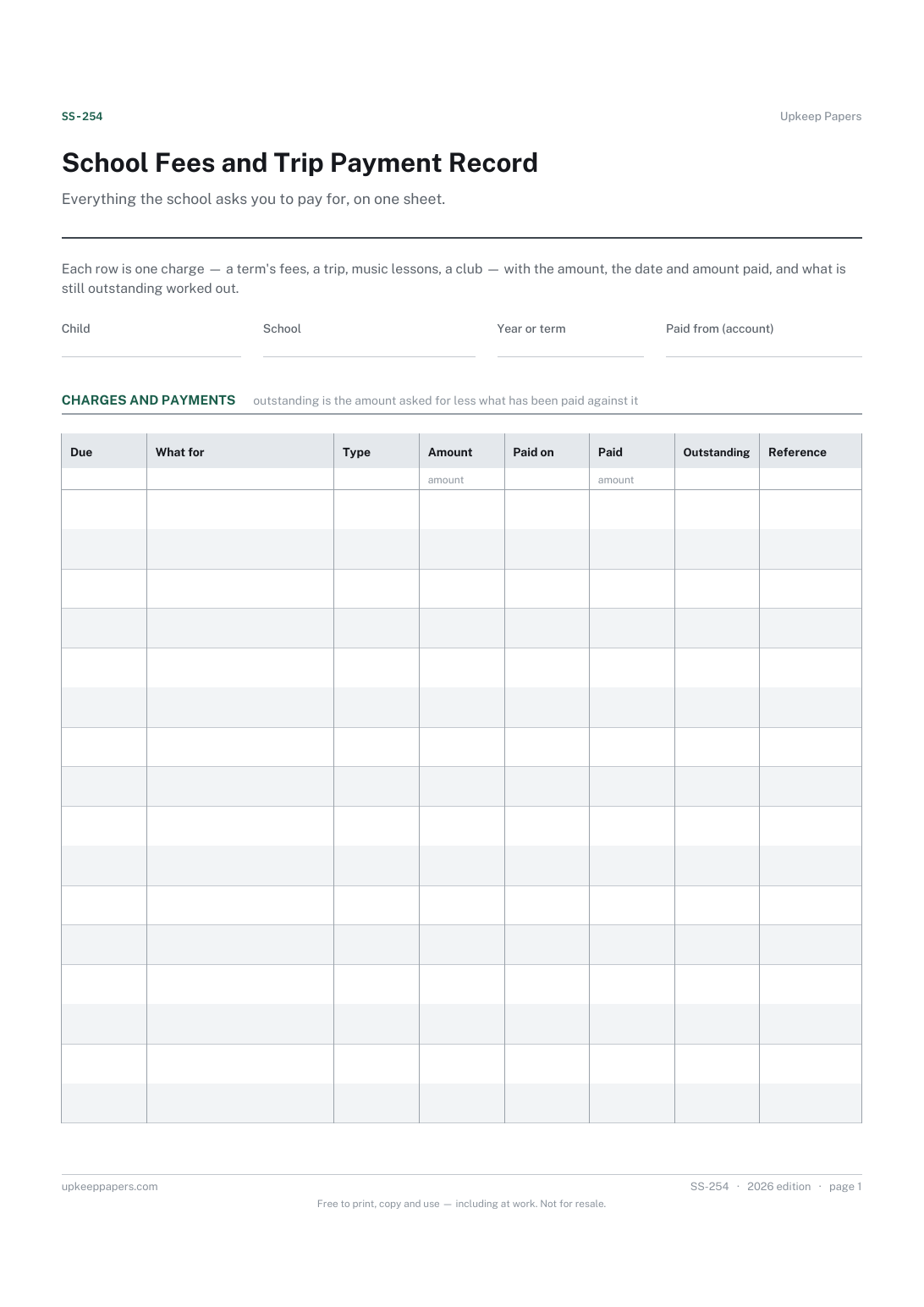
Every charge from the school with the date it is due.
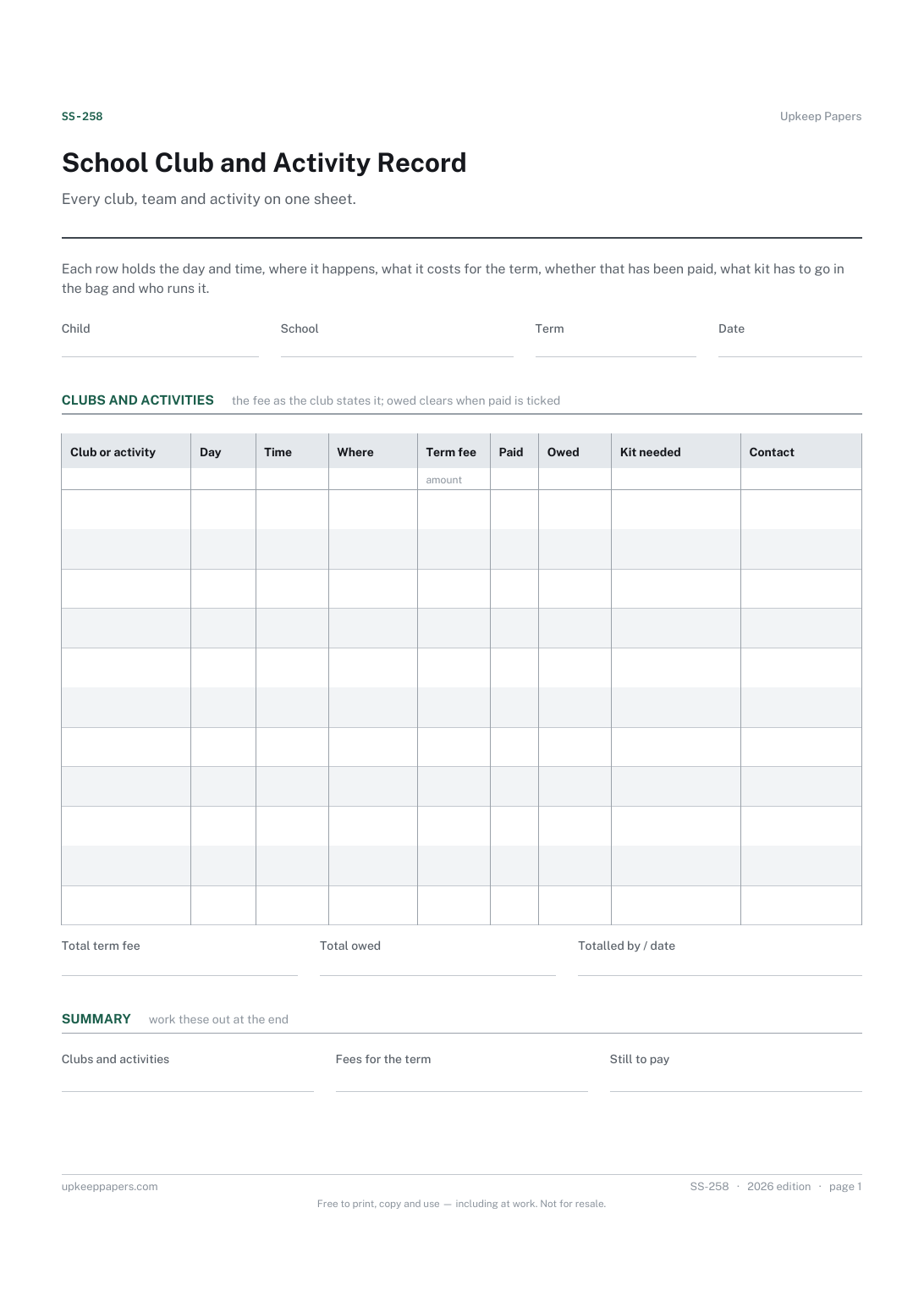
Which clubs and activities are on, on which day and at what time.
Every subject and topic covered, with the date.
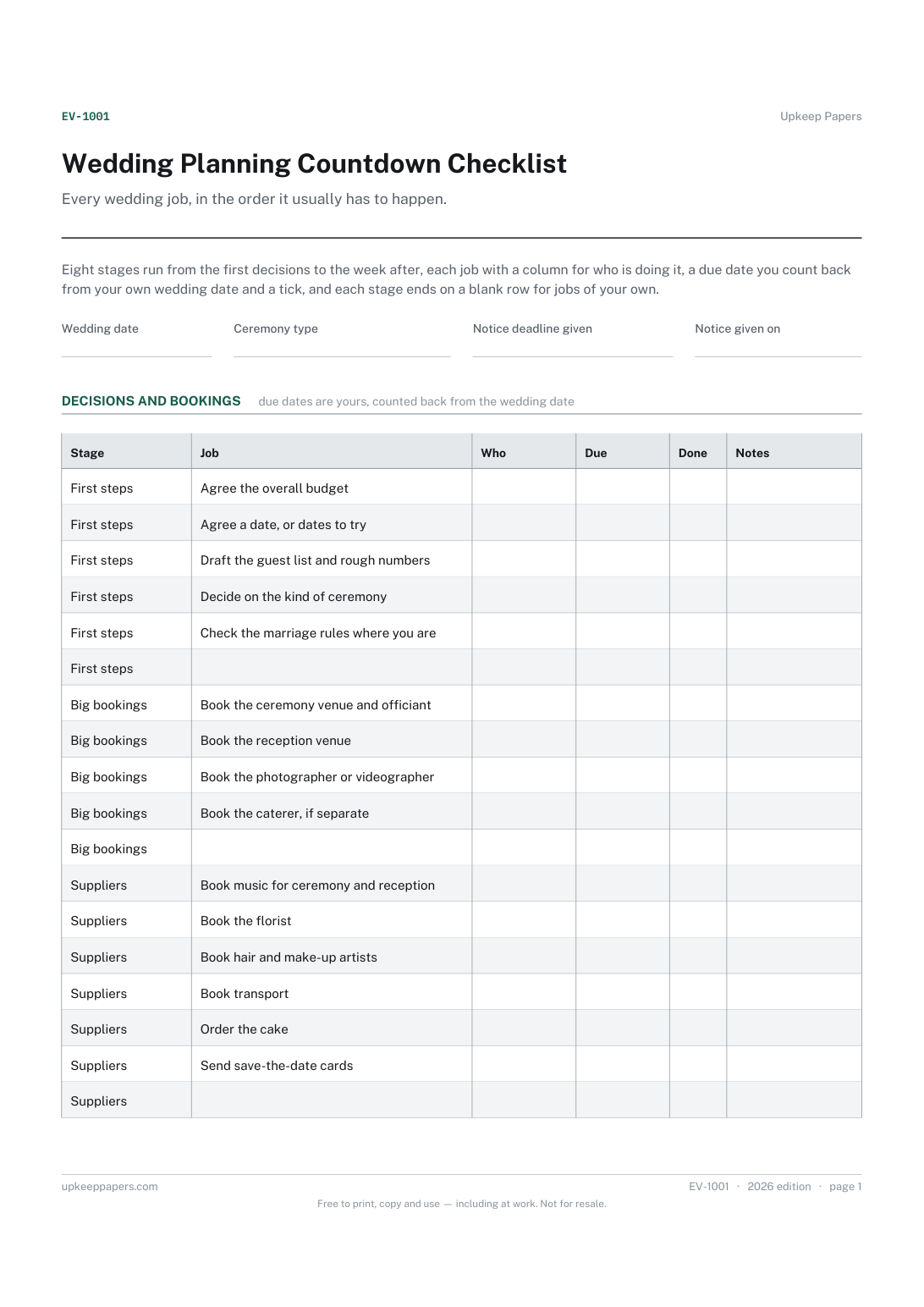
Which jobs come first and which wait until the main bookings are made.
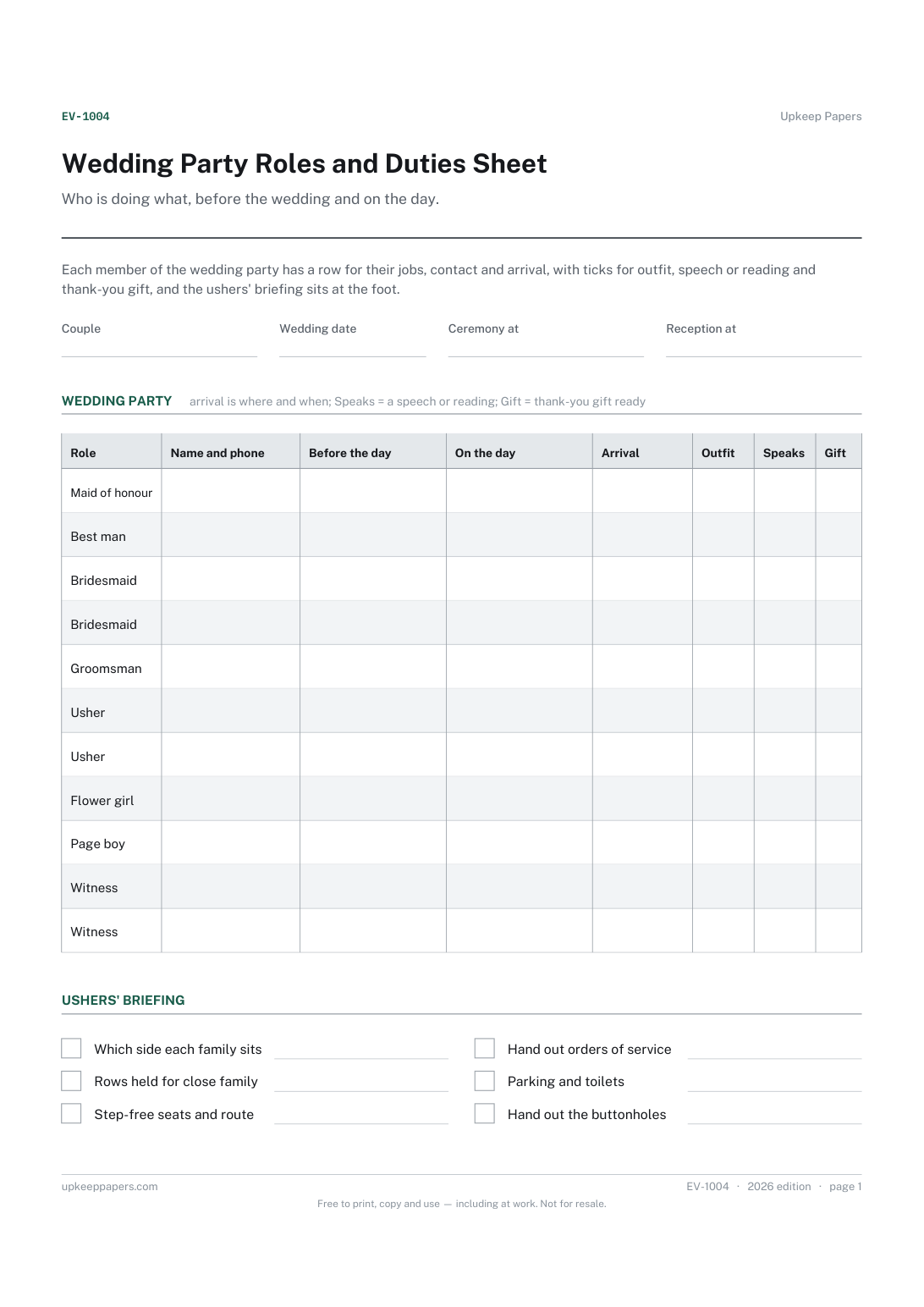
Each person's role and how to reach them.
What has to be decided and booked early, before the date is fixed in other people's diaries.
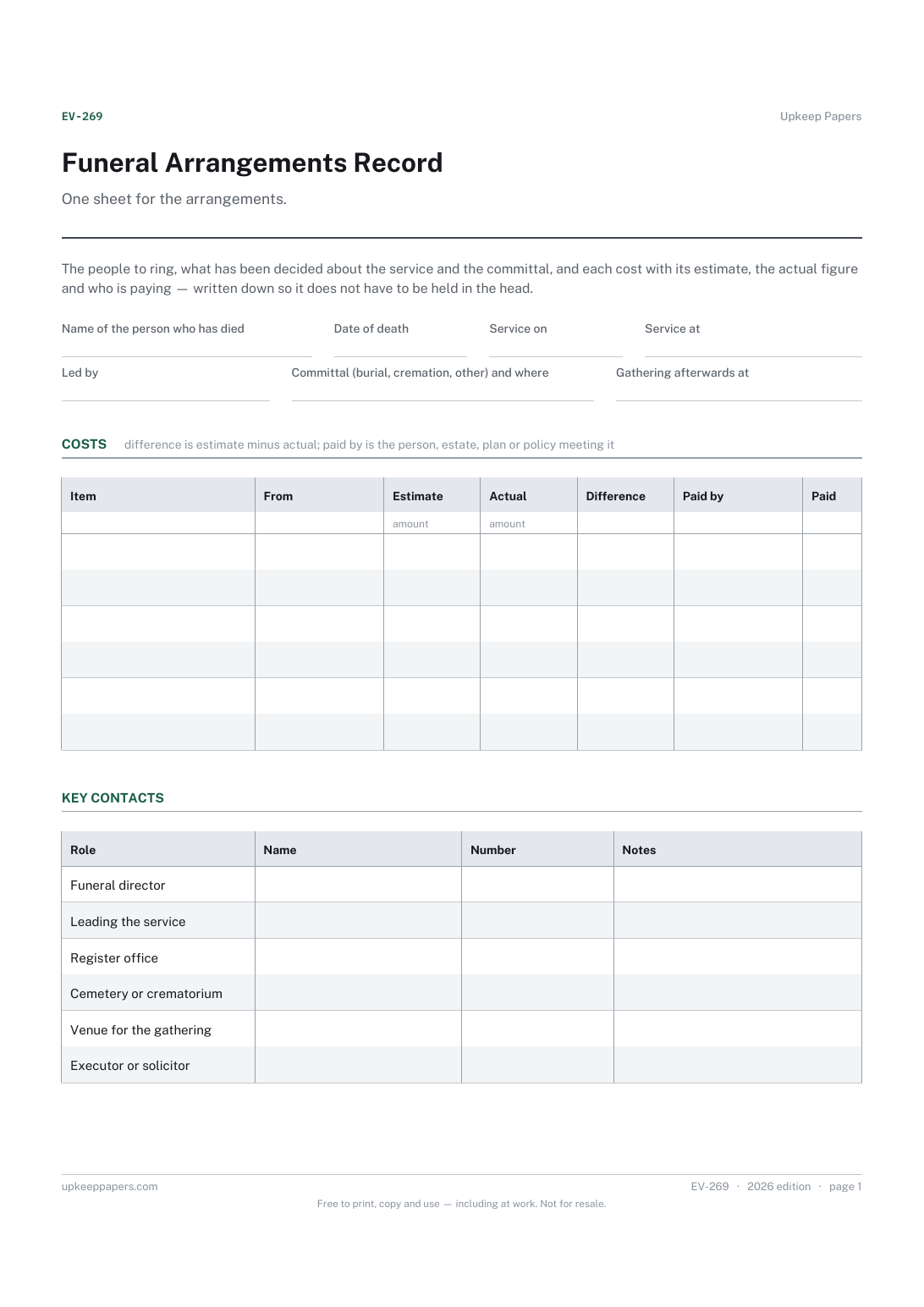
Who the funeral director, the person leading the service and the other contacts are, with their numbers.
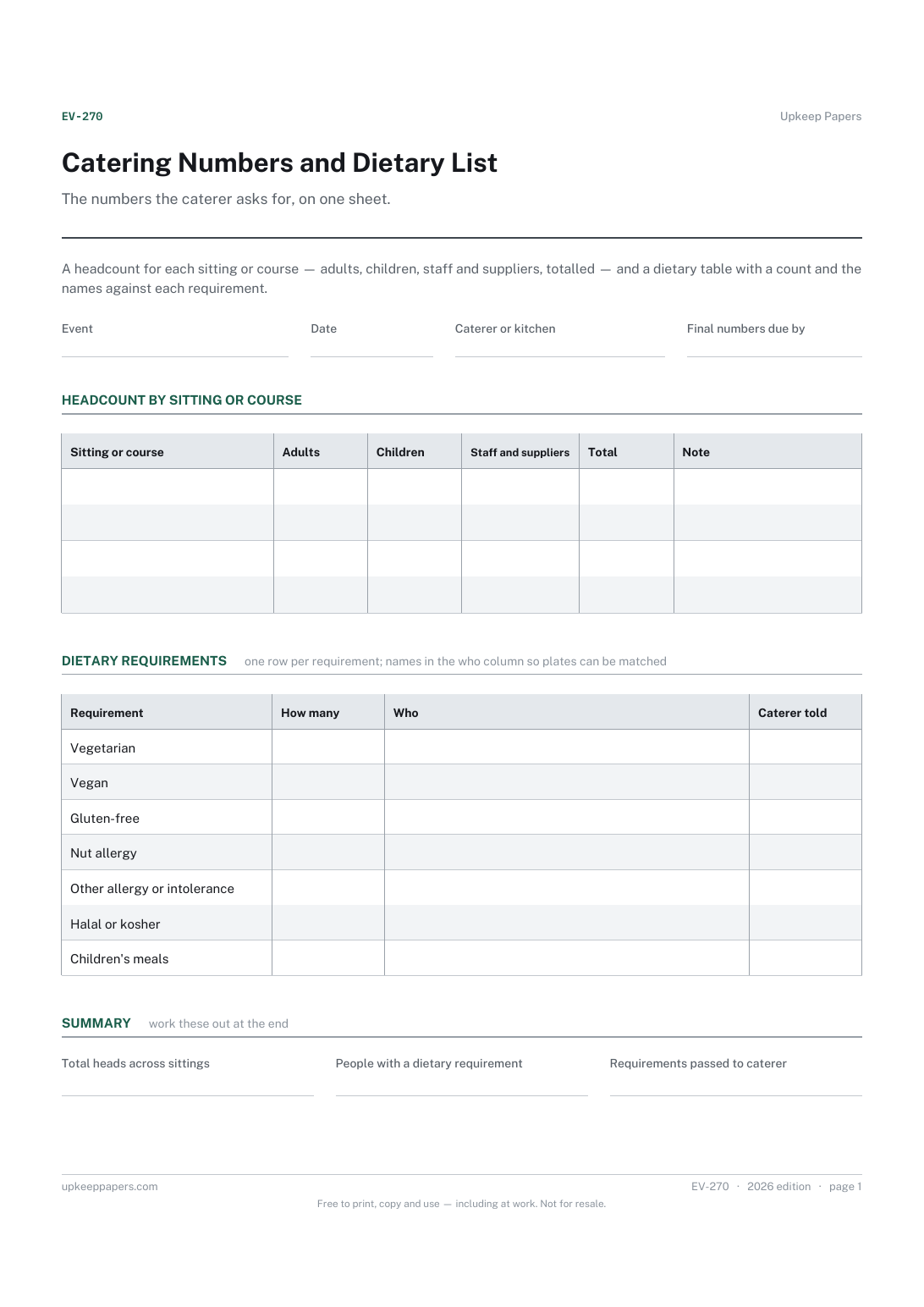
How many people are eating at each sitting, split into adults, children and staff.
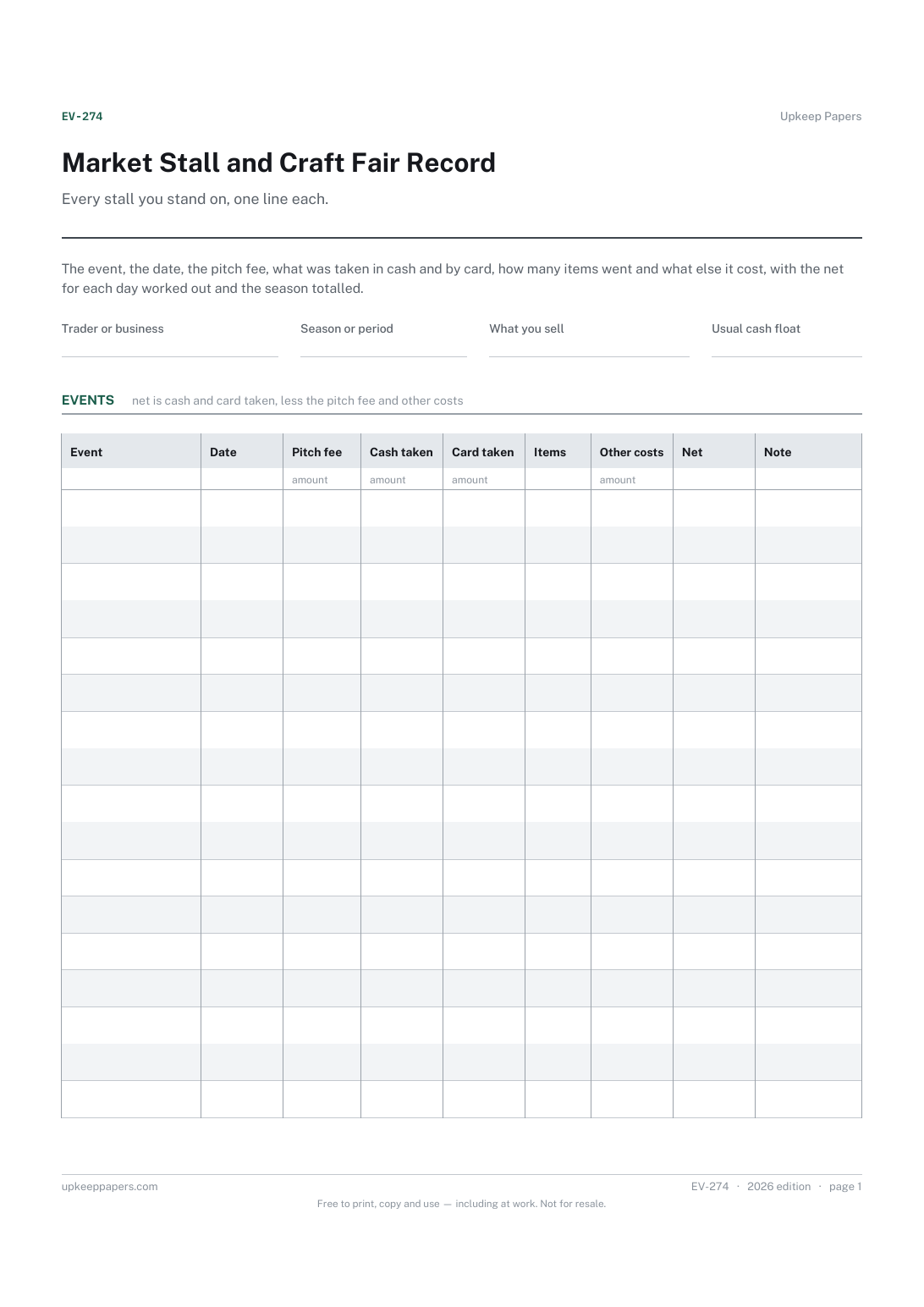
What each event took, in cash and by card.
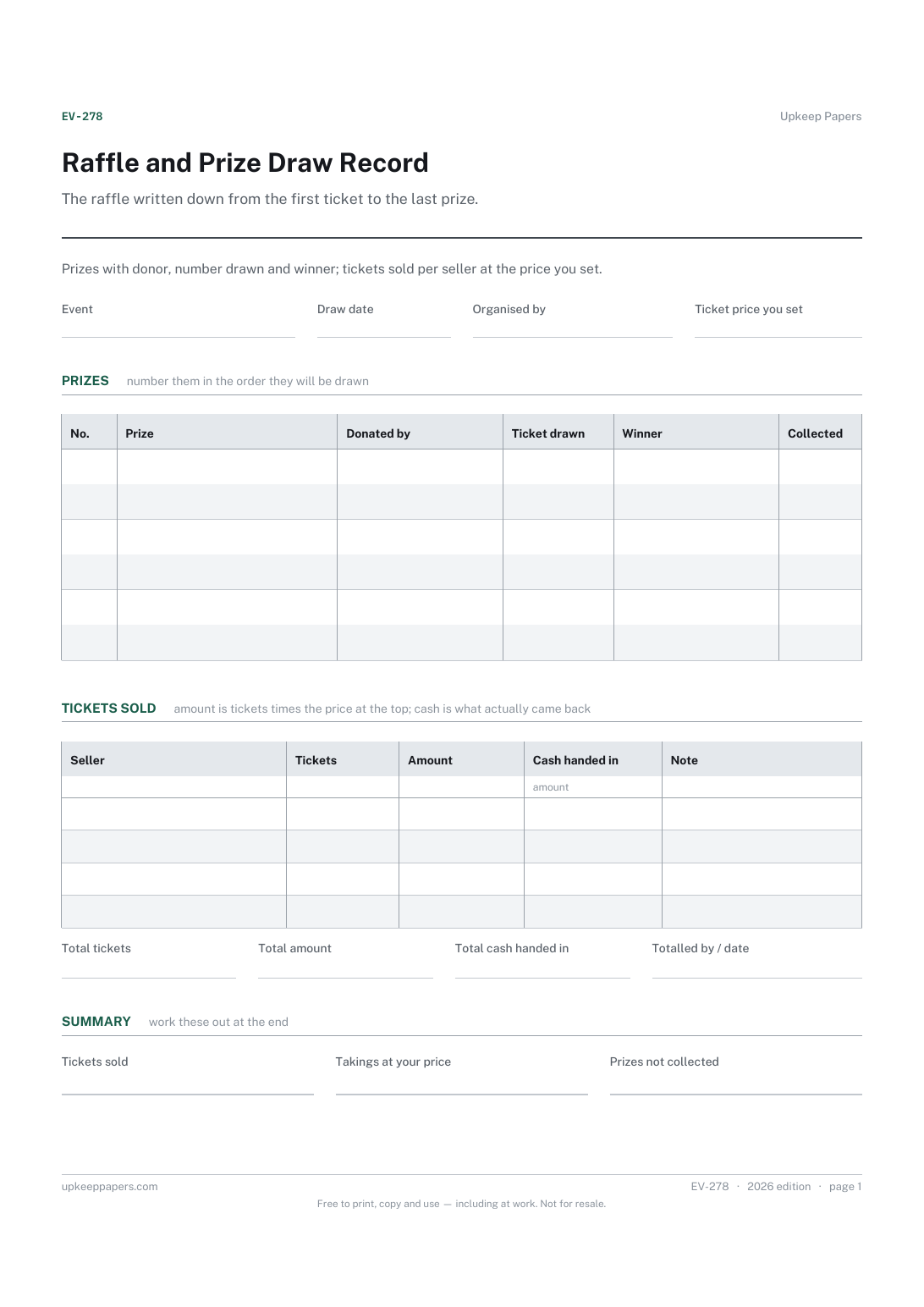
Every prize, who donated it and who won it.
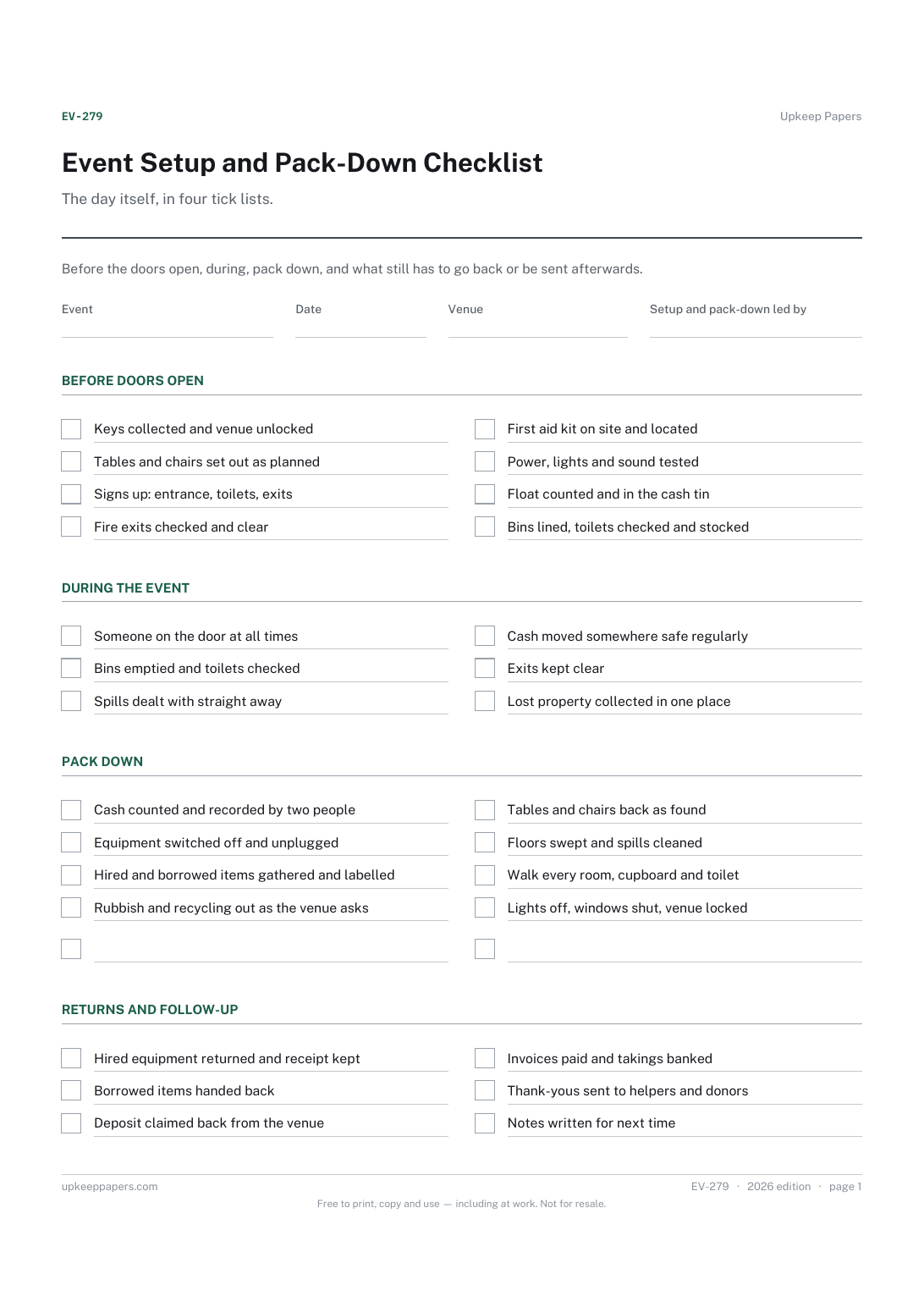
What must be in place before the first person walks in.
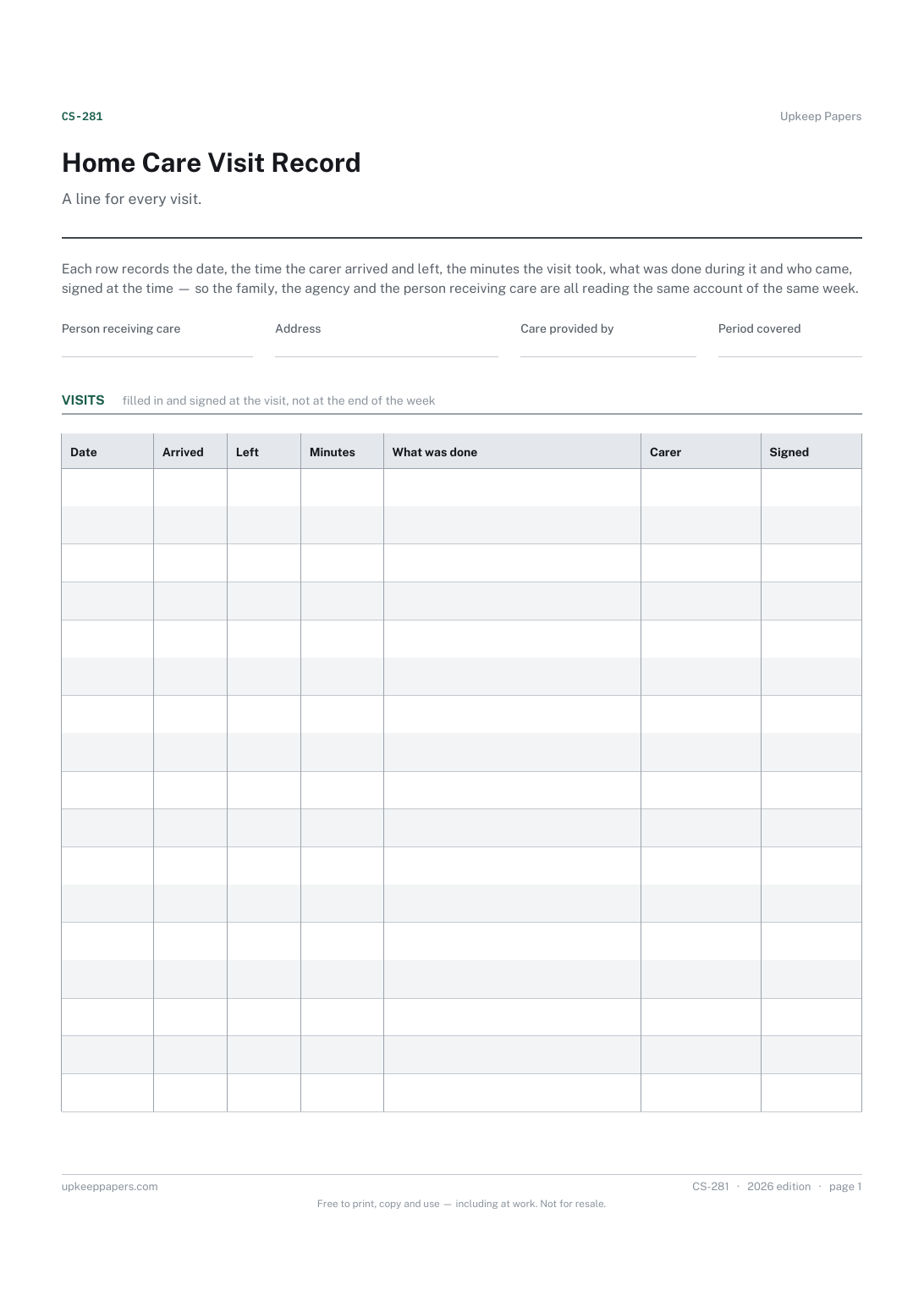
Every visit in date order with the arrival and leaving times.
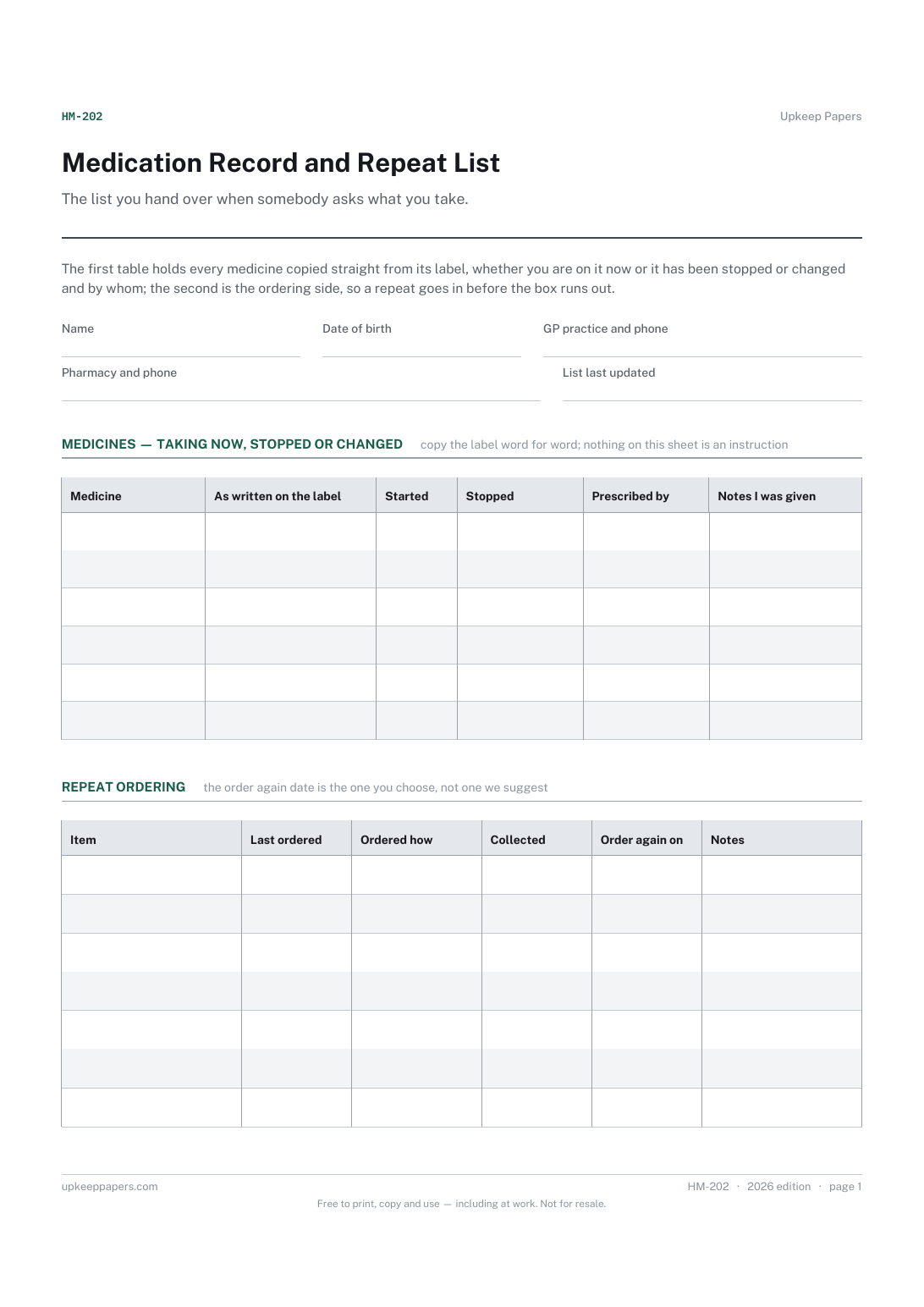
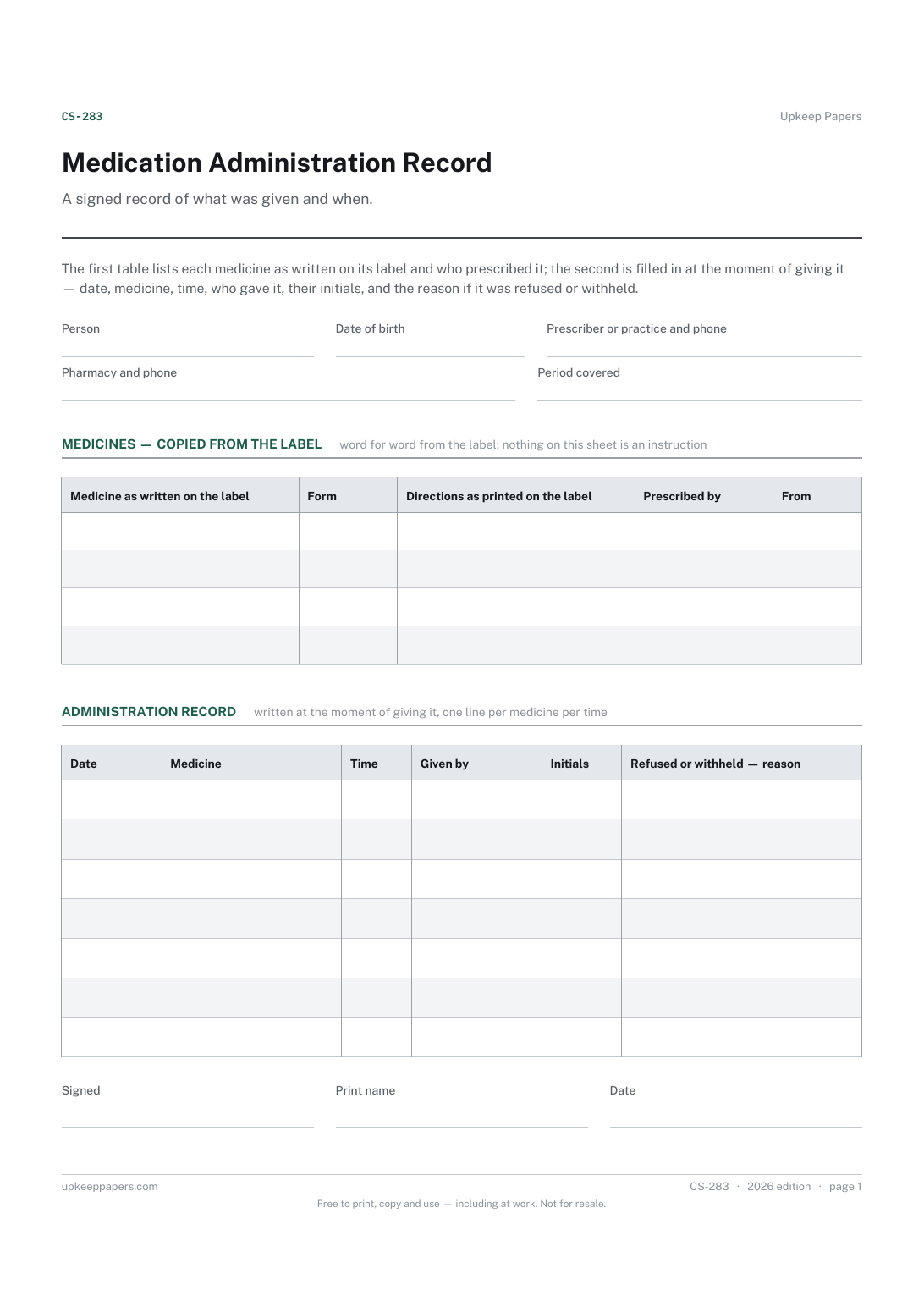
Each medicine listed exactly as its label reads, with who prescribed it.
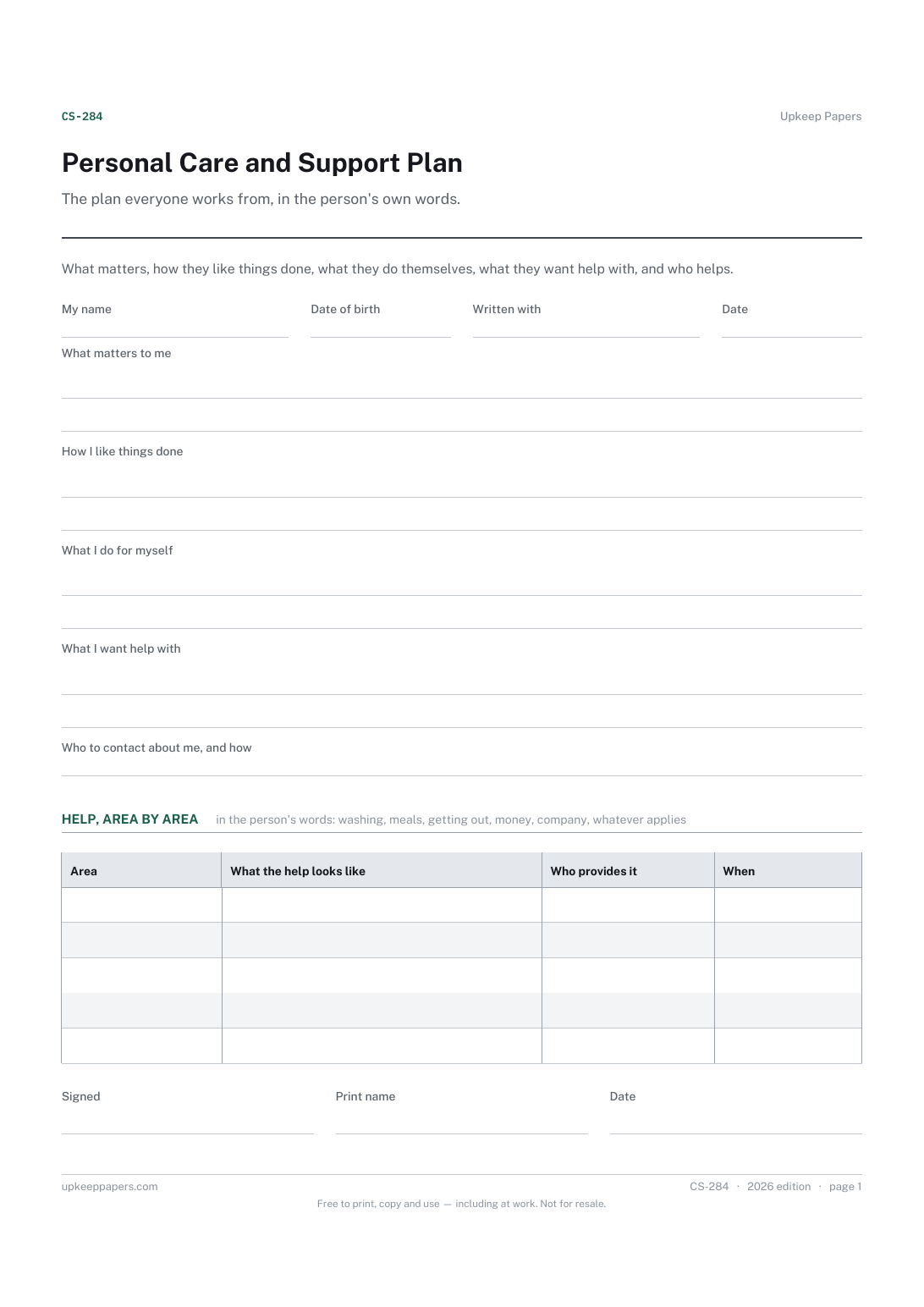
What matters to the person, in their own words.
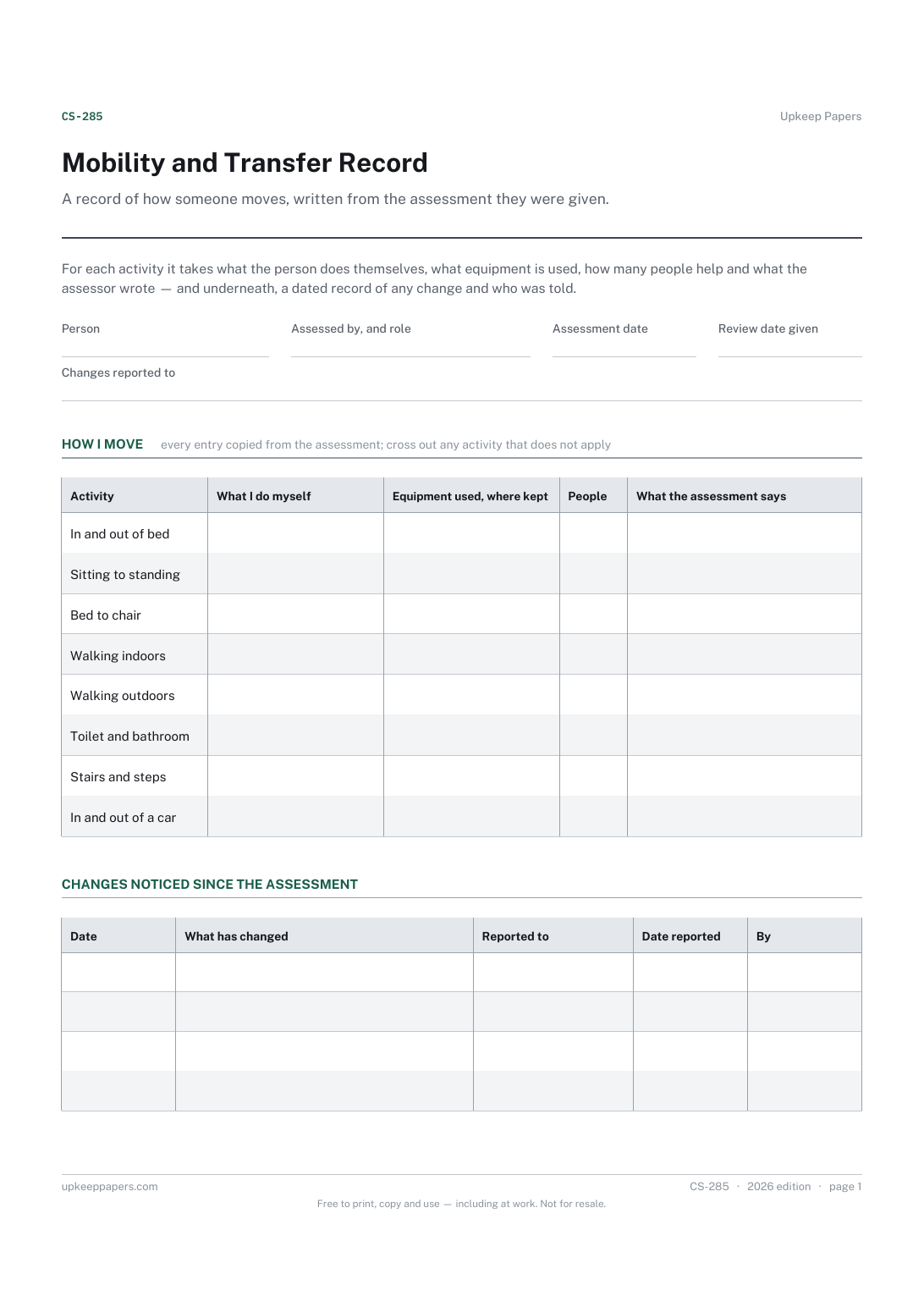
What the person can do for themselves, activity by activity.
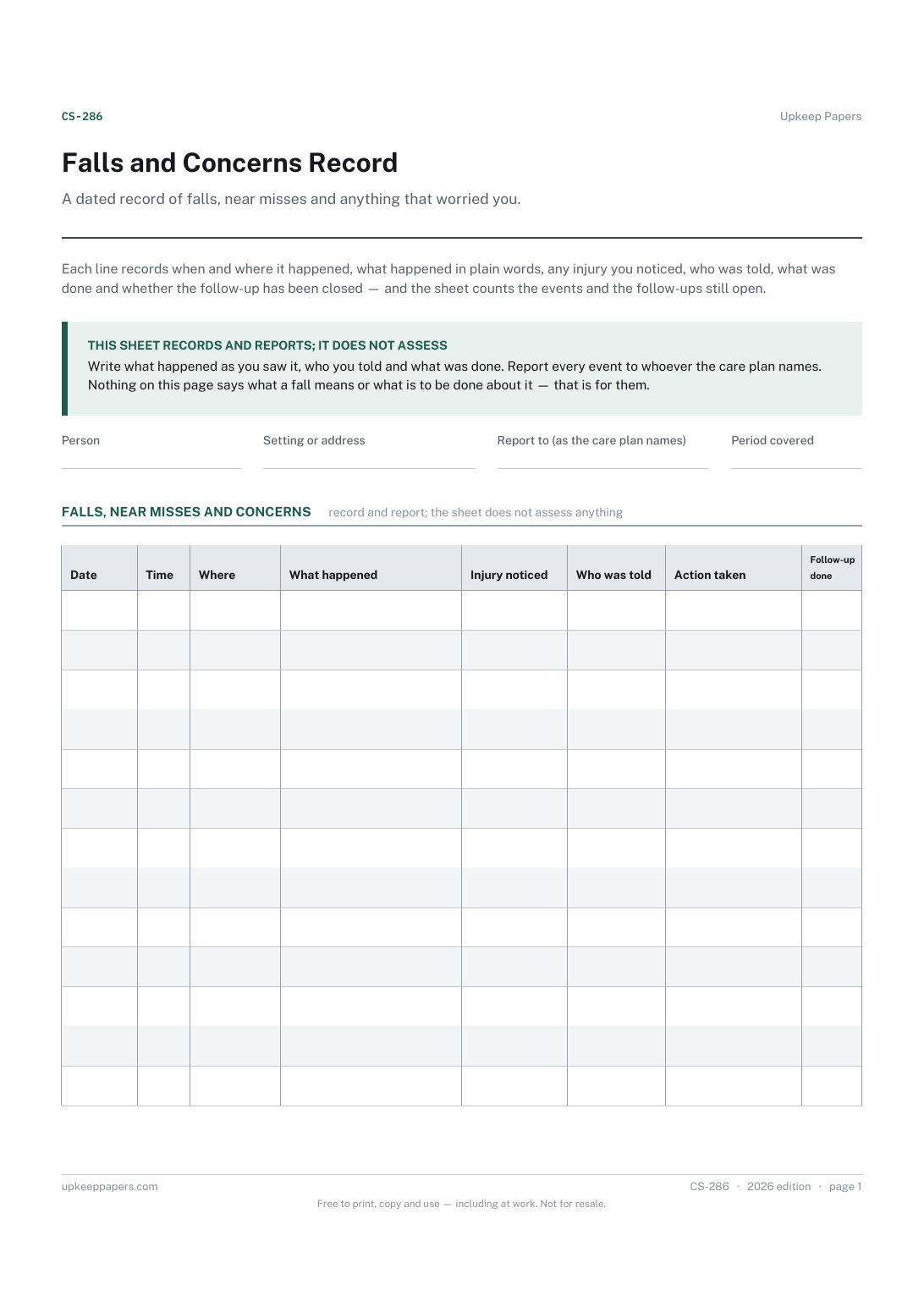
Every fall, near miss or concern with the date, time and place.
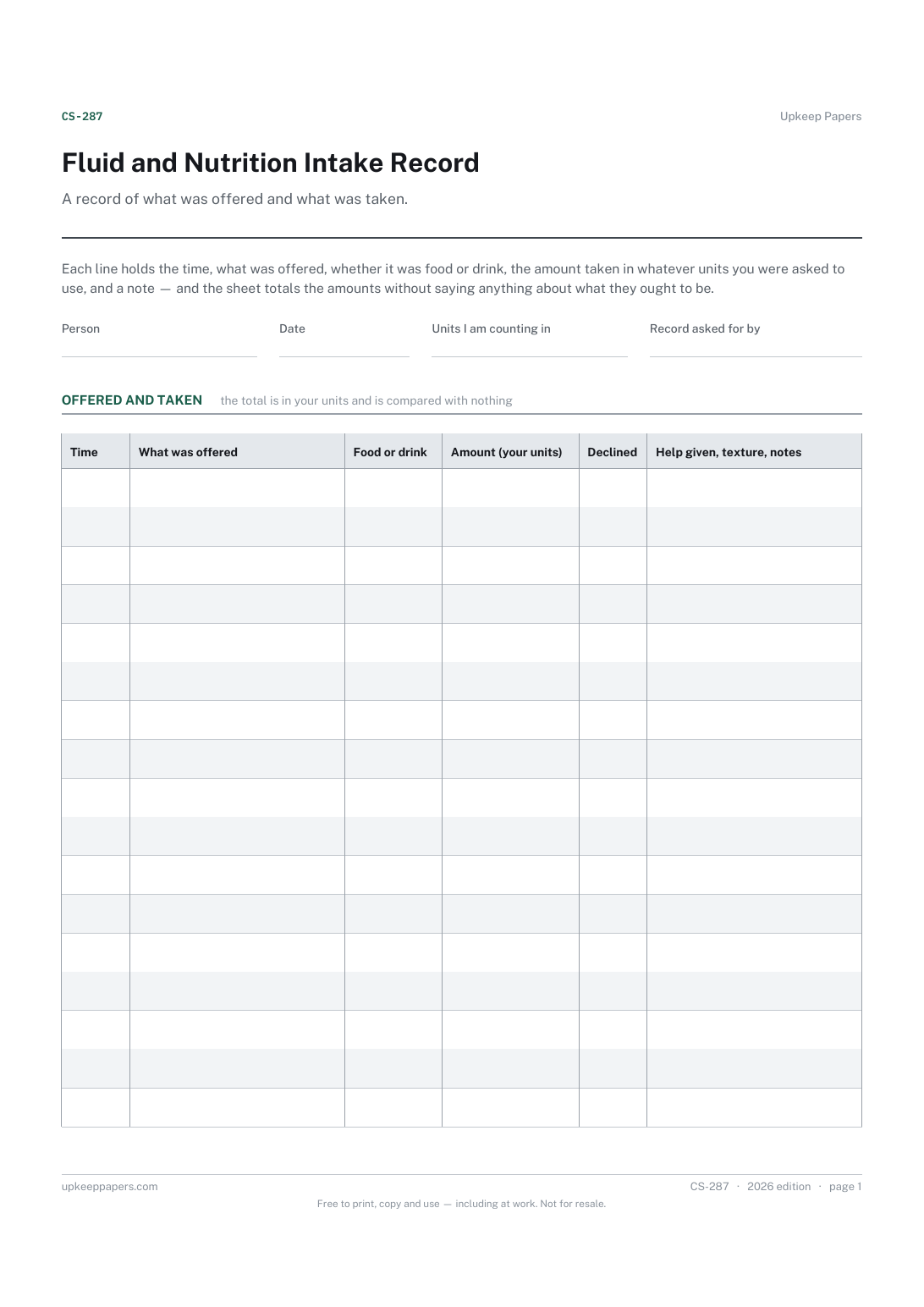
Everything offered through the day, with the time.
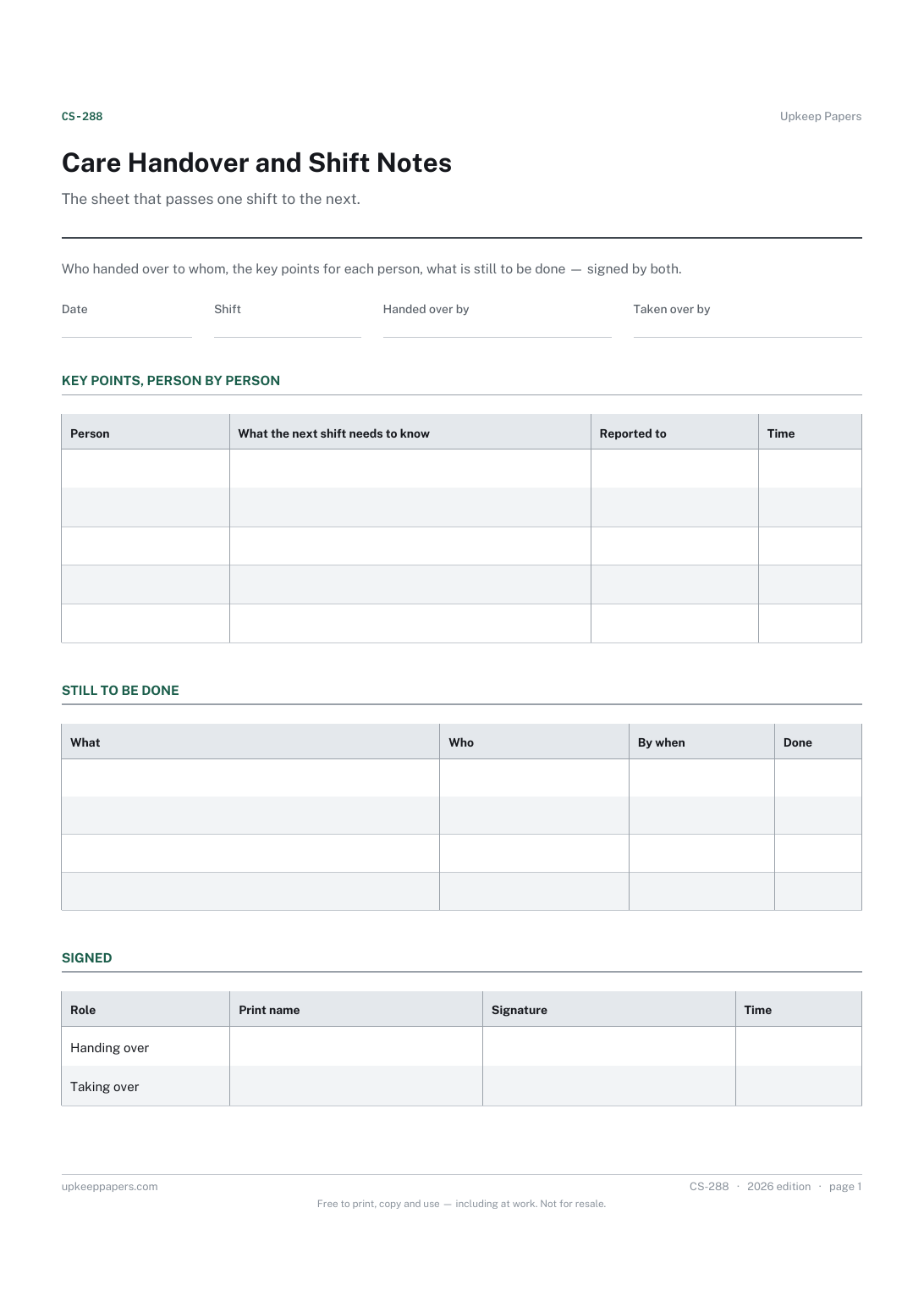
Who handed over, who took over, the date and the shift.
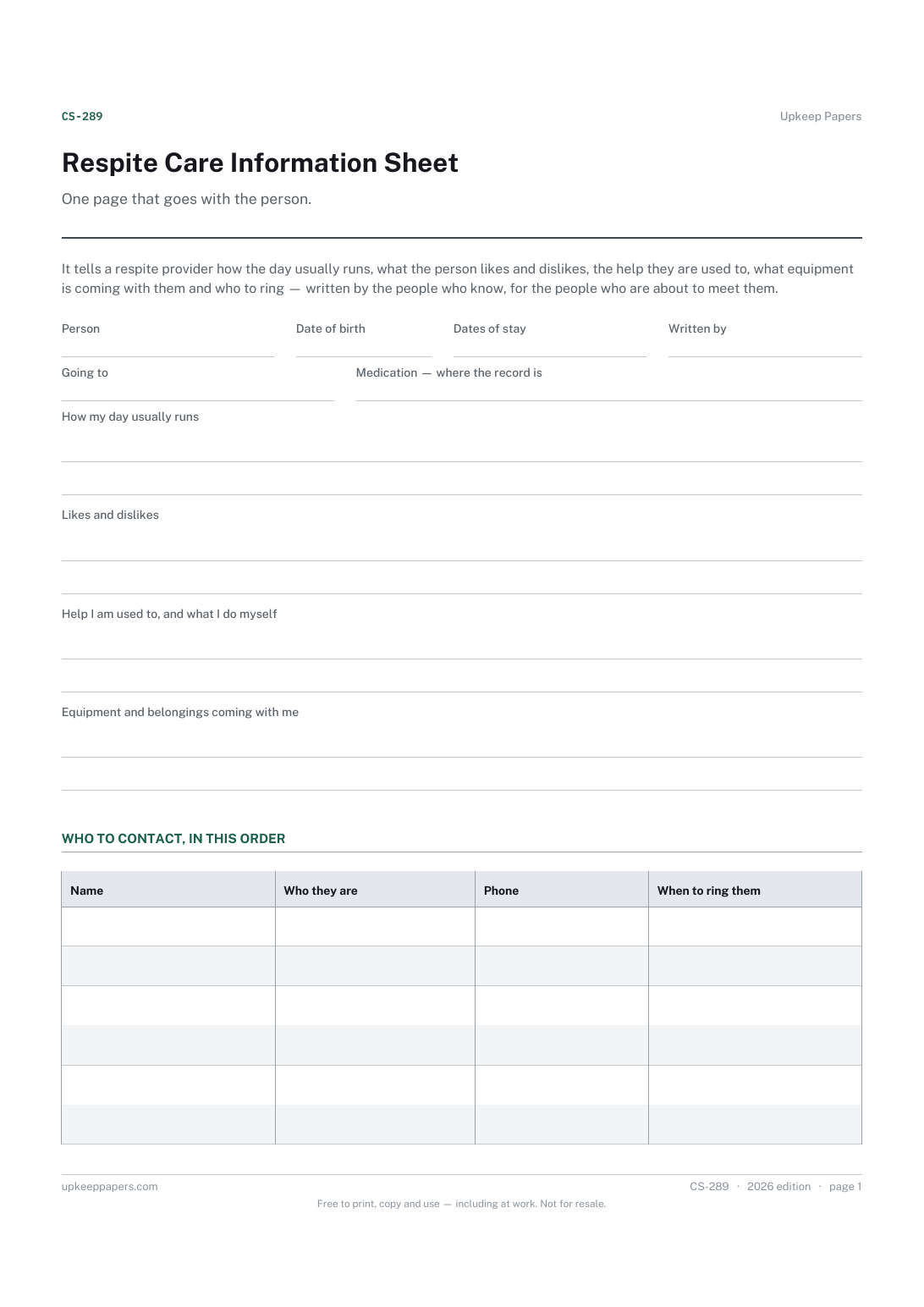
How the day runs — waking, meals, rest, bed — in the family's words.
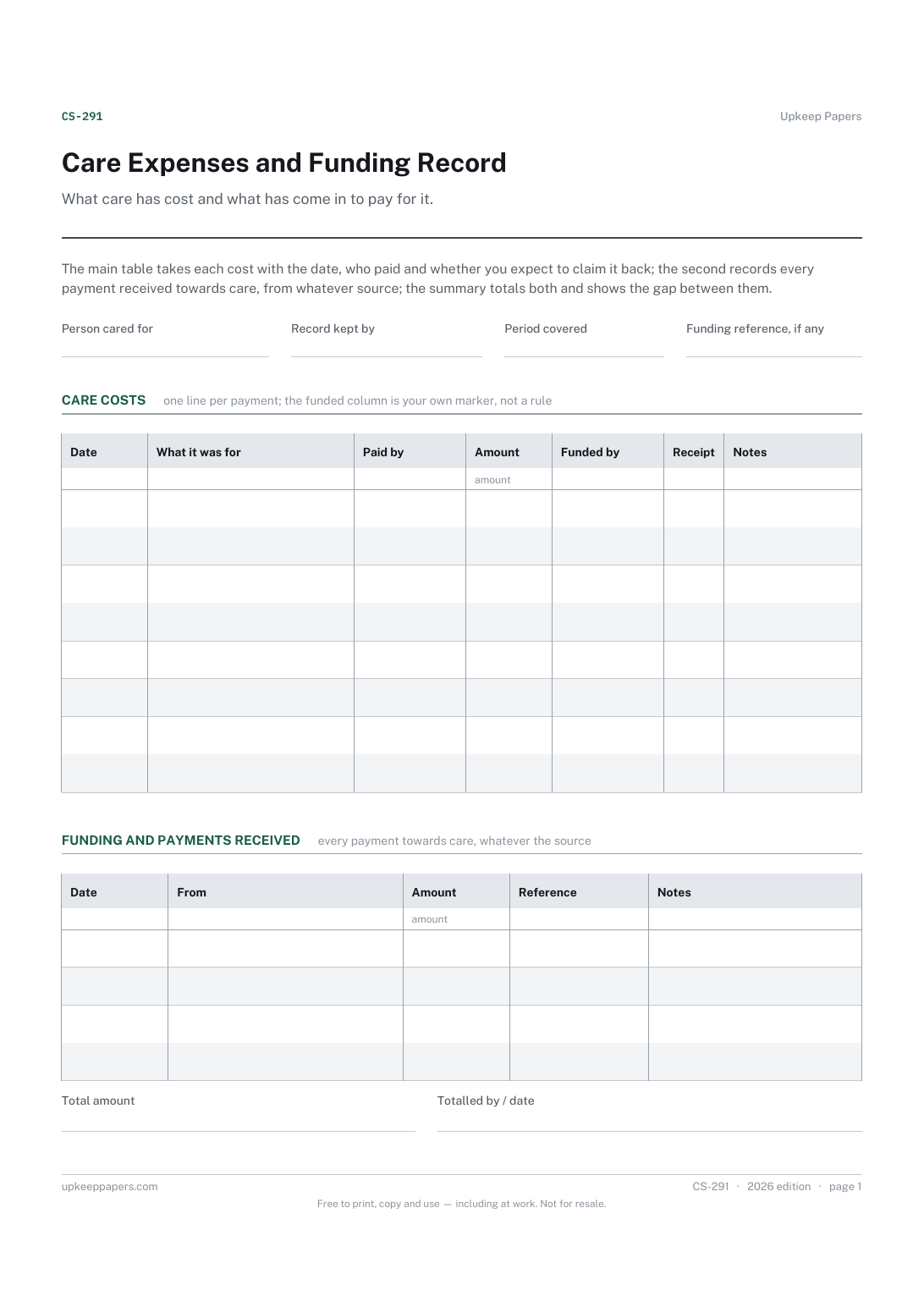
Every care cost dated, described and marked with who paid it.
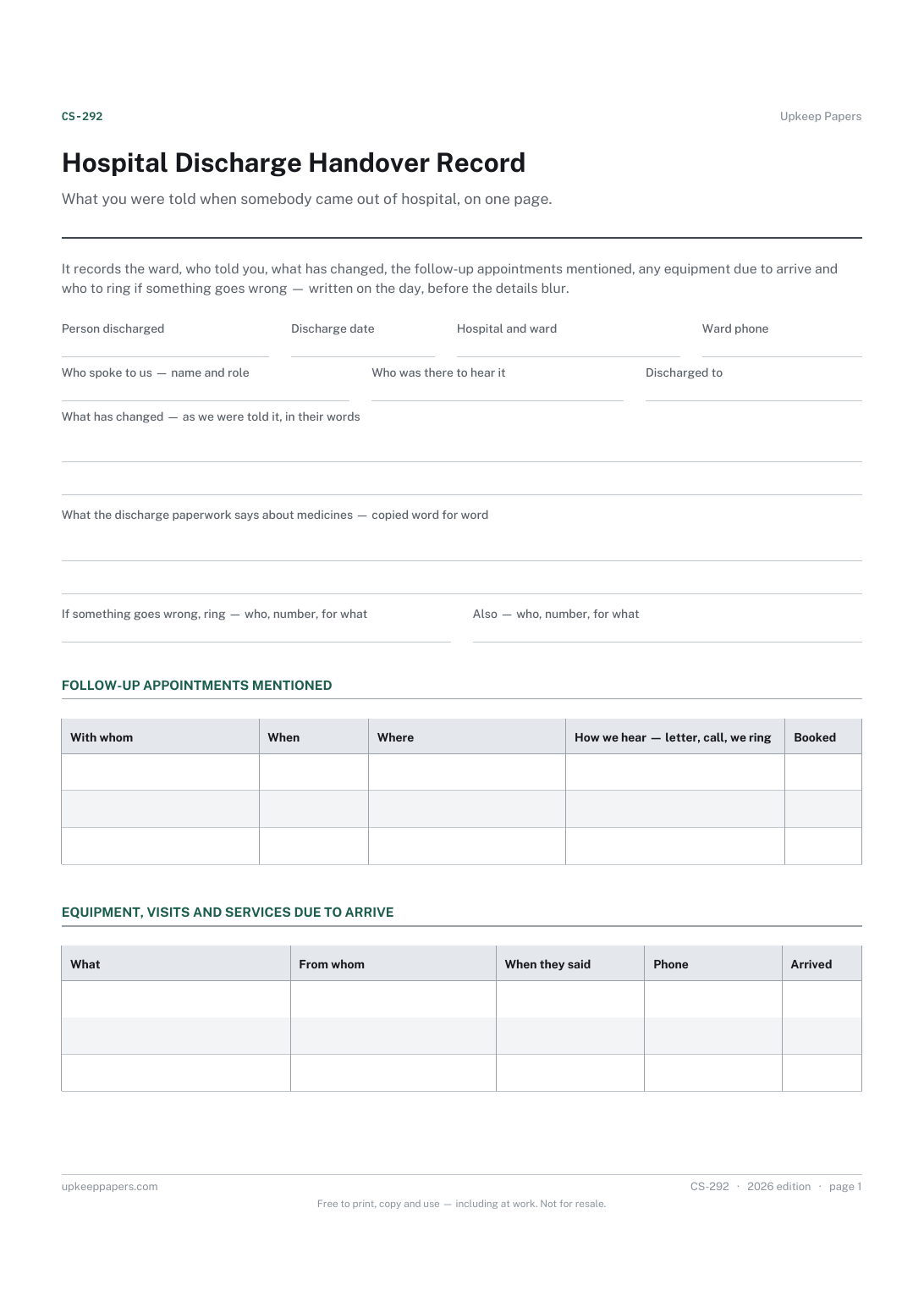
Which ward, which hospital and who to ring back with a question.
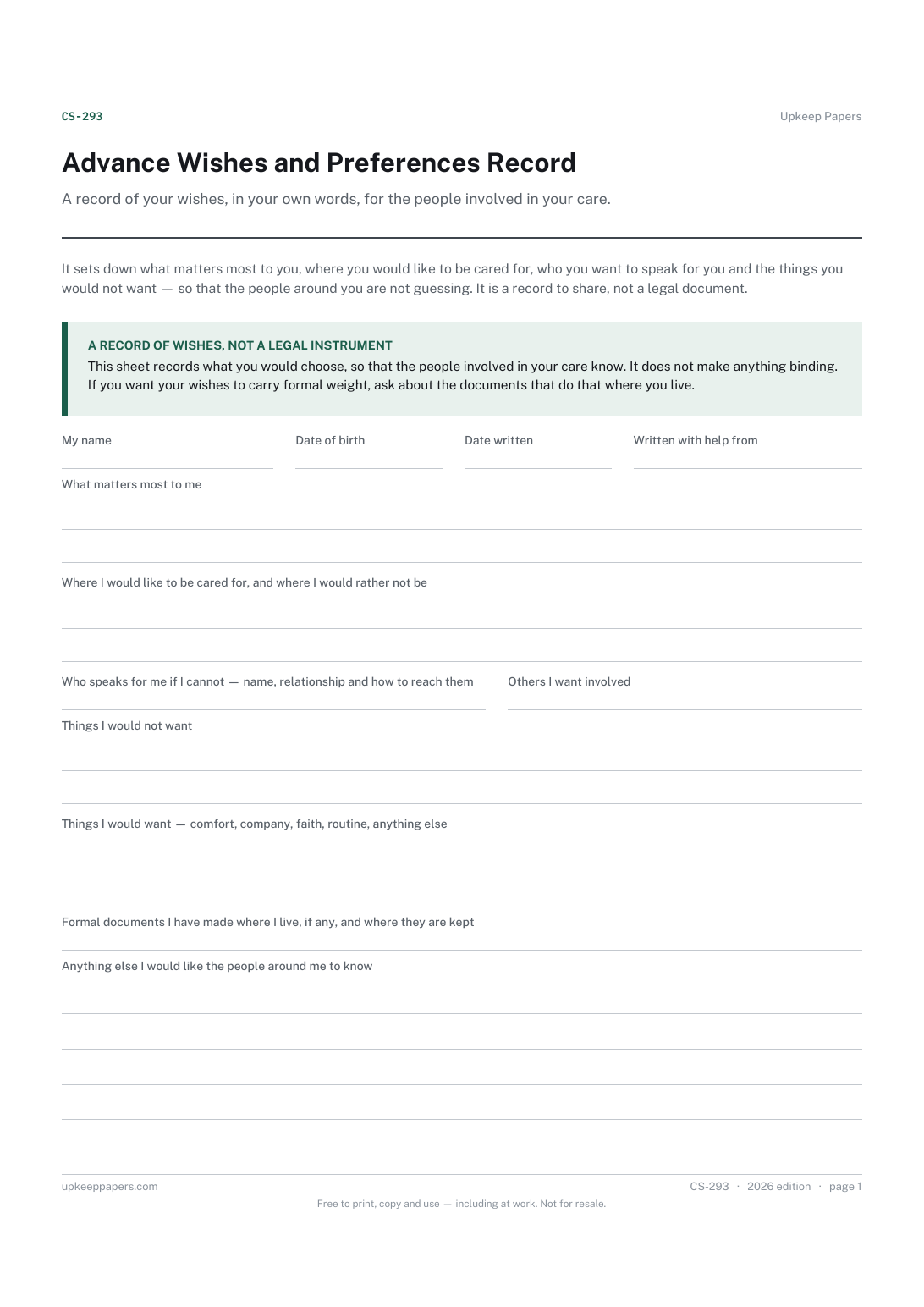
What matters most to you, written before anyone has to ask.
Who to ring first in an emergency, and who after that.
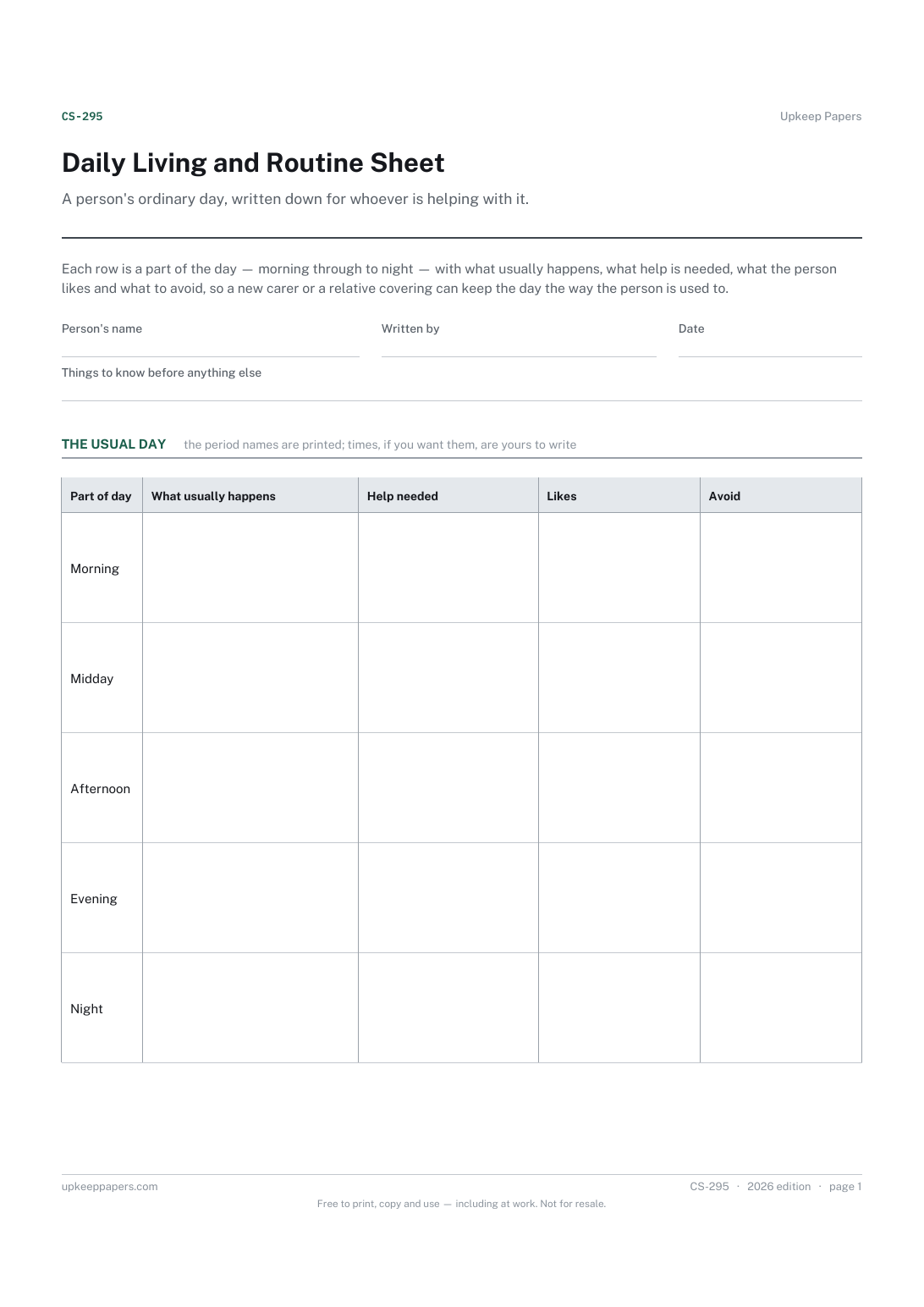
What usually happens at each part of the day, in the person's own routine.
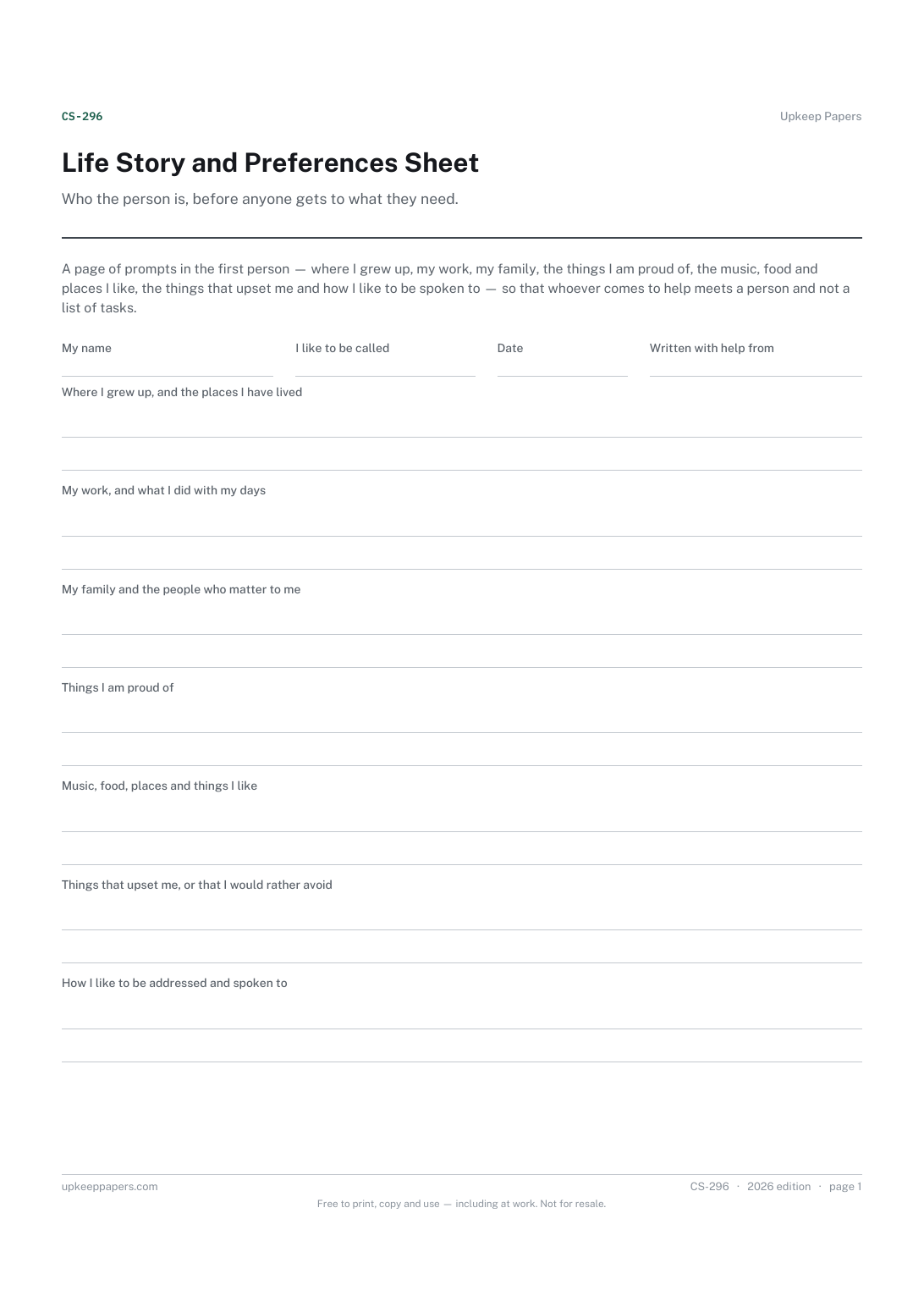
Where the person comes from and the life they have led, in their own words.
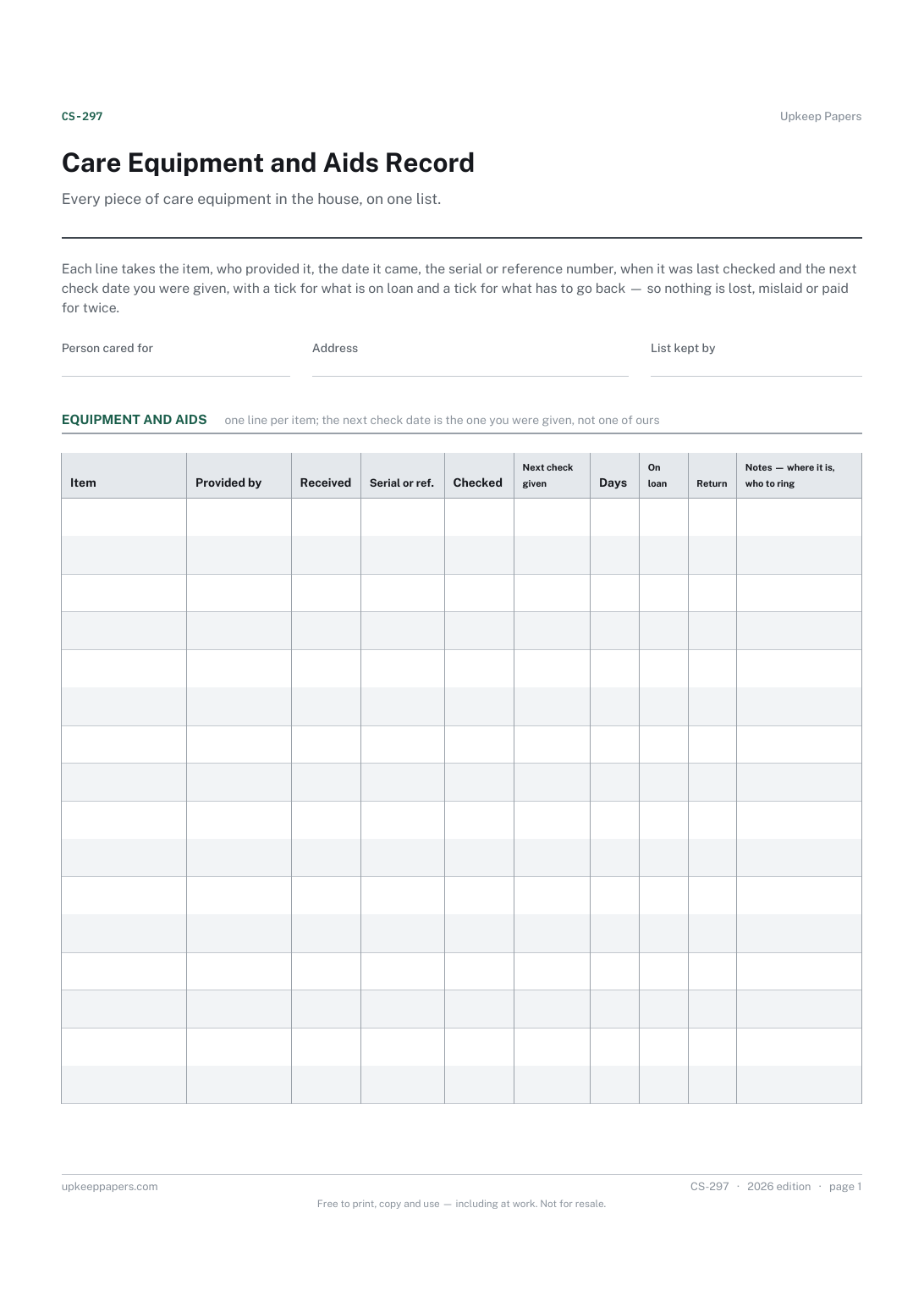
What equipment is in the house and where each item came from.
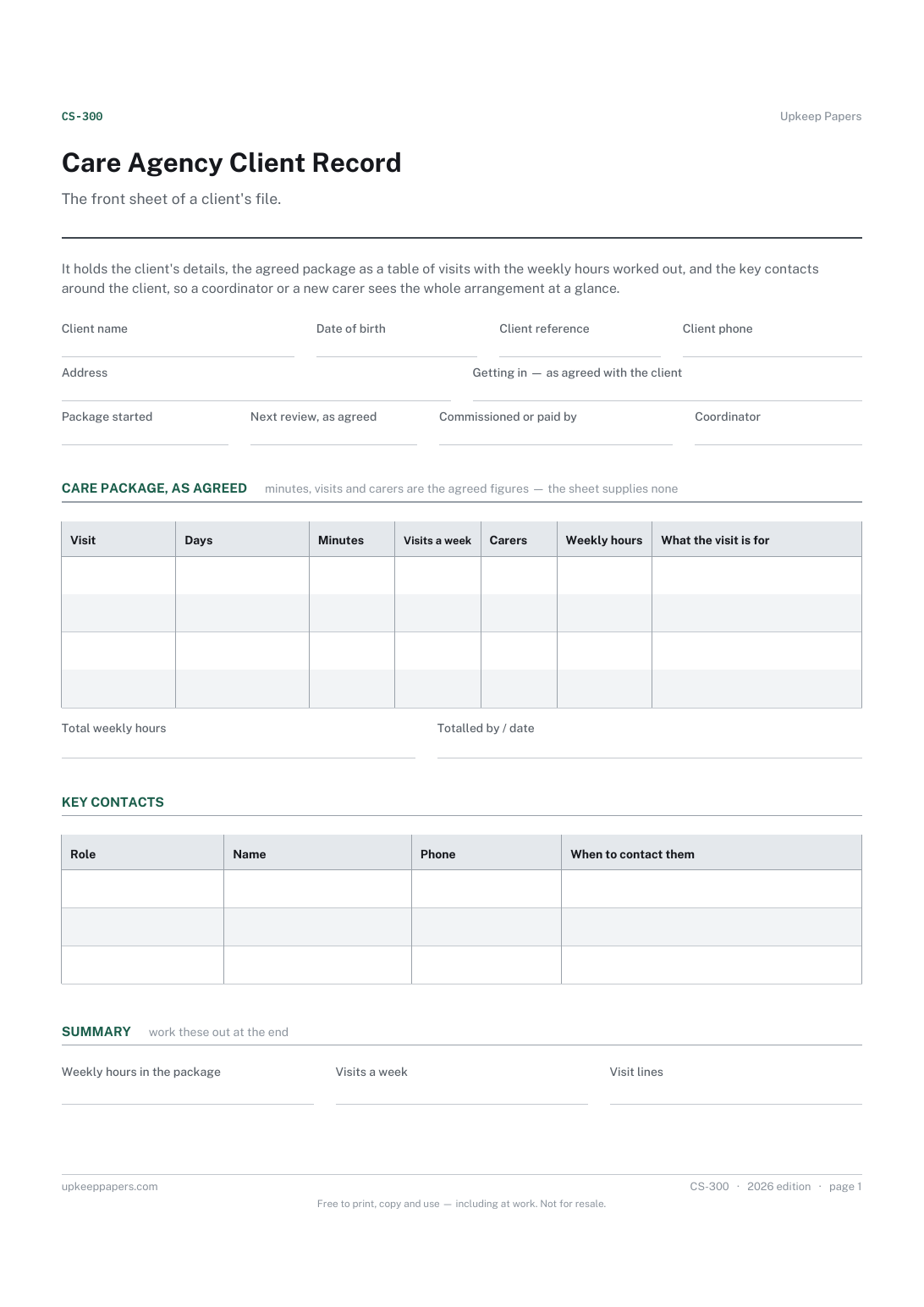
The client's details and the arrangements for getting in, in one place.
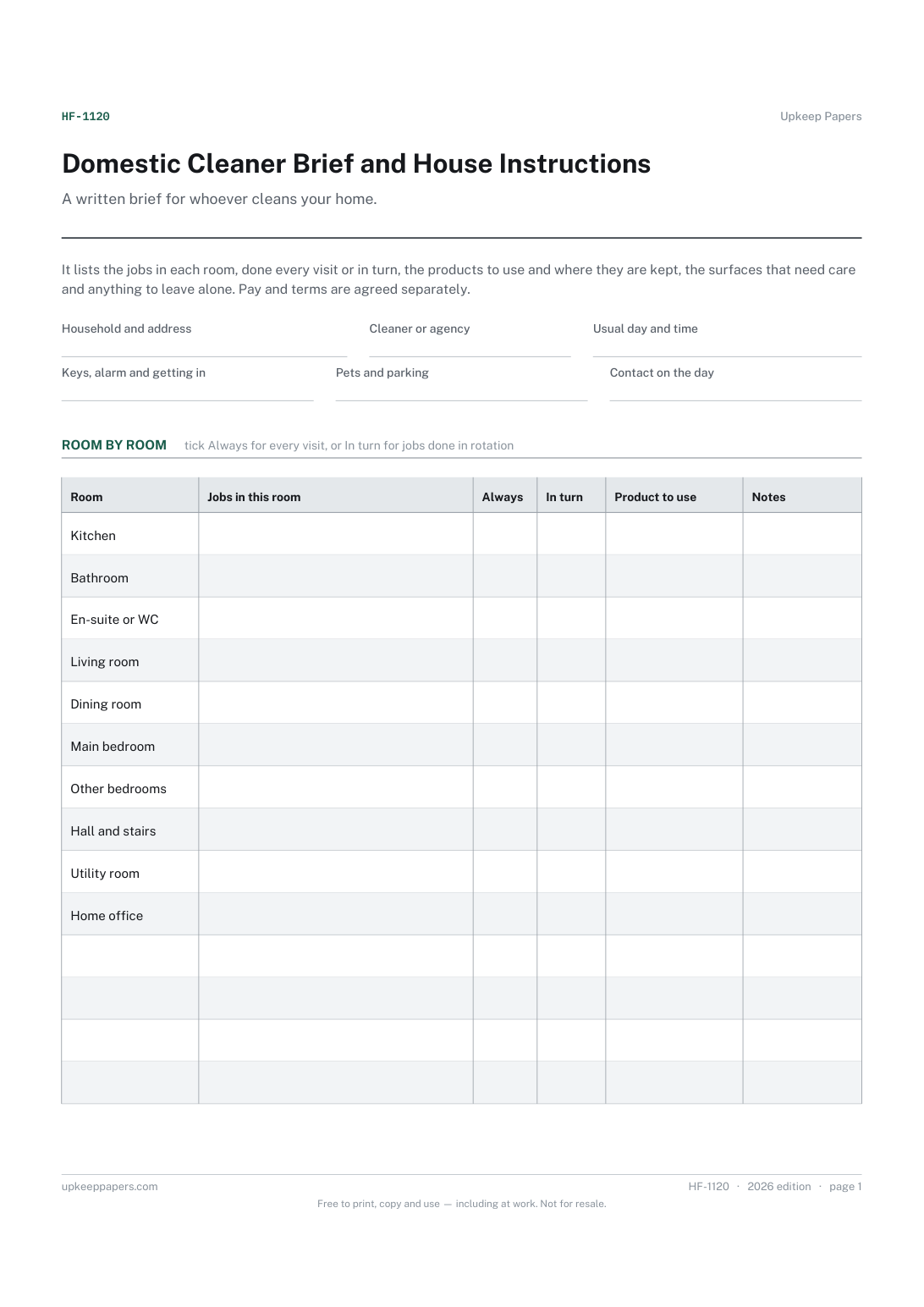
The jobs in each room and whether they are done every visit or in turn.
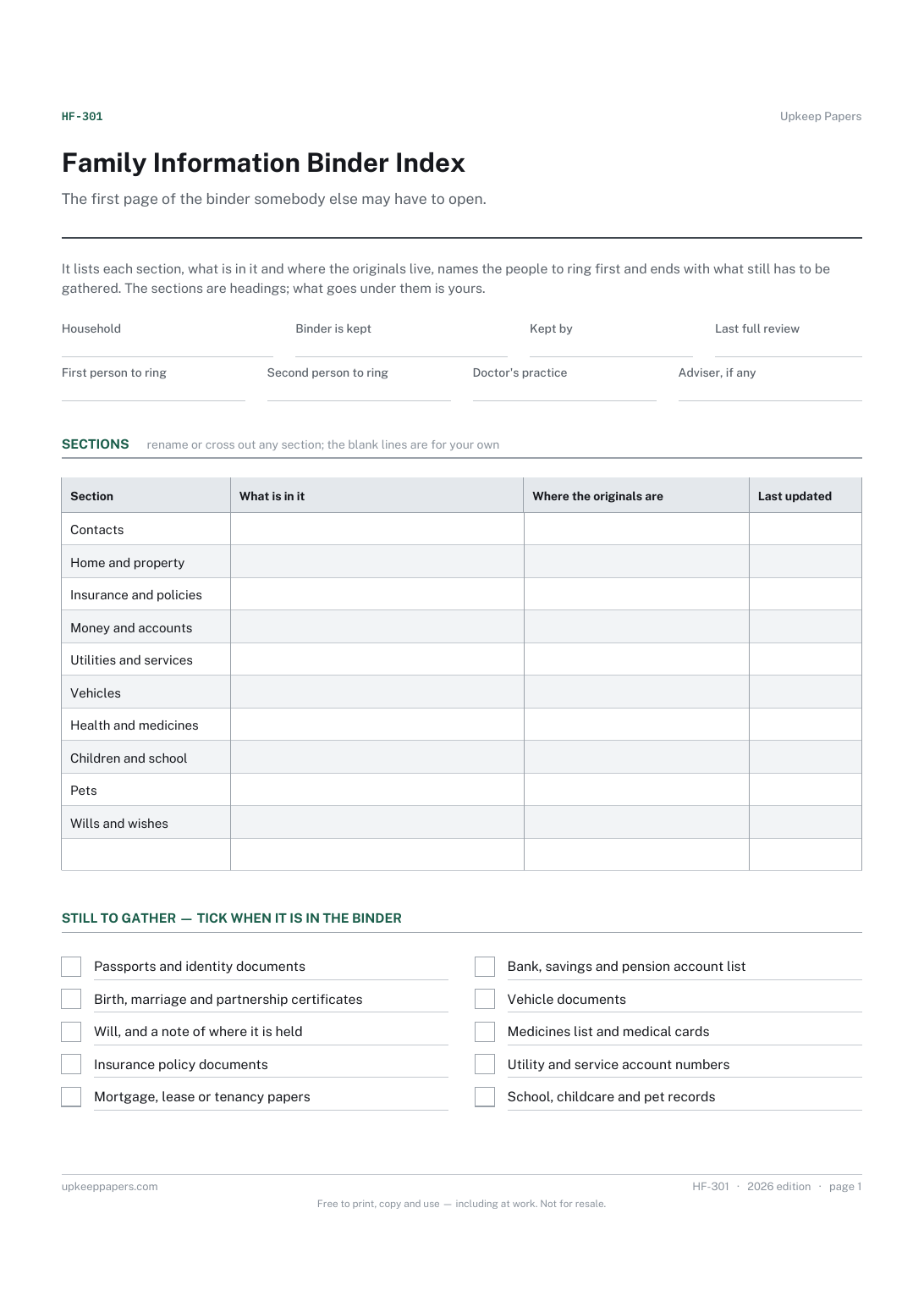
What each section of the binder holds, in a line.
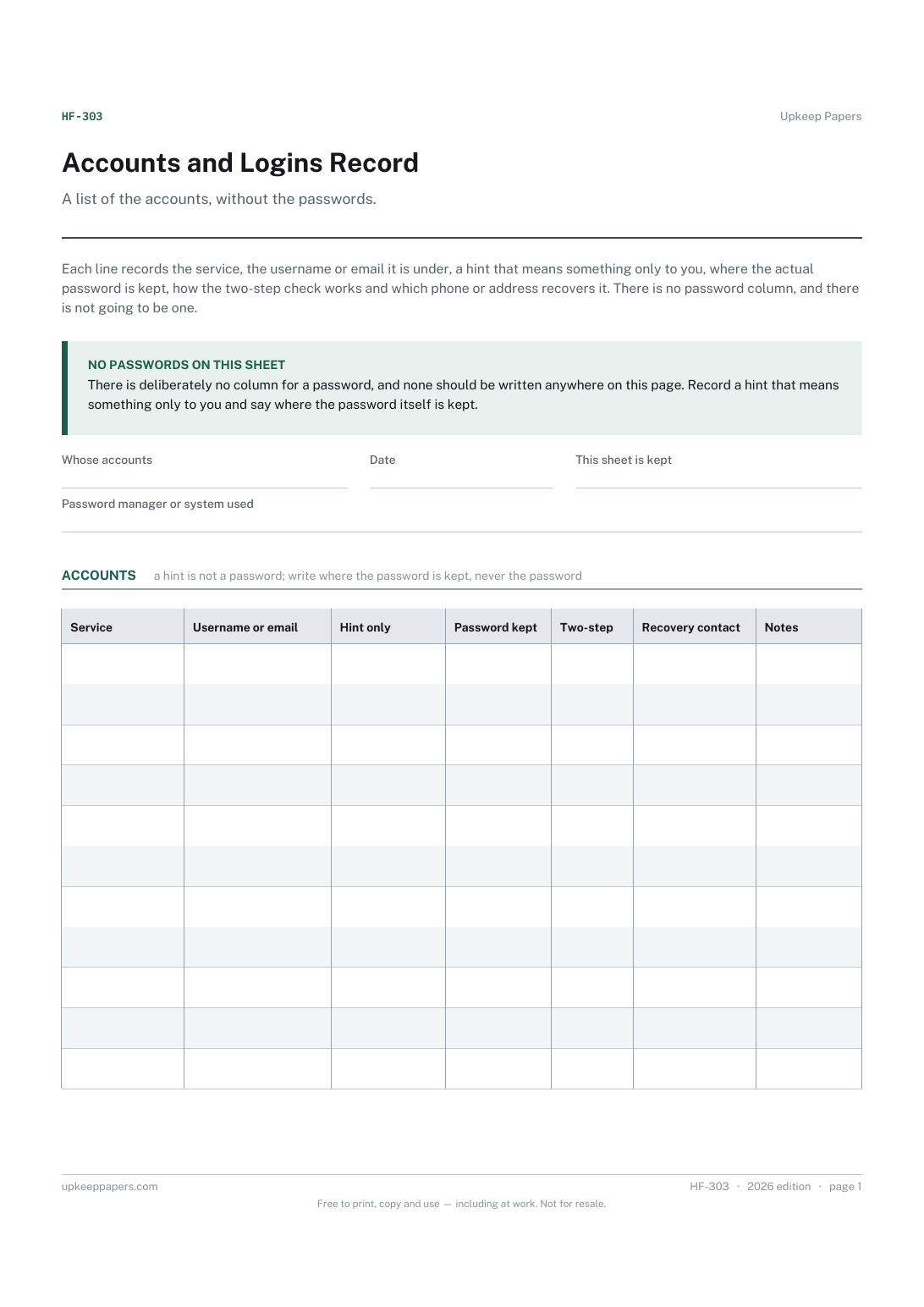
Every account the household holds, with the service and the login name.
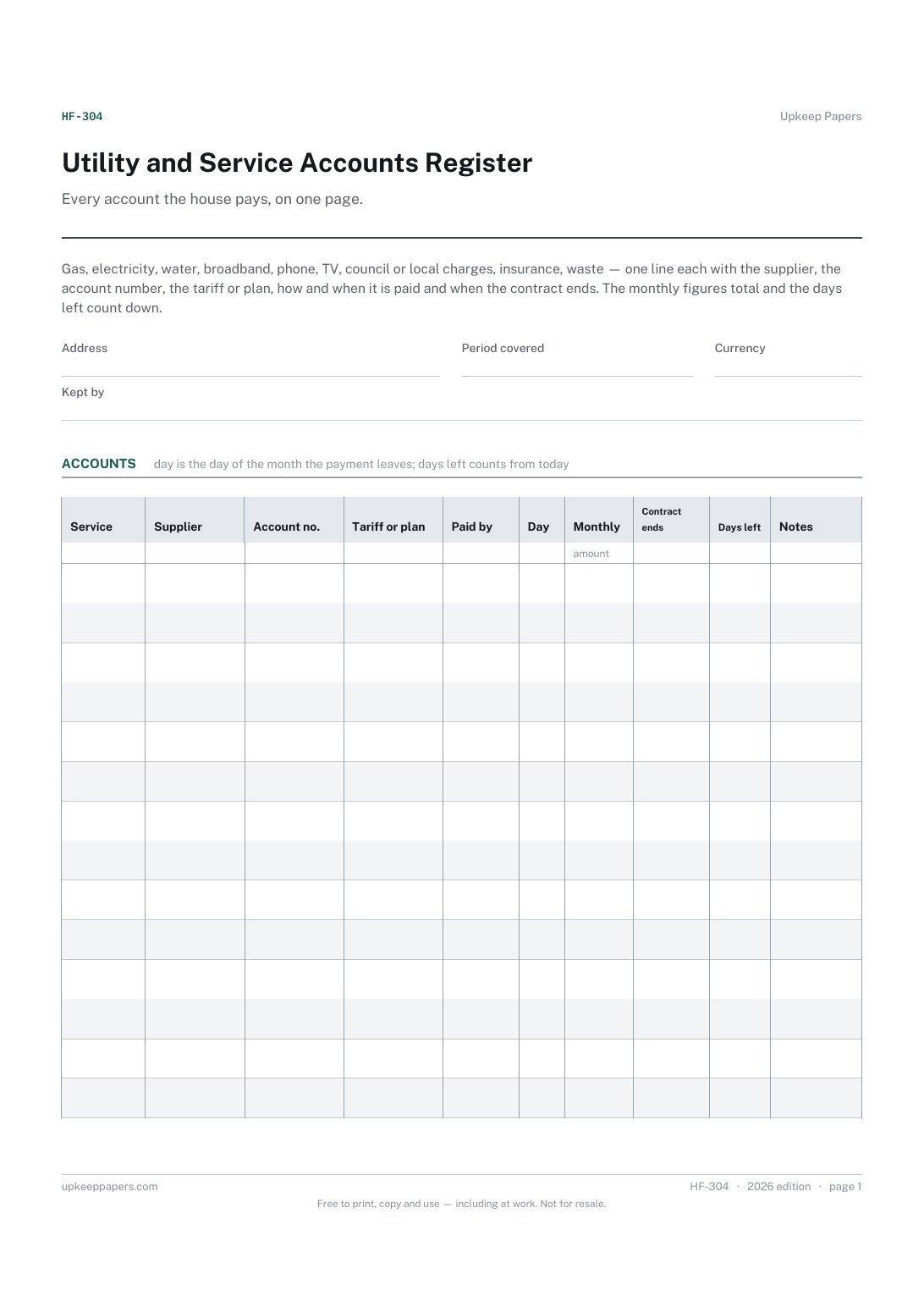
Which supplier provides what, with the account number to quote.
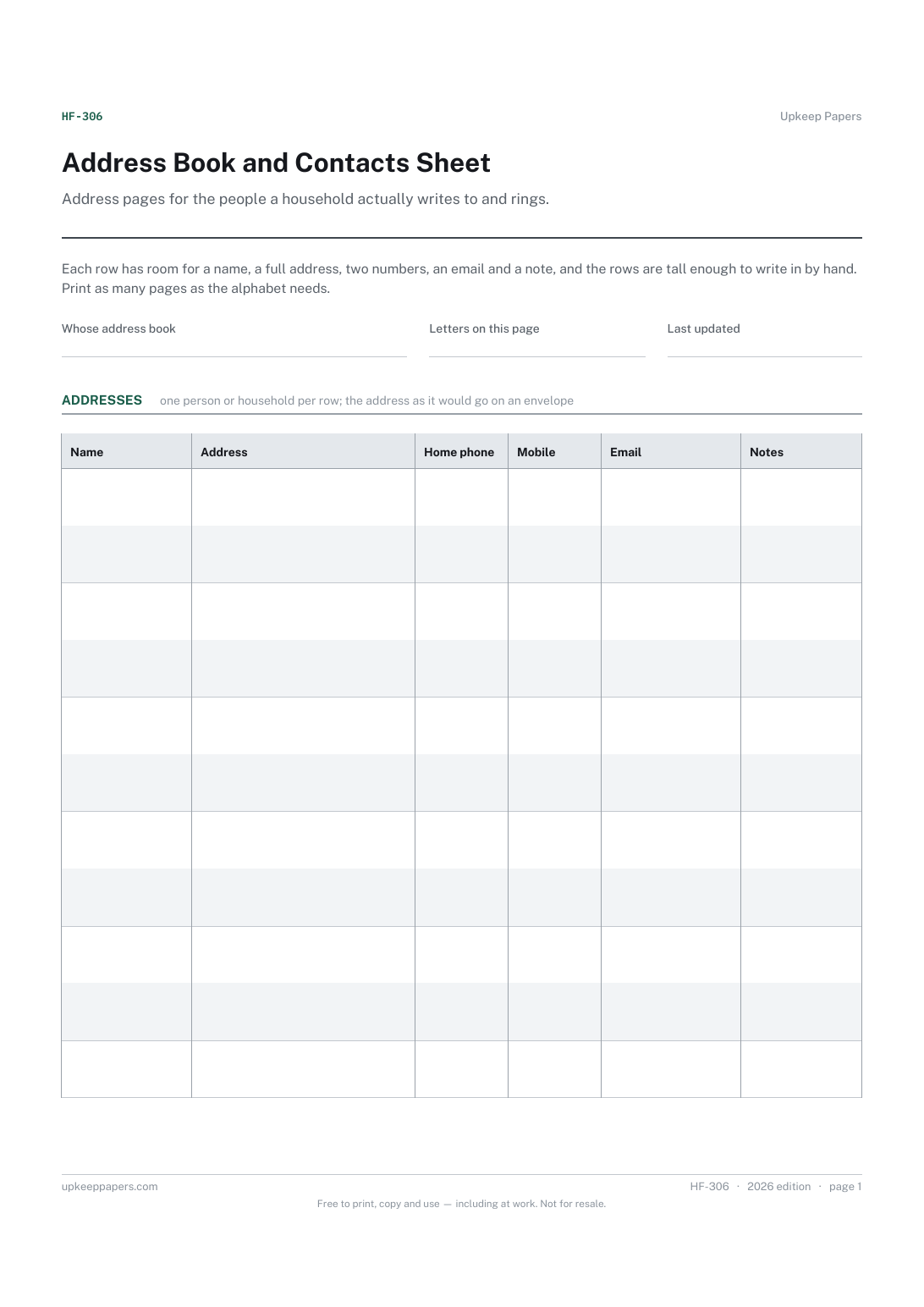
Names and full postal addresses, written large enough to read.
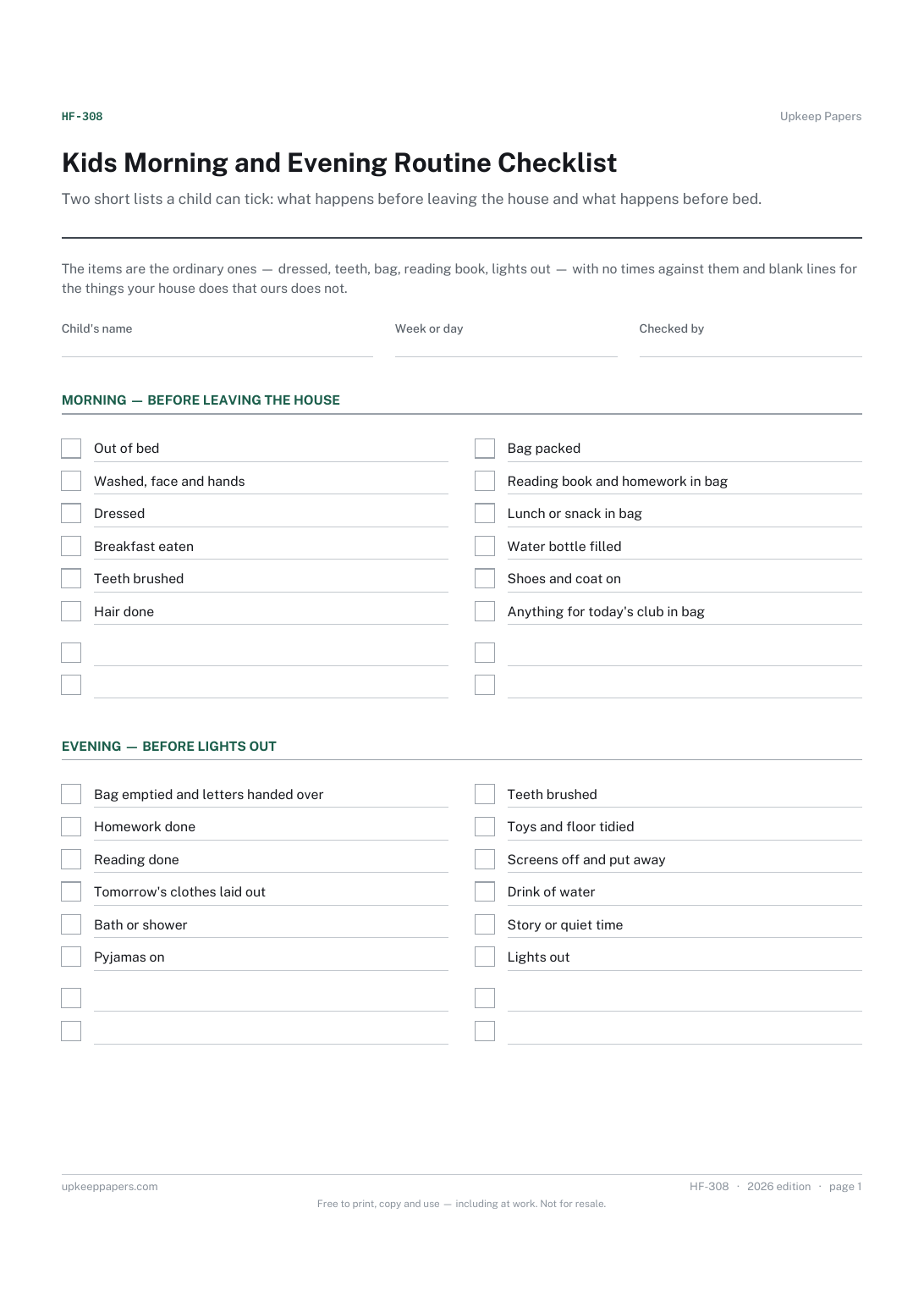
What has to happen before the door, in an order the child can follow.
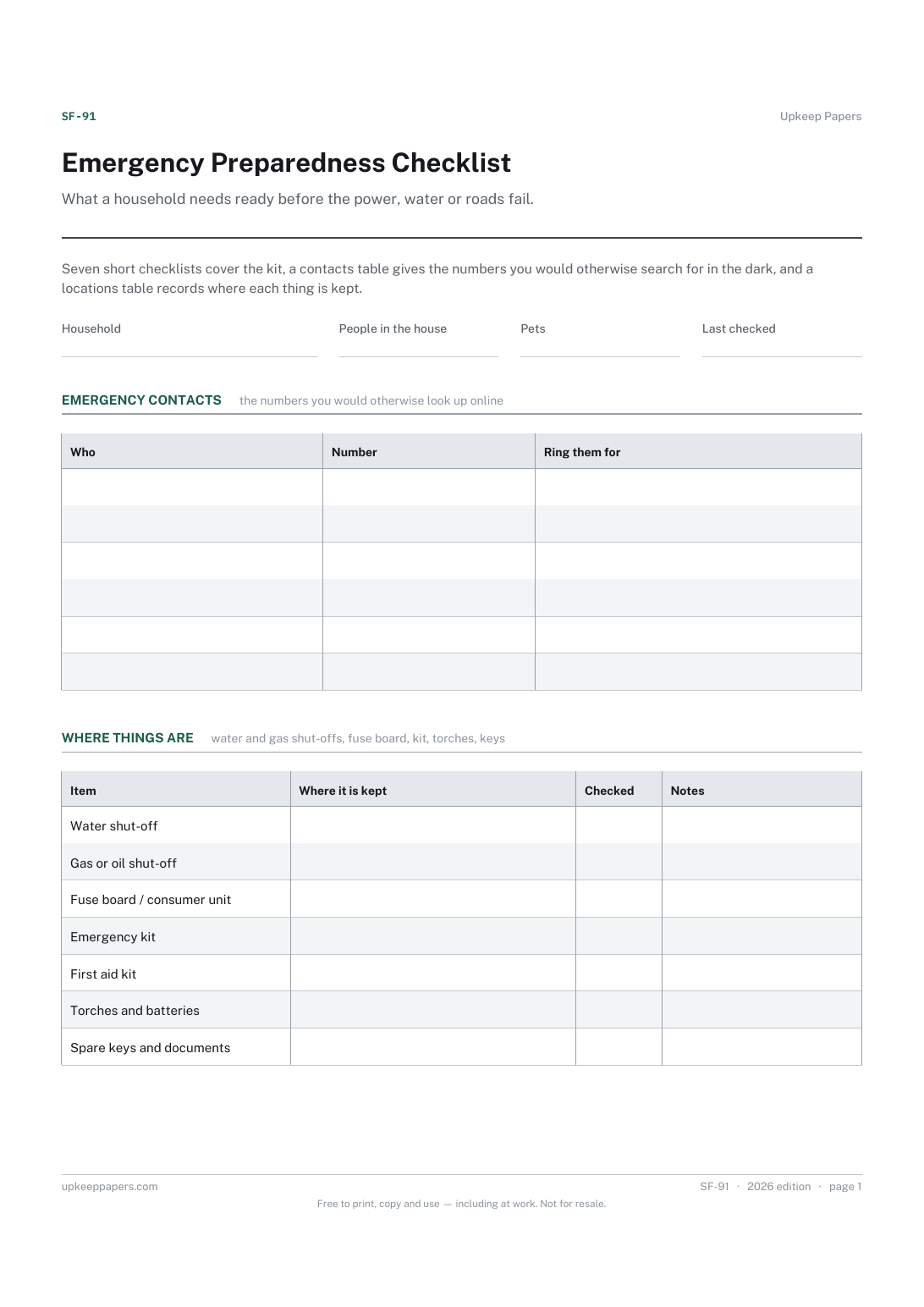
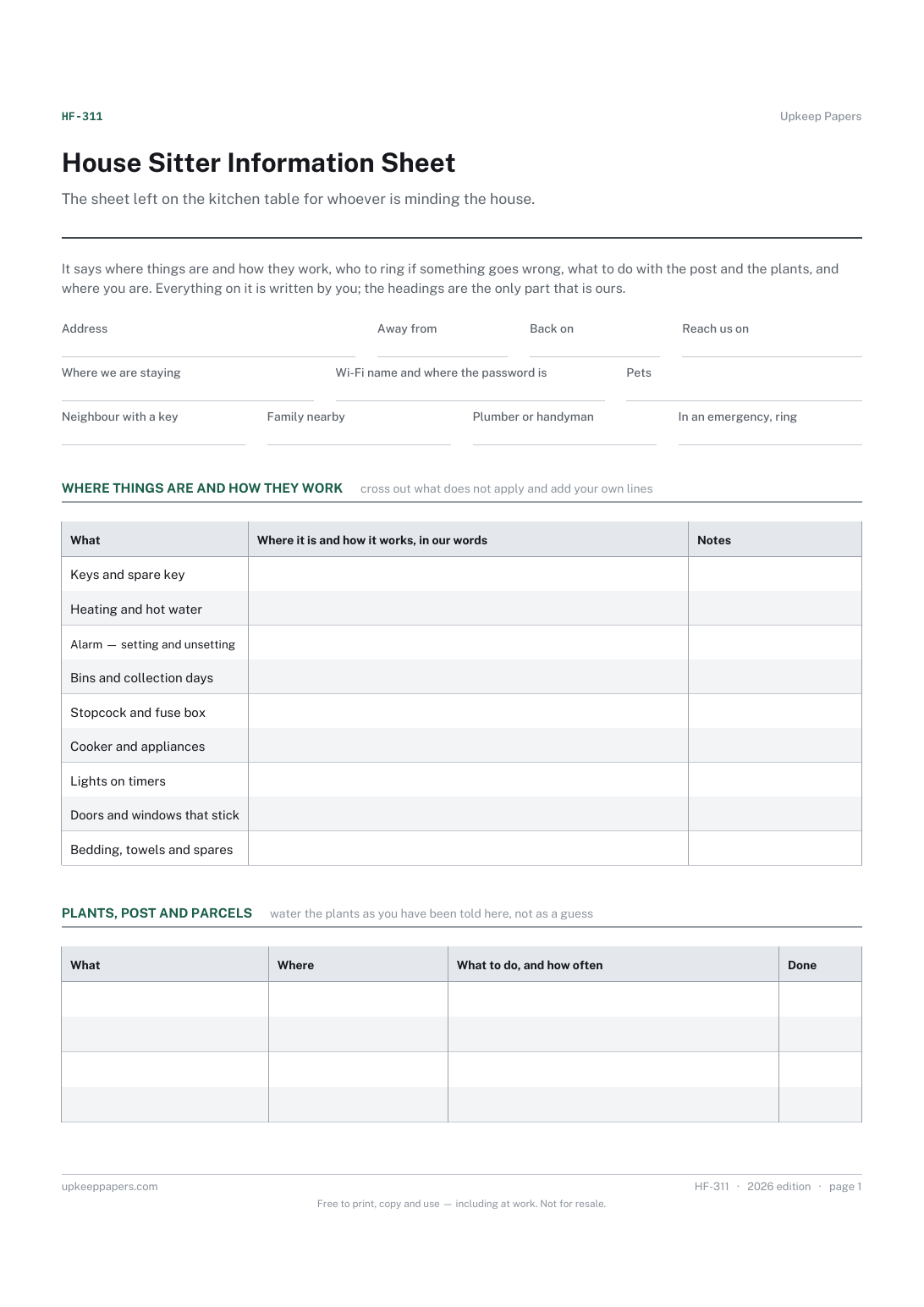
Where the keys, the stopcock, the fuse box and the spare bulbs are.
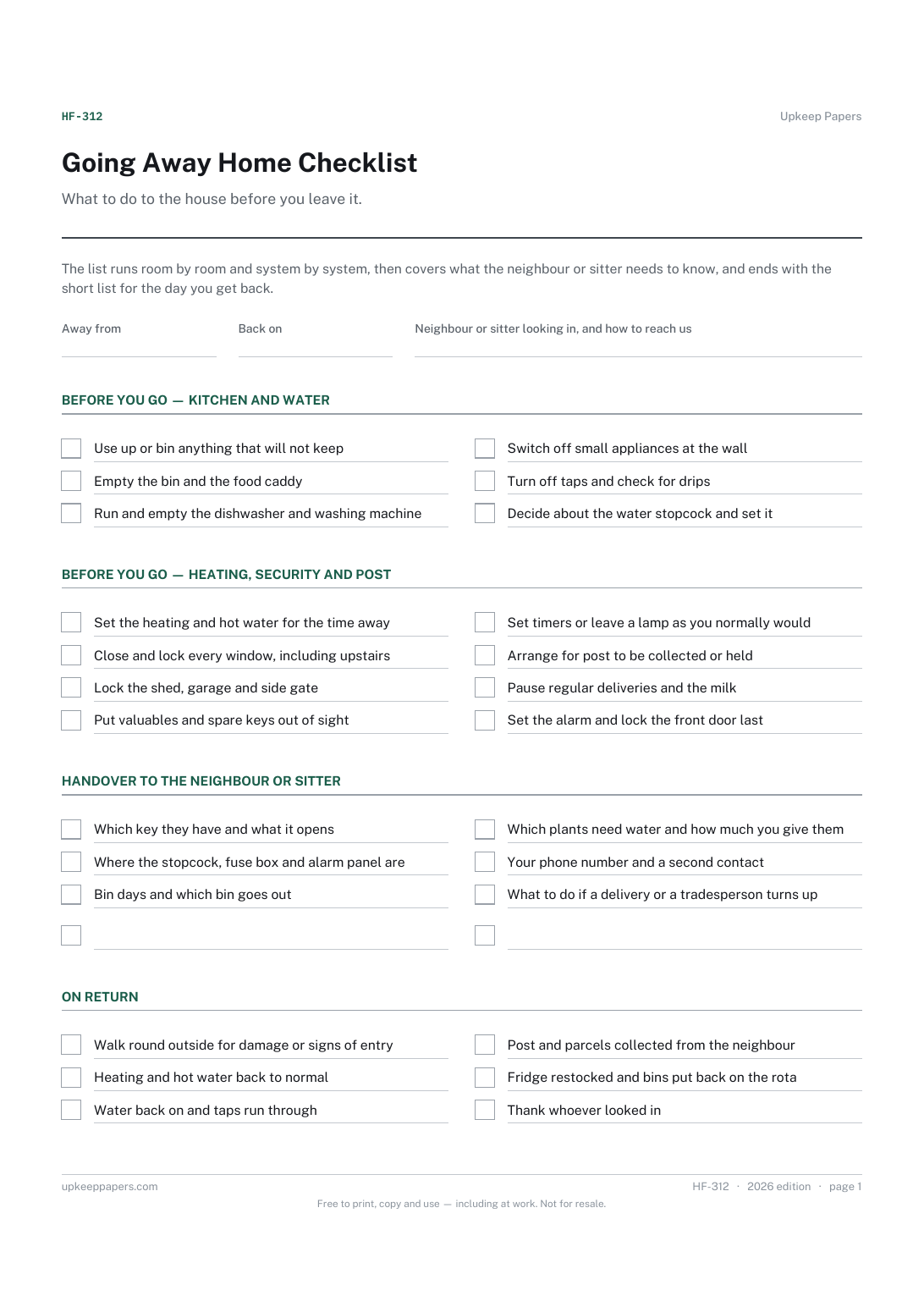
The kitchen, water and heating dealt with so nothing is left running or rotting.
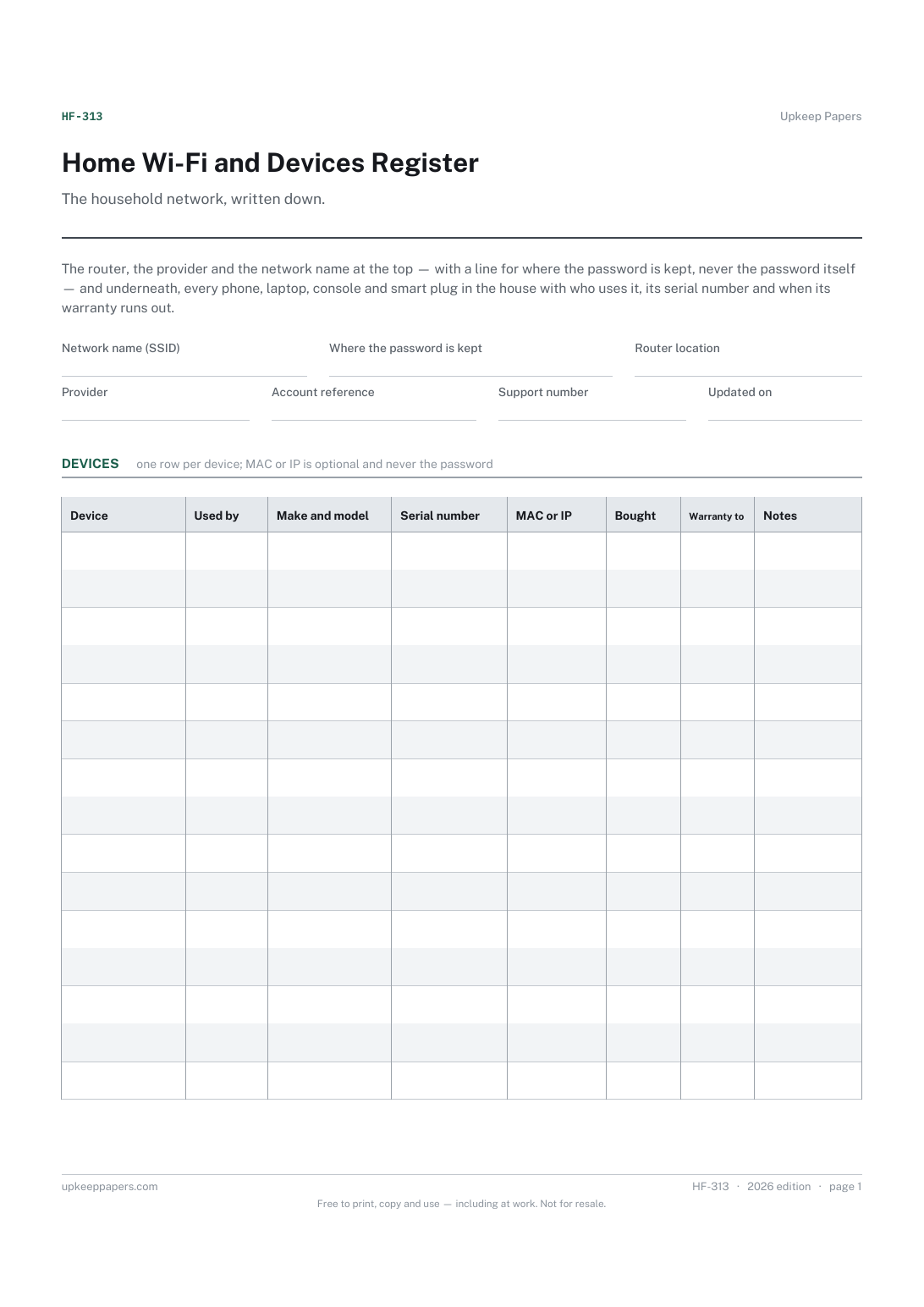
The network name, router location and the provider's support line, in one place.
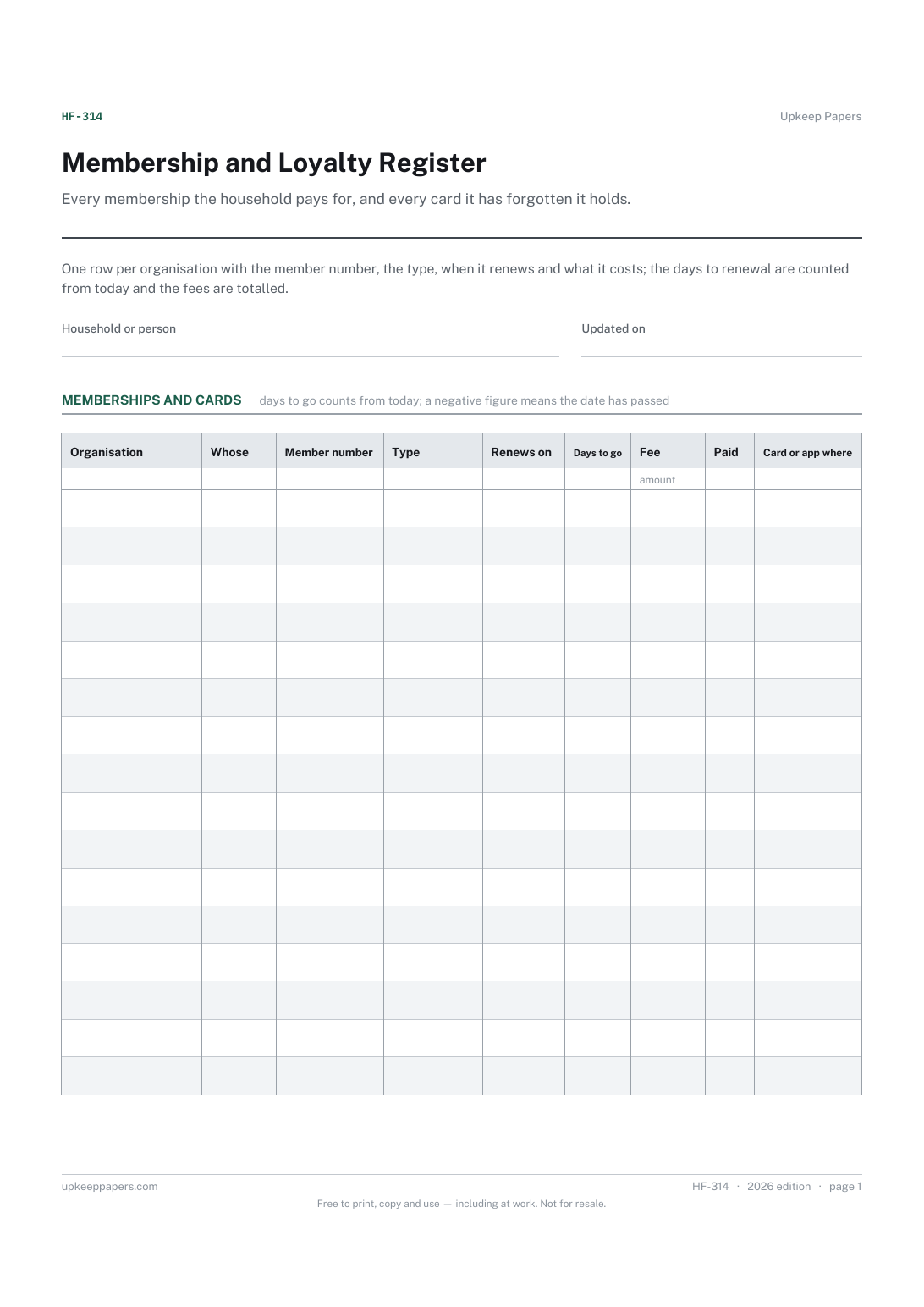
What memberships and cards exist, and whose they are.
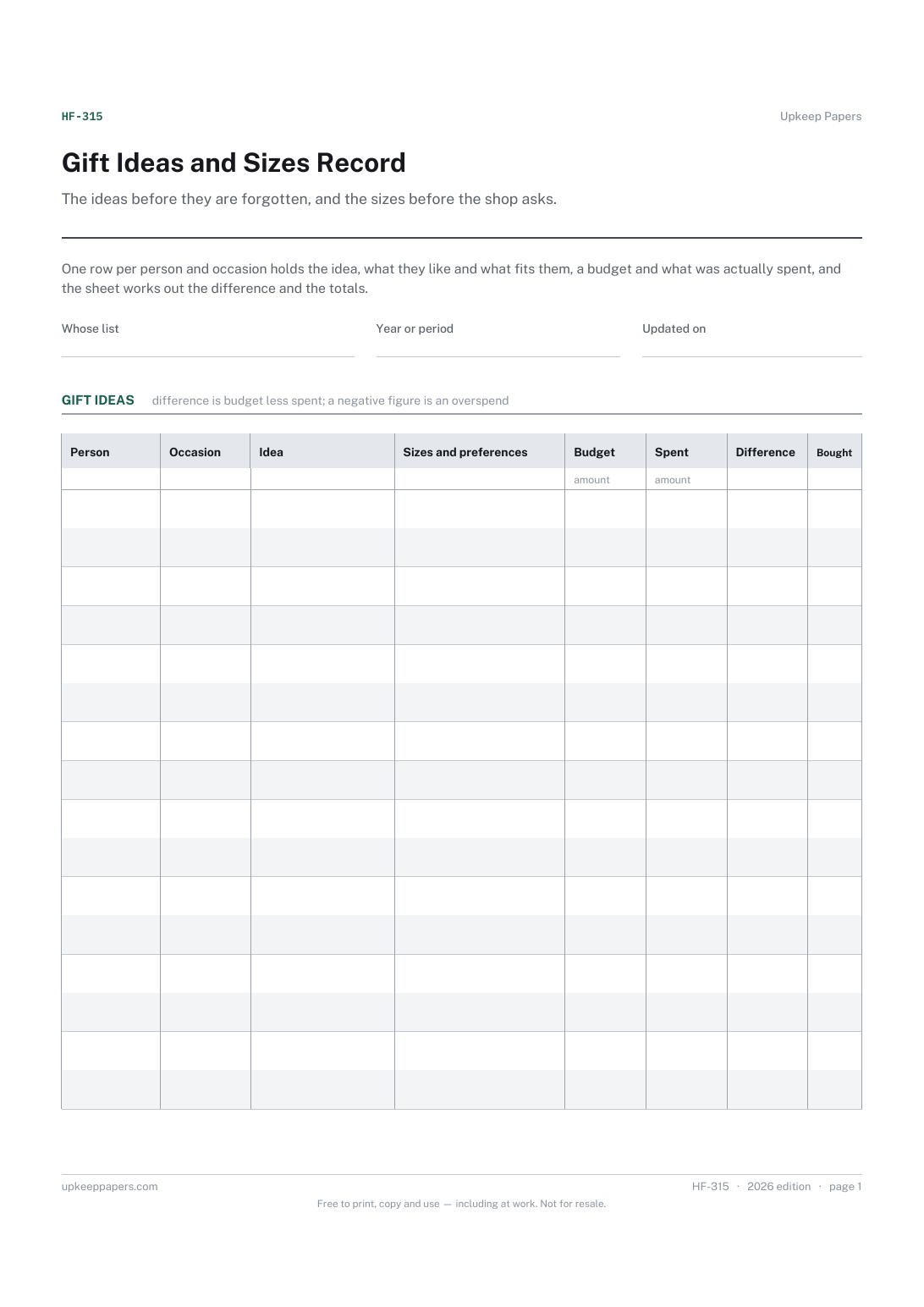
Ideas as they come up, months before the date, against the person and the occasion.
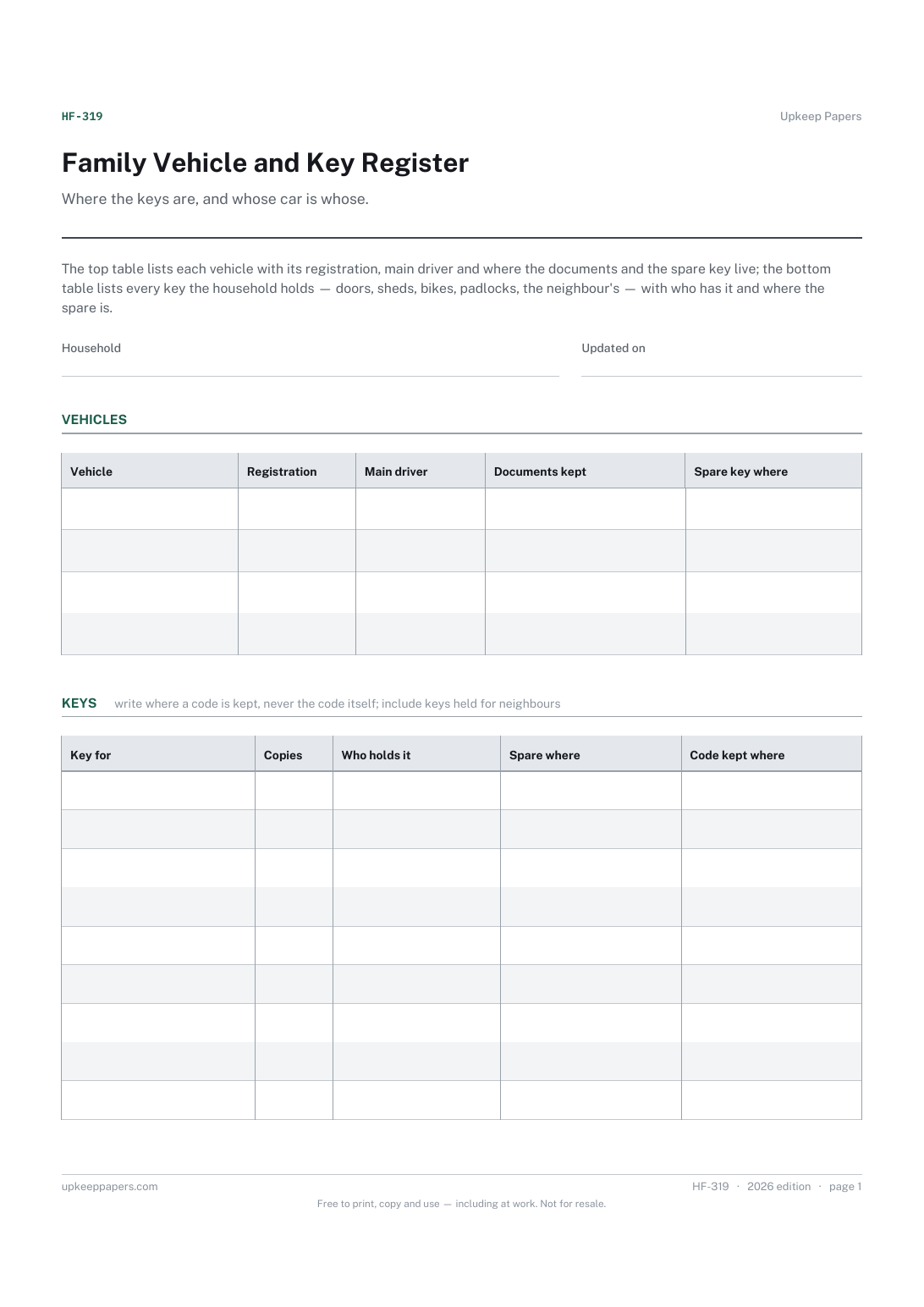
Each vehicle, its registration and who mainly drives it.
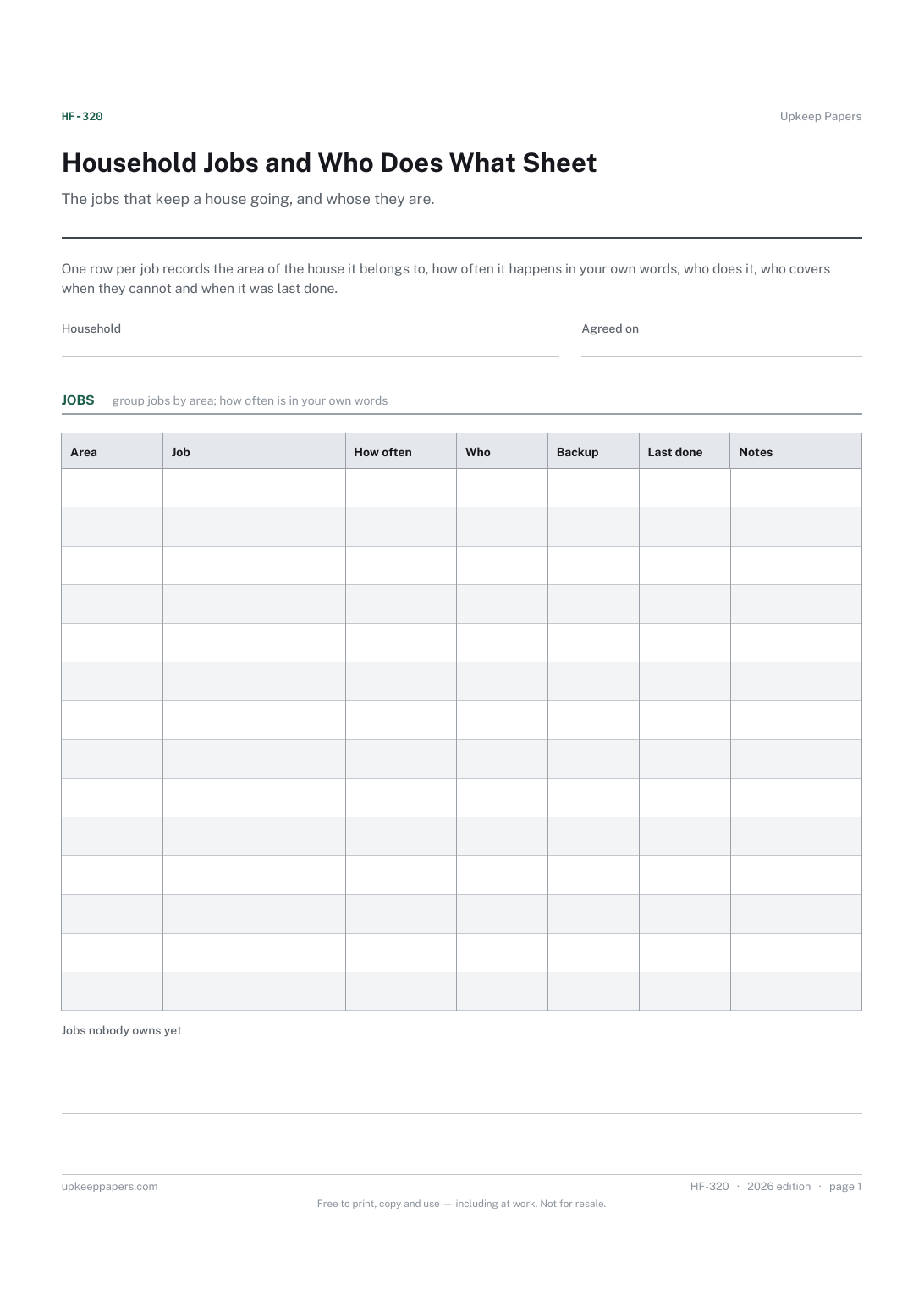
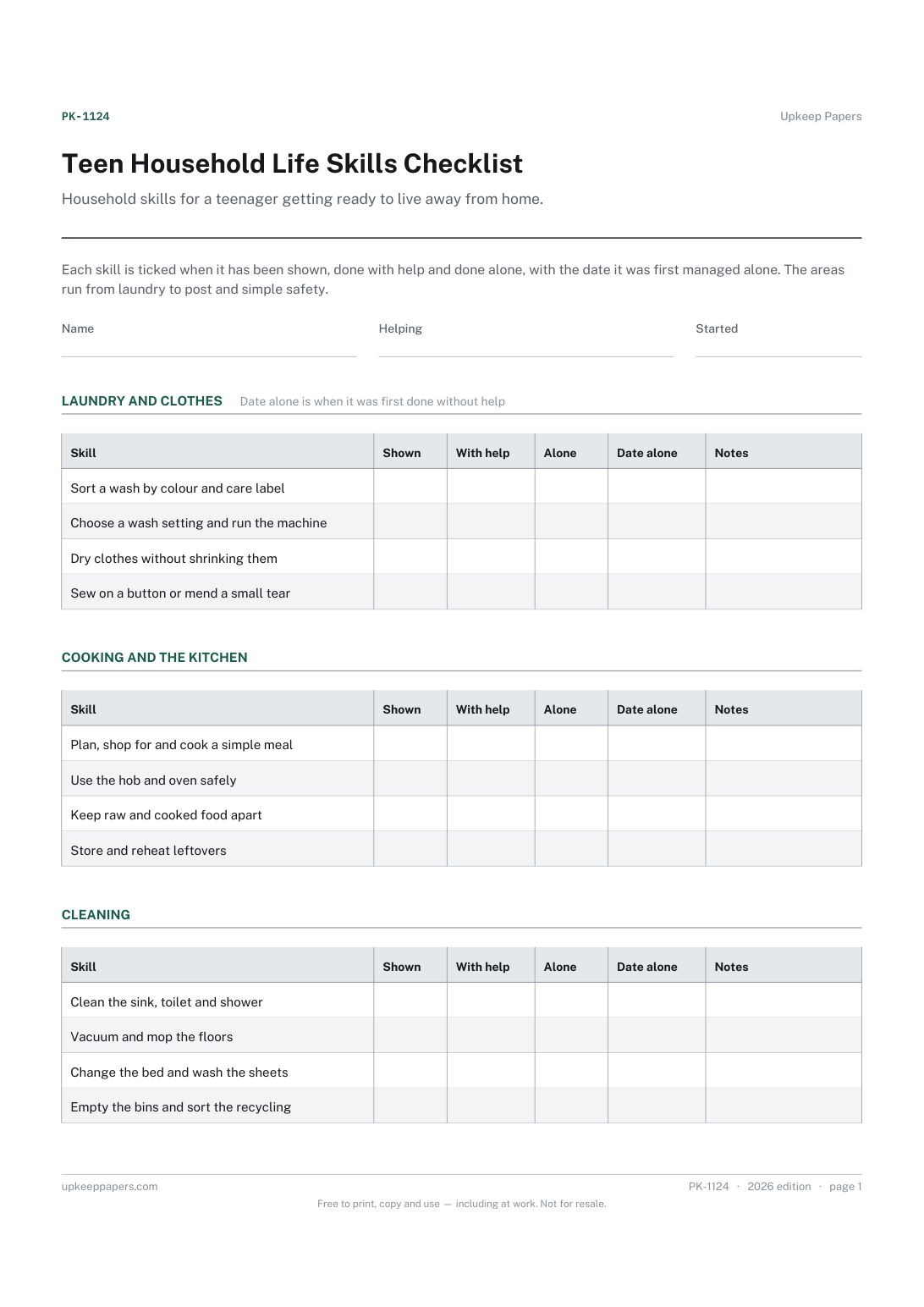
Every regular job in the house, grouped by area.
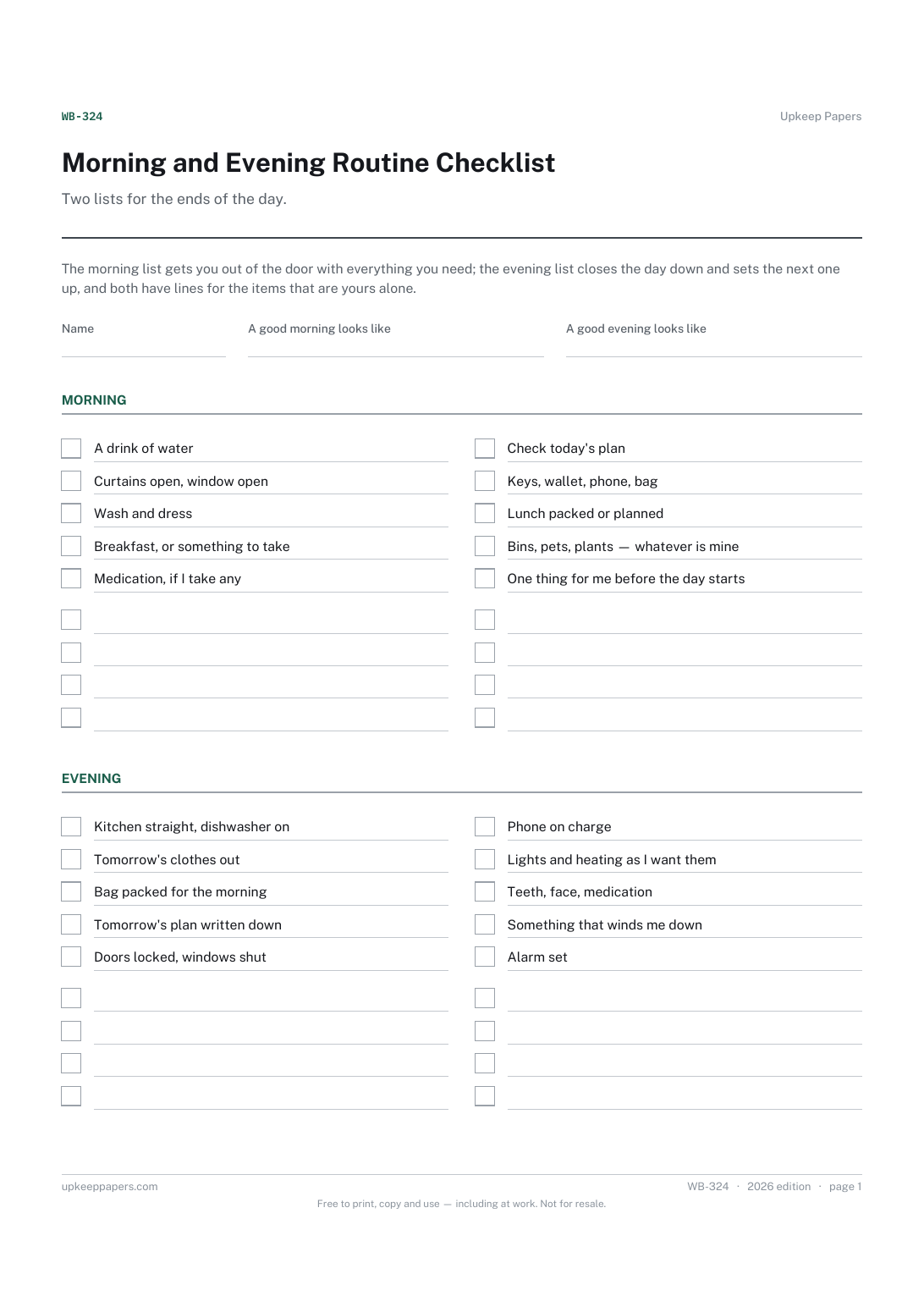
The things that happen every morning, so none of them needs remembering.
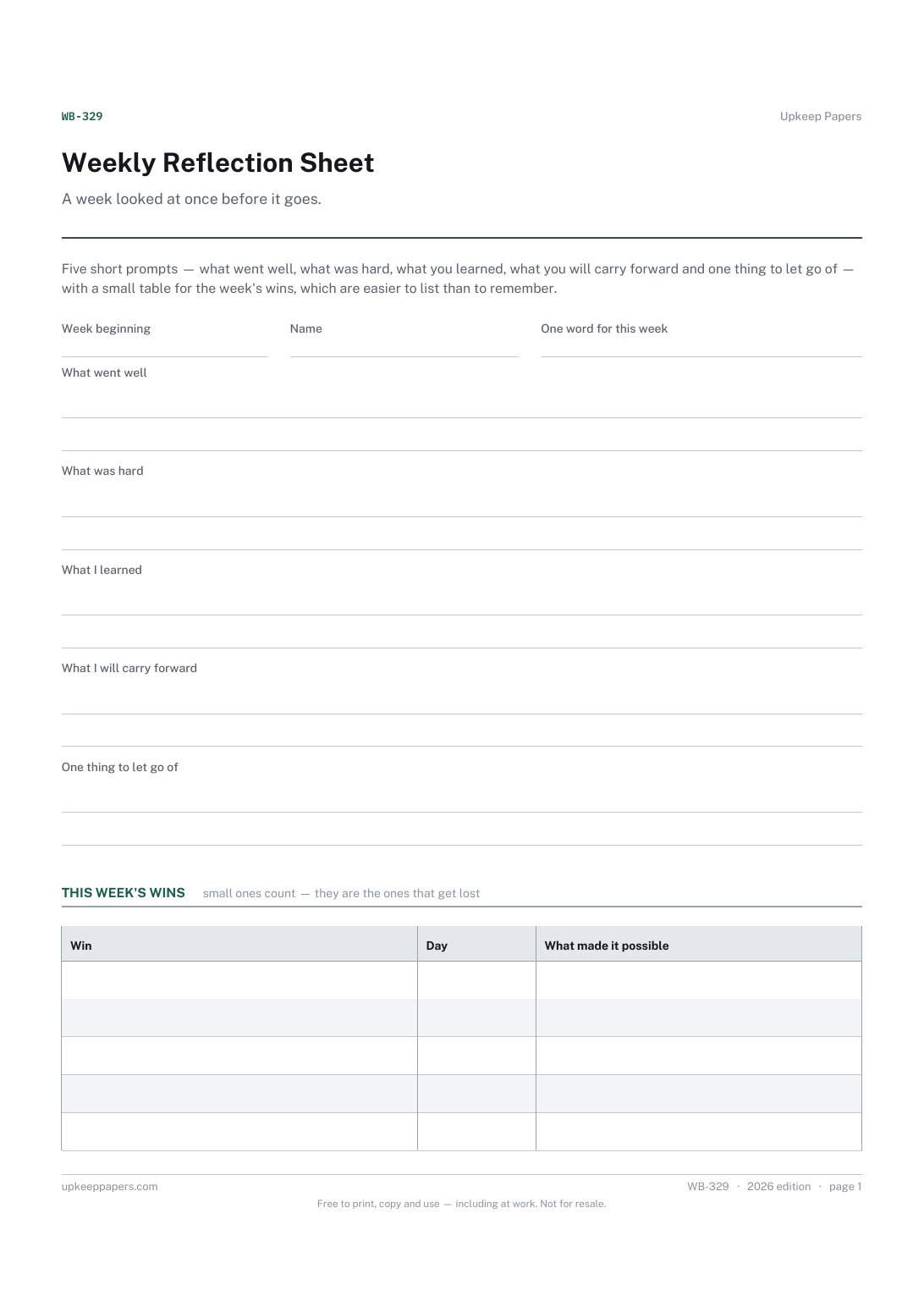
What went well, written down before it is forgotten.
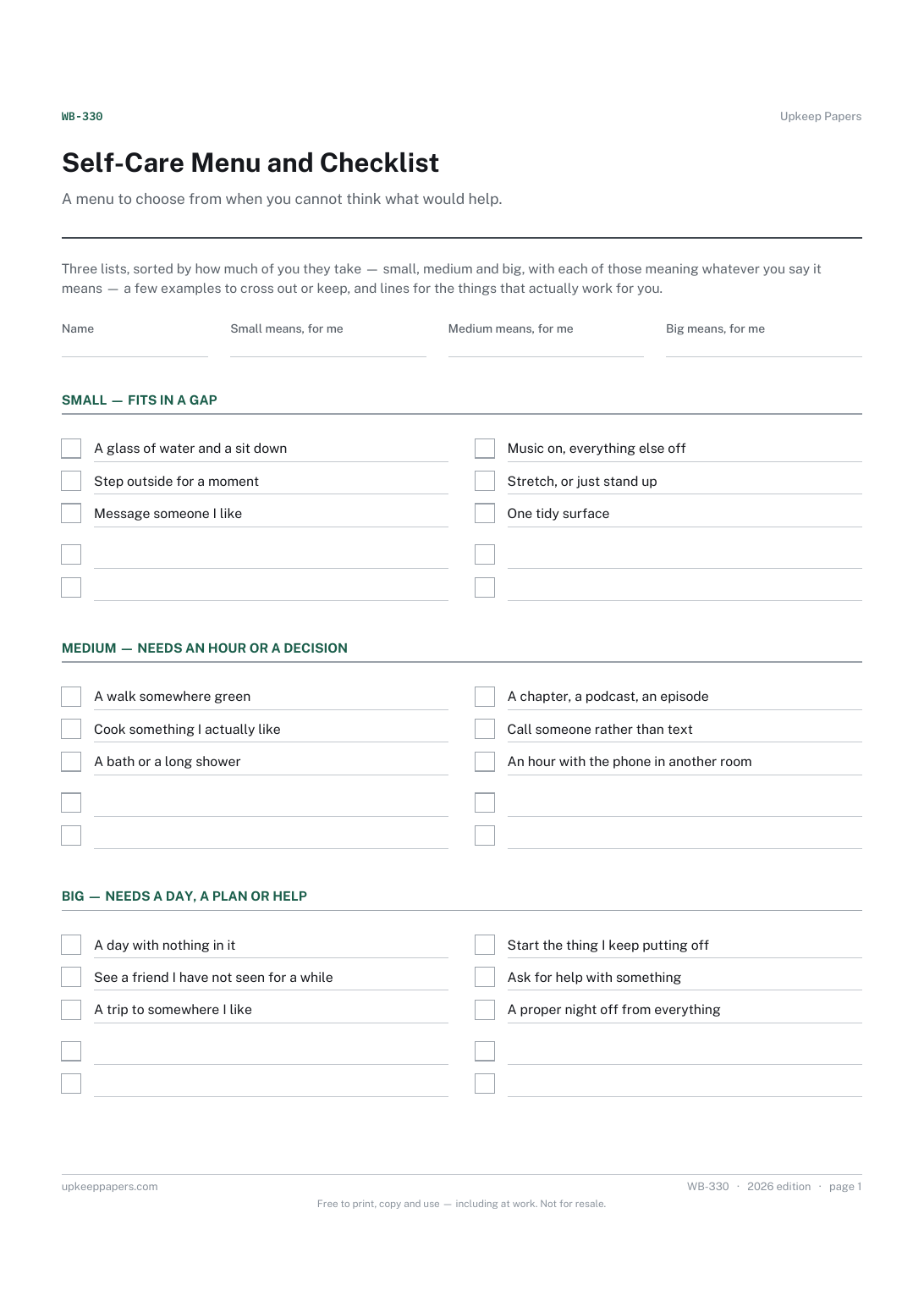
Small things that fit into the gaps of an ordinary day.
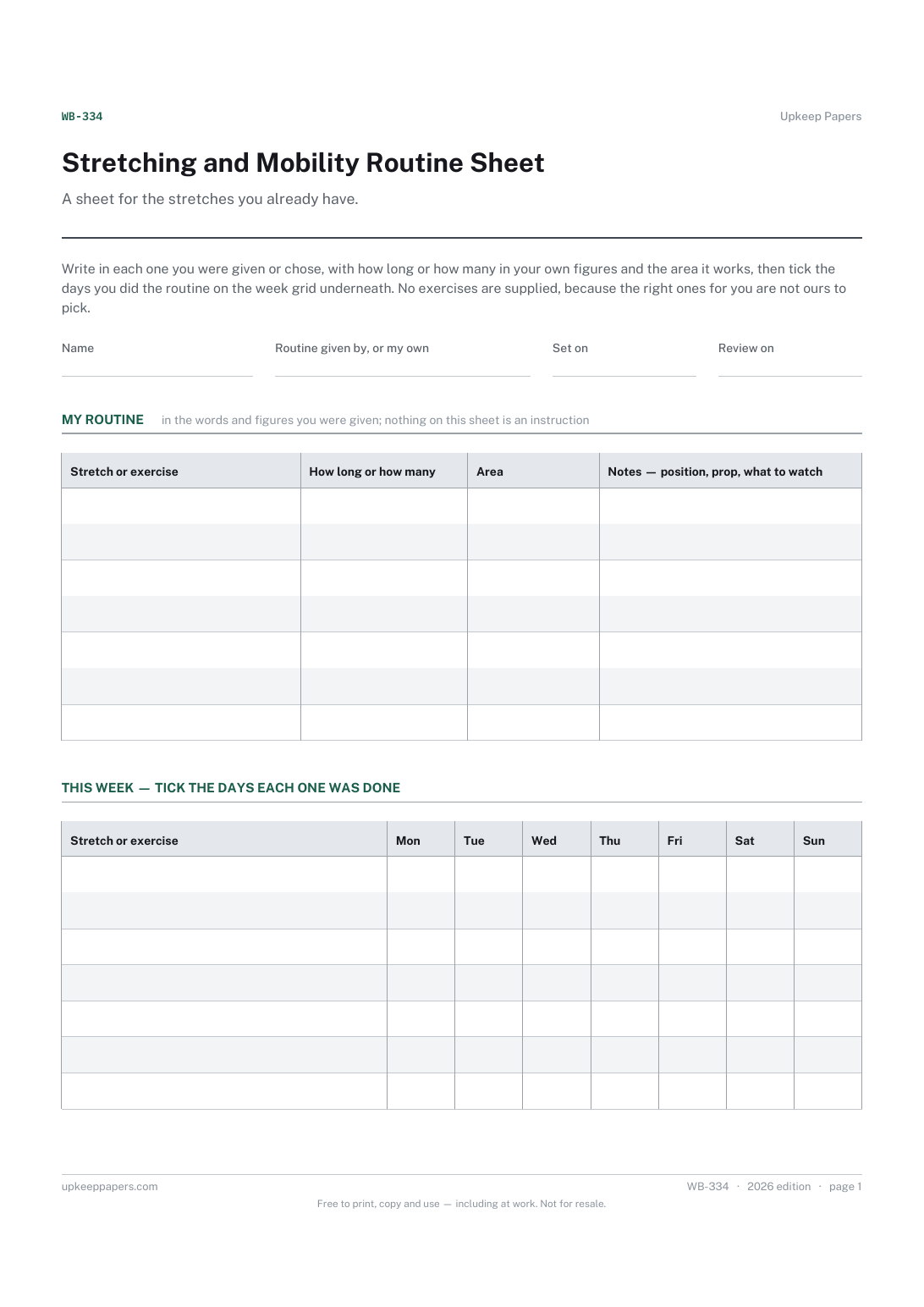
The stretches or exercises you have, listed in one place.
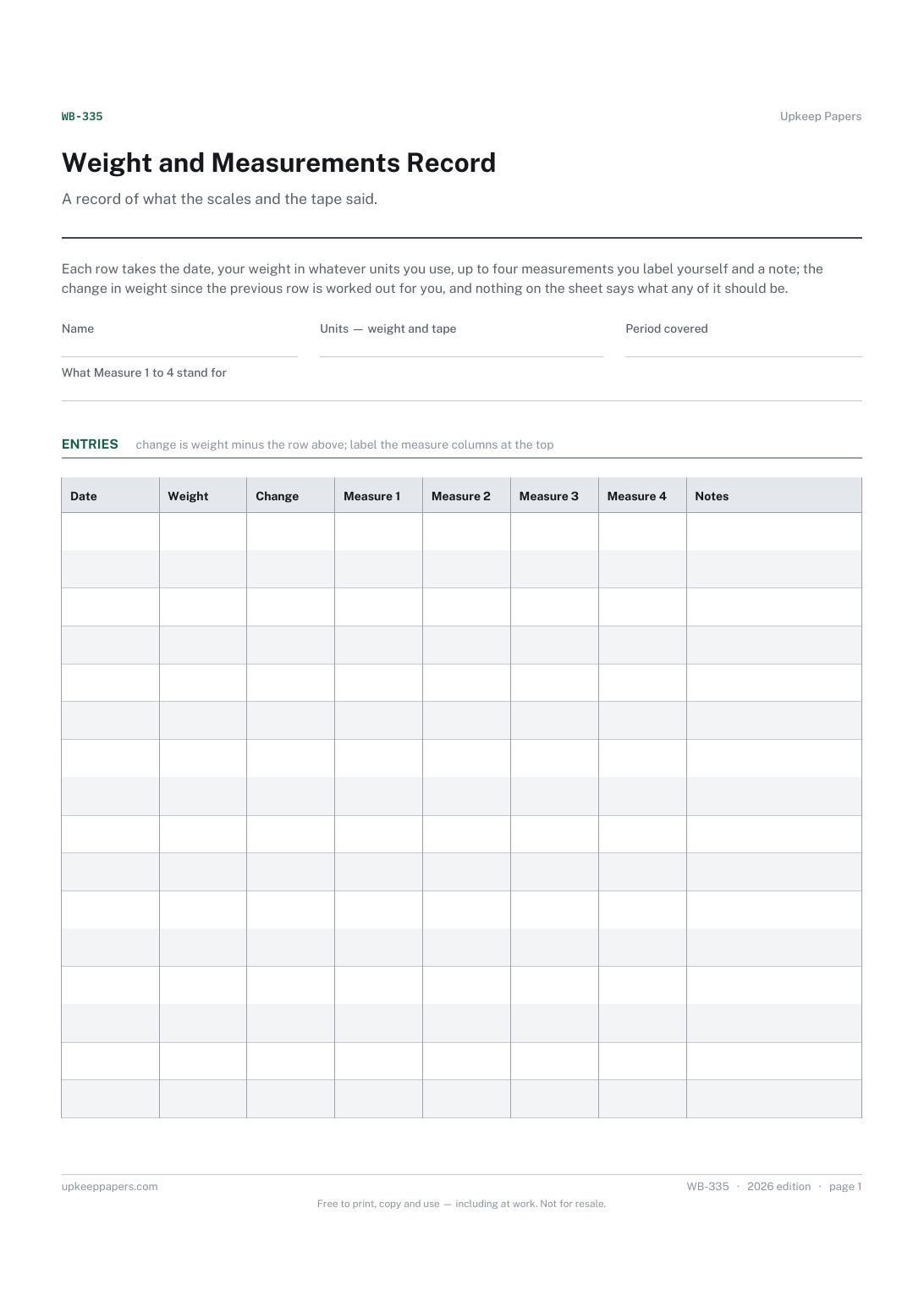
Weight on each date, in your own units.
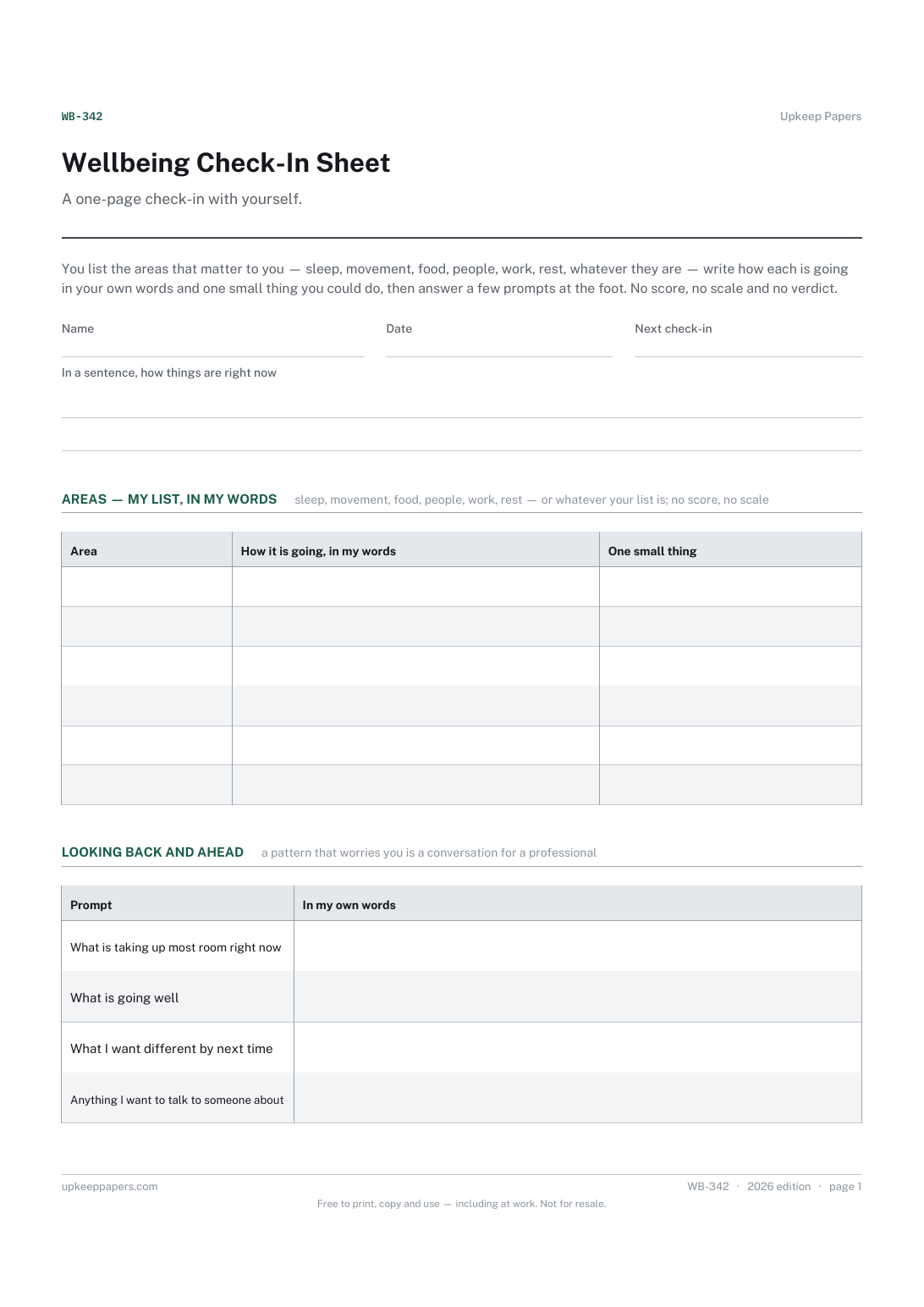
The areas of your life you decide to look at, in your own list.
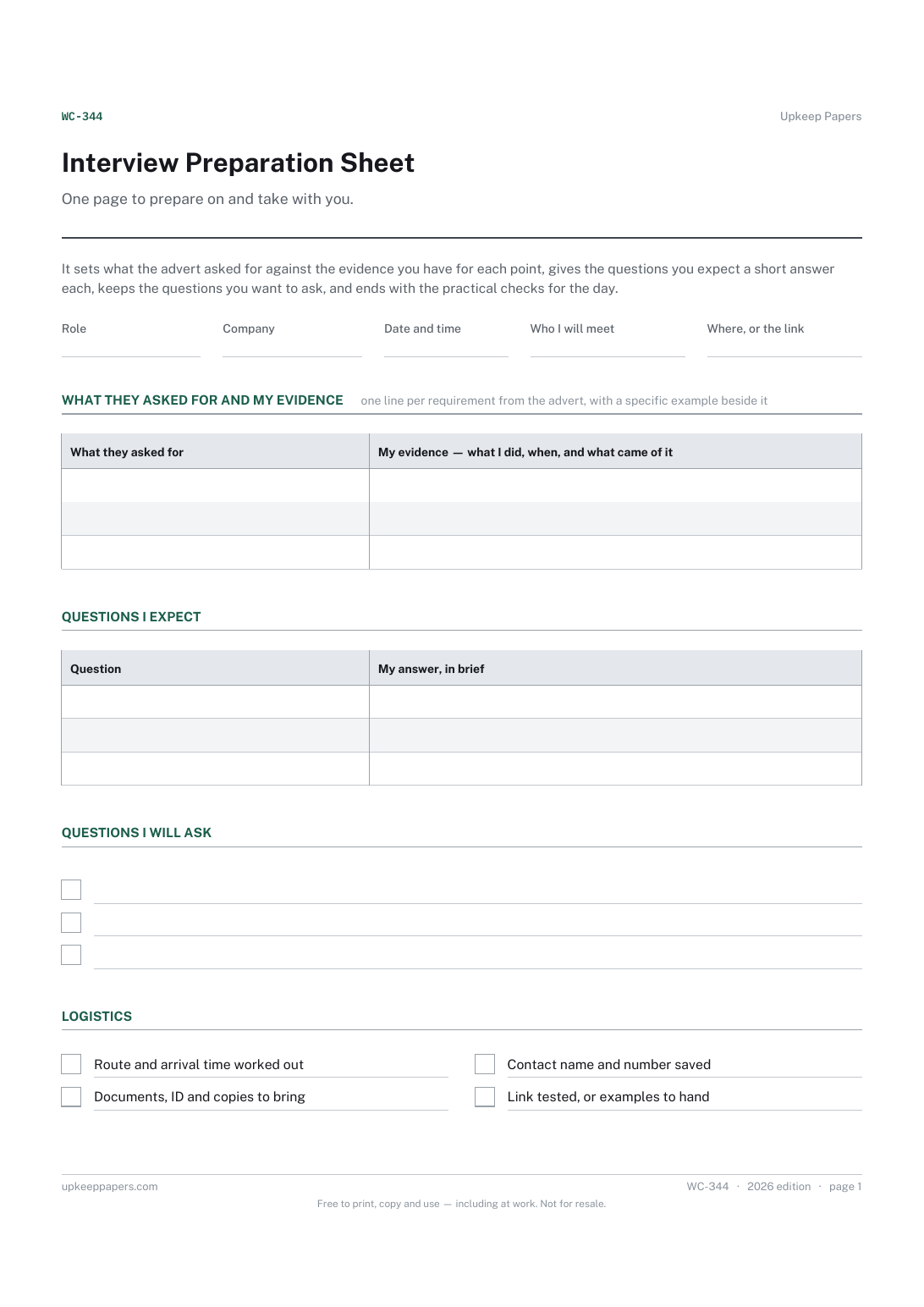
What the role asks for, point by point, and the example you have for each.
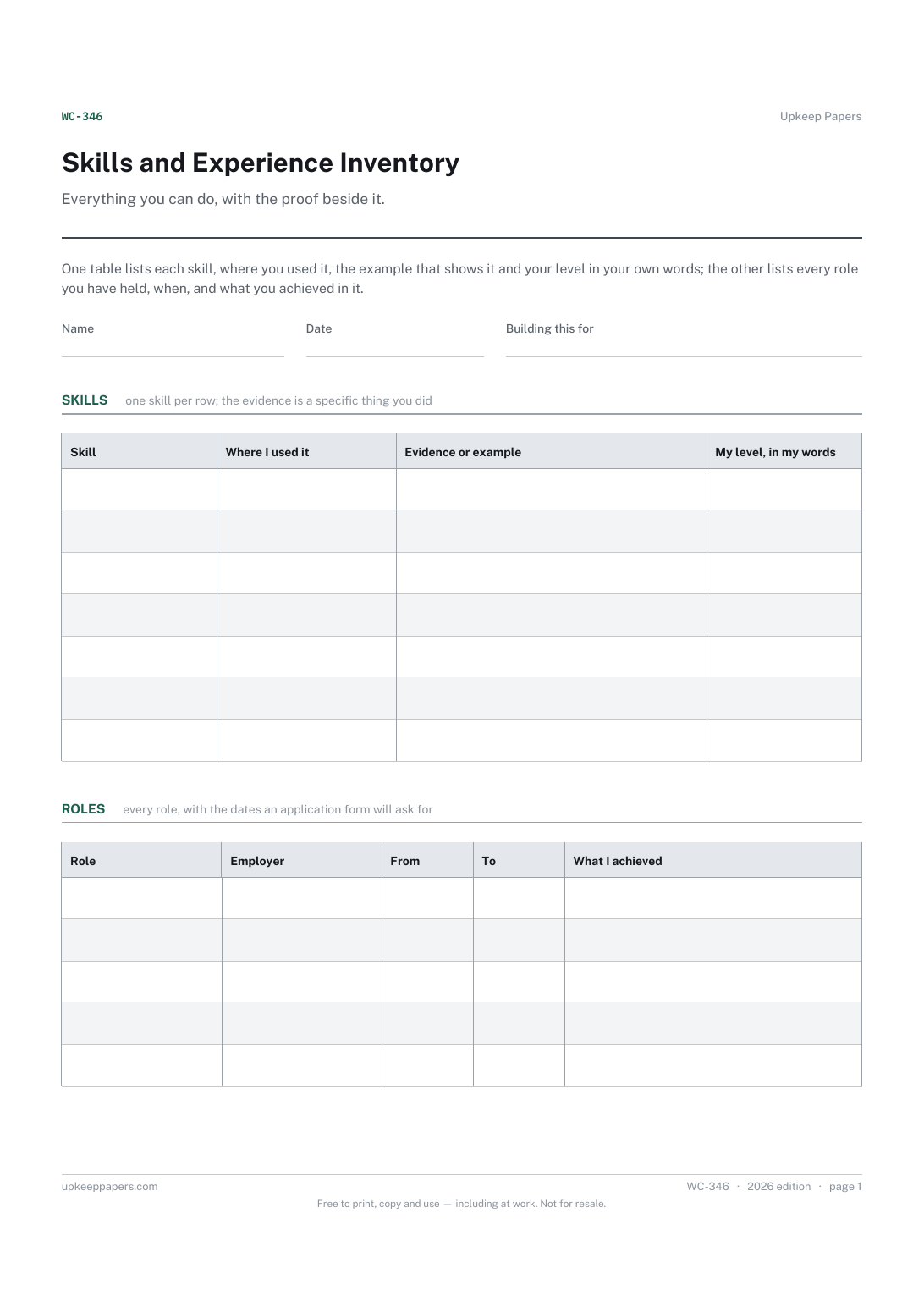
Every skill you have, named, with the place you used it.
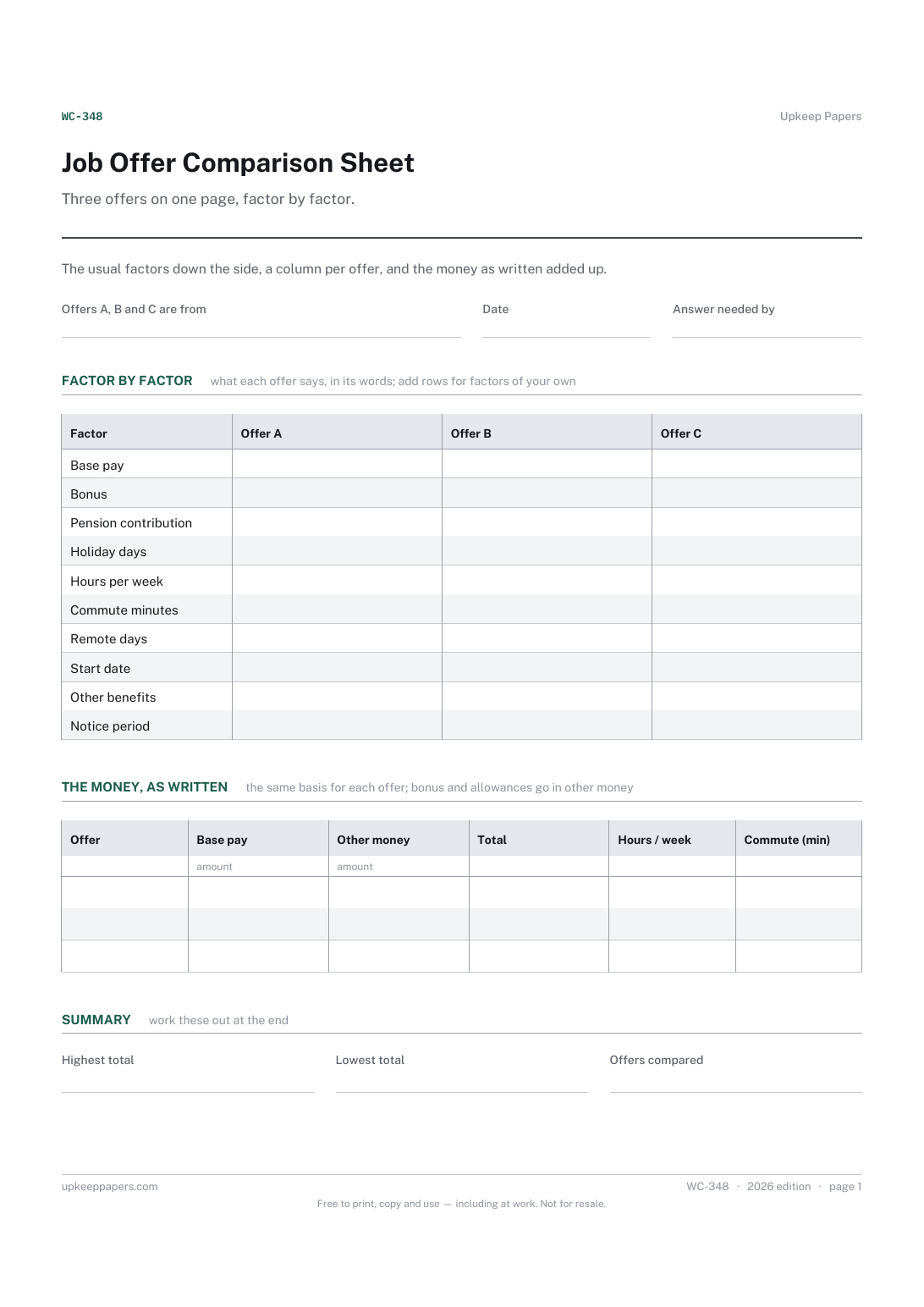
Each offer's answer to the same list of factors, in one row each.
What the meeting was for, who was there and when it happened.
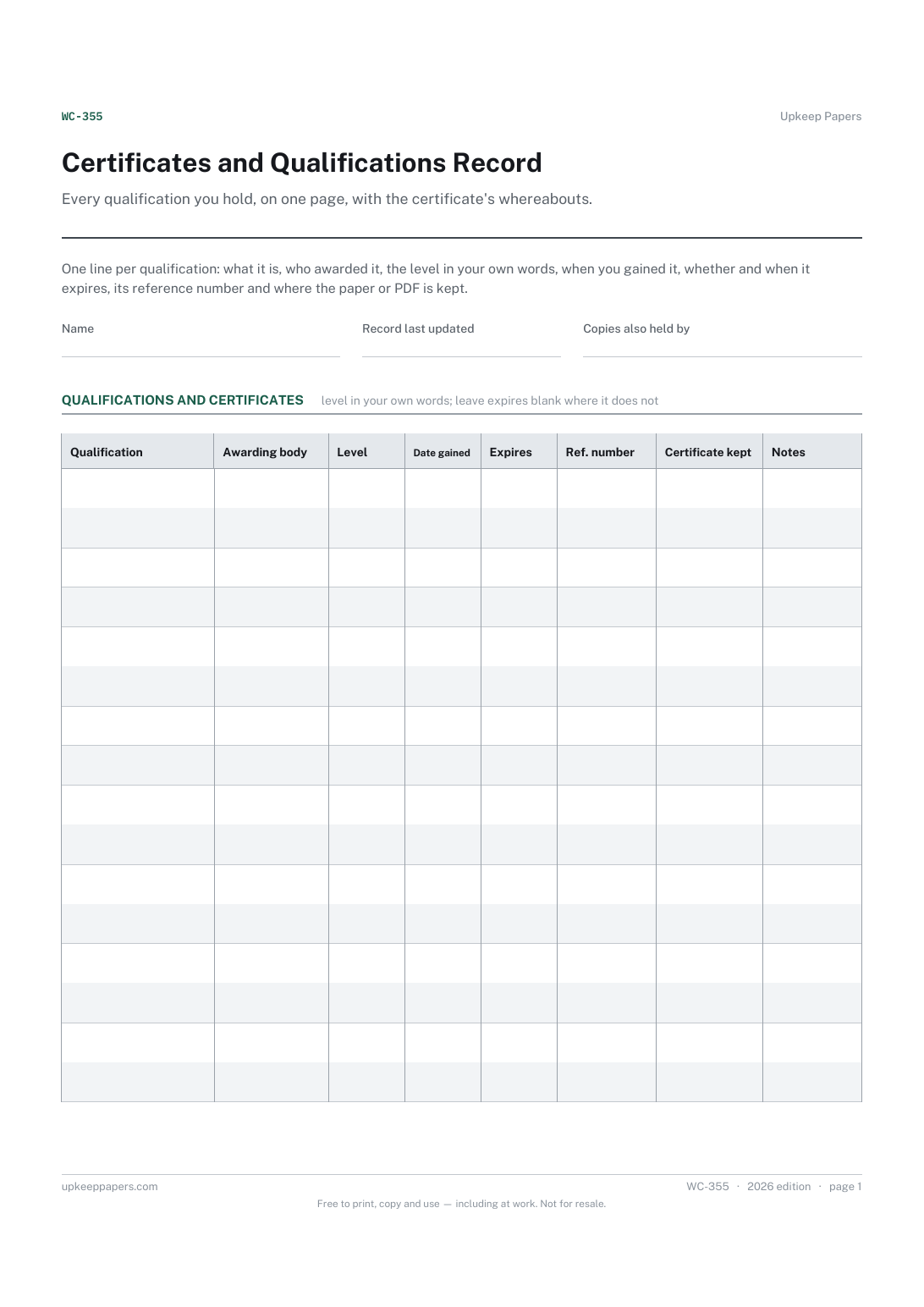
Every qualification, ticket and licence you hold, listed once.
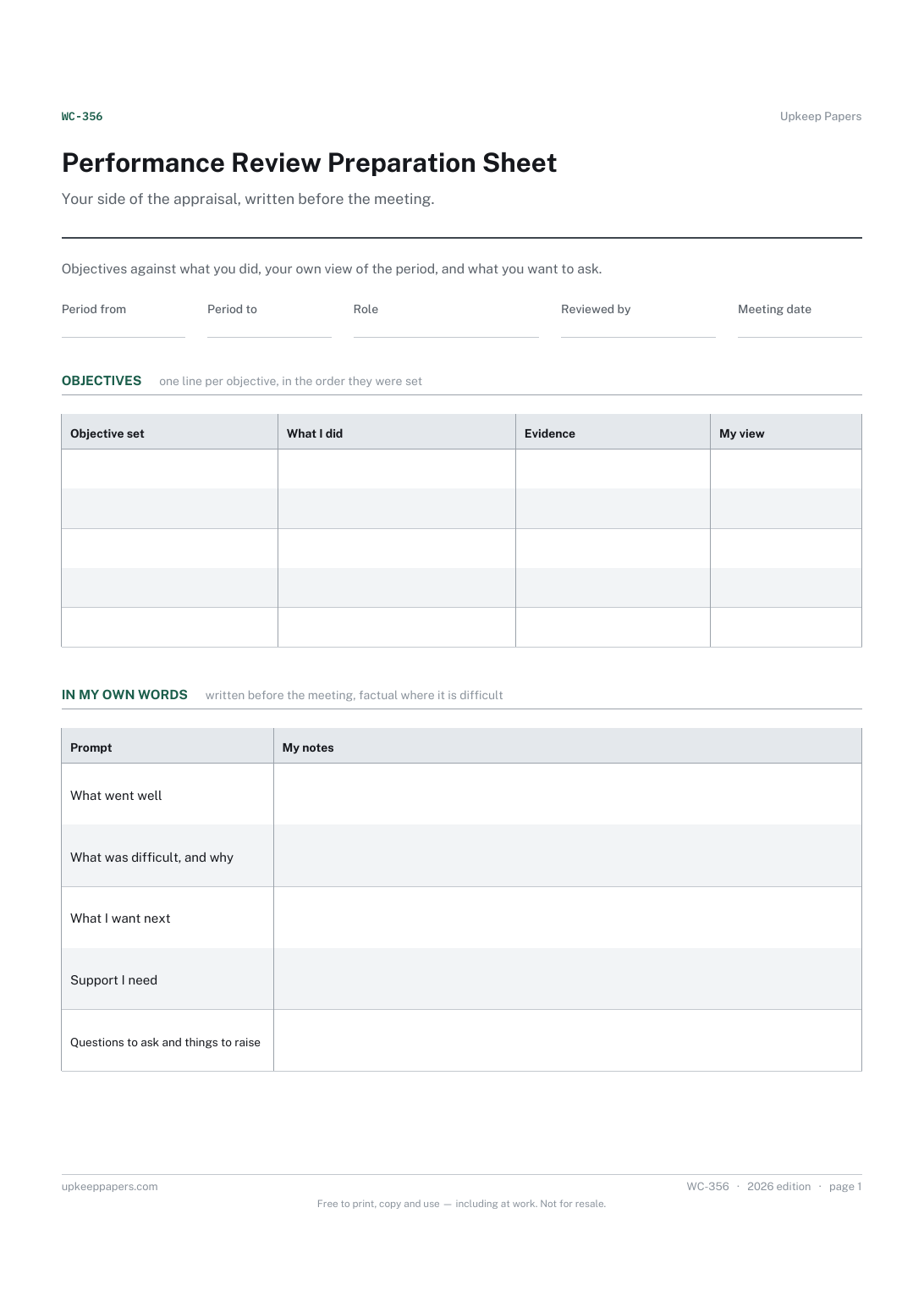
Each objective set against what you actually did and the evidence for it.
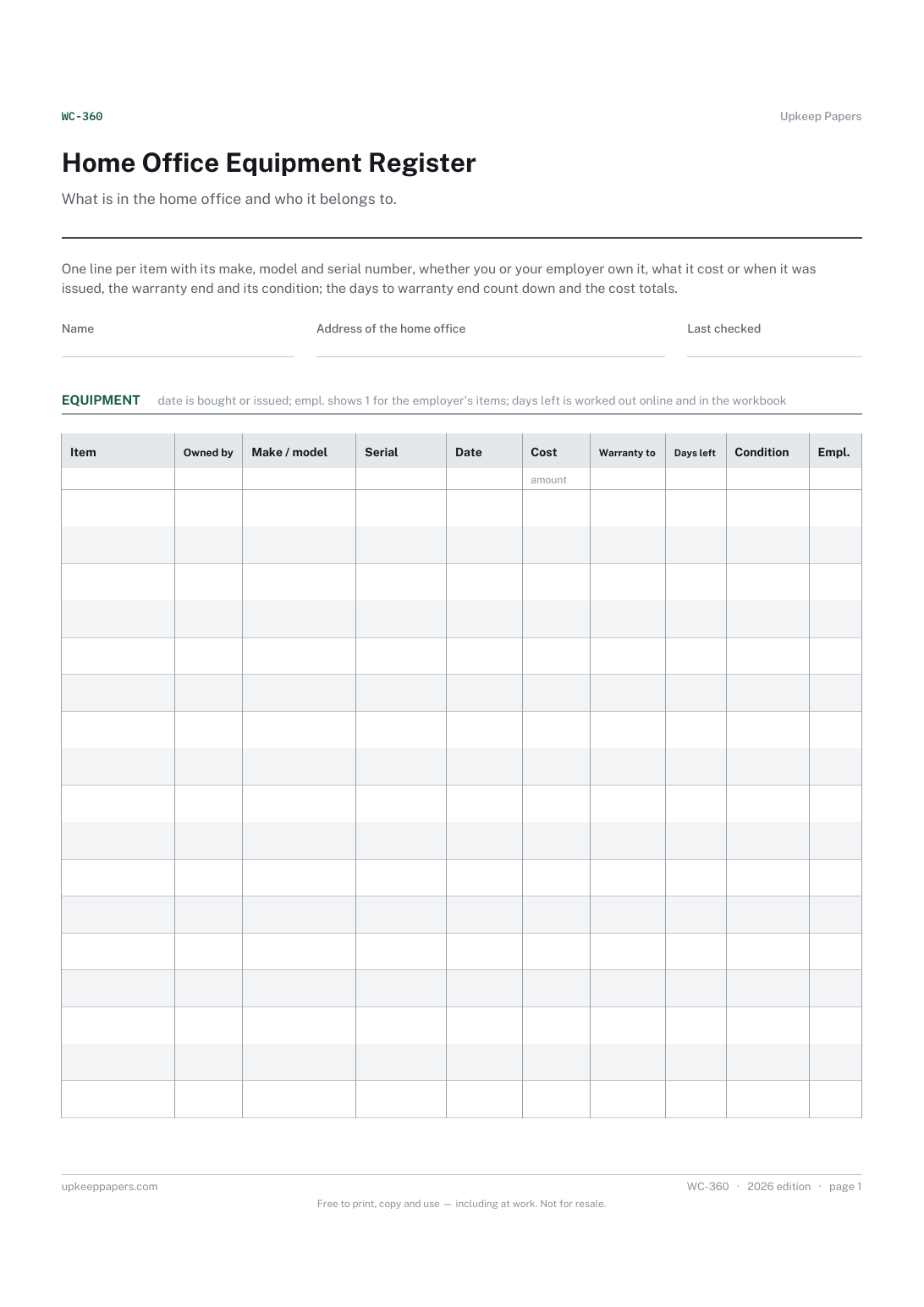
Every item in the home office, with make, model and serial.
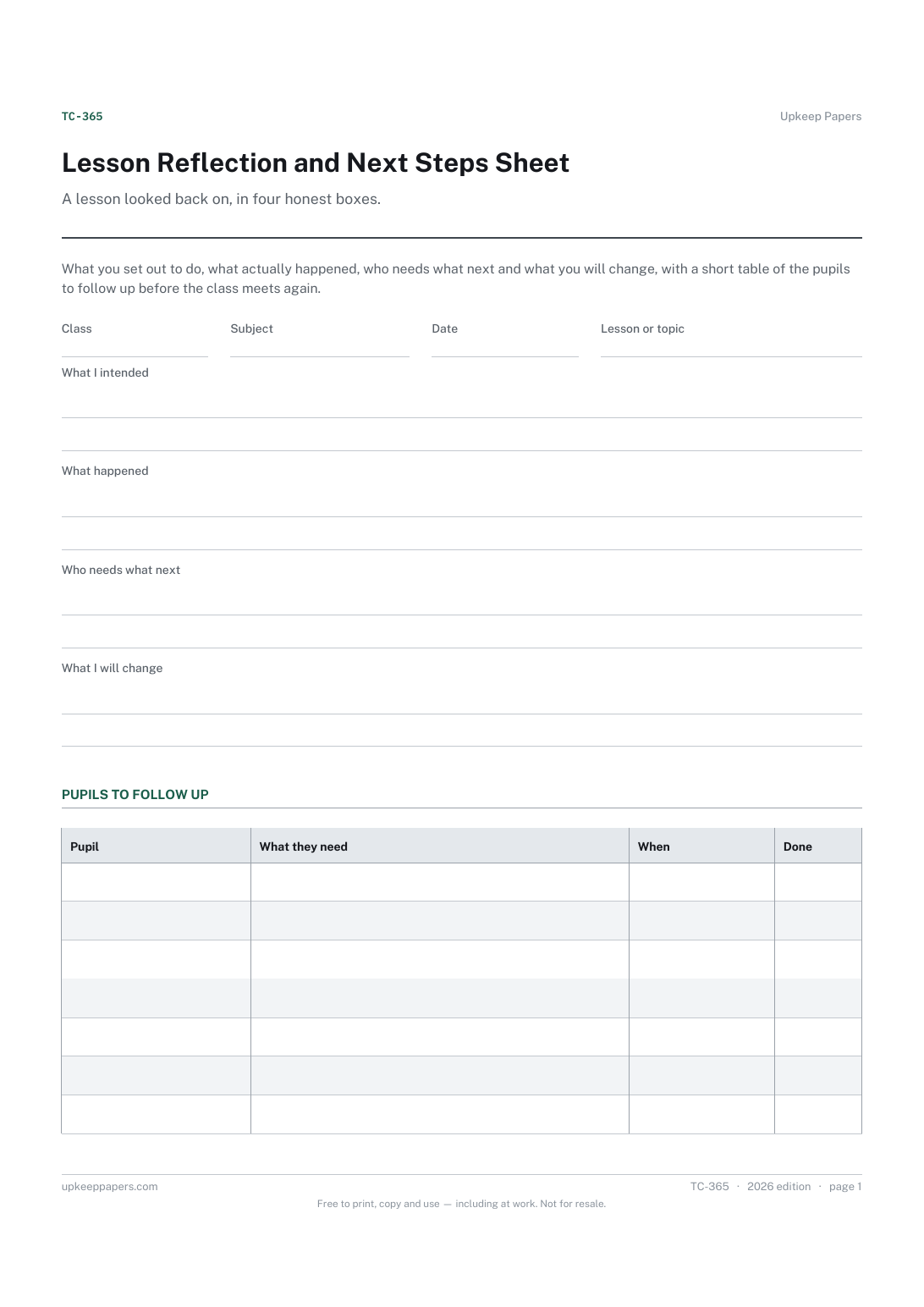
What the lesson was meant to achieve, in your own words.
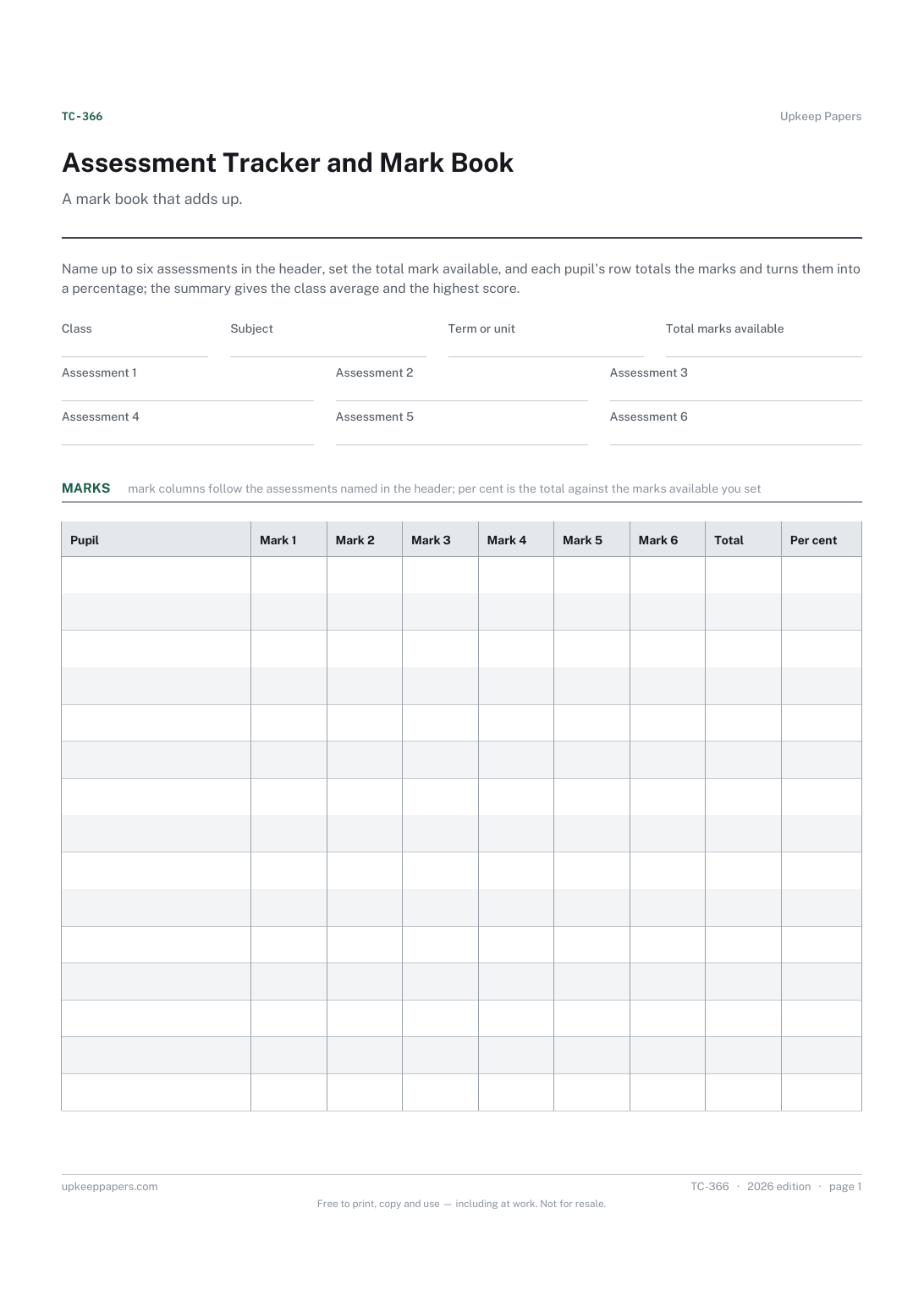
Each pupil's mark for every assessment, in the marks you set.
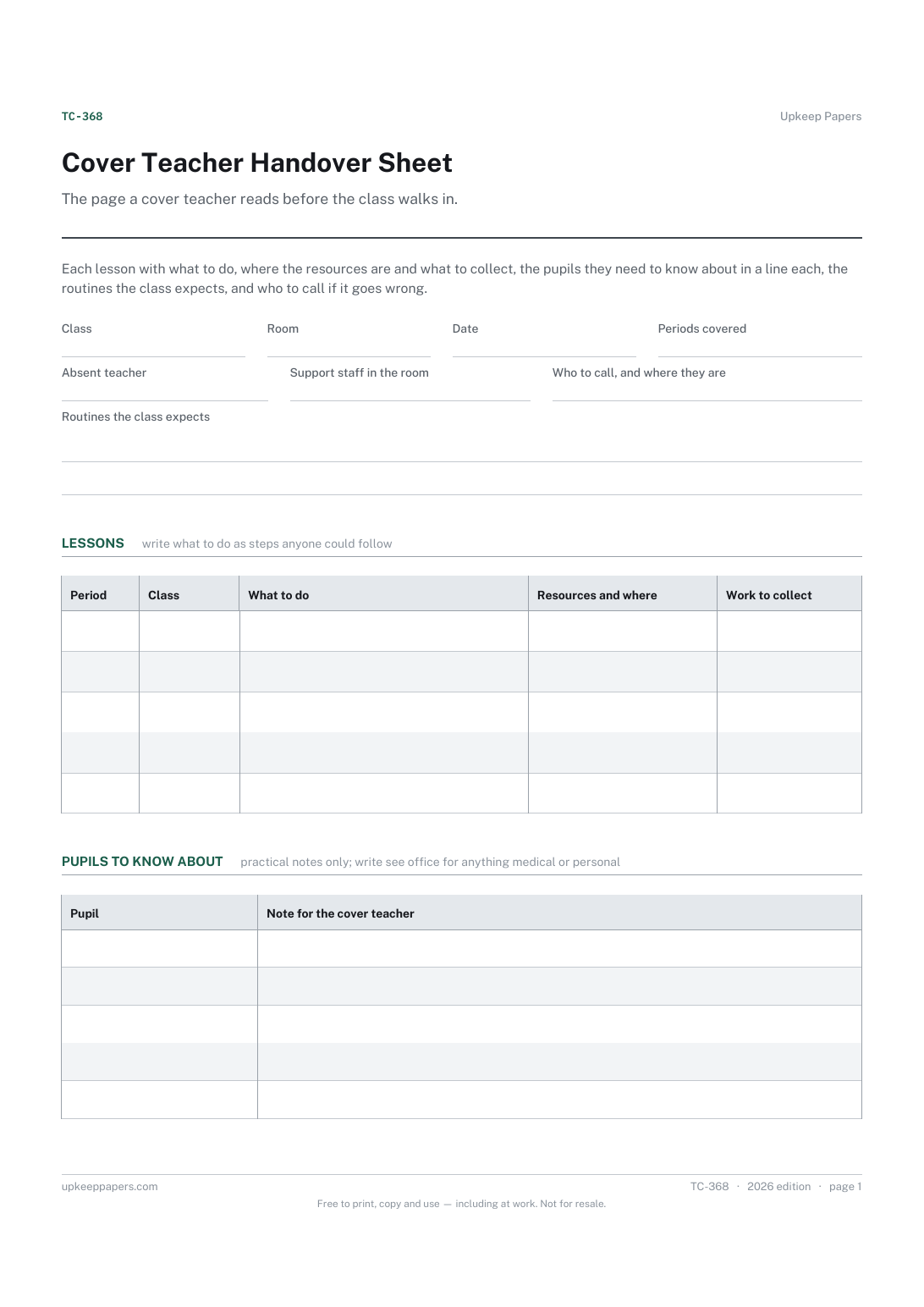
What each period is doing, with the resources and where to find them.
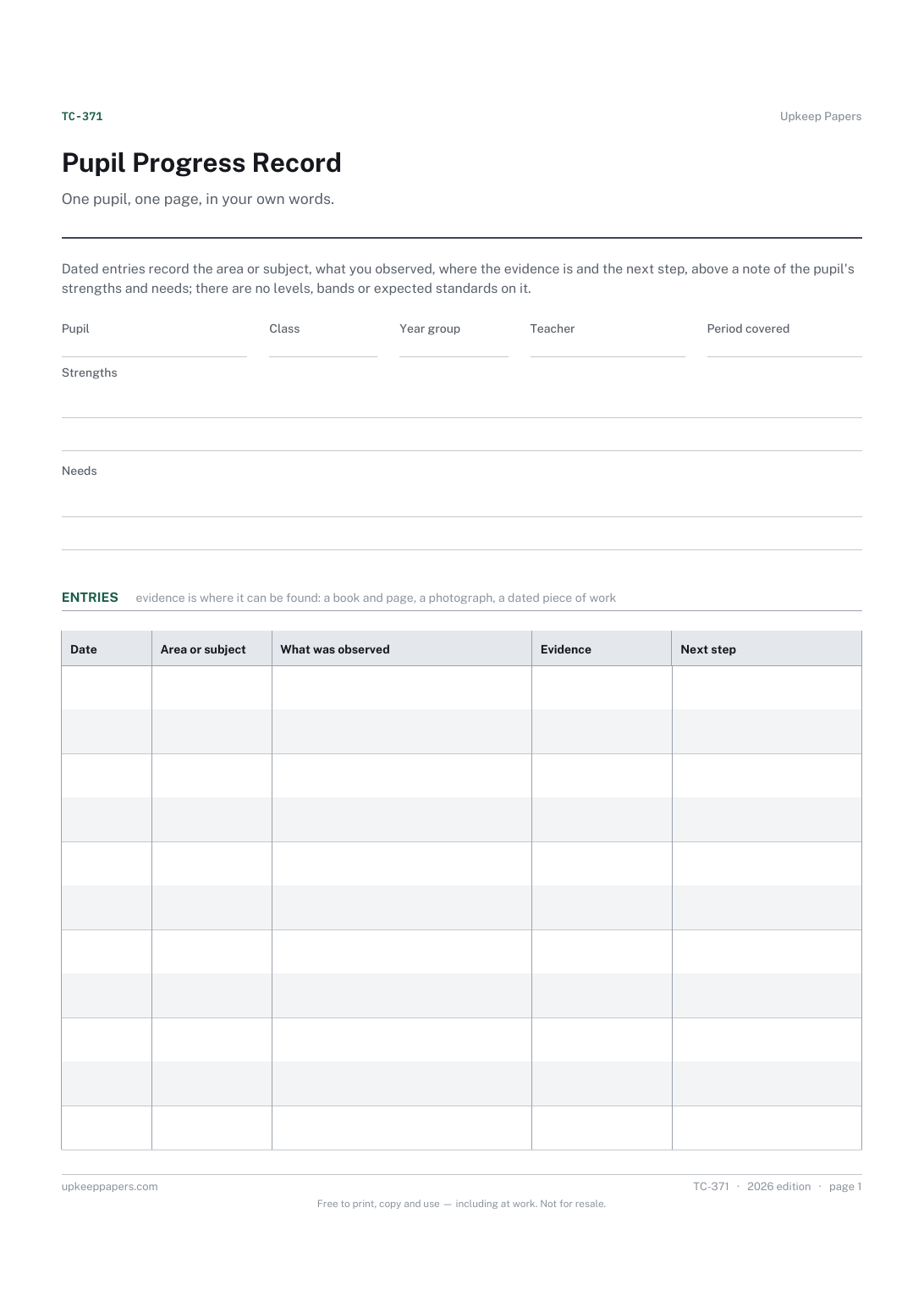
What was observed, when, and in which subject or area.
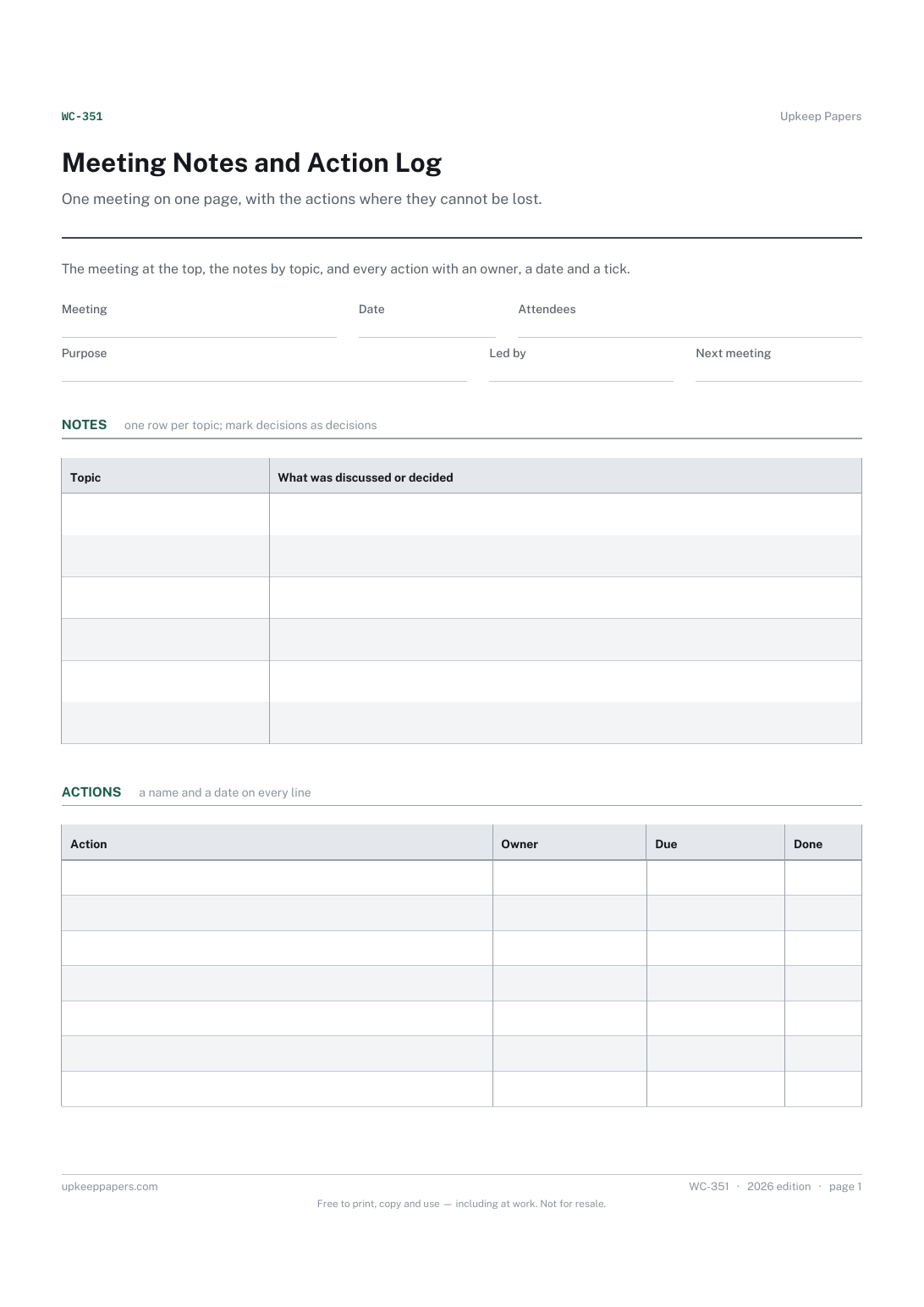
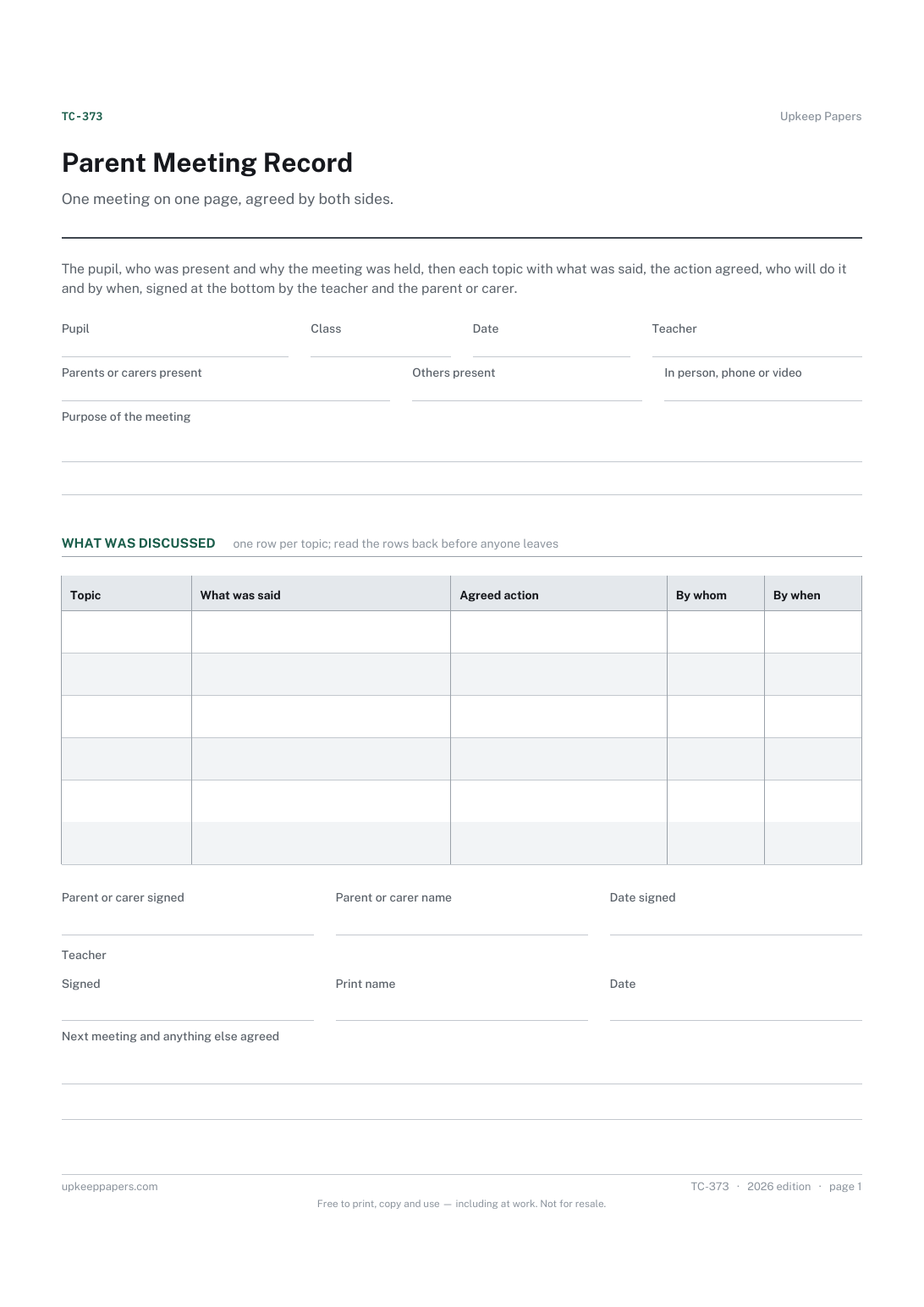
Who was at the meeting, the date and what it was for.
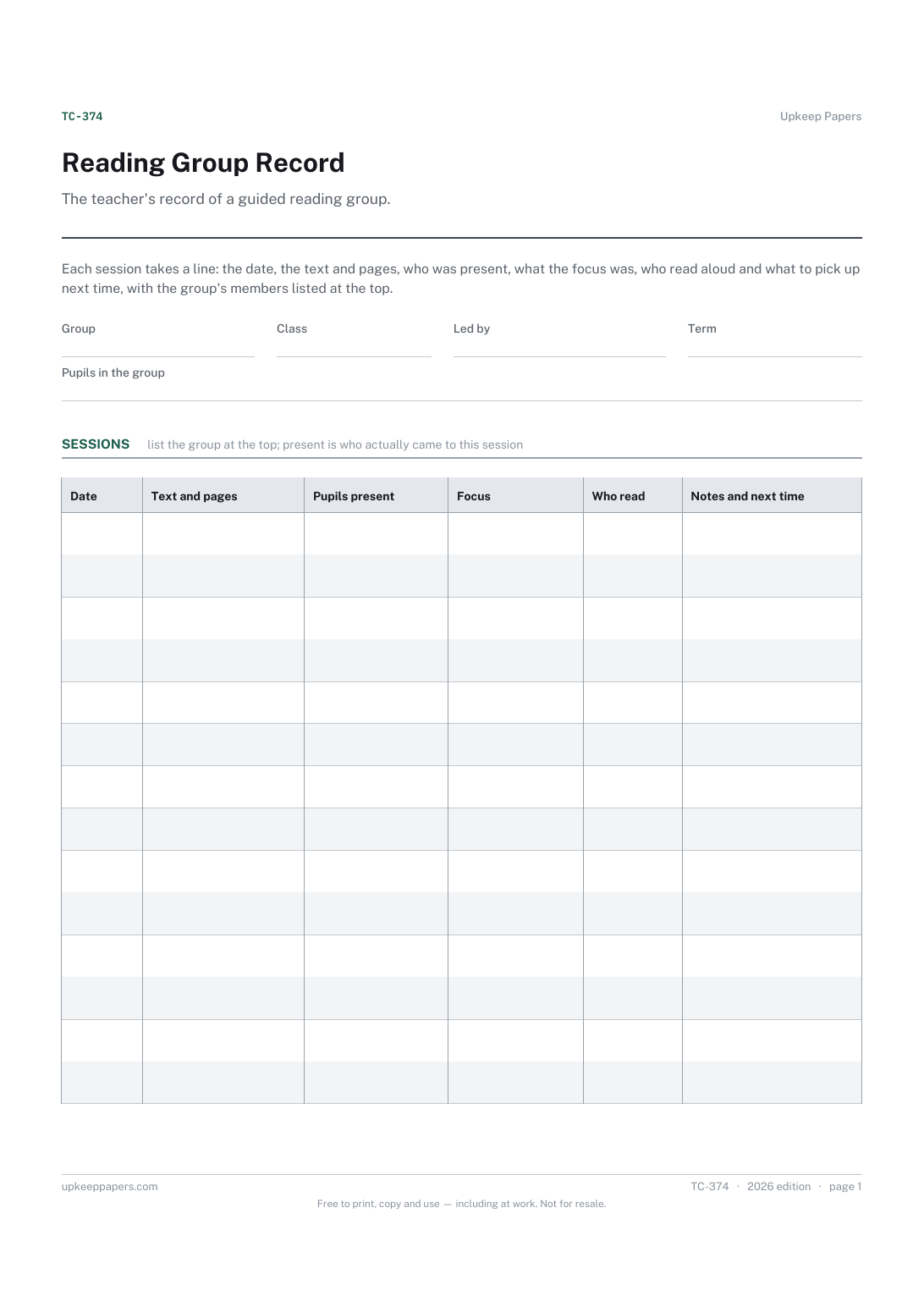
Which text and pages the group read at each session.
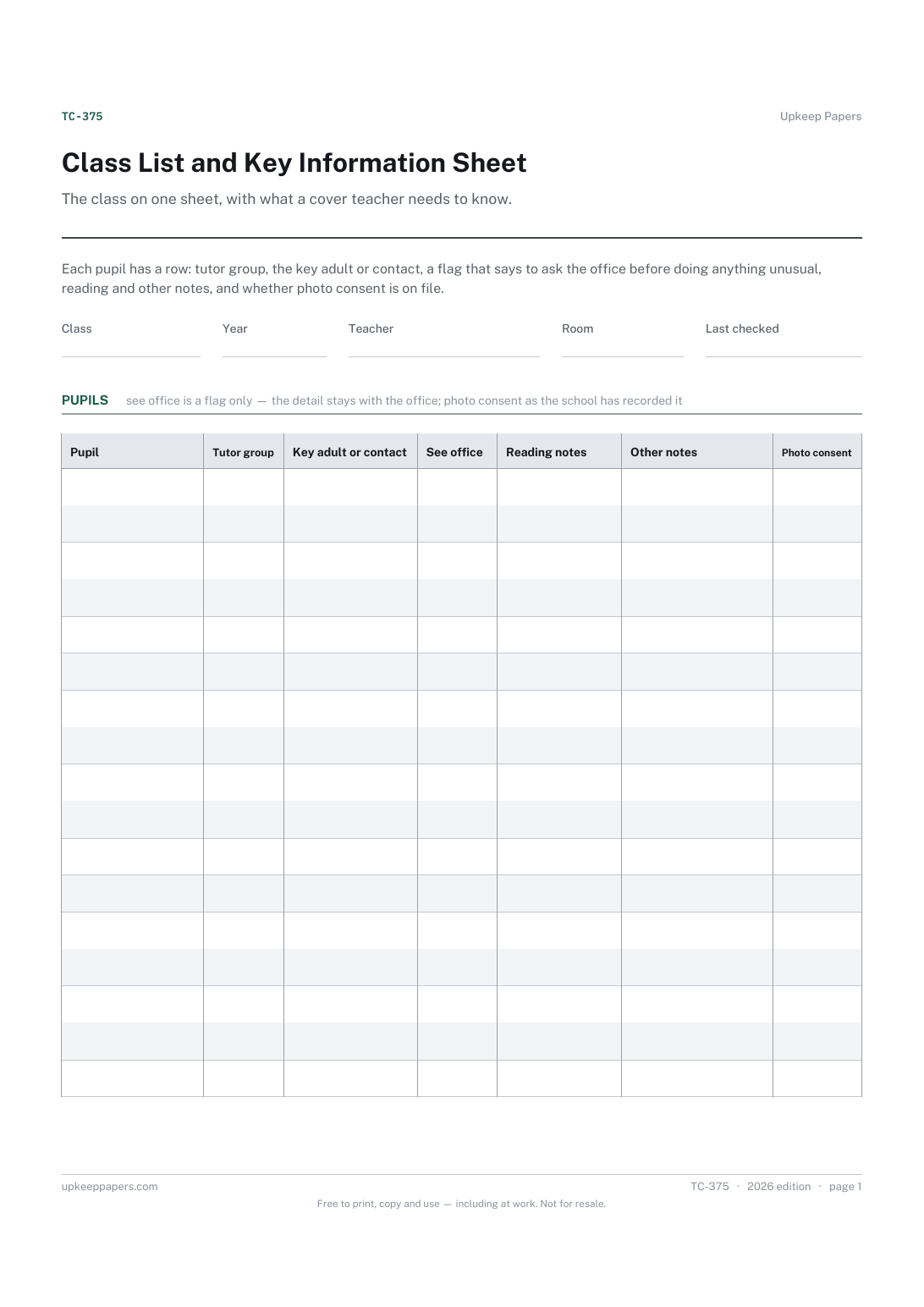
Who is in the class and which tutor group each pupil belongs to.
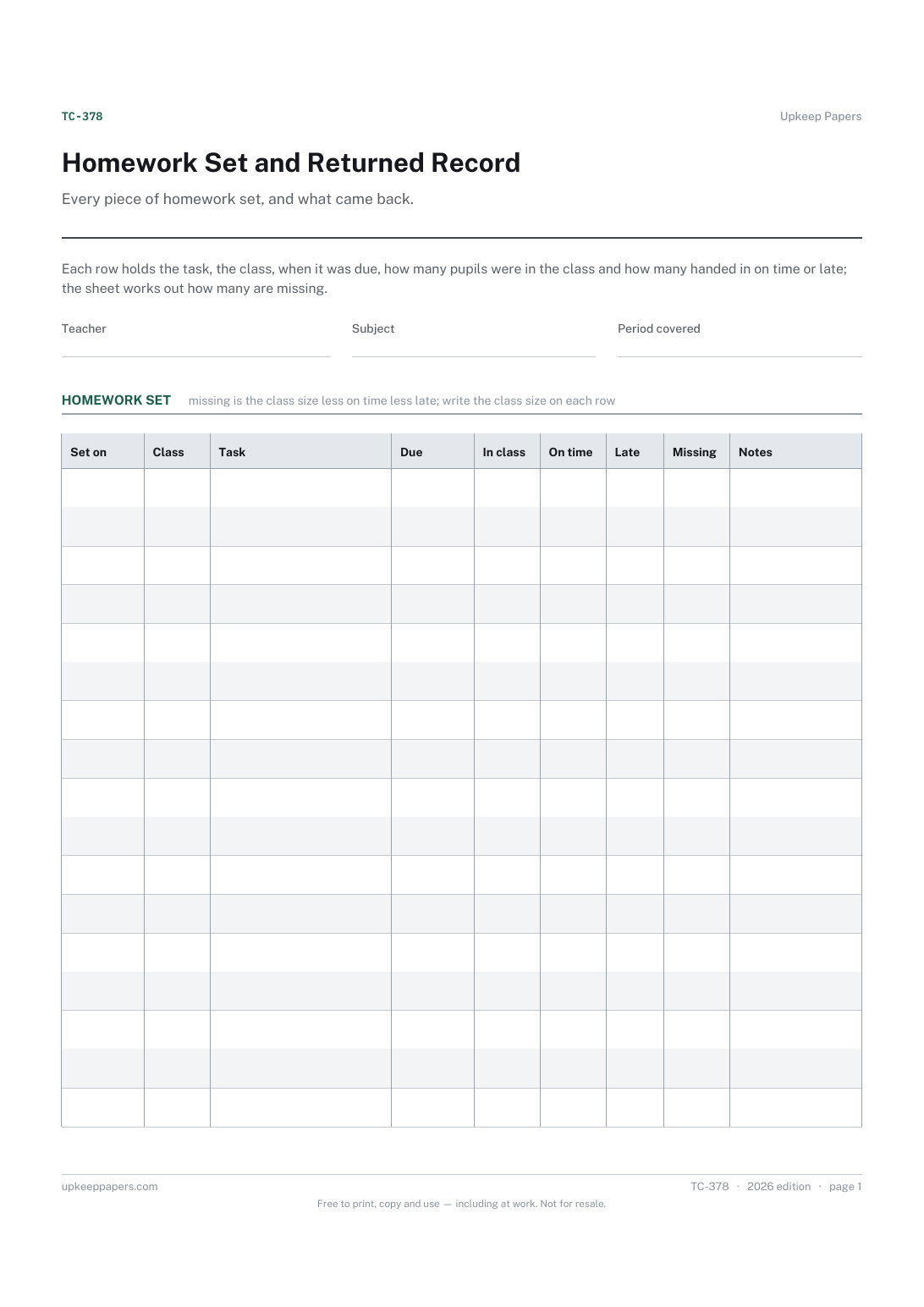
What was set to each class, when, and when it was due.
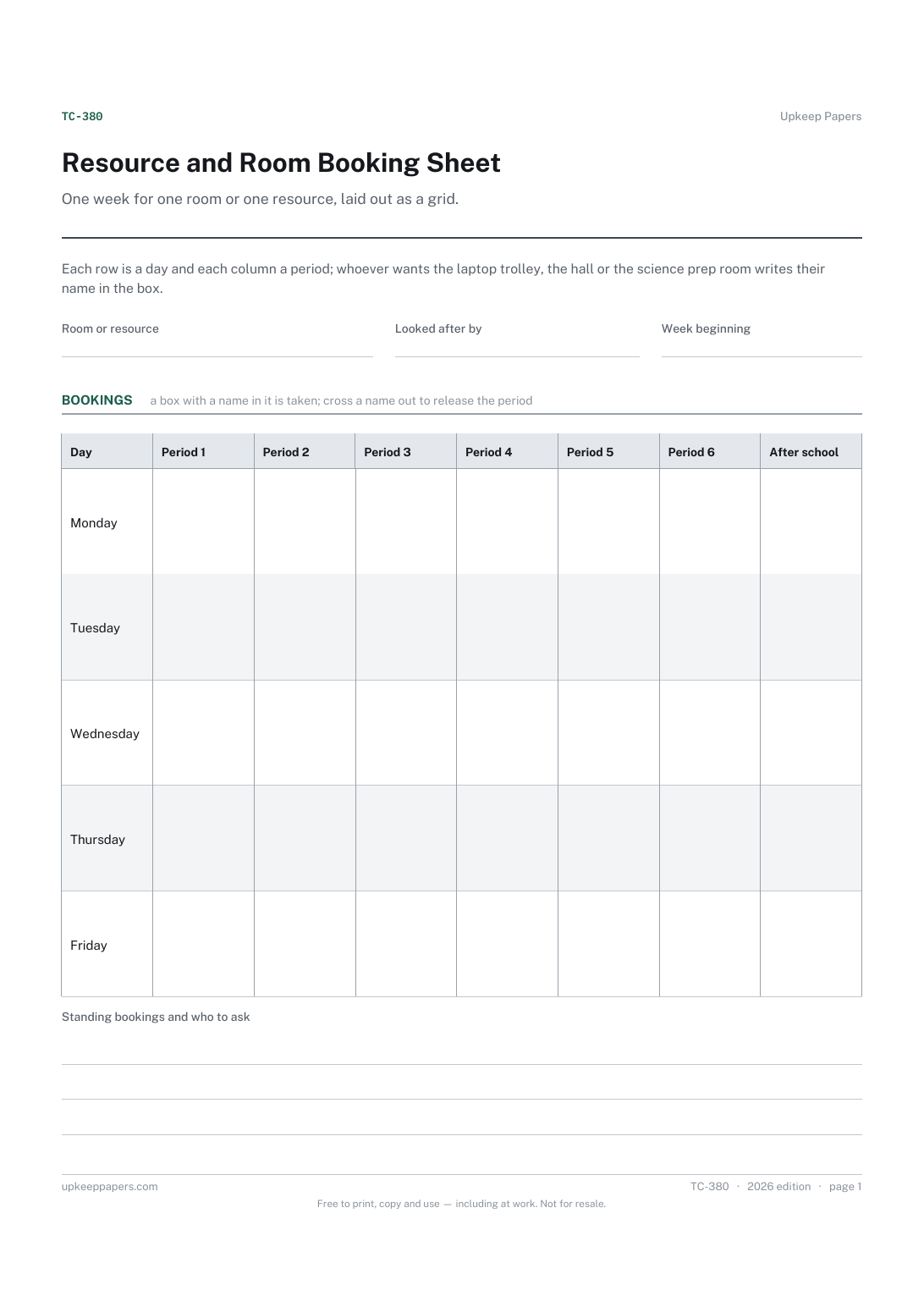
Which room, trolley or set of kit the sheet belongs to, and for which week.
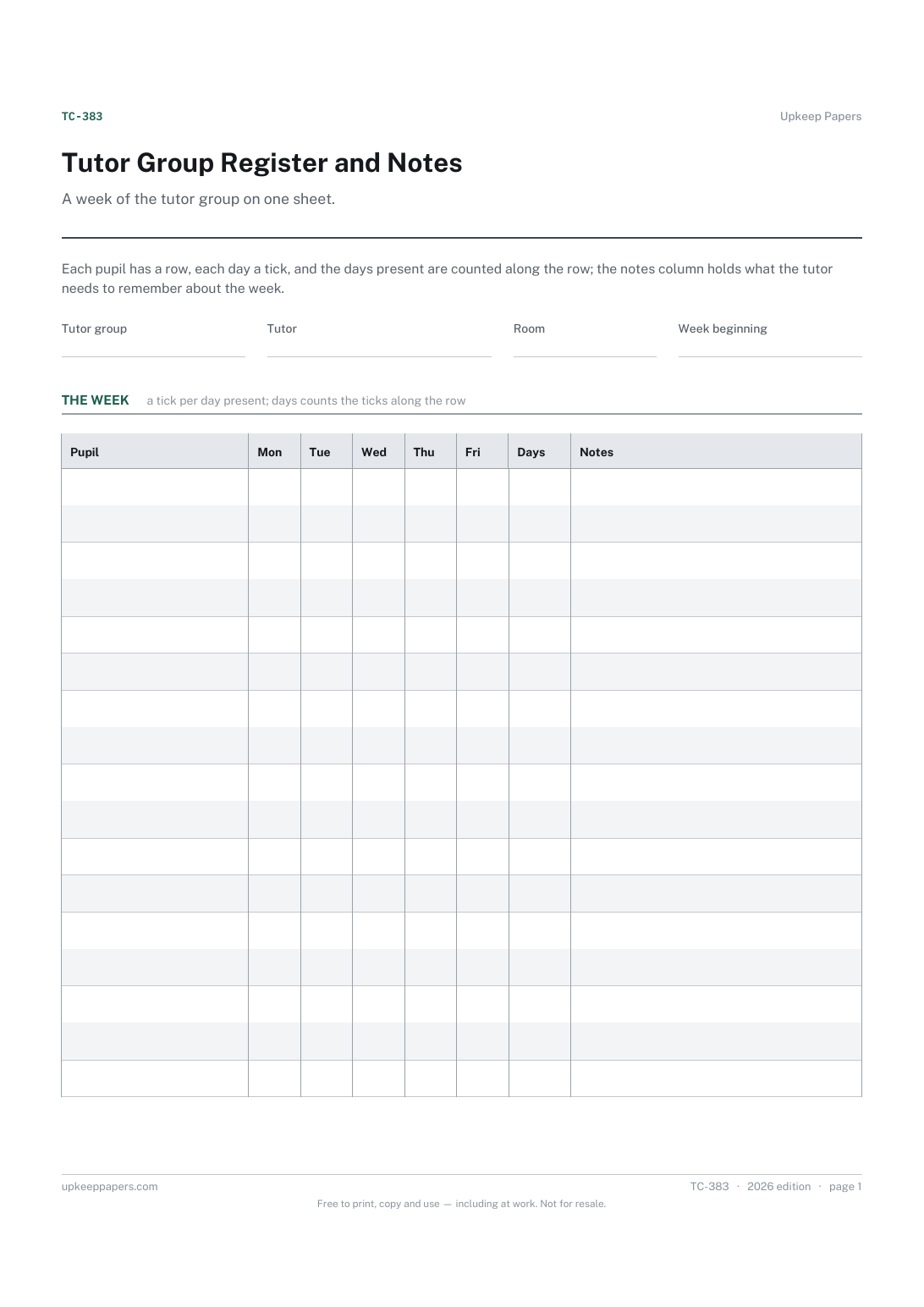
Who was in on each day of the week, at a glance.
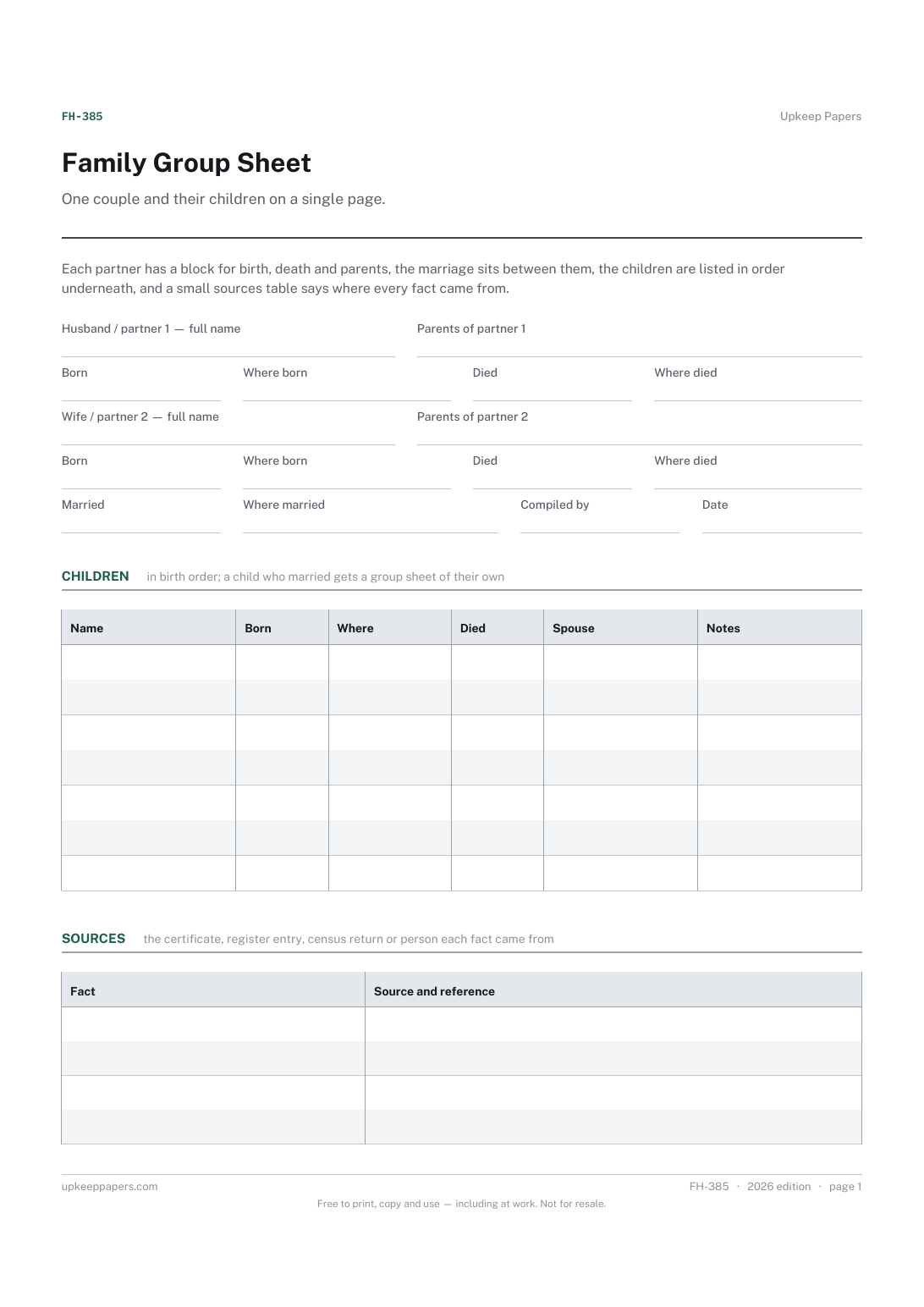
Each partner's name, birth, death and parents, in one block apiece.
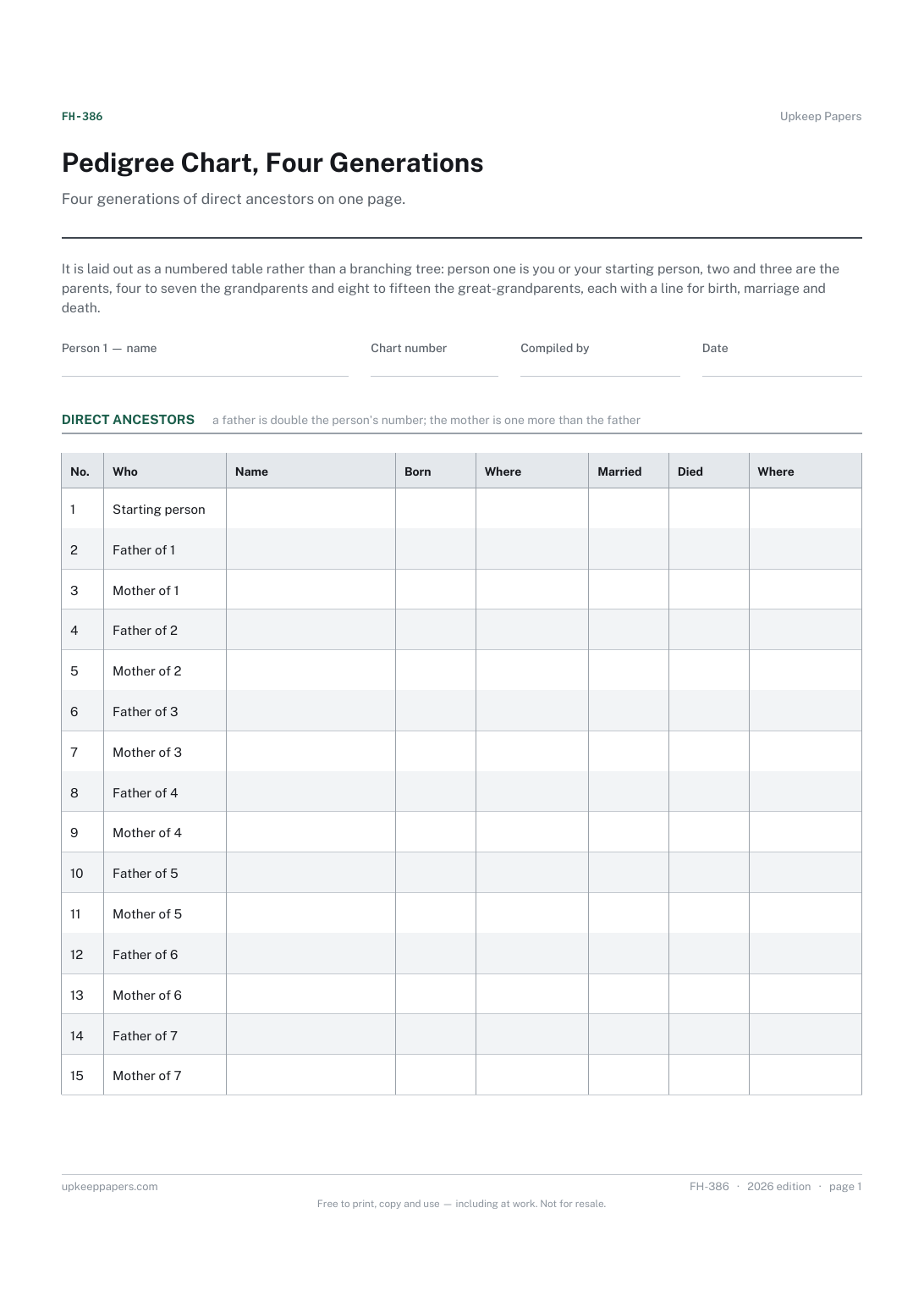
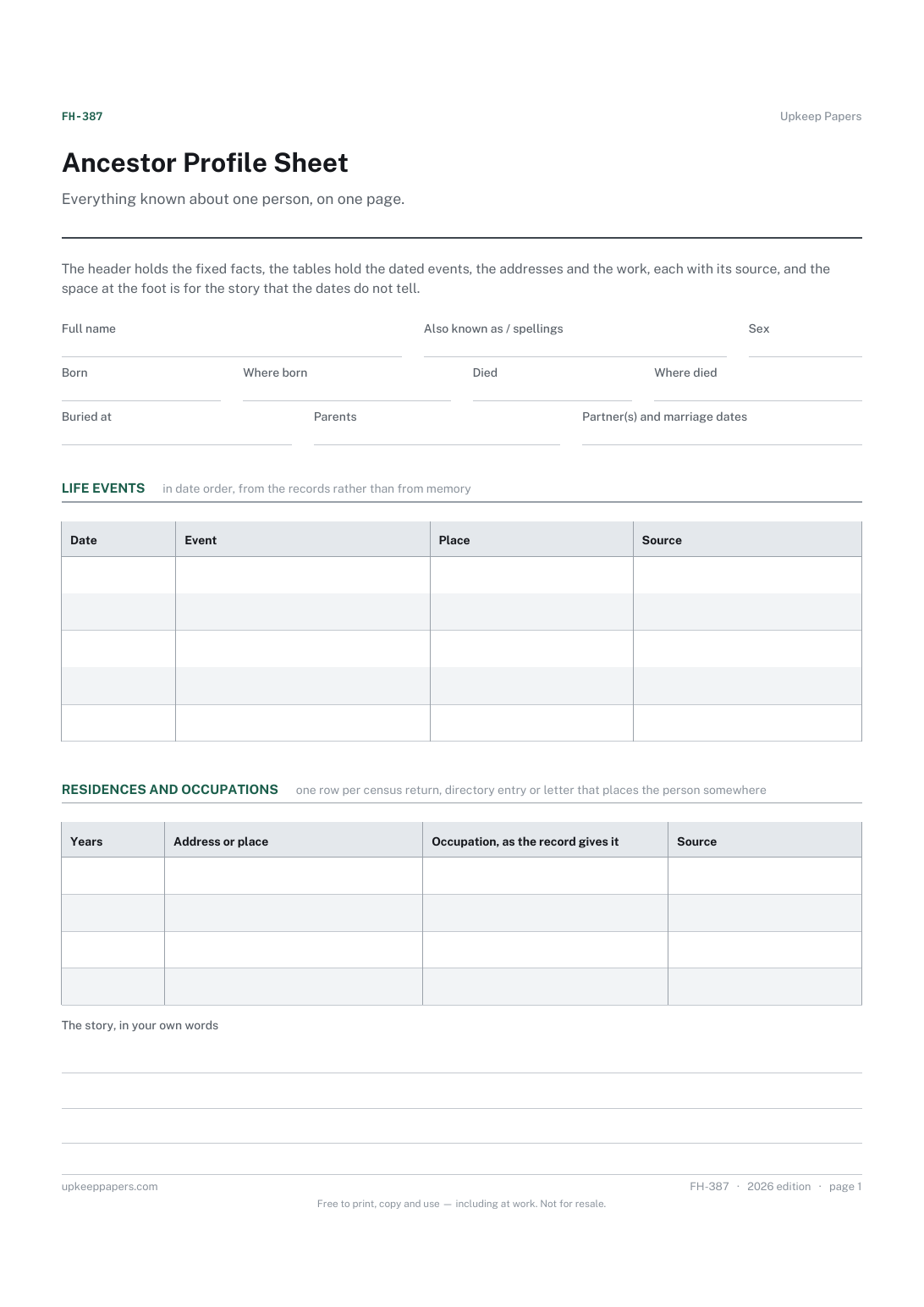
The direct ancestors of one person, numbered so each line is unambiguous.
Names, including the spellings and nicknames the records use.
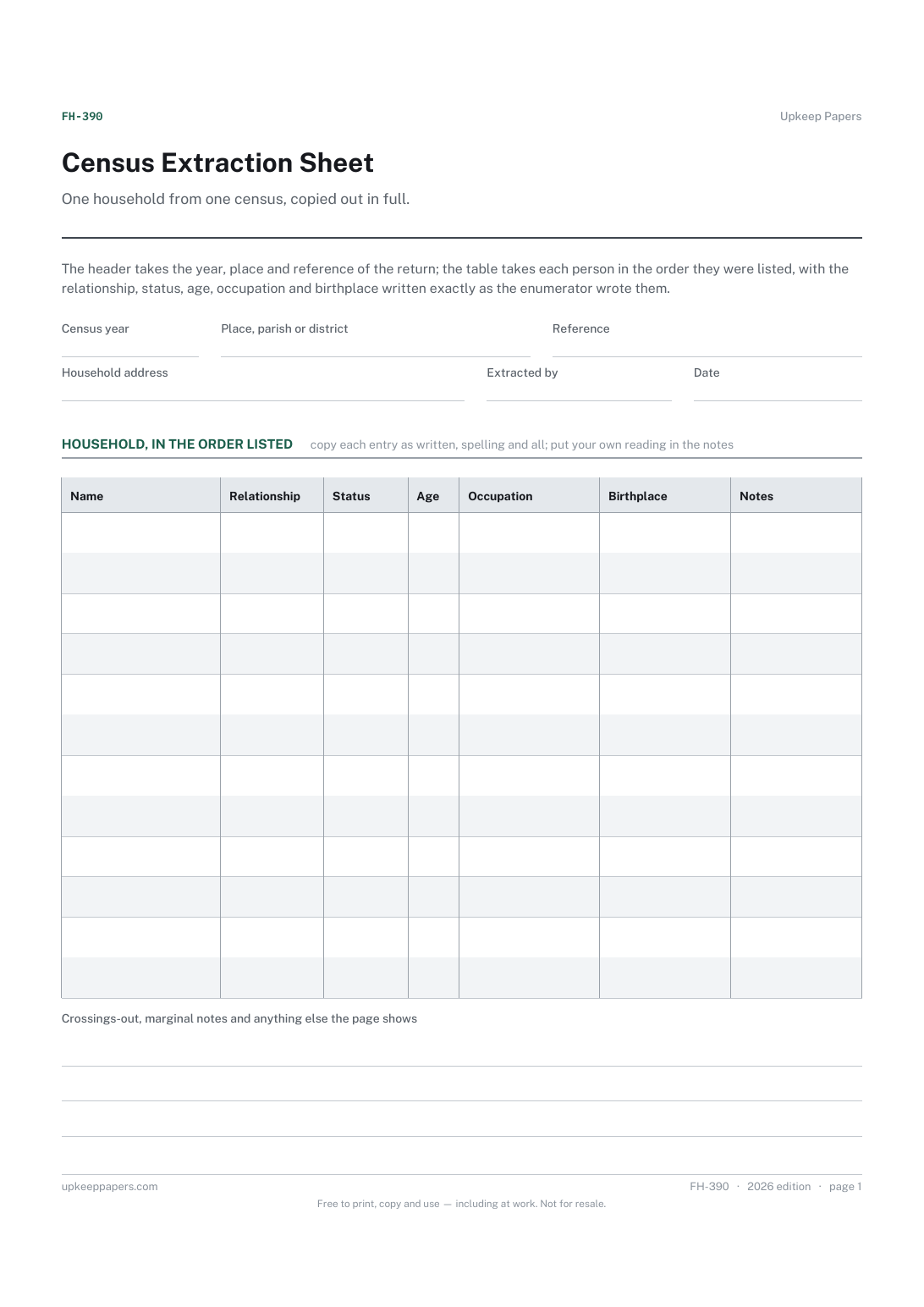
Which census, which place and which reference the household was found in.
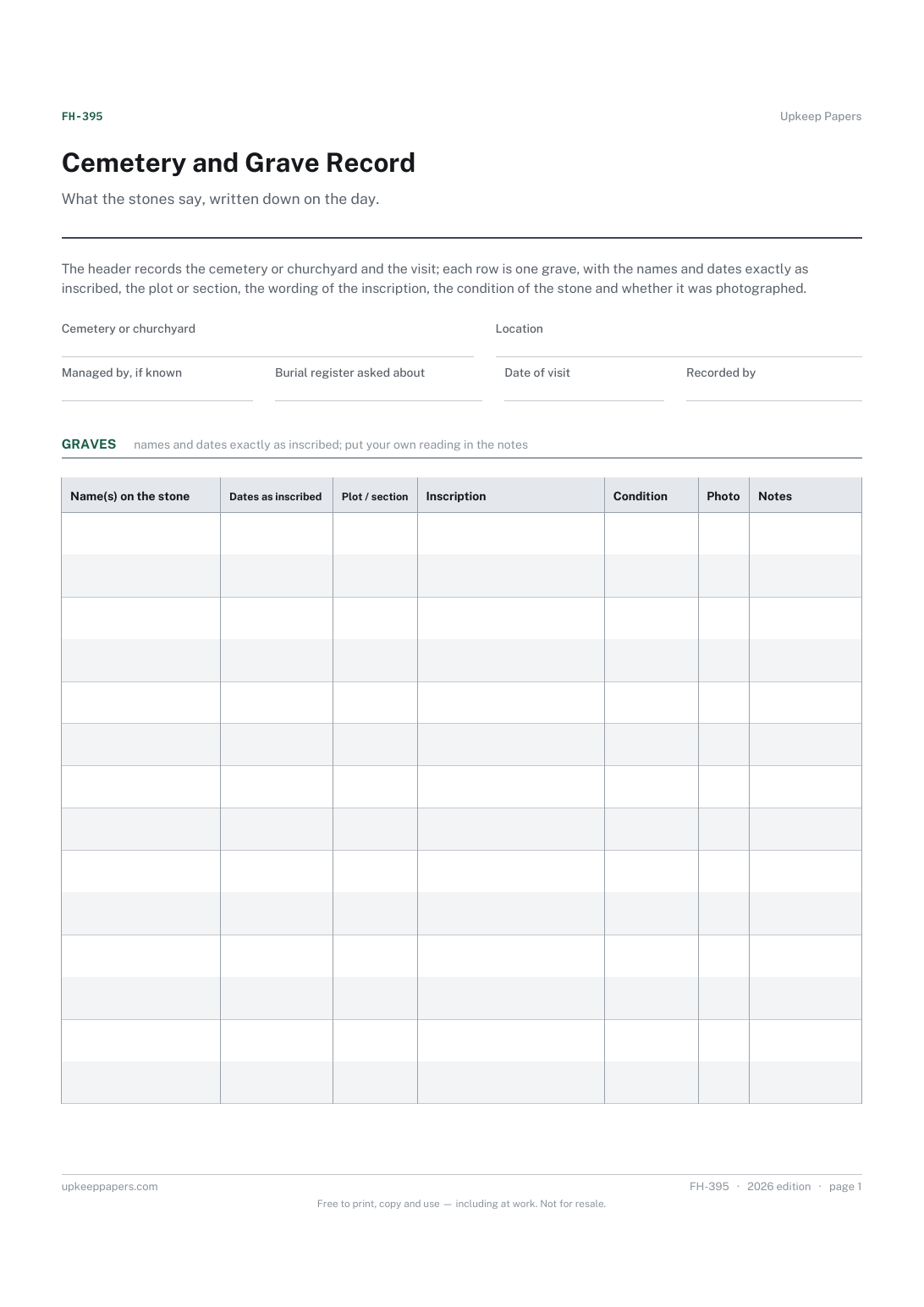
Which cemetery or churchyard, and when it was visited.
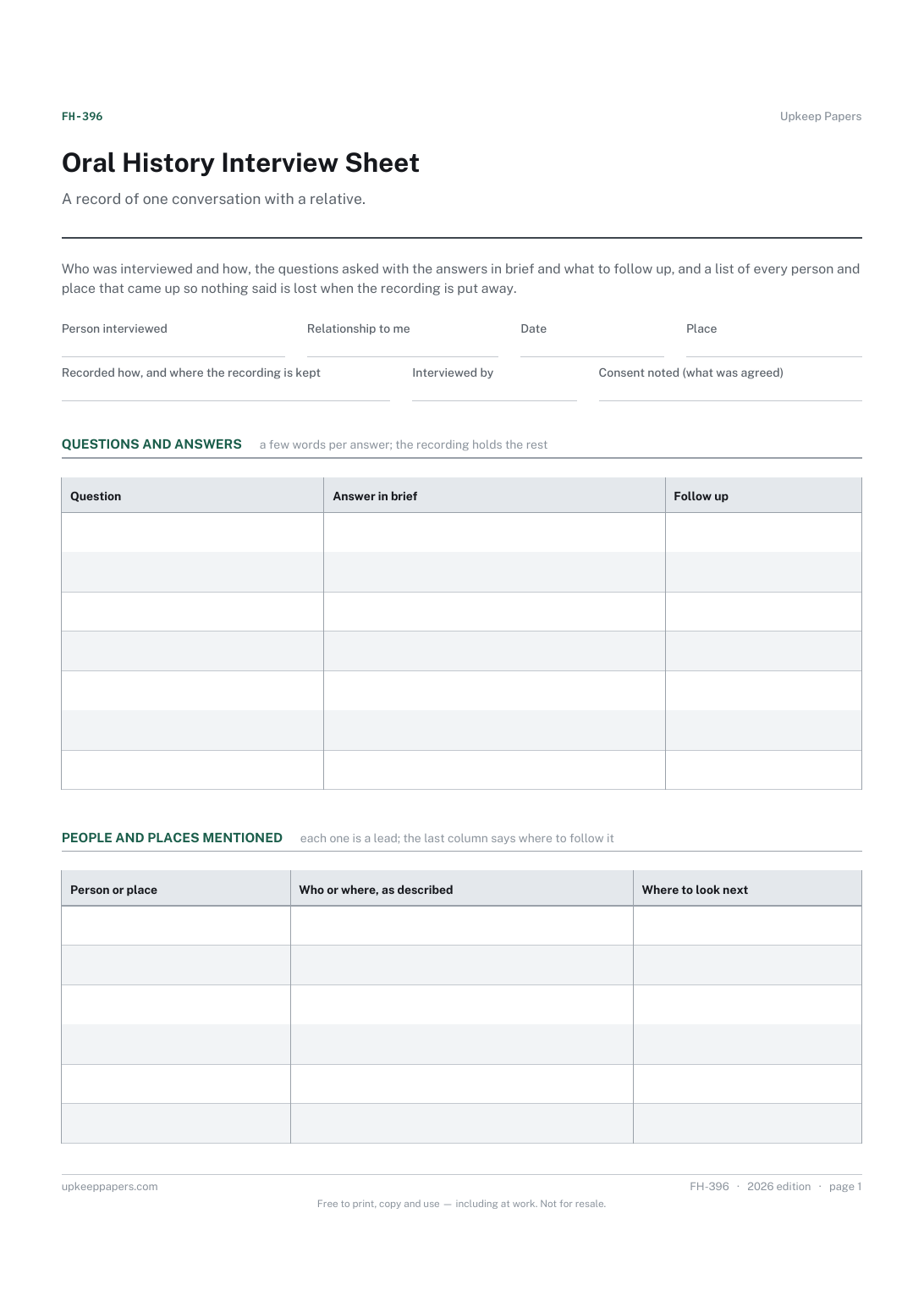
Who spoke, their relationship to you, and when and where the interview happened.
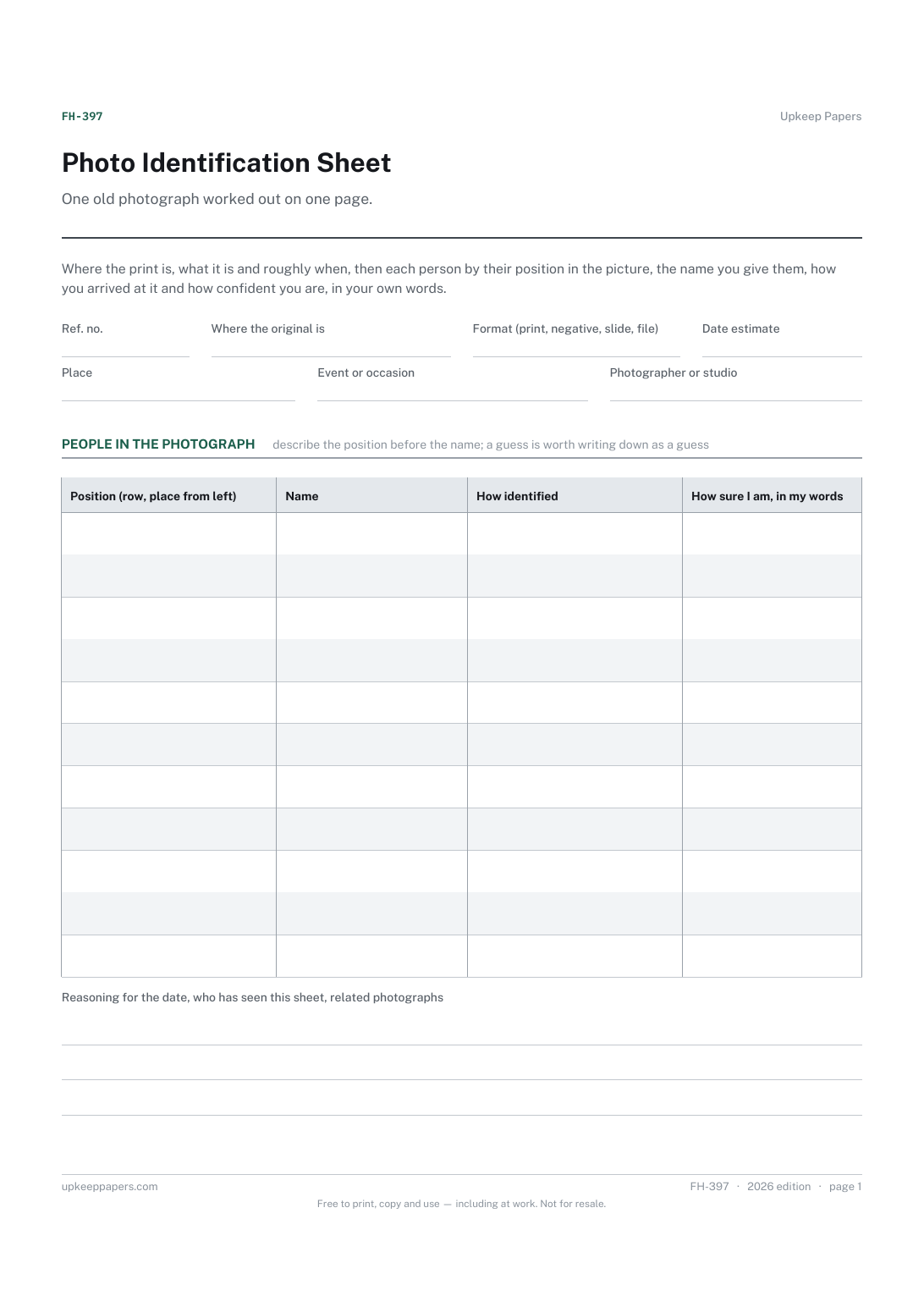
A reference number and the physical location of the print, negative or file.
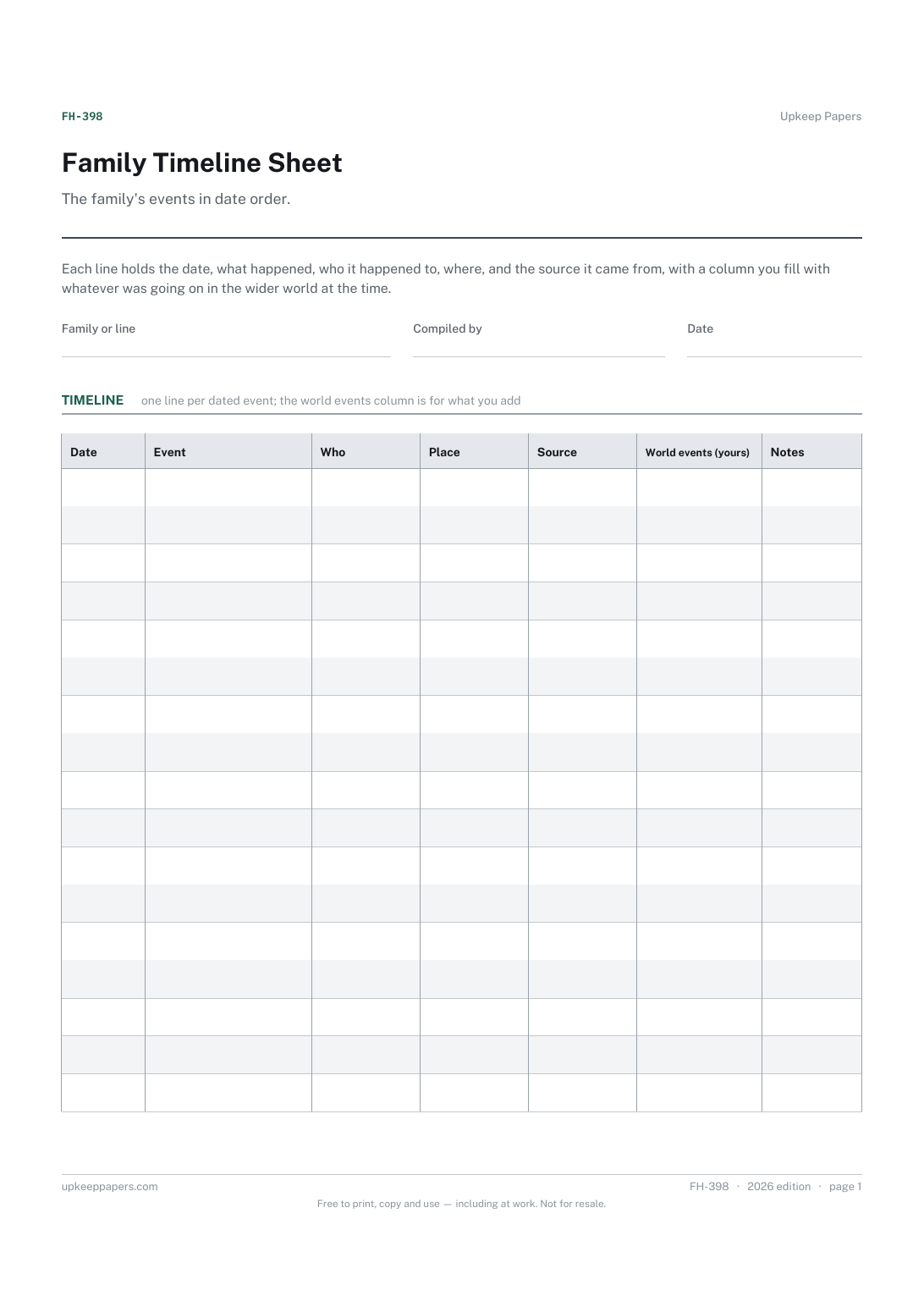
Every dated event for a family or a line, in the order it happened.
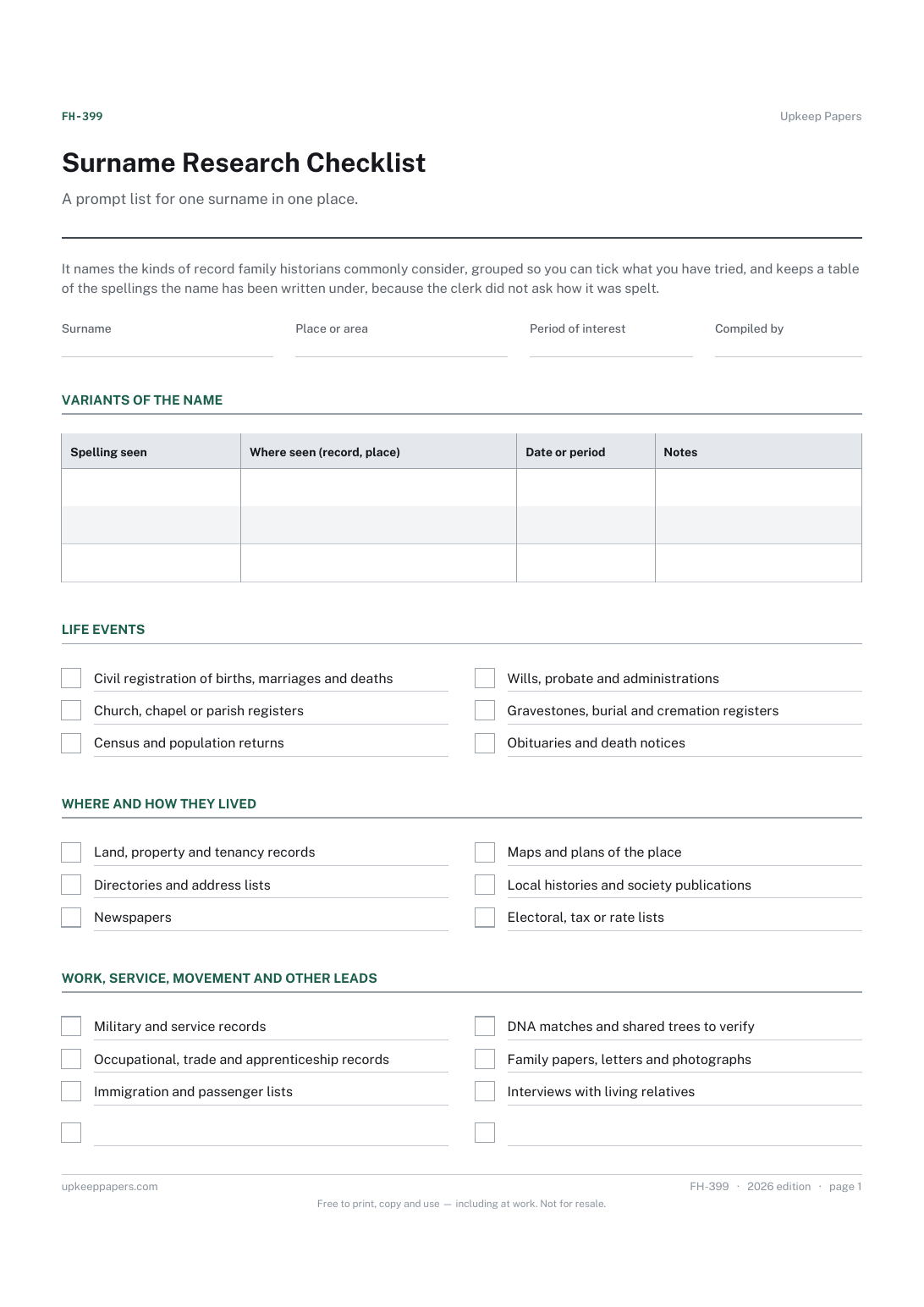
The kinds of record that might bear on the name, so none is forgotten.
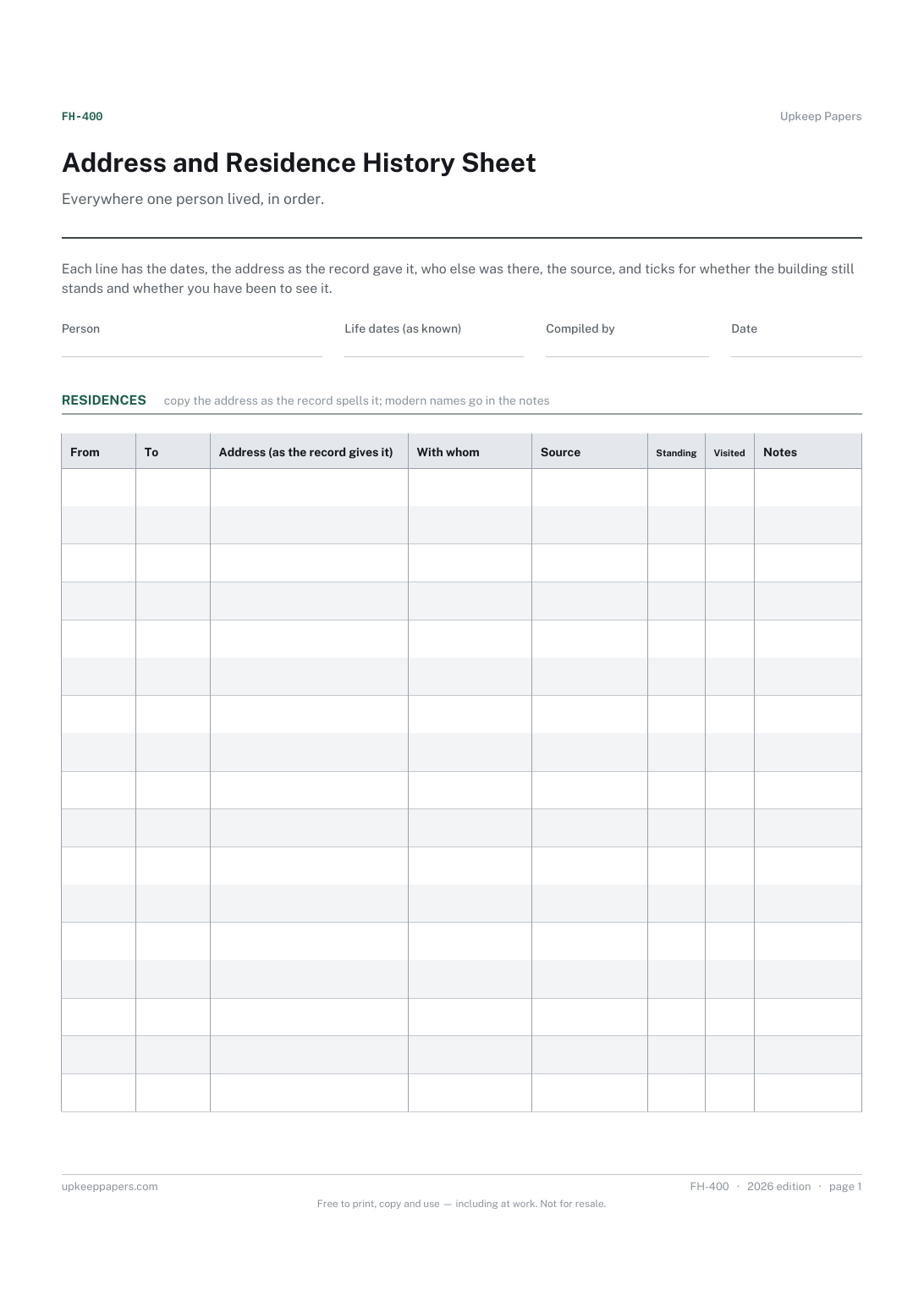
Each address the person lived at, with the earliest and latest date you have for it.
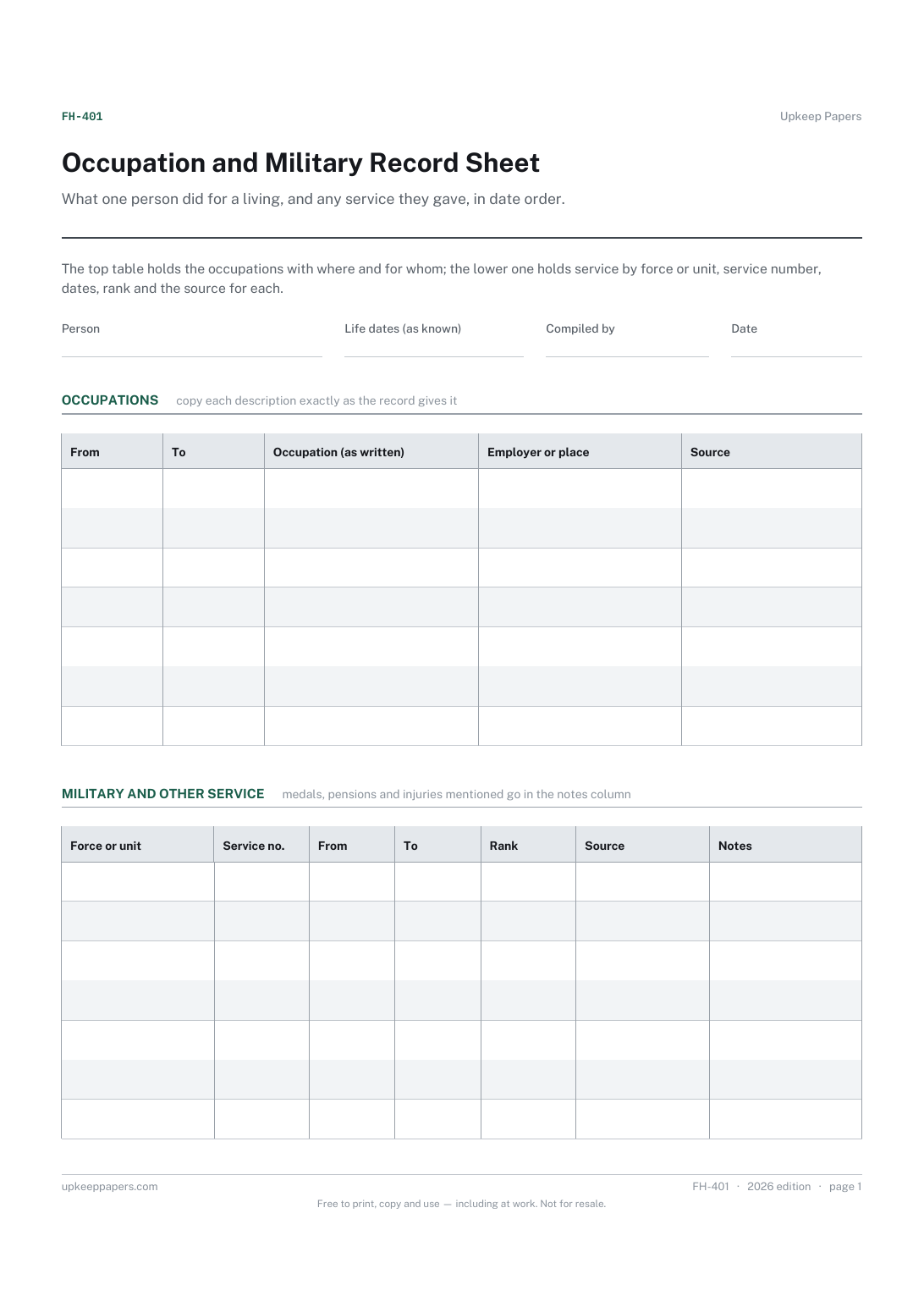
Every occupation recorded for the person, with the date and the record that says so.
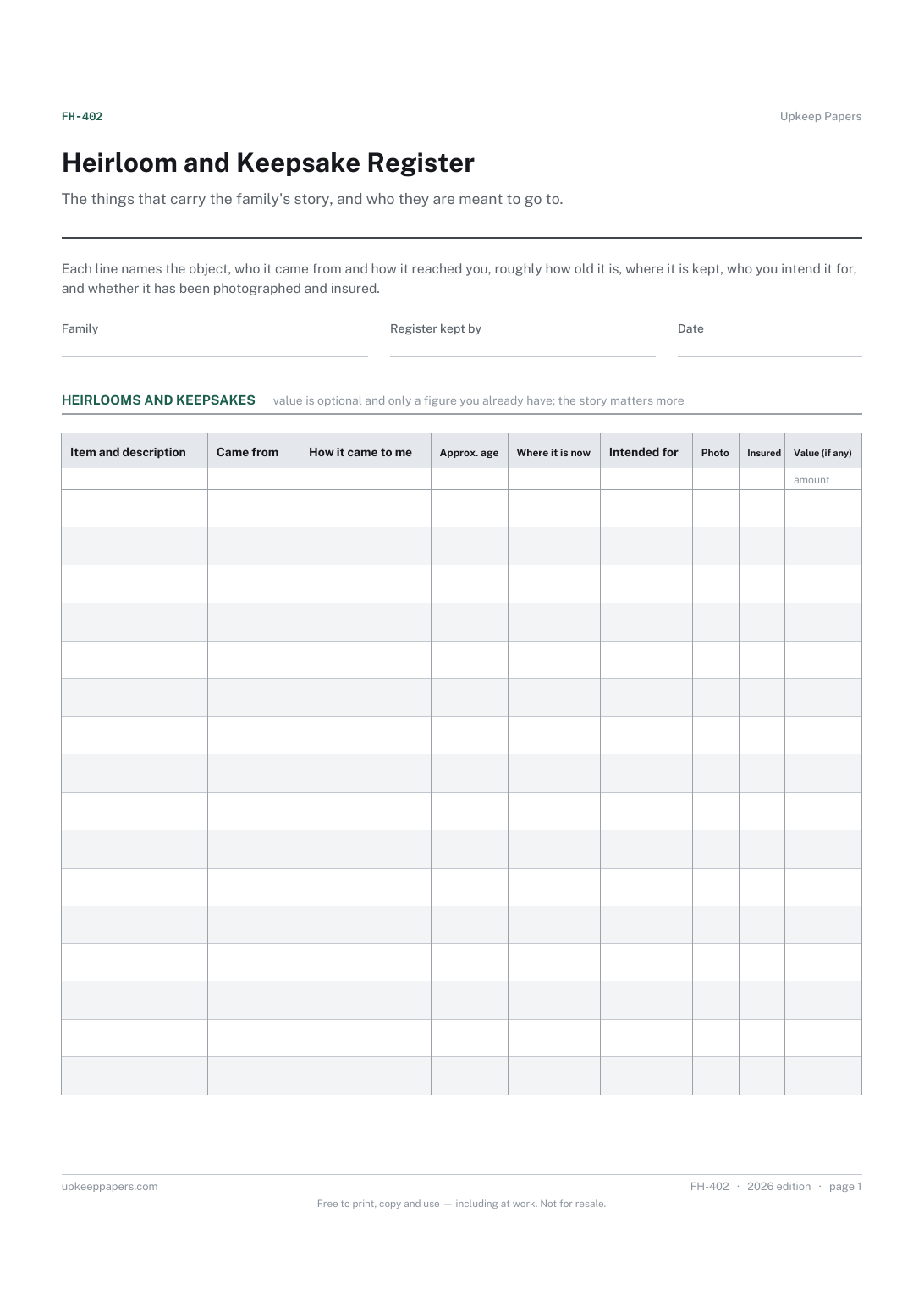
Every heirloom and keepsake, with the person it came from and the story of how it reached you.
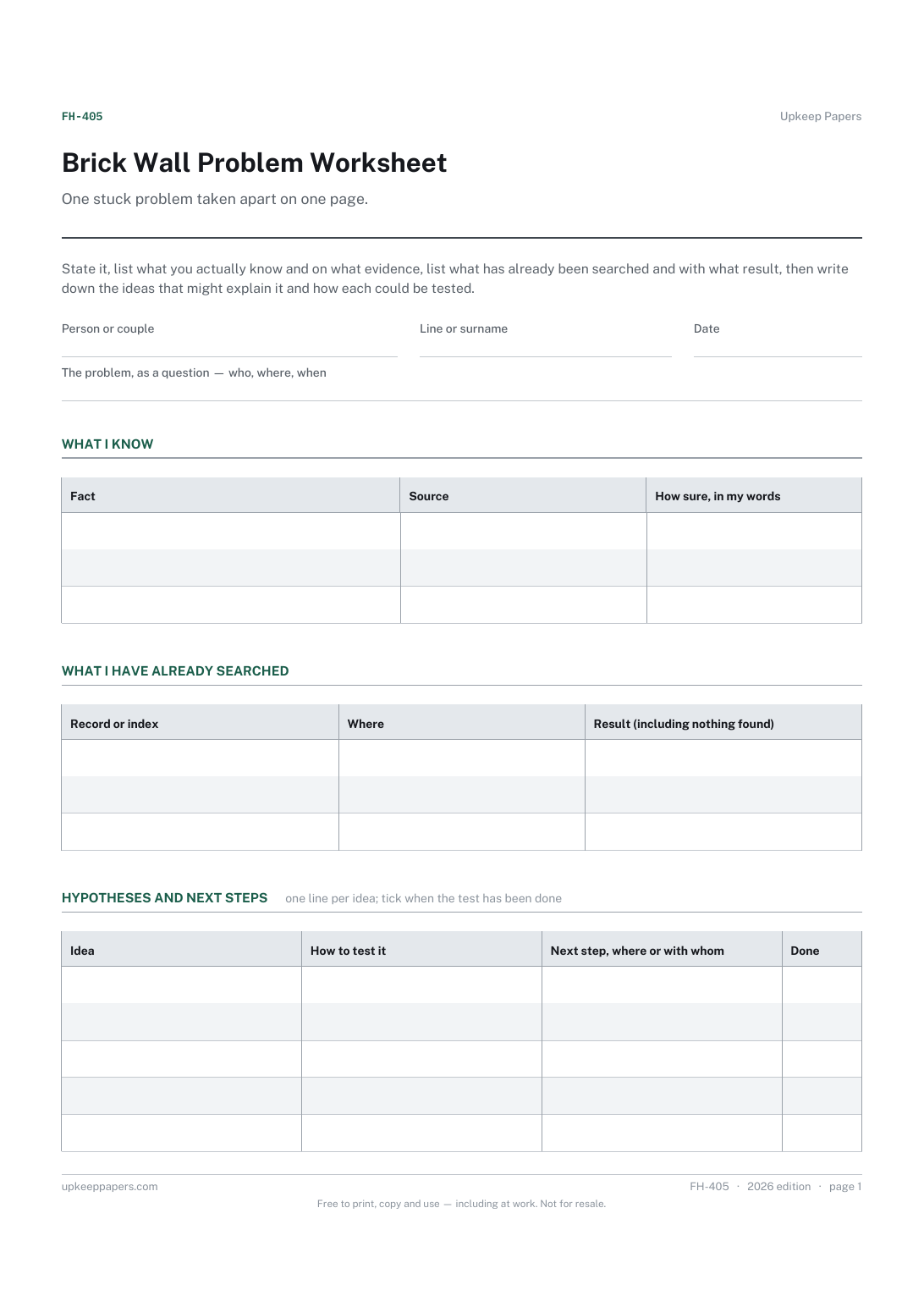
The problem in a sentence or two, so it stops shifting every time you return to it.
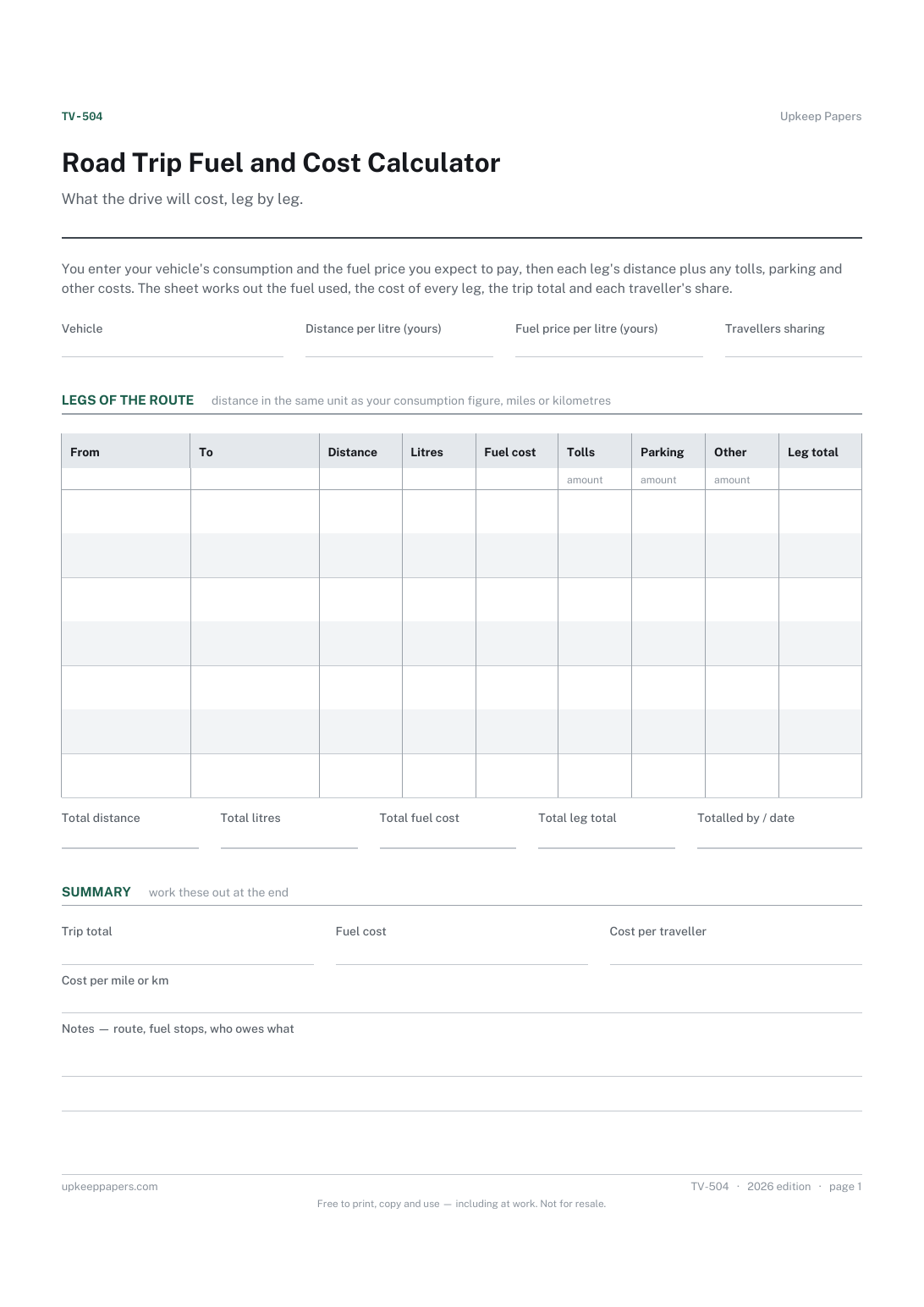
Each leg of the route with its distance.
Where you are stopping each night.
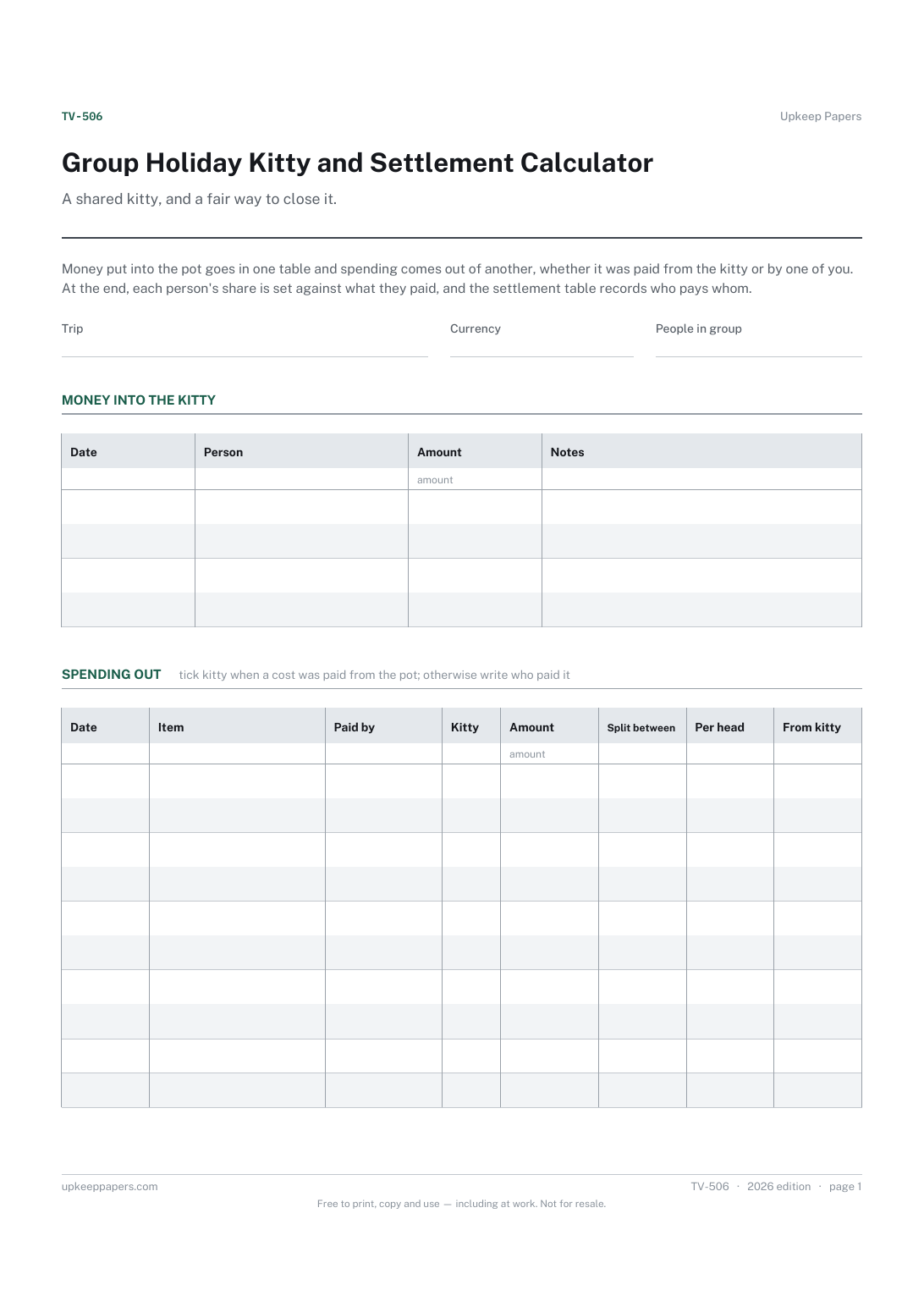
Every contribution to the kitty, by person and date.
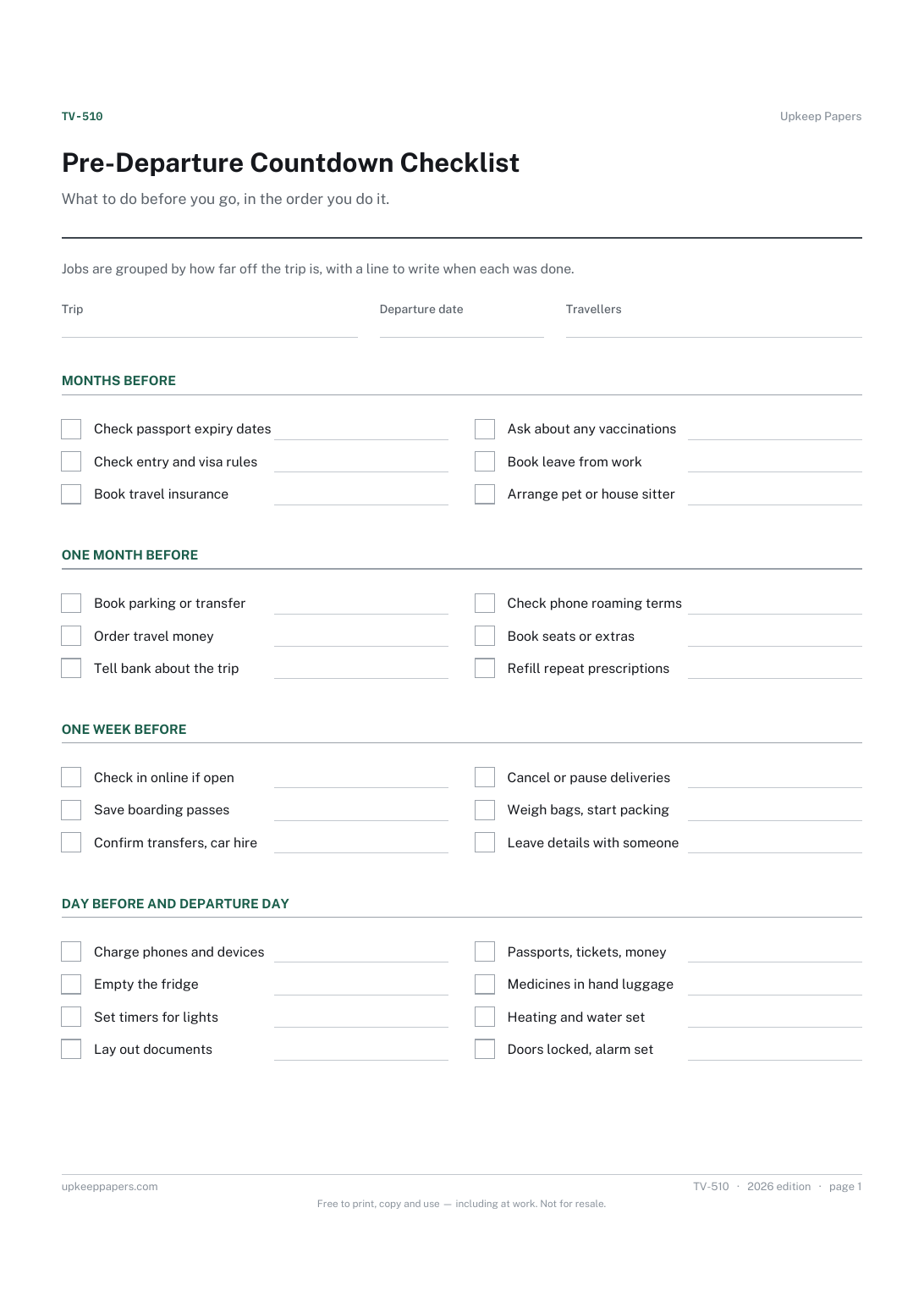
The jobs that need doing months before the trip.
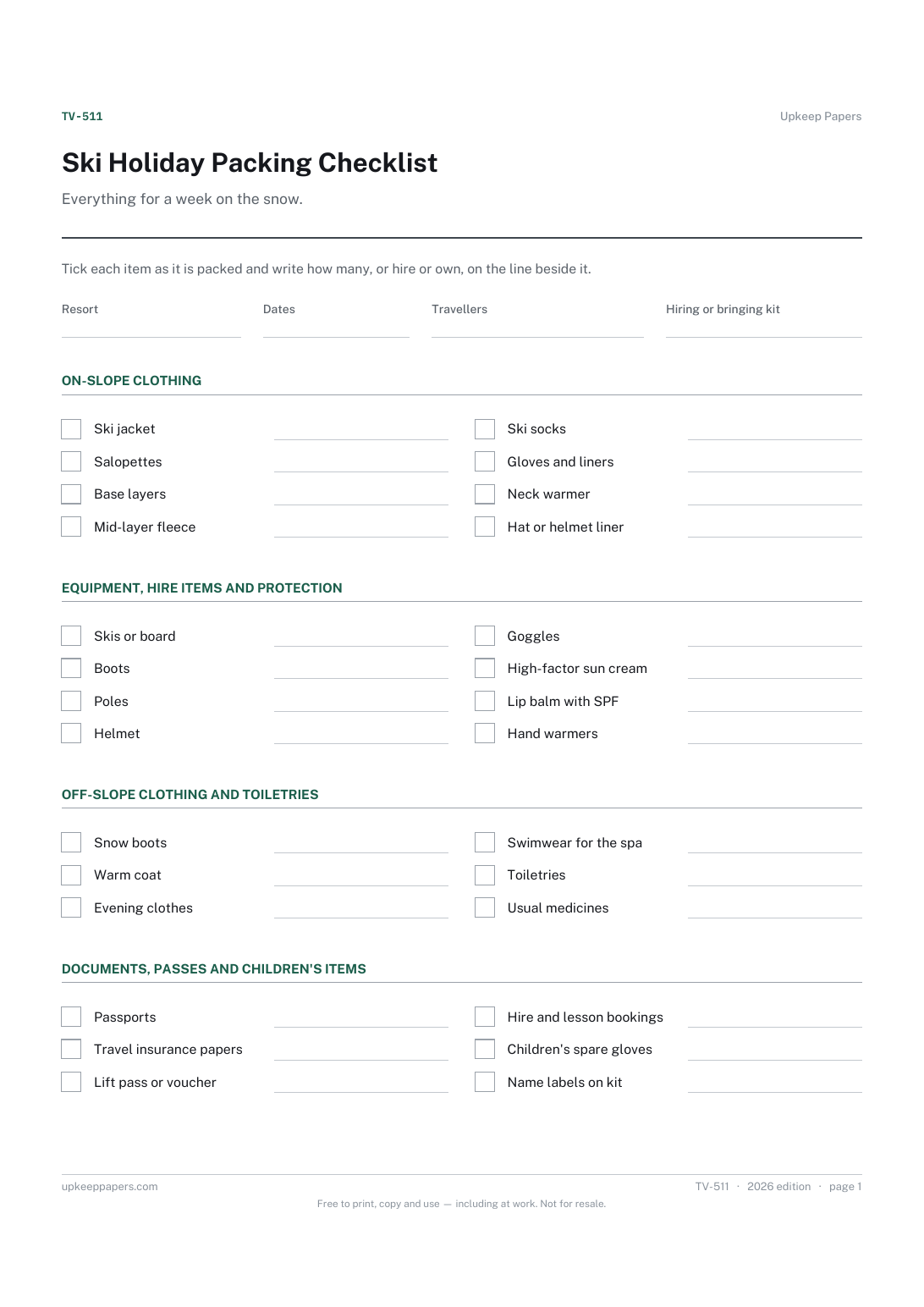
Layers and outerwear for the slope, item by item.
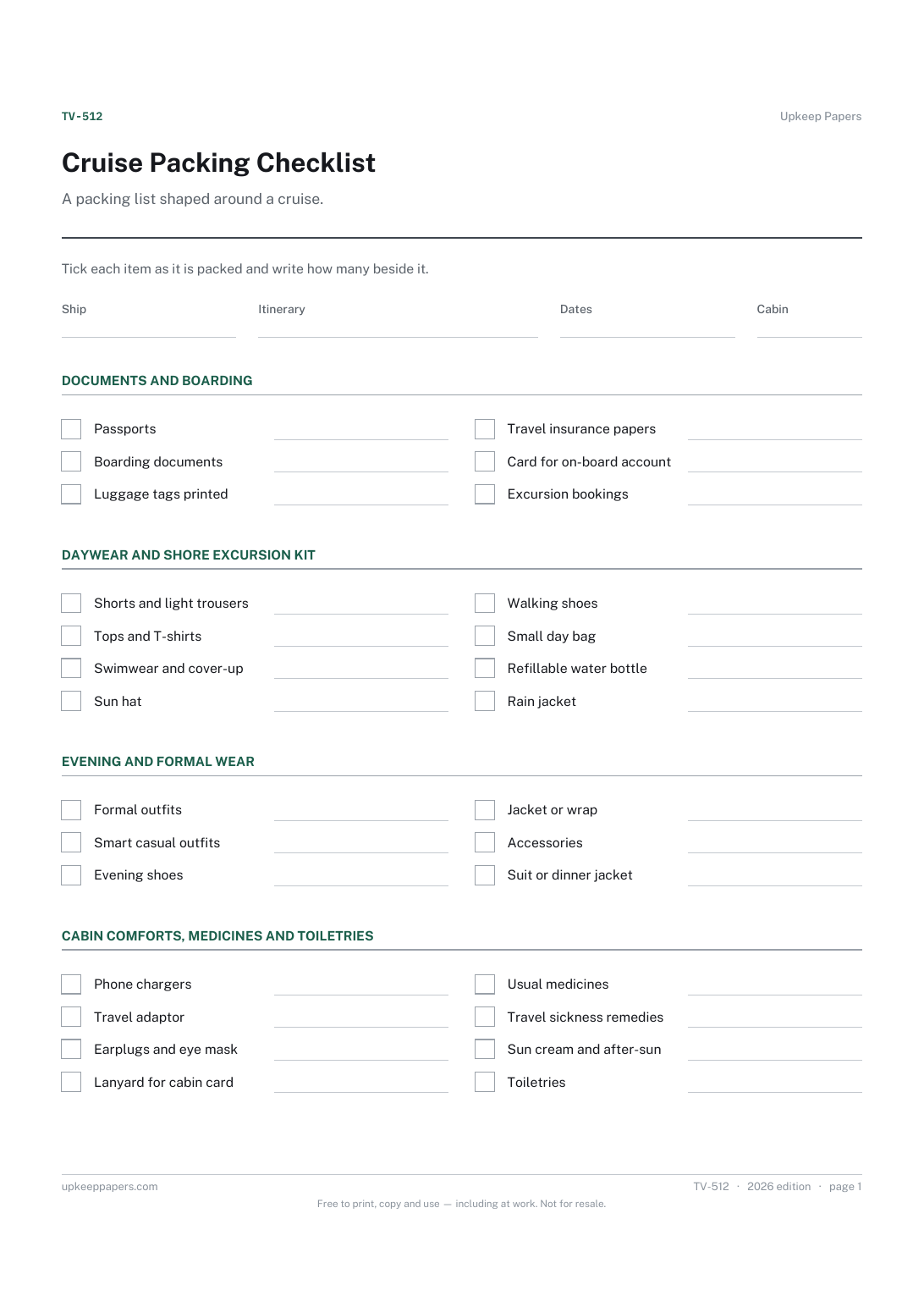
The documents you need to board and to go ashore.
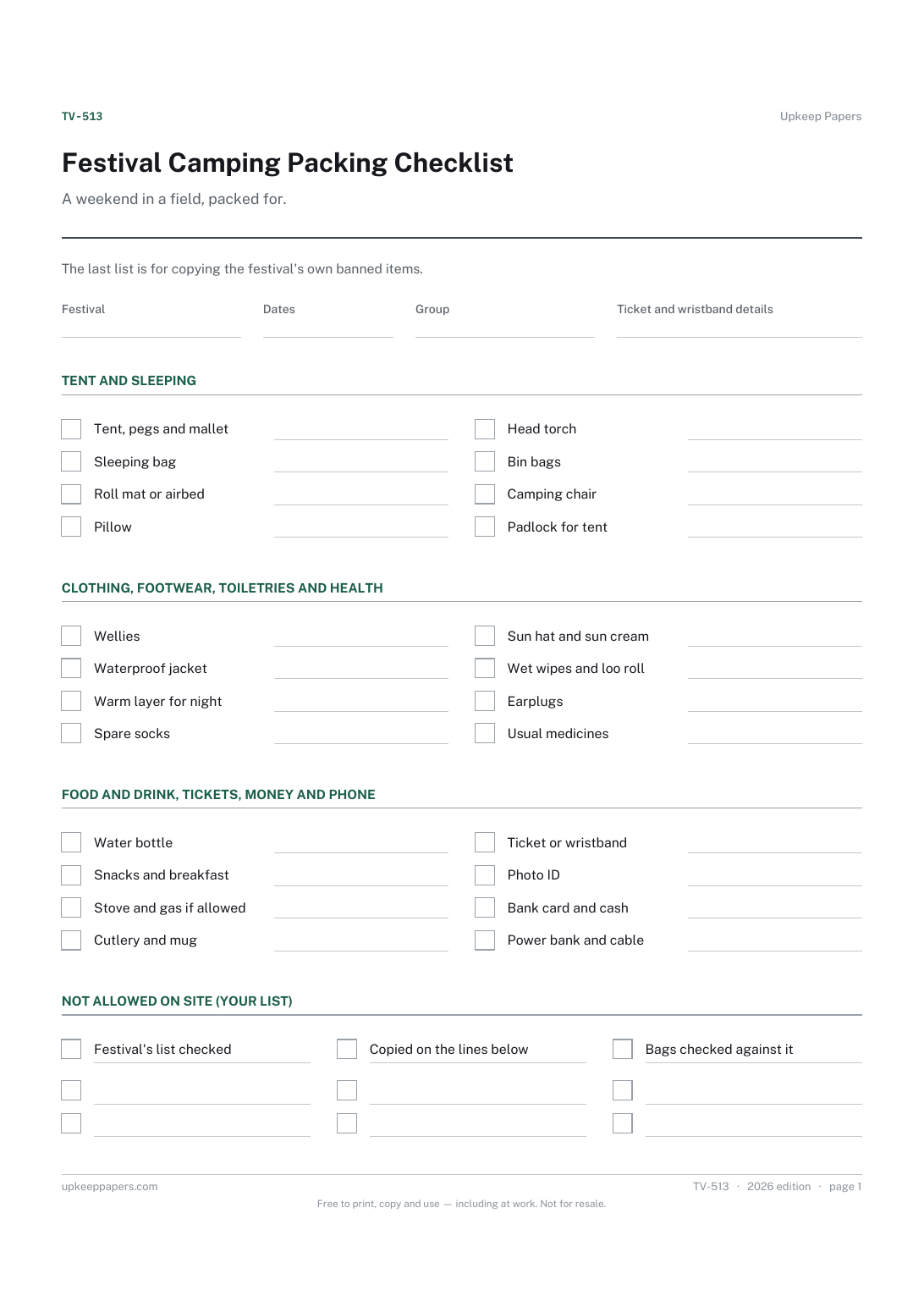
Tent, sleeping and camp kit, ticked as it is packed.
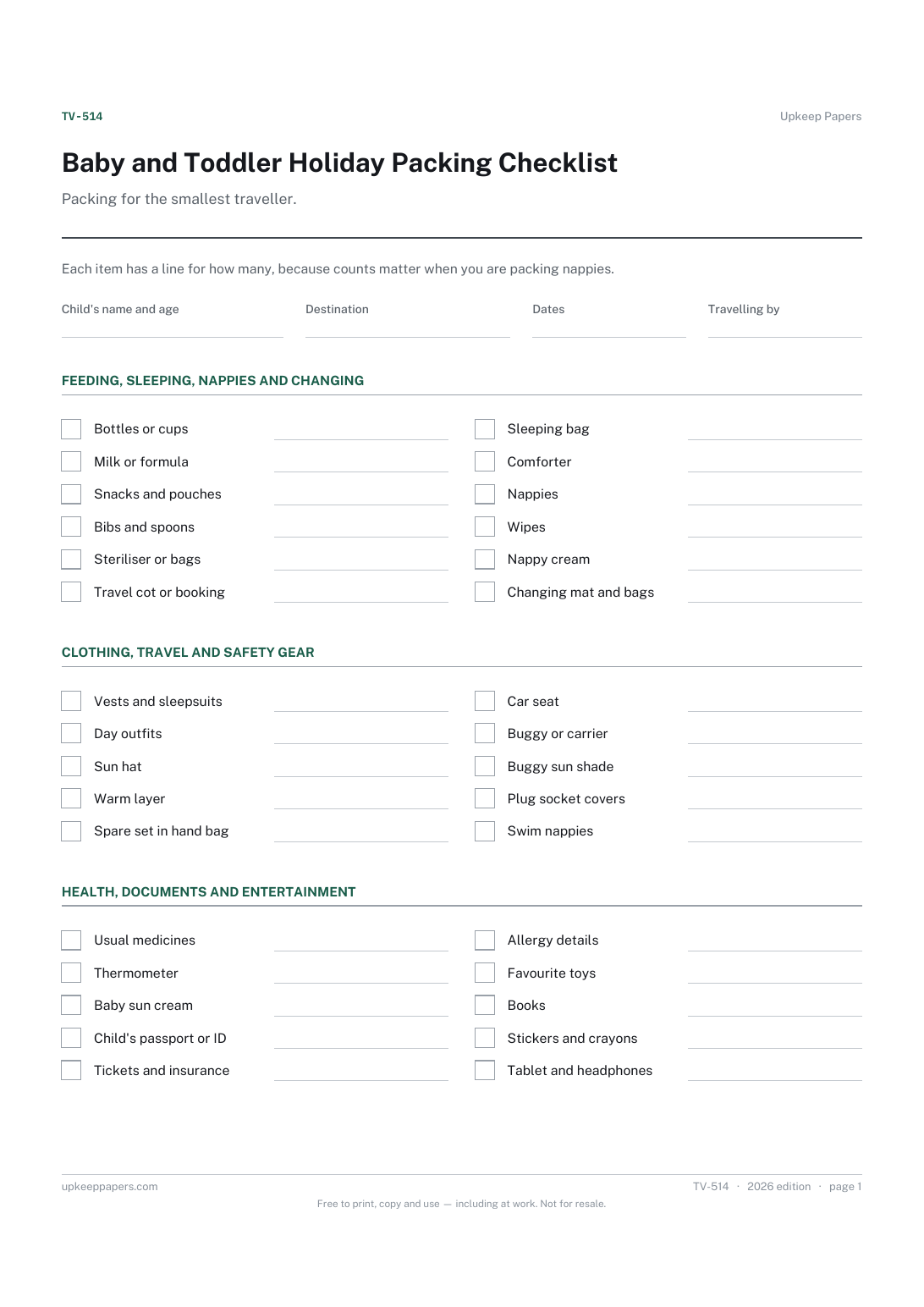
Feeding kit for the journey and the stay.
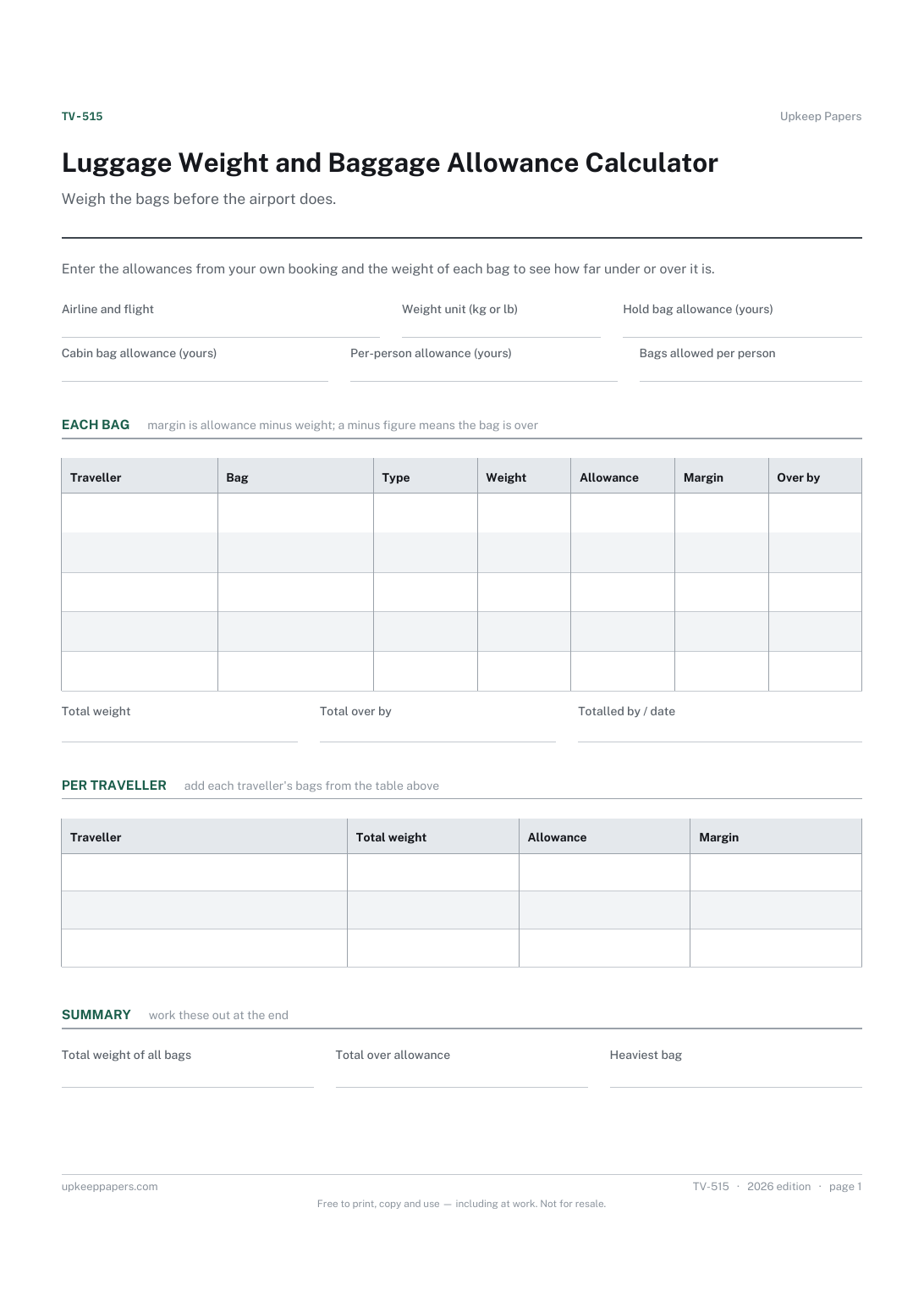
Each bag's weight against the allowance for its type.
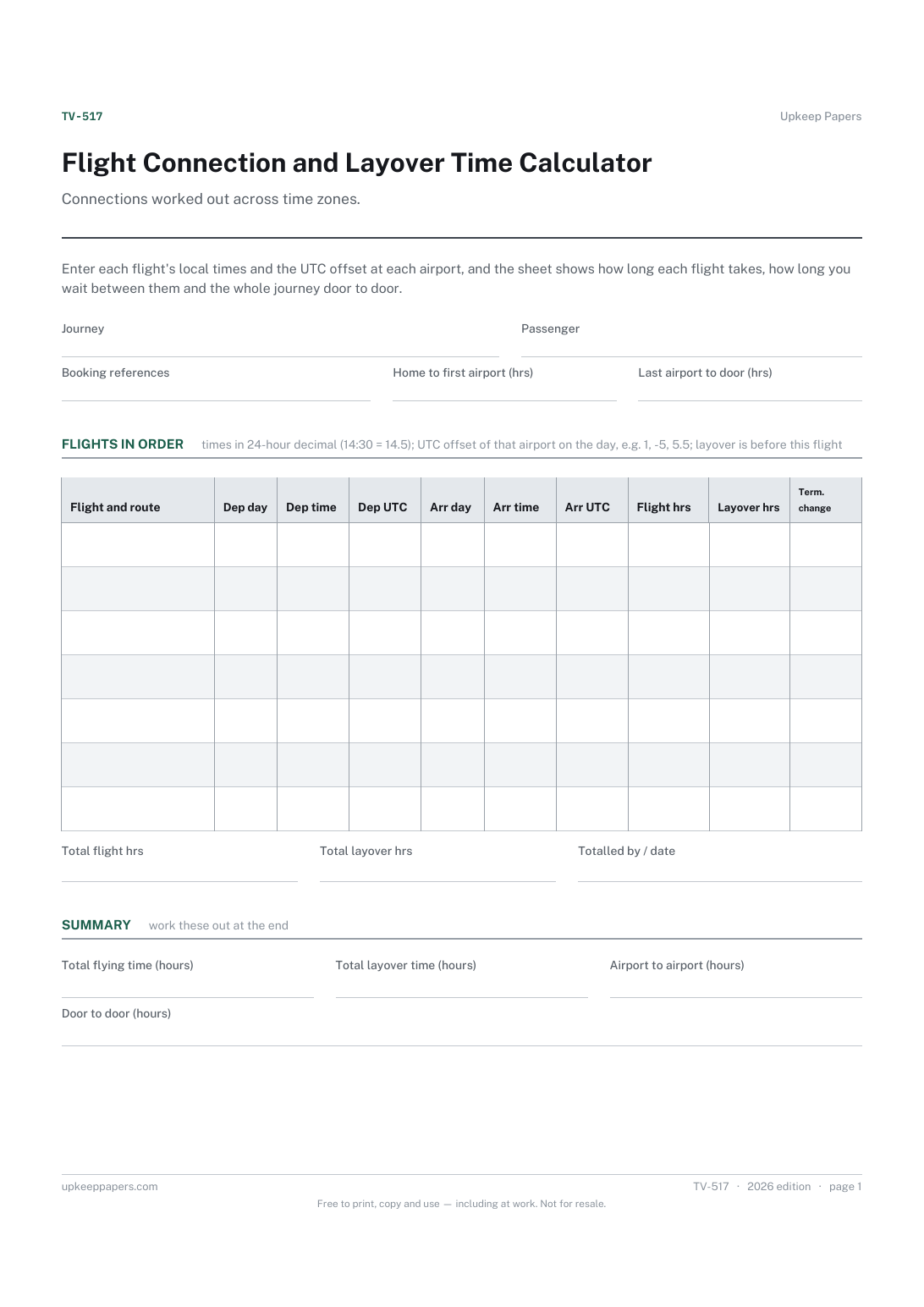
Each flight's real length, allowing for the time zones.
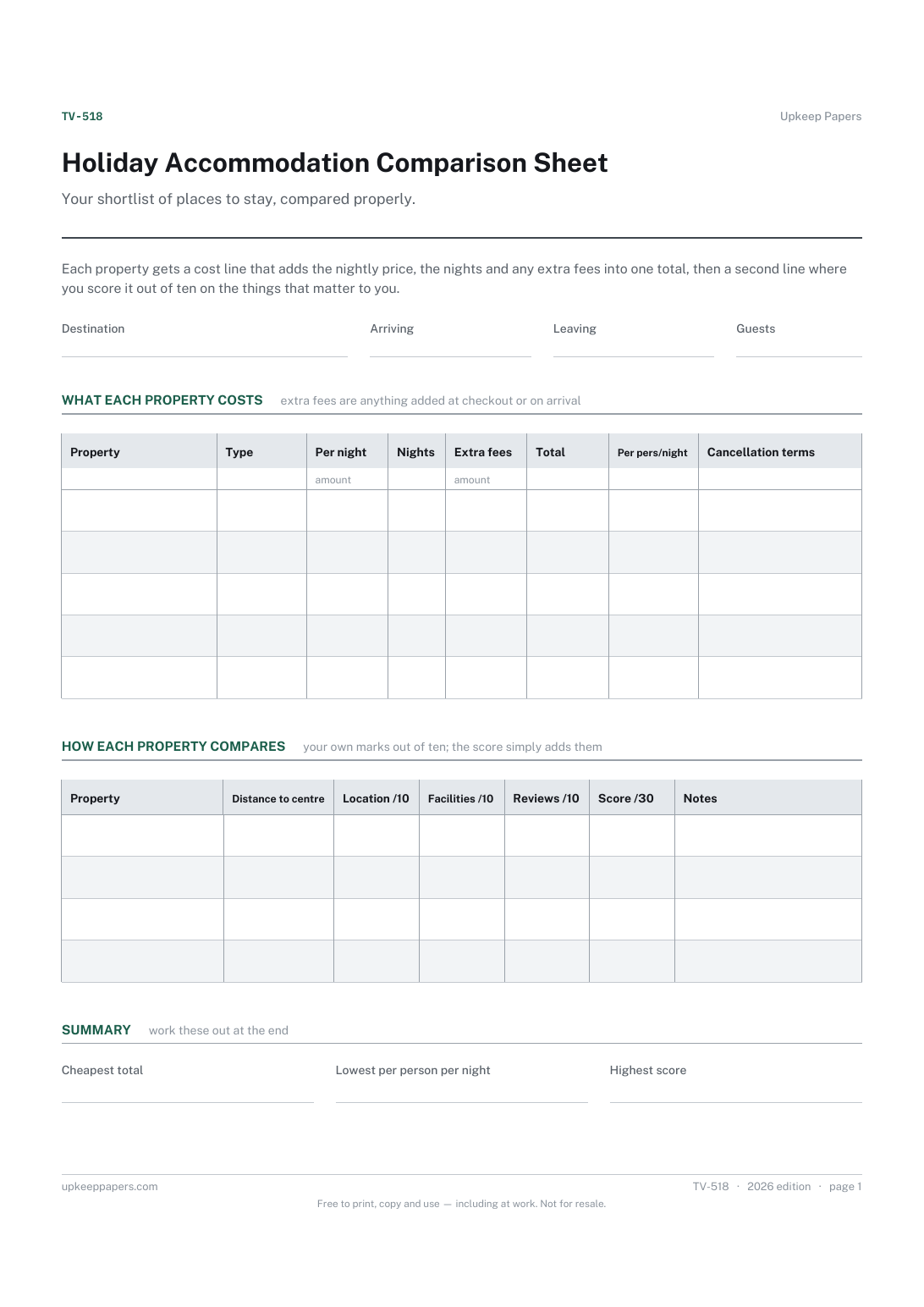
The full cost of each property once cleaning, resort and other fees are added.
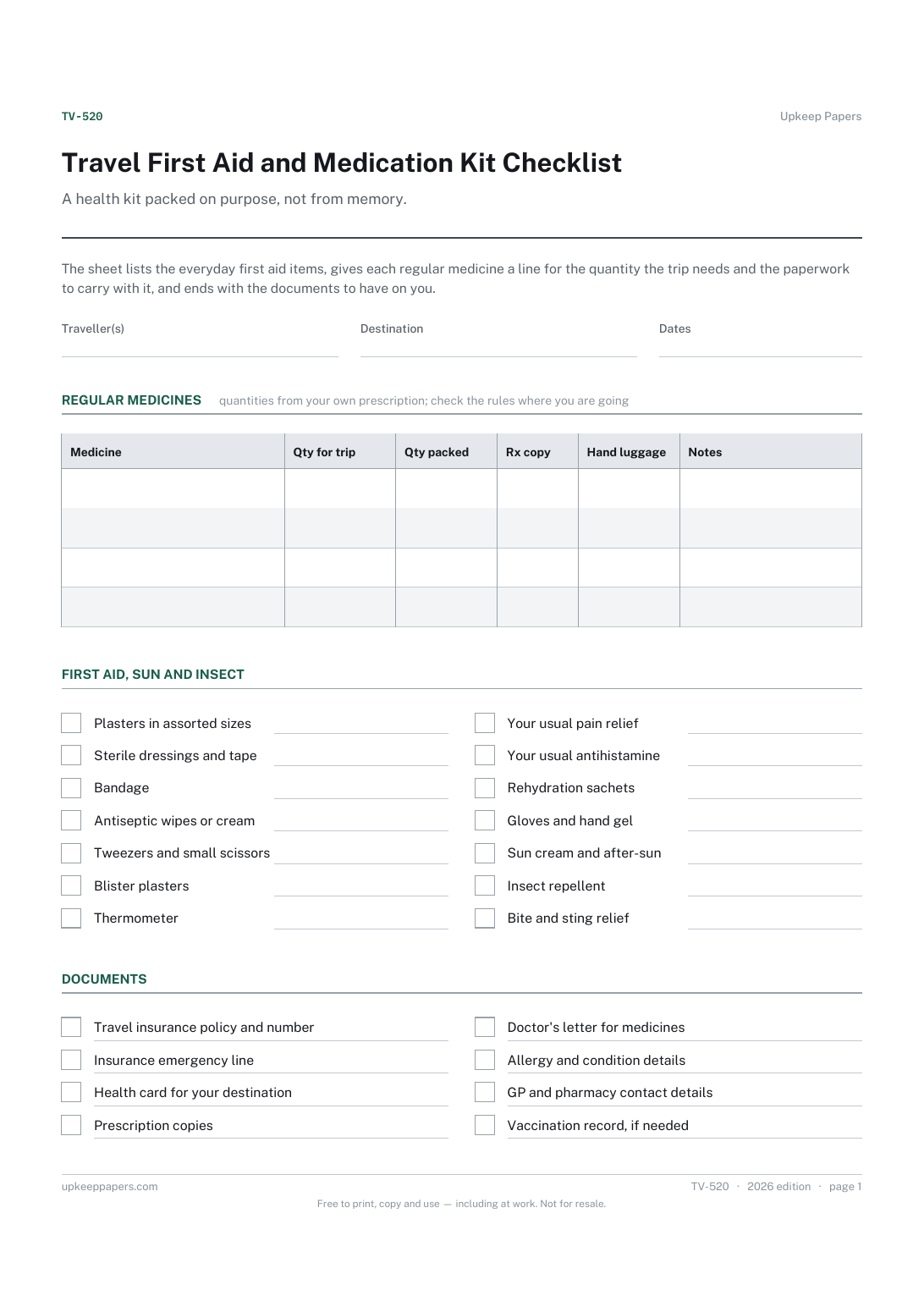
First aid items packed, with a column for how many.
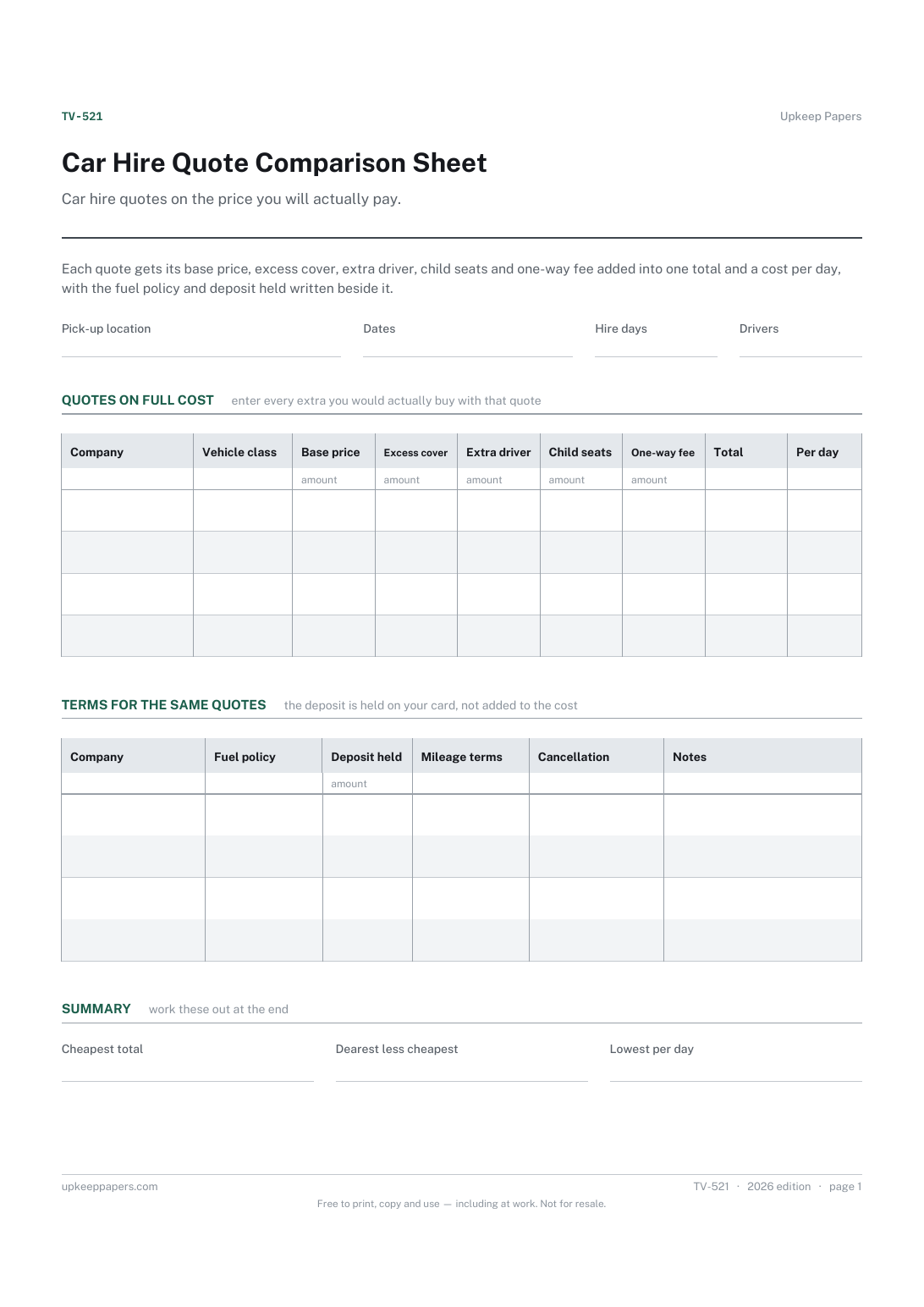
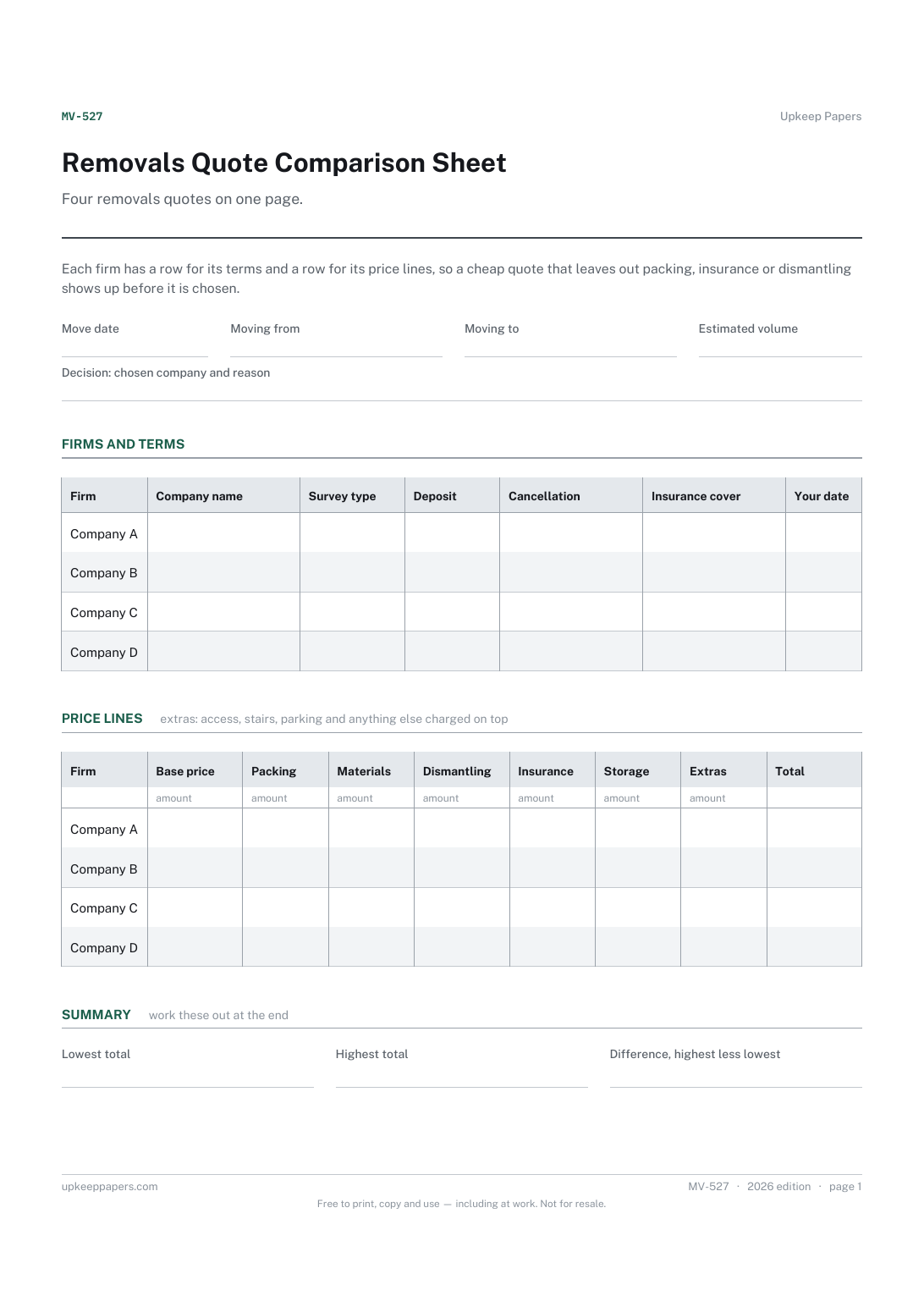
Every quote's total once the extras are added.
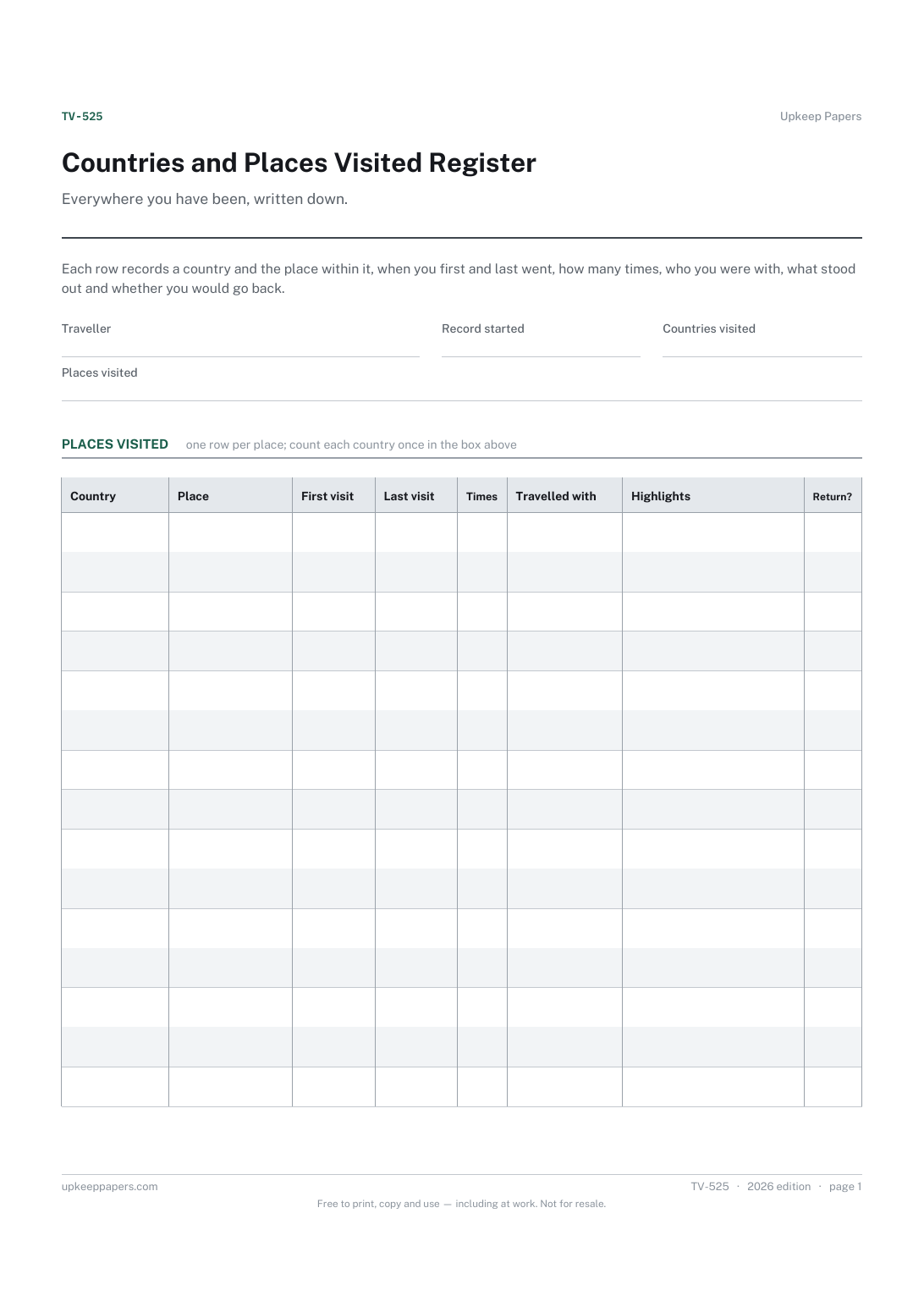
Every country and place, with first and most recent visit.
Which firm quoted what, and on what kind of survey.
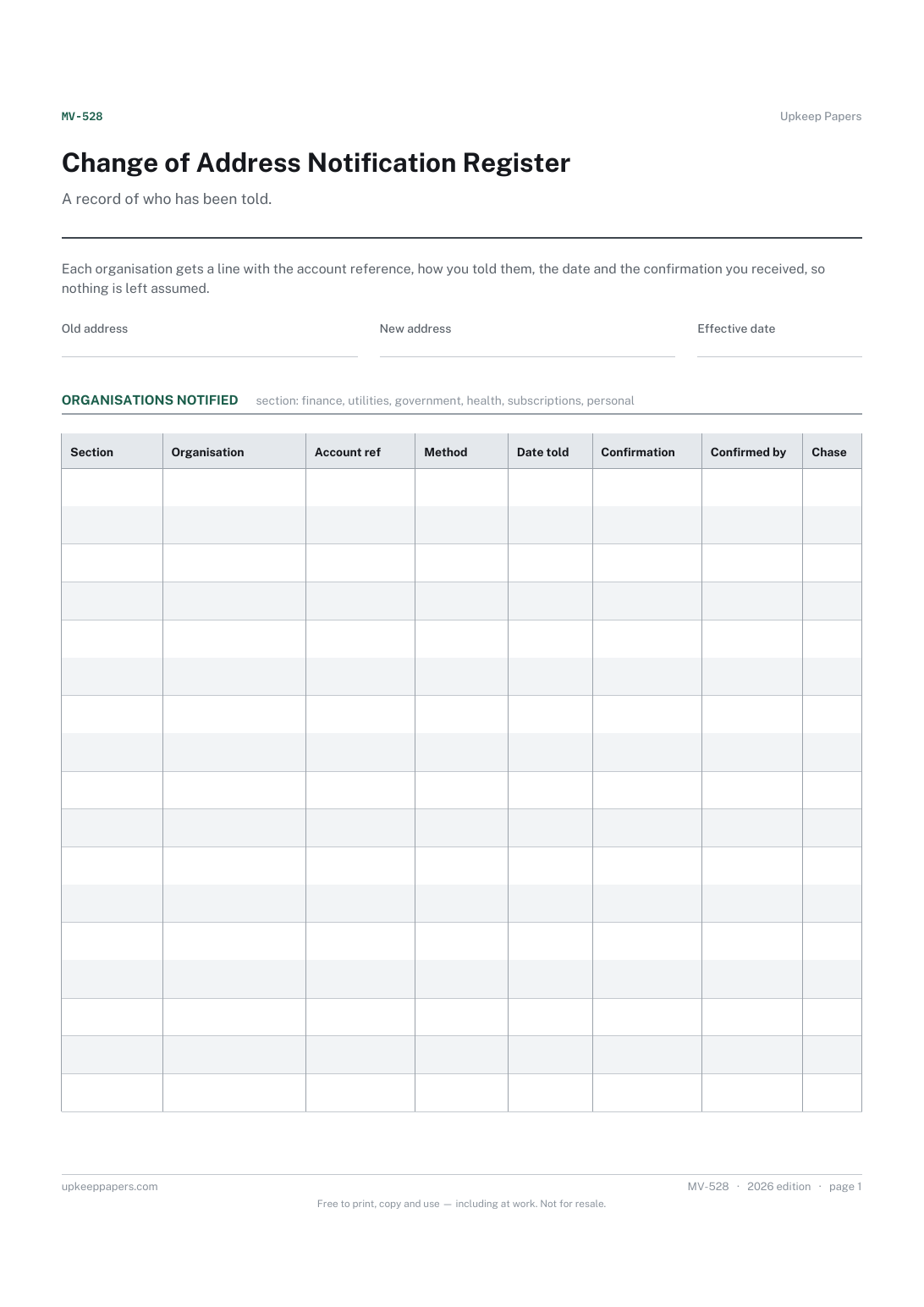
Every organisation that holds your address, grouped by type.
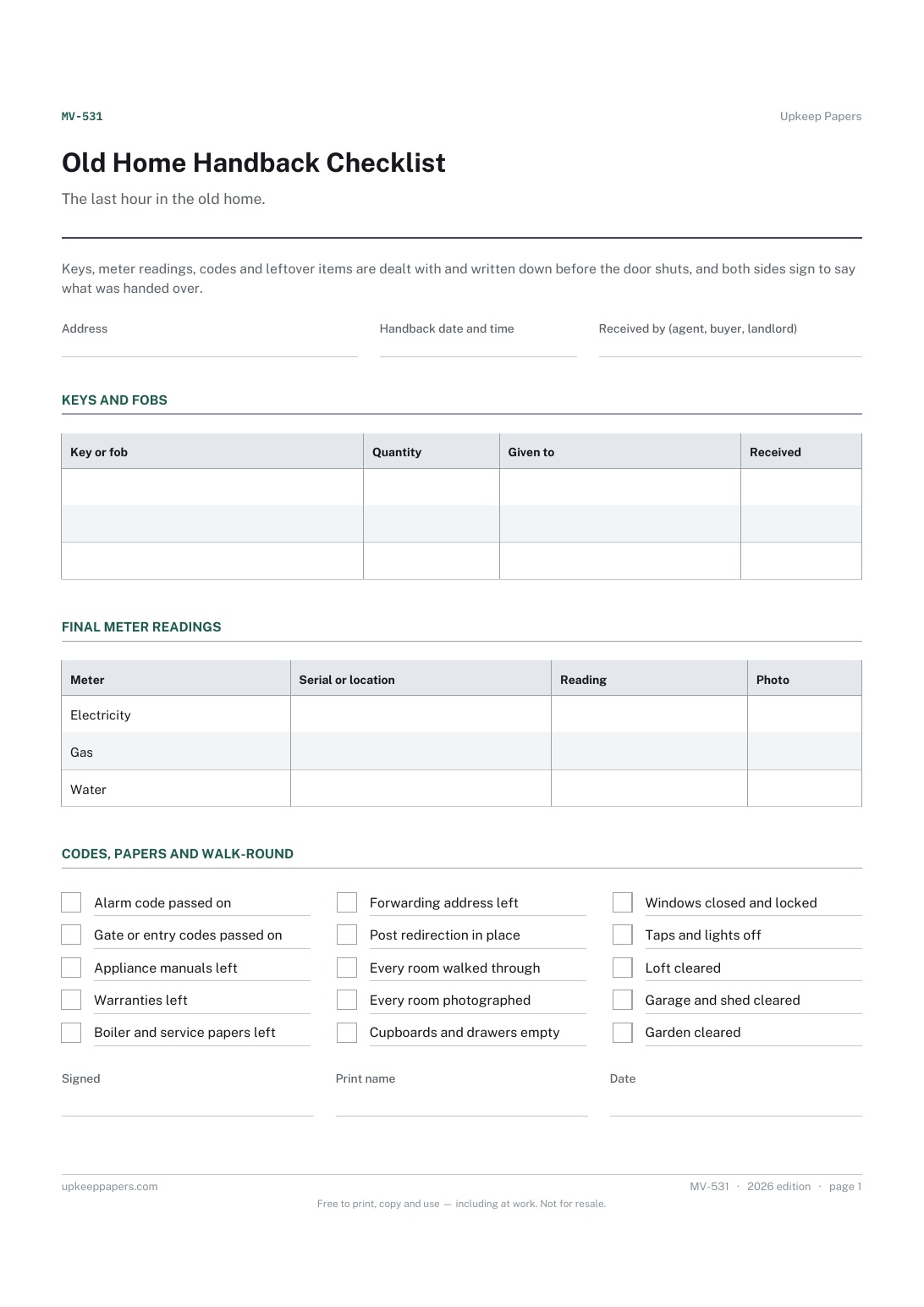
Every key and fob, how many and who received them.
Every item and box in the consignment, numbered.
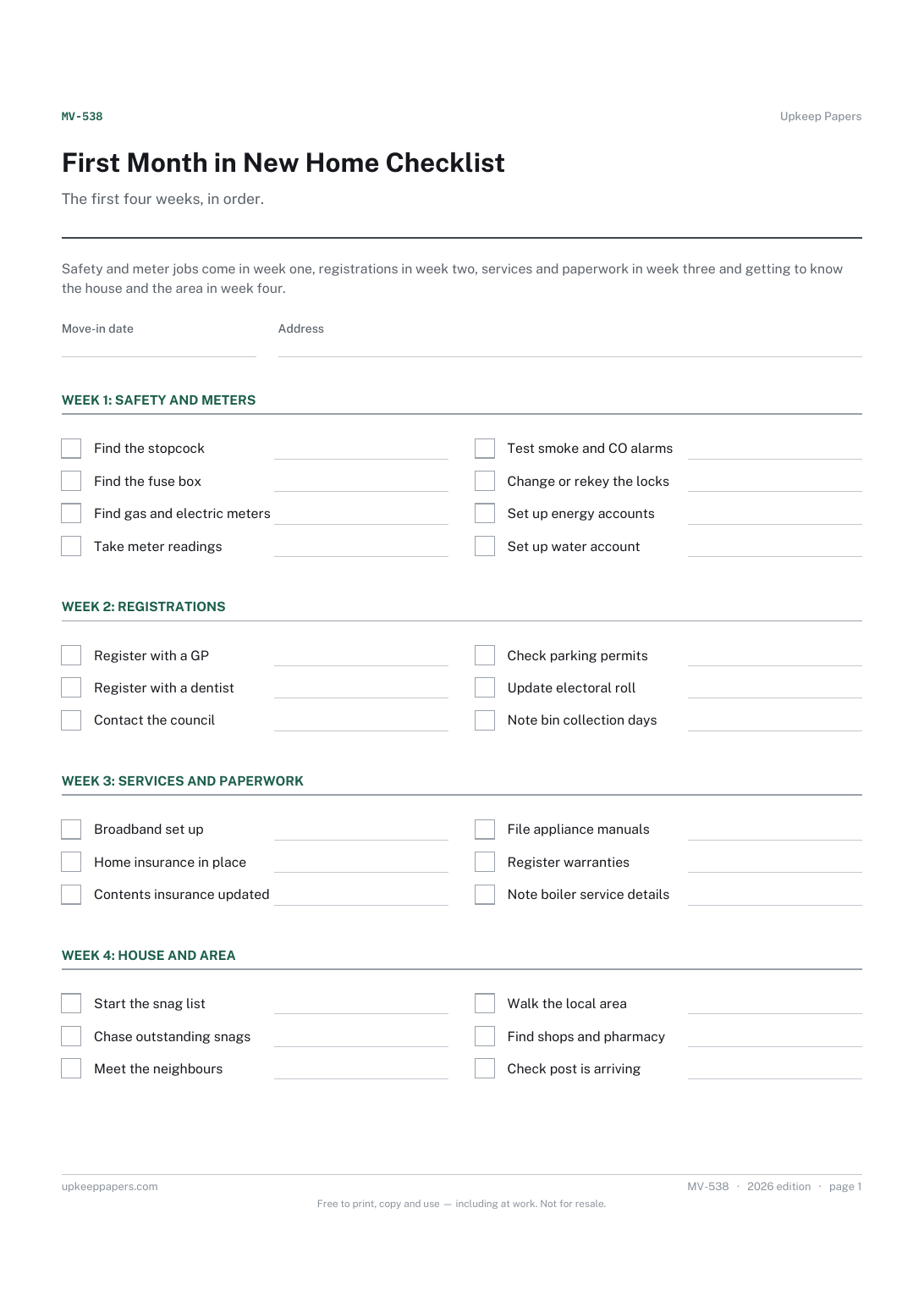
Where the stopcock, fuse box and meters are, found on day one.
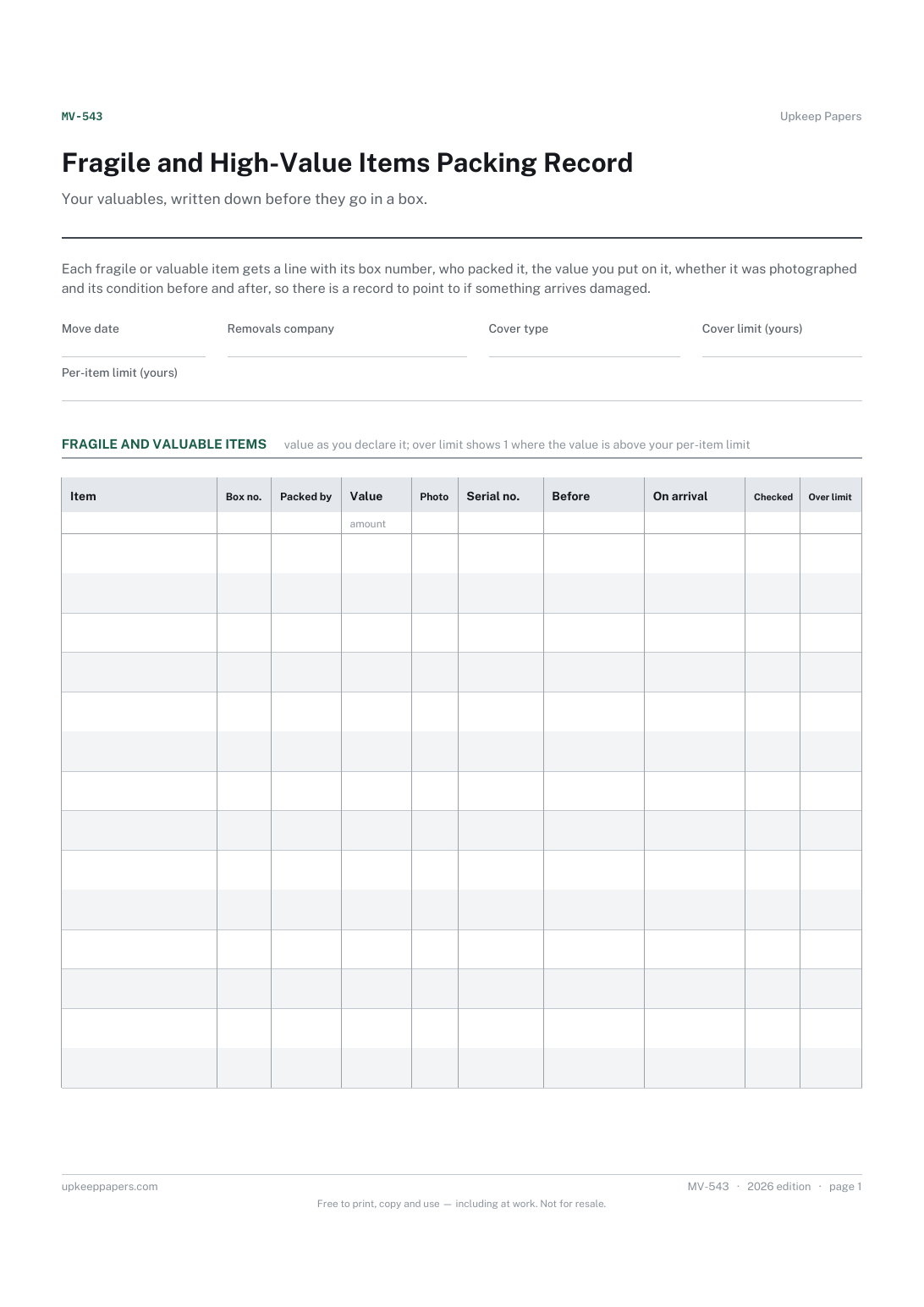
Which box each fragile or valuable item went into, and who packed it.
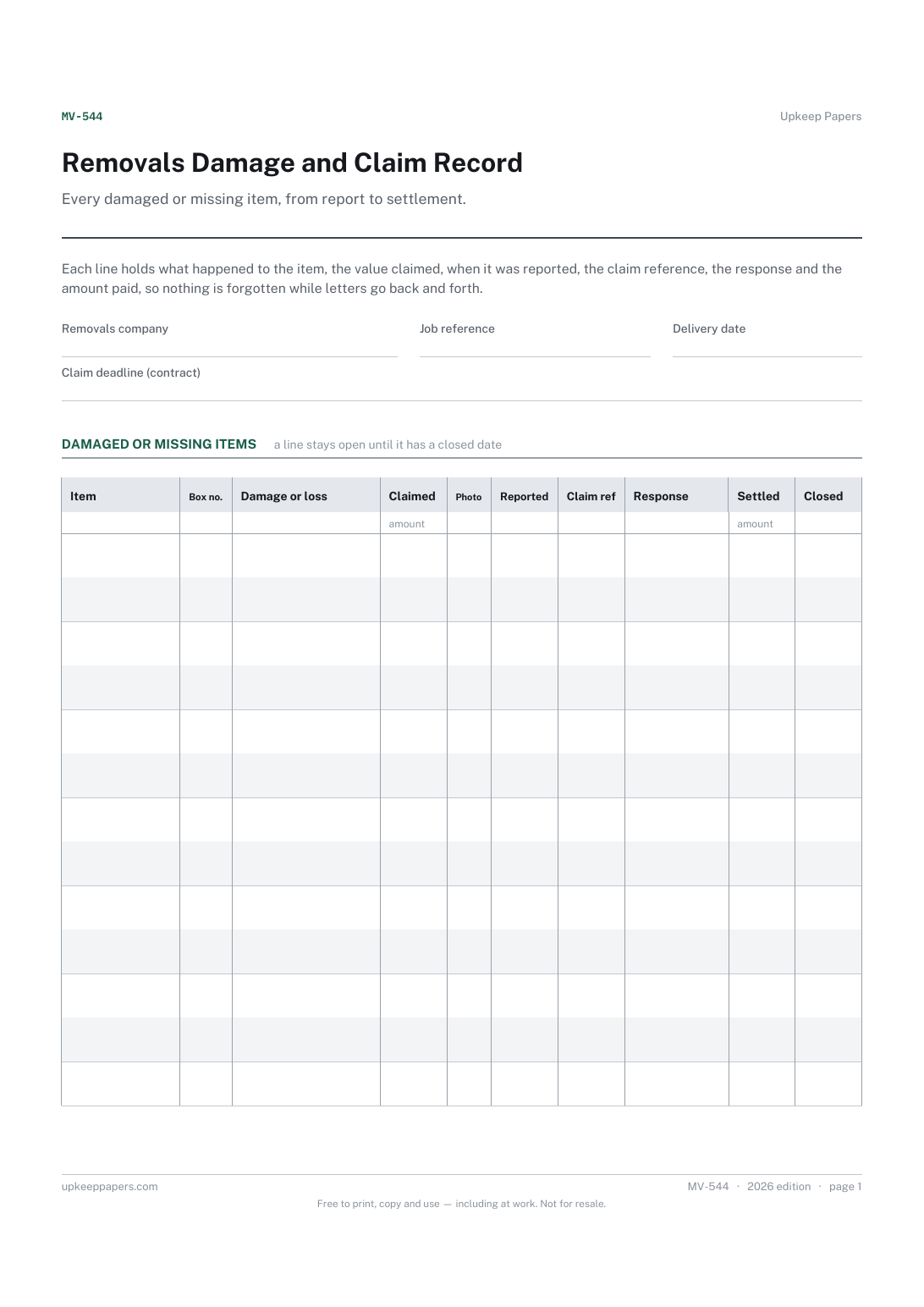
Each damaged or missing item with its box number and a description.
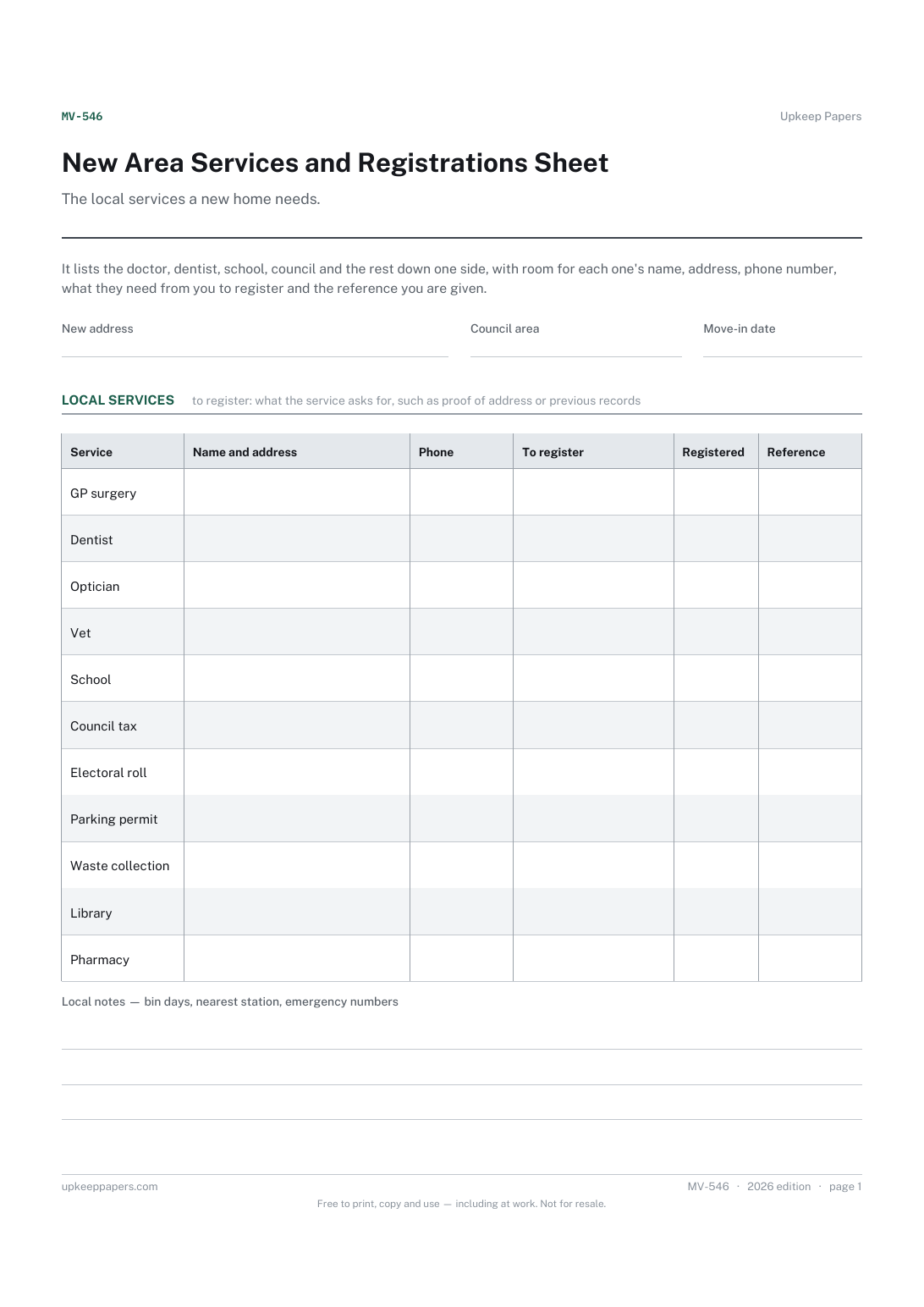
Which local services you still need to find or register with.
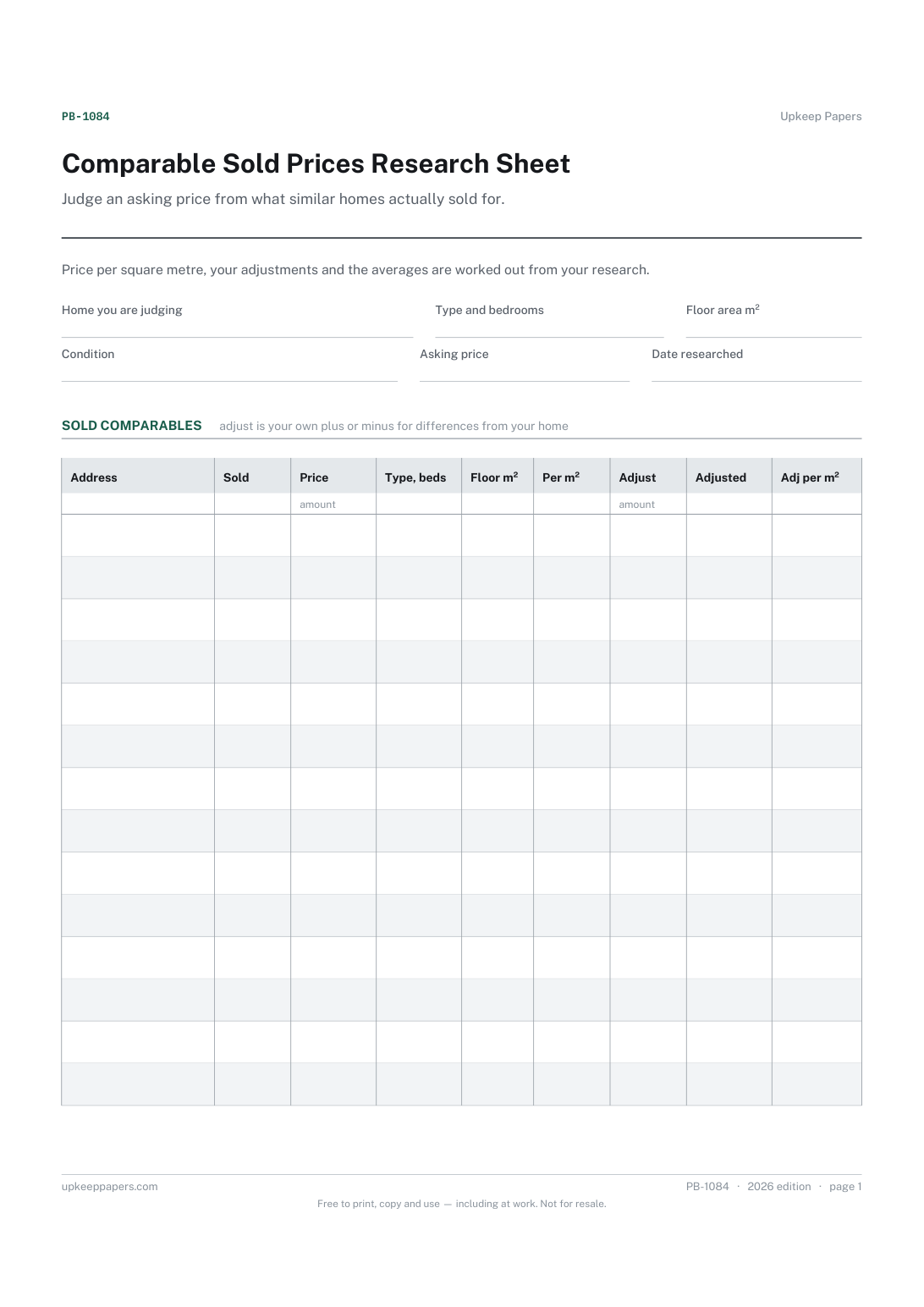
Recent sales of similar homes nearby, with dates and prices.
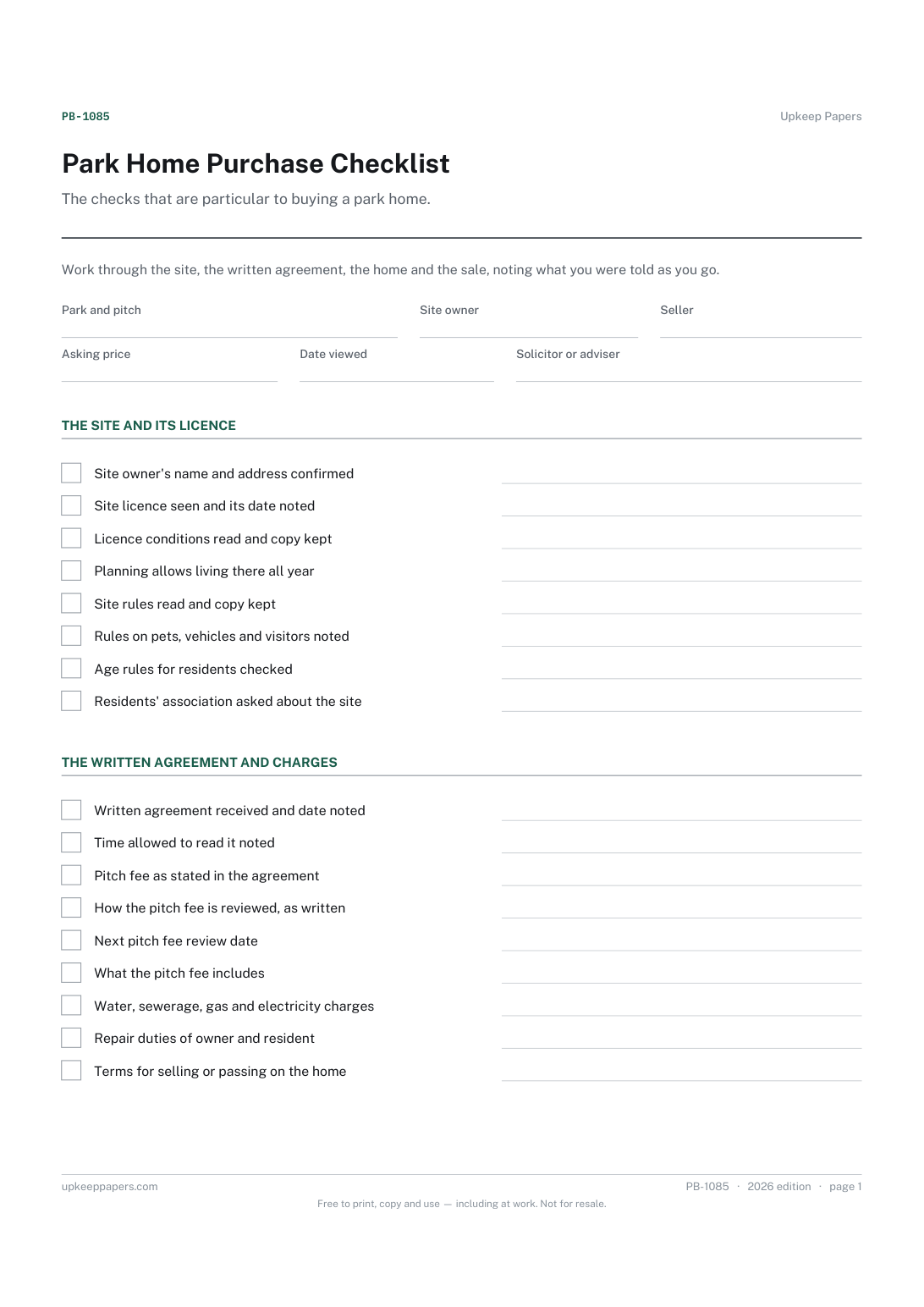
The site owner, the site licence and its conditions.
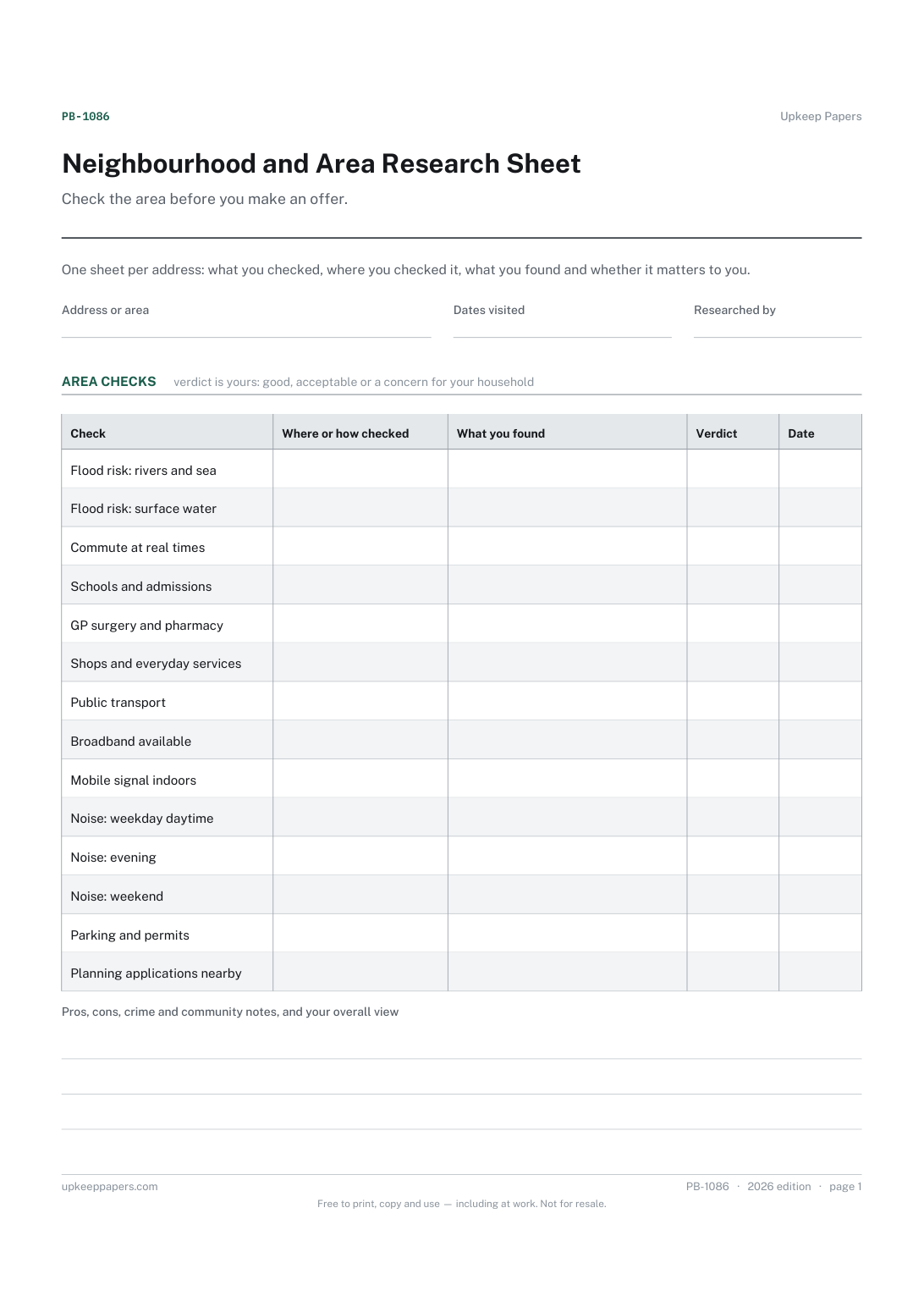
Flood risk looked up from the official maps where you live.
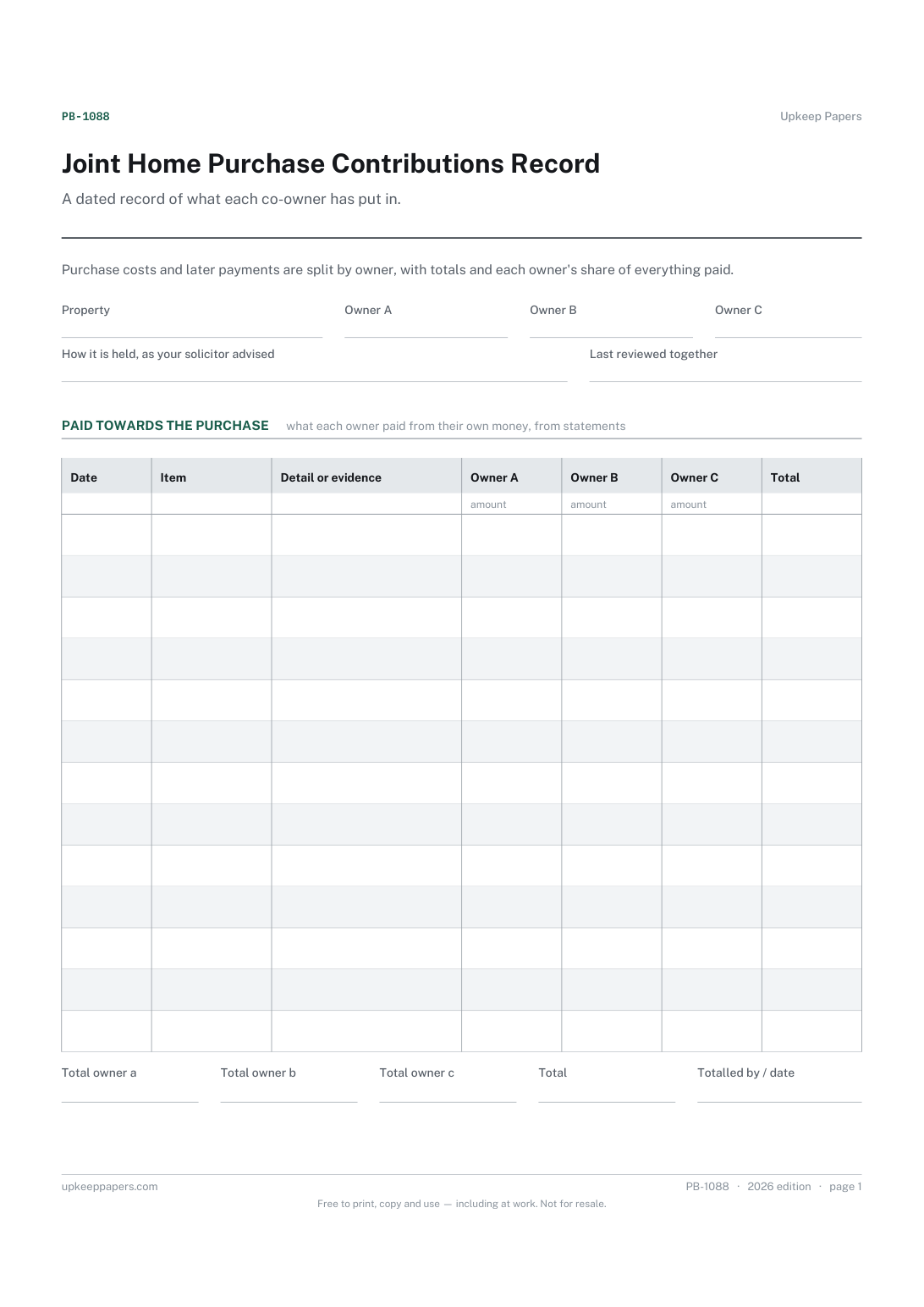
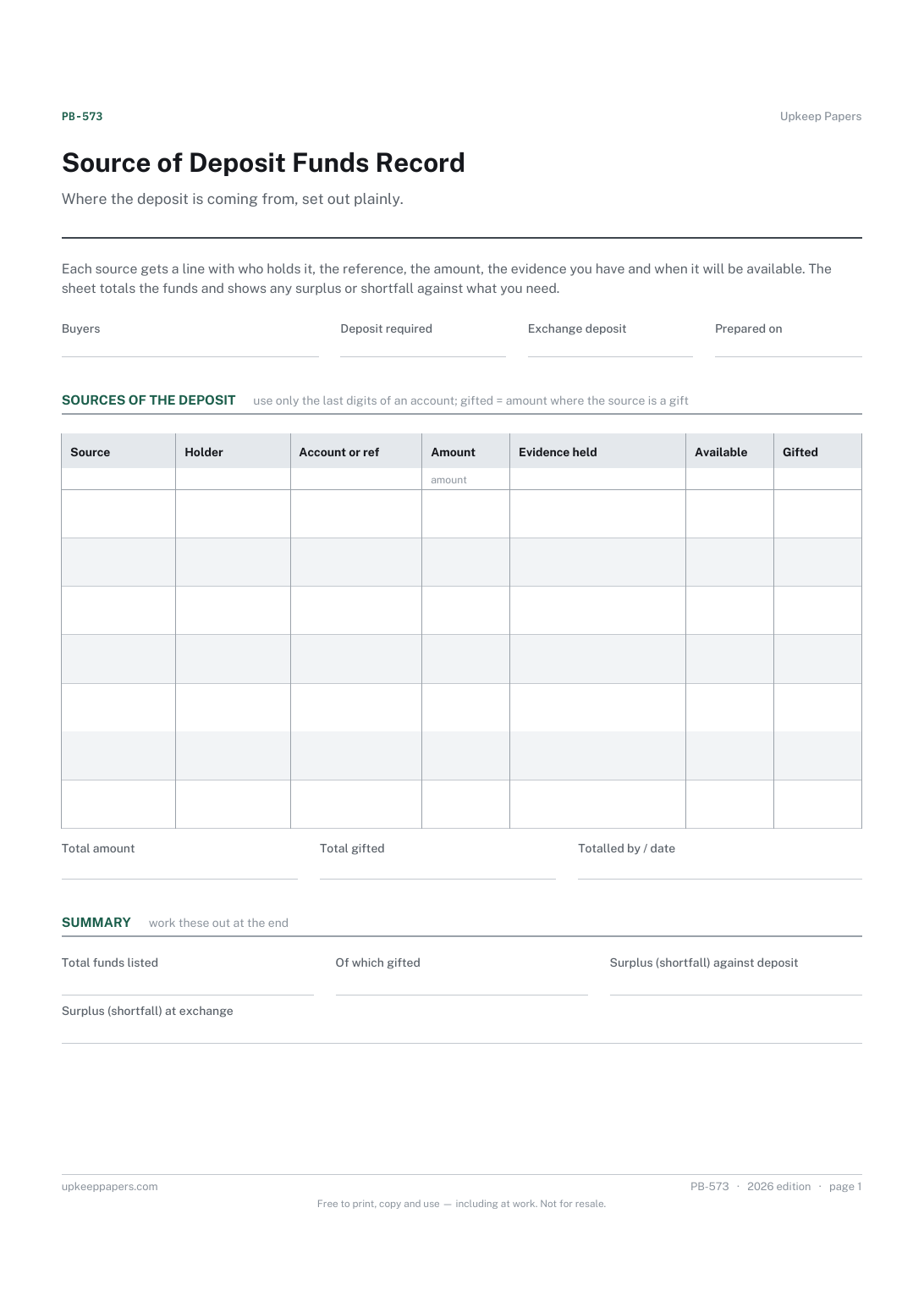
What each owner paid towards the deposit, fees, taxes and survey.
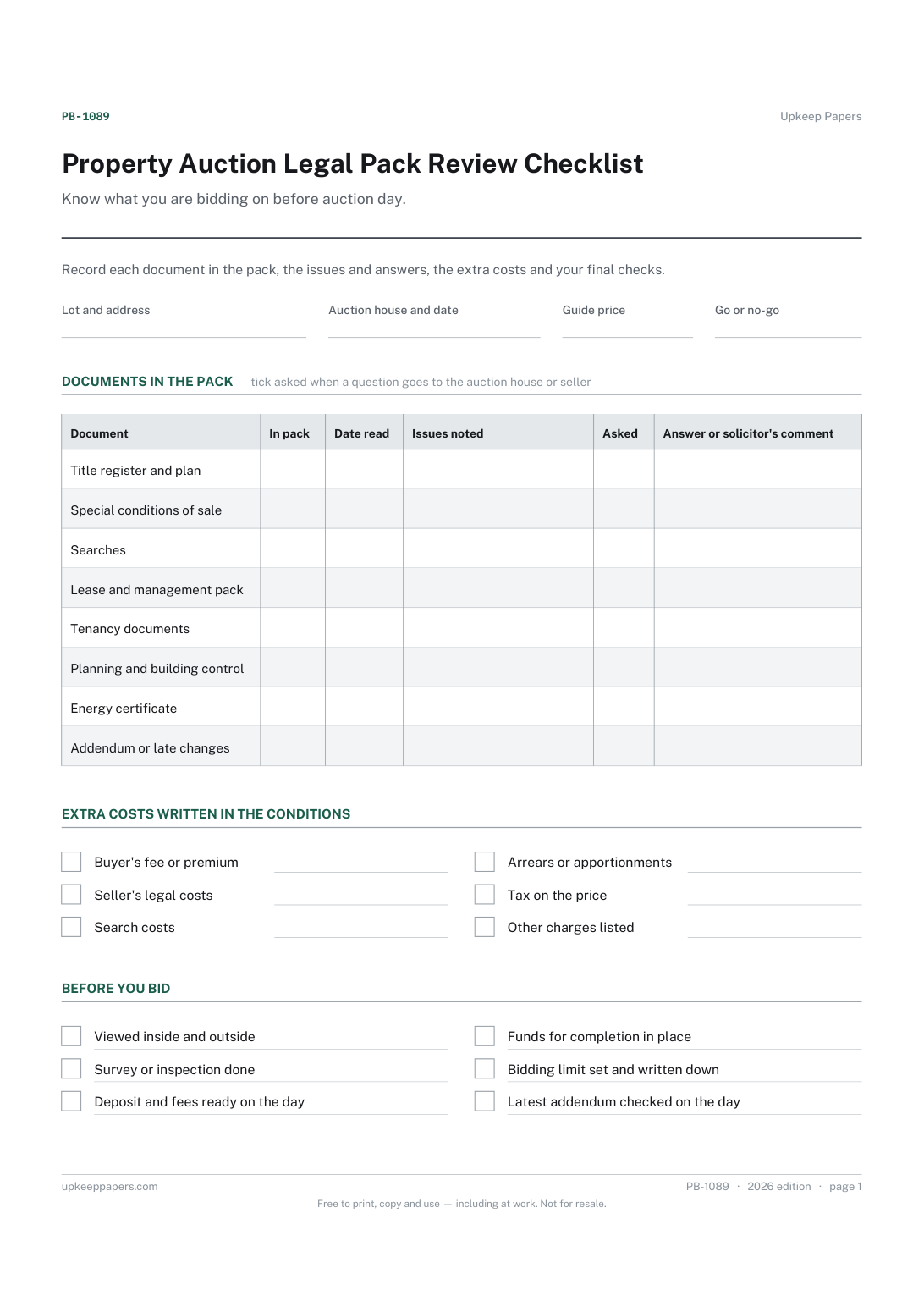
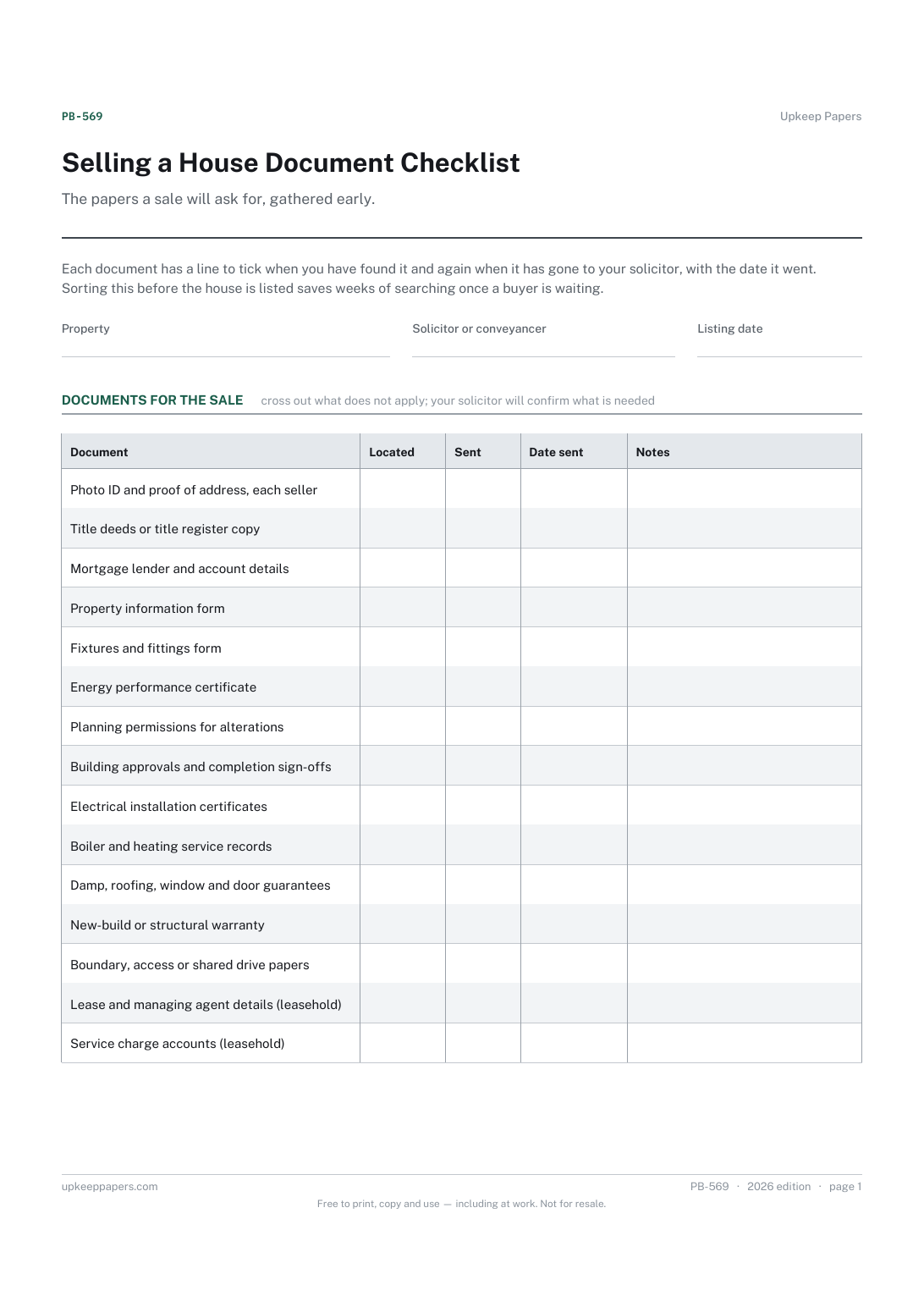
Which documents are in the legal pack and which are missing.
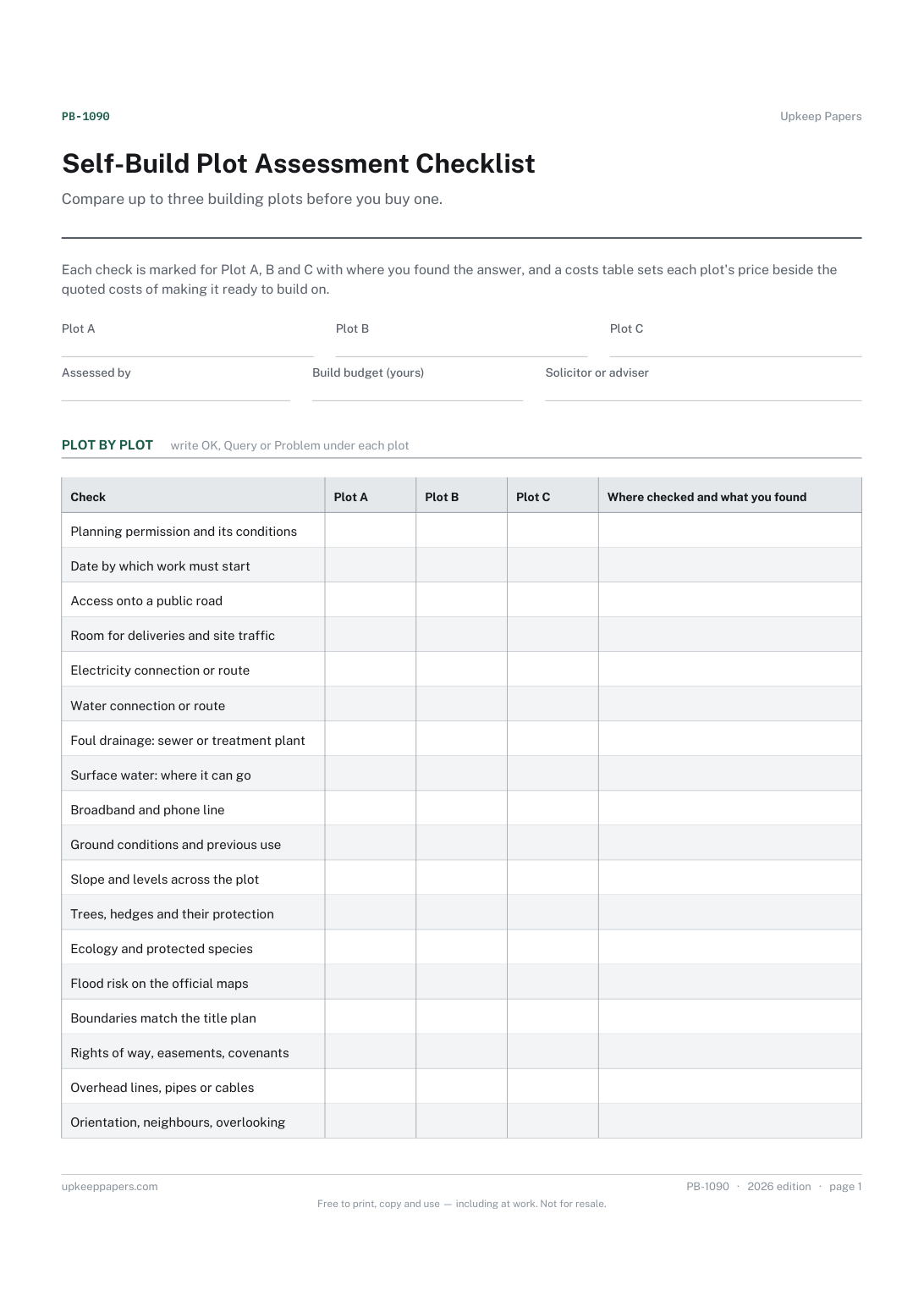
Planning status, conditions and start-by date for each plot.
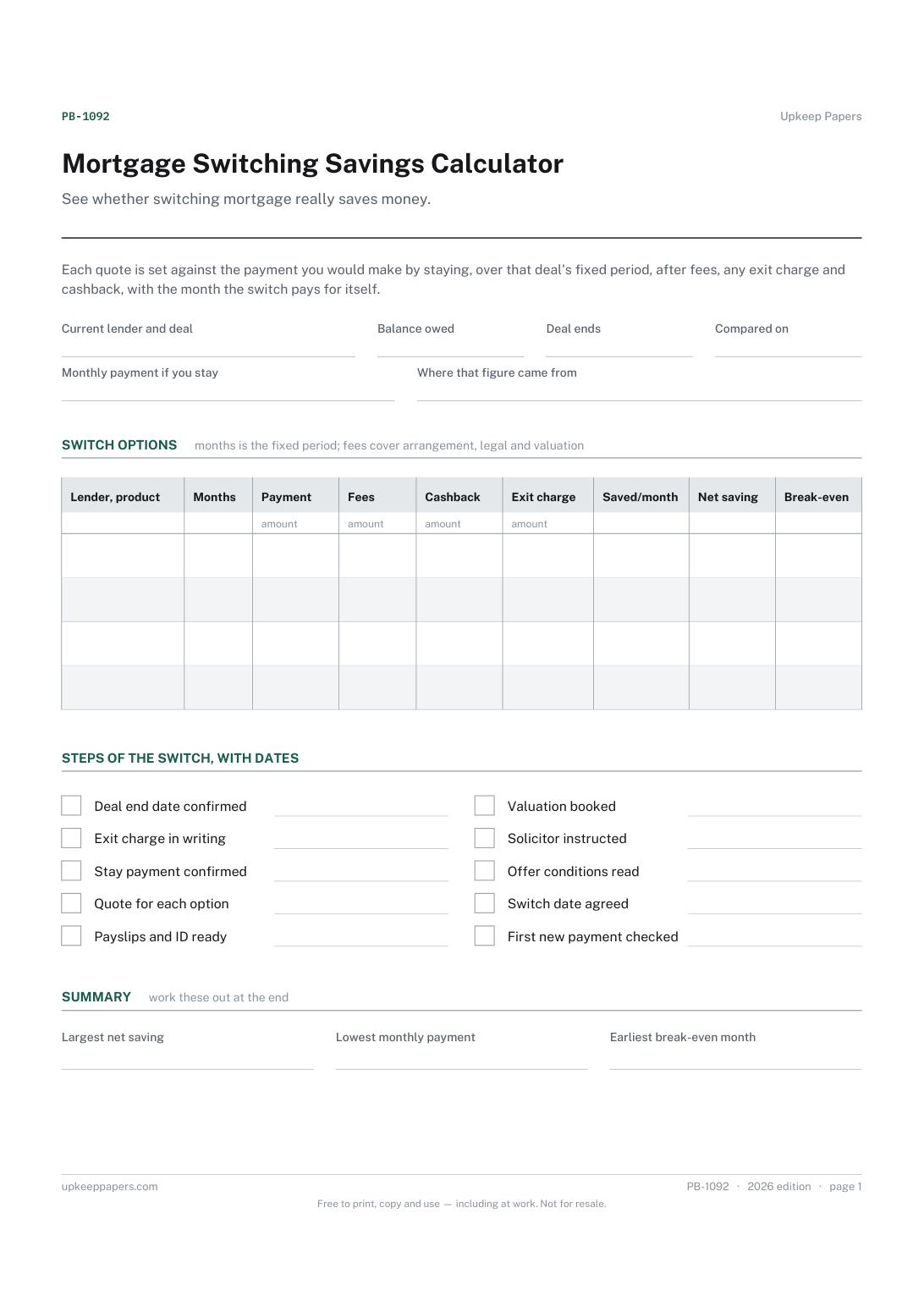
The payment you would make if you stayed, as your lender states it.
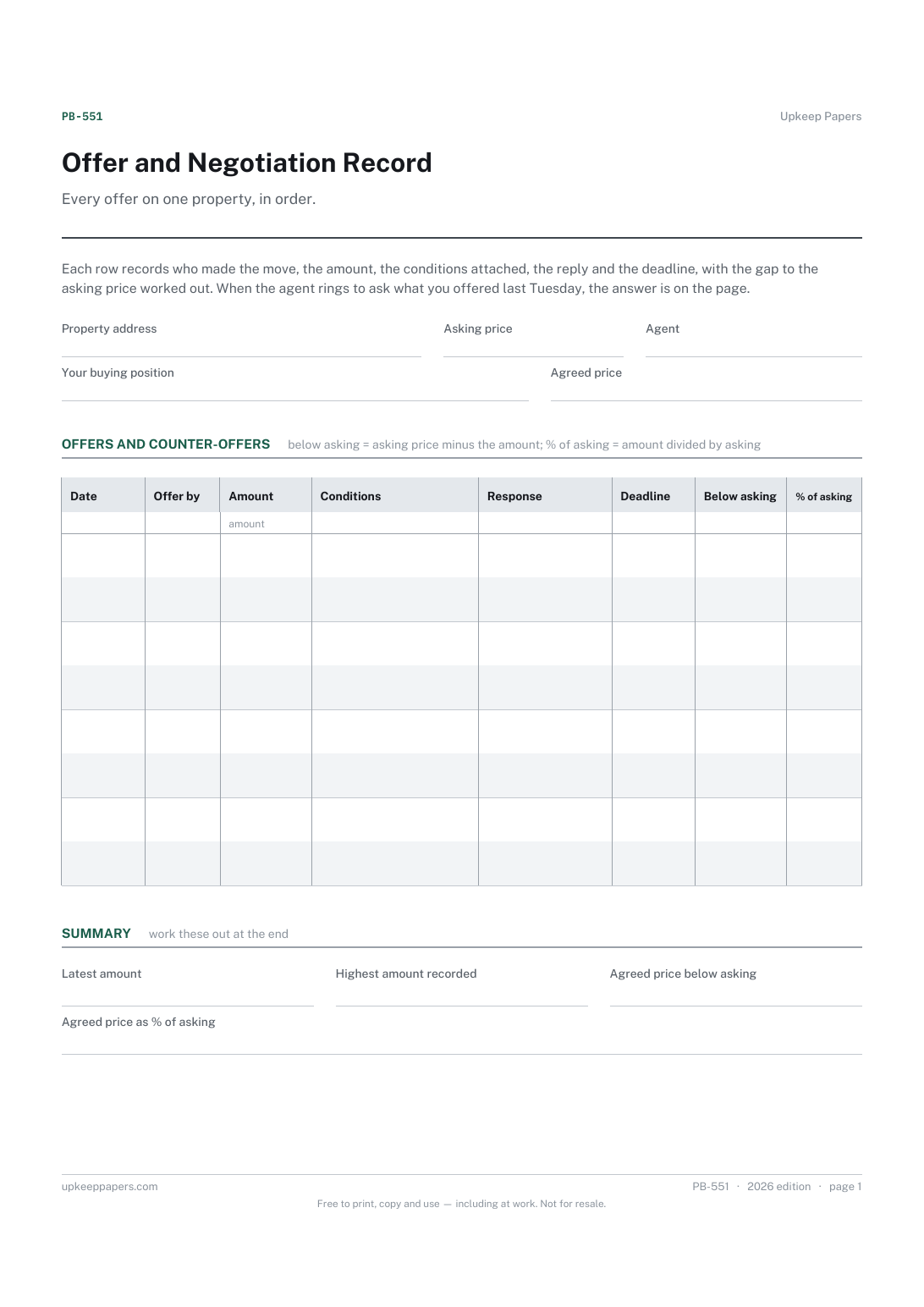
The asking price, the agent and your position as a buyer, kept at the top.
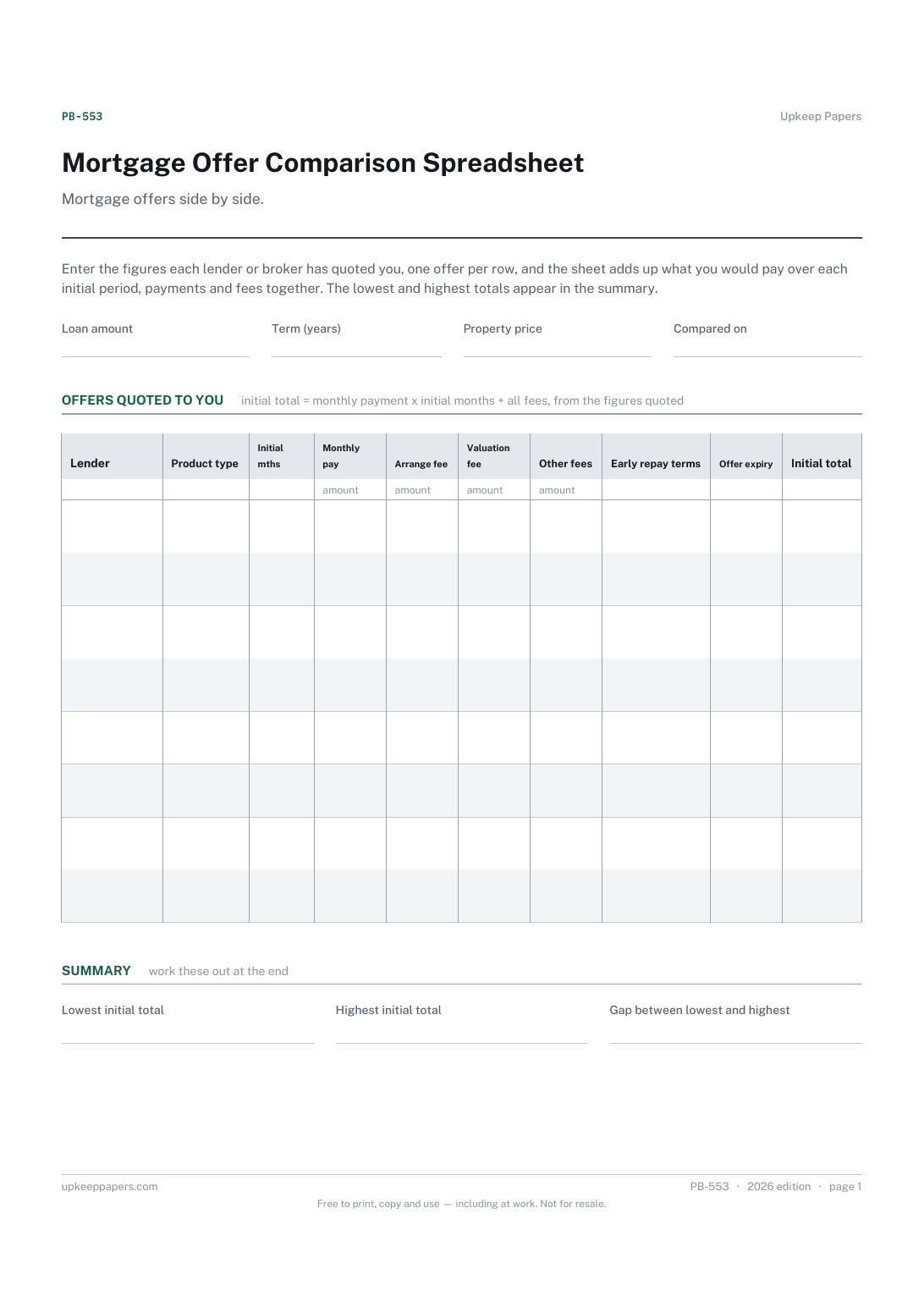
The loan amount, term and property price the quotes are based on.
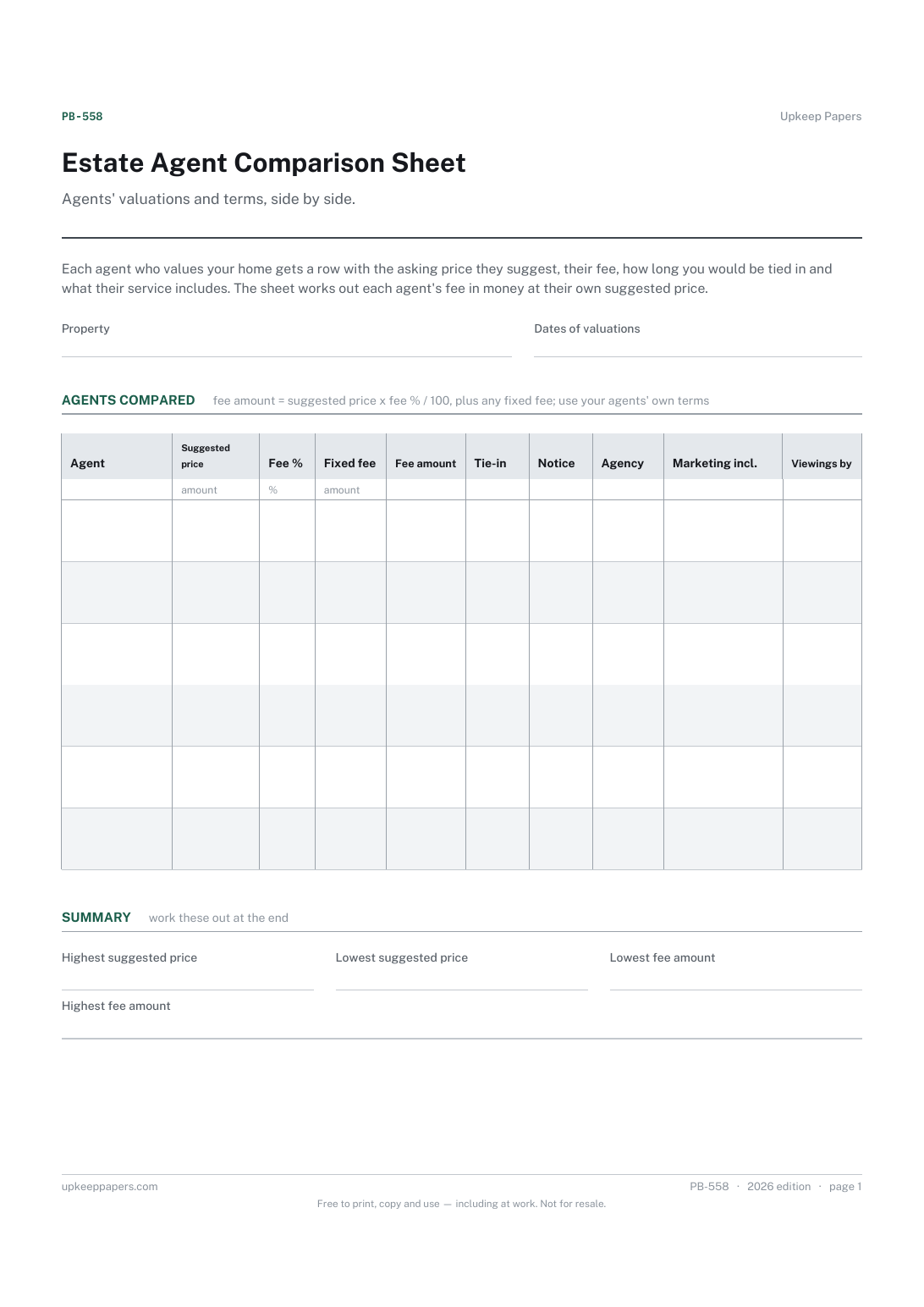
Each agent's suggested asking price.
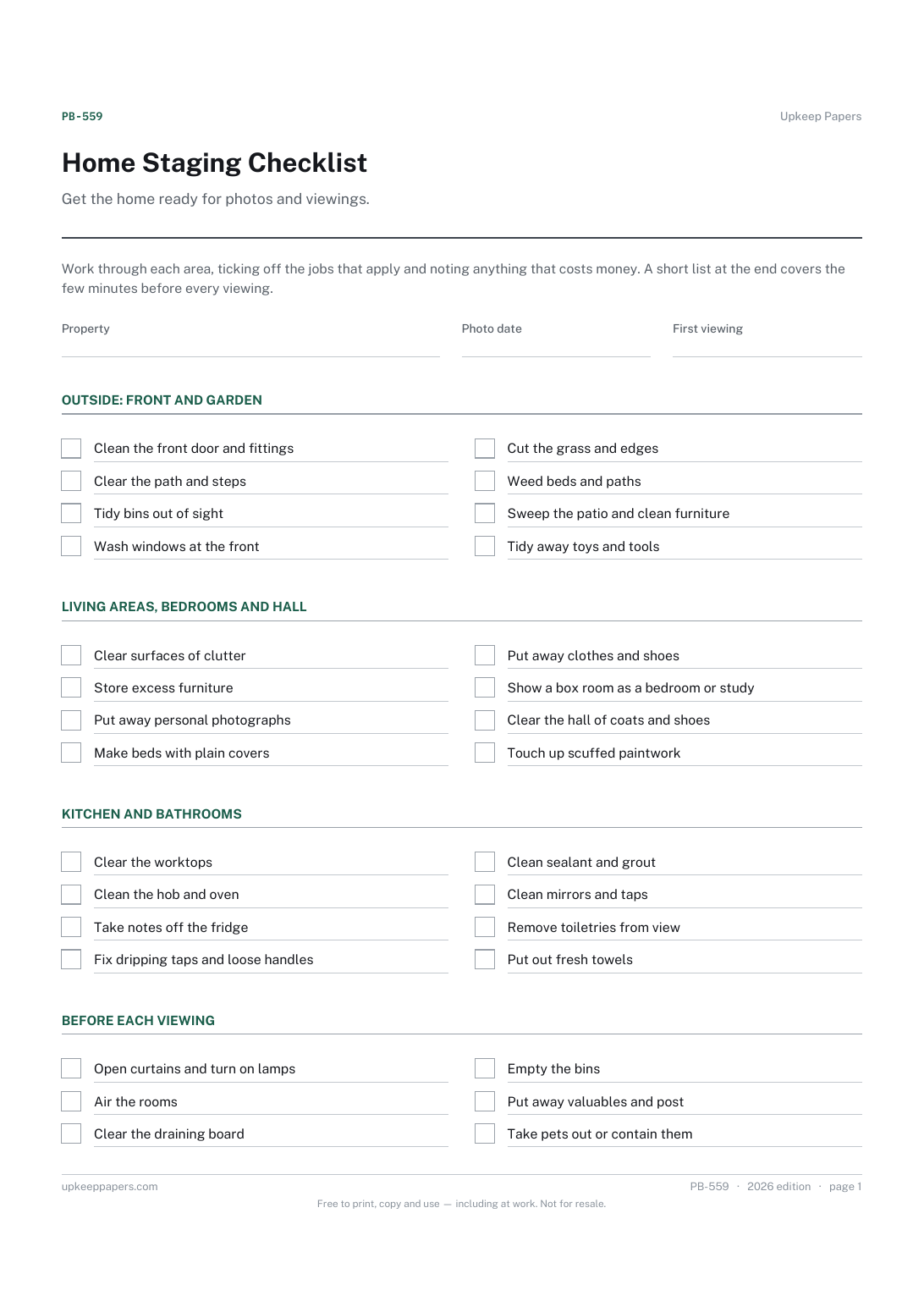
The jobs to do outside and at the entrance.
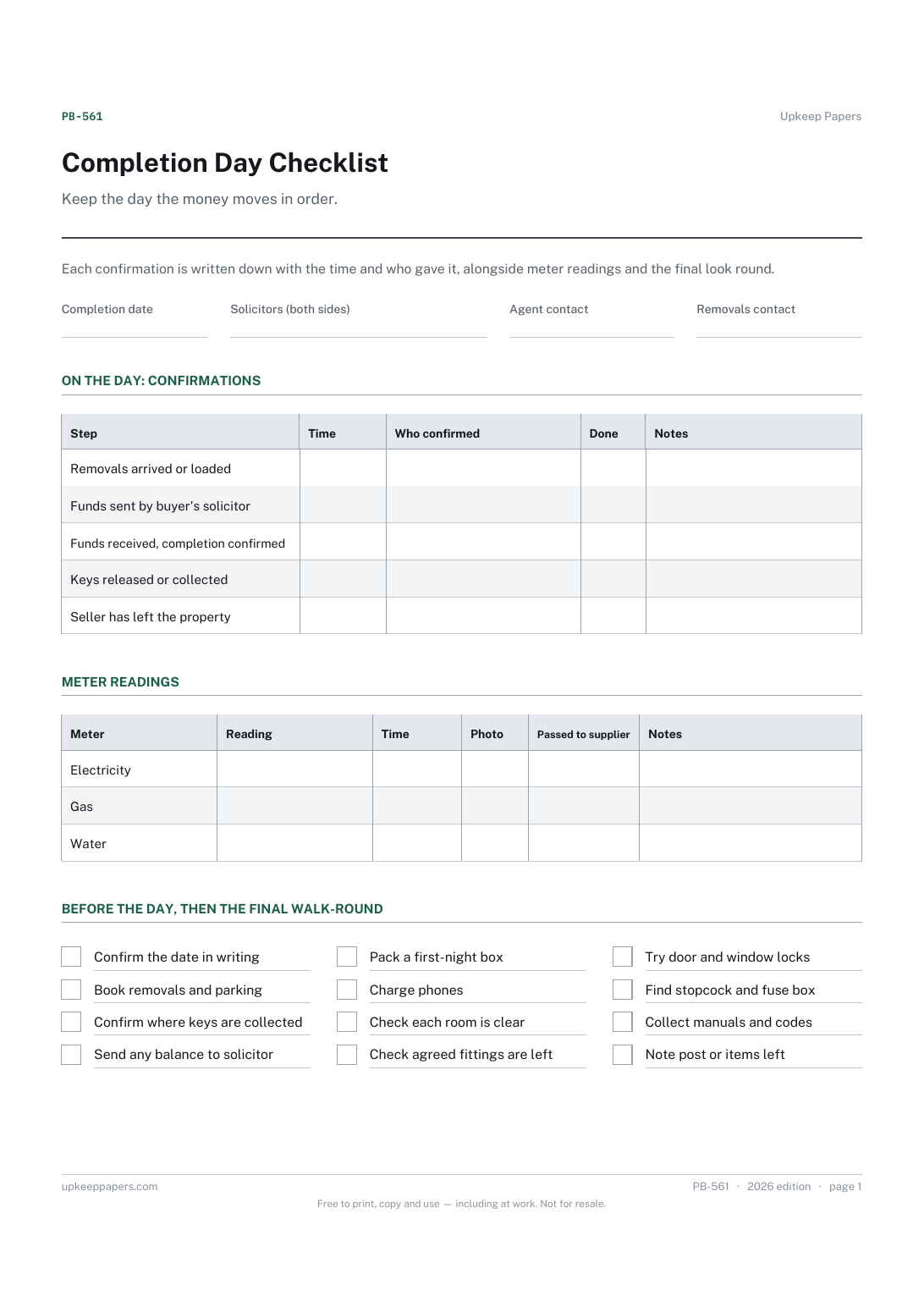
Solicitor, agent and removals contacts where you can reach them.
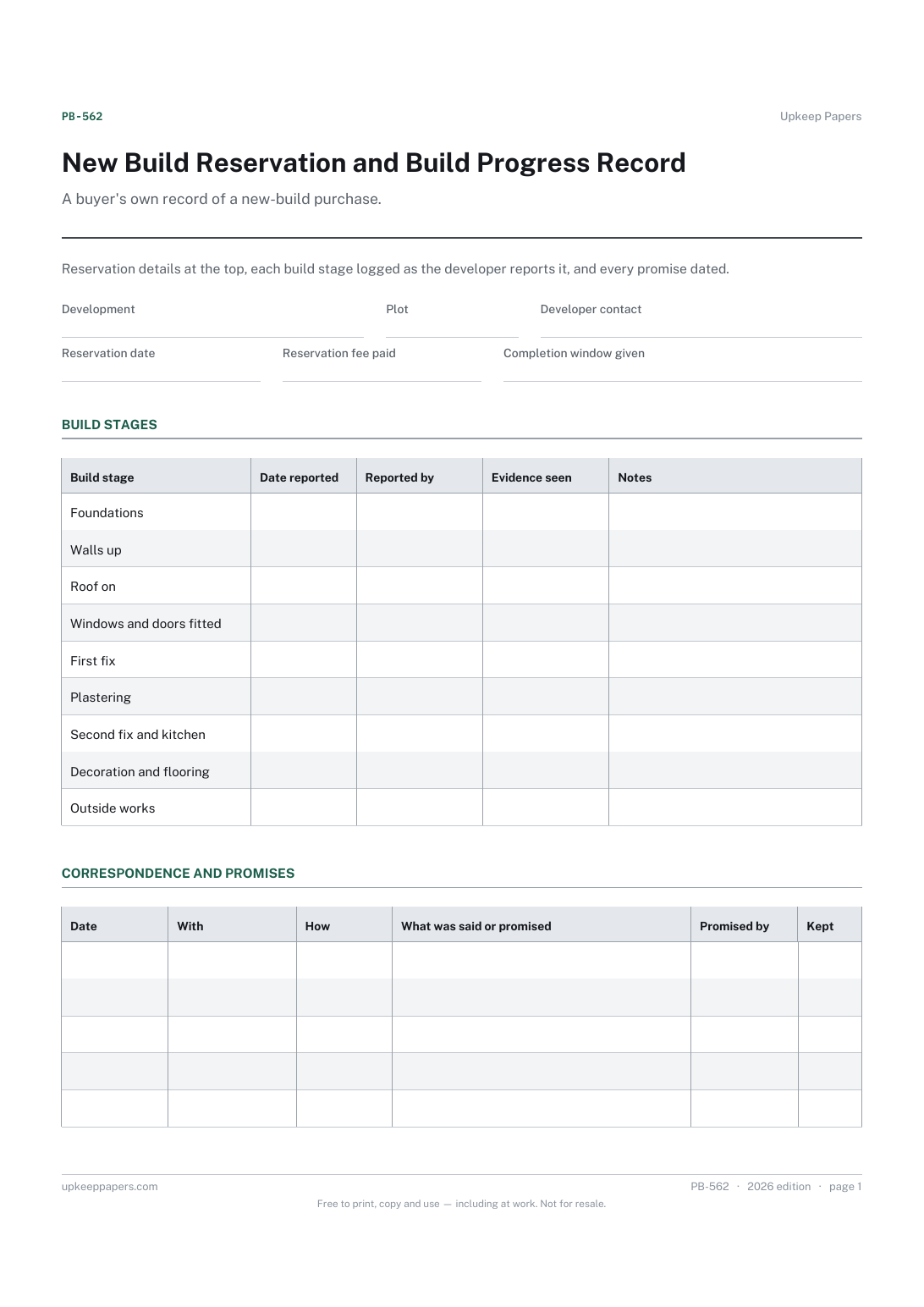
The development, plot, developer contact and reservation fee paid.
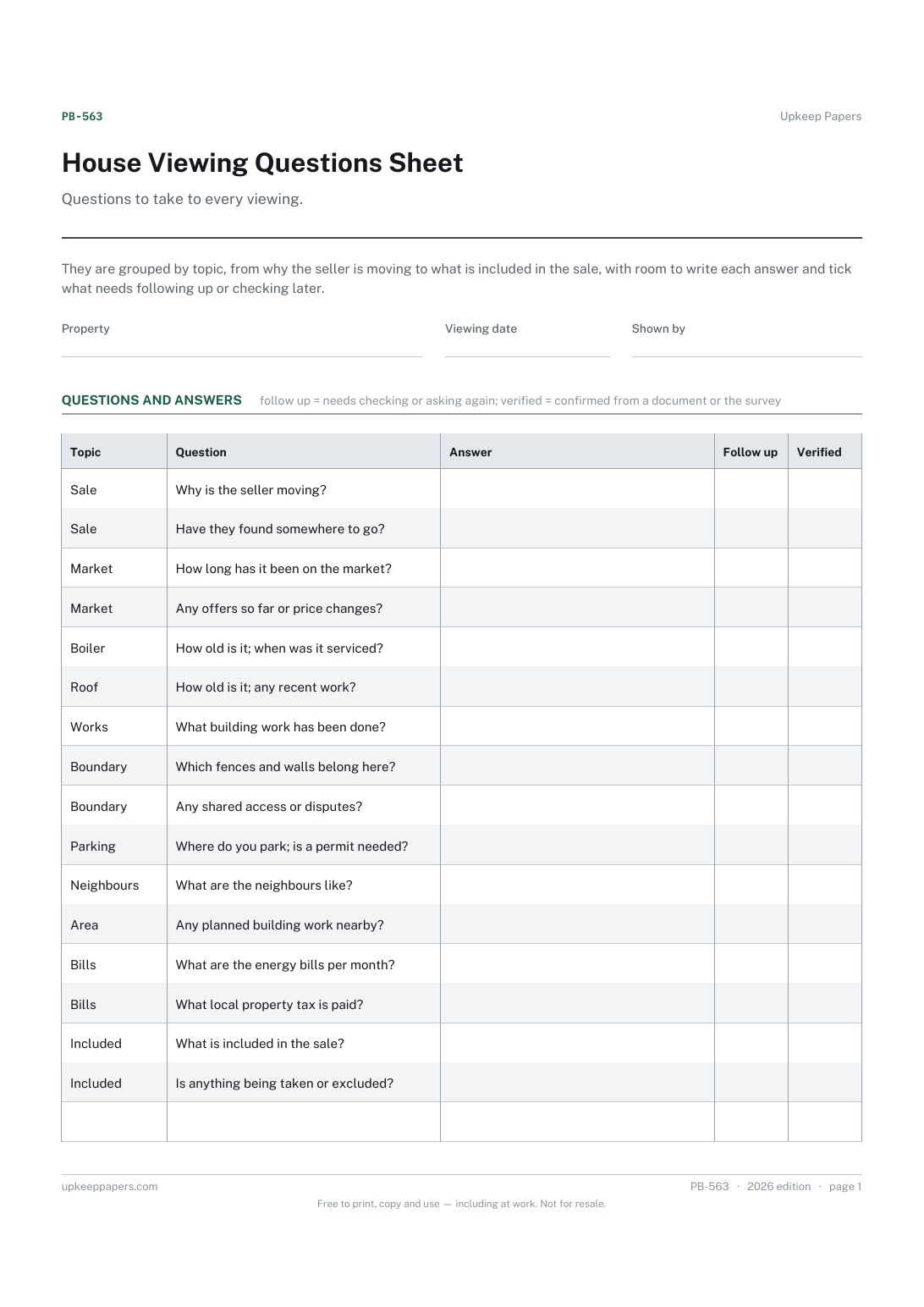
The property, the viewing date and who showed you round.
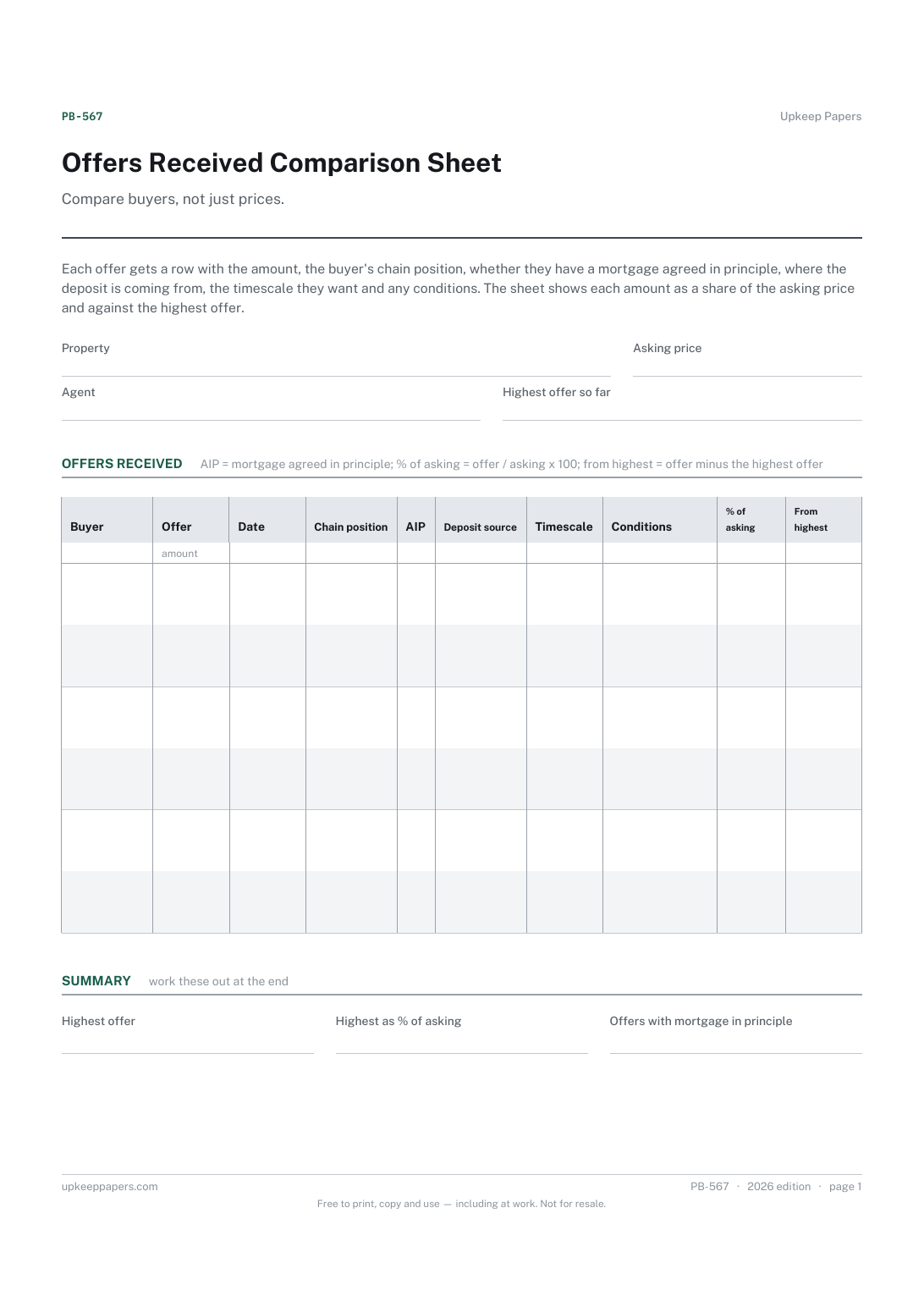
The asking price, set at the top for every comparison.
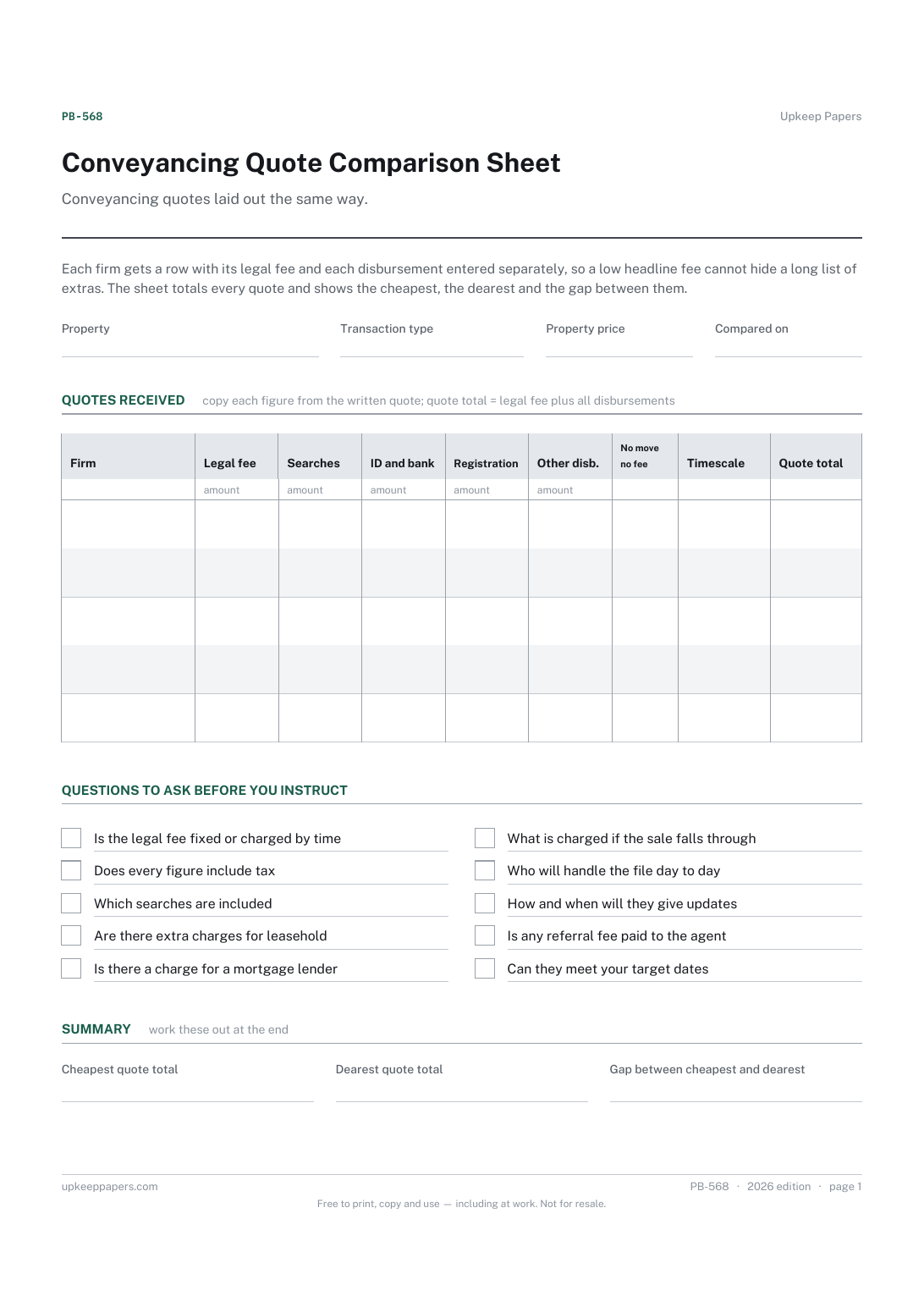
The transaction and property price every firm quoted on.
Identity and title papers your solicitor will want first.
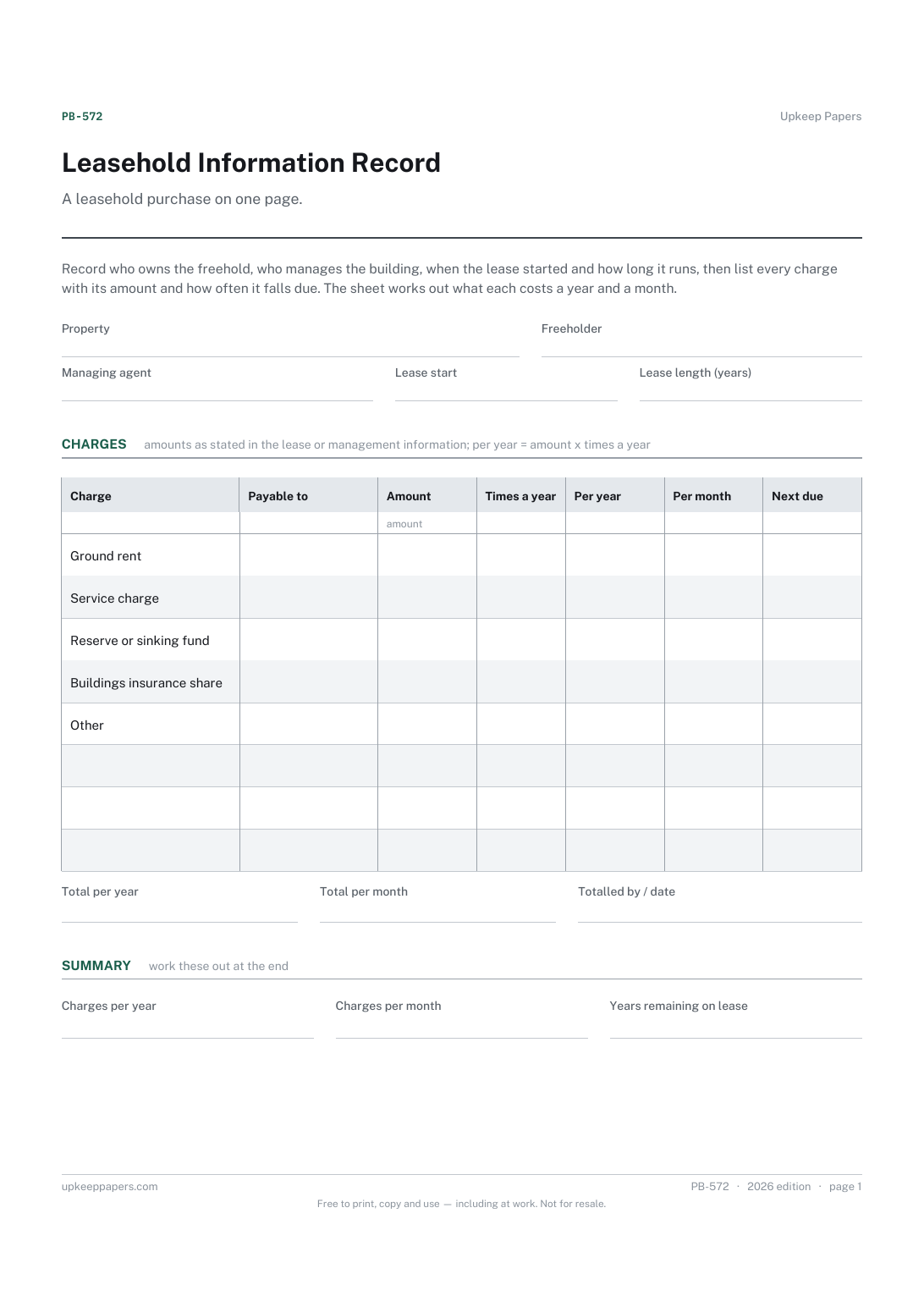
The freeholder, managing agent and their contact details.
The deposit required and the amount due at exchange.
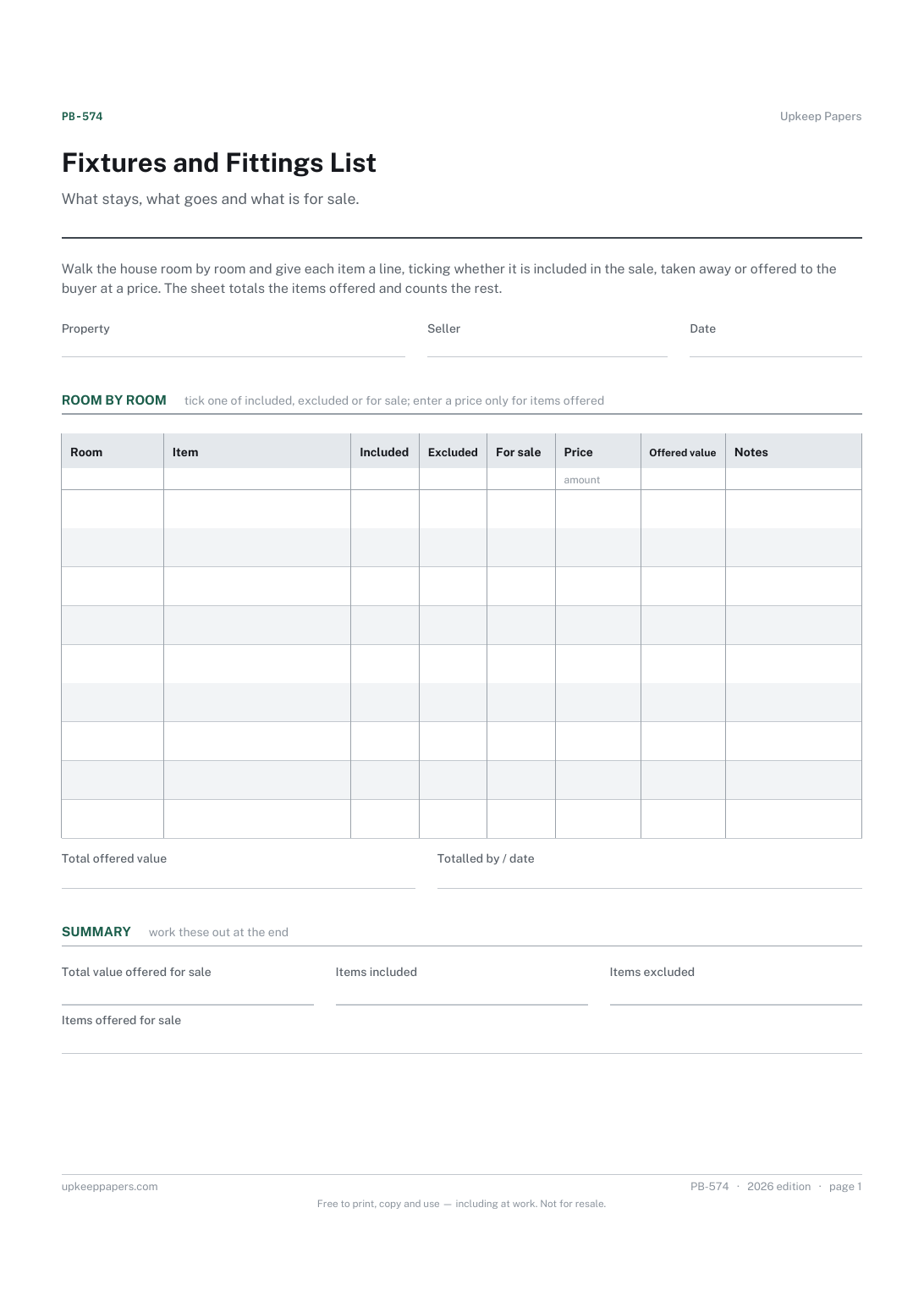
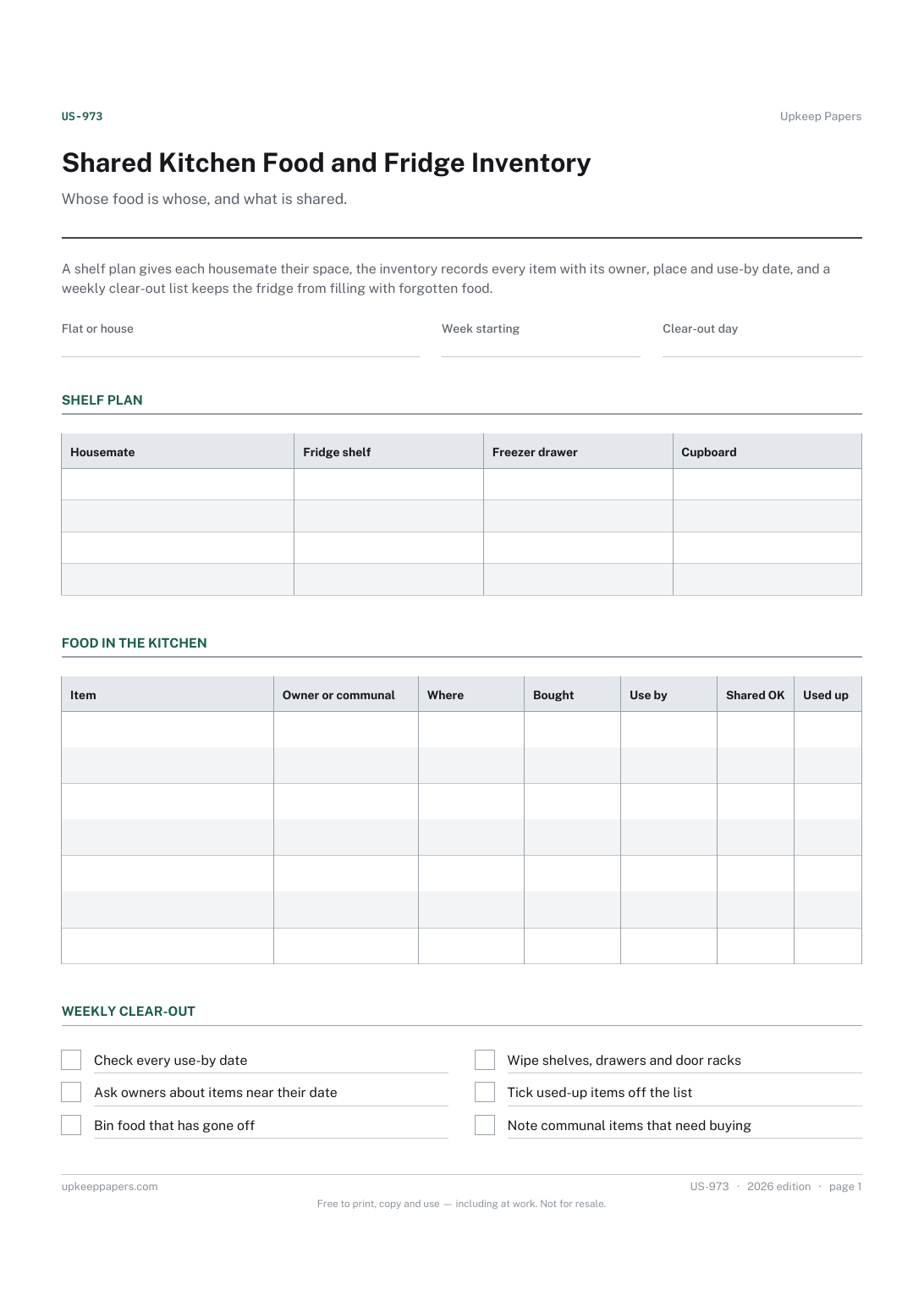
Each room's items listed on their own lines.
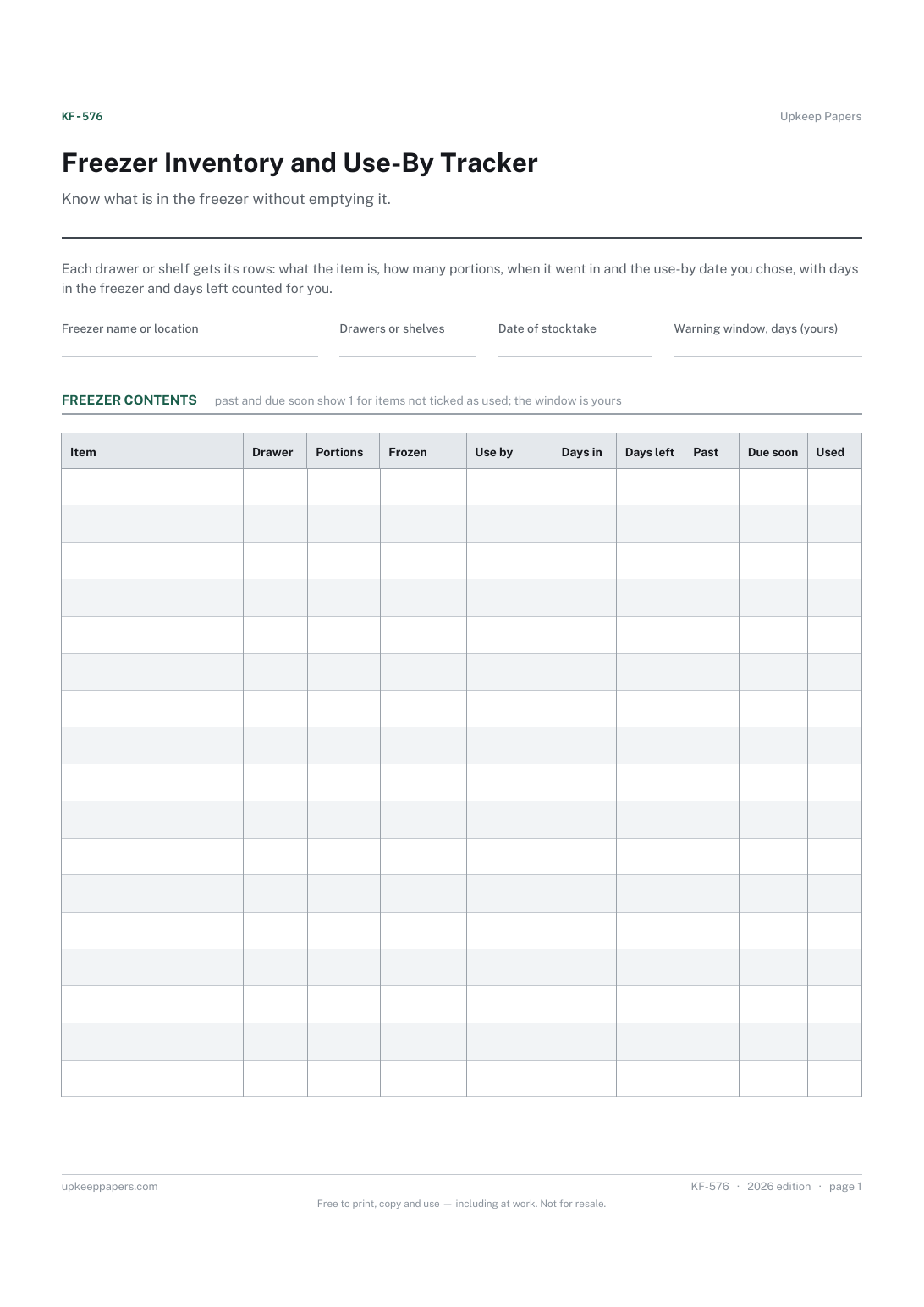
What is in each drawer or shelf, and how many portions of it.
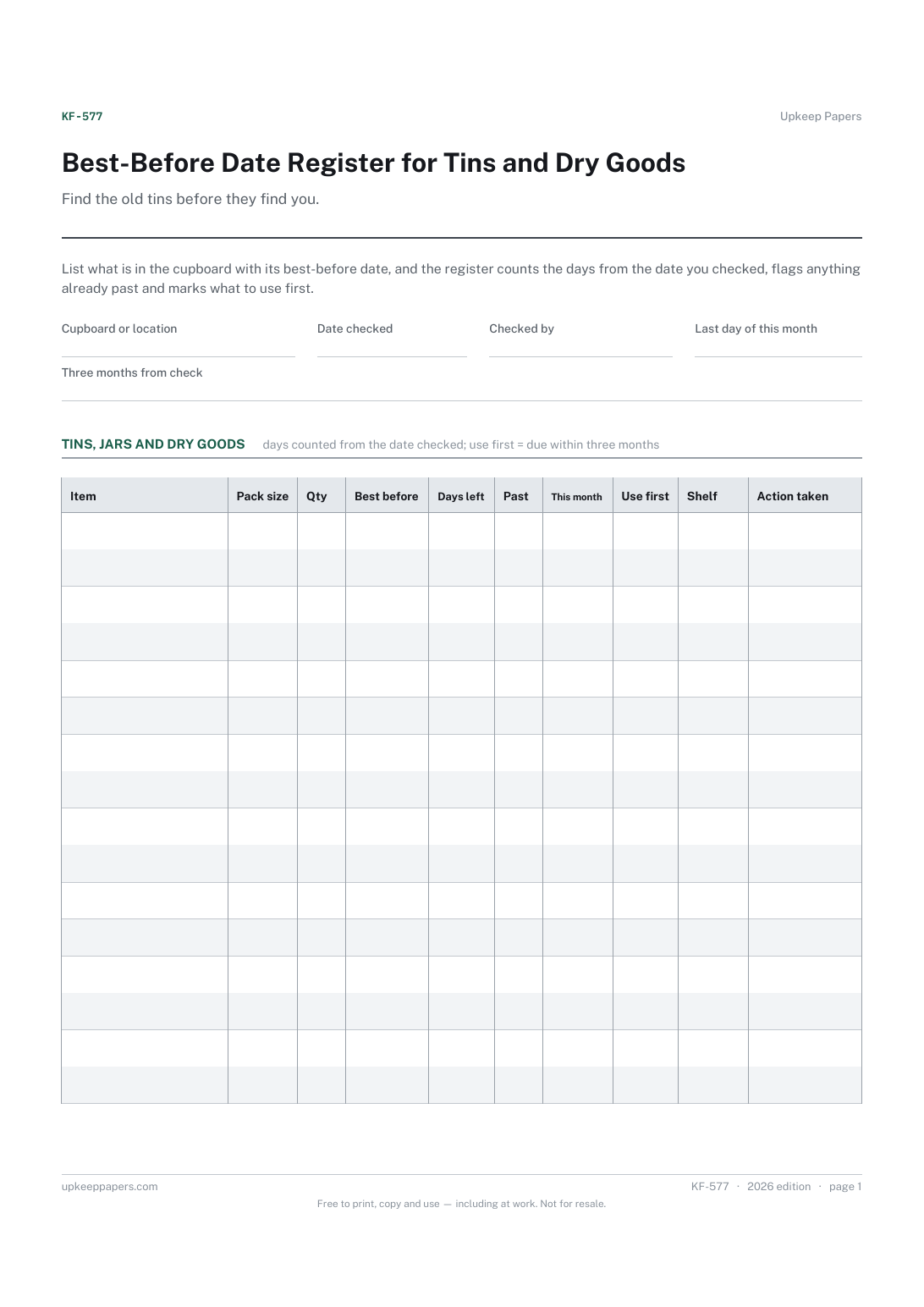
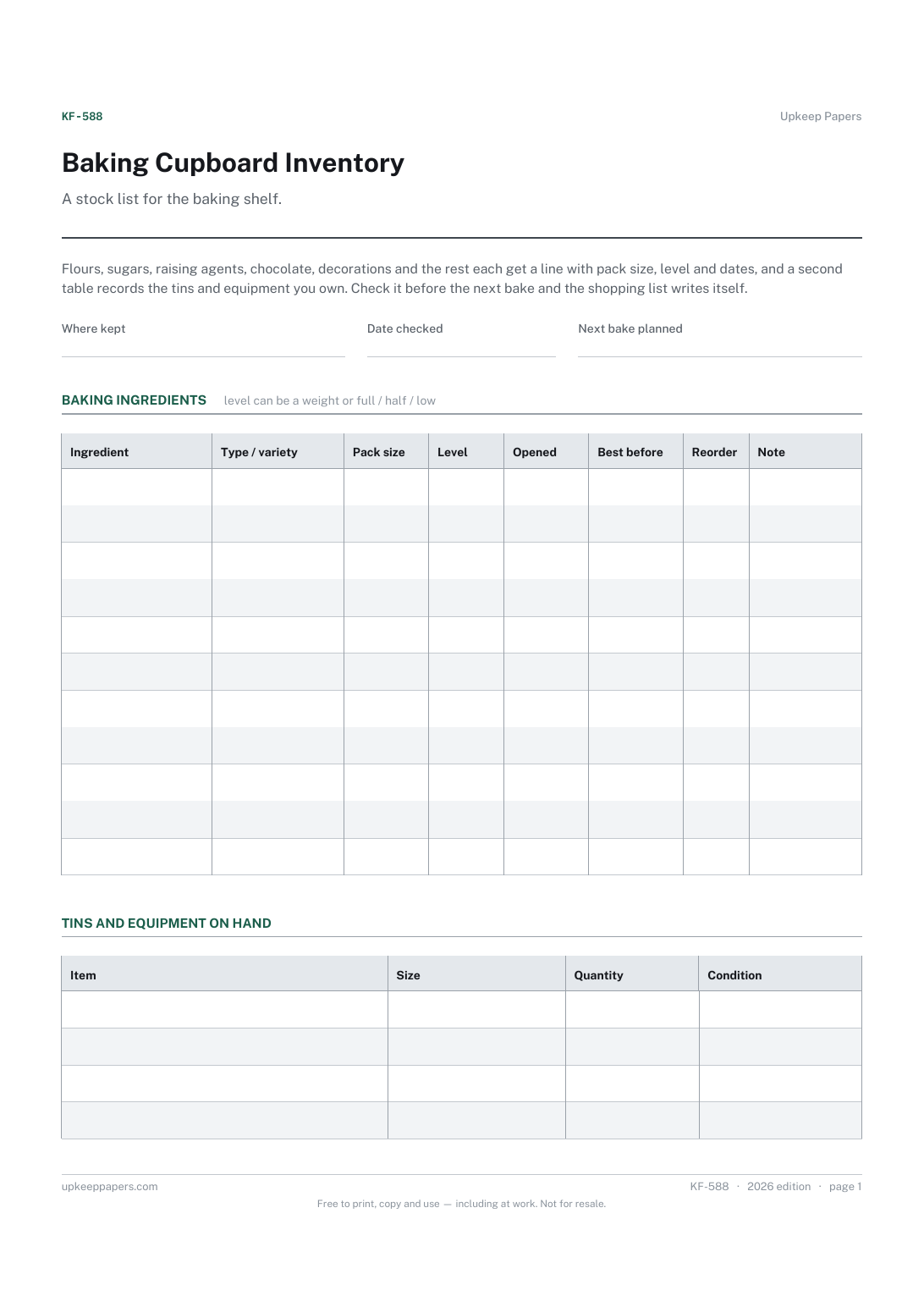
Every tin, jar and packet with its pack size, quantity and shelf.
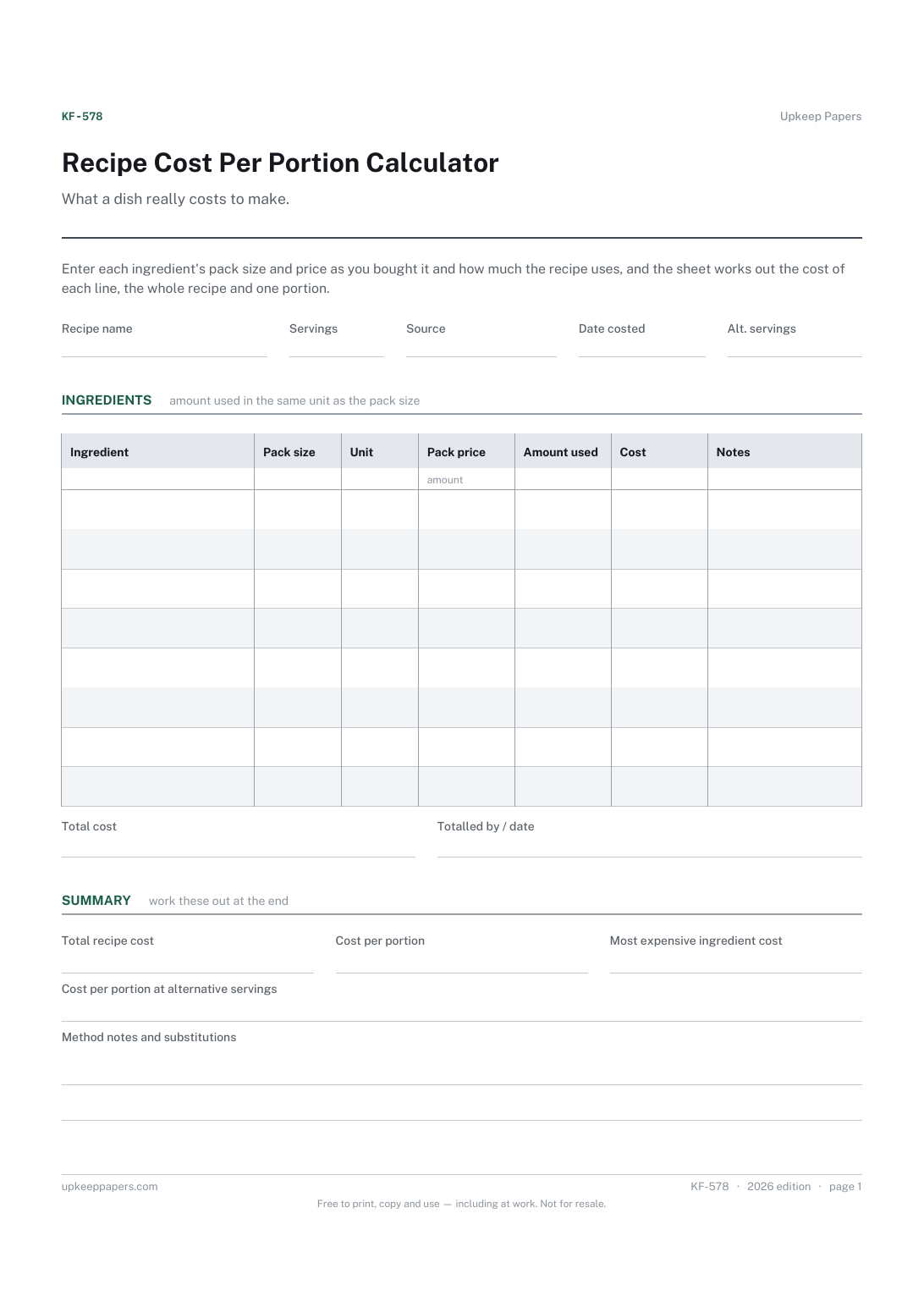
The cost of the amount of each ingredient the recipe actually uses.
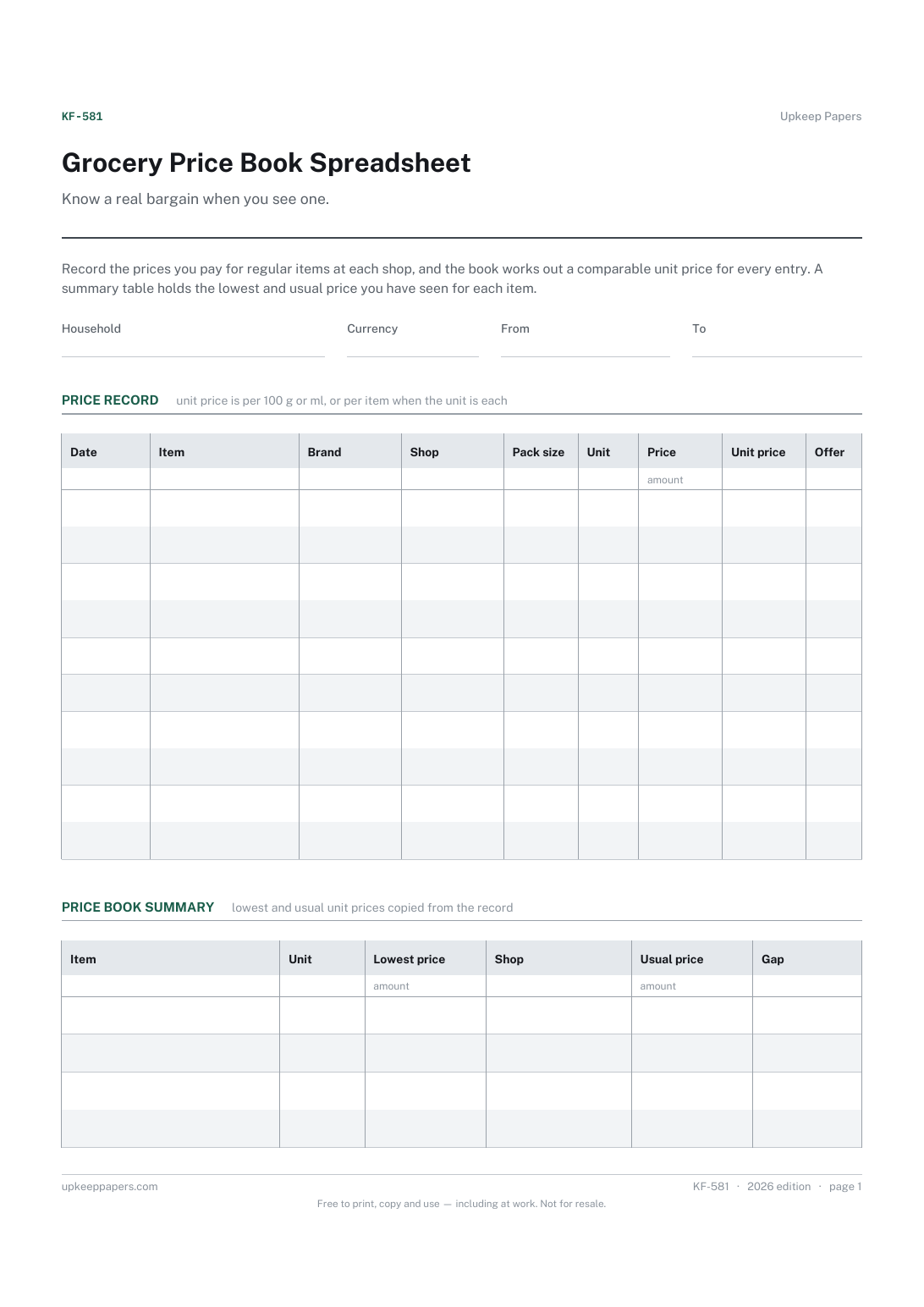
What you paid for each regular item, where and when.
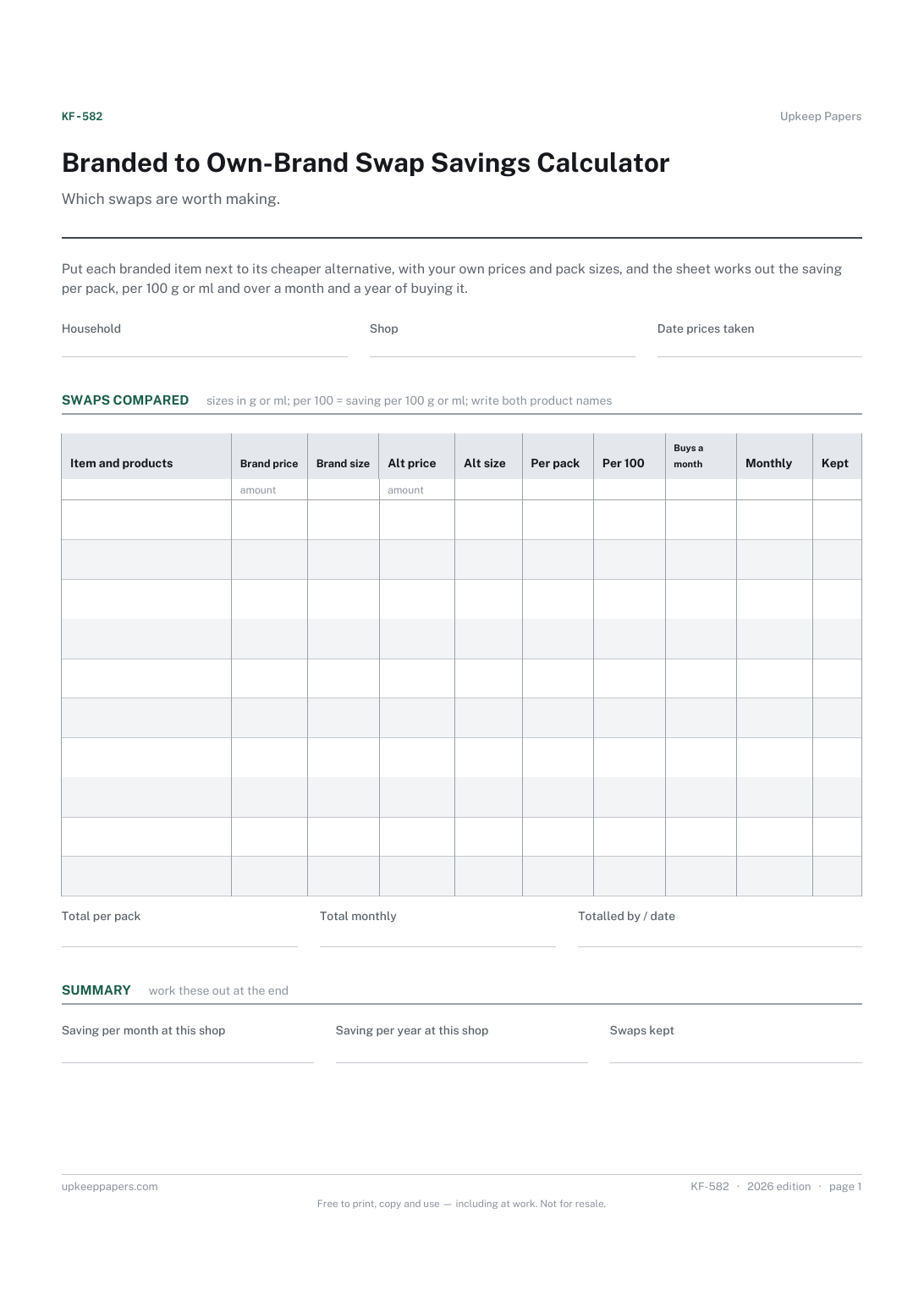
The branded and alternative price of each item at one shop.
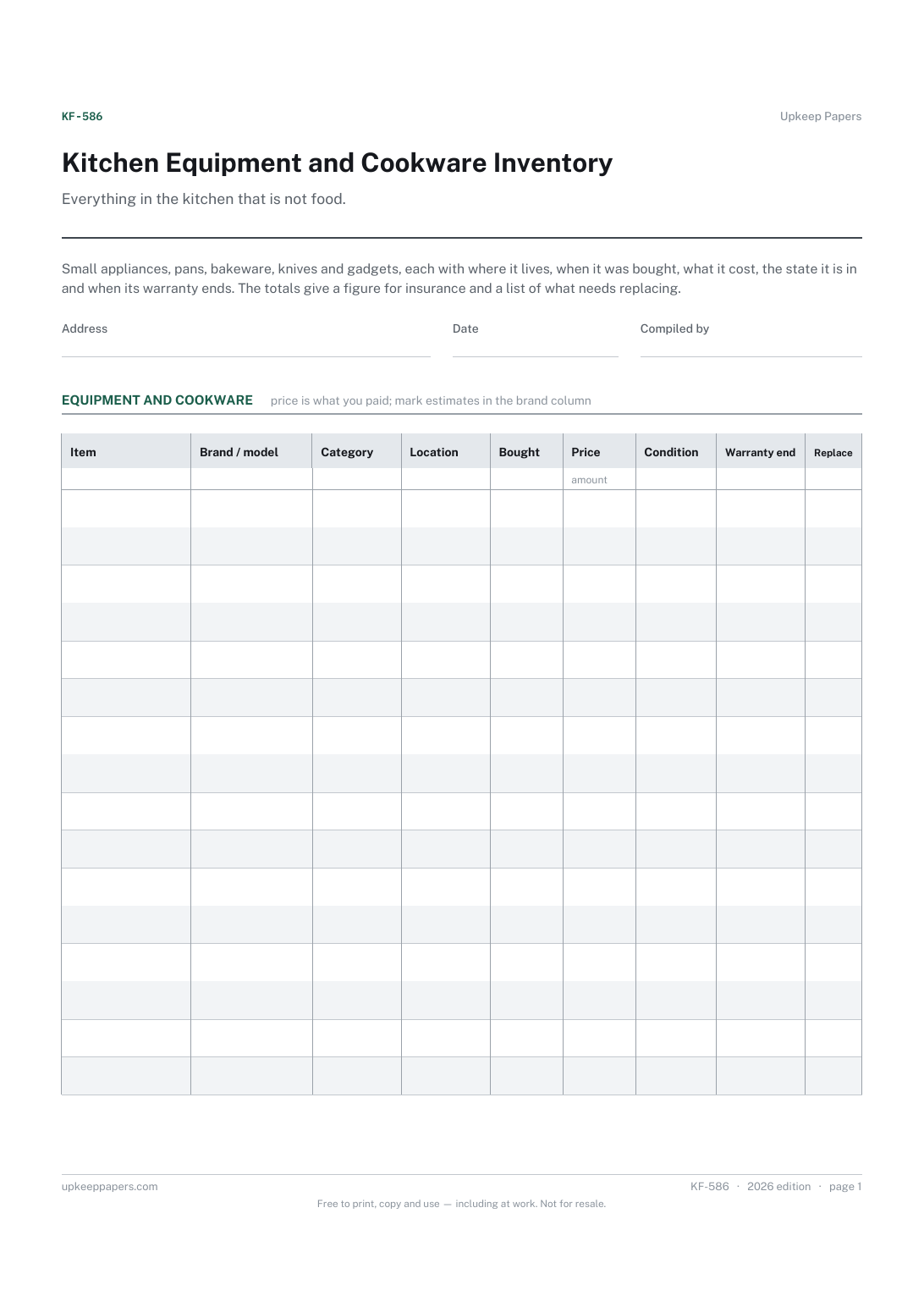
Every appliance, pan, knife and gadget, with brand and model.
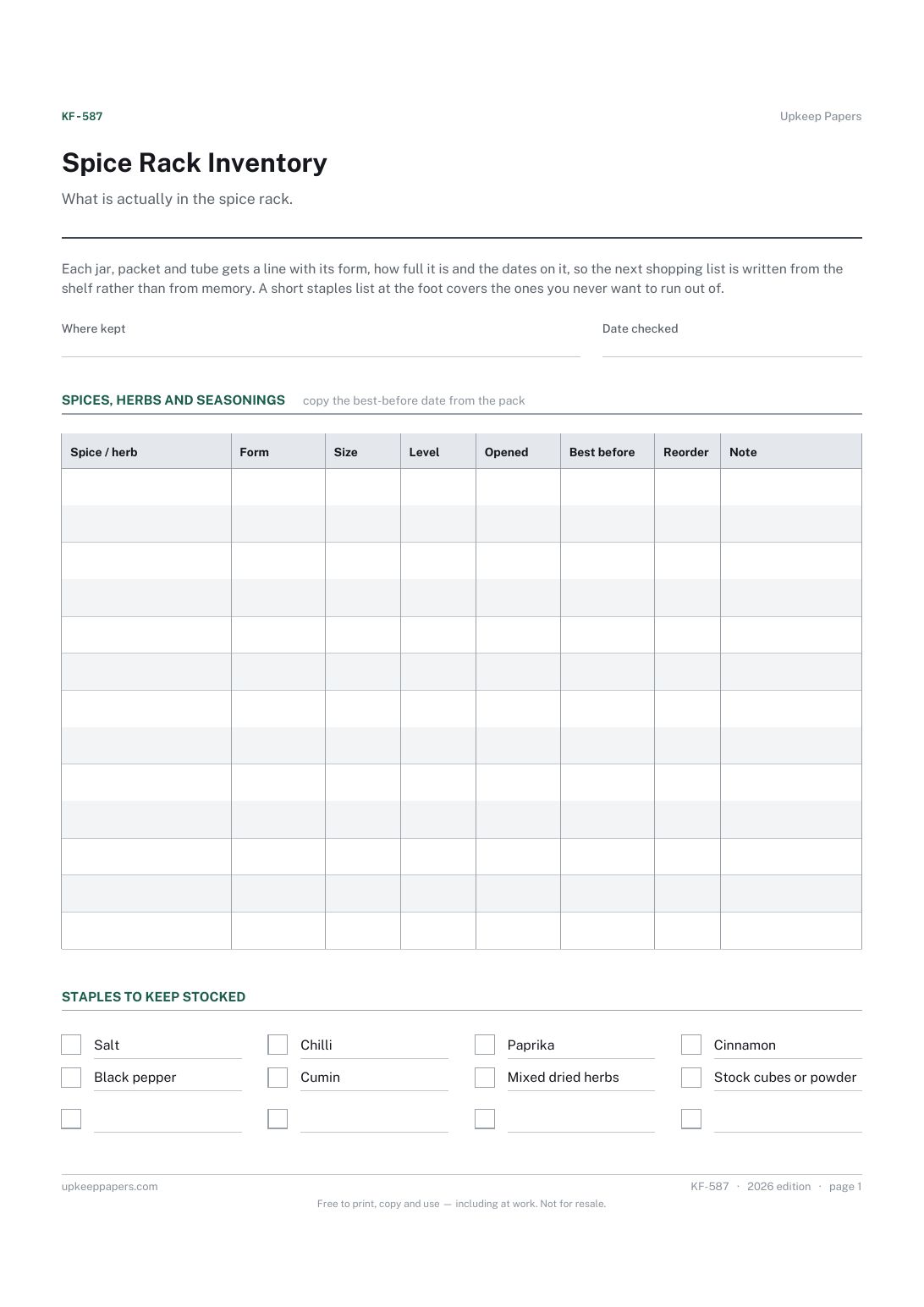
Every spice, herb and seasoning you have, in one list.
Every baking ingredient, with its type and variety.
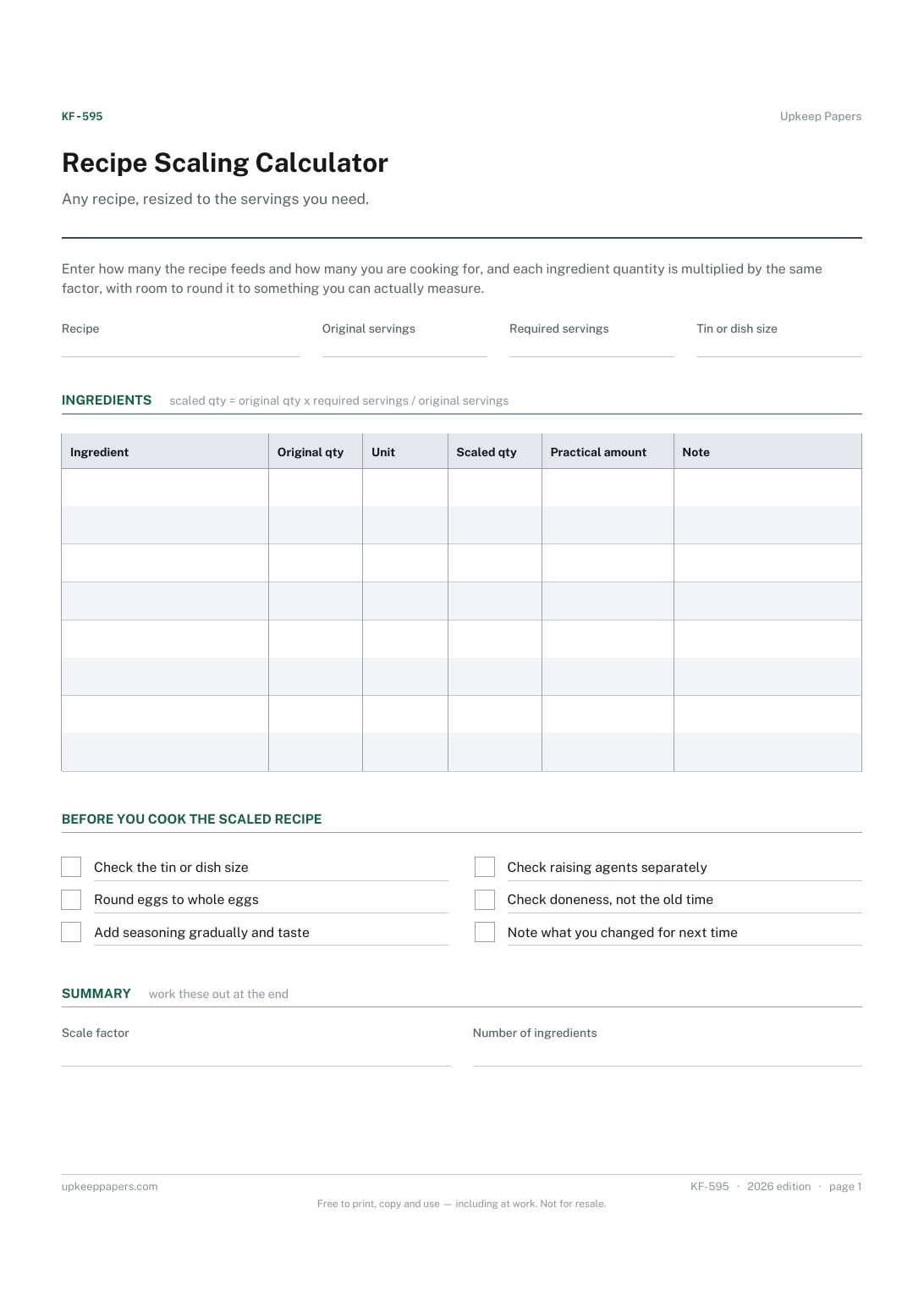
The scale factor between the original and required servings.
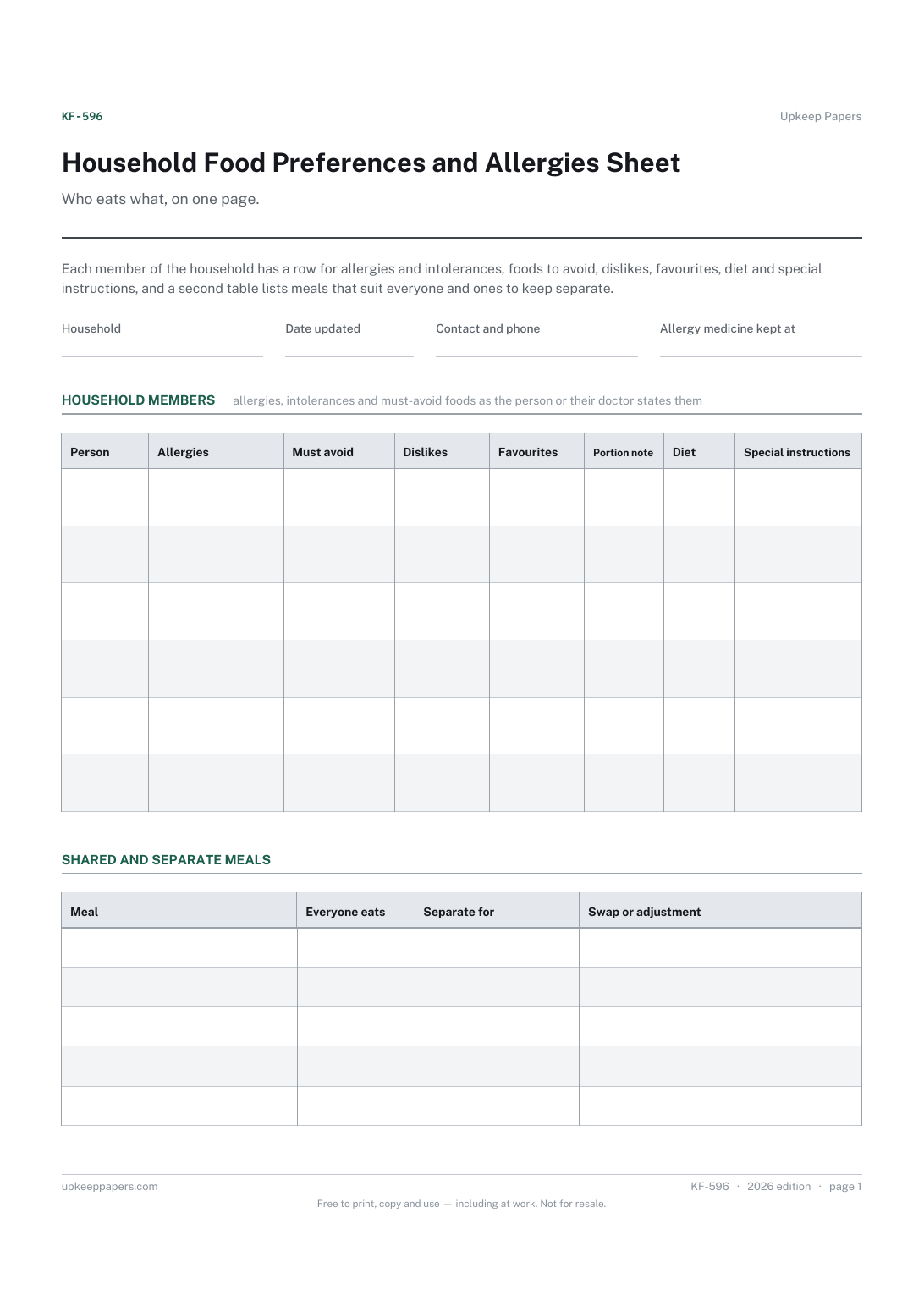
Each person's allergies and intolerances, in their own words.
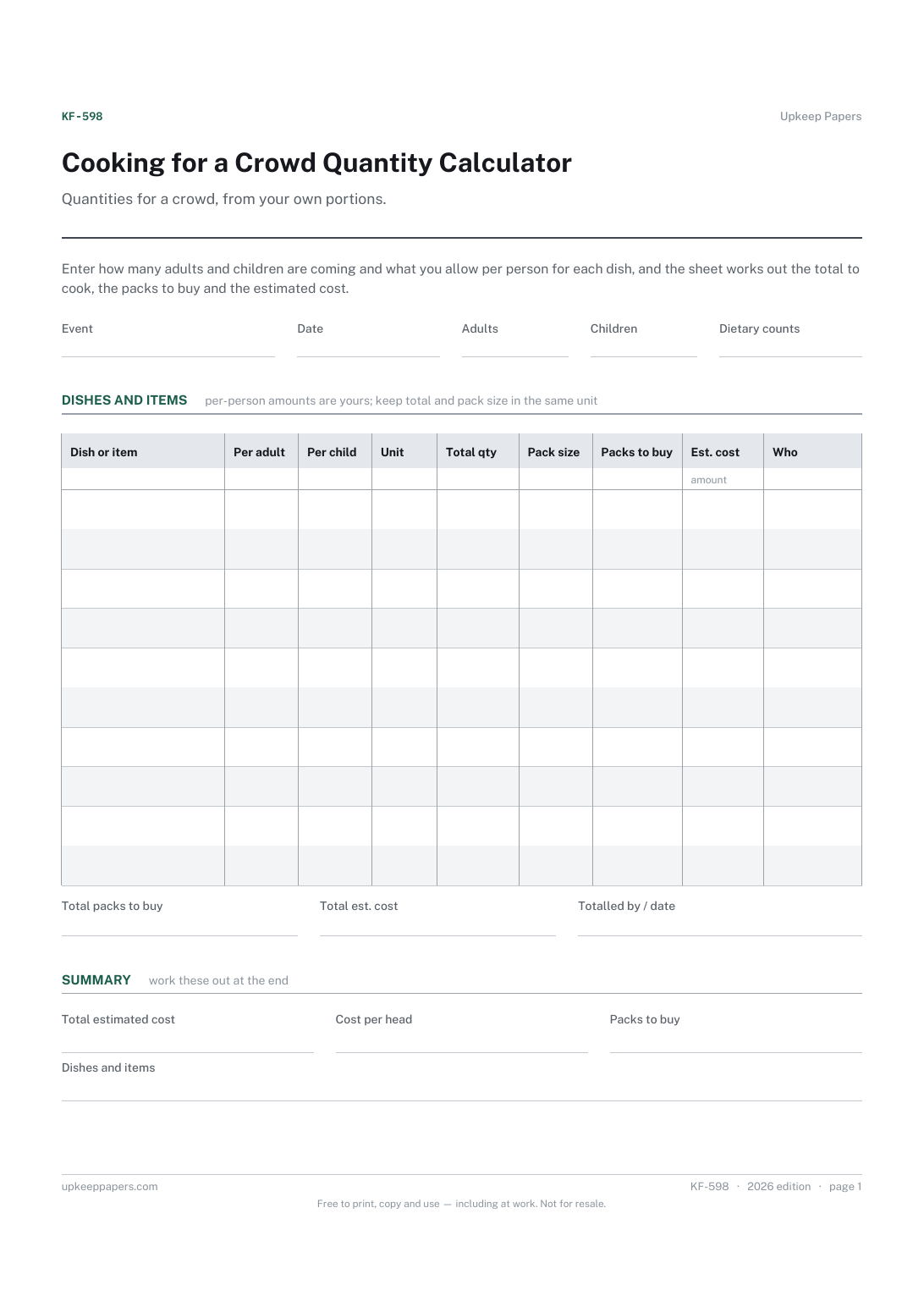
Total quantity of each dish or item for the number of guests.
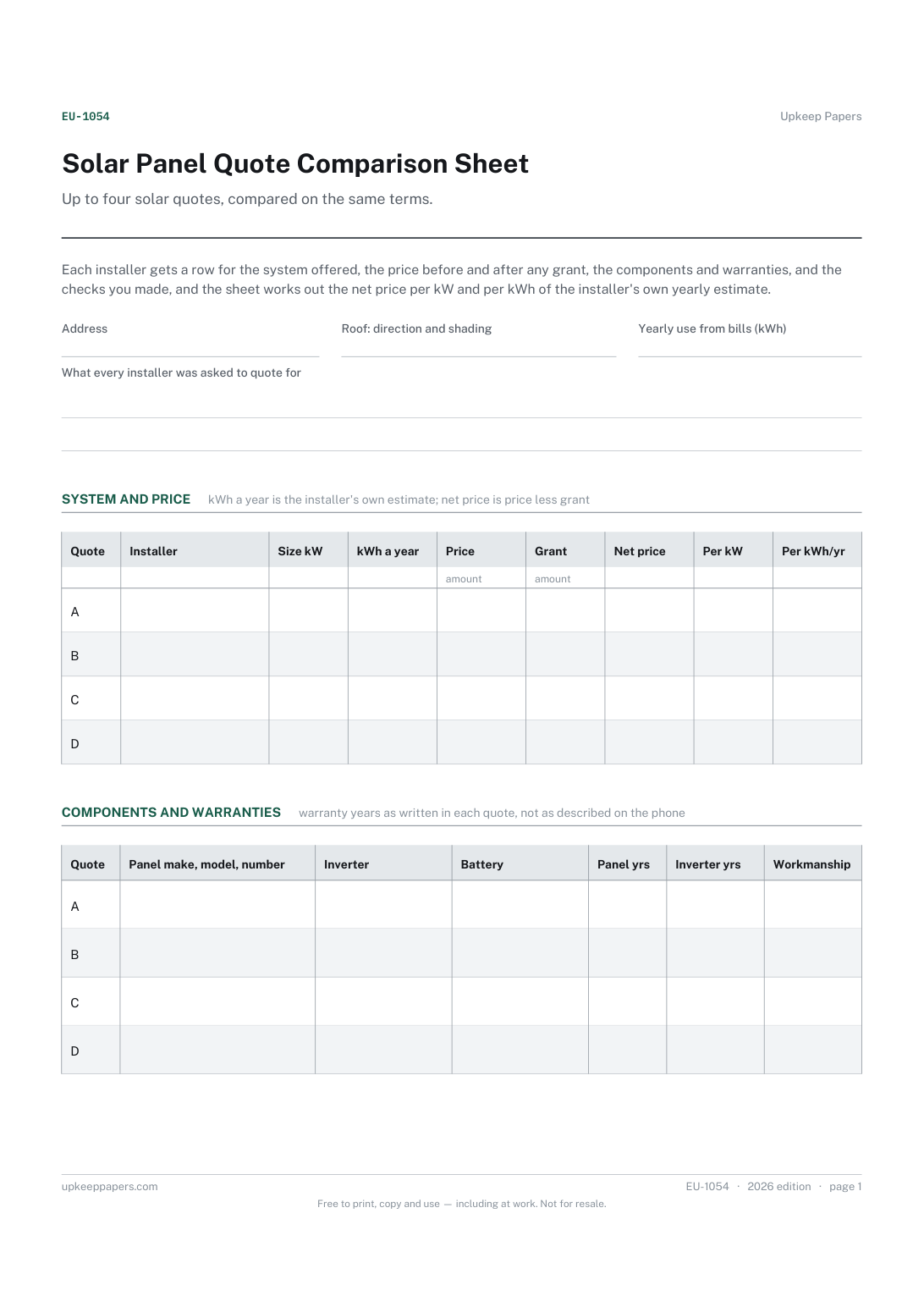
The system size, panels, inverter and battery each installer offers.
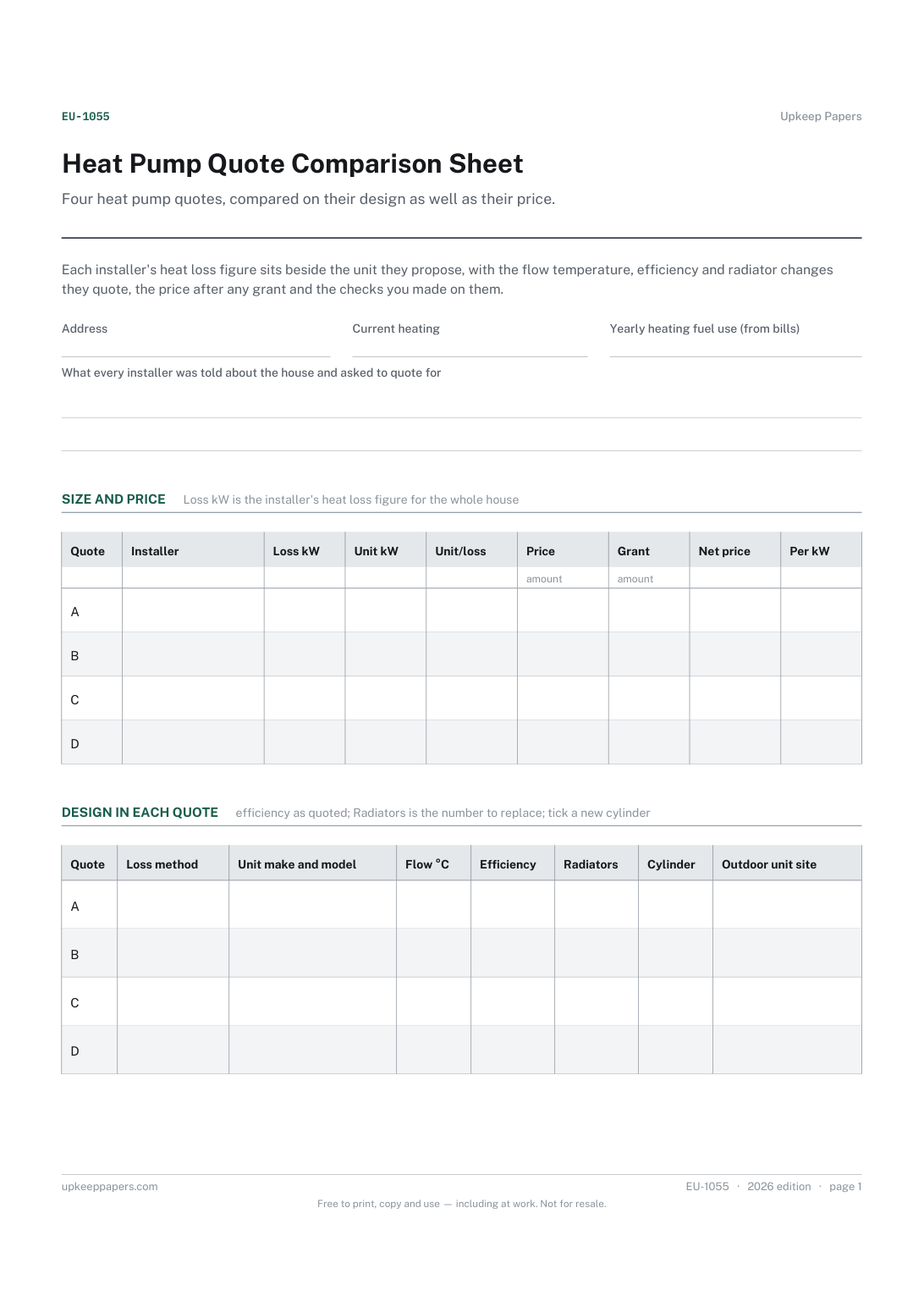
Each installer's heat loss figure and how it was worked out.
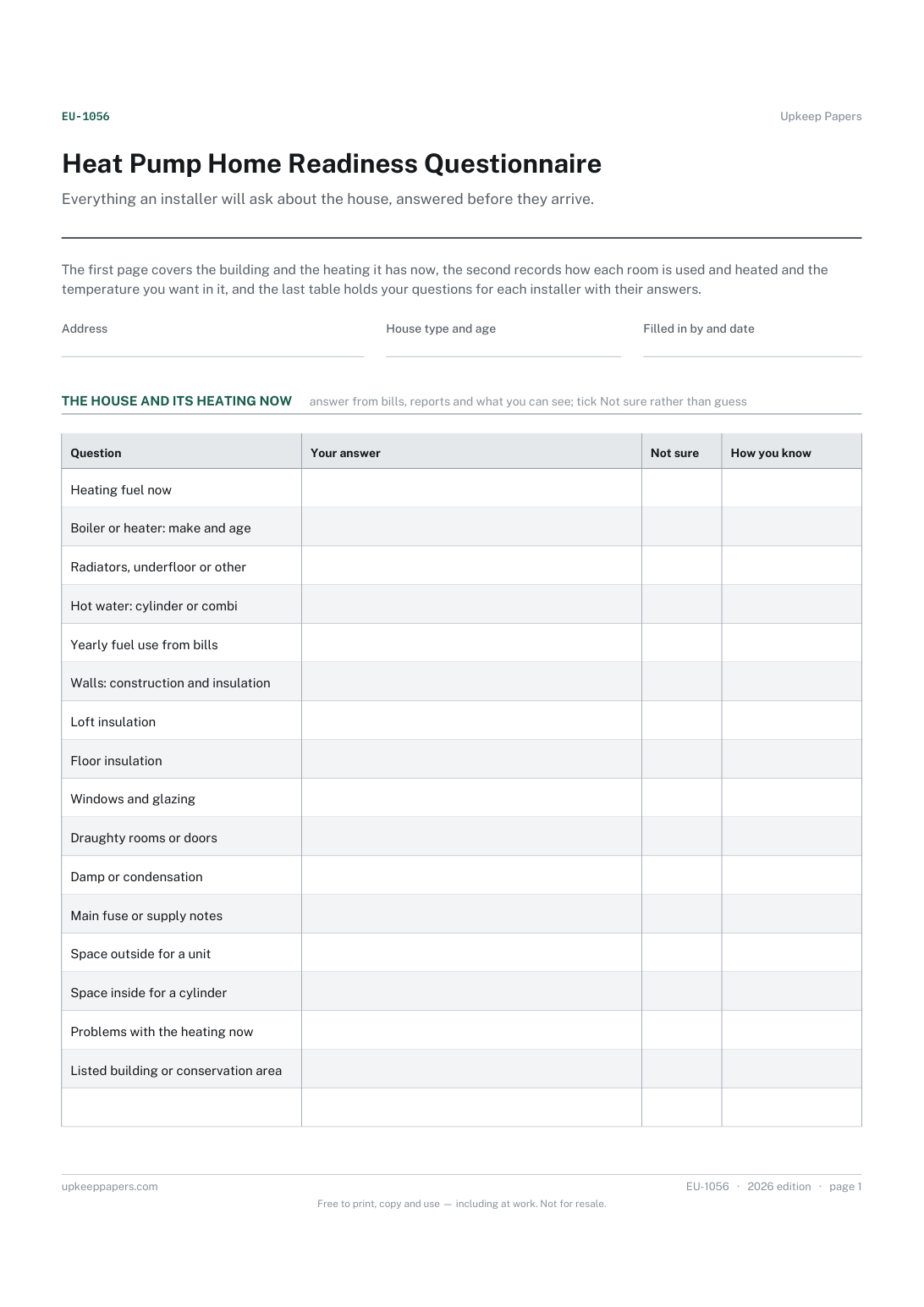
The heating, hot water and fuel use you have now.
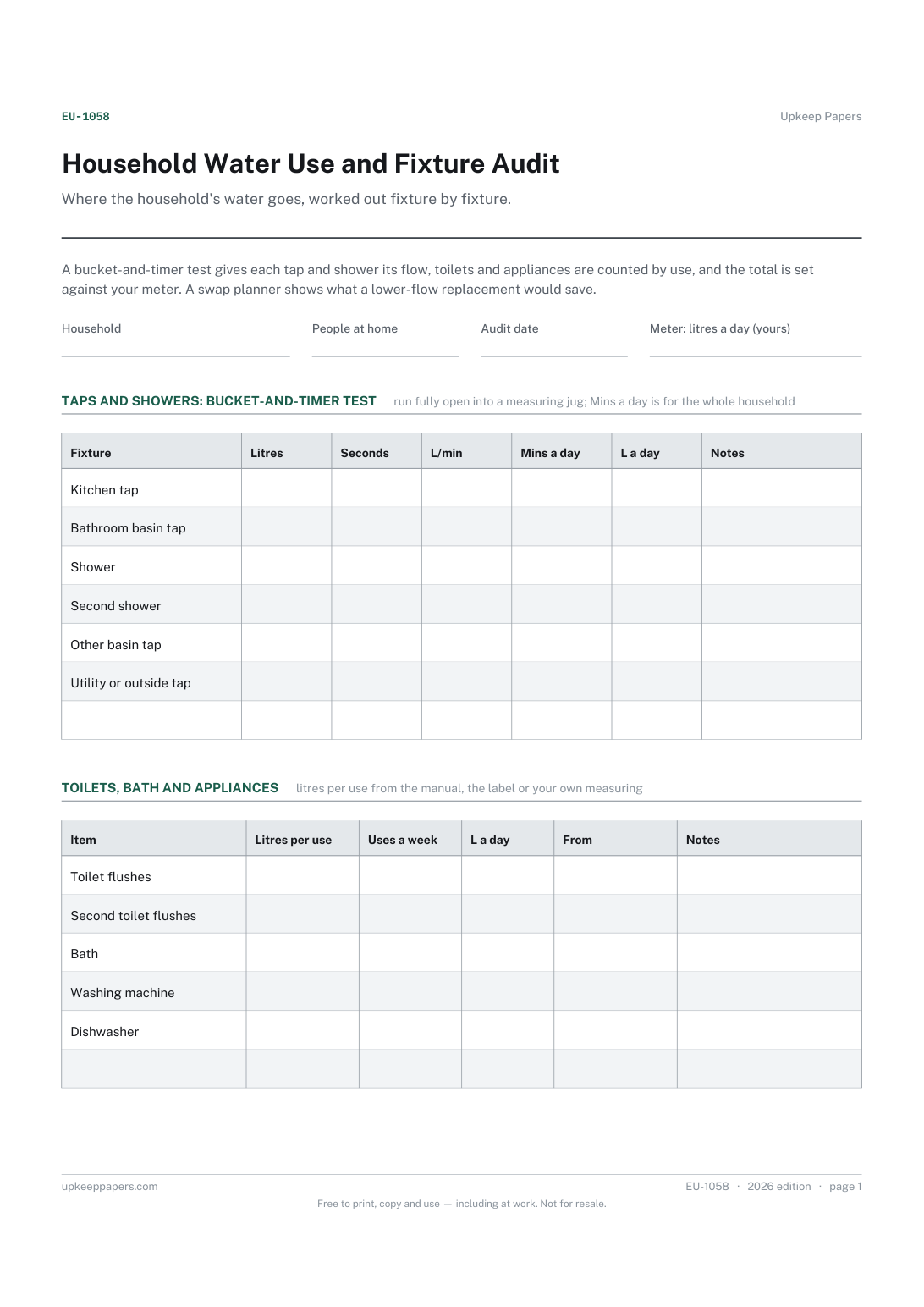
The measured flow of every tap and shower in litres a minute.
Price, delivery, installation and removal for each model.
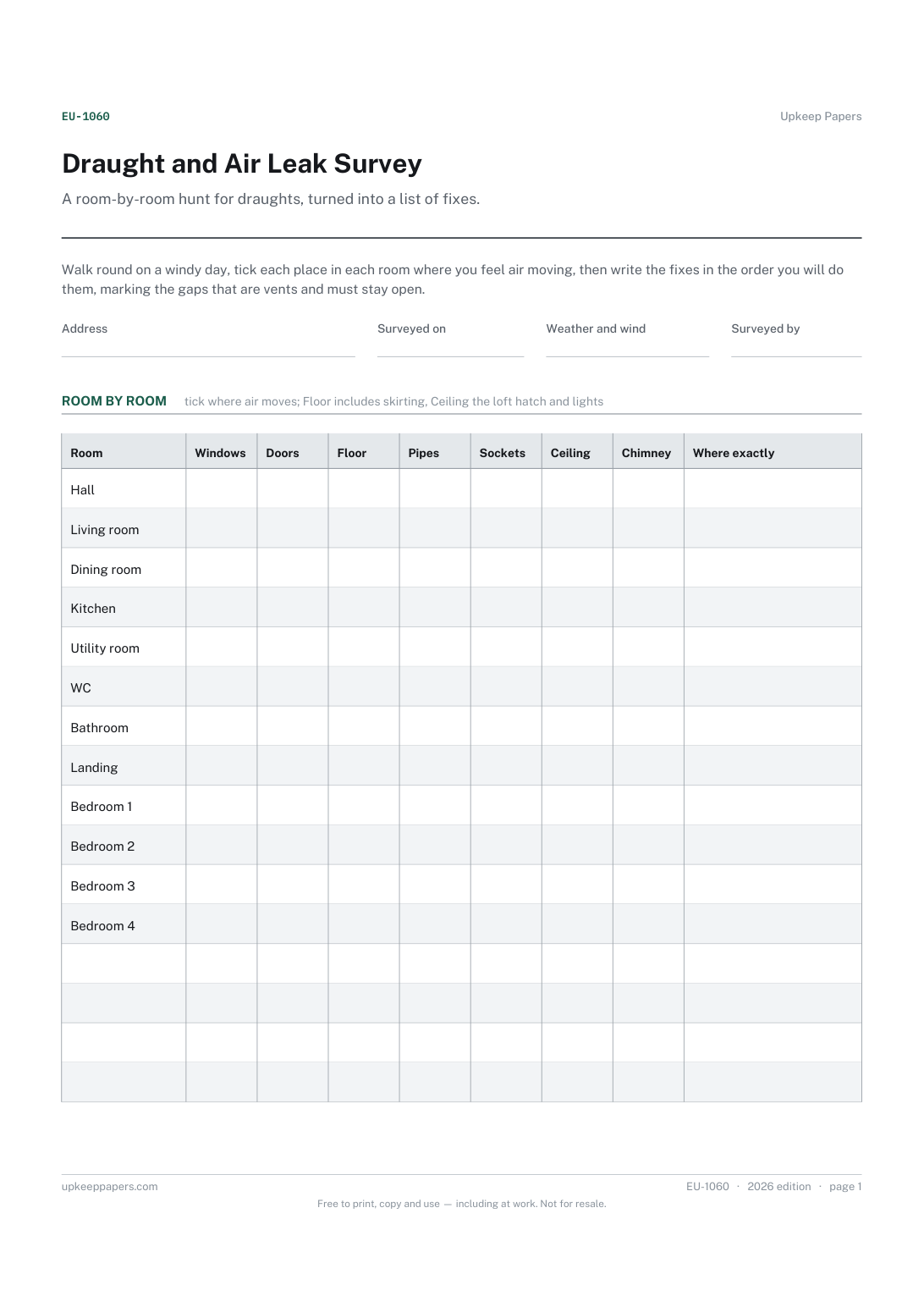
Every room checked at windows, doors, floors, pipes, sockets and ceilings.
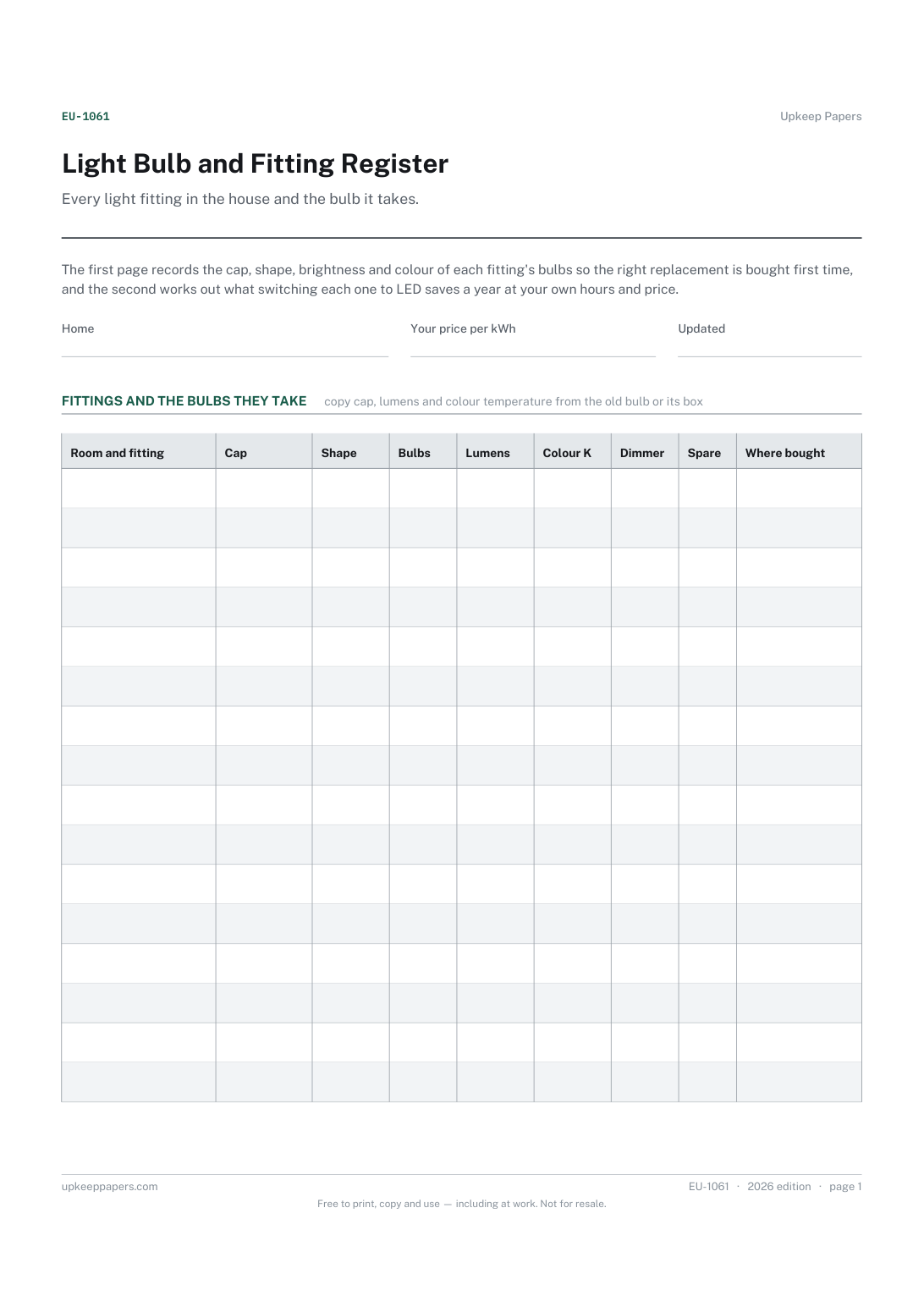
Each fitting by room, with its cap type and bulb shape.
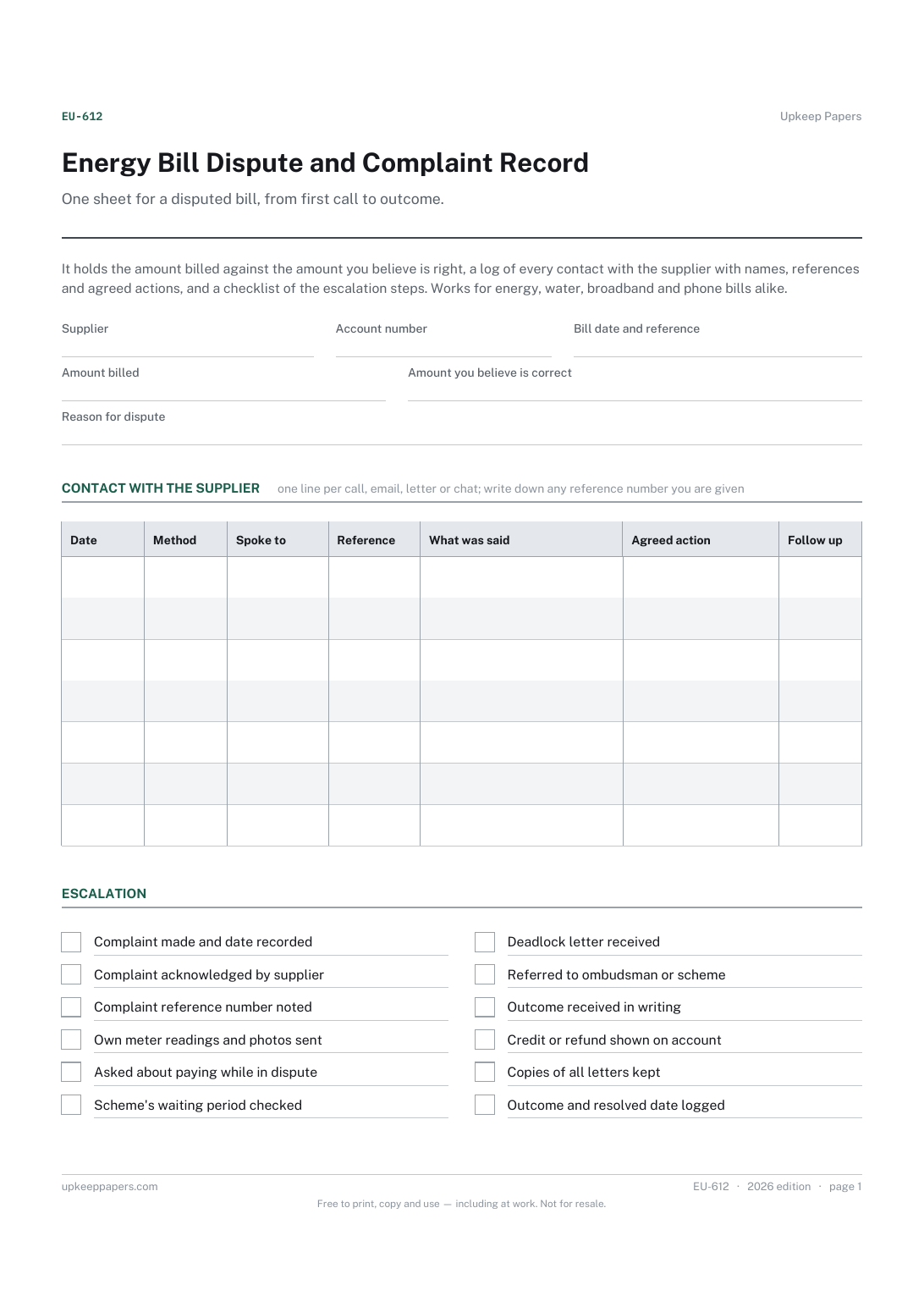
The bill in dispute, the amount charged and the amount you think is right.
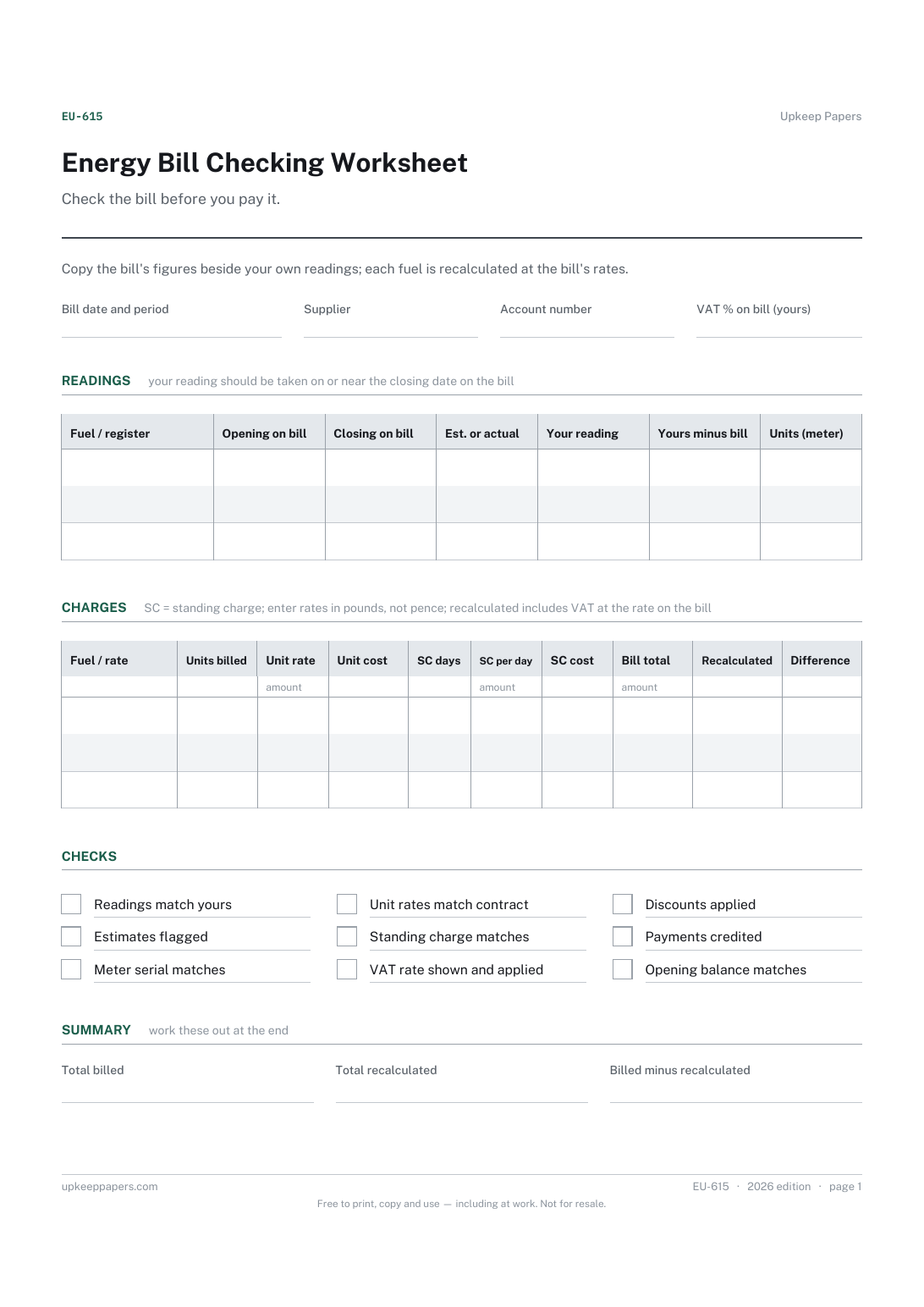
The readings on the bill against your own on the same dates.
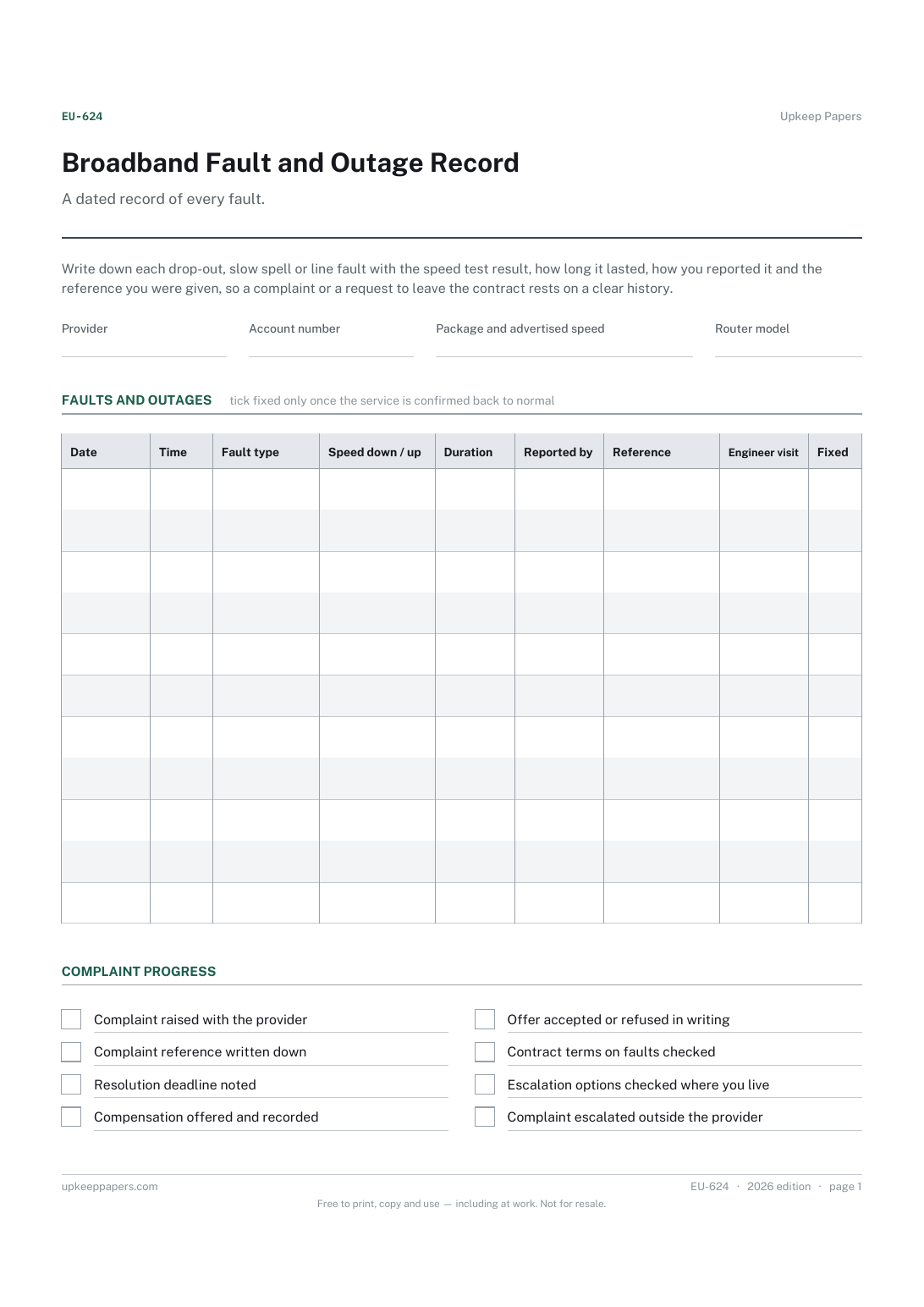
When each fault happened and what kind it was.
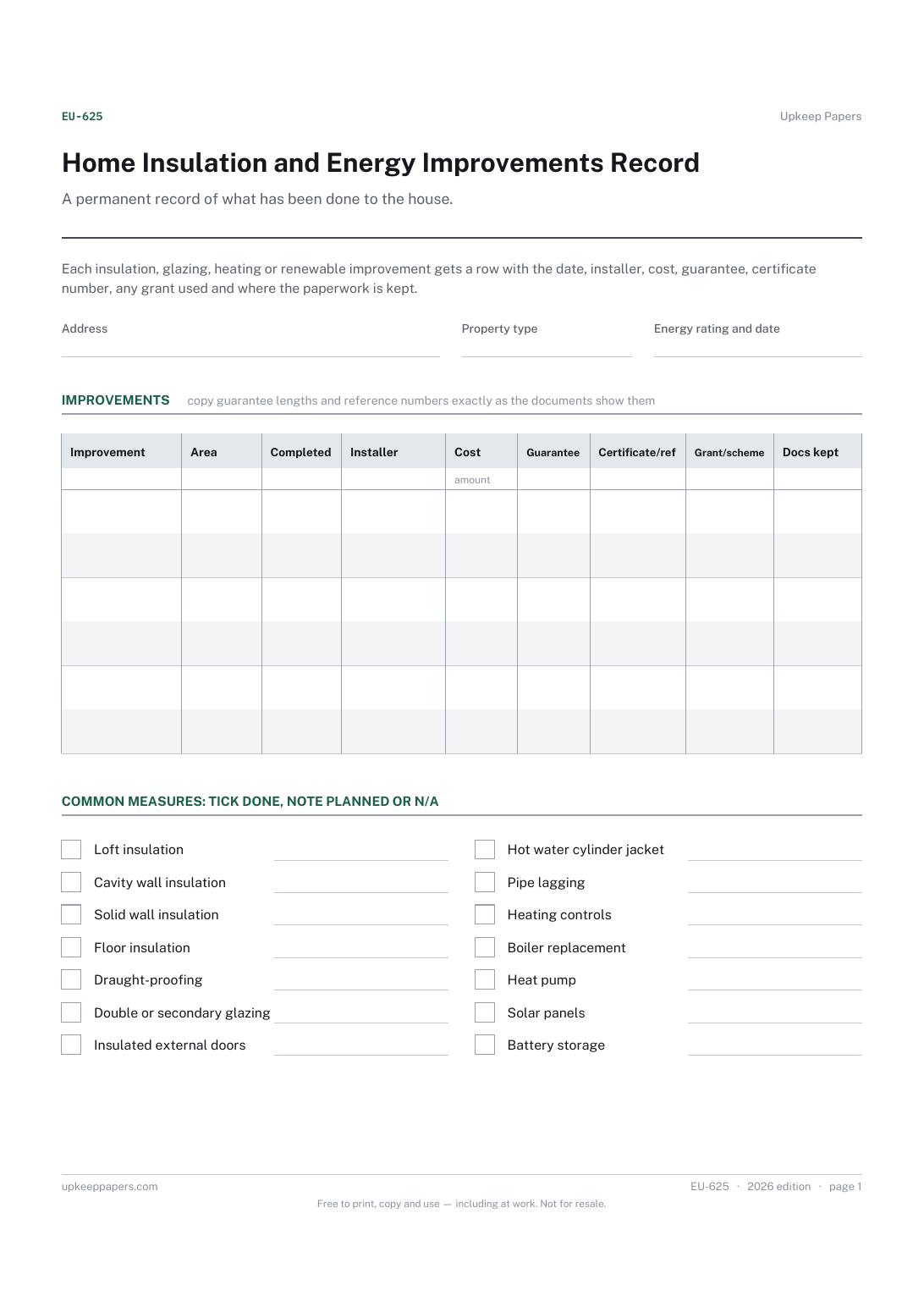
What was done, where in the house and when.
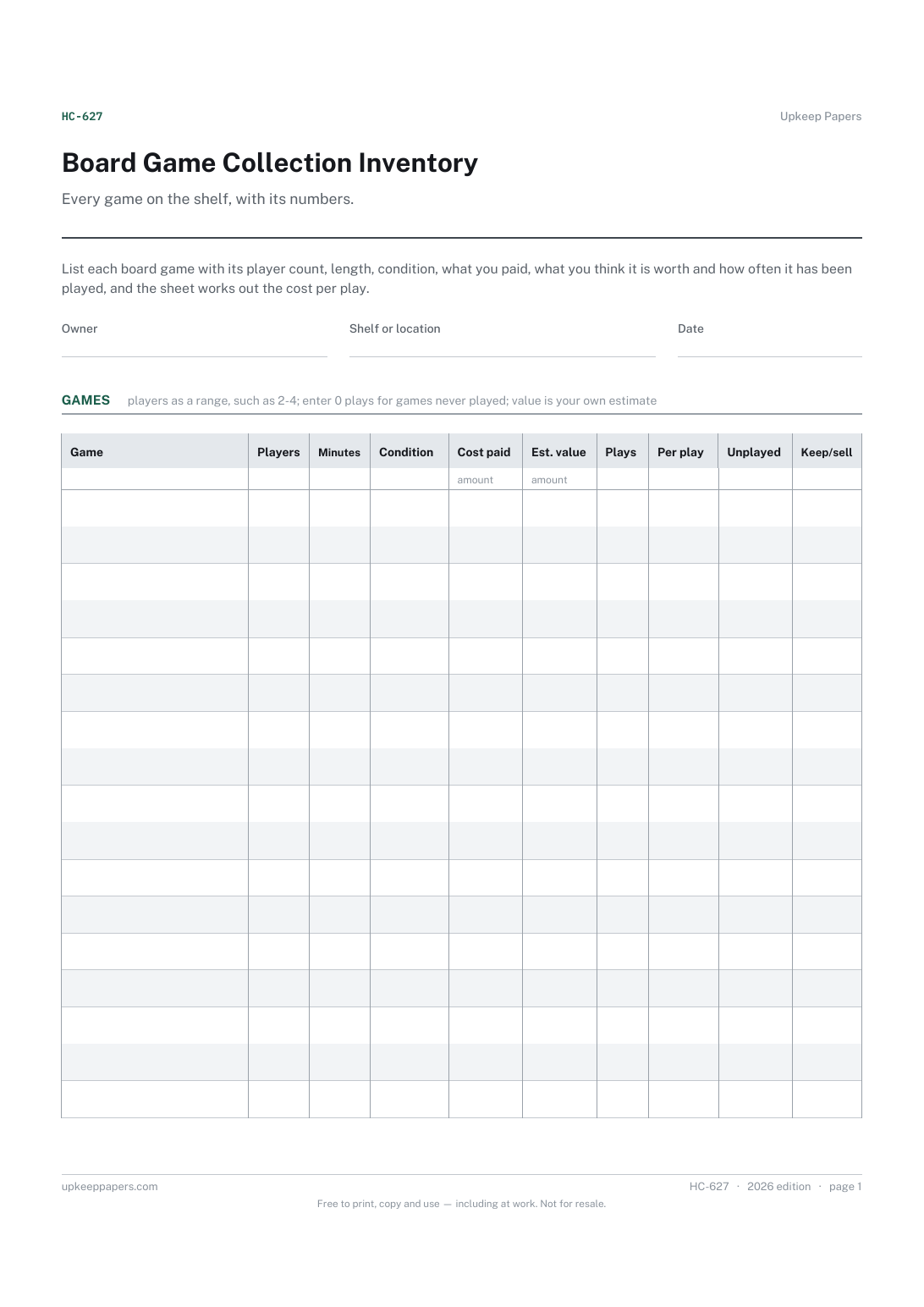
Which games you own and where the collection is kept.
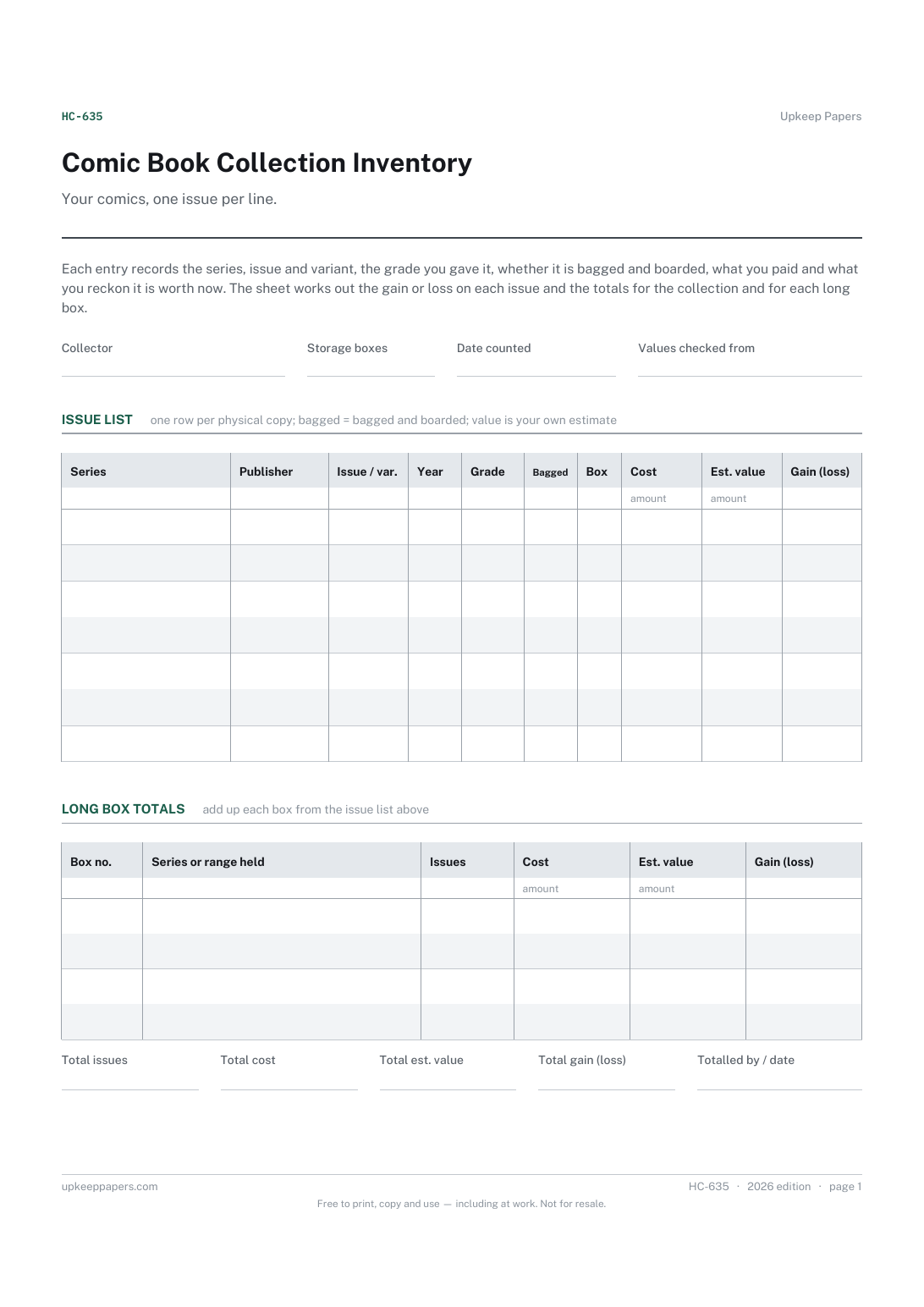
Which issues of each series you own, and which variant.
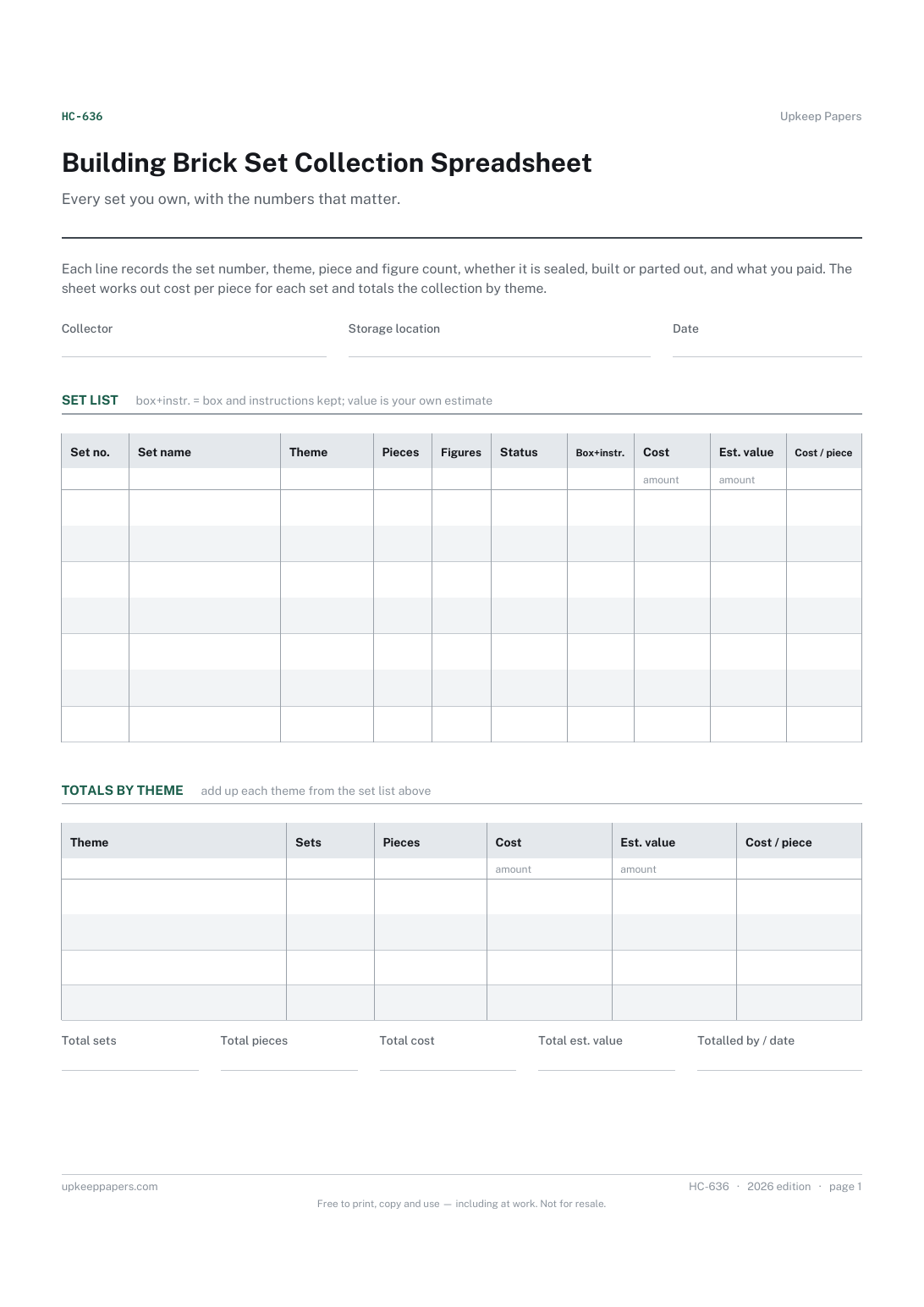
Every set by number, name and theme.
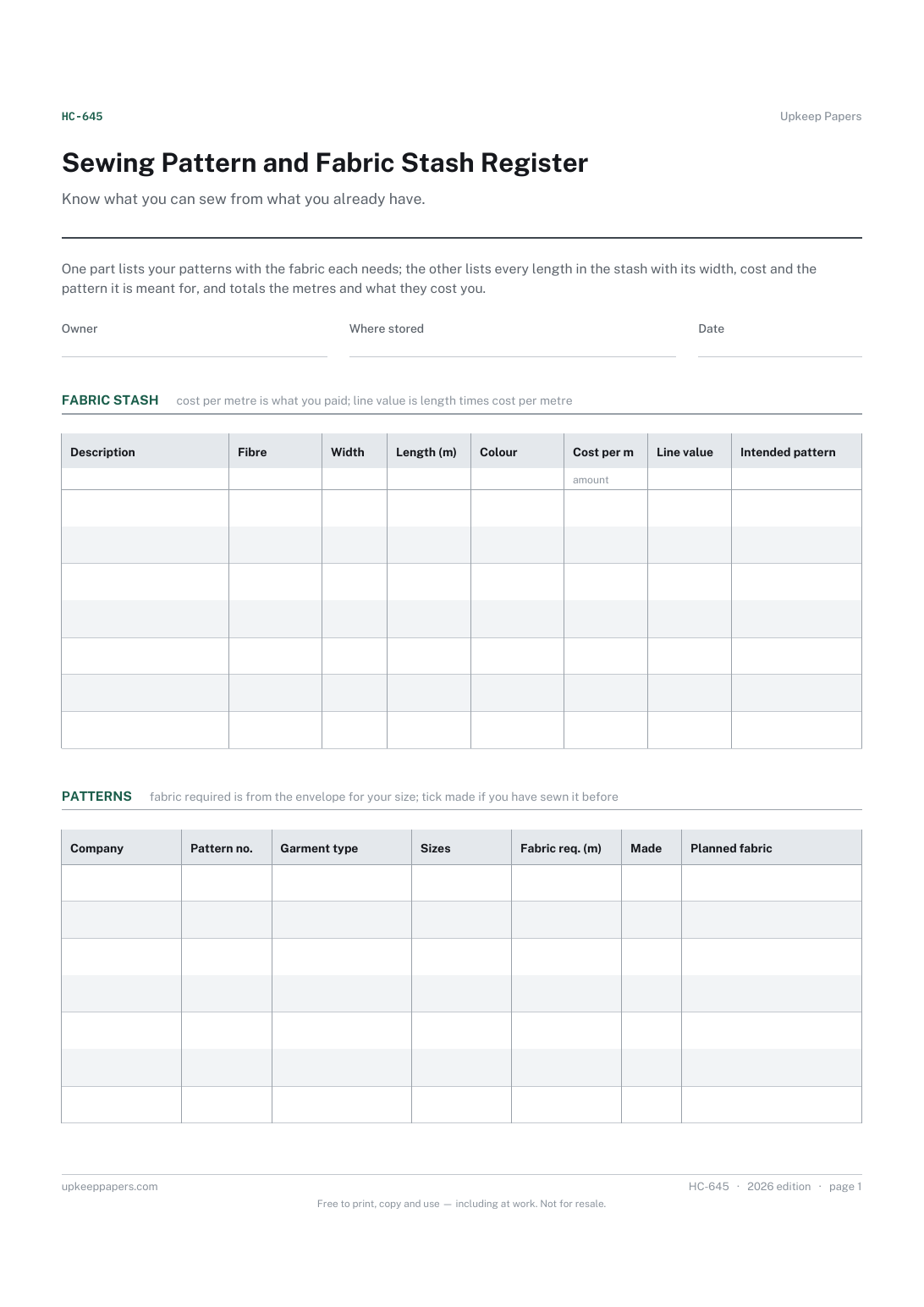
Every pattern you own, its sizes and the fabric it needs.
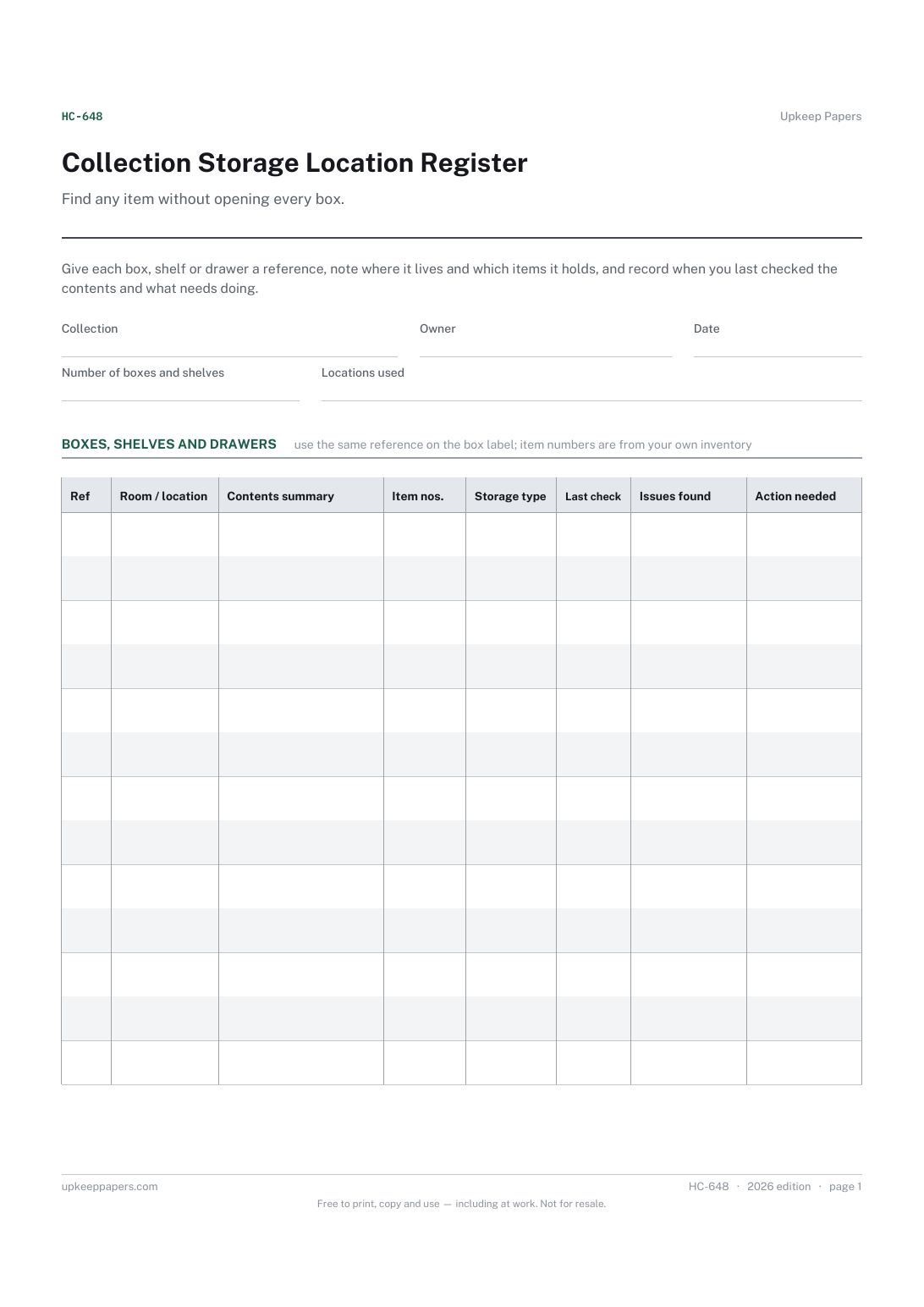
Every box, shelf and drawer with its own reference.
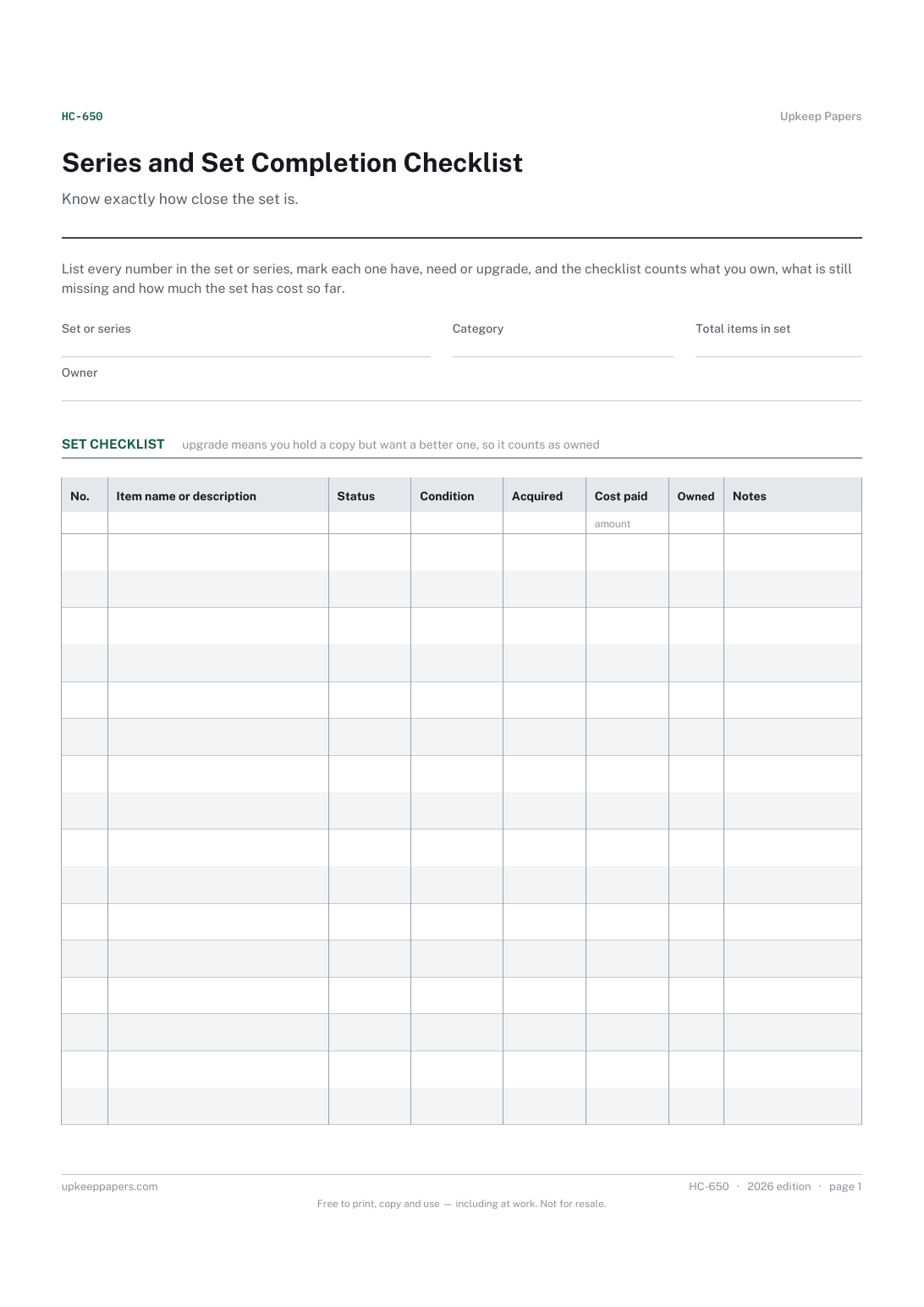
Every item in the set by number and name.
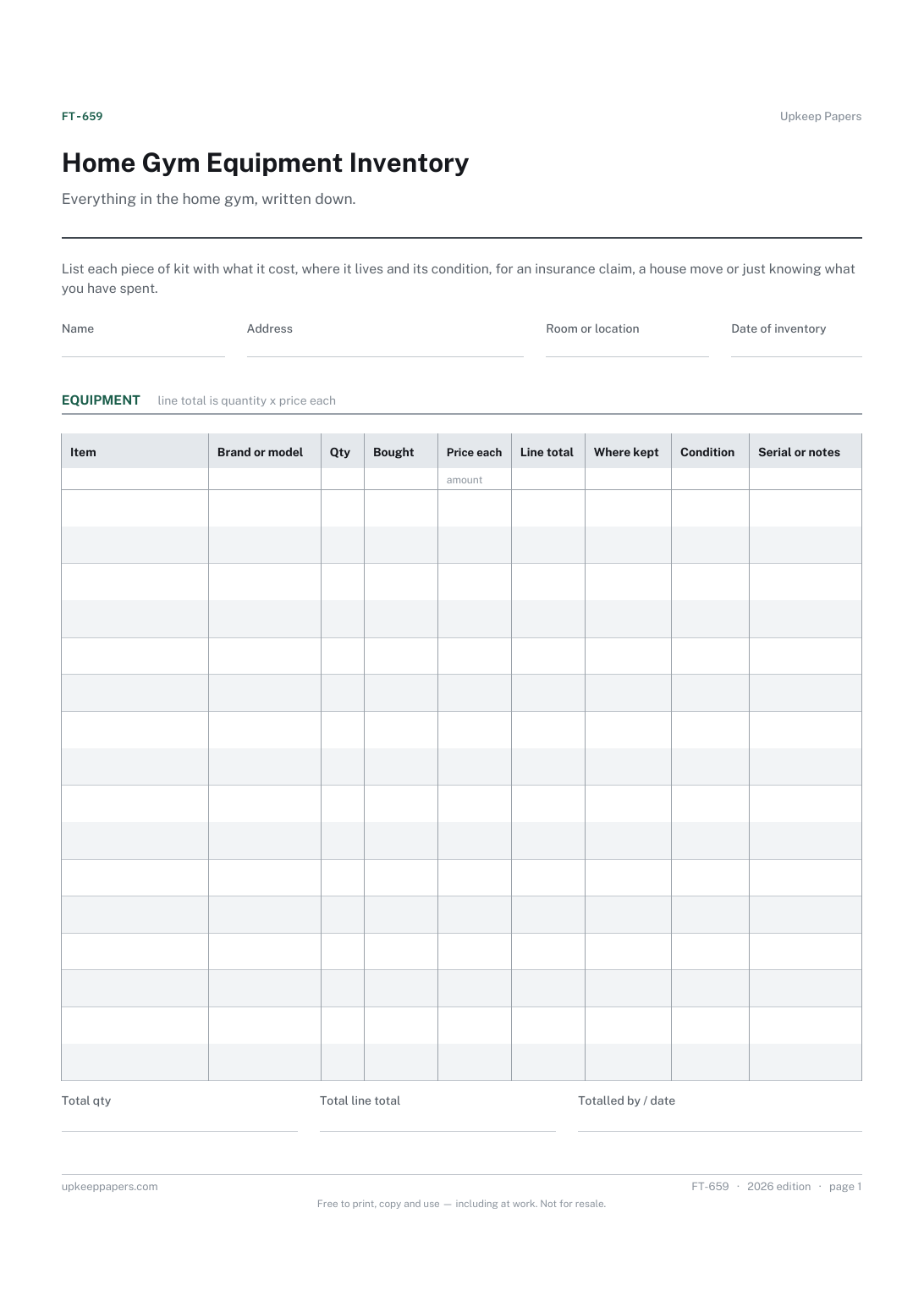
Every item with its brand or model, quantity and serial number.
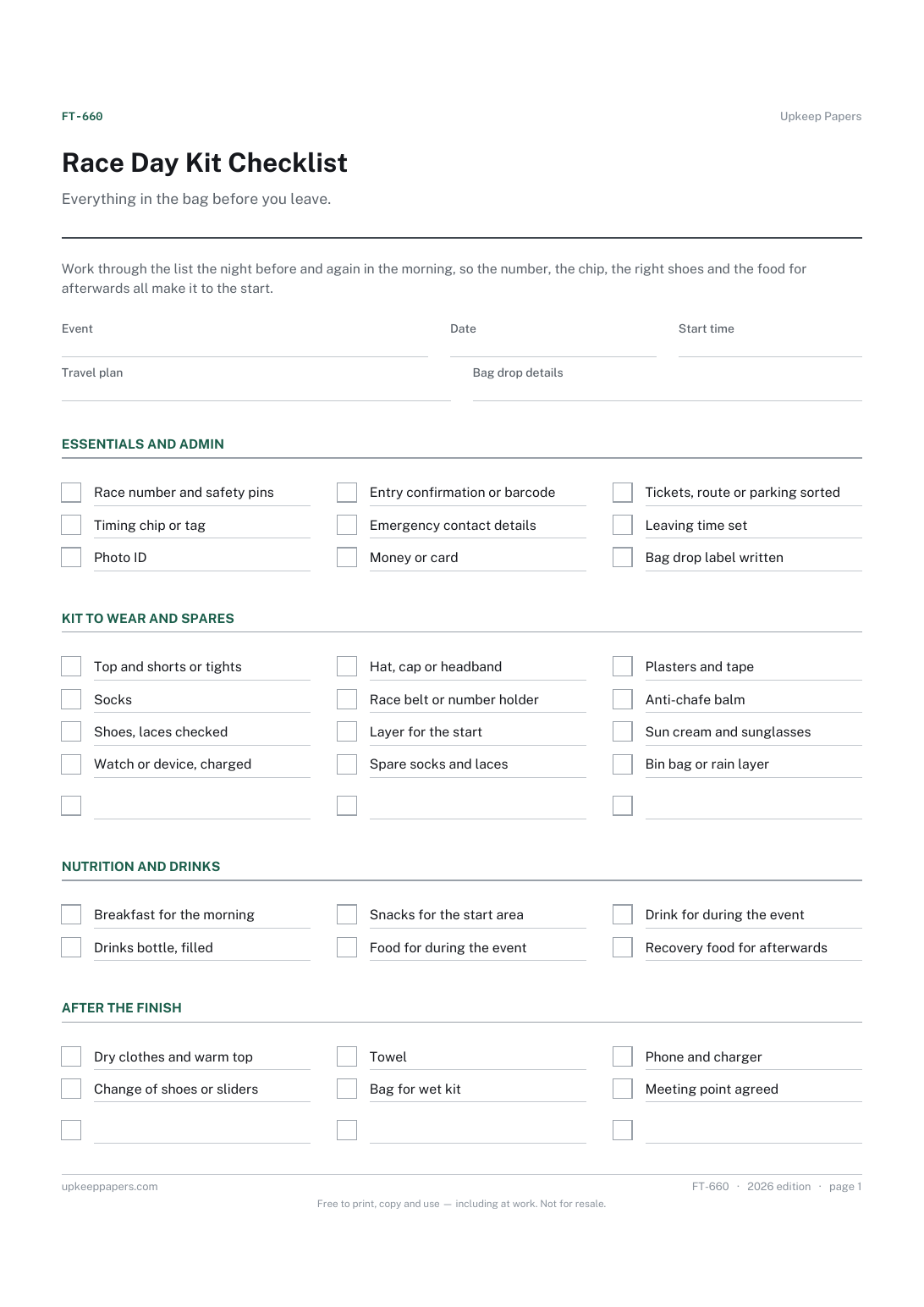
The entry essentials: number, chip, ID and confirmation.
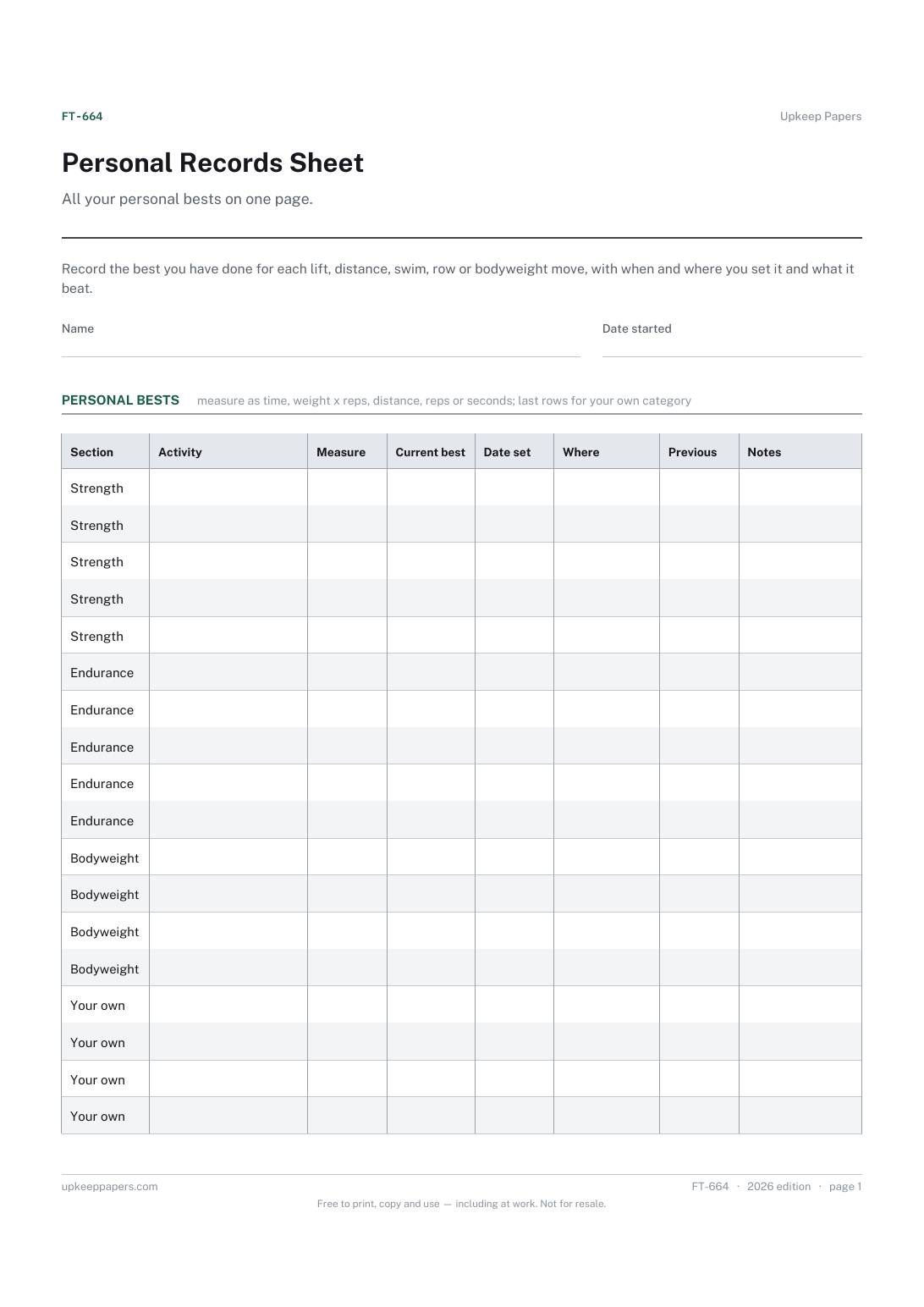
Your current best for each exercise or activity.
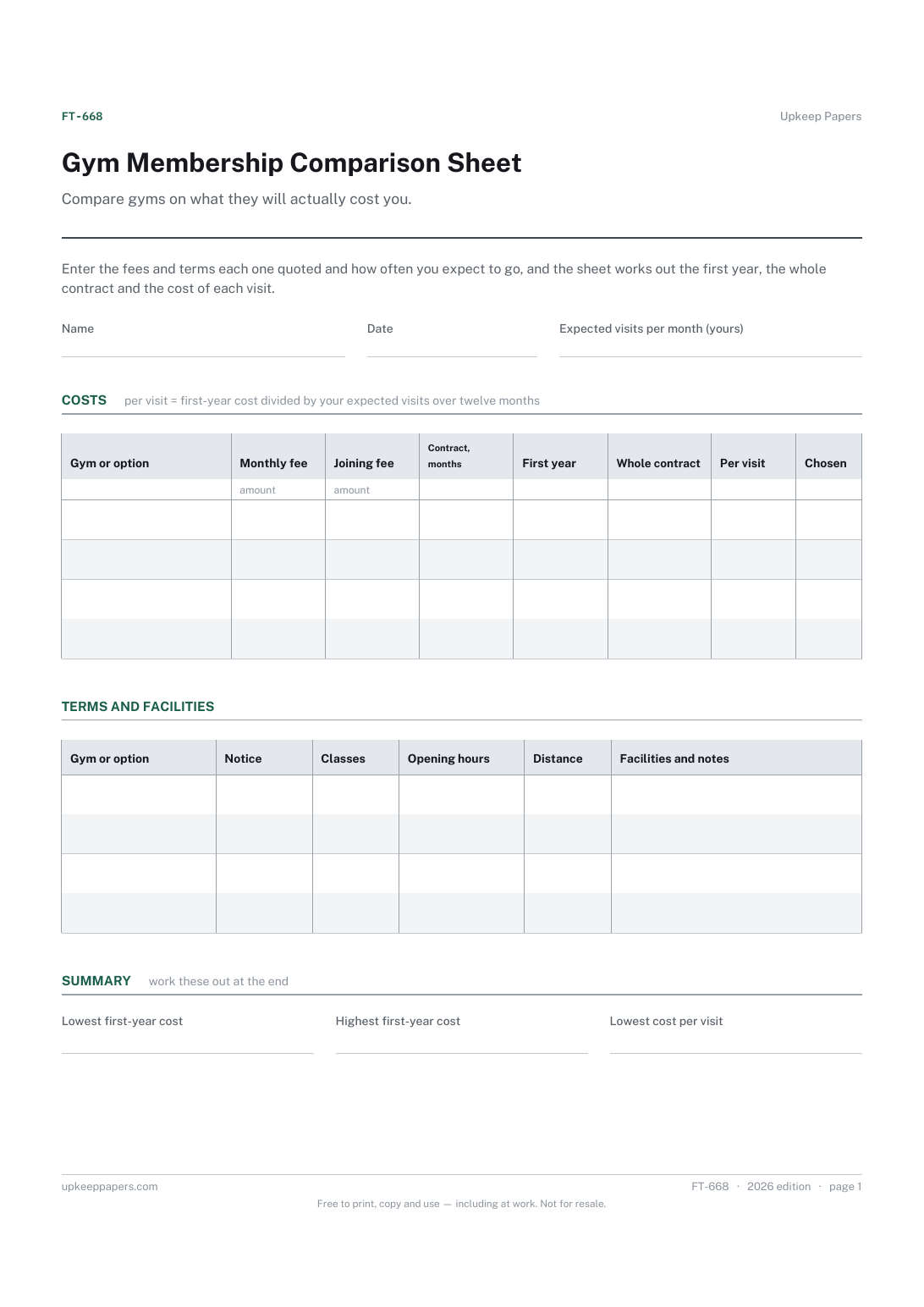
Monthly and joining fees for each gym or option, as quoted to you.
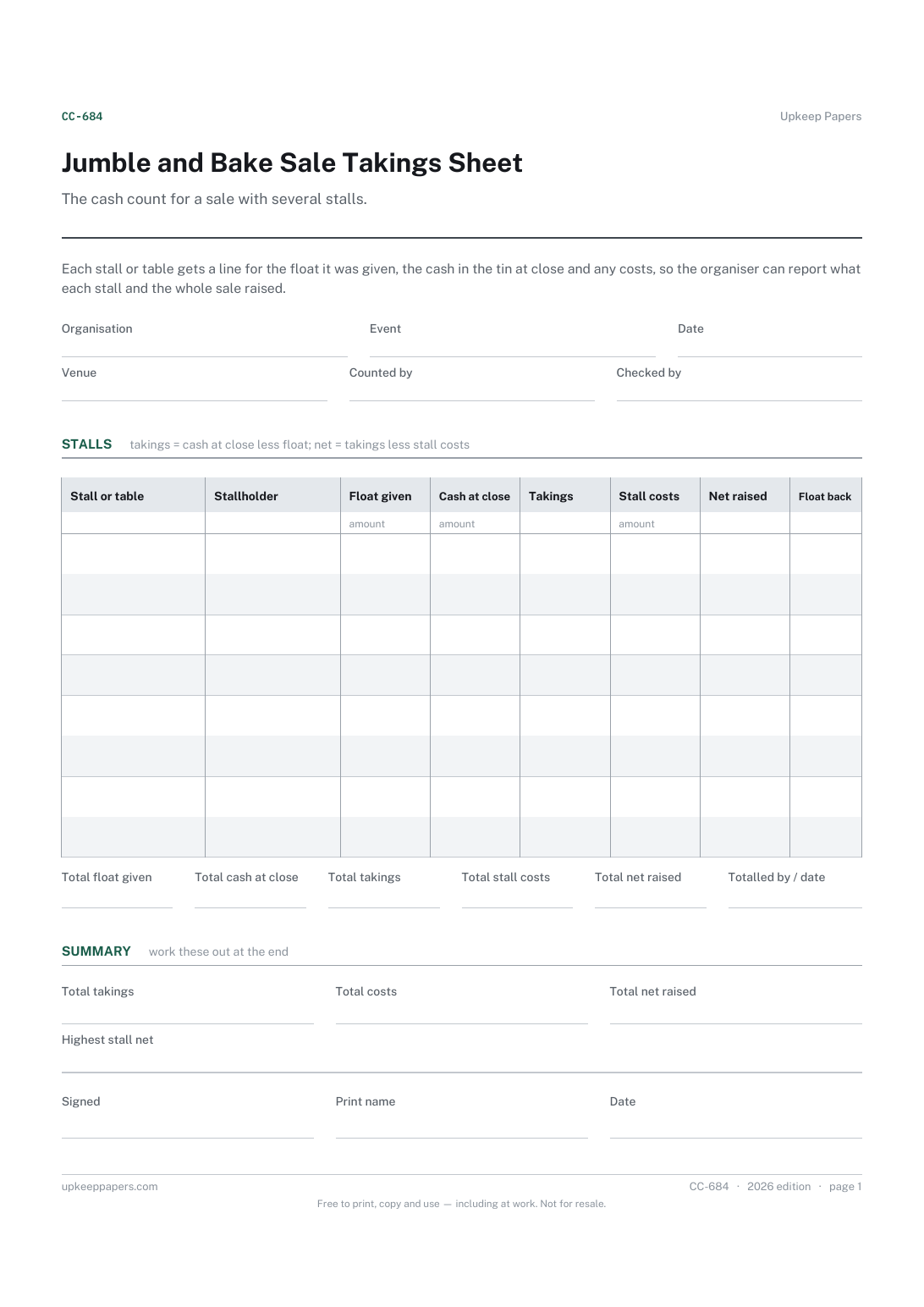
The float handed to each stall at the start.
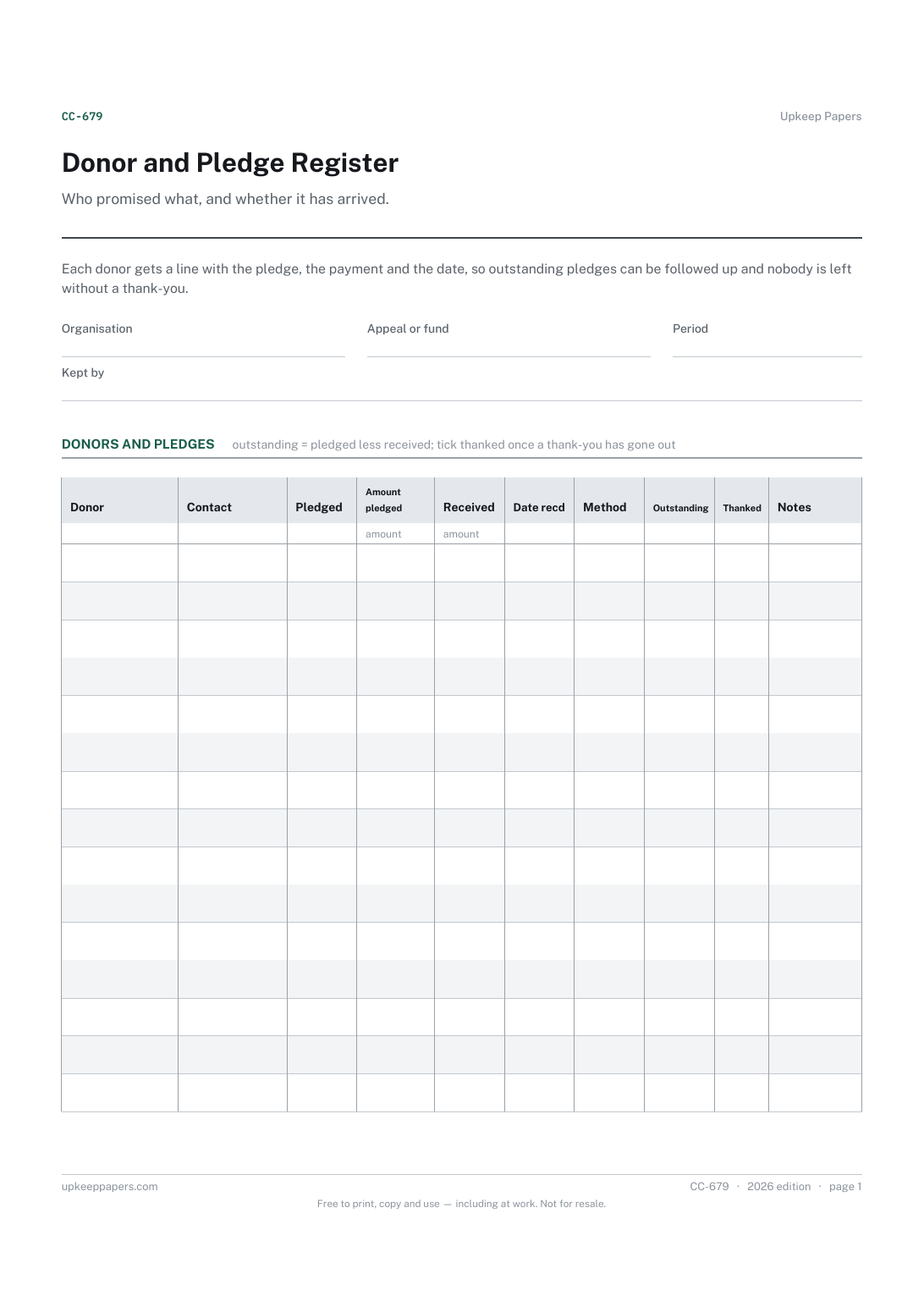
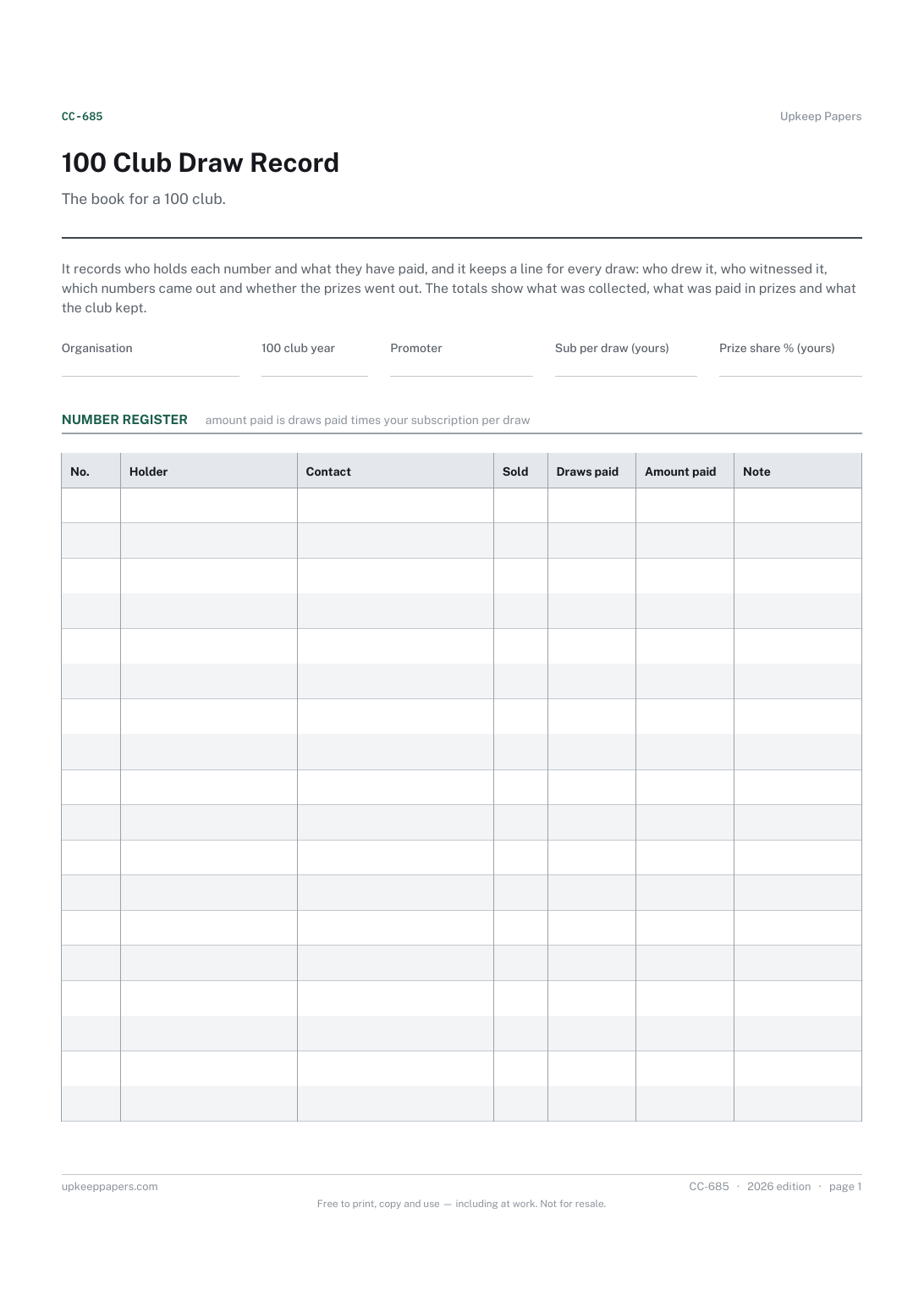
Who holds each number and how to reach them.
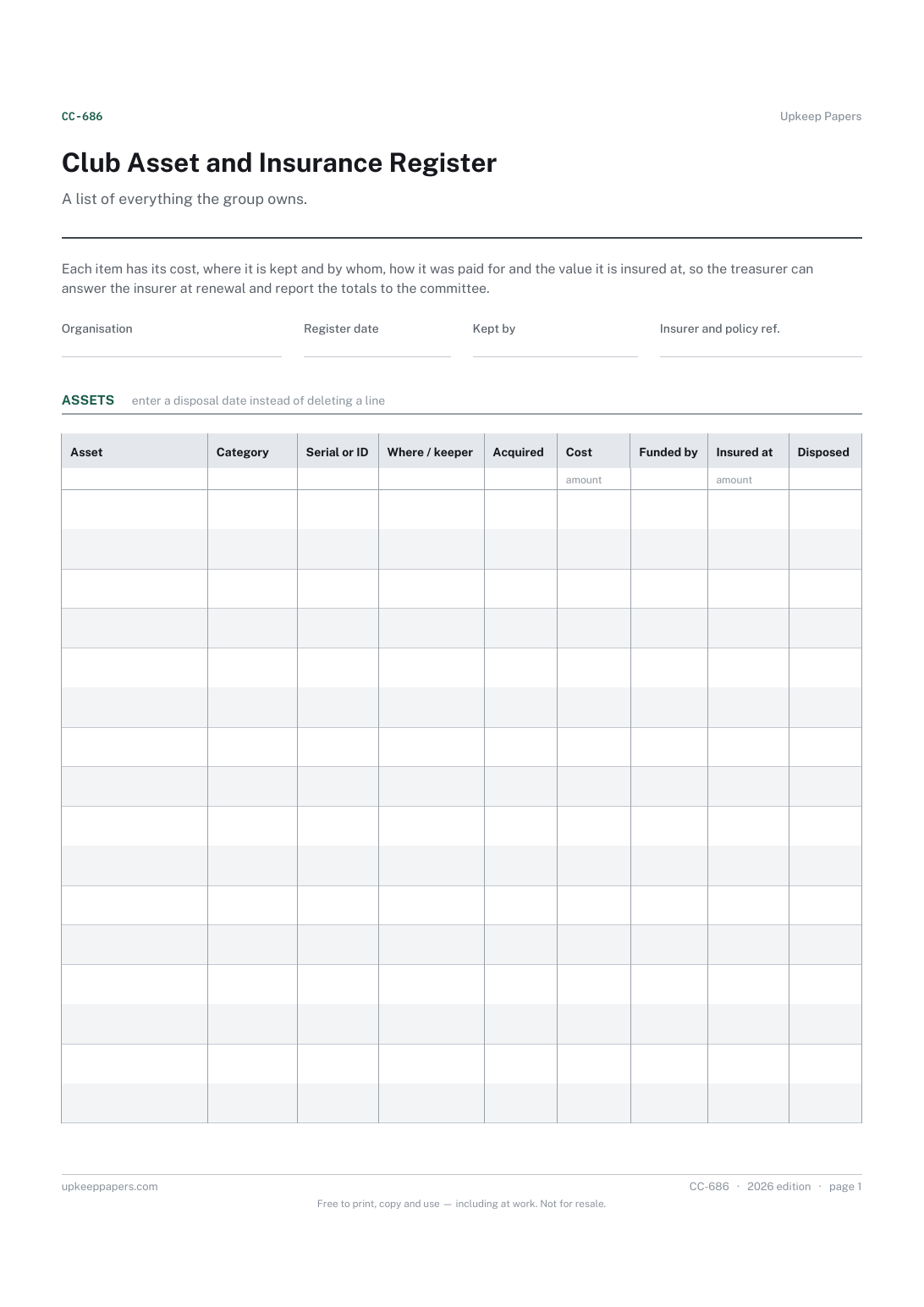
Every item the group owns, with a serial number or ID mark.
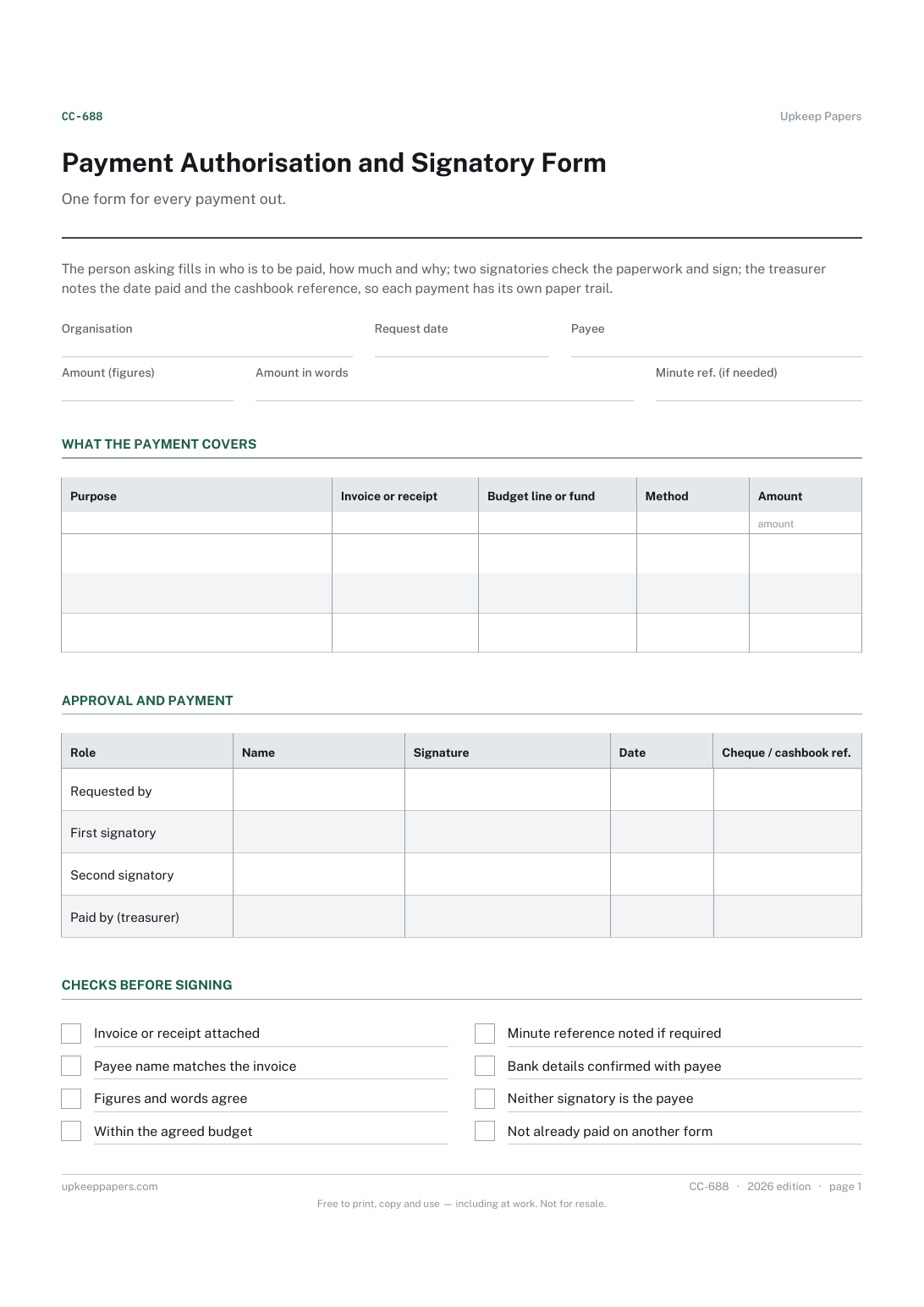
Who is to be paid, how much, and what for.
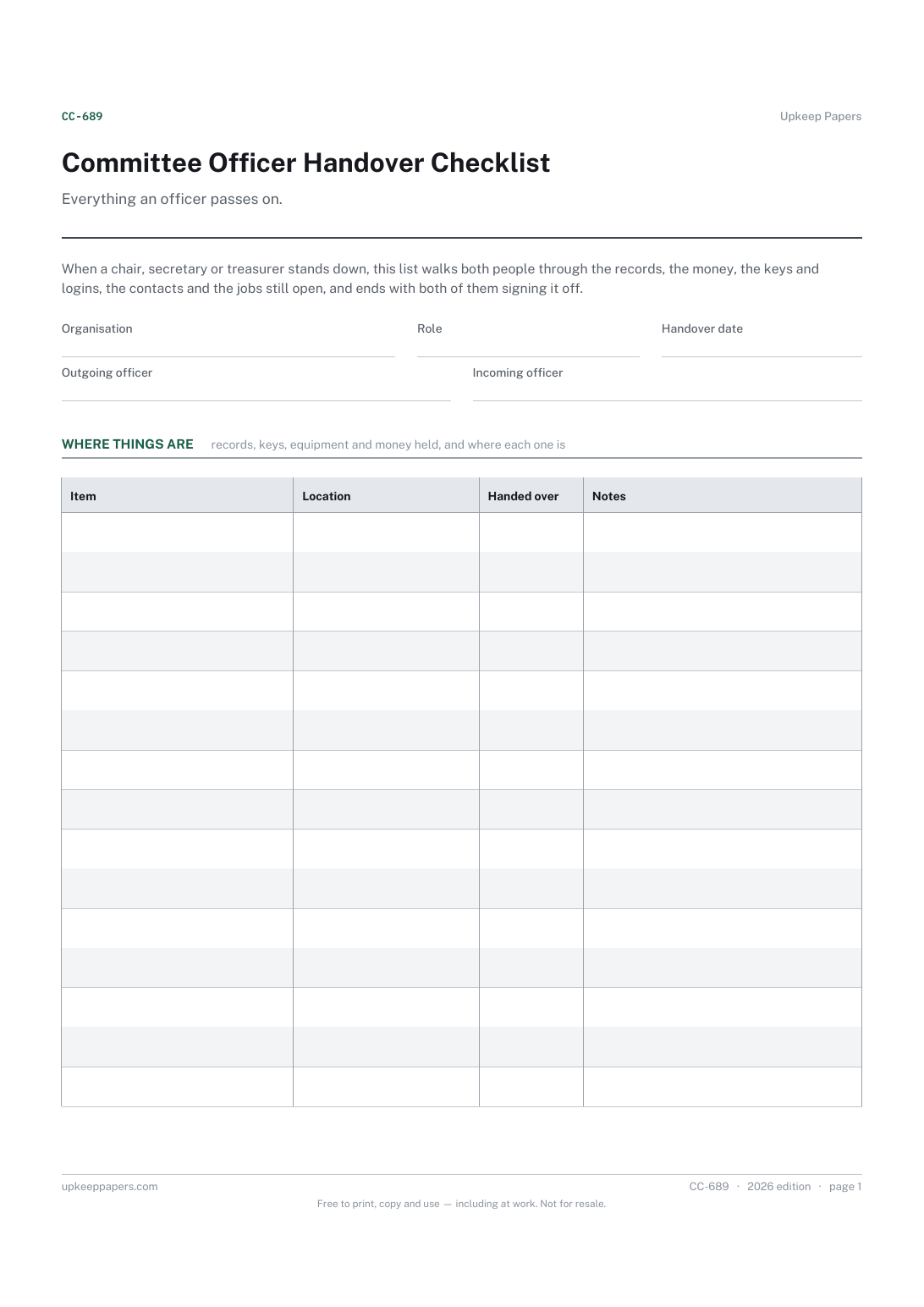
The documents and records the new officer needs to hold.
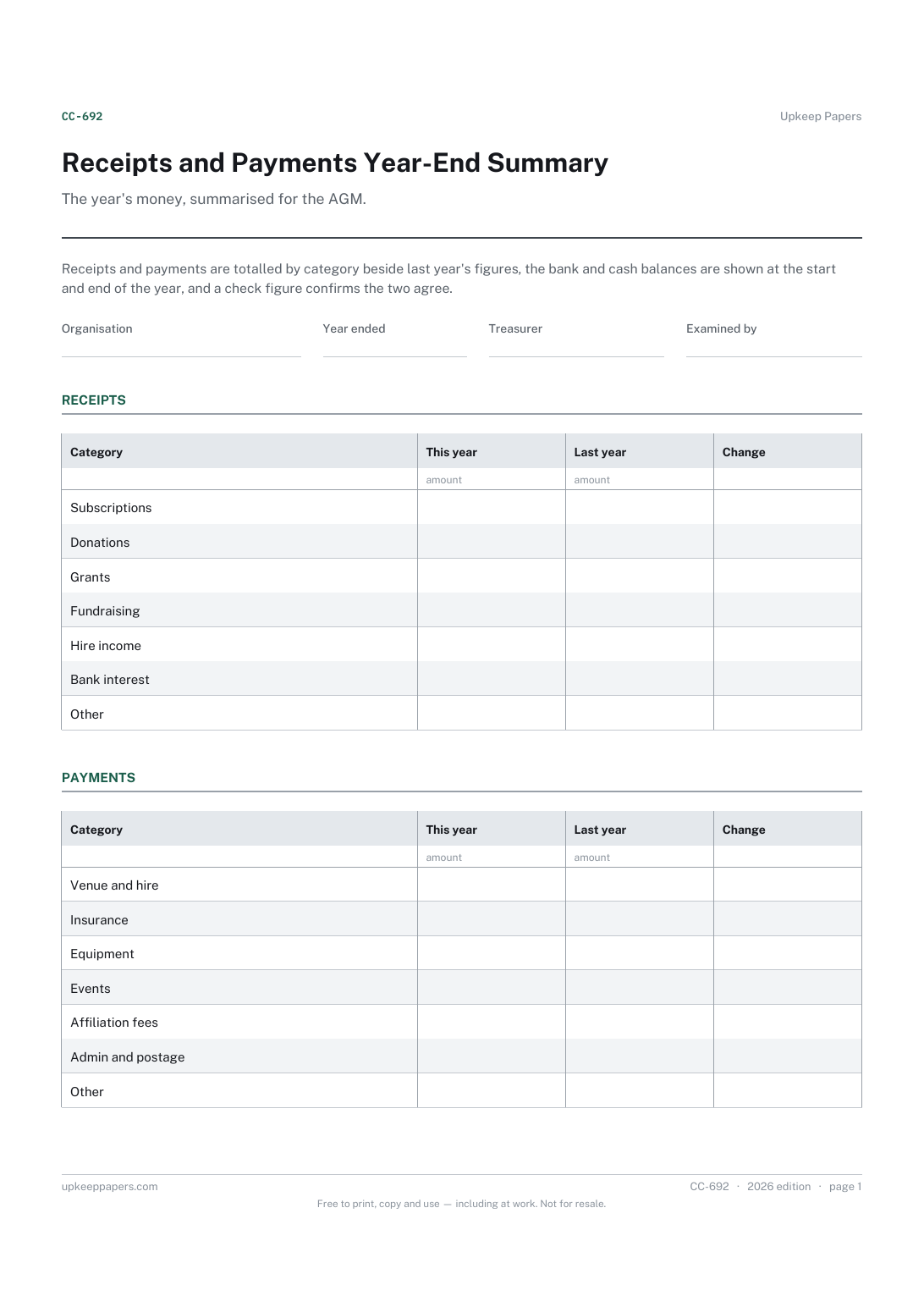
Money received in the year, by category, beside last year.
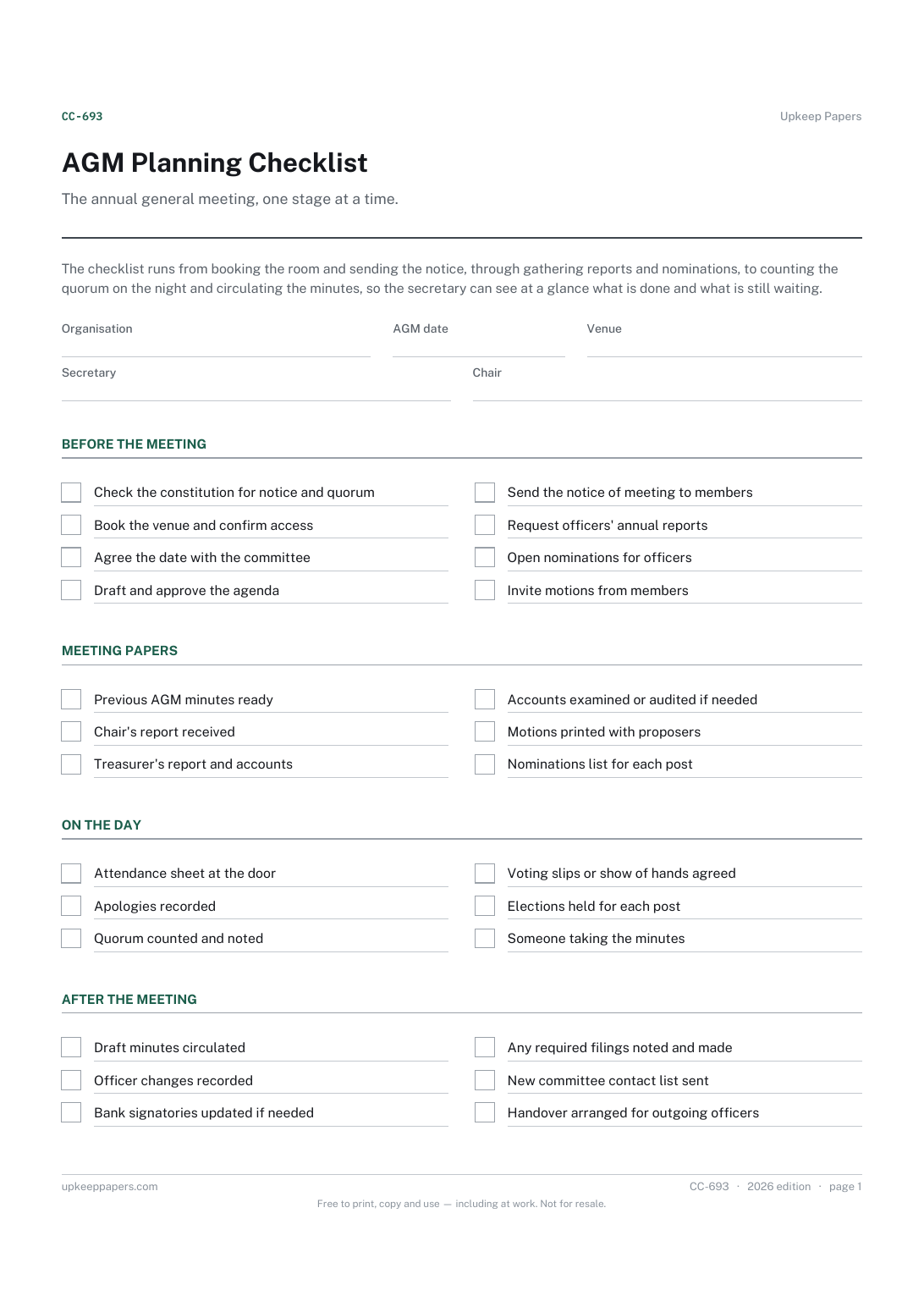
The date, venue, chair and secretary for this year's meeting.
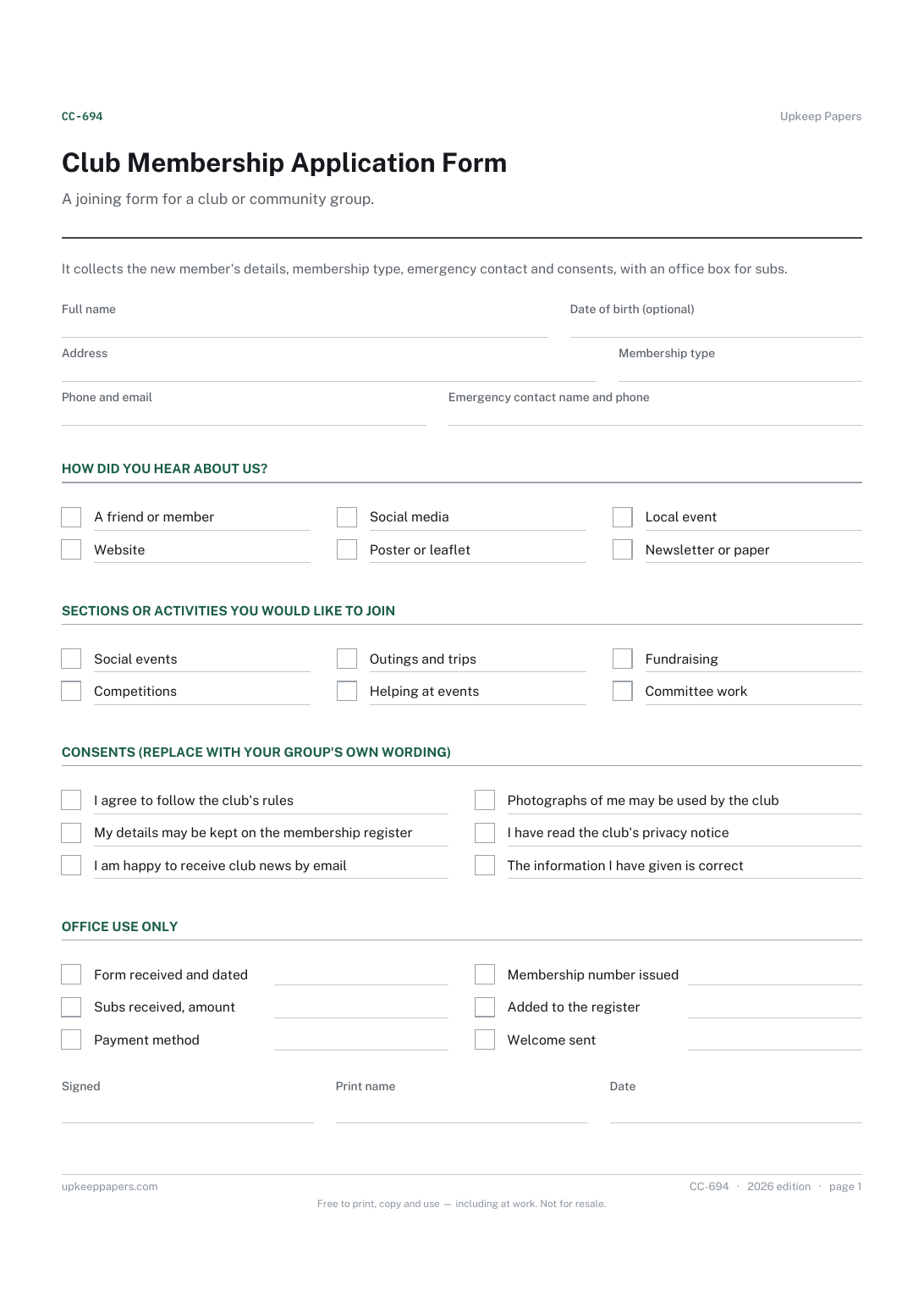
The new member's contact details and membership type.
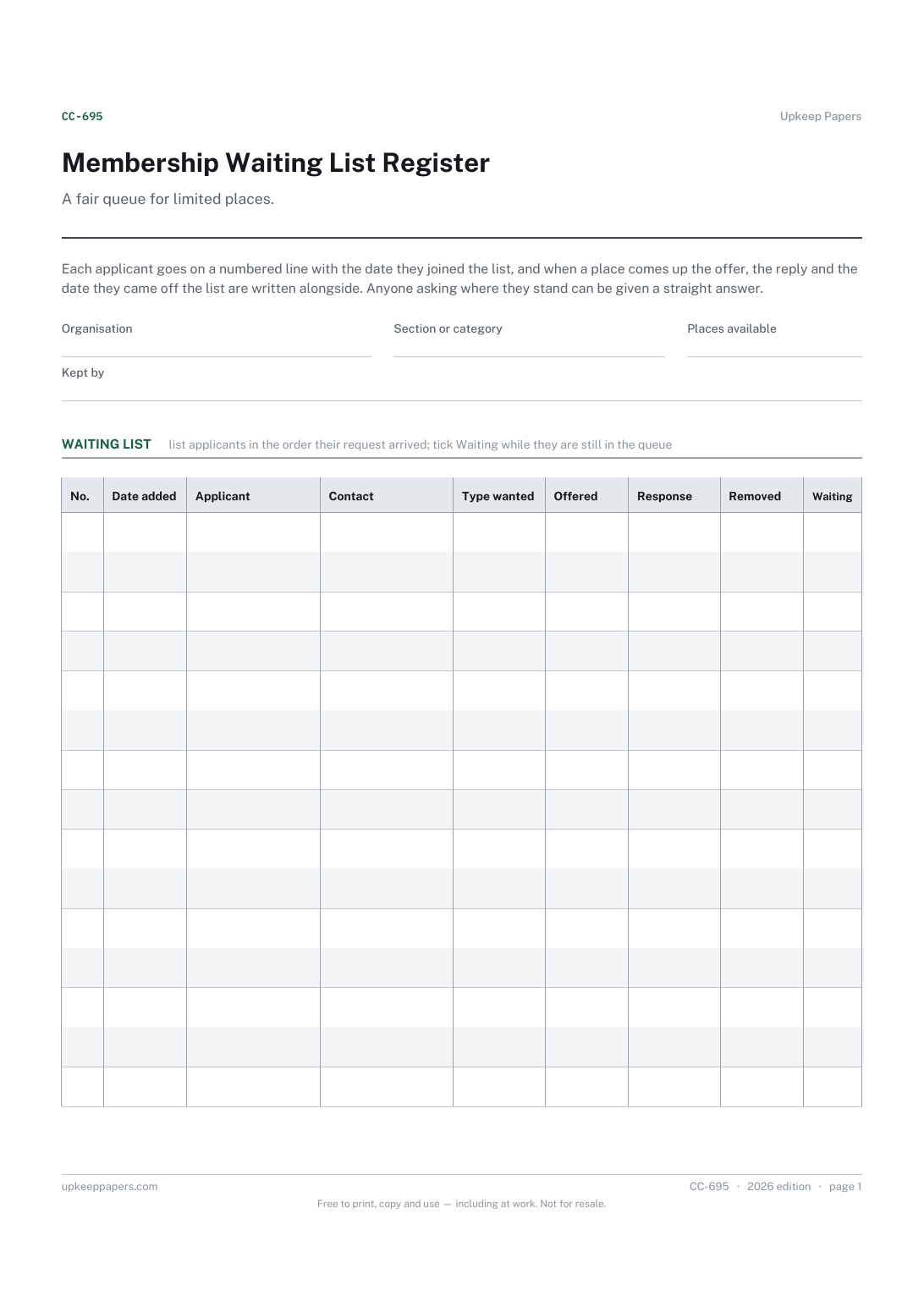
The section or category the list is for and the places it has.
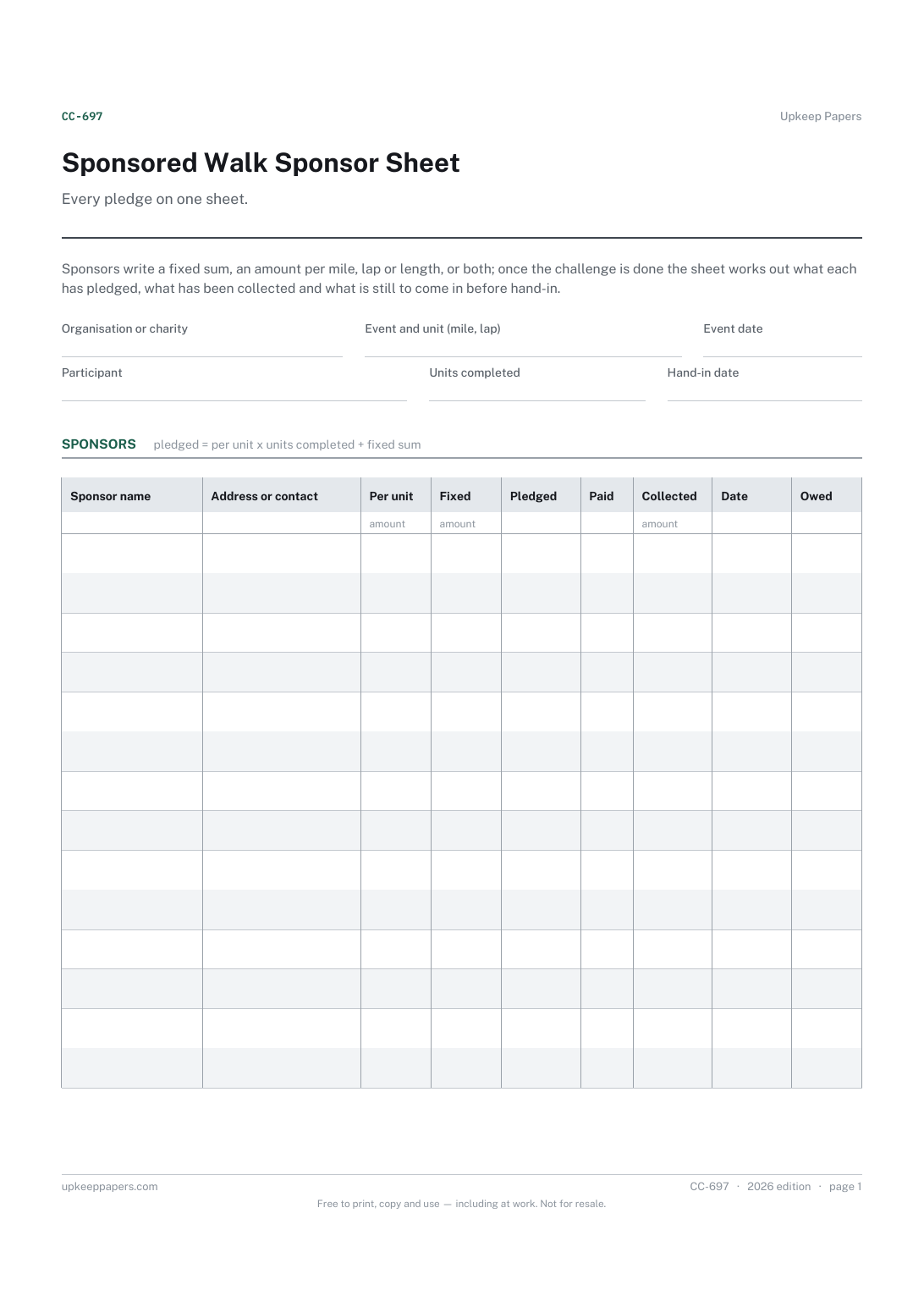
The event, the participant and the hand-in date.
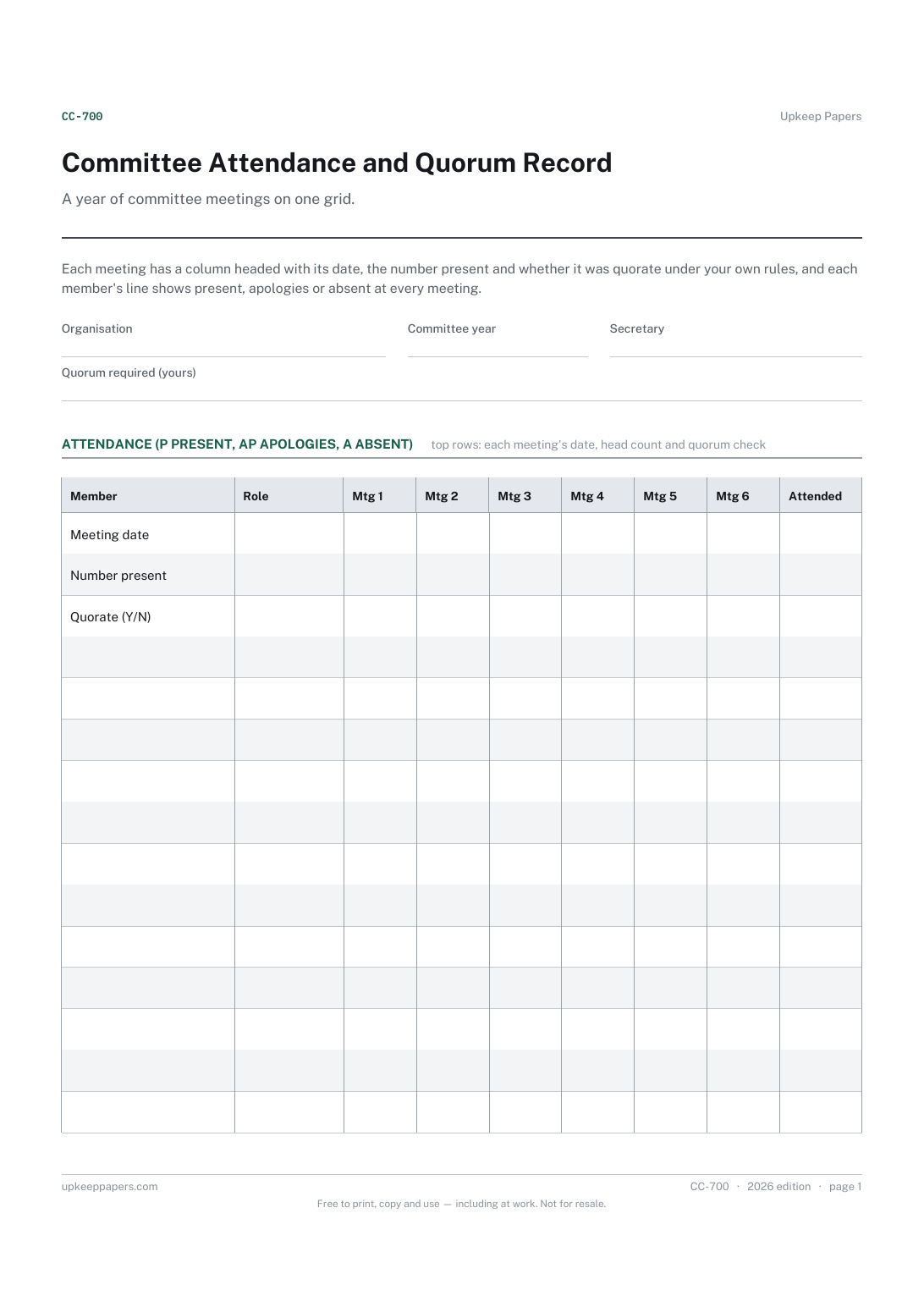
Each committee member and their role.
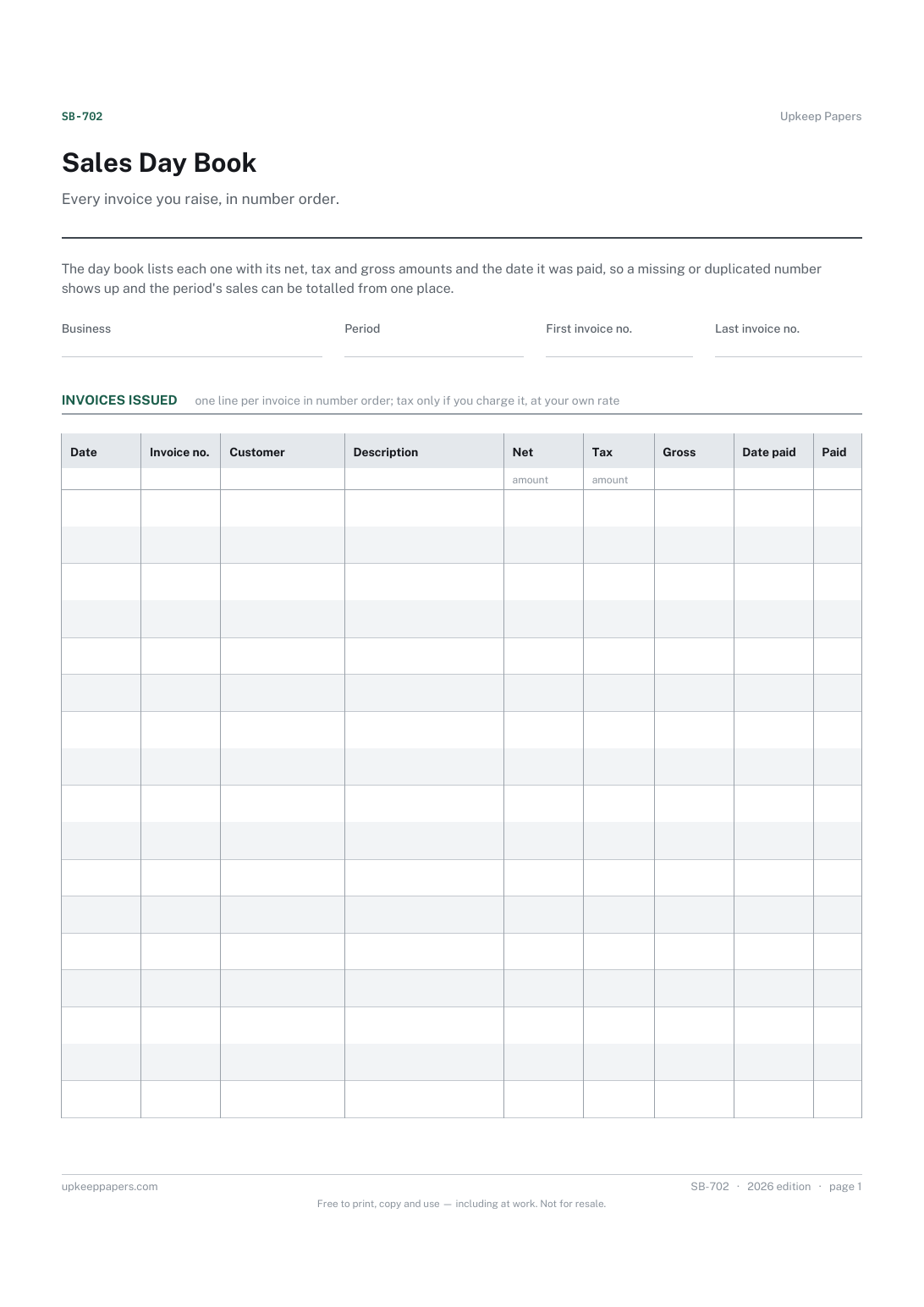
Every invoice issued, in date and number order.
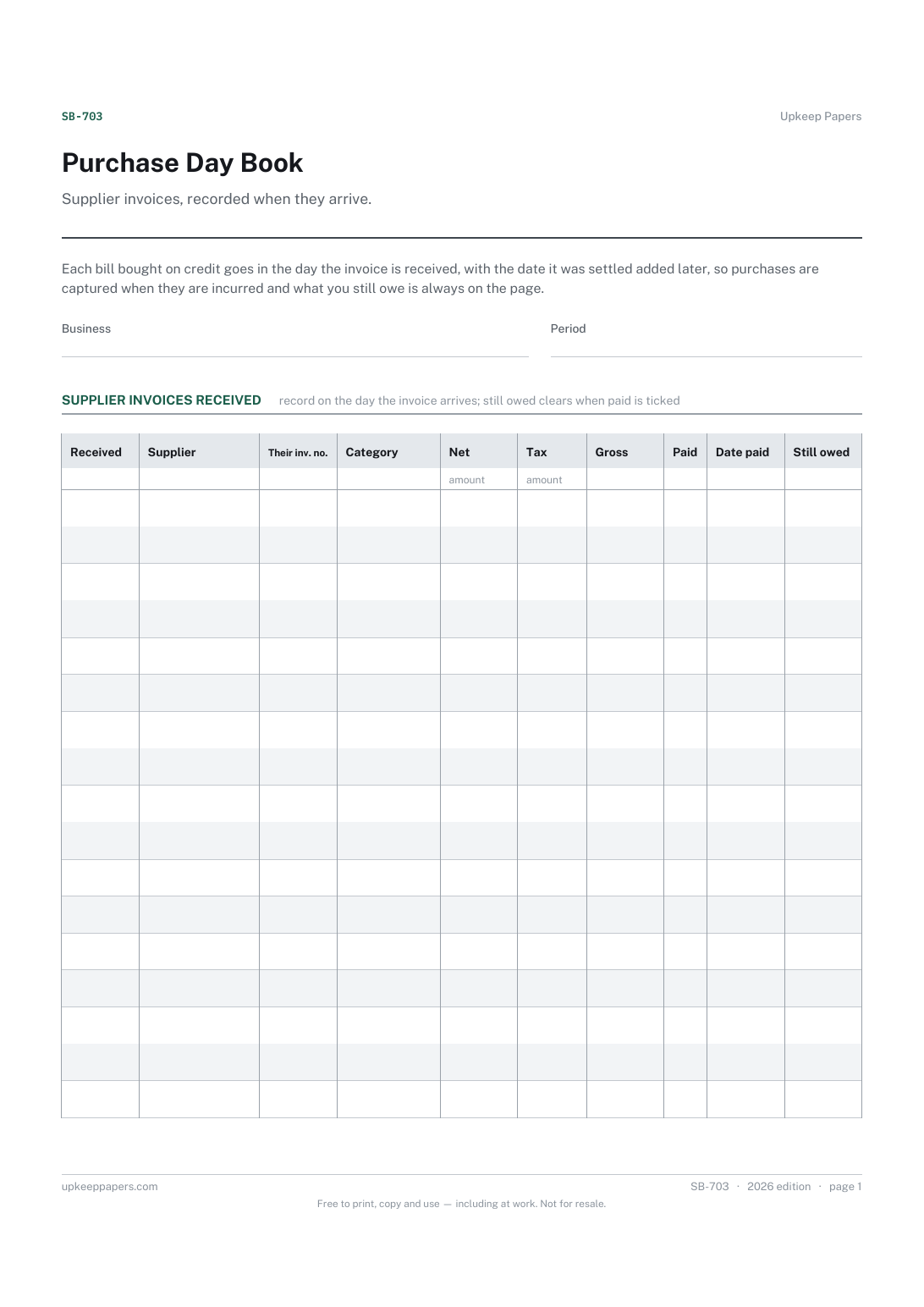
Every supplier invoice received, with its date and number.
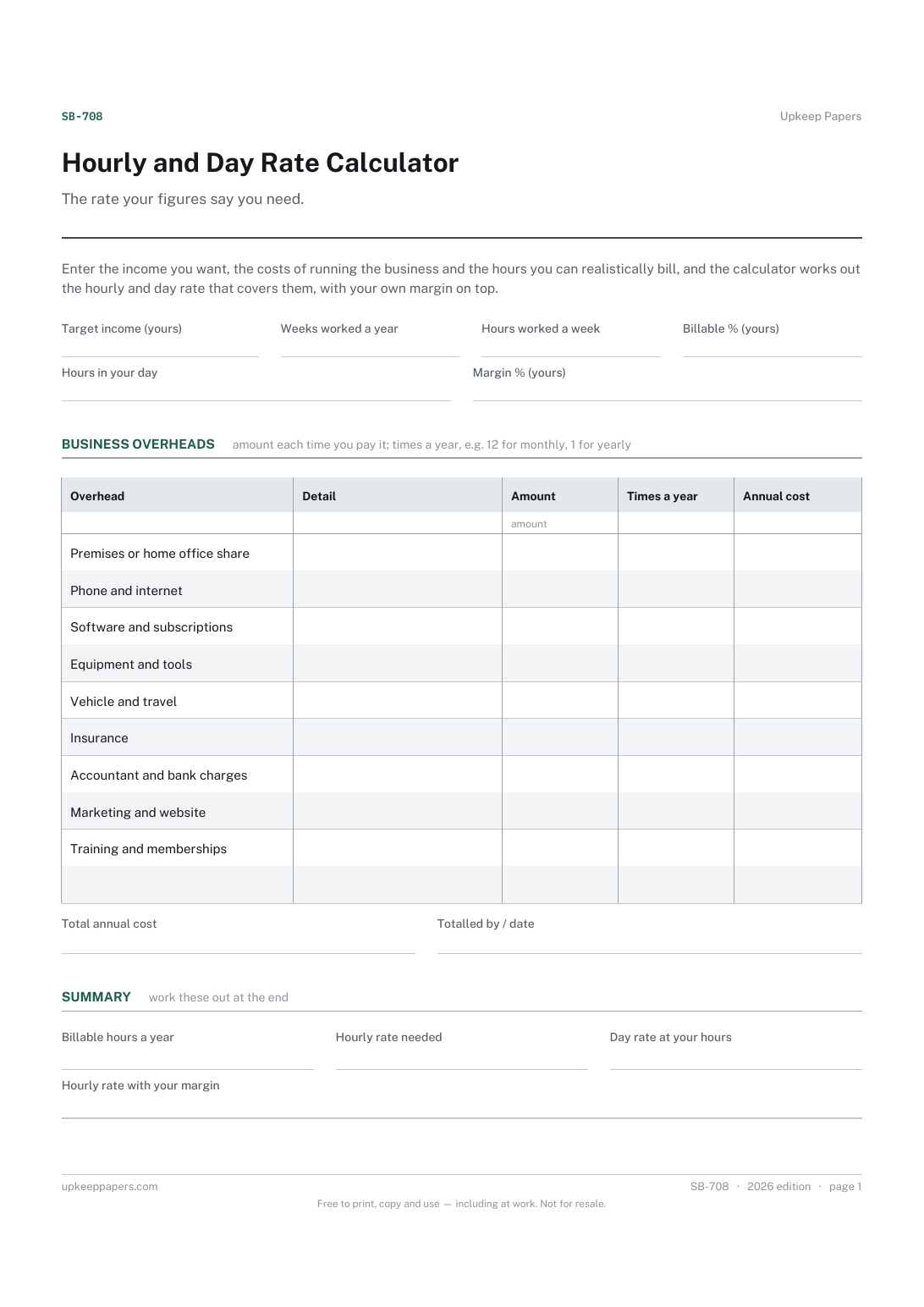
The income you want to take from the business in a year.
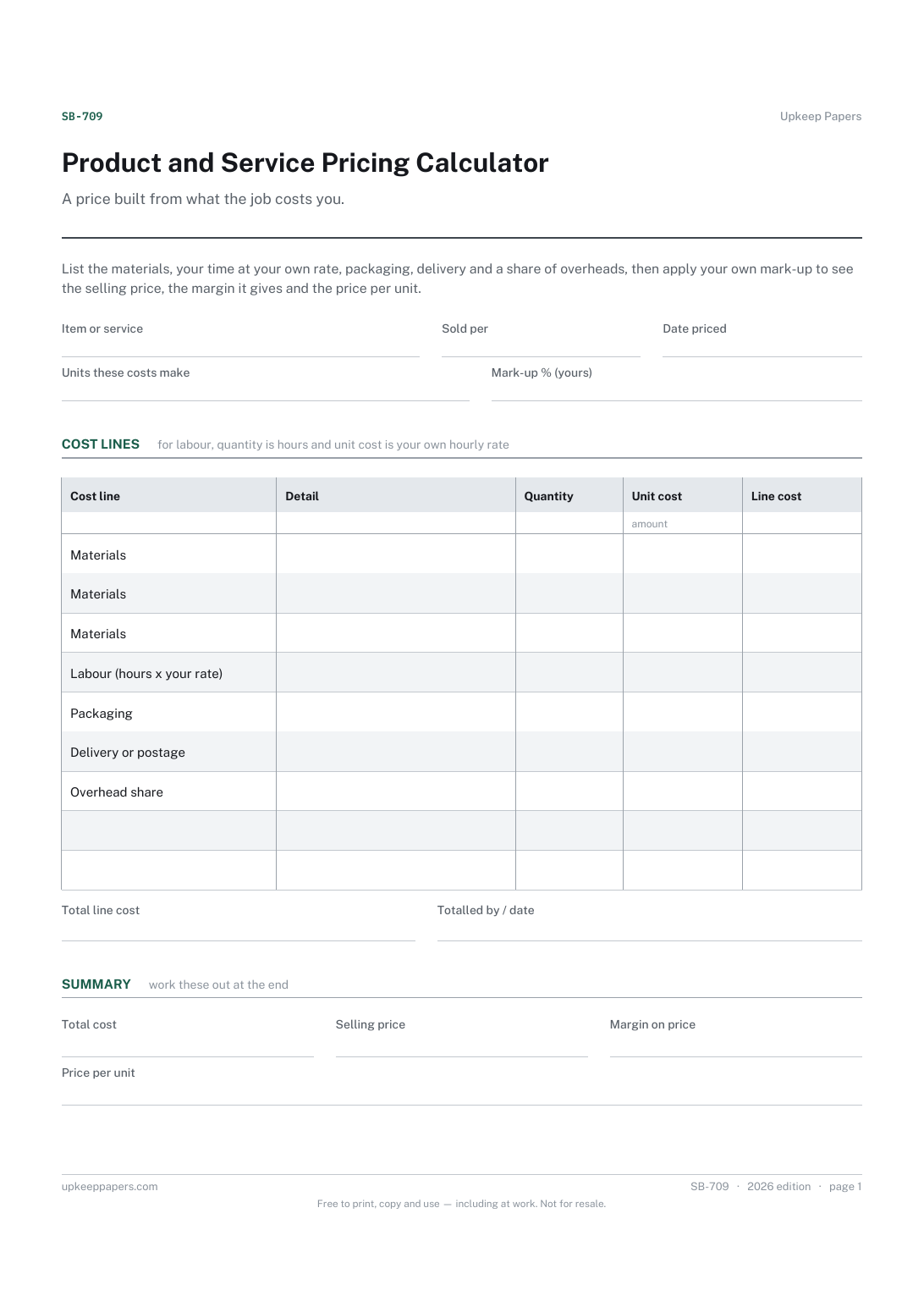
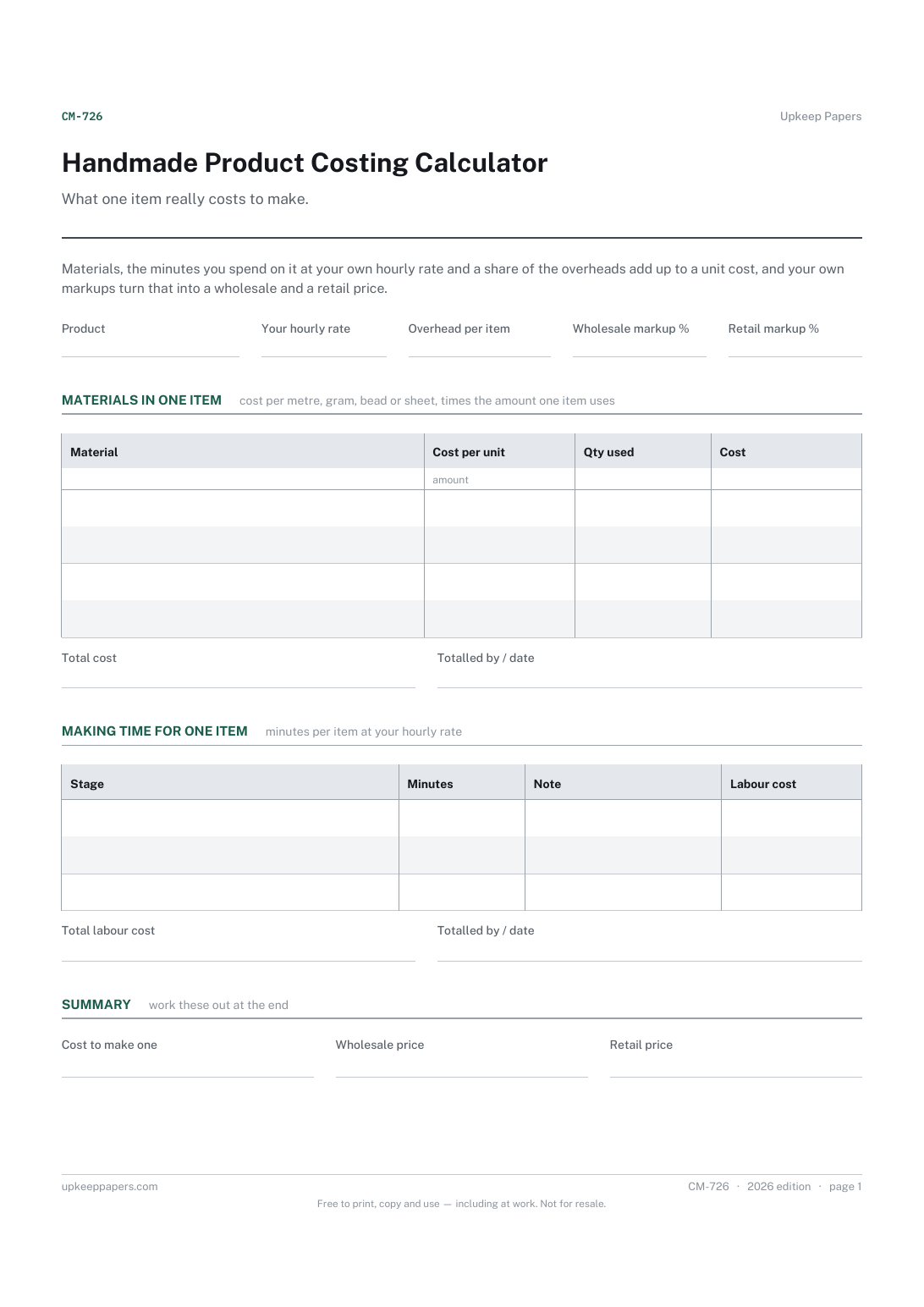
Every cost that goes into one item or one job.
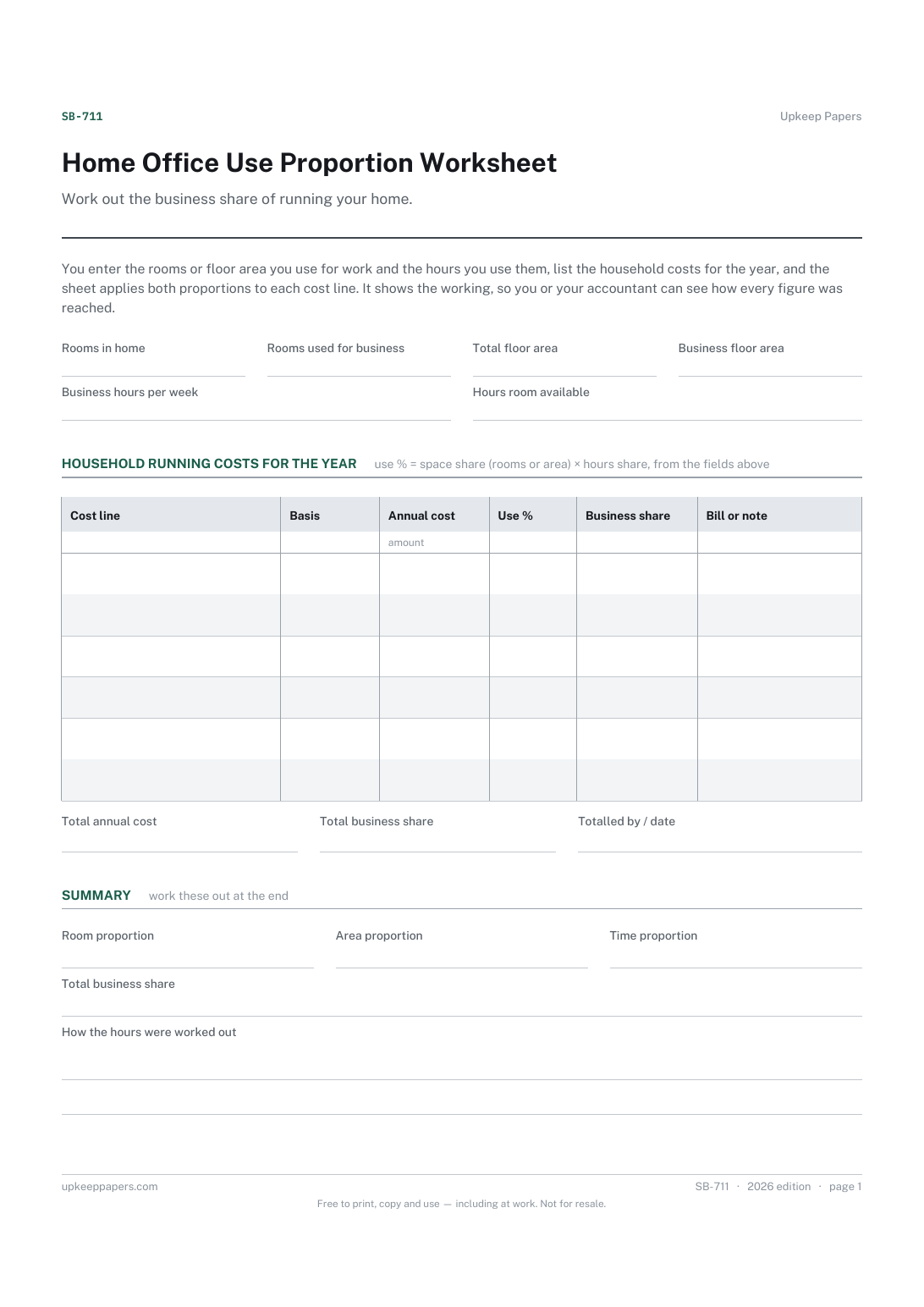
The room count and floor area of the home and of the space used for work.
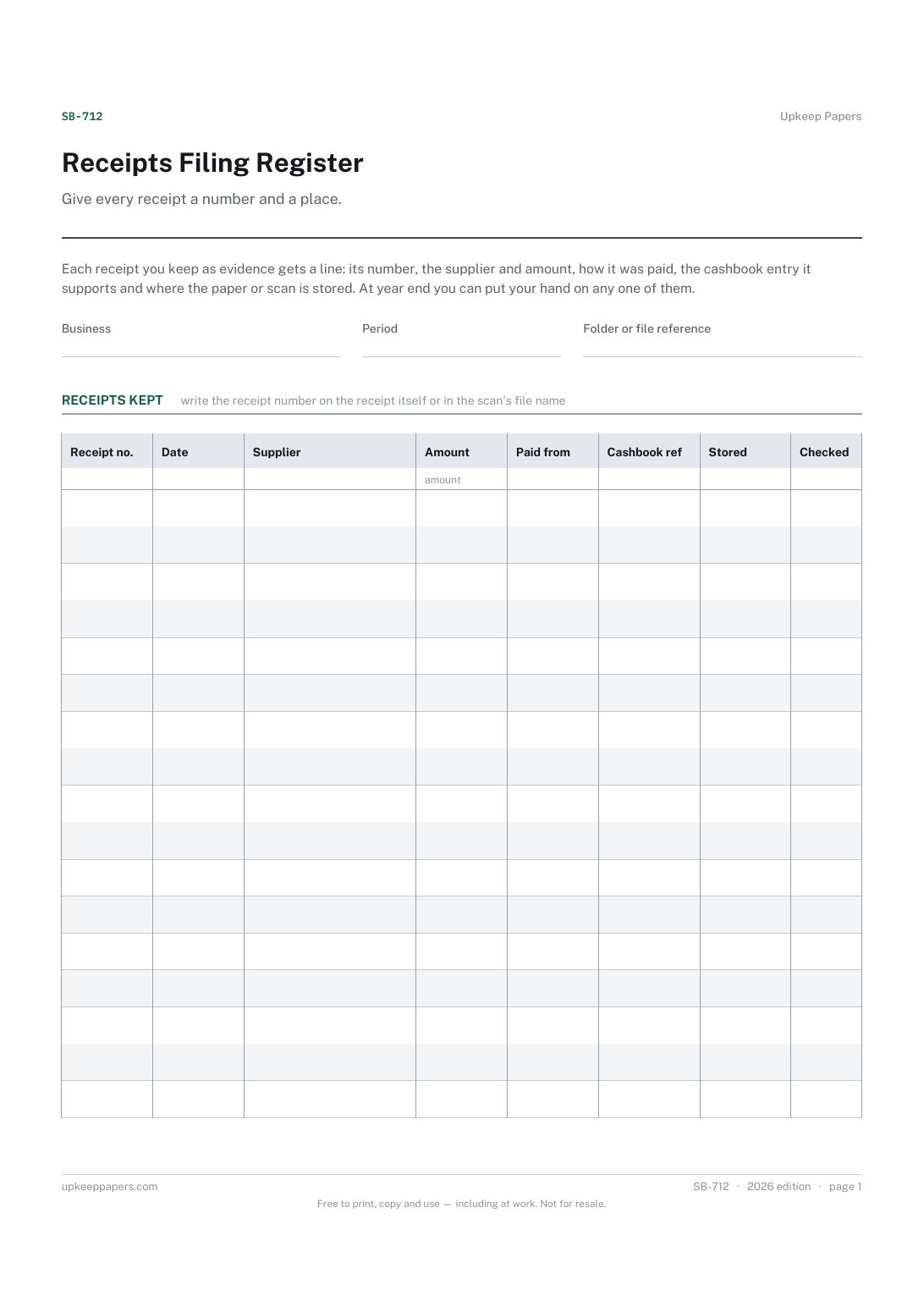
A running number written on each receipt and in the register.
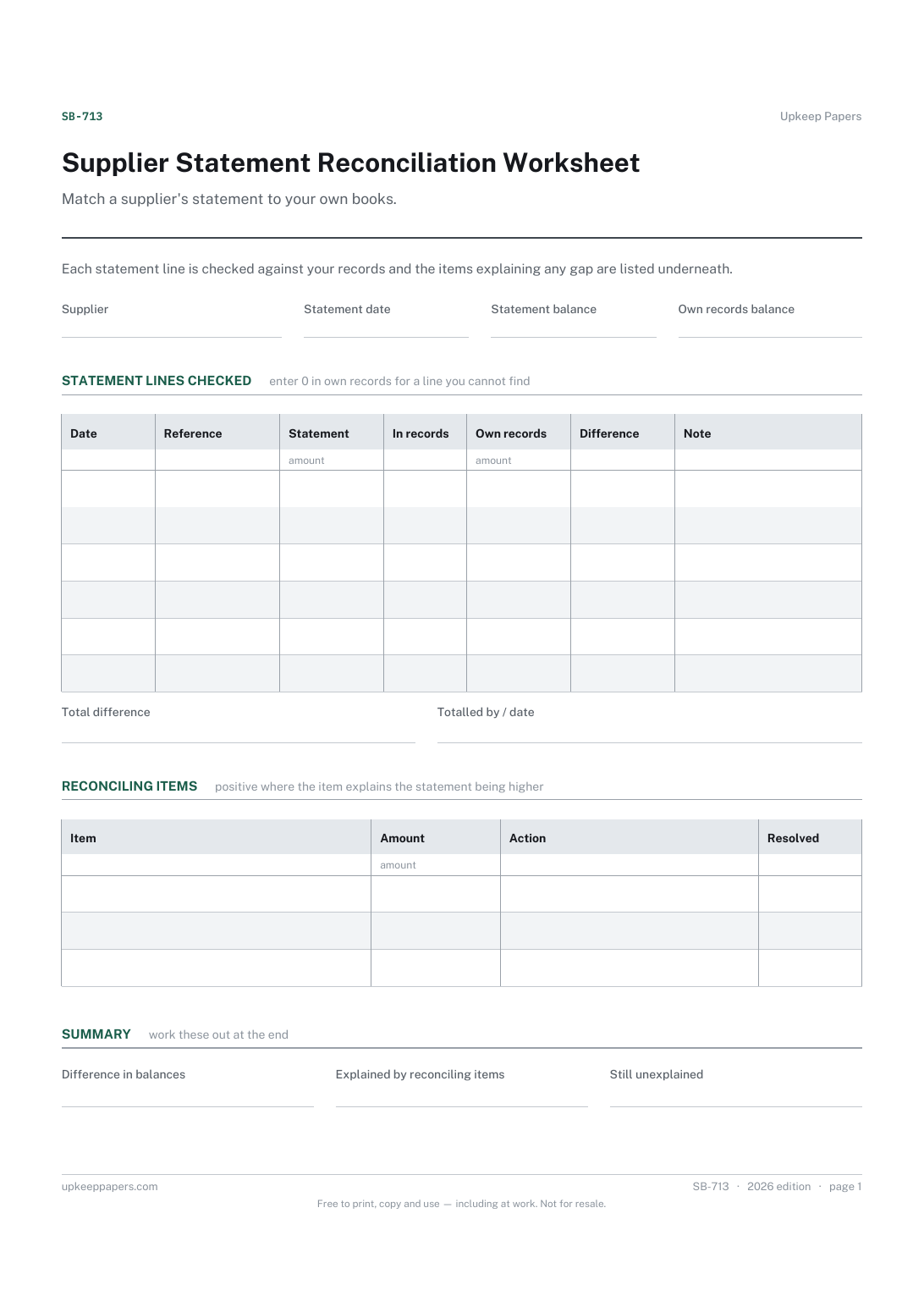
The statement balance and the balance your own records show.
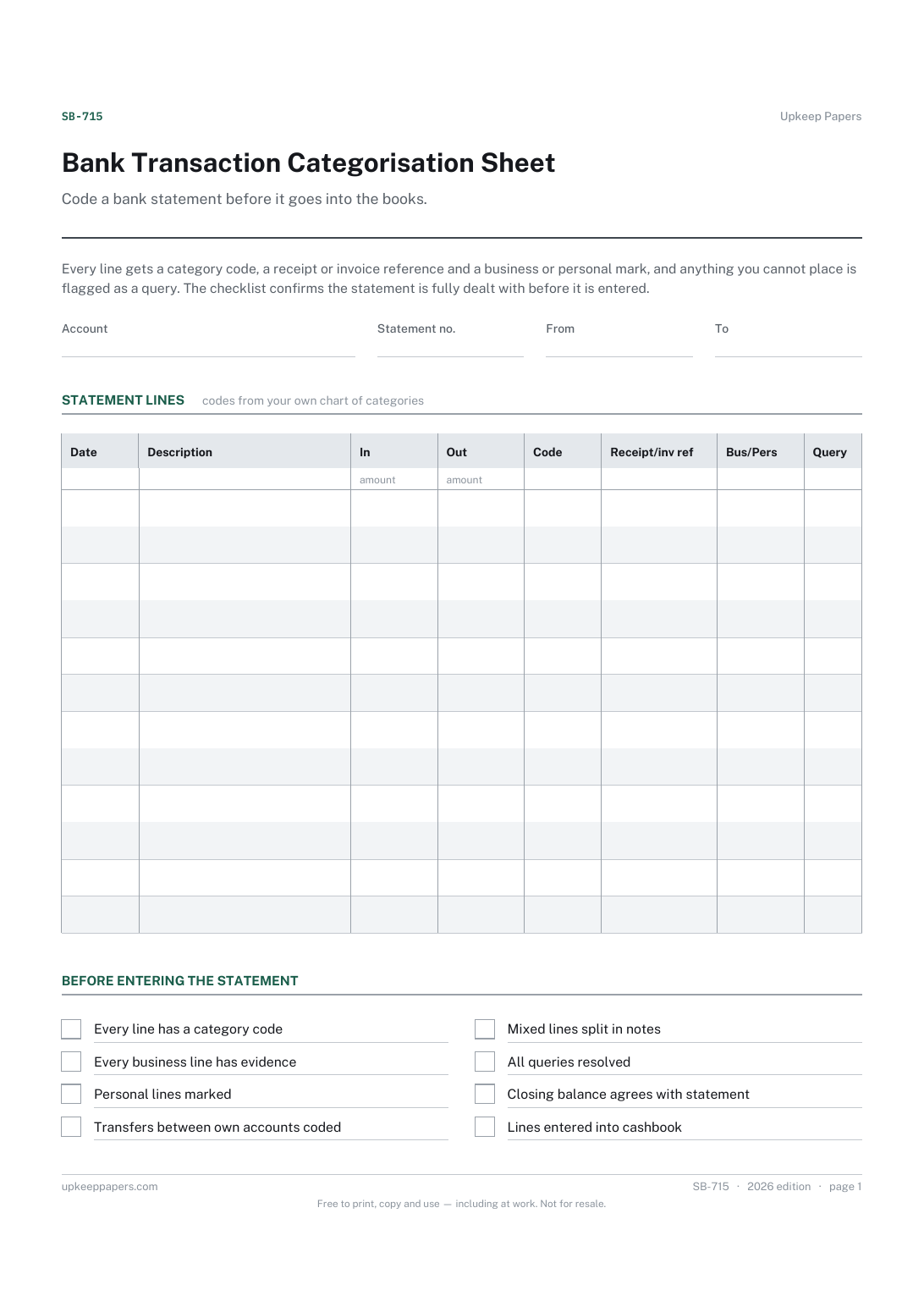
Each statement line with its money in or out.
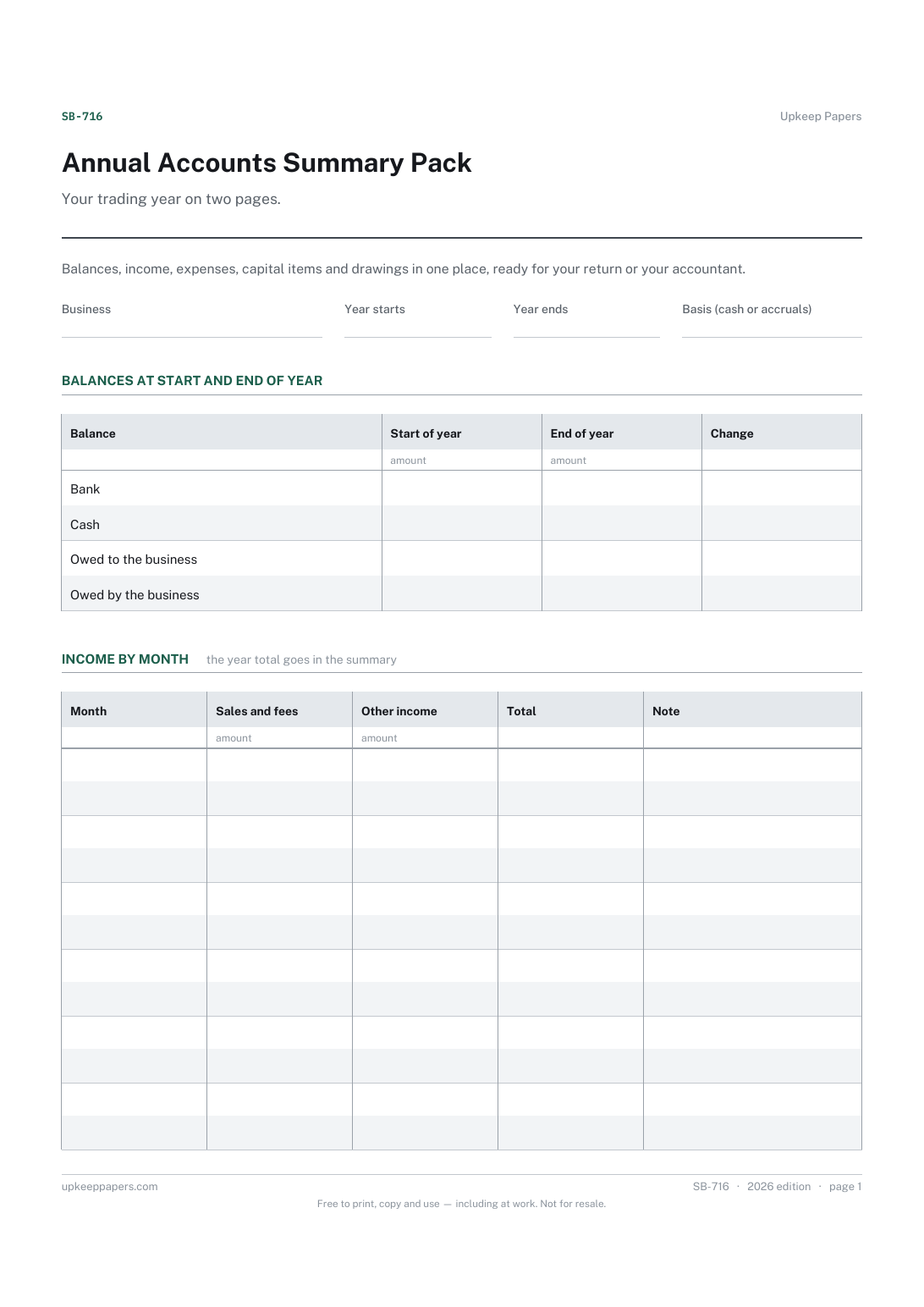
Income for each month of the trading year.
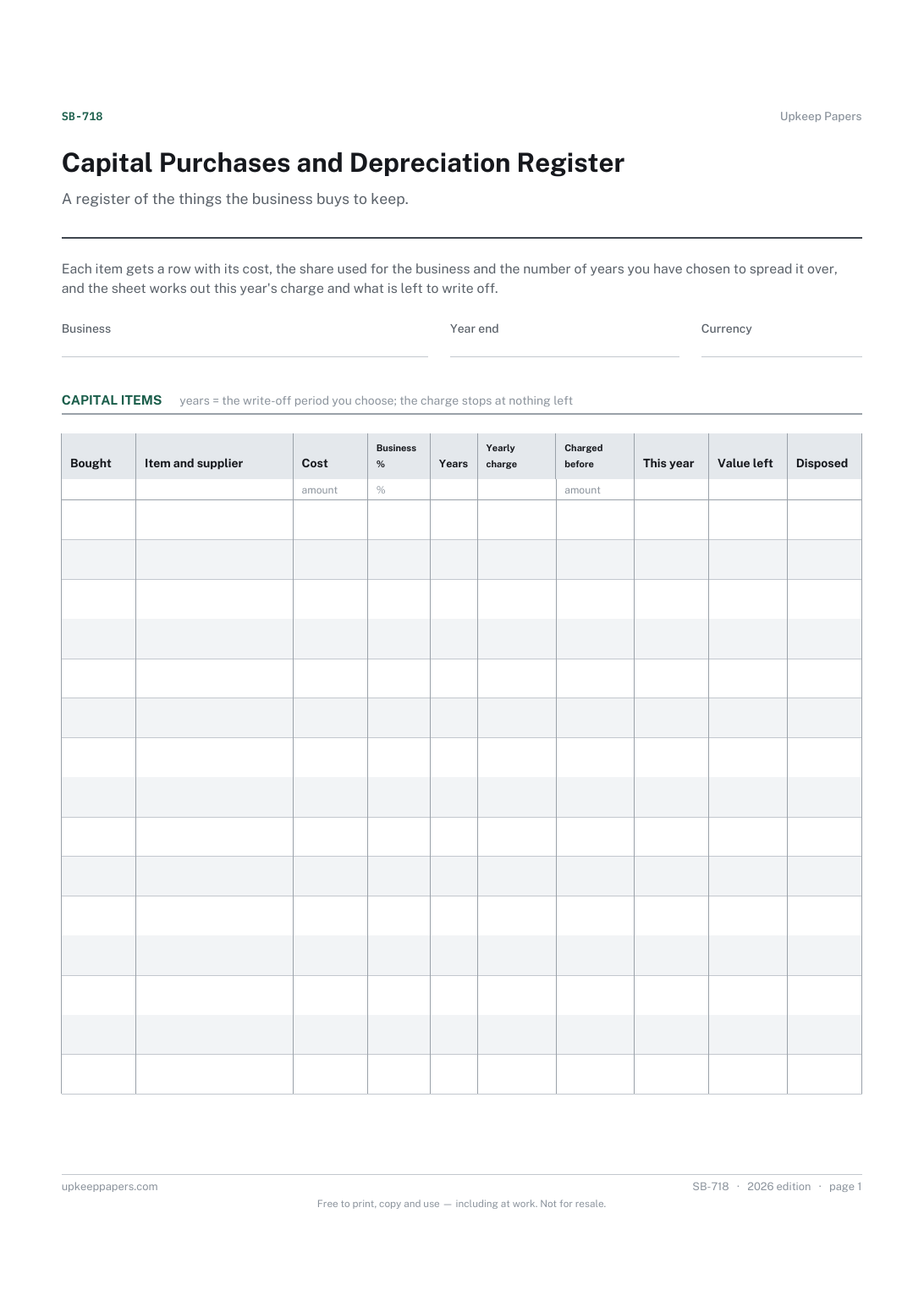
Every capital item bought, when and from whom.
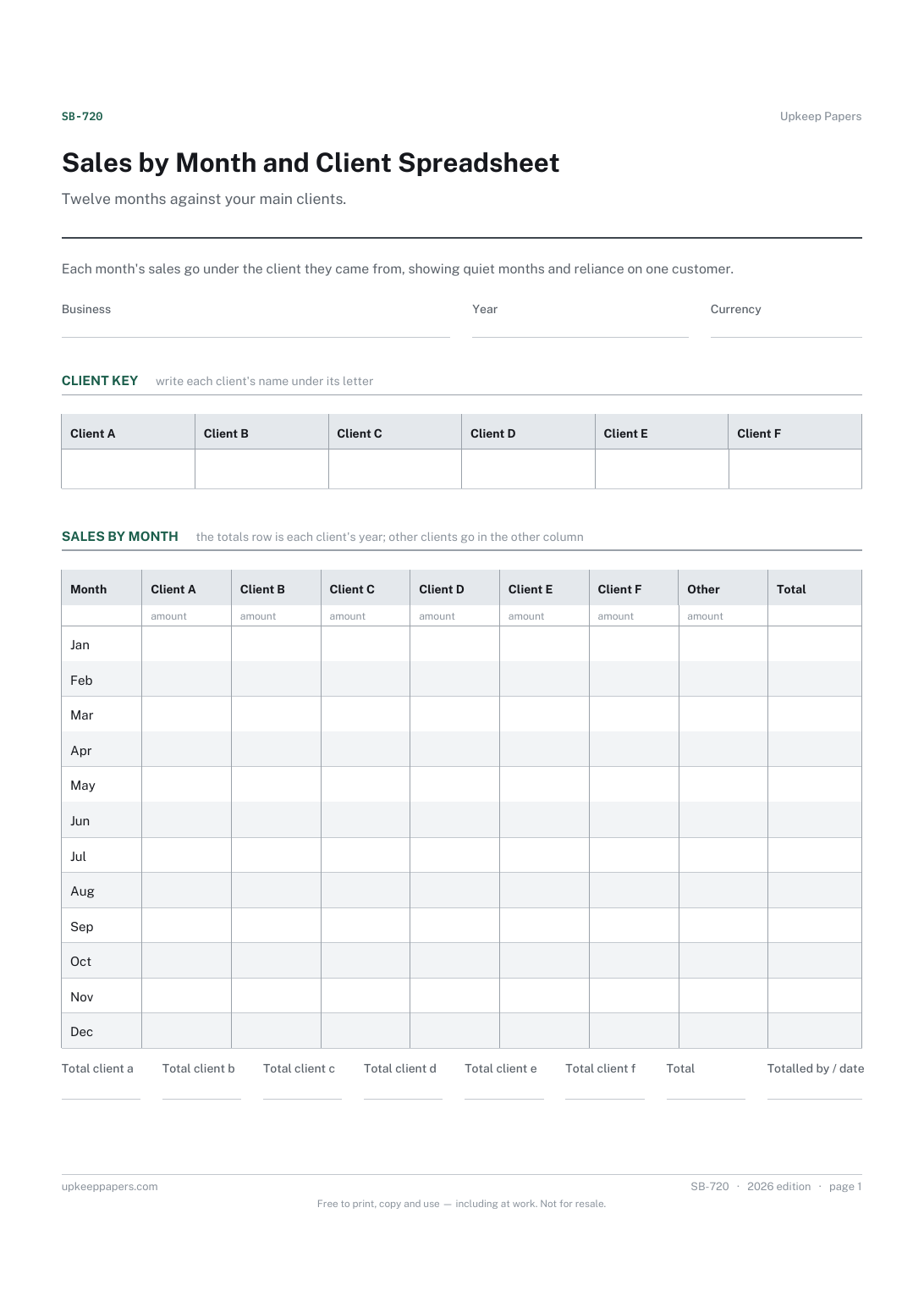
What each of your main clients brought in, month by month.
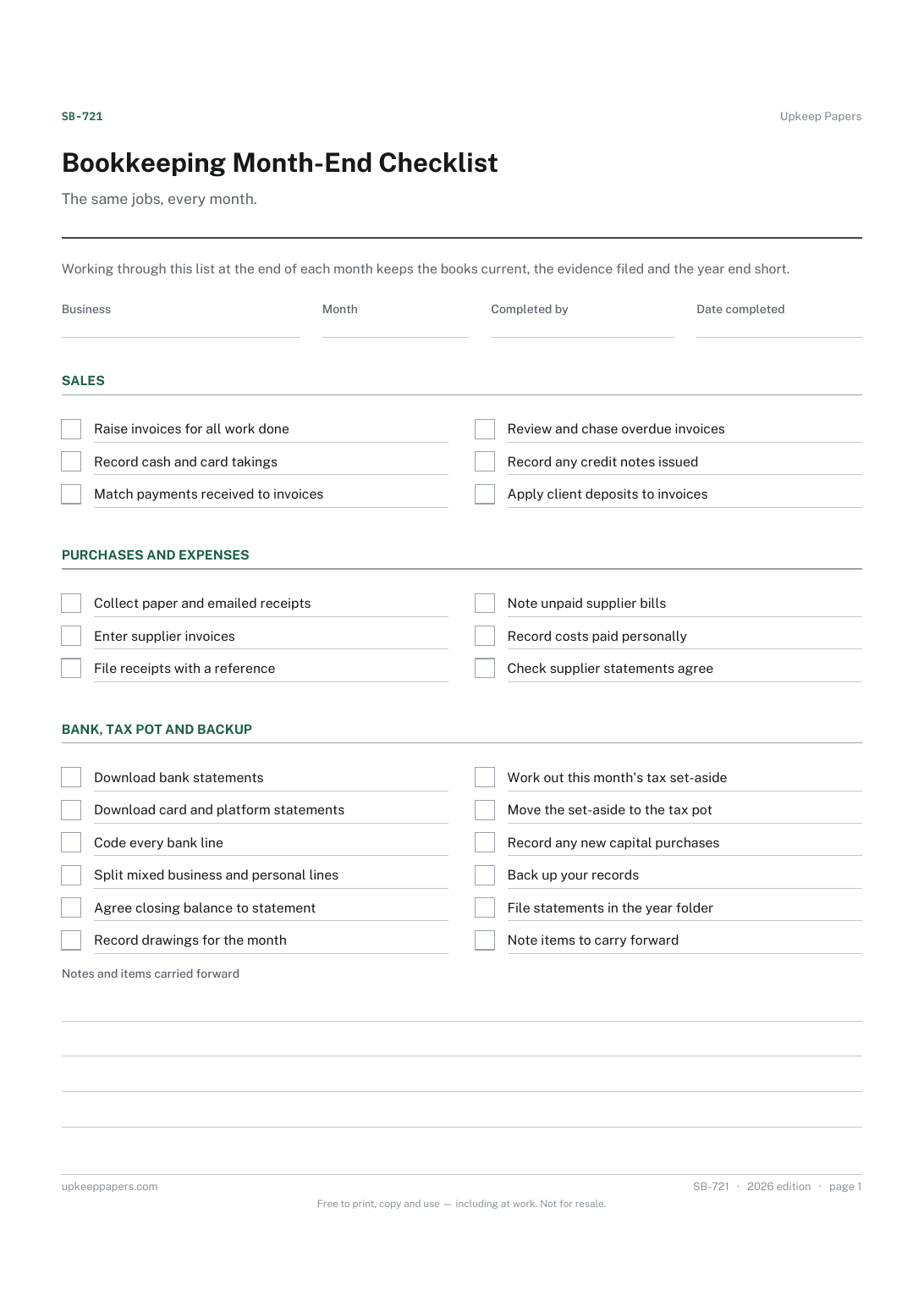
Sales invoiced, matched to payments and chased where overdue.
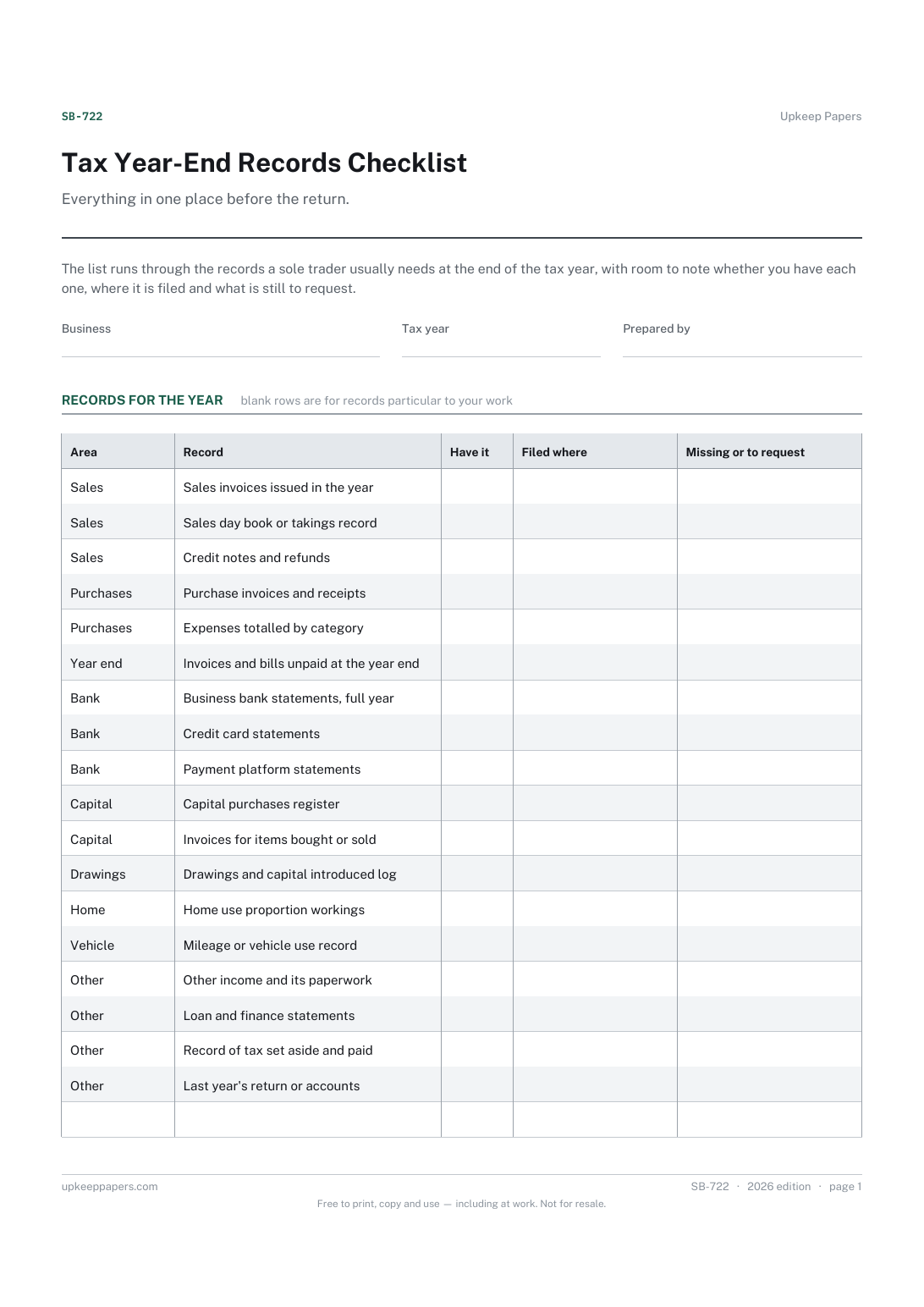
Sales, purchase and expense records for the year.
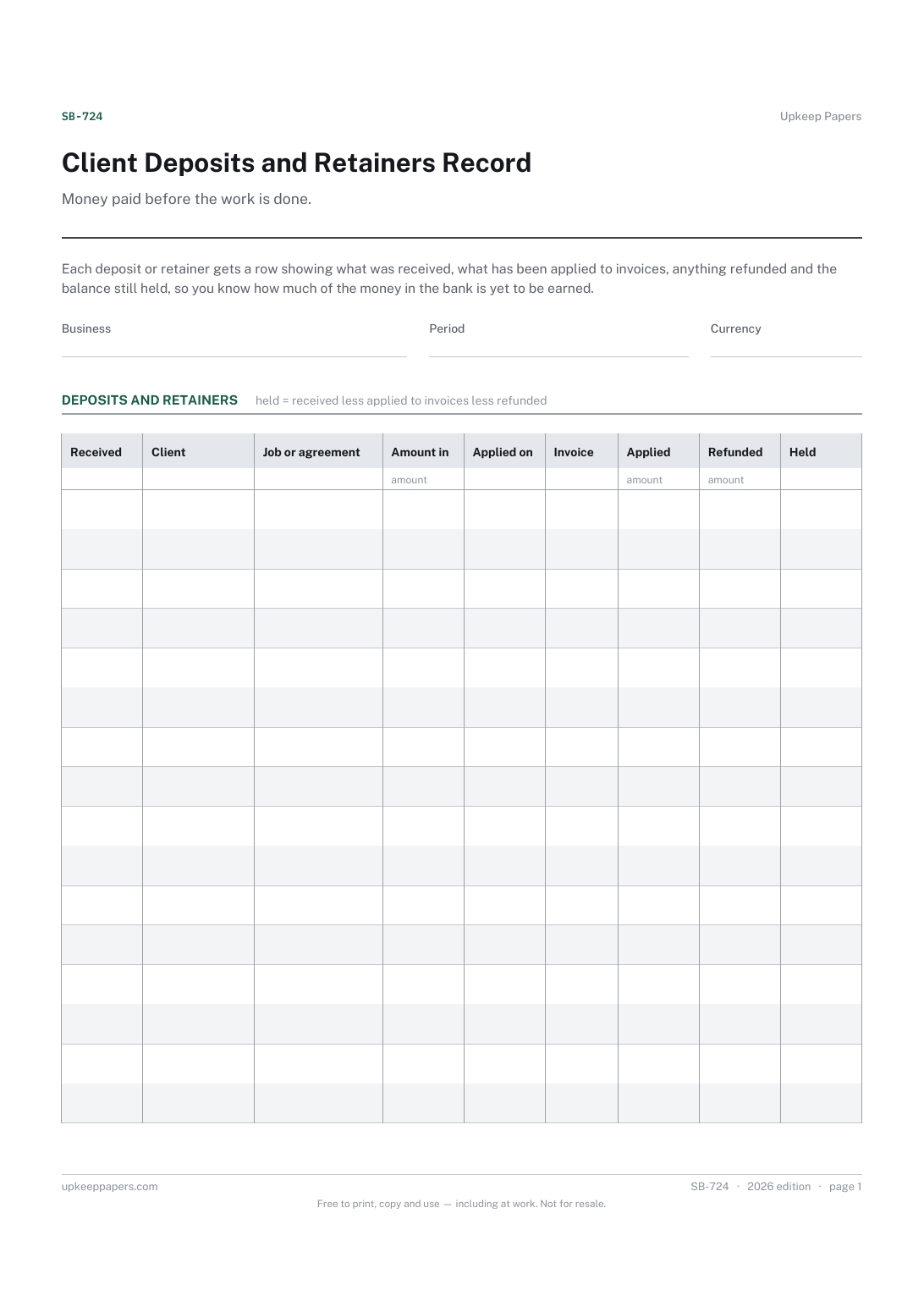
Every deposit or retainer received, by client and job.
Every material in the item and what the amount used actually costs.
Who the customer is and how to reach them.
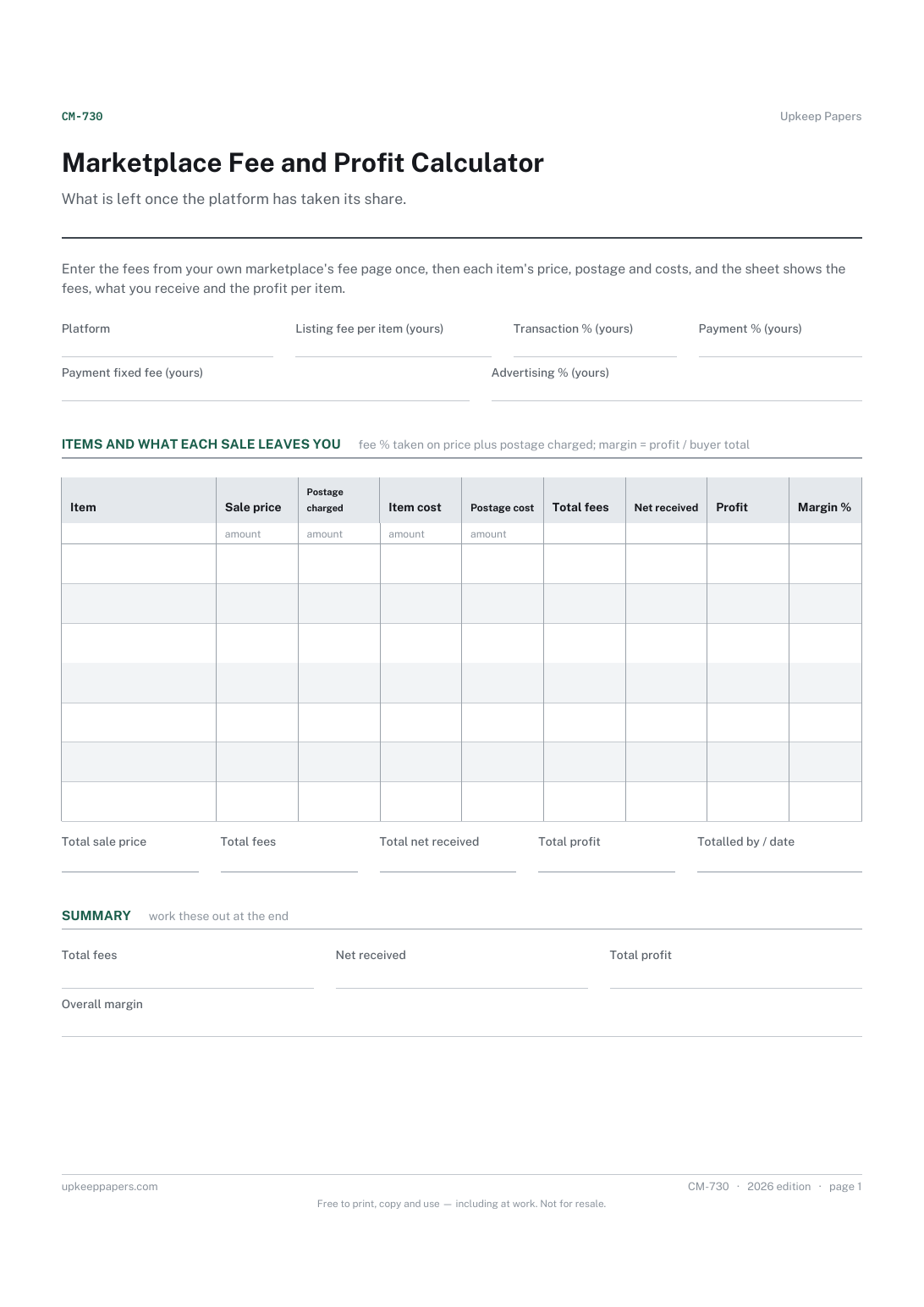
Your platform's fees, entered once from its own fee page.
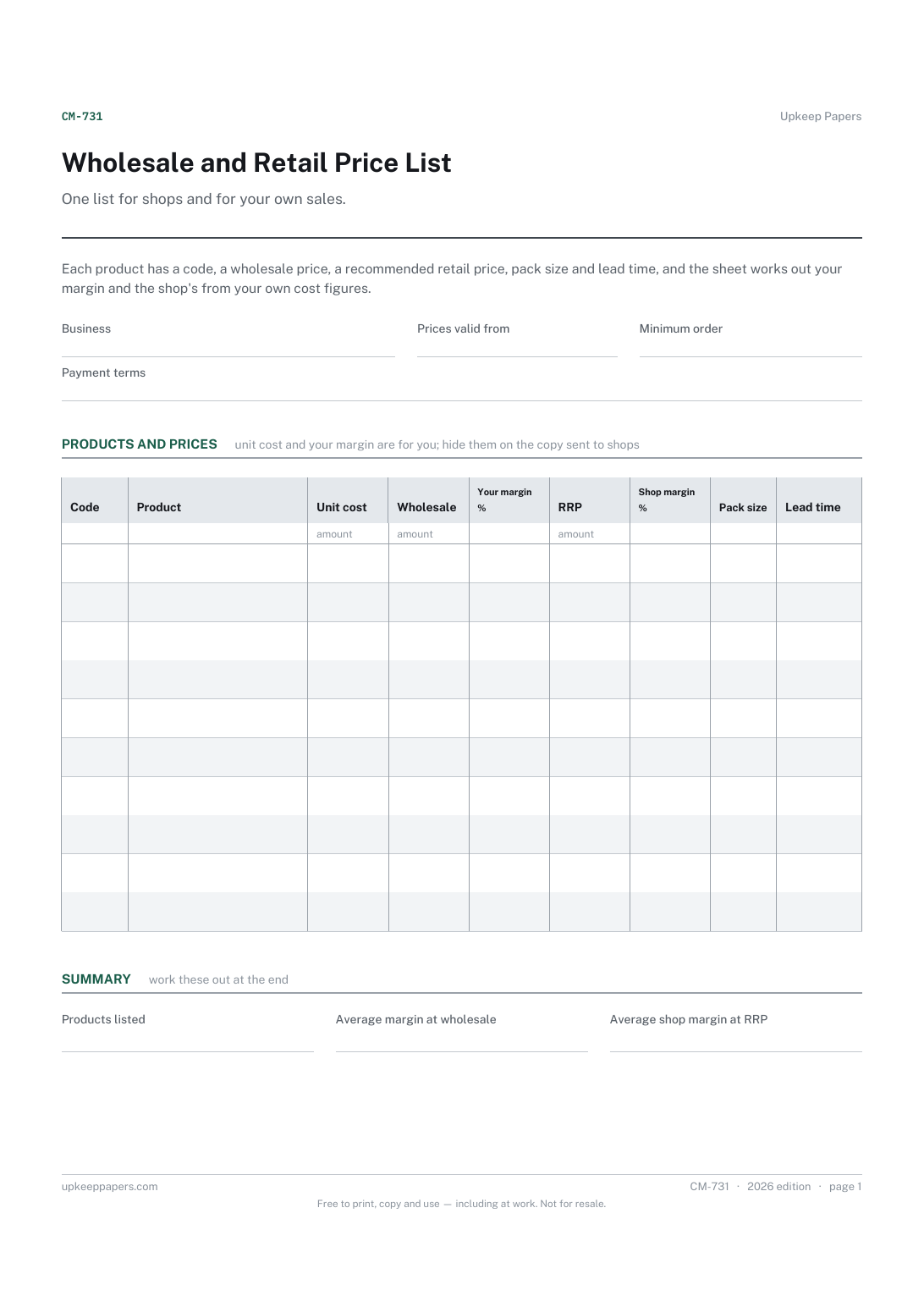
Your terms: minimum order, payment terms and the date prices apply from.
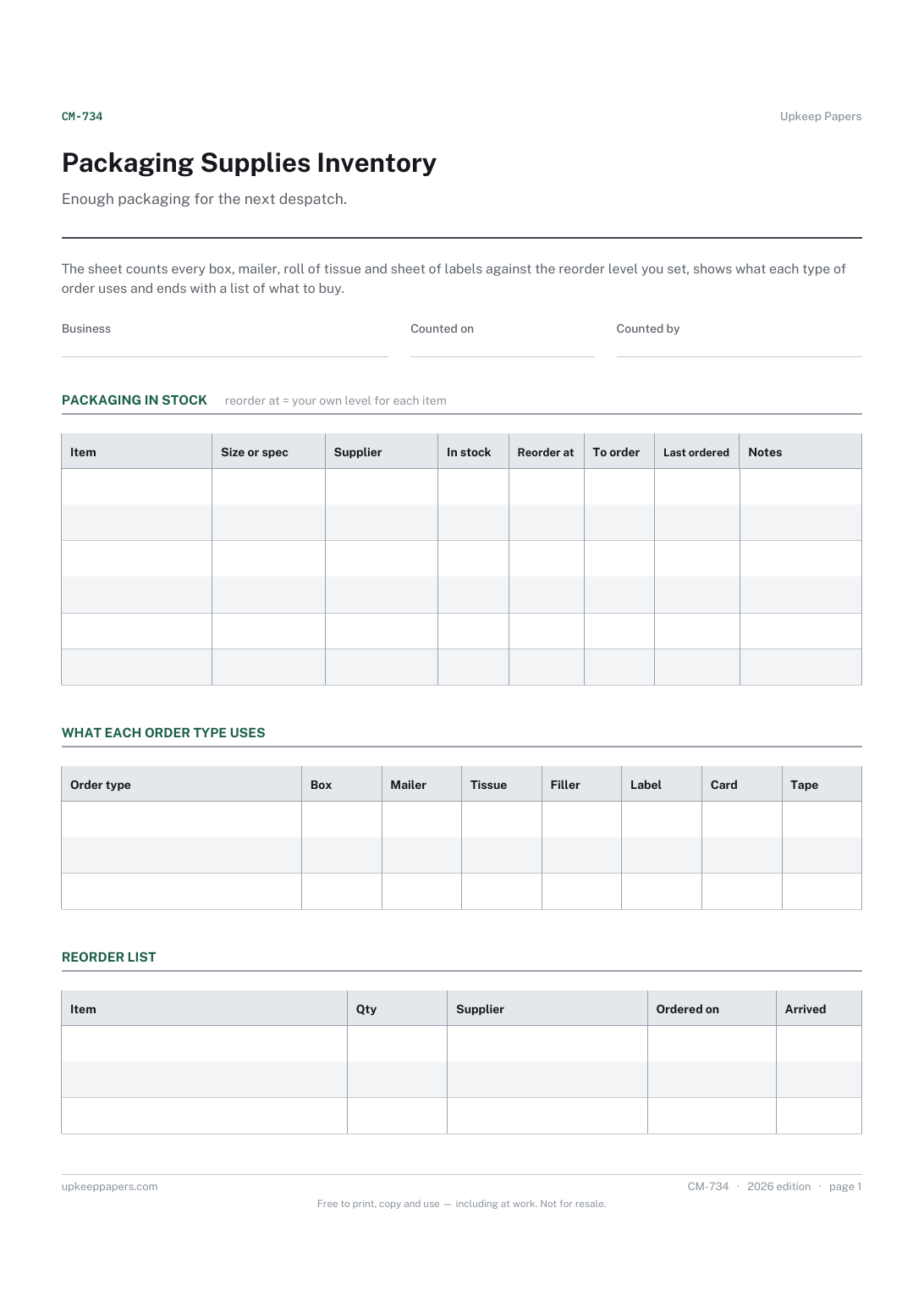
Every packaging item, its size and where it comes from.
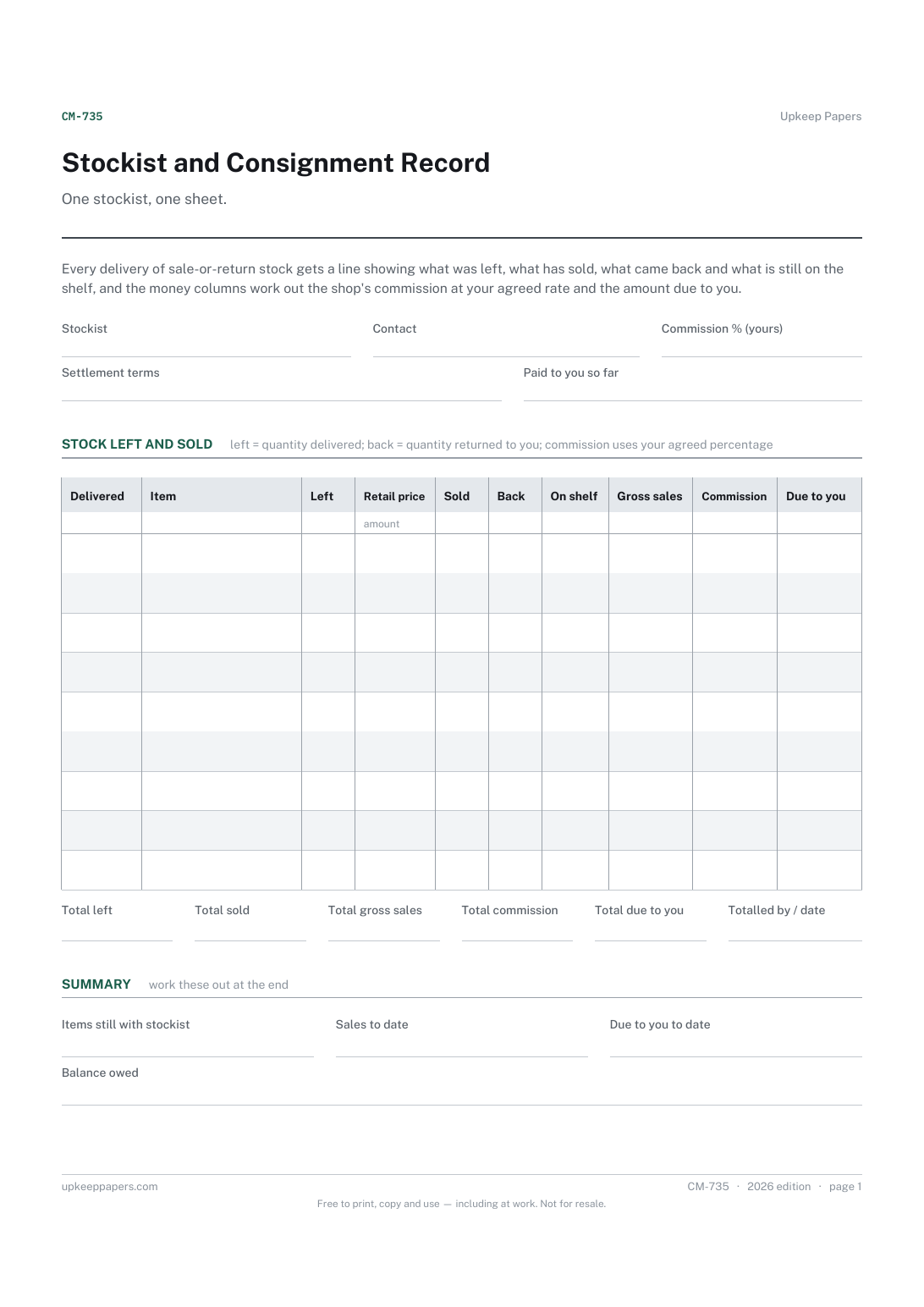
What was delivered to each stockist, and when.
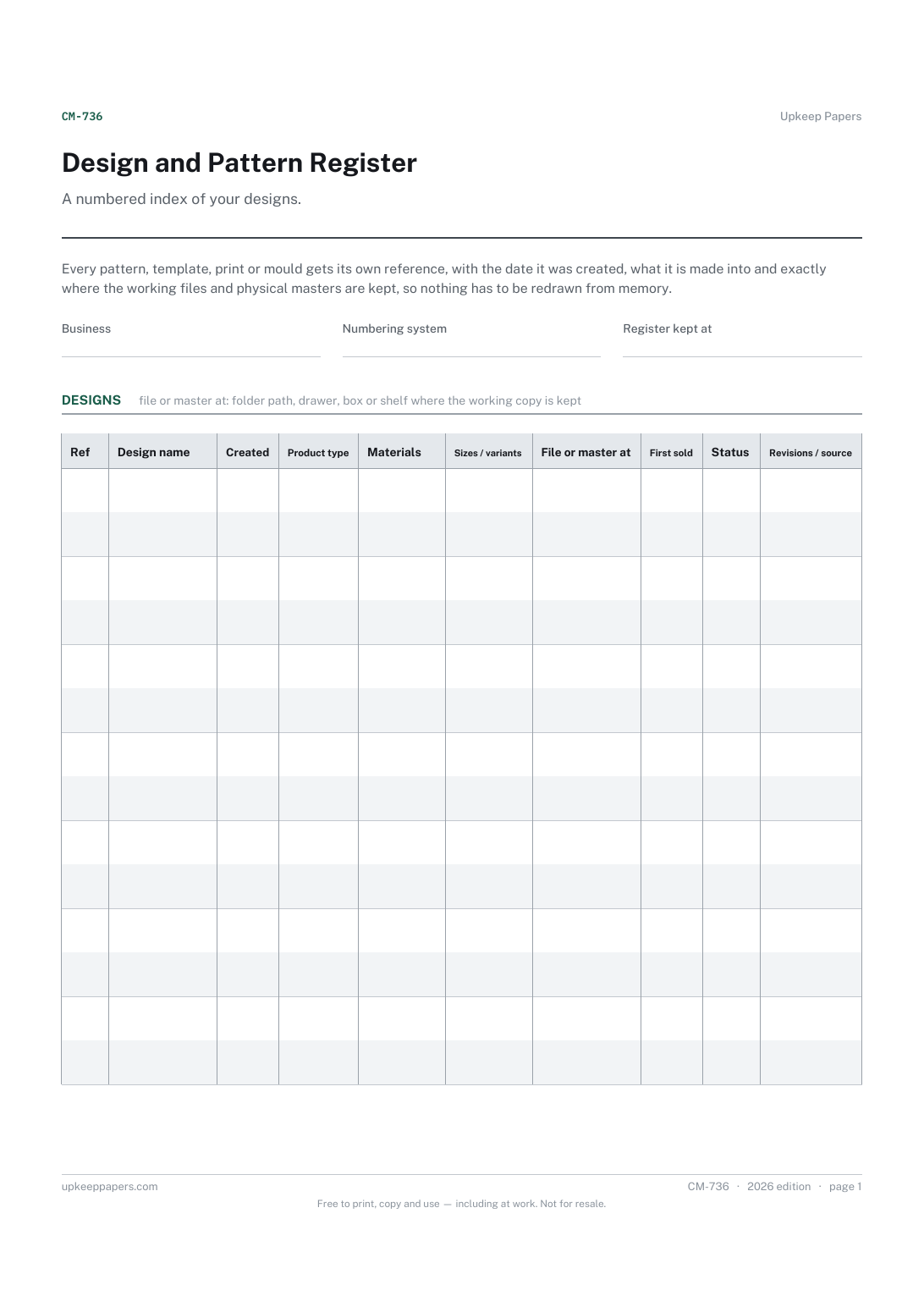
A unique reference number for every design.
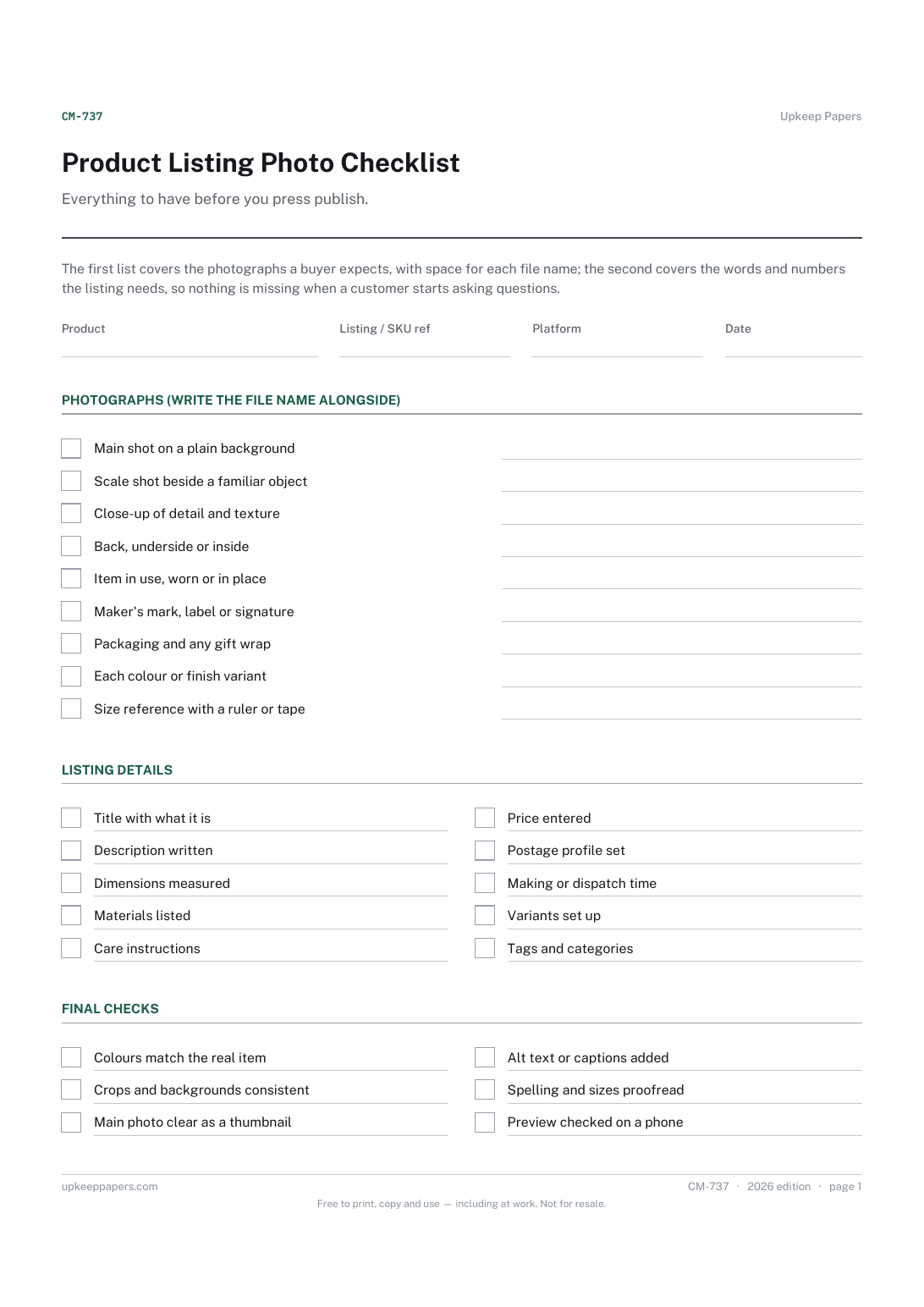
Every photograph a listing needs, from main shot to packaging.
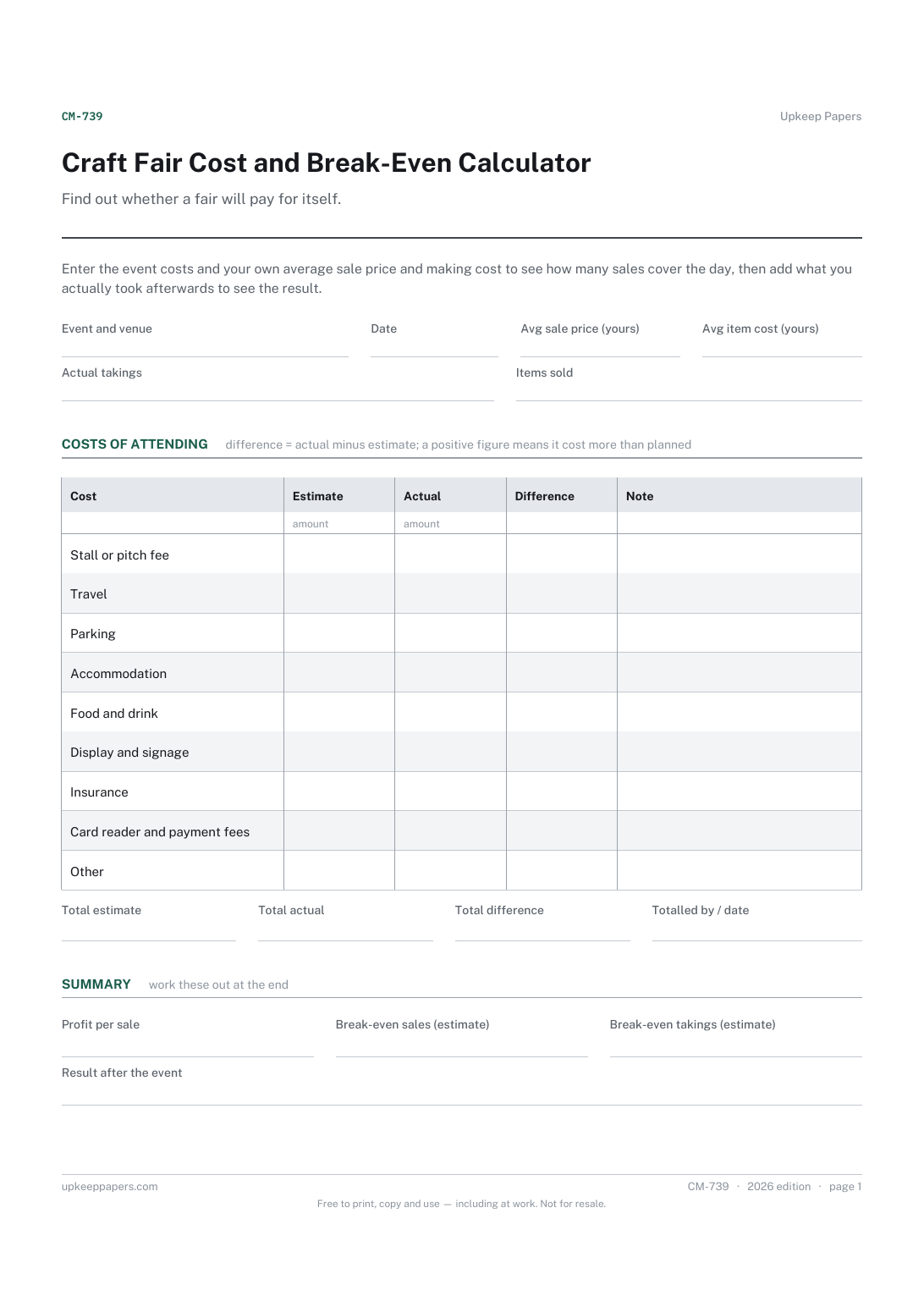
Every cost of attending, estimated and then actual.
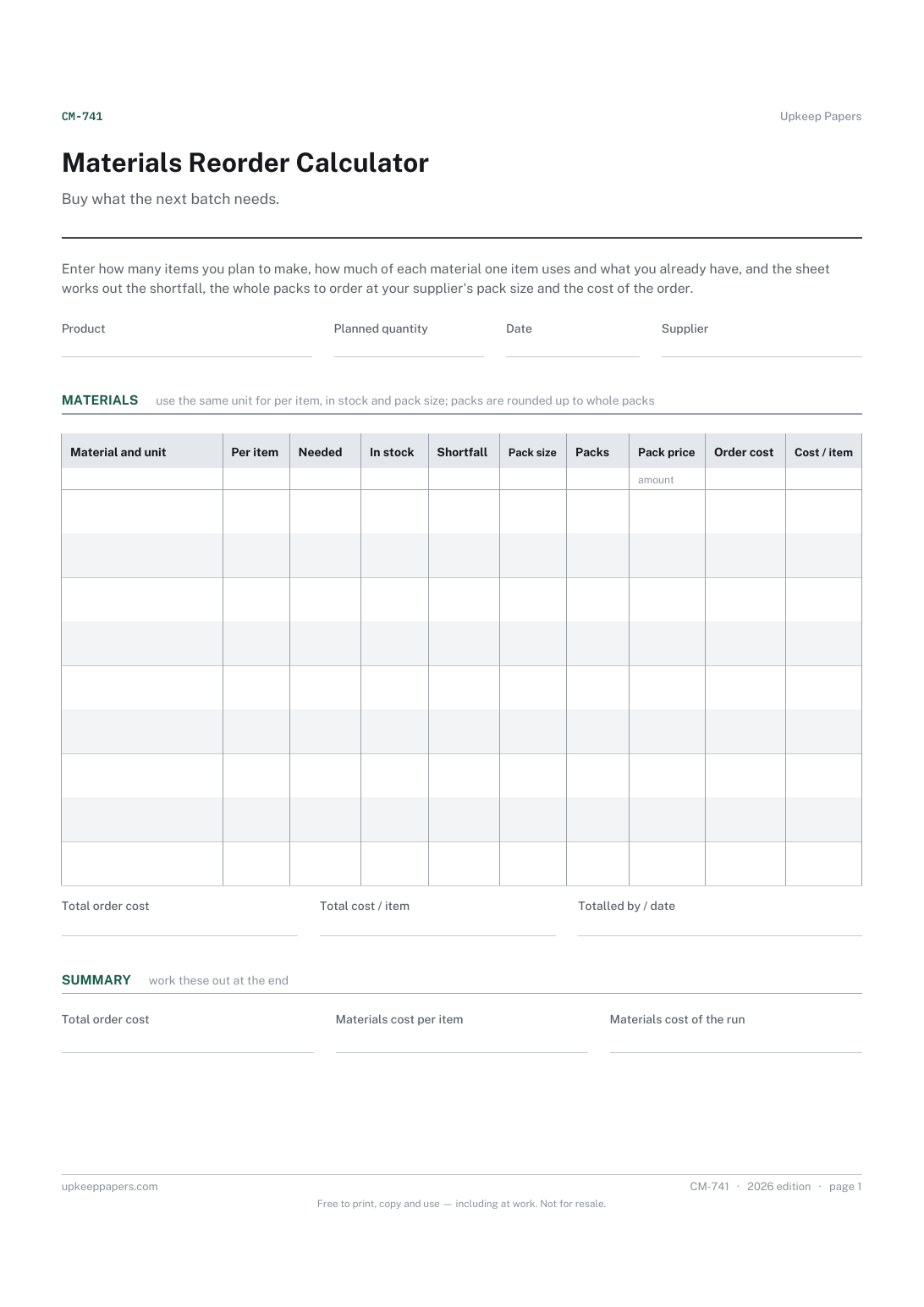
The total amount of each material a planned run needs.
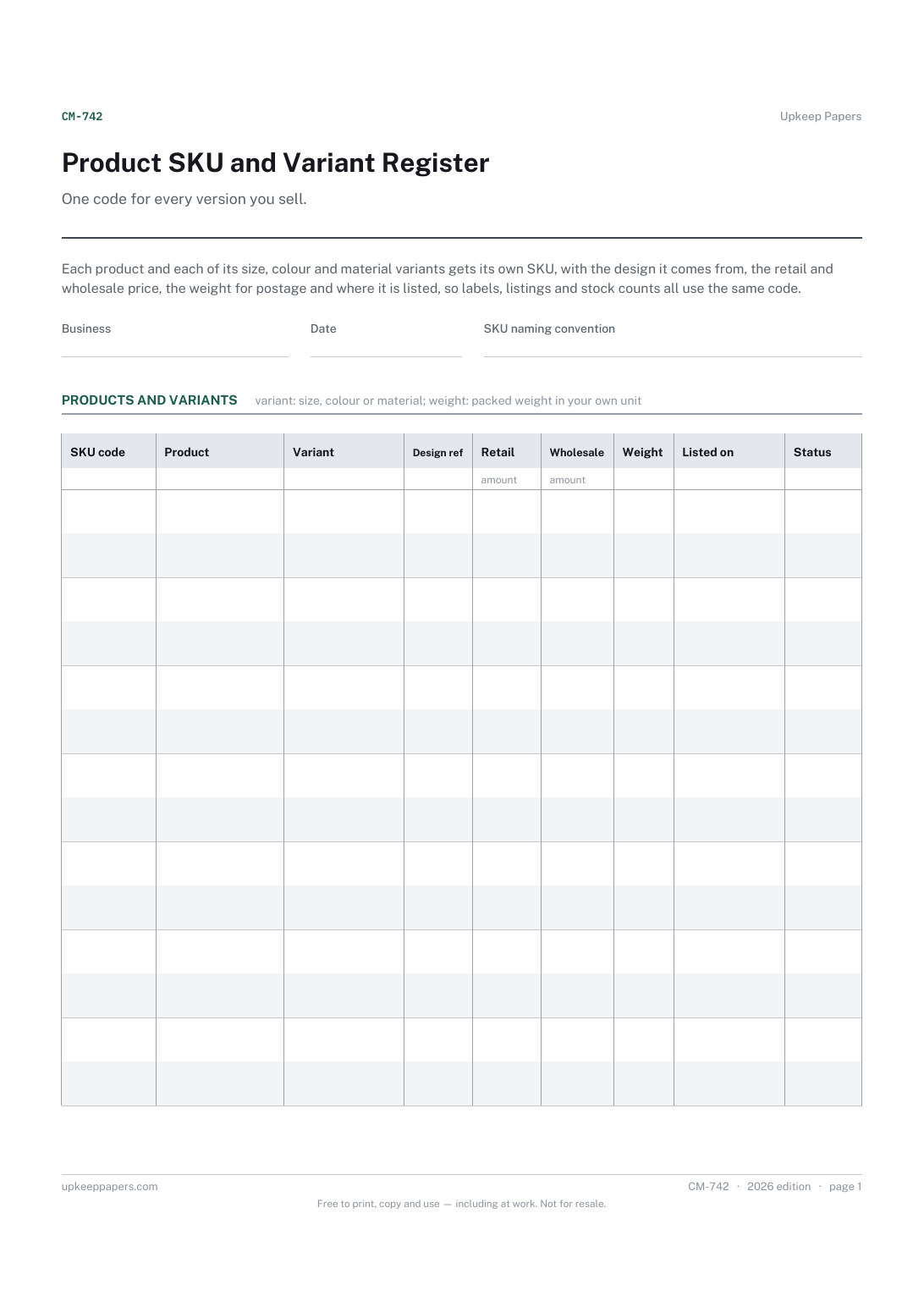
A unique code for each product and variant.
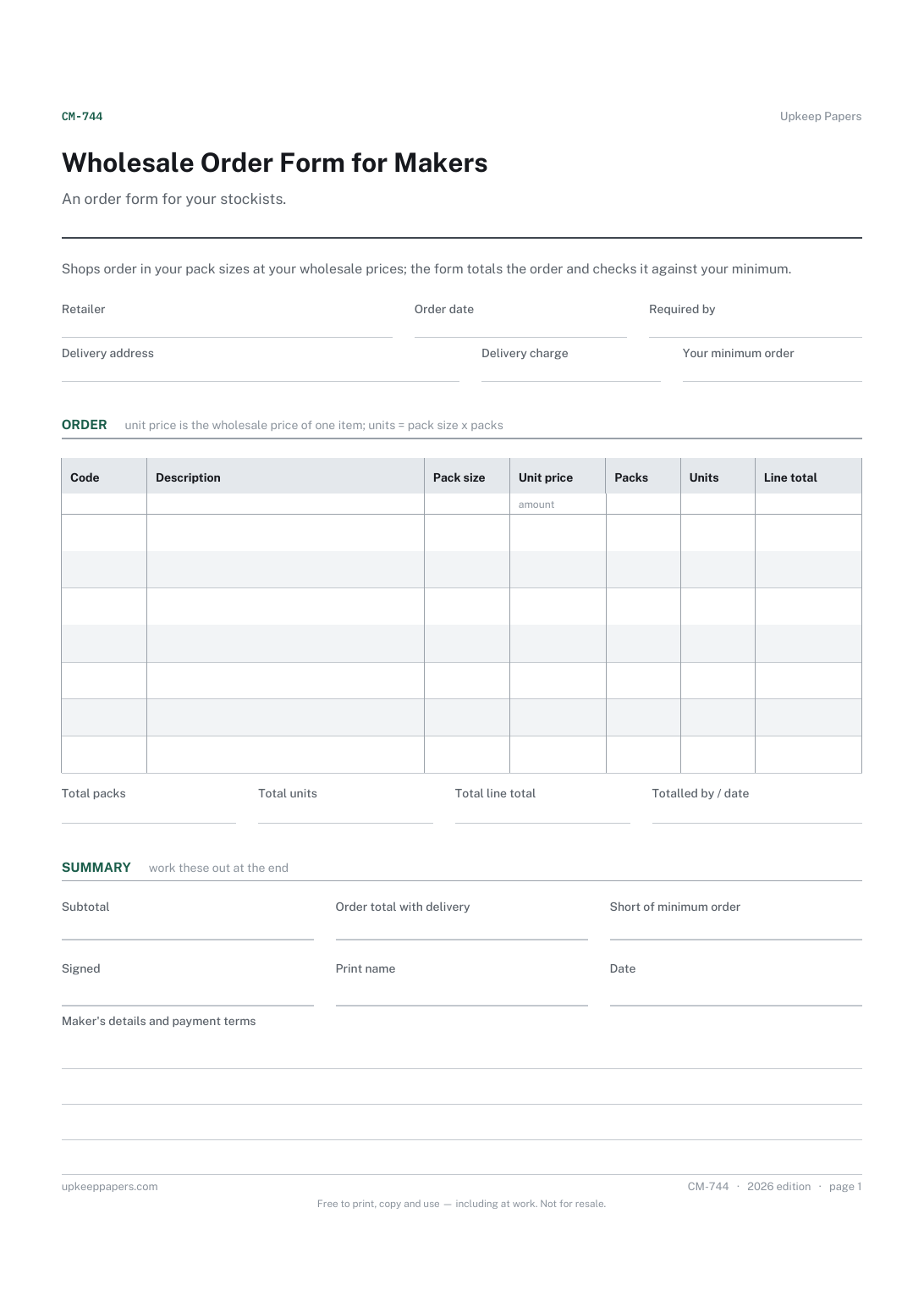
The retailer, delivery address and the date the stock is needed.
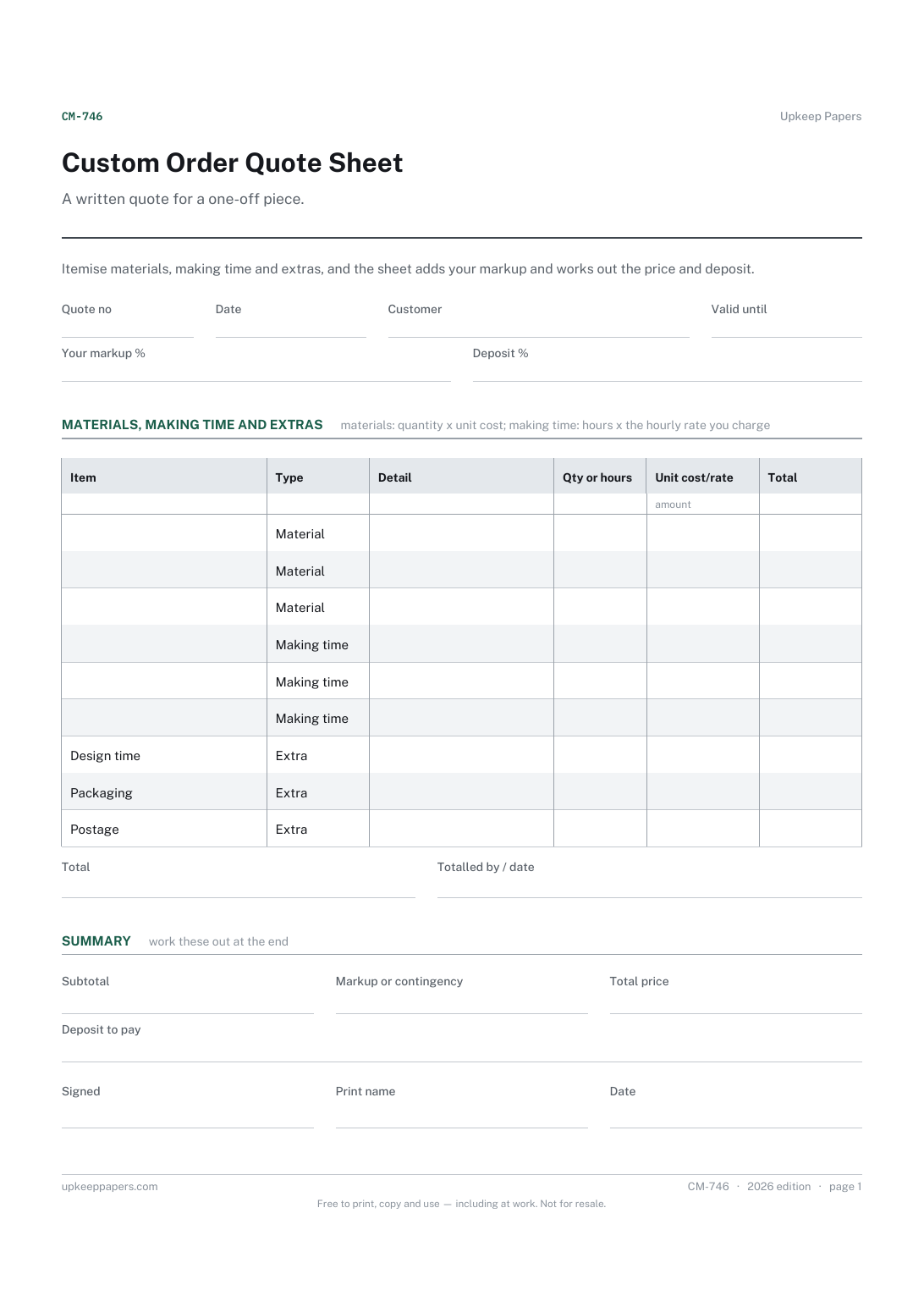
Materials itemised with quantity and unit cost.
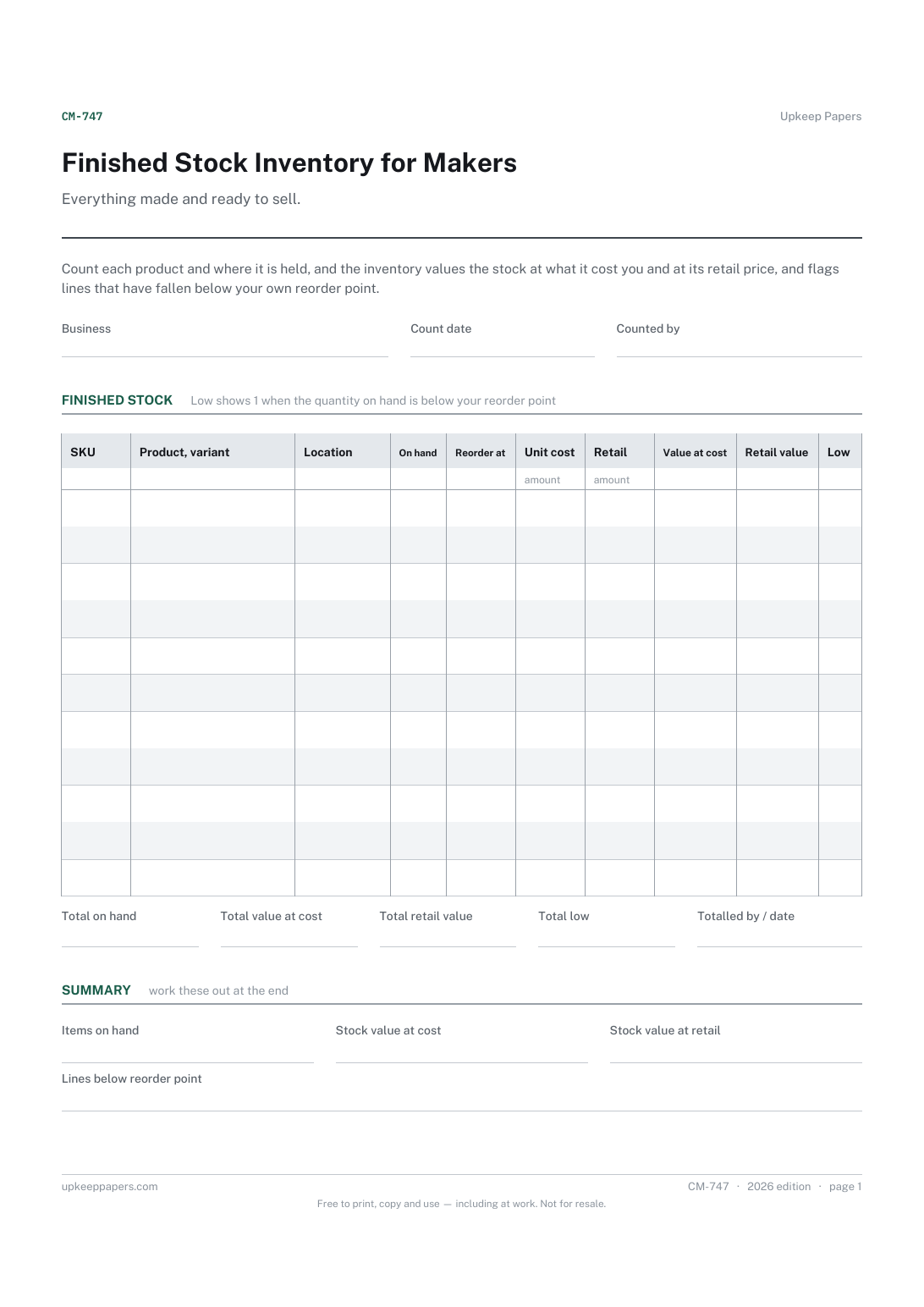
Each product and variant by SKU and where it is held.
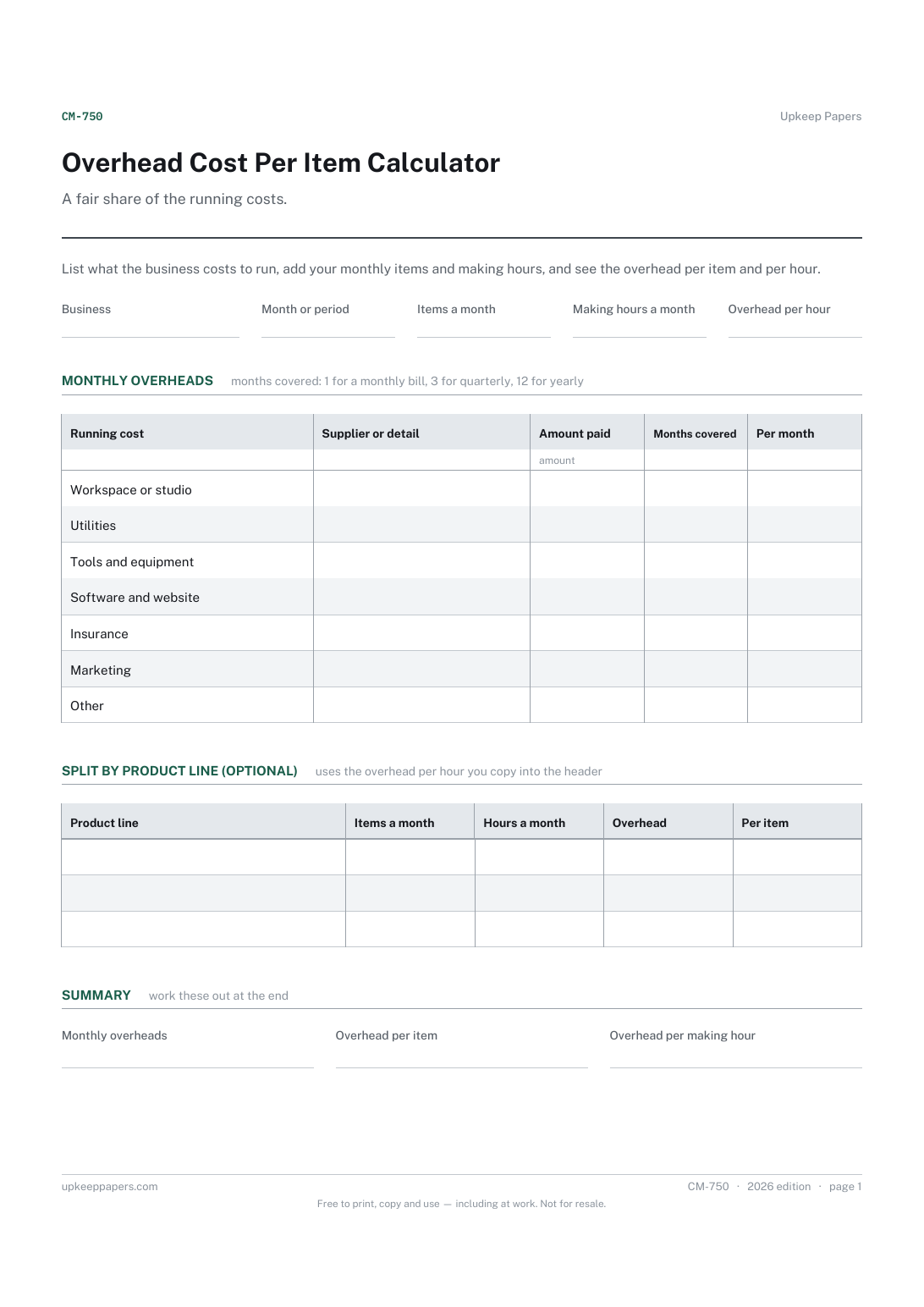
Monthly running costs by type, including bills paid yearly or quarterly.
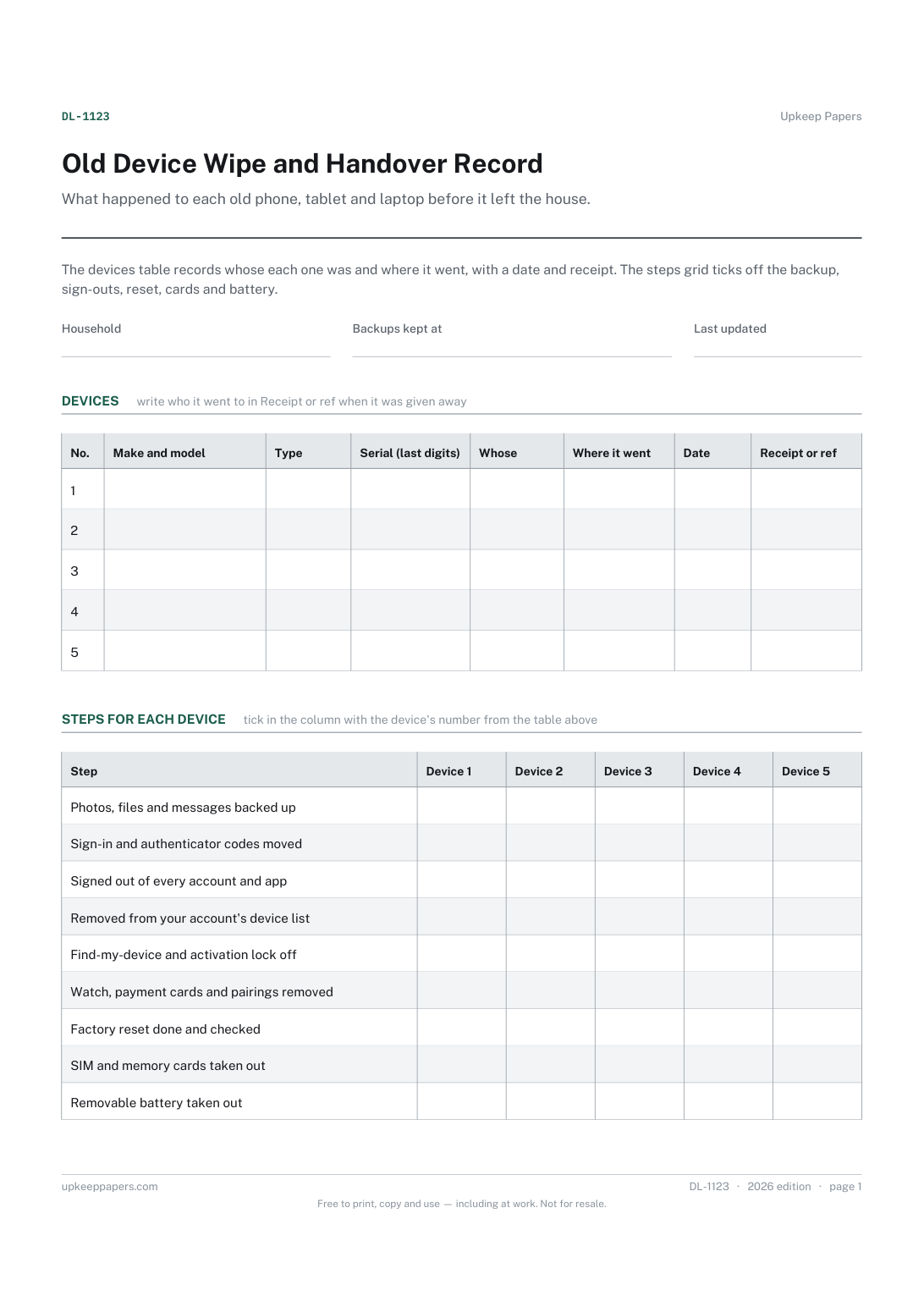
Each old device, whose it was and the last digits of its serial.
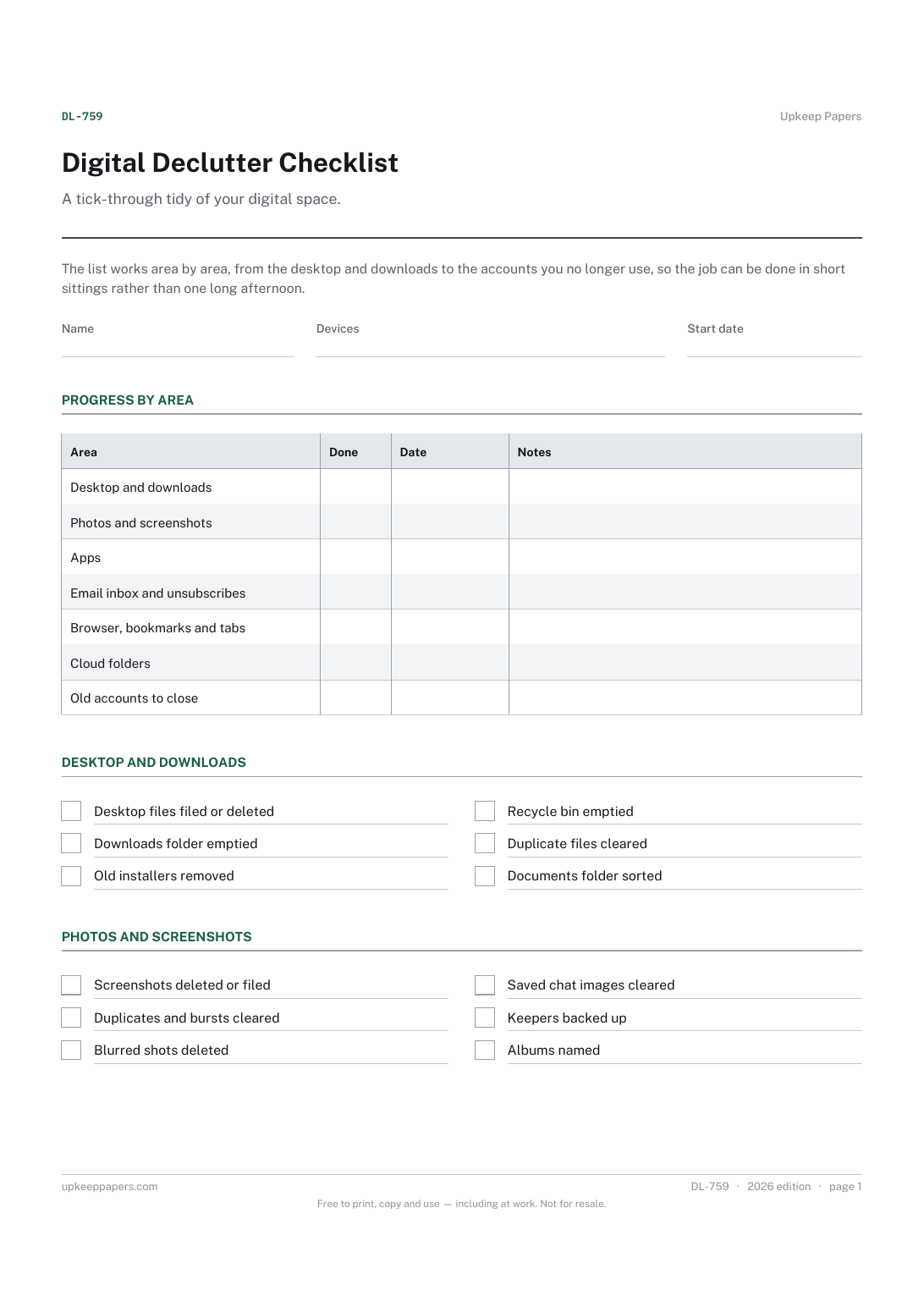
Clearing the desktop and downloads folder.
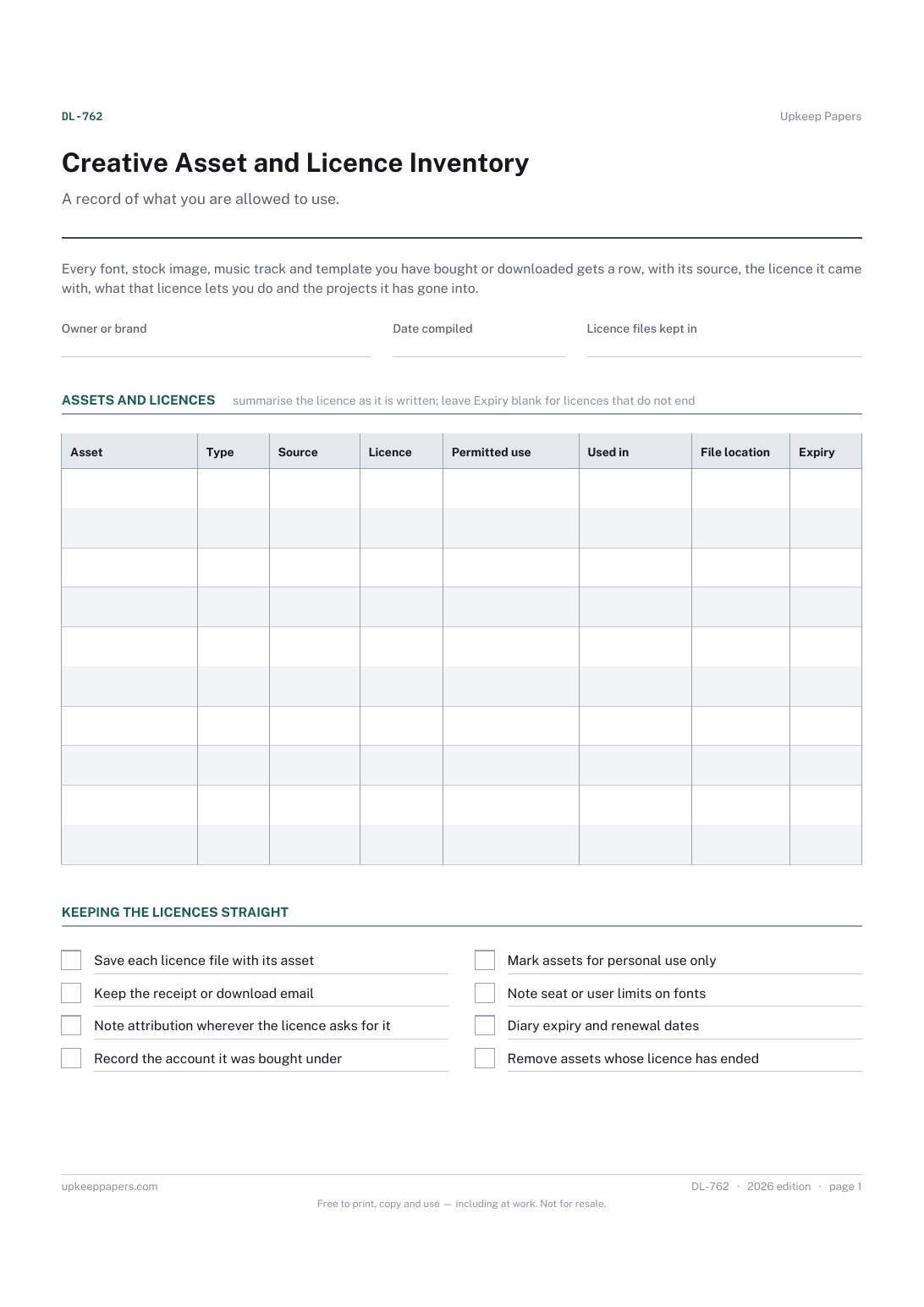
Every font, image, track and template you hold, and where it came from.
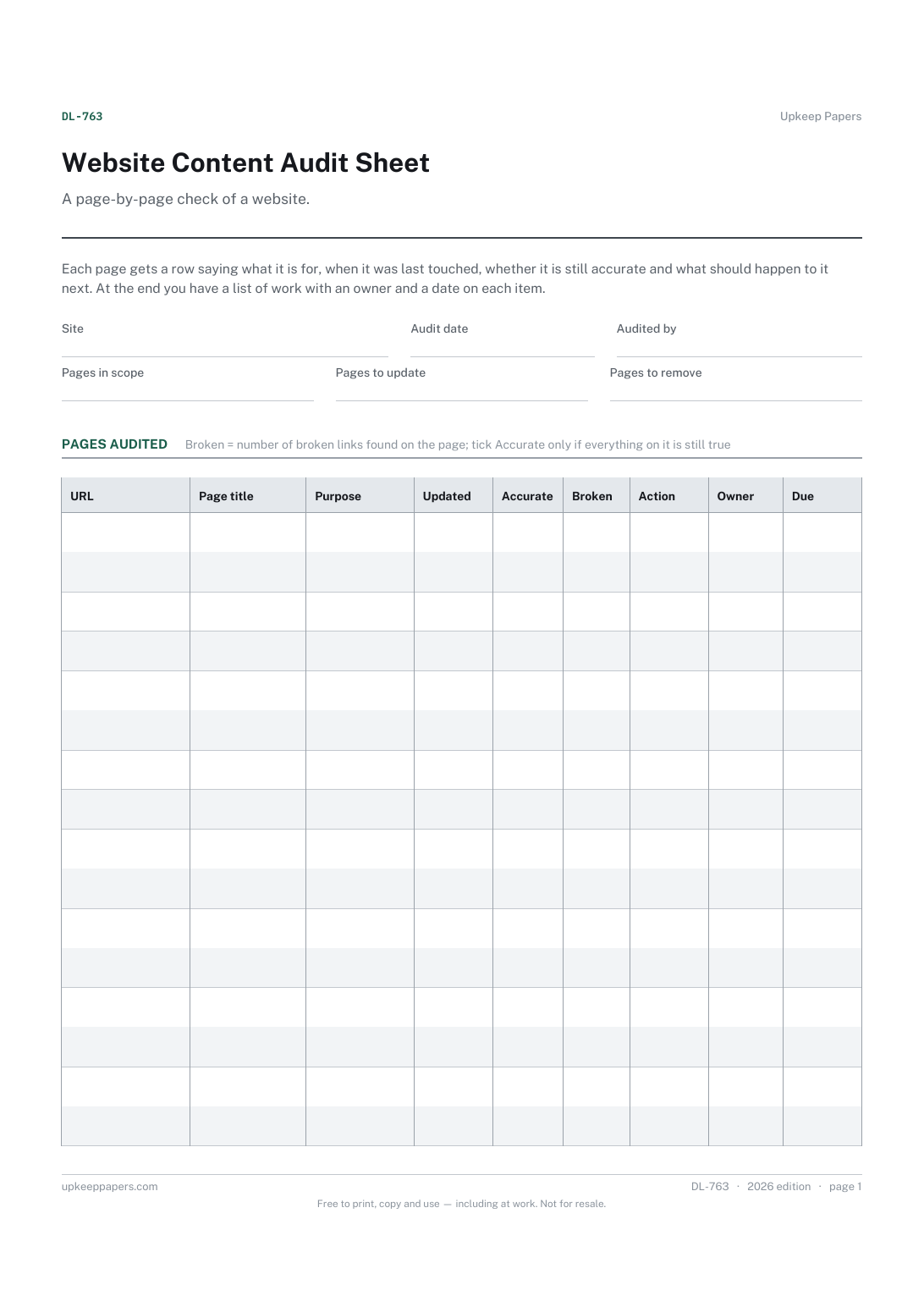
Every page in scope, with its address and title.
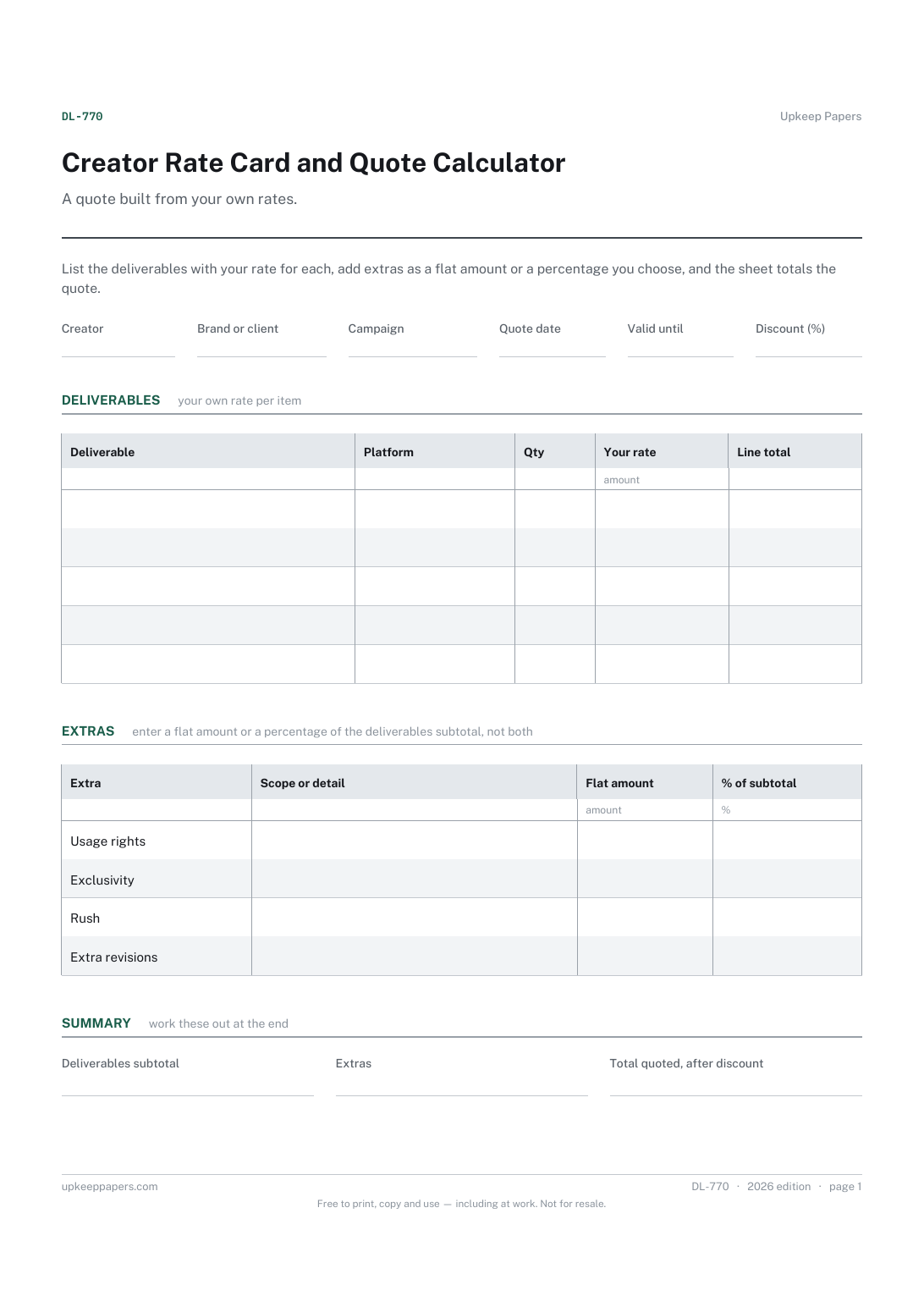
Each deliverable, how many and your rate for it.
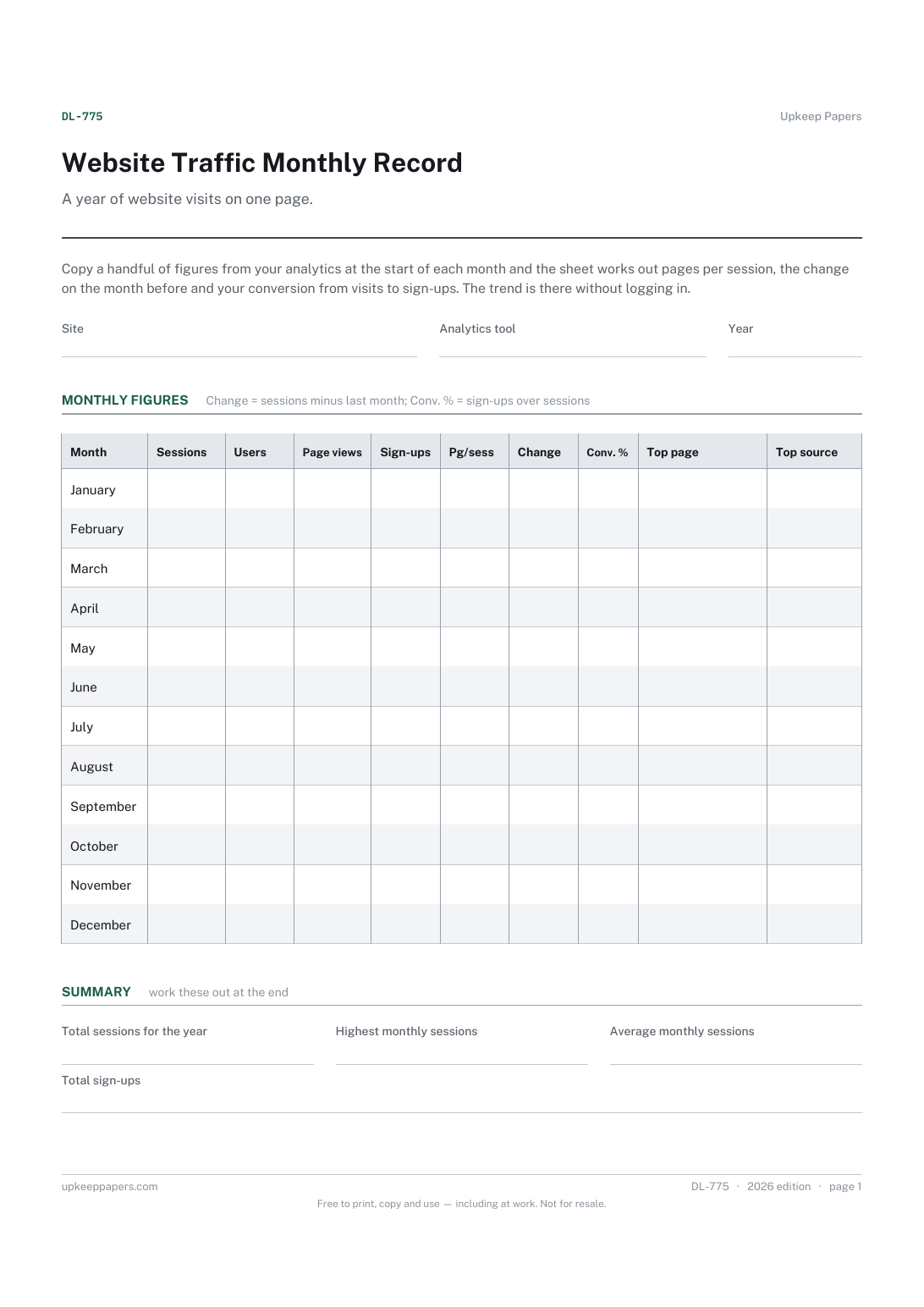
Sessions, users and page views for each month.
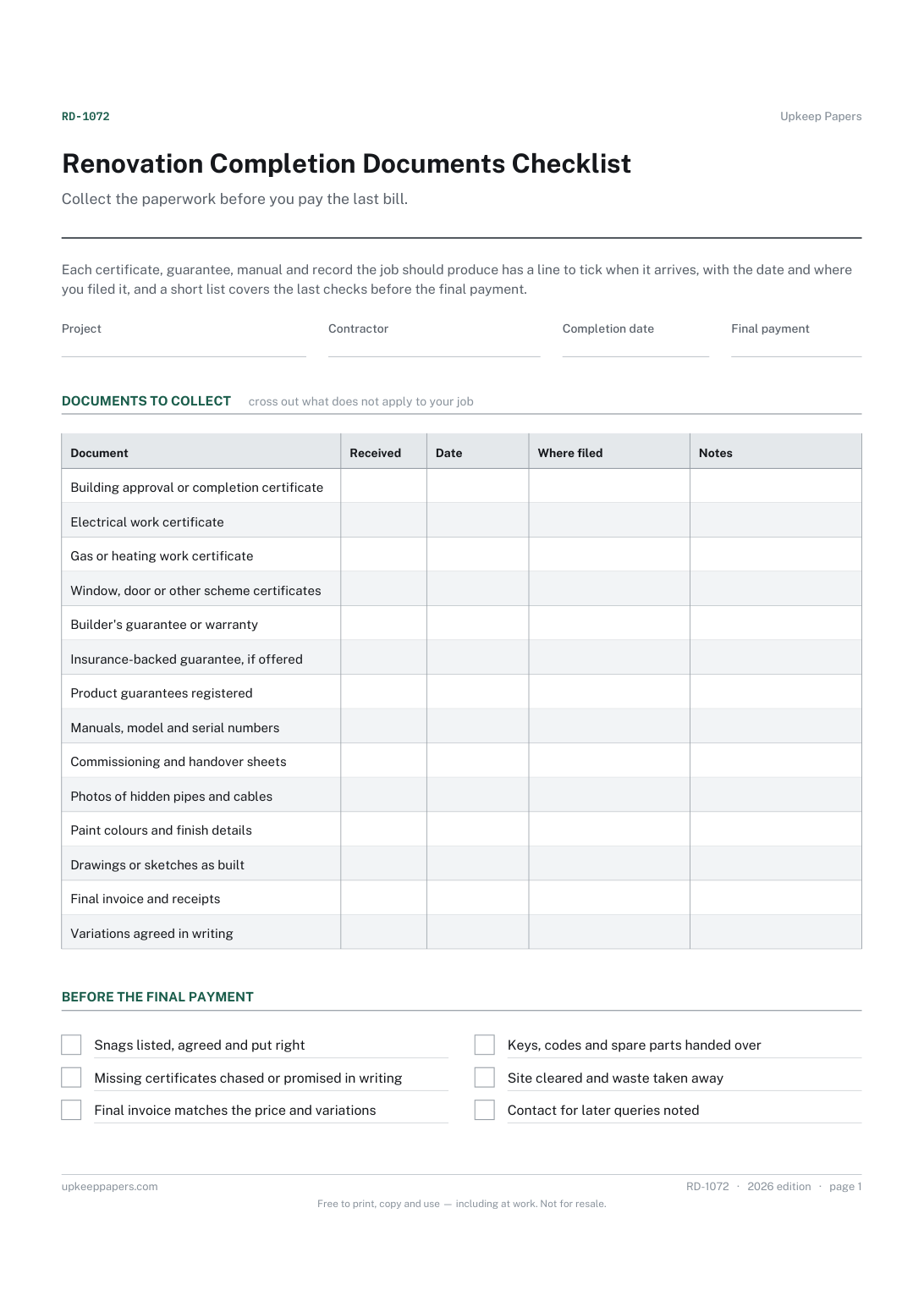
Certificates for the work, from building control or the trades who did it.
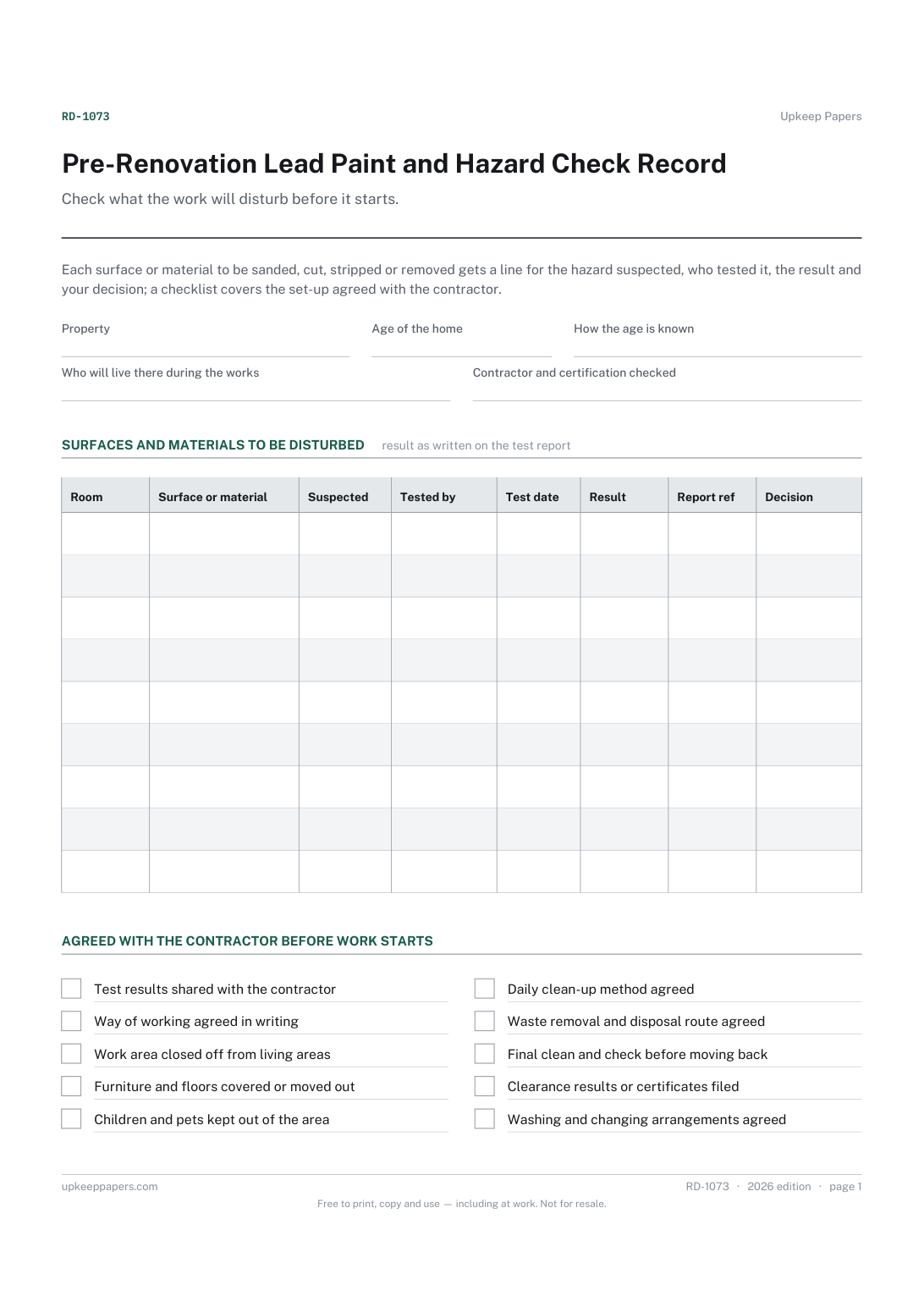
Every surface or material the work will disturb, room by room.
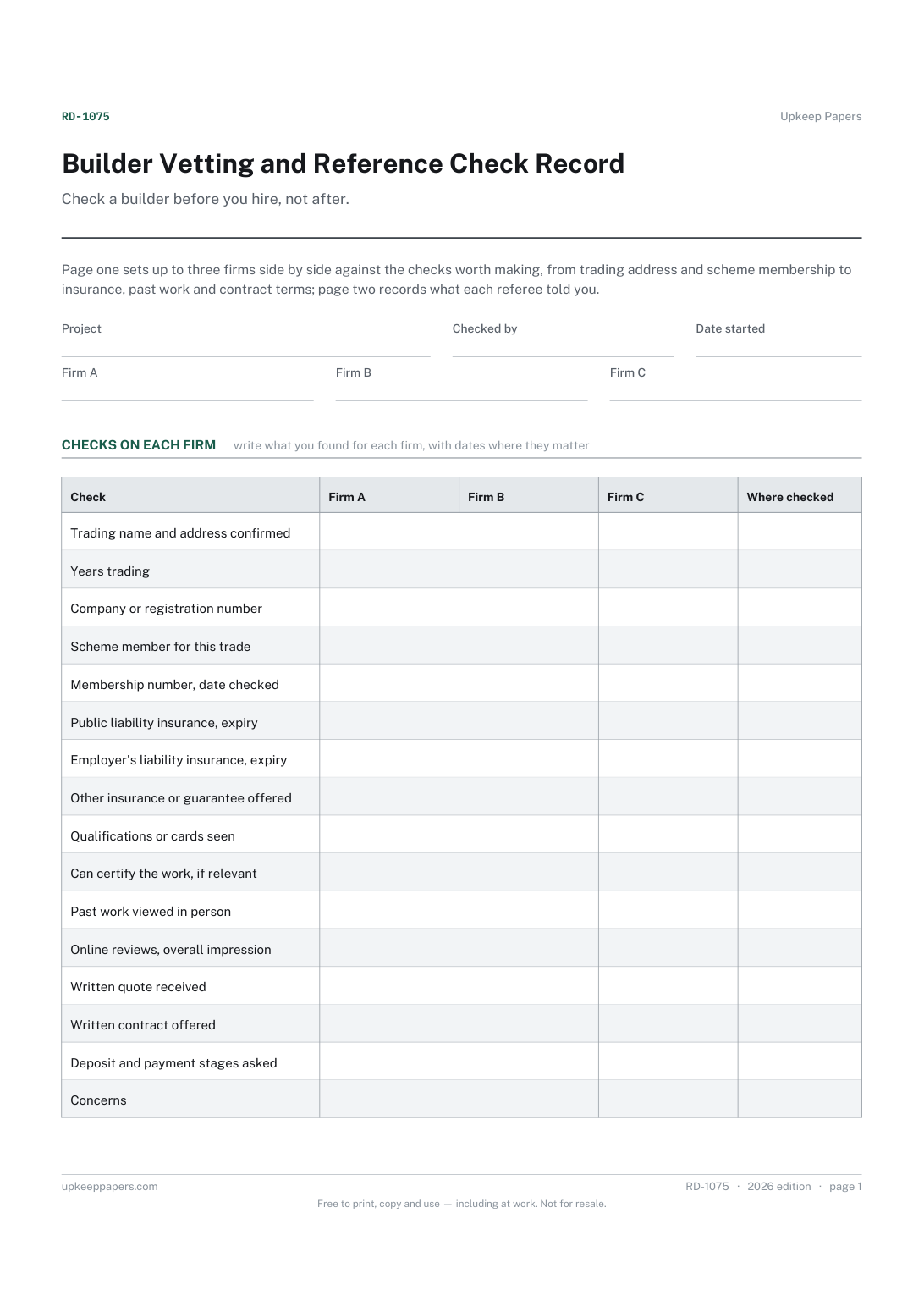
The checks made on each firm, and where and when you made them.
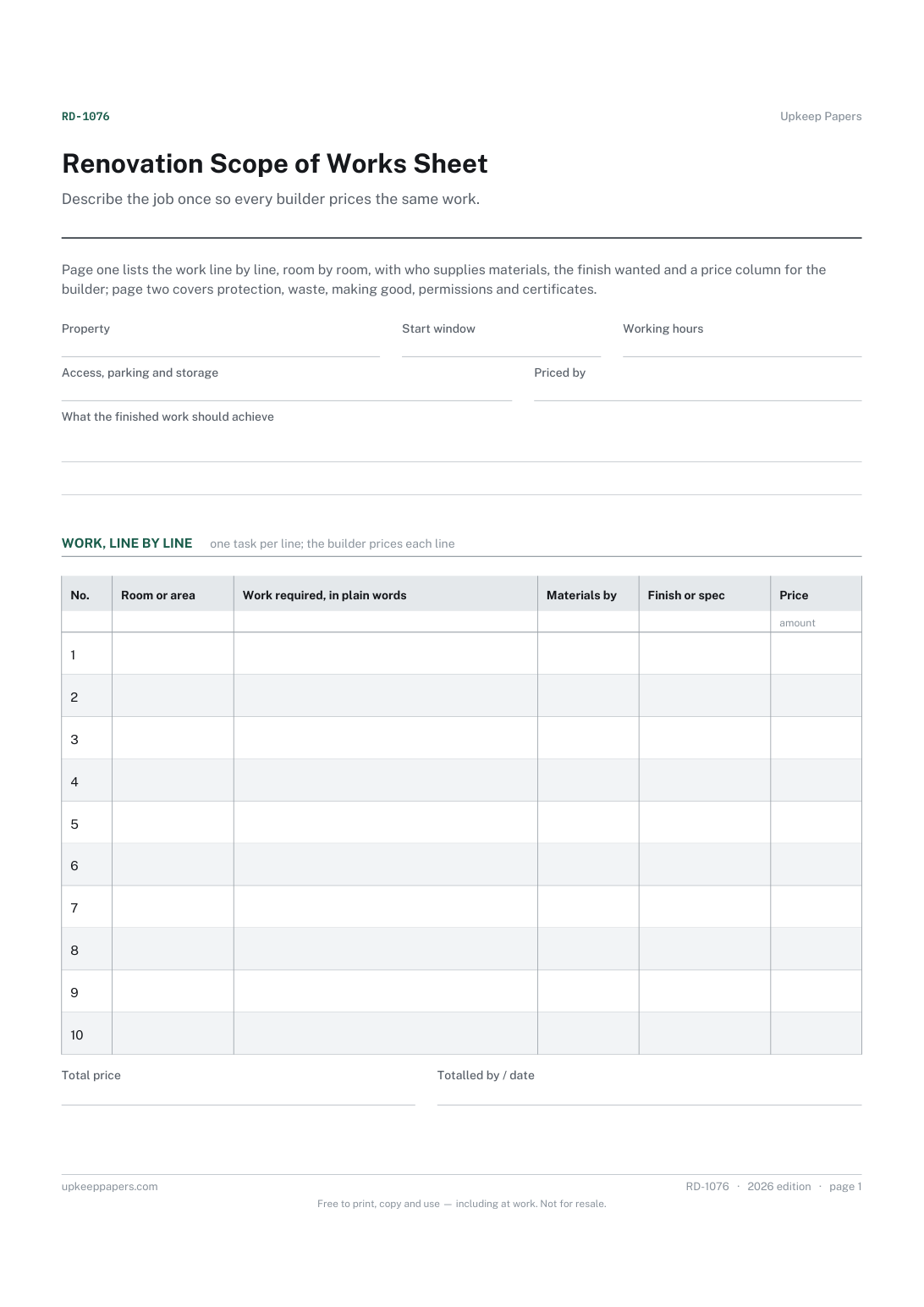
Every piece of work, numbered, so quotes and questions can refer to it.
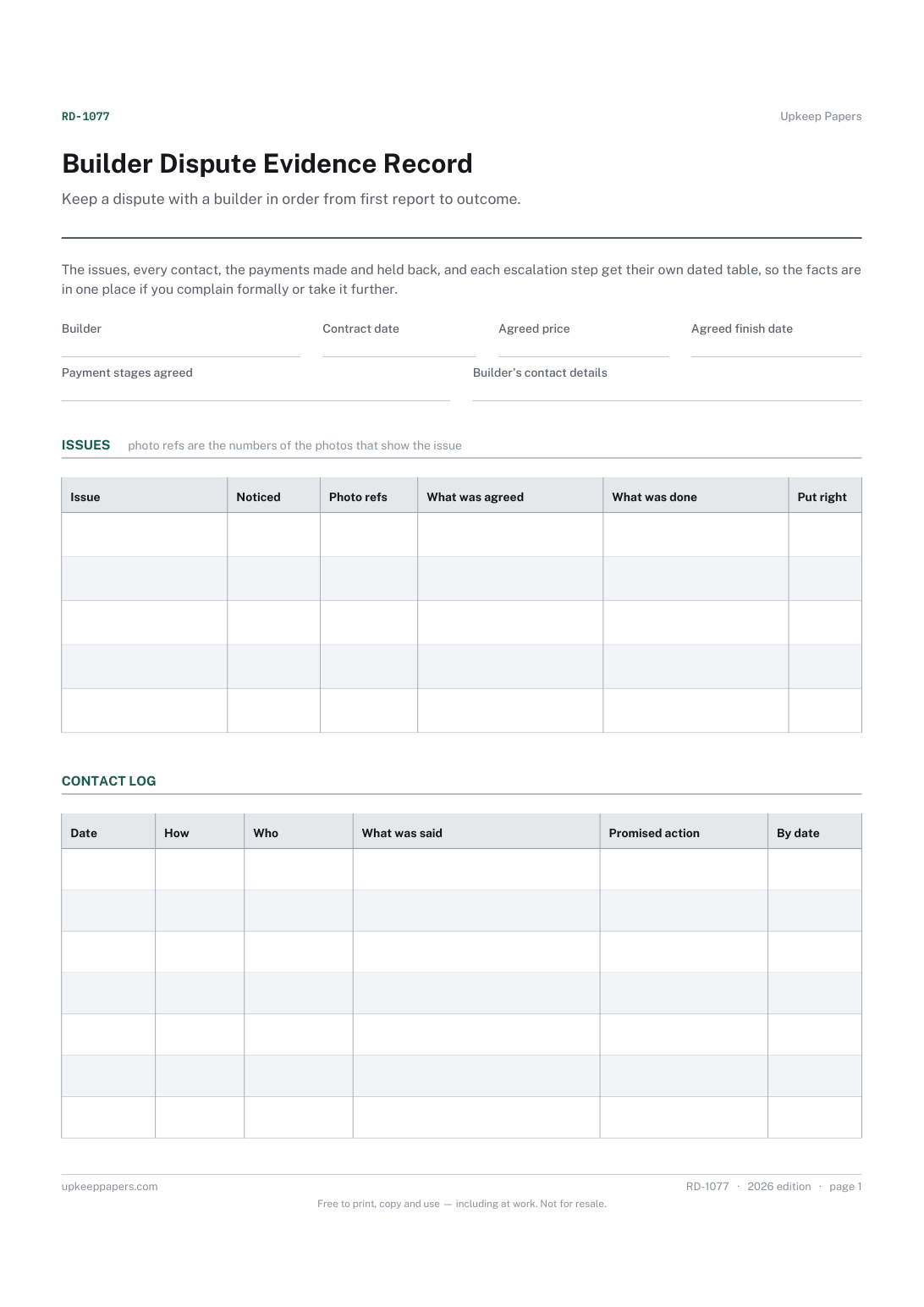
Each problem, when you noticed it and the photos that show it.
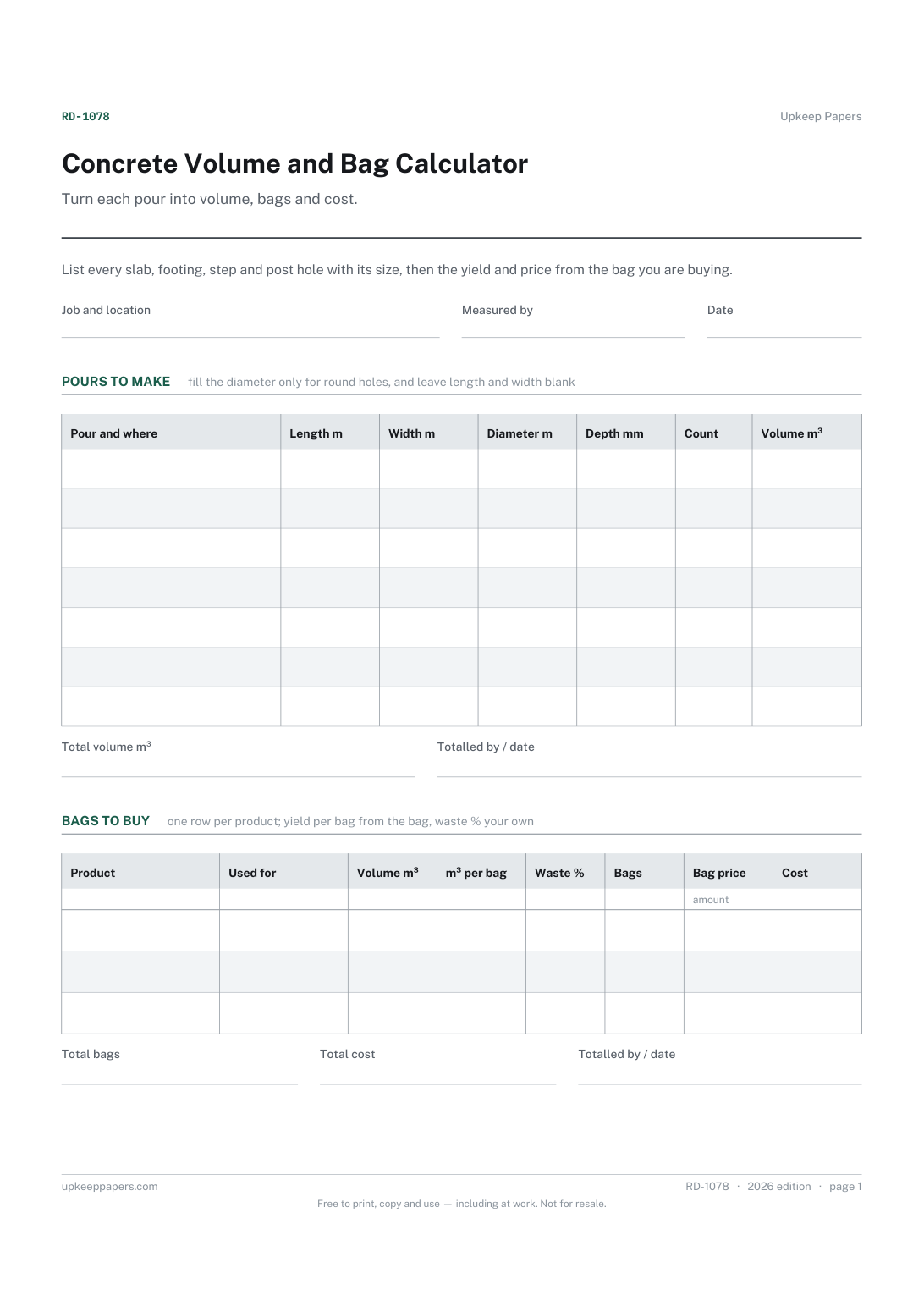
The volume of every slab, footing, step and post hole you plan to pour.
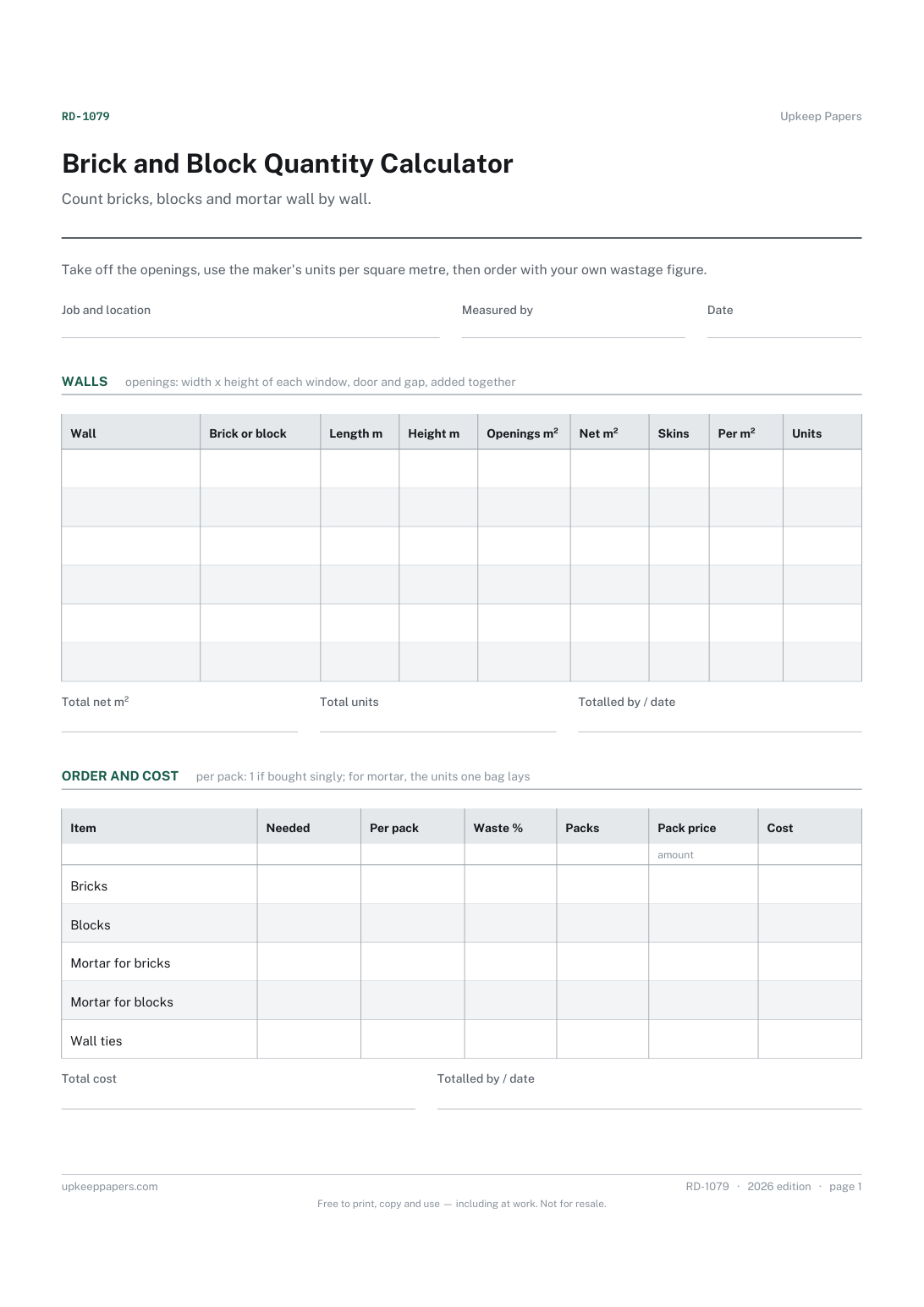
The net area of each wall once windows, doors and gaps are taken off.
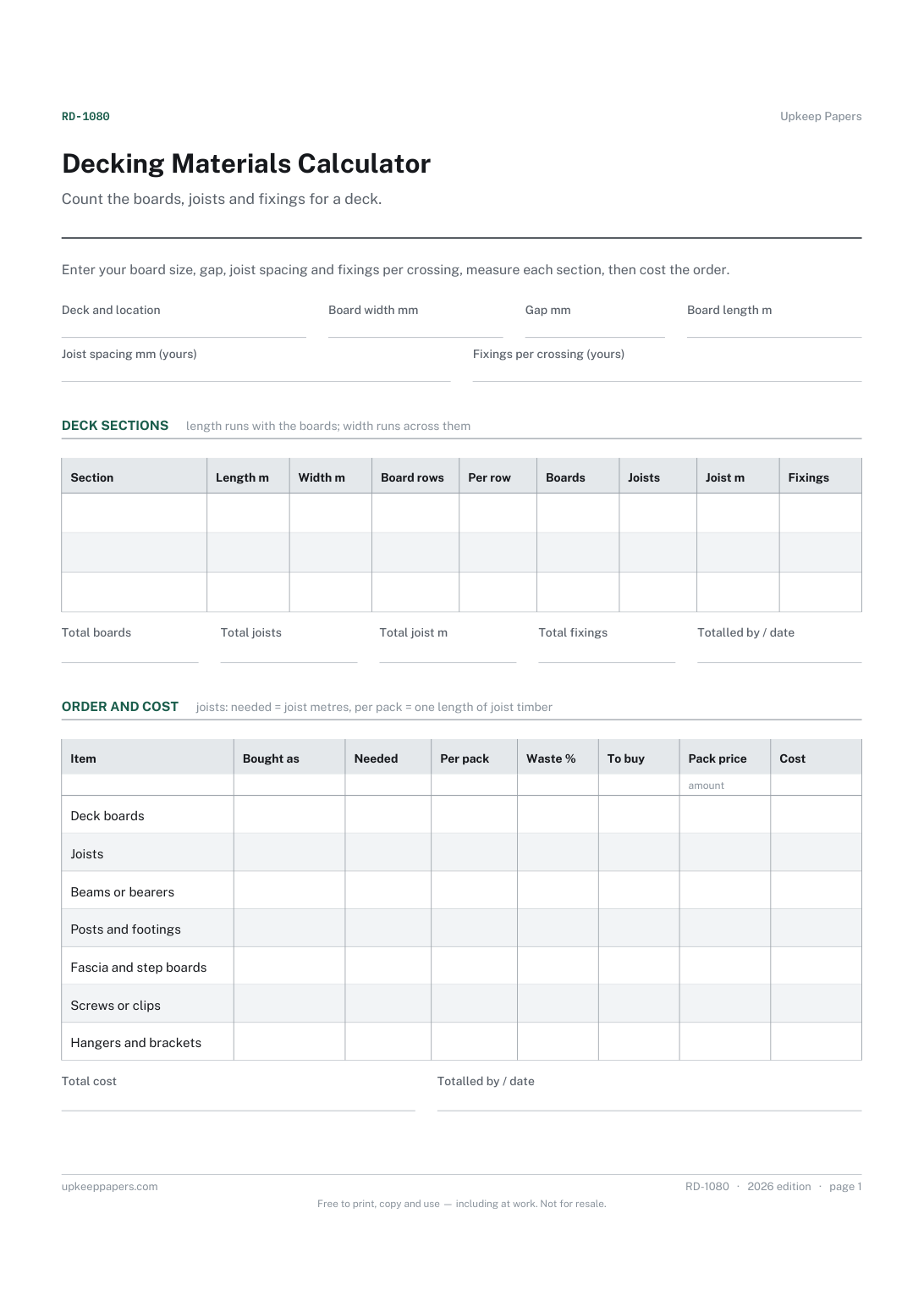
Rows of boards across each section from the board width and gap.
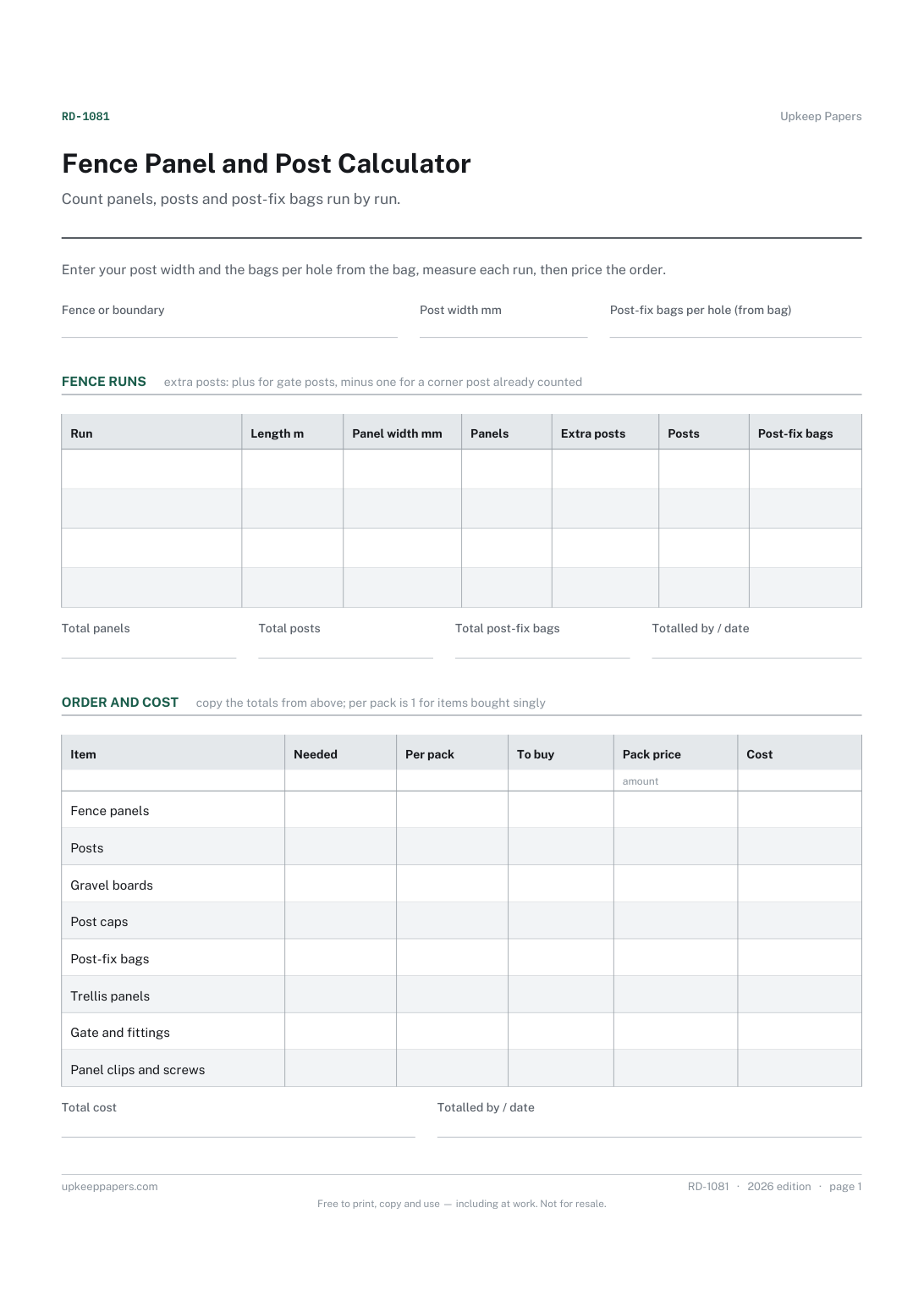
Panels needed for each run, rounded up to whole panels.
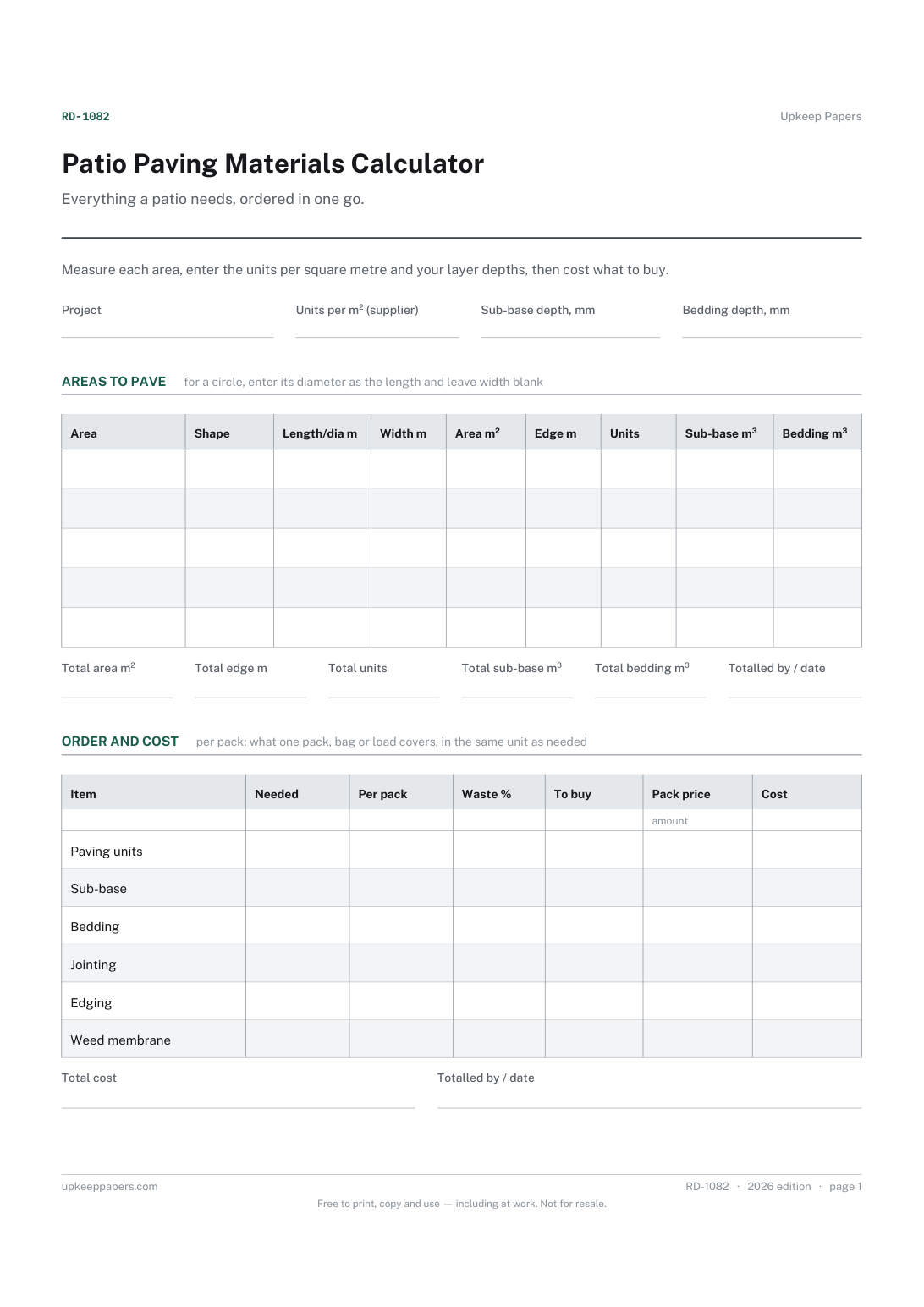
The area and edge length of each rectangle or circle of paving.
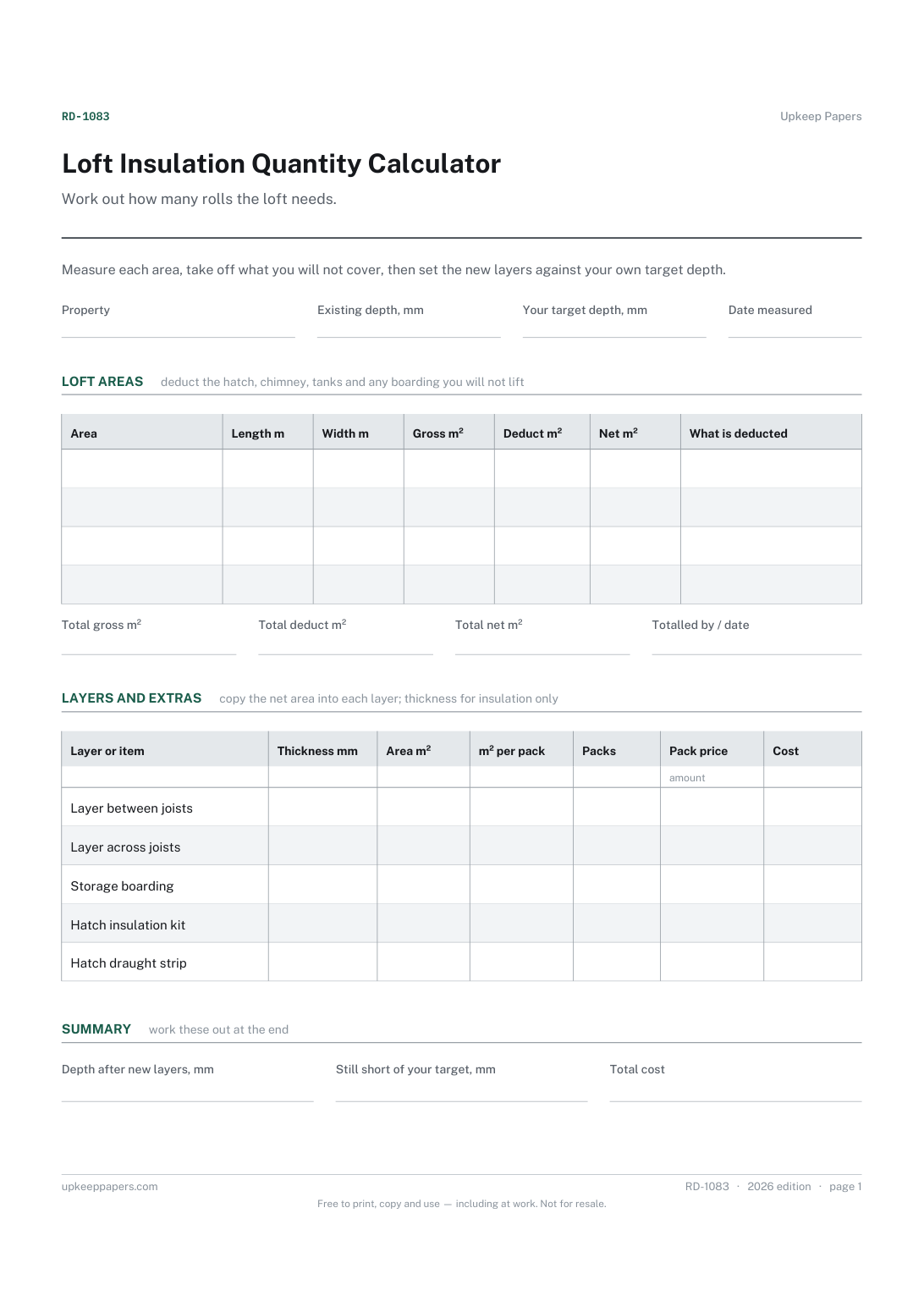
The gross and net area of each part of the loft.
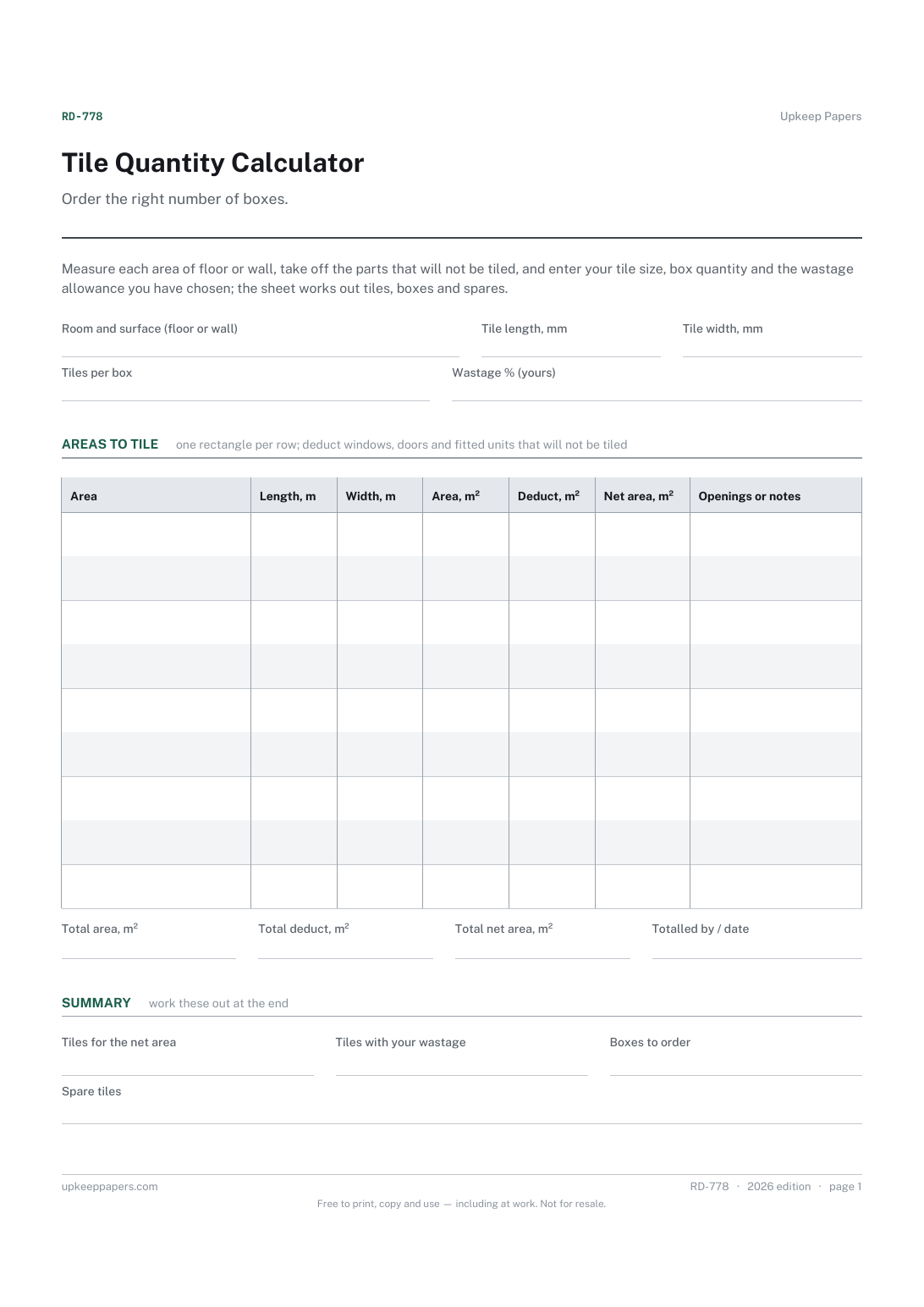
The net area of each part of the floor or wall after openings and units.
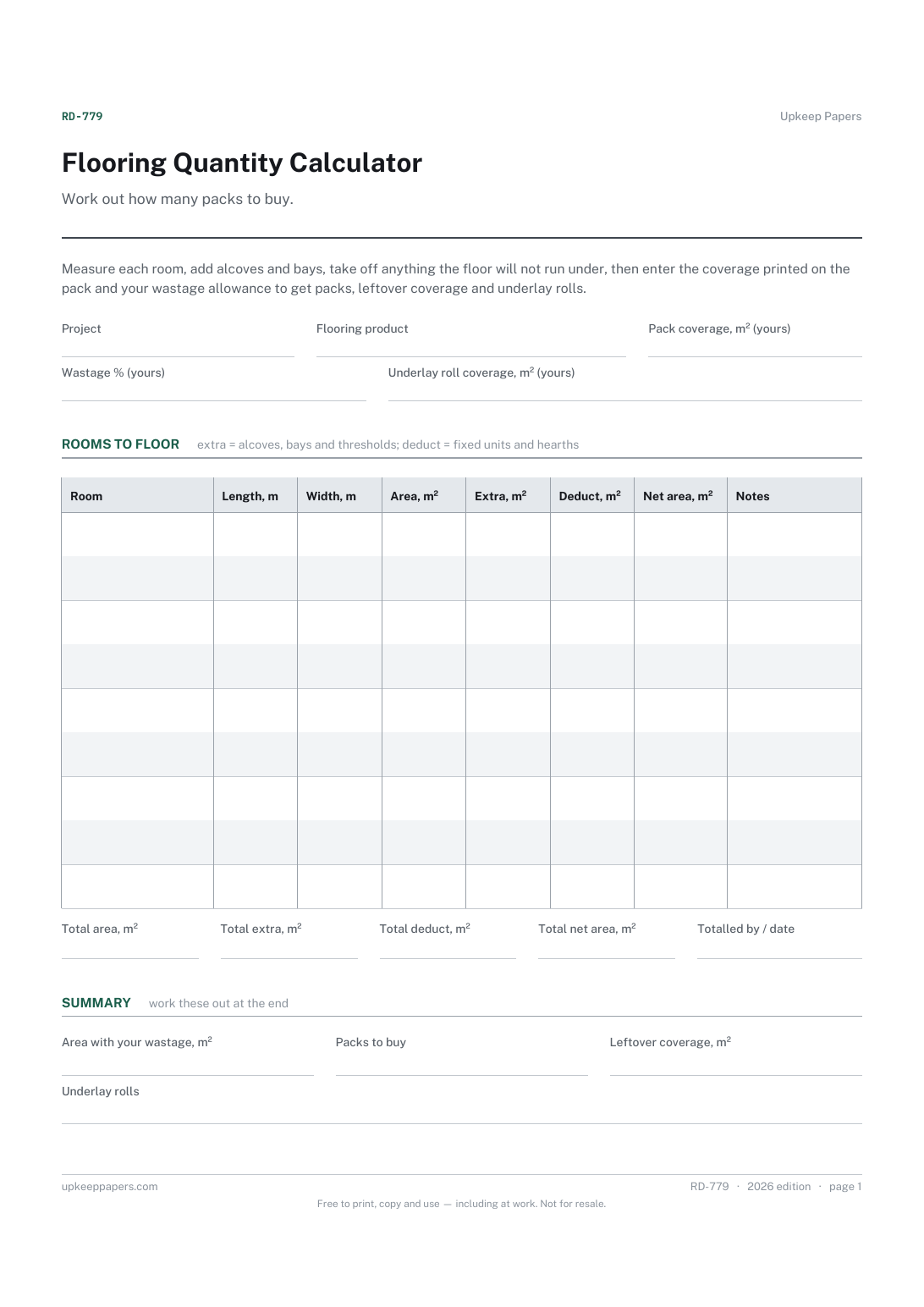
The net floor area of each room, including alcoves and bays.
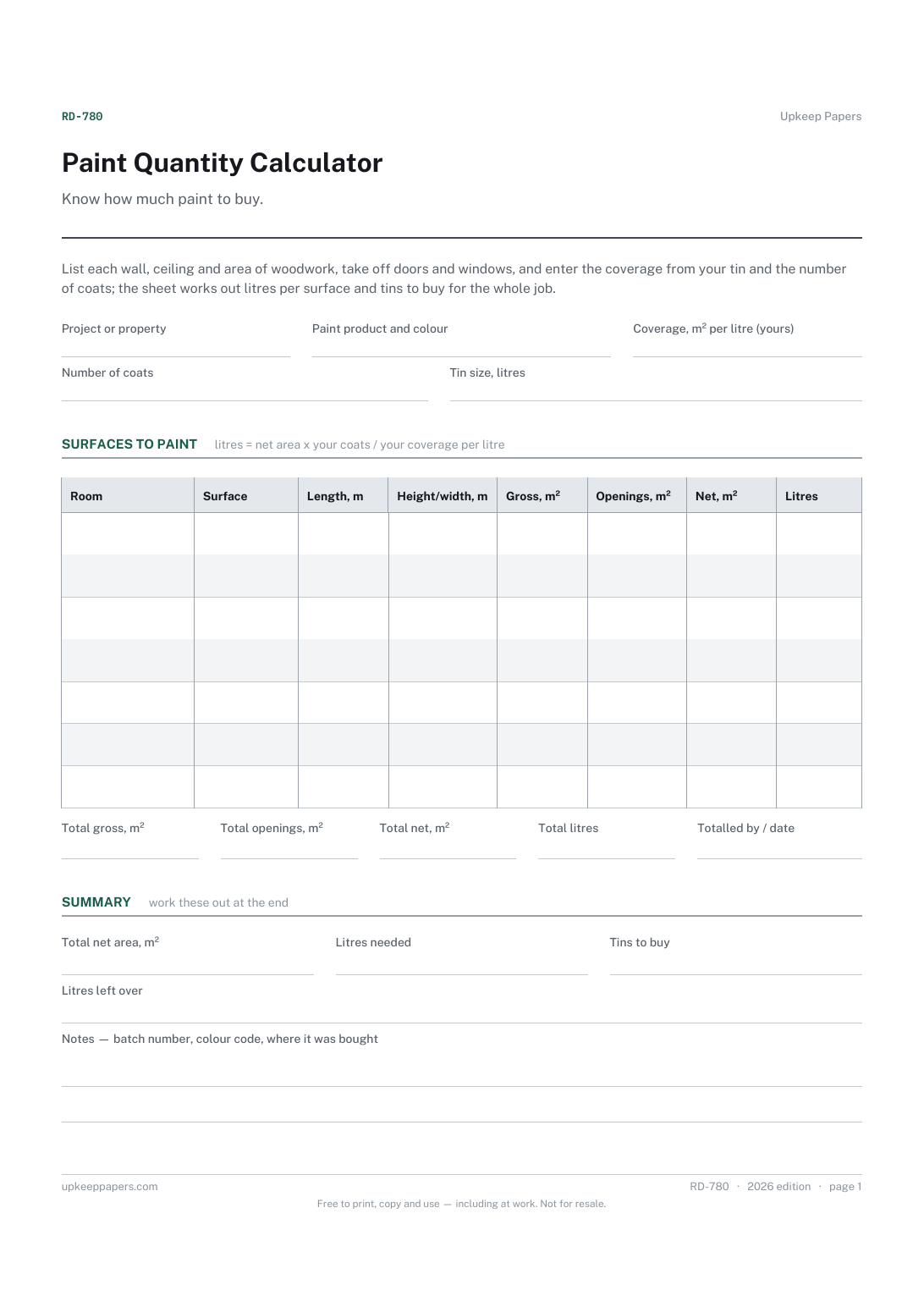
The gross and net area of every wall, ceiling and area of woodwork.
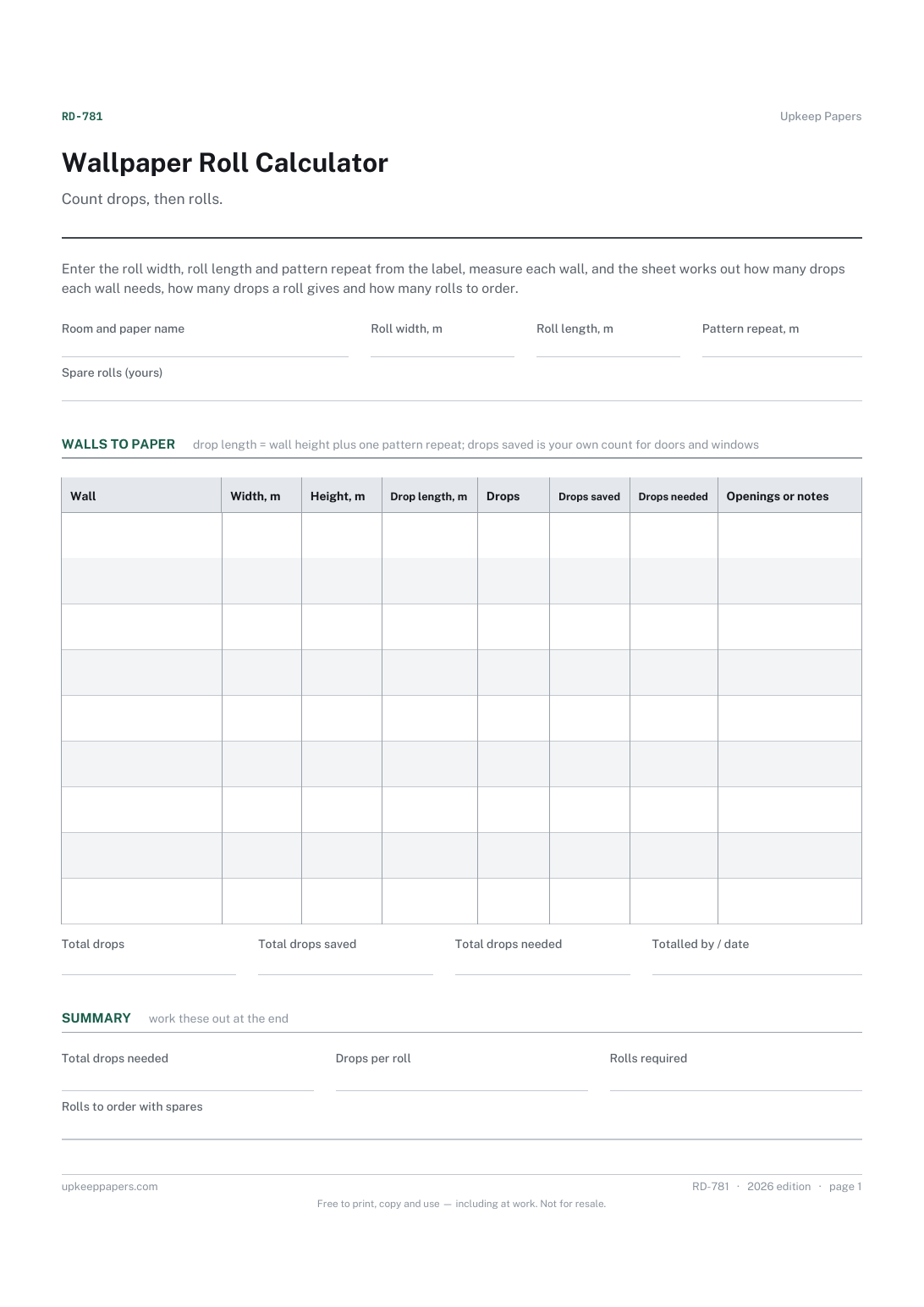
How many drops each wall needs at your roll width.
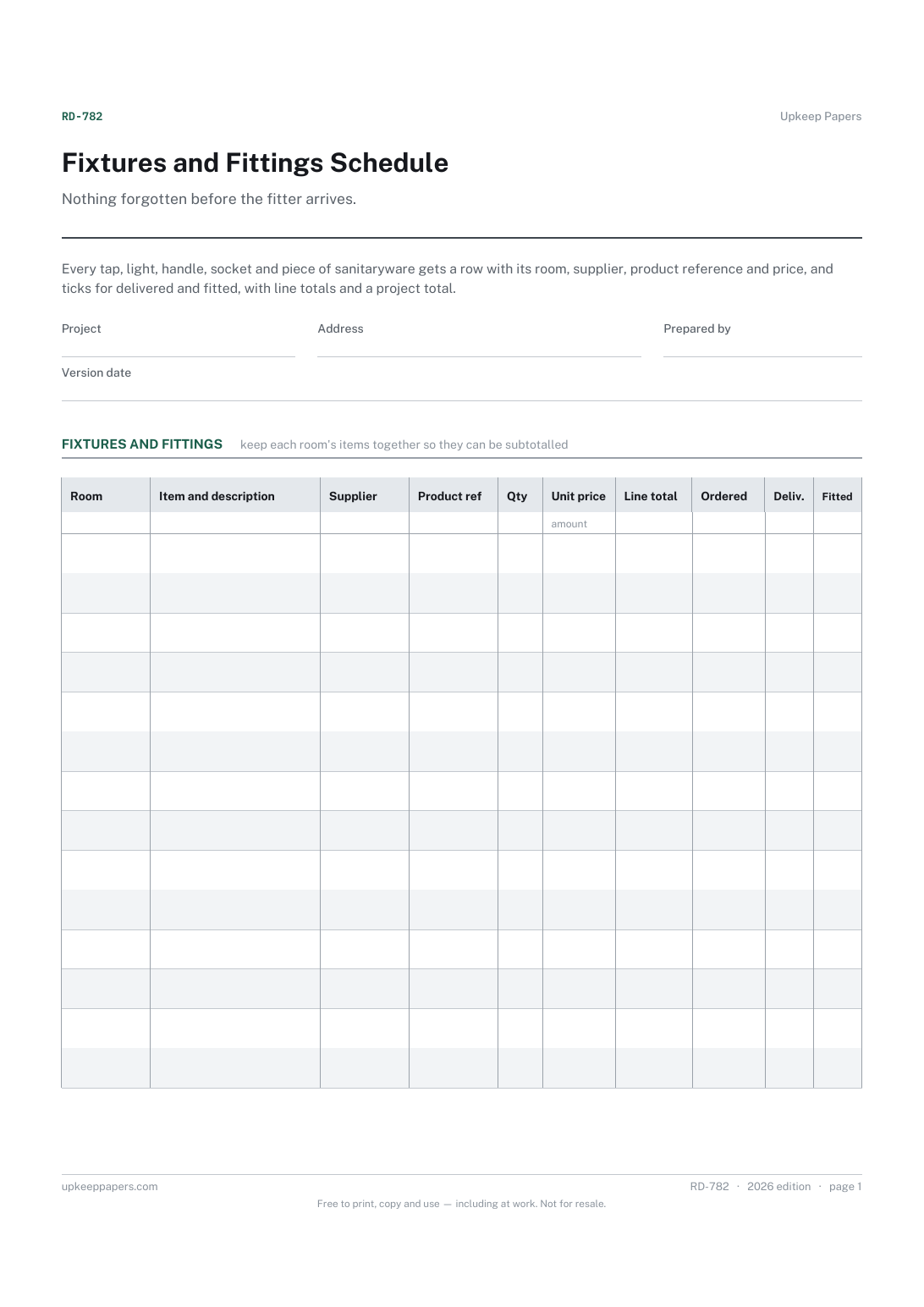
Every fitting in the project, room by room.
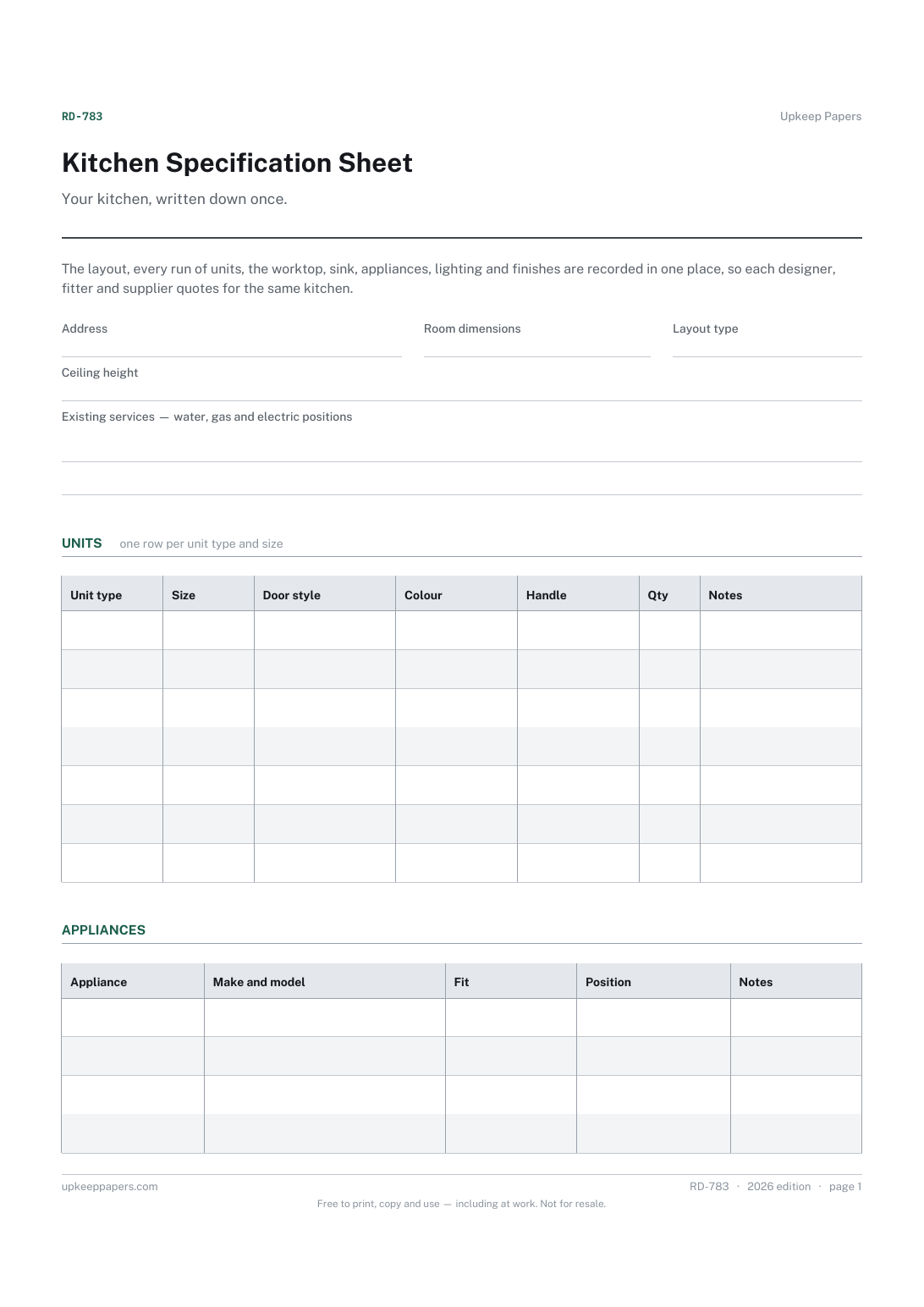
The room, its dimensions and where water, gas and electrics are now.
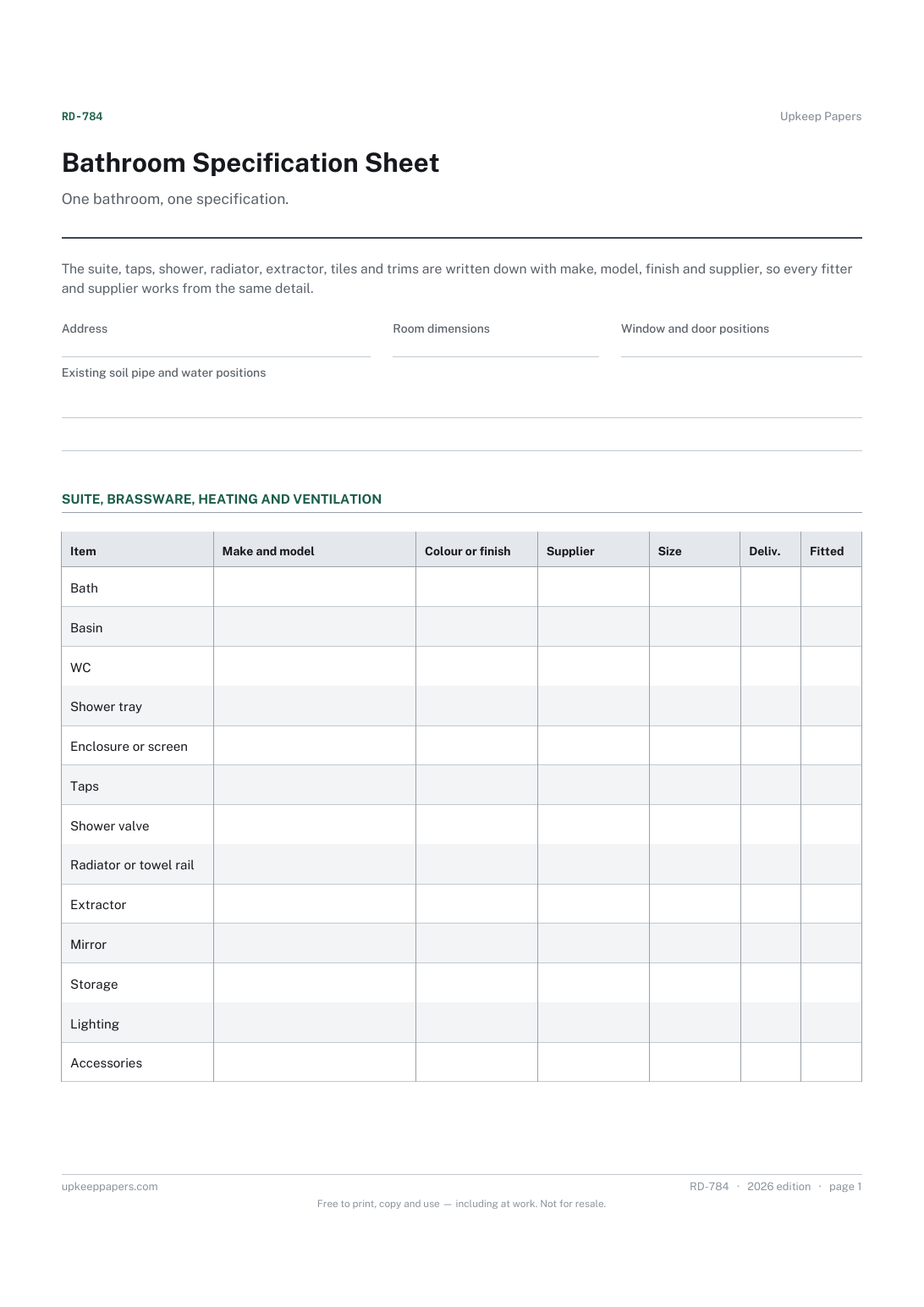
The room, its dimensions and where the soil pipe and water supplies are now.
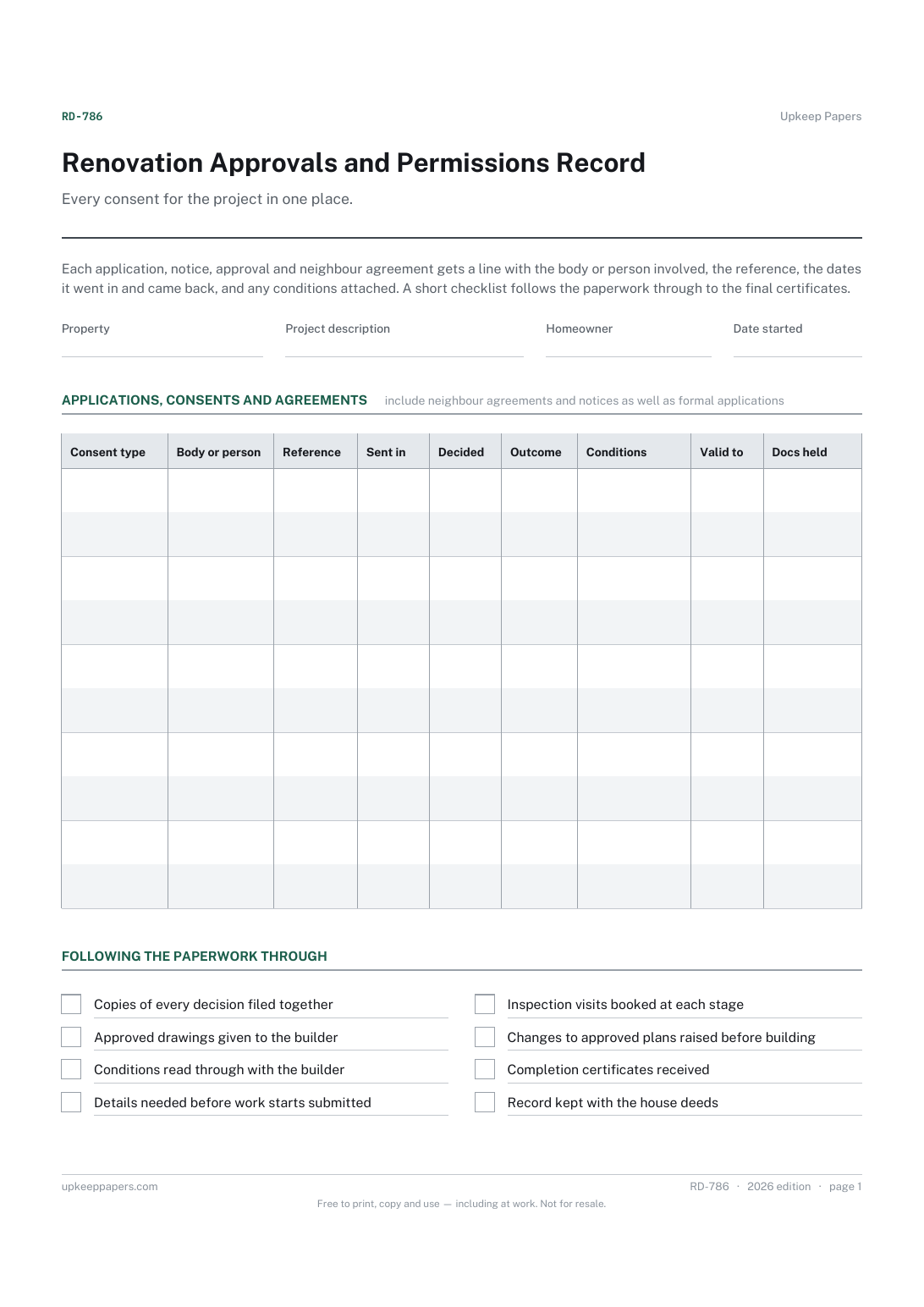
Each application, notice or agreement and who it went to.
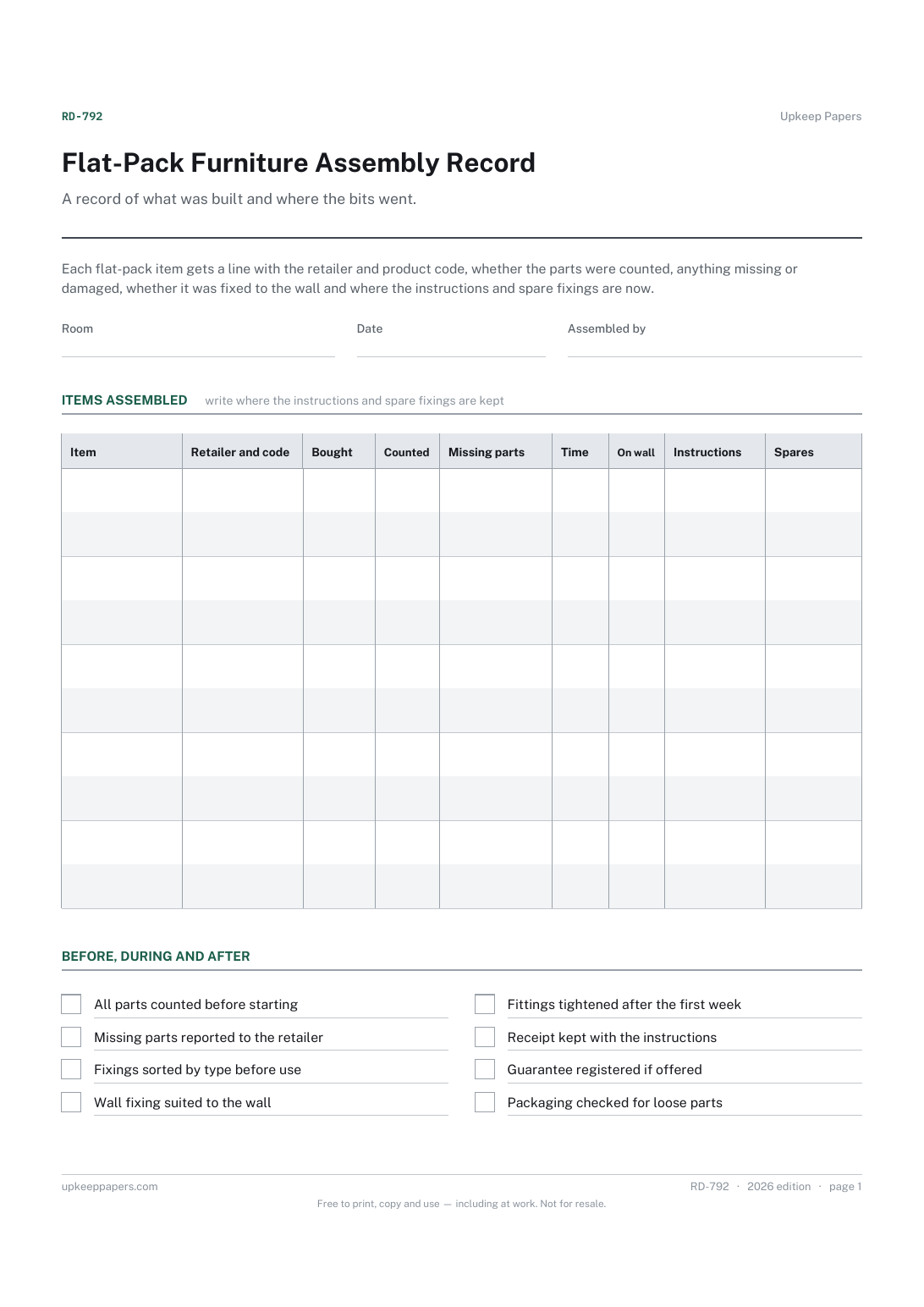
Each item assembled, with its retailer and product code.
Who each quote is from, its date and its quoted total.
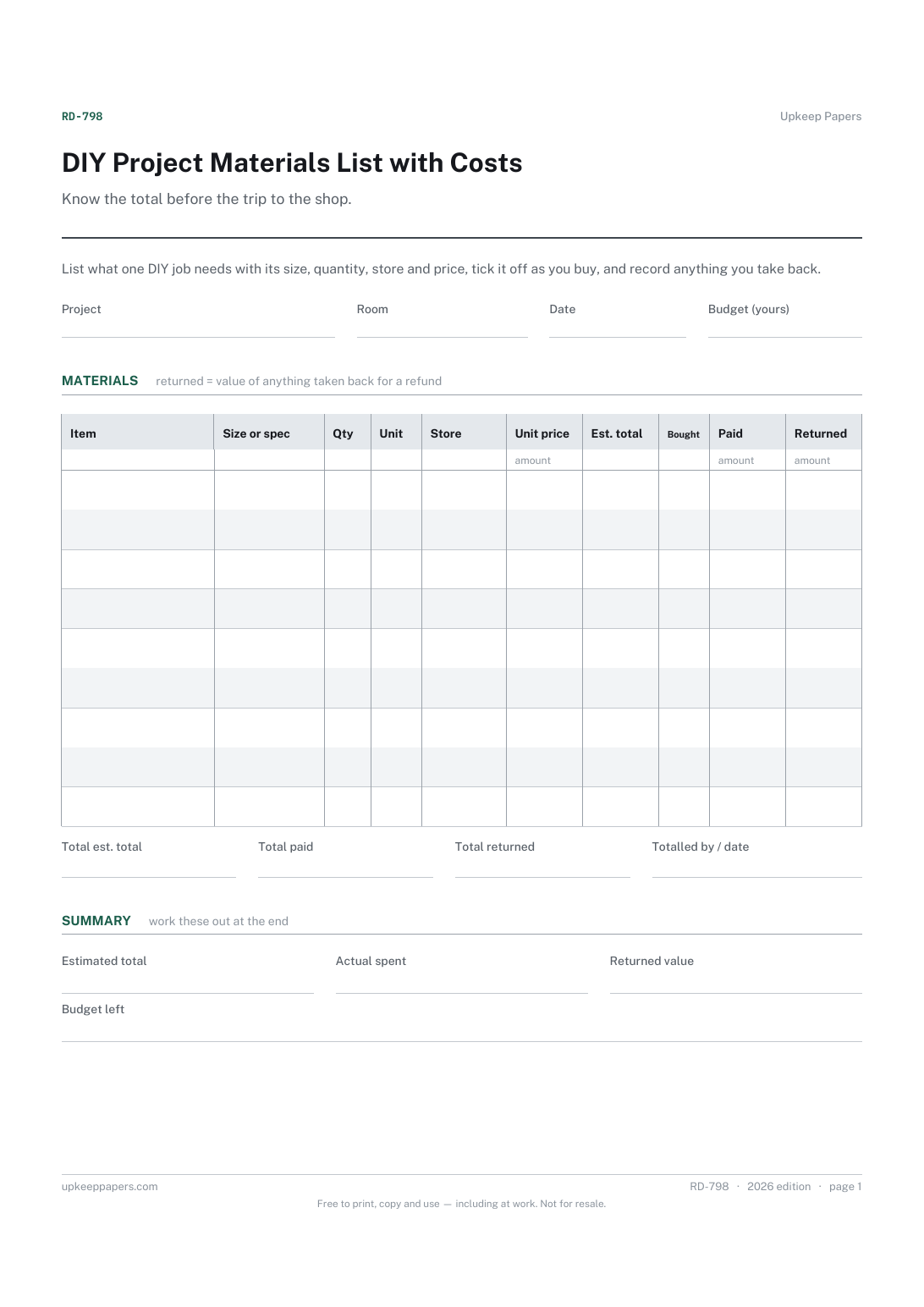
Every item the job needs, with its size or specification.
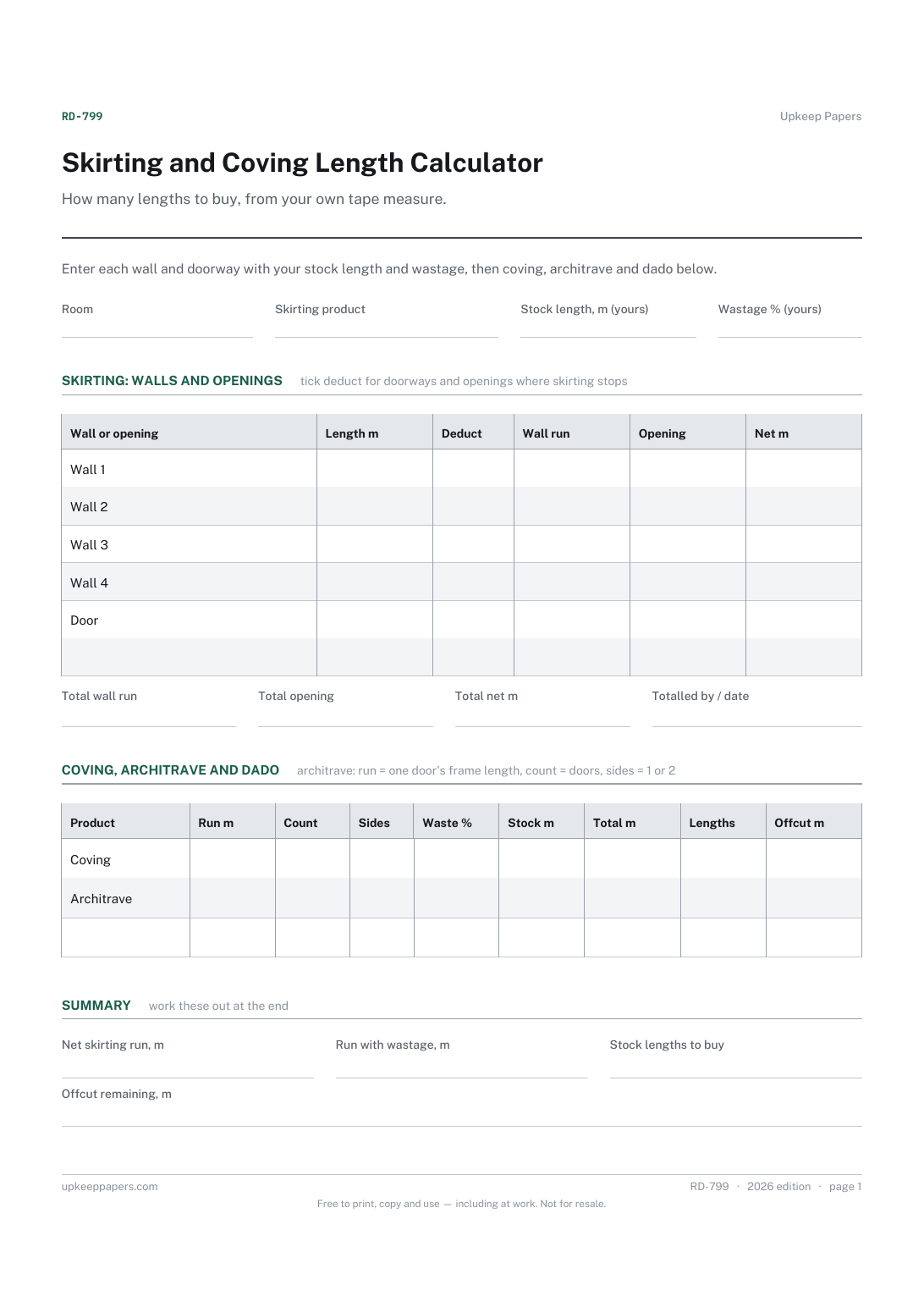
The room perimeter from each wall you measure.
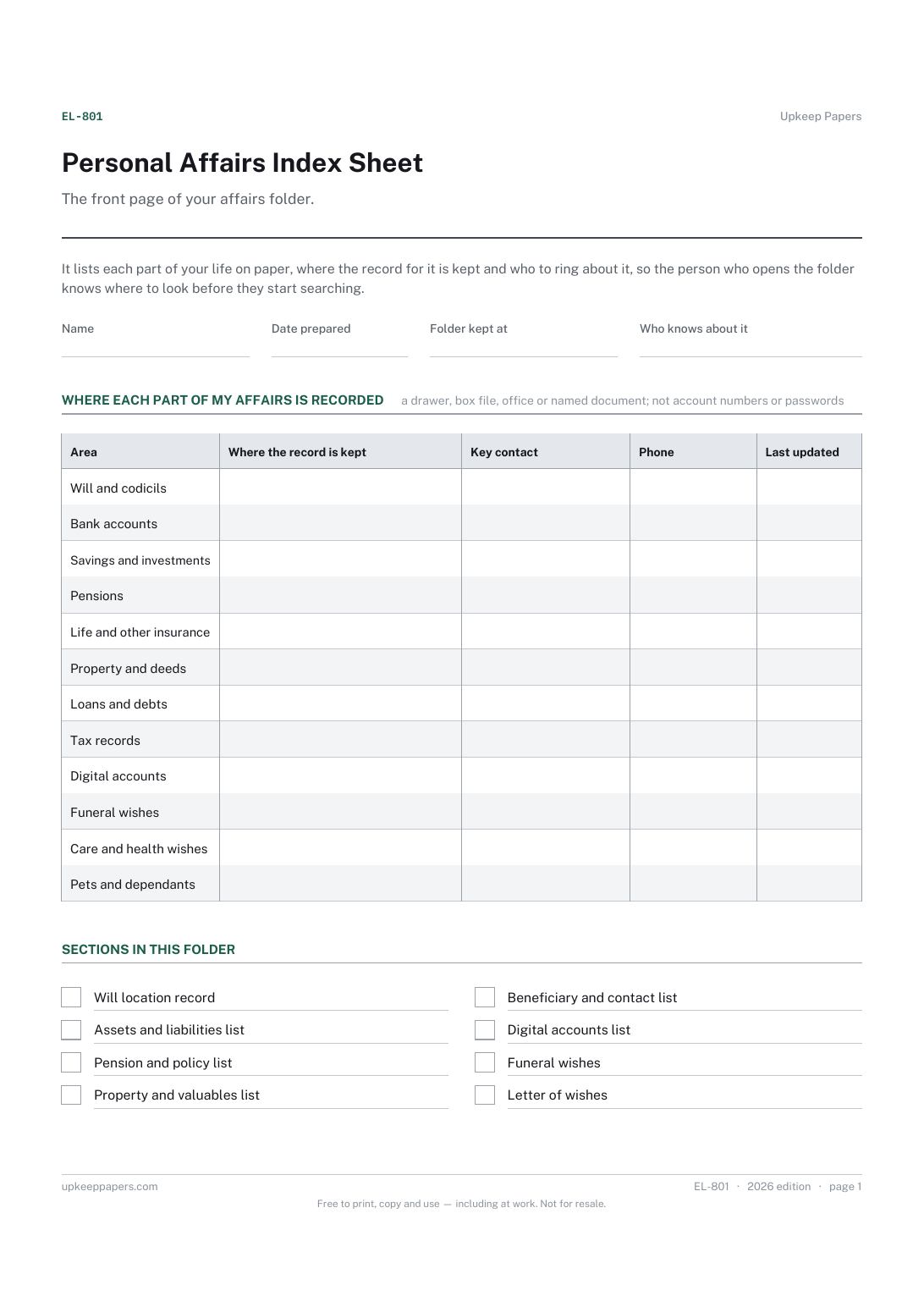
Where the folder itself is kept and who knows it exists.
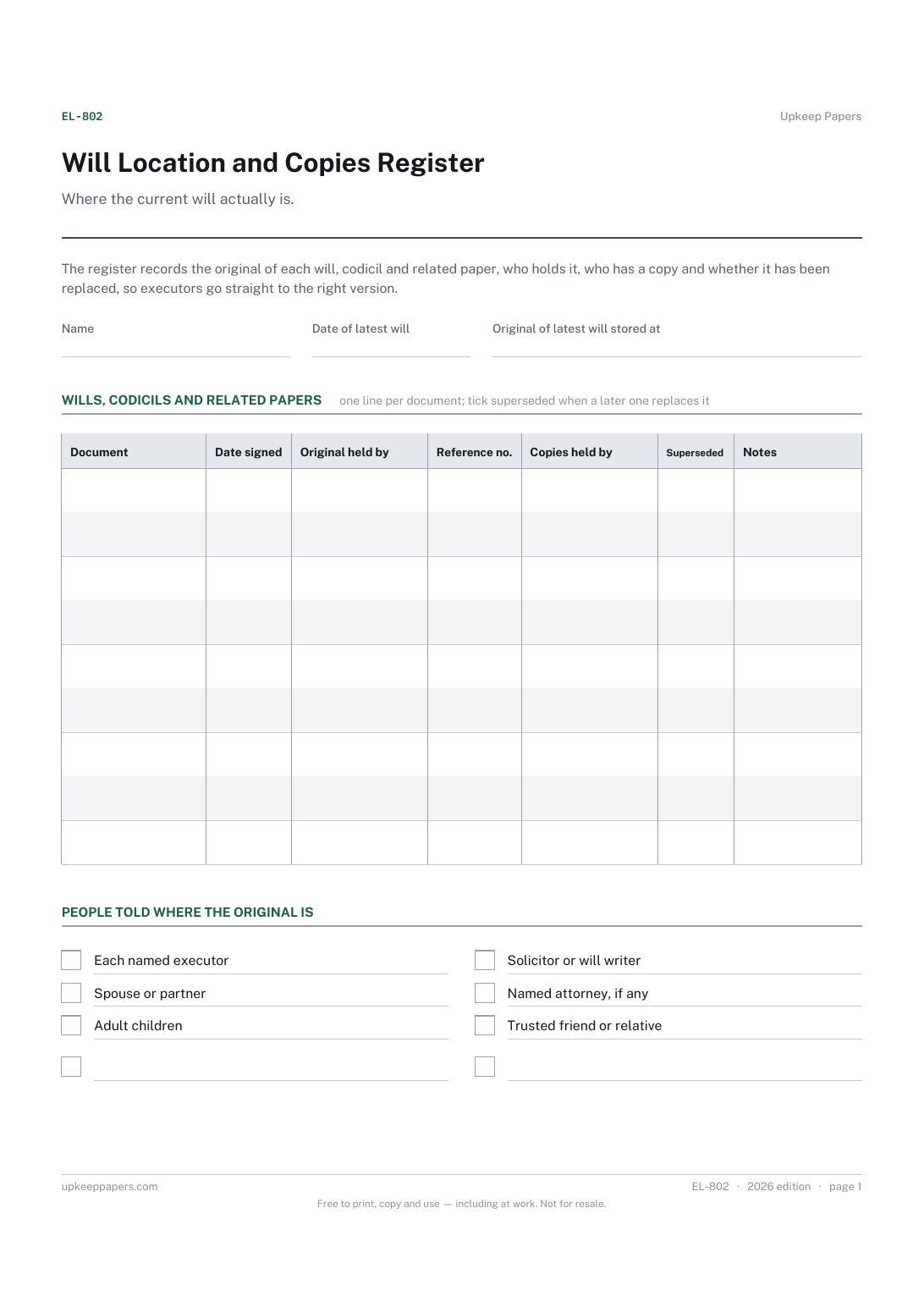
The date of the latest will and where its original is stored.
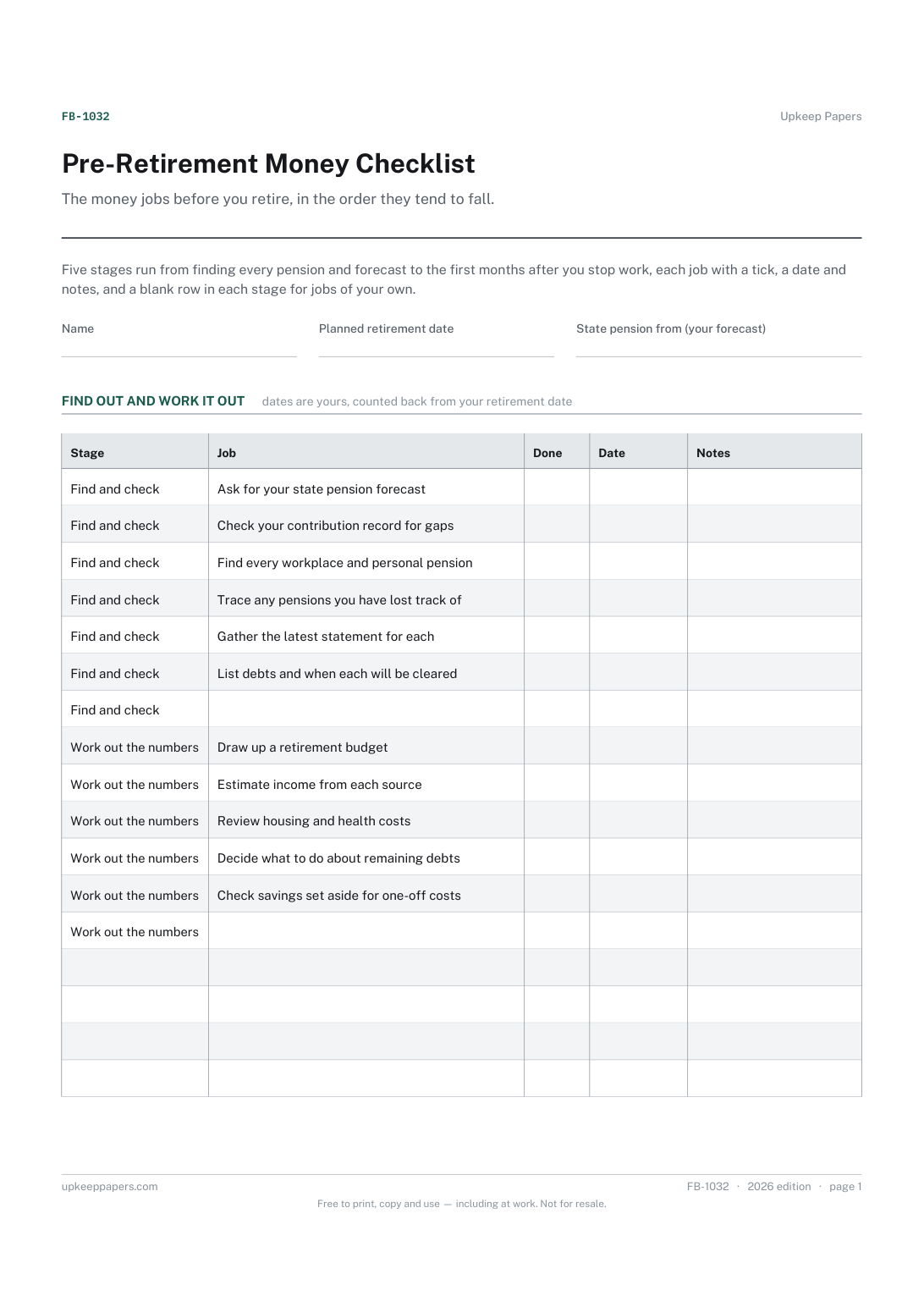
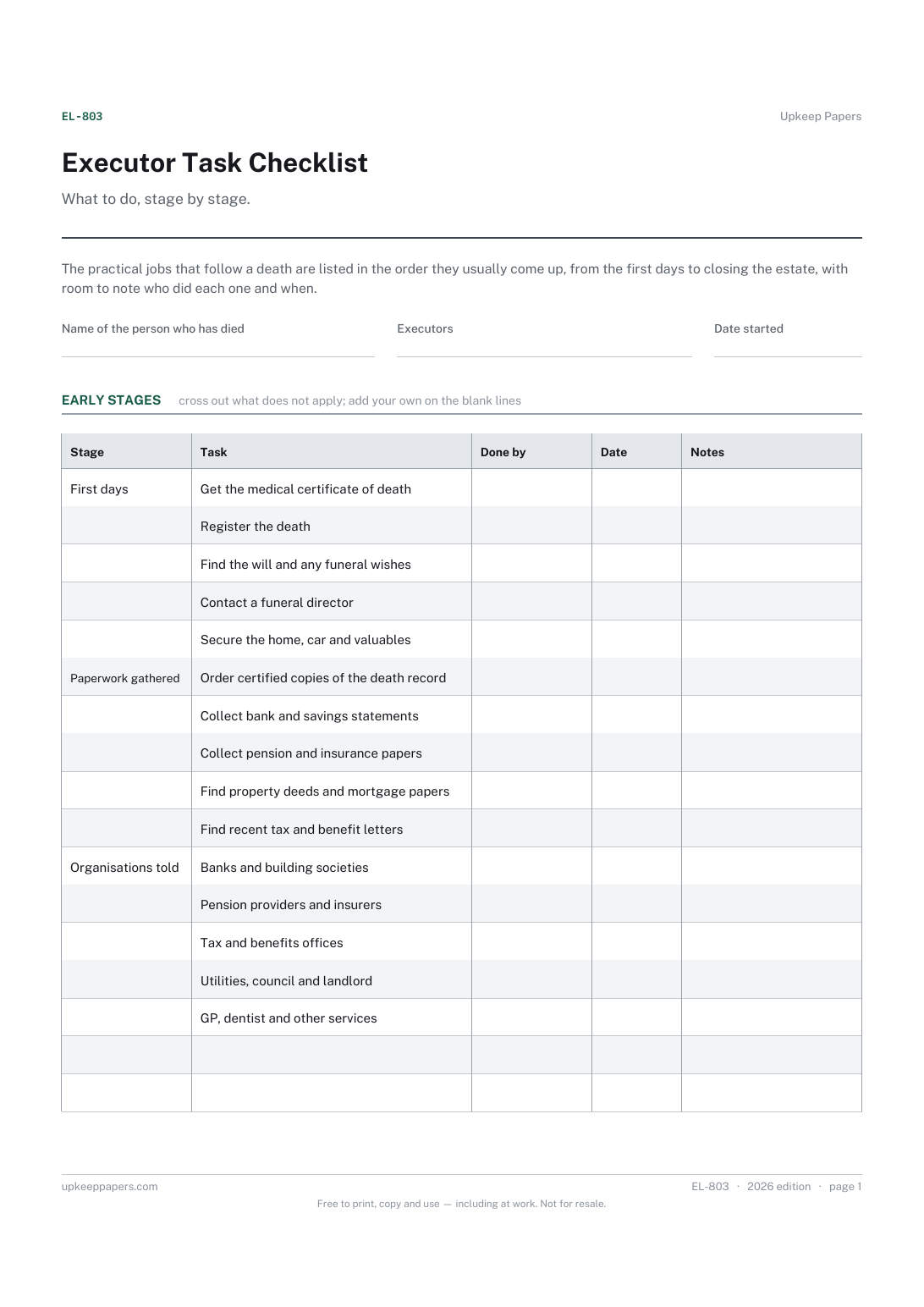
The jobs that need doing in the first days.
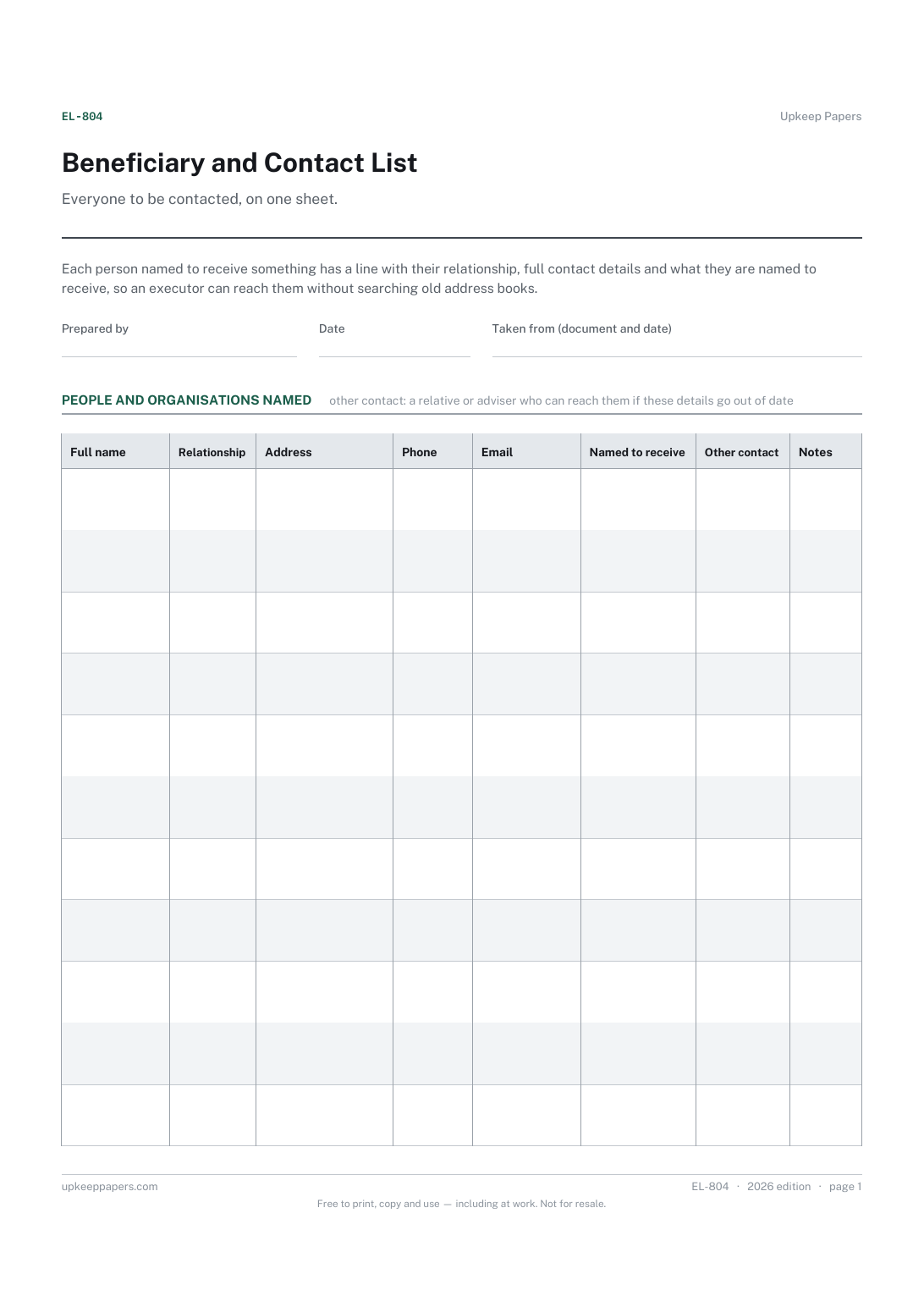
The full name and relationship of each person named.
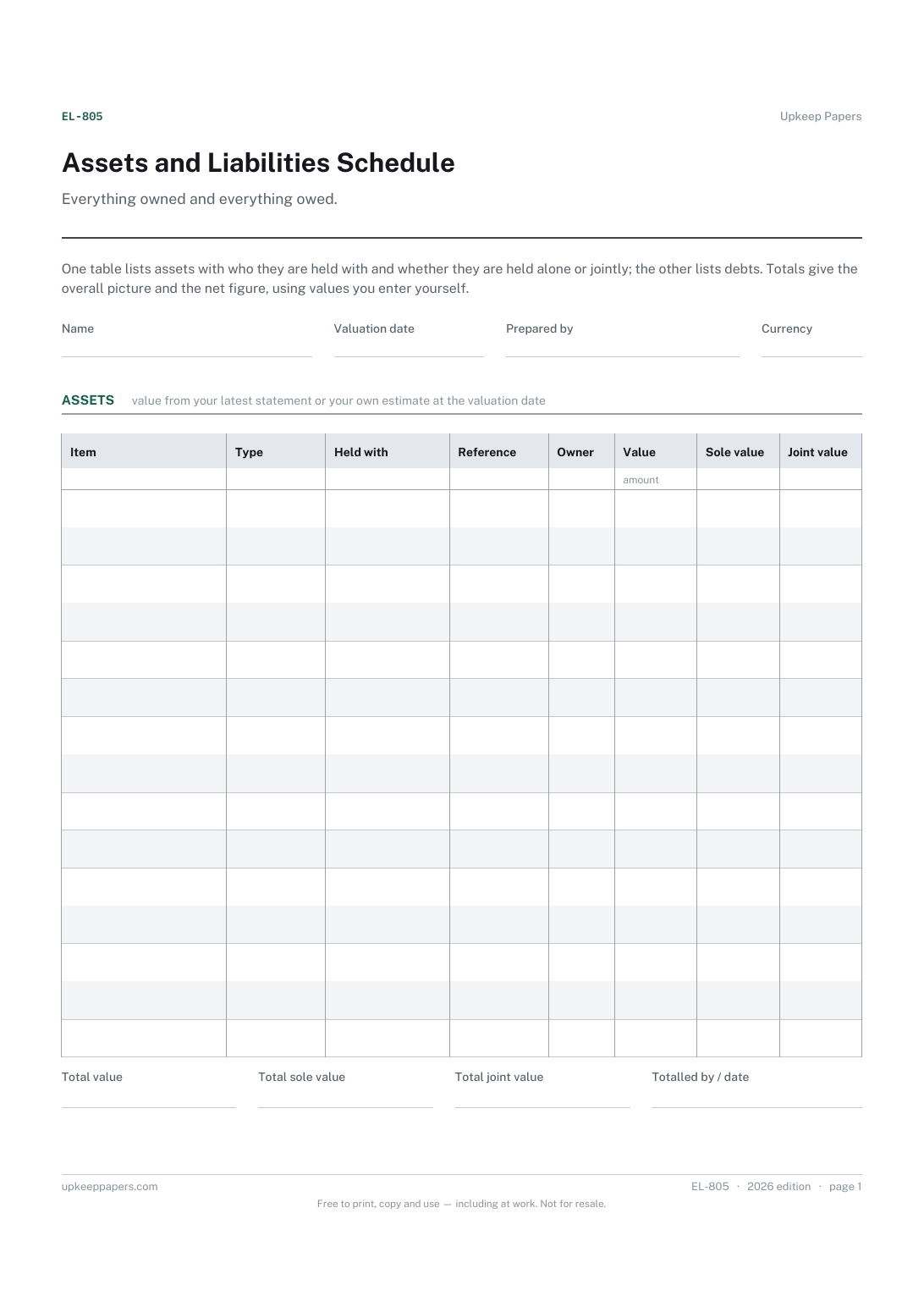
Each account, investment, property and item of value, and who it is held with.
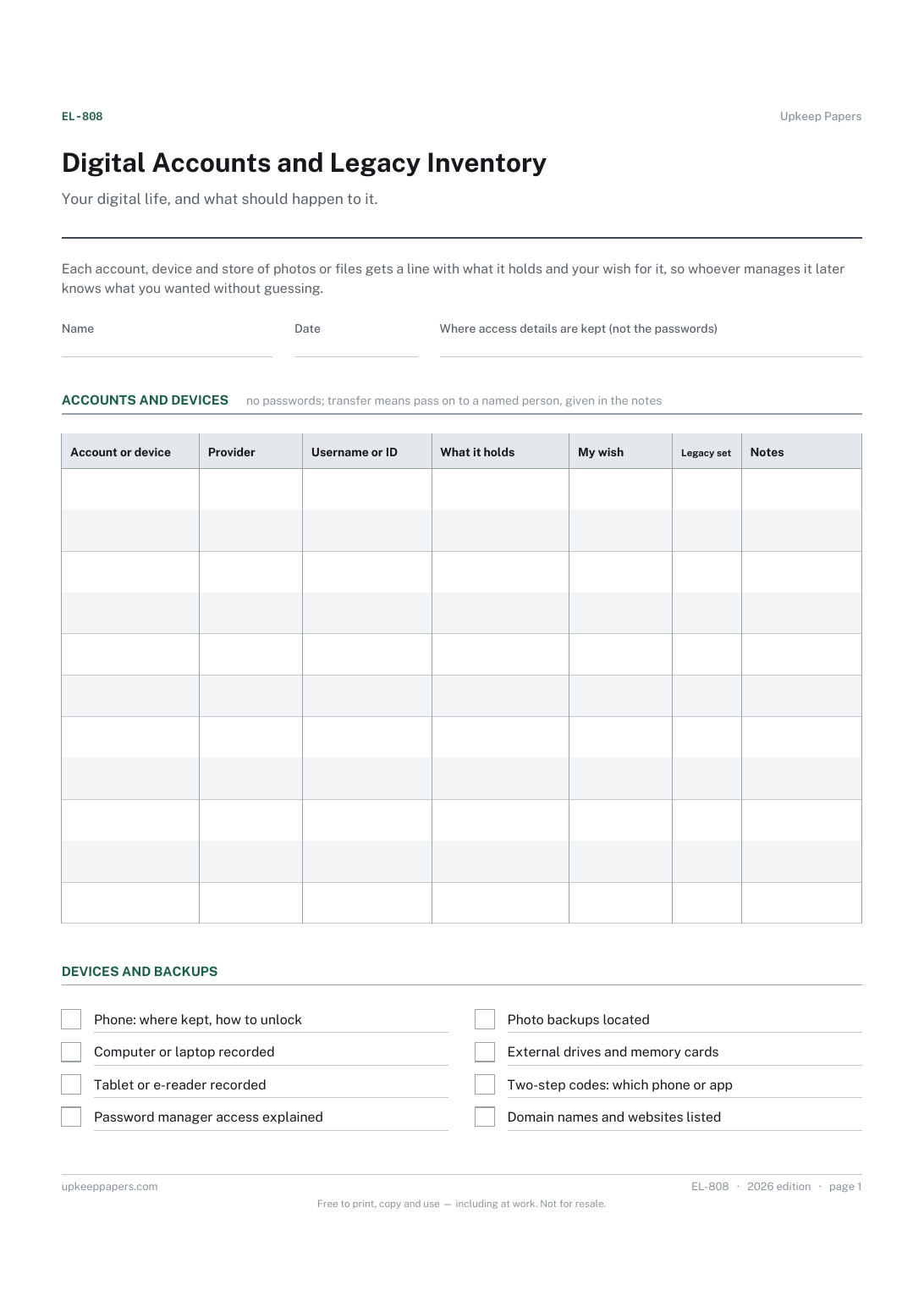
Every account and device, and who provides it.
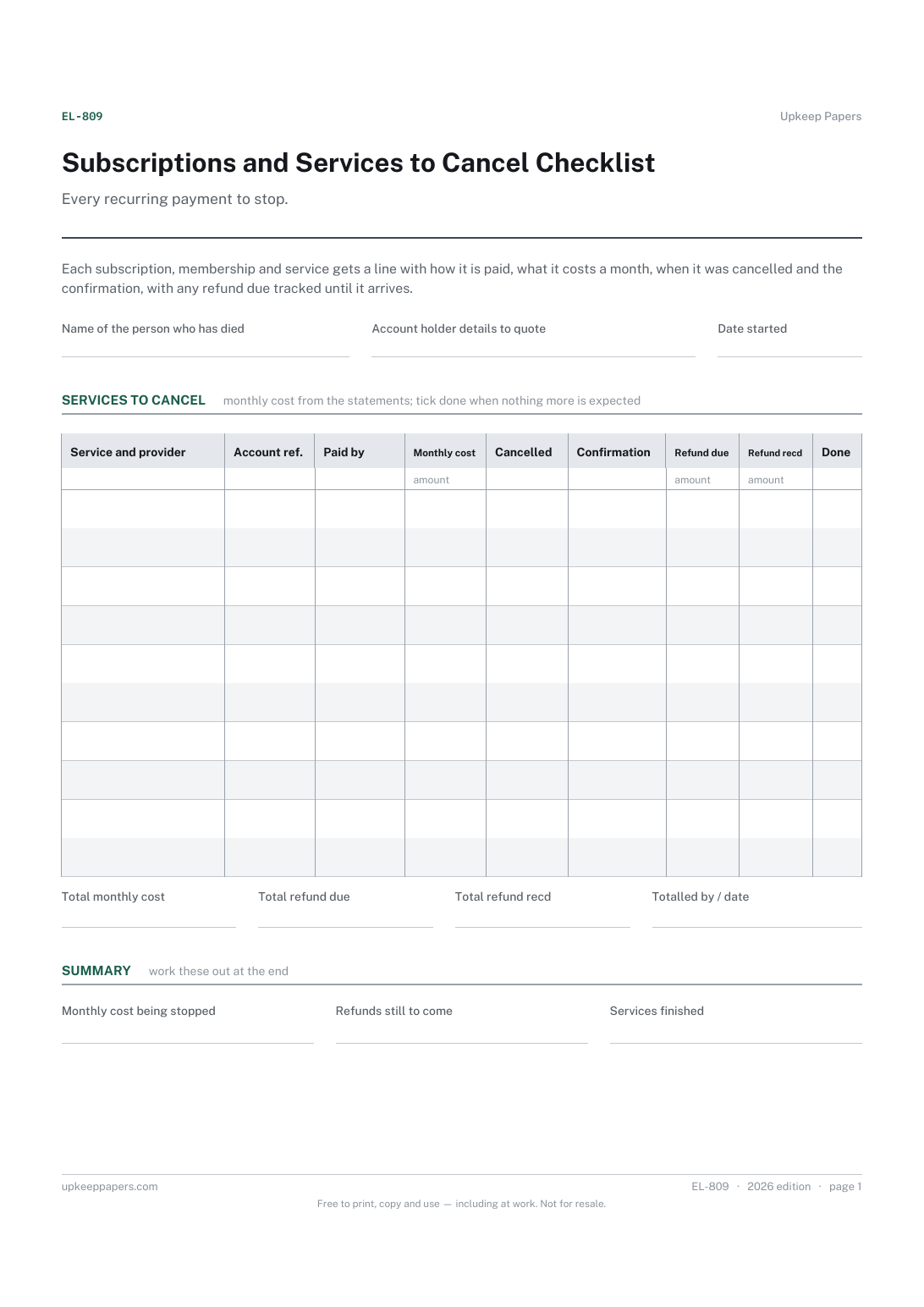
Every subscription, membership and service still being paid.
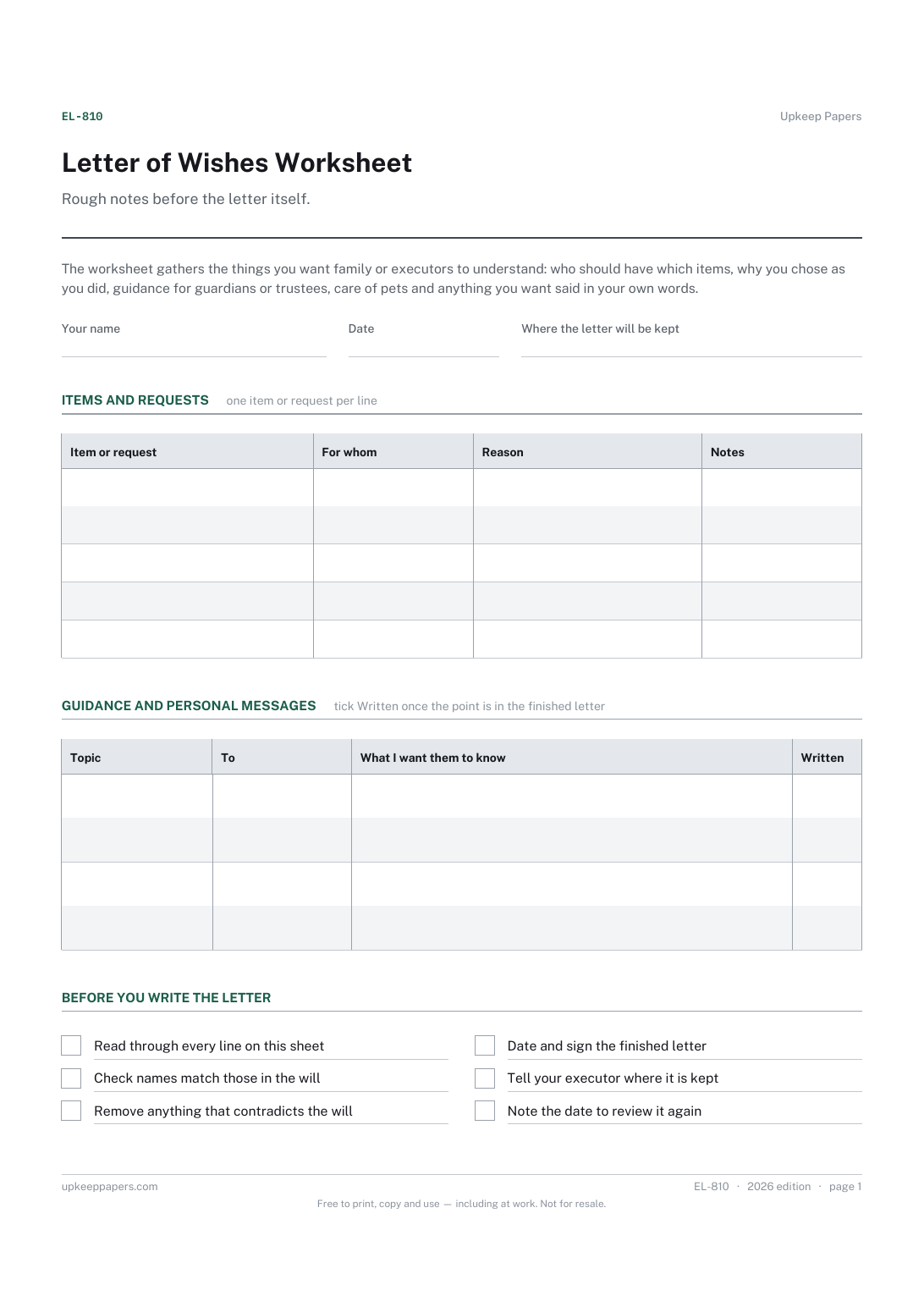
Items or requests, and who each one is meant for.
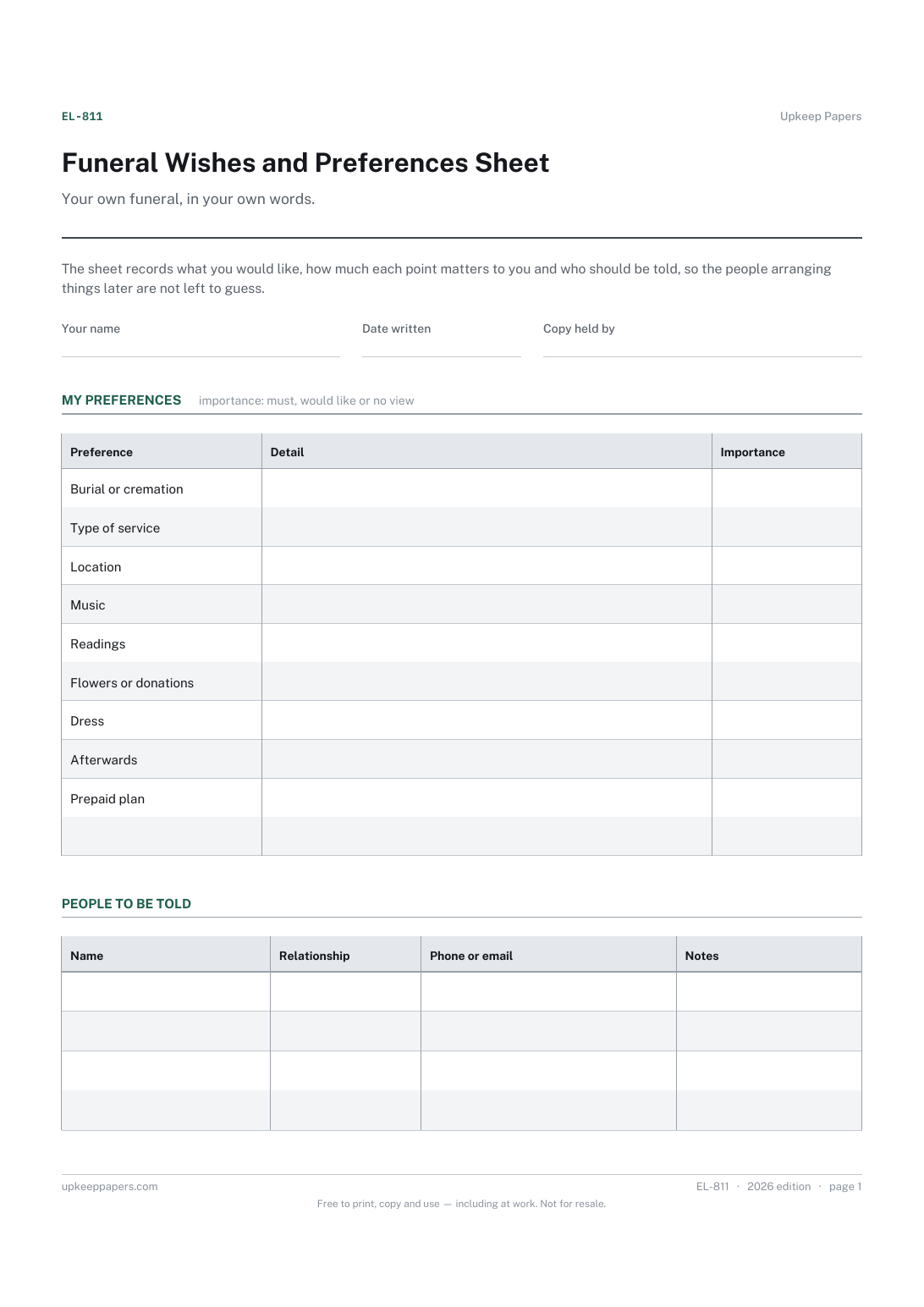
Burial or cremation, and any place you have in mind.
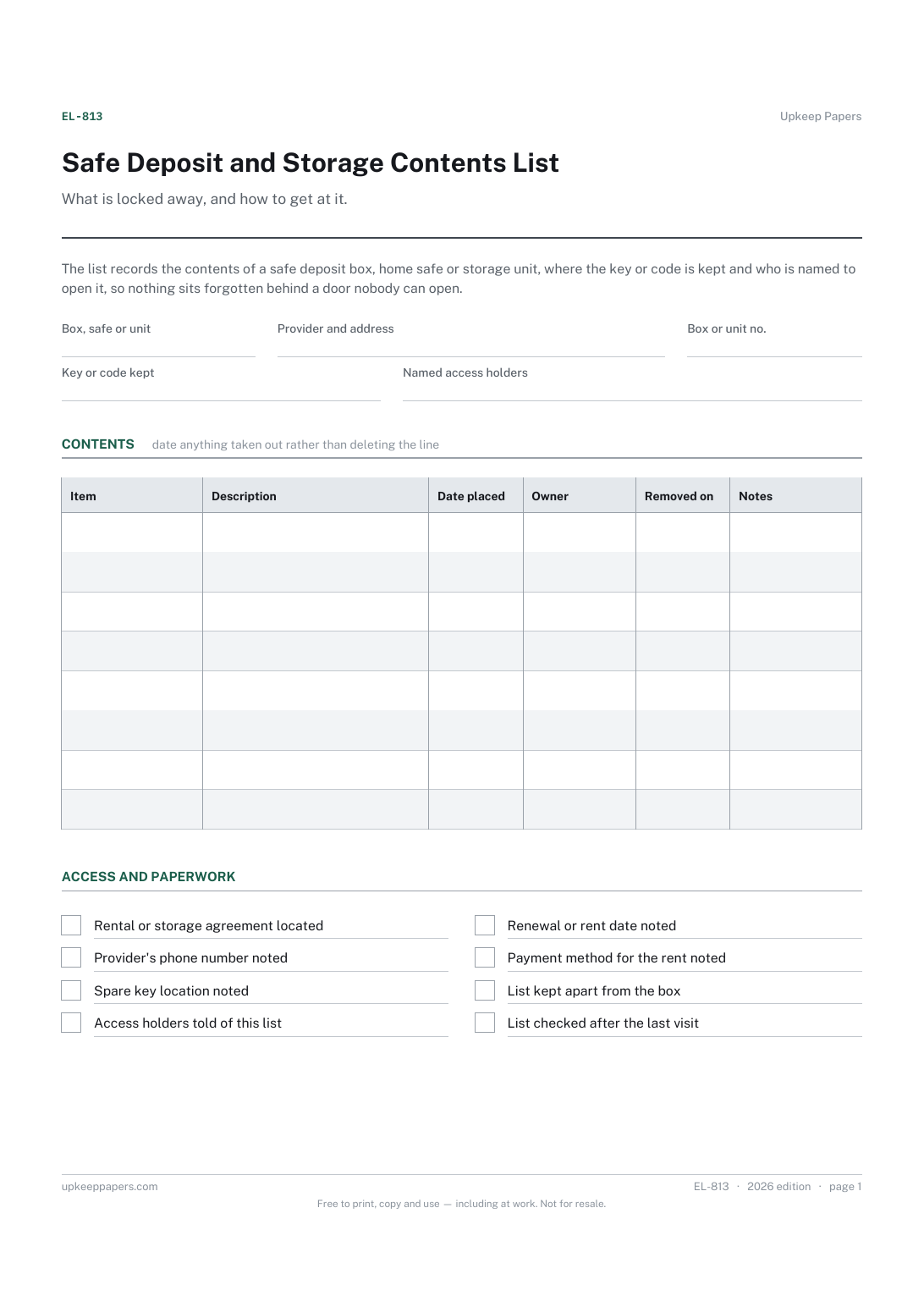
Where the box, safe or unit is and who provides it.
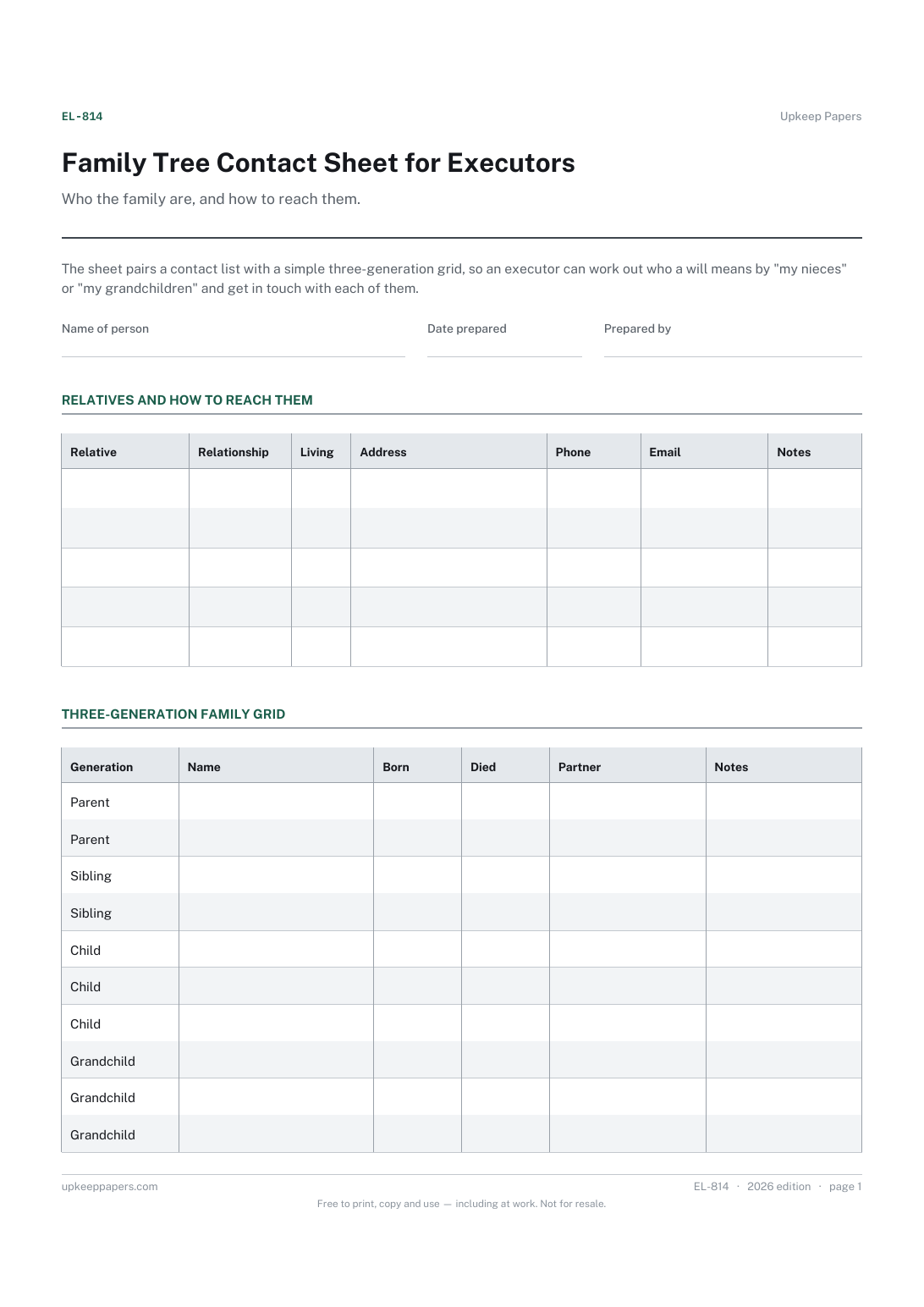
Each relative's relationship to you, and whether they are living.
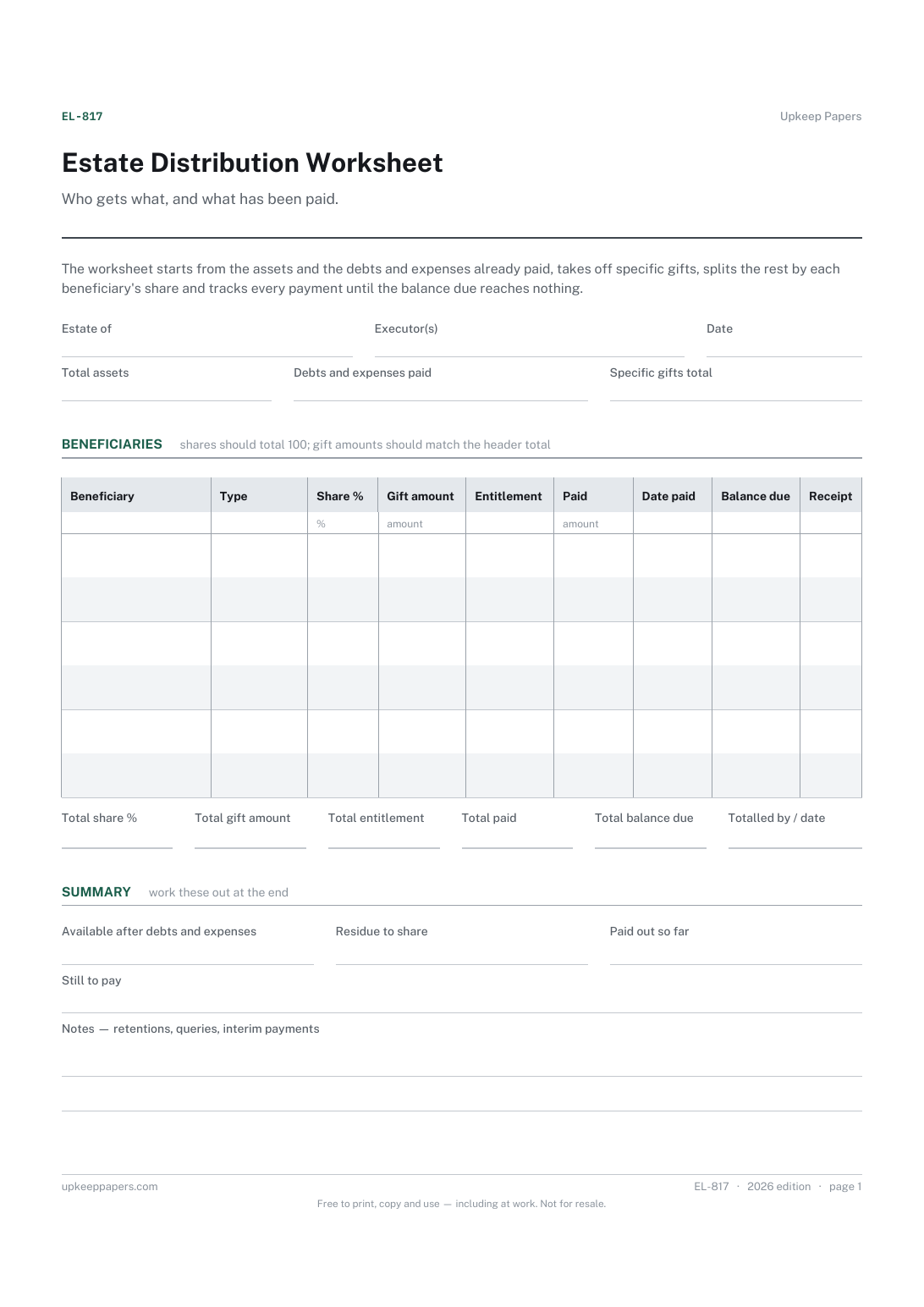
The total assets, debts and expenses, and what is left to distribute.
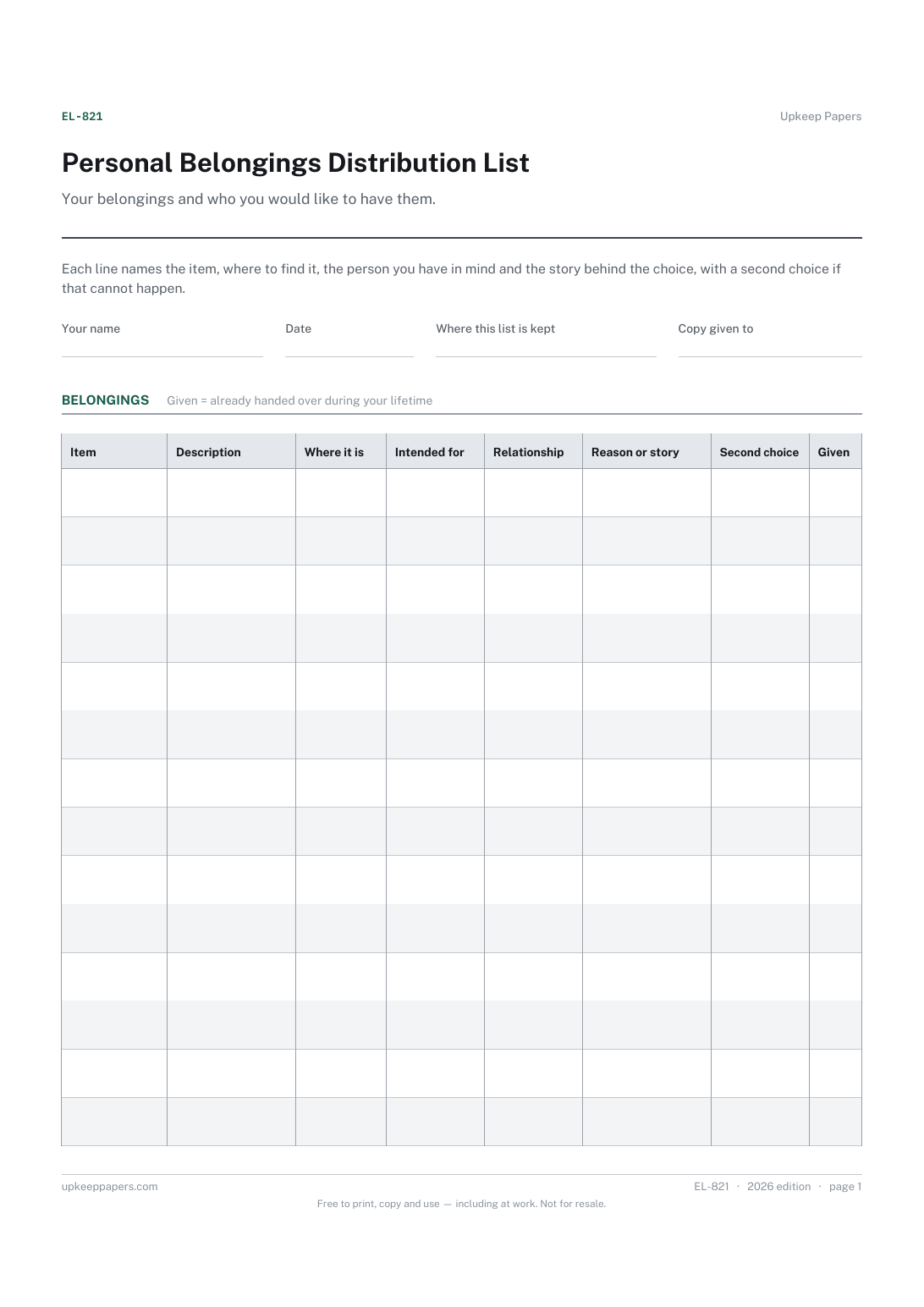
Which items you want to go to which people.
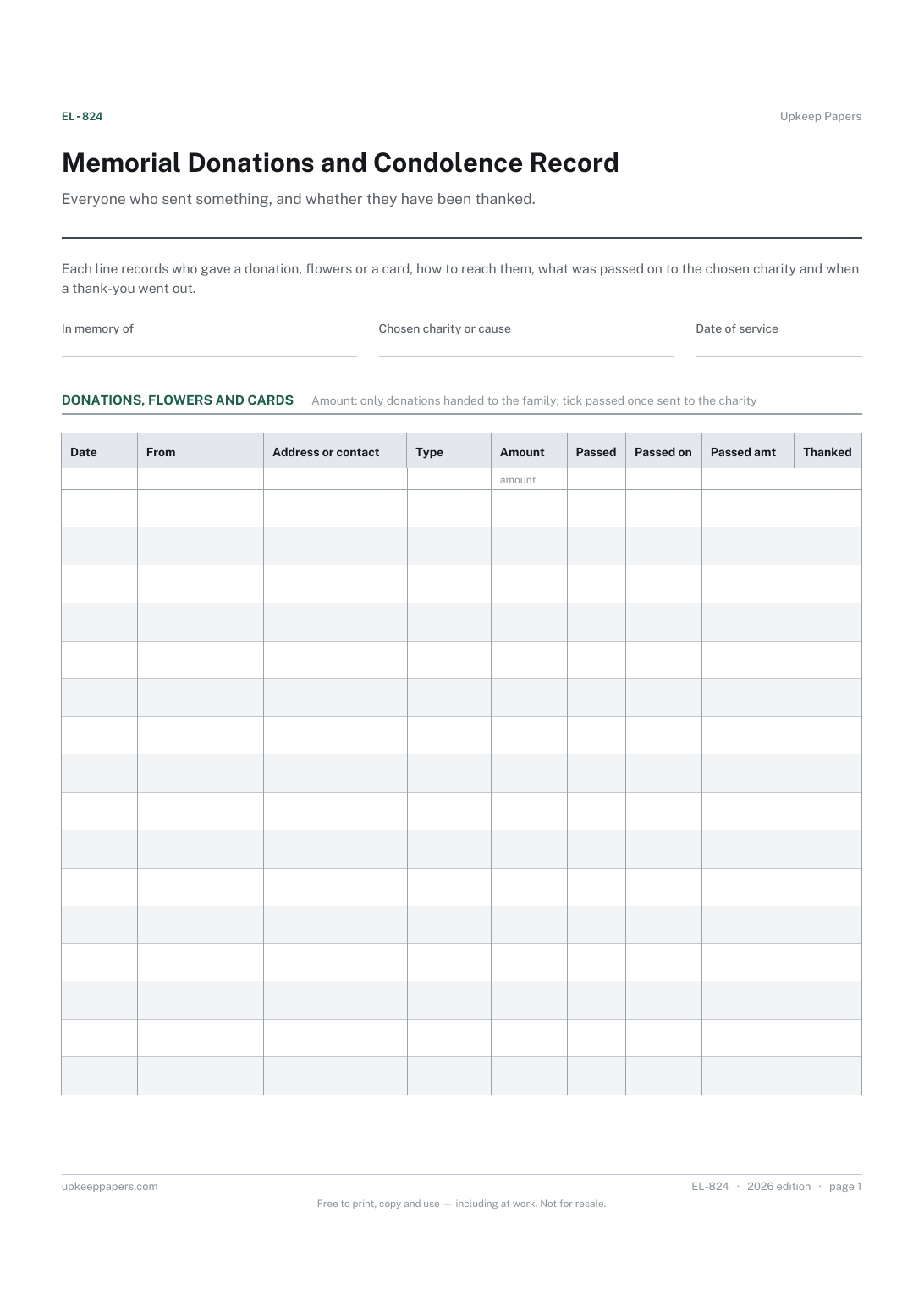
Who sent donations, flowers and cards.
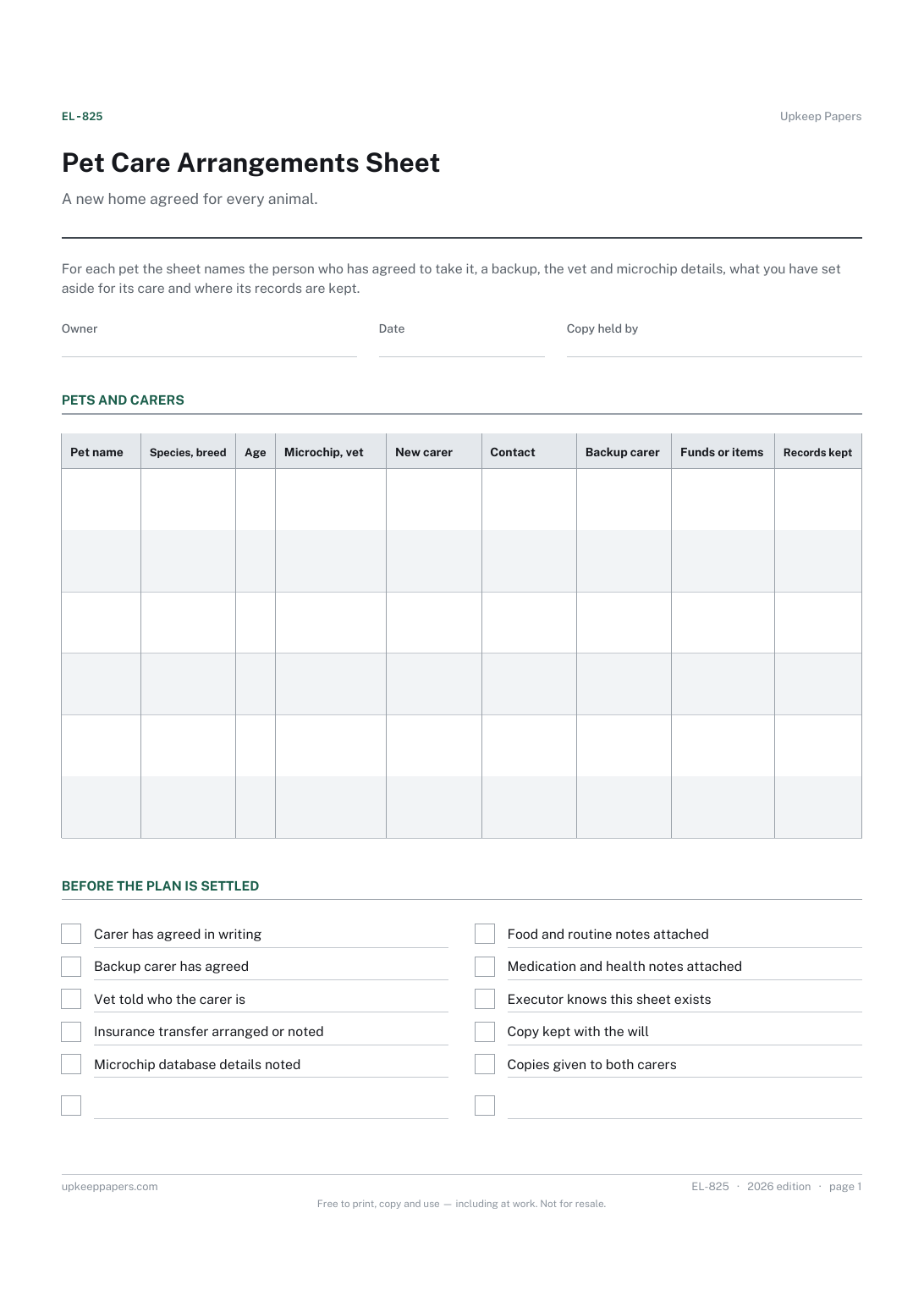
Who has agreed to take each pet, and a backup.
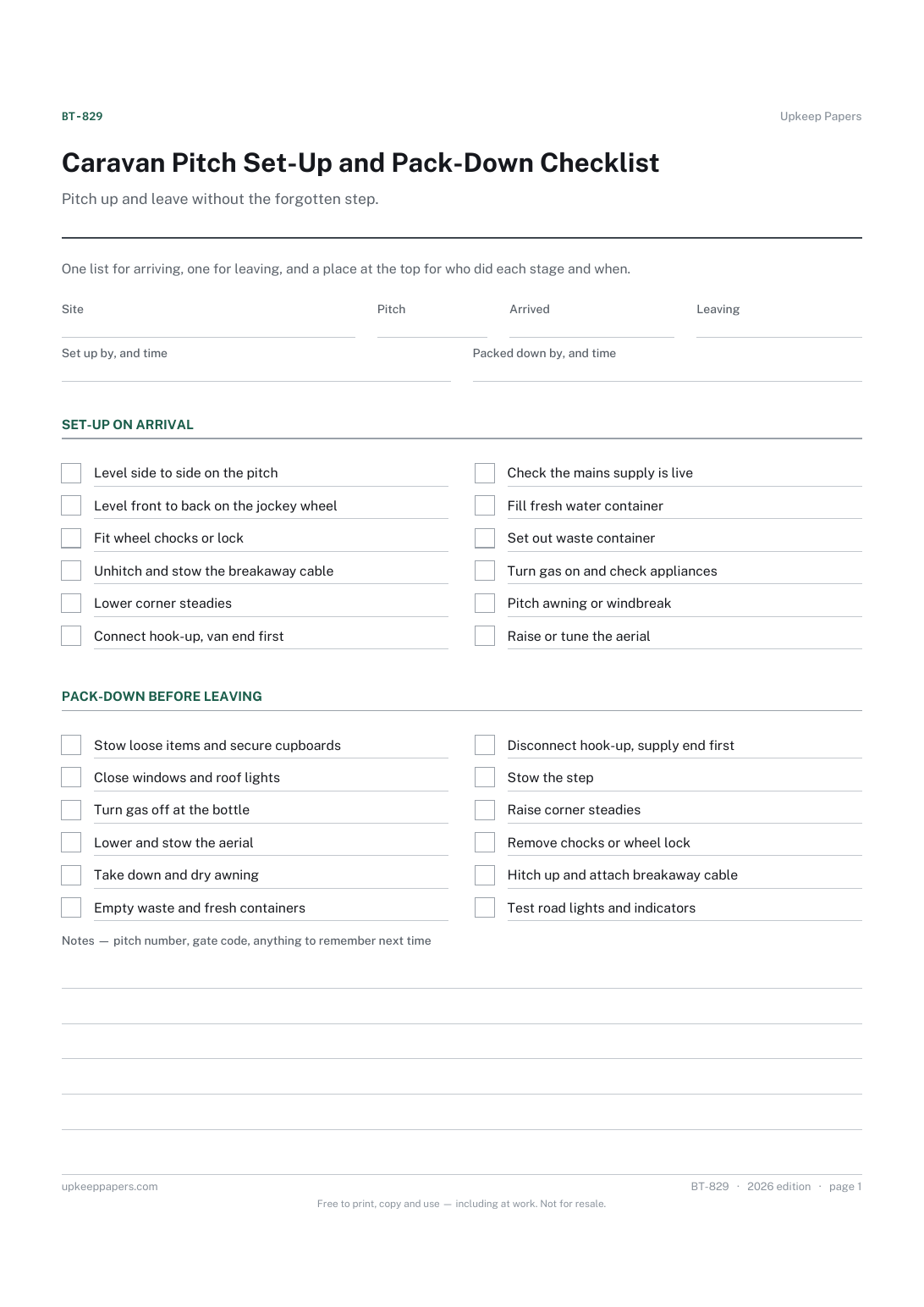
Levelling, steadies and chocks done before anything is connected.
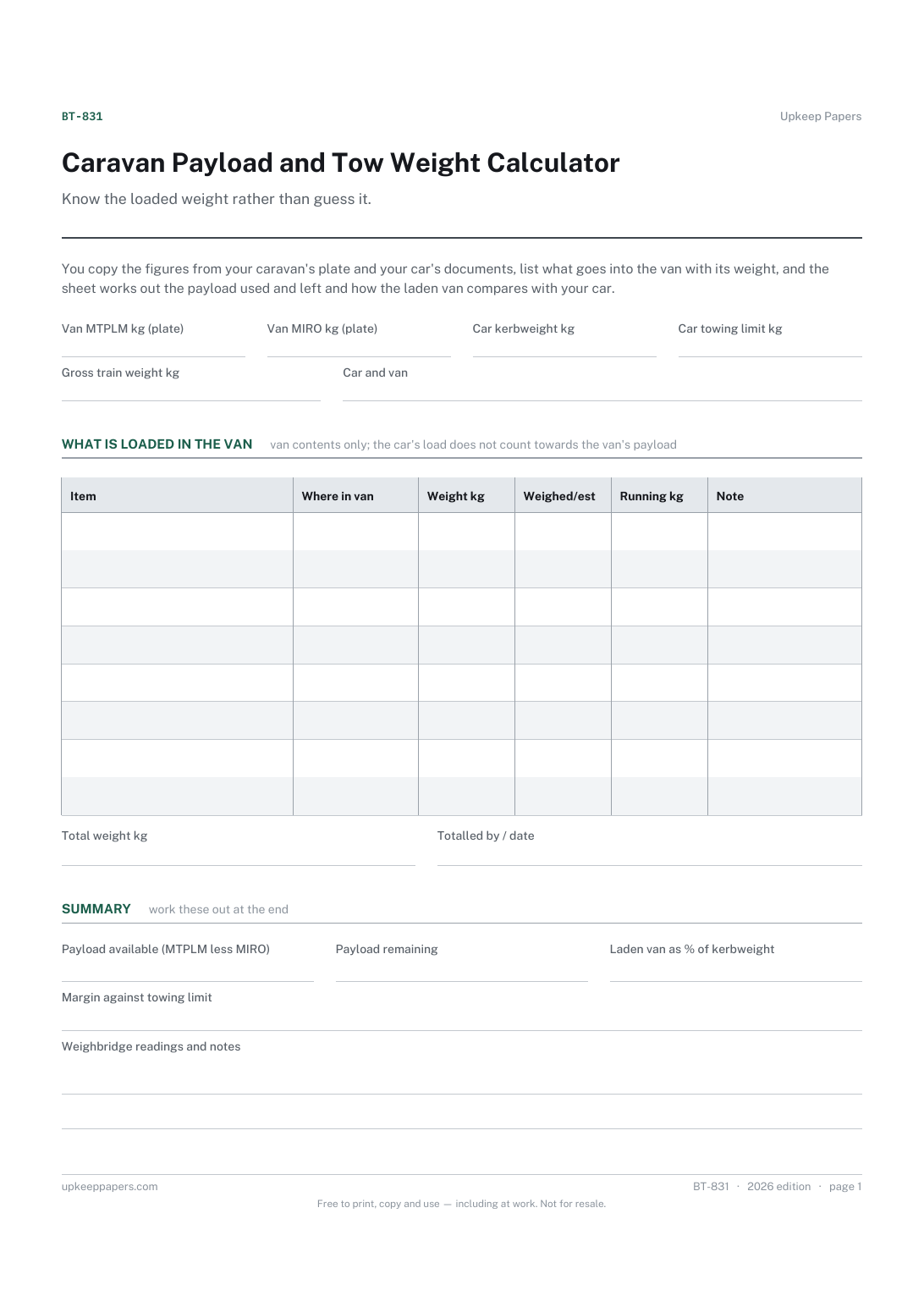
Your van's plate weights and your car's figures in one place.
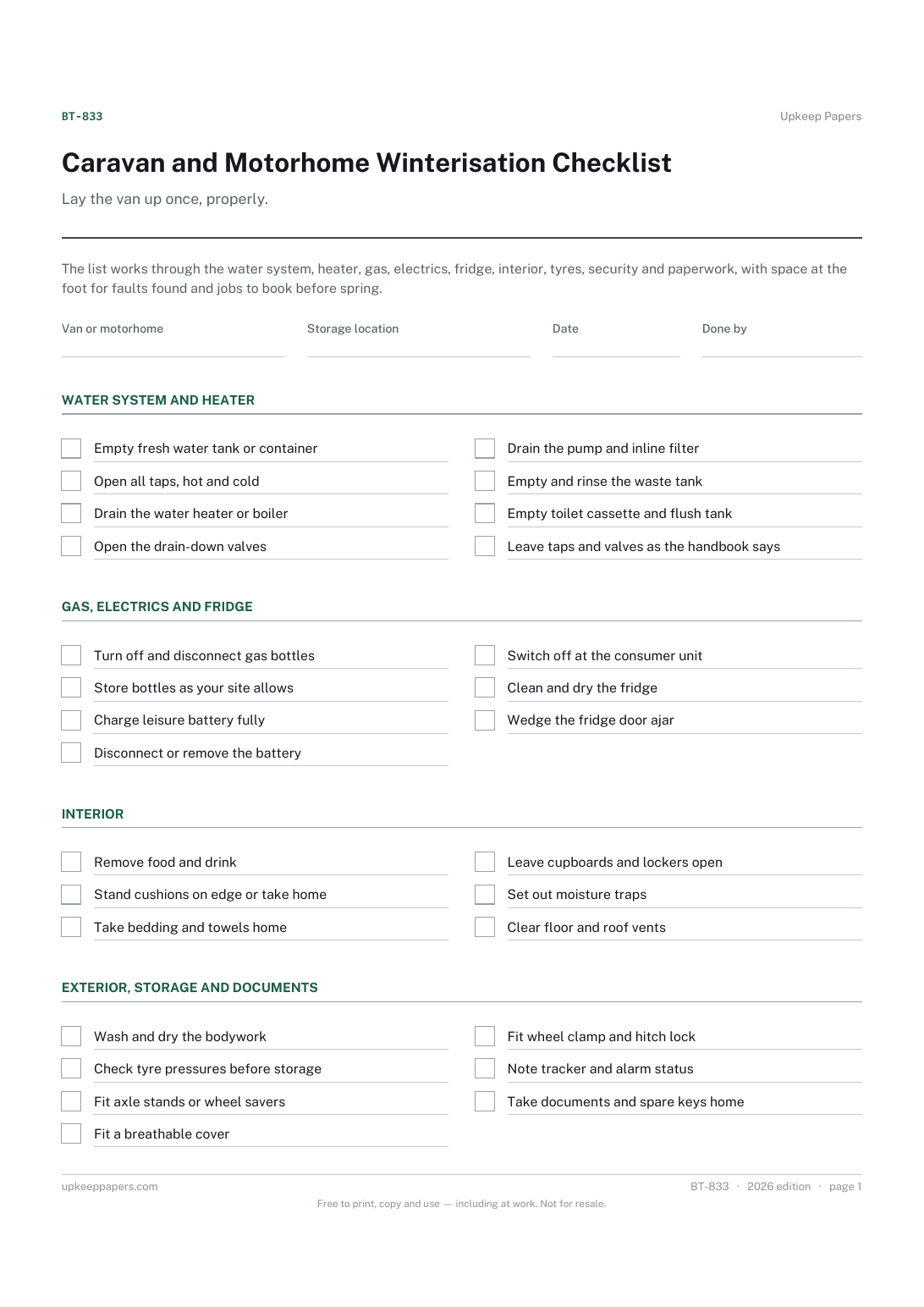
Every tap, pump, tank and heater drained before the frosts.
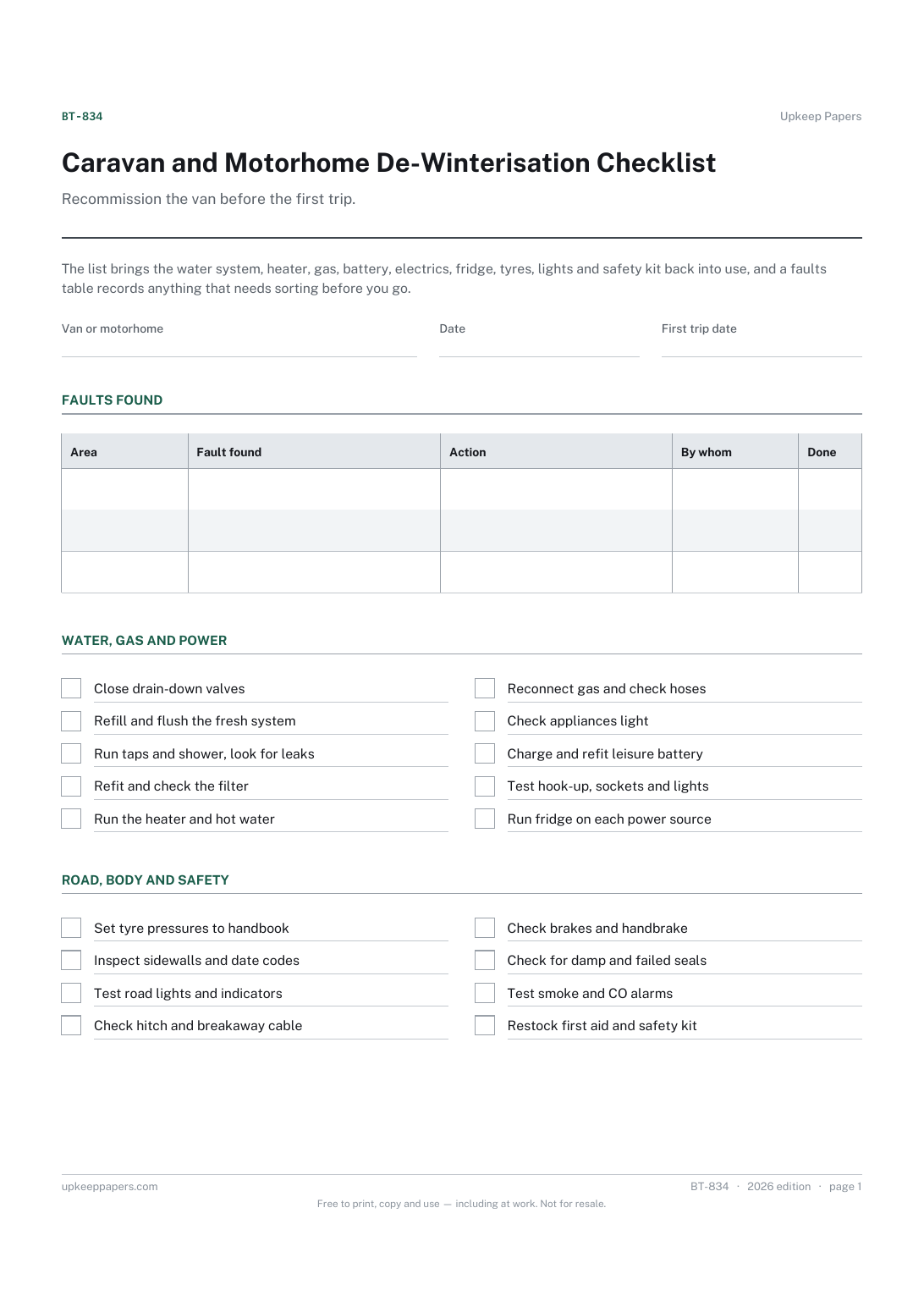
Water system refilled, flushed and checked for leaks.
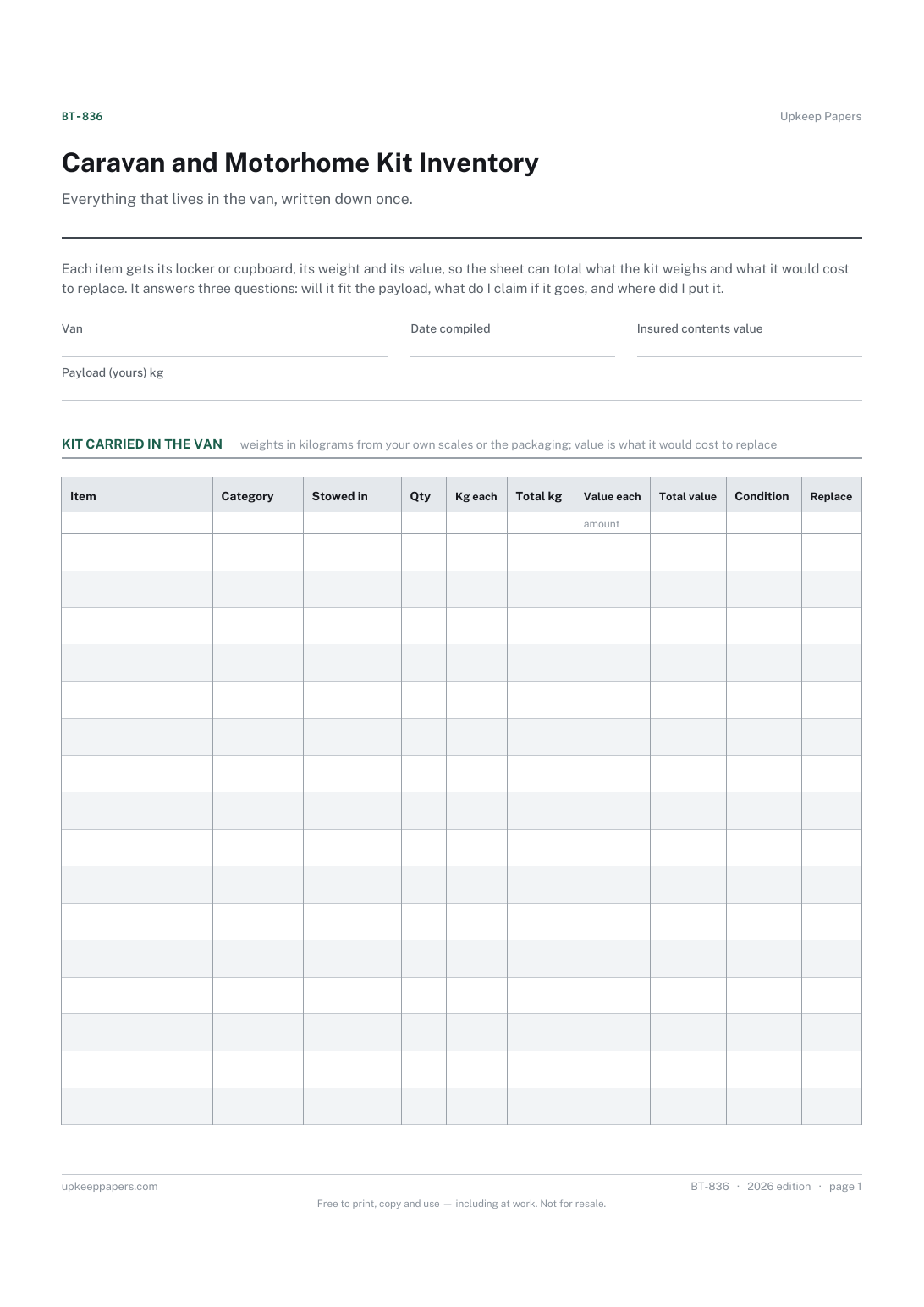
Every item carried, grouped by category and by where it is stowed.
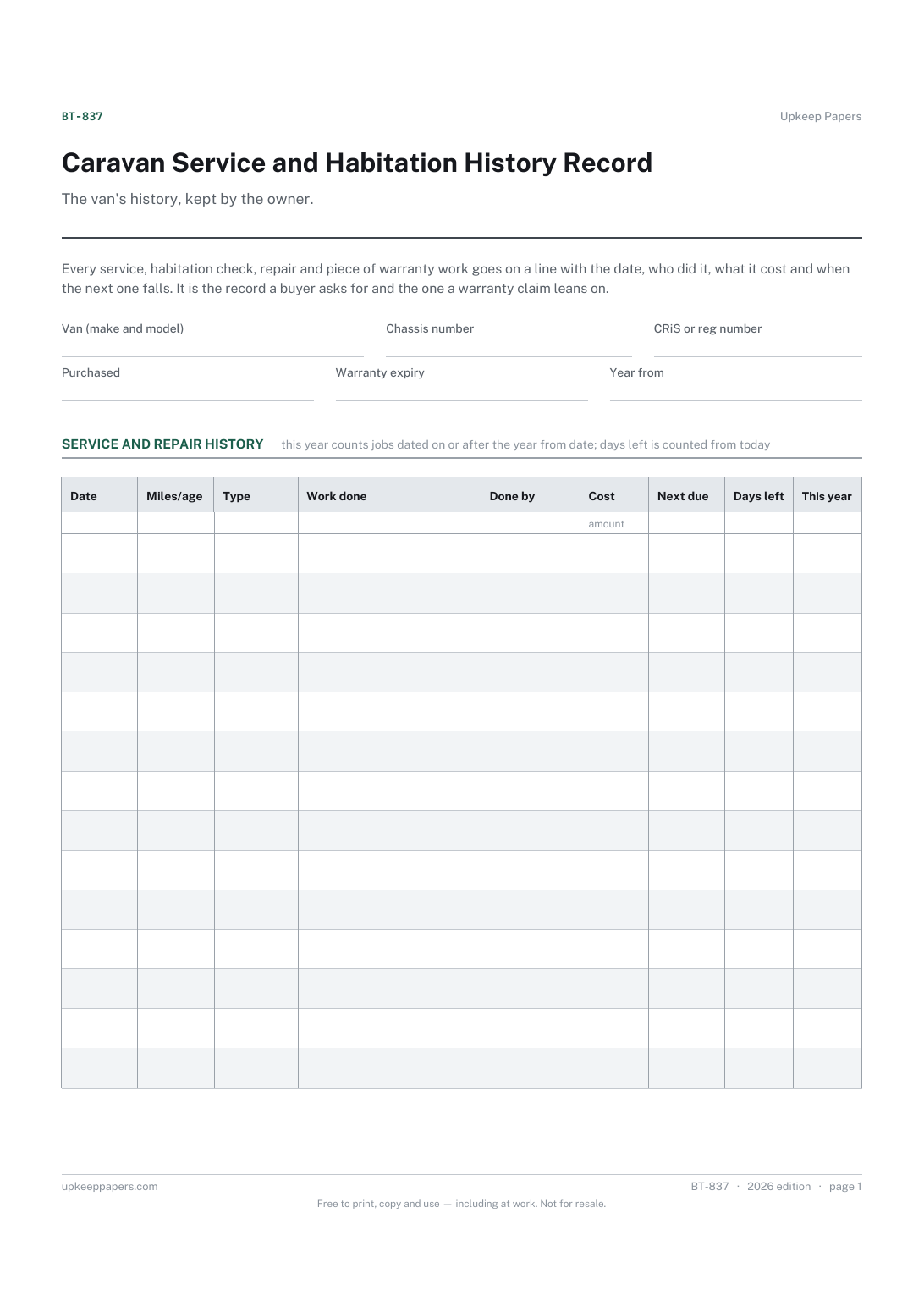
Every service, habitation check, repair and warranty job in date order.
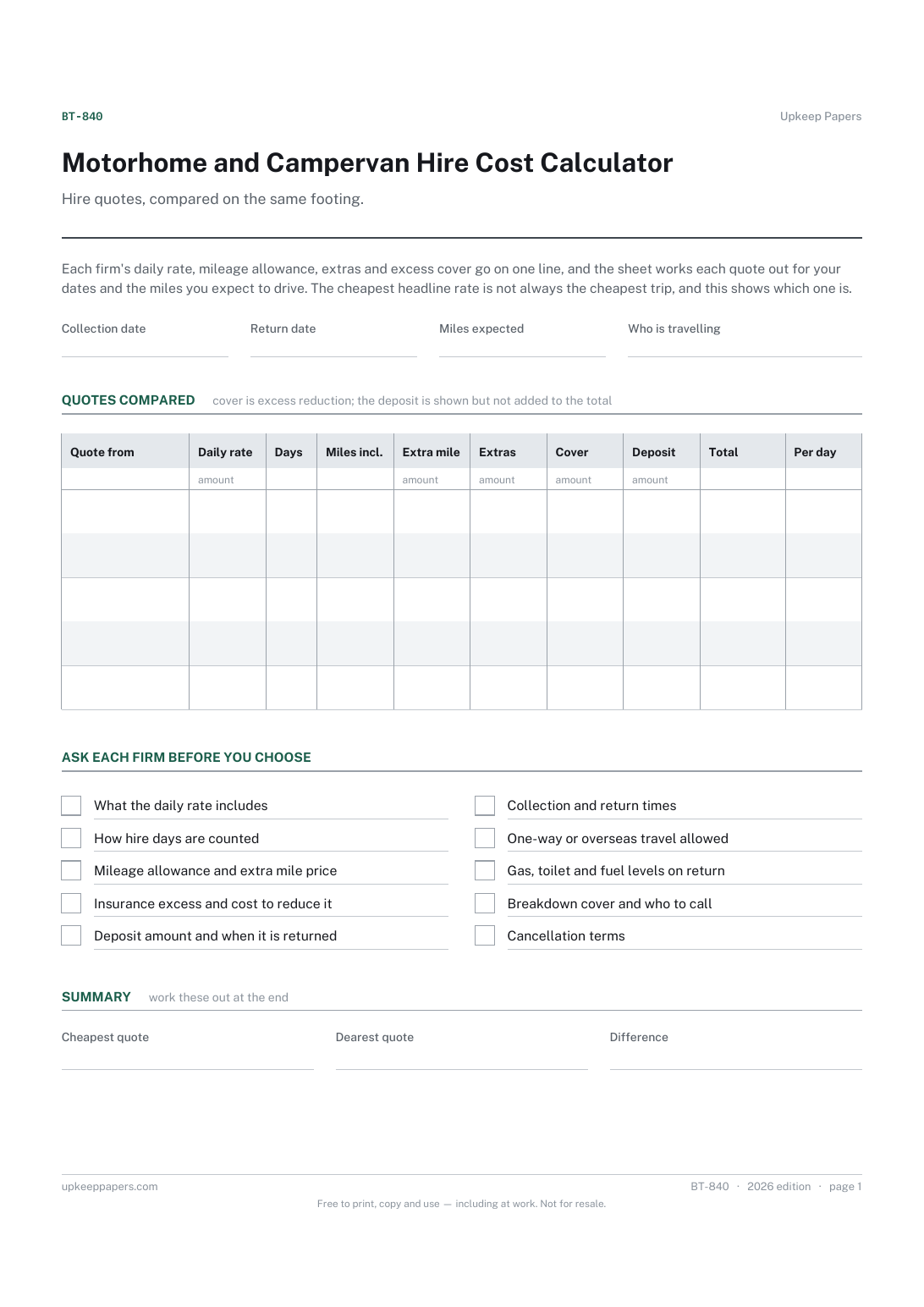
Every quote on one page, worked out for the same dates and miles.
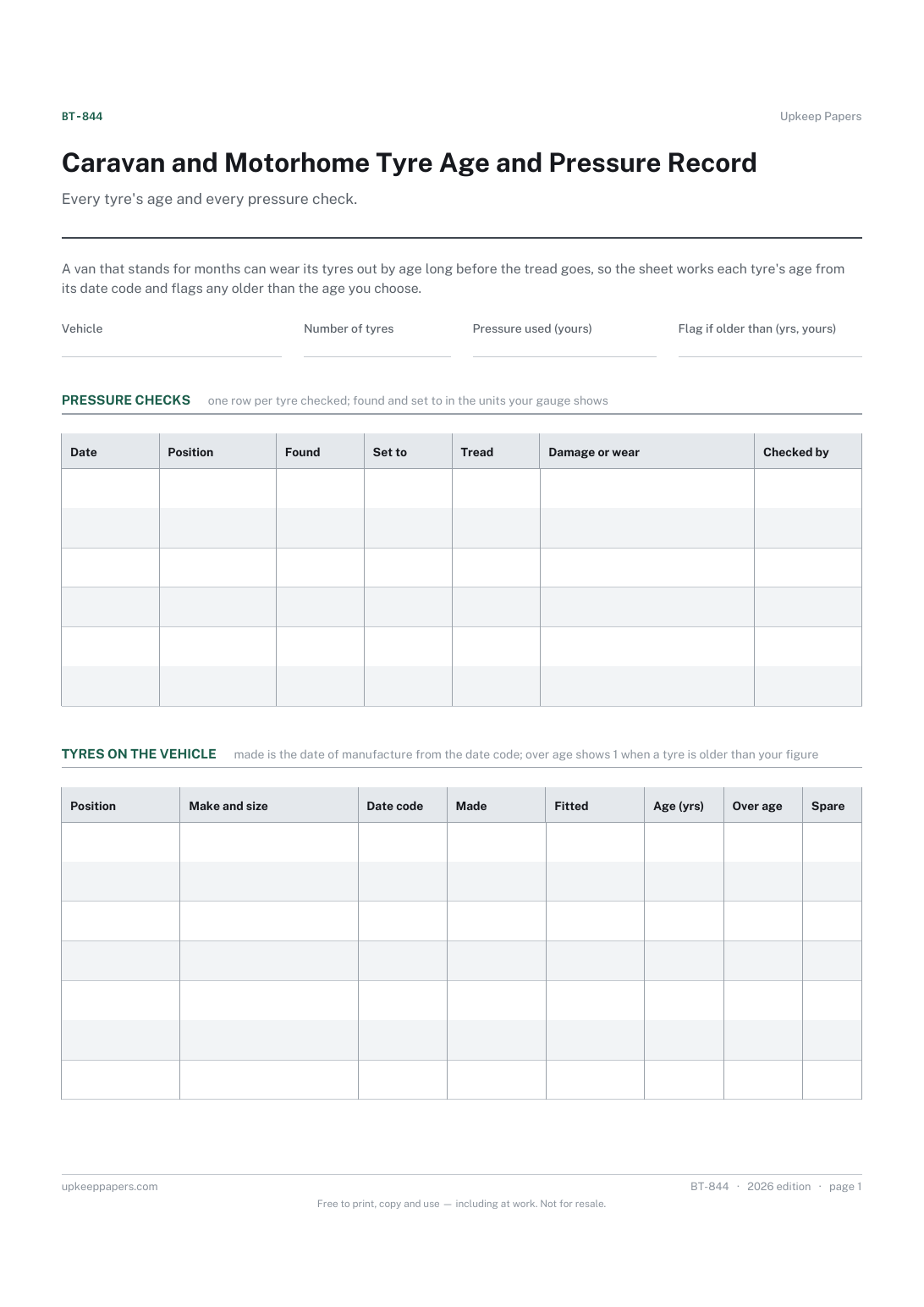
Each tyre's position, make, size and date code.
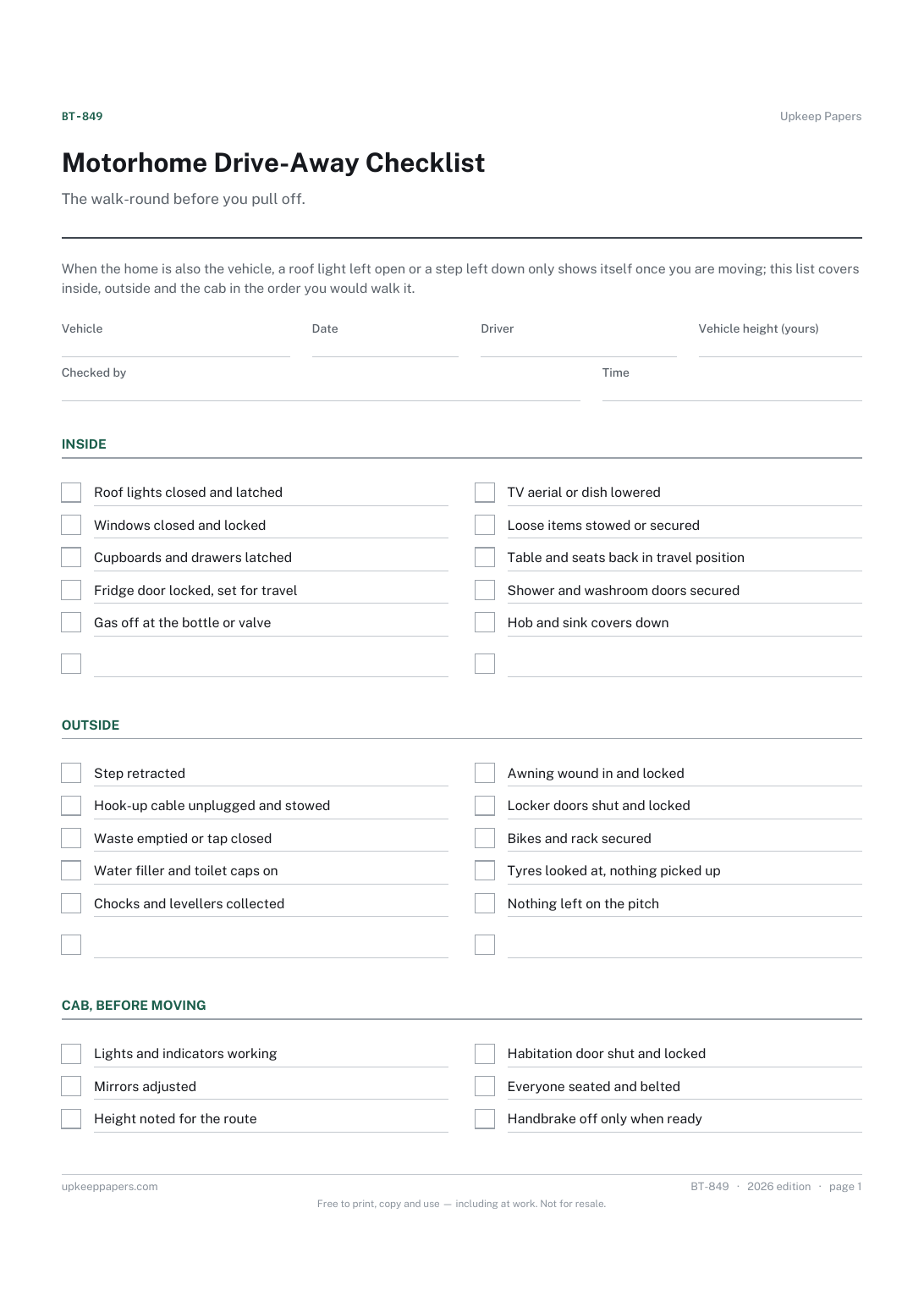
Roof lights, windows, doors and cupboards secured.
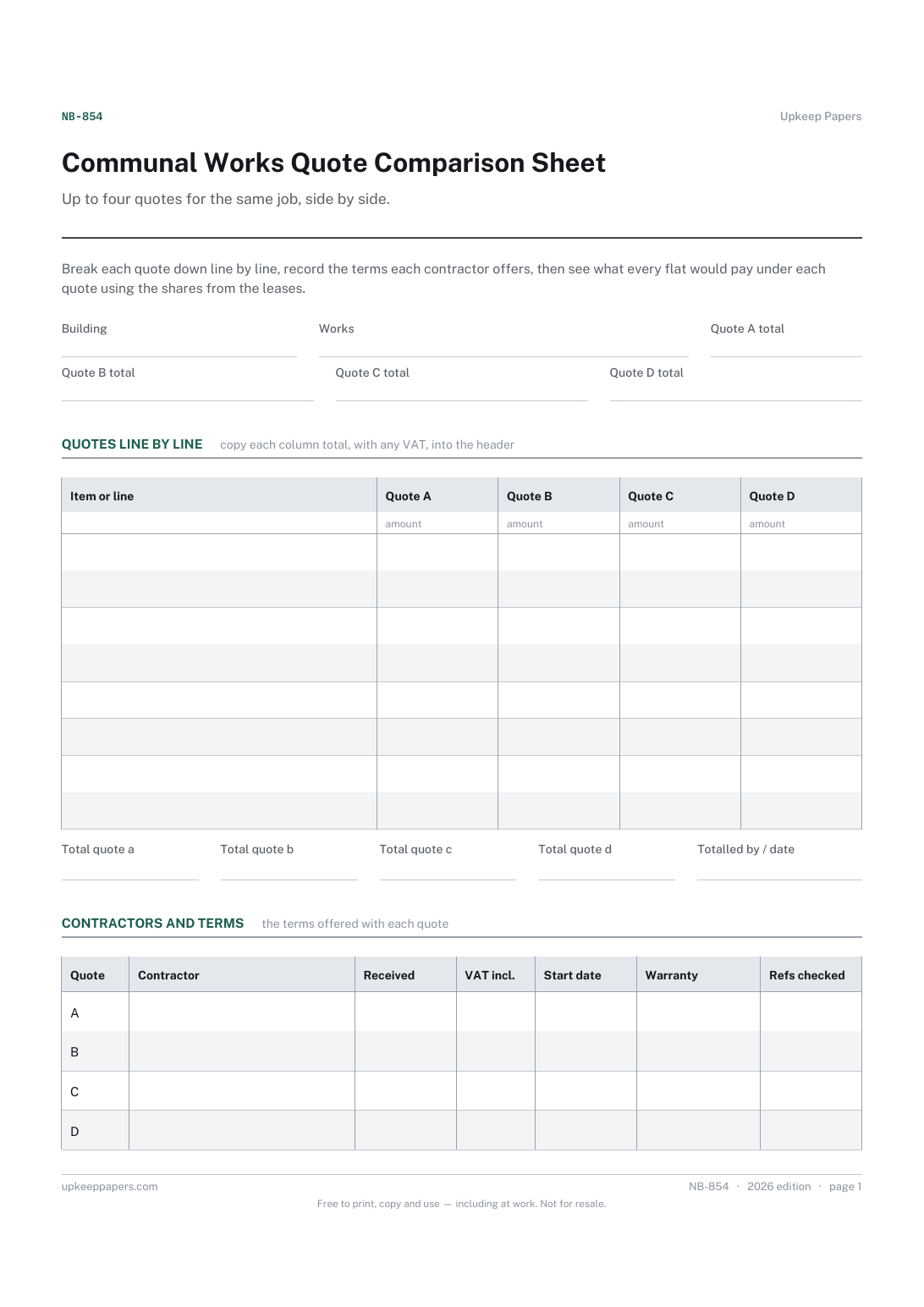
Each quote broken down by line, so like is compared with like.
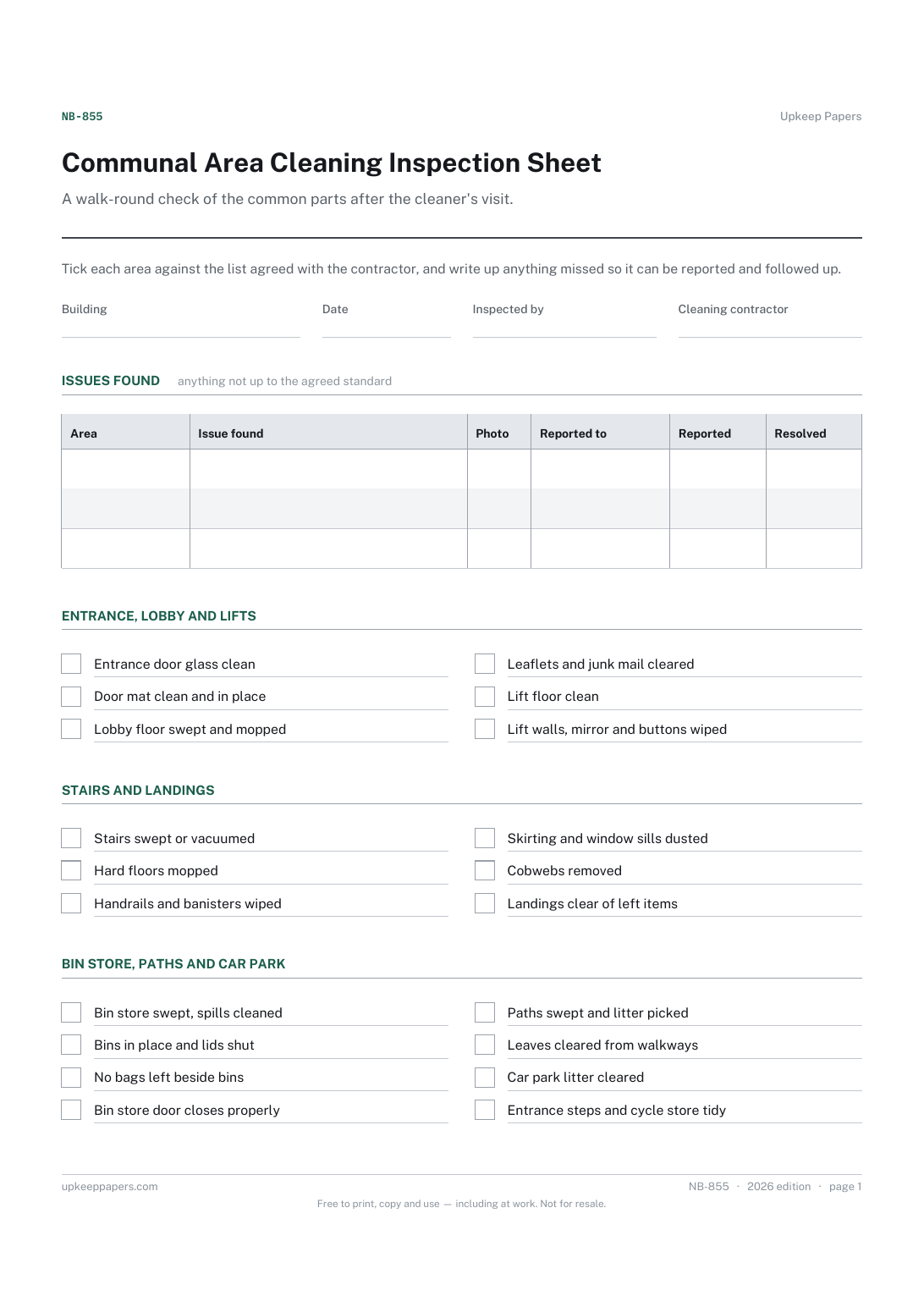
Entrances, lobbies and lifts checked item by item.
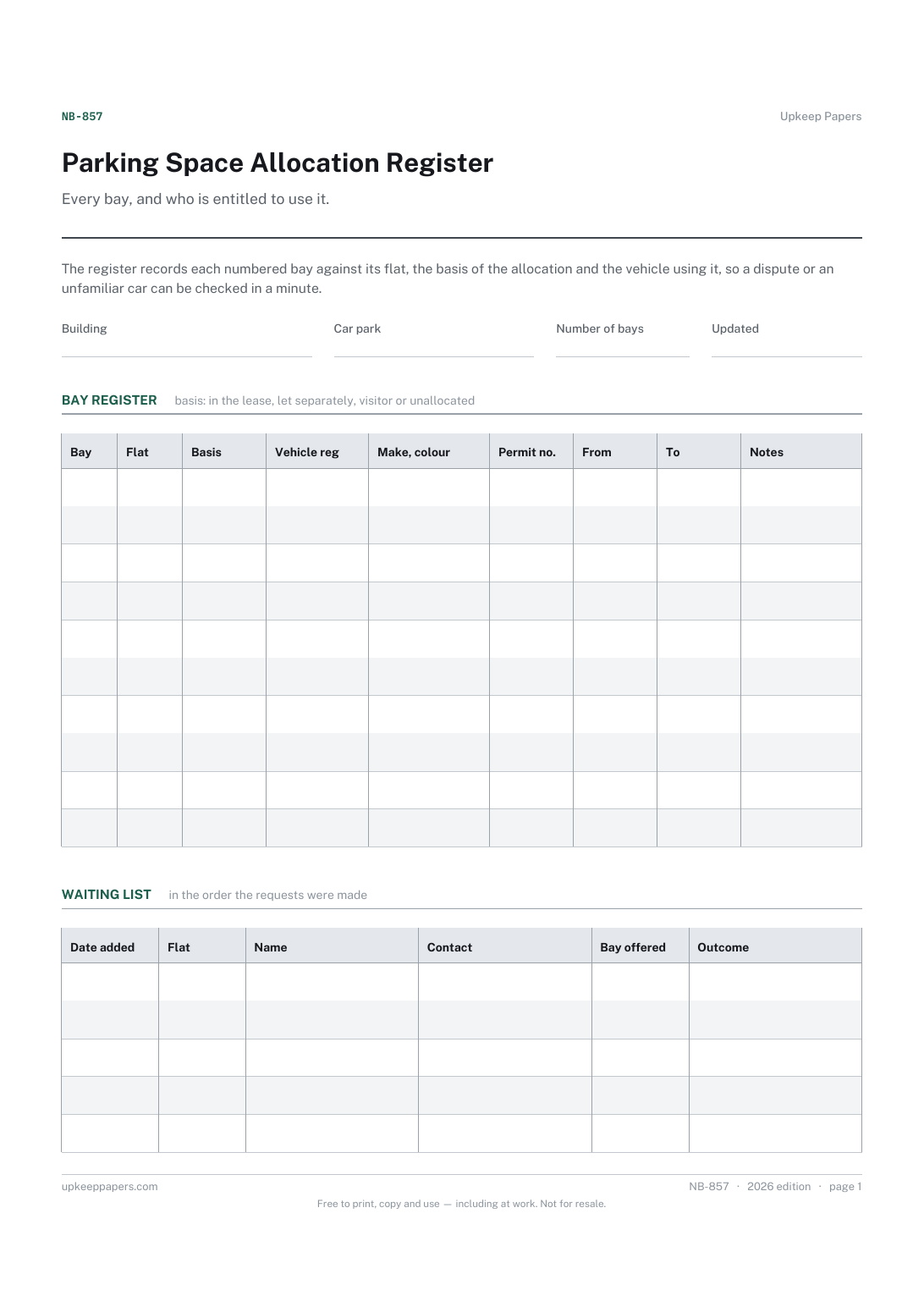
Each numbered bay and the flat it belongs to or is let to.
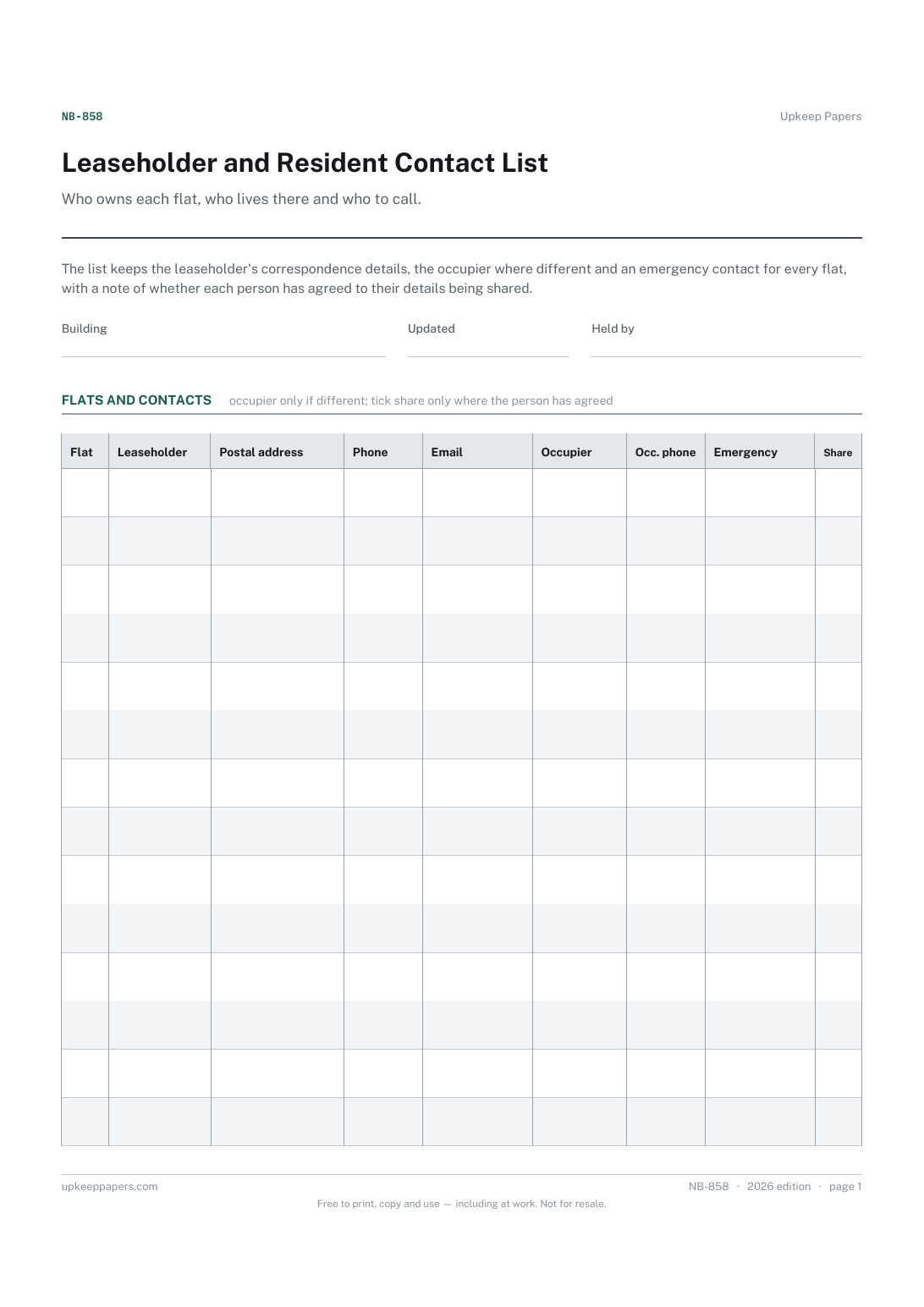
The leaseholder of every flat and where to write to them.
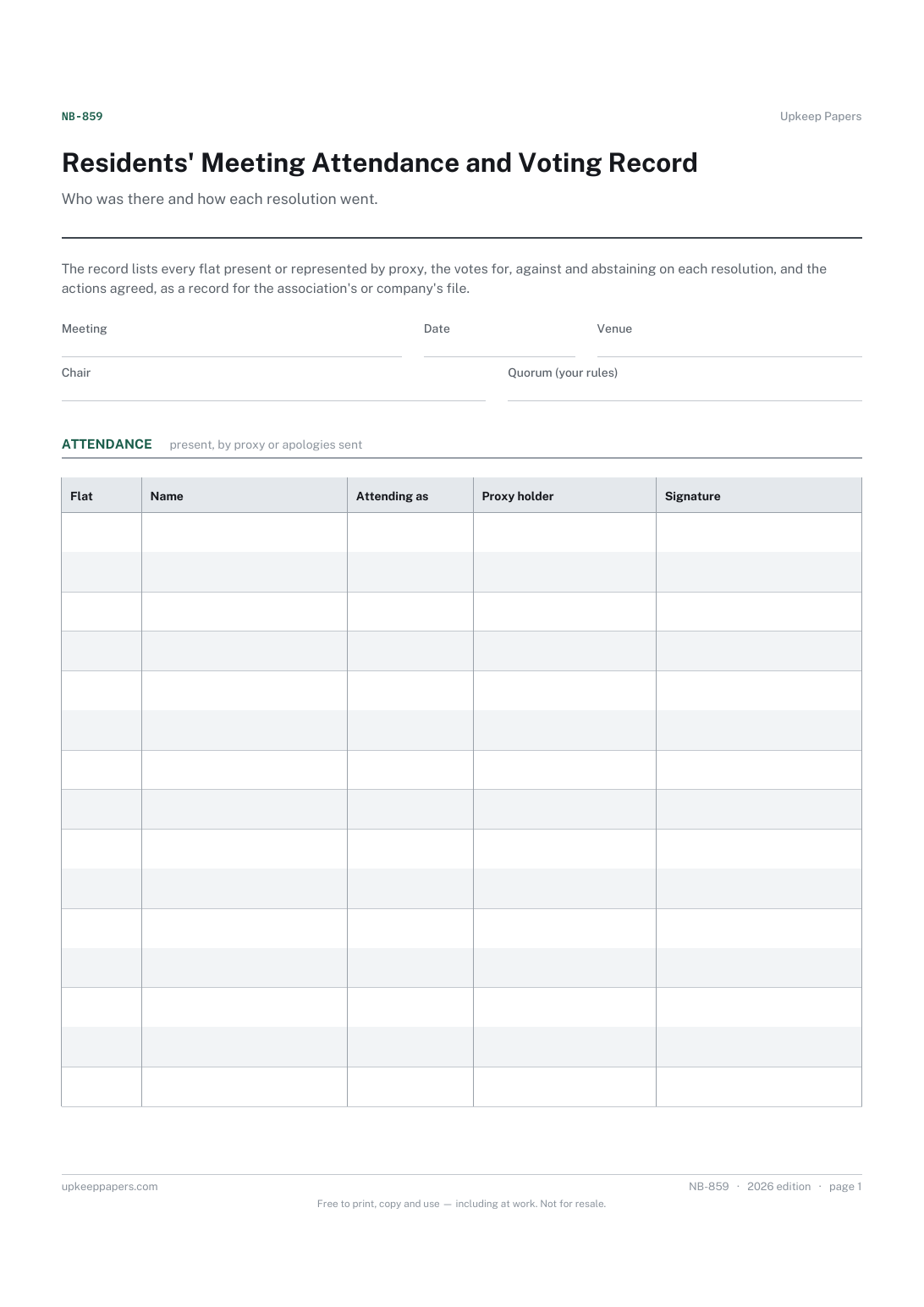
Every flat present, represented by proxy or sending apologies.
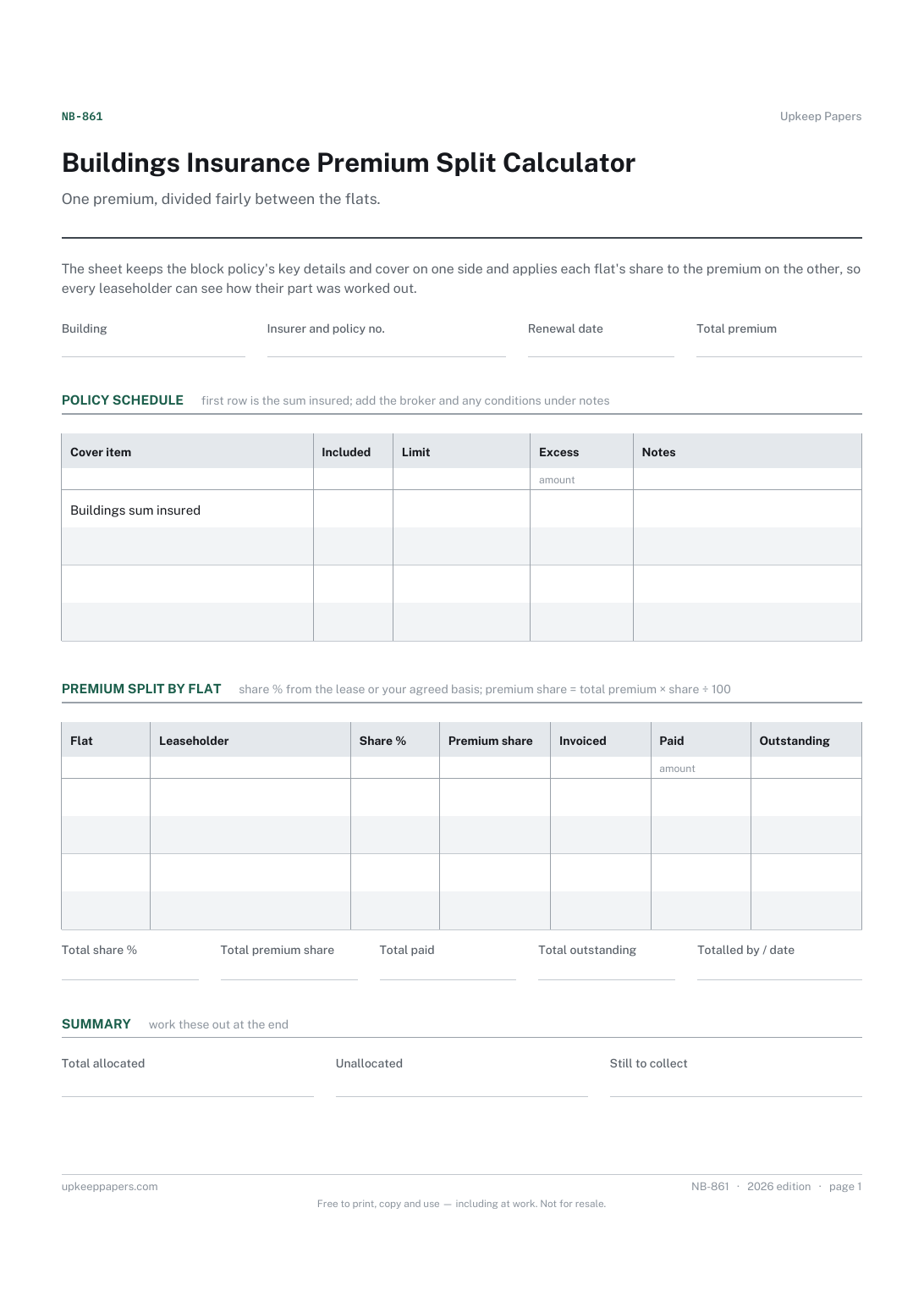
The insurer, policy number, renewal date and sum insured.
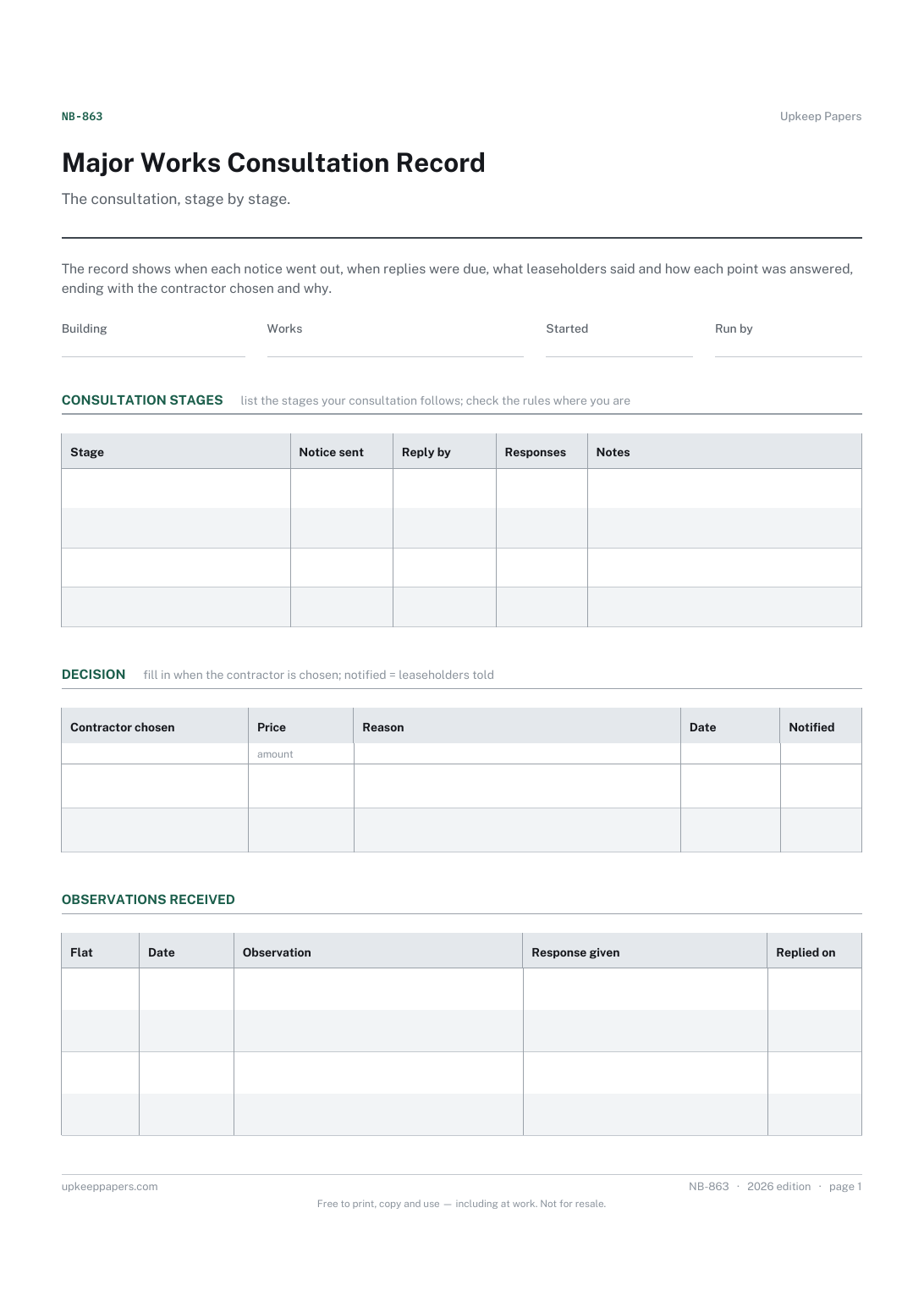
Each stage of the consultation, with the notice date and response deadline.
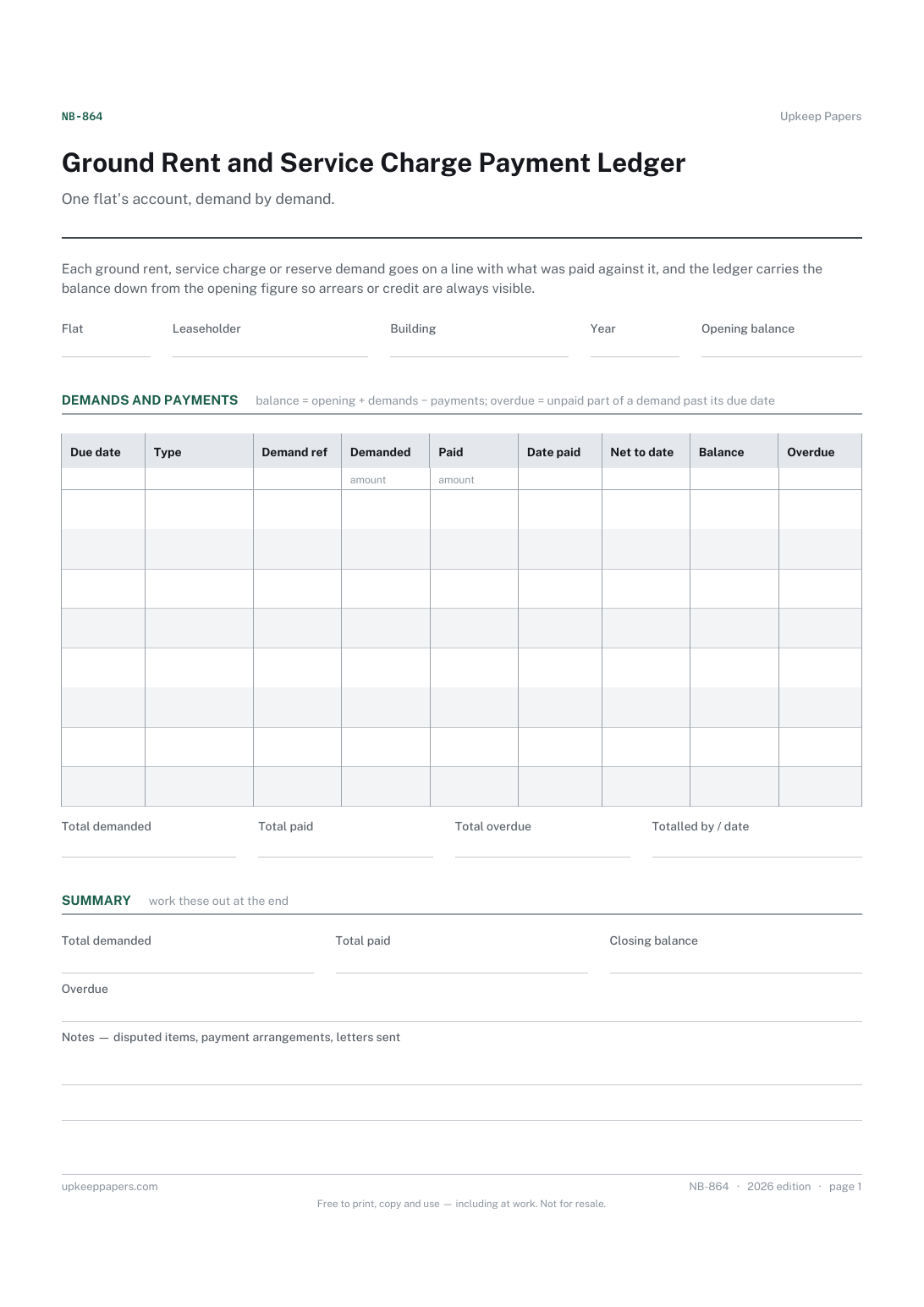
Every demand for ground rent, service charge, reserve and other charges.
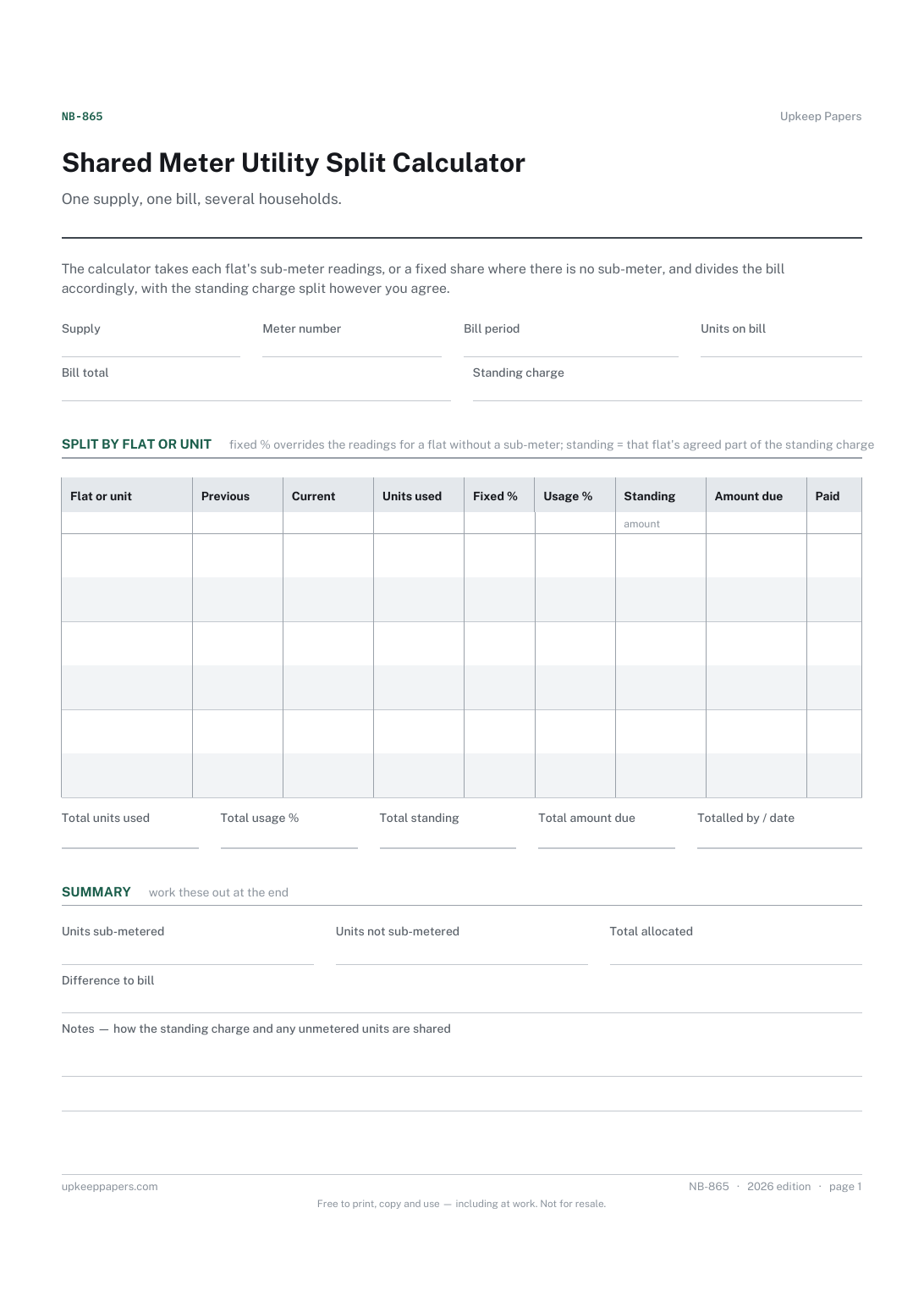
The supply, meter number, bill period and bill total.
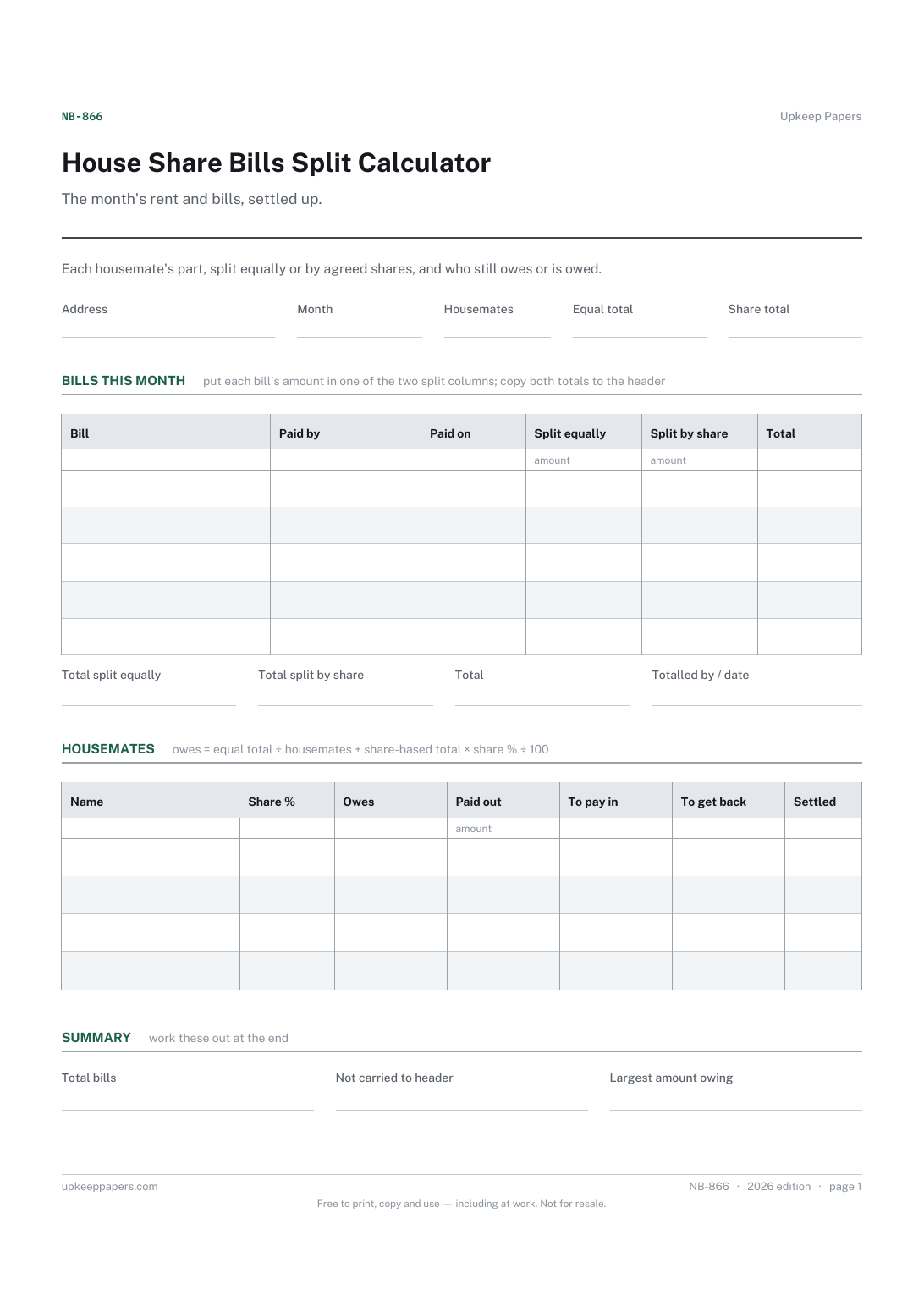
Every bill for the month, its total and who paid it.
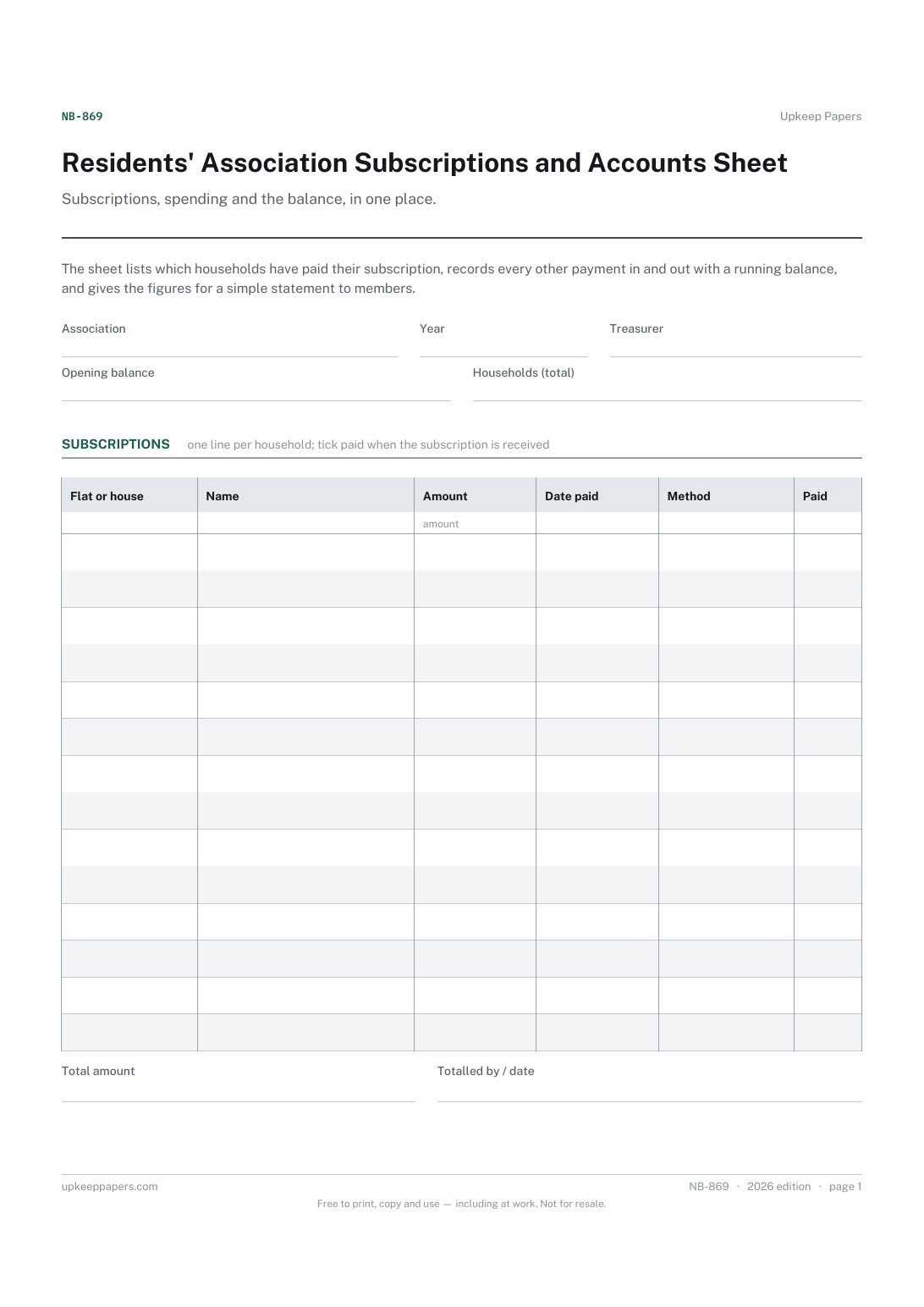
Which households have paid this year's subscription, how and when.
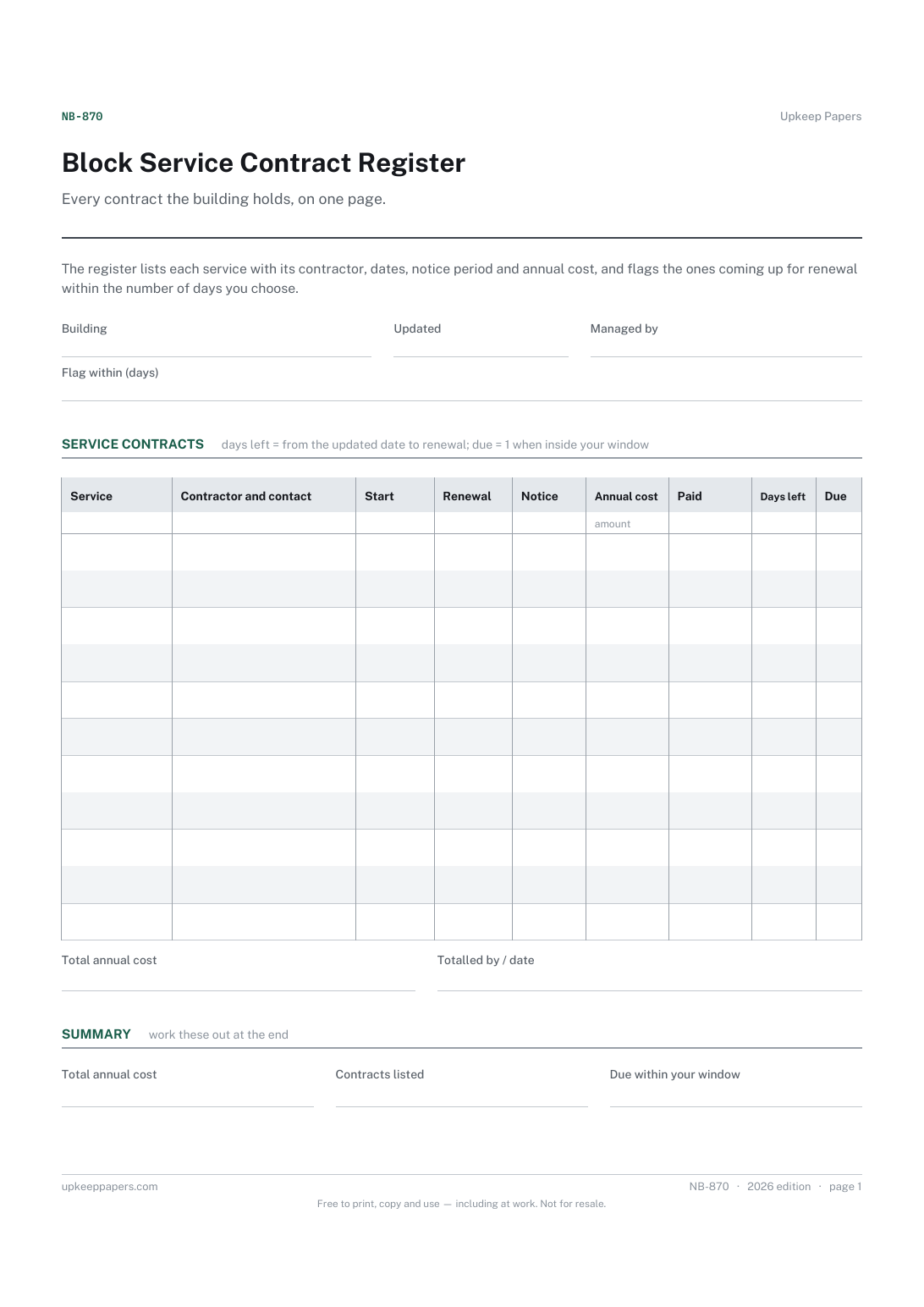
Each service contract with the contractor and a contact.
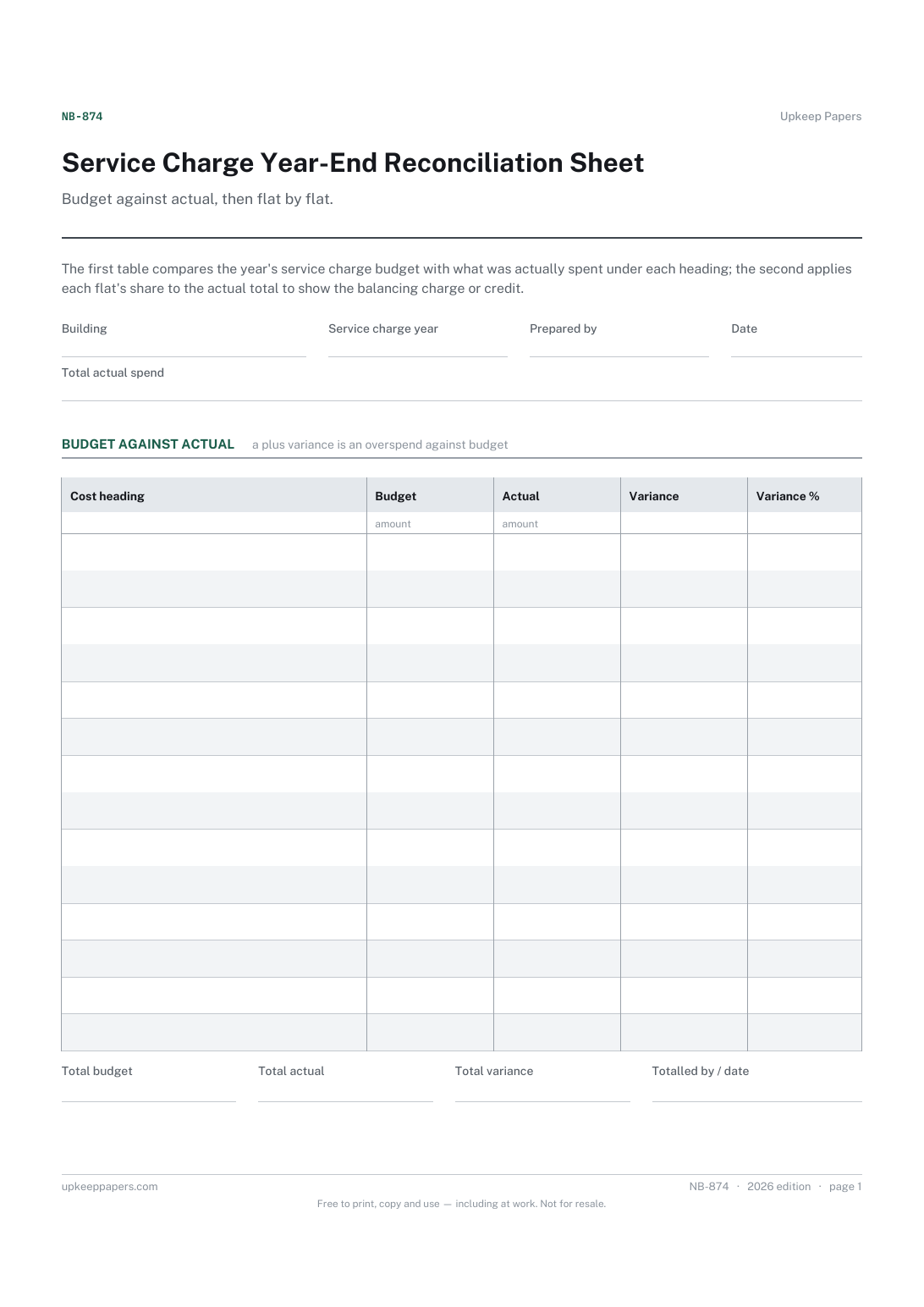
Budget and actual spending under each cost heading.
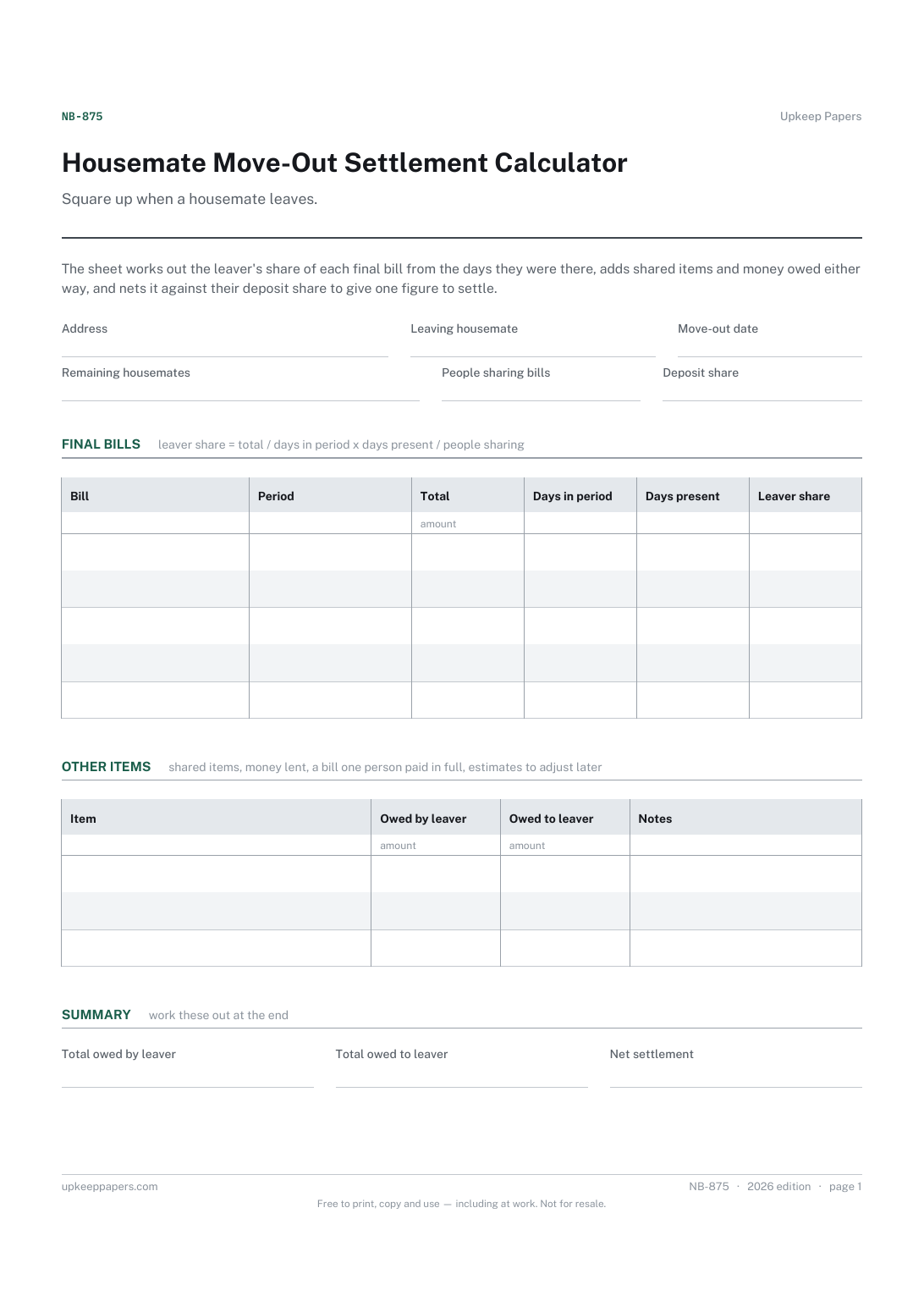
The leaver's share of each final bill, based on days present.
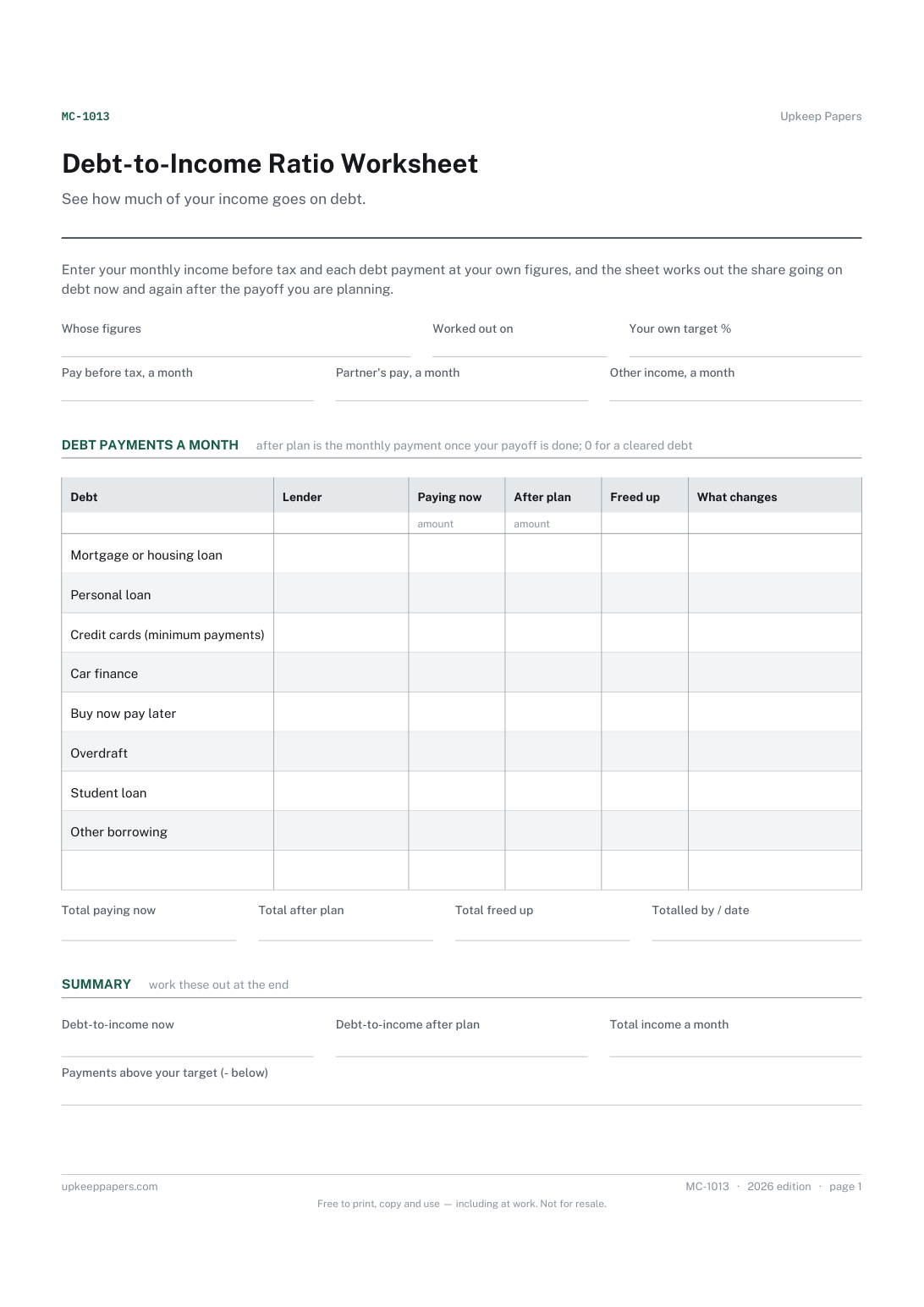
Your monthly income before tax, from every regular source.
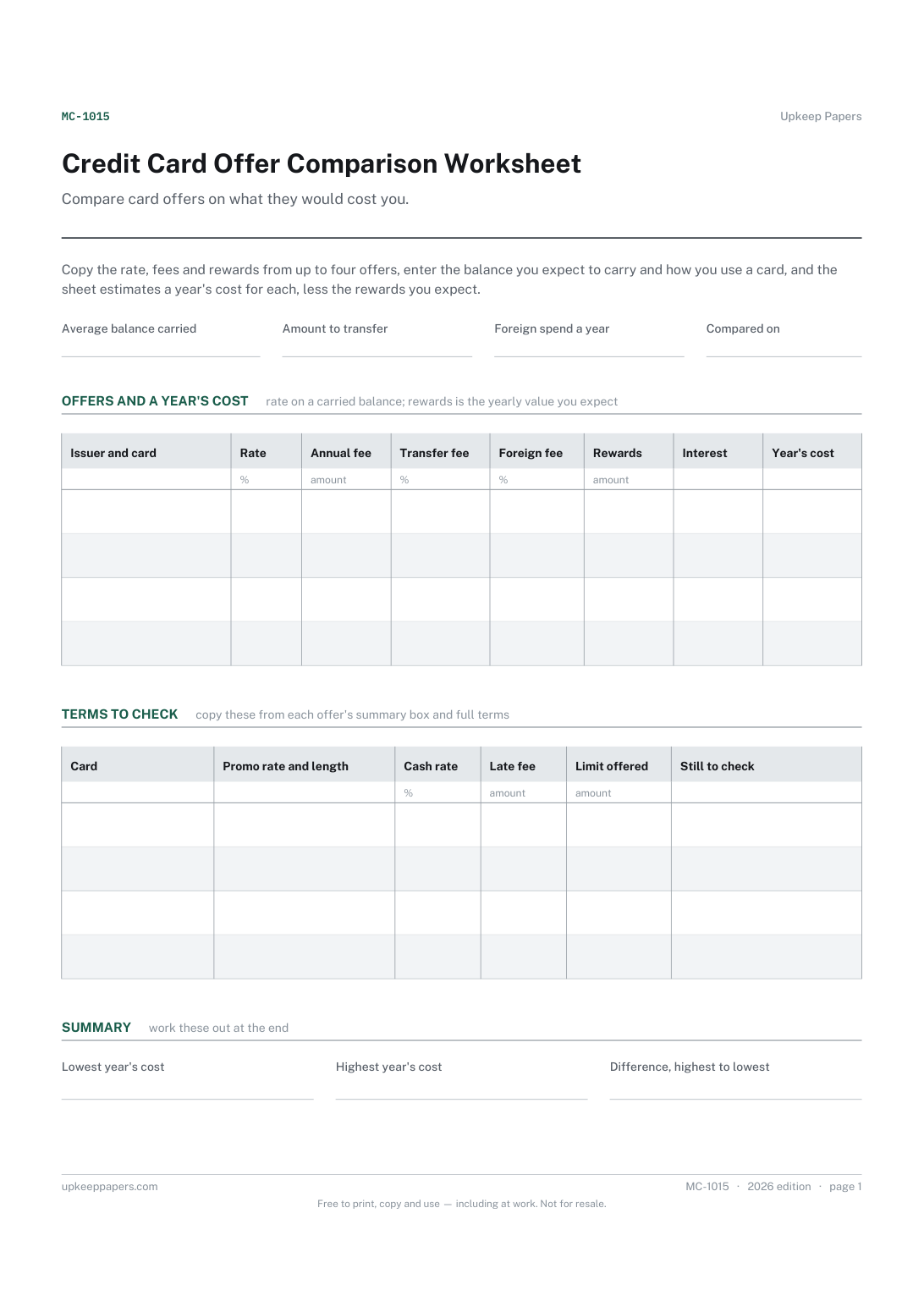
Each offer's rate and fees copied into the same columns.
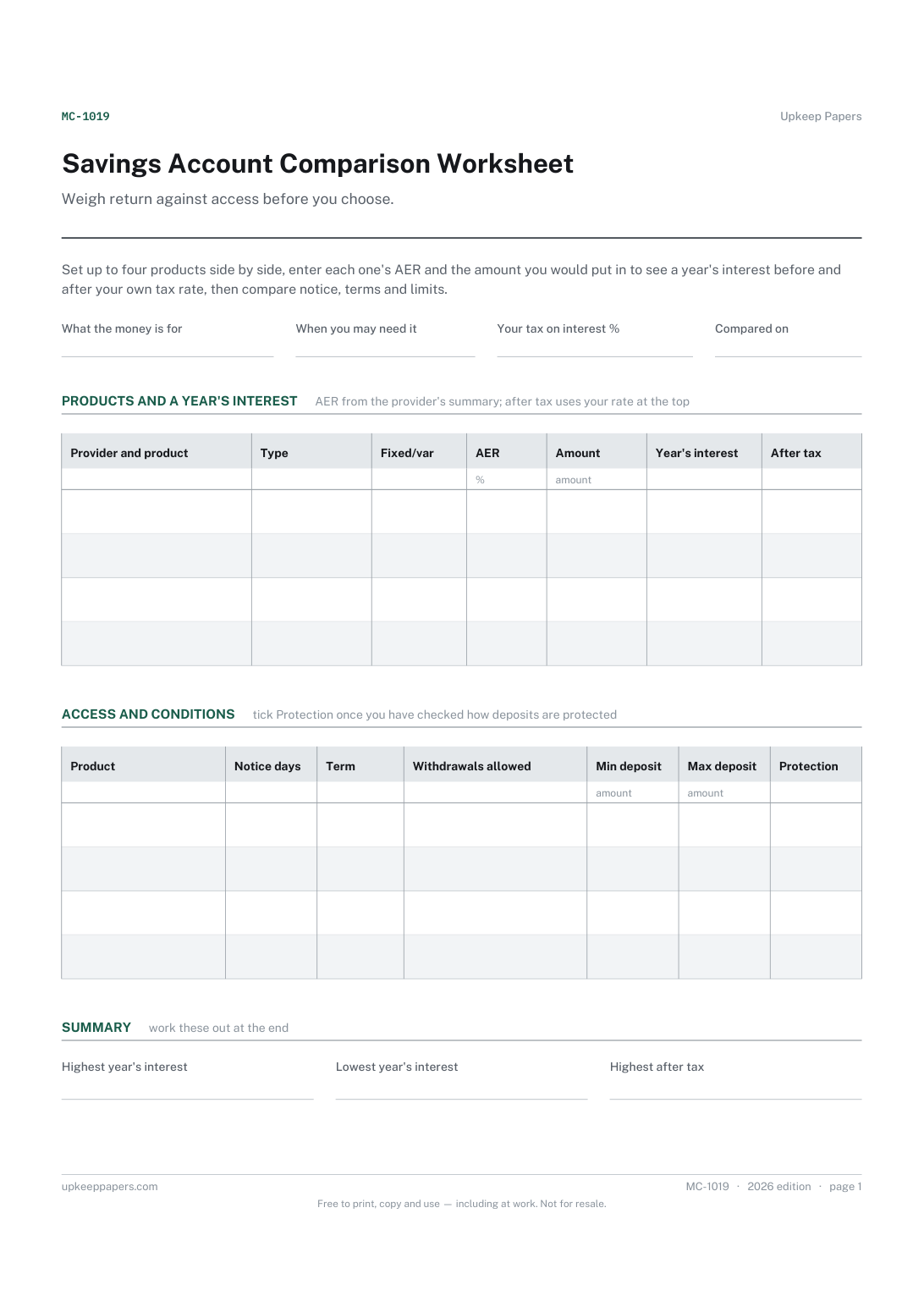
Each product's type, whether its rate is fixed or variable, and its AER.
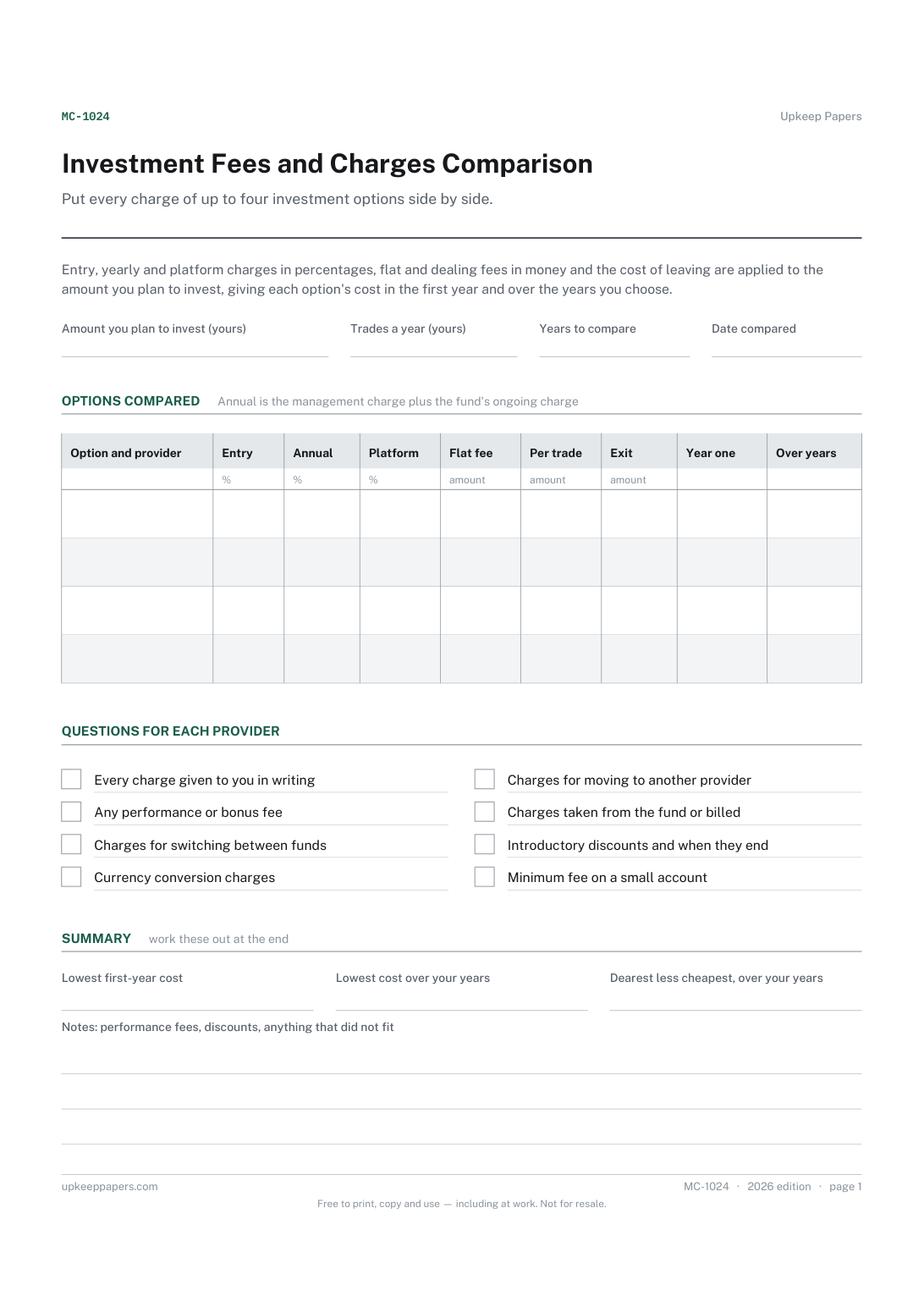
Every charge for each option on one line, as the provider states it.
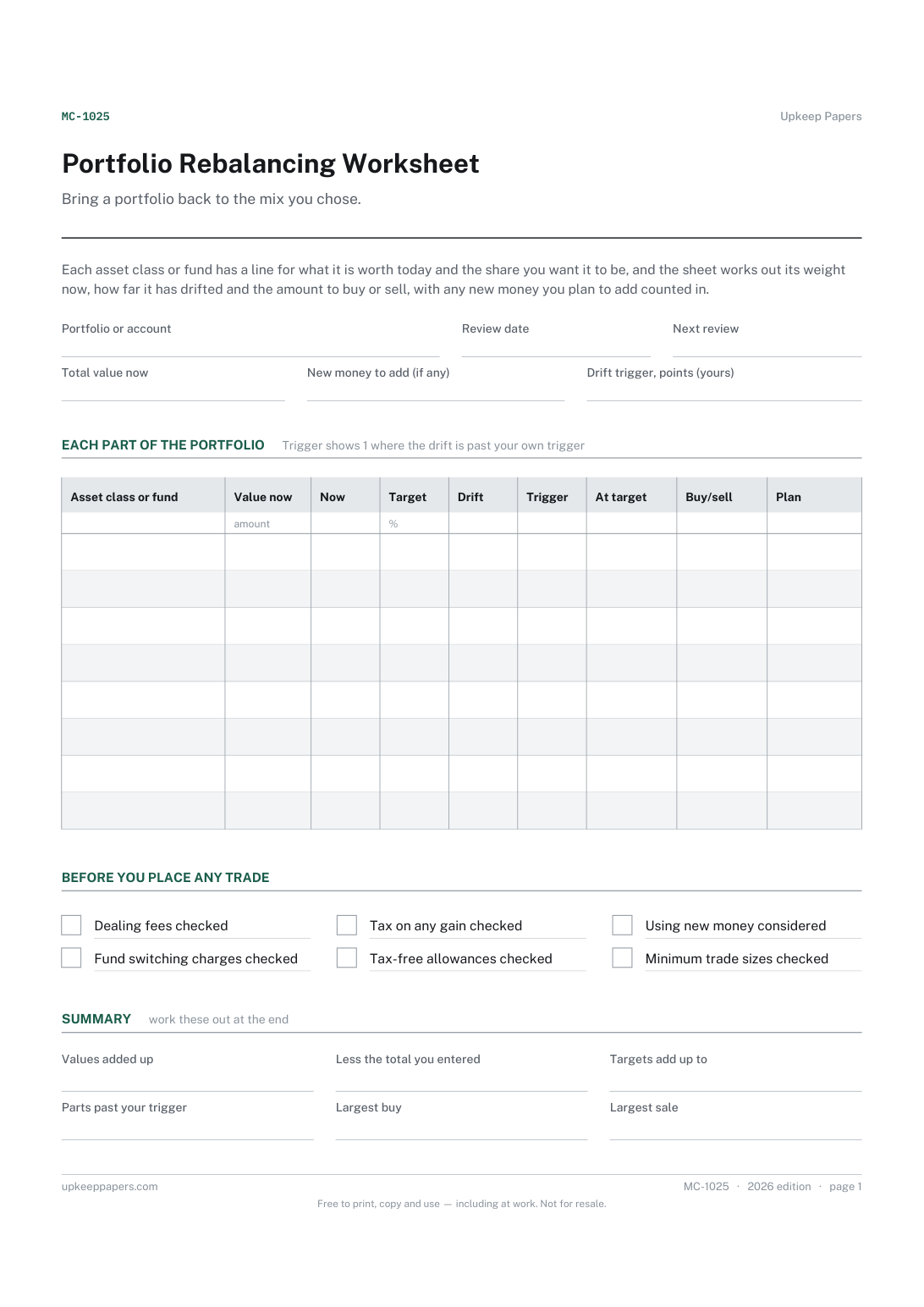
The value and current weight of each part of the portfolio.
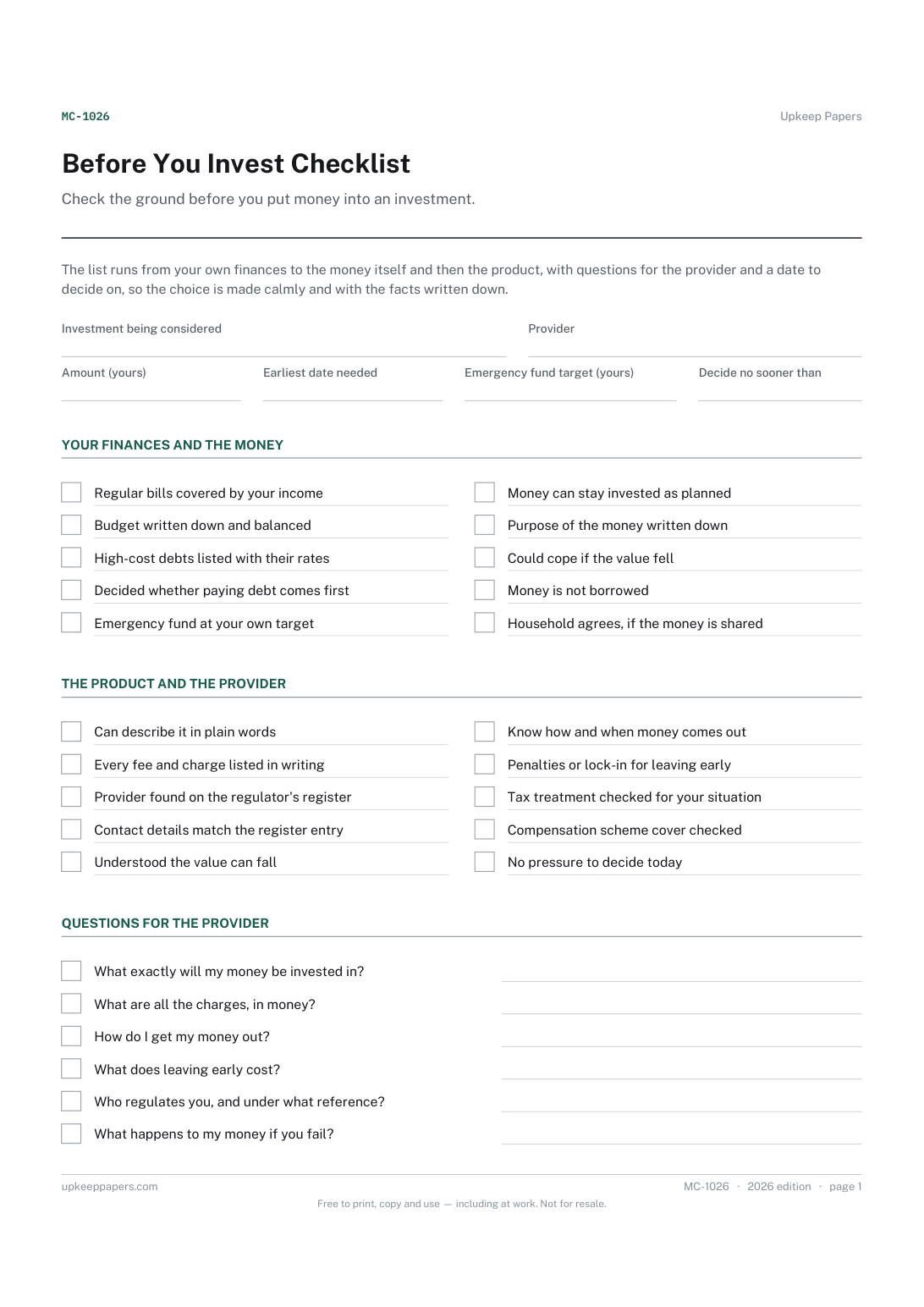
Whether your budget, debts and emergency fund are where you want them.
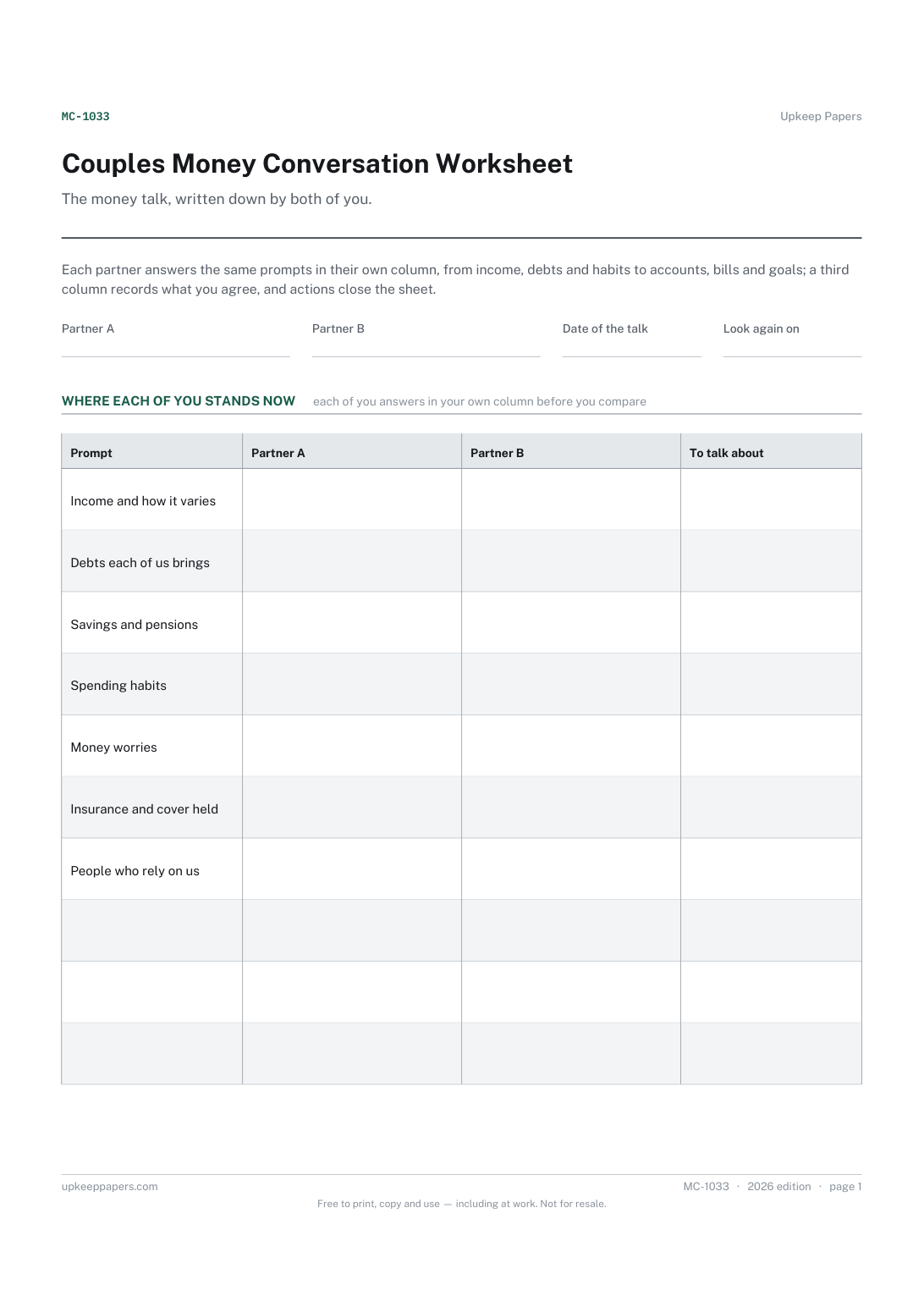
Where each of you stands on income, debts, savings and pensions.
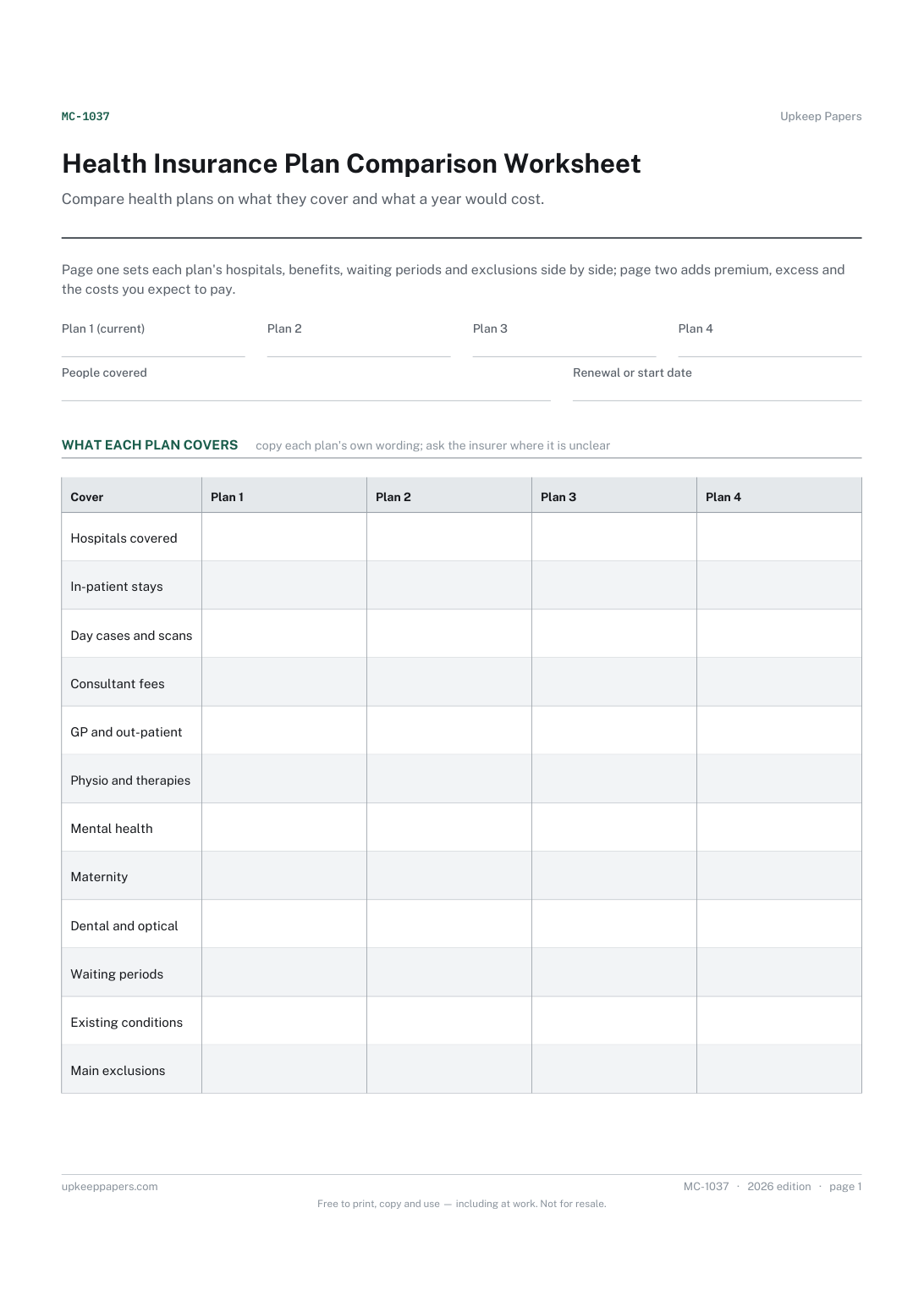
Hospitals, out-patient benefits and extras for each plan, side by side.
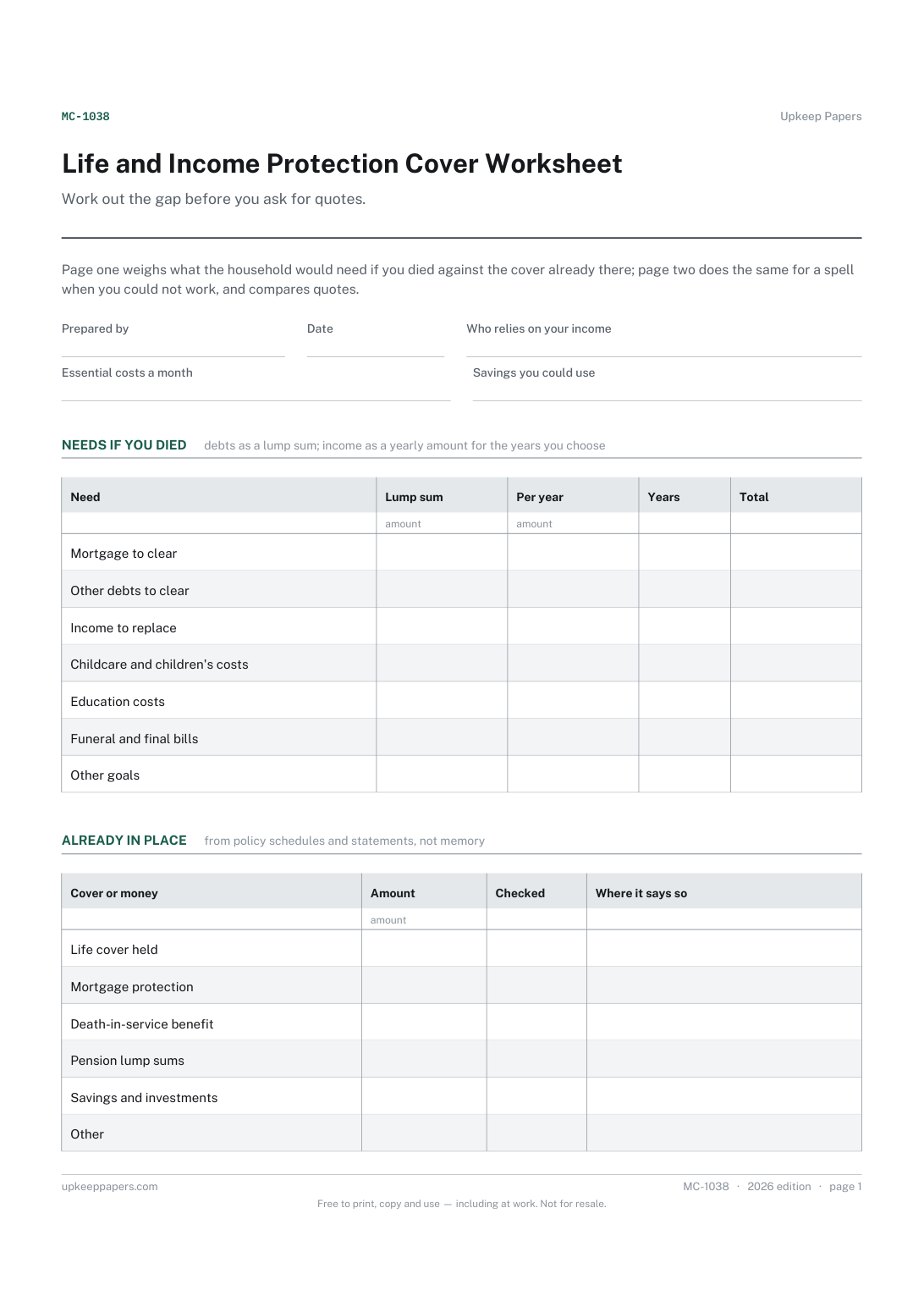
Debts to clear, income to replace and future costs, in your own figures.
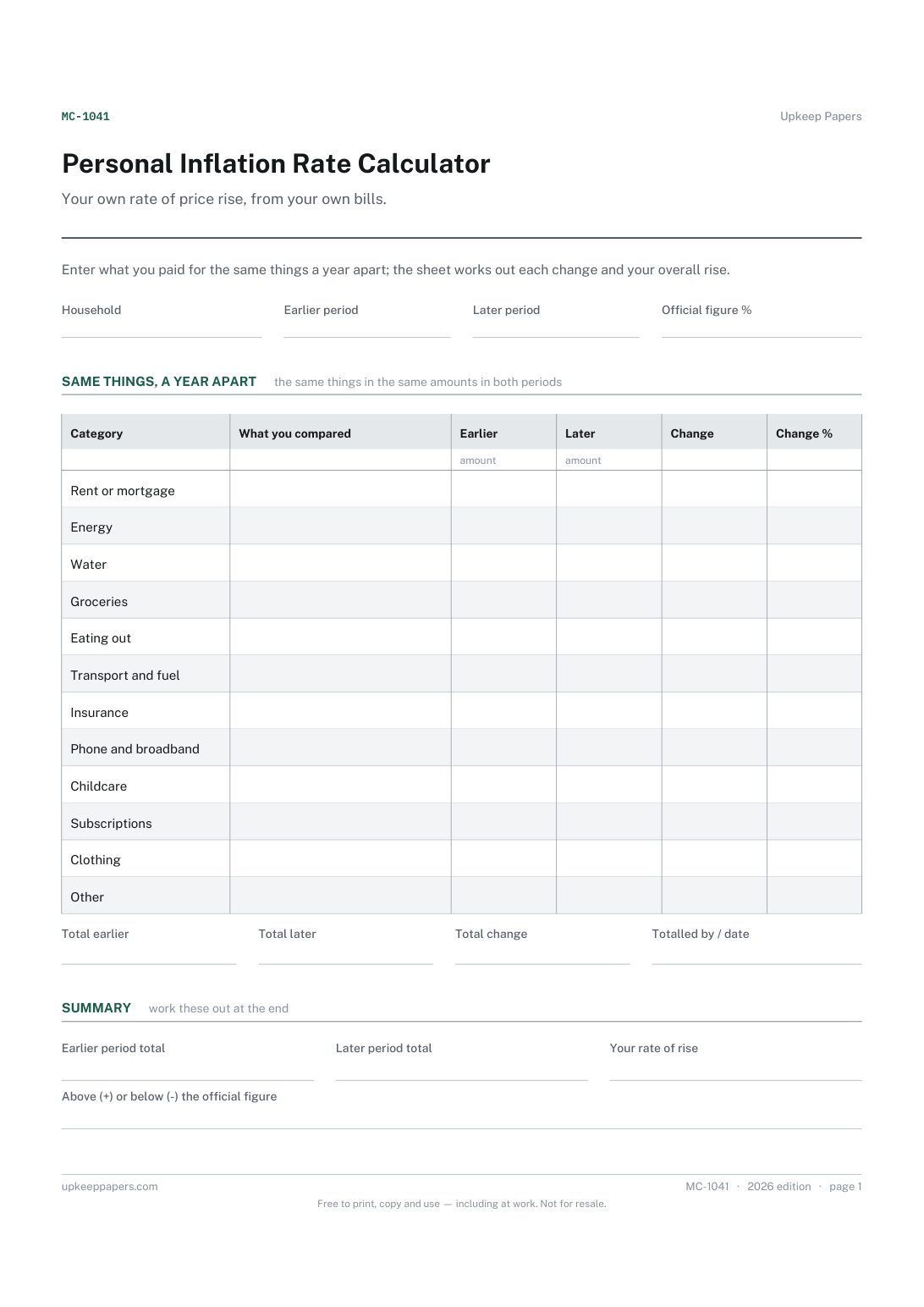
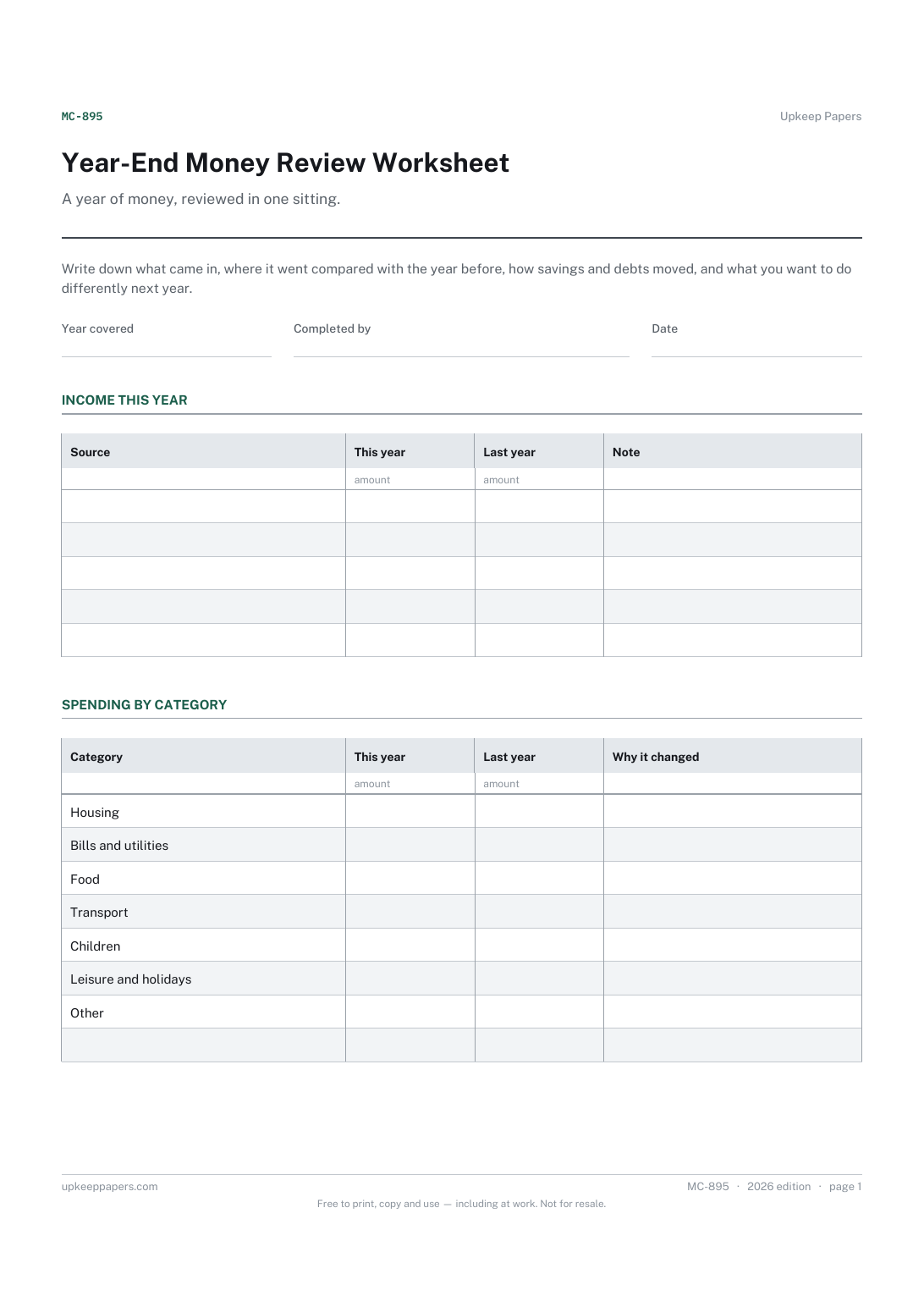
What you paid in each category in two periods a year apart.
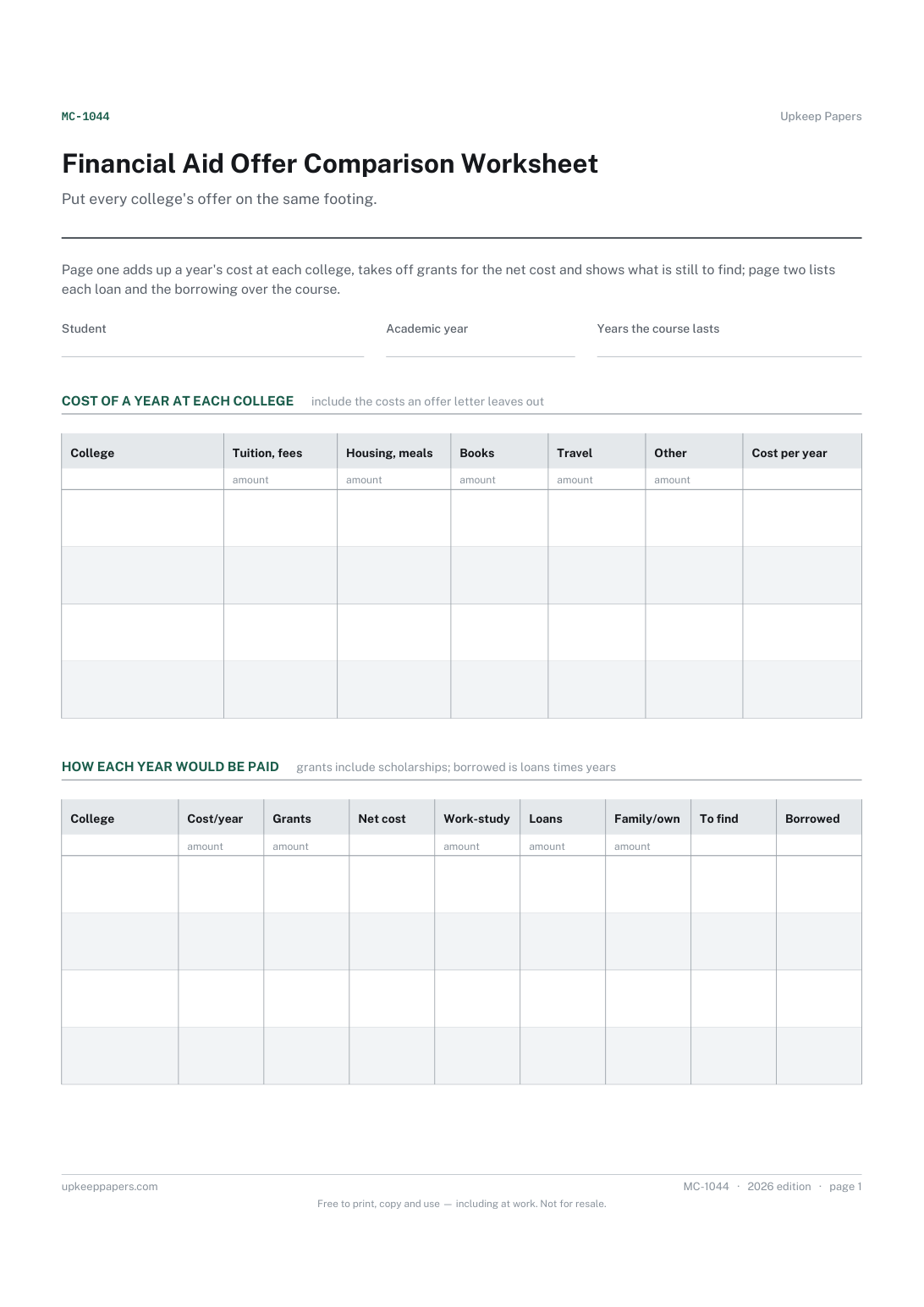
The full cost of a year at each college, not only tuition.
What each offer asks for at the start, each month and at the end.
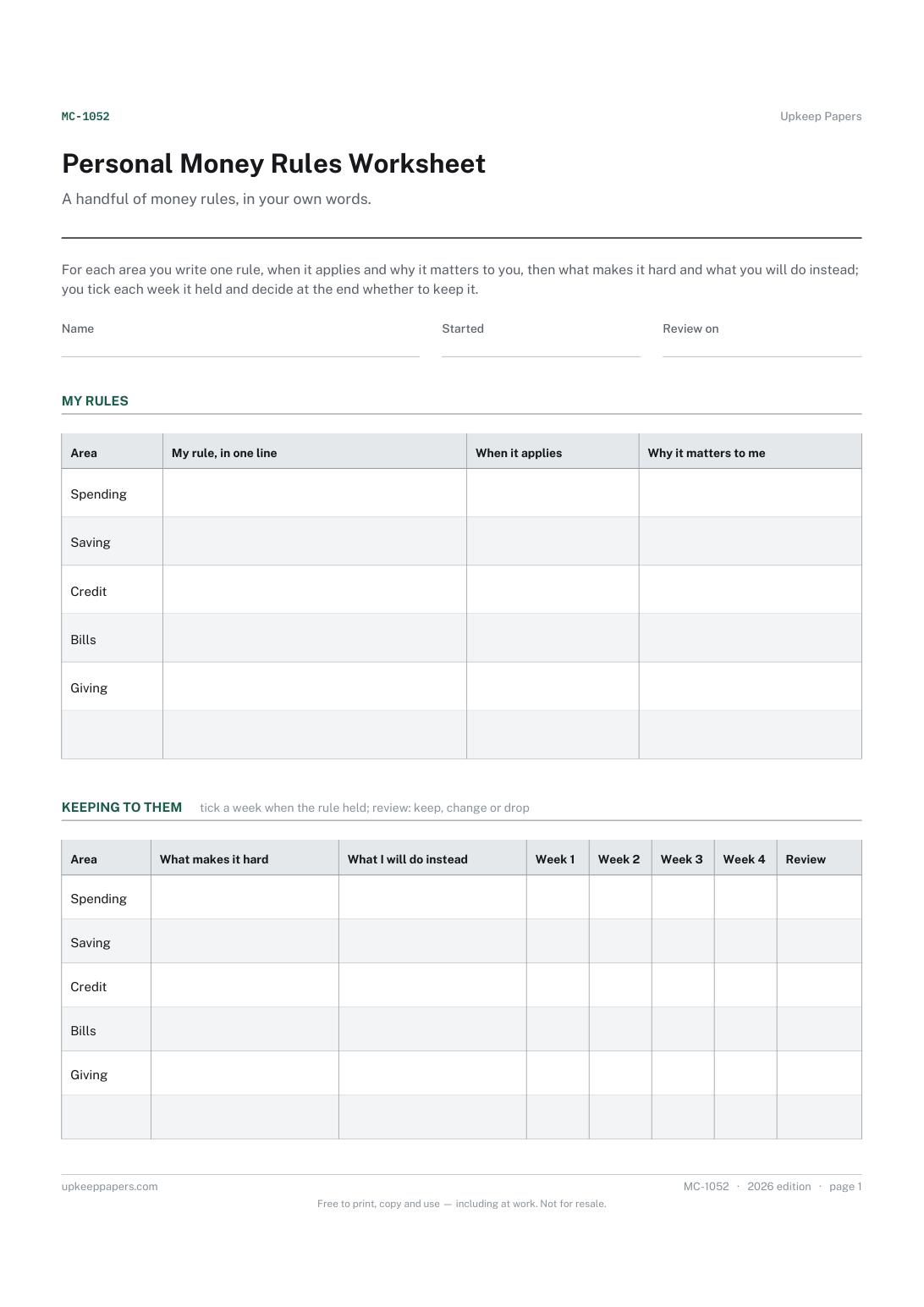
One clear rule for each area of money that matters to you.
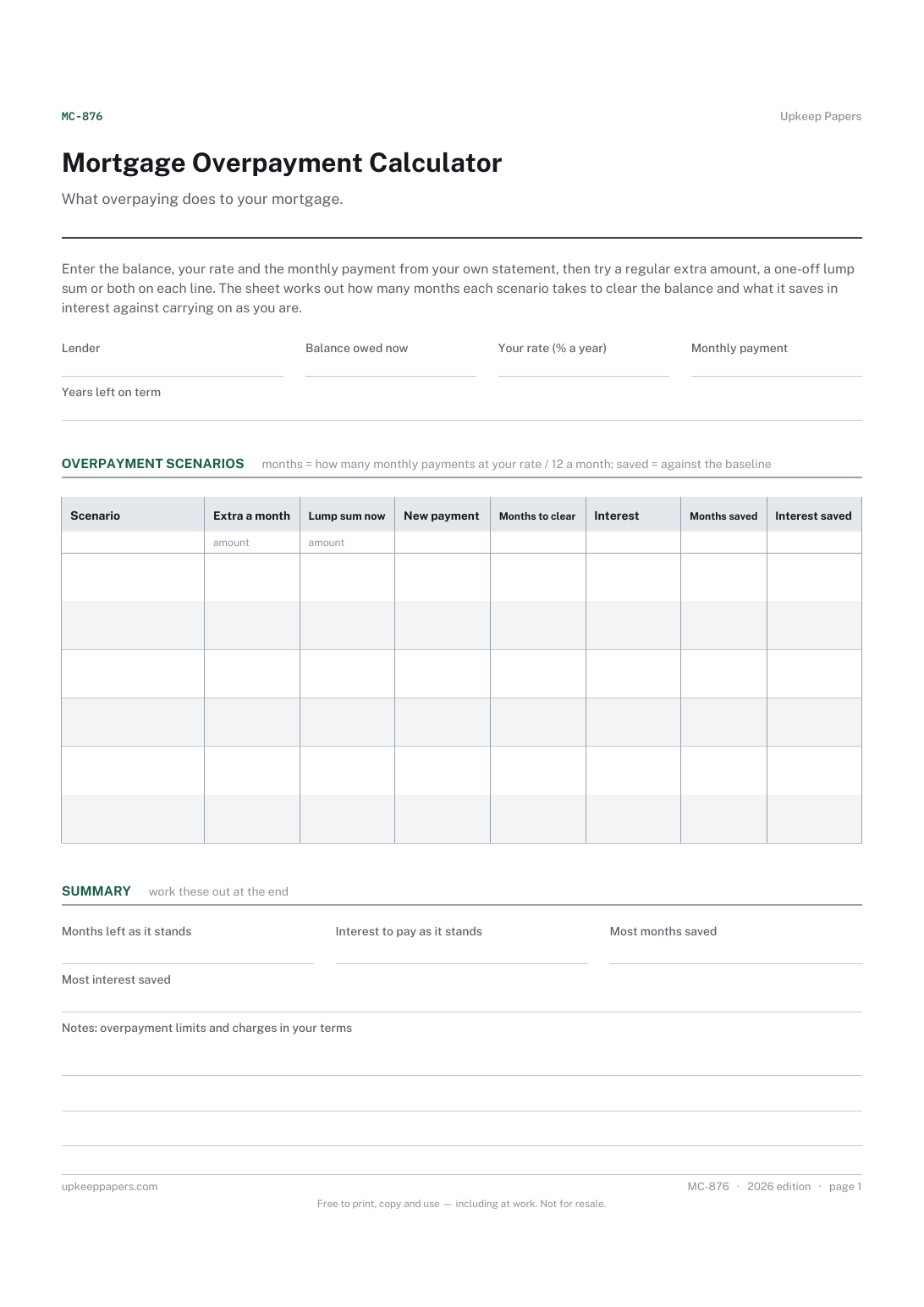
How many months the mortgage has left if nothing changes.
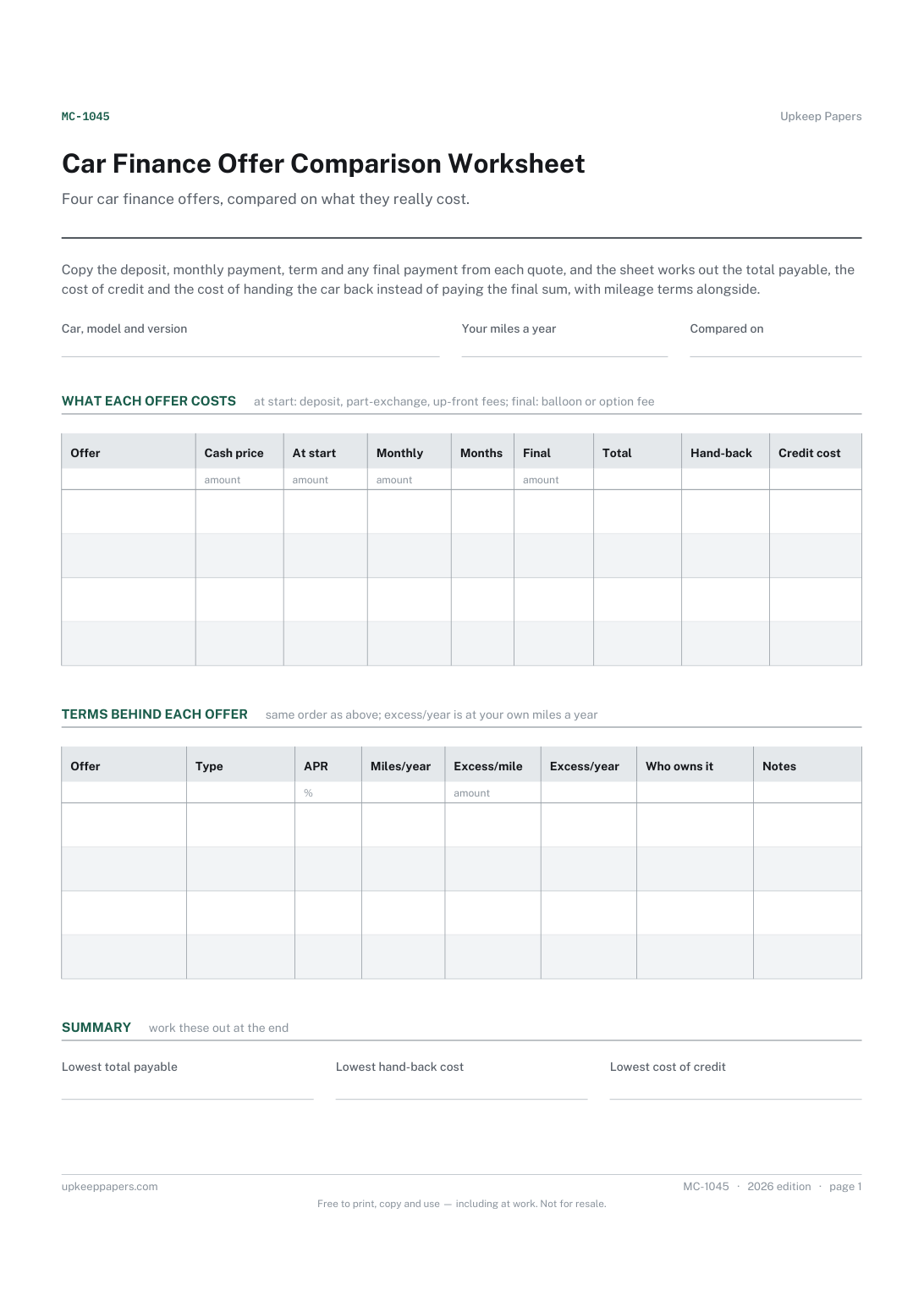
What each lender has actually quoted, in the same columns.
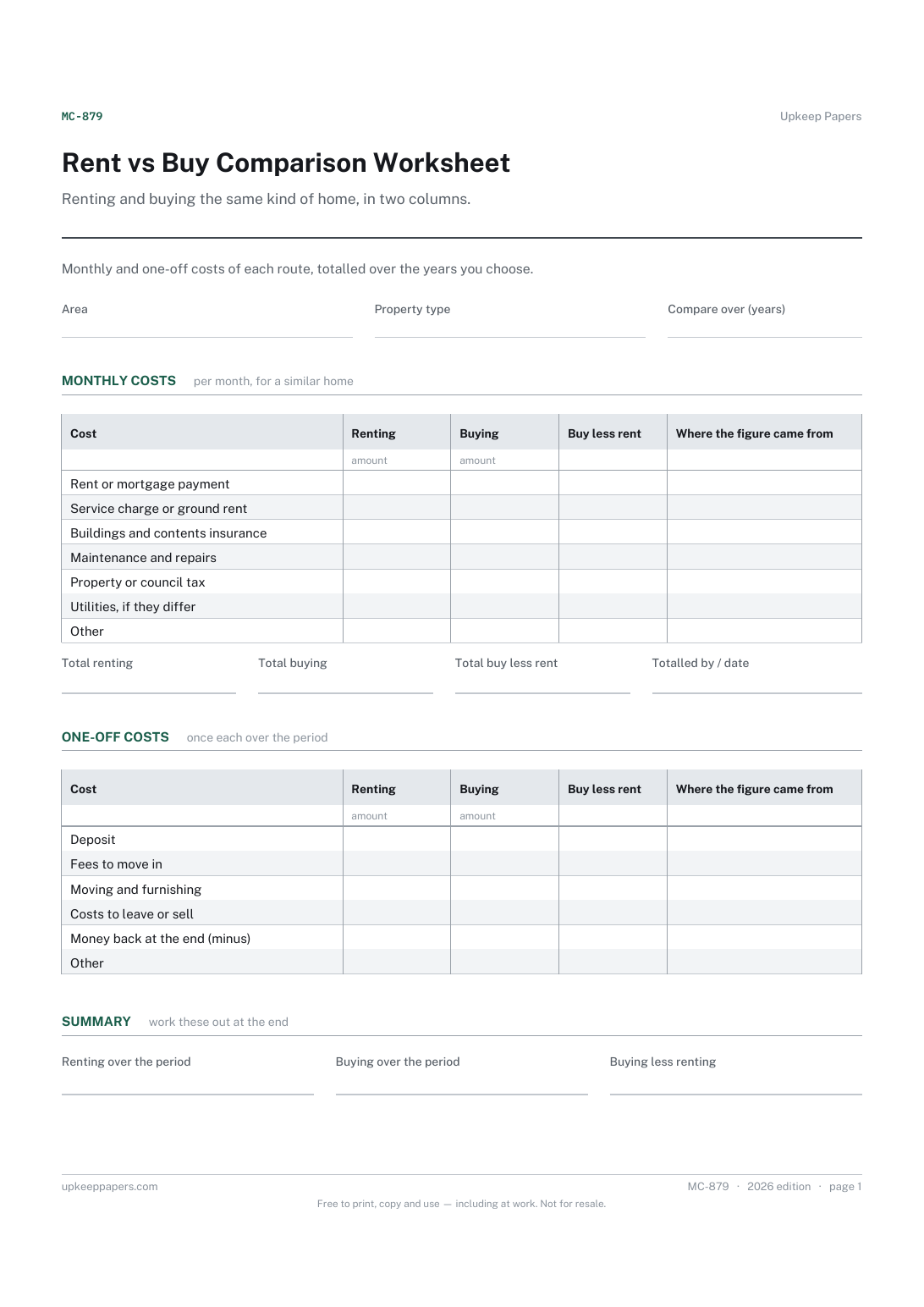
The monthly cost of each route, line by line.
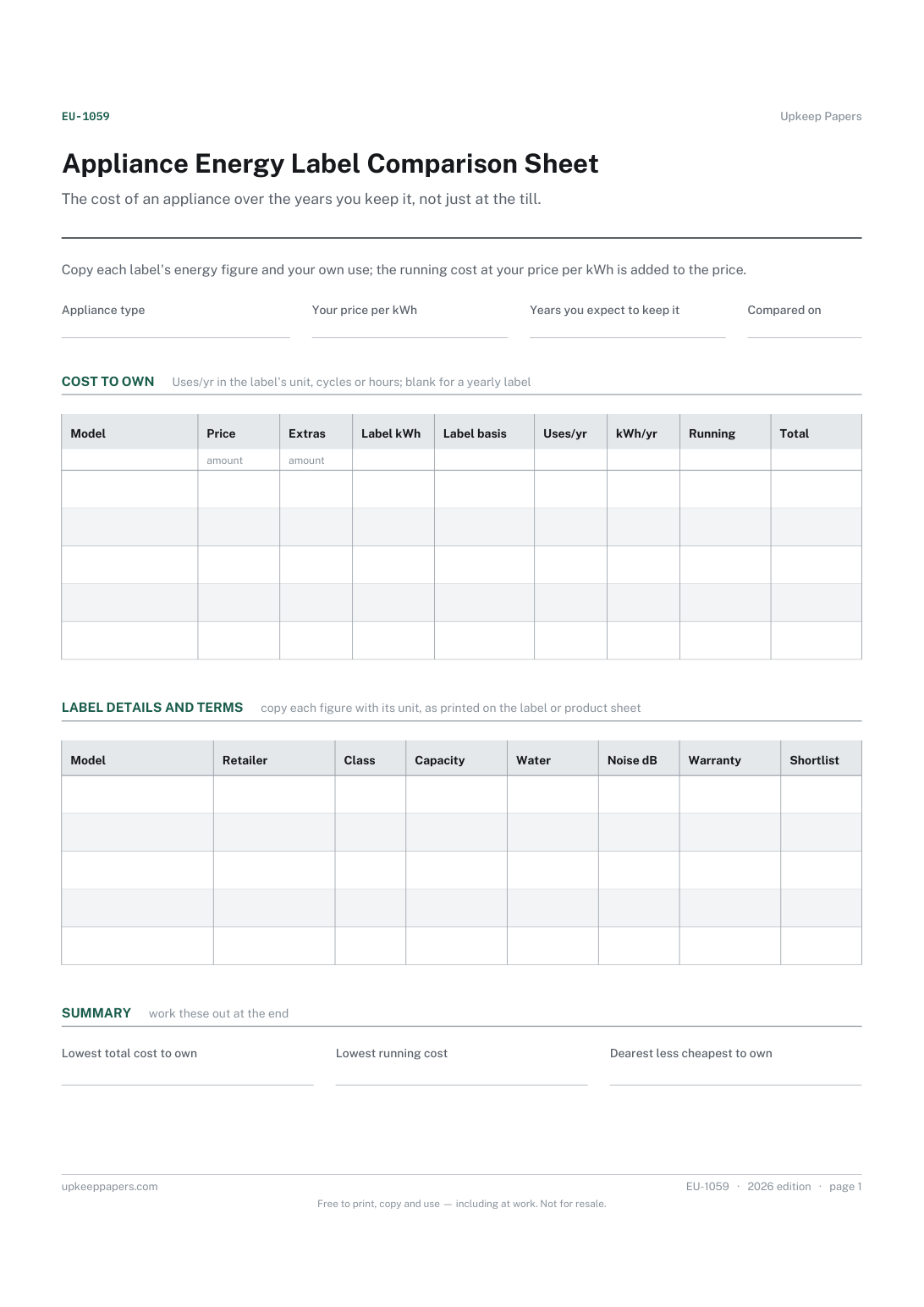
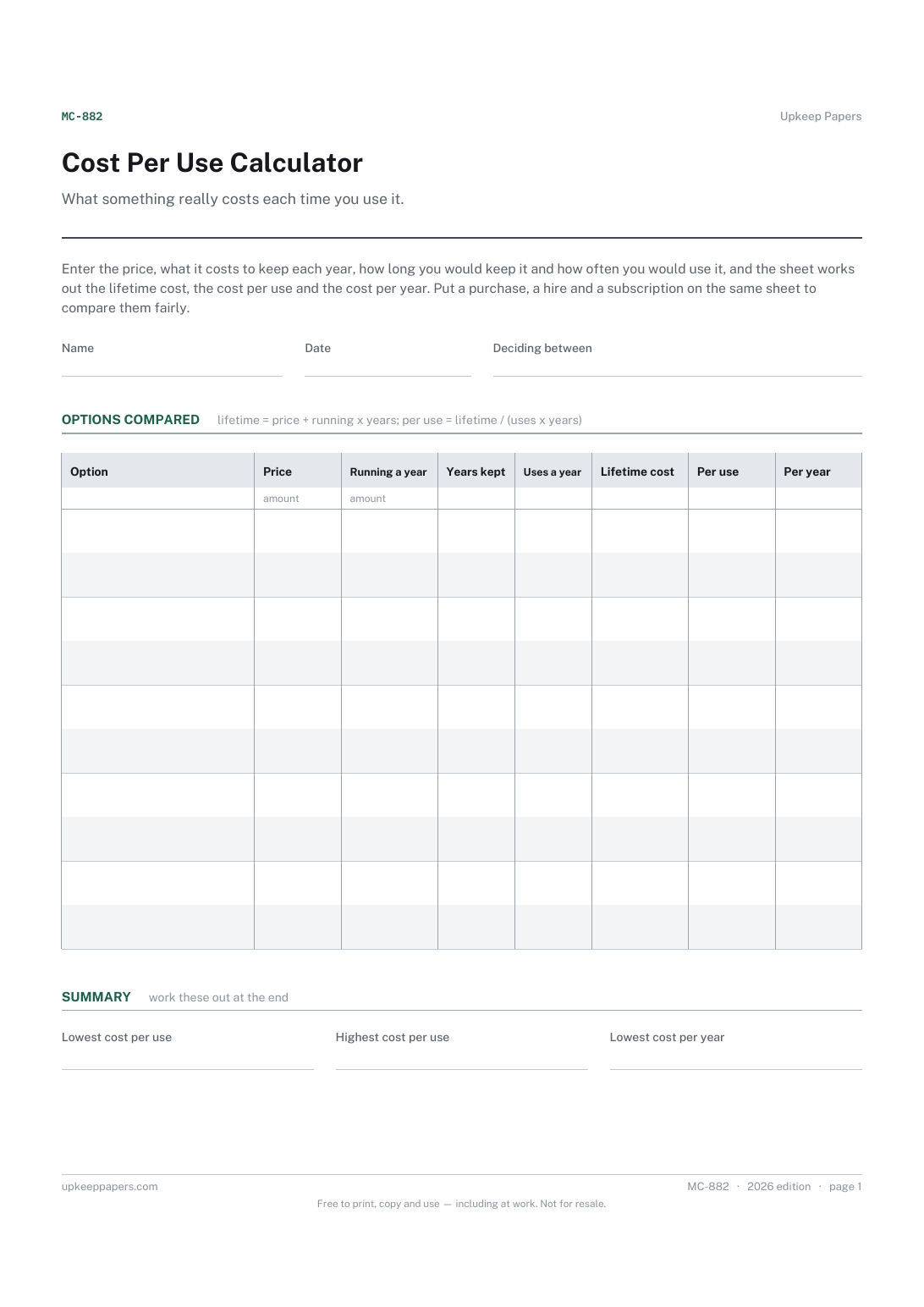
The full cost of each option over the time you would keep it.
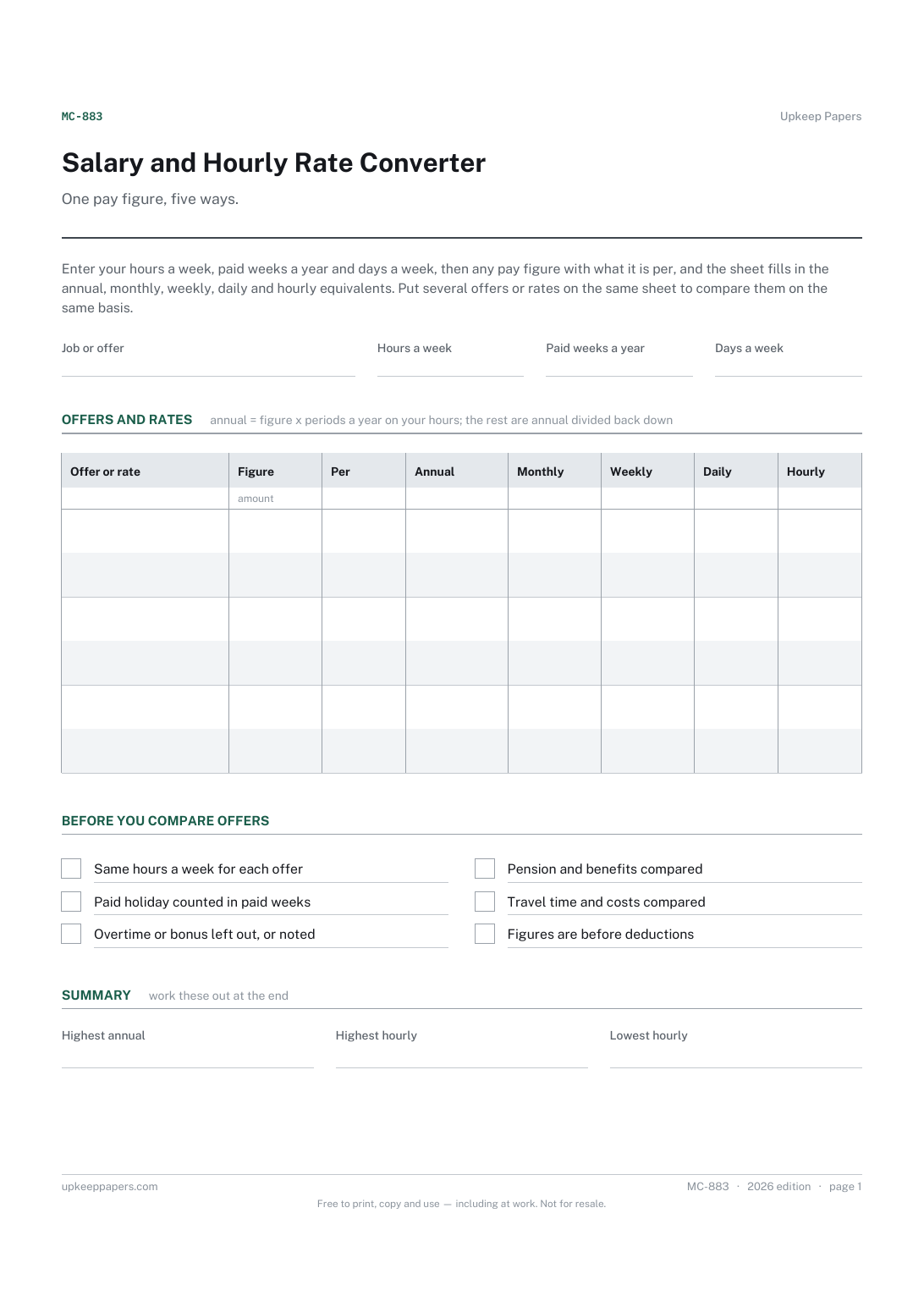
What a salary works out at per hour, day, week and month.
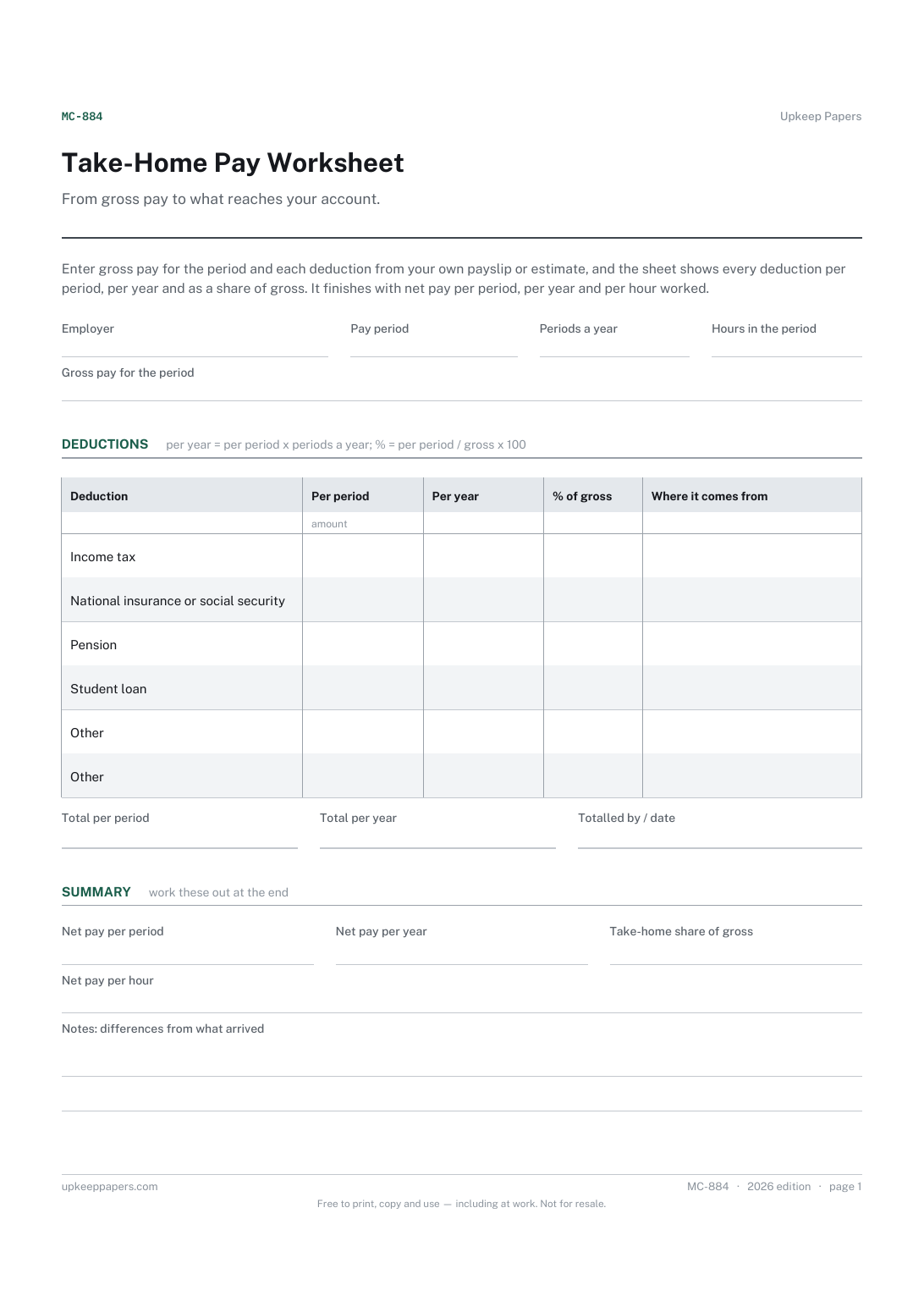
Gross pay for the period and the number of periods a year.
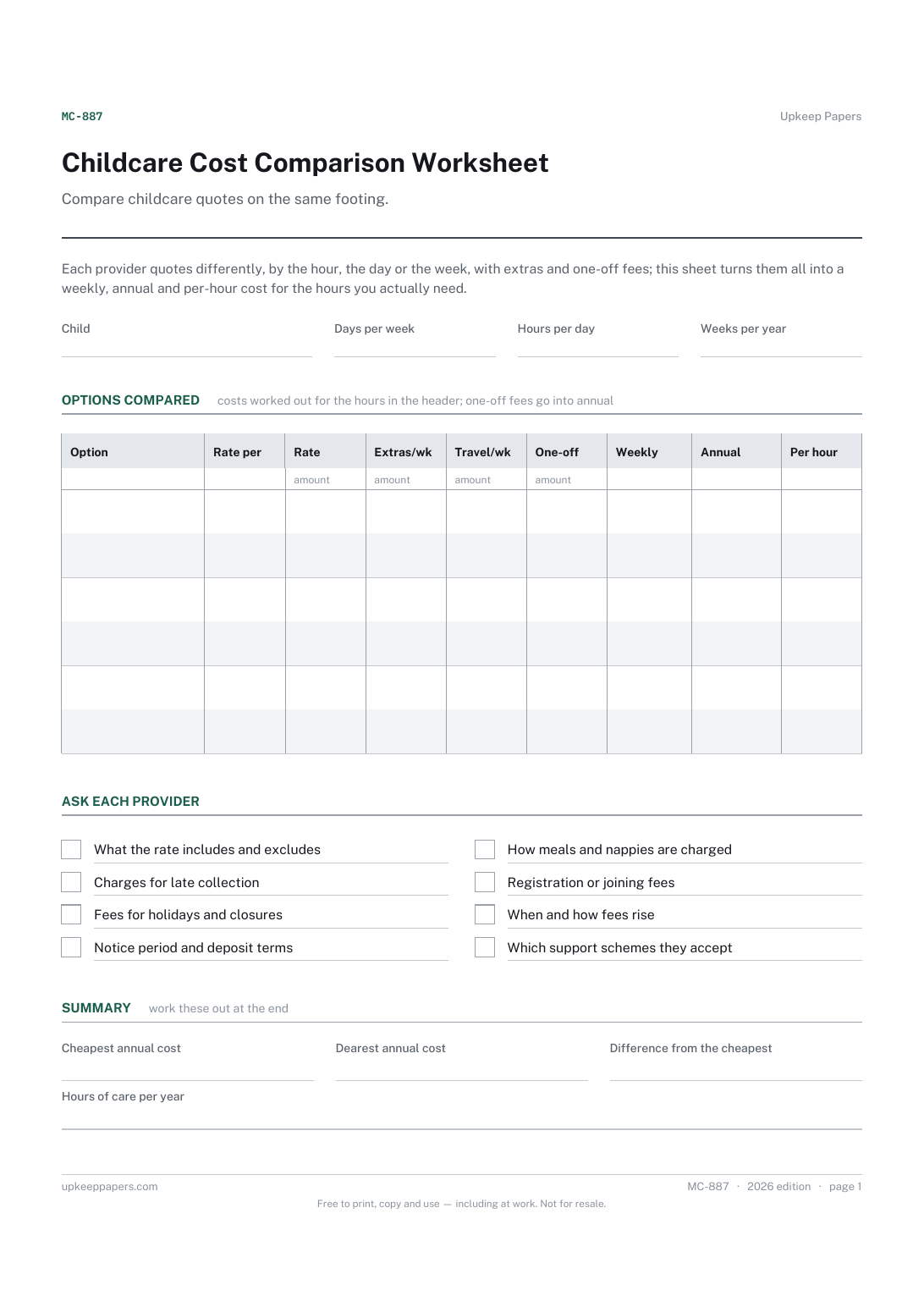
The hours of care you need, set once for every option.
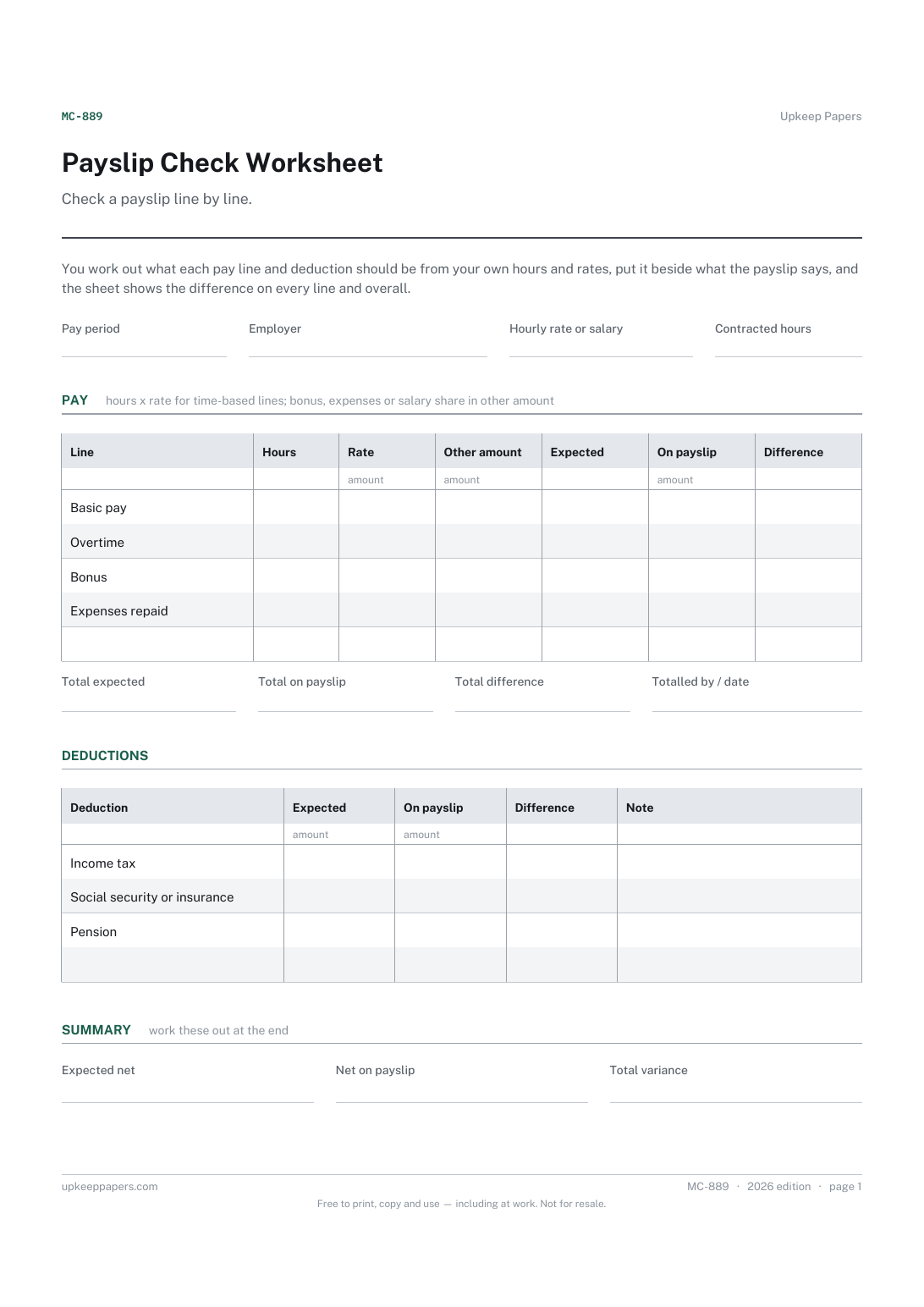
Expected pay for basic hours, overtime, bonus and expenses.
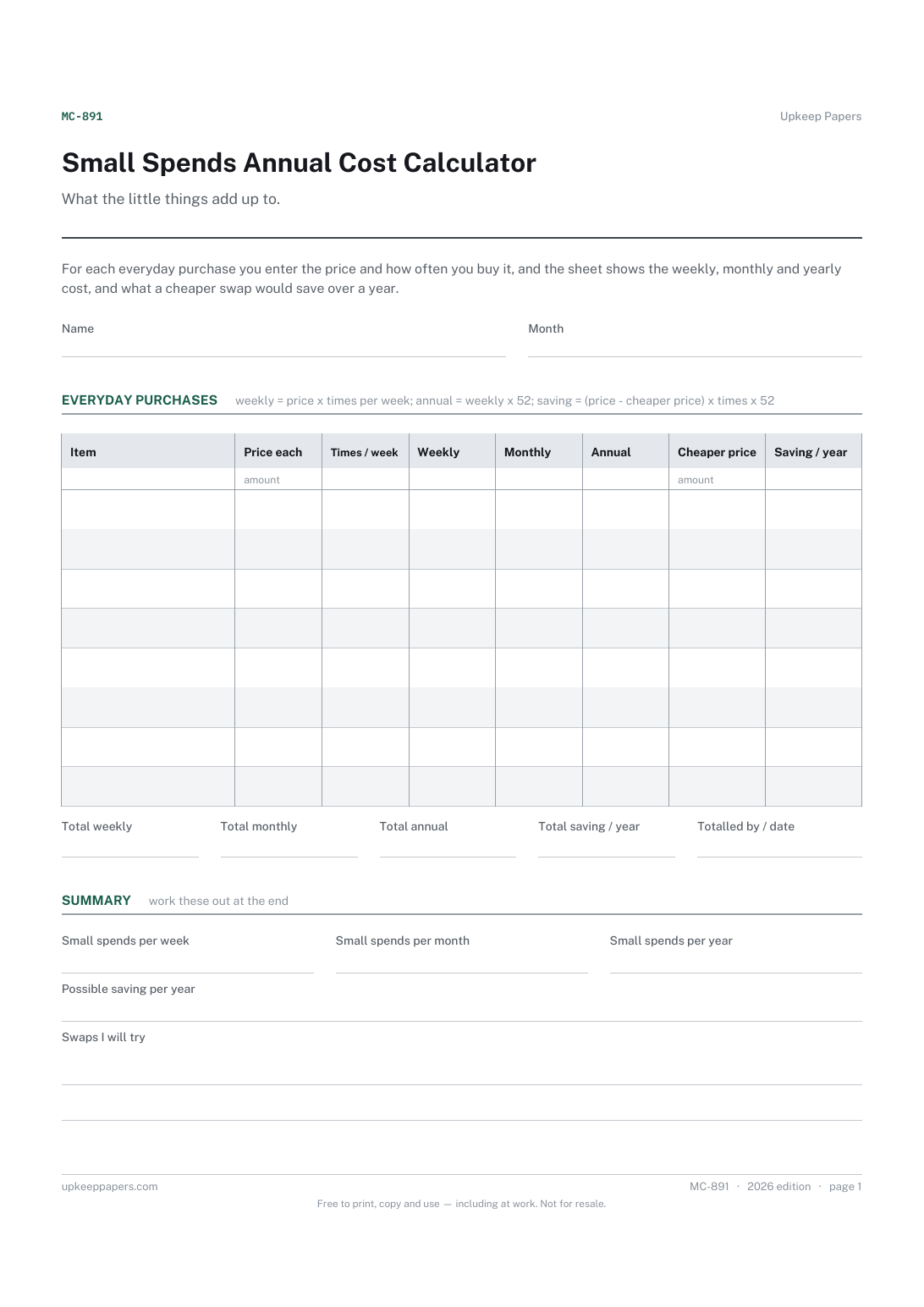
Each regular small purchase and how often you make it.
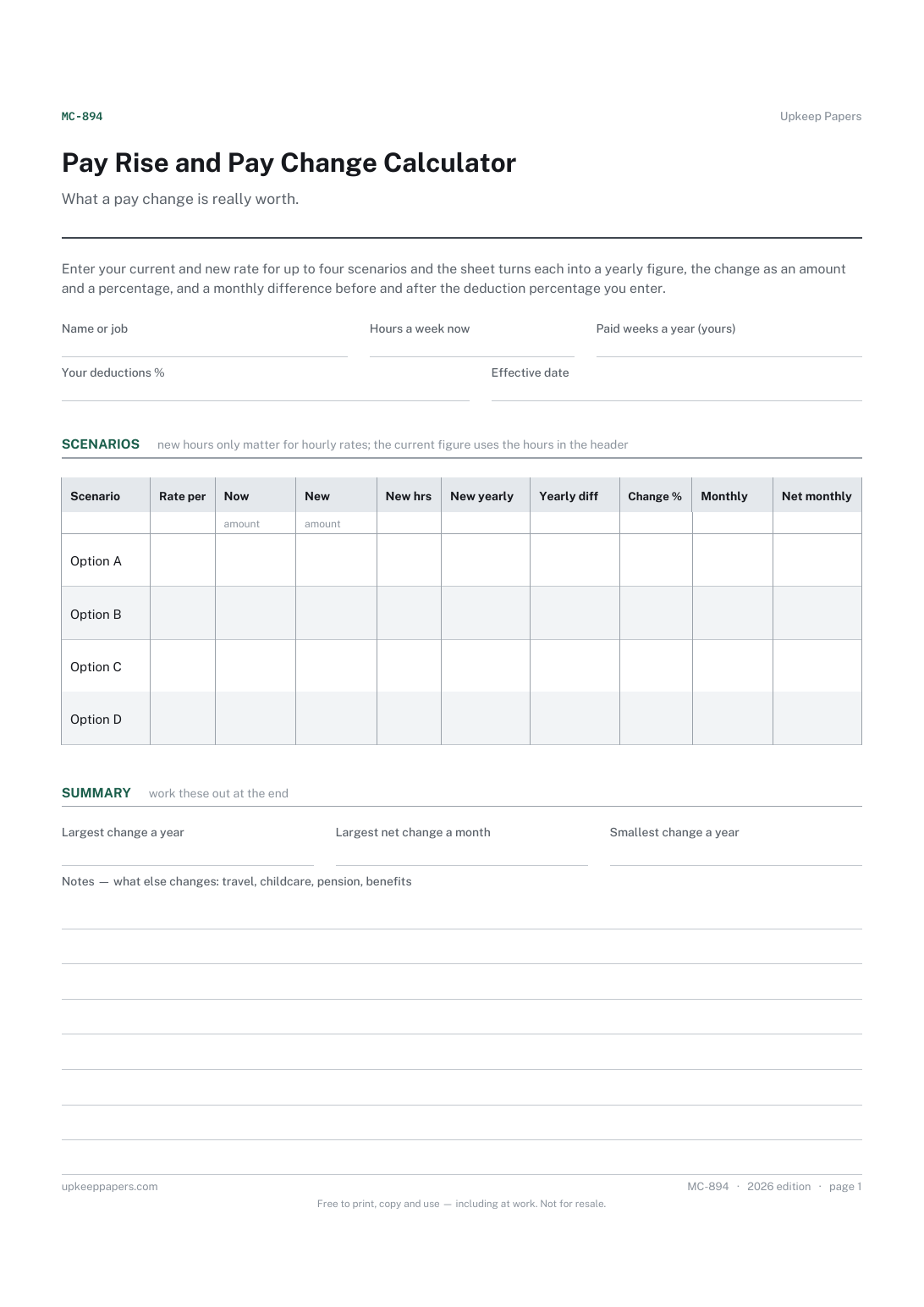
Your current and new pay on the same yearly basis.
Every source of income this year.
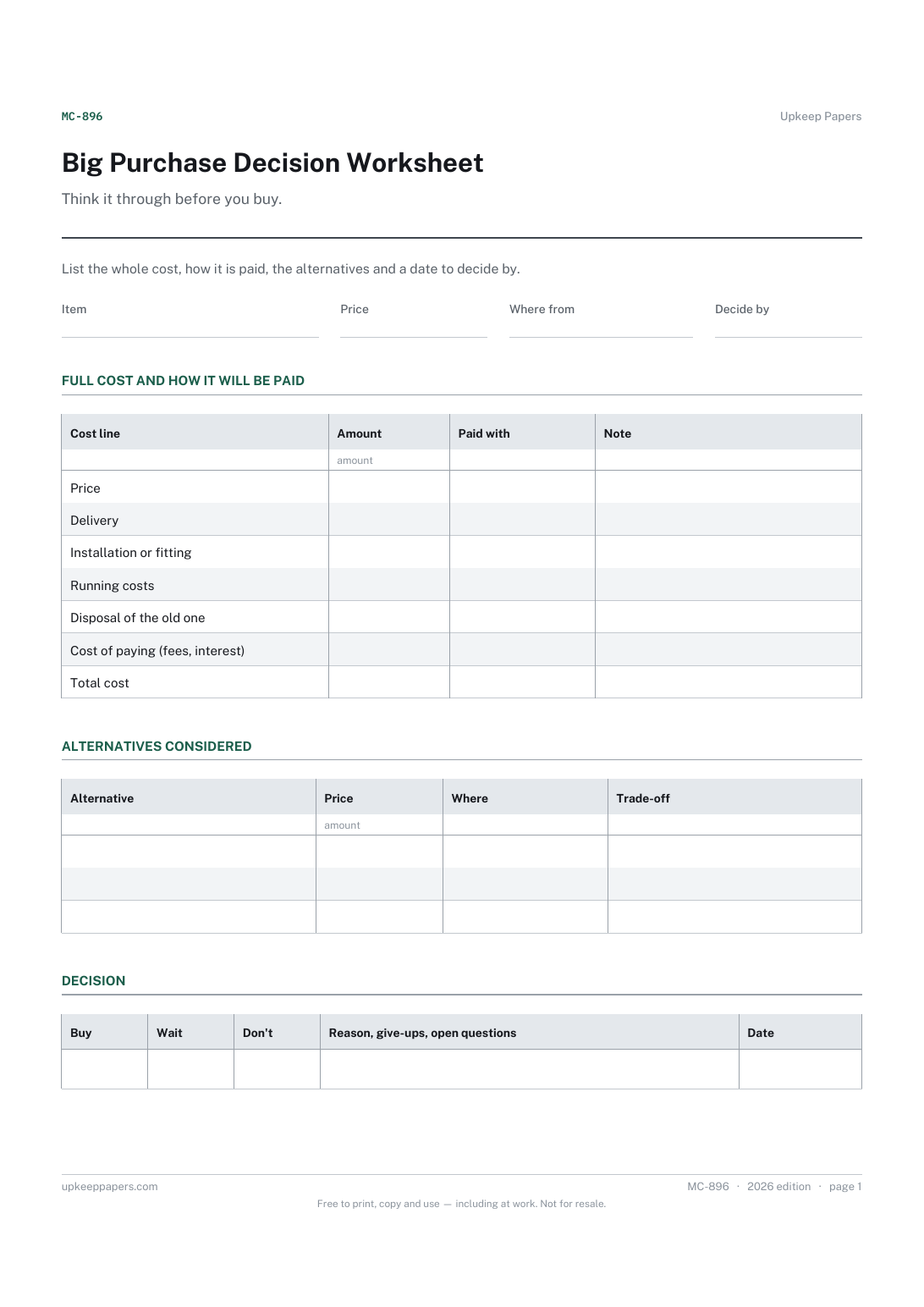
The full cost: price, delivery, fitting, running costs and disposal.
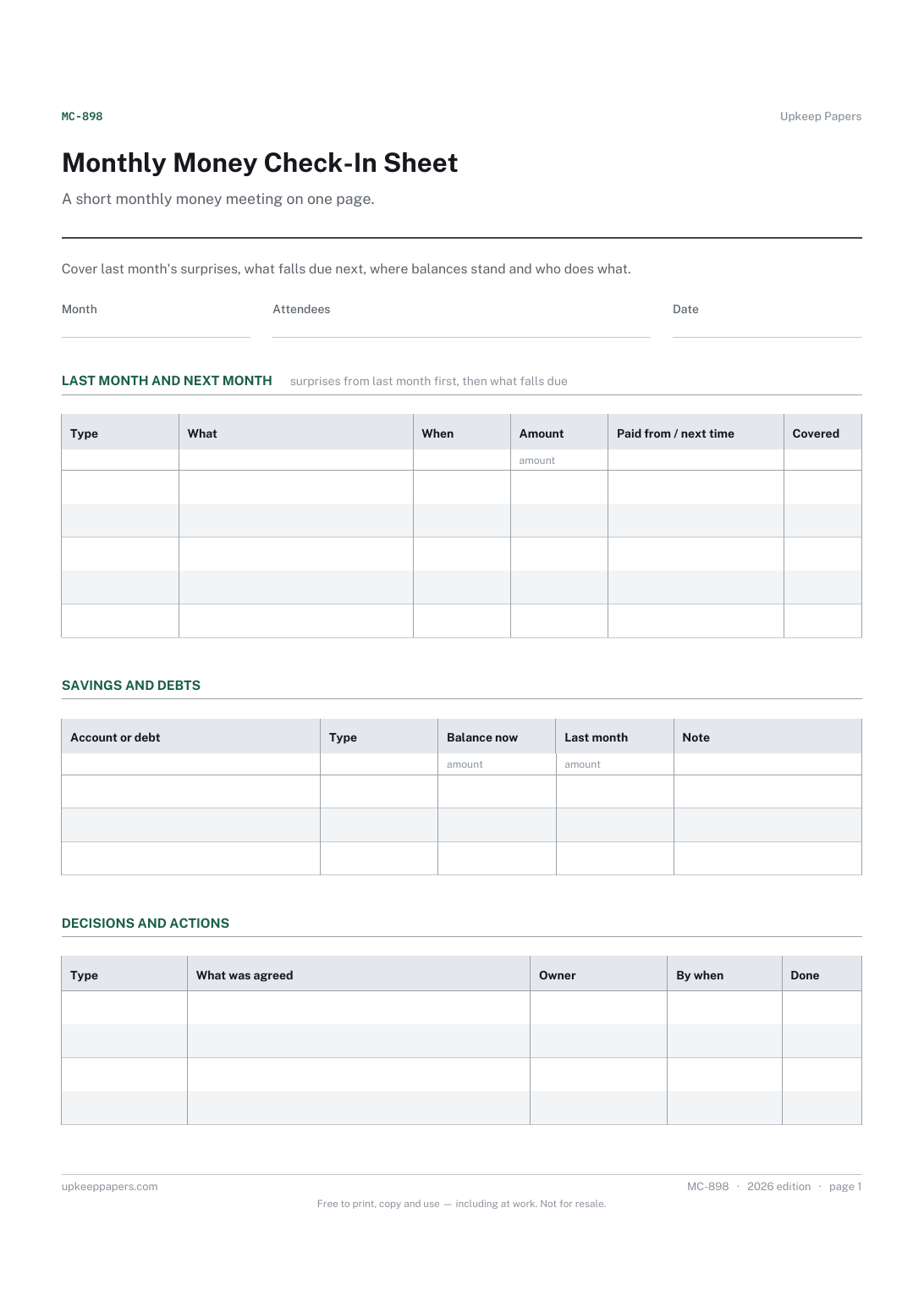
Last month's surprises and what caused them.
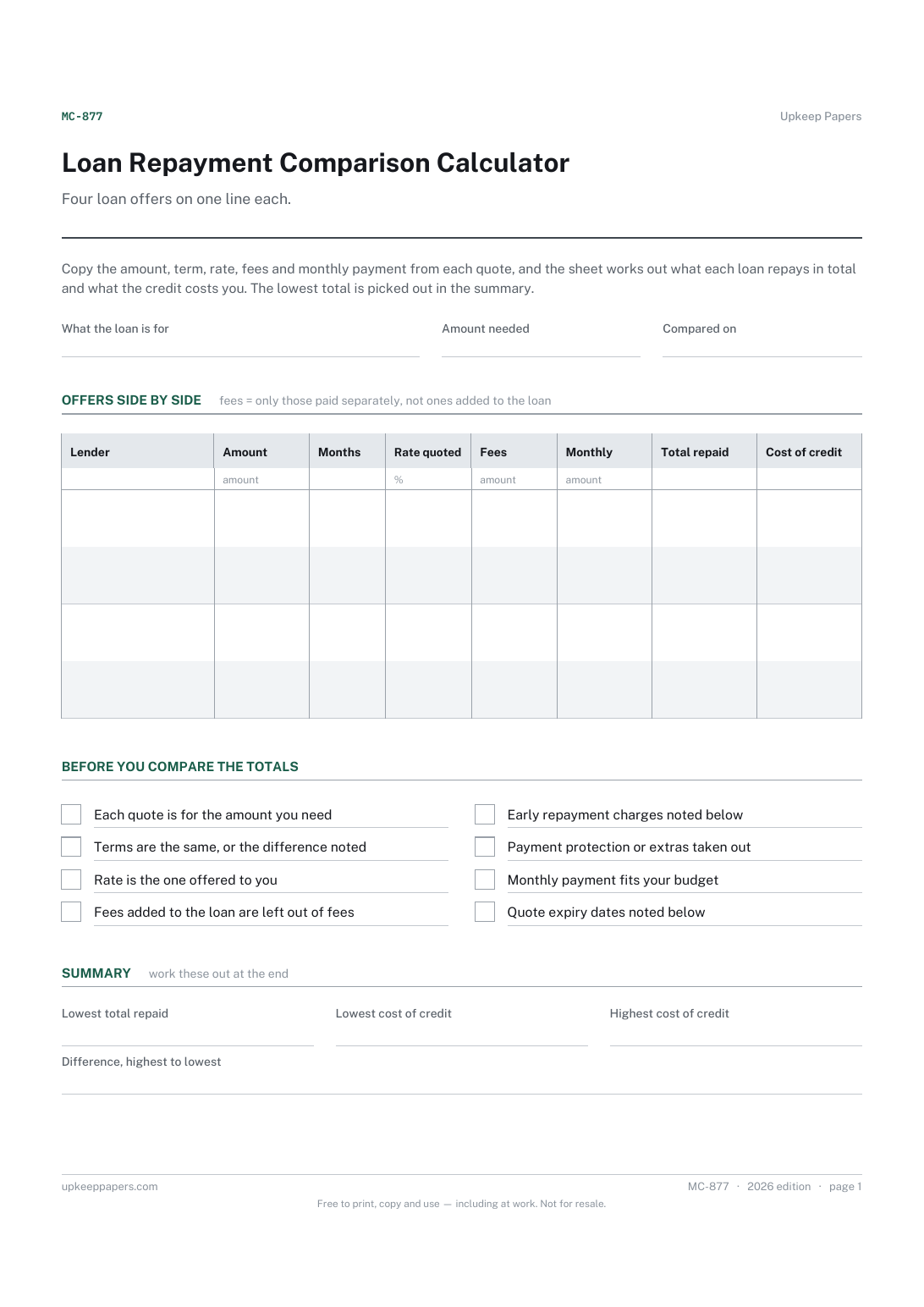
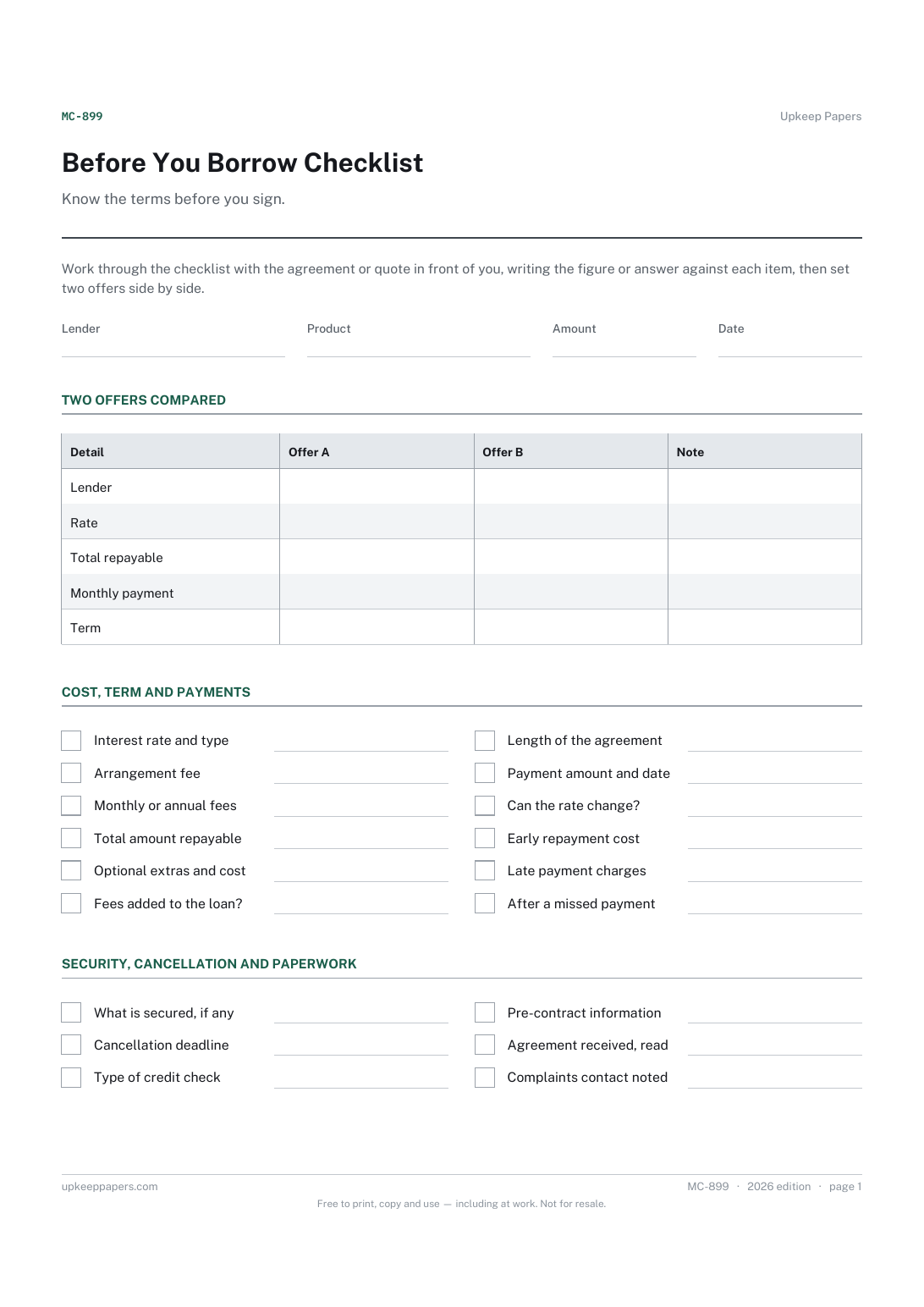
The rate, the fees and the total you would repay.
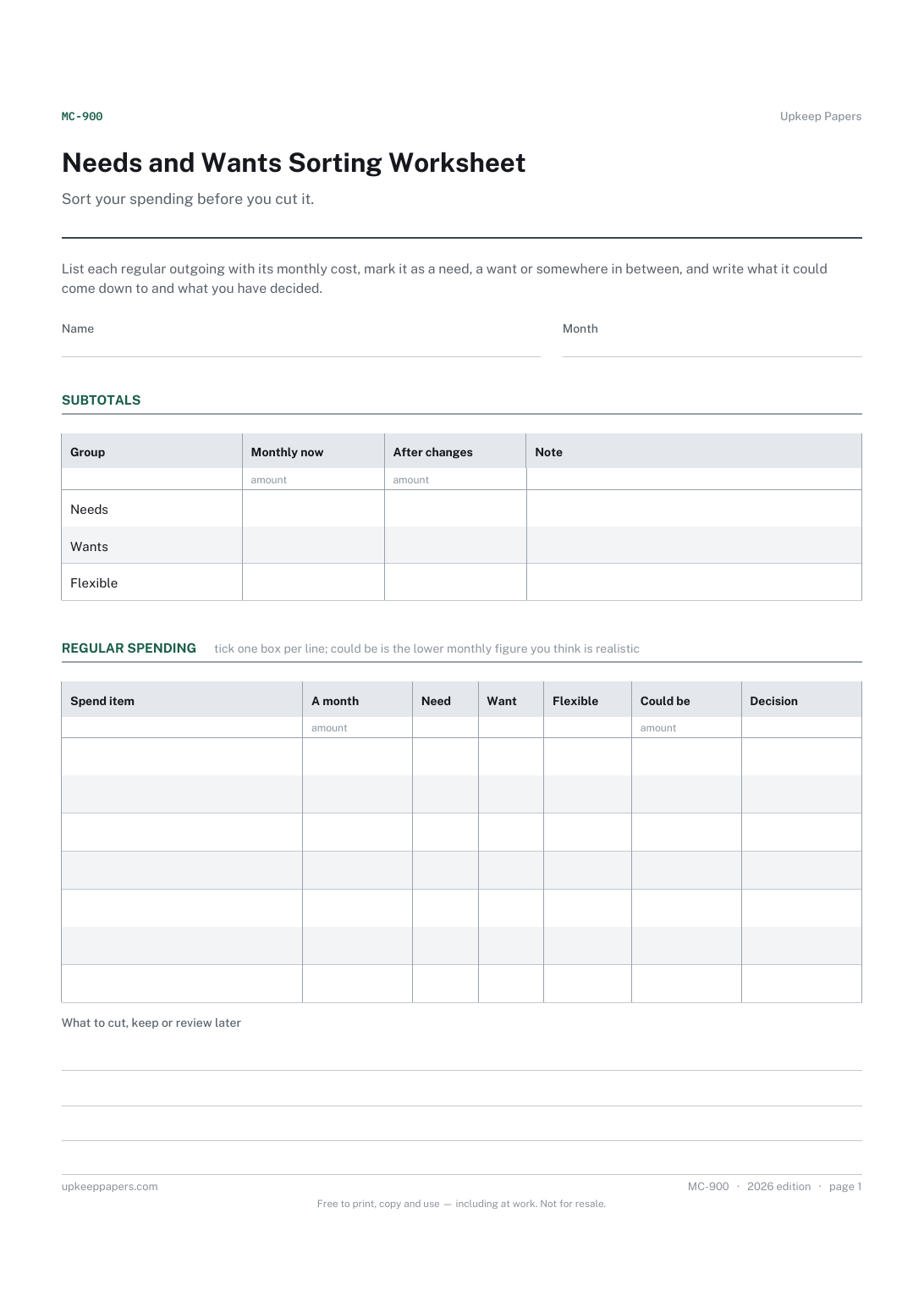
Every regular outgoing and what it costs a month.
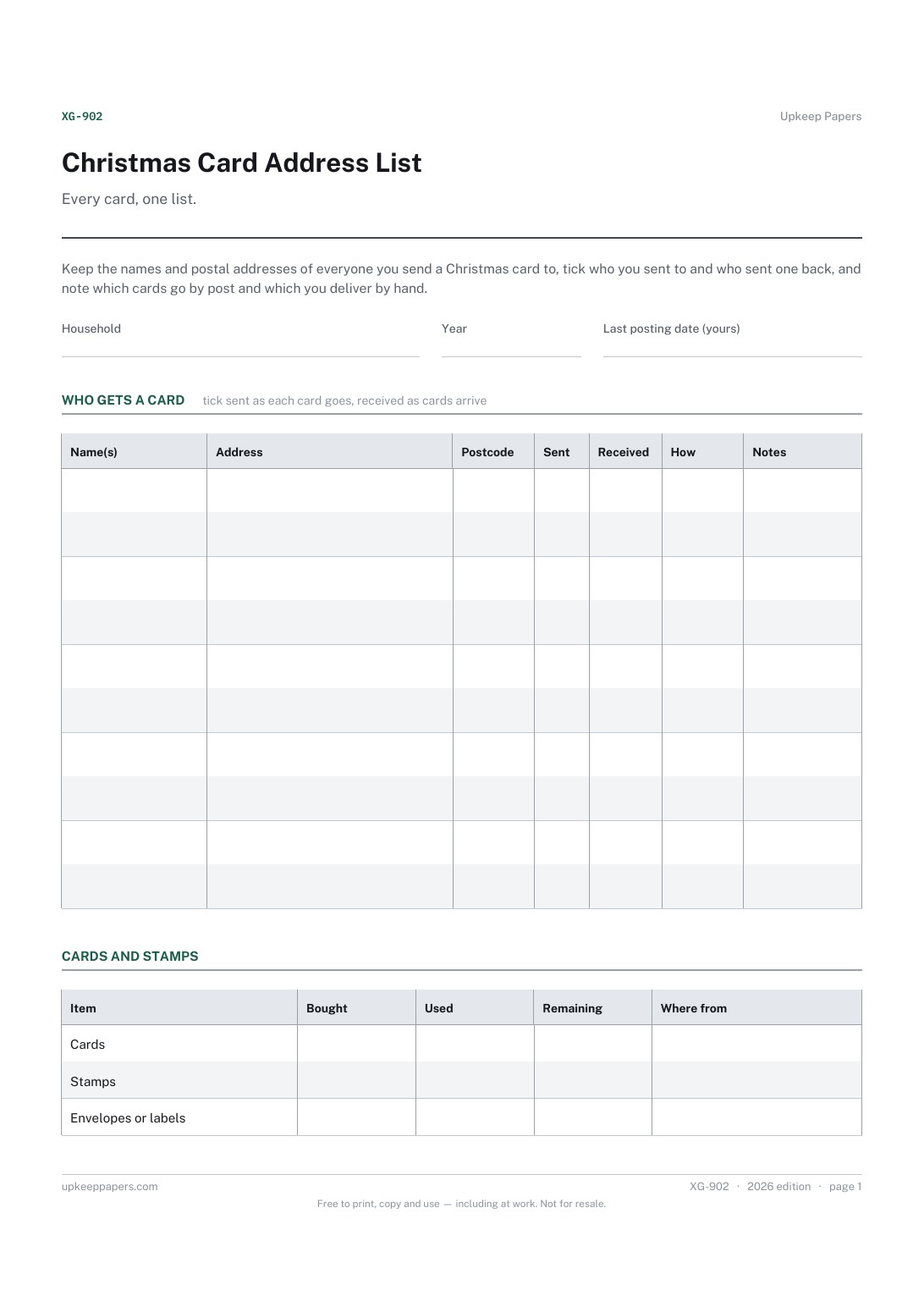
Everyone who gets a card, with their full postal address and postcode.
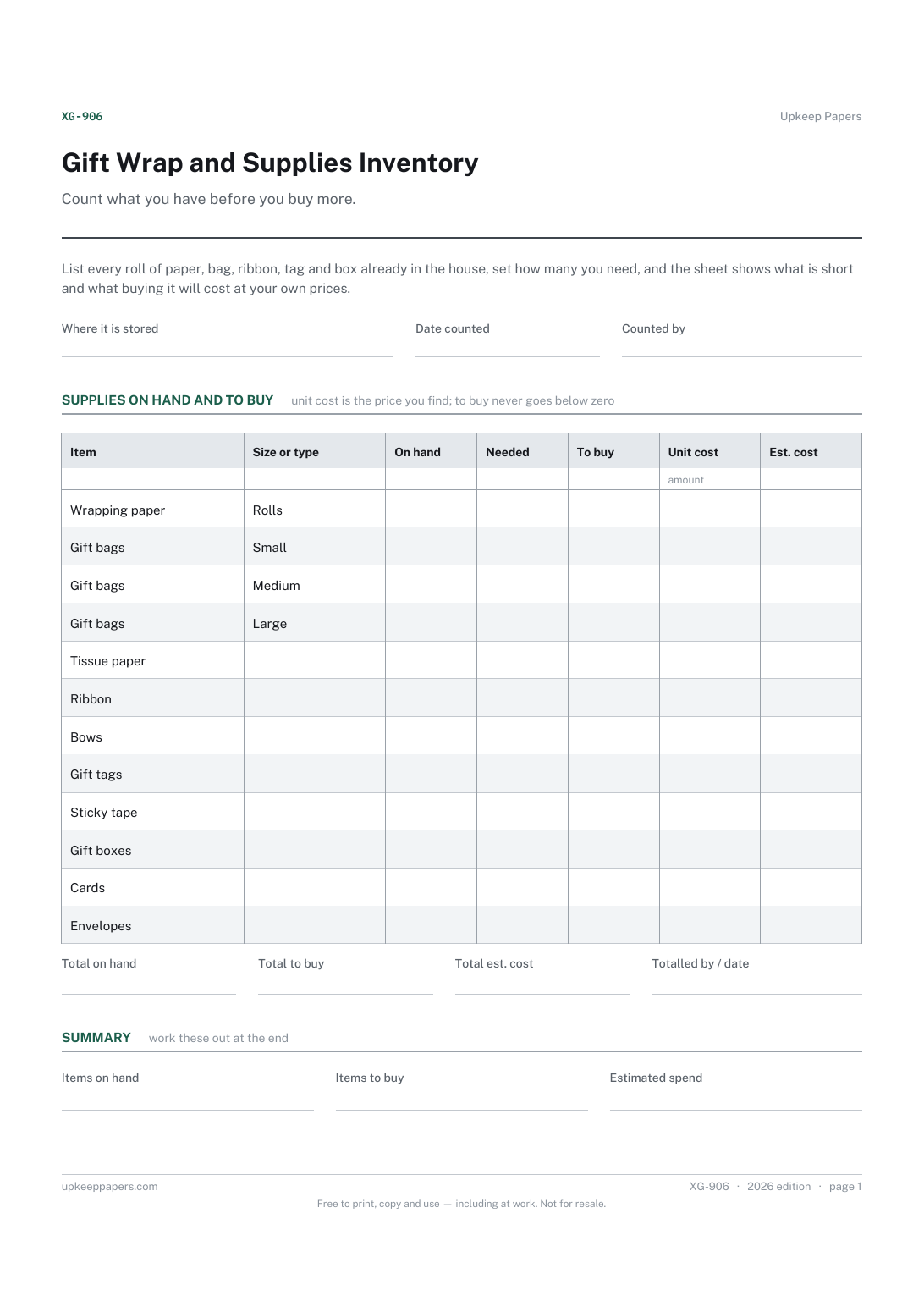
What wrapping supplies are already in the house and where they are kept.
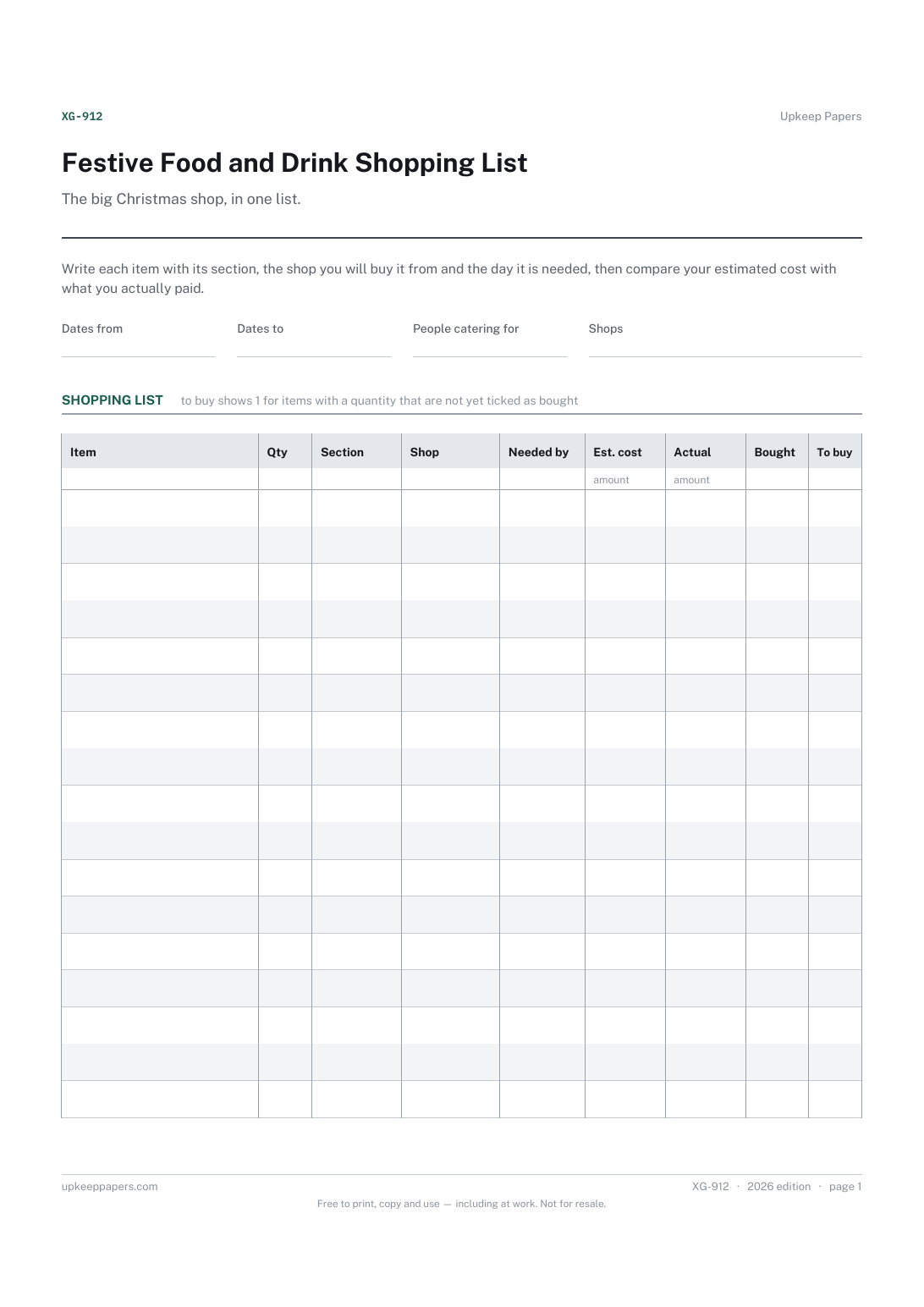
Everything to buy for the festive days, by section of the shop.
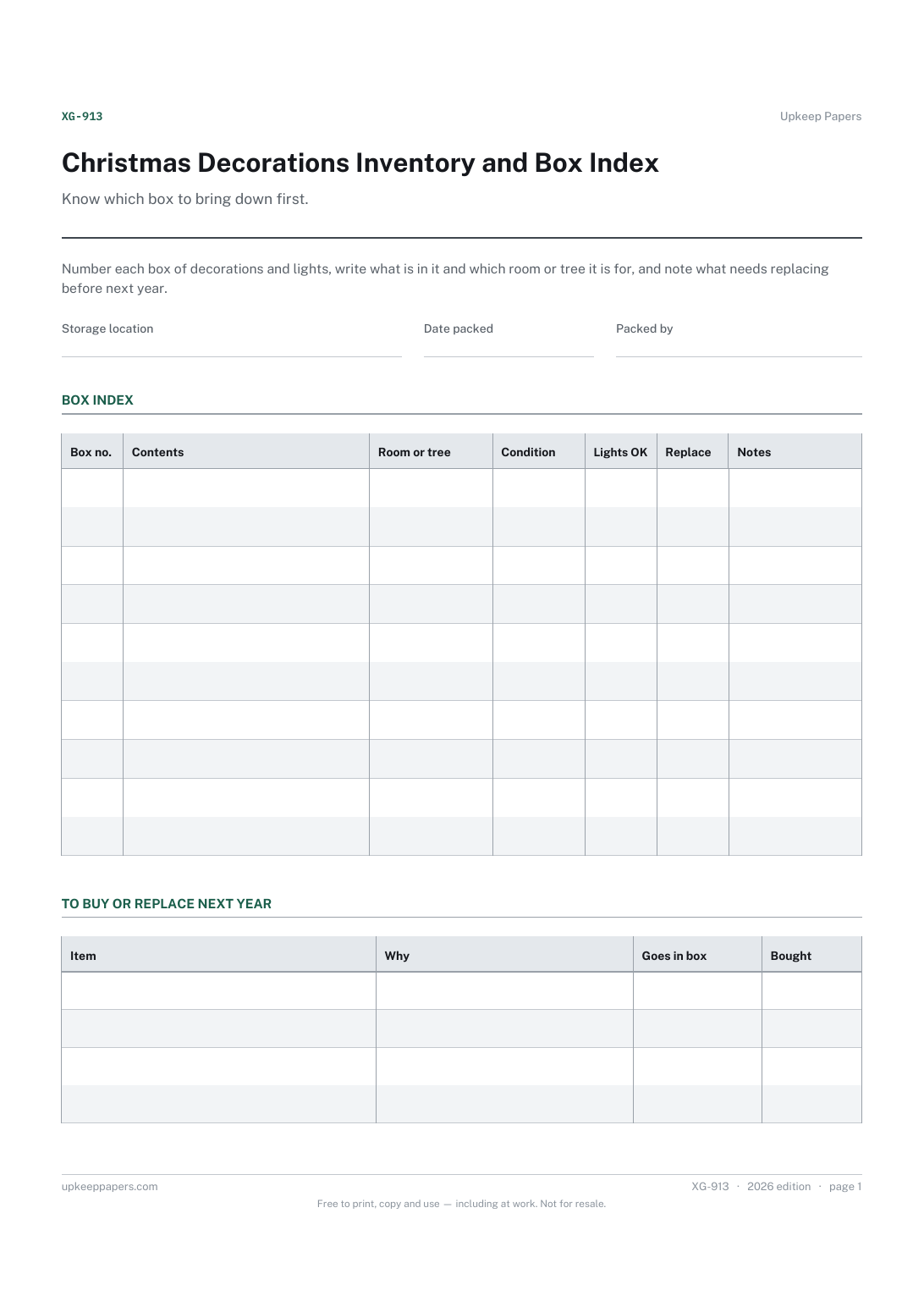
What is in each numbered box and where the boxes are kept.
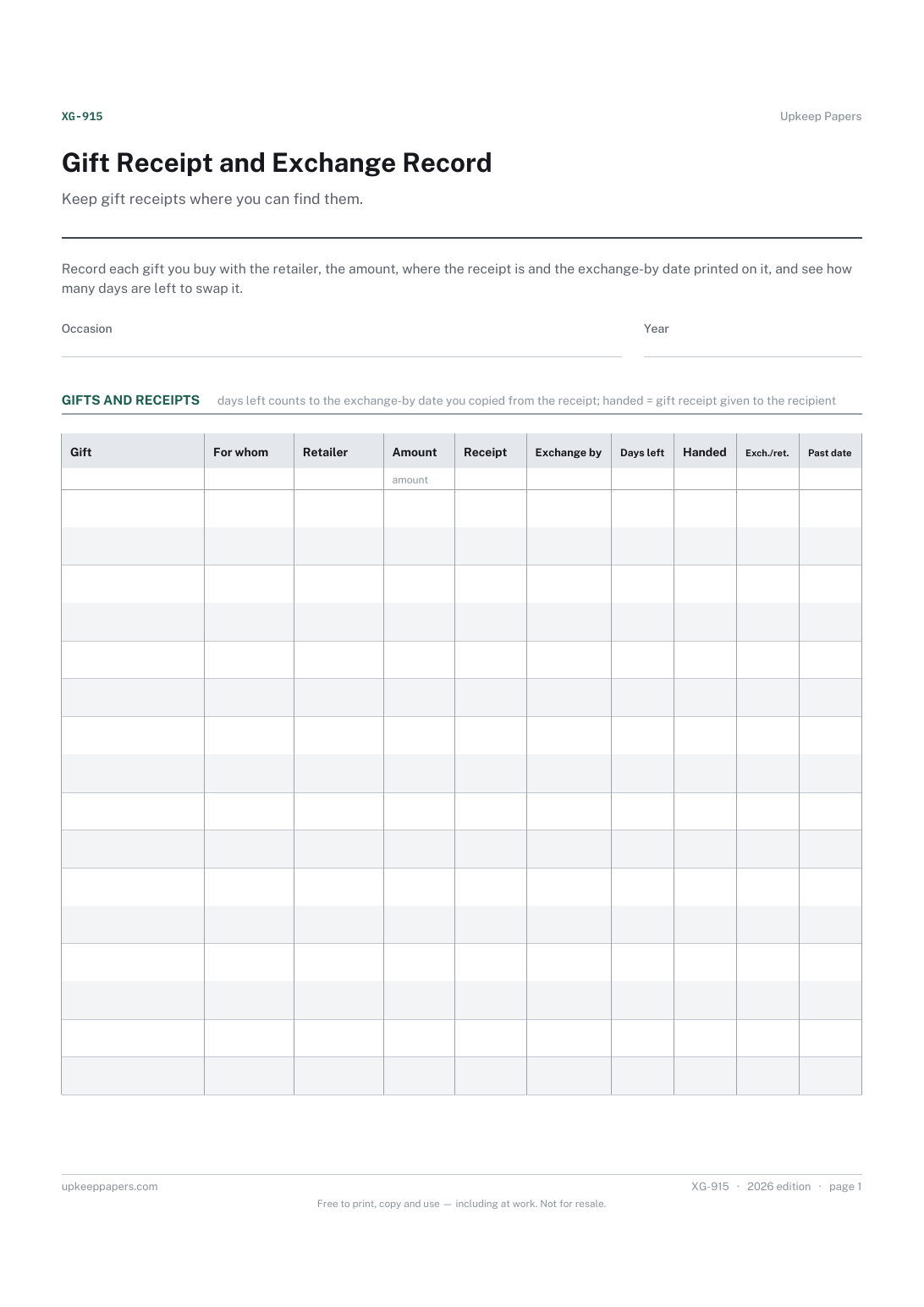
Every gift bought, who it is for and where it came from.
The everyday jobs a household runs on, grouped by area.
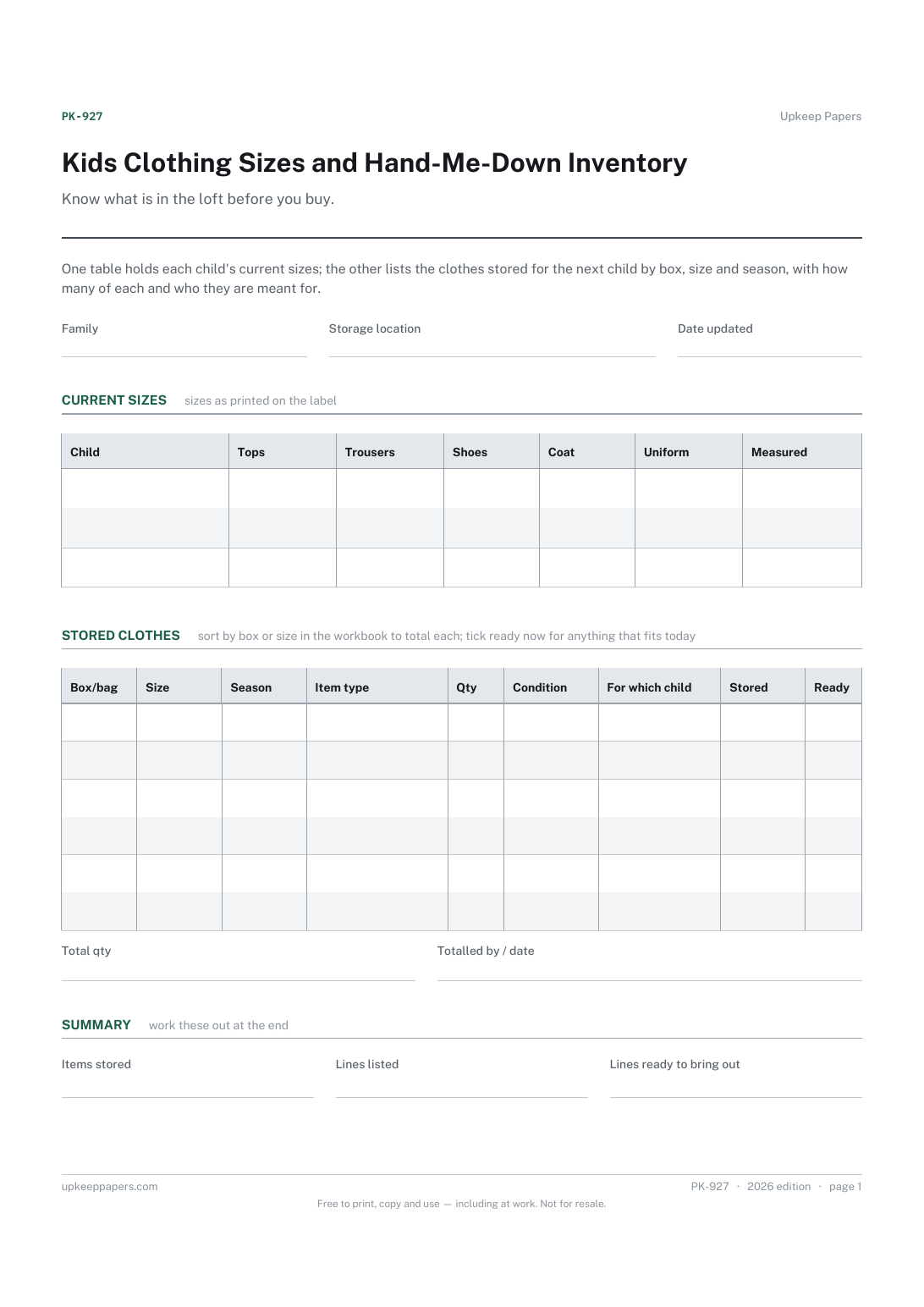
Each child's current size in tops, trousers, shoes, coat and uniform.
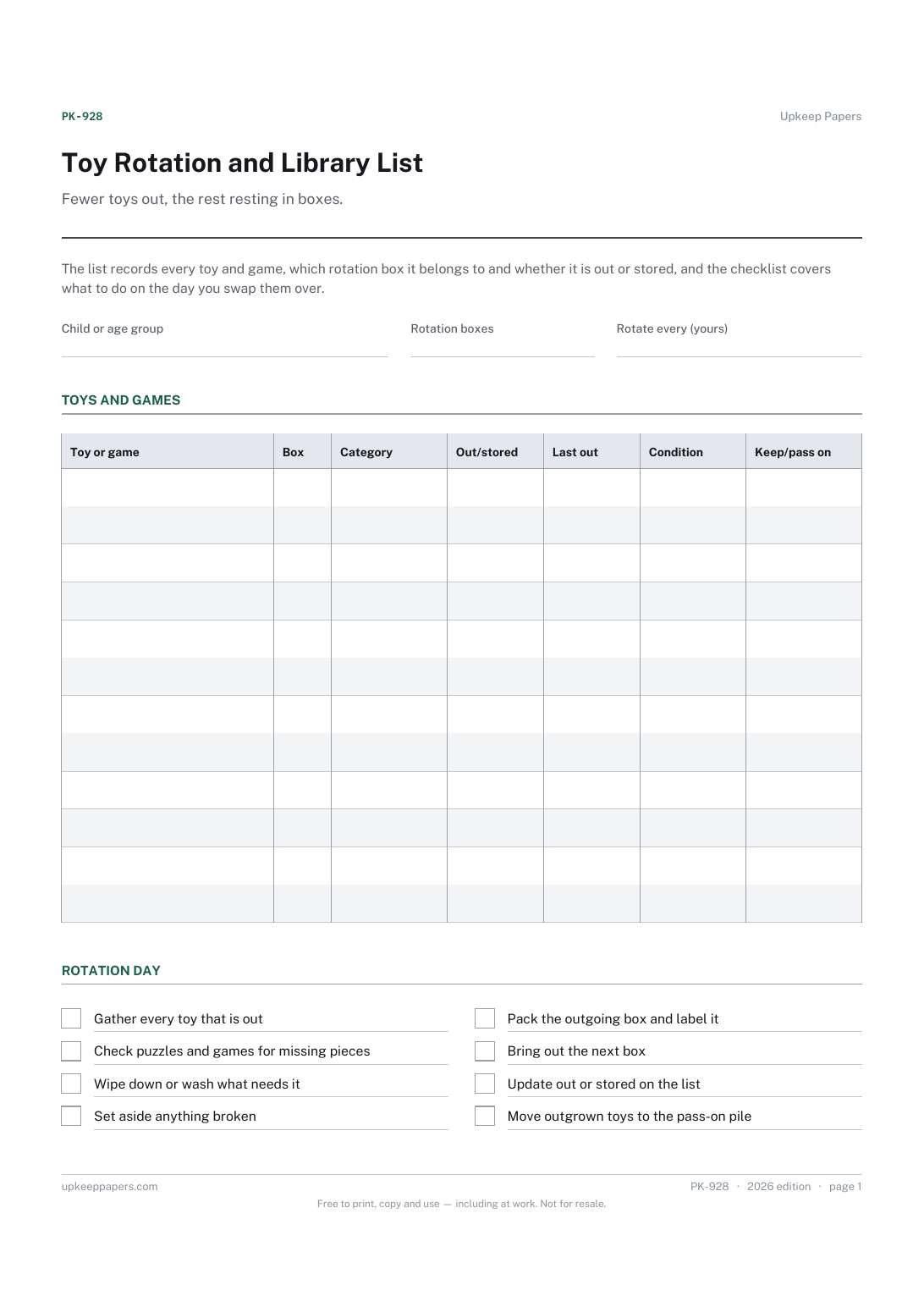
Every toy and game in the house and which box it lives in.
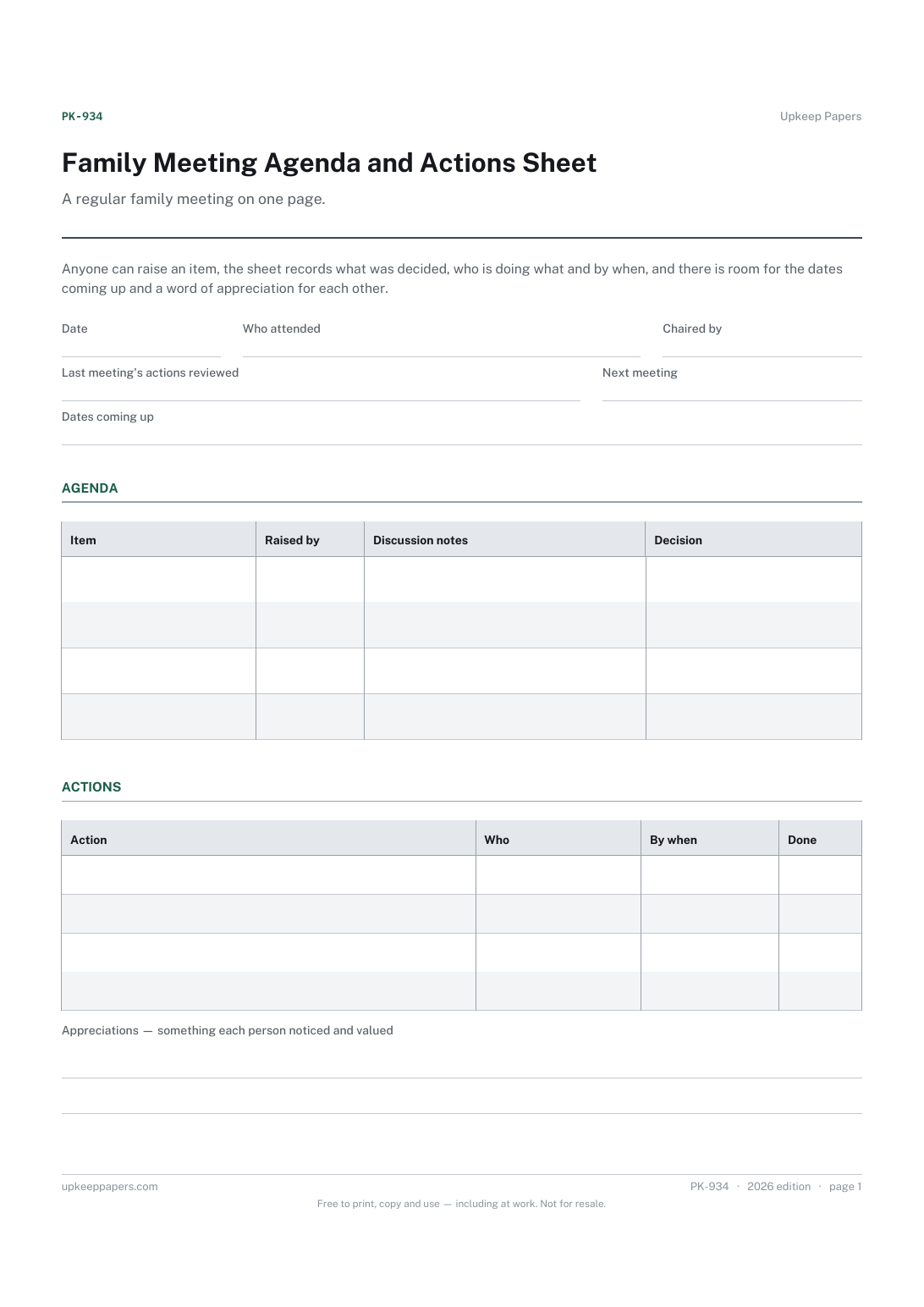
Who came and who chaired this time.
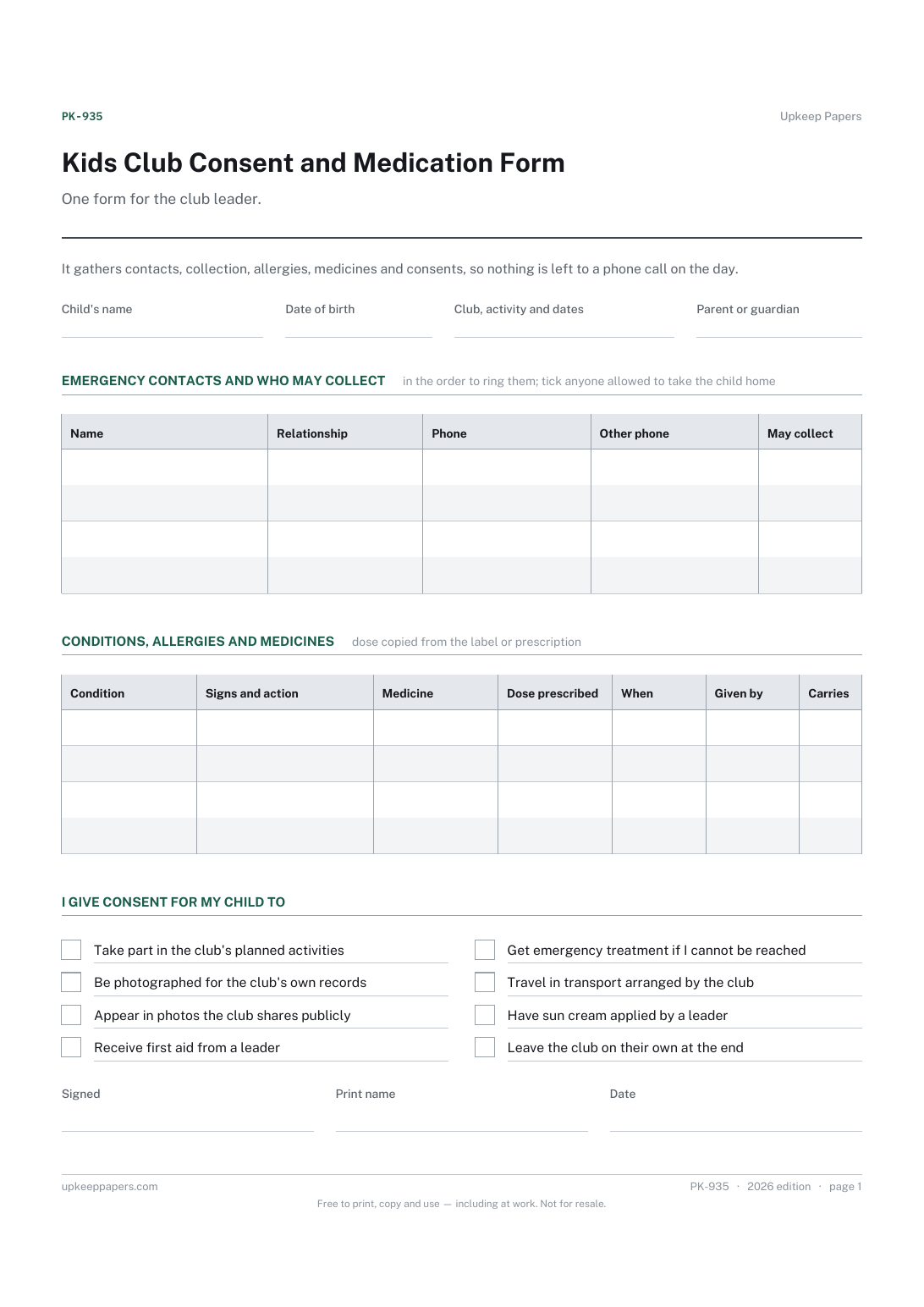
Who to ring first if something happens, and how to reach them.
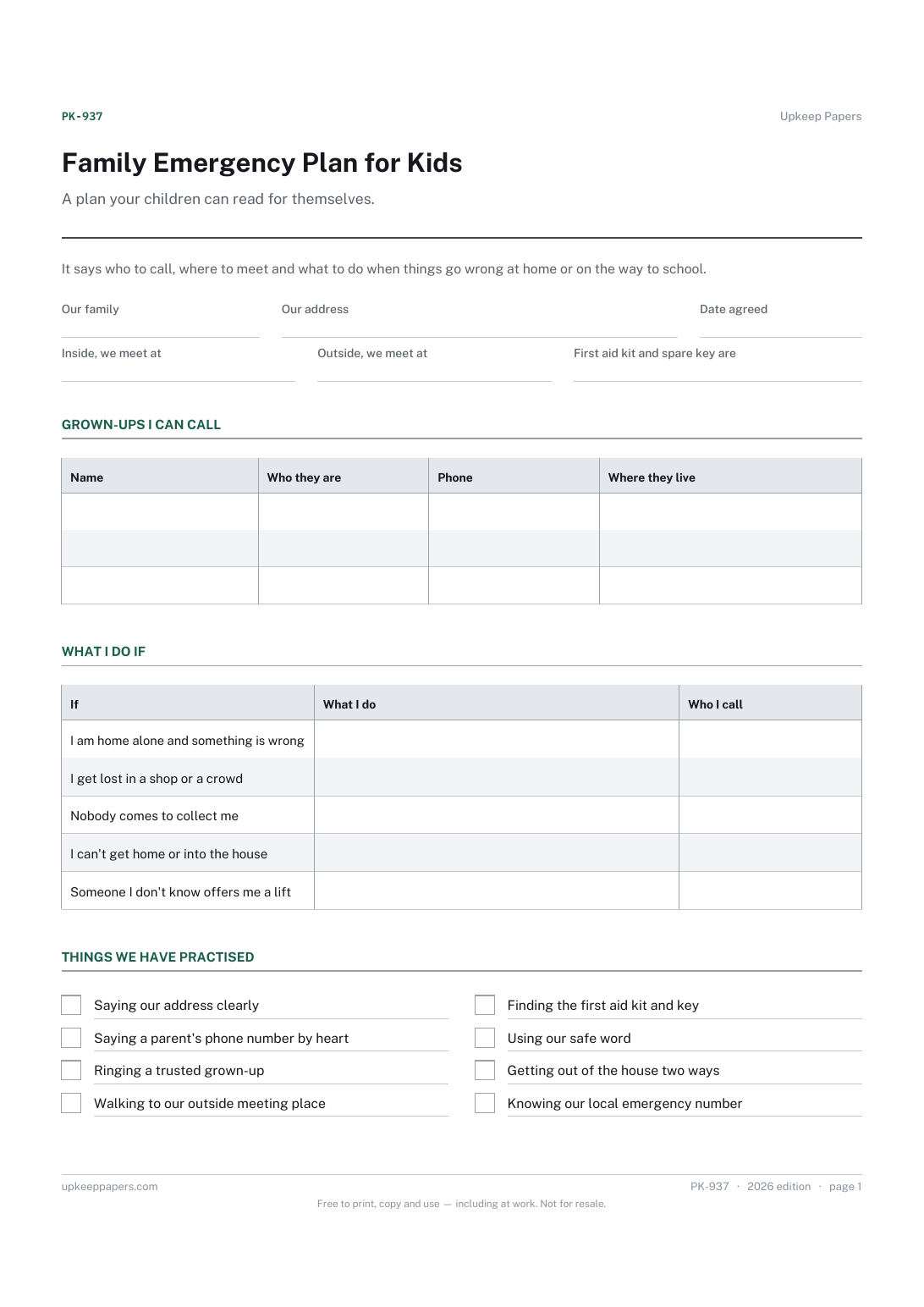
The trusted adults a child can ring, and where they live.
The homework routine for each day of the week.
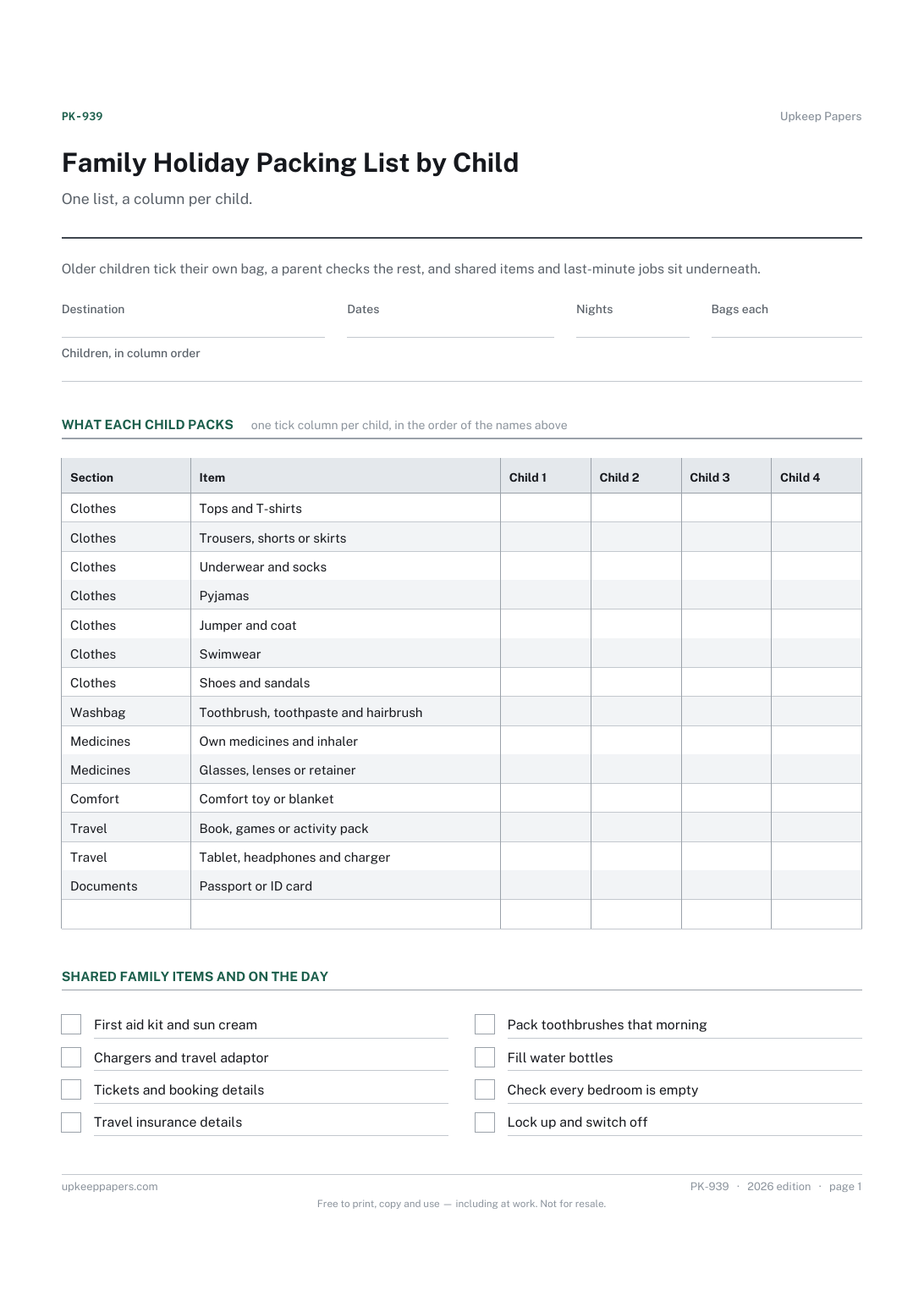
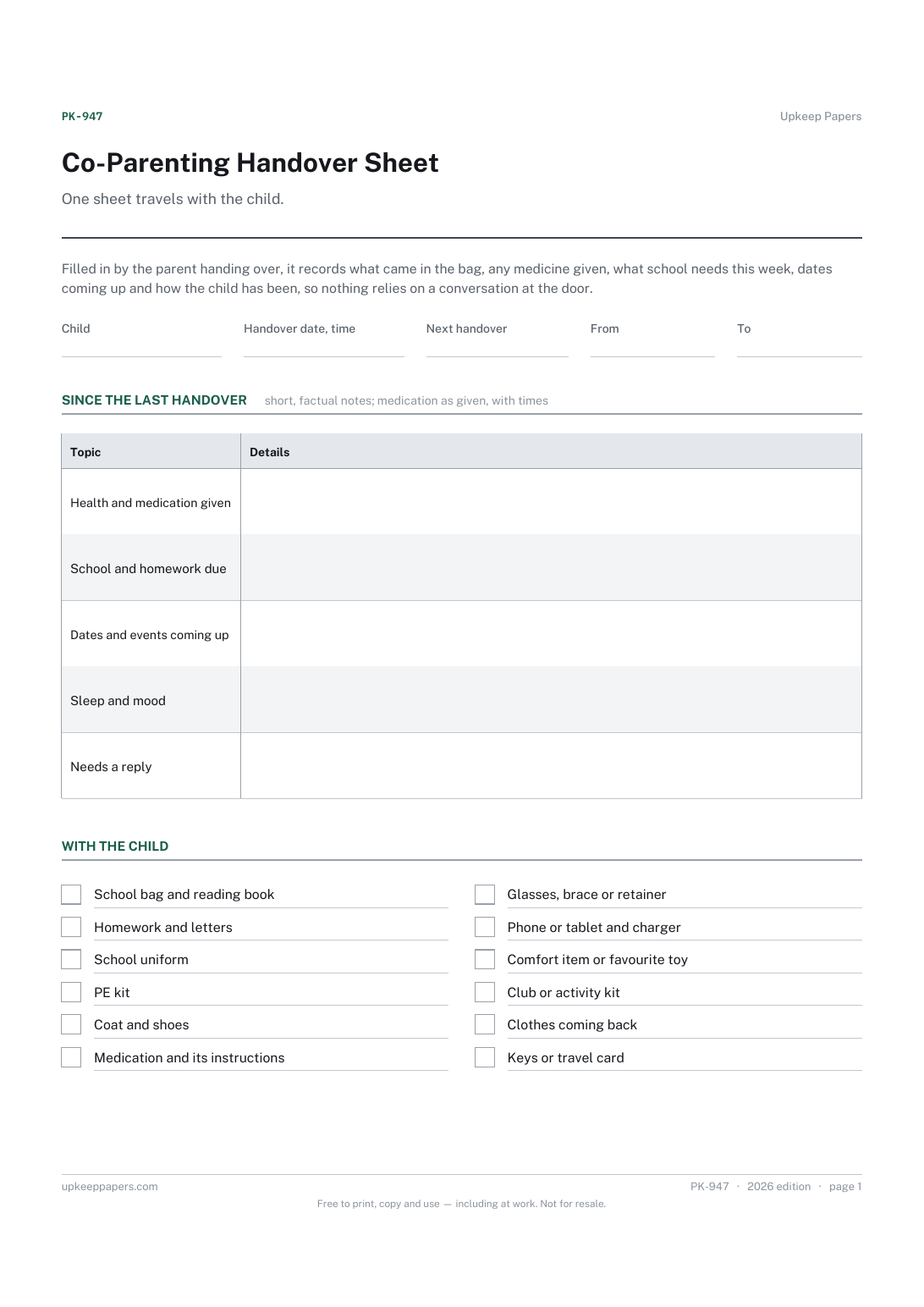
What each child has packed, item by item.
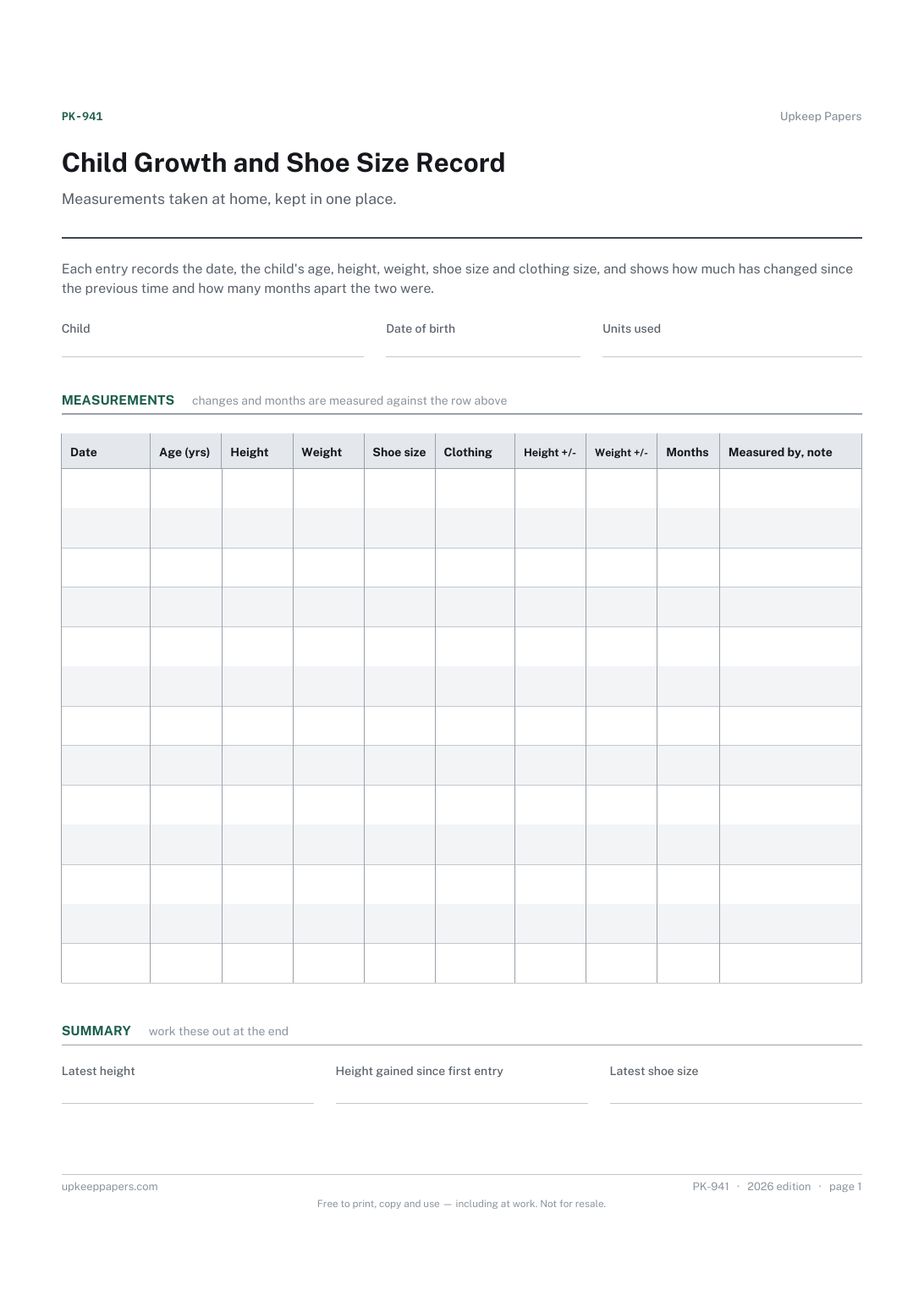
Height and weight on each date you measure.
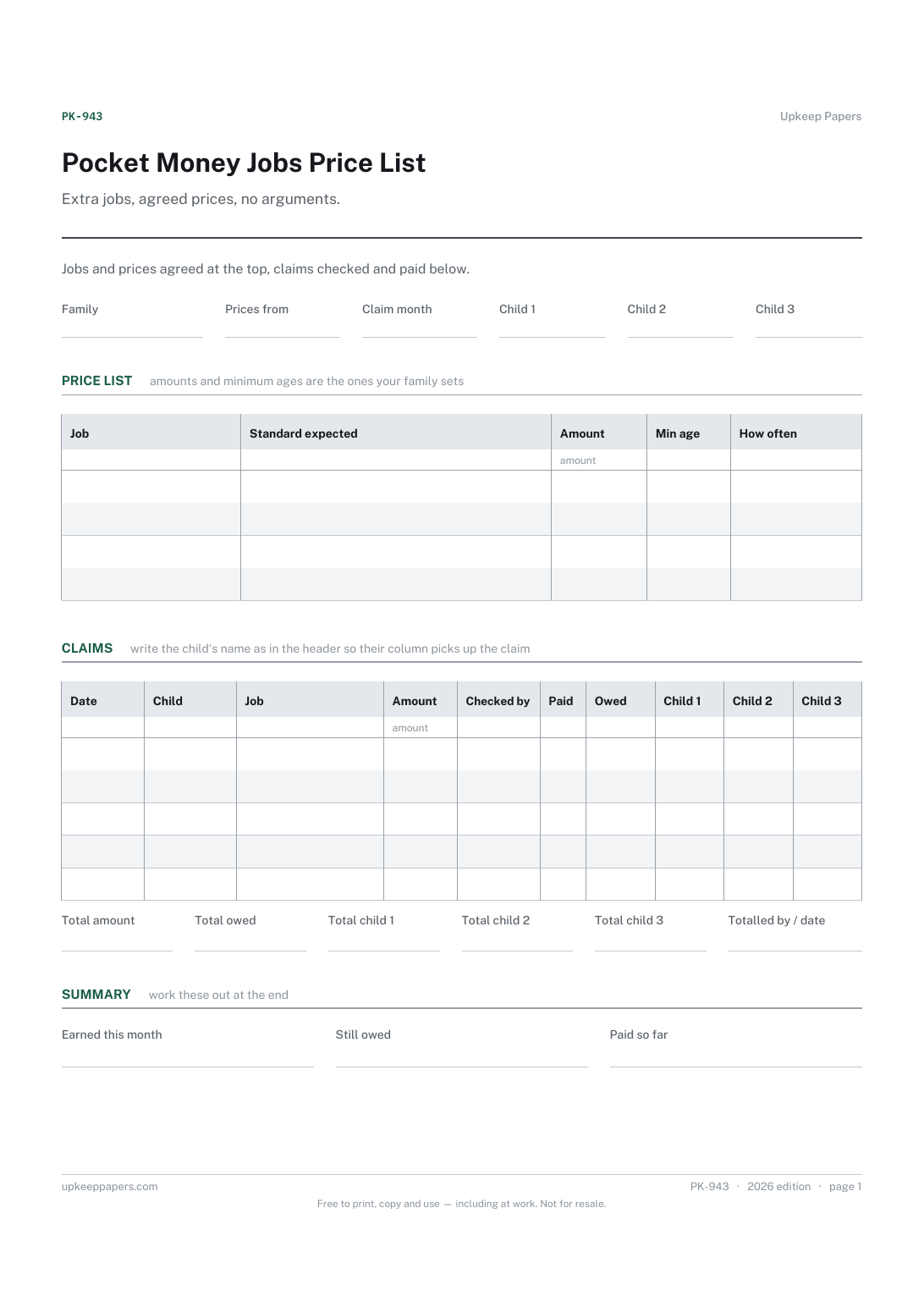
Which optional jobs can earn money and what each one pays in your family.
Which belongings, kit and devices came with the child.
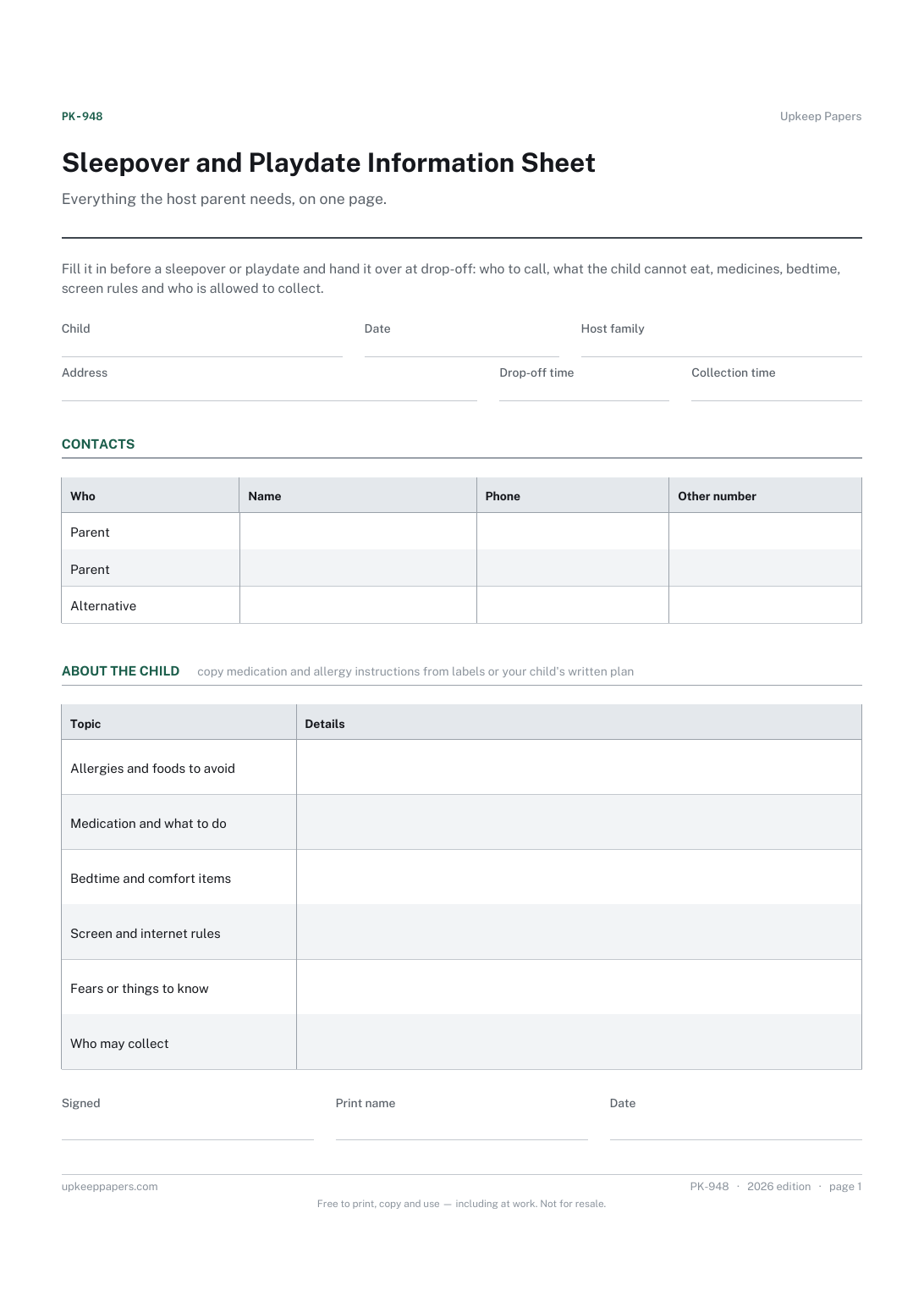
Where the child is, with whom, and the drop-off and collection times.
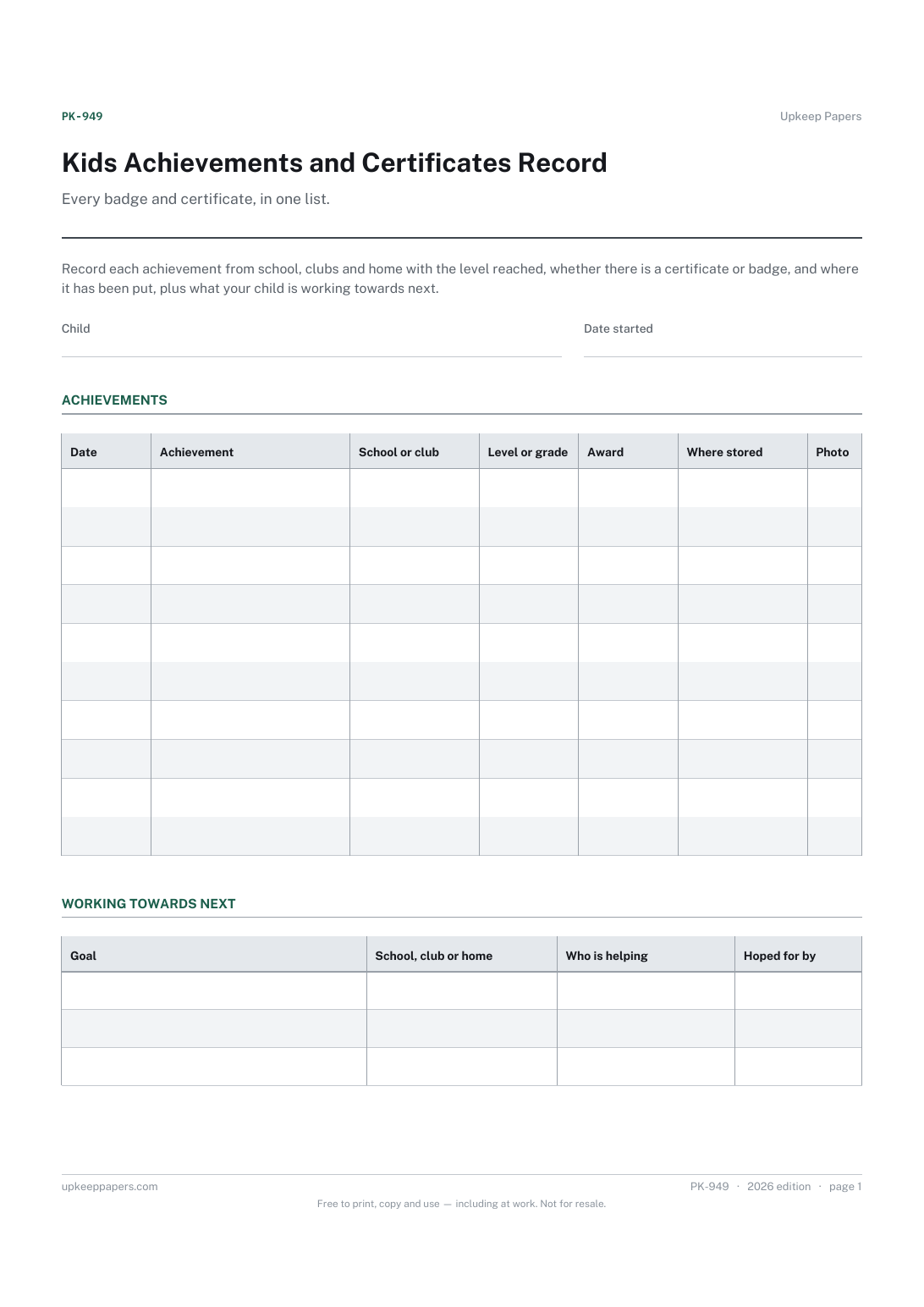
What your child achieved, when, and with which school or club.
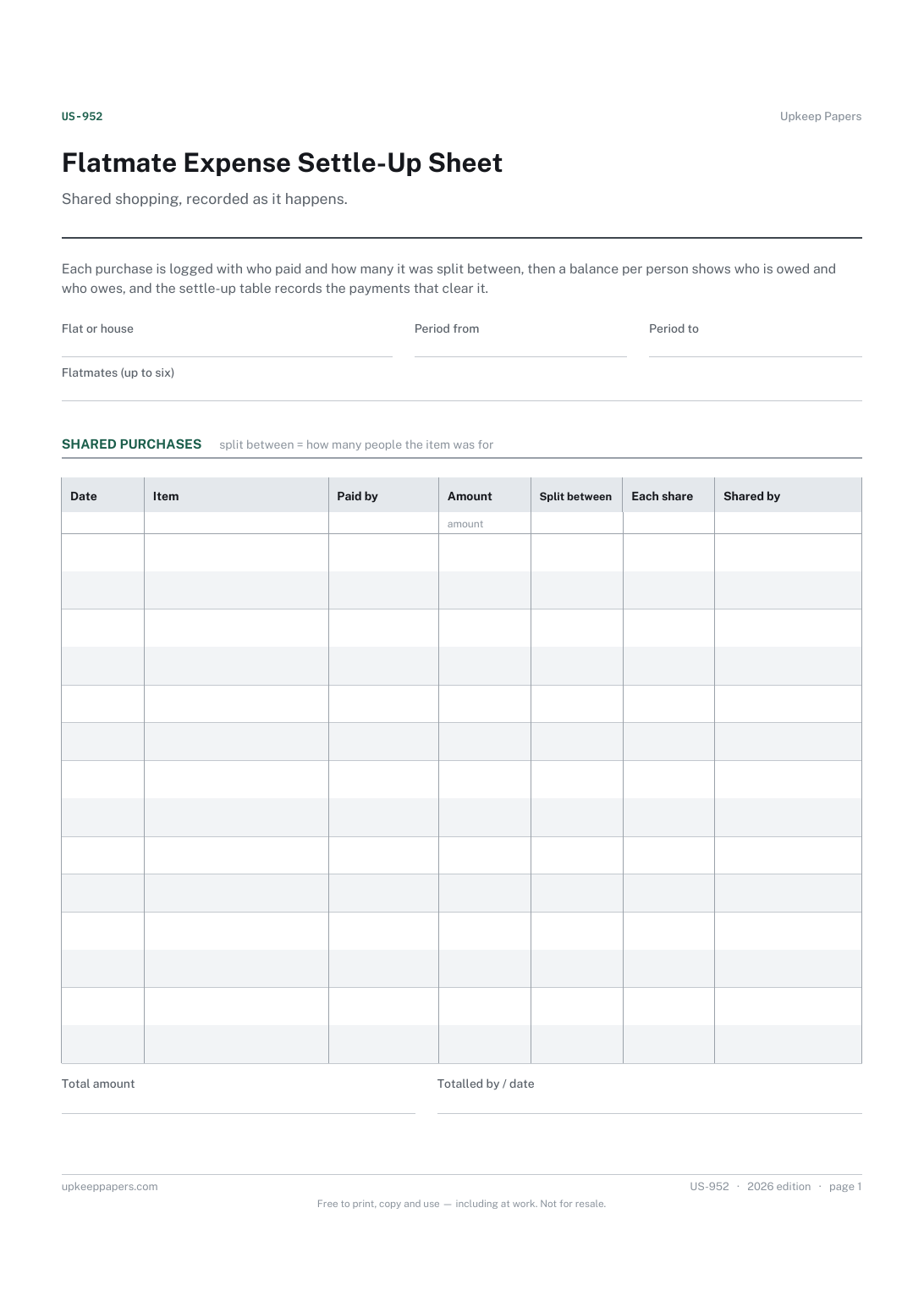
Every shared purchase, who paid and how many it was split between.
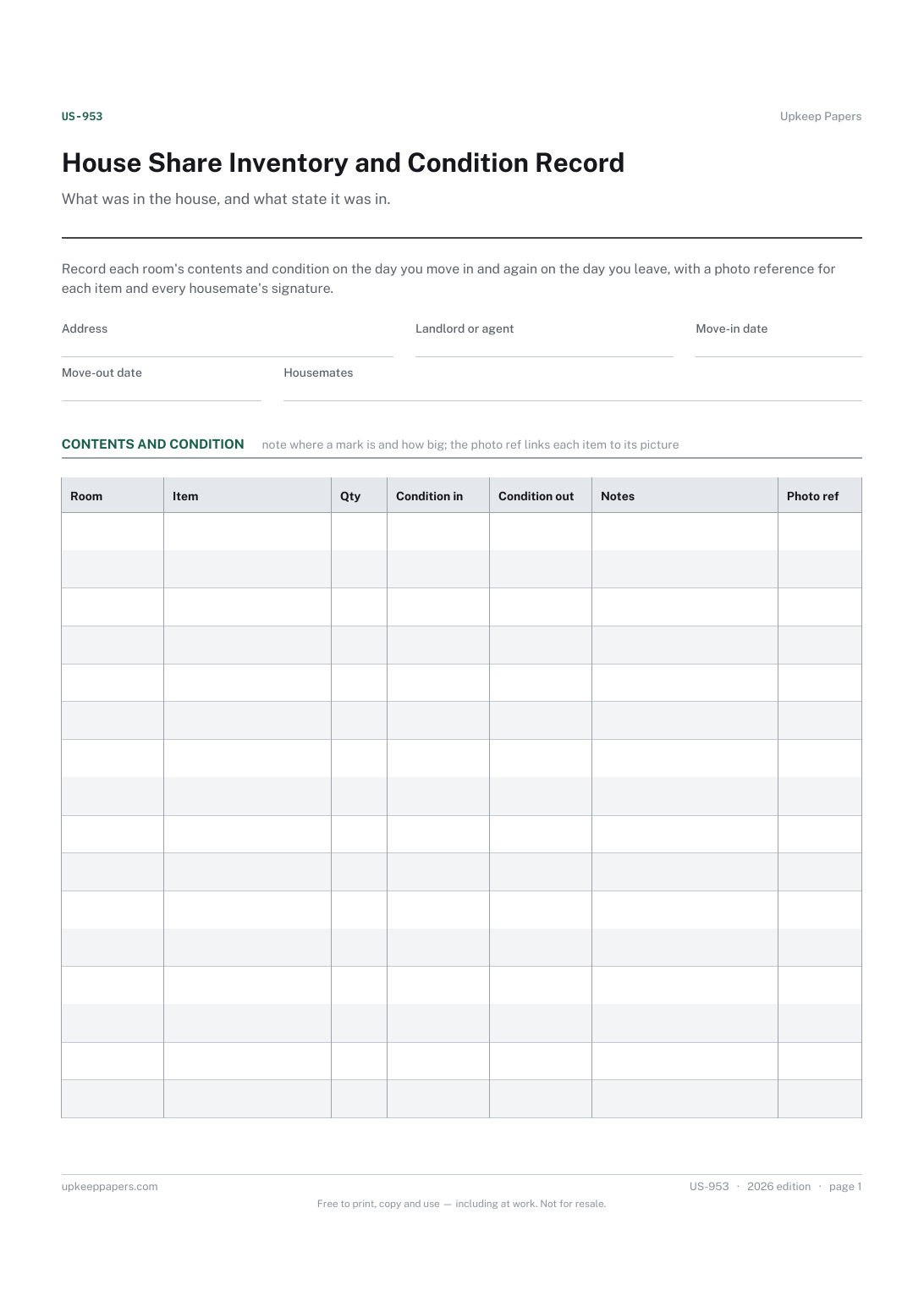
Every item in each room, and in the shared kitchen, bathroom and lounge.
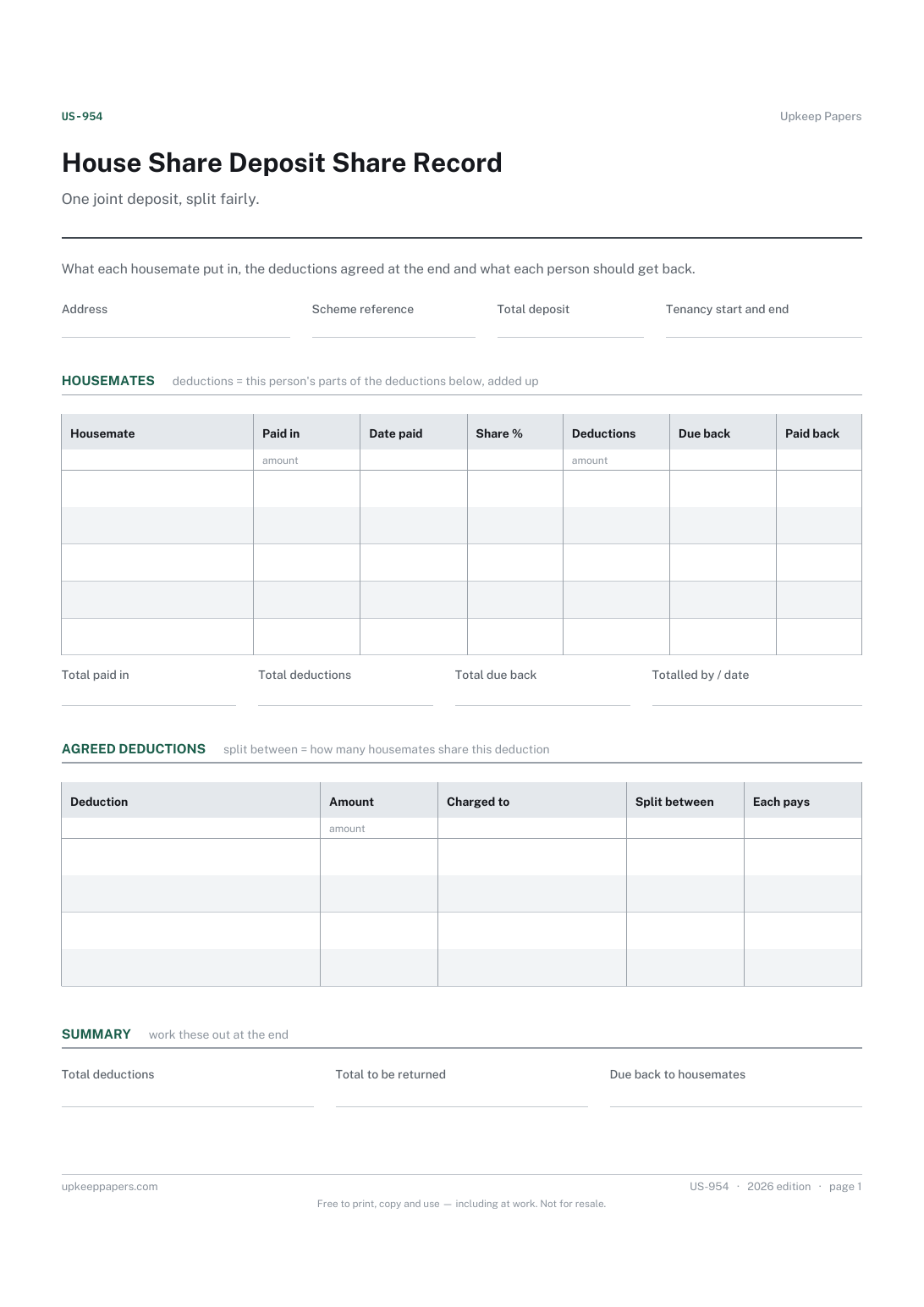
What each housemate paid towards the deposit, and when.
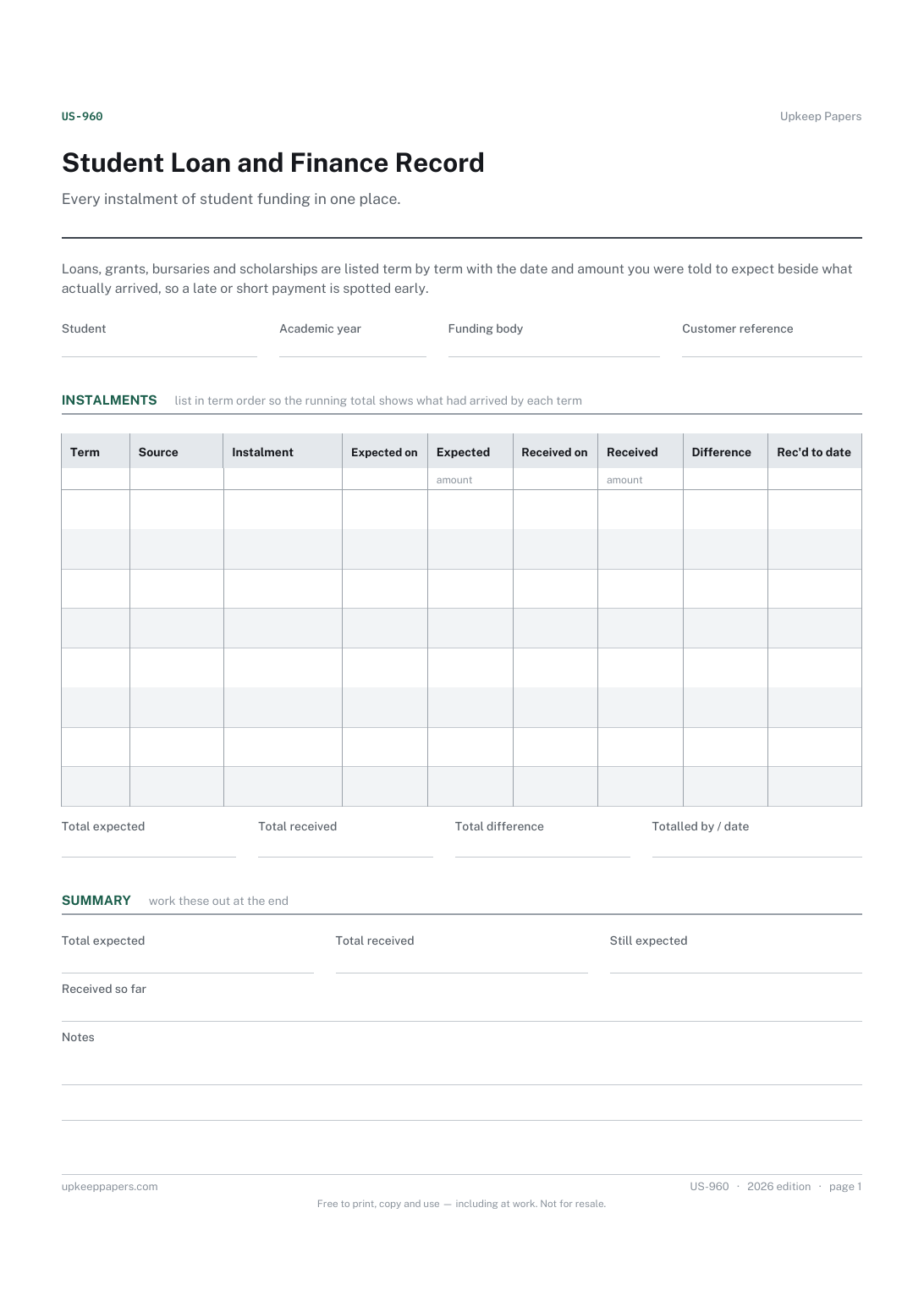
Each instalment expected from each funding source, by term.
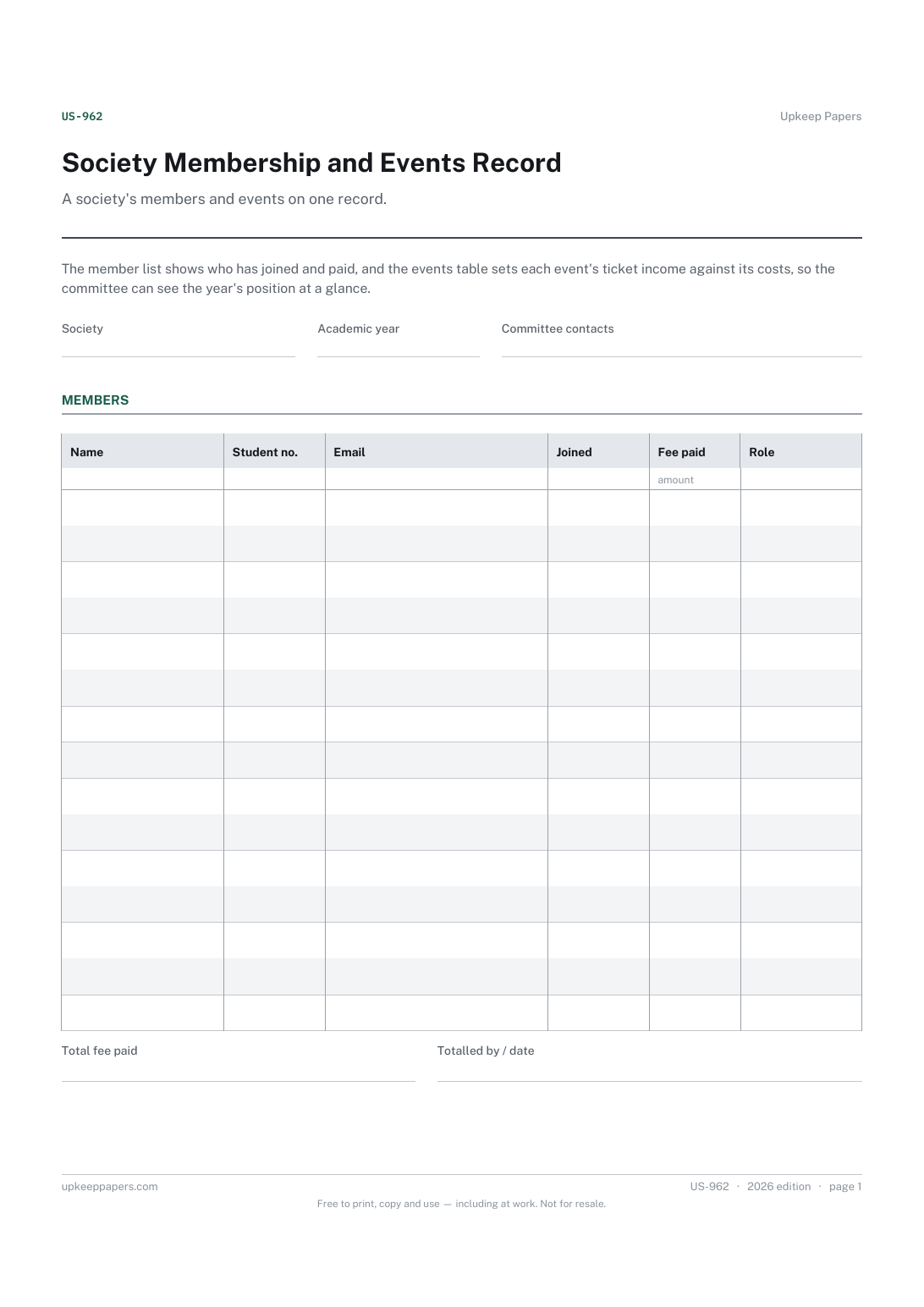
Who the members are, how to reach them and what role they hold.
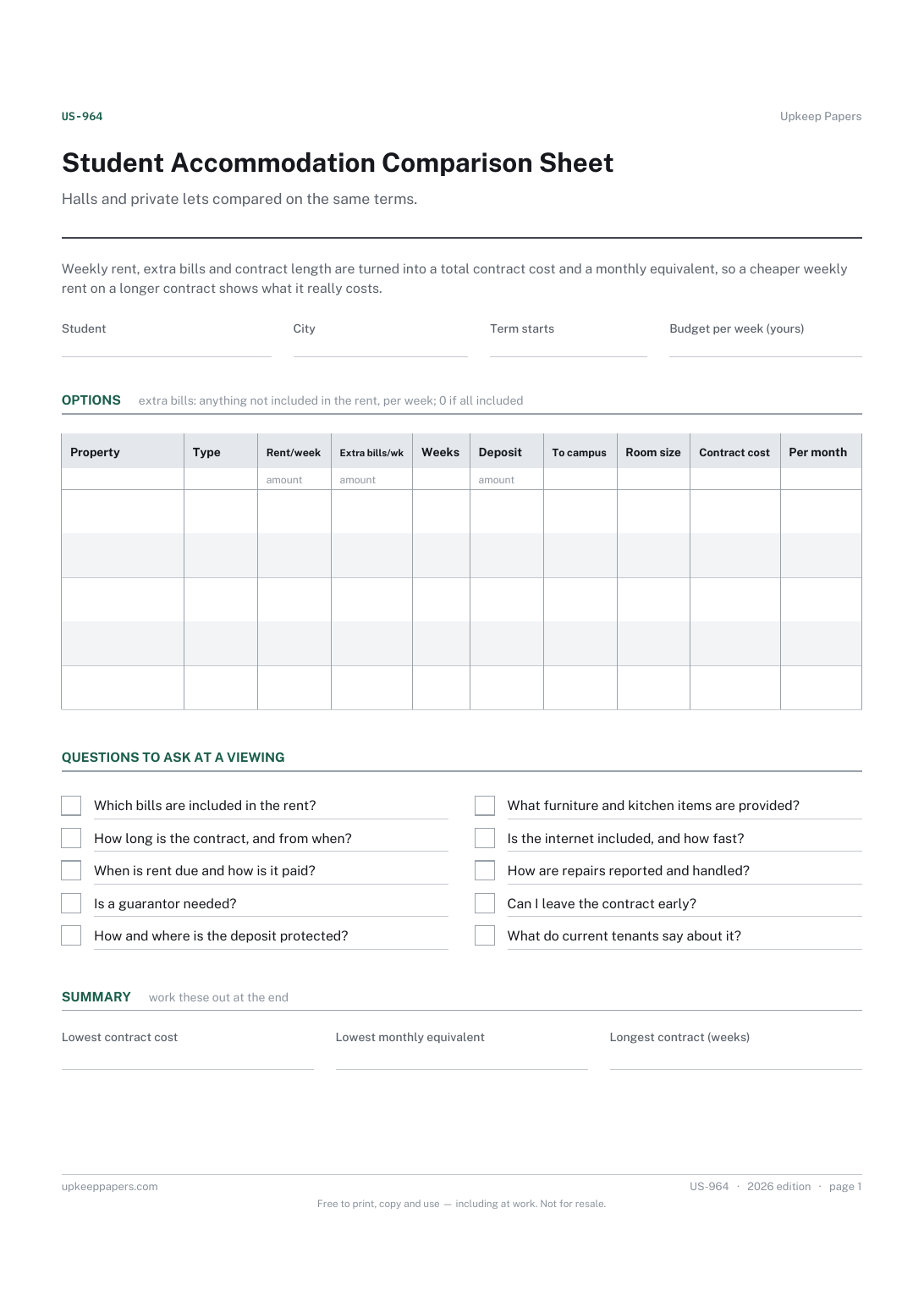
Rent, extra bills and contract length for each option.
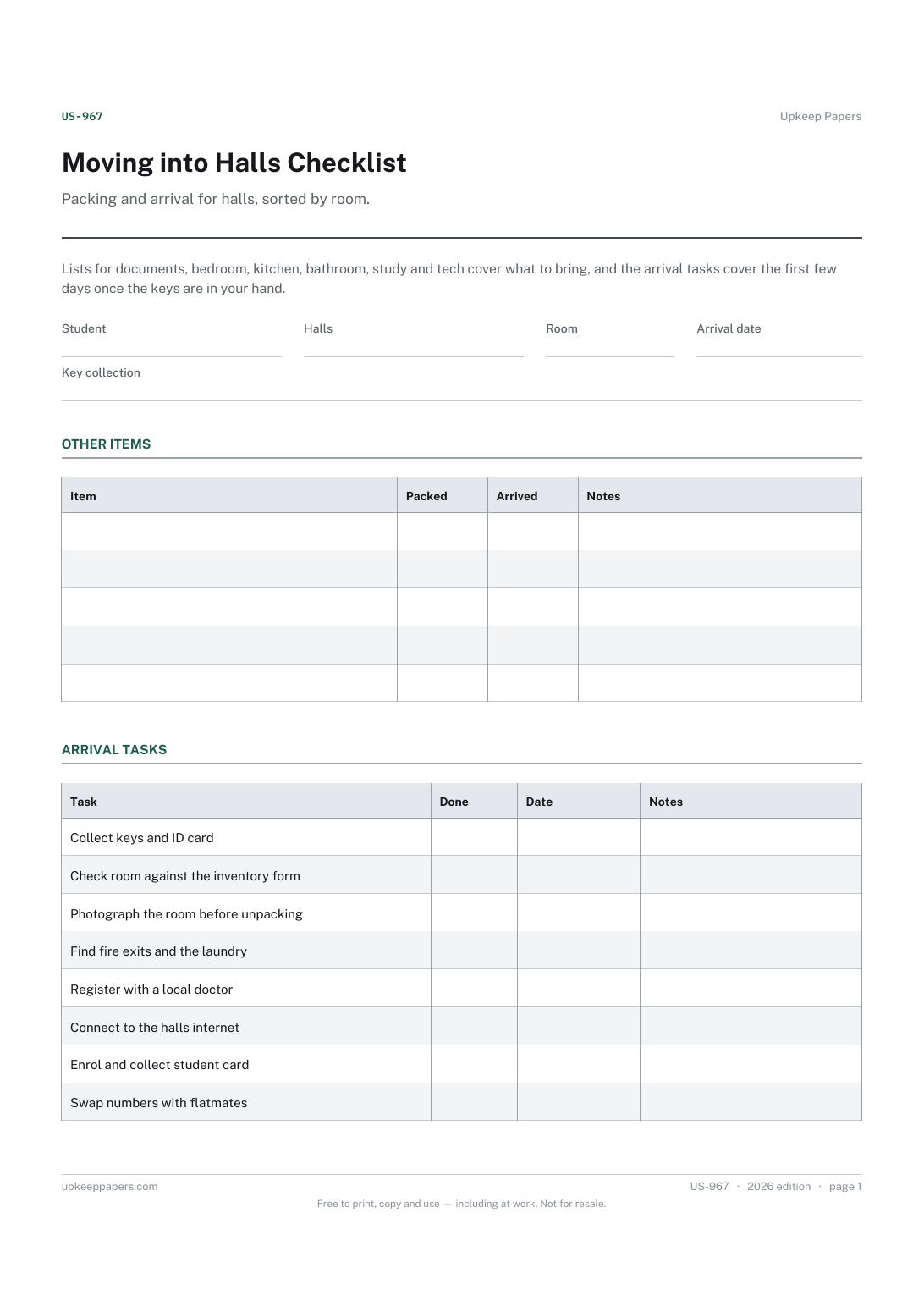
Documents and ID to have with you, not in a box.
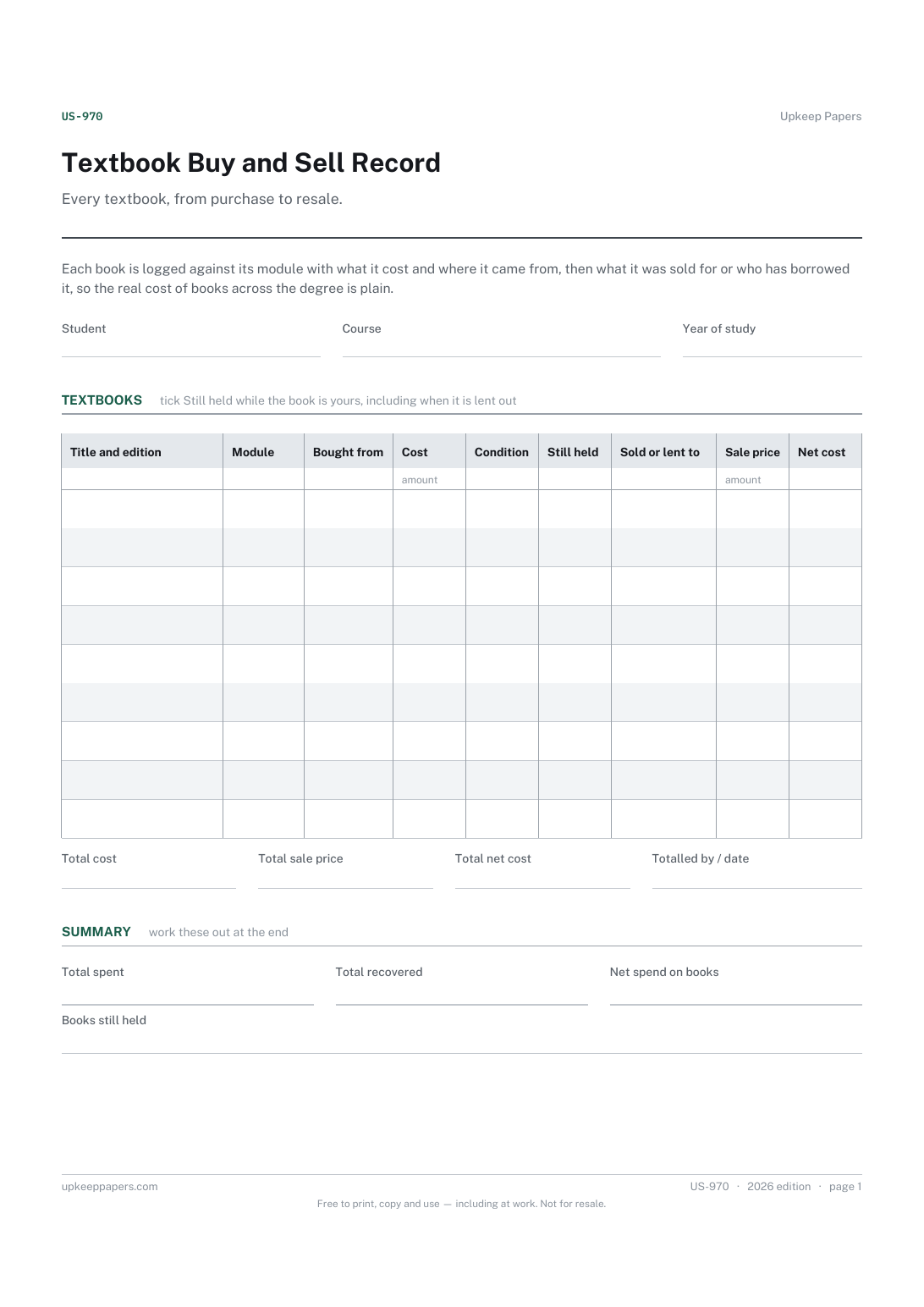
What each book cost and where it was bought.
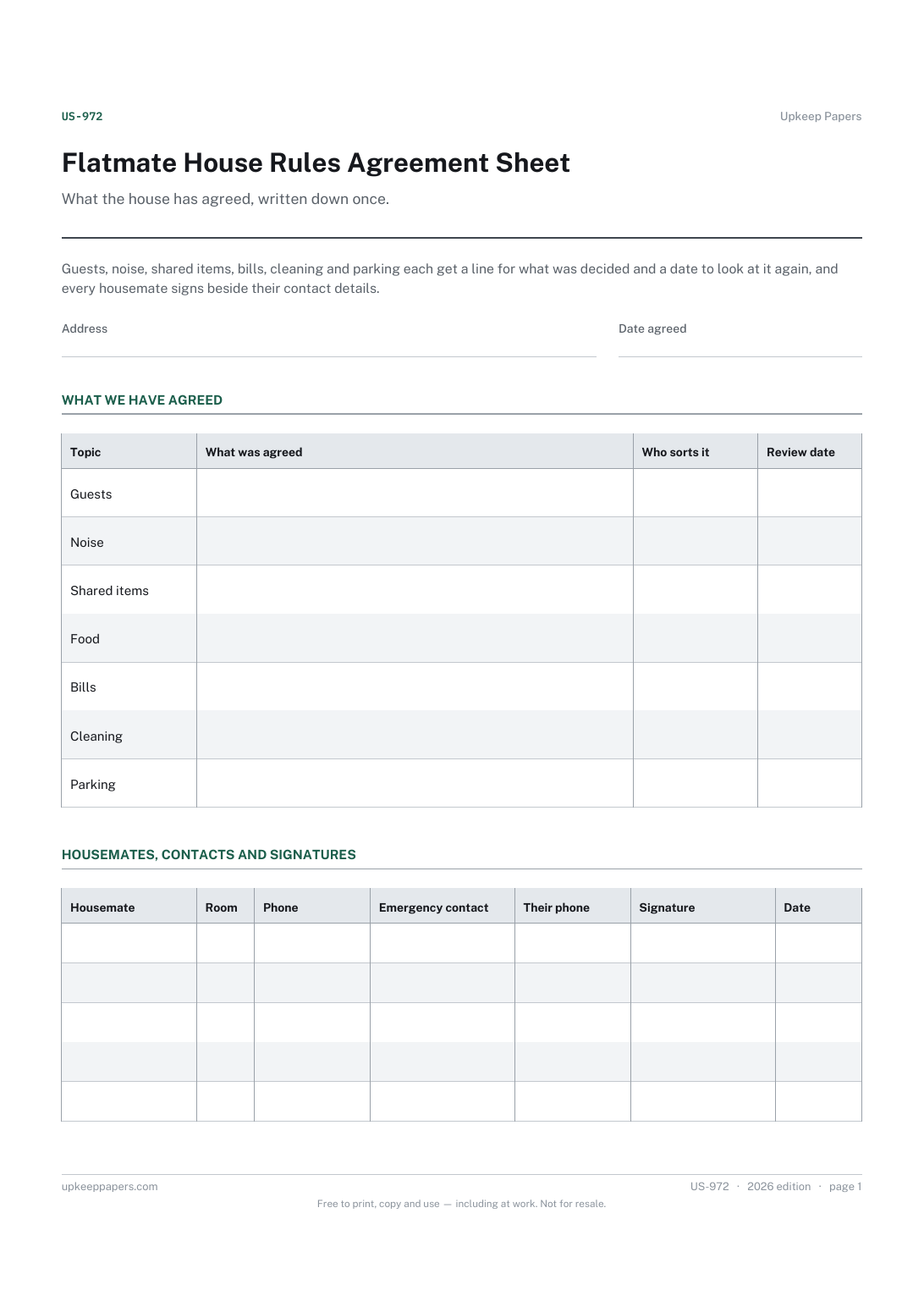
What was agreed about guests and overnight stays.
Which shelf, drawer and cupboard belongs to whom.
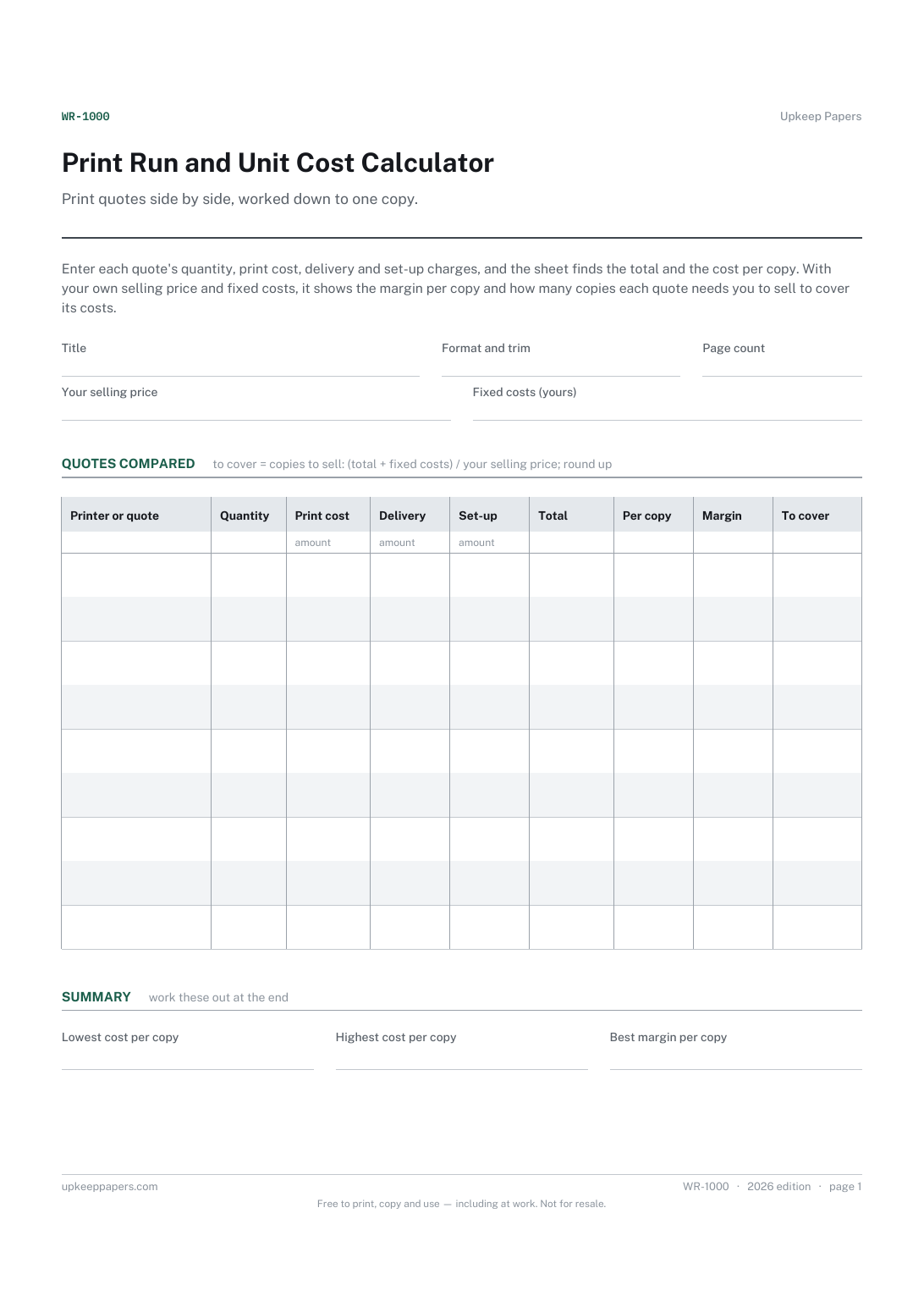
The full cost of each quote, delivery and set-up included.
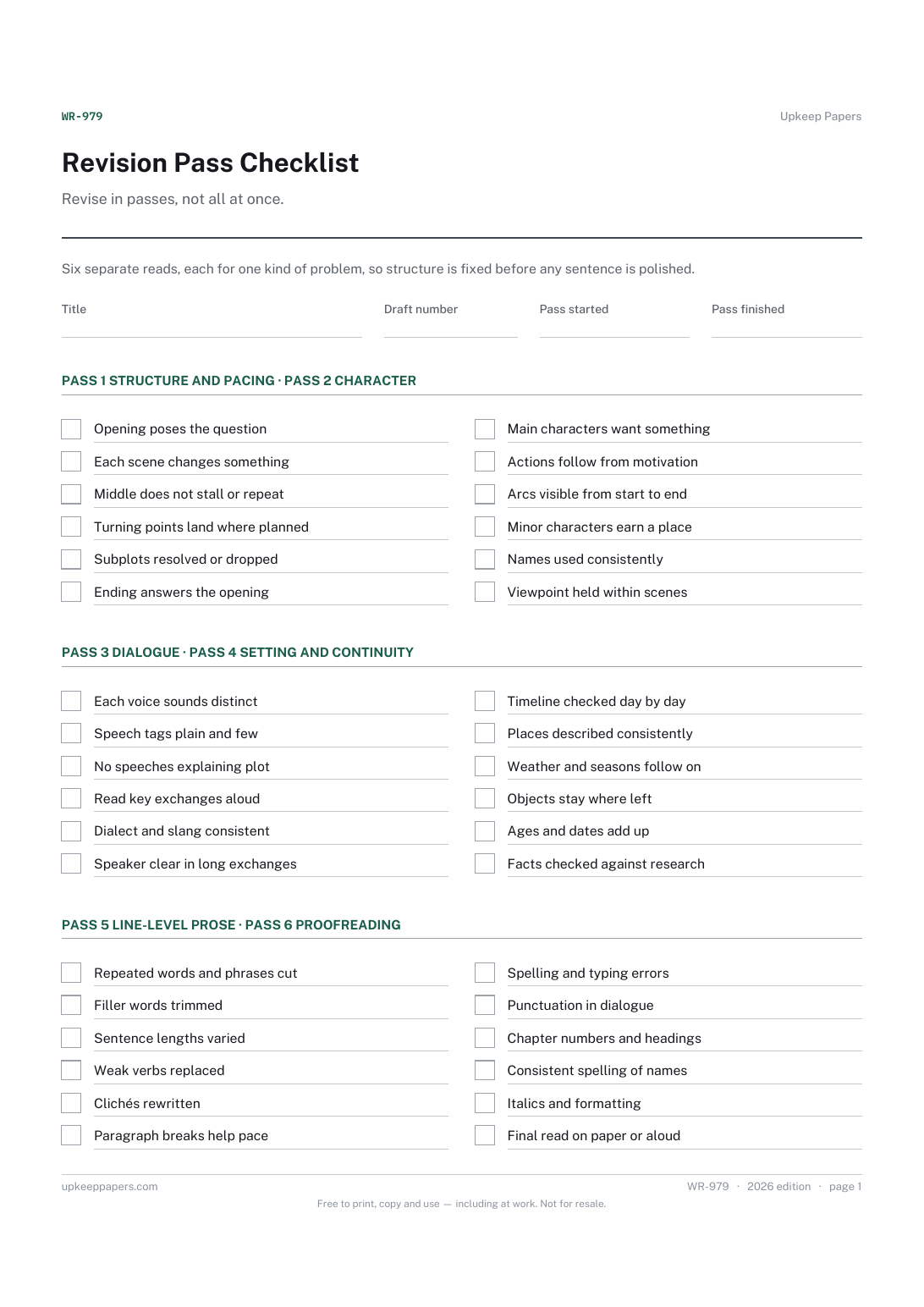
Structure and pacing checked before anything smaller.
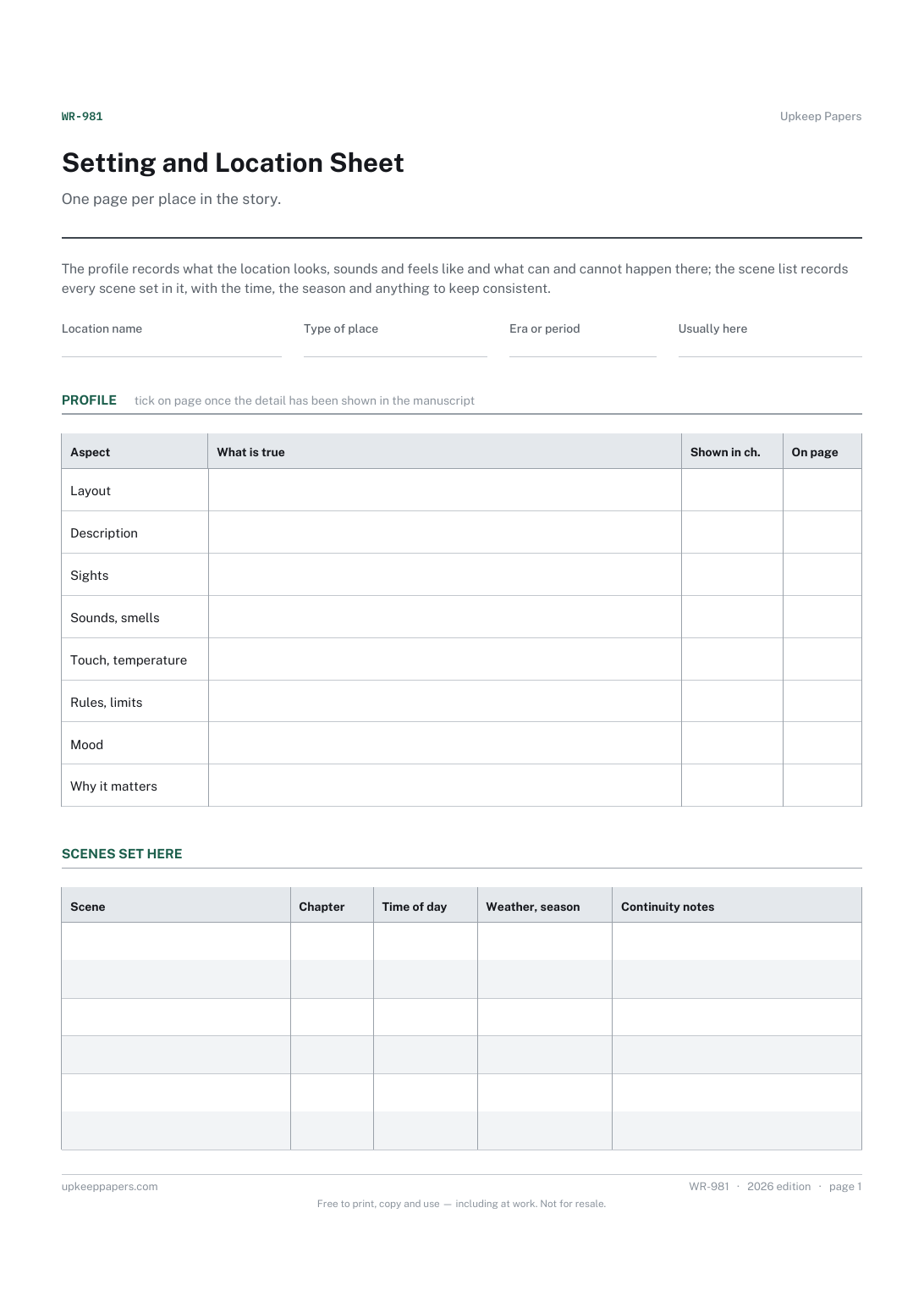
The layout and description of a place, in one reference.
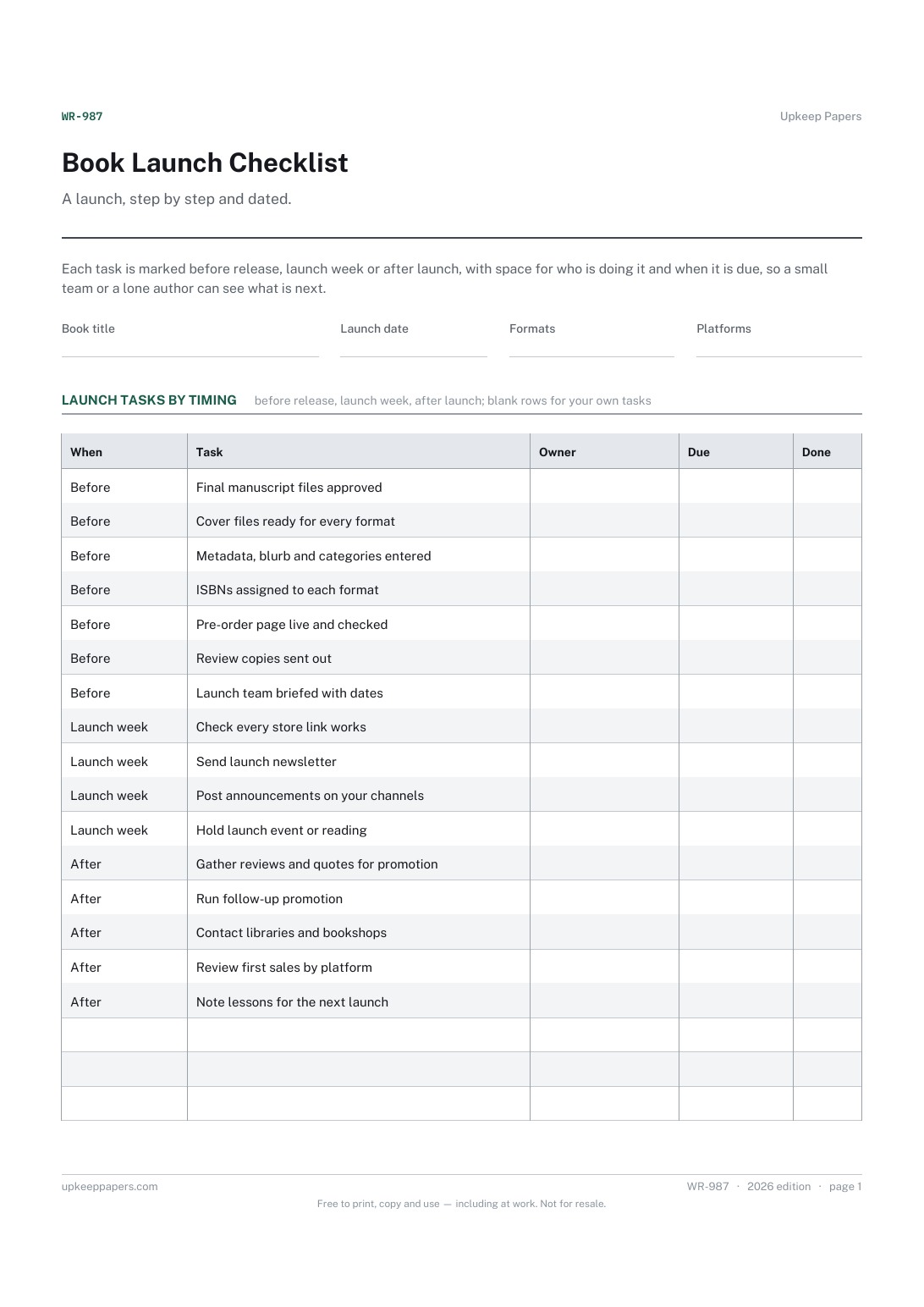
Files, metadata and pre-orders ready before the release date.
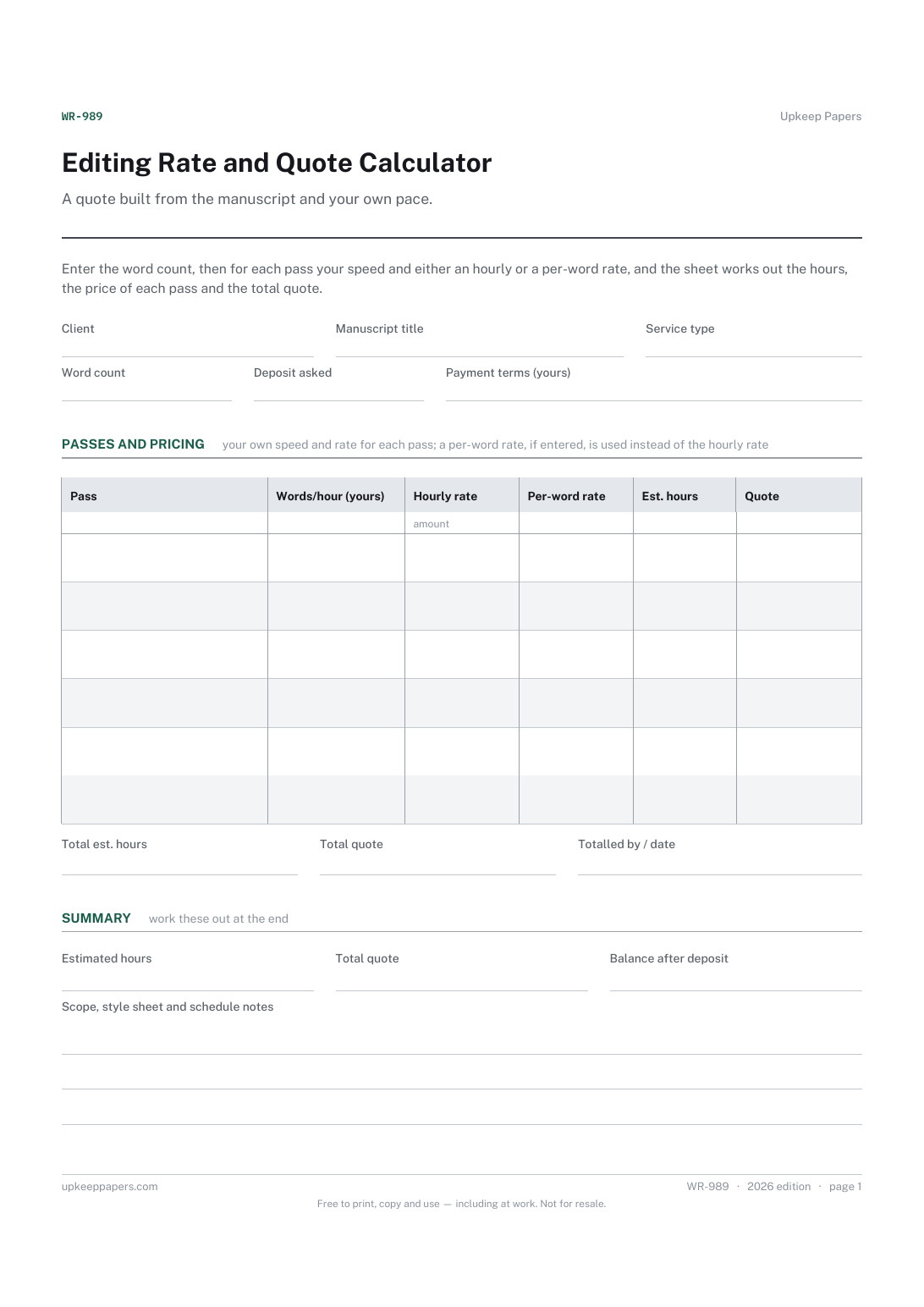
The manuscript, client and service in one place.
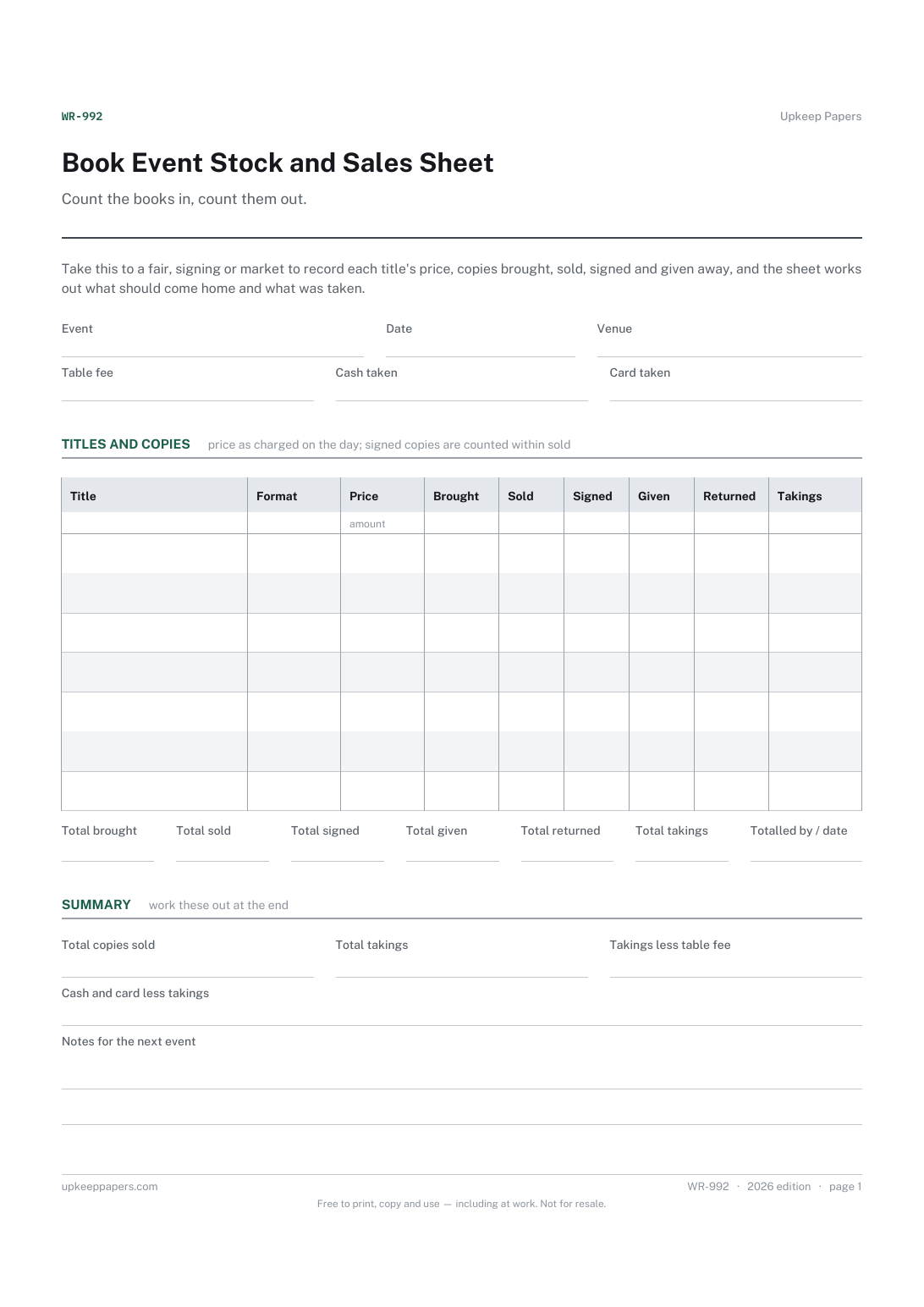
Copies of each title and format brought to the event.
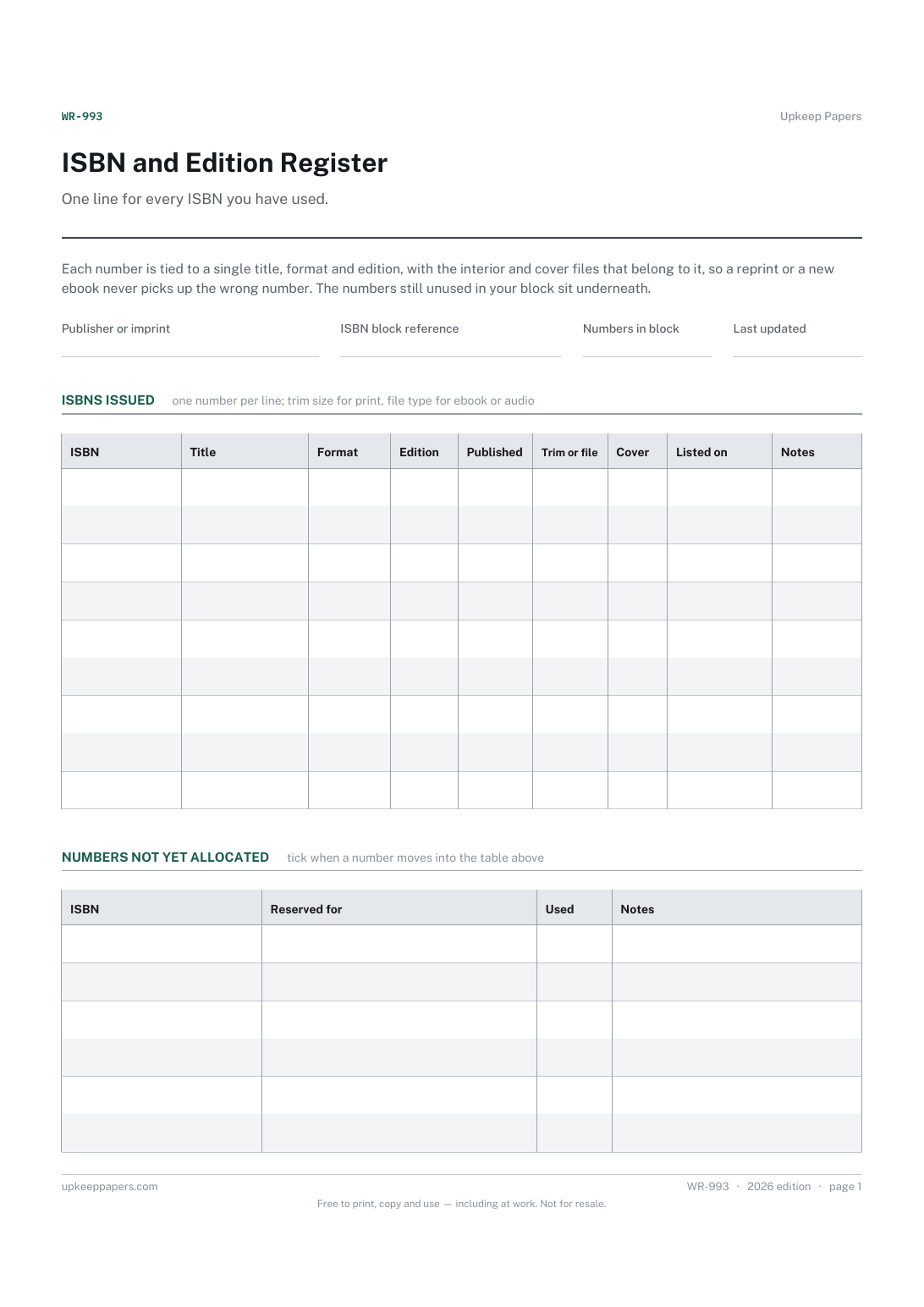
Which ISBN belongs to which title, format and edition.
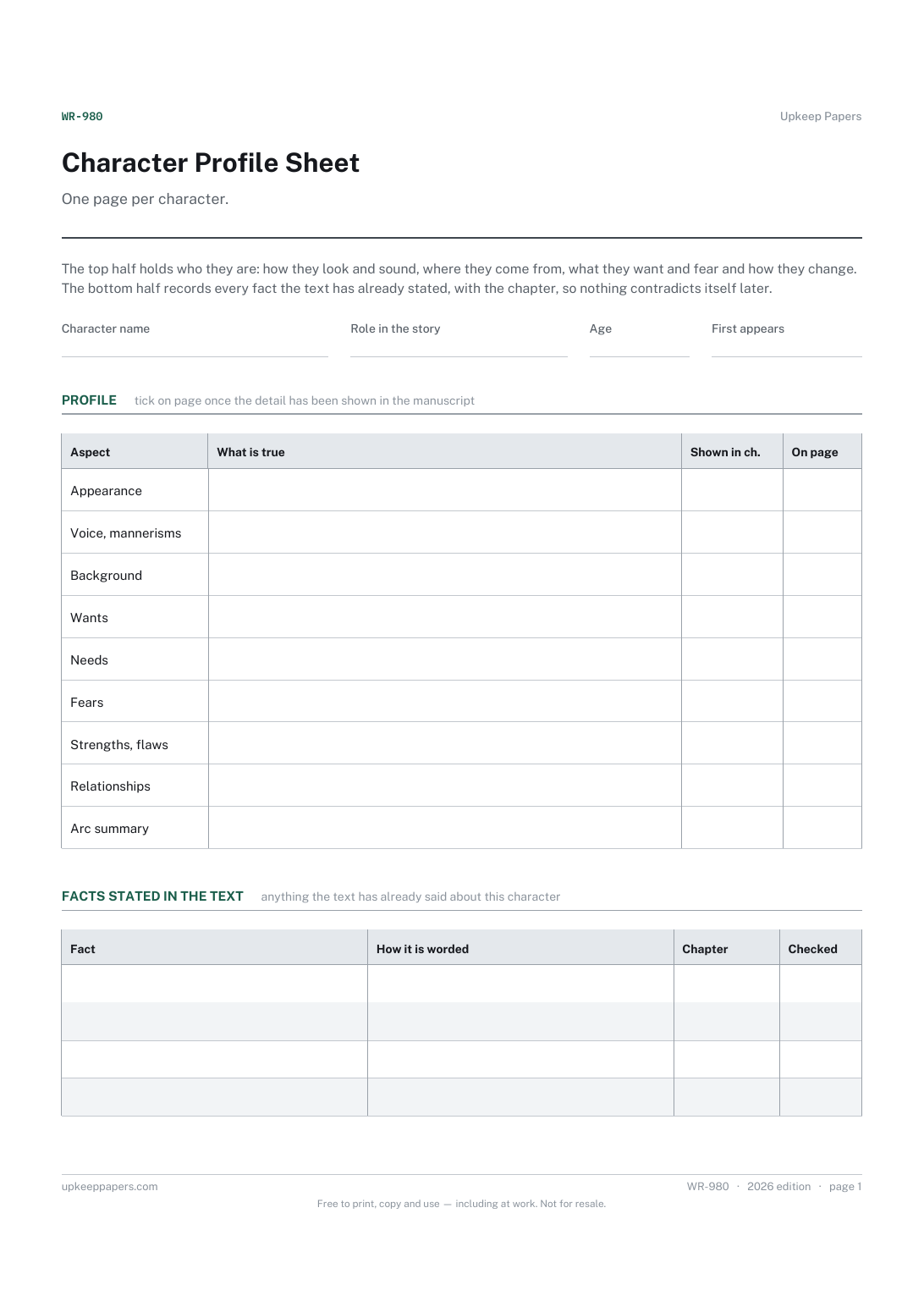
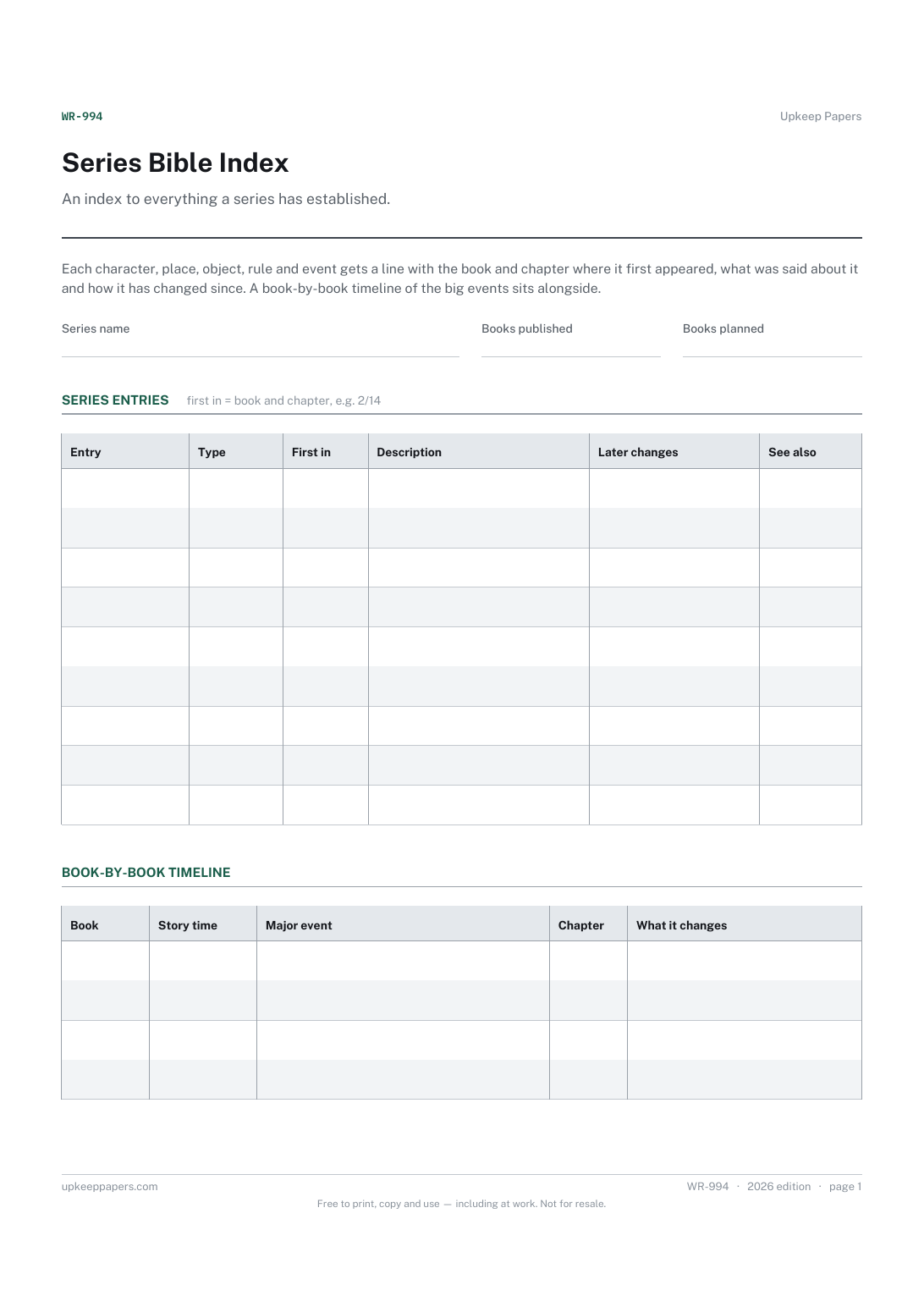
Where each character, place, object and rule was first established.
Invoices, permits, reports, receipts and request forms from the library of 1273 printables — all fillable.
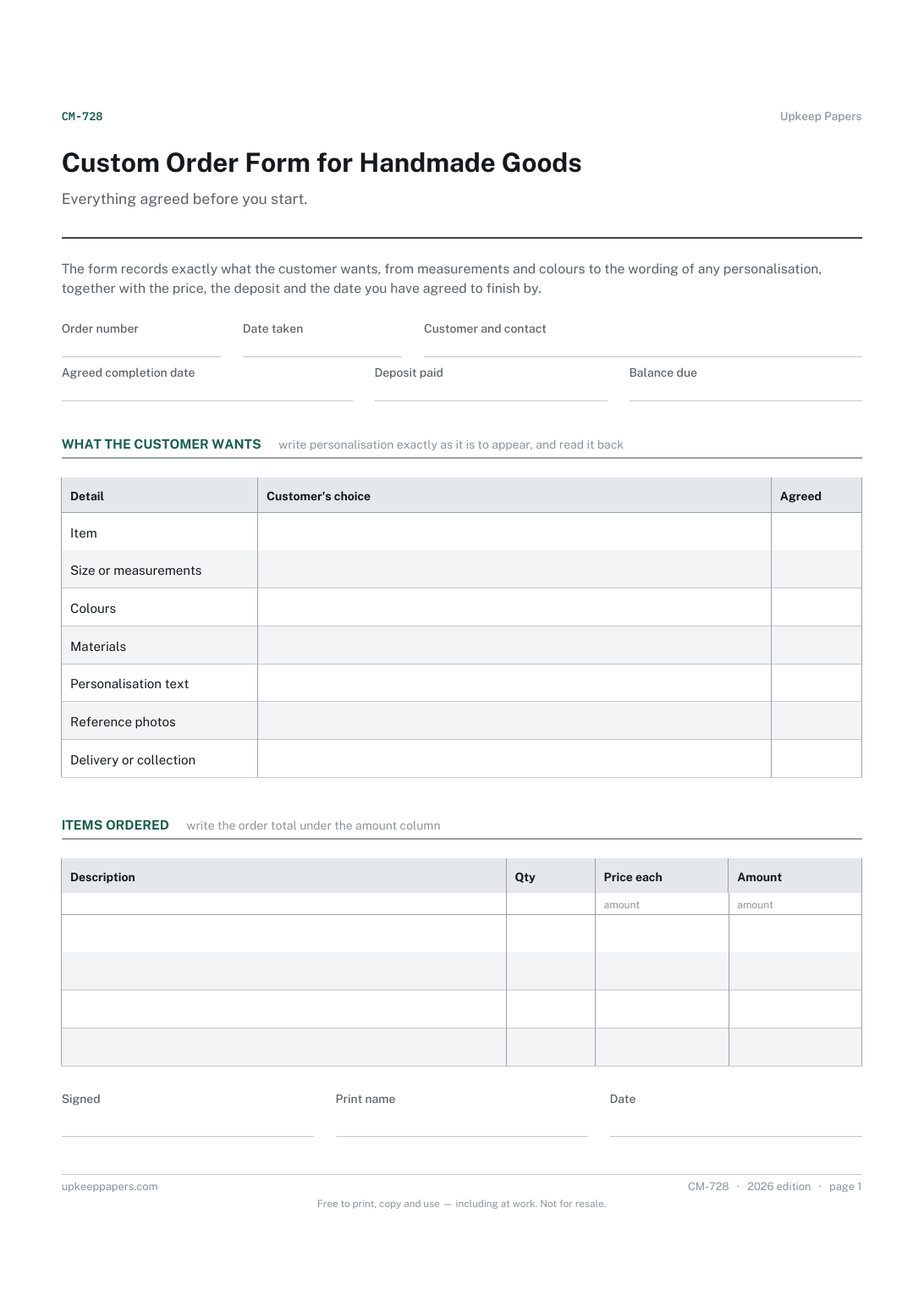
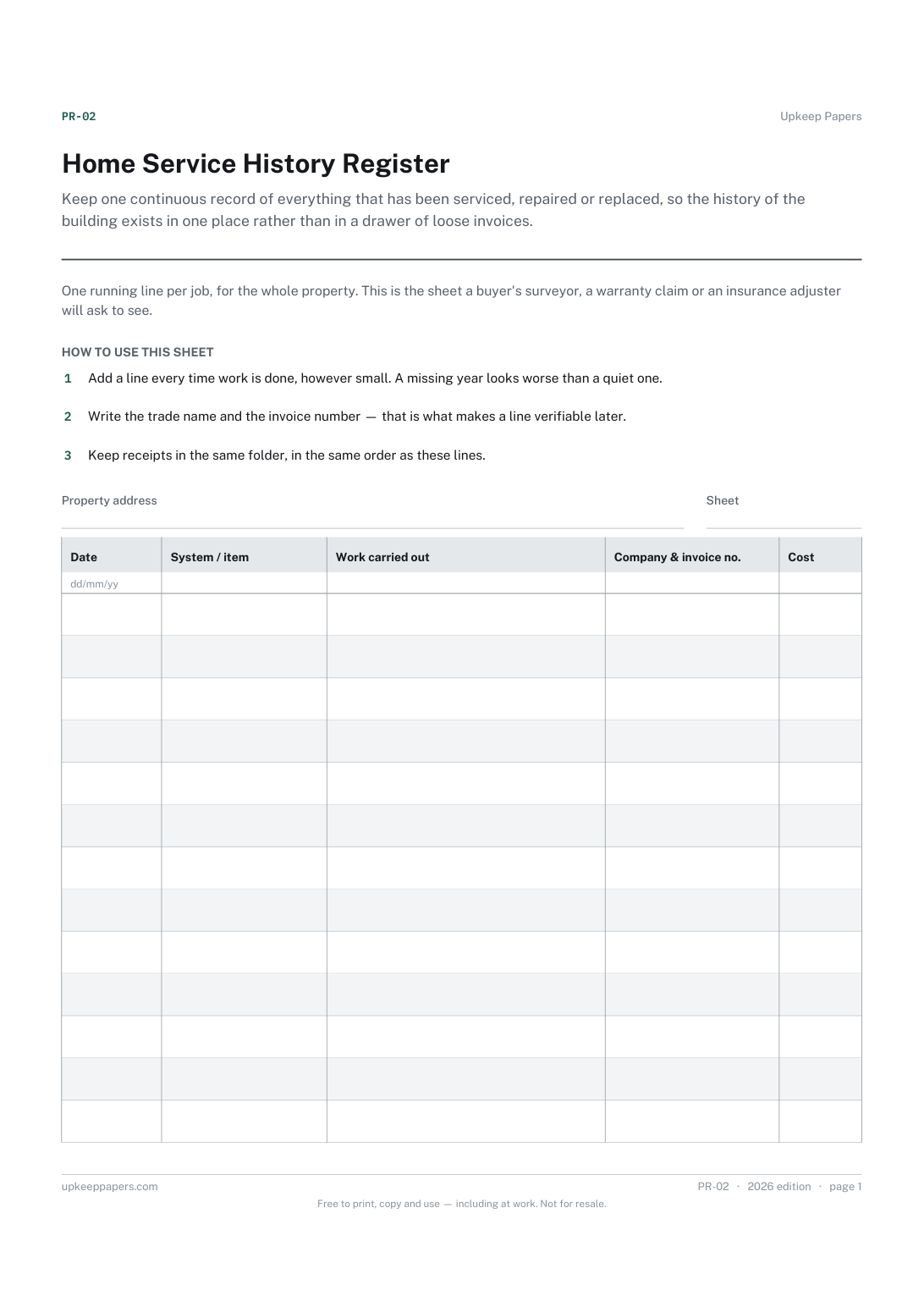
Keep one continuous record of everything that has been serviced, repaired or replaced, so the history of the building exists in one place rather than in a drawer of loose invoices.
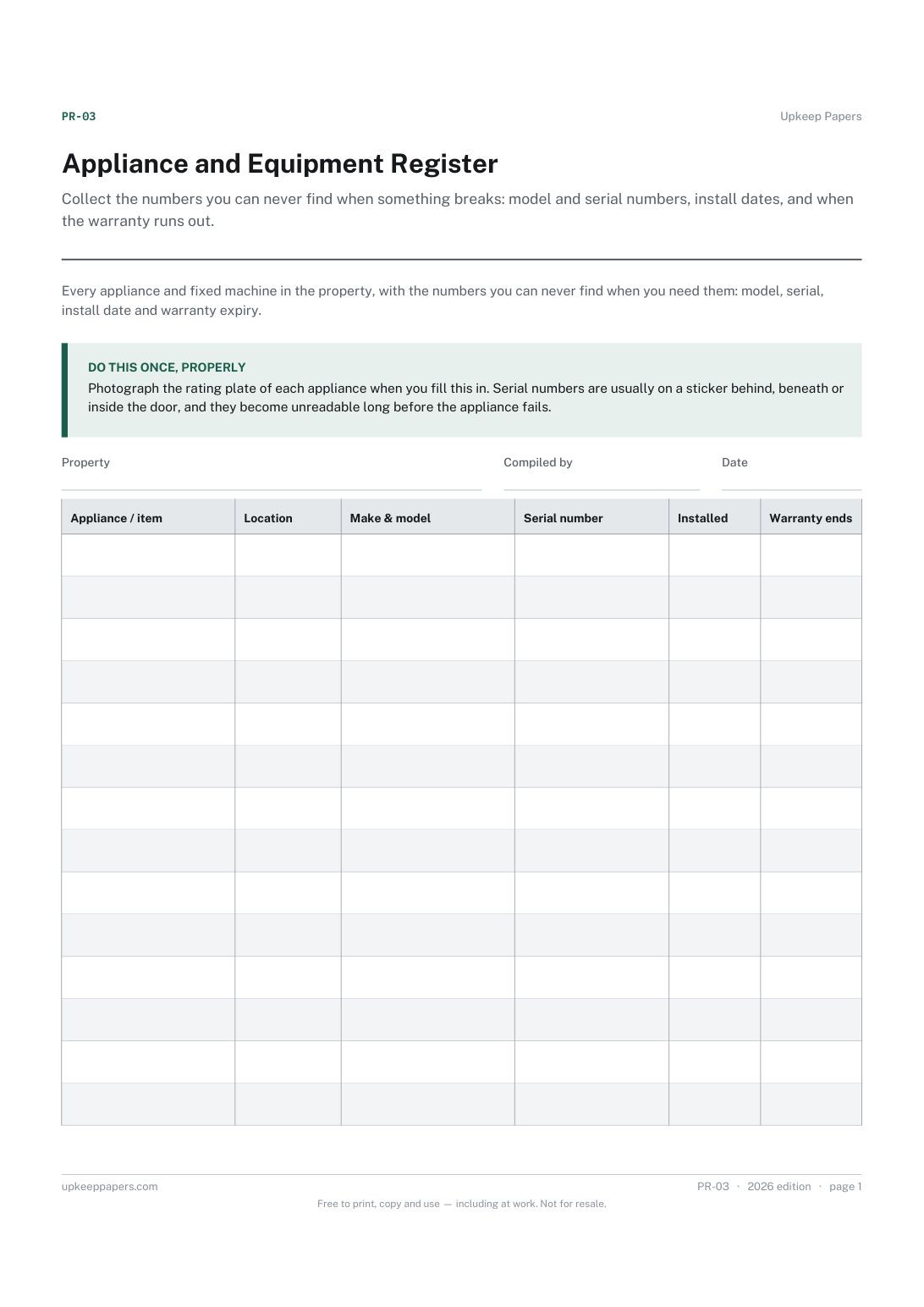
Collect the numbers you can never find when something breaks: model and serial numbers, install dates, and when the warranty runs out.
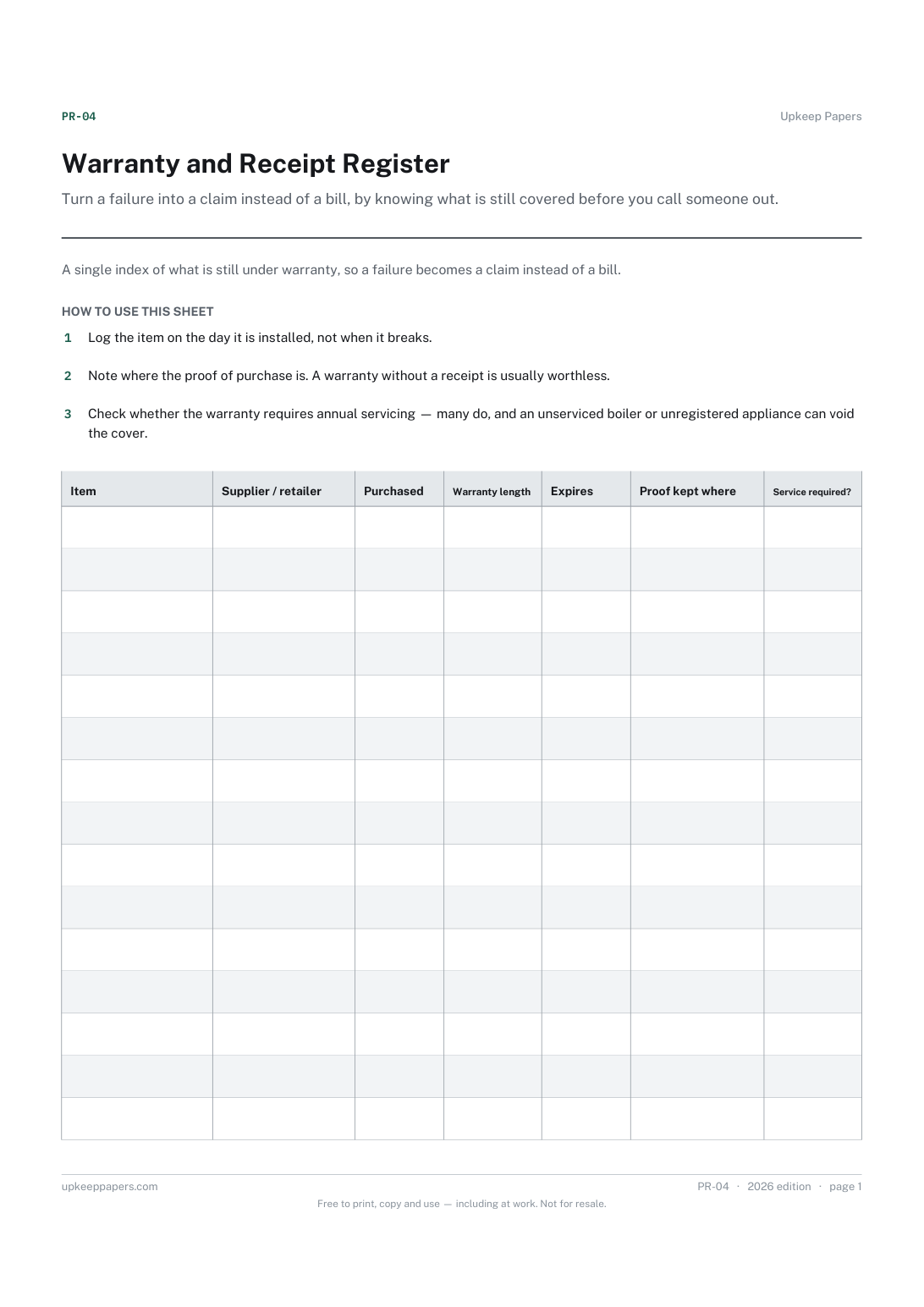
Turn a failure into a claim instead of a bill, by knowing what is still covered before you call someone out.
Put one person's emergency contacts and practical details on a single page, in the order somebody should actually work through them.
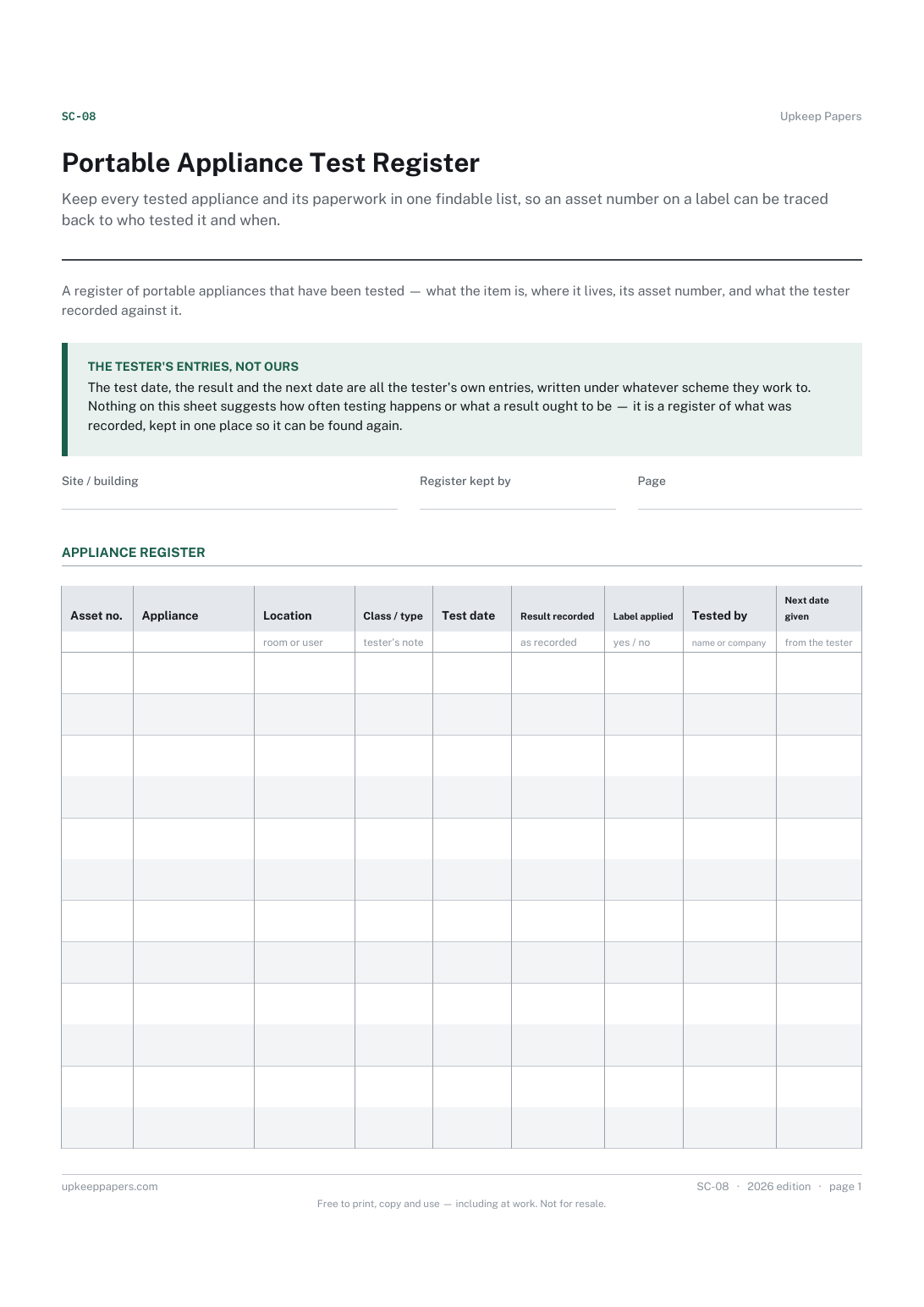
Keep every tested appliance and its paperwork in one findable list, so an asset number on a label can be traced back to who tested it and when.
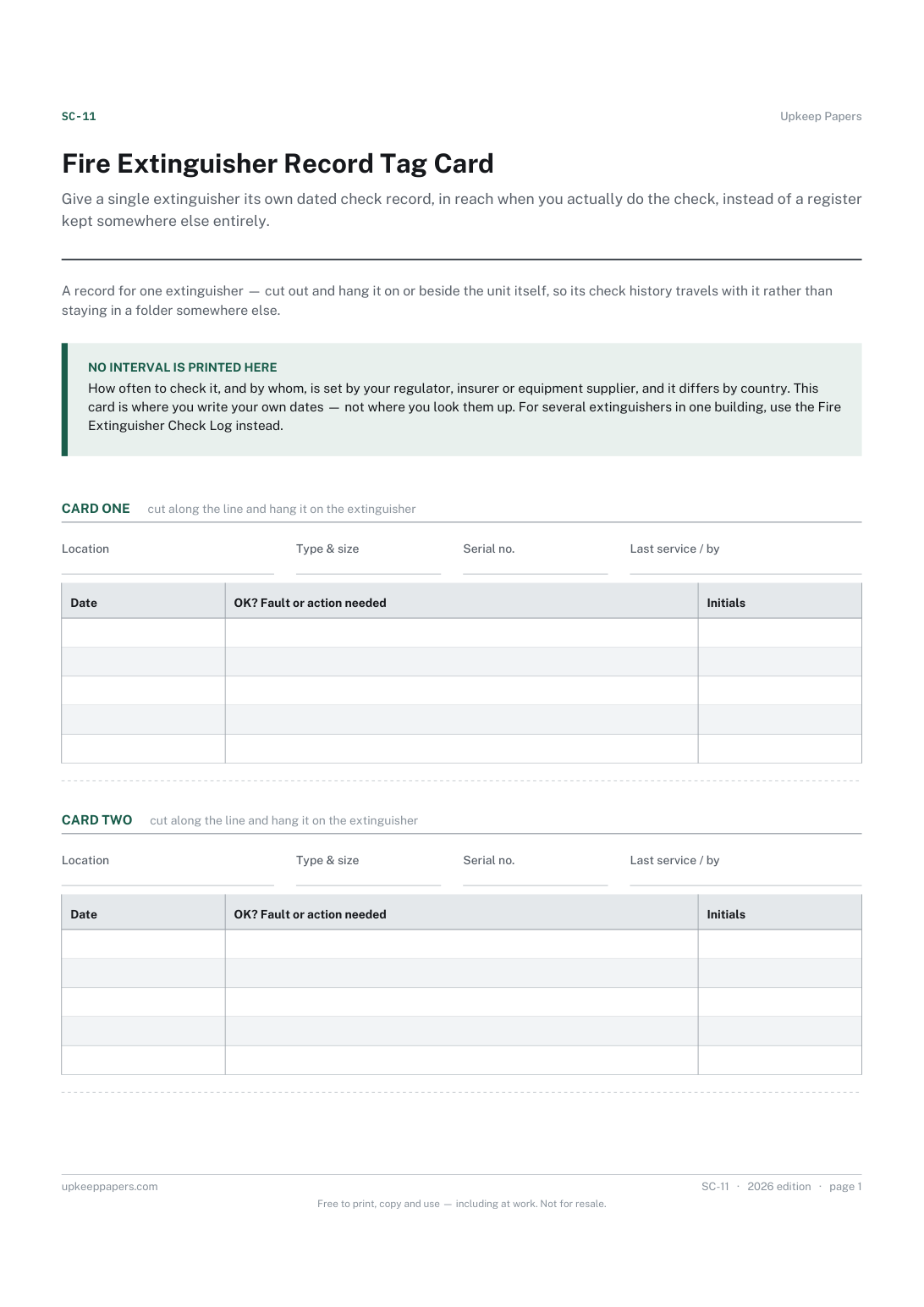
Give a single extinguisher its own dated check record, in reach when you actually do the check, instead of a register kept somewhere else entirely.
Put the price in writing before the work starts, which is what prevents most garage disputes.
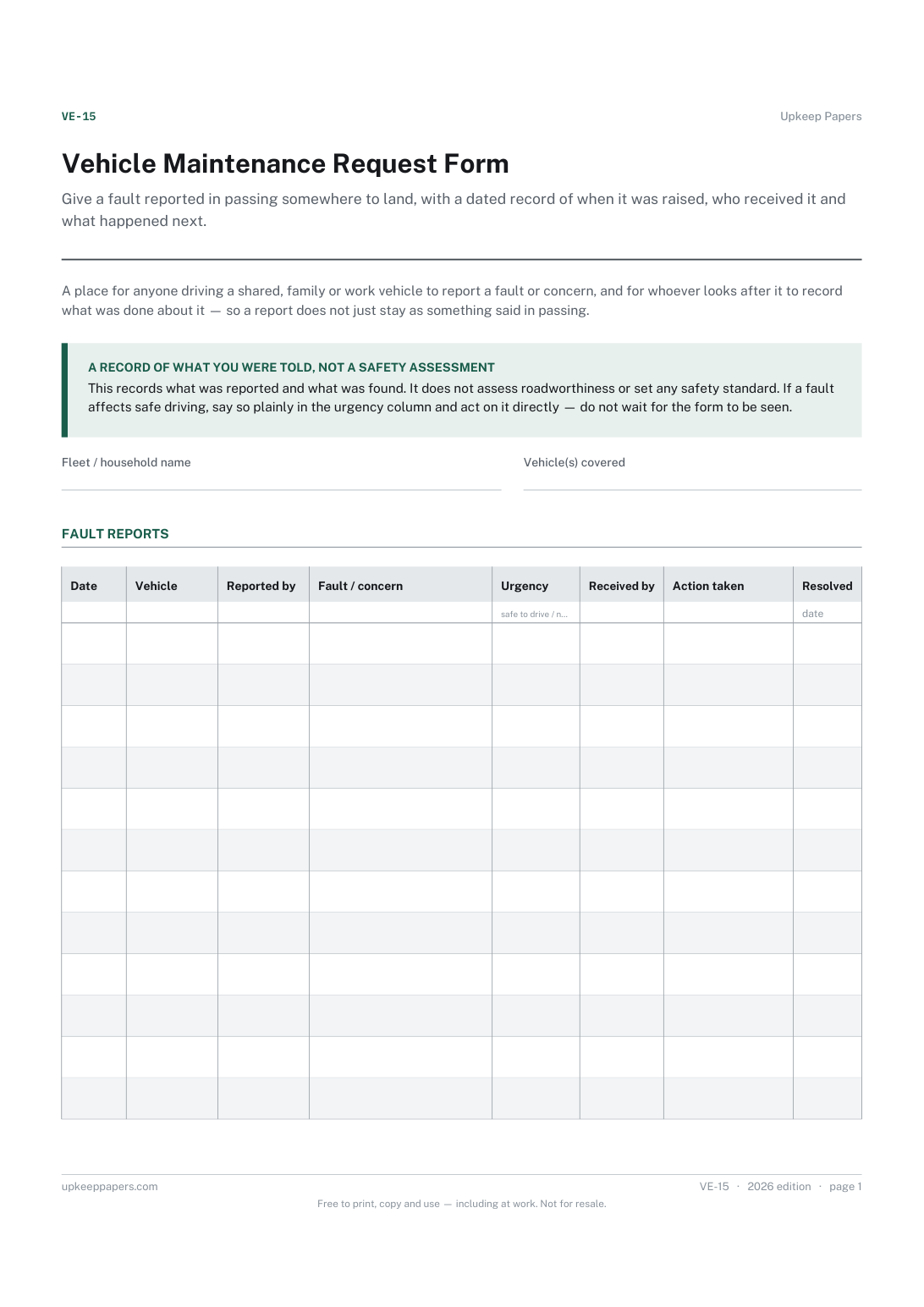
Give a fault reported in passing somewhere to land, with a dated record of when it was raised, who received it and what happened next.
Record a mid-tenancy inspection properly, separating what you need to repair from what the tenant needs to address, with the notice you gave written at the top.
Keep a simple register of who stayed and when, in a form you can produce if somebody asks for it.
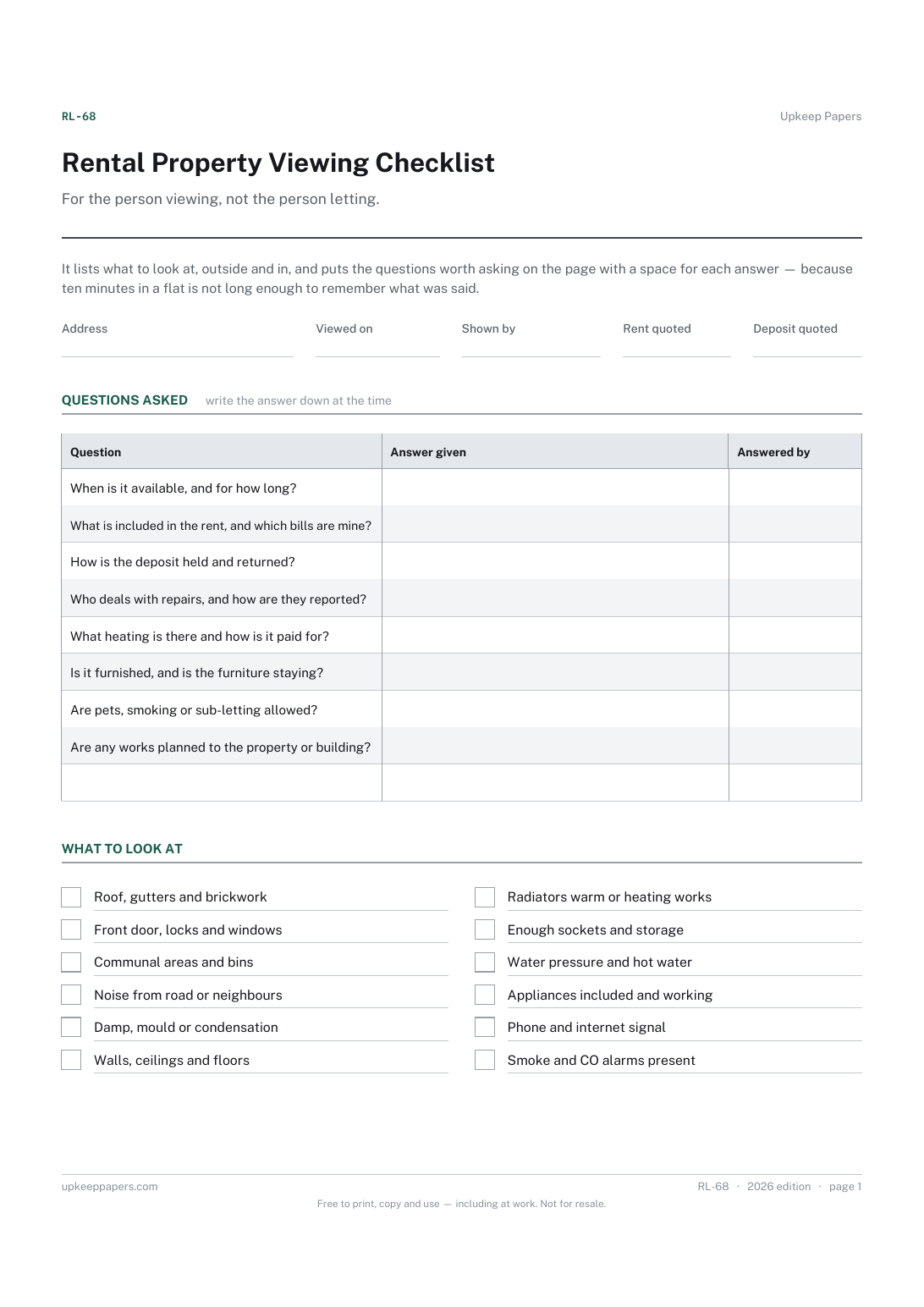
Give a tenant paying in cash the proof they have no other way of holding, and keep a matching record yourself.
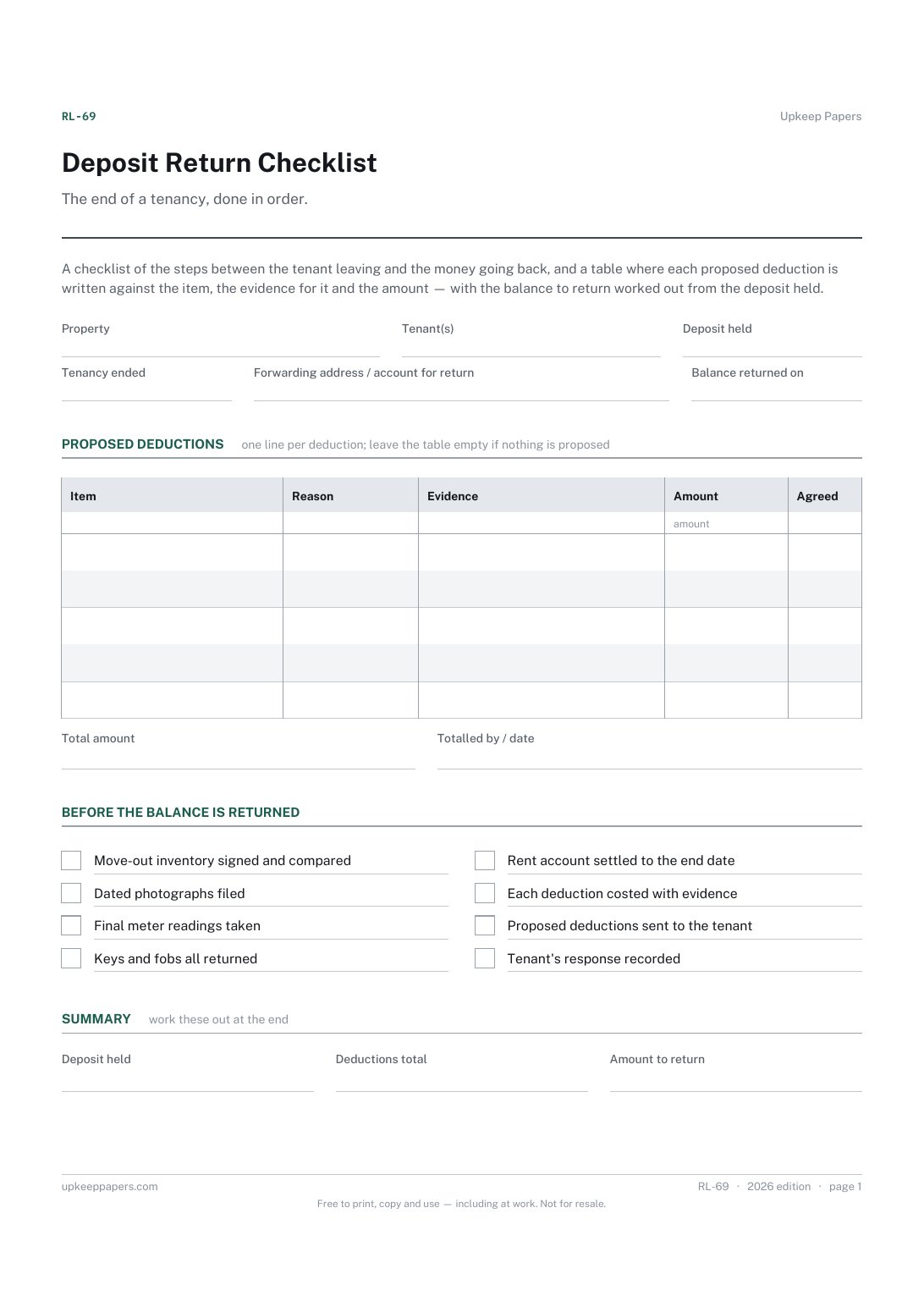
Establish what the property was like on day one, in a document both sides signed, so the end of the tenancy is not an argument from memory.
Both are free and both keep your entries on your own device. The fillable PDF is a file you save and can email or archive; it does not calculate. The online version of each resource does the arithmetic, remembers what you typed in your browser, and produces a completed PDF or CSV when you want one. For a form filled in once and filed, the PDF is usually simpler; for a log you add to every week, the online version or the spreadsheet is.
Other formats: printables · calculators and trackers · interactive tools.

Every sheet, binder, game and puzzle on Upkeep Papers is free to download, with no email and no account. Making them is not free: each one takes days of research, design and checking, and the site costs money to run. If something here saved you time, you can buy us a coffee. It is entirely optional: nothing is locked, and nothing changes if you don’t.
Buy us a coffee Opens PayPal in a new tab. Any amount, and nothing changes if you would rather not.