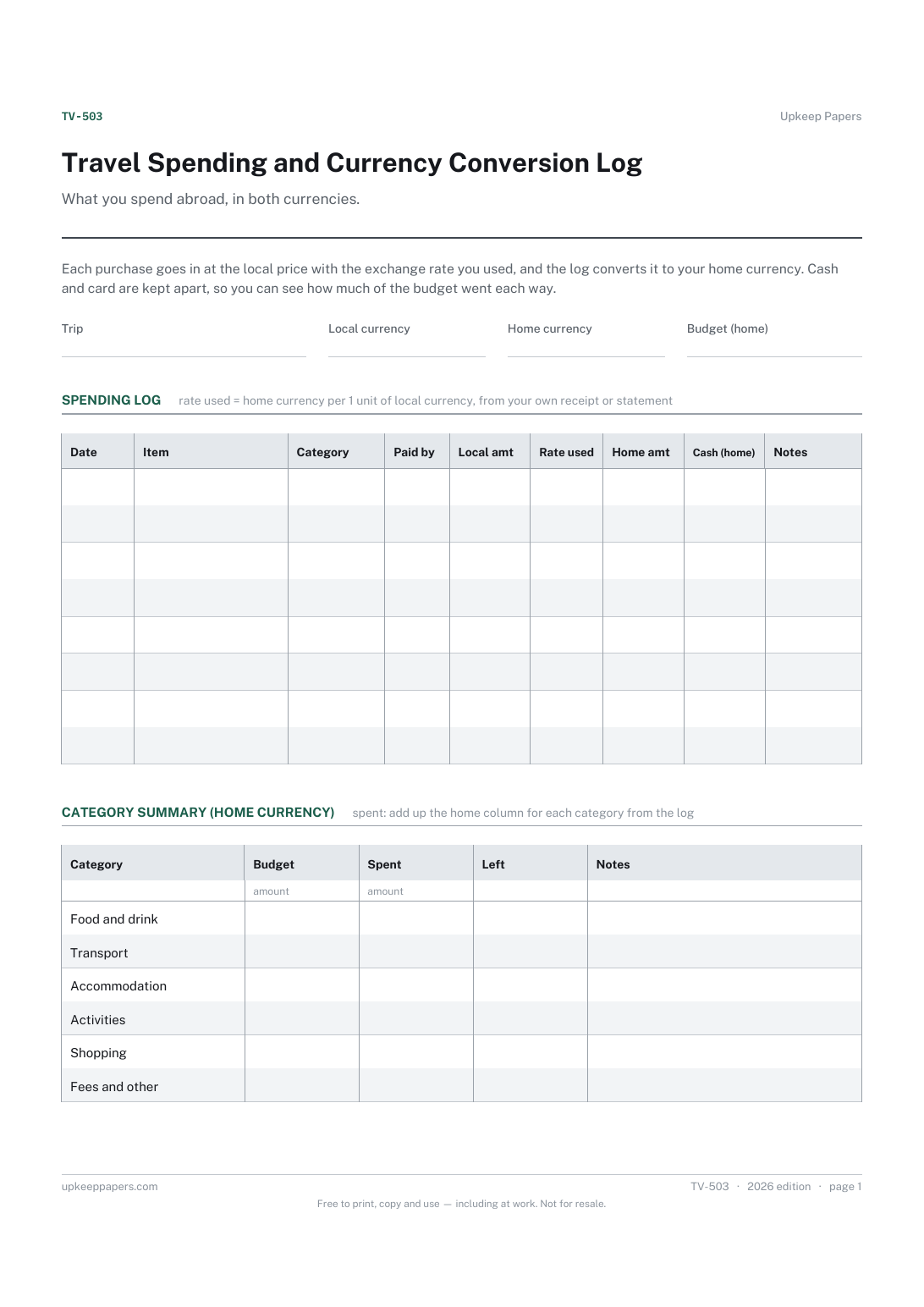
Travel Spending and Currency Conversion Log
Every purchase in the local currency, with the date and a category.
TV-503 Log PDF Excel Online
Everything here is free. Making it takes time and money. Everything here is free.
 Buy us a coffee
Travel and Holidays · TV-523 · Budget
Gap year travel budget — a long trip costed stage by stage with cost per day, a running total and funds remaining. Excel, PDF and browser versions.
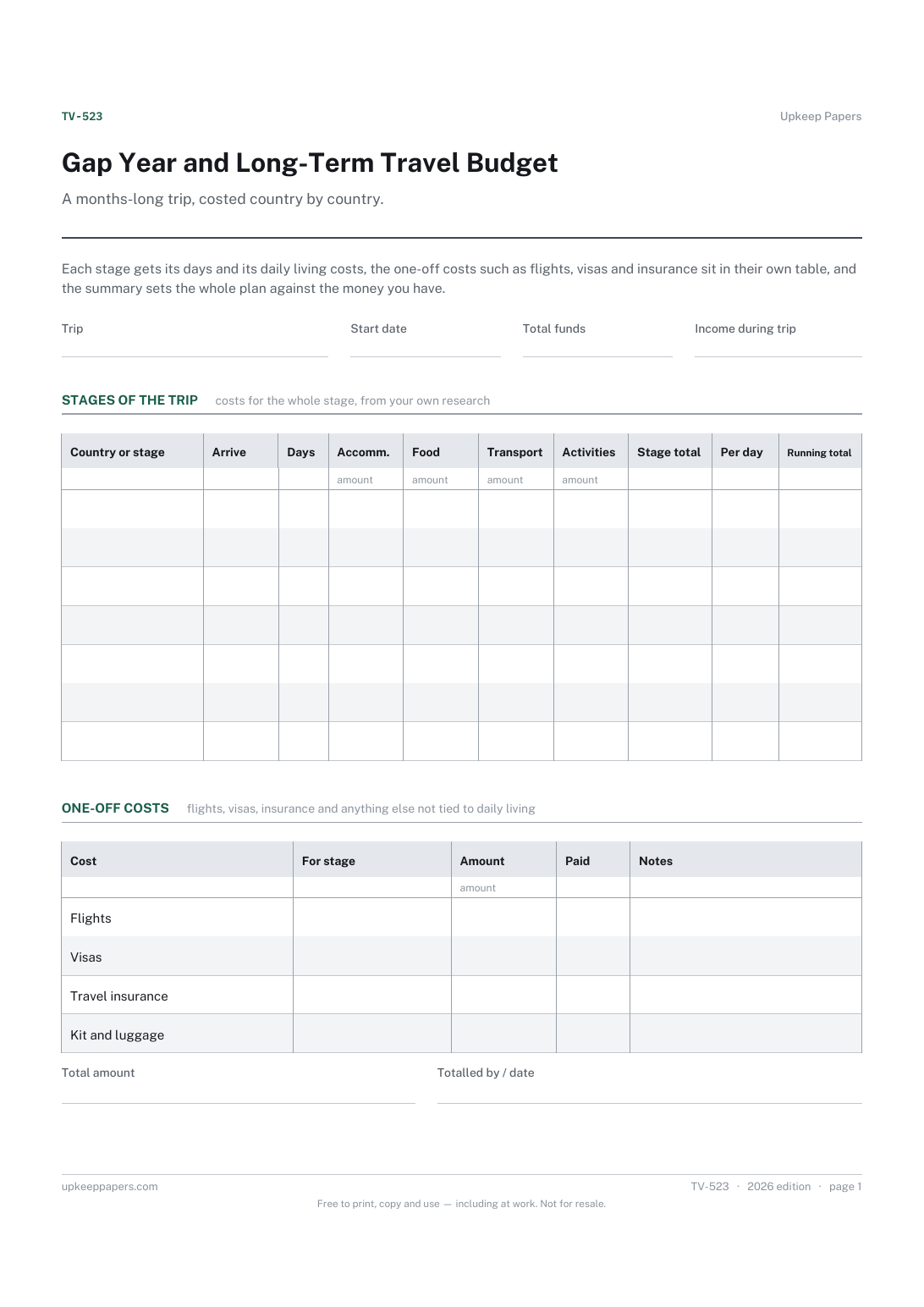
2 pages. The A4 and US Letter files are laid out identically, so neither is shrunk to fit.
Print it and write on it
Fillable PDF type and save
Spreadsheet formulas included
The fillable versions have real form fields — open them in any PDF reader, type into them and save. Printing help.
The same sheet, on screen. Totals and figures are worked out as you type, rows can be added or removed, and you can print it or download the completed version as a PDF. Everything stays in your browser — your entries are kept in this browser's own storage on this device, nothing is uploaded, and there is no account.
A months-long trip, costed country by country. Each stage gets its days and its daily living costs, the one-off costs such as flights, visas and insurance sit in their own table, and the summary sets the whole plan against the money you have.
Gap-year travellers, career-breakers and anyone planning a trip long enough that the question is not whether it is affordable but for how many weeks.
The printable is laid out inside a box that fits both A4 and US Letter, so the two files are identical and neither one is scaled. The fillable PDF has real form fields. The workbook uses plain formulas only — SUM, IF, COUNTIF and the like — so it opens in Excel, LibreOffice and Google Sheets without anything breaking, and every calculated cell is grey so you can see which figures it worked out.
Download the A4 or US Letter file to match the paper in your printer, open it in a PDF reader and print at 100% — not "fit to page", which shrinks the writing space. Both files leave a 14 mm margin, which clears the unprintable edge on home printers. To print the online version with your entries in it, use the Print this sheet button, which prints only the sheet and none of the page around it. More on printing.
From your own research: accommodation you have looked at, travellers' reports, prices on booking sites. The sheet supplies no typical costs for any country, and costs change, so it is worth revisiting as you go.
Because they are one-off costs rather than daily living costs. Keeping them out of the stage totals means the cost per day for each stage compares fairly, while the summary still counts them against your funds.
The stage costs added up to and including that row, so you can see how far down the route the money reaches. The summary then takes the one-off costs off too.
Enter the amount you realistically expect in the income field. The summary adds it to your funds. If it is uncertain, try the sheet with it at zero to see where you stand without it.
Every purchase in the local currency, with the date and a category.
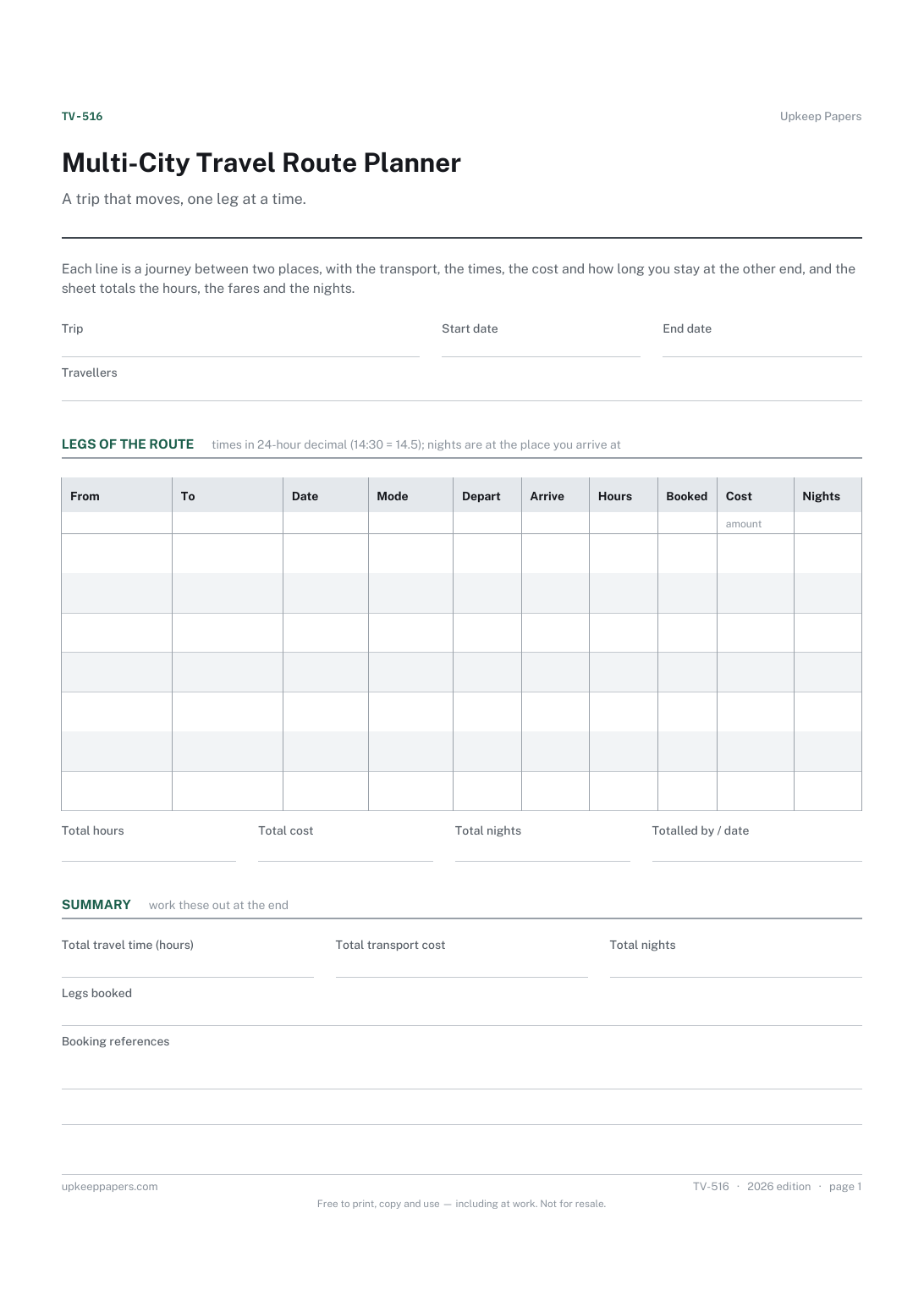
Every leg of the route in order, from and to.
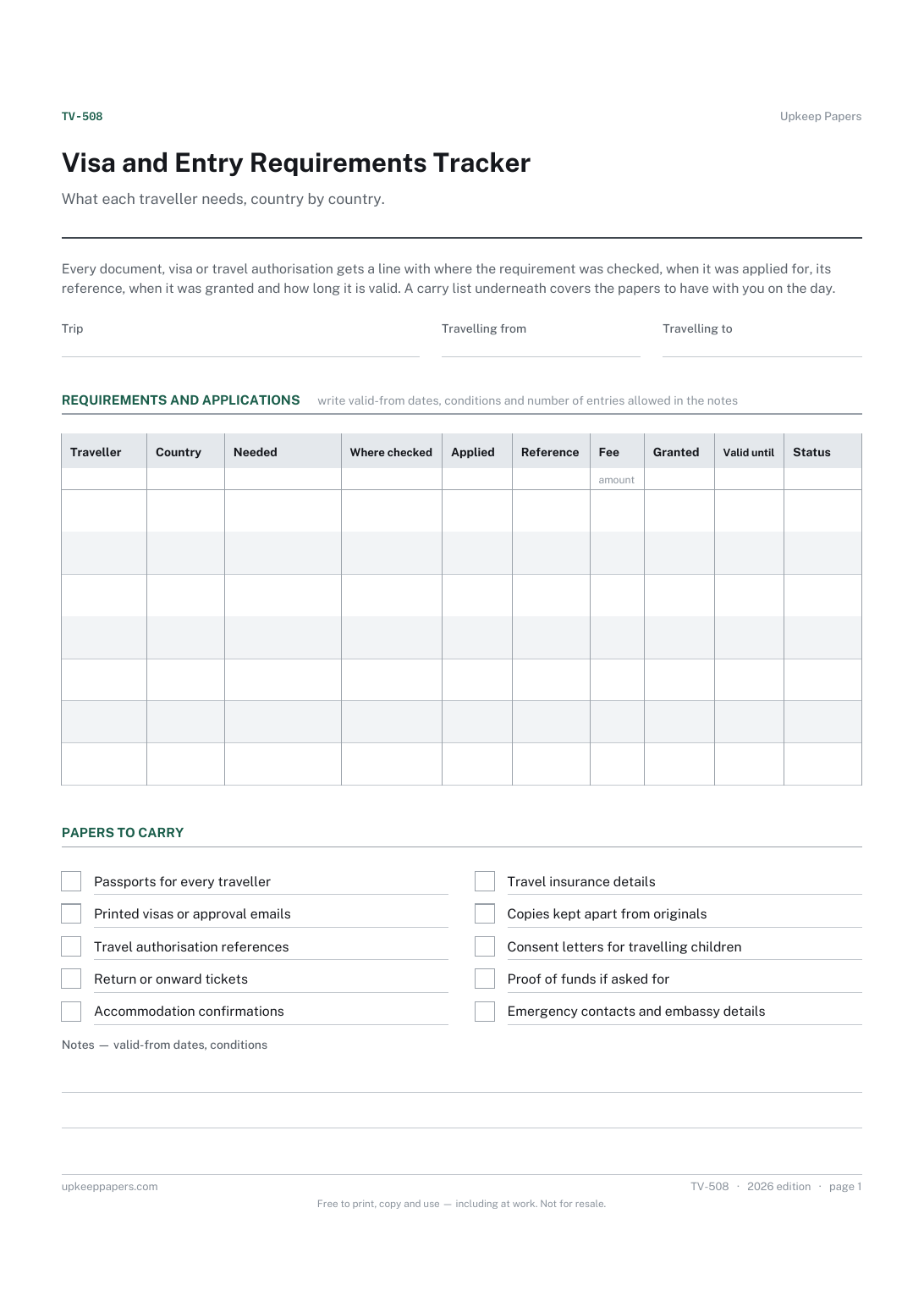
Each traveller's requirements for each country on the route.
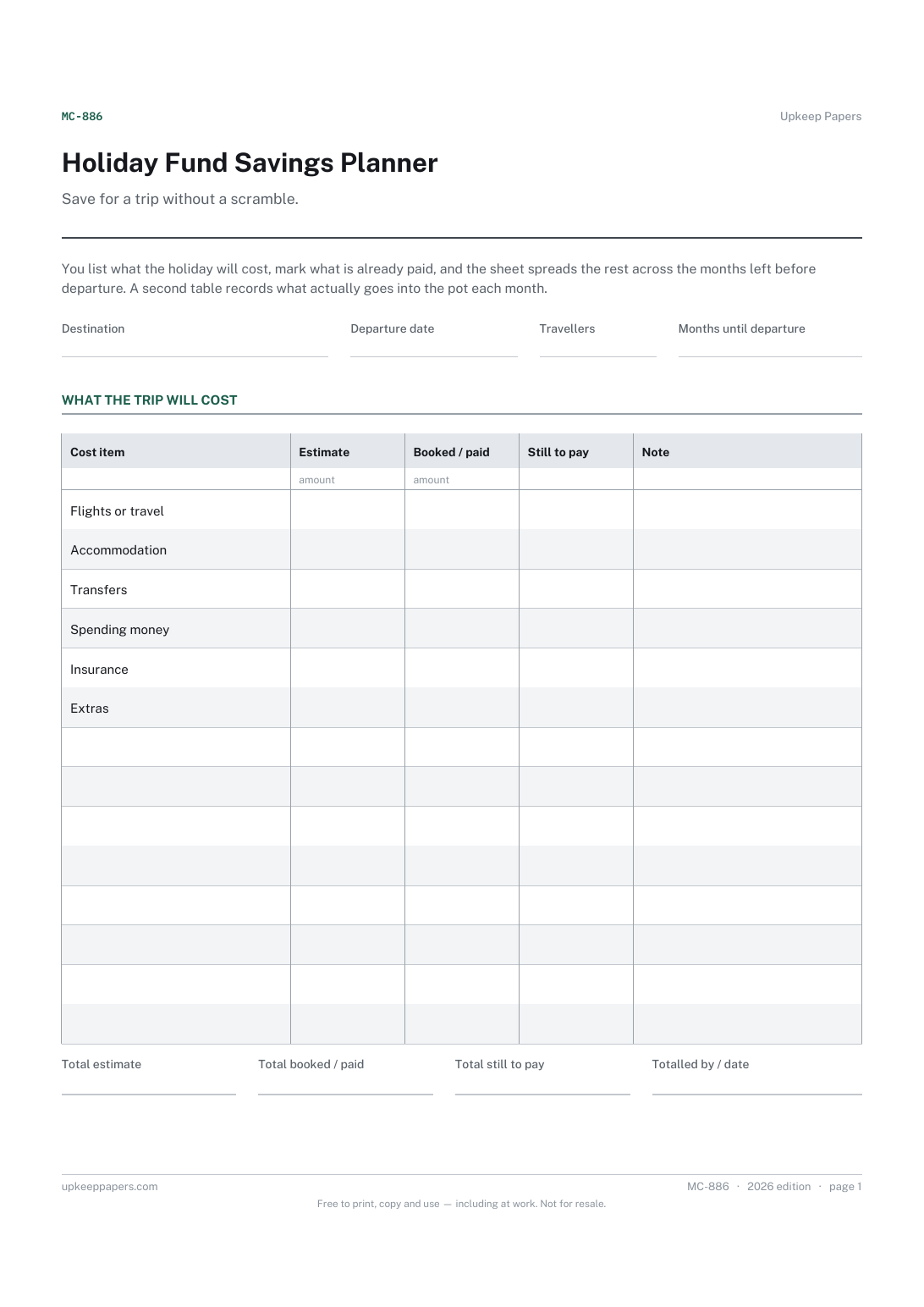
Every cost of the trip, from flights to spending money.
Printable sheets, workbooks and tools on the same subject.
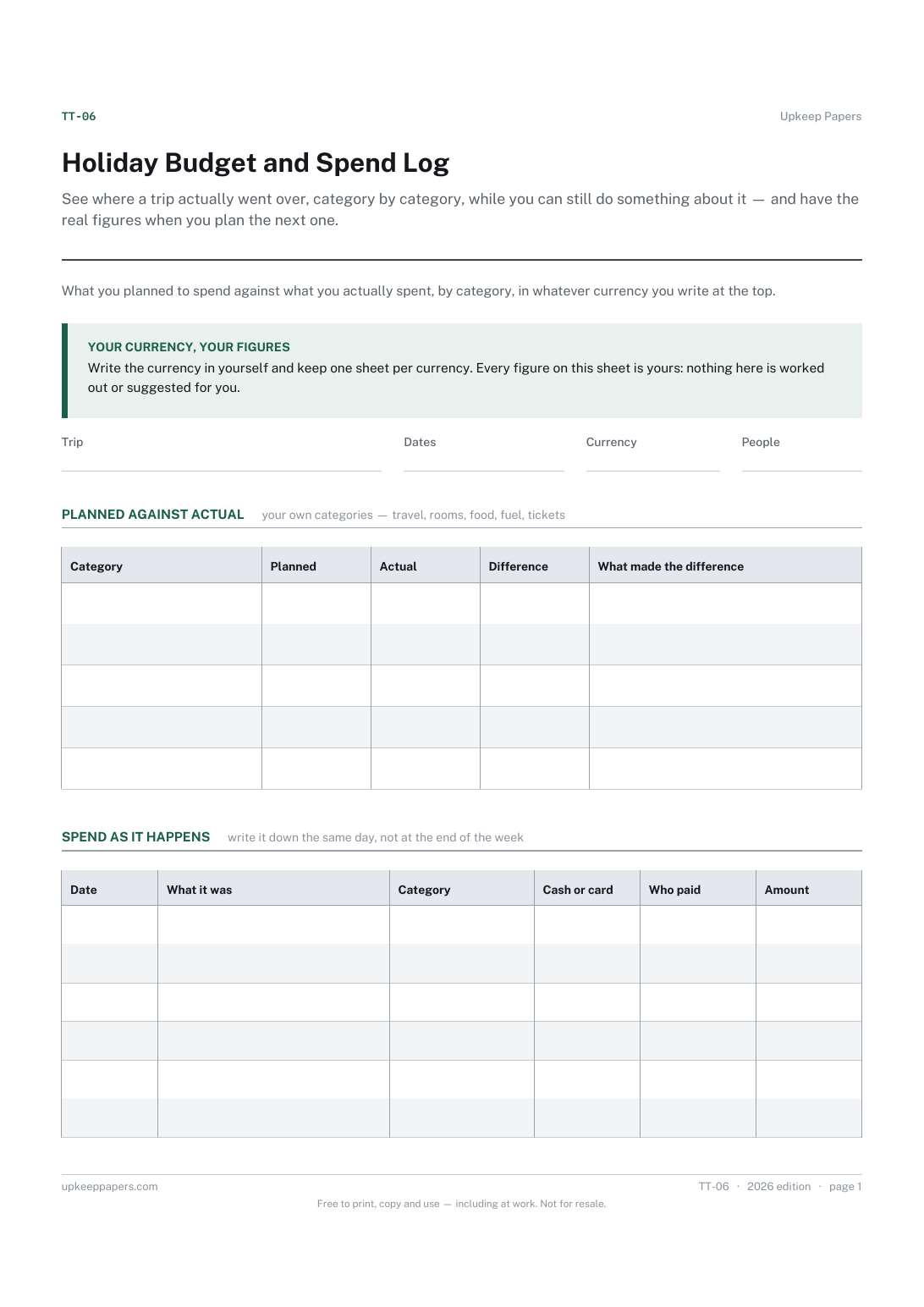
See where a trip actually went over, category by category, while you can still do something about it — and have the real figures when you plan the next one.
A dated list of what you spent, which totals itself by category and by month without you building a single pivot table.

Every sheet, binder, game and puzzle on Upkeep Papers is free to download, with no email and no account. Making them is not free: each one takes days of research, design and checking, and the site costs money to run. If something here saved you time, you can buy us a coffee. It is entirely optional: nothing is locked, and nothing changes if you don’t.
Buy us a coffee Opens PayPal in a new tab. Any amount, and nothing changes if you would rather not.