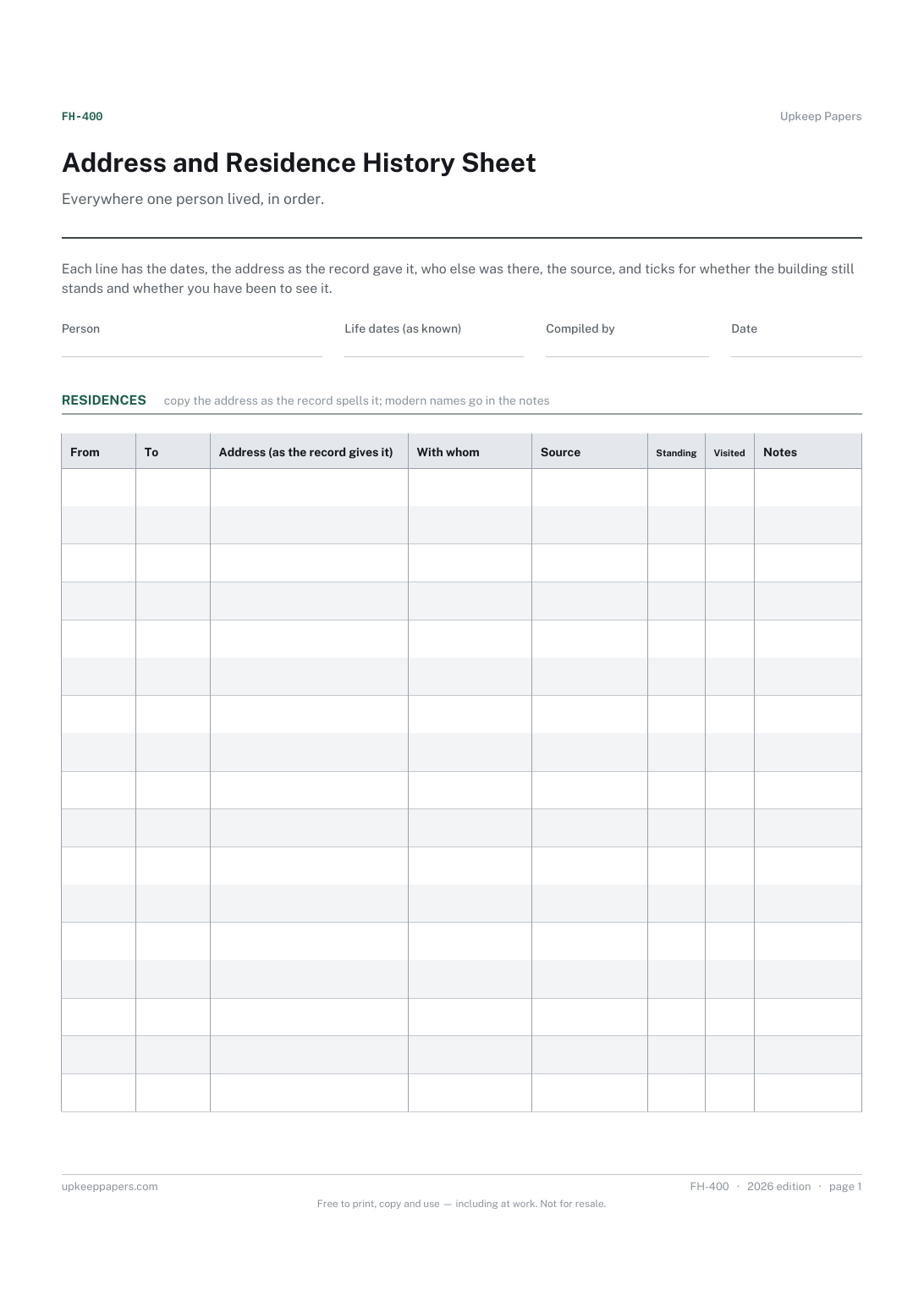
Address and Residence History Sheet
Each address the person lived at, with the earliest and latest date you have for it.
FH-400 Record PDF Online
Everything here is free. Making it takes time and money. Everything here is free.
 Buy us a coffee
Home and property records · HP-1063 · Record
House history research record: questions, sources searched, a building timeline, past occupants and clues in the house itself. Printable PDF and browser.
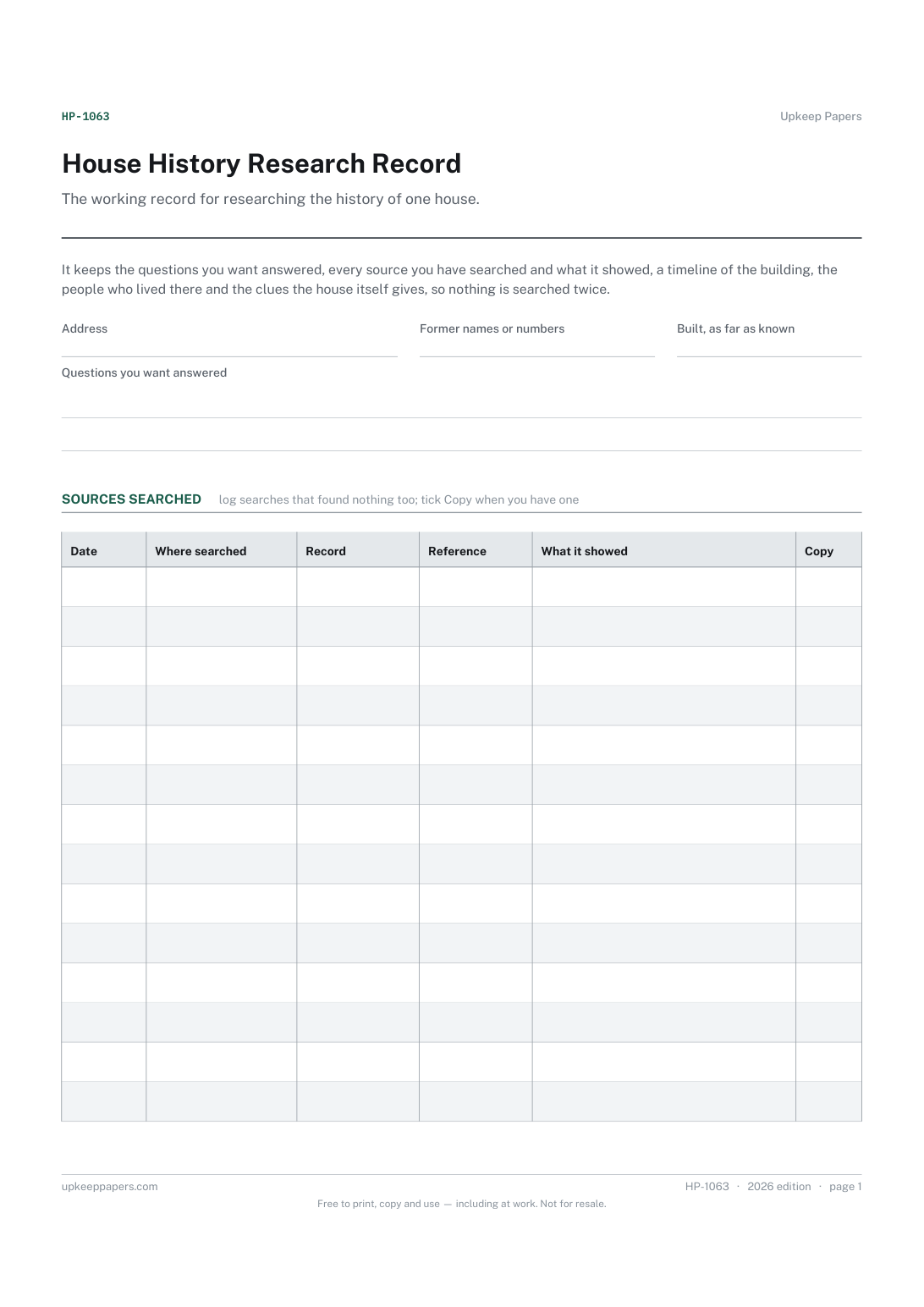
2 pages. The A4 and US Letter files are laid out identically, so neither is shrunk to fit.
Print it and write on it
Fillable PDF type and save
Or no download needed
Fill it in onlineThe fillable versions have real form fields — open them in any PDF reader, type into them and save. Printing help.
The same sheet, on screen. Tick, type, add or remove rows, then print it or download the completed version as a PDF. Everything stays in your browser — your entries are kept in this browser's own storage on this device, nothing is uploaded, and there is no account.
The working record for researching the history of one house. It keeps the questions you want answered, every source you have searched and what it showed, a timeline of the building, the people who lived there and the clues the house itself gives, so nothing is searched twice.
Owners curious about when their house was built and who lived in it, local history researchers working on a single building, and anyone preparing a house history as a gift or for a sale.
The printable is laid out inside a box that fits both A4 and US Letter, so the two files are identical and neither one is scaled. The fillable PDF has real form fields. The online version keeps what you enter in your own browser and builds the completed PDF on your device.
Download the A4 or US Letter file to match the paper in your printer, open it in a PDF reader and print at 100% — not "fit to page", which shrinks the writing space. Both files leave a 14 mm margin, which clears the unprintable edge on home printers. To print the online version with your entries in it, use the Print this sheet button, which prints only the sheet and none of the page around it. More on printing.
With what you already know: the deeds or title documents, old sale particulars and neighbours' memories. Then work back through maps, directories, census returns and local archives, logging each search as you go.
Because a negative result is still a result. Knowing that a directory or map has already been checked stops you searching it again, and the gap itself can be a clue to when the house was built.
A family history log follows people. This record follows a building: its sources are deeds, plans, maps and directories as well as census returns, and it adds a building timeline and the physical clues in the house.
Yes. Write a date as precisely as the source allows, such as a year, a decade or between two map editions, and say in the source column what it rests on.
Each address the person lived at, with the earliest and latest date you have for it.
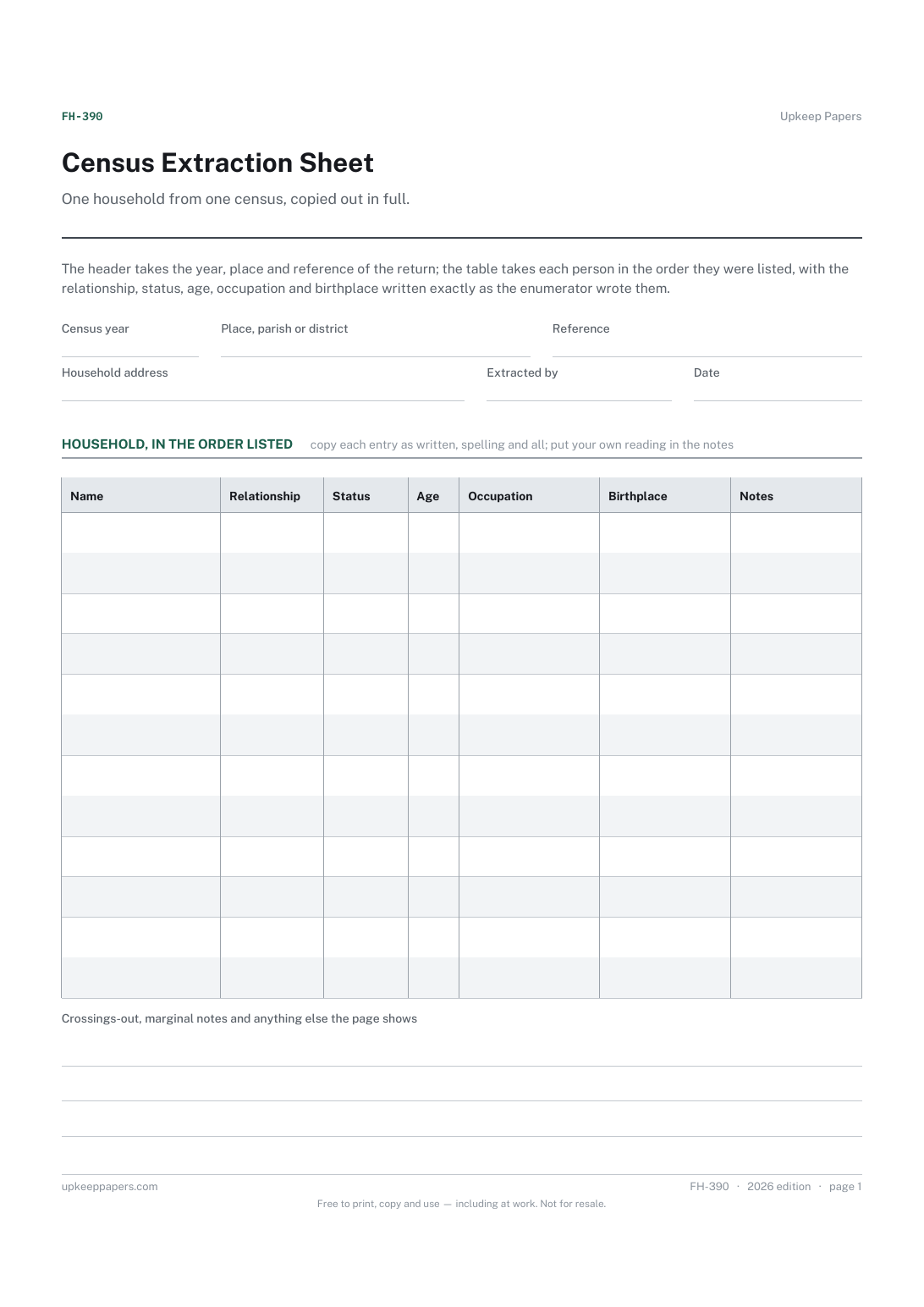
Which census, which place and which reference the household was found in.
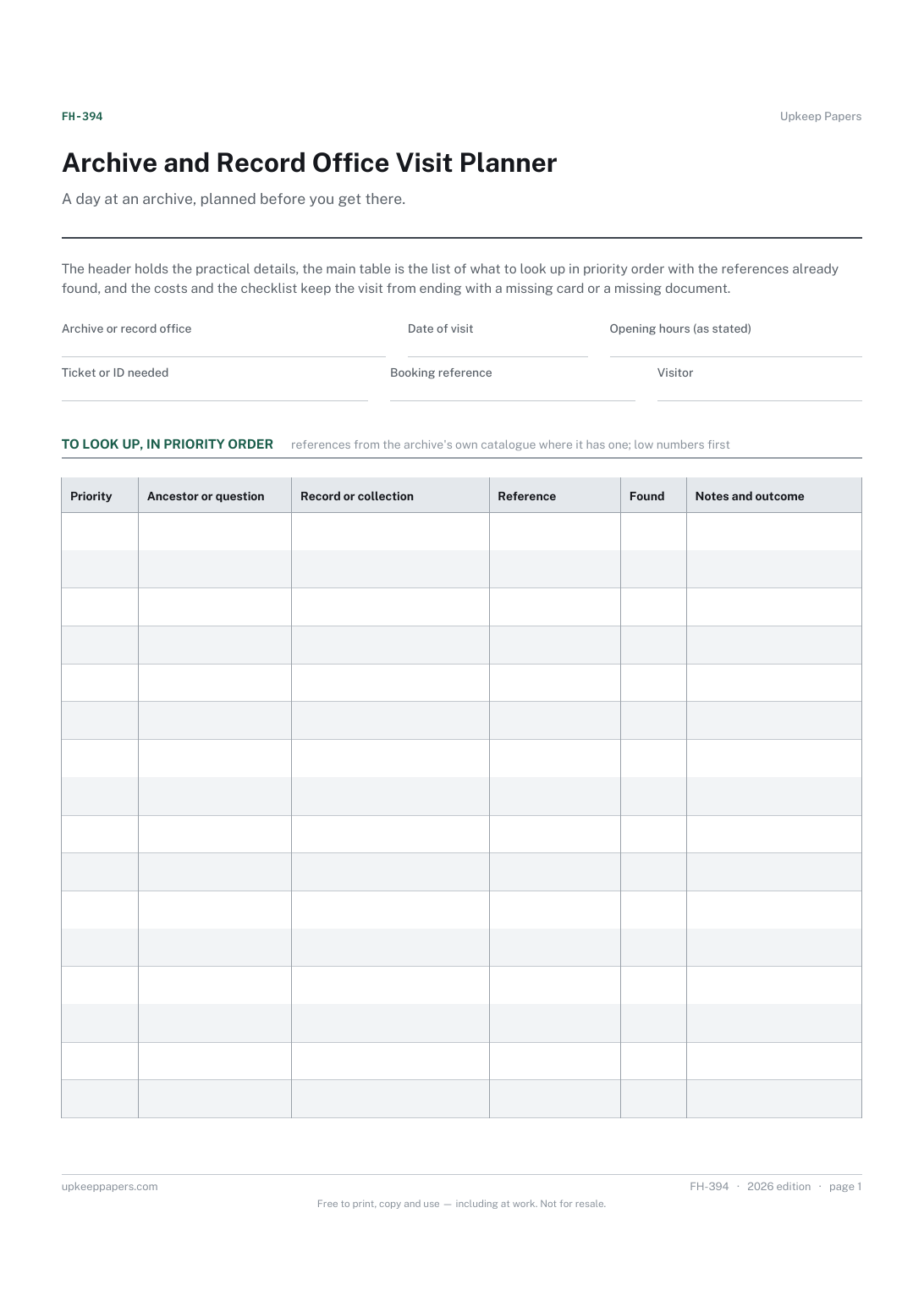
The archive, the date, its opening hours and what you need to get in.
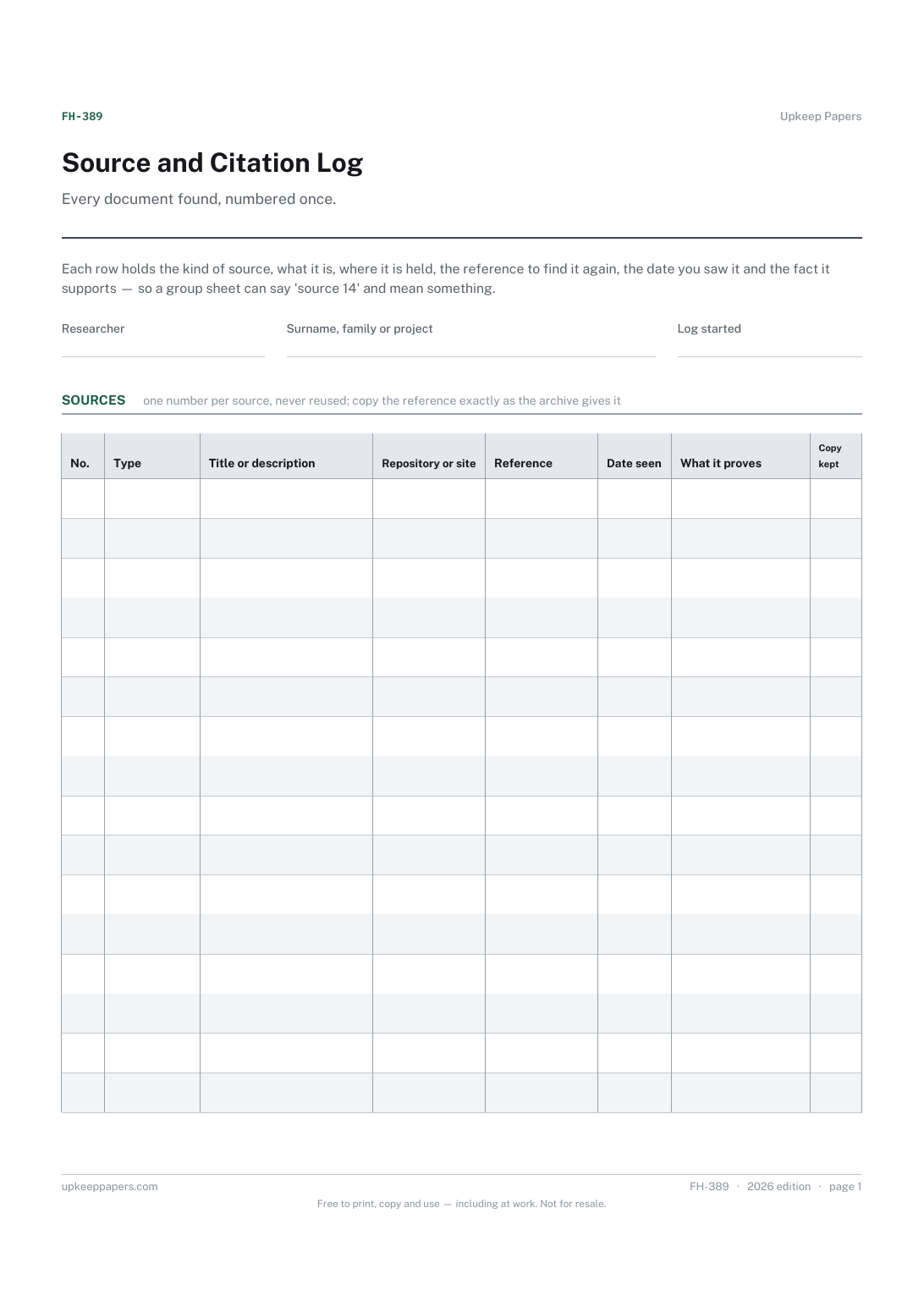
A number for every source, to quote on group sheets and profiles.
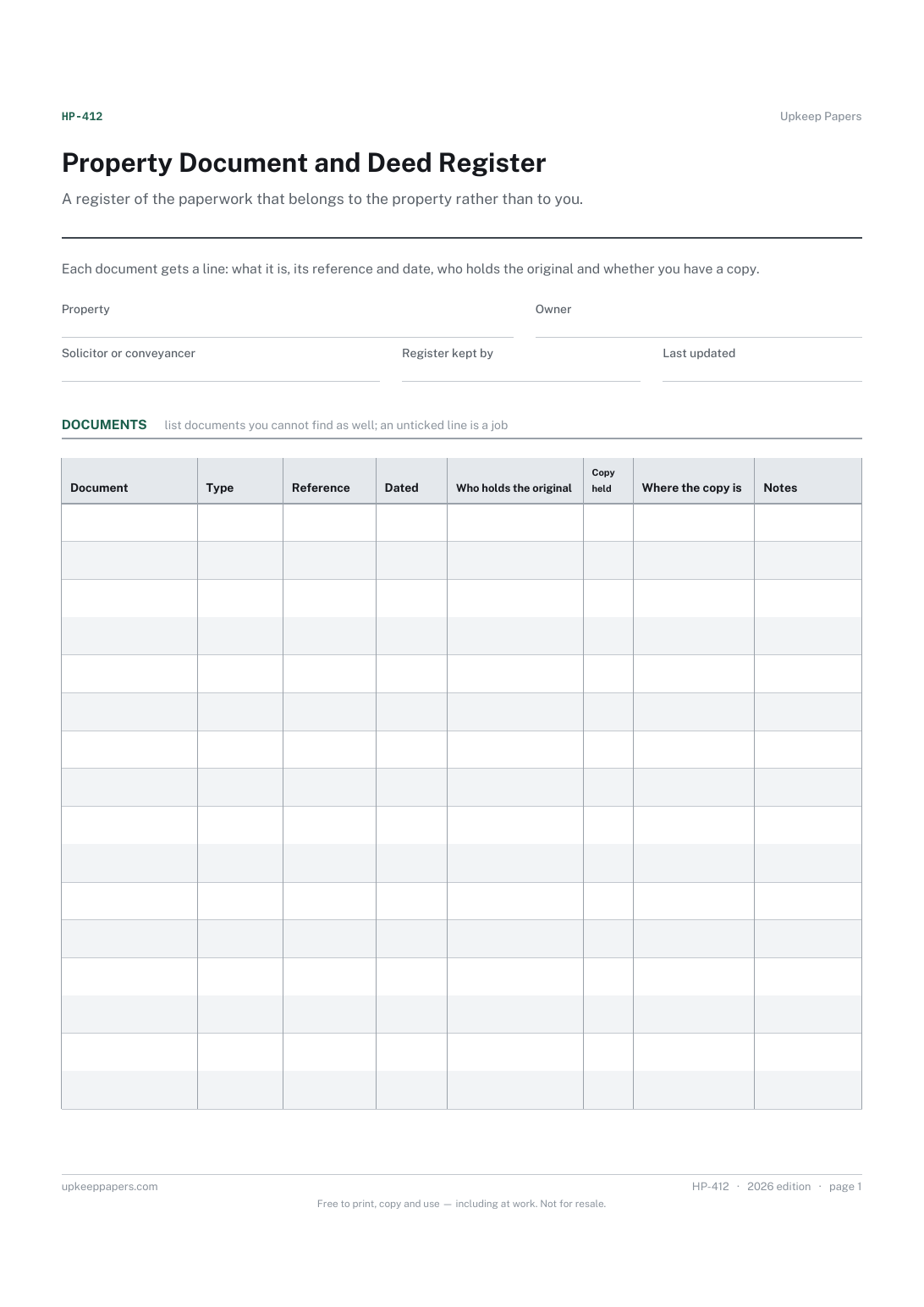
Which documents exist for the property and what each one is.

Every sheet, binder, game and puzzle on Upkeep Papers is free to download, with no email and no account. Making them is not free: each one takes days of research, design and checking, and the site costs money to run. If something here saved you time, you can buy us a coffee. It is entirely optional: nothing is locked, and nothing changes if you don’t.
Buy us a coffee Opens PayPal in a new tab. Any amount, and nothing changes if you would rather not.