Move-In Property Inventory
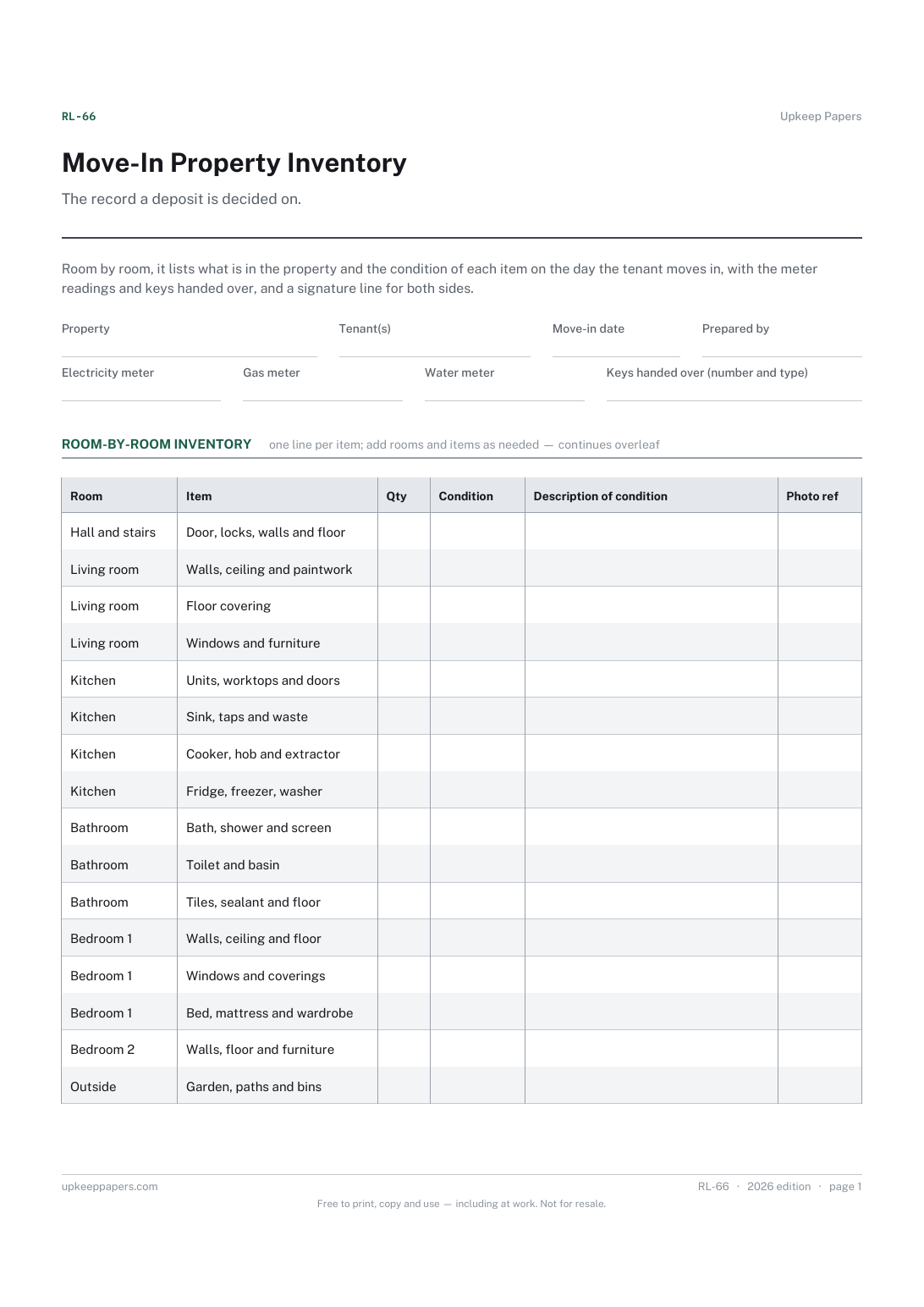
What was in each room and what state it was in on day one.
RL-66 Inventory PDF Online
Everything here is free. Making it takes time and money. Everything here is free.
 Buy us a coffee
Rental property and landlord · RL-67 · Inventory
Free move-out property inventory — condition at move-in beside condition now, the change, and any deduction proposed, line by line. PDF and browser versions.
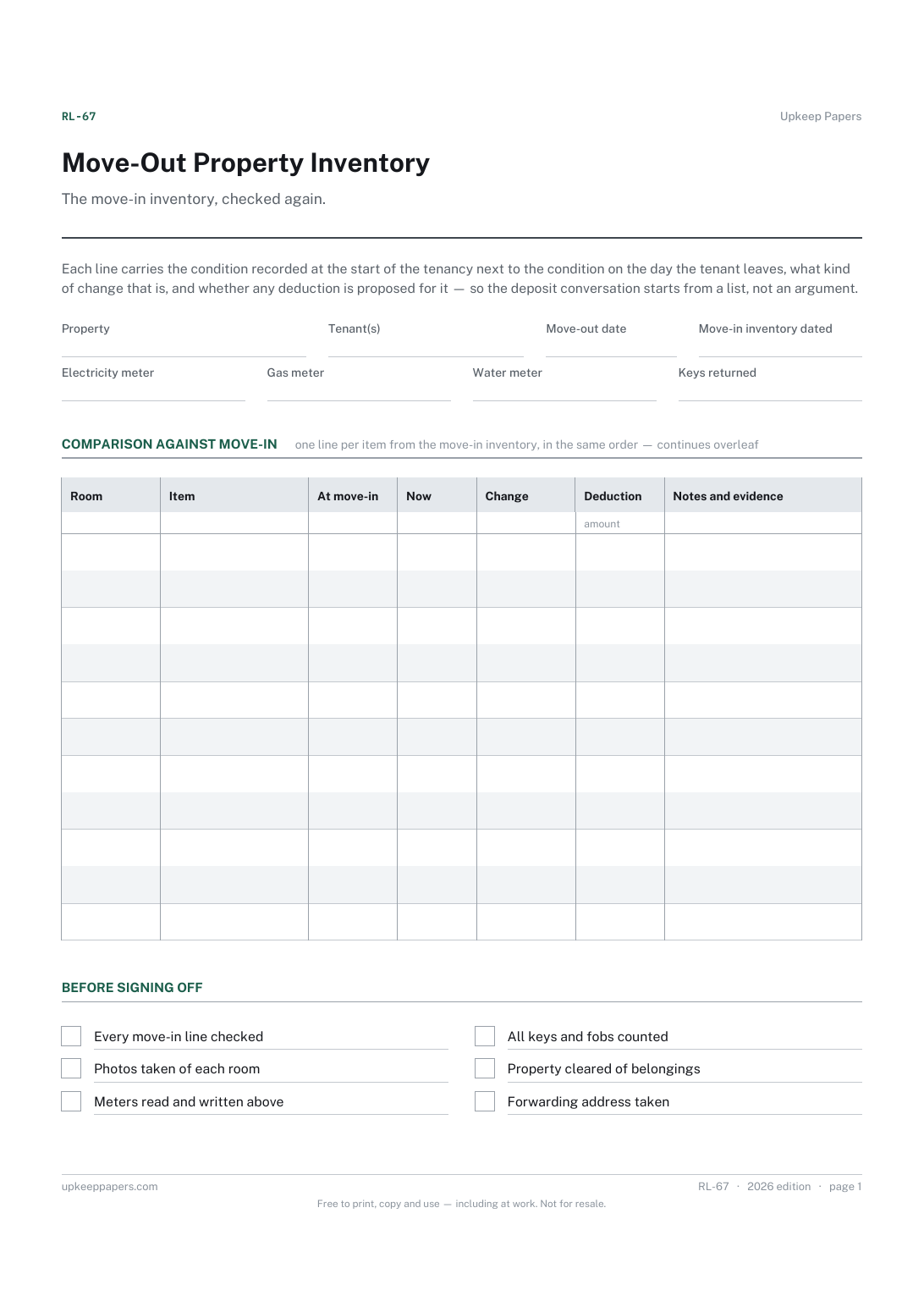
2 pages. The A4 and US Letter files are laid out identically, so neither is shrunk to fit.
Print it and write on it
Fillable PDF type and save
Or no download needed
Fill it in onlineThe fillable versions have real form fields — open them in any PDF reader, type into them and save. Printing help.
The same sheet, on screen. Totals and figures are worked out as you type, rows can be added or removed, and you can print it or download the completed version as a PDF. Everything stays in your browser — your entries are kept in this browser's own storage on this device, nothing is uploaded, and there is no account.
The move-in inventory, checked again. Each line carries the condition recorded at the start of the tenancy next to the condition on the day the tenant leaves, what kind of change that is, and whether any deduction is proposed for it — so the deposit conversation starts from a list, not an argument.
Landlords, agents and tenants at the end of a tenancy, working from the signed move-in inventory.
The printable is laid out inside a box that fits both A4 and US Letter, so the two files are identical and neither one is scaled. The fillable PDF has real form fields. The online version keeps what you enter in your own browser and builds the completed PDF on your device.
Download the A4 or US Letter file to match the paper in your printer, open it in a PDF reader and print at 100% — not "fit to page", which shrinks the writing space. Both files leave a 14 mm margin, which clears the unprintable edge on home printers. To print the online version with your entries in it, use the Print this sheet button, which prints only the sheet and none of the page around it. More on printing.
The sheet lets you label each change but does not define the labels, because what counts as fair wear and tear is decided by the rules and the practice where the property is. Describe the change plainly and let the label follow.
No. Most lines will have none. The column is there so that where a deduction is proposed it is tied to a specific item, a specific change and a piece of evidence.
Write the disagreement in the notes and both sign anyway — a signature confirms the record was made together, not that every line is agreed. How a dispute is resolved is set where the property is.
You can record the condition now, but the move-in column will be empty and any deduction is much harder to support. Next tenancy, start with the move-in sheet.
What was in each room and what state it was in on day one.
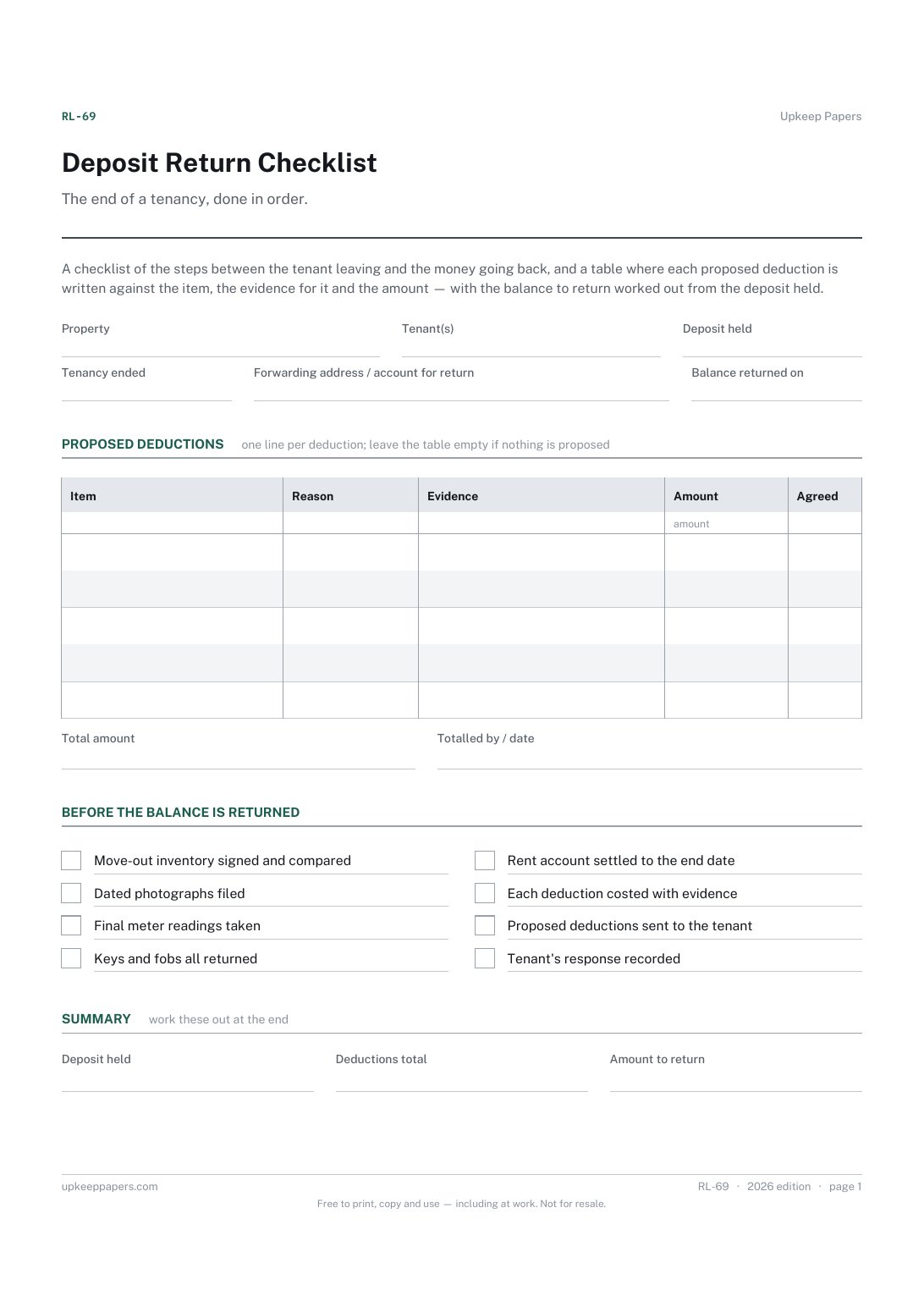
The steps to complete before any money moves, ticked in order.
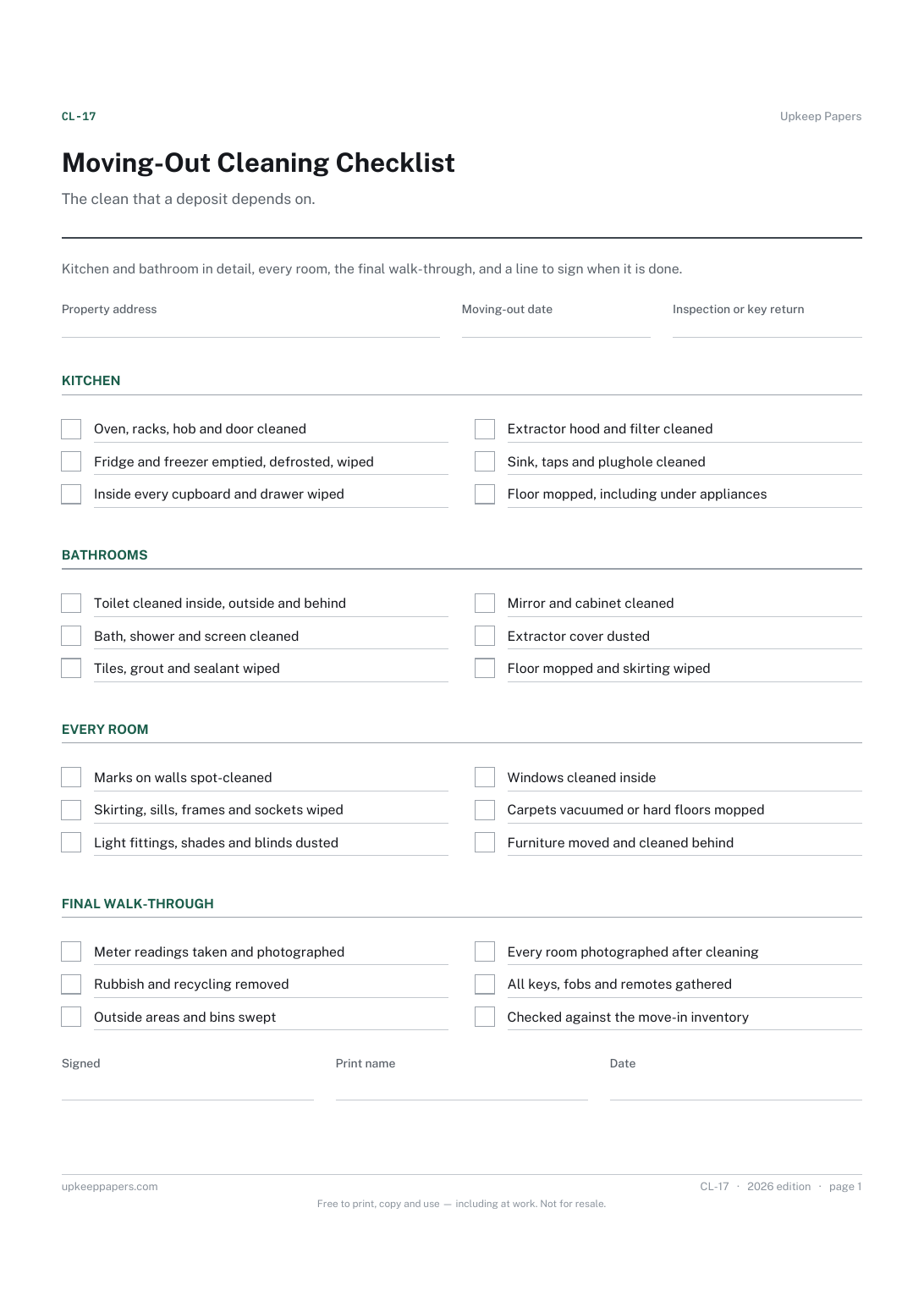
Every area an inventory check is likely to look at, so none is missed on the day.
Printable sheets, workbooks and tools on the same subject.
Compare like with like at the end of a tenancy, so any deduction rests on a documented difference rather than an impression.
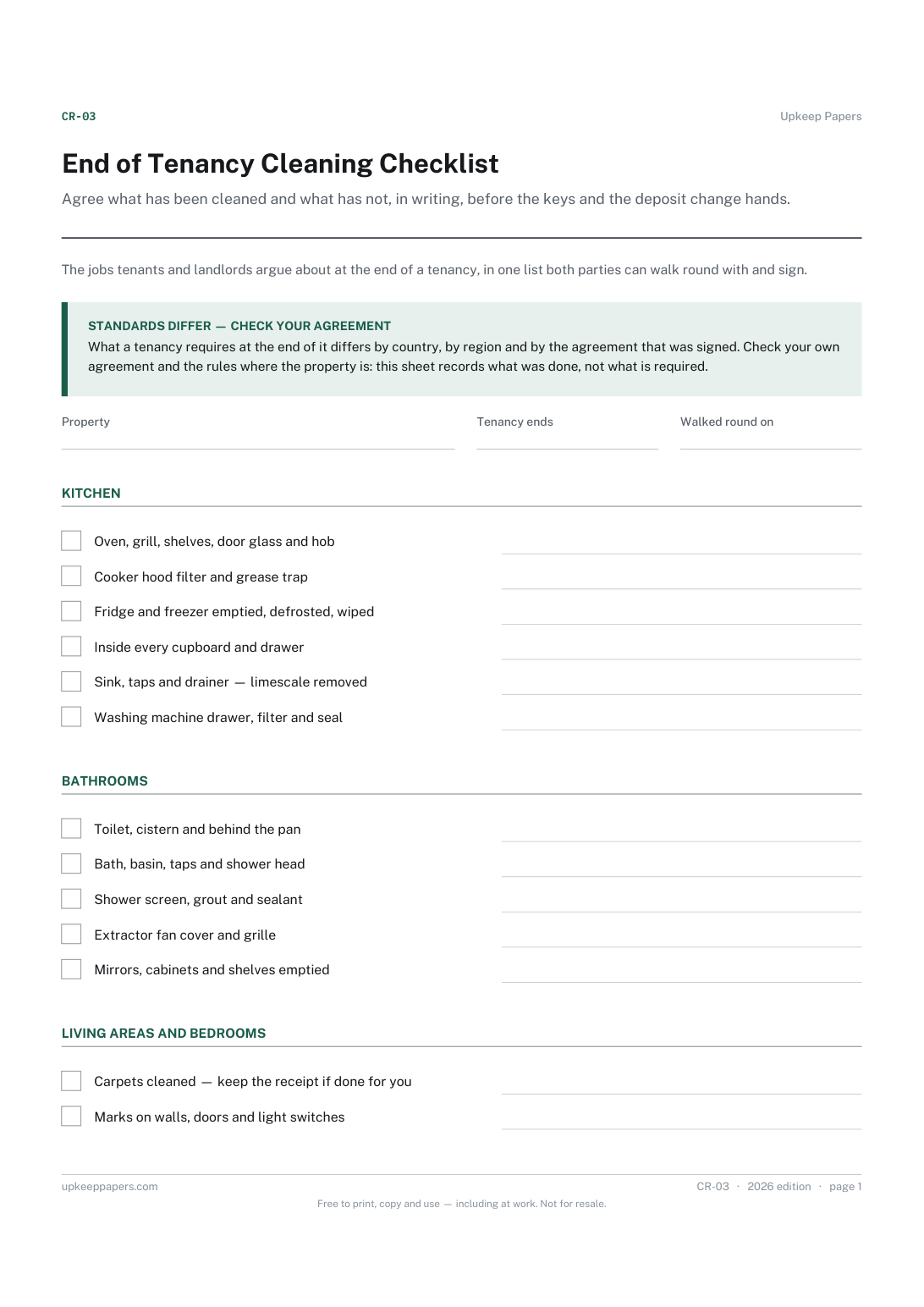
Agree what has been cleaned and what has not, in writing, before the keys and the deposit change hands. Both parties sign the same piece of paper.
Make each deduction defensible by writing down the reason, the amount and where the photograph or invoice is at the time you make it.

Every sheet, binder, game and puzzle on Upkeep Papers is free to download, with no email and no account. Making them is not free: each one takes days of research, design and checking, and the site costs money to run. If something here saved you time, you can buy us a coffee. It is entirely optional: nothing is locked, and nothing changes if you don’t.
Buy us a coffee Opens PayPal in a new tab. Any amount, and nothing changes if you would rather not.