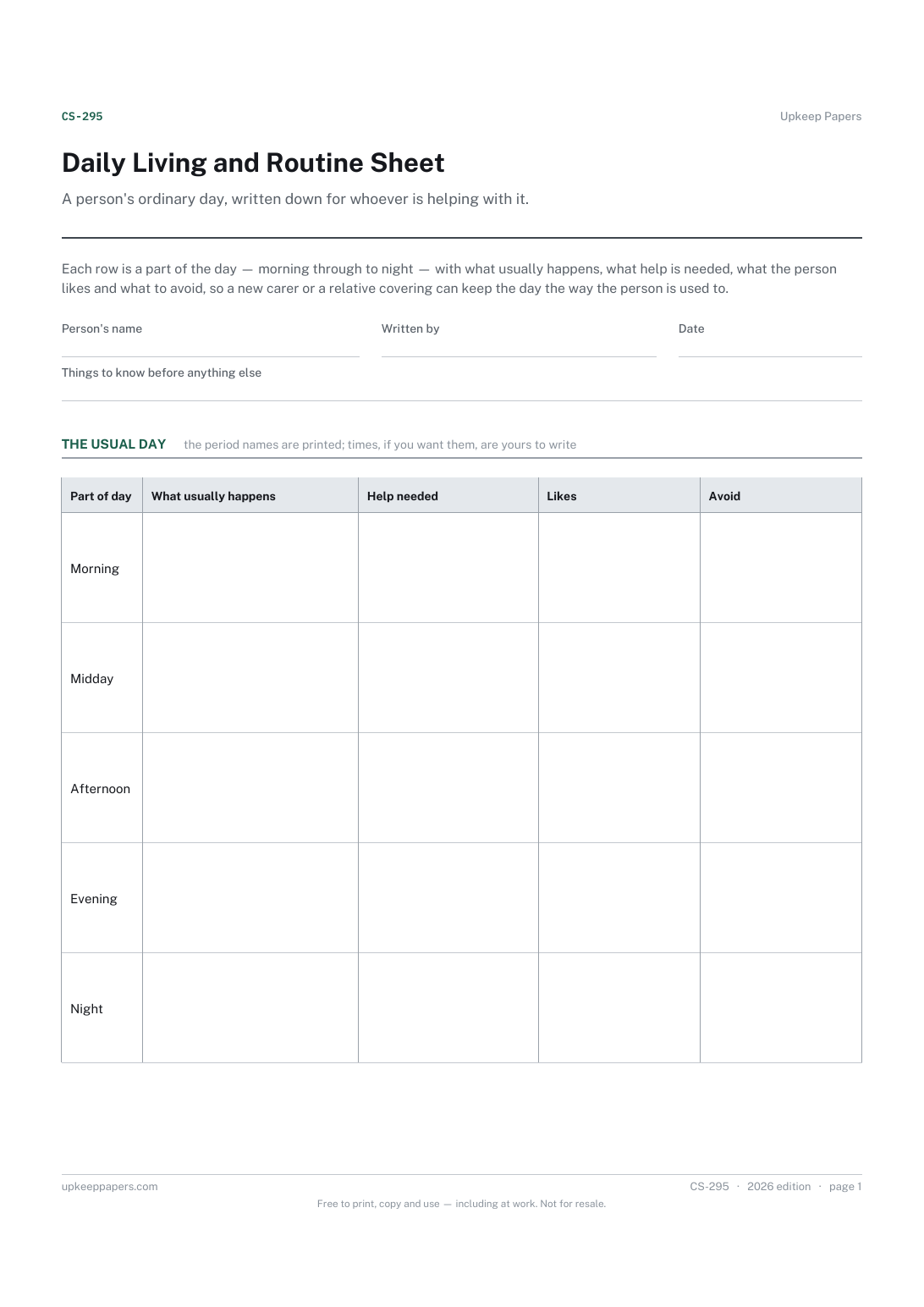
Daily Living and Routine Sheet
What usually happens at each part of the day, in the person's own routine.
CS-295 Form PDF Online
Everything here is free. Making it takes time and money. Everything here is free.
 Buy us a coffee
Care and support records · CS-296 · Form
Free printable life story sheet — where I grew up, my work, my family, what I am proud of, what I like and how I want to be addressed. PDF and browser versions.
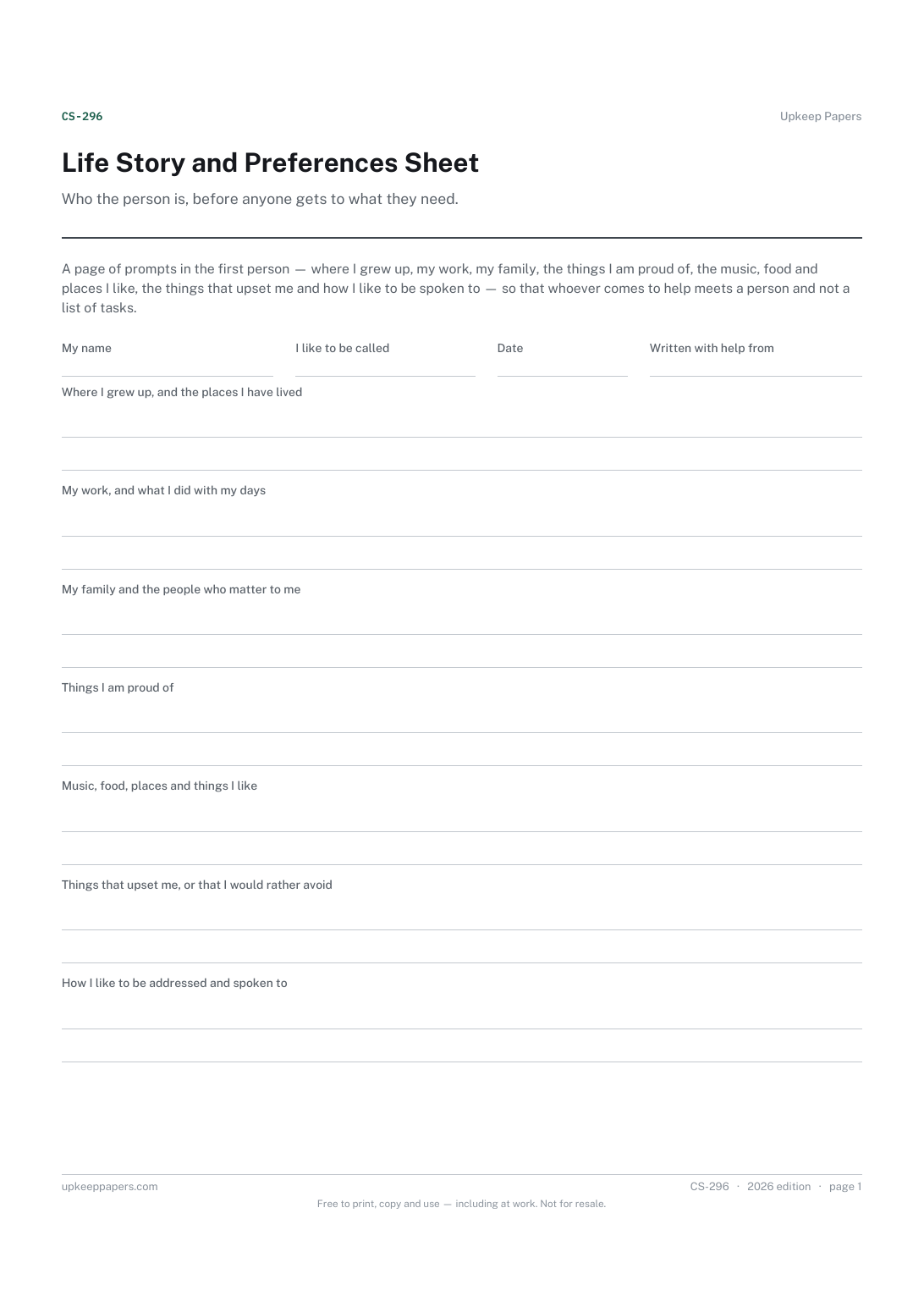
One page. The A4 and US Letter files are laid out identically, so neither is shrunk to fit.
Print it and write on it
Fillable PDF type and save
Or no download needed
Fill it in onlineThe fillable versions have real form fields — open them in any PDF reader, type into them and save. Printing help.
The same sheet, on screen. Tick, type, add or remove rows, then print it or download the completed version as a PDF. Everything stays in your browser — your entries are kept in this browser's own storage on this device, nothing is uploaded, and there is no account.
Who the person is, before anyone gets to what they need. A page of prompts in the first person — where I grew up, my work, my family, the things I am proud of, the music, food and places I like, the things that upset me and how I like to be spoken to — so that whoever comes to help meets a person and not a list of tasks.
People going into a care setting or having care at home for the first time, families who want a new carer to know who they are looking after, carers who have been handed a file with no person in it, and anyone helping somebody write about themselves.
The printable is laid out inside a box that fits both A4 and US Letter, so the two files are identical and neither one is scaled. The fillable PDF has real form fields. The online version keeps what you enter in your own browser and builds the completed PDF on your device.
Download the A4 or US Letter file to match the paper in your printer, open it in a PDF reader and print at 100% — not "fit to page", which shrinks the writing space. Both files leave a 14 mm margin, which clears the unprintable edge on home printers. To print the online version with your entries in it, use the Print this sheet button, which prints only the sheet and none of the page around it. More on printing.
Both. The person writes or dictates it, and the carer reads it. It exists so that a conversation can start from something the person cares about rather than from what the care plan says needs doing.
Family and friends can write what they know, and say so on the sheet. Write it as the person would say it, not about them, and leave out anything they would not want a stranger to know.
No. That belongs on the medical and care records, and this sheet is deliberately free of it. It is about who the person is, not what they have or what they need.
Whatever there is room for and no more than the person wants to say. A few lines on each prompt is plenty; the point is to give a stranger something to talk about and something not to get wrong.
Only the prompts. There are no example answers and no suggested preferences, because every line on it is somebody's own.
What usually happens at each part of the day, in the person's own routine.
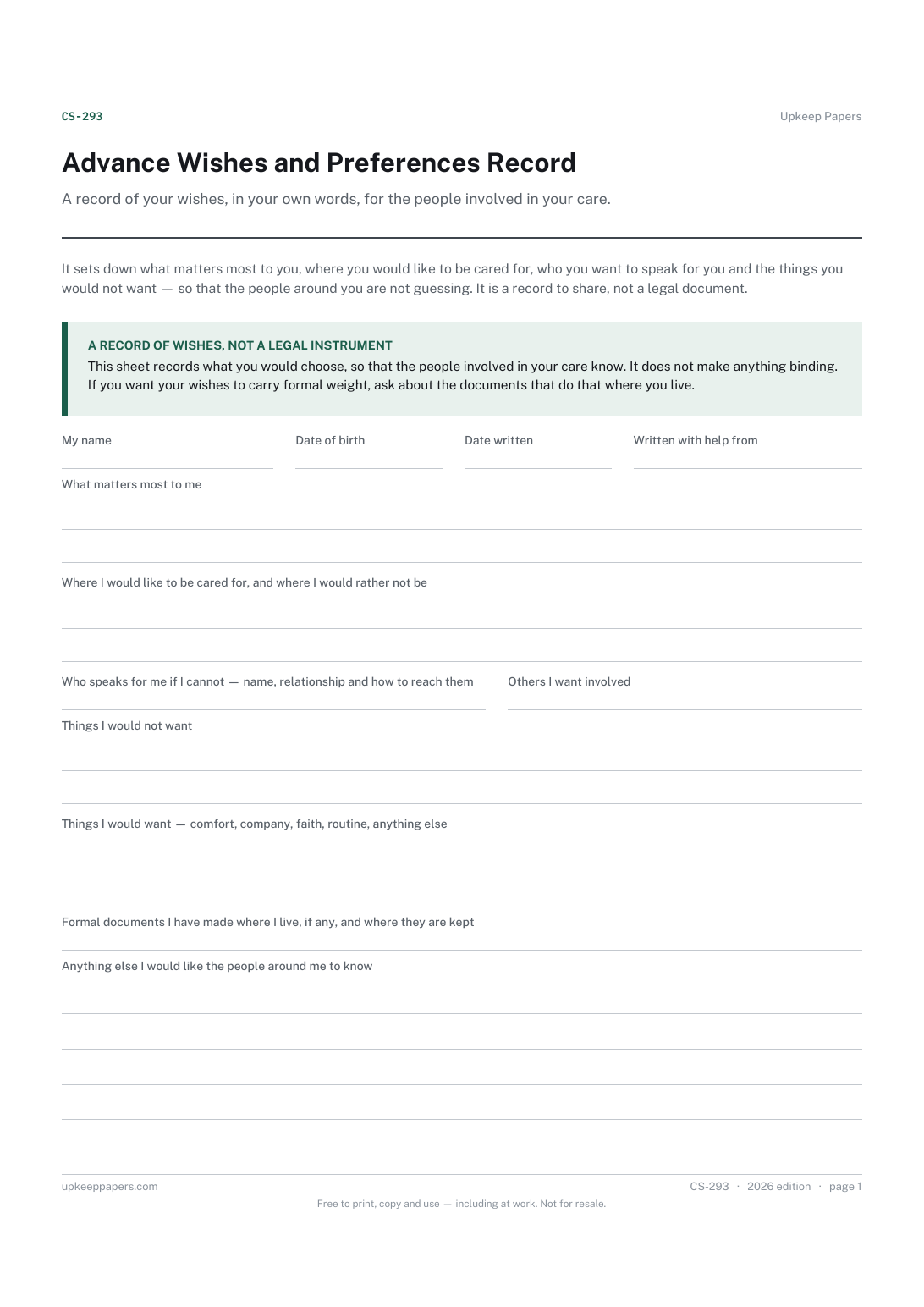
What matters most to you, written before anyone has to ask.
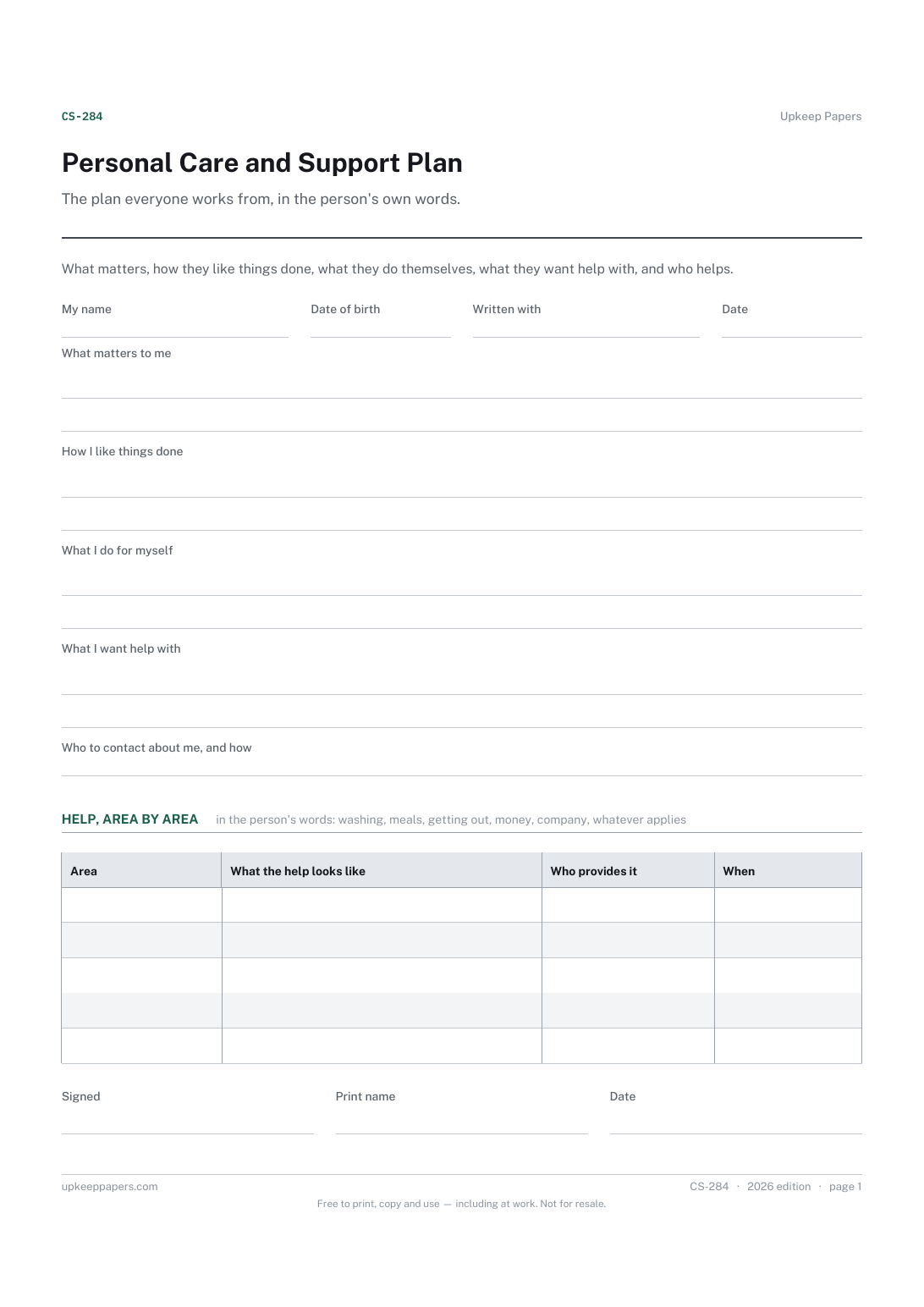
What matters to the person, in their own words.
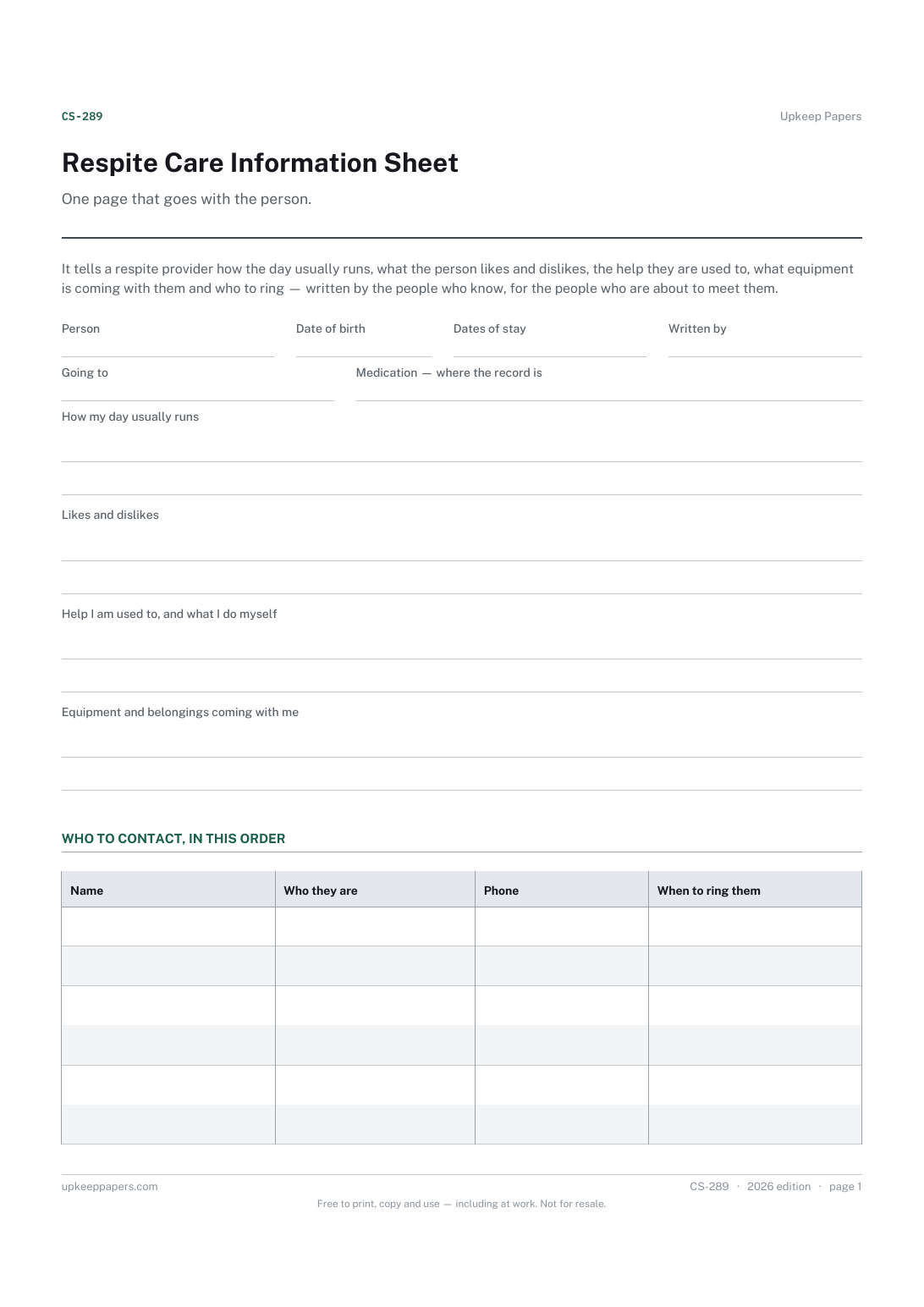
How the day runs — waking, meals, rest, bed — in the family's words.

Every sheet, binder, game and puzzle on Upkeep Papers is free to download, with no email and no account. Making them is not free: each one takes days of research, design and checking, and the site costs money to run. If something here saved you time, you can buy us a coffee. It is entirely optional: nothing is locked, and nothing changes if you don’t.
Buy us a coffee Opens PayPal in a new tab. Any amount, and nothing changes if you would rather not.