
Family history and genealogy · FH-405 · Form
Brick Wall Problem Worksheet
Free brick wall worksheet — the research problem stated, what you know and how sure you are, what you have searched, the hypotheses and the next steps. PDF.
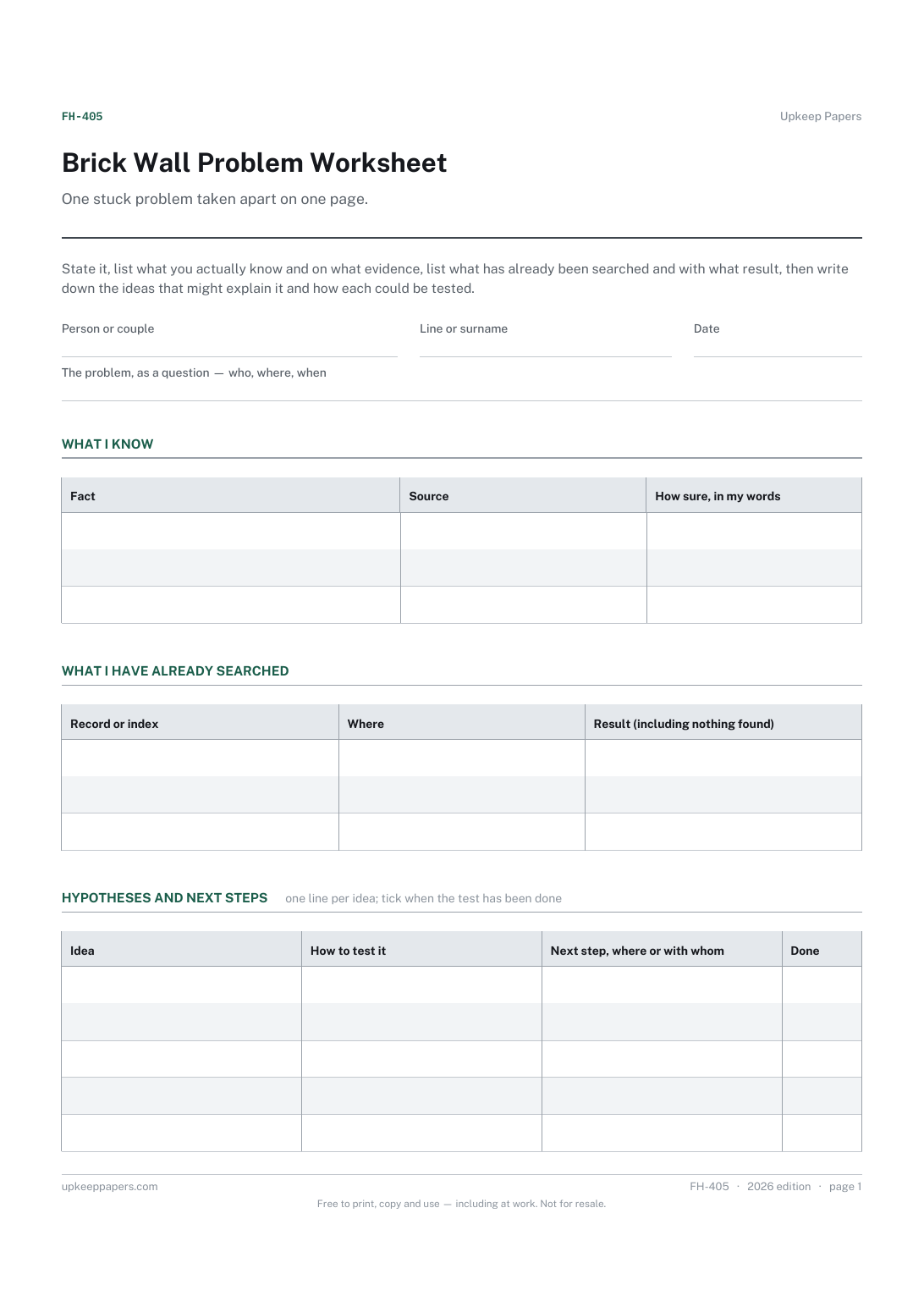
One page. The A4 and US Letter files are laid out identically, so neither is shrunk to fit.
Print it and write on it
Fillable PDF type and save
Or no download needed
Fill it in onlineThe fillable versions have real form fields — open them in any PDF reader, type into them and save. Printing help.
Fill it in online
The same sheet, on screen. Tick, type, add or remove rows, then print it or download the completed version as a PDF. Everything stays in your browser — your entries are kept in this browser's own storage on this device, nothing is uploaded, and there is no account.
Who this is for
One stuck problem taken apart on one page. State it, list what you actually know and on what evidence, list what has already been searched and with what result, then write down the ideas that might explain it and how each could be tested.
Family historians who have been looking for the same person for years, and anyone about to ask a society, a forum or a cousin for help and wanting to hand over the problem in a form somebody else can read.
What this helps you track
- The problem in a sentence or two, so it stops shifting every time you return to it
- What you know for certain, what you assume, and the source for each
- What has already been searched, where, and what came of it — so it is not searched again
- The hypotheses that might explain the gap and how each could be tested
- The next step for each idea, and a tick when it is done
How to use it
- Name the person or couple and the line at the top, then write the problem as a question: who were the parents of, where was she between, why does he vanish after.
- In the first table, list each fact you know with its source and how sure you are of it, in your own words. Separate what a record says from what you have inferred.
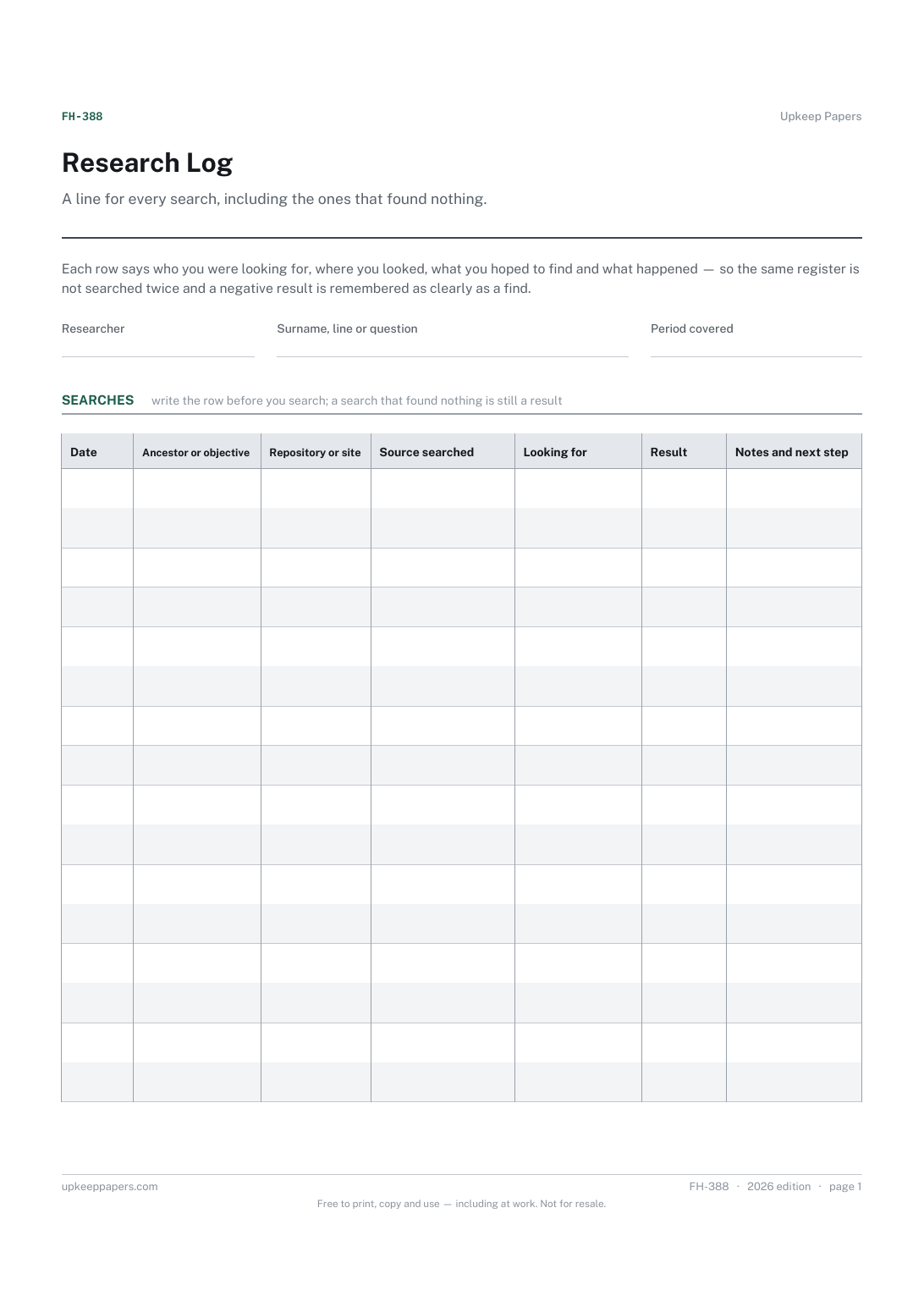
- In the second, list every record and index you have already searched, where you searched it and the result, including nothing found. This is the table that saves the most time.
- Write the hypotheses: the name was spelt differently, they moved to the next parish, the marriage was elsewhere, the age on the census is wrong. Against each, say how you would test it.
- Against each idea, write the next step — the record to search, the archive to ask, the cousin to write to. Tick it when done and move what you find into the research log.
- Take the sheet with you to the archive or send it with your question to whoever might help; it tells them what not to suggest.
Formats
- Printable PDF (A4 and US Letter)
- Fillable PDF with form fields
- Fill in online, saved in your browser
The printable is laid out inside a box that fits both A4 and US Letter, so the two files are identical and neither one is scaled. The fillable PDF has real form fields. The online version keeps what you enter in your own browser and builds the completed PDF on your device.
How to print
Download the A4 or US Letter file to match the paper in your printer, open it in a PDF reader and print at 100% — not "fit to page", which shrinks the writing space. Both files leave a 14 mm margin, which clears the unprintable edge on home printers. To print the online version with your entries in it, use the Print this sheet button, which prints only the sheet and none of the page around it. More on printing.
Questions
What makes a good problem statement?
A question with a person, a place and a period in it. 'Find Mary's parents' is a wish; 'who were the parents of Mary, married in this parish in this decade, of an age that fits the next census' is a problem somebody can work on.
What does 'how sure' mean?
Whatever you mean by it — 'from the certificate', 'family story only', 'inferred from ages'. Free text is used on purpose; the aim is to separate evidence from assumption, not to score it.
Why list searches that found nothing?
Because a negative search is a result. It tells you and anyone helping where not to look again, and a set of negatives narrows where the answer can be.
What if none of the hypotheses works?
Keep the sheet. Add new ideas as they come, and check whether one of the facts you were sure of is the thing that is wrong. Many brick walls are built from a confident assumption in the first table.
Related resources
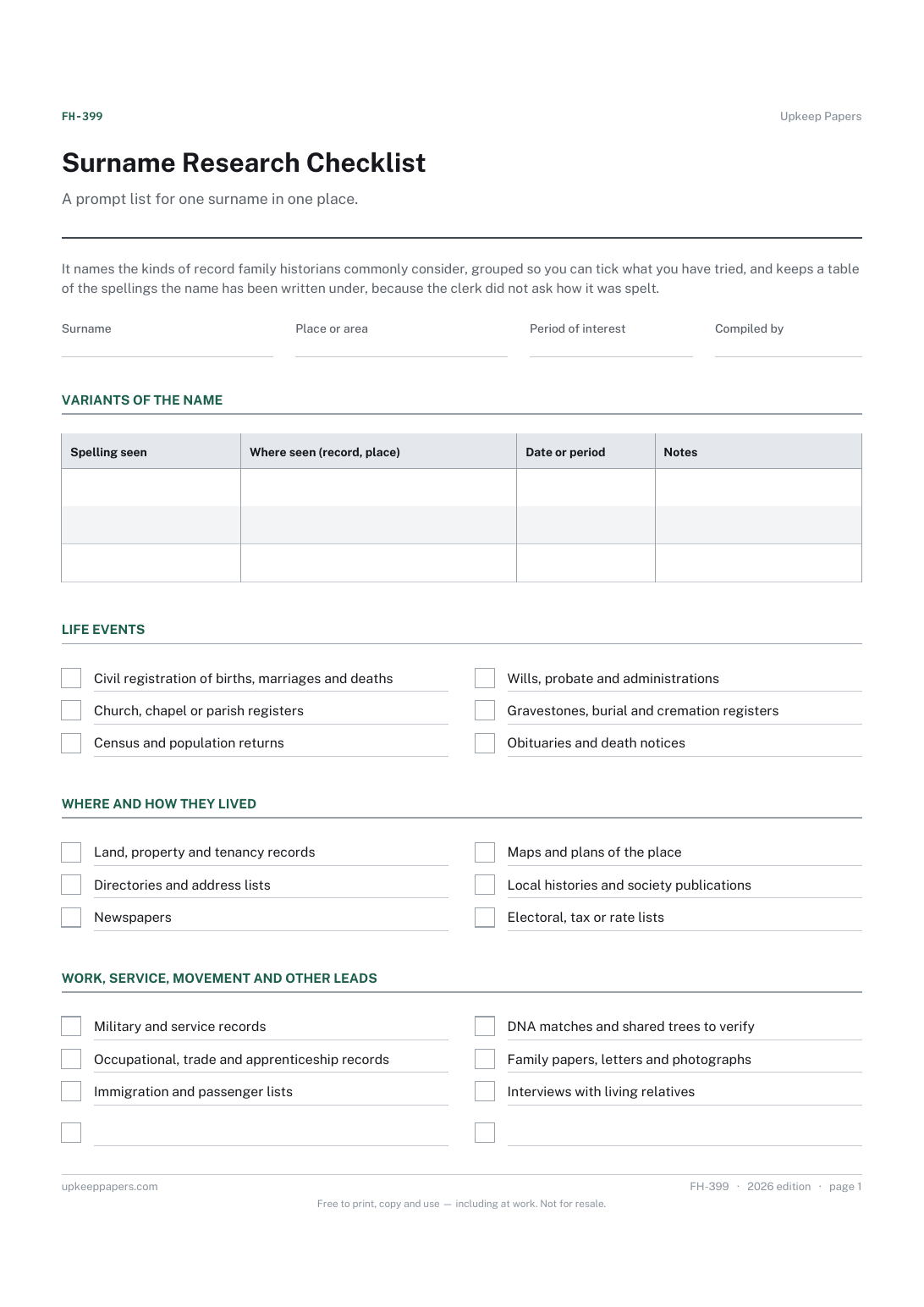
Surname Research Checklist
The kinds of record that might bear on the name, so none is forgotten.
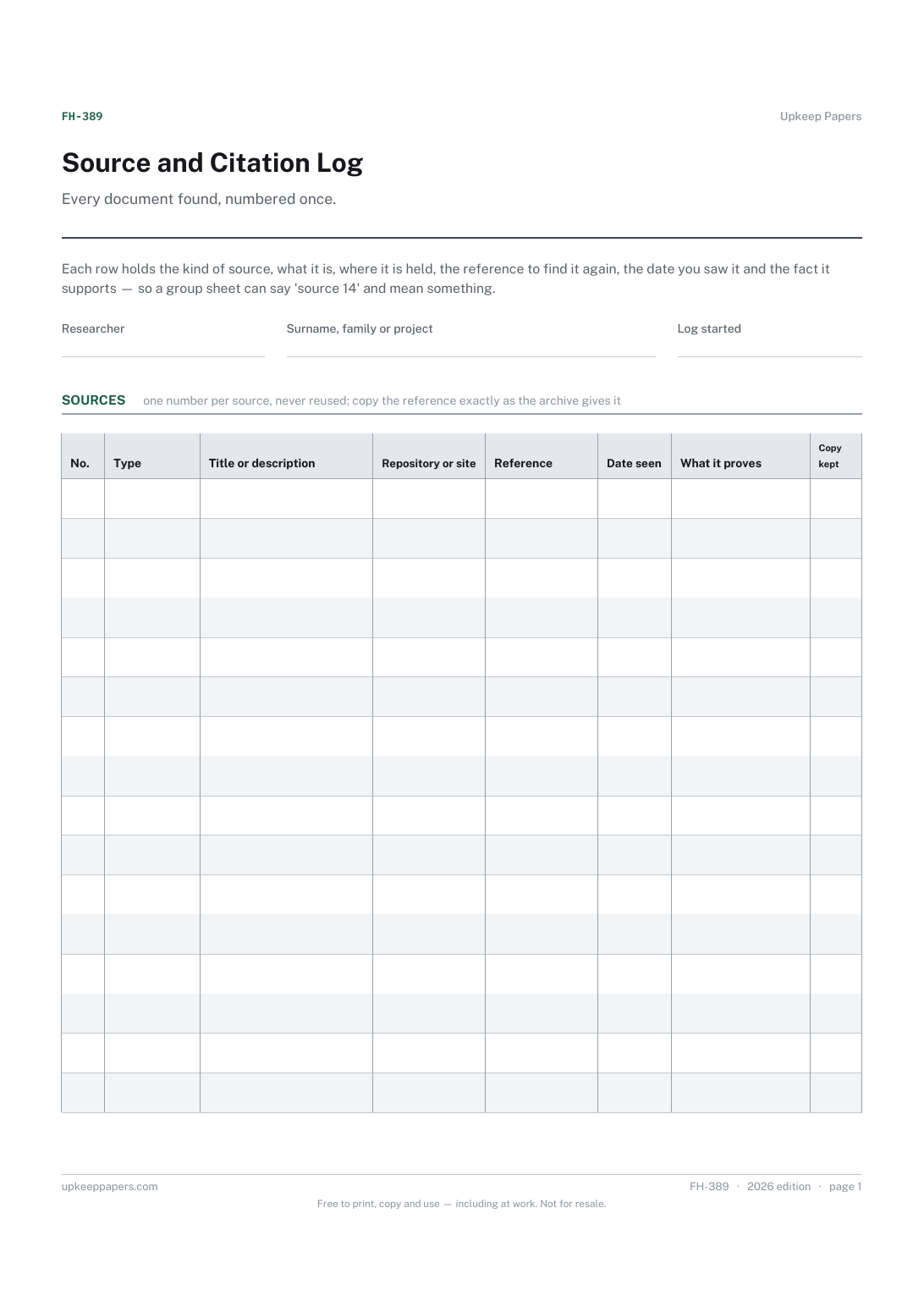
Source and Citation Log
A number for every source, to quote on group sheets and profiles.
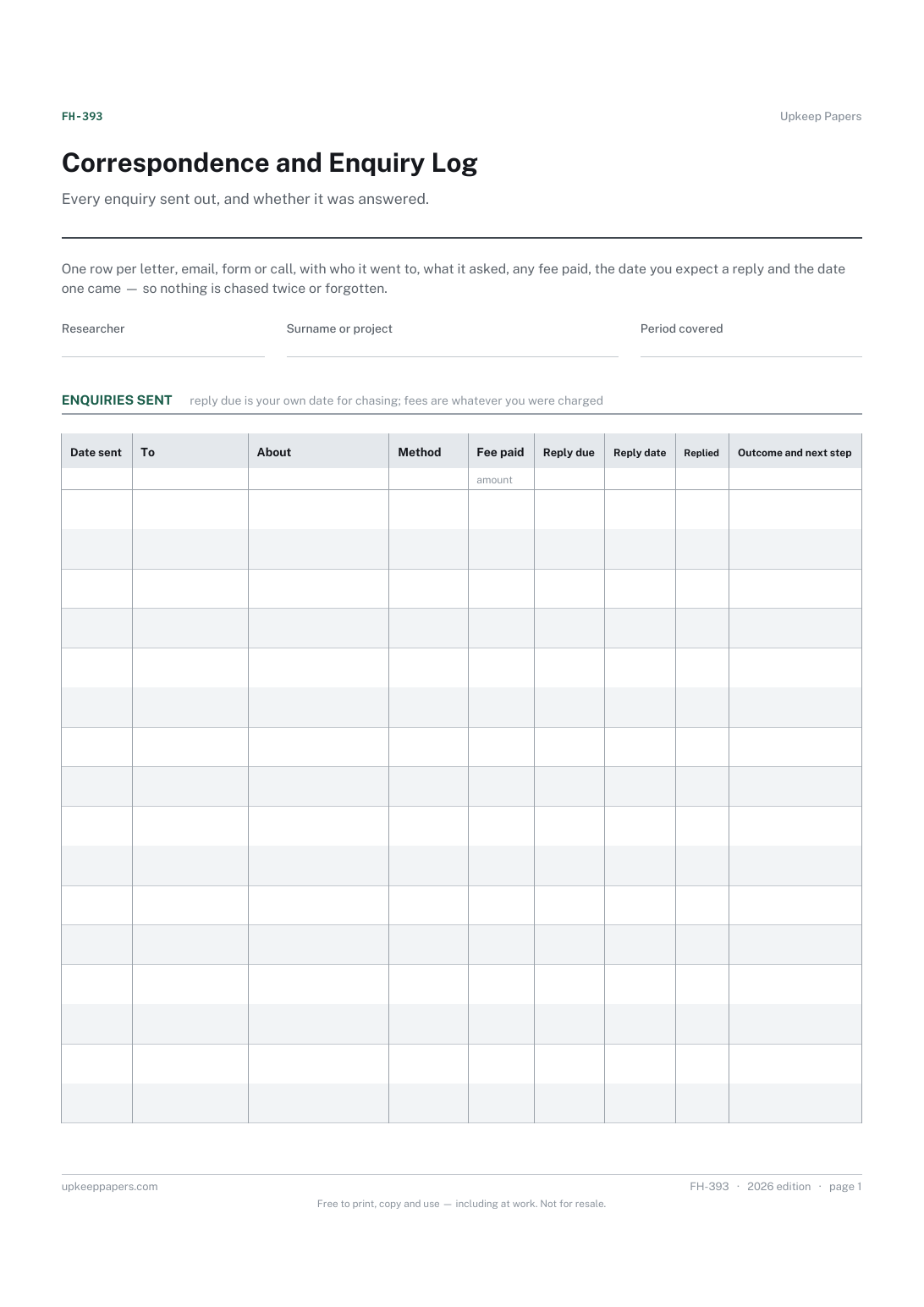
Correspondence and Enquiry Log
What was sent, when, to whom and by what method.
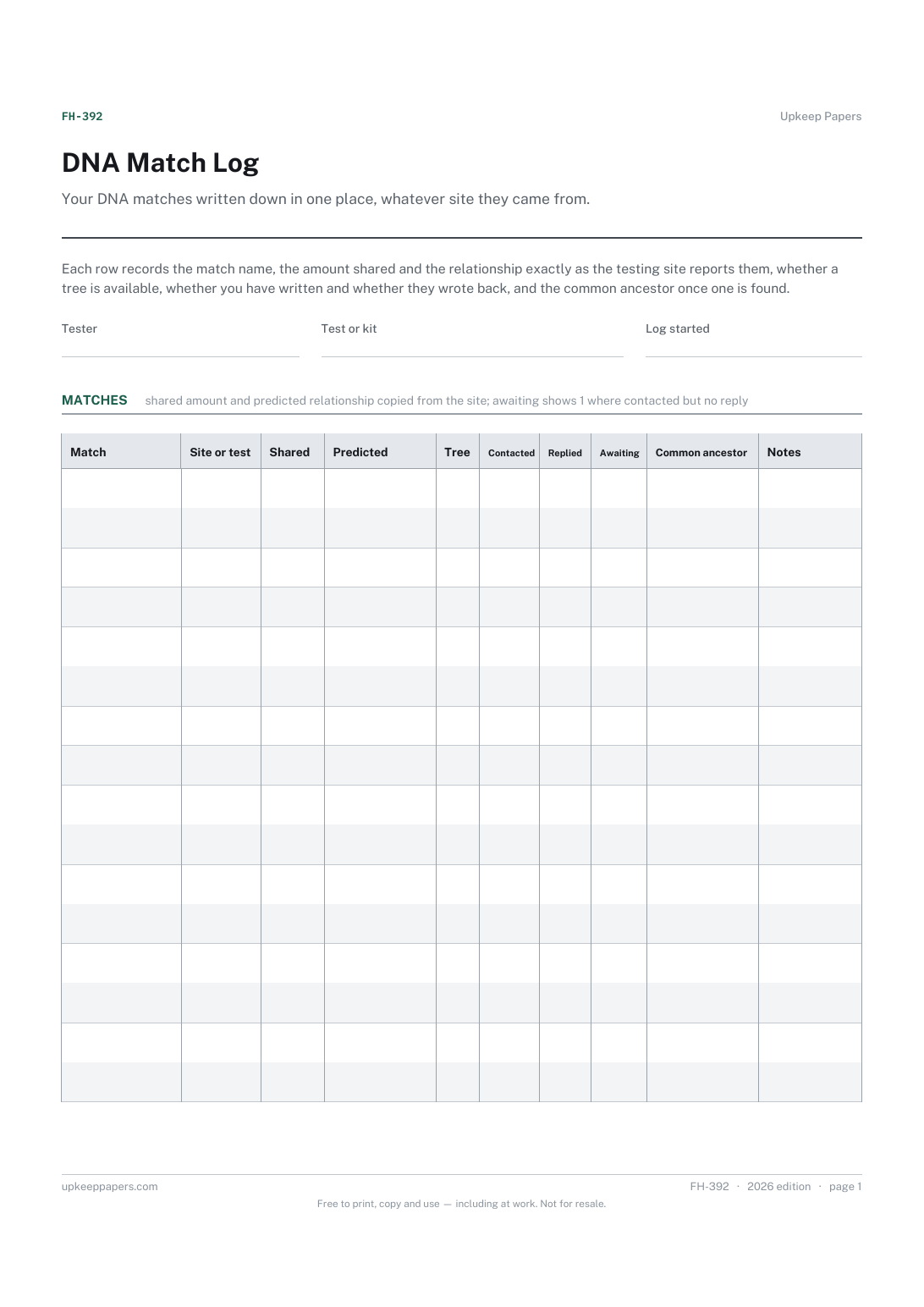
DNA Match Log
Each match by name or username, and which site or test it is on.
