
Family history and genealogy · FH-396 · Form
Oral History Interview Sheet
Free oral history interview sheet — who was interviewed, how it was recorded, the questions and brief answers, and the people and places mentioned. PDF.
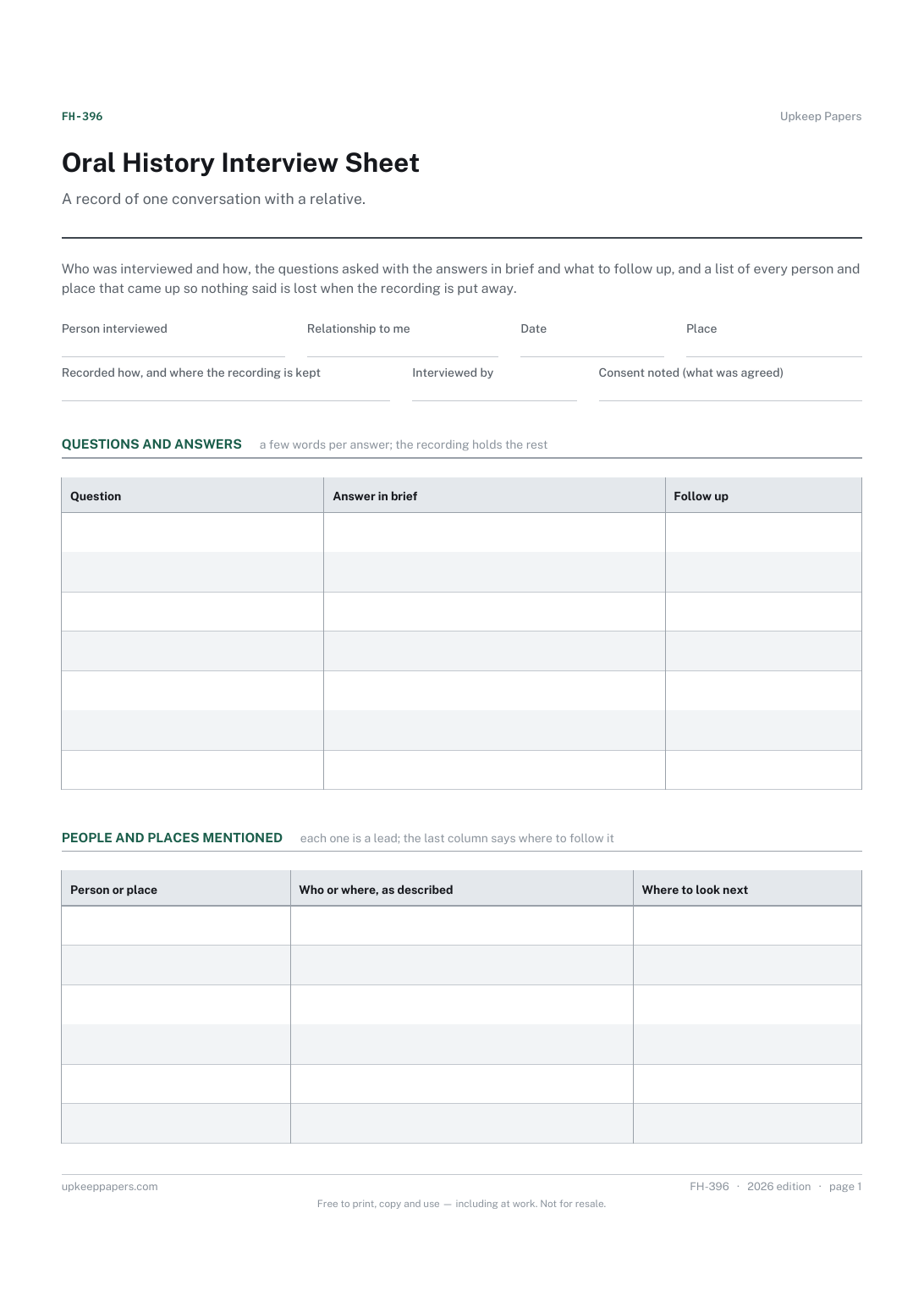
One page. The A4 and US Letter files are laid out identically, so neither is shrunk to fit.
Print it and write on it
Fillable PDF type and save
Or no download needed
Fill it in onlineThe fillable versions have real form fields — open them in any PDF reader, type into them and save. Printing help.
Fill it in online
The same sheet, on screen. Tick, type, add or remove rows, then print it or download the completed version as a PDF. Everything stays in your browser — your entries are kept in this browser's own storage on this device, nothing is uploaded, and there is no account.
Who this is for
A record of one conversation with a relative. Who was interviewed and how, the questions asked with the answers in brief and what to follow up, and a list of every person and place that came up so nothing said is lost when the recording is put away.
Family historians interviewing a parent, grandparent, aunt or old family friend, and anyone who has been told 'ask her before it is too late' and wants a plan for the afternoon and a record afterwards.
What this helps you track
- Who spoke, their relationship to you, and when and where the interview happened
- How it was recorded and whether the person agreed to that, in your words
- The questions asked and the answers in brief, with what to ask next time
- Every person and place mentioned, so each can be looked up later
- What is still to be asked, so the second visit starts where the first ended
How to use it
- Before the visit, fill the header and write the questions you want to ask in the first column of the questions table, leaving room for what comes up.
- At the start, note how you are recording — audio, video, notes only — and write down what the person said about that in the consent field. Whether a recording may be used later, and by whom, is a matter for the two of you.
- During the conversation, write only a few words against each answer; the recording or your memory holds the rest. Use the follow-up column for the loose ends.
- Every time a name or a place comes up, put it in the people and places table with a word about who or where it was. These are the leads.
- Afterwards, note where the recording is kept in the header field, and transfer anything datable to the family timeline and the research log.
- Keep the sheet with the recording; print another for the next visit, or fill it in on screen and save it in your own browser.
Formats
- Printable PDF (A4 and US Letter)
- Fillable PDF with form fields
- Fill in online, saved in your browser
The printable is laid out inside a box that fits both A4 and US Letter, so the two files are identical and neither one is scaled. The fillable PDF has real form fields. The online version keeps what you enter in your own browser and builds the completed PDF on your device.
How to print
Download the A4 or US Letter file to match the paper in your printer, open it in a PDF reader and print at 100% — not "fit to page", which shrinks the writing space. Both files leave a 14 mm margin, which clears the unprintable edge on home printers. To print the online version with your entries in it, use the Print this sheet button, which prints only the sheet and none of the page around it. More on printing.
Questions
How many questions fit?
As many as the table has rows for, and you can add rows in the browser version. Most people find that a short list of open questions produces more than a long one, because the person talks and the follow-up column fills up.
What goes in the consent field?
What the person said about being recorded and about what you may do with it, in their words and yours. It is a note of an agreement between relatives, not a legal form; if you plan to publish or deposit the recording, check what is expected where you are.
Is there a set list of questions?
No. Questions depend on who you are talking to and what you already know. The sheet leaves the column blank so you write your own, and the people and places table catches the answers you did not expect.
What do I do with the names afterwards?
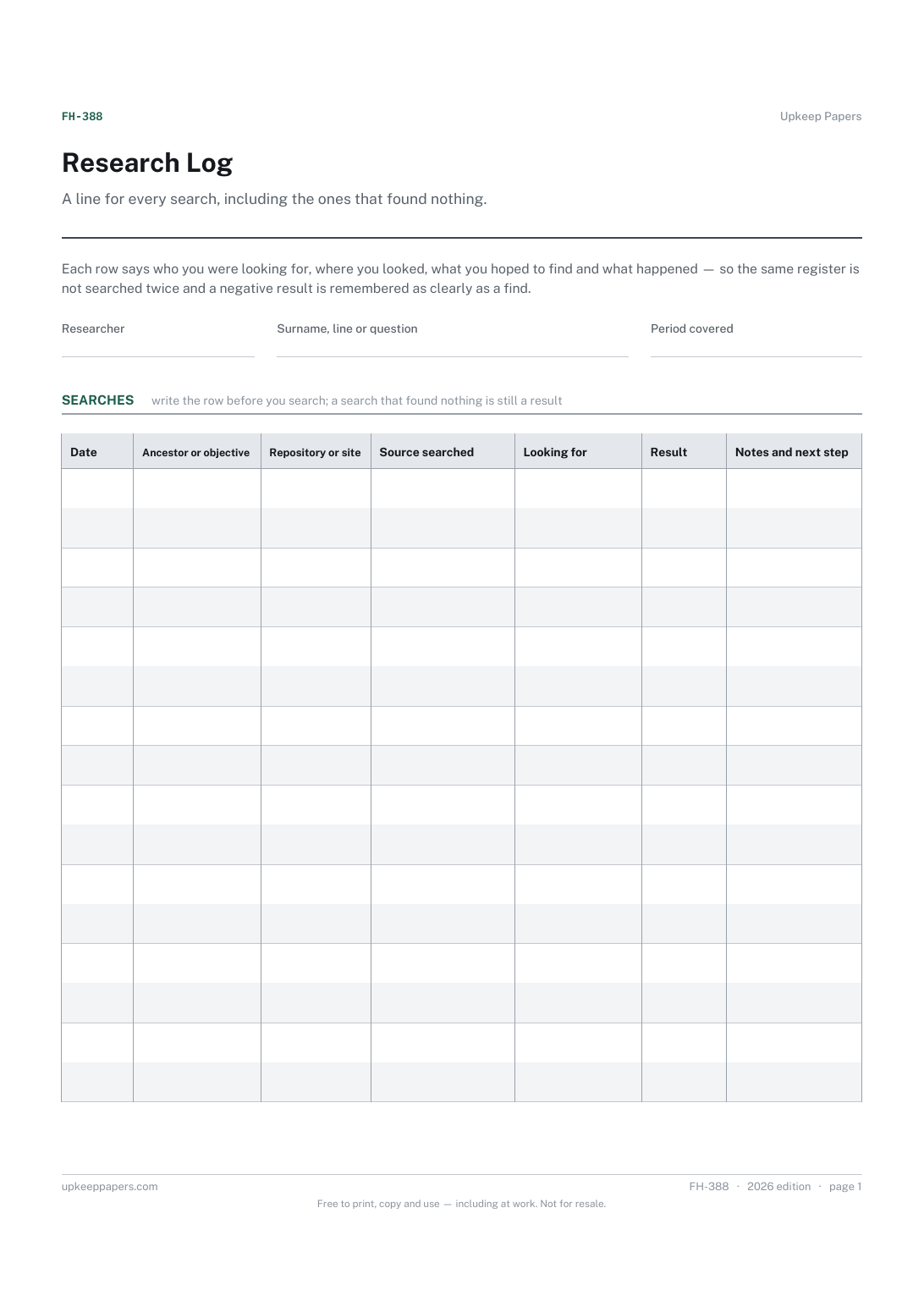
Each one is a lead. Add them to the research log with the interview as the source, and cite the interview by the person's name and the date on the source and citation log so a fact traced to it can be found again.
Related resources
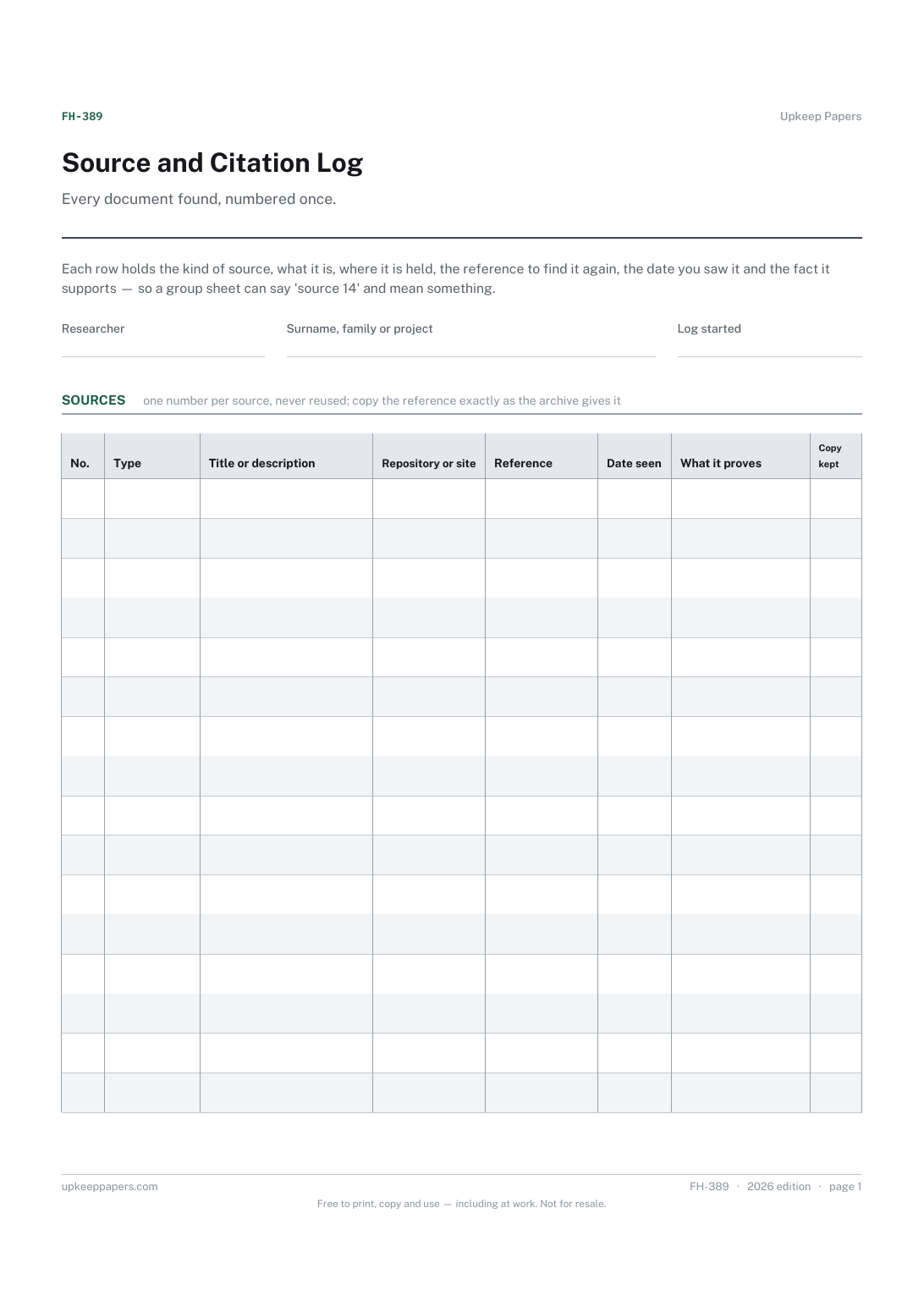
Source and Citation Log
A number for every source, to quote on group sheets and profiles.
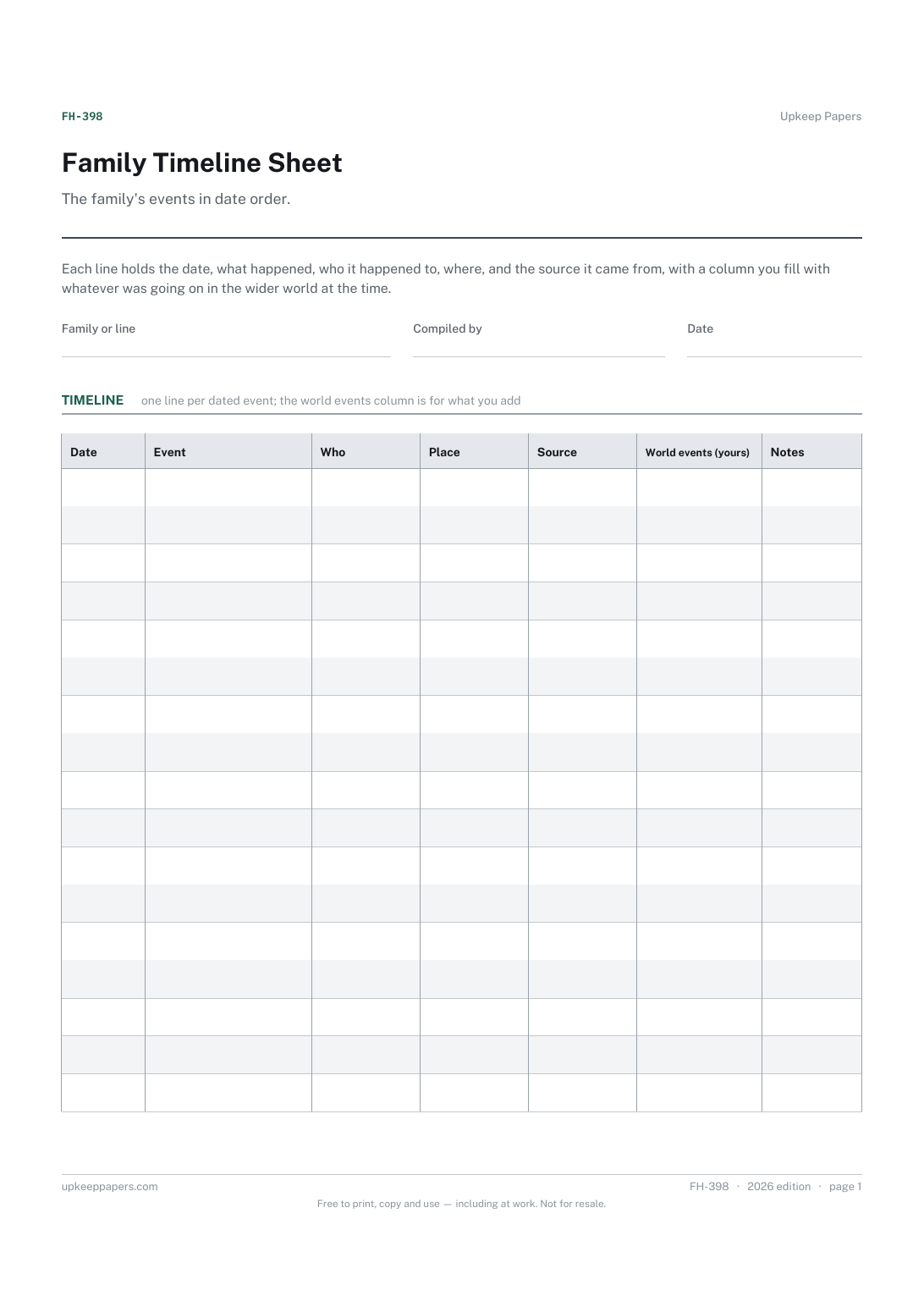
Family Timeline Sheet
Every dated event for a family or a line, in the order it happened.
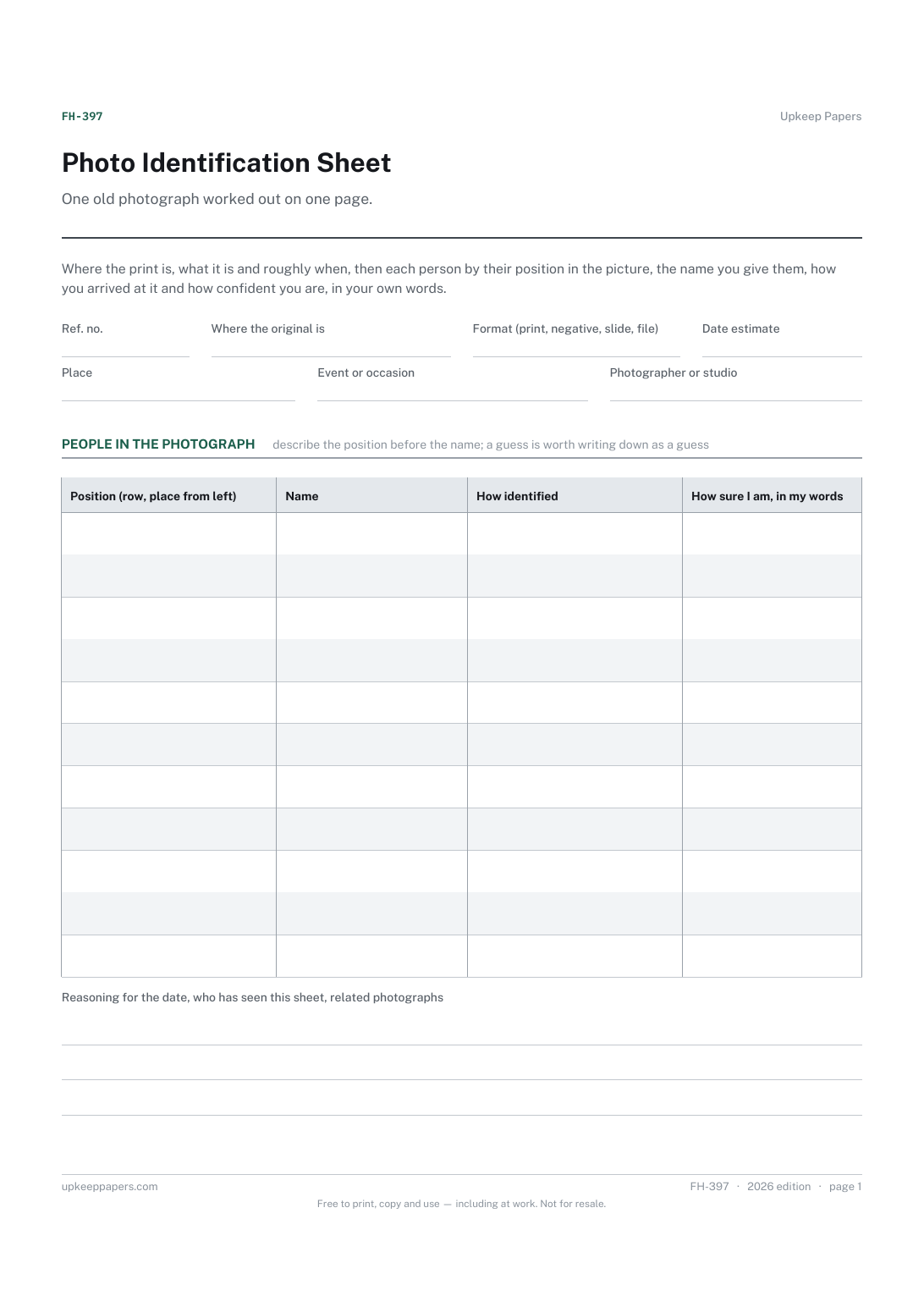
Photo Identification Sheet
A reference number and the physical location of the print, negative or file.
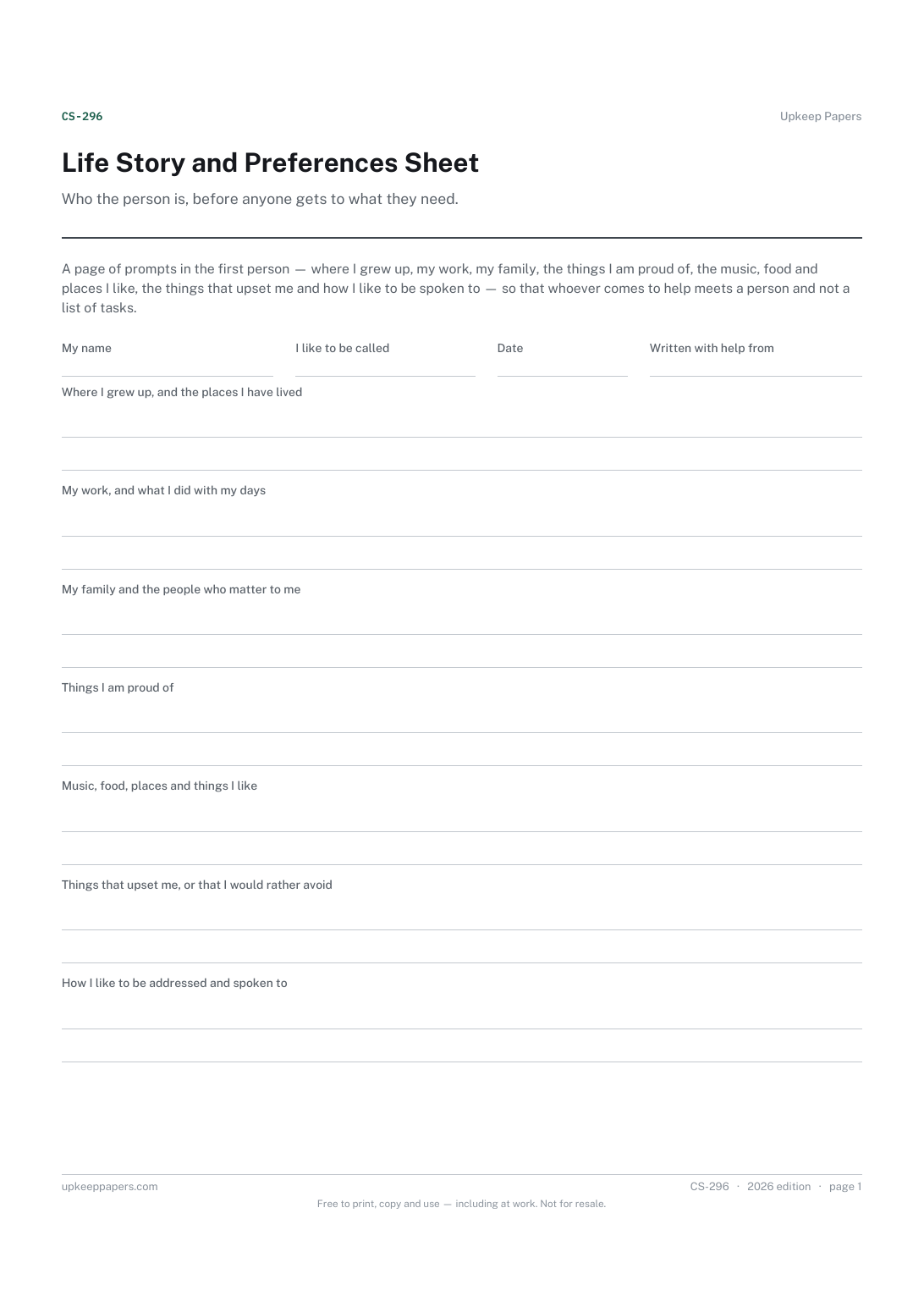
Life Story and Preferences Sheet
Where the person comes from and the life they have led, in their own words.
