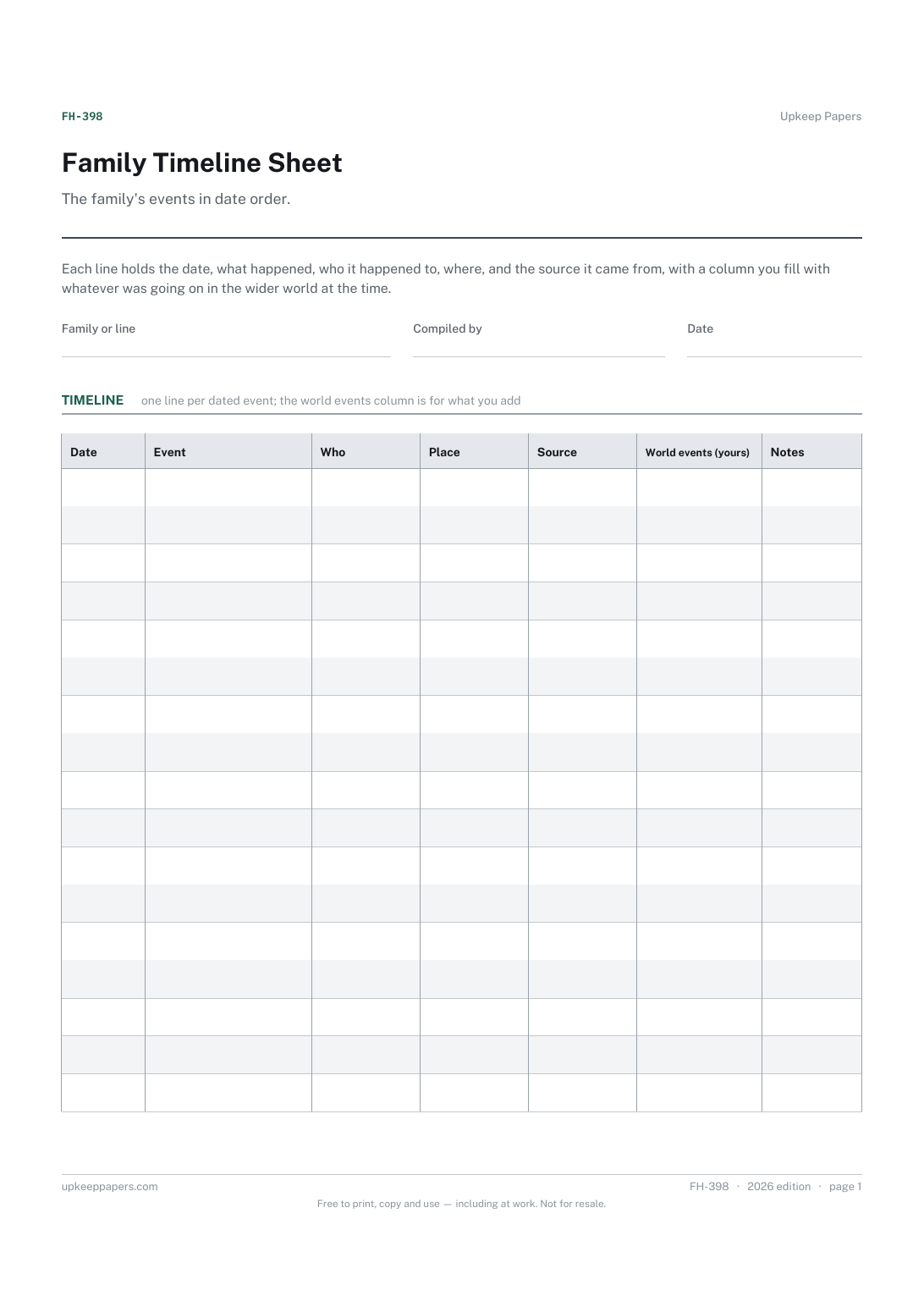
Family Timeline Sheet
Every dated event for a family or a line, in the order it happened.
FH-398 Form PDF Online
Everything here is free. Making it takes time and money. Everything here is free.
 Buy us a coffee
Family history and genealogy · FH-400 · Record
Free residence history sheet — every address one person lived at, from and to, with whom, the source, and whether it still stands or you have visited. PDF.
2 pages. The A4 and US Letter files are laid out identically, so neither is shrunk to fit.
Print it and write on it
Fillable PDF type and save
Or no download needed
Fill it in onlineThe fillable versions have real form fields — open them in any PDF reader, type into them and save. Printing help.
The same sheet, on screen. Tick, type, add or remove rows, then print it or download the completed version as a PDF. Everything stays in your browser — your entries are kept in this browser's own storage on this device, nothing is uploaded, and there is no account.
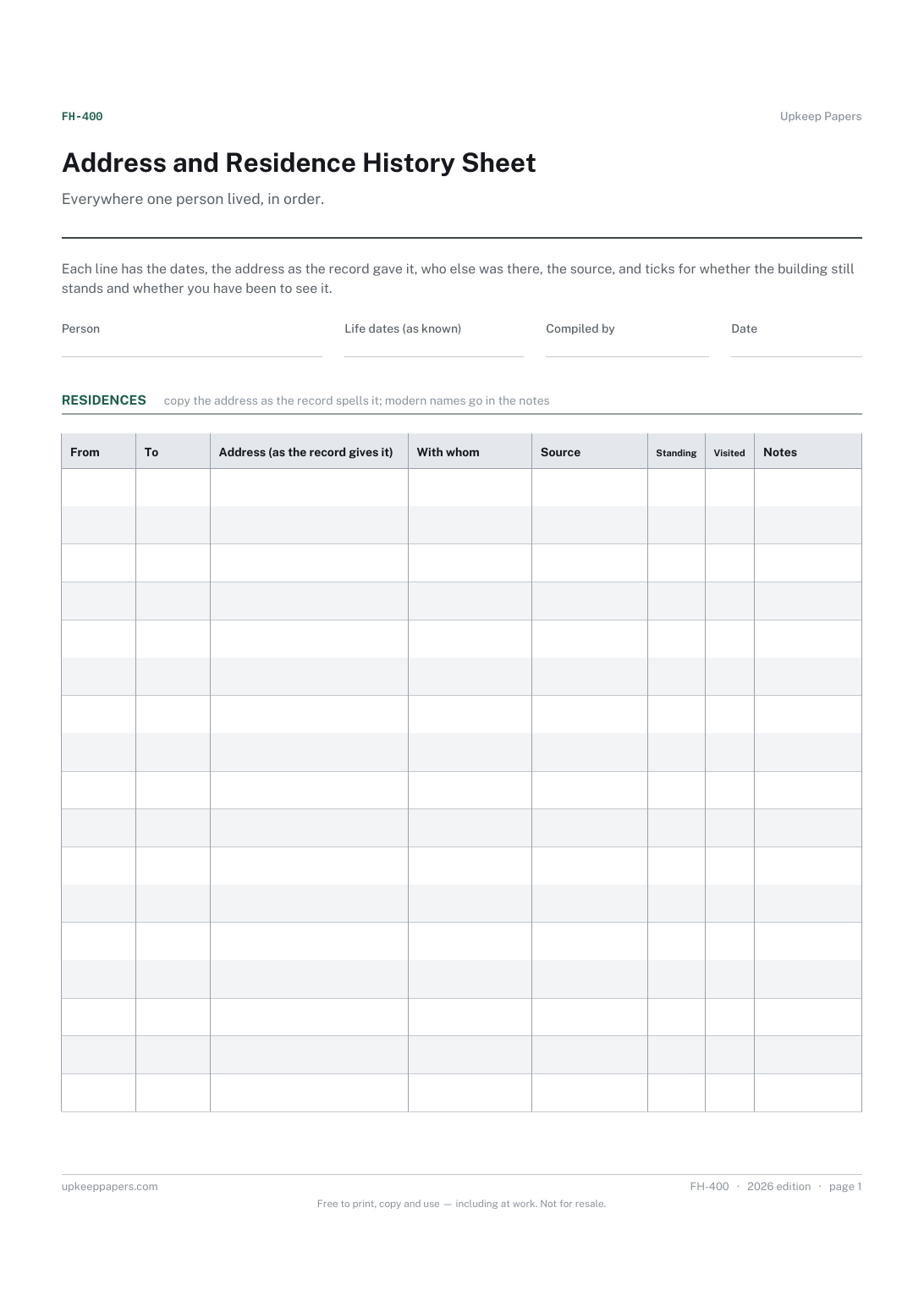
Everywhere one person lived, in order. Each line has the dates, the address as the record gave it, who else was there, the source, and ticks for whether the building still stands and whether you have been to see it.
Family historians following one ancestor through census returns, certificates, directories and letters, and anyone planning a trip to see where the family actually lived.
The printable is laid out inside a box that fits both A4 and US Letter, so the two files are identical and neither one is scaled. The fillable PDF has real form fields. The online version keeps what you enter in your own browser and builds the completed PDF on your device.
Download the A4 or US Letter file to match the paper in your printer, open it in a PDF reader and print at 100% — not "fit to page", which shrinks the writing space. Both files leave a 14 mm margin, which clears the unprintable edge on home printers. To print the online version with your entries in it, use the Print this sheet button, which prints only the sheet and none of the page around it. More on printing.
Usually you do not, exactly. Records give a date on which a person was at an address, not the day they arrived or left. Put the dates you can support and note that they are bounds rather than the move itself.
The old one, as written, in the address column, and the modern equivalent in the notes if you have worked it out. Streets are renamed and renumbered, so the original wording is what the next record will match.
One line, with the earliest and latest dates and all the sources. Where a family left and came back, give the second stay its own line.
A street is public; a house is somebody's home. Look from the street, and ask before anything more. Whether a building still stands is often answerable from a current map before you travel.
Every dated event for a family or a line, in the order it happened.
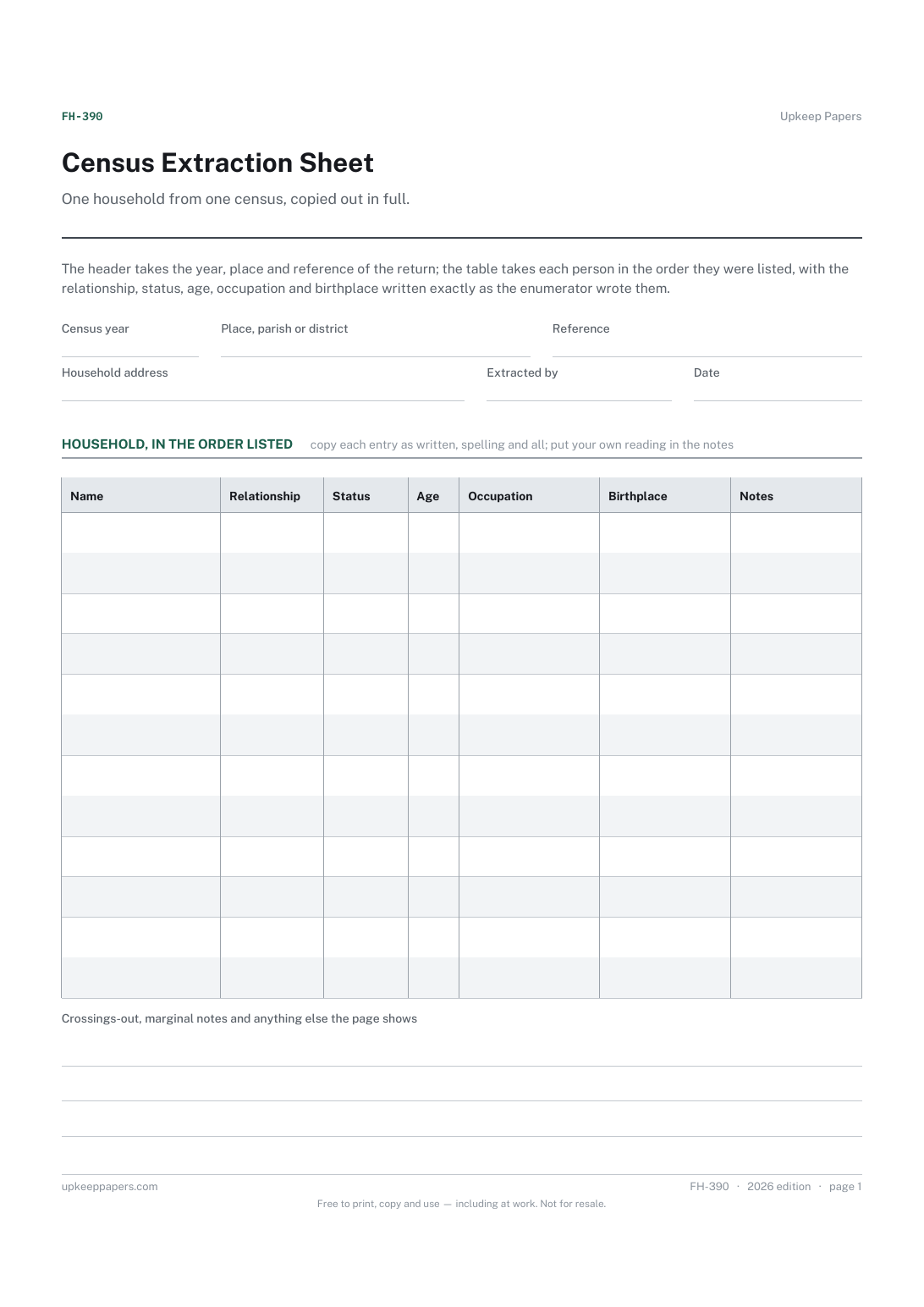
Which census, which place and which reference the household was found in.
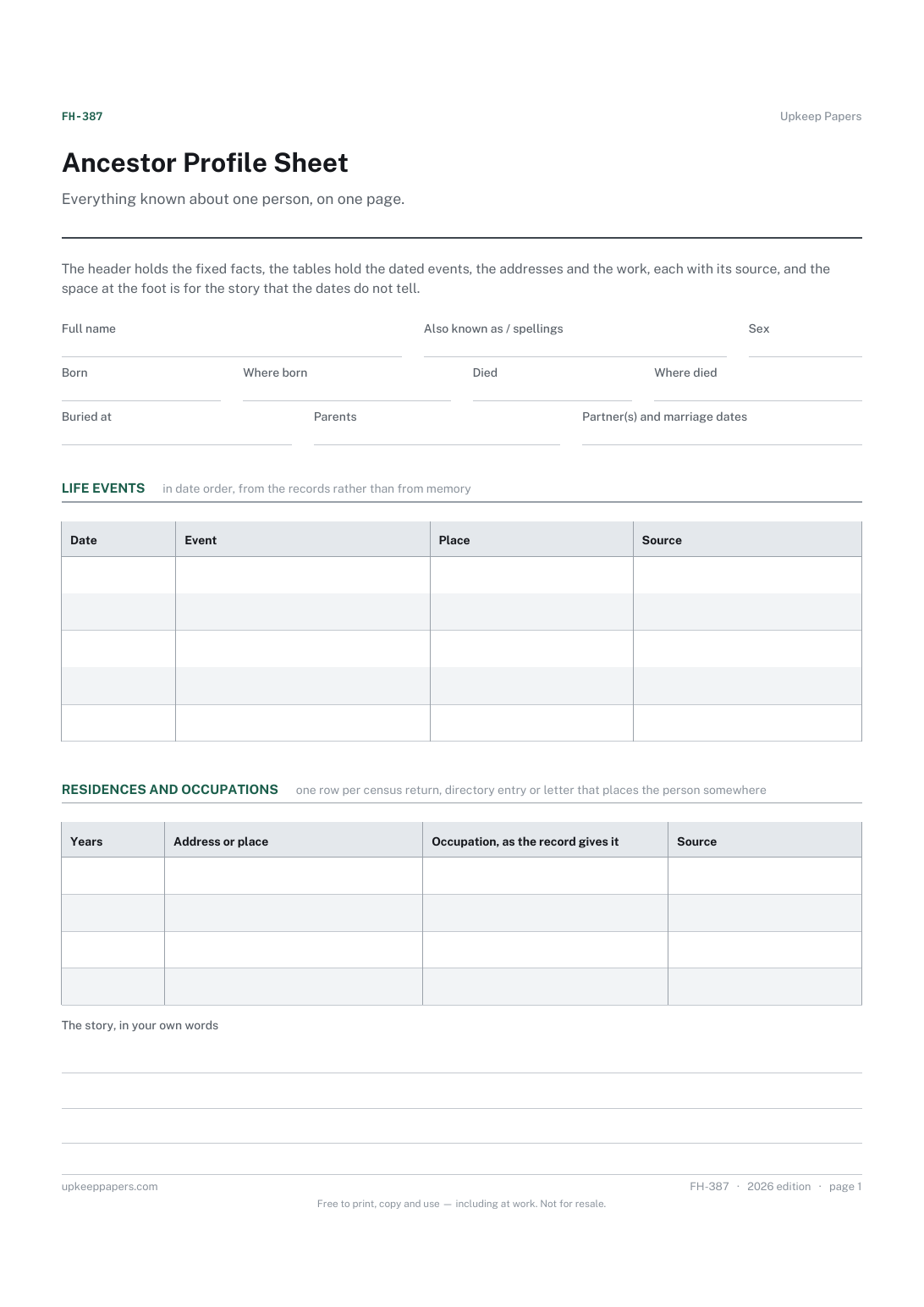
Names, including the spellings and nicknames the records use.
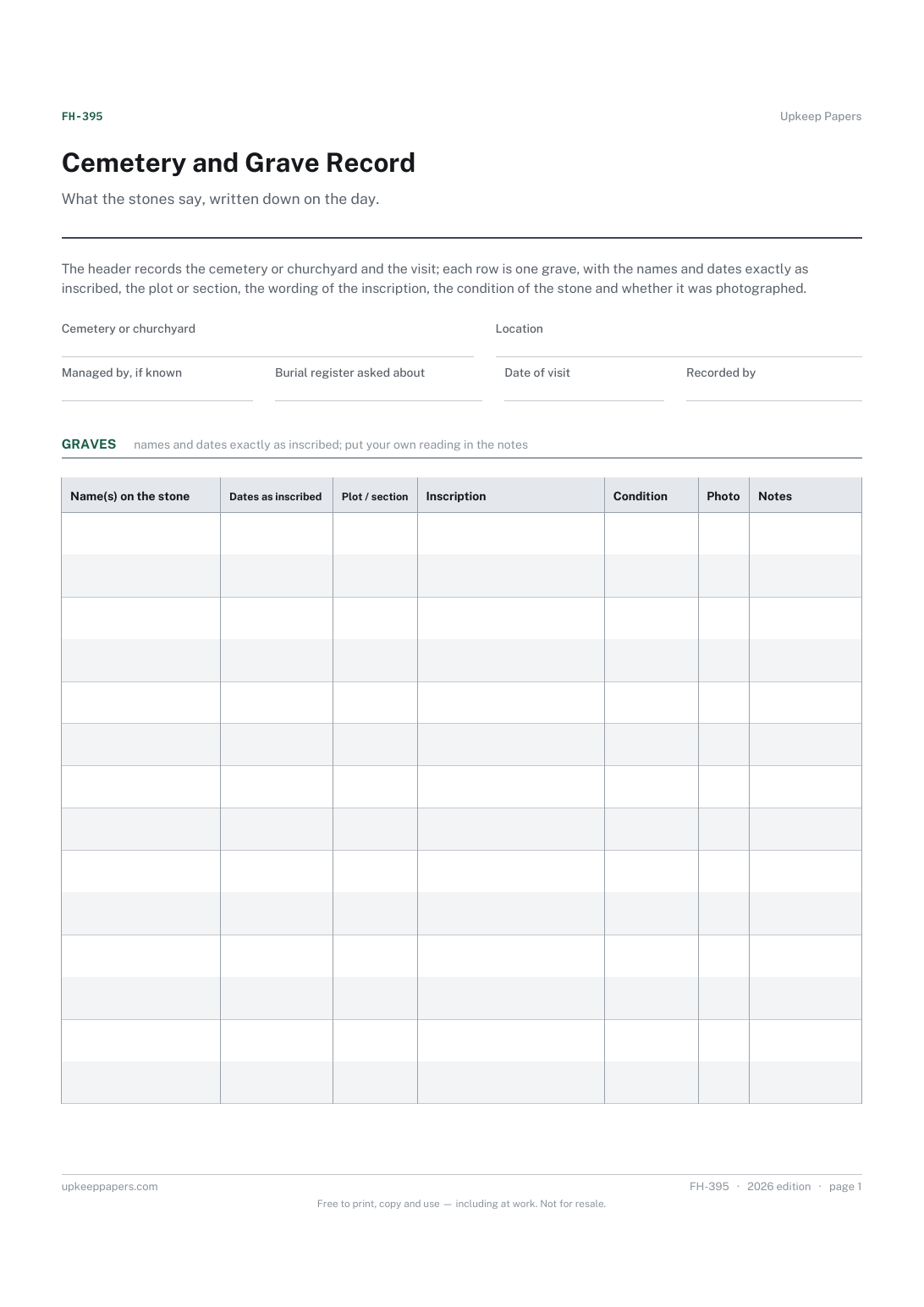
Which cemetery or churchyard, and when it was visited.

Every sheet, binder, game and puzzle on Upkeep Papers is free to download, with no email and no account. Making them is not free: each one takes days of research, design and checking, and the site costs money to run. If something here saved you time, you can buy us a coffee. It is entirely optional: nothing is locked, and nothing changes if you don’t.
Buy us a coffee Opens PayPal in a new tab. Any amount, and nothing changes if you would rather not.