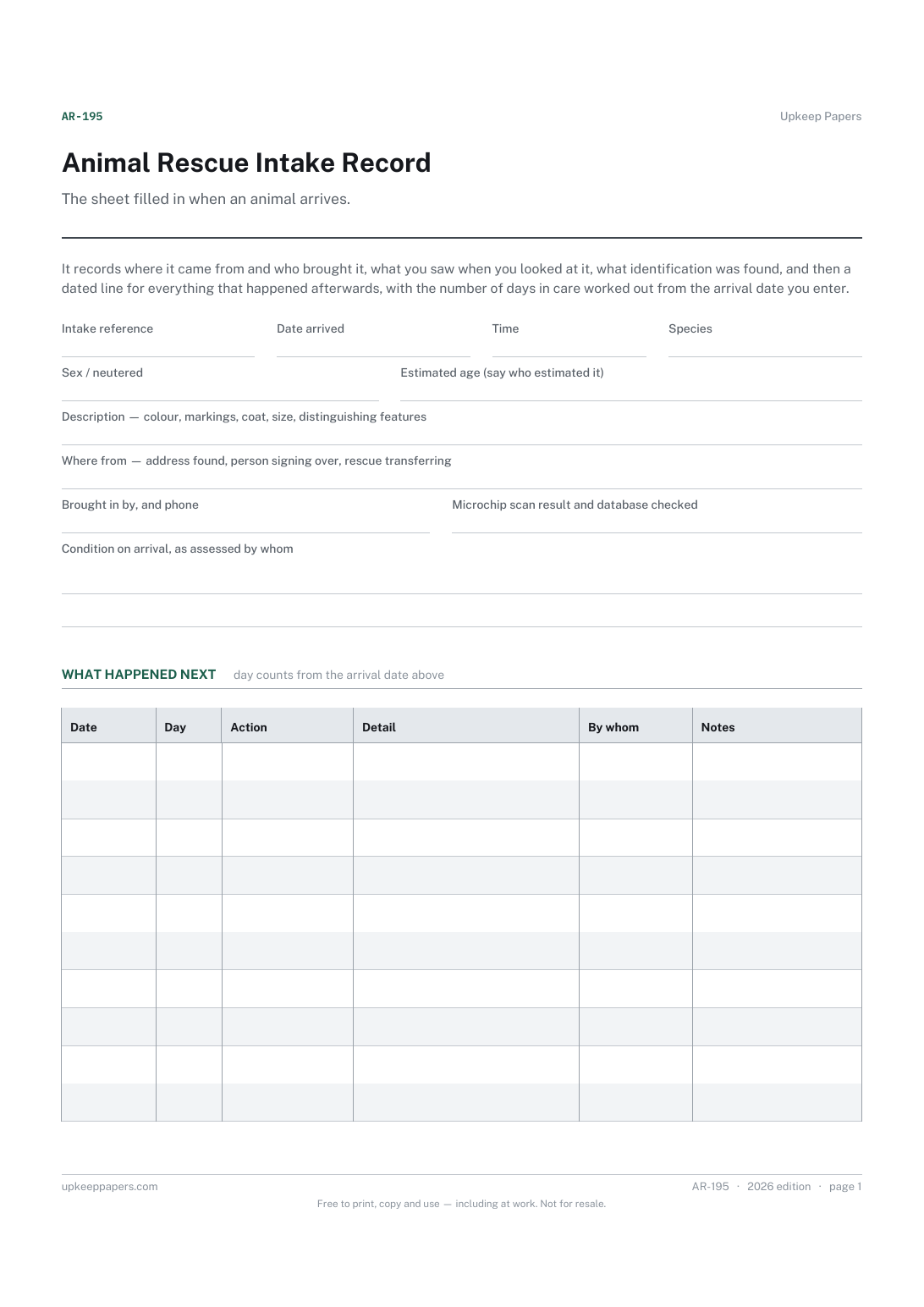
Animal Rescue Intake Record
Where the animal came from and who handed it over, with a contact.
AR-195 Record PDF Excel Online
Everything here is free. Making it takes time and money. Everything here is free.
 Buy us a coffee
Animal health records · AR-196 · Record
Free printable foster carer record — placement dates, feeding and medication as instructed, vet contacts, a progress log and expenses claimed. PDF and browser.
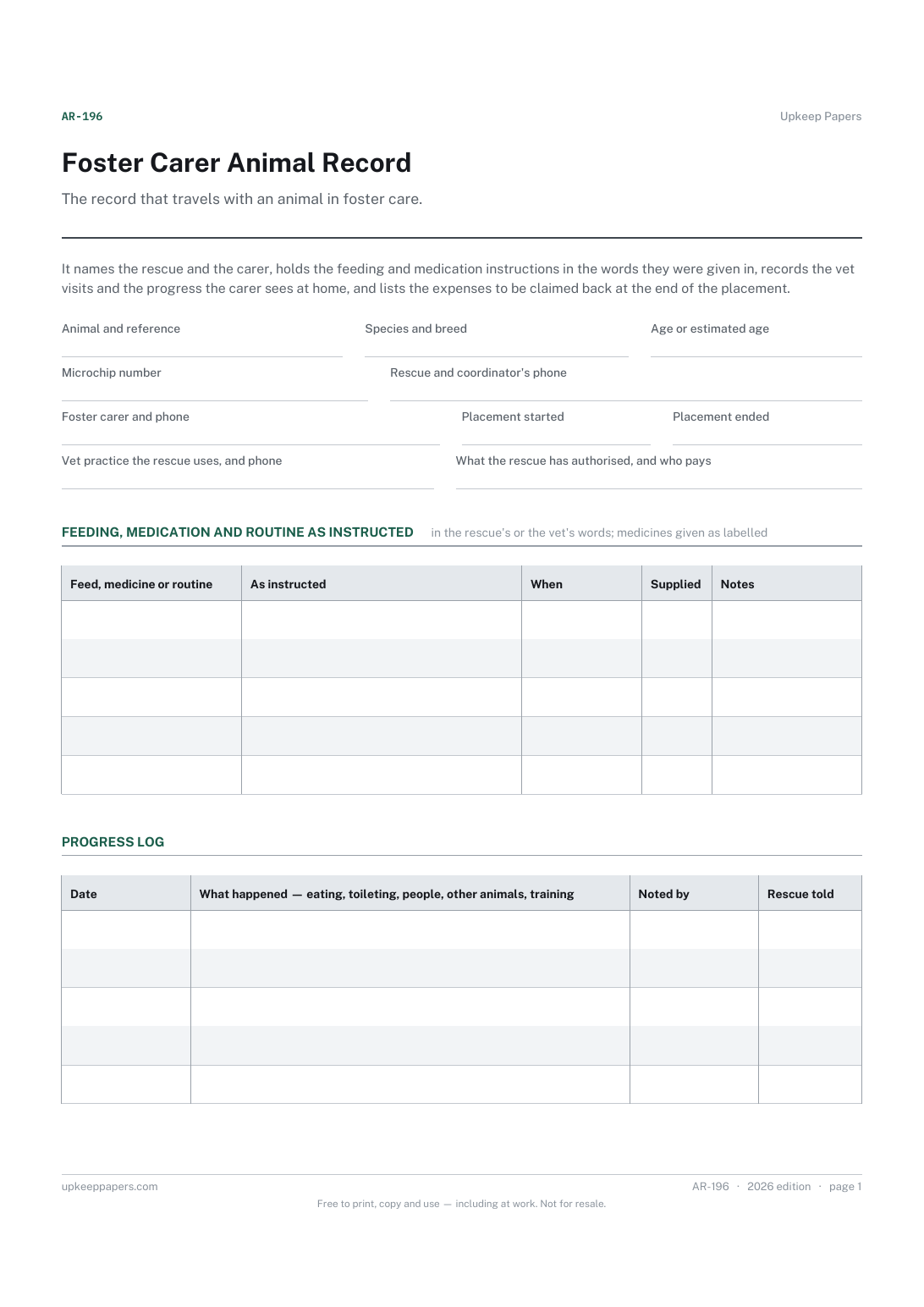
2 pages. The A4 and US Letter files are laid out identically, so neither is shrunk to fit.
Print it and write on it
Fillable PDF type and save
Or no download needed
Fill it in onlineThe fillable versions have real form fields — open them in any PDF reader, type into them and save. Printing help.
The same sheet, on screen. Totals and figures are worked out as you type, rows can be added or removed, and you can print it or download the completed version as a PDF. Everything stays in your browser — your entries are kept in this browser's own storage on this device, nothing is uploaded, and there is no account.
The record that travels with an animal in foster care. It names the rescue and the carer, holds the feeding and medication instructions in the words they were given in, records the vet visits and the progress the carer sees at home, and lists the expenses to be claimed back at the end of the placement.
Foster carers taking an animal for a rescue or a branch, fostering coordinators handing an animal over, and anyone keeping a dog or cat temporarily for a friend, a hospital stay or a move.
The printable is laid out inside a box that fits both A4 and US Letter, so the two files are identical and neither one is scaled. The fillable PDF has real form fields. The online version keeps what you enter in your own browser and builds the completed PDF on your device.
Download the A4 or US Letter file to match the paper in your printer, open it in a PDF reader and print at 100% — not "fit to page", which shrinks the writing space. Both files leave a 14 mm margin, which clears the unprintable edge on home printers. To print the online version with your entries in it, use the Print this sheet button, which prints only the sheet and none of the page around it. More on printing.
The rescue and its vet. Every line in the instructions table is copied from what they told you; nothing on the sheet suggests an amount, a food or a frequency.
Ask the rescue first and write the answer down. Most rescues use a particular practice and pay only for what they have authorised, which is why there is a line for it at the top.
Because the useful things about a foster animal are the ordinary ones — how it is with the post, the stairs, the cat, a child on a bike — and nobody remembers them six weeks later without dates.
That is between you and them, and it should be agreed before the animal arrives. The table records what you spent and whether you have the receipt.
Hand it to the rescue with the animal. It goes on to the adopter or the next carer, and it is the only account of those weeks that anyone has.
Where the animal came from and who handed it over, with a contact.
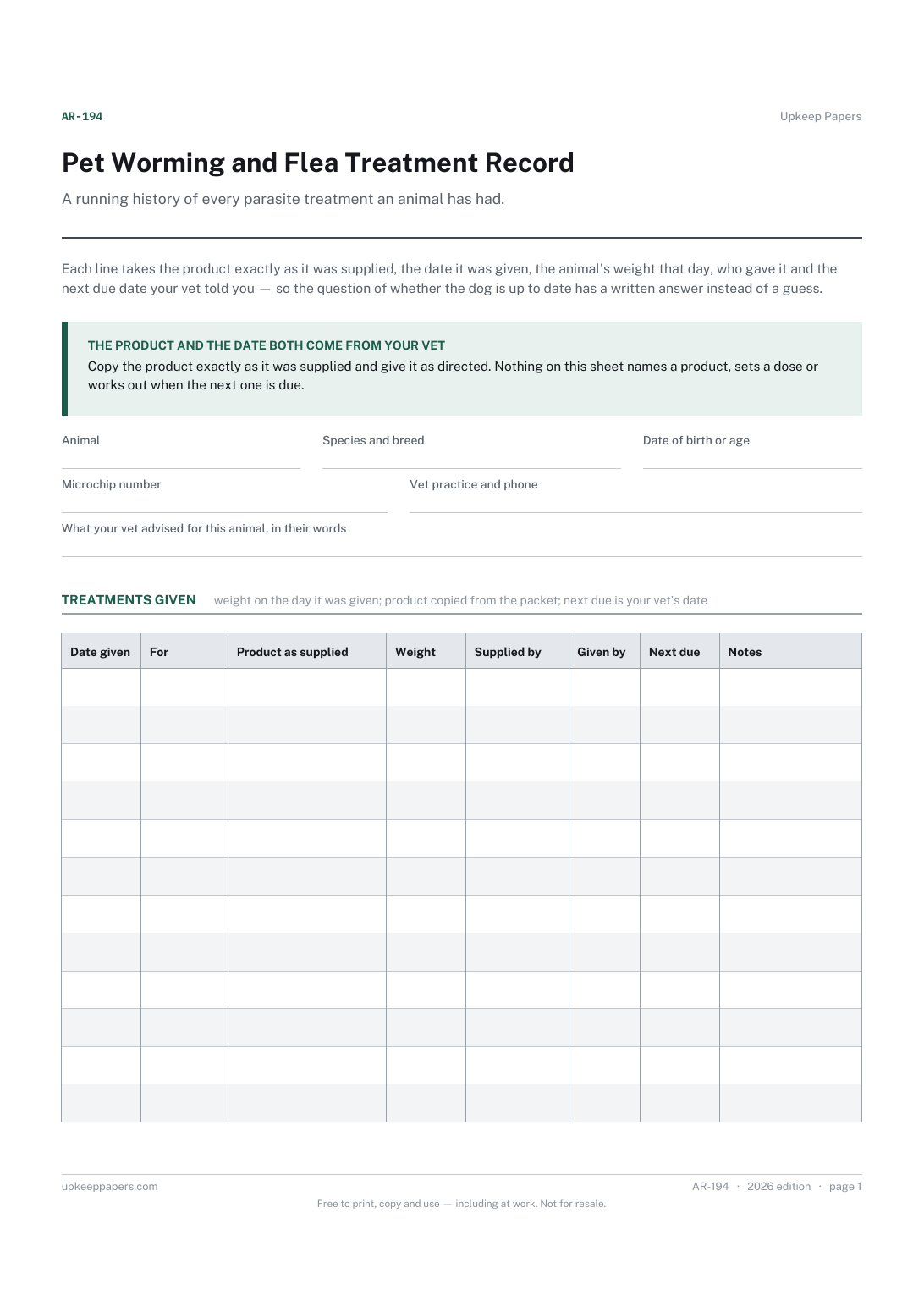
What was given, on what date, and by whom.
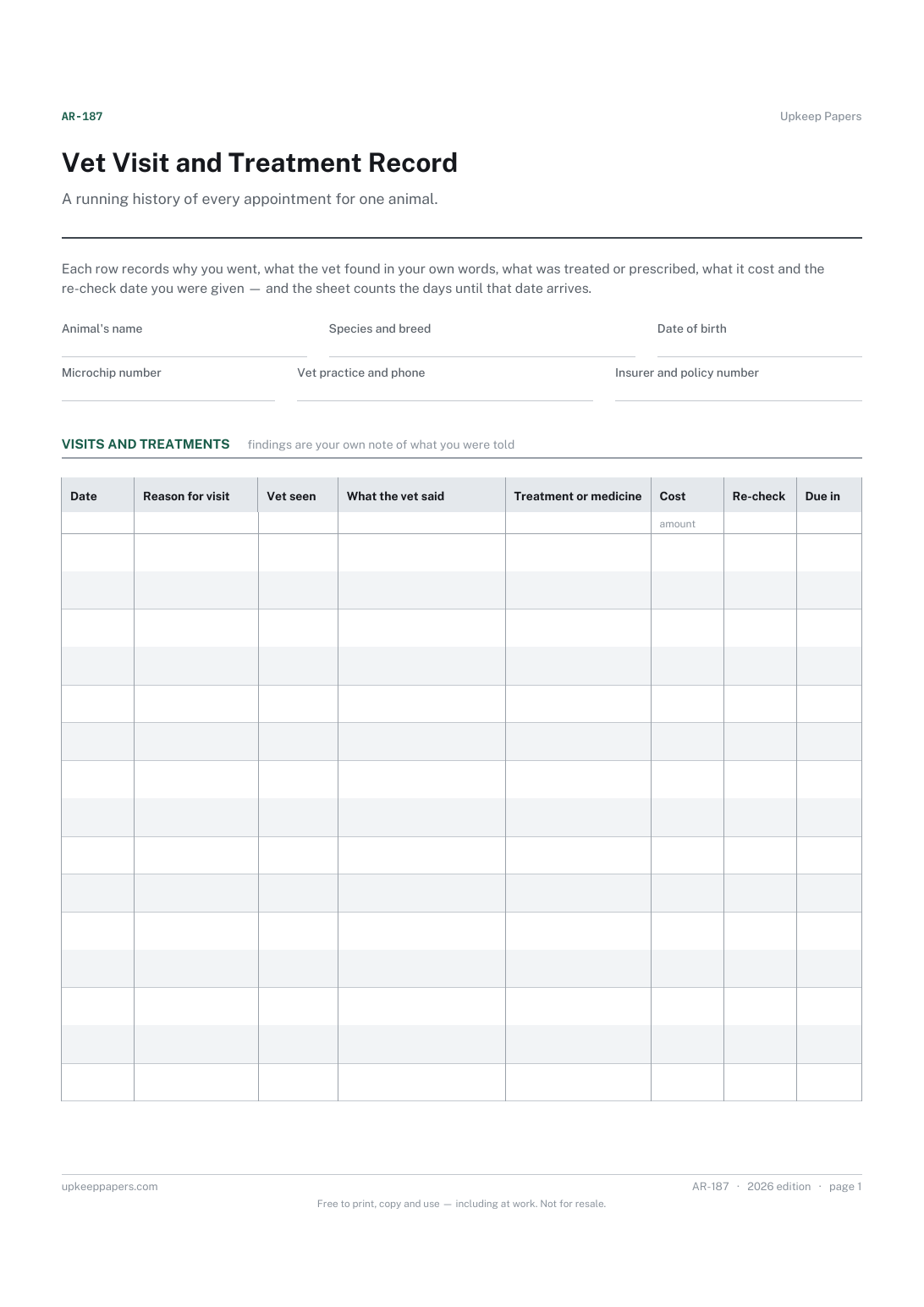
Every appointment in date order with the reason you went.
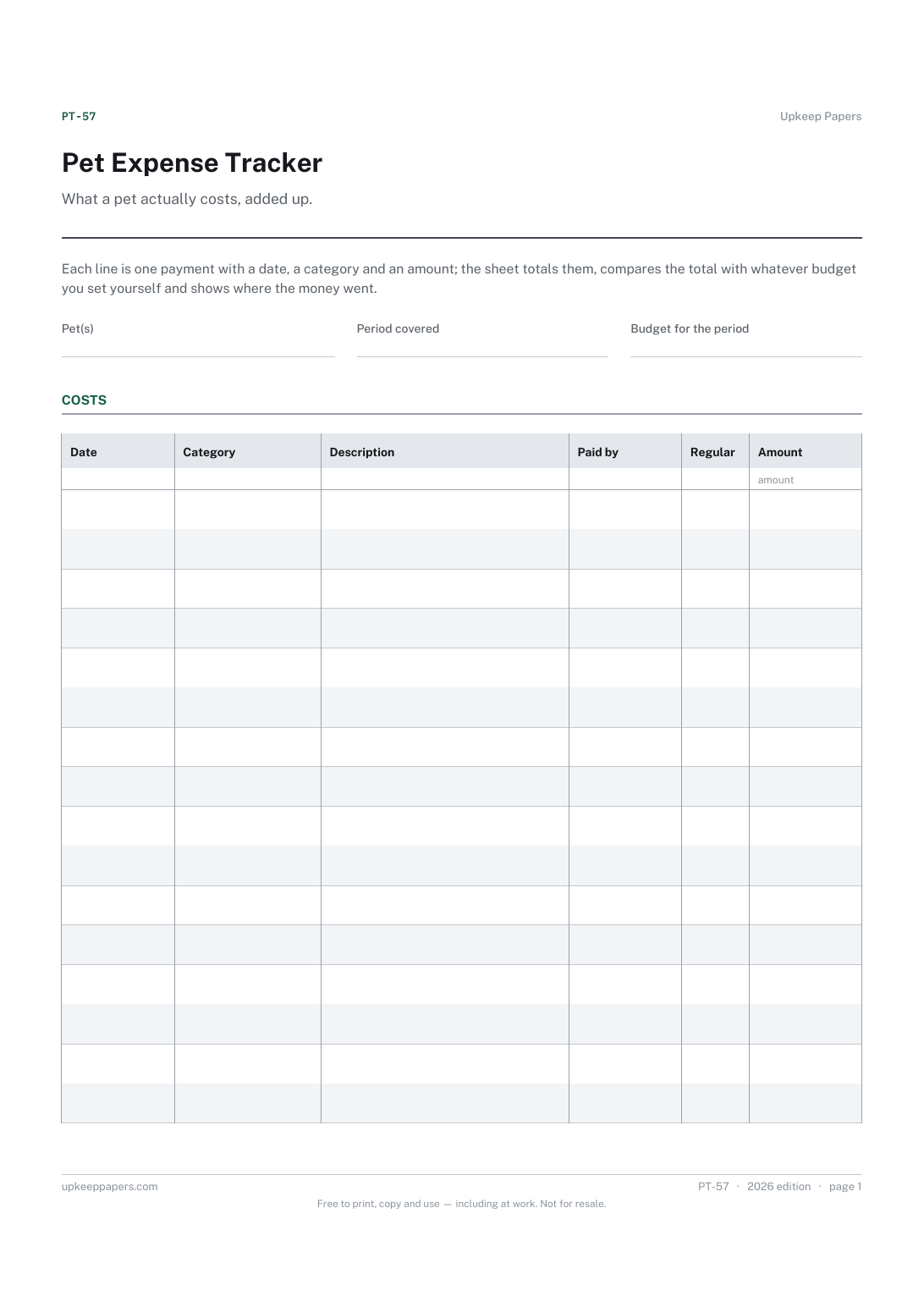
Total spend for the period, and how it compares with the figure you budgeted.
Printable sheets, workbooks and tools on the same subject.
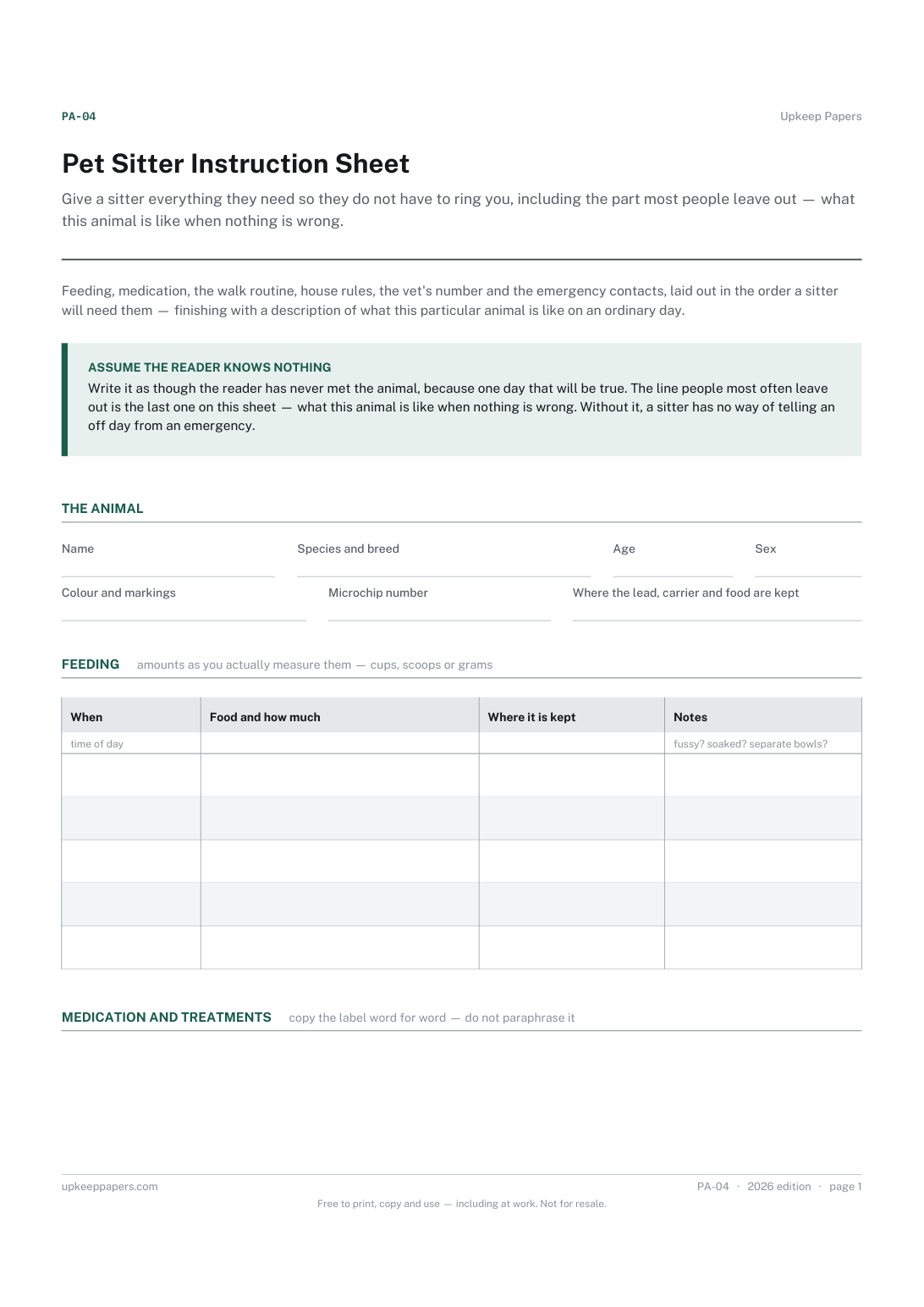
Give a sitter everything they need so they do not have to ring you, including the part most people leave out — what this animal is like when nothing is wrong.
Give a sitter the numbers and the failure procedures, so they are not guessing about a species they have never kept.

Every sheet, binder, game and puzzle on Upkeep Papers is free to download, with no email and no account. Making them is not free: each one takes days of research, design and checking, and the site costs money to run. If something here saved you time, you can buy us a coffee. It is entirely optional: nothing is locked, and nothing changes if you don’t.
Buy us a coffee Opens PayPal in a new tab. Any amount, and nothing changes if you would rather not.