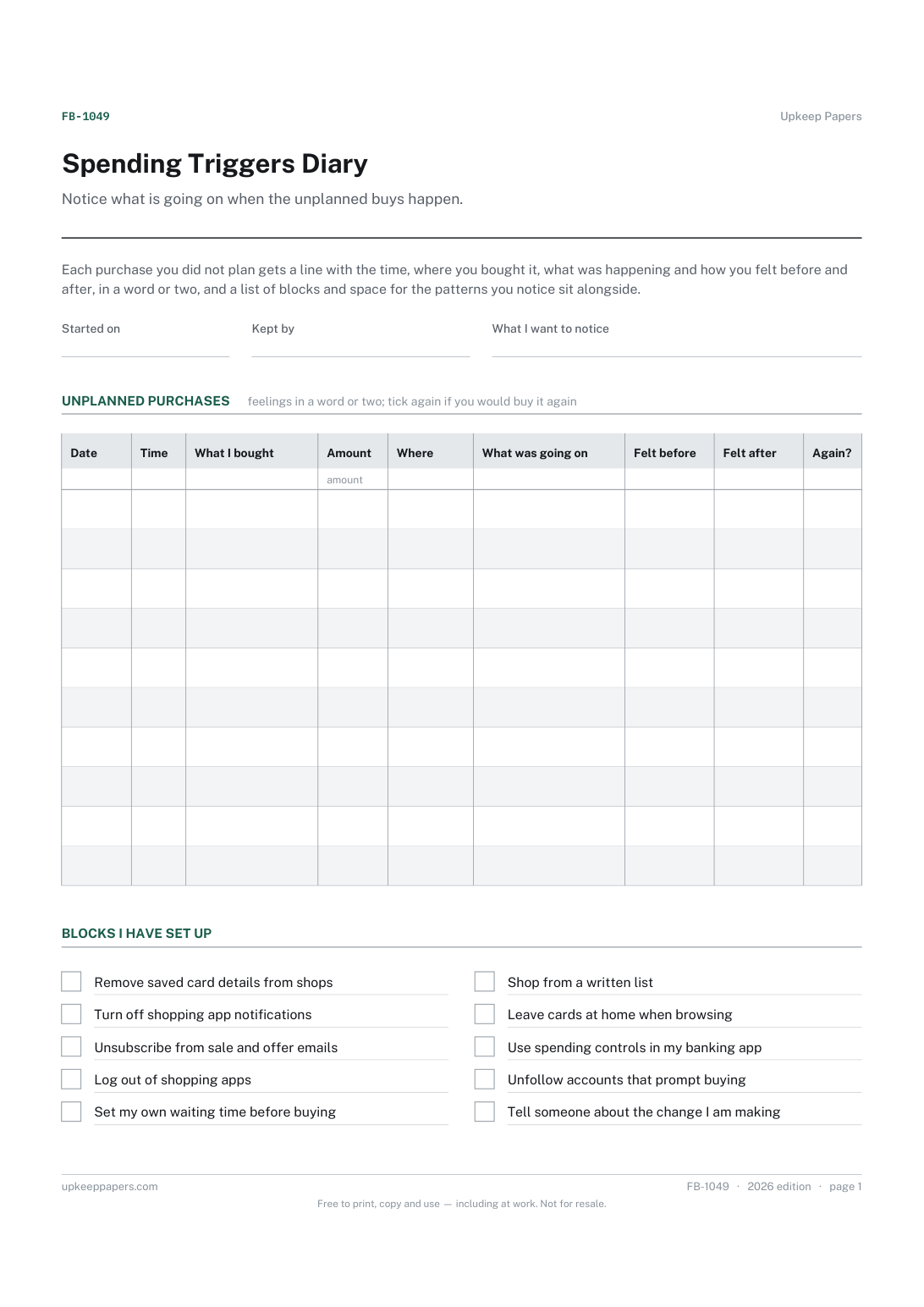
Spending Triggers Diary
Each unplanned purchase, what it cost and where it happened.
FB-1049 Log PDF Online
Everything here is free. Making it takes time and money. Everything here is free.
 Buy us a coffee
Money Calculators and Worksheets · MC-1052 · Form
Personal money rules worksheet: write a few rules of your own for spending, saving, credit, bills and giving, then tick each week they held. PDF and browser.
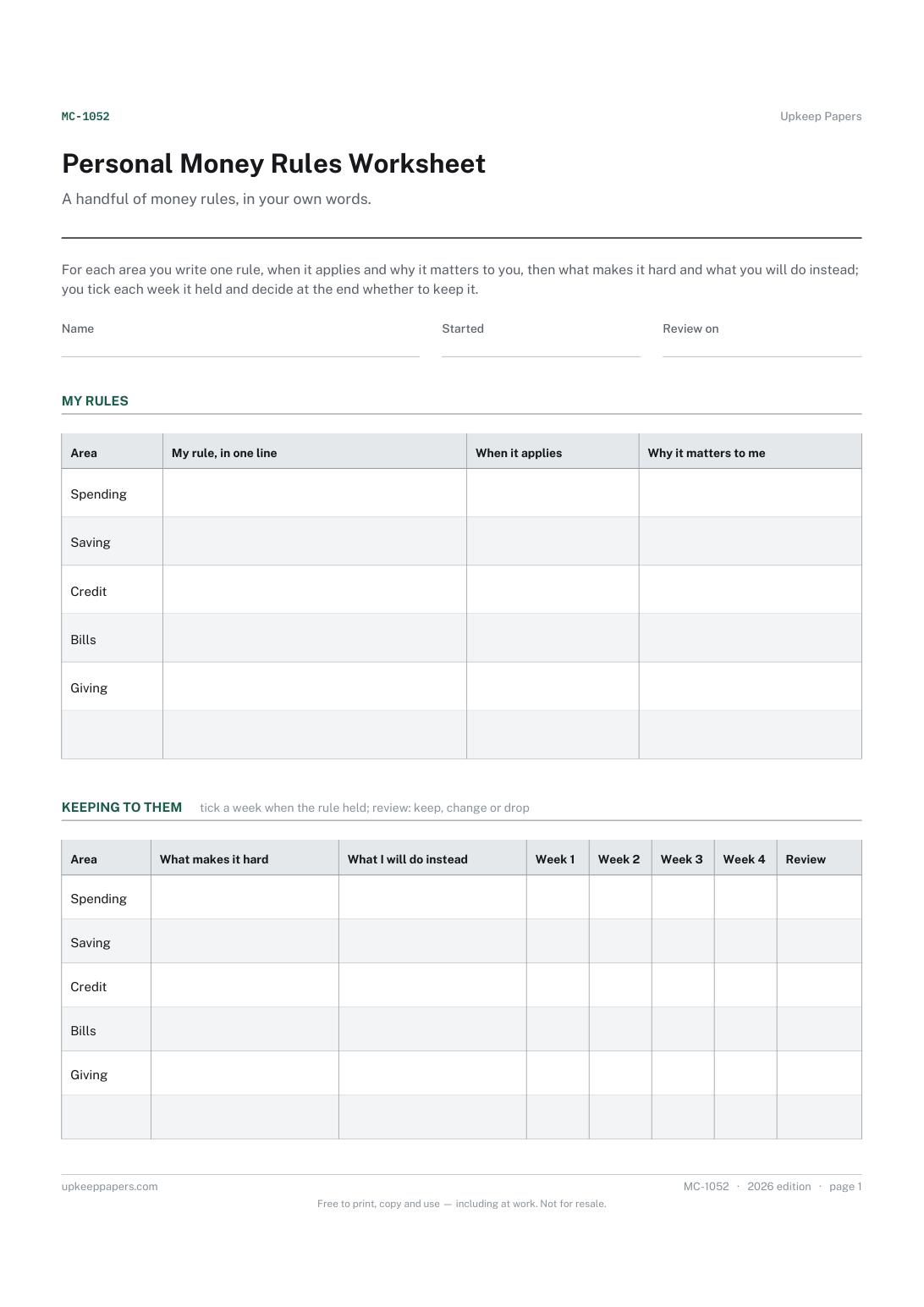
One page. The A4 and US Letter files are laid out identically, so neither is shrunk to fit.
Print it and write on it
Fillable PDF type and save
Or no download needed
Fill it in onlineThe fillable versions have real form fields — open them in any PDF reader, type into them and save. Printing help.
The same sheet, on screen. Tick, type, add or remove rows, then print it or download the completed version as a PDF. Everything stays in your browser — your entries are kept in this browser's own storage on this device, nothing is uploaded, and there is no account.
A handful of money rules, in your own words. For each area you write one rule, when it applies and why it matters to you, then what makes it hard and what you will do instead; you tick each week it held and decide at the end whether to keep it.
Anyone who wants to change one or two money habits without drawing up a full budget, and people who know what they want to do but find it slips when they are tired, busy or tempted.
The printable is laid out inside a box that fits both A4 and US Letter, so the two files are identical and neither one is scaled. The fillable PDF has real form fields. The online version keeps what you enter in your own browser and builds the completed PDF on your device.
Download the A4 or US Letter file to match the paper in your printer, open it in a PDF reader and print at 100% — not "fit to page", which shrinks the writing space. Both files leave a 14 mm margin, which clears the unprintable edge on home printers. To print the online version with your entries in it, use the Print this sheet button, which prints only the sheet and none of the page around it. More on printing.
One you can remember and check. Something specific, such as a rule about when you use a credit card or what happens to money left at the end of the month, is easier to tick off than a broad aim like spending less.
No. There is room for one in each of five areas plus one of your own, but you do not have to fill every row. Starting with fewer rules can make it easier to see which ones work.
Leave the week unticked and look at what makes it hard. A rule that keeps slipping may need a clearer trigger, a different plan for the hard moment or new wording. Mark it change in the review column and rewrite it for the next month.
That worksheet sorts your regular spending into needs and wants. This one is about behaviour: a few rules you set yourself and a weekly check on whether they held.
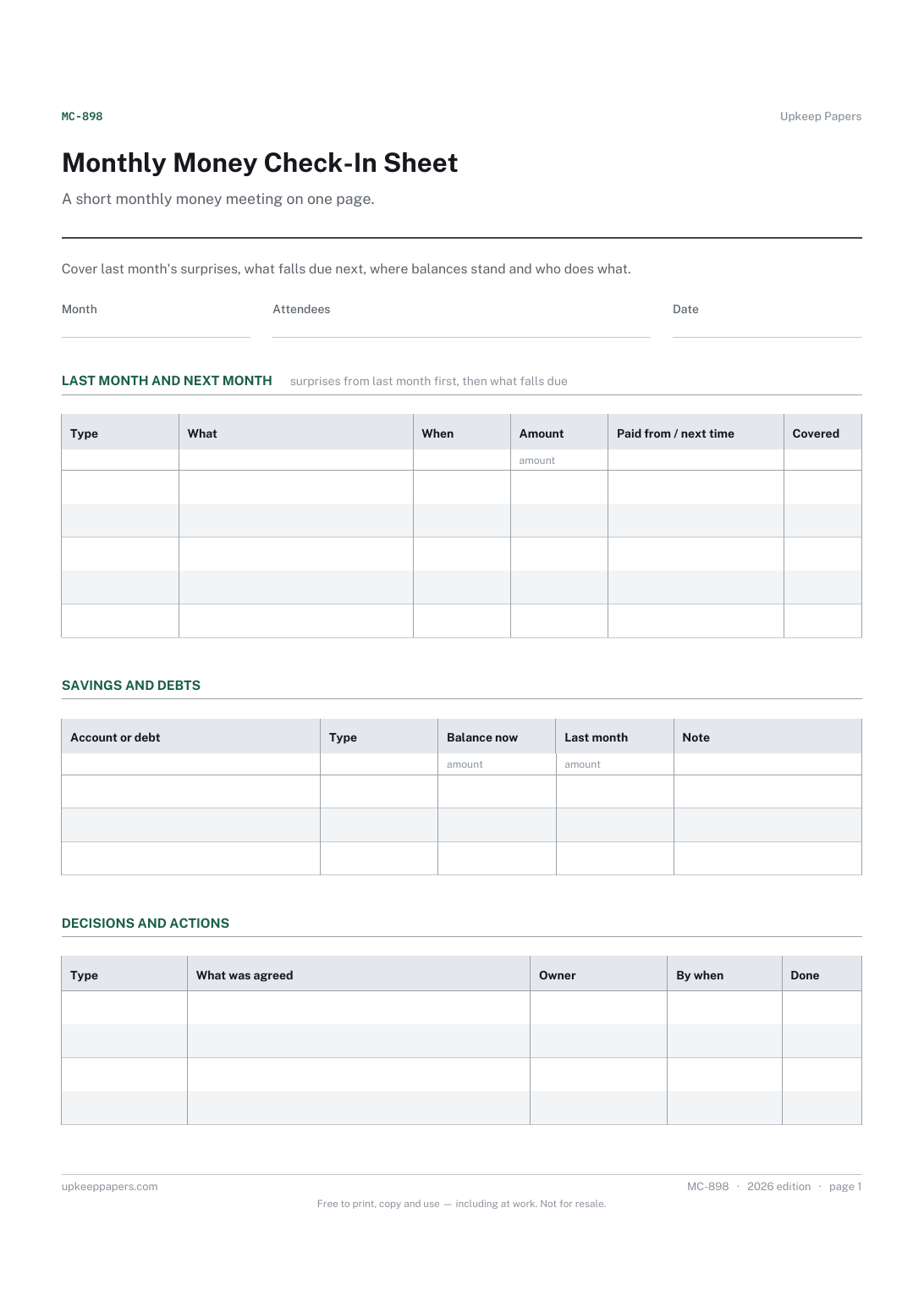
Each unplanned purchase, what it cost and where it happened.
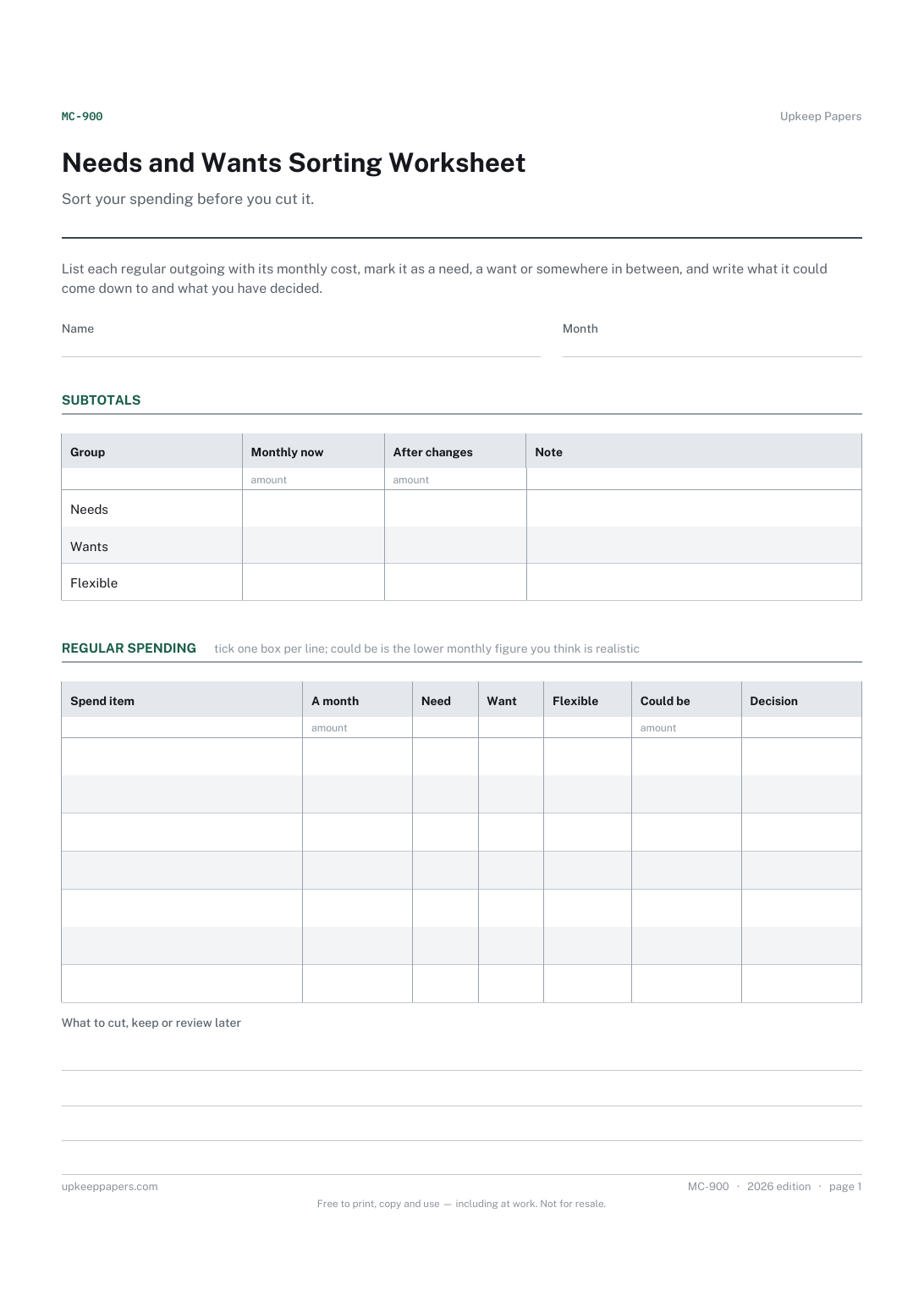
Every regular outgoing and what it costs a month.
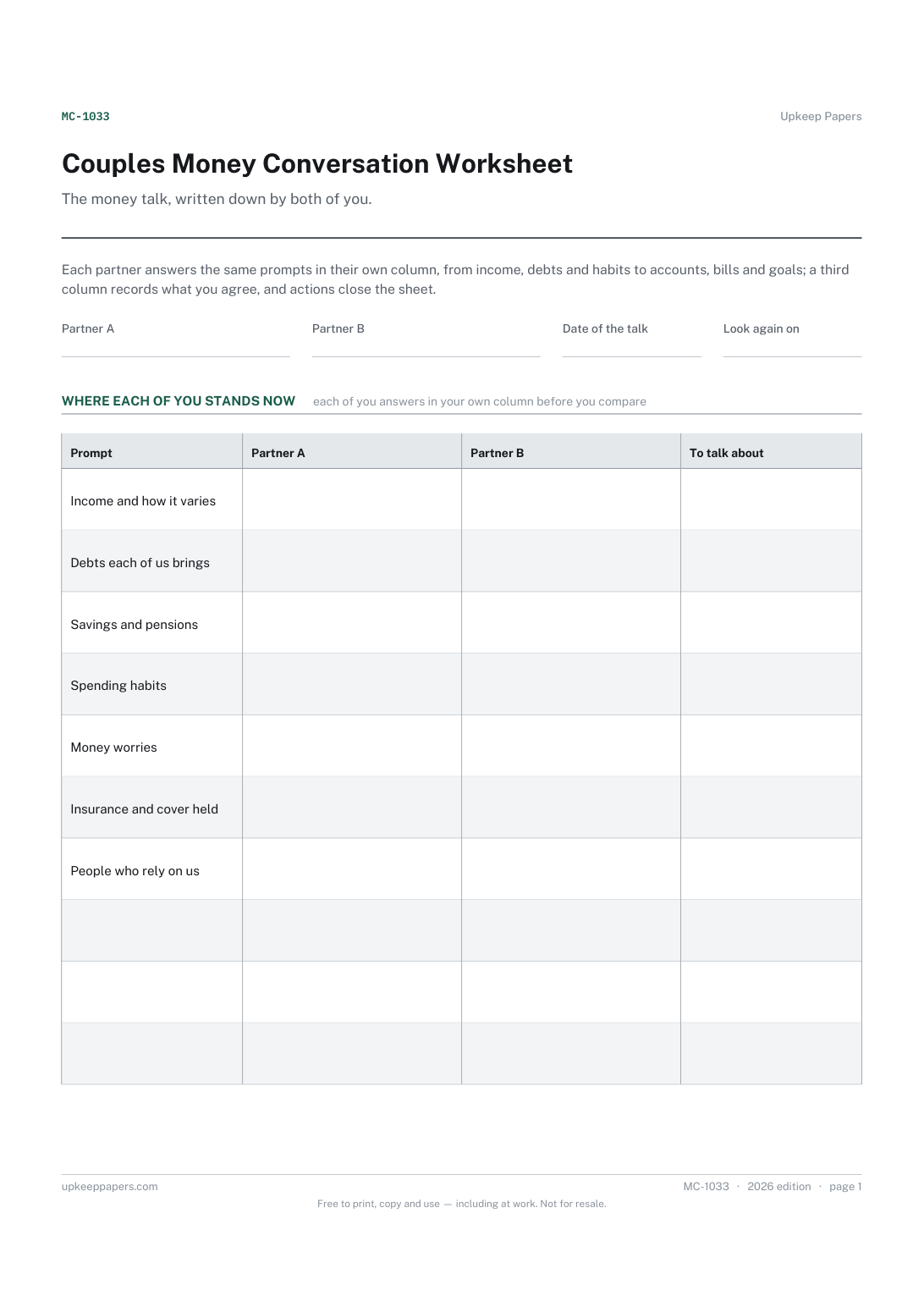
Where each of you stands on income, debts, savings and pensions.
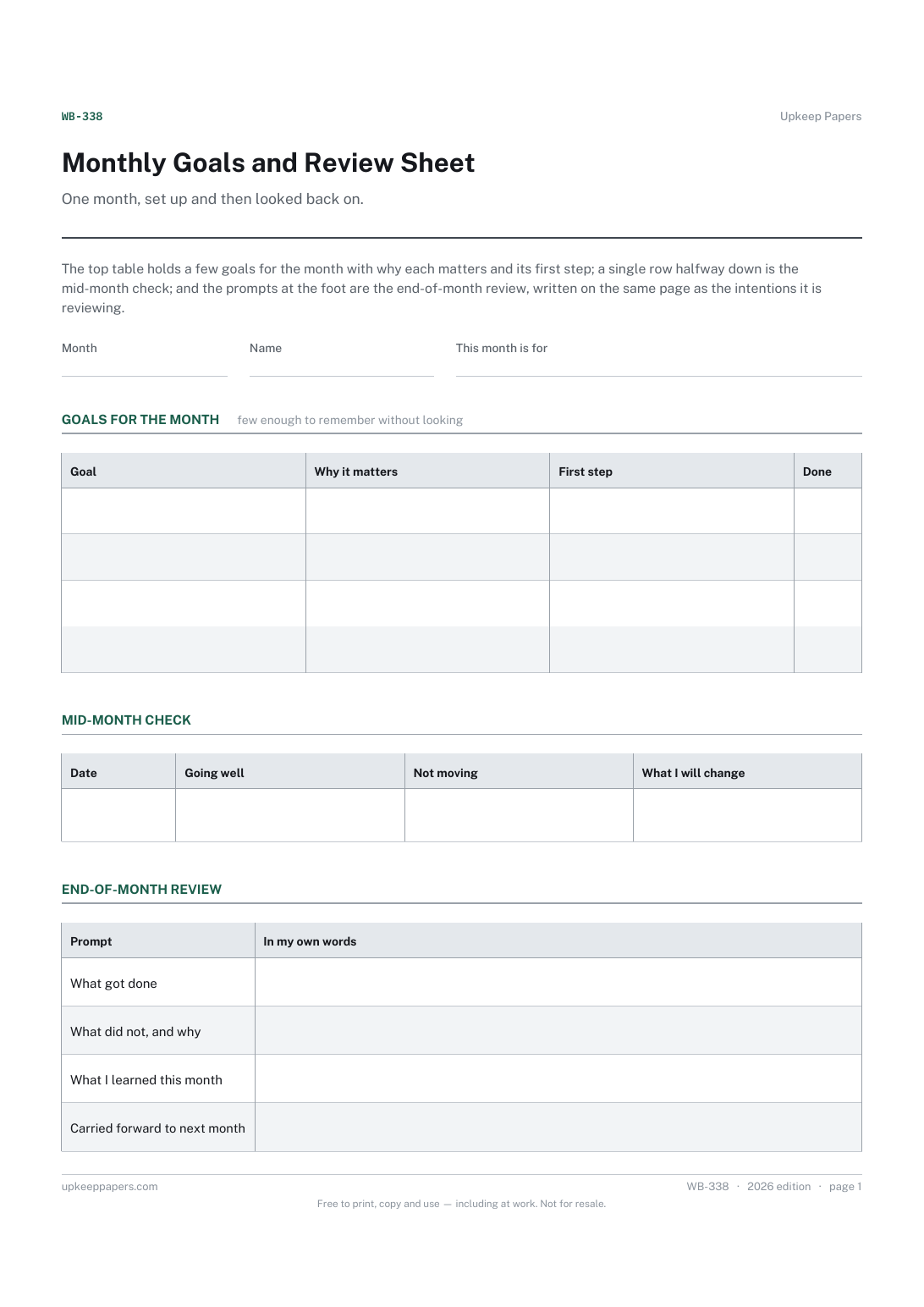
A short list of goals for this month, each with a reason and a first step.
Printable sheets, workbooks and tools on the same subject.
A monthly budget that adds up planned against actual, keeps income, outgoings and saving apart, and rolls twelve months into a year view.

Every sheet, binder, game and puzzle on Upkeep Papers is free to download, with no email and no account. Making them is not free: each one takes days of research, design and checking, and the site costs money to run. If something here saved you time, you can buy us a coffee. It is entirely optional: nothing is locked, and nothing changes if you don’t.
Buy us a coffee Opens PayPal in a new tab. Any amount, and nothing changes if you would rather not.