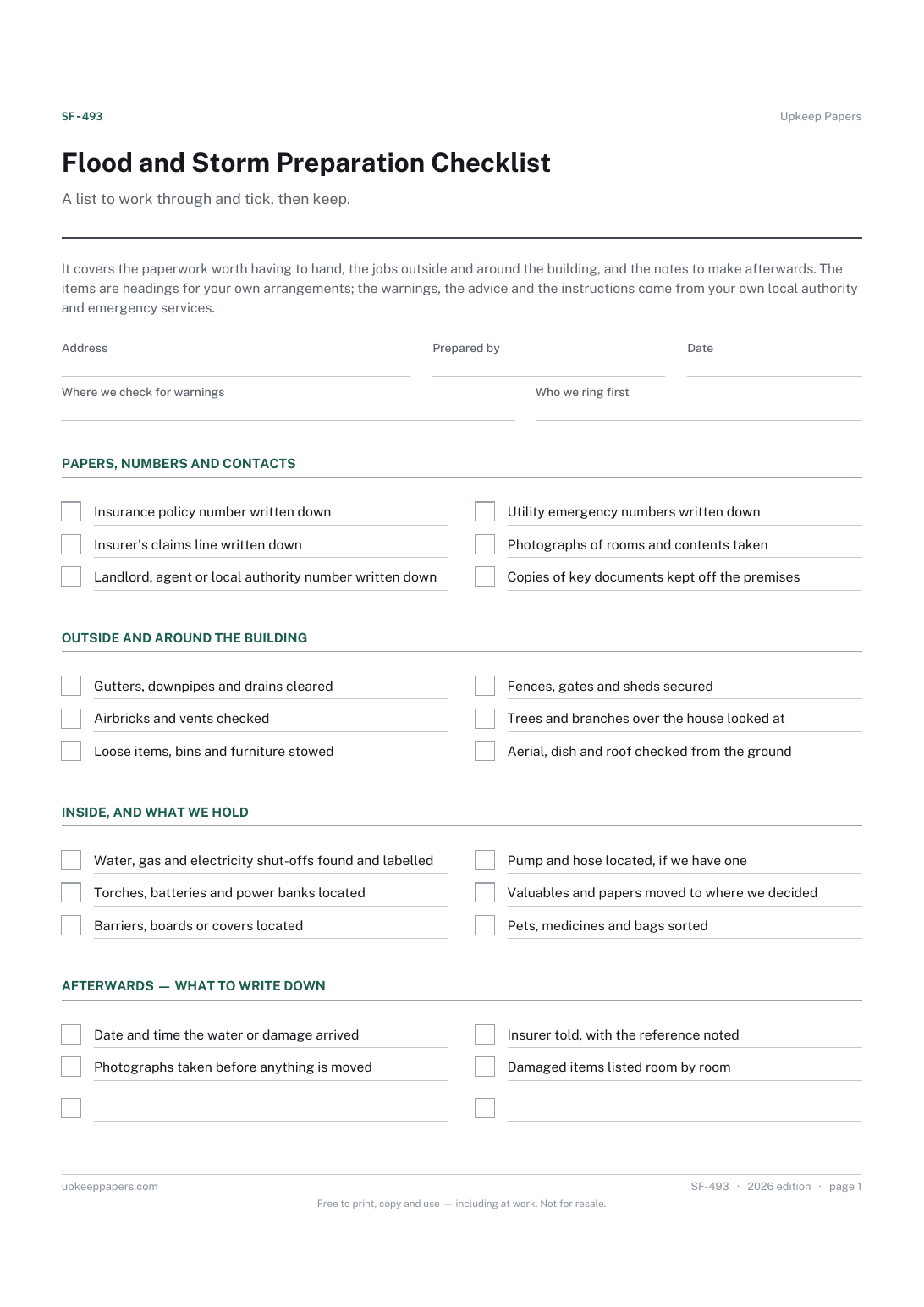
Flood and Storm Preparation Checklist
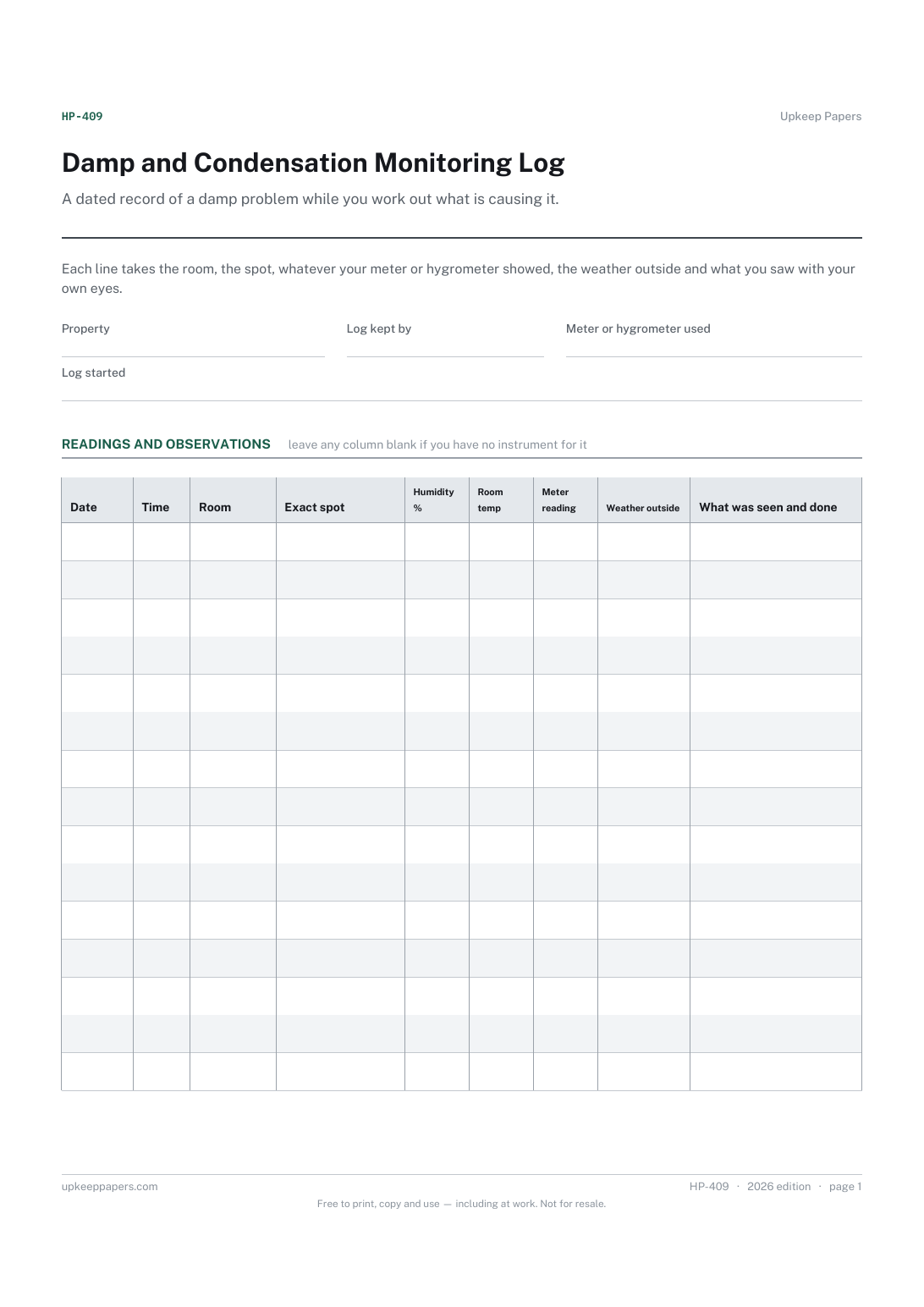
Which documents, references and numbers are written down and where.
SF-493 Checklist PDF Online
Everything here is free. Making it takes time and money. Everything here is free.
 Buy us a coffee
Home and property records · HP-1070 · Register
Free flood resilience register: barriers, airbrick covers, valves and pumps fitted to your home, how to put them in place, upkeep and papers. PDF and browser.
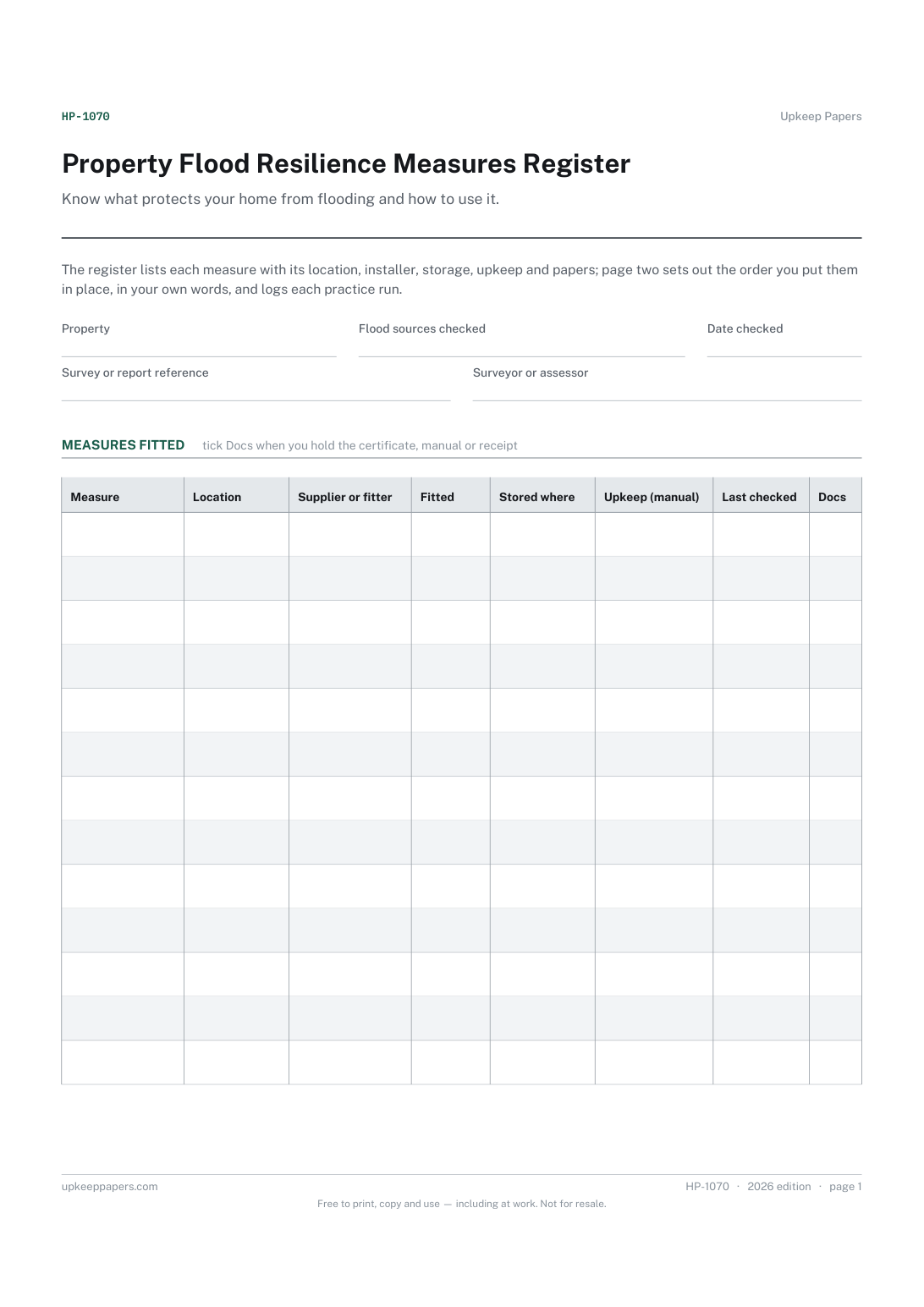
2 pages. The A4 and US Letter files are laid out identically, so neither is shrunk to fit.
Print it and write on it
Fillable PDF type and save
Or no download needed
Fill it in onlineThe fillable versions have real form fields — open them in any PDF reader, type into them and save. Printing help.
The same sheet, on screen. Tick, type, add or remove rows, then print it or download the completed version as a PDF. Everything stays in your browser — your entries are kept in this browser's own storage on this device, nothing is uploaded, and there is no account.
Know what protects your home from flooding and how to use it. The register lists each measure with its location, installer, storage, upkeep and papers; page two sets out the order you put them in place, in your own words, and logs each practice run.
Owners of homes at risk of flooding who have fitted, or are planning, door barriers, airbrick covers, non-return valves, pumps or resilient finishes, and anyone who wants others in the household able to put them in place.
The printable is laid out inside a box that fits both A4 and US Letter, so the two files are identical and neither one is scaled. The fillable PDF has real form fields. The online version keeps what you enter in your own browser and builds the completed PDF on your device.
Download the A4 or US Letter file to match the paper in your printer, open it in a PDF reader and print at 100% — not "fit to page", which shrinks the writing space. Both files leave a 14 mm margin, which clears the unprintable edge on home printers. To print the online version with your entries in it, use the Print this sheet button, which prints only the sheet and none of the page around it. More on printing.
Anything fitted to keep water out, such as door barriers, airbrick covers and non-return valves, or to limit the damage when it gets in, such as raised sockets, tiled floors or a pump. List whatever your home has.
In a flood warning the barriers may go in at night, in a hurry or by someone else. Steps written the way you actually do them, in the order you do them, are quicker to follow than a manual.
As often as the maker or installer says; the sheet has no interval of its own. Copy the upkeep from each manual into the register and date every check.
Some ask what measures a home has and for evidence such as surveys, certificates and receipts. Ask yours what they need; the register keeps the details and shows that the papers exist.
That checklist covers what to do when bad weather is forecast. This register records the protection permanently fitted to your home, how to put it in place, how it is kept in order and the papers behind it.
Which documents, references and numbers are written down and where.
Where the problem is, described precisely enough to find again.
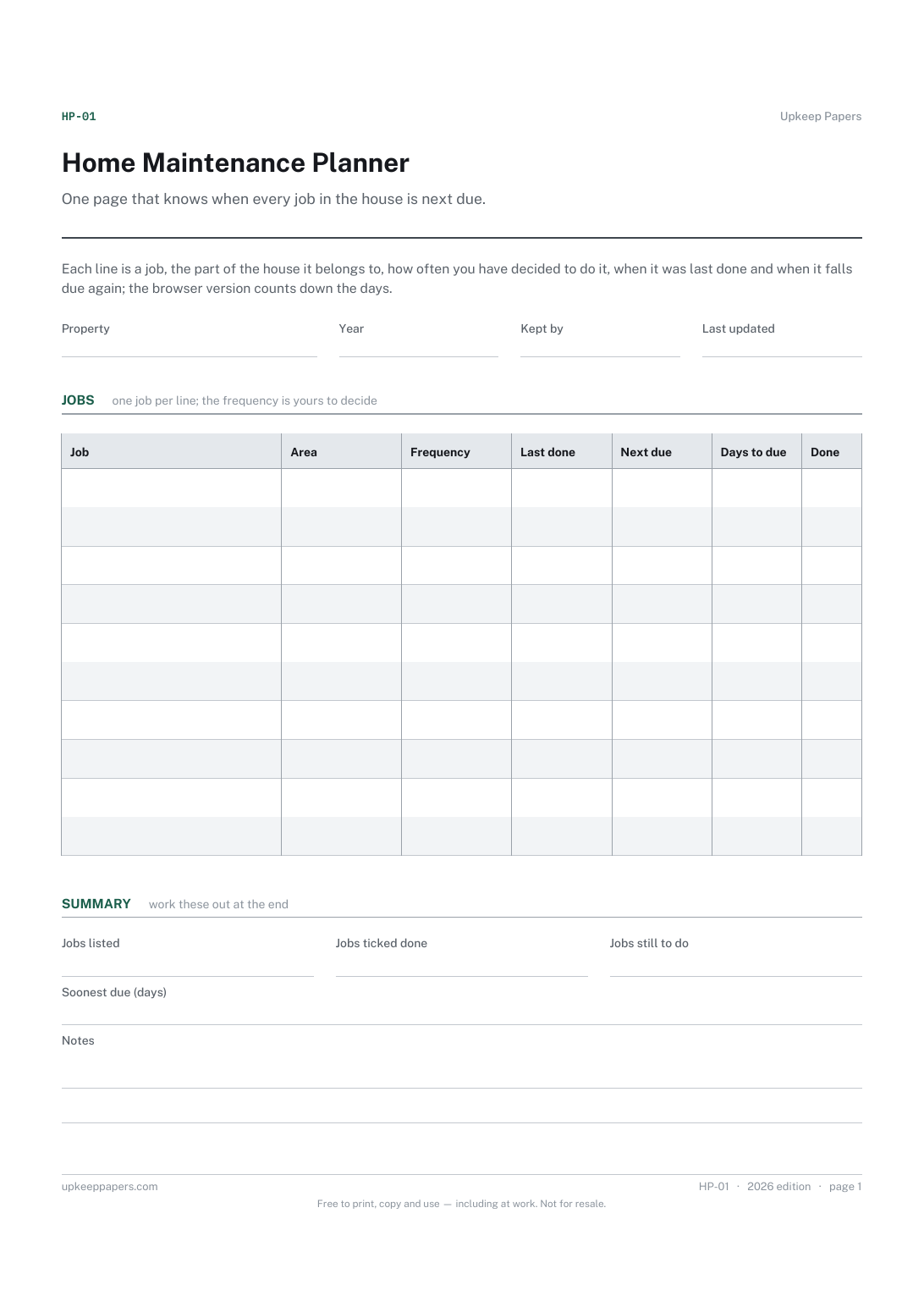
Every recurring job in one list, with the part of the house it belongs to.
Printable sheets, workbooks and tools on the same subject.
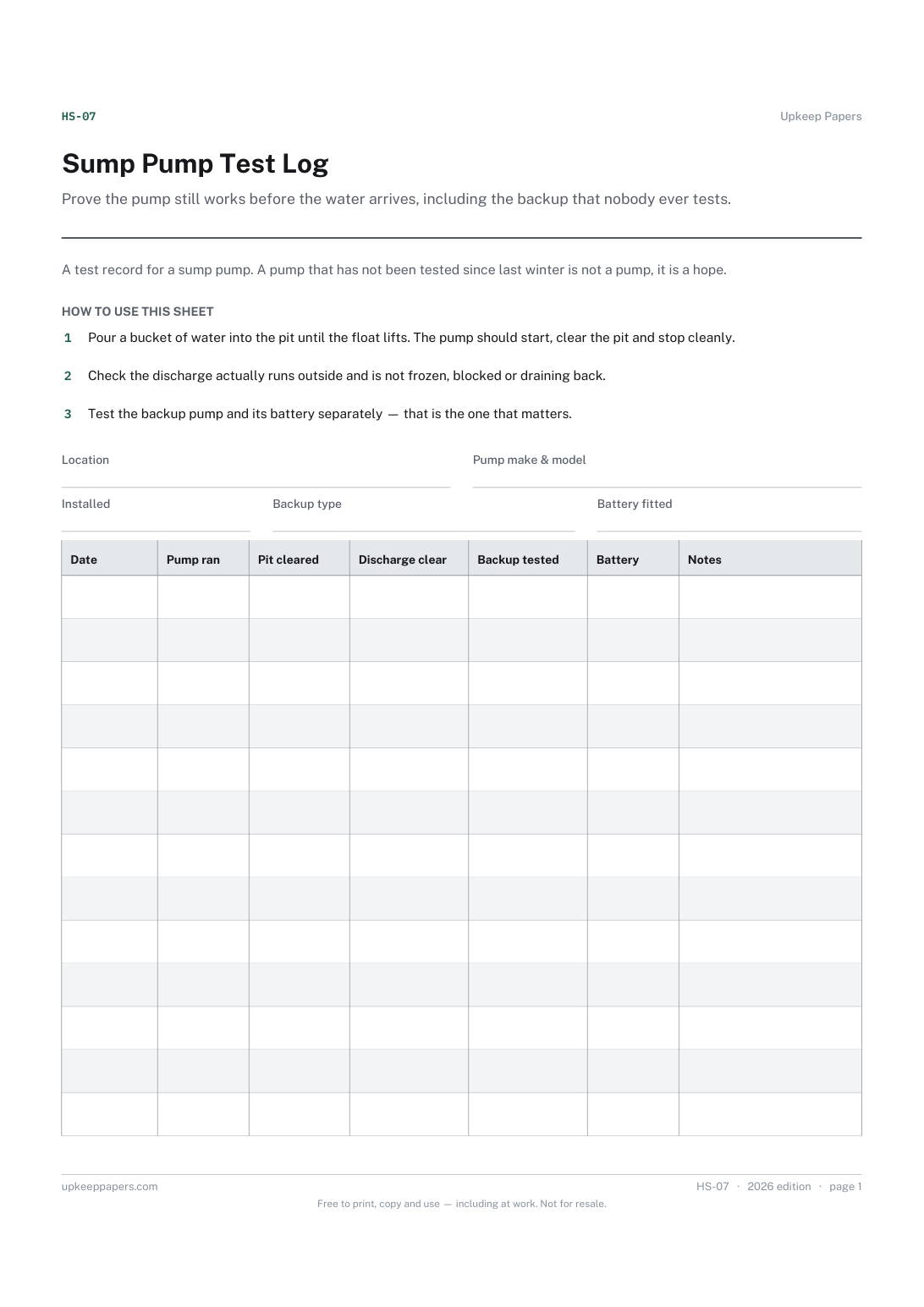
Prove the pump still works before the water arrives, including the backup that nobody ever tests.
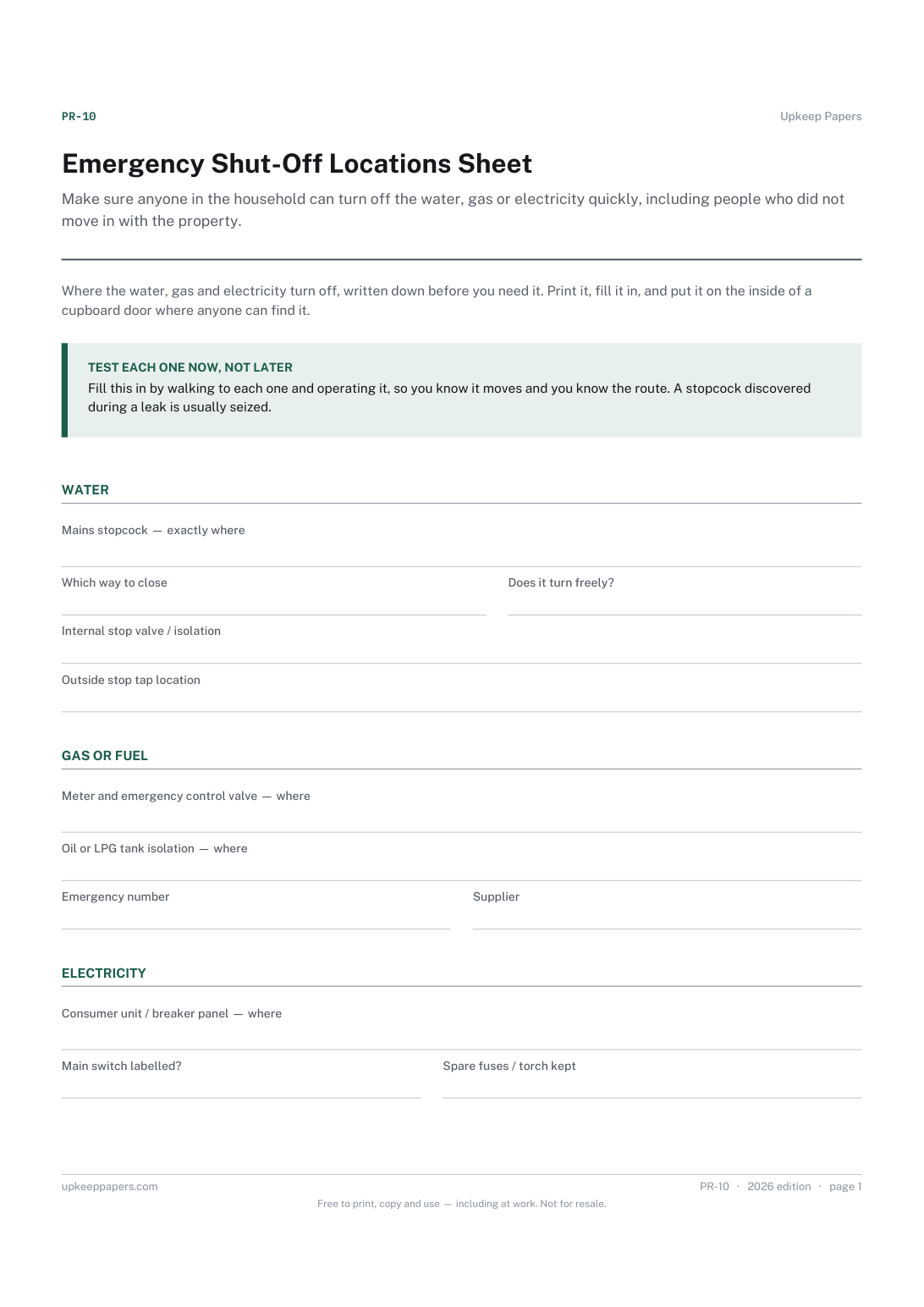
Make sure anyone in the household can turn off the water, gas or electricity quickly, including people who did not move in with the property.

Every sheet, binder, game and puzzle on Upkeep Papers is free to download, with no email and no account. Making them is not free: each one takes days of research, design and checking, and the site costs money to run. If something here saved you time, you can buy us a coffee. It is entirely optional: nothing is locked, and nothing changes if you don’t.
Buy us a coffee Opens PayPal in a new tab. Any amount, and nothing changes if you would rather not.