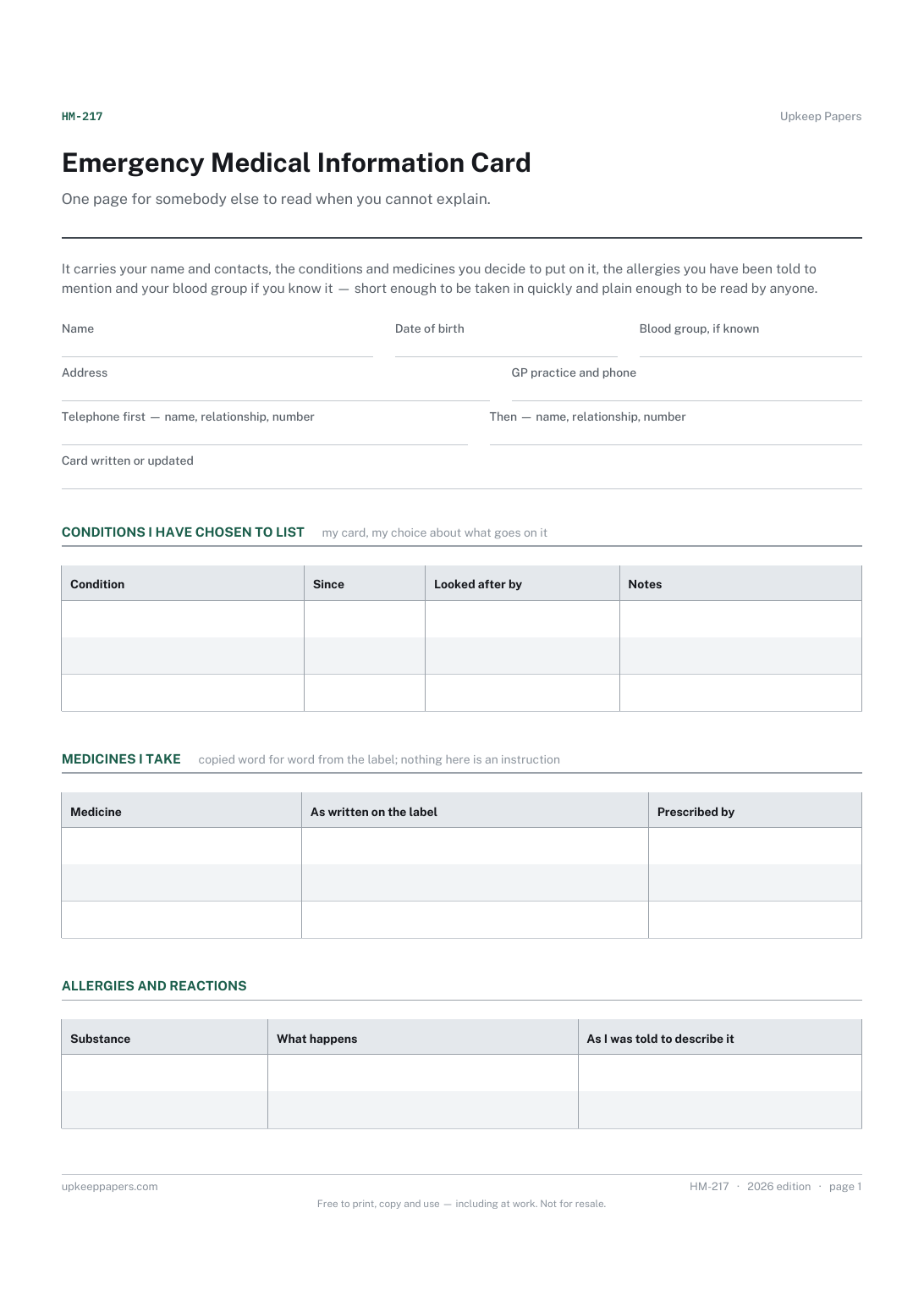
Emergency Medical Information Card
Who you are and who should be telephoned, in order.
HM-217 Form PDF Online
Everything here is free. Making it takes time and money. Everything here is free.
 Buy us a coffee
Health and medical records · HM-208 · Record
Free printable allergy record — substance, what happened, when, how it was confirmed and what you were told to avoid. PDF and fill-in-online versions.
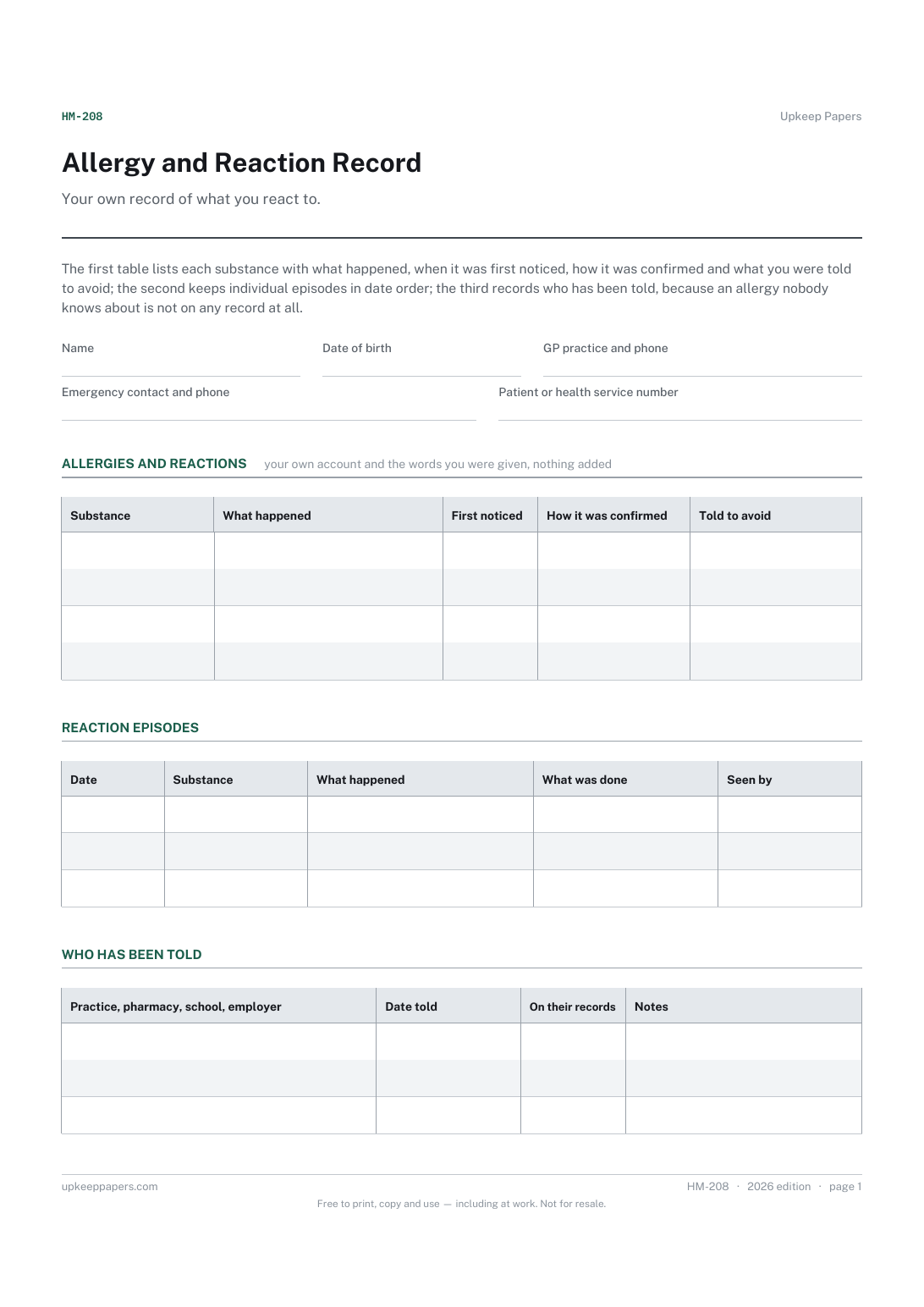
One page. The A4 and US Letter files are laid out identically, so neither is shrunk to fit.
Print it and write on it
Fillable PDF type and save
Or no download needed
Fill it in onlineThe fillable versions have real form fields — open them in any PDF reader, type into them and save. Printing help.
The same sheet, on screen. Tick, type, add or remove rows, then print it or download the completed version as a PDF. Everything stays in your browser — your entries are kept in this browser's own storage on this device, nothing is uploaded, and there is no account.
Your own record of what you react to. The first table lists each substance with what happened, when it was first noticed, how it was confirmed and what you were told to avoid; the second keeps individual episodes in date order; the third records who has been told, because an allergy nobody knows about is not on any record at all.
Anyone with a drug, food, material or sting allergy, parents and carers holding the record for somebody else, and people who have to repeat the same explanation at every new practice, dentist, pharmacy and school.
The printable is laid out inside a box that fits both A4 and US Letter, so the two files are identical and neither one is scaled. The fillable PDF has real form fields. The online version keeps what you enter in your own browser and builds the completed PDF on your device.
Download the A4 or US Letter file to match the paper in your printer, open it in a PDF reader and print at 100% — not "fit to page", which shrinks the writing space. Both files leave a 14 mm margin, which clears the unprintable edge on home printers. To print the online version with your entries in it, use the Print this sheet button, which prints only the sheet and none of the page around it. More on printing.
No. It carries no treatment, no plan and no guidance of any kind. What to do in a reaction comes from the clinician who assessed you, and if you have been given a written plan, keep this sheet with it rather than instead of it.
Write it down and say in the notes that it is unconfirmed. An honest record of a suspected reaction is useful; a confident label that nobody ever tested is the thing that causes trouble later.
Because the information has to be on each set of records separately — practice, pharmacy, dentist, hospital, school, employer. Ticking them off is the only way to know which conversation you have not had yet.
No. This is the full record; a card is the short version you carry. Many people keep both, with the card in a wallet and this sheet with their documents.
Who you are and who should be telephoned, in order.
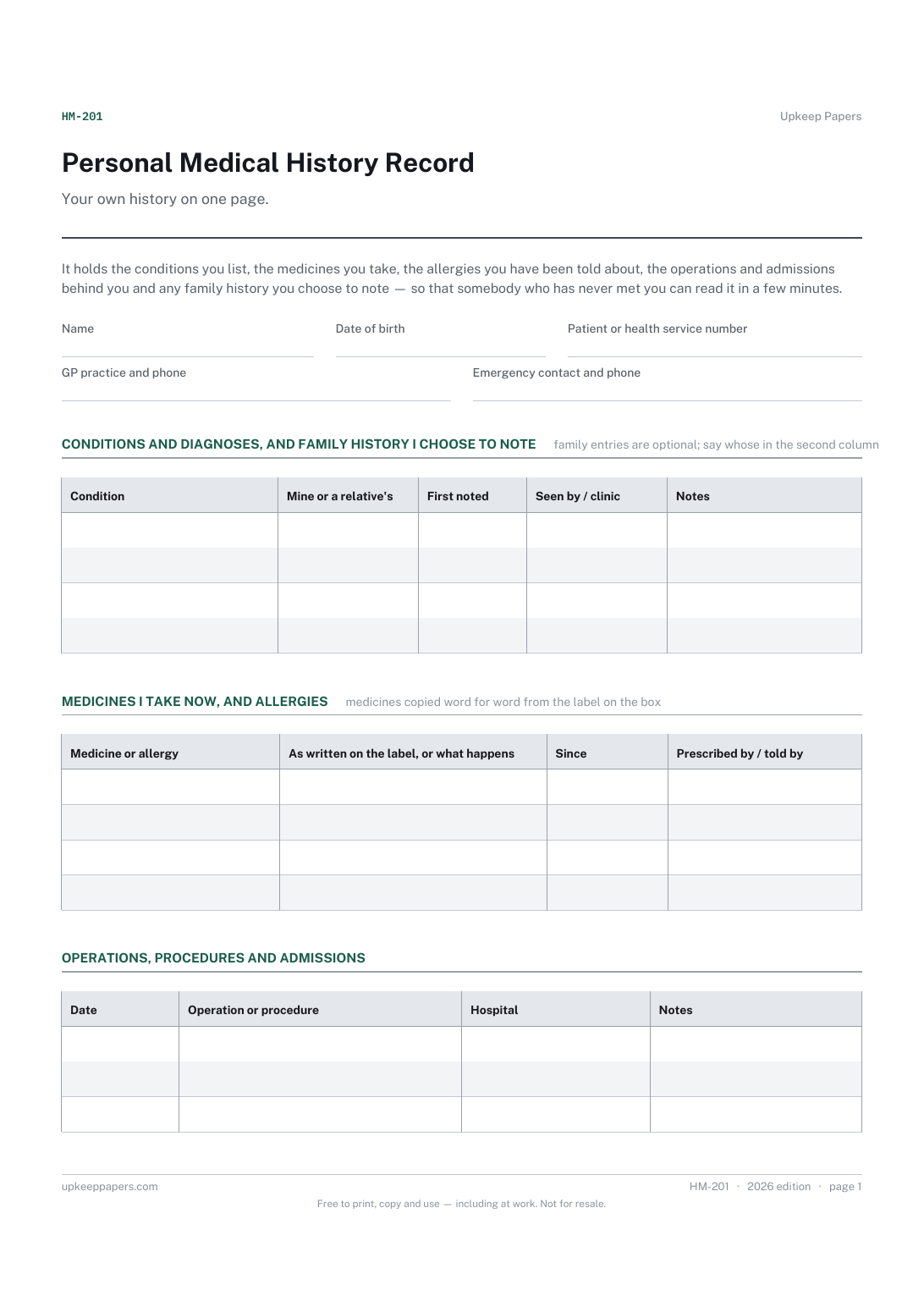
Conditions and diagnoses in your own words, with the date each was first noted.
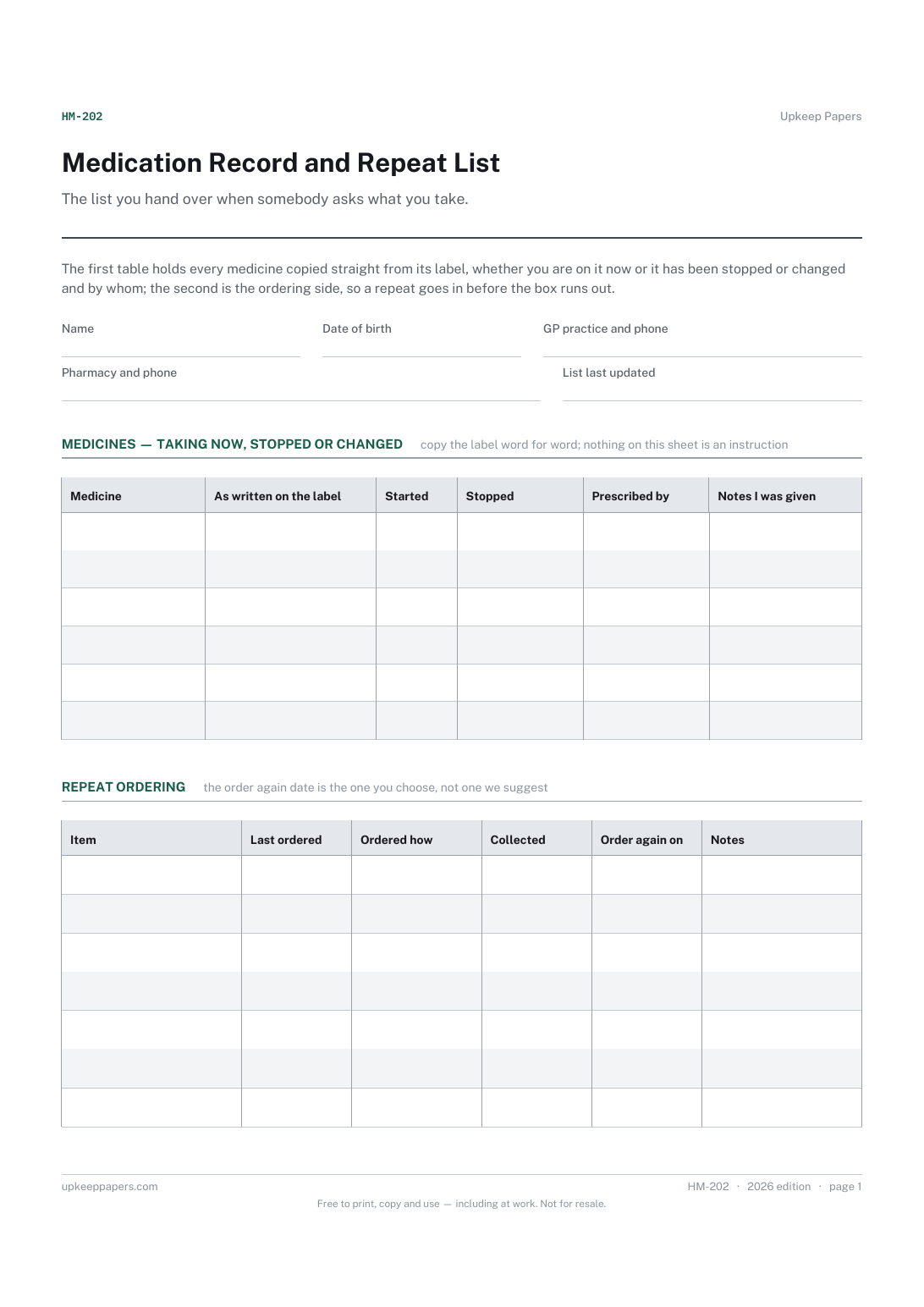
What you are taking now, in the words printed on the label.
Who to ring first, second and after that, with numbers.
Printable sheets, workbooks and tools on the same subject.
Keep a running record of first aid given so that supplies used and patterns of injury are both visible in one place.
Put one person's emergency contacts and practical details on a single page, in the order somebody should actually work through them.

Every sheet, binder, game and puzzle on Upkeep Papers is free to download, with no email and no account. Making them is not free: each one takes days of research, design and checking, and the site costs money to run. If something here saved you time, you can buy us a coffee. It is entirely optional: nothing is locked, and nothing changes if you don’t.
Buy us a coffee Opens PayPal in a new tab. Any amount, and nothing changes if you would rather not.