Home Maintenance Planner
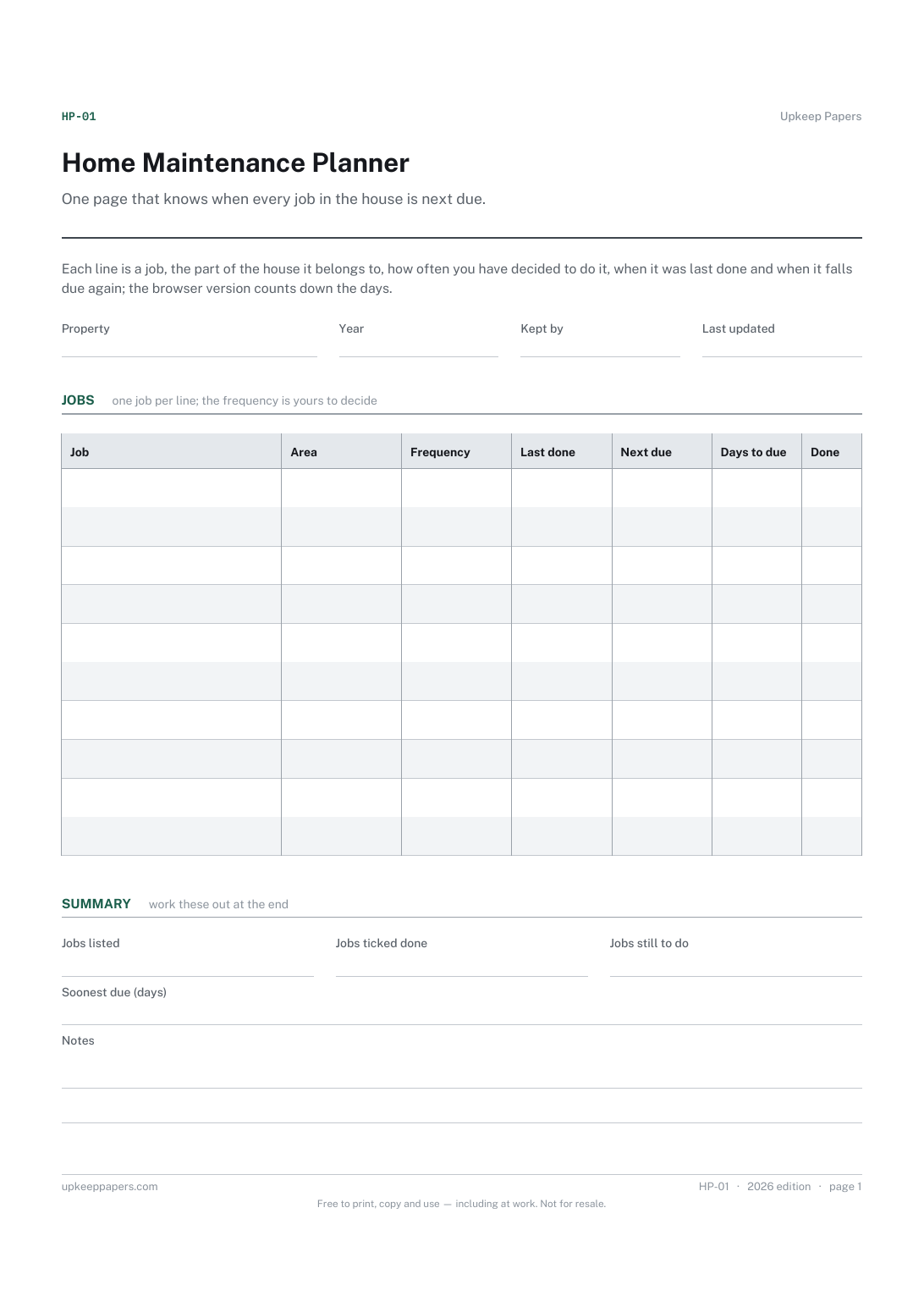
Every recurring job in one list, with the part of the house it belongs to.
HP-01 Planner PDF Online
Everything here is free. Making it takes time and money. Everything here is free.
 Buy us a coffee
Home hub
The building, its systems, its contents and its paperwork. Start with the maintenance planner and the home inventory; the rest fills in as the house needs it.
169 items on this subject: 56 resources, 103 printable sheets, 5 spreadsheets and 5 tools.
Printable, fillable and online — home and property records · safety, records and practical forms.
Every recurring job in one list, with the part of the house it belongs to.
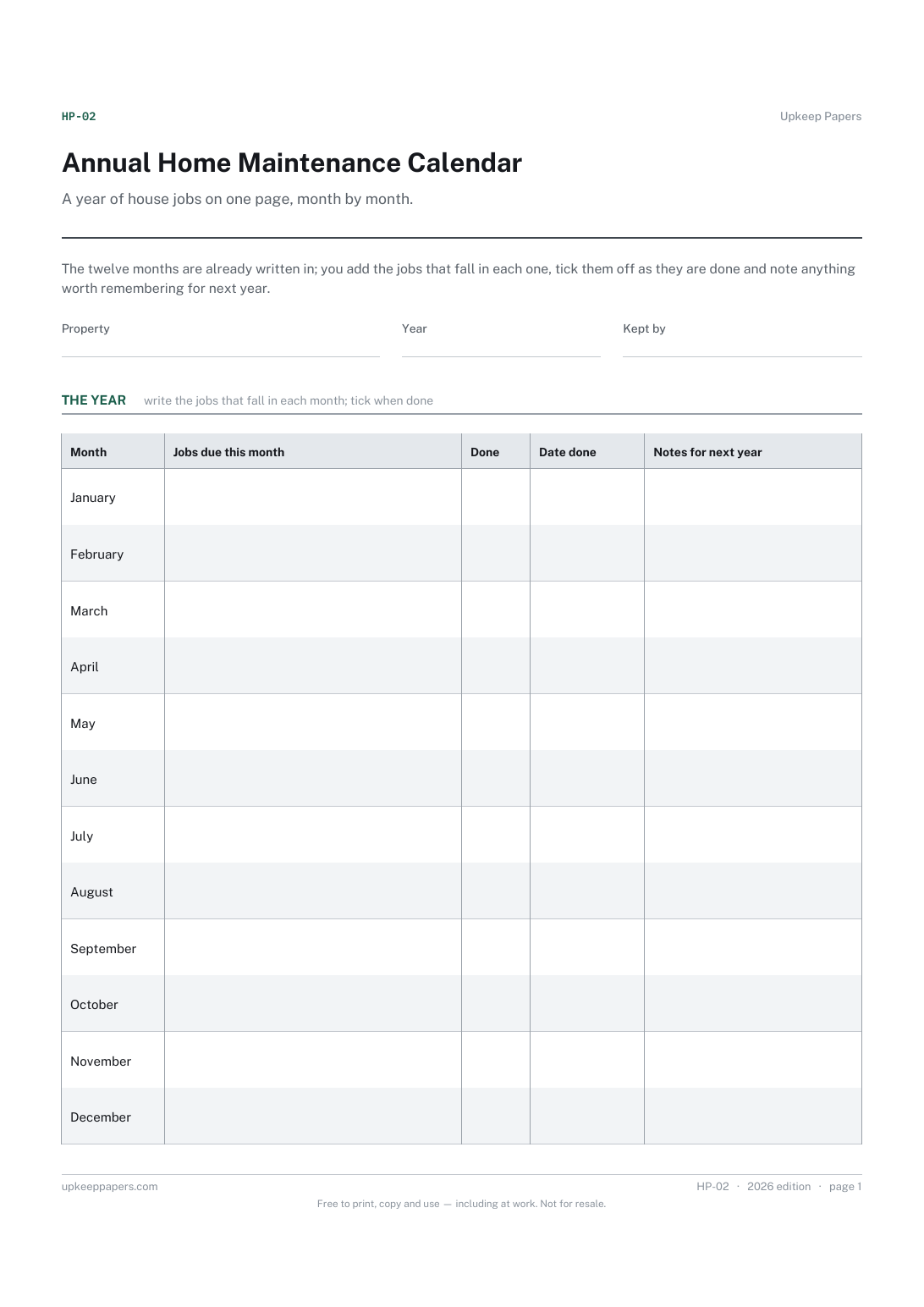
Which jobs fall in which month, decided once and written down.
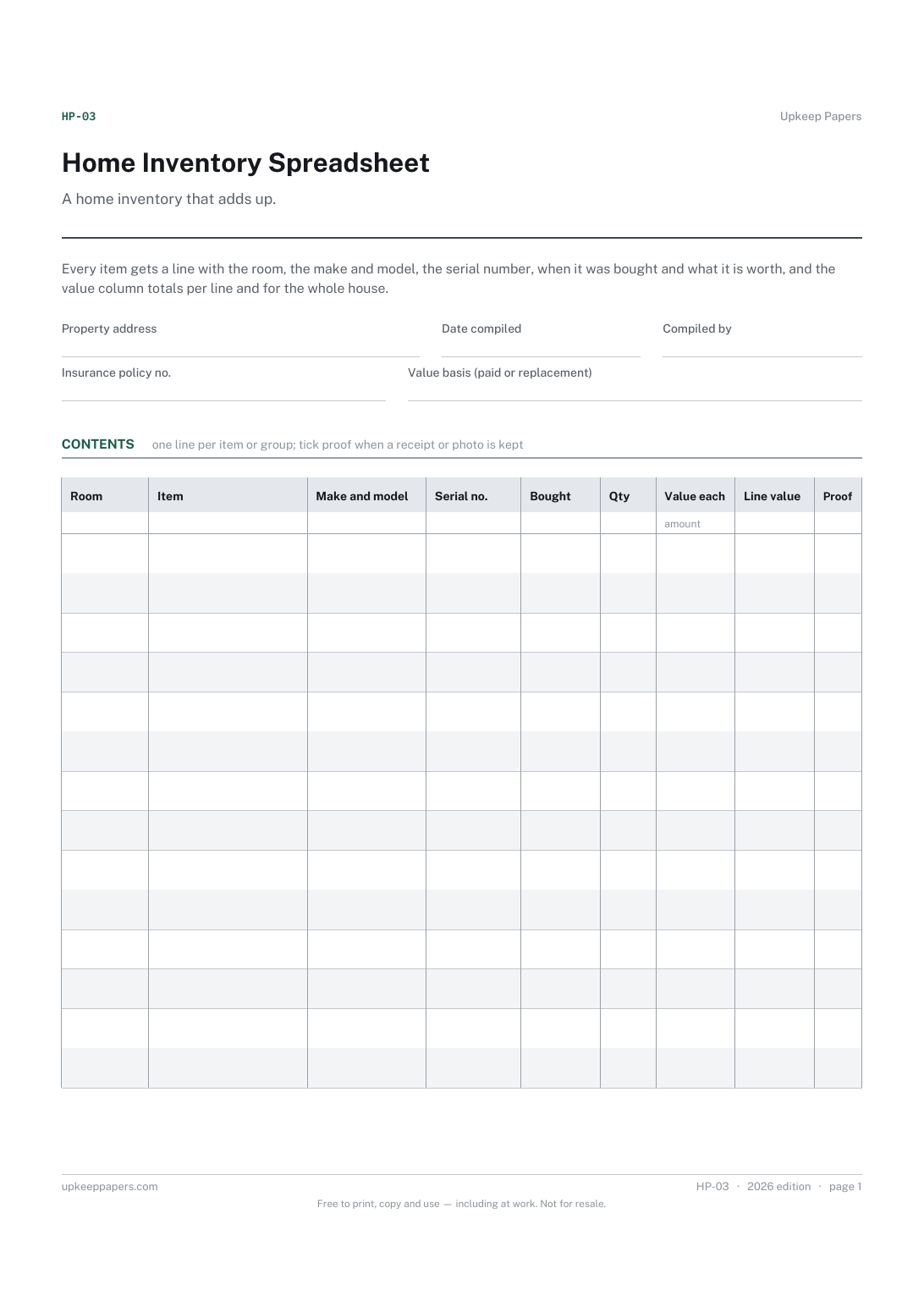
The total value of the contents, worked out from the lines rather than guessed.
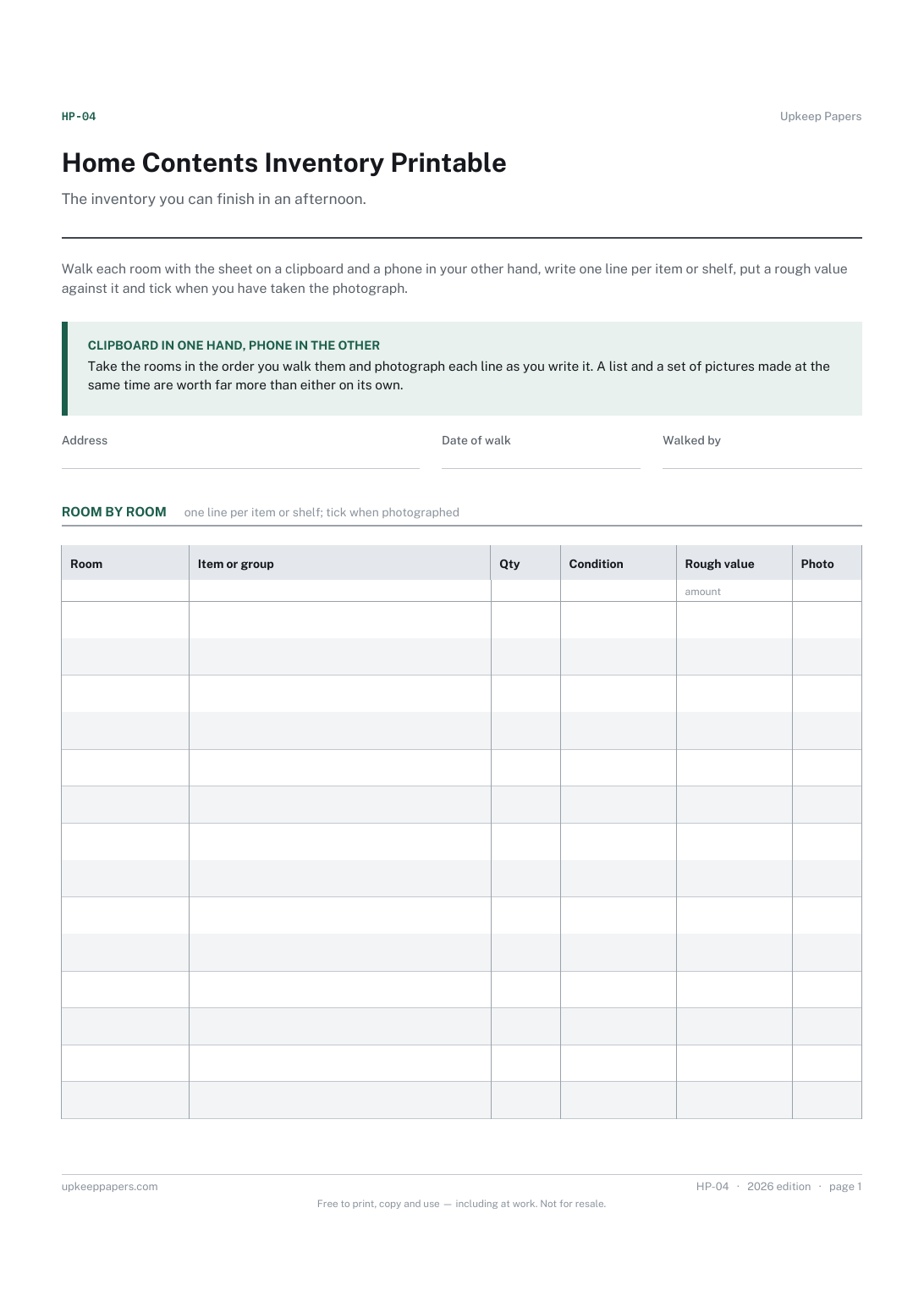
What is in each room, in the order you walked it.
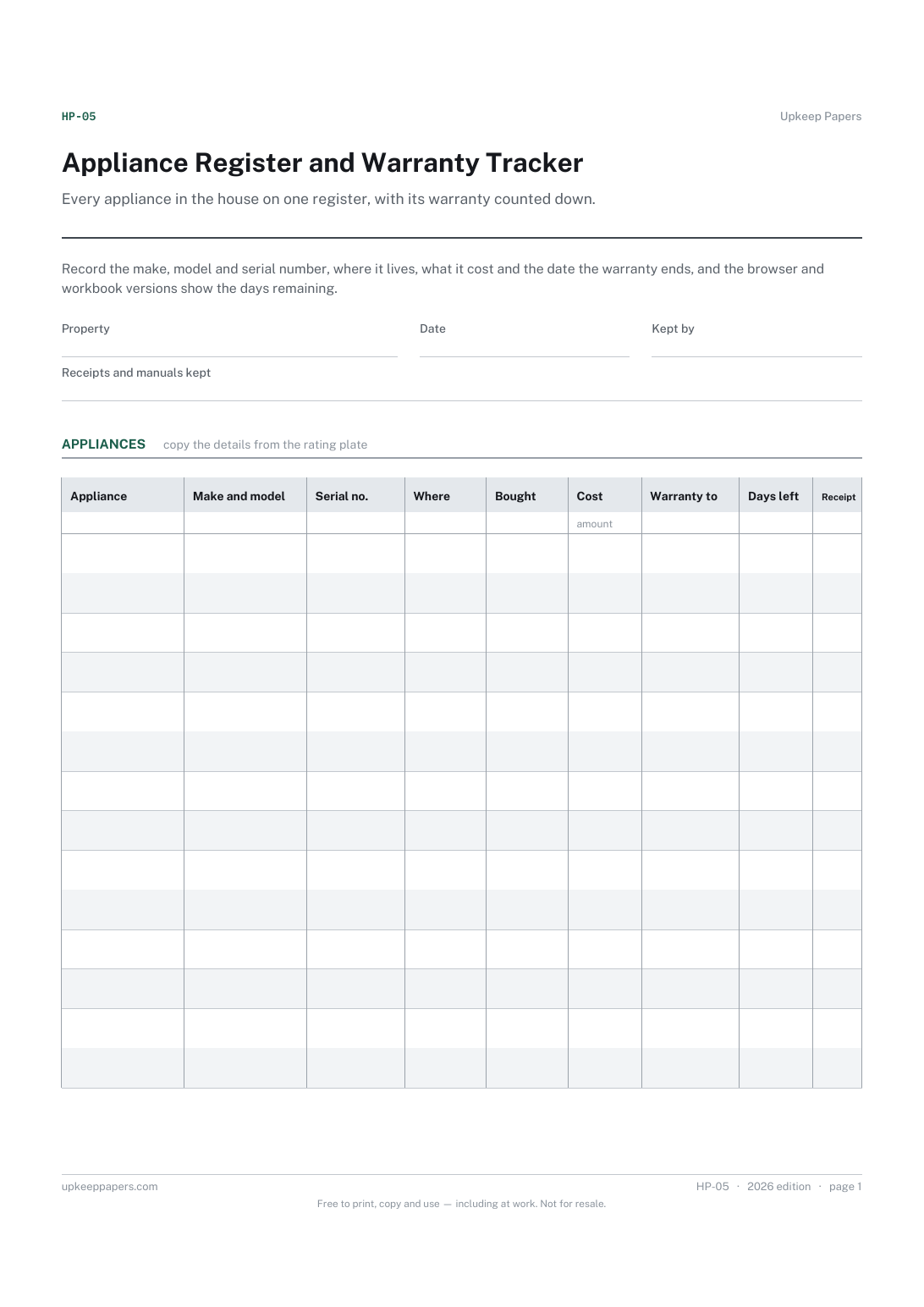
Make, model and serial number for every appliance, ready for a repair call.
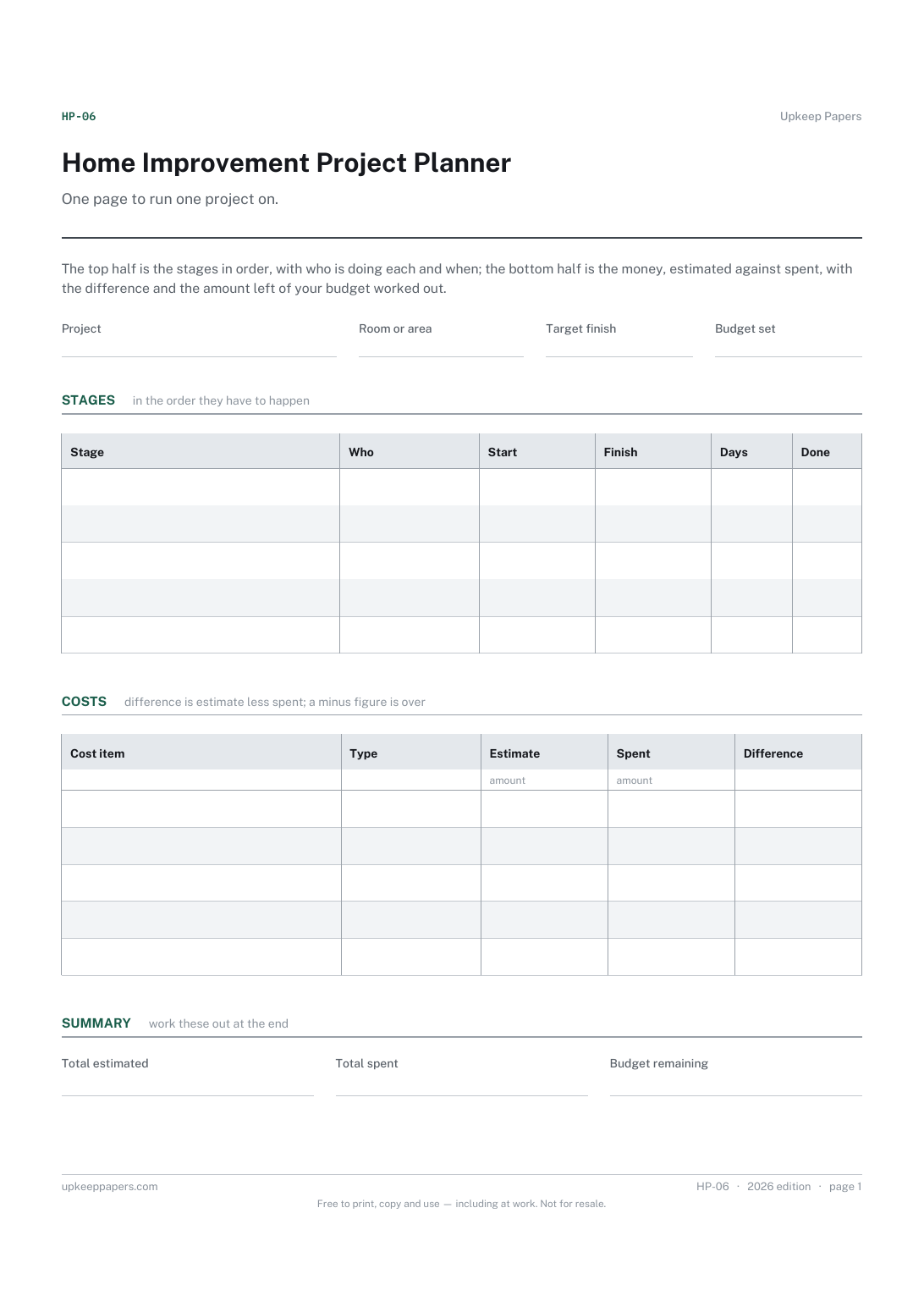
The stages of the job in order, with start and finish dates and how long each took.
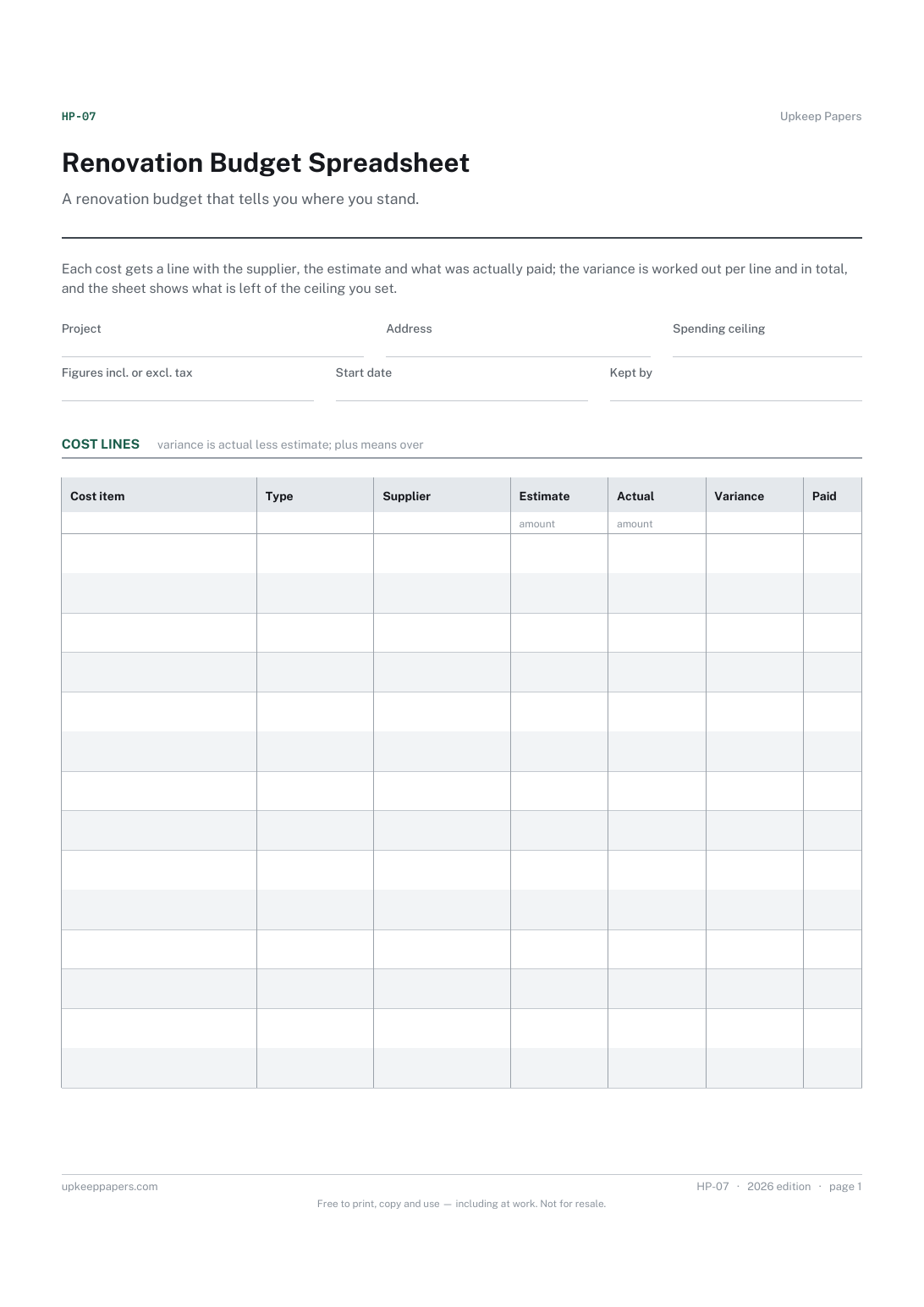
Estimate against actual for every line, with the variance worked out.
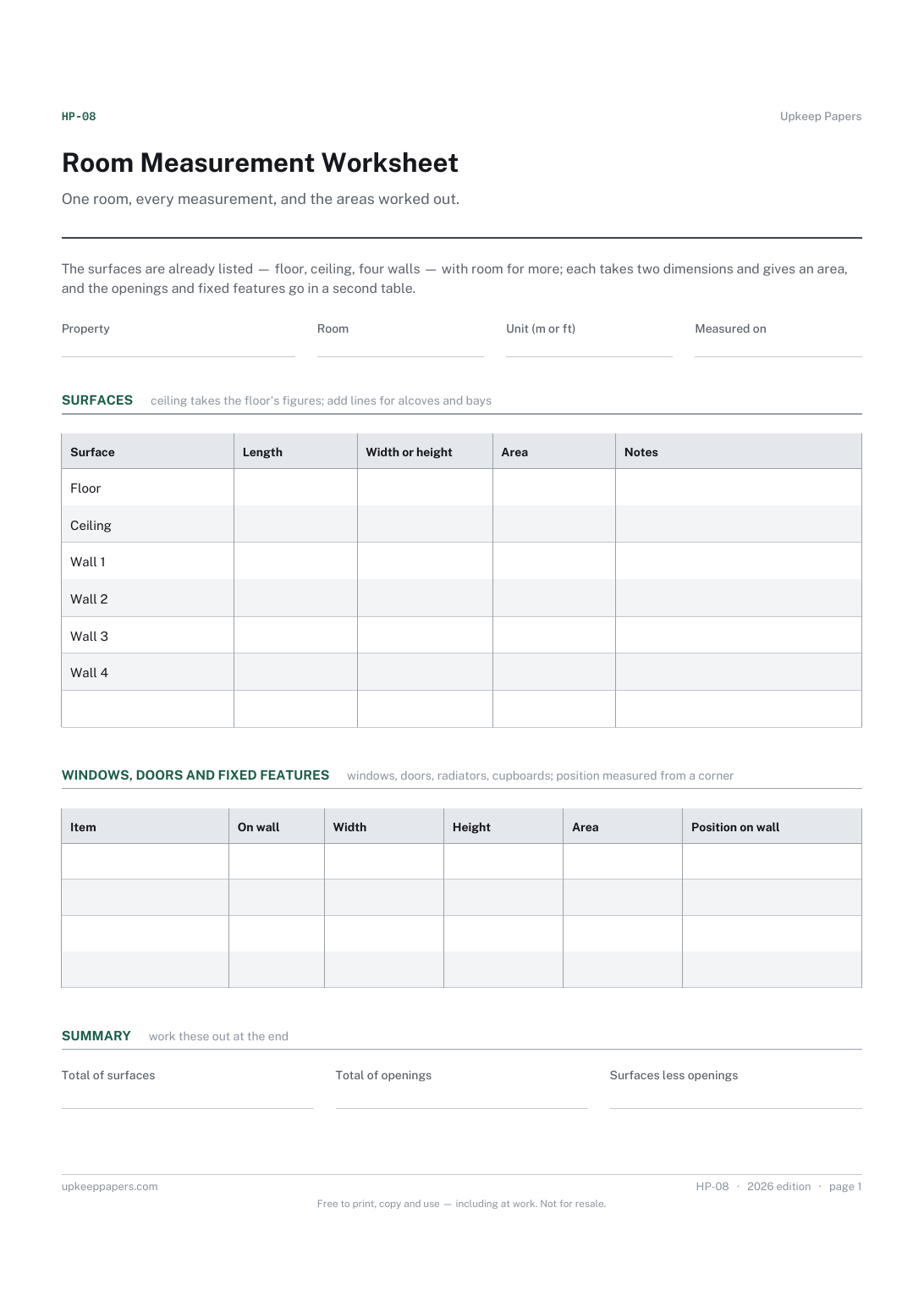
Length and width of each surface, and the area each comes to.
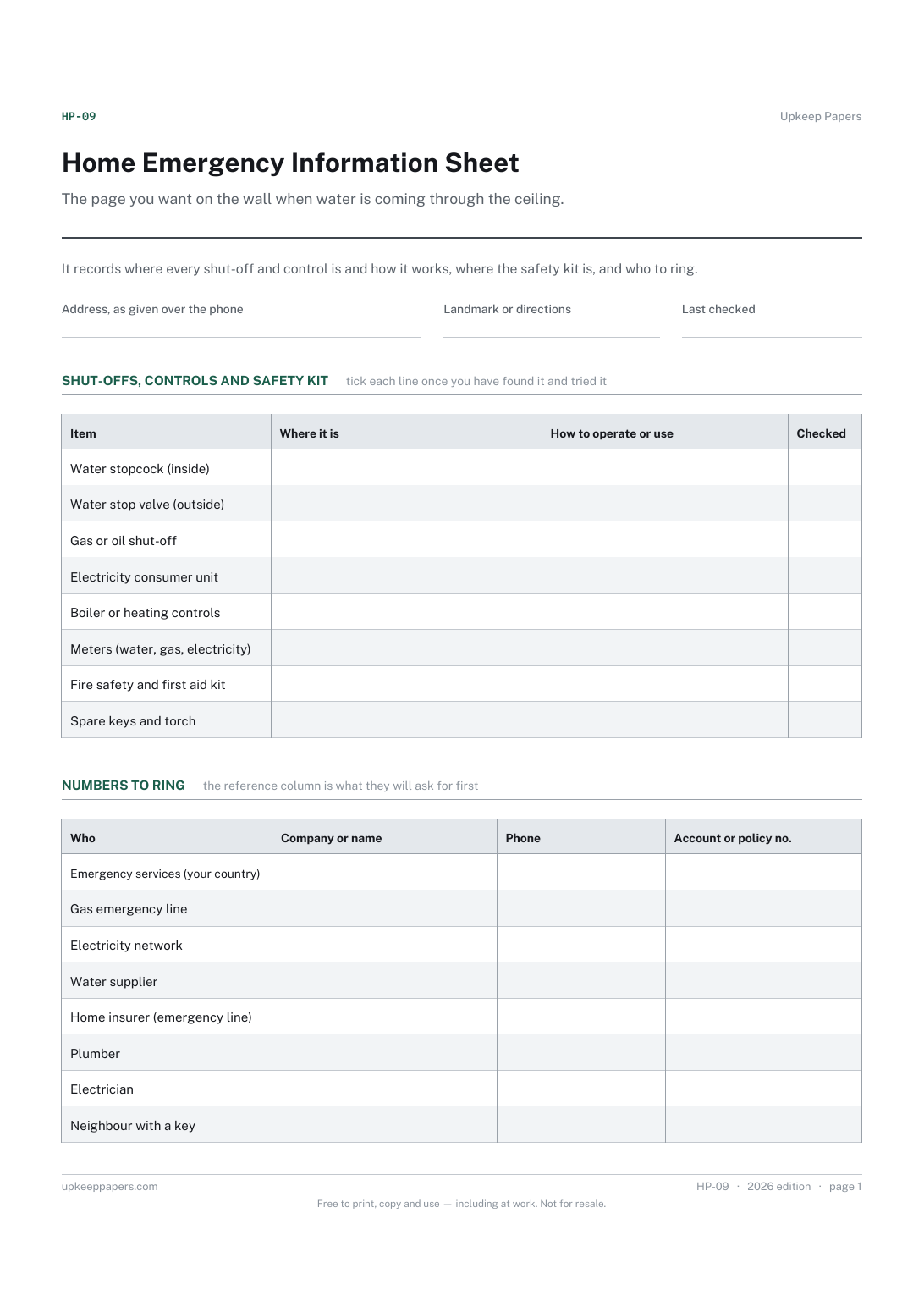
Where the stopcock, the gas or oil shut-off and the consumer unit are, and how to use them.
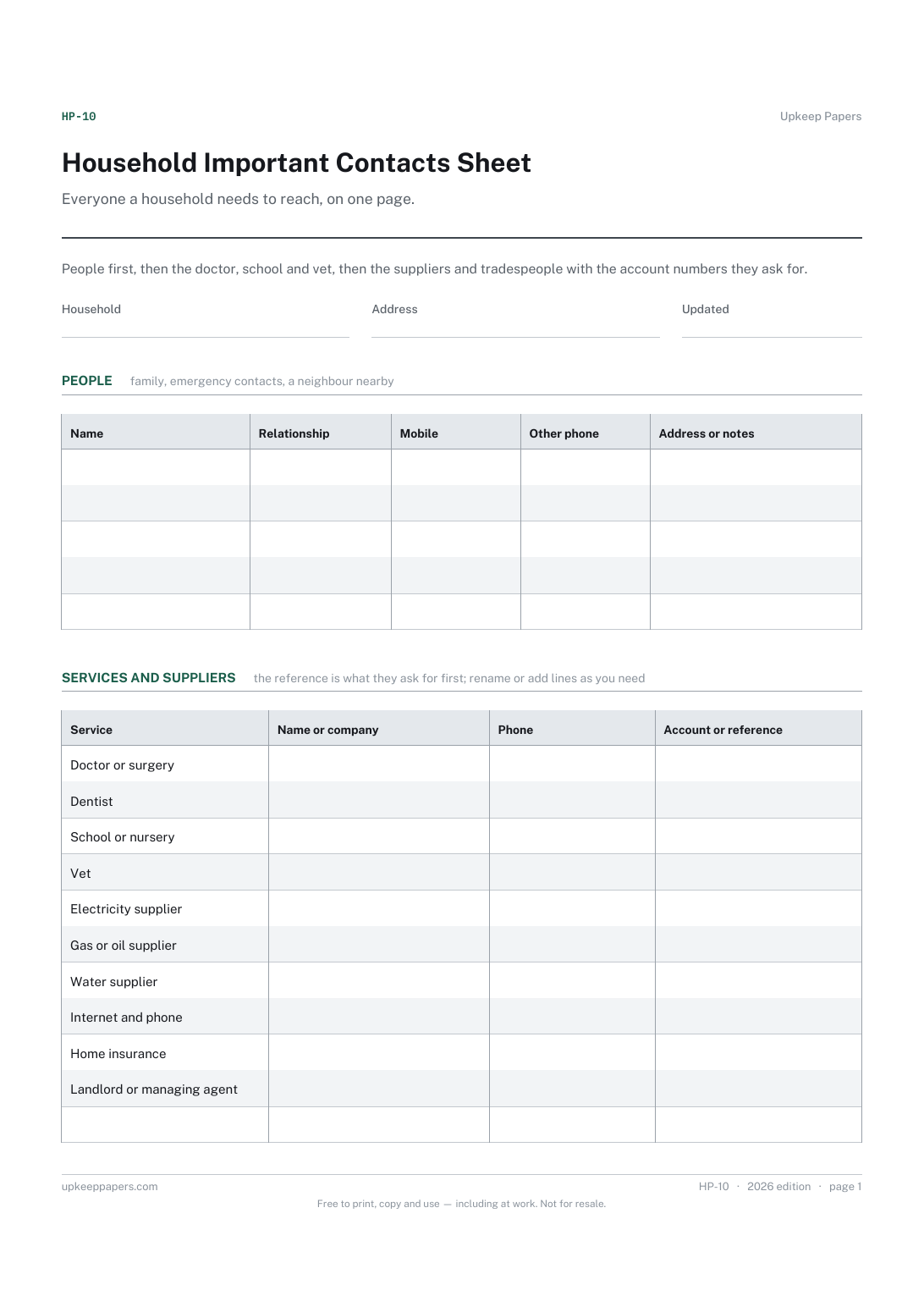
Who to ring about a person, with the relationship and two numbers each.
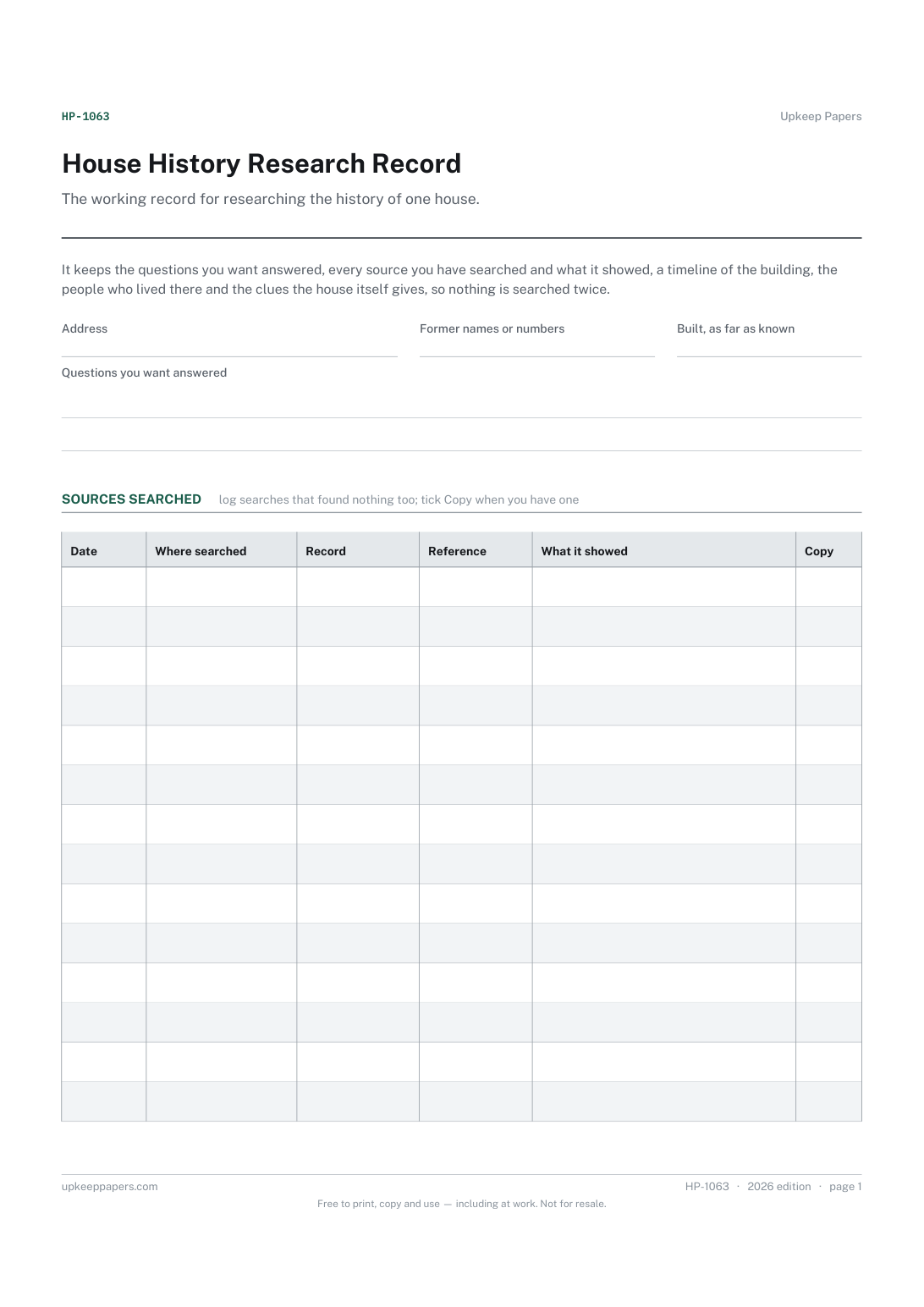
The questions you are trying to answer about the house.
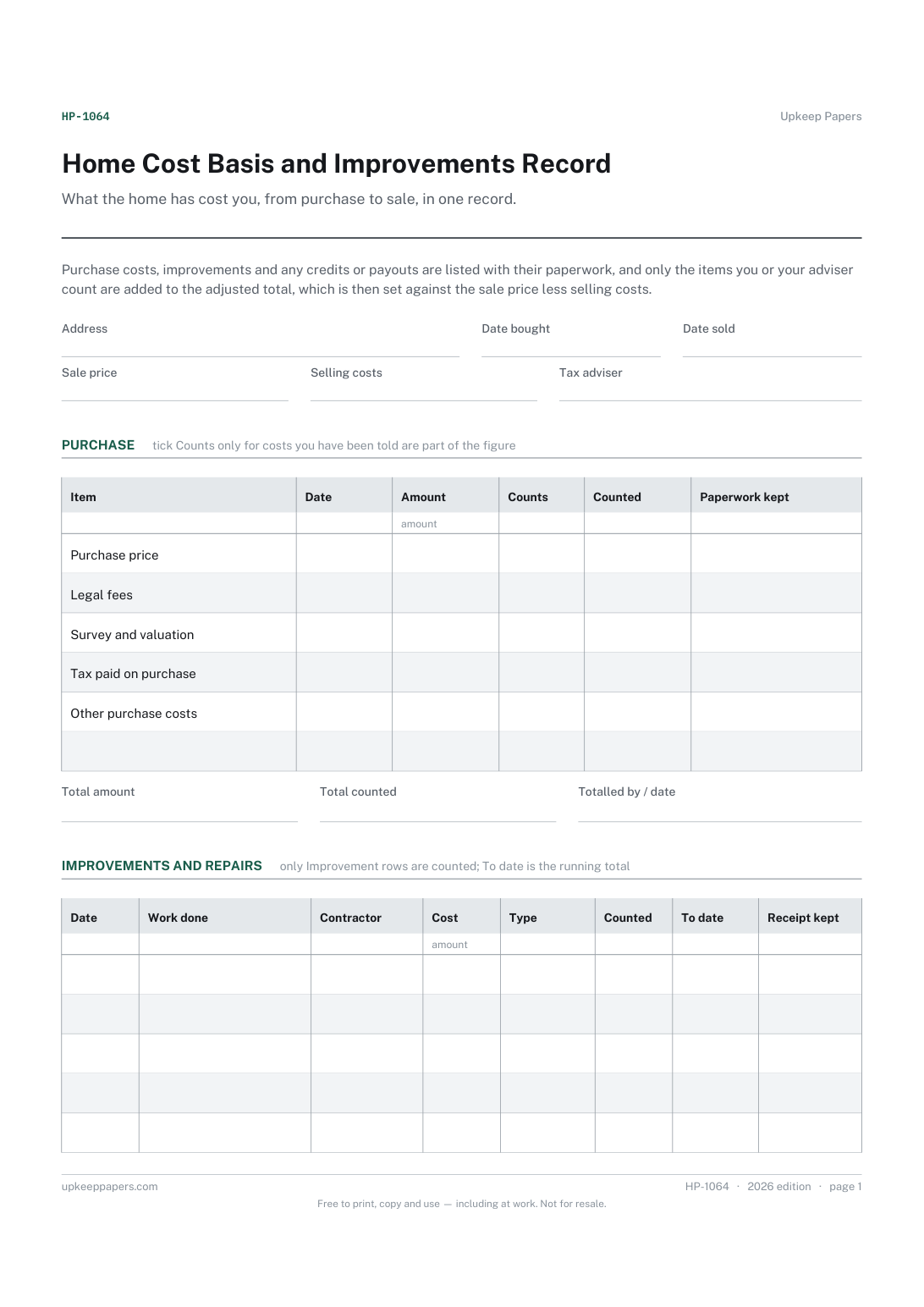
Purchase price and the purchase costs that count towards the total.
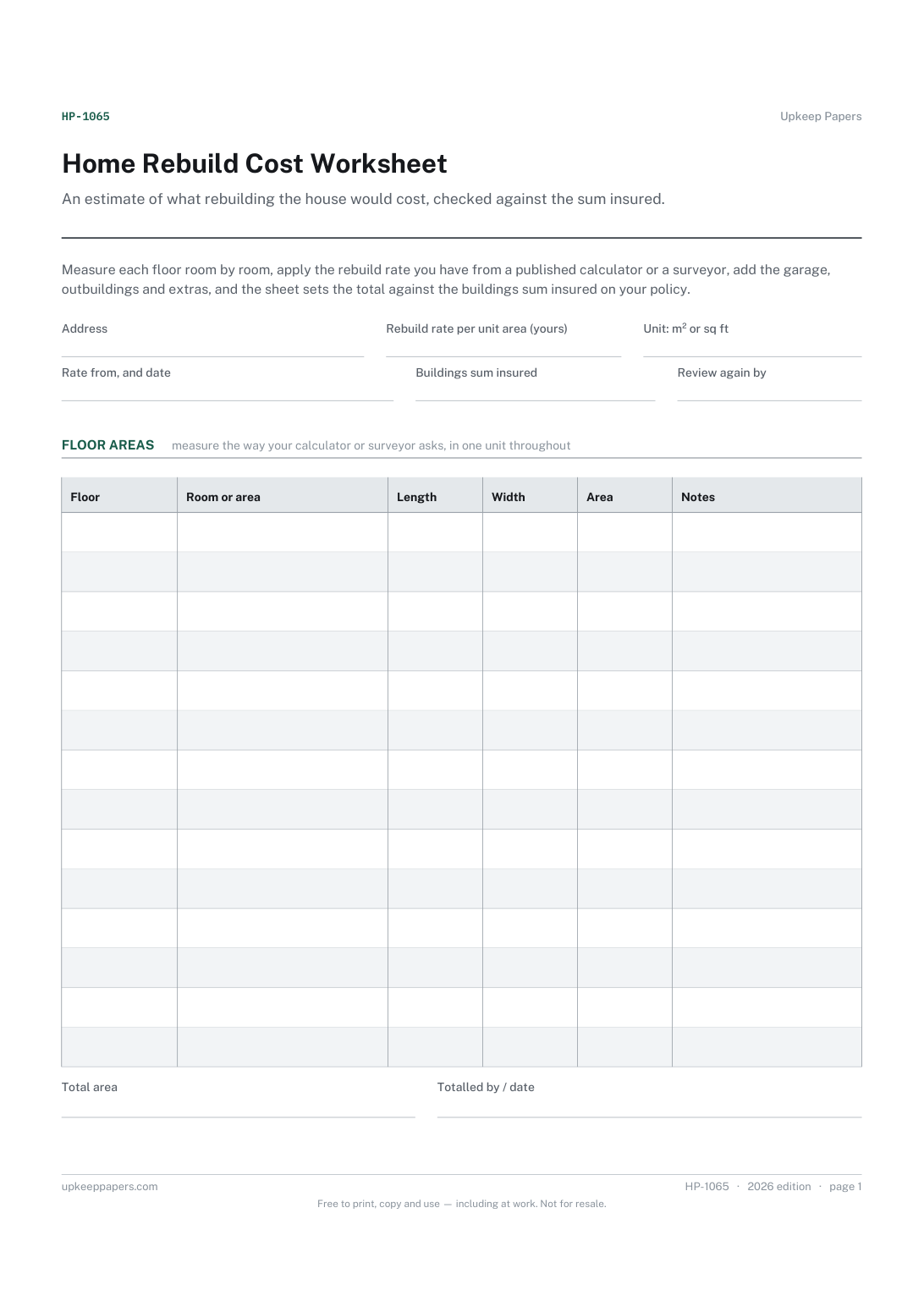
The floor area of every room and space, floor by floor.
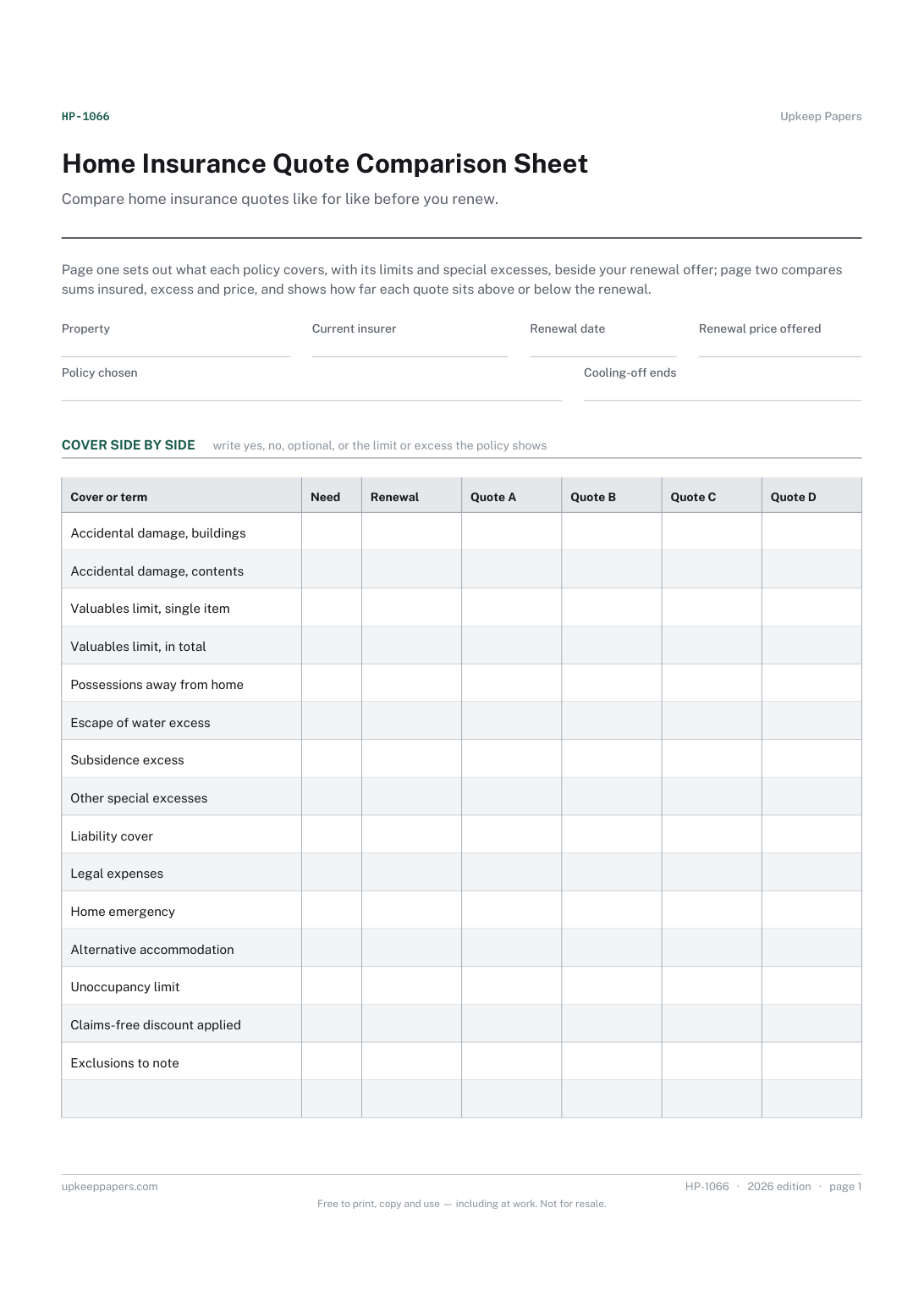
What each quote covers, and the limits and special excesses that differ.
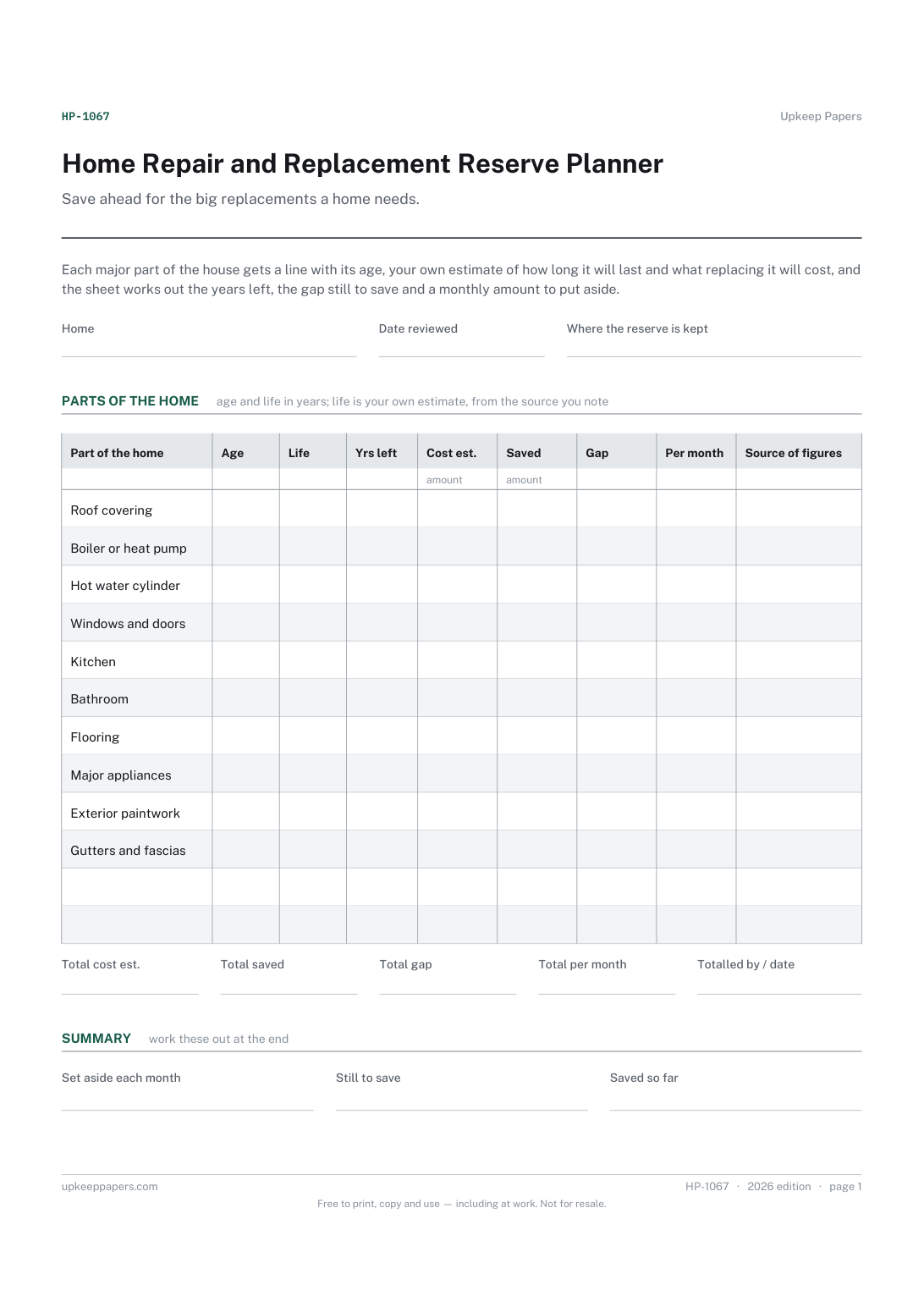
The age of each major part of the home and your estimate of its life.
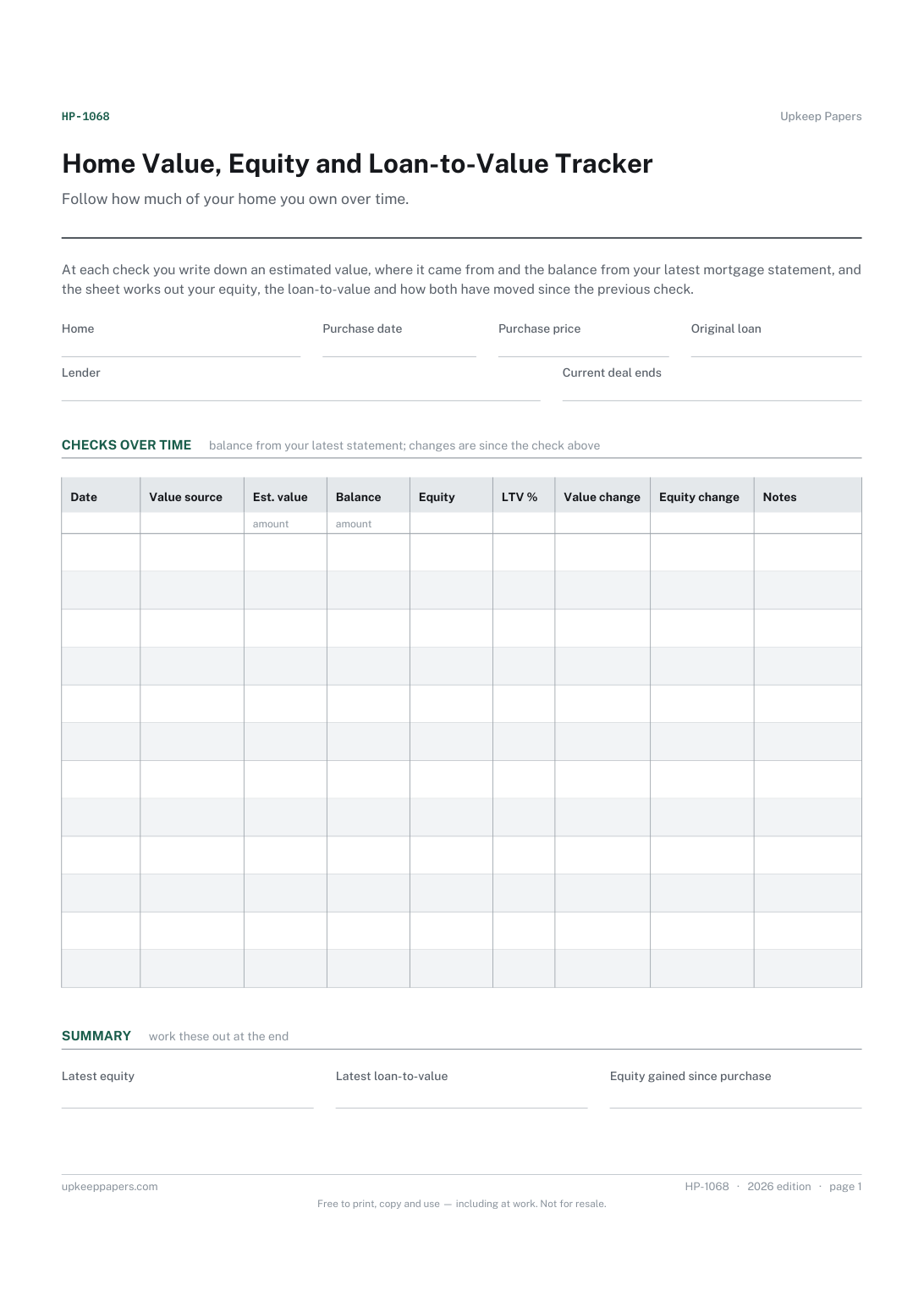
Each estimate of the home's value, dated, with where it came from.
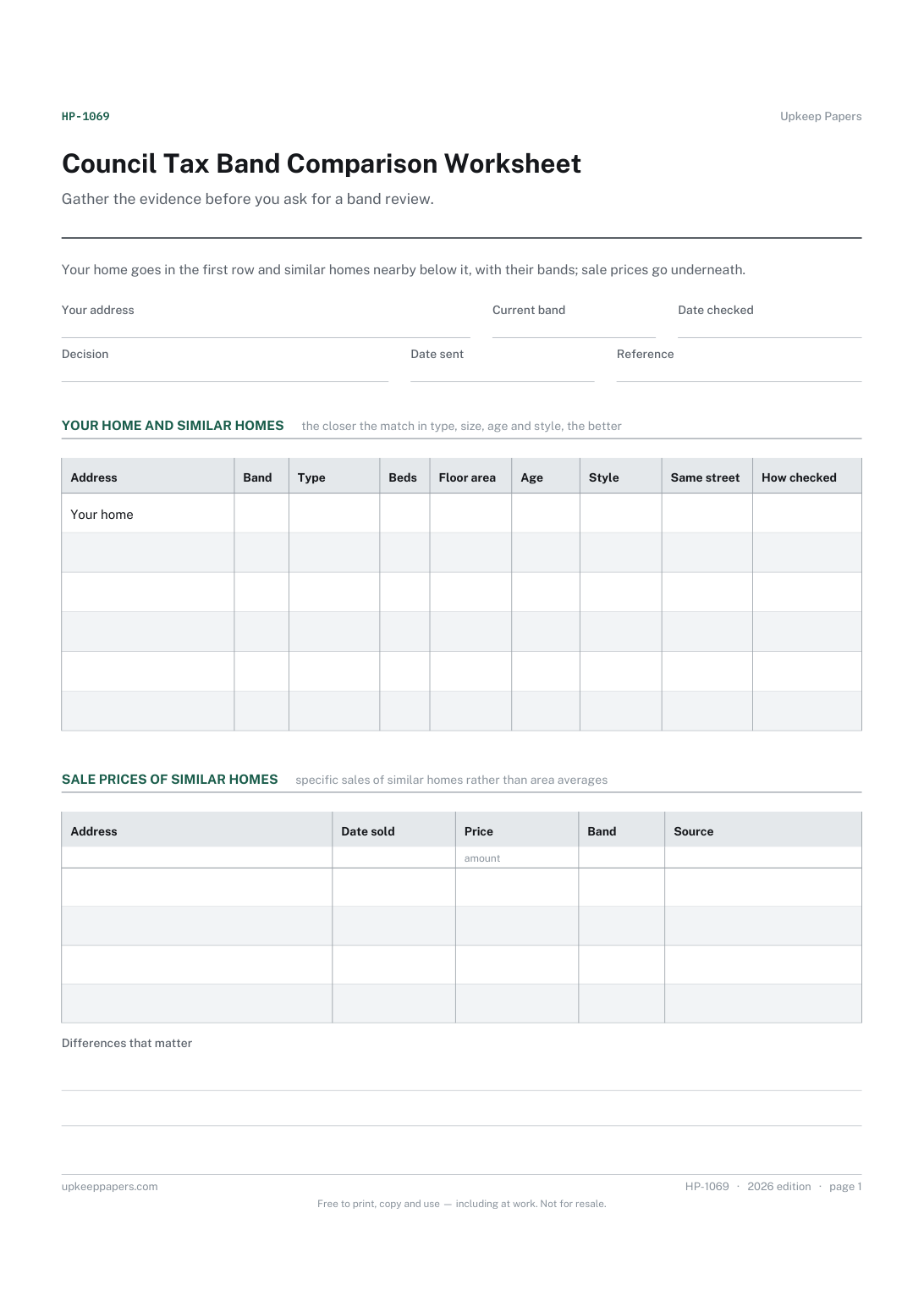
Your home's type, size, age and style beside each comparison.
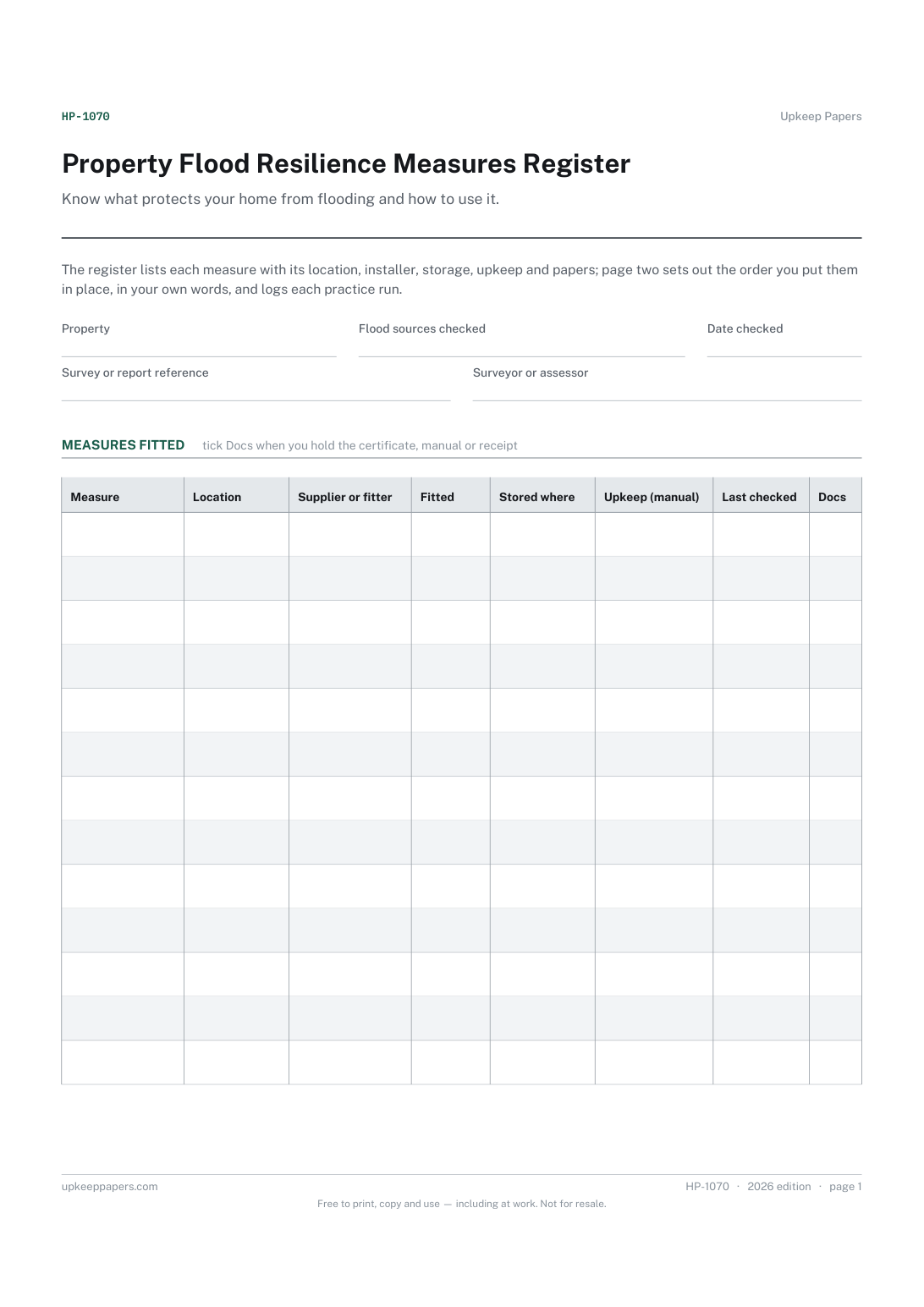
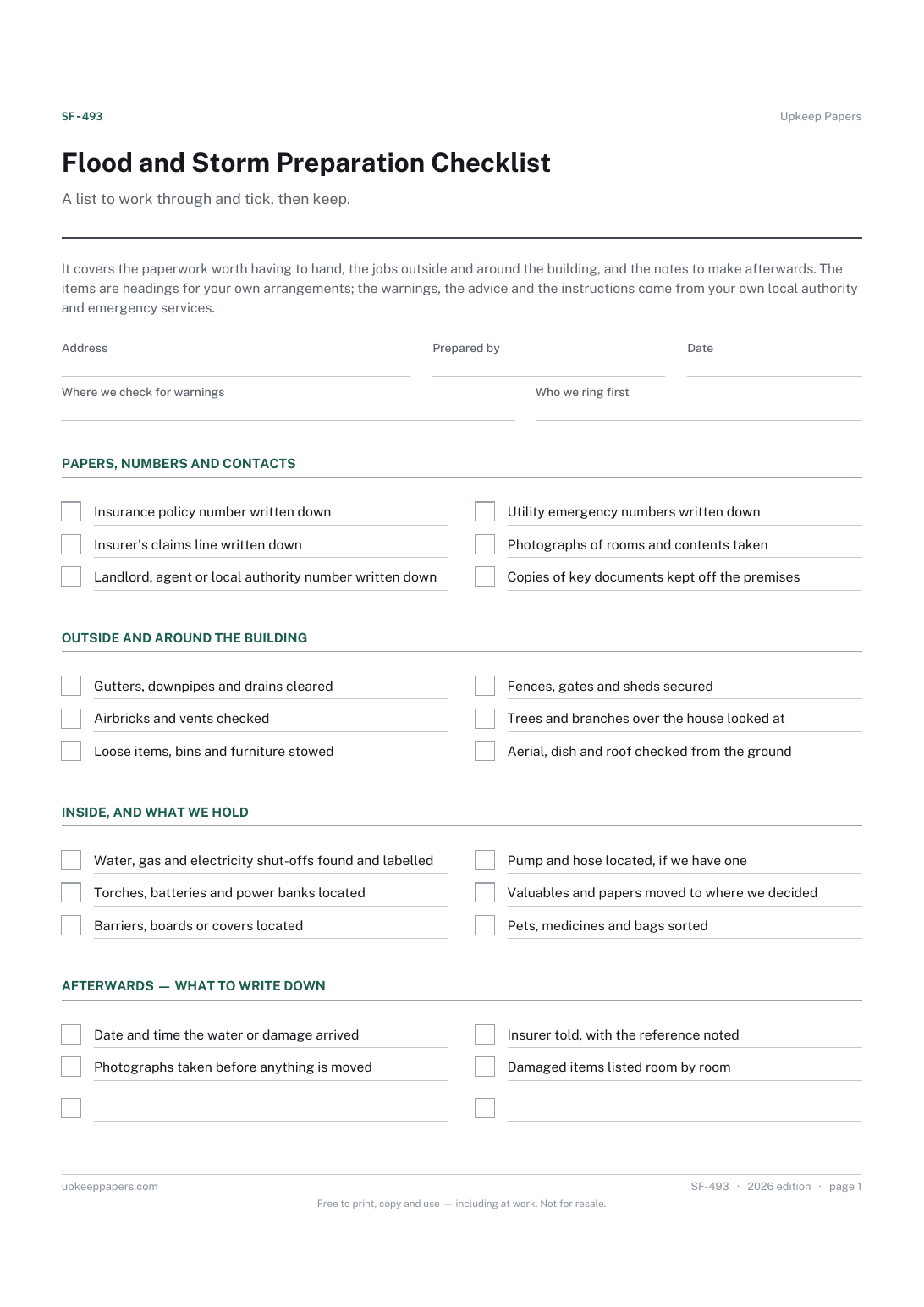
Every flood resistance and resilience measure fitted, and where it is.
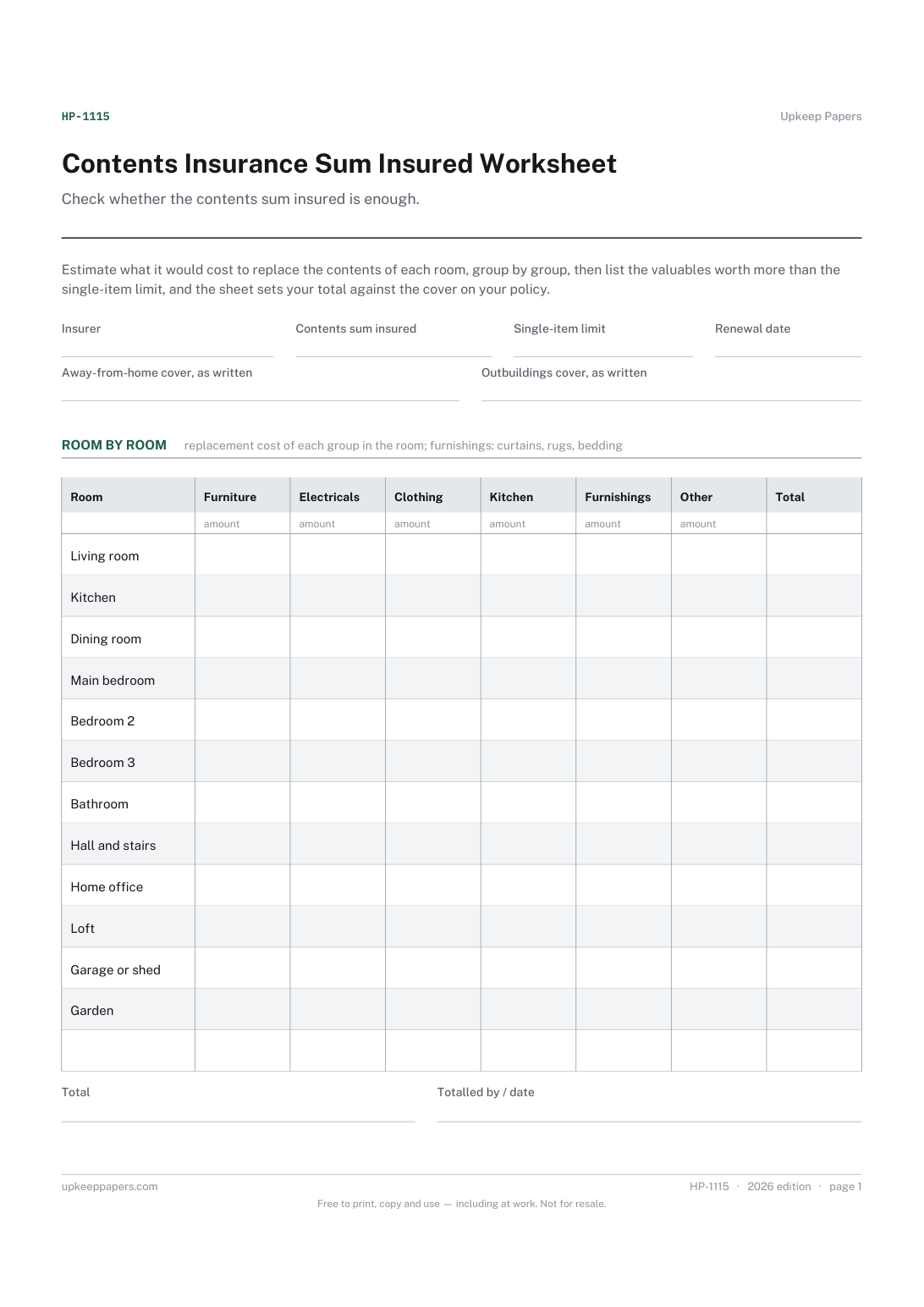
What replacing the contents of each room might cost, by group.
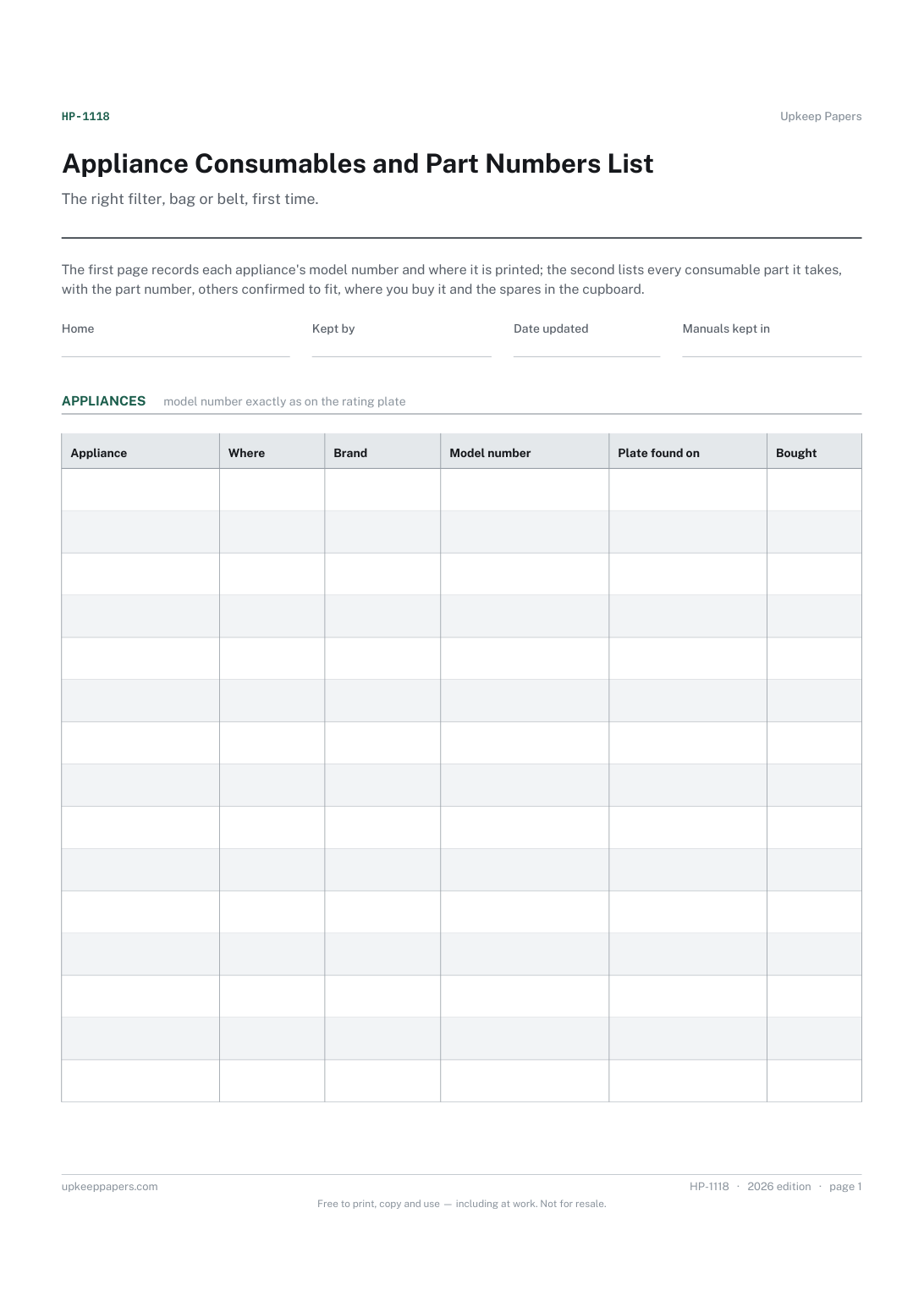
Each appliance's brand and exact model number.
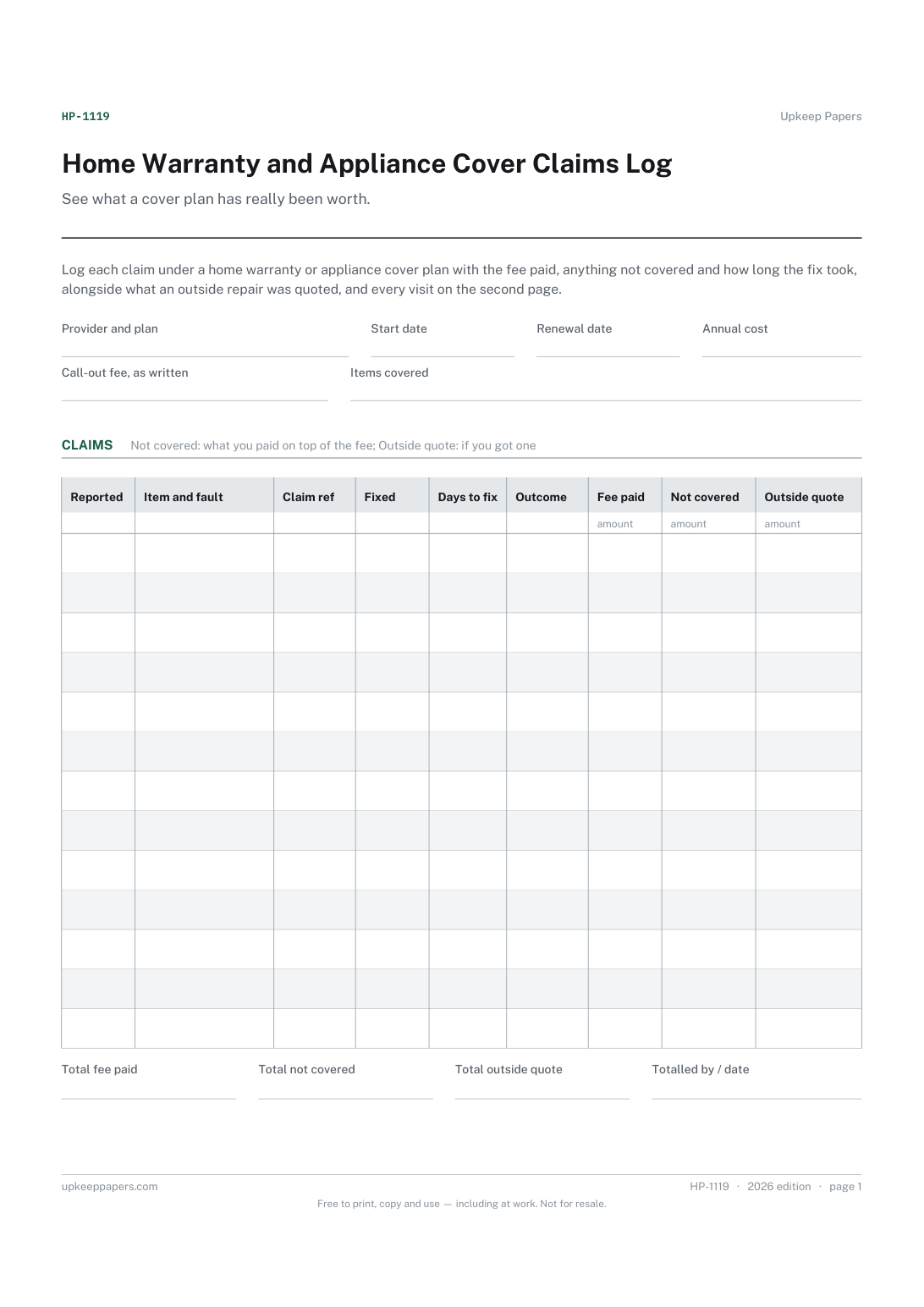
Every claim, its reference and what failed.
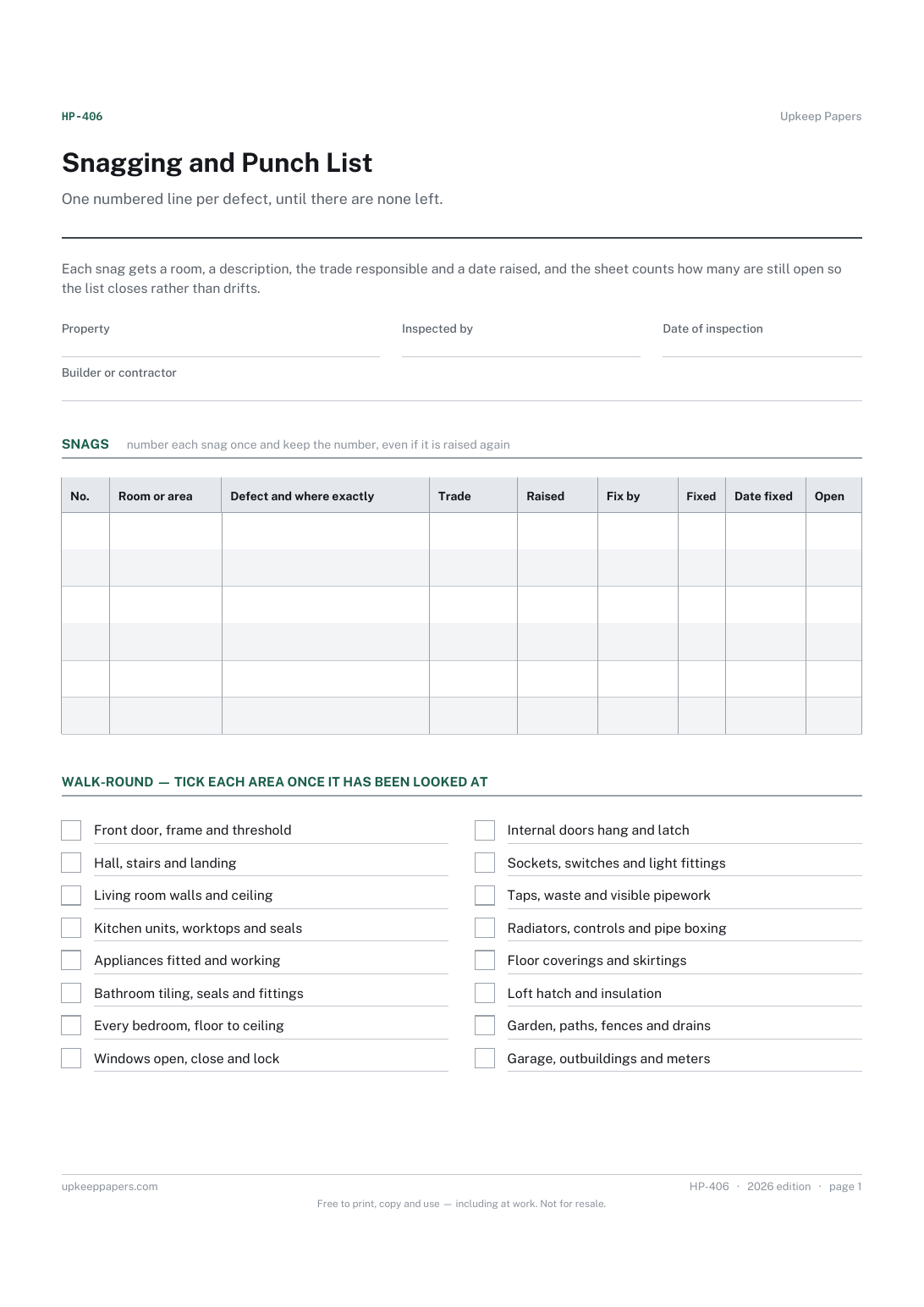
Every defect written down once, numbered, so nothing is argued about twice.
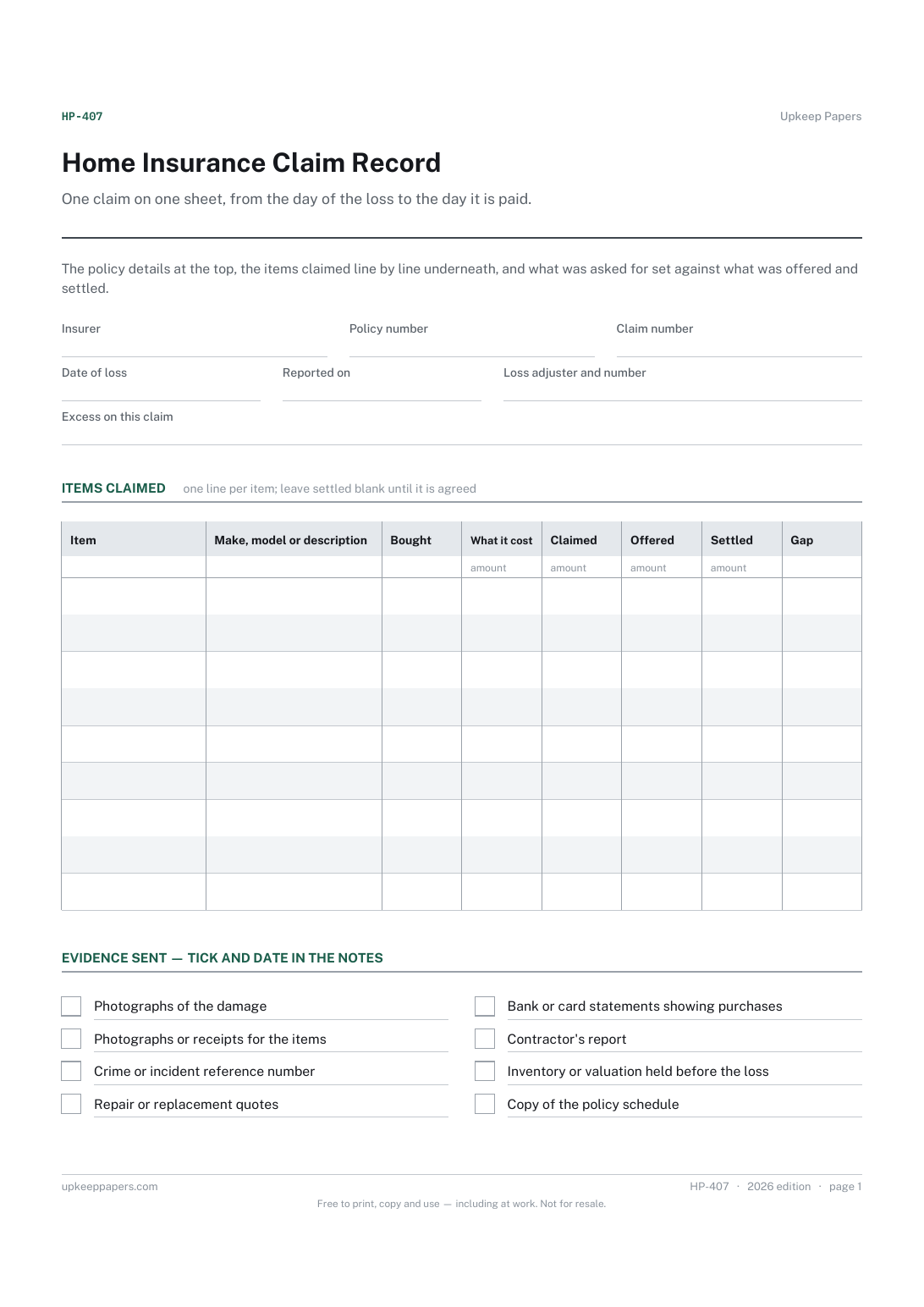
The policy, claim and loss adjuster details in one place, ready to quote.
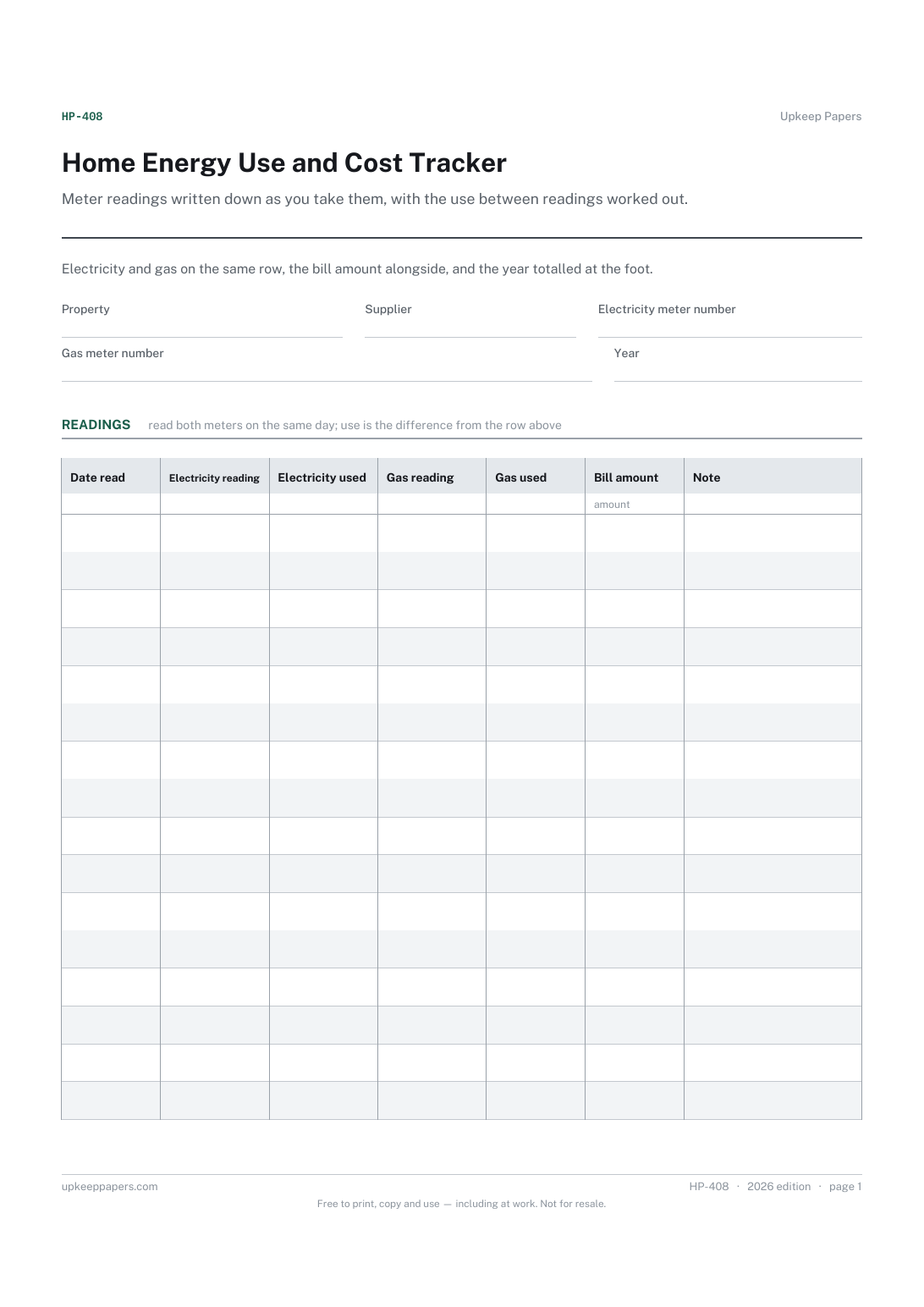
Every meter reading, dated, in your own handwriting.
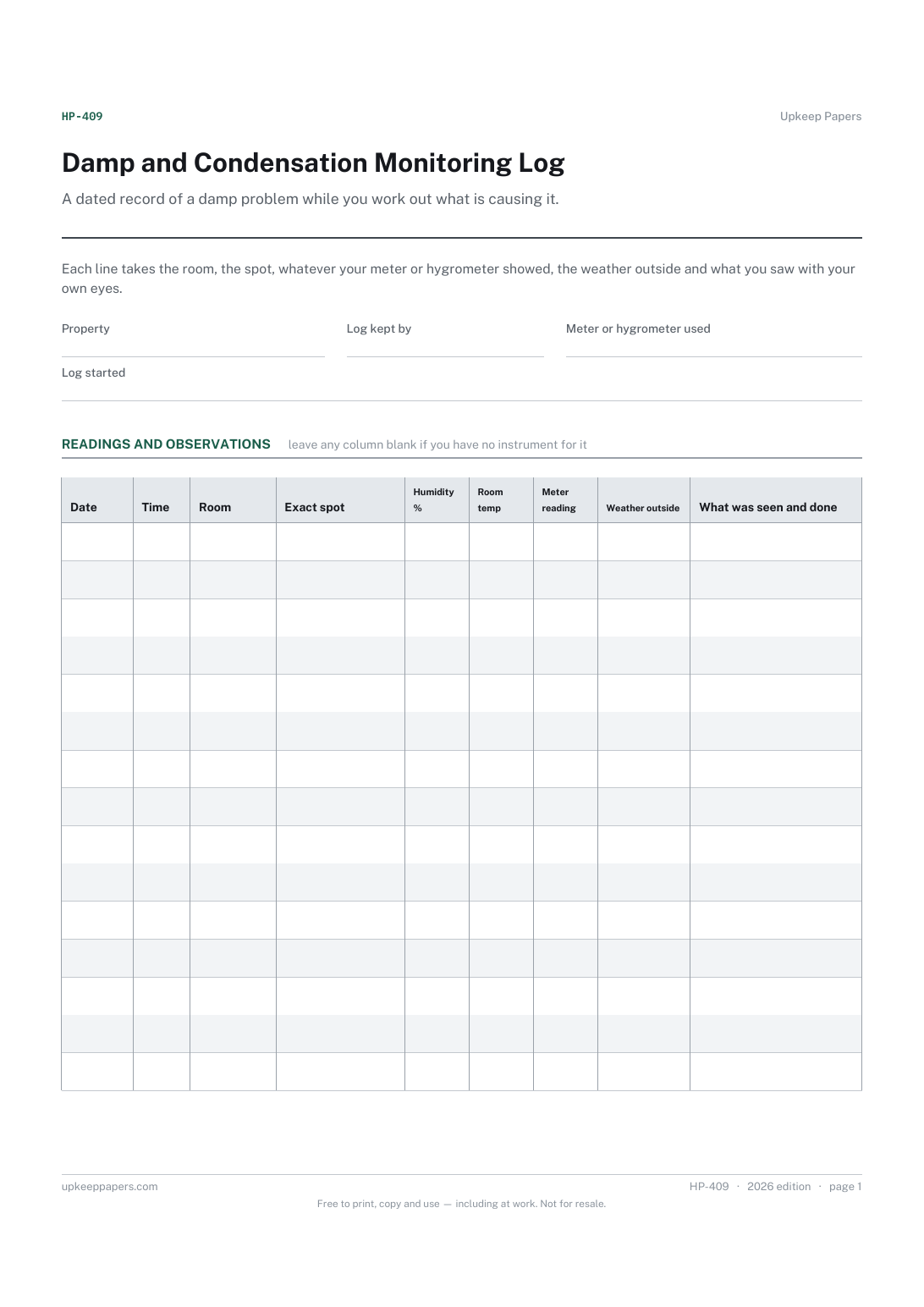
Where the problem is, described precisely enough to find again.
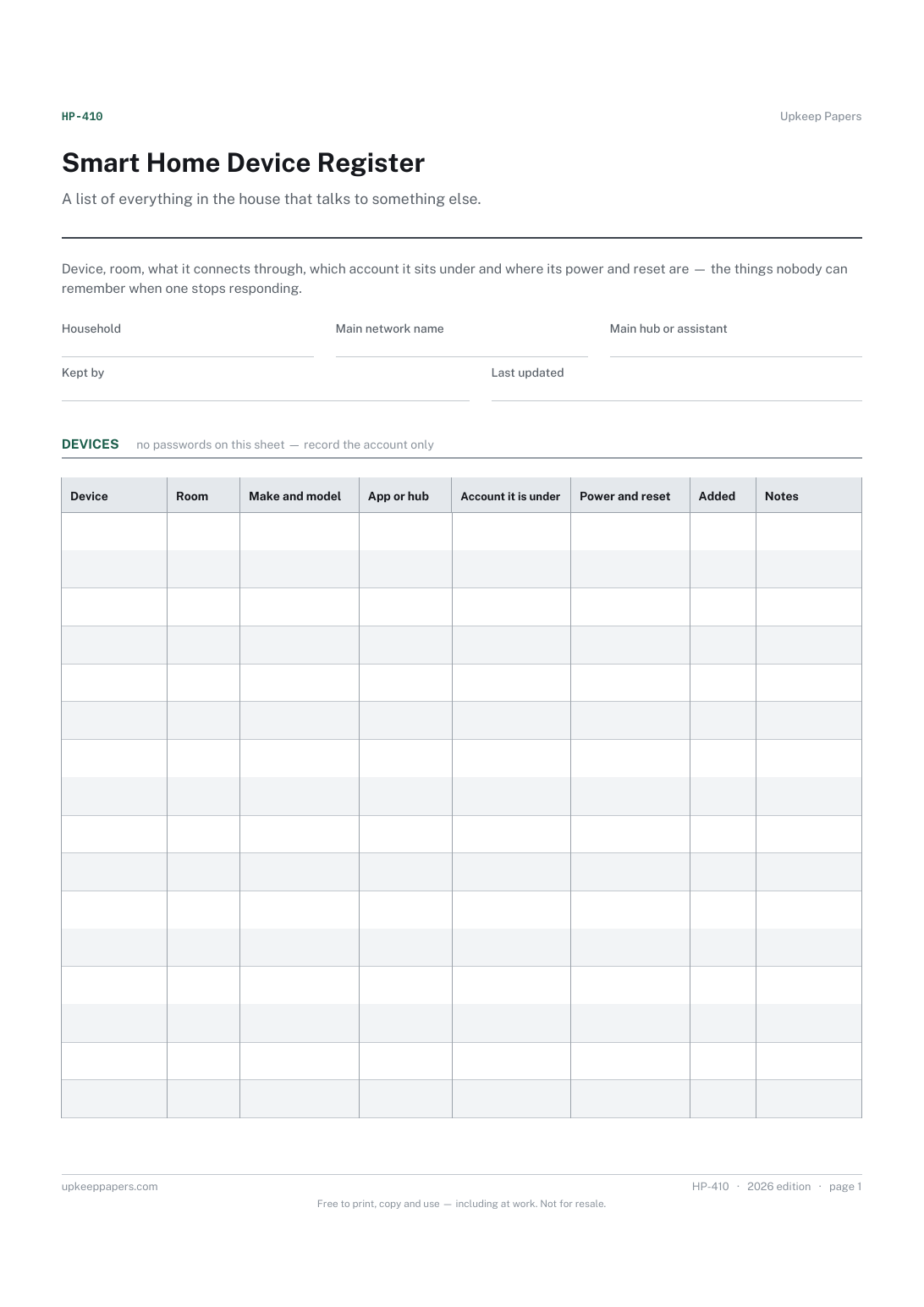
Every connected device, what it is and which room it is in.
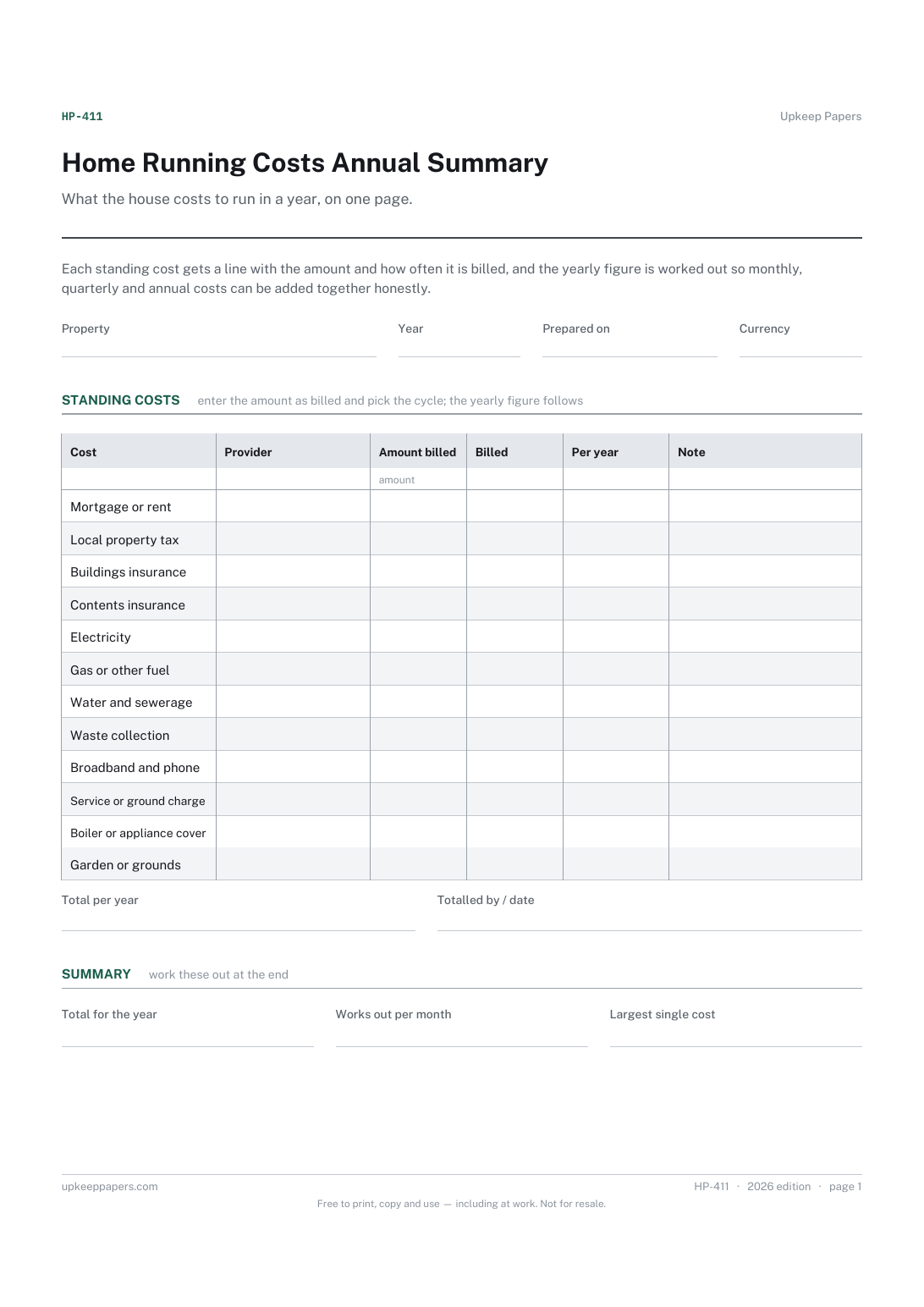
Every standing cost of the property in one list, with who it is paid to.
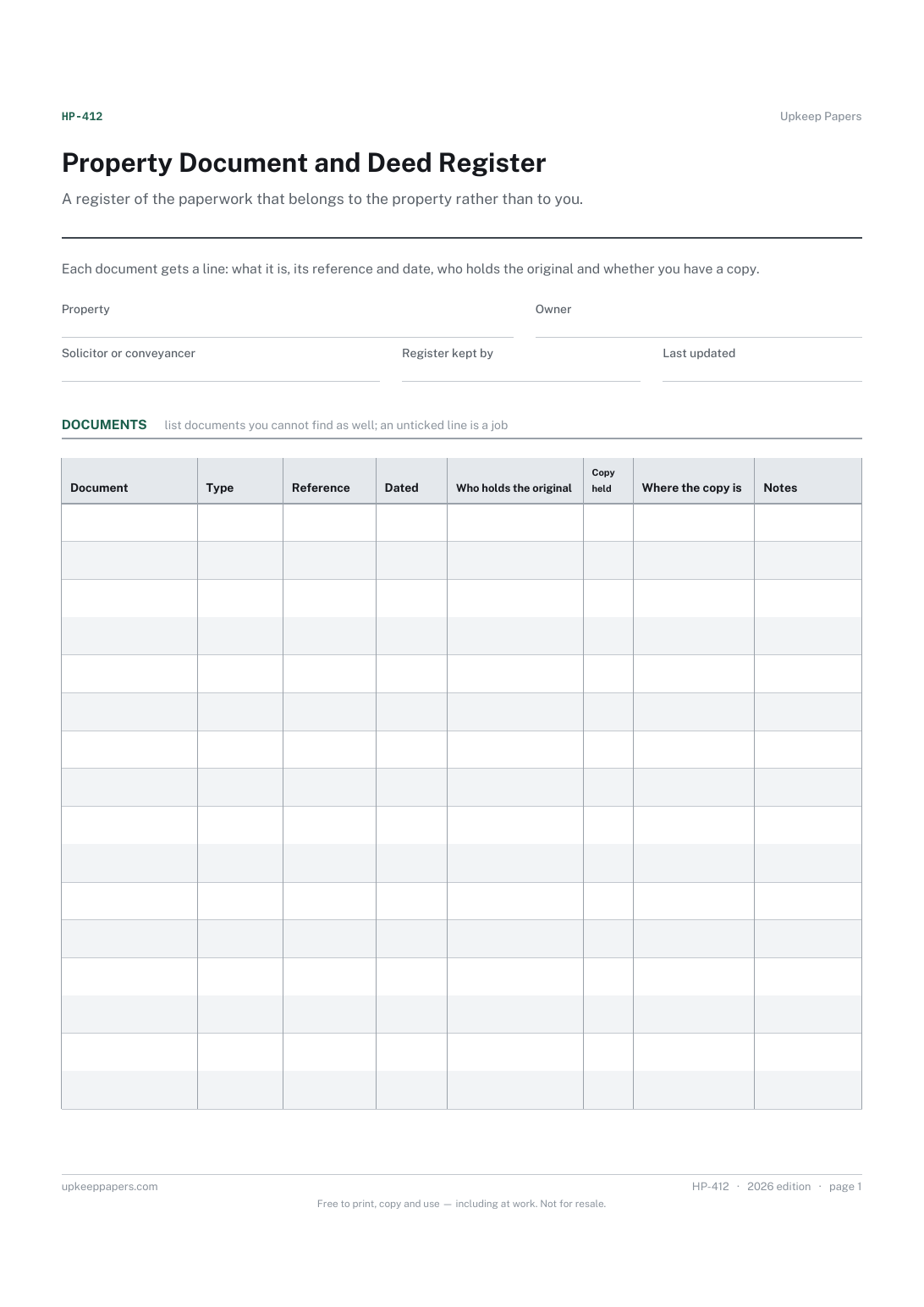
Which documents exist for the property and what each one is.
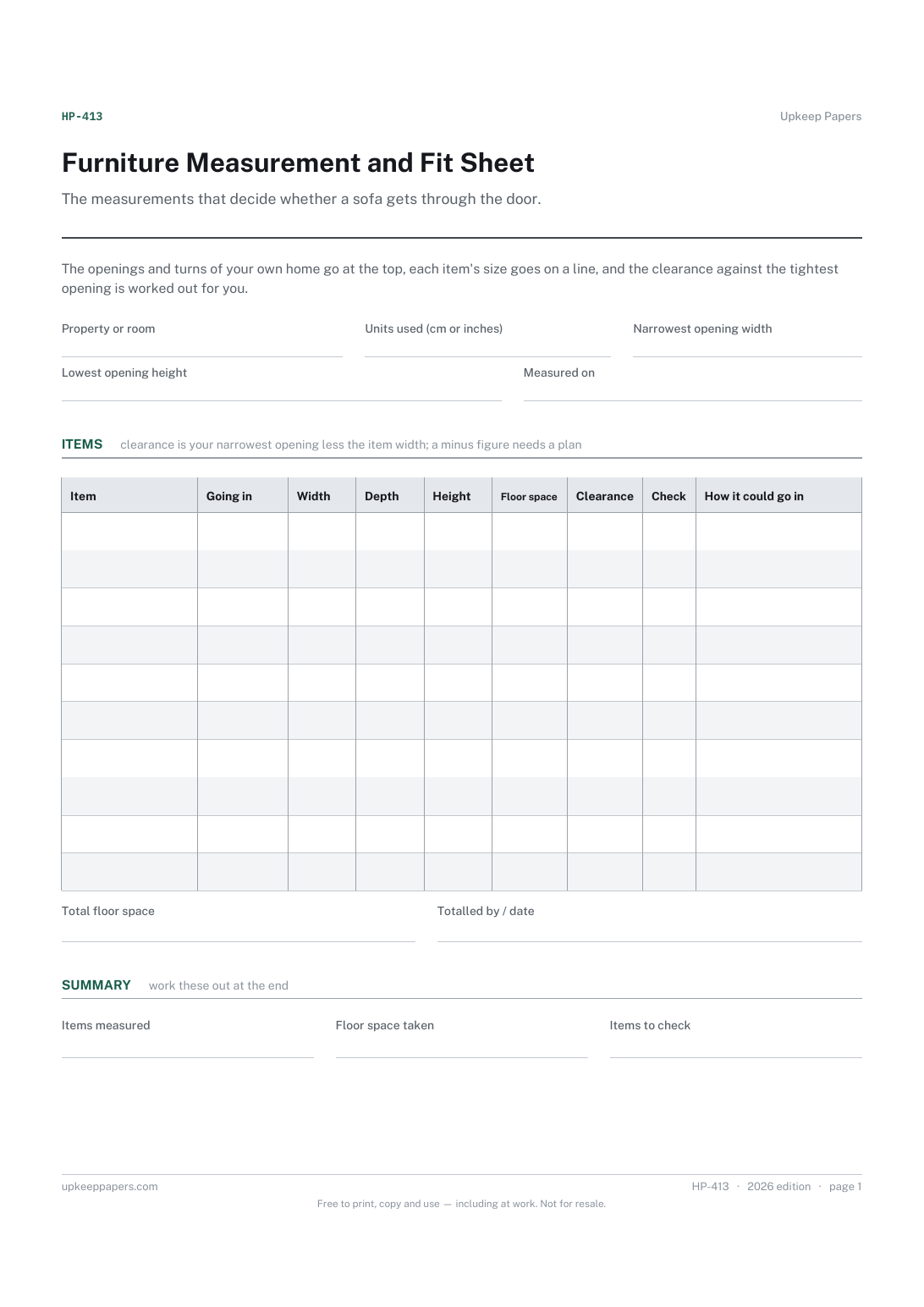
The width and height of every opening and turn between the street and the room.
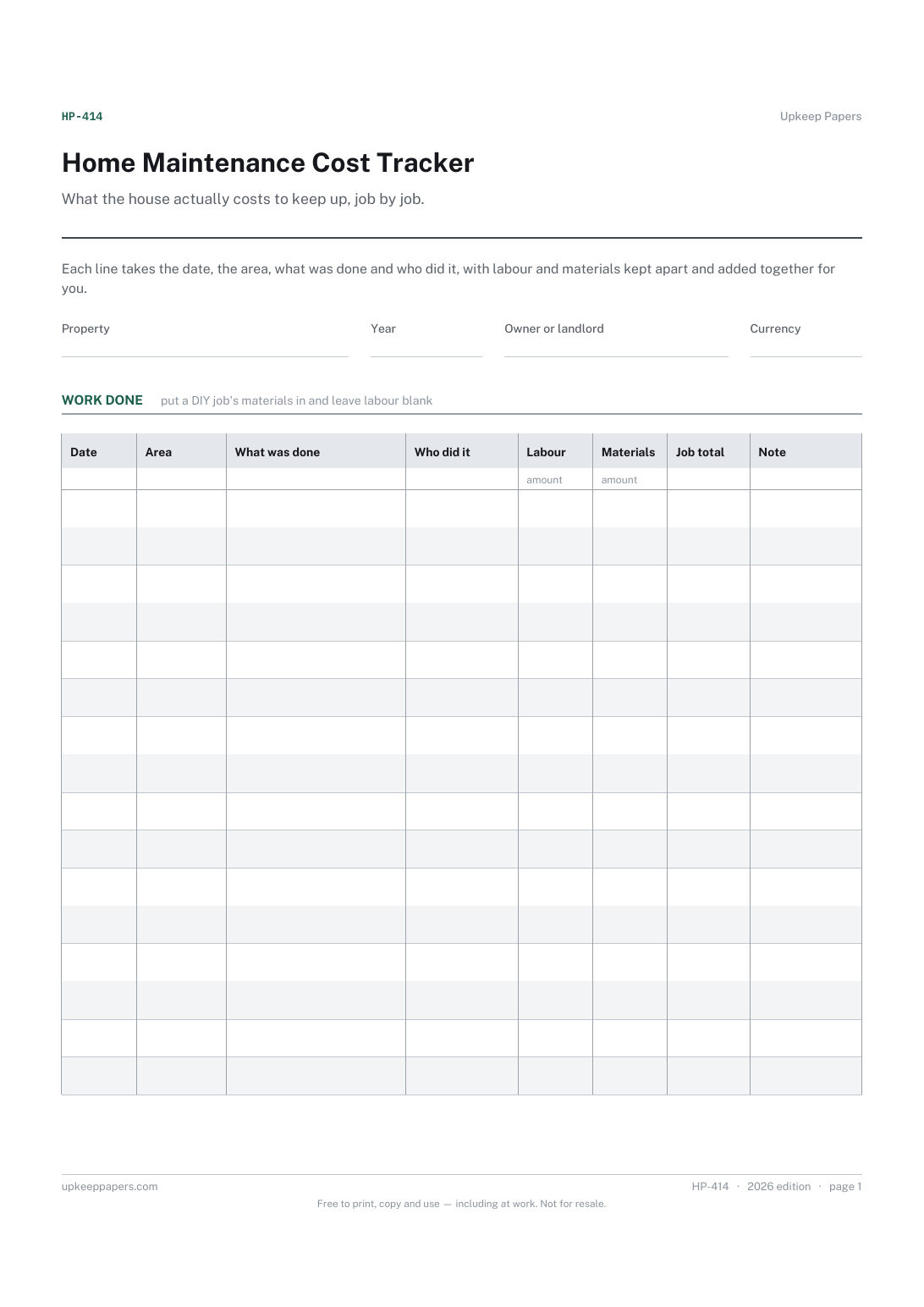
Every job done to the house, dated, with who did it.
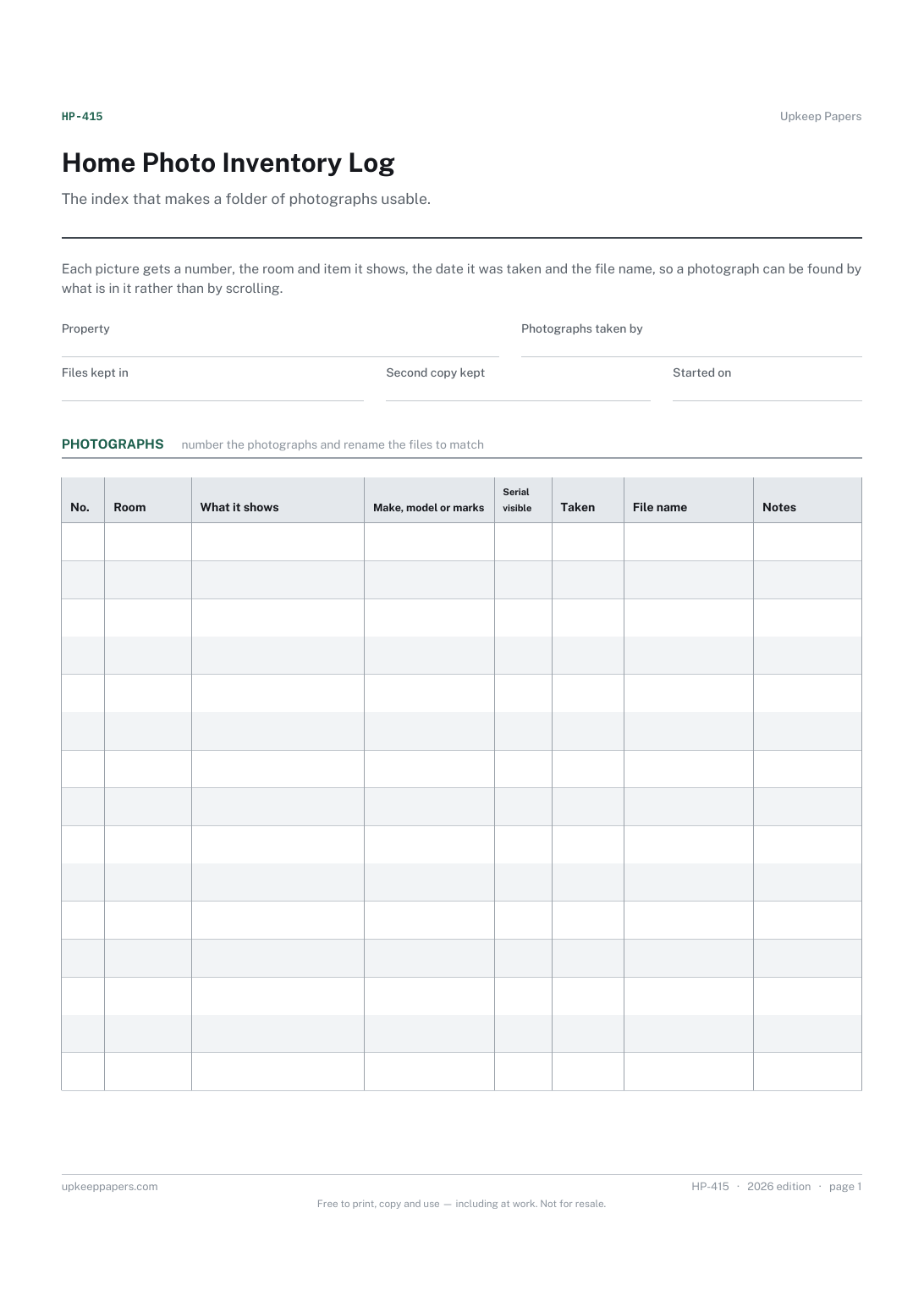
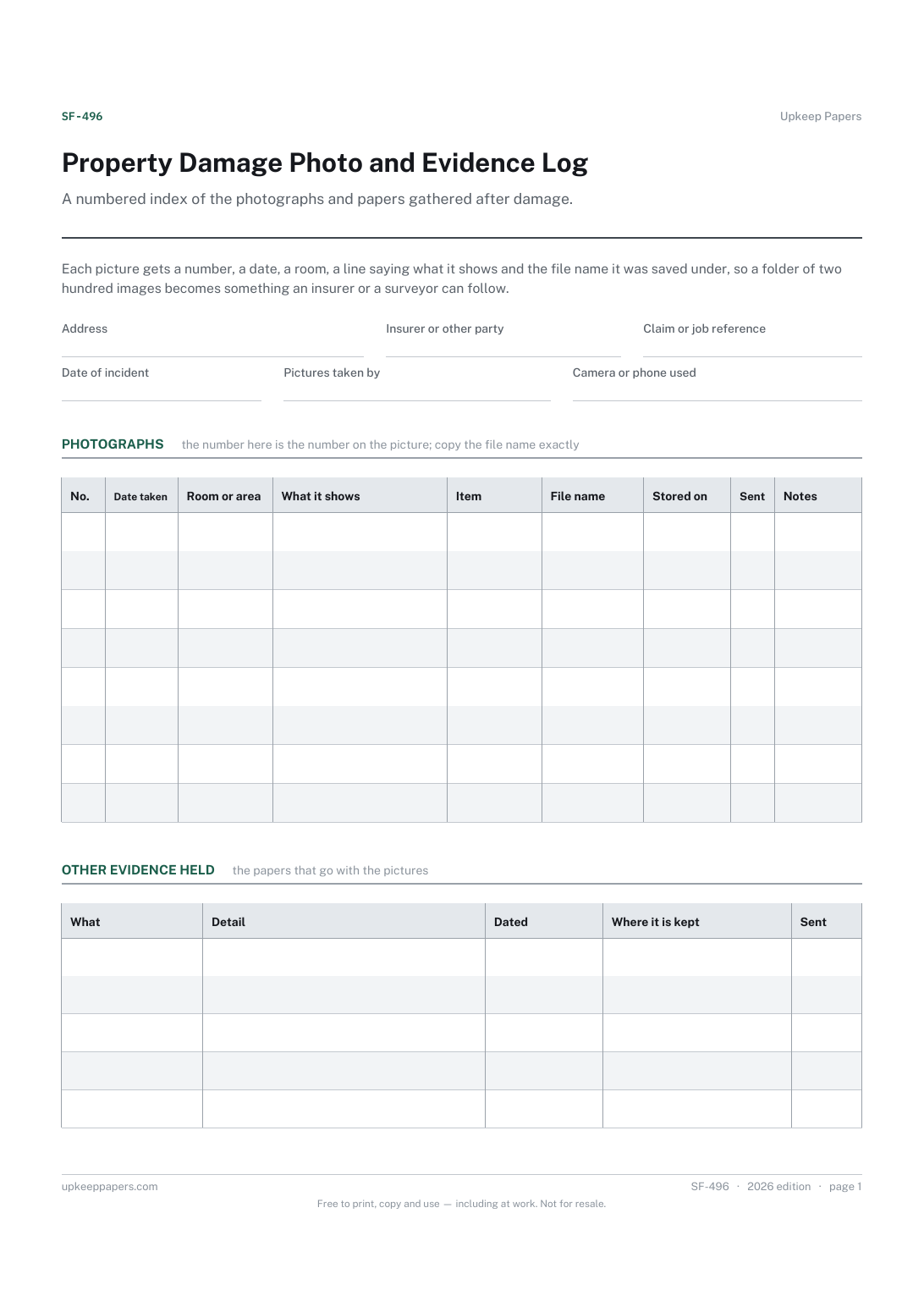
Which photographs exist and what each one shows.
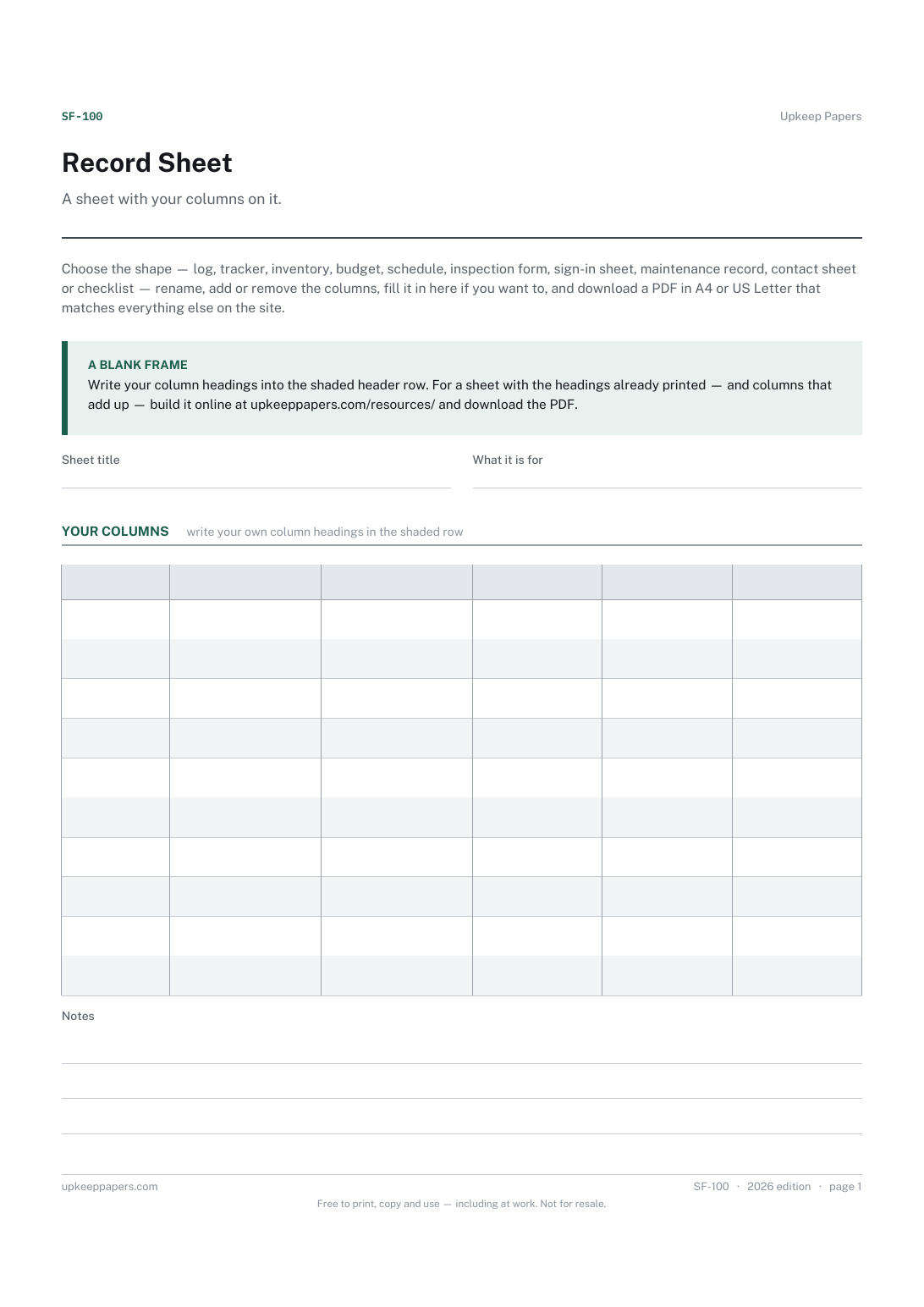
A sheet with exactly the columns you need, and none you do not.
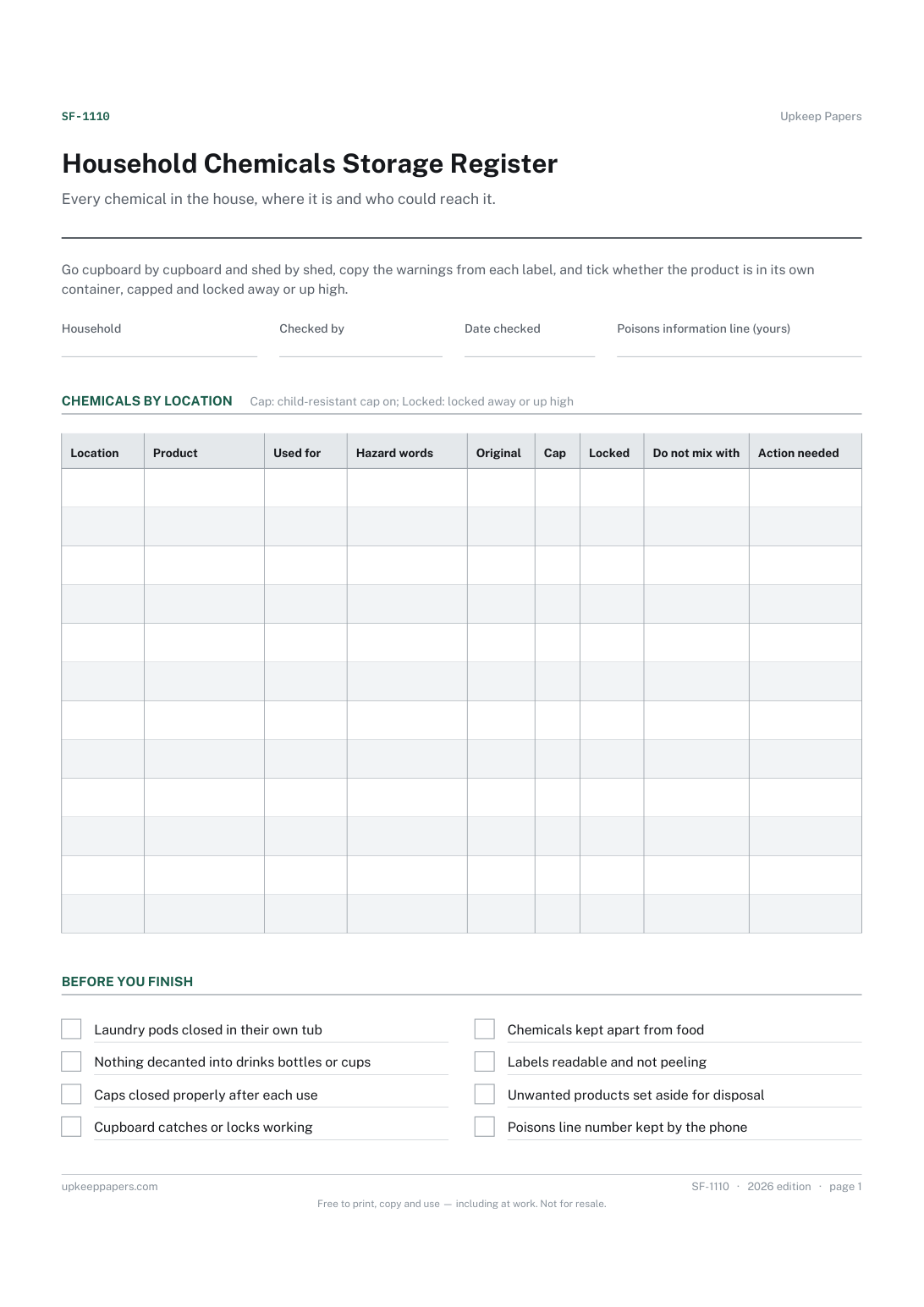
Every cleaning, laundry, garden, DIY and car product in the home.
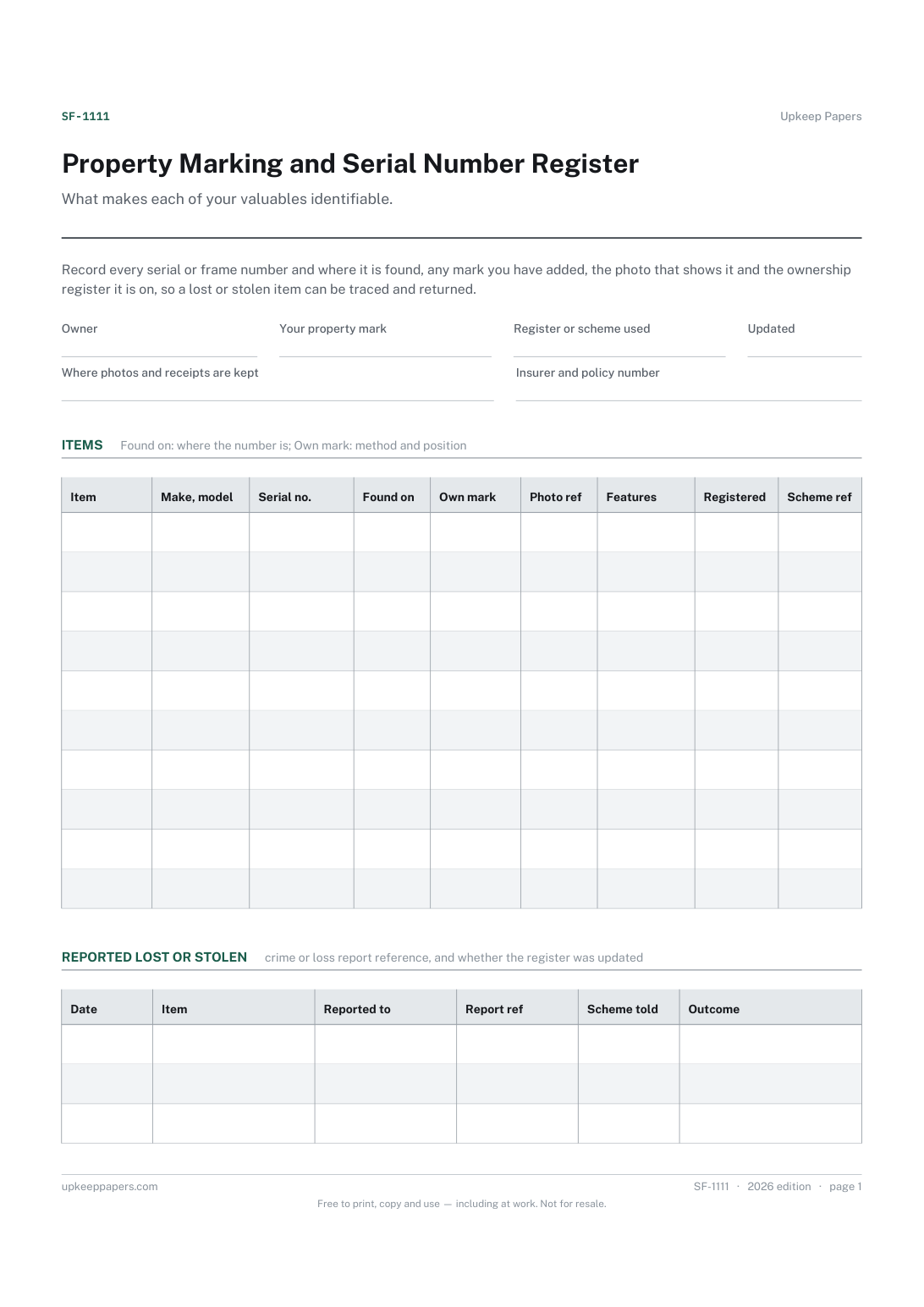
The serial or frame number of every portable valuable.
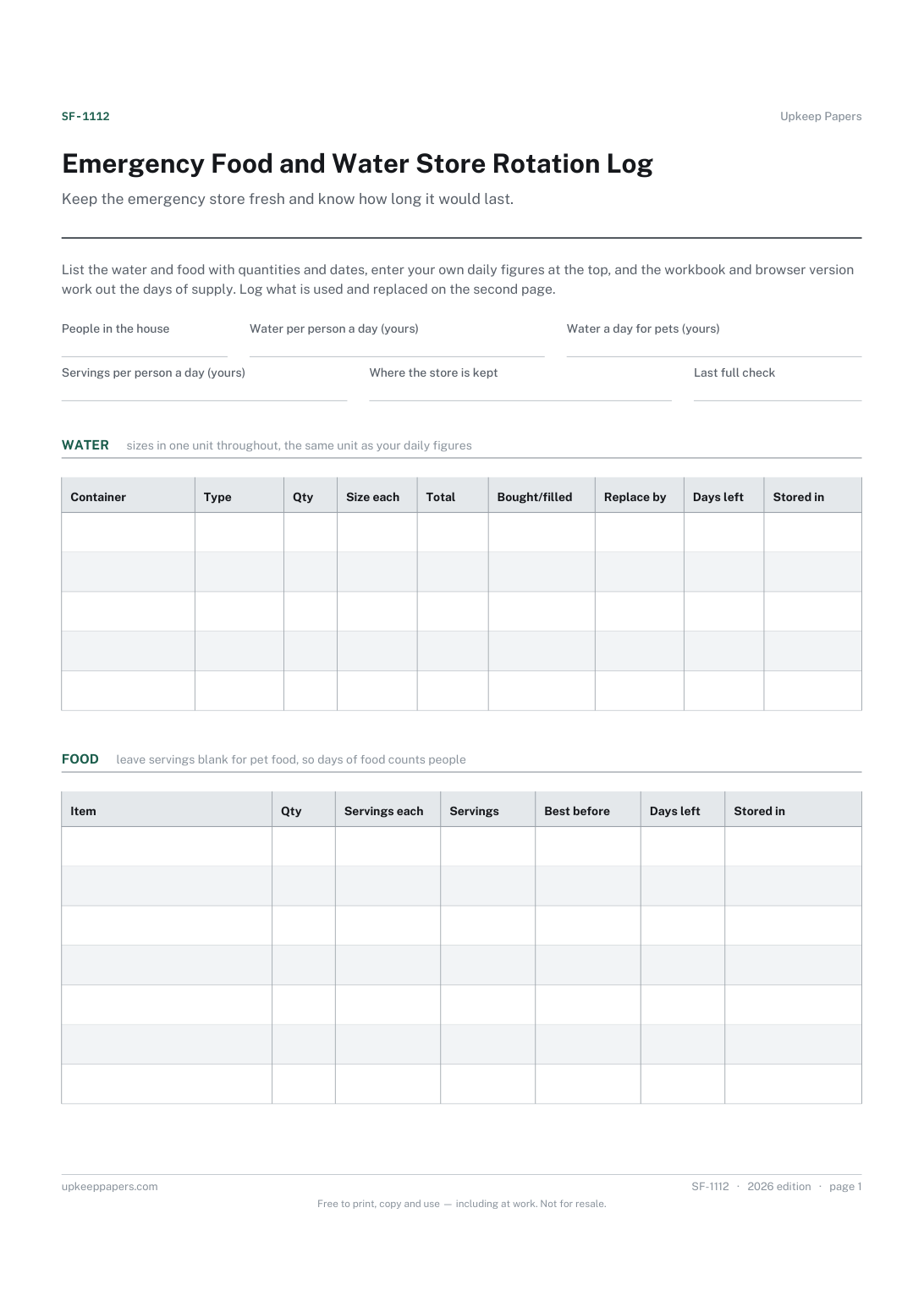
Every container of water with its date and replace-by date.
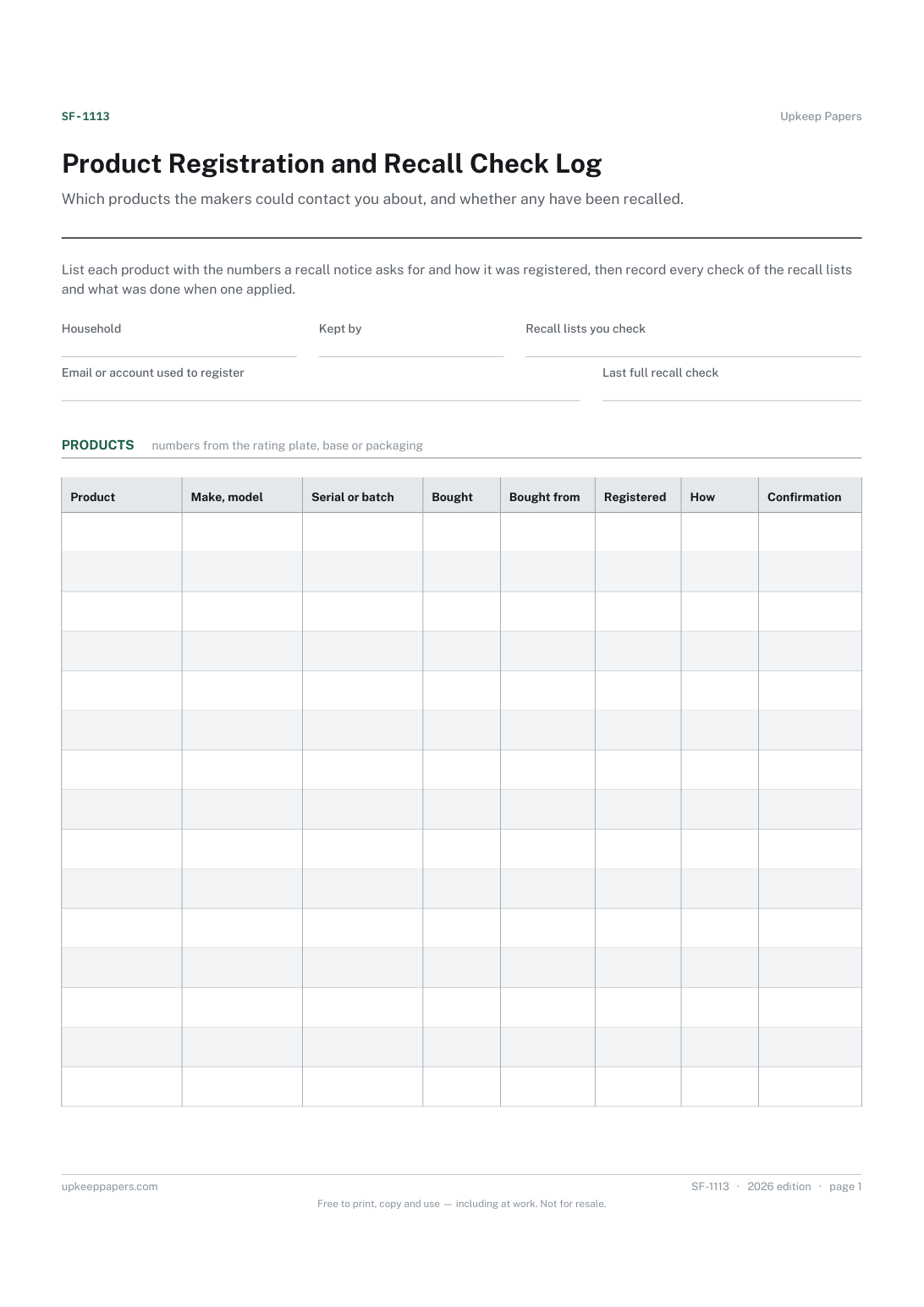
Each product with its make, model and serial or batch number.
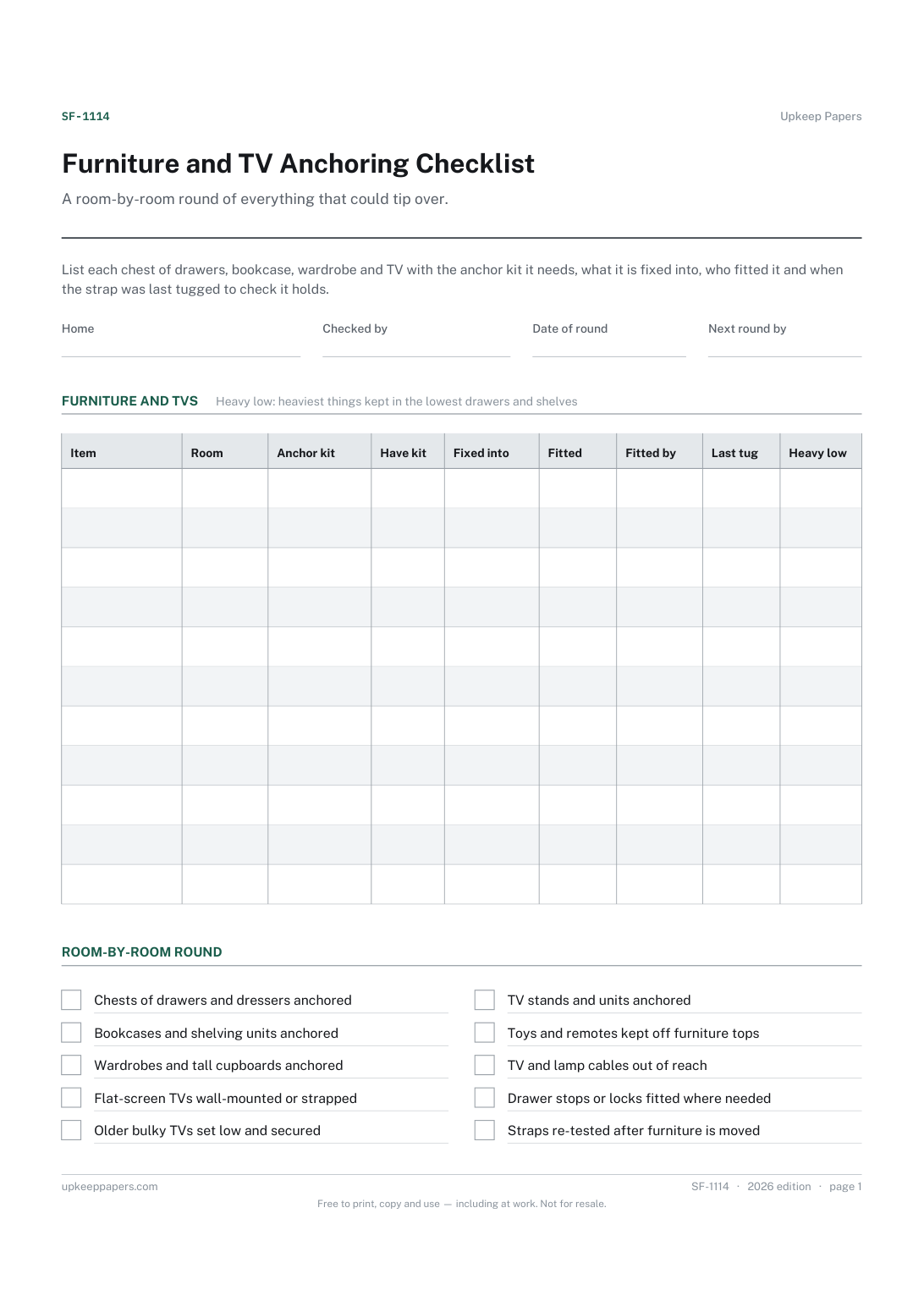
Every tall or heavy item and TV, room by room.
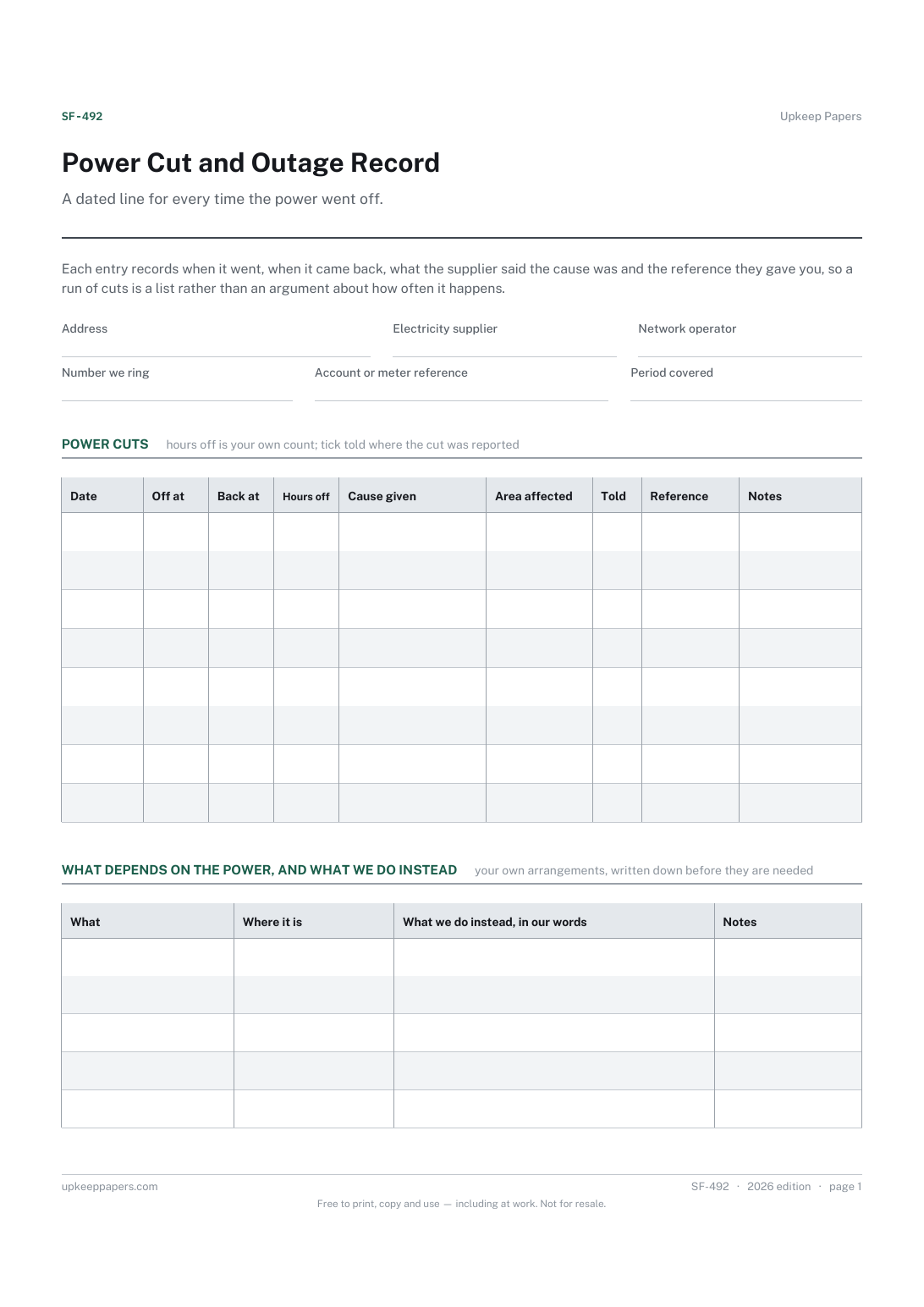
When the power went off and when it came back, in your own words.
Which documents, references and numbers are written down and where.
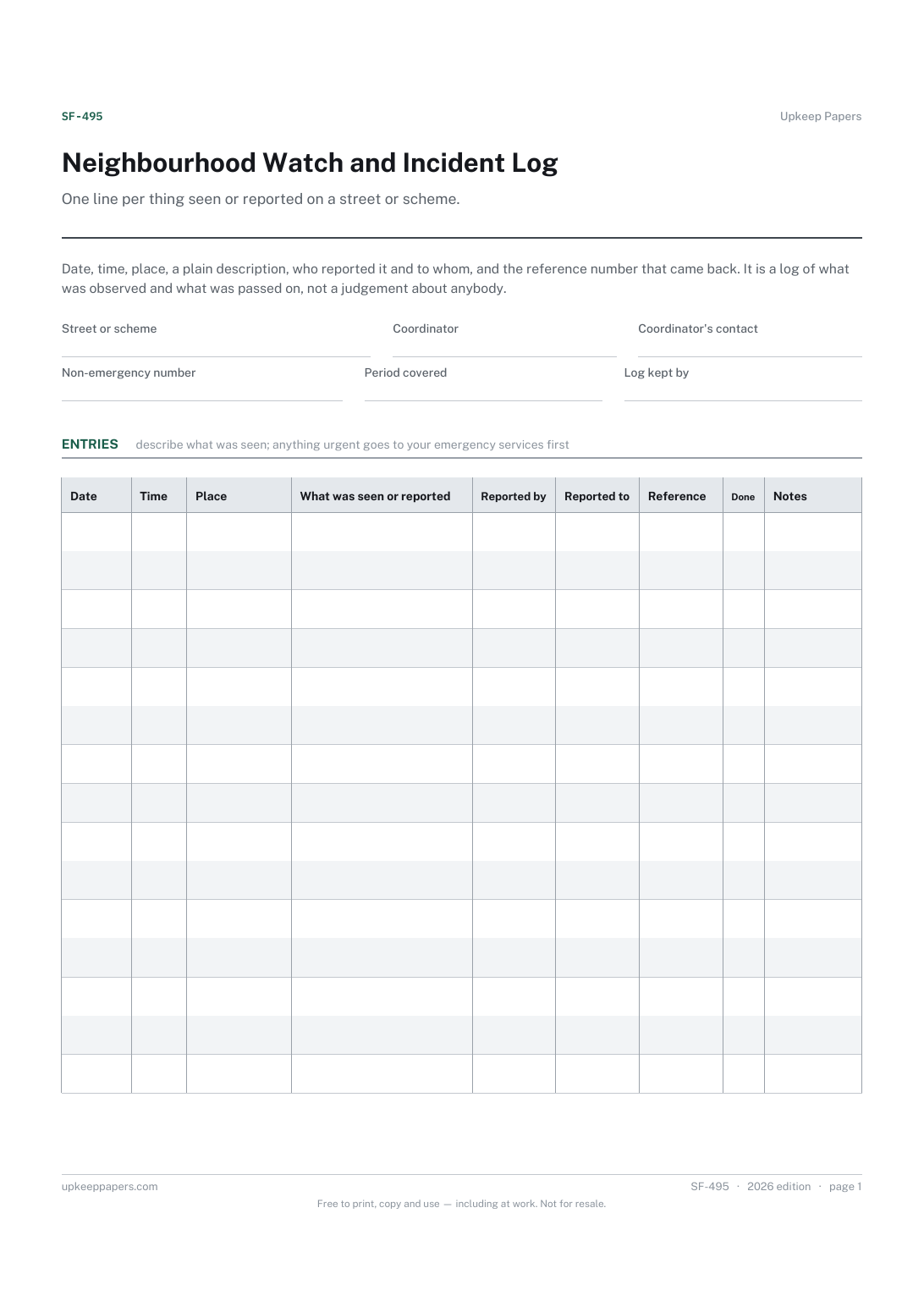
What was seen or reported, when and exactly where.
Every photograph numbered, dated and described in a line.
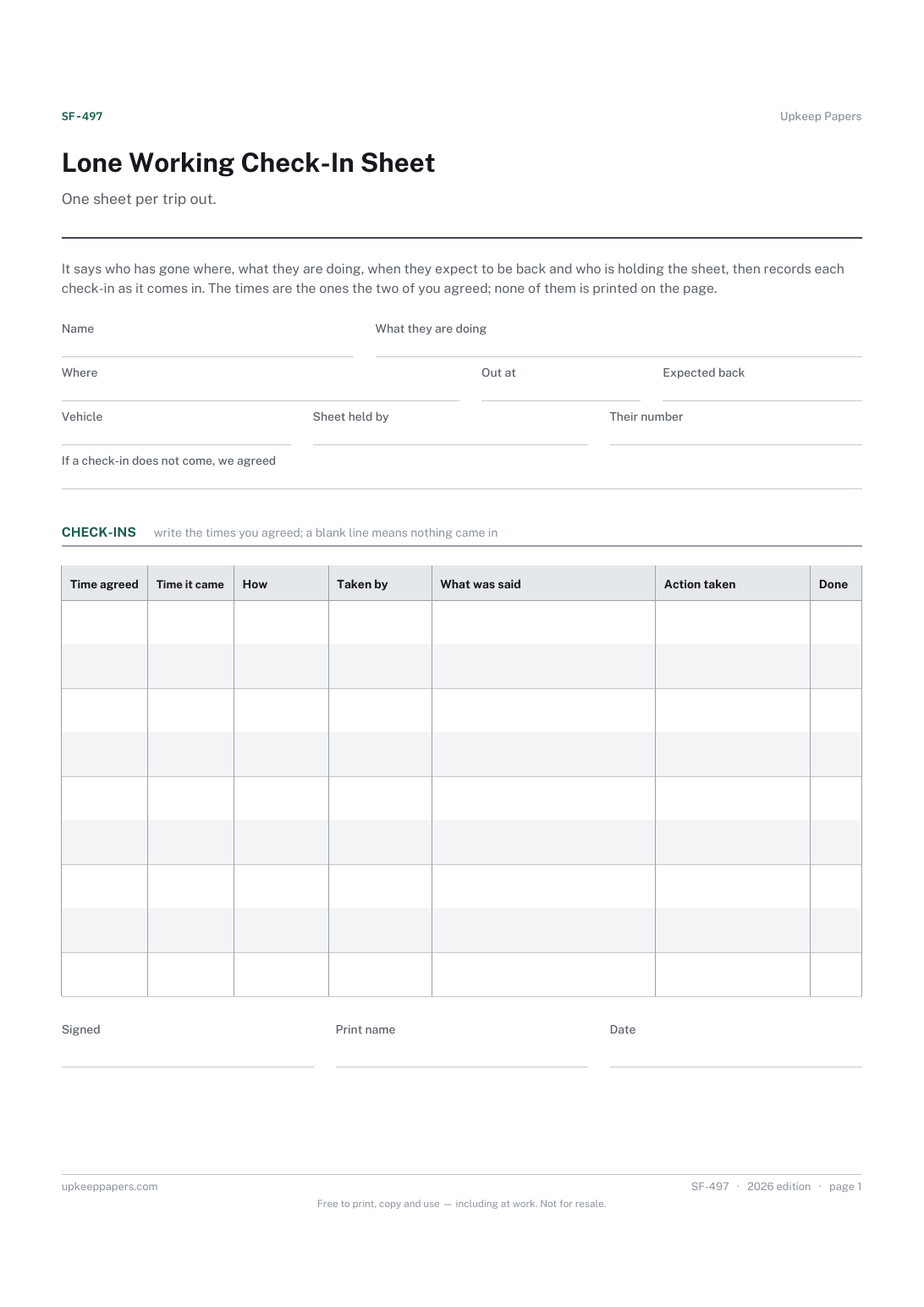
Where the person has gone, and what they are there to do.
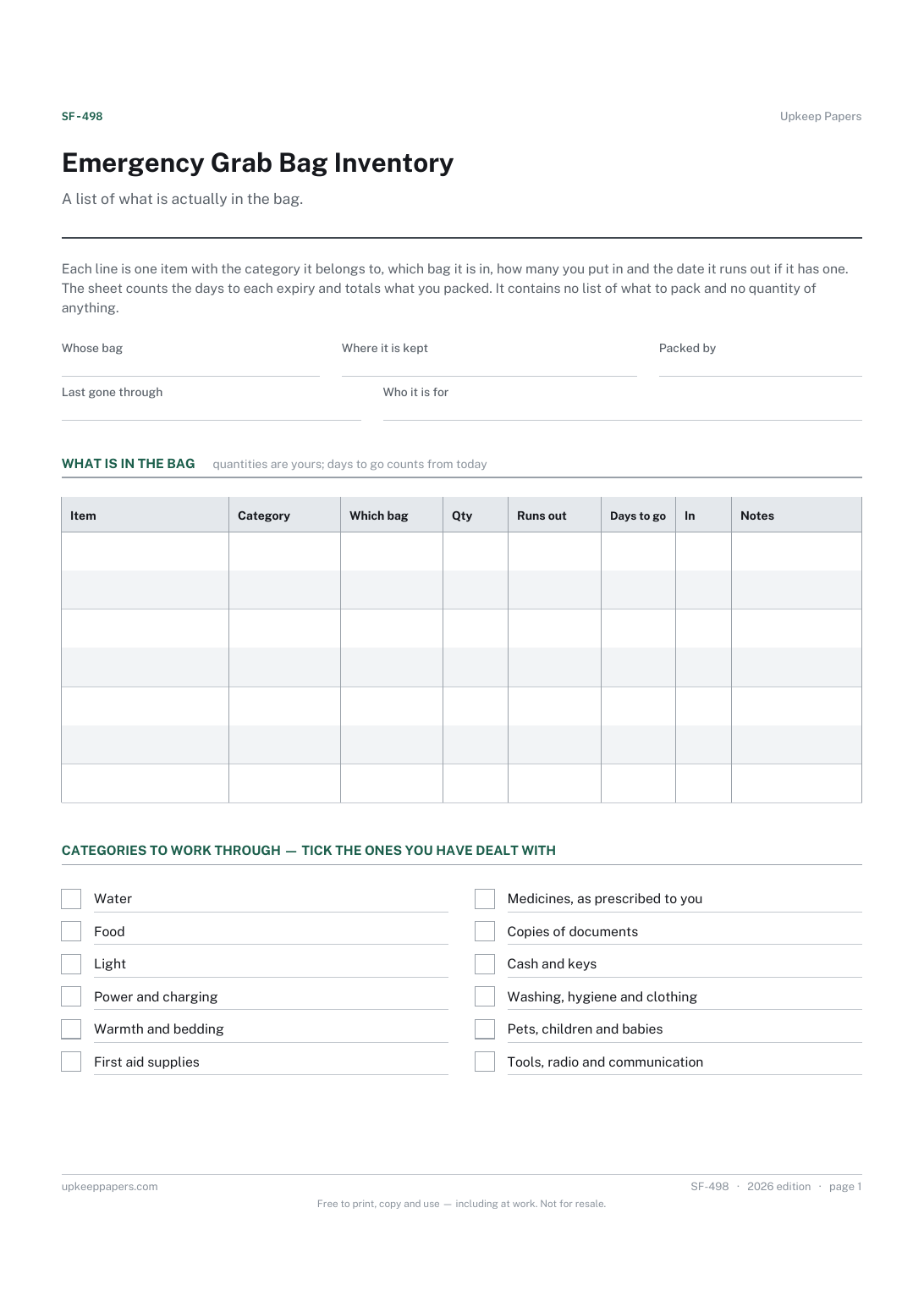
Every item in the bag, with the category it belongs to.
What has been checked on the heating, hot water and pipework.
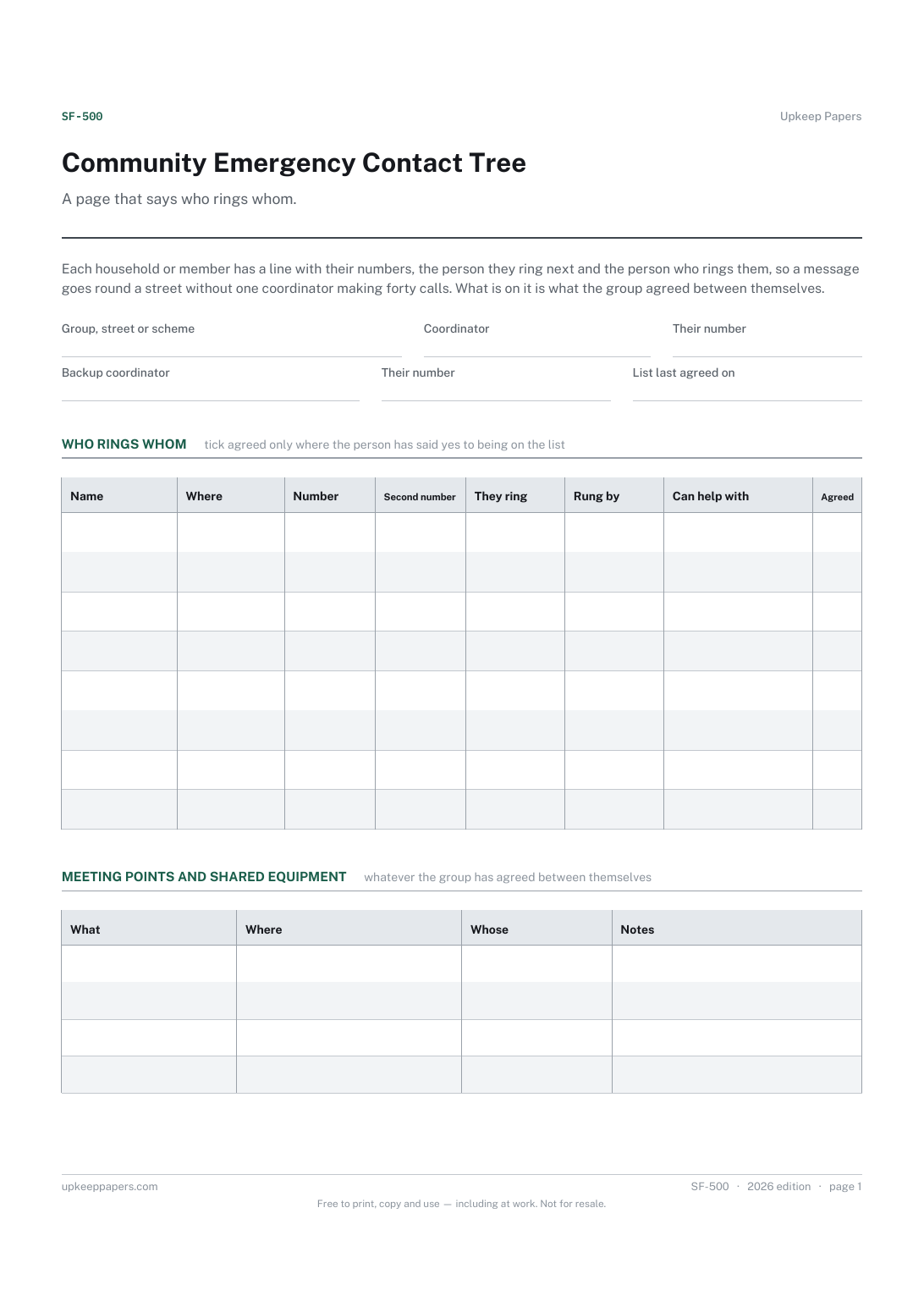
Every household or member, with the numbers that actually get answered.
What is already in the house, and what still has to be bought or found.
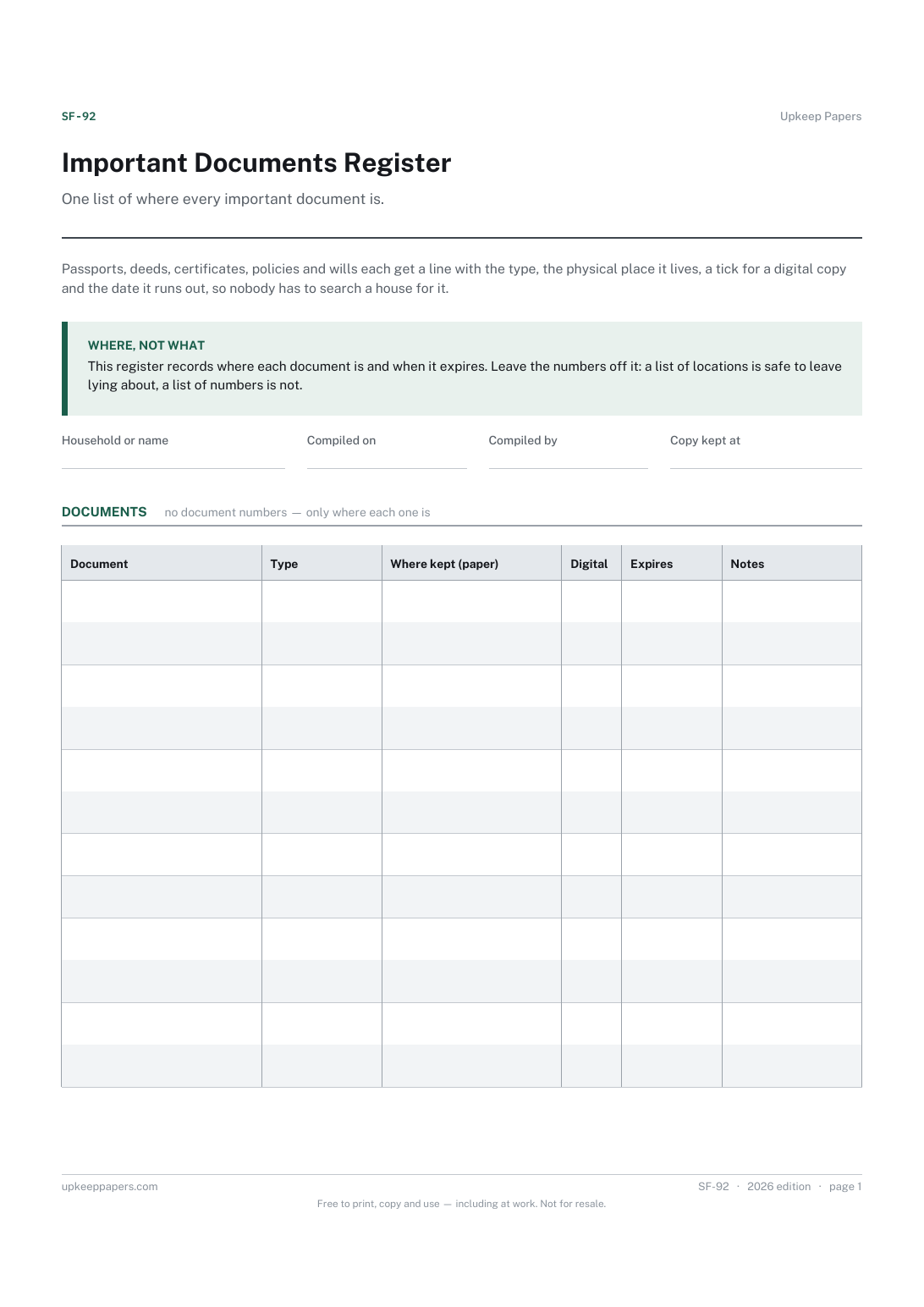
Where the original of each document physically is.
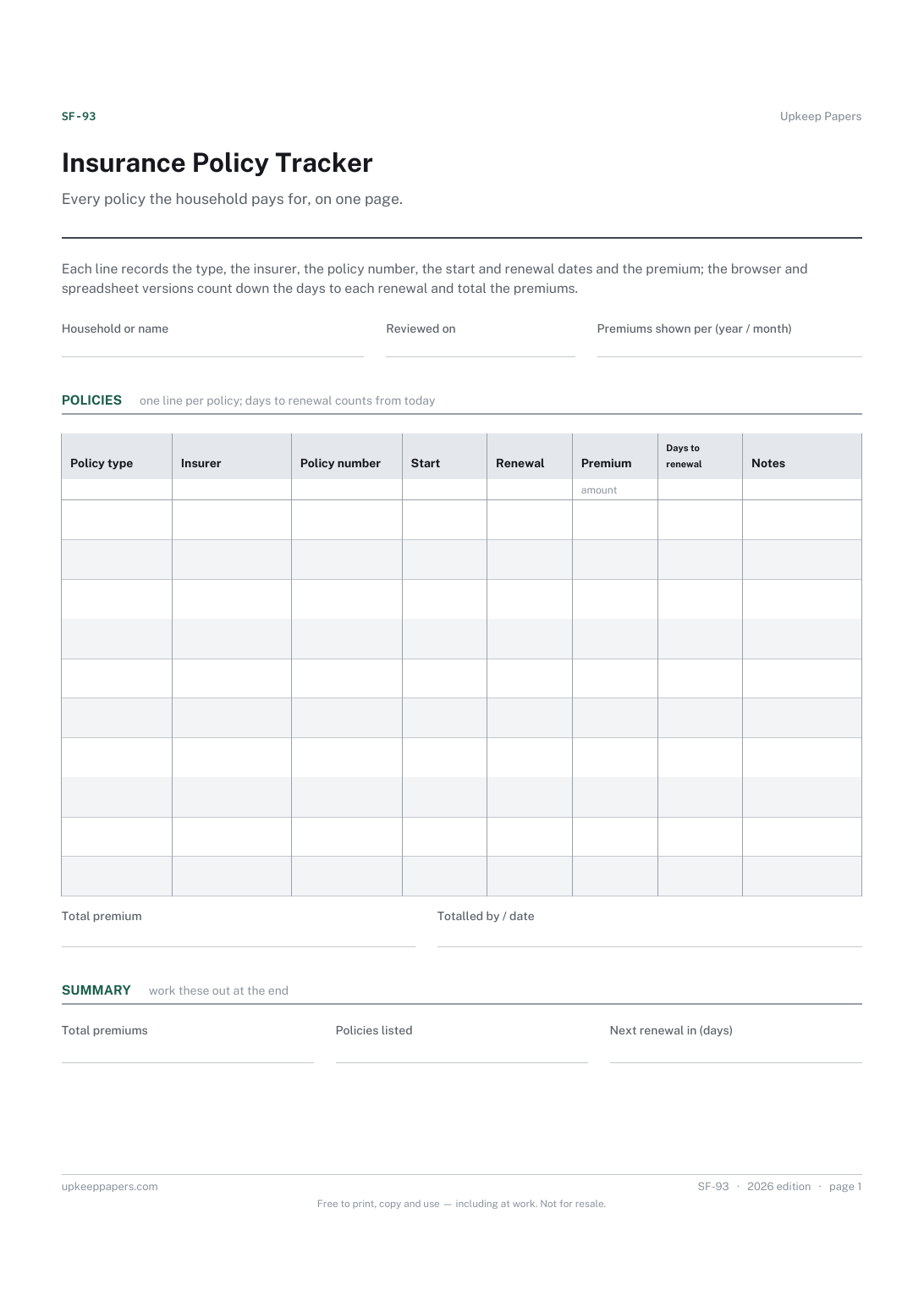
Which policy renews next, and how many days away that is.
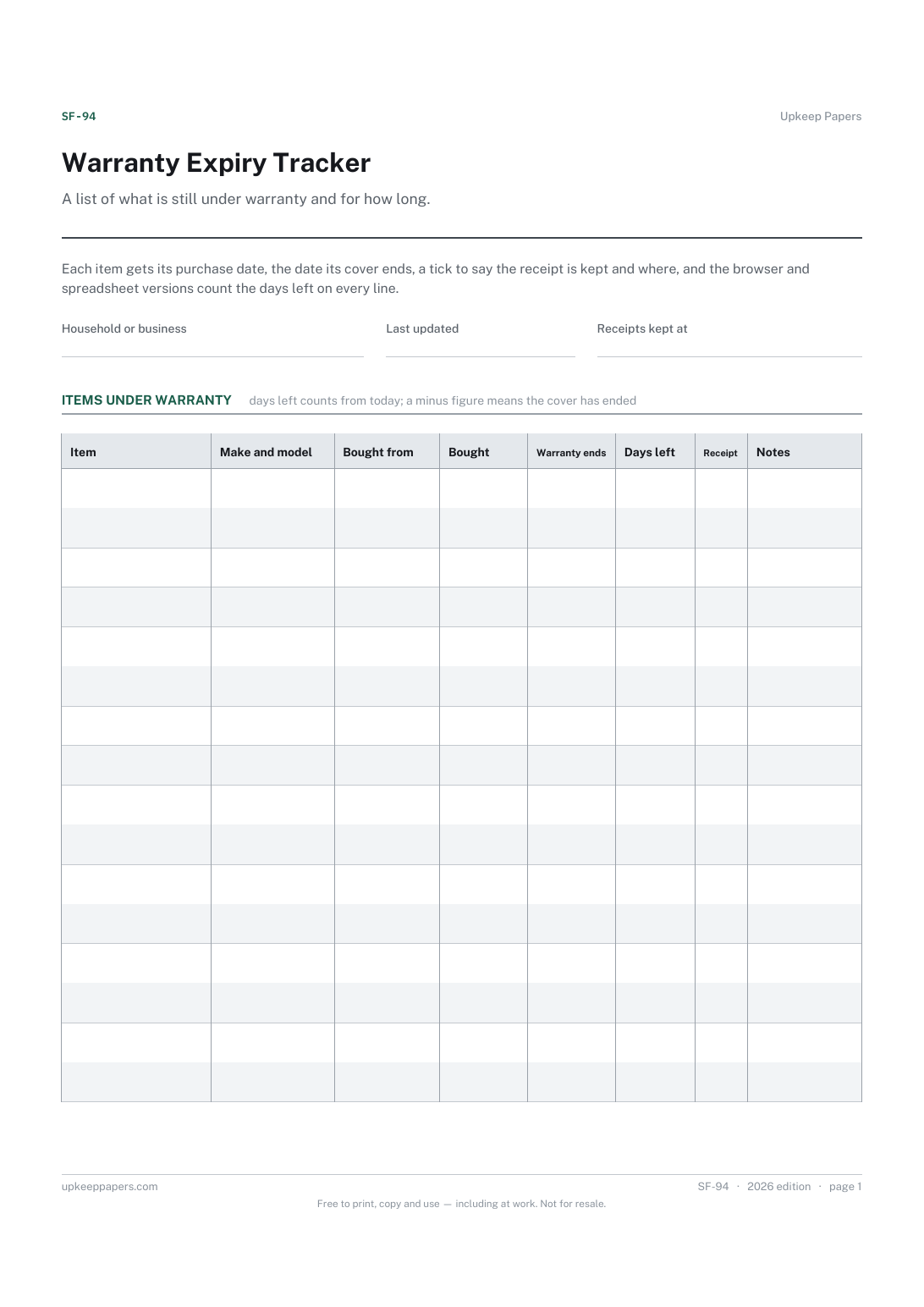
Which items are still covered today, and which ran out last month.
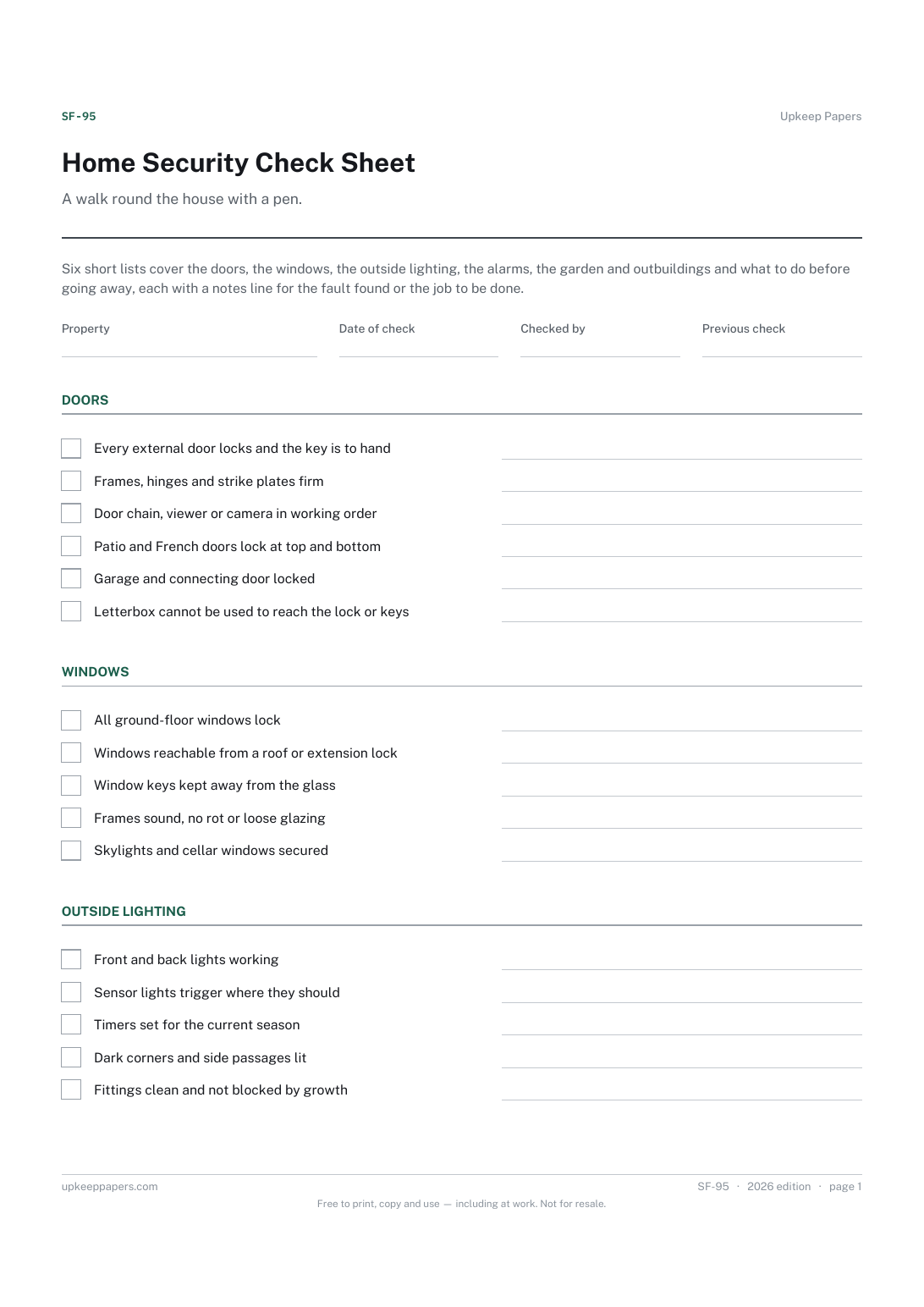
Which doors and windows actually lock, and which only look as if they do.
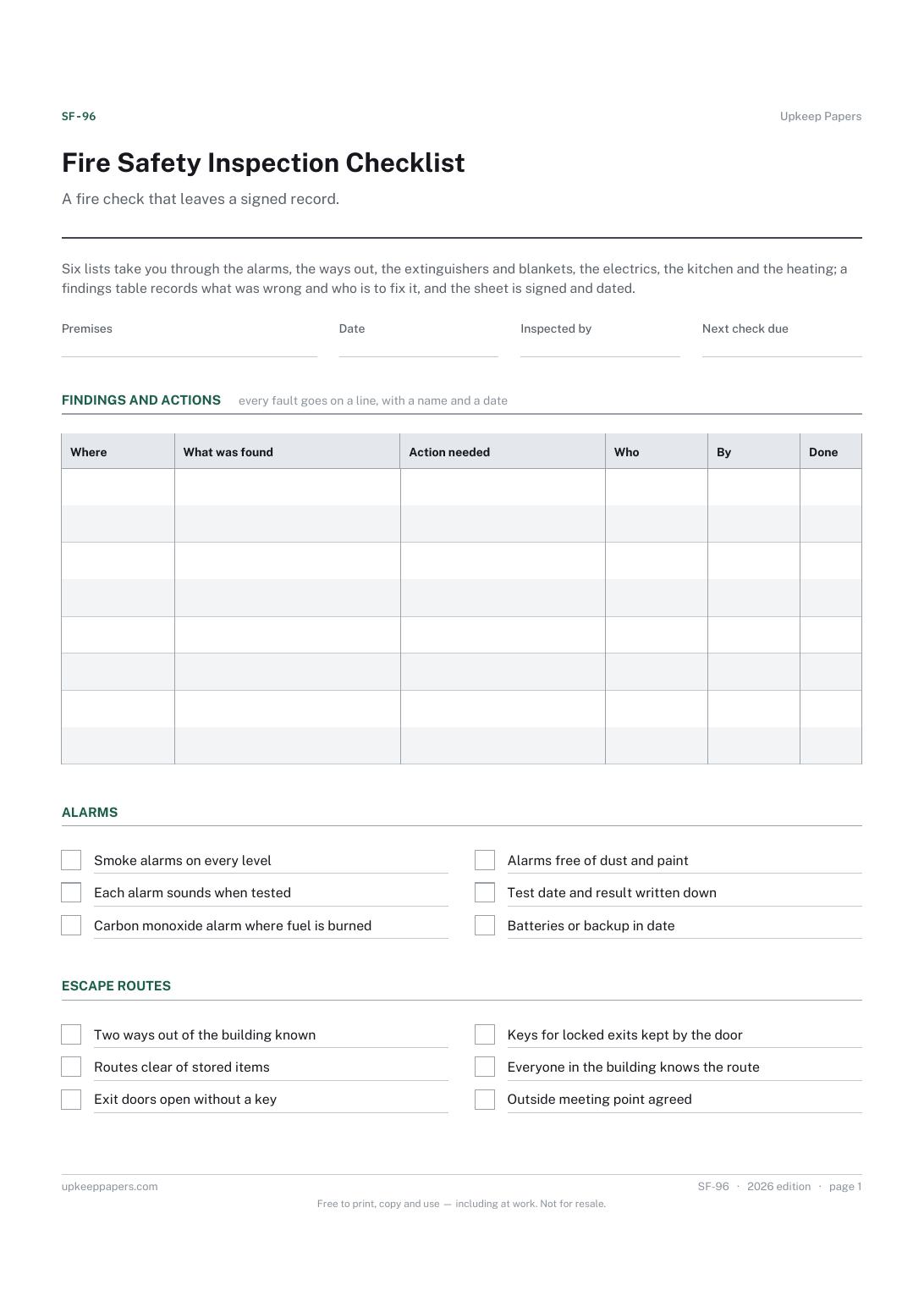
Whether the alarms actually sound, and when they were last tested.
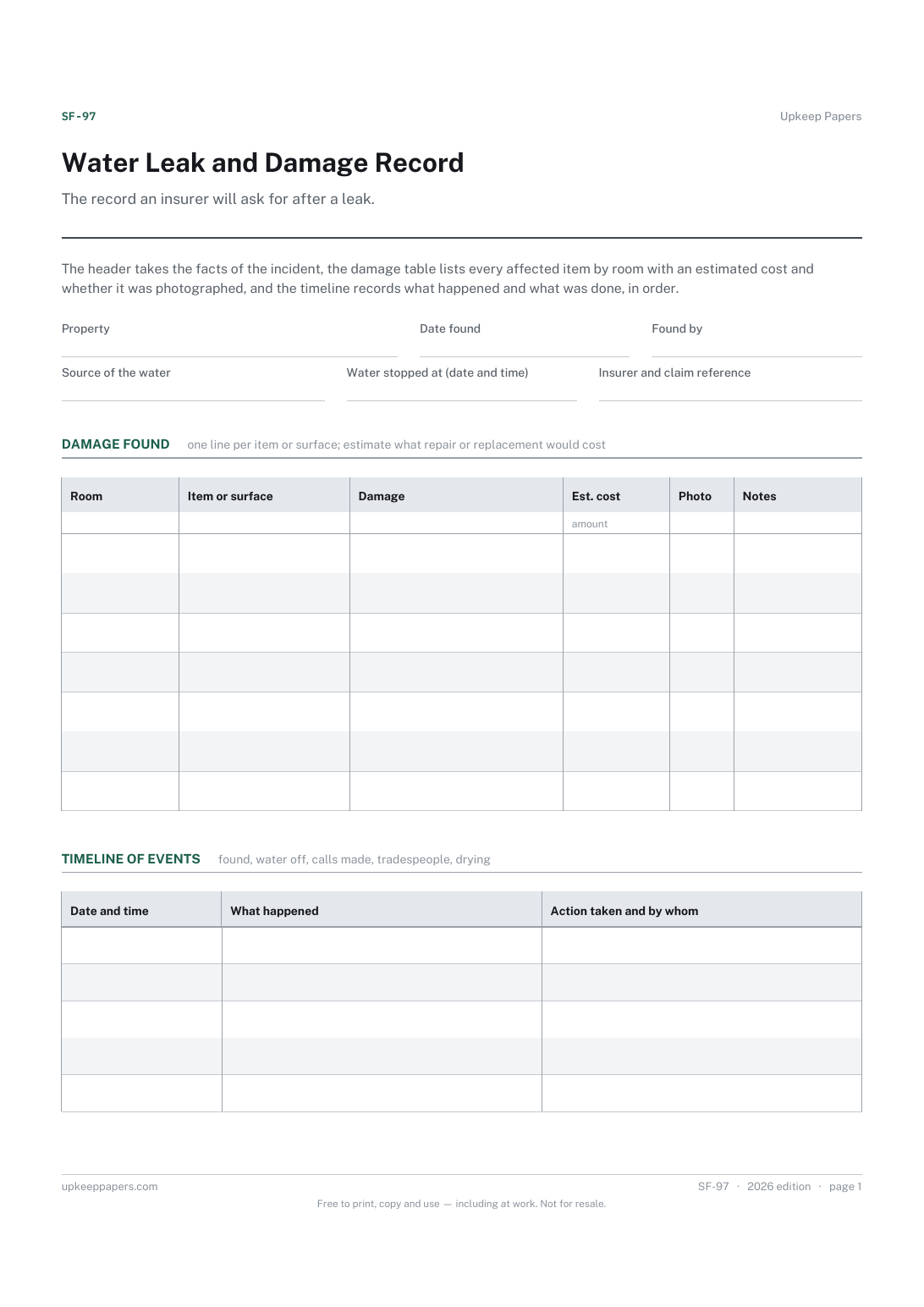
Every damaged item, room by room, with an estimate against each.
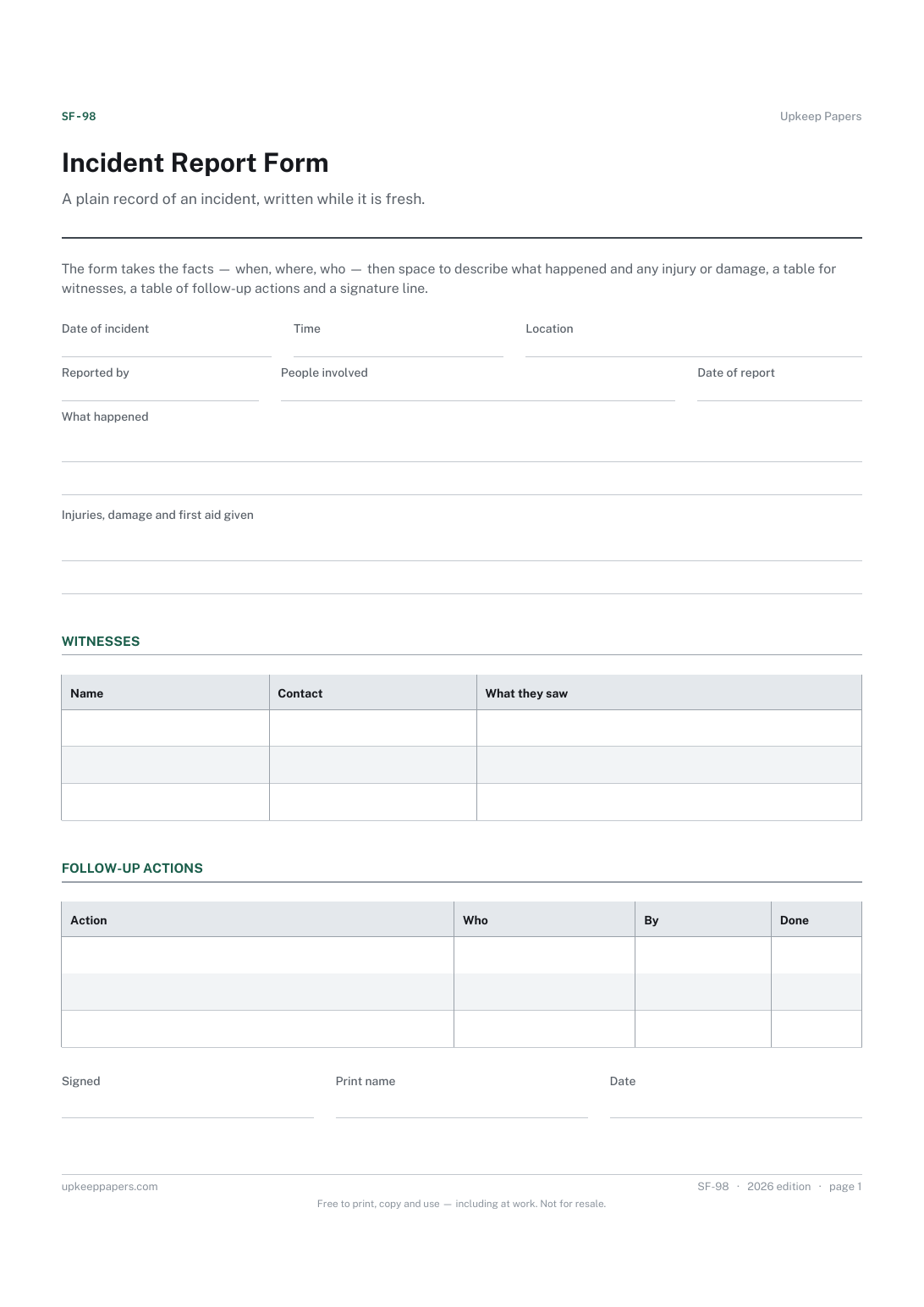
The facts of an incident recorded once, on the day, by the person who saw it.
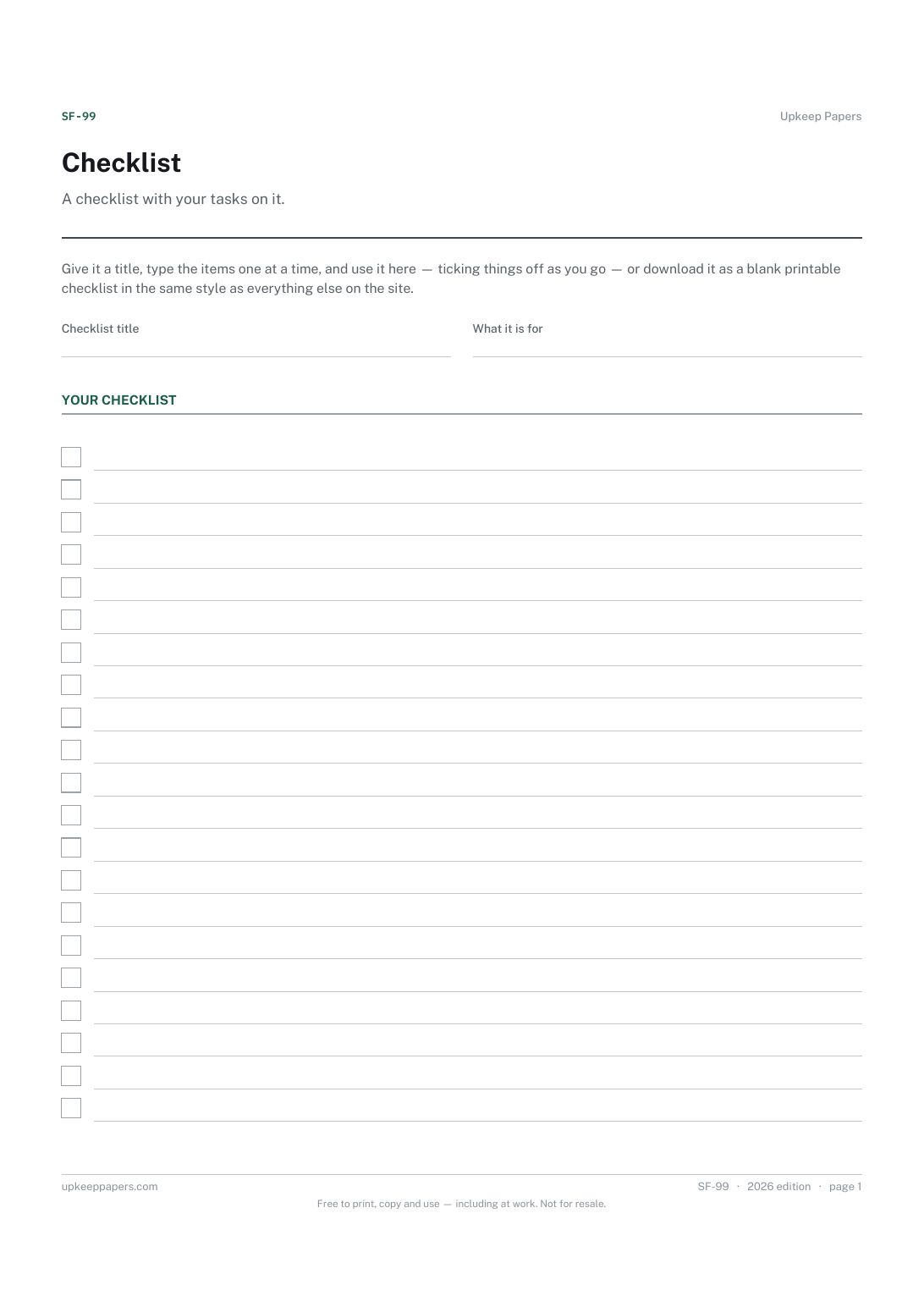
Which of your own tasks are done and which are still open.
From the sheet library — property records · home systems · safety checks · water and pools · moving and buying.
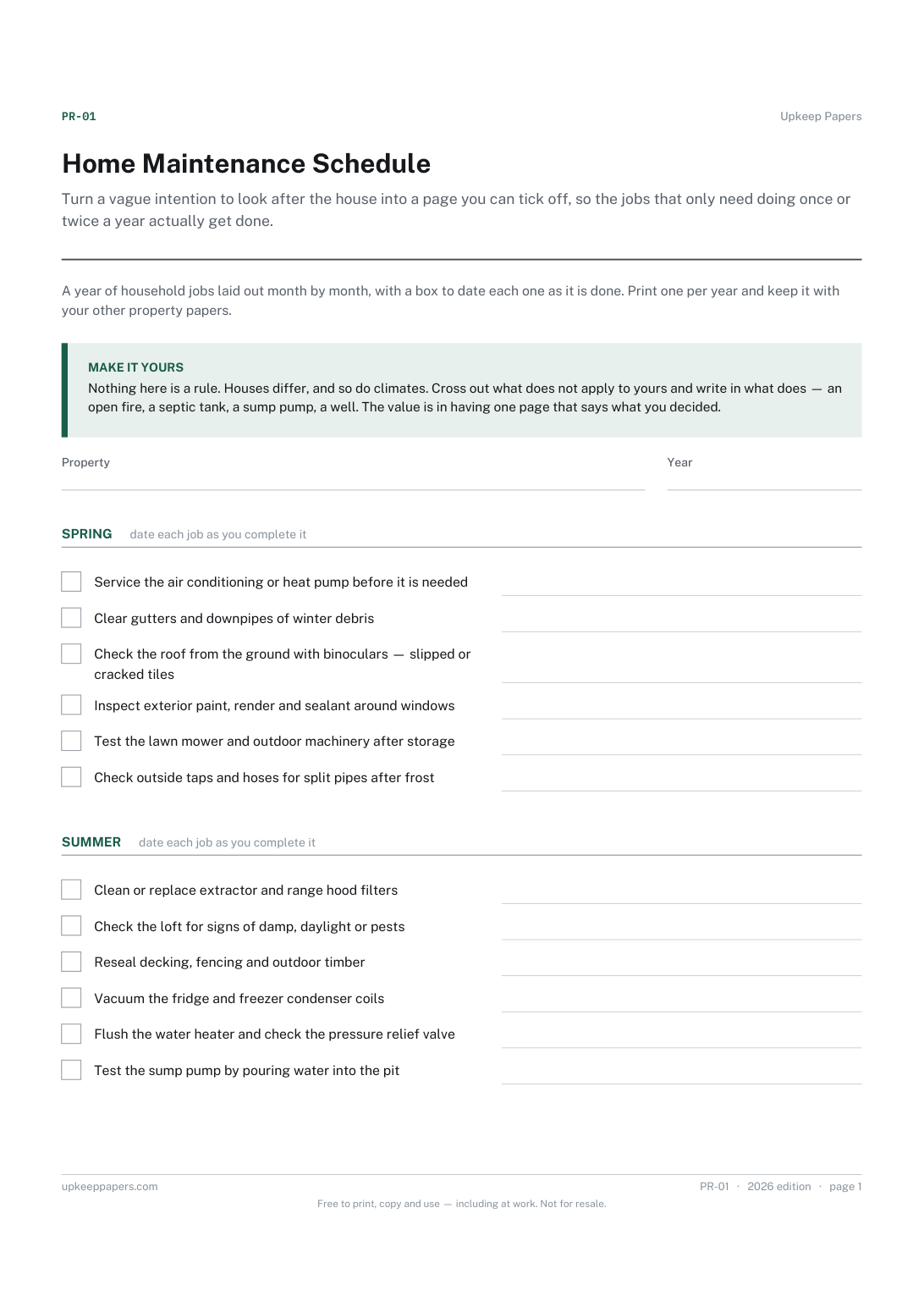
Turn a vague intention to look after the house into a page you can tick off, so the jobs that only need doing once or twice a year actually get done.
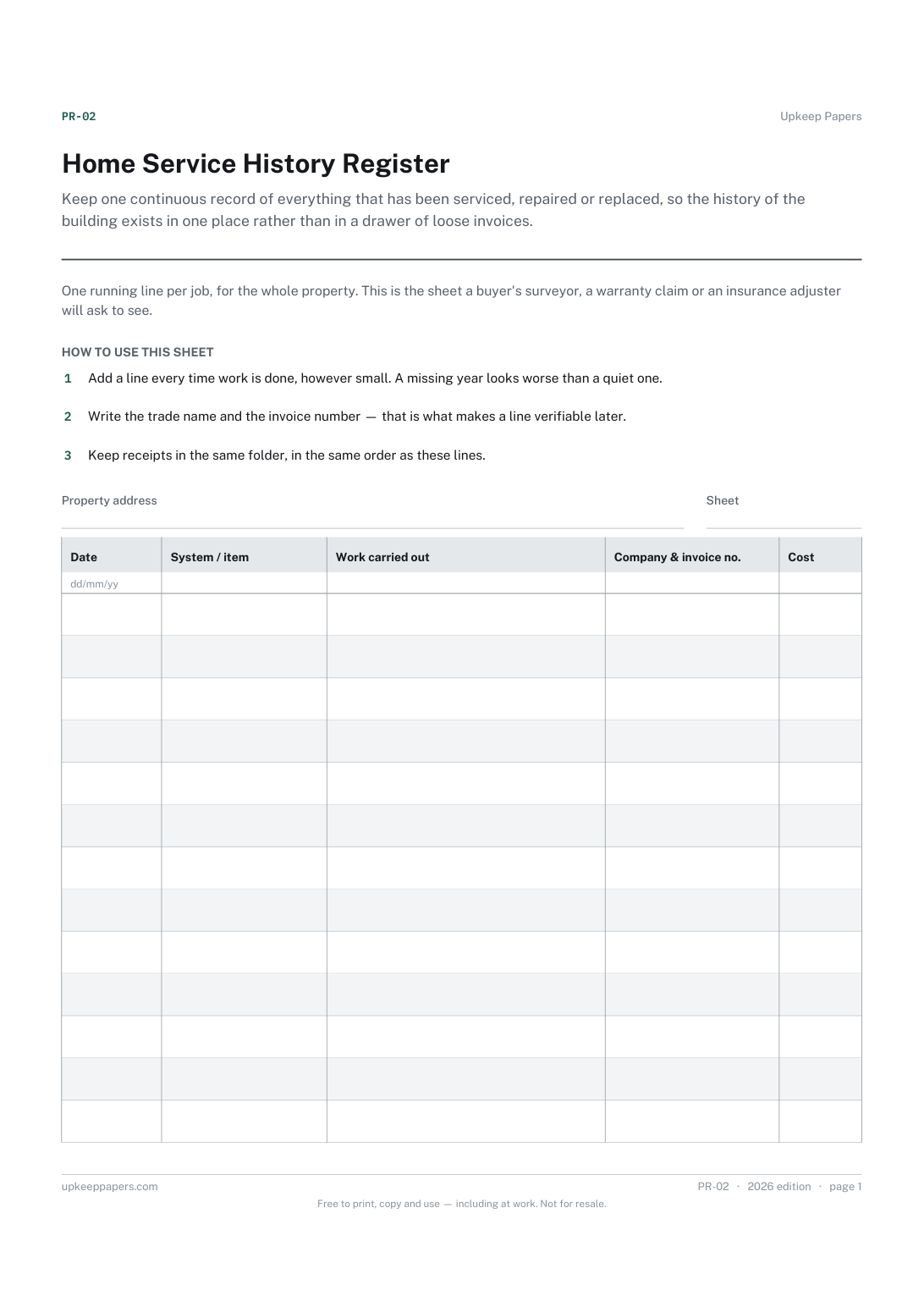
Keep one continuous record of everything that has been serviced, repaired or replaced, so the history of the building exists in one place rather than in a drawer of loose invoices.
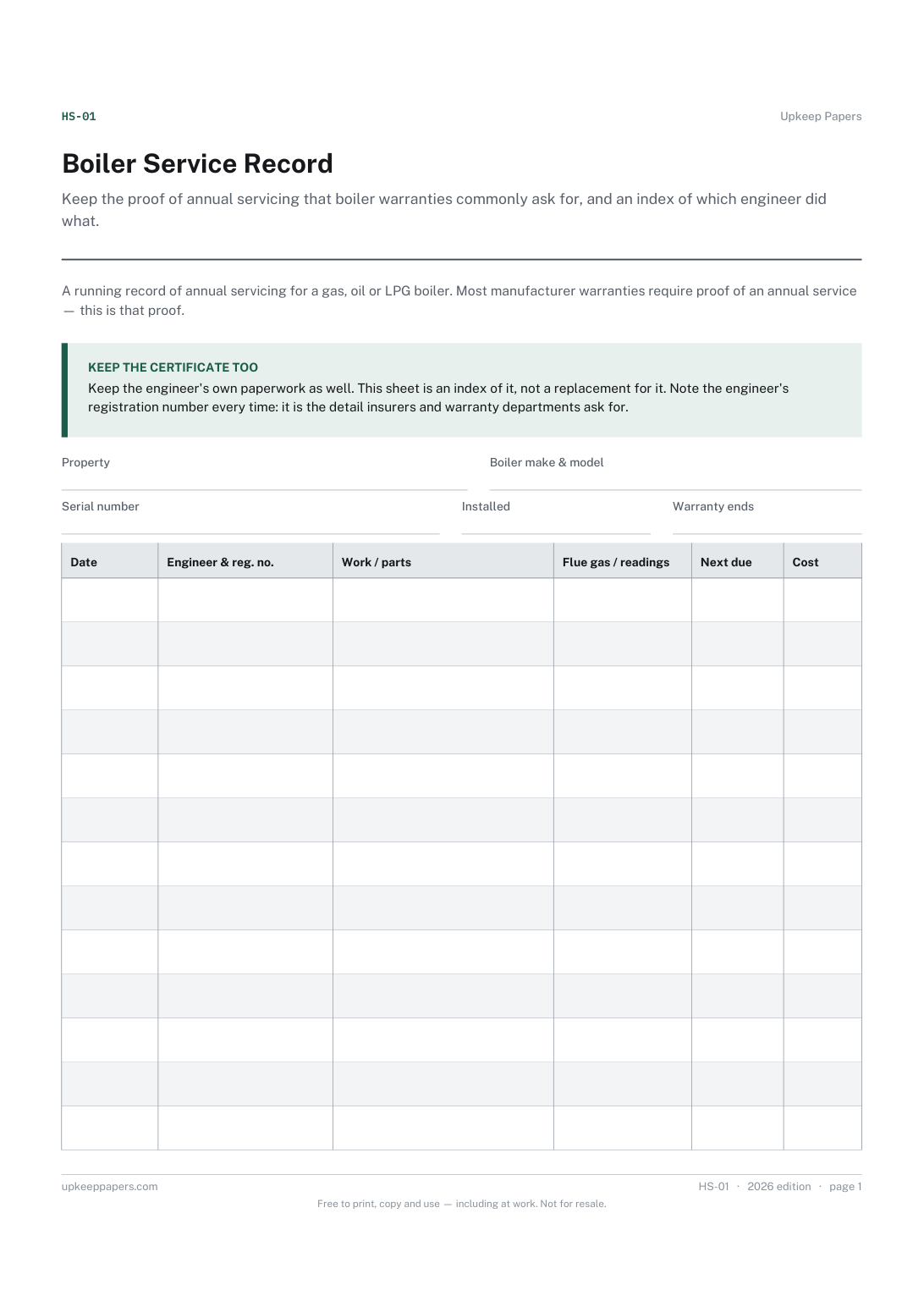
Keep the proof of annual servicing that boiler warranties commonly ask for, and an index of which engineer did what.
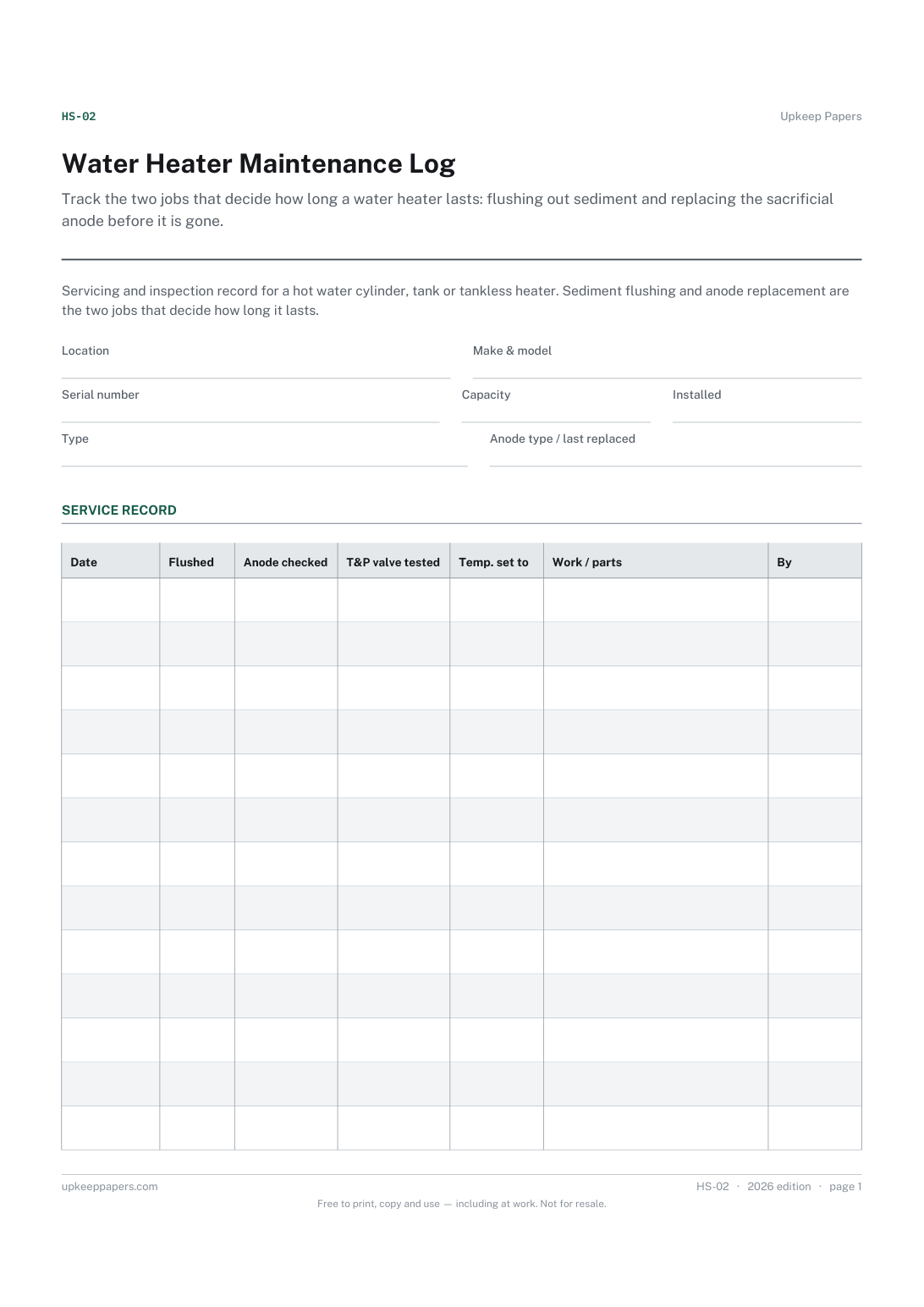
Track the two jobs that decide how long a water heater lasts: flushing out sediment and replacing the sacrificial anode before it is gone.
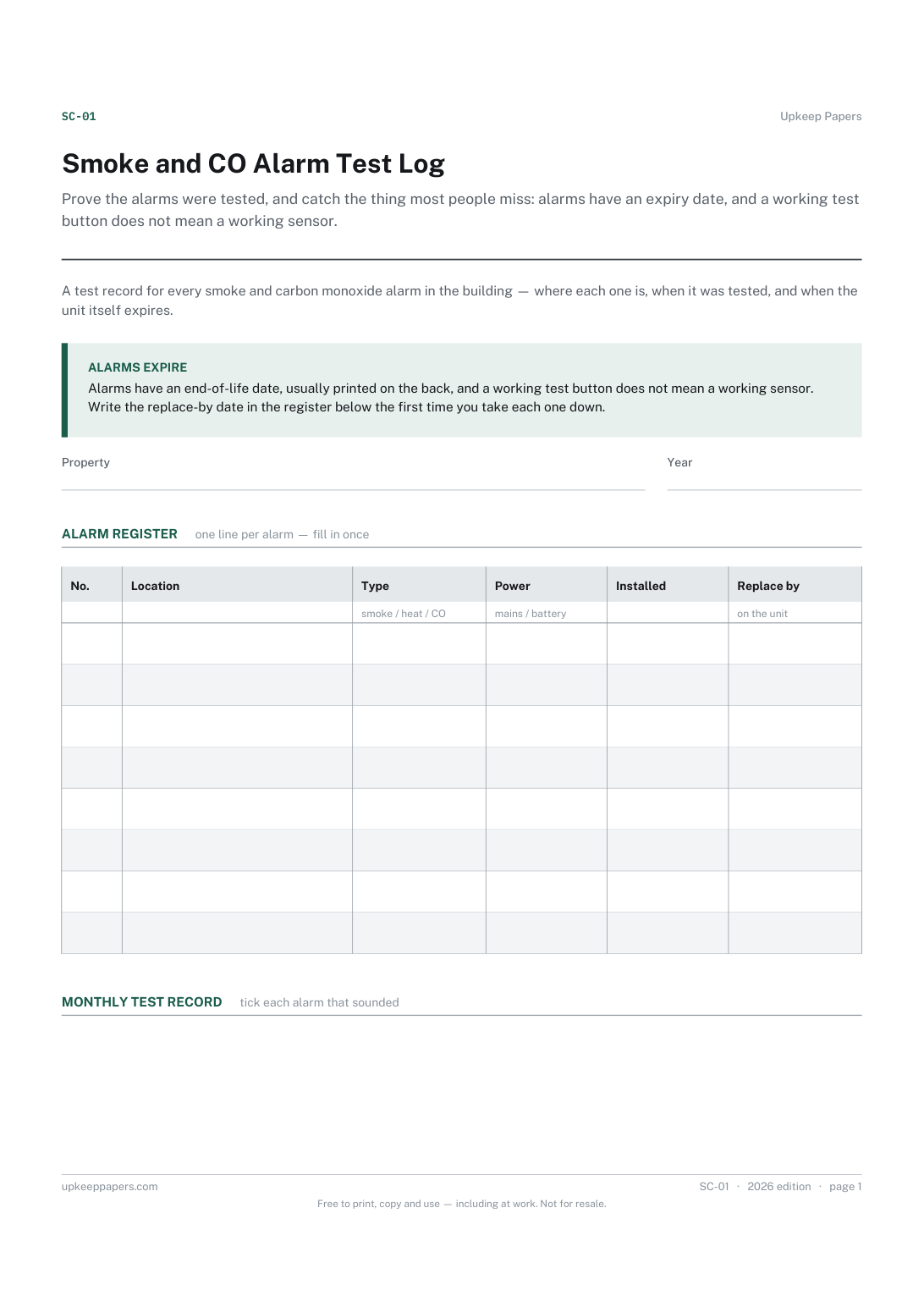
Prove the alarms were tested, and catch the thing most people miss: alarms have an expiry date, and a working test button does not mean a working sensor.
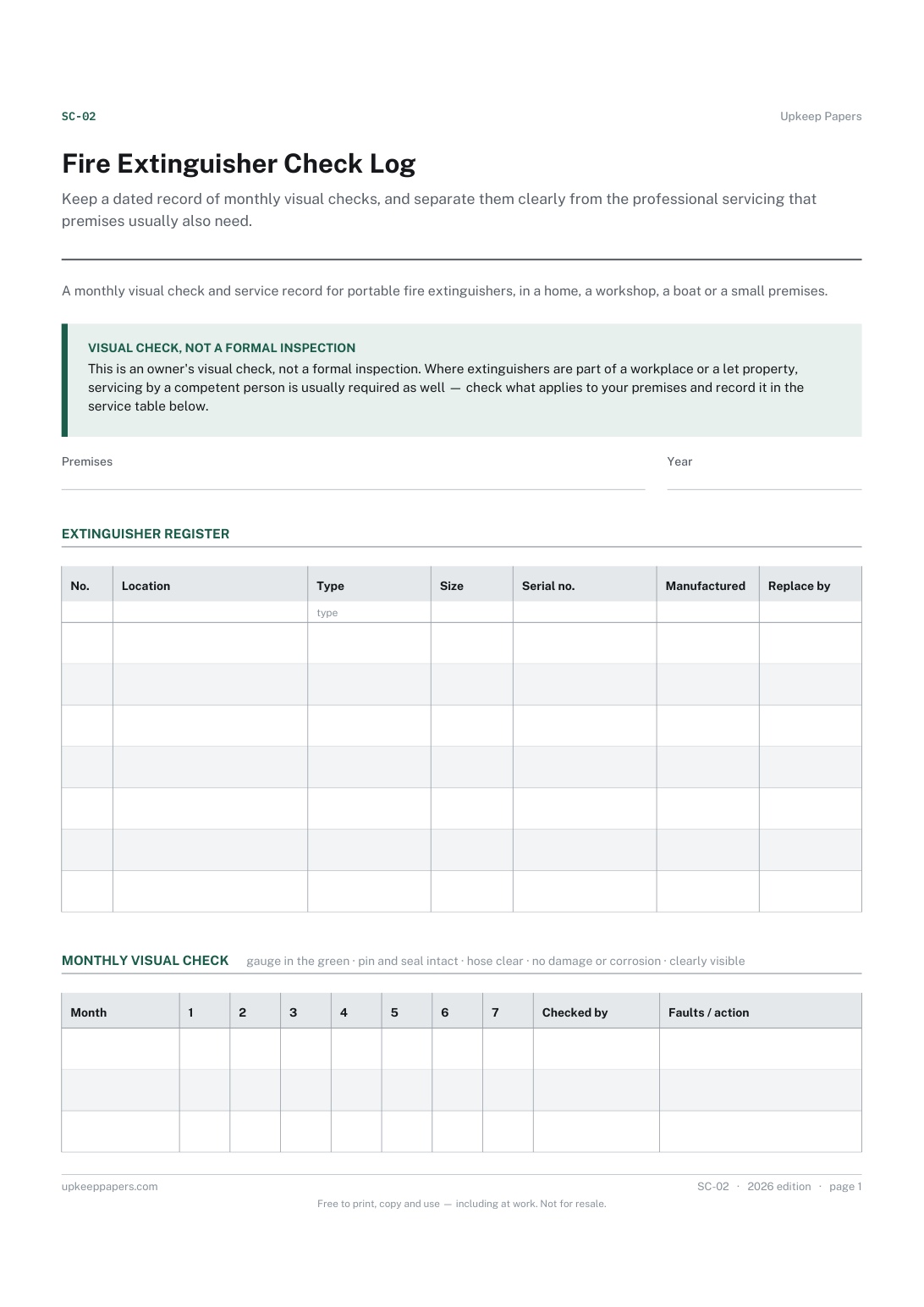
Keep a dated record of monthly visual checks, and separate them clearly from the professional servicing that premises usually also need.
All property recordsAll home systemsAll safety checksAll water and poolsAll moving and buying
Every appliance with its purchase date and warranty length, working out the expiry date and how many days are left before cover runs out.
Room-by-room contents with what each thing cost and what it would cost to replace, totalled per room and overall — the list an insurer asks for.
Recurring jobs around the house with the interval you choose, working out when each is next due and flagging the ones already overdue.
A room-by-room build budget holding quoted against actual, with the variance on every line and a contingency you set yourself.
Meter readings turned into usage and cost per period, so a bill can be checked against what the meter actually did rather than taken on trust.
Answer a dozen questions about your house and get a personalised year of maintenance, month by month.
Build a room-by-room inventory of what you own, with serial numbers and values, and export it as a PDF.
Enter your moving date and get a dated countdown — every task with the real date it falls due.
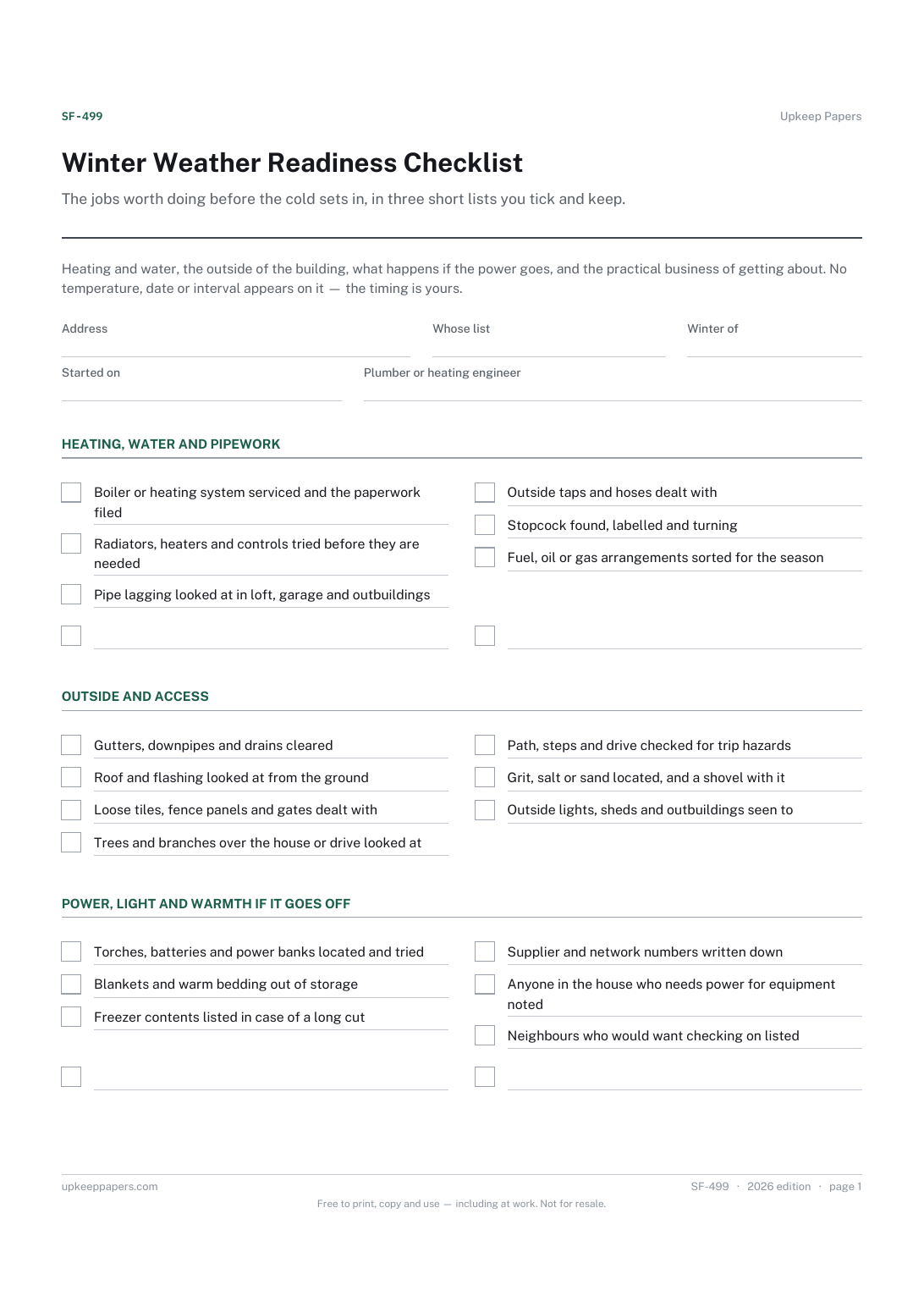
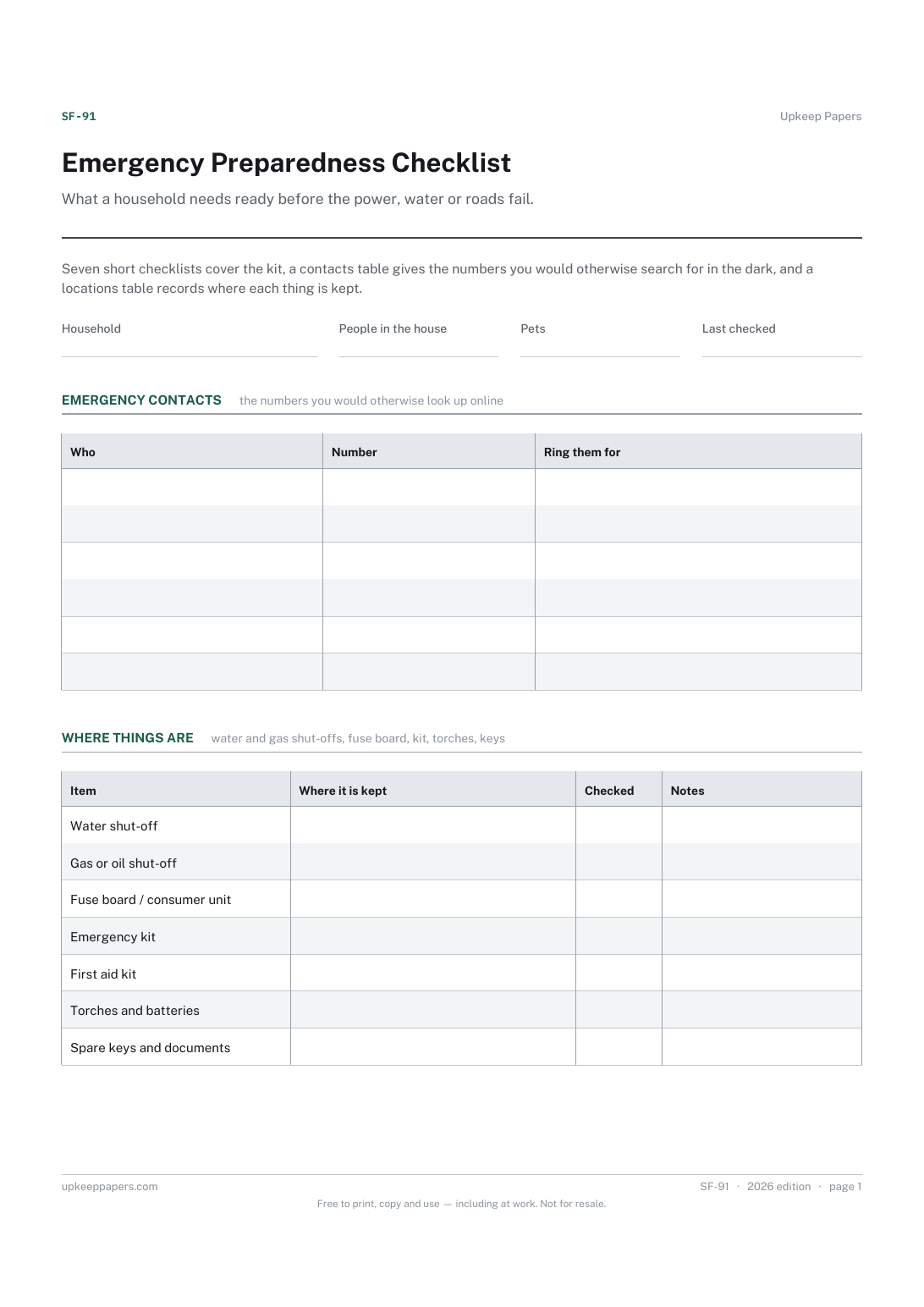
Type your household’s emergency information once and print a clean sheet to pin up where it can be found.
Pick the appliances you own and get a monthly, quarterly and annual plan for keeping them alive.
A ring binder beats an app for house records, but most binders die within a year. The sections that work, what to file, and how to keep it alive.
A walk through every filter in a typical house, what actually governs each interval, why annually is usually the wrong answer, and the size trick worth doing once.
A reference to how often the systems and machines in a house need servicing, why the intervals differ, and how to find the right figure for yours.
A spot reading is one frame from a film. Logging chemistry as a series shows what your water is doing, and filter pressure tells you more than you think.
Vehicles · Finance · Business · Rental property · Pets · Garden · Cleaning · Planning · Safety and records
By format: printables · fillable PDF forms · spreadsheets · calculators · tools.

Every sheet, binder, game and puzzle on Upkeep Papers is free to download, with no email and no account. Making them is not free: each one takes days of research, design and checking, and the site costs money to run. If something here saved you time, you can buy us a coffee. It is entirely optional: nothing is locked, and nothing changes if you don’t.
Buy us a coffee Opens PayPal in a new tab. Any amount, and nothing changes if you would rather not.