How to Build a Home Maintenance Binder That Survives
A ring binder beats an app for house records, but most binders die within a year. The sections that work, what to file, and how to keep it alive.
Guide
Everything here is free. Making it takes time and money. Everything here is free.
 Buy us a coffee
 Property records · PR-01
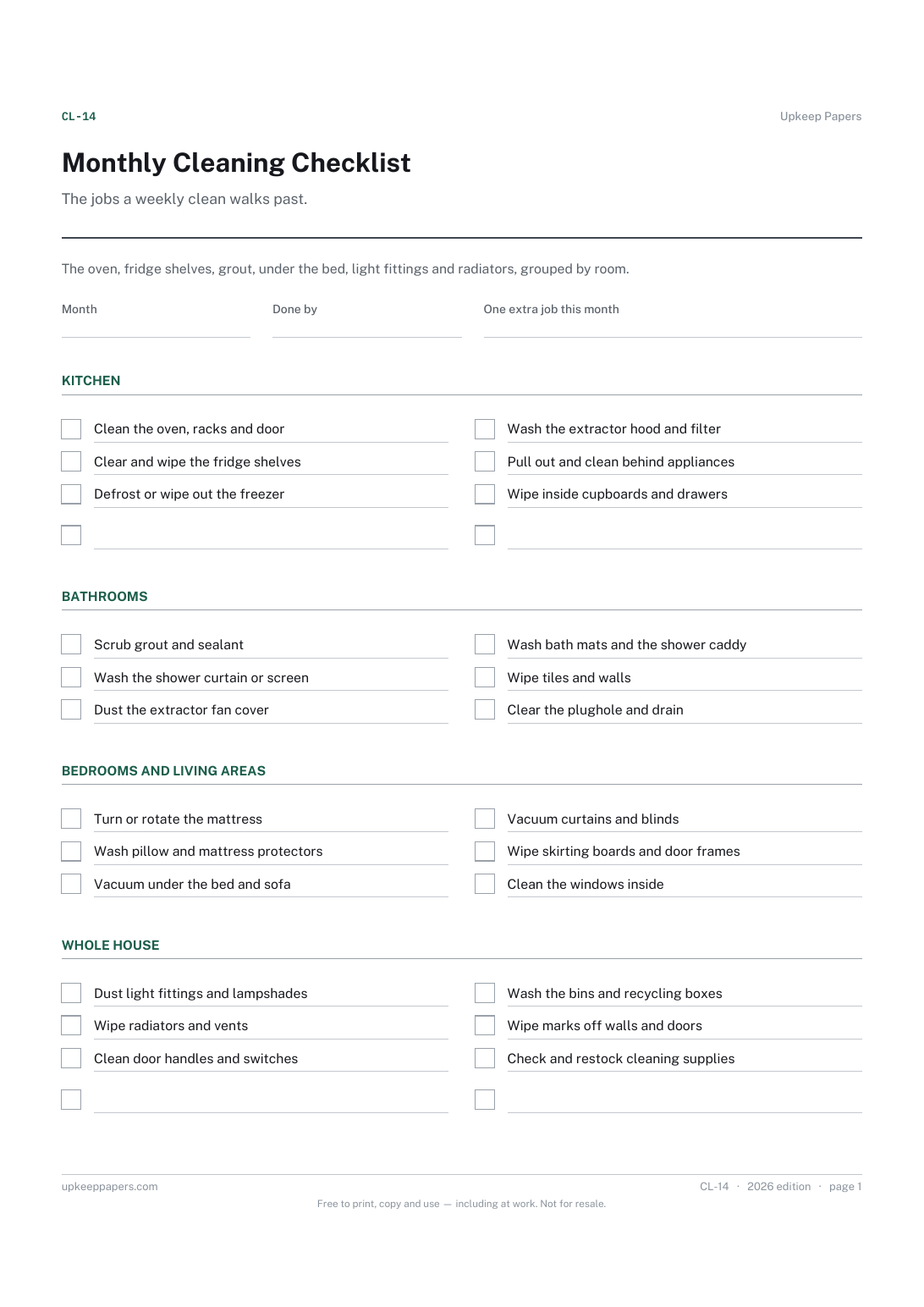
A free printable year-round home maintenance schedule, laid out season by season with a box to date each job as it is done.
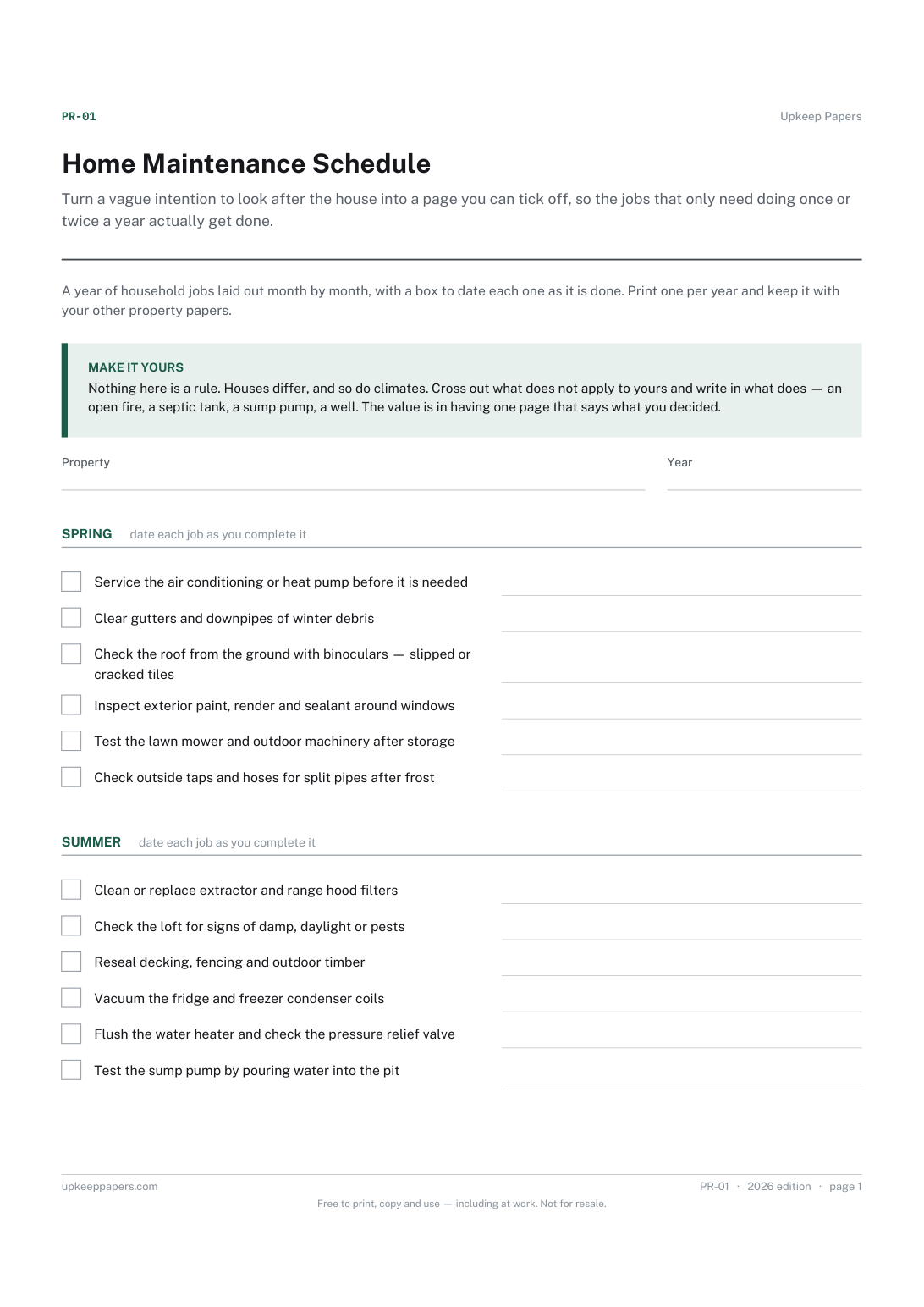
2 pages. Choose your paper size — both versions are laid out identically, so neither one gets shrunk to fit.
Print it and write on it
Fill it in type and save
The fillable versions have real form fields — open them in any PDF reader, type into them and save. Printing help.
Turn a vague intention to look after the house into a page you can tick off, so the jobs that only need doing once or twice a year actually get done.
Homeowners, new buyers, and anyone who has inherited a property and has no idea what has been looked after and what has not.
2 pages, in this order:
Printed under the title: A year of household jobs laid out month by month, with a box to date each one as it is done. Print one per year and keep it with your other property papers.
Make it yours. Nothing here is a rule. Houses differ, and so do climates. Cross out what does not apply to yours and write in what does — an open fire, a septic tank, a sump pump, a well. The value is in having one page that says what you decided.
Write-on lines: Property · Year
Ruled lines: Jobs specific to this property
It depends on the property, the climate and the equipment. The schedule groups jobs into the season when they are easiest and most useful, which is the part that generalises. Specific service intervals should come from your own appliance handbooks.
Mostly a house. In an apartment, much of the outside section will be the building management's responsibility — cross those lines out and keep the rest.
A ring binder beats an app for house records, but most binders die within a year. The sections that work, what to file, and how to keep it alive.
A reference to how often the systems and machines in a house need servicing, why the intervals differ, and how to find the right figure for yours.
The test button does not test the sensor. What it actually checks, why alarms have an expiry date, and how to keep a register that tells you which one you tested.
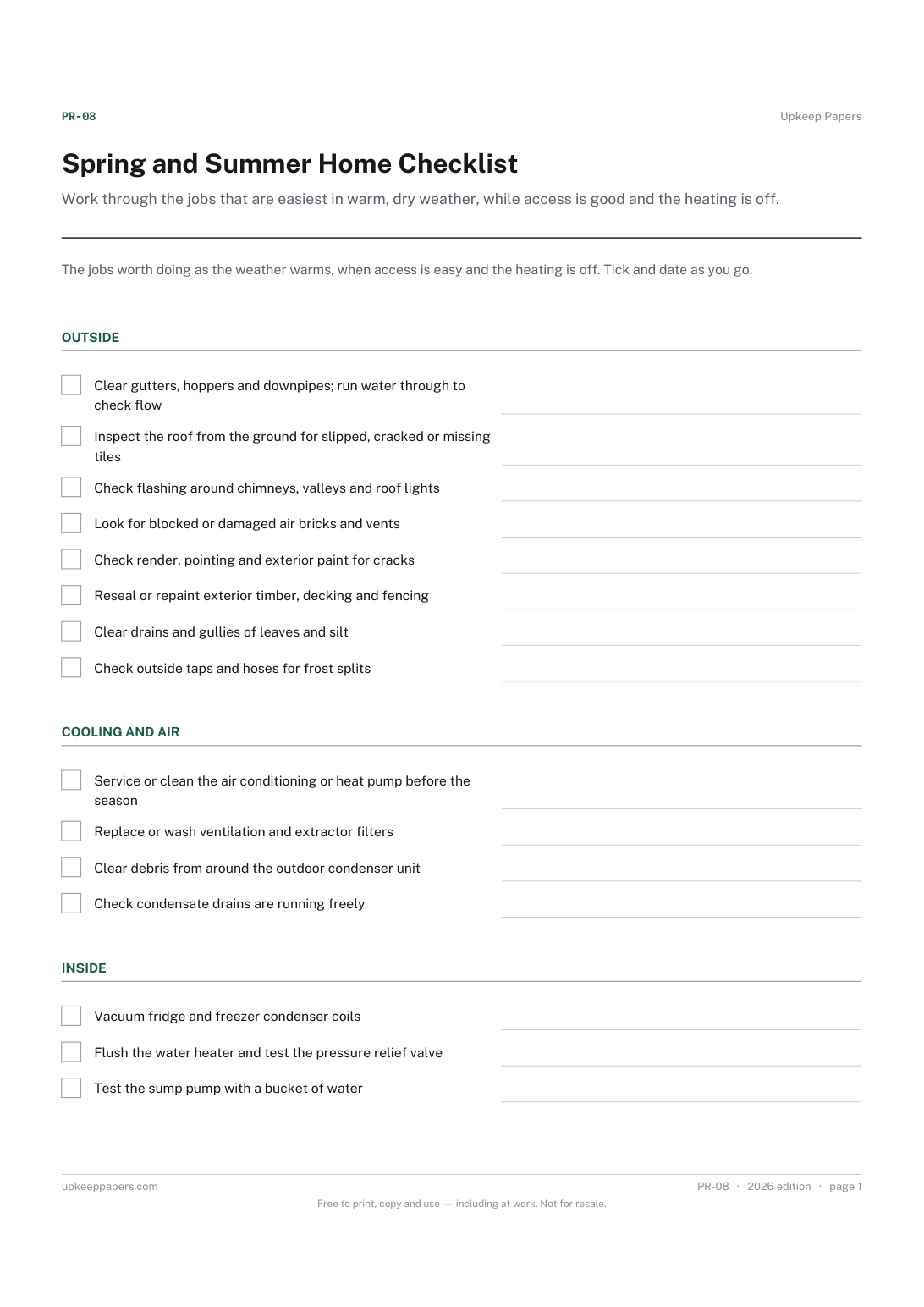
Work through the jobs that are easiest in warm, dry weather, while access is good and the heating is off.
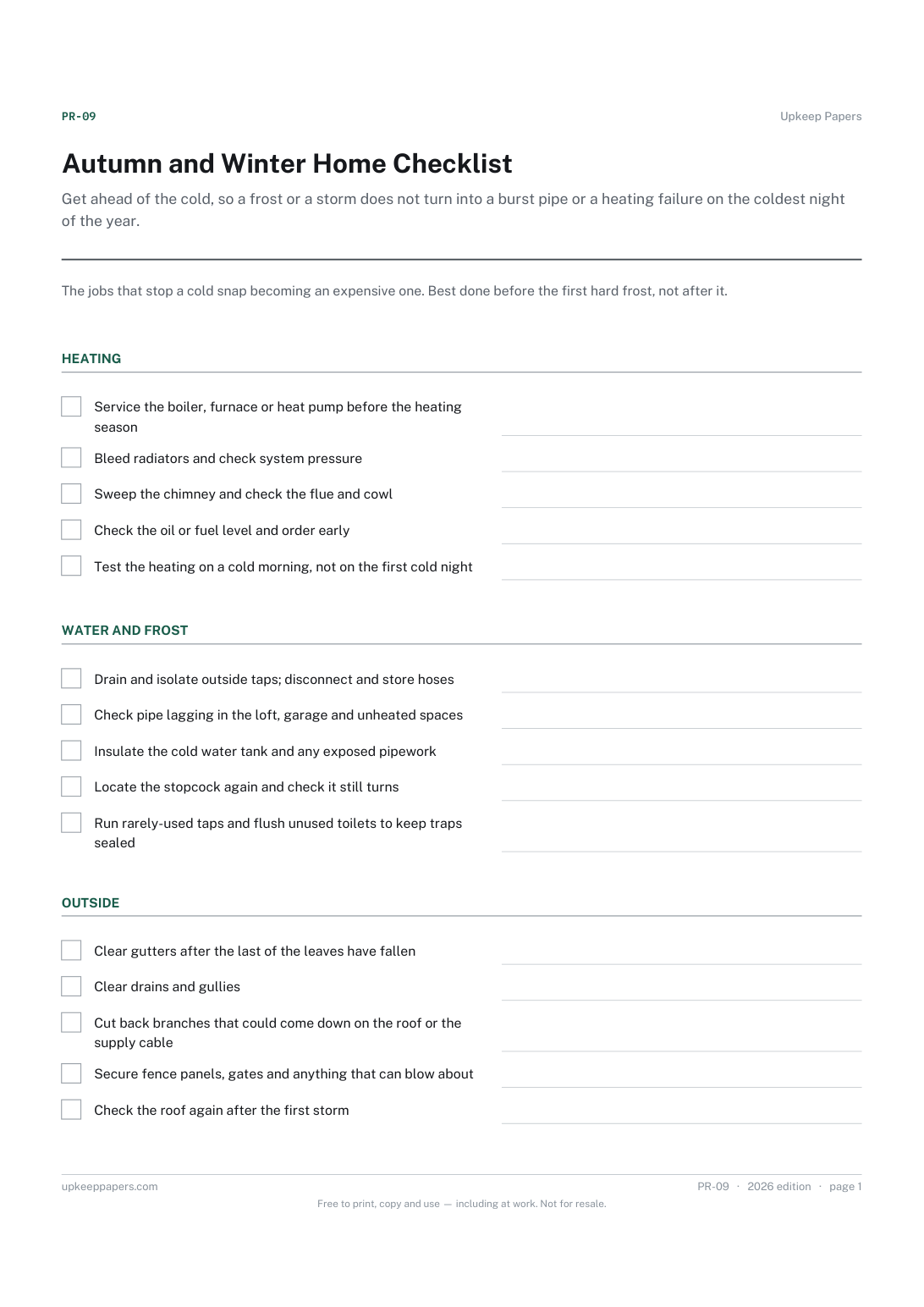
Get ahead of the cold, so a frost or a storm does not turn into a burst pipe or a heating failure on the coldest night of the year.
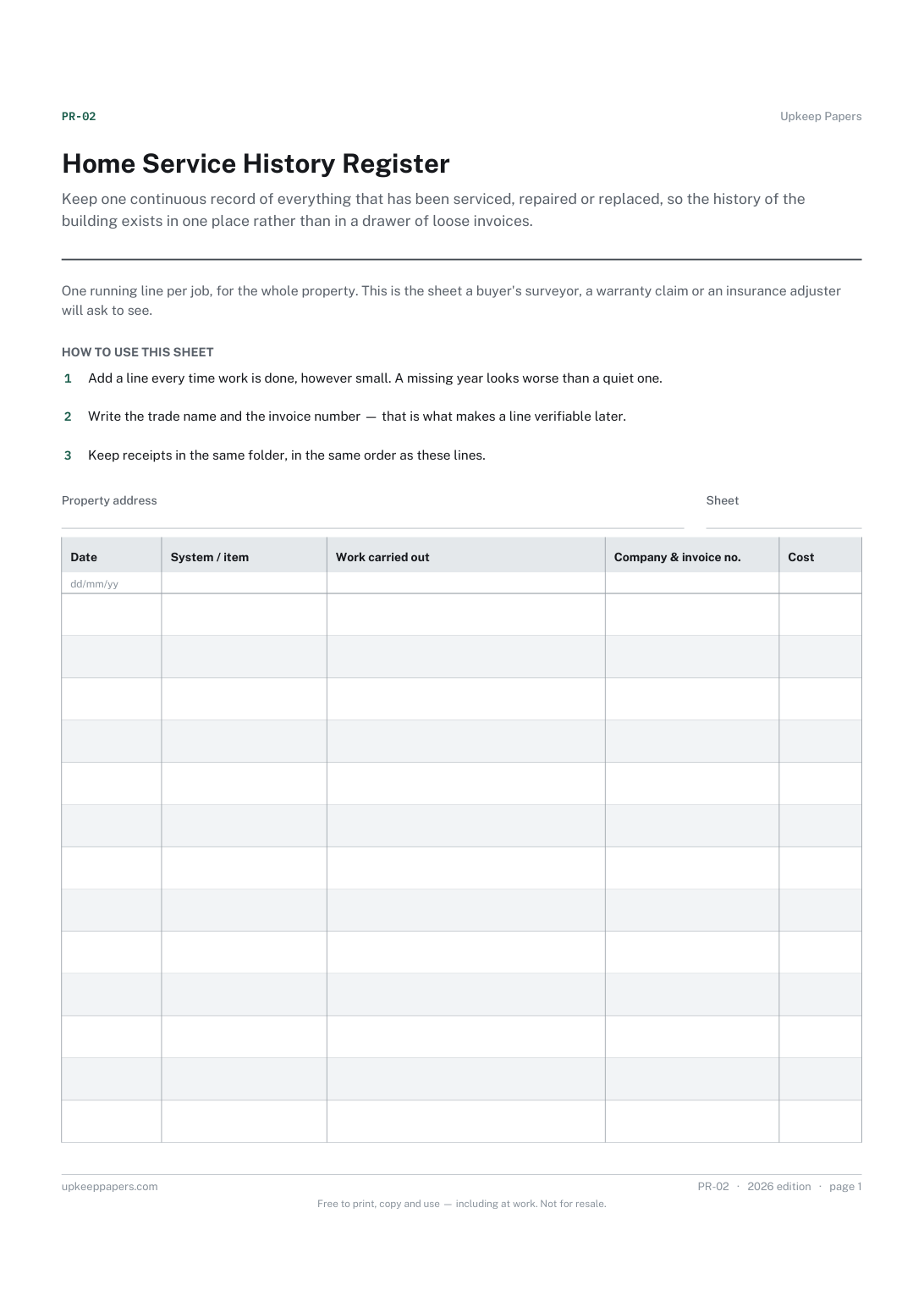
Keep one continuous record of everything that has been serviced, repaired or replaced, so the history of the building exists in one place rather than in a drawer of loose invoices.
The same subject, with a version you can fill in on screen.
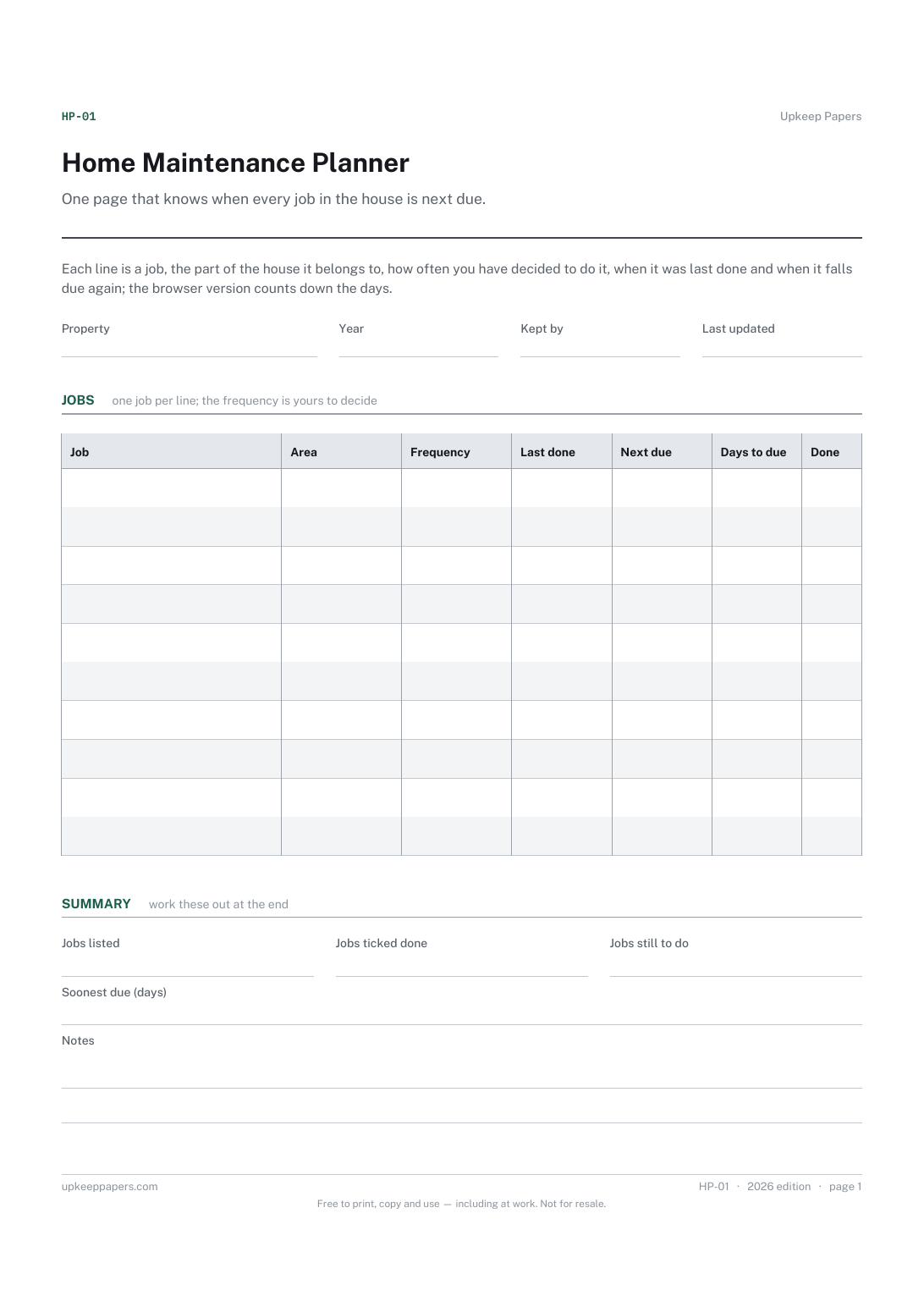
Every recurring job in one list, with the part of the house it belongs to.
The less frequent jobs, listed so they are not forgotten between cleans.

Every sheet, binder, game and puzzle on Upkeep Papers is free to download, with no email and no account. Making them is not free: each one takes days of research, design and checking, and the site costs money to run. If something here saved you time, you can buy us a coffee. It is entirely optional: nothing is locked, and nothing changes if you don’t.
Buy us a coffee Opens PayPal in a new tab. Any amount, and nothing changes if you would rather not.