Lighting Cue Sheet
Give the operator and the caller the same list, written so a cue can be taken from the words on the page without the designer in the room.
MU-13 1 page
Everything here is free. Making it takes time and money. Everything here is free.
 Buy us a coffee
Music and performance · MU-17
A free printable orchestra seating plan sheet — every chair by section and desk, who sits in it, which part they play from and whether the copy came back.
2 pages. Choose your paper size — both versions are laid out identically, so neither one gets shrunk to fit.
Print it and write on it
Fill it in type and save
The fillable versions have real form fields — open them in any PDF reader, type into them and save. Printing help.
Know who is on which desk and which numbered copy they hold, so a hired set goes home complete and the seating survives a change of leader.
Orchestra and band librarians, fixers, conductors and committee members of amateur, youth and community orchestras and wind bands.
2 pages, in this order:
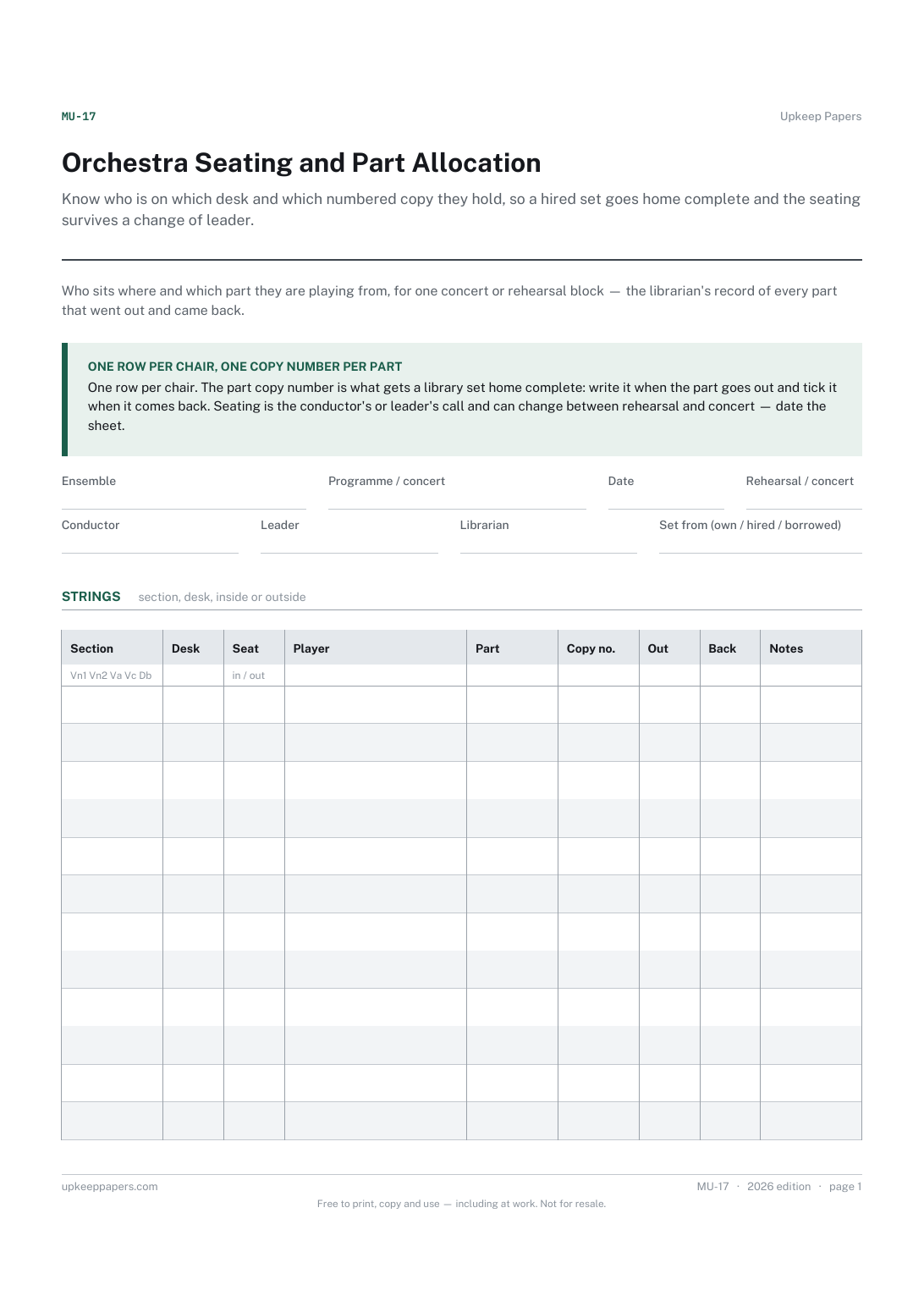
Printed under the title: Who sits where and which part they are playing from, for one concert or rehearsal block — the librarian's record of every part that went out and came back.
One row per chair, one copy number per part. One row per chair. The part copy number is what gets a library set home complete: write it when the part goes out and tick it when it comes back. Seating is the conductor's or leader's call and can change between rehearsal and concert — date the sheet.
Write-on lines: Ensemble · Programme / concert · Date · Rehearsal / concert · Conductor · Leader · Librarian · Set from (own / hired / borrowed)
Table, 12 rows: Section · Desk · Seat · Player · Part · Copy no. · Out · Back · Notes
Table, 23 rows: Section · Chair · Player · Part / doubling · Copy no. · Out · Back · Notes
Because chairs are what the librarian counts and the parts are issued to chairs. A player who moves desk keeps their copy; the sheet records where that copy now is.
A wind band uses the second table only. For a choir the copy-number columns still earn their place — vocal scores on hire go missing just as readily.
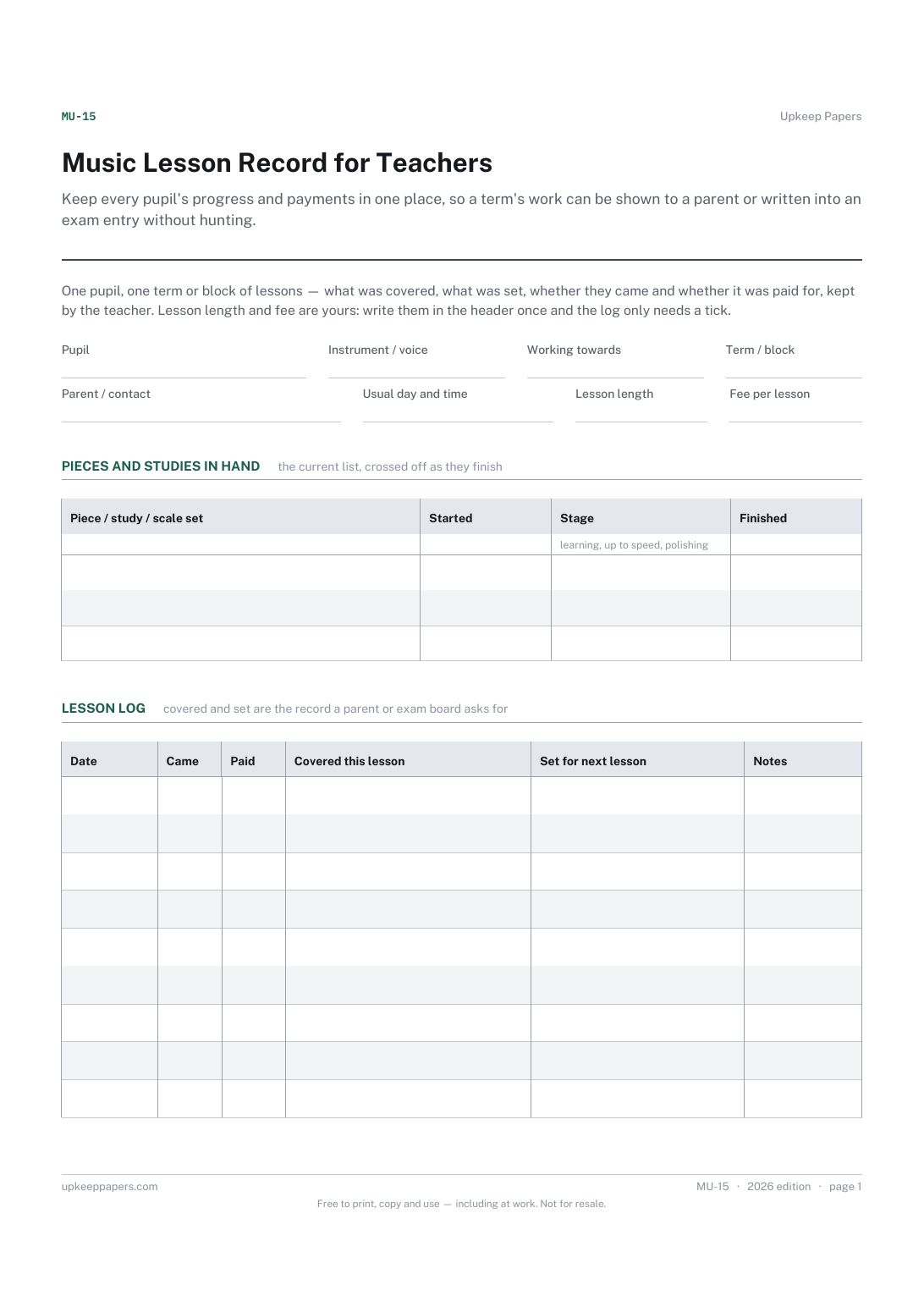
Give the operator and the caller the same list, written so a cue can be taken from the words on the page without the designer in the room.
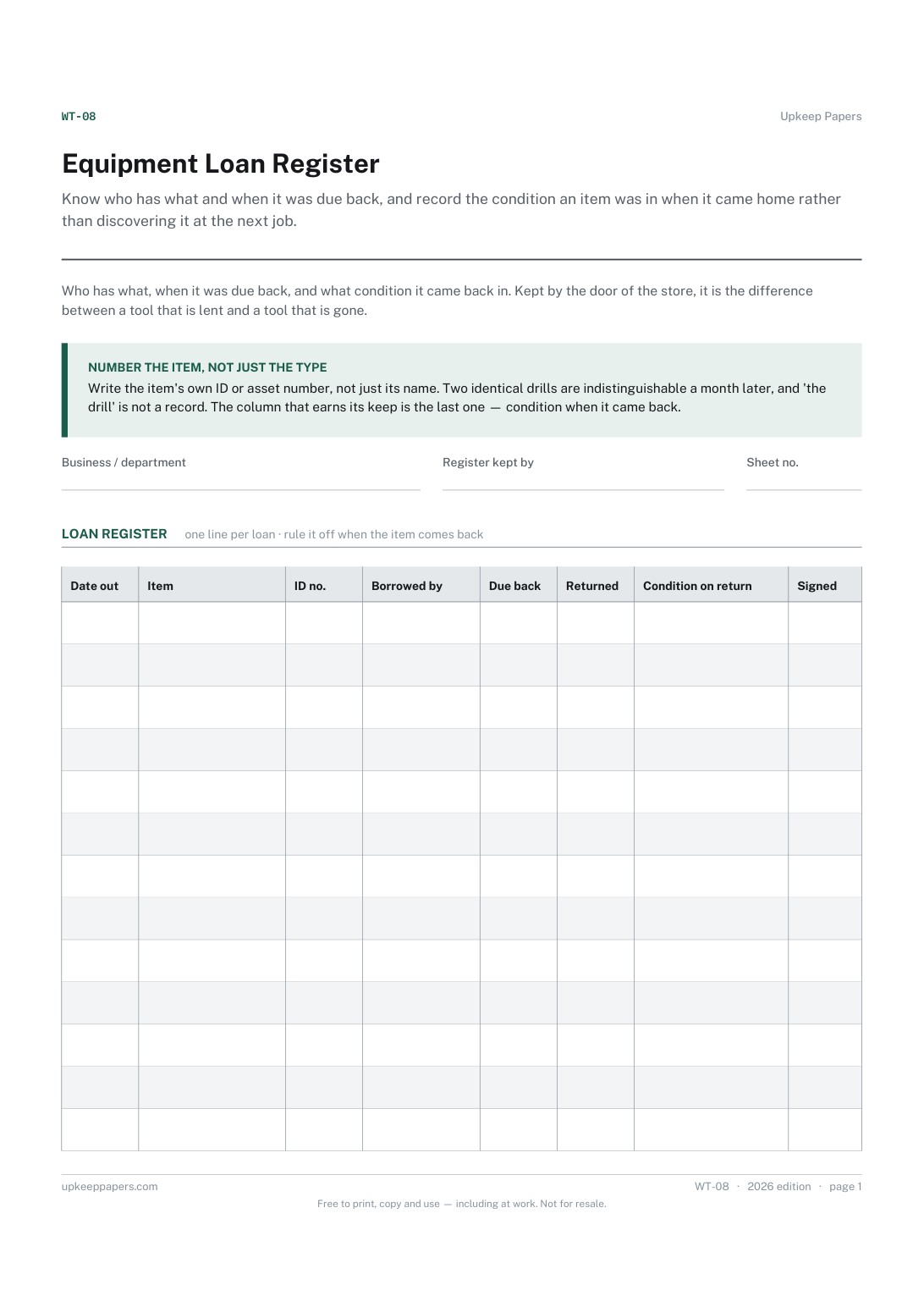
Keep every pupil's progress and payments in one place, so a term's work can be shown to a parent or written into an exam entry without hunting.
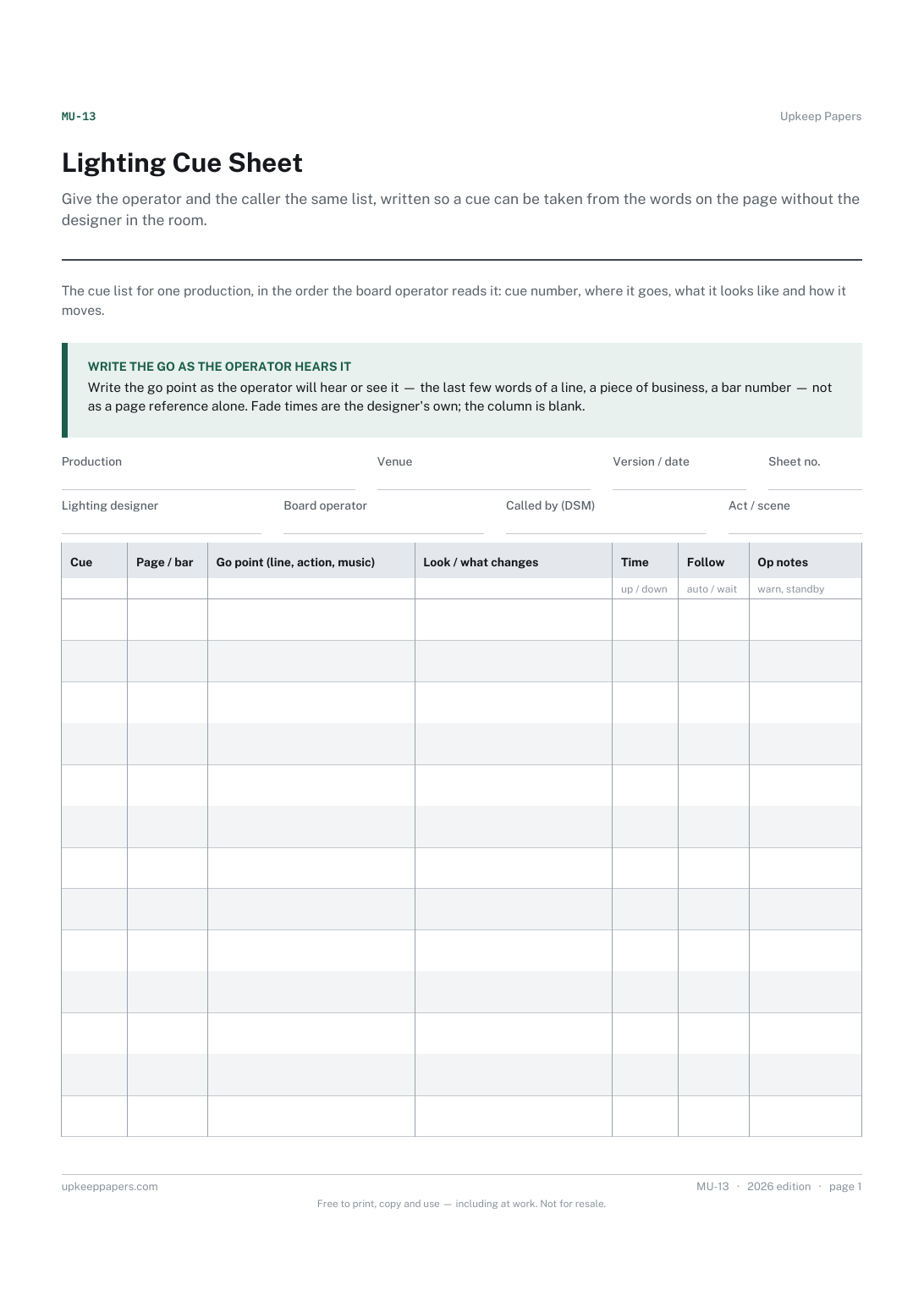
Know who has what and when it was due back, and record the condition an item was in when it came home rather than discovering it at the next job.
Keep one page that answers who is a member, how to reach them and whether they have paid, instead of three lists that disagree.

Every sheet, binder, game and puzzle on Upkeep Papers is free to download, with no email and no account. Making them is not free: each one takes days of research, design and checking, and the site costs money to run. If something here saved you time, you can buy us a coffee. It is entirely optional: nothing is locked, and nothing changes if you don’t.
Buy us a coffee Opens PayPal in a new tab. Any amount, and nothing changes if you would rather not.