Street Food Takings and Stock Sheet
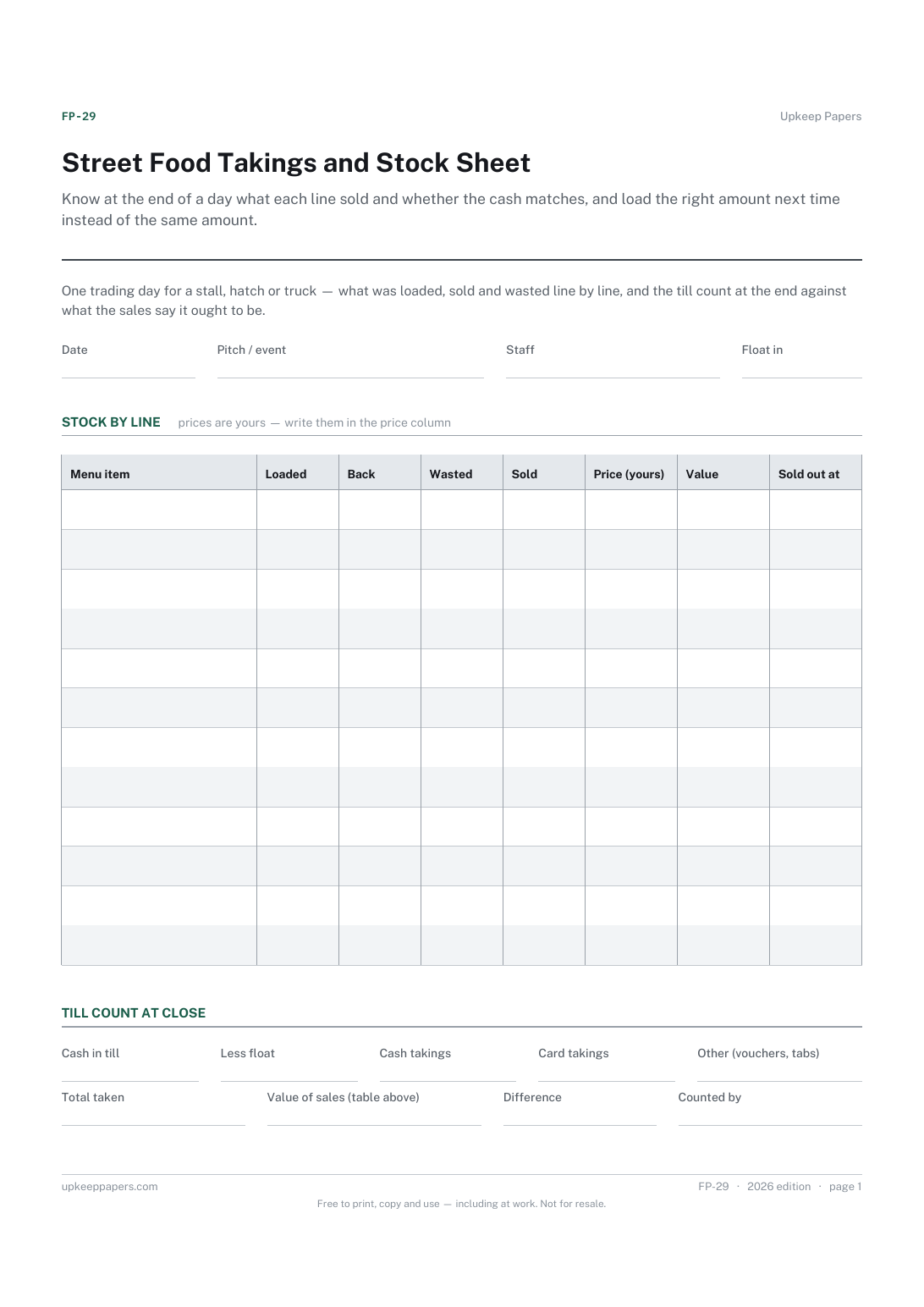
Know at the end of a day what each line sold and whether the cash matches, and load the right amount next time instead of the same amount.
FP-29 1 page
Everything here is free. Making it takes time and money. Everything here is free.
 Buy us a coffee
Food production and artisan makers · FP-22
A free printable market trader sales sheet — one row per market with the pitch fee, stock out and back, cash and card takings, and whether it was worth it.
One page. Choose your paper size — both versions are laid out identically, so neither one gets shrunk to fit.
Print it and write on it
Fill it in type and save
The fillable versions have real form fields — open them in any PDF reader, type into them and save. Printing help.
See over a season which markets pay their pitch fee back and which only look busy, on one page instead of a shoebox of till rolls.
Food producers and artisan makers who sell from a stall at farmers' markets, craft fairs, food festivals and street markets.
One page, top to bottom:
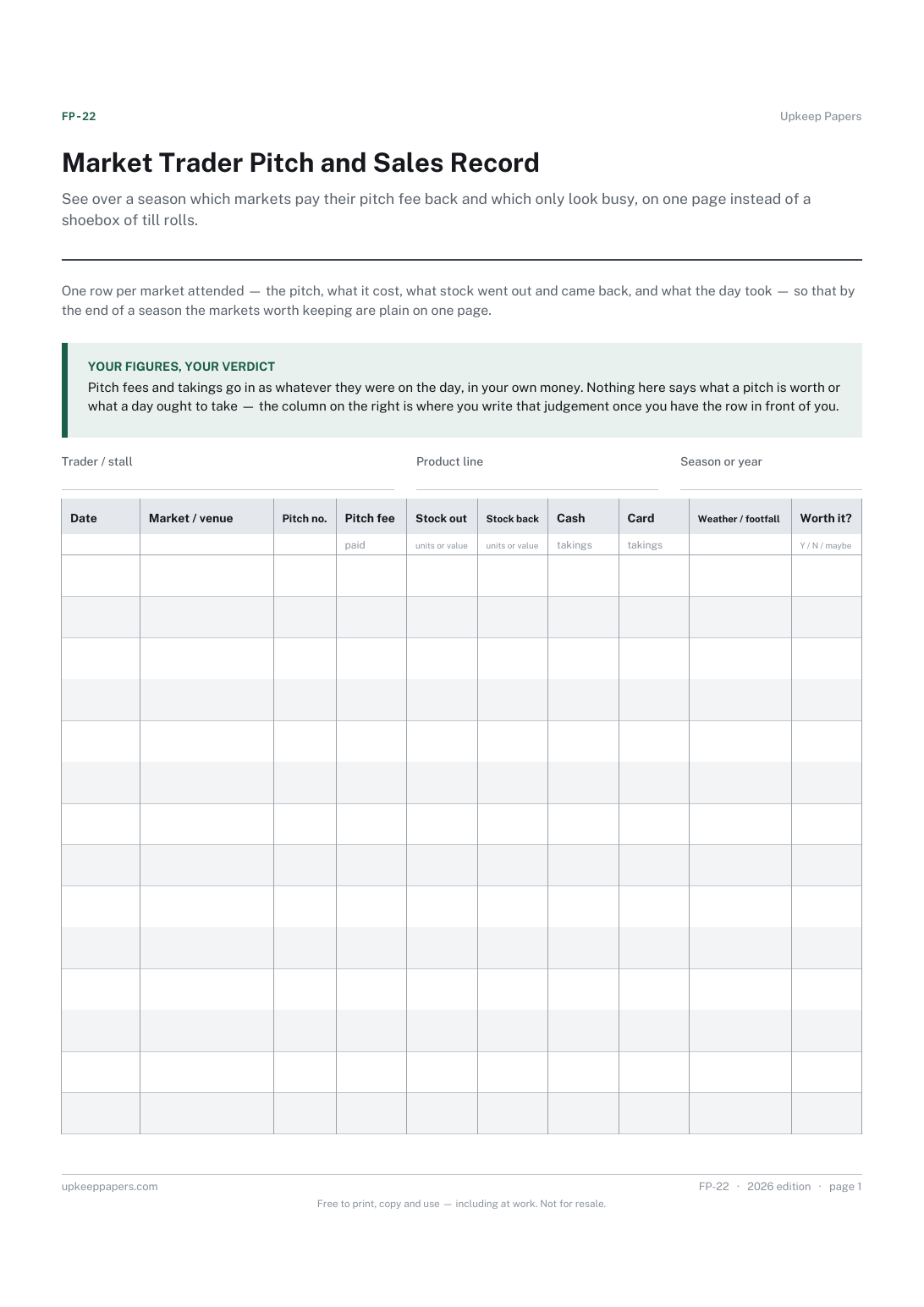
Printed under the title: One row per market attended — the pitch, what it cost, what stock went out and came back, and what the day took — so that by the end of a season the markets worth keeping are plain on one page.
Your figures, your verdict. Pitch fees and takings go in as whatever they were on the day, in your own money. Nothing here says what a pitch is worth or what a day ought to take — the column on the right is where you write that judgement once you have the row in front of you.
Write-on lines: Trader / stall · Product line · Season or year
Table, 14 rows: Date · Market / venue · Pitch no. · Pitch fee · Stock out · Stock back · Cash · Card · Weather / footfall · Worth it?
Because your costs are yours — what the stock cost to make, fuel, a helper's day — and the sheet cannot know them. It gives you the fee and the takings side by side; the last column is where you put your own conclusion once you have.
Whichever you can count quickly at pack-down. The subheading says either; the point is that the same method is used all season so the rows compare.
Know at the end of a day what each line sold and whether the cash matches, and load the right amount next time instead of the same amount.
Keep one line per sale as it happens, with the payment recorded beside it, so the month adds up from something written on the day.
Cash up consistently and record the difference every day, which is how a problem gets noticed in a week rather than in an audit.
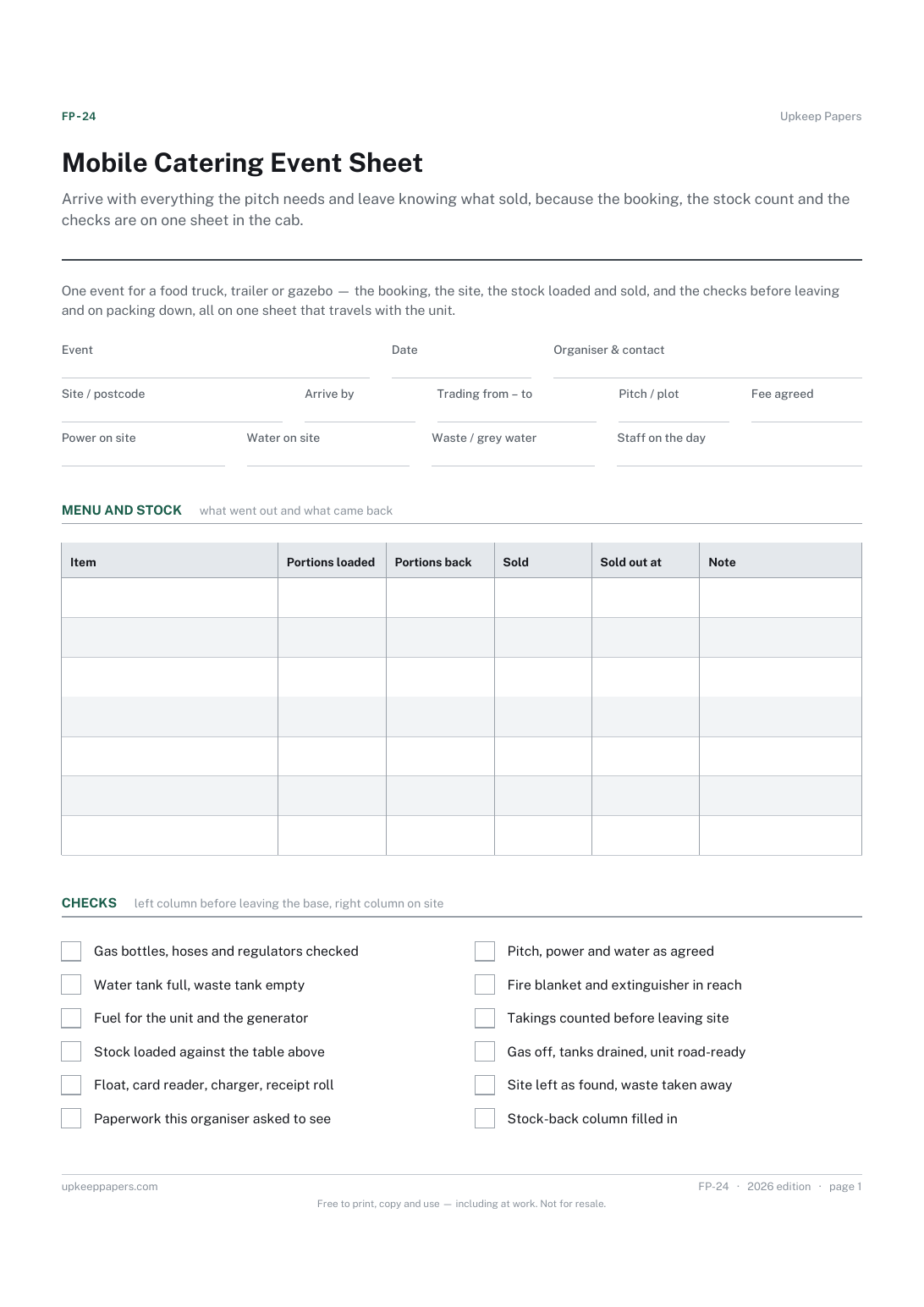
Arrive with everything the pitch needs and leave knowing what sold, because the booking, the stock count and the checks are on one sheet in the cab.
The same subject, with a version you can fill in on screen.
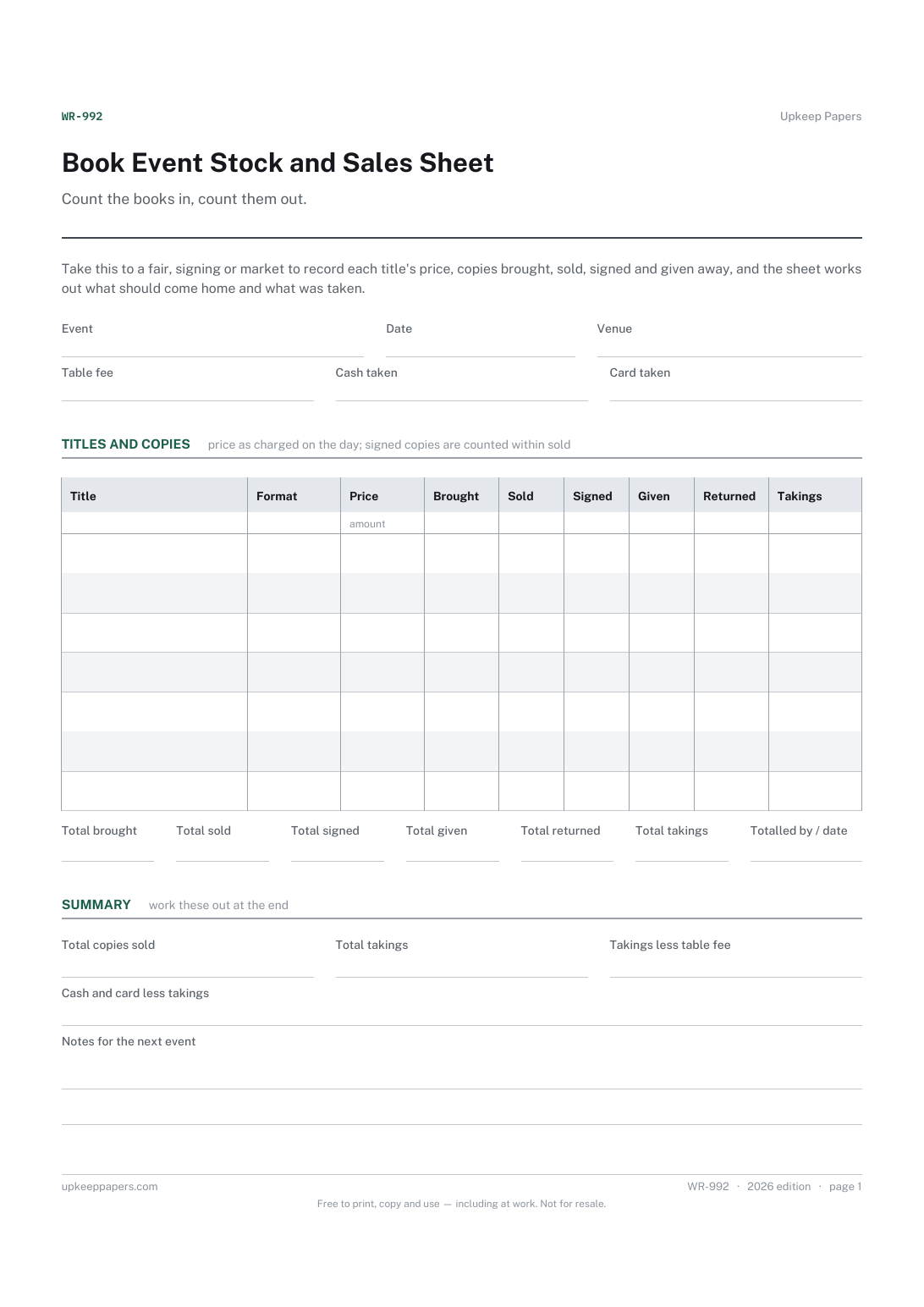
Copies of each title and format brought to the event.
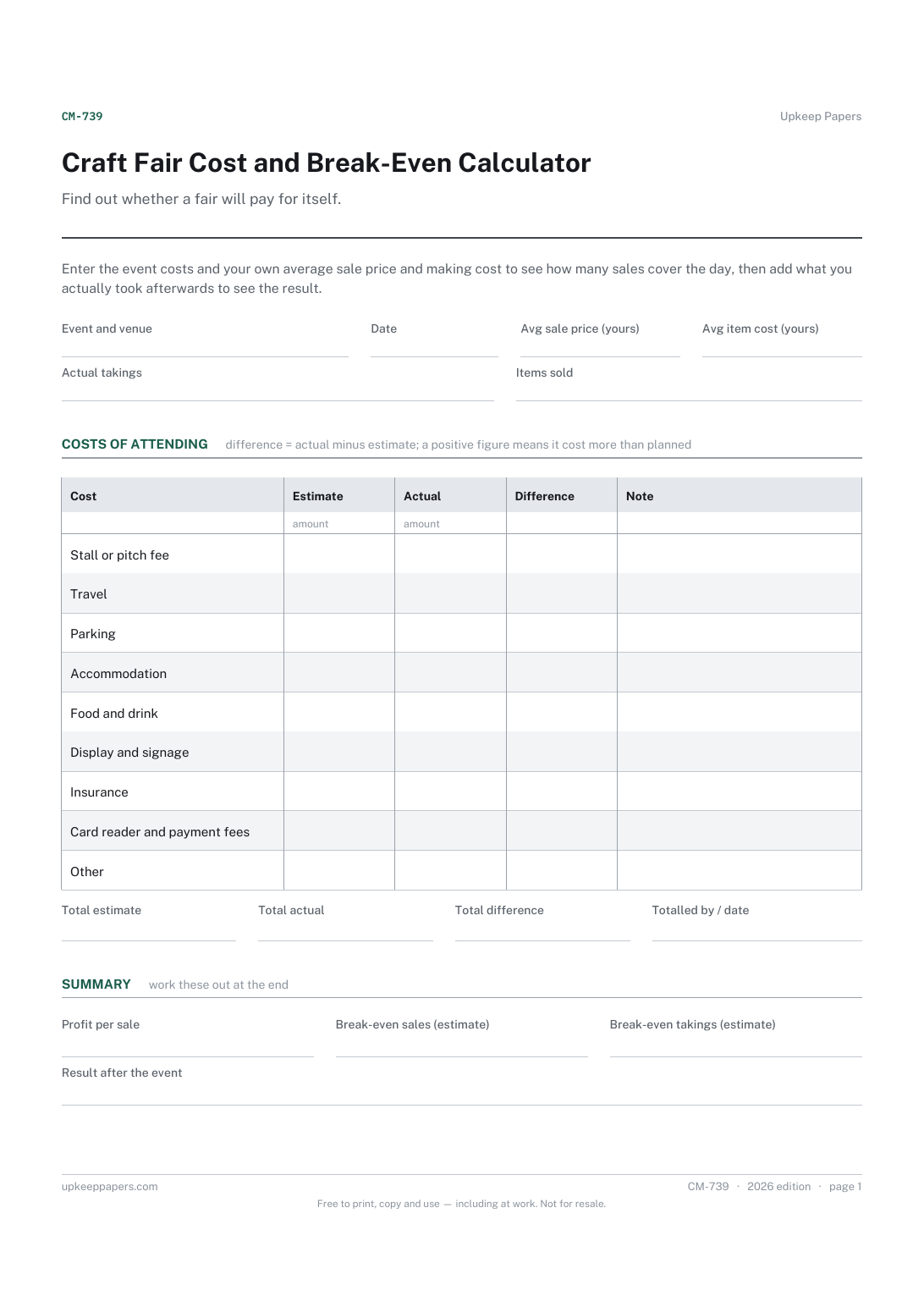
Every cost of attending, estimated and then actual.

Every sheet, binder, game and puzzle on Upkeep Papers is free to download, with no email and no account. Making them is not free: each one takes days of research, design and checking, and the site costs money to run. If something here saved you time, you can buy us a coffee. It is entirely optional: nothing is locked, and nothing changes if you don’t.
Buy us a coffee Opens PayPal in a new tab. Any amount, and nothing changes if you would rather not.