Cash Float and Till Count Sheet
Count a drawer properly and record the variance, so a pattern of small differences becomes visible instead of being quietly absorbed.
IM-13 1 page
Everything here is free. Making it takes time and money. Everything here is free.
 Buy us a coffee
Retail shop floor · RS-24
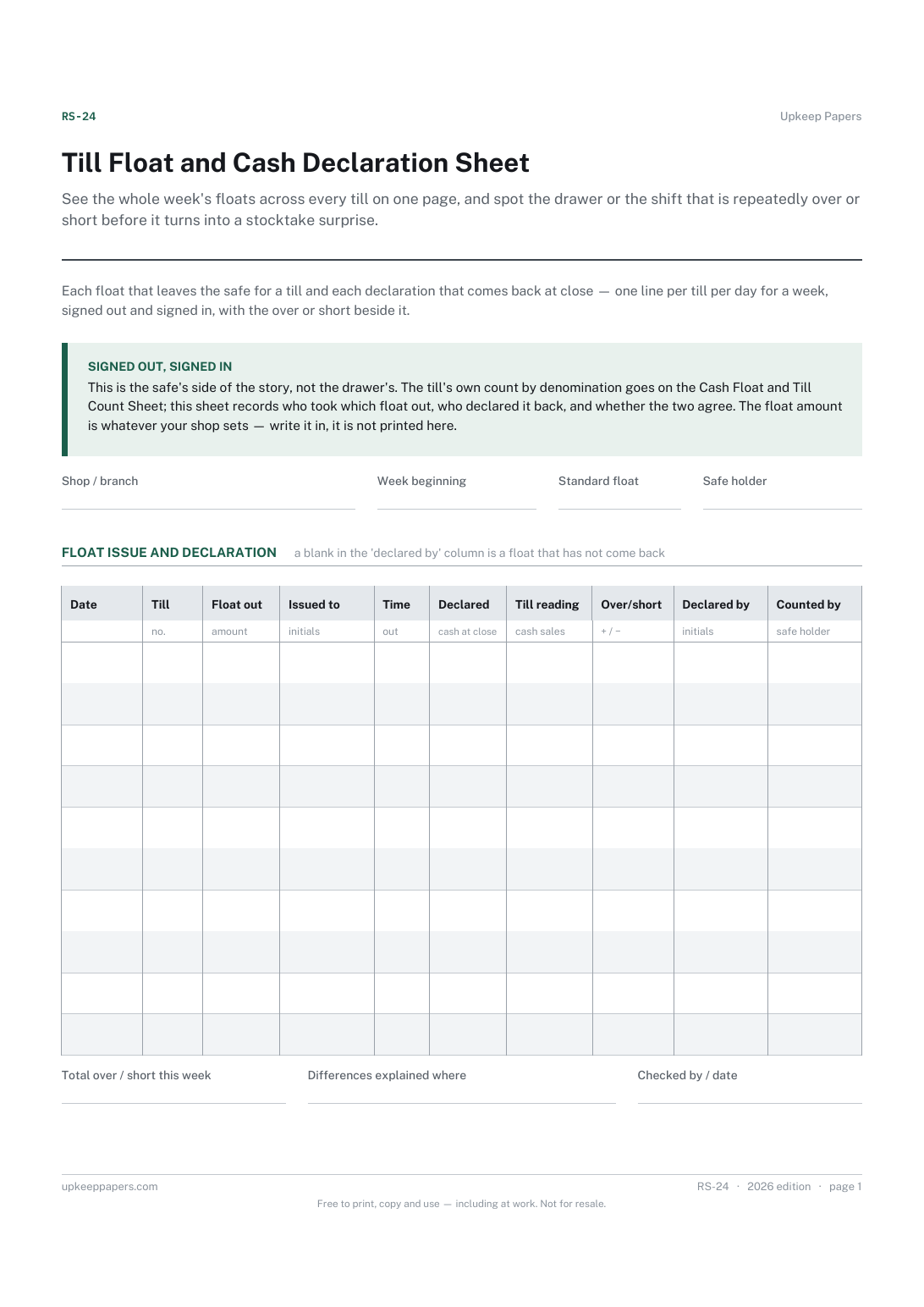
A free printable till float sheet — one line per till per day for a week, float signed out from the safe, cash declared at close, reading and over or short.
One page. Choose your paper size — both versions are laid out identically, so neither one gets shrunk to fit.
Print it and write on it
Fill it in type and save
The fillable versions have real form fields — open them in any PDF reader, type into them and save. Printing help.
See the whole week's floats across every till on one page, and spot the drawer or the shift that is repeatedly over or short before it turns into a stocktake surprise.
Shop managers, keyholders and whoever holds the safe in a shop with more than one till or more than one shift a day.
One page, top to bottom:
Printed under the title: Each float that leaves the safe for a till and each declaration that comes back at close — one line per till per day for a week, signed out and signed in, with the over or short beside it.
Signed out, signed in. This is the safe's side of the story, not the drawer's. The till's own count by denomination goes on the Cash Float and Till Count Sheet; this sheet records who took which float out, who declared it back, and whether the two agree. The float amount is whatever your shop sets — write it in, it is not printed here.
Write-on lines: Shop / branch · Week beginning · Standard float · Safe holder
Table, 10 rows: Date · Till · Float out · Issued to · Time · Declared · Till reading · Over/short · Declared by · Counted by
Write-on lines: Total over / short this week · Differences explained where · Checked by / date
That sheet is one till, one day, counted by denomination. This is the safe holder's register: every till, every day for a week, floats out and declarations in. Most shops with one till only need the first; a shop with three tills and two shifts needs this one as well.
Because the float is your decision and depends on what you sell and how you are paid. There is a blank for it at the top and a column for what actually went out each day, which is not always the same thing.
Count a drawer properly and record the variance, so a pattern of small differences becomes visible instead of being quietly absorbed.
Cash up consistently and record the difference every day, which is how a problem gets noticed in a week rather than in an audit.
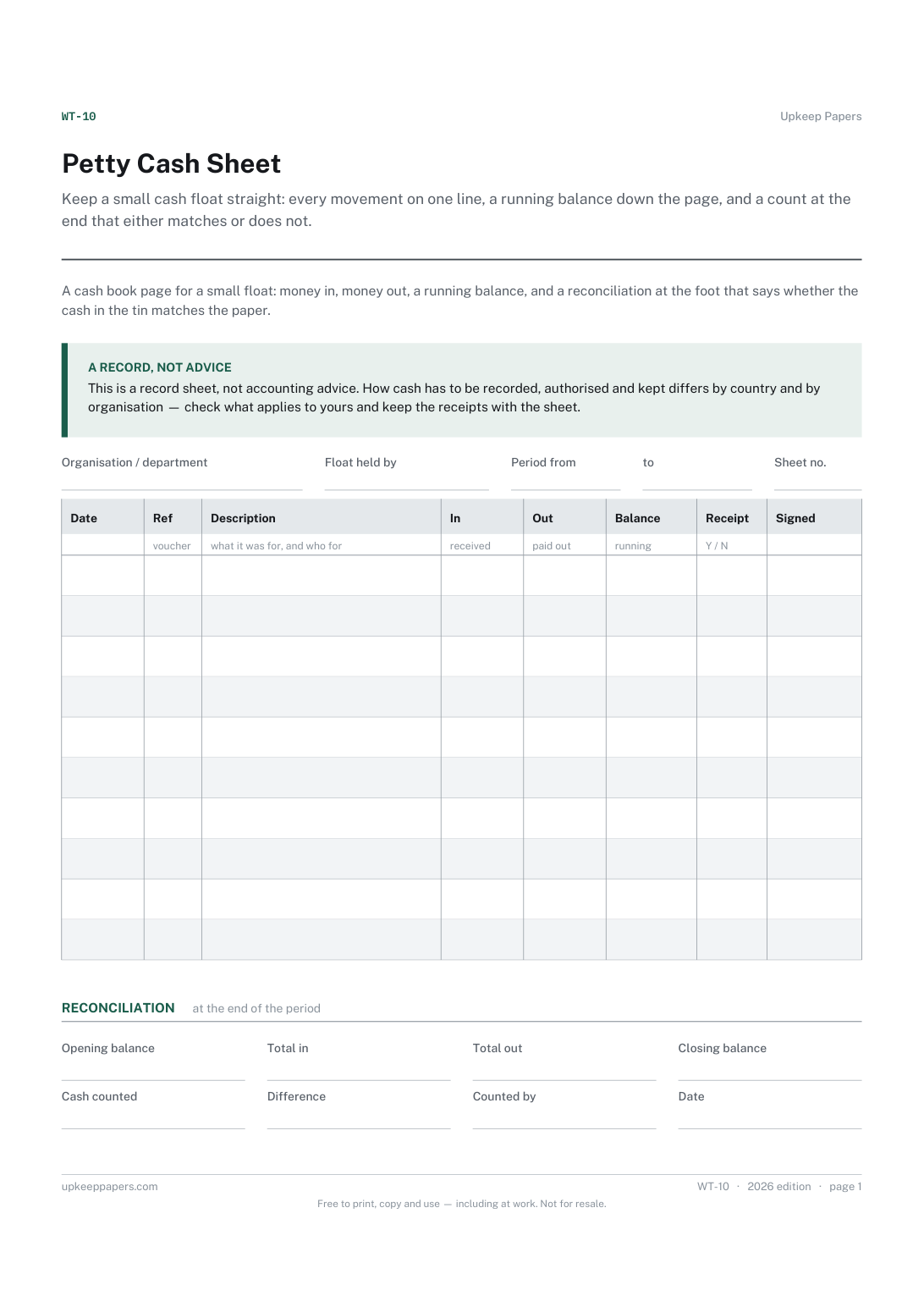
Keep a small cash float straight: every movement on one line, a running balance down the page, and a count at the end that either matches or does not.
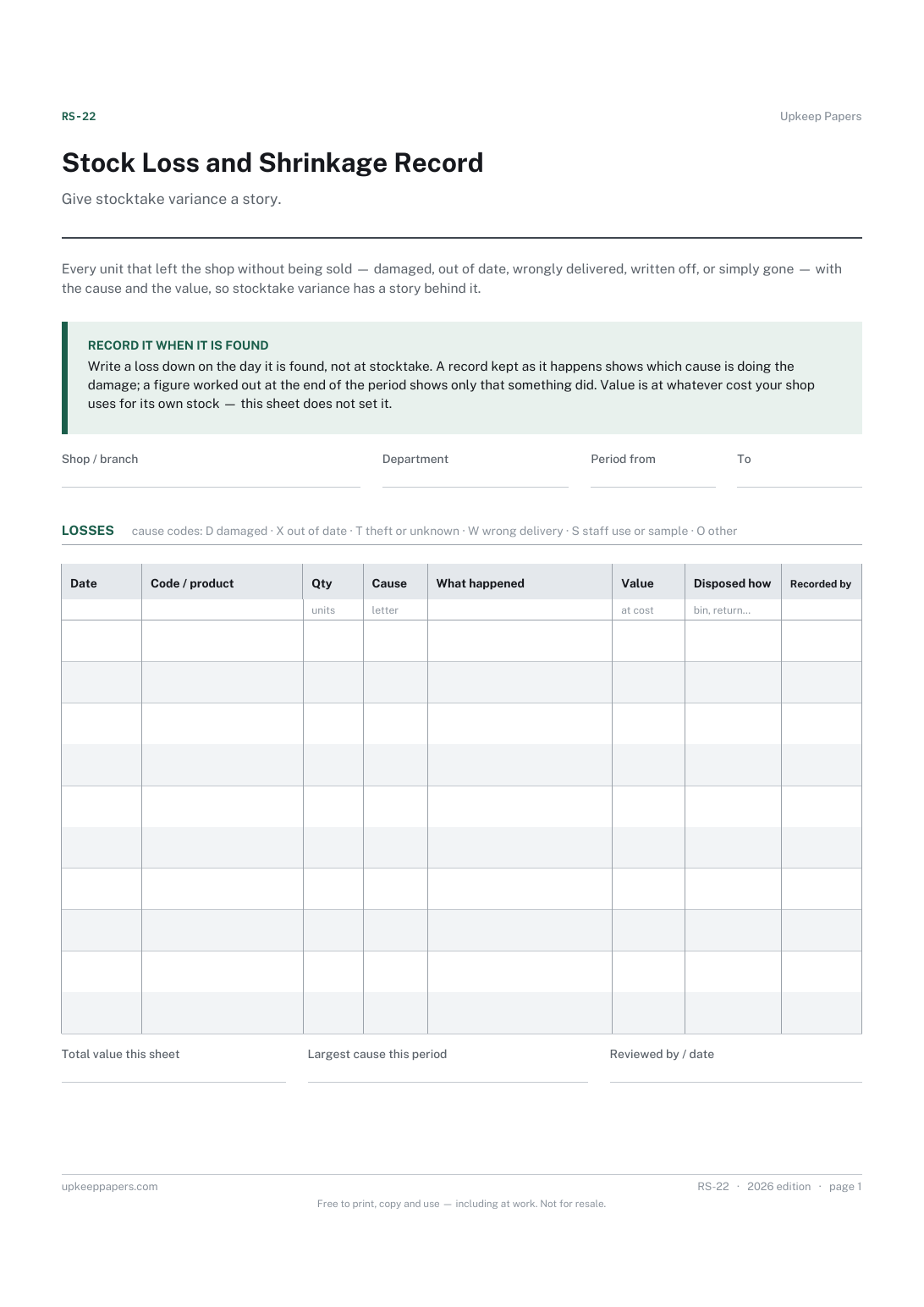
Give stocktake variance a story. Losses written down when they are found show which cause is costing the shop, instead of one unexplained figure at the end of the period.

Every sheet, binder, game and puzzle on Upkeep Papers is free to download, with no email and no account. Making them is not free: each one takes days of research, design and checking, and the site costs money to run. If something here saved you time, you can buy us a coffee. It is entirely optional: nothing is locked, and nothing changes if you don’t.
Buy us a coffee Opens PayPal in a new tab. Any amount, and nothing changes if you would rather not.