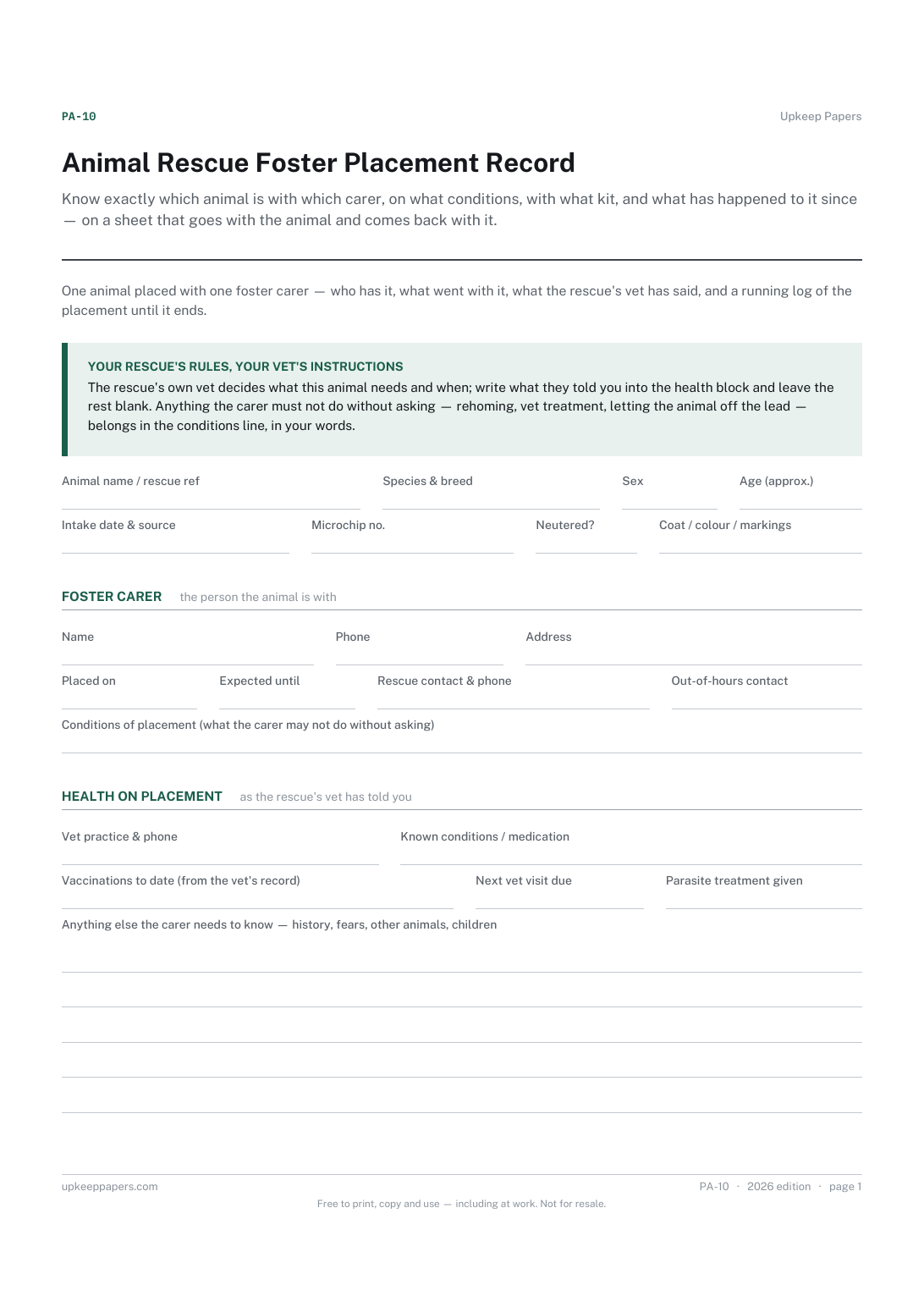
Animal Rescue Foster Placement Record
Know exactly which animal is with which carer, on what conditions, with what kit, and what has happened to it since — on a sheet that goes with the animal and comes back with it.
PA-10 2 pages
Everything here is free. Making it takes time and money. Everything here is free.
 Buy us a coffee
Pets and animals · PA-47
A free printable TNR trapping log: each trap's spot, set and check times, the cat caught, clinic notes, recovery checks and release, with traps counted out and back.
2 pages. Choose your paper size — both versions are laid out identically, so neither one gets shrunk to fit.
Print it and write on it
Fill it in type and save
The fillable versions have real form fields — open them in any PDF reader, type into them and save. Printing help.
Make sure every cat goes back to the spot it was trapped and no trap is left on site. Trap numbers link the trapping, the clinic notes and the release.
Trap-neuter-return volunteers, community cat groups, rescues and colony caretakers.
2 pages, in this order:
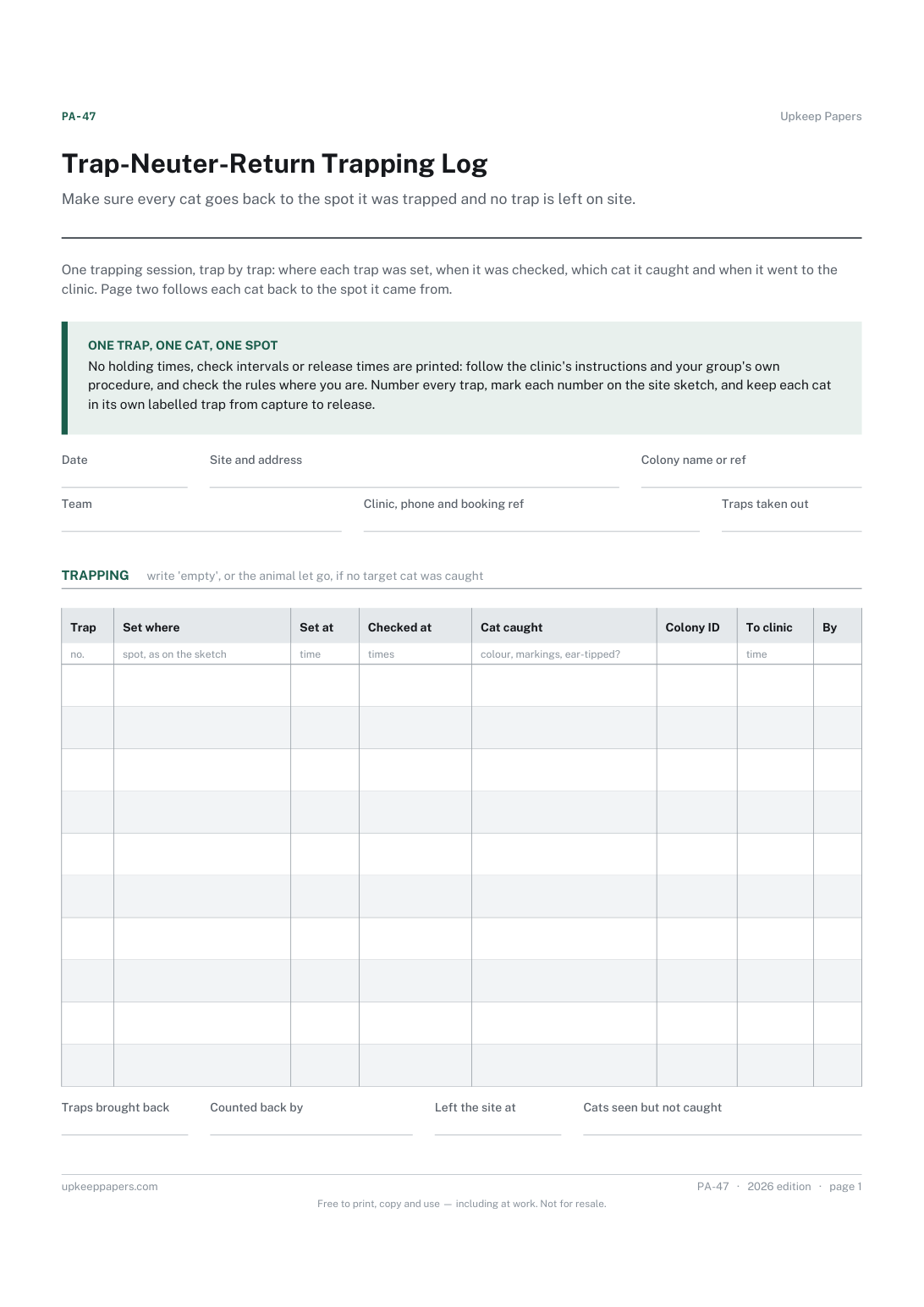
Printed under the title: One trapping session, trap by trap: where each trap was set, when it was checked, which cat it caught and when it went to the clinic. Page two follows each cat back to the spot it came from.
One trap, one cat, one spot. No holding times, check intervals or release times are printed: follow the clinic's instructions and your group's own procedure, and check the rules where you are. Number every trap, mark each number on the site sketch, and keep each cat in its own labelled trap from capture to release.
Write-on lines: Date · Site and address · Colony name or ref · Team · Clinic, phone and booking ref · Traps taken out
Table, 10 rows: Trap · Set where · Set at · Checked at · Cat caught · Colony ID · To clinic · By
Write-on lines: Traps brought back · Counted back by · Left the site at · Cats seen but not caught
Table, 10 rows: Trap · Colony ID · Clinic reports · Recovery checks · Released · Same spot · By
Squared grid: Site sketch: each trap's number where it was set, with gates, bins, buildings and the feeding station
Write-on lines: All cats released on · Signed by · Caretaker or feeder told on
Because how long a cat is held and how often it is checked depend on the procedure, the cat and the clinic's own instructions. Follow those, and write the times you actually checked in the recovery column.
Whatever your group uses to tell cats apart over time: a number, a name or a photo reference. Using the same ID on the clinic notes and the release line keeps one cat's record together.
Rules on trapping, neutering and returning community cats differ between countries and councils, and some sites need the landowner's permission. Check the rules where you are before trapping.
Know exactly which animal is with which carer, on what conditions, with what kit, and what has happened to it since — on a sheet that goes with the animal and comes back with it.
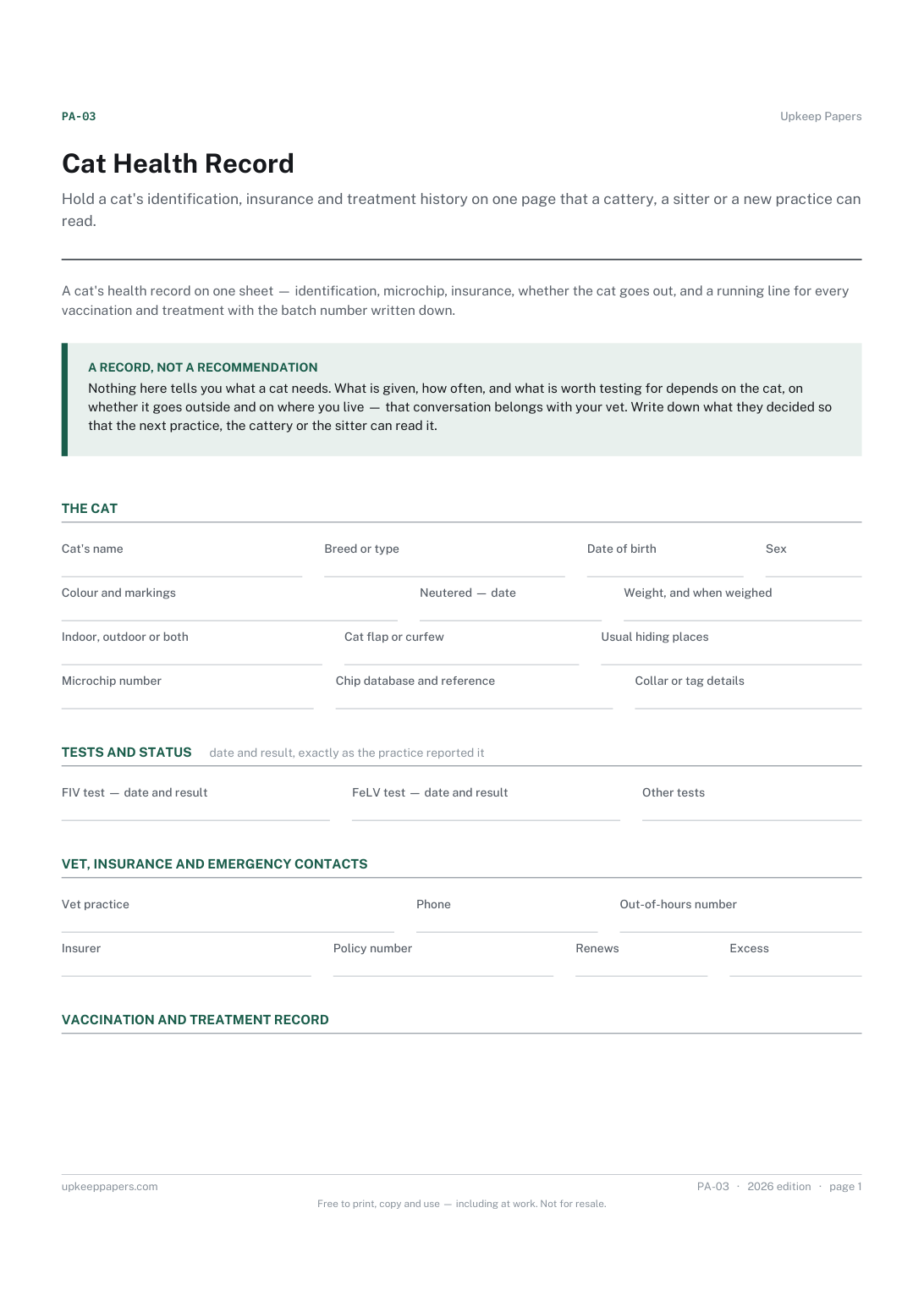
Hold a cat's identification, insurance and treatment history on one page that a cattery, a sitter or a new practice can read. It has room for the things that are specific to cats and get left off general pet forms.
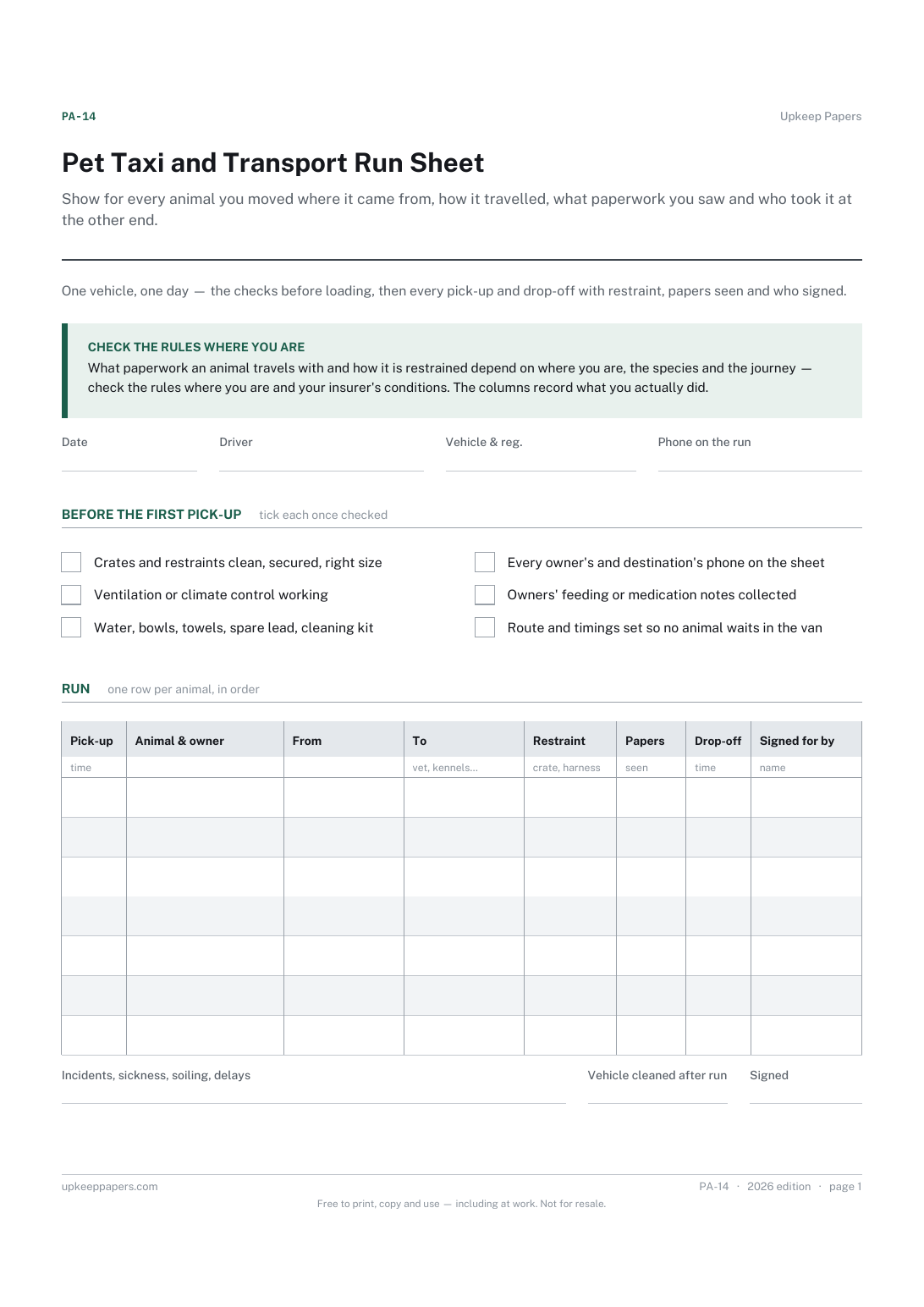
Show for every animal you moved where it came from, how it travelled, what paperwork you saw and who took it at the other end.

Every sheet, binder, game and puzzle on Upkeep Papers is free to download, with no email and no account. Making them is not free: each one takes days of research, design and checking, and the site costs money to run. If something here saved you time, you can buy us a coffee. It is entirely optional: nothing is locked, and nothing changes if you don’t.
Buy us a coffee Opens PayPal in a new tab. Any amount, and nothing changes if you would rather not.