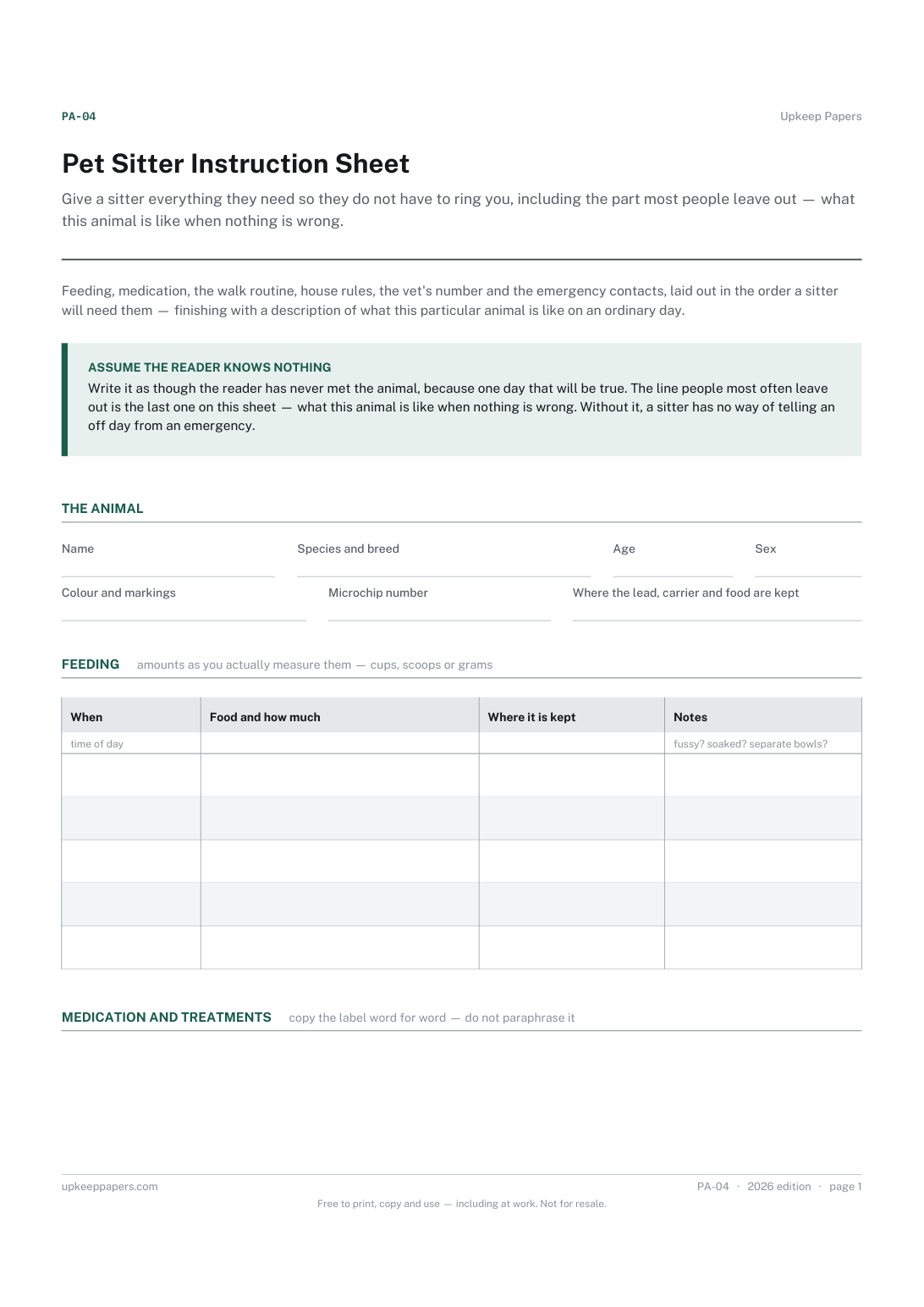
Pet Sitter Instruction Sheet
Give a sitter everything they need so they do not have to ring you, including the part most people leave out — what this animal is like when nothing is wrong.
PA-04 2 pages
Everything here is free. Making it takes time and money. Everything here is free.
 Buy us a coffee
Pets and animals · PA-10
A free printable foster placement record sheet for a rescue — the animal, the carer, what went with it, what the vet said and a log of the placement.
2 pages. Choose your paper size — both versions are laid out identically, so neither one gets shrunk to fit.
Print it and write on it
Fill it in type and save
The fillable versions have real form fields — open them in any PDF reader, type into them and save. Printing help.
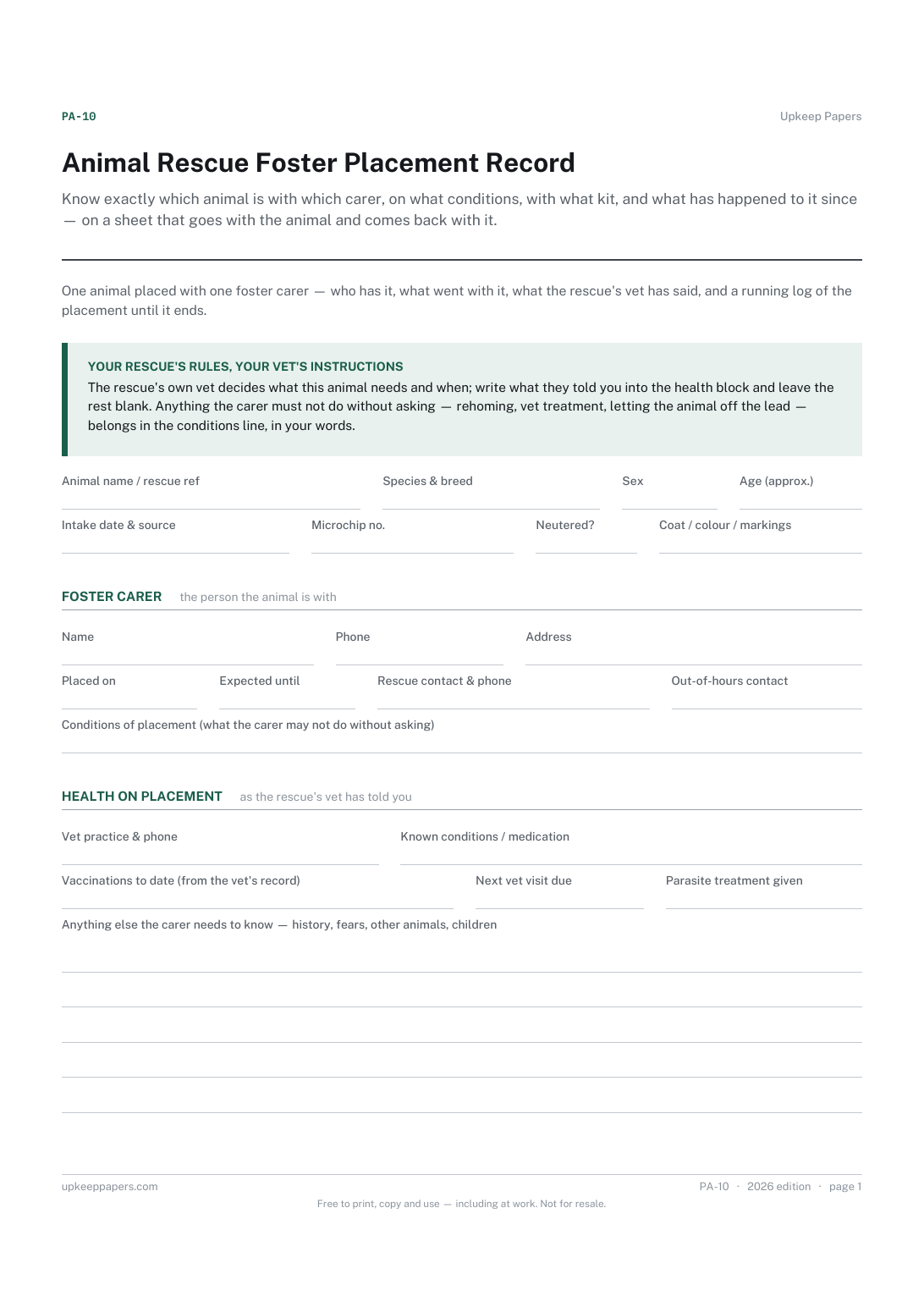
Know exactly which animal is with which carer, on what conditions, with what kit, and what has happened to it since — on a sheet that goes with the animal and comes back with it.
Rescue coordinators and foster carers, and any charity or sanctuary that places animals in temporary homes.
2 pages, in this order:
Printed under the title: One animal placed with one foster carer — who has it, what went with it, what the rescue's vet has said, and a running log of the placement until it ends.
Your rescue's rules, your vet's instructions. The rescue's own vet decides what this animal needs and when; write what they told you into the health block and leave the rest blank. Anything the carer must not do without asking — rehoming, vet treatment, letting the animal off the lead — belongs in the conditions line, in your words.
Write-on lines: Animal name / rescue ref · Species & breed · Sex · Age (approx.) · Intake date & source · Microchip no. · Neutered? · Coat / colour / markings
Write-on lines: Name · Phone · Address · Placed on · Expected until · Rescue contact & phone · Out-of-hours contact · Conditions of placement (what the carer may not do without asking)
Write-on lines: Vet practice & phone · Known conditions / medication · Vaccinations to date (from the vet's record) · Next vet visit due · Parasite treatment given
Ruled lines: Anything else the carer needs to know — history, fears, other animals, children
Table, 4 rows: Item · Handed over · Returned · Item · Handed over · Returned
Table, 13 rows: Date · Event · What happened · By
Write-on lines: Placement ended on · Outcome (adopted / returned / transferred) · Adopter or next placement ref
Because the rescue's vet sets that for each animal, and a printed schedule would be wrong for some of them. The health block is for what the vet told you, and the next-due line is theirs to fill.
The carer keeps it while the animal is with them, so the log is written at the time. It goes back to the rescue with the animal and the returned kit, and the rescue closes it with the outcome.
Give a sitter everything they need so they do not have to ring you, including the part most people leave out — what this animal is like when nothing is wrong.
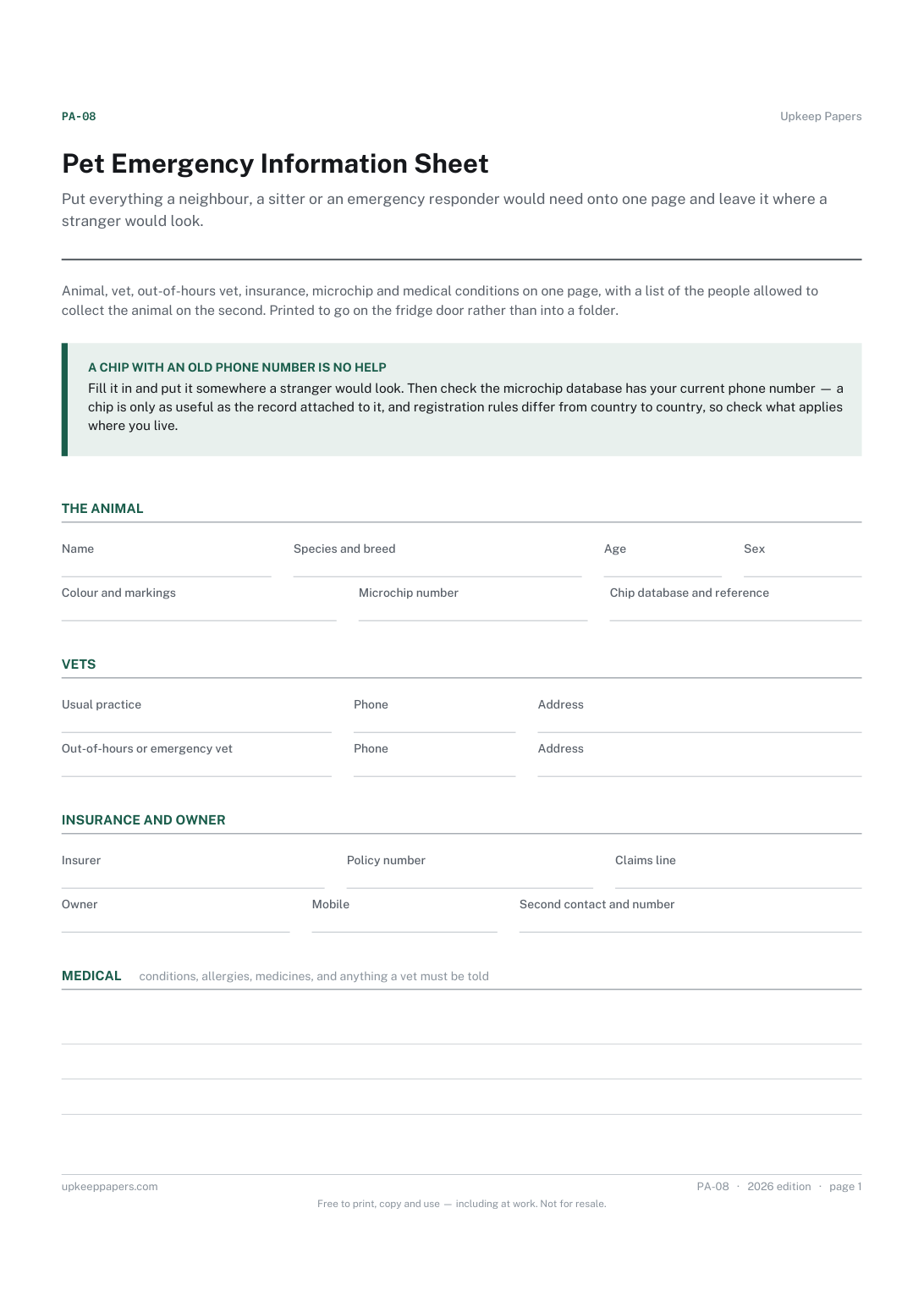
Put everything a neighbour, a sitter or an emergency responder would need onto one page and leave it where a stranger would look. It answers the questions that get asked when you are not there to be asked.
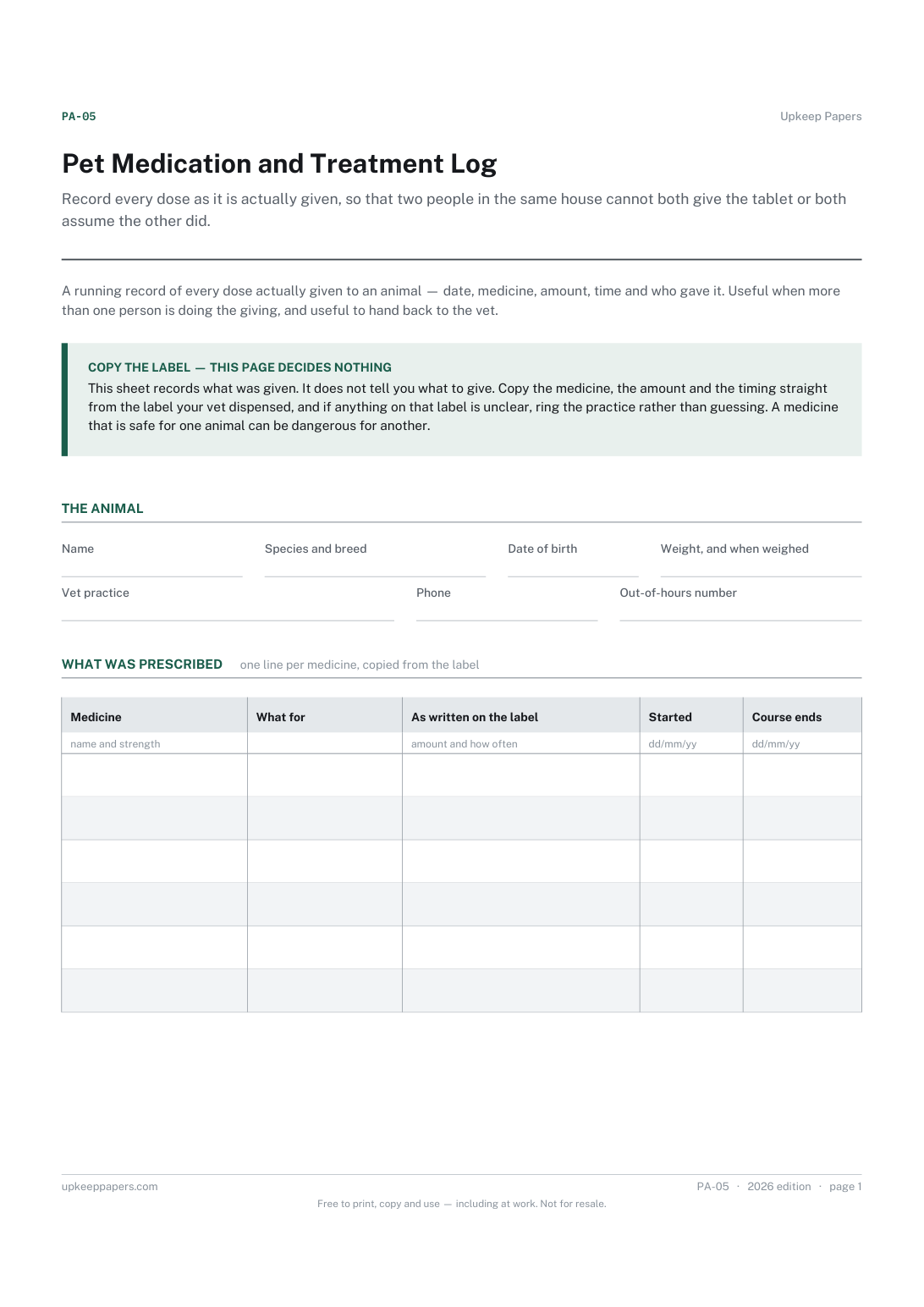
Record every dose as it is actually given, so that two people in the same house cannot both give the tablet or both assume the other did. It also gives your vet something factual to read at the follow-up.
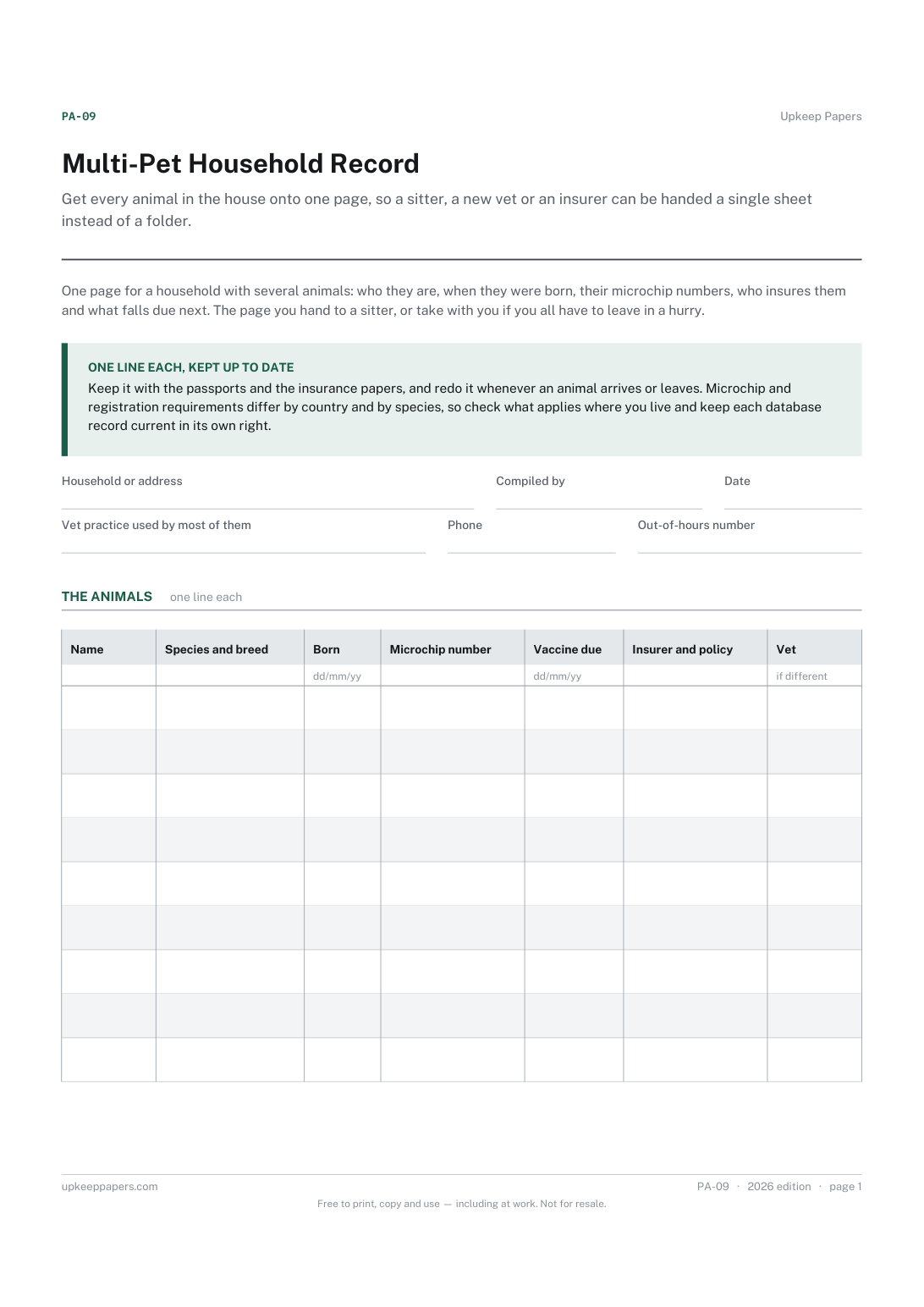
Get every animal in the house onto one page, so a sitter, a new vet or an insurer can be handed a single sheet instead of a folder. It also carries the feeding and medication detail that stops the wrong bowl going to the wrong animal.

Every sheet, binder, game and puzzle on Upkeep Papers is free to download, with no email and no account. Making them is not free: each one takes days of research, design and checking, and the site costs money to run. If something here saved you time, you can buy us a coffee. It is entirely optional: nothing is locked, and nothing changes if you don’t.
Buy us a coffee Opens PayPal in a new tab. Any amount, and nothing changes if you would rather not.