Stage Plot and Input List
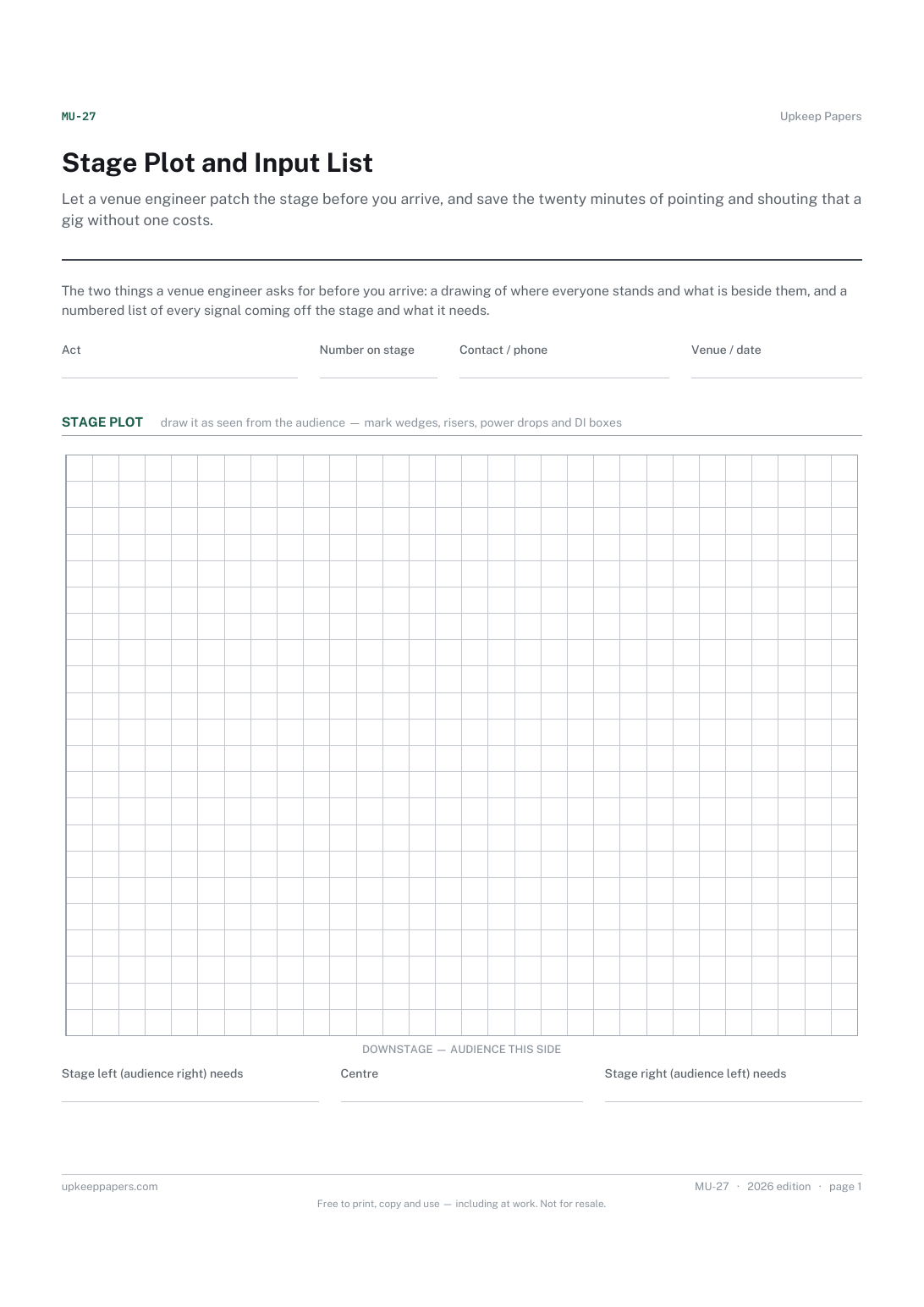
Let a venue engineer patch the stage before you arrive, and save the twenty minutes of pointing and shouting that a gig without one costs.
MU-27 2 pages
Everything here is free. Making it takes time and money. Everything here is free.
 Buy us a coffee
Music and performance · MU-26
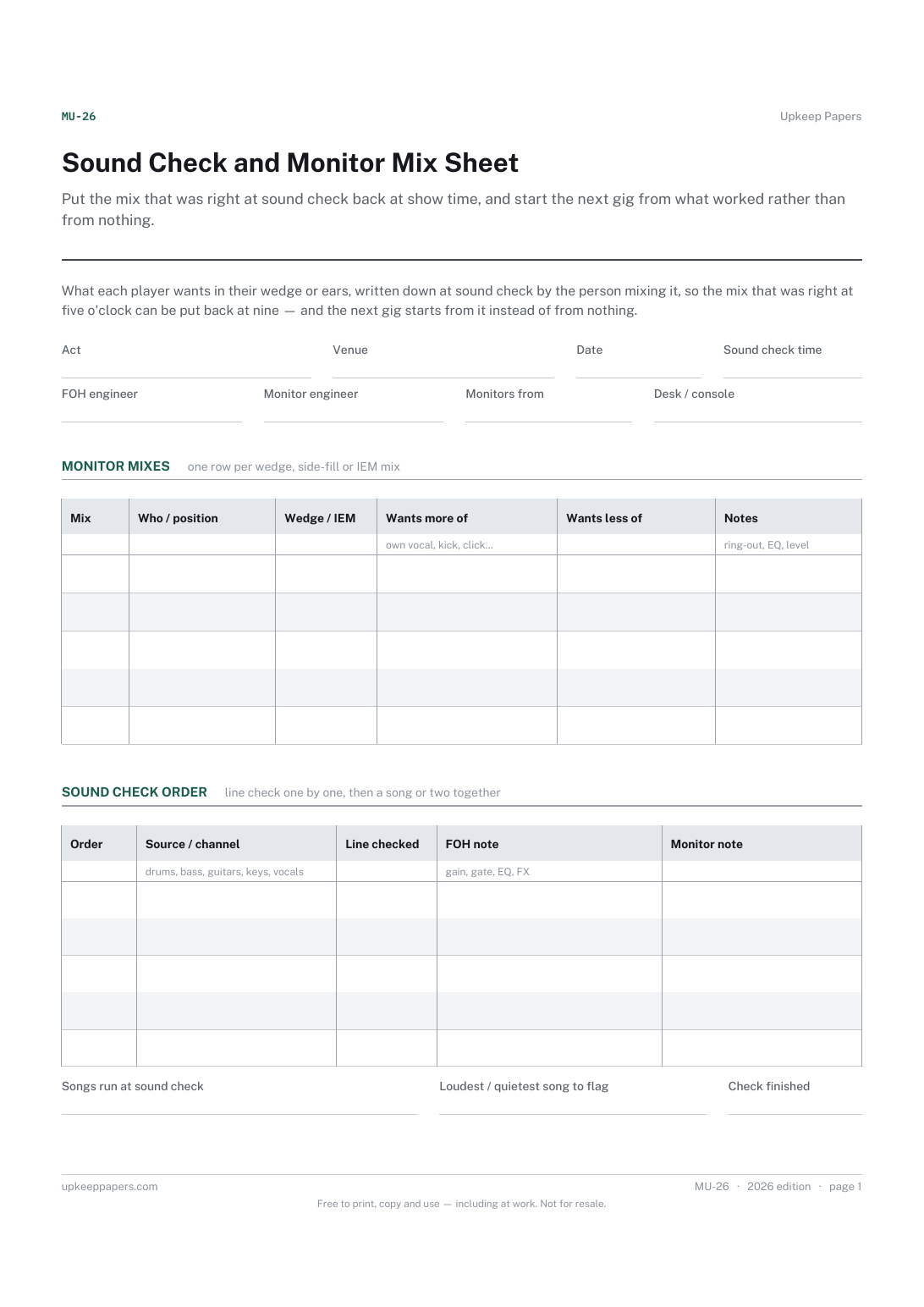
A sound check sheet — each monitor mix by wedge or IEM with what the player wants more and less of, the line check order with FOH and monitor notes.
One page. Choose your paper size — both versions are laid out identically, so neither one gets shrunk to fit.
Print it and write on it
Fill it in type and save
The fillable versions have real form fields — open them in any PDF reader, type into them and save. Printing help.
Put the mix that was right at sound check back at show time, and start the next gig from what worked rather than from nothing.
Monitor and front of house engineers, and bands who mix their own monitors from the stage or from a tablet.
One page, top to bottom:
Printed under the title: What each player wants in their wedge or ears, written down at sound check by the person mixing it, so the mix that was right at five o'clock can be put back at nine — and the next gig starts from it instead of from nothing.
Write-on lines: Act · Venue · Date · Sound check time · FOH engineer · Monitor engineer · Monitors from · Desk / console
Table, 5 rows: Mix · Who / position · Wedge / IEM · Wants more of · Wants less of · Notes
Table, 5 rows: Order · Source / channel · Line checked · FOH note · Monitor note
Write-on lines: Songs run at sound check · Loudest / quietest song to flag · Check finished
Ruled lines: Notes — changes made after doors, what to remember for next time
Because they belong to the room, the desk and the band on the day. What carries from one gig to the next is what each player wants to hear; the settings that deliver it are worked out afresh each time.
No. The input list says what comes off the stage; this sheet says what goes back to it and what was done at the check. Send the Stage Plot and Input List ahead, and fill this one in on the day.
Let a venue engineer patch the stage before you arrive, and save the twenty minutes of pointing and shouting that a gig without one costs.
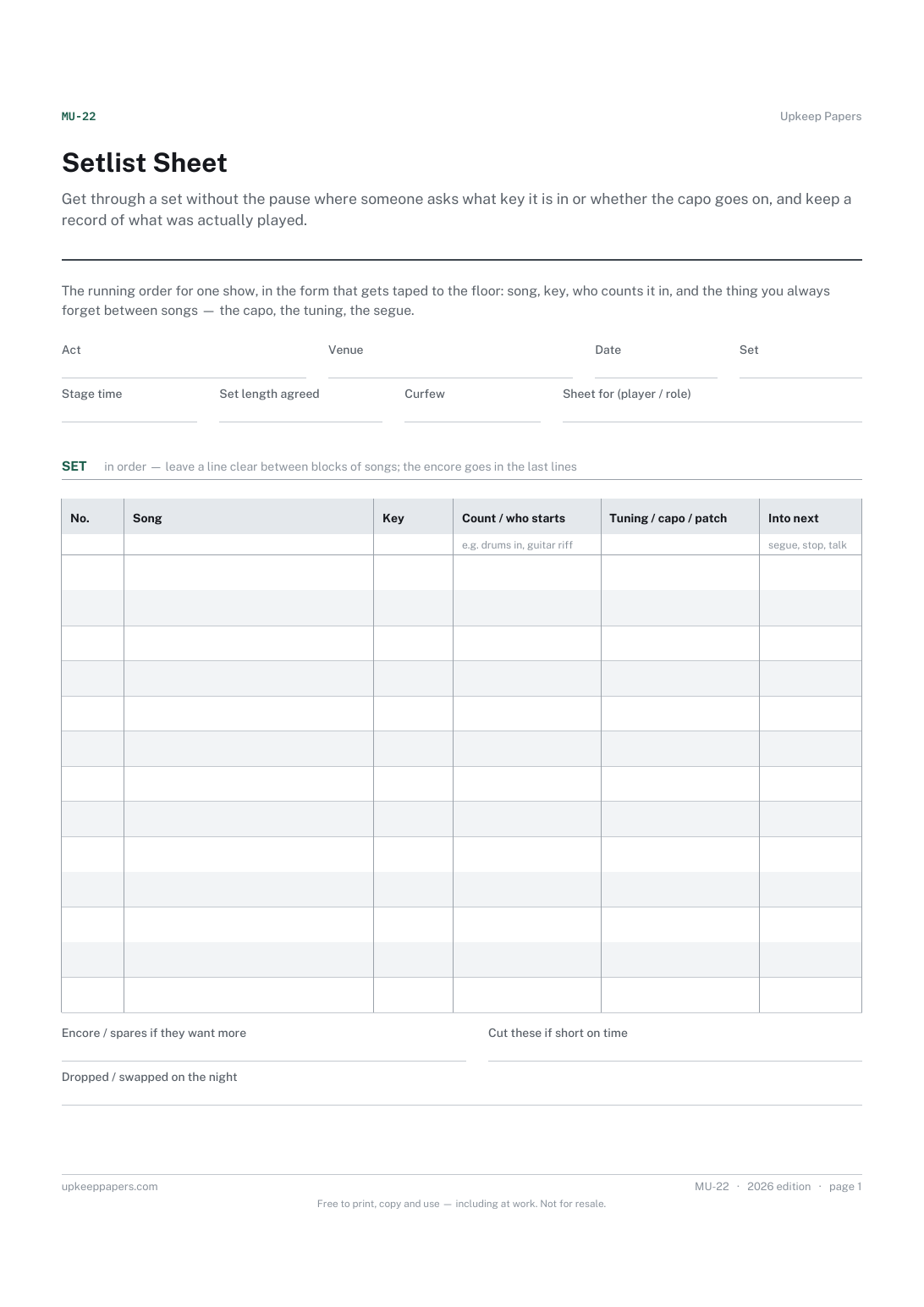
Get through a set without the pause where someone asks what key it is in or whether the capo goes on, and keep a record of what was actually played.
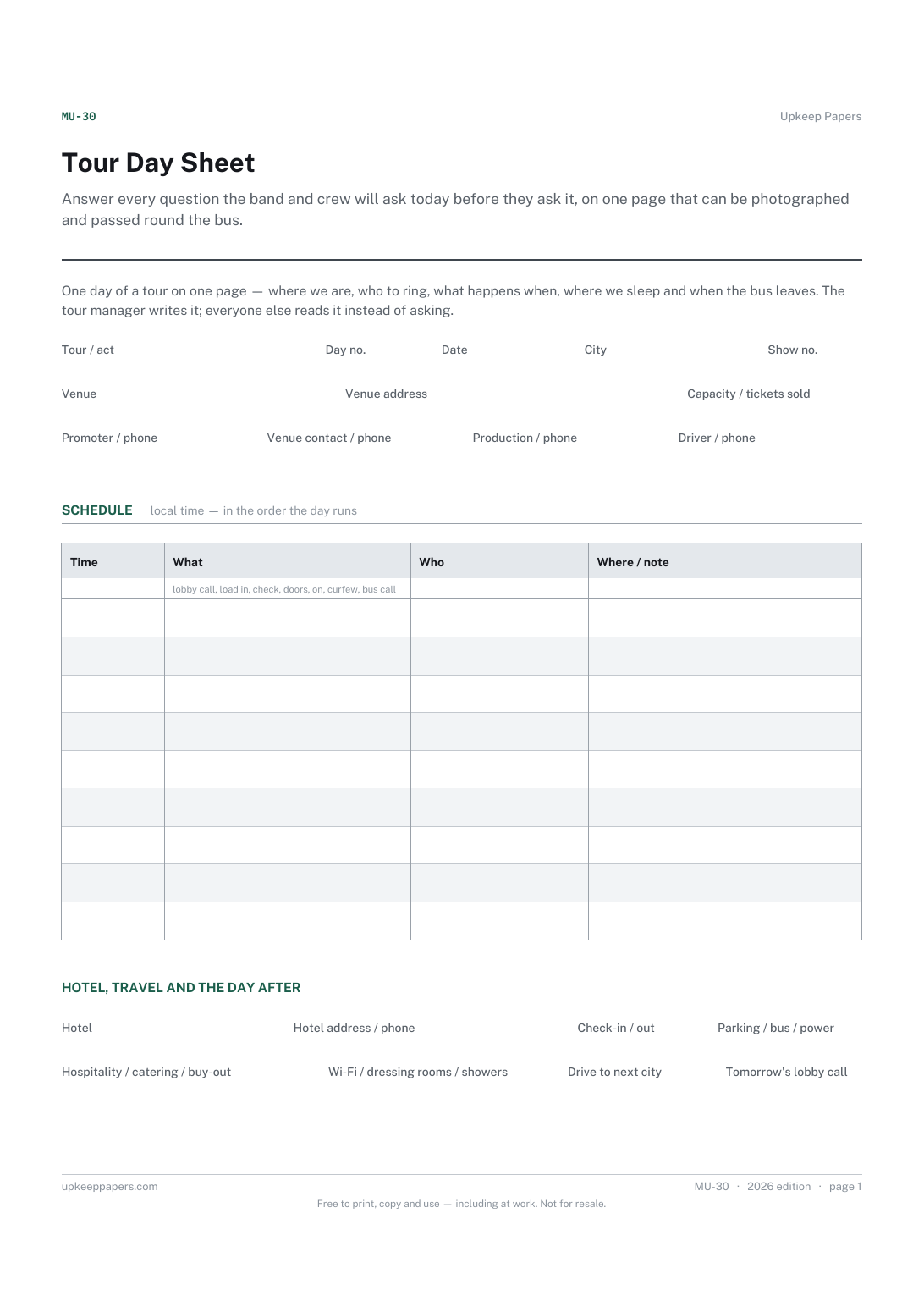
Answer every question the band and crew will ask today before they ask it, on one page that can be photographed and passed round the bus.
Get the day out of one person's head and onto a page everybody can read, so the event does not stall when the organiser is dealing with something else.

Every sheet, binder, game and puzzle on Upkeep Papers is free to download, with no email and no account. Making them is not free: each one takes days of research, design and checking, and the site costs money to run. If something here saved you time, you can buy us a coffee. It is entirely optional: nothing is locked, and nothing changes if you don’t.
Buy us a coffee Opens PayPal in a new tab. Any amount, and nothing changes if you would rather not.