Studio Time and Billing Log
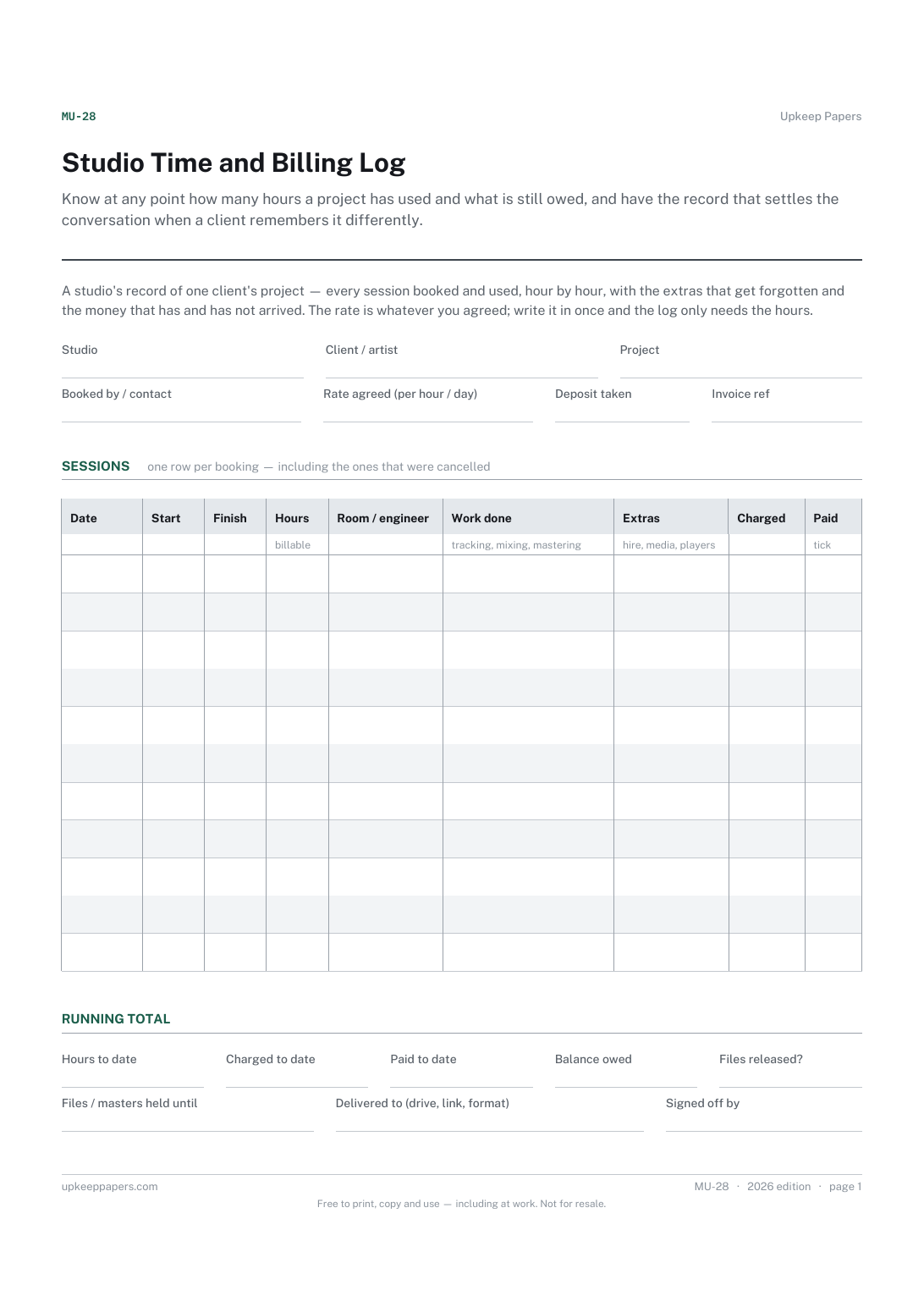
Know at any point how many hours a project has used and what is still owed, and have the record that settles the conversation when a client remembers it differently.
MU-28 1 page
Everything here is free. Making it takes time and money. Everything here is free.
 Buy us a coffee
Music and performance · MU-21
A recording session track sheet — one song, one session: what went on each track, which mic and preamp, who played it, which takes were kept, plus a take log.
One page. Choose your paper size — both versions are laid out identically, so neither one gets shrunk to fit.
Print it and write on it
Fill it in type and save
The fillable versions have real form fields — open them in any PDF reader, type into them and save. Printing help.
Open a session file months later and know what every track is, how it was recorded and which take was the keeper, without soloing them one by one.
Recording engineers, producers and anyone tracking a band at home or in a hired room who wants a paper record beside the session.
One page, top to bottom:
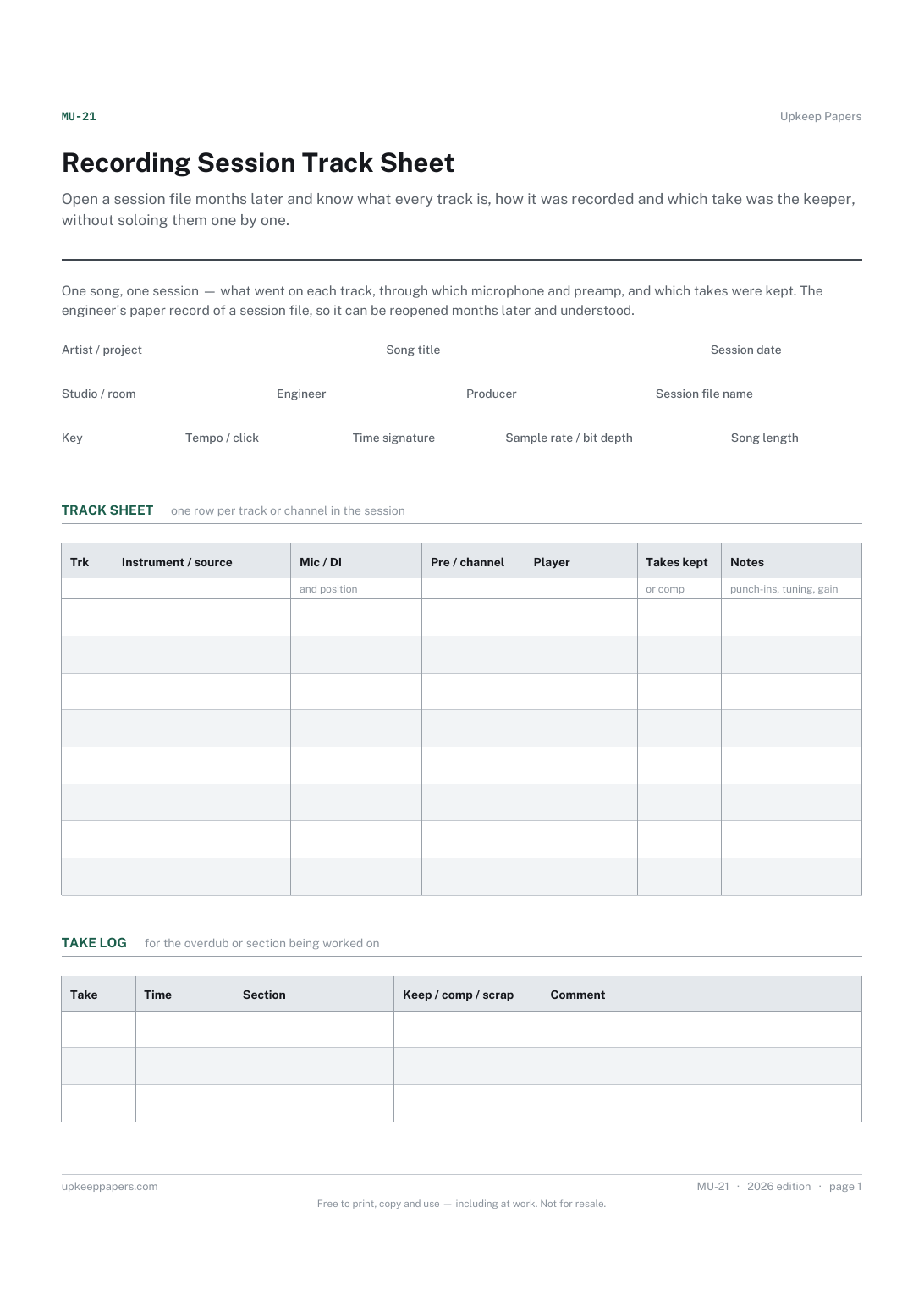
Printed under the title: One song, one session — what went on each track, through which microphone and preamp, and which takes were kept. The engineer's paper record of a session file, so it can be reopened months later and understood.
Write-on lines: Artist / project · Song title · Session date · Studio / room · Engineer · Producer · Session file name · Key · Tempo / click · Time signature · Sample rate / bit depth · Song length
Table, 8 rows: Trk · Instrument / source · Mic / DI · Pre / channel · Player · Takes kept · Notes
Table, 3 rows: Take · Time · Section · Keep / comp / scrap · Comment
Because the right setting depends on the project, the client and what it is being delivered for. The sheet records what you used so the next session matches it; it does not tell you what to use.
Usually yes. A track sheet is the map of one session file, and a session file is normally one song. Overdubs on a later day can go on the same sheet if the track layout has not changed.
Know at any point how many hours a project has used and what is still owed, and have the record that settles the conversation when a client remembers it differently.
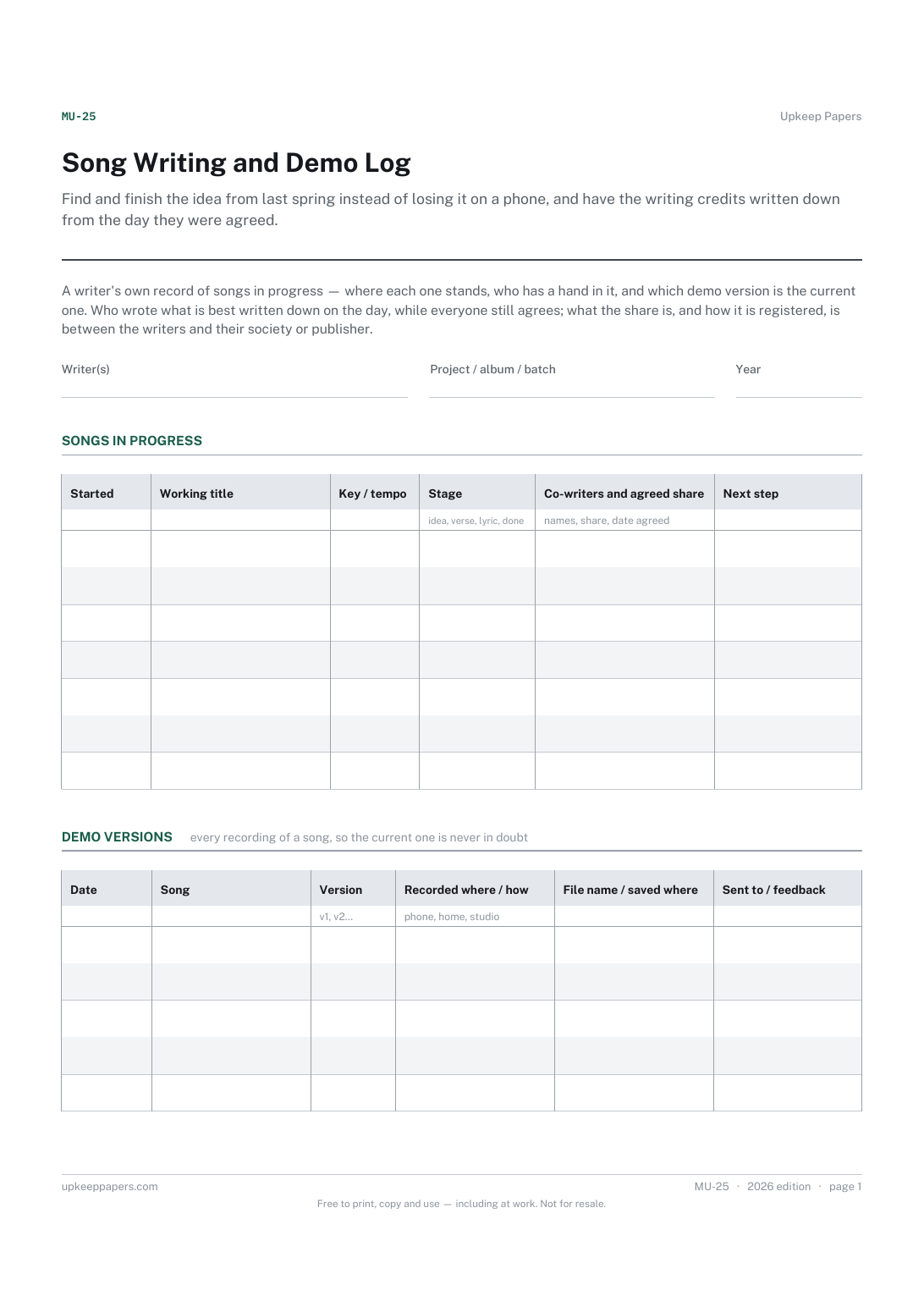
Find and finish the idea from last spring instead of losing it on a phone, and have the writing credits written down from the day they were agreed.
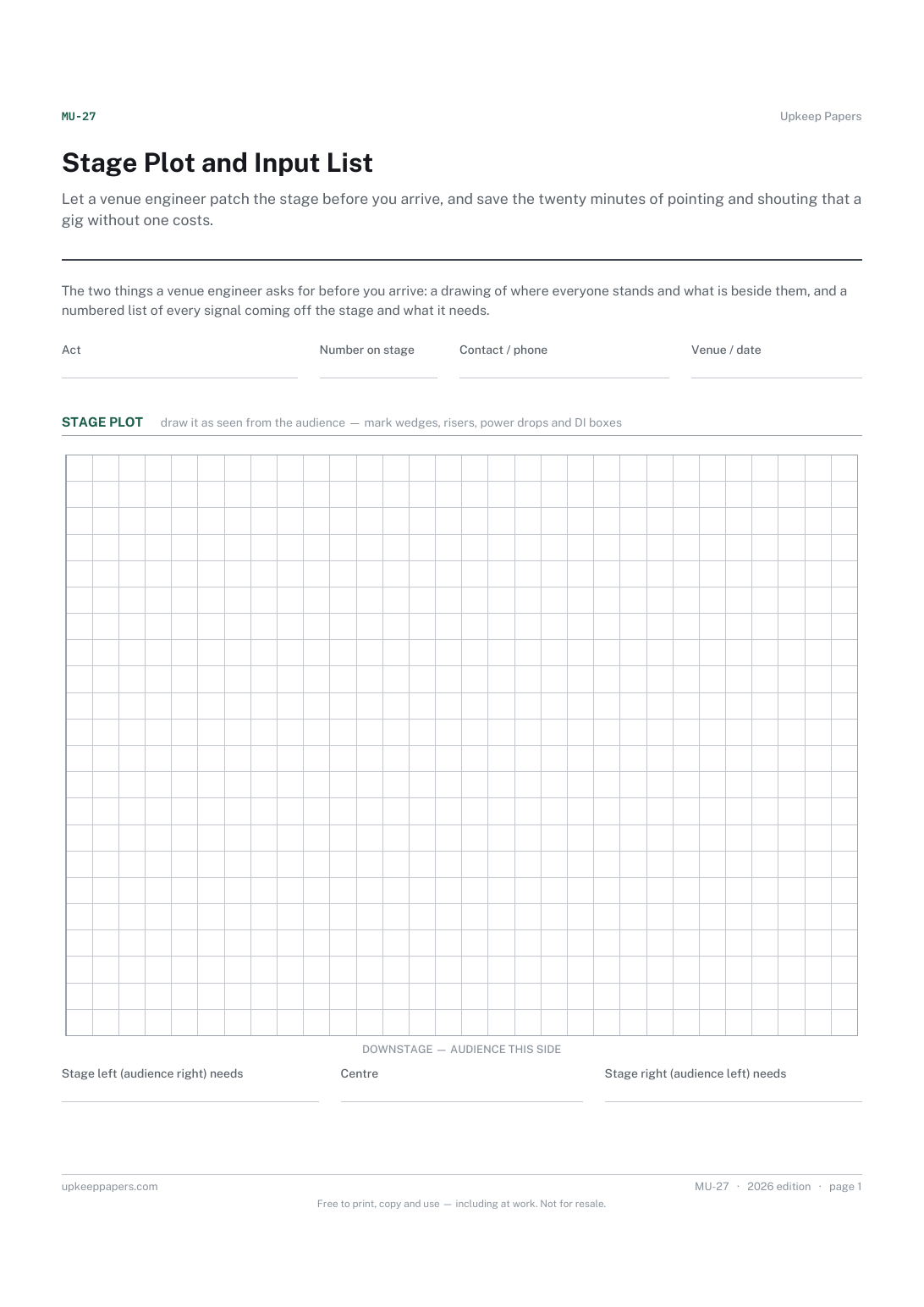
Let a venue engineer patch the stage before you arrive, and save the twenty minutes of pointing and shouting that a gig without one costs.
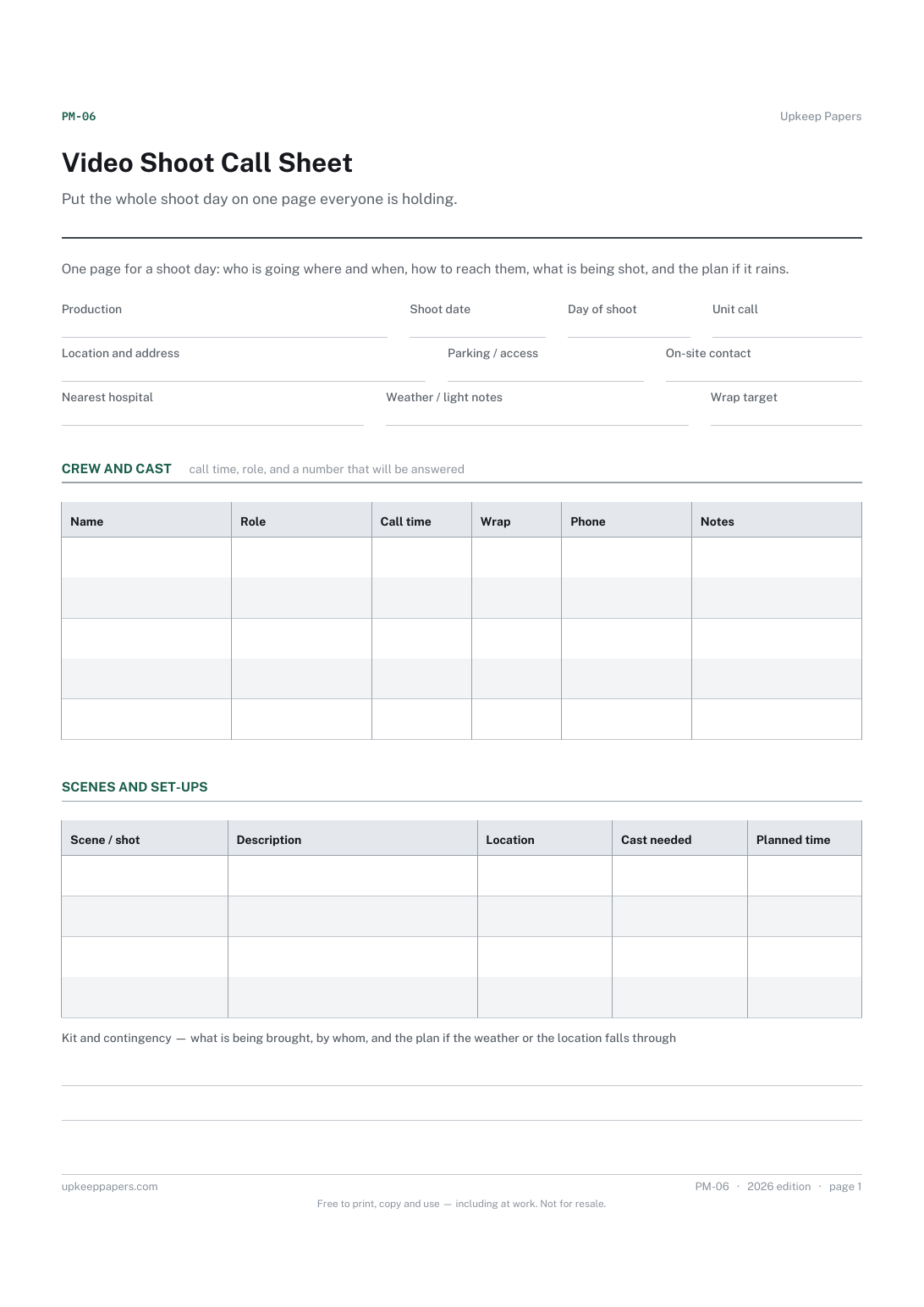
Put the whole shoot day on one page everyone is holding. Nobody arrives at the wrong place, and nobody waits for a number nobody has.

Every sheet, binder, game and puzzle on Upkeep Papers is free to download, with no email and no account. Making them is not free: each one takes days of research, design and checking, and the site costs money to run. If something here saved you time, you can buy us a coffee. It is entirely optional: nothing is locked, and nothing changes if you don’t.
Buy us a coffee Opens PayPal in a new tab. Any amount, and nothing changes if you would rather not.