Engine Rebuild Measurement Sheet
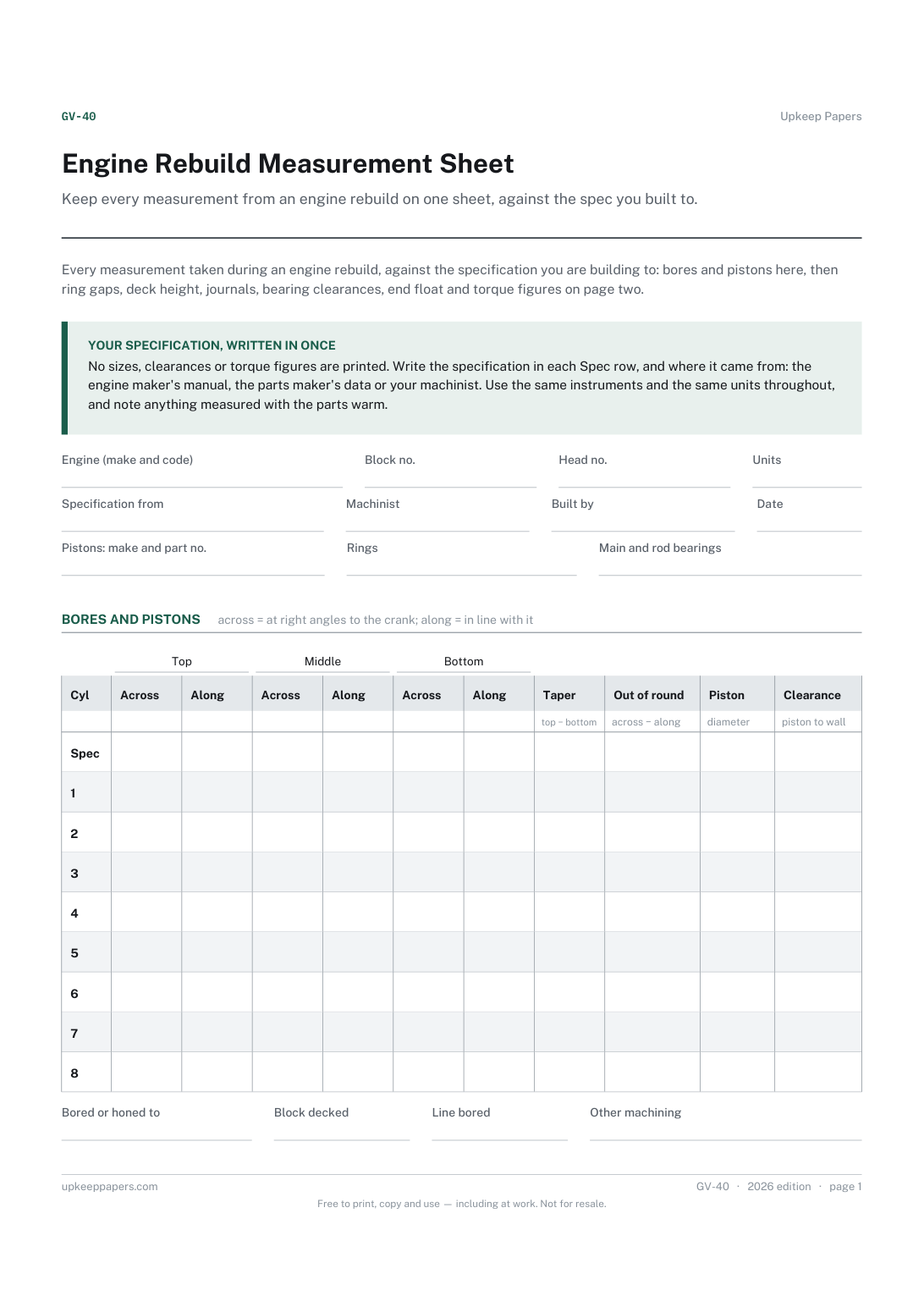
Keep every measurement from an engine rebuild on one sheet, against the spec you built to. The figures are the proof the engine was built right, and the starting point if it ever comes apart again.
GV-40 2 pages
Everything here is free. Making it takes time and money. Everything here is free.
 Buy us a coffee
Garage and vehicle workshop · GV-39
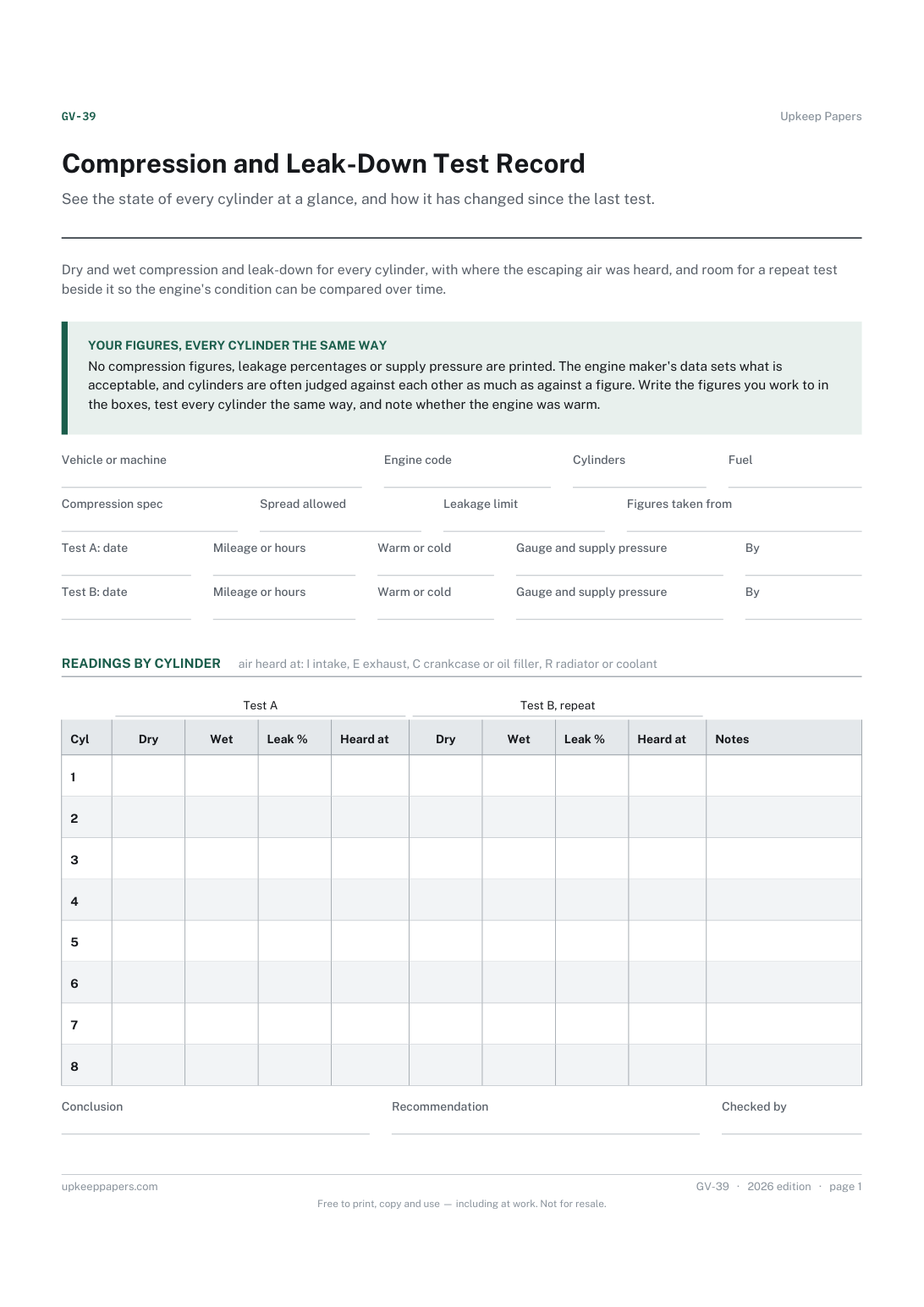
A free printable compression and leak-down test sheet: dry and wet readings and leakage for each cylinder, where the air was heard, and a repeat test beside it.
One page. Choose your paper size — both versions are laid out identically, so neither one gets shrunk to fit.
Print it and write on it
Fill it in type and save
The fillable versions have real form fields — open them in any PDF reader, type into them and save. Printing help.
See the state of every cylinder at a glance, and how it has changed since the last test. A low reading means more once you know where the air is escaping.
Mechanics, engine builders, classic car owners and anyone diagnosing a tired or misfiring engine.
One page, top to bottom:
Printed under the title: Dry and wet compression and leak-down for every cylinder, with where the escaping air was heard, and room for a repeat test beside it so the engine's condition can be compared over time.
Your figures, every cylinder the same way. No compression figures, leakage percentages or supply pressure are printed. The engine maker's data sets what is acceptable, and cylinders are often judged against each other as much as against a figure. Write the figures you work to in the boxes, test every cylinder the same way, and note whether the engine was warm.
Write-on lines: Vehicle or machine · Engine code · Cylinders · Fuel · Compression spec · Spread allowed · Leakage limit · Figures taken from · Test A: date · Mileage or hours · Warm or cold · Gauge and supply pressure · By · Test B: date · Mileage or hours · Warm or cold · Gauge and supply pressure · By
Also printed: Test A · Test B, repeat · Cyl · Dry · Wet · Leak % · Heard at · Notes
Write-on lines: Conclusion · Recommendation · Checked by
They vary from engine to engine, and the maker's data is the source. Many mechanics also judge cylinders against each other, so the sheet keeps them side by side. Write your own specification and spread at the top.
They are where the escaping air was heard: I at the intake, E at the exhaust, C at the crankcase or oil filler, and R at the radiator or coolant. Write more than one letter if you heard it in more than one place.
Keep every measurement from an engine rebuild on one sheet, against the spec you built to. The figures are the proof the engine was built right, and the starting point if it ever comes apart again.
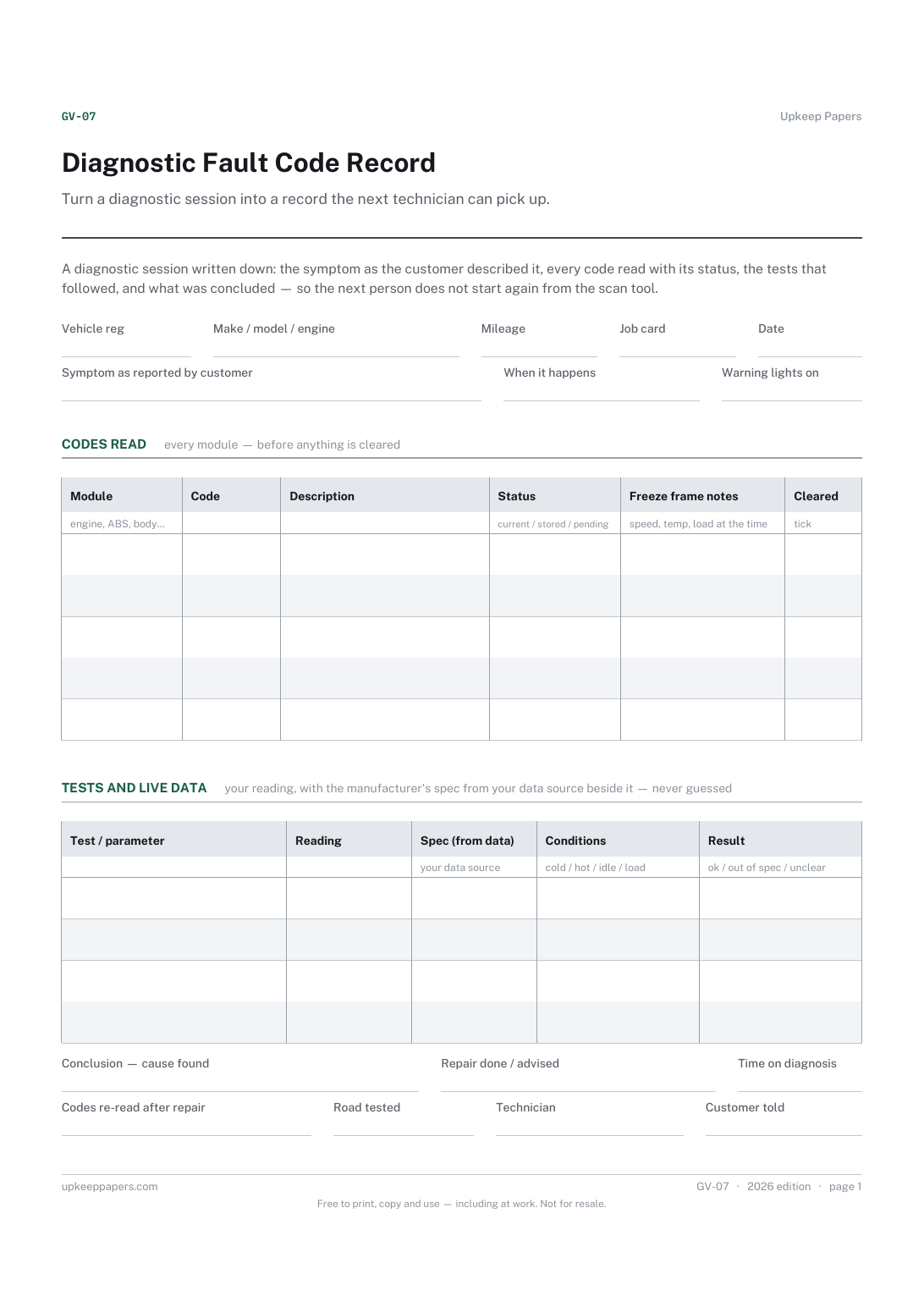
Turn a diagnostic session into a record the next technician can pick up. It also gives the customer something better than 'it had a code'.
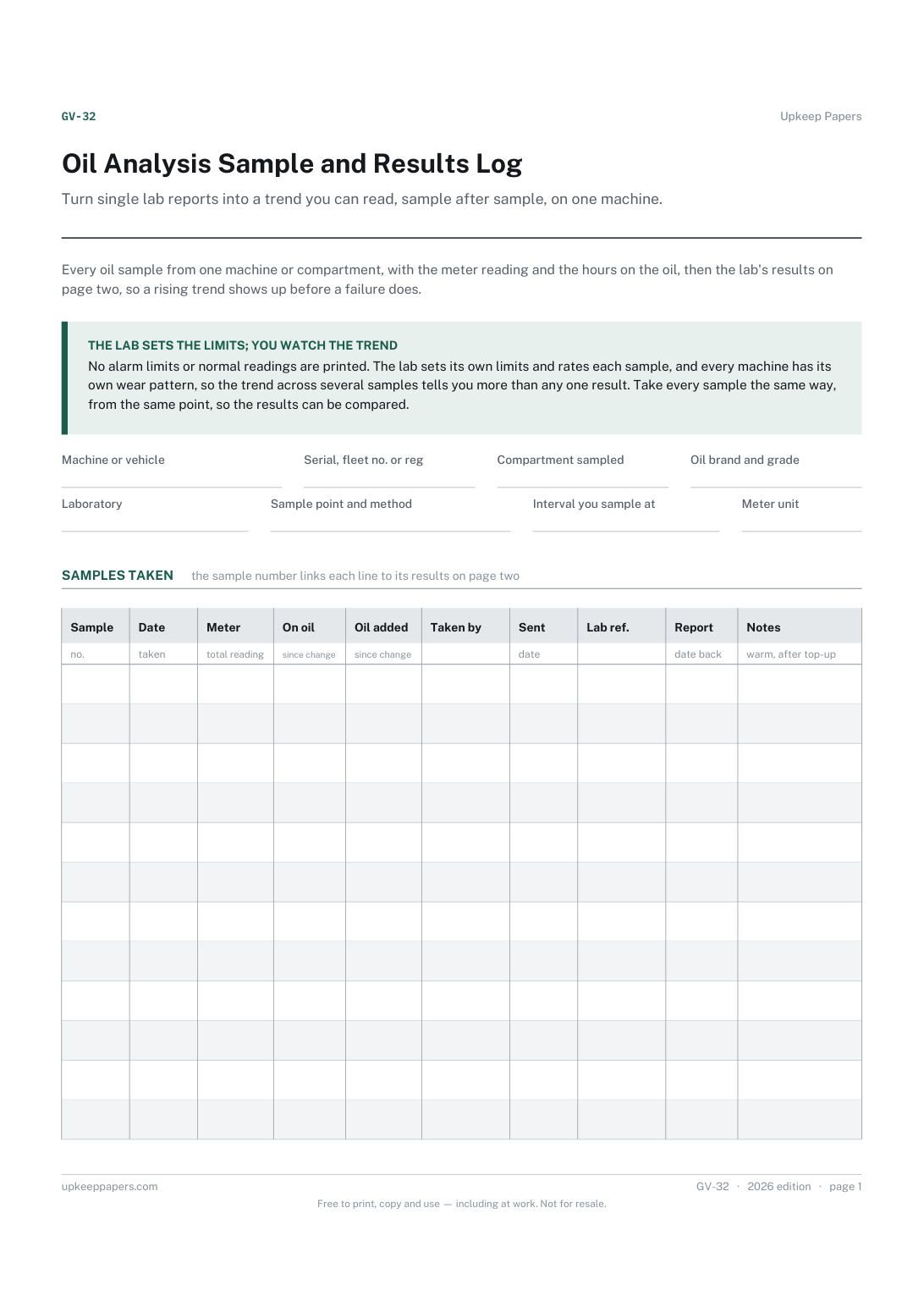
Turn single lab reports into a trend you can read, sample after sample, on one machine. A rising wear metal or a trace of coolant is far easier to spot against its own history.
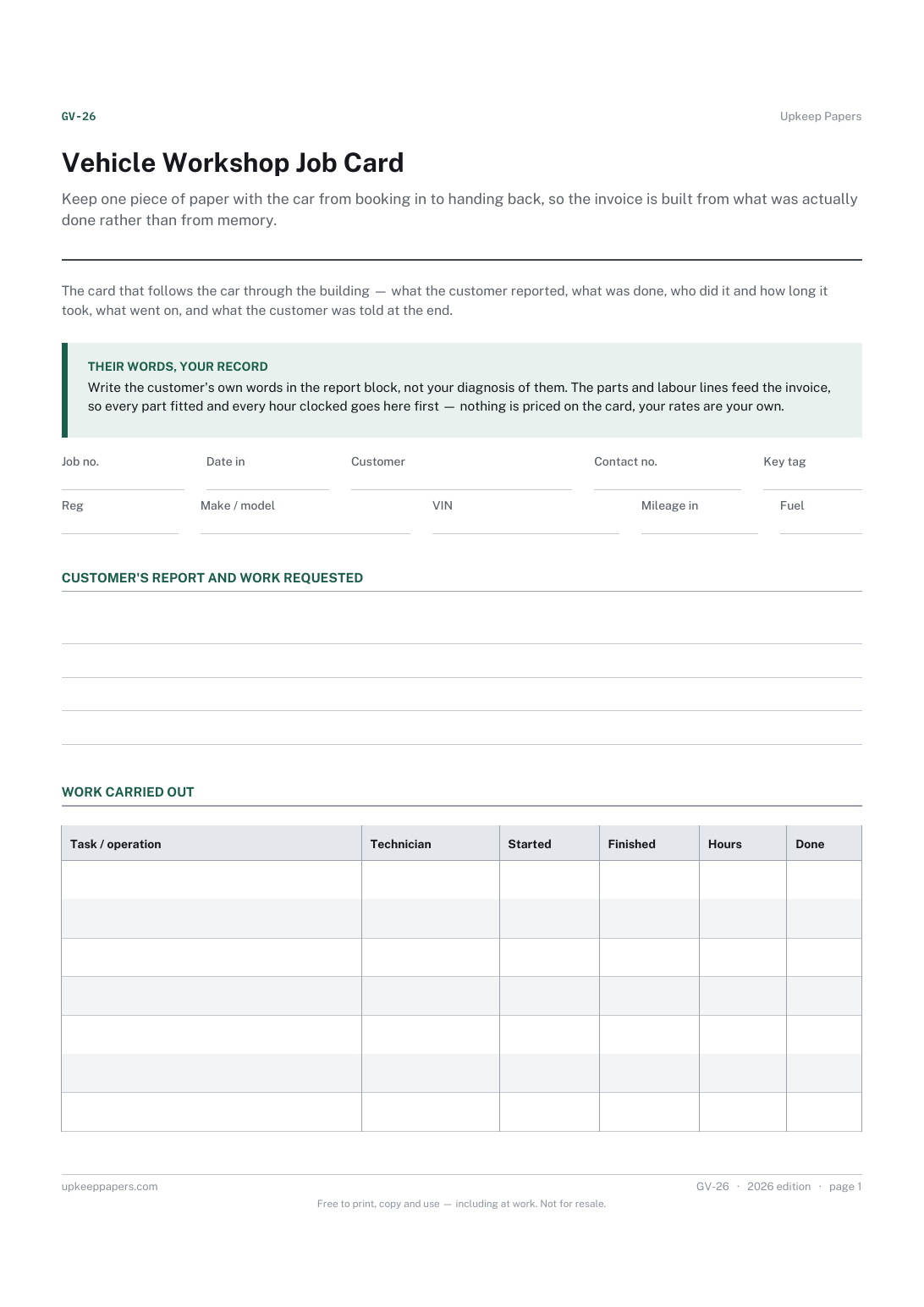
Keep one piece of paper with the car from booking in to handing back, so the invoice is built from what was actually done rather than from memory.

Every sheet, binder, game and puzzle on Upkeep Papers is free to download, with no email and no account. Making them is not free: each one takes days of research, design and checking, and the site costs money to run. If something here saved you time, you can buy us a coffee. It is entirely optional: nothing is locked, and nothing changes if you don’t.
Buy us a coffee Opens PayPal in a new tab. Any amount, and nothing changes if you would rather not.