
How we work
When the Roadmap Runs Out, Measure Instead of Guessing
The 200-sheet roadmap this site started with is finished. Here is what we built instead of guessing, and why four of five sheets came from one measured gap.
This site started with a document called CONTENT_ROADMAP.md: two hundred sheets, each with a
reason to exist and a quoted piece of evidence behind it. For most of this year, picking five
sheets a week has meant opening that file, working down the priority column, and skipping anything
that turned out to already be built under a different title. It was a good system for exactly as
long as the list lasted.
It does not last forever. The roadmap is now fully built — every one of the two hundred rows is either on the site or was checked and found to duplicate something that already was. That leaves an honest question this week actually had to answer: what do you build when the list you were given runs out?
The answer we did not want
The straightforward next step was to measure demand properly rather than guess at a successor list, so an audit went back to the only trustworthy signal available without buying a keyword tool: Google autocomplete. Expand a search stem across the alphabet and count how many of the suggestions it returns actually want a document — a log, a sheet, a checklist, a template — rather than a shop, a repair job or a city name. Do that across two hundred real queries and you get something closer to observed behaviour than a guess, even without a search volume attached to it.
The audit’s own headline was not “here are five sheets to build.” It was blunter than that: the site has grown from roughly 250 pages to several thousand in a few months, nobody has checked how much of it is actually indexed, and publishing more before that is known risks making a real problem worse rather than solving one. If a chunk of the library isn’t ranking, more pages is not the fix — narrower, better-linked pages are. That is a more useful finding than another five sheets would have been, and it is recorded in the audit rather than quietly set aside.
It also said, in the same breath, what to do if new content gets commissioned anyway: build the one cluster the measurement actually supports. That is the position this week’s five sheets sit in. A weekly cadence someone is relying on is a real constraint, not a reason to override what the measurement said — so this batch is deliberately small, deliberately the one cluster the data named, and not a signal that the bigger recommendation has been forgotten.
What the measurement actually found
Across two hundred stems, one cluster stood out by a wide margin: hospitality. Five hundred and
nineteen form-shaped suggestions summed across eleven keywords, six of them above the level the
audit treated as genuinely strong, against a site that had restaurant and hotel categories already
built but hadn’t touched the specific gaps sitting inside them. Four phrases in particular had real
measured volume and no matching page at all: restaurant opening checklist, cafe inventory sheet, bar stock sheet and hotel reception checklist.
That last part mattered more than the raw numbers. We already had a Bar Opening and Closing Duties sheet, a keg rotation sheet, a float and cash-up sheet — a bar’s cash and cellar routine, well covered. None of it is a periodic stock count across spirits, wine, beer and soft drinks, which is a different document with a different job: catching a shortfall at the count instead of weeks later when the margin is already gone. The Bar Stock Count Sheet is built around opening stock, what was delivered, and what’s left — three numbers that produce a fourth, the variance, which is the only number anyone actually opens the sheet to find.
The same test applied to reception. We already had a Hotel Staff Shift Handover Sheet, and it would have been easy to assume that covered “reception checklist” too — both involve a desk, a shift, a hotel. It doesn’t, because a handover sheet carries messages forward and a checklist is a routine ticked off at the desk. The Hotel Reception Checklist is built to sit beside the handover sheet rather than replace it: tick the routine off here, write the actual notes and figures for the next shift on the other one.
The fifth sheet, and the same test applied smaller
Hospitality was the strongest cluster, but it wasn’t the only measured gap worth a look. piano practice log returned enough form-shaped suggestions to clear the same bar on a smaller scale, and
it sits next to a sheet we already had — a Pupil Practice Assignment
Sheet for a teacher to set weekly
work. Those are not the same document wearing two titles. One is what a teacher asks for before the
week starts; the other is what actually happened, piece by piece and session by session, written by
whoever did the practising. Most pupils and parents who want one will want the other too, which is
exactly the kind of pairing that earns a sheet its own page rather than a new column on an existing
one.
What this changes going forward
Nothing about next week’s cadence changes on the strength of one good cluster. The audit’s bigger point stands on its own: before this site commissions another batch past what hospitality still has left in it, the honest next move is checking how much of the existing few thousand pages is actually indexed, not writing a new list to replace the one that just ran out. A library that nobody can find is not fixed by making it bigger. For now, the five sheets this week came from a real, counted number rather than a hunch about what a restaurant or a hotel desk probably needs — and that is a better footing to build five more from, whenever the next batch turns out to be justified.
From the library
Sheets mentioned here
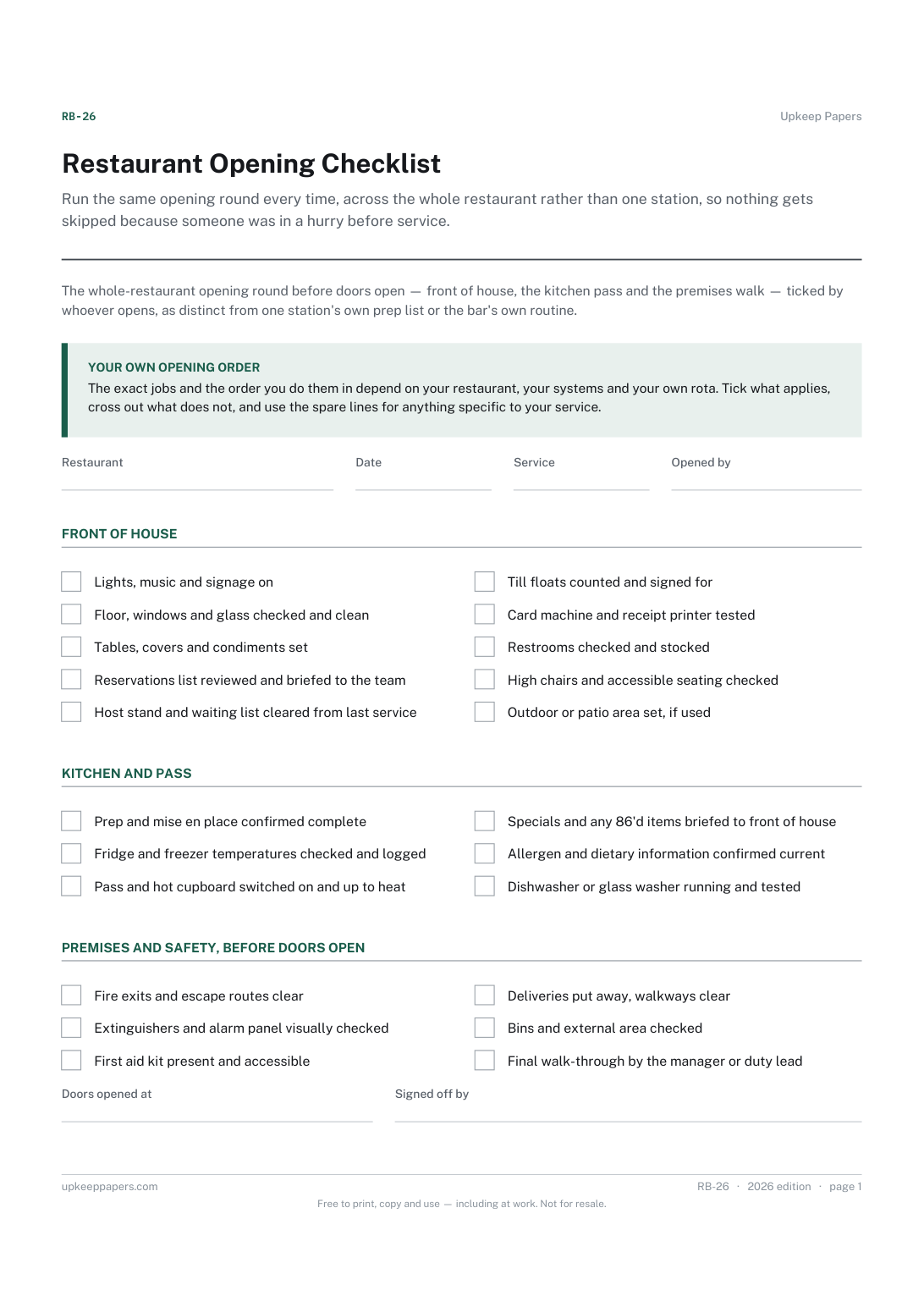
Restaurant Opening Checklist
Run the same opening round every time, across the whole restaurant rather than one station, so nothing gets skipped because someone was in a hurry before service.
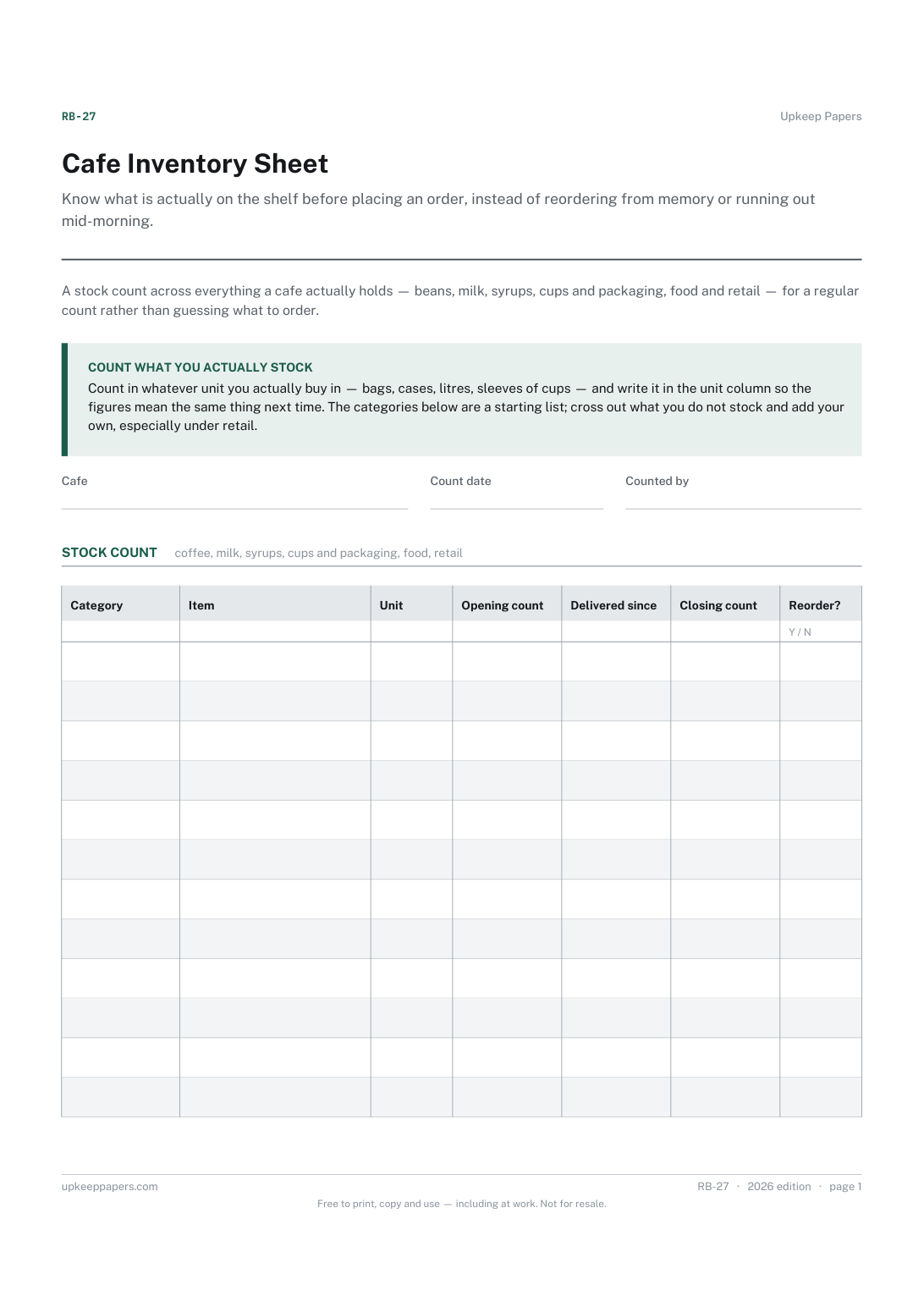
Cafe Inventory Sheet
Know what is actually on the shelf before placing an order, instead of reordering from memory or running out mid-morning.
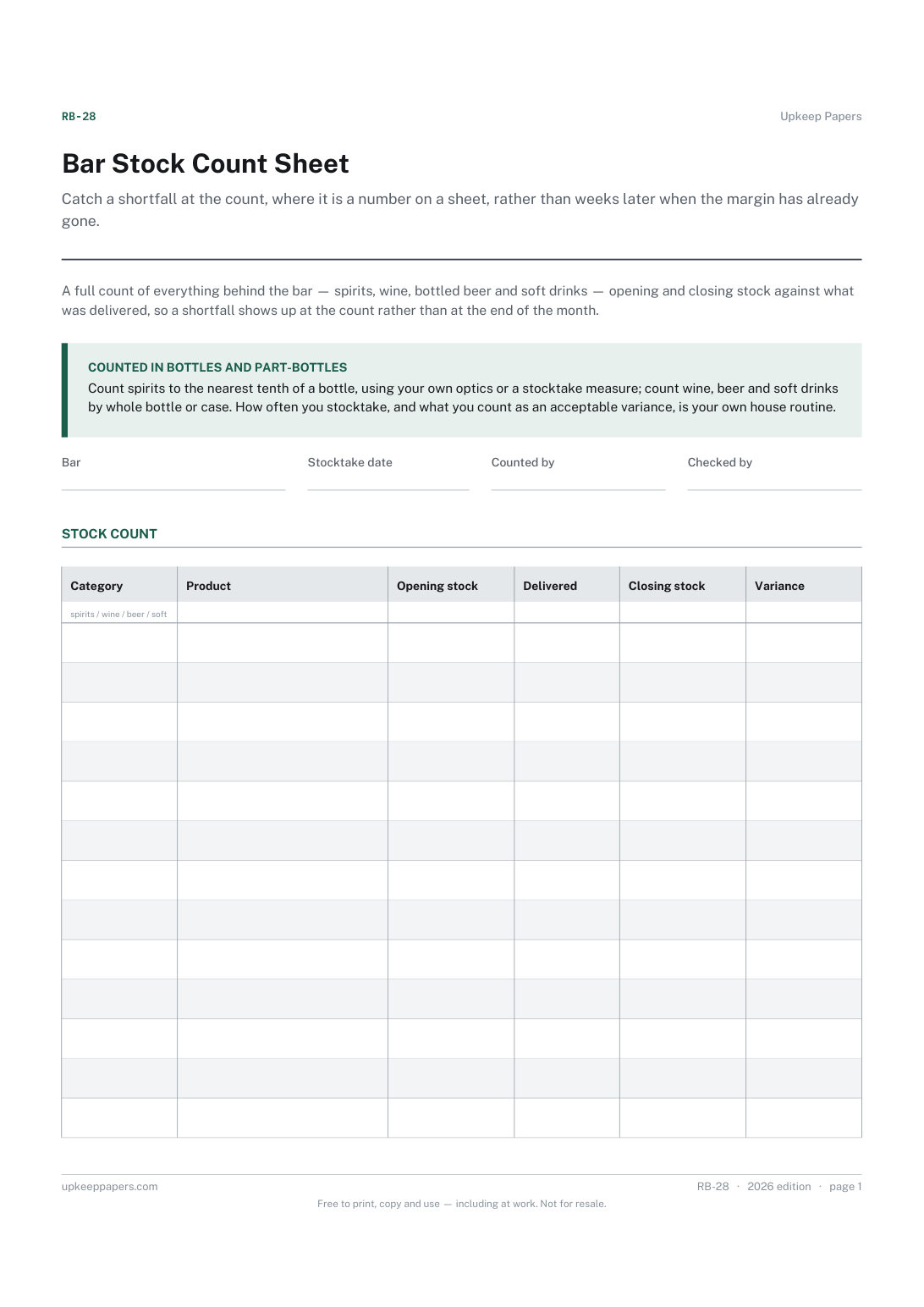
Bar Stock Count Sheet
Catch a shortfall at the count, where it is a number on a sheet, rather than weeks later when the margin has already gone.
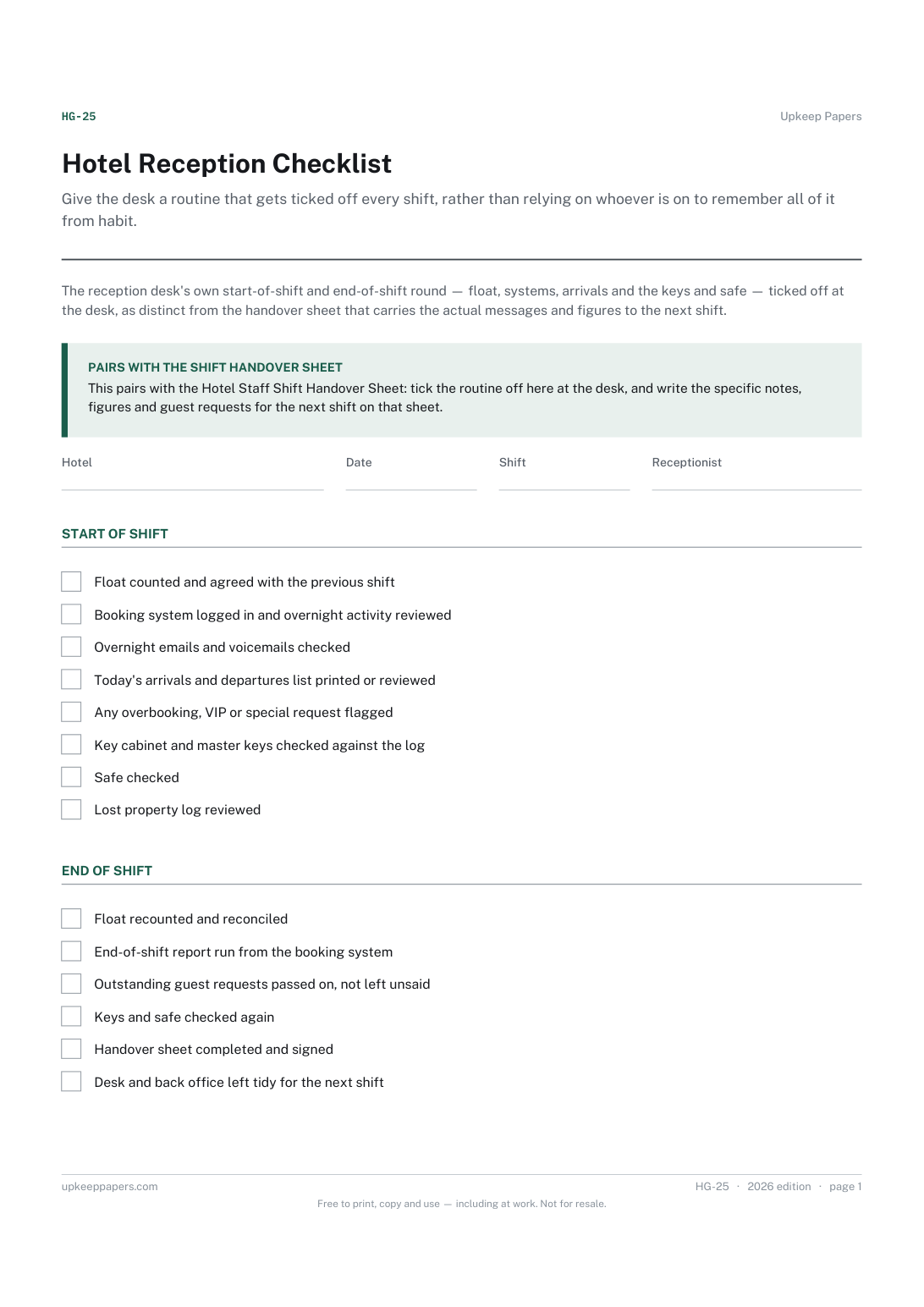
Hotel Reception Checklist
Give the desk a routine that gets ticked off every shift, rather than relying on whoever is on to remember all of it from habit.
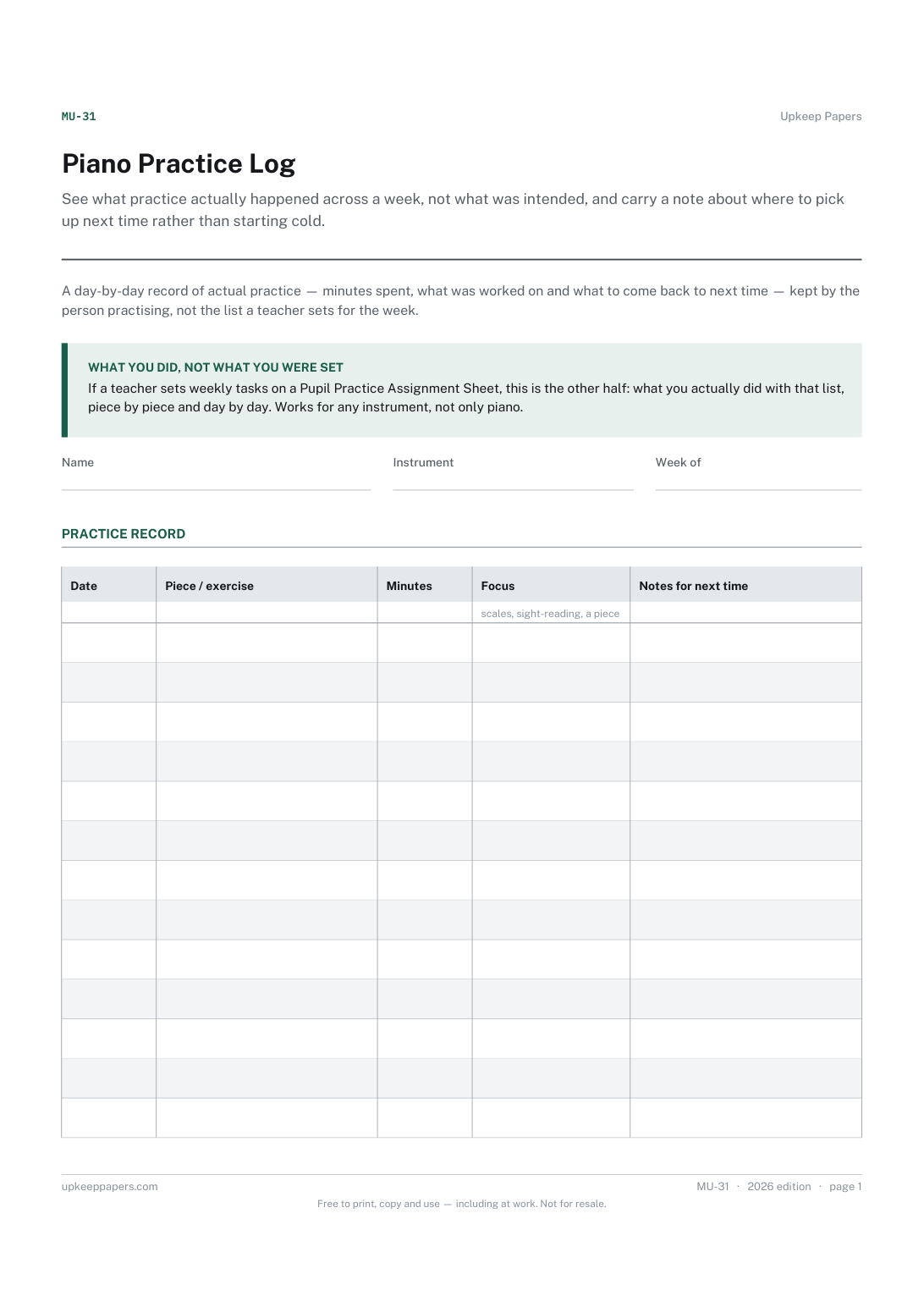
Piano Practice Log
See what practice actually happened across a week, not what was intended, and carry a note about where to pick up next time rather than starting cold.
More posts
A Gap in the Data Is Not Always a Gap on the Site
Two of this week's five measured keyword gaps already had a page. Here is the test that caught it, and the three that survived.
When a New Sheet Earns Its Own Page
Five sheets this week could easily have been three. Here is the test we use to tell a genuinely different record from the same one wearing a new title.
How to Rebuild a Service History You Have Lost
The folder is gone and the car is going up for sale. Here is how to reconstruct a service history that a buyer can actually trust.
