
How we work
A Gap in the Data Is Not Always a Gap on the Site
Two of this week's five measured keyword gaps already had a page. Here is the test that caught it, and the three that survived.
Last week’s post described the method this site now uses instead of a fixed roadmap: measure autocomplete demand for a few hundred real search phrases, count how many of the suggestions actually want a document rather than a shop or a repair job, and build the strongest unbuilt cluster the count finds. It worked well enough on hospitality that it was worth running again on the next-strongest gap in the same data: music and performance. This week’s post is about what happened when the same method was pointed at two more measured phrases and the honest answer turned out to be “we already have that.”
The two that looked like gaps and were not
lash client record returned a respectable 25 form-shaped suggestions and no page on the site
has that exact title. By the simple test — does an existing title contain the distinctive words
of the query — it reads as a gap. It is not. The Lash and Brow Treatment Record already does
this job: a declared-conditions and patch-test section, then a running log of every visit with
products, lot numbers and reactions, built specifically around eye work rather than general
beauty treatments. A page called “Lash Client Record” would have been the same card wearing a
different name, and the site would have gained a duplicate rather than a document.
commission order form told the same story. 23 form-shaped suggestions, no page titled that
way, and a close read of what it is actually asking for — a maker taking a custom order, with a
price, a deposit and a date attached — showed the Commission Brief and Approval Sheet already
covers it: the client’s brief, the agreed price and dates, each stage approved on the way to the
finished piece. Different heading, same document.
Neither of these is a failure of the measurement. Autocomplete counts how often a phrase is typed; it has no idea what title a matching page happens to use. The 25 and the 23 are real — people are searching for exactly that paperwork. What the count cannot tell you is whether this site already answers the search under a name the stem would not guess. That check has to be done by hand, sheet by sheet, and it is the same test the previous roadmap used to retire two hundred rows one at a time before it ran out: read the actual fields on the actual page, not just the title, and ask whether a new sheet would do a job the existing one does not already do.
Why that check matters more than the count
It would have been easy to build both anyway. Nobody searching “lash client record” would have complained about getting a page with that exact title, even an unnecessary one — but the site would be two pages heavier for no real gain, and a visitor landing on either page by search would eventually find the other one and wonder which to use. A duplicate page does not split demand usefully; it just makes the choice between two near-identical sheets somebody else’s problem. The whole point of measuring before building is to avoid exactly that kind of waste, and skipping the duplicate check halfway through would have undone the benefit of doing the measurement at all.
What survived the same check
Three sheets from the same cluster passed it. instrument maintenance log is the strongest
figure in this batch — 55 to 60 form-shaped suggestions — and the site’s two existing instrument
sheets are genuinely different documents: the Guitar String and Setup Log is one guitar’s own
setup figures and string history, and the Instrument Service and Setup Record stays with a repair
workshop for one job. Neither is a player’s own routine care log across whatever they actually
own — cleaning, oiling, humidity, case checks — so the gap held up.
cast list template had no competing page at all, which made it the easiest of the five:
character, actor, understudy and contact on one list, distinct from the Dressing Room Allocation
Sheet’s job of assigning physical space rather than roles.
The smallest of the three, rehearsal report template, is worth explaining because it sits
between two sheets that already exist and could plausibly have swallowed it. The Theatre
Rehearsal Call Sheet goes out the
night before a rehearsal to say who is needed and when. The Show Report Sheet goes out after a
live performance in front of an audience, with timings and technical notes. Neither one is what
happens during the rehearsal process itself — which scenes were actually covered, what came up
for the costume or lighting department, what still needs sorting before tomorrow. That gap sits
exactly between the two existing sheets rather than on top of either one, which is the same shape
of distinction the piano practice log and the pupil practice assignment sheet made last week:
before, during and after are three different documents, not three titles for one.
The fifth sheet, and the smaller check that still applies
dog behaviour log needed the same scrutiny against the site’s own Dog Training and
Socialisation Log, which already carries a notes column for how a dog reacted to something new.
The distinction held on closer reading: that sheet is a record of training sessions run and a
checklist of first exposures, while a behaviour log is for writing down a reaction that was not
part of any session — a trigger, what the dog did, what was tried, what happened next — the kind
of pattern a vet or behaviourist actually asks an owner to bring to an appointment. board game inventory was the cleanest of the batch: the site already logs a night’s tabletop play, but
nothing catalogues the collection itself, which is a different job entirely.
Three sheets built, two rejected, and the rejection is the part worth writing down. A measured gap is a real signal, but it only tells you that people are searching — it says nothing about whether this library has already answered them under a different name. That second check is slower than counting suggestions, and it is the one that keeps the site from quietly duplicating itself one well-evidenced keyword at a time.
From the library
Sheets mentioned here
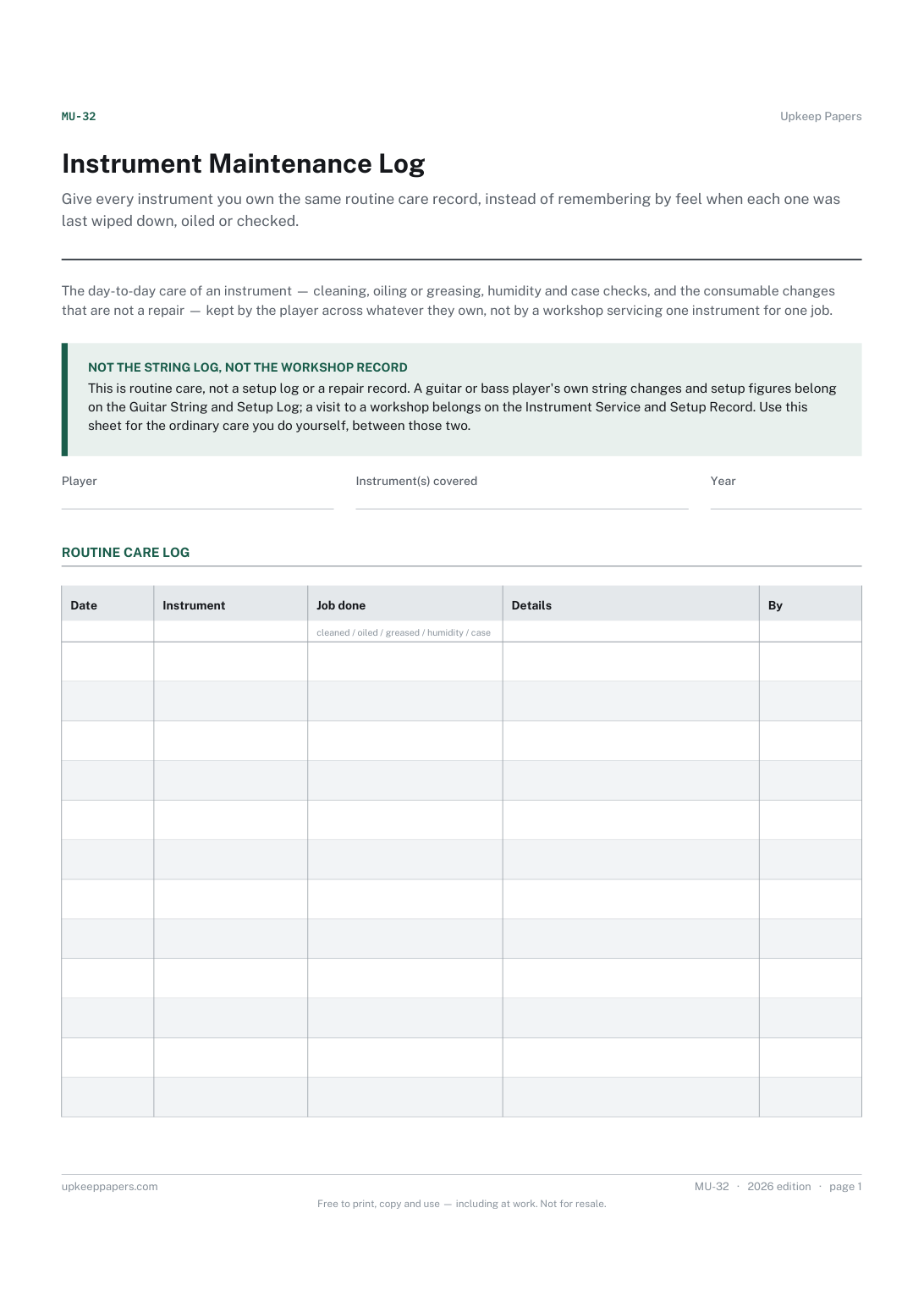
Instrument Maintenance Log
Give every instrument you own the same routine care record, instead of remembering by feel when each one was last wiped down, oiled or checked.
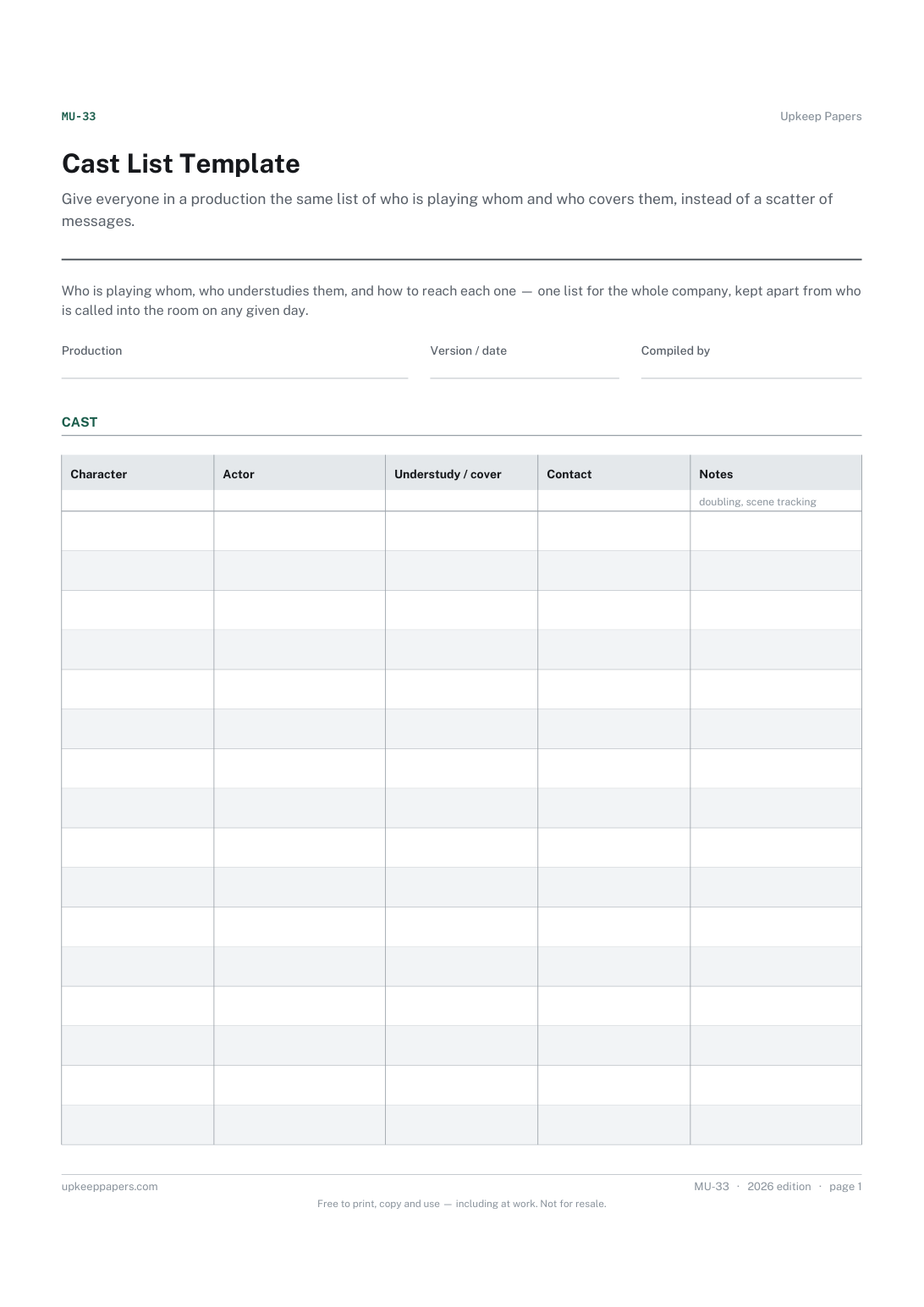
Cast List Template
Give everyone in a production the same list of who is playing whom and who covers them, instead of a scatter of messages.
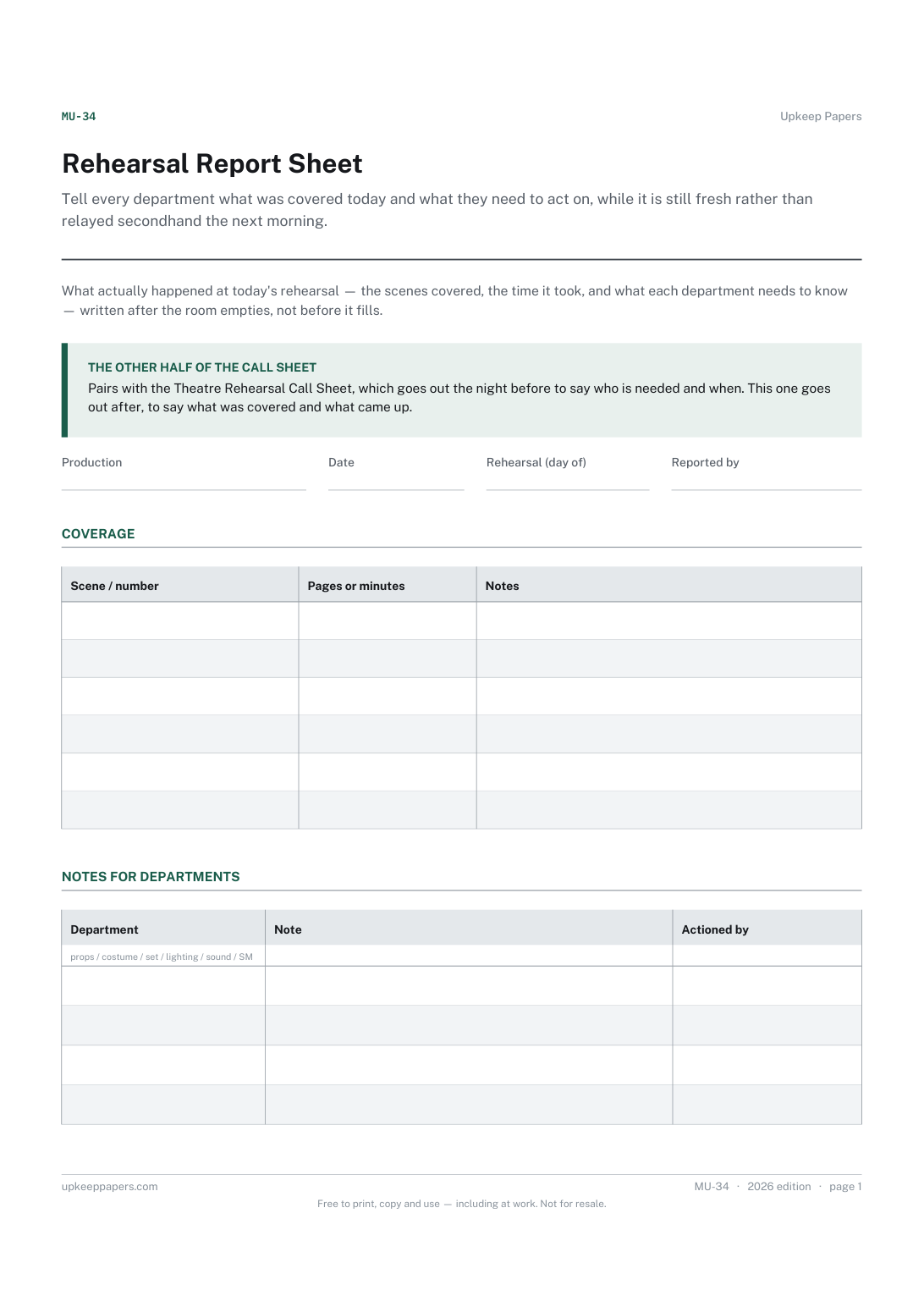
Rehearsal Report Sheet
Tell every department what was covered today and what they need to act on, while it is still fresh rather than relayed secondhand the next morning.
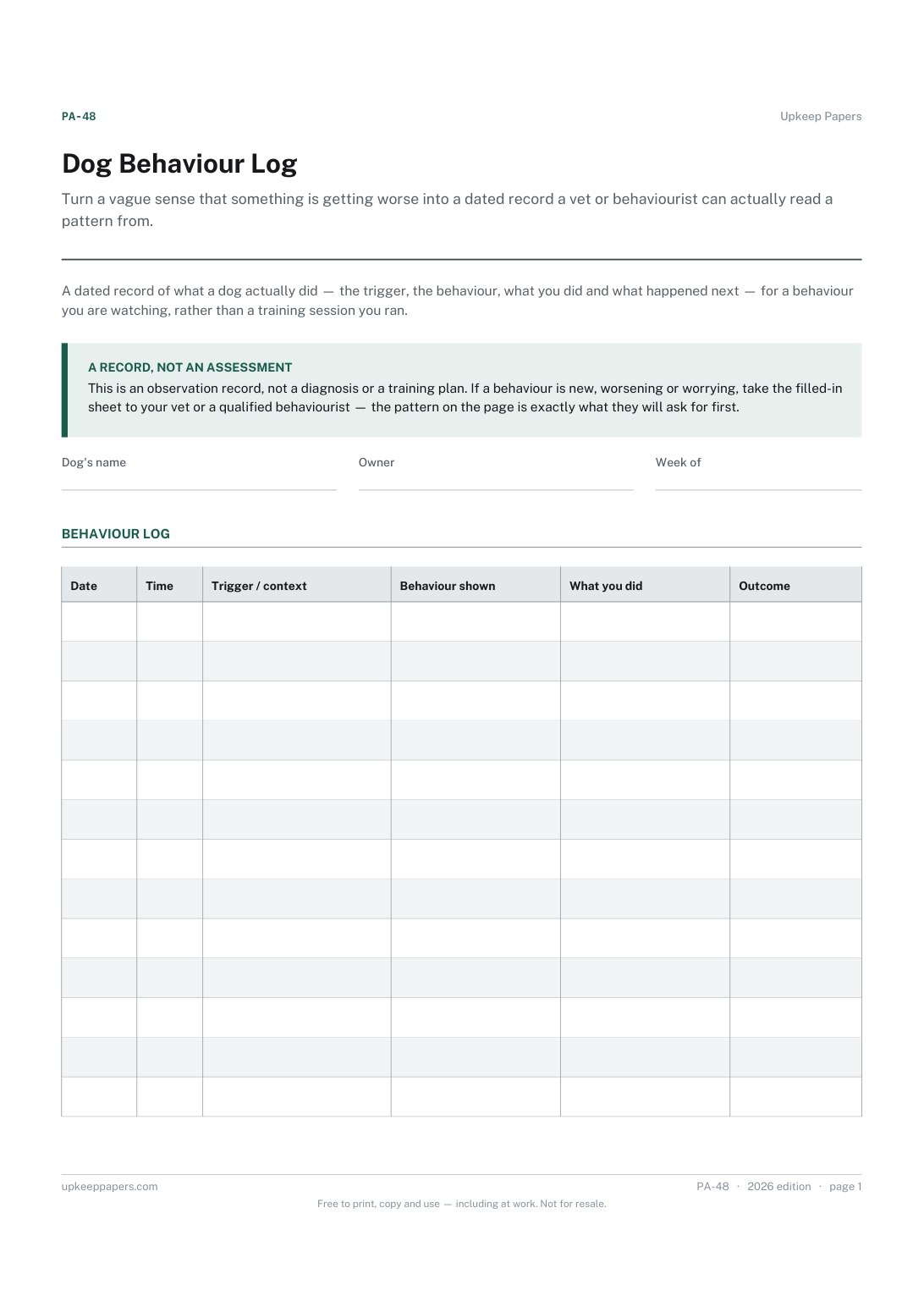
Dog Behaviour Log
Turn a vague sense that something is getting worse into a dated record a vet or behaviourist can actually read a pattern from.
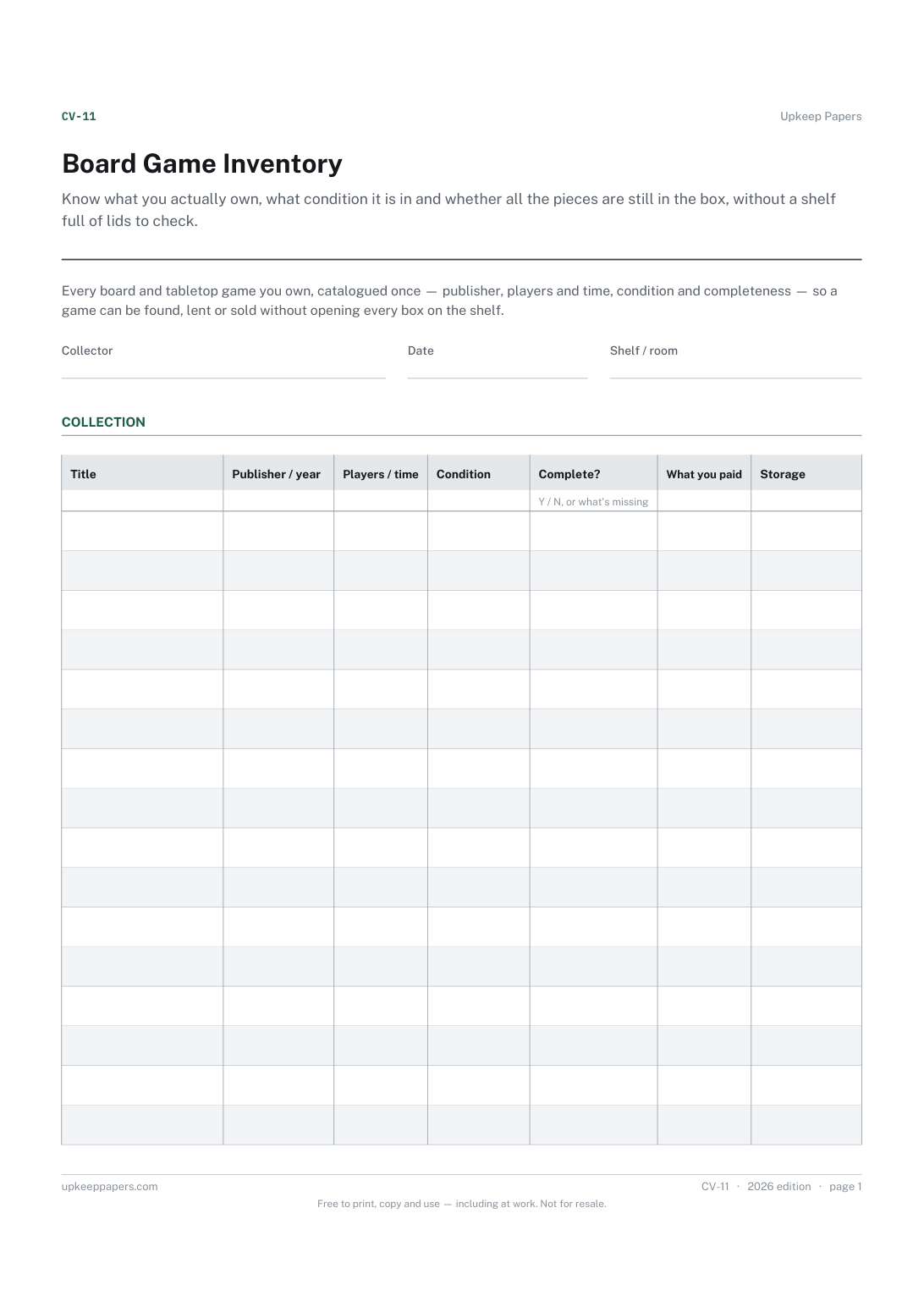
Board Game Inventory
Know what you actually own, what condition it is in and whether all the pieces are still in the box, without a shelf full of lids to check.
More posts
When the Roadmap Runs Out, Measure Instead of Guessing
The 200-sheet roadmap this site started with is finished. Here is what we built instead of guessing, and why four of five sheets came from one measured gap.
When a New Sheet Earns Its Own Page
Five sheets this week could easily have been three. Here is the test we use to tell a genuinely different record from the same one wearing a new title.
How to Rebuild a Service History You Have Lost
The folder is gone and the car is going up for sale. Here is how to reconstruct a service history that a buyer can actually trust.
