
How we work
When a New Sheet Earns Its Own Page
Five sheets this week could easily have been three. Here is the test we use to tell a genuinely different record from the same one wearing a new title.
The list of sheets we still owe this site runs to hundreds of rows, most of them written down before a single one existed. Working through it this week meant doing more deleting than adding: several of the highest-priority rows turned out, on a closer look, to already be covered by something already built, just filed under a different title. A fire extinguisher register and a fire extinguisher service report sound like two sheets. The one we already have does both jobs on one page, and a second sheet would not add a new record — it would just add a second place to write the same serial number.
That is the actual discipline behind picking five sheets a week, and it is worth setting out, because the failure mode on the other side is everywhere in this corner of the internet: the same form published nine times under nine search-friendly titles, because “log”, “log sheet”, “checklist” and “record sheet” are all typed into Google by different people meaning the same thing. Padding a site that way is easy and makes the sitemap look busy. It also means every one of those nine pages is slightly worse than one page would have been, because none of them got the attention a single real sheet deserves.
The question we ask before building anything
Before a new sheet gets a function and a slug, it has to answer one question: if you laid it next to the nearest existing sheet, would a different column, a different row, or a different audience actually show up — or would you just be retyping the same table with a new heading on top?
The Gas Furnace Service Record passes that test narrowly. We already have an HVAC and Heat Pump Service Log covering ducted heating and cooling together, and most of what goes wrong with a furnace is genuinely the same shape of record as what goes wrong with a heat pump — a date, a technician, a next-due column. What tipped it into being its own sheet was the audience: a lot of forced-air gas furnace owners never touch cooling at all, service it on its own schedule with its own technician, and do not want their one appliance’s history living inside a sheet built for two. The field that actually earns the sheet its keep is the technician’s own CO reading, recorded as theirs, with no target printed next to it — a figure that belongs on a furnace record and makes no sense on a general HVAC one.
Cadence is a real difference, not a cosmetic one
The clearest case for a separate sheet this week was testing frequency. We have had a monthly smoke and CO alarm test log since the site started, built around a register of every alarm in a building plus a grid for ticking each one off once a month. That sheet is correct for an ordinary house. It is the wrong shape for an interlinked commercial system, or a shared house, or a holiday let, where the applicable rule — set by the alarm manufacturer, the insurer, or local fire safety requirements, and never by us — calls for a weekly test instead.
You could, in theory, use the monthly sheet for weekly testing by writing four dates into one row instead of a date. People do exactly that, and the resulting sheet is hard to read and easy to falsify by accident, because the grid was never built for that cadence. The Weekly Smoke Alarm Test Log is the same idea at the right resolution: fifty-two rows instead of twelve, nothing else changed. That is a small difference to describe and a real difference to use.
A request is not a check
The Vehicle Maintenance Request Form is the sheet in this batch that most risked being “just another vehicle log.” We already have a daily walkaround sheet for routine checks on a shared or work vehicle. A request form looks superficially similar — same vehicle, same kind of table — but it is solving a different problem. A daily check is something one person does on a schedule, finds nothing most of the time, and files. A maintenance request is something that happens once, at an unpredictable moment, when a driver notices a noise or a warning light and needs to tell someone who is not standing next to them. The column that makes it a different sheet is “received by”: a daily check has no equivalent, because nobody needs to acknowledge receiving their own routine inspection. A reported fault does, or it just sits there until someone happens to remember being told about it.
Where the line actually sits
Not every near-miss this week cleared that bar, and the ones that did not just did not get built. A ladder inspection record, a portable appliance check and an emergency contact card were all on this week’s shortlist, and all three already exist on the site under titles that did not obviously match what we were looking for. Building them again under a tidier title would have meant two pages competing for the same search result instead of one page doing its job properly — which is the exact problem this whole exercise exists to avoid.
The Month-by-Month Home Maintenance Checklist is the plainest example of the test working in the other direction. We already have a seasonal version of this sheet, four blocks instead of twelve, and it would have been easy to wave this one through as a duplicate on the strength of that alone. It earns its place because the two sheets genuinely serve different habits. Someone who checks in on the house every season wants the seasonal version. Someone who thinks in months — because that is how their calendar reminders work, or because waiting three months between check-ins means things get forgotten — wants a row for every one of them, not four headings with everything crammed underneath. Same underlying idea, different resolution, and a resolution a reader actually has to live with is not a cosmetic difference. It is the whole reason to build the second sheet at all.
From the library
Sheets mentioned here
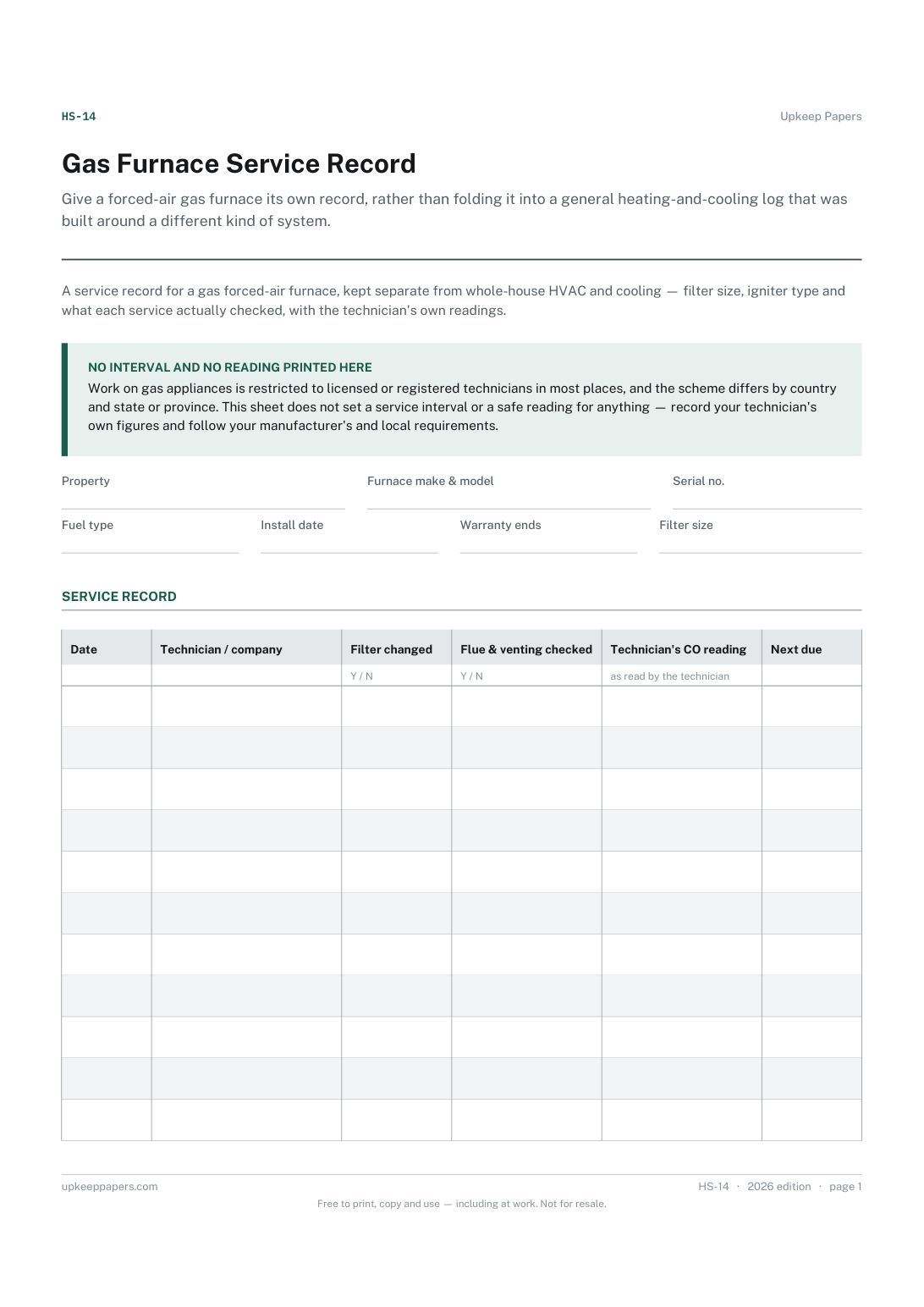
Gas Furnace Service Record
Give a forced-air gas furnace its own record, rather than folding it into a general heating-and-cooling log that was built around a different kind of system.
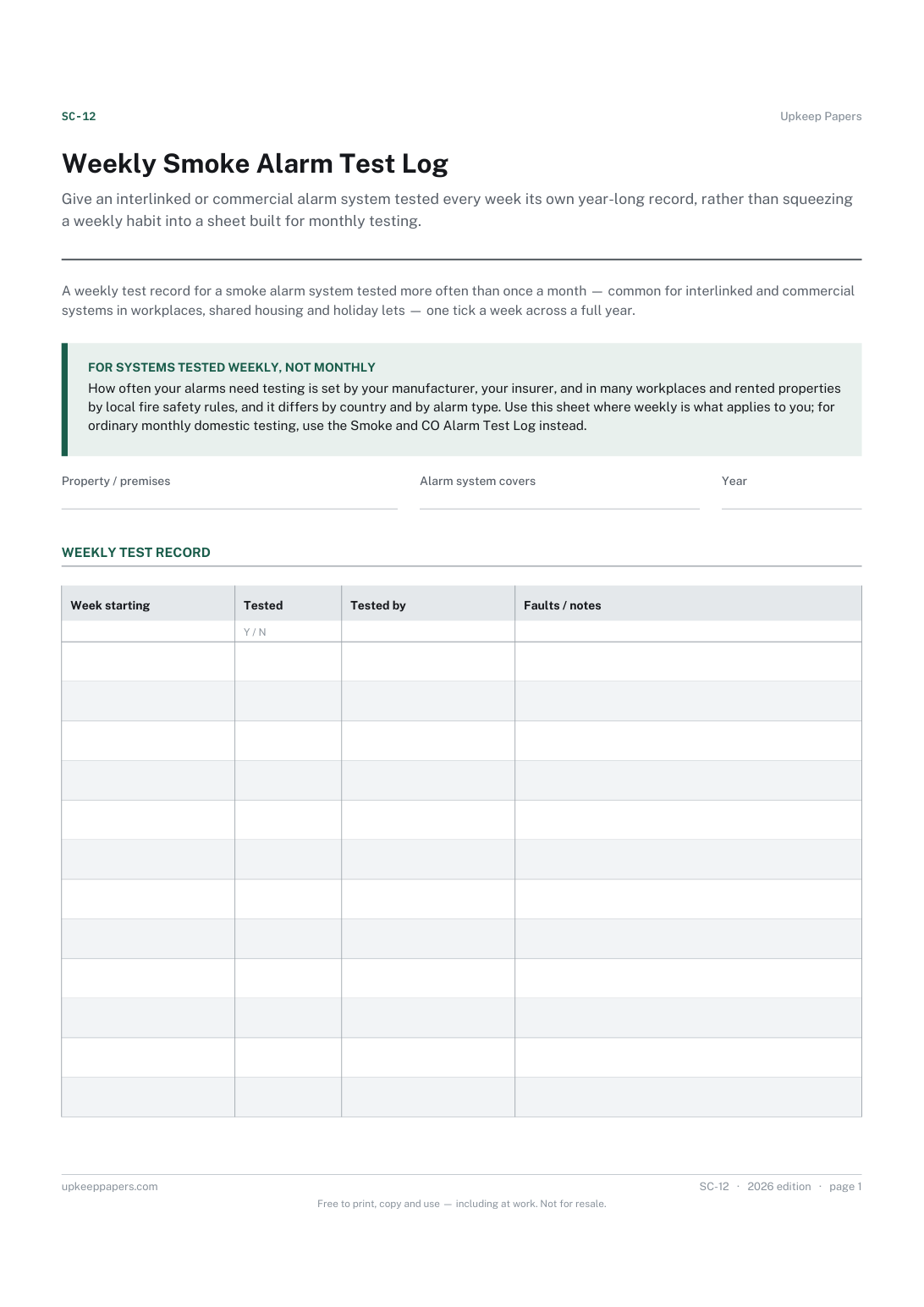
Weekly Smoke Alarm Test Log
Give an interlinked or commercial alarm system tested every week its own year-long record, rather than squeezing a weekly habit into a sheet built for monthly testing.
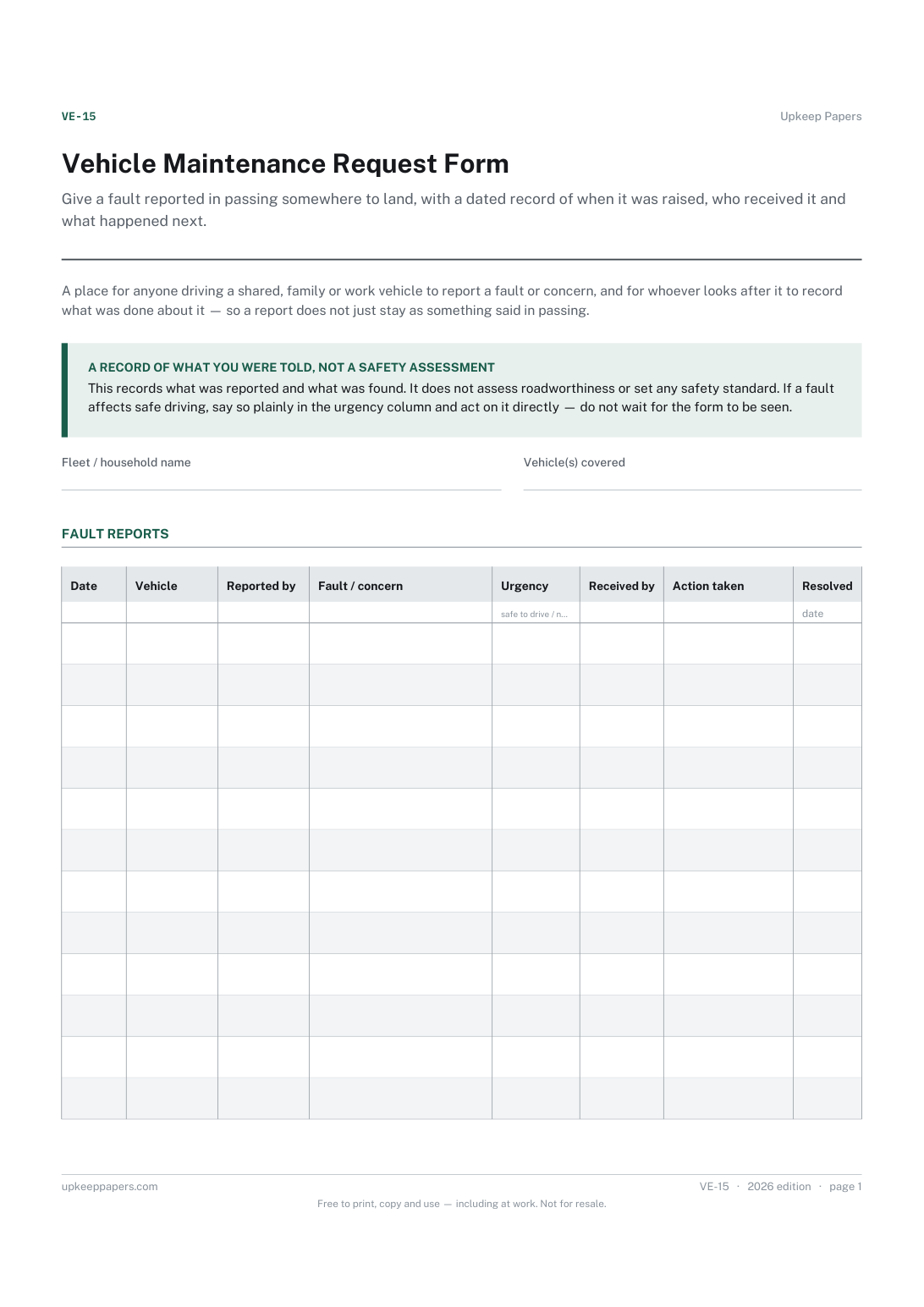
Vehicle Maintenance Request Form
Give a fault reported in passing somewhere to land, with a dated record of when it was raised, who received it and what happened next.
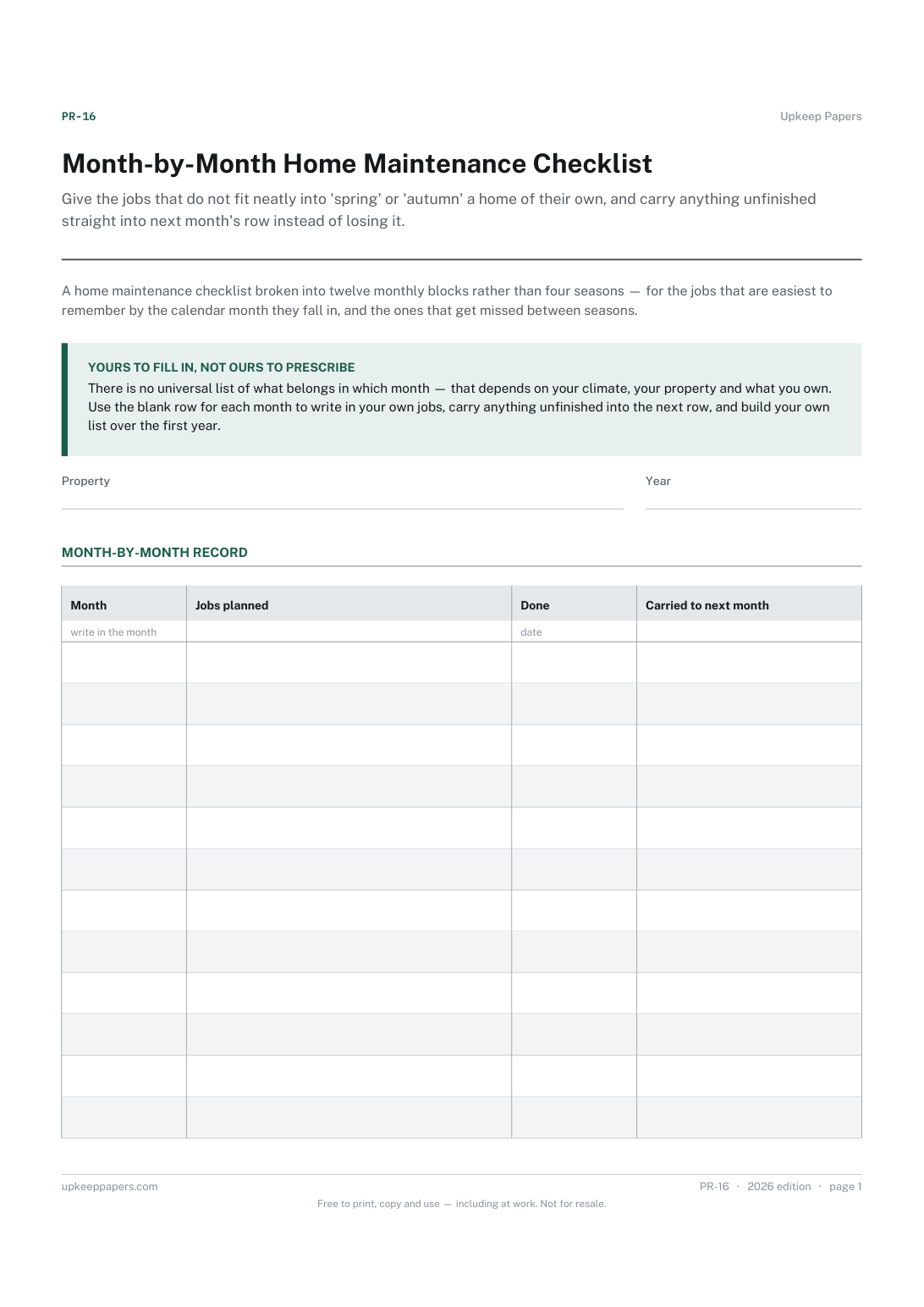
Month-by-Month Home Maintenance Checklist
Give the jobs that do not fit neatly into 'spring' or 'autumn' a home of their own, and carry anything unfinished straight into next month's row instead of losing it.
More posts
A Gap in the Data Is Not Always a Gap on the Site
Two of this week's five measured keyword gaps already had a page. Here is the test that caught it, and the three that survived.
When the Roadmap Runs Out, Measure Instead of Guessing
The 200-sheet roadmap this site started with is finished. Here is what we built instead of guessing, and why four of five sheets came from one measured gap.
How to Rebuild a Service History You Have Lost
The folder is gone and the car is going up for sale. Here is how to reconstruct a service history that a buyer can actually trust.
