Crew List and Passage Plan Sheet
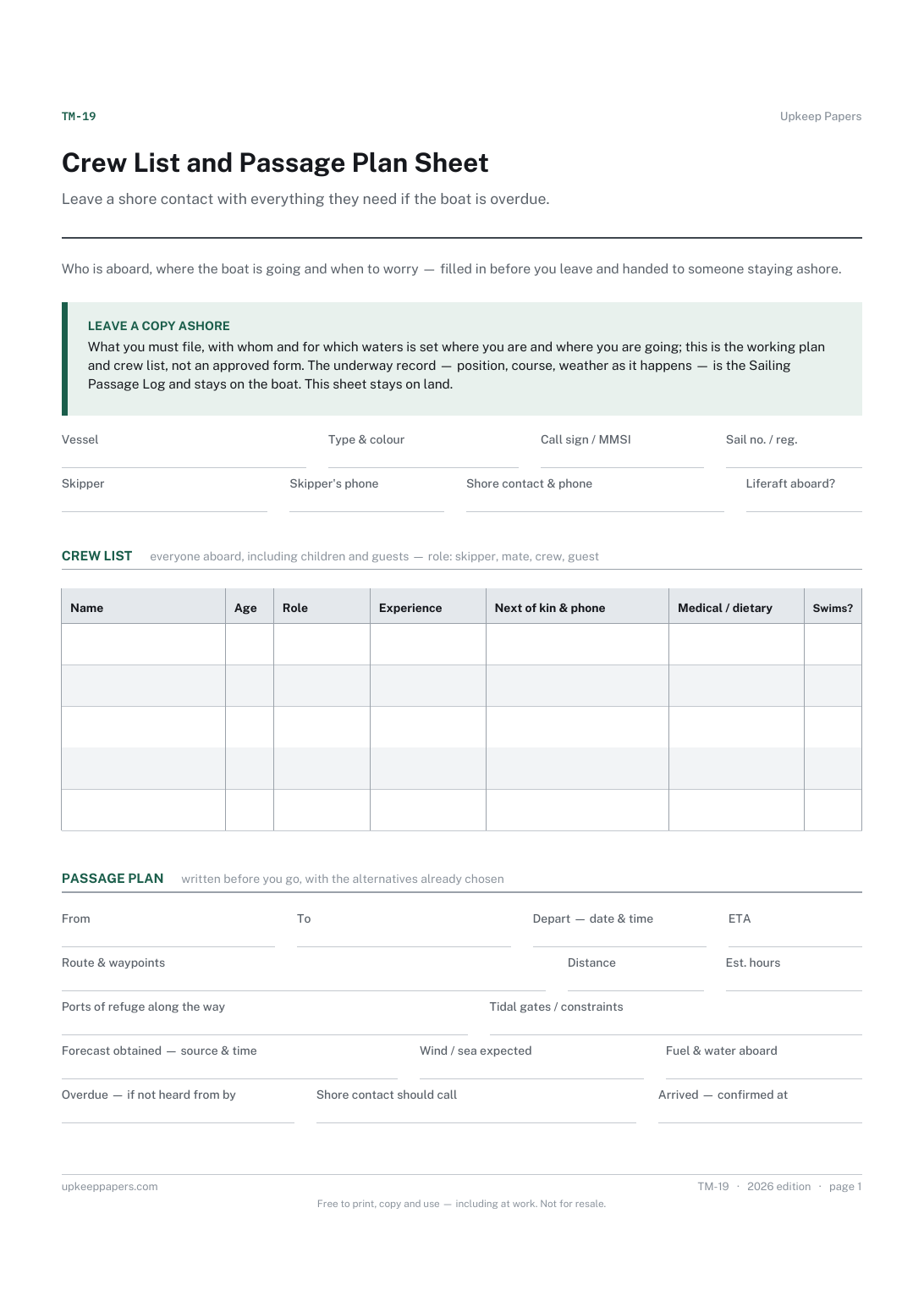
Leave a shore contact with everything they need if the boat is overdue. It also makes you write the passage plan down before you cast off.
TM-19 1 page
Everything here is free. Making it takes time and money. Everything here is free.
 Buy us a coffee
Trailers and marine · TM-28
A free printable crew safety briefing checklist: lifejackets, where the kit is, gas, heads, engine and radio, man overboard and fire, initialled by the crew.
One page. Choose your paper size — both versions are laid out identically, so neither one gets shrunk to fit.
Print it and write on it
Fill it in type and save
The fillable versions have real form fields — open them in any PDF reader, type into them and save. Printing help.
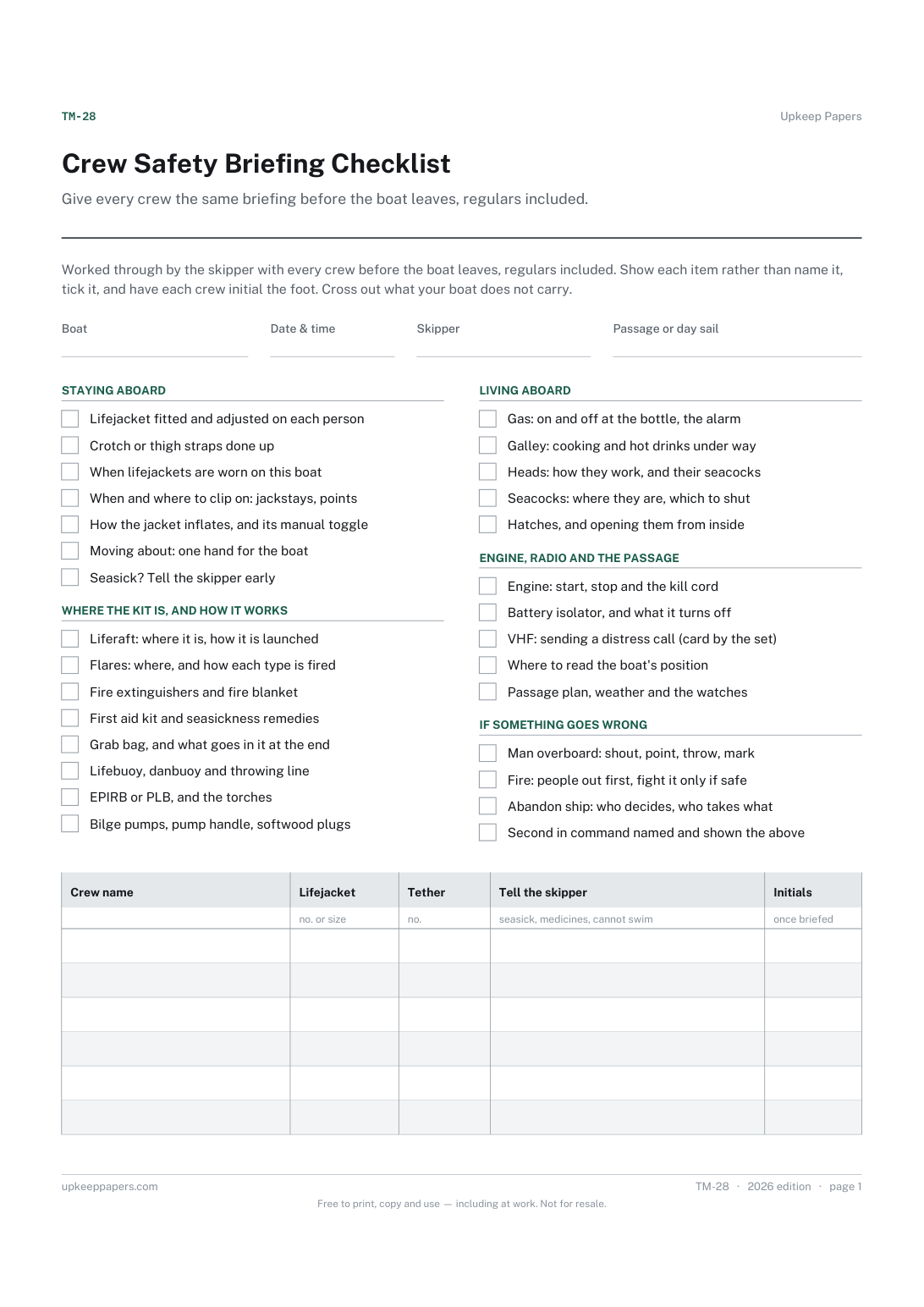
Give every crew the same briefing before the boat leaves, regulars included. Each topic is shown and ticked, and the crew initial the foot.
Skippers of yachts and motor boats, sailing schools, clubs and anyone taking guests out.
One page, top to bottom:
Printed under the title: Worked through by the skipper with every crew before the boat leaves, regulars included. Show each item rather than name it, tick it, and have each crew initial the foot. Cross out what your boat does not carry.
Write-on lines: Boat · Date & time · Skipper · Passage or day sail
Also printed: STAYING ABOARD · Lifejacket fitted and adjusted on each person · Crotch or thigh straps done up · When lifejackets are worn on this boat · When and where to clip on: jackstays, points · How the jacket inflates, and its manual toggle · Moving about: one hand for the boat · Seasick? Tell the skipper early · WHERE THE KIT IS, AND HOW IT WORKS · Liferaft: where it is, how it is launched · Flares: where, and how each type is fired · Fire extinguishers and fire blanket · First aid kit and seasickness remedies · Grab bag, and what goes in it at the end · Lifebuoy, danbuoy and throwing line · EPIRB or PLB, and the torches · Bilge pumps, pump handle, softwood plugs · LIVING ABOARD · Gas: on and off at the bottle, the alarm · Galley: cooking and hot drinks under way · Heads: how they work, and their seacocks · Seacocks: where they are, which to shut · Hatches, and opening them from inside · ENGINE, RADIO AND THE PASSAGE · Engine: start, stop and the kill cord · Battery isolator, and what it turns off · VHF: sending a distress call (card by the set) · Where to read the boat's position · Passage plan, weather and the watches · IF SOMETHING GOES WRONG · Man overboard: shout, point, throw, mark · Fire: people out first, fight it only if safe · Abandon ship: who decides, who takes what · Second in command named and shown the above
Table, 6 rows: Crew name · Lifejacket · Tether · Tell the skipper · Initials
The sheet does not say what any law or club rule requires; that differs by country, by boat and by whether the trip is commercial. It is a prompt so that nothing is forgotten. Check the rules where you sail and add anything they ask for.
Kit moves, boats change and people forget. A regular who knows the boat well is also the person most likely to be left to cope if the skipper is the one who goes over the side.
Leave a shore contact with everything they need if the boat is overdue. It also makes you write the passage plan down before you cast off.
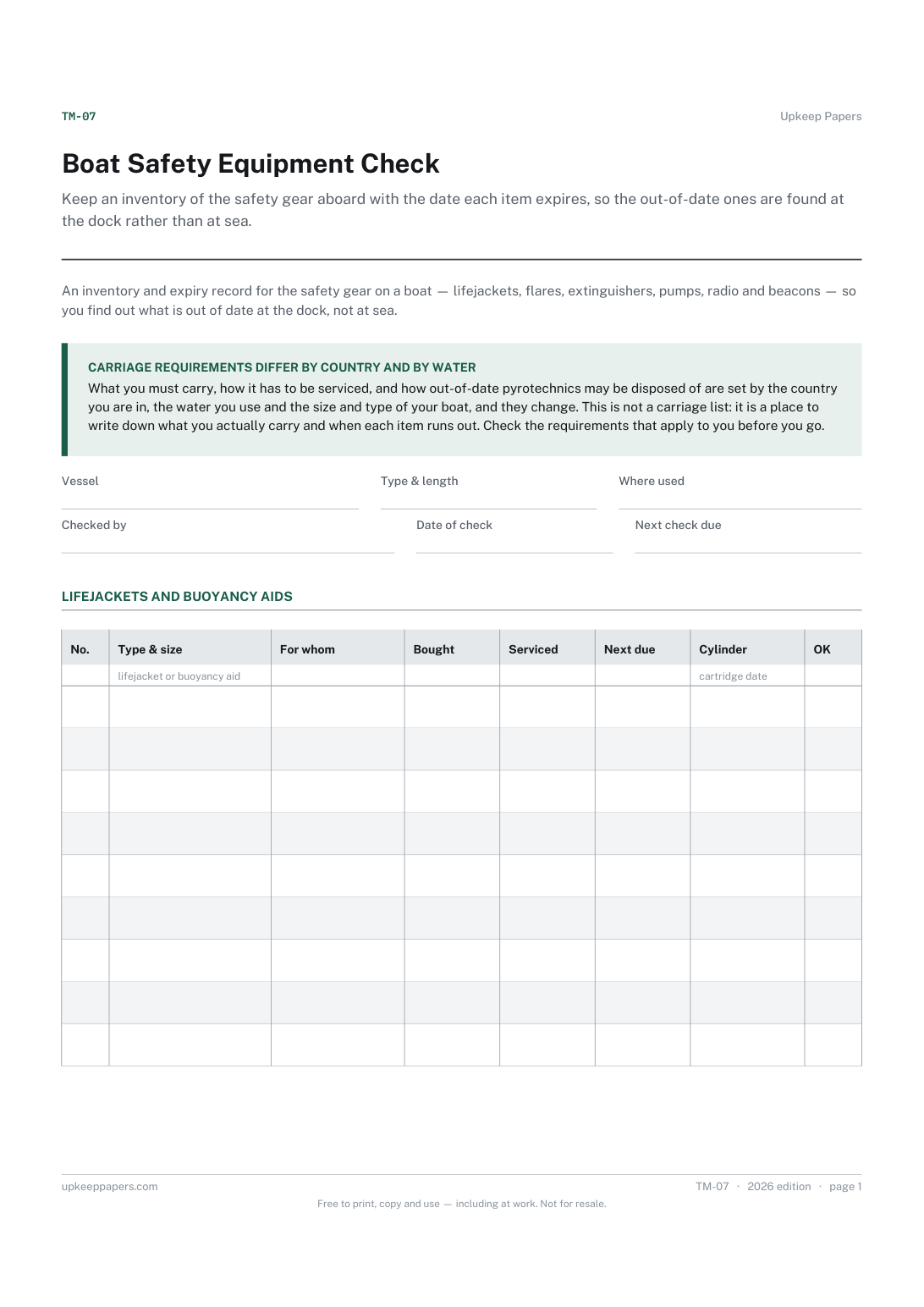
Keep an inventory of the safety gear aboard with the date each item expires, so the out-of-date ones are found at the dock rather than at sea.
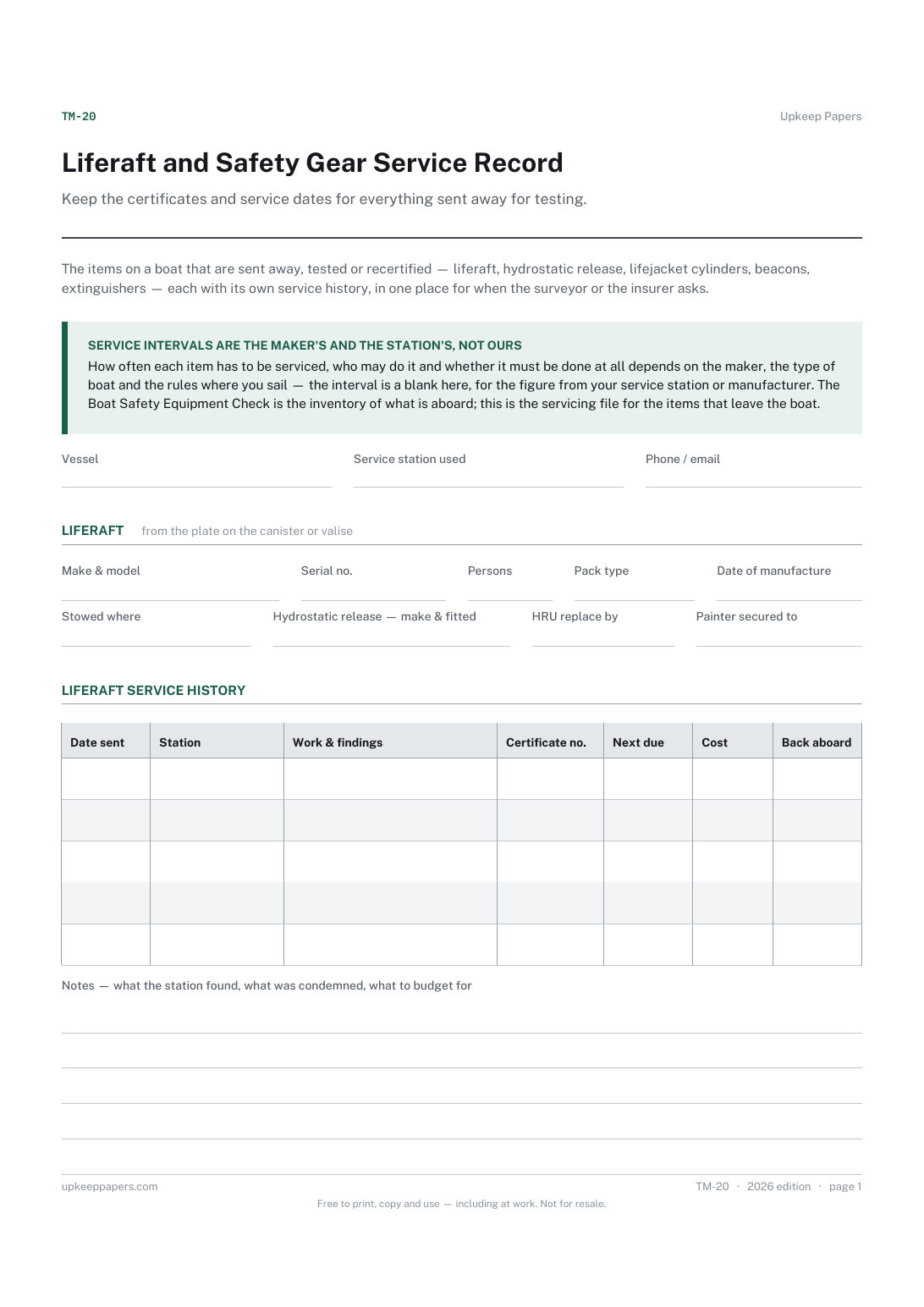
Keep the certificates and service dates for everything sent away for testing. They are then in one file for the surveyor, the insurer or a charter check.
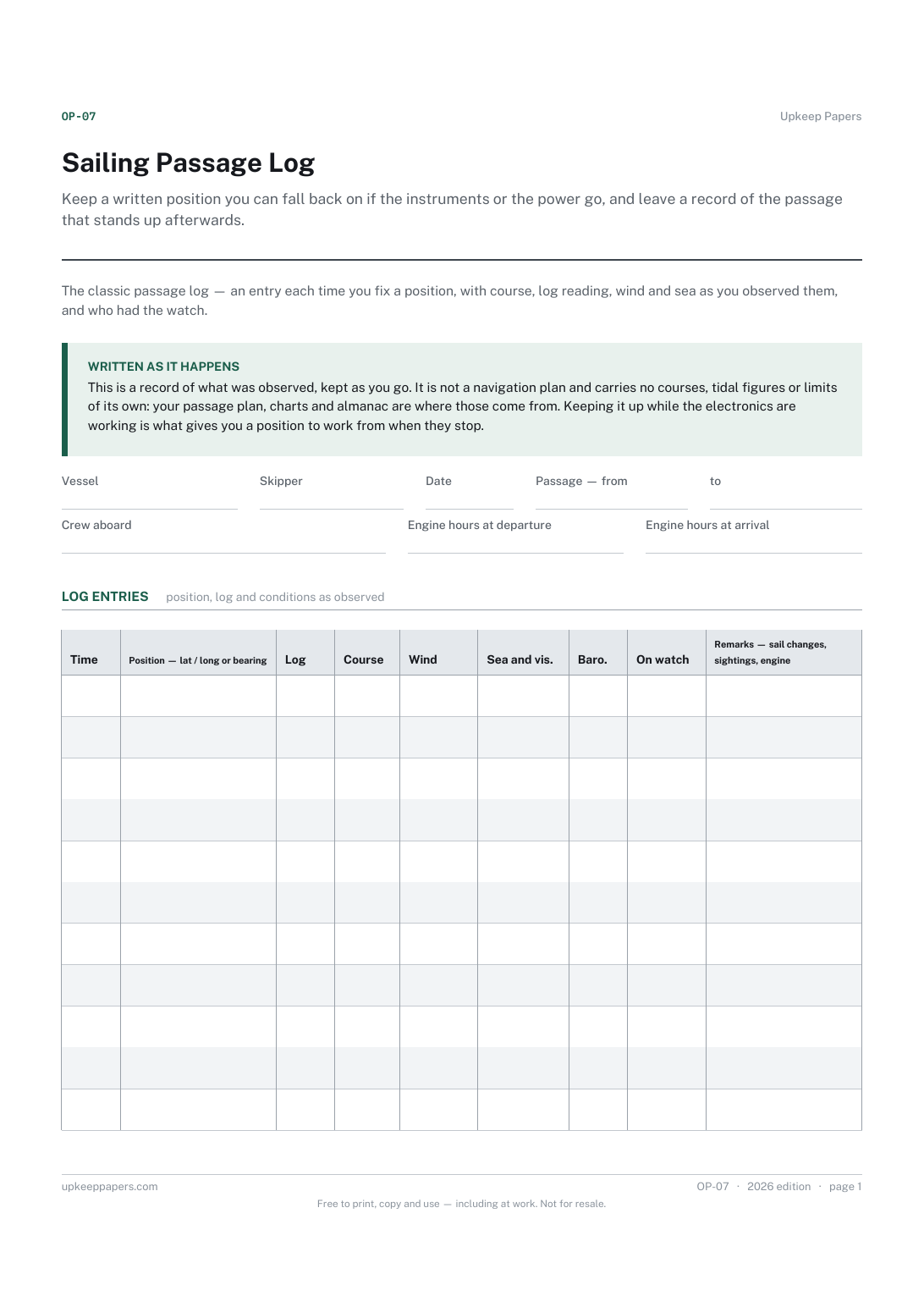
Keep a written position you can fall back on if the instruments or the power go, and leave a record of the passage that stands up afterwards.
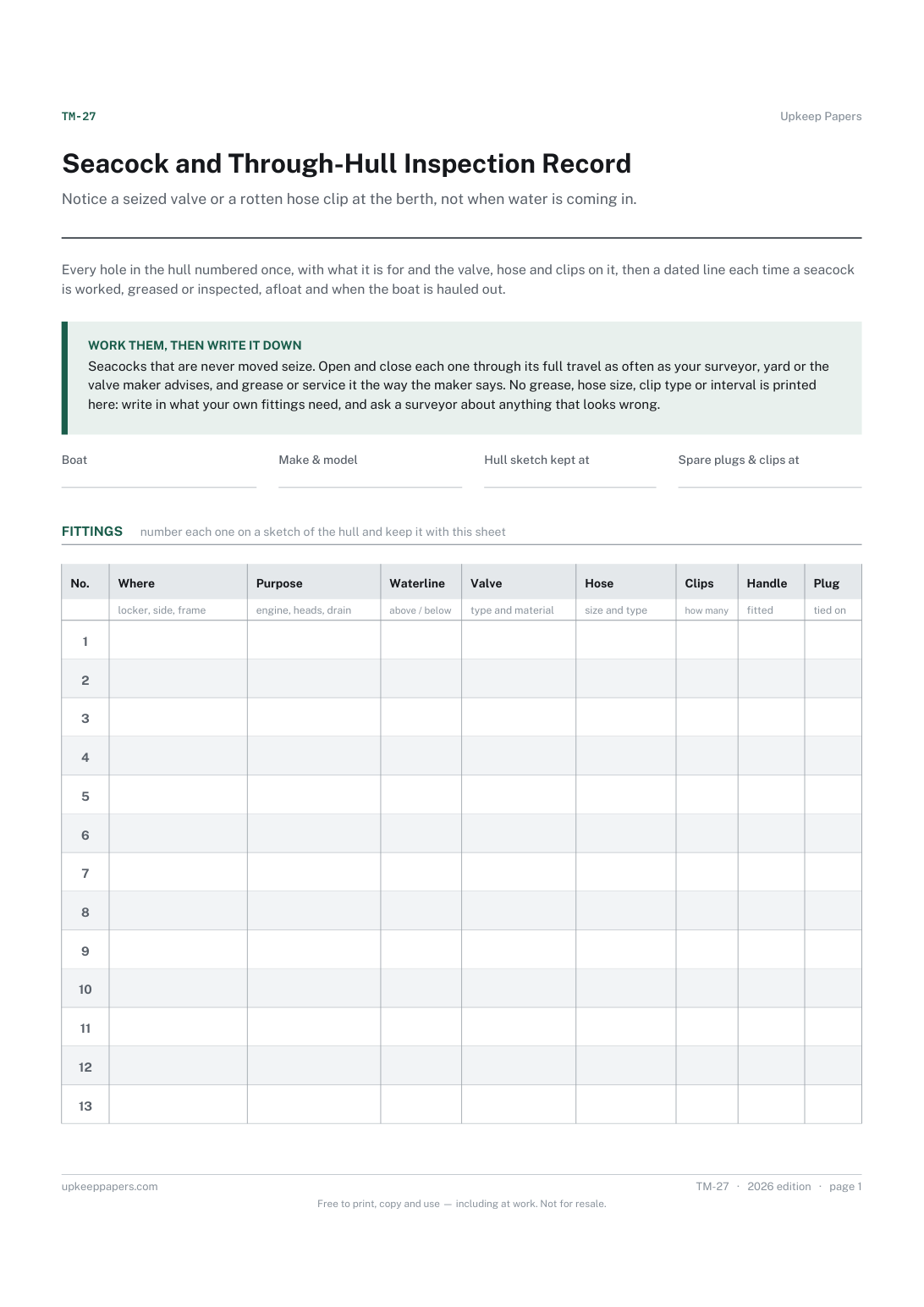
Notice a seized valve or a rotten hose clip at the berth, not when water is coming in. Every fitting gets a number, and every check gets a dated line.

Every sheet, binder, game and puzzle on Upkeep Papers is free to download, with no email and no account. Making them is not free: each one takes days of research, design and checking, and the site costs money to run. If something here saved you time, you can buy us a coffee. It is entirely optional: nothing is locked, and nothing changes if you don’t.
Buy us a coffee Opens PayPal in a new tab. Any amount, and nothing changes if you would rather not.