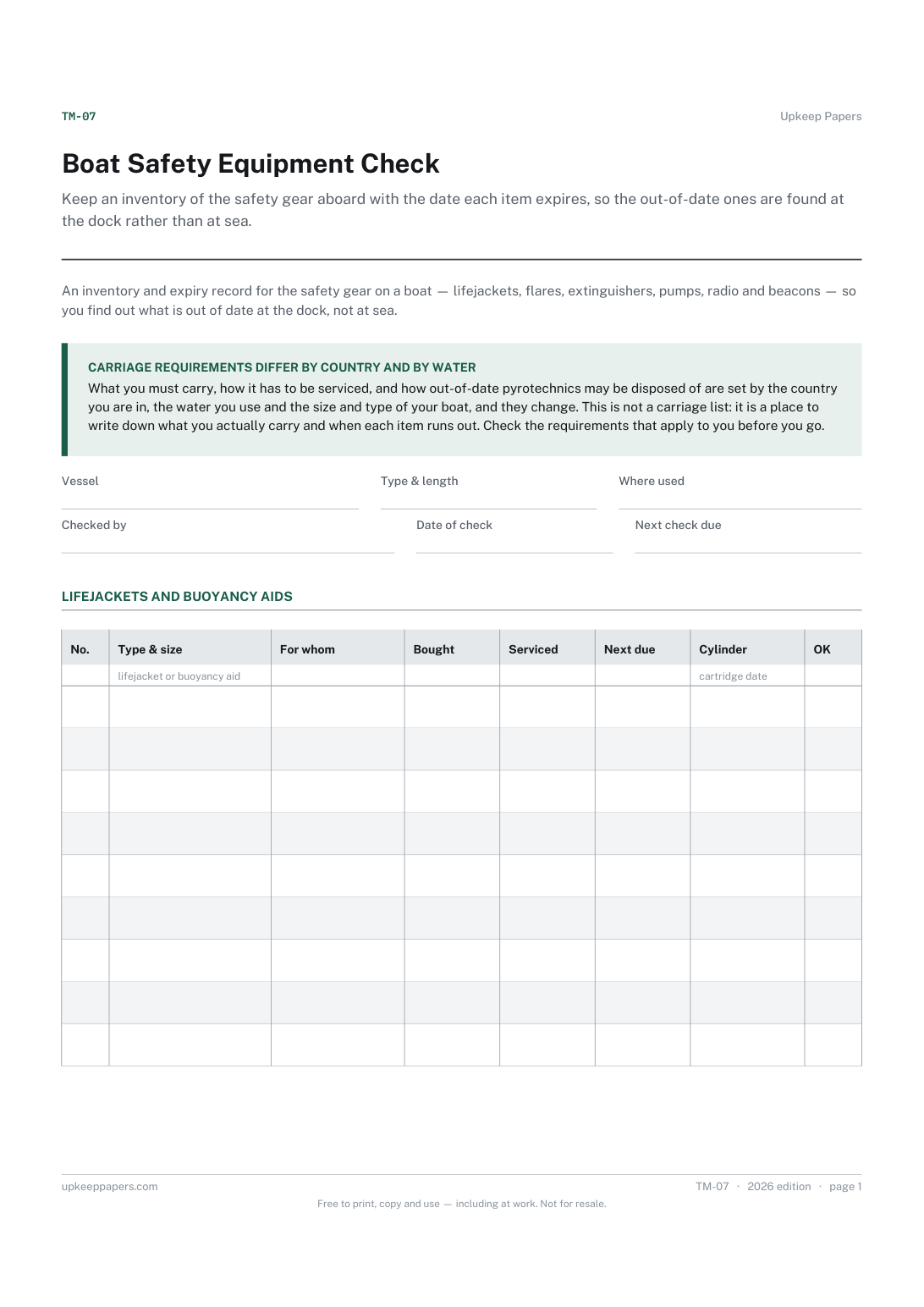
Boat Safety Equipment Check
Keep an inventory of the safety gear aboard with the date each item expires, so the out-of-date ones are found at the dock rather than at sea.
TM-07 2 pages
Everything here is free. Making it takes time and money. Everything here is free.
 Buy us a coffee
Outdoor pursuits · OP-07
A free printable sailing log book page — time, position, log reading, course, wind and sea as observed, barometer, watch and remarks, an entry at a time.
One page. Choose your paper size — both versions are laid out identically, so neither one gets shrunk to fit.
Print it and write on it
Fill it in type and save
The fillable versions have real form fields — open them in any PDF reader, type into them and save. Printing help.
Keep a written position you can fall back on if the instruments or the power go, and leave a record of the passage that stands up afterwards.
Skippers and crew on yachts and motor cruisers, sailing schools, and anyone building sea time they may need to evidence.
One page, top to bottom:
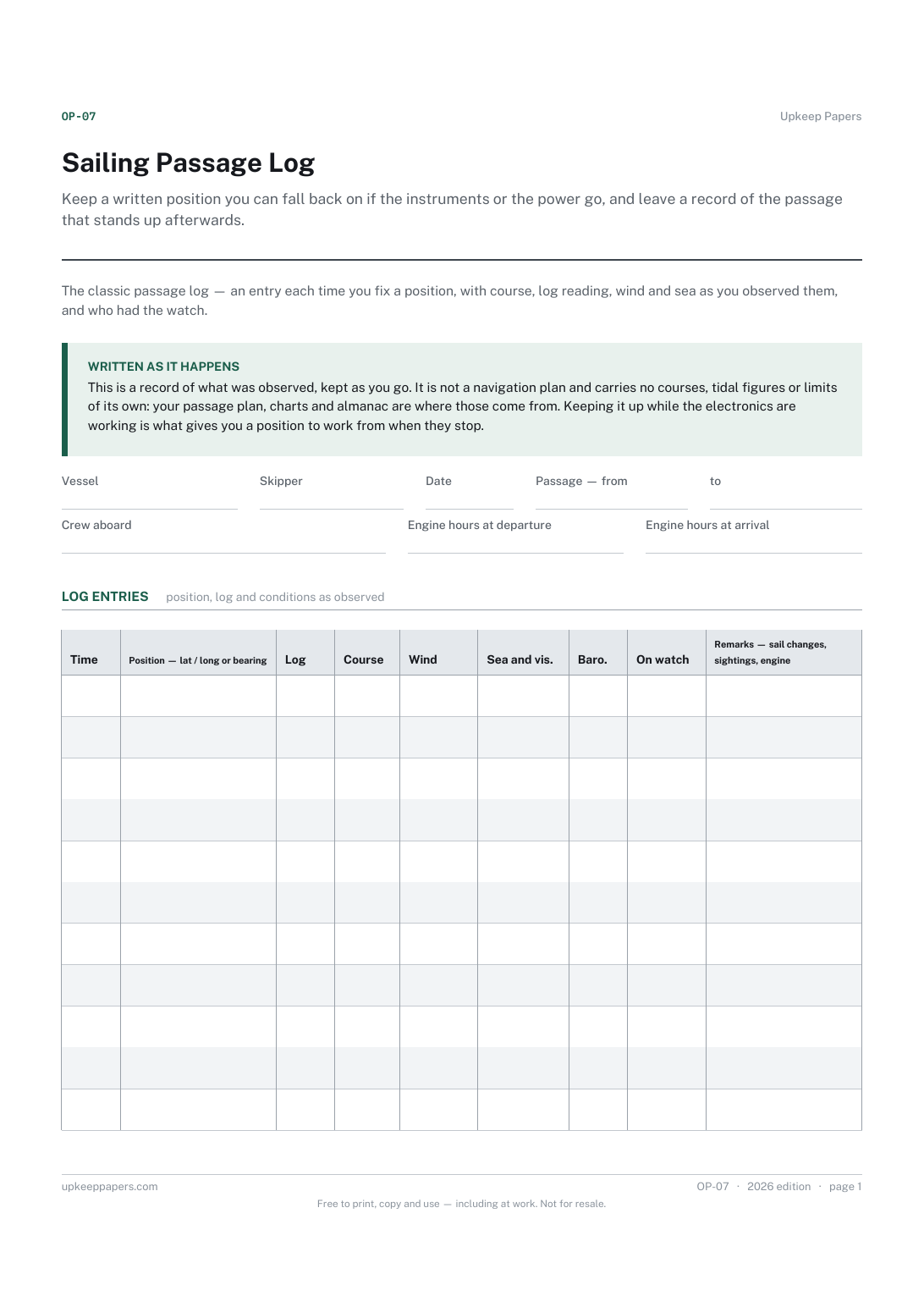
Printed under the title: The classic passage log — an entry each time you fix a position, with course, log reading, wind and sea as you observed them, and who had the watch.
Written as it happens. This is a record of what was observed, kept as you go. It is not a navigation plan and carries no courses, tidal figures or limits of its own: your passage plan, charts and almanac are where those come from. Keeping it up while the electronics are working is what gives you a position to work from when they stop.
Write-on lines: Vessel · Skipper · Date · Passage — from · to · Crew aboard · Engine hours at departure · Engine hours at arrival
Table, 11 rows: Time · Position — lat / long or bearing · Log · Course · Wind · Sea and vis. · Baro. · On watch · Remarks — sail changes, sightings, engine
Because those come from your own passage plan, your charts and your almanac for that day and that tide. A log book records what happened; it is the wrong place to carry numbers that would be out of date before the sheet was printed.
That is the skipper's call, and it varies with the waters and the boat. Set a pattern before you sail — a fix at agreed intervals plus an entry at every watch change and anything worth remembering — and hold to it.
Keep an inventory of the safety gear aboard with the date each item expires, so the out-of-date ones are found at the dock rather than at sea.
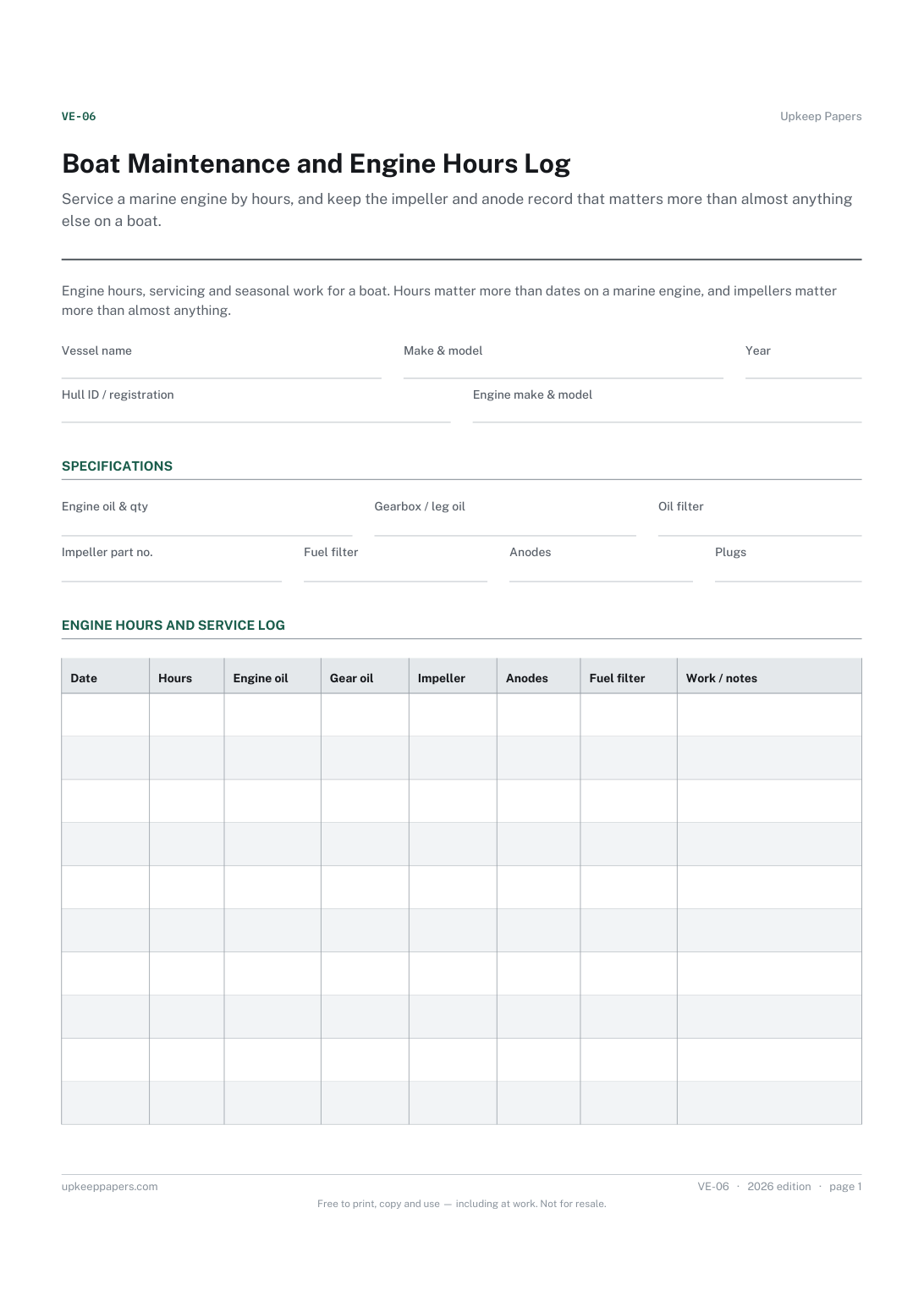
Service a marine engine by hours, and keep the impeller and anode record that matters more than almost anything else on a boat.
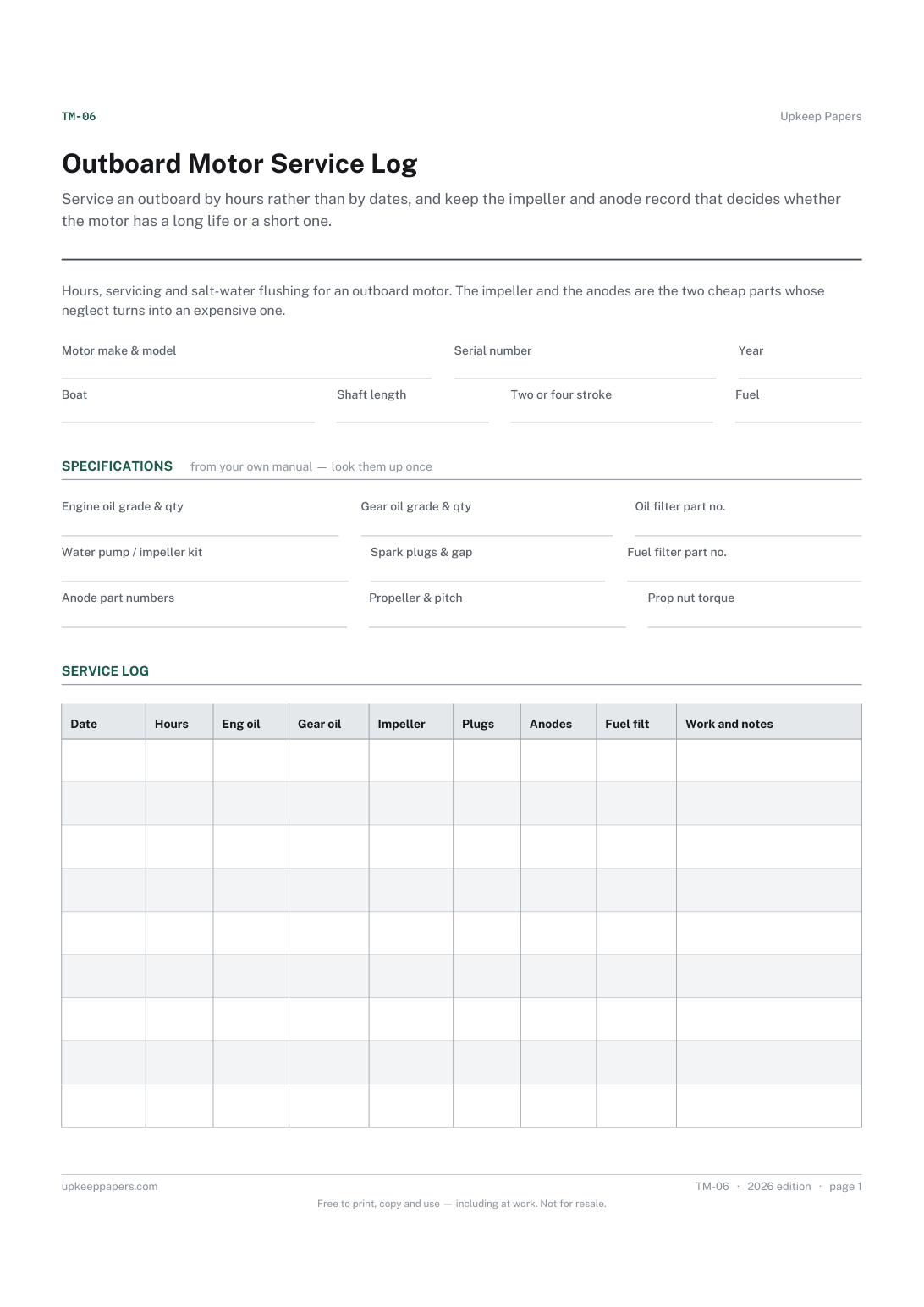
Service an outboard by hours rather than by dates, and keep the impeller and anode record that decides whether the motor has a long life or a short one.
Put the trip on paper before you launch and leave a copy behind, so somebody knows where you went and when to worry.

Every sheet, binder, game and puzzle on Upkeep Papers is free to download, with no email and no account. Making them is not free: each one takes days of research, design and checking, and the site costs money to run. If something here saved you time, you can buy us a coffee. It is entirely optional: nothing is locked, and nothing changes if you don’t.
Buy us a coffee Opens PayPal in a new tab. Any amount, and nothing changes if you would rather not.