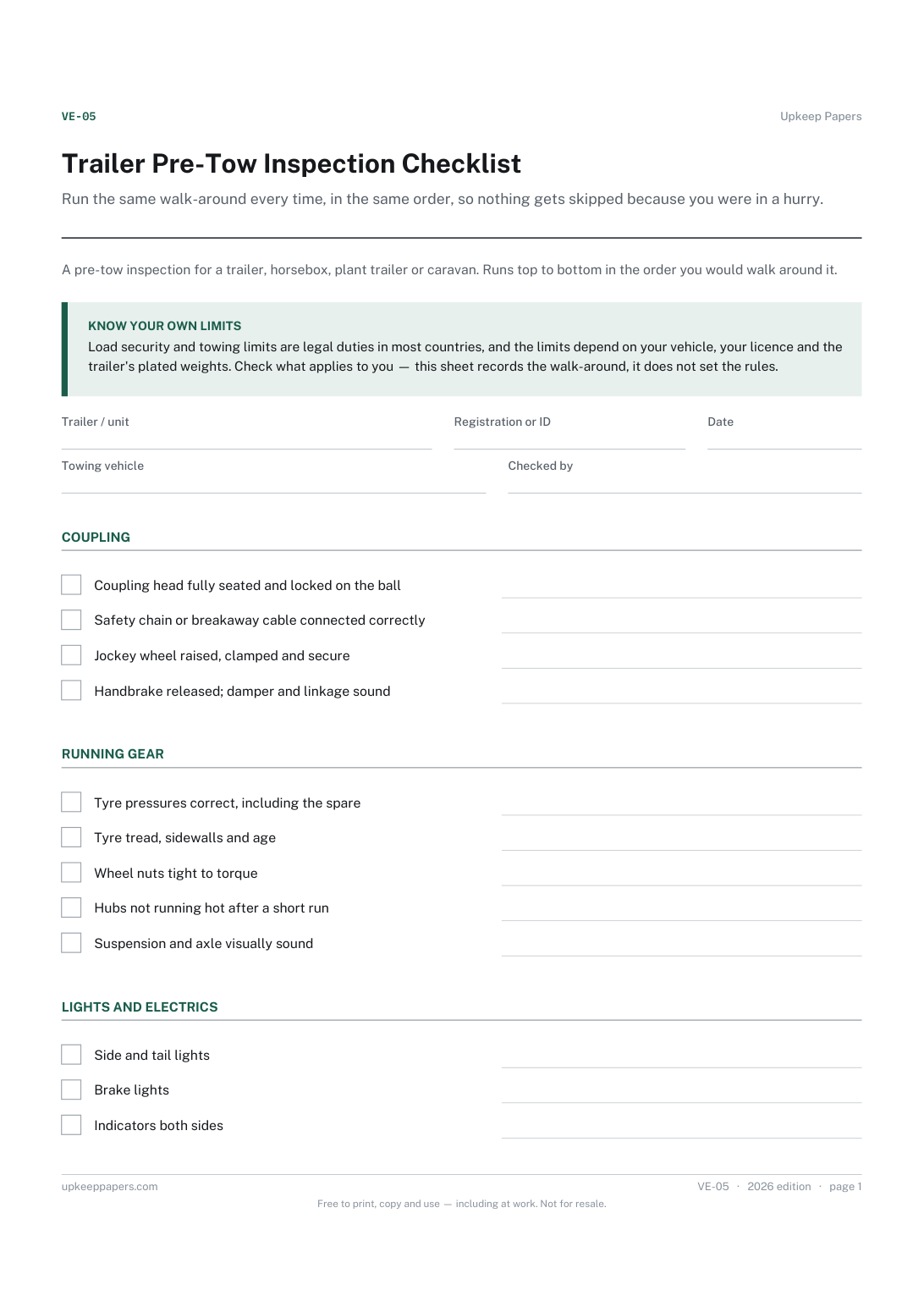
Trailer Pre-Tow Inspection Checklist
Run the same walk-around every time, in the same order, so nothing gets skipped because you were in a hurry.
VE-05 2 pages
Everything here is free. Making it takes time and money. Everything here is free.
 Buy us a coffee
Trailers and marine · TM-03
A free printable boat trailer inspection checklist — bearings, immersion and corrosion, rollers and bunks, winch strap and the lighting board.
2 pages. Choose your paper size — both versions are laid out identically, so neither one gets shrunk to fit.
Print it and write on it
Fill it in type and save
The fillable versions have real form fields — open them in any PDF reader, type into them and save. Printing help.
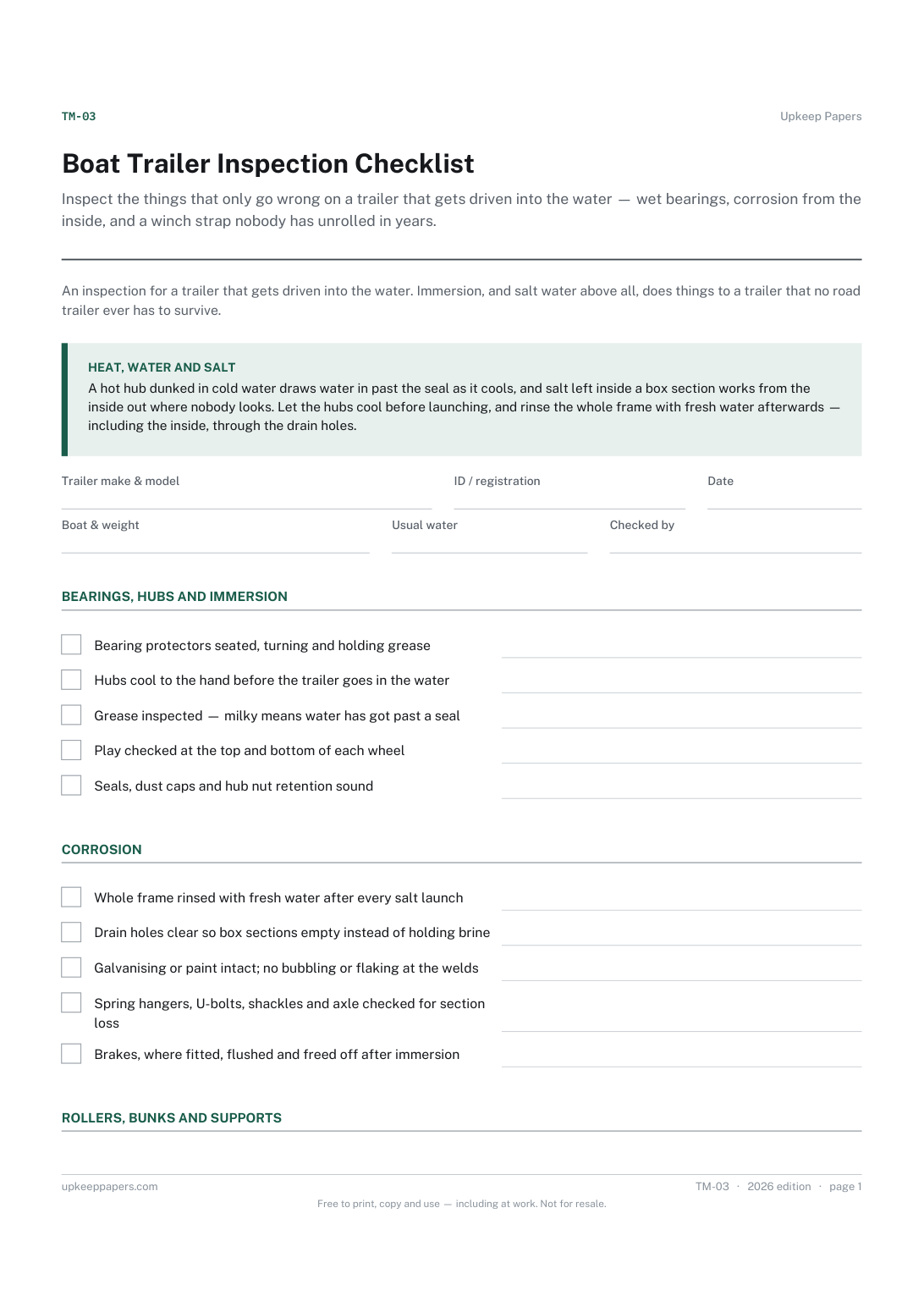
Inspect the things that only go wrong on a trailer that gets driven into the water — wet bearings, corrosion from the inside, and a winch strap nobody has unrolled in years.
Boat owners who launch from a trailer, especially anyone using slipways in salt water.
2 pages, in this order:
Printed under the title: An inspection for a trailer that gets driven into the water. Immersion, and salt water above all, does things to a trailer that no road trailer ever has to survive.
Heat, water and salt. A hot hub dunked in cold water draws water in past the seal as it cools, and salt left inside a box section works from the inside out where nobody looks. Let the hubs cool before launching, and rinse the whole frame with fresh water afterwards — including the inside, through the drain holes.
Write-on lines: Trailer make & model · ID / registration · Date · Boat & weight · Usual water · Checked by
Signature strip: Signed · Print name · Date
Ruled lines: Notes and anything specific to yours
Because they get hot on the drive to the slipway and are then put into cold water. As the hub cools the air inside contracts and draws water past the seal, and the water sits in the grease. That is what bearing protectors are trying to prevent, and why letting the hubs cool first matters.
Immersing road lights is what kills them and their wiring, which is why removable boards exist. What you must display, and when, is set where you are — the sheet records that the board was dealt with and that everything worked afterwards.
Run the same walk-around every time, in the same order, so nothing gets skipped because you were in a hurry.
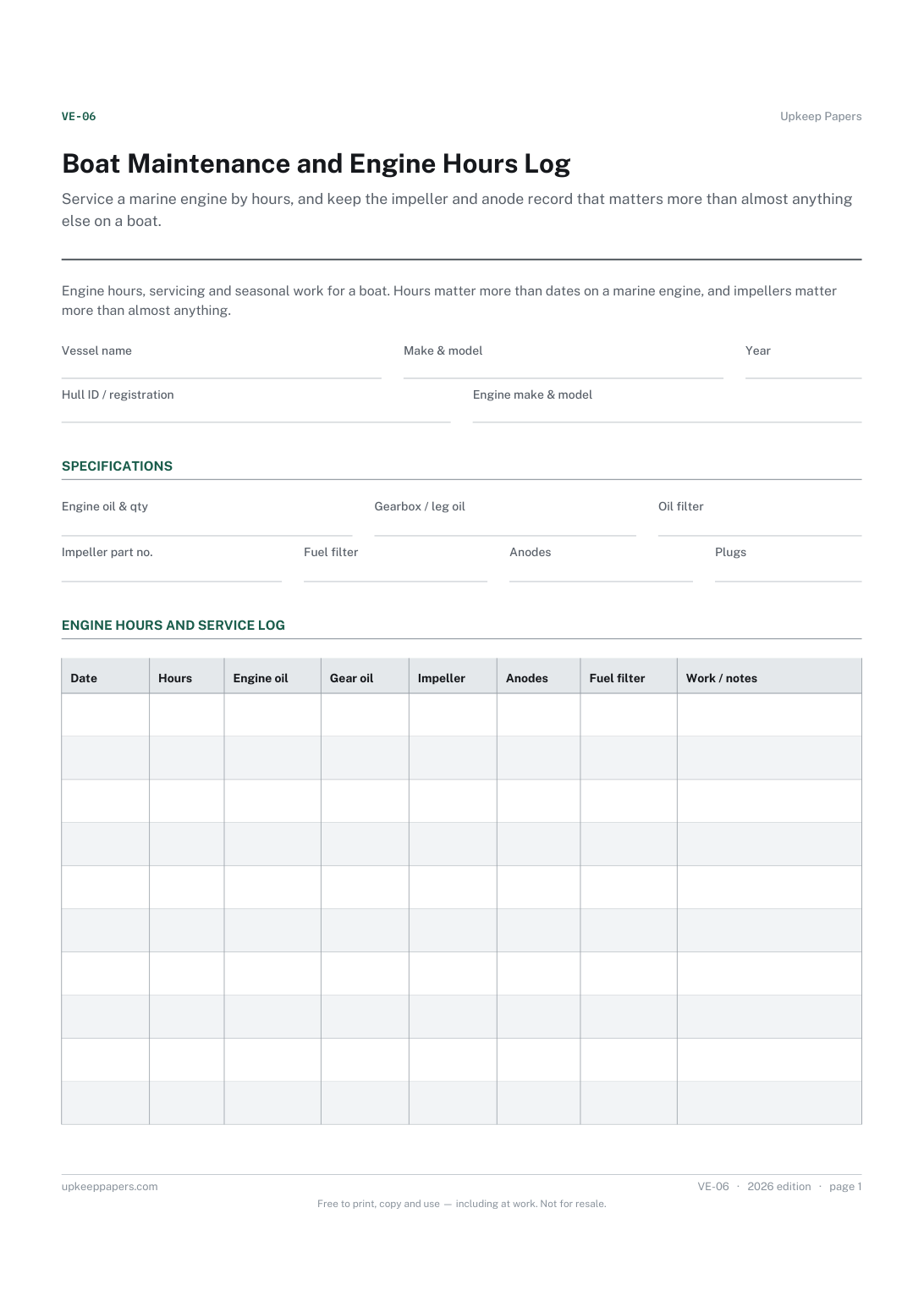
Service a marine engine by hours, and keep the impeller and anode record that matters more than almost anything else on a boat.
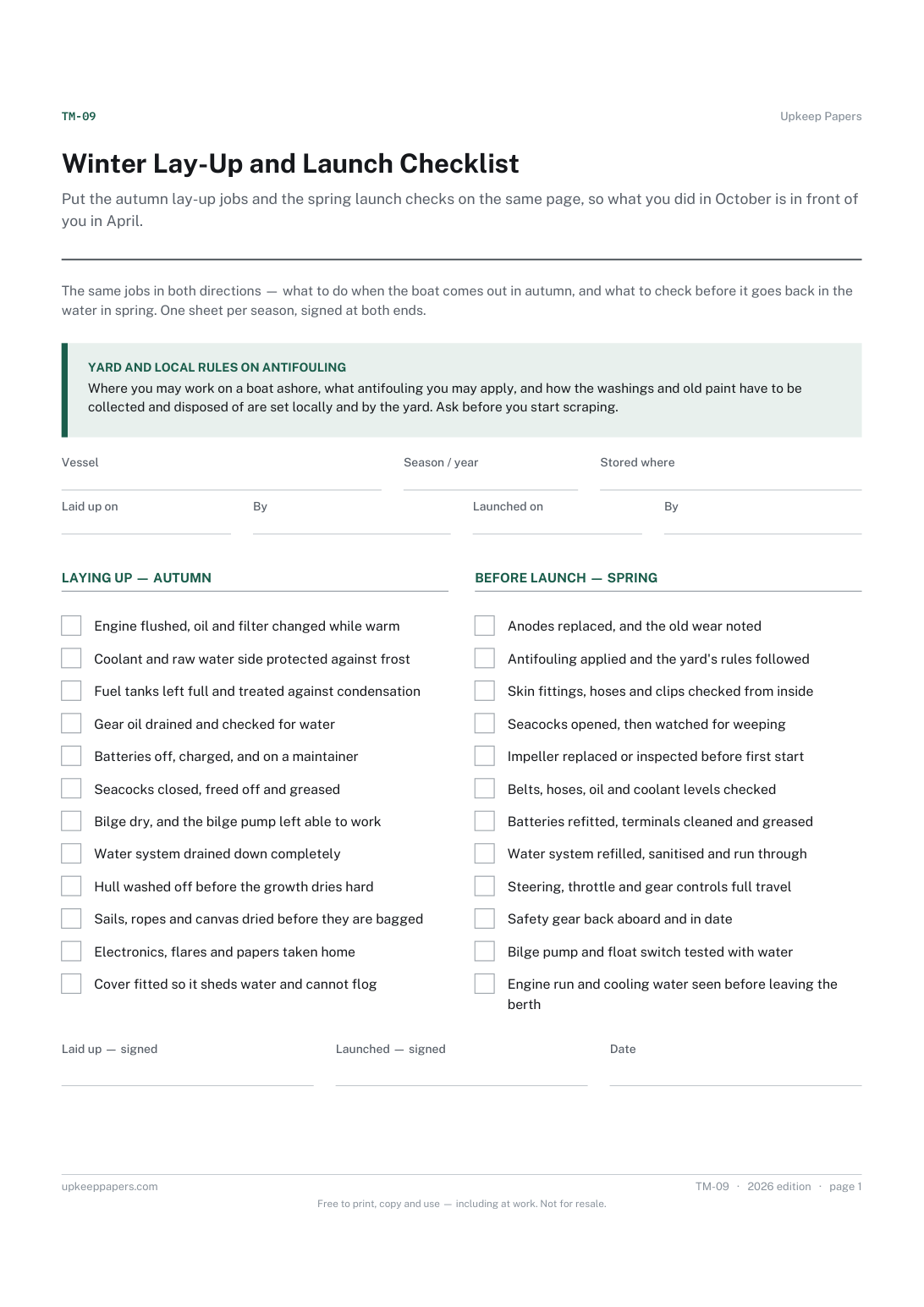
Put the autumn lay-up jobs and the spring launch checks on the same page, so what you did in October is in front of you in April.

Every sheet, binder, game and puzzle on Upkeep Papers is free to download, with no email and no account. Making them is not free: each one takes days of research, design and checking, and the site costs money to run. If something here saved you time, you can buy us a coffee. It is entirely optional: nothing is locked, and nothing changes if you don’t.
Buy us a coffee Opens PayPal in a new tab. Any amount, and nothing changes if you would rather not.