Mould and Casting Record
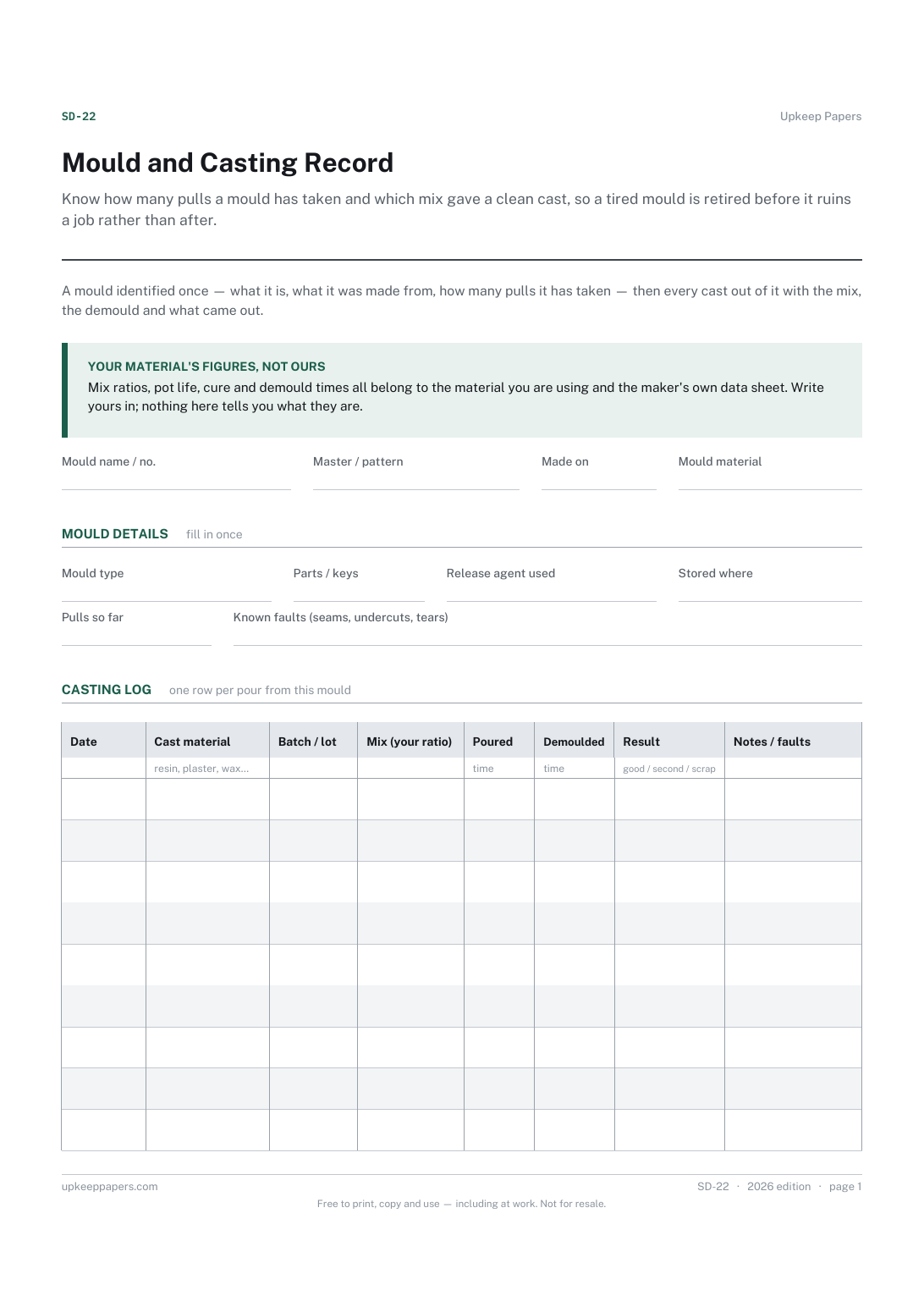
Know how many pulls a mould has taken and which mix gave a clean cast, so a tired mould is retired before it ruins a job rather than after.
SD-22 1 page
Everything here is free. Making it takes time and money. Everything here is free.
 Buy us a coffee
Studio crafts and making · SD-23
Pottery production sheet — one batch of thrown ware from wedged clay to the greenware shelf: clay body, forms, ball weights and counts thrown.
One page. Choose your paper size — both versions are laid out identically, so neither one gets shrunk to fit.
Print it and write on it
Fill it in type and save
The fillable versions have real form fields — open them in any PDF reader, type into them and save. Printing help.
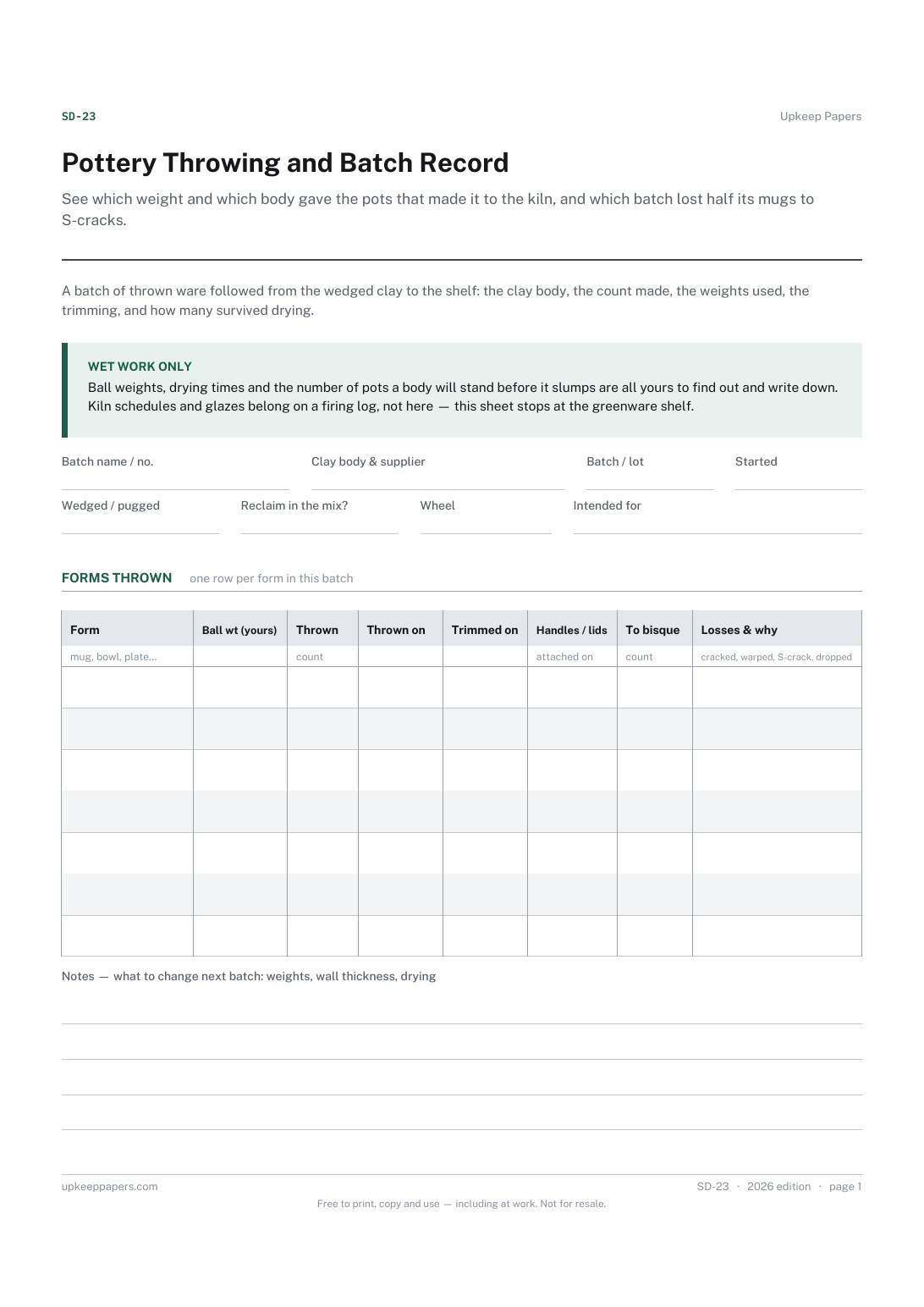
See which weight and which body gave the pots that made it to the kiln, and which batch lost half its mugs to S-cracks.
Production potters, studio potters throwing repeat forms, teaching studios and anyone making a run of matching ware.
One page, top to bottom:
Printed under the title: A batch of thrown ware followed from the wedged clay to the shelf: the clay body, the count made, the weights used, the trimming, and how many survived drying.
Wet work only. Ball weights, drying times and the number of pots a body will stand before it slumps are all yours to find out and write down. Kiln schedules and glazes belong on a firing log, not here — this sheet stops at the greenware shelf.
Write-on lines: Batch name / no. · Clay body & supplier · Batch / lot · Started · Wedged / pugged · Reclaim in the mix? · Wheel · Intended for
Table, 7 rows: Form · Ball wt (yours) · Thrown · Thrown on · Trimmed on · Handles / lids · To bisque · Losses & why
Ruled lines: Notes — what to change next batch: weights, wall thickness, drying
Because they depend on your body, your forms and your studio. The weight that makes your mug is a thing you have worked out, not a thing we can tell you, and writing it down is what lets you make the same mug next month.
Not here. This sheet stops at the greenware shelf on purpose. Kiln schedules, glaze batches and results belong on a firing log, where they can be compared across many batches of ware.
Know how many pulls a mould has taken and which mix gave a clean cast, so a tired mould is retired before it ruins a job rather than after.
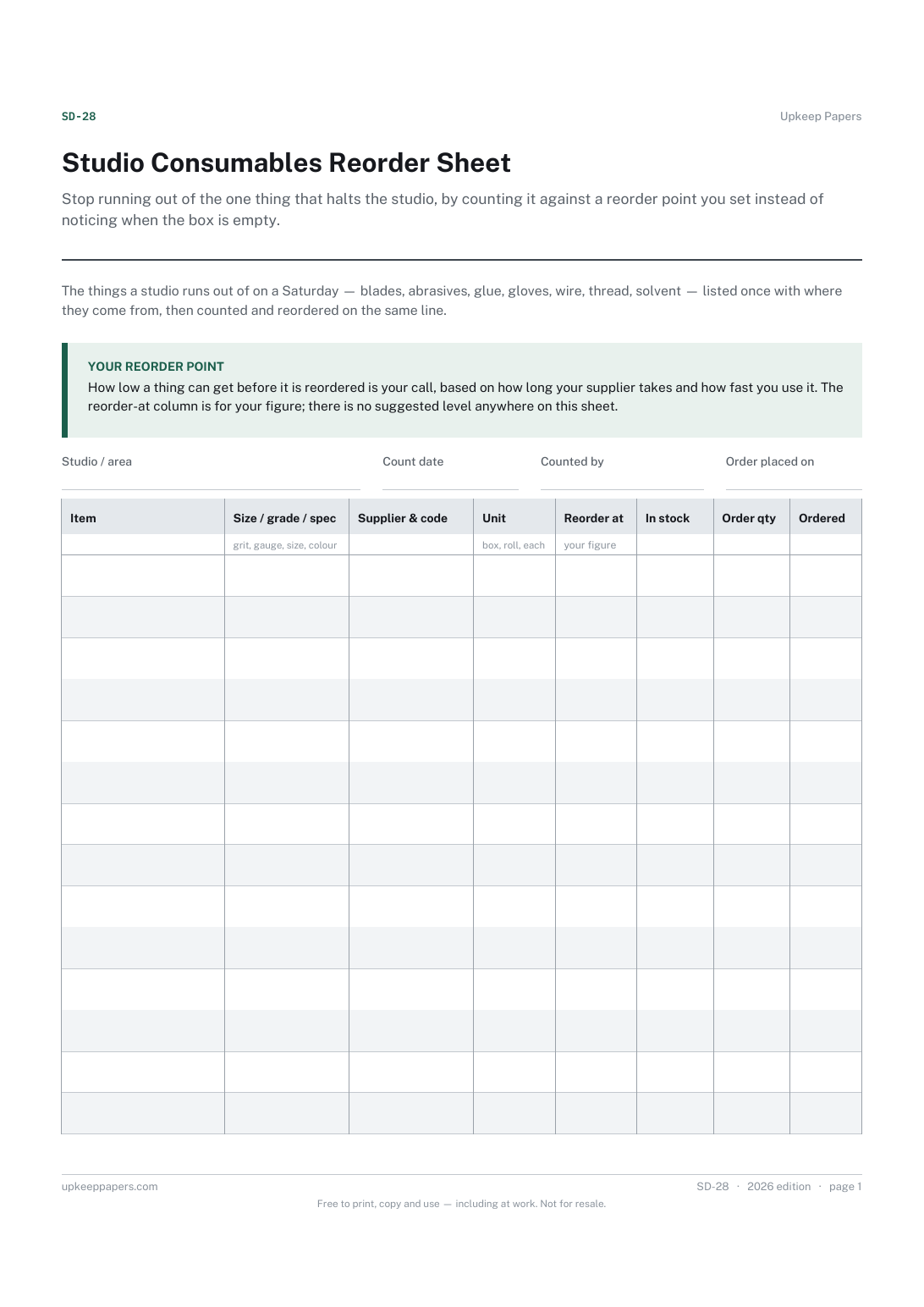
Stop running out of the one thing that halts the studio, by counting it against a reorder point you set instead of noticing when the box is empty.
Record the things a finished object cannot tell you later: which dye lot, which hook you really used, and how much was left over.
Keep a catalogue of finished work and where it went, which is the record galleries, insurers and tax authorities ask for and working artists rarely have.
The same subject, with a version you can fill in on screen.
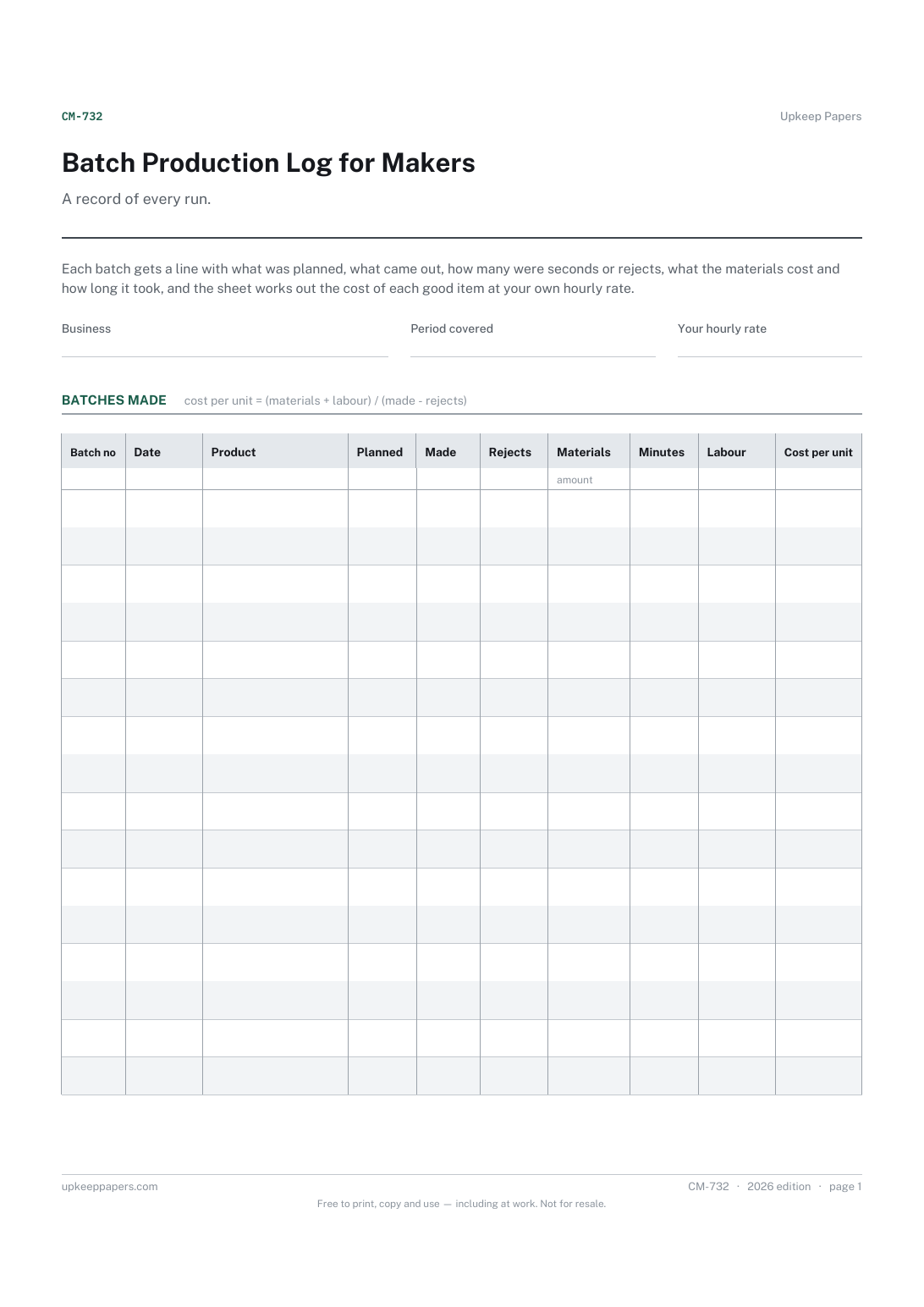
Every batch by number, date and product.

Every sheet, binder, game and puzzle on Upkeep Papers is free to download, with no email and no account. Making them is not free: each one takes days of research, design and checking, and the site costs money to run. If something here saved you time, you can buy us a coffee. It is entirely optional: nothing is locked, and nothing changes if you don’t.
Buy us a coffee Opens PayPal in a new tab. Any amount, and nothing changes if you would rather not.