Price List Sheet
Publish your prices with the inclusions spelled out beside them, which is what stops the conversation about what was and was not covered.
IM-04 1 page
Everything here is free. Making it takes time and money. Everything here is free.
 Buy us a coffee
Studio crafts and making · SD-06
A free printable craft fair stock sheet — each product with its price, the count taken out, sold and brought back, and the day's takings against its costs.
2 pages. Choose your paper size — both versions are laid out identically, so neither one gets shrunk to fit.
Print it and write on it
Fill it in type and save
The fillable versions have real form fields — open them in any PDF reader, type into them and save. Printing help.
Know what actually sold at a fair and whether the day paid, instead of guessing from an emptier box and a fuller cash tin.
Makers selling at craft fairs, markets, open studios and pop-ups, especially anyone doing several events a season and trying to work out which are worth it.
2 pages, in this order:
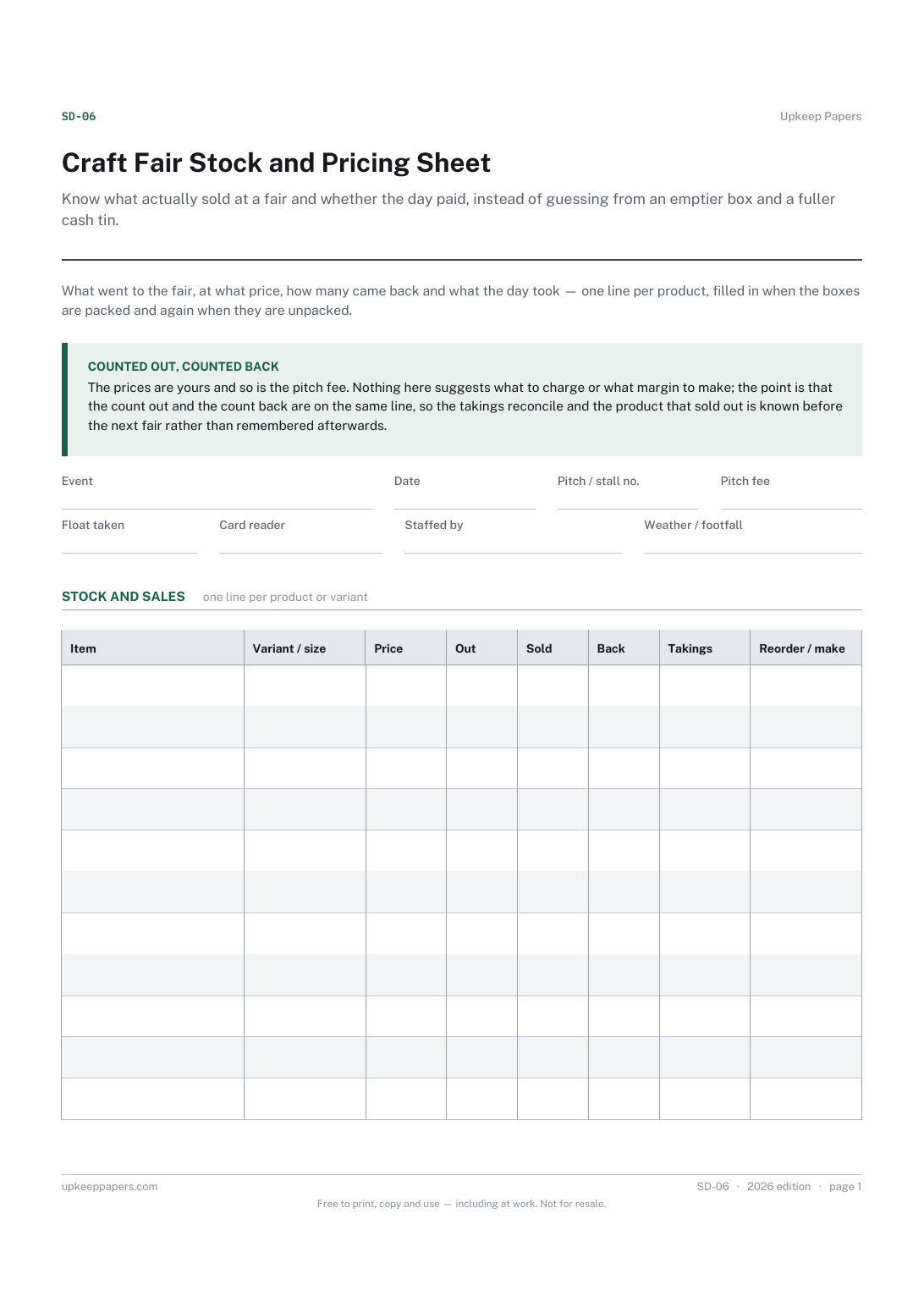
Printed under the title: What went to the fair, at what price, how many came back and what the day took — one line per product, filled in when the boxes are packed and again when they are unpacked.
Counted out, counted back. The prices are yours and so is the pitch fee. Nothing here suggests what to charge or what margin to make; the point is that the count out and the count back are on the same line, so the takings reconcile and the product that sold out is known before the next fair rather than remembered afterwards.
Write-on lines: Event · Date · Pitch / stall no. · Pitch fee · Float taken · Card reader · Staffed by · Weather / footfall
Table, 30 rows: Item · Variant / size · Price · Out · Sold · Back · Takings · Reorder / make
Write-on lines: Cash takings · Card takings · Total takings · Costs (fee, travel, food) · Net
Because pricing is yours — it depends on your materials, your time and your market. The sheet takes the price you have decided and makes sure the count and the takings agree with it at the end of the day.
Write the bundle as its own line, or note the discount against the item in the reorder column, so the takings still reconcile against the stock count.
Publish your prices with the inclusions spelled out beside them, which is what stops the conversation about what was and was not covered.
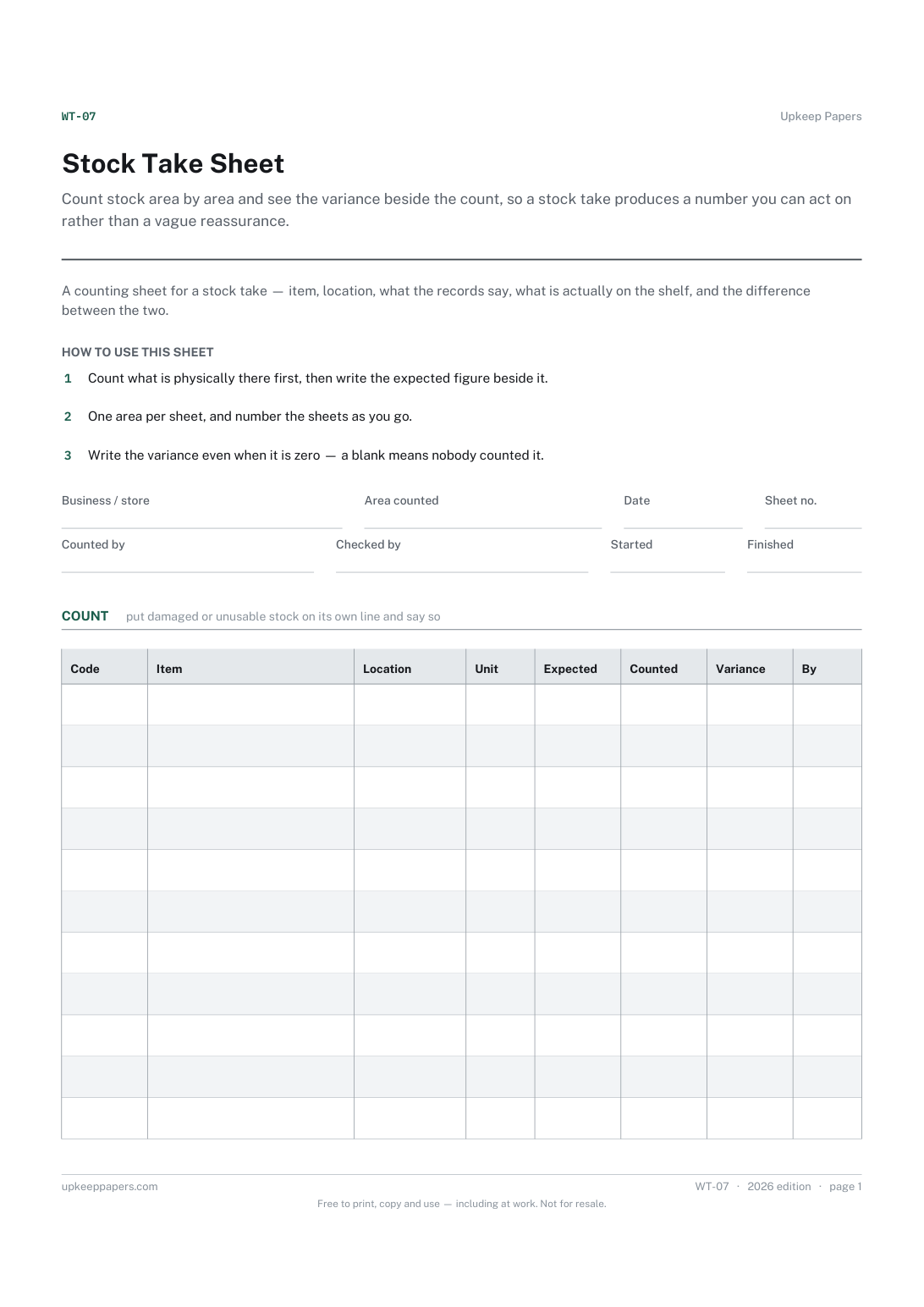
Count stock area by area and see the variance beside the count, so a stock take produces a number you can act on rather than a vague reassurance.
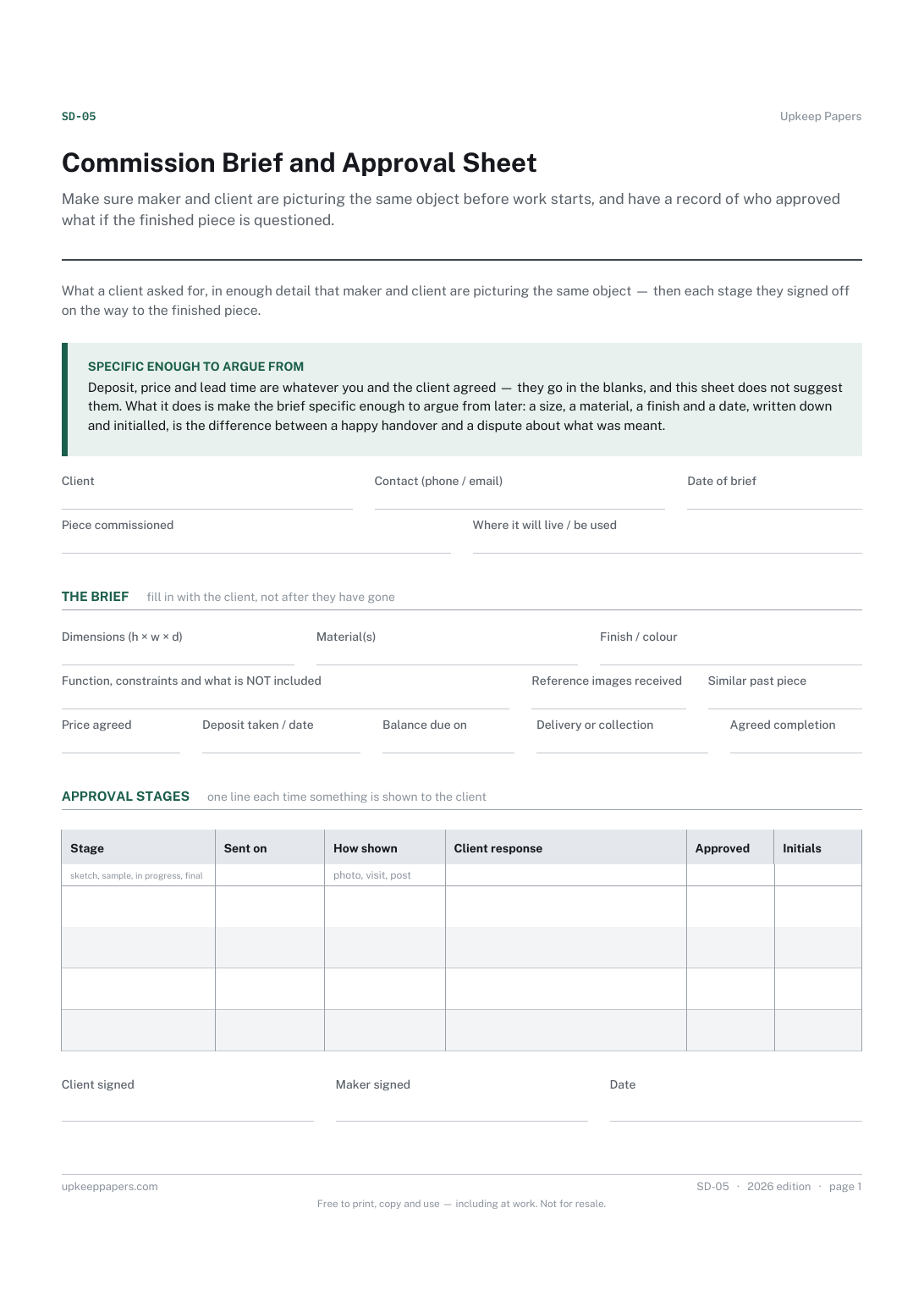
Make sure maker and client are picturing the same object before work starts, and have a record of who approved what if the finished piece is questioned.
See at a glance which invoices are out, which are late and when each was last chased, which is the information that actually gets invoices paid.
The same subject, with a version you can fill in on screen.
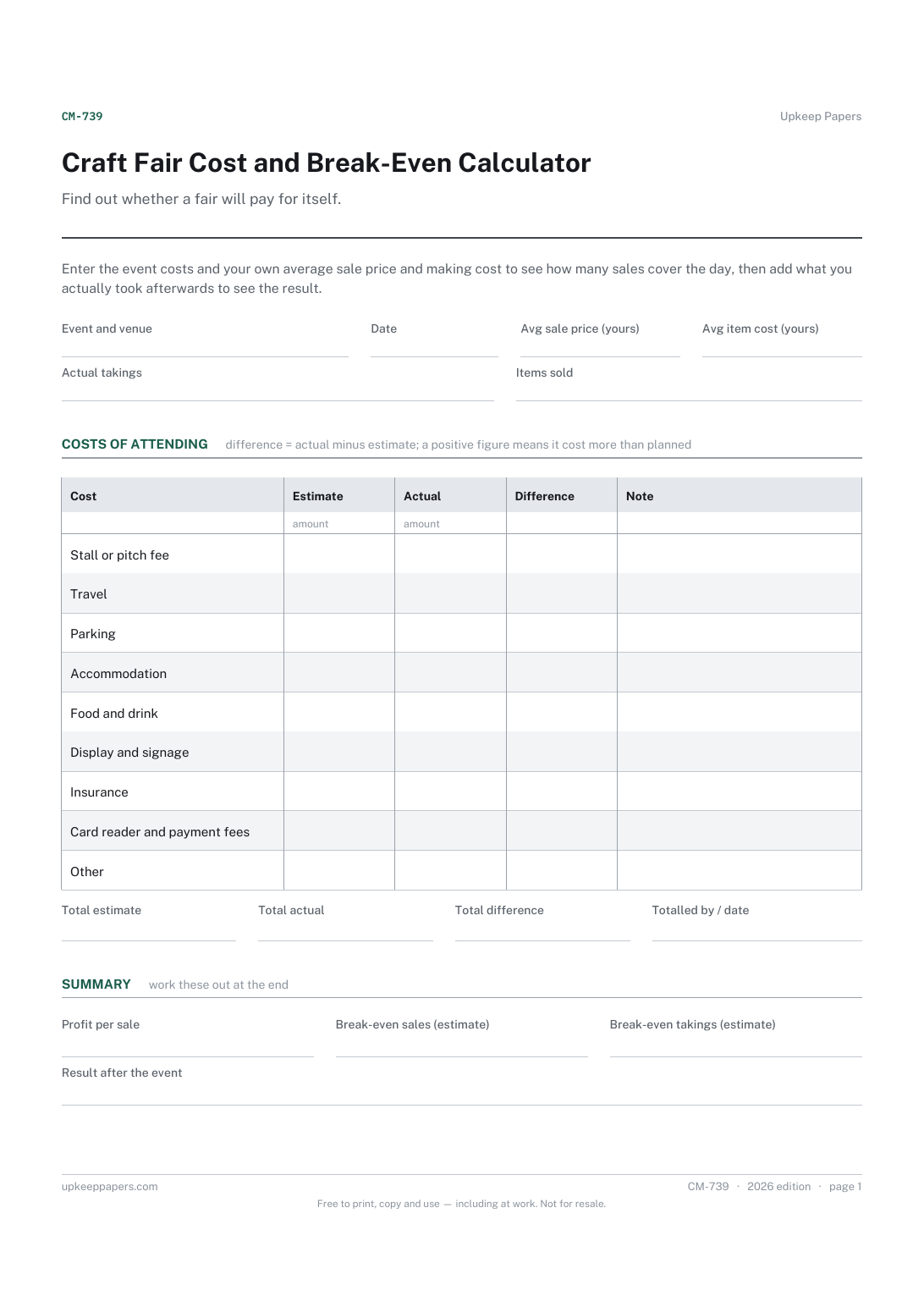
Every cost of attending, estimated and then actual.
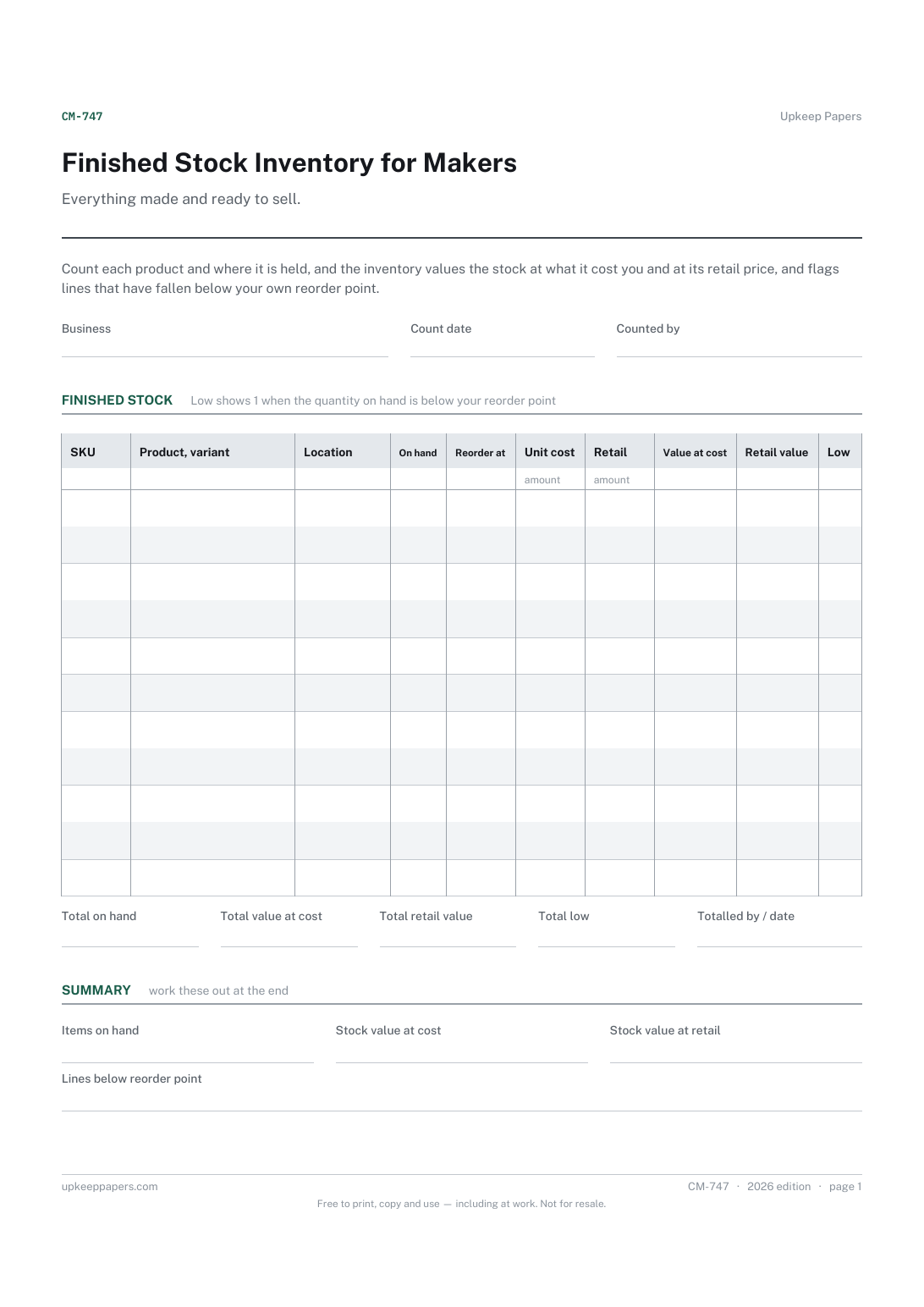
Each product and variant by SKU and where it is held.
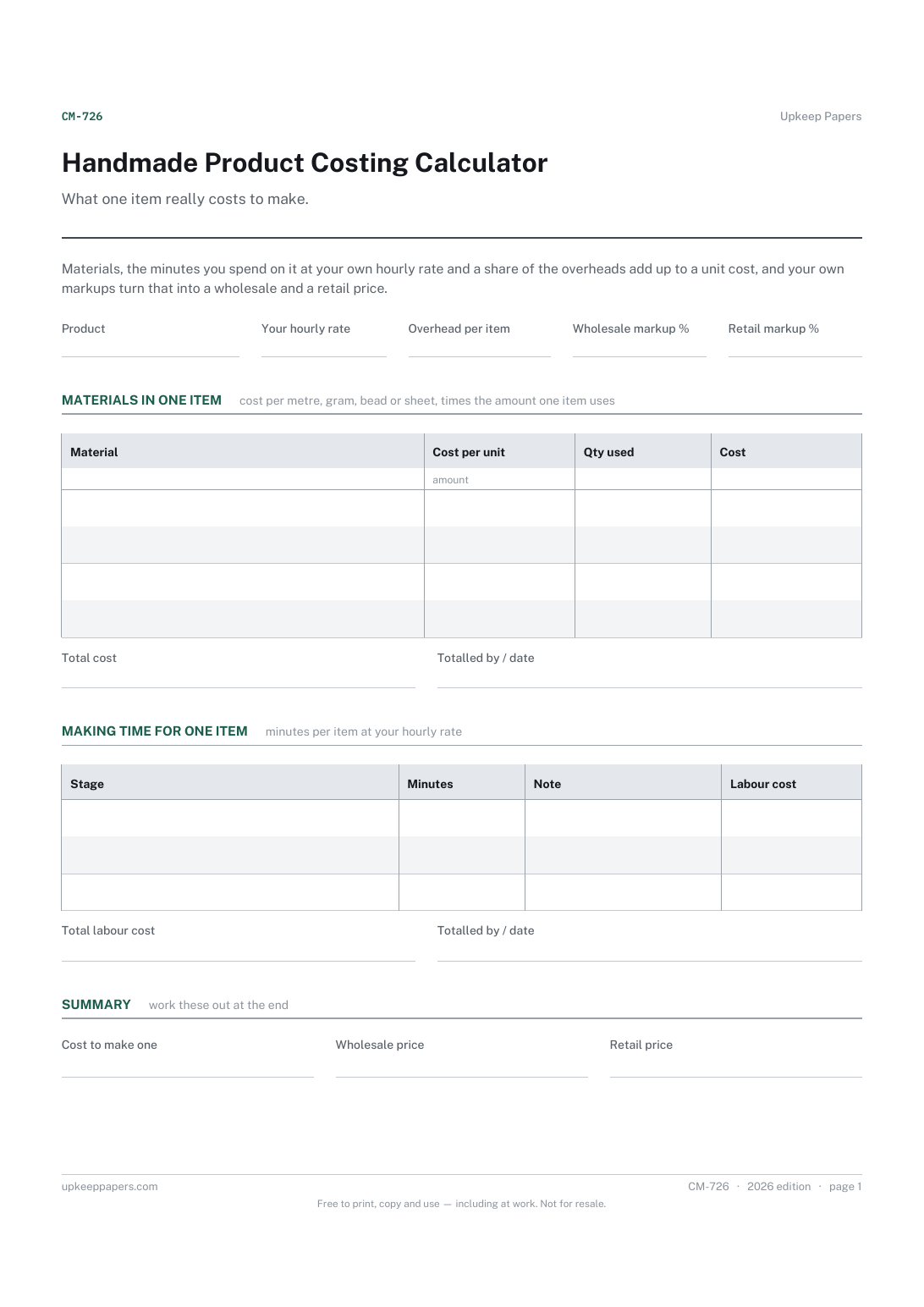
Every material in the item and what the amount used actually costs.
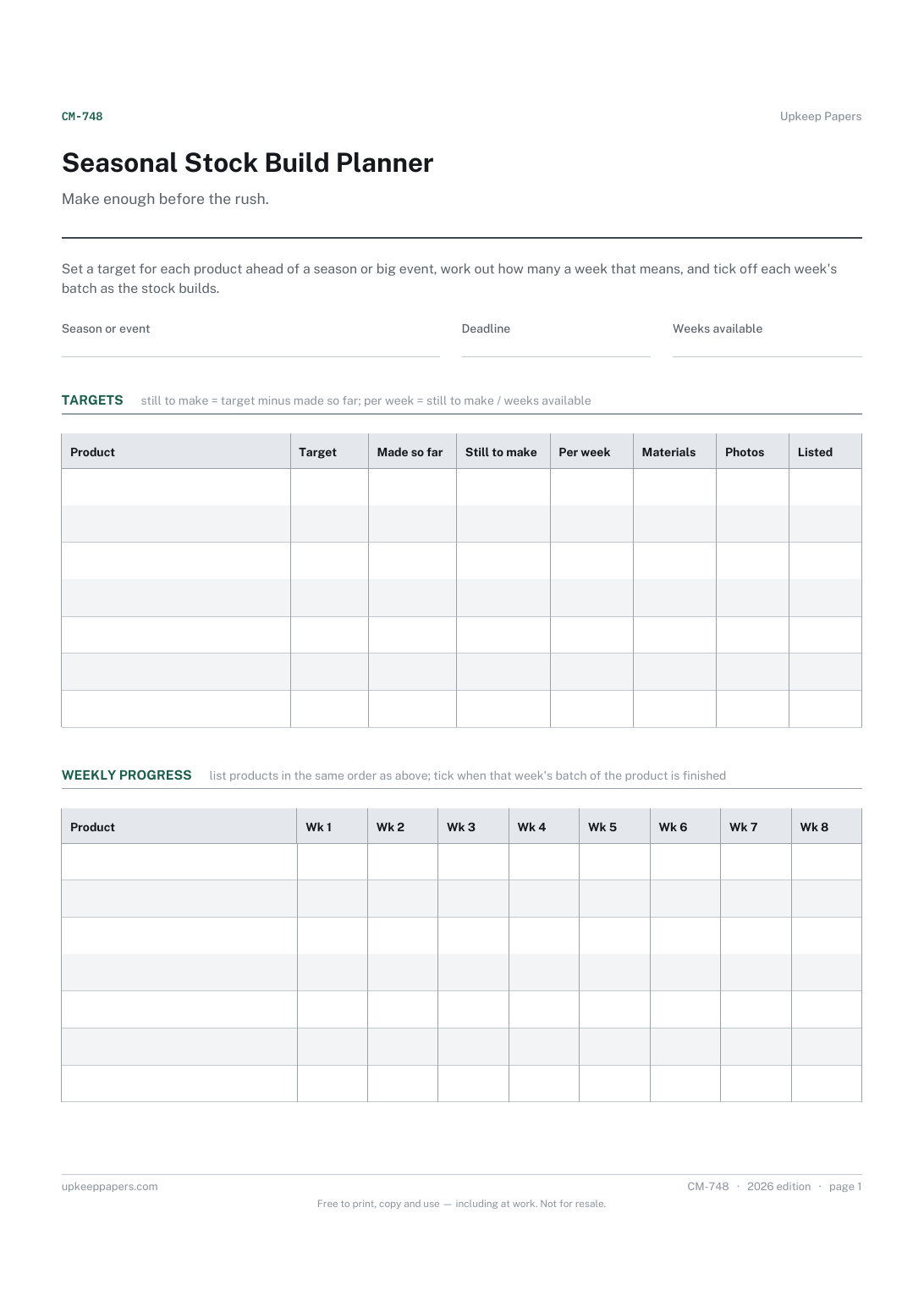
The season or event, the deadline and the weeks left.

Every sheet, binder, game and puzzle on Upkeep Papers is free to download, with no email and no account. Making them is not free: each one takes days of research, design and checking, and the site costs money to run. If something here saved you time, you can buy us a coffee. It is entirely optional: nothing is locked, and nothing changes if you don’t.
Buy us a coffee Opens PayPal in a new tab. Any amount, and nothing changes if you would rather not.