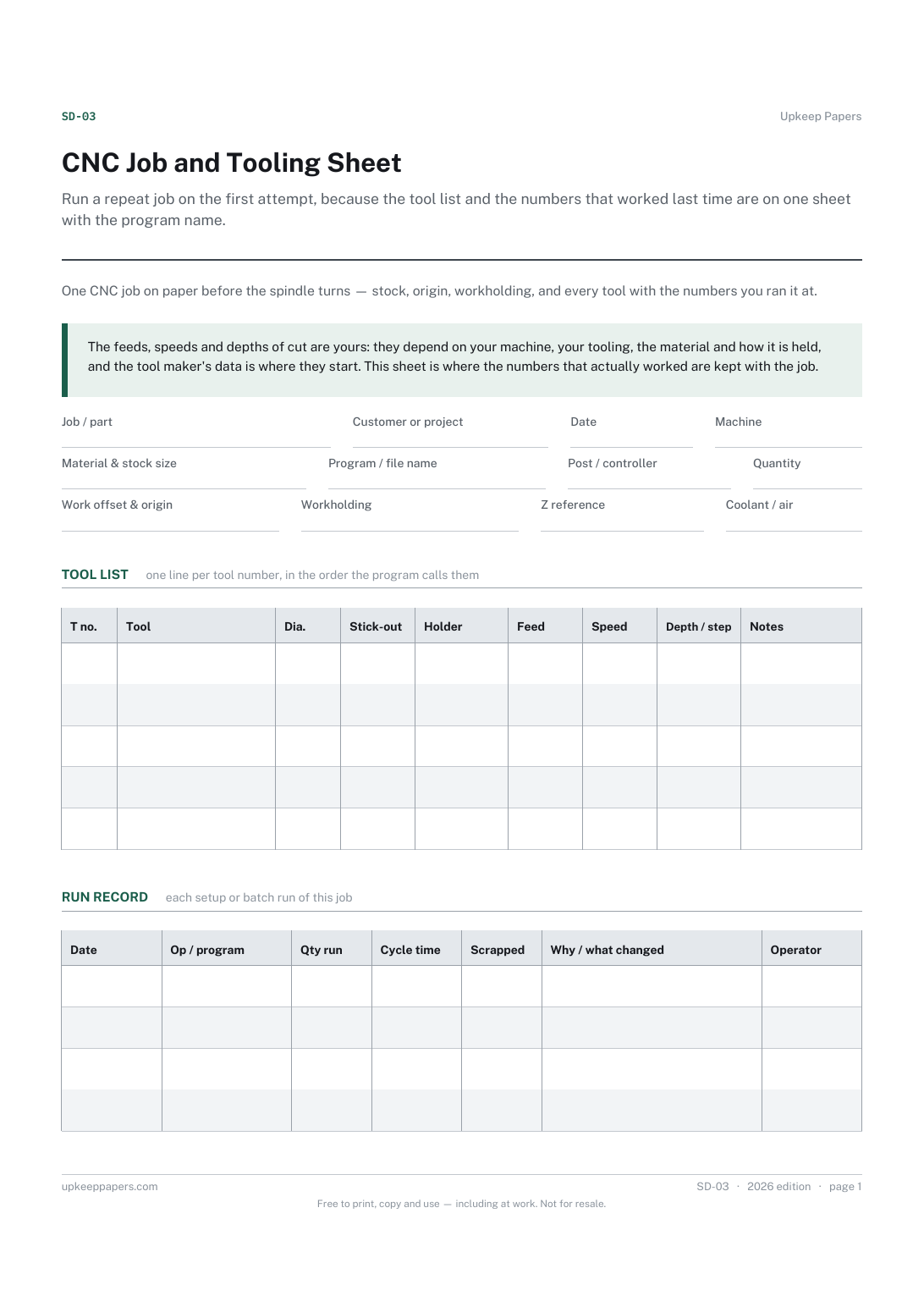
CNC Job and Tooling Sheet
Run a repeat job on the first attempt, because the tool list and the numbers that worked last time are on one sheet with the program name.
SD-03 1 page
Everything here is free. Making it takes time and money. Everything here is free.
 Buy us a coffee
Studio crafts and making · SD-01
A free printable forge project log sheet — stock used, every heat and operation in order, heat treatment and finish, for one forged piece from bar to bench.
One page. Choose your paper size — both versions are laid out identically, so neither one gets shrunk to fit.
Print it and write on it
Fill it in type and save
The fillable versions have real form fields — open them in any PDF reader, type into them and save. Printing help.
Turn a piece that came out right into one you can make again, by having the steel, the sequence of heats and the quench written down against it.
Blacksmiths, bladesmiths and hobby forgers working alone or in a shared forge, and students keeping a record of set pieces.
One page, top to bottom:
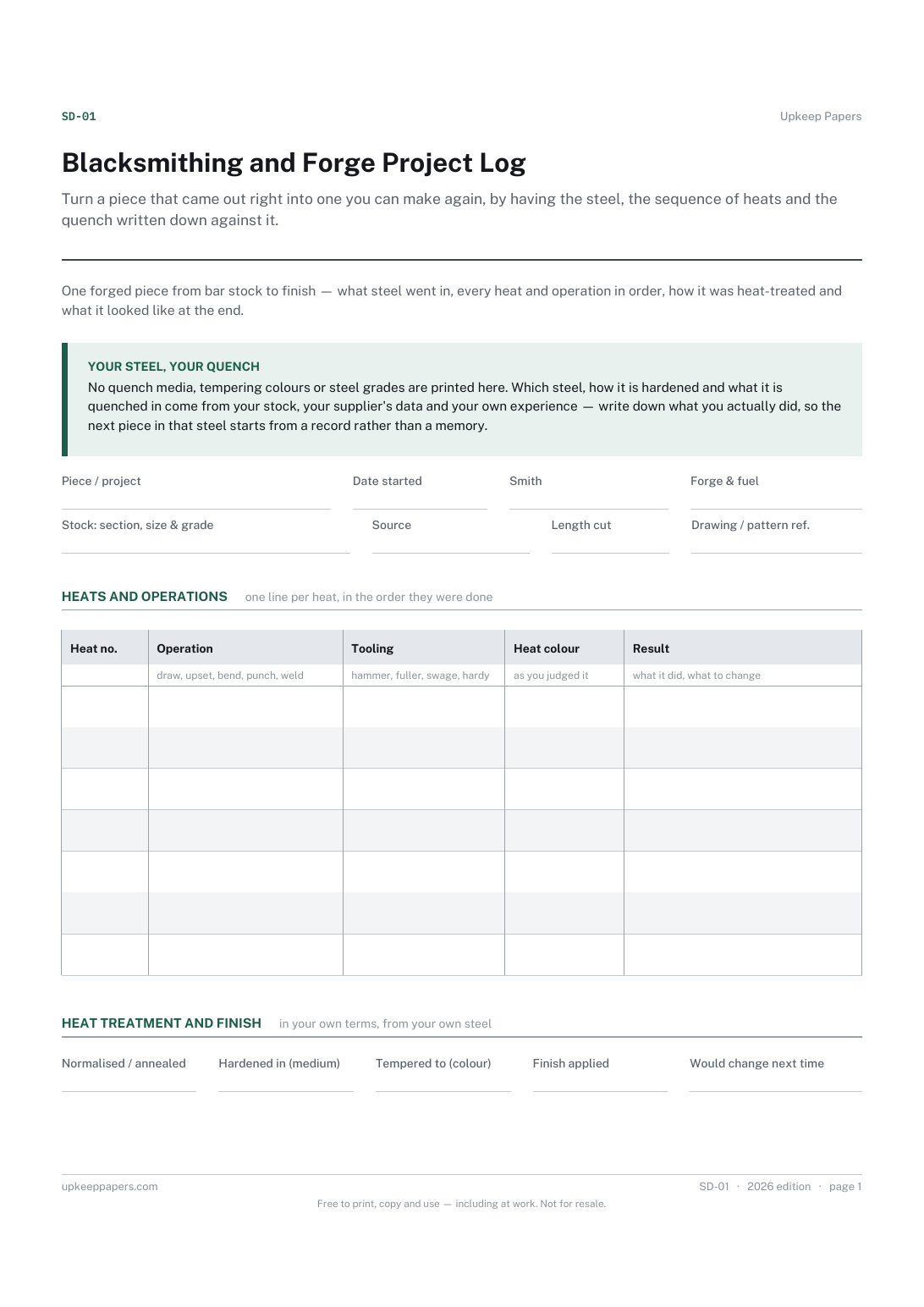
Printed under the title: One forged piece from bar stock to finish — what steel went in, every heat and operation in order, how it was heat-treated and what it looked like at the end.
Your steel, your quench. No quench media, tempering colours or steel grades are printed here. Which steel, how it is hardened and what it is quenched in come from your stock, your supplier's data and your own experience — write down what you actually did, so the next piece in that steel starts from a record rather than a memory.
Write-on lines: Piece / project · Date started · Smith · Forge & fuel · Stock: section, size & grade · Source · Length cut · Drawing / pattern ref.
Table, 7 rows: Heat no. · Operation · Tooling · Heat colour · Result
Write-on lines: Normalised / annealed · Hardened in (medium) · Tempered to (colour) · Finish applied · Would change next time
Because they depend on the steel, and the steel is yours. The same colour means different things in different grades, and the right quench comes from your supplier's data and your own tests. The sheet gives you the blanks; you supply what you actually did.
Each time the piece goes back in the fire and comes out to be worked. Numbering them is the quickest way to see afterwards how much of a piece's forging was productive and how much was reheating.
Run a repeat job on the first attempt, because the tool list and the numbers that worked last time are on one sheet with the program name.
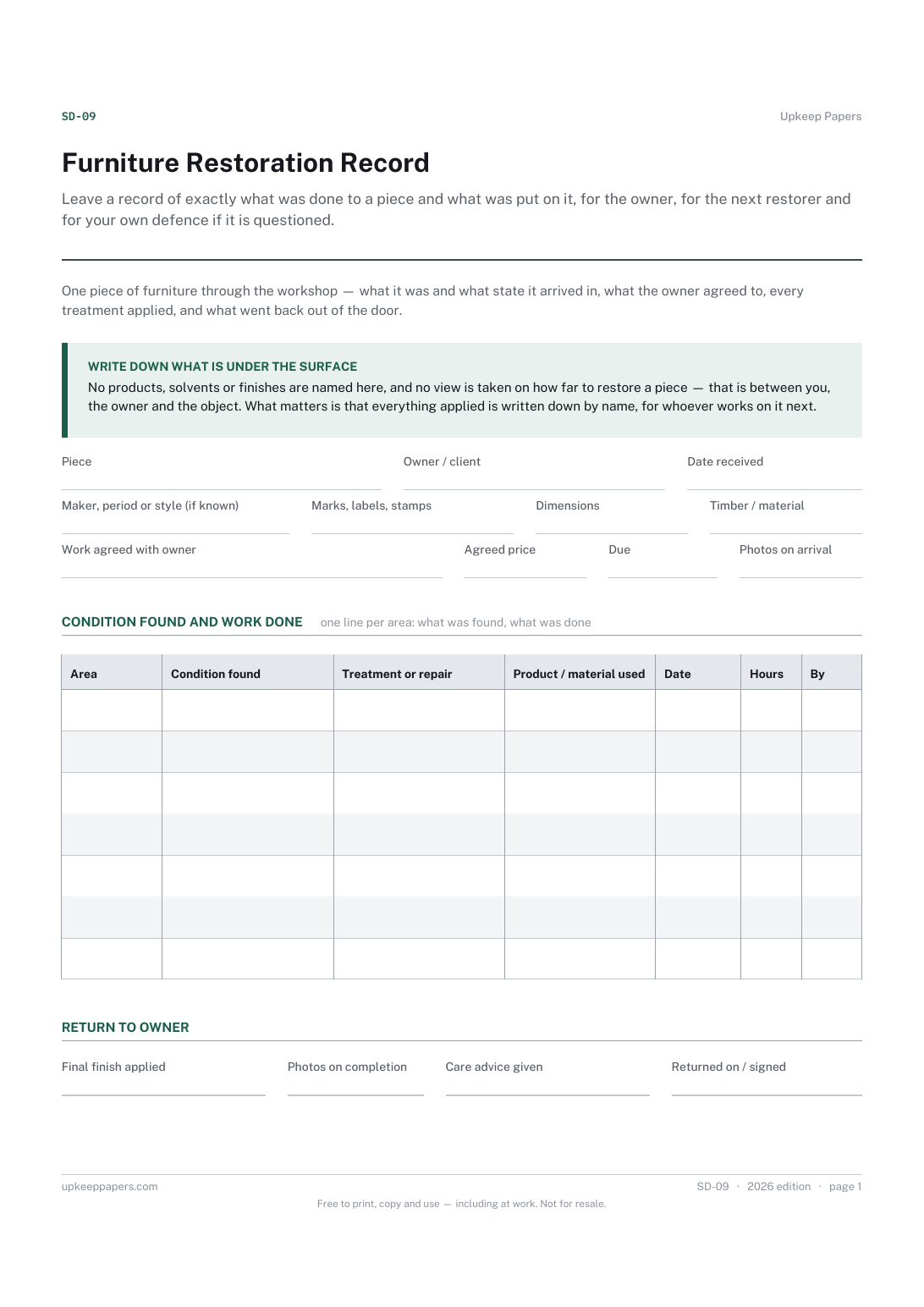
Leave a record of exactly what was done to a piece and what was put on it, for the owner, for the next restorer and for your own defence if it is questioned.
Record the things a finished object cannot tell you later: which dye lot, which hook you really used, and how much was left over.
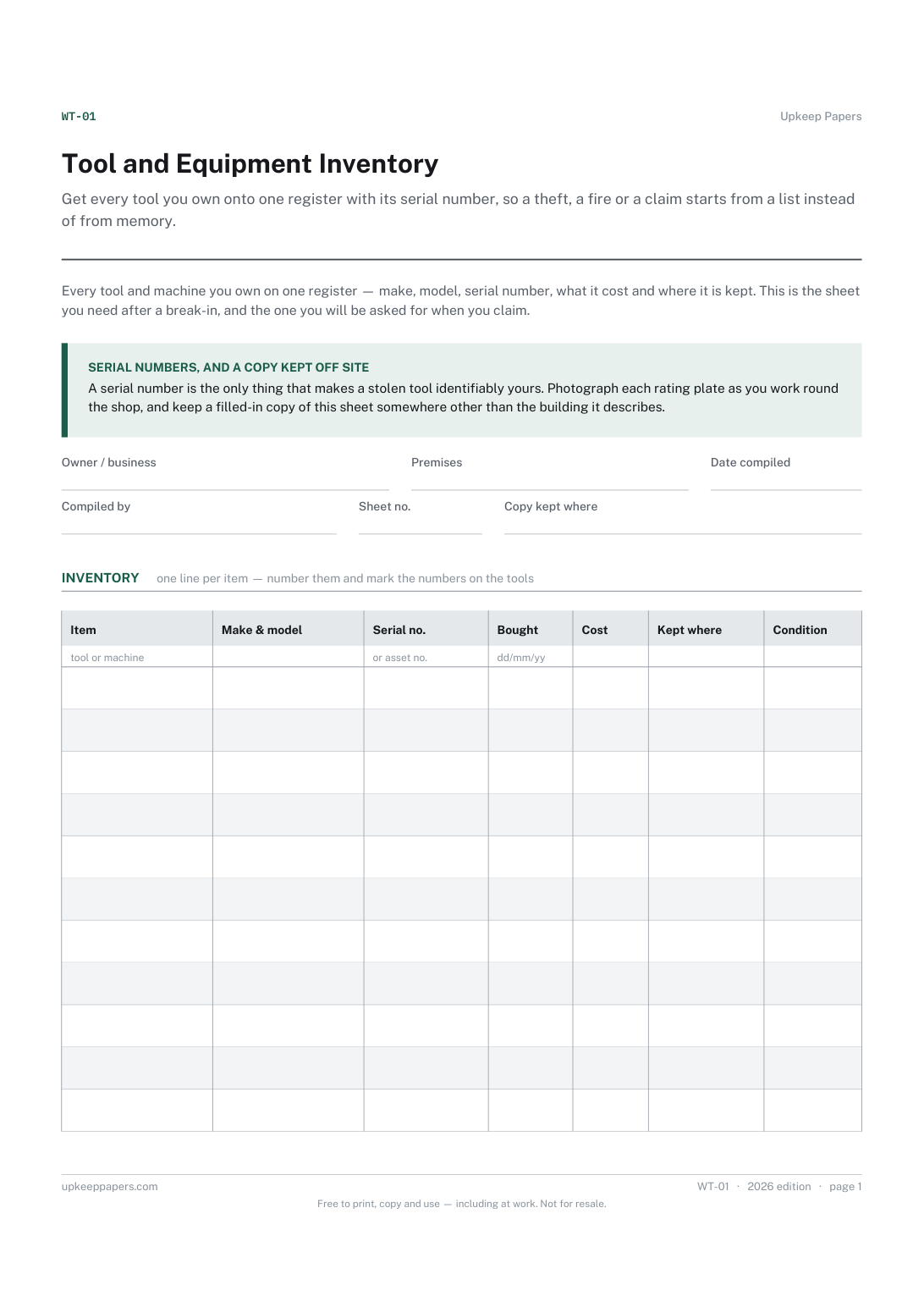
Get every tool you own onto one register with its serial number, so a theft, a fire or a claim starts from a list instead of from memory.

Every sheet, binder, game and puzzle on Upkeep Papers is free to download, with no email and no account. Making them is not free: each one takes days of research, design and checking, and the site costs money to run. If something here saved you time, you can buy us a coffee. It is entirely optional: nothing is locked, and nothing changes if you don’t.
Buy us a coffee Opens PayPal in a new tab. Any amount, and nothing changes if you would rather not.