Kayak and Paddle Trip Plan
Put the trip on paper before you launch and leave a copy behind, so somebody knows where you went and when to worry.
OP-02 2 pages
Everything here is free. Making it takes time and money. Everything here is free.
 Buy us a coffee
Outdoor pursuits · OP-11
A free printable kayak and canoe inspection checklist: hull, keel strip, hatches, bulkheads, deck lines, cockpit, rudder and paddles marked OK, fault or fixed.
One page. Choose your paper size — both versions are laid out identically, so neither one gets shrunk to fit.
Print it and write on it
Fill it in type and save
The fillable versions have real form fields — open them in any PDF reader, type into them and save. Printing help.
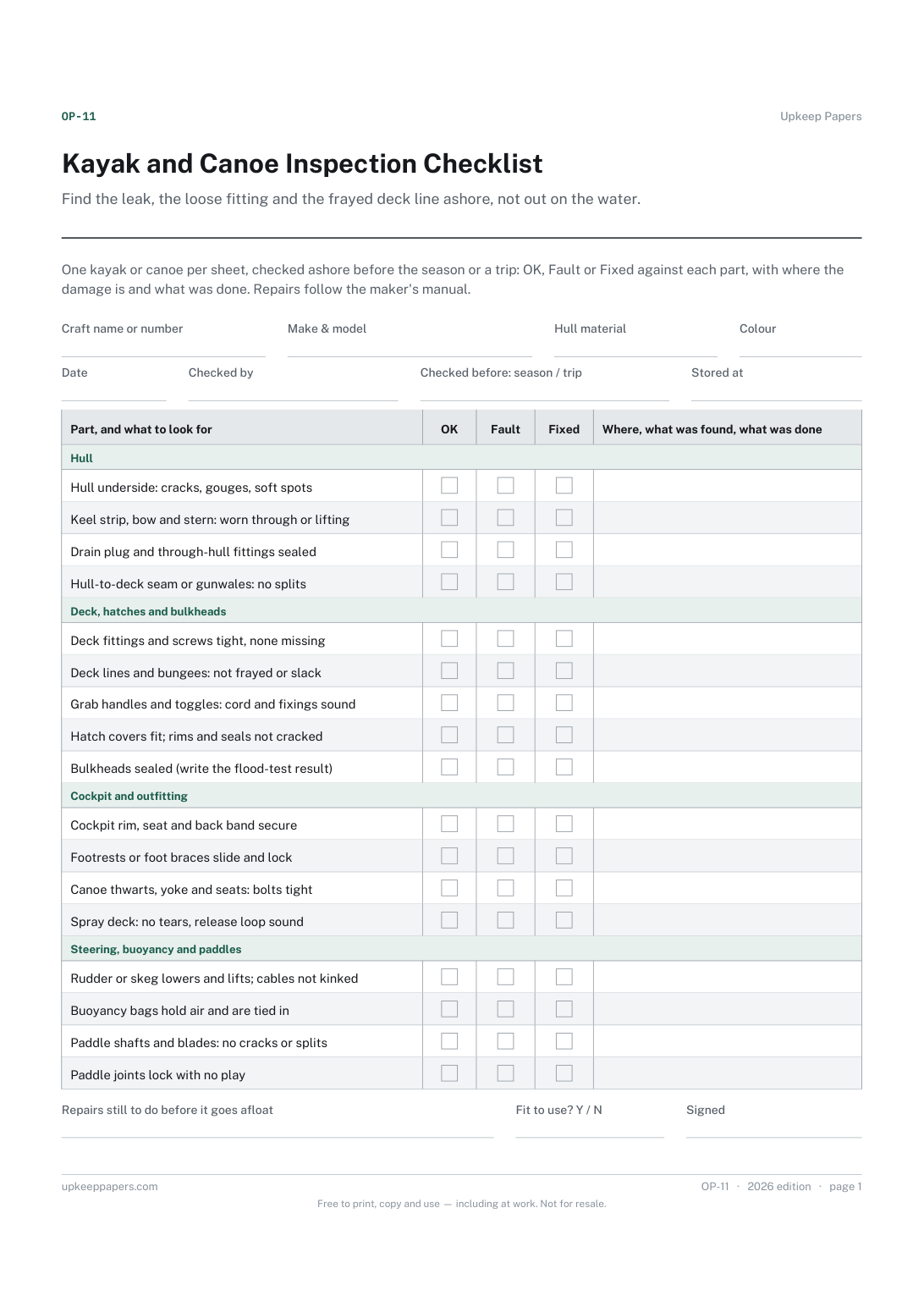
Find the leak, the loose fitting and the frayed deck line ashore, not out on the water. Each part gets a tick and a note of where the damage is, so the list of repairs writes itself.
Kayak and canoe owners, paddling clubs and centres checking a fleet, and anyone looking over a used boat.
One page, top to bottom:
Printed under the title: One kayak or canoe per sheet, checked ashore before the season or a trip: OK, Fault or Fixed against each part, with where the damage is and what was done. Repairs follow the maker's manual.
Write-on lines: Craft name or number · Make & model · Hull material · Colour · Date · Checked by · Checked before: season / trip · Stored at
Also printed: Part, and what to look for · Fault · Fixed · Where, what was found, what was done · Hull · Hull underside: cracks, gouges, soft spots · Keel strip, bow and stern: worn through or lifting · Drain plug and through-hull fittings sealed · Hull-to-deck seam or gunwales: no splits · Deck, hatches and bulkheads · Deck fittings and screws tight, none missing · Deck lines and bungees: not frayed or slack · Grab handles and toggles: cord and fixings sound · Hatch covers fit; rims and seals not cracked · Bulkheads sealed (write the flood-test result) · Cockpit and outfitting · Cockpit rim, seat and back band secure · Footrests or foot braces slide and lock · Canoe thwarts, yoke and seats: bolts tight · Spray deck: no tears, release loop sound · Steering, buoyancy and paddles · Rudder or skeg lowers and lifts; cables not kinked · Buoyancy bags hold air and are tied in · Paddle shafts and blades: no cracks or splits · Paddle joints lock with no play
Write-on lines: Repairs still to do before it goes afloat · Fit to use? Y / N · Signed
Because what a scratch, a soft spot or a worn keel strip means depends on the hull material, the maker and the water you paddle. The sheet records what you found and where; the repair, and whether the boat is fit to use meanwhile, follow the maker's manual or a repairer's advice.
Only partly. Inflatables have their own sheet, the inflatable paddleboard and kayak pressure test record, which logs hold tests, valves and seams. Use this one for hard-shell kayaks and canoes.
Put the trip on paper before you launch and leave a copy behind, so somebody knows where you went and when to worry.
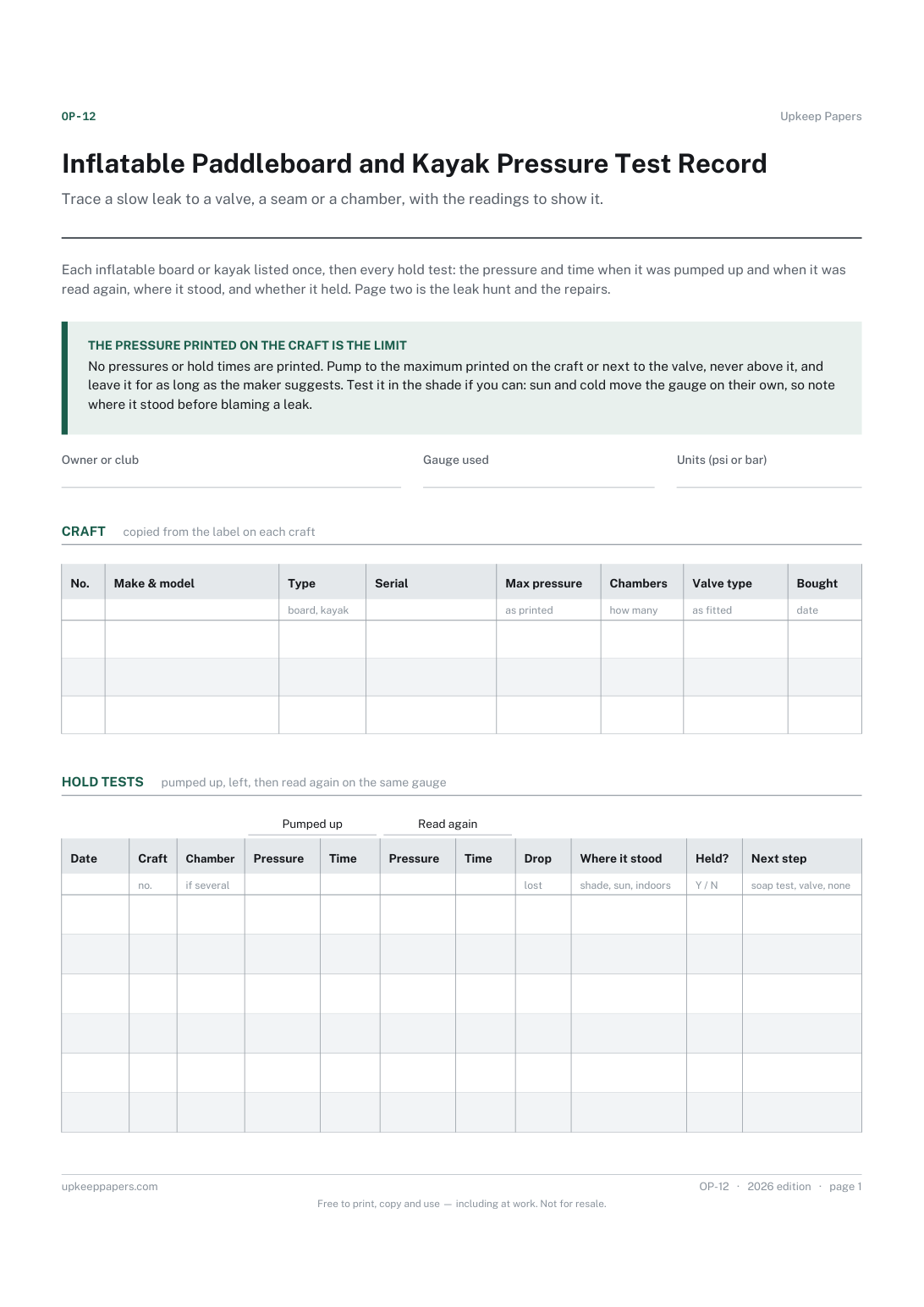
Trace a slow leak to a valve, a seam or a chamber, with the readings to show it. The condition checks catch a cracked fin box or a frayed leash at the same time.
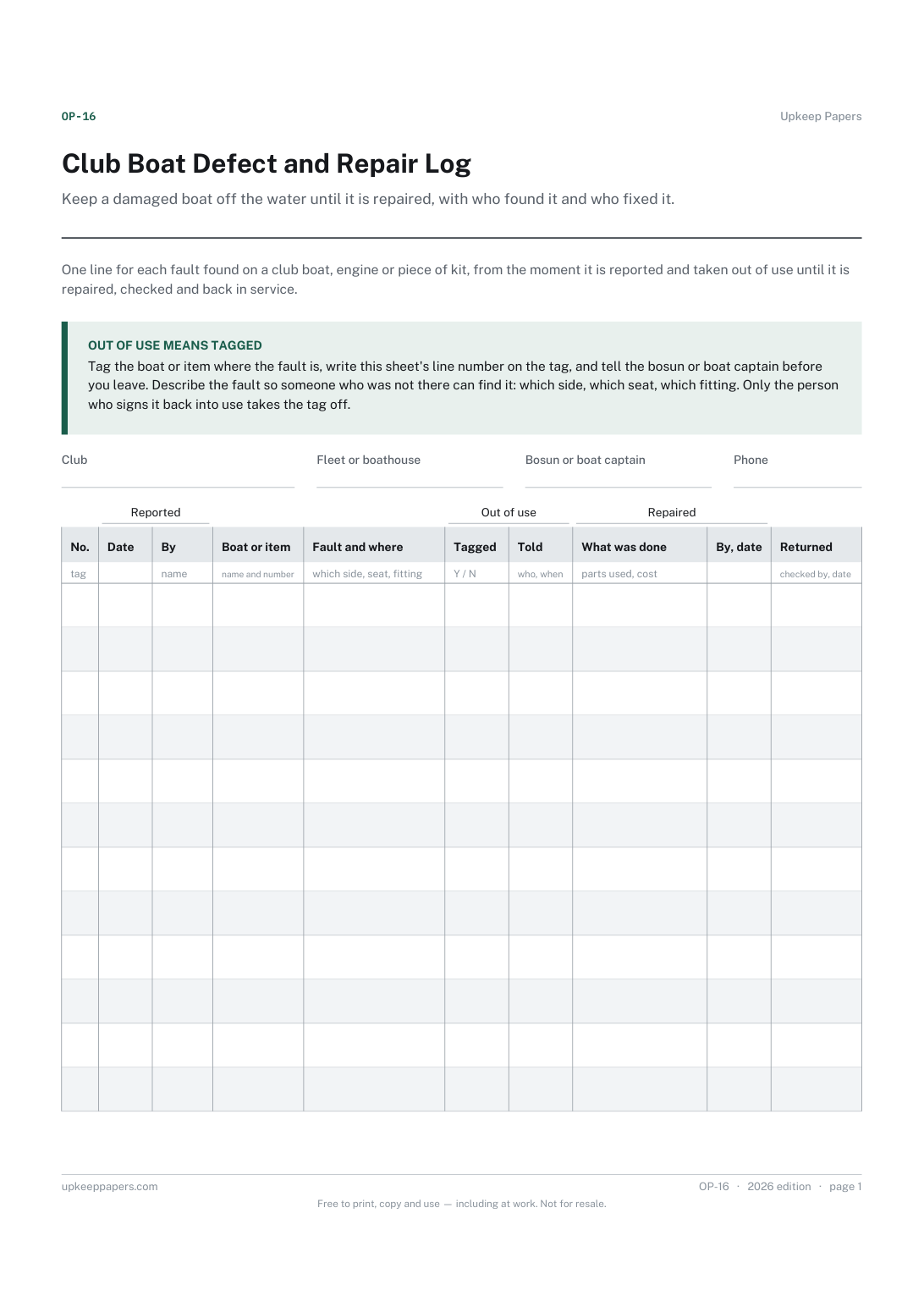
Keep a damaged boat off the water until it is repaired, with who found it and who fixed it. The numbered tag ties the boat to its line on the sheet.
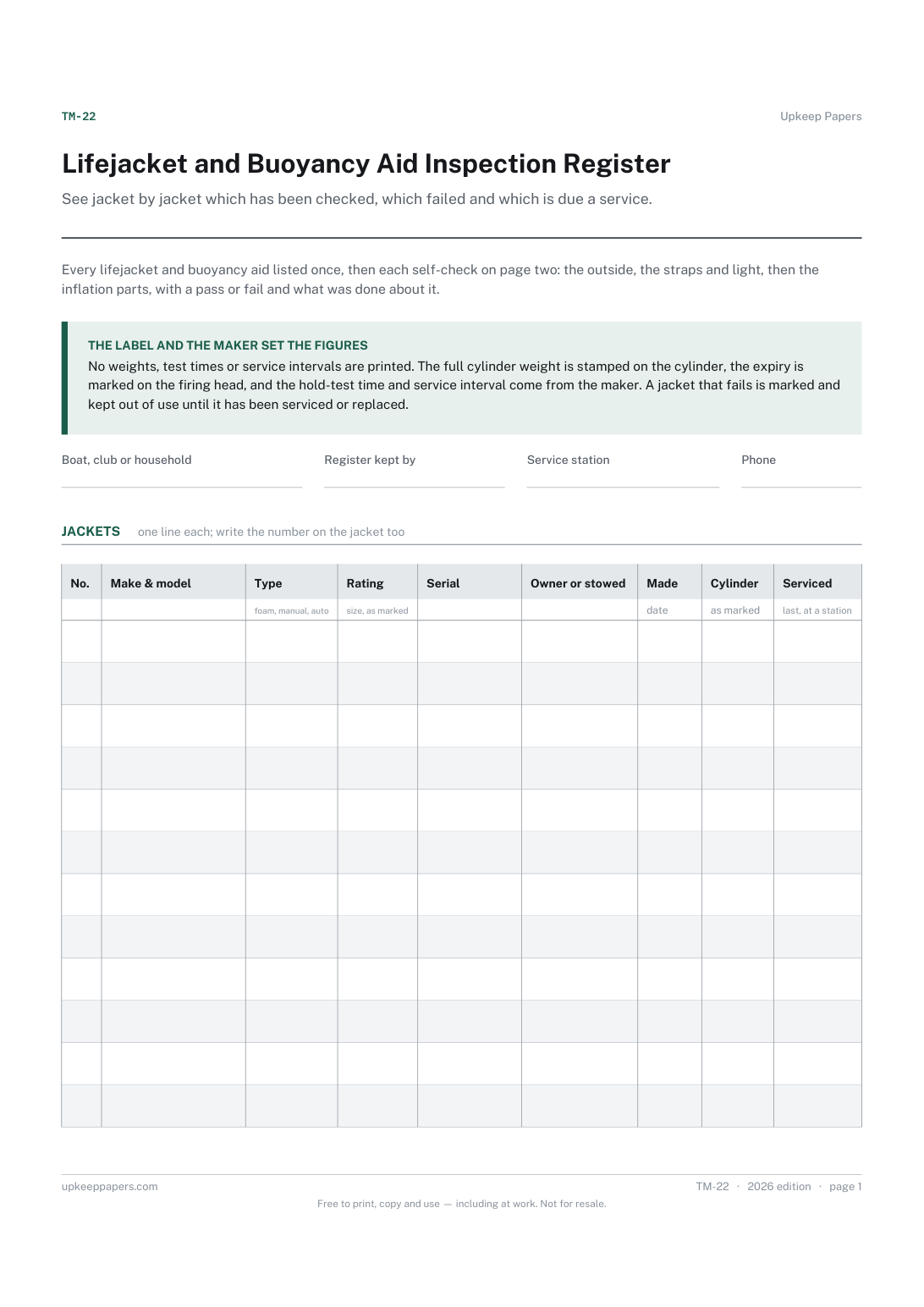
See jacket by jacket which has been checked, which failed and which is due a service. A jacket that fails is withdrawn by number instead of going back in the locker.

Every sheet, binder, game and puzzle on Upkeep Papers is free to download, with no email and no account. Making them is not free: each one takes days of research, design and checking, and the site costs money to run. If something here saved you time, you can buy us a coffee. It is entirely optional: nothing is locked, and nothing changes if you don’t.
Buy us a coffee Opens PayPal in a new tab. Any amount, and nothing changes if you would rather not.