Used Car Pre-Purchase Inspection Sheet
Carry out the same inspection on every car you view, so a decision made in somebody's driveway is based on what you saw rather than what you remember.
VB-01 2 pages
Everything here is free. Making it takes time and money. Everything here is free.
 Buy us a coffee
Moving and buying · MB-12
A free printable auction bid sheet — lots, condition notes, your total limit worked back to a maximum hammer price, and what each lot actually sold for.

One page. Choose your paper size — both versions are laid out identically, so neither one gets shrunk to fit.
Print it and write on it
Fill it in type and save
The fillable versions have real form fields — open them in any PDF reader, type into them and save. Printing help.
Set your limit in writing before bidding starts, with the premium and fees included, so the number you bid to is one you decided calmly.
Buyers at general, classic vehicle, antique, machinery, house-clearance and online timed auctions.
One page, top to bottom:
Printed under the title: The lots you want, the most you will pay for each, and what they actually went for — written before the room warms up.
Write the limit before you are in the room. The whole value of this sheet is that the limit is written down before bidding starts. Work out the total cost including the buyer's premium, any taxes and getting the thing home, because that is what you actually pay — the hammer price never is.
How to use this sheet
Write-on lines: Auction house · Sale and date · Buyer's premium · Taxes and fees
Table, 7 rows: Lot · Description · Viewed · Condition noted · Estimate · My total limit · Max hammer · Bid to · Sold for · Won
Write-on lines: Total spent · Premium and fees · Collection by · Transport arranged
Because the hammer price is never what you pay. Premium, taxes, any online surcharge and getting the thing home can add a substantial amount, and people discover that after the hammer has fallen. Deciding the total first is the entire point of the sheet.
Carry out the same inspection on every car you view, so a decision made in somebody's driveway is based on what you saw rather than what you remember.
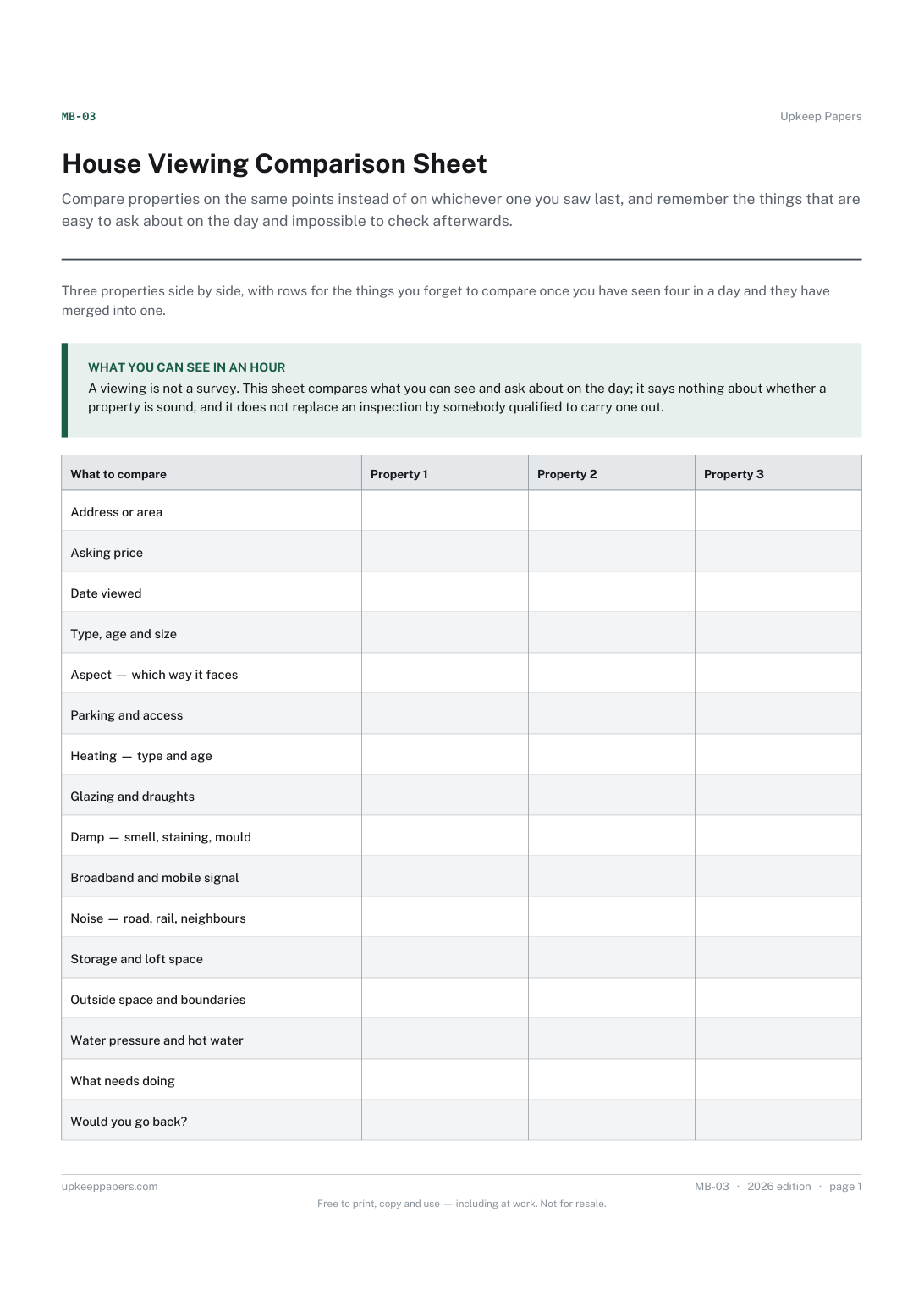
Compare properties on the same points instead of on whichever one you saw last, and remember the things that are easy to ask about on the day and impossible to check afterwards.
Itemise a collection properly, so that identification, acquisition and any valuation exist somewhere other than in your head.
The same subject, with a version you can fill in on screen.
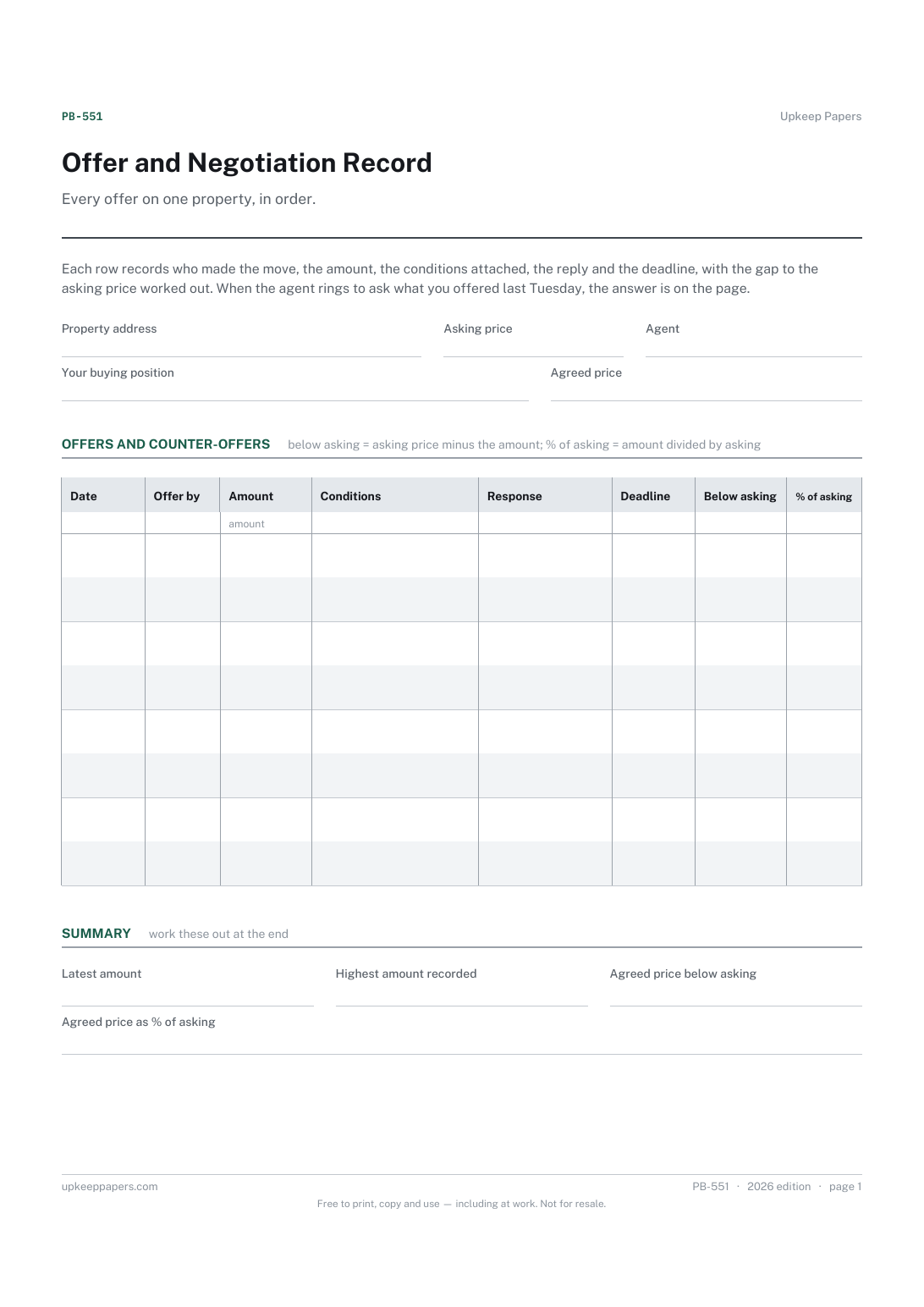
The asking price, the agent and your position as a buyer, kept at the top.
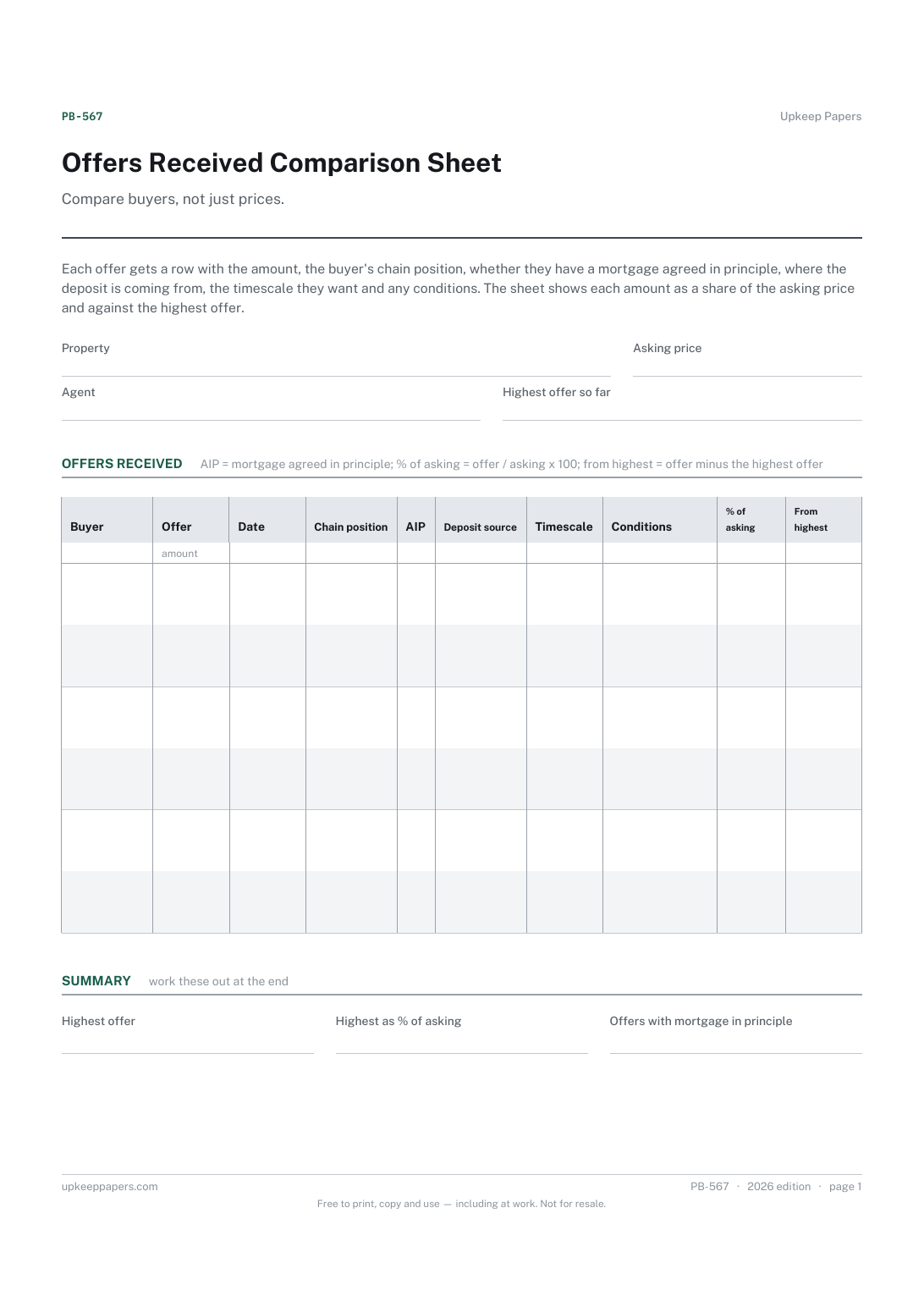
The asking price, set at the top for every comparison.

Every sheet, binder, game and puzzle on Upkeep Papers is free to download, with no email and no account. Making them is not free: each one takes days of research, design and checking, and the site costs money to run. If something here saved you time, you can buy us a coffee. It is entirely optional: nothing is locked, and nothing changes if you don’t.
Buy us a coffee Opens PayPal in a new tab. Any amount, and nothing changes if you would rather not.