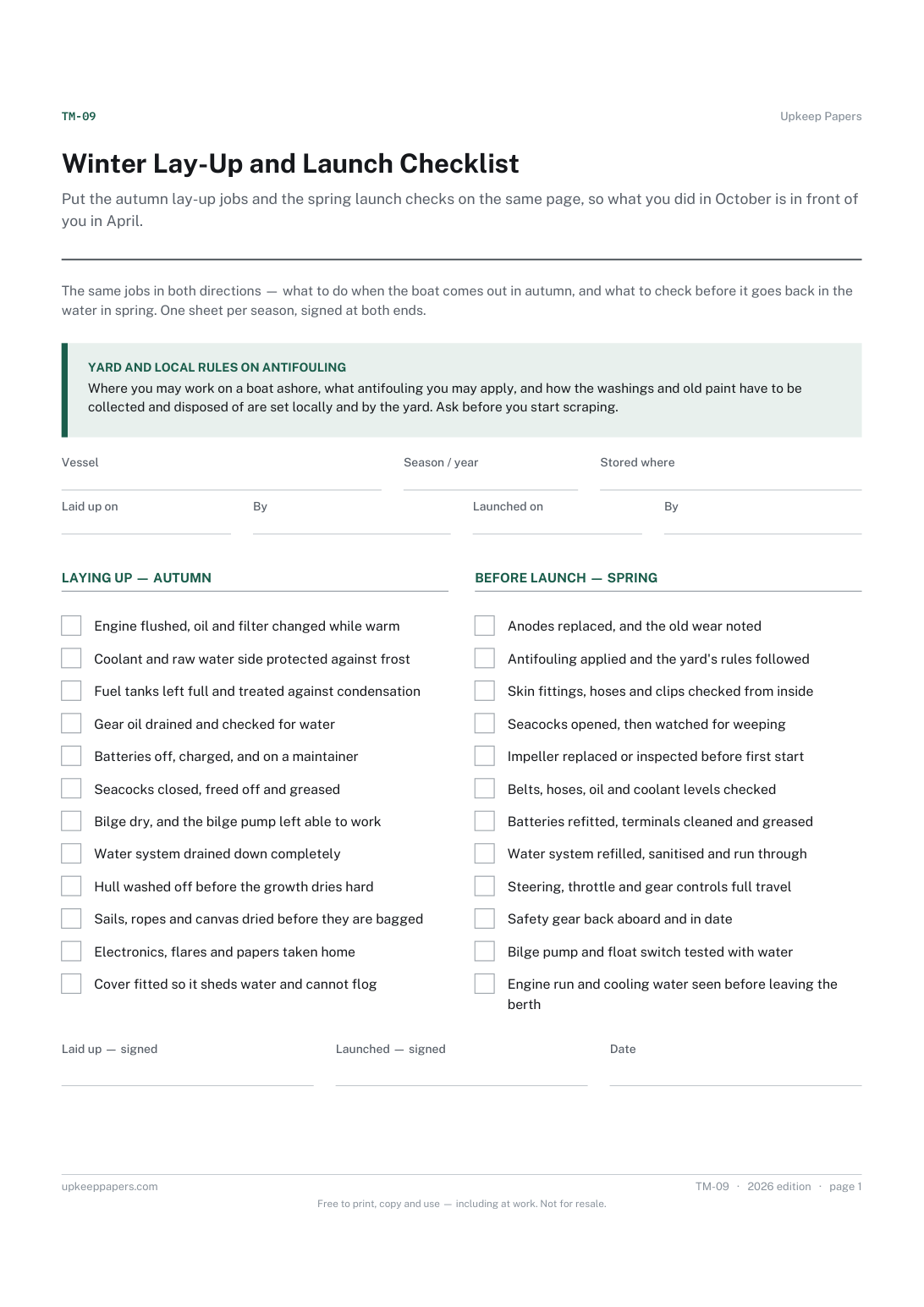
Winter Lay-Up and Launch Checklist
Put the autumn lay-up jobs and the spring launch checks on the same page, so what you did in October is in front of you in April.
TM-09 1 page
Everything here is free. Making it takes time and money. Everything here is free.
 Buy us a coffee
Trailers and marine · TM-25
A free printable standing rigging inspection record: stays, shrouds, terminals, pins, spreaders, chainplates and masthead checked, with rig age and a rigger brief.
2 pages. Choose your paper size — both versions are laid out identically, so neither one gets shrunk to fit.
Print it and write on it
Fill it in type and save
The fillable versions have real form fields — open them in any PDF reader, type into them and save. Printing help.
Track worn terminals, missing split pins and the age of the rig from season to season. Page two goes to the rigger with the photographs and the quote.
Yacht and keelboat owners, and anyone briefing a rigger or answering an insurer's question about the age of a rig.
2 pages, in this order:
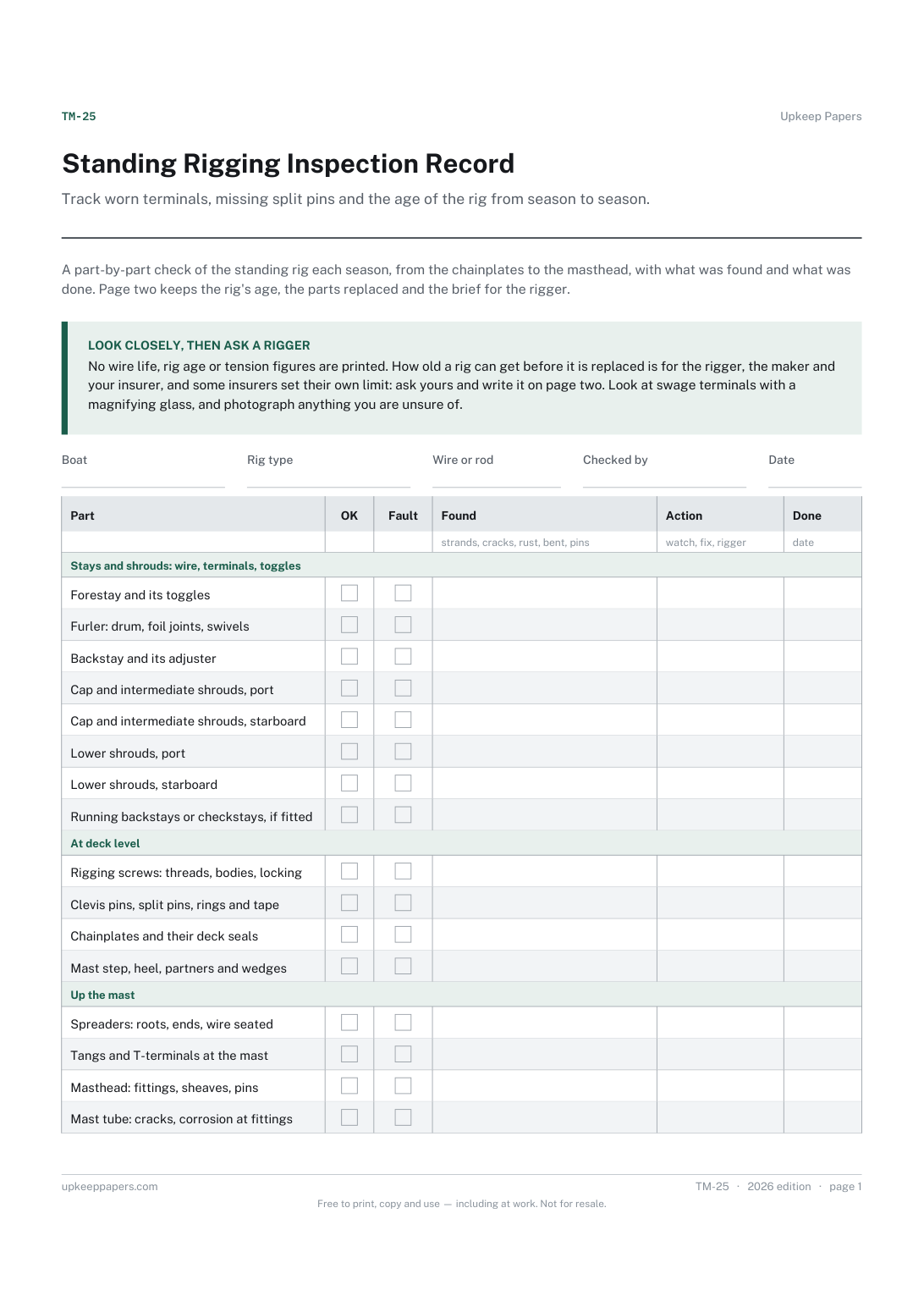
Printed under the title: A part-by-part check of the standing rig each season, from the chainplates to the masthead, with what was found and what was done. Page two keeps the rig's age, the parts replaced and the brief for the rigger.
Look closely, then ask a rigger. No wire life, rig age or tension figures are printed. How old a rig can get before it is replaced is for the rigger, the maker and your insurer, and some insurers set their own limit: ask yours and write it on page two. Look at swage terminals with a magnifying glass, and photograph anything you are unsure of.
Write-on lines: Boat · Rig type · Wire or rod · Checked by · Date
Also printed: Part · Fault · Found · Action · Done · strands, cracks, rust, bent, pins · watch, fix, rigger · date · Stays and shrouds: wire, terminals, toggles · Forestay and its toggles · Furler: drum, foil joints, swivels · Backstay and its adjuster · Cap and intermediate shrouds, port · Cap and intermediate shrouds, starboard · Lower shrouds, port · Lower shrouds, starboard · Running backstays or checkstays, if fitted · At deck level · Rigging screws: threads, bodies, locking · Clevis pins, split pins, rings and tape · Chainplates and their deck seals · Mast step, heel, partners and wedges · Up the mast · Spreaders: roots, ends, wire seated · Tangs and T-terminals at the mast · Masthead: fittings, sheaves, pins · Mast tube: cracks, corrosion at fittings
Write-on lines: Whole rig last replaced · By (rigger) · Replacement age set by insurer or rigger, if any
Table, 7 rows: Part · Size or type · Fitted · By · Why · Cost
Table, 4 rows: Photo · Part · What it shows · Date
Write-on lines: Rigger · Quote ref. · Work quoted · Price · Accepted? Y / N · Work booked for · Next check due · Signed
How long wire and terminals last depends on the boat, the sailing and the climate, and insurers and riggers set their own limits. Write theirs on page two and judge your rig against it.
Not properly. Binoculars help, but the masthead and spreader ends are best seen with the mast down or by someone going aloft safely. Leave a line blank rather than ticking what you could not see.
Put the autumn lay-up jobs and the spring launch checks on the same page, so what you did in October is in front of you in April.
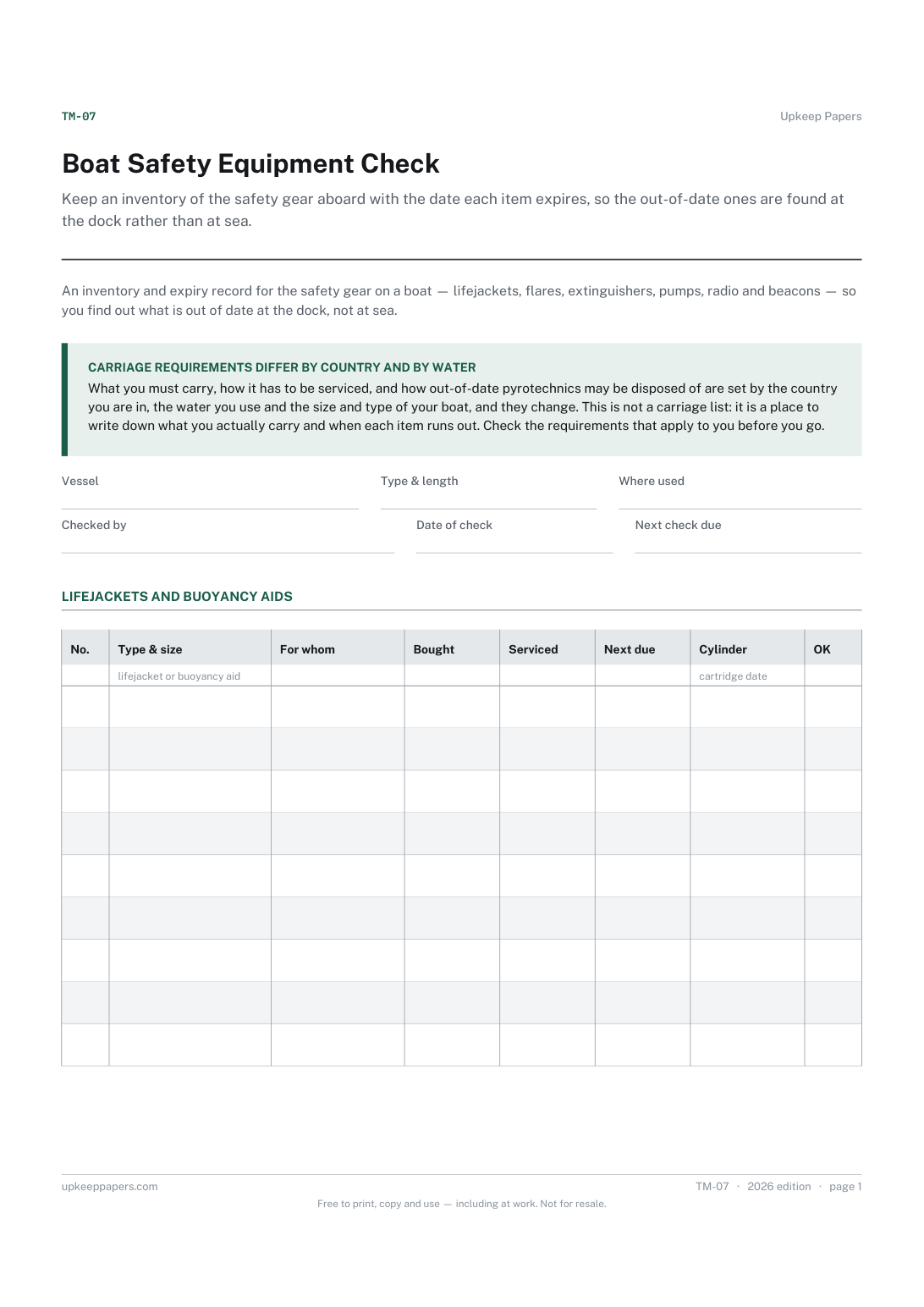
Keep an inventory of the safety gear aboard with the date each item expires, so the out-of-date ones are found at the dock rather than at sea.
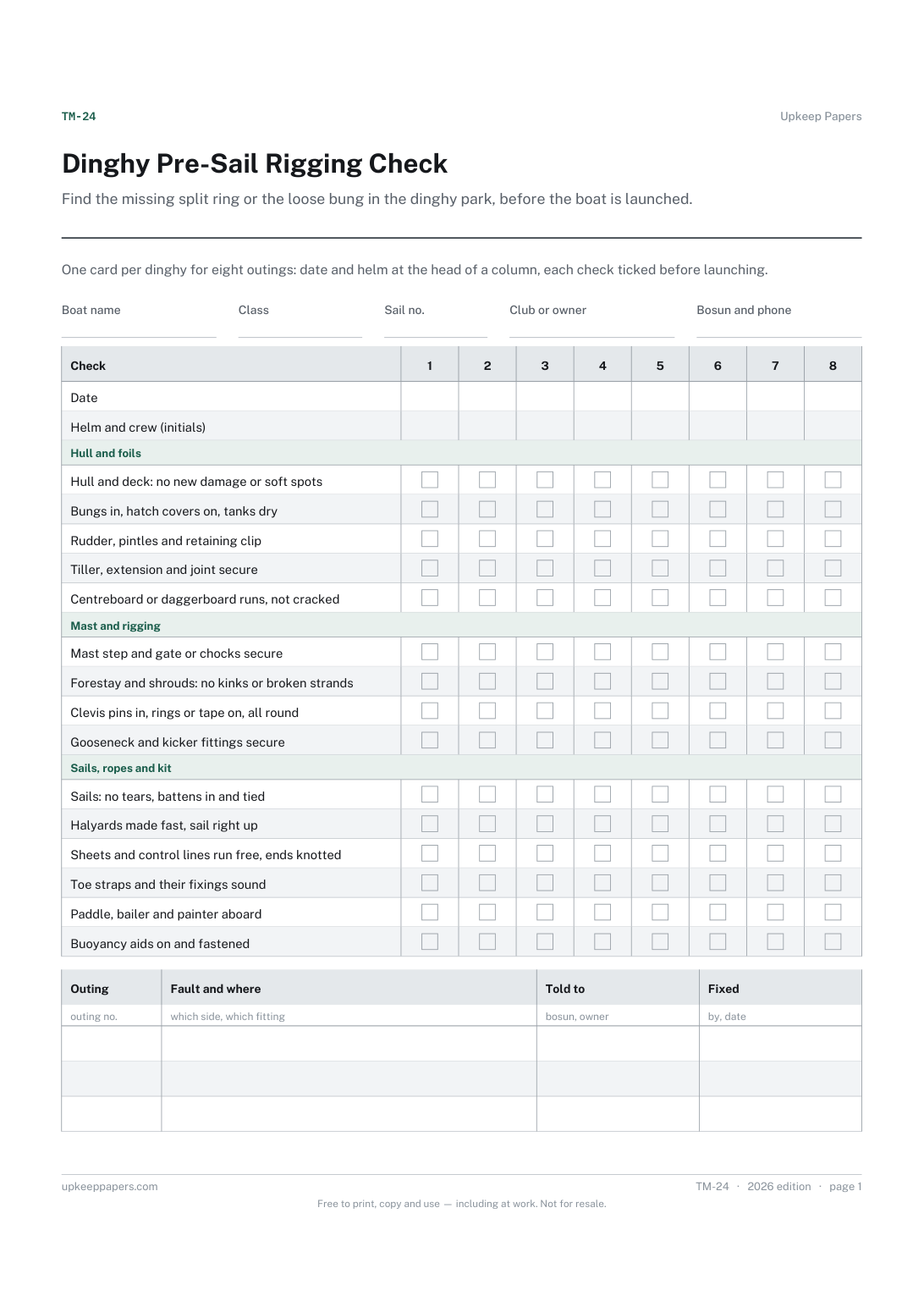
Find the missing split ring or the loose bung in the dinghy park, before the boat is launched. One card per boat builds a record over a season.
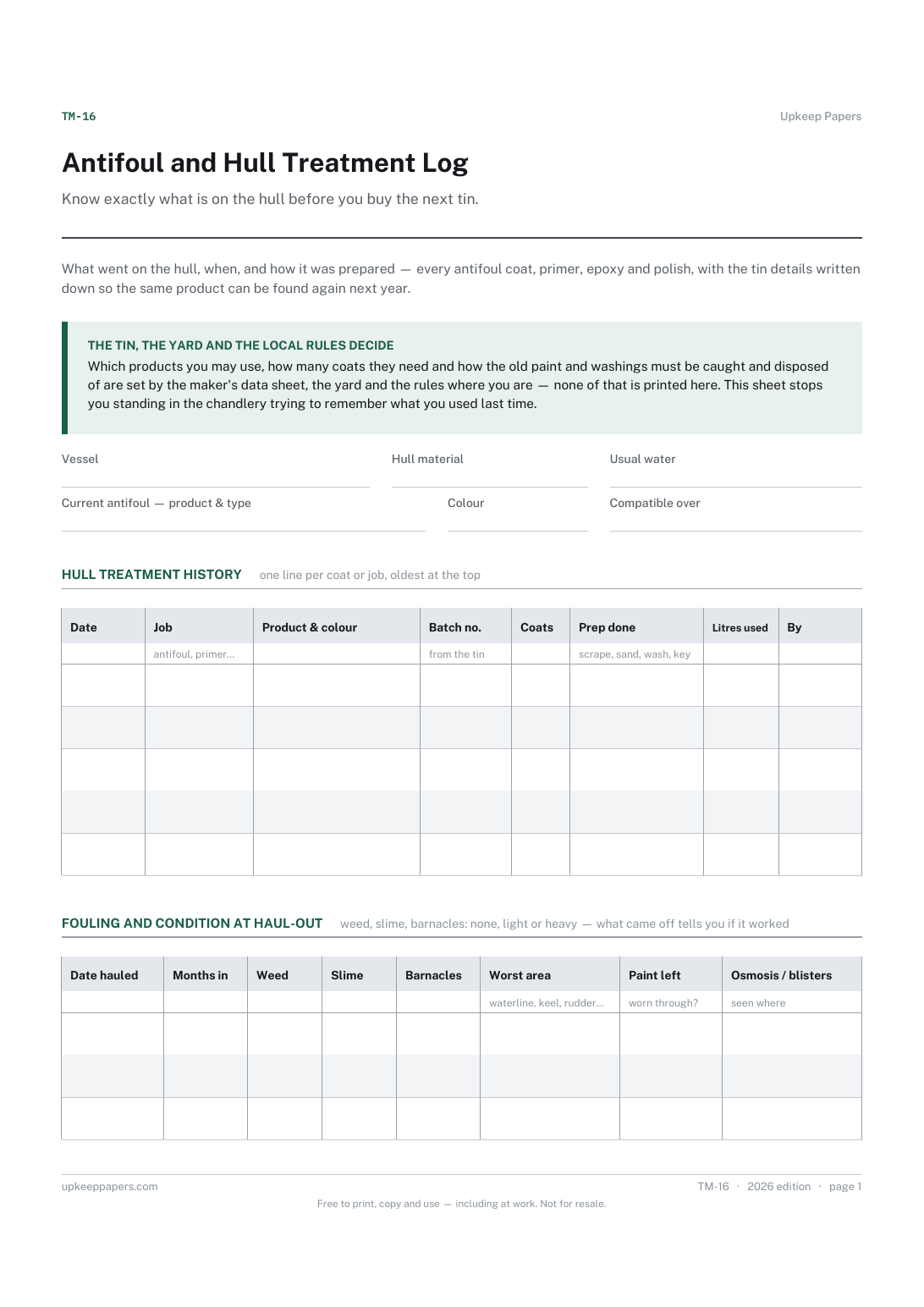
Know exactly what is on the hull before you buy the next tin. The haul-out lines then show whether the paint you chose actually kept the growth off.

Every sheet, binder, game and puzzle on Upkeep Papers is free to download, with no email and no account. Making them is not free: each one takes days of research, design and checking, and the site costs money to run. If something here saved you time, you can buy us a coffee. It is entirely optional: nothing is locked, and nothing changes if you don’t.
Buy us a coffee Opens PayPal in a new tab. Any amount, and nothing changes if you would rather not.