Crop Rotation Plan Sheet
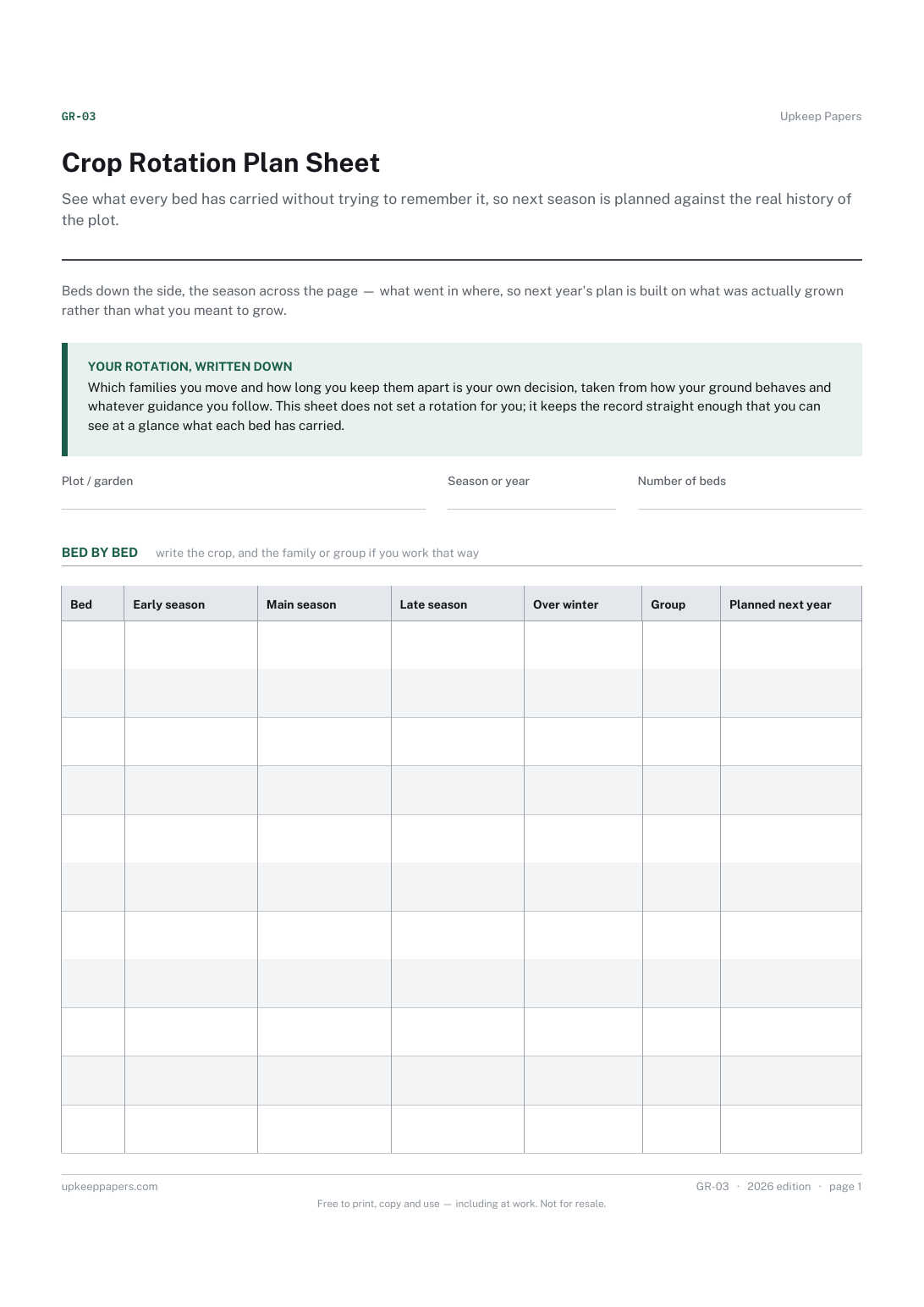
See what every bed has carried without trying to remember it, so next season is planned against the real history of the plot.
GR-03 1 page
Everything here is free. Making it takes time and money. Everything here is free.
 Buy us a coffee
Growing results and crops · GR-18
A free printable green manure record: what went into each bed and how it grew, when it was cut and dug in or mulched, and how the next crop did.
2 pages. Choose your paper size — both versions are laid out identically, so neither one gets shrunk to fit.
Print it and write on it
Fill it in type and save
The fillable versions have real form fields — open them in any PDF reader, type into them and save. Printing help.
See which green manures earn their place by following each from sowing to the crop after it. The family column keeps mustards and clovers in the right place in your rotation.
Vegetable gardeners, allotment holders and small growers using green manures or cover crops between crops or over winter.
2 pages, in this order:
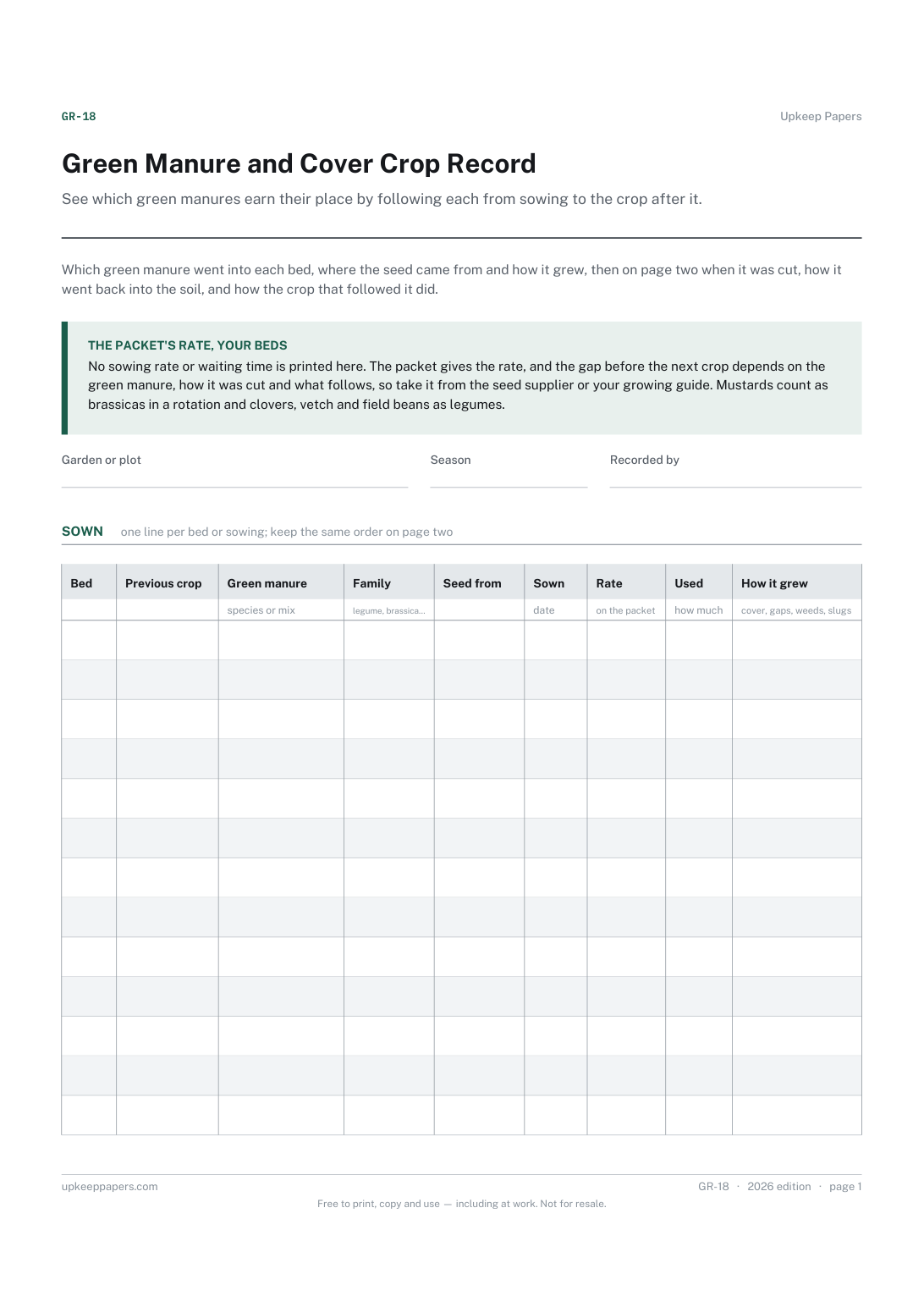
Printed under the title: Which green manure went into each bed, where the seed came from and how it grew, then on page two when it was cut, how it went back into the soil, and how the crop that followed it did.
The packet's rate, your beds. No sowing rate or waiting time is printed here. The packet gives the rate, and the gap before the next crop depends on the green manure, how it was cut and what follows, so take it from the seed supplier or your growing guide. Mustards count as brassicas in a rotation and clovers, vetch and field beans as legumes.
Write-on lines: Garden or plot · Season · Recorded by
Table, 13 rows: Bed · Previous crop · Green manure · Family · Seed from · Sown · Rate · Used · How it grew
Table, 13 rows: Bed · Cut on · How · Problems · Next crop · Planted · Gap left · How it did
Ruled lines: Season notes: what to sow where next year, and what to leave out
Because they differ by green manure and by how it is cut and what follows it. The packet gives the rate, and the seed supplier or your growing guide gives the gap. The sheet records what you did, so you can see what worked.
Because a green manure belongs to a plant family like any other crop. Mustards are brassicas and clovers, vetches and field beans are legumes, so they need to fit your rotation as well as feed the soil.
The rotation plan says what goes where each season. This record follows each green manure in detail, from sowing to the crop that came after it.
See what every bed has carried without trying to remember it, so next season is planned against the real history of the plot.
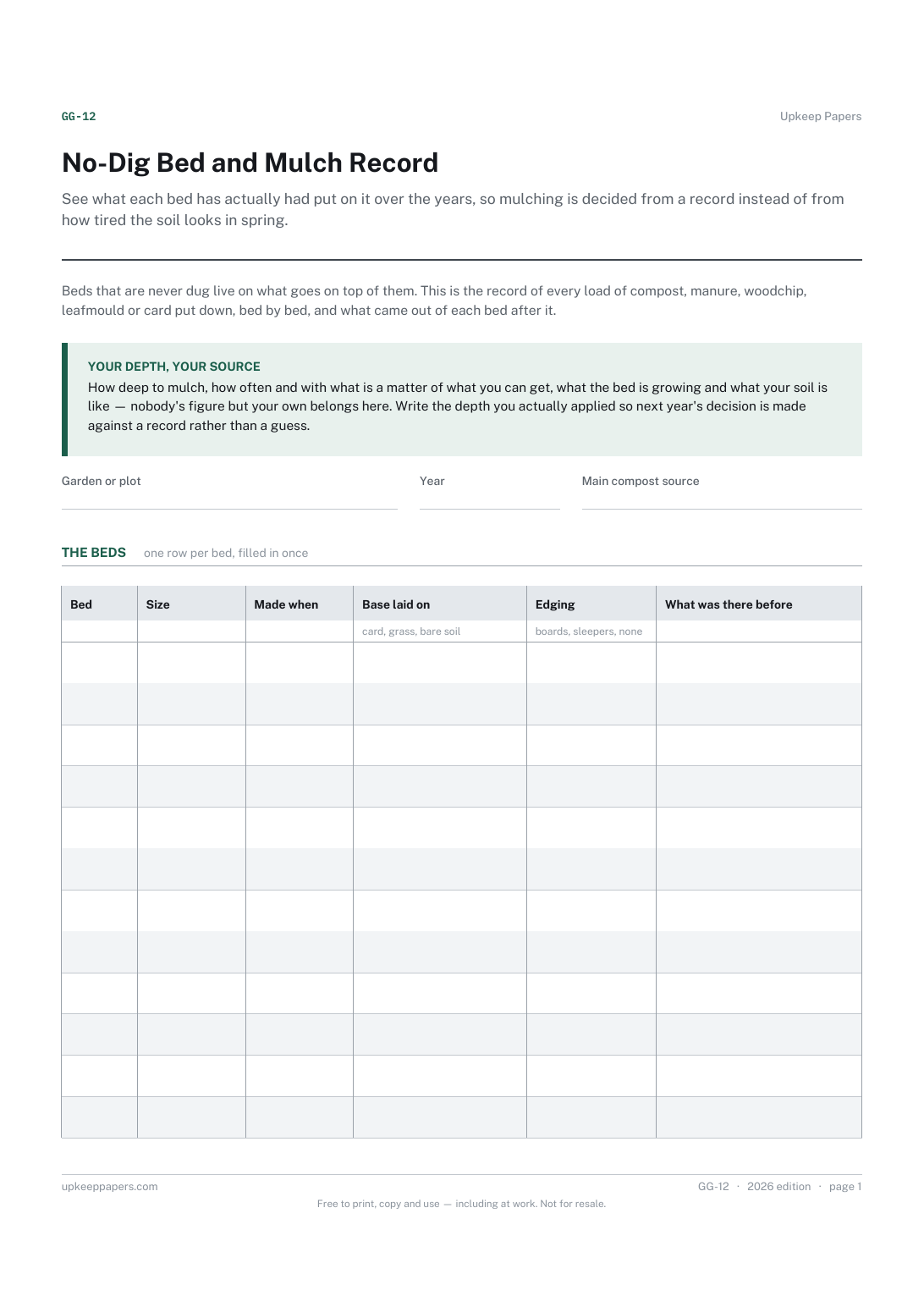
See what each bed has actually had put on it over the years, so mulching is decided from a record instead of from how tired the soil looks in spring.
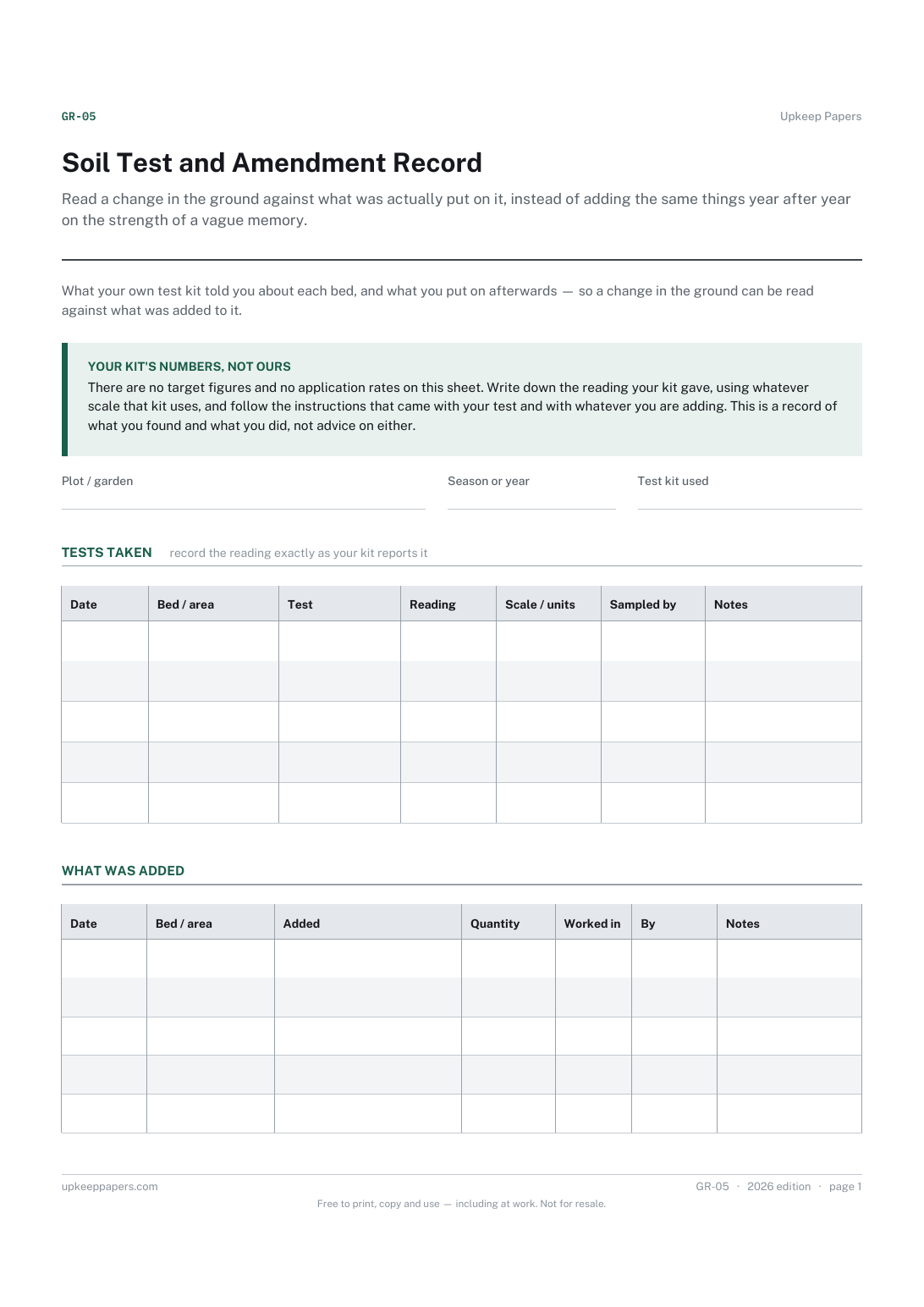
Read a change in the ground against what was actually put on it, instead of adding the same things year after year on the strength of a vague memory.
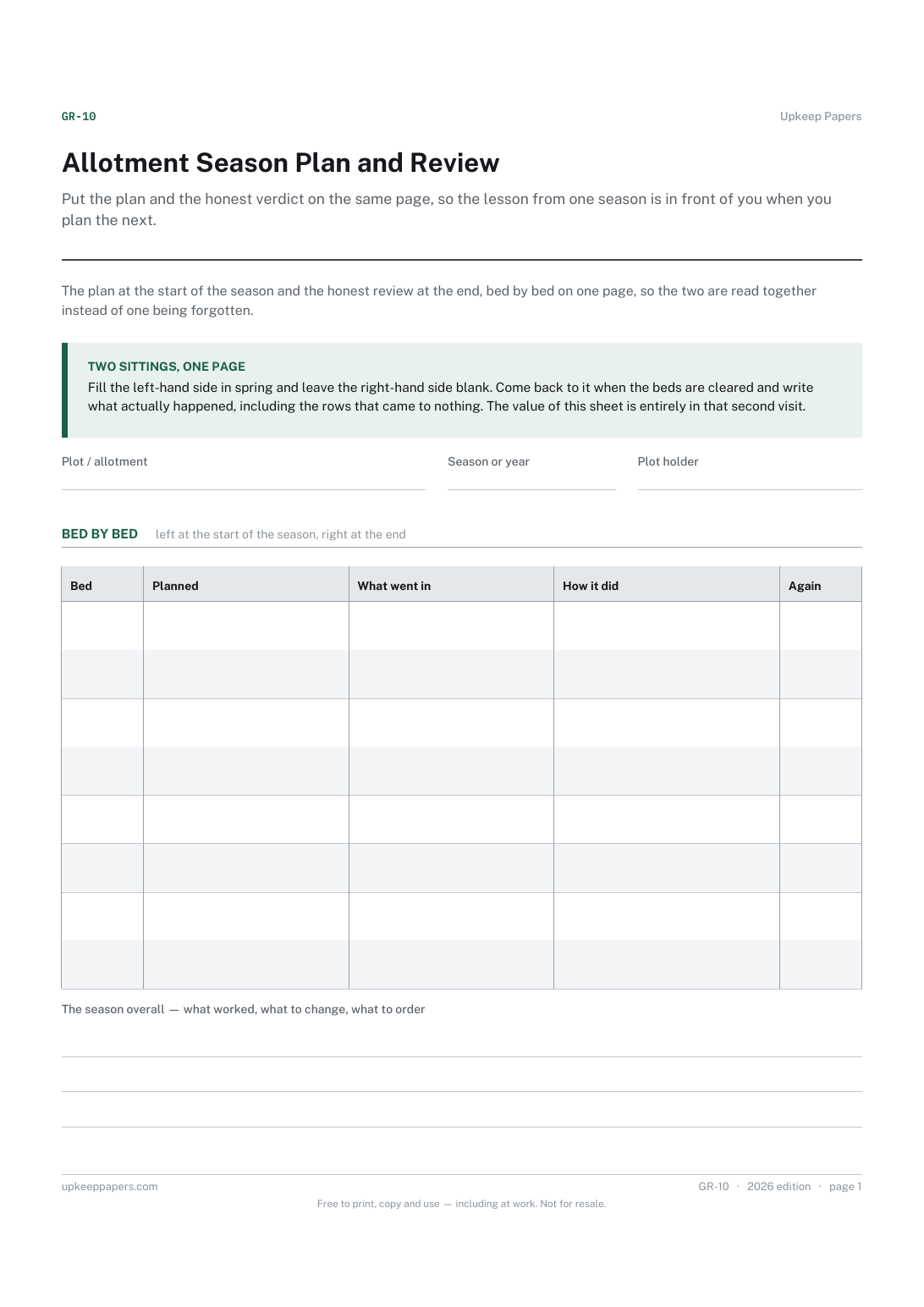
Put the plan and the honest verdict on the same page, so the lesson from one season is in front of you when you plan the next.
Plan the season with last year's beds in front of you, which is the only way rotation decisions get made from fact rather than memory.

Every sheet, binder, game and puzzle on Upkeep Papers is free to download, with no email and no account. Making them is not free: each one takes days of research, design and checking, and the site costs money to run. If something here saved you time, you can buy us a coffee. It is entirely optional: nothing is locked, and nothing changes if you don’t.
Buy us a coffee Opens PayPal in a new tab. Any amount, and nothing changes if you would rather not.