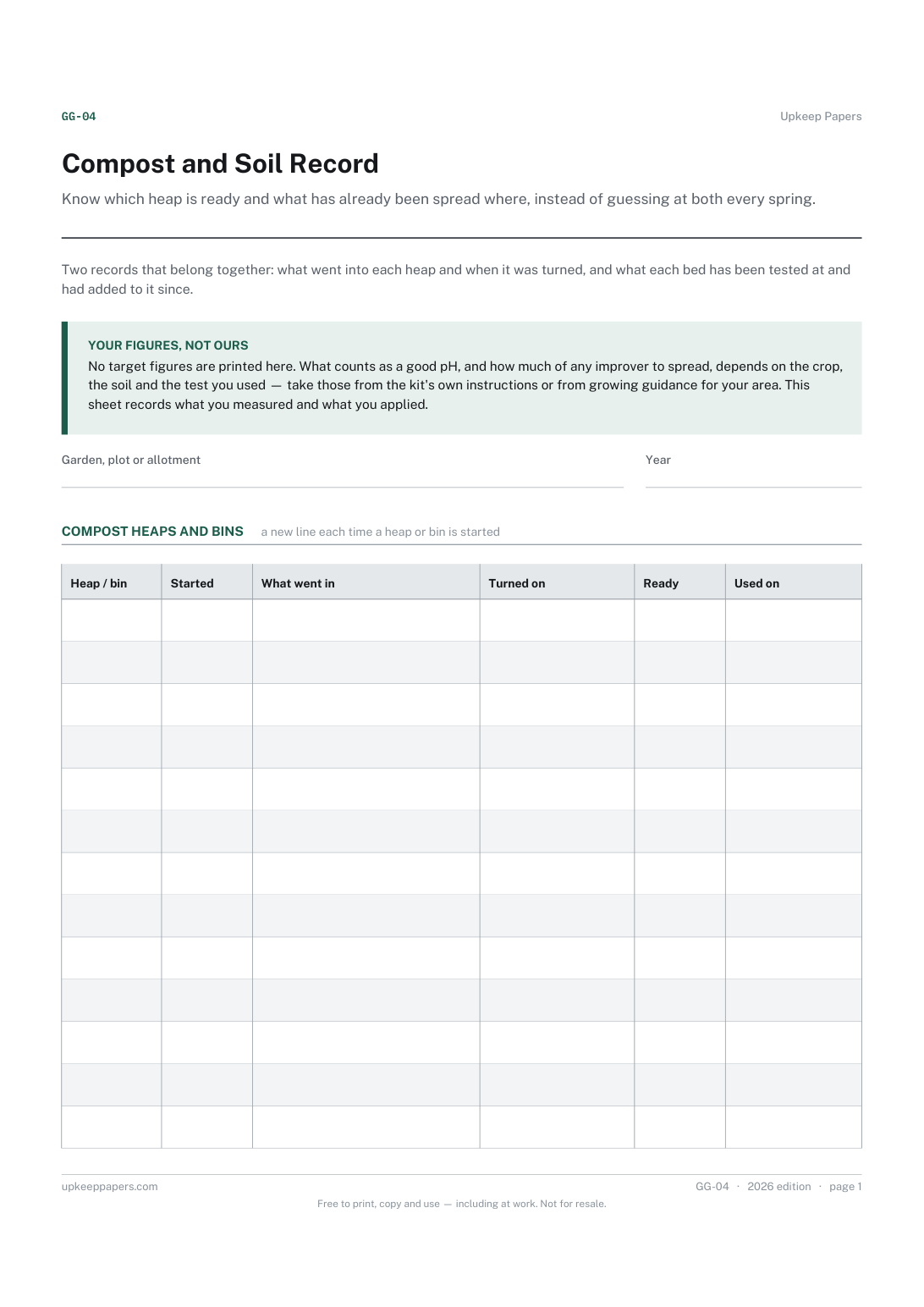
Compost and Soil Record
Know which heap is ready and what has already been spread where, instead of guessing at both every spring.
GG-04 2 pages
Everything here is free. Making it takes time and money. Everything here is free.
 Buy us a coffee
Garden and growing · GG-12
A no dig bed record — each bed identified once, then every load of compost, manure, woodchip or card logged with depth, source, cost and the crop that followed.
2 pages. Choose your paper size — both versions are laid out identically, so neither one gets shrunk to fit.
Print it and write on it
Fill it in type and save
The fillable versions have real form fields — open them in any PDF reader, type into them and save. Printing help.
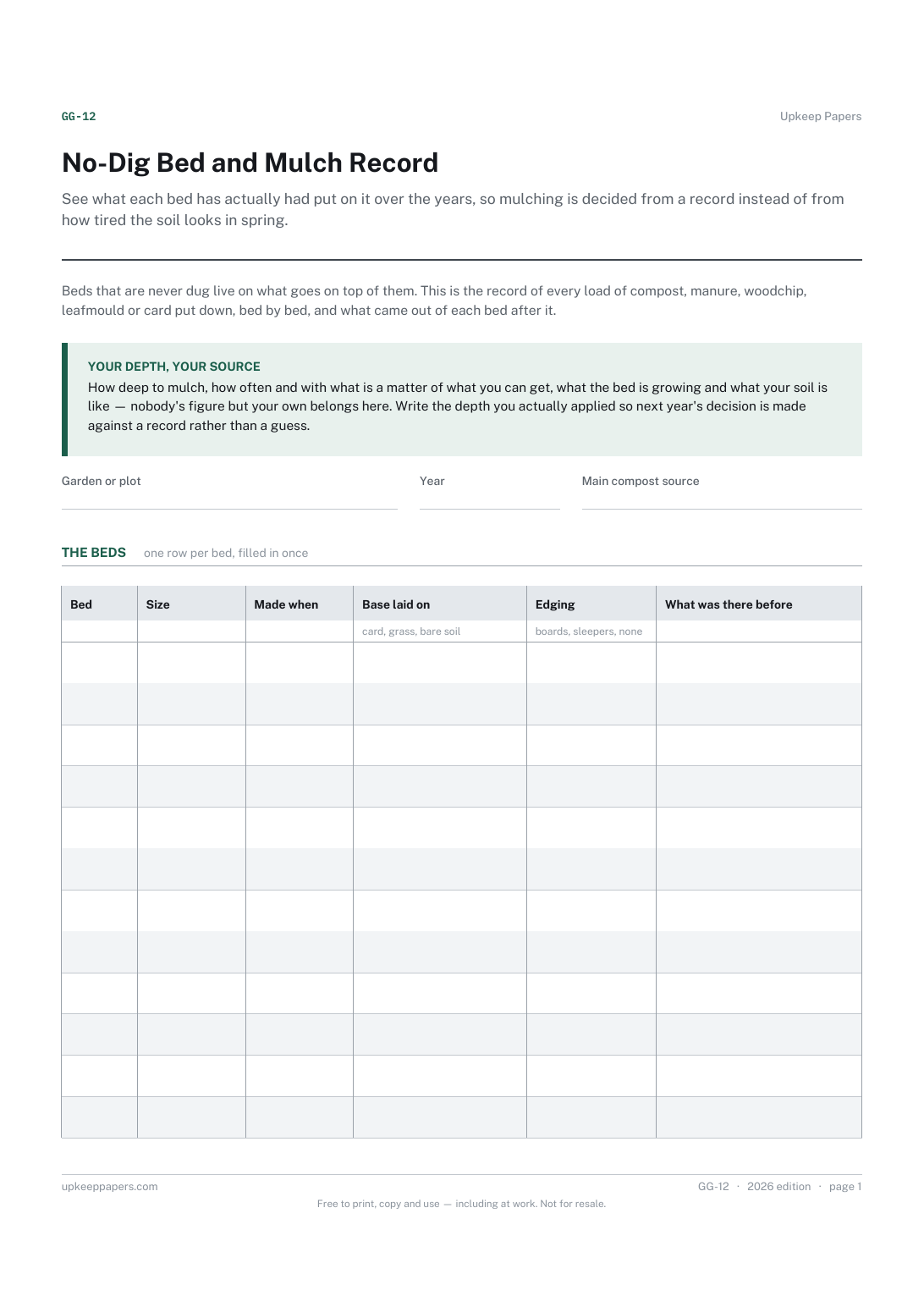
See what each bed has actually had put on it over the years, so mulching is decided from a record instead of from how tired the soil looks in spring.
No-dig gardeners and allotment holders, and anyone converting old beds or lawn to a no-dig system.
2 pages, in this order:
Printed under the title: Beds that are never dug live on what goes on top of them. This is the record of every load of compost, manure, woodchip, leafmould or card put down, bed by bed, and what came out of each bed after it.
Your depth, your source. How deep to mulch, how often and with what is a matter of what you can get, what the bed is growing and what your soil is like — nobody's figure but your own belongs here. Write the depth you actually applied so next year's decision is made against a record rather than a guess.
Write-on lines: Garden or plot · Year · Main compost source
Table, 12 rows: Bed · Size · Made when · Base laid on · Edging · What was there before
Table, 21 rows: Date · Bed · Material · Source · Depth put on · Loads / bags · Cost · Crop that followed · Weeds & worms
Because the right depth depends on what you can get, what the bed grows and what your soil is like, and a figure printed for one garden is wrong for the next. Write the depth you put on; the record shows whether it was enough.
That sheet is about making compost and testing soil. This one is about what is spread on each bed and what grew afterwards — the bed's history, not the heap's.
Know which heap is ready and what has already been spread where, instead of guessing at both every spring.
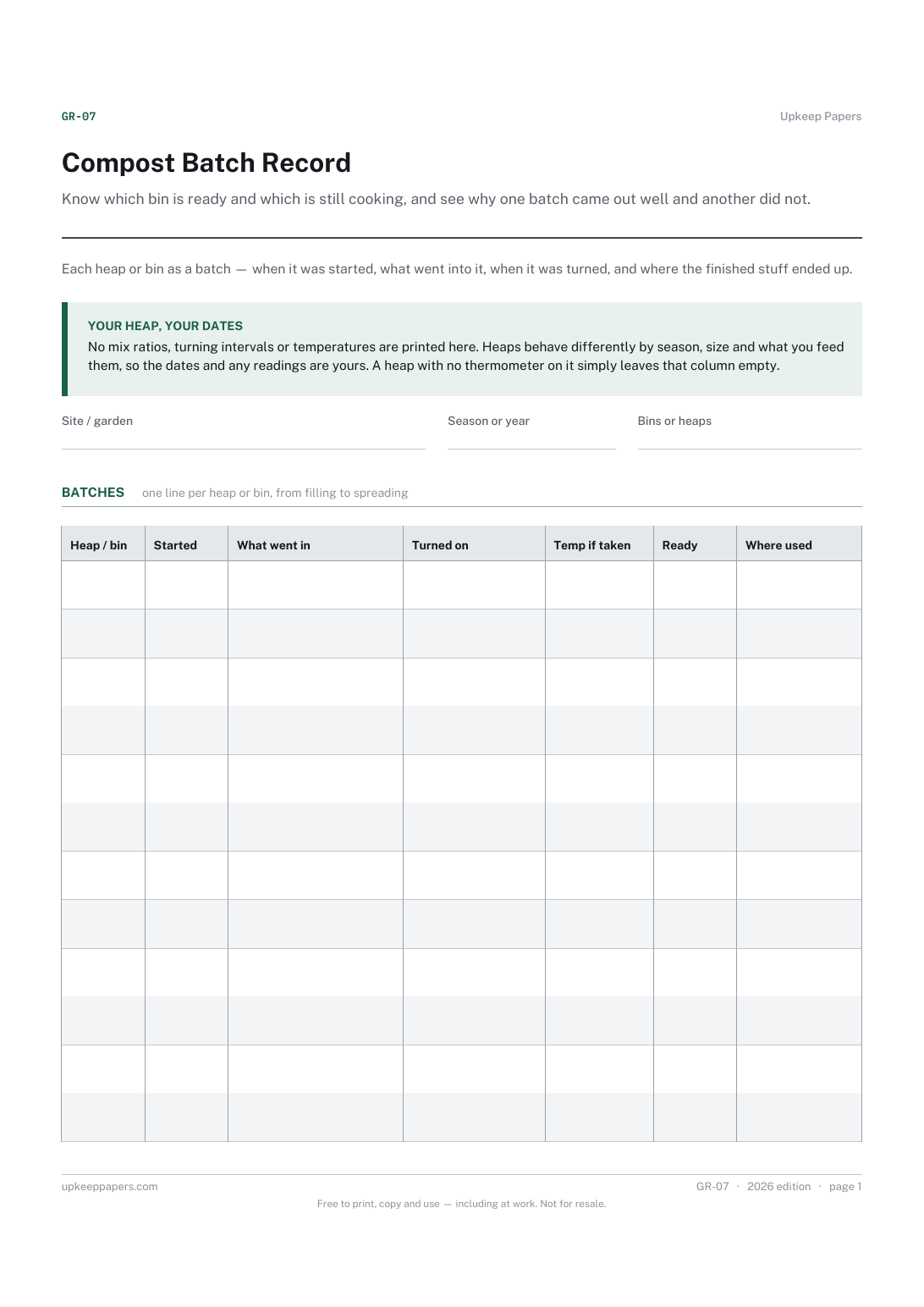
Know which bin is ready and which is still cooking, and see why one batch came out well and another did not.
Plan the season with last year's beds in front of you, which is the only way rotation decisions get made from fact rather than memory.
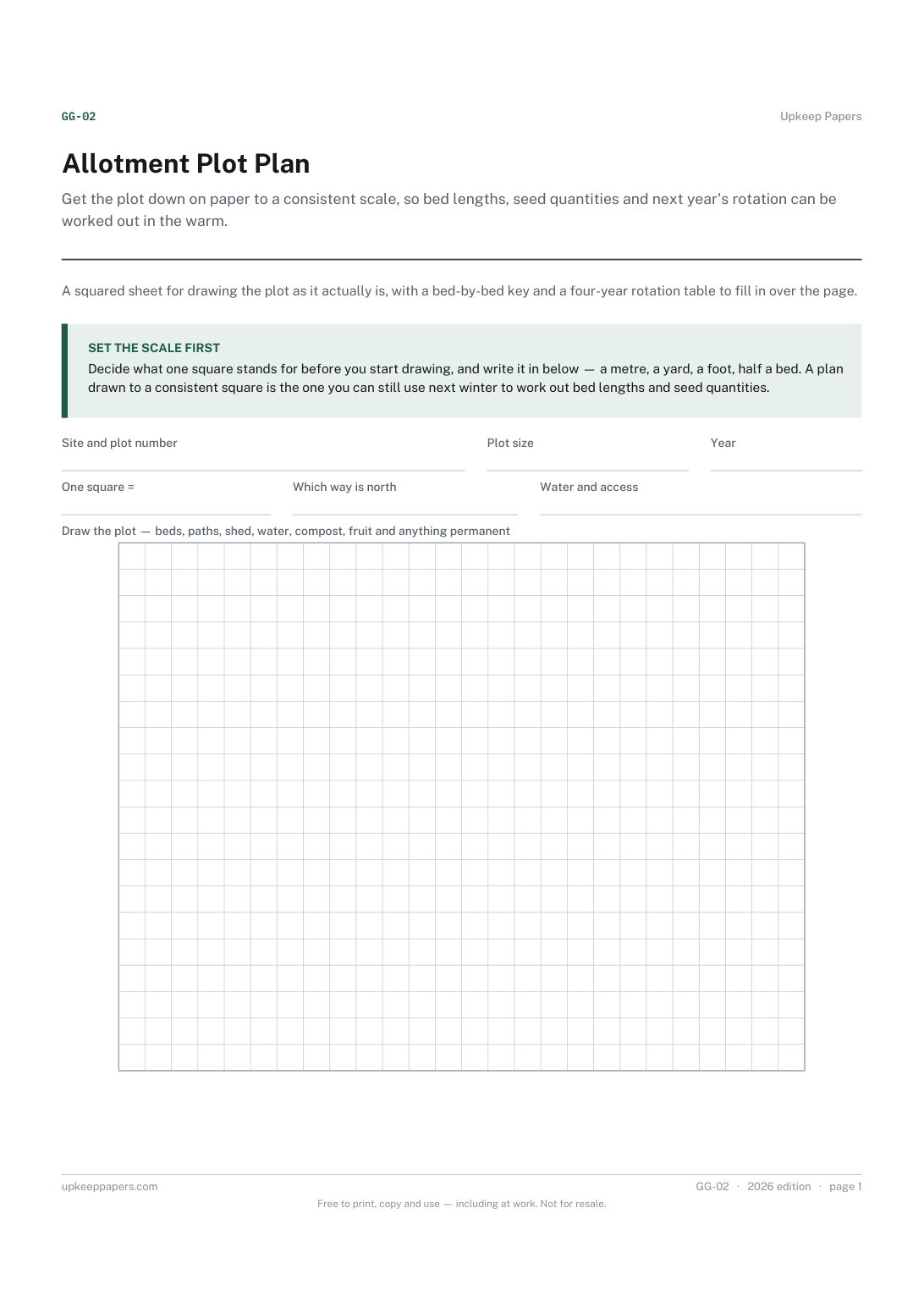
Get the plot down on paper to a consistent scale, so bed lengths, seed quantities and next year's rotation can be worked out in the warm.

Every sheet, binder, game and puzzle on Upkeep Papers is free to download, with no email and no account. Making them is not free: each one takes days of research, design and checking, and the site costs money to run. If something here saved you time, you can buy us a coffee. It is entirely optional: nothing is locked, and nothing changes if you don’t.
Buy us a coffee Opens PayPal in a new tab. Any amount, and nothing changes if you would rather not.