Watering and Irrigation Schedule
Set out what waters what, how, and how often, then keep a dated record through the season alongside the system checks that stop a blocked emitter going unnoticed.
GG-06 2 pages
Everything here is free. Making it takes time and money. Everything here is free.
 Buy us a coffee
Garden and growing · GG-24
A free printable soil moisture log: each tensiometer or probe registered with its zone, depth and your own trigger, then readings beside rain and watering.
2 pages. Choose your paper size — both versions are laid out identically, so neither one gets shrunk to fit.
Print it and write on it
Fill it in type and save
The fillable versions have real form fields — open them in any PDF reader, type into them and save. Printing help.
Water when the soil says so, reading every sensor beside the rain and the watering. Over a season the log also shows how each zone dries out, and whether your trigger needs moving.
Gardeners, allotment holders and small growers using tensiometers, moisture blocks or probes to decide when to water.
2 pages, in this order:
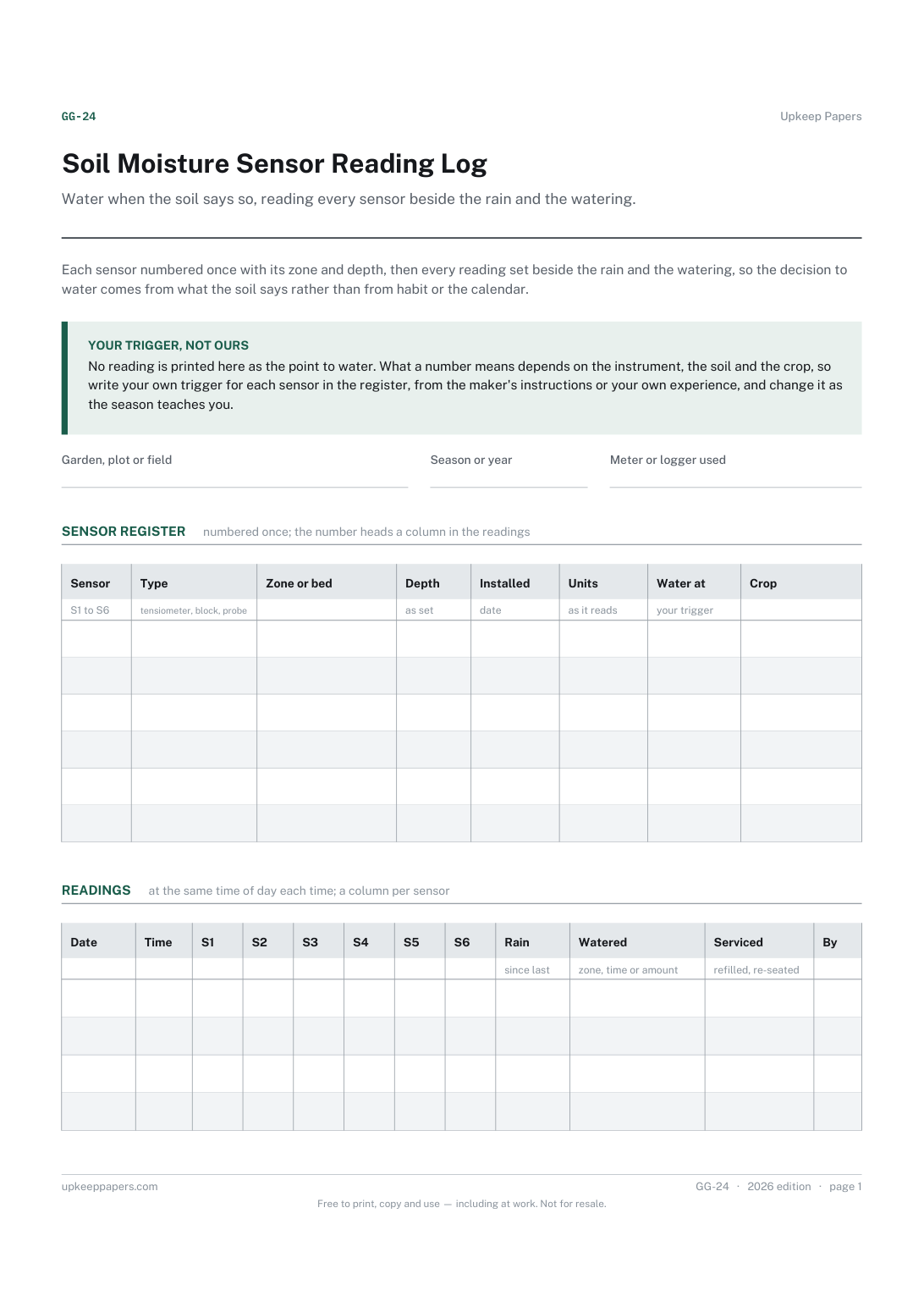
Printed under the title: Each sensor numbered once with its zone and depth, then every reading set beside the rain and the watering, so the decision to water comes from what the soil says rather than from habit or the calendar.
Your trigger, not ours. No reading is printed here as the point to water. What a number means depends on the instrument, the soil and the crop, so write your own trigger for each sensor in the register, from the maker's instructions or your own experience, and change it as the season teaches you.
Write-on lines: Garden, plot or field · Season or year · Meter or logger used
Table, 6 rows: Sensor · Type · Zone or bed · Depth · Installed · Units · Water at · Crop
Table, 19 rows: Date · Time · S1 · S2 · S3 · S4 · S5 · S6 · Rain · Watered · Serviced · By
Table, 6 rows: Date · Zone or sensor · Crop stage · Weather spell · Trigger changed
Because a number only means something for that instrument in that soil with that crop. Tensiometers, moisture blocks and probes read on different scales, and a sandy bed dries very differently from clay. The maker's instructions and your own results give the trigger; the register has a box for it.
So a jump in a reading can be read against what caused it. Without the rain and the watering beside it, a wet reading after a storm looks the same as one after a long soak from the hose.
The schedule is the plan: which zone is watered, how and how often. This log is the measurement that tells you whether the plan is right, sensor by sensor.
Set out what waters what, how, and how often, then keep a dated record through the season alongside the system checks that stop a blocked emitter going unnoticed.
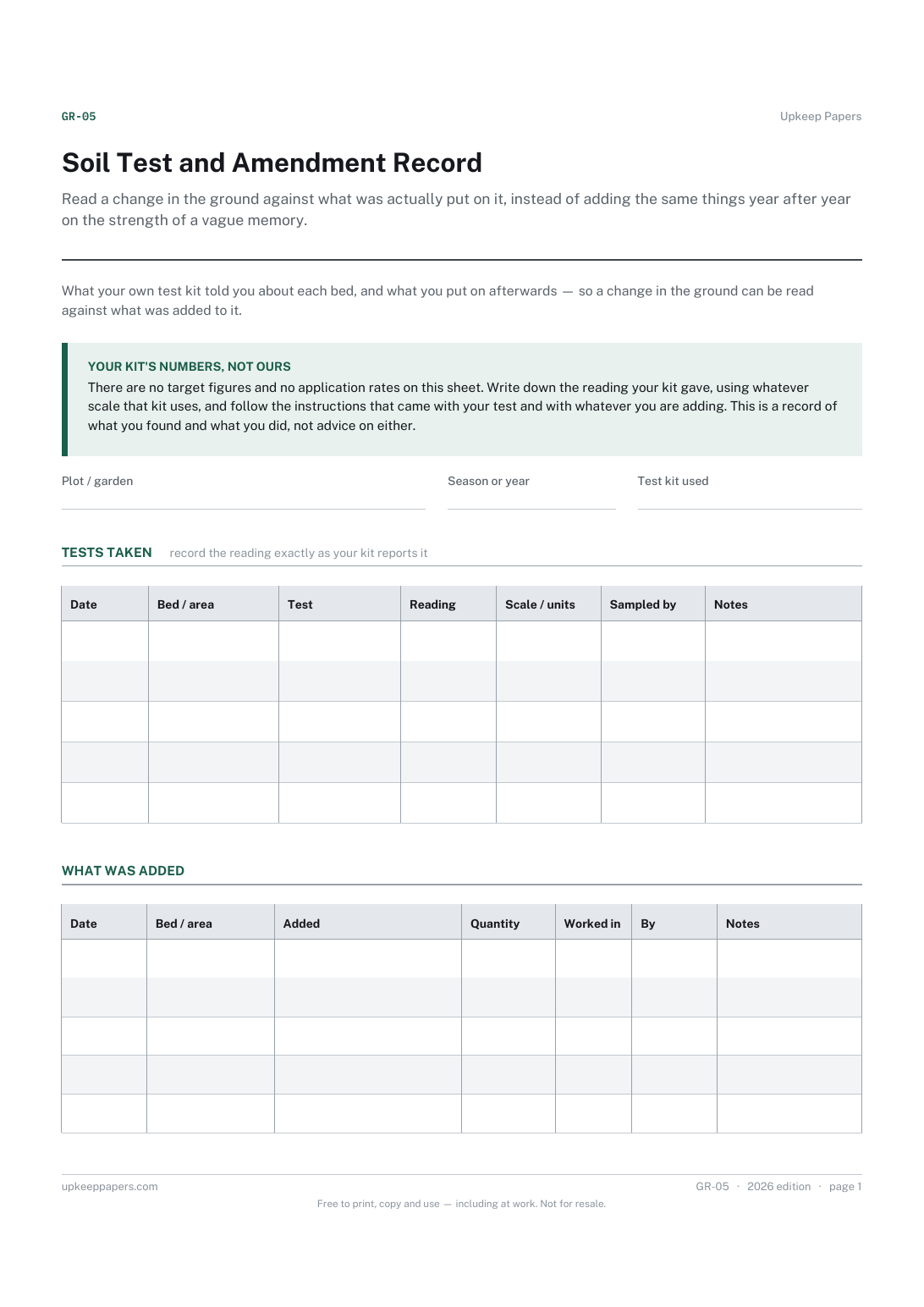
Read a change in the ground against what was actually put on it, instead of adding the same things year after year on the strength of a vague memory.
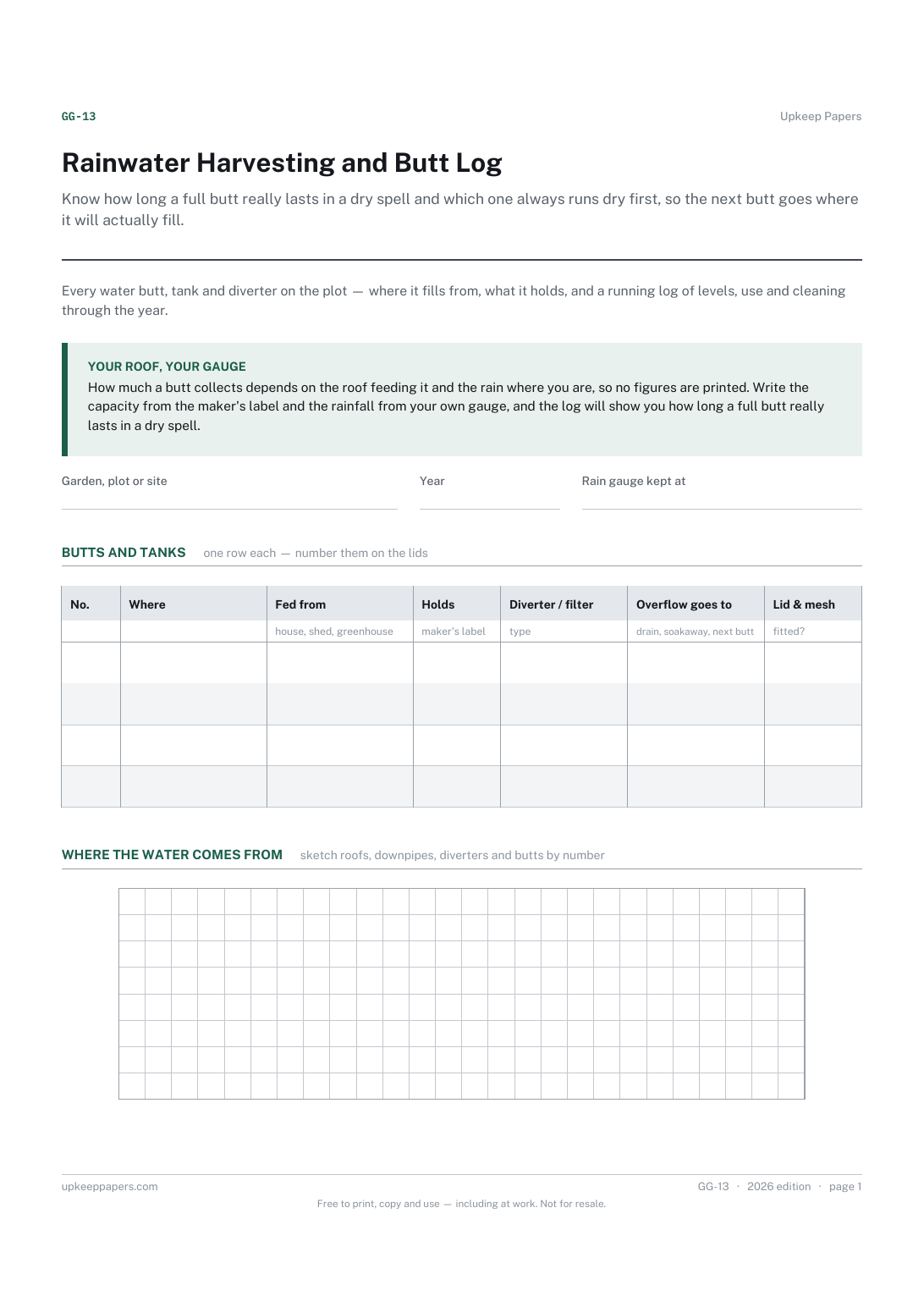
Know how long a full butt really lasts in a dry spell and which one always runs dry first, so the next butt goes where it will actually fill.
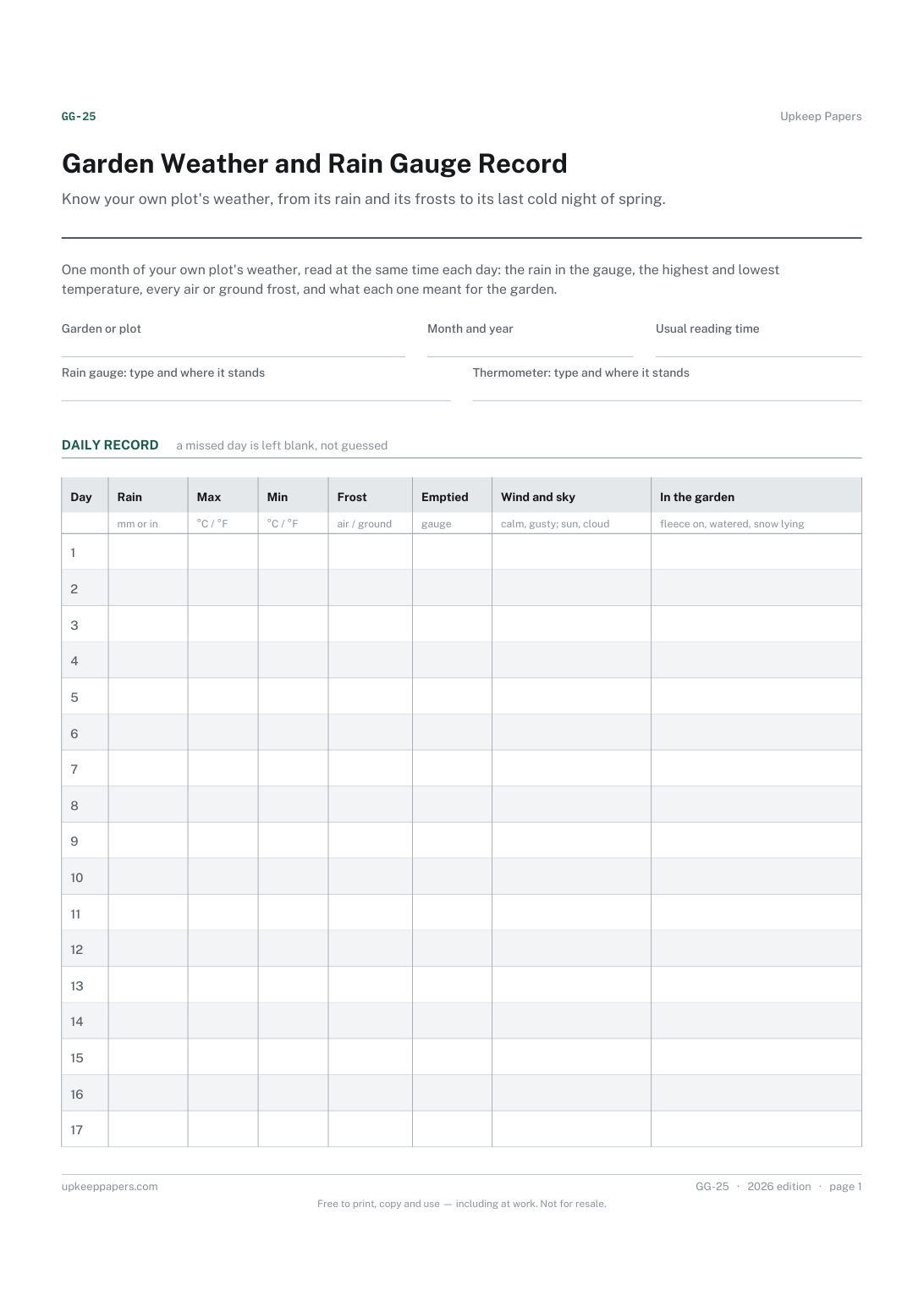
Know your own plot's weather, from its rain and its frosts to its last cold night of spring. A few years of these sheets tell you more about when to sow and plant out than any regional average.

Every sheet, binder, game and puzzle on Upkeep Papers is free to download, with no email and no account. Making them is not free: each one takes days of research, design and checking, and the site costs money to run. If something here saved you time, you can buy us a coffee. It is entirely optional: nothing is locked, and nothing changes if you don’t.
Buy us a coffee Opens PayPal in a new tab. Any amount, and nothing changes if you would rather not.