Rainwater Harvesting and Butt Log
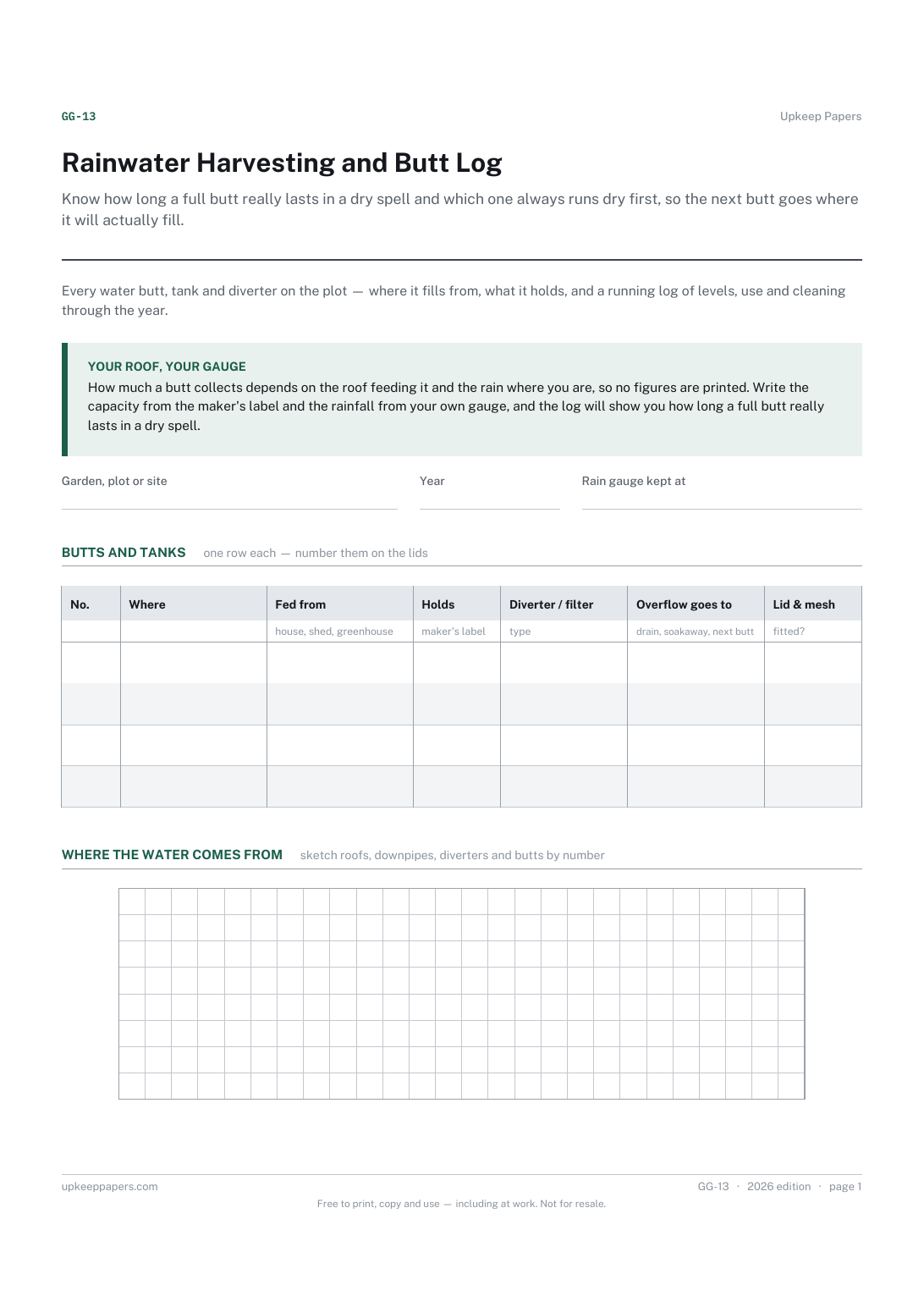
Know how long a full butt really lasts in a dry spell and which one always runs dry first, so the next butt goes where it will actually fill.
GG-13 2 pages
Everything here is free. Making it takes time and money. Everything here is free.
 Buy us a coffee
Garden and growing · GG-25
A free printable garden weather record: a month of daily rain gauge readings, highs and lows and frosts at your own plot, with frost dates kept by year.
2 pages. Choose your paper size — both versions are laid out identically, so neither one gets shrunk to fit.
Print it and write on it
Fill it in type and save
The fillable versions have real form fields — open them in any PDF reader, type into them and save. Printing help.
Know your own plot's weather, from its rain and its frosts to its last cold night of spring. A few years of these sheets tell you more about when to sow and plant out than any regional average.
Gardeners, allotment holders and growers who keep a rain gauge and a max-min thermometer at their plot.
2 pages, in this order:
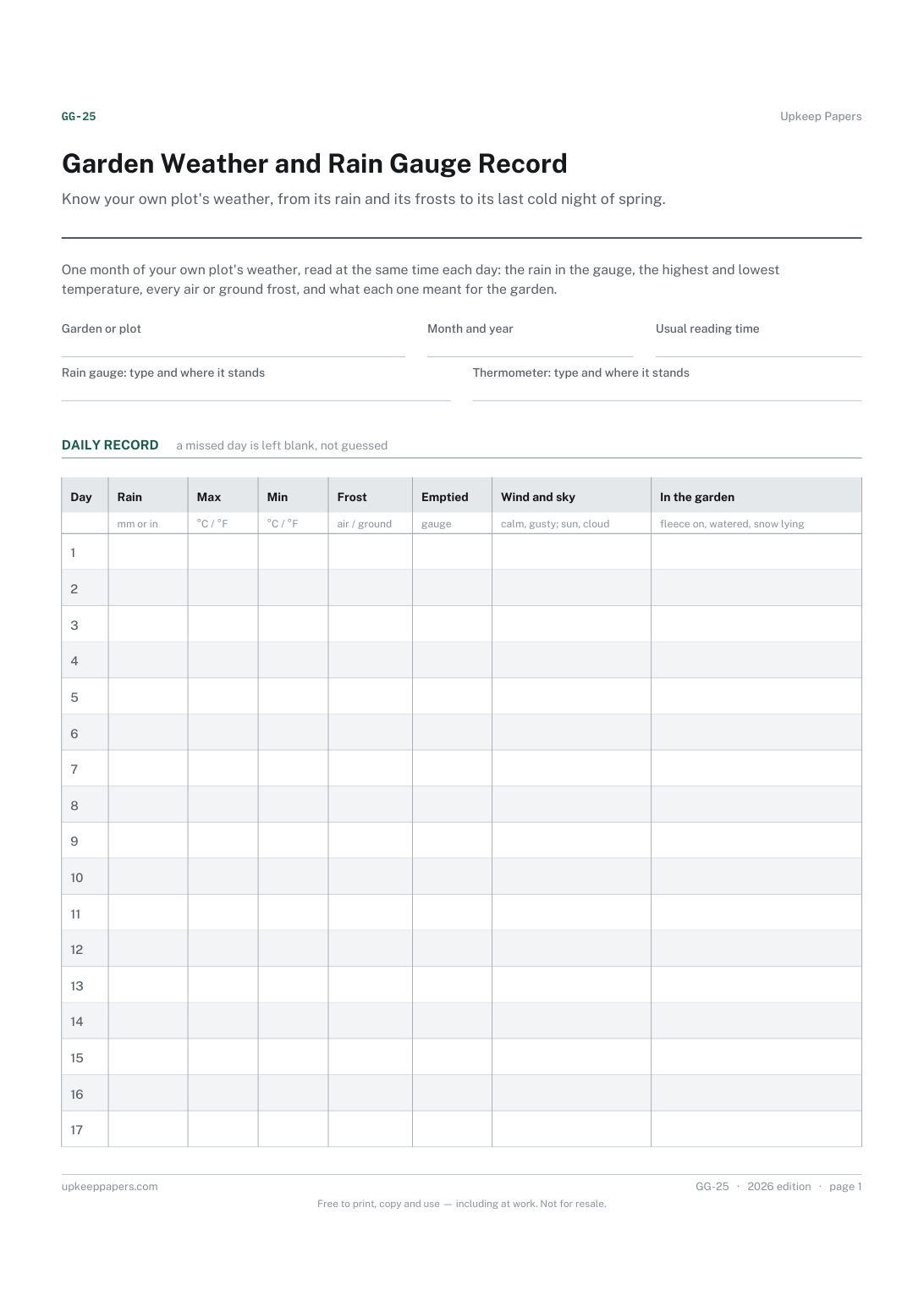
Printed under the title: One month of your own plot's weather, read at the same time each day: the rain in the gauge, the highest and lowest temperature, every air or ground frost, and what each one meant for the garden.
Write-on lines: Garden or plot · Month and year · Usual reading time · Rain gauge: type and where it stands · Thermometer: type and where it stands
Table, 17 rows: Day · Rain · Max · Min · Frost · Emptied · Wind and sky · In the garden
Table, 14 rows: Day · Rain · Max · Min · Frost · Emptied · Wind and sky · In the garden
Write-on lines: Rain in the month · Days with rain · Wettest day: date and amount · Highest max: date · Lowest min: date · Air frosts · Ground frosts
Table, 4 rows: Year · Last spring frost · First autumn frost · Wettest month · Driest month · Notes
Because the dates that matter are your own. A garden in a frost pocket and one by a warm wall a mile away can differ by weeks, and averages for a region hide that. A few years of your own last and first frosts are the dates to plan by.
An air frost is when the air at thermometer height falls below freezing; a ground frost is when the ground or the grass freezes, which often happens on nights when the air stays just above. Use whichever your own thermometers can show, and say so in the box at the top.
Yes. A gauge under a tree or beside a wall catches less than one in the open, so write where yours stands and leave it there. Readings from a moved gauge are not like for like.
Know how long a full butt really lasts in a dry spell and which one always runs dry first, so the next butt goes where it will actually fill.
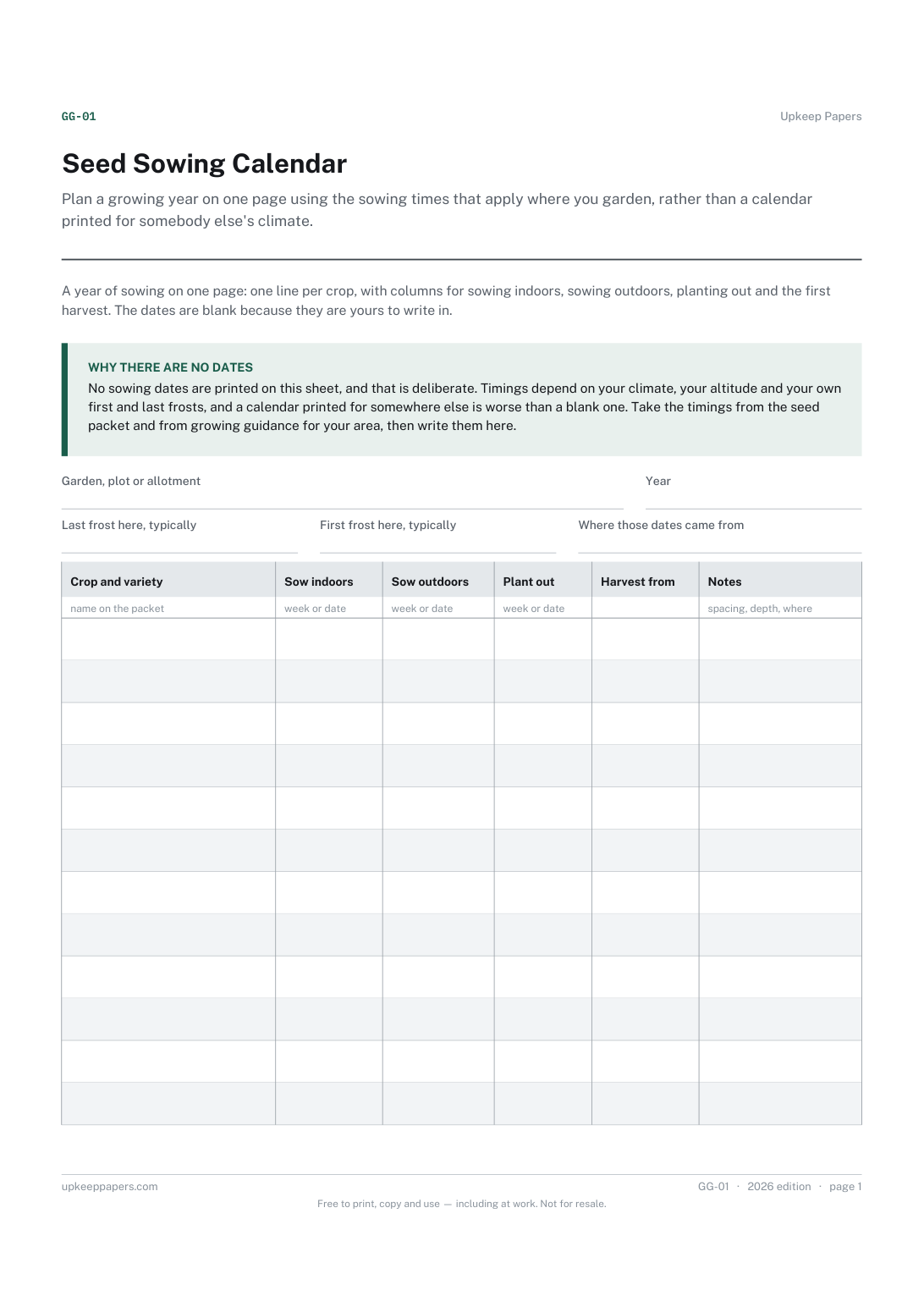
Plan a growing year on one page using the sowing times that apply where you garden, rather than a calendar printed for somebody else's climate.
Capture what you planned, what you actually did and what happened, which is the comparison that makes next season better and the one nobody writes down.
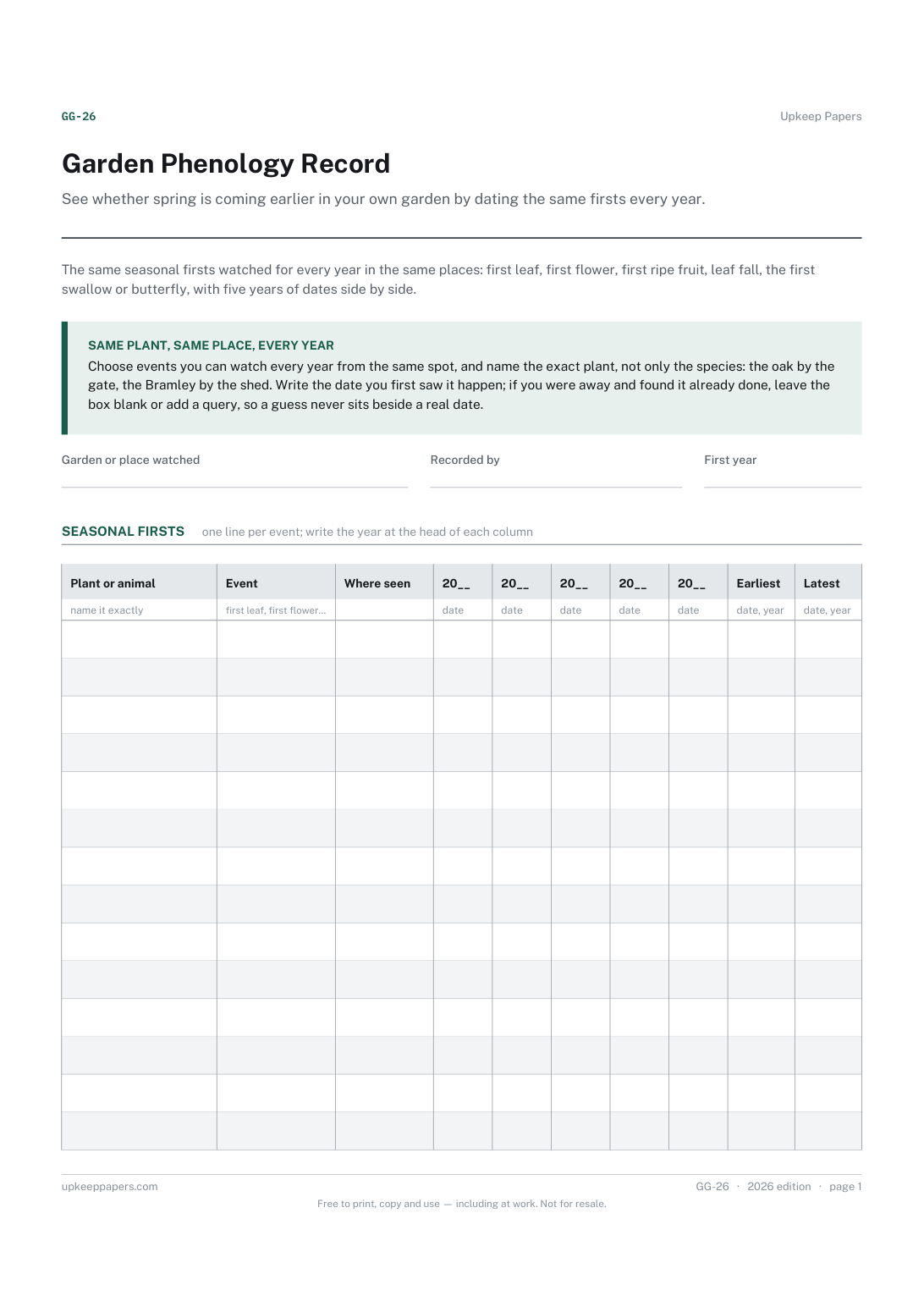
See whether spring is coming earlier in your own garden by dating the same firsts every year. Five years of dates side by side show shifts in timing that no single year can.
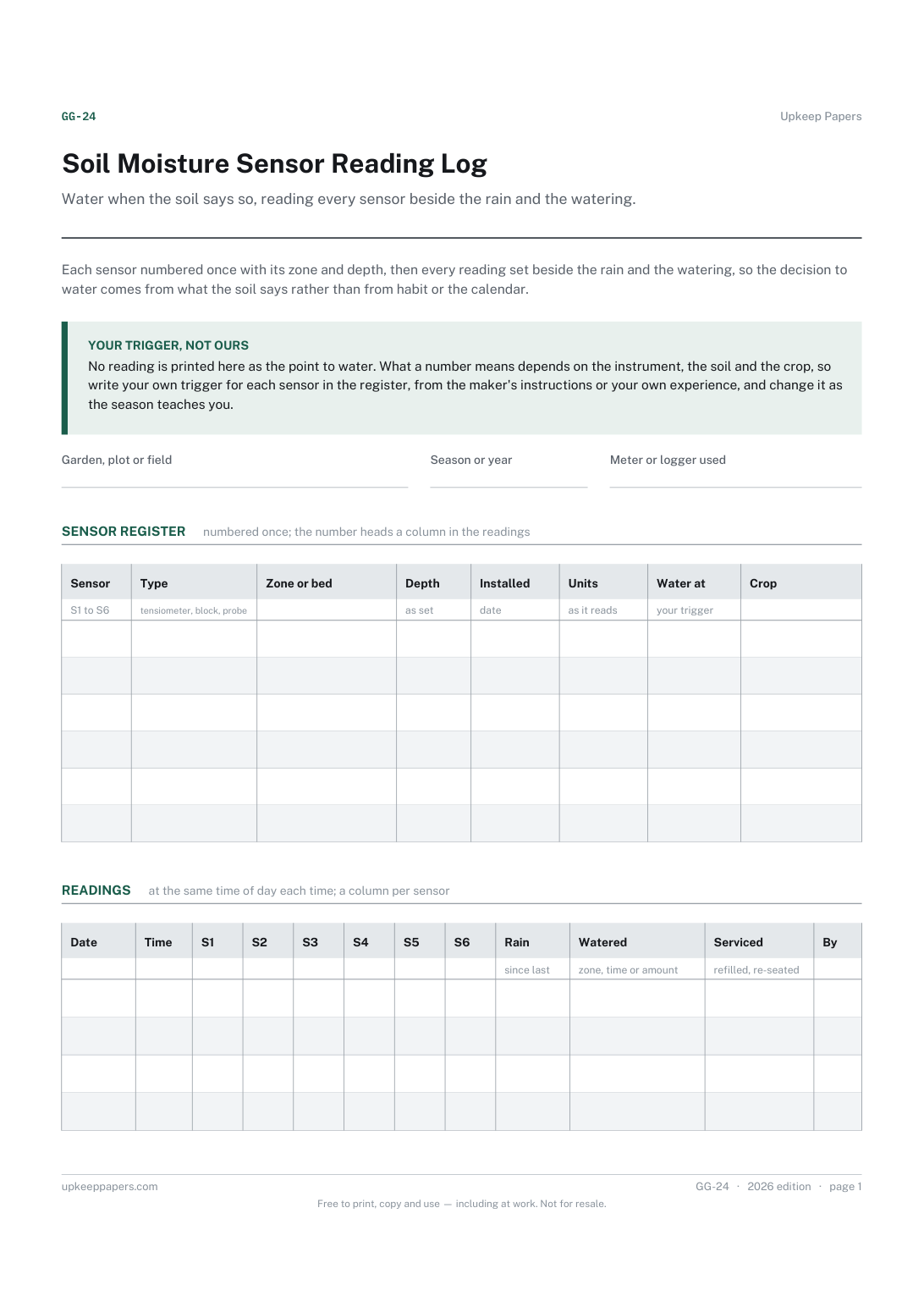
Water when the soil says so, reading every sensor beside the rain and the watering. Over a season the log also shows how each zone dries out, and whether your trigger needs moving.

Every sheet, binder, game and puzzle on Upkeep Papers is free to download, with no email and no account. Making them is not free: each one takes days of research, design and checking, and the site costs money to run. If something here saved you time, you can buy us a coffee. It is entirely optional: nothing is locked, and nothing changes if you don’t.
Buy us a coffee Opens PayPal in a new tab. Any amount, and nothing changes if you would rather not.