Allotment Plot Plan
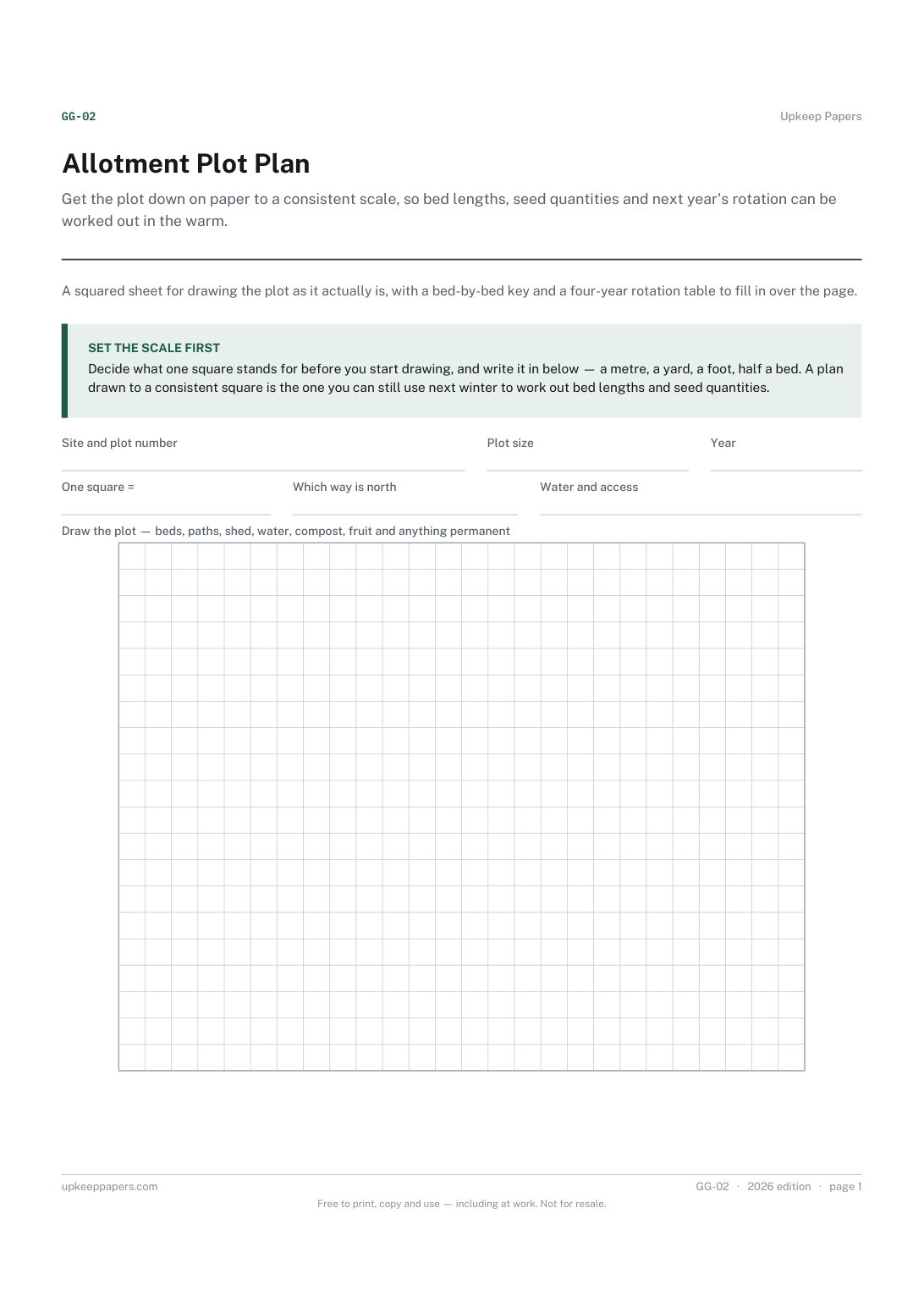
Get the plot down on paper to a consistent scale, so bed lengths, seed quantities and next year's rotation can be worked out in the warm.
GG-02 2 pages
Everything here is free. Making it takes time and money. Everything here is free.
 Buy us a coffee
Garden and growing · GG-40
A free printable sun and shade map: a lettered squared plan with north and scale, then three dated looks at where sun and shade fall through the day.
2 pages. Choose your paper size — both versions are laid out identically, so neither one gets shrunk to fit.
Print it and write on it
Fill it in type and save
The fillable versions have real form fields — open them in any PDF reader, type into them and save. Printing help.
Choose where to plant from the sun and shade you have watched, not from a guess. Looks in three seasons show how far the shade moves through the year.
Gardeners planning new beds, people taking on an unfamiliar garden, and anyone deciding where a tree, a greenhouse or a seat should go.
2 pages, in this order:
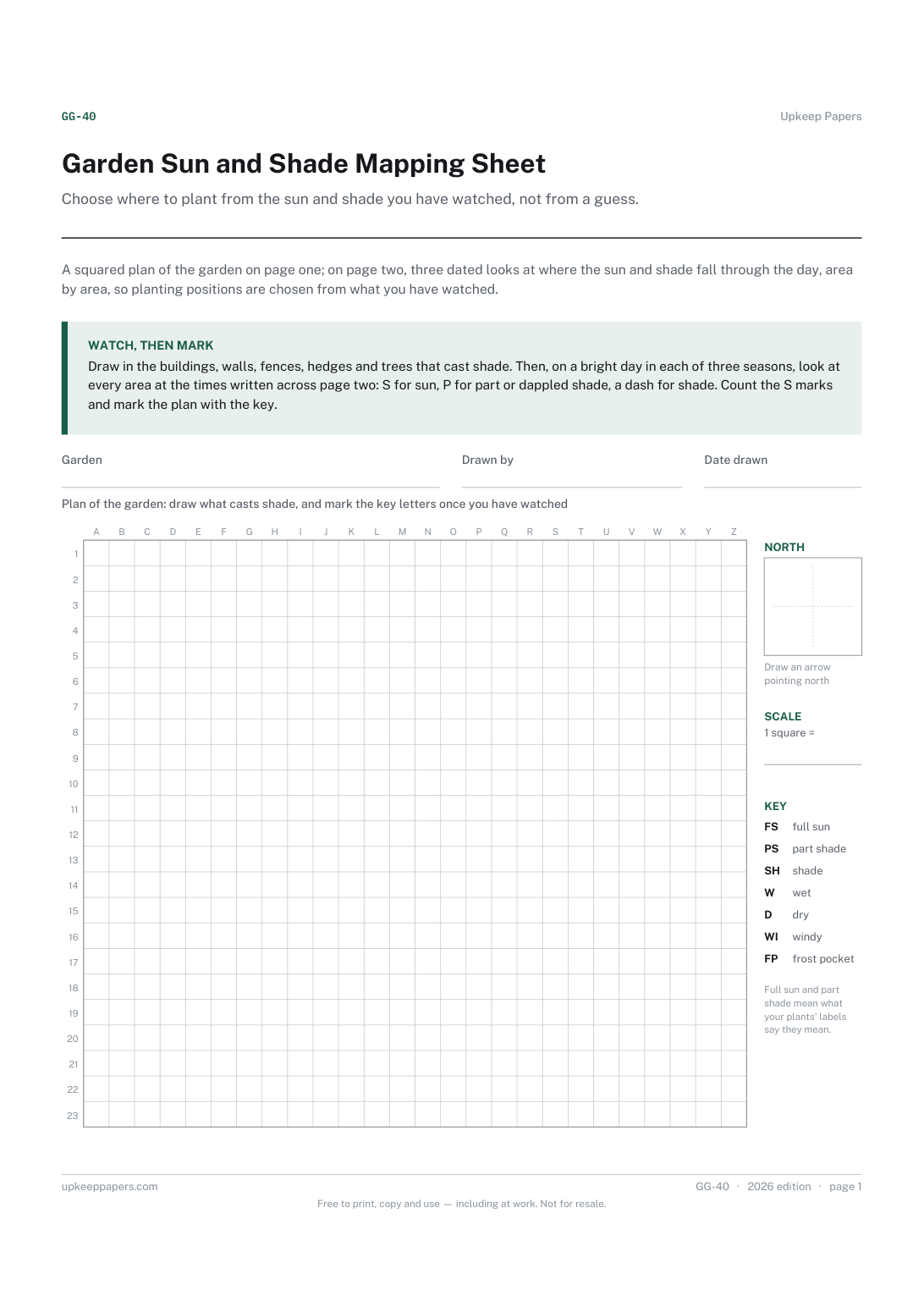
Printed under the title: A squared plan of the garden on page one; on page two, three dated looks at where the sun and shade fall through the day, area by area, so planting positions are chosen from what you have watched.
Watch, then mark. Draw in the buildings, walls, fences, hedges and trees that cast shade. Then, on a bright day in each of three seasons, look at every area at the times written across page two: S for sun, P for part or dappled shade, a dash for shade. Count the S marks and mark the plan with the key.
Write-on lines: Garden · Drawn by · Date drawn
Also printed: Plan of the garden: draw what casts shade, and mark the key letters once you have watched · NORTH · Draw an arrow · pointing north · SCALE · 1 square = · KEY · full sun · part shade · shade · wet · dry · windy · frost pocket · Full sun and part · shade mean what · your plants' labels · say they mean.
Also printed: Time of each look: write the times in · Area · Sun · Key · name or square · hours · Look on (date) · Season · Weather
Ruled lines: Also seen: wet patches, wind tunnels, frost lying late, reflected heat
The sheet does not set a figure. What counts as full sun or part shade is whatever the plants you want to grow ask for, so take that from the plant label or your supplier and compare it with the hours you counted.
Because the sun sits lower in winter than in summer, so a bed in sun in midsummer can be in a building's shadow from autumn to spring, and trees cast more shade in leaf than bare. Looks in different seasons show how far the shade moves.
Get the plot down on paper to a consistent scale, so bed lengths, seed quantities and next year's rotation can be worked out in the warm.
Plan the season with last year's beds in front of you, which is the only way rotation decisions get made from fact rather than memory.
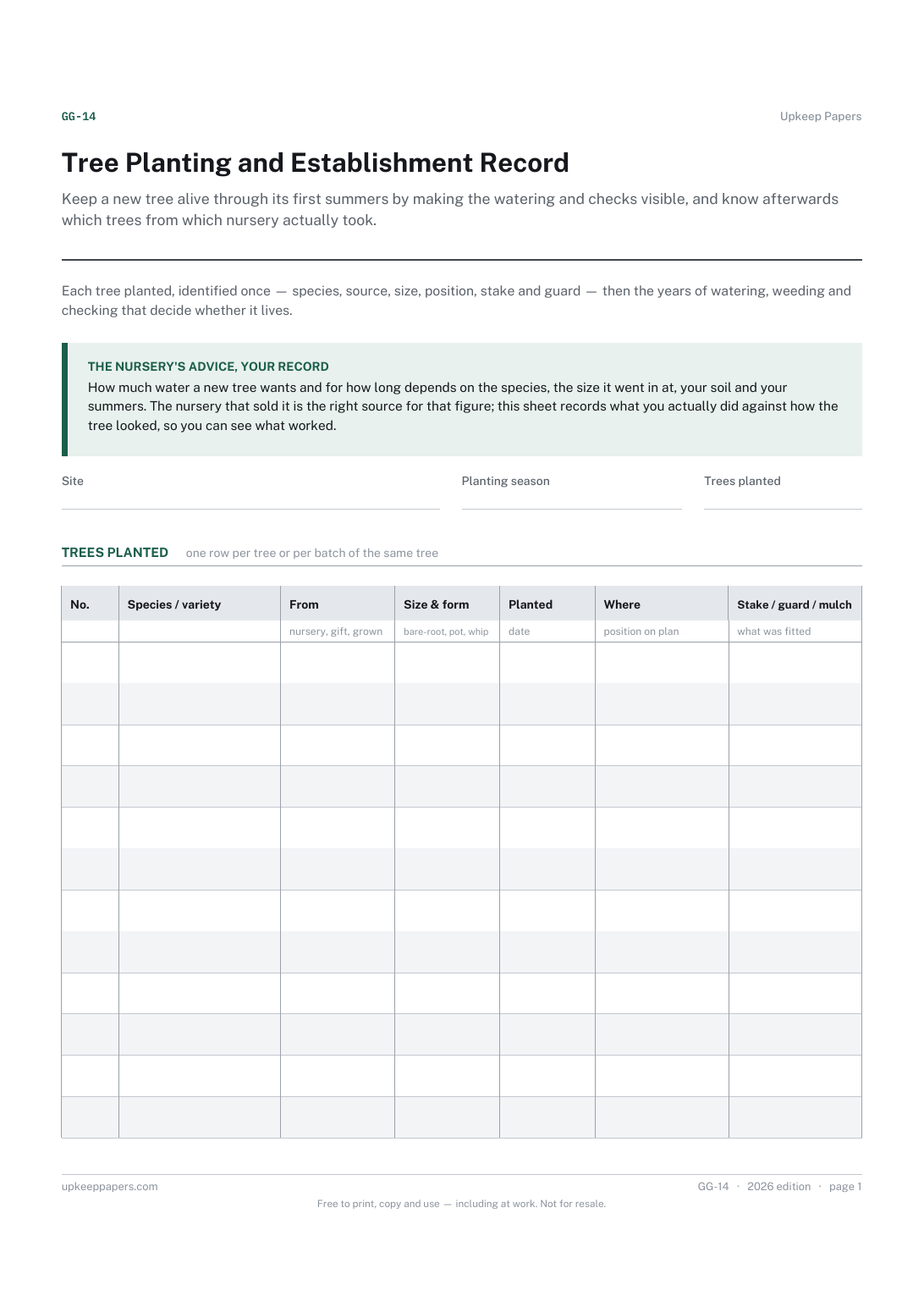
Keep a new tree alive through its first summers by making the watering and checks visible, and know afterwards which trees from which nursery actually took.
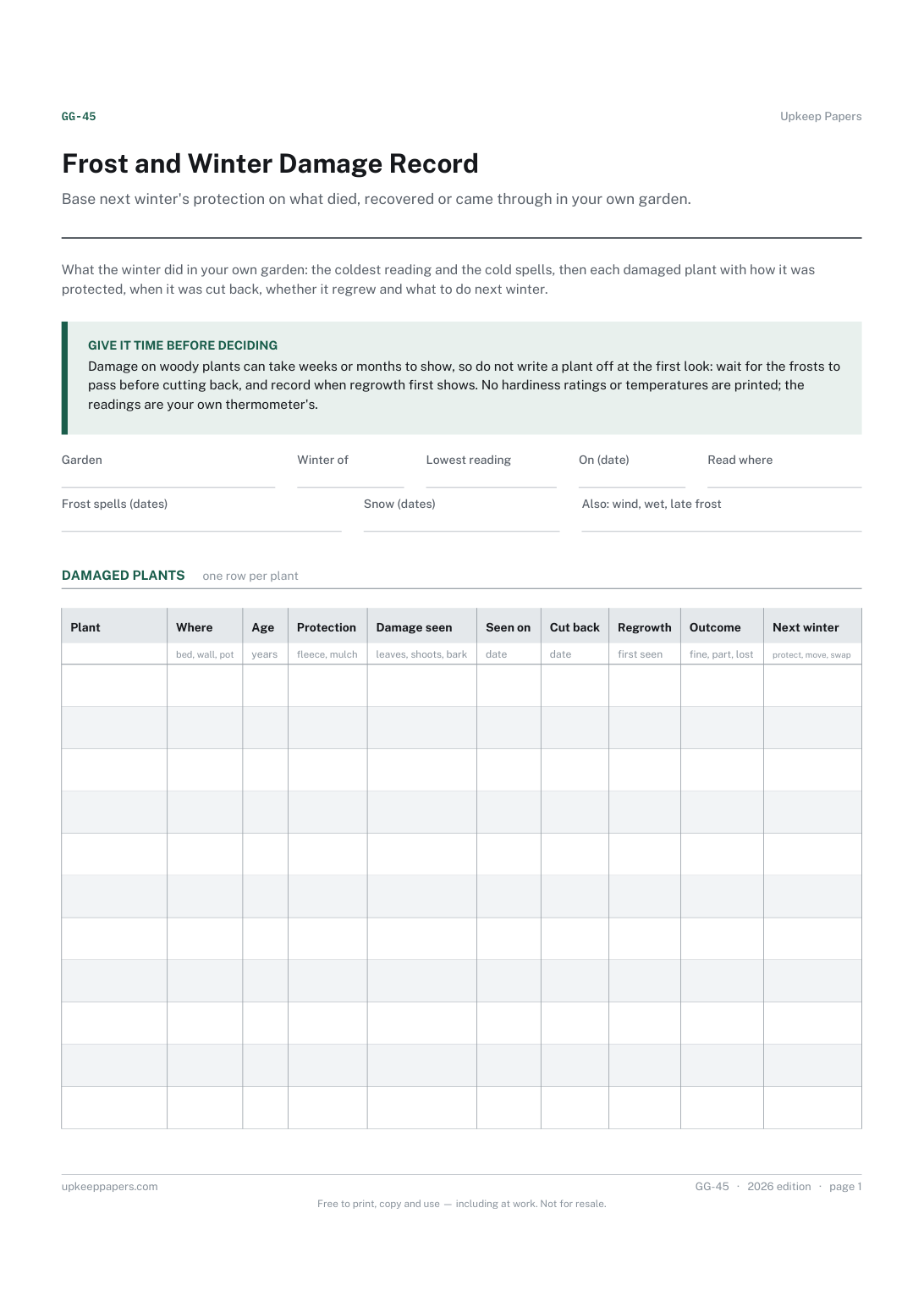
Base next winter's protection on what died, recovered or came through in your own garden. A hardiness label is a guide; this sheet is the record of your plot.
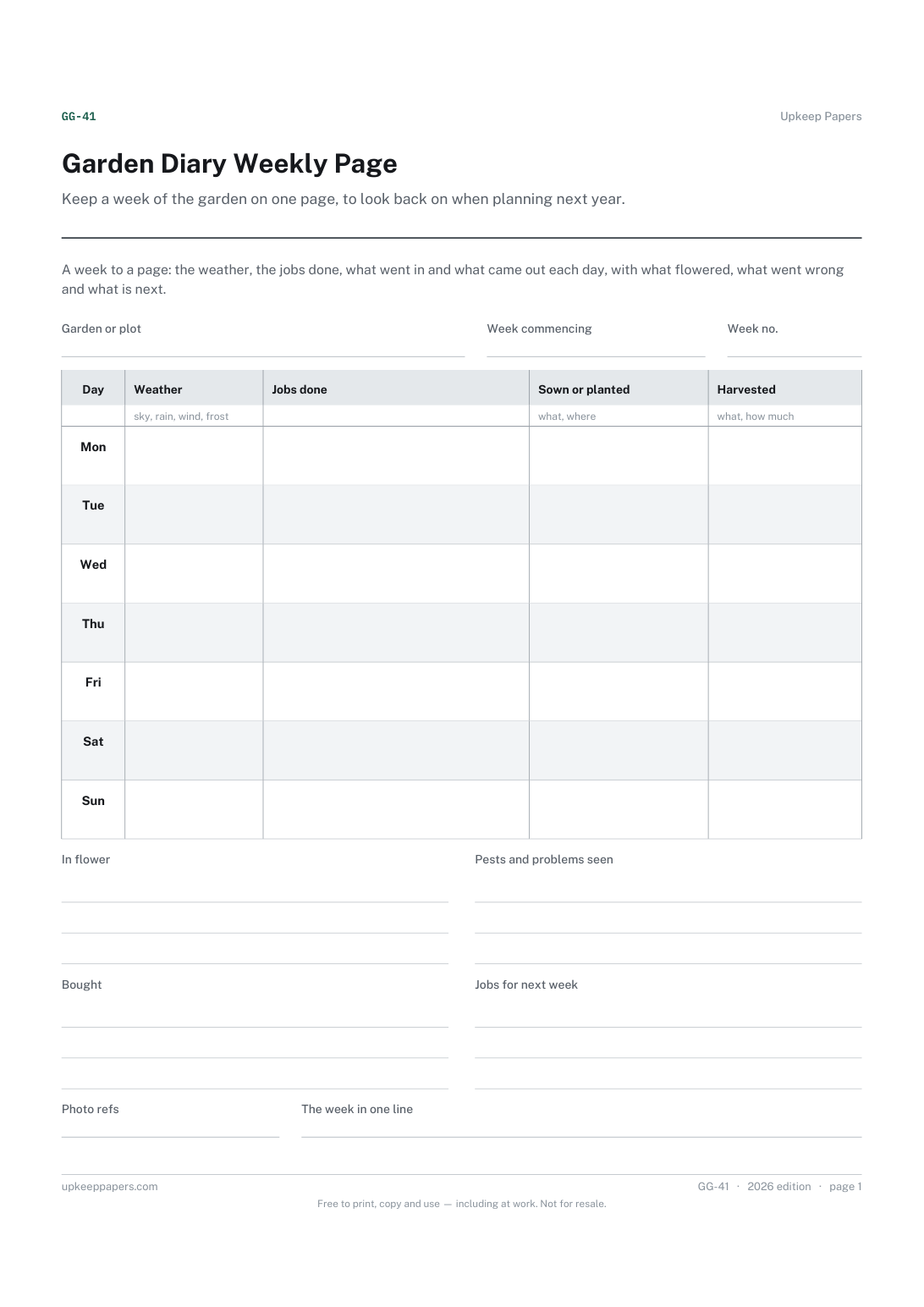
Keep a week of the garden on one page, to look back on when planning next year. It is the running record that ties the specialist logs together.

Every sheet, binder, game and puzzle on Upkeep Papers is free to download, with no email and no account. Making them is not free: each one takes days of research, design and checking, and the site costs money to run. If something here saved you time, you can buy us a coffee. It is entirely optional: nothing is locked, and nothing changes if you don’t.
Buy us a coffee Opens PayPal in a new tab. Any amount, and nothing changes if you would rather not.