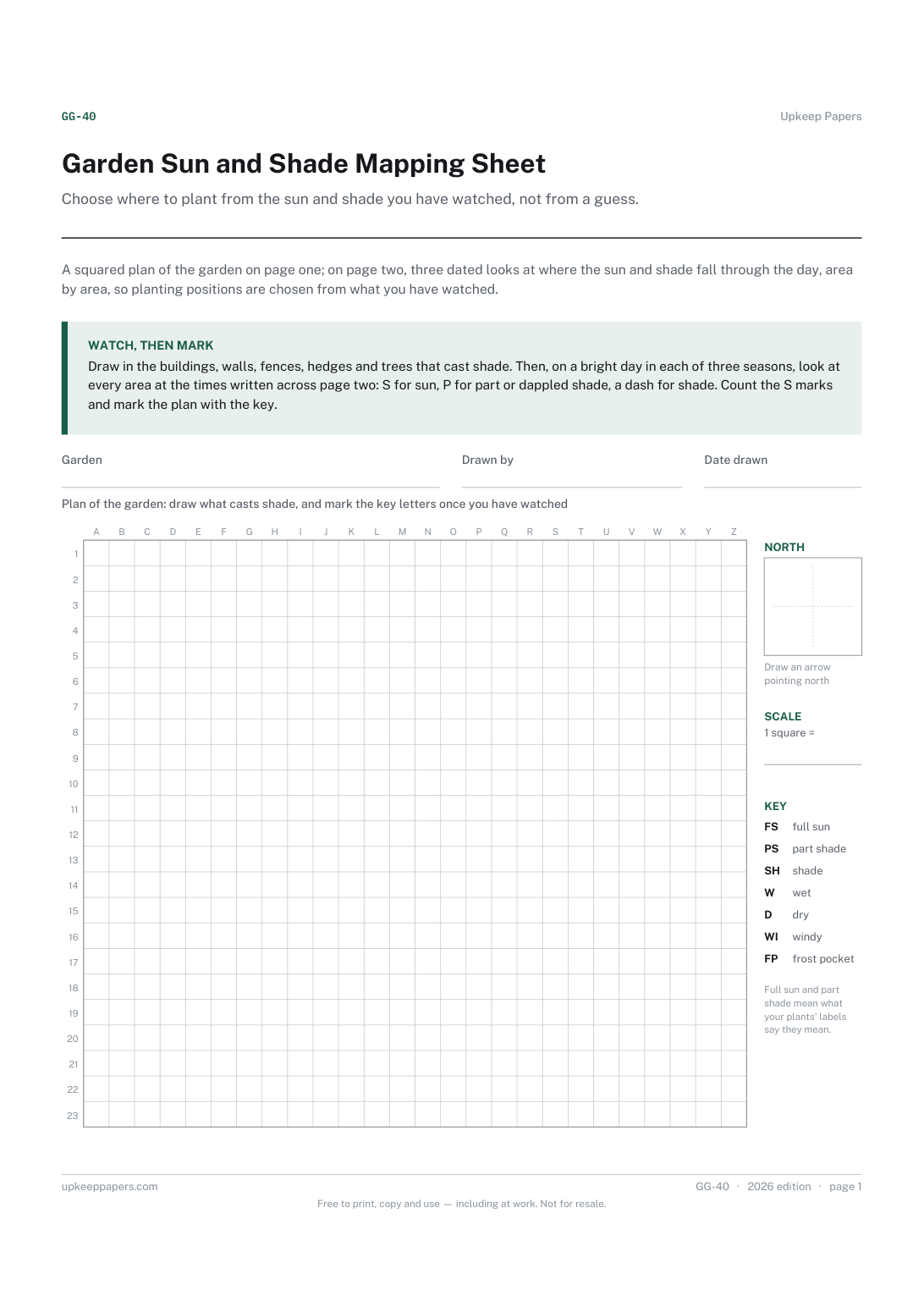
Garden Sun and Shade Mapping Sheet
Choose where to plant from the sun and shade you have watched, not from a guess. Looks in three seasons show how far the shade moves through the year.
GG-40 2 pages
Everything here is free. Making it takes time and money. Everything here is free.
 Buy us a coffee
Garden and growing · GG-45
A free printable frost damage record: the winter's lowest reading and cold spells, then each damaged plant with its protection, damage, cut-back date and regrowth.
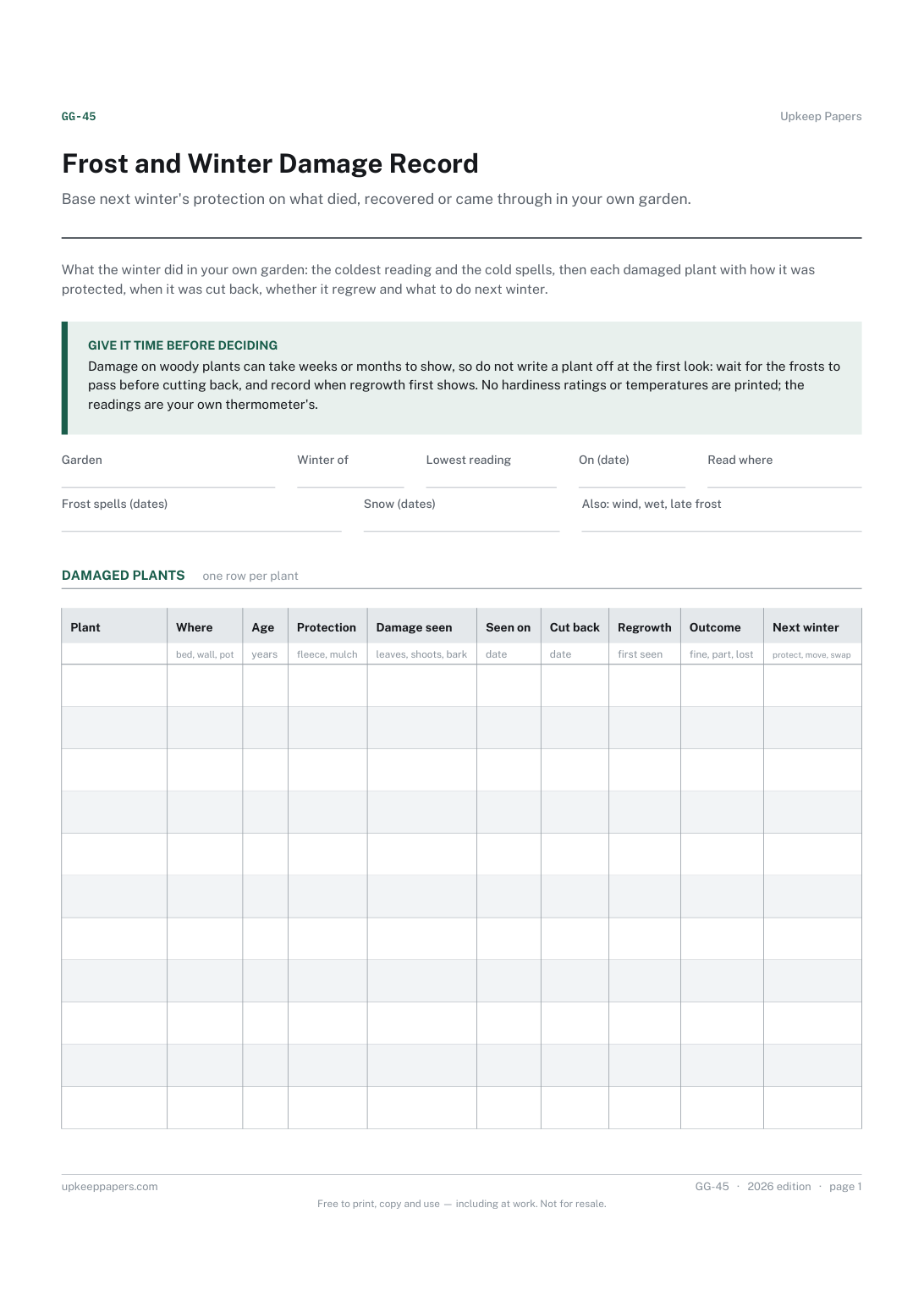
One page. Choose your paper size — both versions are laid out identically, so neither one gets shrunk to fit.
Print it and write on it
Fill it in type and save
The fillable versions have real form fields — open them in any PDF reader, type into them and save. Printing help.
Base next winter's protection on what died, recovered or came through in your own garden. A hardiness label is a guide; this sheet is the record of your plot.
Gardeners with tender, borderline or newly planted shrubs, perennials, fruit and pot plants that a hard winter can catch out.
One page, top to bottom:
Printed under the title: What the winter did in your own garden: the coldest reading and the cold spells, then each damaged plant with how it was protected, when it was cut back, whether it regrew and what to do next winter.
Give it time before deciding. Damage on woody plants can take weeks or months to show, so do not write a plant off at the first look: wait for the frosts to pass before cutting back, and record when regrowth first shows. No hardiness ratings or temperatures are printed; the readings are your own thermometer's.
Write-on lines: Garden · Winter of · Lowest reading · On (date) · Read where · Frost spells (dates) · Snow (dates) · Also: wind, wet, late frost
Table, 11 rows: Plant · Where · Age · Protection · Damage seen · Seen on · Cut back · Regrowth · Outcome · Next winter
Often not for months. Damage on woody plants can be slow to show, and regrowth can come from low down late in the season. The sheet has a regrowth column so you can wait and record what happened rather than dig a plant out too soon.
Because how a plant copes depends on its age, its position, the soil, wet and wind as much as on the lowest reading. The readings on this sheet are your own thermometer's, and the outcome column is the result for your garden.
Choose where to plant from the sun and shade you have watched, not from a guess. Looks in three seasons show how far the shade moves through the year.
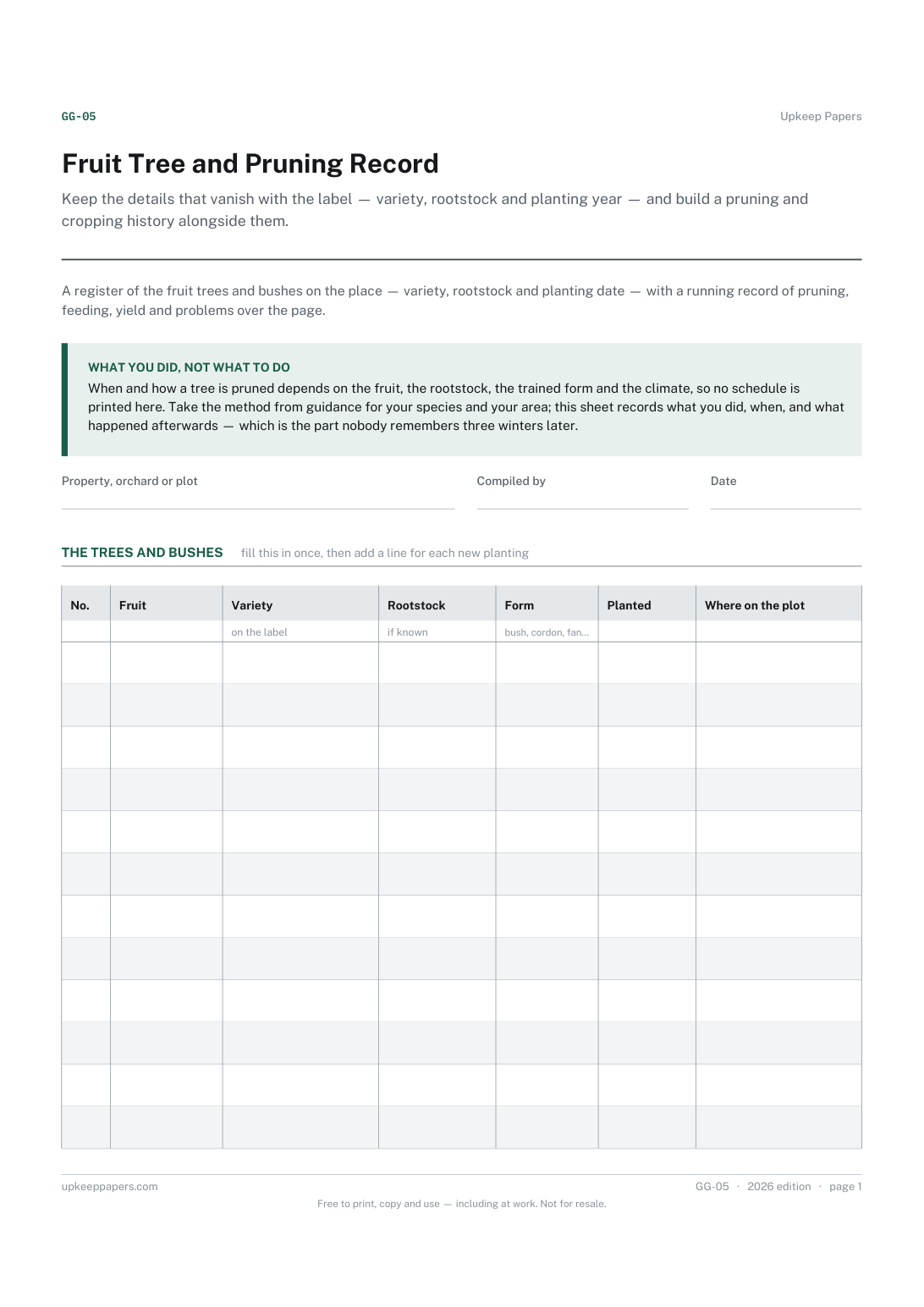
Keep the details that vanish with the label — variety, rootstock and planting year — and build a pruning and cropping history alongside them.
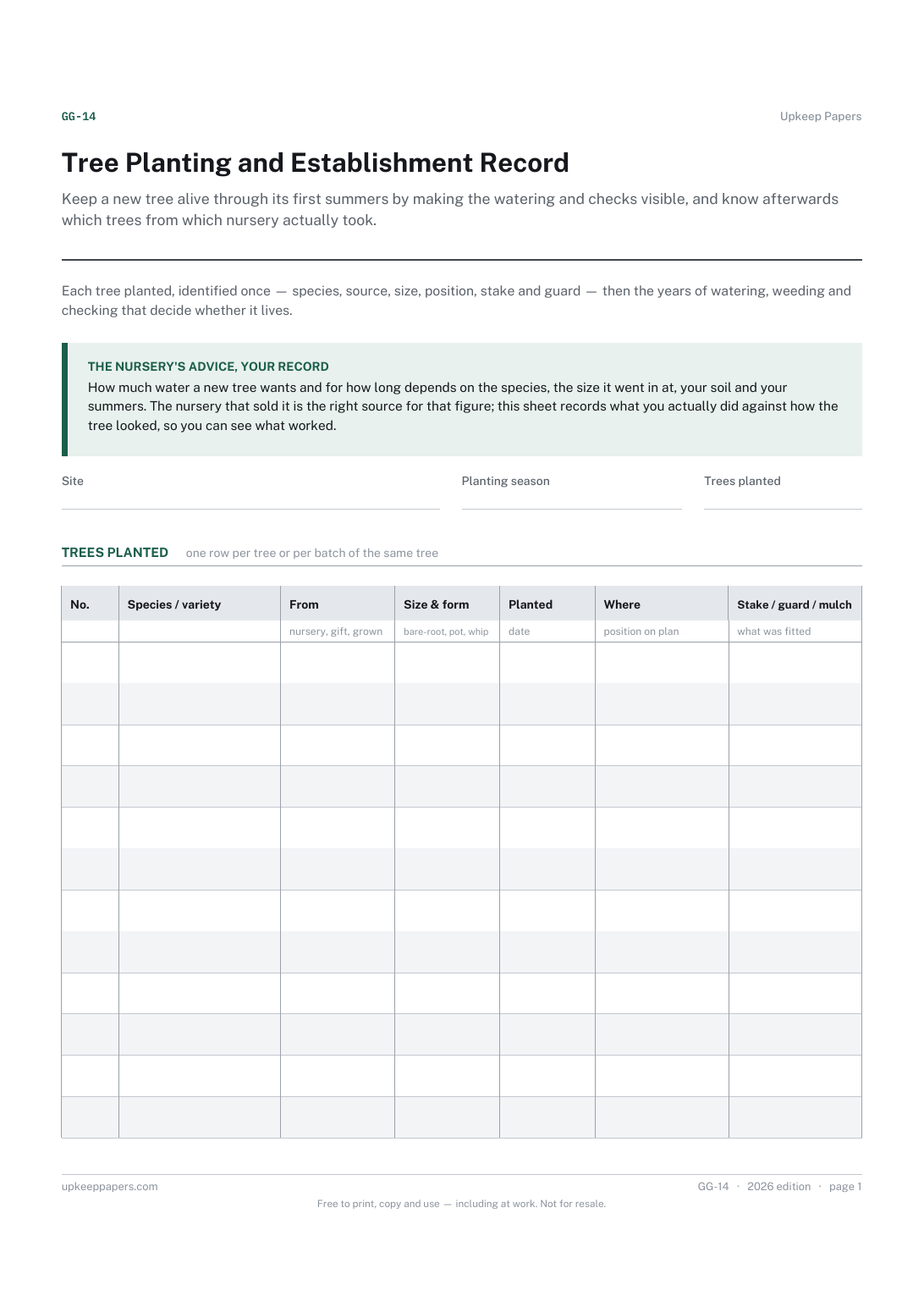
Keep a new tree alive through its first summers by making the watering and checks visible, and know afterwards which trees from which nursery actually took.
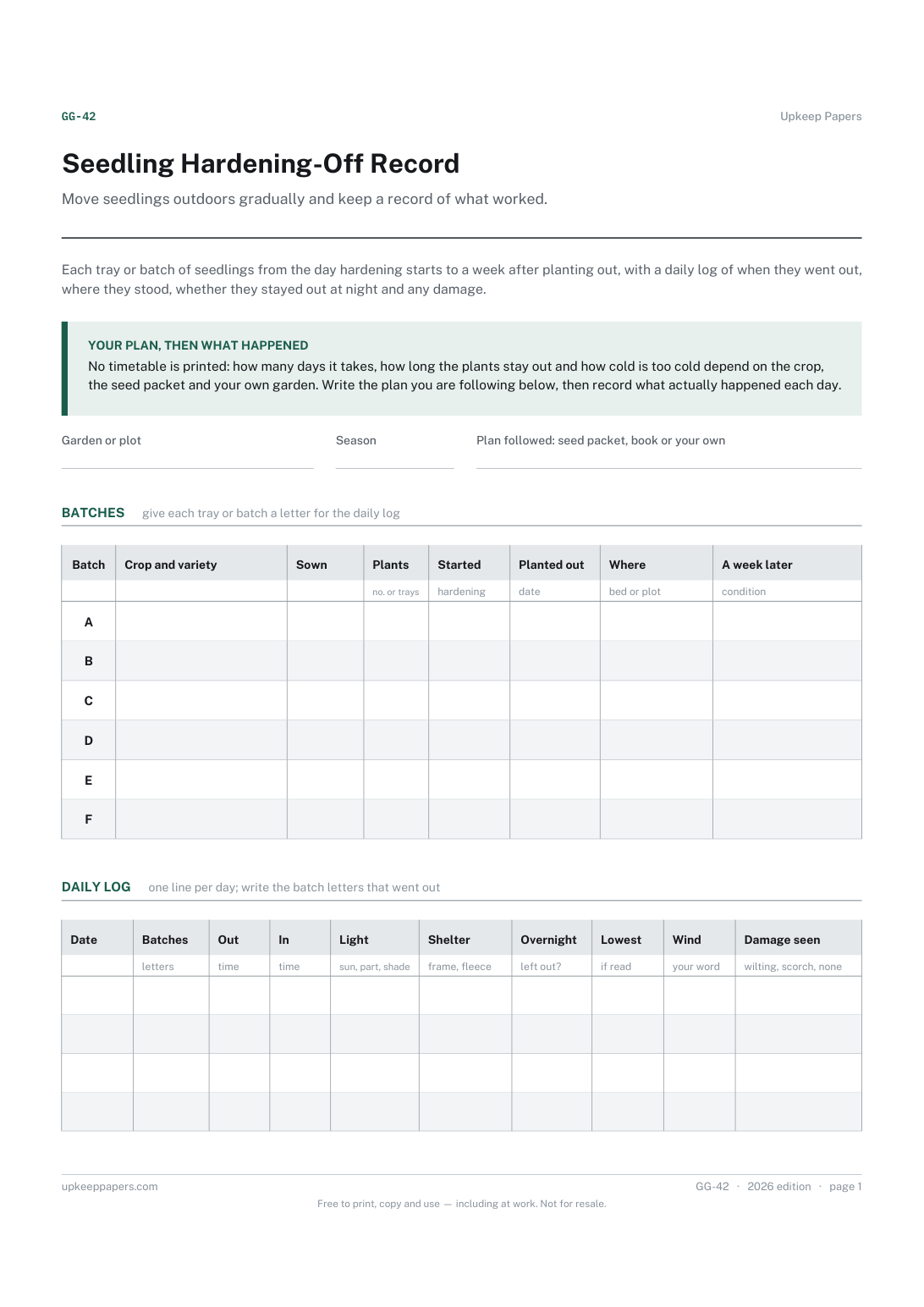
Move seedlings outdoors gradually and keep a record of what worked. The routine that got this year's plants out unharmed is the one to repeat next spring.
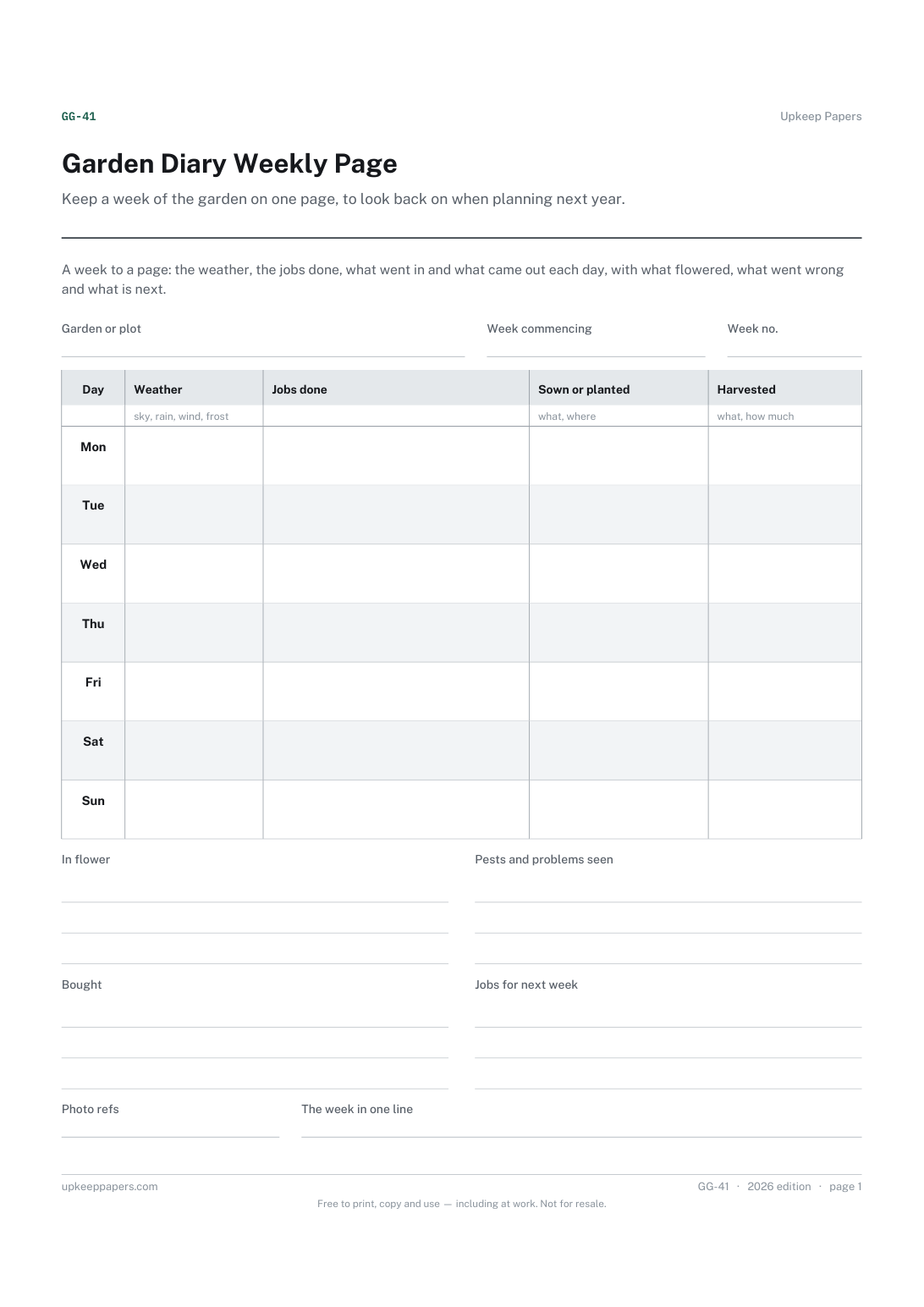
Keep a week of the garden on one page, to look back on when planning next year. It is the running record that ties the specialist logs together.

Every sheet, binder, game and puzzle on Upkeep Papers is free to download, with no email and no account. Making them is not free: each one takes days of research, design and checking, and the site costs money to run. If something here saved you time, you can buy us a coffee. It is entirely optional: nothing is locked, and nothing changes if you don’t.
Buy us a coffee Opens PayPal in a new tab. Any amount, and nothing changes if you would rather not.