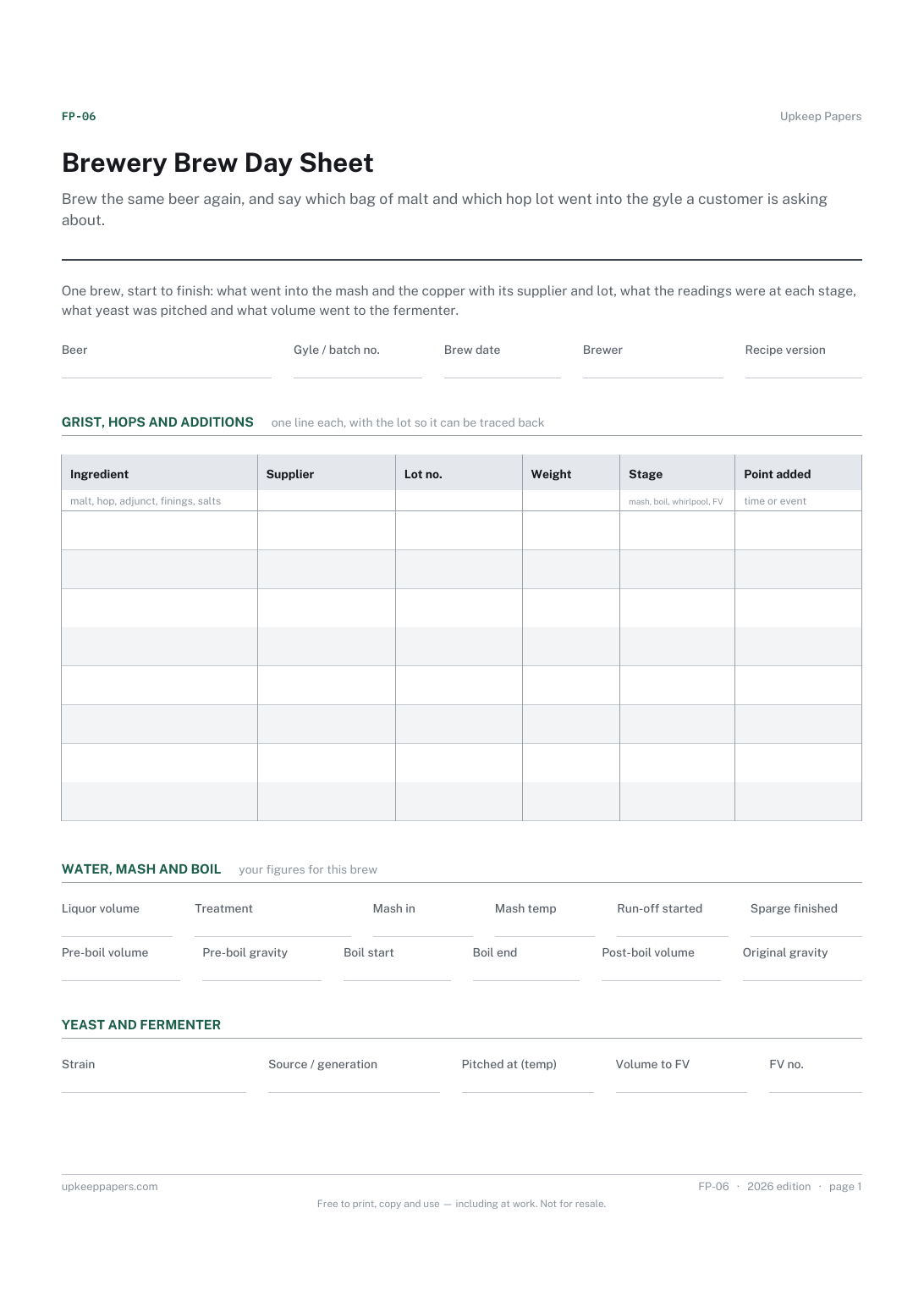
Brewery Brew Day Sheet
Brew the same beer again, and say which bag of malt and which hop lot went into the gyle a customer is asking about.
FP-06 2 pages
Everything here is free. Making it takes time and money. Everything here is free.
 Buy us a coffee
Food production and artisan makers · FP-10
A cask and keg fill record — one gyle racked into containers, each with its volume, additions, code and destination, and the tank reconciled against them.
One page. Choose your paper size — both versions are laid out identically, so neither one gets shrunk to fit.
Print it and write on it
Fill it in type and save
The fillable versions have real form fields — open them in any PDF reader, type into them and save. Printing help.
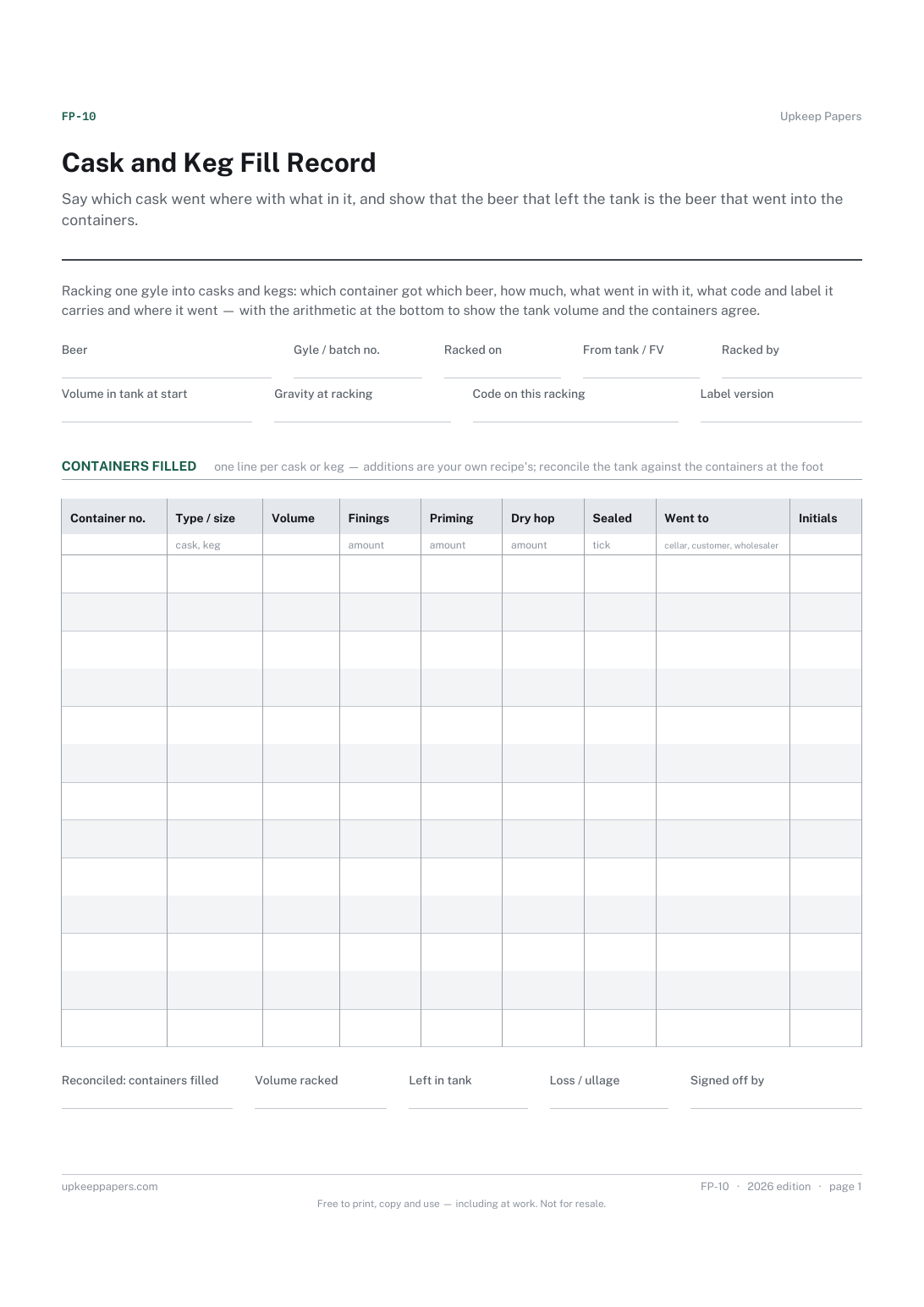
Say which cask went where with what in it, and show that the beer that left the tank is the beer that went into the containers.
Small breweries and cider makers racking their own casks and kegs, and cellars that fill from bulk.
One page, top to bottom:
Printed under the title: Racking one gyle into casks and kegs: which container got which beer, how much, what went in with it, what code and label it carries and where it went — with the arithmetic at the bottom to show the tank volume and the containers agree.
Write-on lines: Beer · Gyle / batch no. · Racked on · From tank / FV · Racked by · Volume in tank at start · Gravity at racking · Code on this racking · Label version
Table, 13 rows: Container no. · Type / size · Volume · Finings · Priming · Dry hop · Sealed · Went to · Initials
Write-on lines: Reconciled: containers filled · Volume racked · Left in tank · Loss / ullage · Signed off by
Because they are part of your recipe for this beer, and depend on the container size and how you condition. The columns are there so what went into each cask is written down, not to tell you what it ought to be.
Brew the same beer again, and say which bag of malt and which hop lot went into the gyle a customer is asking about.
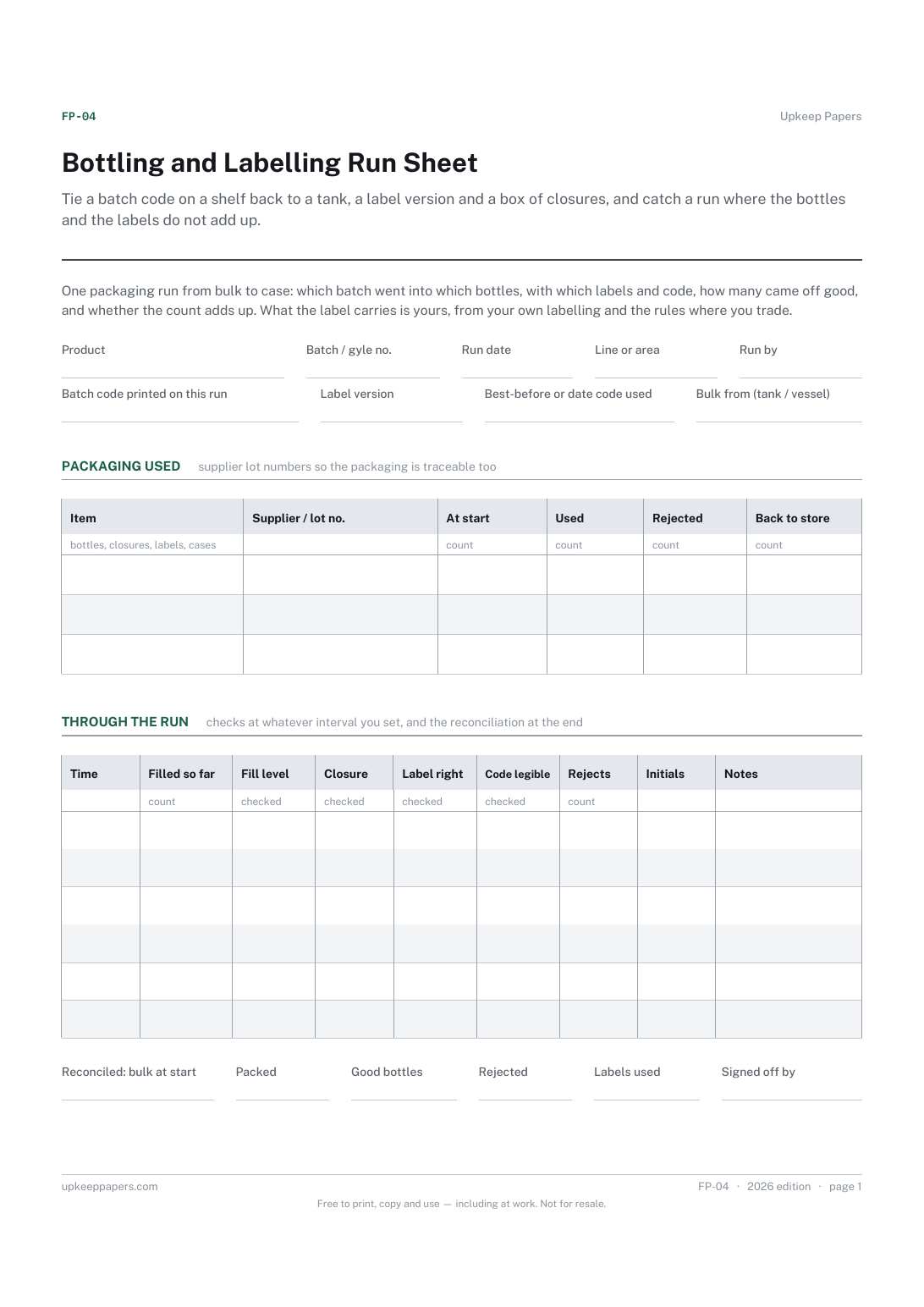
Tie a batch code on a shelf back to a tank, a label version and a box of closures, and catch a run where the bottles and the labels do not add up.
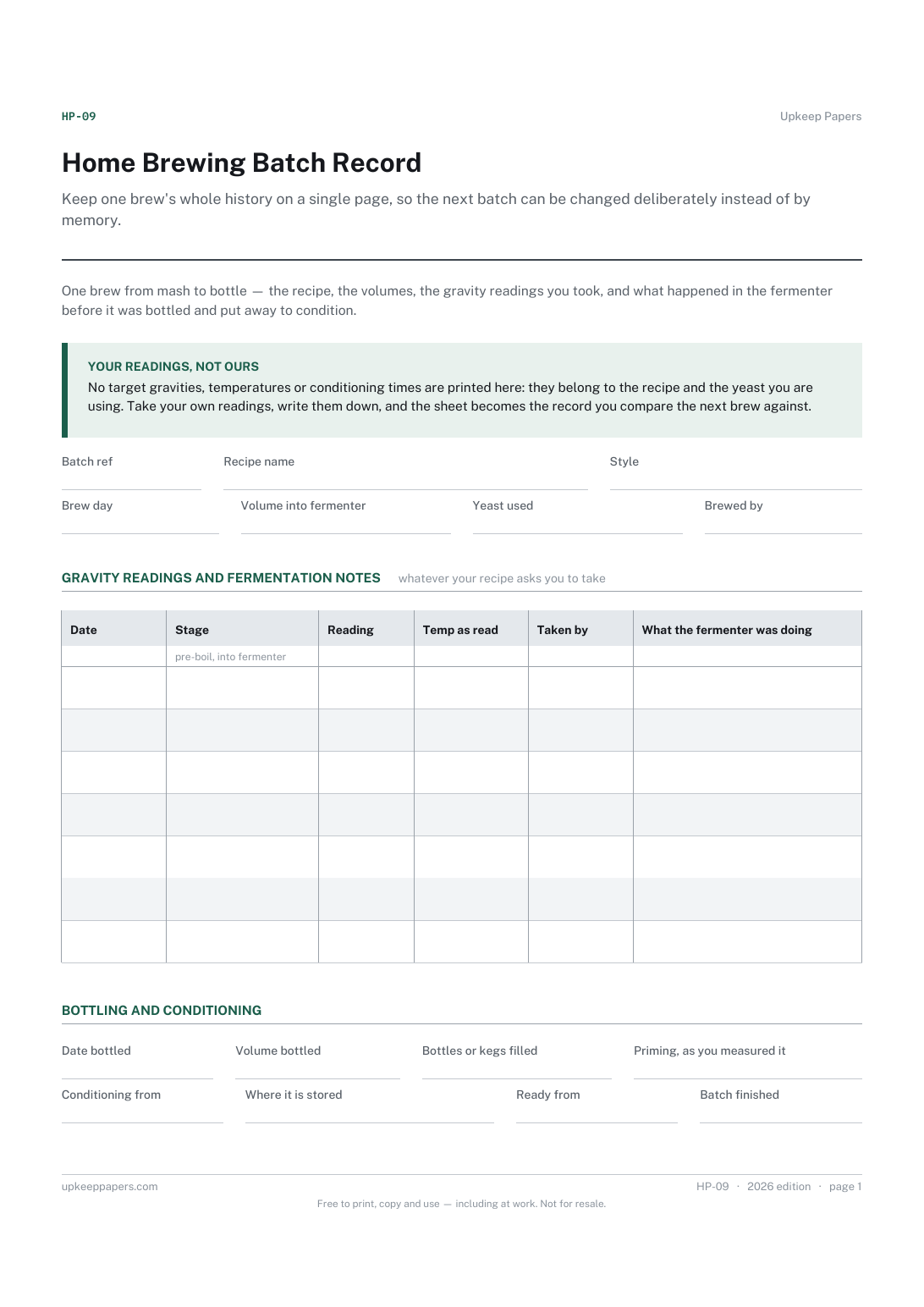
Keep one brew's whole history on a single page, so the next batch can be changed deliberately instead of by memory.
Send goods with a note, or check a delivery in properly, with the discrepancy line that settles arguments weeks later.

Every sheet, binder, game and puzzle on Upkeep Papers is free to download, with no email and no account. Making them is not free: each one takes days of research, design and checking, and the site costs money to run. If something here saved you time, you can buy us a coffee. It is entirely optional: nothing is locked, and nothing changes if you don’t.
Buy us a coffee Opens PayPal in a new tab. Any amount, and nothing changes if you would rather not.