Fermentation Batch Record
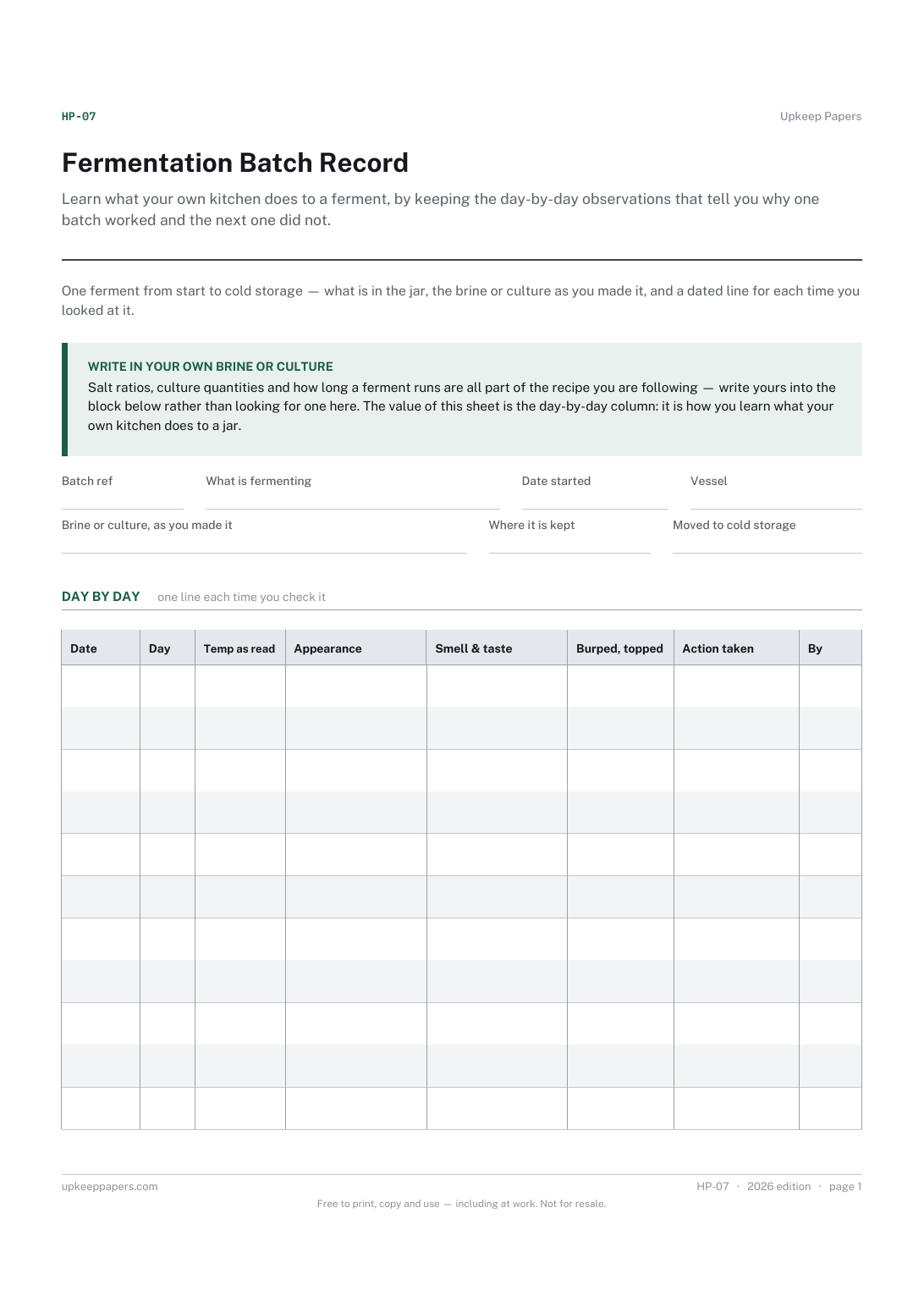
Learn what your own kitchen does to a ferment, by keeping the day-by-day observations that tell you why one batch worked and the next one did not.
HP-07 1 page
Everything here is free. Making it takes time and money. Everything here is free.
 Buy us a coffee
Food preservation and pantry · HP-09
A free printable brewing record — one batch on a page, with recipe and volumes, the gravity readings you took, fermentation notes and the bottling and conditioning details.
One page. Choose your paper size — both versions are laid out identically, so neither one gets shrunk to fit.
Print it and write on it
Fill it in type and save
The fillable versions have real form fields — open them in any PDF reader, type into them and save. Printing help.
Keep one brew's whole history on a single page, so the next batch can be changed deliberately instead of by memory.
Home brewers of beer, cider, wine or mead, and anyone brewing from kits who wants a record of what changed between batches.
One page, top to bottom:
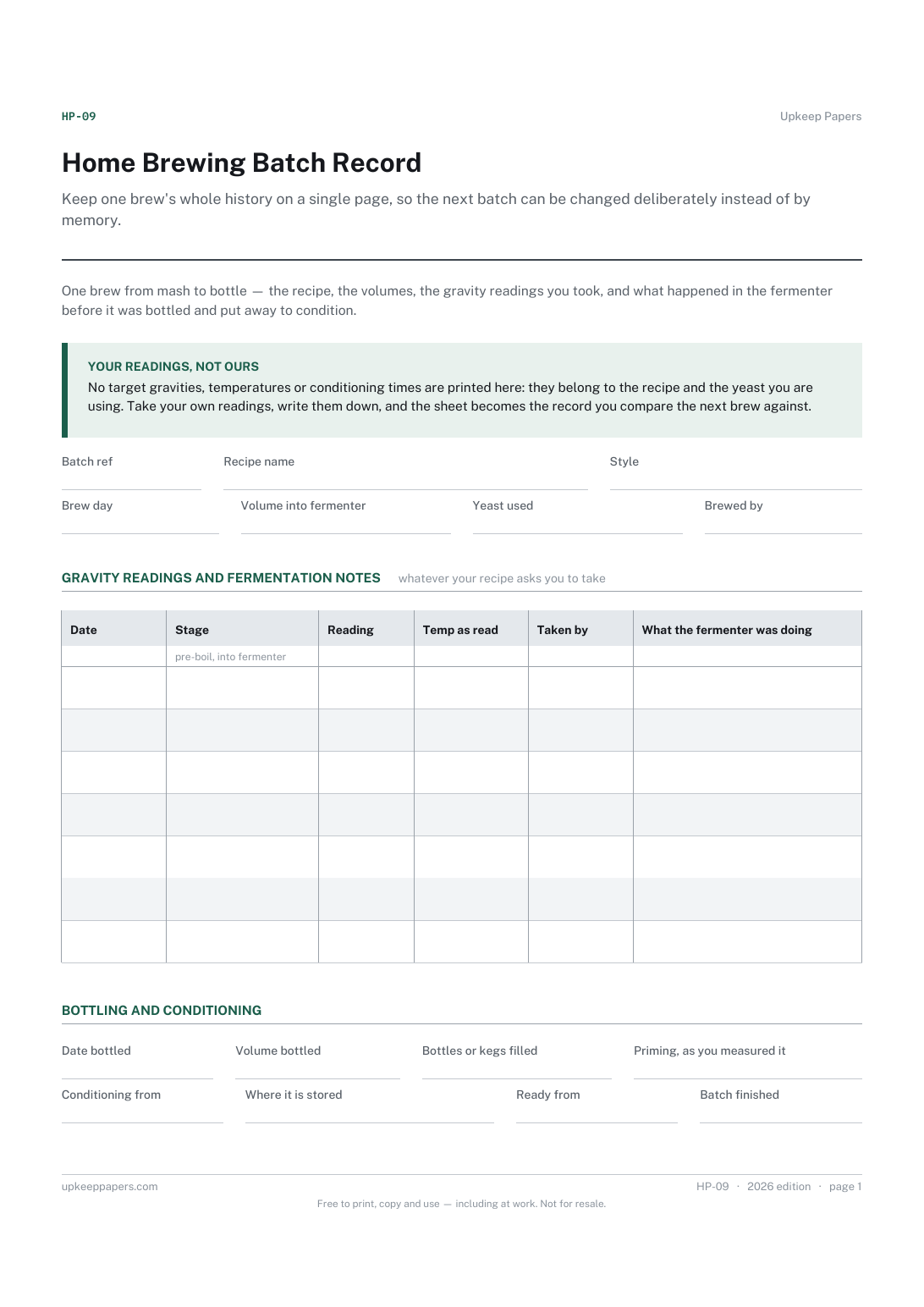
Printed under the title: One brew from mash to bottle — the recipe, the volumes, the gravity readings you took, and what happened in the fermenter before it was bottled and put away to condition.
Your readings, not ours. No target gravities, temperatures or conditioning times are printed here: they belong to the recipe and the yeast you are using. Take your own readings, write them down, and the sheet becomes the record you compare the next brew against.
Write-on lines: Batch ref · Recipe name · Style · Brew day · Volume into fermenter · Yeast used · Brewed by
Table, 7 rows: Date · Stage · Reading · Temp as read · Taken by · What the fermenter was doing
Write-on lines: Date bottled · Volume bottled · Bottles or kegs filled · Priming, as you measured it · Conditioning from · Where it is stored · Ready from · Batch finished
Ruled lines: Notes — mash and boil, fermentation day by day, how it tasted
Because they belong to the recipe and the yeast, and a sheet that printed one would be wrong for most brews. Take your own readings, write them down, and compare against the recipe you are following.
Yes. The stages are named by you rather than printed, so the same page works for a mash and boil, a juice pressing or a kit. Only the labels you write in change.
Learn what your own kitchen does to a ferment, by keeping the day-by-day observations that tell you why one batch worked and the next one did not.
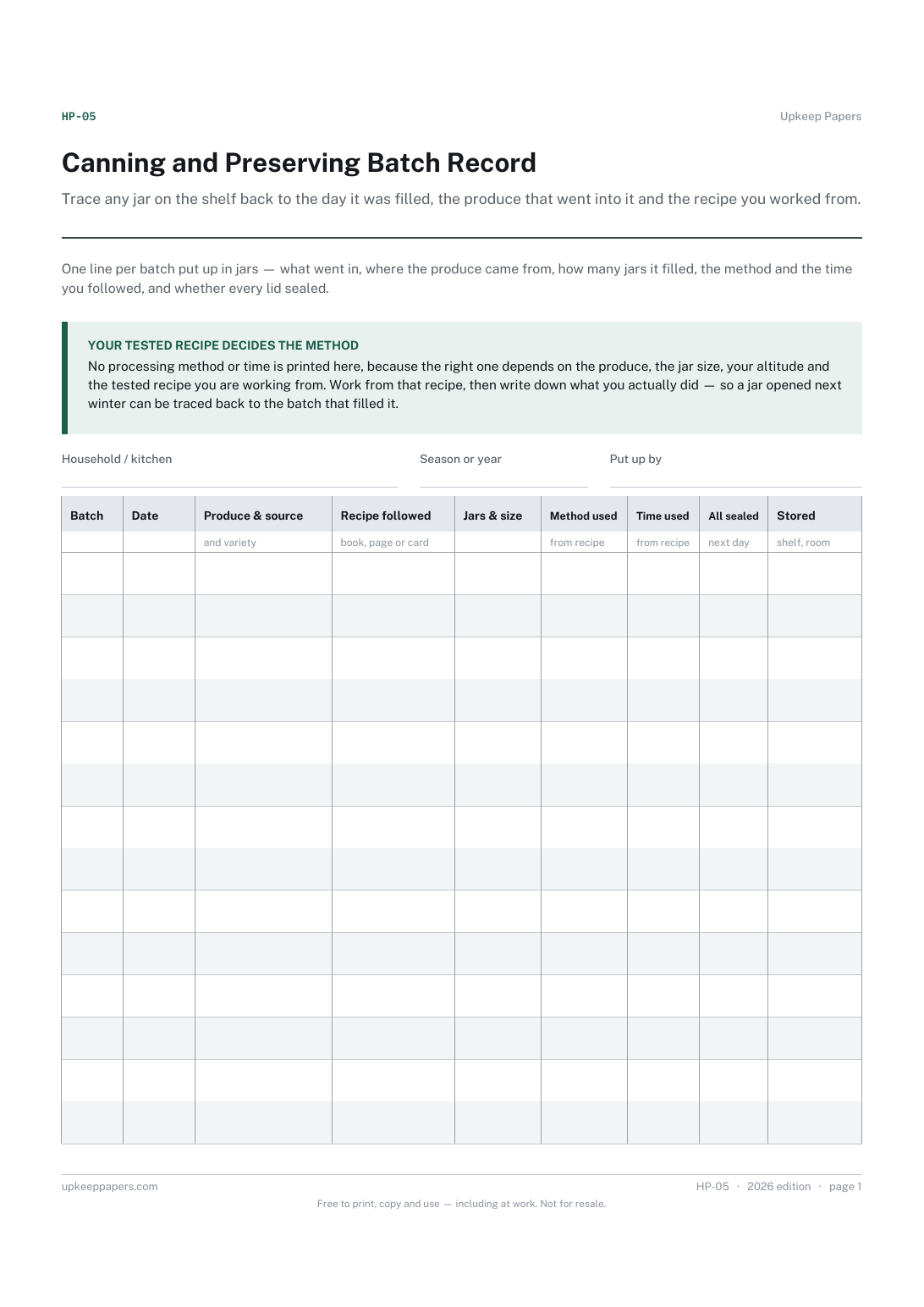
Trace any jar on the shelf back to the day it was filled, the produce that went into it and the recipe you worked from.
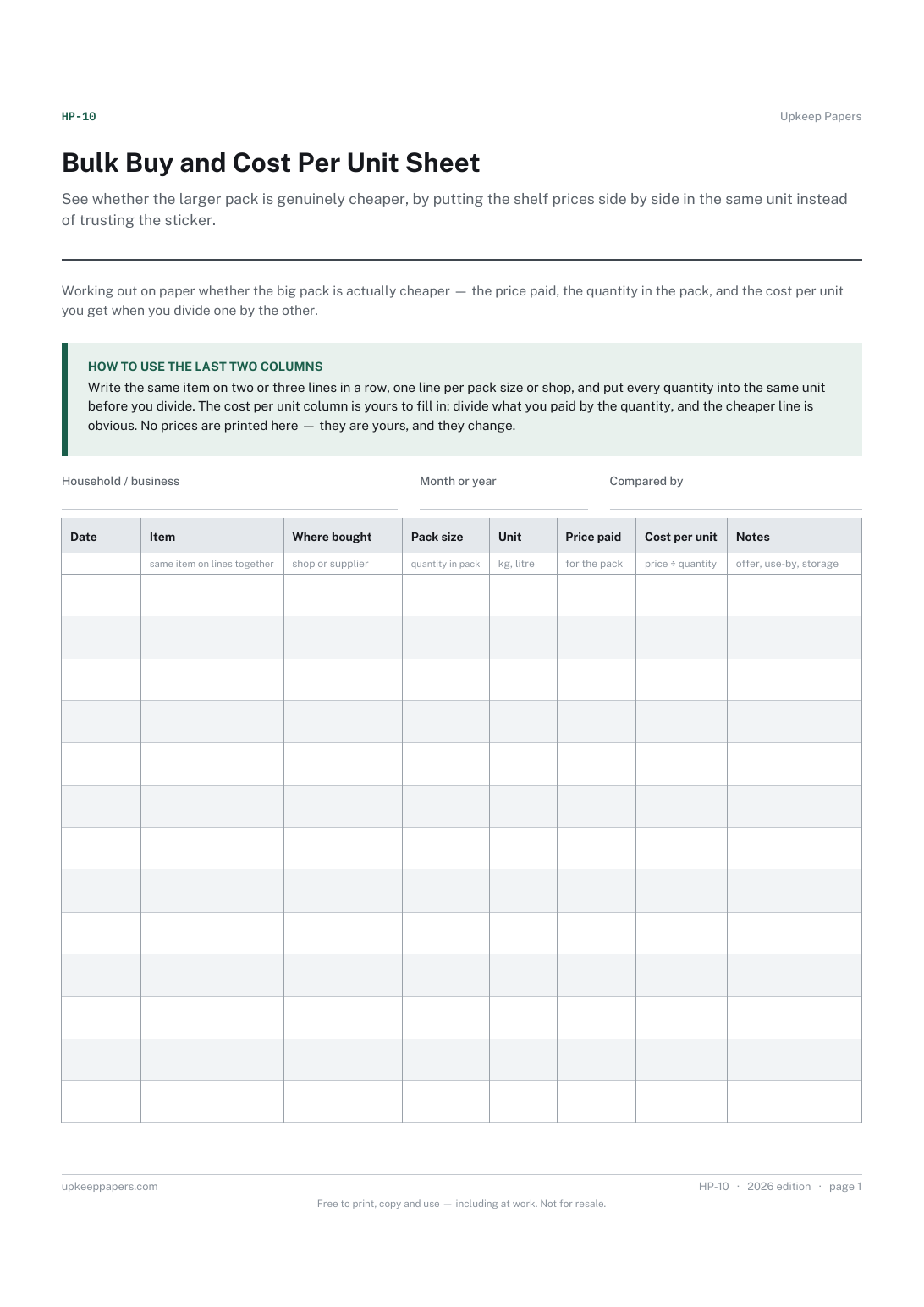
See whether the larger pack is genuinely cheaper, by putting the shelf prices side by side in the same unit instead of trusting the sticker.
See at a glance what has fallen below the level you want to keep, so staples get reordered before a recipe stops and duplicates stop accumulating behind them.

Every sheet, binder, game and puzzle on Upkeep Papers is free to download, with no email and no account. Making them is not free: each one takes days of research, design and checking, and the site costs money to run. If something here saved you time, you can buy us a coffee. It is entirely optional: nothing is locked, and nothing changes if you don’t.
Buy us a coffee Opens PayPal in a new tab. Any amount, and nothing changes if you would rather not.