Apiary Site Permission and Landowner Record
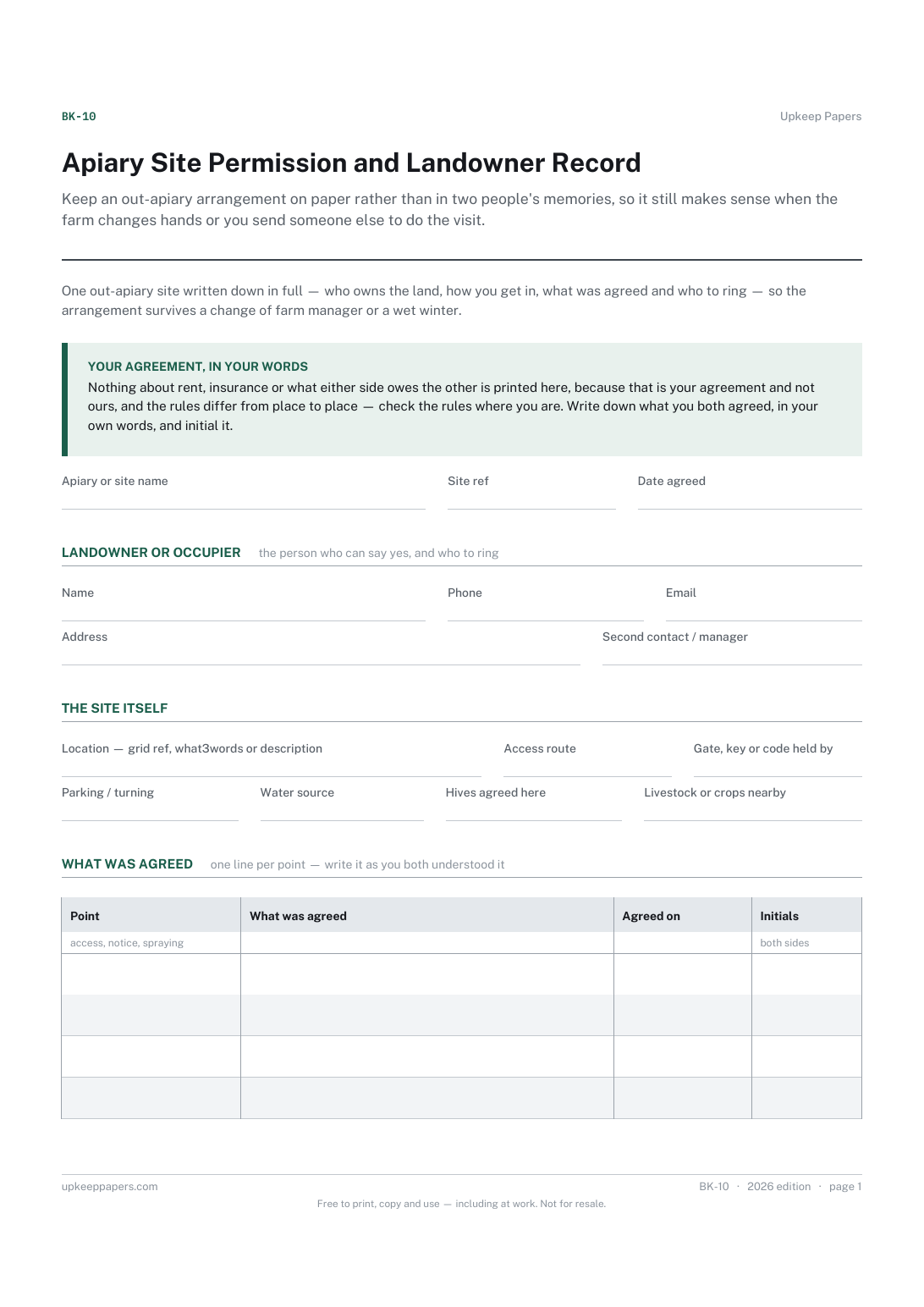
Keep an out-apiary arrangement on paper rather than in two people's memories, so it still makes sense when the farm changes hands or you send someone else to do the visit.
BK-10 1 page
Everything here is free. Making it takes time and money. Everything here is free.
 Buy us a coffee
Beekeeping · BK-20
A free printable spray notice and bee incident record: neighbouring growers, every spray notice and the action taken, and the facts of a suspected poisoning.
2 pages. Choose your paper size — both versions are laid out identically, so neither one gets shrunk to fit.
Print it and write on it
Fill it in type and save
The fillable versions have real form fields — open them in any PDF reader, type into them and save. Printing help.
Keep spray warnings, what you did about them and the facts of a suspected poisoning in order. When something goes wrong, the dates, photos and samples are what anyone looking into it will ask for.
Beekeepers with hives near farmland, orchards or other sprayed crops, and out-apiary keepers who rely on growers to warn them.
2 pages, in this order:
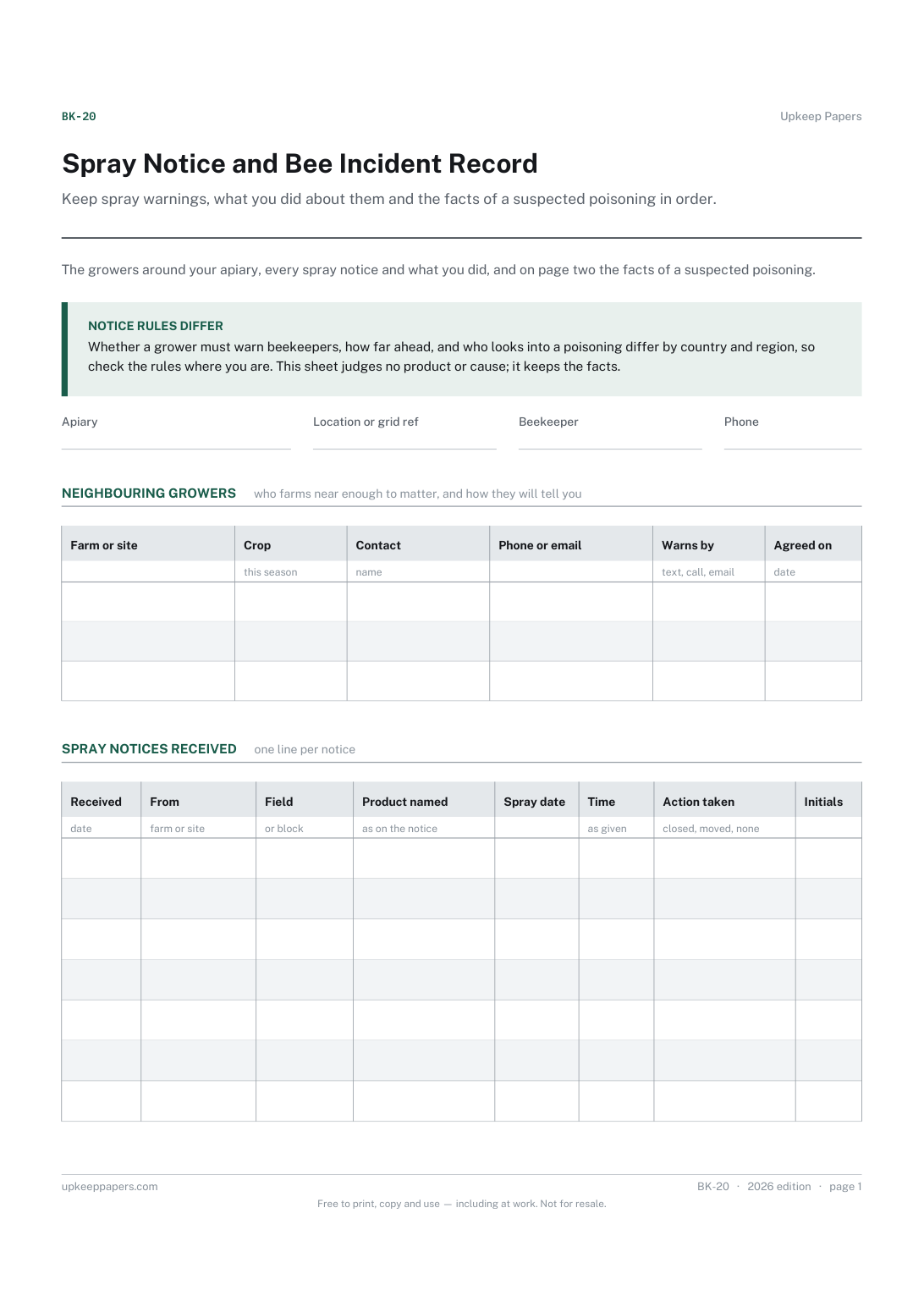
Printed under the title: The growers around your apiary, every spray notice and what you did, and on page two the facts of a suspected poisoning.
Notice rules differ. Whether a grower must warn beekeepers, how far ahead, and who looks into a poisoning differ by country and region, so check the rules where you are. This sheet judges no product or cause; it keeps the facts.
Write-on lines: Apiary · Location or grid ref · Beekeeper · Phone
Table, 3 rows: Farm or site · Crop · Contact · Phone or email · Warns by · Agreed on
Table, 7 rows: Received · From · Field · Product named · Spray date · Time · Action taken · Initials
Write-on lines: Date found · Time · Found by · Hives affected · Hives on site · Weather that day and the day before · Crops in flower nearby · Spraying seen or notified
Table, 4 rows: Hive · Signs seen · Dead bees · Brood · Queen seen · Photos
Table, 3 rows: Sample · What it is · Taken · Taken by · Kept where · Sent to
Table, 4 rows: Date · Who · Organisation · How · Reference · What they said
No. Whether a warning is required at all, how far ahead and for which products differ by country and region, and the rules change. The sheet records what was agreed with each grower and what notices actually arrived; check the rules where you are.
It depends where you are: often a pesticide regulator or a government bee or wildlife body, and sometimes the product's maker or your association. Find out who before the season and write it in, so you are not searching on the day.
No. The signs at a hive can have several causes, and only testing can link deaths to a product. The sheet keeps the facts, photos and samples in order, which is what an investigation starts from.
Keep an out-apiary arrangement on paper rather than in two people's memories, so it still makes sense when the farm changes hands or you send someone else to do the visit.
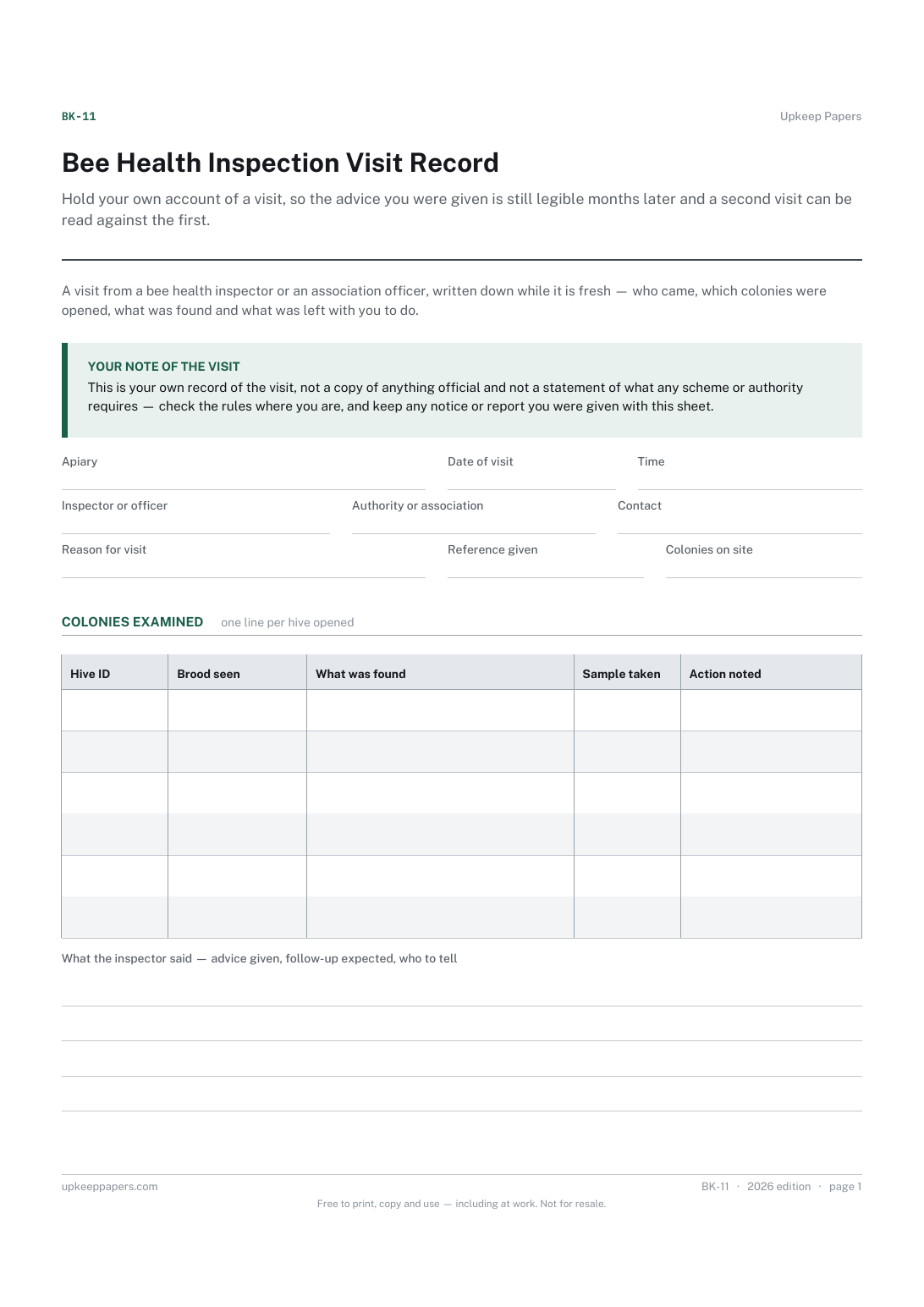
Hold your own account of a visit, so the advice you were given is still legible months later and a second visit can be read against the first.
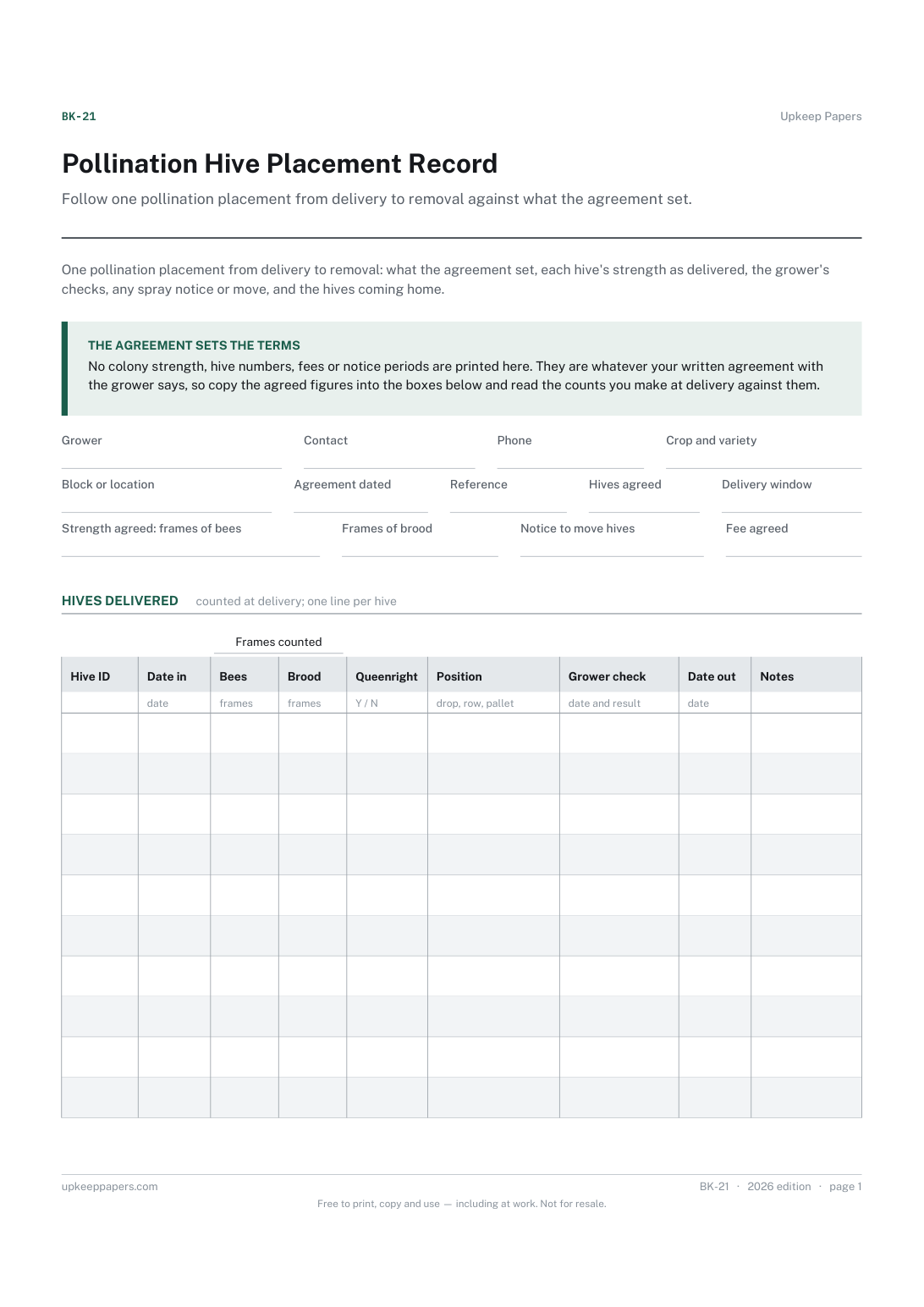
Follow one pollination placement from delivery to removal against what the agreement set. If a grower questions a hive's strength or a payment, the counts and dates are on the record.
Record applications properly at the time, including the conditions, so the record stands up when a buyer, an inspector or a neighbour asks about it.
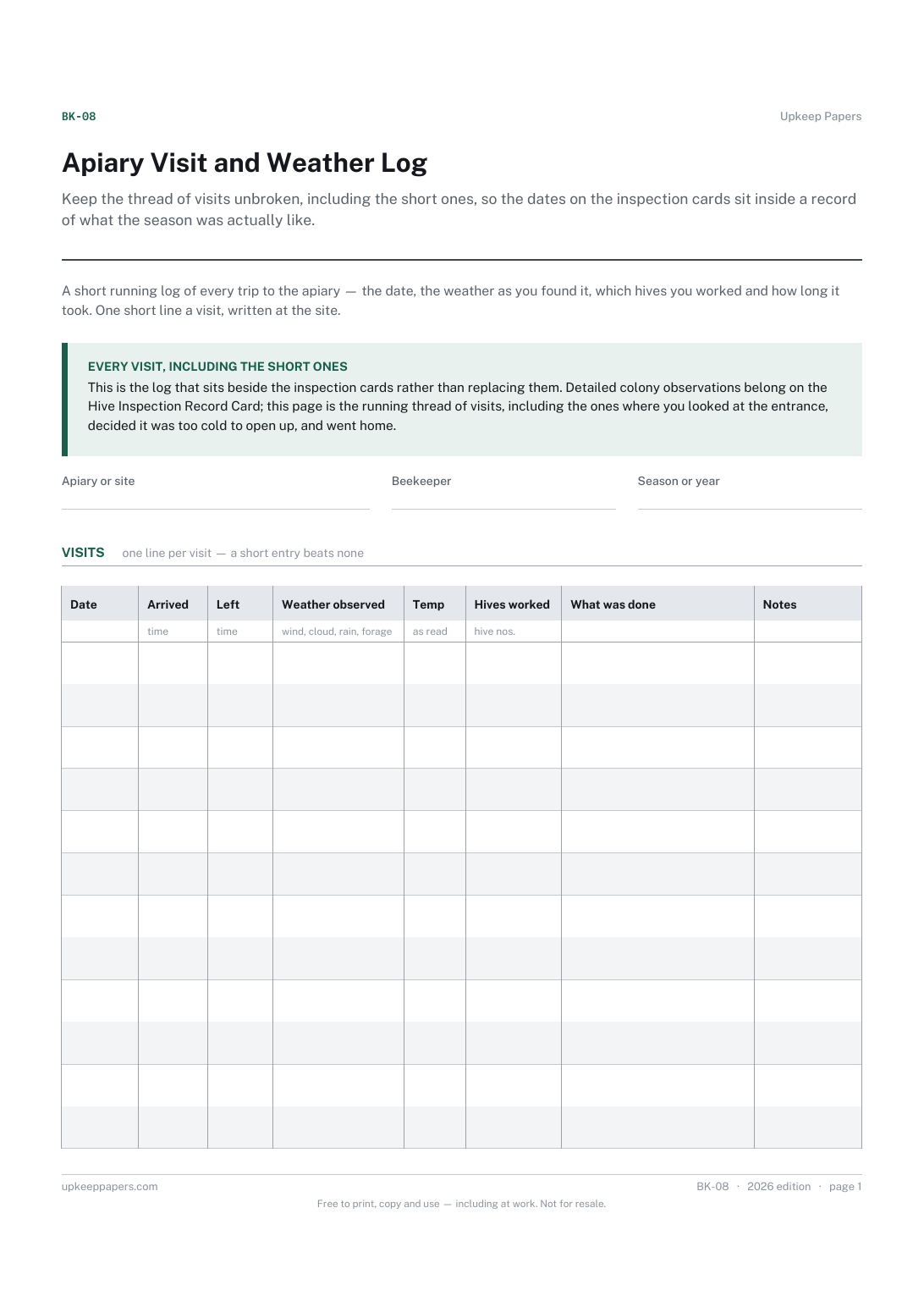
Keep the thread of visits unbroken, including the short ones, so the dates on the inspection cards sit inside a record of what the season was actually like.

Every sheet, binder, game and puzzle on Upkeep Papers is free to download, with no email and no account. Making them is not free: each one takes days of research, design and checking, and the site costs money to run. If something here saved you time, you can buy us a coffee. It is entirely optional: nothing is locked, and nothing changes if you don’t.
Buy us a coffee Opens PayPal in a new tab. Any amount, and nothing changes if you would rather not.