Hive Inspection Record Card
Build a run of comparable inspections for one colony, so a failing hive can be told apart from a normal one by looking at the page rather than by memory.
BK-01 1 page
Everything here is free. Making it takes time and money. Everything here is free.
 Buy us a coffee
Beekeeping · BK-08
A free printable apiary visit log — date, arrival and departure, the weather as you found it, which hives were worked and what was done, one short line per trip.
One page. Choose your paper size — both versions are laid out identically, so neither one gets shrunk to fit.
Print it and write on it
Fill it in type and save
The fillable versions have real form fields — open them in any PDF reader, type into them and save. Printing help.
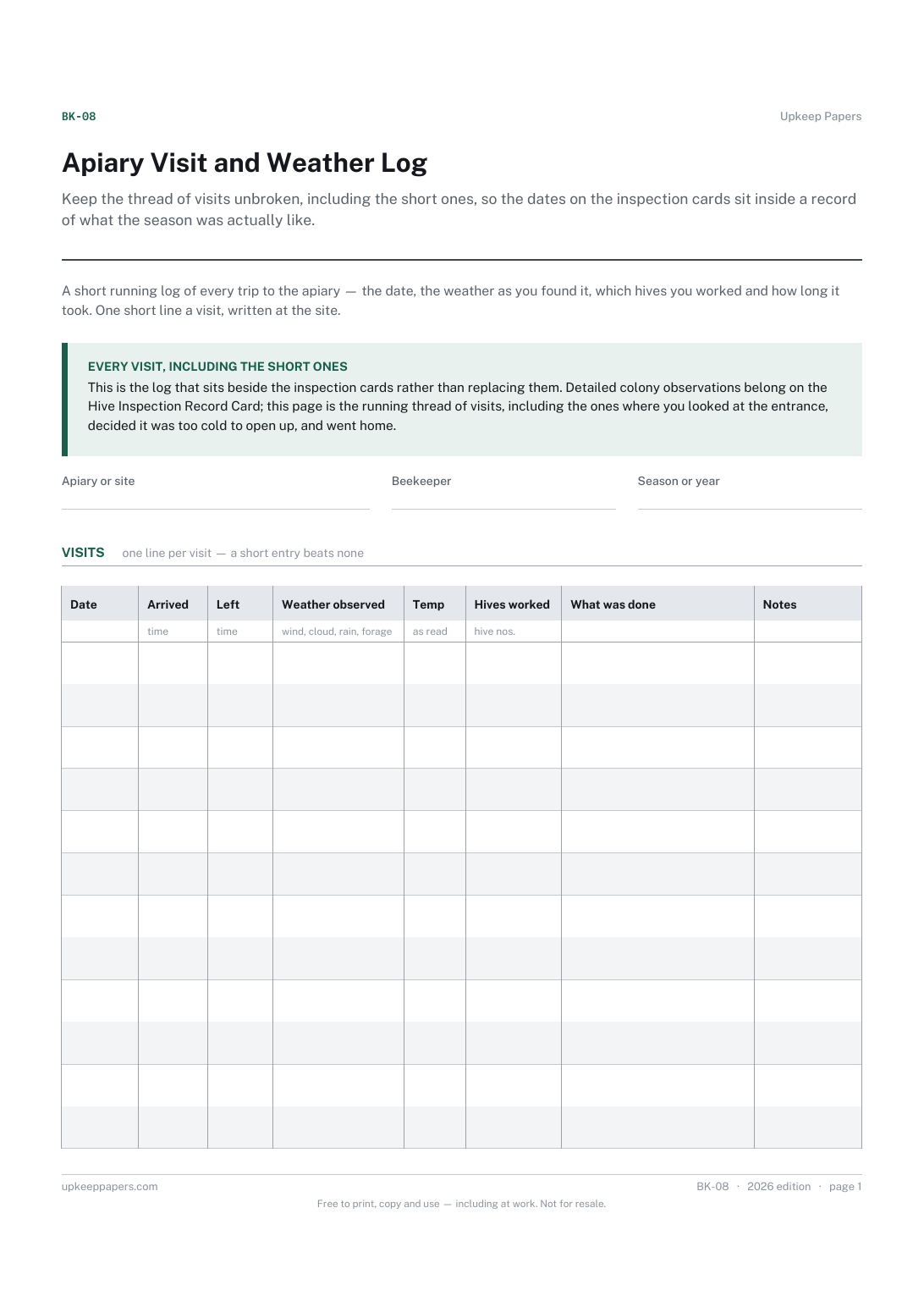
Keep the thread of visits unbroken, including the short ones, so the dates on the inspection cards sit inside a record of what the season was actually like.
Beekeepers keeping bees away from home, association apiary managers sharing a site, and anyone who wants the time an apiary takes written down.
One page, top to bottom:
Printed under the title: A short running log of every trip to the apiary — the date, the weather as you found it, which hives you worked and how long it took. One short line a visit, written at the site.
Every visit, including the short ones. This is the log that sits beside the inspection cards rather than replacing them. Detailed colony observations belong on the Hive Inspection Record Card; this page is the running thread of visits, including the ones where you looked at the entrance, decided it was too cold to open up, and went home.
Write-on lines: Apiary or site · Beekeeper · Season or year
Table, 12 rows: Date · Arrived · Left · Weather observed · Temp · Hives worked · What was done · Notes
Because a gap in the dates reads later as neglect or as a lost record, when in fact you stood at the entrance in the cold and decided not to open up. That decision is information, and it takes one line.
Because beekeeping time is almost always underestimated, and a season of honest lines tells you what another apiary or another six hives would really cost you.
Build a run of comparable inspections for one colony, so a failing hive can be told apart from a normal one by looking at the page rather than by memory.
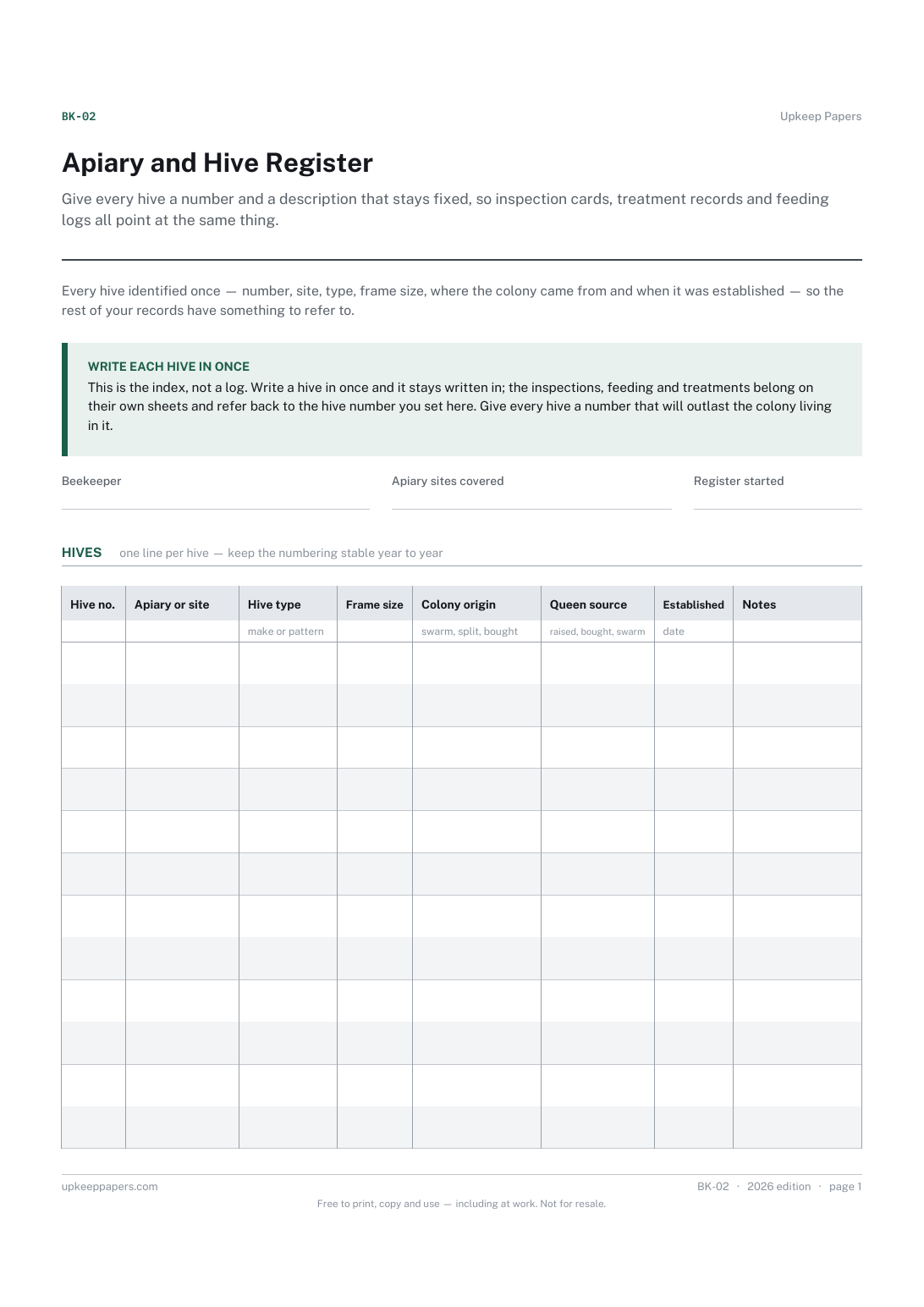
Give every hive a number and a description that stays fixed, so inspection cards, treatment records and feeding logs all point at the same thing.
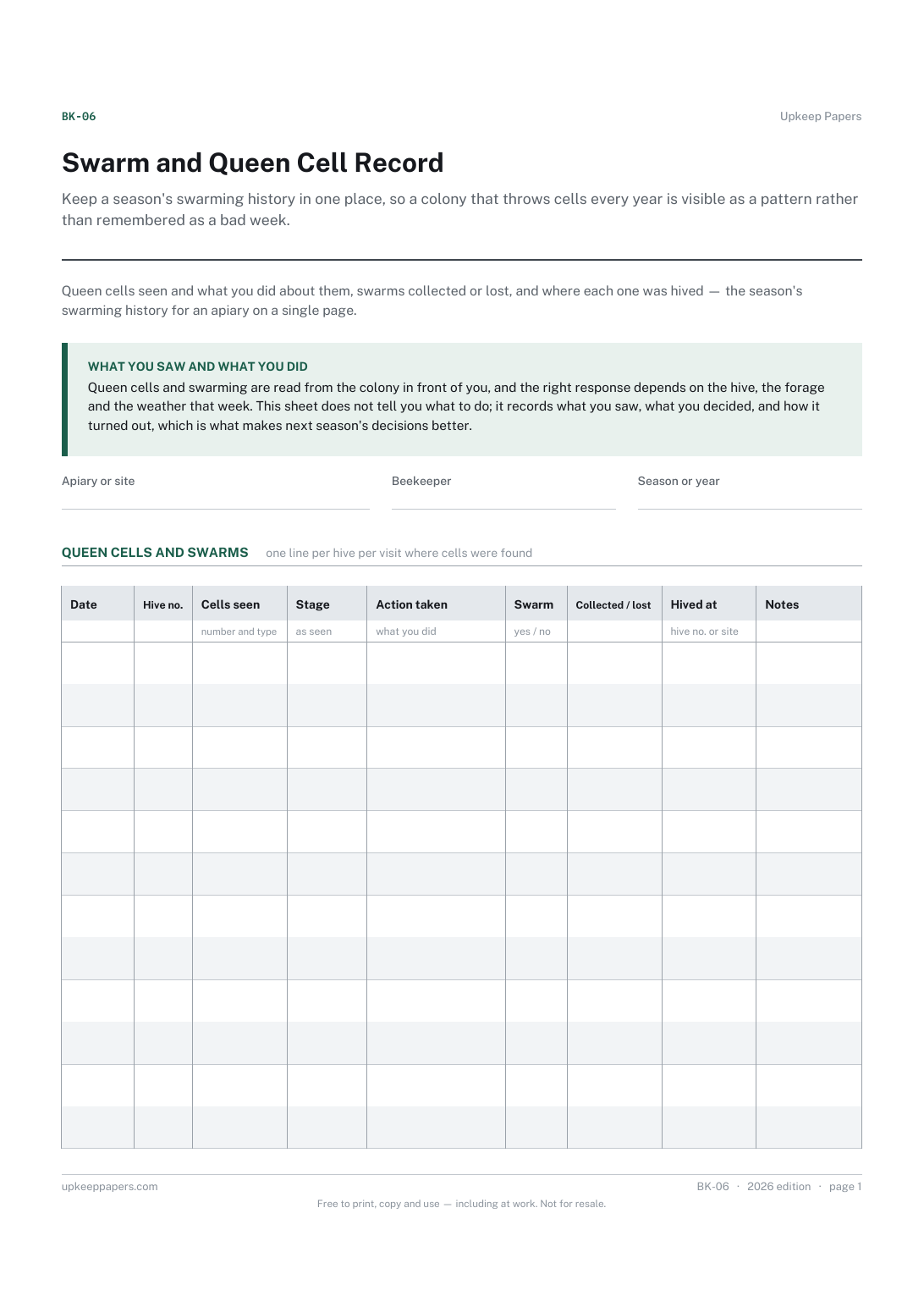
Keep a season's swarming history in one place, so a colony that throws cells every year is visible as a pattern rather than remembered as a bad week.
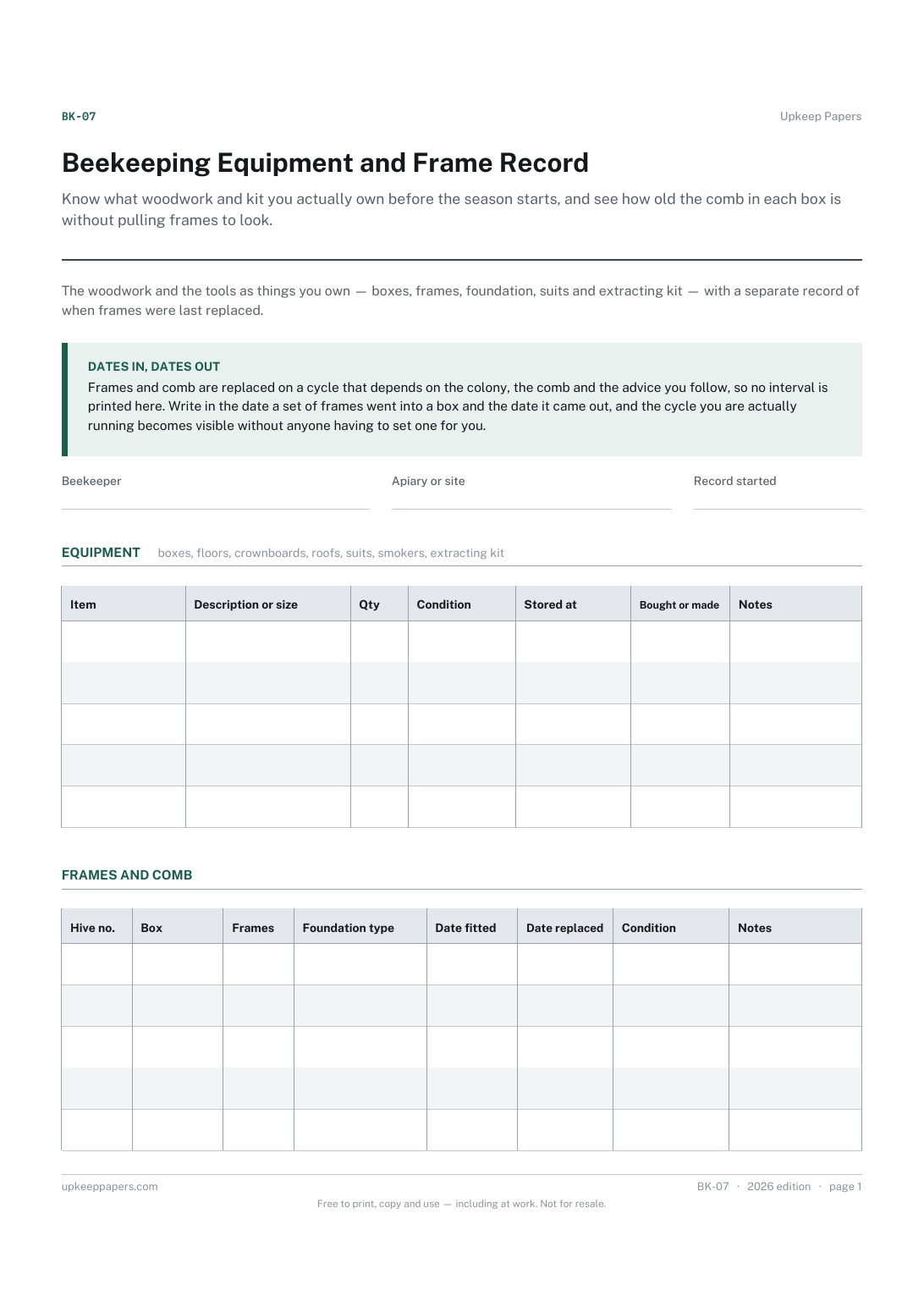
Know what woodwork and kit you actually own before the season starts, and see how old the comb in each box is without pulling frames to look.

Every sheet, binder, game and puzzle on Upkeep Papers is free to download, with no email and no account. Making them is not free: each one takes days of research, design and checking, and the site costs money to run. If something here saved you time, you can buy us a coffee. It is entirely optional: nothing is locked, and nothing changes if you don’t.
Buy us a coffee Opens PayPal in a new tab. Any amount, and nothing changes if you would rather not.