Hive Inspection Record Card
Build a run of comparable inspections for one colony, so a failing hive can be told apart from a normal one by looking at the page rather than by memory.
BK-01 1 page
Everything here is free. Making it takes time and money. Everything here is free.
 Buy us a coffee
Beekeeping · BK-05
A free printable hive feeding record — what was fed to which hive, when, how much, how it was given and whether it was taken down, with your own mix written in.
One page. Choose your paper size — both versions are laid out identically, so neither one gets shrunk to fit.
Print it and write on it
Fill it in type and save
The fillable versions have real form fields — open them in any PDF reader, type into them and save. Printing help.
Know what a colony has already been given instead of guessing, and see which hives are repeatedly needing feed when the others are not.
Beekeepers feeding syrup, fondant or candy at any time of year, and anyone sharing the care of an apiary with somebody else.
One page, top to bottom:
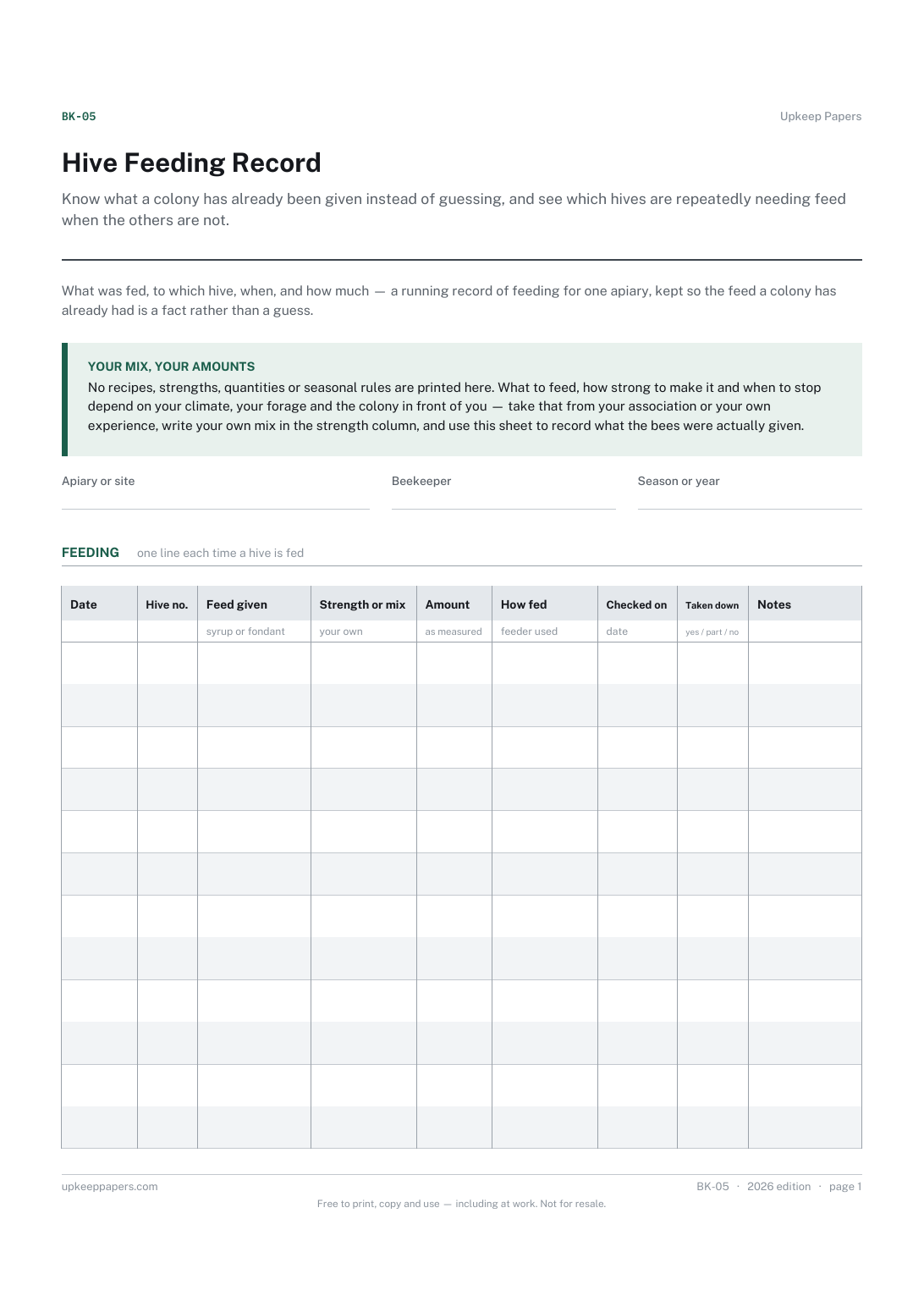
Printed under the title: What was fed, to which hive, when, and how much — a running record of feeding for one apiary, kept so the feed a colony has already had is a fact rather than a guess.
Your mix, your amounts. No recipes, strengths, quantities or seasonal rules are printed here. What to feed, how strong to make it and when to stop depend on your climate, your forage and the colony in front of you — take that from your association or your own experience, write your own mix in the strength column, and use this sheet to record what the bees were actually given.
Write-on lines: Apiary or site · Beekeeper · Season or year
Table, 12 rows: Date · Hive no. · Feed given · Strength or mix · Amount · How fed · Checked on · Taken down · Notes
Because what to feed and how strong to make it depend on the season, the climate, the forage and the colony, and beekeepers who disagree about it are all keeping bees successfully. Your association or your own experience sets the mix; the sheet records what the bees were actually given.
Because a contact feeder, a rapid feeder and a frame feeder are taken down at quite different rates, and without that column an unexpectedly slow week looks like a problem with the colony rather than with the feeder.
Build a run of comparable inspections for one colony, so a failing hive can be told apart from a normal one by looking at the page rather than by memory.
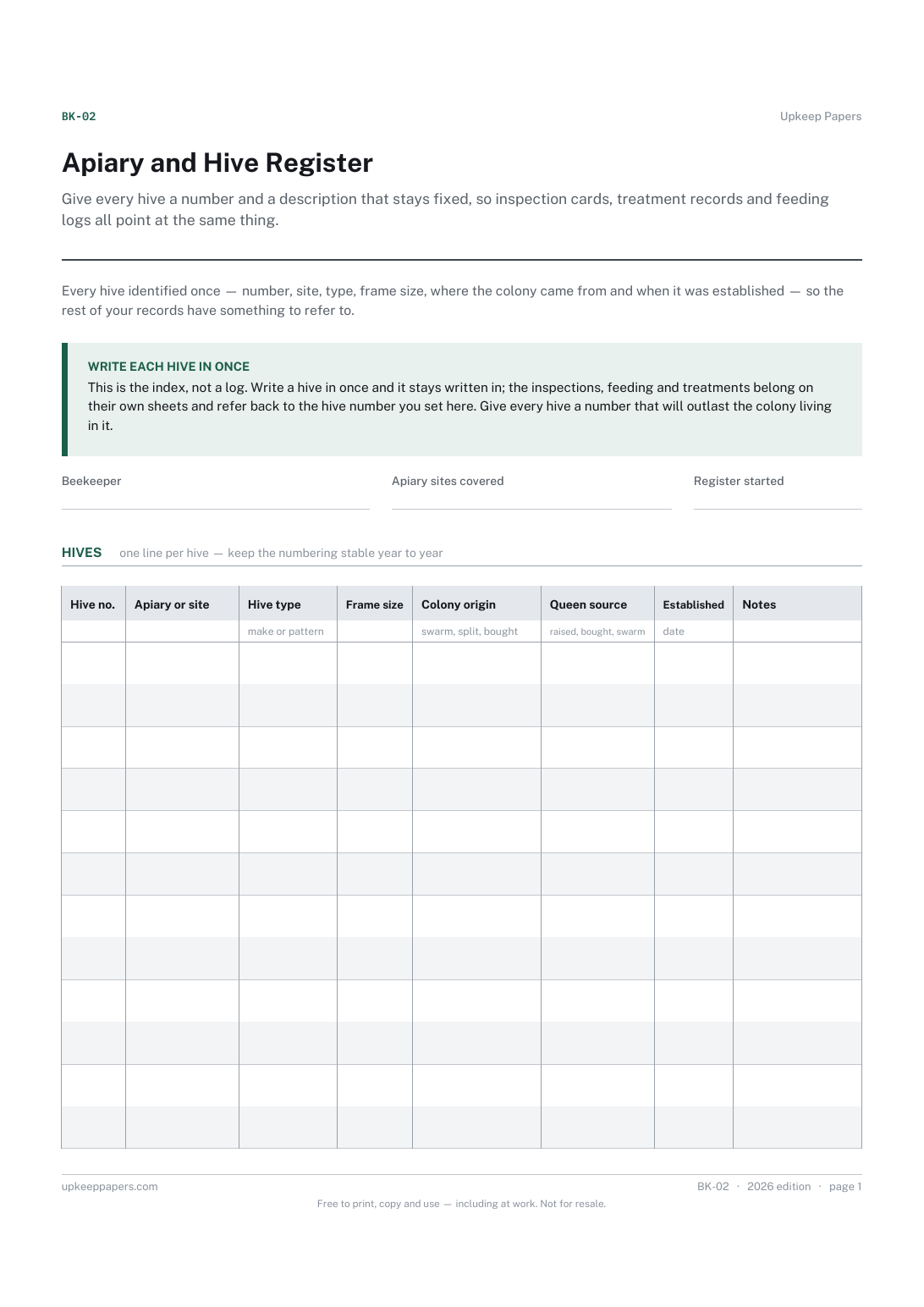
Give every hive a number and a description that stays fixed, so inspection cards, treatment records and feeding logs all point at the same thing.
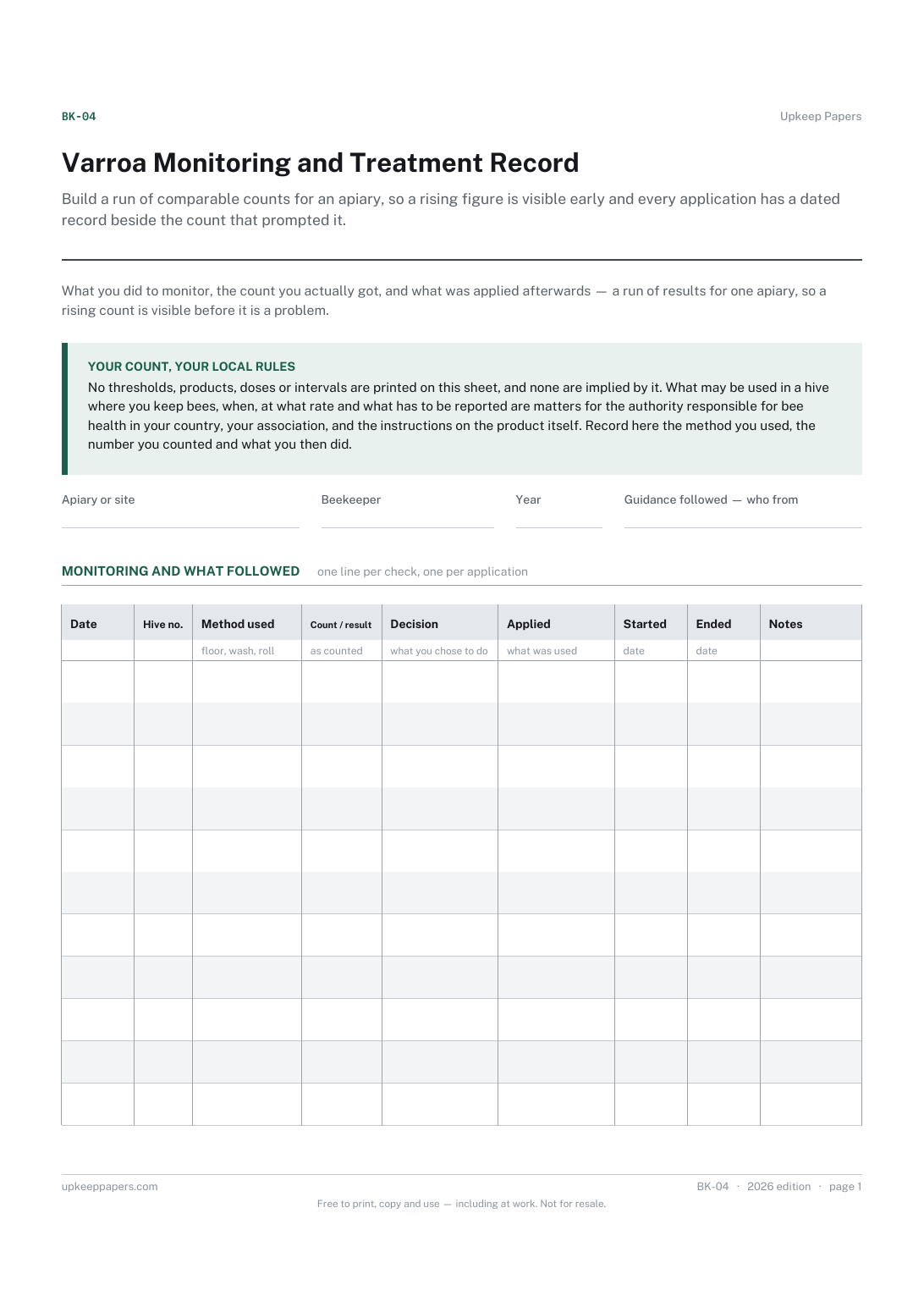
Build a run of comparable counts for an apiary, so a rising figure is visible early and every application has a dated record beside the count that prompted it.
Record the harvest hive by hive with a batch code, which is what makes traceability possible if a jar is ever queried.

Every sheet, binder, game and puzzle on Upkeep Papers is free to download, with no email and no account. Making them is not free: each one takes days of research, design and checking, and the site costs money to run. If something here saved you time, you can buy us a coffee. It is entirely optional: nothing is locked, and nothing changes if you don’t.
Buy us a coffee Opens PayPal in a new tab. Any amount, and nothing changes if you would rather not.