Hive Inspection Record Card
Build a run of comparable inspections for one colony, so a failing hive can be told apart from a normal one by looking at the page rather than by memory.
BK-01 1 page
Everything here is free. Making it takes time and money. Everything here is free.
 Buy us a coffee
Beekeeping · BK-04
A free printable varroa monitoring record — the method you used, the count you got, what you decided, and what was applied and when, with no thresholds or products printed.
One page. Choose your paper size — both versions are laid out identically, so neither one gets shrunk to fit.
Print it and write on it
Fill it in type and save
The fillable versions have real form fields — open them in any PDF reader, type into them and save. Printing help.
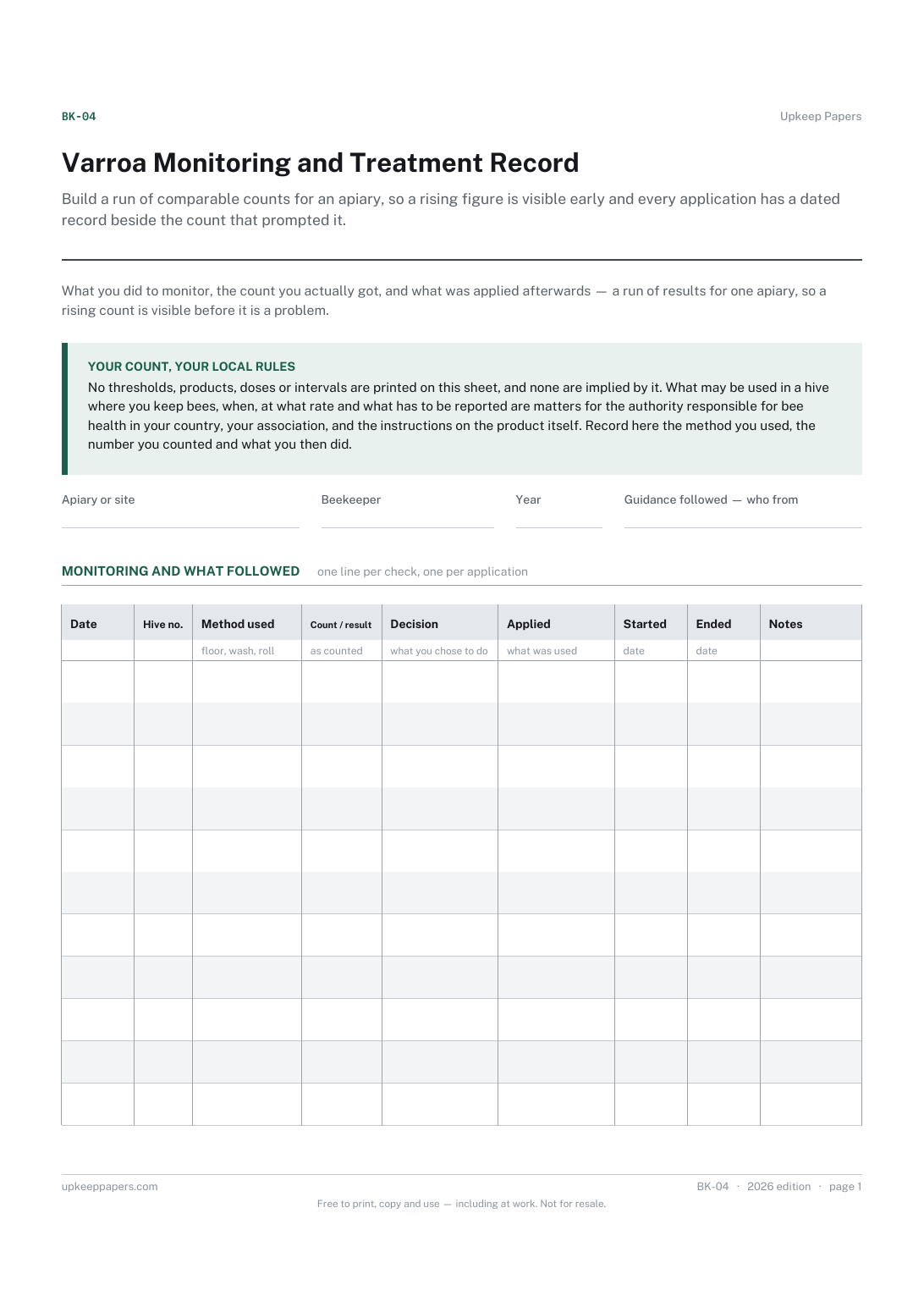
Build a run of comparable counts for an apiary, so a rising figure is visible early and every application has a dated record beside the count that prompted it.
Beekeepers of any experience monitoring their own colonies, and association apiary managers keeping records on behalf of a group.
One page, top to bottom:
Printed under the title: What you did to monitor, the count you actually got, and what was applied afterwards — a run of results for one apiary, so a rising count is visible before it is a problem.
Your count, your local rules. No thresholds, products, doses or intervals are printed on this sheet, and none are implied by it. What may be used in a hive where you keep bees, when, at what rate and what has to be reported are matters for the authority responsible for bee health in your country, your association, and the instructions on the product itself. Record here the method you used, the number you counted and what you then did.
Write-on lines: Apiary or site · Beekeeper · Year · Guidance followed — who from
Table, 11 rows: Date · Hive no. · Method used · Count / result · Decision · Applied · Started · Ended · Notes
Because what may be used in a hive, at what rate, at what time of year and what has to be reported all differ by country and region, and they change. The authority responsible for bee health where you keep bees and your association are the right source; this sheet records your count and what you did.
Yes. A low count is a data point, and a gap in the dates is what makes the rest of the column hard to read later. The pattern is the useful part, not any single figure.
Build a run of comparable inspections for one colony, so a failing hive can be told apart from a normal one by looking at the page rather than by memory.
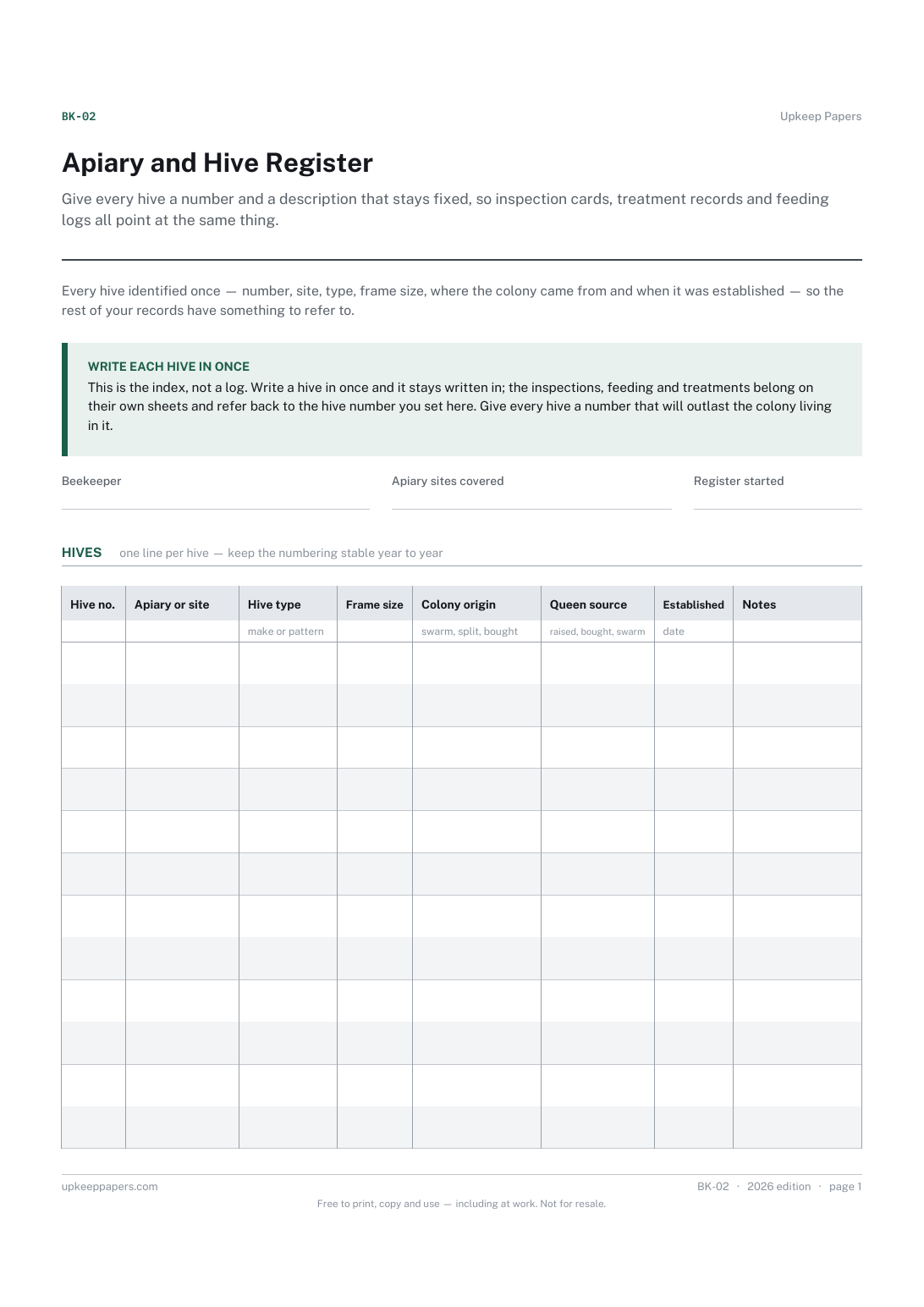
Give every hive a number and a description that stays fixed, so inspection cards, treatment records and feeding logs all point at the same thing.
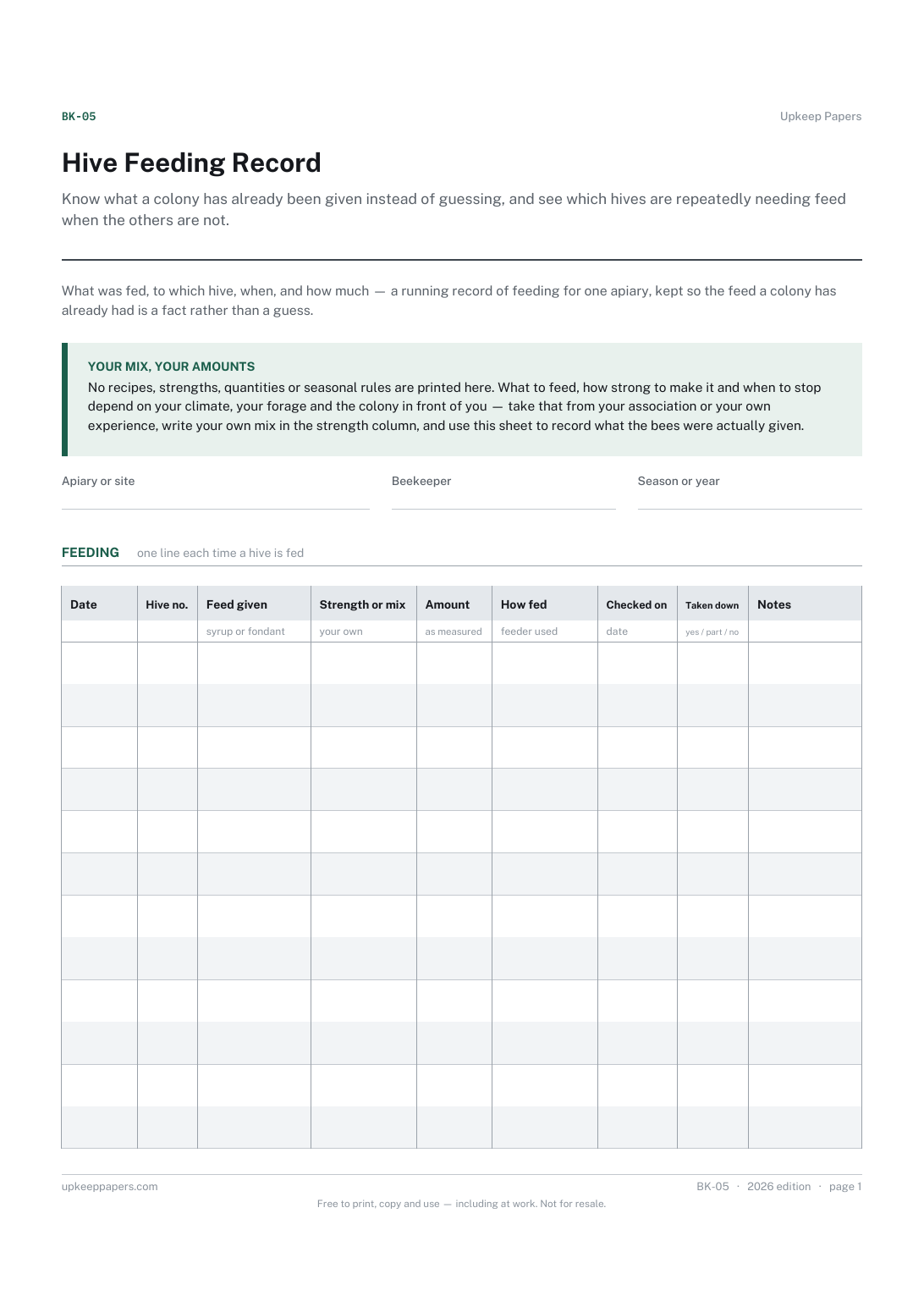
Know what a colony has already been given instead of guessing, and see which hives are repeatedly needing feed when the others are not.
Keep a medicines book that answers the two questions that actually get asked: what went into which animals, and when they are clear.

Every sheet, binder, game and puzzle on Upkeep Papers is free to download, with no email and no account. Making them is not free: each one takes days of research, design and checking, and the site costs money to run. If something here saved you time, you can buy us a coffee. It is entirely optional: nothing is locked, and nothing changes if you don’t.
Buy us a coffee Opens PayPal in a new tab. Any amount, and nothing changes if you would rather not.