Hive Inspection Record Card
Build a run of comparable inspections for one colony, so a failing hive can be told apart from a normal one by looking at the page rather than by memory.
BK-01 1 page
Everything here is free. Making it takes time and money. Everything here is free.
 Buy us a coffee
Beekeeping · BK-11
A free printable bee inspection visit sheet — who came and when, which hives were opened, what was found in each, samples taken and what was left with you to do.
One page. Choose your paper size — both versions are laid out identically, so neither one gets shrunk to fit.
Print it and write on it
Fill it in type and save
The fillable versions have real form fields — open them in any PDF reader, type into them and save. Printing help.
Hold your own account of a visit, so the advice you were given is still legible months later and a second visit can be read against the first.
Beekeepers visited by a bee health inspector or an association officer, and apiary managers keeping records for a group or a training apiary.
One page, top to bottom:
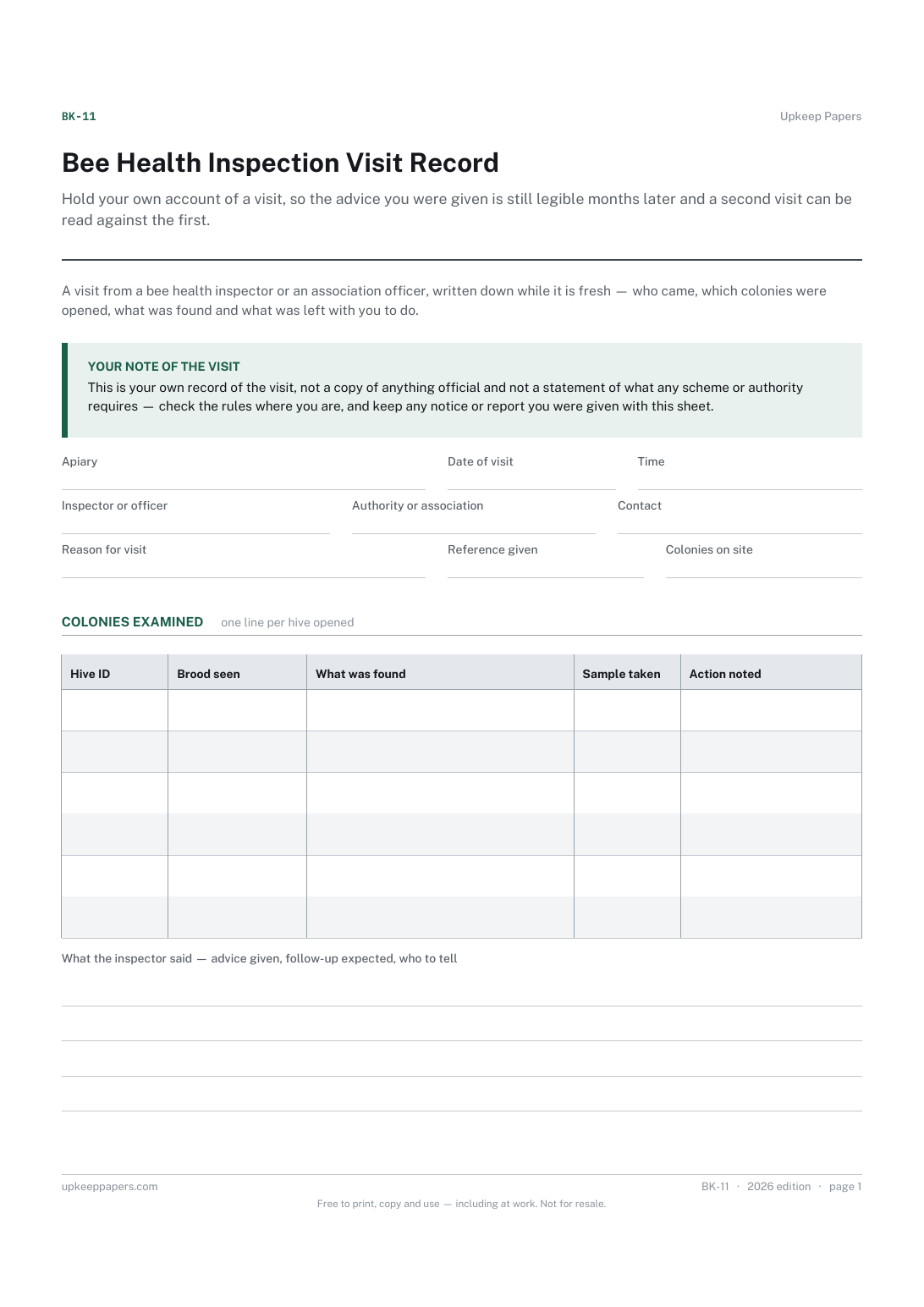
Printed under the title: A visit from a bee health inspector or an association officer, written down while it is fresh — who came, which colonies were opened, what was found and what was left with you to do.
Your note of the visit. This is your own record of the visit, not a copy of anything official and not a statement of what any scheme or authority requires — check the rules where you are, and keep any notice or report you were given with this sheet.
Write-on lines: Apiary · Date of visit · Time · Inspector or officer · Authority or association · Contact · Reason for visit · Reference given · Colonies on site
Table, 6 rows: Hive ID · Brood seen · What was found · Sample taken · Action noted
Ruled lines: What the inspector said — advice given, follow-up expected, who to tell
Because that differs by country and sometimes by region, and it changes. This sheet is a blank record of the visit you actually had — check the rules where you are for what applies to your apiary.
No. Keep whatever report or notice you were given; this sits alongside it. Its value is that it is in your handwriting, hive by hive, and it records the things said at the hive that never make it onto a form.
Build a run of comparable inspections for one colony, so a failing hive can be told apart from a normal one by looking at the page rather than by memory.
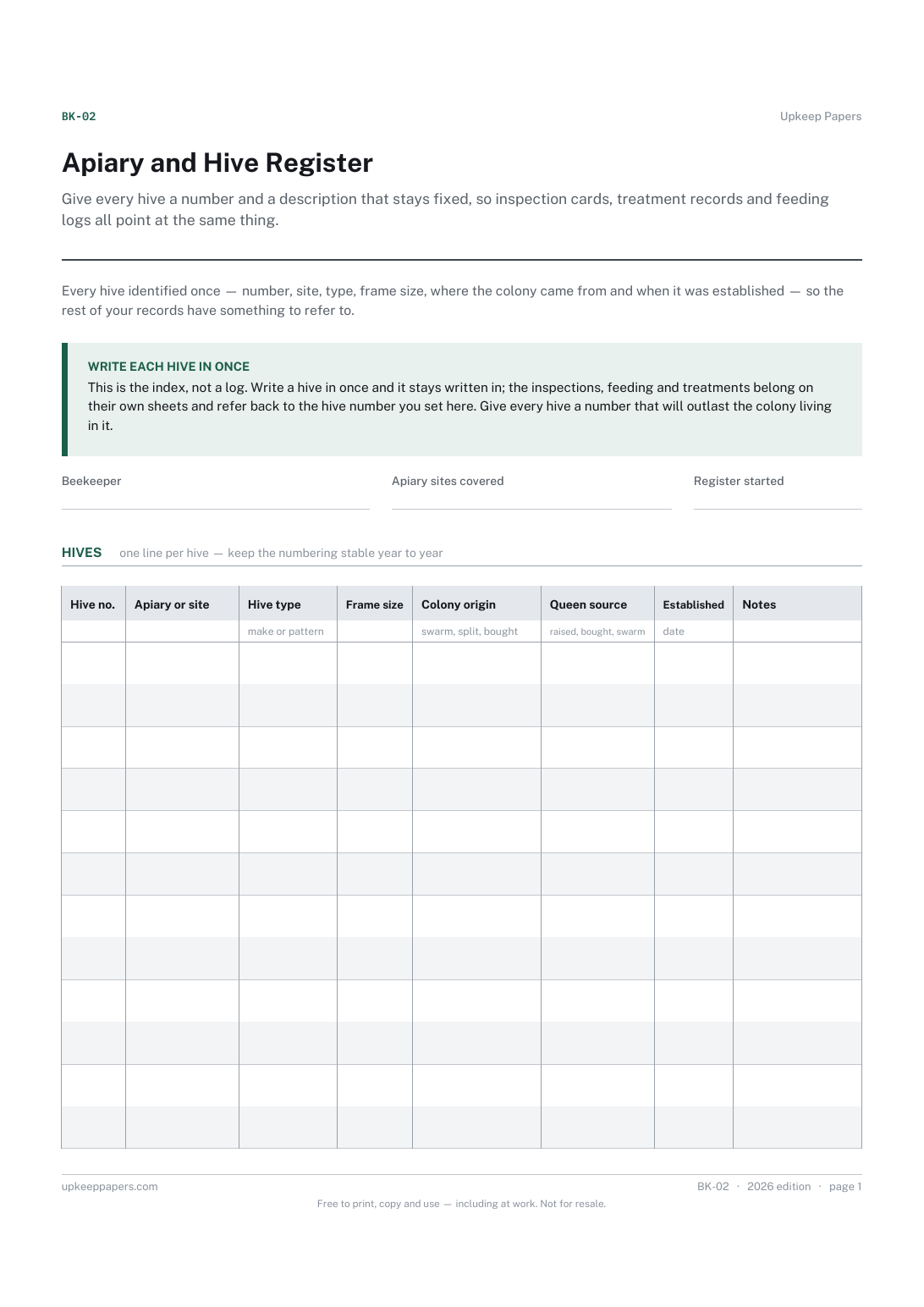
Give every hive a number and a description that stays fixed, so inspection cards, treatment records and feeding logs all point at the same thing.
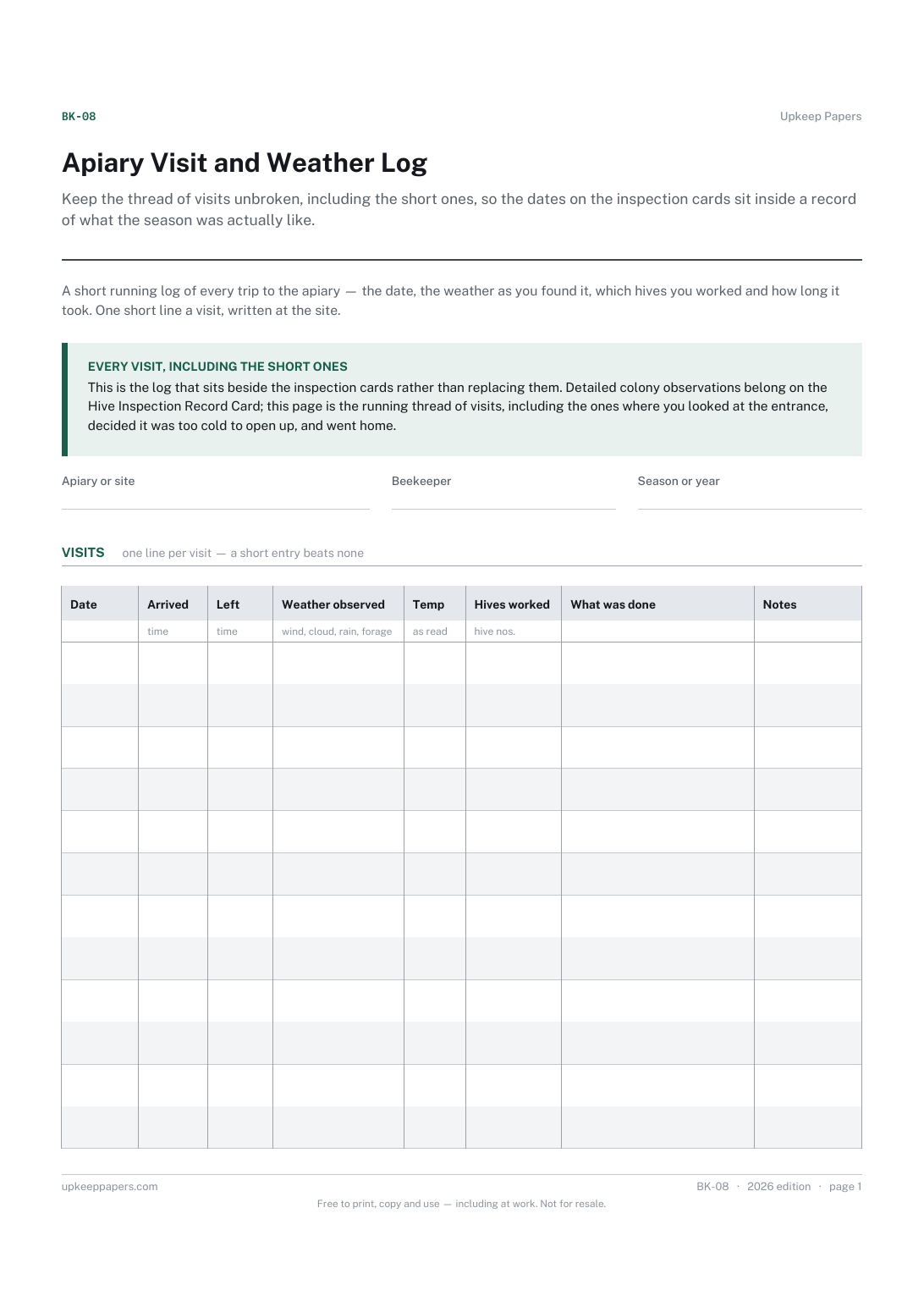
Keep the thread of visits unbroken, including the short ones, so the dates on the inspection cards sit inside a record of what the season was actually like.
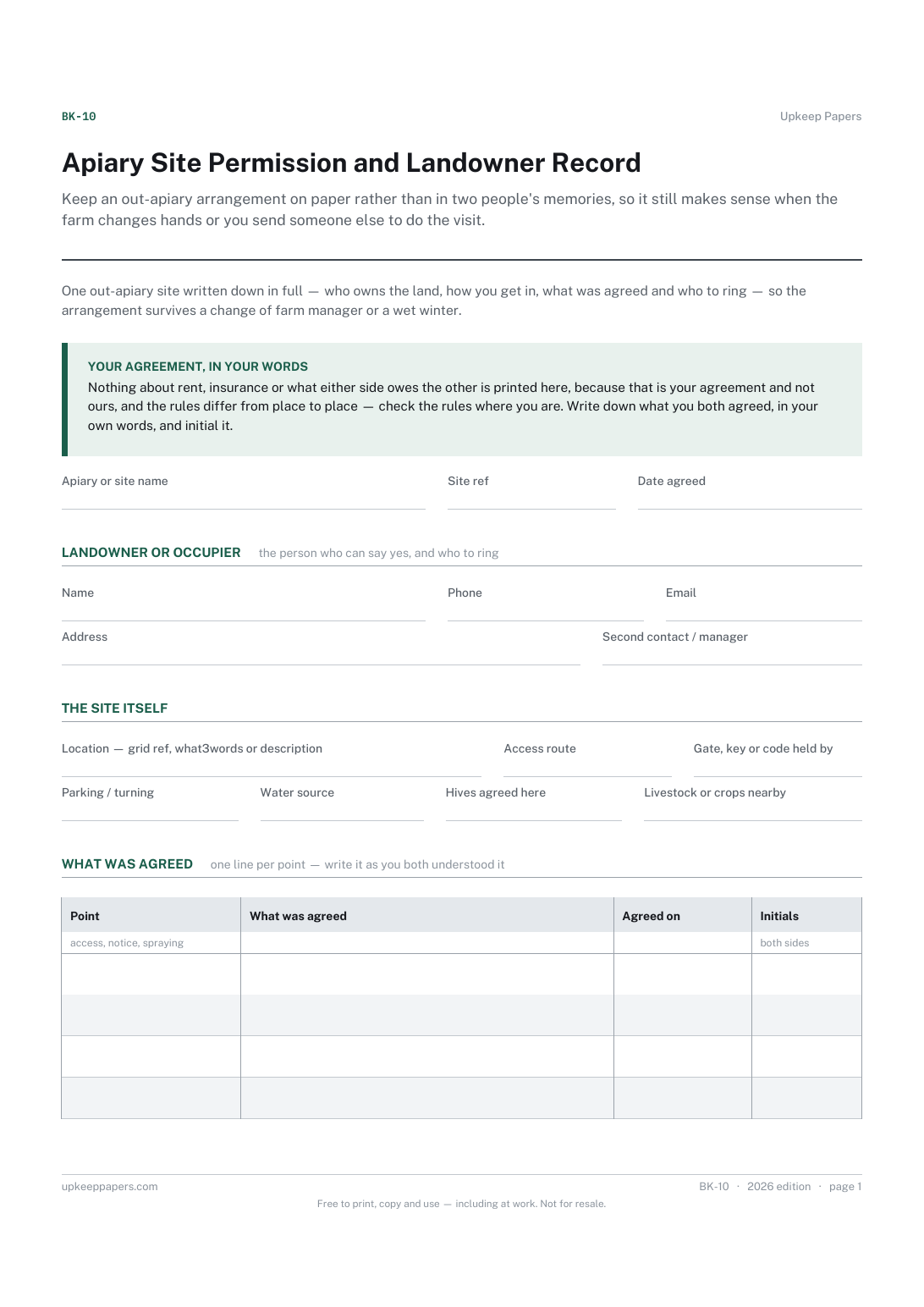
Keep an out-apiary arrangement on paper rather than in two people's memories, so it still makes sense when the farm changes hands or you send someone else to do the visit.

Every sheet, binder, game and puzzle on Upkeep Papers is free to download, with no email and no account. Making them is not free: each one takes days of research, design and checking, and the site costs money to run. If something here saved you time, you can buy us a coffee. It is entirely optional: nothing is locked, and nothing changes if you don’t.
Buy us a coffee Opens PayPal in a new tab. Any amount, and nothing changes if you would rather not.